
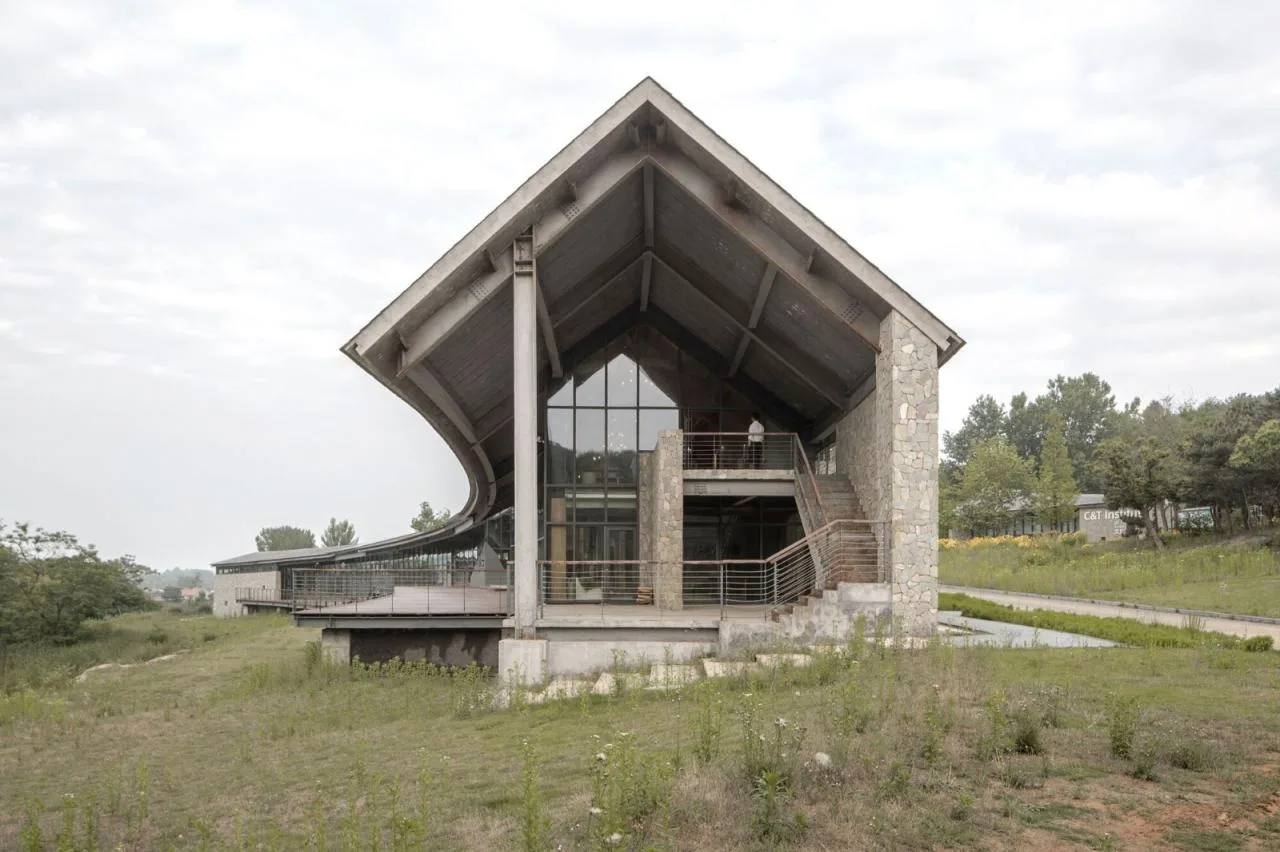
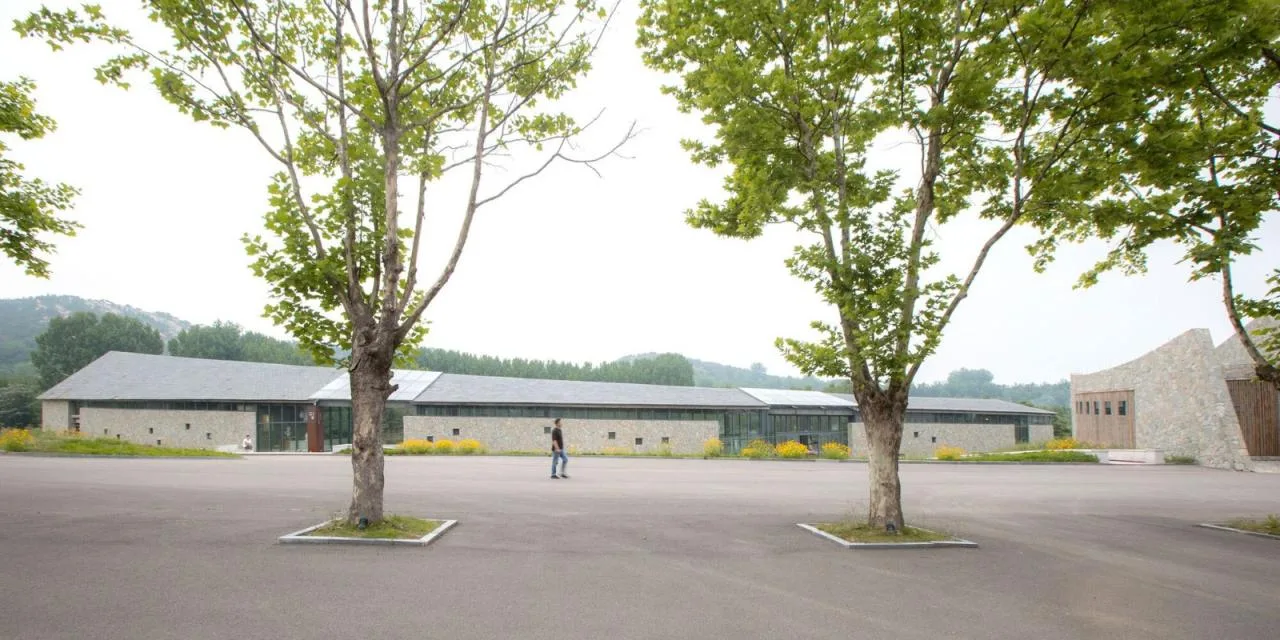
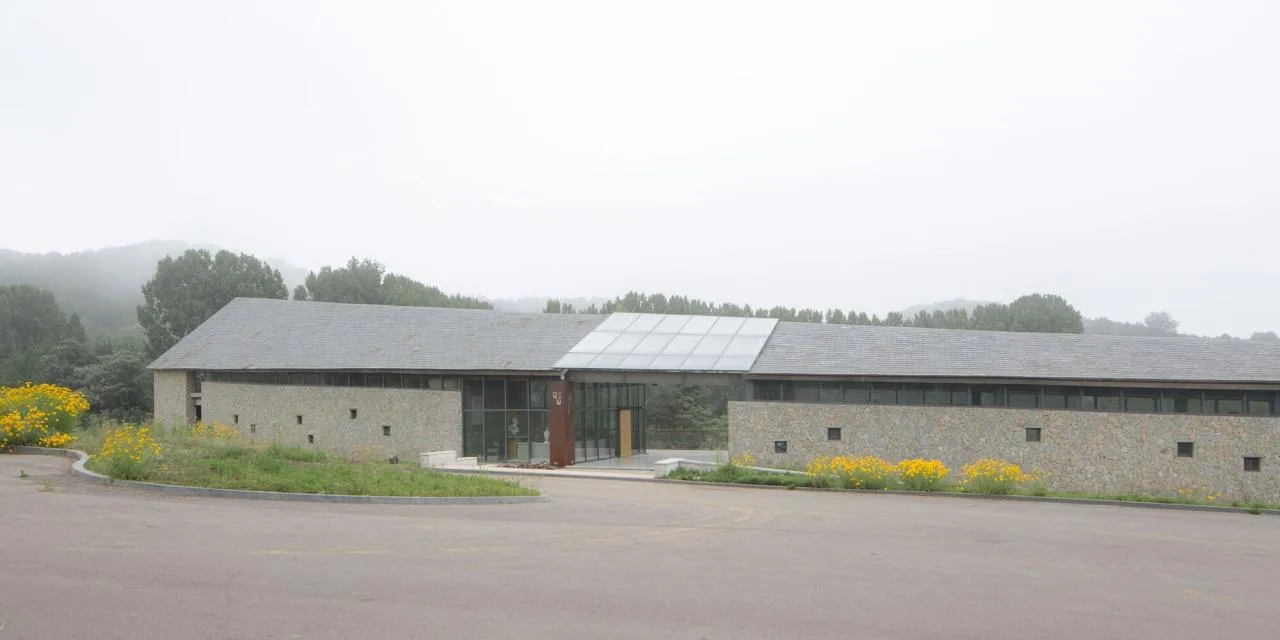
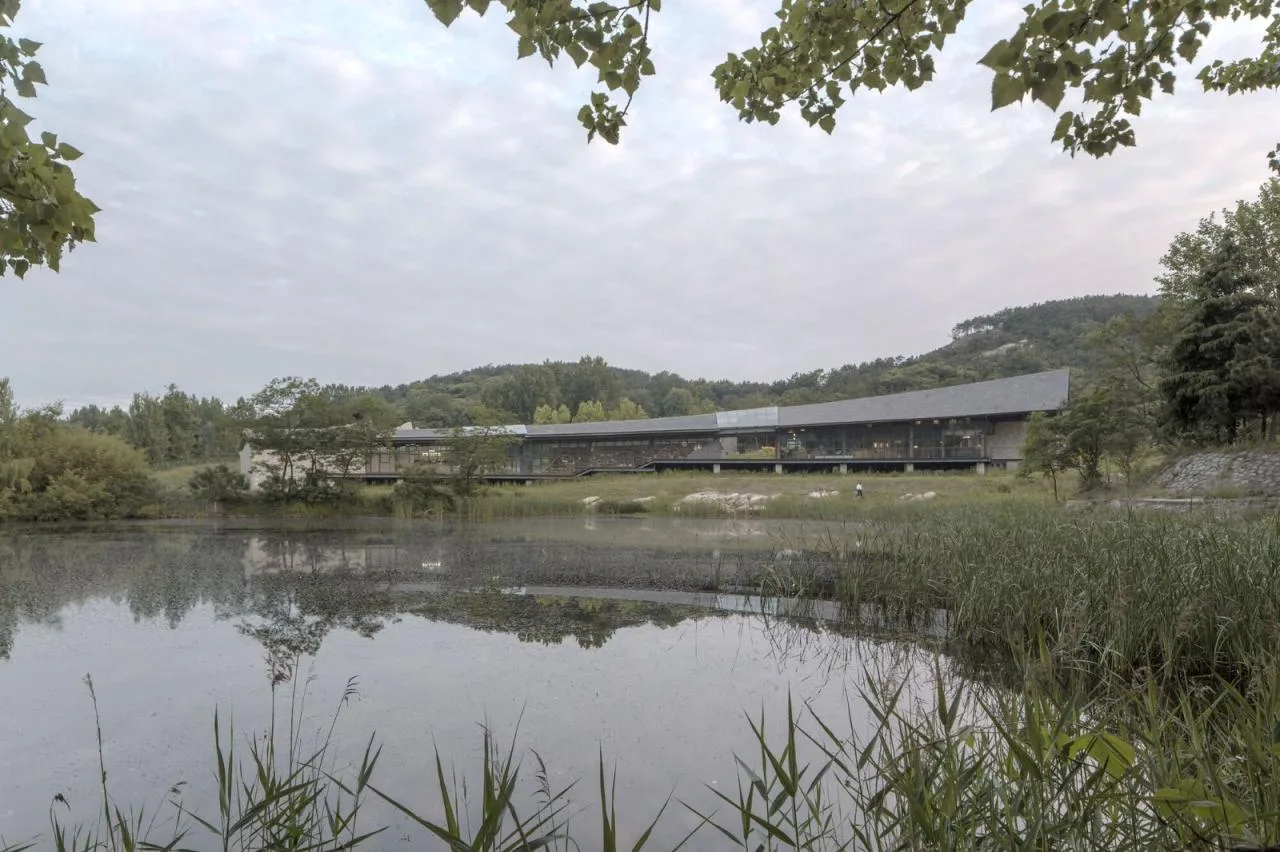
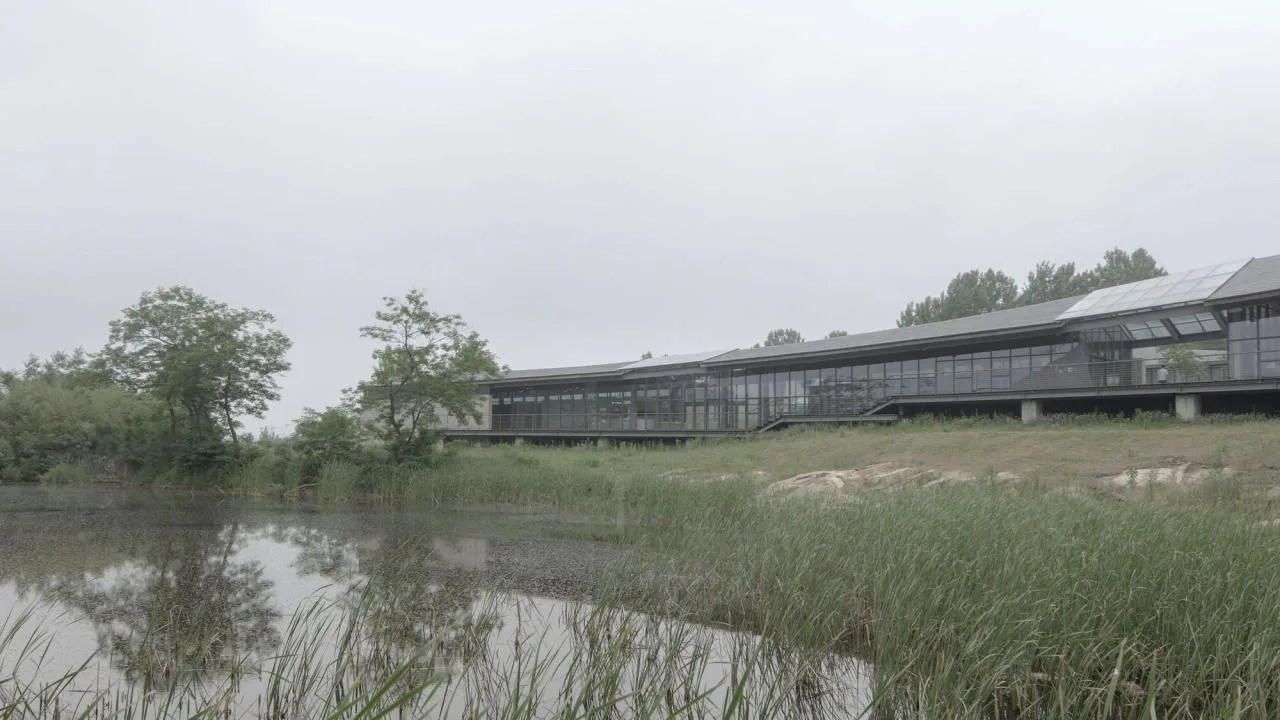
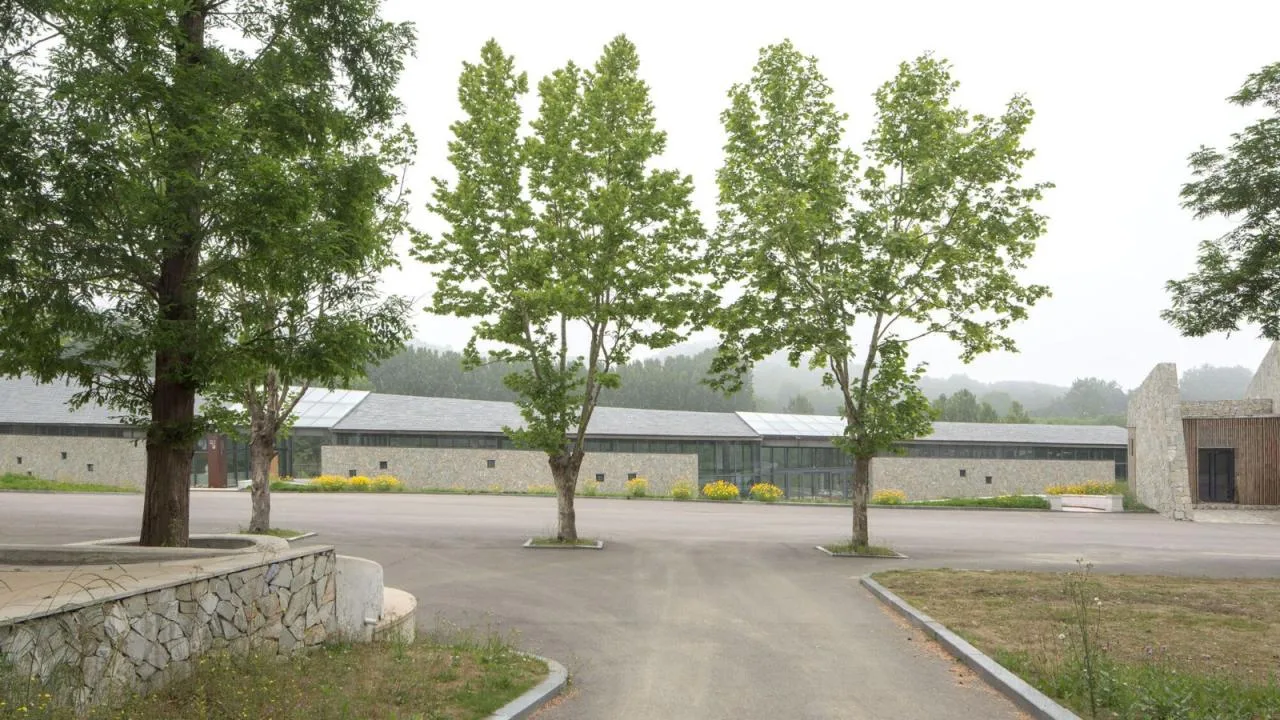
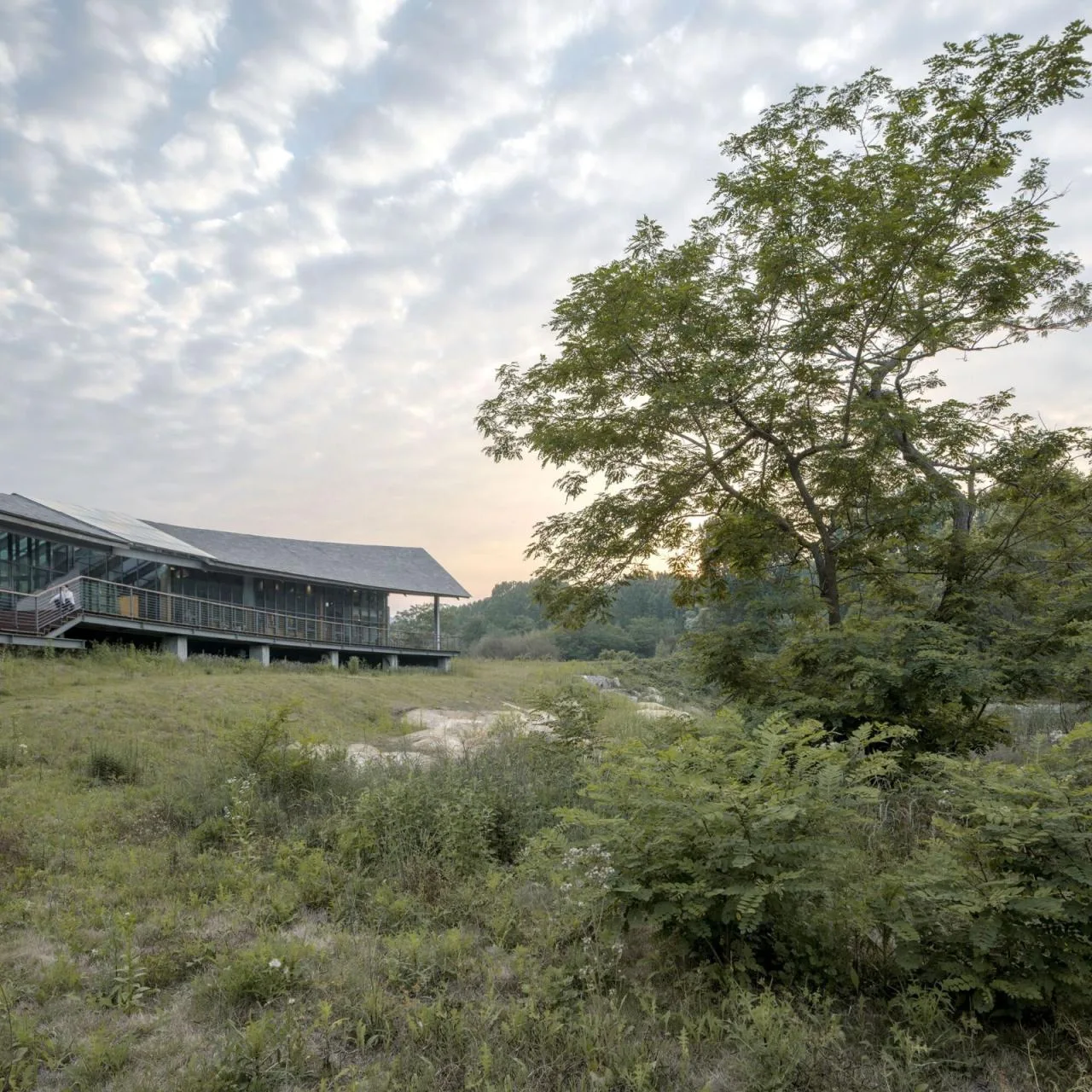
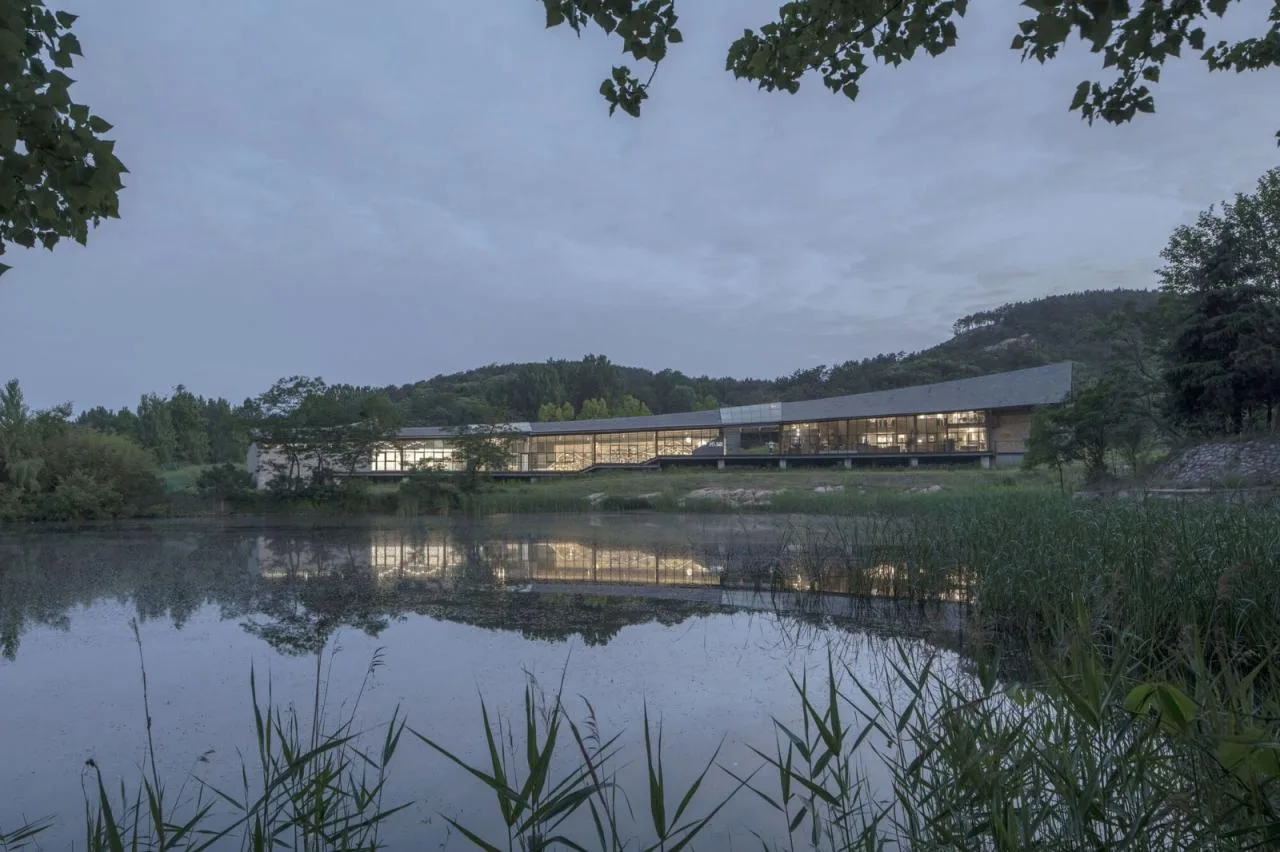
Situated at the entrance of Longshan Natural Tourism Area, a cluster of buildings harmoniously adapts to the surrounding natural landscape. The mountain scenery aligns with the main axis of the entrance path, which, upon arrival, splits into two directions: one ascending the mountain, the other gently descending towards two small ponds nestled among trees at lower elevation.
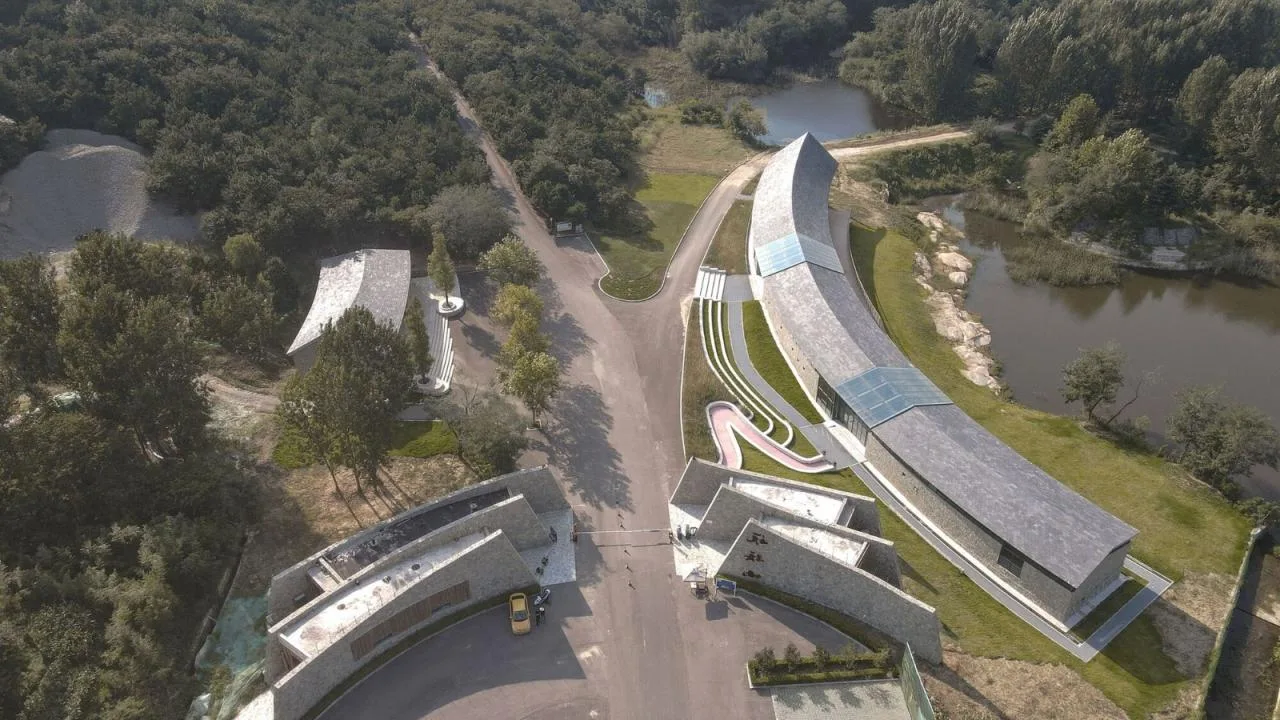
To integrate the architecture with the natural site, the design divides the 3,000m² area into five distinct building elements arranged around a central square.
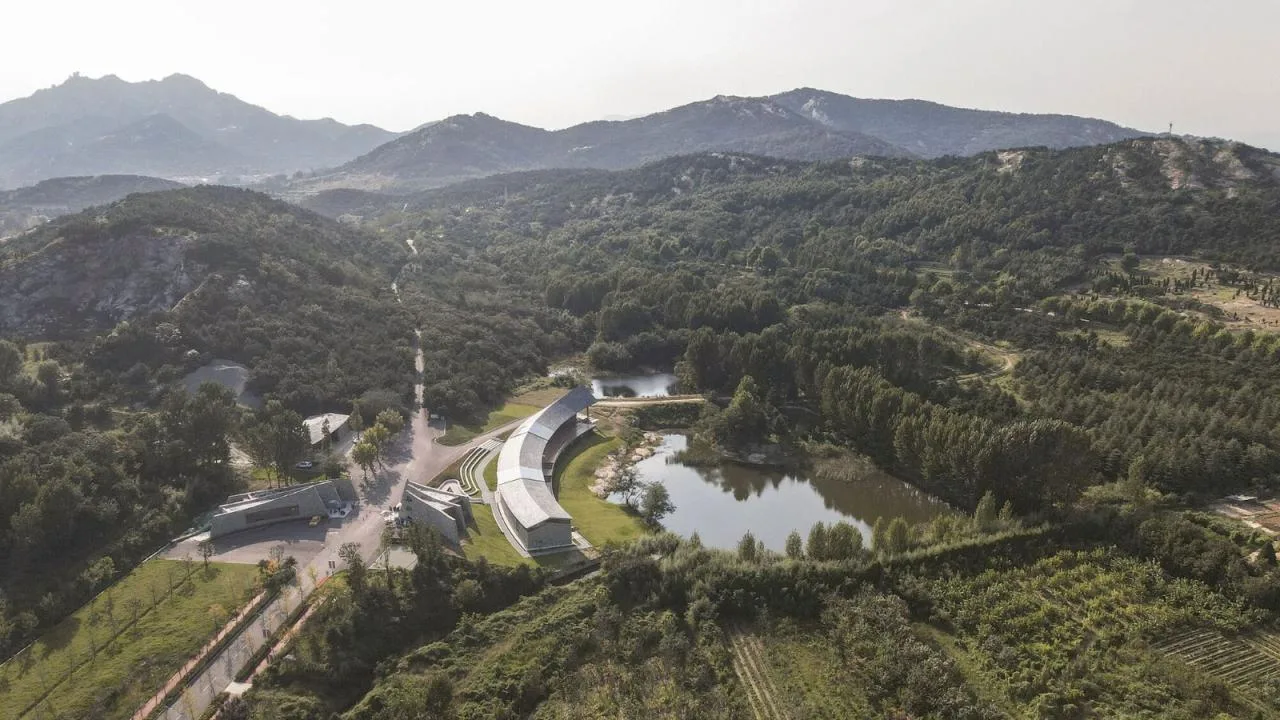
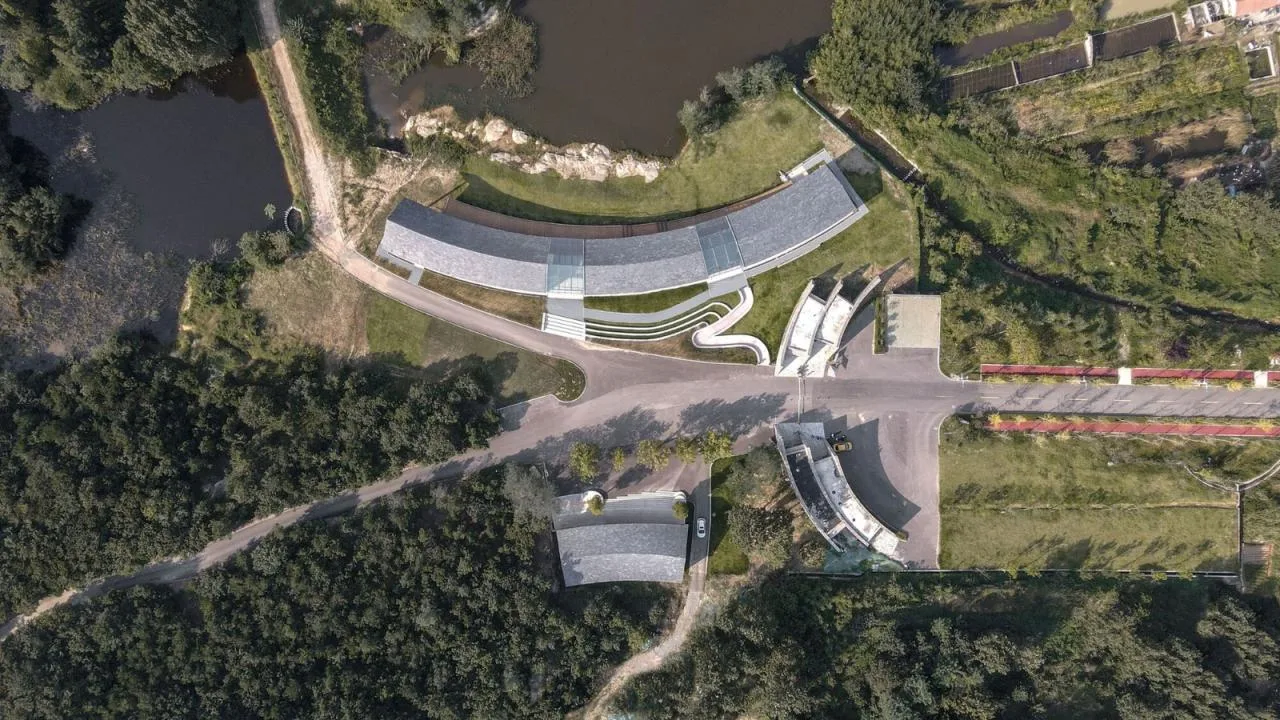
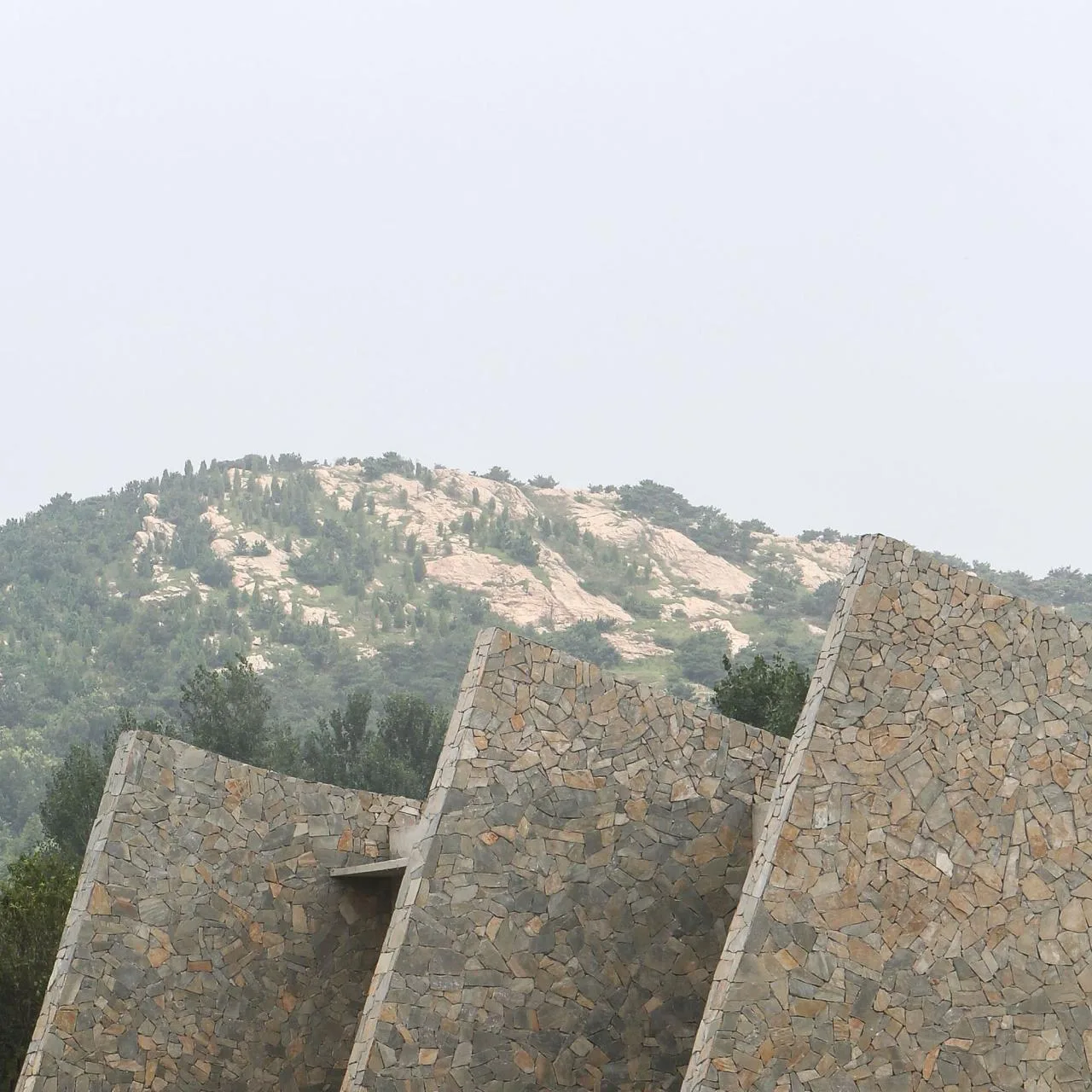
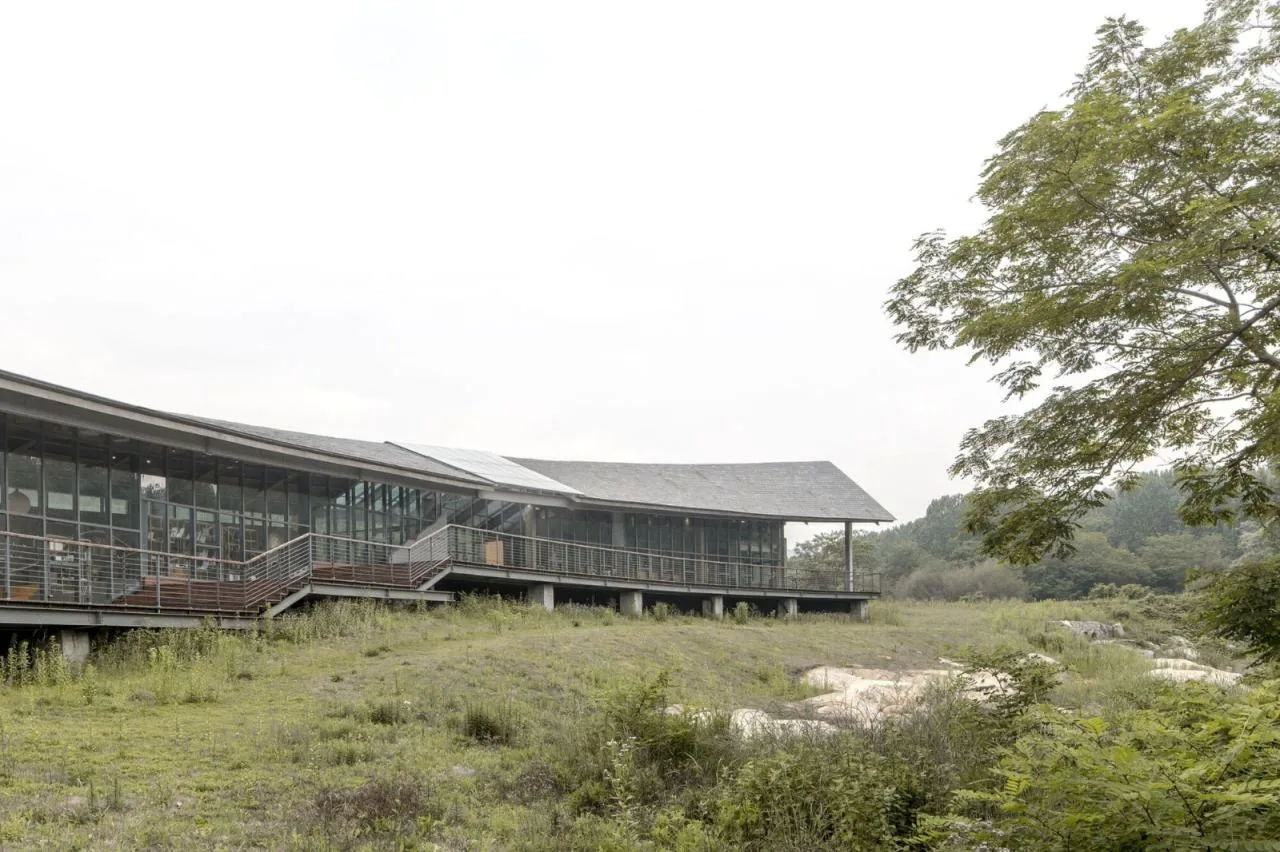
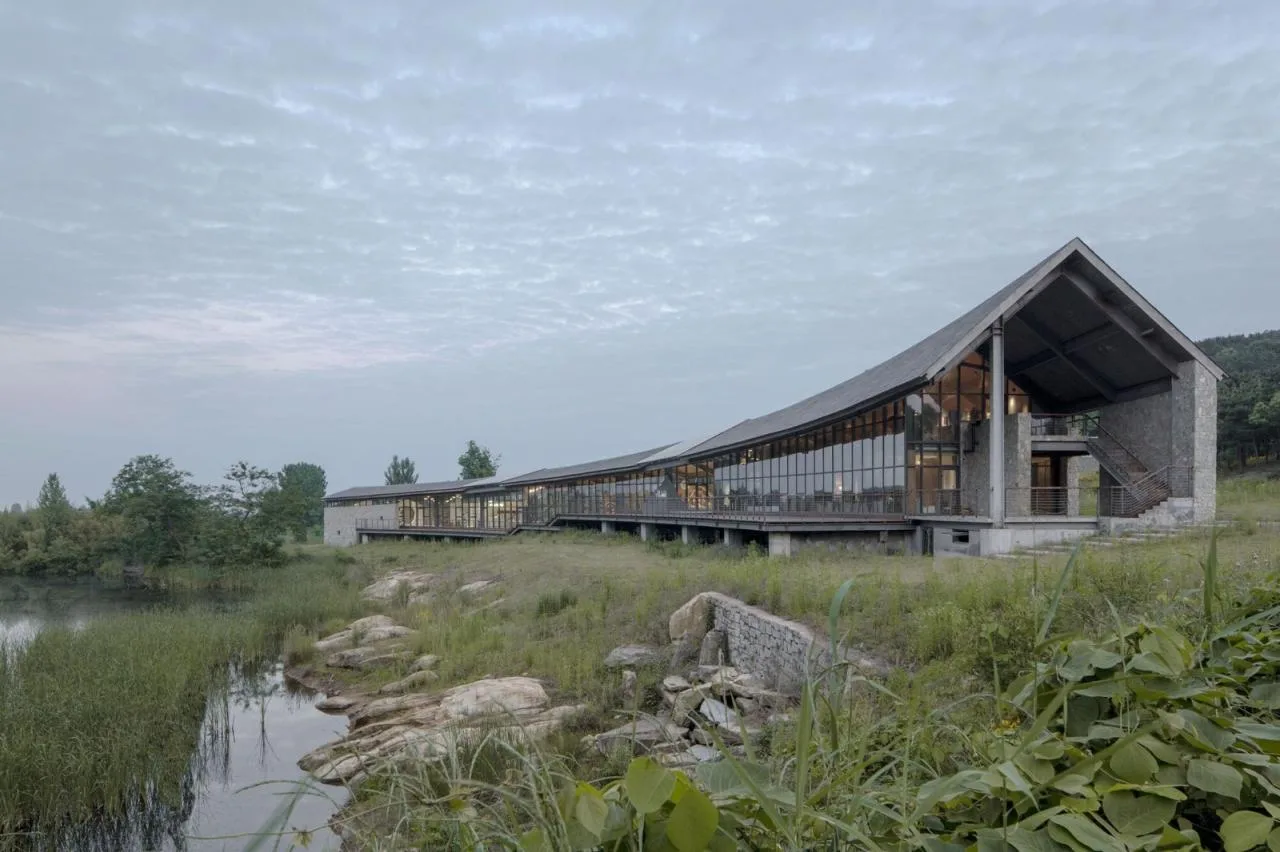
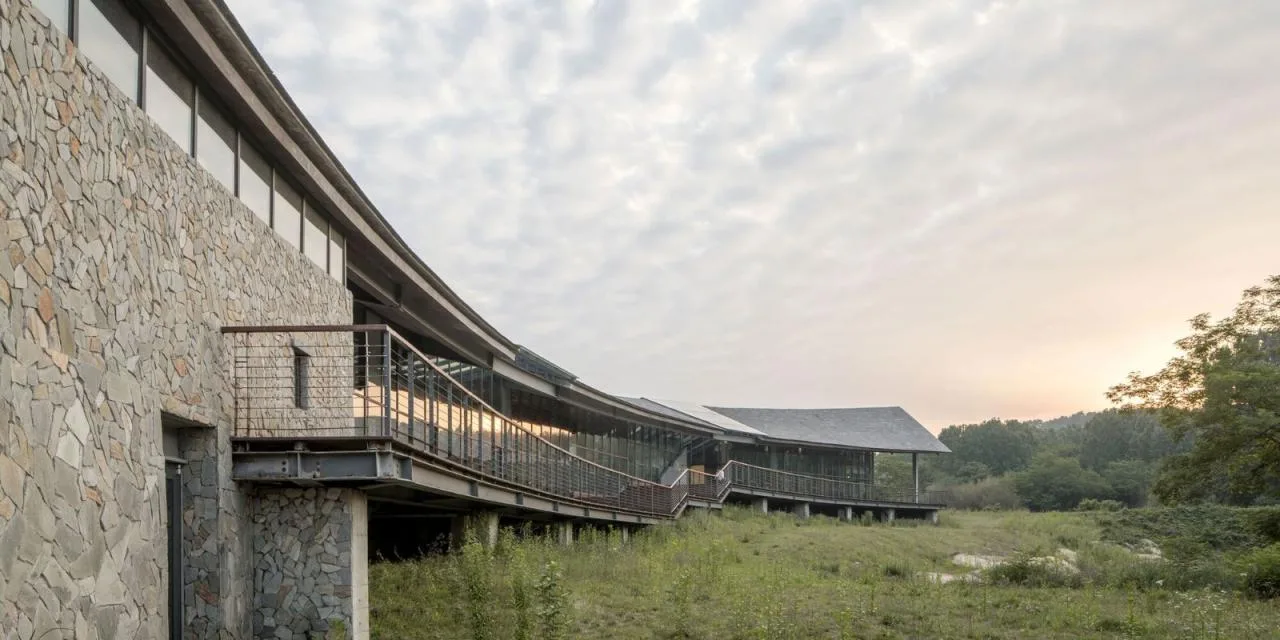
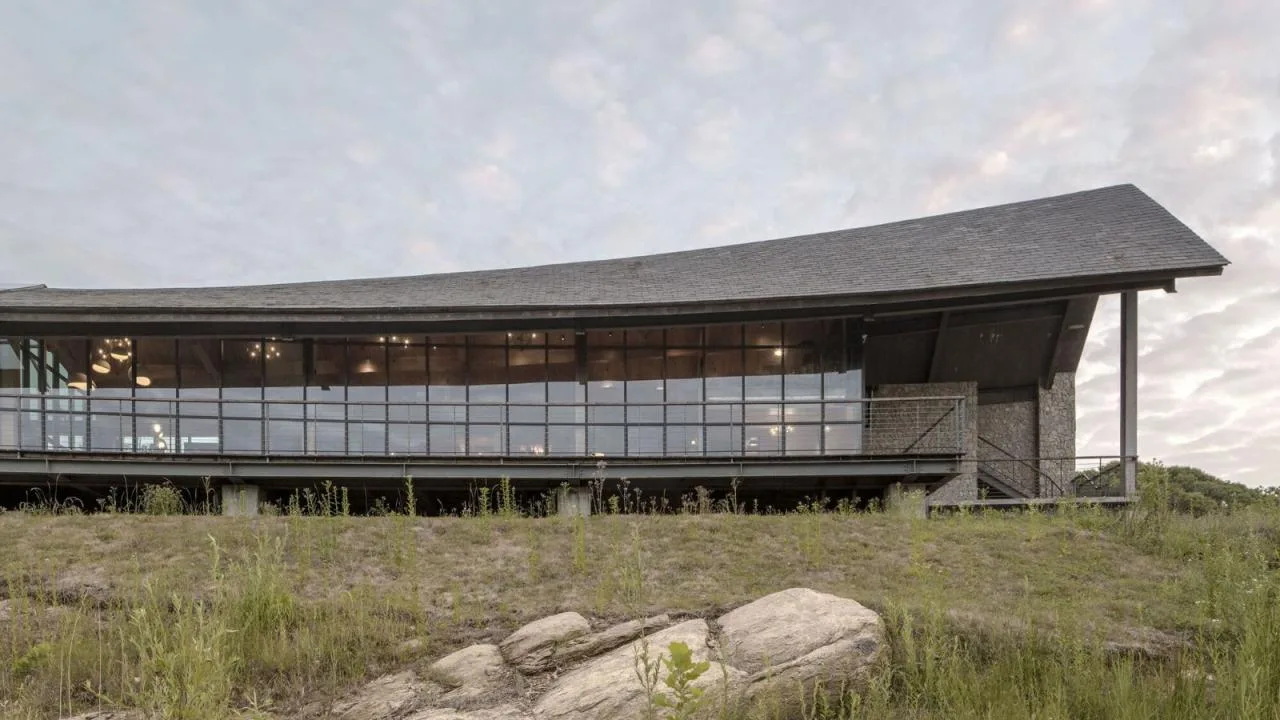
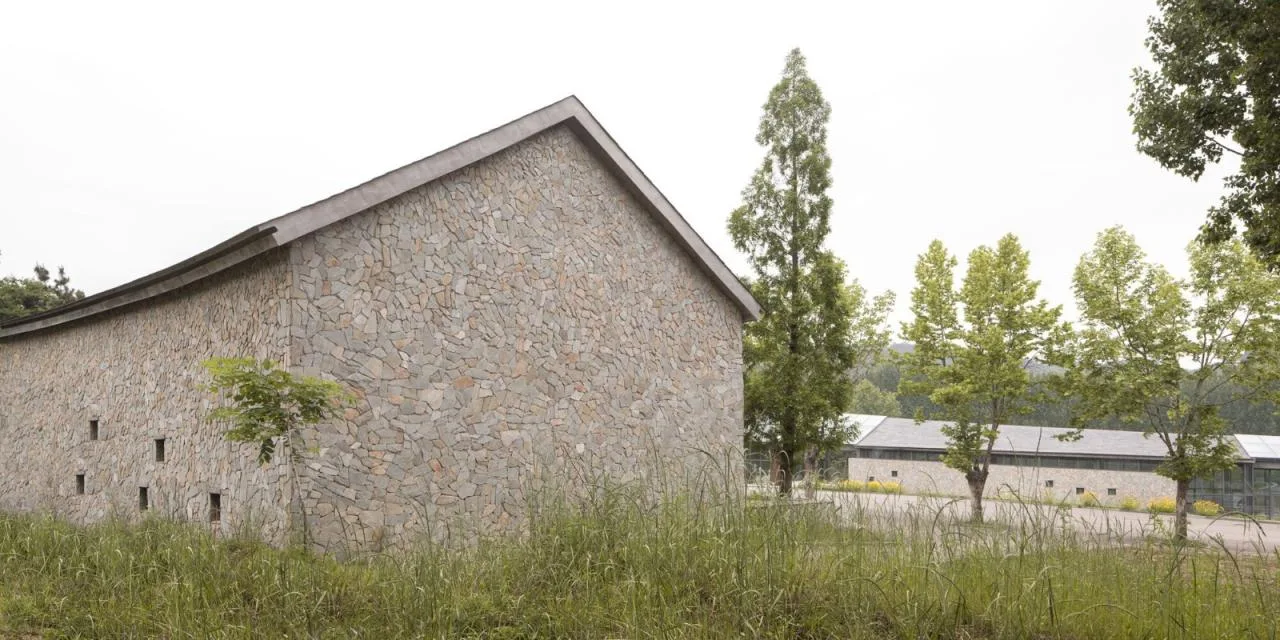
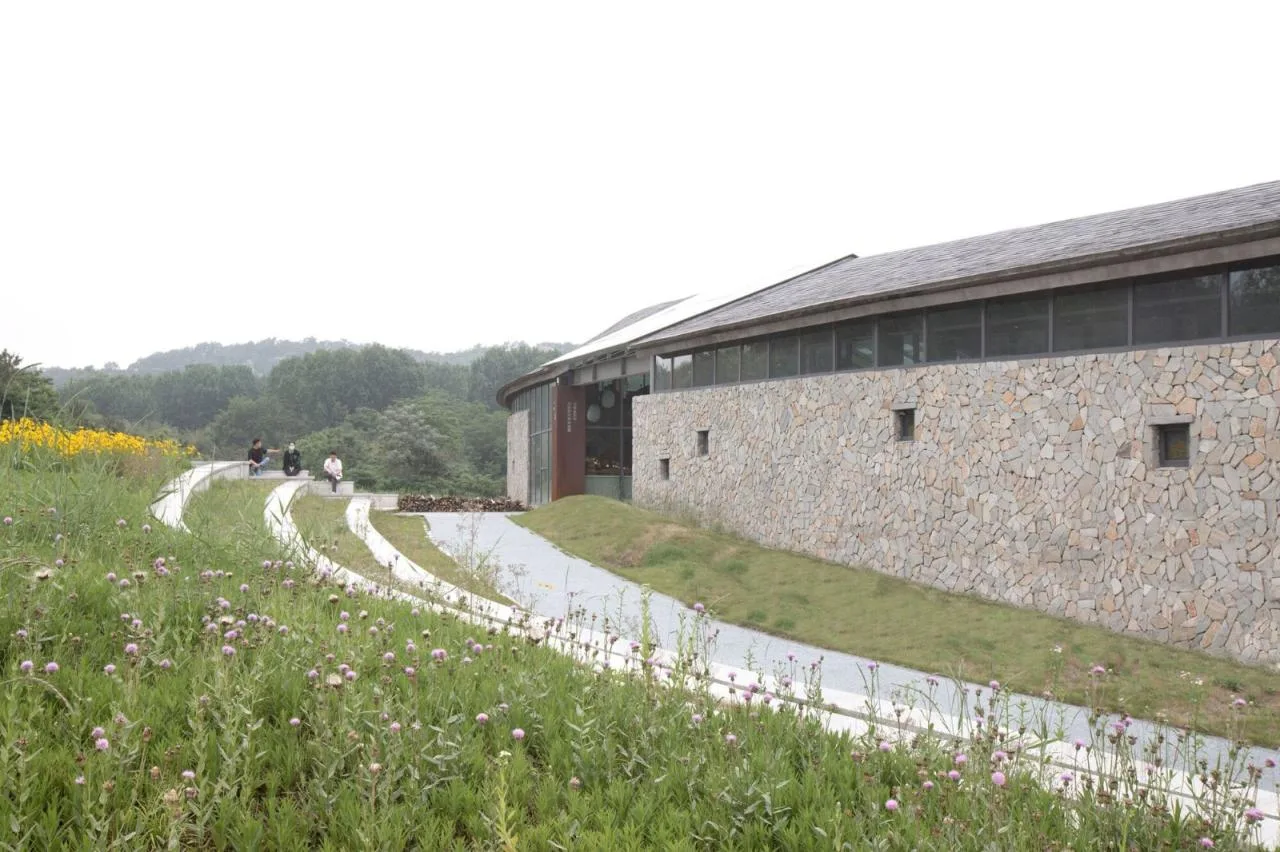
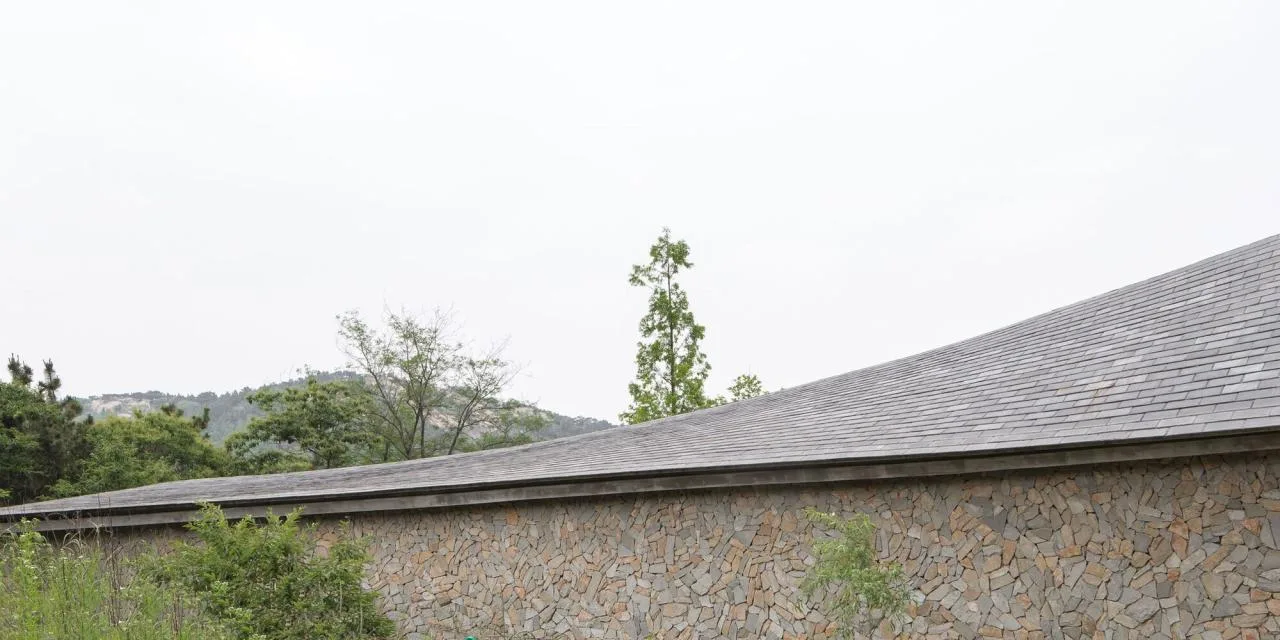
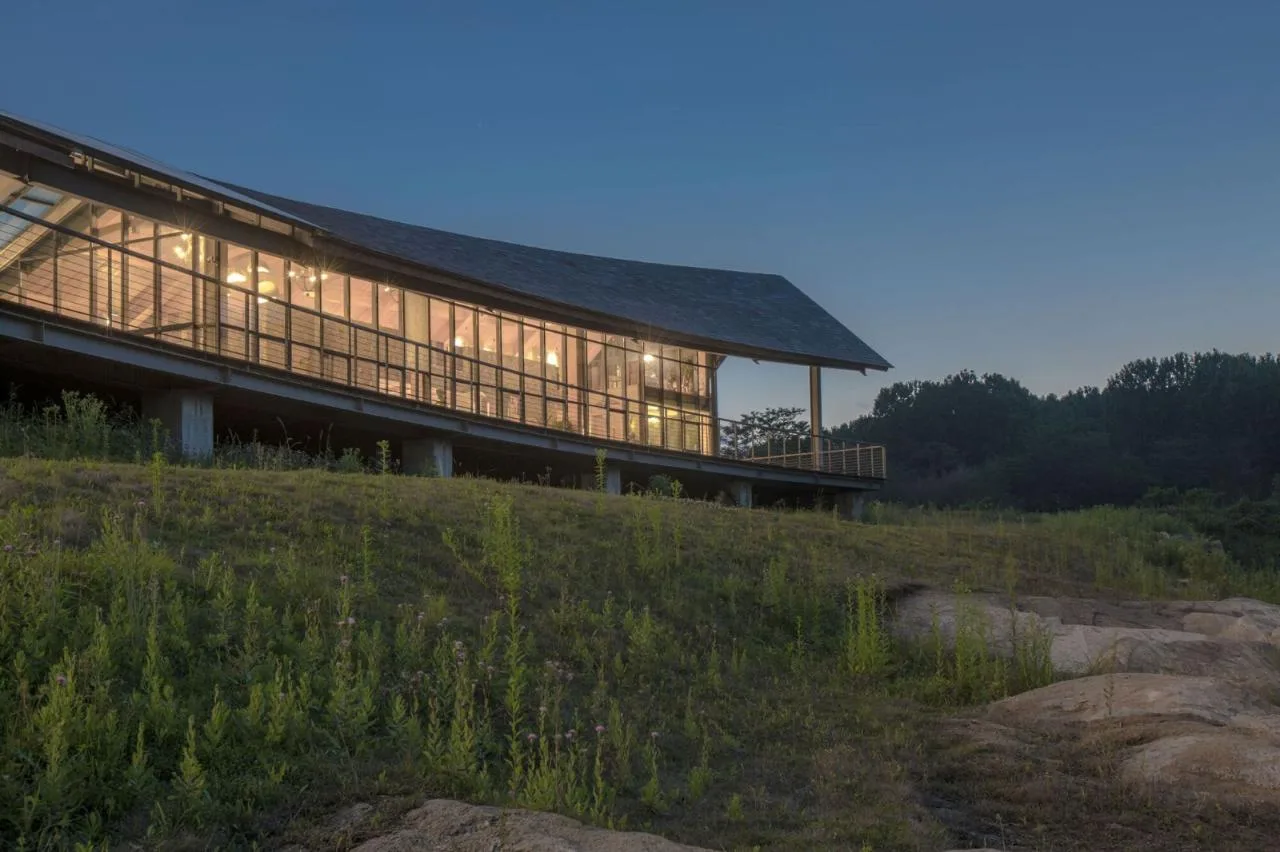
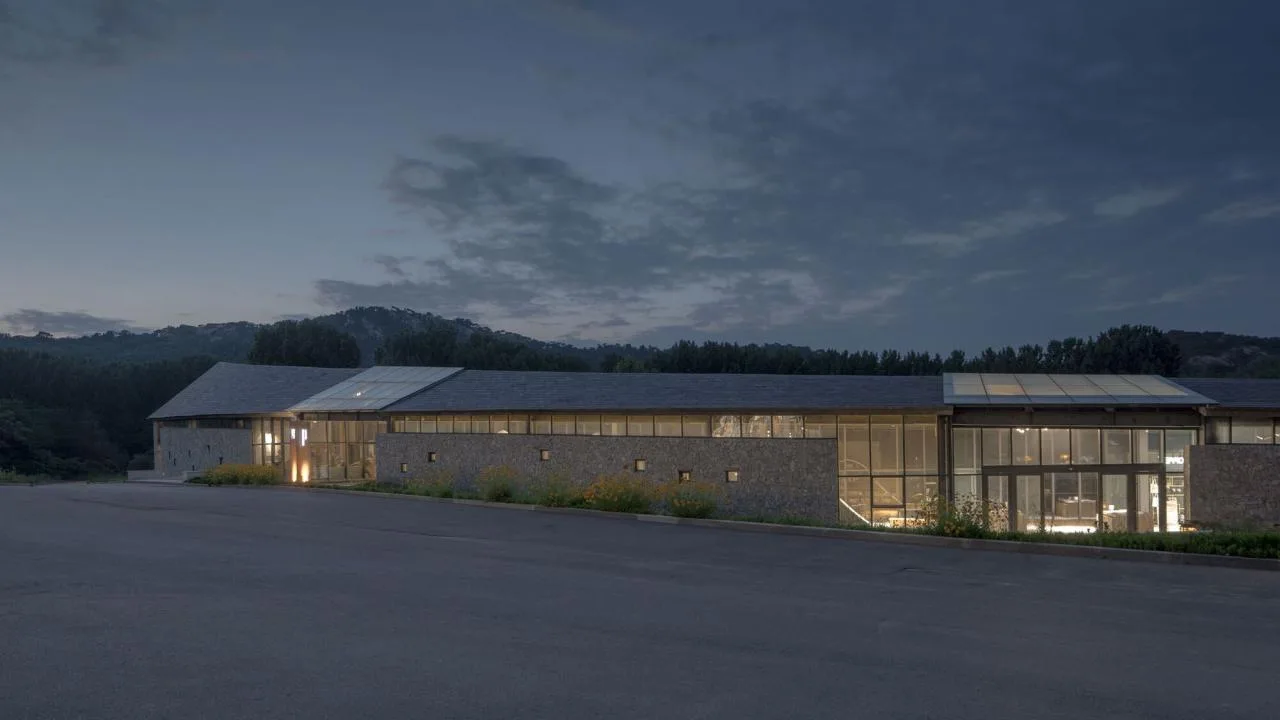
The architectural expression is clean and elegant, with buildings lower towards the entrance and gradually rising towards the mountain. The lower sections connect firmly to the earth with a heavy texture, while the upper parts ascend gracefully with geometric precision, reaching skyward. This design references the Chinese philosophy of harmony between heaven and humanity, embodying the Taoist concept that humans are intrinsically linked to both heaven and earth.
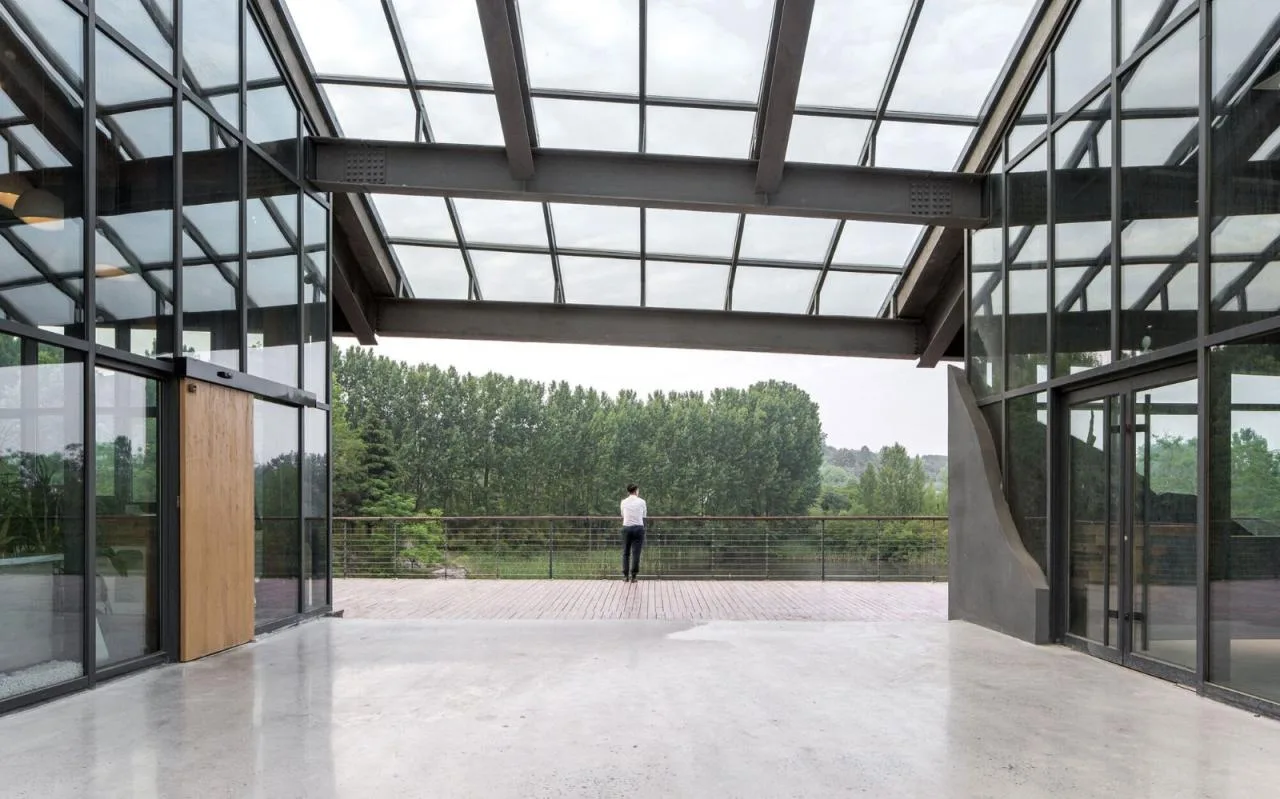
There is a dynamic dialogue between the curved structures, balanced by tension between the built forms and open spaces. The voids act as framed views, offering scenic vistas of the mountain landscape.
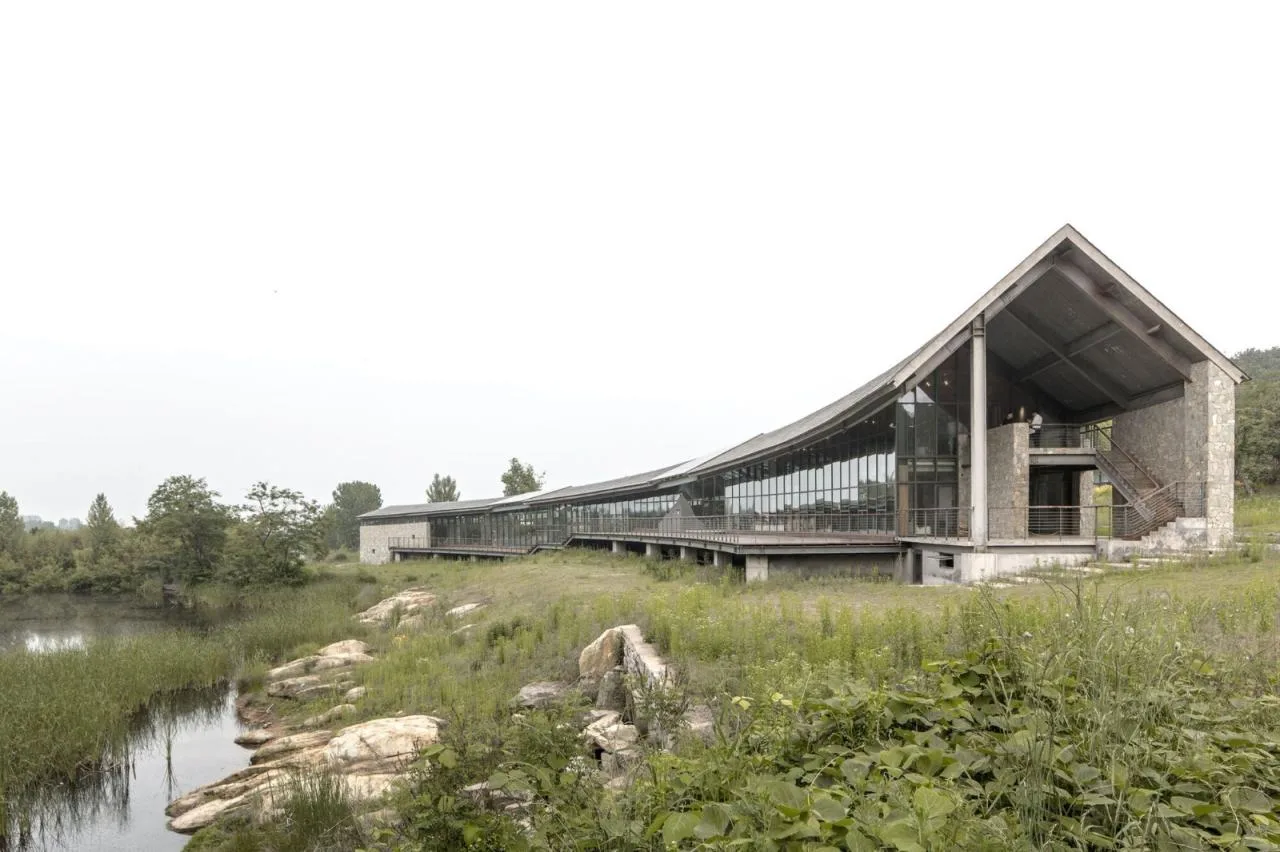
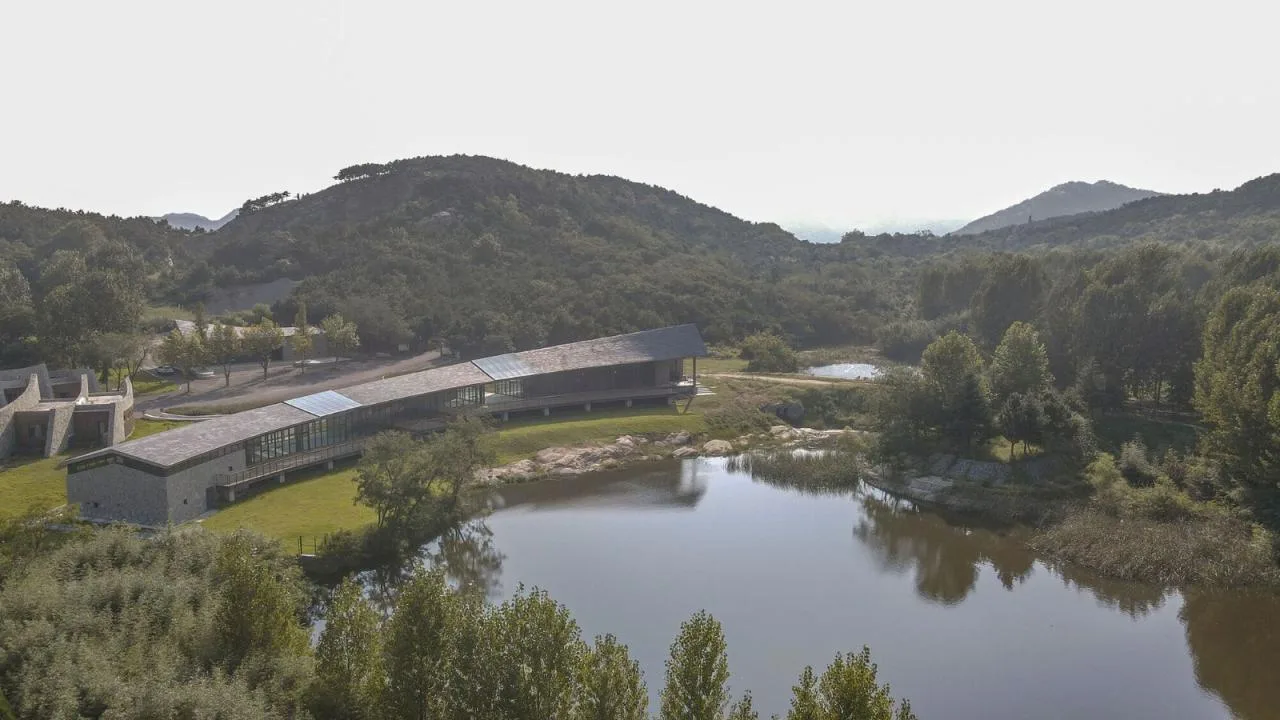
In China, modern tourist sites often follow a standard entrance sequence: a public square centered on commemorative sculptures, followed by a traditional entrance gate, then a ticket booth, and finally an information and reception center.
At Longshan, the entrance gate combines multiple functions: one side serves as the ticket office while the other handles security. This fusion of architecture and sculpture acts as a visual landmark, drawing visitors from a distance.
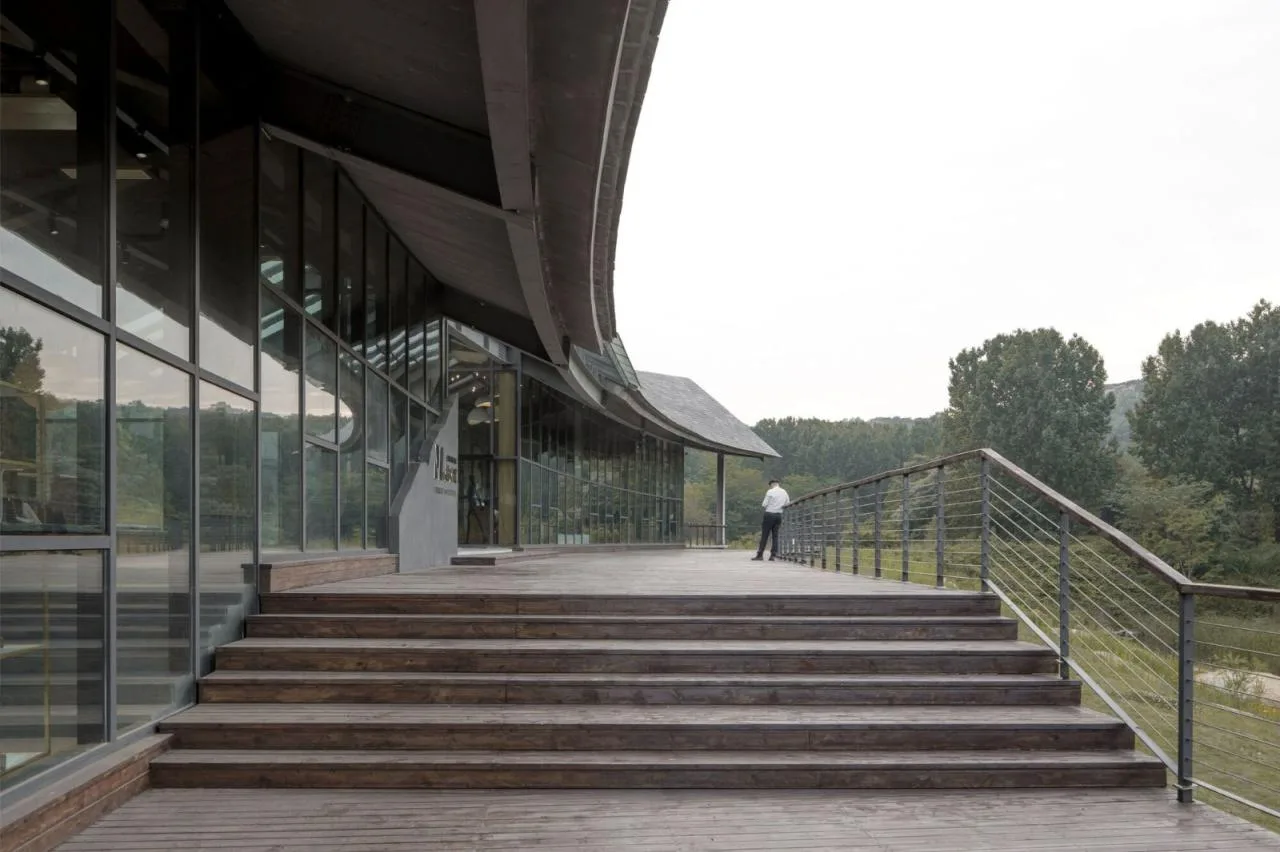
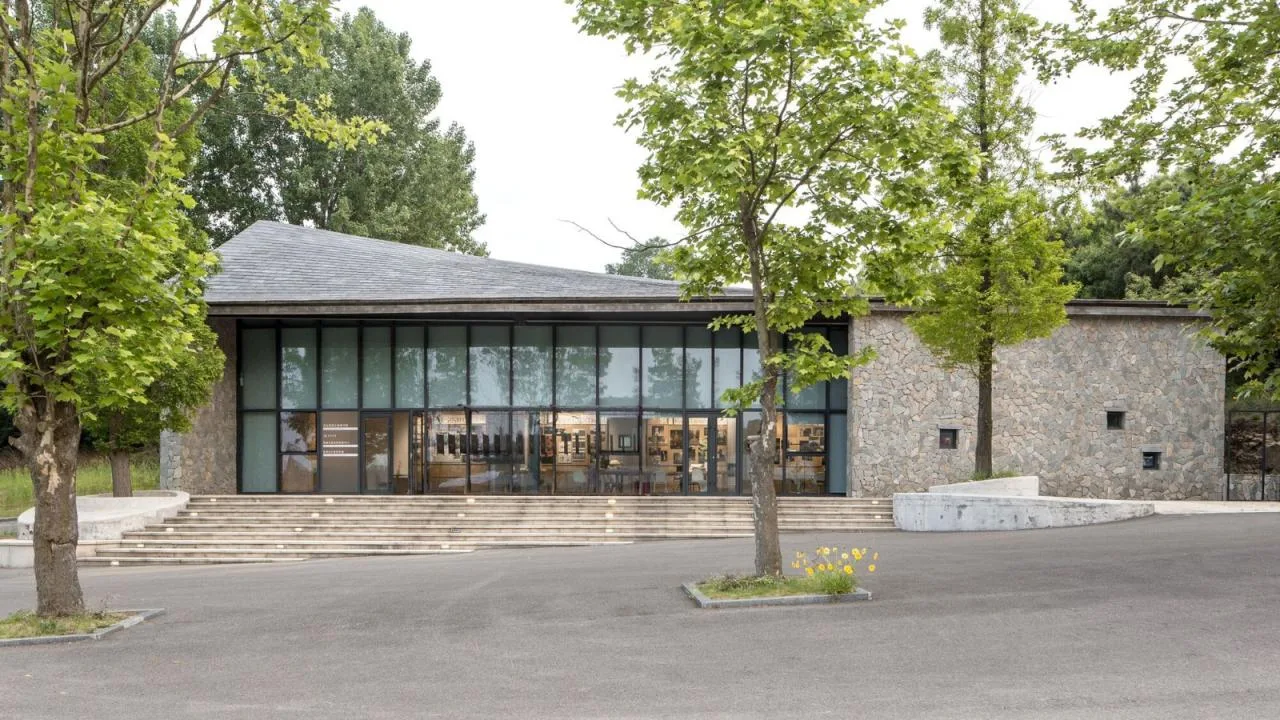
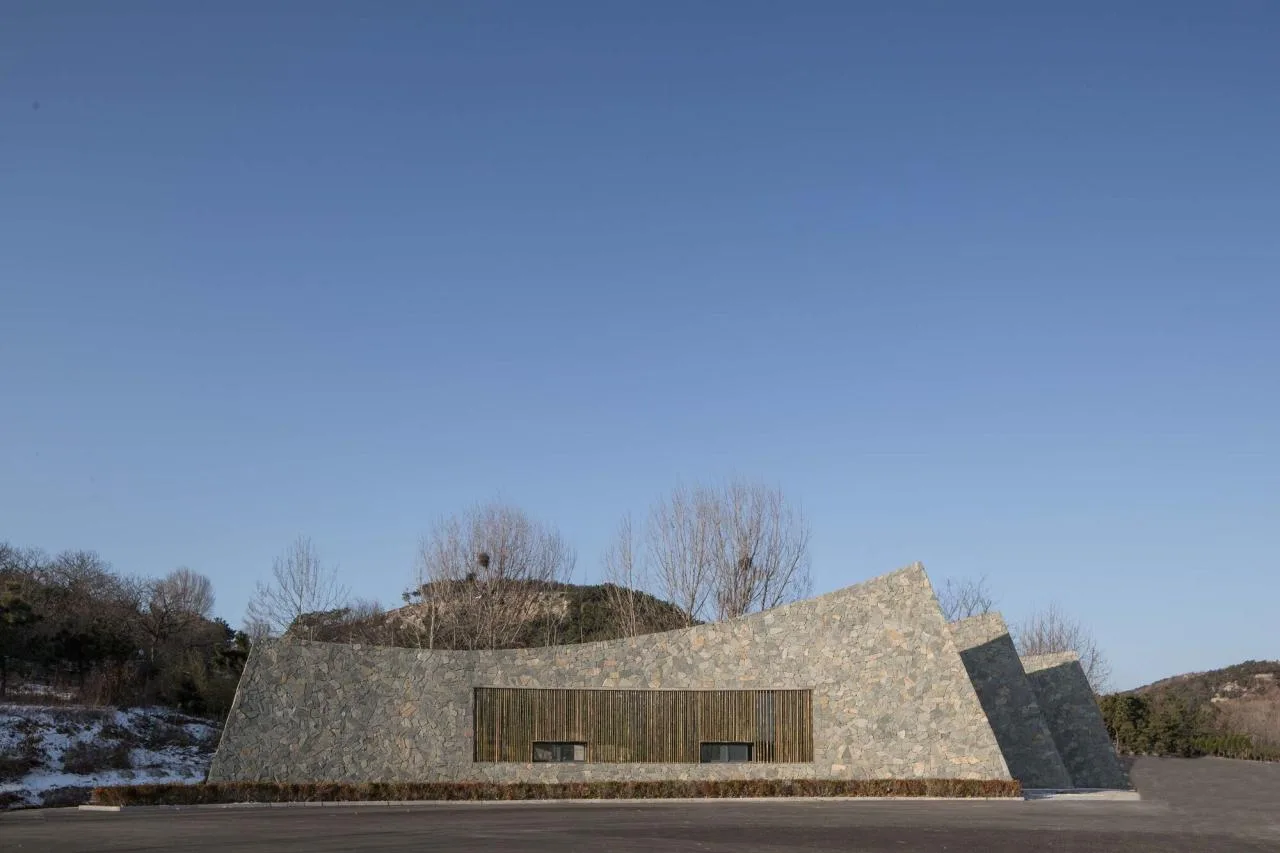
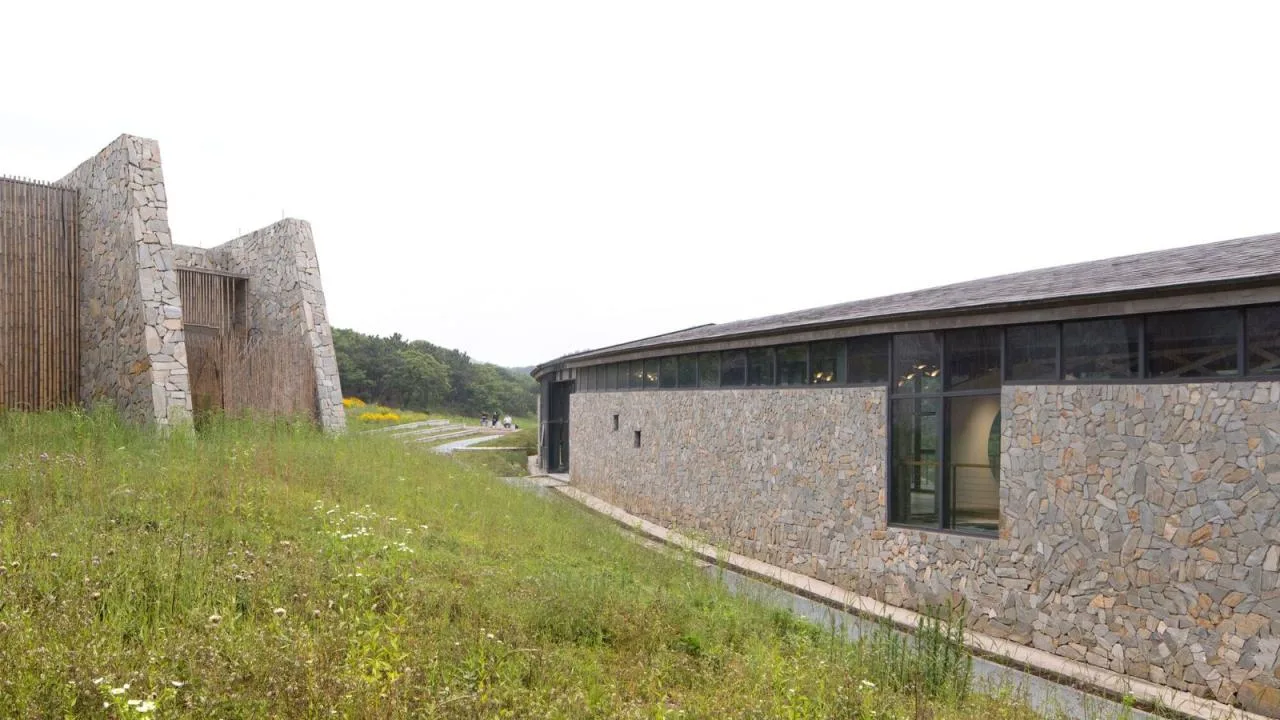
The gate itself consists of three curved walls, a common urban public space arrangement, forming and defining the public square outside the site. These walls anchor firmly to the earth at their base and converge upward like a mountain peak, symbolizing the triad of the universe: heaven, earth, and humanity.
Instead of a grandiose gate, the design embraces blank space, framing distant mountain views and inviting contemplation.
The continuous walls evoke historical defensive city and palace fortifications. They create a spatial sequence that leads visitors to discover the entrances to each individual building as they move through the site.
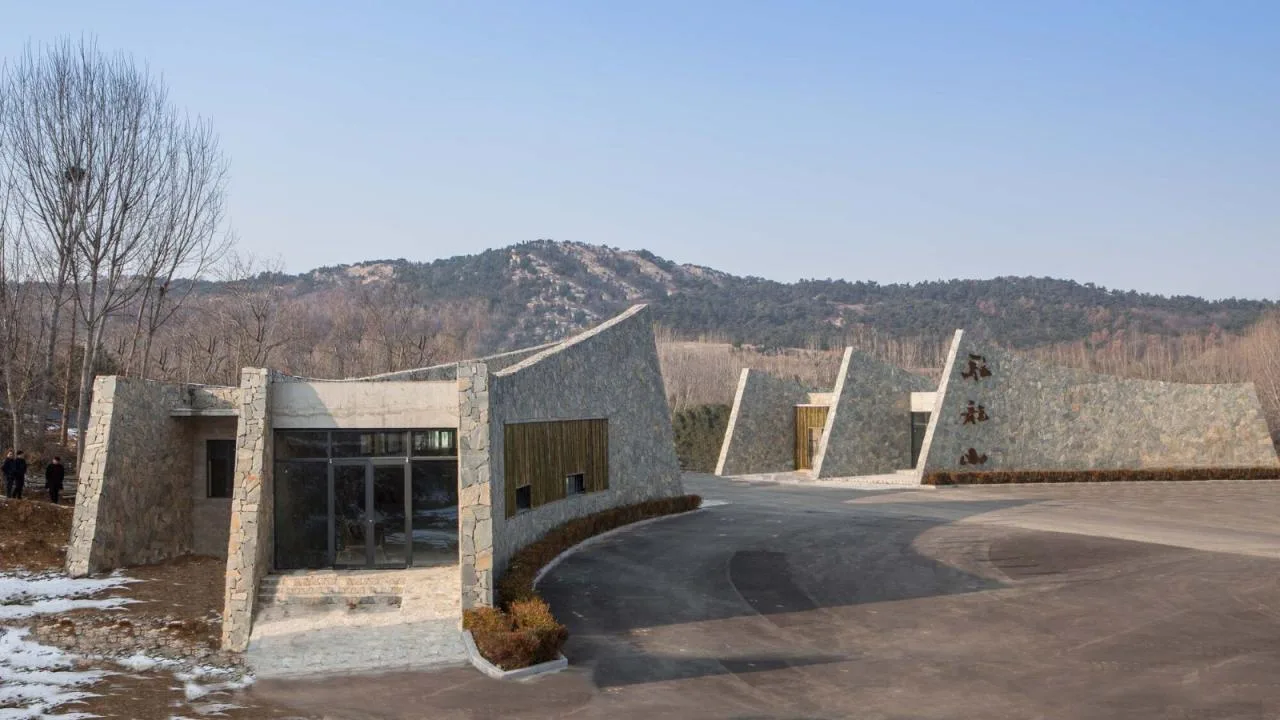
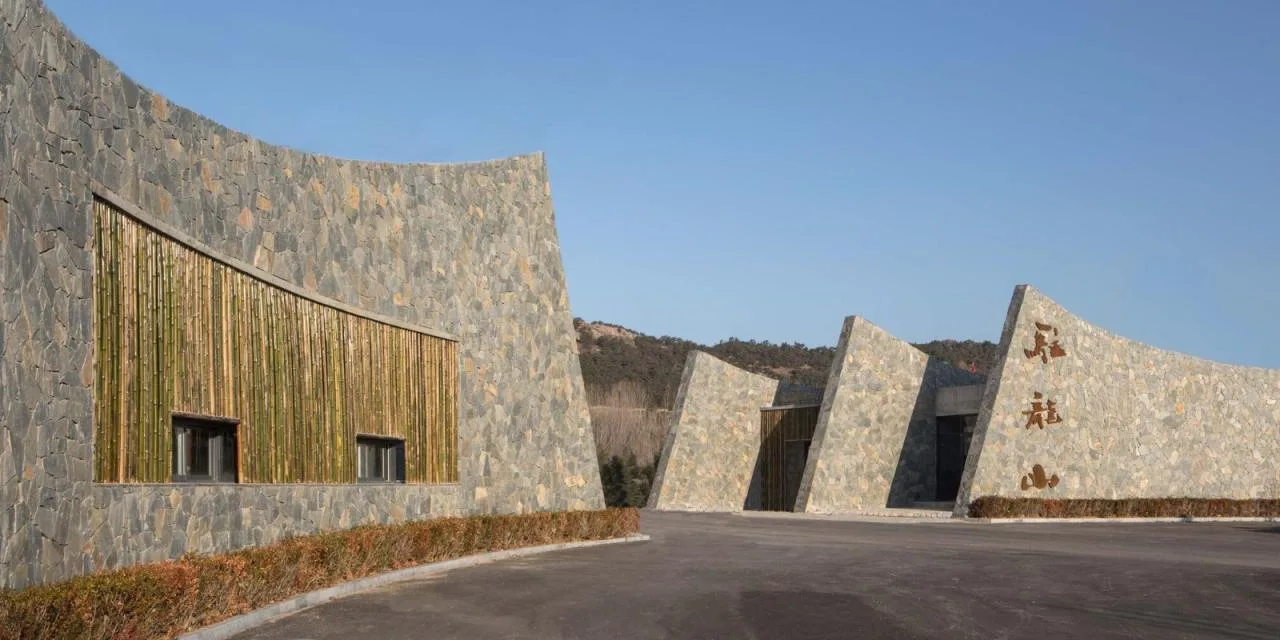
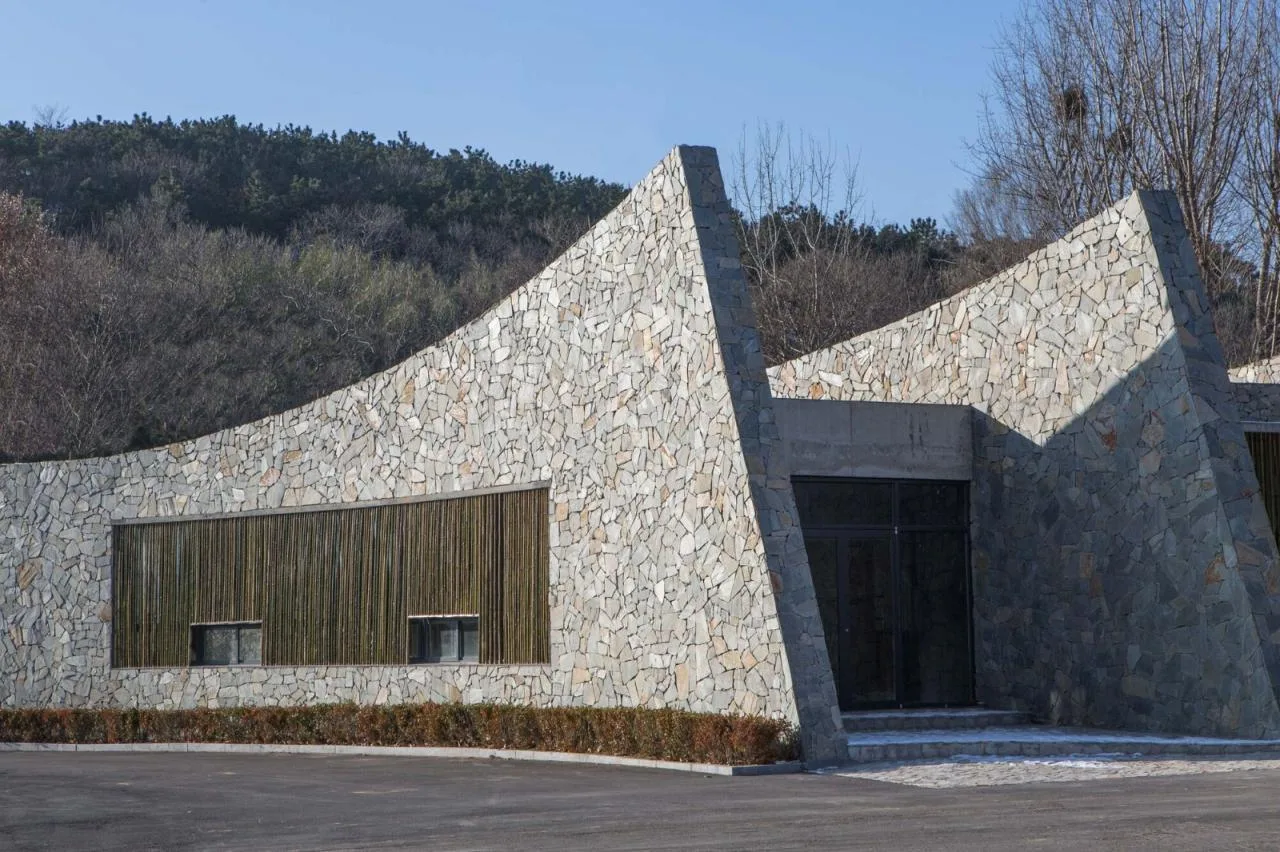
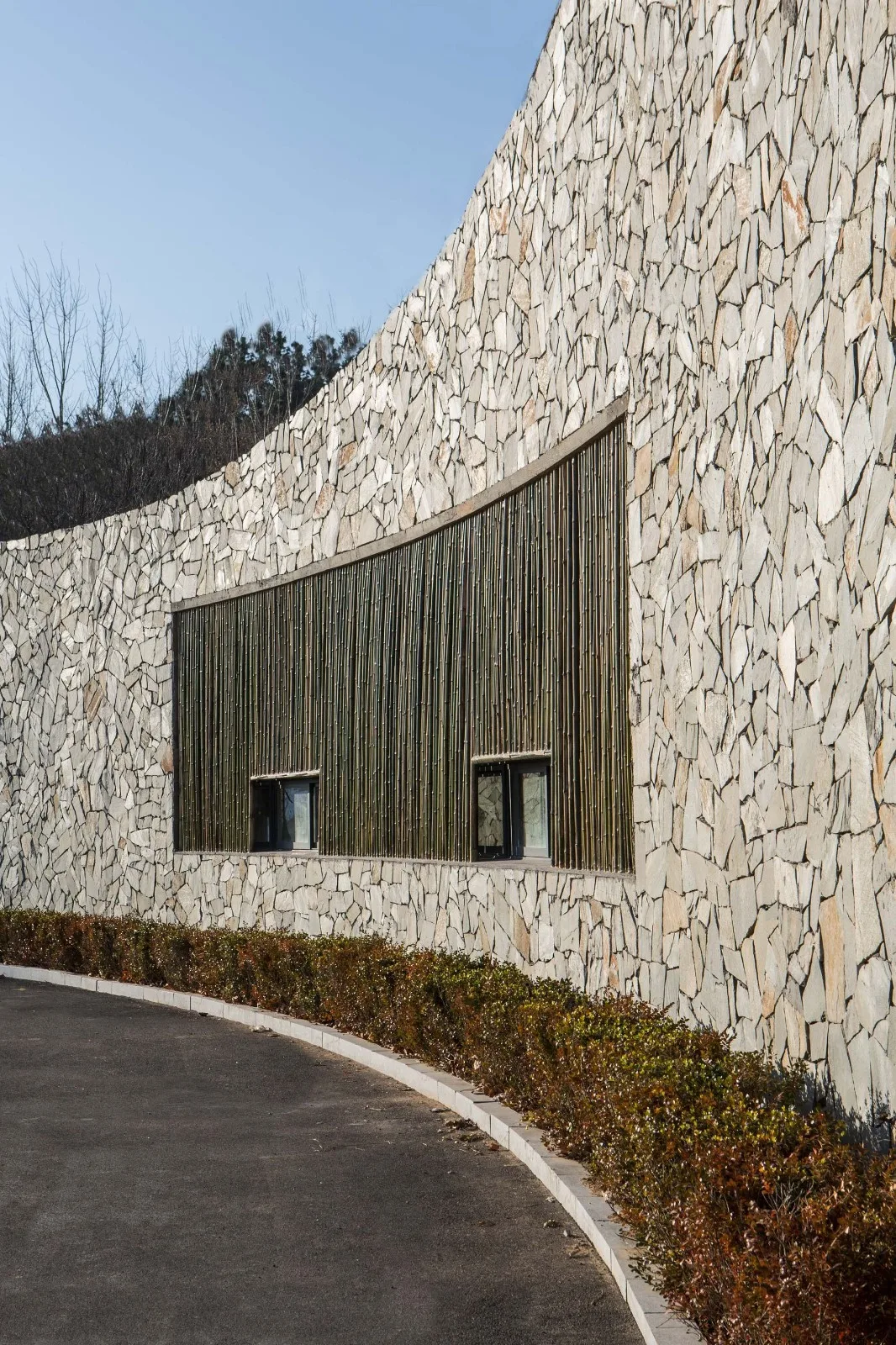
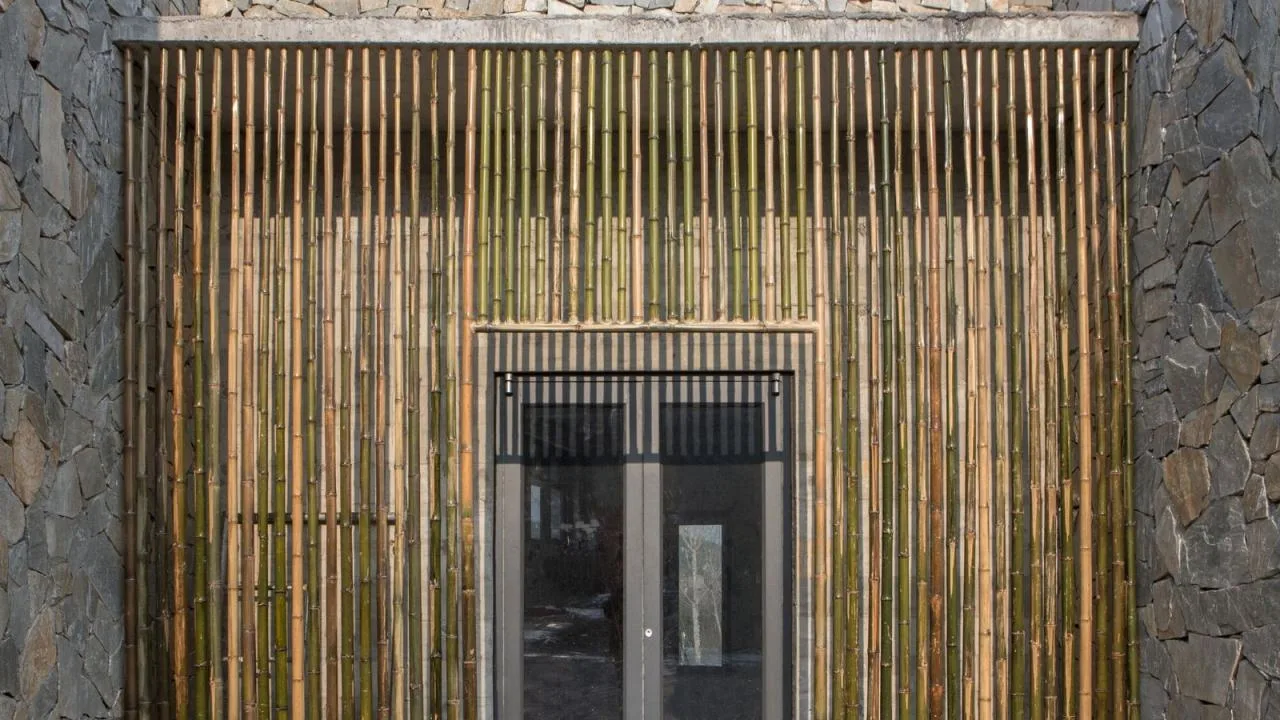
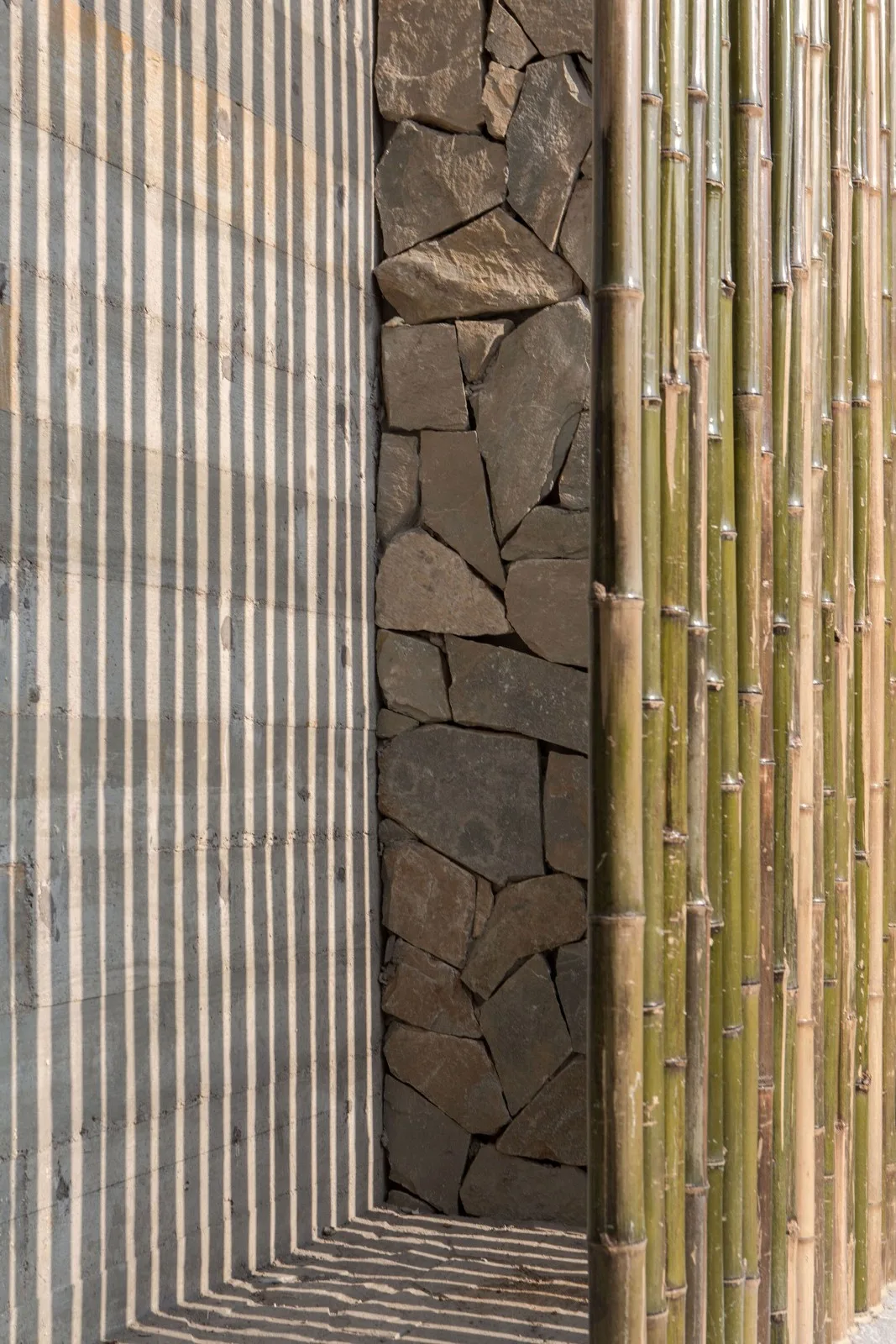
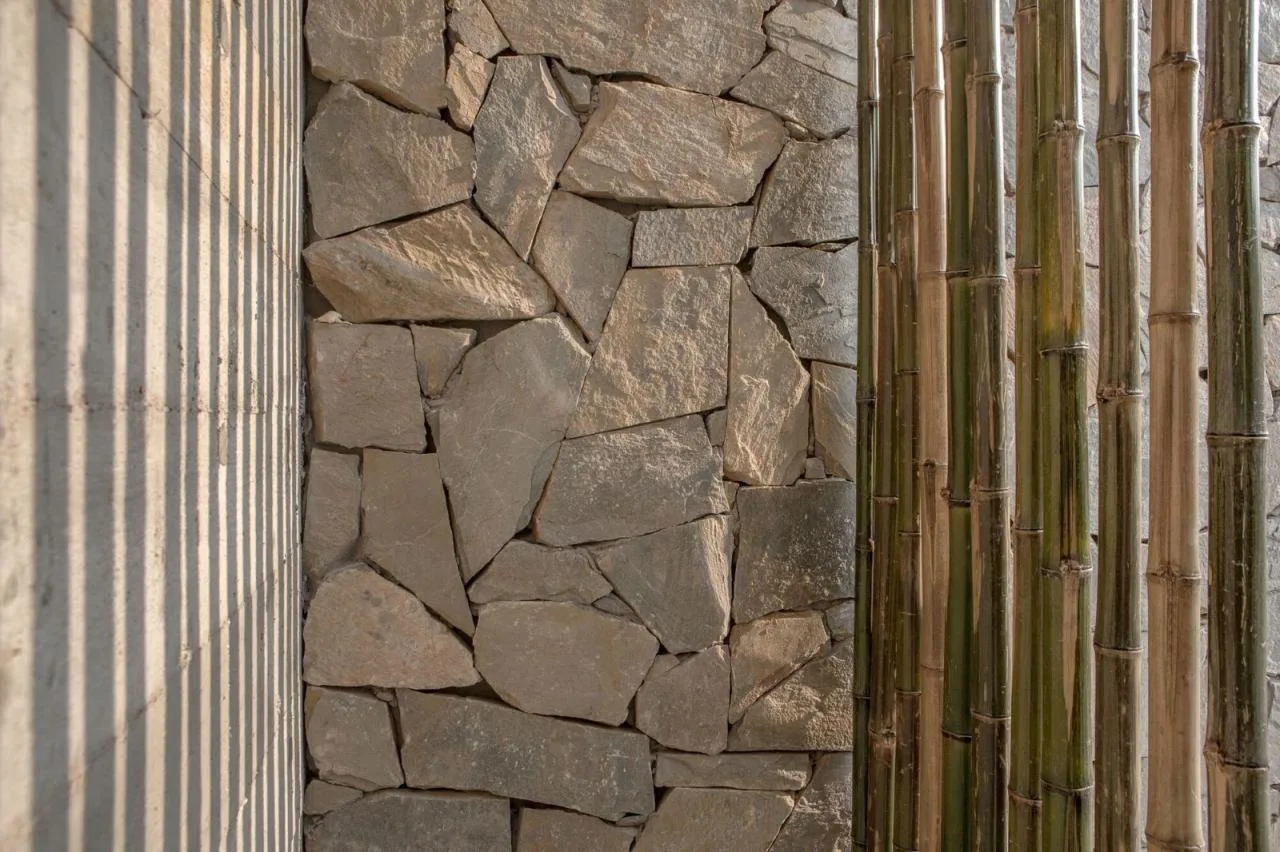
The stone veneer material reflects a deep connection to the earth, seamlessly blending the gate with its natural surroundings and local architectural styles. Concrete cast from wooden formwork showcases natural irregularities, enabling even unskilled laborers to execute the construction efficiently.
A natural bamboo screen creates a subtle transitional layer between the large concrete and rubble blocks and the transparent glass elements.
Project Drawings
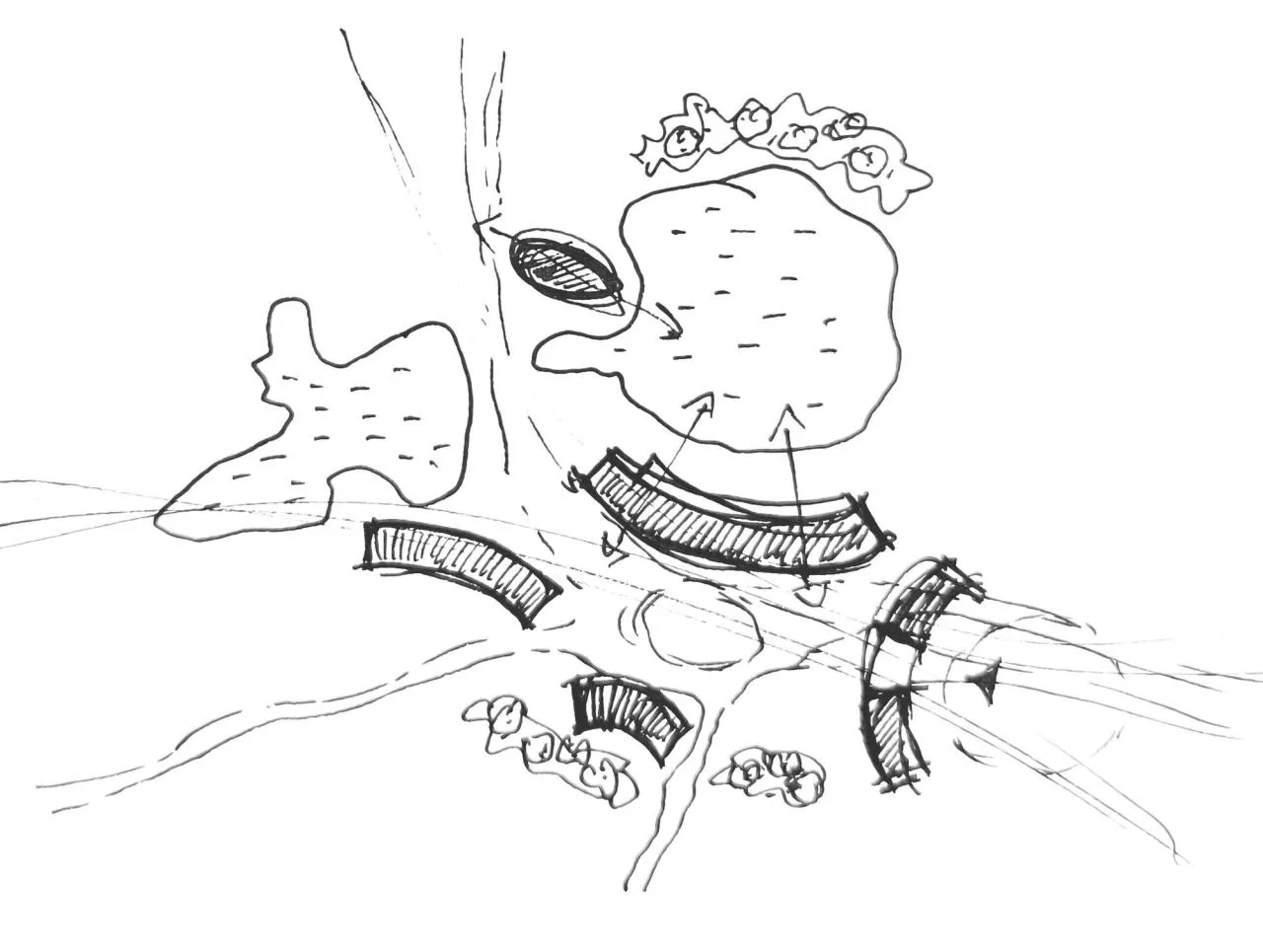
△ Hand-drawn Analysis Diagram
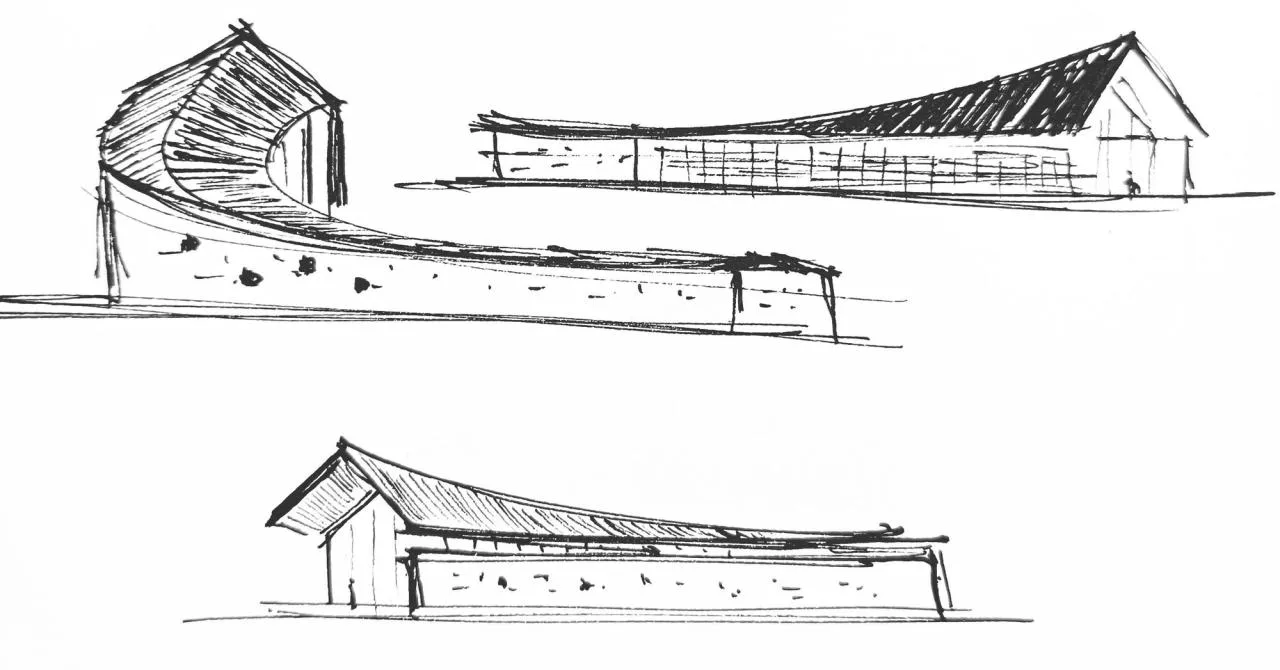
△ Hand-drawn Analysis Diagram
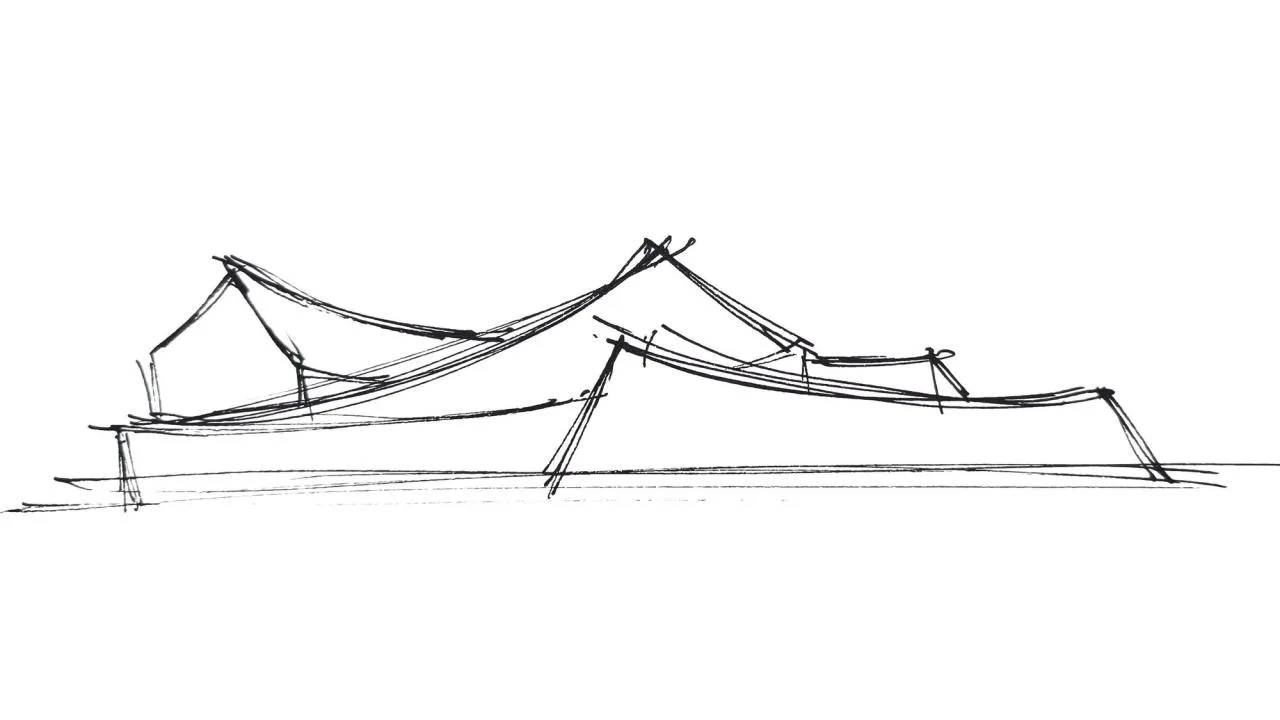
△ Hand-drawn Analysis Diagram
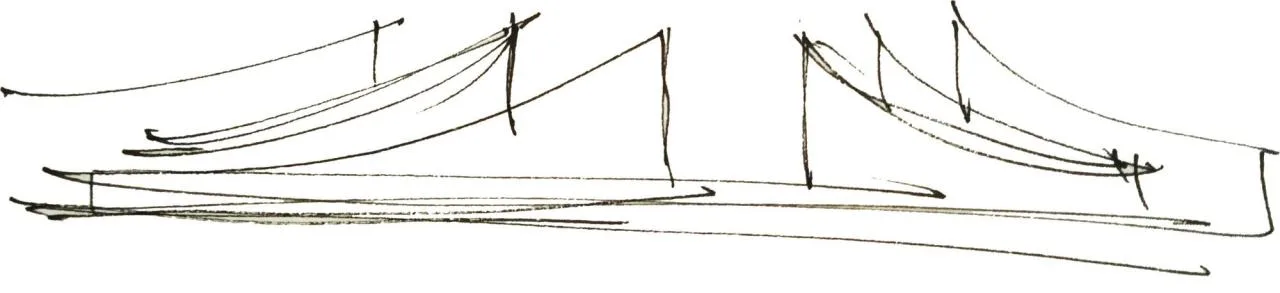
△ Hand-drawn Analysis Diagram
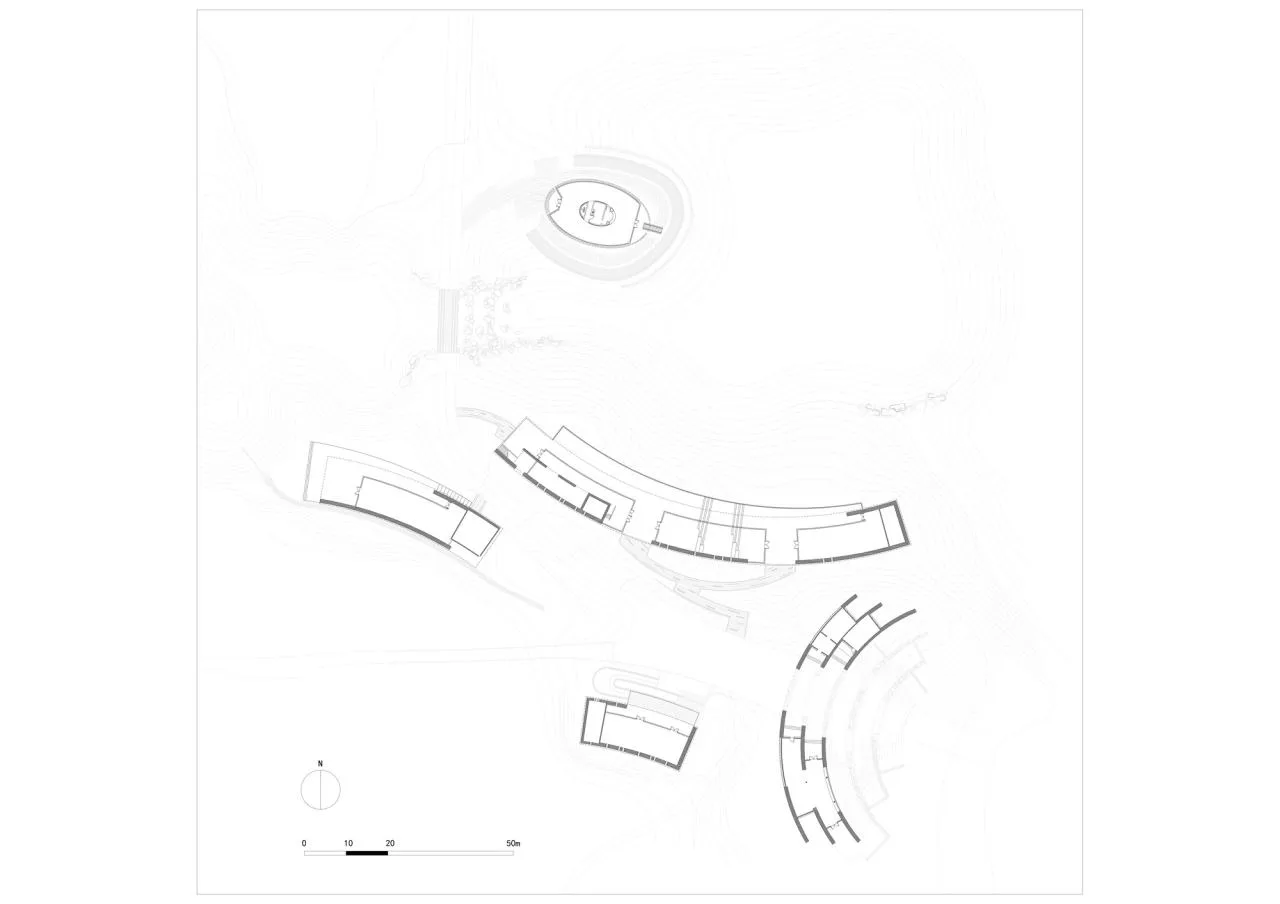
△ General Layout Plan
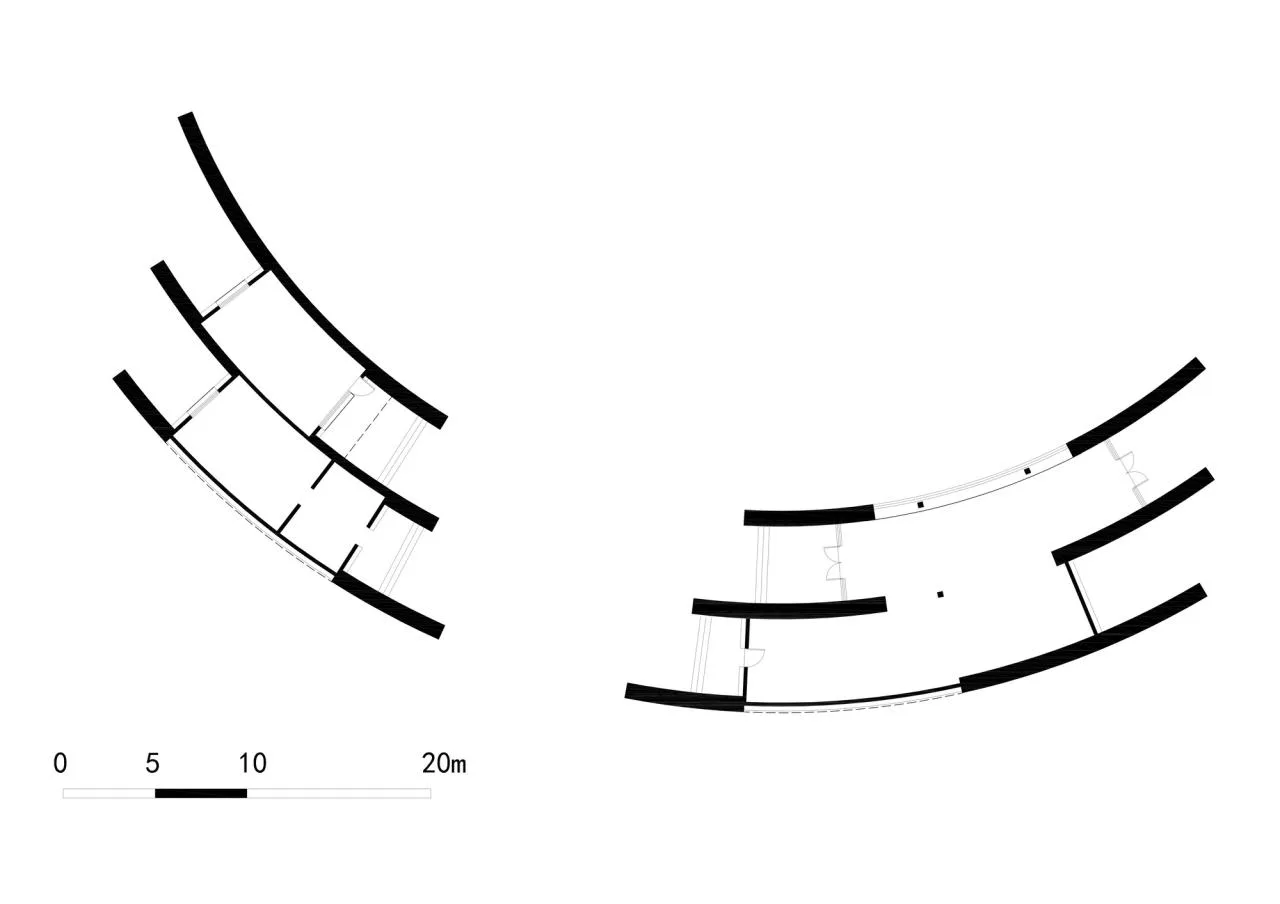
△ Gate Plan
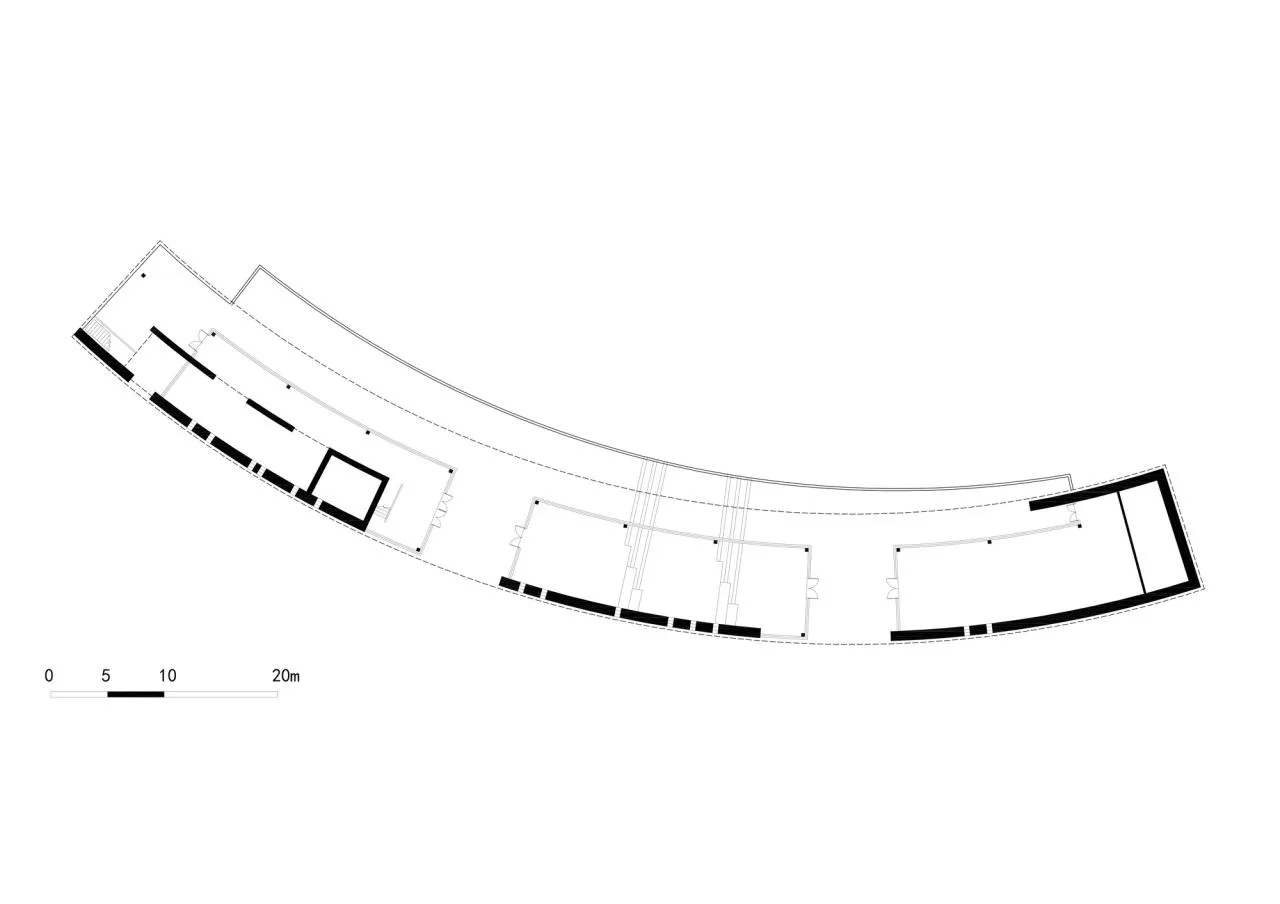
△ Plan View
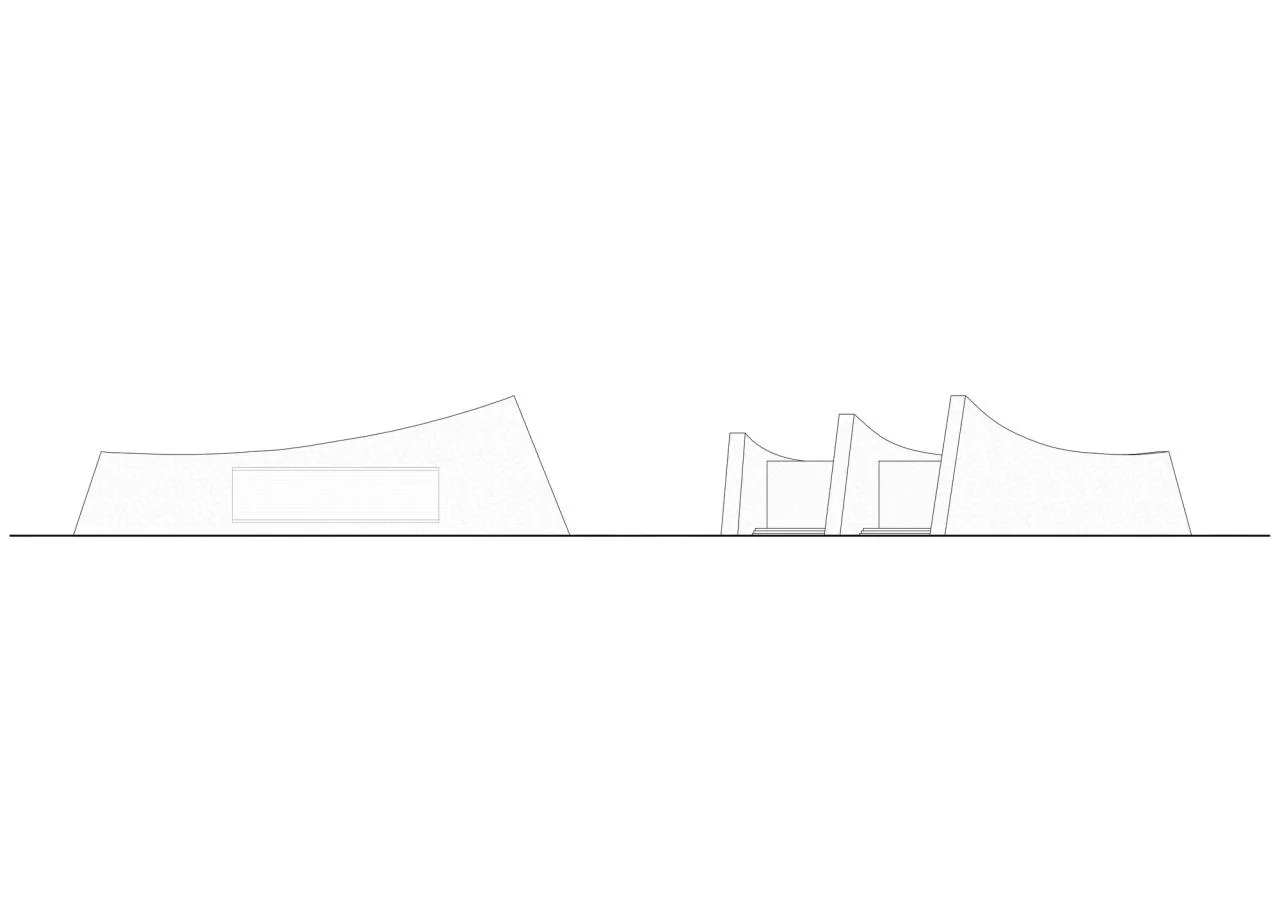
△ Elevation Drawing
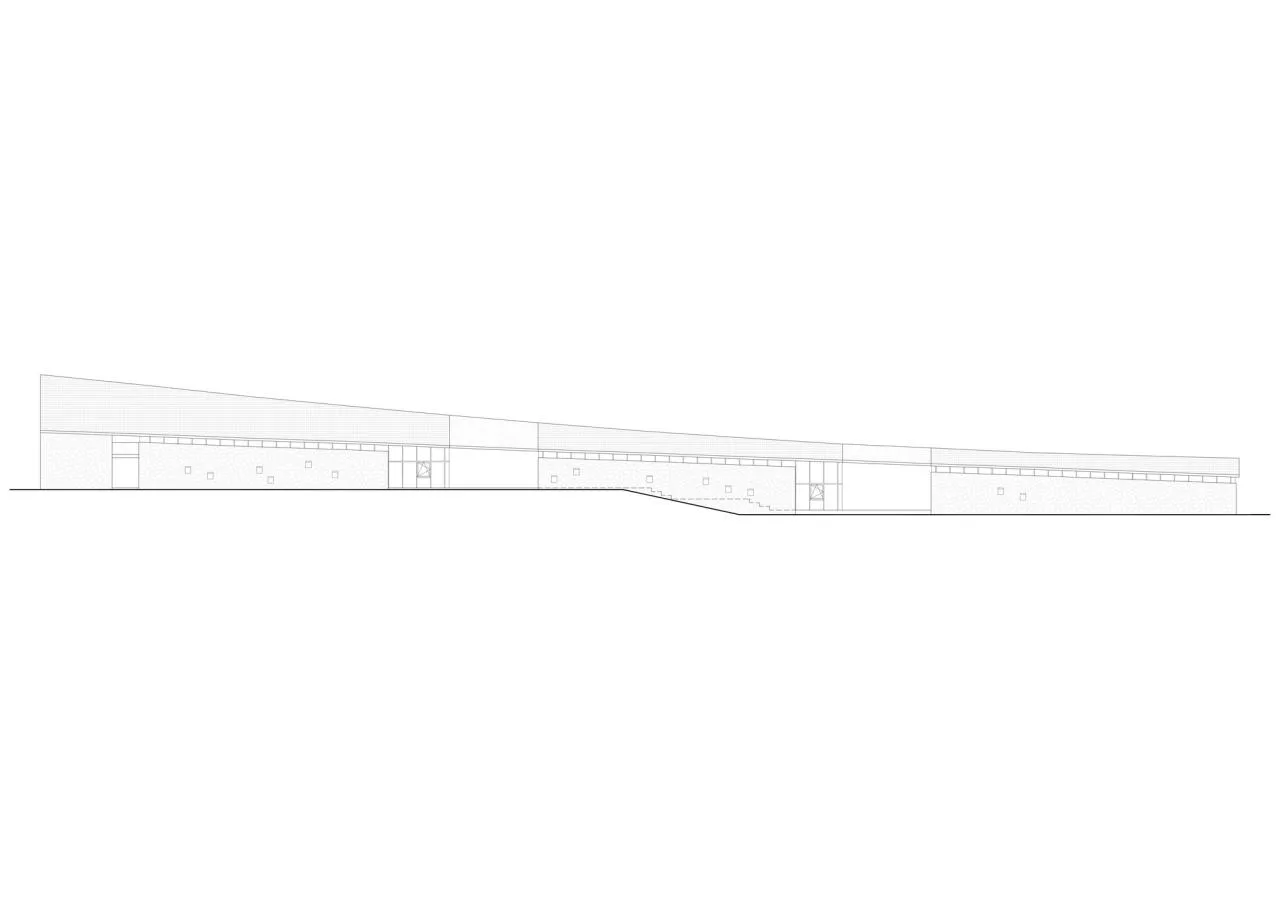
△ Elevation Drawing
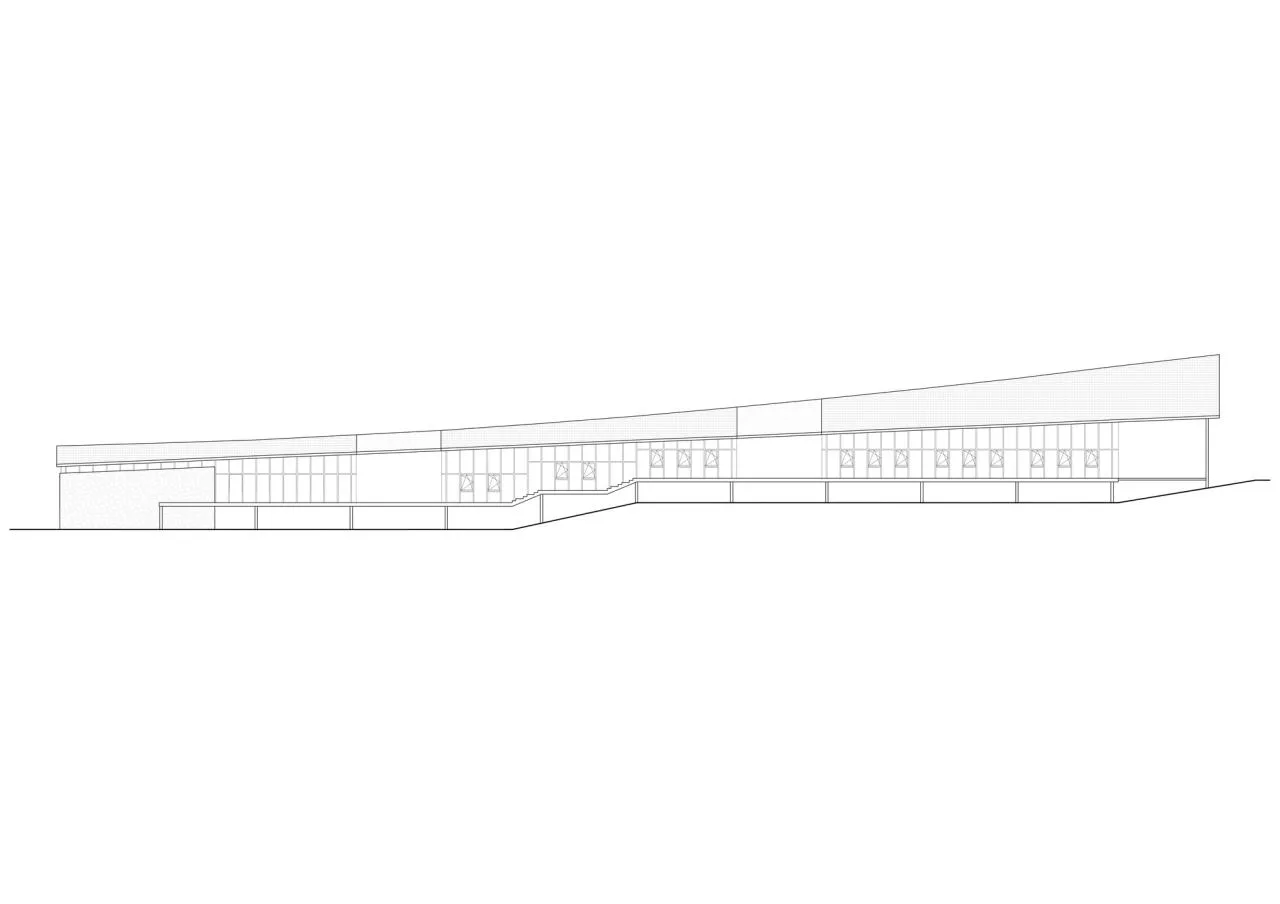
△ Elevation Drawing
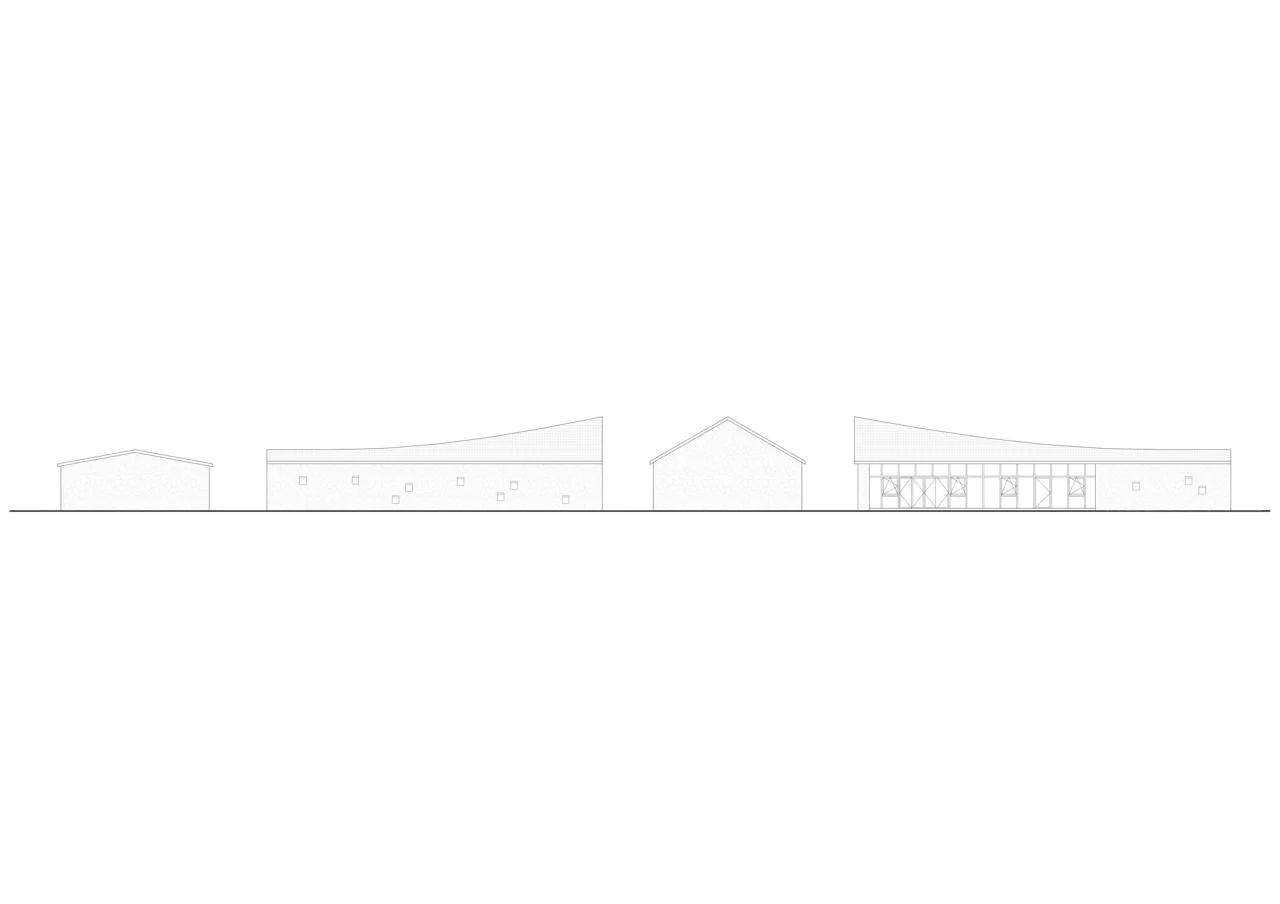
△ Elevation Drawing
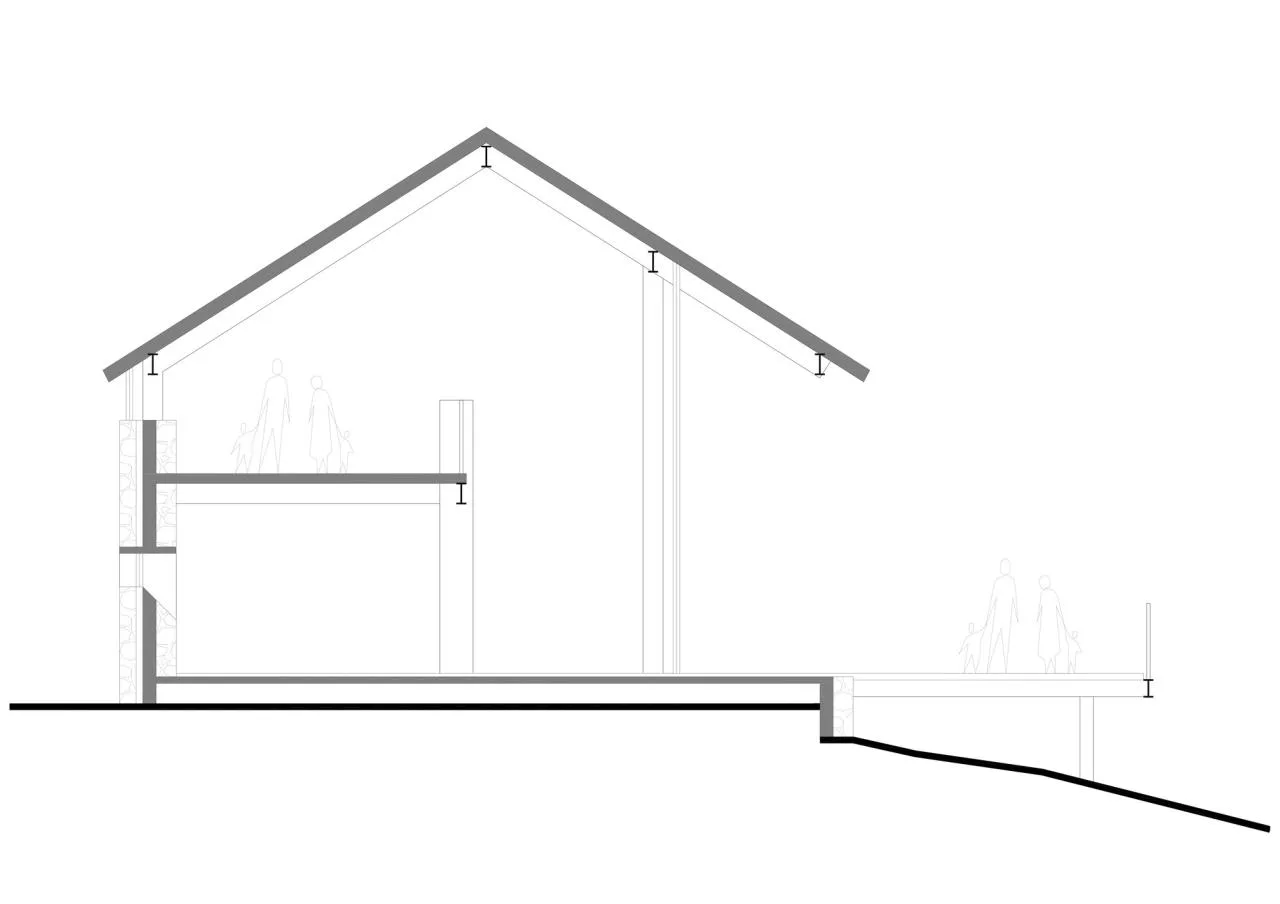
△ Section Diagram
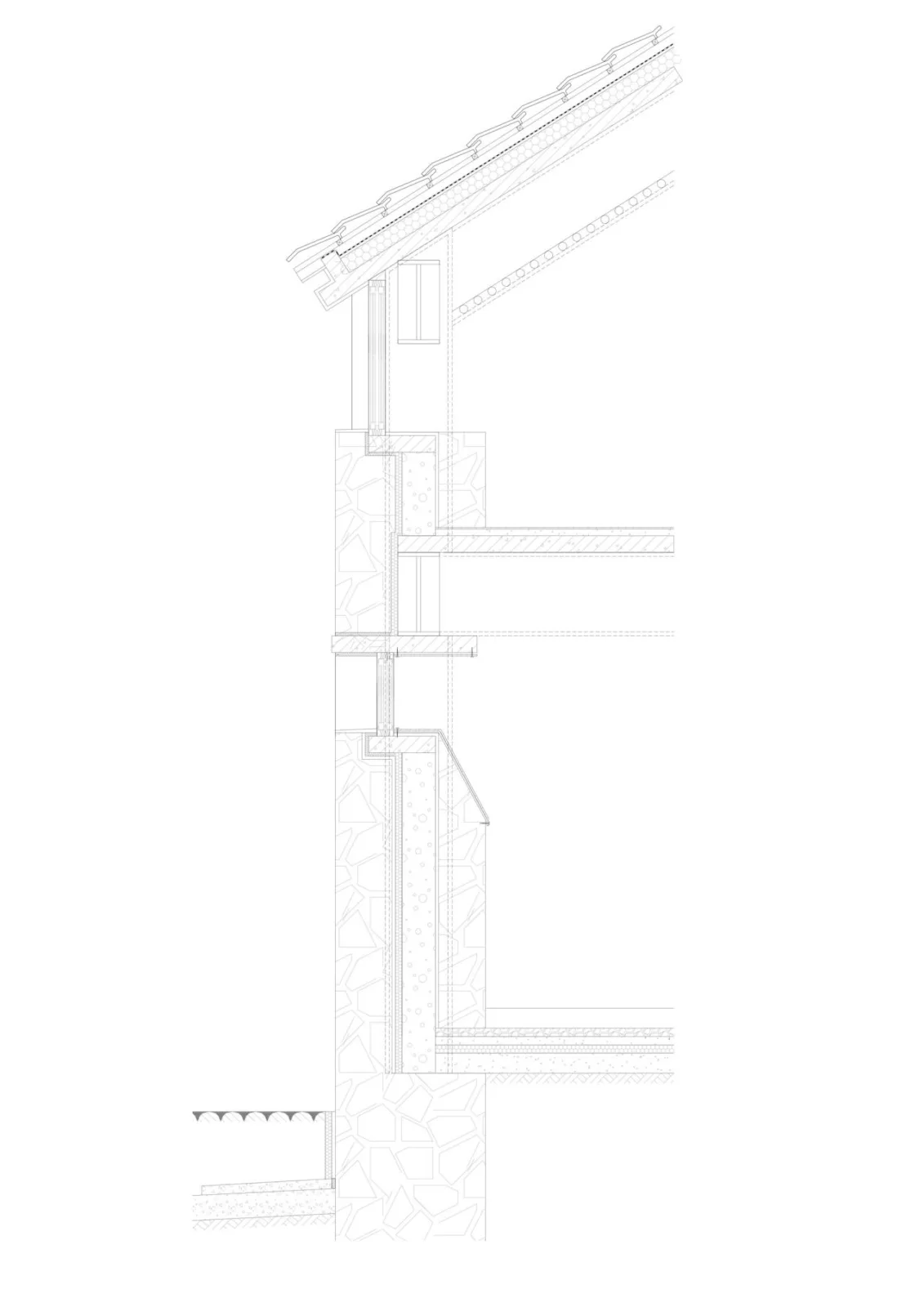
△ Detailed Structural Drawing
Project Information
Architect: Aurelien Chen
Area: 1,700m²
Project Year: 2023
Photographer: Aurelien Chen
Project Leaders: Aurelien Chen, Wu Yixia (China Construction Design Urban Rural and Landscape Architecture Planning and Design Institute)
Chief Architect: Aurelien Chen
Design Team: Aurelien Chen, Ma Jing, Wang Manyu
Principal: Rizhao Fada Group
Collaboration Unit: Li Feng Architectural Design Studio
Location: Rizhao, China












Must log in before commenting!
Sign Up