
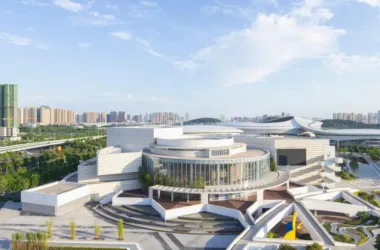
The Shenzhen Mangrove Wetland Museum, also known as the China Mangrove Museum, is a national first-class institution jointly established by the National Forestry and Grassland Administration and the Shenzhen Municipal People’s Government. In this international competition, a design consortium composed of Shenzhen Bureau Architecture, Beijing Prolar Architecture, and Shenzhen Botao Landscape distinguished itself among nearly a hundred global participants and advanced to the second round. Seizing this opportunity, we present a vision for Shenzhen’s future city that harmoniously integrates culture and nature.
Amid the rapid expansion of urban public cultural facilities in Shenzhen, can museums transcend their traditional role to become not only “urban artworks” but also open, inclusive, and human-centered infrastructures? Our proposal introduces a novel “landscape infrastructure” atop the subway site. Employing modular structures and multifunctionality, the new Mangrove Wetland Museum emerges as a dynamic, evolving, walkable, and inhabitable “citizen space” and natural park.
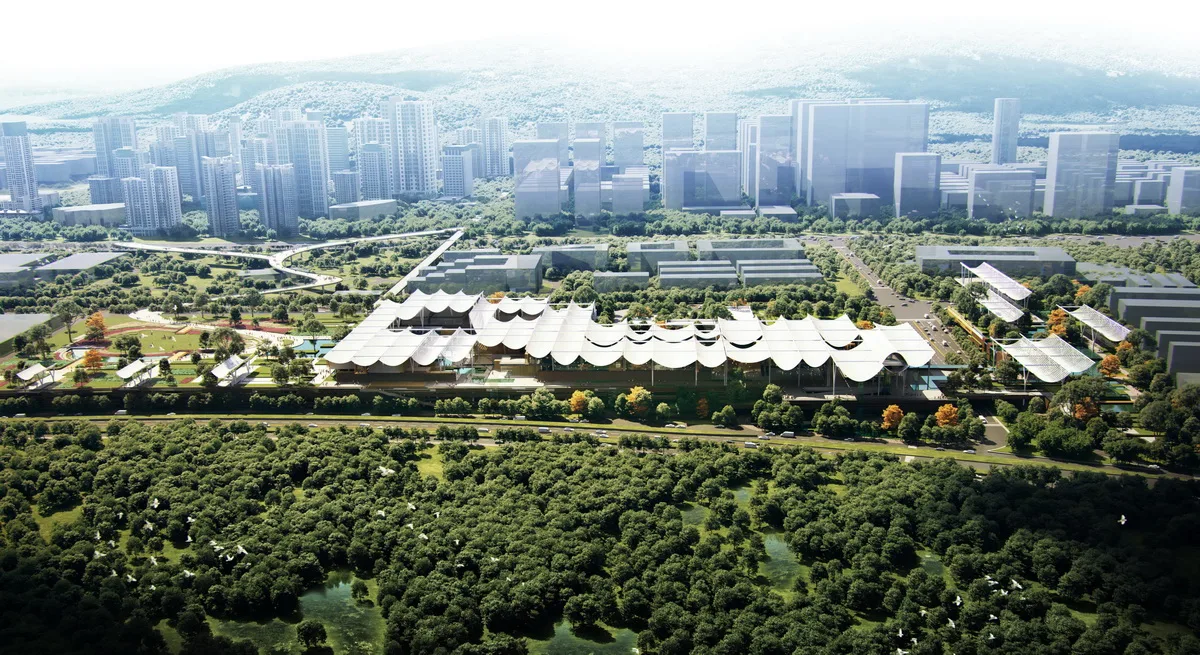
△ Bird’s-eye view of the museum
Red Tree Wings: A New Urban Ideal as Landscape Infrastructure
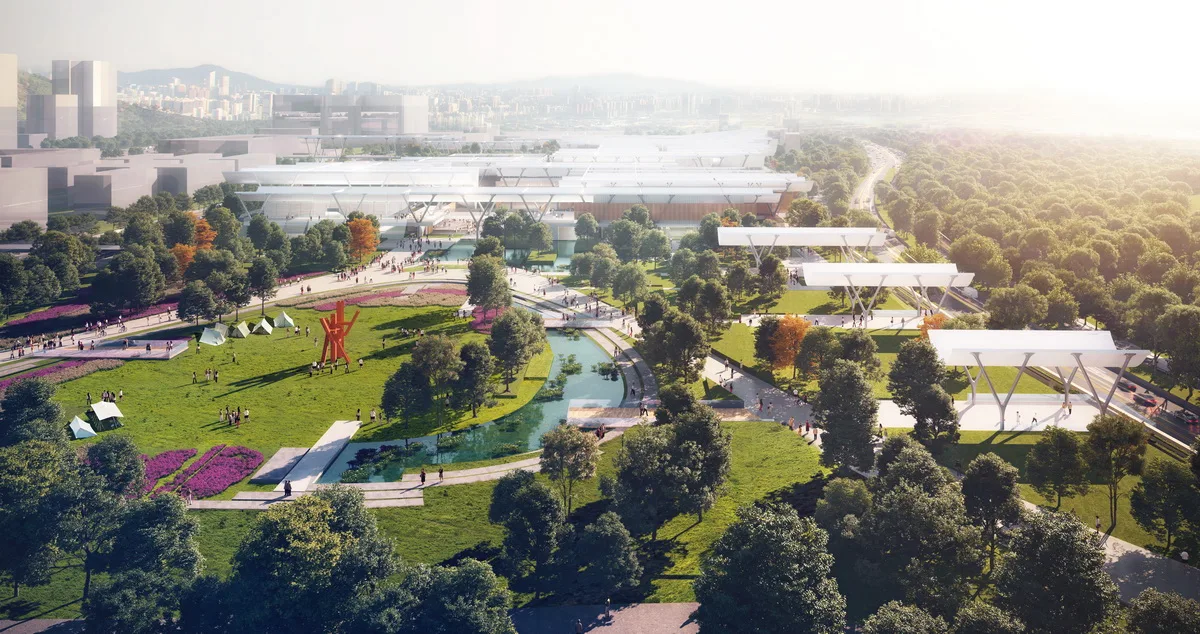
△ Evening aerial perspective
The Mangrove Museum is planned to cover approximately 130,000 square meters, with a total built area near 39,500 square meters. It is poised to become a key cultural and public service facility for Shenzhen’s future. The main structure will be positioned atop the Qiaocheng East Rolling Stock Depot of Shenzhen Metro Line 9. While the depot site has been fully completed, the design must carefully activate the space above, adhering to load limits and existing constraints.
Our approach is to intervene lightly and simply, transforming the site into a bridge between city and nature. This ensures functional use while minimizing structural pressure. Modularity governs the formation of the entire structure and spatial layout, aligning with the original structural grid.
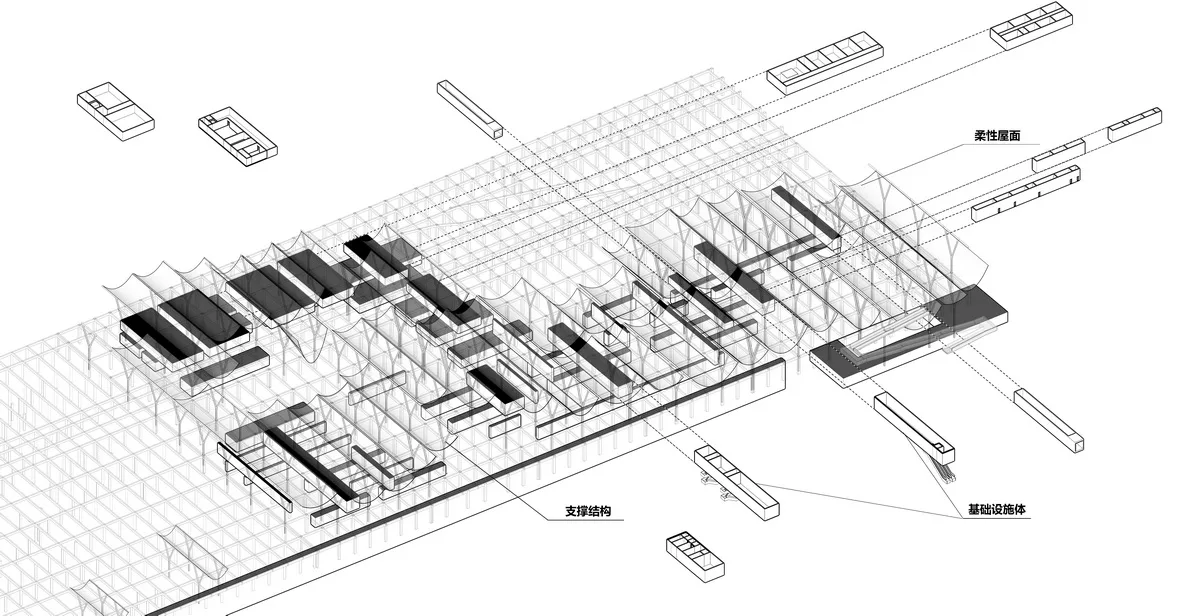
△ Conceptual diagram
Using the most economical structural method, we elevate the original supporting columns to form a spatial grid framework for the museum. Horizontal and vertical infrastructure elements separate walls, creating an orderly and rich architectural space.
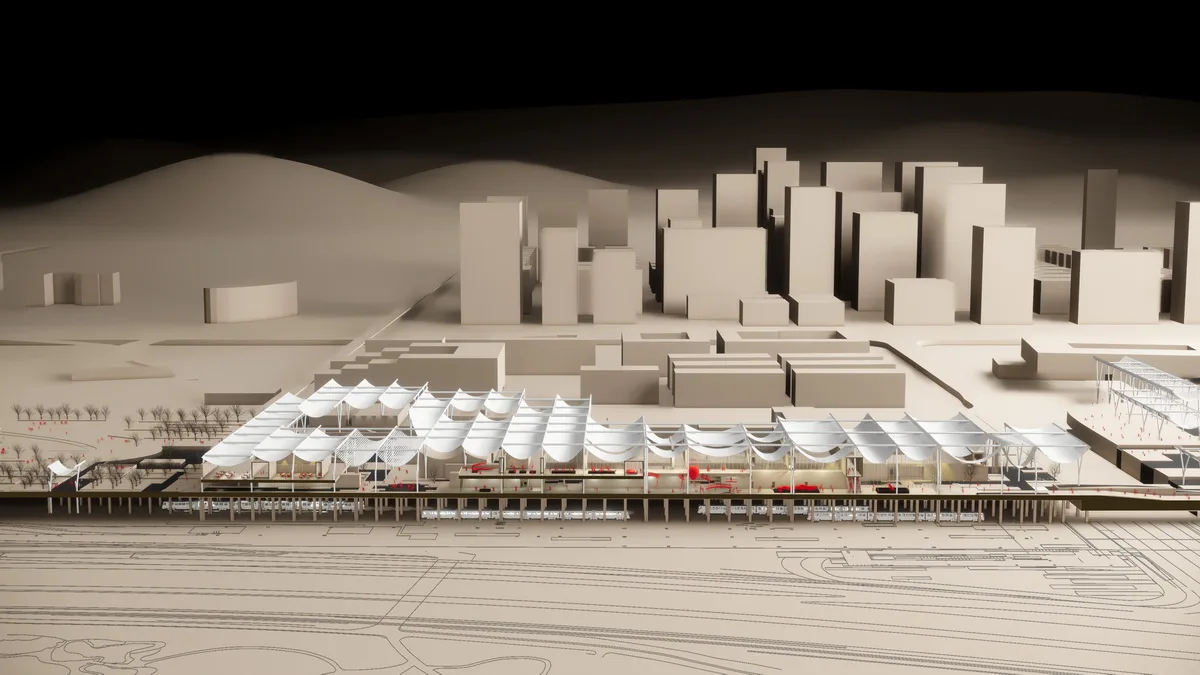
△ Analysis chart
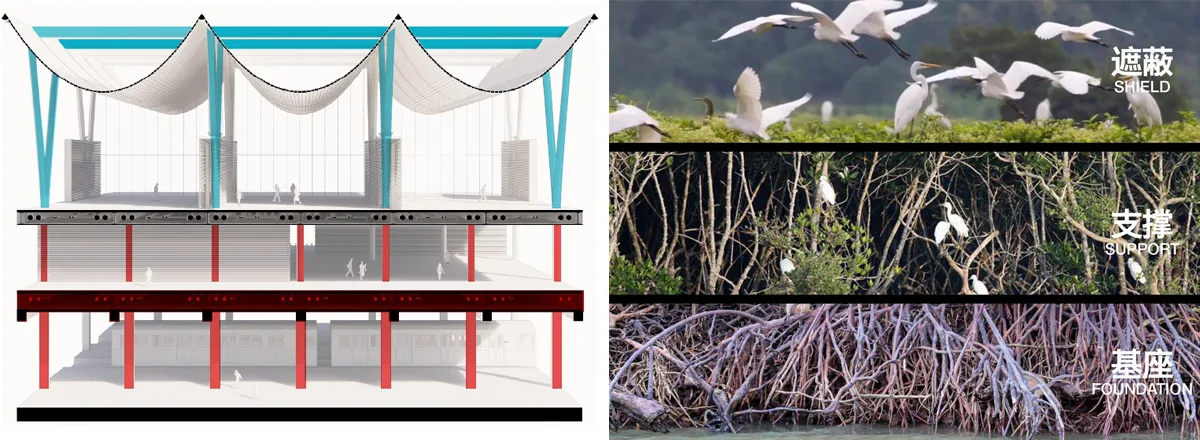
△ Analysis chart
Like the soil in mangrove wetlands, the interplay of tree trunks and seabirds forms a “natural construction system.” The pedestal enriches the ground landscape with a park style, connecting and dividing vertical spaces through its supports. Meanwhile, shading elements create a cool, comfortable climate, making the park a lively place for visitors.
Base Structure
Given the limited load capacity, we adopted a two-stage structural strategy. From the first to the second floor, a lightweight steel frame extends vertically along existing column positions without alteration, ensuring even load distribution. Above the second floor, a larger-span steel frame supports a prefabricated lightweight roof, further reducing the building’s weight.
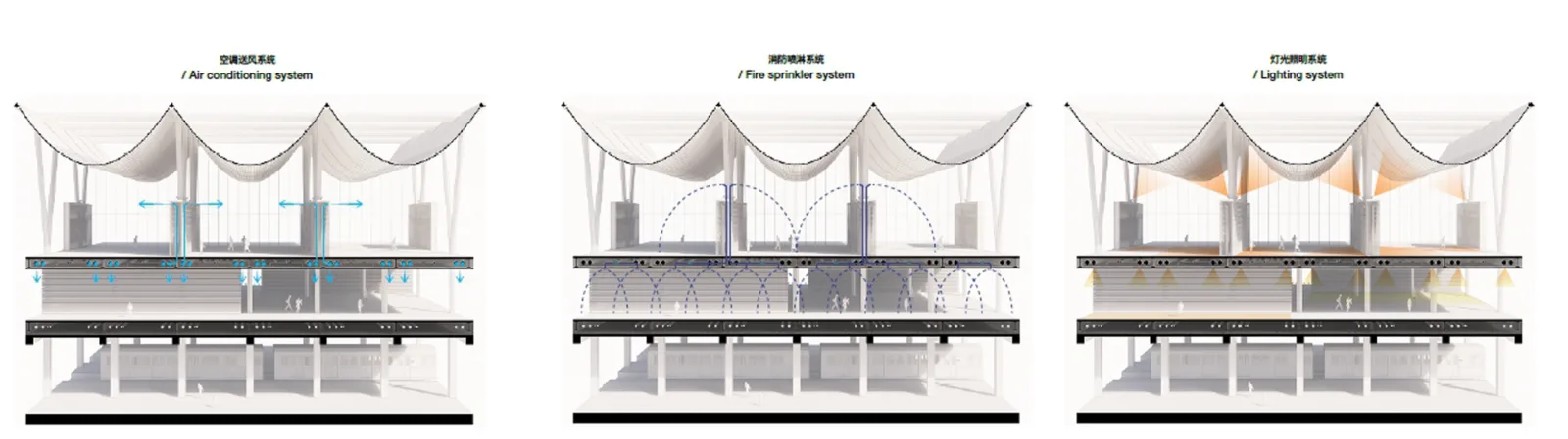
△ Structural analysis diagram
△ Structural analysis diagram
Support System
The flexible spatial framework consists of a “homogeneous added support structure,” longitudinal and transverse prefabricated modular infrastructure, and a flexible roof covering. Above, roof units resembling market stalls are supported by “Y”-shaped columns.
The pedestal offers diverse ground-level landscapes that support social interaction and connect vertical spaces, while shading provides a cool, pleasant environment, turning the park into a vibrant public venue.
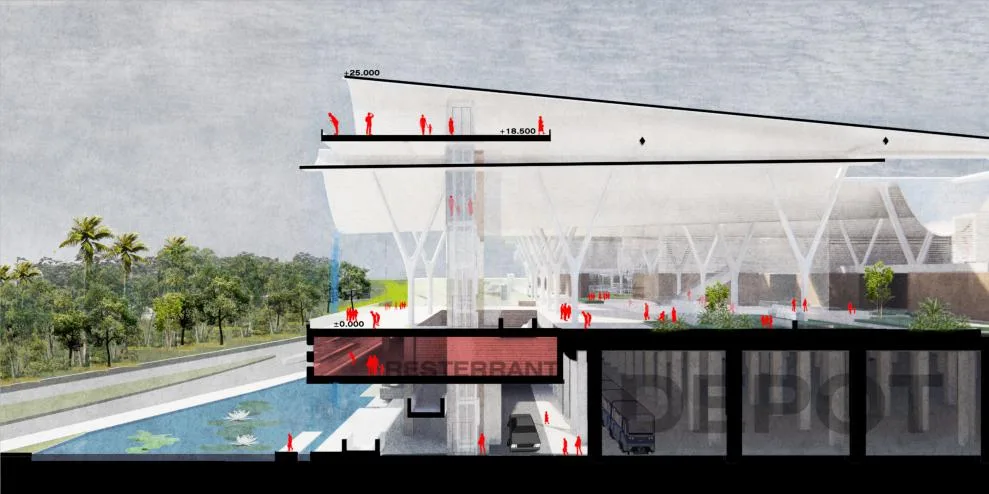
△ Section measurement axis
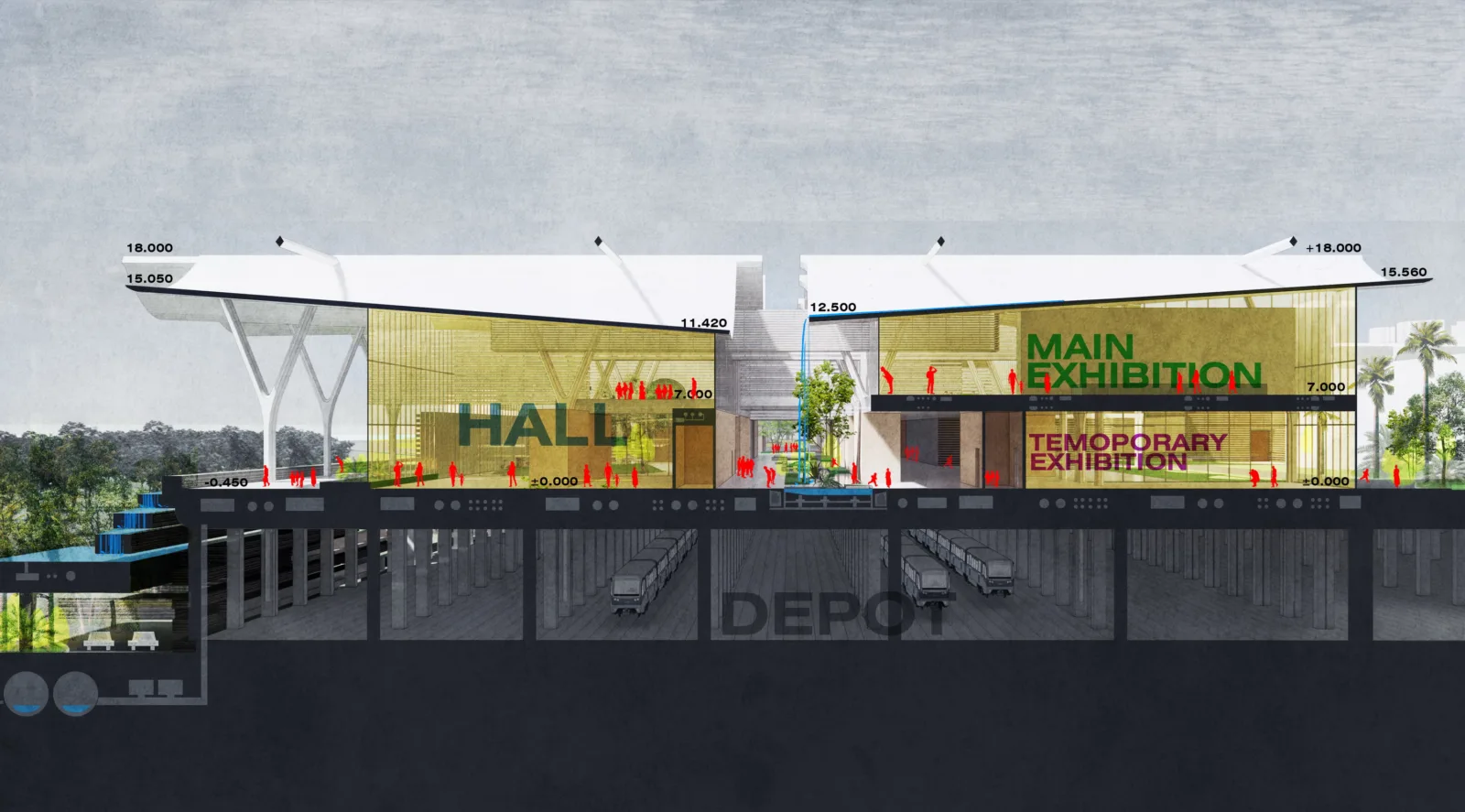
△ Structural analysis diagram
The museum’s landscape design employs natural ecological infiltration to seamlessly connect indoor and outdoor spaces. This integrated interior landscape features a red bamboo forest, blending the architecture with the surrounding environment. This approach reflects the unique ecological significance of the mangrove ecosystem.
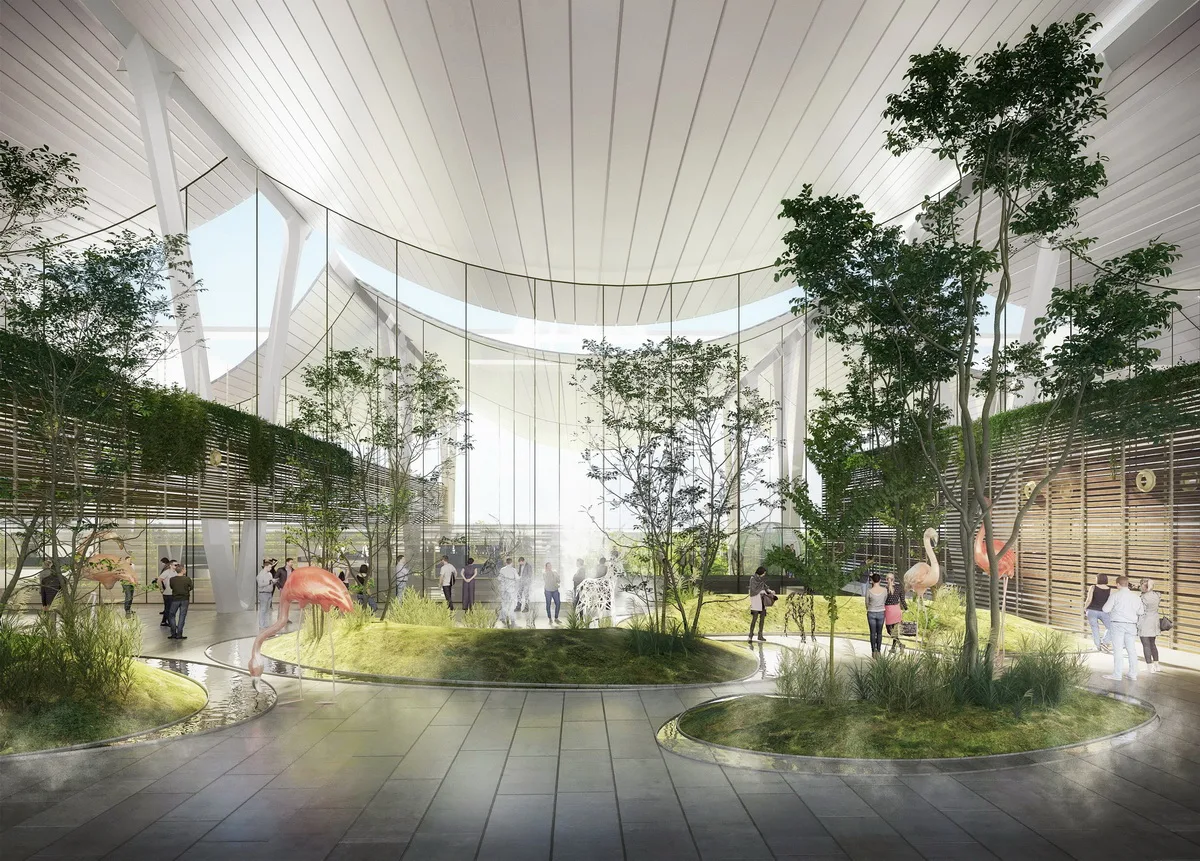
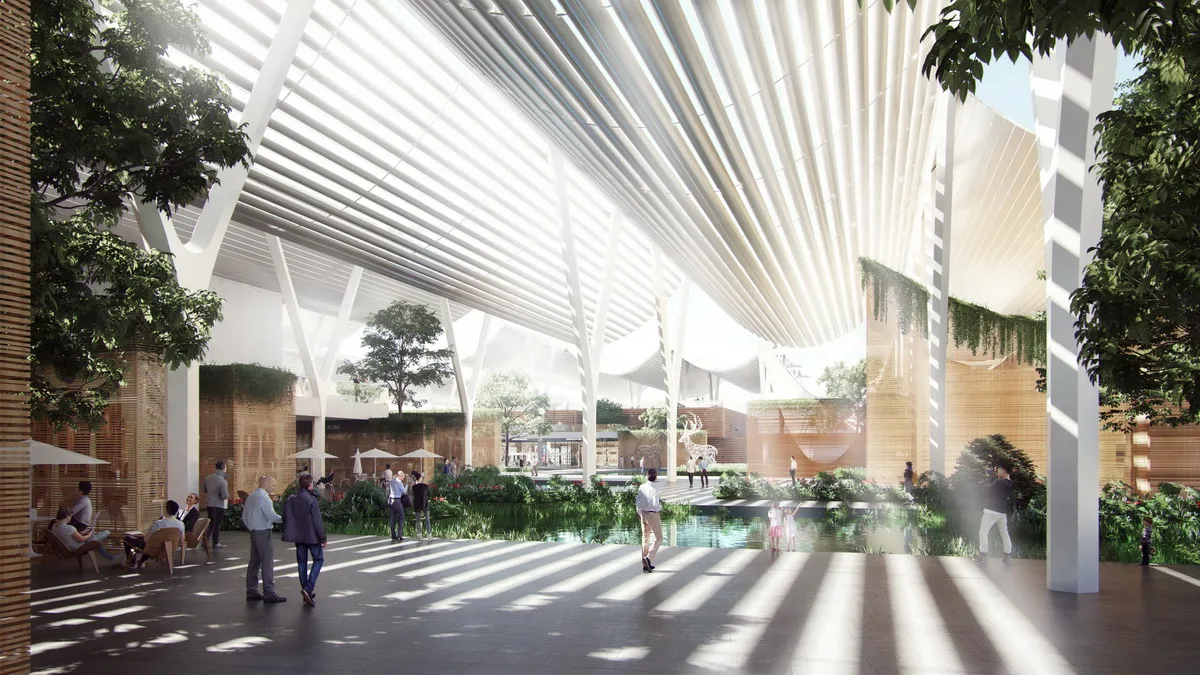
△ Interior views of the museum
Roof Design
The suspended roof collects rainwater, which naturally drains into landscape pools below. This design creates a dynamic rainwater collection experience, featuring intermittent waterfall effects that enhance the atmosphere with soothing sounds and dramatic lighting for the exhibition spaces.
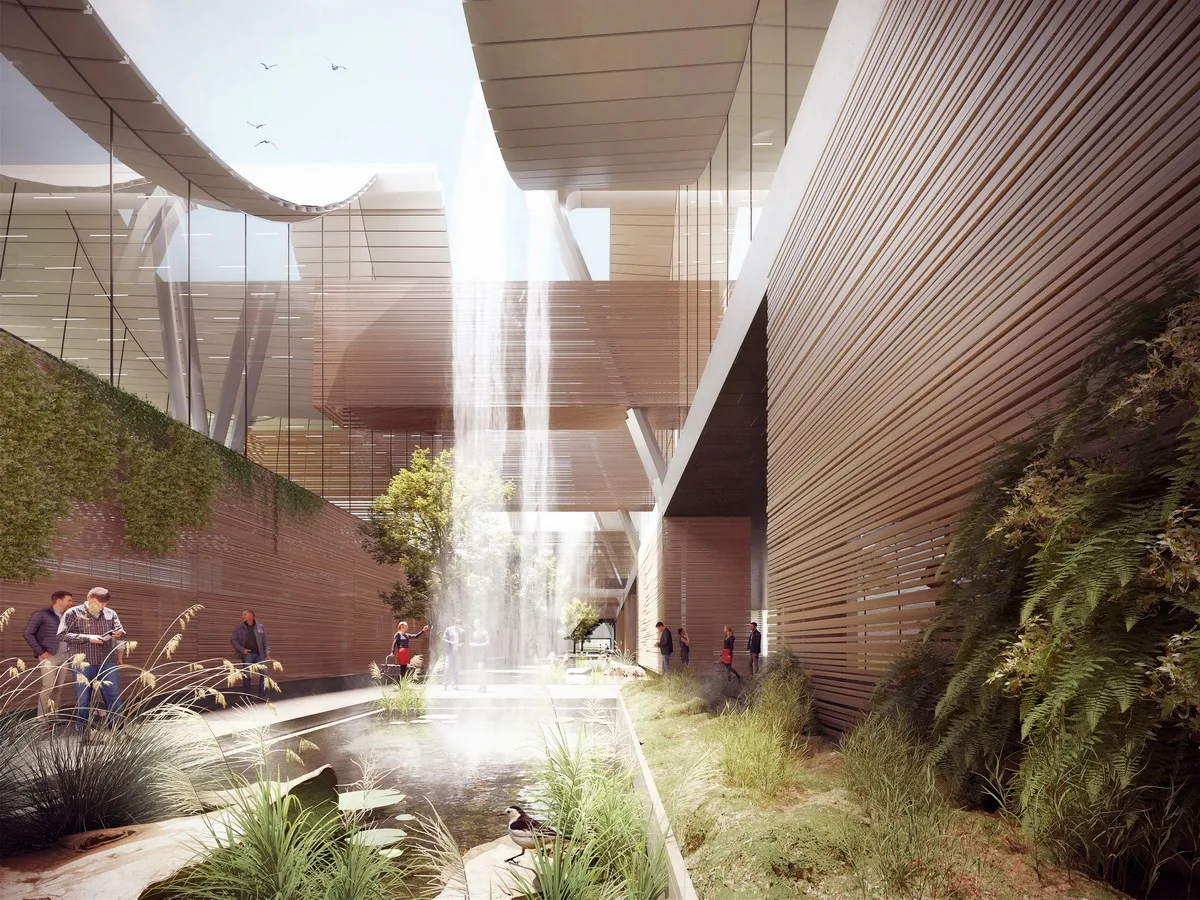
△ Rainwater collection pool
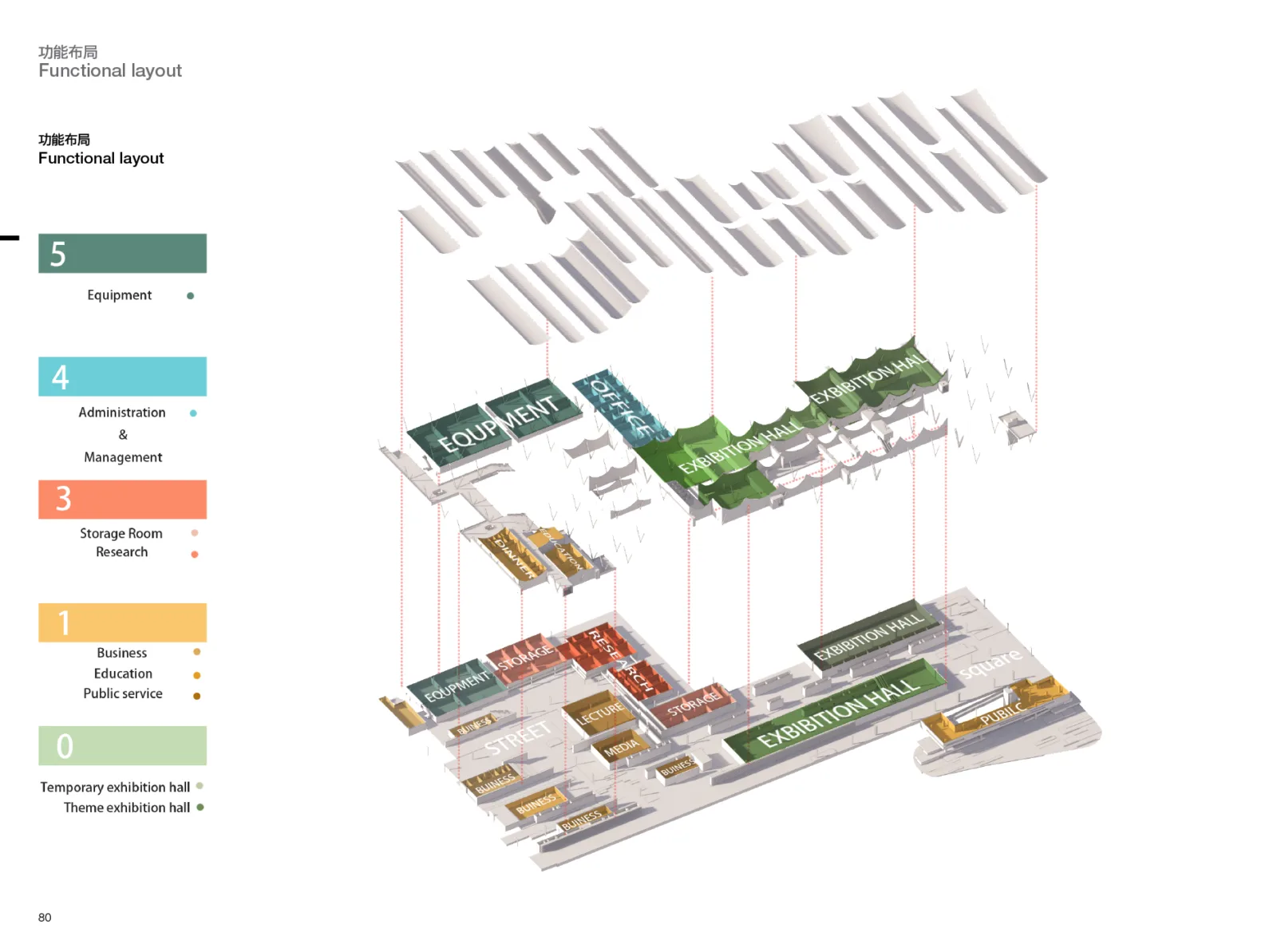
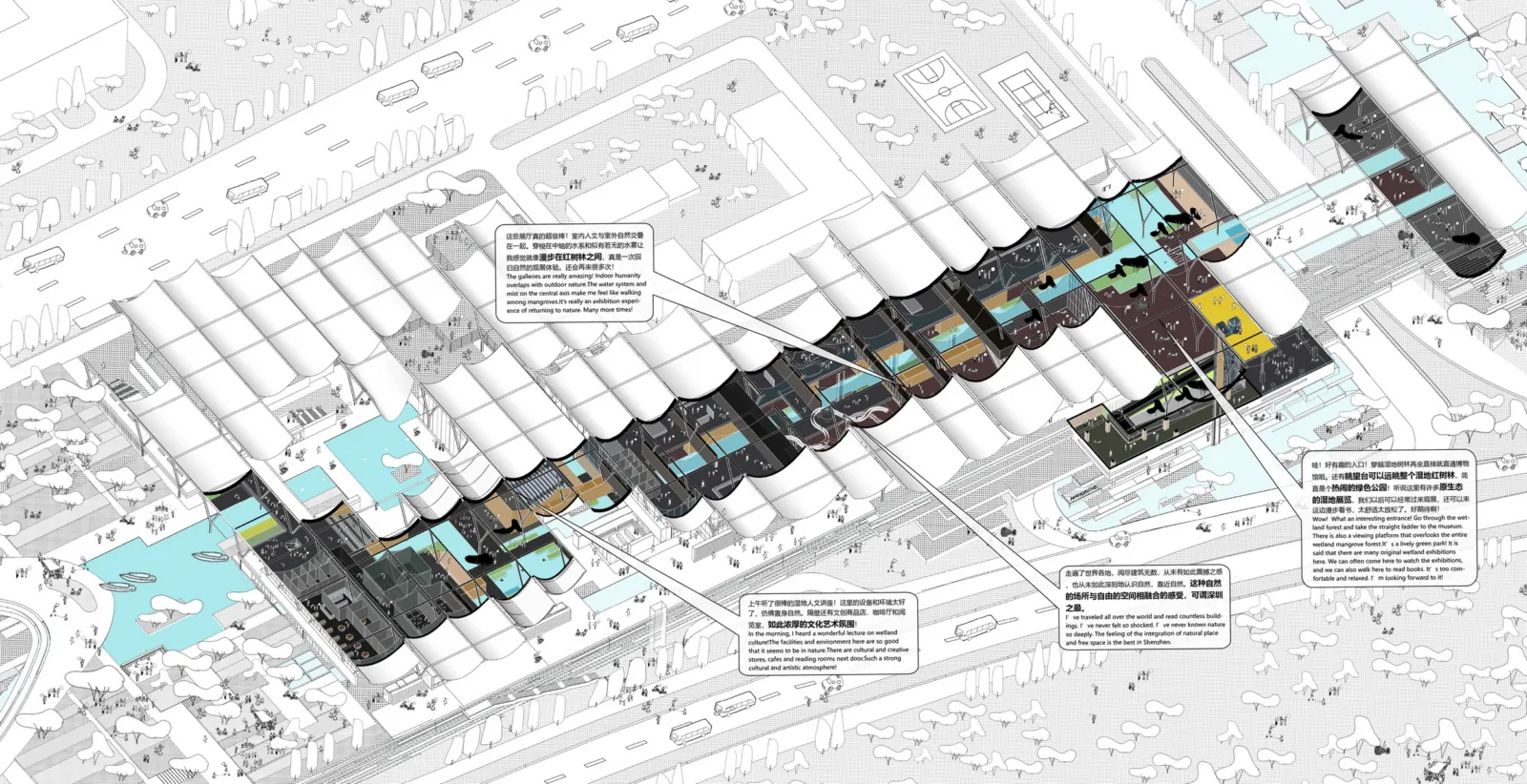
△ Functional layout
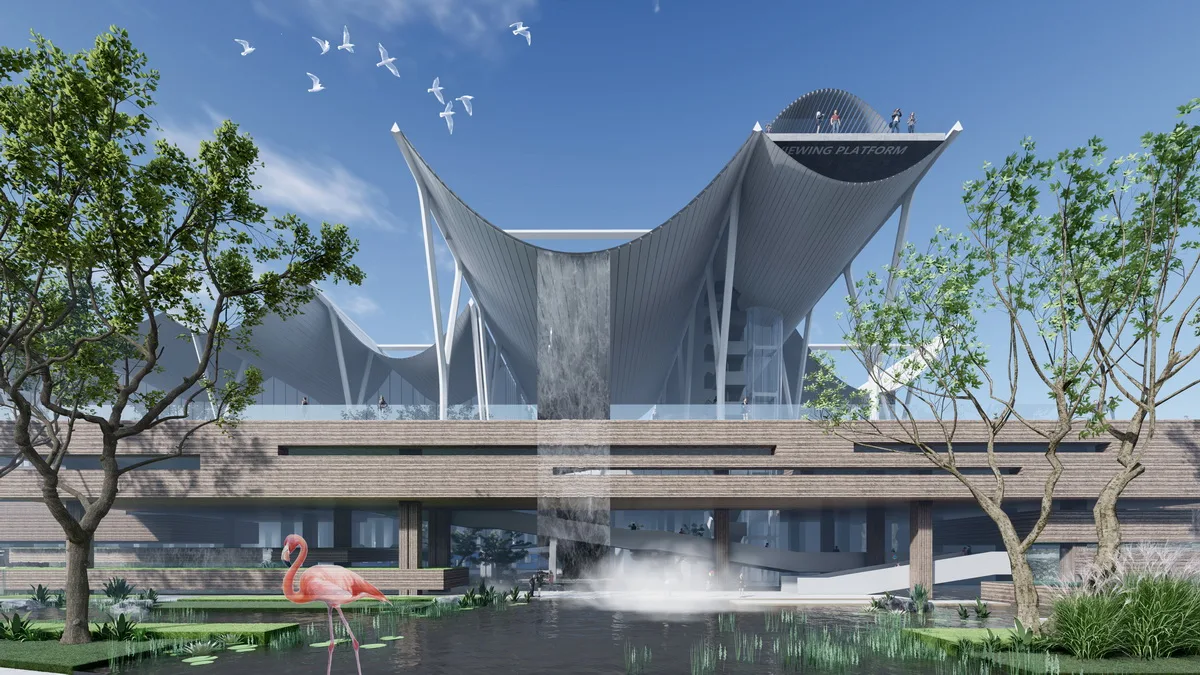
△ Museum entrance
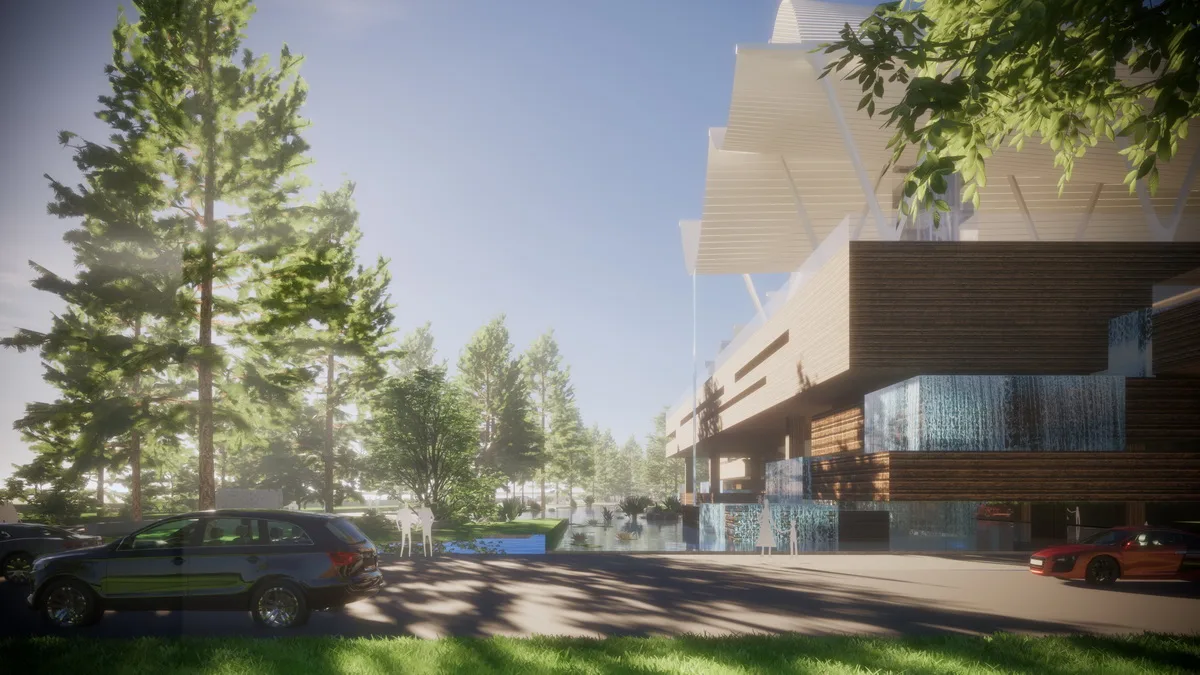
△ Museum entrance
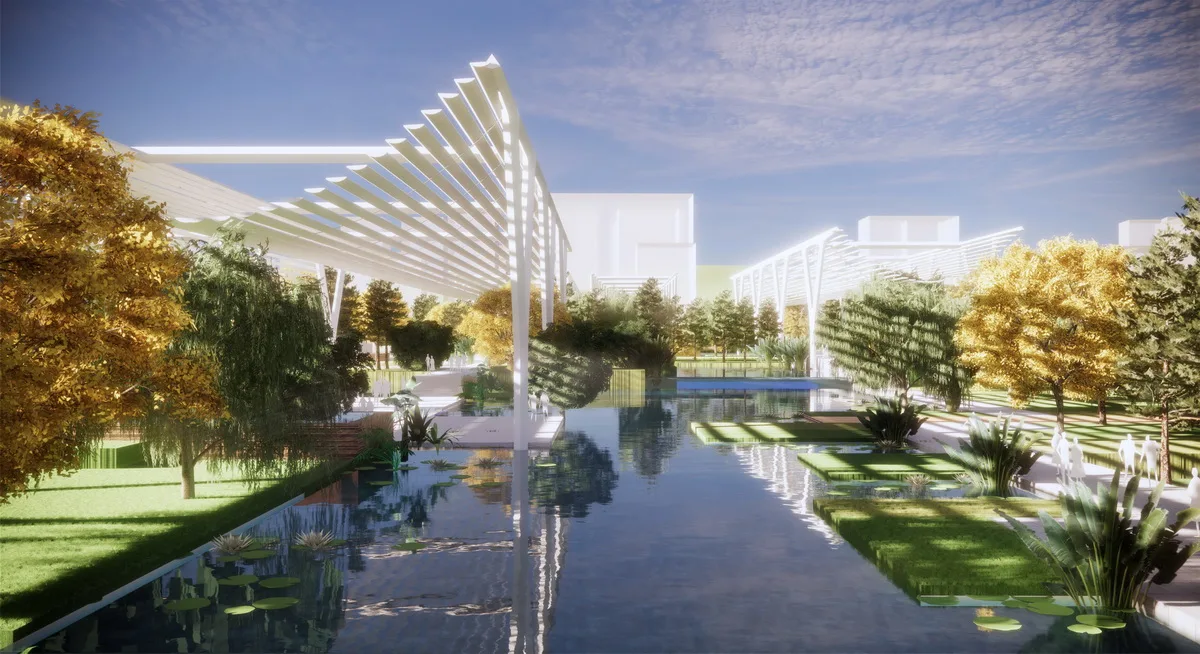
△ East Wetland Park
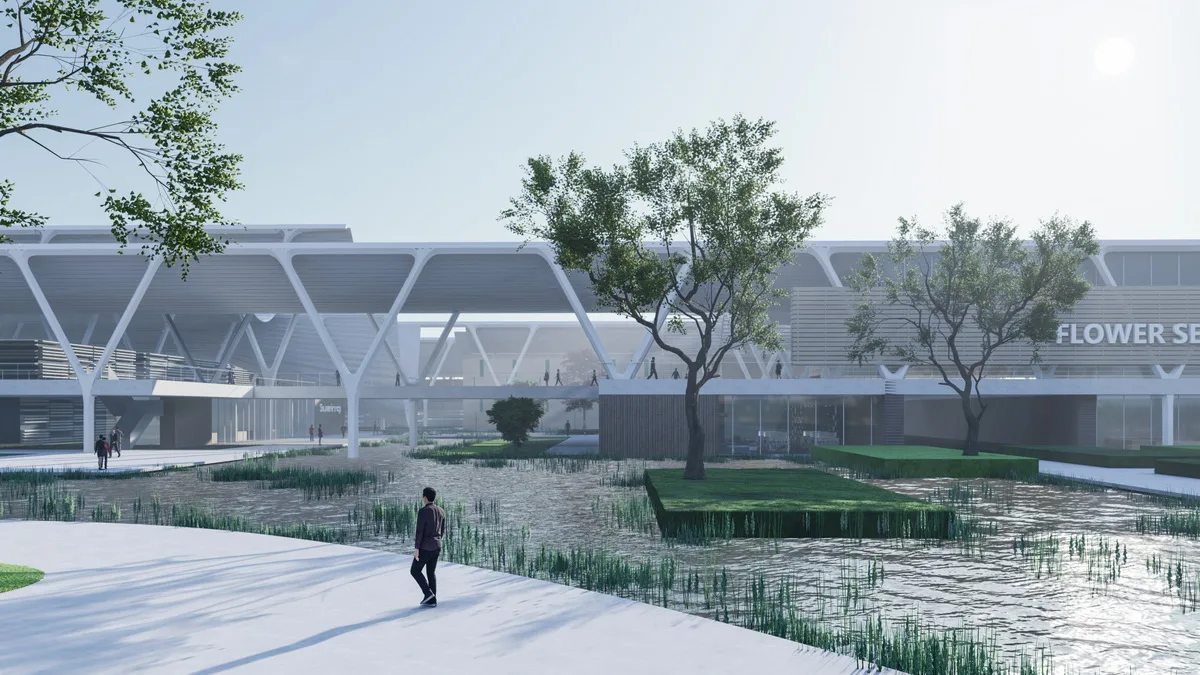
△ Wetland landscape
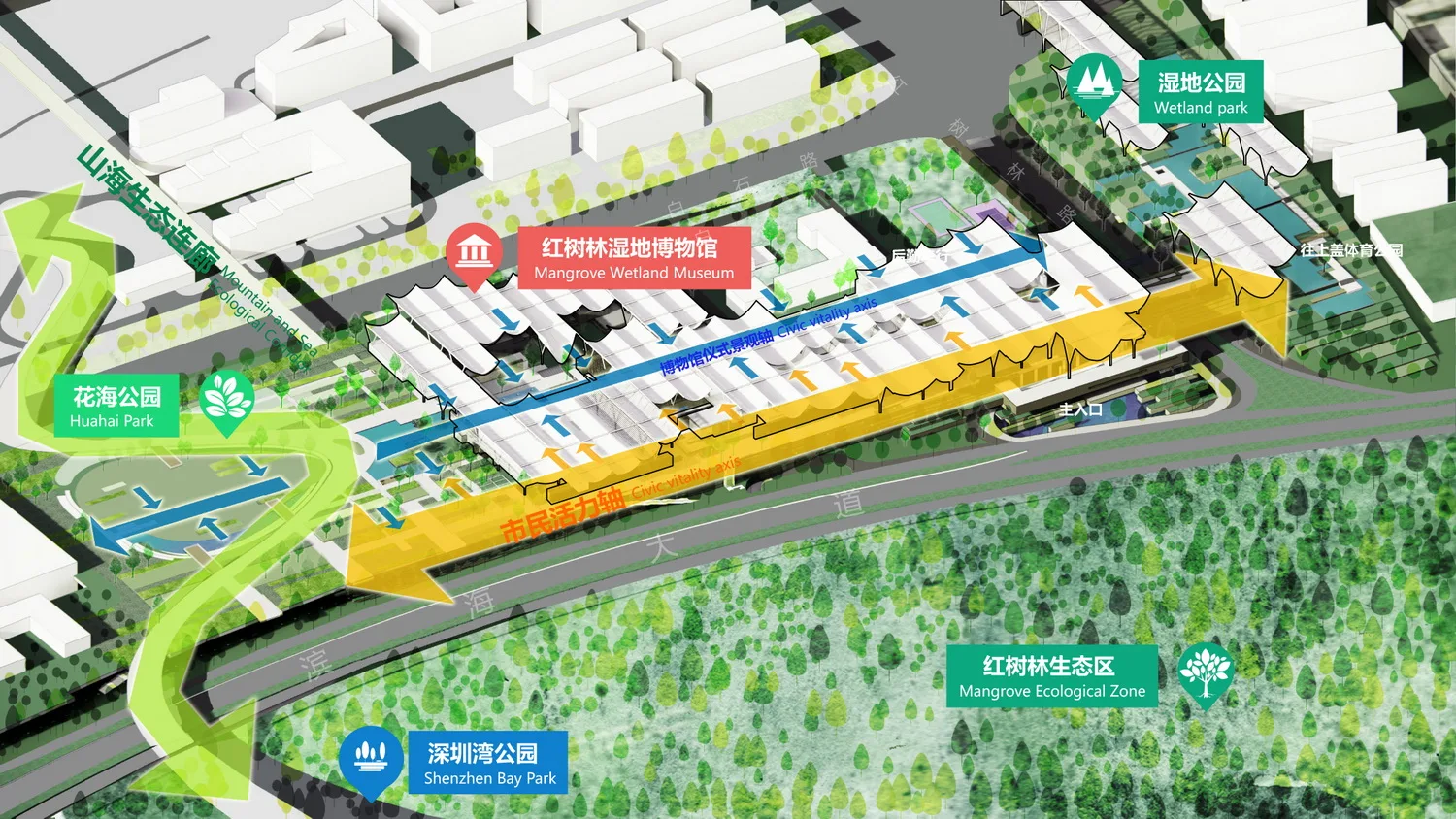
△ Axis analysis
The east side will serve as a public parking area for the museum, topped with a scientific educational wetland park. A winding artificial wetland system will run through the museum courtyard, connecting the two parks from east to west.
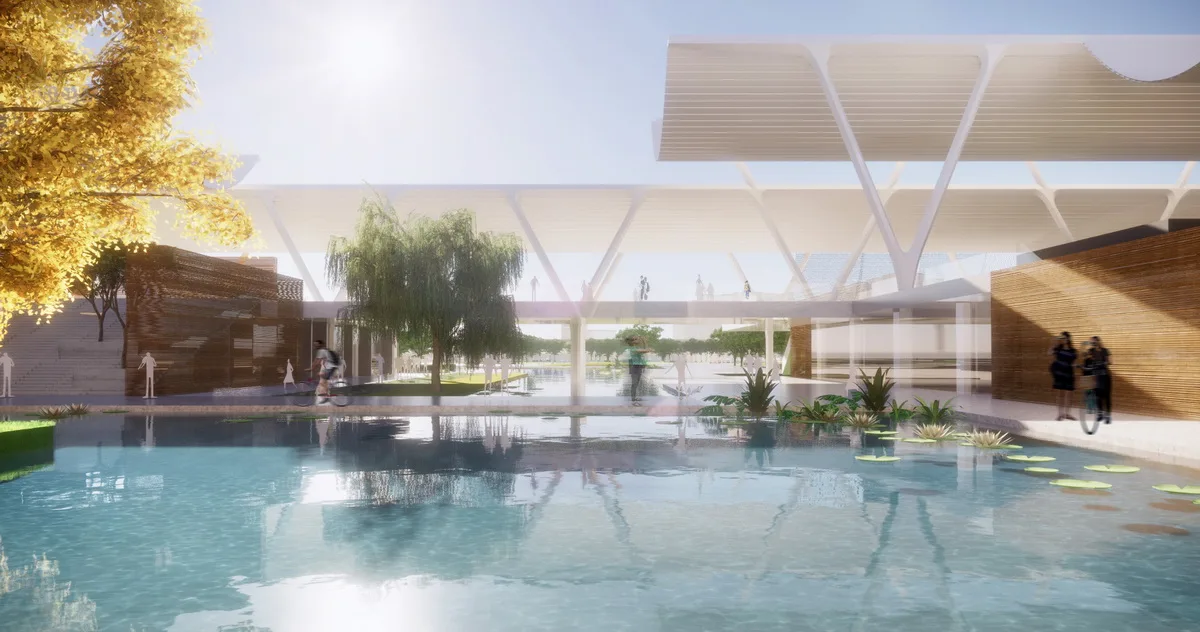
△ Museum atrium
To enhance visitor experience, a landscaped artificial wetland system runs through the museum courtyard, linking the two parks and creating a unified outdoor space.
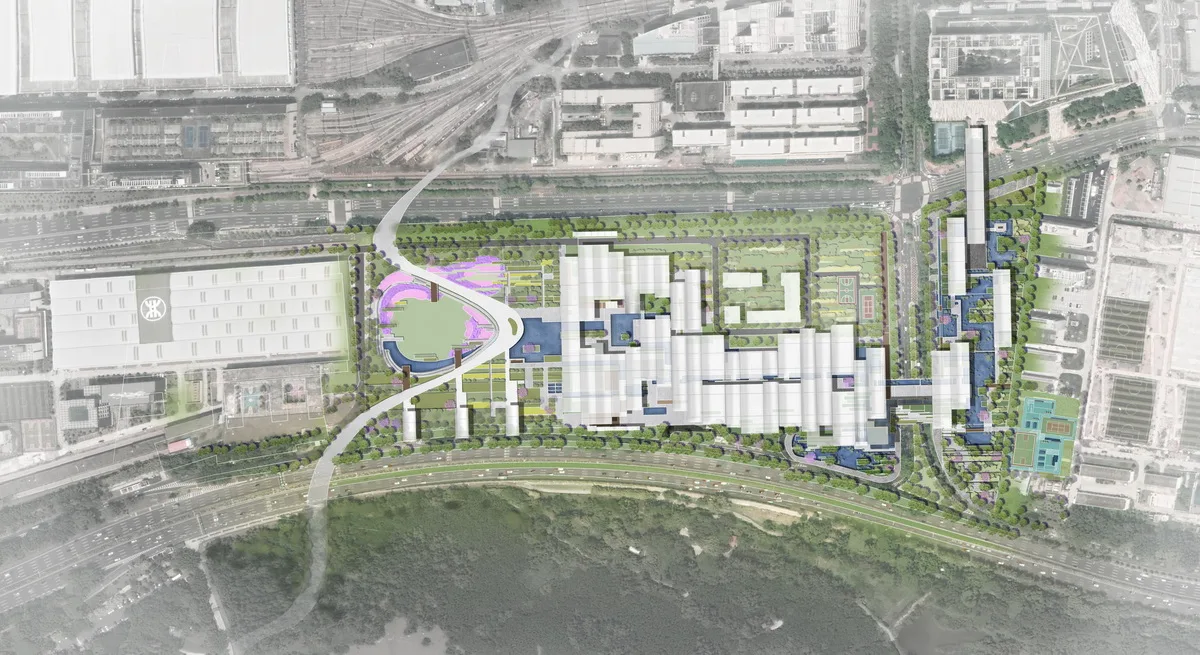
△ Overall landscape plan
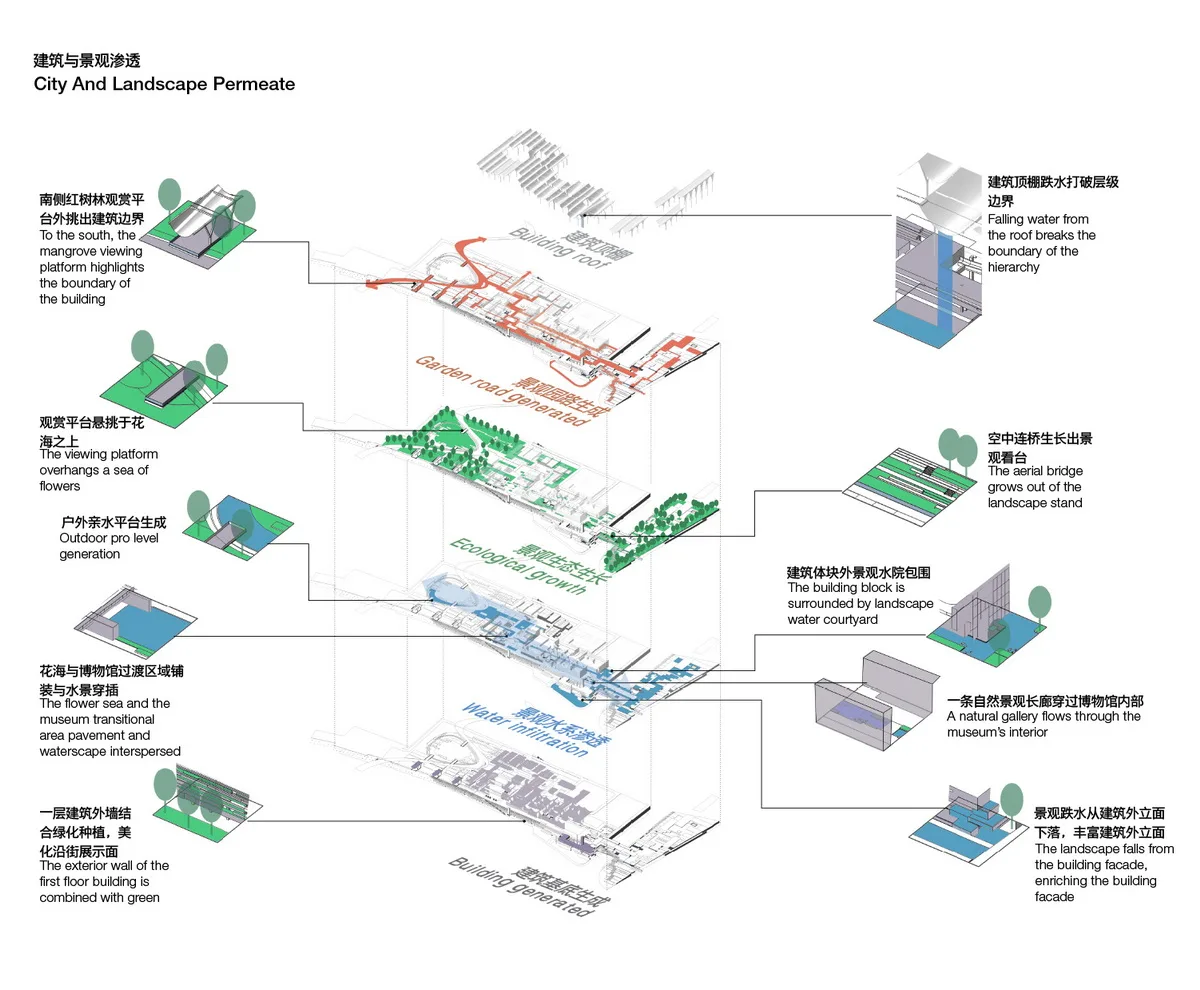
△ Architecture and landscape analysis
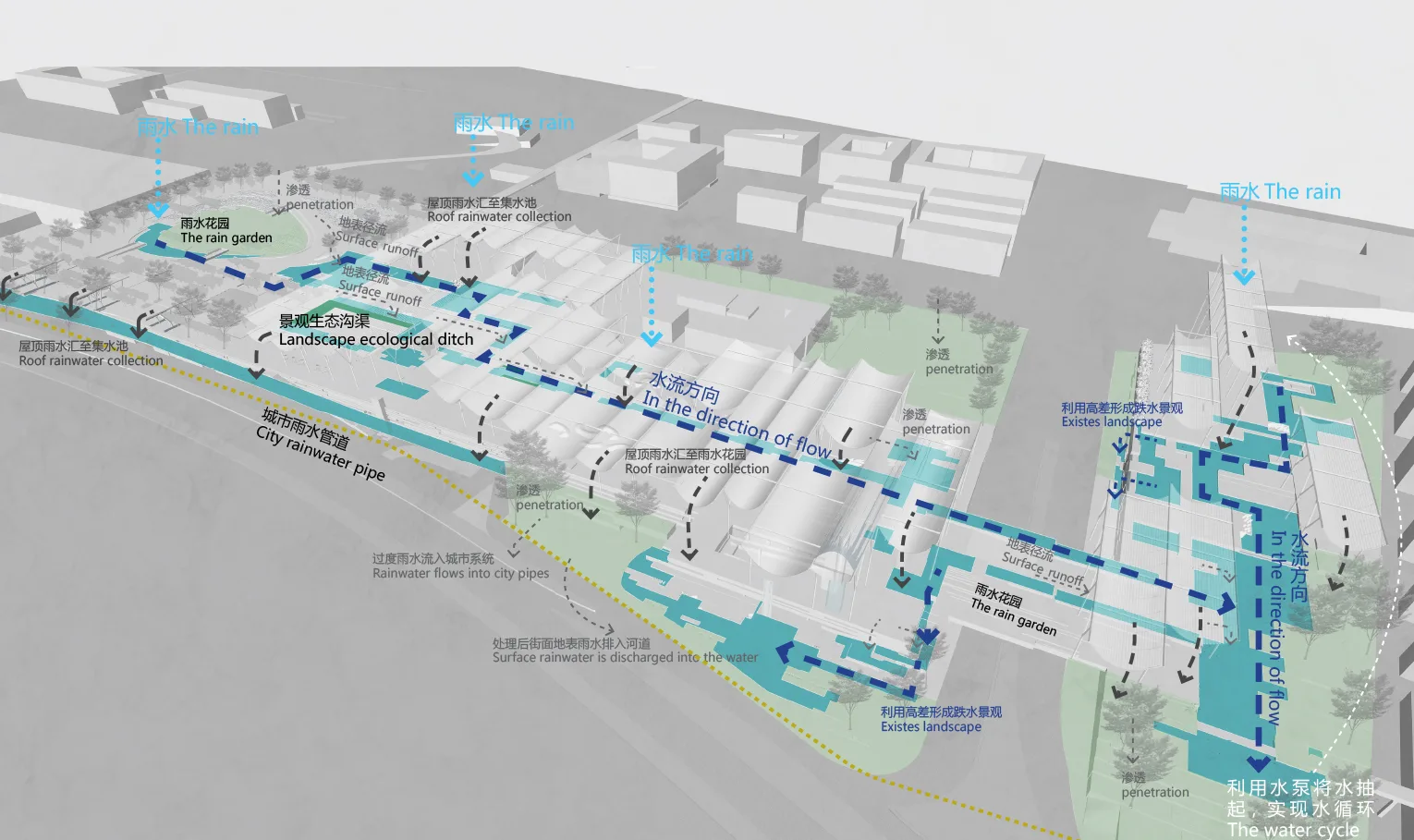
△ Water cycle diagram
The Mangrove Wetland Museum is designed as a living system—capable of evolving and growing. Through its architecture, visitors can engage with the place and culture, fostering communication, freedom, tolerance, and hope.
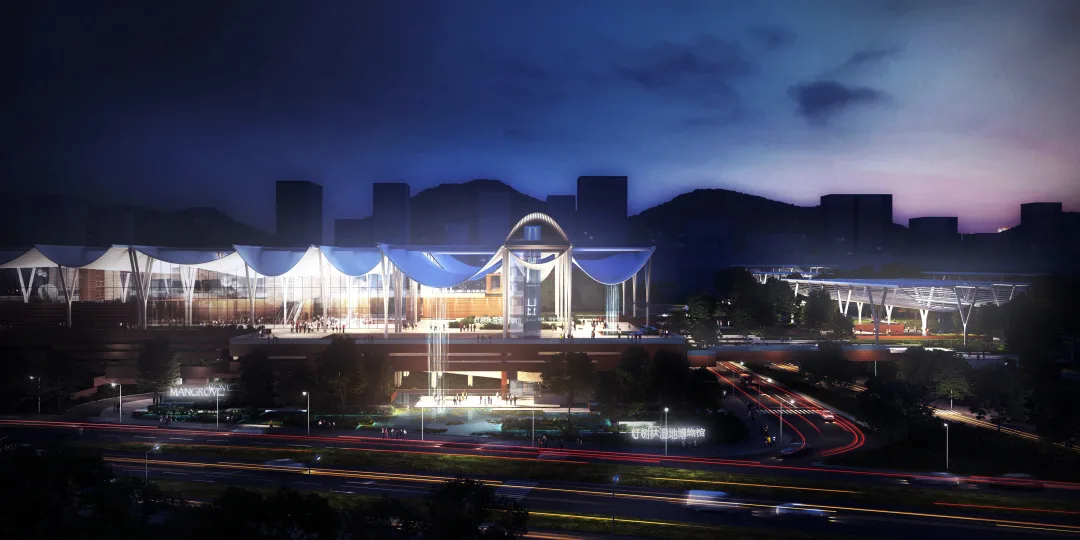
△ Night view of the mangrove forest
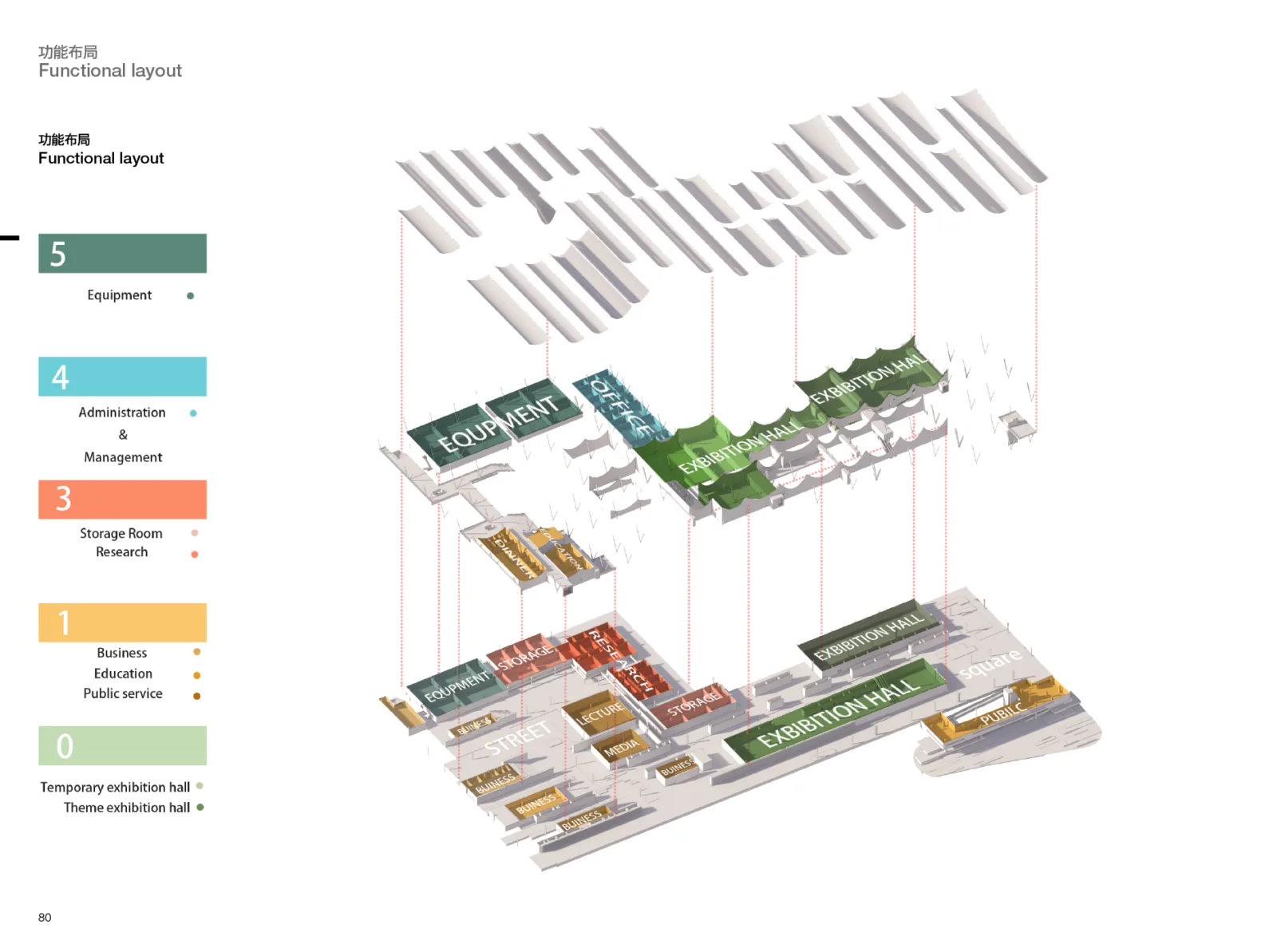
△ Functional distribution
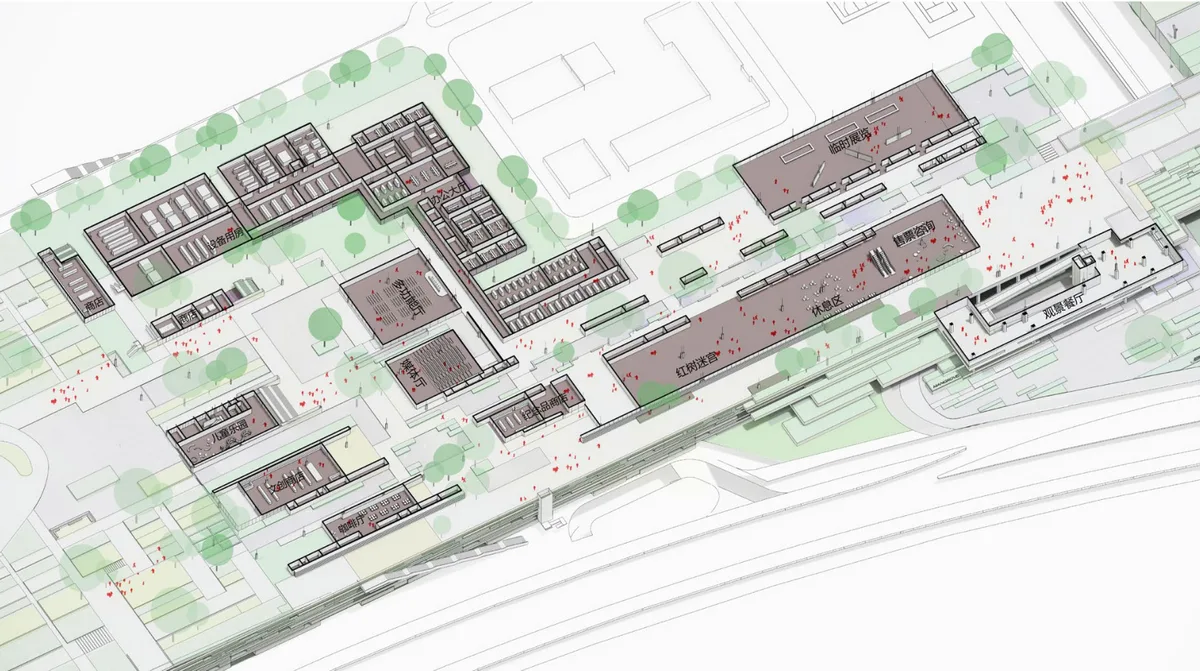
△ First floor plan
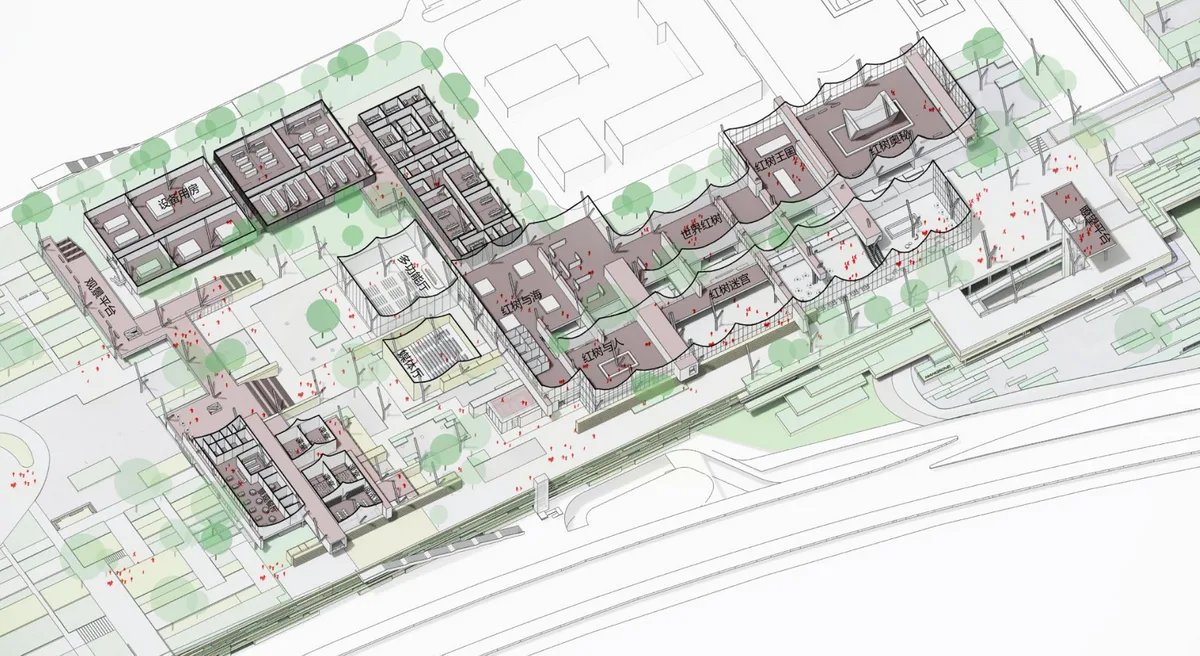
△ Second floor plan
Click on the video to learn more.












Must log in before commenting!
Sign Up