
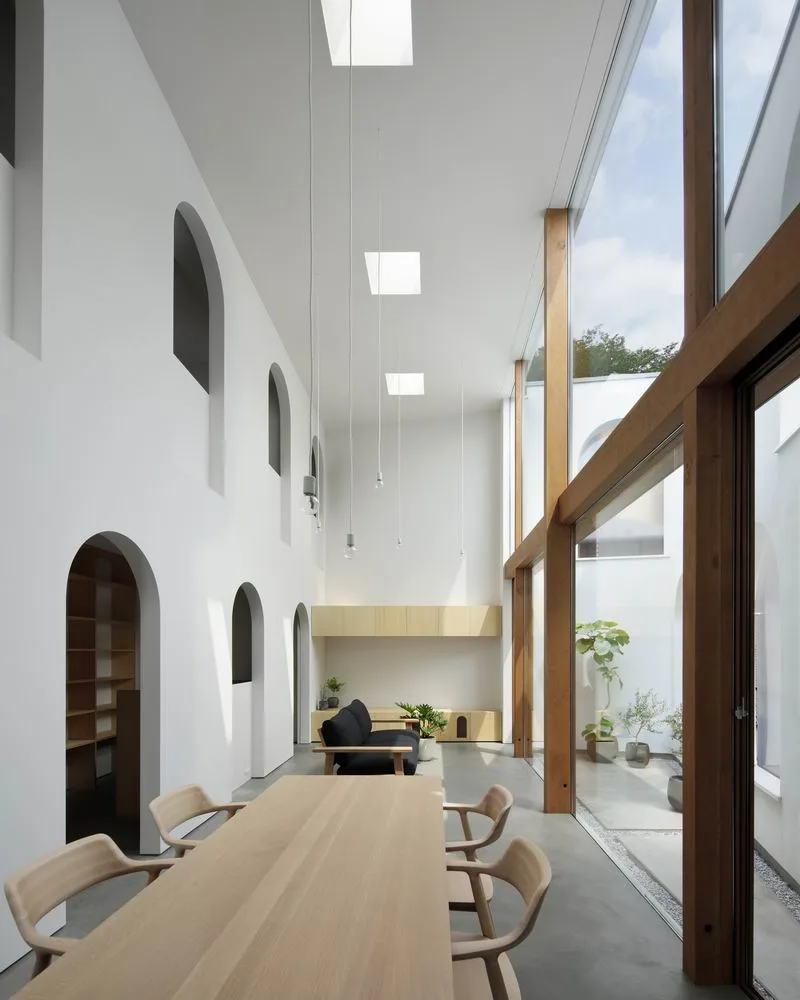
This house is situated in Asahikawa City, Japan, and marks the first independent home for a family of four who previously lived in a rental apartment. The homeowner desires a peaceful and comfortable living environment, along with an open garden space for outdoor play.
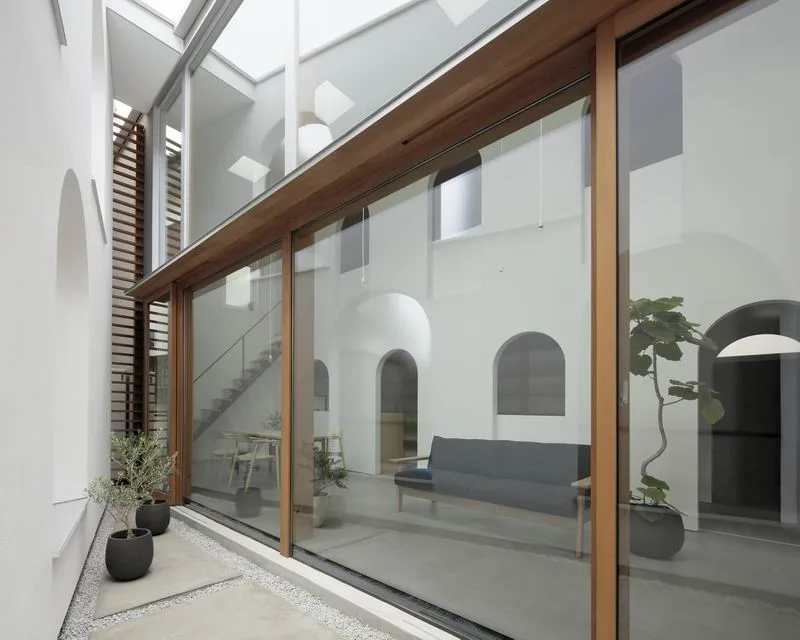
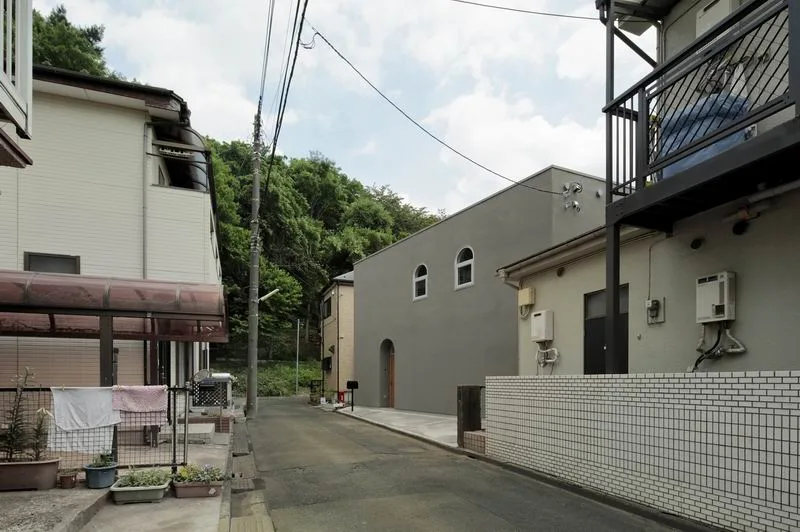
The house is located in a densely populated residential neighborhood of Asahikawa City, Saitama Prefecture, adjacent to Tokyo and just a 10-minute walk from the nearest train station. The plot measures 10 meters wide by 10 meters deep and falls within a Class 1 low-rise residential zone. Local regulations permit a building coverage ratio of 60% and a floor-area ratio of 100%.
To the north of the property runs a narrow dead-end road, 4 meters wide, tightly enclosed by neighboring houses. The house has a narrow frontage. Given these constraints, a standard two-story residence with a 100-square-meter parking space could not accommodate the owner’s wish for a garden. Therefore, the architects introduced a “closed and open” concept to provide both indoor comfort and outdoor space.
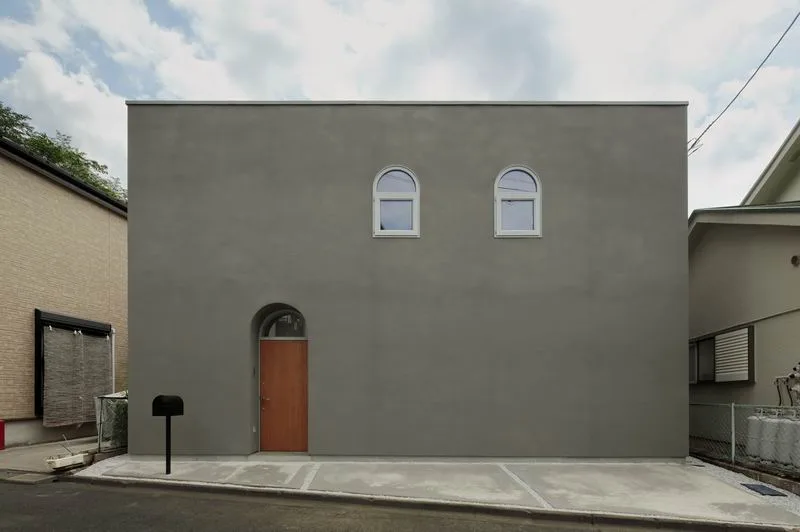
The design places the building blocks in a staggered arrangement relative to the street, with one corner angled backward. This transforms the building blocks into parallelograms, ensuring the house does not directly abut the exterior walls or windows of neighboring homes. This shape creates two triangular open spaces on the plot, increasing distance between houses, enhancing natural light, and promoting air circulation. One triangular space is designed as a backyard garden to fulfill the owners’ needs. In reality, this triangular area feels more spacious than it appears on the plans.
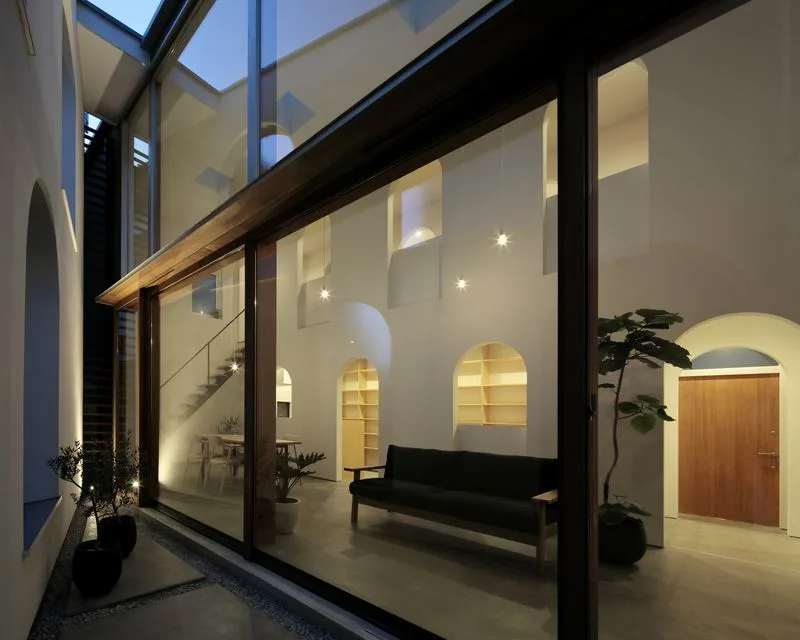
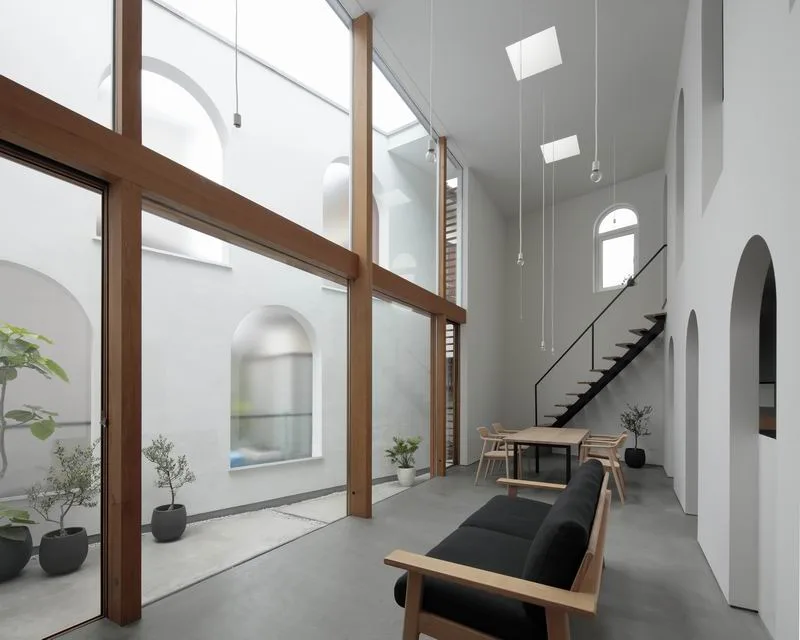
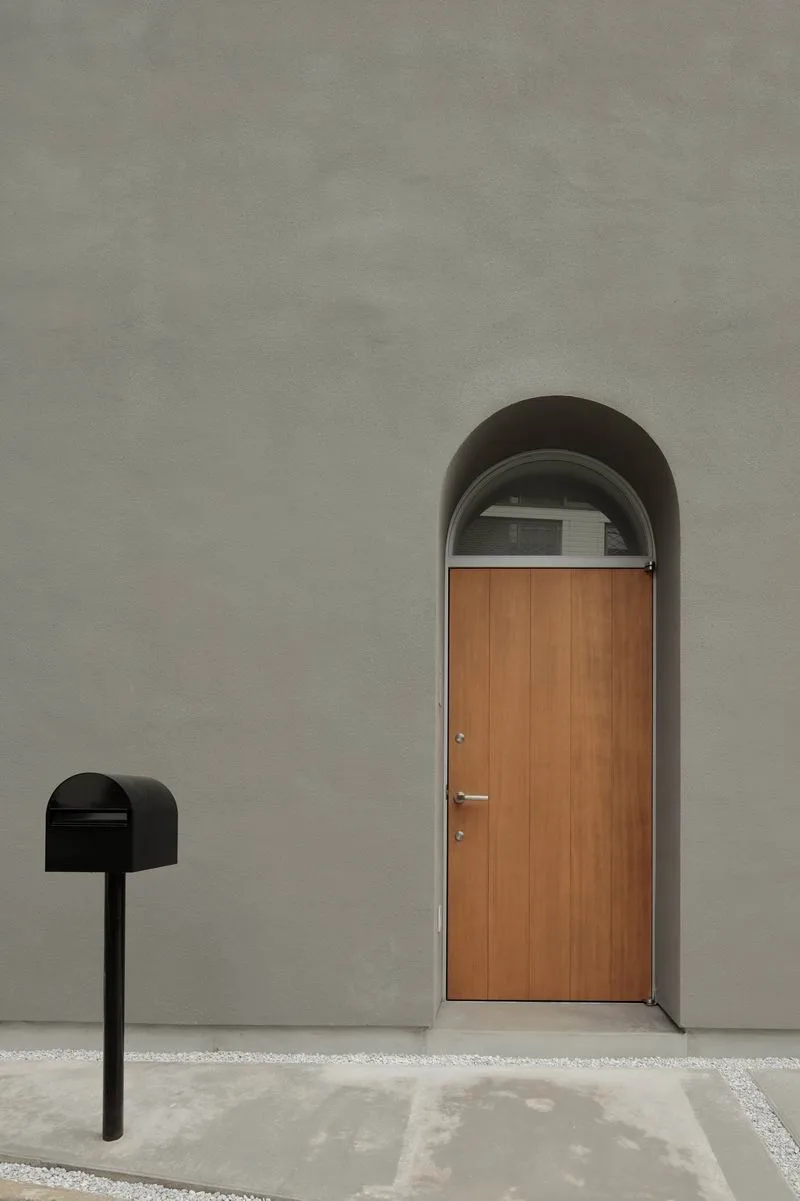
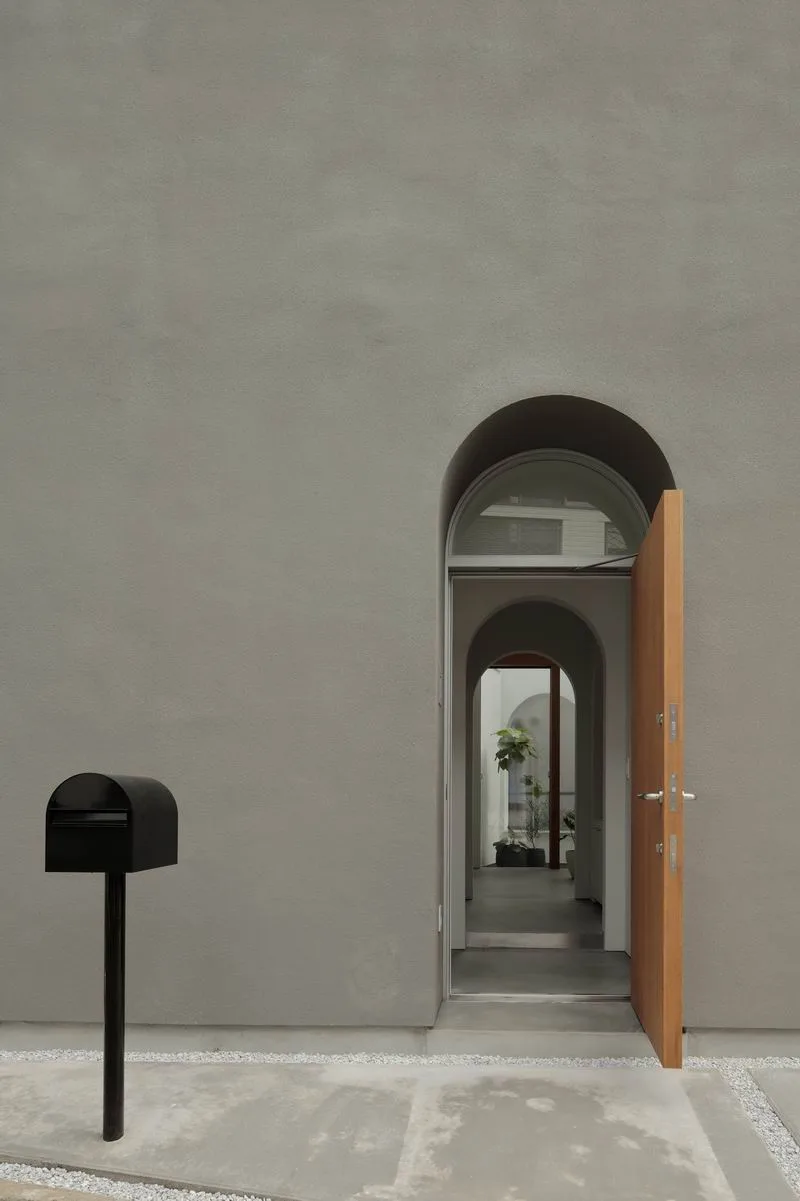
The interior walls are aligned parallel to the exterior walls, resulting in an internal space shaped as a parallelogram, matching the architectural form. Upon entering the front door, moving through a series of enclosed rooms that maintain the same shape but increase in size, the space flows unobstructed, leading directly to an internal courtyard. This design aims to create a serene indoor atmosphere, shielded from street noise.
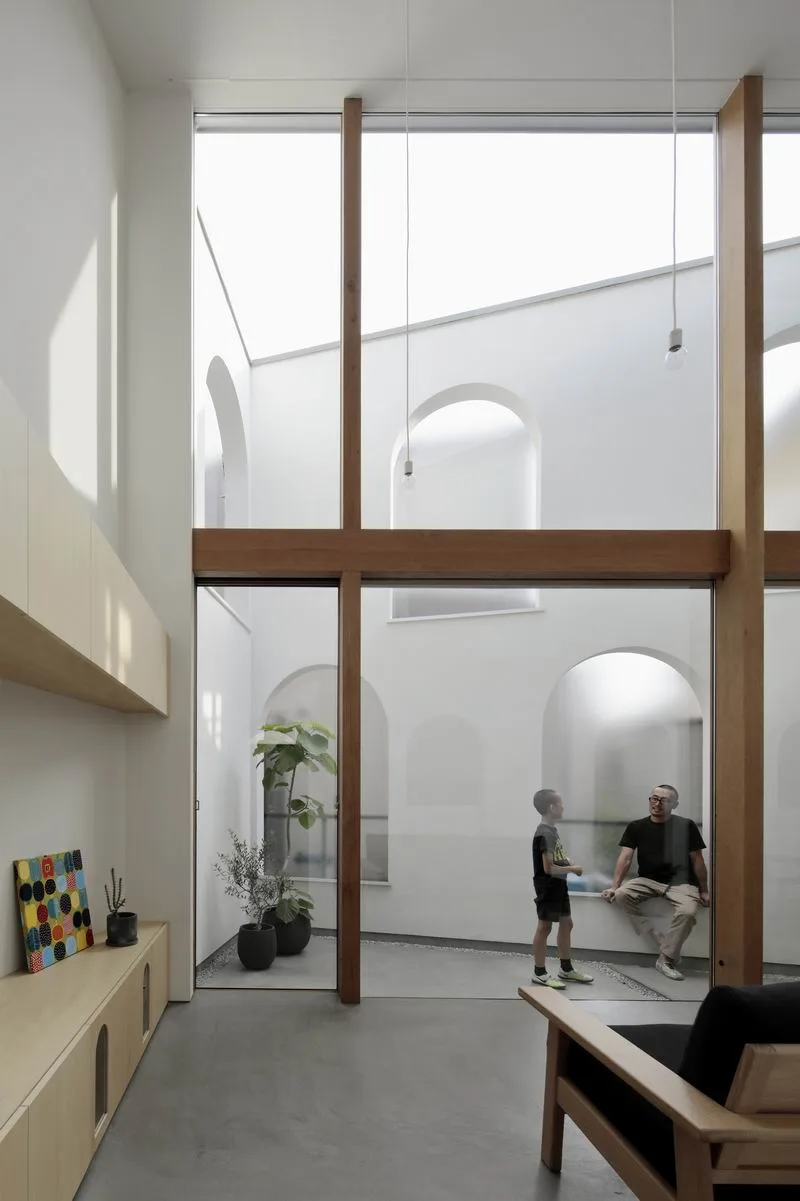
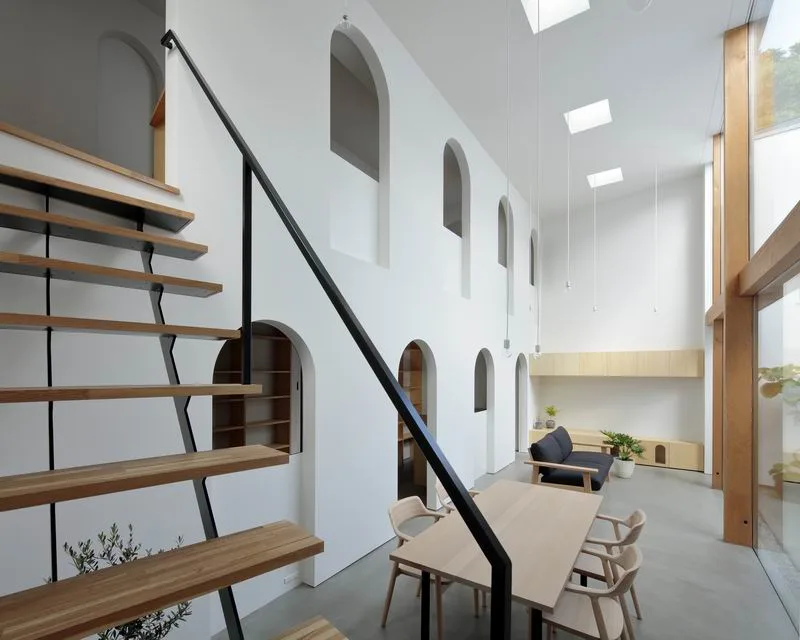
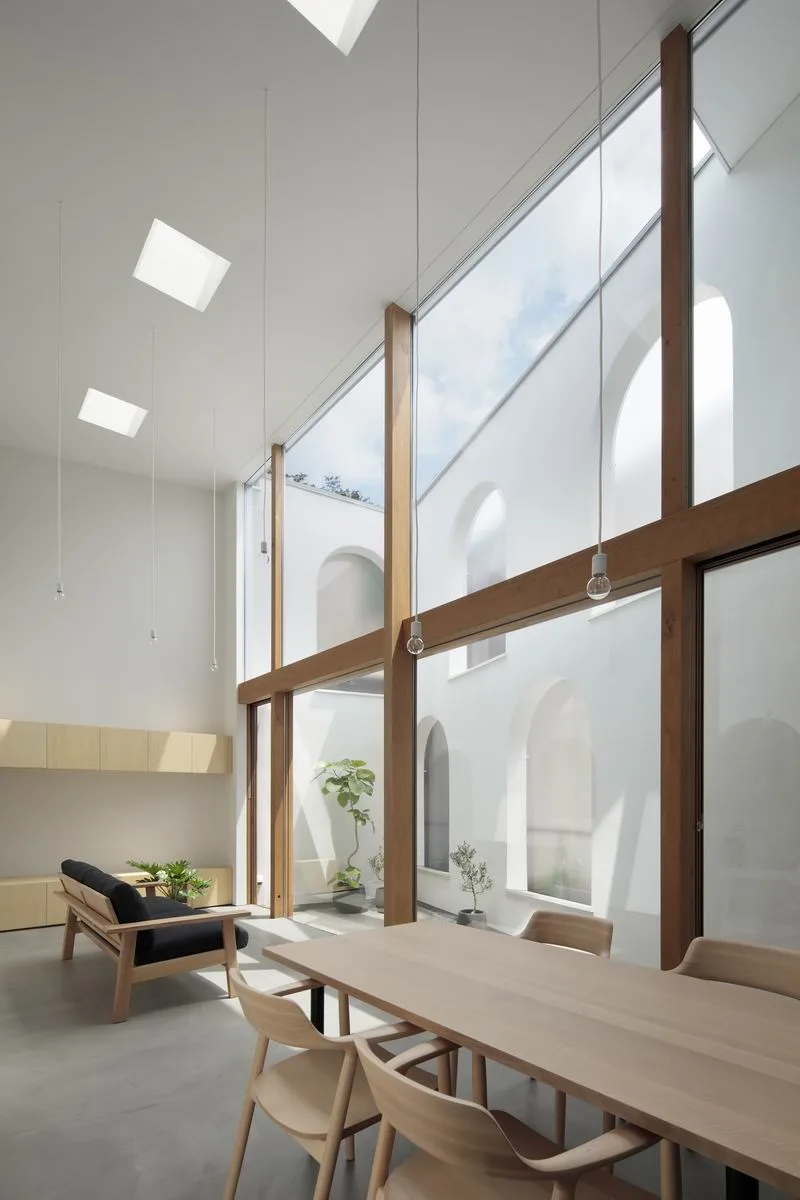
The double-height living and dining area opens directly onto the backyard, effectively transforming the entire space into one large garden.
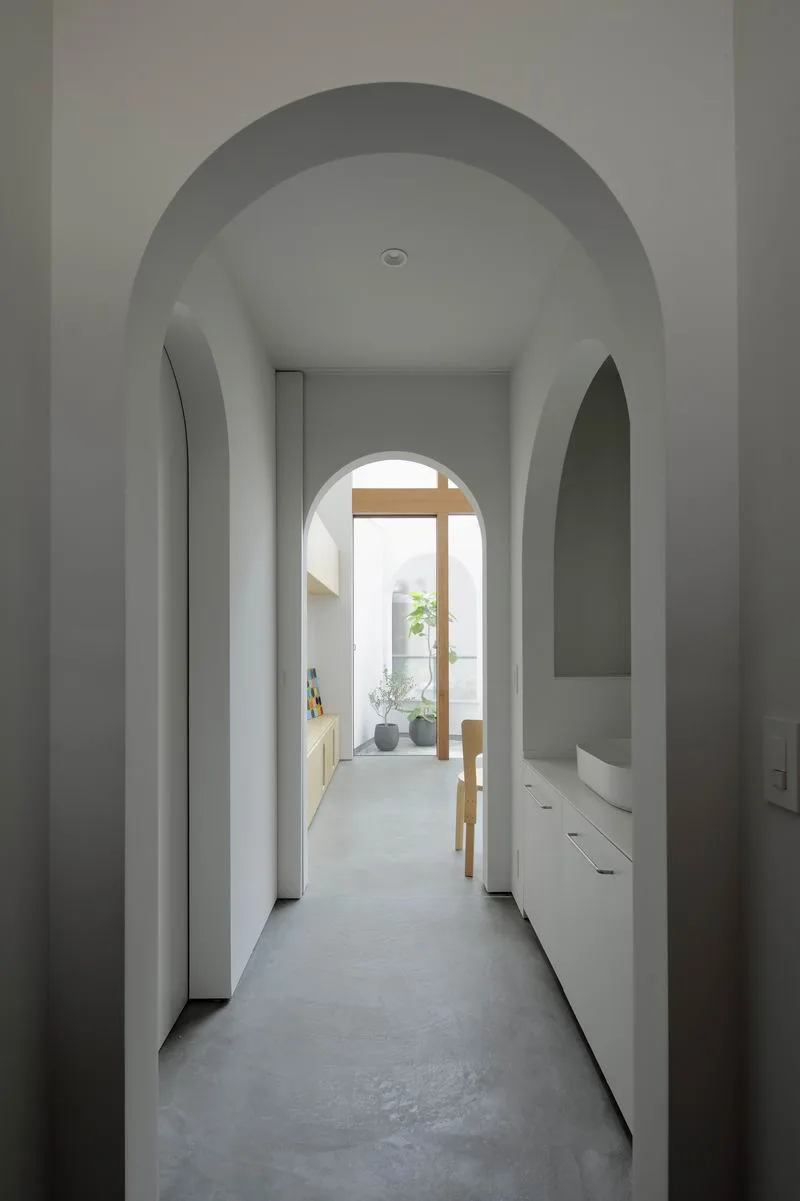
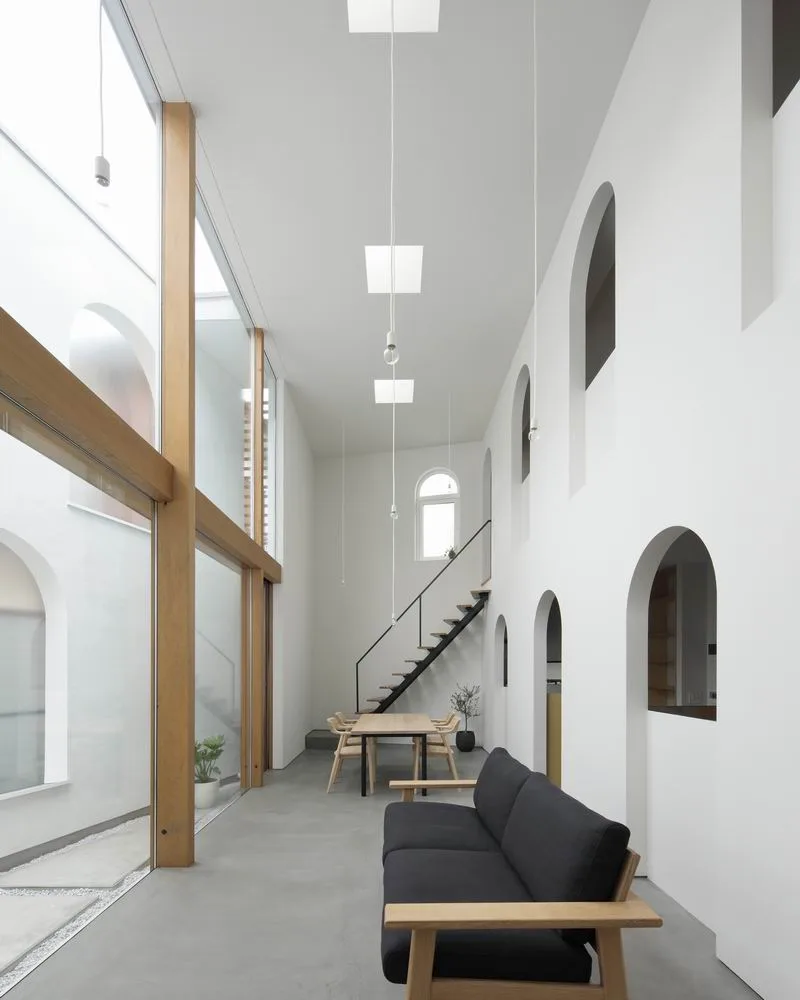
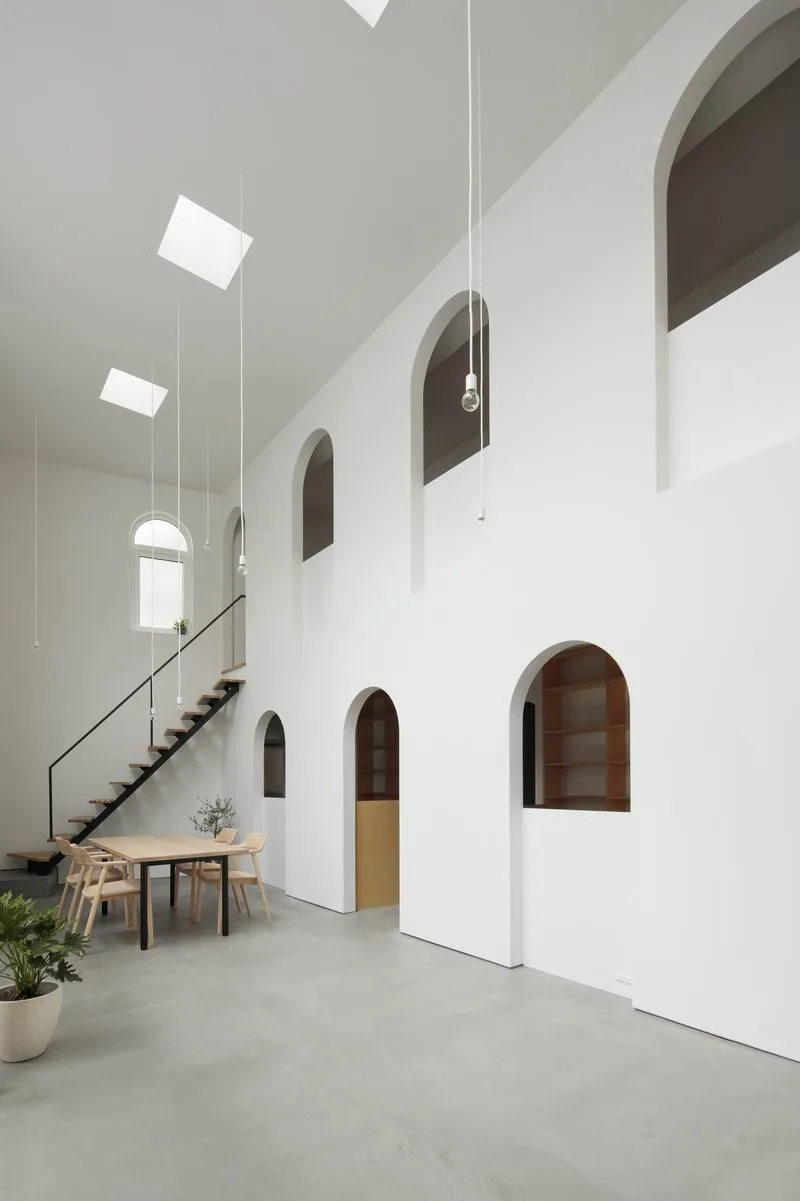
All windows, doors, frames, and other openings are arched instead of square, a deliberate choice to differentiate from traditional styles. Inspired by ancient Japanese ice houses and caves, the arches separate indoor and outdoor spaces while maintaining a subtle connection between them.
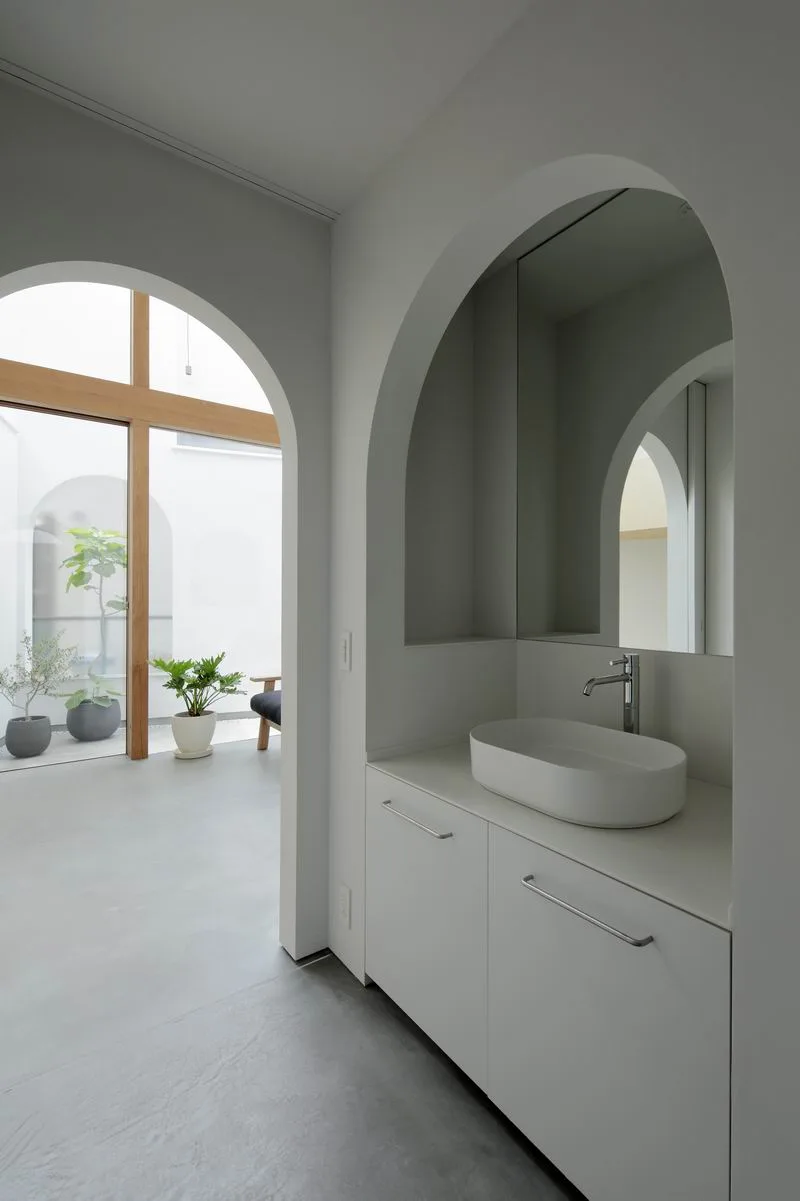
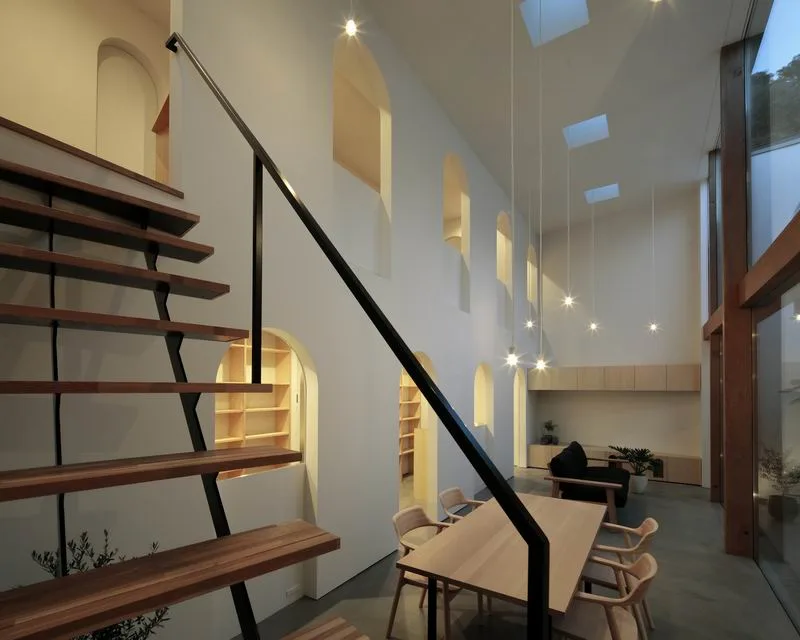
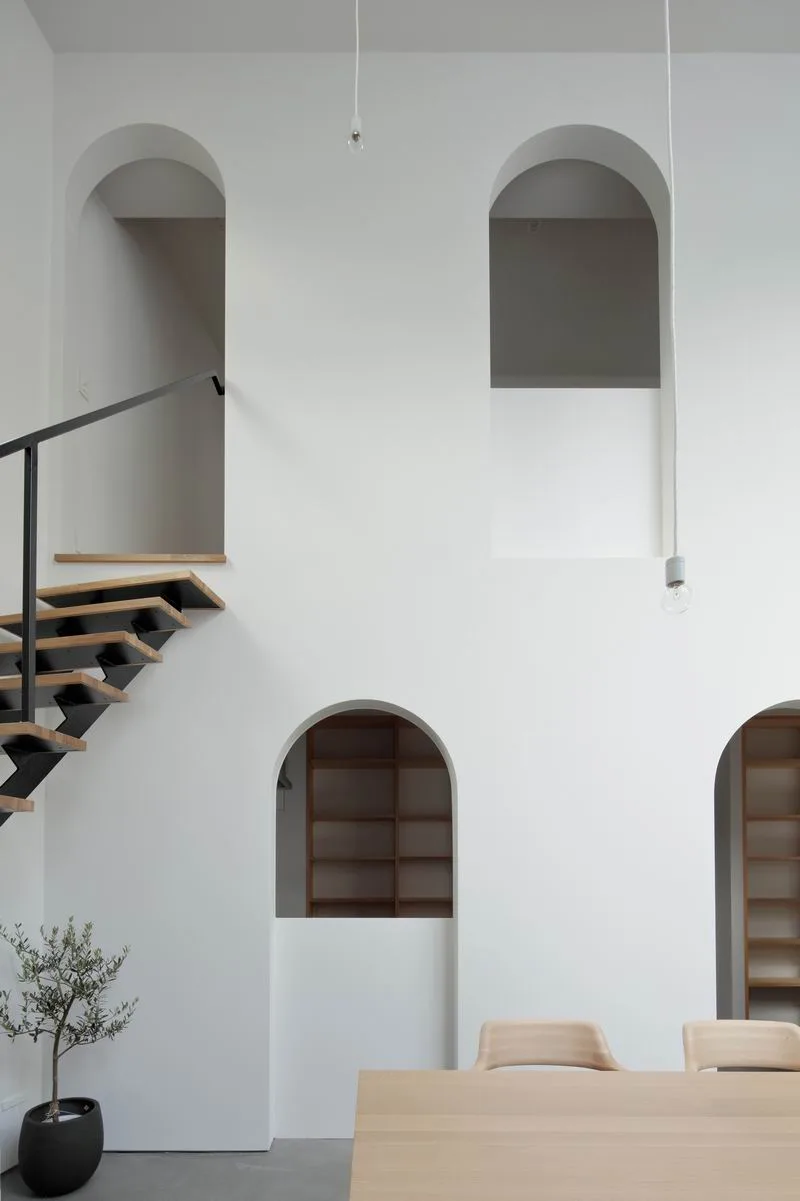
A series of arched openings are strategically placed throughout the interior and exterior, blurring the boundaries between indoor and outdoor spaces. This design is applied in the open living and dining areas as well as between the backyard and rooms. It results in dynamic lighting and living environments while extending visual sightlines and interior space, creating a sensation reminiscent of strolling through a quaint town.
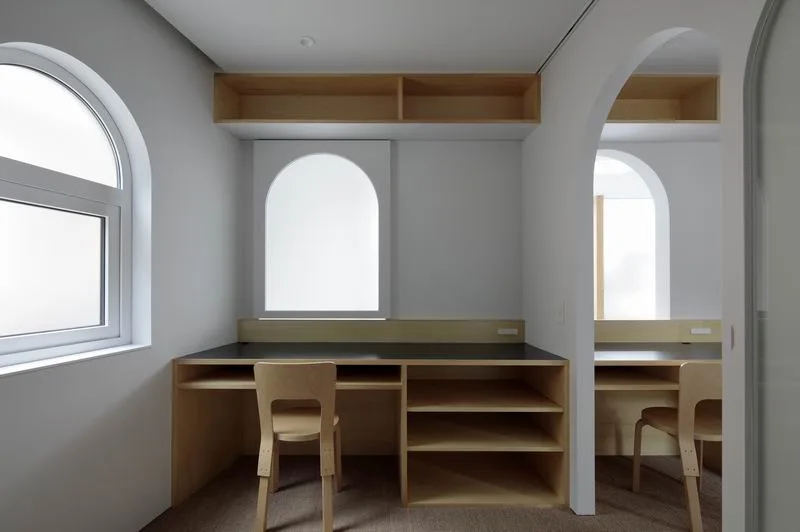
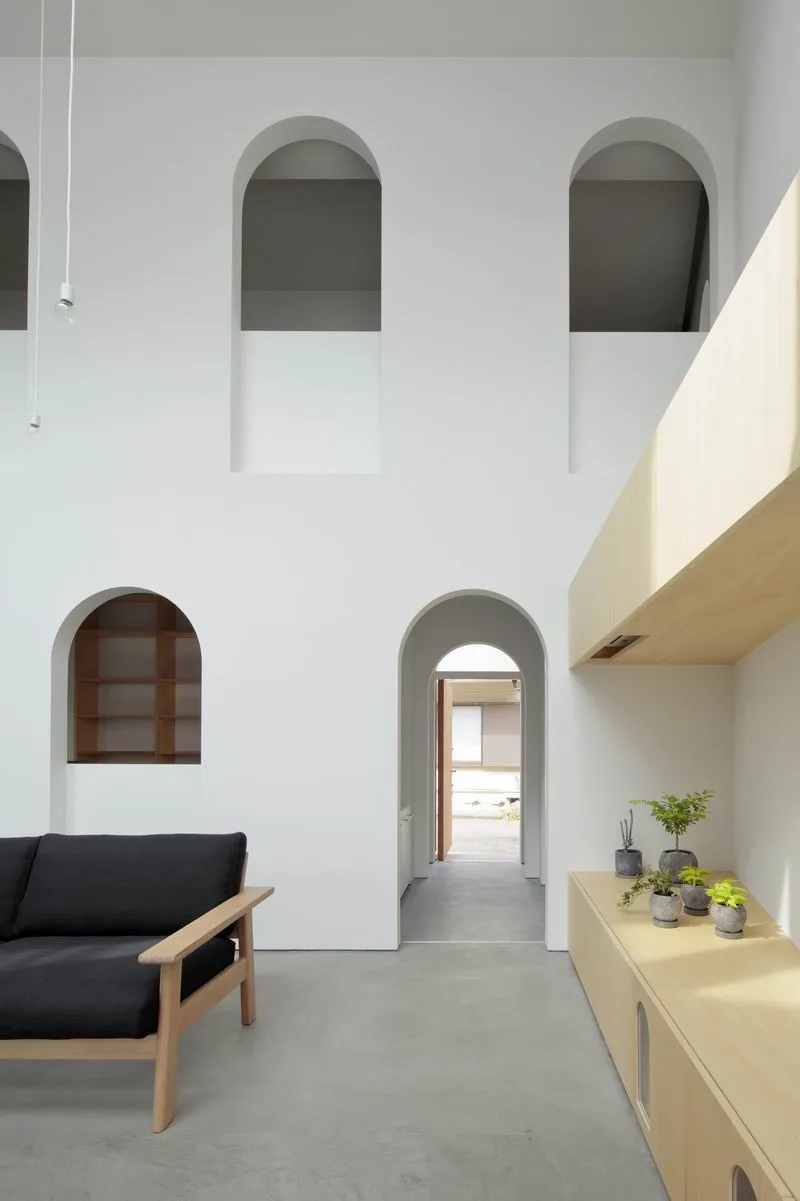
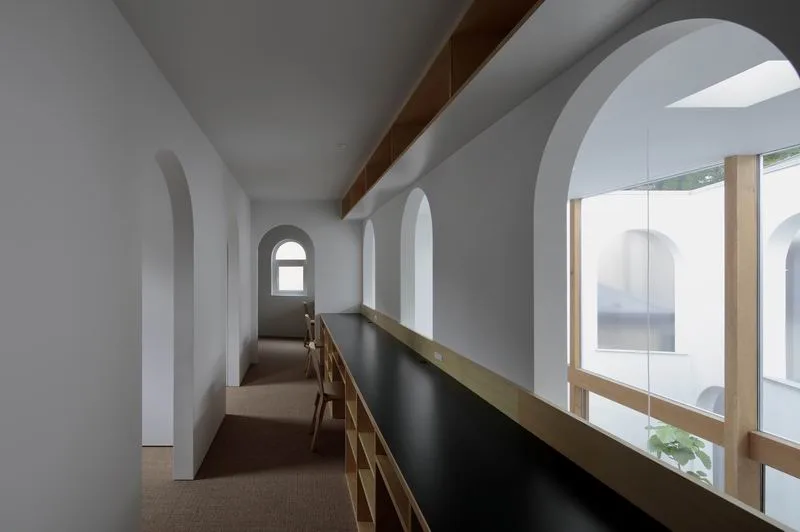
By utilizing a parallelogram-shaped layout offset from the street but aligned internally, combined with creative arched openings, this design overcomes site limitations. It fulfills the homeowner’s desire for privacy, natural light, fresh air, and an open, comfortable living environment.
When designing the Chaoxia residence with the concept of “leveling and misalignment,” the architect aimed to highlight a unique approach to bringing comfort, openness, and ventilation to an enclosed home.
Project Drawings
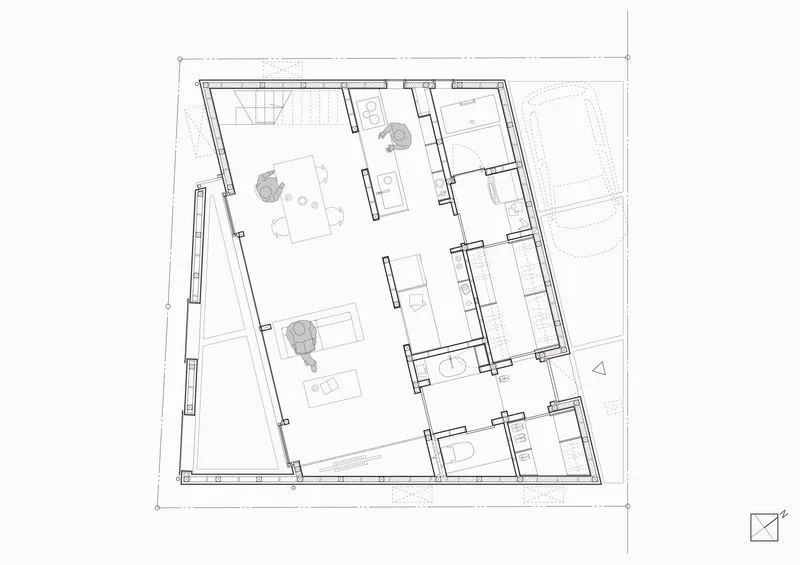
△ First Floor Plan
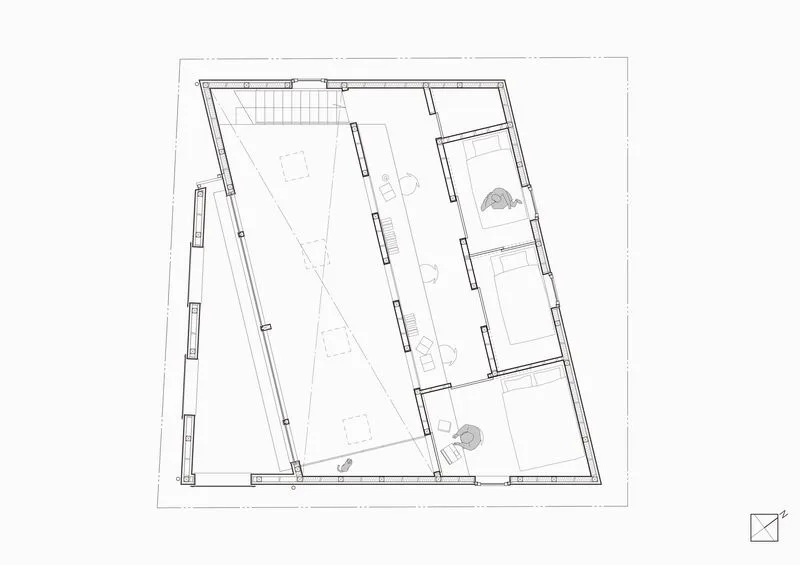
△ Second Floor Plan
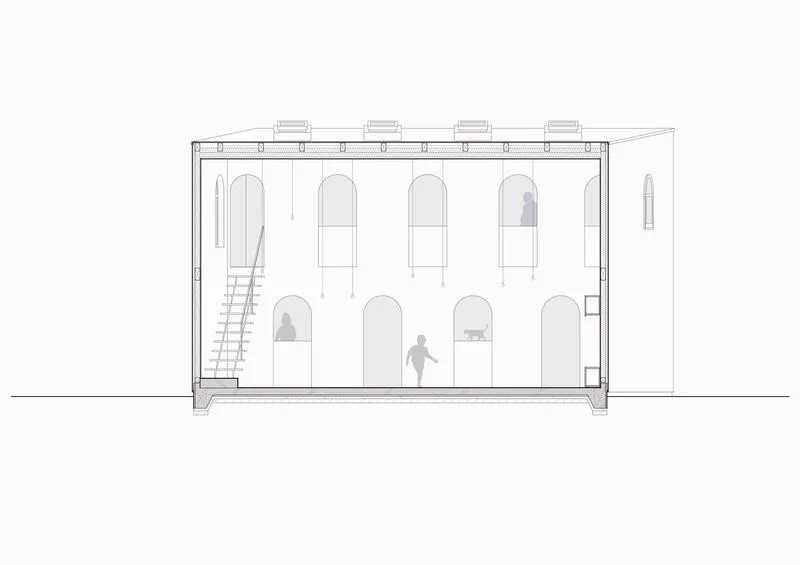
△ Elevation Drawing
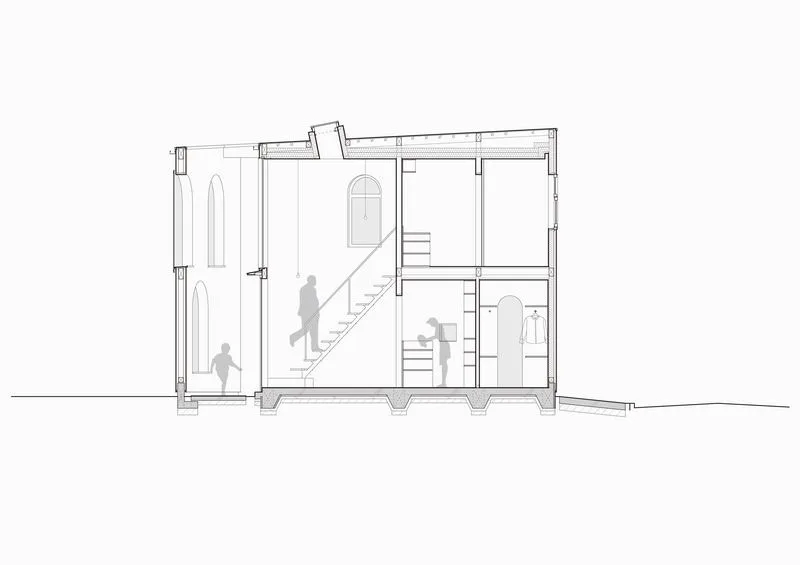
△ Section Diagram
Project Information
Architect: Toshihiro Aso Design Office
Area: 90 m²
Project Year: 2017
Photographer: Kanichi Torimura
Manufacturer: Aica
Lead Architect: Toshihiro Aso
Design Team: Toshihiro Aso Design Office
Structural Engineer: Kentaro Nagasaka, Ken Nagasaka Engineering Network
City: Asaka
Country: Japan












Must log in before commenting!
Sign Up