
From familiar municipal engineering to new housing construction projects, the Kashgar Affordable Housing Project Department (Third Company) of China Railway First Group has made significant progress. Facing diverse construction techniques, processes, and requirements, the dedicated efforts of all employees, driven by the motto “Answer the call, be ready to fight, and win the battle,” have brought the project to a critical stage. Comprehensive success is within reach, and the brand reputation of China Railway First Group and the Third Company has been further established in Kashgar, laying a strong foundation for expanding into regional markets.
Intensive Training for Newcomers in Building Construction
The Kashgar Affordable Housing Project in Xinjiang consists of five 17-story frame shear structure buildings. Each unit ranges from 33 to 58 square meters, totaling 1,584 households with an overall building area of 97,000 square meters. The contracted output value stands at 170 million yuan. This project marks the first housing construction venture for the three companies, playing a crucial role in broadening their construction scope, cultivating technical talent, and gaining valuable experience.
Although the project was awarded at the end of 2013, substantial design adjustments delayed the official start until May 2014—six months later than planned. During this period, Project Manager Ran Junfeng proactively assisted the owner, successfully securing approval for planning and design documents within two months. This effort increased the construction area from the initial 89,000 to 97,000 square meters and raised the contract value by 15 million yuan, from 155 million yuan. This laid a solid foundation for the project’s subsequent phases.
However, the project management team was composed entirely of members originally involved in railway, highway, and municipal construction projects in Kashgar, Xinjiang. For many, especially a young female team member, this was their first experience with building construction.
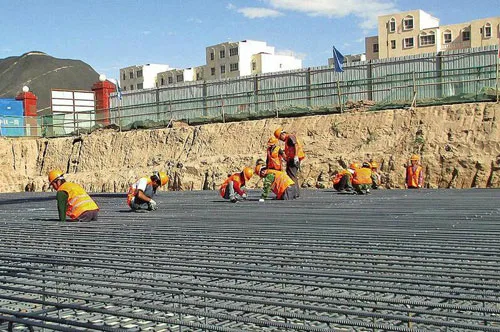
Beyond the lack of specialized skills, the team faced challenges due to unfamiliar terminology and construction concepts. To address this, the project department organized technical personnel into specialized groups following a “division of labor, collaboration, and joint learning” approach. They studied construction drawings, learned acceptance standards, and gathered technical information through various channels including peers, instructors, and online resources. Over 40 hours of centralized training benefited 200 participants, enhancing both professional skills and teamwork. Additionally, the team conducted eight field visits to construction sites in Dongcheng District and the Economic Headquarters District of Kashgar, gaining valuable insights, identifying areas for improvement, adopting advanced techniques, and strengthening technical and management capabilities.
BIM Technology Implementation Before Construction
The Kashgar Affordable Housing Project plays a vital role in Xinjiang’s housing market development and in building construction experience for the three companies. As this is the third company’s first foray into this field, managing the construction process without prior technical and managerial expertise was a significant challenge, especially for Project Manager Ran Junfeng. To address this, the department introduced Luban BIM technology software to enhance refined management.
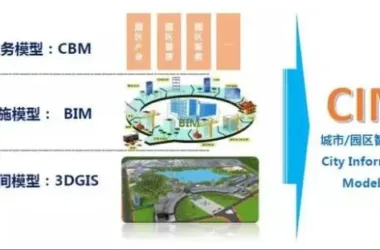
BIM (Building Information Modeling) technology uses software to create 3D computer simulations based on design drawings, allowing early detection and resolution of design issues. At the project’s outset, professors from relevant universities were invited to educate the construction and management teams about the benefits of Luban BIM technology. These benefits include precise identification of drawing errors, accurate calculation of engineering quantities, optimized material distribution, detailed steel bar processing, and improved on-site construction guidance. A total of 23 lectures were held, attended by 150 participants, fostering acceptance of this advanced information management approach.
The project department employed three BIM modeling software and two data management platforms—Luban Civil Engineering, Reinforcement, and Installation—combined with engineering controls to ensure model accuracy. After creating the models, the technical team used the Luban system to perform 3D clash detection, identifying 3,373 errors at intersections in the design drawings. This process saved time, improved accuracy, eliminated construction difficulties, reduced rework and cost overruns, and accelerated progress.
Using Luban BIM technology, project managers could accurately calculate overall and component-specific engineering quantities, facilitating efficient and precise data organization. Material managers extracted exact construction material quantities from the BIM database, enabling accurate procurement planning and reducing waste. BIM models also provided detailed guidance for precise steel bar machining, including quantity, size, shape, and connection methods, especially for cutting and usage control. Furthermore, Luban BIM’s powerful 3D rendering enabled direct technical demonstrations of complex or abstract components on-site, preventing misunderstandings that could lead to errors, rework, and waste, thereby saving costs and improving efficiency.
By integrating two data management platforms, the department efficiently planned each construction process, controlling timelines and analyzing material and cost requirements to guide on-site operations effectively. Meanwhile, the project operated in a challenging security environment requiring stability maintenance. To ensure smooth construction and protect employees’ safety, the department collaborated with the Kashgar Housing and Construction Bureau’s stability publicity team to conduct a large-scale campaign titled “Recognizing the Evil Essence of Religious Extreme Ideology.” This campaign raised awareness of the impacts of terrorism in Xinjiang, the manifestations of extremist ideologies, and prevention measures. It strengthened employees’ sense of crisis and emphasized that maintaining social stability is essential for personal safety.
Strict personnel management policies were implemented: employees were prohibited from going out alone; those needing to leave work sites had to inform supervisors; avoided risky areas such as underground passages or deserted alleys; and limited time spent in crowded places. Management and night shift staff were equipped with electric batons, walkie-talkies, and other safety gear, ready to sound alarms and evacuate if danger was detected.
To enhance self-protection awareness, the department invited the deputy director of Duolaitbag Township Police Station to conduct anti-terrorism drills focused on emergency responses and safe evacuation techniques, boosting employees’ self-rescue capabilities. Night shift hours were extended from two to four hours, and duty personnel were provided with protective equipment including electric batons, shields, and helmets.
The project department also strengthened cooperation with local government for joint defense and governance. A “Joint Prevention and Governance Agreement” was signed with the township government, allocating at least 130,000 yuan annually to employ 10 local militia members for patrol duties. Additionally, a “police-civilian joint construction” unit was established with the local police station, increasing patrol frequency and security measures around the site.
Security measures included installing 12 surveillance cameras covering employee residences and construction sites. The department implemented the “eight essentials for riot control and counter-terrorism”: anti-theft doors and railings, mandatory dog ownership, riot control equipment, maintenance of courtyard walls, electric bells, alarm contact cards in rooms, and centralized living arrangements.
An emergency response leadership group was formed, and an “Emergency Rescue Plan for Sudden Terrorist Events” was developed. On May 18, all employees participated in a counter-terrorism drill, enhancing their emergency response abilities to safeguard construction progress and employee lives amid frequent terrorist incidents.
Dividing Responsibilities and Forming a United Team
The project leadership includes Manager Ran Junfeng, Party Branch Secretary Li Jigang, Safety Director and Deputy Manager Han Xigang, and Chief Engineer Lu Jianwen. At the project’s outset, Ran Junfeng prioritized secondary management. The Kashgar housing project is a semi-BT model, with funds paid in stages: 50% upon project completion and handover, 30% after one year of use, and 20% after three to four years. Within the initial 50%, payments are split into three progress-based milestones. This posed significant financial pressure.
Ran Junfeng promoted refined management, focusing on strict internal cost control and careful labor force planning. Two companies were selected for main construction, supported by six strong teams handling exterior walls, water supply and drainage, heating, electrical, fire protection, communication, fire alarms, and elevator systems. Payments were proportional, implementing risk and benefit sharing. This model has proven practical and effective in meeting construction progress, safety, quality, and financial targets. Ran Junfeng is considering extending this model to other wholly-owned projects to optimize fund utilization.
Party Branch Secretary and Union Chairman Li Jigang oversees party discipline, anti-terrorism efforts, and union activities. The project has established a leadership group to promote integrity and a clean working environment while organizing cultural and sports events under themes like “Happy Sending to Grassroots, Healthy One Bureau Tour,” fostering a positive and harmonious workplace.
Safety Director and Deputy Manager Han Xigang initially served as Minister of Industry and Economy, preparing the project budget. Recognizing his lack of housing construction experience, he self-studied extensively, purchasing specialized reference materials and learning building graphics and steel bar calculation software online. Within a month, he mastered project drawings and steel bar calculations. Han developed detailed construction organization plans, calculated material usage under different subcontracting models, and provided data to negotiate subcontracting prices and control material turnover. In July, he was promoted to oversee construction progress and site safety, taking on greater responsibilities.
Chief Engineer Lu Jianwen leads technical work, addressing challenges arising from the team’s limited housing construction knowledge. He emphasized understanding drawings, compiling a complete set of 12 architectural drawing types, and using BIM technology to guide construction. Through training, self-study, and field observation, the technical team mastered building construction methods. Lu himself identified and resolved design issues, such as modifying underground pipeline trenches from curved to straight lines, reducing risk from welding points, saving costs, and speeding construction without compromising quality.
The project deadline set by the owners is September 30, 2015. To meet this, the department developed a calendar-based construction plan with key milestones, efficiently allocating personnel, machinery, and materials. Close coordination with owners, designers, and supervisors ensured timely resolution of technical challenges. A labor competition leadership group was formed, led by the project manager, promoting an “80-day hard work” campaign to meet annual goals. Weekly and monthly assessments incentivize teams with financial rewards for achieving safety, quality, and progress targets, while penalizing delays.
Due to the fragile stability situation in Kashgar, construction experienced 65 days of suspension. Despite this, the project is expected to undergo acceptance inspections by late November or early December.
Commitment to Safety and Employee Well-being
Since construction began, the project department has emphasized comprehensive safety education and training for management, labor dispatch personnel, and cooperating teams. To date, 55 training sessions totaling 80 class hours have trained over 1,400 individuals. Safety and quality skills competitions and new safety law knowledge contests have been organized, alongside the installation of a safety culture wall featuring educational comics.
The department has built a group prevention and control system by hiring 10 skilled mass safety supervisors—five from the project department and five from construction teams. These supervisors, along with three youth safety officers, conduct daily safety and quality inspections, promptly addressing hazards. The safety and quality department performs weekly inspections, while the project manager leads monthly checks. These inspections have identified 18 safety issues, including risks from temporary electricity use, high-altitude work, tower crane operations, and construction flaws such as poor wall verticality, inadequate tie bar placement, and surface defects. Monthly safety reports mandate timely rectification to ensure construction quality.
Recognizing Kashgar’s unique regional and ethnic characteristics, the project department celebrates employees’ birthdays monthly to foster belonging and alleviate the loneliness of being away from family. Various cultural and sports activities are actively promoted to create a vibrant work atmosphere and strengthen the sense of community.
To date, the housing project has earned high praise from Kashgar city leaders and the Municipal Housing and Construction Bureau as a “model leading the Kashgar construction market,” recognized for its progress, civilized work practices, and positive site culture. The project developed three quality control research topics: “Reducing Material Loss of Steel Bar Connections,” “Reducing Construction Material Costs,” and “Improving Verticality of Shear Walls and High-Rise Buildings.” The project union received the “Most Dynamic Union” award from the group company in 2014, along with titles such as “Model Employee Home” and “Demonstration Site for Three Construction Projects.” Additionally, the project was honored with the “Tiecheng Style Team Benchmark” and “Dou Tiecheng Technical School Benchmark” awards. Project Manager Ran Junfeng was named an Outstanding Union Friend, and Li Jigang was recognized as an Outstanding Union Worker by the group company. (Authors: Wang Dongsheng, Lv Xue)













Must log in before commenting!
Sign Up