
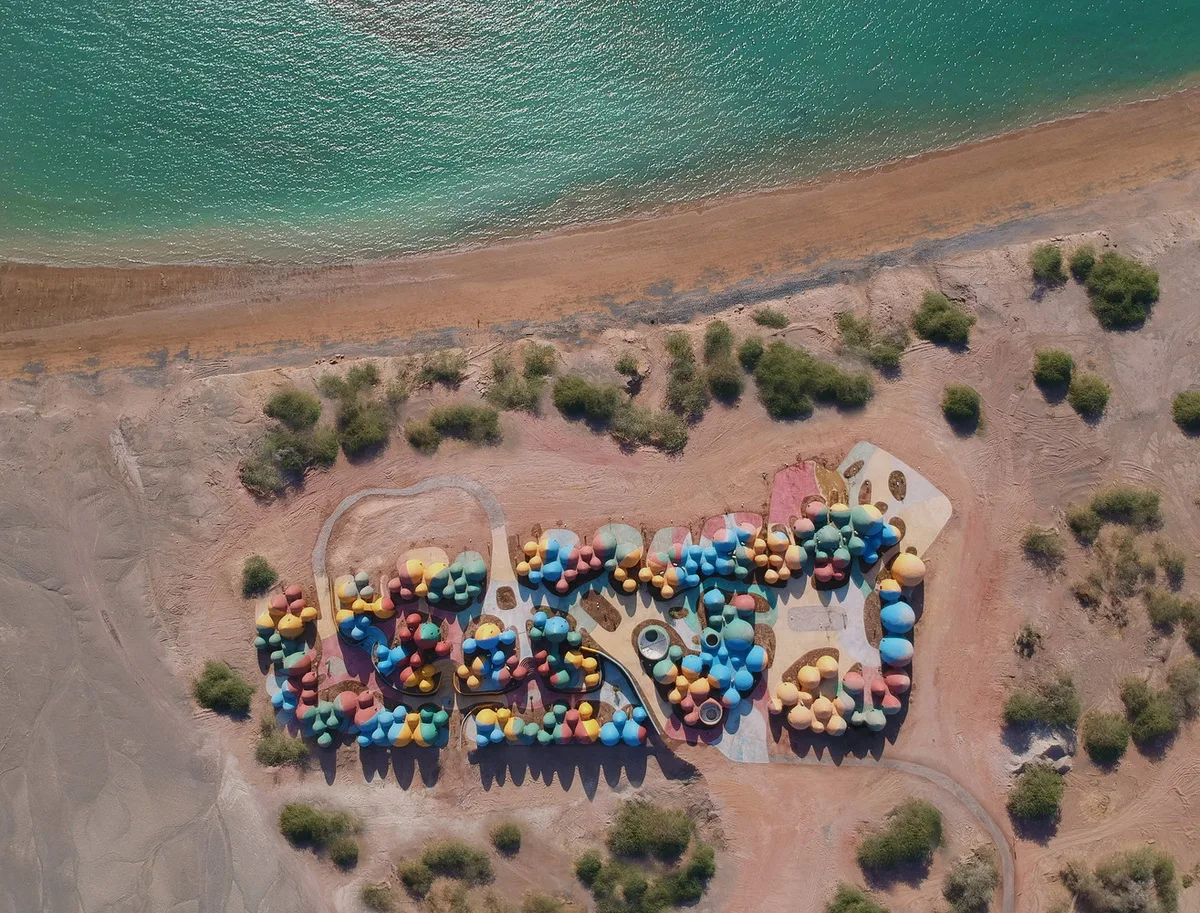
Hormuz Island, located in Iran, was historically a significant port in the Persian Gulf, strategically controlling oil transportation routes from the Middle East. Despite its surreal natural landscapes, the island has struggled with challenges in tourism development and economic growth. The “Presence in Hormuz” project series, led by ZAV Architects, is an urban planning and development initiative dedicated to empowering local communities through thoughtful design.
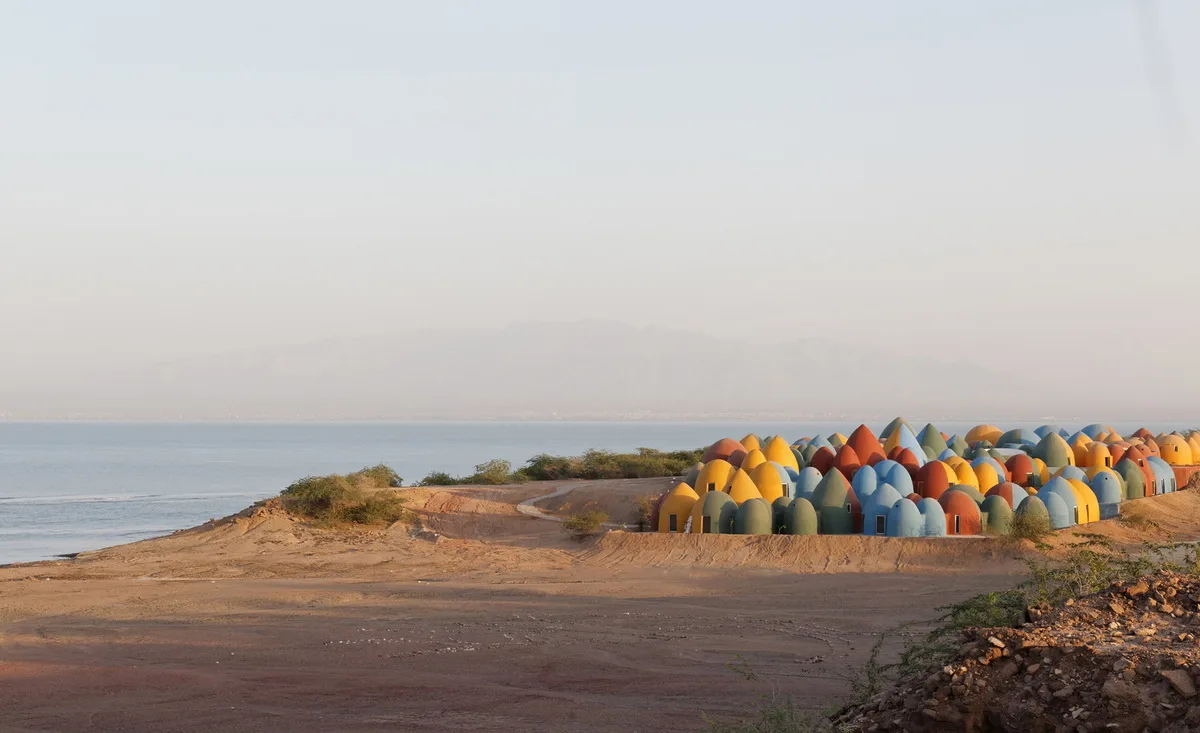
The Majara Residential Area represents the second phase of this series, serving as a multifunctional cultural residence designed to foster cultural and economic connections between local residents and tourists.
In a country often affected by international political tensions, new construction projects typically face scrutiny regarding their limitations, social value, and their ability to serve local communities as political priorities.
Architecture serves as a bridge connecting diverse groups—from development investors to local residents—and has the power to integrate these social classes. The Majara Residential Area exemplifies this approach by treating landowners, investors from Tehran, and local residents as key stakeholders, aiming to foster stronger partnerships among them.
This project also addresses local sanctions and economic challenges by striving to boost the area’s GDP through several strategies:
- Implementing cost-effective construction to alleviate financial pressure on homeowners;
- Allocating most of the budget to labor costs rather than costly imported materials to create local job opportunities;
- Designing adaptable spaces that can respond to future needs and unforeseen circumstances, benefiting homeowners and the island’s environment;
- Utilizing locally sourced construction materials to minimize expenses related to transportation.
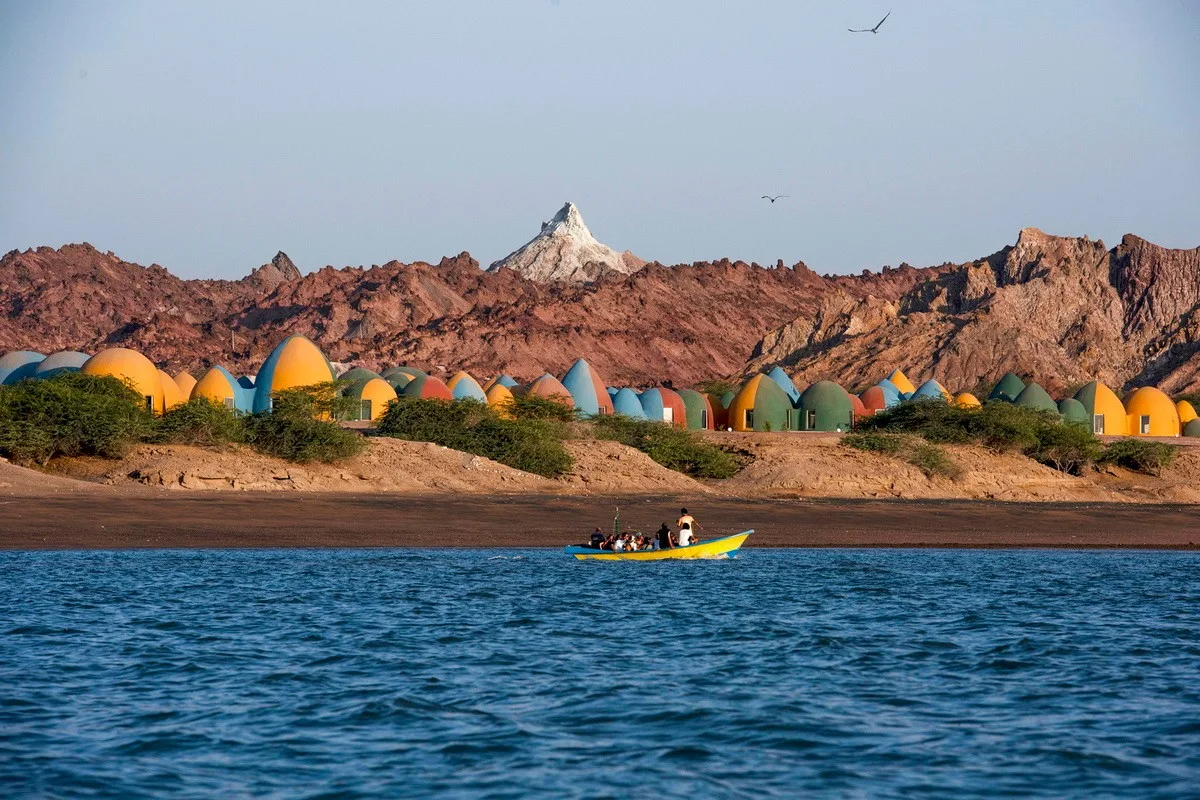
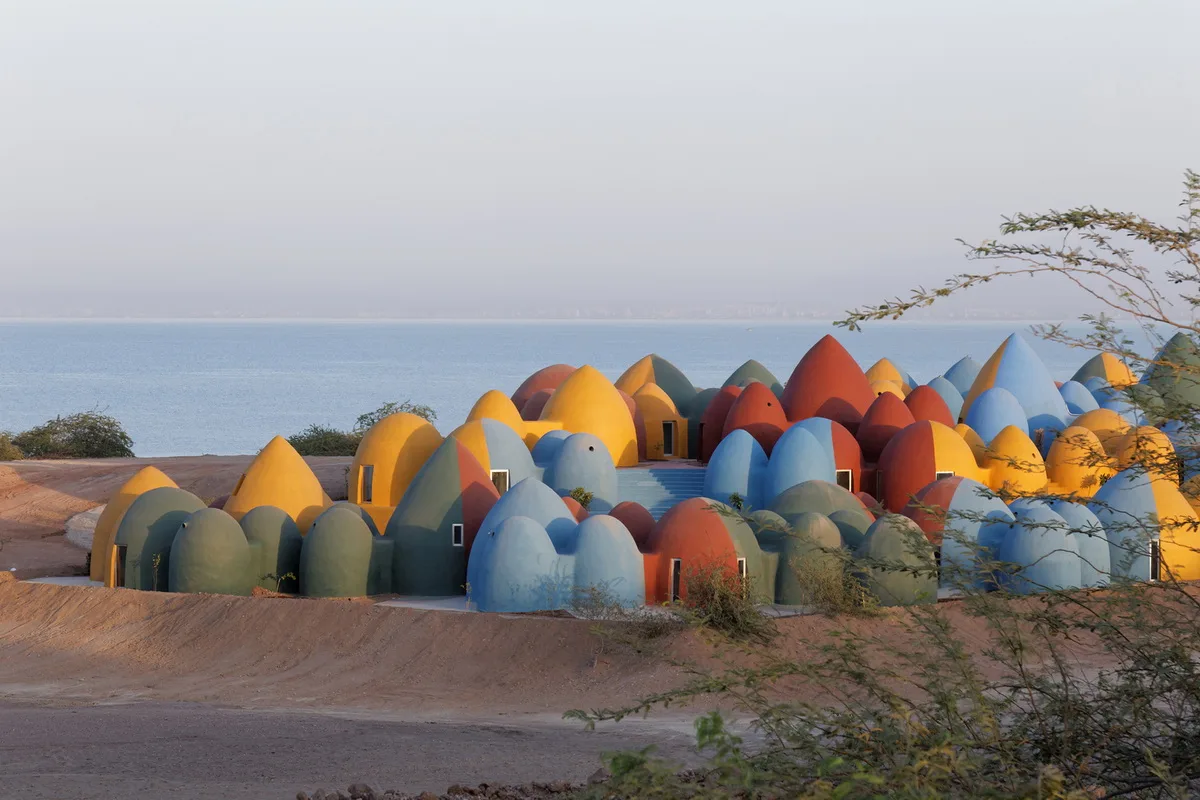
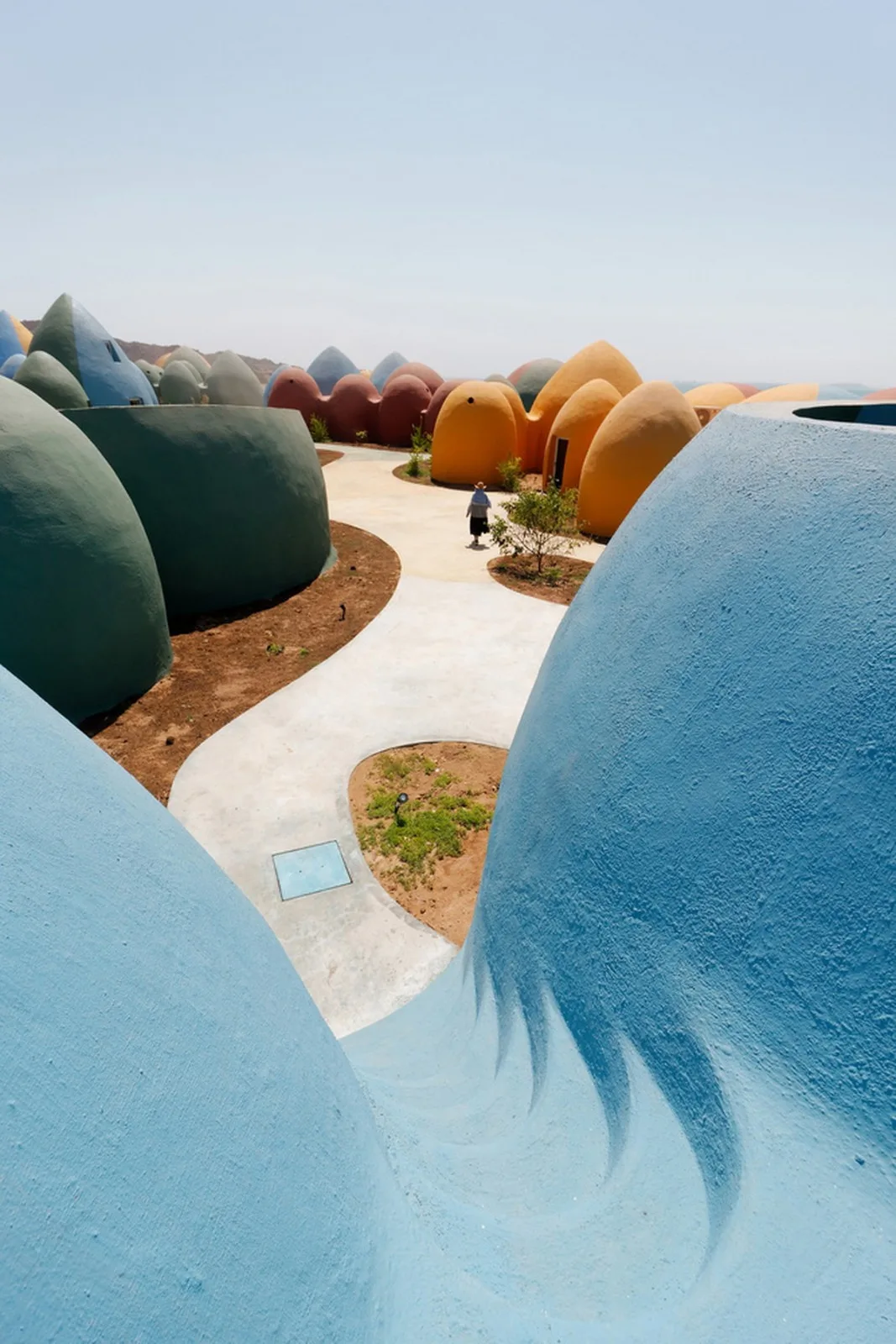
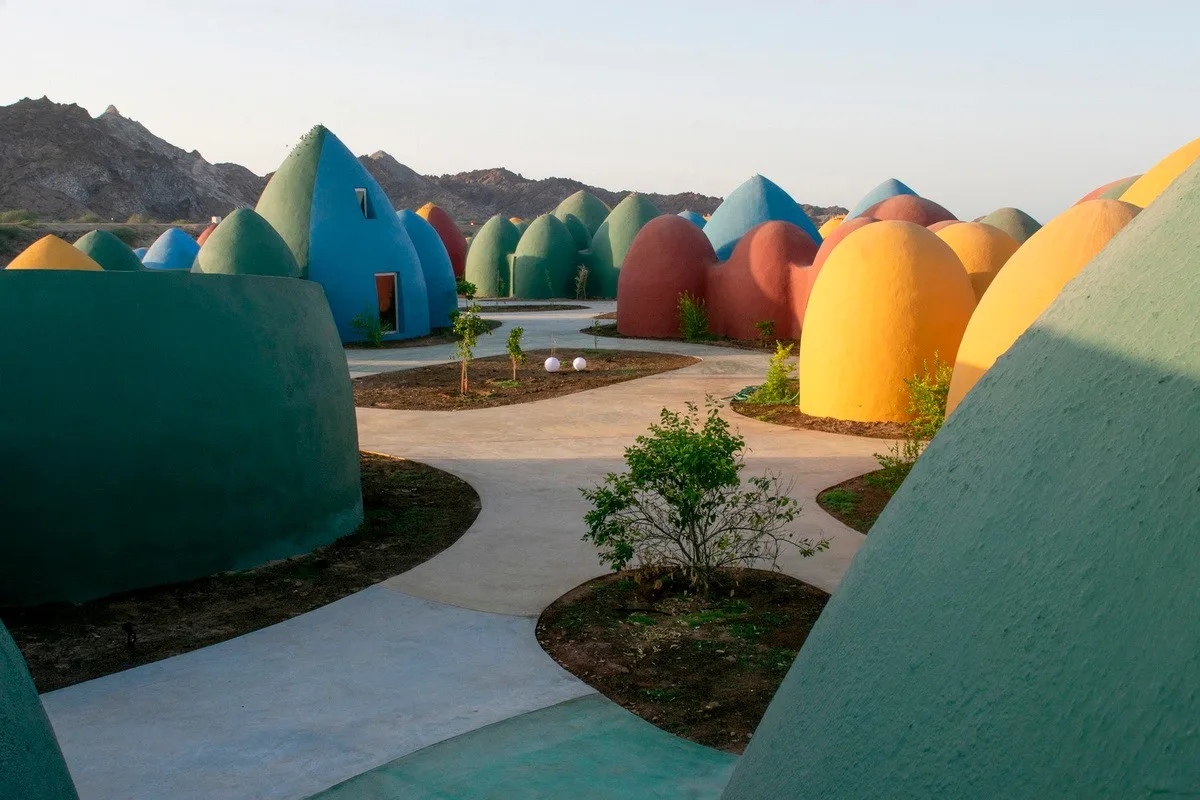
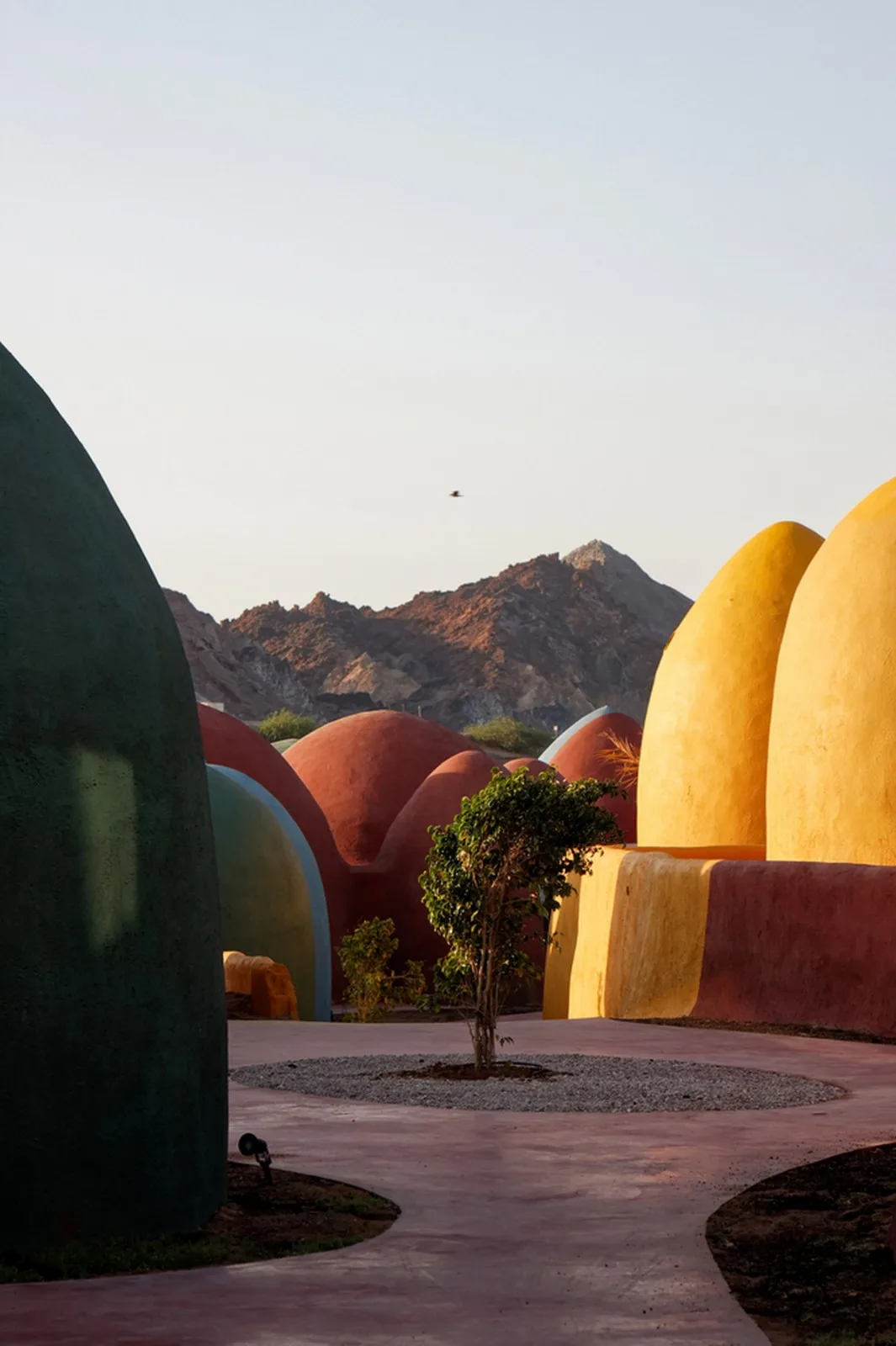
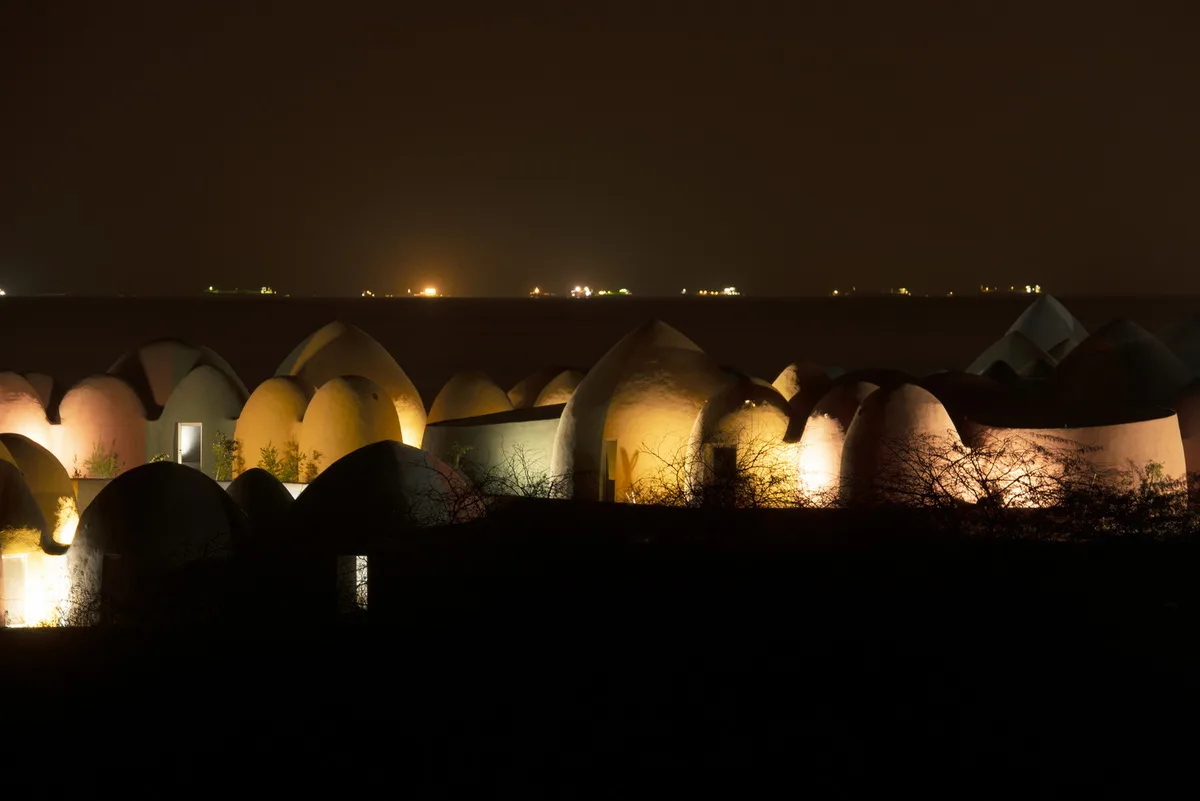
The Enduring Nader Khalili Rammed Earth Technique: The “Presence” series aims to build trust among community members through architectural spaces that encourage participation. The architects honor and continue the local tradition of Nader Khalili’s rammed earth construction by creating small-scale dome structures. These domes represent a universal architectural form and foster collaboration and learning among local artisans and newcomers.
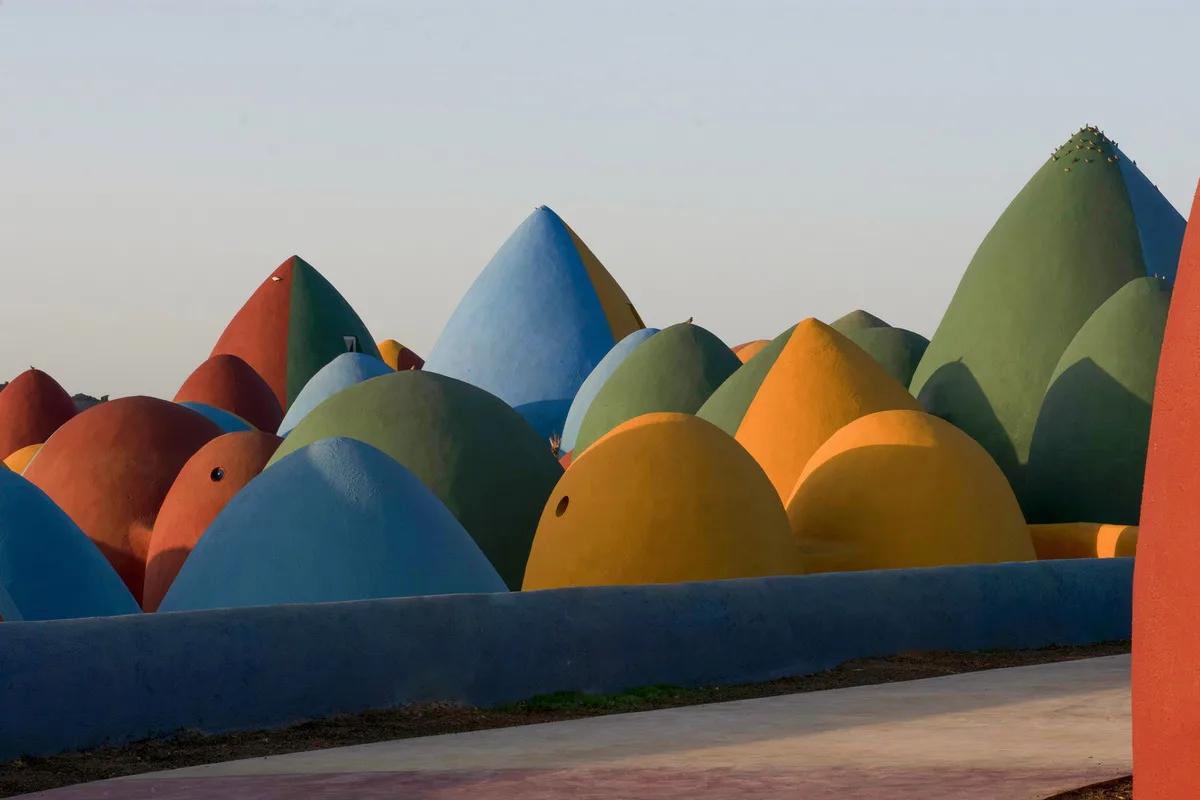
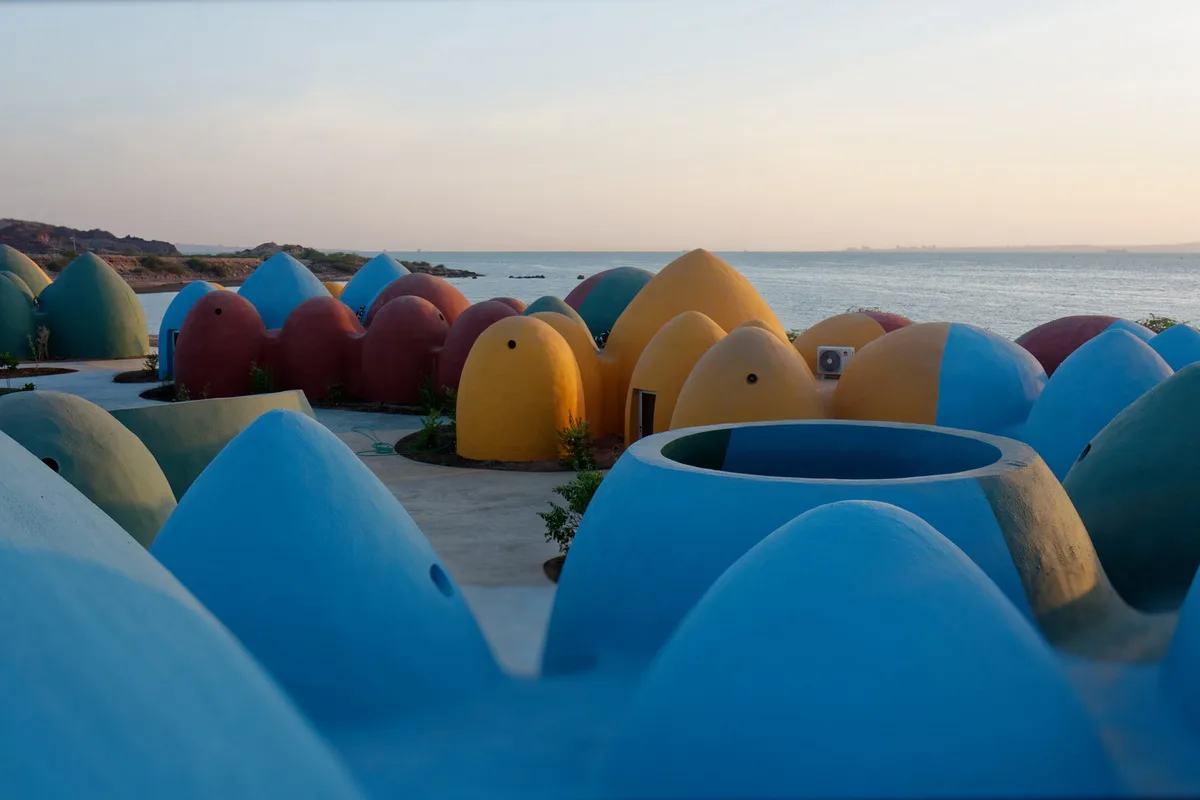
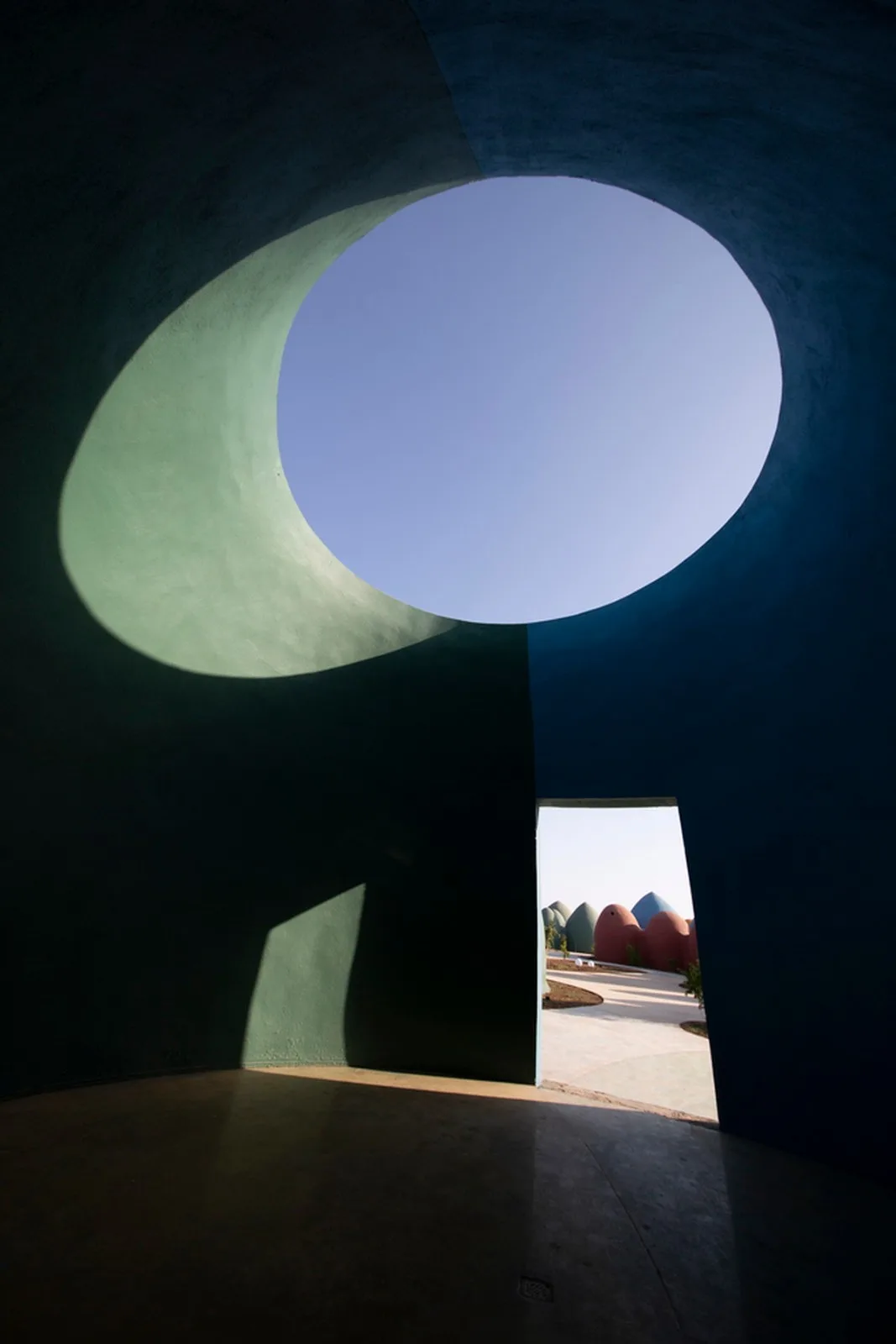
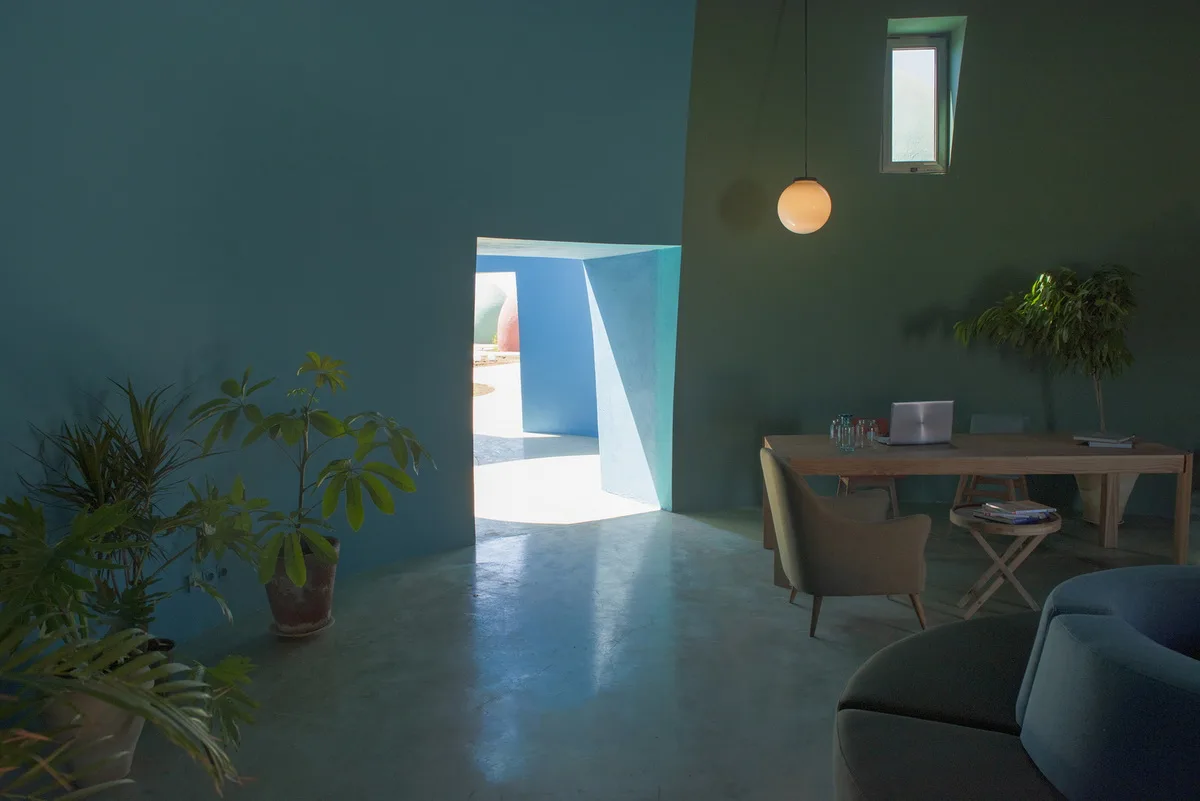
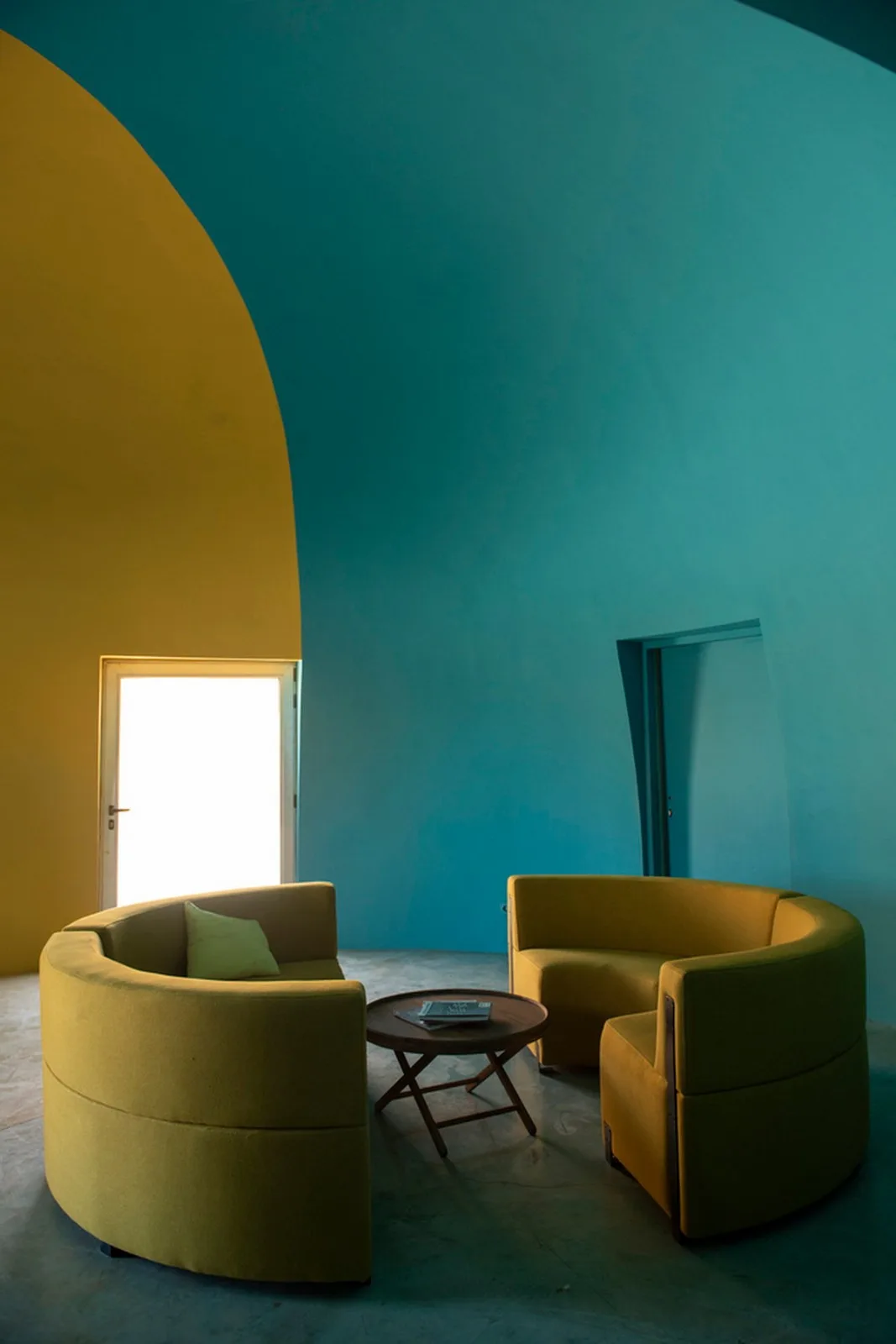
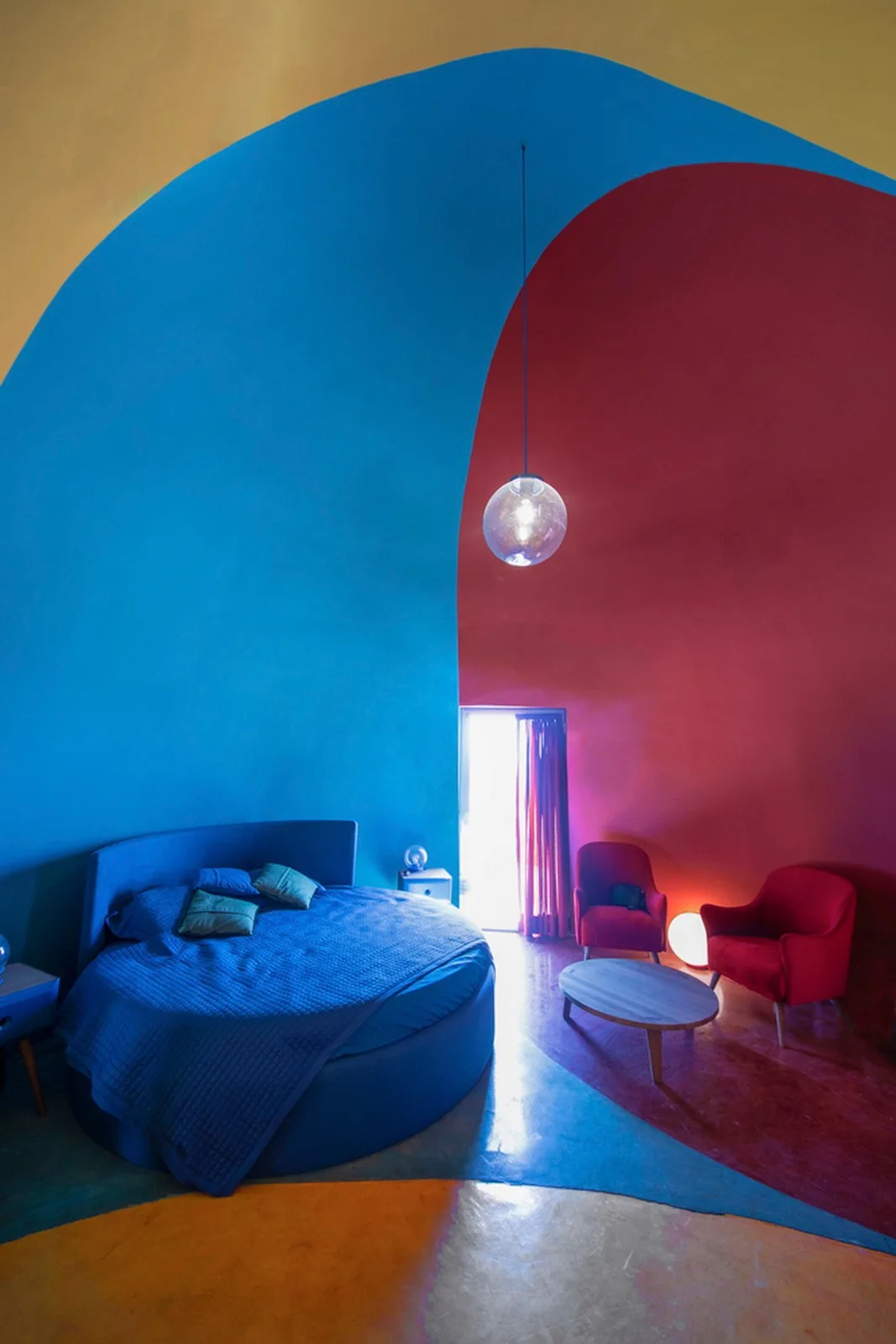
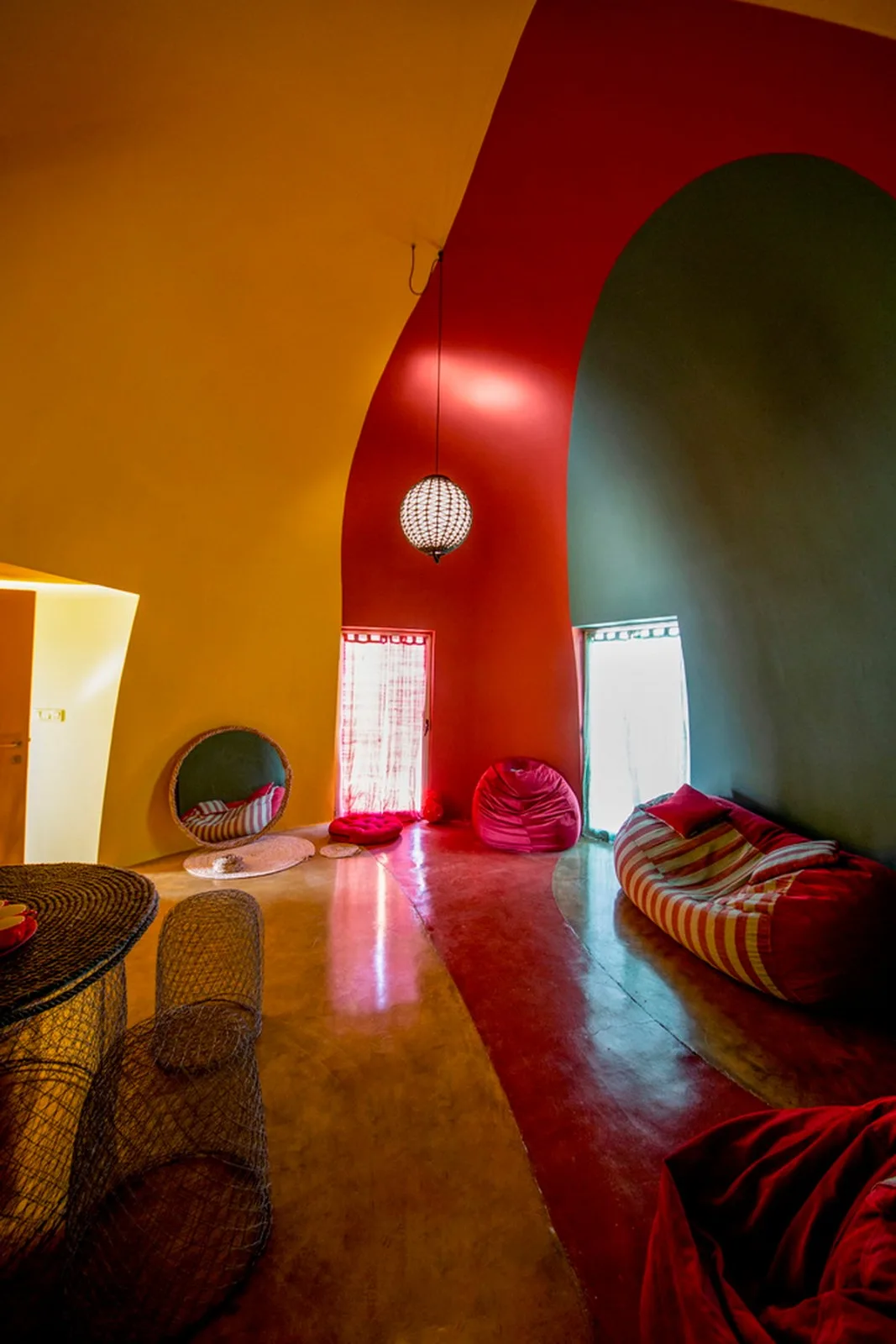
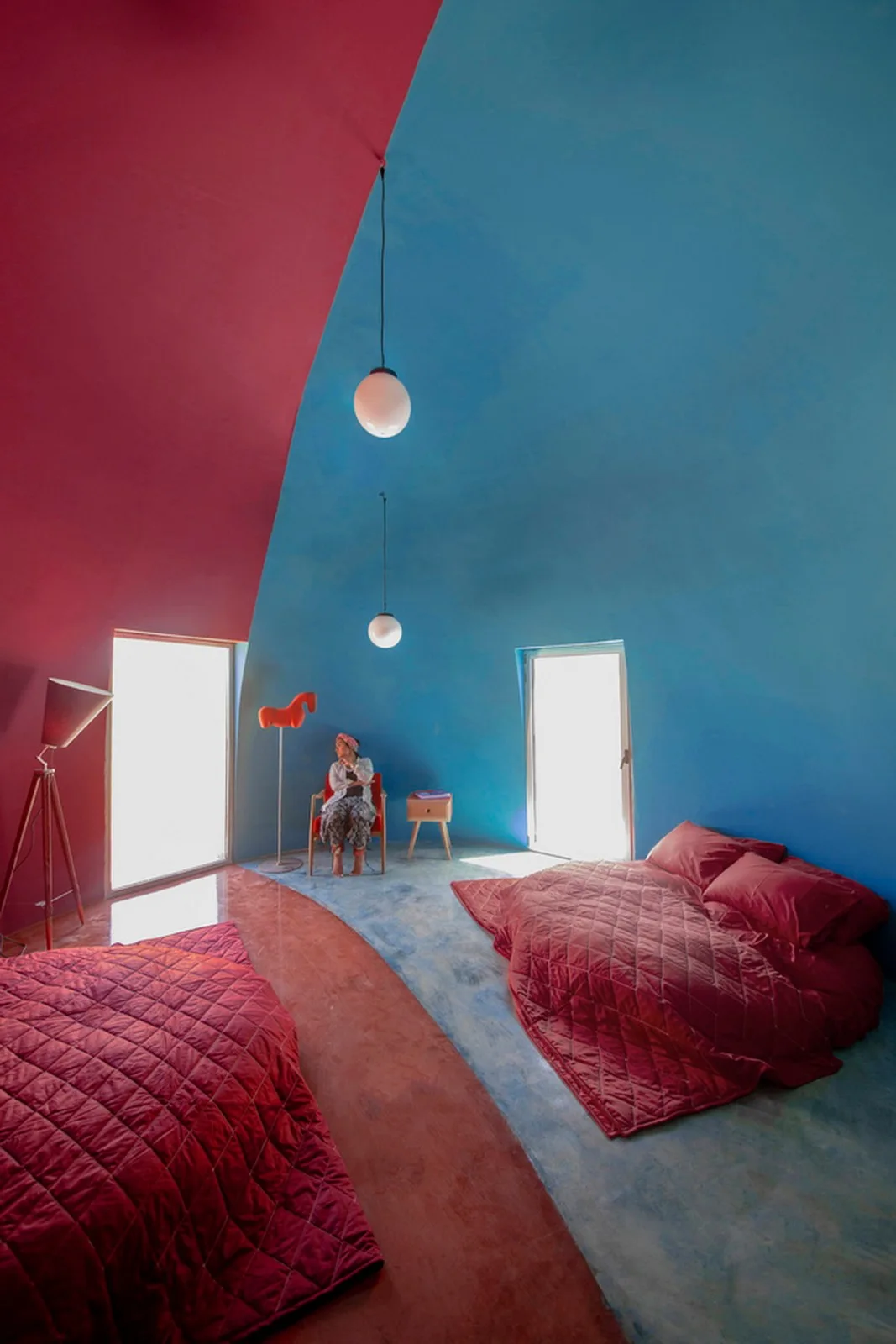
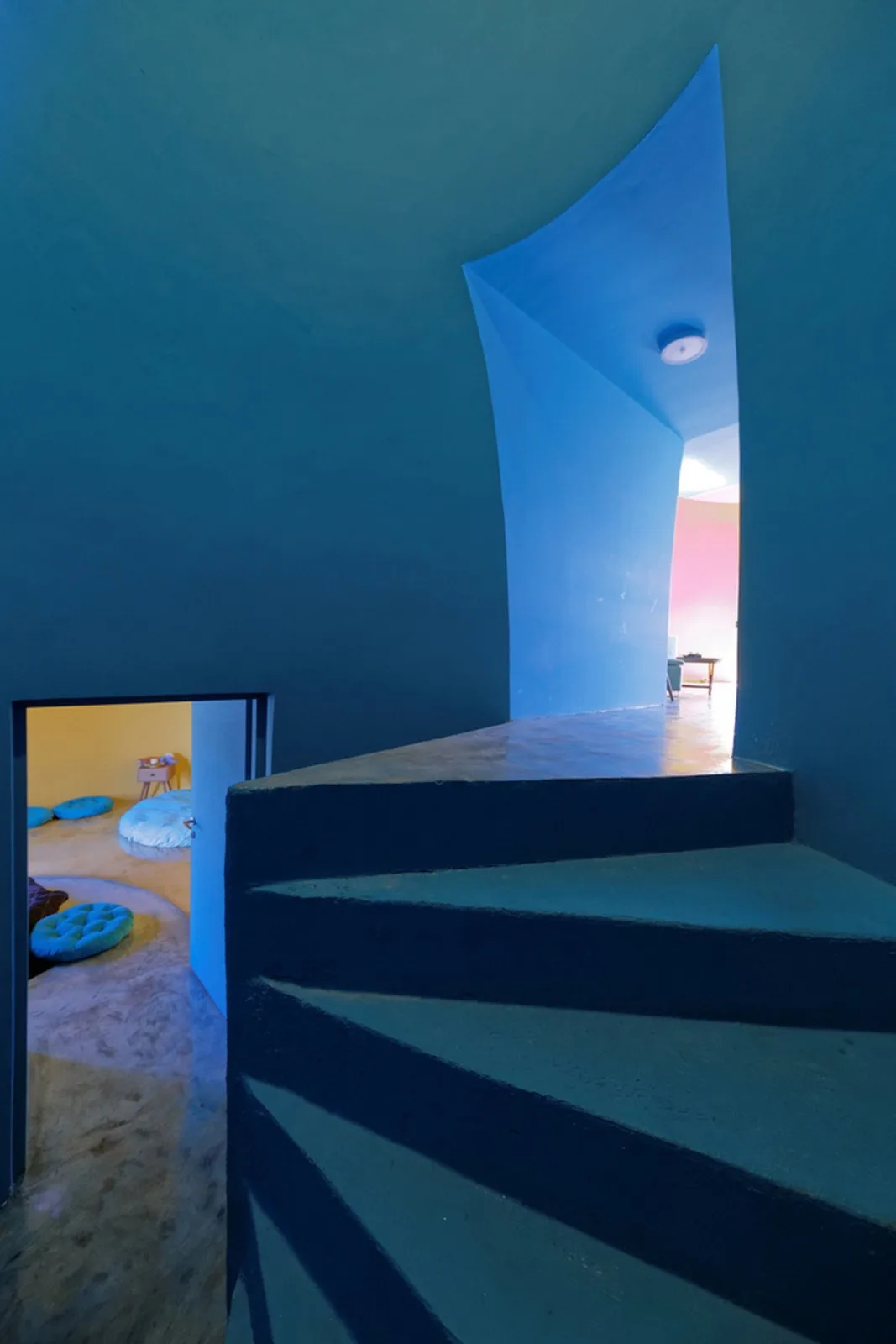
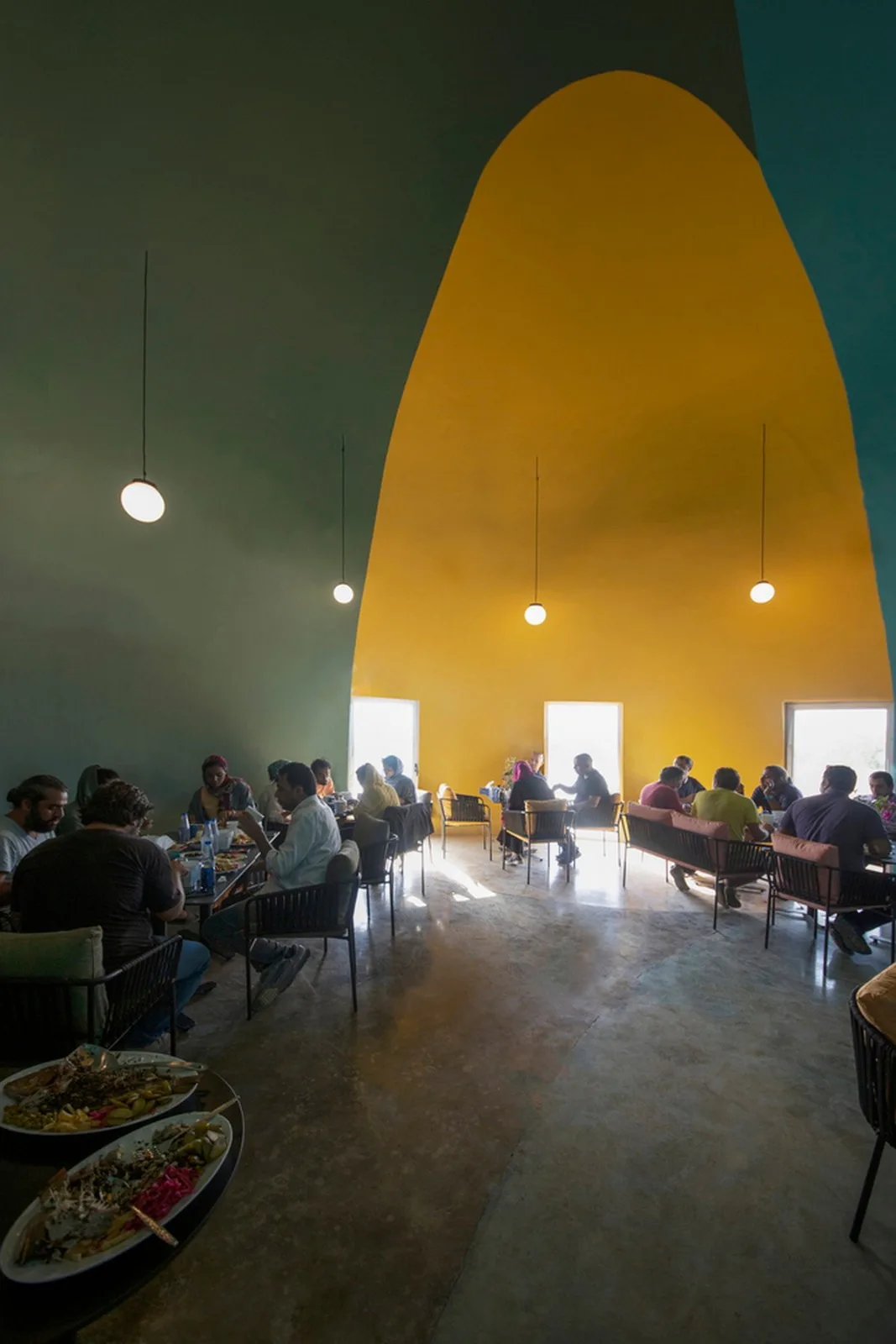
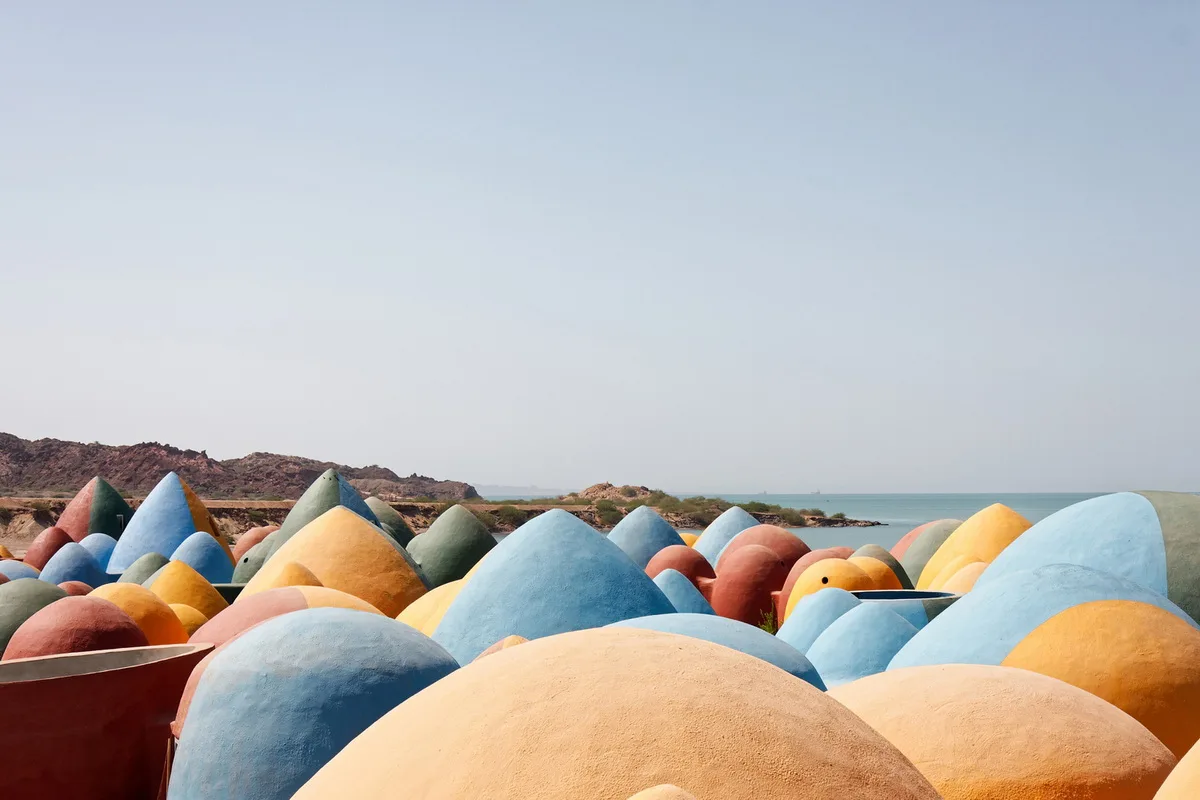
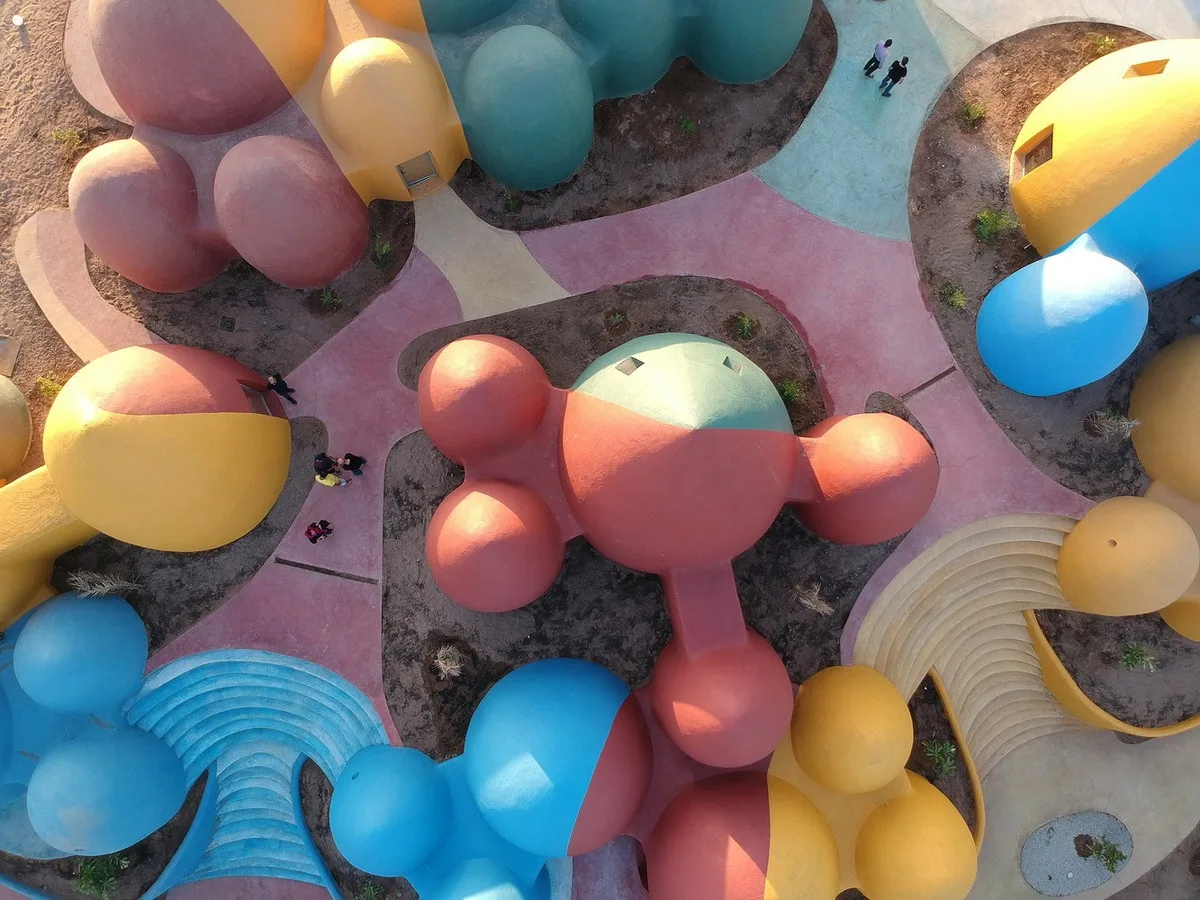
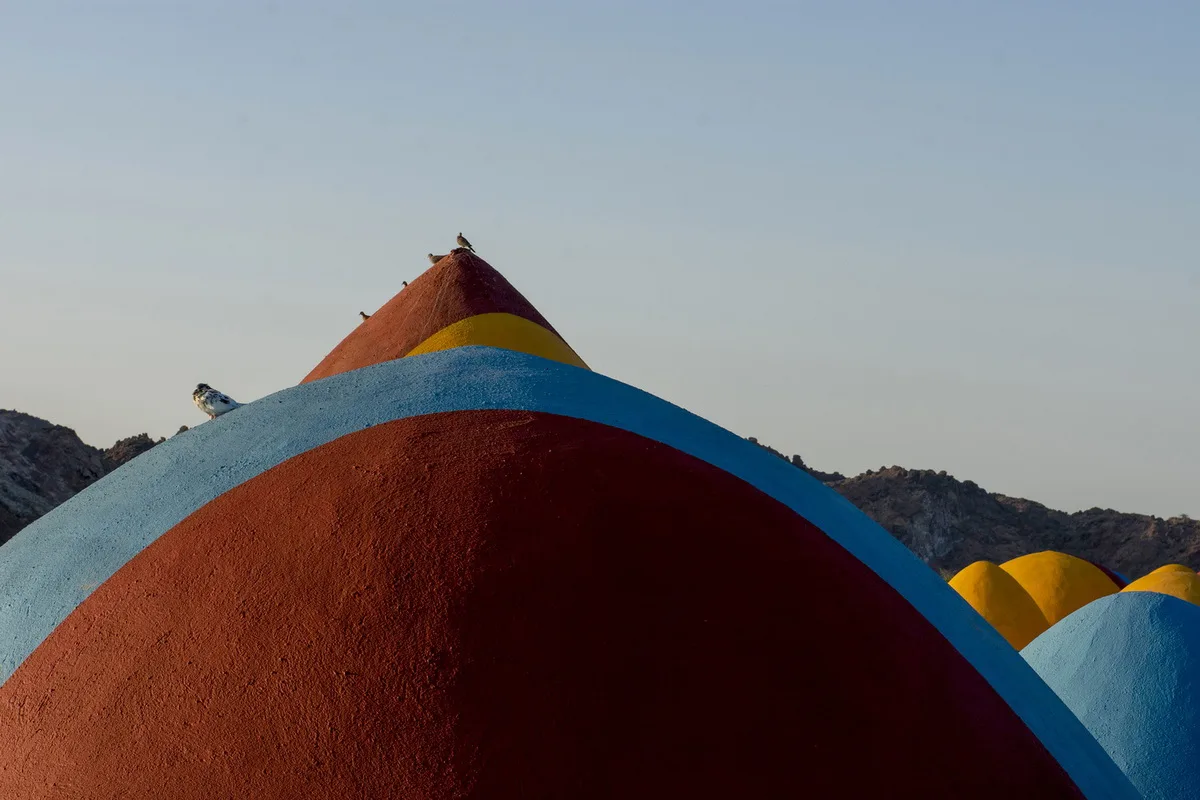
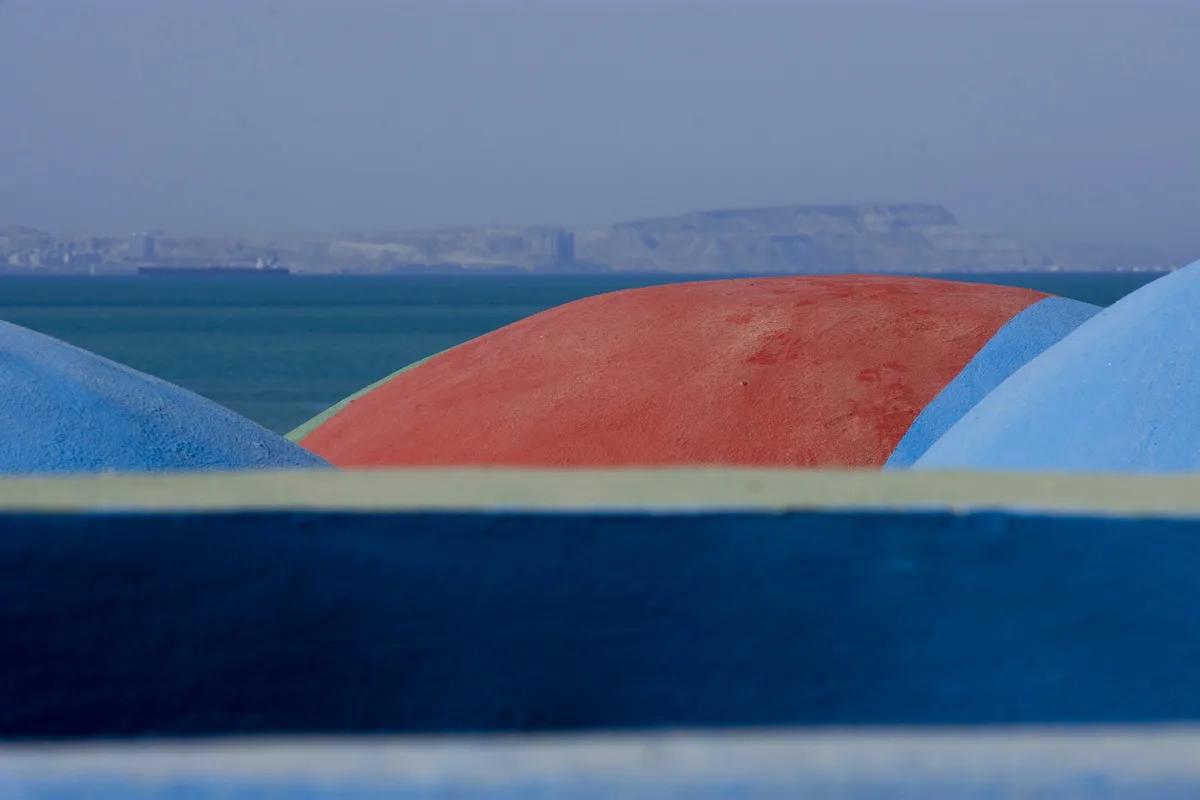
The Swelling Land: These vibrant, small domes echo the colorful terrain of Hormuz Island. Each dome is constructed using sand excavated from Hormuz Pier, symbolizing the land’s ability to expand organically and create living spaces.
Design Drawings
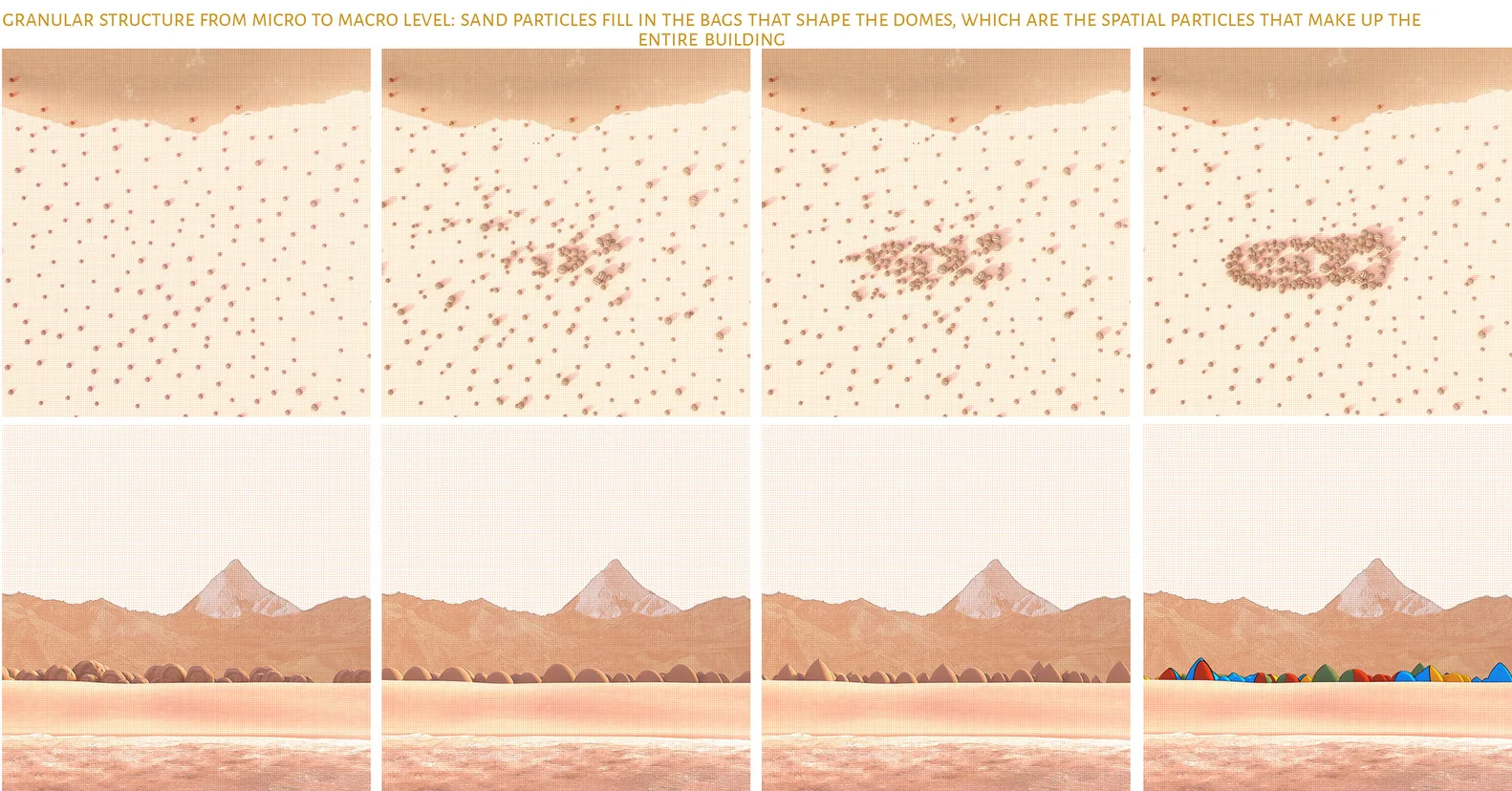
△ Project Analysis Diagram
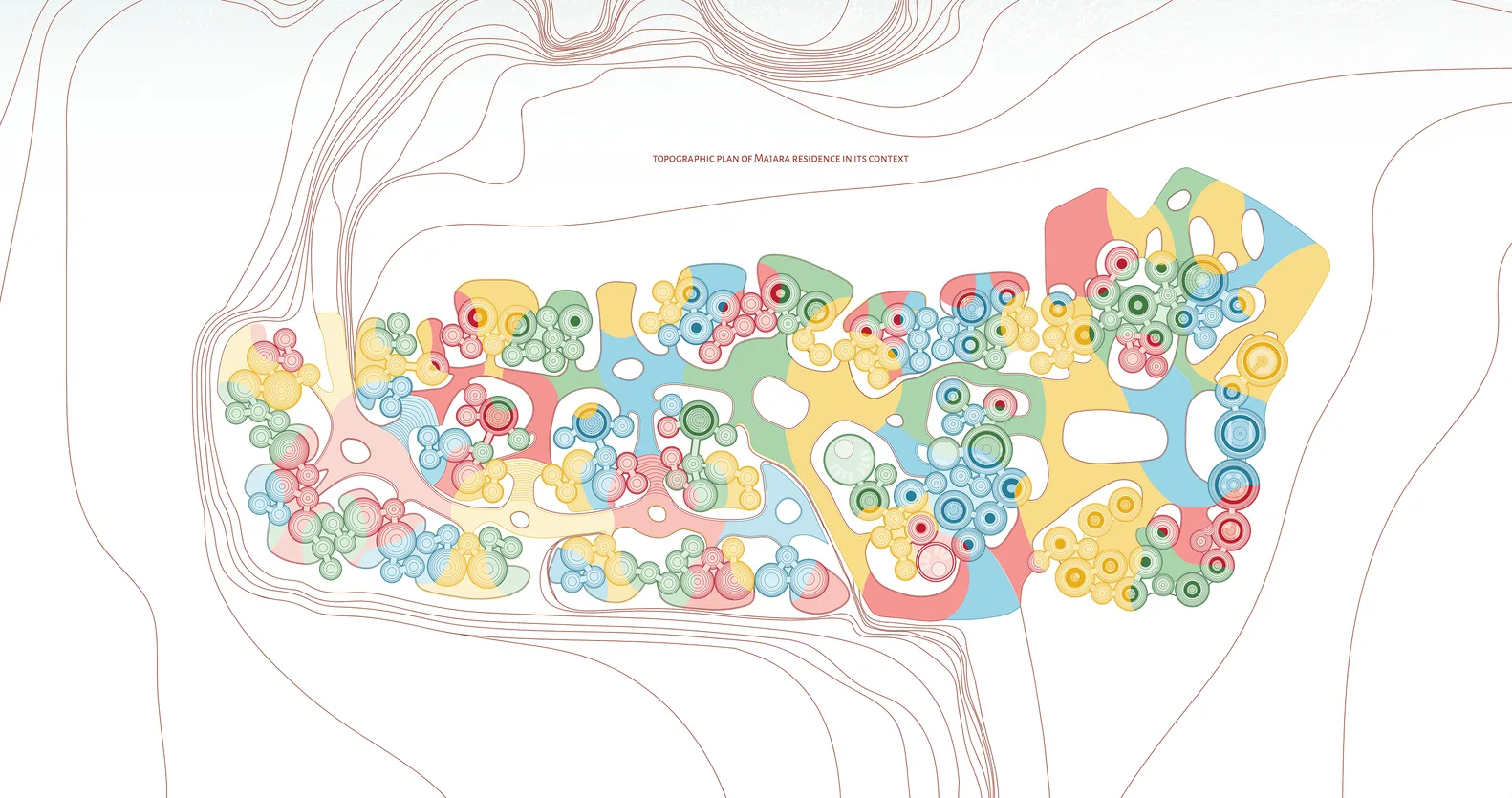
△ Topographic Plan
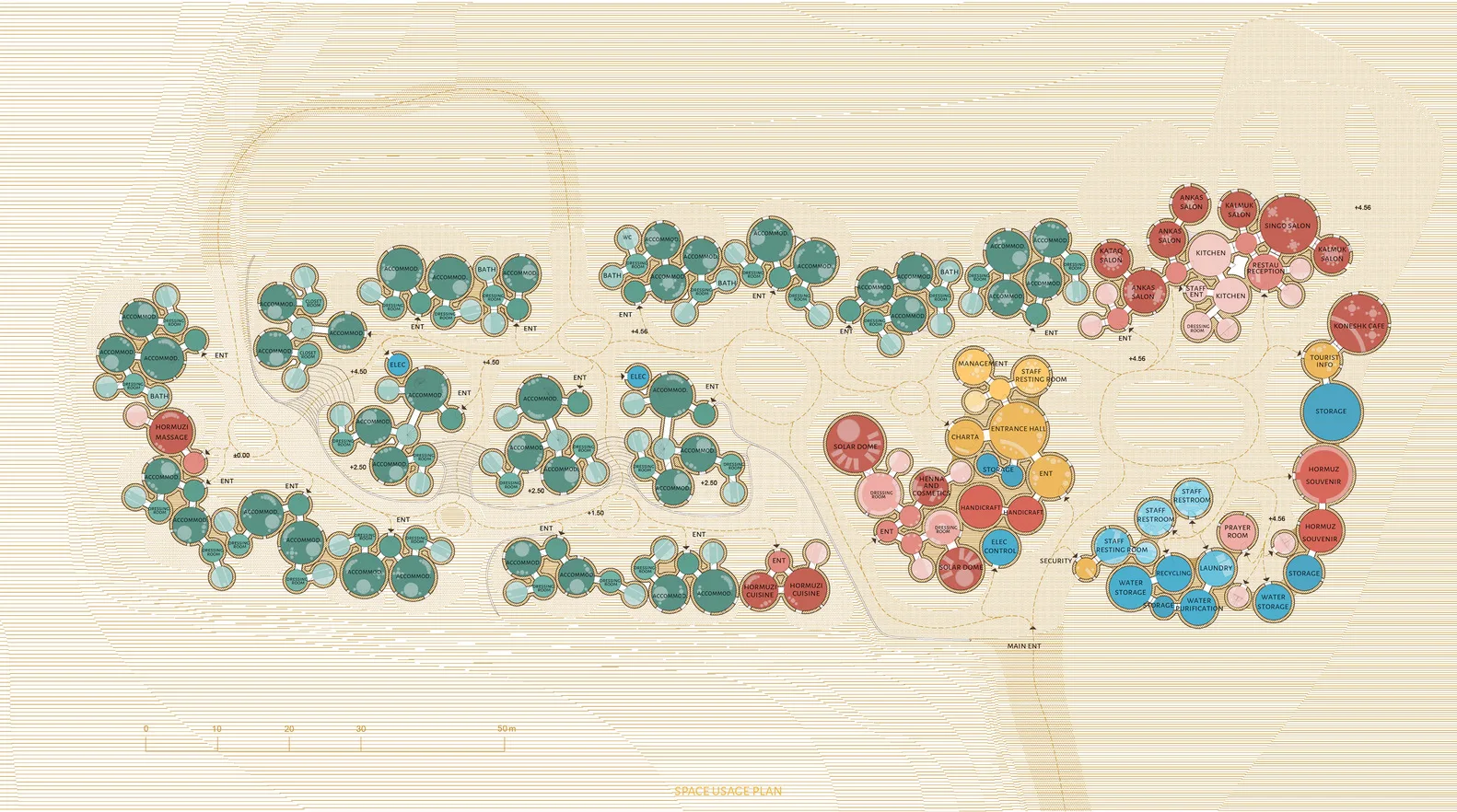
△ Functional Distribution Diagram
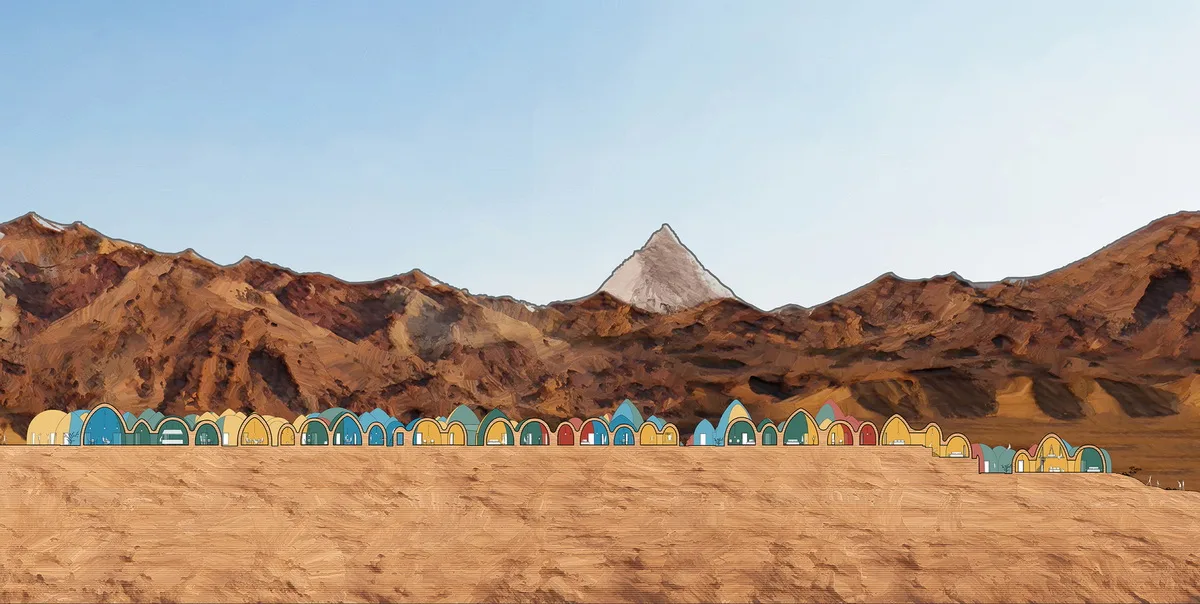
△ Color Sectional View
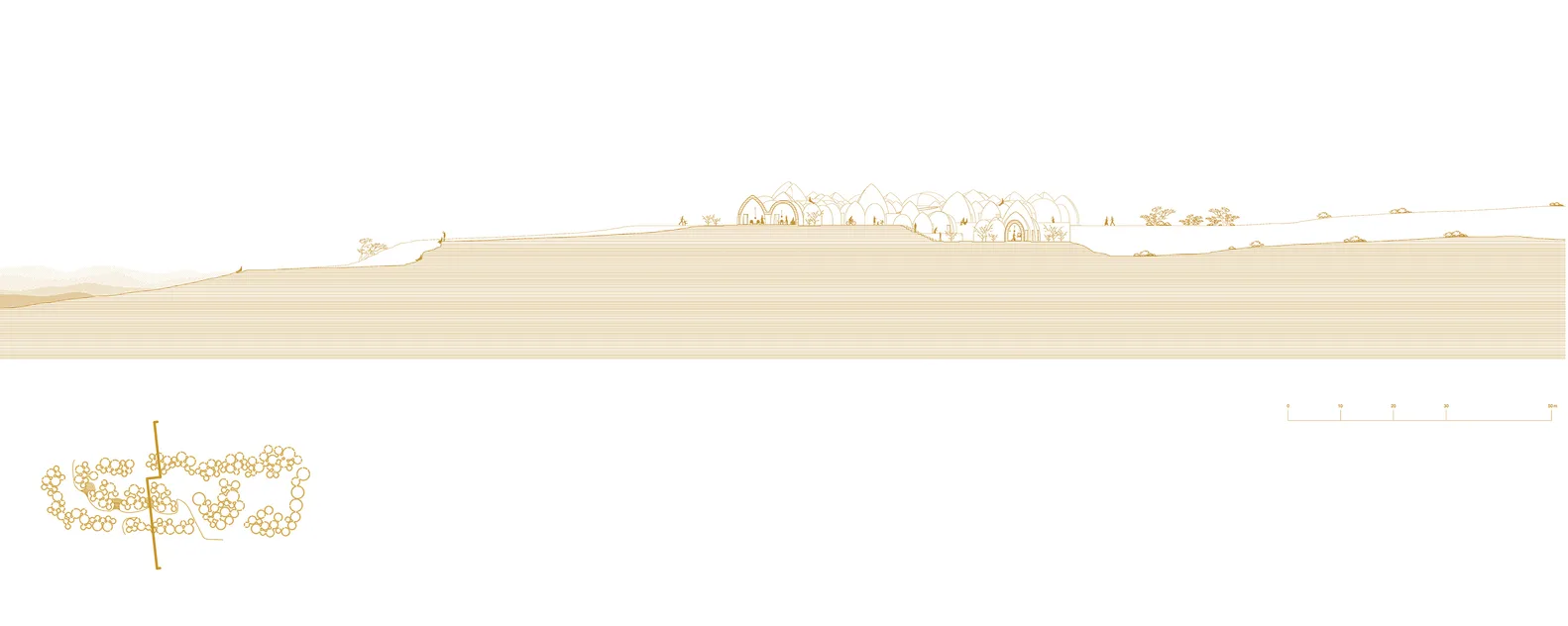
△ Section Diagram
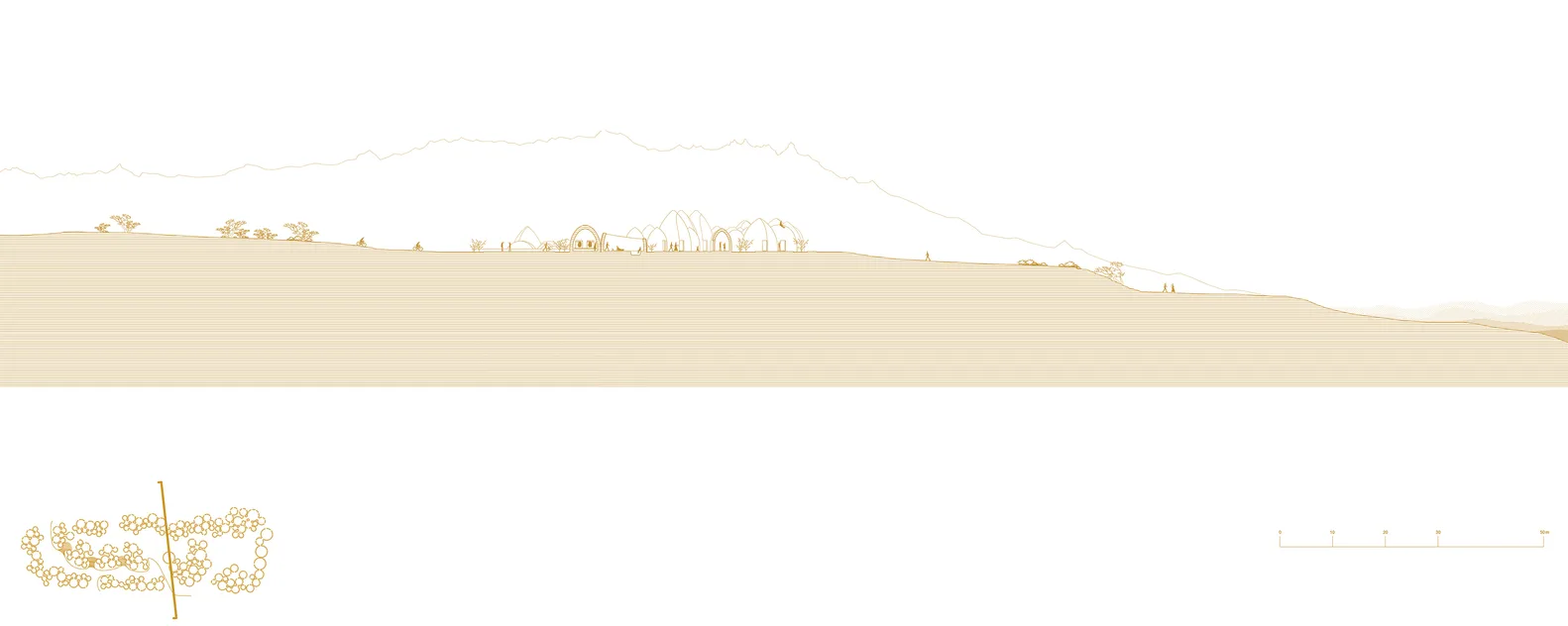
△ Section Diagram
Project Information
Project Type: Cultural Architecture, Community Architecture
Location: Iran
Architectural Design: ZAV Architects
Area: 10,300 m²
Year: 2020
Photographers: Tahmineh Monzavi, Soroush Majidi, Payman Barkhordari, Somayeh Saeidi
Lead Architects: Mohamadreza Ghodousi, Fatemeh Rezaie, Golnaz Bahrami, Soroush Majidi
Project Team: Sheila Ehsaei, Sara Jaafari, Payman Barkhordari, Mohsen Safshekan, Kaveh Rashidzadeh, Hossein Panjehpour
Landscape Design: Maryam Yousefi, Morteza Adib
Interior Design: Sara Jaafari, Taraneh Behboud, Sara Nikkar, Mohsen Dehghan
Lighting Consultant: Tajang Light
Project Managers: Soroush Majidi, Payman Barkhordari, Sheila Ehsaei
Model Maker: Somayeh Saeidi
Project Presentation: Fereshteh Assadzadeh, Somayeh Saeidi, Arshia Hashemipour, Dorsa Tavakoli, Sara Fallahzadeh
Owners: Ali Rezvani, Ehsan Rasoulof
Structural Engineers: Behrang Baniadam, Rouhi Touski
Civil Engineer: Farhad Beigi
Electrical Engineer: Pejman Moradian
Mechanical and Electrical Engineer: Saeid Afsharian
Kitchen Manufacturer: Matbakh Ara
Ecological Environment Consultants: Salman Rasouli, Roya Yazdizadeh
Residential Design Consultant: Nassim Mossavvar
Construction: Amir Tehran Nobahari
Construction Supervisor: Hormat Ghasemi
Deputy Construction Supervisors: Ramin Koulaghani, Amin Timas
Mechanical and Electrical Engineering Construction: Javad Irandegani, Hamid Haji Posht-e-Gol
Floor Construction: Davoud Etemadi
Door and Window Construction: Mehra Company
Indoor Gypsum Board Construction: Gholamali Abbasi
Outdoor Gypsum Board Construction: Esmaeil Salimi
Painting: Farzad Moharrami
Project Logistics Team: Nabiollah Timas, Borhan Pouyan, Ali Ghanbari, Ayoub Owj Hormozi, Khalil Owj Hormozi, Abdolhamid Hormozi, Davoud Hormozi, Ali Ghalandari Zehi, Farhad Shadan, Assad Gedri, Abbas Gedri, Ali Ghazi, Majid Bazmandeh, Ali Nasernia, Rahmat Ghalandari, Davoud Mohtaji, Morteza Mohtaji, Mohammad Vahedi, Masib Zarei, Kambiz Narouii, Yasser Narouii, Nassir Narouii, Din Mohammad Narouii, Mojtaba Farhadi, Abbas Nassaji, Esfandiar Khorshidi, Khoubyar Khorshidi, Jalal Bameri, Ghassem Bameri, Enayat Karami, Reza Amirian, Eshgh Ali, Nabi Akrami, Mohammad Moallemi, Sajjad Gholampour, Seyfollah Rasouli, Ali Golzari, Soheil Khedmatkari, Hosein Zohouri












Must log in before commenting!
Sign Up