
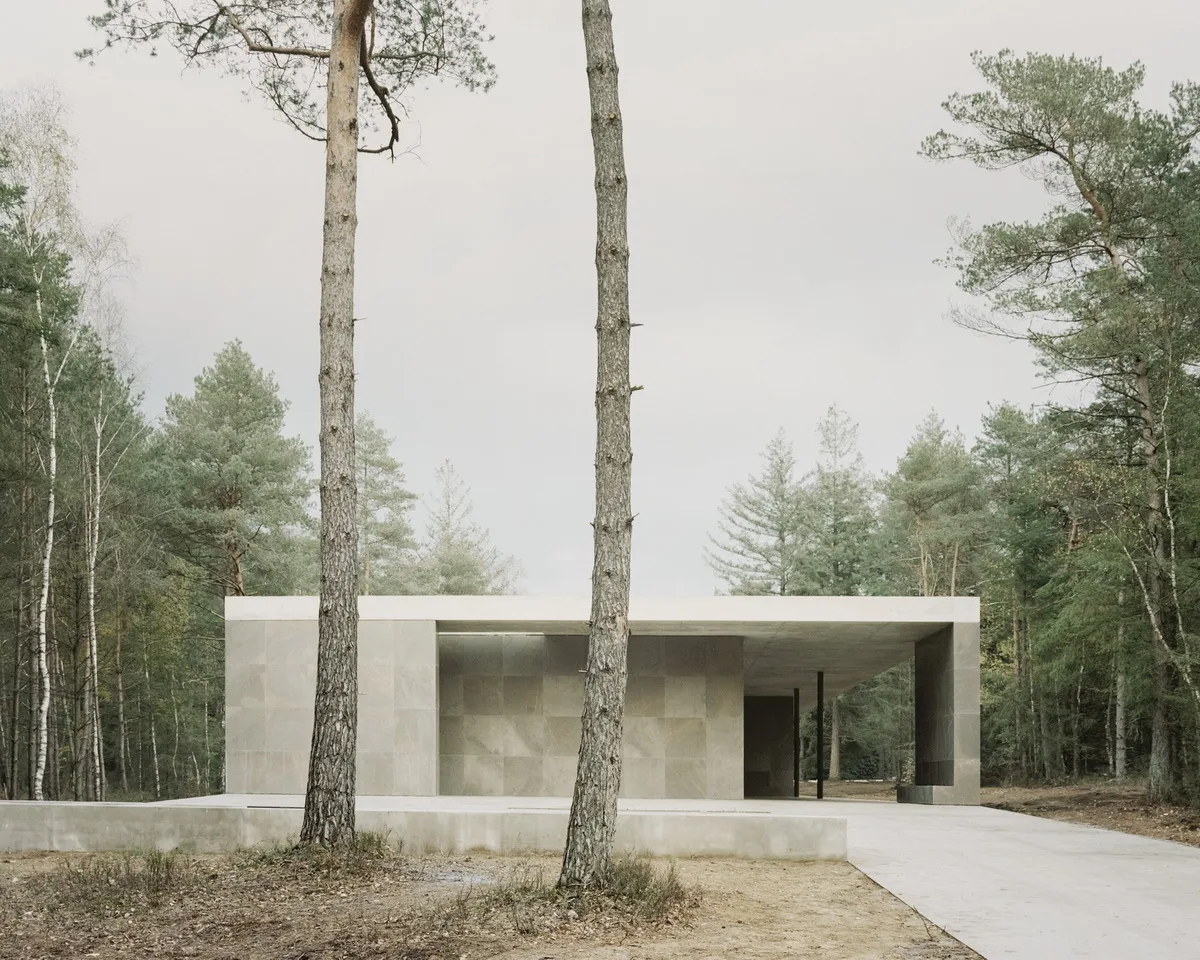
KAAN Architecten was commissioned by the Dutch War Cemetery Foundation to design a multifunctional memorial building in Lunen near Apeldoorn. This project honors the victims of World War II and recent international conflicts in the Netherlands. The structure blends seamlessly with the surrounding forest, arranged in layers, and connects both the existing National War Cemetery and the newly established National Veterans Cemetery in Lunen.
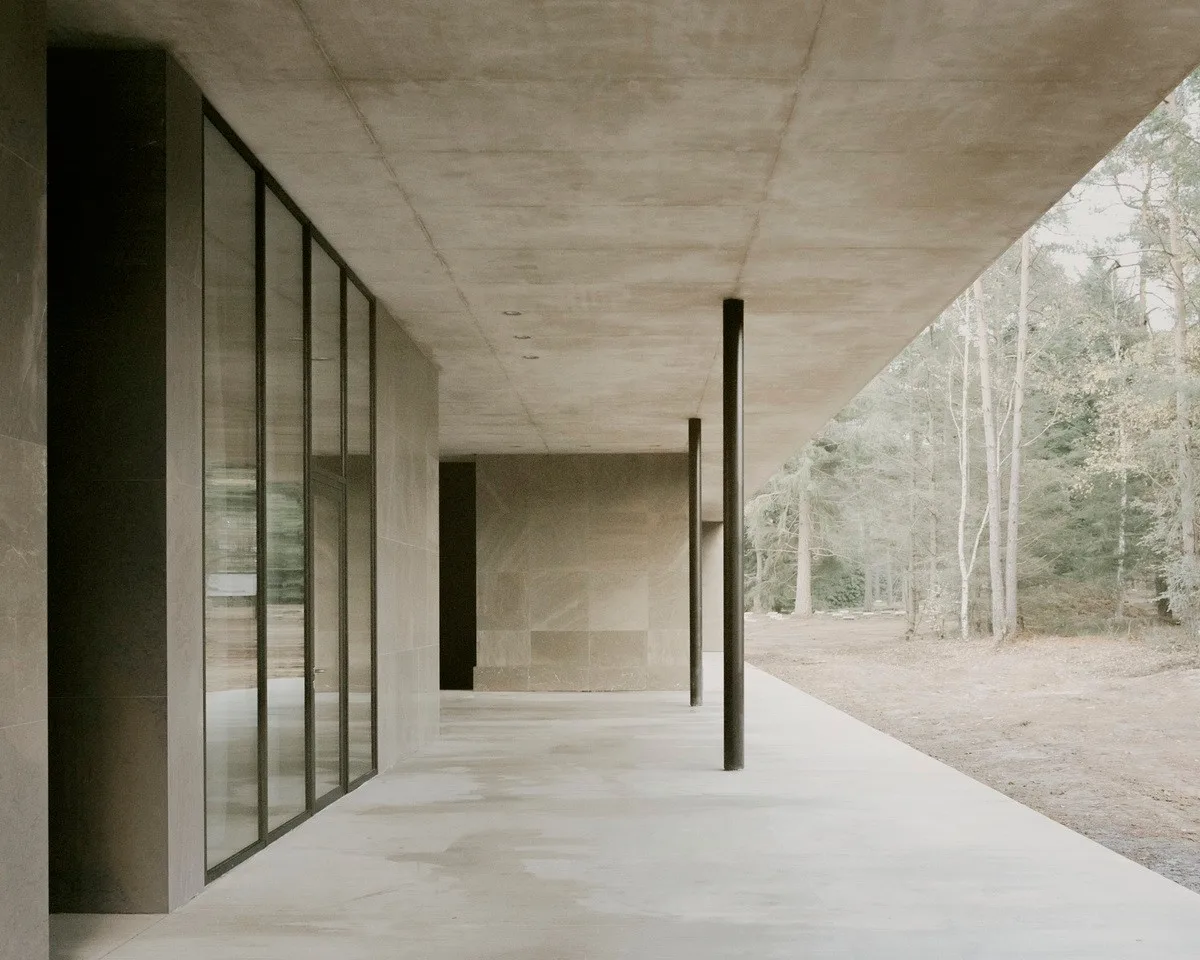
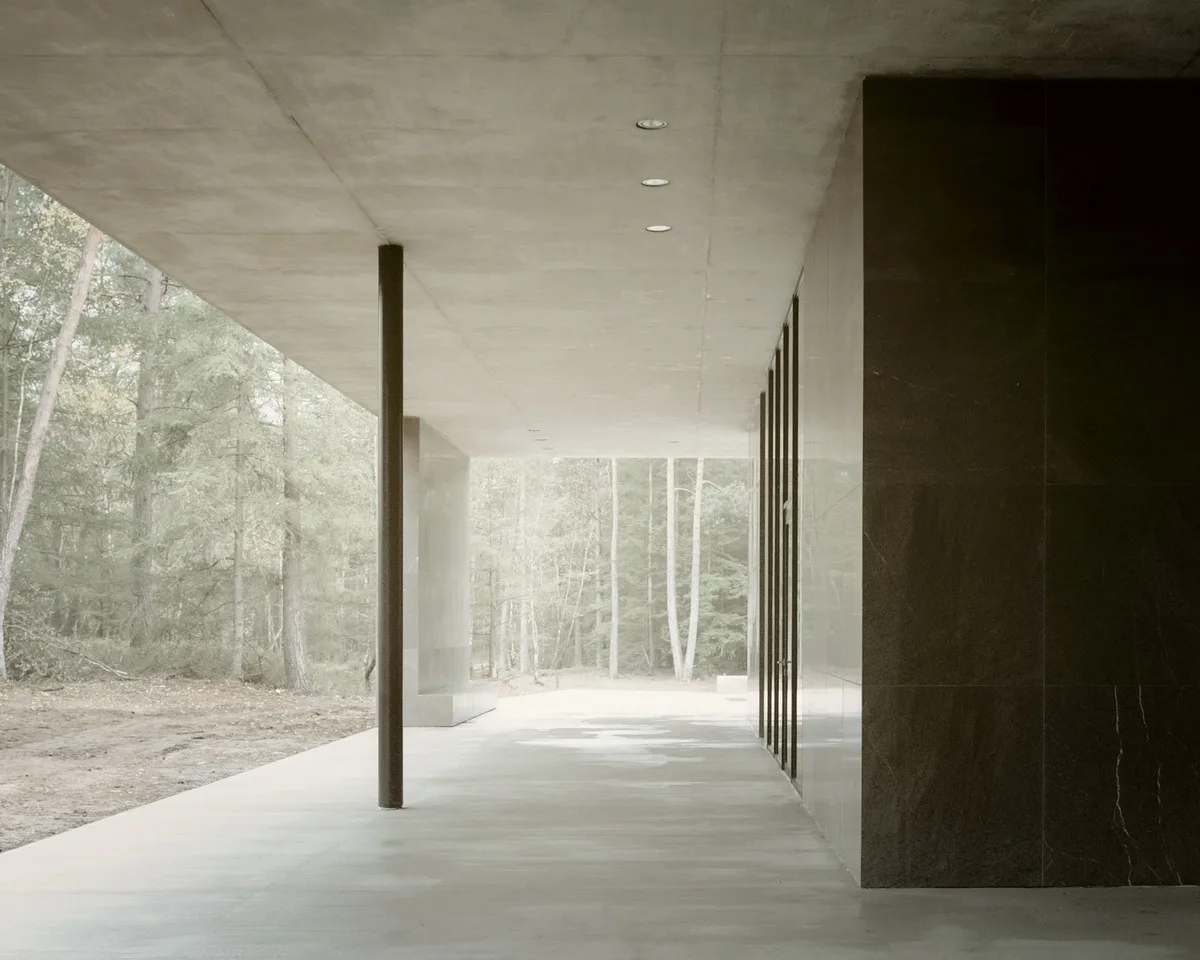
One of the Lunen National War Cemeteries, designed by landscape architect Daniel Haspels (1894-1954) shortly after World War II, reflects the dense forest landscape to provide solace to those grieving. KAAN Architecten embraced this approach by integrating trees and architecture, allowing the forest to shape the building’s form and harmonize the structure with the natural environment.
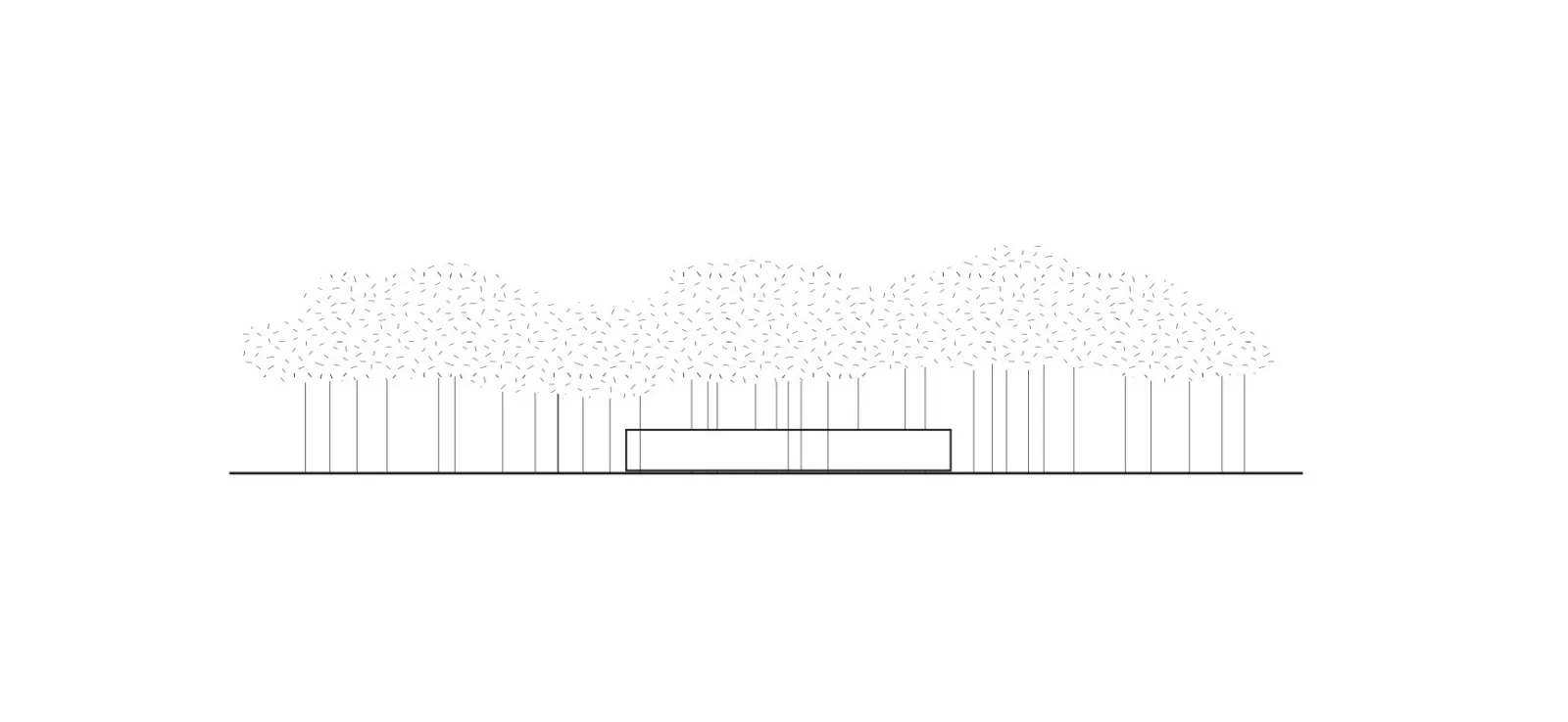
The relationship between the horizontal volume and the forest
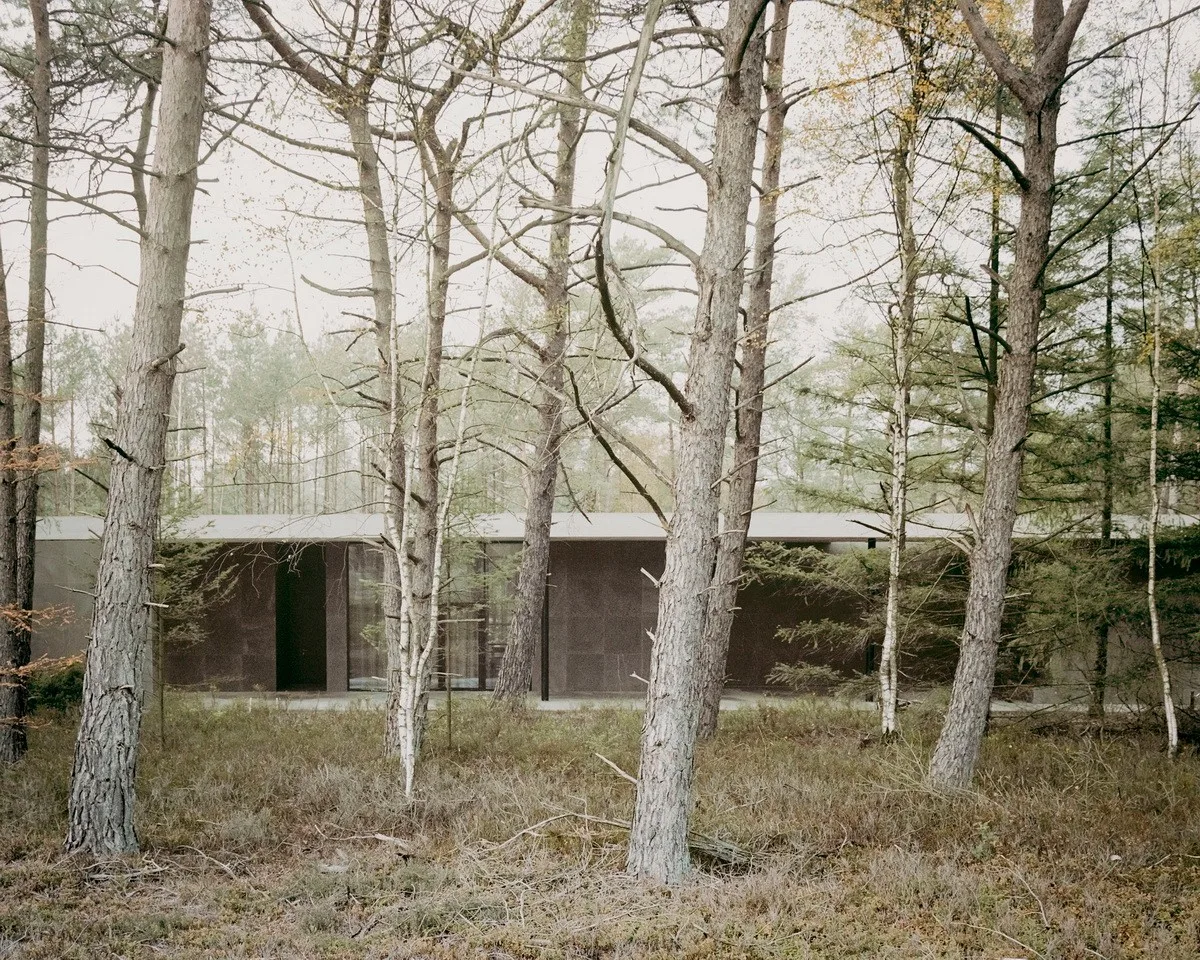
The building spans 52 by 19 meters and is positioned along one of the site’s five axes, resembling a horizontal white line nestled between birch and pine forests. From an aerial perspective, it sits between two forested areas, with the architect envisioning forest houses flanking both sides. The design prioritizes a narrow form to preserve the maximum number of trees between two open spaces. Vertical elements are minimized to maintain the serene natural atmosphere, reflecting Haspels’ philosophy of levelness, which is also seen in the flat placement of the war cemetery’s tombstones on the grass.
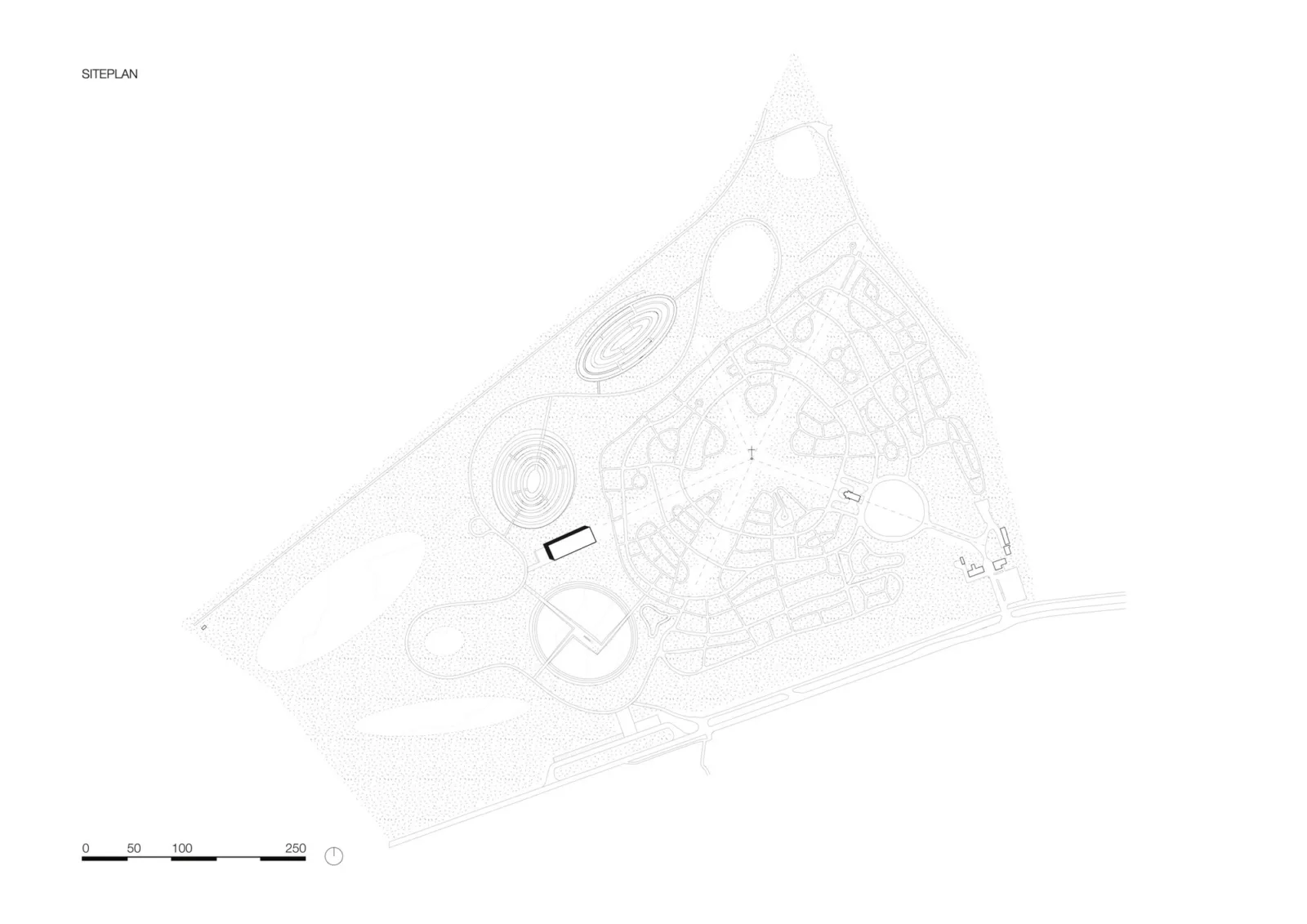
General layout plan
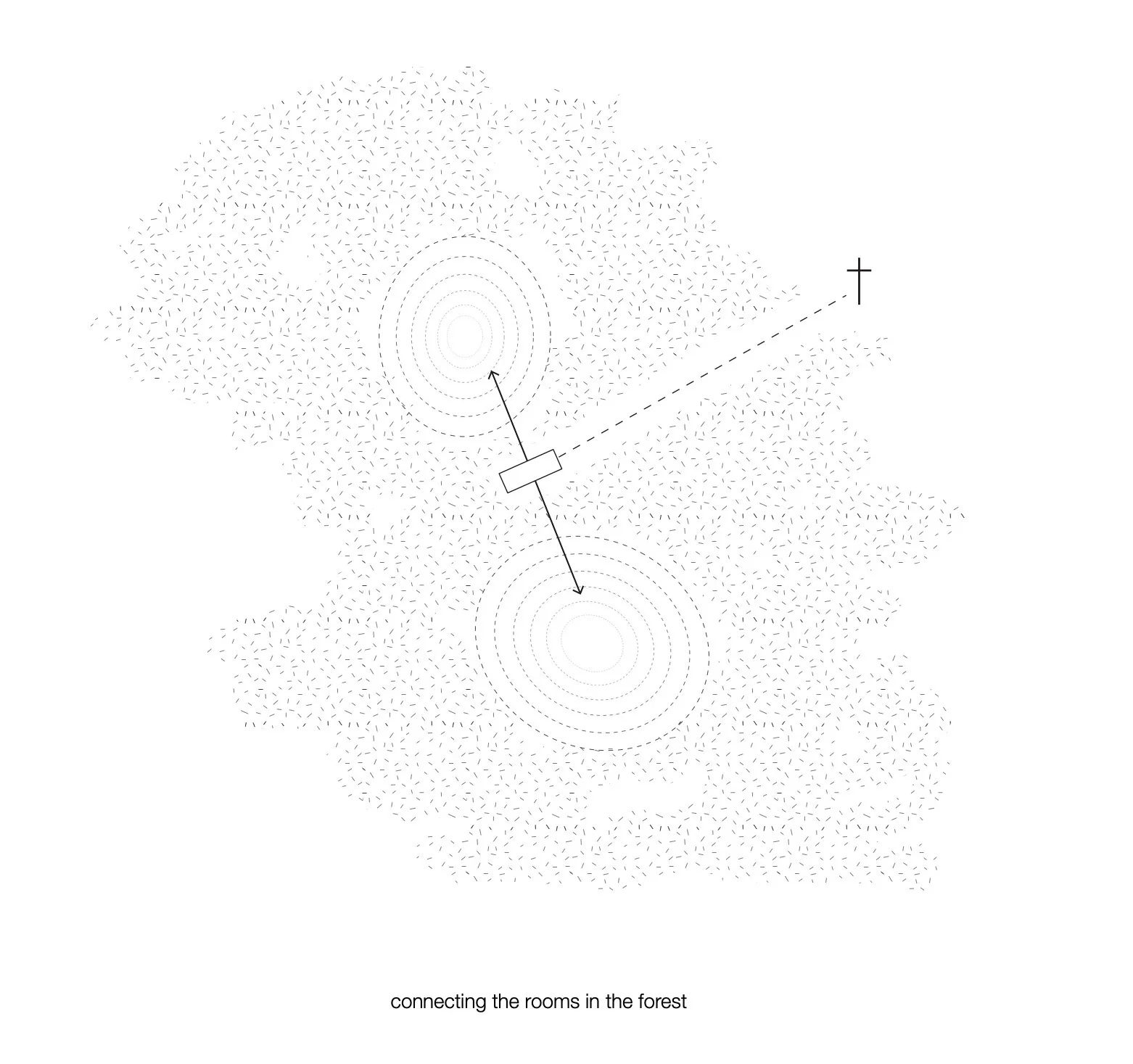
The relationship between architecture and forest cottages
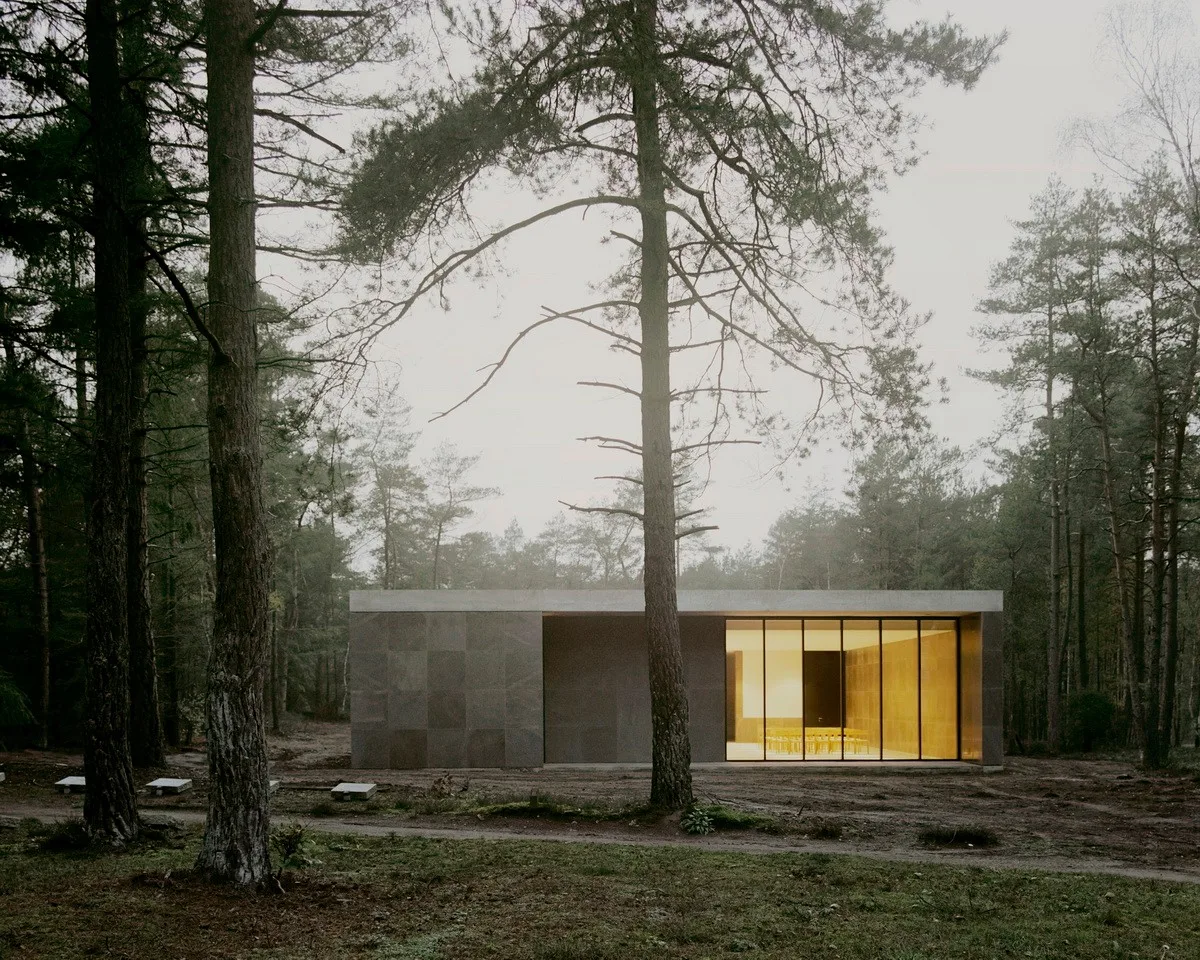
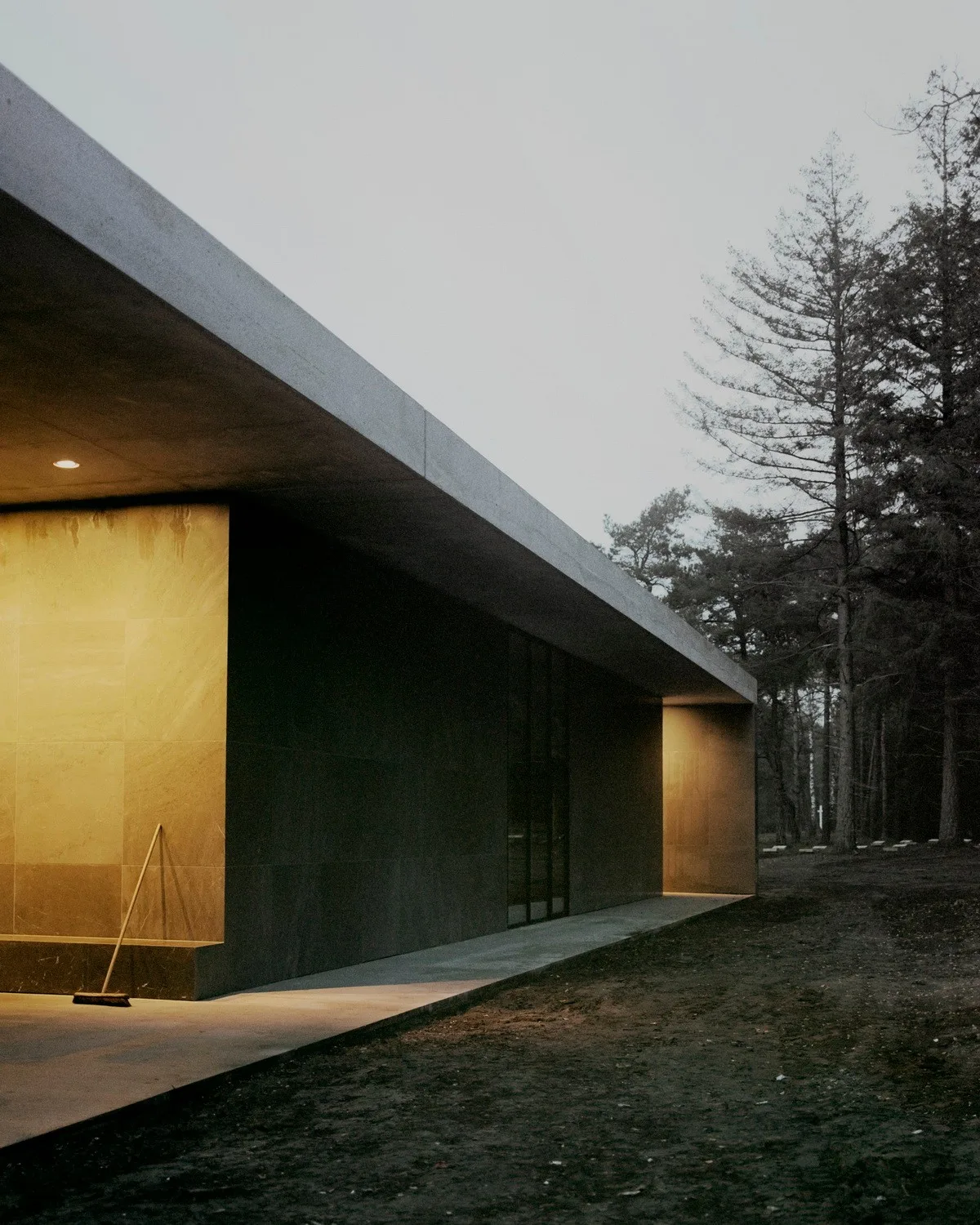
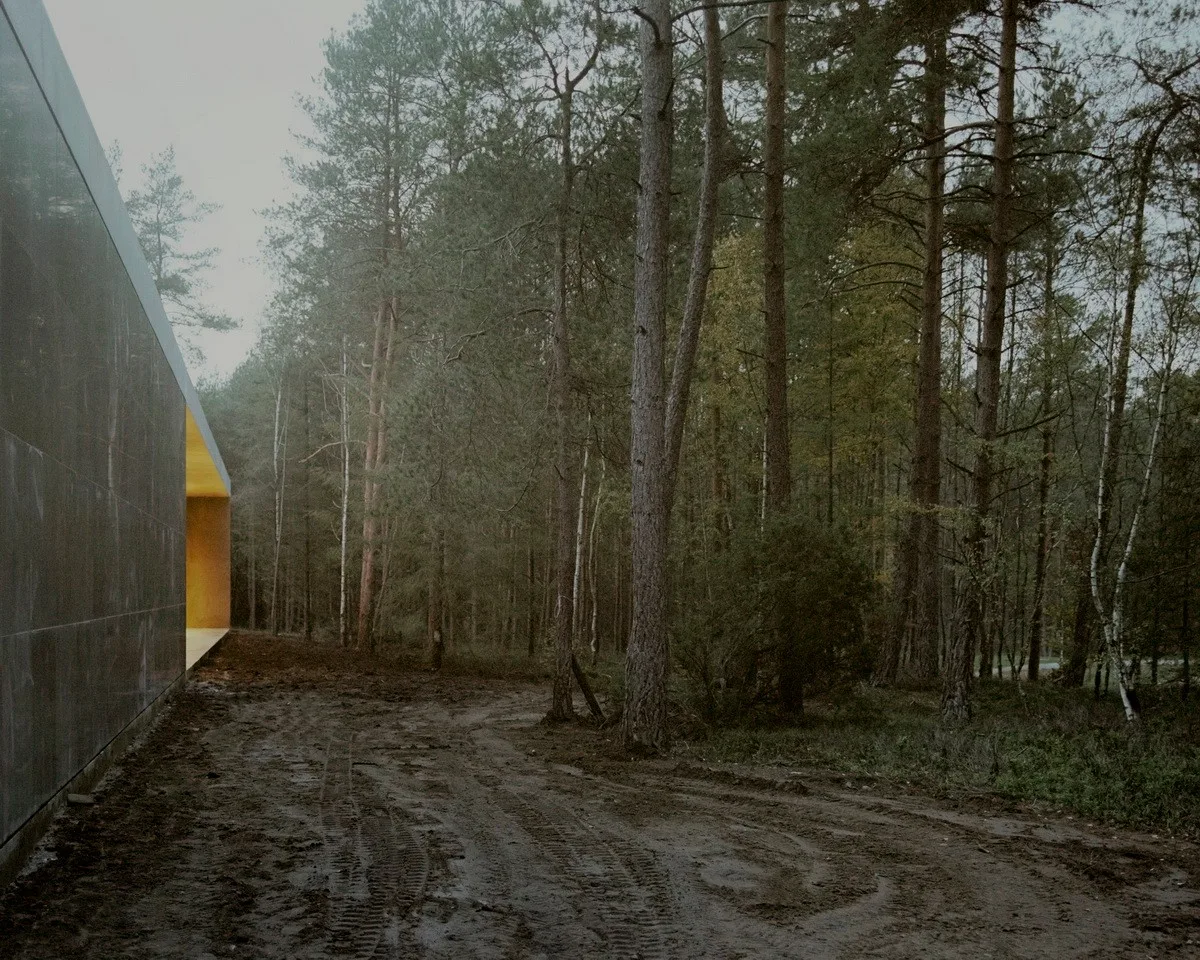
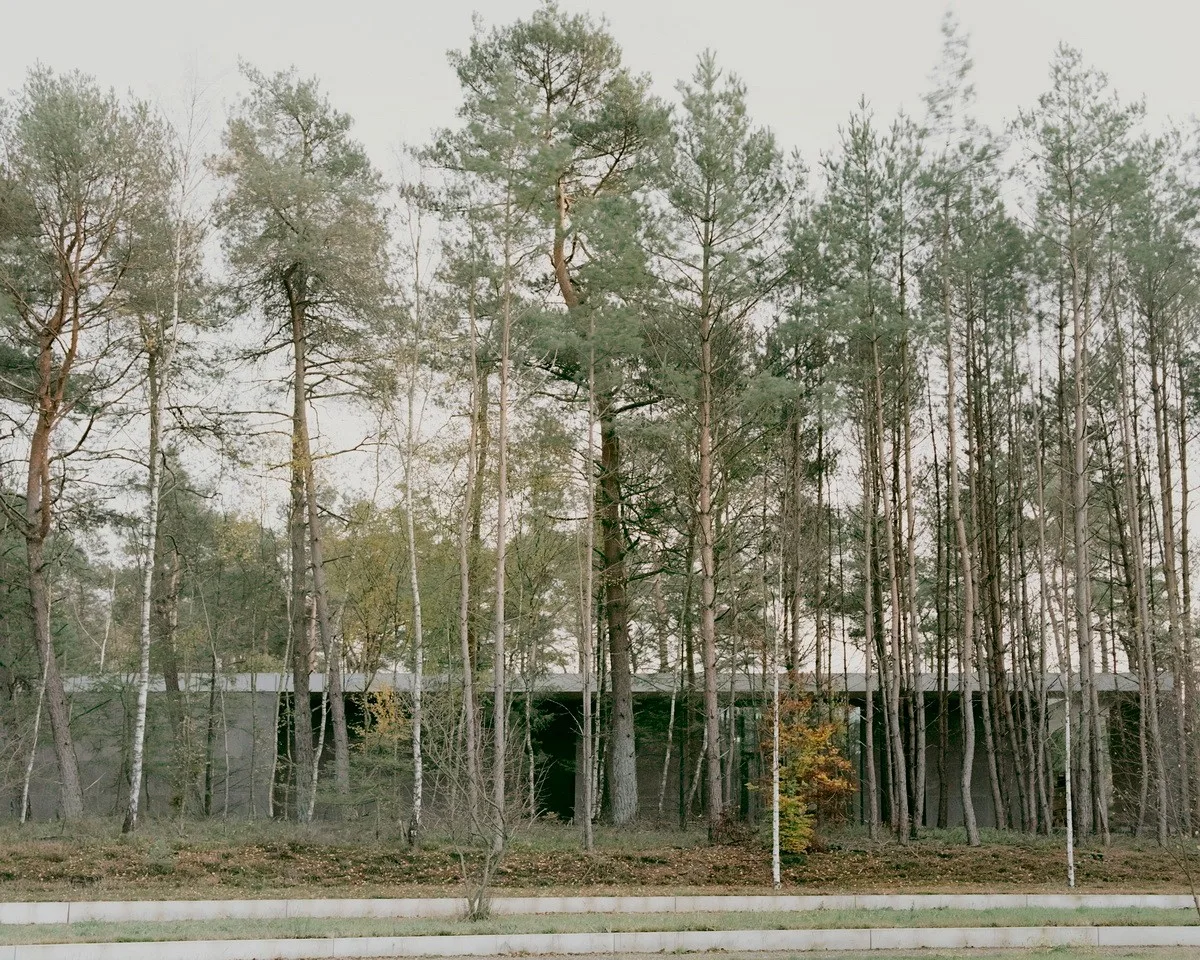
The building’s sensitive design fosters a peaceful atmosphere with minimal intrusion, creating a private yet open and welcoming space. Although partially concealed by tree trunks, the structure remains clearly visible.
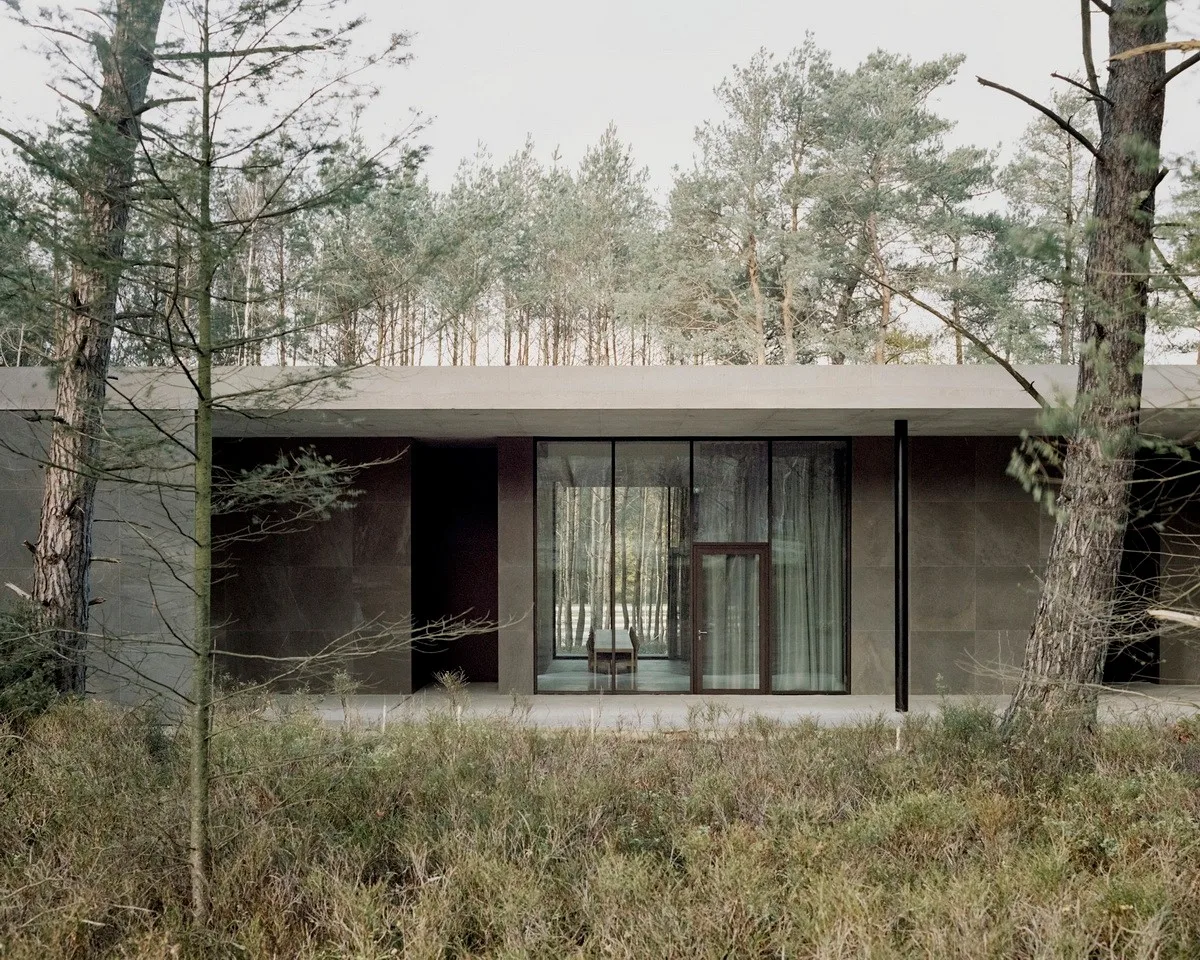
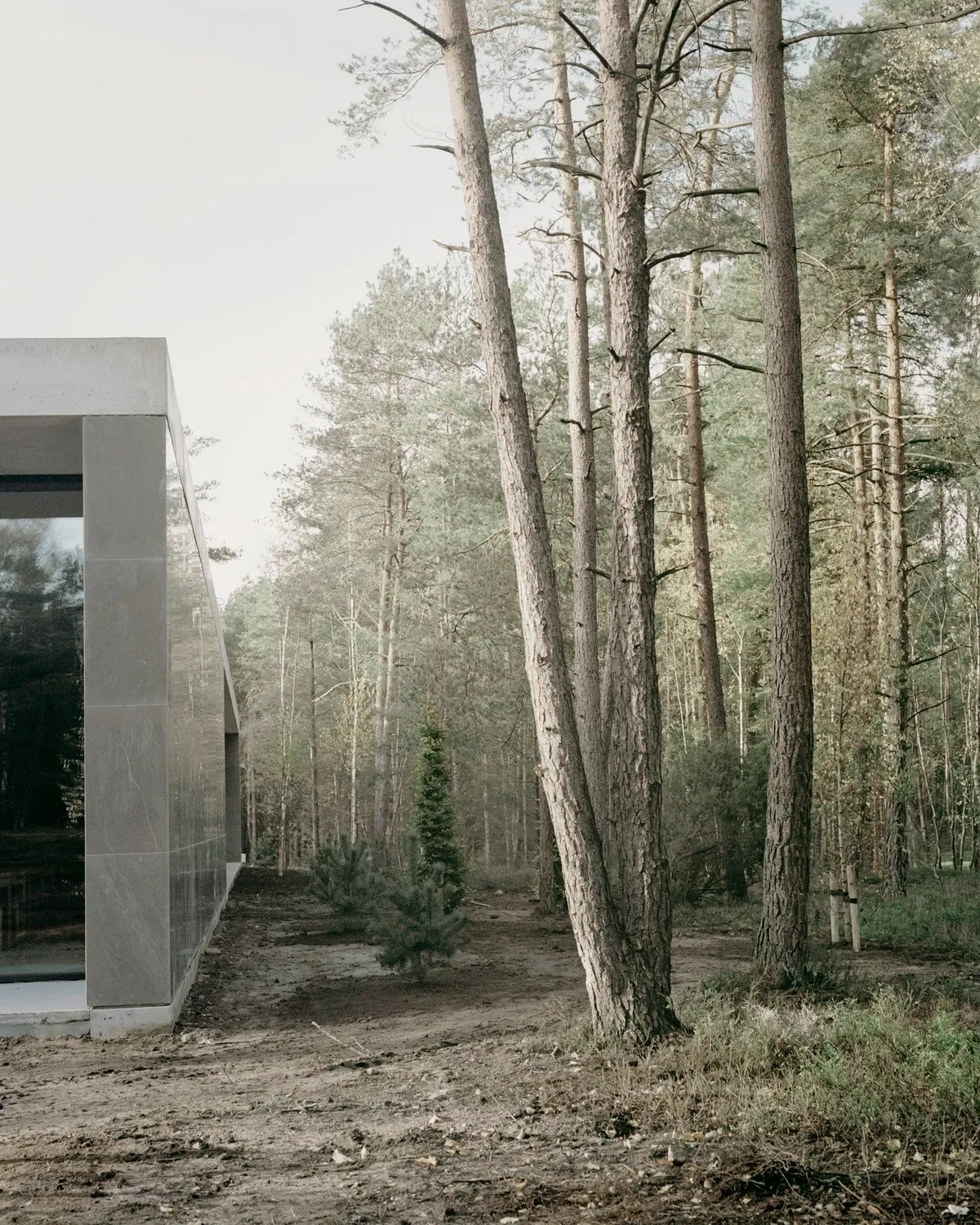
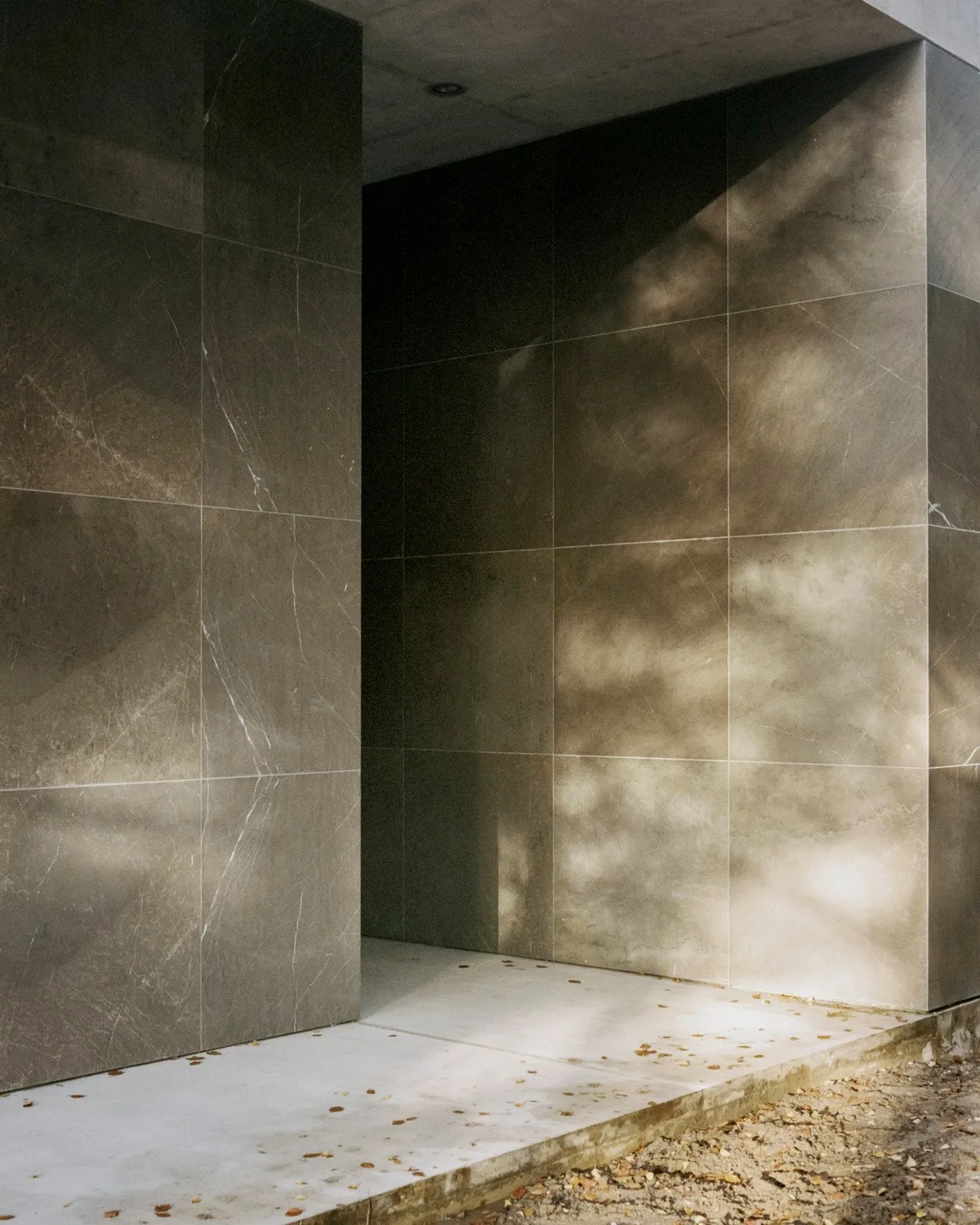
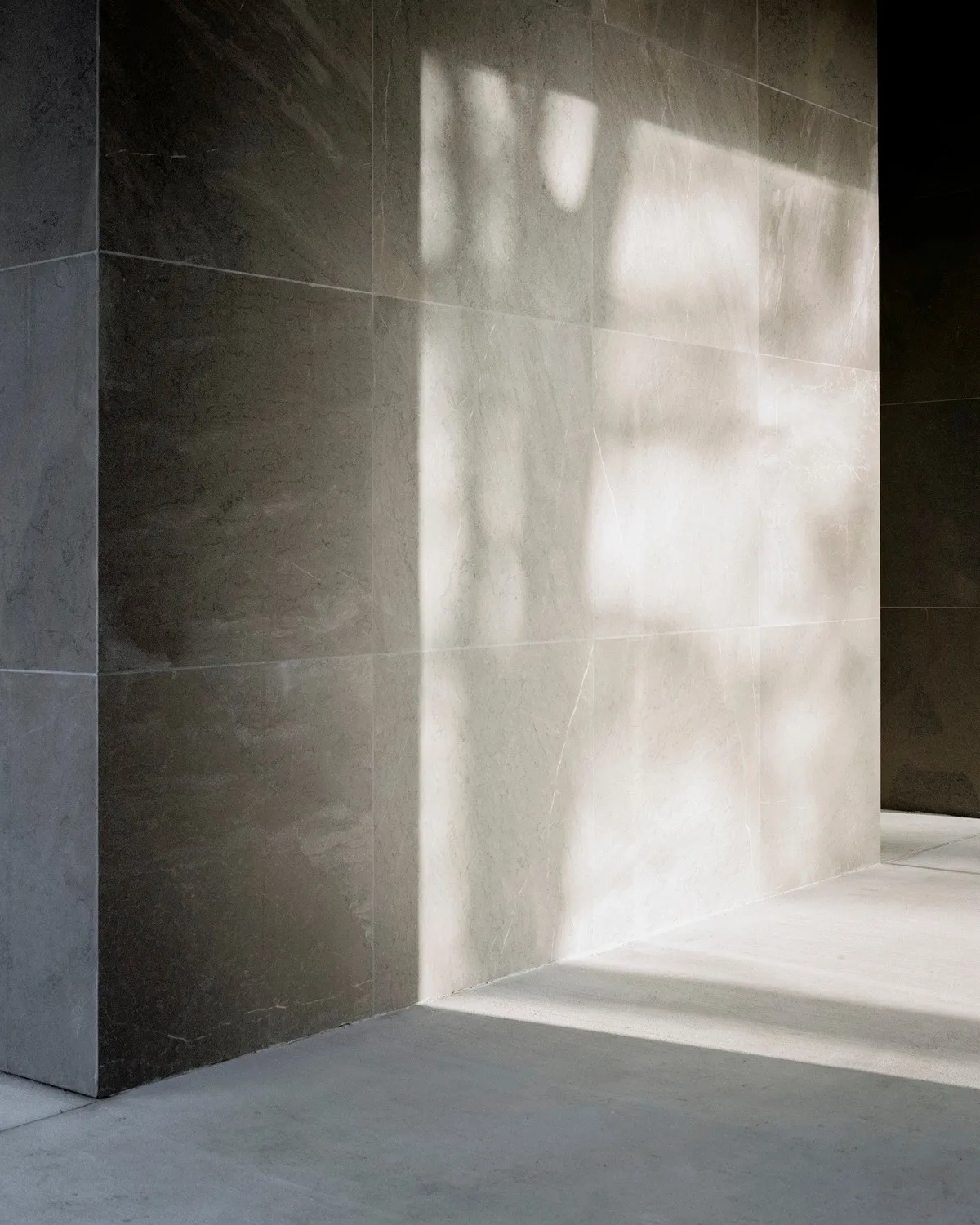
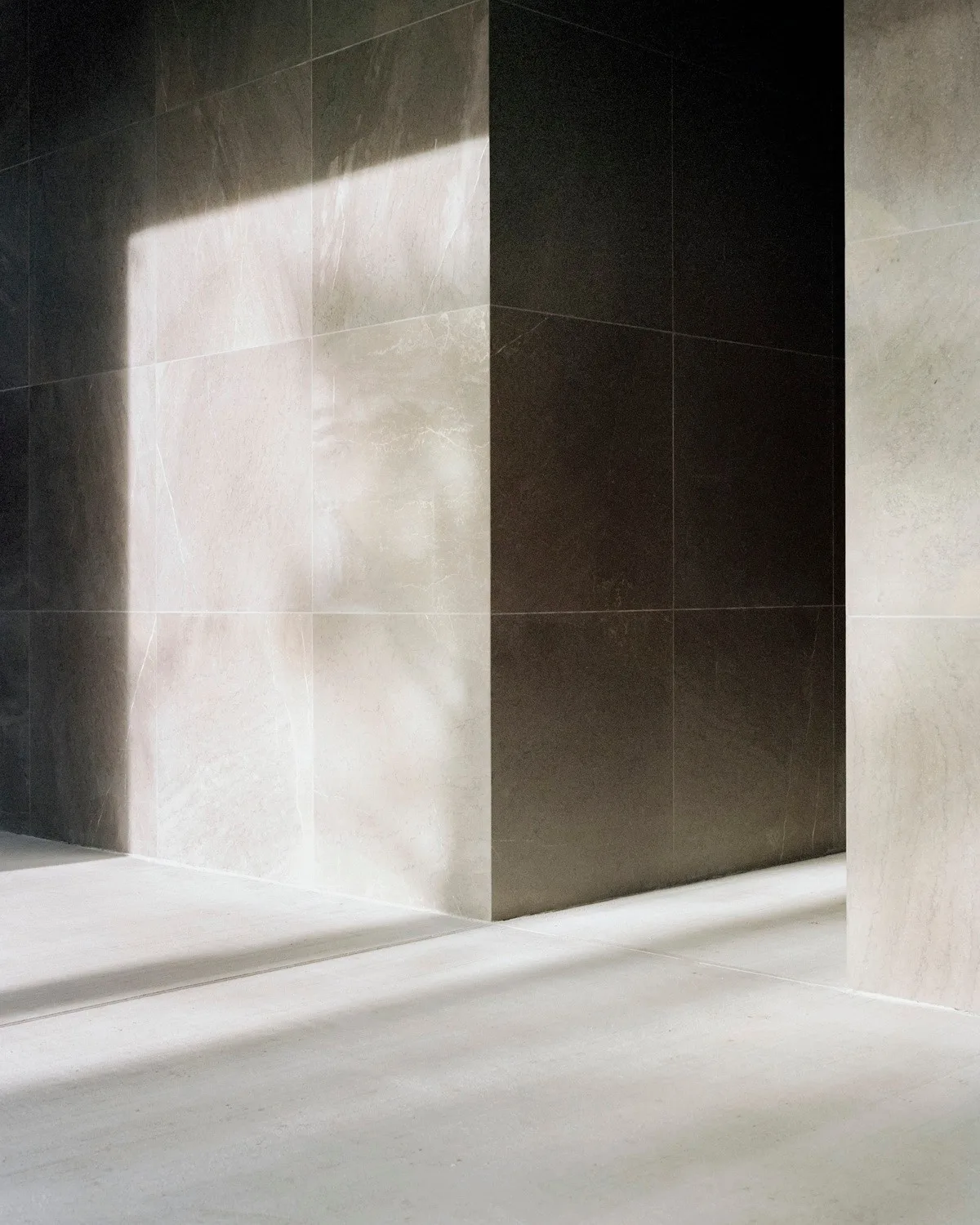
Inside the museum, natural stone walls rise from the ground to the roof, emphasizing the interplay between open and enclosed spaces. Some stones protrude to form benches, with seating areas facing the forest, providing visitors a place to rest and reflect. The roof is more than a cover; it is a horizontal wall pierced with openings that frame views of treetops and the sky. KAAN Architecten skillfully guides visitors’ gaze through the interior and exterior spaces, preserving the delicate light and tranquility of the National War Cemetery.
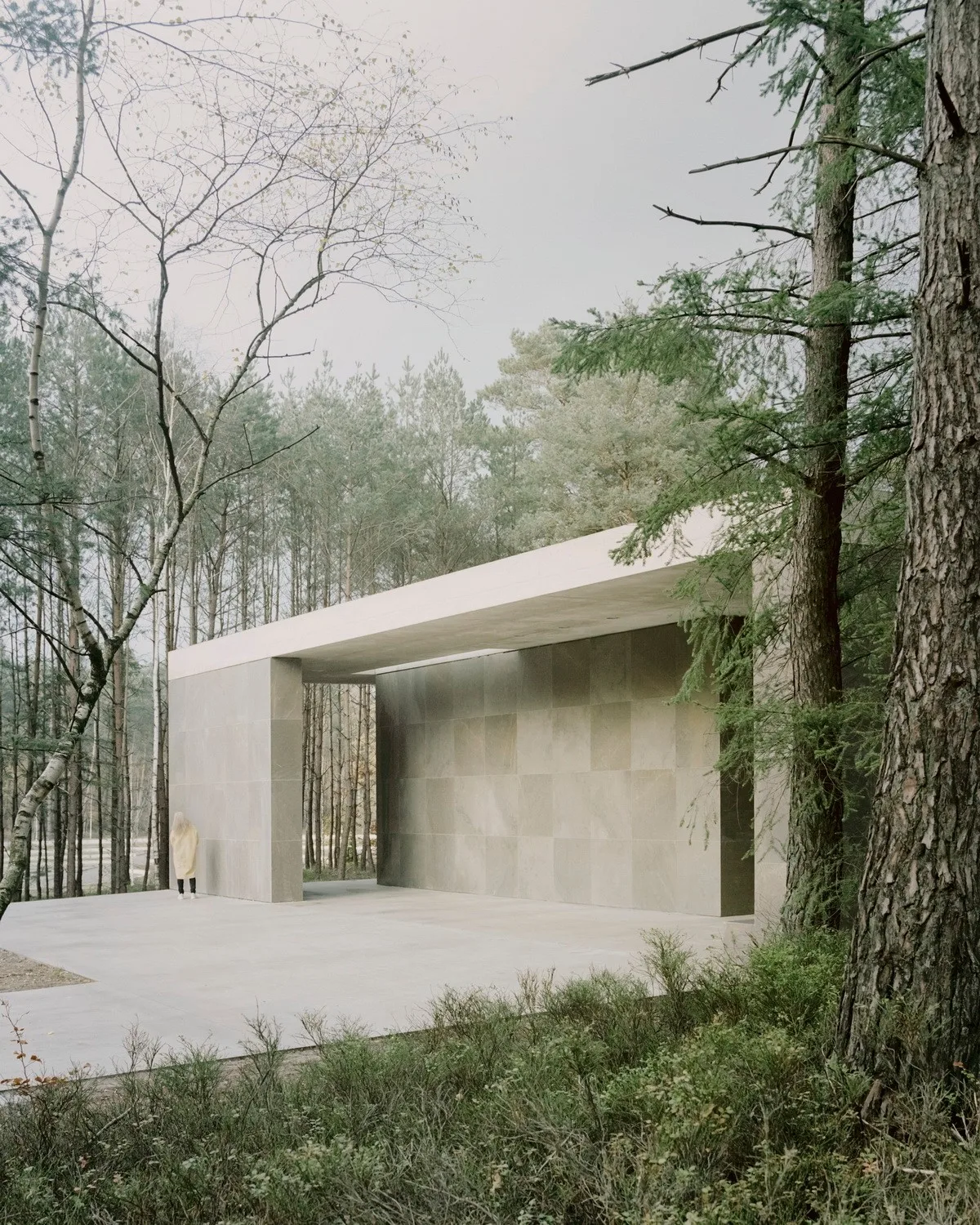
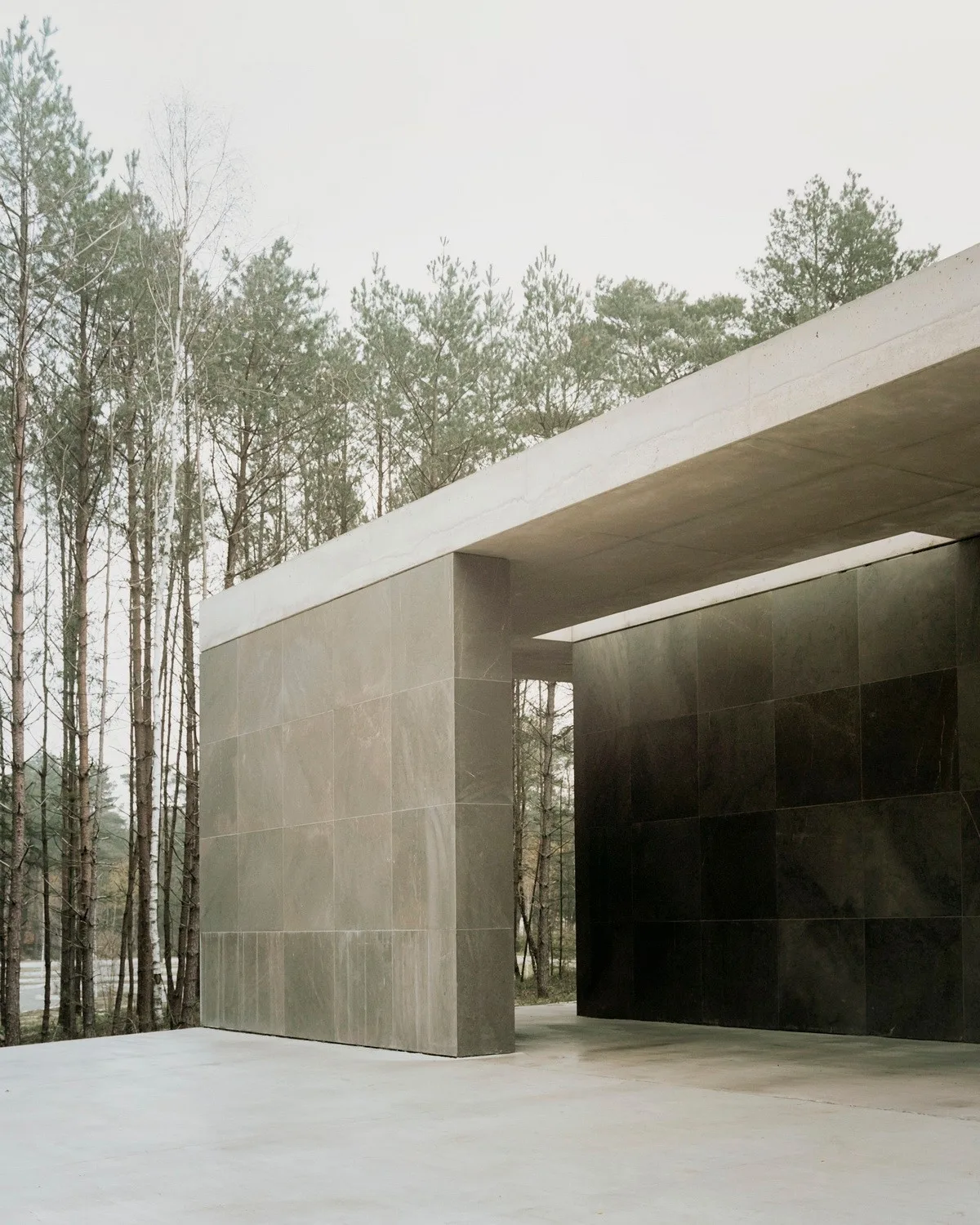
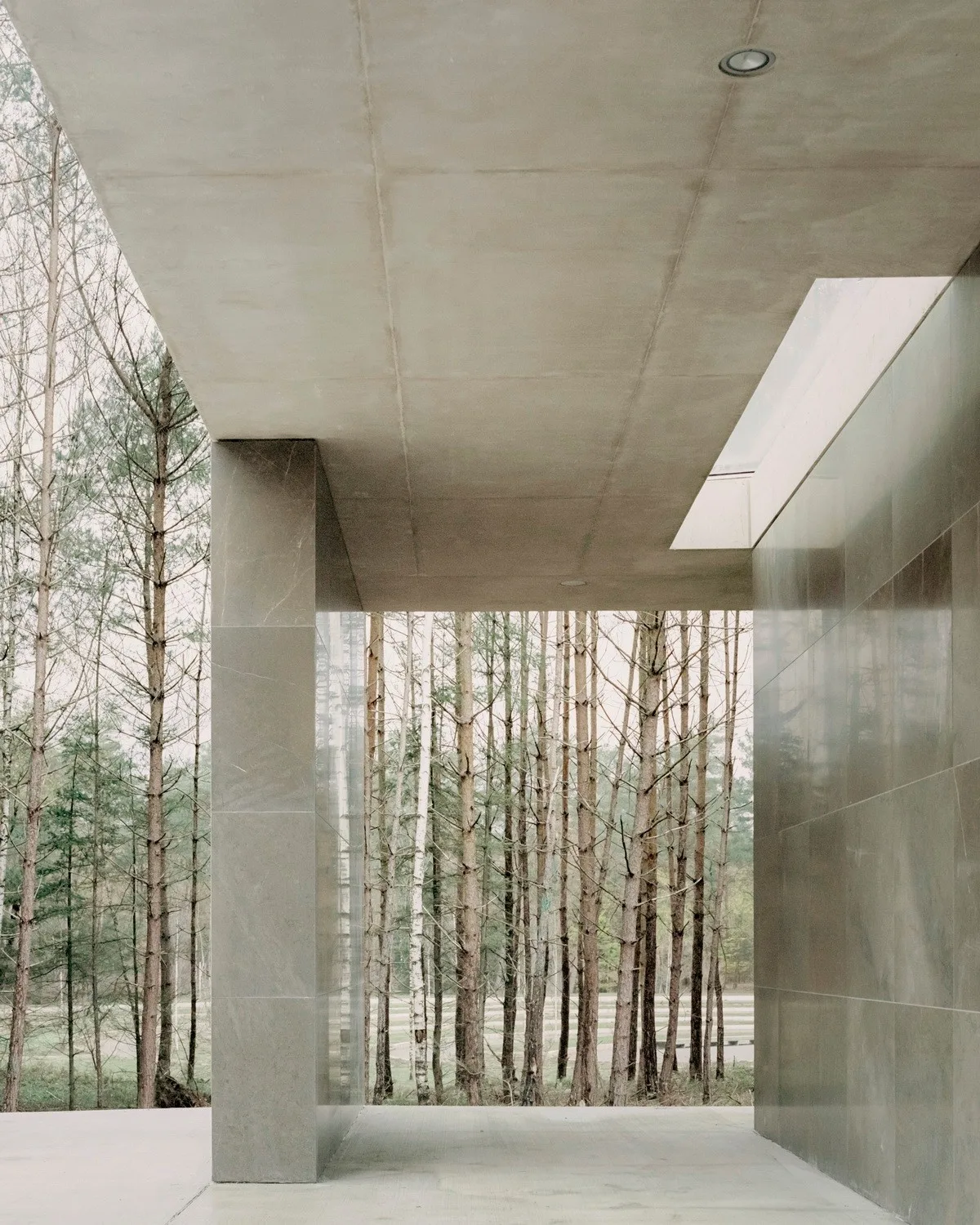
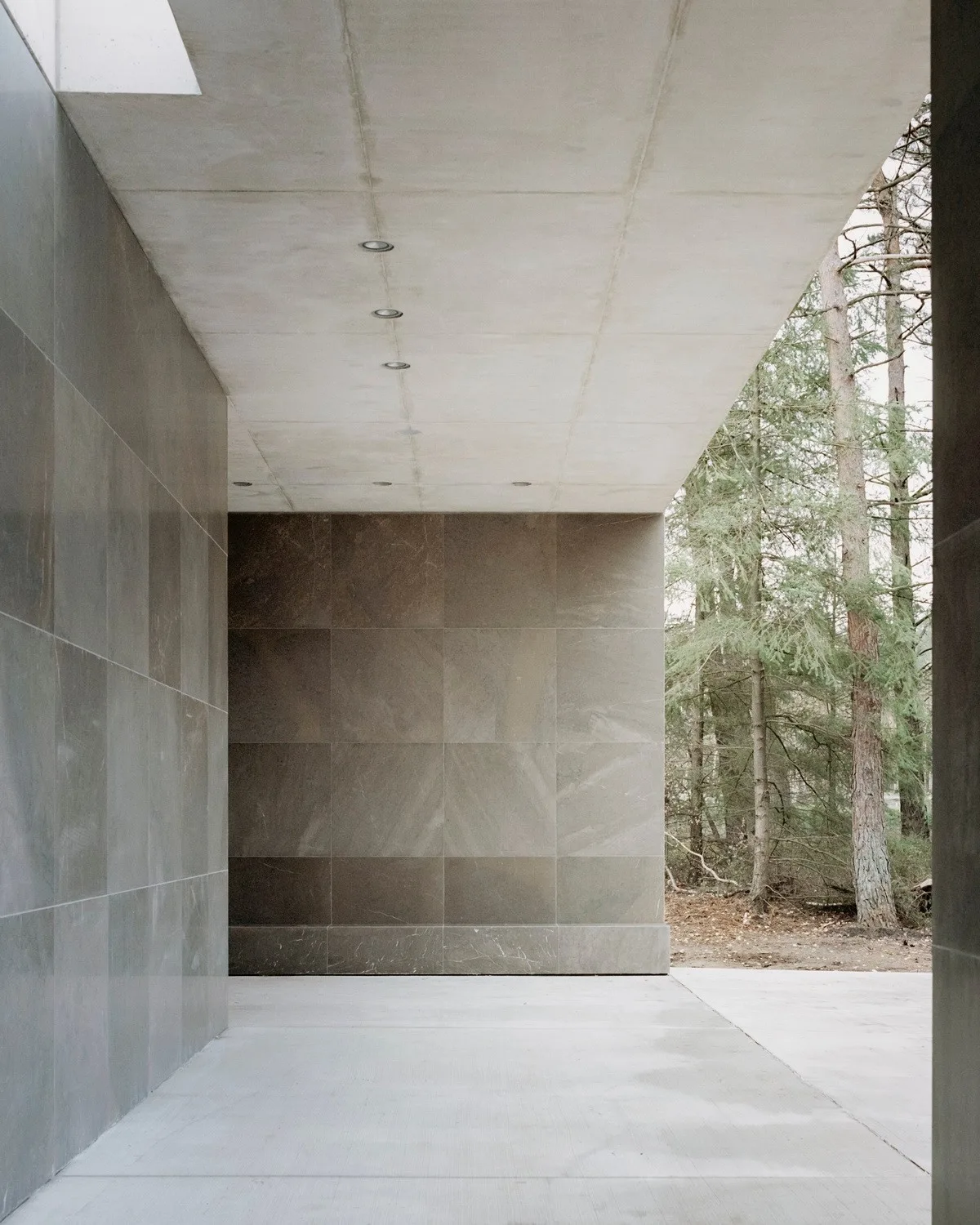
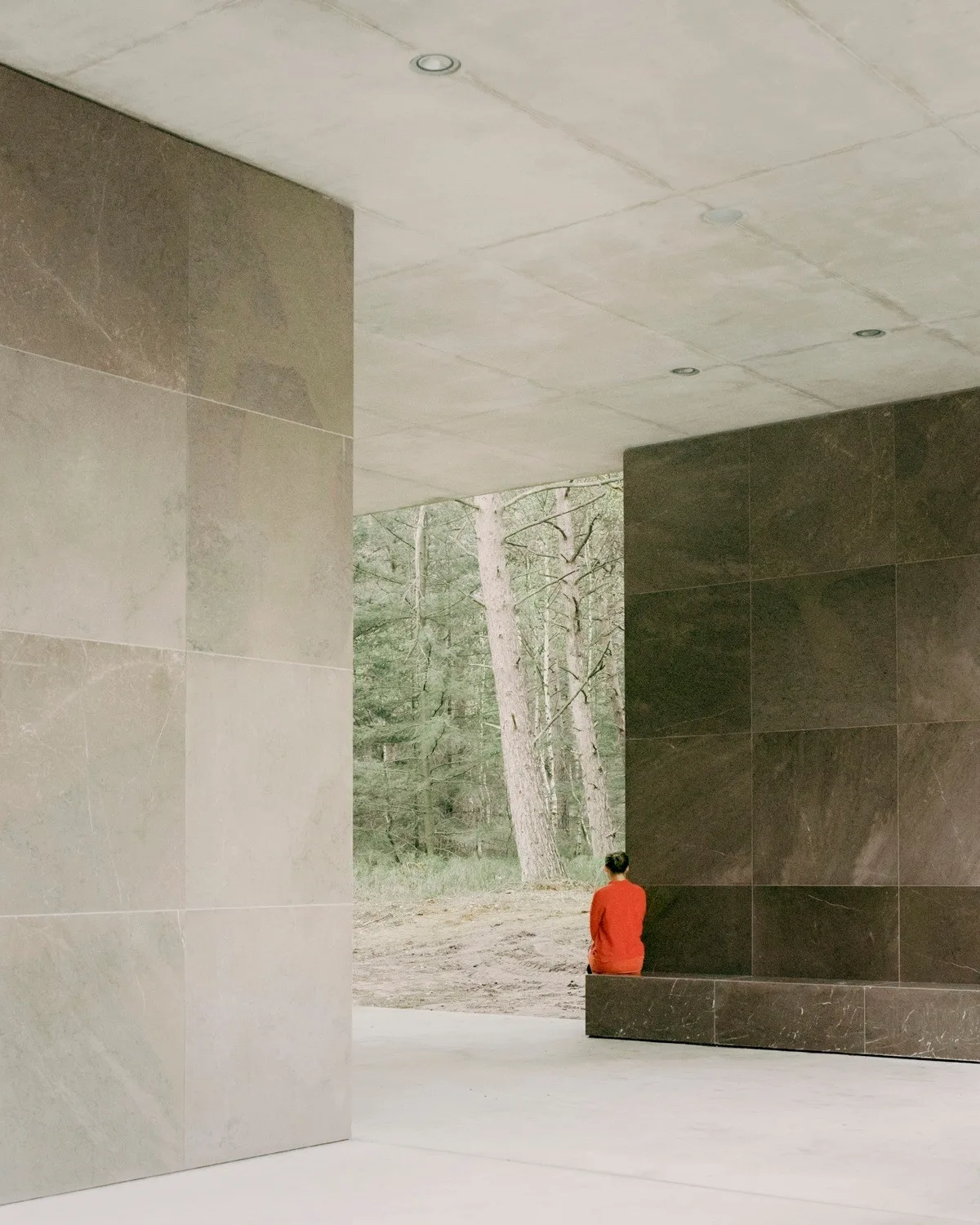
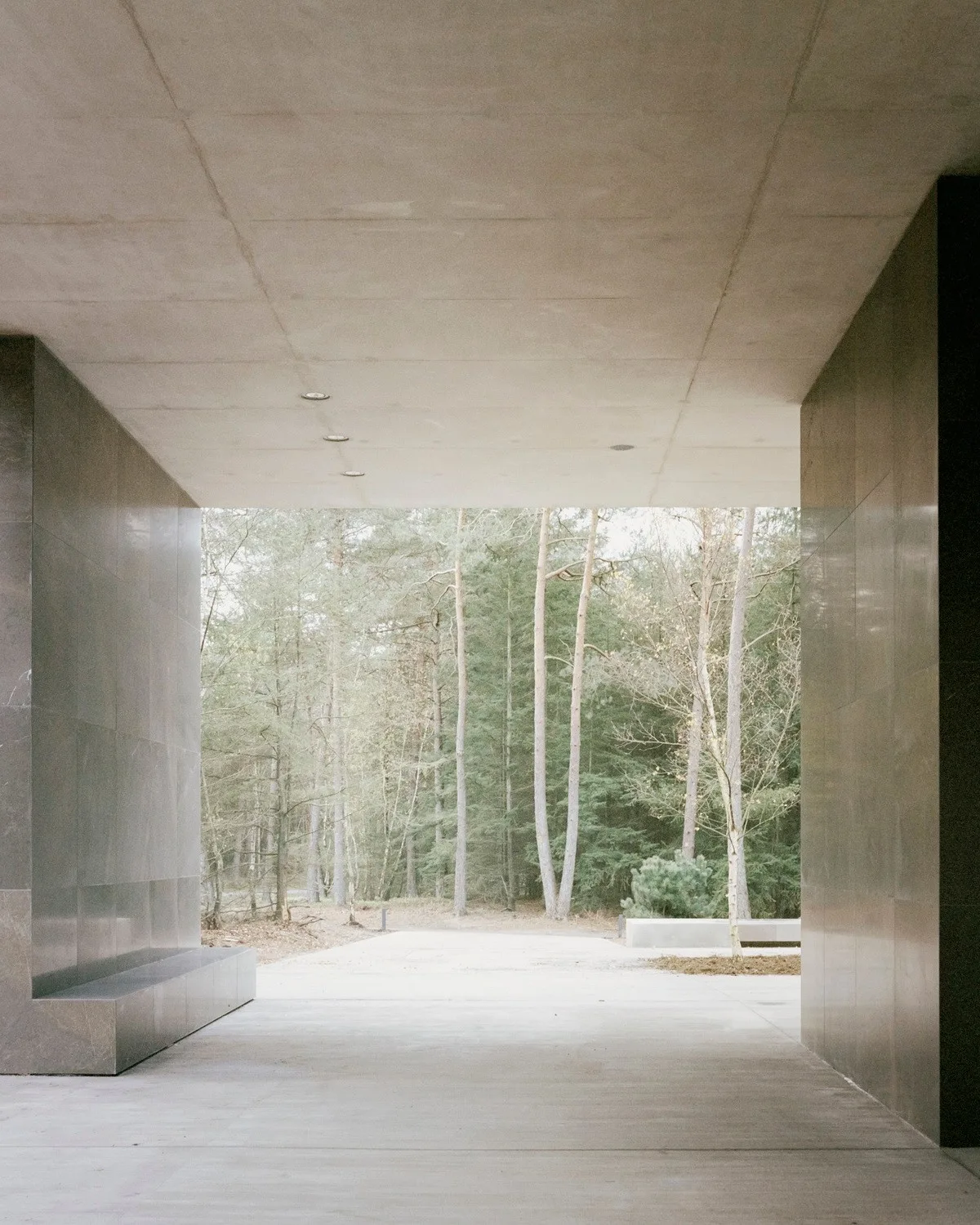
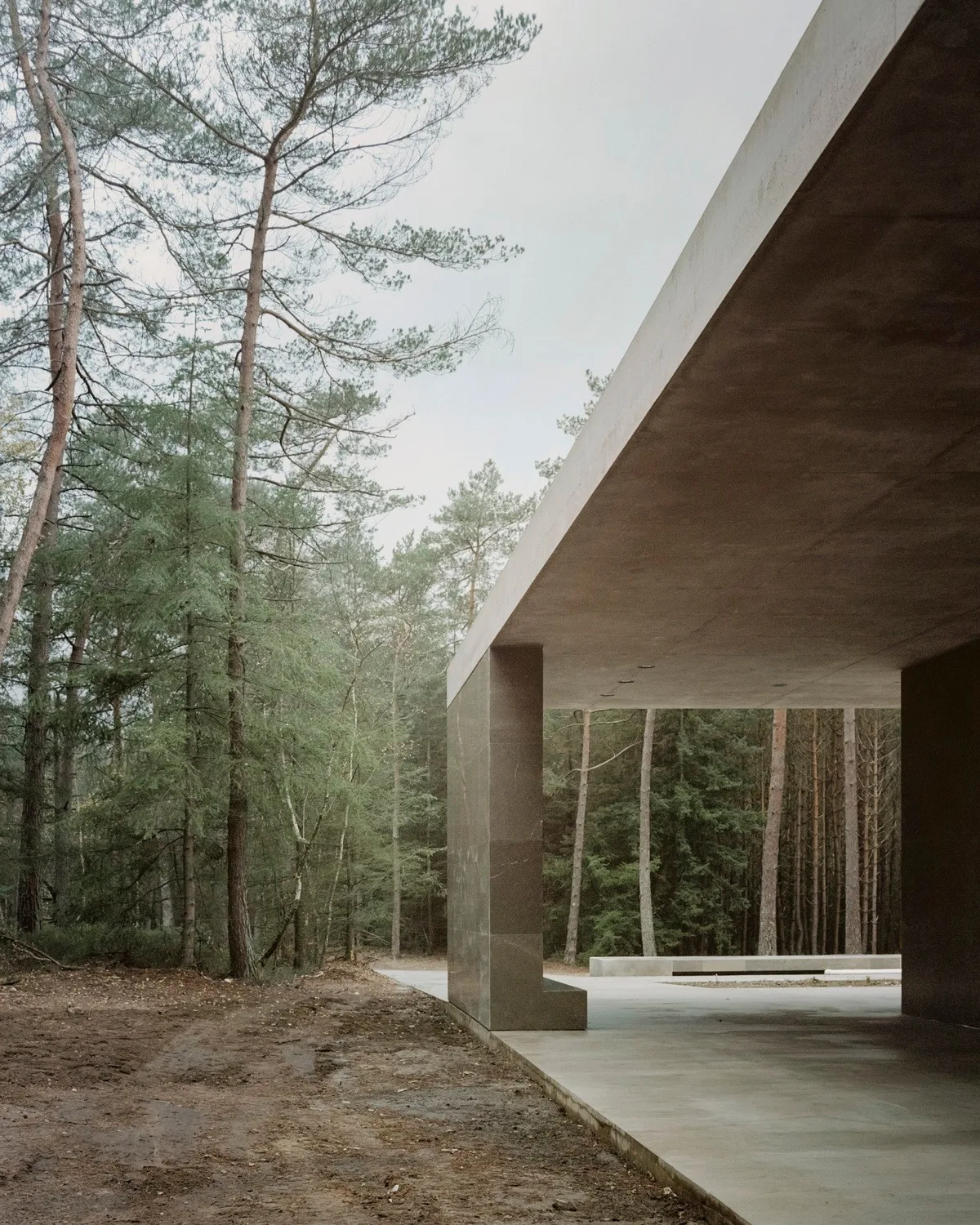
Every space within the museum is dedicated to commemoration and reflection. By minimizing corridor areas, the Lunen Pavilion maintains a narrow, elongated form that promotes a logical flow between functional zones. The auditorium is designed to host assemblies and funeral services for the adjacent national veterans cemetery, while also serving as a multifunctional space for exhibitions, consultations, and condolence gatherings. The auditorium and exhibition areas can be combined into a single large hall, with visual accessibility to accommodate major events and ceremonies.
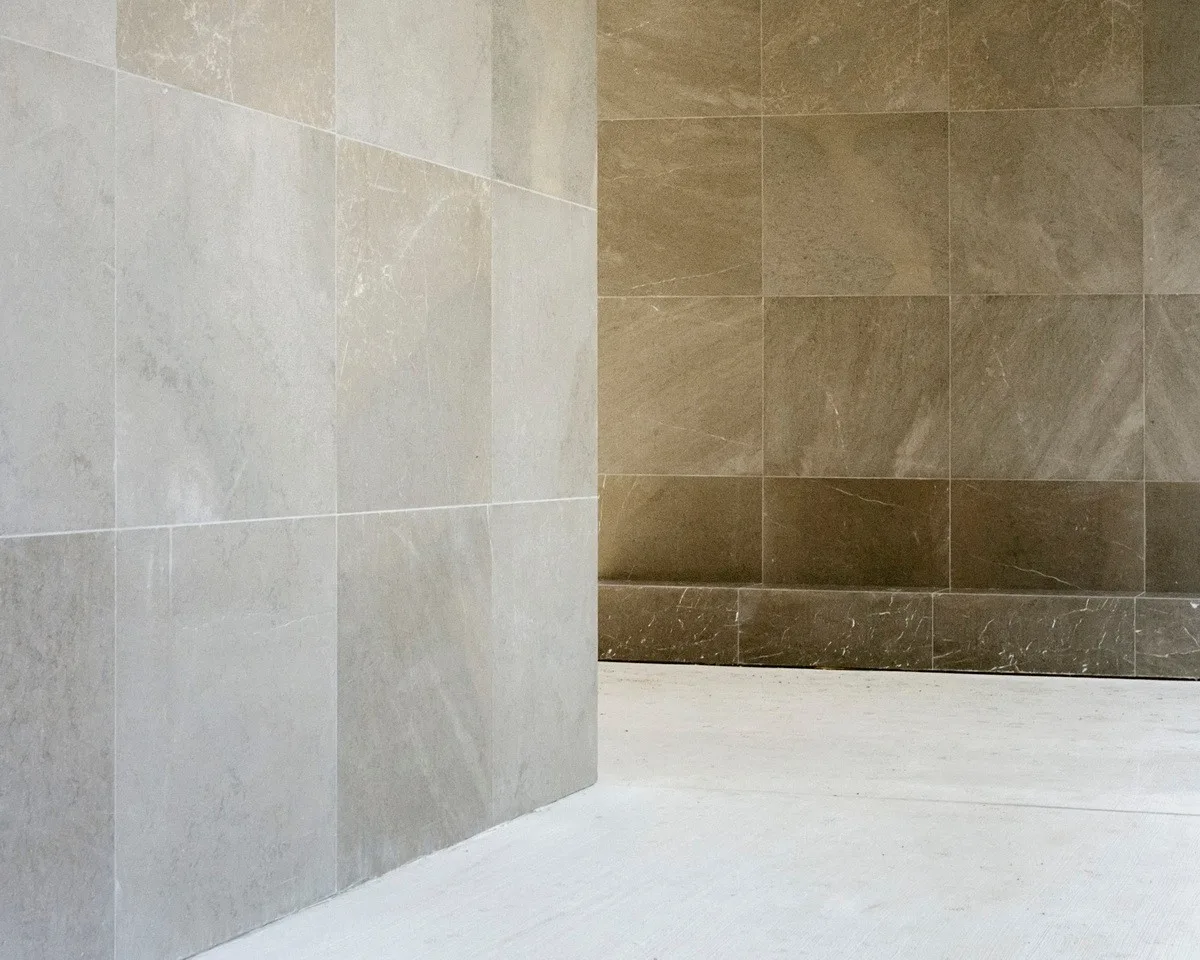
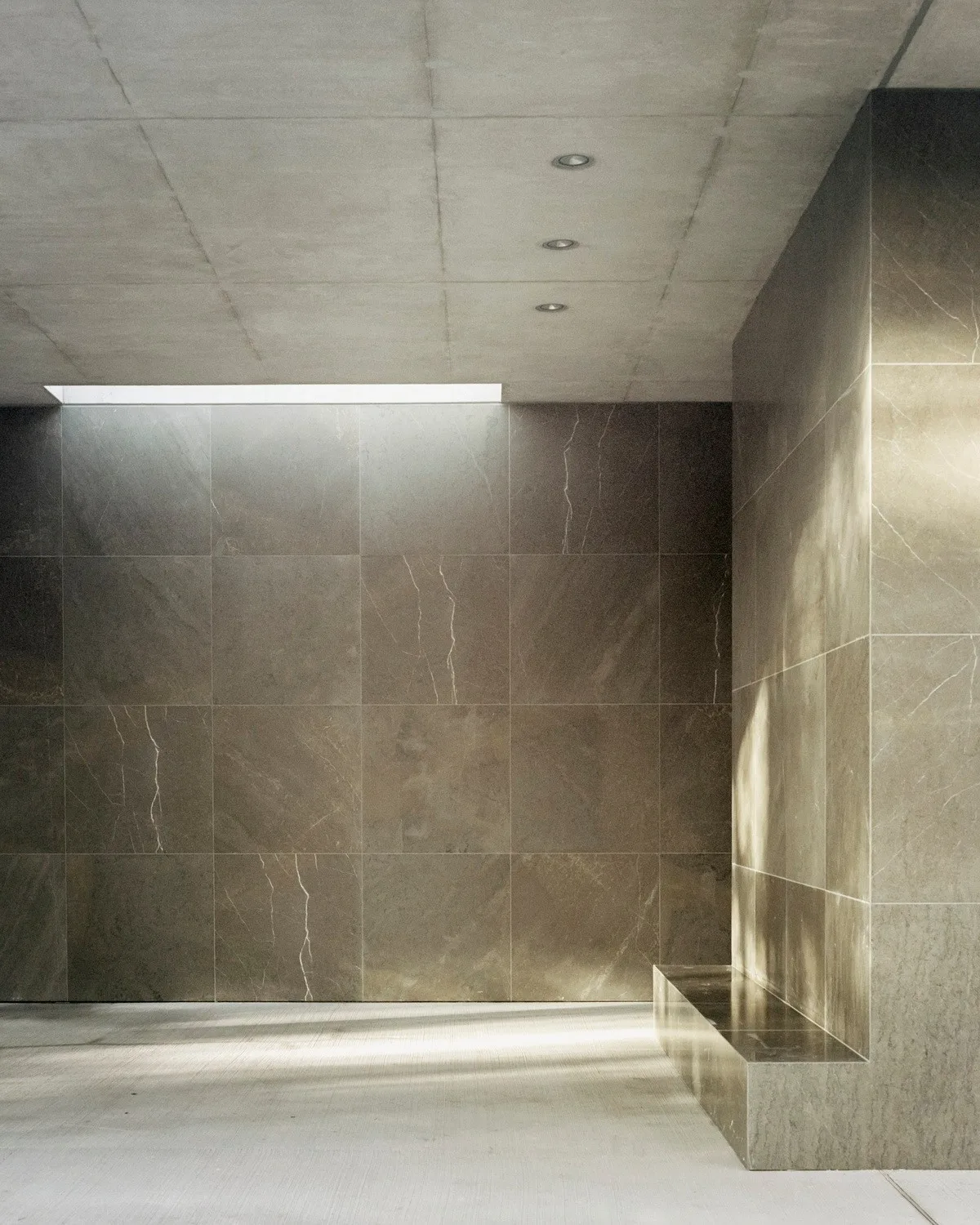
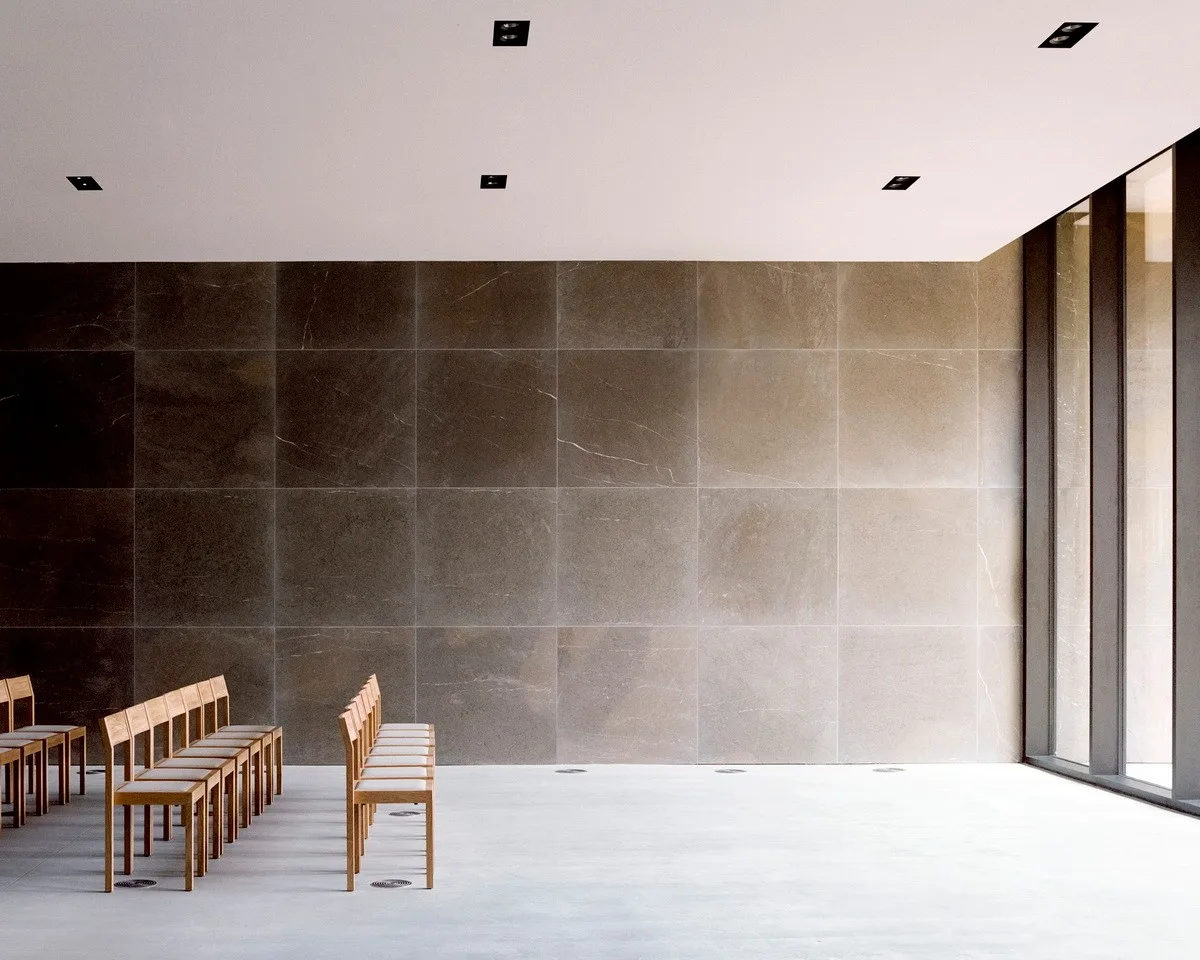
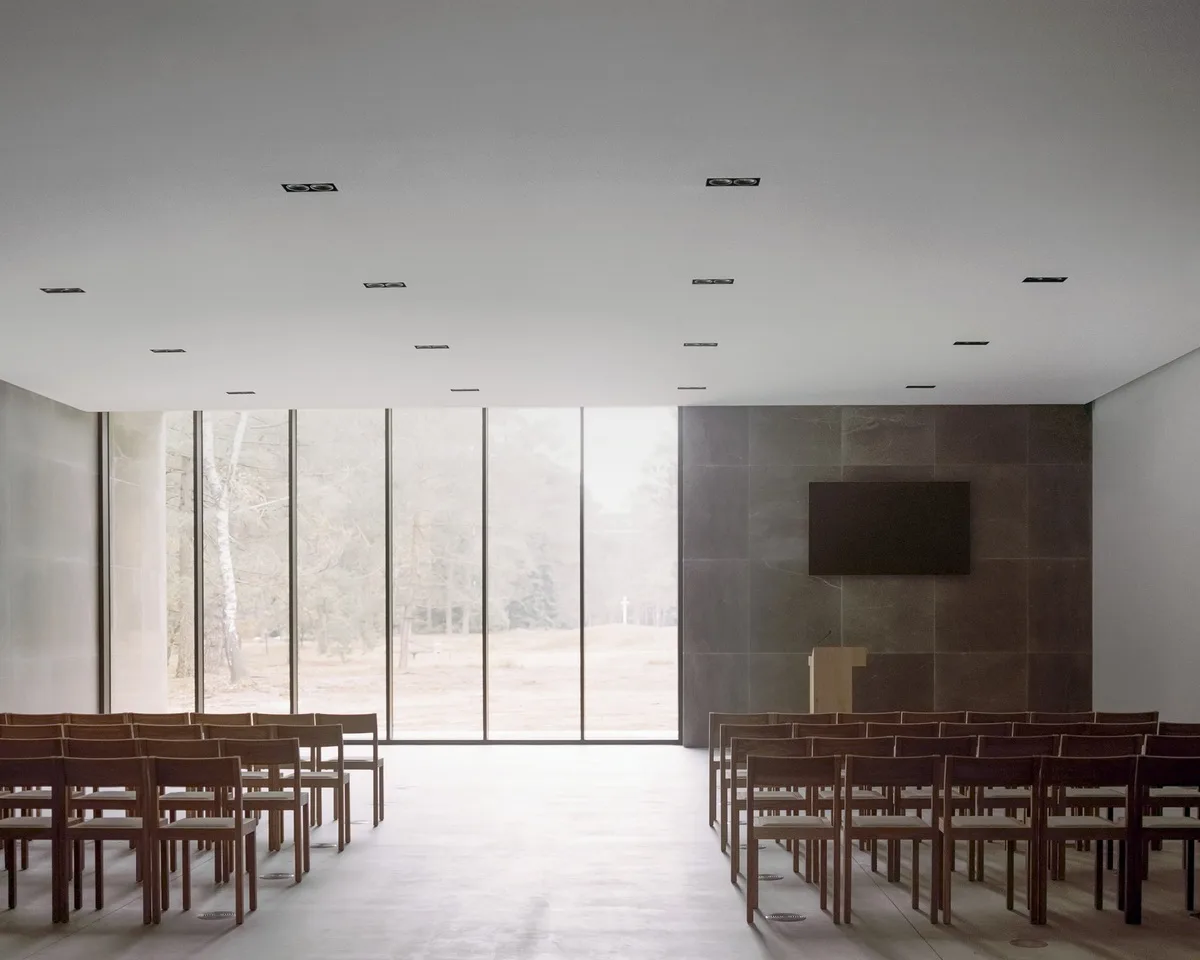
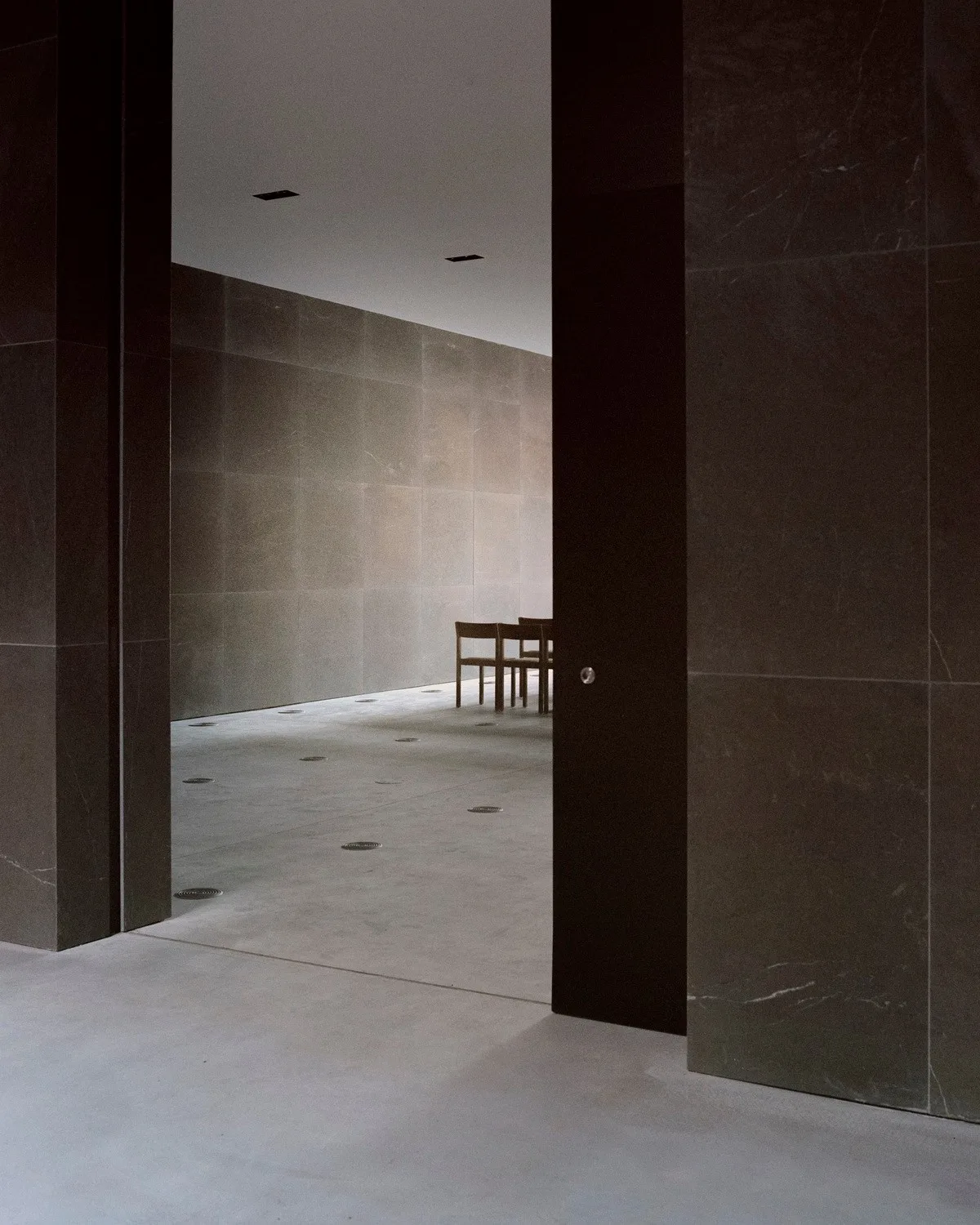
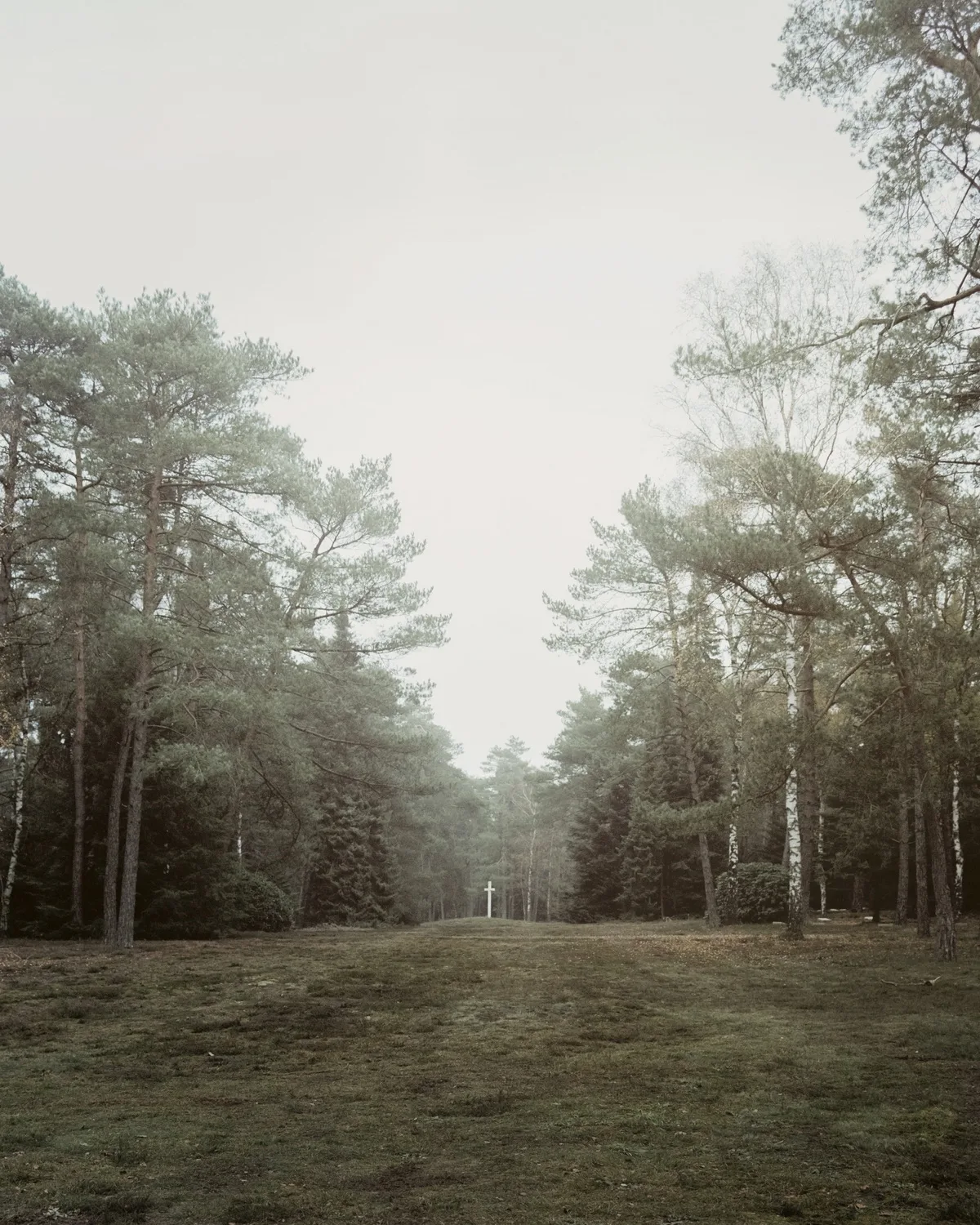
Each area offers unique perspectives. The condolence room overlooks two forest houses positioned opposite each other, facing the veterans’ and war cemeteries. The auditorium provides distant views of the central cross in the war cemetery. Large windows and specially designed openings replace ordinary windows, directing visitors’ gaze outward. The high roof with its wide span ensures flexibility inside and creates a sense of spaciousness.
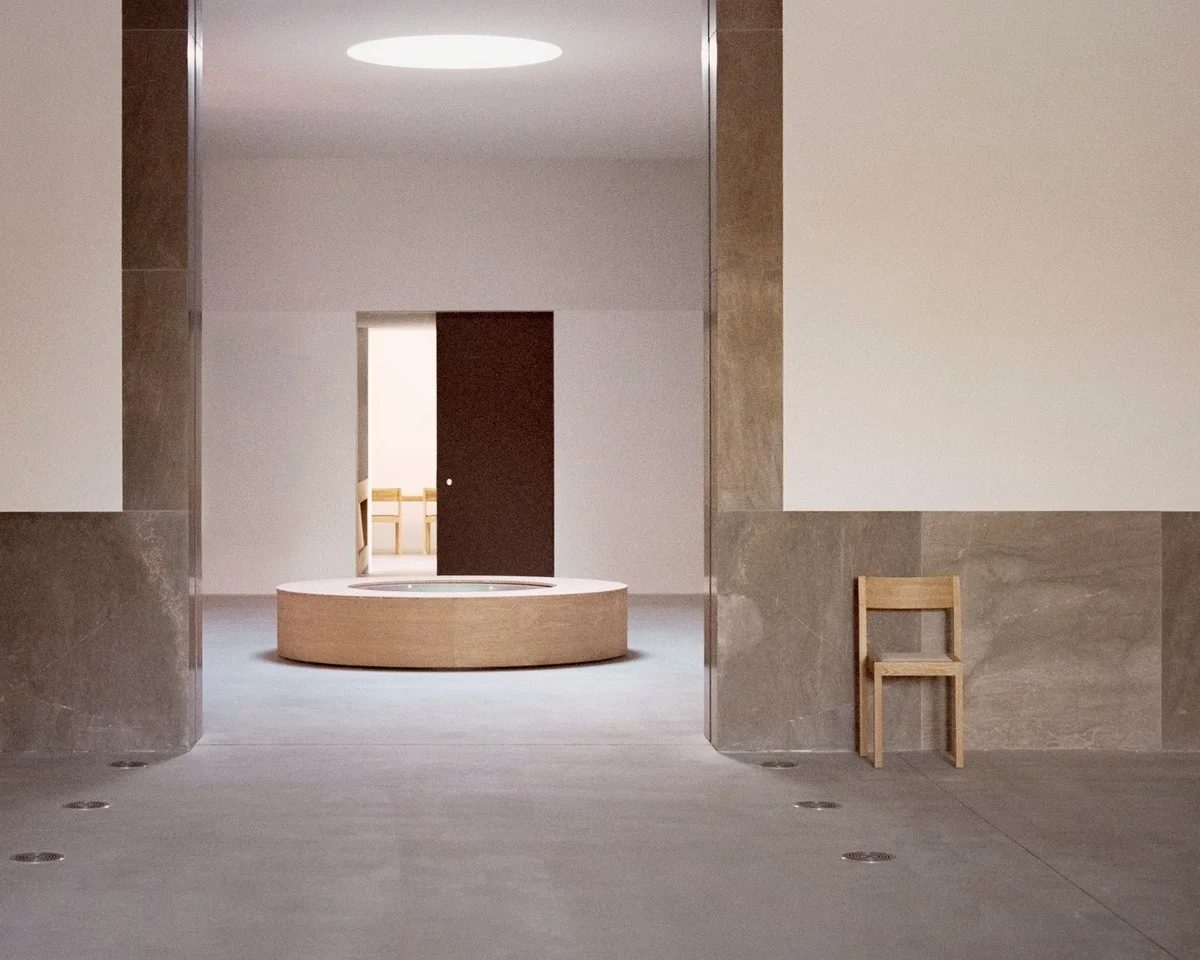
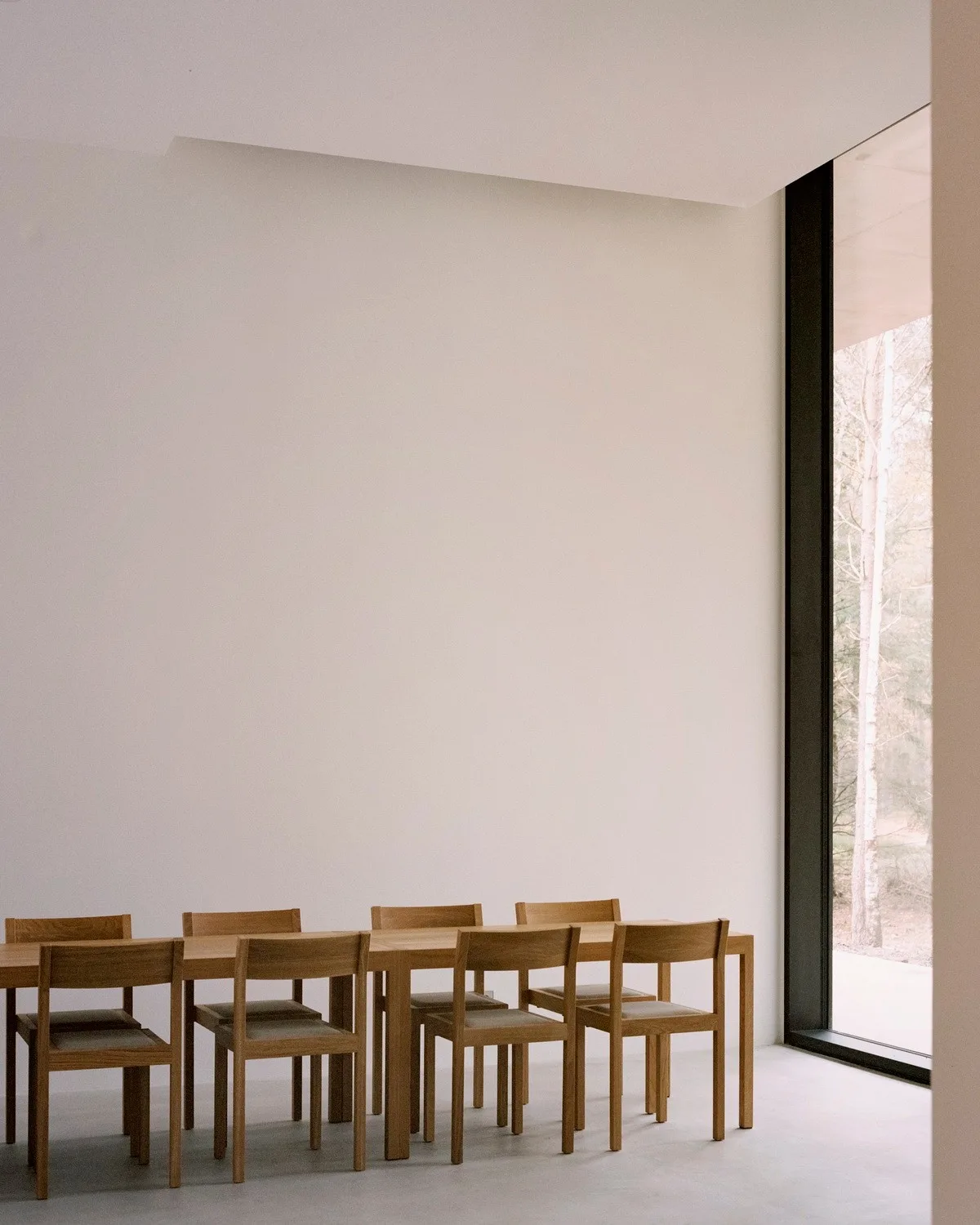
The Lunen Pavilion is designed as a public venue with a capacity of up to 200 people. It offers an optimal indoor environment with efficient ventilation and underfloor heating systems that maintain comfort without visible mechanical equipment. This project achieved high sustainability and minimized environmental impact by involving an academically complementary design team early in the process.
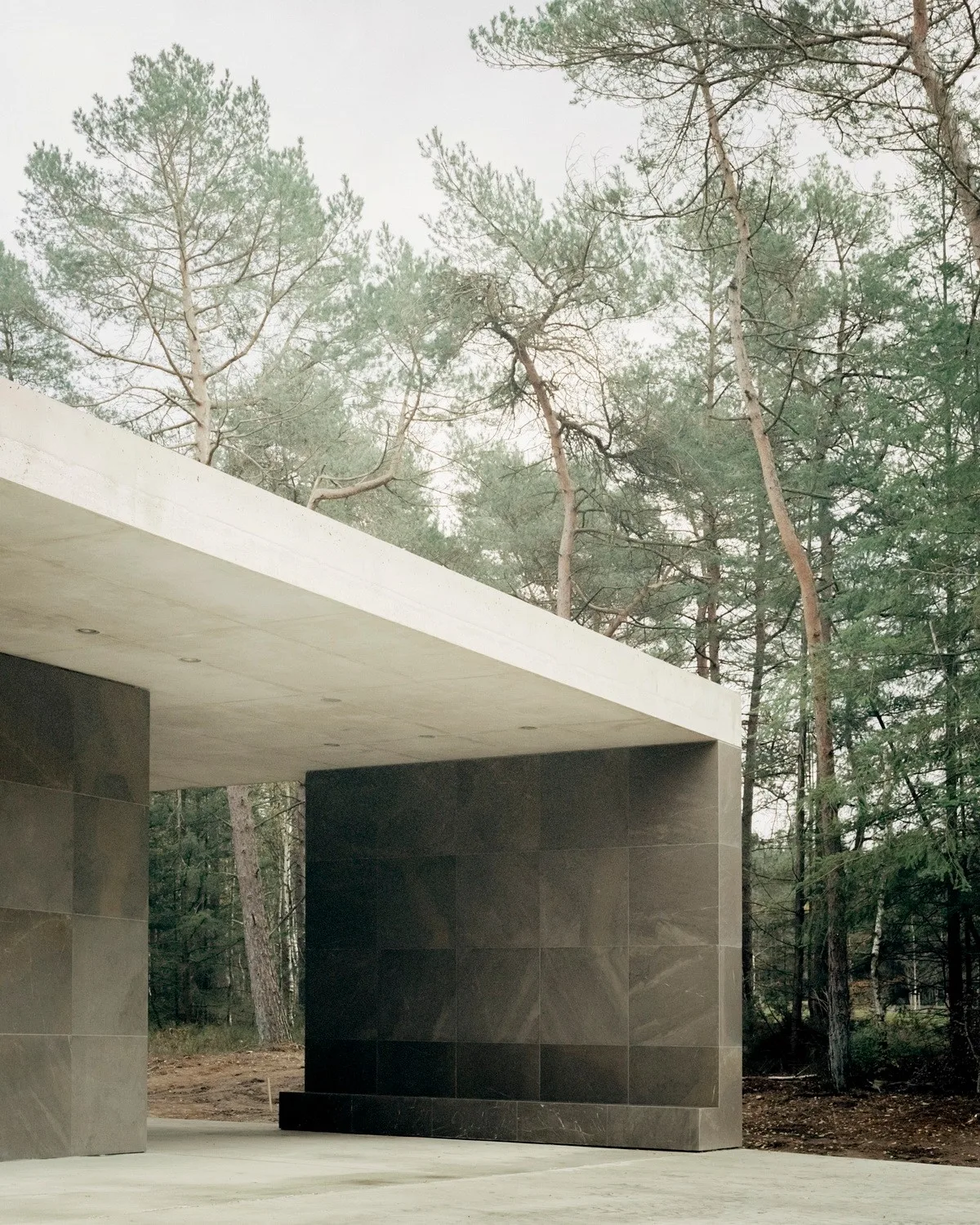
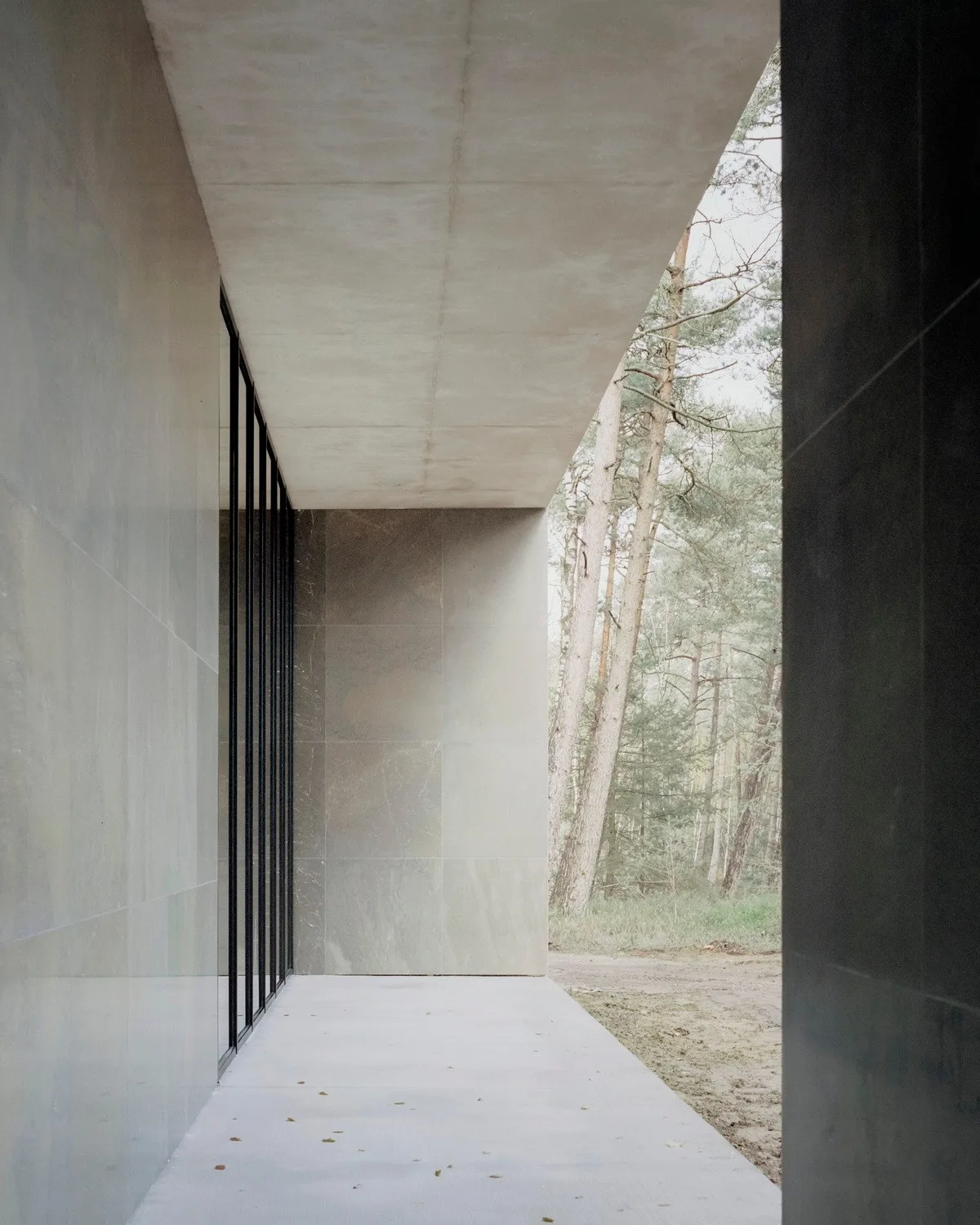
The museum thoughtfully breaks from traditional religious constraints by featuring open spaces, abundant natural light, and refined material choices that create a serene and naturally illuminated interior. The elegantly designed Lunen Pavilion enriches the National War Cemetery’s architecture, guided by the surrounding forest to offer a place where honor and solace are renewed and inspired.
Design Drawings
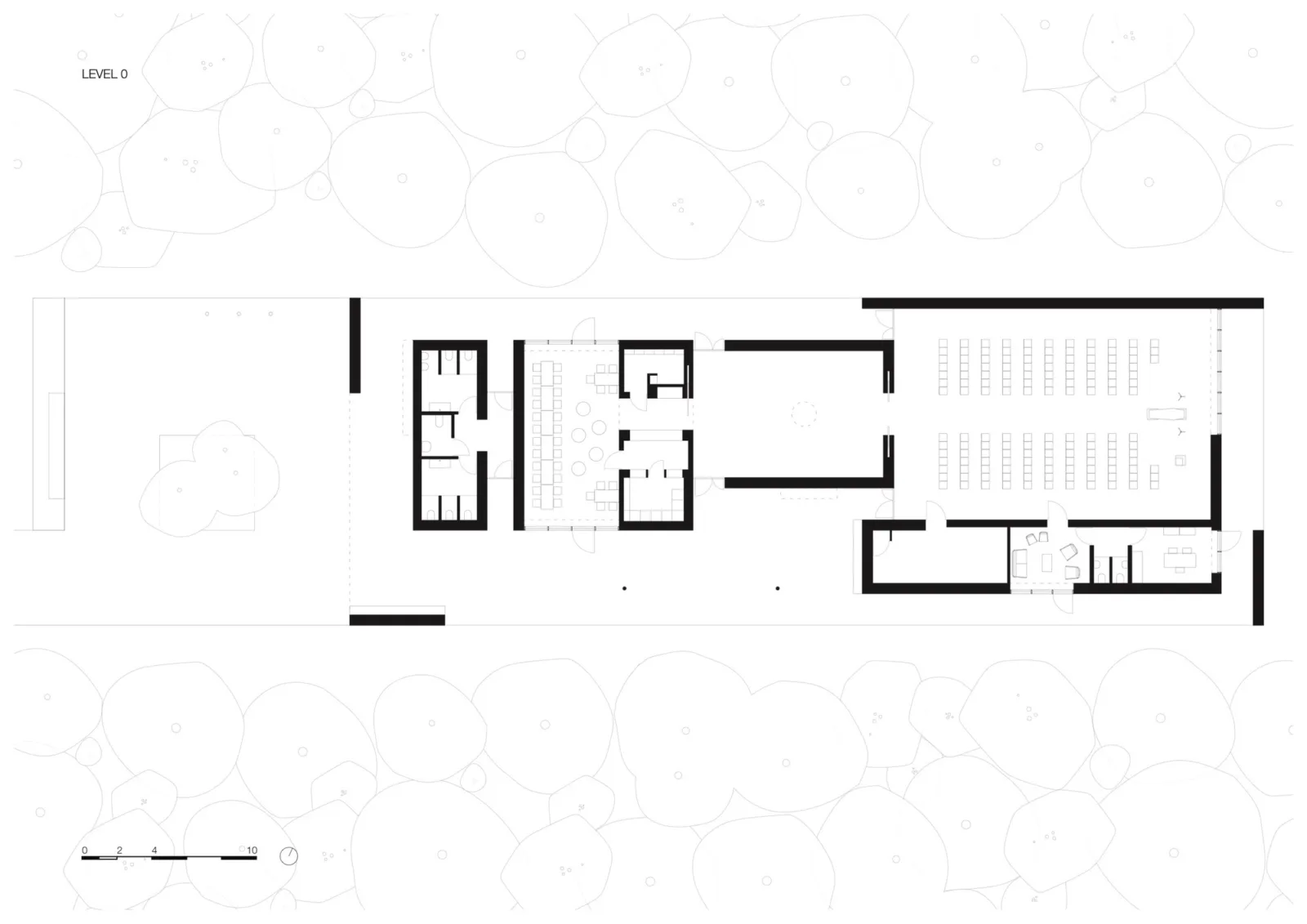
First floor plan
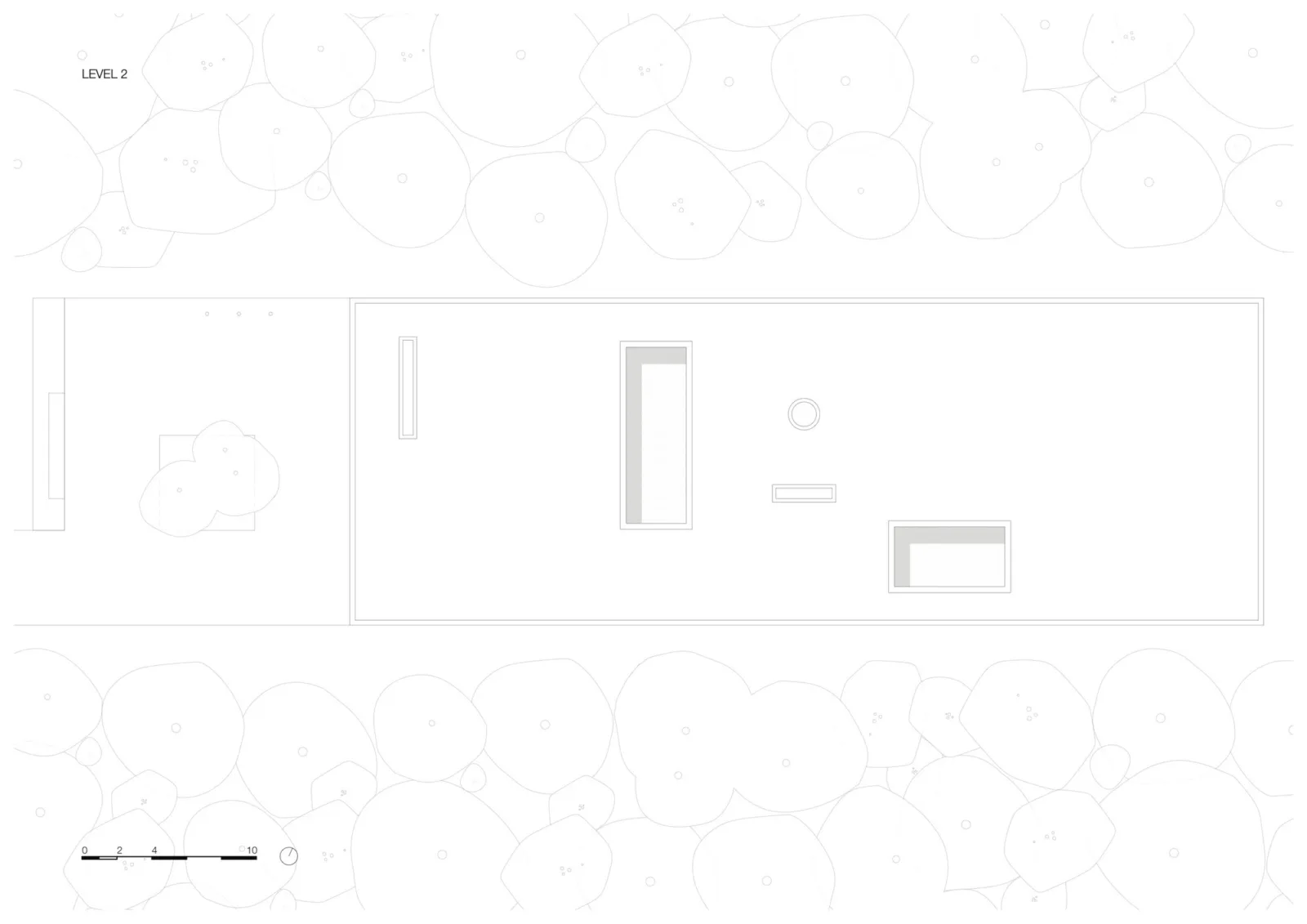
Roof plan
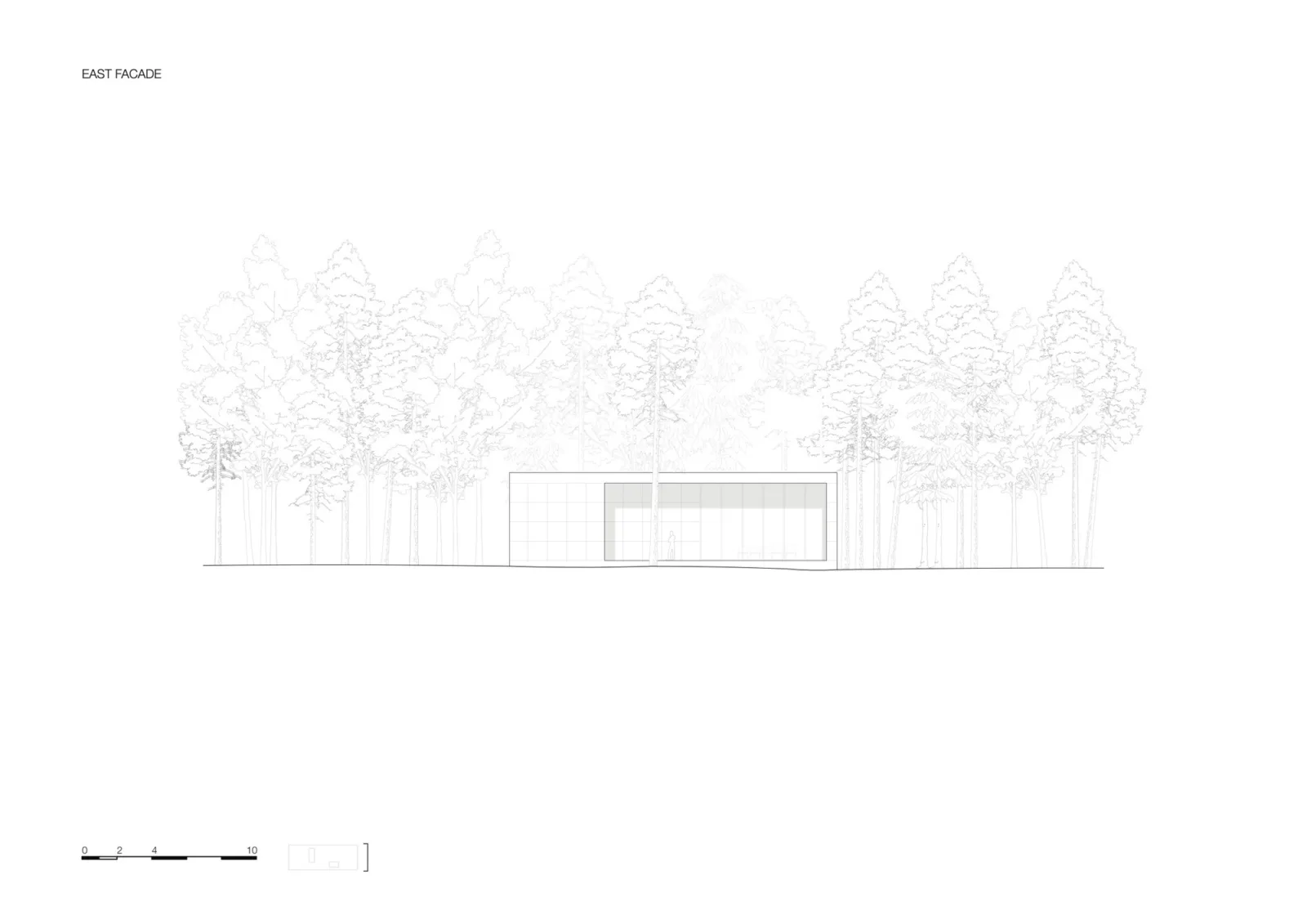
East elevation view
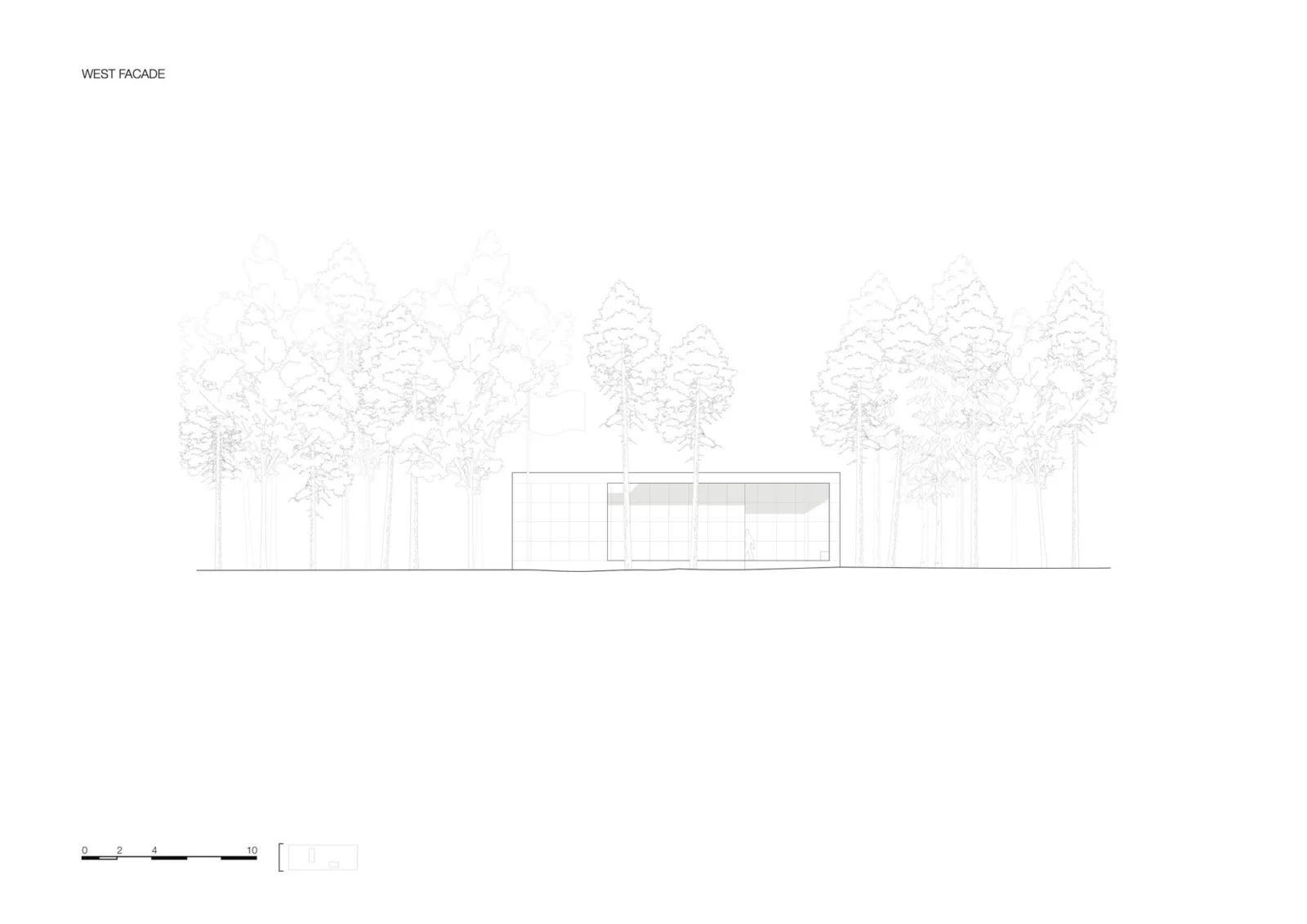
West elevation view
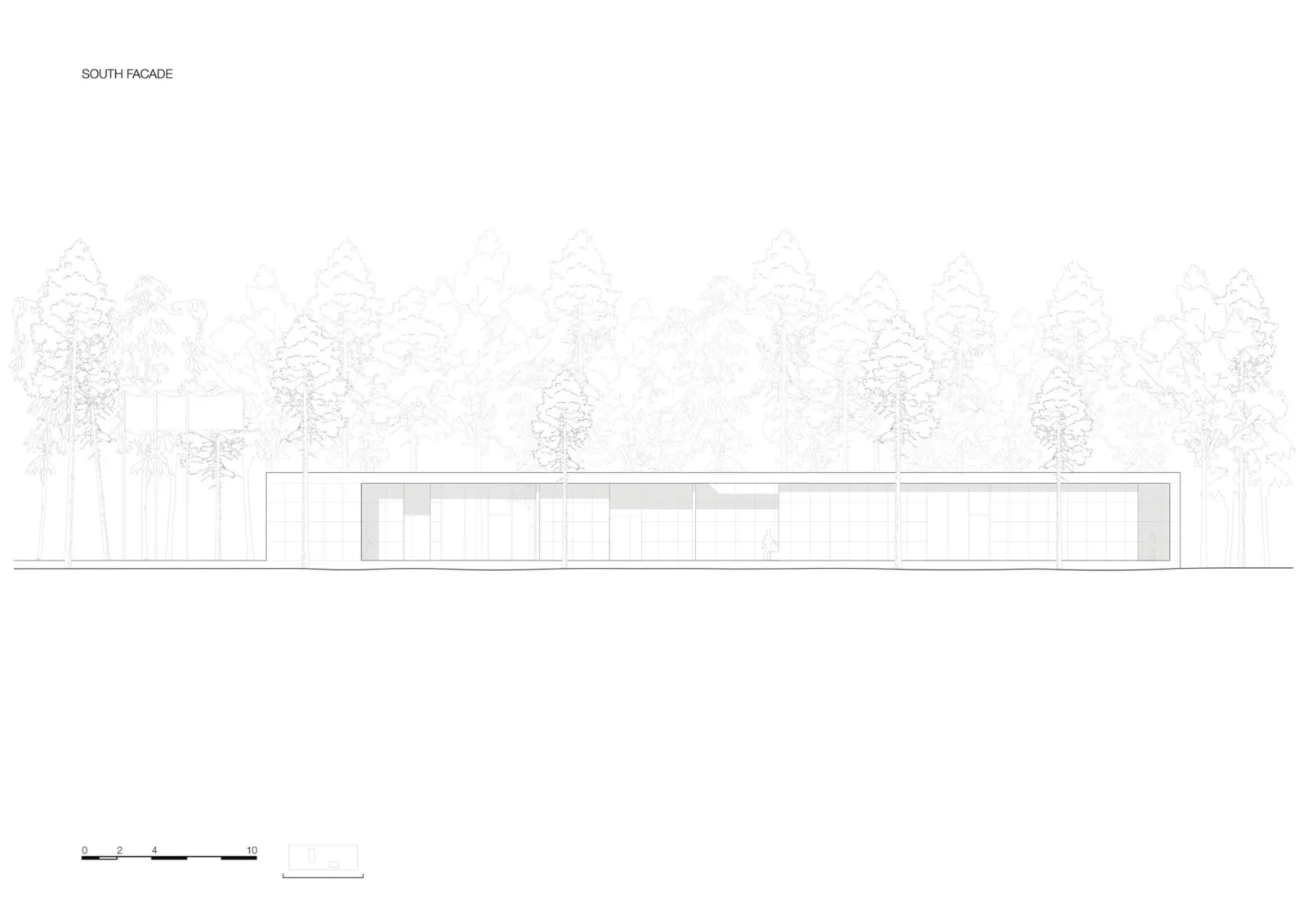
South elevation view
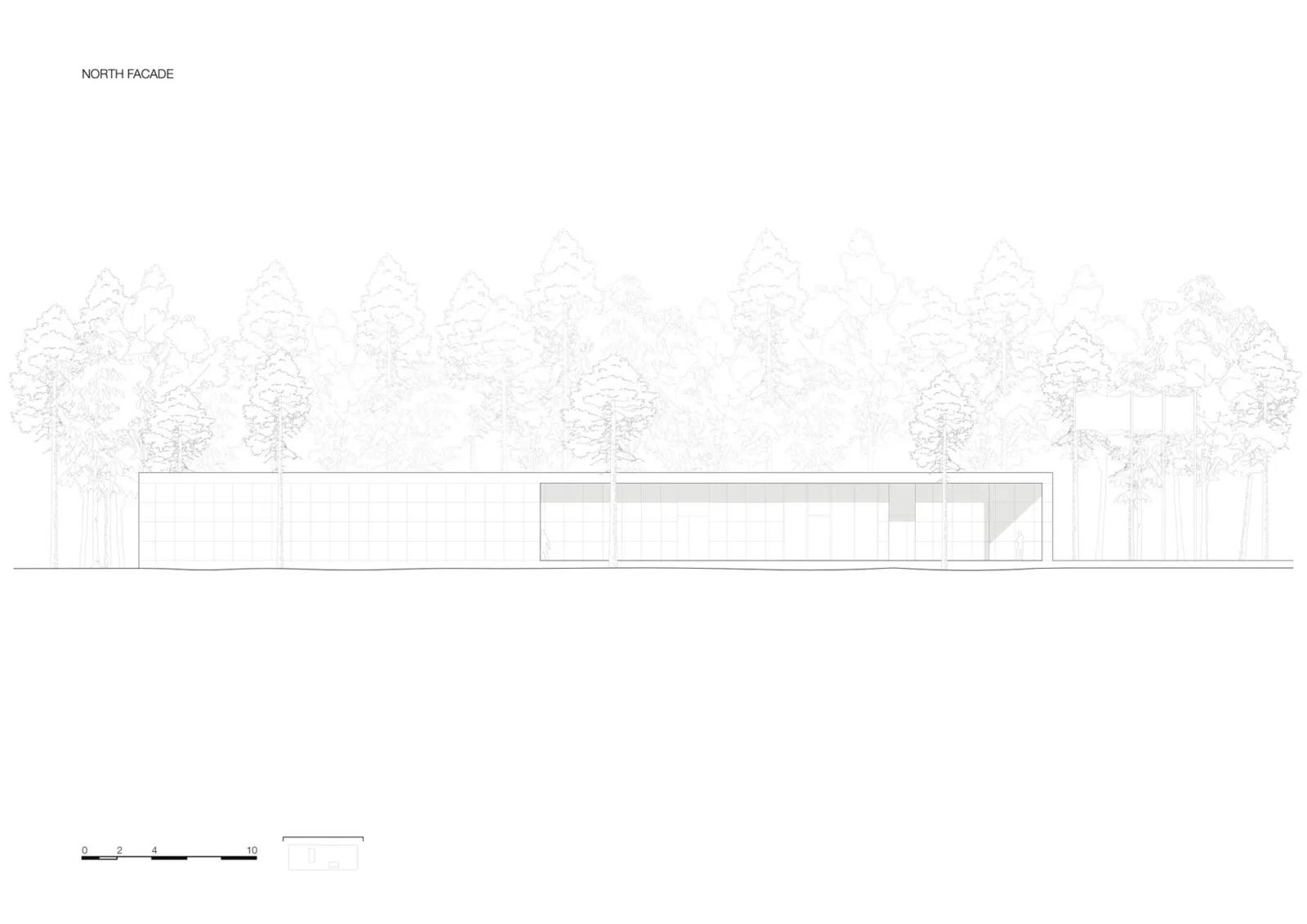
North elevation view
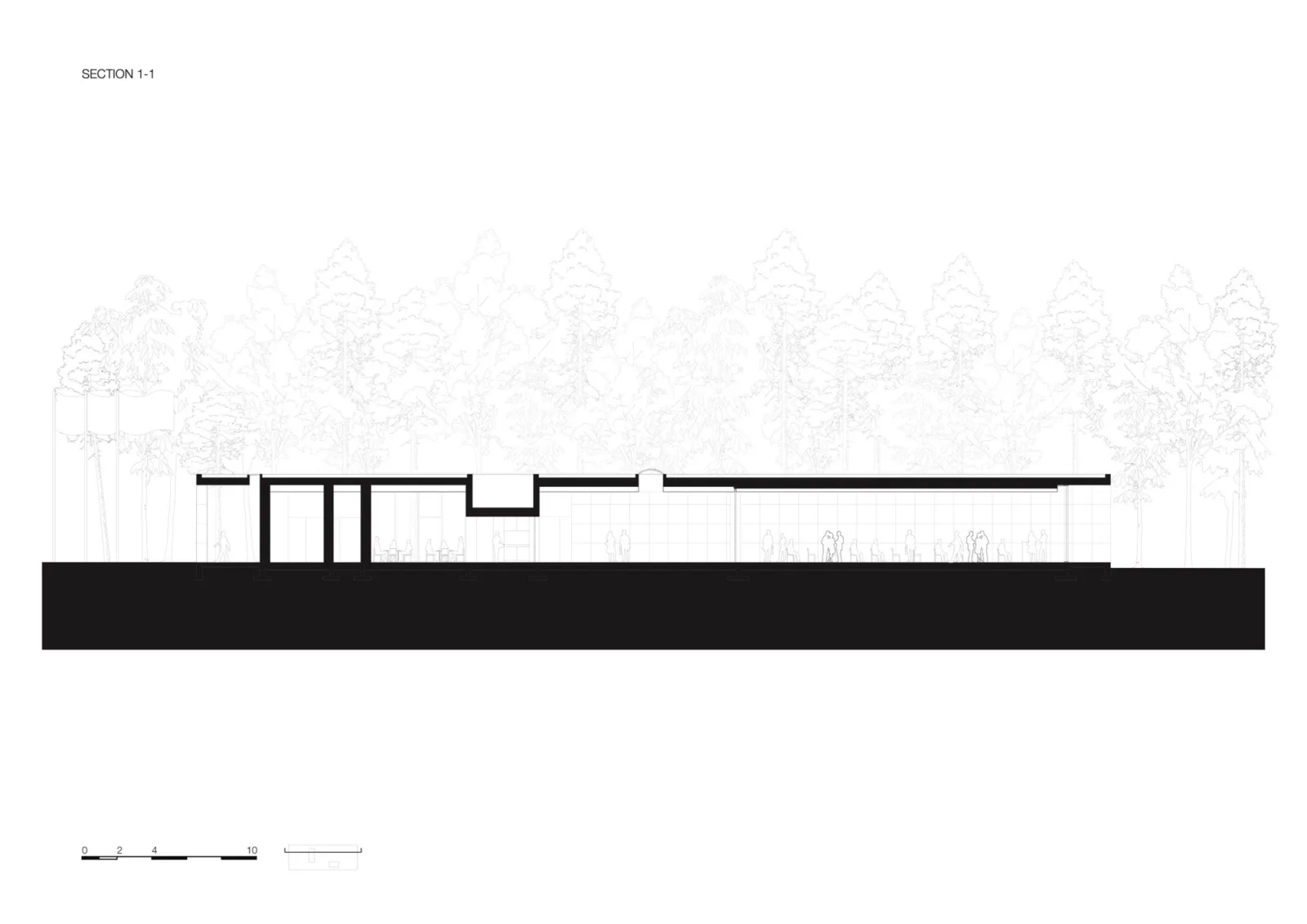
Section 1-1
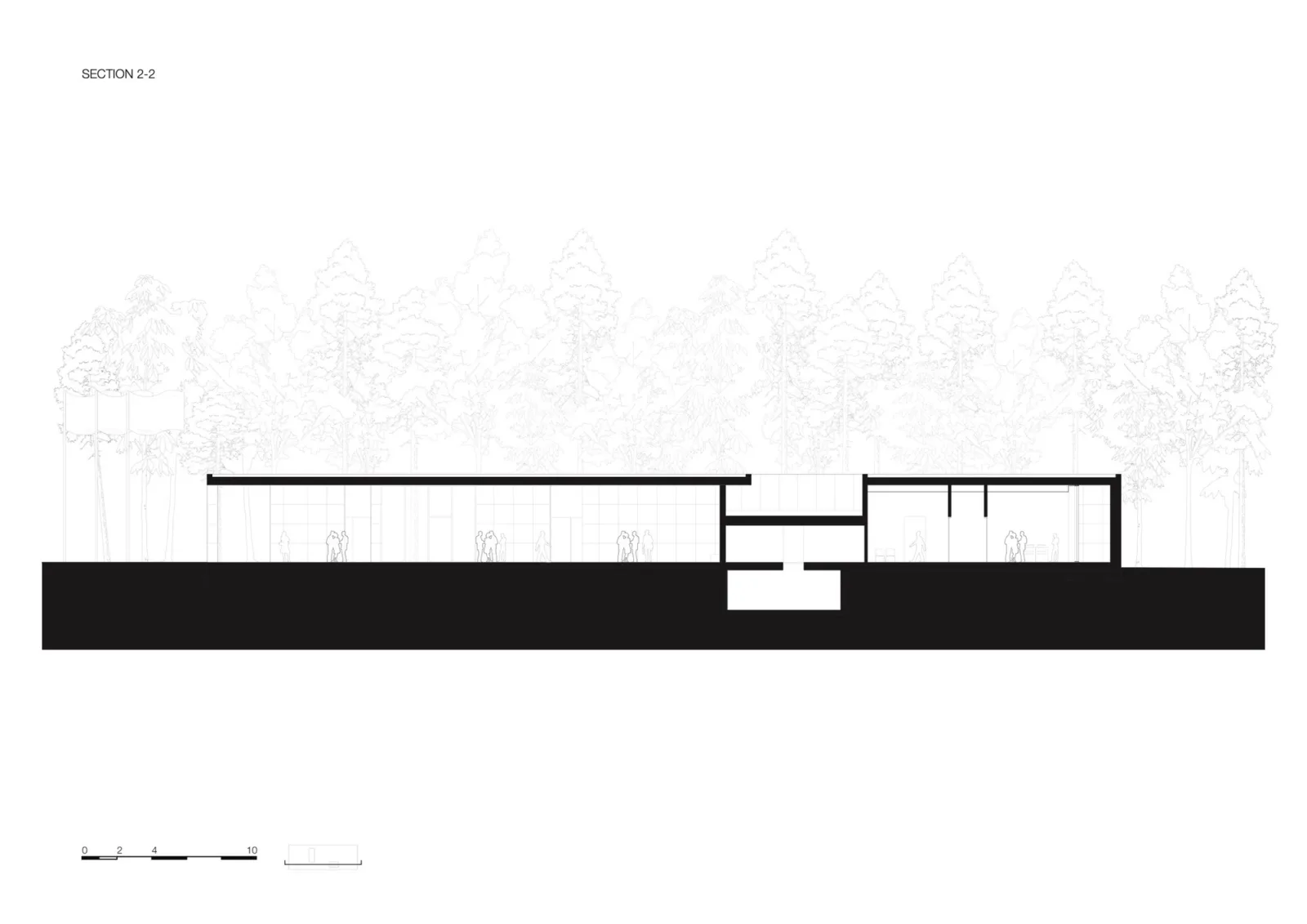
Section 2-2
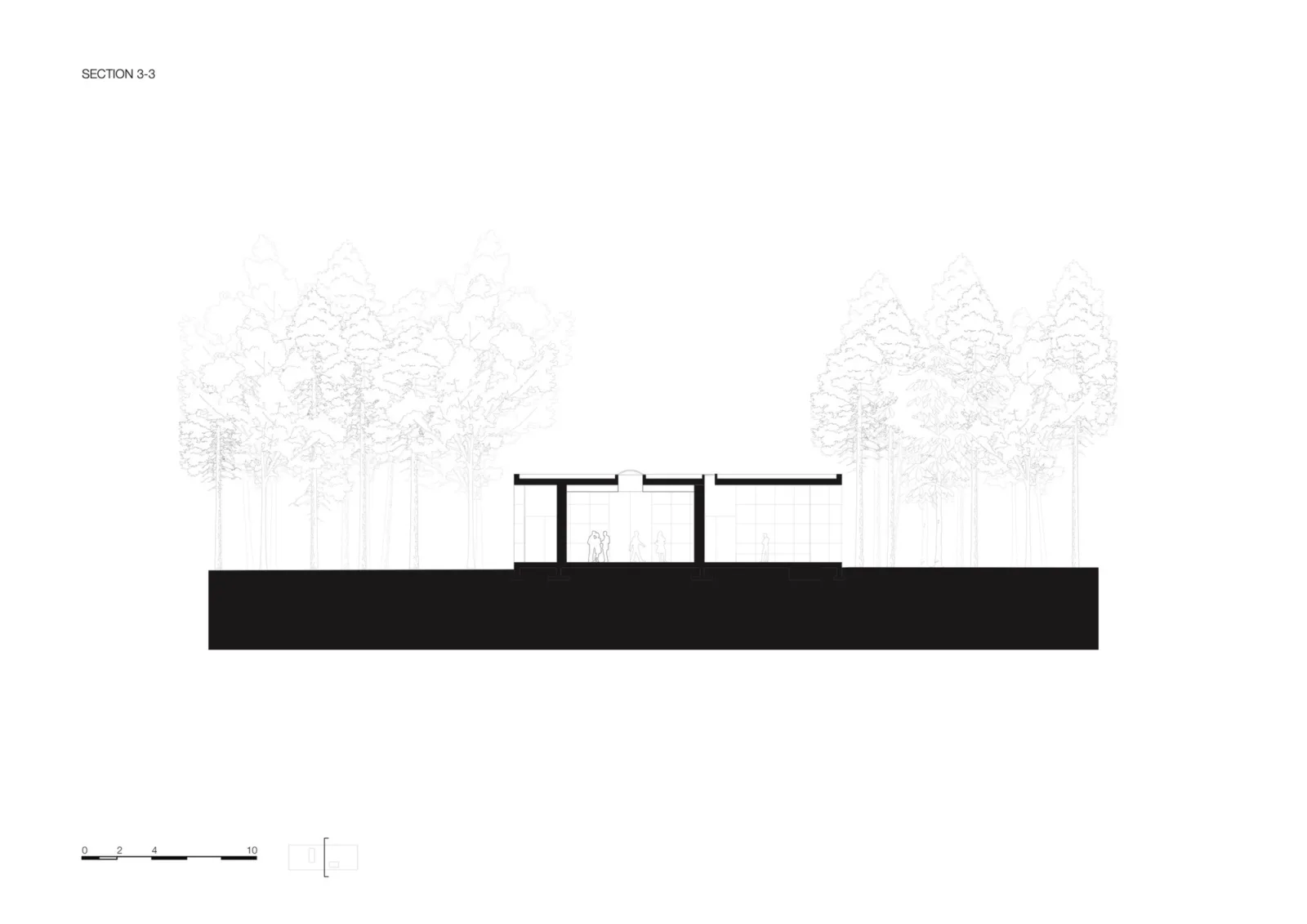
Section 3-3
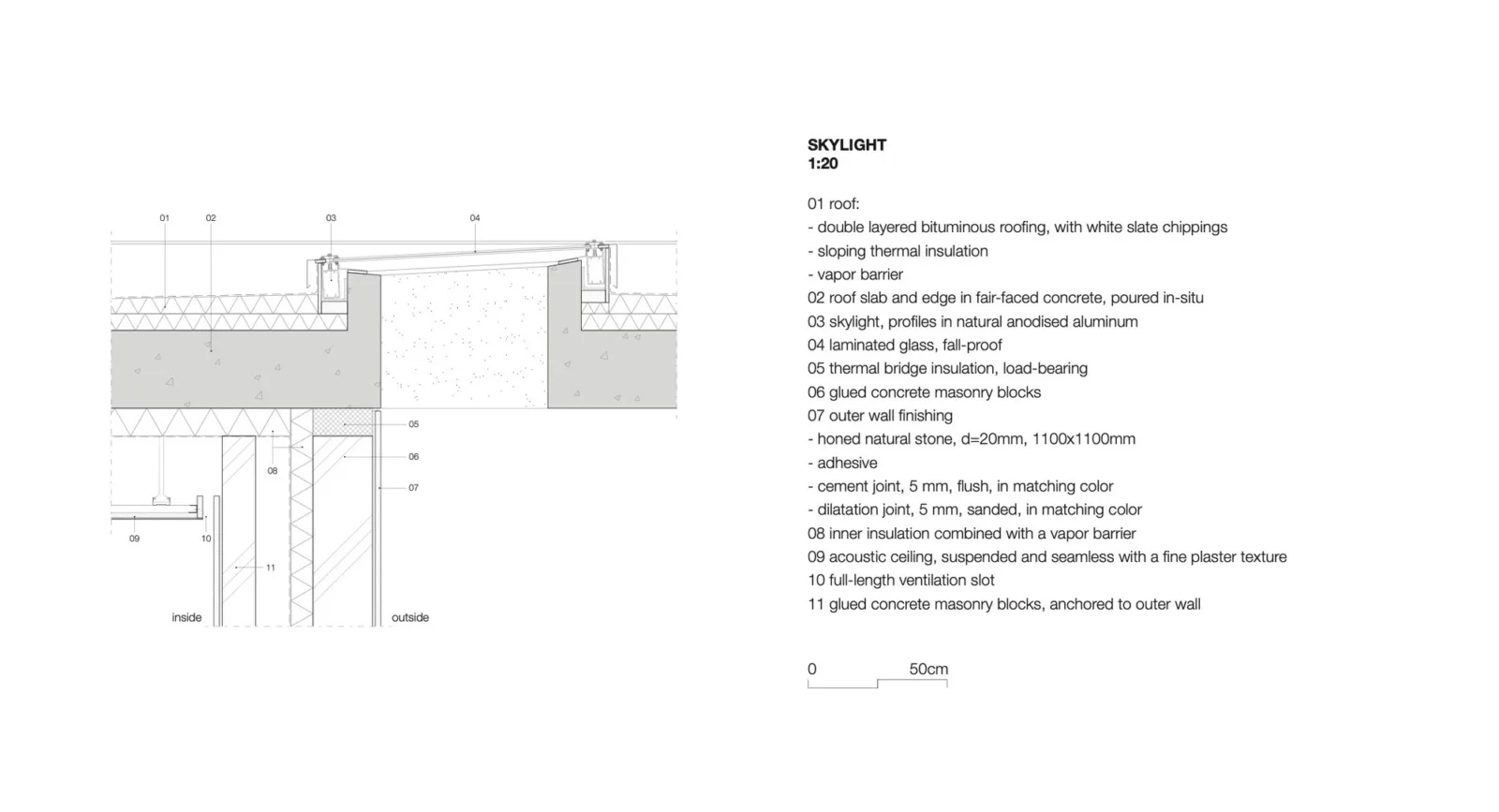
Skylight node
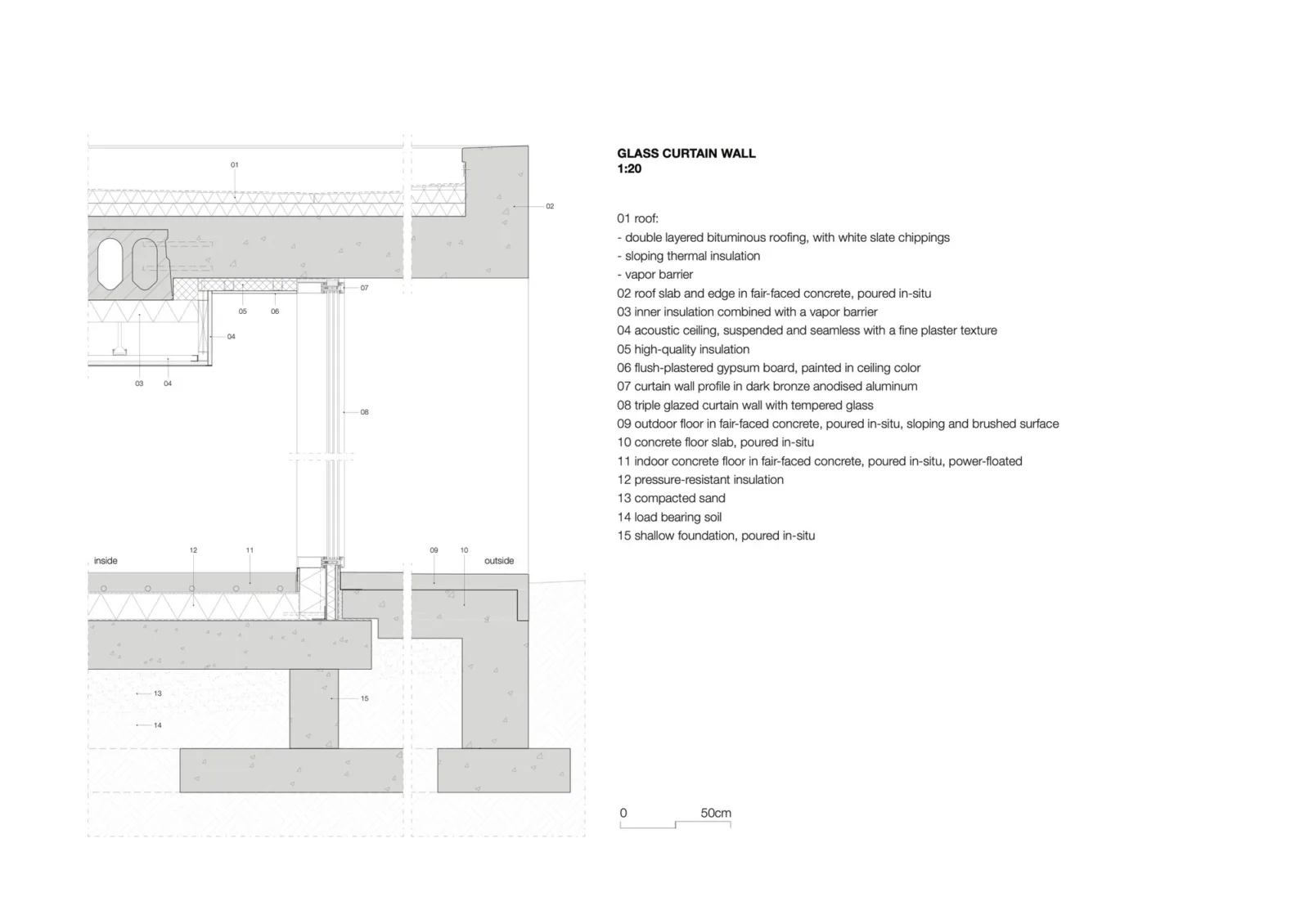
Glass curtain wall nodes
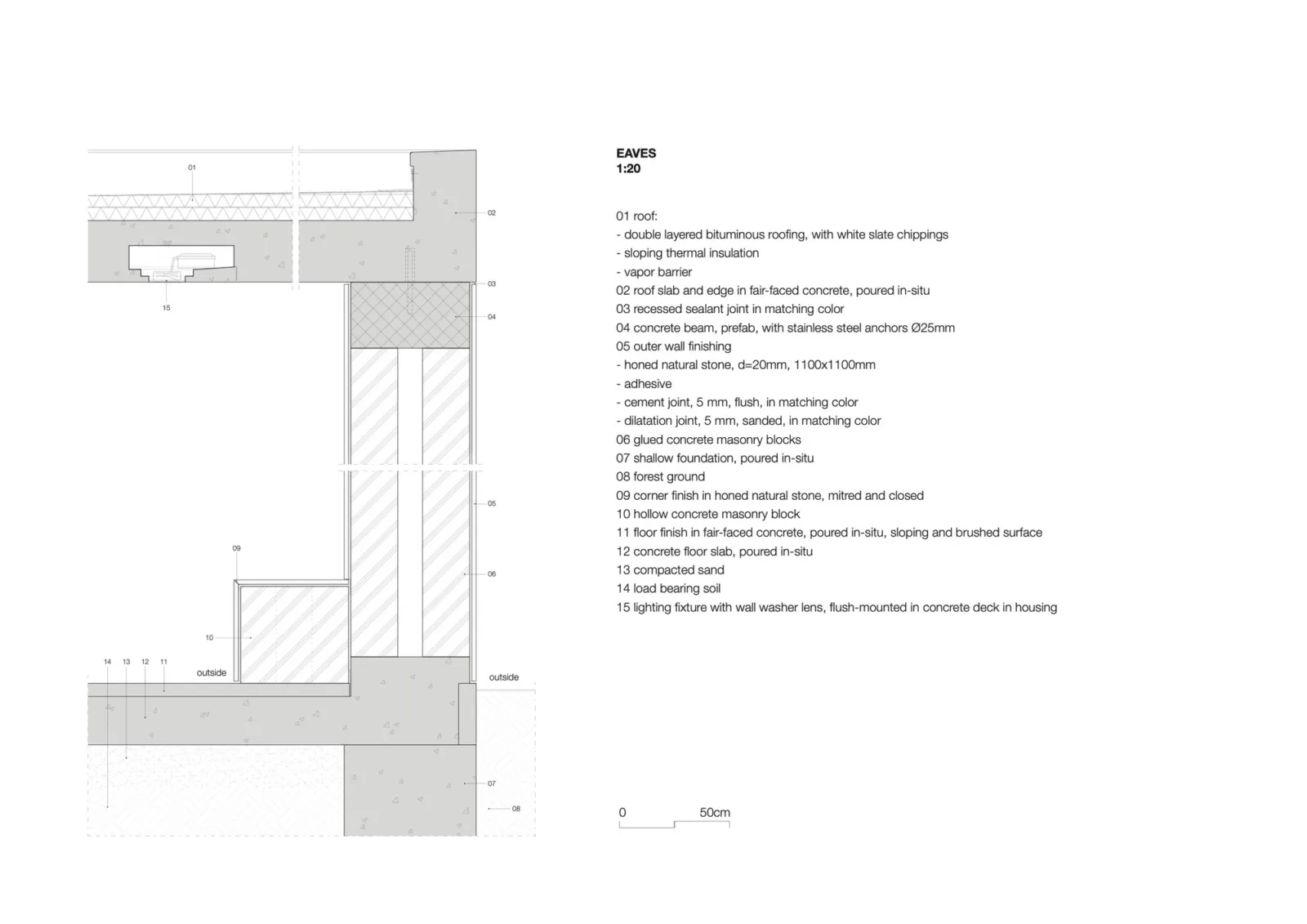
Roof node
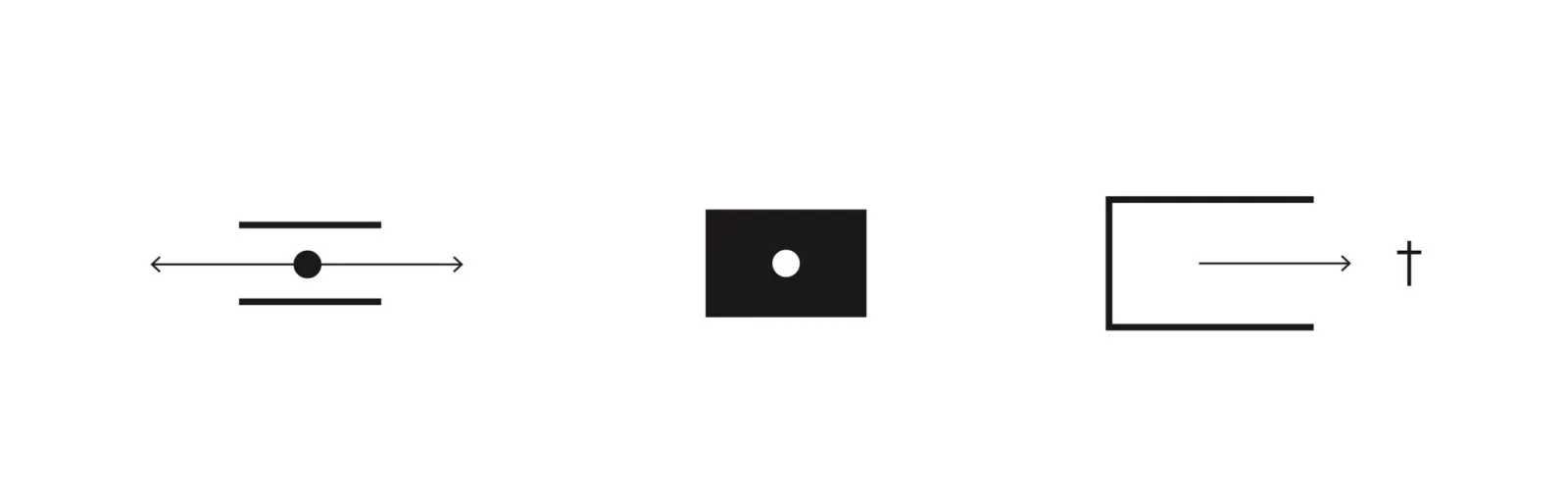
Concept of space
Project Information
Project Type: Memorial Center, Exhibition Hall
Location: Lunen, Netherlands
Architectural Design: KAAN Architecten
Area: 583 m²
Year: 2020
Photographer: Simone Bossi
Project Team: Alice Colombo, Sebastian van Damme, Paolo Faleschini, Raluca Firicel, Michael Geensen, Nicki van Loon
Client: The Netherlands War Graves Foundation, Nationale Veteranenbegraafplaats Loenen
Main Builders: Rots Bouw, Aalten
Construction Manager: Antea Group, Capelle aan den Ijssel
Builder Consultant: Pieters Bouwtechniek, Delft
Physical, Fire Protection, Acoustic Technology Installation Consultant: DGMR, The Hague
Architectural Budget Consultant: B3 Bouwadviseurs, Wassenaar
Exhibition Design: Tinker, Utrecht
Audio Consultant: Nieuwenhuis AV, Apeldoorn
Landscape Design: Karres en Brands, Hilversum
Landscape Contractor: Van de Haar Groep, Wekerom












Must log in before commenting!
Sign Up