
The first phase of the Z4 line project in Binhai New Area begins in the central business district of the Tianjin Free Trade Zone, extending north to south through the new area all the way to Hangu. Along its route, it will connect and offer transfers to the Beijing-Tianjin Intercity Railway and Jinbin Light Rail Line 9, making it a vital rail transit artery for Binhai New Area. Recently, a reporter from North Net New Media interviewed Gao Yingqin, chairman and general manager of Tianjin TEDA Urban Rail Investment Development Co., Ltd., the project’s lead construction and development entity. According to the schedule, construction is set to commence in 2016, with operations expected to begin in 2020. Furthermore, the Z4 line will be developed as a digital rail line, serving as a flagship project for the “smart city” initiative in Binhai New Area.
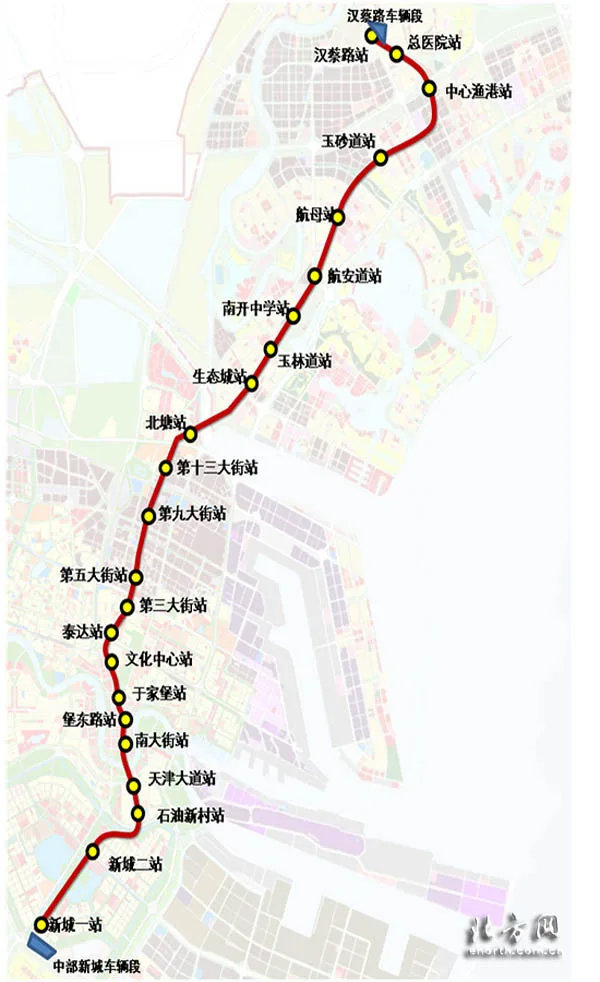
Schematic diagram of the Z4 rail transit route (Hancailu Zhongbu New City section)
Connections with Beijing-Tianjin Intercity Railway and Jinbin Light Rail
The Z4 line serves as a backbone, linking the north-south axis and core areas of Binhai New Area. The route passes through key locations such as Zhongbu New City, Yujiapu, Tianjin Commercial District, Development Zone, Beitang, Zhongxin Ecological City, and ends at Hancai Road Station. The total length is approximately 43.7 kilometers.
“According to our timeline, the Z4 line construction will officially begin in 2016, with passenger service launching in 2020,” Gao Yingqin told North Net New Media. Along the way, passengers will have transfer options to other rail lines including the Beijing-Tianjin Intercity Railway and Jinbin Light Rail.
Planning documents reveal that Phase I of the Z4 line will include 23 stations: 10 underground and 13 elevated. These stations include Xincheng 1, Xincheng 2, Shiyou Xincun, Jingu South Road, Nandajie, Baodong Road, Yujiapu, Cultural Center, Taida, Third Street, Fifth Street, Ninth Street, Thirteenth Street, Beitang, Ecological City, Yulin Road, Nankai Middle School, Hang’an Road, Aircraft Carrier, Yusha Road, Central Fishing Port, General Hospital, and Hancai Road. (All station names are provisional.)
Creating a “micro city” effect around stations
Traditionally, urban rail transit has been viewed as a supporting infrastructure for urban development. However, this concept has evolved. Gao Yingqin explained, “The current understanding positions rail transit as developing alongside cities, and increasingly, rail transit is leading urban growth—something particularly evident in Binhai New Area.”
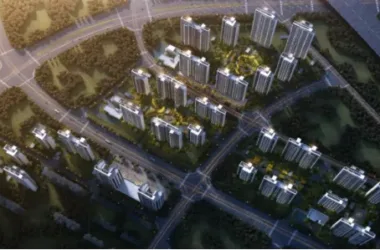
The Z4 line not only plays a crucial role in north-south transportation but also enhances the urban morphology of Binhai New Area. Gao likened the line to a chain connecting pearls: “The Z4 line runs through free trade zones, development zones, and the China-Singapore Tianjin Ecological City—these are like pearls, and the Z4 line is the chain that links them into a valuable necklace.” Additionally, each station’s surrounding area is expected to develop its own “micro city” cluster. Unlike older urban zones, new urban clusters will emerge around these stations.
Building a “digital” rail line to pioneer smart city development
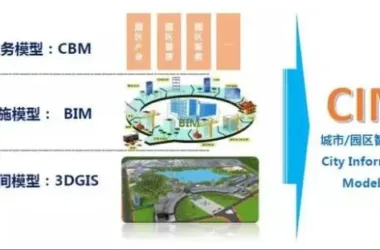
The Z4 line will be developed as a digital rail line. Gao Yingqin highlighted its technical features, emphasizing the use of BIM (Building Information Modeling) technology throughout the entire lifecycle of the line.
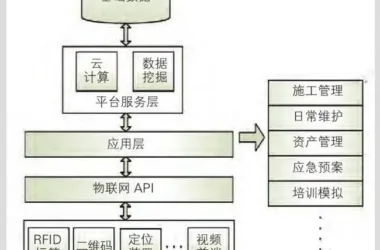
BIM is an advanced multidimensional modeling technology that integrates information based on computer-aided design and other tools. It acts as a digital platform that visually represents the physical and functional characteristics of construction projects. Simply put, it turns complex engineering data into intuitive visual models. Gao explained to North Net New Media, “What you see on the interface isn’t just data; it’s various interactive 3D images. Clicking on these images reveals related construction details in text form.” This approach greatly facilitates construction management and quality control during later stages.
Currently, BIM is primarily used during construction phases. However, the Z4 line will extend BIM technology into its operational phase as well, ensuring ongoing quality and safety for the entire rail line.












Must log in before commenting!
Sign Up