
Recently, a medical building has stirred a “typhoon” within the BIM community, earning numerous accolades both domestically and internationally. At China’s most prestigious BIM competition—the 4th “Longtu Cup” BIM Competition—this project secured the first prize in the construction category. The winning project is the Relocation Project of Beijing Temple of Heaven Hospital, affiliated with Capital Medical University.

So, how did the Temple of Heaven Hospital relocation project win the judges’ favor? Our editor has carefully organized the BIM applications used in this project. Next, we’ll explore the value and achievements of BIM implementation within this hospital project.
Project Background
The Temple of Heaven Hospital relocation project was a key initiative for the Beijing Municipal Government in 2014 and currently stands as the largest hospital under construction in Beijing. From the outset, China Construction First Engineering Group Co., Ltd., acting as the general contractor alongside Guanglian Da, employed BIM technology to enable refined construction site management.
By integrating models with construction data, the team developed a dynamic construction management solution. This approach encompassed BIM-based schedule management, drawing and cost management, as well as quality and safety oversight. The project achieved notable success in areas such as detailed design clash detection, mechanical and electrical system verification, visual disclosure and on-site validation, formwork safety checks, and prefabricated component processing.
With this background in mind, let’s examine the BIM applications in this hospital project through three key aspects.
Challenges Faced by the Project
Specific Challenges in Hospital Construction
1) As the largest hospital project underway in Beijing, the Temple of Heaven Hospital includes over 700 wards and 200 medical consultation rooms. The complexity of medical equipment and spatial arrangement demands careful planning to ensure convenience and efficiency.
2) Construction of 11 buildings is happening simultaneously, posing significant challenges for organizing a dynamic and efficient construction site.
3) The hospital must provide a comfortable, quiet rehabilitation environment, minimizing noise pollution.
4) Room lighting must be carefully designed; excessive or insufficient lighting can negatively impact patients’ vision and comfort.
Challenges in Dynamic Construction Management
1) Schedule preparation, tracking, and coordination management are difficult due to the project’s scale. The progress tracking involves 16,394 items across 110 work fronts, making manual management extremely challenging.
2) Drawing management is complex: the contractor has received 52,878 approved drawings from the owner, including 1,204 revisions. Frequent changes and extensive submissions make approval tracking and retrieval cumbersome.
3) Cost control is difficult. On-site cost analyses often occur after problems arise, limiting timely remediation. The volume of cost accounting and change calculations is substantial, complicating material control and overall efficiency.
4) Quality and safety supervision is hard to track effectively. On-site records of issues are often incomplete, impairing supervision, rectification, and accumulation of data needed for proactive management.
BIM Solutions to Project Challenges
Hospital Project Solutions
1) Room Simulation: BIM technology was used to simulate various hospital rooms:
- Operating Room: Simulated surgical processes to verify coordination between advanced equipment and reserved spaces.
- Intensive Care Unit: Simulated nursing workflows to ensure sufficient rescue space at bedsides.
- Inspection Department: Verified an open, spacious testing environment that provides adequate equipment support and safety.
2) Site Layout Simulation and Optimization: Using BIM models, dynamic simulations of construction plans, material storage yards, temporary on-site buildings, and transportation routes were conducted. Adjustments to construction machinery placement—such as tower cranes and elevators—were tested to optimize site layout.
3) Noise Calculation: BIM facilitated noise level calculations in key noisy areas like wards. These results helped select appropriate noise reduction equipment, including static pressure boxes and mufflers, thus creating a quieter environment for patients.
4) Ward Lighting Analysis: BIM was used to verify lighting designs, ensuring adequate natural light without glare, while reducing reliance on artificial lighting. This approach balances patient comfort with energy efficiency and lower operational costs.
Dynamic Construction Management Solutions
1) Linking Models with Construction Data: The project team integrated BIM models created using tools like Revit, Tekla, and GGJ with data from office applications such as Project, Word, and Excel. This integration linked progress, drawings, quality, safety, and cost data into a unified BIM data center and collaborative platform, enabling refined project management across departments.
2) BIM-Based Schedule Management: The project team imported and linked plans and models separately, producing a 3D dynamic progress simulation reflecting on-site conditions. This allowed real-time access to engineering quantities, guiding owners in reporting and subcontractor quantity management.
To date, 10 reports have been submitted with progress data meeting owner requirements. The BIM system also tracked 13 milestone events and issued over 20 warning messages when milestones were missed or risks identified. These alerts were automatically sent to relevant personnel, helping management optimize schedules and ensure deadlines.
Furthermore, the system assigns tasks linked to the schedule to responsible departments, who then delegate specific duties to implementers—ensuring accountability and practical execution.
3) BIM-Based Drawing Management: Drawings are linked with BIM models, enabling quick access to detailed professional drawings, including multiple versions, modification records, design change negotiations, and Q&A documents.
The system dynamically tracks the status of 1,204 drawing revisions. Advanced search functions enable rapid retrieval of drawings, reducing tasks that once required hours and multiple staff to mere minutes.
4) Cost Management with BIM: The BIM model automates engineering quantity calculations across various dimensions. The project department links these quantities with unit price information from general and subcontract contracts, enabling real-time cost tracking per component.
By selecting model ranges according to the schedule, the system automatically calculates reported and subcontracted quantities, streamlining approval processes and doubling efficiency compared to traditional methods.
Cost accounting is also automated, with budget, revenue, and expenditure comparisons presented in intuitive line charts. This real-time data supports timely decision-making and refined cost control.
5) Quality and Safety Management: The team recorded 28 quality issues and 200 safety incidents via mobile devices and PCs. Supervision and rectification followed assigned personnel and deadlines. Accumulated data enables analysis of recurring problems, helping management prevent issues proactively and allocate inspection resources efficiently.
Future Development and BIM Potential
Integrating BIM with the Internet of Things (IoT) for Operation and Maintenance
1) Remote Equipment Control: Devices operating independently across projects can be managed through a unified platform using RFID and other technologies, allowing status monitoring and remote operations.
2) Visualization of Internal Spatial Facilities: BIM creates detailed 3D models containing all relevant data. For example, during renovations, the model clearly indicates pipelines and load-bearing walls that cannot be removed.
3) Spatial Positioning of Systems and Equipment: Lighting, fire protection, and other systems are mapped in 3D space, replacing traditional numbering or textual labels with intuitive visual references. This simplifies searching and comprehension.
4) Accumulation and Analysis of Operation and Maintenance Data: Collecting operational data over time provides valuable insights for management. Examples include tracking electricity meter readings via RFID to analyze energy consumption and monitoring parking space availability to optimize garage management.
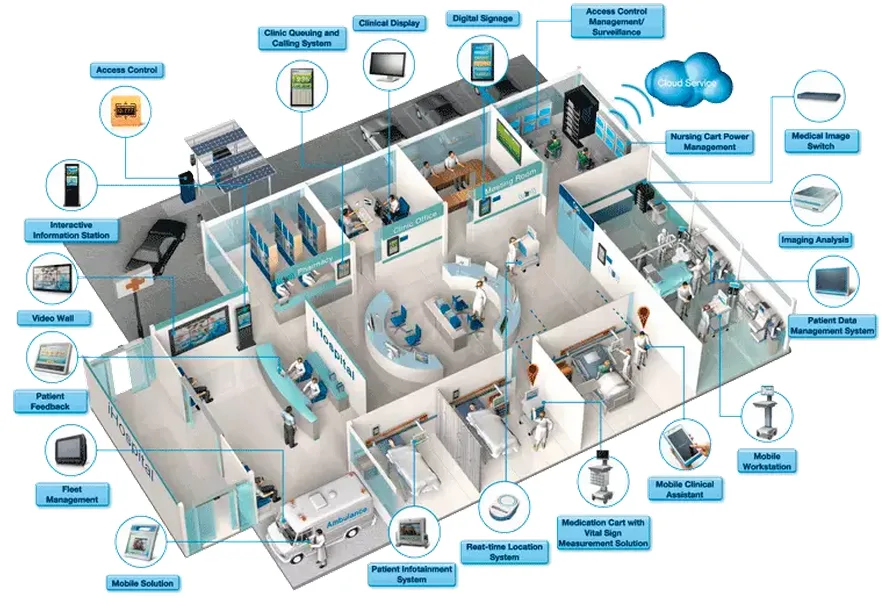
BIM Cloud Management Based on Cloud Computing
1) Cloud Sharing: Enables unrestricted access to information from anywhere with an internet connection.
2) Improved Cross-Disciplinary Collaboration: Cloud-stored models can be accessed through any network, enhancing teamwork and sharing.
3) Significant Cost Savings: Transitioning to cloud computing can reduce server lifecycle costs by up to 67%.
4) Ease of Implementation and Maintenance: Cloud computing requires minimal ongoing effort for setup and upkeep.
After exploring these advancements, it’s clear that BIM’s powerful capabilities are poised to shape the future of construction information technology. In today’s fast-evolving landscape, BIM adoption represents the forward path for the entire construction industry!















Must log in before commenting!
Sign Up