
© Zhao Qiang
In recent years, the design of commercial residential buildings has increasingly converged, driven by ongoing research and improvements in market demands, products, and operational strategies. The process typically begins by selecting a proven unit layout, then optimizing the overall plan based on sunlight exposure, followed by applying established facade design systems. This “standardized” inside-out approach ensures both scientific rationality and productization.
However, this trend has led residential buildings to lose many seemingly “non-rigid” architectural elements, which diminishes their cultural and regional identity. Basic residential functions alone are no longer sufficient to meet the evolving market demands. Many of those “non-rigid” features are now transforming into new “rigid” requirements, signaling the future direction of residential design, as reflected in initiatives like “Future Communities.”
© Rongchuang Group · Southeast Region
Situated on the East China Sea coast near the Buddhist kingdom of Cihang, Shanhai Grand View embraces natural and cultural influences that inspire more rigorous design criteria. In this project, we break free from traditional inside-out design constraints and adopt an “outside-in” approach. Our goal is to foster a dialogue between people and their environment, harmonizing architecture with mountains and sea, and blending residential living with leisure and wellness activities.
We envision a tranquil, Zen-inspired health and elderly care resort alongside a romantic coastal living environment. The development aspires to create an international community integrating residence, health, and elderly care.
Experience the natural breath of sea and sky, while quietly enjoying Sanskrit chants under the Guanyin constellation. Residents can engage with the vibrant coastal surroundings and admire distant views of Foshan. This grand scenic setting unites life, vacation, and retirement, blending nature, culture, and Zen philosophy. Truly, a peaceful heart finds its home here.
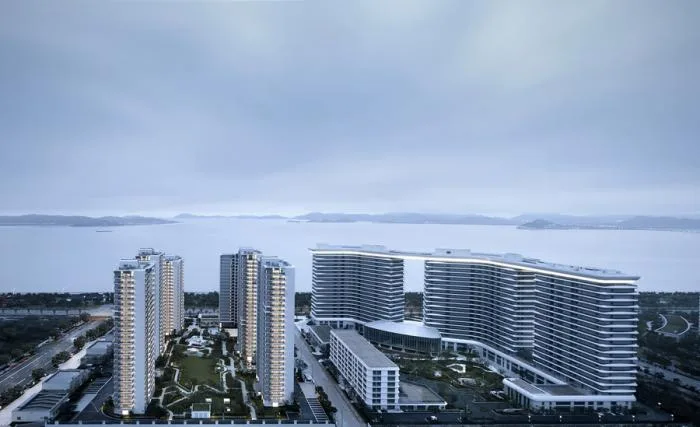
Aerial view of the project © Lu Kaikai
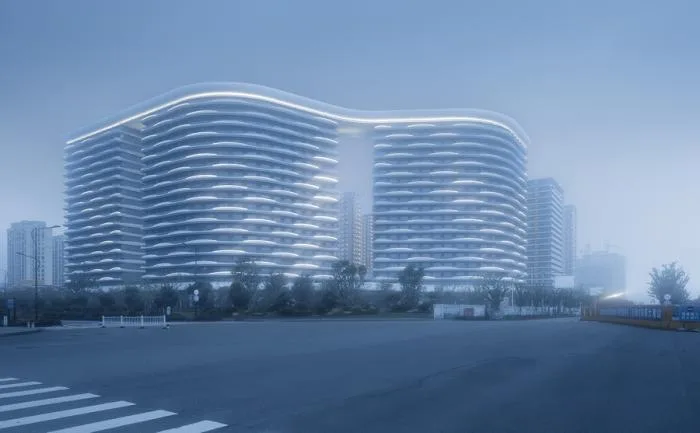
Health and Retirement Apartment © Zhao Qiang
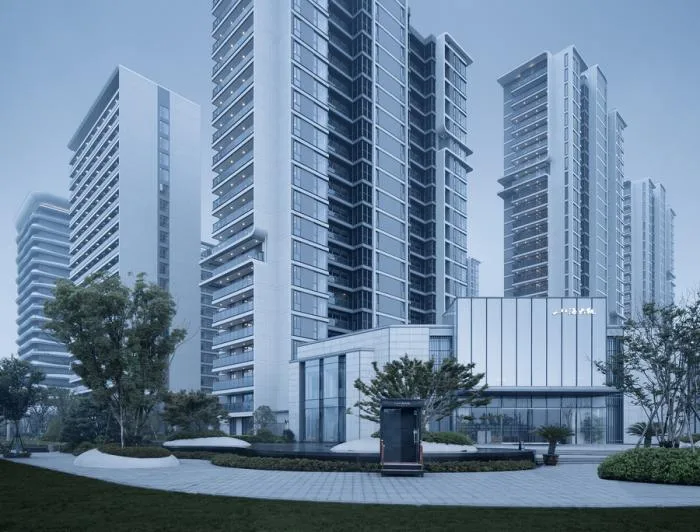
Residence © Zhao Qiang
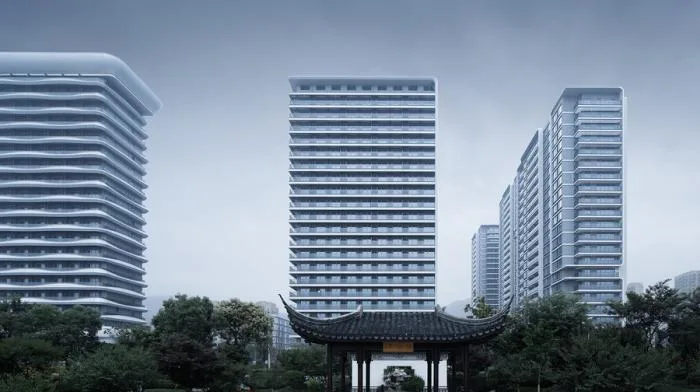
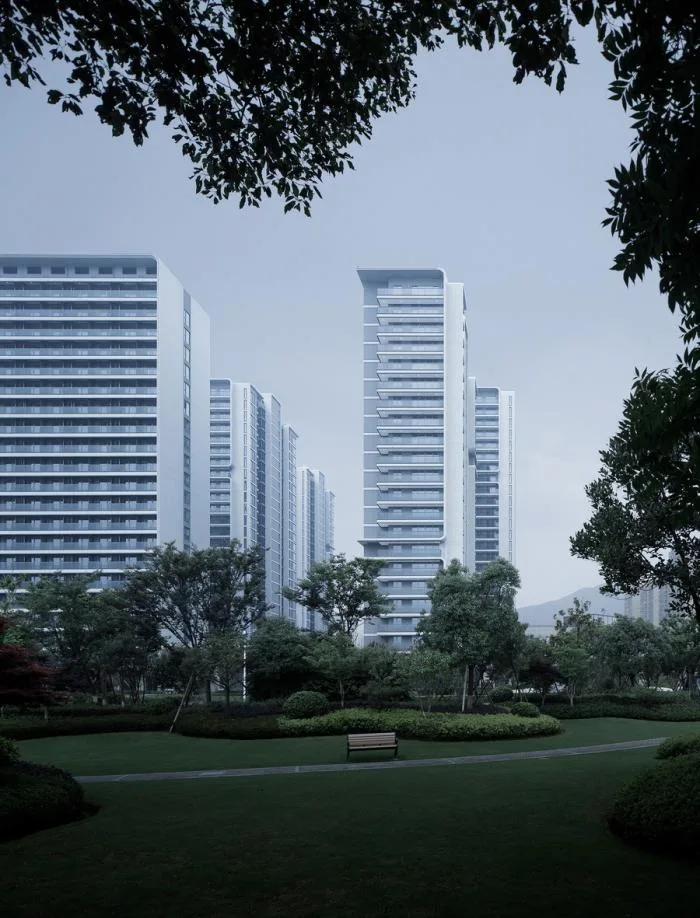
View of the buildings from the park © Zhao Qiang
Shanhai “Momentum”
By analyzing the spatial rhythm along the coastal edge of Donggang New Area, this project aims to establish a new landmark. Utilizing a full high-rise layout along the coast, the design increases building heights selectively to enhance the continuity and sequencing of the coastline interface. The connected roofs of the health and elderly care apartments form a distinctive architectural cluster. The design adapts to the undulating mountain terrain, creating a dynamic coastal skyline that follows the contours of the mountains and sea, exuding a grand and majestic presence.
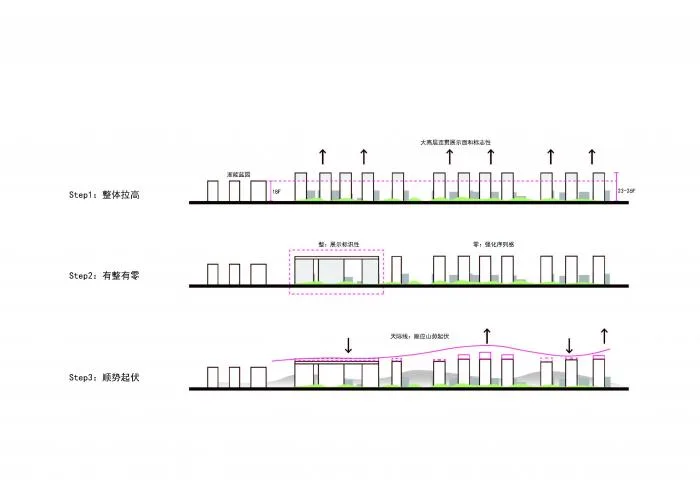
© UAD
Mountain and Sea Views
Located on a mountain facing the sea, the project borders Lianhua Ocean and the coastal greenbelt of the open city to the east. It benefits from rich cultural and scenic assets, including the Guanyin statue on Mount Putuo.
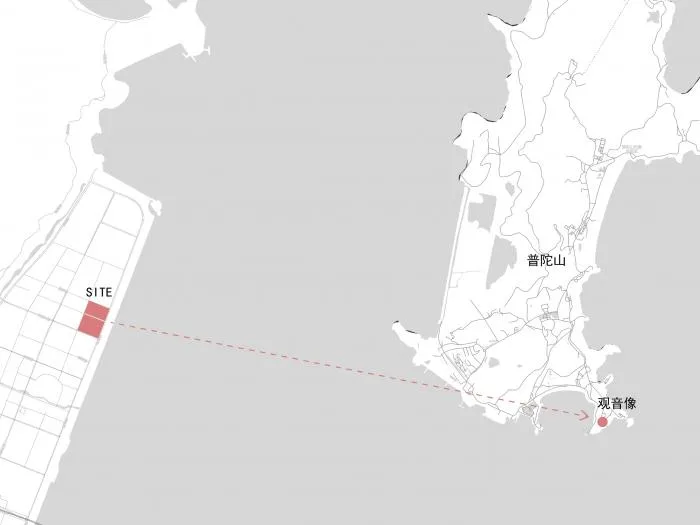
View analysis © UAD
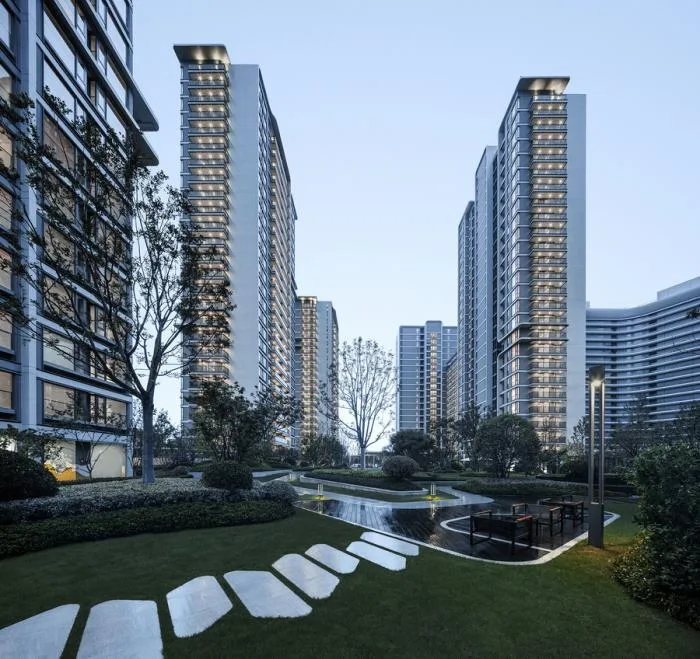
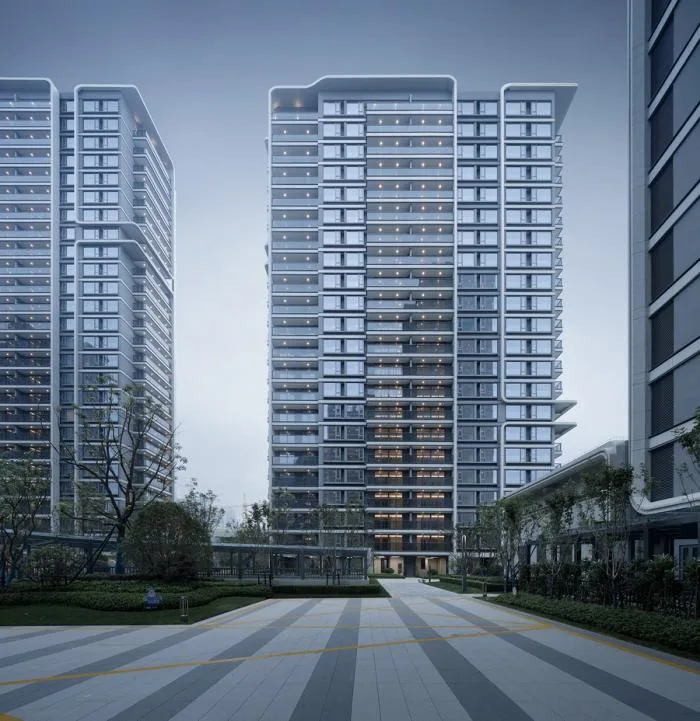
The health and elderly care apartments are arranged linearly, with all units oriented along the coastline. This layout maximizes access to sea views and natural light, making the most of the Buddha’s light and ocean vistas. Five residential buildings surround a central garden, staggered to create a rich and organized open space pattern. This arrangement forms a transparent visual corridor extending from the sea inward, ensuring the best possible sea views from each building.
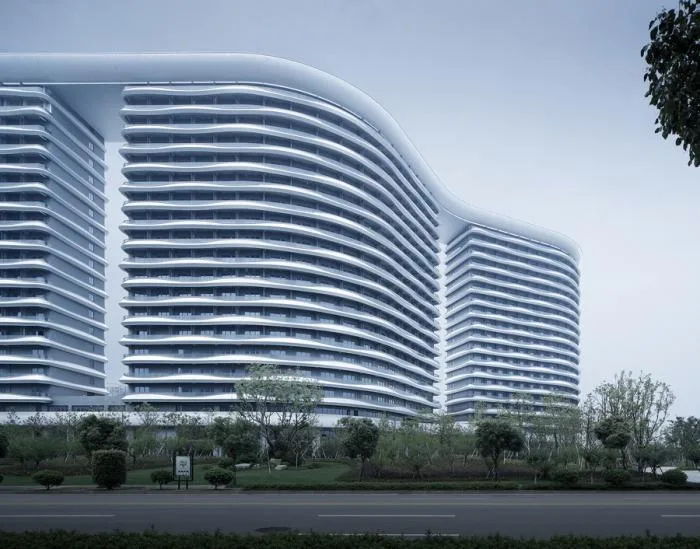
© Zhao Qiang
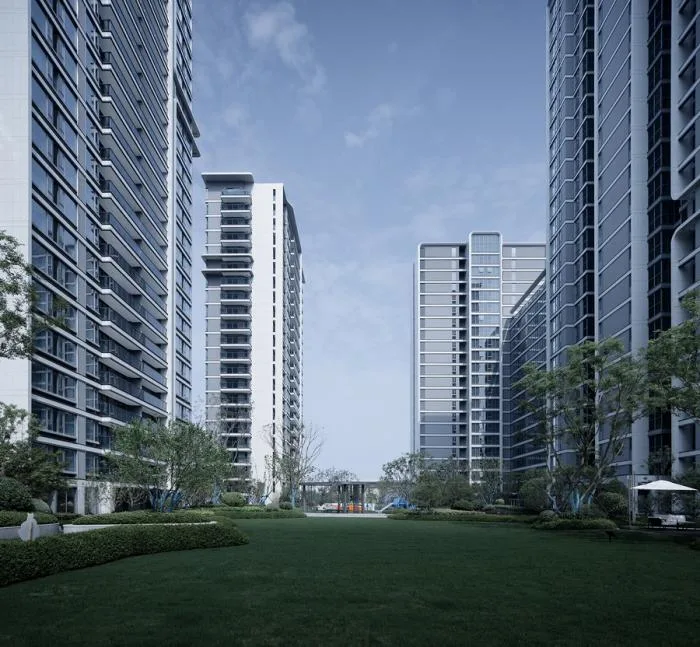
© Zhao Qiang
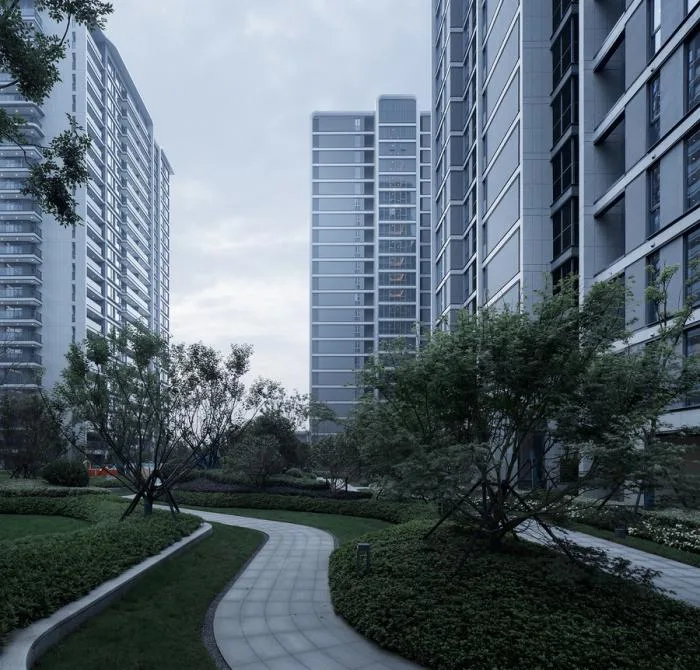
© Zhao Qiang
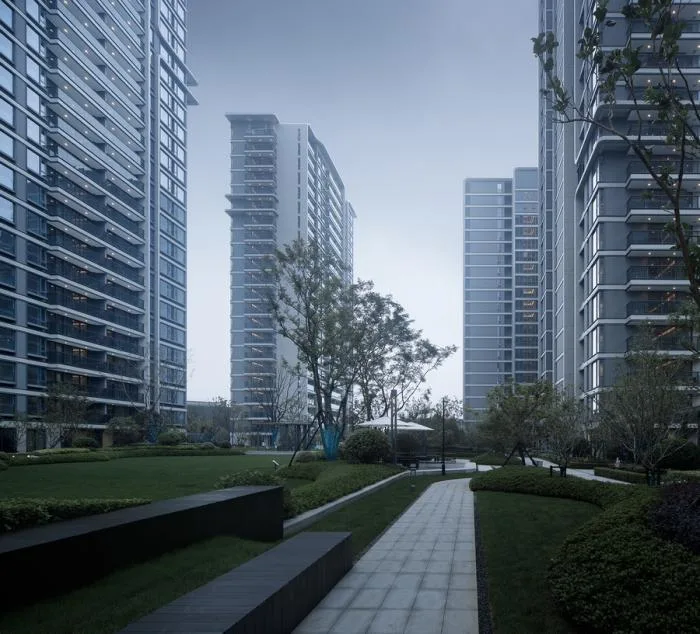
© Zhao Qiang
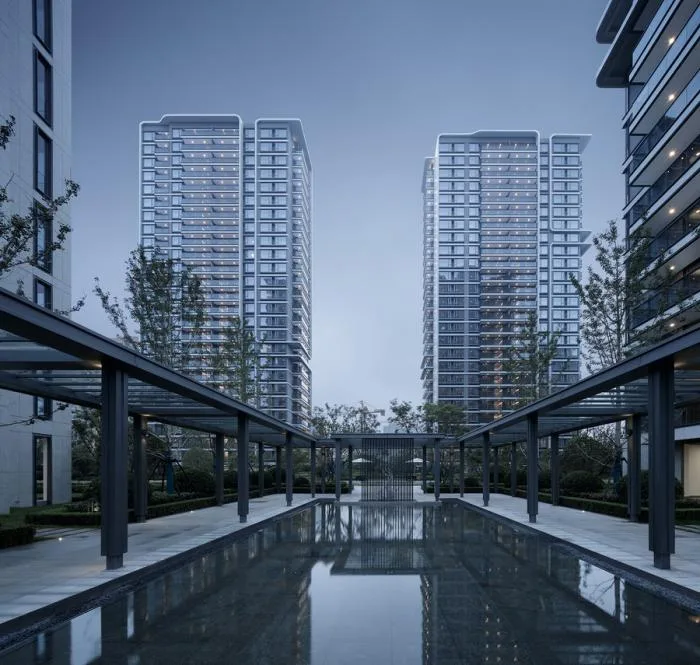
© Zhao Qiang
© Zhao Qiang
Shan Hai “Meaning”
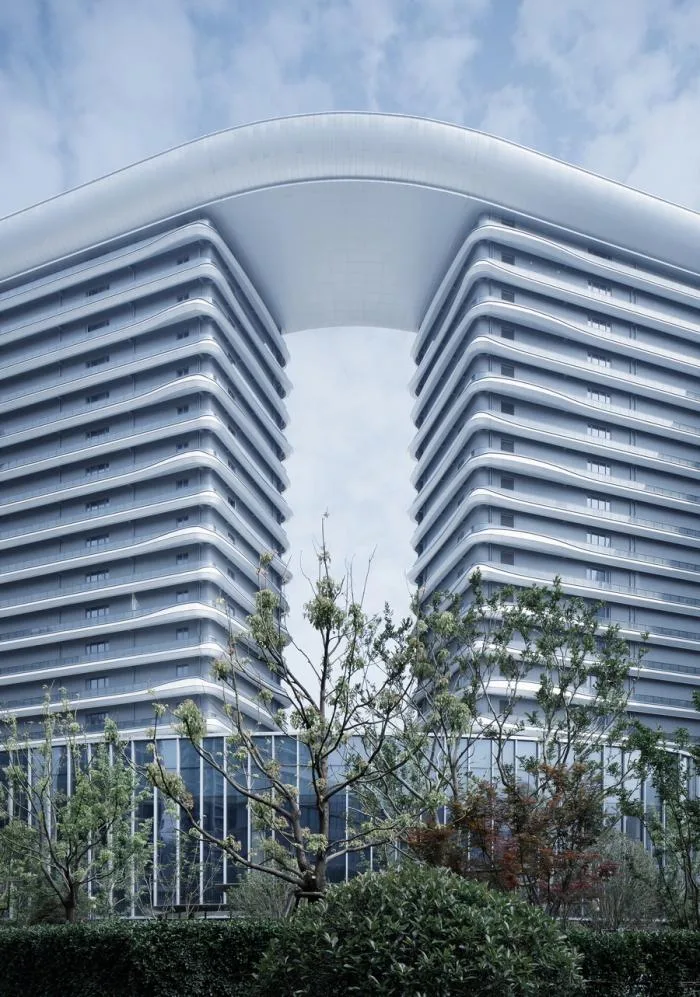
The facade design draws inspiration from marine culture and explores the humanistic essence of Zhoushan. It fully embraces the rhythmic imagery and abstract forms of mountains and sea.
The building’s elongated and coherent volumes, paired with flowing, wave-like curved facades, emphasize horizontal lines to create an elegant coastal architectural landmark. A rooftop infinity pool offers an unparalleled swimming experience that seamlessly connects the sea and sky.

Facade concept of Shanhai © UAD
© Zhao Qiang
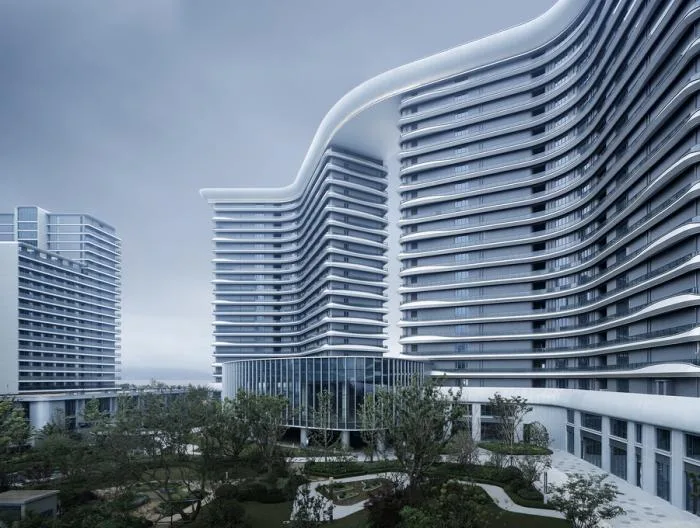
Retirement Apartment Central Garden © Zhao Qiang
© Zhao Qiang
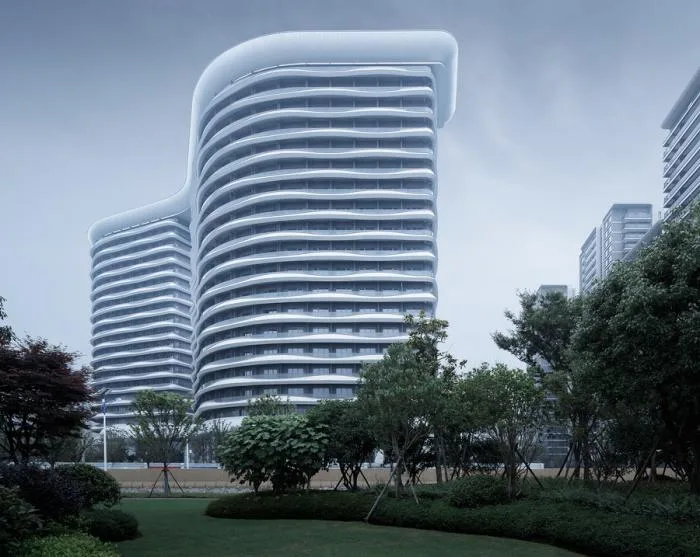
© Zhao Qiang
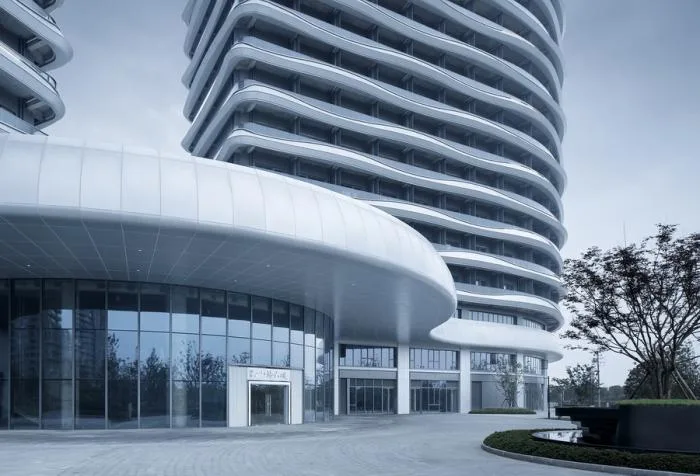
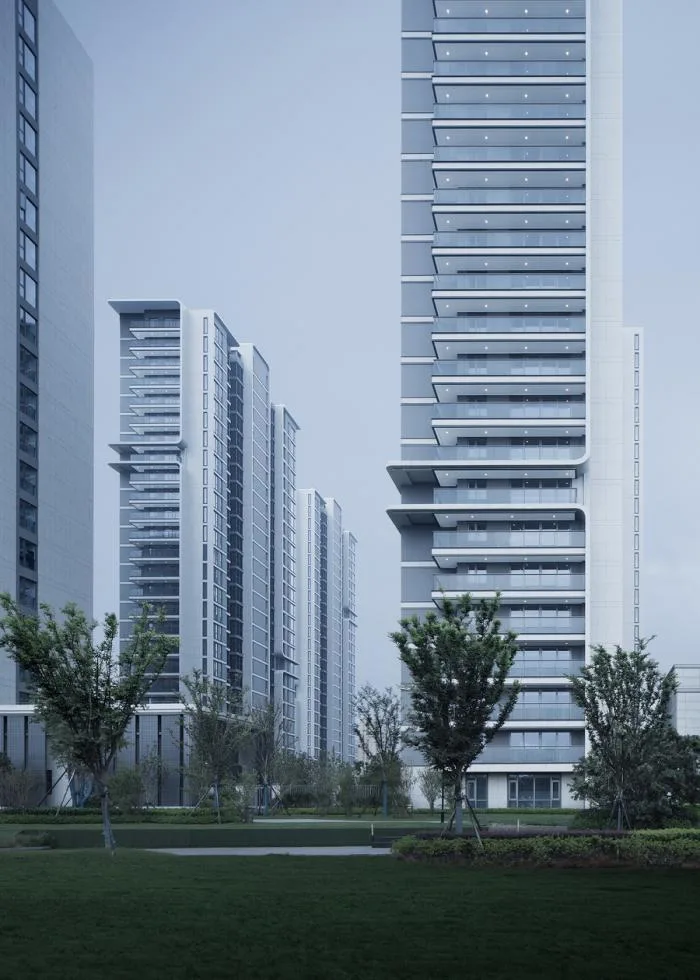
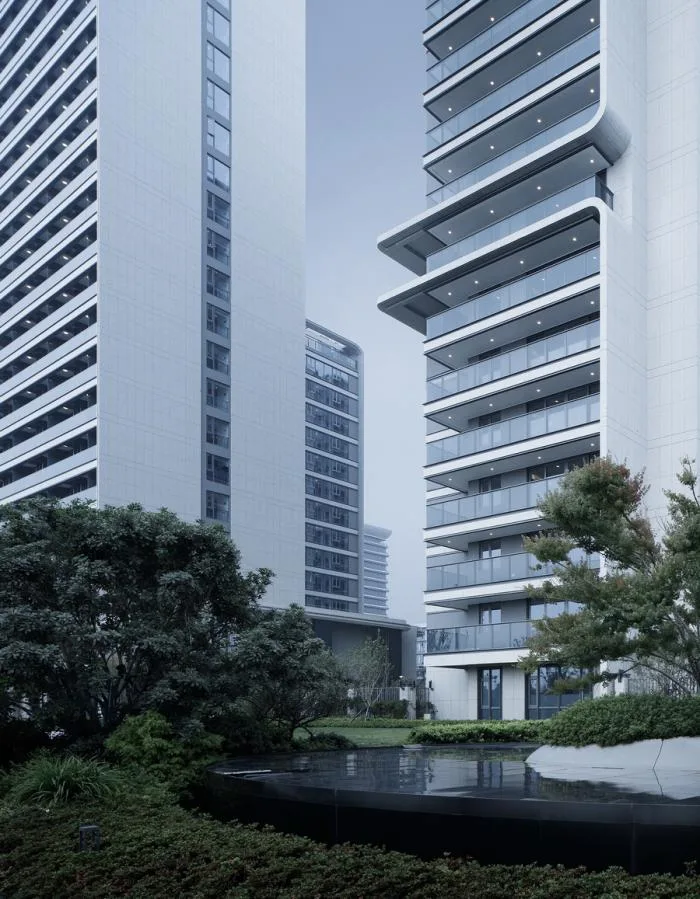
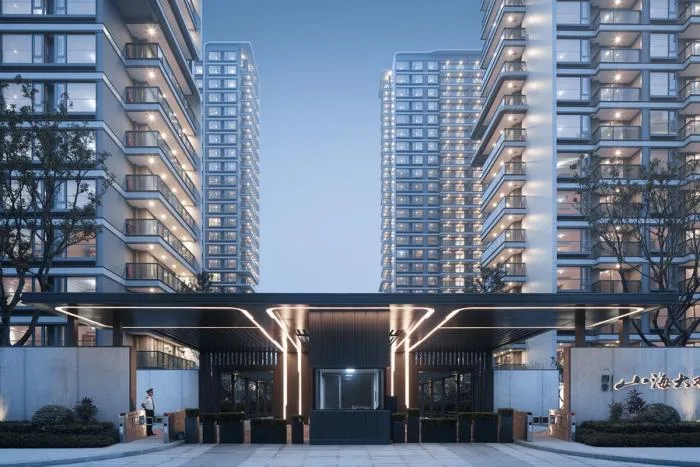
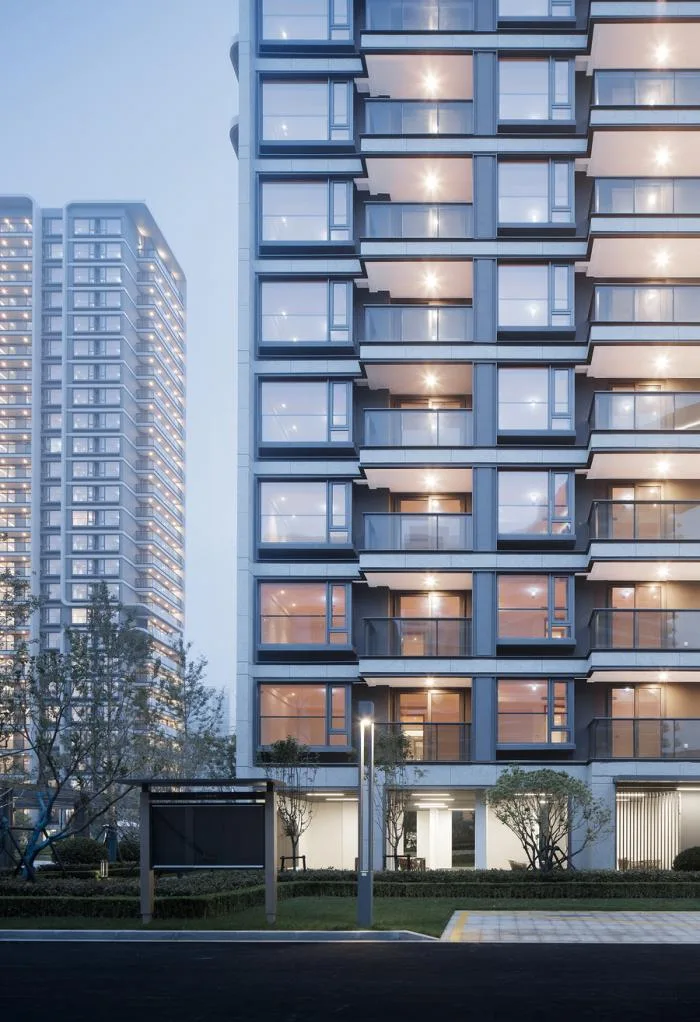
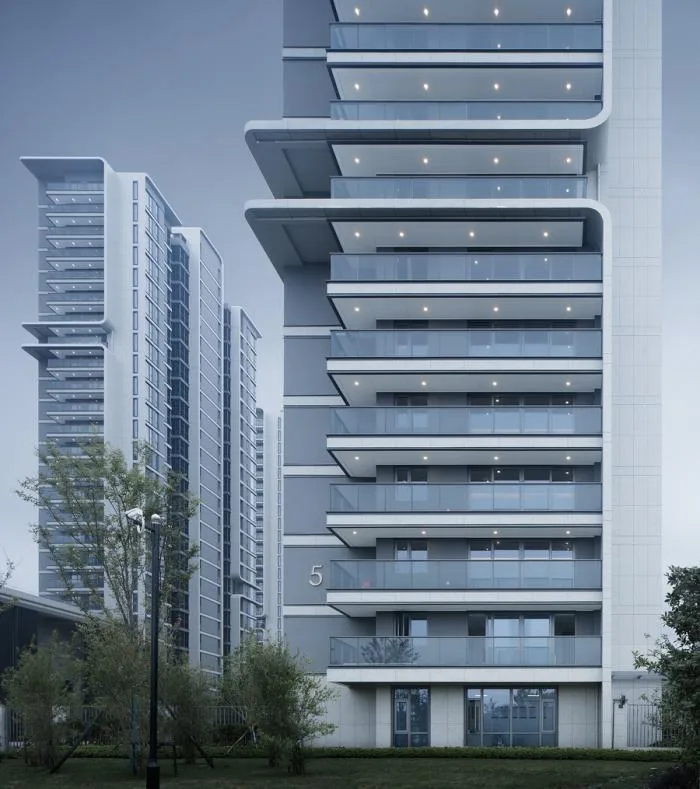
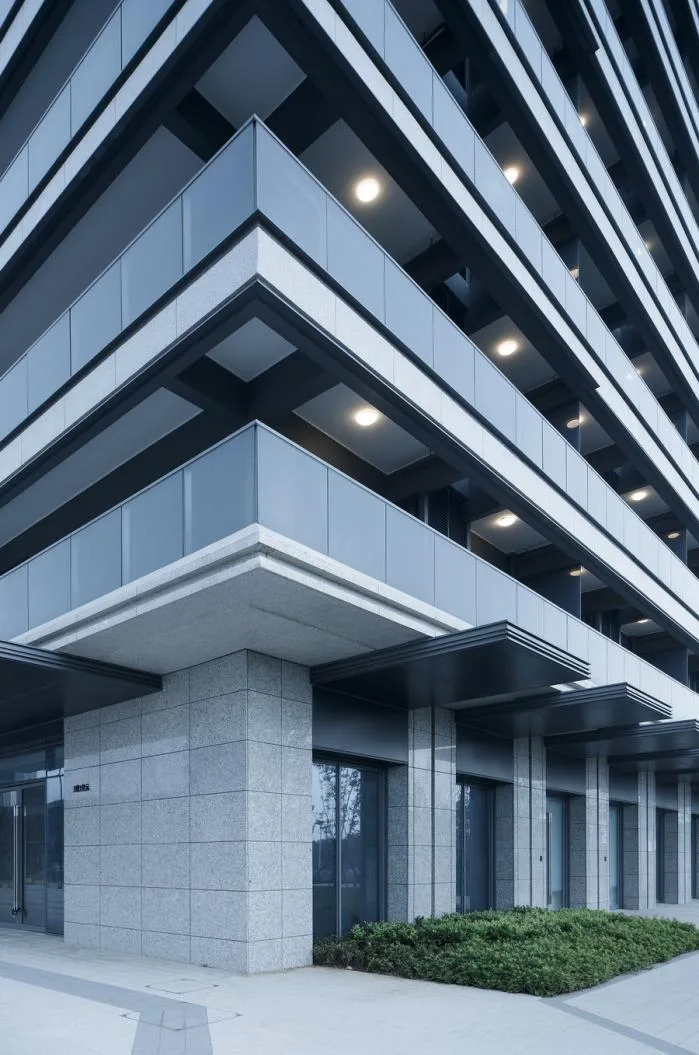
The overall design highlights the public building facade characteristics through curved folded panels, “C”-shaped floating plates, and expansive glass surfaces. These elements express Zhoushan’s unique marine culture, establishing a simple, fresh, and oceanic style that sets a benchmark for coastal residential architecture in the region.
Each residence features folded plate designs that vary vertically, creating diverse architectural expressions while adhering to a unified design language. This approach embodies the core concept of “harmony in diversity” in spatial construction. The design balances modern refinement with cultural depth, meeting residents’ expectations for a strong connection to Zhoushan’s geographic identity.

C-shaped floating plate design © UAD
© Zhao Qiang
© Zhao Qiang
© Zhao Qiang
© Zhao Qiang
© Zhao Qiang
© Zhao Qiang
© Zhao Qiang
The design seeks to reflect the regional landscape where mountains meet the sea in Zhoushan, presenting a grand yet delicate emotional character. It skillfully integrates the unique Guanyin Buddhist culture with a humanistic approach to elderly care, offering residents a distinctive spiritual experience.
Design Drawings
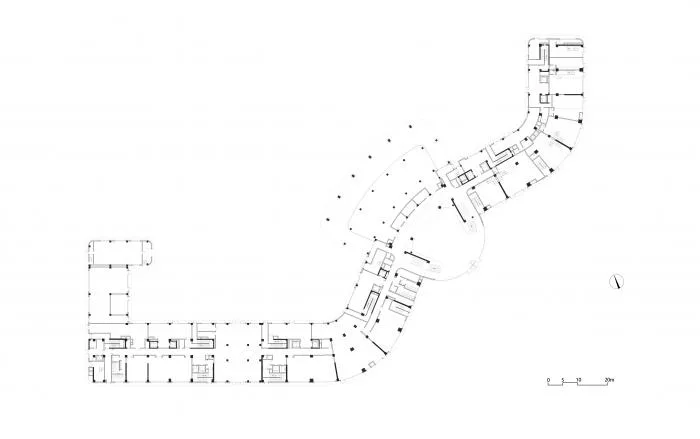
First-floor plan of the health and elderly care apartment © UAD
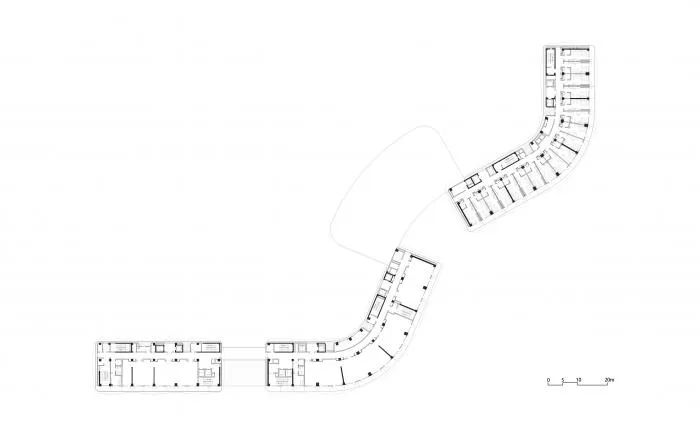
Fourth-floor plan of the health and retirement apartment © UAD
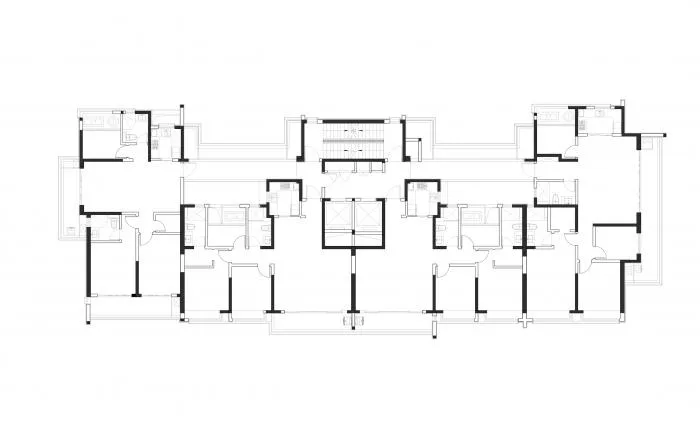
Standard residential floor plan © UAD
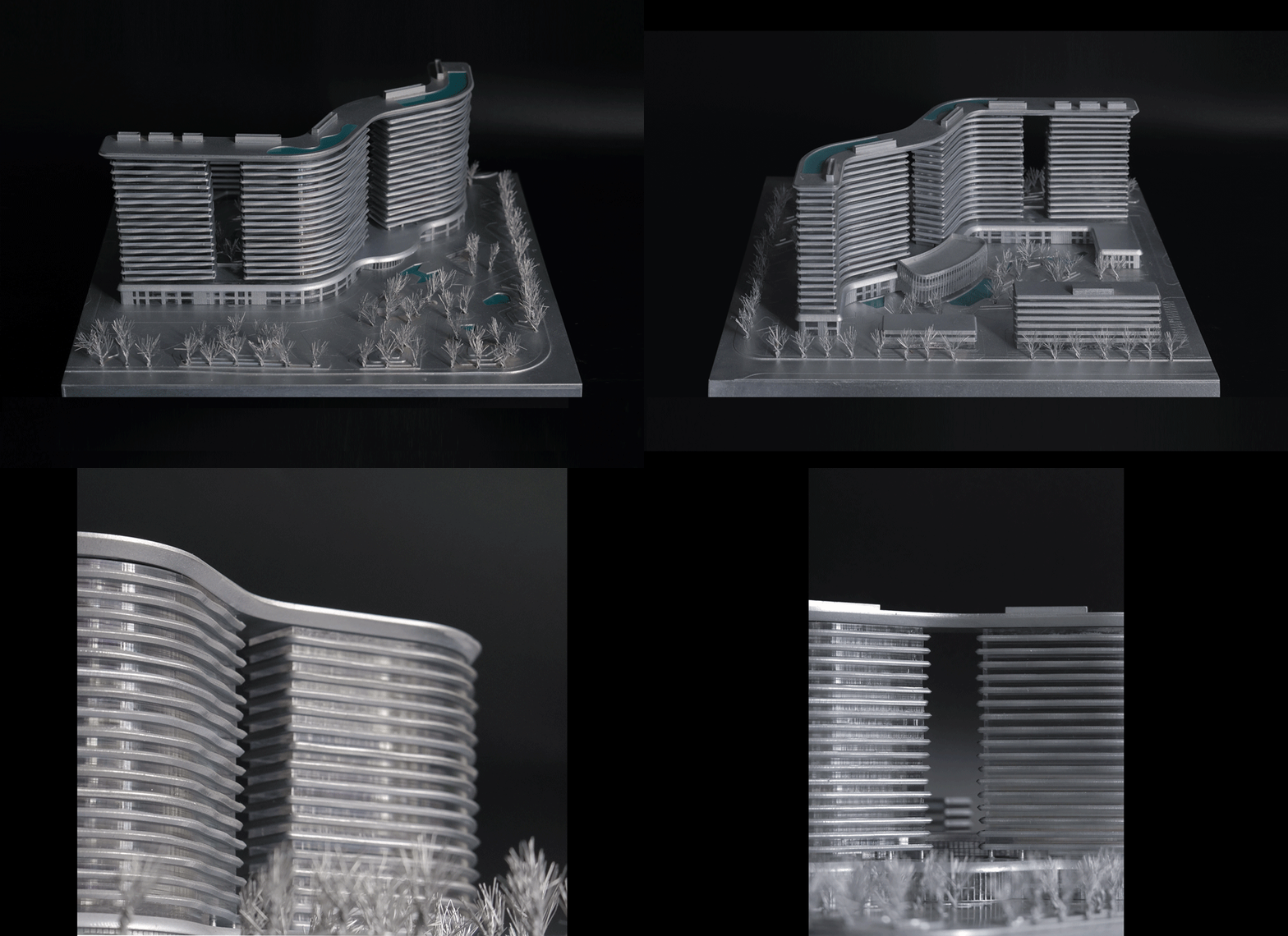
Architectural model © Lu Zhaoyang
Project Information
Project Name: Rongchuang Zhoushan Shanhai Grand View
Location: Zhoushan City, Zhejiang Province
Owner: Sunac Group Southeast Region
Architectural Design: Zhejiang University Architectural Design and Research Institute
Design Lead: Mo Zhoujin
Scheme Design Team: Wang Yuping, Su Renyi, Qu Jie, Fang Ting, Guo Lidong, Lei Bin, Wu Xingchun, Yu Xuguang, Wang Fangming, Sun Dongming
Construction Drawing Coordination: Zhoushan Planning and Architectural Design Institute
Building Area: 190,497.34 square meters
Completion Date: June 2020
Architectural Photography: Zhao Qiang, Lu Kaikai














Must log in before commenting!
Sign Up