
Northwest People’s Television
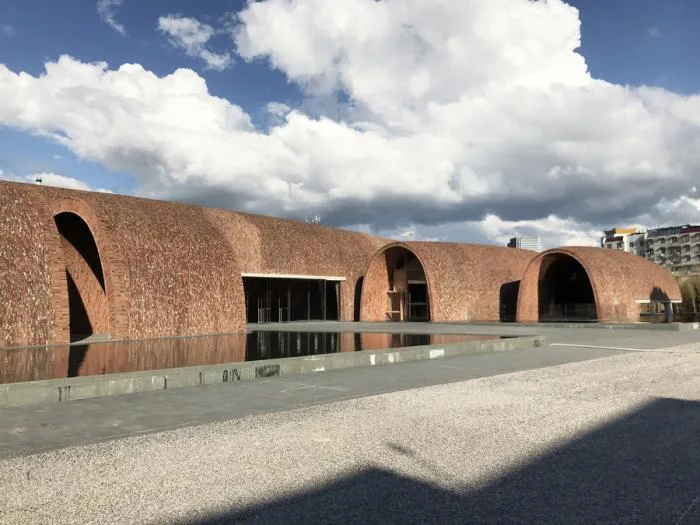
The Imperial Kiln Museum is situated in the heart of Jingdezhen’s historic district, adjacent to the ruins of the Ming and Qing dynasties’ imperial kilns. The surrounding area features a diverse array of buildings from various periods, including old residences and private kilns from the Ming, Qing, and Republic of China eras, factories constructed nearly five decades ago, and commercial residences from the late 1990s. This rich and layered urban fabric creates a unique and deeply significant environment.
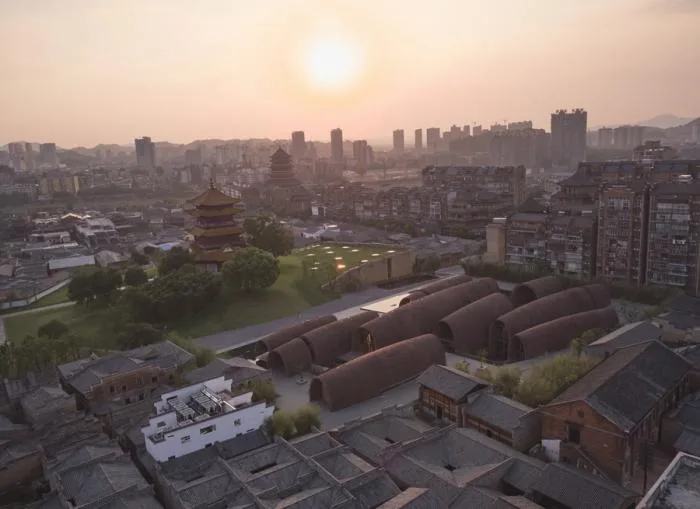
△ Aerial view
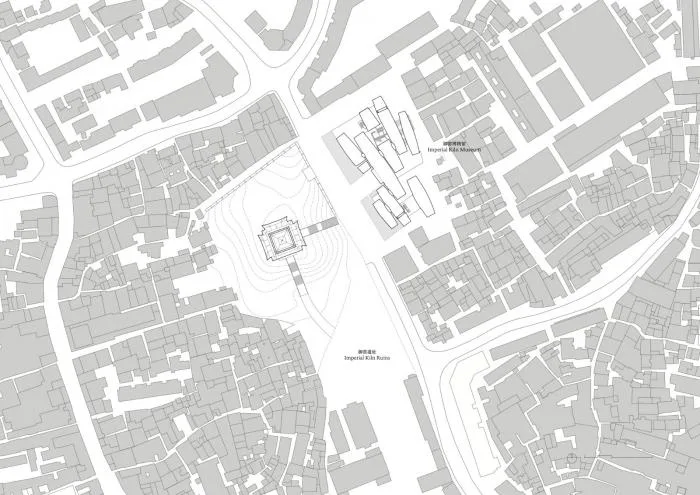
△ General layout plan
01. Site Context
The Imperial Kiln Museum’s regional approach incorporates a thorough understanding of the site, drawing on disciplines such as urban studies, archaeology, anthropology, and climate science. Jingdezhen’s identity is deeply tied to its kilns and porcelain production. People settled here, building homes on hillsides and living near water, dedicating their lives to kiln construction and porcelain craftsmanship. The city’s basic unit is a trinity of porcelain kilns, workshops, and residences, which together form its initial shape and structure.
Narrow alleys connect thousands of private kilns aligned east-west, leading directly toward the Changjiang River. Several main streets run parallel to the river in a north-south direction, linking various marketplaces. This urban pattern not only reflects local lifestyles and survival methods but also demonstrates the city’s wise adaptation to a humid and hot climate.
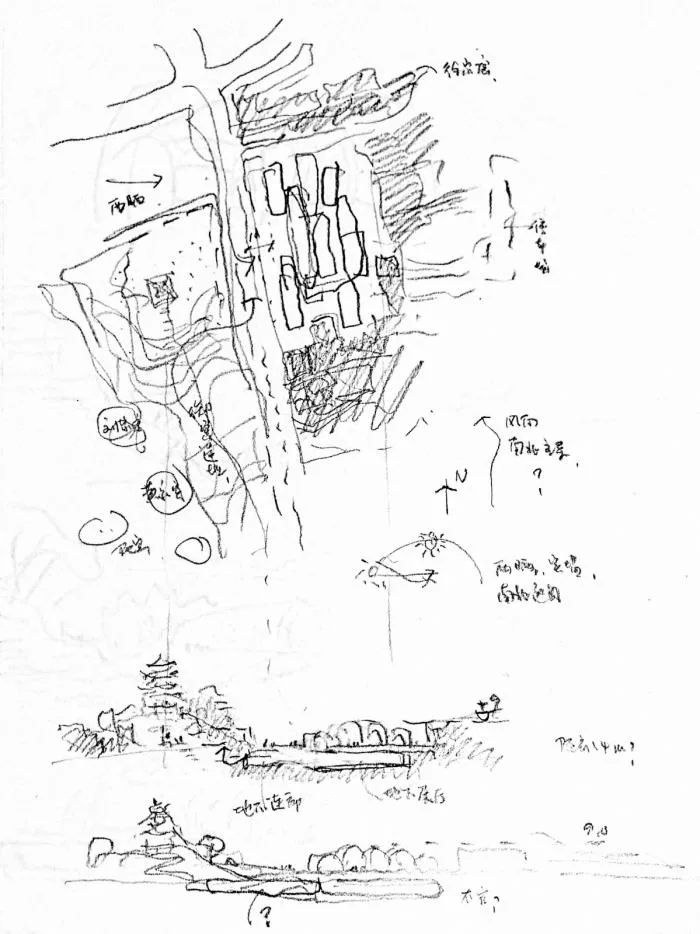
△ Concept sketch
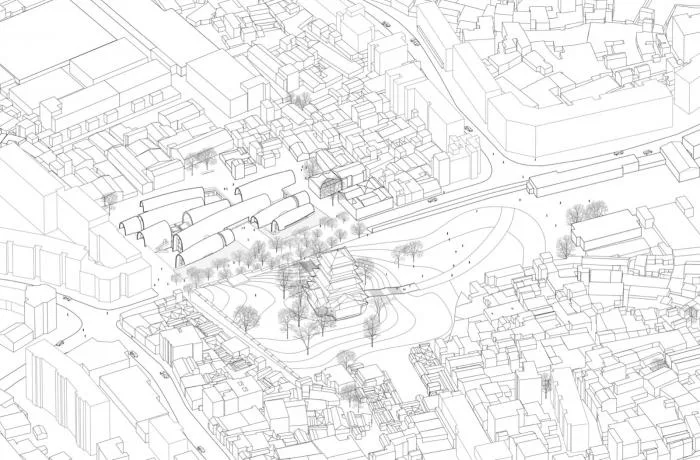
△ Urban layout
The museum consists of eight linear brick-arched structures of varying sizes and volumes, aligned along a north-south axis. These forms are both tangible and intangible, integrated humbly and at an appropriate scale into the complex surroundings. Their scale resonates with the traditional firewood kilns nearby, while facilitating a smooth transition between large factories, residential buildings, and traditional homes. The arches vary in length and expand or contract freely, creating an organic connection with the irregular boundaries of the site.
This modular approach proves especially insightful when dealing with the complex, ever-changing, and unpredictable nature of historic districts. Early in construction, a new archaeological site was discovered, and by adjusting the arches, this site was seamlessly incorporated into the museum’s interior space.
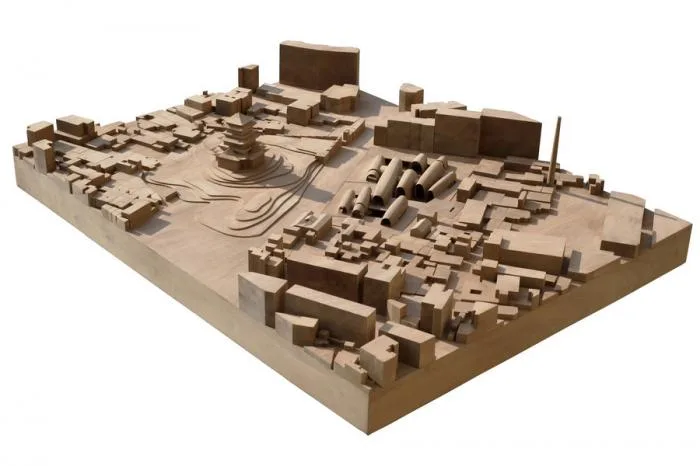
△ City Model
02. Architectural Inspiration
The museum’s form draws inspiration from local traditional wood-fired kilns and is distinct from the typical Roman arches. Its structure is a complex hyperbolic surface characteristic of Dongfeng arches. Remarkably, the construction avoided scaffolding; instead, bricks were carefully staggered and placed, relying on gravity for stability.
Brick kilns represent not only the city’s origins but also vital communal spaces essential for daily life. These kilns carry the warmth of the city’s collective memory. In winters past, children would carry a hot kiln brick from passing porcelain kilns to school, using its heat to endure the cold. Schools sometimes relocated to warm porcelain kilns during winter, while in summer, the cool, damp air inside the kilns provided refuge for children, social gatherings for youth, and relief for elders.
The ruins of these kilns, with their broken walls and enduring stories, form the natural foundation of the museum. The unique Eastern arch prototype, along with the memory embedded in kiln bricks’ time and temperature, symbolizes the deep connection between kiln, porcelain, and people.
The kiln is not only part of the city’s architectural history but also a source of building materials. Old kiln bricks, once thermally degraded, were repurposed to construct residences. This tradition embeds the kiln deeply within Jingdezhen’s cultural memory and urban life, making it a fitting spatial model for the Imperial Kiln Museum.
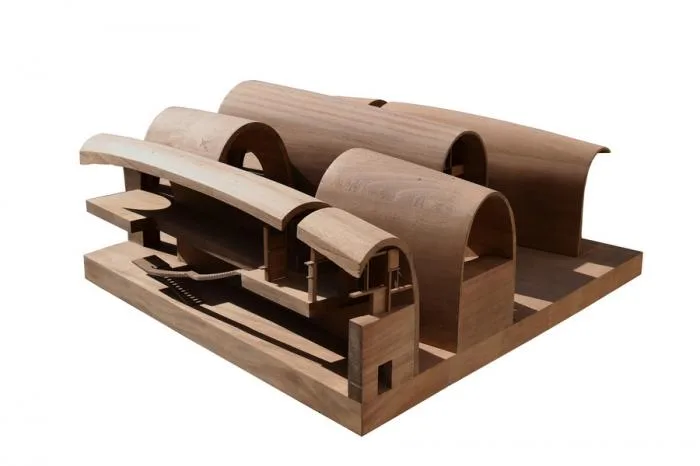
△ Project Model
03. Spatial Experience
The museum features two levels — above ground and underground — with the entrance hall on the upper level. This layout gives visitors a sense of volume and scale similar to the surrounding city buildings. More importantly, entering the museum evokes the experience of porcelain craftsmen working and firing kilns in the past.
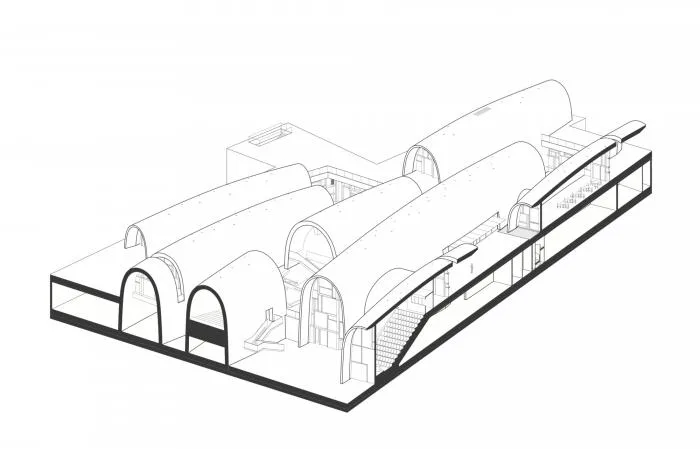
△ Project axis measurement
Visitors stroll through the Imperial Kiln Ruins Park, passing under shaded greenery, walking over rustling gravel, crossing calm water features, and gradually arriving at the entrance hall. To the left, a sequence of arches of varying sizes leads through both indoor and outdoor spaces, weaving through Ming Dynasty ruins and sunken courtyards. This journey immerses visitors in the history of kilns, porcelain, and human craftsmanship.
To the right from the entrance hall, visitors find a bookstore, coffee shop, tea room, and a semi-outdoor arch where sunlight reflects rippling water onto the rough kiln arches. The low, horizontal seams invite people to sit and explore, while the long horizontal surface of the imperial kiln ruins unfolds before them — unexpected moments of discovery that contrast with the experience of approaching the empty lecture hall arch or glimpsing the Linglong Pavilion through a vertical seam.
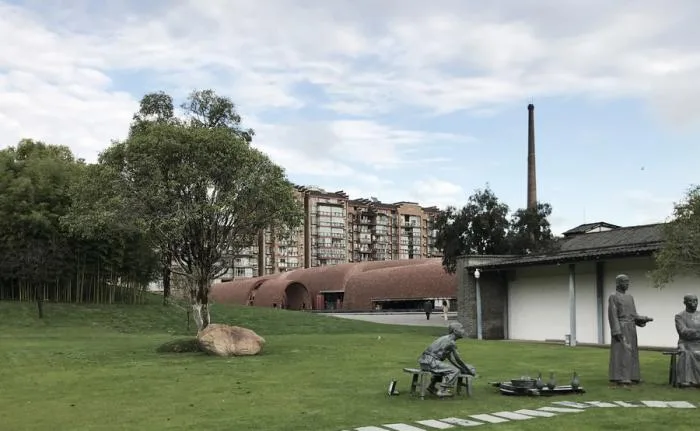
△ Distant view of Ziyu Kiln Site Museum
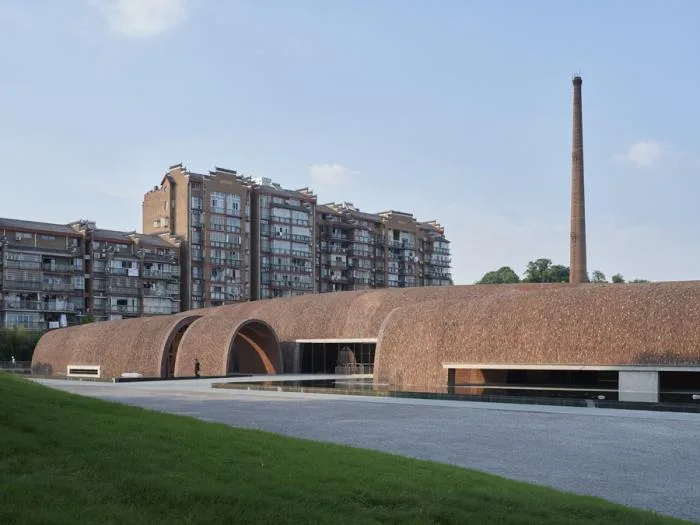
△ Entrance view
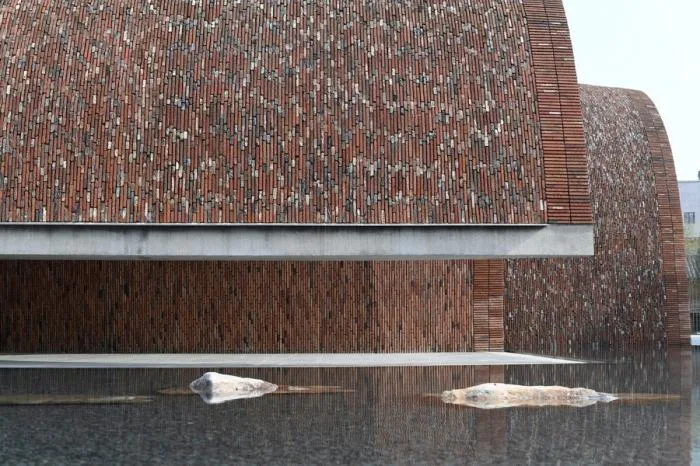
Tea room and coffee area
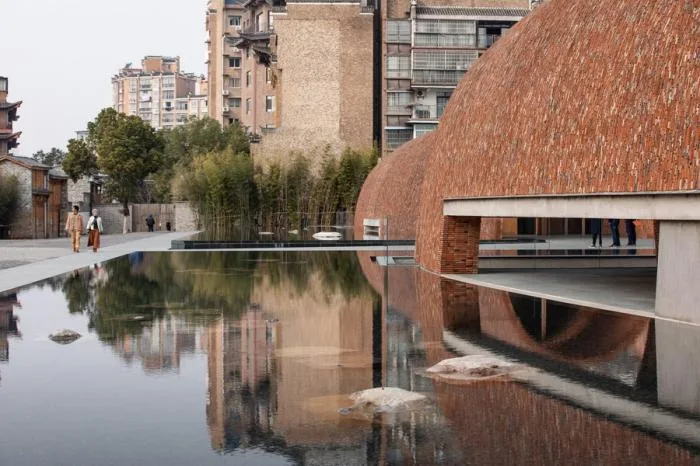
Water feature in front of tea room and coffee area
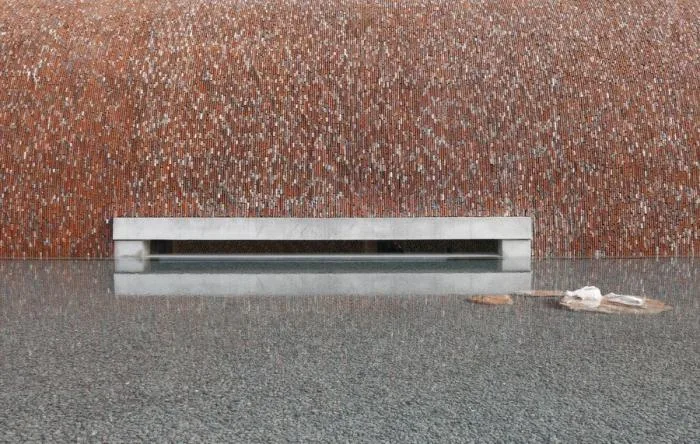
Details of brick and stone walls with concrete beams
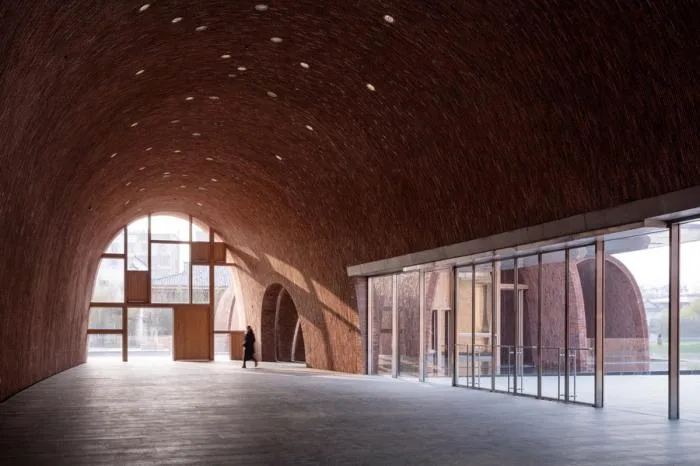
△ Entrance Hall
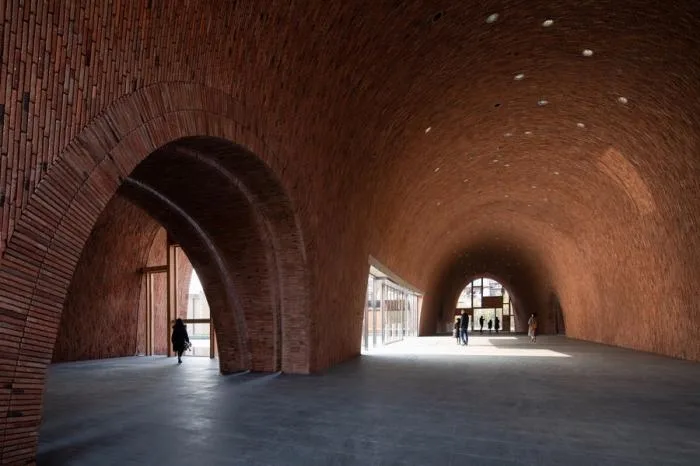
△ Entrance Hall
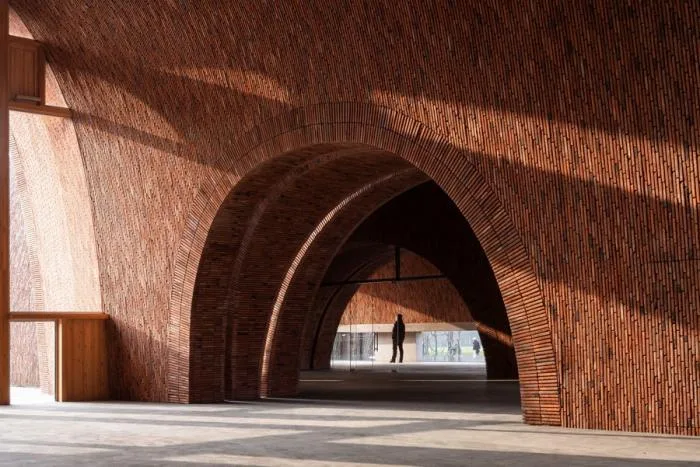
View from the design store toward the tea room and coffee area
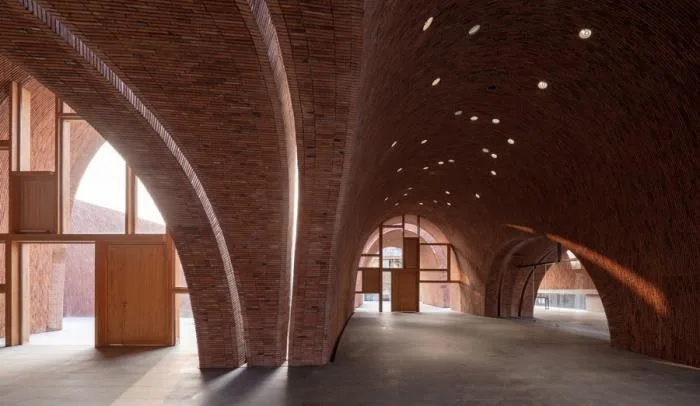
Design shops, tea rooms, and coffee spaces
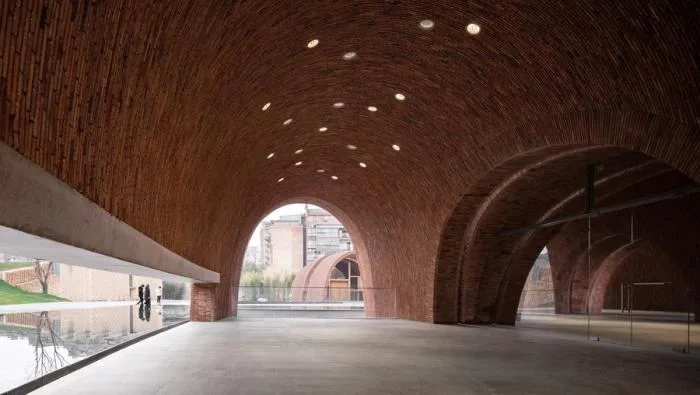
View toward the main entrance from the arched space of the tea room and coffee area
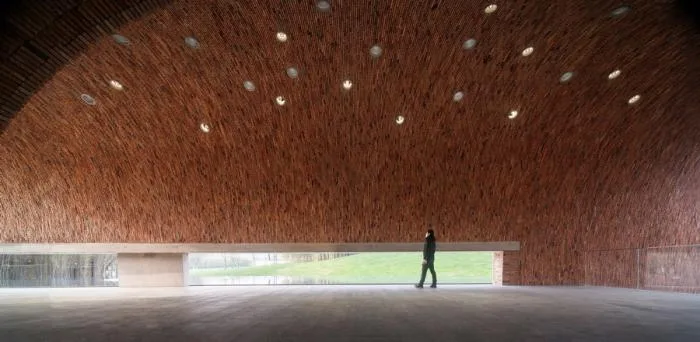
Tea room and coffee area
The permanent exhibition is organized around a closed horizontal loop, with a flexible temporary exhibition hall that can integrate into this loop or stand independently, thanks to its own entrance and exit. An important museum feature is the inclusion of the ancient porcelain restoration process as part of the exhibition. The office entrance is discreetly located at the northern end of a separate arch on the building’s southeast side. Delivery trucks can access the arch from the south, allowing for secure loading and unloading.
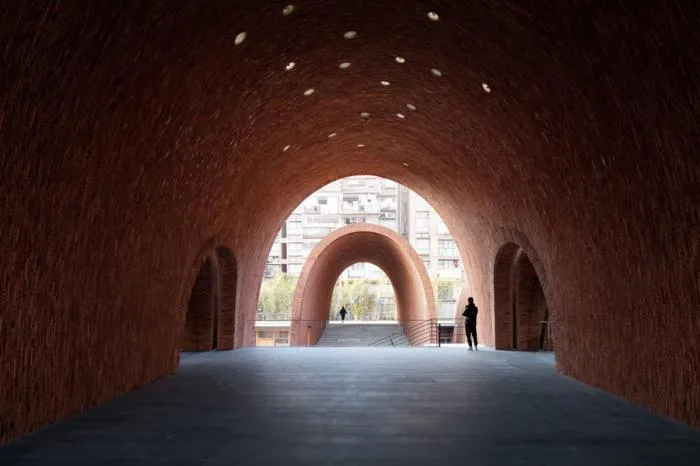
View toward the sunken theater from the open arched exhibition hall
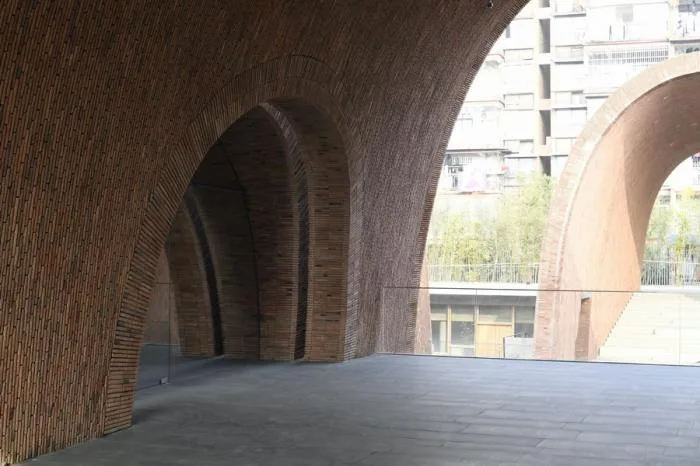
△ Open arched exhibition hall space
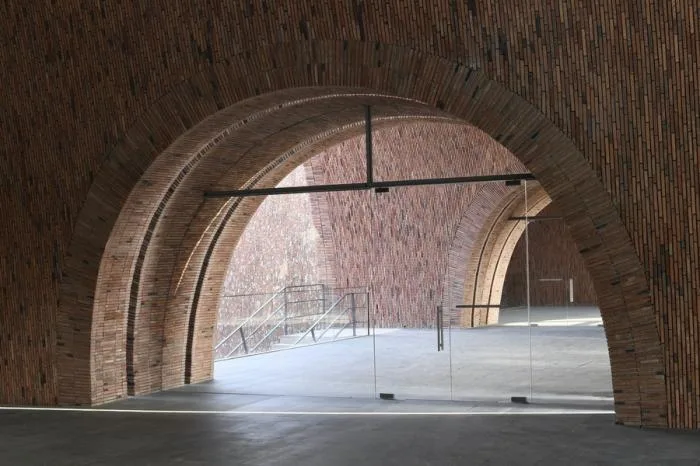
View from the hall toward the open arched exhibition space
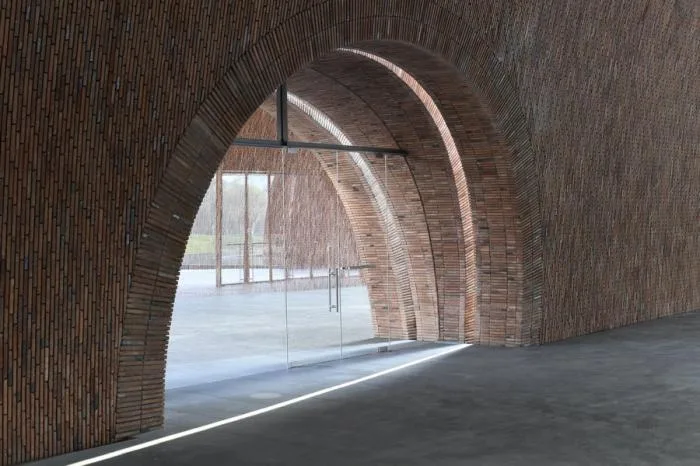
View from the hall toward the open arched exhibition space
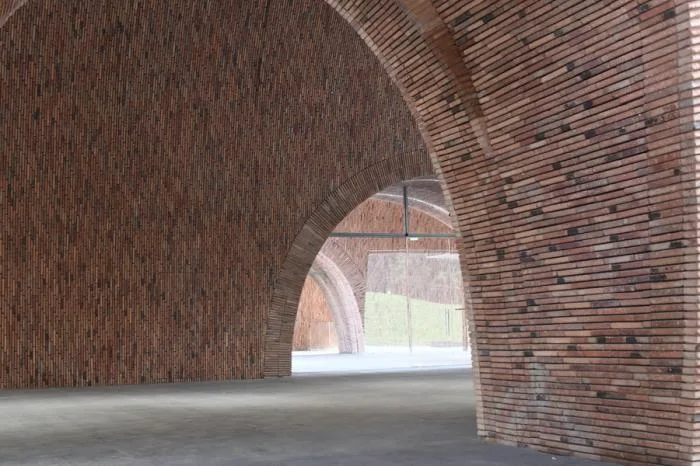
View from the hall toward the auditorium
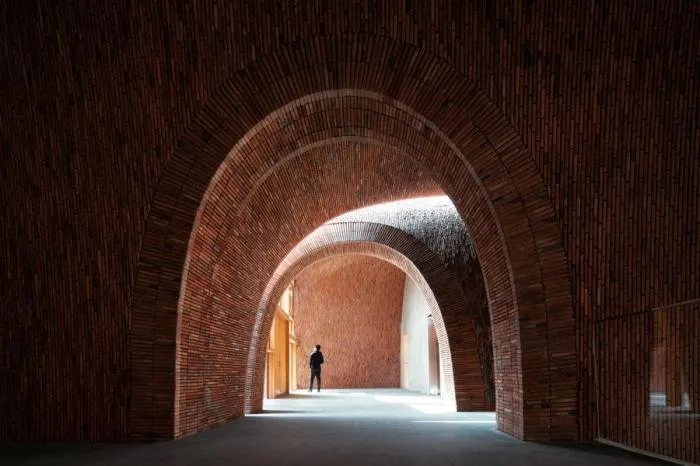
△ Auditorium Hall
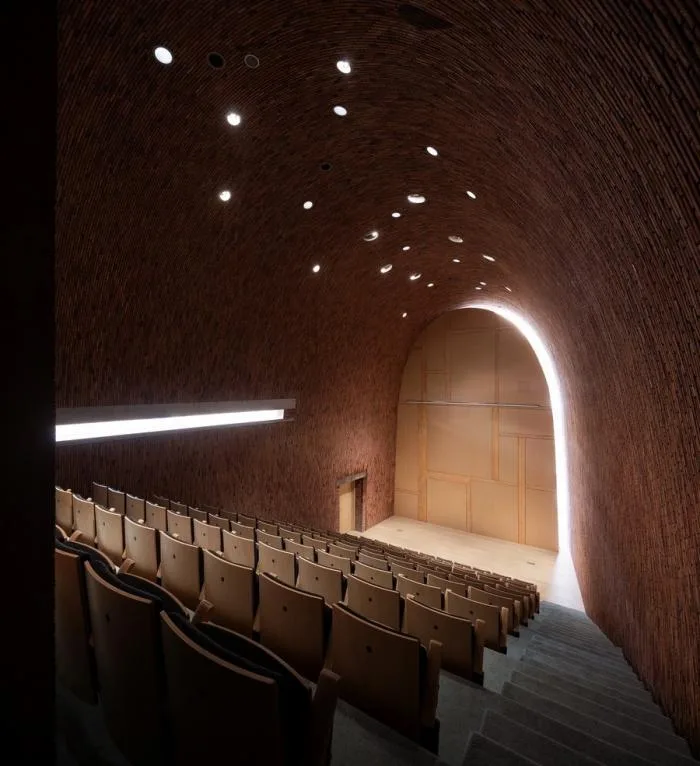
△ Auditorium
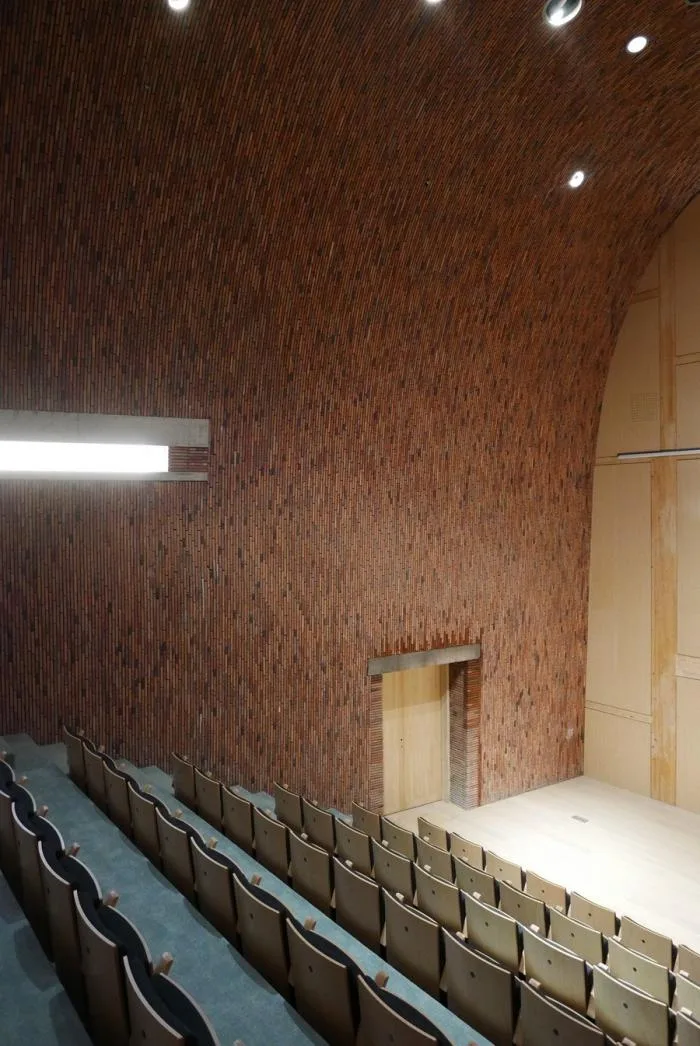
△ Auditorium
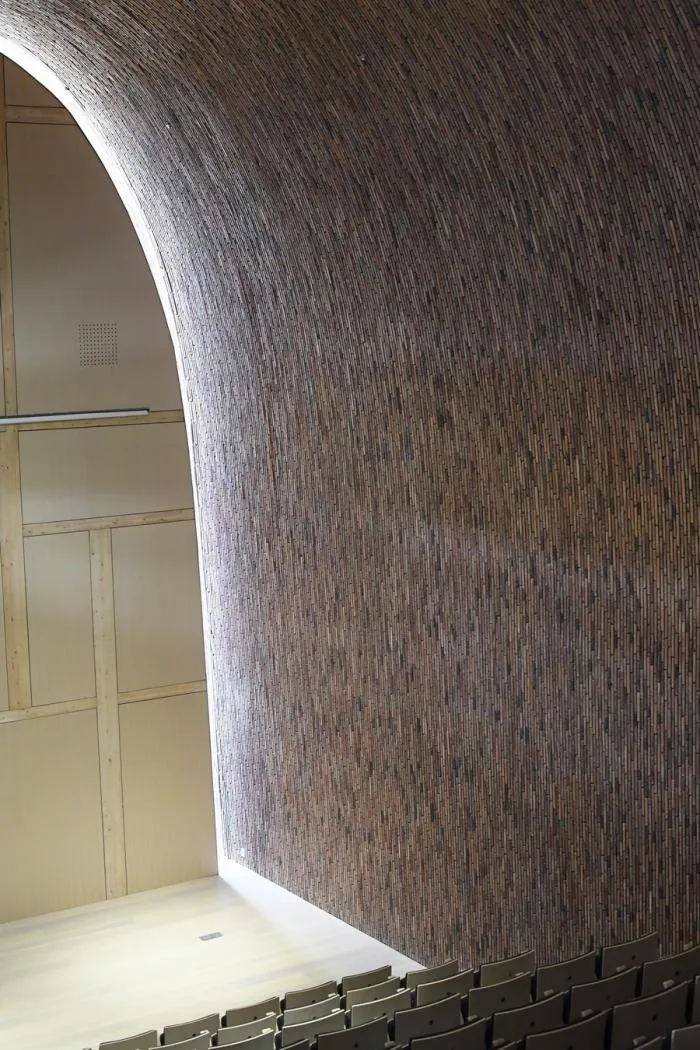
△ Auditorium
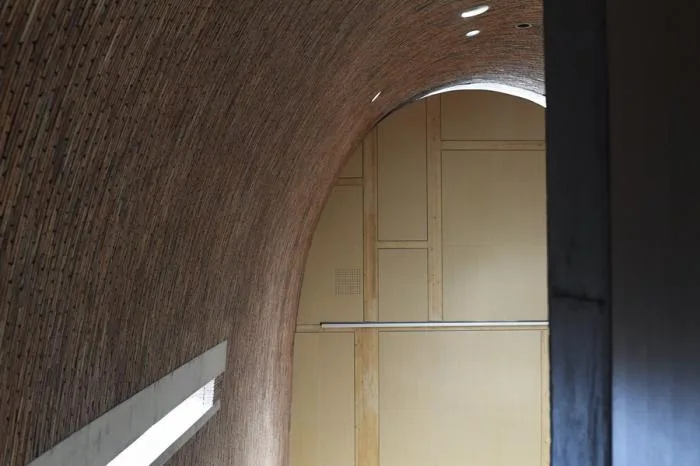
△ Auditorium
Between the museum structures and nature lie many “grey spaces” — zones that blend reality and illusion, each dependent on the other. The overall spatial experience reflects the unique Eastern aesthetics of traditional Chinese architecture, embodying concepts such as “hiding, resting, cultivating, and touring.”
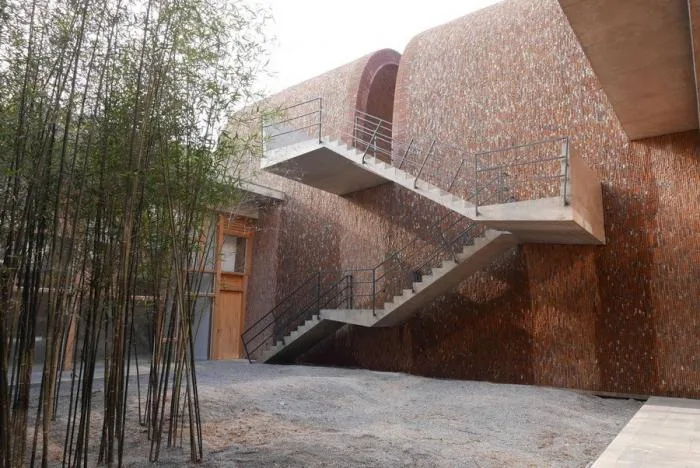
△ Sunken courtyard
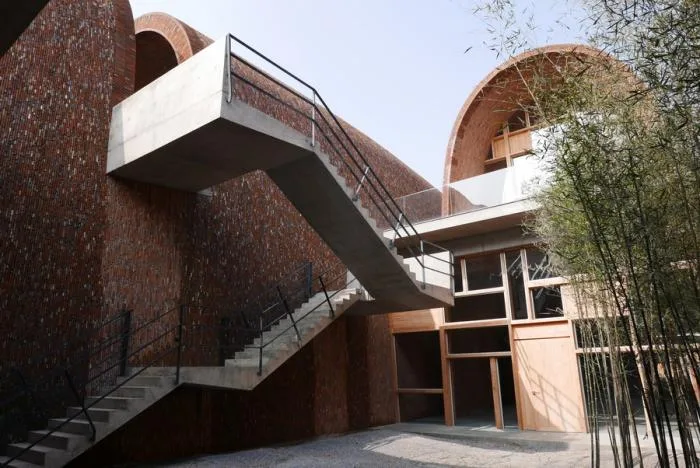
△ Sunken courtyard
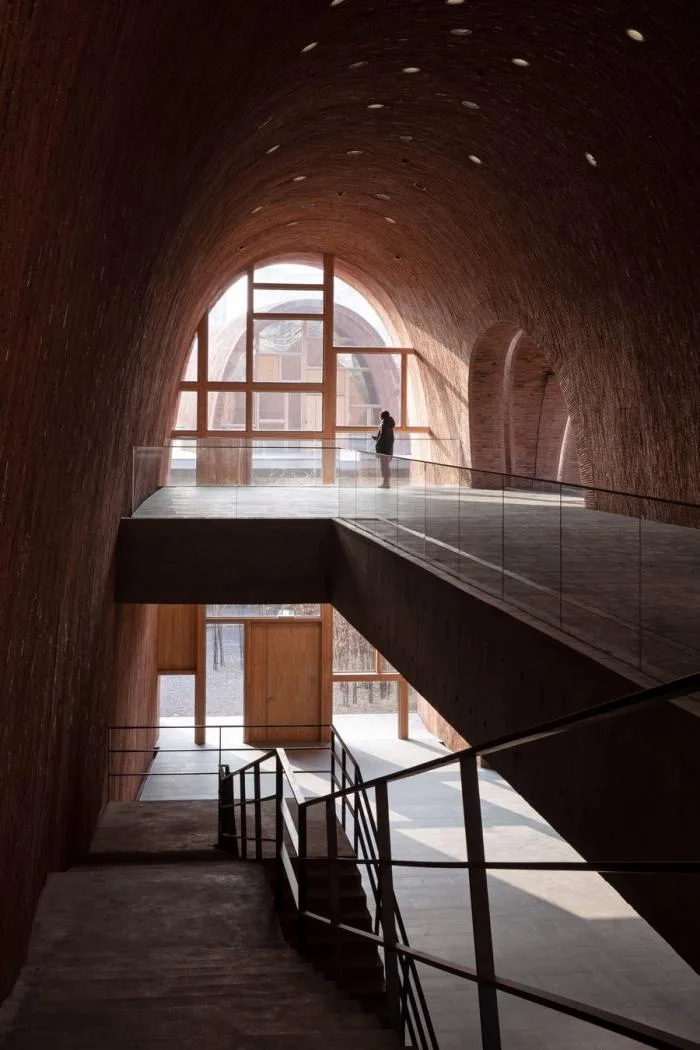
△ Staircase
04. Structural Design
The building’s arches are constructed like a sandwich, with concrete placed between inner and outer brick layers. The concrete arches provide the main lateral resistance during earthquakes, while the exterior features a blend of new and reclaimed kiln bricks, reflecting traditional local building techniques.
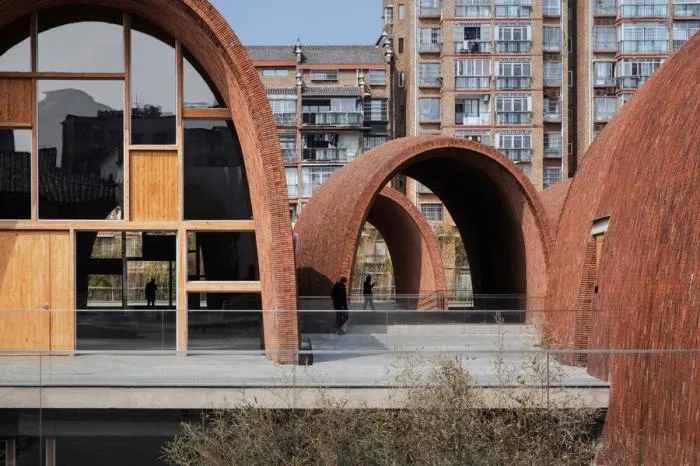
△ Open arched space
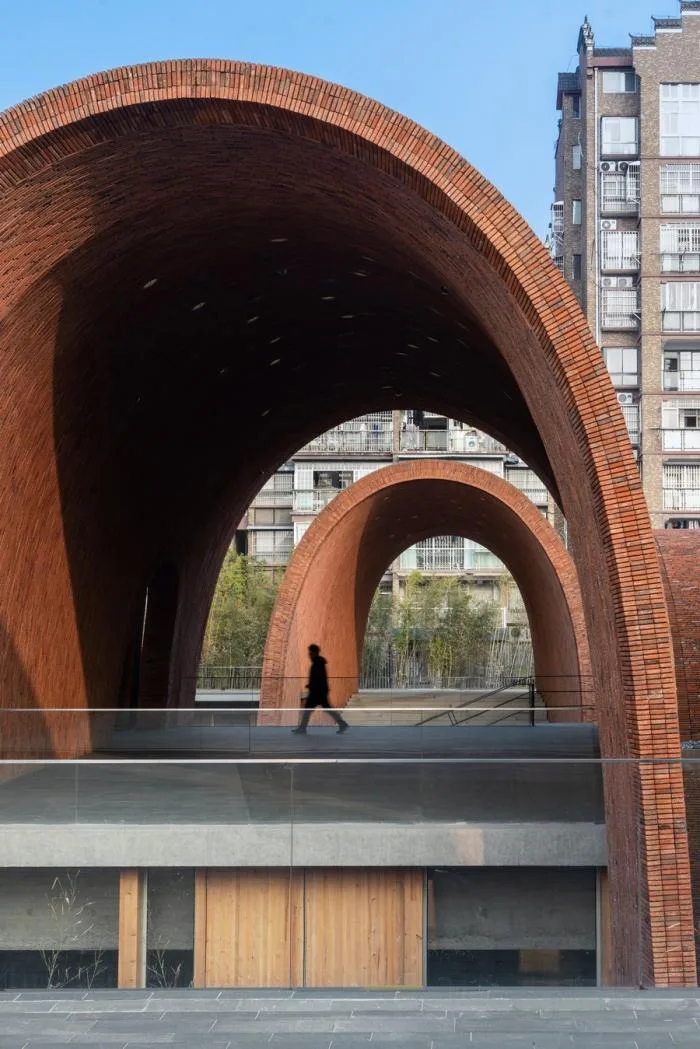
△ Open arched space
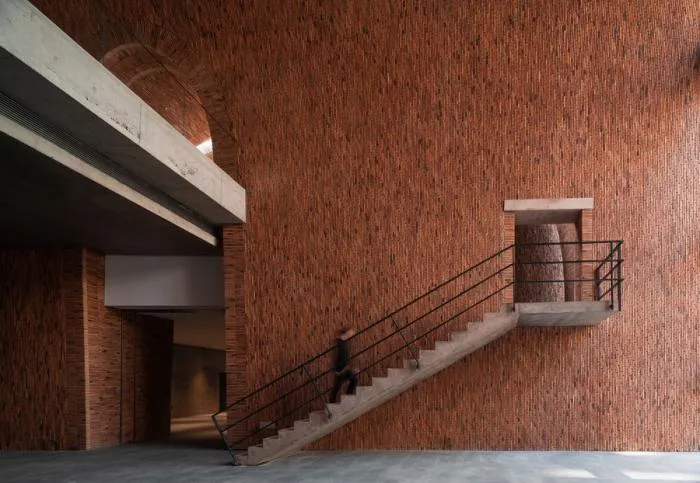
△ Courtyard
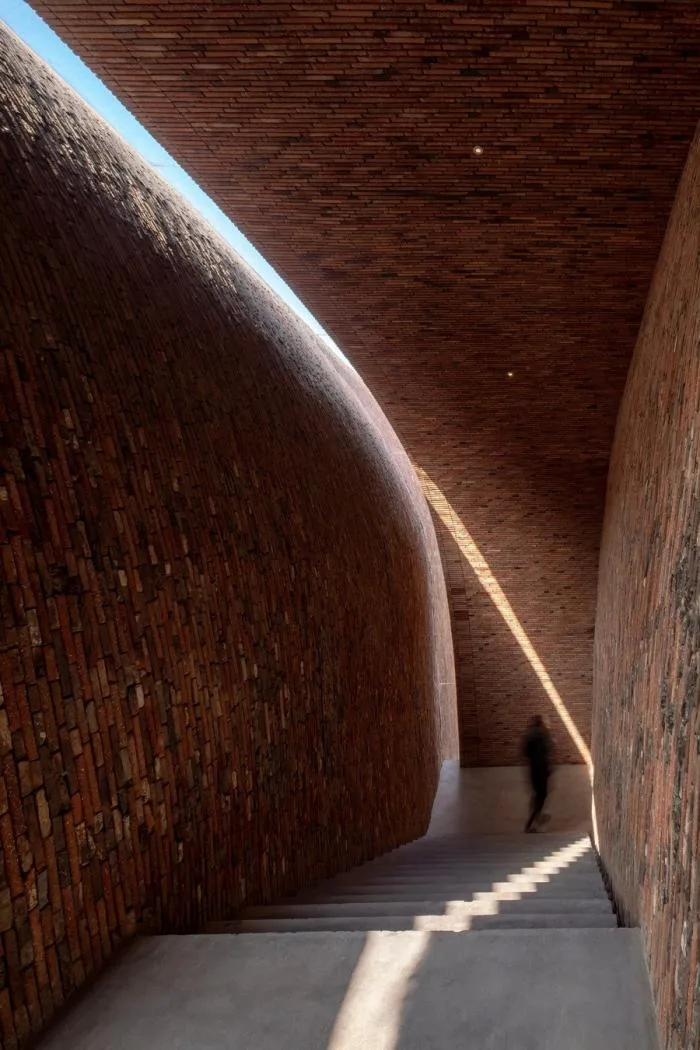
△ Brick walls and lighting
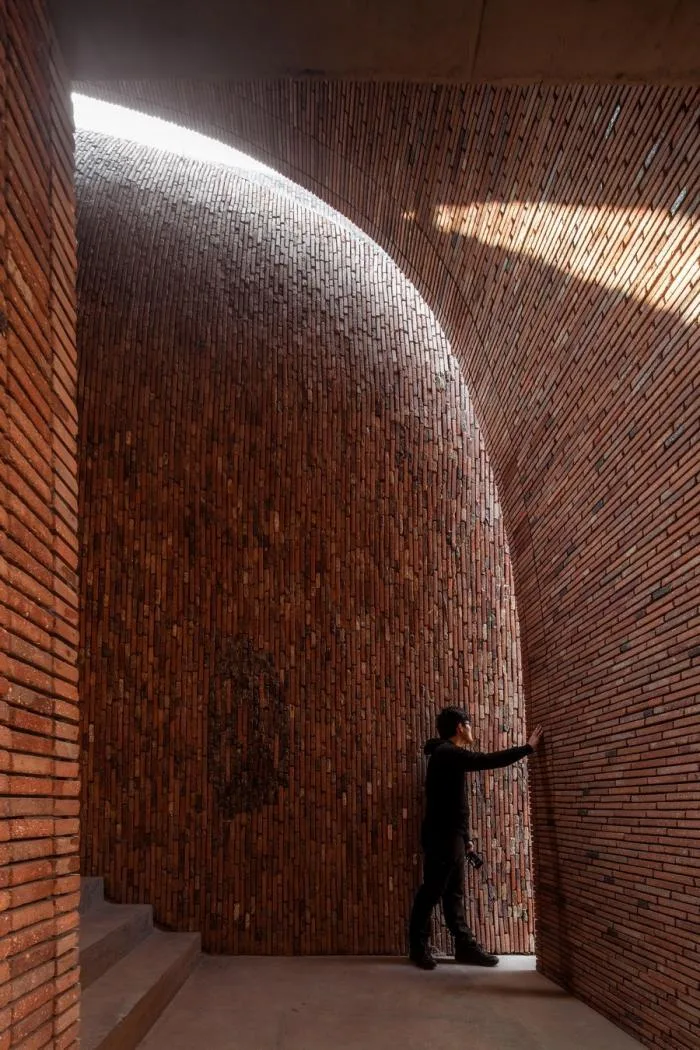
△ Brick walls and lighting
05. Climate Design
The arches are aligned north-south, incorporating numerous open archways and sunken courtyards. The shaded archways provide shelter from sun and rain while channeling the dominant summer winds from north to south, allowing natural ventilation. Multiple vertical courtyards, mostly planted with bamboo, create a poetic, natural environment for the underground spaces and evoke strong imagery of Jiangxi province. These courtyards also create a chimney effect similar to those in local homes, enhancing airflow and cooling.
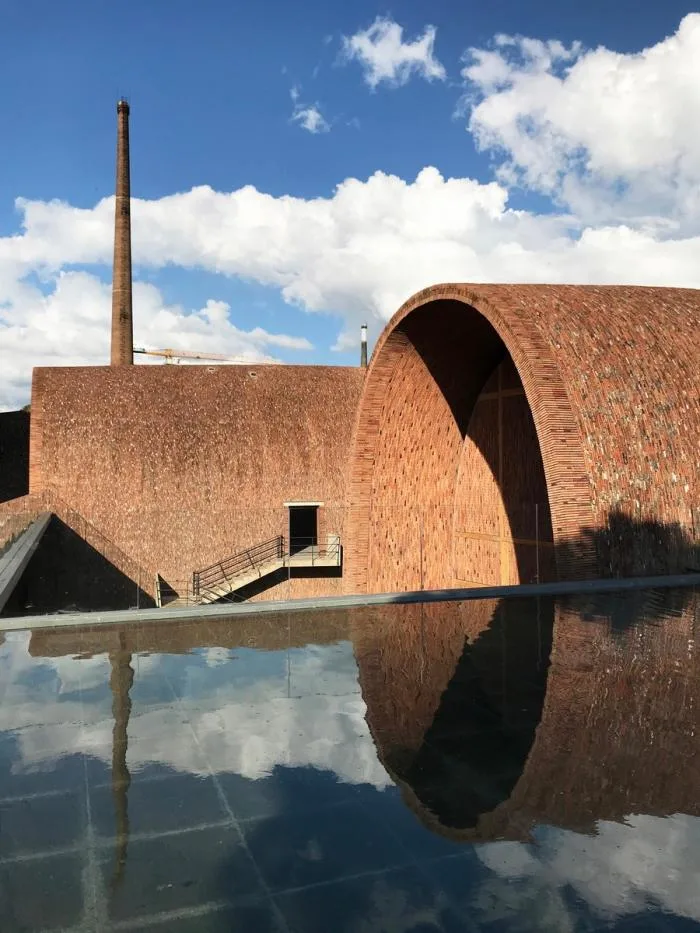
△ Auditorium hall and sunken courtyard view
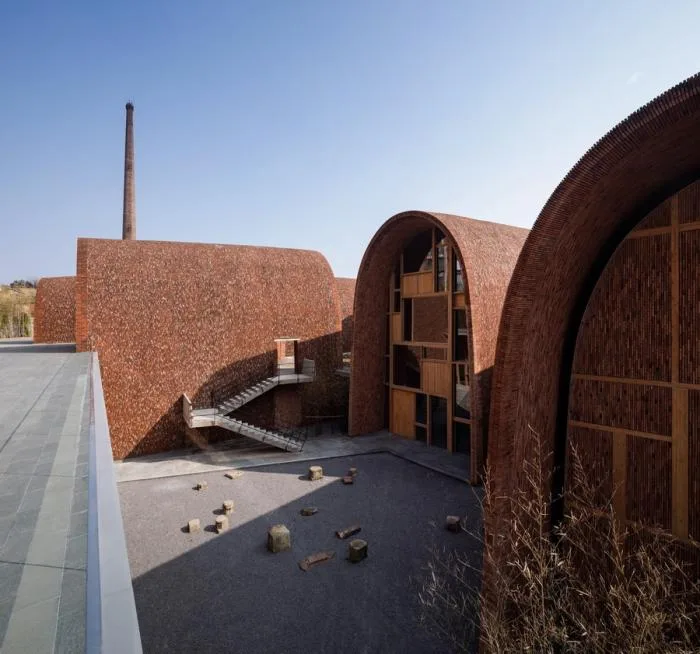
△ Sunken courtyard
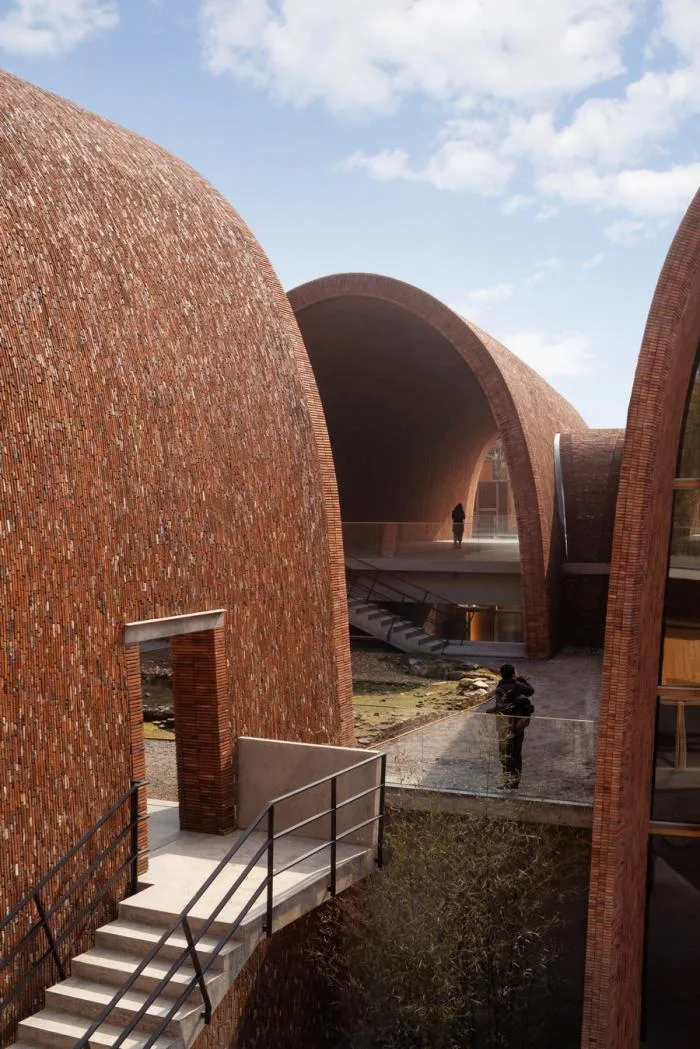
The space between the arches
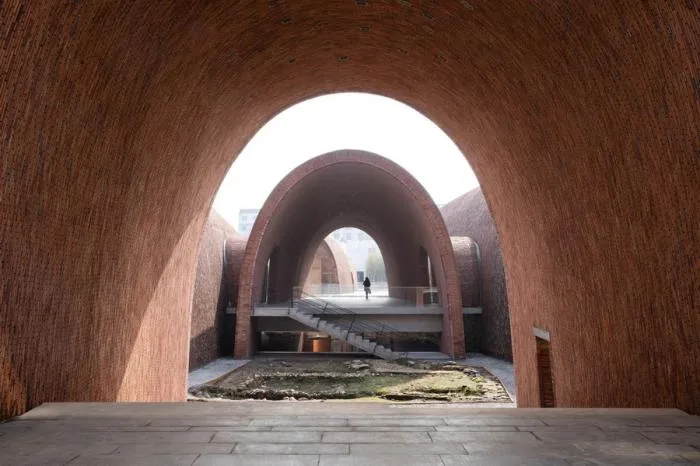
△ Ming Dynasty ruins
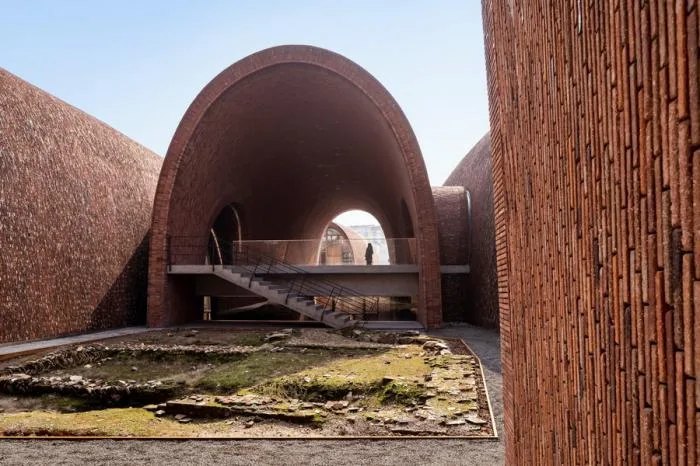
△ Ming Dynasty ruins
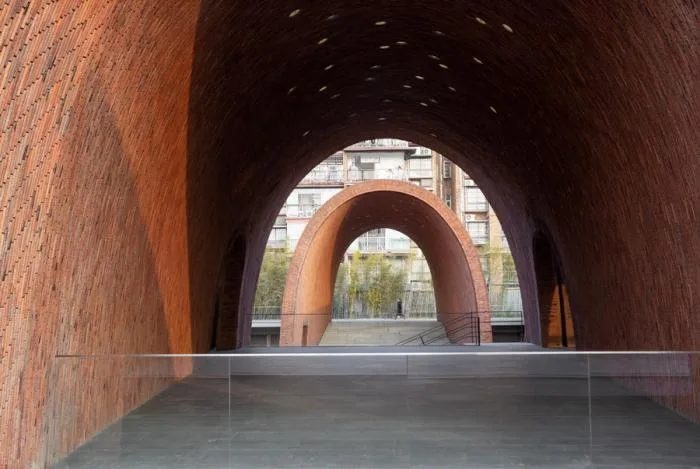
△ Open arched space
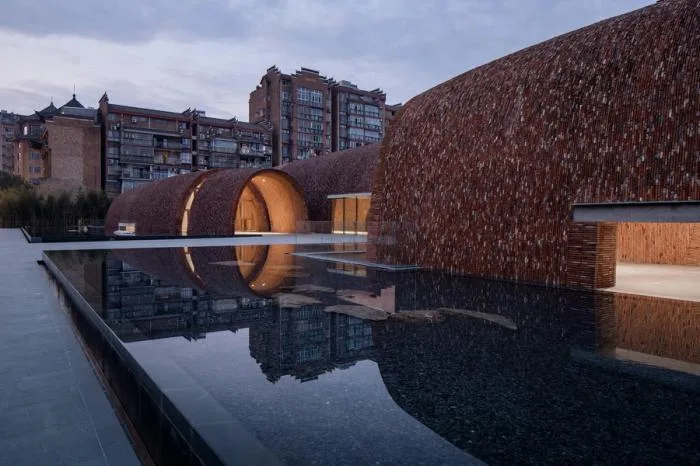
△ Architectural night view
Design Drawings
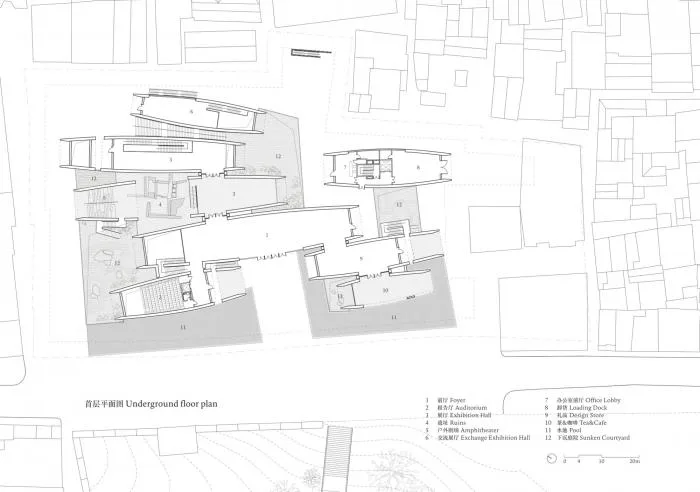
△ First floor plan
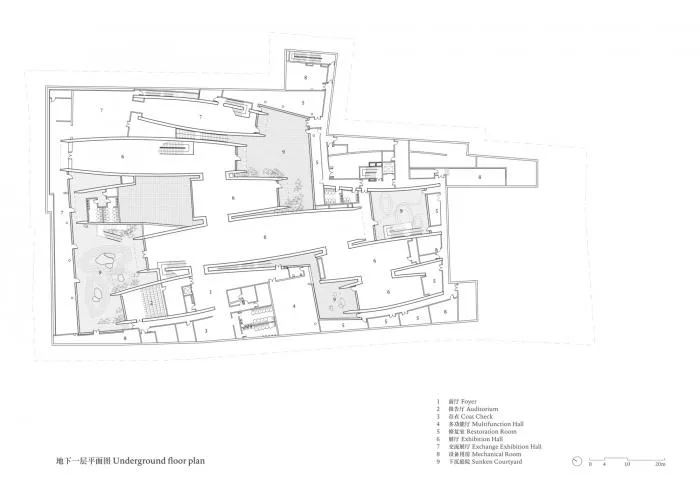
△ Underground floor plan
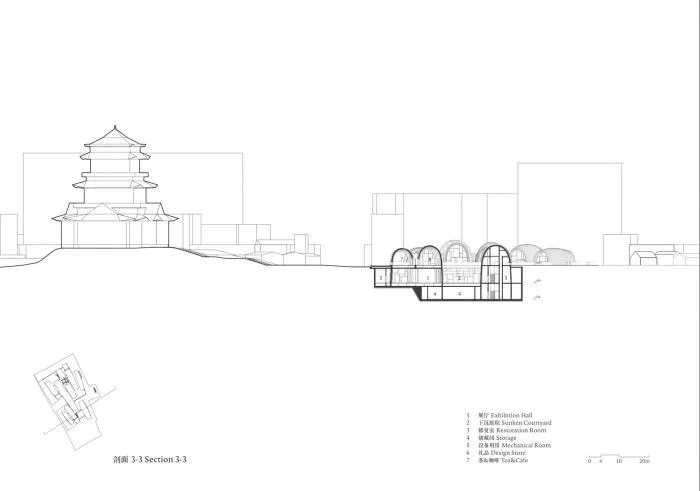
△ Section diagram
Project Information
Architectural Design: Zhu Pei Architectural Firm
Location: Jingdezhen, Jiangxi, China
Project Year: 2020
Photographers: Zhu Pei Architectural Firm, Shiran Architecture, Tian Fangfang
Building Area: 10,370 square meters
Collaborative Architect: Tsinghua University Architectural Design and Research Institute Co., Ltd.
Lead Architect: Zhu Fen
Pre-criticism: Zhou Rong
Art Consultants: Wang Mingxian, Li Xiangning
Design Team: You Changchen, Han Mo, He Fan, Liu Ling, Wu Zhigang, Zhang Shun, Shuhei Nakamura, Yang Shengchen, Du Yang, Chen Yida, He Chenglong, Ding Xinyue
Structural Consultant: Tsinghua University Architectural Design and Research Institute Co., Ltd.
Mechanical and Electrical Consultant: Tsinghua University Architectural Design and Research Institute Co., Ltd.
Green Building Consultant: Tsinghua University Architectural Design and Research Institute Co., Ltd.
Landscape Design: Zhu Pei Architectural Firm, Tsinghua University Architectural Design and Research Institute Co., Ltd.
Exhibition Design: Zhu Pei Architectural Firm, Beijing Qingshang Architectural Decoration Engineering Co., Ltd.
Interior Design: Zhu Pei Architectural Firm, Beijing Qingshang Architectural Decoration Engineering Co., Ltd.
Curtain Wall Consultant: Shenzhen Dadi Curtain Wall Technology Co., Ltd.
Lighting Consultant: Beijing Ningzhijing Lighting Design Co., Ltd.
Acoustic Consultant: Institute of Building Technology, Zhejiang University
Owners: Jingdezhen Municipal Bureau of Culture, Radio, Film, Television, Press and Publication; Jingdezhen Ceramic Culture and Tourism Development Co., Ltd.
Construction Firms: China Construction First Engineering Group Co., Ltd.; China Construction First Engineering Huajiang Construction Co., Ltd.












Must log in before commenting!
Sign Up