
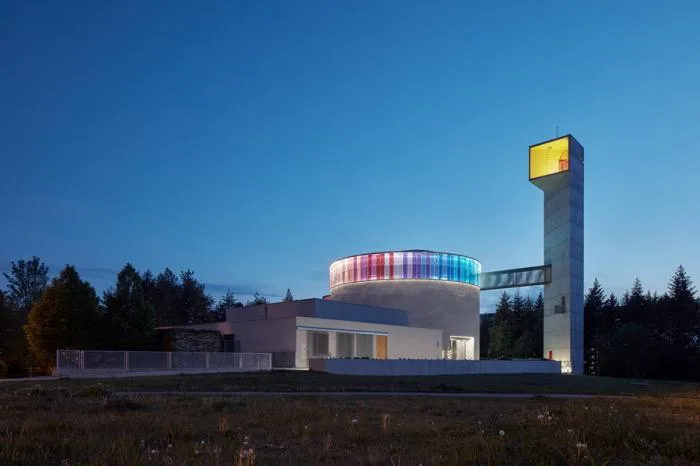
Architect Marek Jan Štěpán has dedicated over 30 years intermittently to conceptualizing this church. His vision encompasses building a paradise—a rainbow church, a futuristic sanctuary, an inner universe embodying the intention of God’s touch above Lesná. The initial idea emerged during the relaxed atmosphere of 1968 but was only realized 50 years later. The church’s location was chosen by renowned residential architects František Zounek and Viktor Rudiš. Entirely funded by offerings and donations, this is the first church dedicated to Blessed Marie Restituta, situated approximately 600 meters from her birthplace.
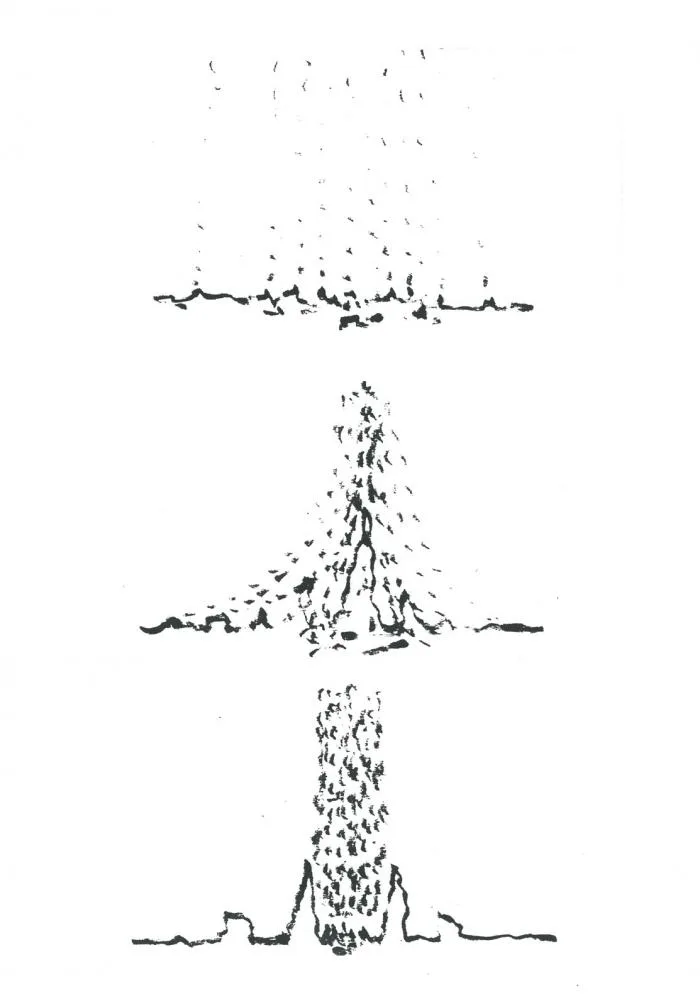
First draft from 1991
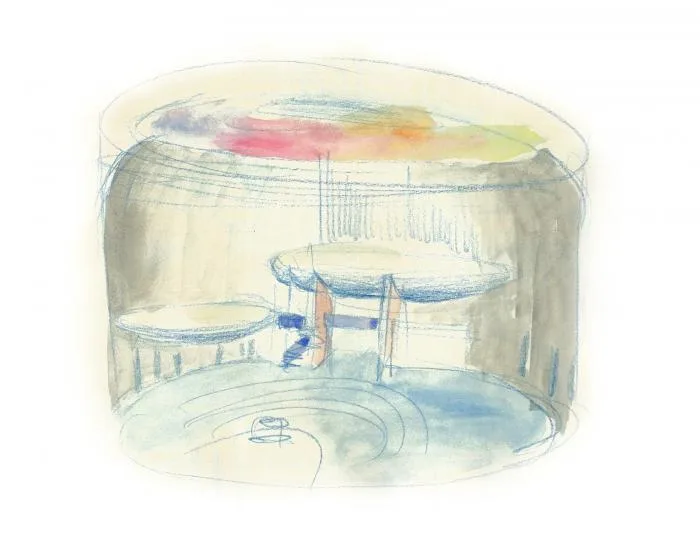
△ Interior sketch of the church
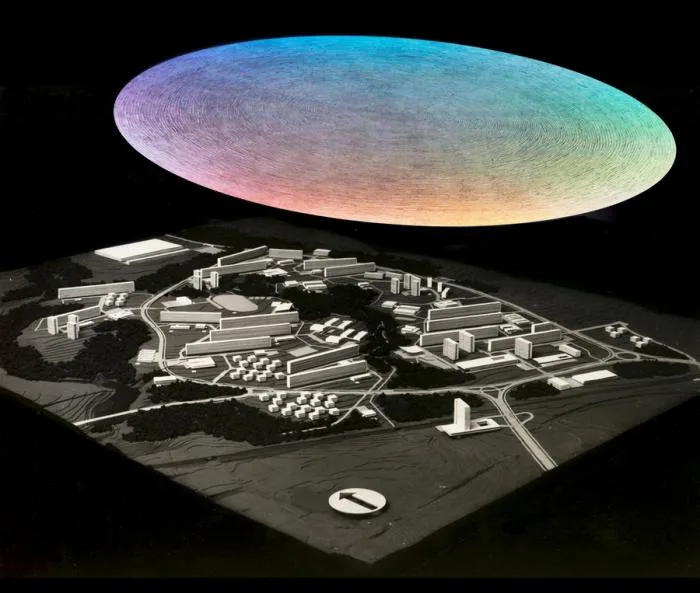
Paradise above Lesná
Urban Context
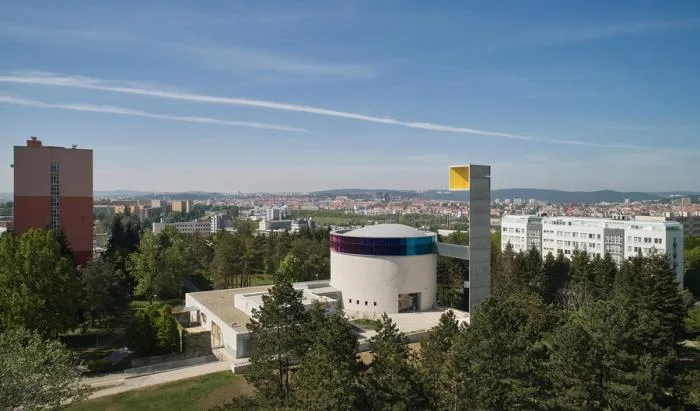
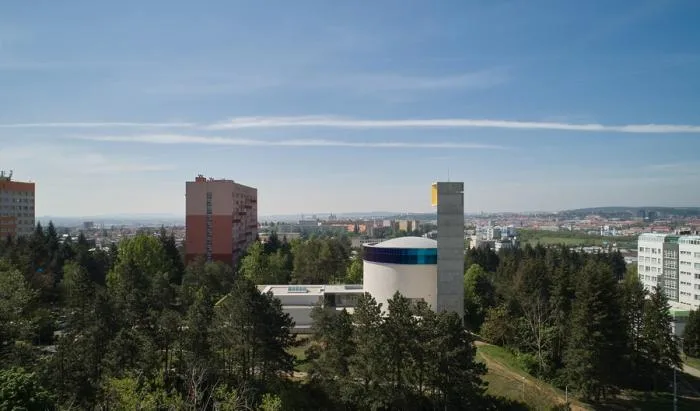
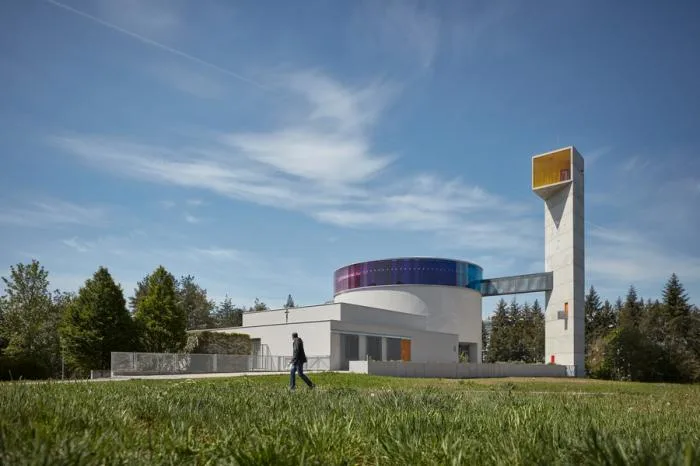
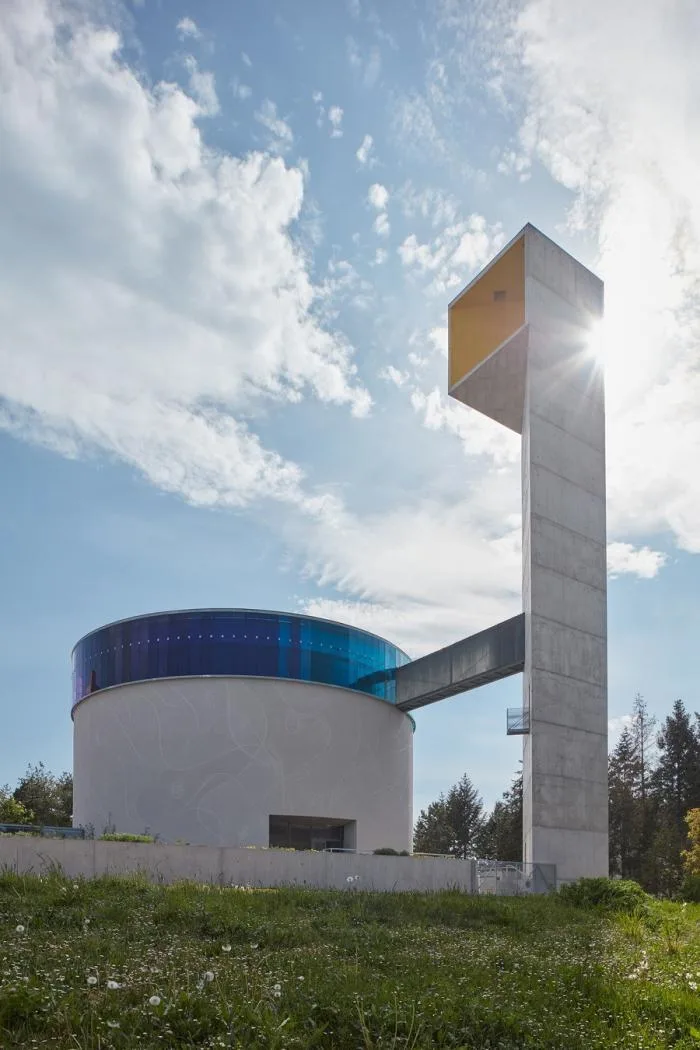
The church is nestled at the heart of a residential district near the entrance to the Čertova Rokle Gorge, surrounded by towering concrete apartment blocks. Due to its modest scale, the church adopts a simple and easily recognizable form, defined by basic geometric shapes. The site features a raised rectangular platform establishing the sacred area, atop which sit three distinct volumes: the church itself, a tower, and a religious center designed by Zdeněk Bureš. The original center is rectangular, the tower triangular, and the church circular—thus incorporating all three fundamental geometric shapes.
This sacred area’s scale sharply contrasts with the surrounding apartments, granting it a dominant presence and distinguishing it on an entirely new level.
Rotundity
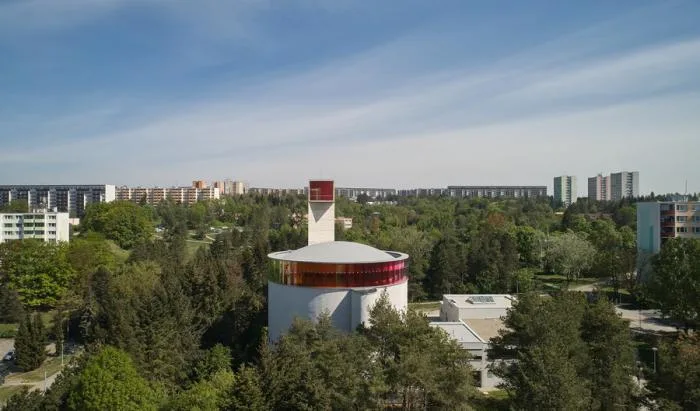
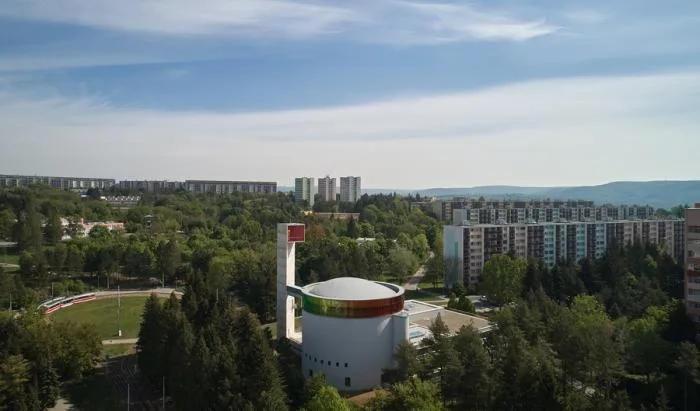
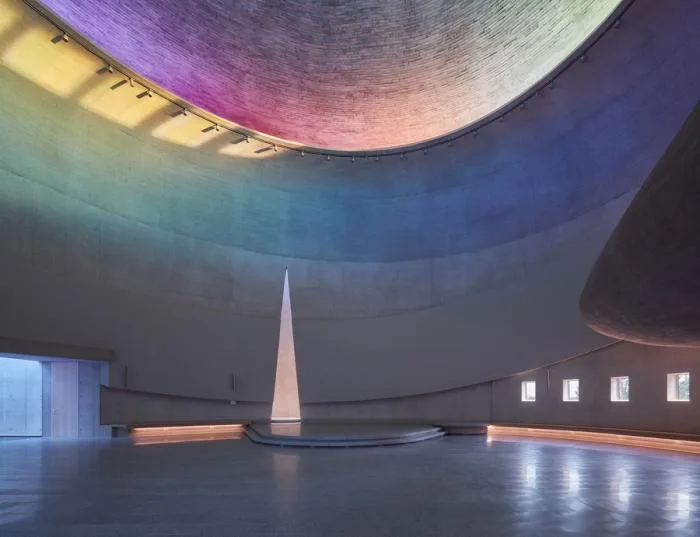
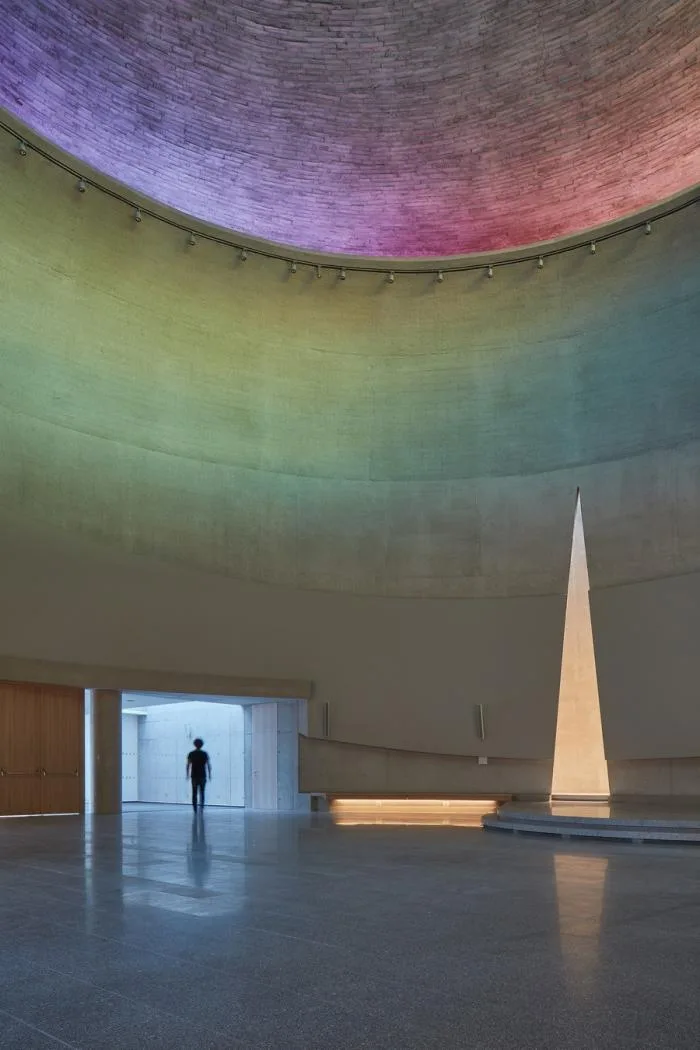
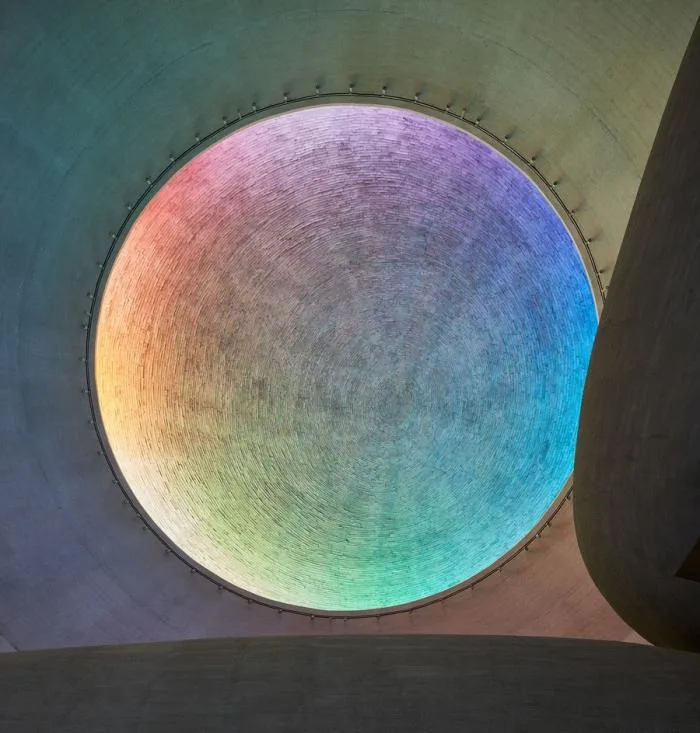
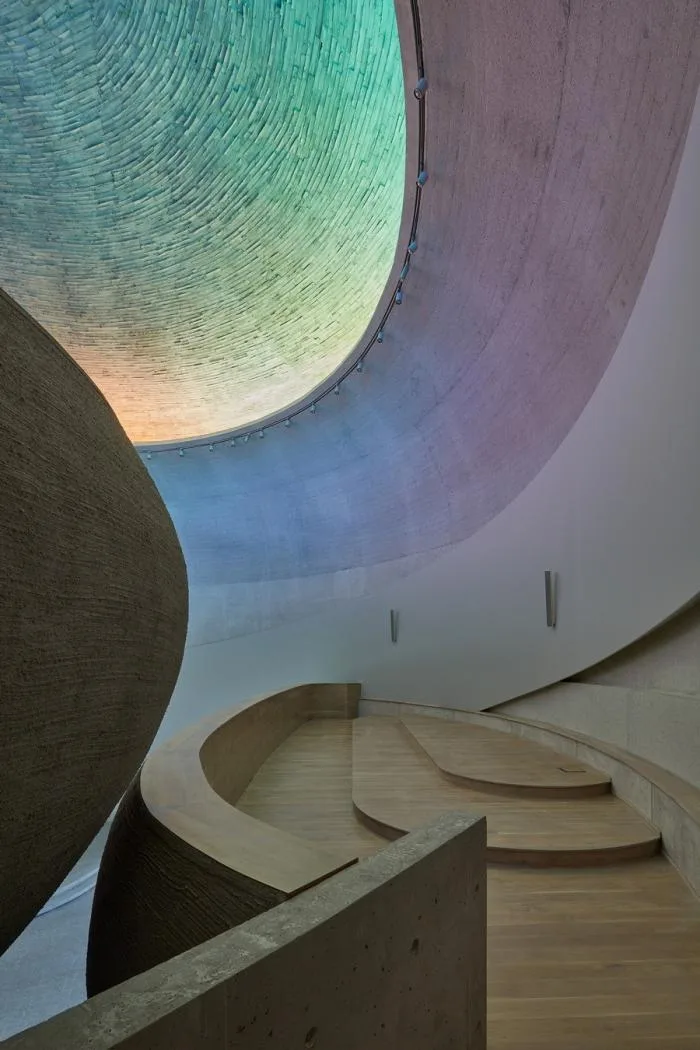
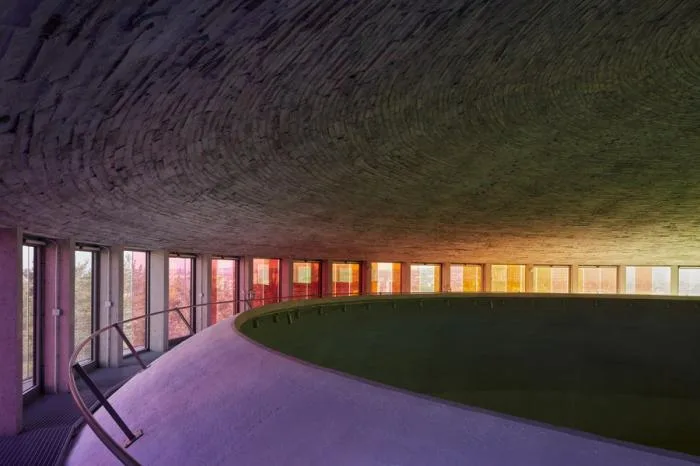
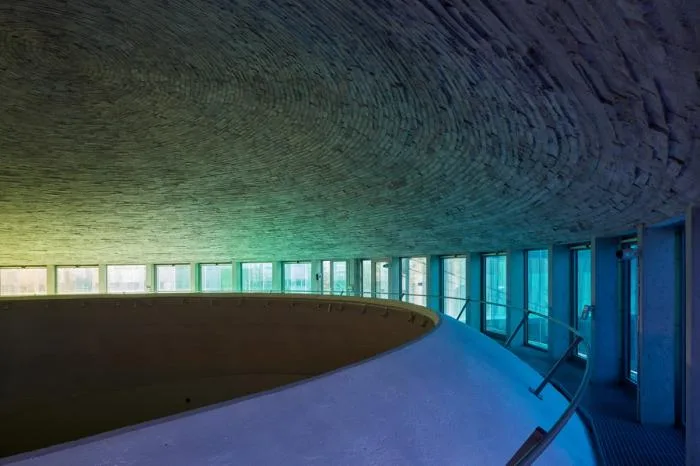
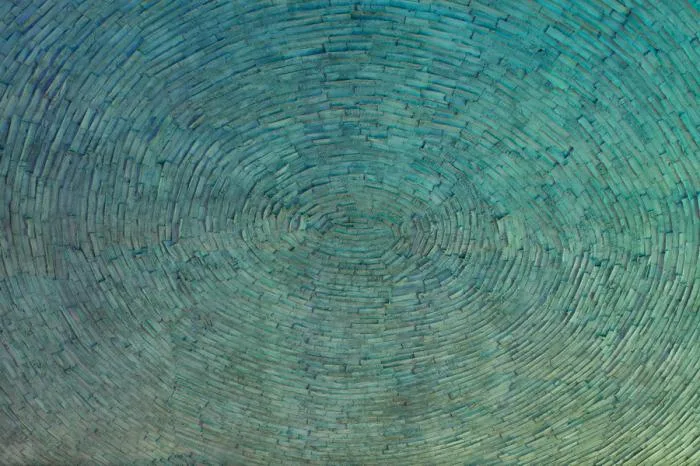
The church features a circular floor plan, an ancient symbol of heaven and eternity, contrasting with the square, which represents earth and transience. This celestial symbolism is echoed by the colorful circular windows encircling the church just beneath the roofline. Visually and spiritually, the church appears to float above Lesná, symbolizing heaven itself.
The choice of a circular form serves multiple purposes: it represents completeness, marks the end of the residential area, and acts as a spiritual focal point where visitors can pause, reflect, and escape the bustle of daily life.
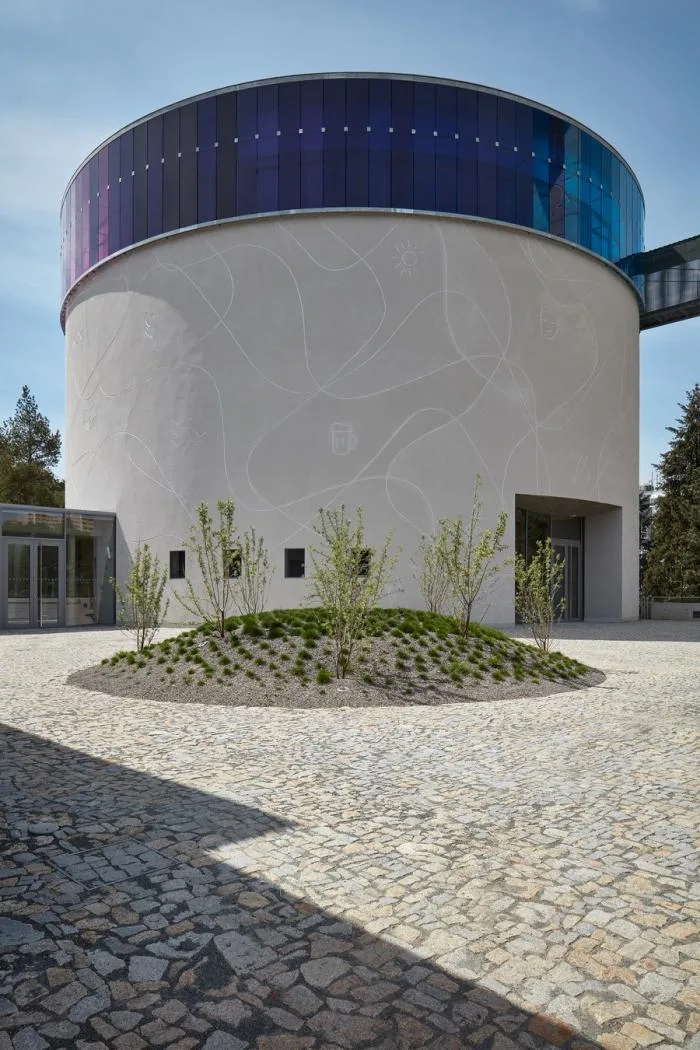
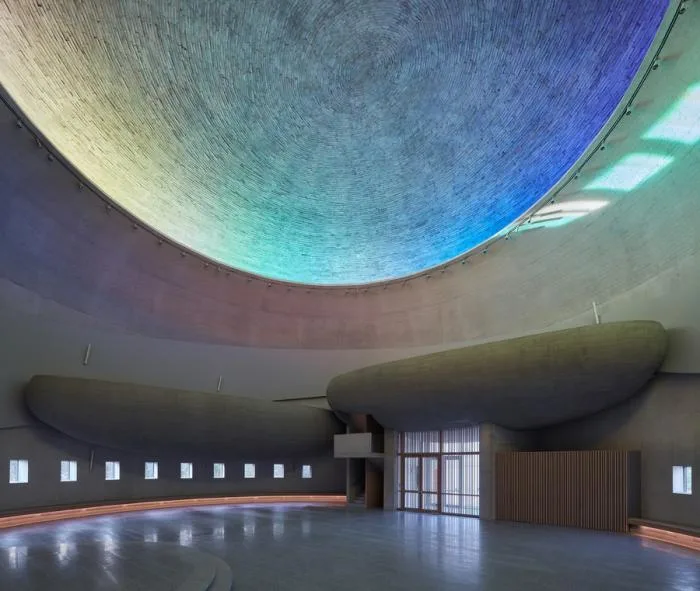
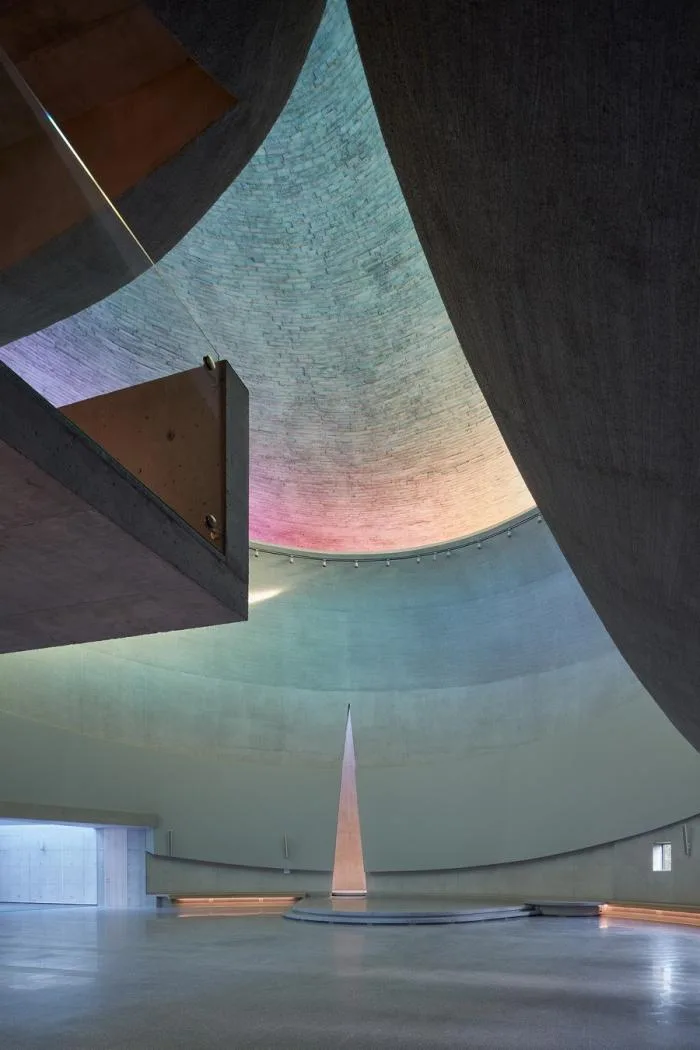
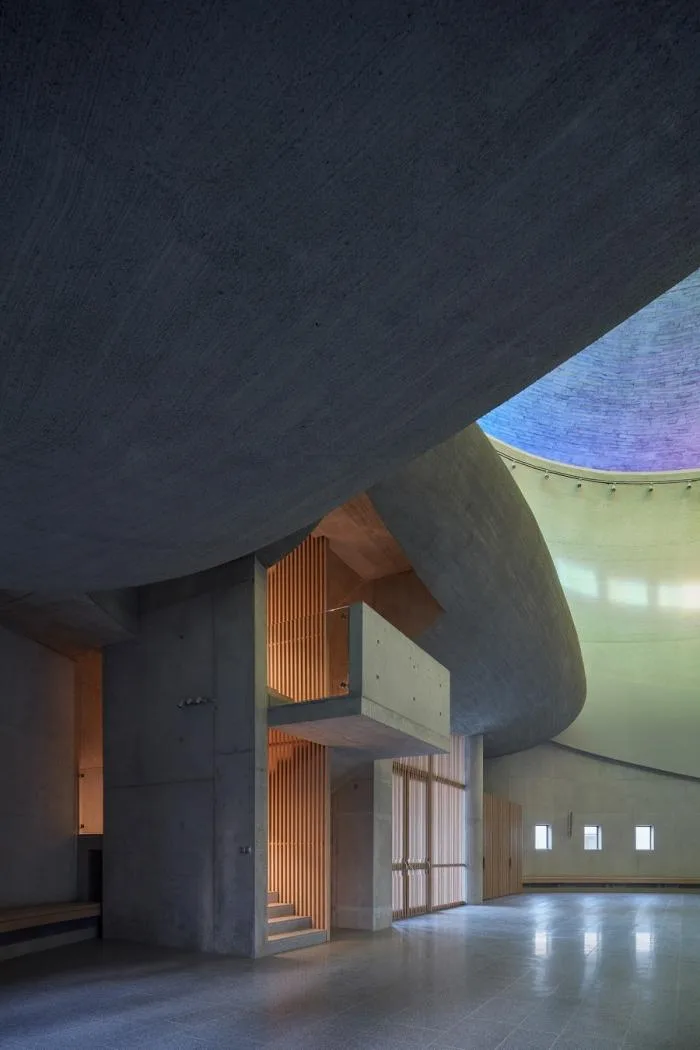
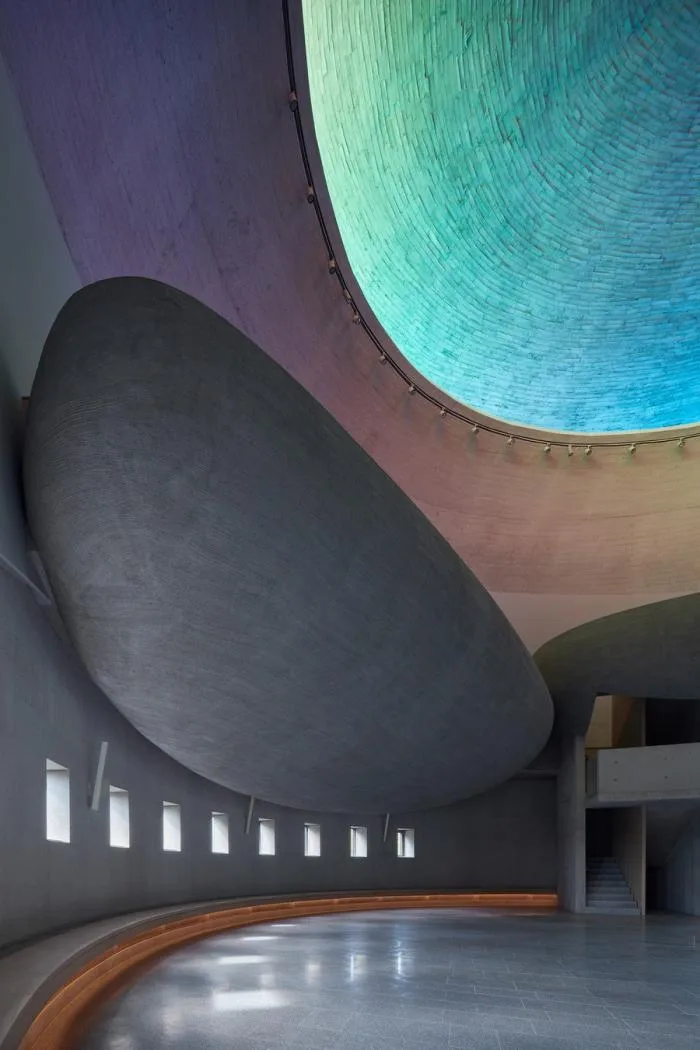
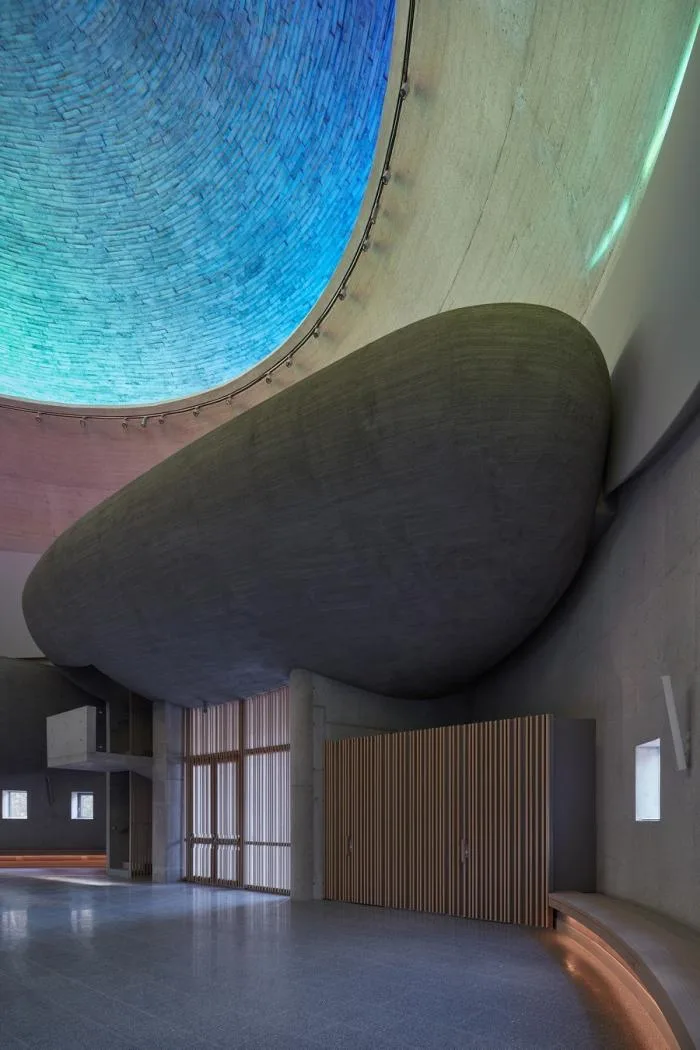
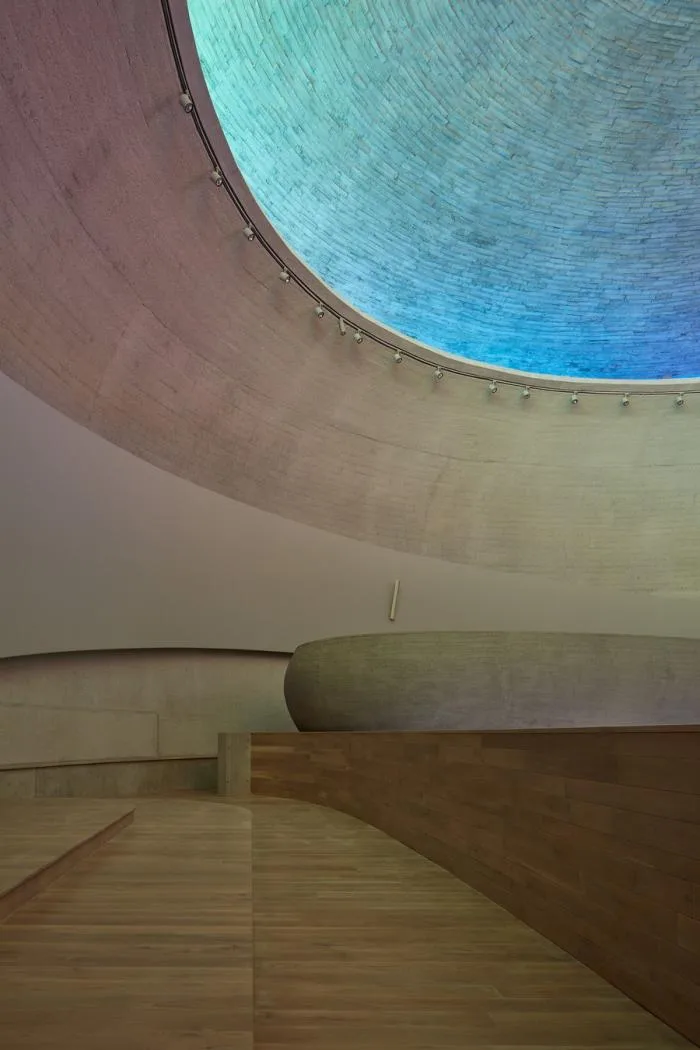
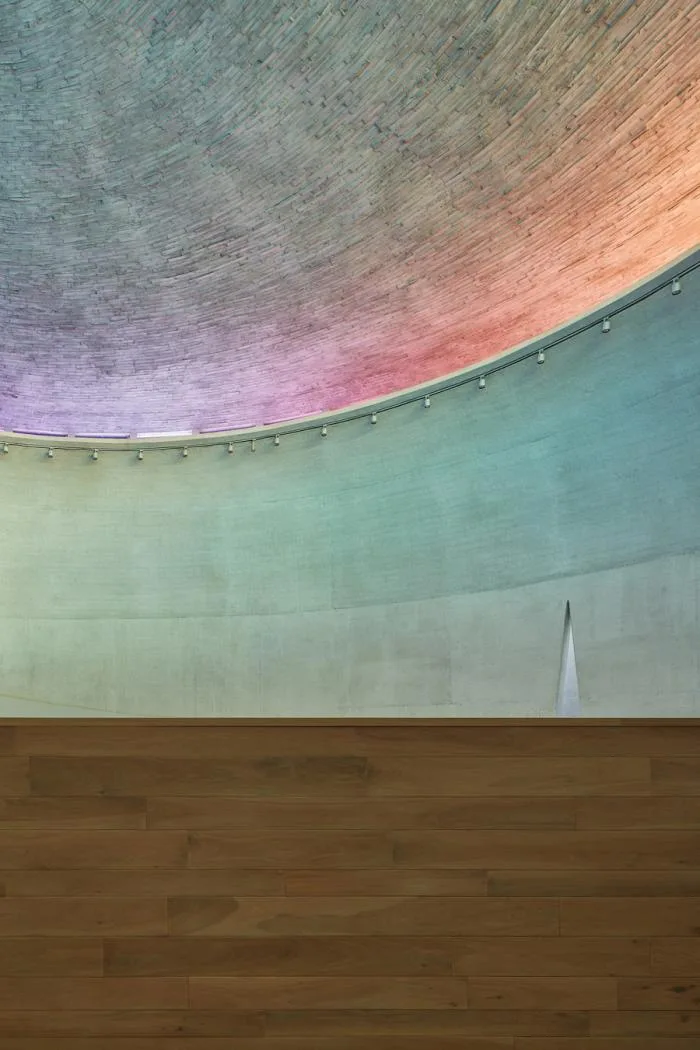
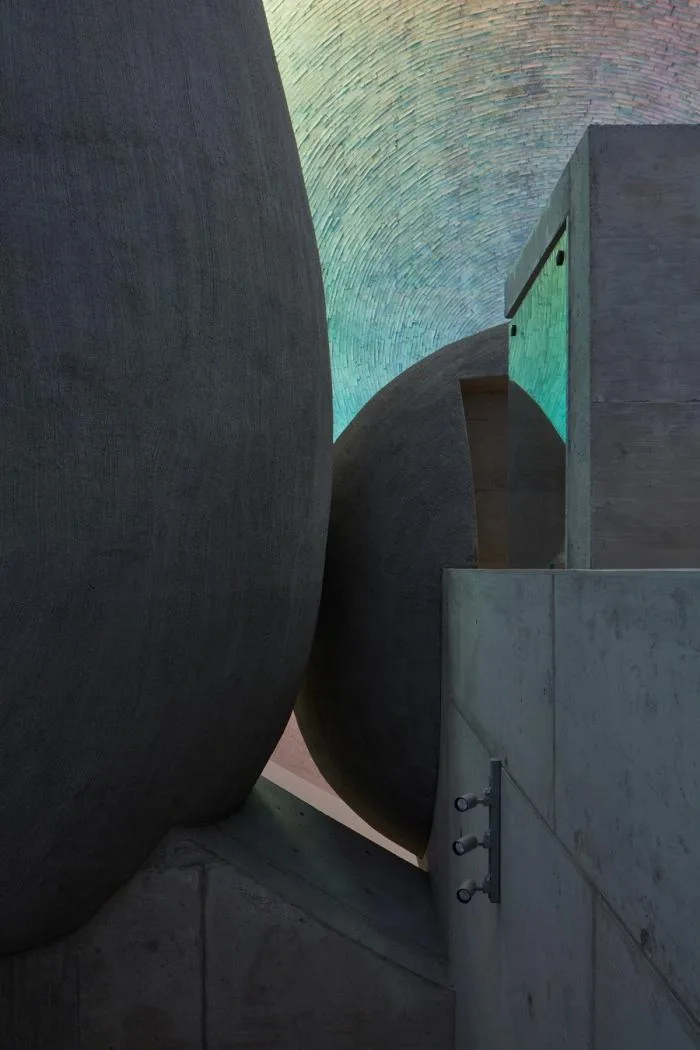
This circular design resonates with contemporary understandings of the Eucharist, symbolizing the group of apostles and Jesus gathered around the Last Supper table. The chapel is situated within a tall semi-circular room on the church’s left side, illuminated from above. A triangular opening in the church’s walls here alludes to the tearing of the curtain in the Jerusalem Temple.
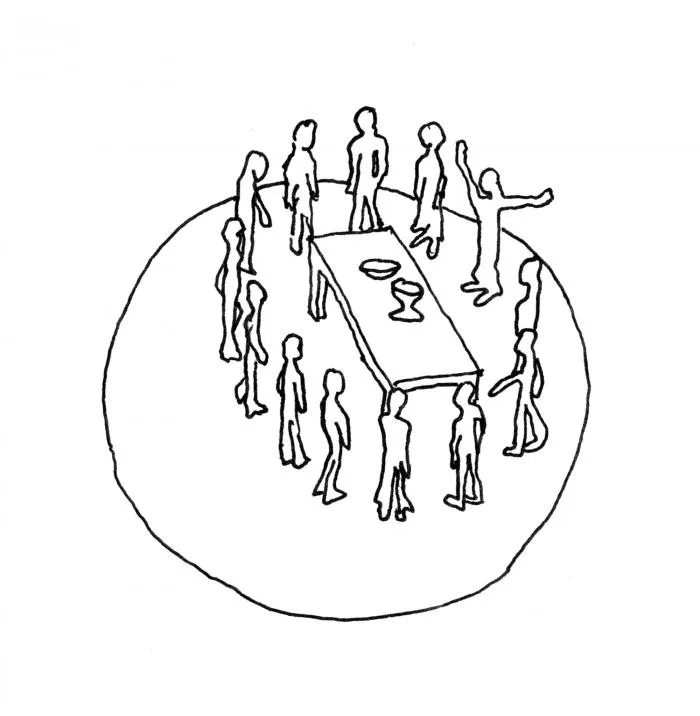
Worship Ceremony Visual Expression
The Tower
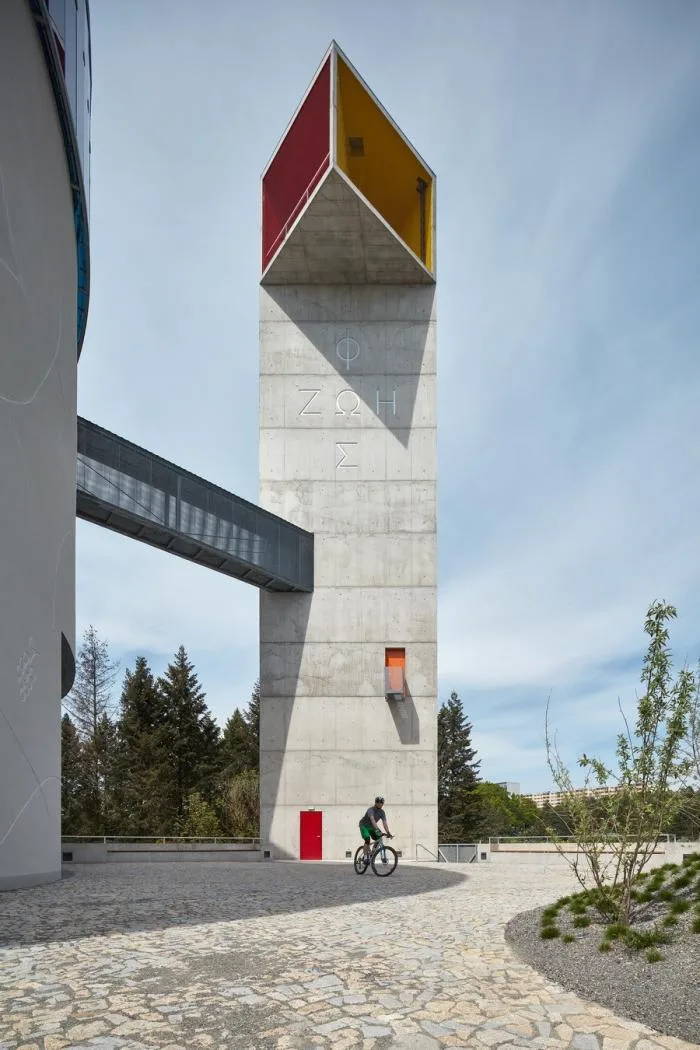
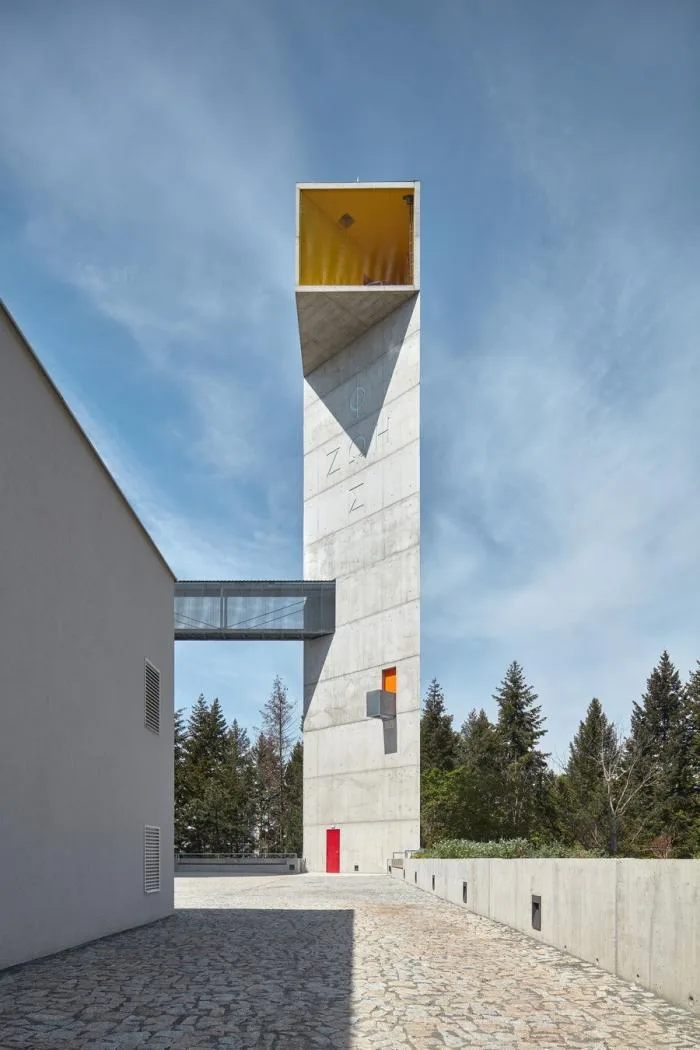
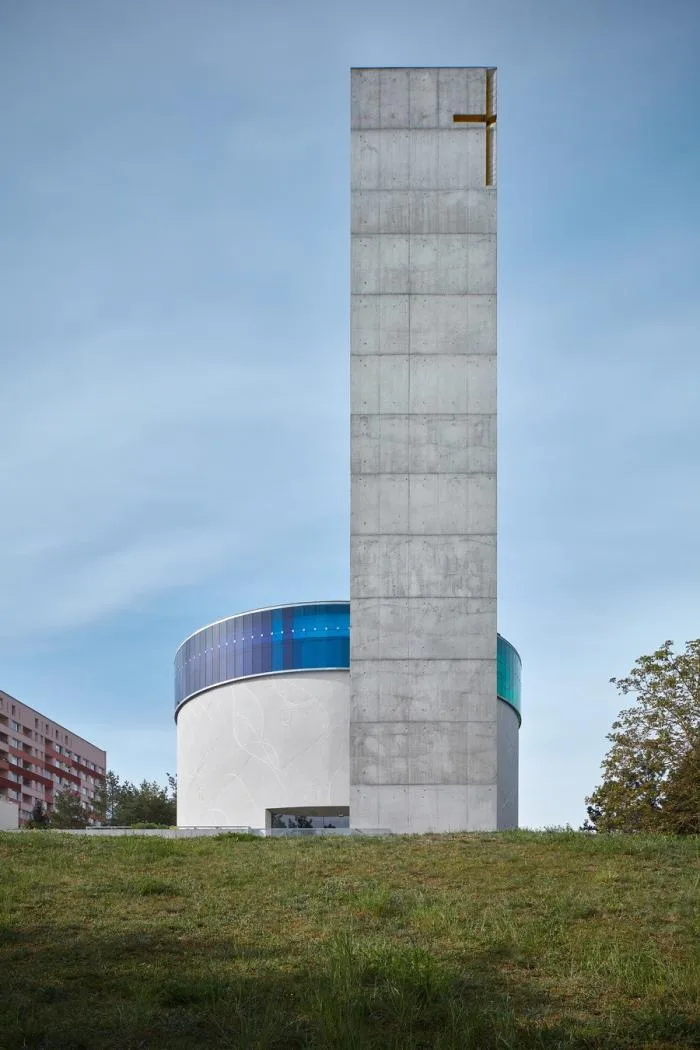
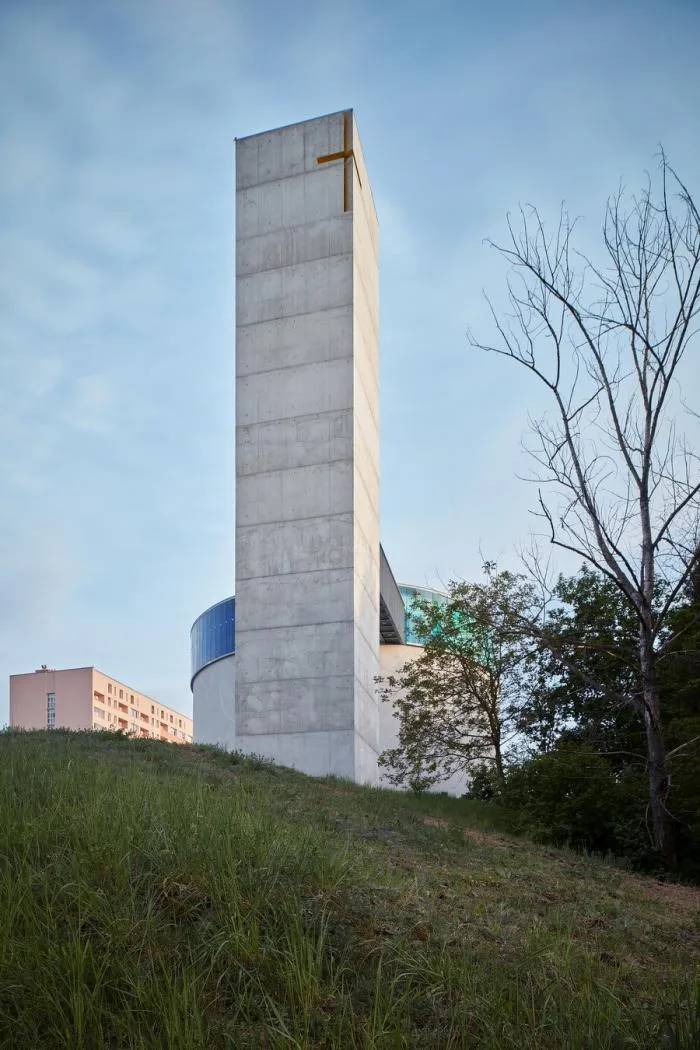
The tower stands apart from the church and features a triangular footprint, creating a distinct contrast with the church’s interior and exterior. From the outside, it acts as a fixed point, referencing the static cube forms found in historical church architecture and anchoring the church courtyard on a small promontory.
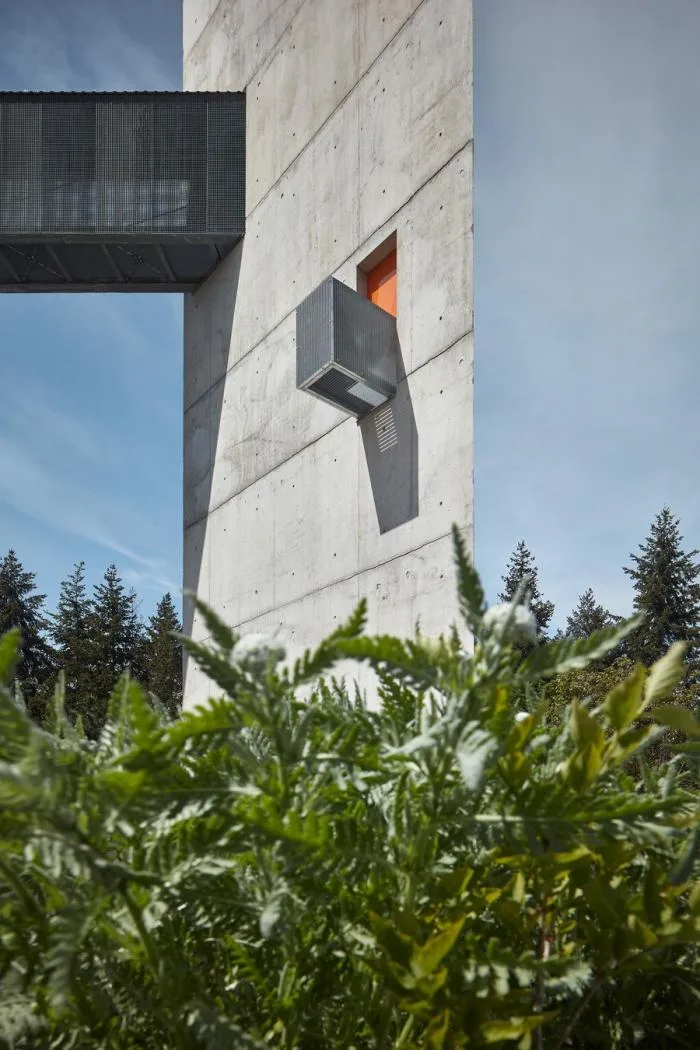
The side facing the church is open, housing a square lantern, a yellow section containing a bell fiddle, and a red area featuring an observation deck overlooking Brno’s city center. The tower embodies both vertical and horizontal qualities; unlike traditional towers that merely point heavenward like rockets, this one is oriented towards the church, symbolizing the vertical connection between God and His people.
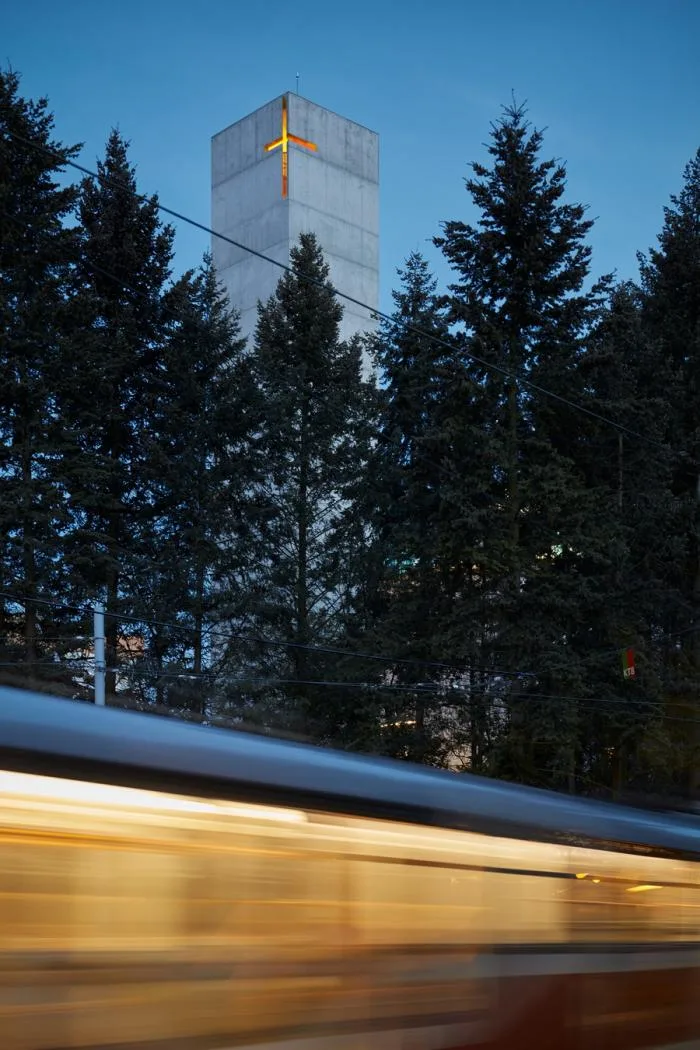
Though it stands 31 meters tall—comparable to surrounding buildings—it serves as a local landmark. Inside, a steel spiral staircase winds through the concrete structure. Looking down from the top, visitors may notice a color scheme and shape reminiscent of certain church domes. The tower is engraved with a cross-shaped FOS ZOE symbol, meaning “light and life,” a motif also discovered in Mikulčice archaeological excavations from the Great Moravian period.
Material Characteristics
The church primarily uses concrete, matching the materials of the surrounding residential buildings. It was built as an extension unit for experimental projects. Prestressed reinforced concrete supports the most unconventional elements, such as the flower crown and altar, the latter sheltered by a structure from the Manning family. Concrete is complemented by unique colored elements, reflecting the parishioners’ desire for an environmentally conscious design. The church uses ground-source heat pumps for heating.
The beauty of concrete lies in its authenticity, revealing the efforts involved in formwork, pouring, compacting, and mixing additives. These processes influence the surface, mirroring life’s vitality. Historically, stone masonry featured blocks of varying tones joined by cement; similarly, the concrete here shows louvers’ imprints and surface textures from each pour, visually emulating stone masonry. This simplicity echoes modern perceptions of sacred space, favoring minimal visual and semantic weight.
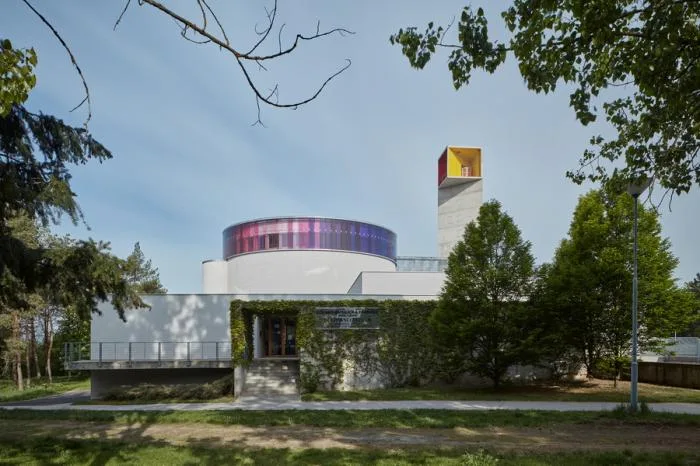
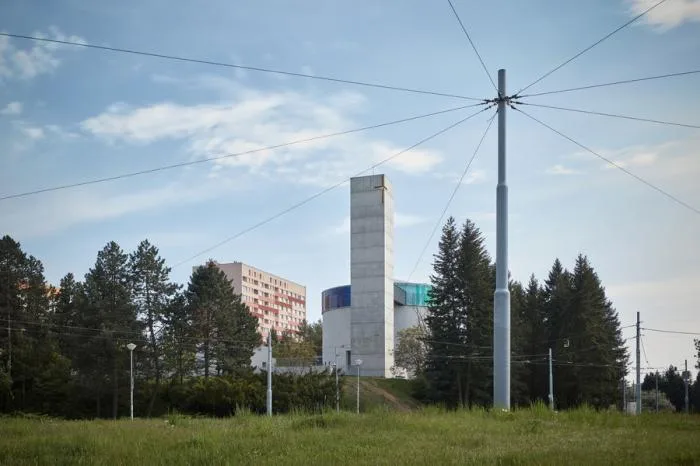
An interesting detail: surface treatment was performed by Muhammad Lasfer from Algeria. As a Muslim originally from the Middle East, he brings a natural affinity for abstraction, which suits the concrete surfaces here. On Christmas morning 2019, firefighters responded to a call about a fire in the Lesná church tower after neighbors reported it appeared to be ablaze. In reality, the colors used—symbolizing human life, fire, and suffering (yellow and red) contrasted with sky blue—created an illusion of fire in the morning light. There was no actual fire.
Design Drawings
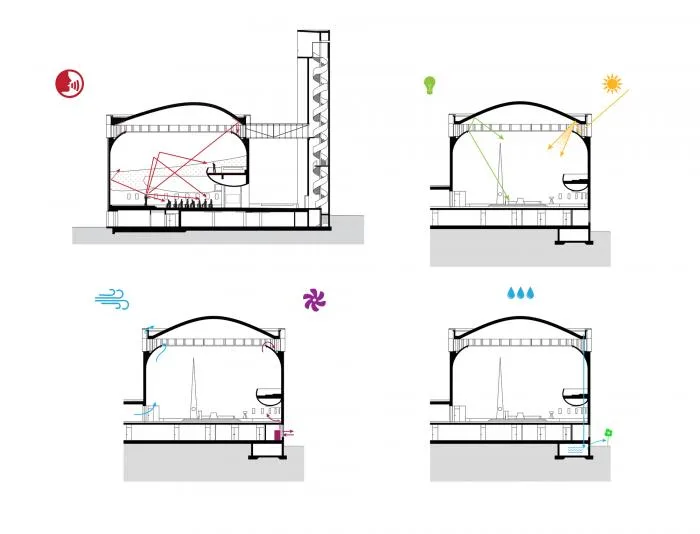
△ Analysis chart
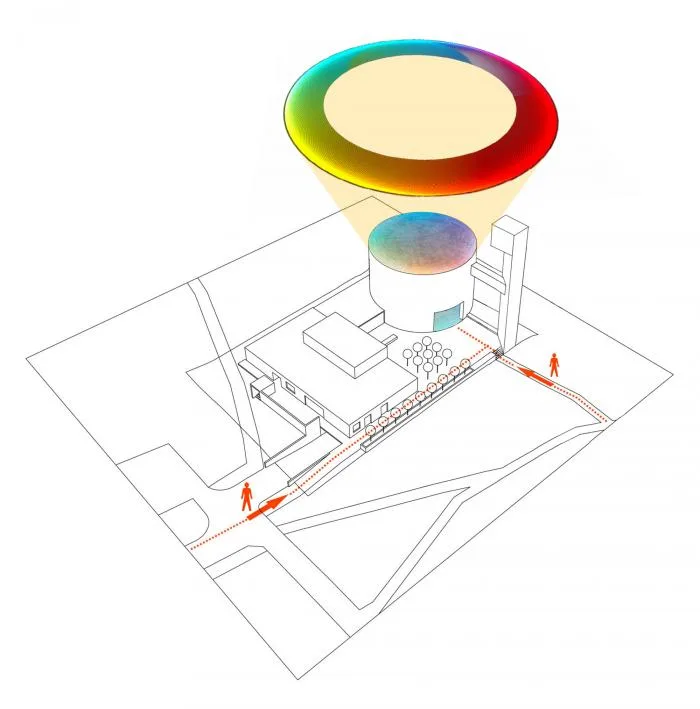
△ Analysis chart
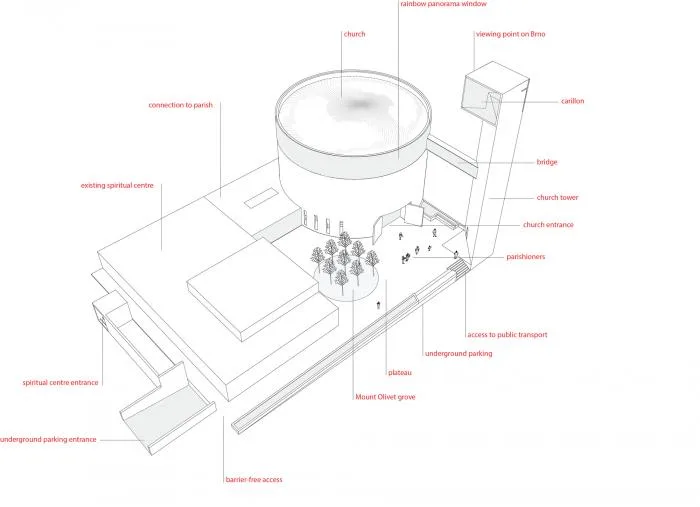
△ Axonometric diagram
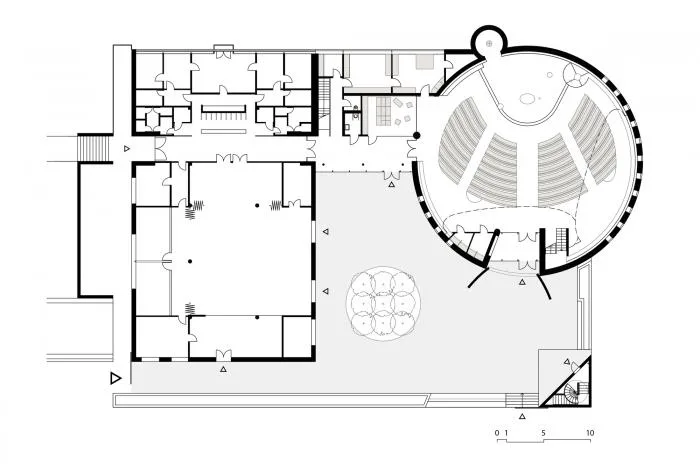
△ First floor plan
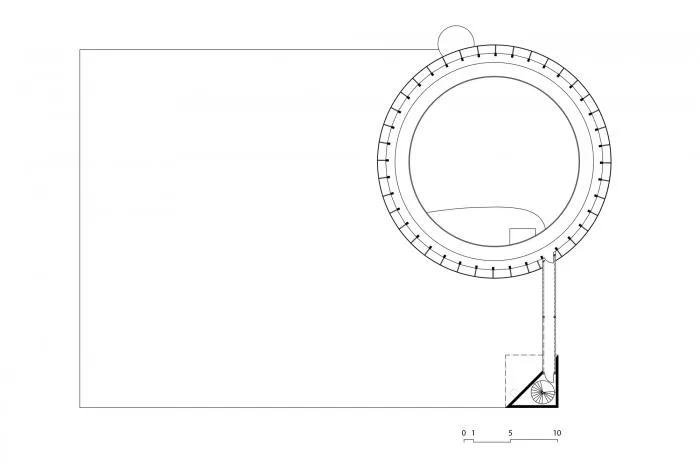
△ Wall frame plan
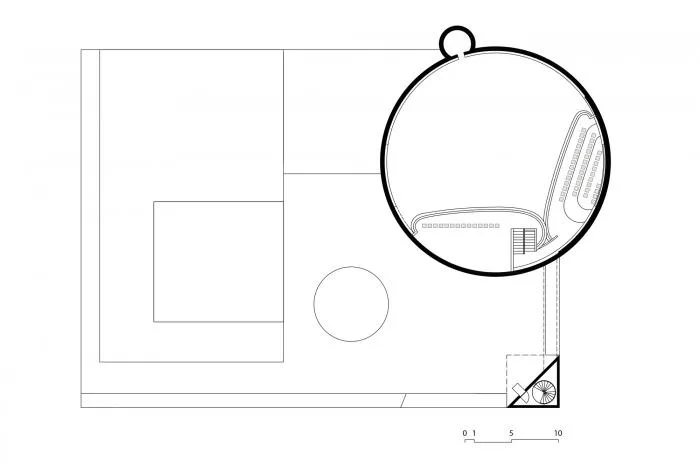
△ Chapel plan
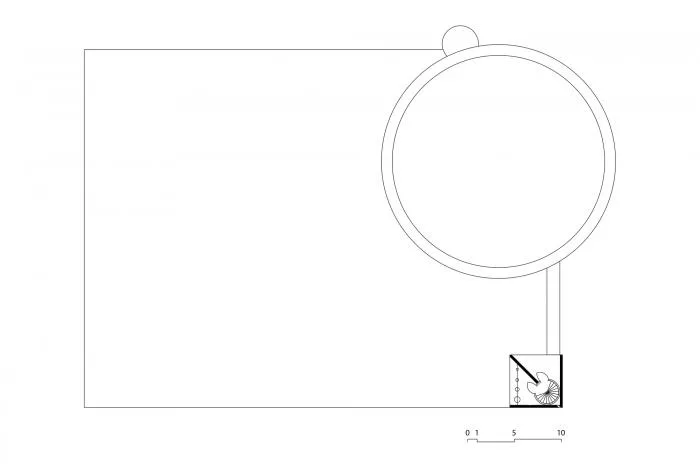
△ Tower floor plan
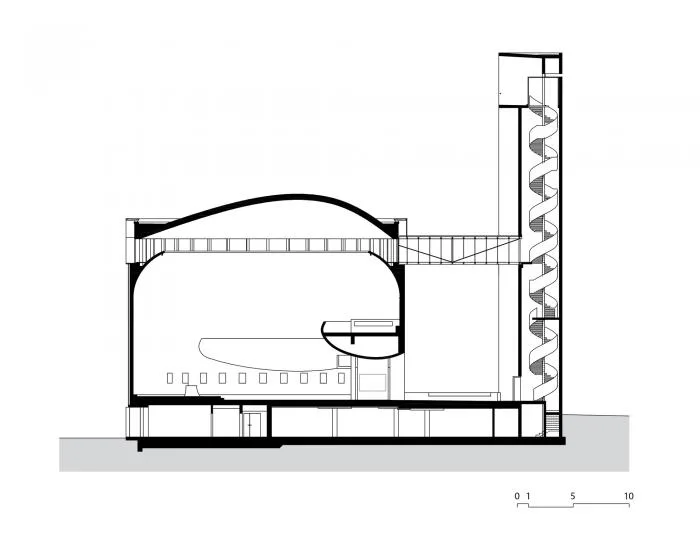
△ Section diagram
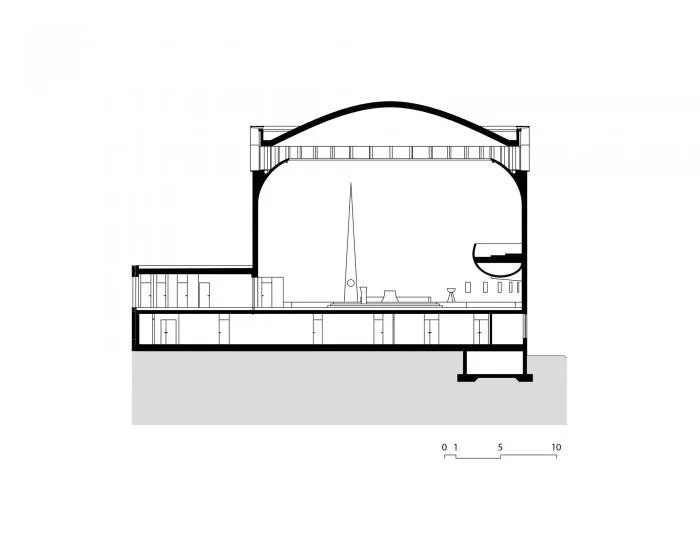
△ Section diagram
Project Information
Project Type: Church
Location: Brno-Sever, Czech Republic
Architectural Design: Atelier Štěpán
Area: 2350 m²
Year: 2020
Photography: BoysPlayNice
Manufacturers: Glasssolutions, JAP, JÁNOŠÍK WINDOWS-DOORS, Lumideé, Saint-Gobain, TBG Betonmix, Vanceva, Viabizzuno
Design Team: Marek Jan Štěpán, Vanda Štěpánová, František Brychta, Jan Vodička, Martin Kopecký
Client: Roman Catholic Parish of Brno-Lesná
Facade Drawing: Petr Kvíčala












Must log in before commenting!
Sign Up