
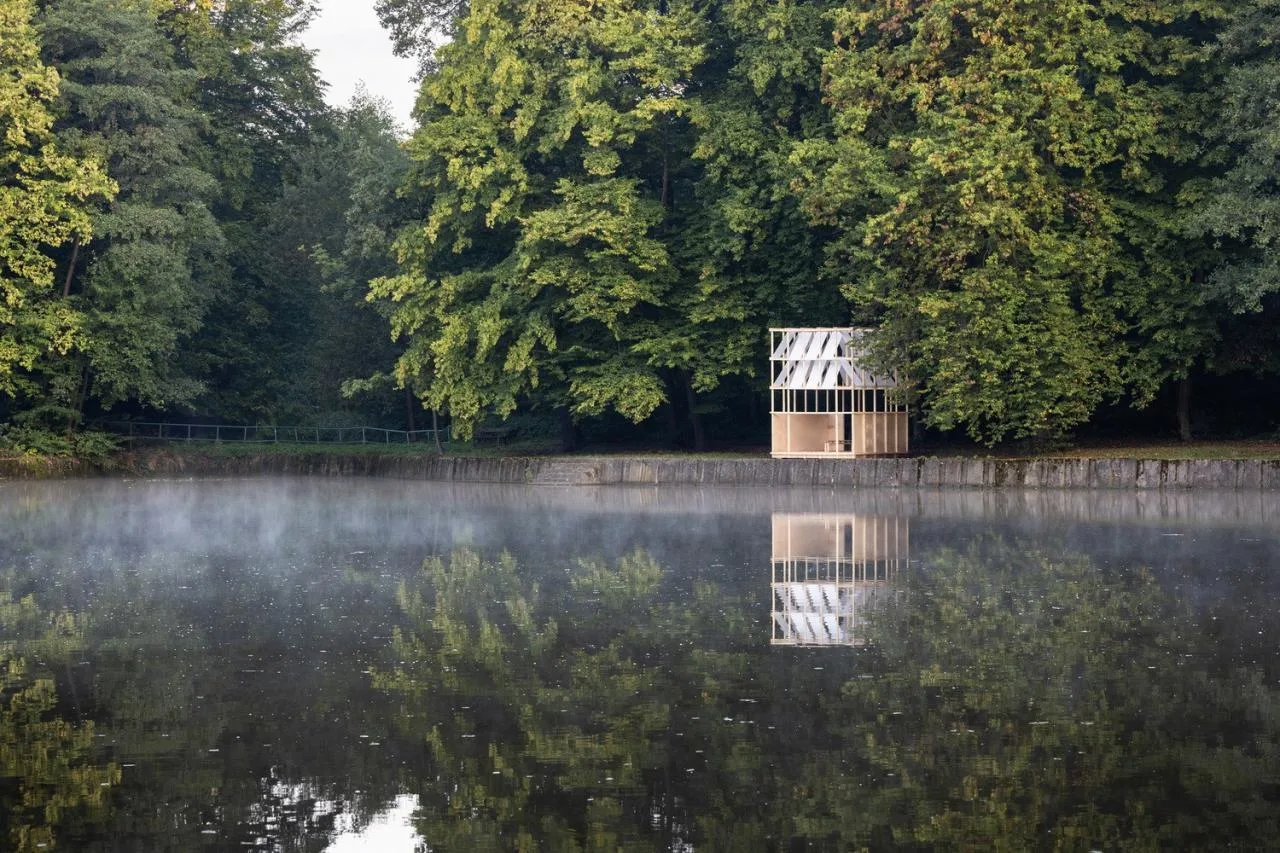
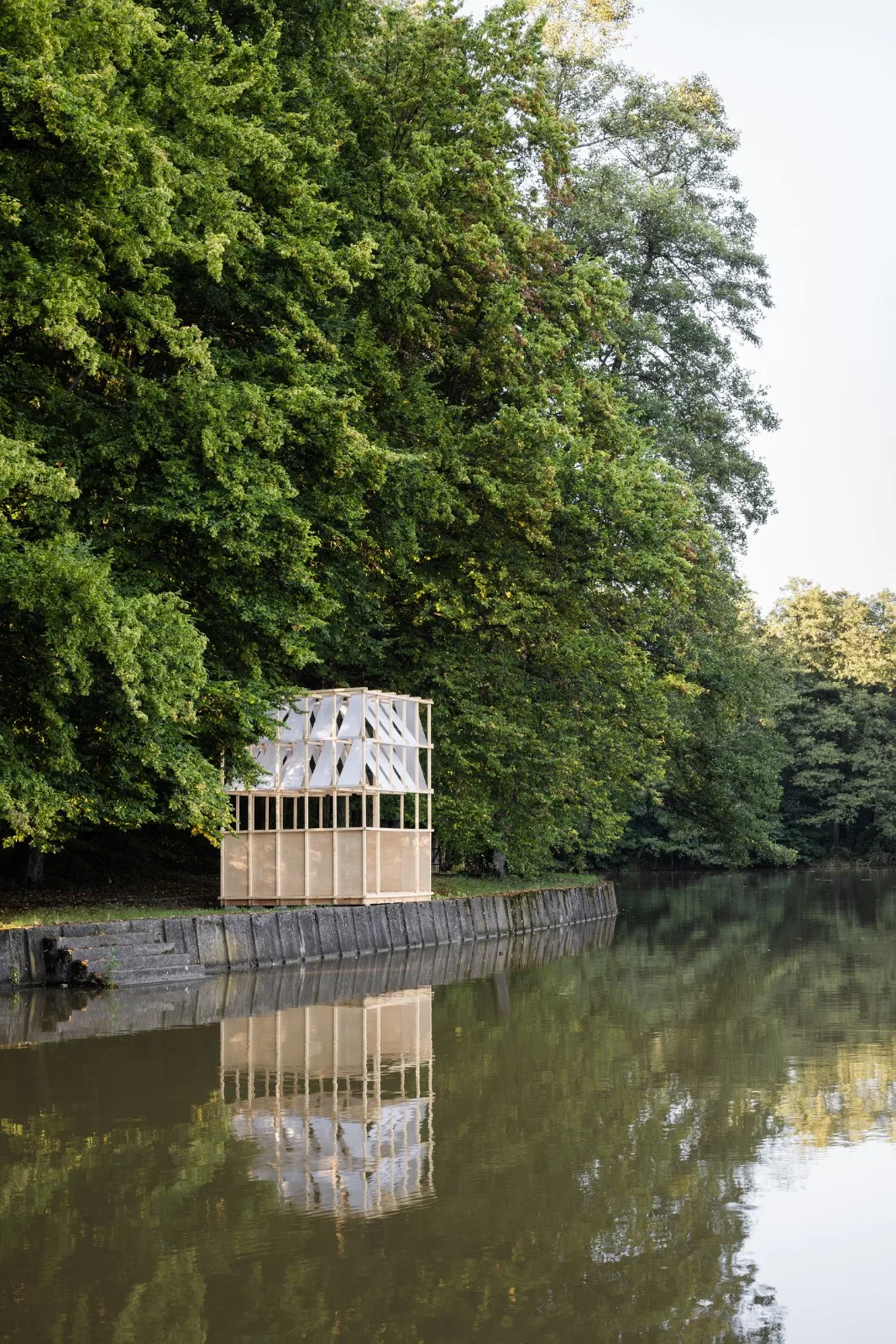
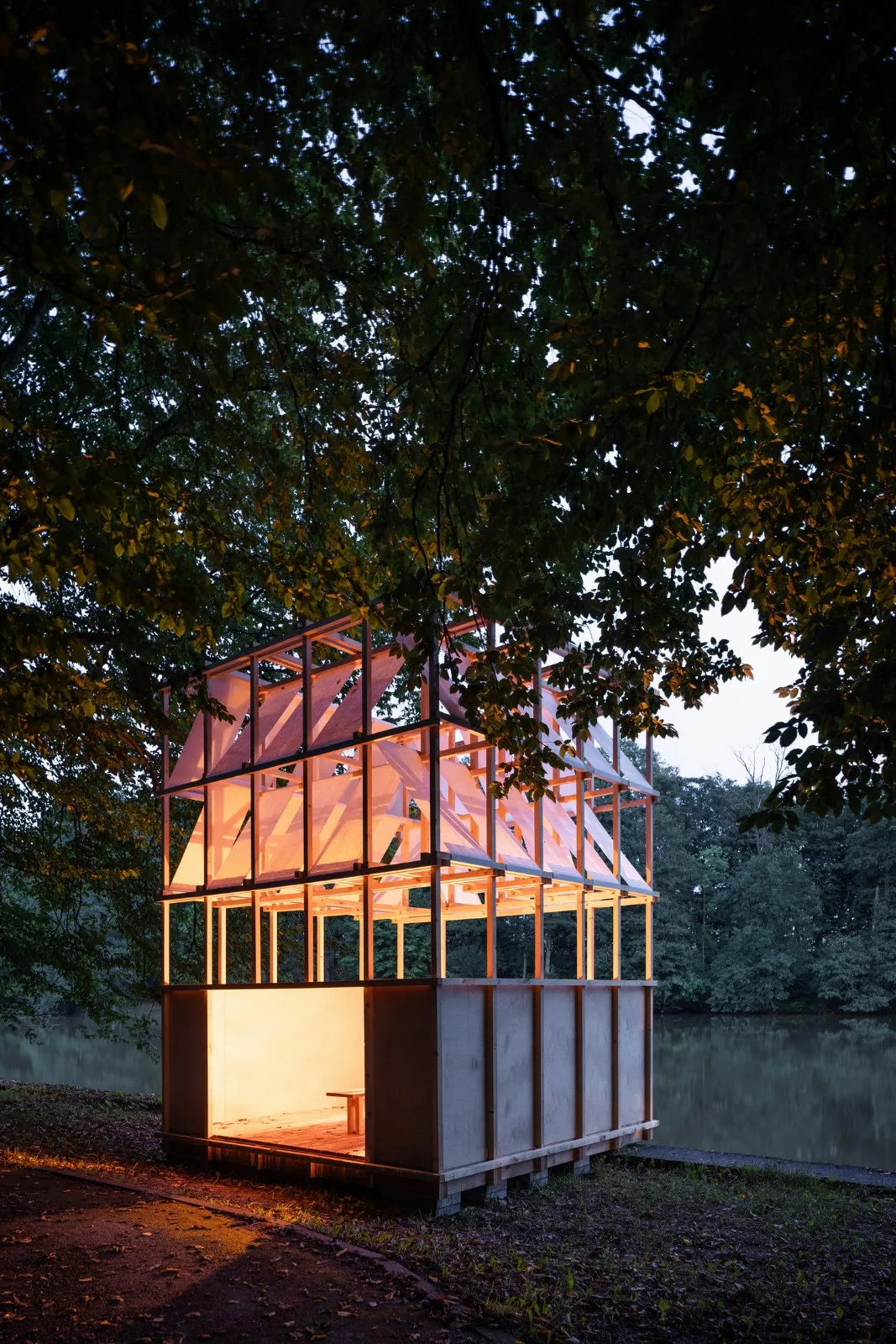
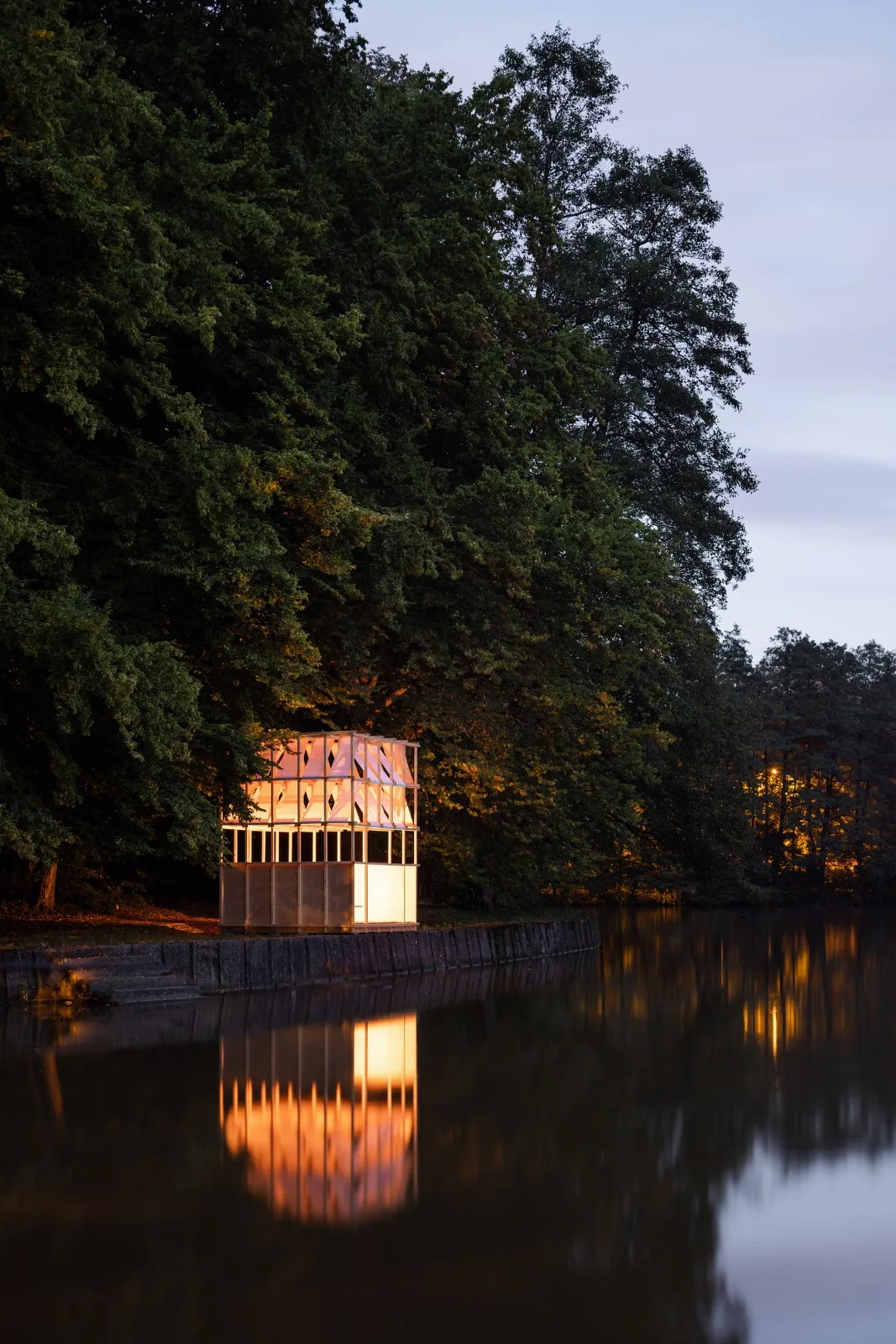
The Tea House Pavilion offers a unique opportunity to connect closely with nature, drawing attention to the sights, sounds, and movements near the reservoir. It encourages visitors to pause, slow their pace, and enjoy the endless views of treetops, the serene water surface, and the clear, expansive scenery, all enveloped in a peaceful atmosphere far removed from everyday bustle.
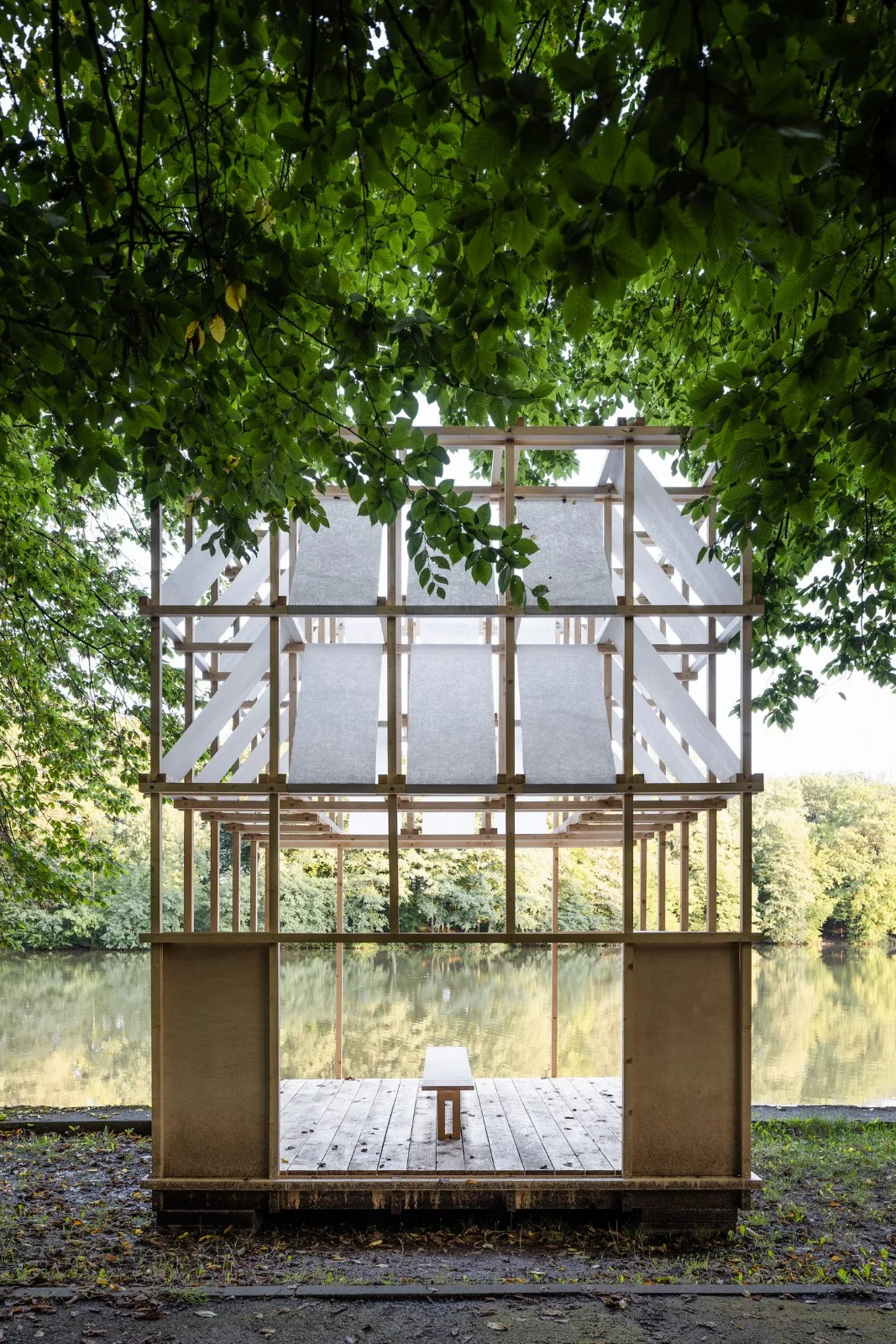
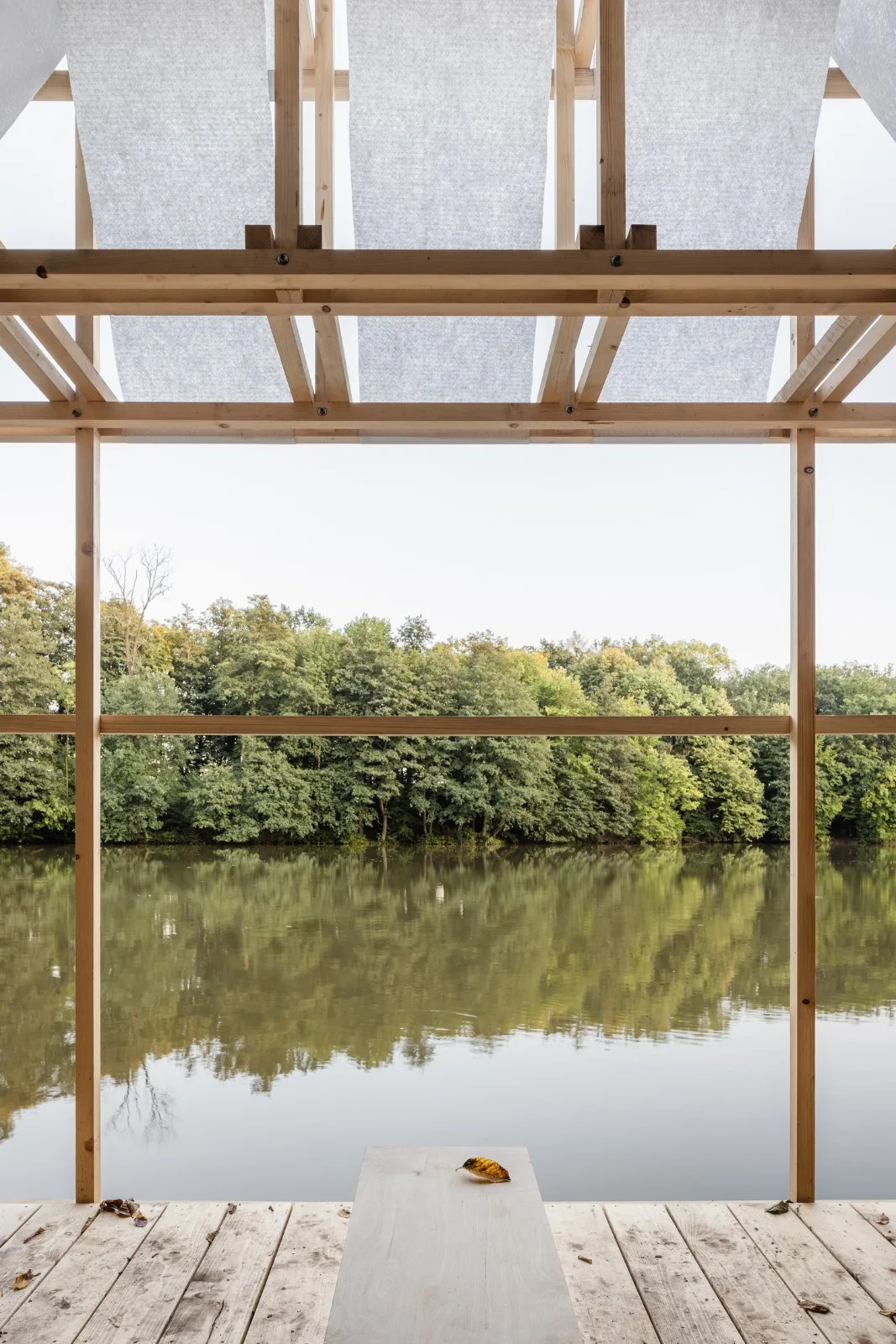
The pavilion’s interior comfortably accommodates six people, allowing them to gather around the table for a tea ceremony in a warm and welcoming setting. The design is subtle, light, and open, inspired by traditional Japanese interiors and blended with modern elements to harmonize delicately with the natural environment.
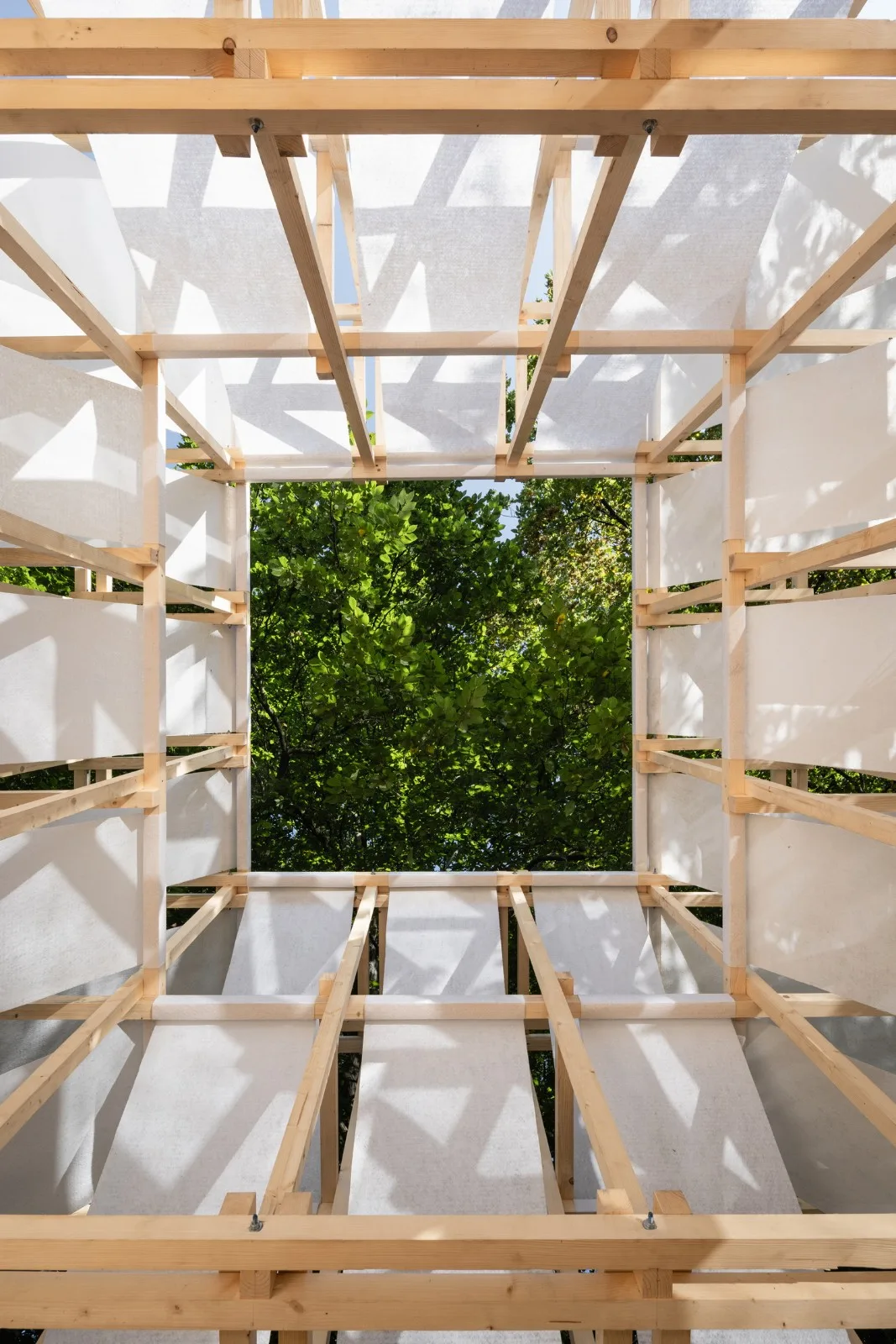
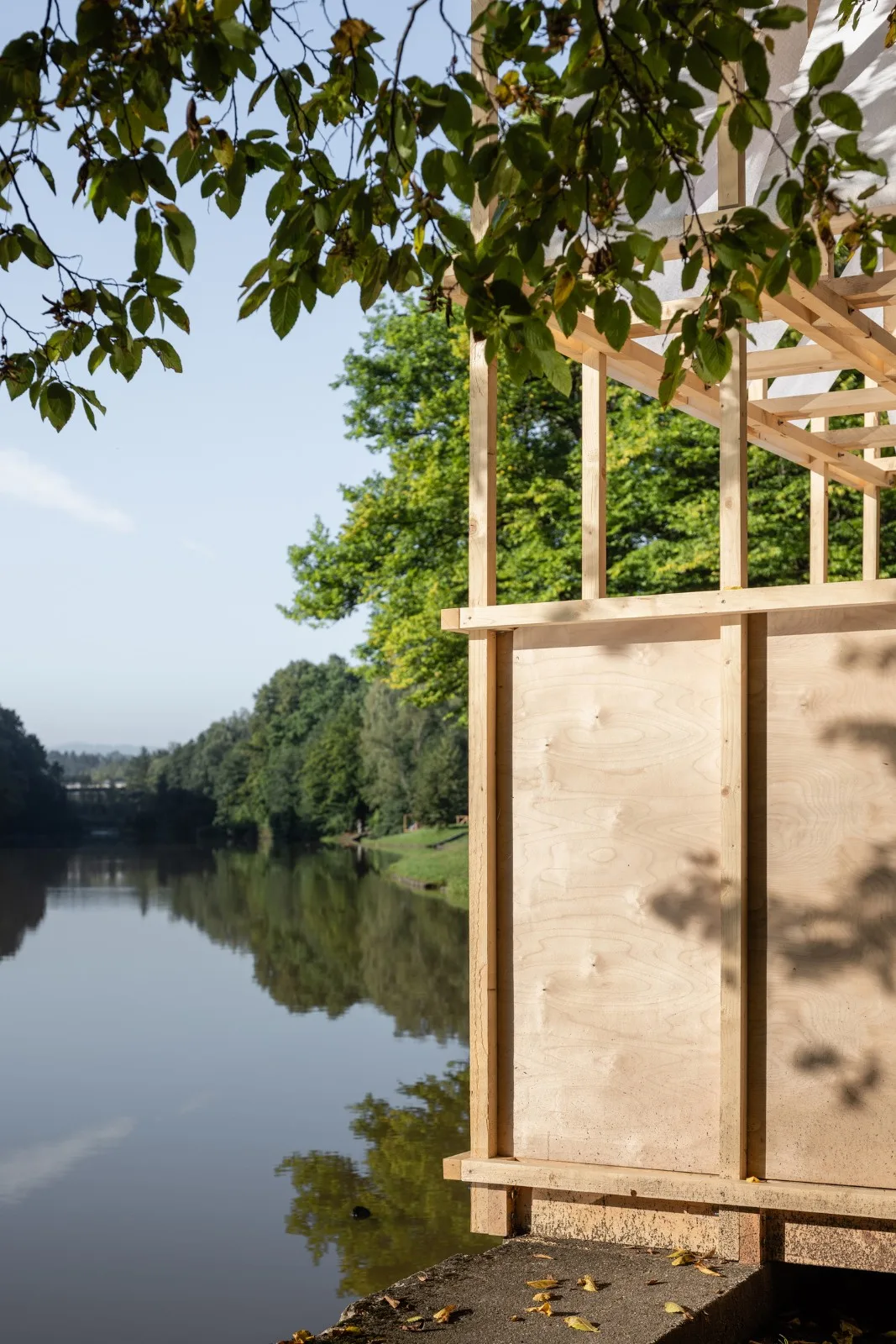
The pavilion incorporates key traditional tea ceremony elements. Upon entering, visitors must bow and pass under the lowest structural beam, echoing the “niriji guchi” sliding door found in Japanese tea houses. This design symbolizes the equality of all participants and gently guides guests’ attention toward the reservoir.
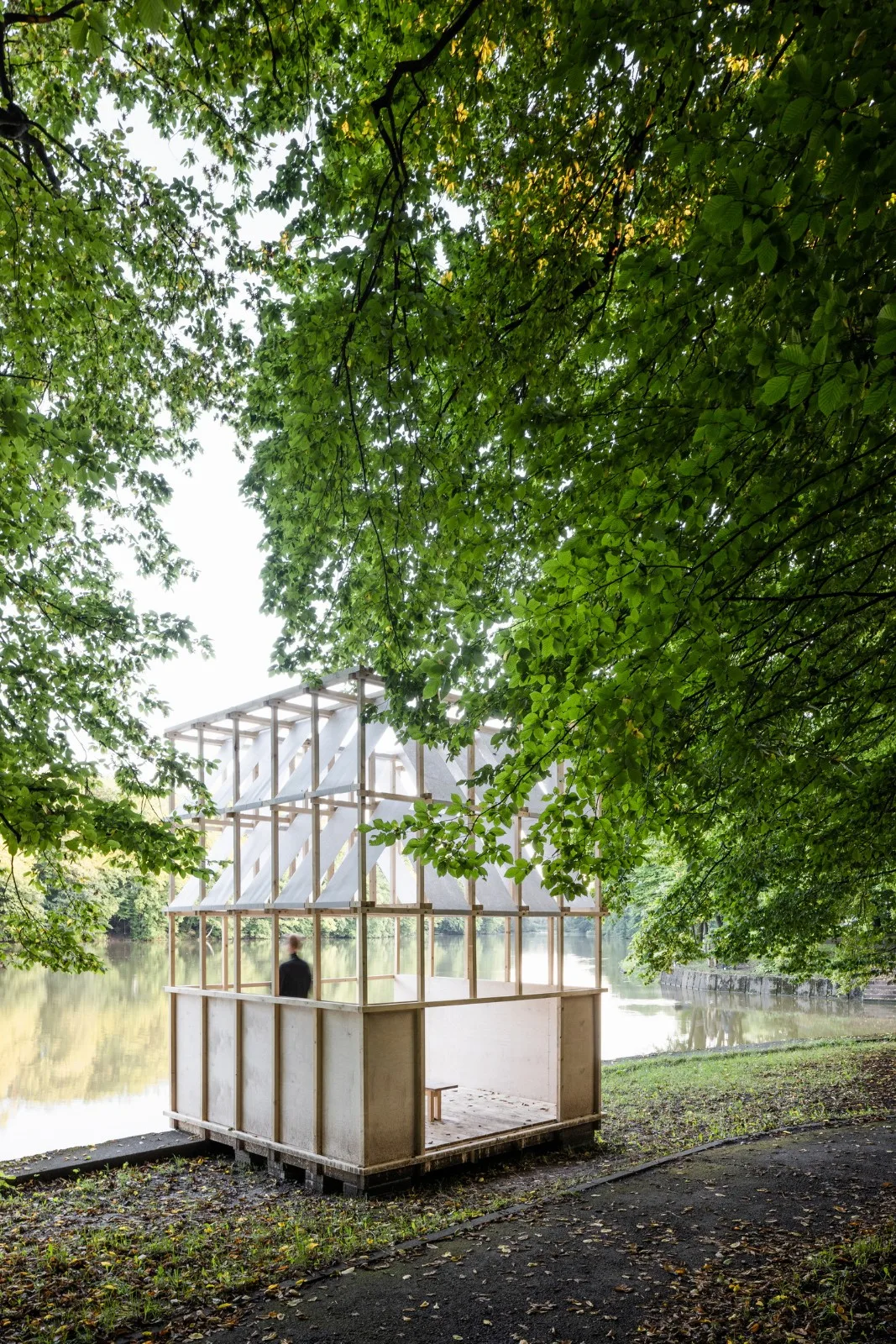
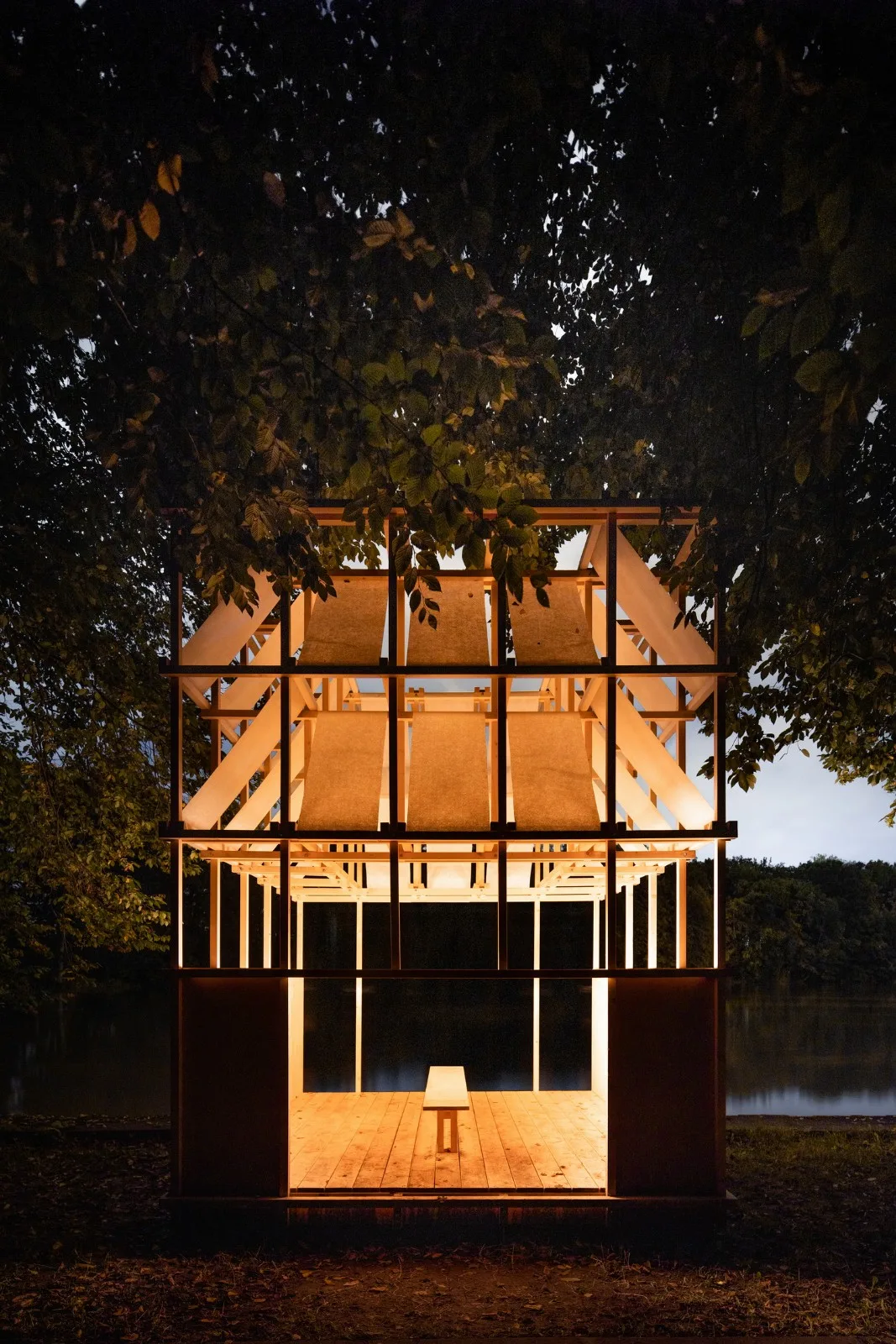
A low table is positioned at the center of the pavilion, inviting visitors to kneel and sit according to Japanese tradition. Reinforced plywood beneath the structure enhances privacy and reduces external noise, creating a secluded interior. The open entrance framework allows clear views inside, so passersby can observe the tea ceremony in progress.
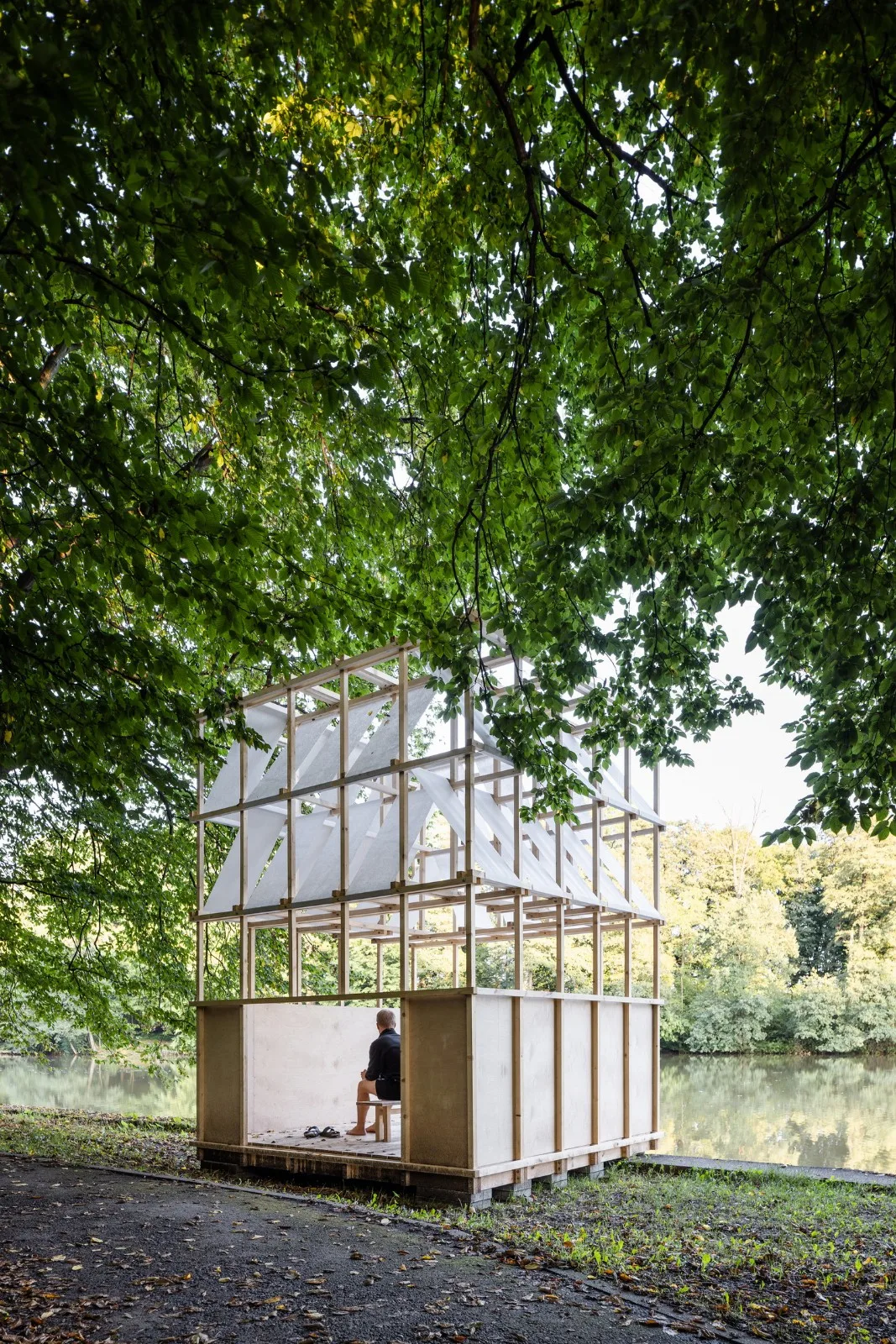
The table’s adjustable heights make it versatile—used for tea ceremonies or as seating for quiet contemplation—reflecting Japan’s minimalist and refined aesthetic. This single piece of furniture anchors the pavilion’s interior, encouraging social interaction as participants gather around.
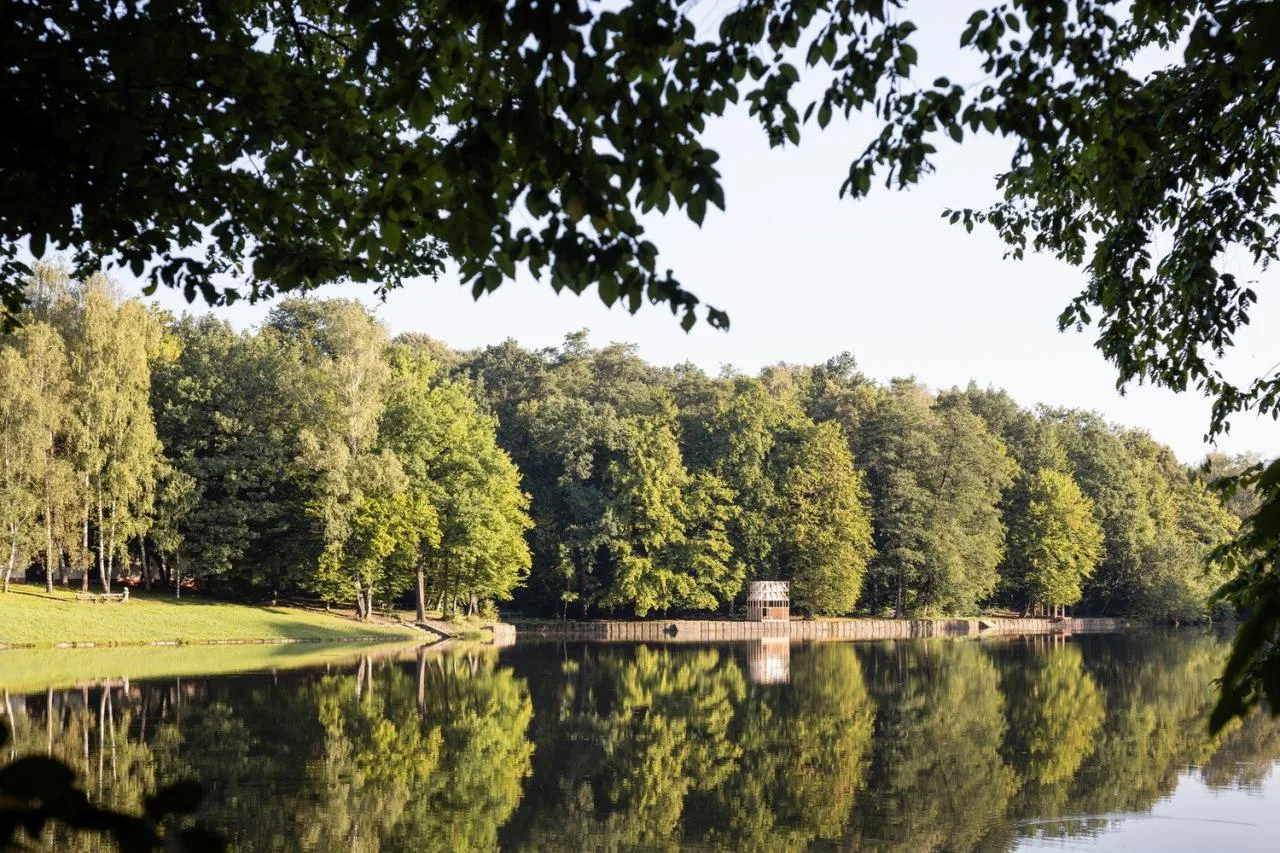
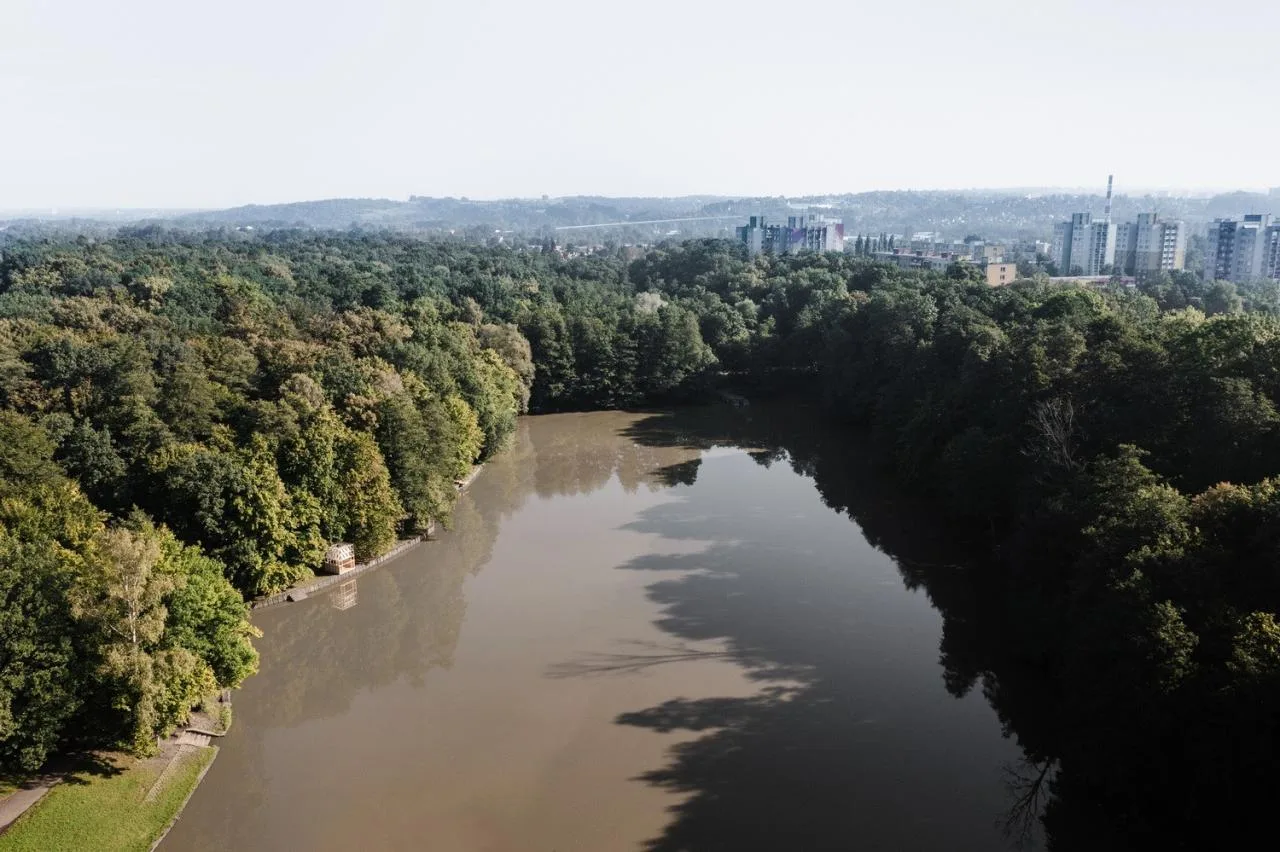
Beyond its multifunctionality, the pavilion serves as a tranquil summer retreat, allowing visitors to savor the calming natural landscape. Its simple, square footprint uses basic geometric forms to represent the relationship between nature and humanity.
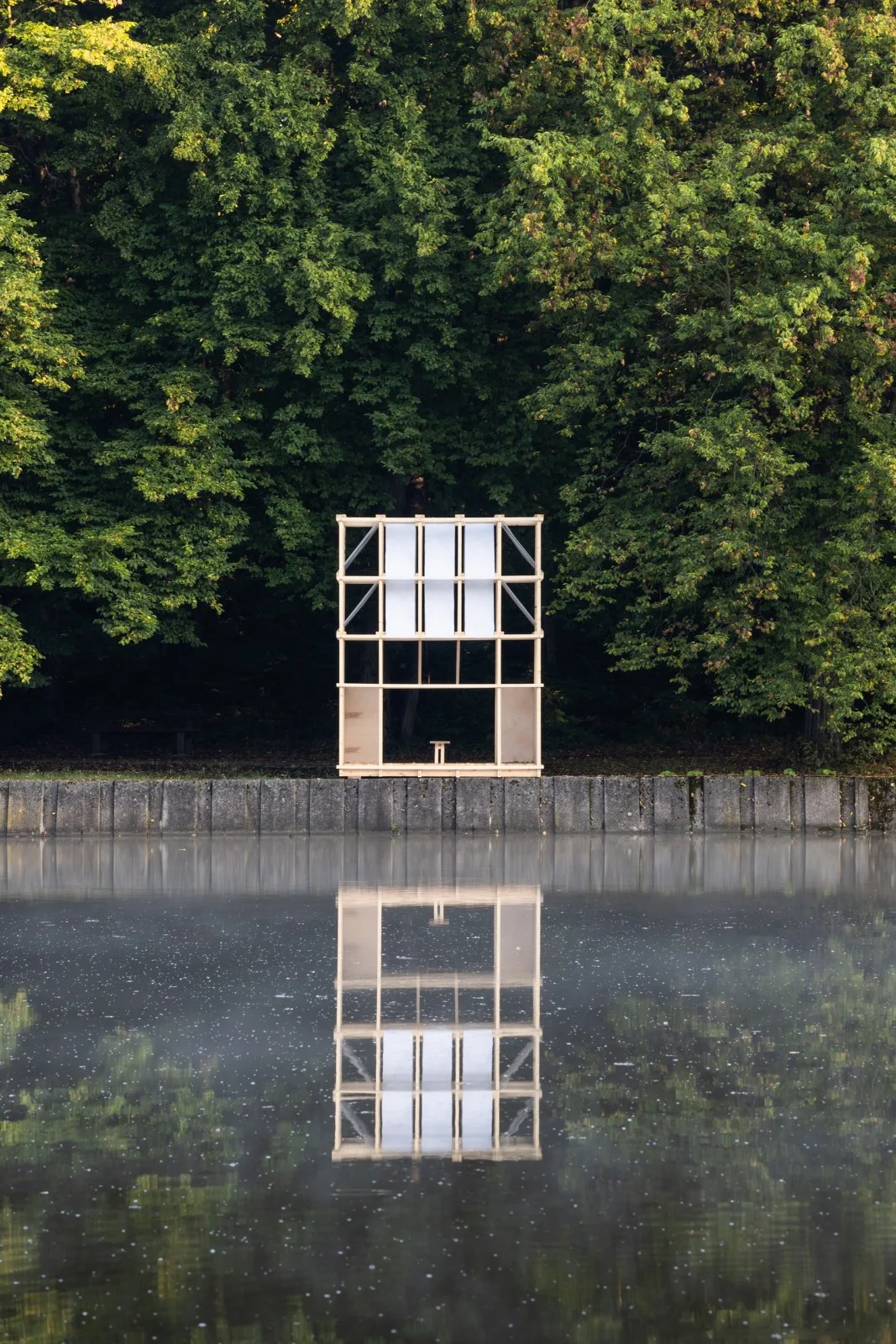
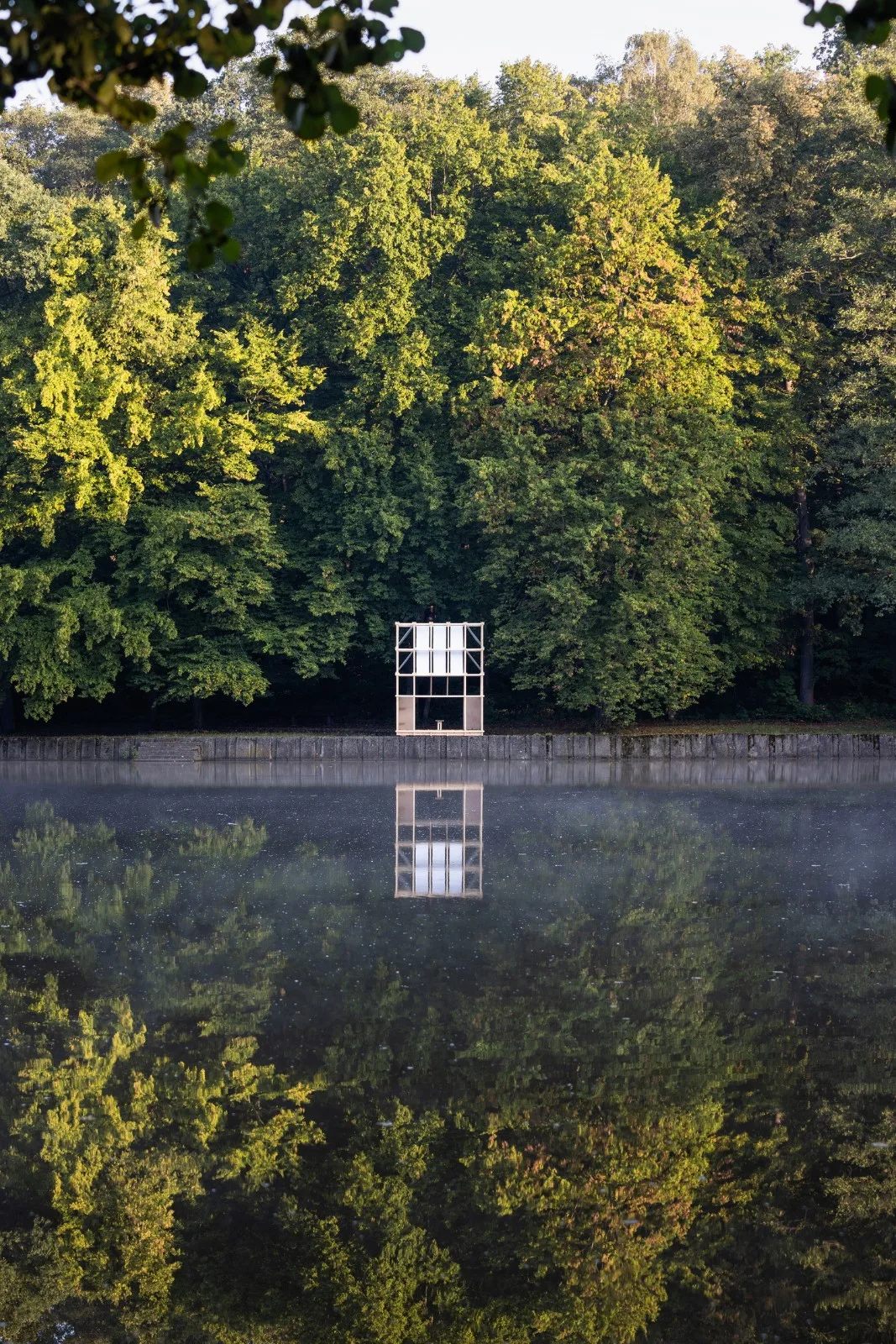
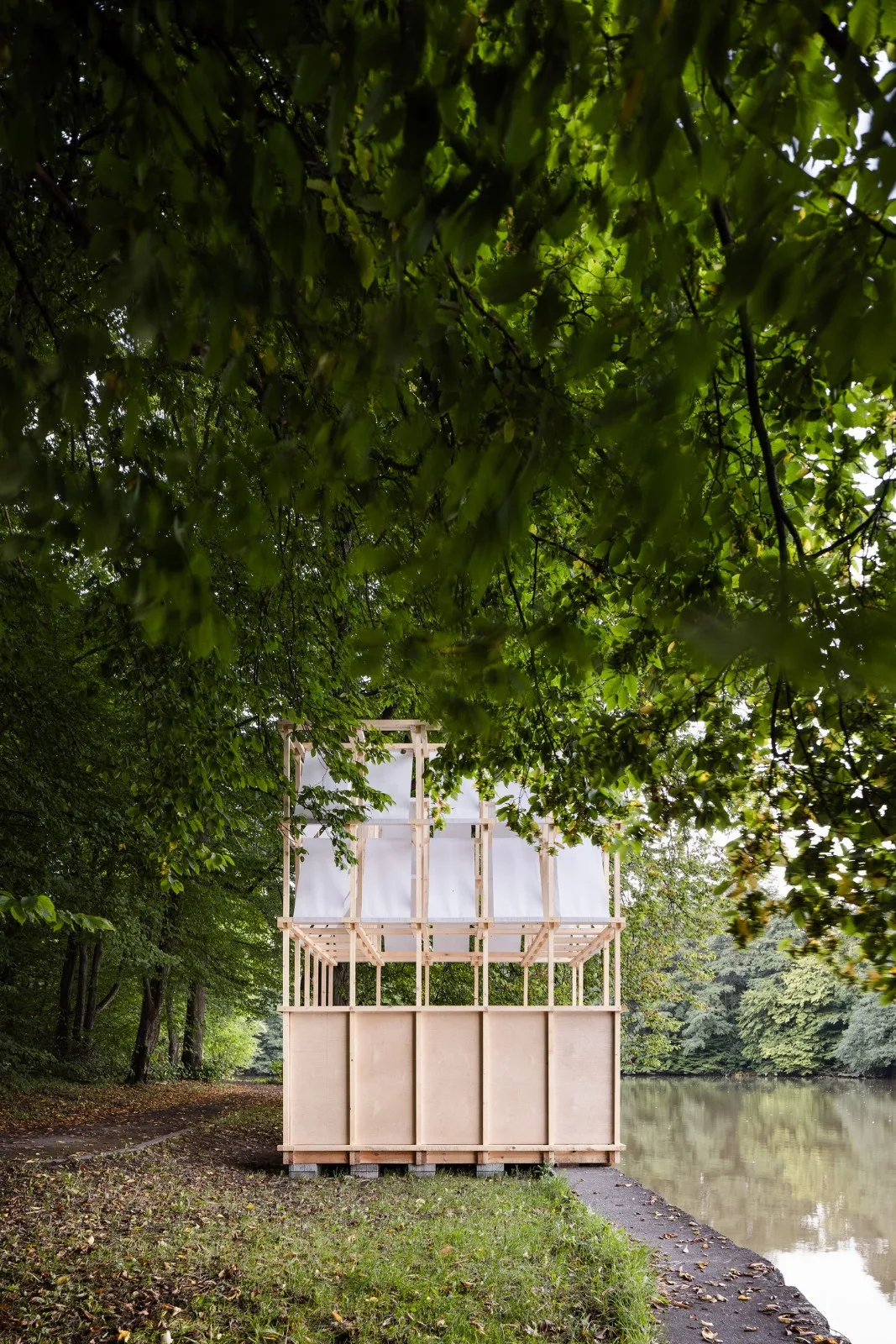
The pavilion’s structure is based on a 3 x 3-meter column grid with a height of 4 meters, which is the maximum allowable height for the square-section spruce wood prism used. The natural wooden elements combined with soft fabrics create a comfortable, simple atmosphere that does not distract but rather enhances the tea ceremony experience, fostering peace and harmony.
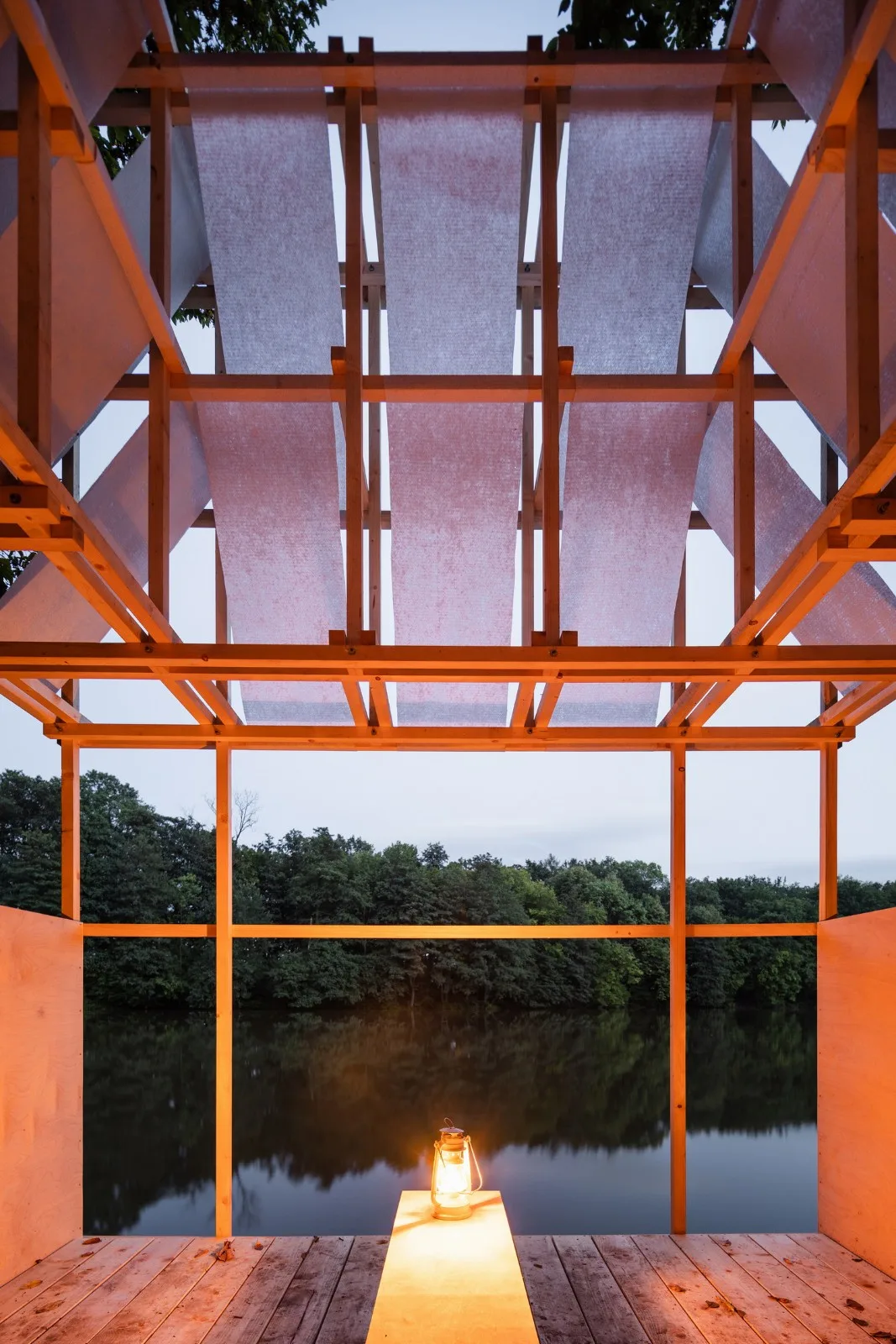
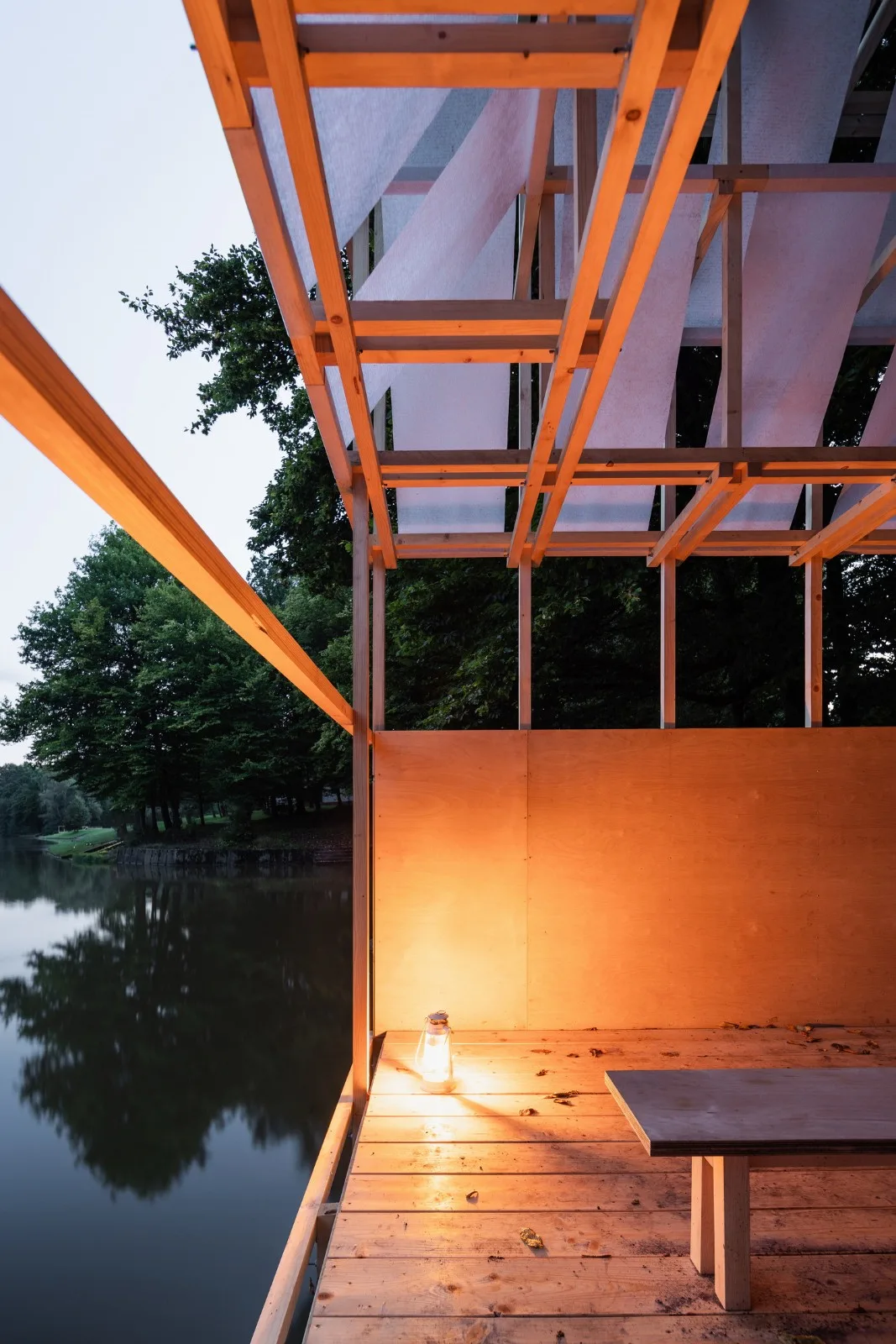
Materials such as spruce flooring, birch plywood, and roof geotextile are used throughout the pavilion. Its form is inspired by the traditional tea room, with birch plywood walls and diagonally secured fabrics that create privacy and protection from wind and rain. At the same time, the framework maintains ventilation and openness, connecting the interior with the outside world and avoiding a closed-off, conventional atmosphere. The two-story spanning textiles add an element of playfulness, while also paying homage to traditional Japanese architecture.
Project Drawings
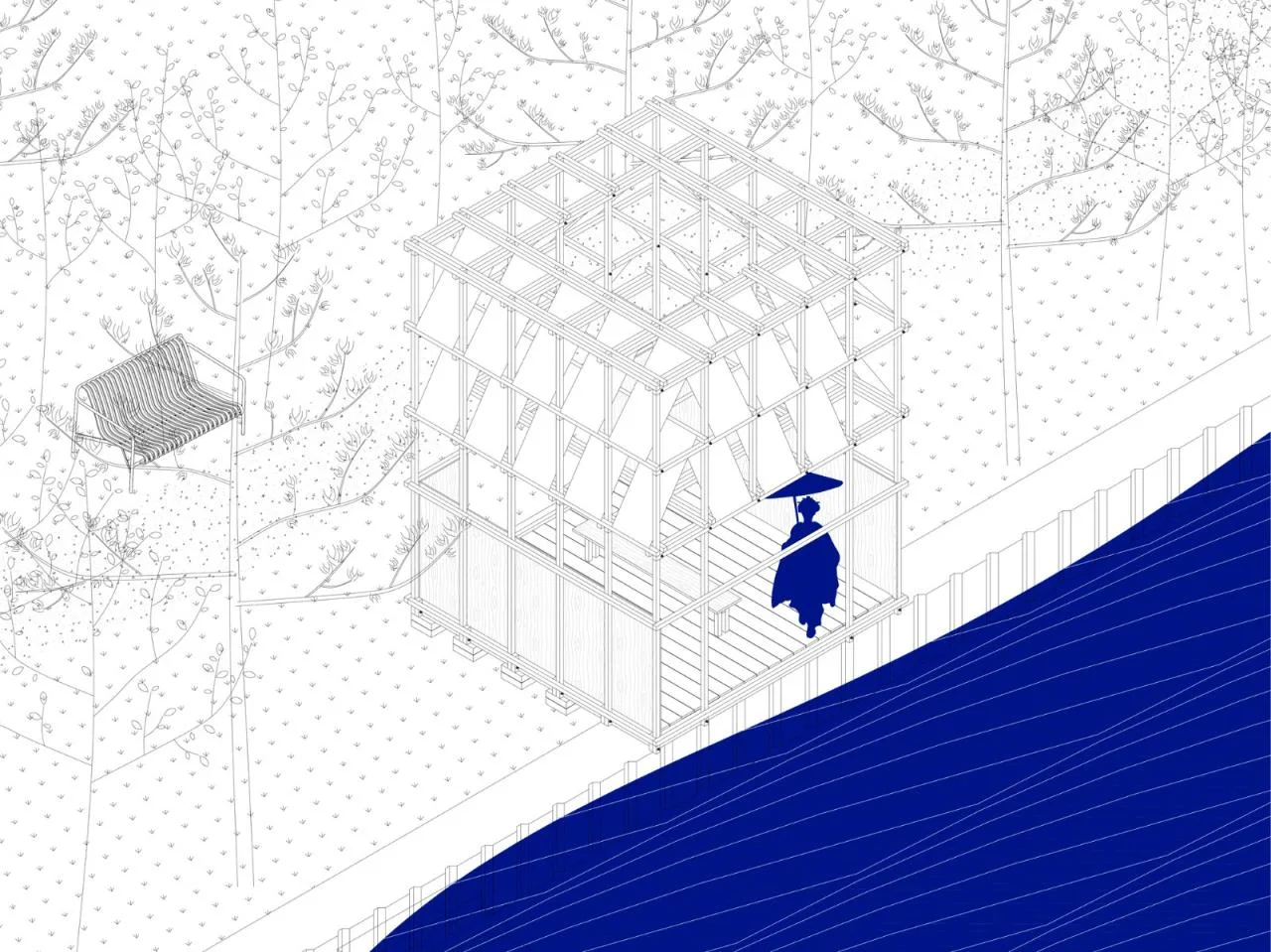
△ Perspective View
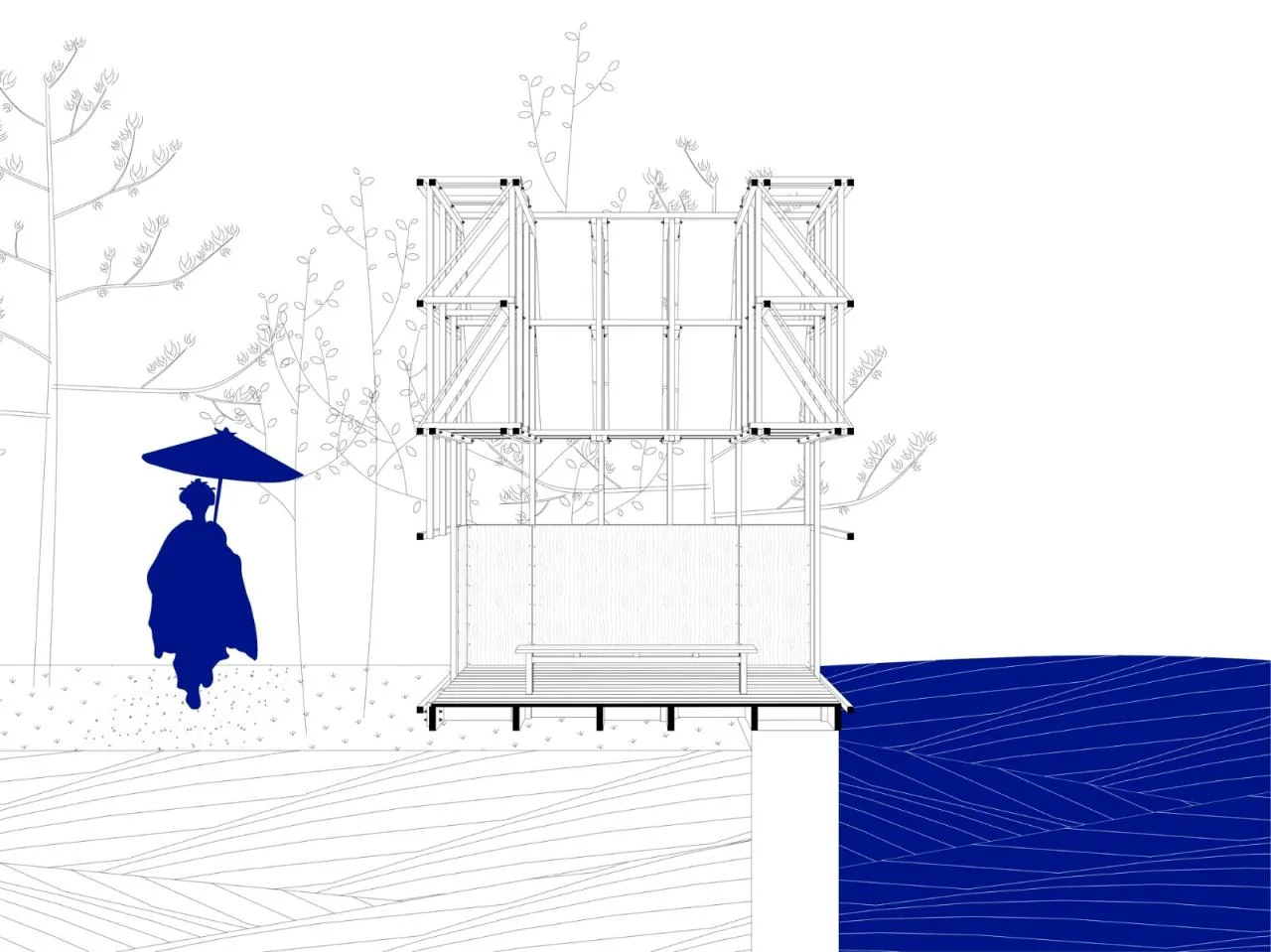
△ Section Diagram
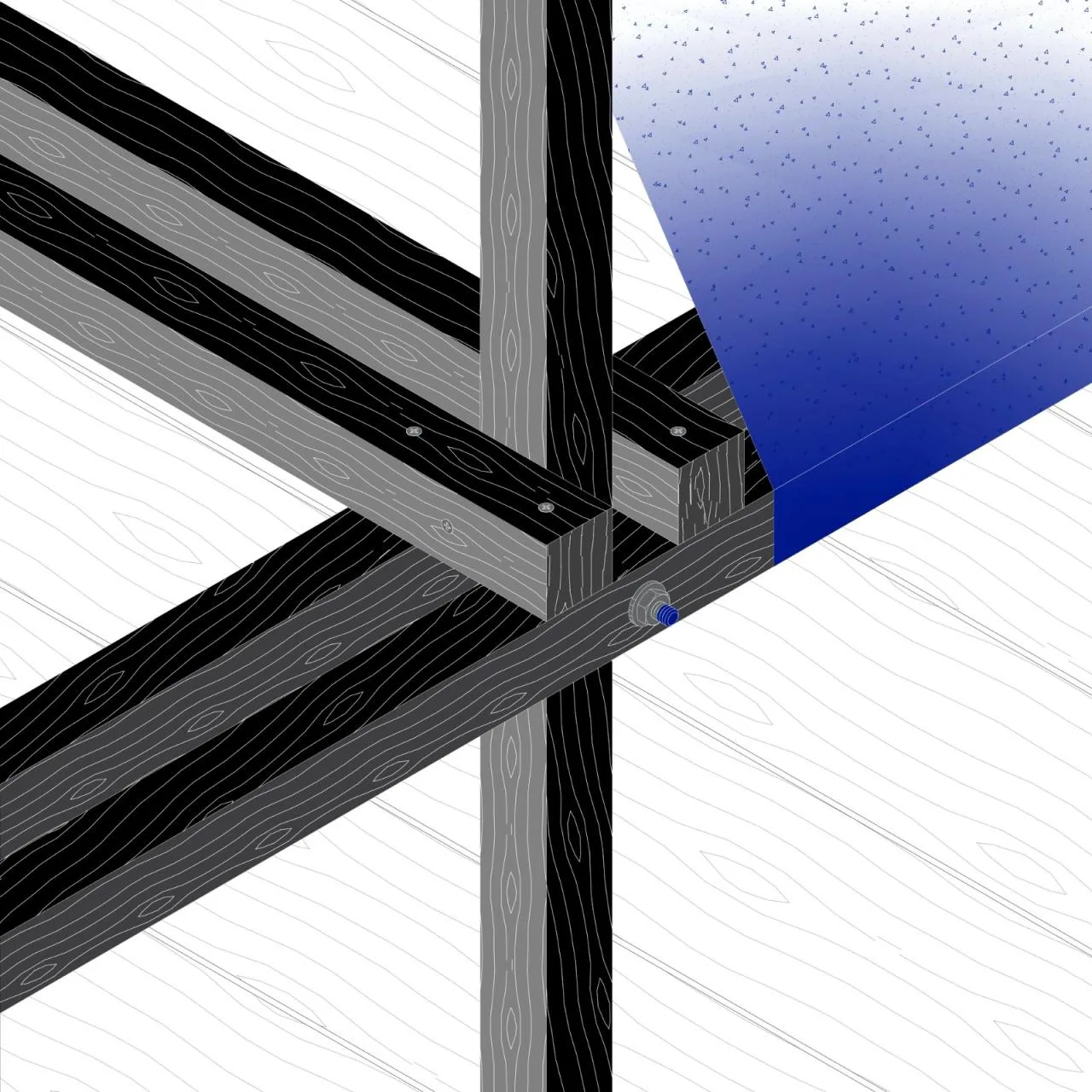
△ Detailed Perspective View
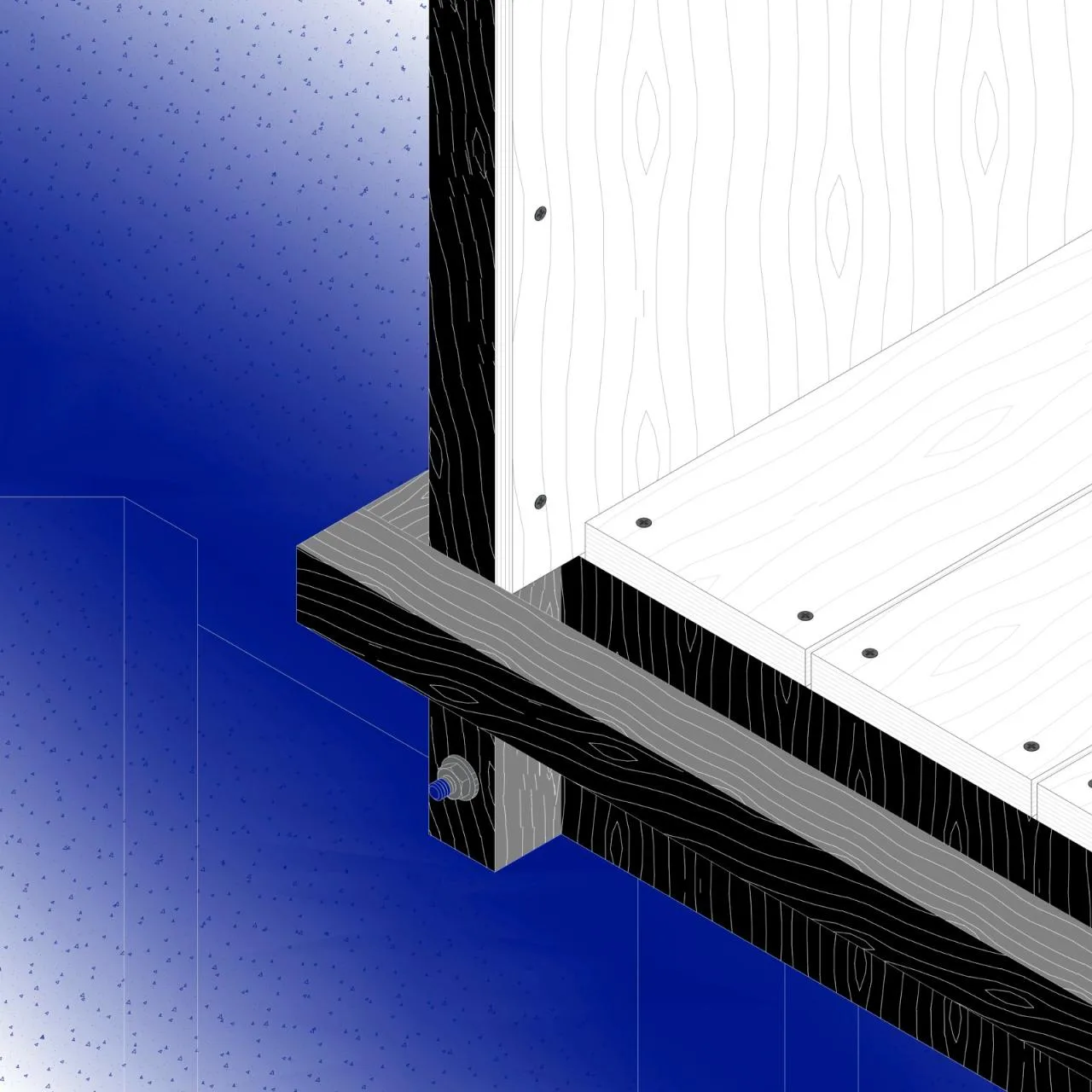
△ Detailed Perspective View
Project Information
Architect: Grau Architects
Area: 9 m²
Project Year: 2022
Photographer: Matej Hakár
Lead Architects: Andrej Olah, Filip Marčák, Jana Filípková, Alexandra Májska
Co-author Student Seminar Participants: Julia Kurnik, Alicja Łosik, Alexandra Gospodarek, Katarzyna Owczarska, Maria Pawłova, Maciej Kuratczyk, Michał Teodorczyk, Jan Chmurski
Building Purpose: Pavilion
Location: Czech Republic













Must log in before commenting!
Sign Up