
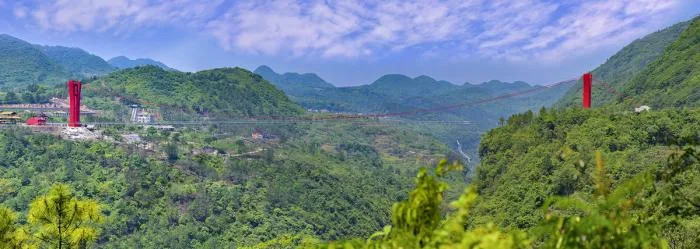
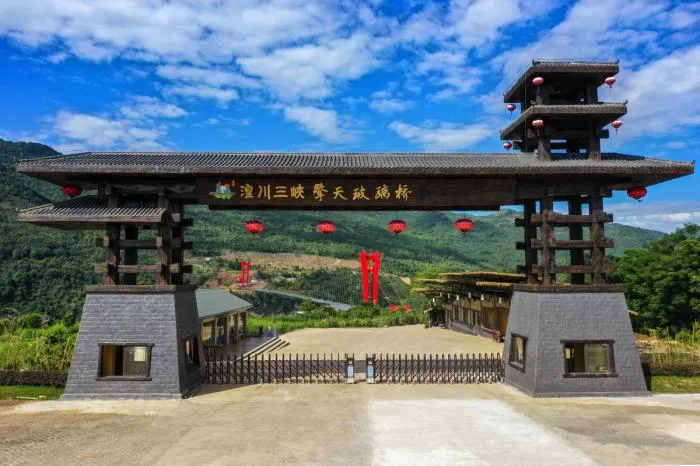
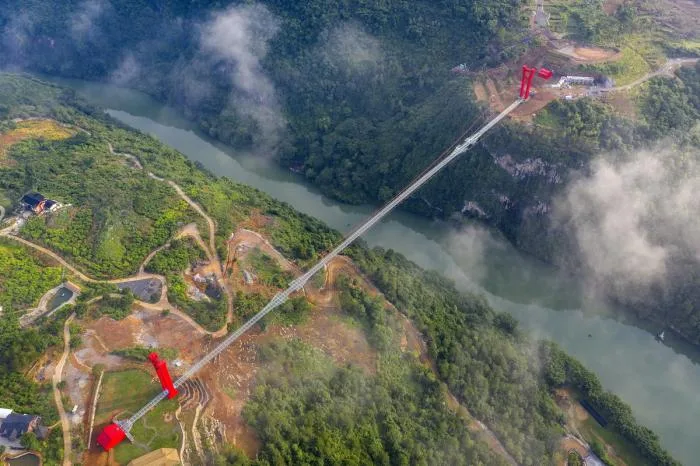
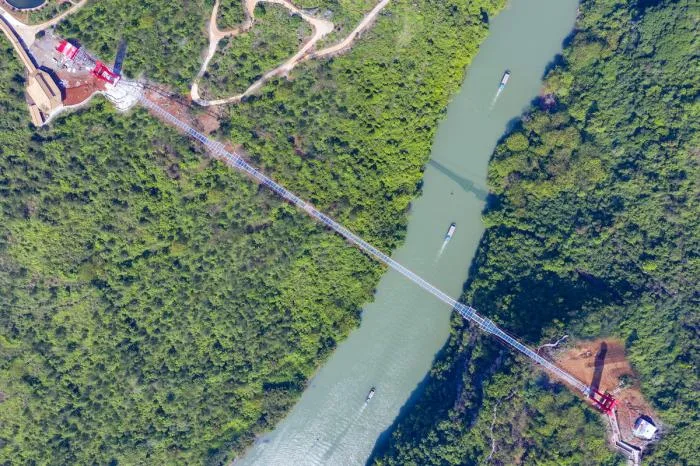
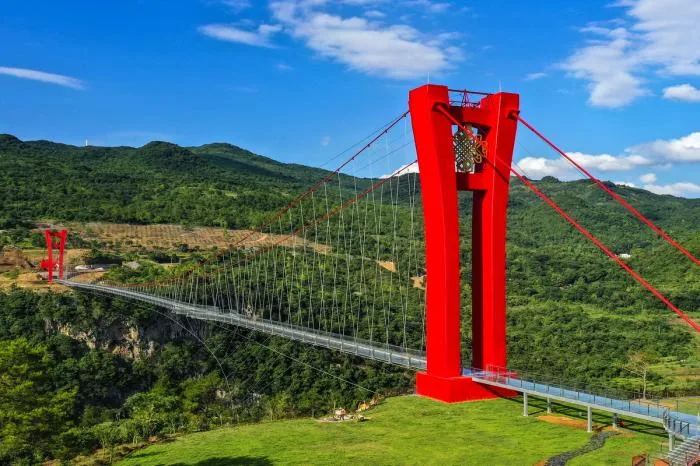
A bridge is not just a structure rising from the landscape; it is an art form symbolizing connection and communication. The Huangchuan Three Gorges Qingtian Glass Bridge, designed by the Architectural Design and Research Institute (UAD) of Zhejiang University and located in Lianzhou, northern Guangdong, stands as a landmark that naturally integrates into its environment. Through its subtle design and innovative construction techniques, it creates a seamless link between nature and human-made elements.
Blending Virtual and Real
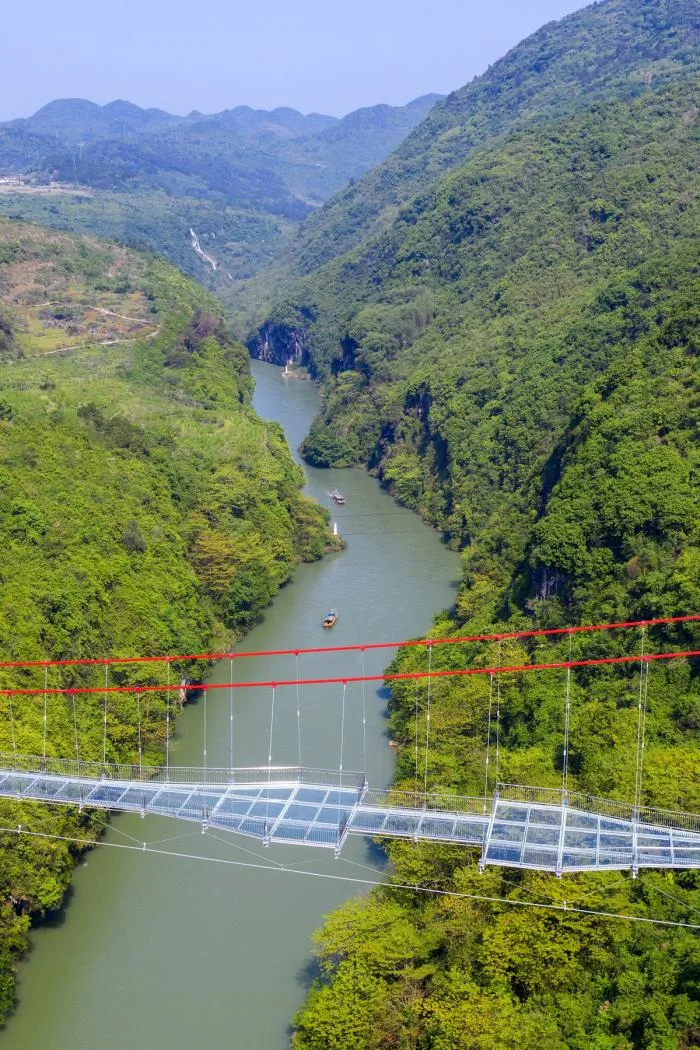
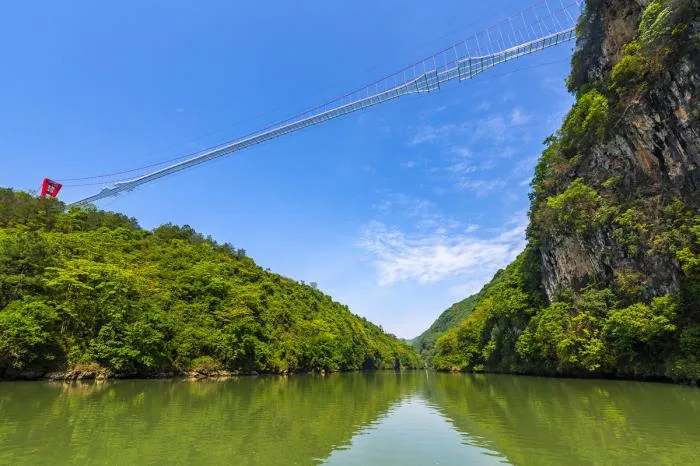
The Huangchuan Three Gorges, often called the “Lingnan Poetry and Painting Corridor,” is the main tributary of the Beijiang River within the Pearl River basin. It also marks the endpoint of the ancient Qin and Han roads. The renowned poet Han Yu immortalized this place with his quatrain “Stay at Dragon Palace Beach.” This glass suspension bridge spans the steep cliffs of the Three Gorges in Huangchuan, overlooking the largest waterfall group in northern Guangdong. It resembles a majestic dragon harmoniously blending with its surroundings.
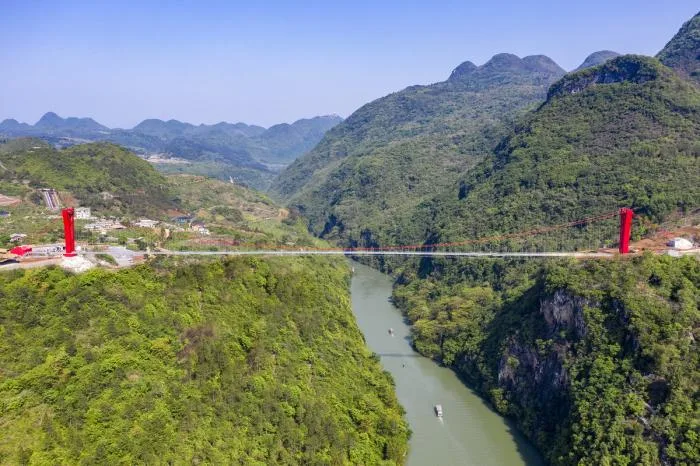
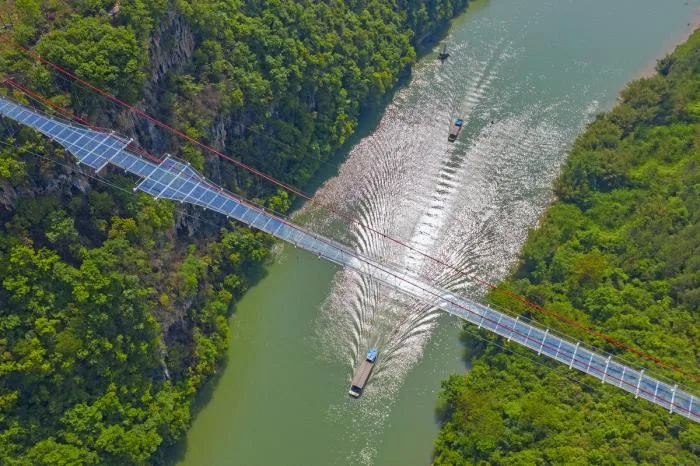
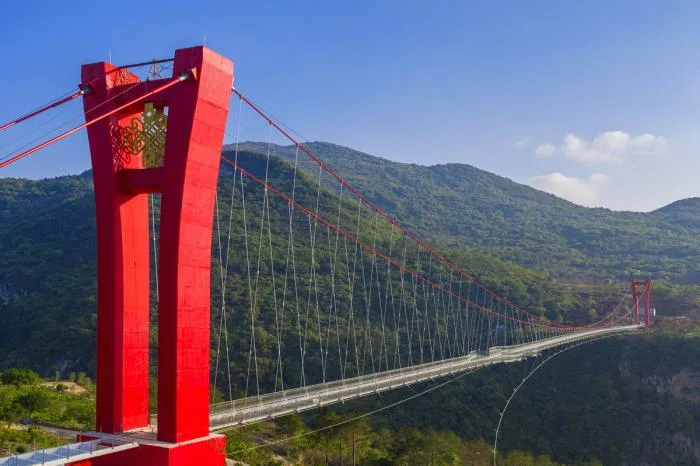
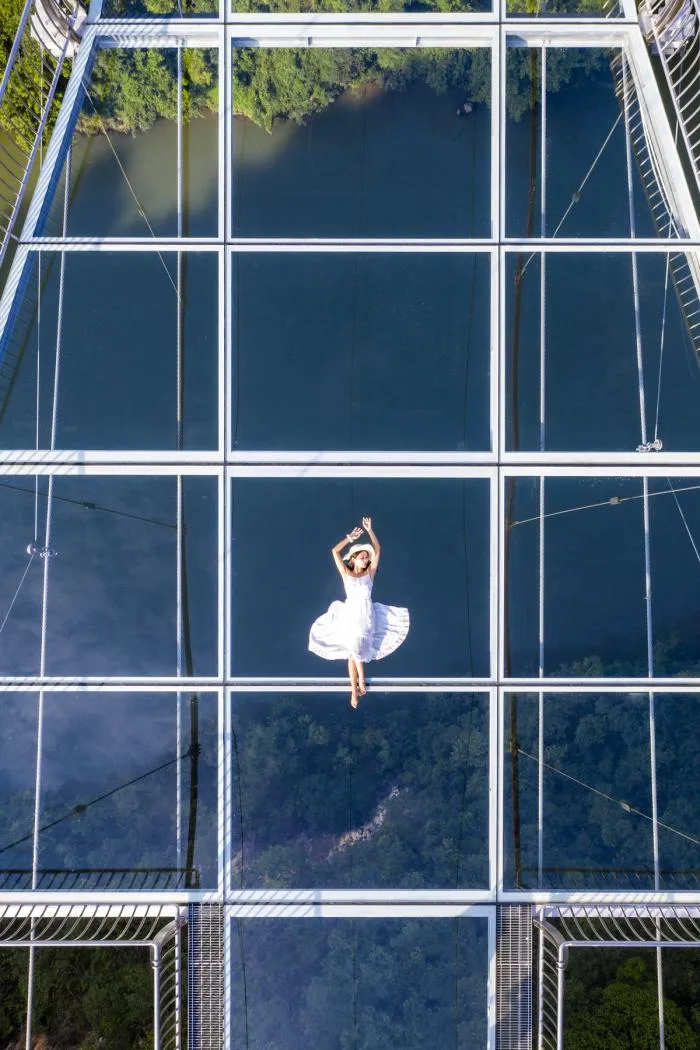
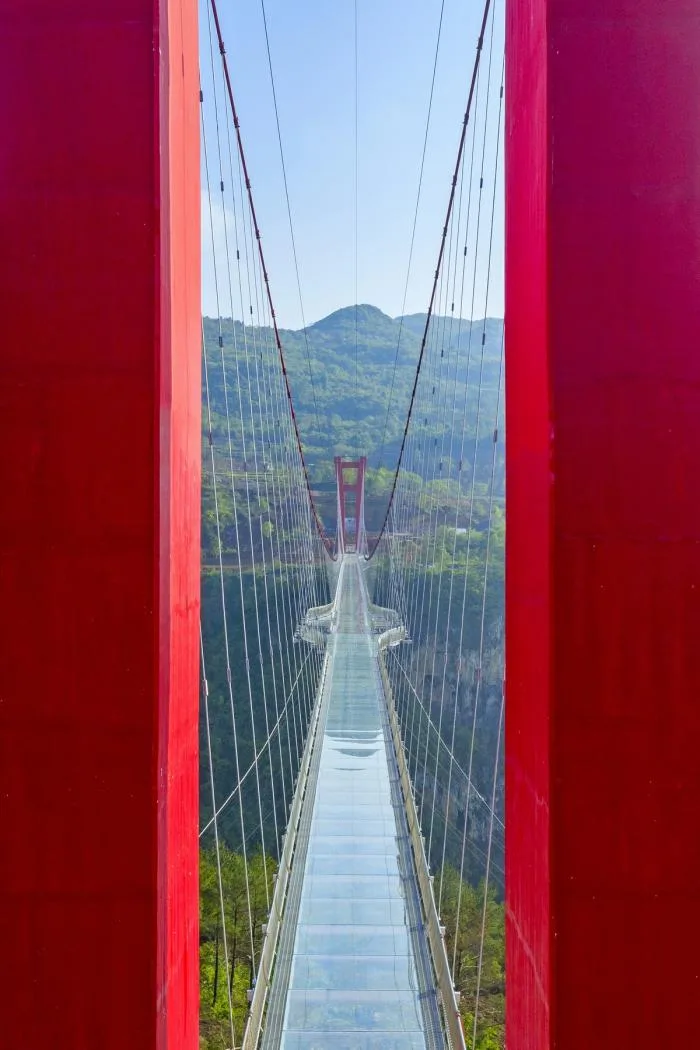
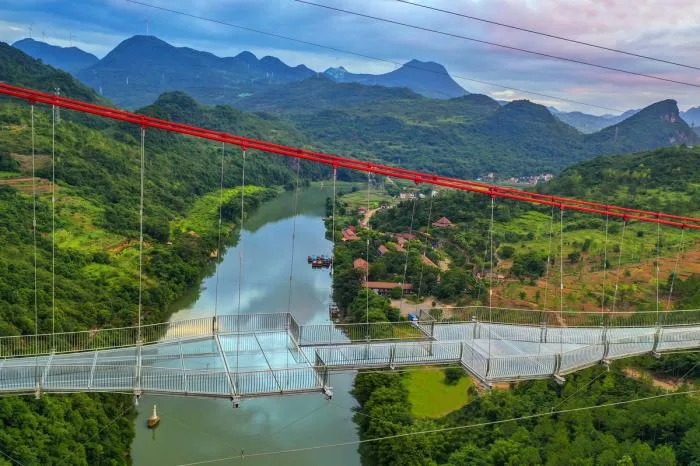
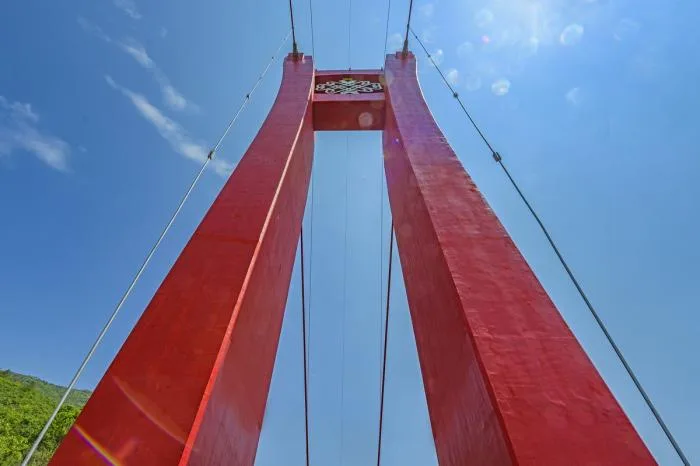
The bridge deck is made of three layers of ultra-white laminated tempered glass, each 4.5cm thick, offering a light transmittance of 99.15%. This results in a crystal-clear surface with exceptional brightness and a high refractive index. Flanked by vertical arc-shaped stainless steel guardrails on both sides, and accentuated by vibrant Chinese red on the bridge towers and main cables, the structure beautifully combines elements of illusion and reality, merging modern design with classical influences.
Adapting to the Environment
Located in southeastern China, Guangdong Province frequently experiences typhoons during summer. Given the bridge’s long span and flexible suspension structure, wind resistance was a crucial design consideration. The team conducted segmental wind tunnel tests and finite element simulations to analyze the bridge’s natural frequency and vibration modes. These studies helped determine key design parameters, such as the critical wind speed for flutter and the optimal closure level of the guardrails, ensuring both structural safety and longevity.
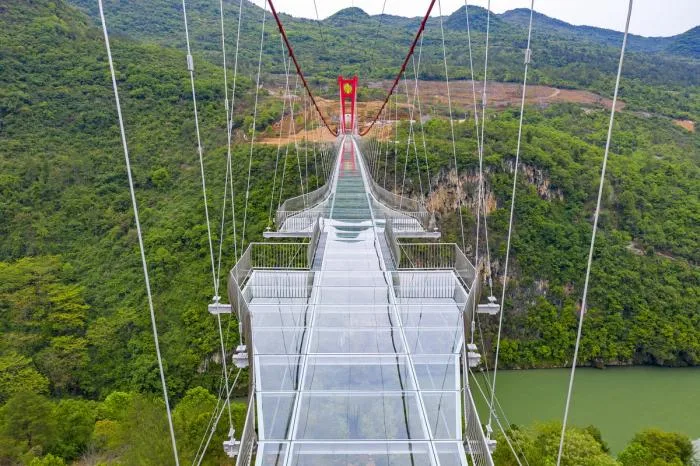
To enhance lateral stability and wind resistance, the design incorporates tilted anti-suspension wind-resistant cables on both sides of the bridge deck, anchored securely to concrete pile foundations. The site’s challenging karst geology and residual silty clay layers required careful foundation design and construction to maximize safety and structural integrity.
Innovative Landmark
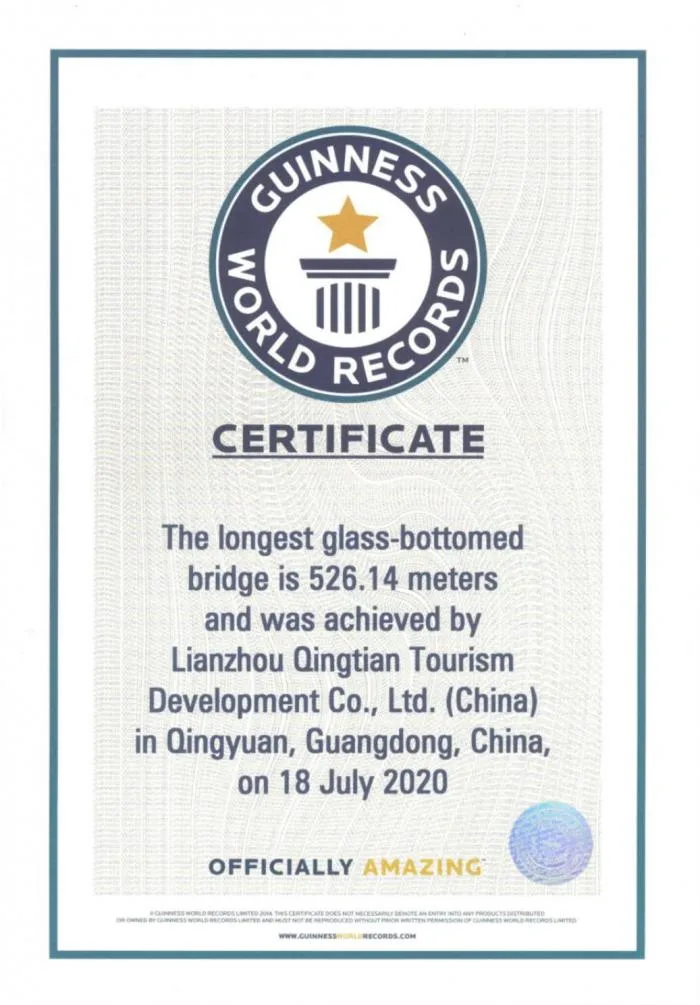
This aerial bridge features a net width of 8.8 meters and stands 201 meters above the ground. Recognized by Guinness World Records as the longest glass-floored suspension bridge, it boasts a glass span of 526.14 meters. Its construction was a remarkable achievement, drawing numerous tourists and establishing itself as a new iconic landmark that energizes local tourism.
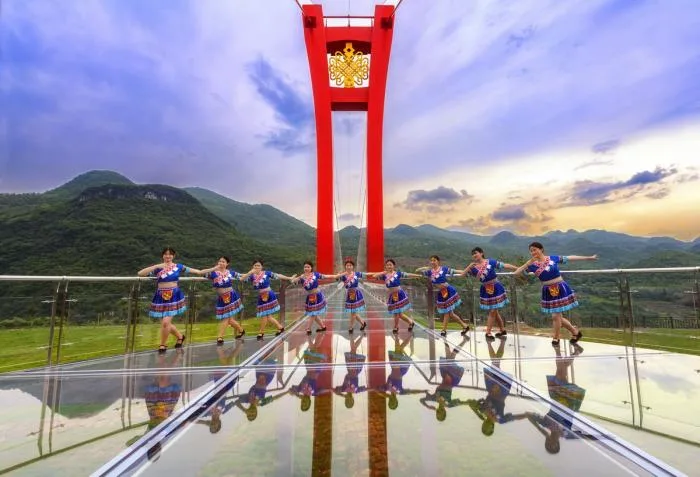
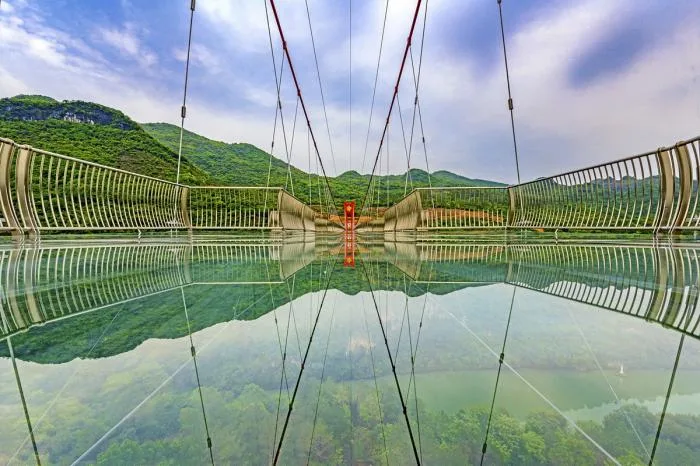
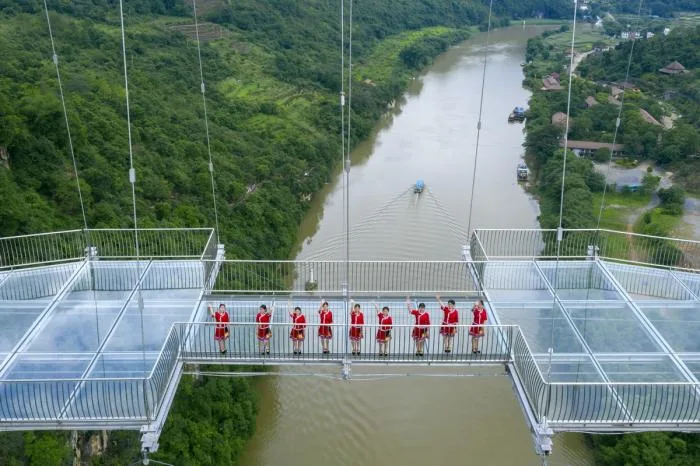
This project respects the land and honors nature, combining clear planning, sustainable creativity, and a bold spirit to push boundaries. It revitalizes the natural environment and has become an innovative landmark driving the local economy. The integration of nature, urban life, and culture to create top-level scenic spots remains a core focus of UAD’s ongoing research and practice.
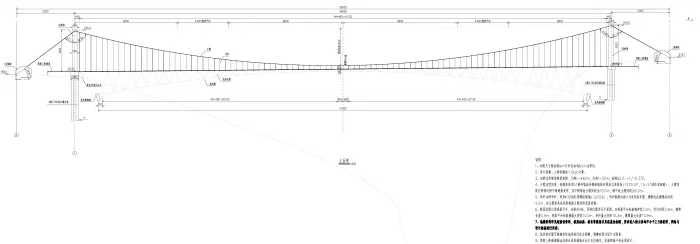
△ Technical Drawings
Project Information
Project Name: Landscape Pedestrian Glass Bridge at Huangchuan Three Gorges Tourist Resort, Lianzhou City
Location: Jiupi Town, Lianzhou, Qingyuan City, Guangdong Province
Design Team: Zhejiang University Architectural Design and Research Institute
Key Designers: Xie Xu, Sun Liangfeng, Wang Weilong, Dong Weiwei, Wu Pu
Construction Date: January 2020
Image & Video Credits: Lianzhou Qingtian Tourism Development Co., Ltd












Must log in before commenting!
Sign Up