
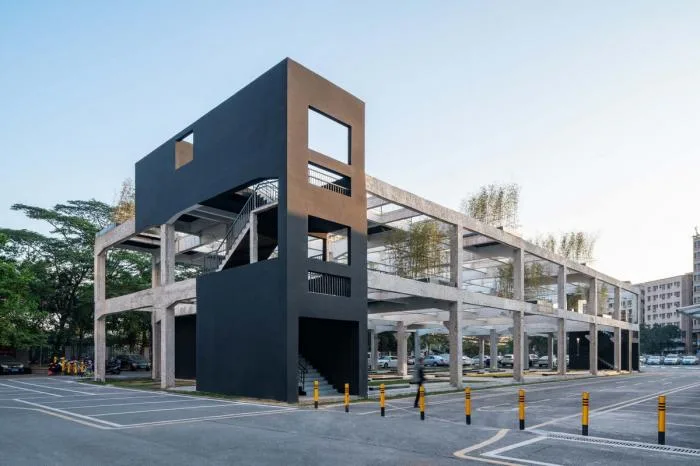
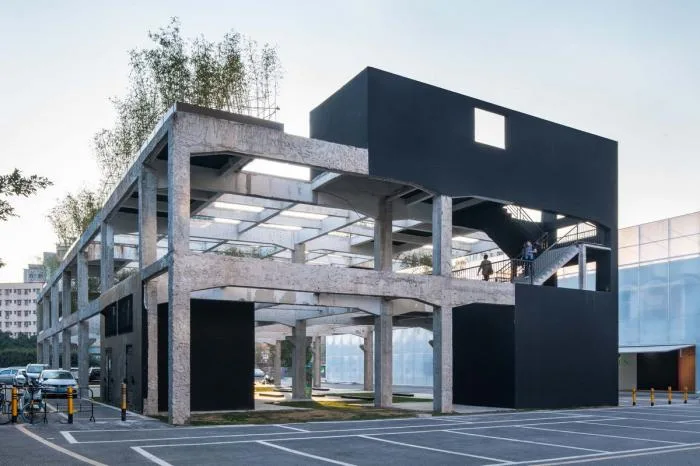
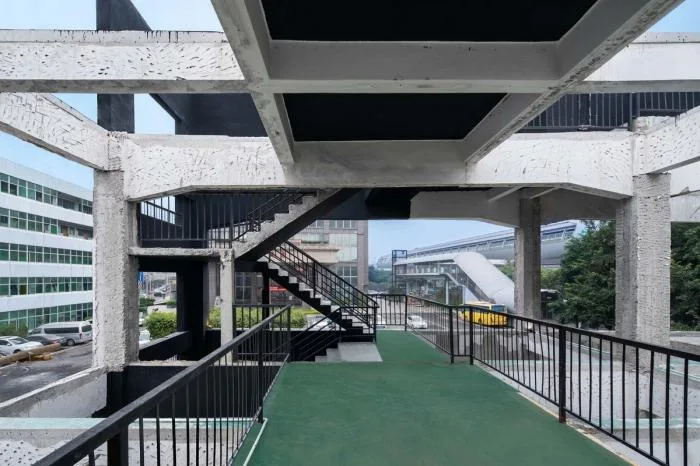
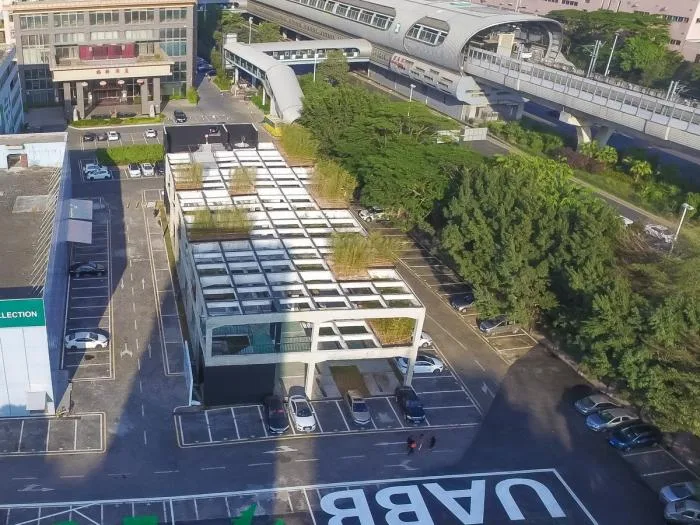
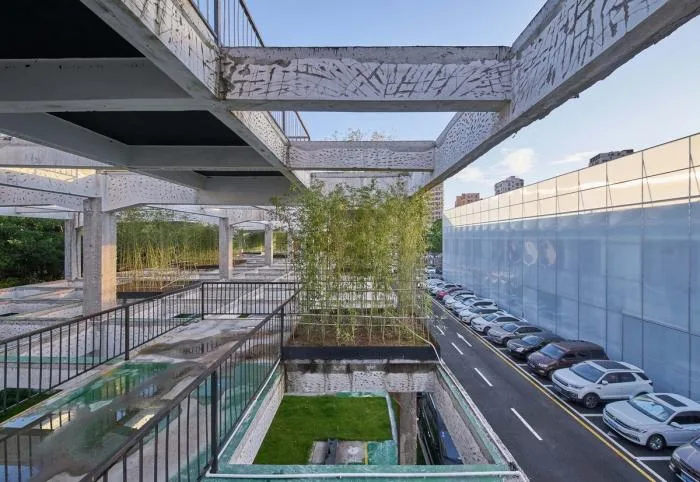
Qiaotou Ruins Garden transforms an abandoned industrial building into a unique “ruin structure space,” blending ruins with architecture, landscape, art installations, and infrastructure. By partially removing floors, roofs, walls, and ground surfaces, the remaining structural framework is preserved. Flower beds and bamboo plants are then integrated onto this framework, creating an elevated aerial garden.
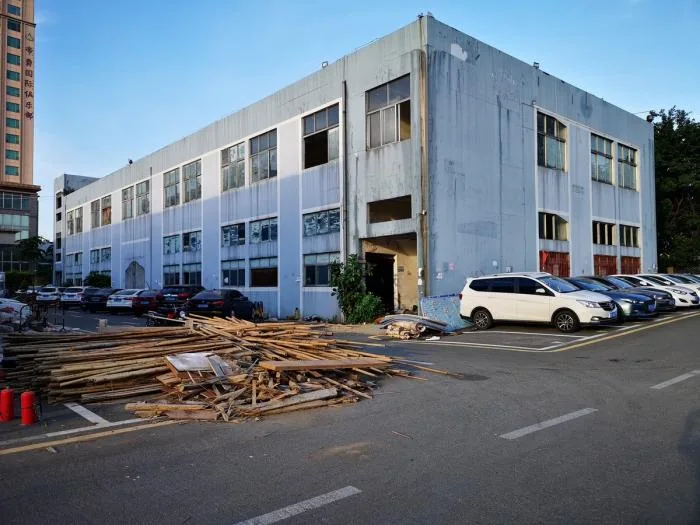
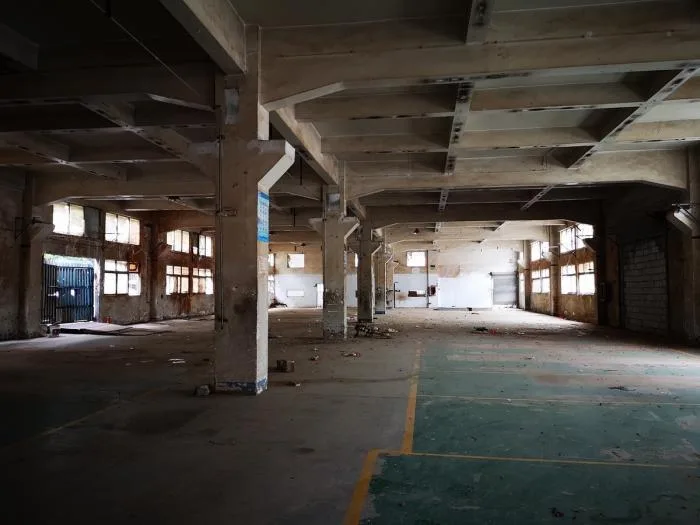
This project involves a two-story industrial building located in Qiaotou Village, Bao’an District, Shenzhen. Built in the early 1980s as a village-owned packaging factory, it was abandoned around five years ago and has since remained in ruins. Situated near a subway station on Line 11, the building faces potential demolition for redevelopment into a commercial office complex due to urban renewal plans. The architect introduced the concept of “reducing construction,” aiming to explore alternative urban renewal methods beyond mere demolition and reconstruction.
Serving as an exhibition space for the Bao’an Qiaotou Branch during the 2019 Shenzhen Hong Kong Urban Architecture Biennale (UABB), the site hosted the exhibition opening ceremony and numerous public events. Following the biennale, it has become a popular spot for local residents to relax and visit.
The “reducing construction” experiment was designed and executed by ARCity Office. Construction began in September 2019 and was completed the following month. The process involved using cutting machines to remove concrete floors, walls, and ceilings, leaving the structural framework intact as the core of the ruins garden. Some remaining floor fragments were repurposed as seating benches. The project embraces the 5R principles of sustainable design—Revalue, Renew, Reduce, Reuse, and Recycle—creating a new spatial experience through minimal intervention.
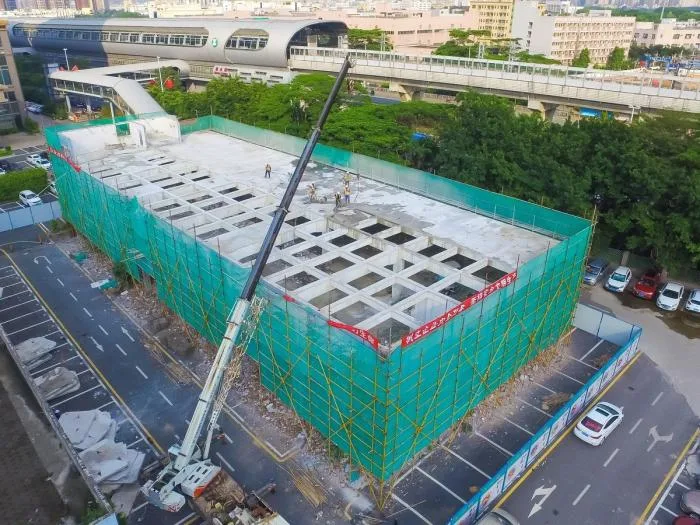
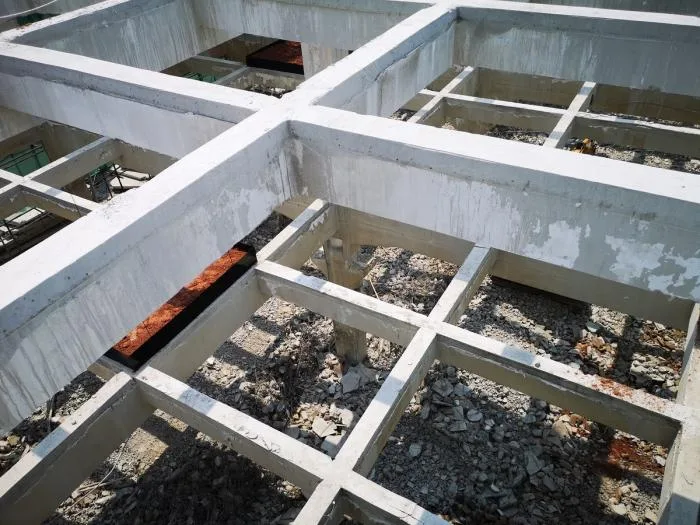
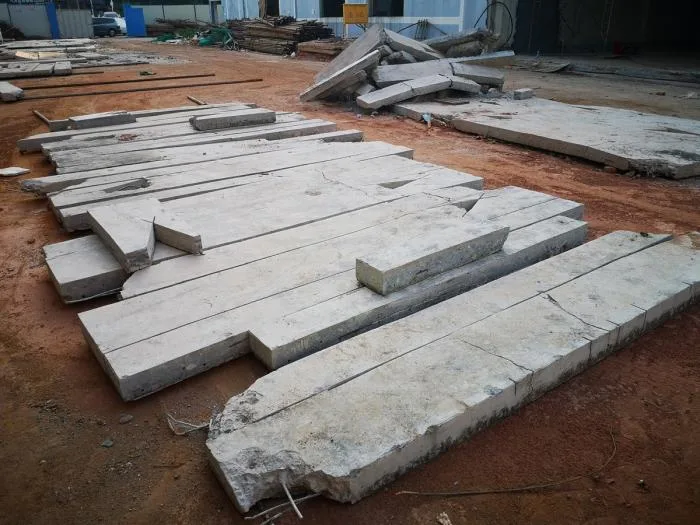
The project employs a “reverse design” approach focused on reducing construction by subtracting excess elements from the existing building mass. This method is akin to sculpting or carving, revealing valuable “invisible construction entities” hidden within the original structure. These entities are refined through design to form new buildings and spaces for public use and appreciation. In essence, reverse design uses subtraction to generate new value and meaning.
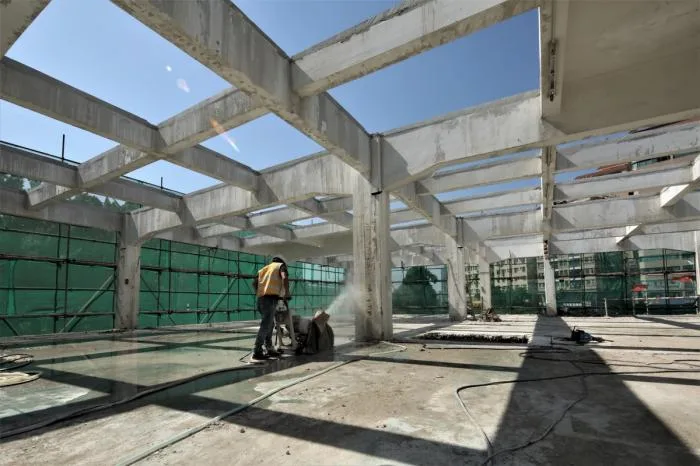
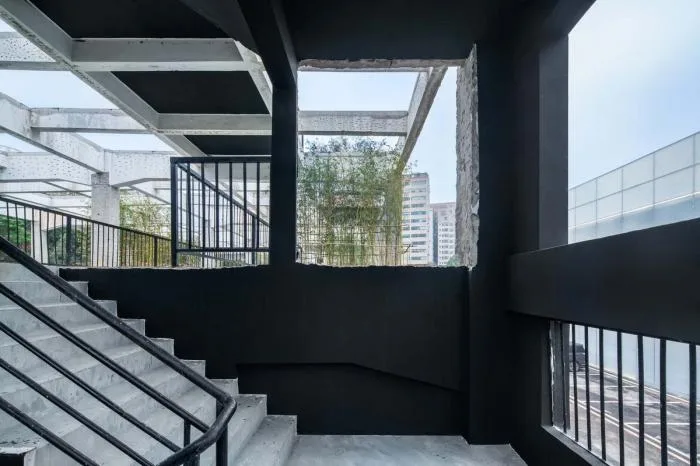
The “Enhanced Ruins” concept builds on the original abandoned factory, transforming it into a genuine ruin. This enhancement process allows the ordinary industrial building to evolve into a space with a distinct aesthetic of ruin. Workers actively contributed to this transformation during construction, freely carving chisel marks on beams and columns to create unique details that emphasize the sense of decay and history.
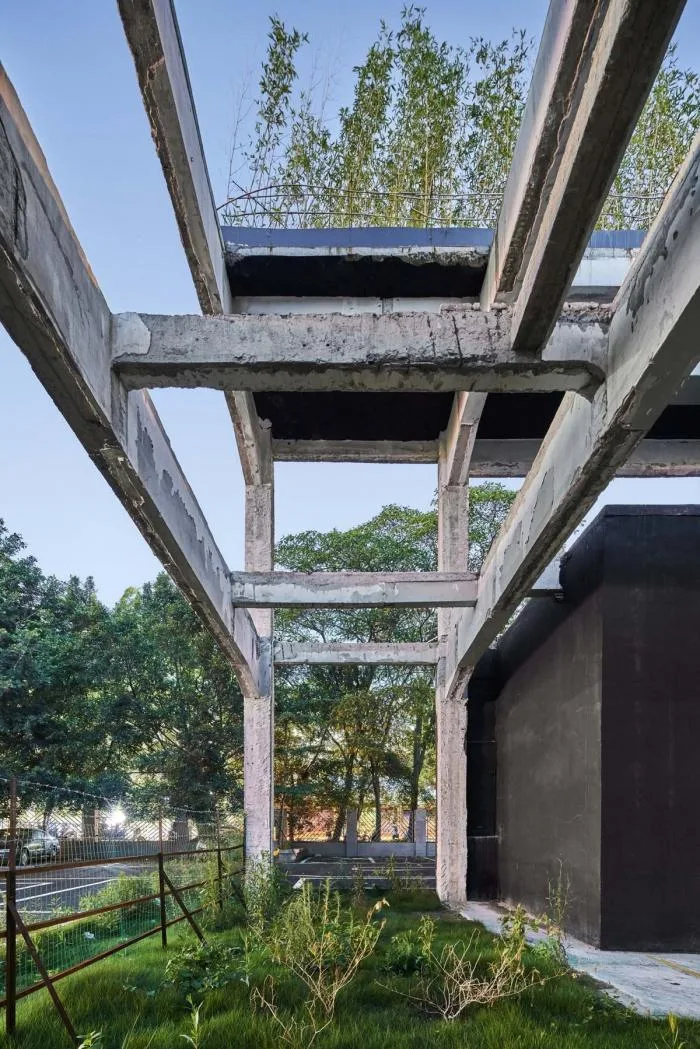
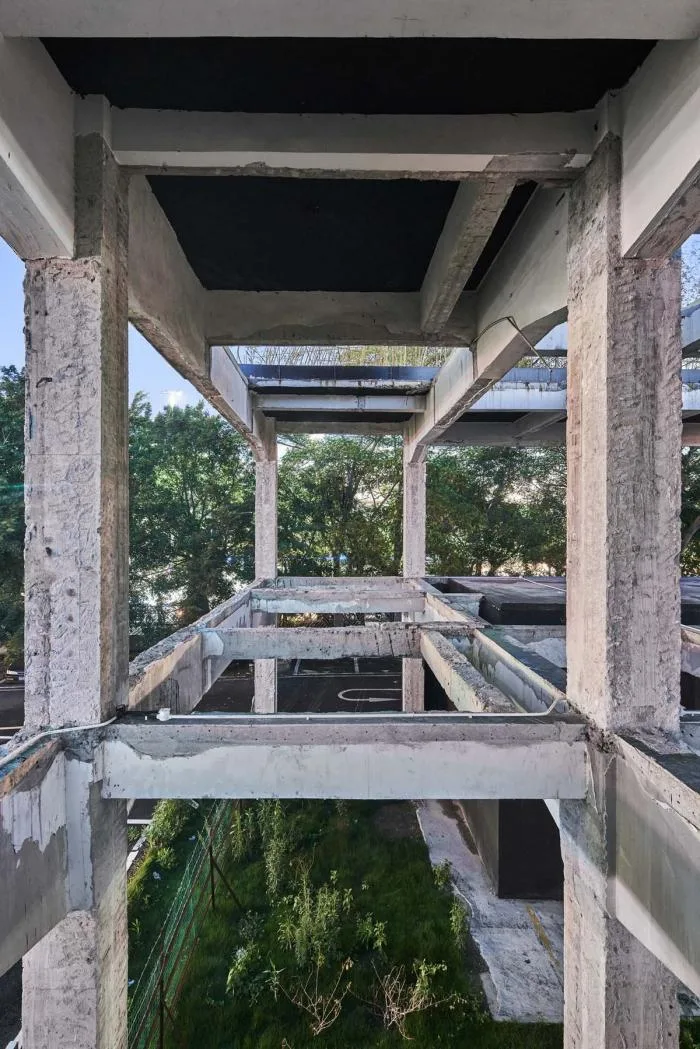
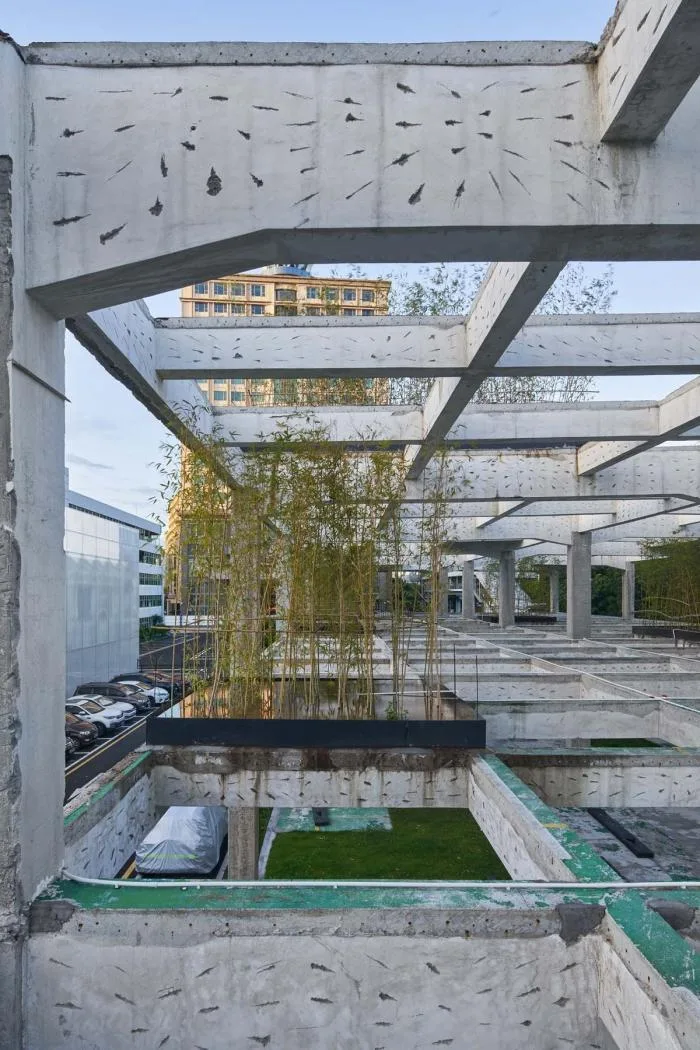
Generally, ruins result passively from natural forces (such as earthquakes or weathering) or human actions (like war, demolition, or abandonment) and serve mainly as scenic remnants. In contrast, the “ruin structure space” results from actively removing hidden structural elements—including sturdy components—from the building. This remaining framework acts as a “framework infrastructure” that supports new building elements and spaces, similar to transport or municipal infrastructure. By integrating new structural and functional units into this framework, the space can be quickly adapted into a functional urban environment.
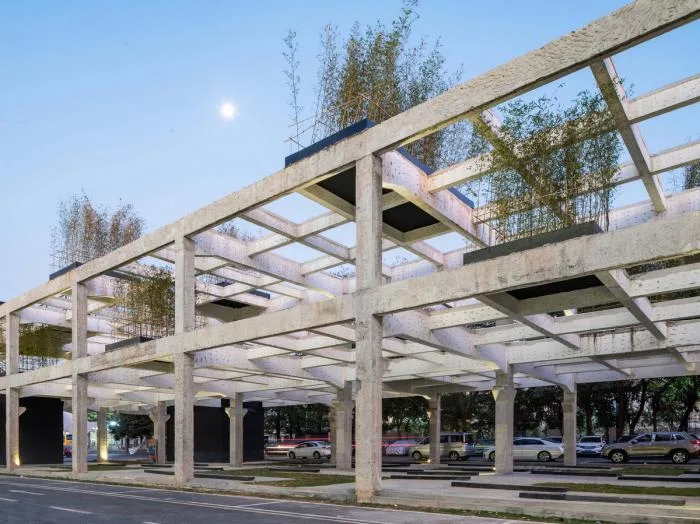
The industrial plant’s framework serves as an “abstract internal grid” — a purely structural system without specific architectural functions. When revealed through reduced construction and reverse design, this abstract grid reveals a unique aesthetic. Qiaotou Ruins Garden offers an accessible abstract space that invites visitors to explore and experience this structural beauty. Under sunlight, the grid, set against the blue sky and white clouds, creates a striking and unexpected landscape.
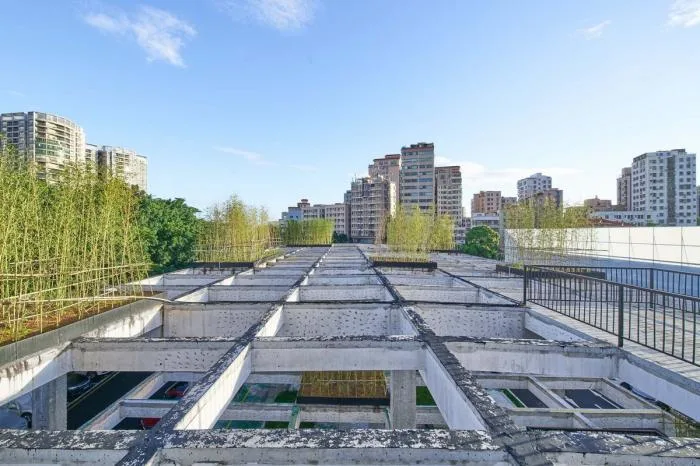
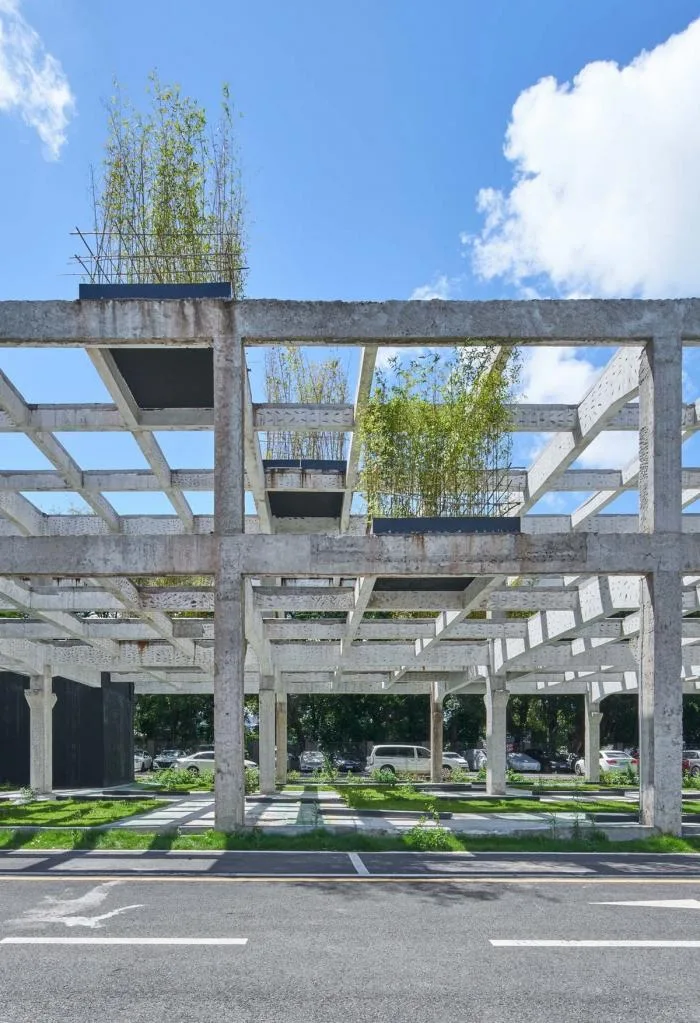
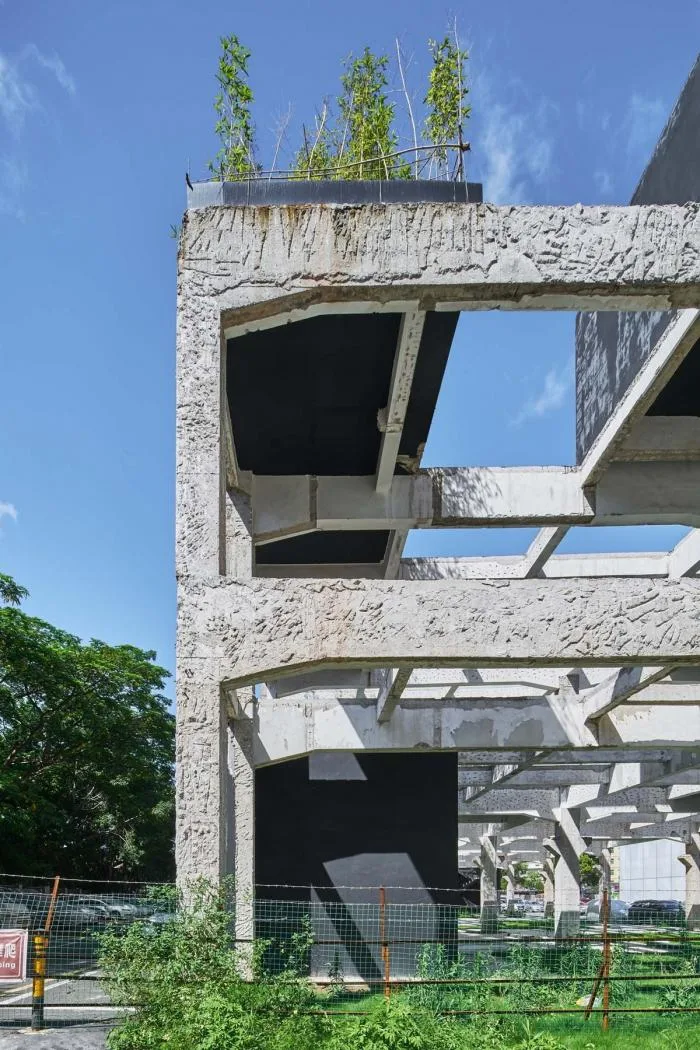
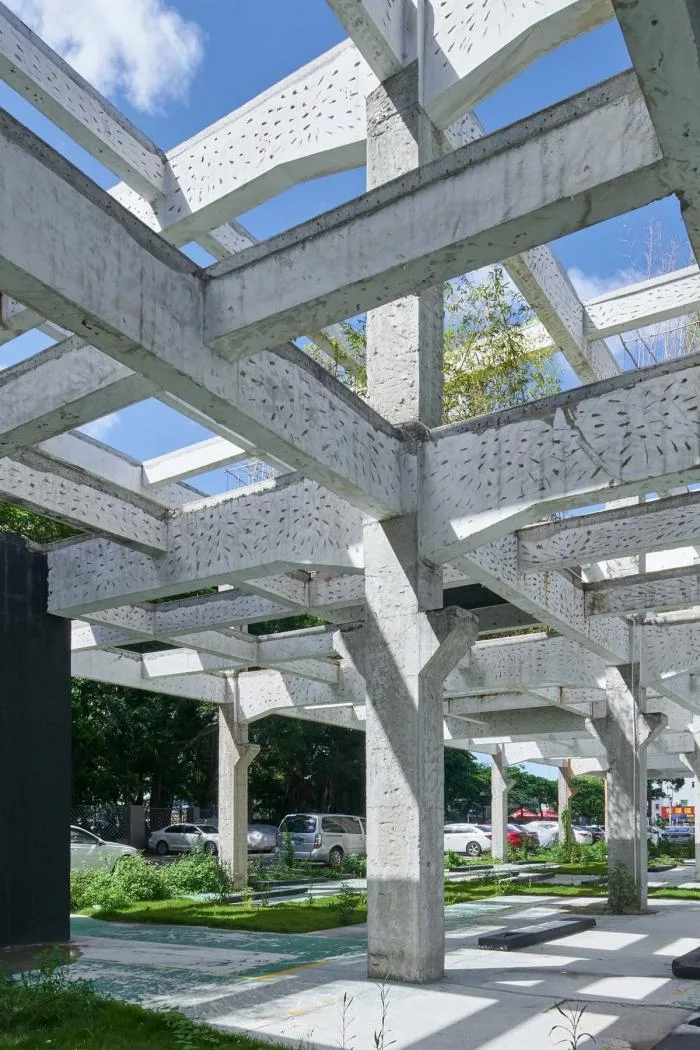
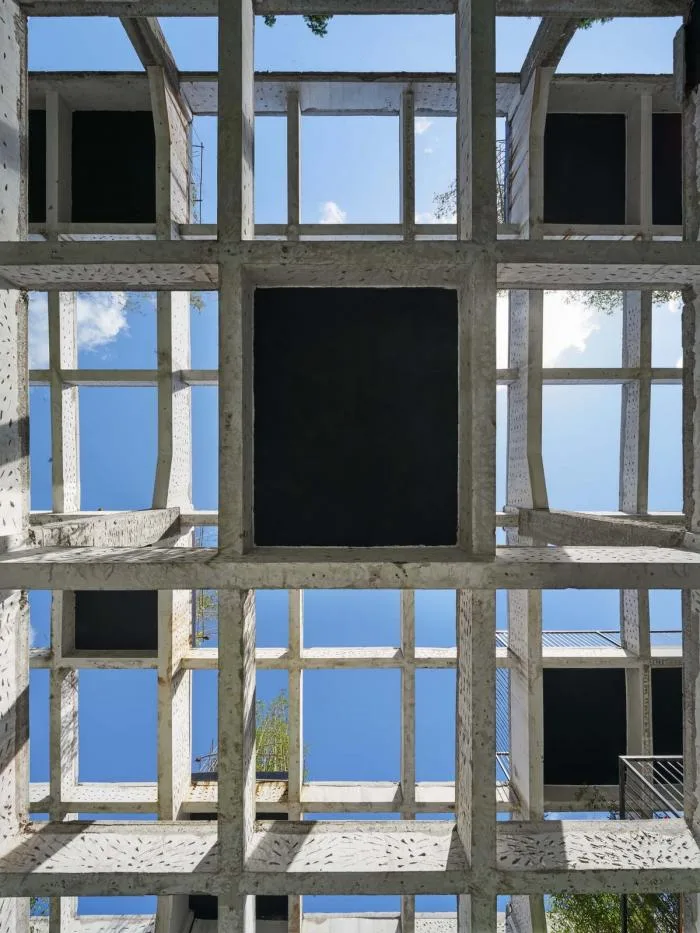
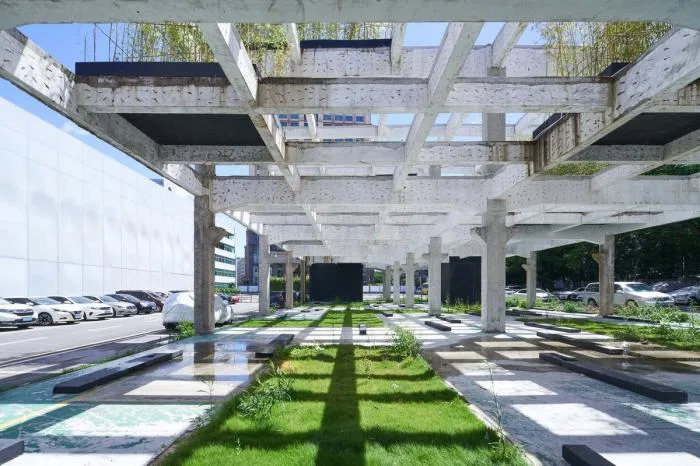
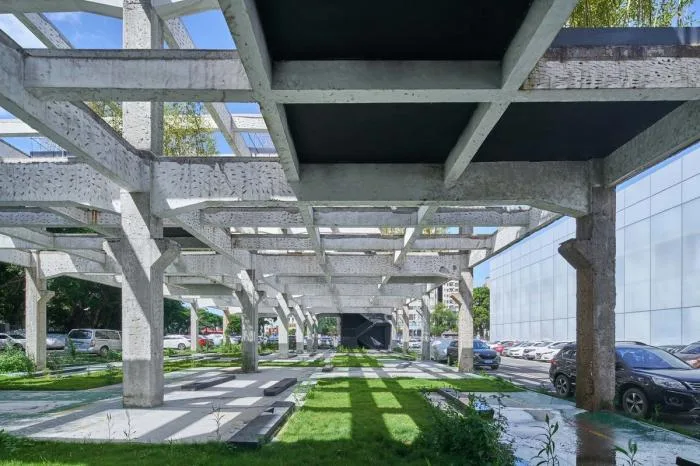
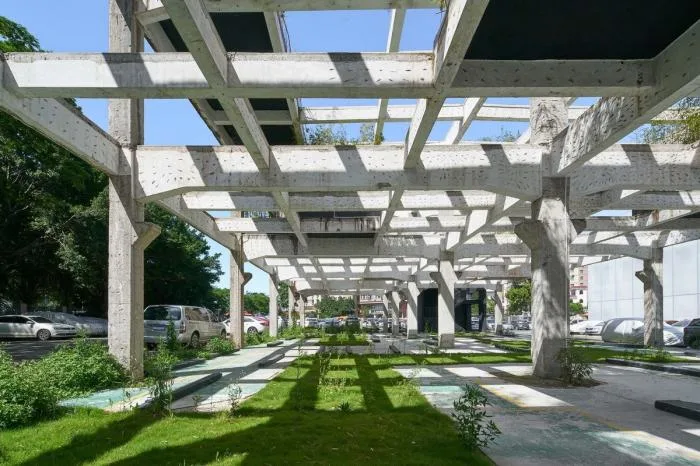
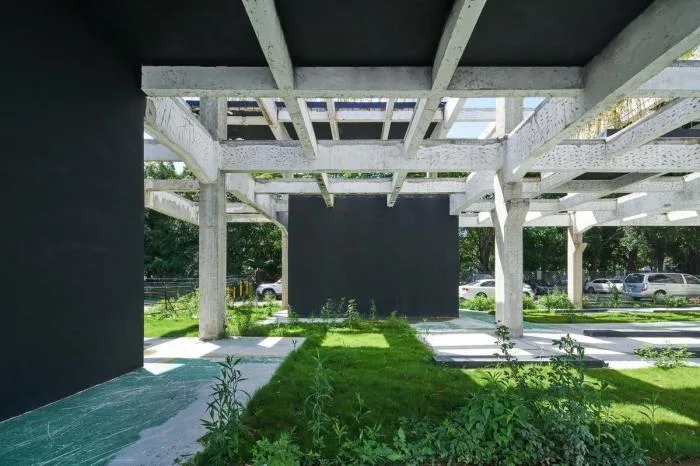
To breathe new life into this ruinous framework, the architect introduced plants, transforming the ruins into a sky garden. Bamboo and grass grow on the remaining cut floors, roofs, and platforms. Beyond these deliberate plantings, dandelion seeds carried by the wind and wild grass seeds brought by birds gradually establish themselves over time, enriching the garden’s natural ecosystem.
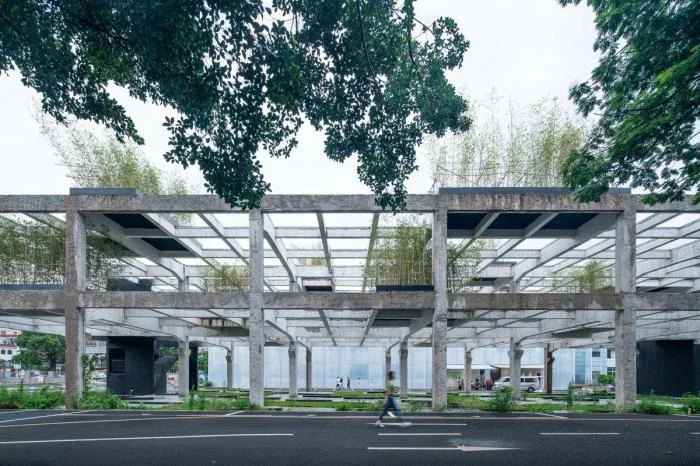
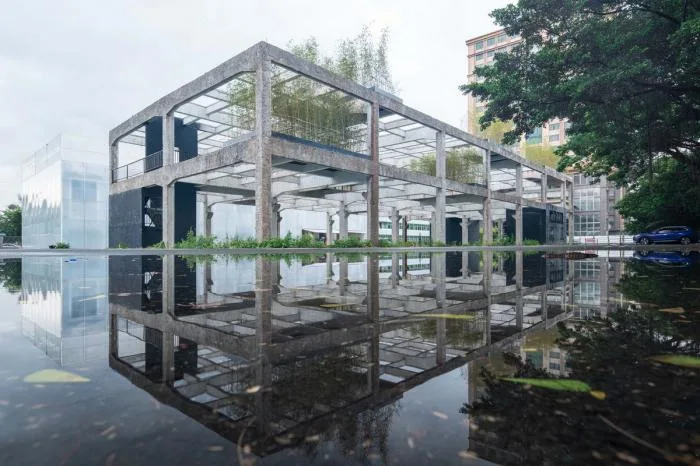
Qiaotou Ruins Garden has created a distinctive public space at a remarkably low cost—approximately 700,000 RMB total. Open 24 hours a day for free, the space hosts exhibitions, academic forums, concerts, educational activities, and community events. It has become a vibrant hub for local residents, who frequently gather here to socialize and relax.
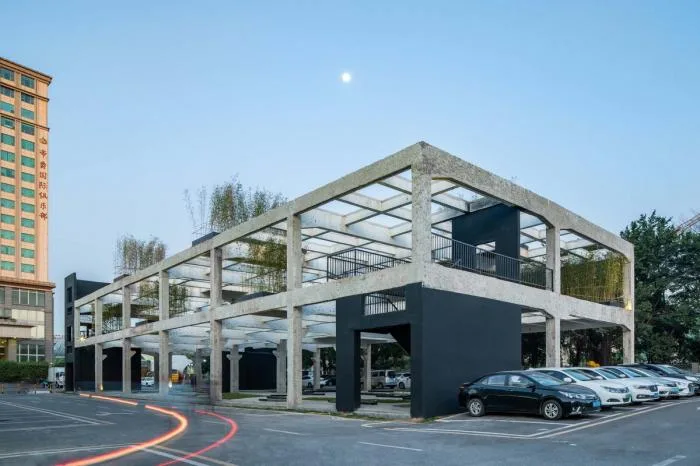
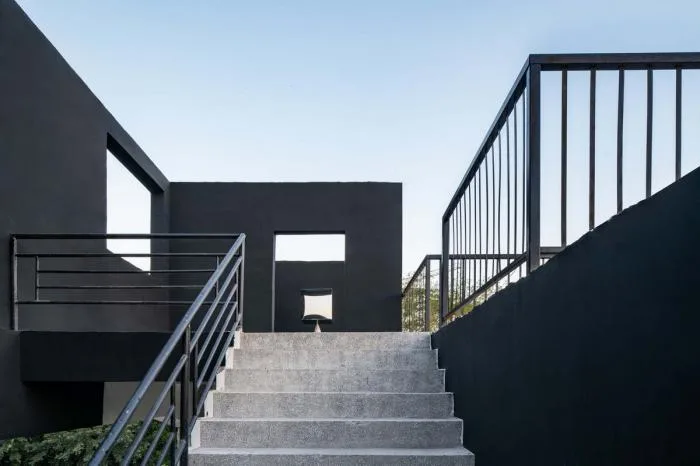
Qiaotou Ruins Garden demonstrates a promising approach to repurposing existing spaces while exploring methods of reducing construction and reverse engineering. Although it may eventually be replaced by standardized skyscrapers as urban renewal progresses, this resilient seed of creativity planted in the ruins has already begun to take root and flourish.
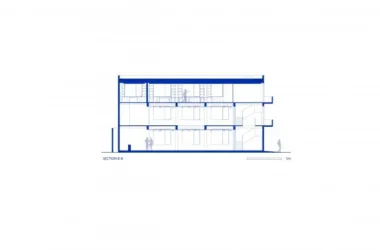
Design Drawings
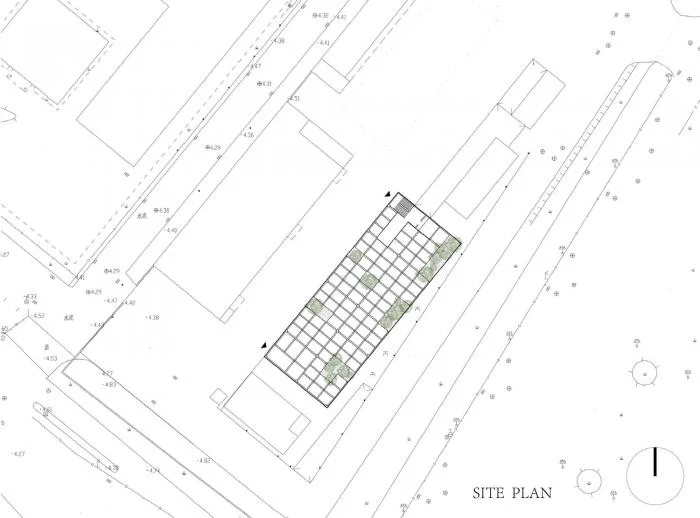
△ General Layout Plan
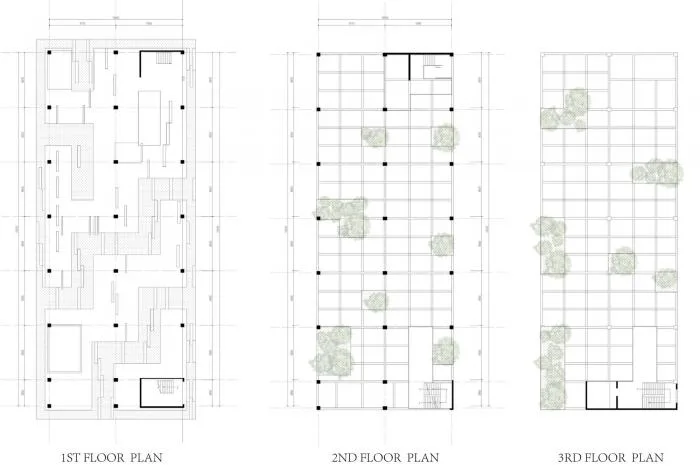
△ Plan View
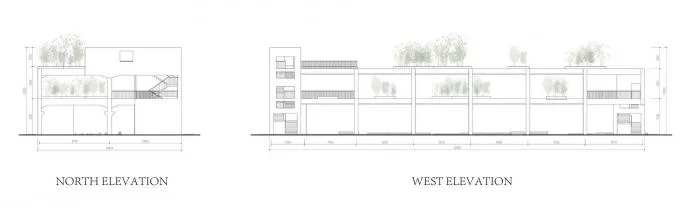
△ Elevation Drawing
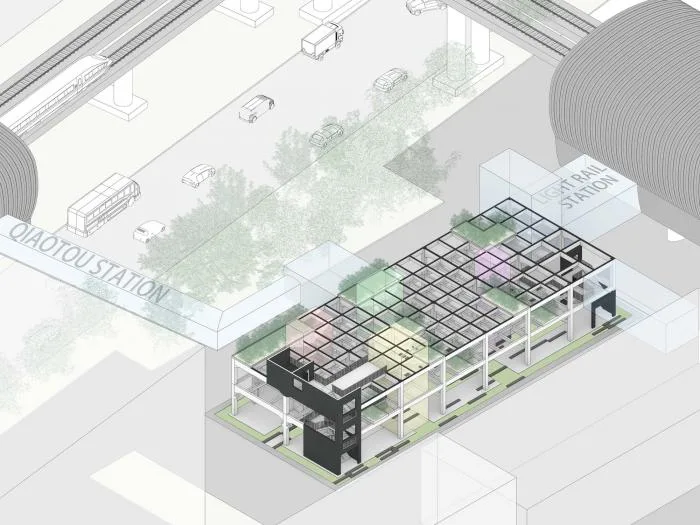
△ Axonometric Diagram
Project Information
Project Type: Renovation
Location: Shenzhen, China
Architect: Qucheng Studio
Area: 1,000 m²
Year: 2019
Photographer: Bai Yu
Lead Designers: Zhang Yuxing, Han Jing
Landscape Collaboration: Shenzhen Dadi Chuangxiang Architectural Landscape Planning and Design Co., Ltd
Owners: Shenzhen Overseas Chinese Town Bay Area Development Co., Ltd. / Shenzhen Shangqi Culture and Arts Co., Ltd












Must log in before commenting!
Sign Up