
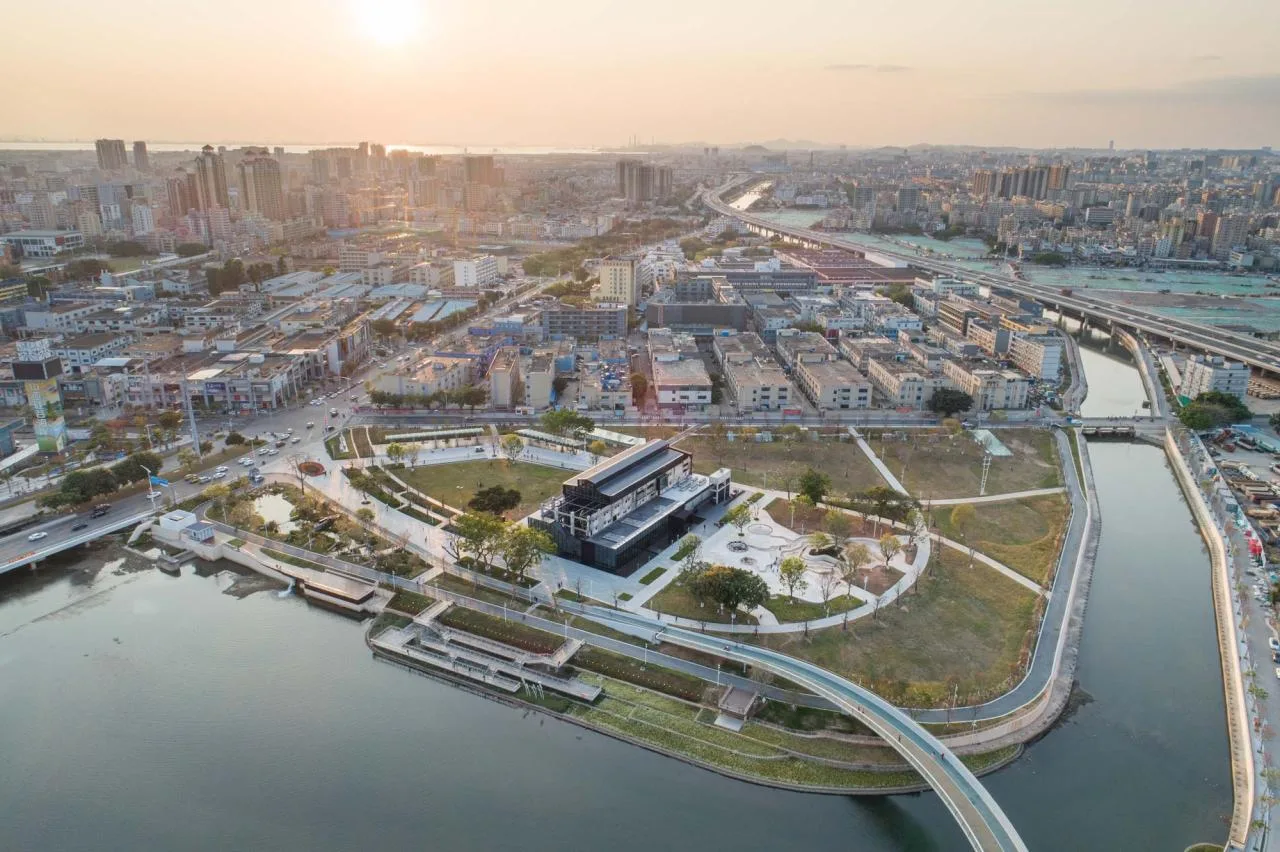
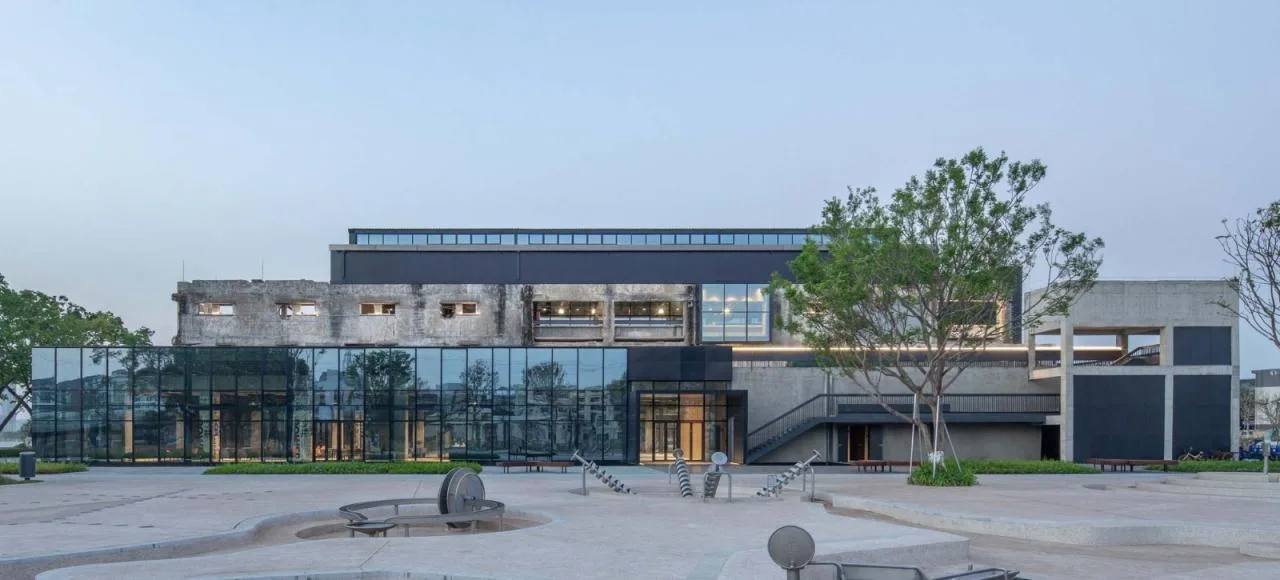
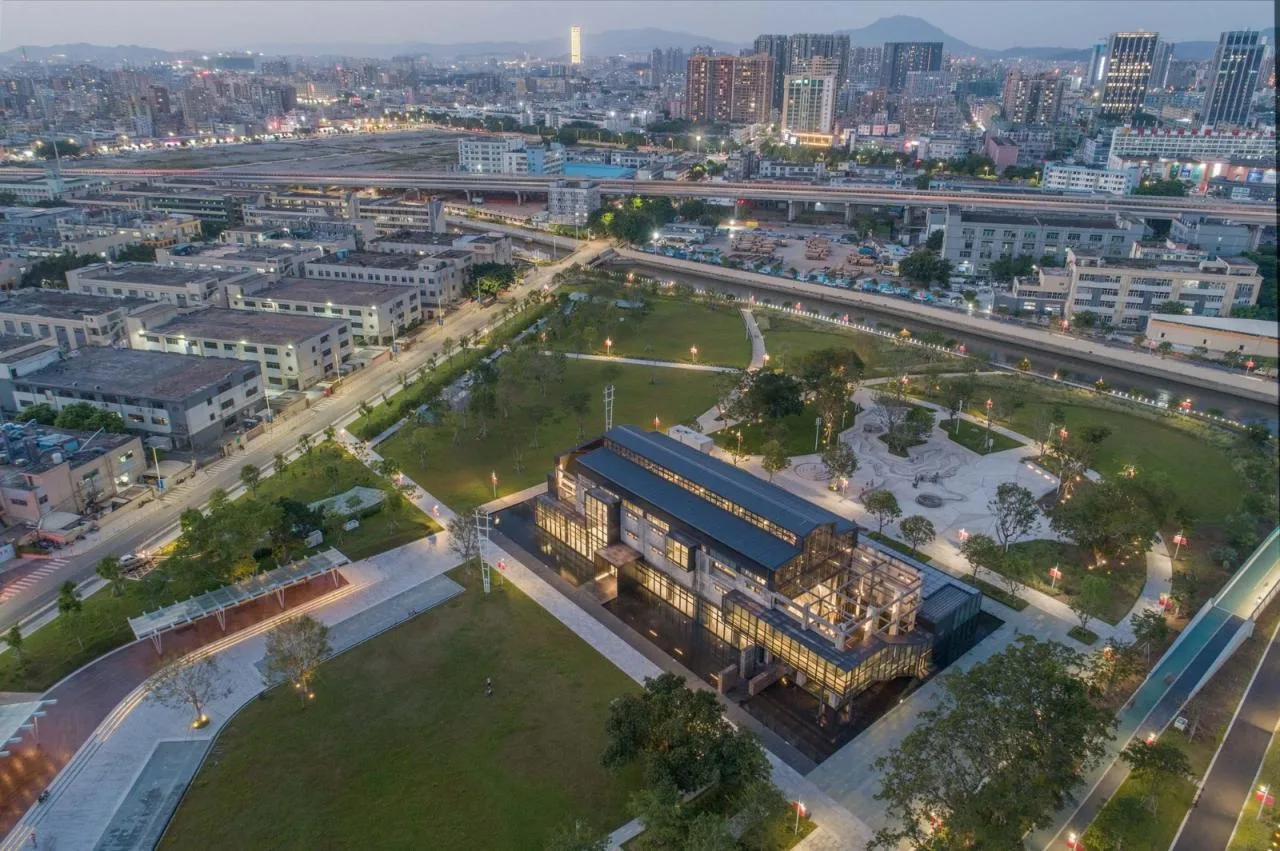
Constructed in the 1980s, the Gangtou Diesel Power Plant is located next to Shajing Ancient Market in Shenzhen. As part of the Shajing Gangtou Village Industrial Zone, it originally supplied electricity to Shajing Village and neighboring urban villages during the early reform and development era. After Shenzhen’s power supply was fully integrated into the State Grid, the plant was abandoned over a decade ago. Years of neglect have rendered the ruins hazardous. To make way for Bao’an Haoxiang Lake Park, plans call for the complete demolition of the power plant ruins and surrounding buildings, with demolition starting in October 2019.
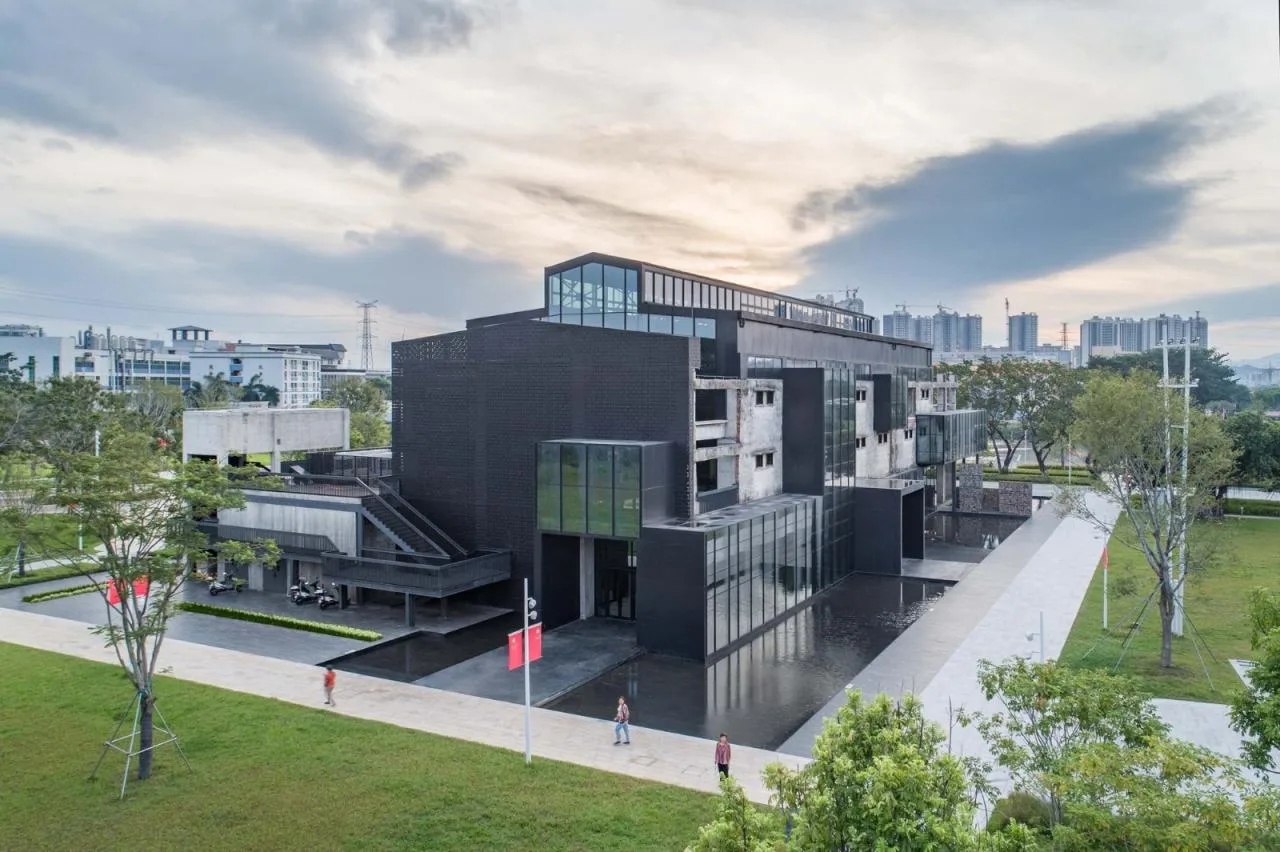
Qucheng Studio proposed a transformative design to convert the power plant ruins into the “Shajing Village Hall,” preserving and revitalizing the industrial heritage to impart new value. This regeneration focuses on both material and spiritual aspects:
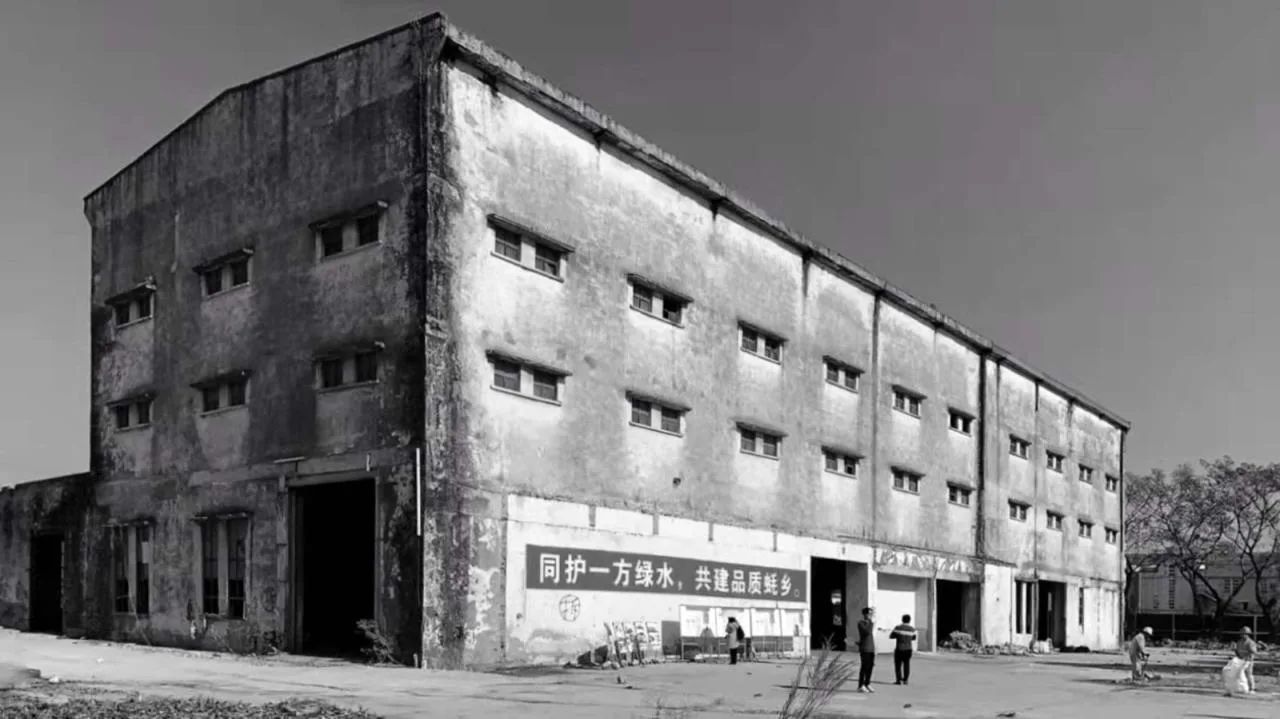
Original Architecture
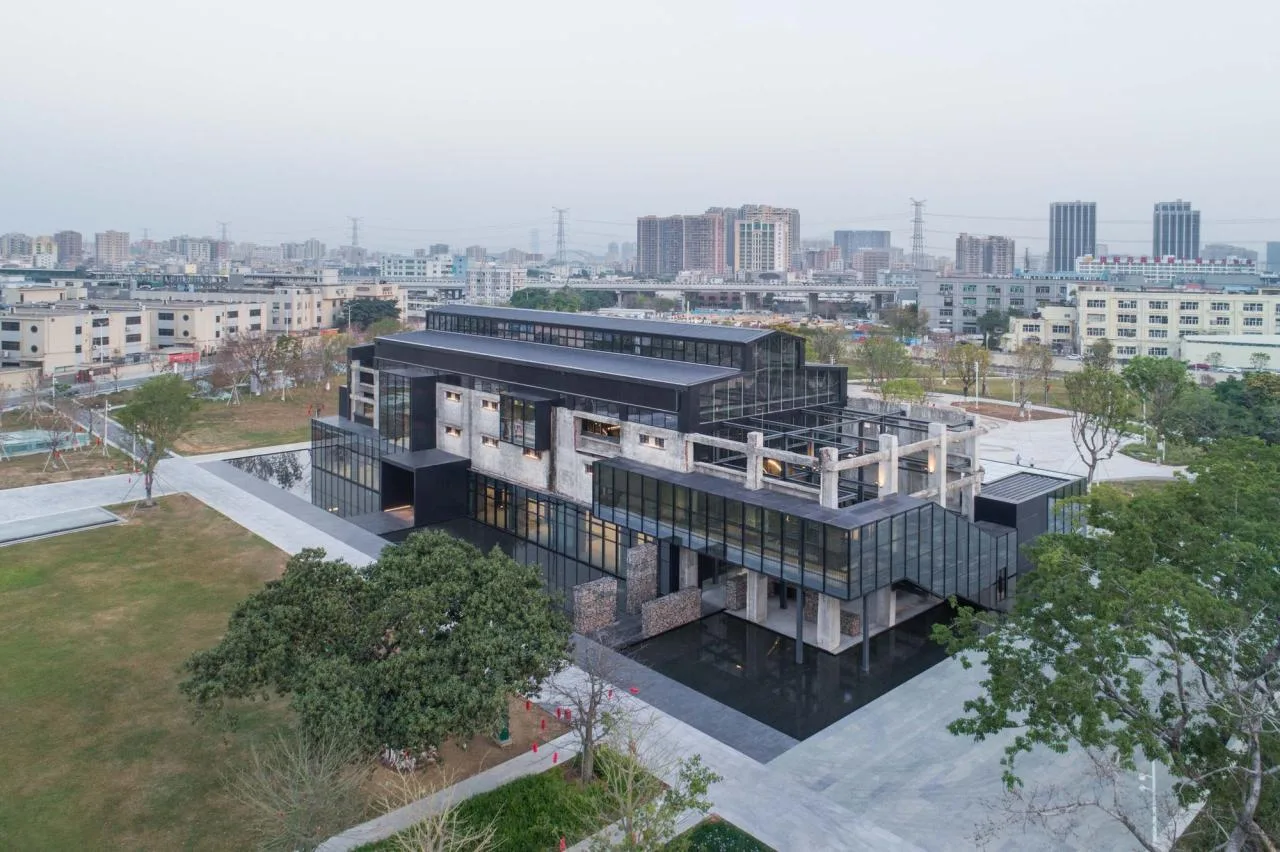
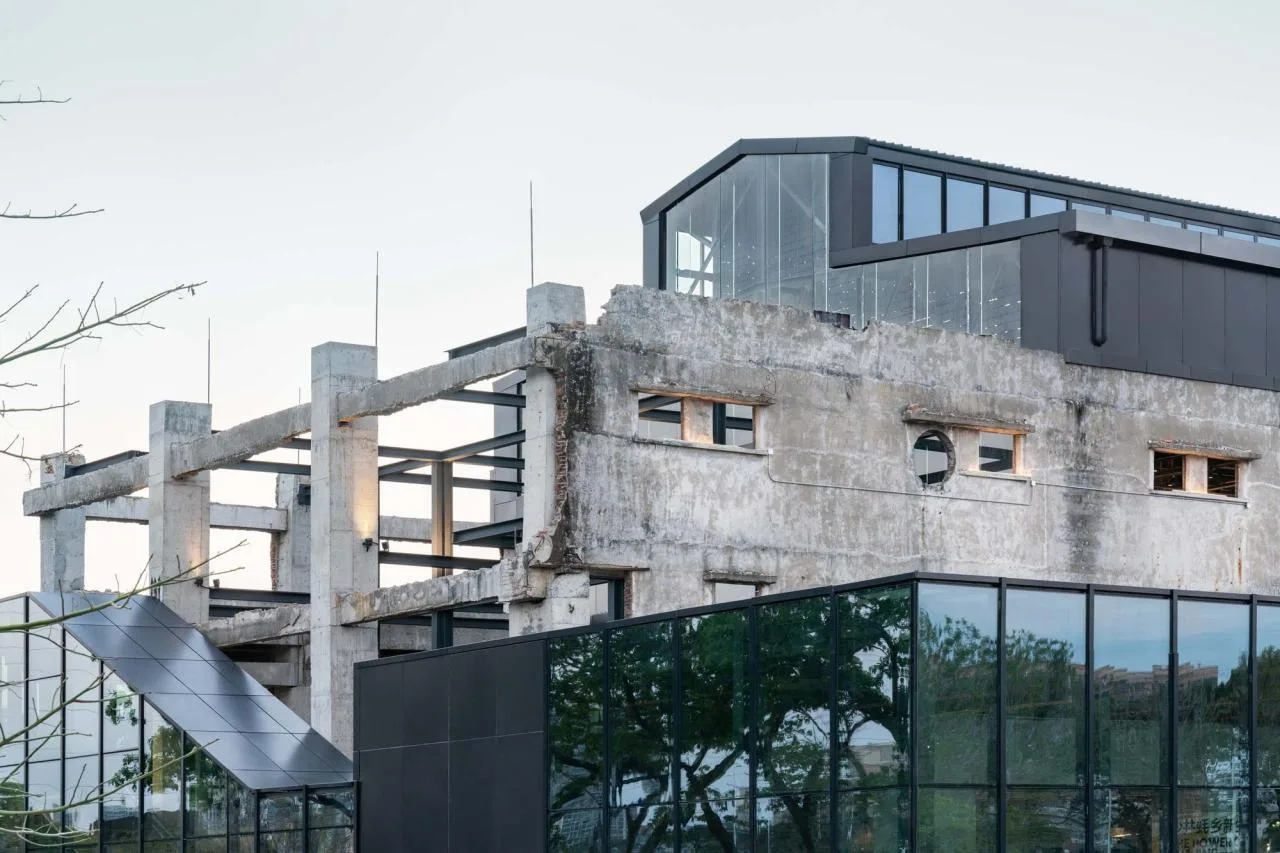
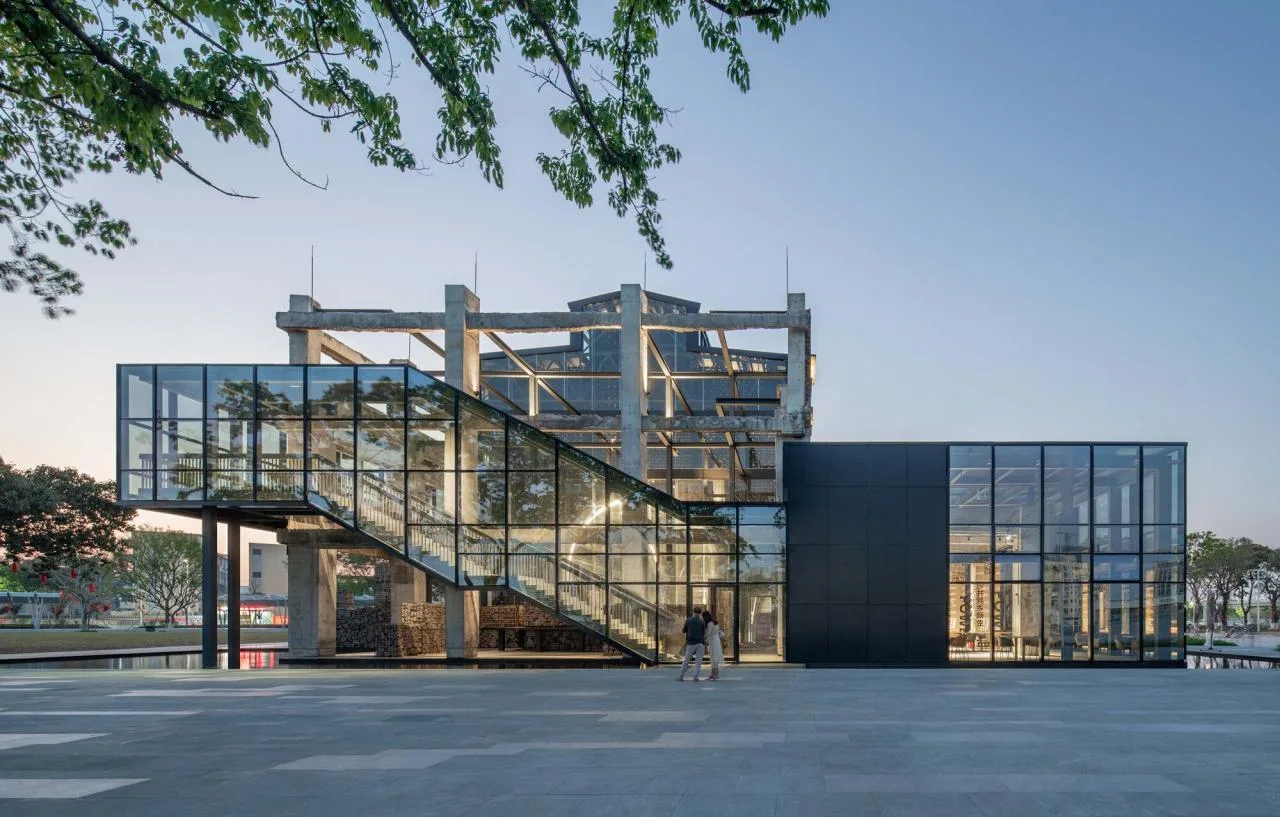
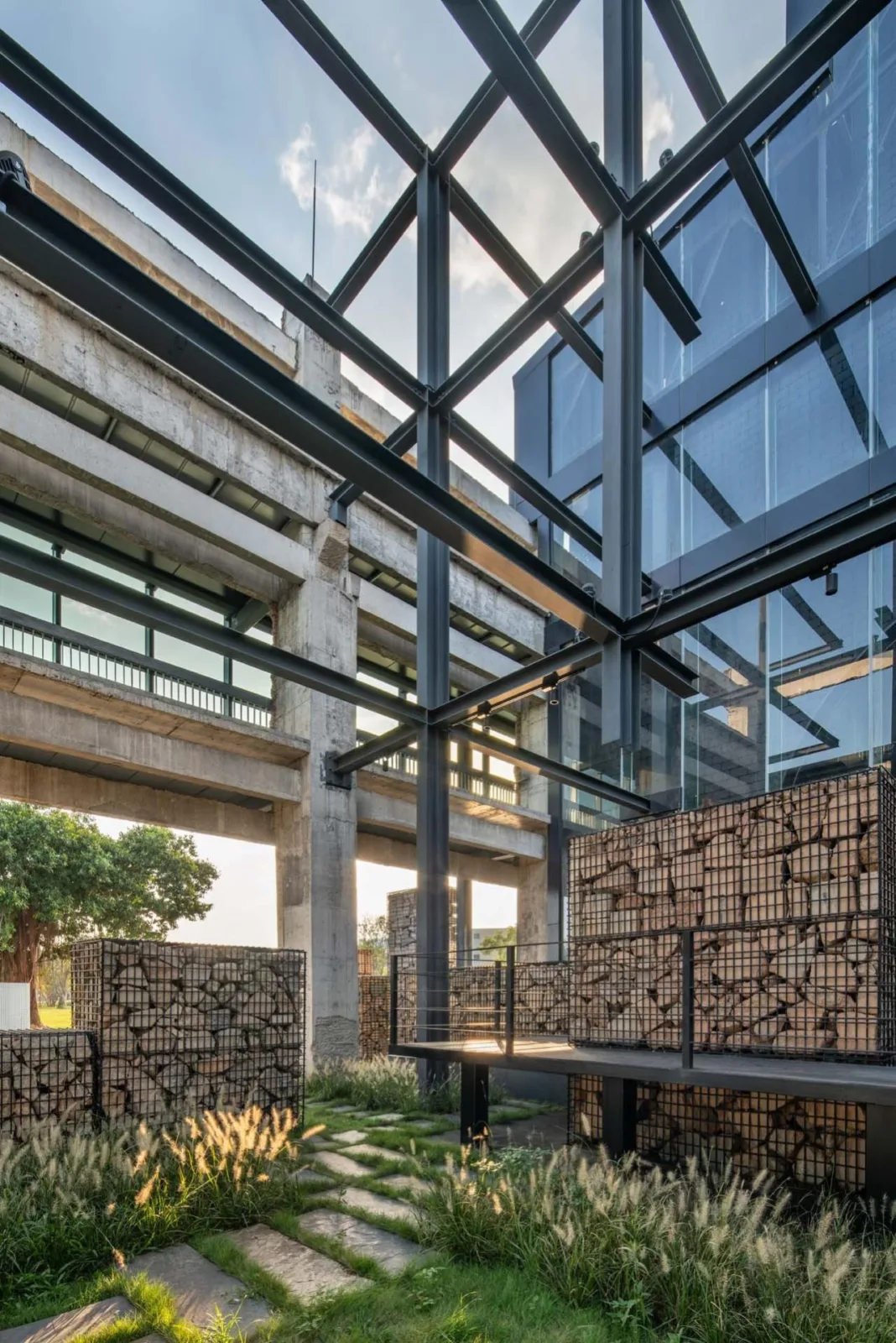
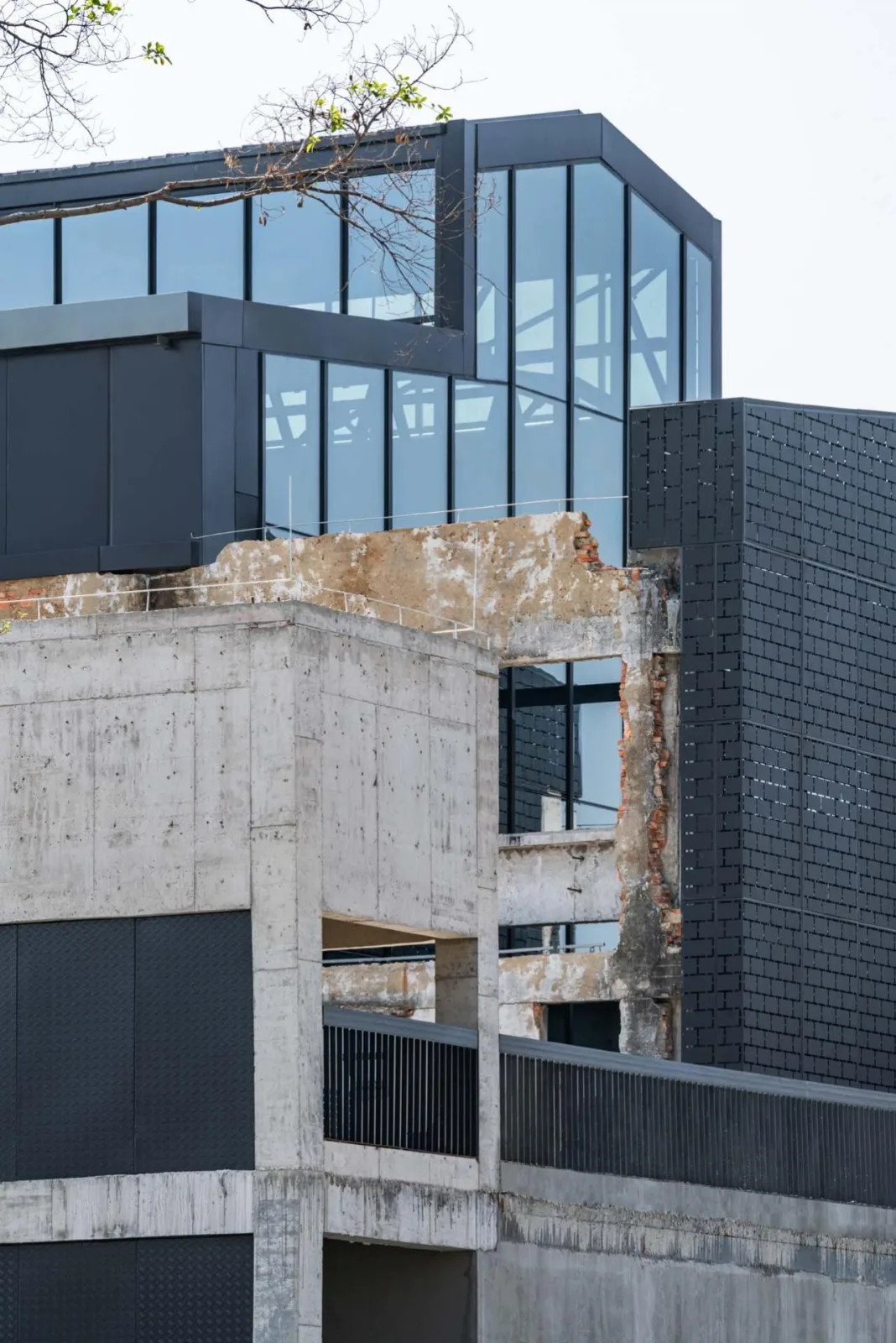
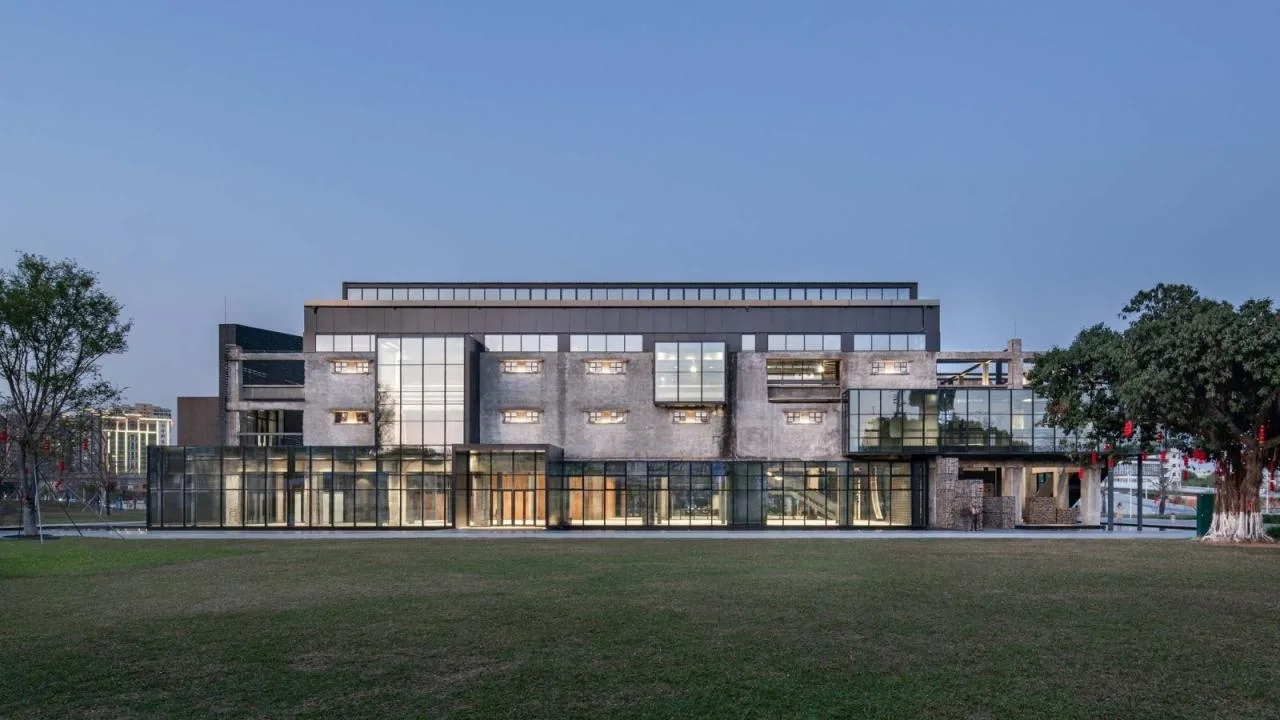
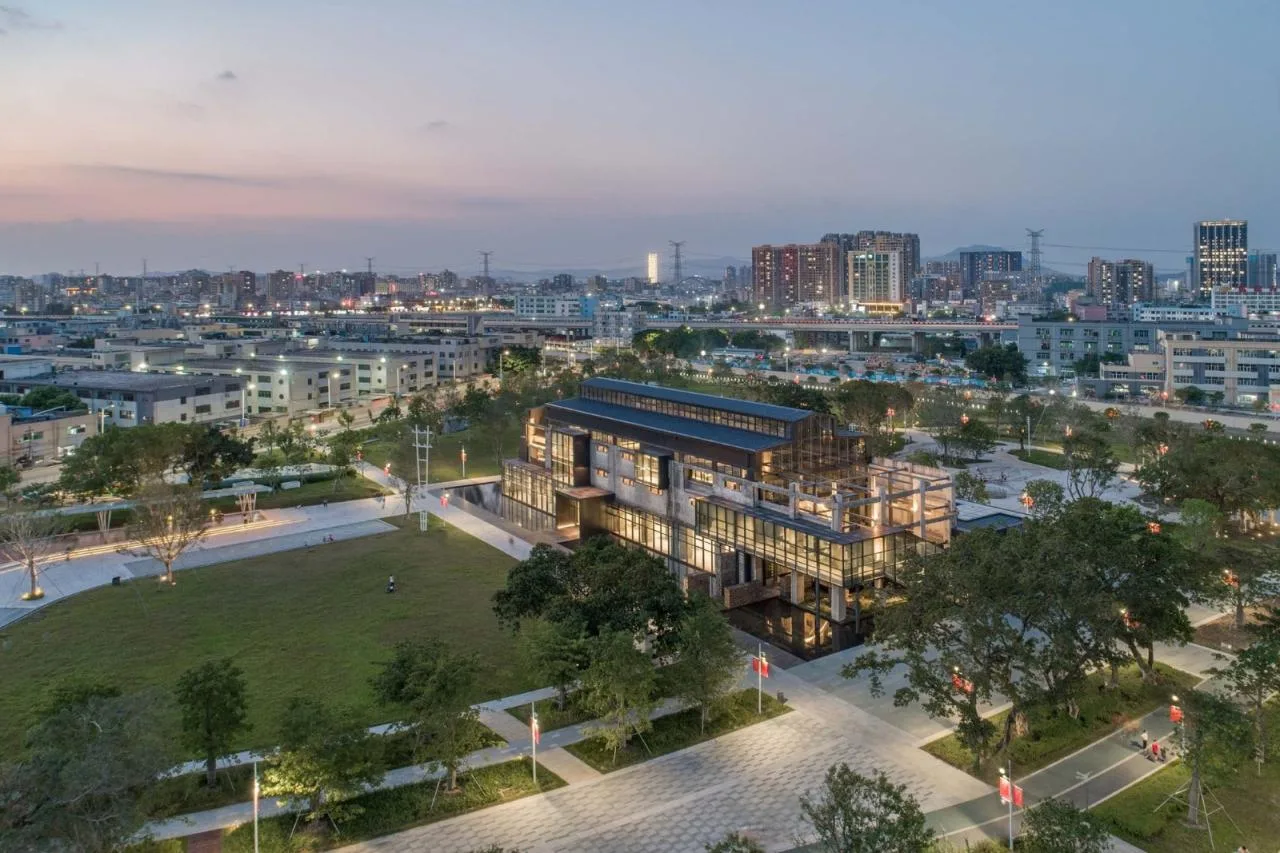
Material Regeneration: The physical remnants of the old ruins, including structures and subtle traces, are preserved as much as possible. Concrete structures are reinforced and fully recycled. New materials such as steel frameworks and glass are inserted or wrapped around the old ruins, blending seamlessly to blur the line between old and new. The building thus becomes a living organism, like an ancient tree sprouting fresh shoots—where the “new” naturally grows from the “old”.
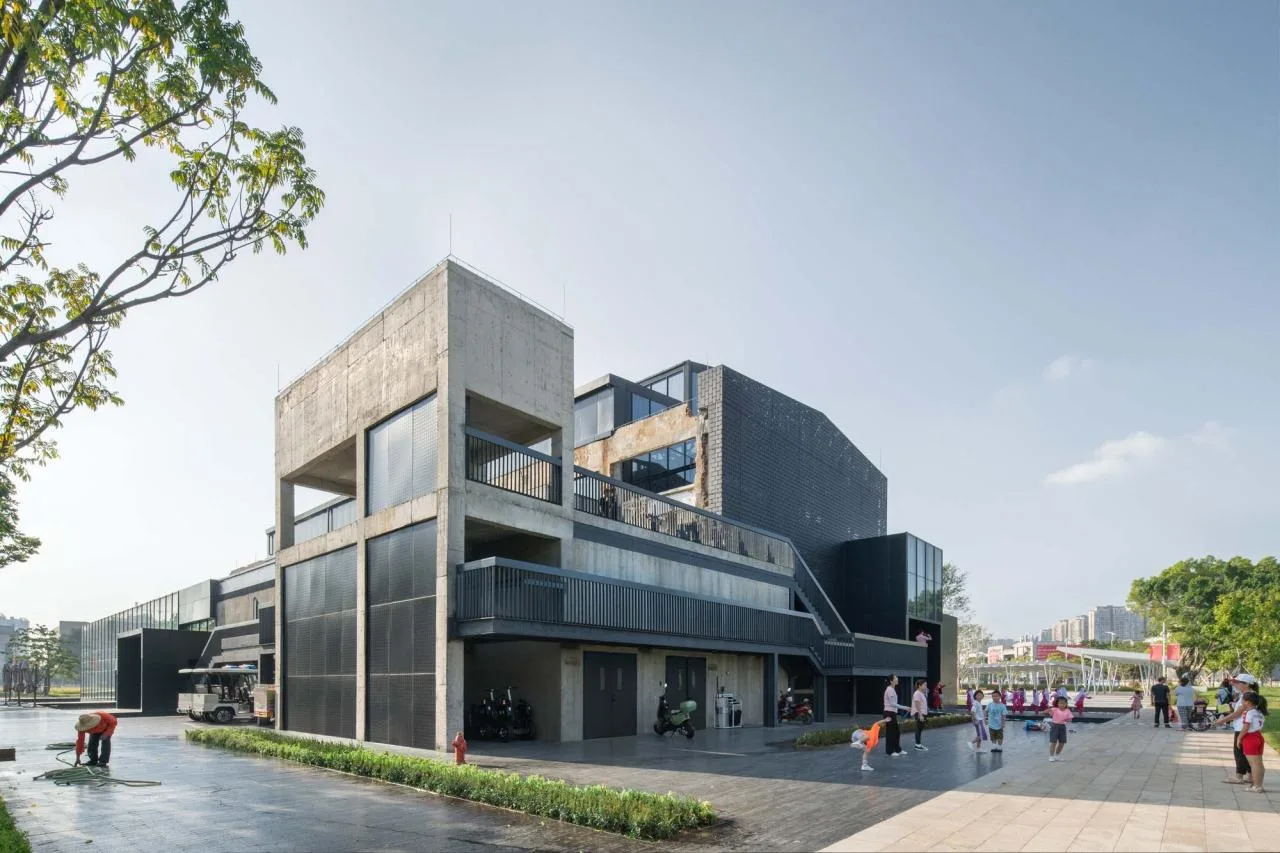
Spiritual Regeneration: The Shajing Village Hall, also known as the Haoxiang Lake Cultural and Creative Museum, reborn from the ruins, serves as a public space open to local residents and Shenzhen citizens. It offers creative, leisure, and service functions. The hall also hosts traditional cultural activities unique to Shajing Village, including historical exhibitions, folk rituals, ancestor remembrance, family gatherings, and cultural exchanges. Nestled by the Maozhou River, the Village Hall acts as a symbolic spiritual hub.
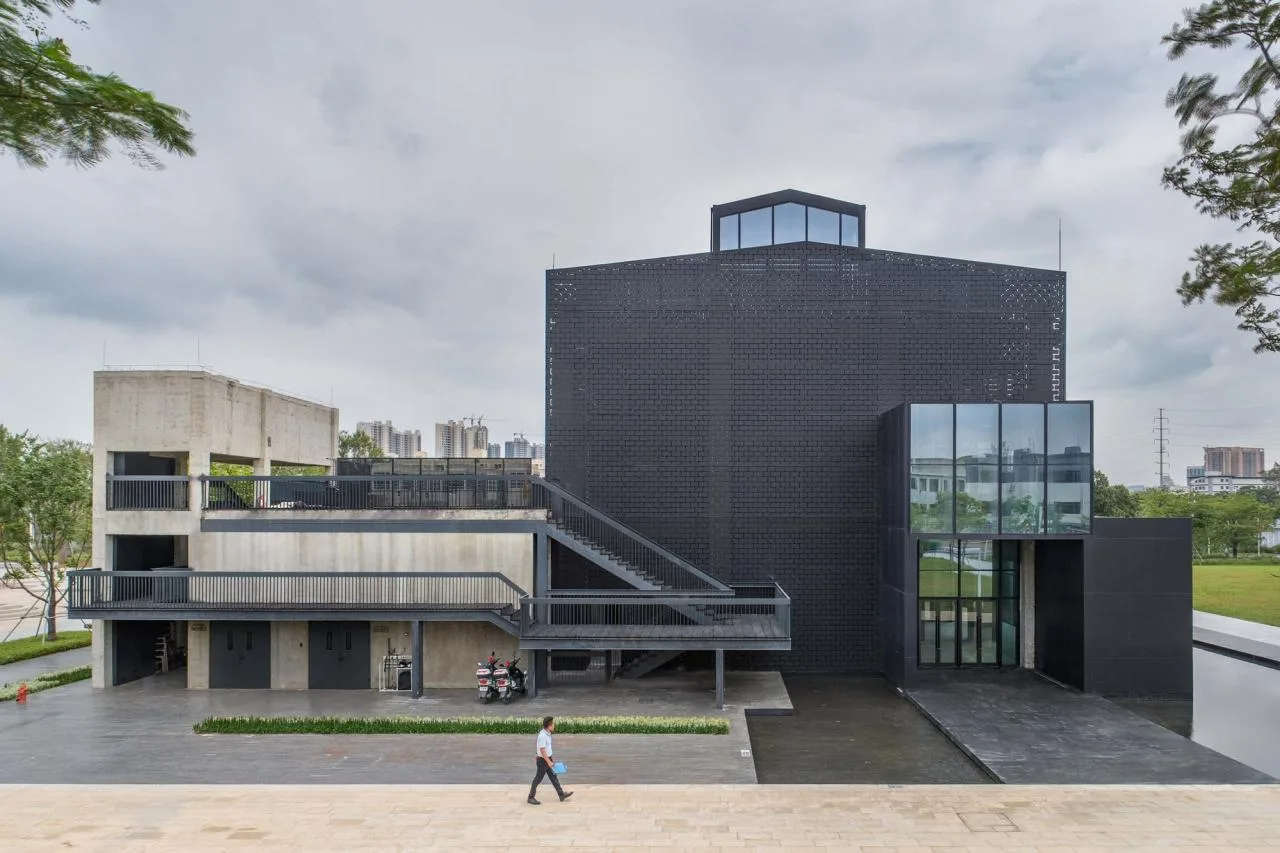
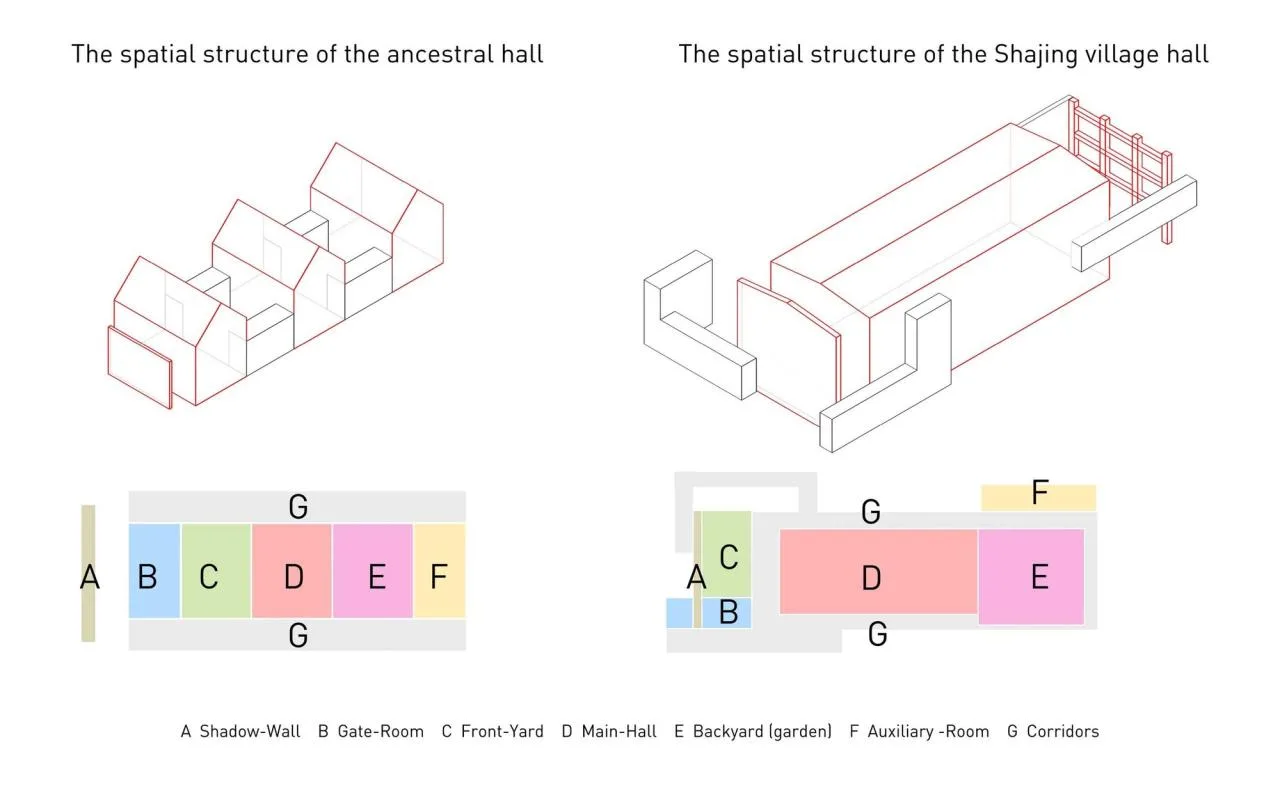
The design philosophy of Shajing Village Hall is rooted in sustainable design principles, embracing local cultural characteristics. The old factory was abstractly transformed into a new ancestral hall—a public space with broader community appeal. A traditional Guangdong ancestral hall typically includes seven spatial elements: shadow wall, gatehouse, front yard, main hall, backyard (garden), house, and corridor, arranged sequentially from front to back with corridors surrounding the compound.
This spatial structure inspired the renovation of the power plant ruins. Given the plant’s large scale, the design evolved into a three-dimensional reinterpretation rather than a simple ancestral hall form. The result is an intermediate state between traditional ancestral hall and industrial factory.
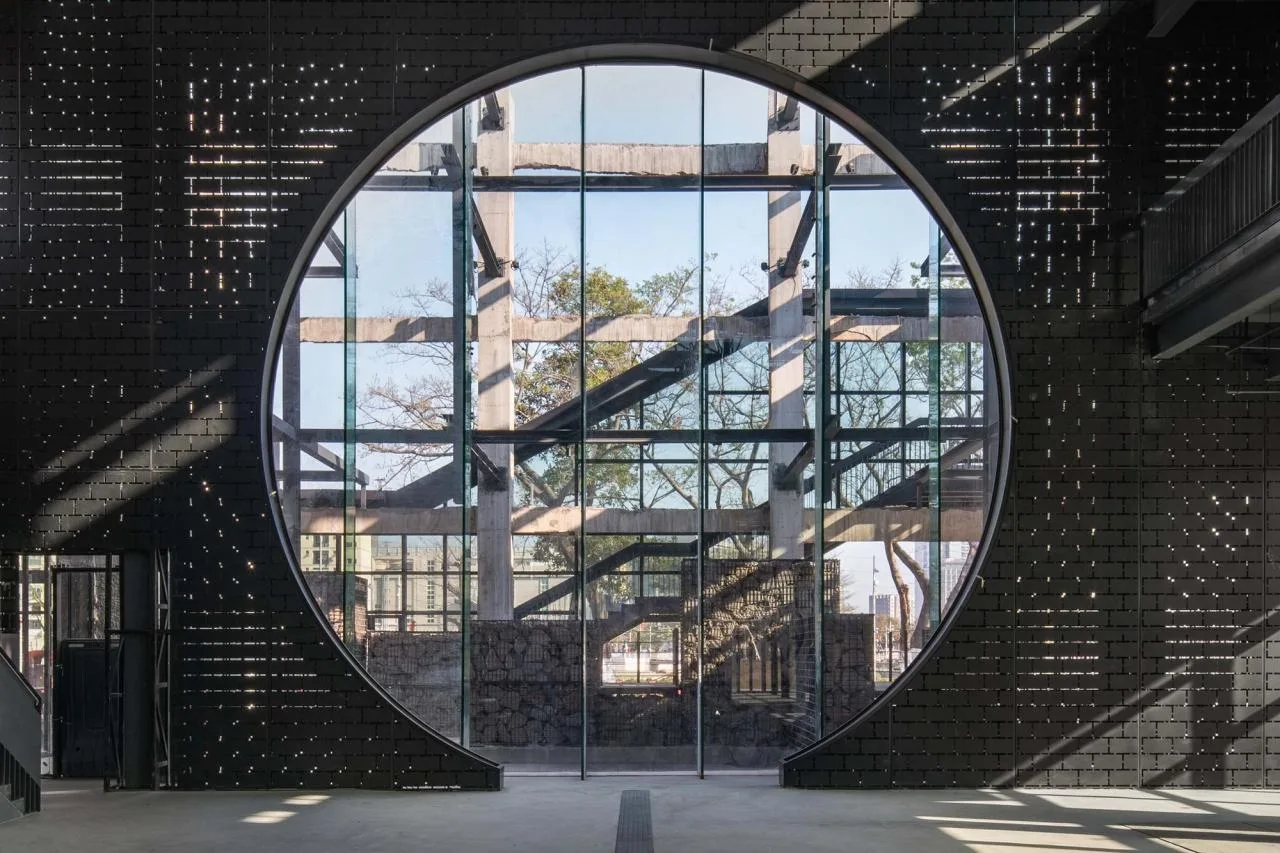
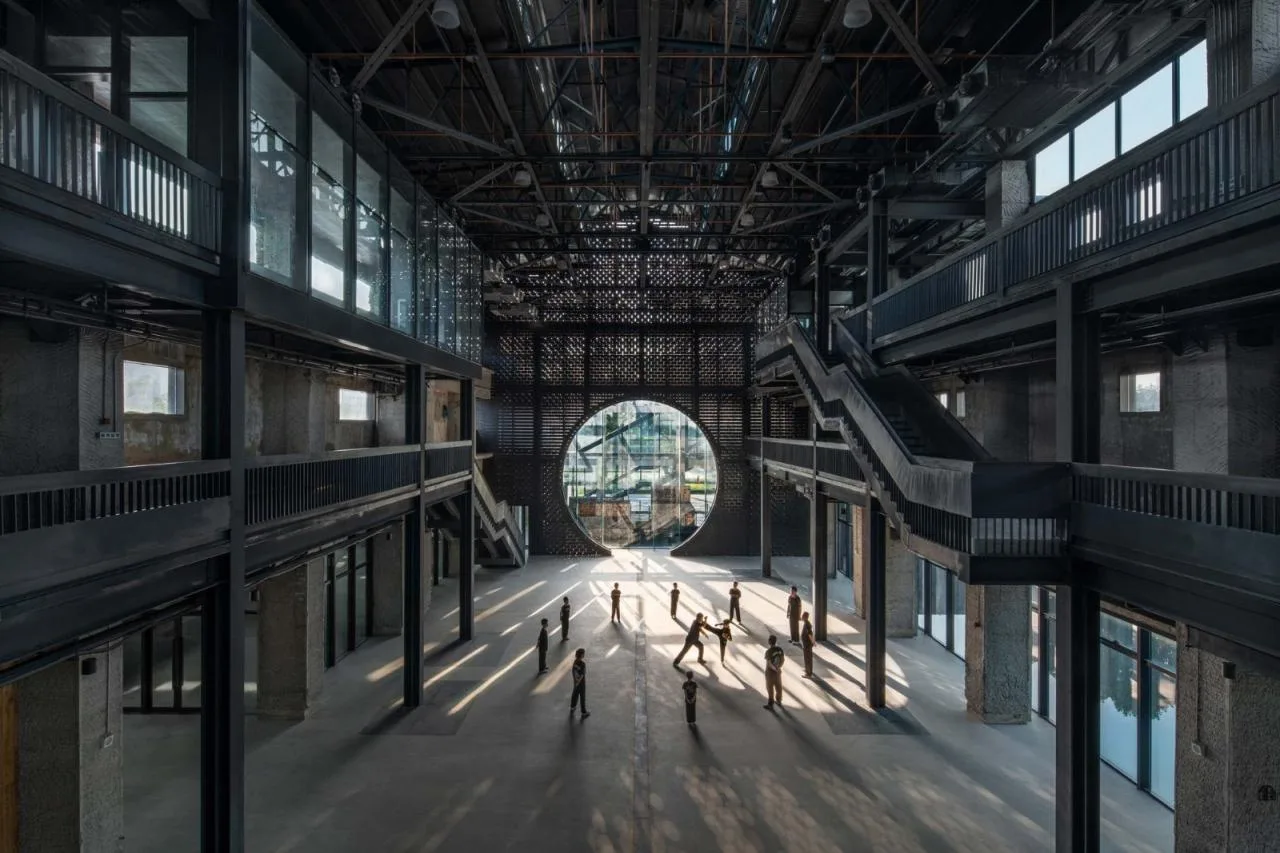
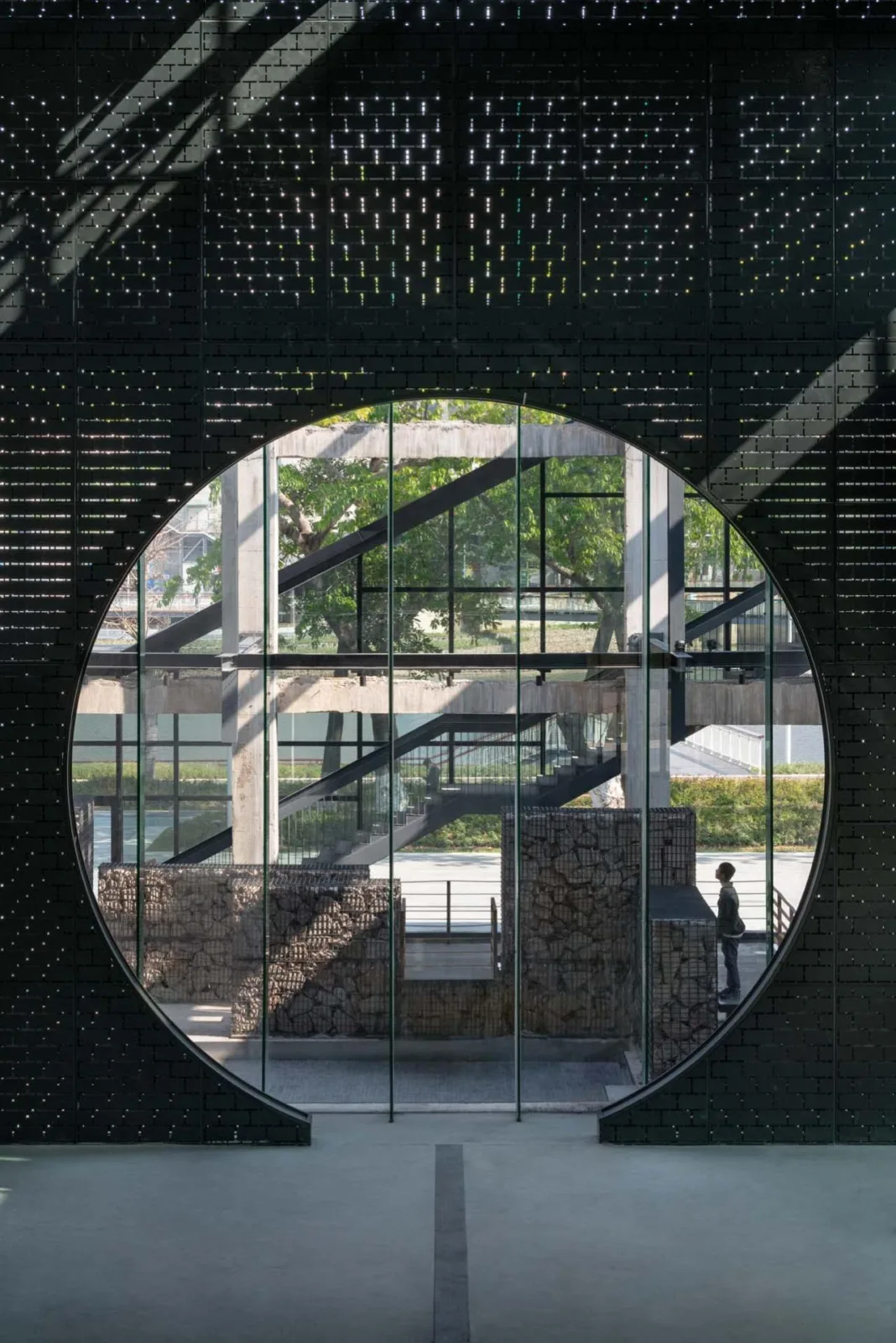
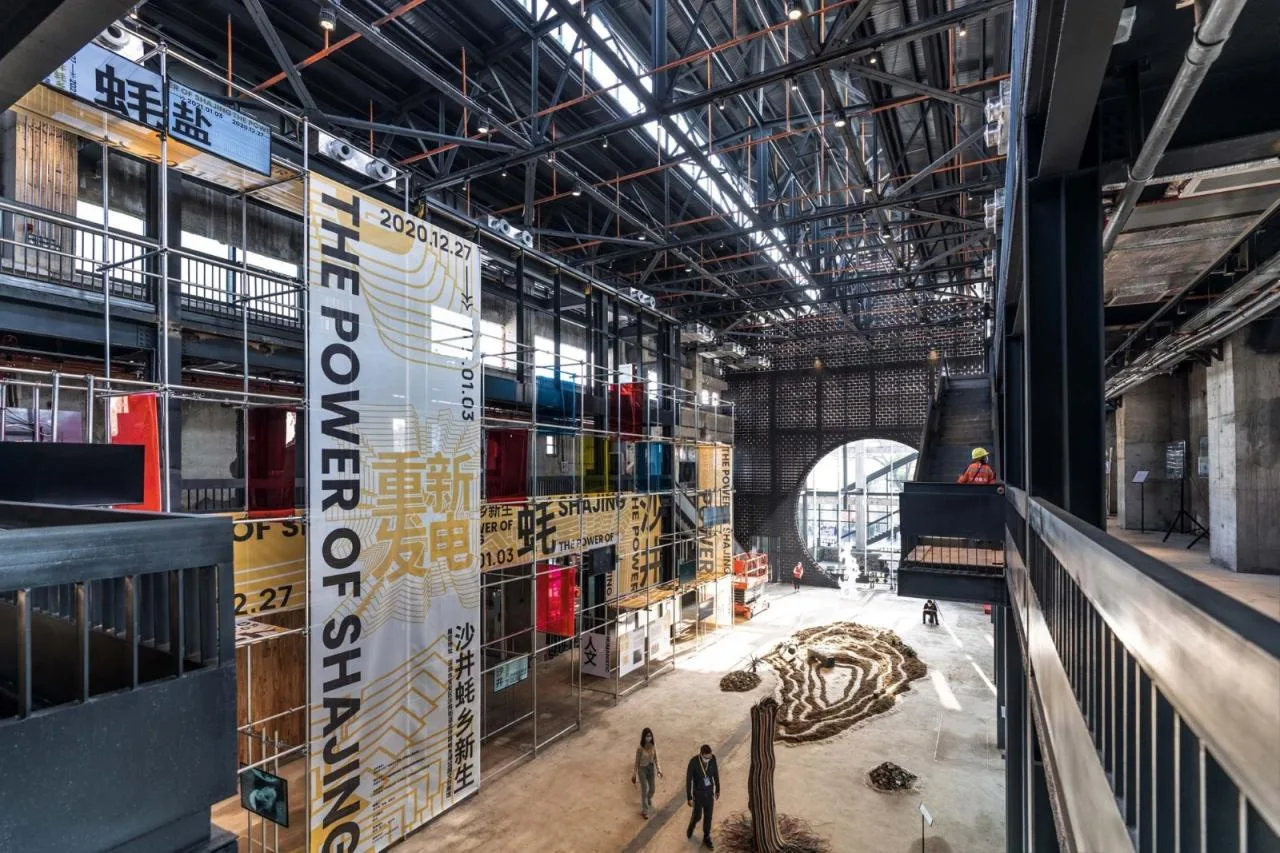
The Moon Cave Gate’s main hall is the ancestral hall’s central activity space and spiritual heart. The power plant hall reaches a height of 17 meters. To create an inviting atmosphere with ample light and transparent indoor-outdoor views, a 9-meter-diameter glass “moon portal” was installed between the hall and backyard. Known locally as Yuedongmen, this architectural element is common in Guangdong residences and gardens. The enlarged Moon Cave Gate has become a strong spatial icon for the community and a popular venue for Shajing villagers.
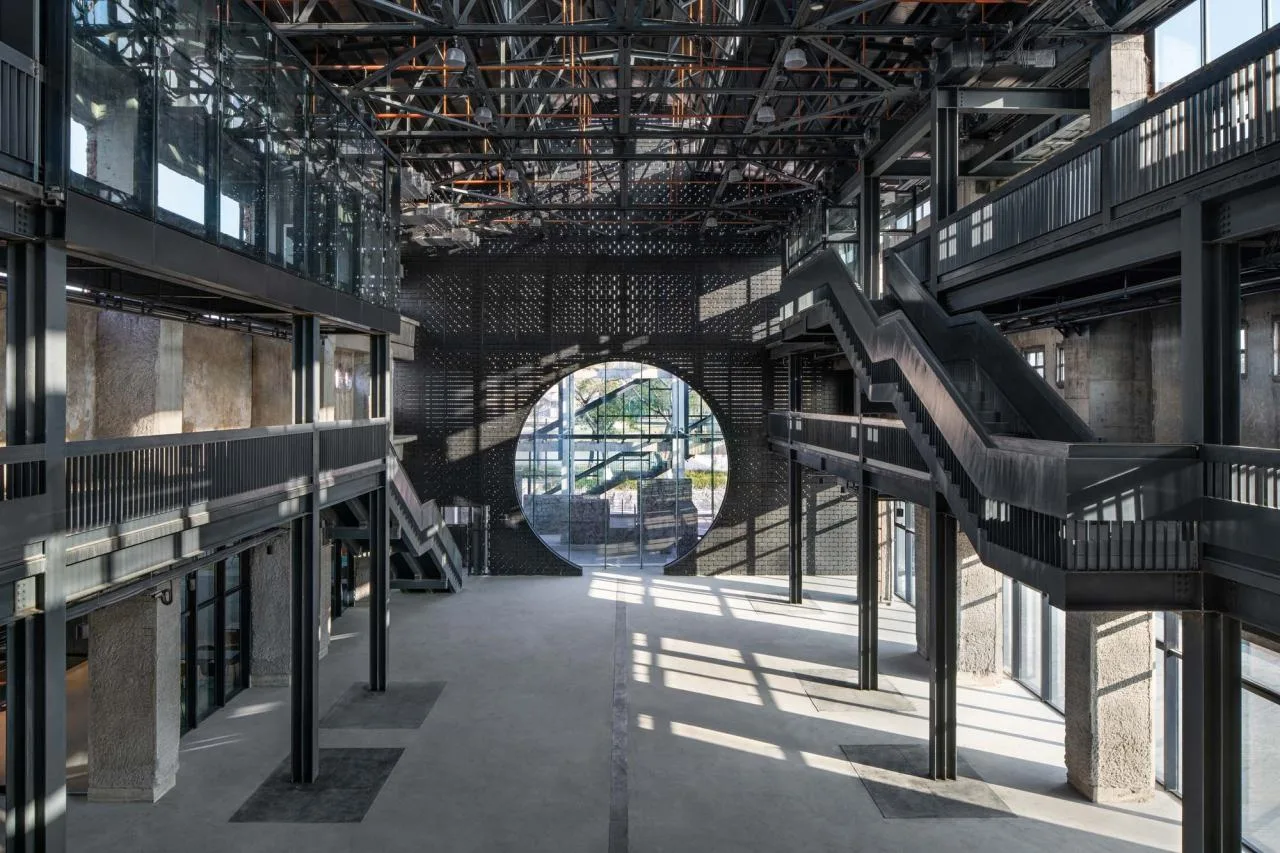
Inside the Moon Cave Gate Hall, all fire protection and air conditioning pipelines and equipment are openly exposed, facilitating maintenance and cost-saving. Collaborating with a hydroelectric engineer, the architect designed the exposed red fire sprinkler pipes as an artistic array. The I-beams along the north and south sides form parallel colonnades, evoking the ceremonial atmosphere characteristic of traditional ancestral halls.
The main concrete framework of the power plant ruins—including foundations, beams, columns, and brick walls on the north and south sides—was preserved to the greatest extent possible. Due to deterioration, the building was deemed unsafe, requiring reinforcement of all retained elements. Reinforcement involved planting new reinforcements, wrapping existing foundations and beam-columns with added reinforced concrete to enlarge their sections and improve their structural performance. The original steel roof truss was dismantled, partially refurbished, and supplemented with new steel truss roofs.
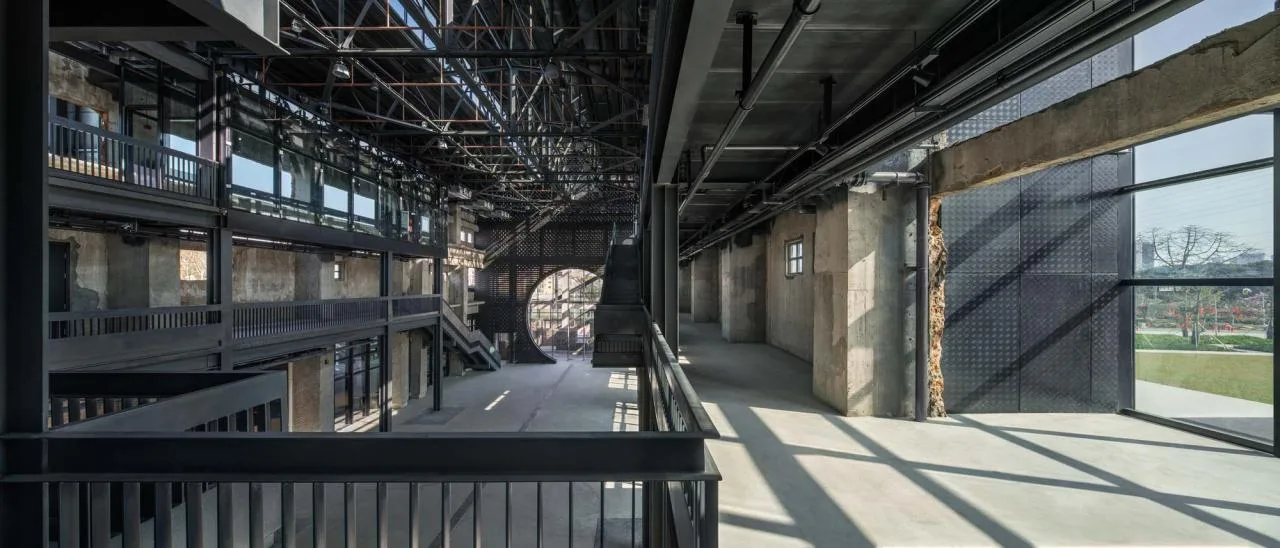
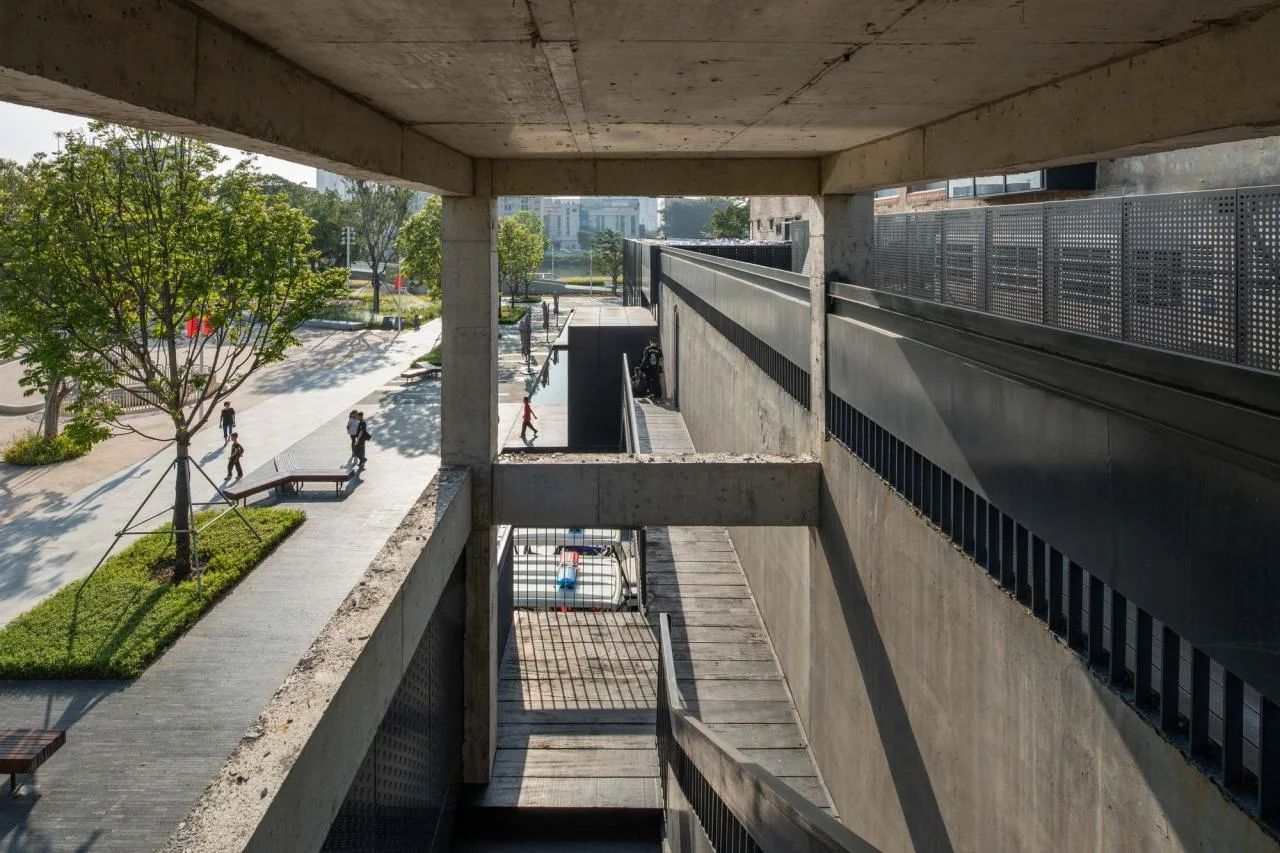
Preservation extends beyond structural components to include robust features like the concrete crane beams above the hall on the north and south sides. These beams, along with square windows and circular ventilation holes originally used for power plant ducts, have been integrated into the “rural structure,” narrating a chapter of history and adding mystery and unpredictability to the space.
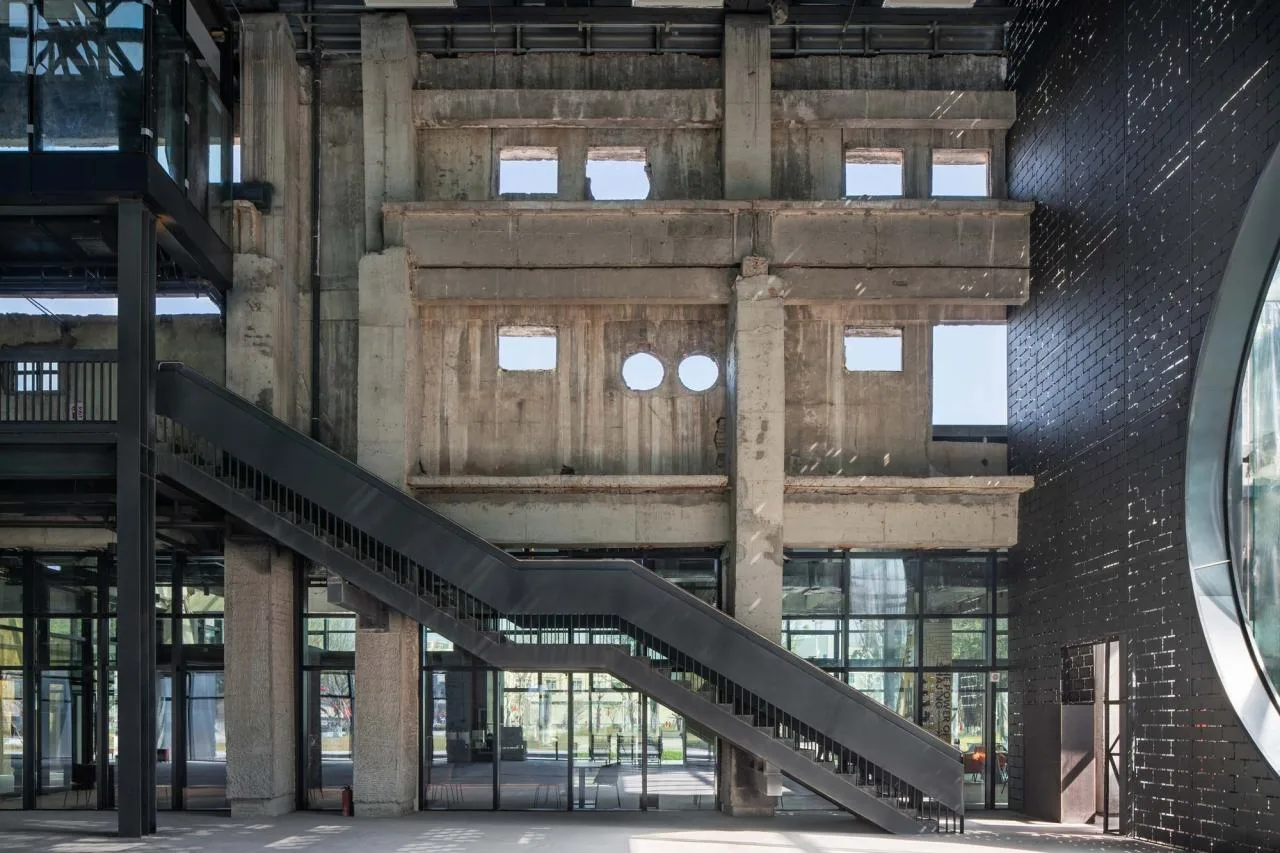
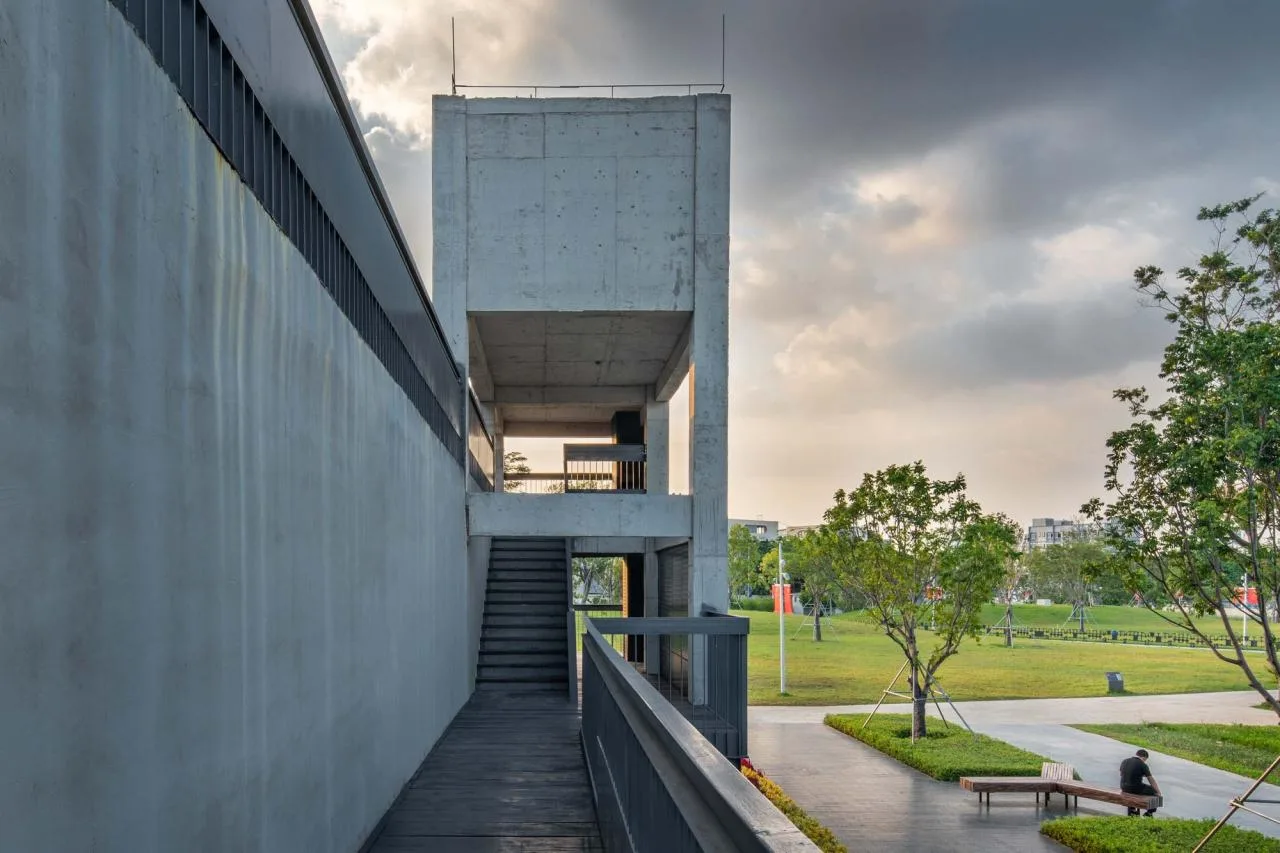
The building itself is a prime aesthetic object to explore. The architect envisioned a three-dimensional wandering corridor weaving through the entire structure—indoors, outdoors, up, down, and around—inviting visitors to experience the traces of time with all their senses. This long corridor, like a branching garden path, encourages discovery of every corner.
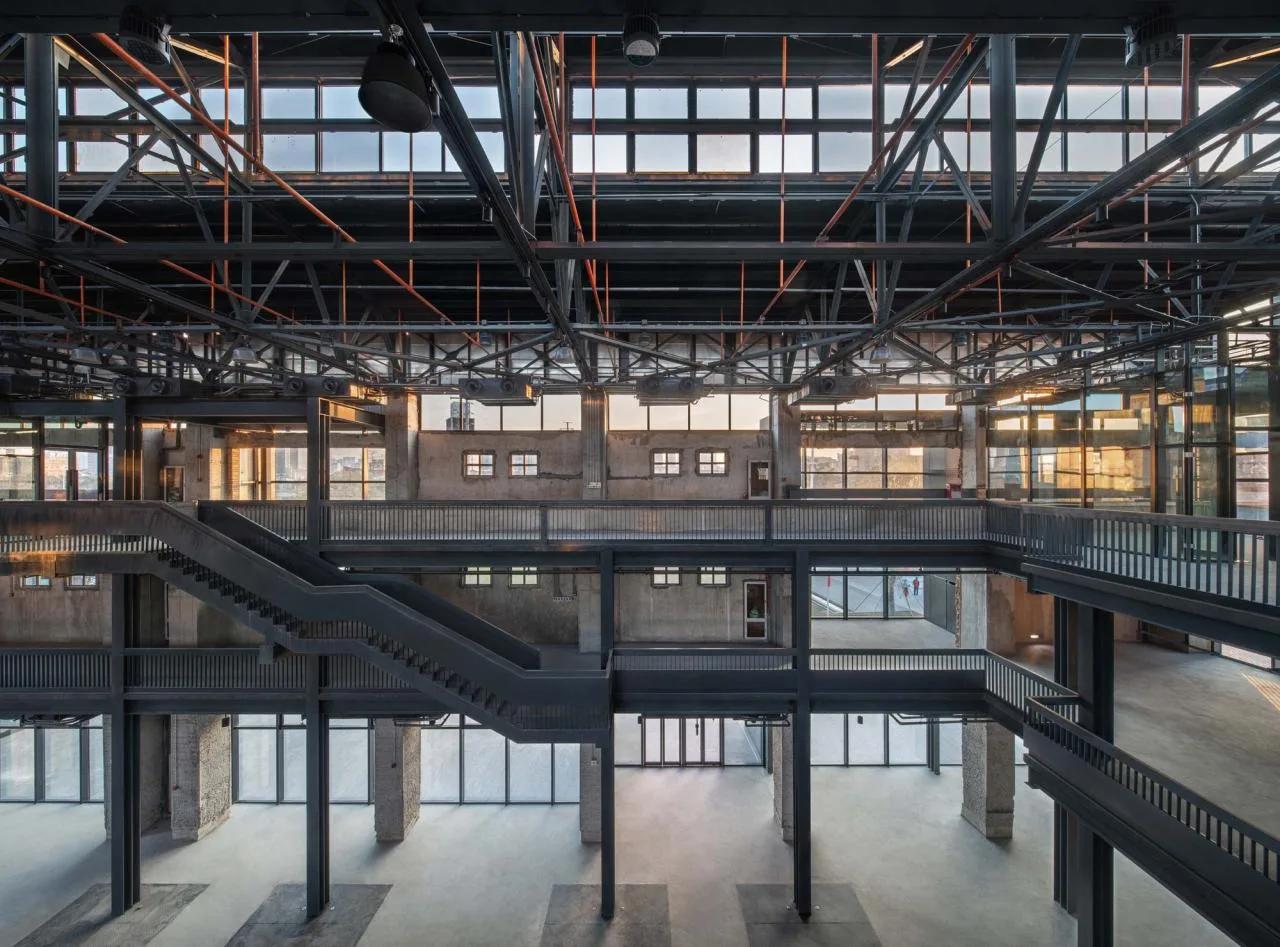
Within the building, multiple paths—including trails, stairs, terraces, and corridors—intersect and overlap, sparking curiosity and exploration. Visitors experience varying views, from panoramic vistas to intimate details, encountering a labyrinthine arrangement of interconnected voids and rural spaces. These dynamic small-scale spaces heighten the physical and emotional experience of the ruins.
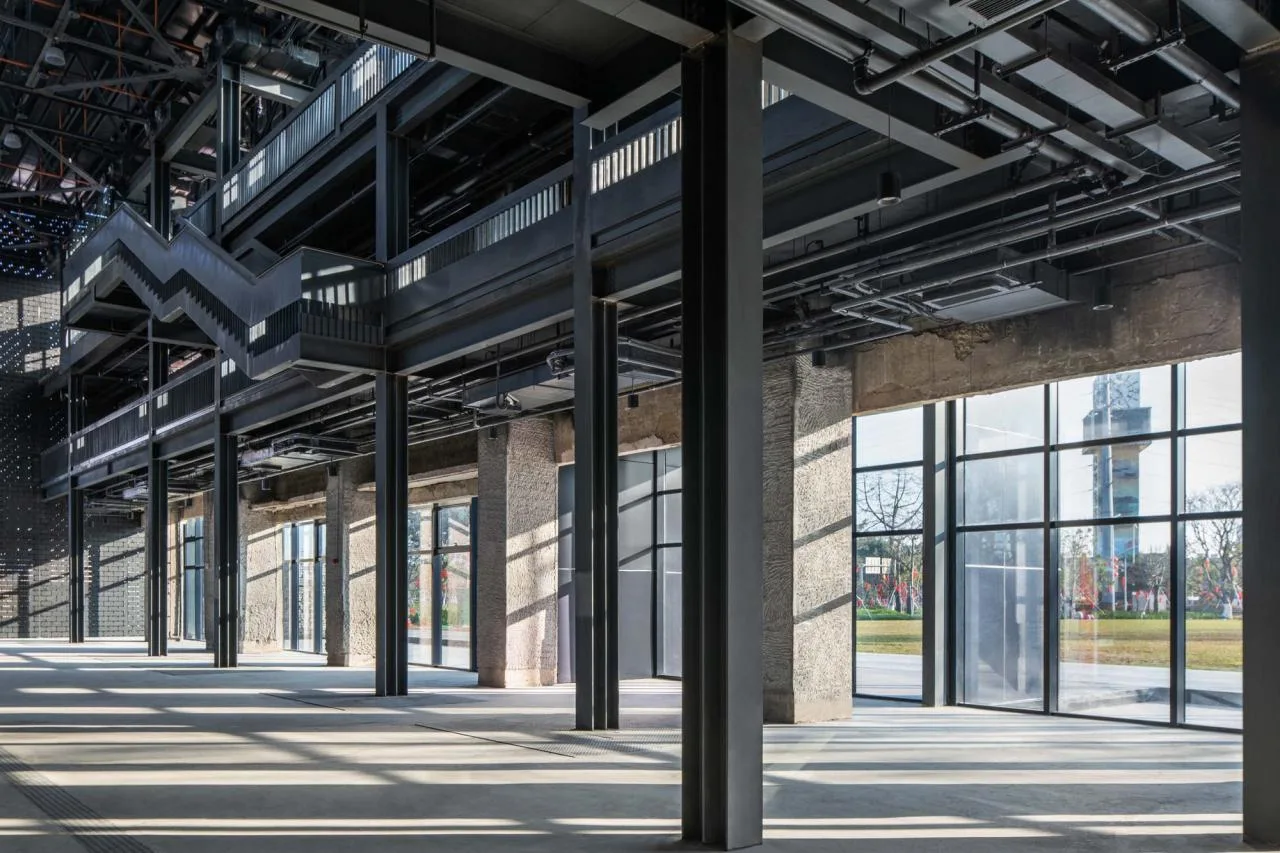
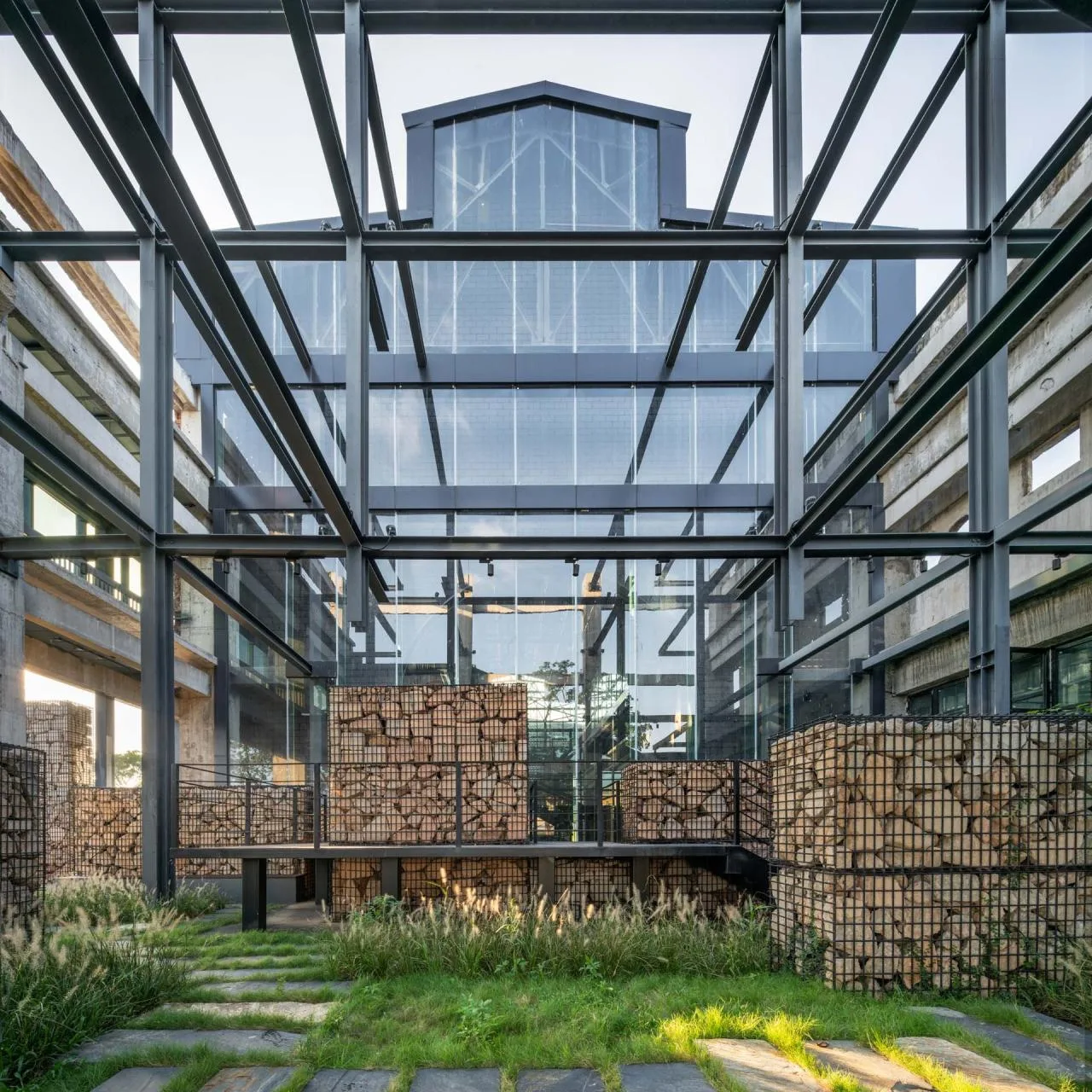
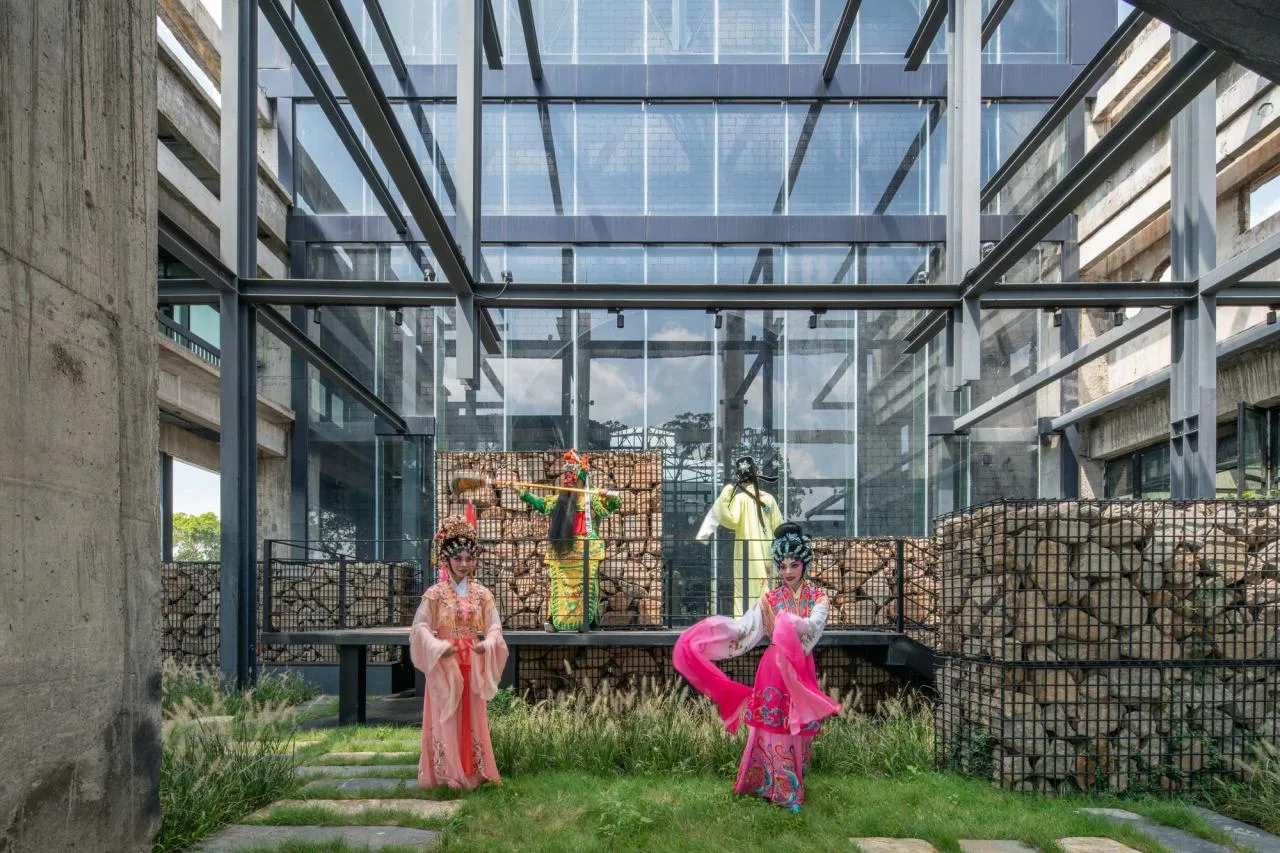
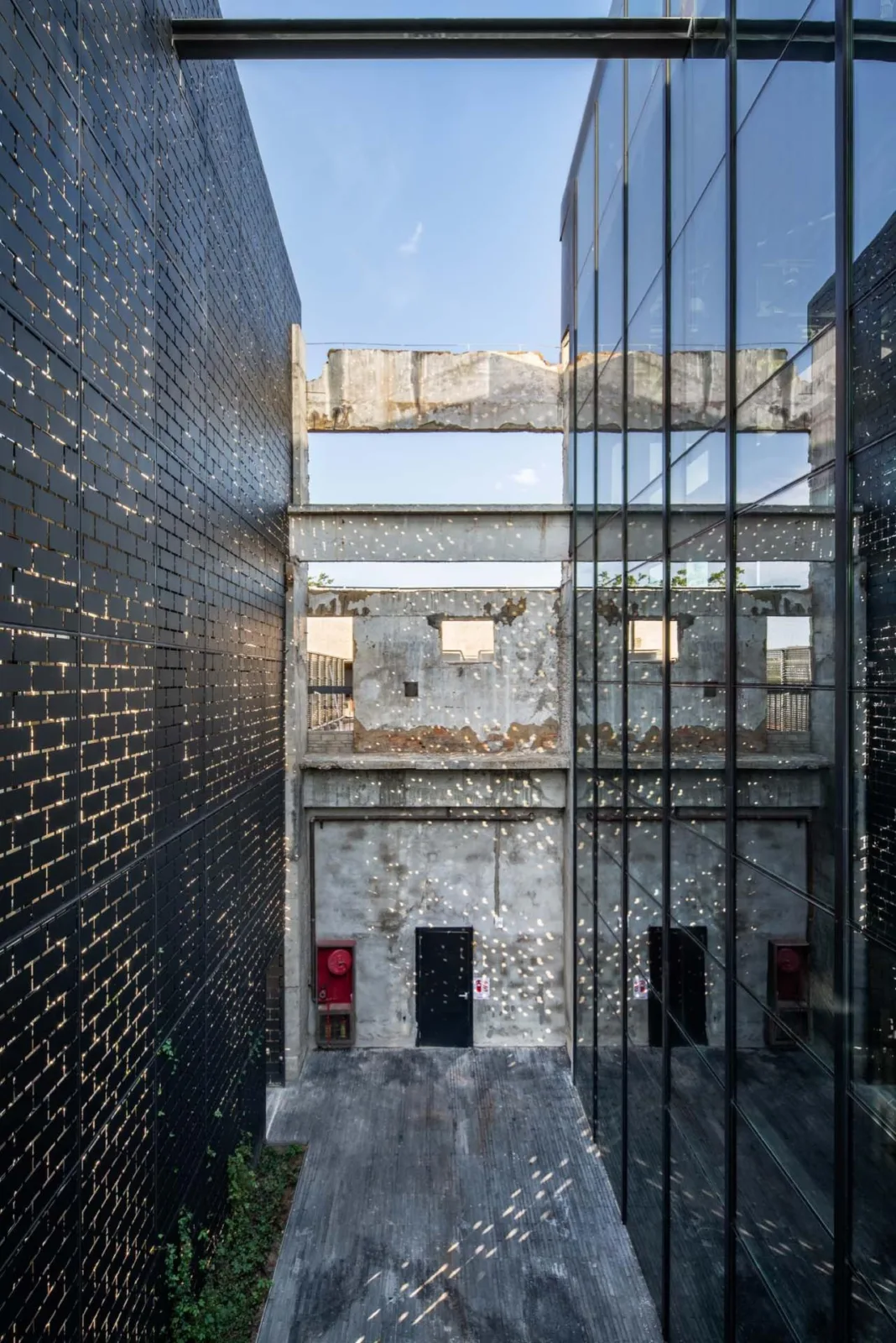
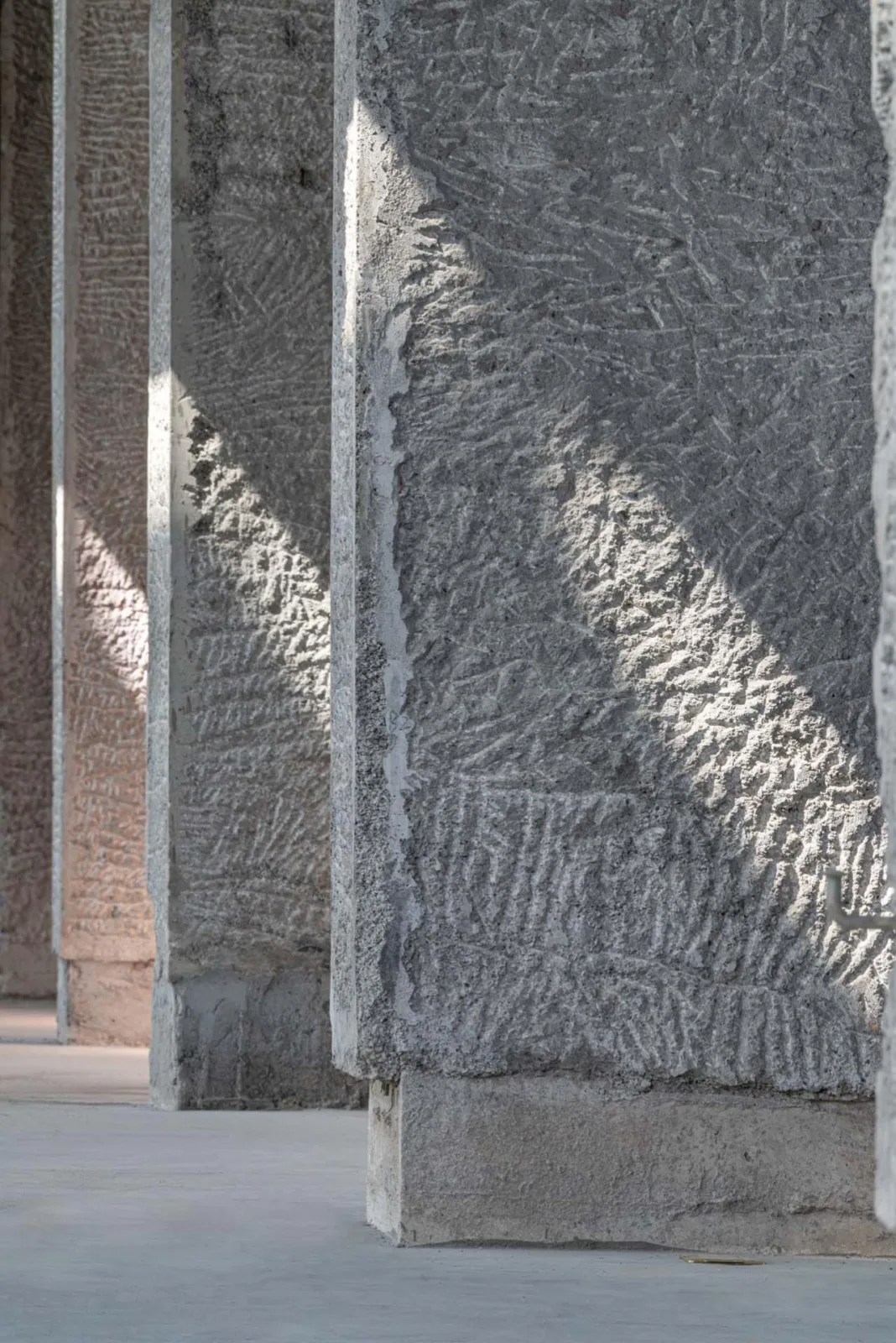
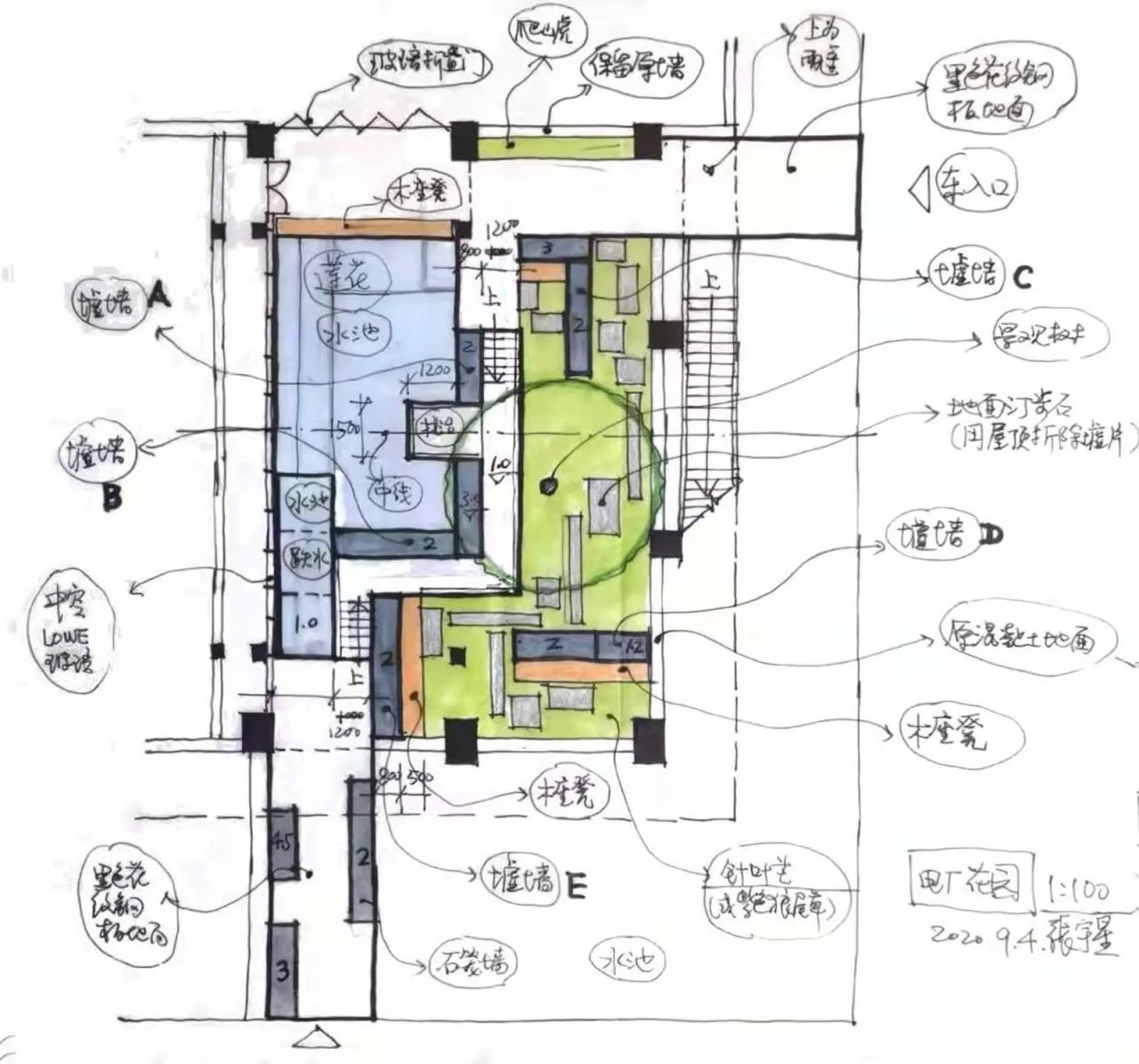
During partial demolition, the mountain walls and roofs flanking the power plant were partially removed. The architect seized this opportunity to create front and back yards. The front yard, named “Light and Shadow Garden,” is a narrow space between columns where dappled sunlight evokes nostalgia at midday. The backyard, called “Ruins Garden,” features preserved walls and beams on all sides, forming an engaging garden space open for exploration. To balance the lateral thrust of the steel roof trusses and enhance structural stability, an I-beam system reminiscent of traditional Chinese wooden bucket beams was installed above the ruins garden. This collaboration with structural engineers introduces cultural significance to a simple structural system.
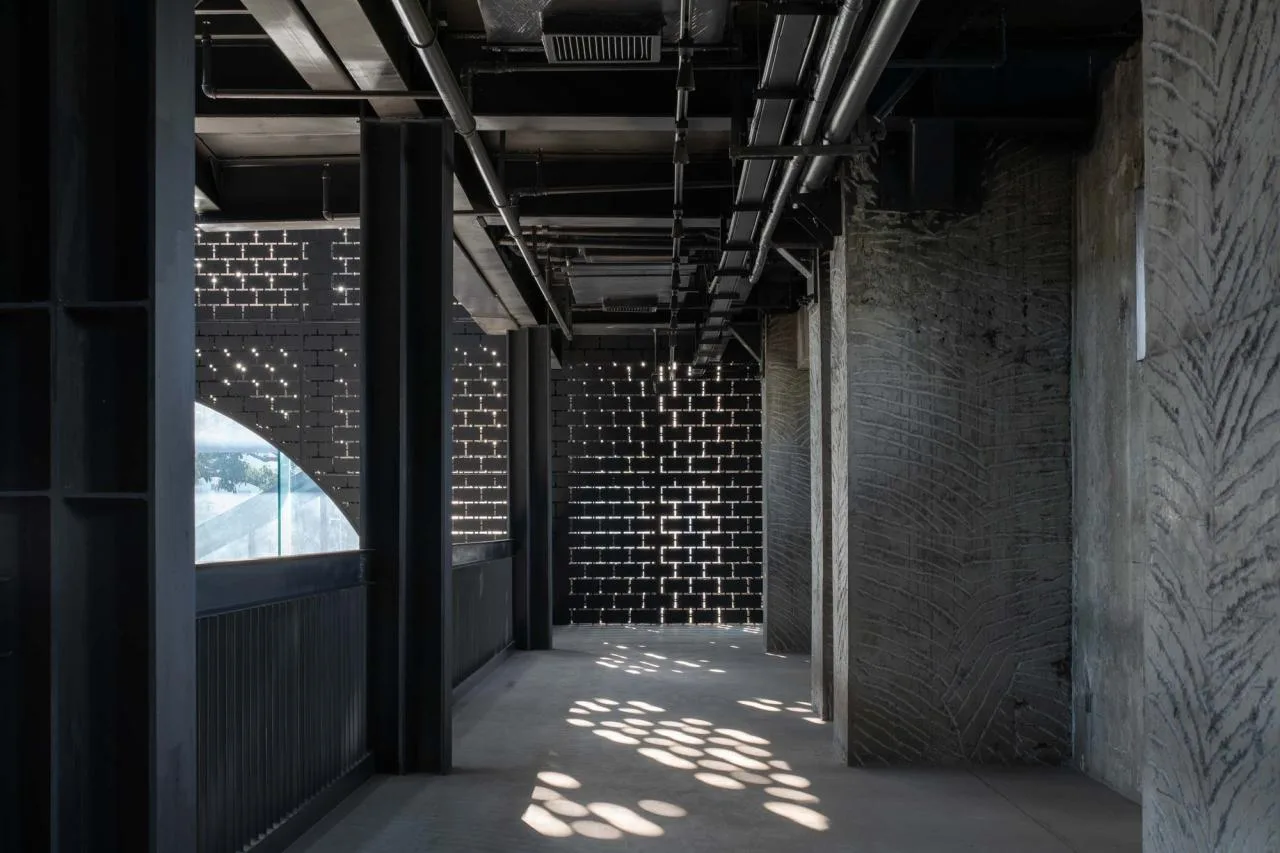
The design uses abstract mountain stacking and water management techniques to evoke the spatial imagery of classical Chinese gardens. Multiple perspectives create a unique landscape: visitors can observe each other through the glass moon gate, framed views of the sky appear through the I-beam bucket structure, distant Haoxiang Lake’s shimmering trees are visually borrowed, and winding staircases and corridors continuously guide exploration.
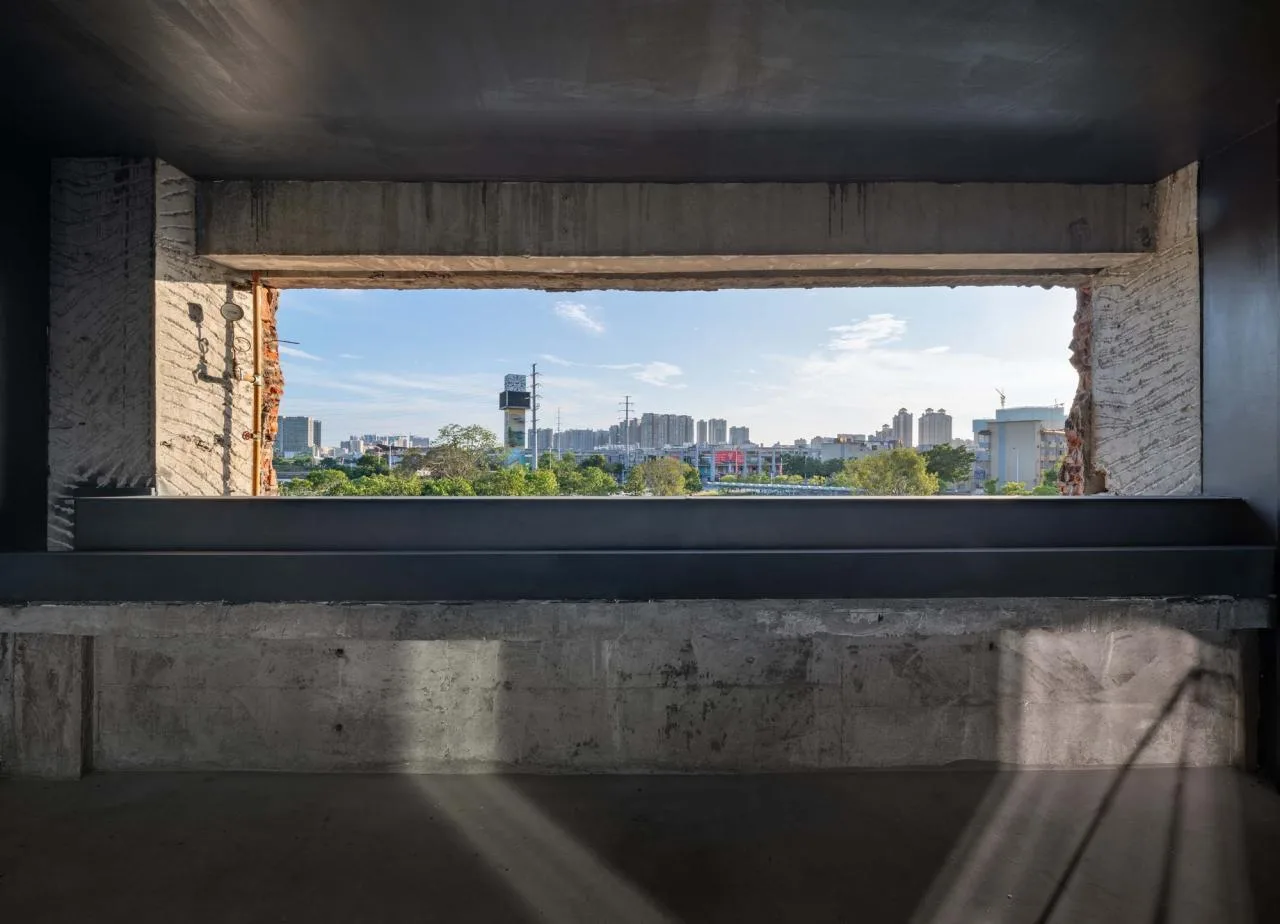
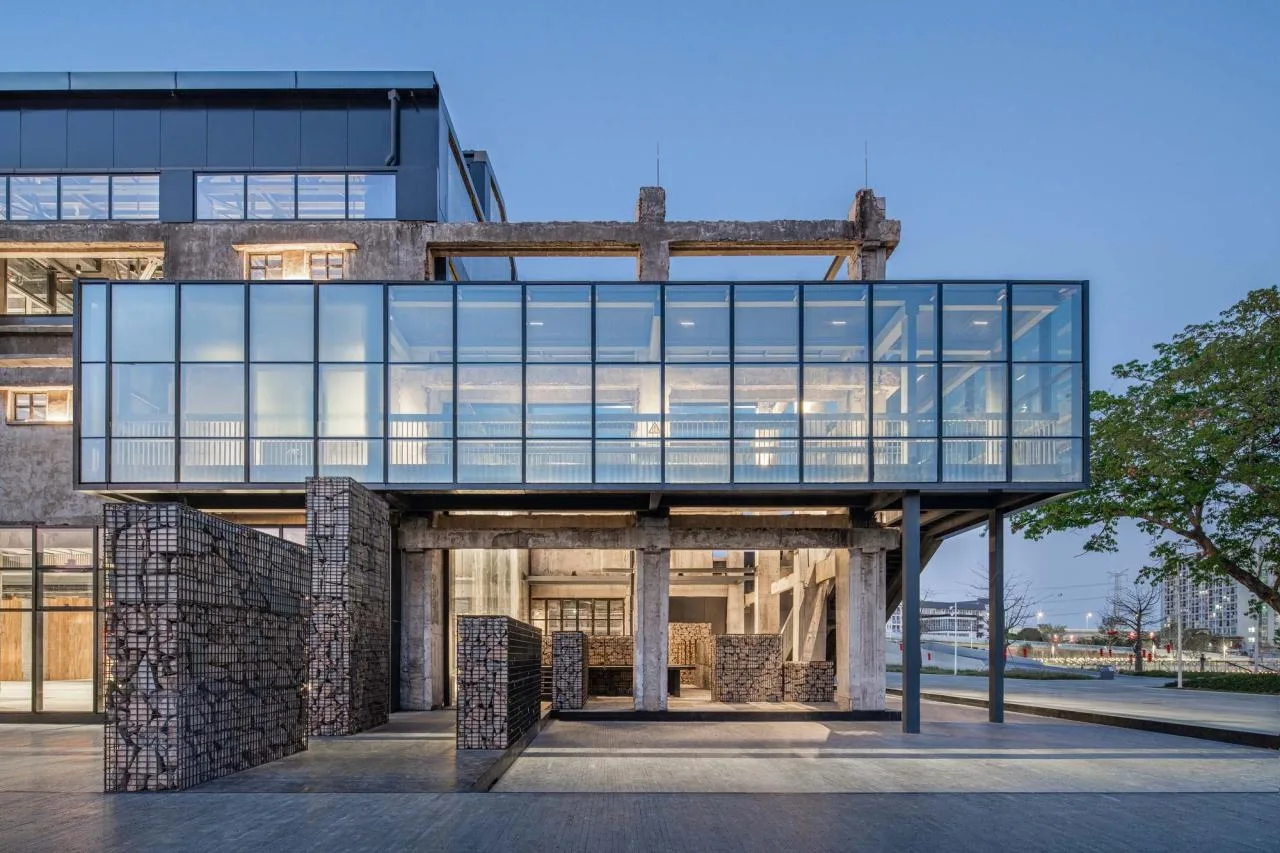
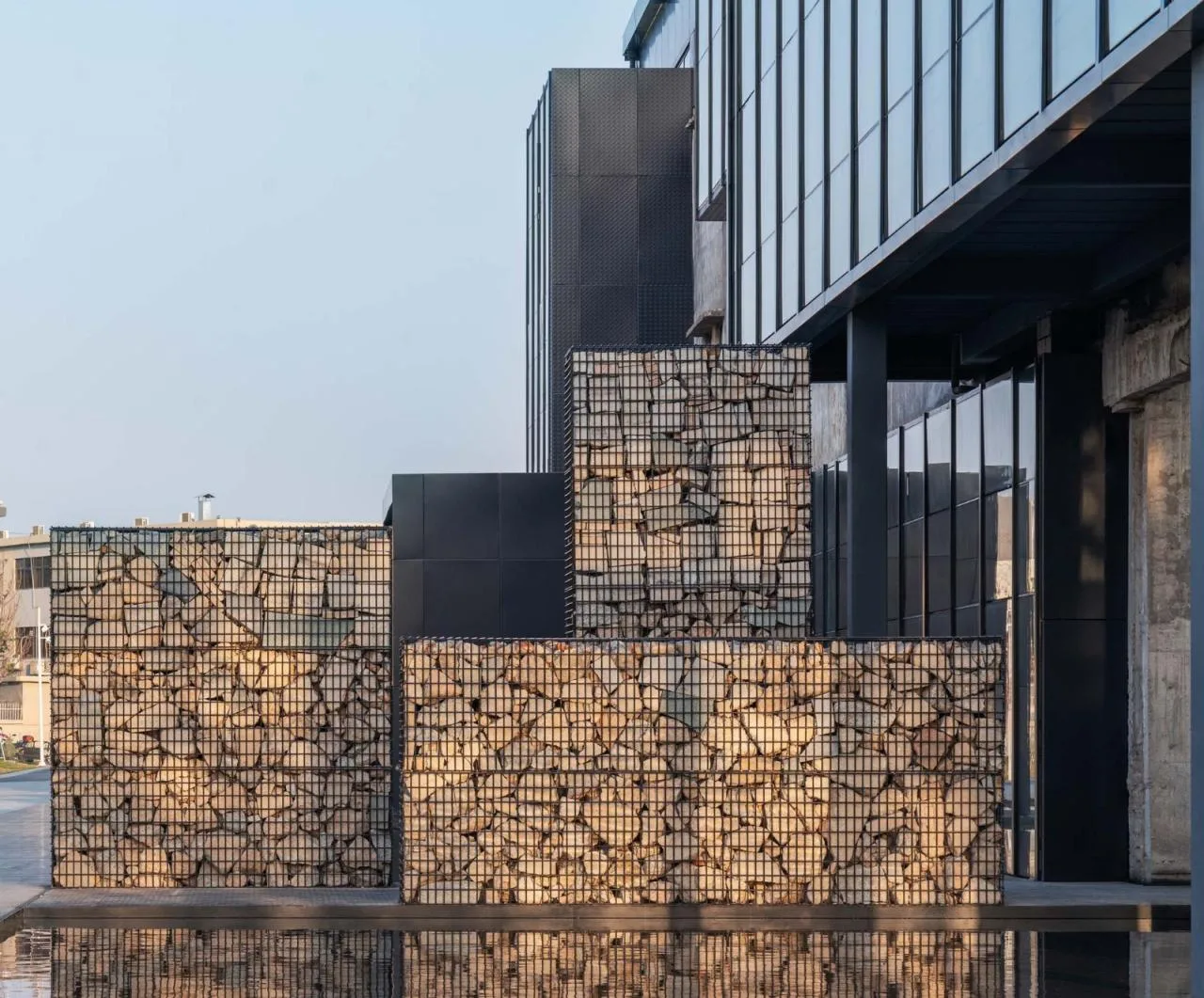
During demolition, discarded stones and bricks were collected and packed into gabion cages made of coarse steel bars, creating gabion walls 80 cm wide and 1.2 to 4.5 meters high. These are scattered throughout the ruins garden and extend into the landscape pool outside. Climbing ivy and wolf sage grow naturally around these walls, dividing the garden into winding exploratory paths.
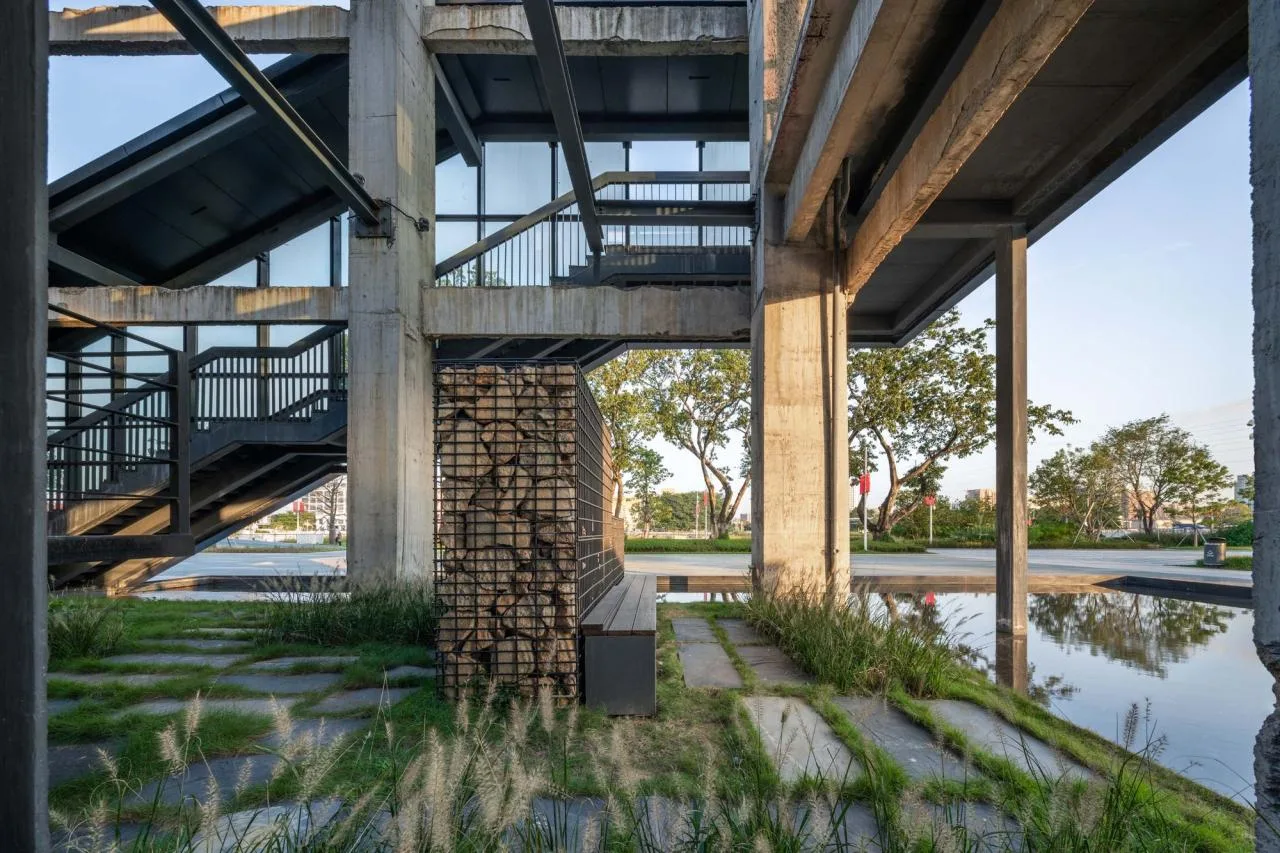
The term “ruins” here redefines all remaining elements of the power plant—beams, columns, walls, foundations, roofs, windows, doors—restoring them to their original state as ruins. For example, thick concrete columns and beams, usually hidden when used structurally, reveal their raw beauty as exposed, weathered forms due to structural weakening.
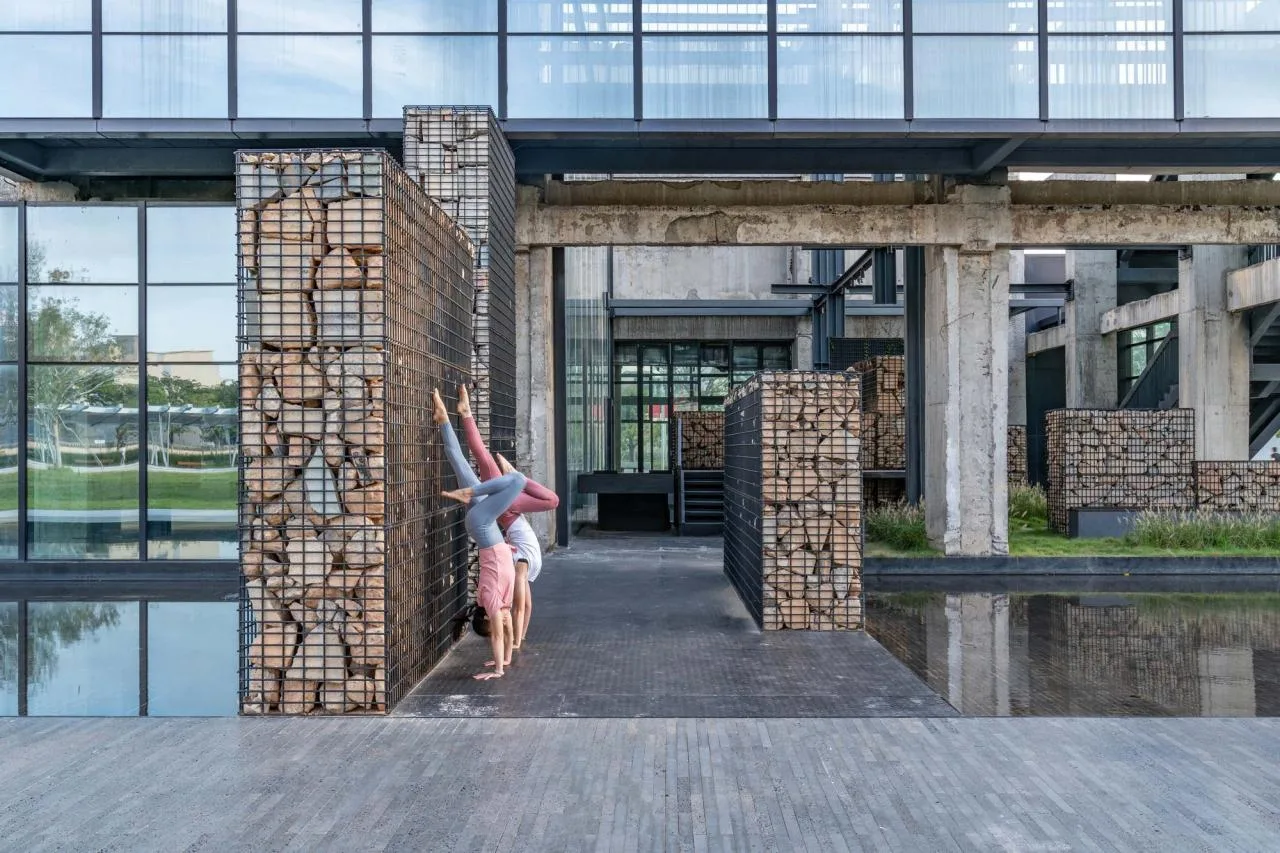
As an early industrial relic in Shenzhen’s Special Economic Zone, the Gangtou Diesel Power Plant was an informal structure built without formal drawings or surveys. Architects had to adapt designs in real-time during a construction period under six months. This problem-solving approach, called local repair techniques of addition and subtraction, embraces the dynamic evolution of ruins. New designs accommodate ambiguous, unpredictable additions, removals, and growths. The building’s fragmented exterior with convex and concave shapes anticipates future local modifications.
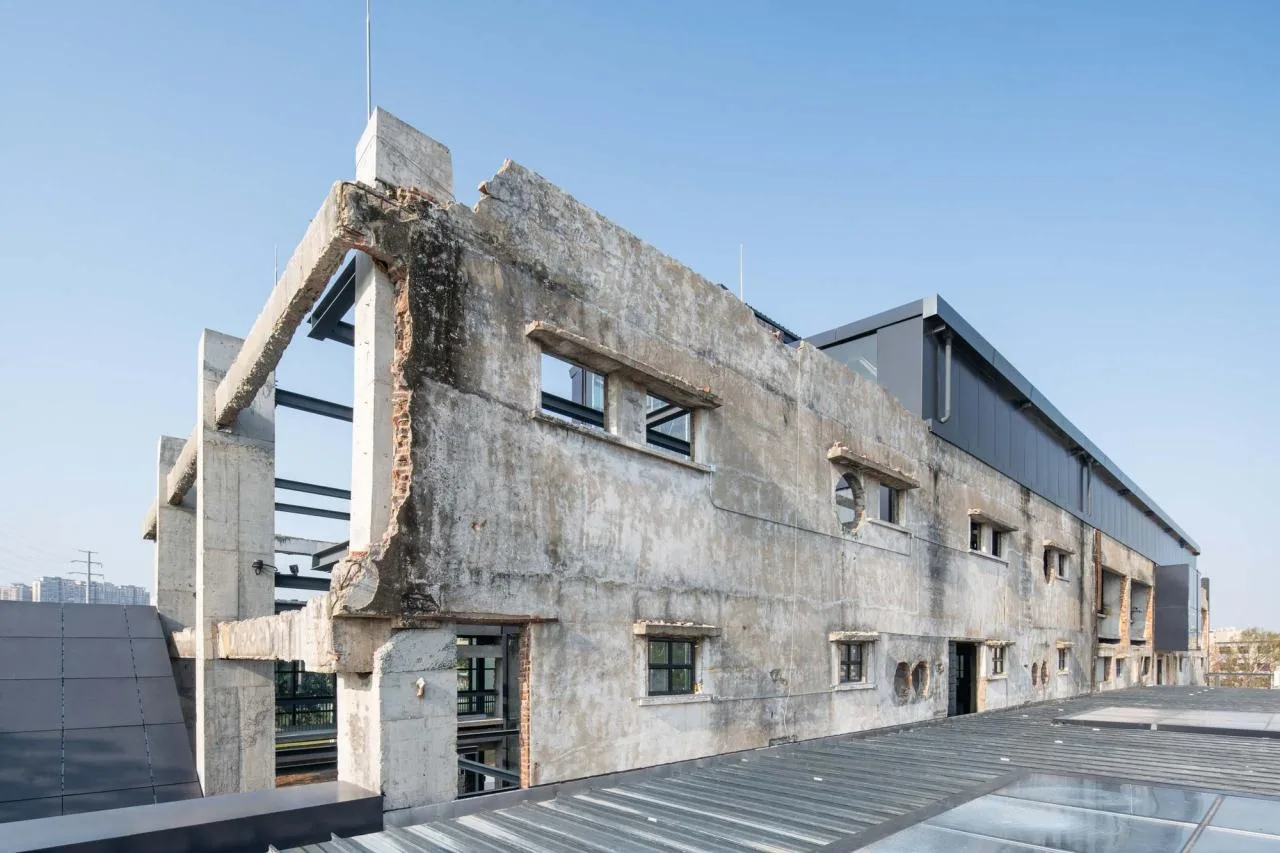
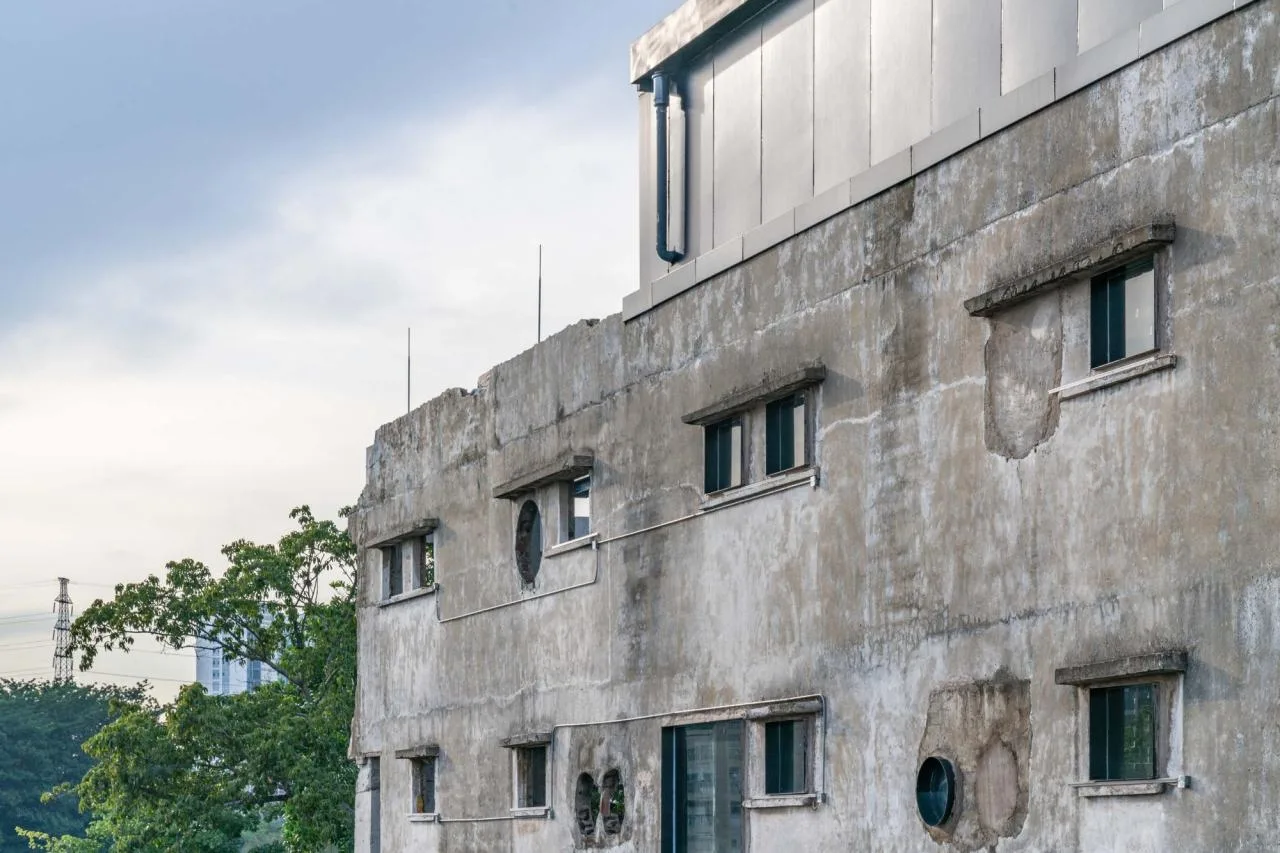
At a detailed level, this means the building embraces damage, additions, cuttings, splicings, and repairs as part of its aesthetic and structural integrity. External installations like pipelines and equipment are integrated without harming the overall aesthetics. Cutting exposes material strength, splicing creates dramatic structural dialogues, and repair highlights the authentic construction process, avoiding artificial precision.
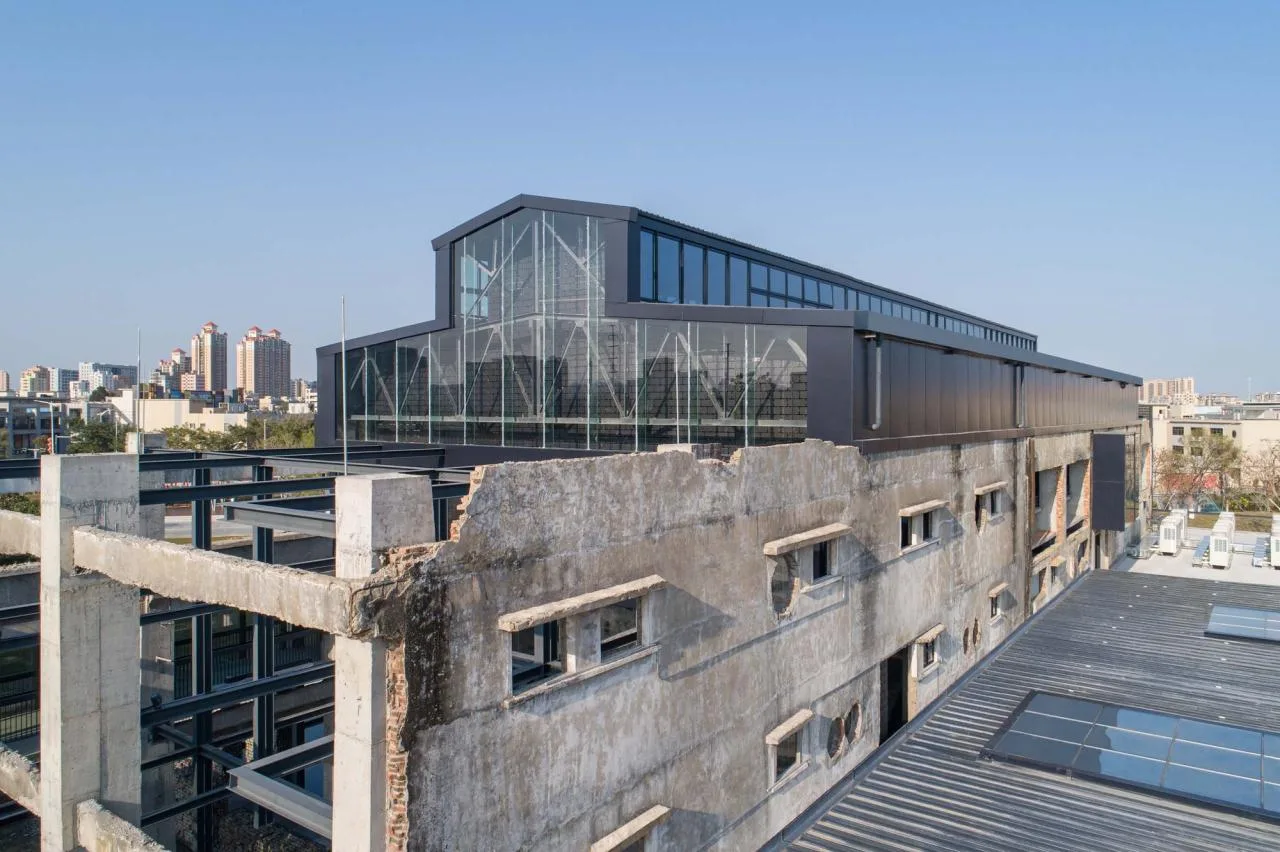
To minimize damage to the ruins during construction, an insertion method was used, reducing the working surface. New steel structures and glass curtain walls were hoisted and “inserted” into the ruins, prioritizing protection of existing debris marks. Architects carefully documented and marked the traces on drawings and onsite, frequently reviewing them to ensure preservation and avoid interference or damage during construction.
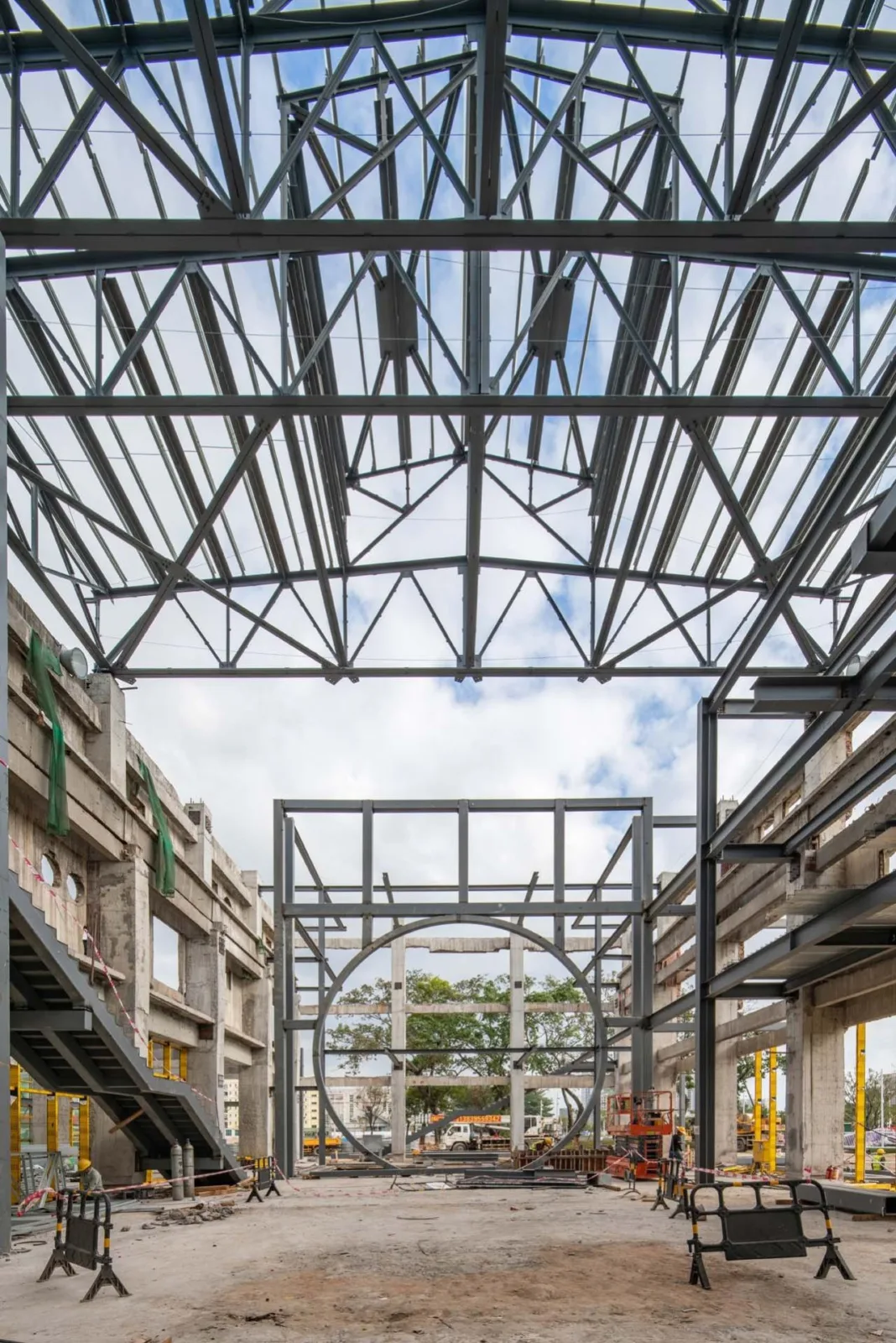
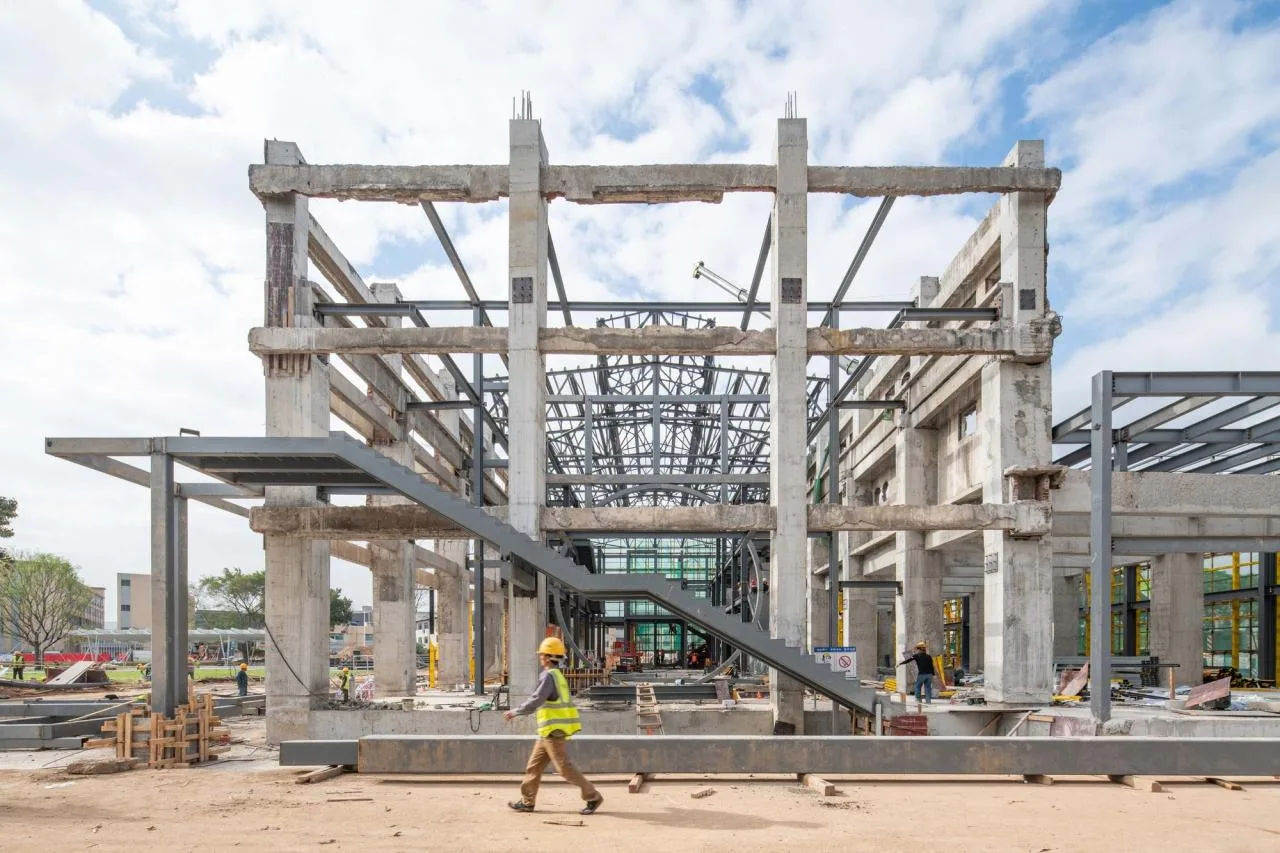
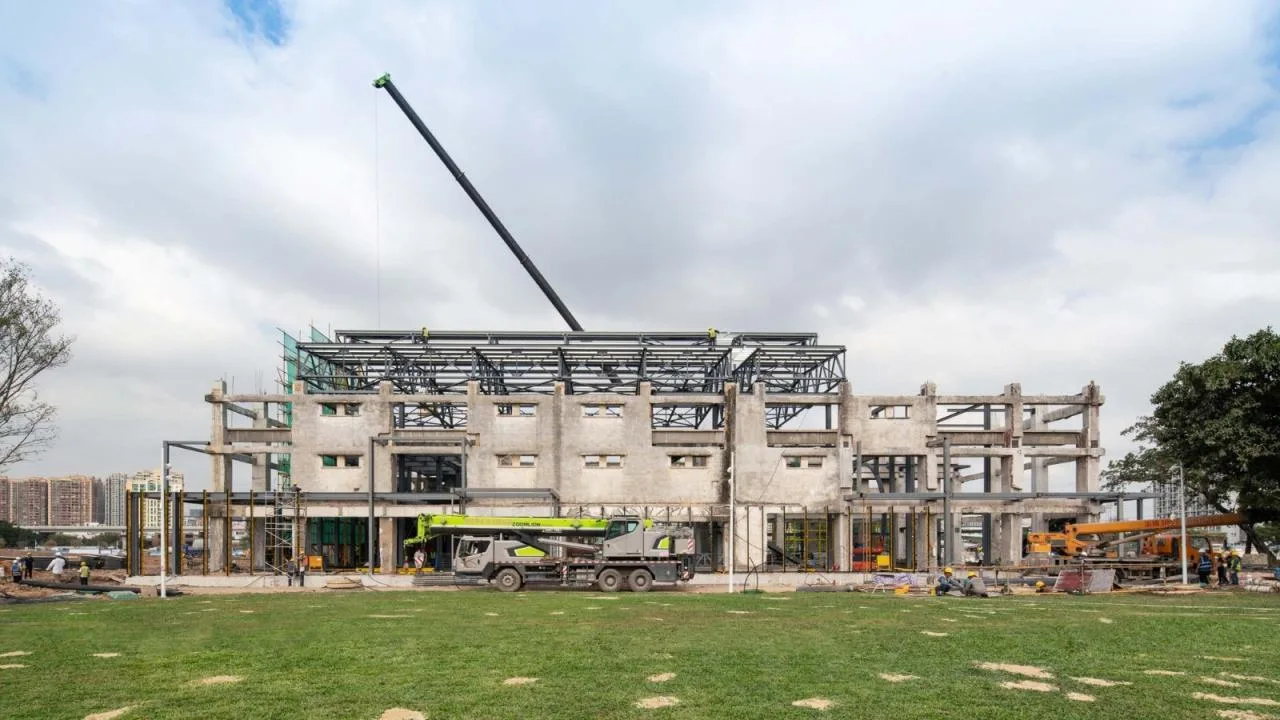
After structural inspection and safety assessment, the ruins were categorized and treated with various reinforcement and reuse techniques. While ensuring safety, the original structural functions were maximized. The new steel structures remain visually and physically distinct from the original concrete frame, emphasizing the ambiguous boundary between old and new. This complexity increased construction difficulty, resulting in a highly non-standard process.
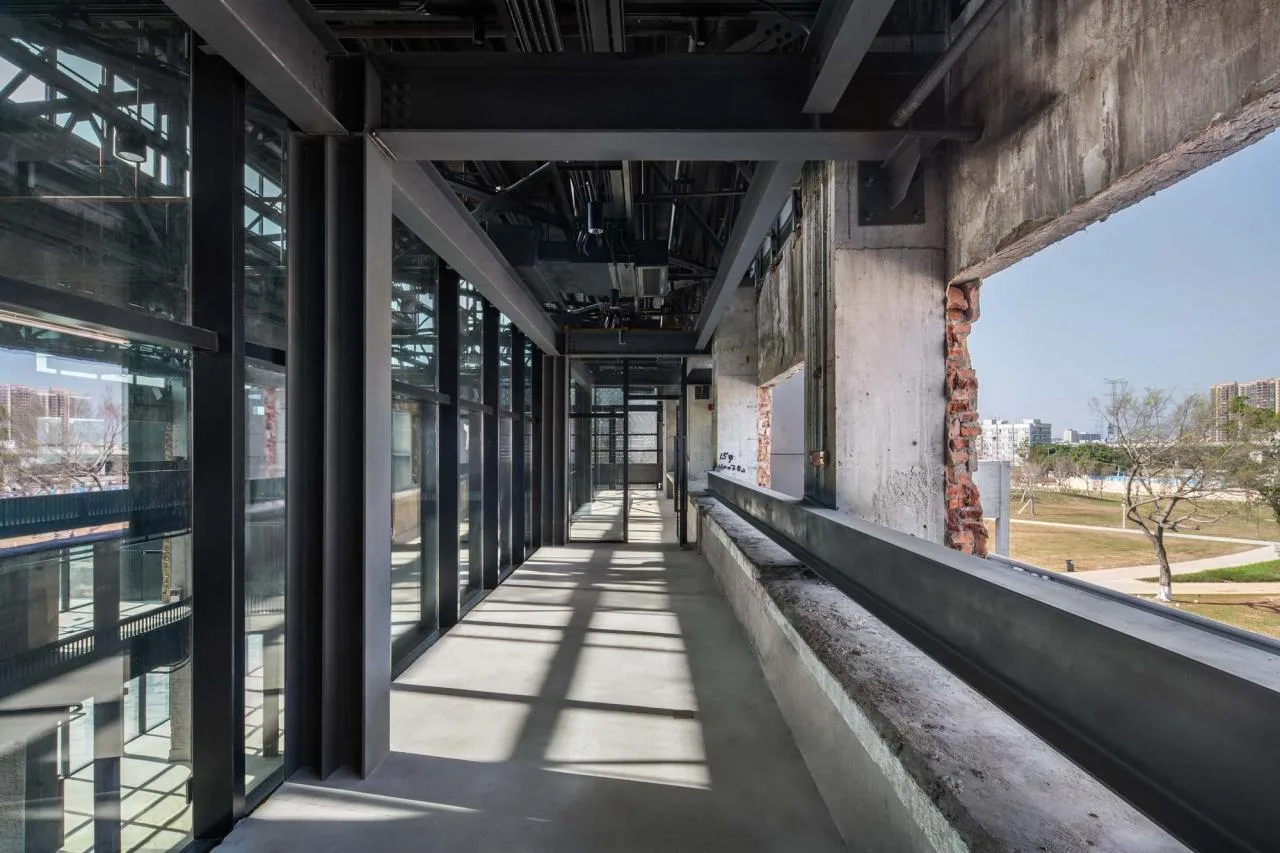
Attention was given to preserving handmade construction details. To maintain a natural transition with the original ruins, many construction marks, rough edges, section lines, and repair traces were deliberately retained, avoiding artificial aging treatments that create “pseudo authenticity.” These details foster a subtle, continuous growth relationship between the new additions and the ruins.
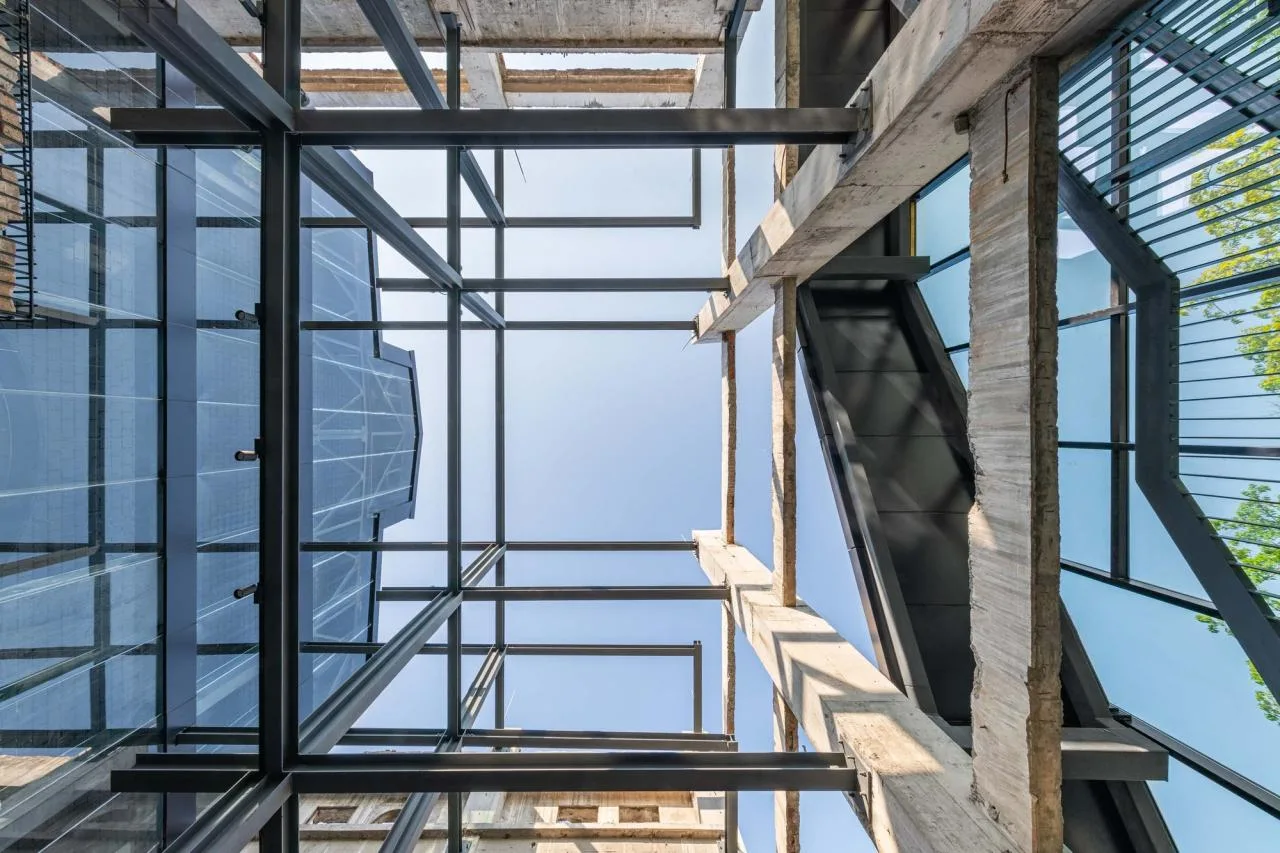
Moreover, the architect encouraged workers to freely chisel the surfaces of selected concrete beams and columns. Thanks to a reserved chiseling thickness of 5 cm during reinforcement, this artistic intervention did not compromise structural integrity. This manual craftsmanship adds an “artistically enhanced ruins” character to the Shajing Village Hall.
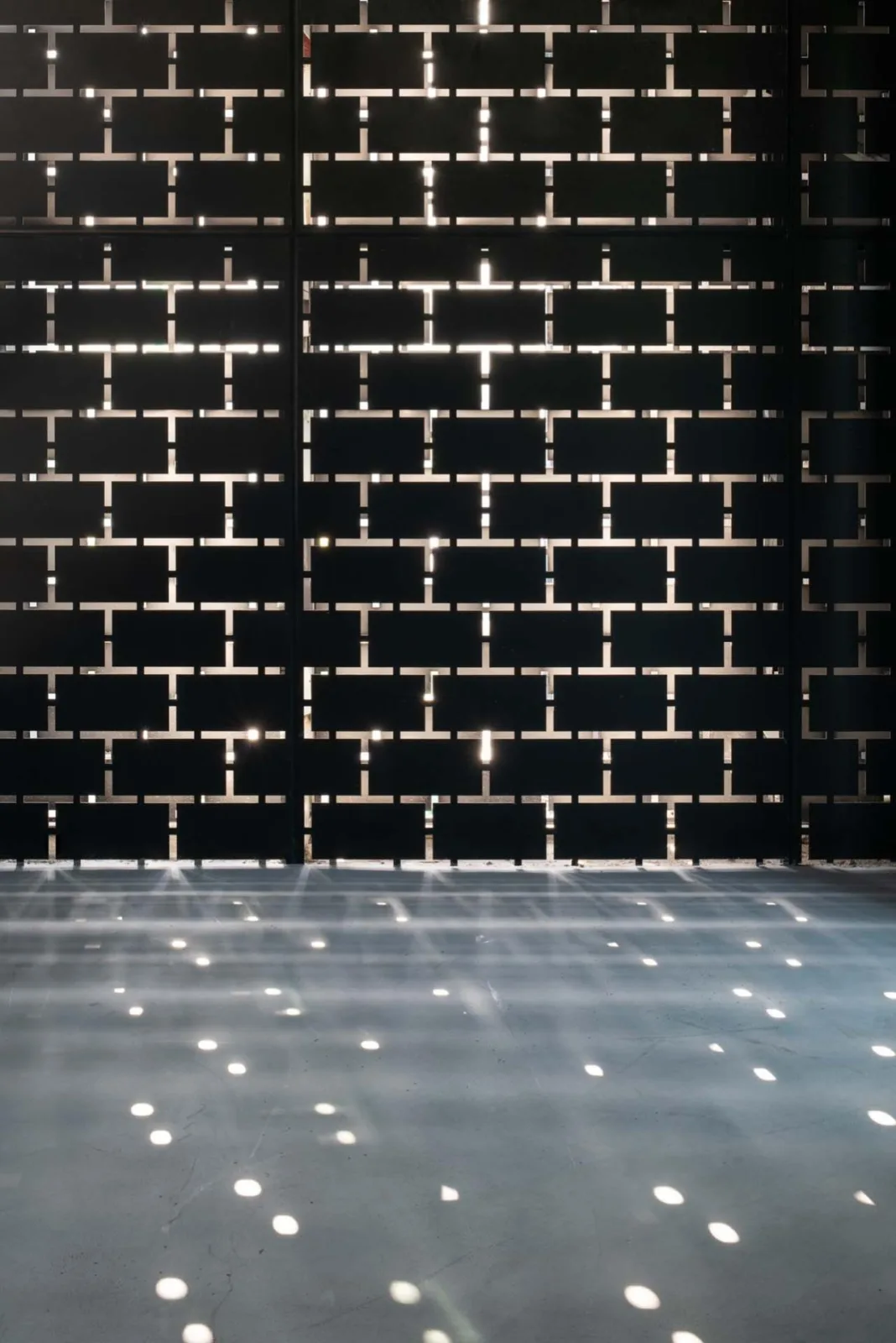
After the demolition of the historical perforated aluminum panel brick wall buildings, the architect sought to restore the essence of the original mountain walls. Collaborating with a local metal factory in Shajing Village, laser-cut brick wall textures were produced on customized black perforated aluminum panels (standard size 1800×1200 cm with variations). These were assembled into a large “translucent shadow wall,” casting mottled shadows that create a dynamic visual effect, evoking spirituality and recalling the old brick wall’s presence.
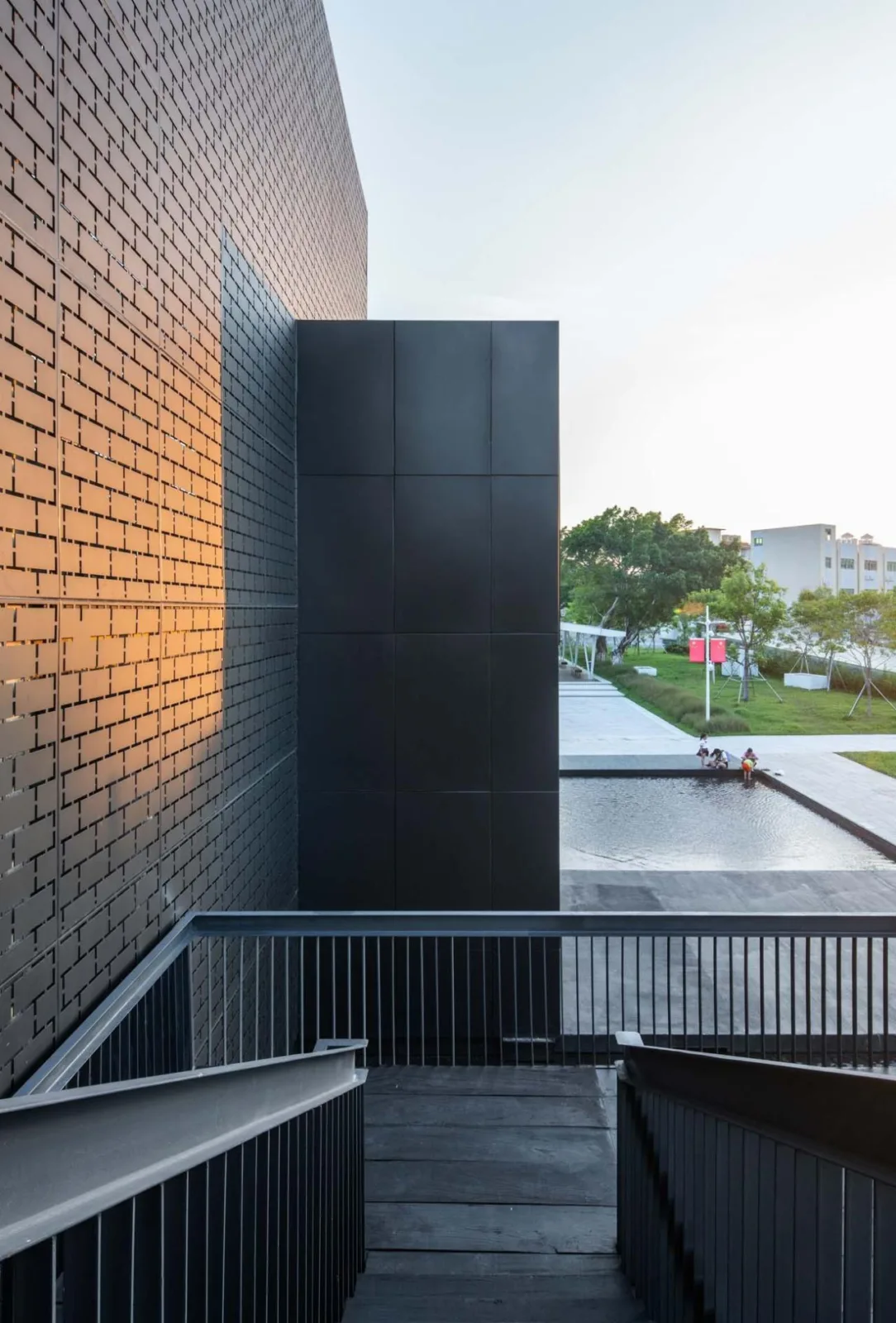
Shenzhen’s subtropical climate, characterized by high temperatures, humidity, and heavy rainfall year-round, shaped the project’s climate response strategies. To improve the local microclimate, regulate temperatures, and provide outdoor water-friendly play areas for villagers and citizens, the architect designed a series of landscape pools surrounding the building. The water’s reflections soften the ruins’ heaviness, creating a relaxed and inviting atmosphere.
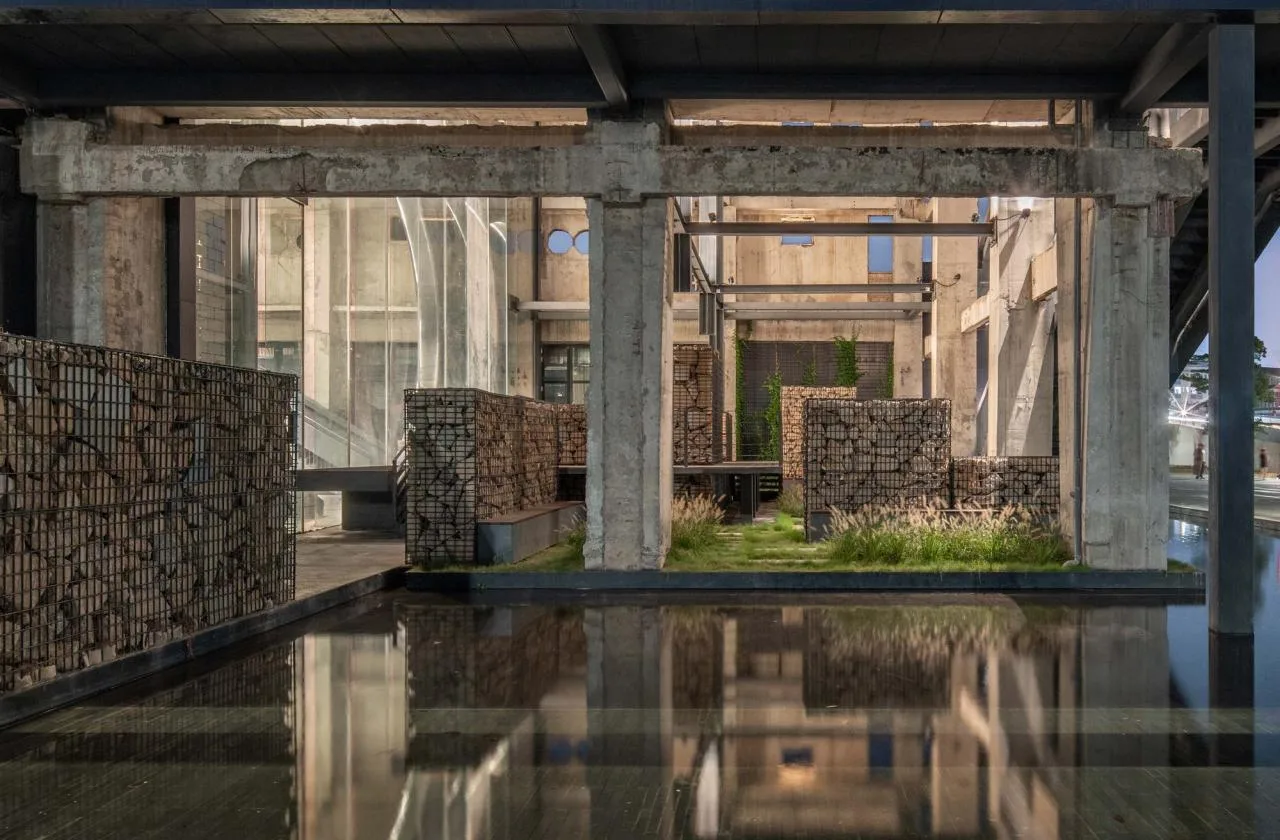
Another climate adaptation involves introducing numerous small gaps into the intact ruins—inner balconies, observation windows, outdoor terraces, semi-outdoor corridors. These create a passive temperature regulation system, promoting natural ventilation, reducing air conditioning use, and thus lowering energy consumption and carbon emissions.
Project Drawings
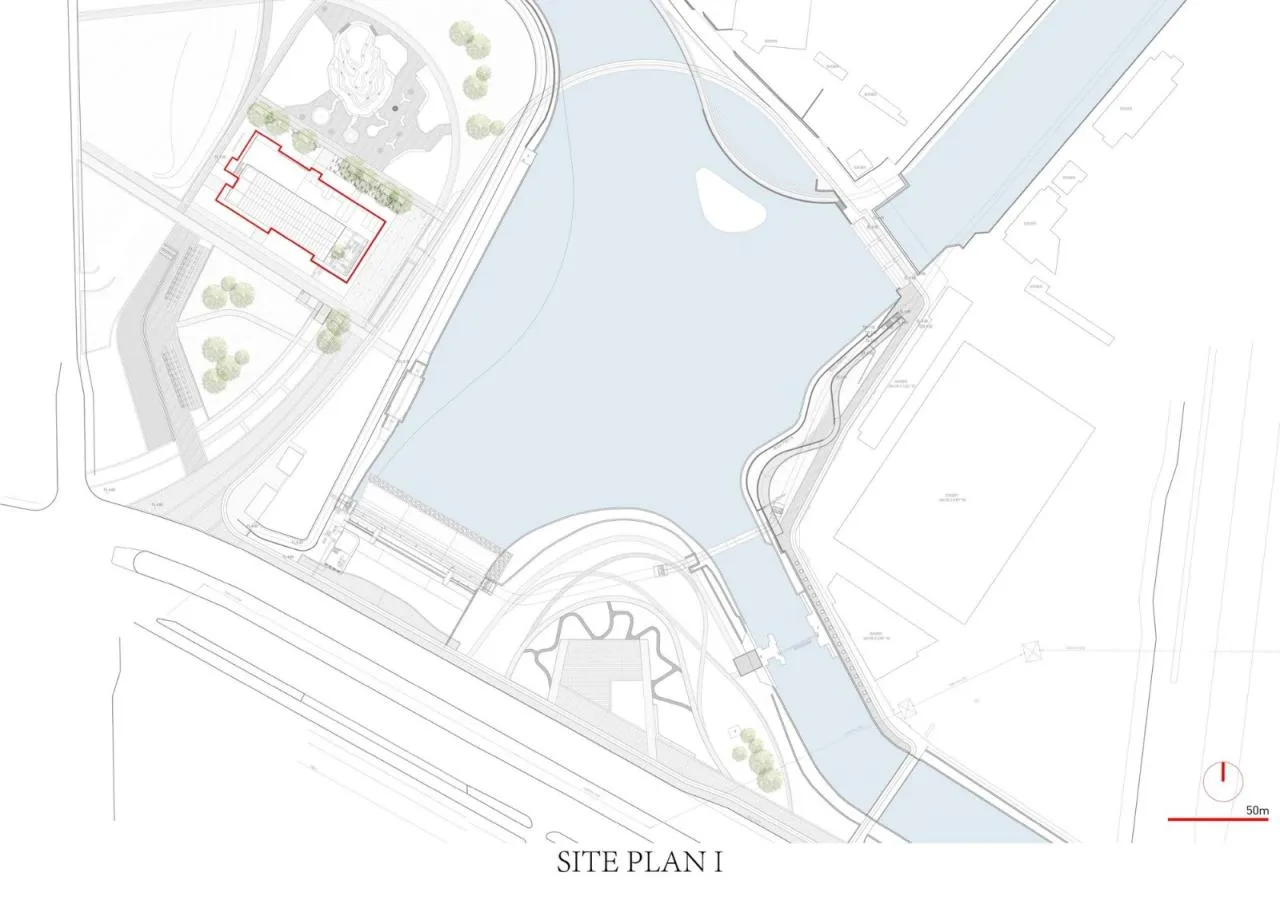
△ Base schematic diagram
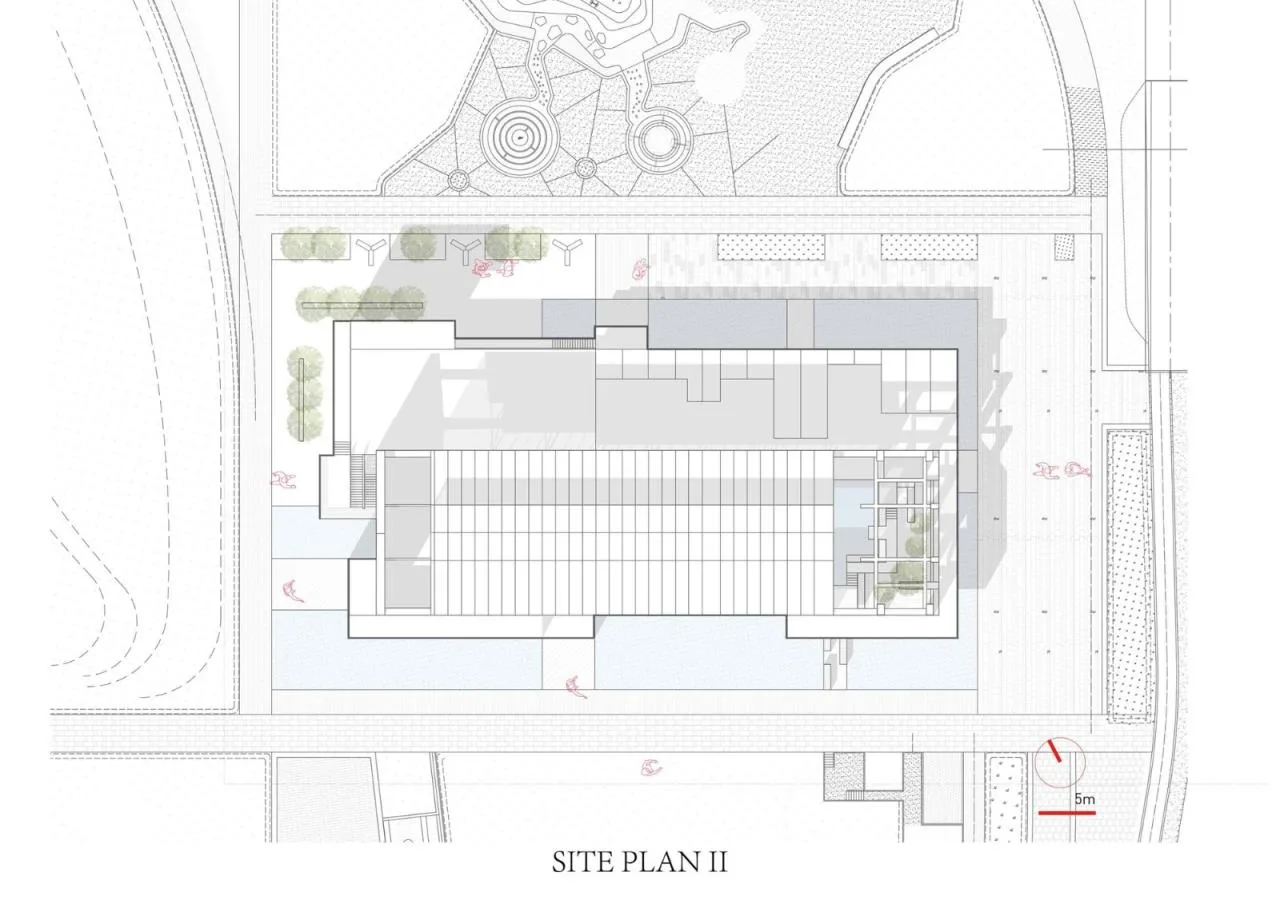
△ General layout plan
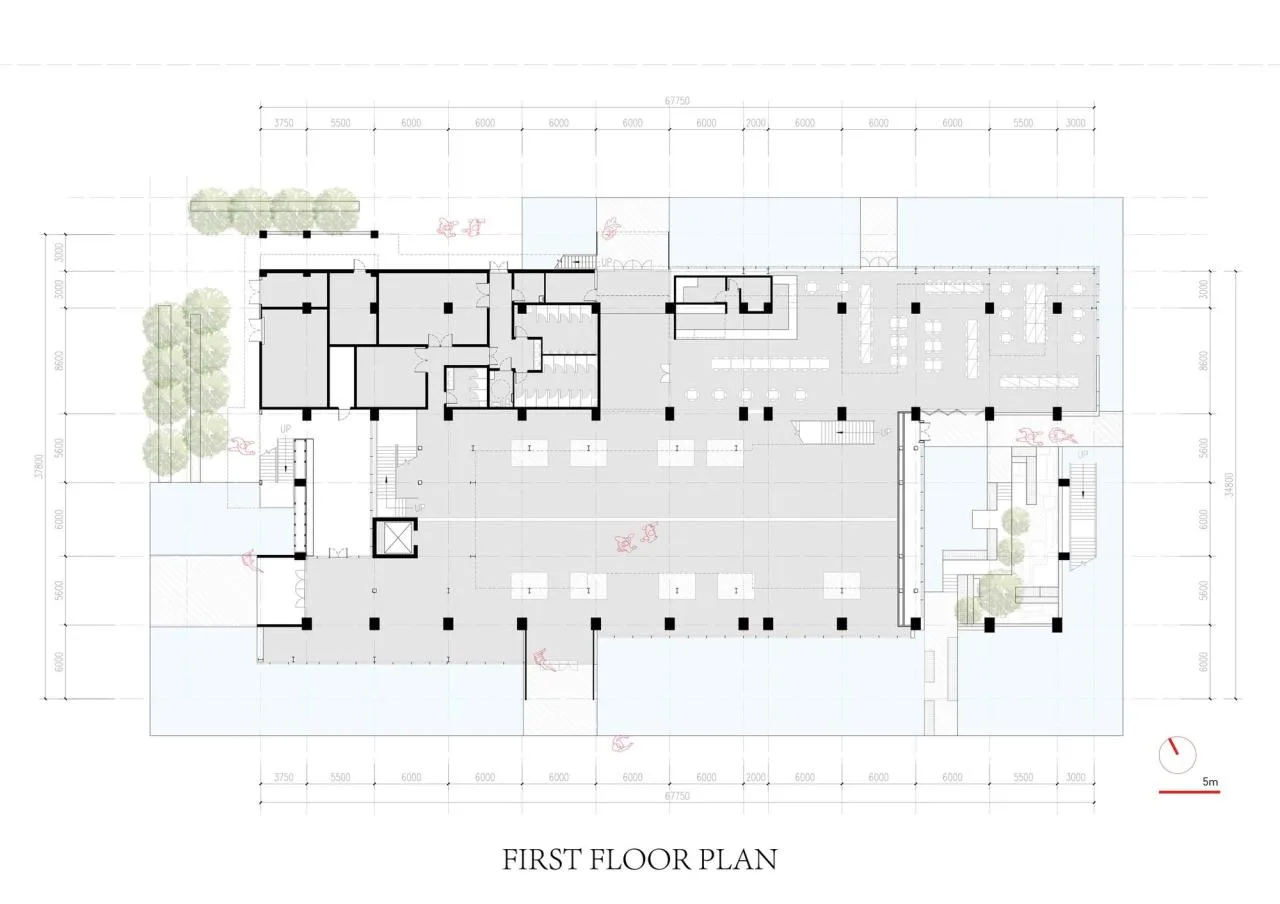
△ First floor plan
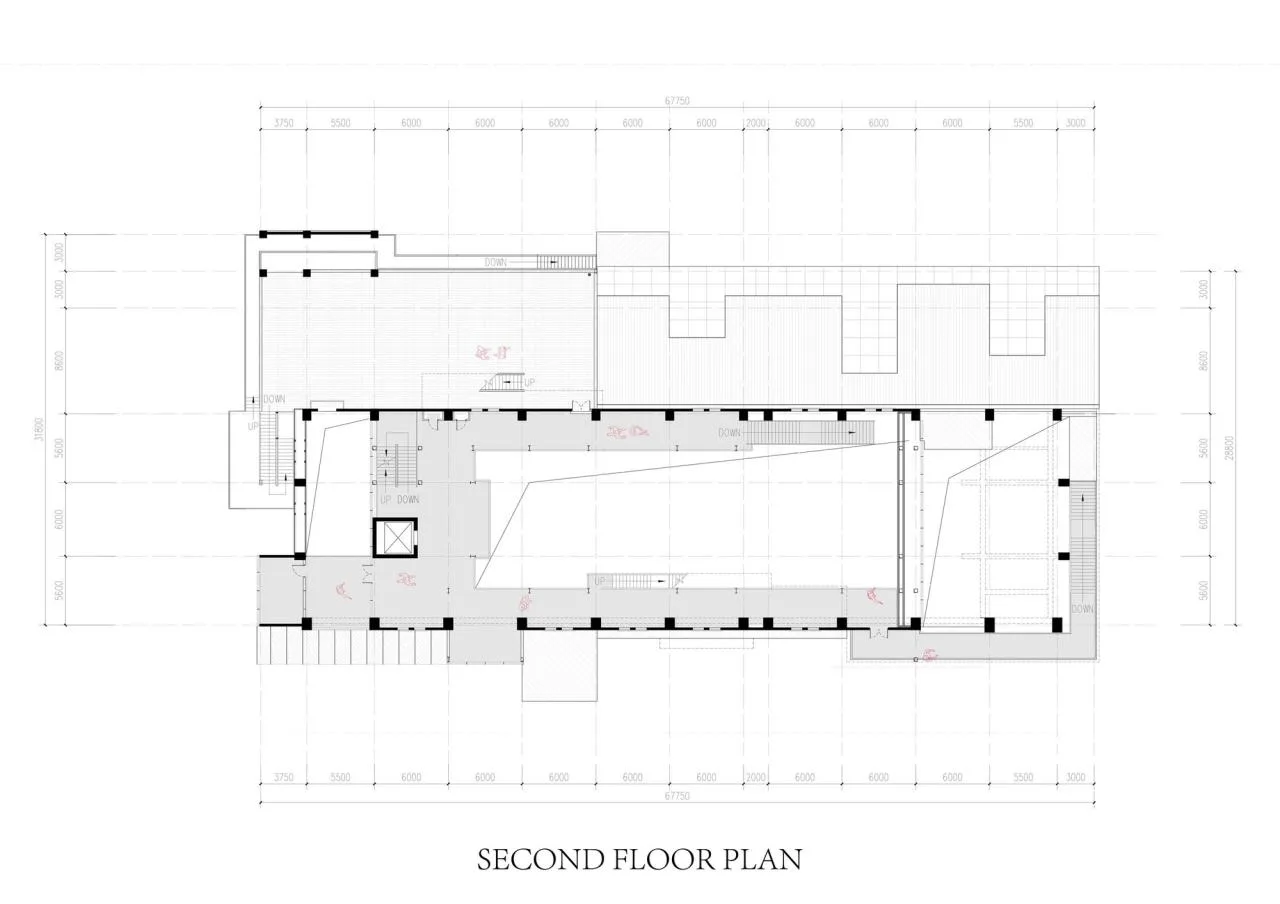
△ Second floor plan
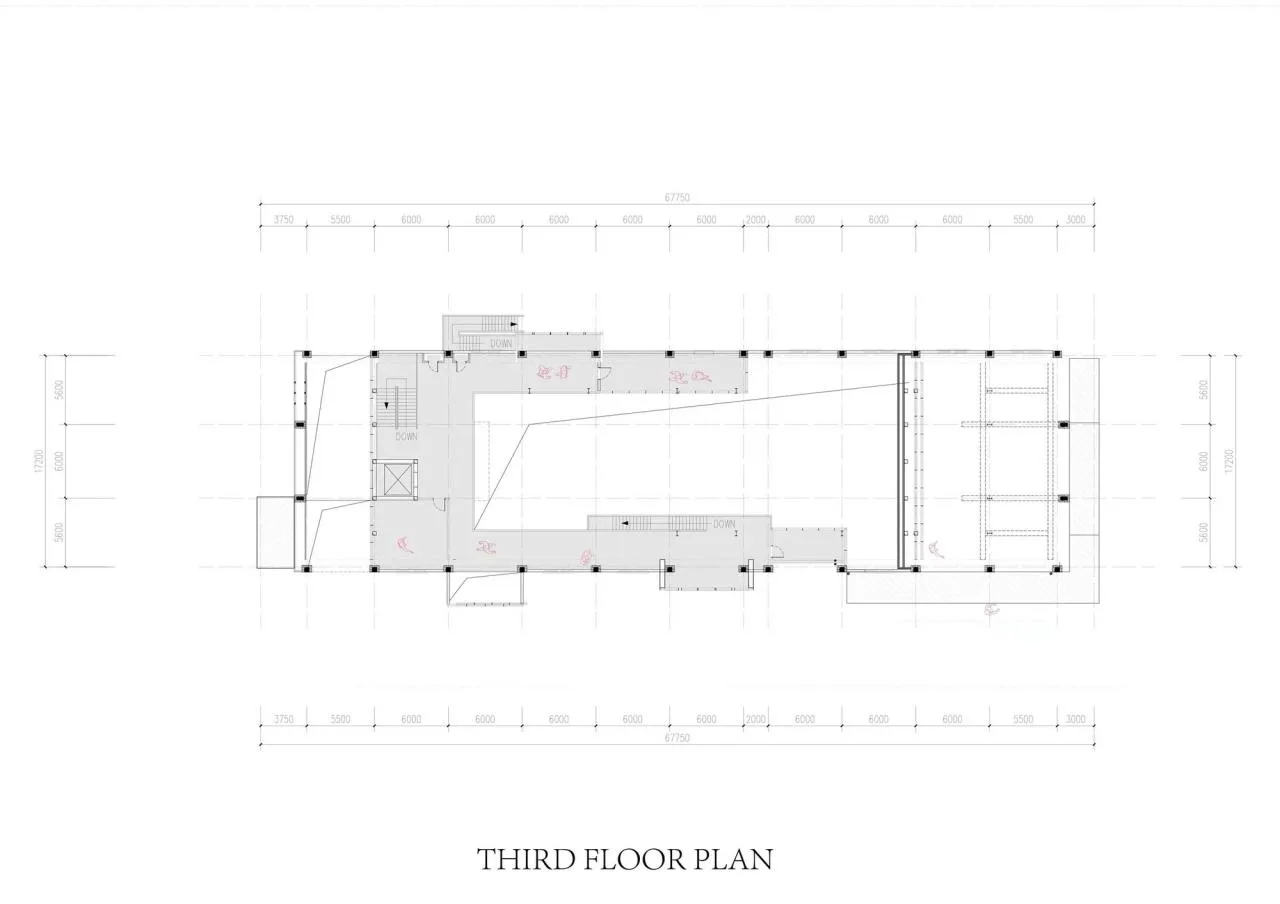
△ Third floor plan
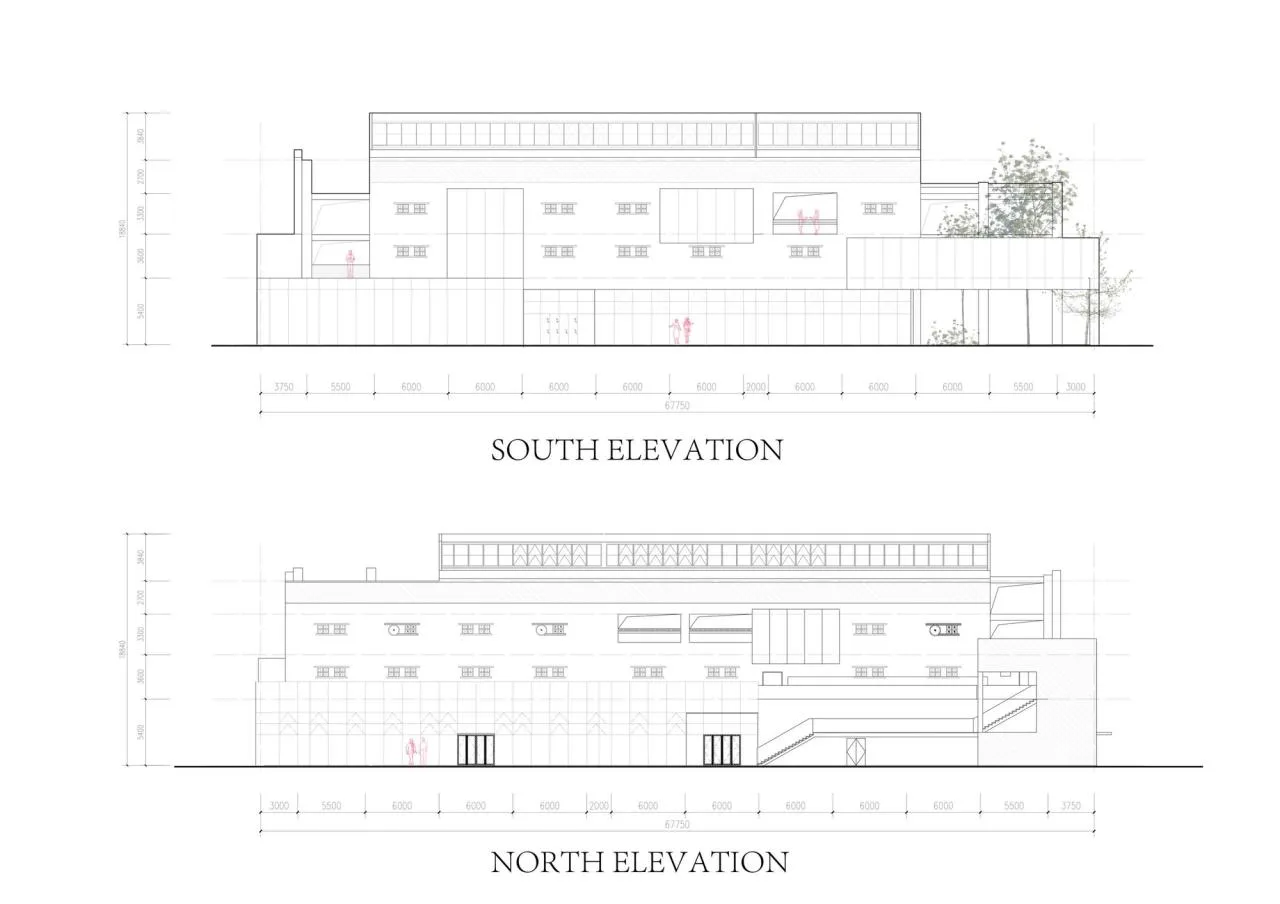
△ Elevation drawing
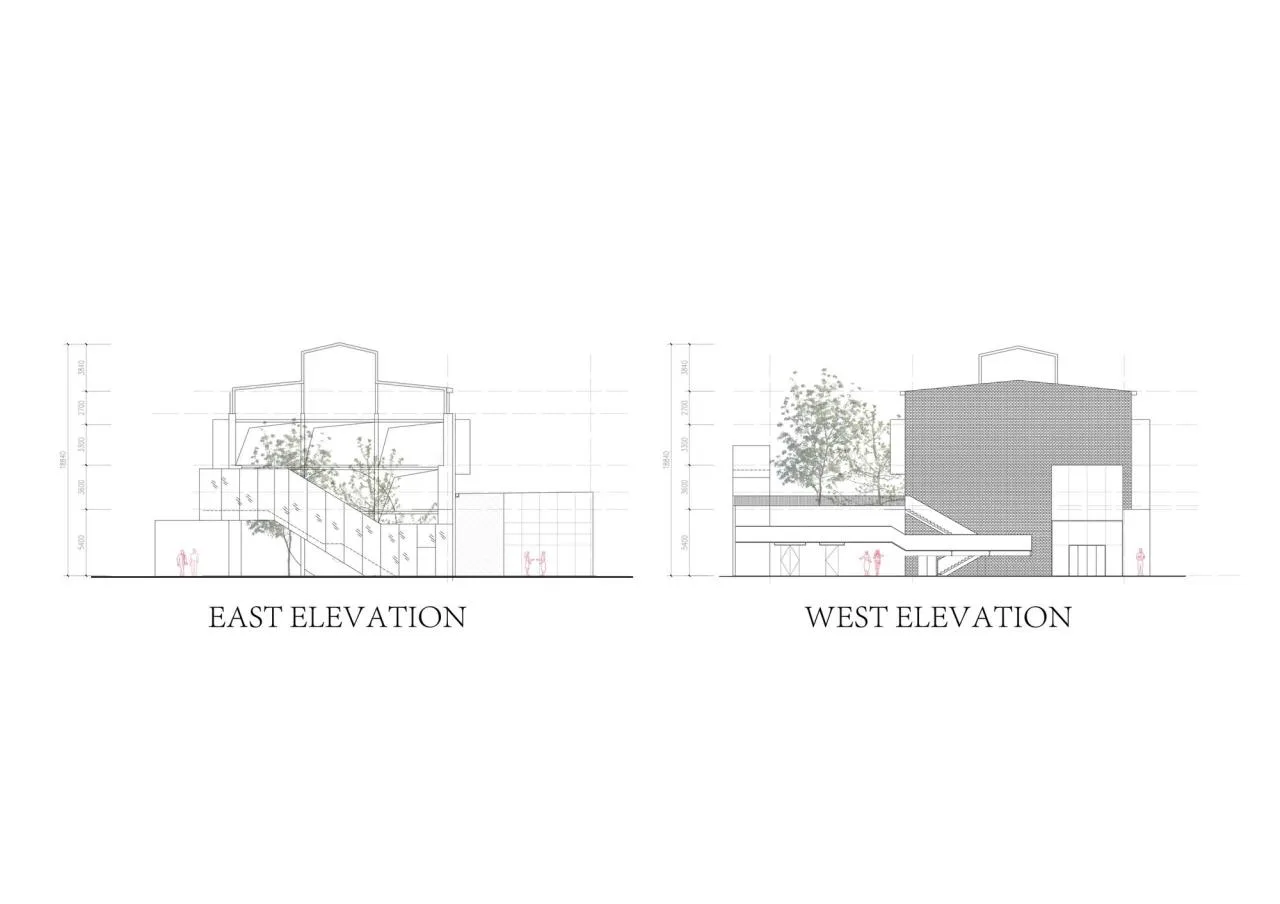
△ Elevation drawing
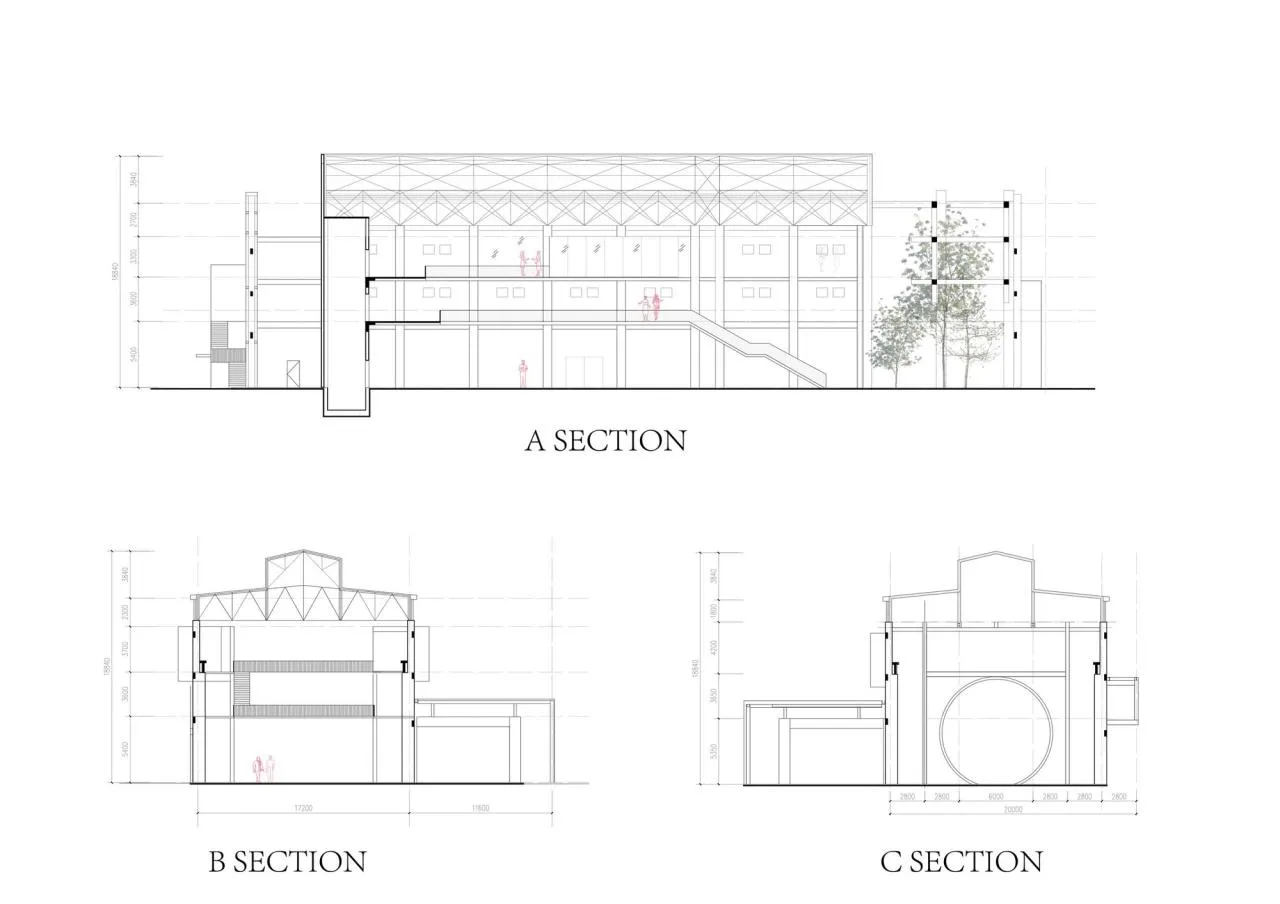
△ Section diagram
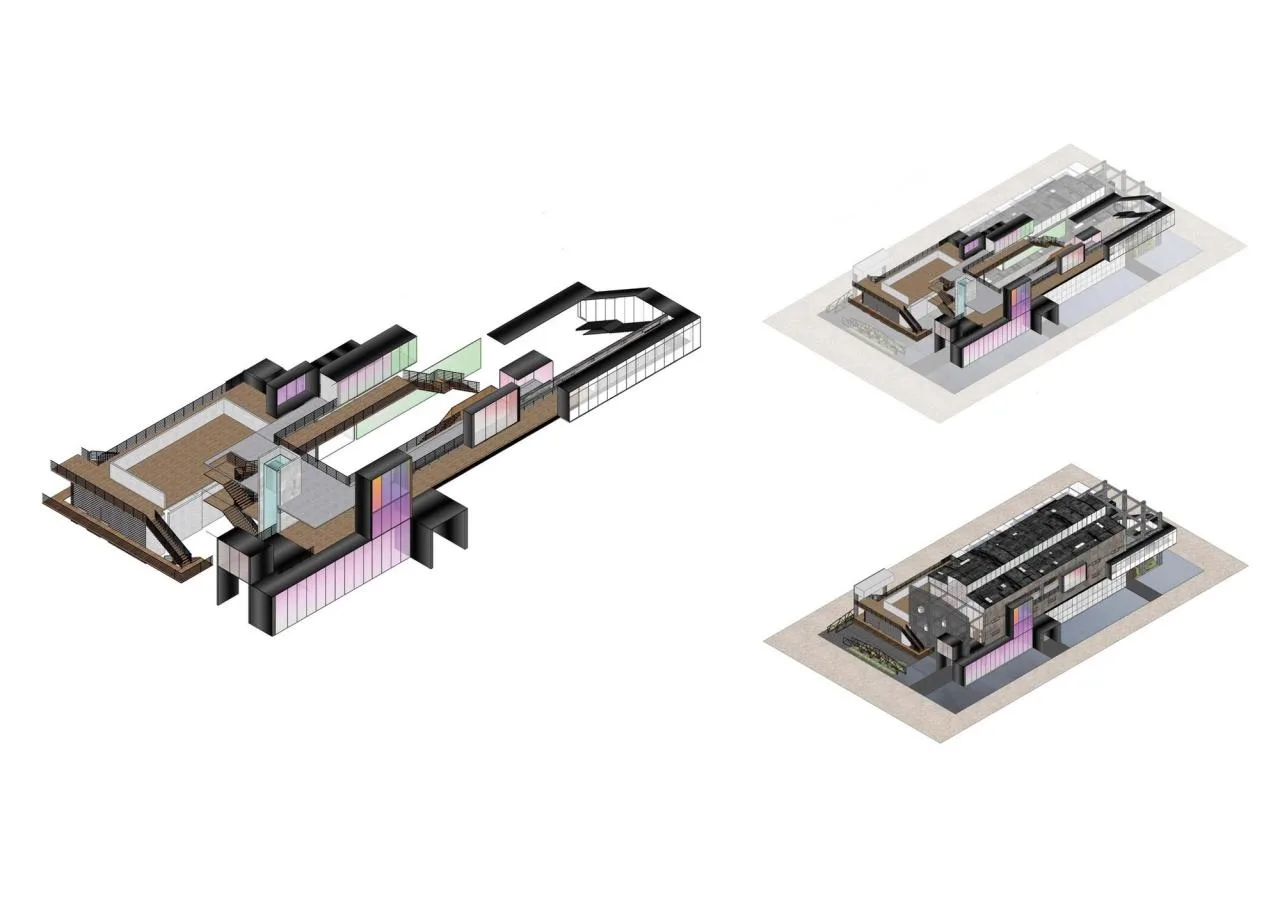
△ Analysis chart
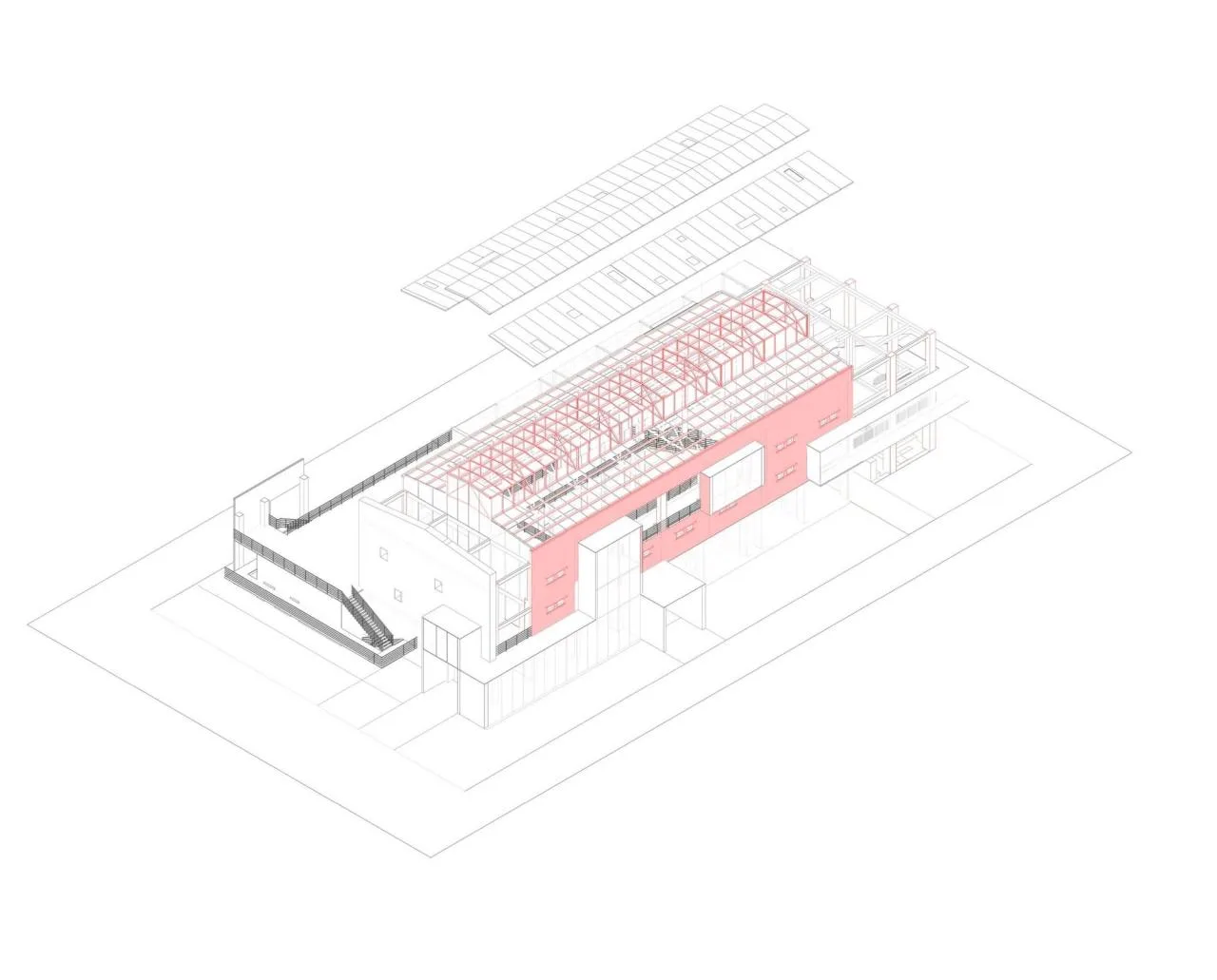
△ Analysis chart
△ Analysis chart
Project Information
Architectural Design: Qucheng Studio
Area: 2500 m²
Project Year: 2020
Photographer: Bai Yu
Lead Architects: Zhang Yuxing, Han Jing
Design Team: Qian Qian, Qiu Jiayue, Lu Jianhui, Zhang Jiale, Li Yong, Ding Bei, Chen Junwen, Li Bailin, Xiong Falin, Jiang Fanghong
Owners: Shajing Street Office, Bao’an District, Shenzhen; China Resources Land Group
Technical Support: Beijing Zhenghe Hengji Waterfront Ecological Environment Treatment Co., Ltd.; Shanghai Urban Construction Design and Research Institute (Group) Co., Ltd.; Consortium of Yidi Law Firm Co., Ltd.
Lighting Design: HDA Shenzhen Handu Lighting Design Consultant Co., Ltd.
Landscape Design: Hong Kong Yidi
Construction Parties: China 17th Metallurgical Group Corporation; Shenzhen Times Decoration Co., Ltd.; Shenzhen Wenke Landscape Co., Ltd.
Landscape Partner: Shenzhen Dadi Chuangxiang Architectural Landscape Planning and Design Co., Ltd.
Location: Shenzhen, China














Must log in before commenting!
Sign Up