
In July 2019, Longfor acquired a prime plot in Xiaolingwei, Nanjing, at a premium price. They committed to developing “Purple Gold Original,” a mixed-use complex that integrates popular retail spaces with premium residential communities. This project fills a critical gap in upscale living options in eastern Nanjing.
San Yi won the design competition with a distinctive, innovative anti S-shaped layout that maximizes commercial potential.
When the residential phase of “Purple Gold Original Works” launched in June 2020, all units were quickly sold out. This project represents a superior urban living community co-developed by Longfor and Sanyi in Nanjing.
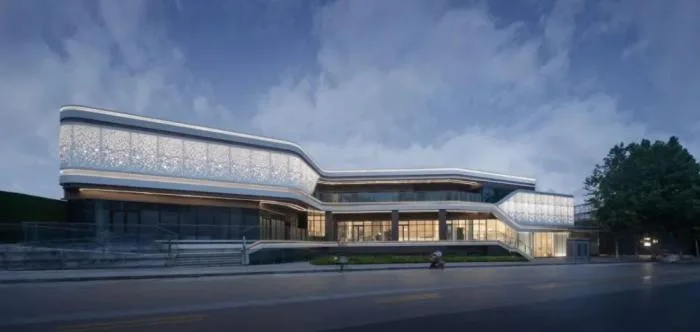 Panoramic view of the community service complex, photography by Ziran Architecture Photography
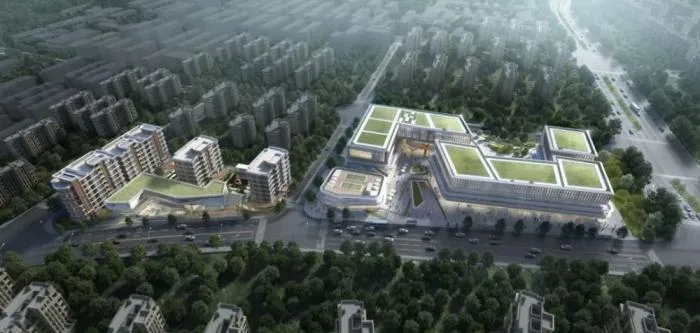 Bird’s-eye view of the Purple Gold Original development
What defines a better urban residential community?
As urban development stabilizes and housing prices moderate, it’s time to reconsider the current living environment. Is there an ideal model for urban living? When discussing the essence of life, how do we choose the neighborhoods, communities, and spaces where we reside?
This collaboration between Sanyi and Nanjing Longfor aims to establish a “Golden Two Kilometers Magnetic Field” community near Purple Mountain Scenic Area. The goal is to create a complementary commercial ecosystem and a superior urban residential environment.
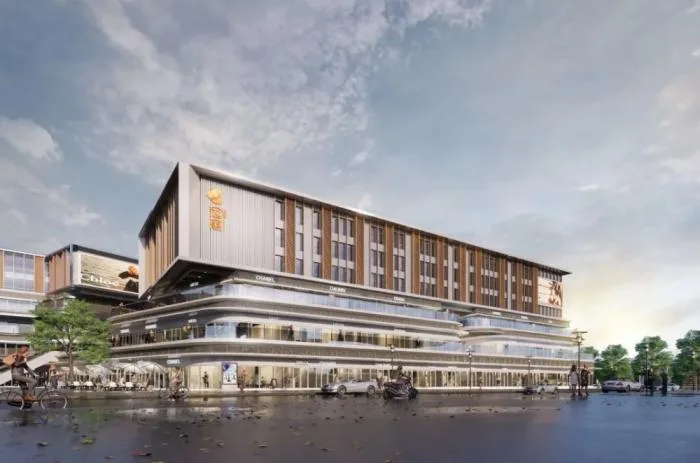
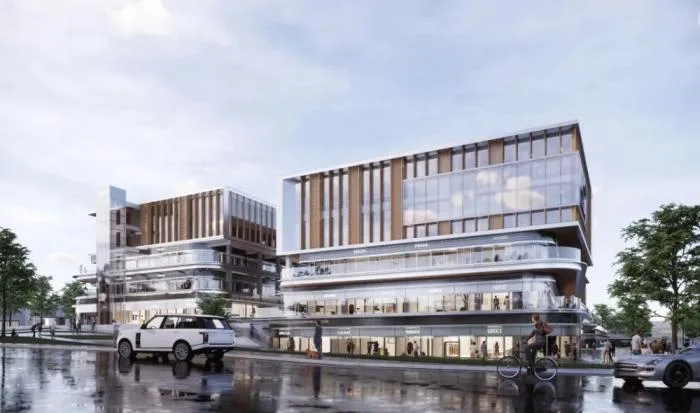 △ Street view of the commercial section
Golden Magnetic Field Principle 1: Comprehensive planning to reduce travel distances
Located at the southeast foot of Zhongshan Scenic Area in Xuanwu District, Nanjing, the site adjoins renowned landmarks like Ming Xiaoling and Zhongshan Mausoleum Scenic Areas. The neighborhood is well-served by schools, hospitals, and other amenities, and is just 400 meters from Xiaolingwei Metro Station, ensuring excellent connectivity.
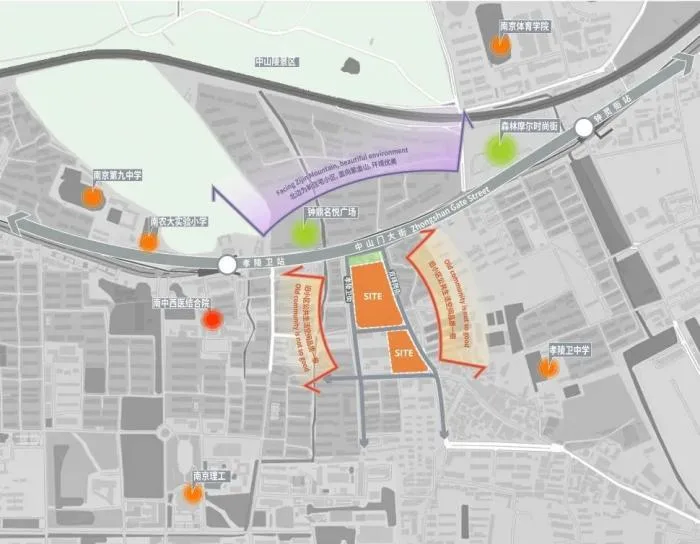 △ Urban location
Despite its advantages, the area’s development lags behind. Residents lack a strong community identity, building facades are outdated, and the overall aesthetic and quality of life fall short. This project addresses these challenges by designing tailored residential communities, offering high-quality urban services, enhancing aesthetic appeal, and improving connectivity between the city and its residents.
Analyzing both dynamic and static traffic flows, the site is divided into three plots. Plots A and B, nearest to the subway and major roads, are planned as a commercial, office, and urban facility complex, enhancing the area’s image. Plot C, a quieter and scenic area surrounded by secondary roads, is designated for residential use with community commercial centers, creating a livable activity hub.
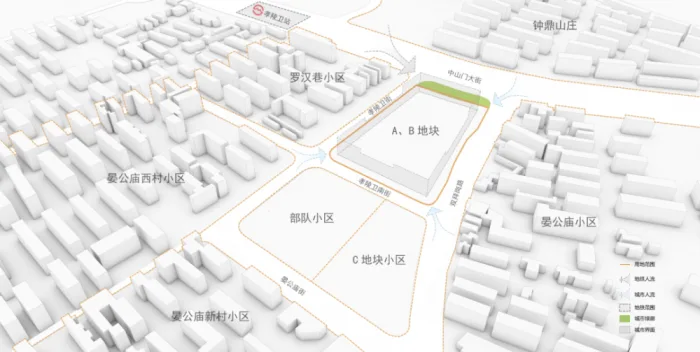 △ Business format distribution in base planning
Golden Magnetic Field Principle 2: Functional planning to attract crowds
The AB plot’s commercial complex emphasizes commerce value through an open street commercial layout featuring an anti S-shaped design. This unique layout transforms the internal structure outward, ensuring all commercial fronts are easily accessible and highly visible.
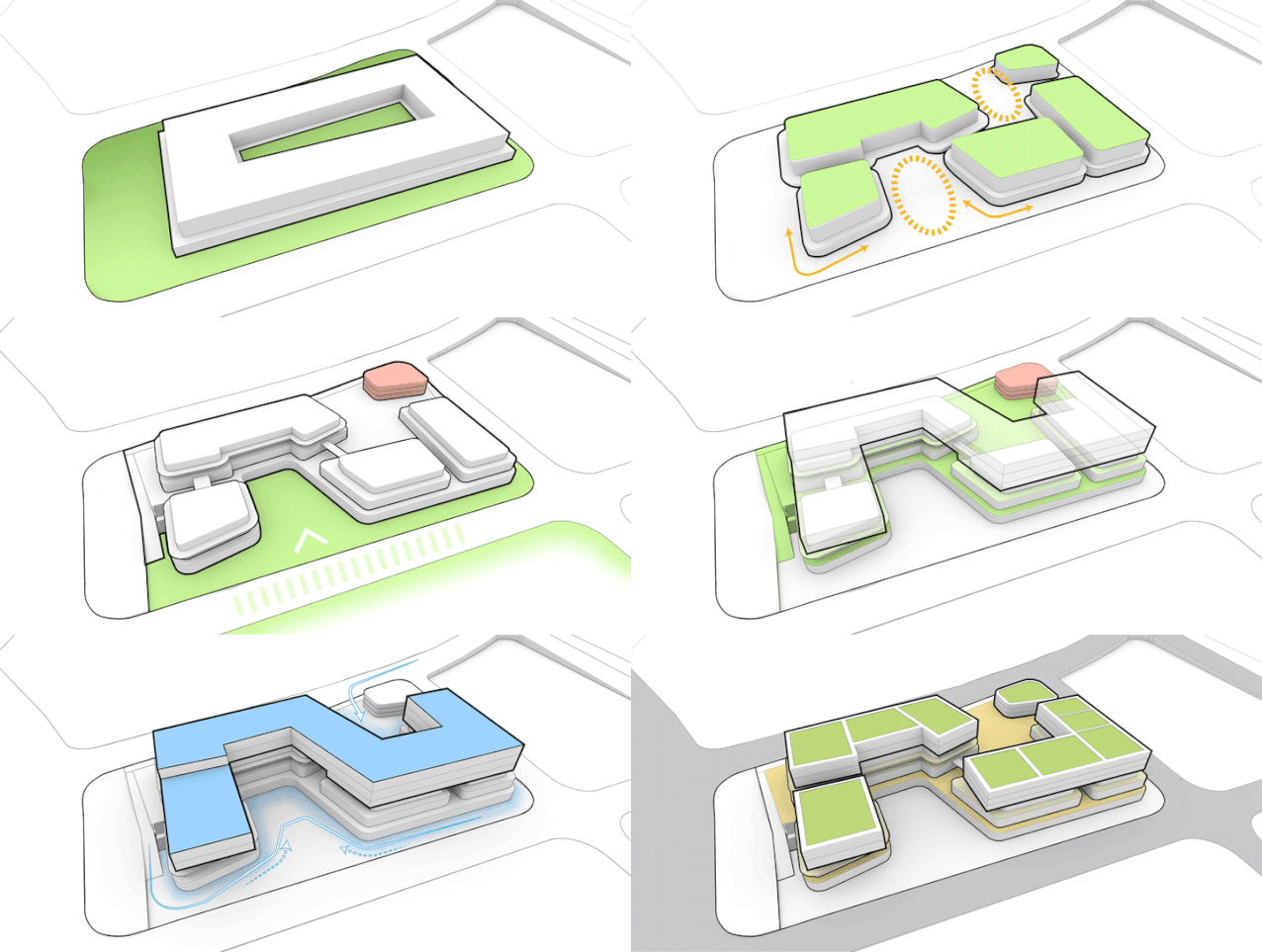 △ Concept generation diagram
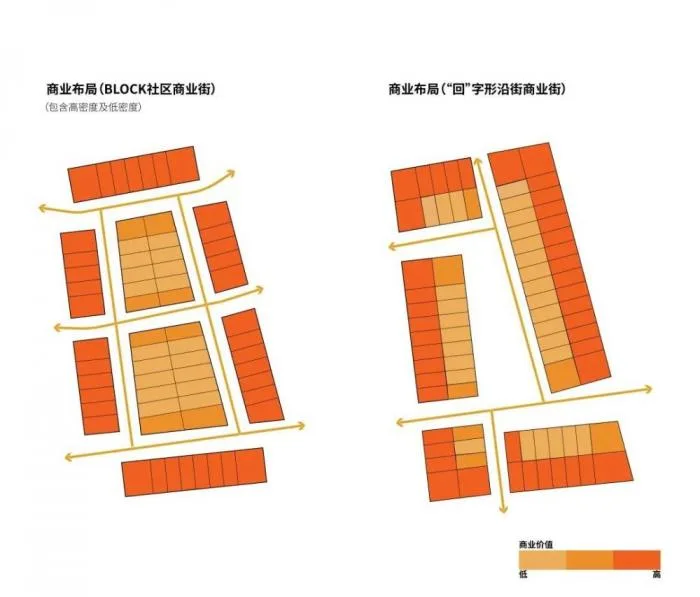
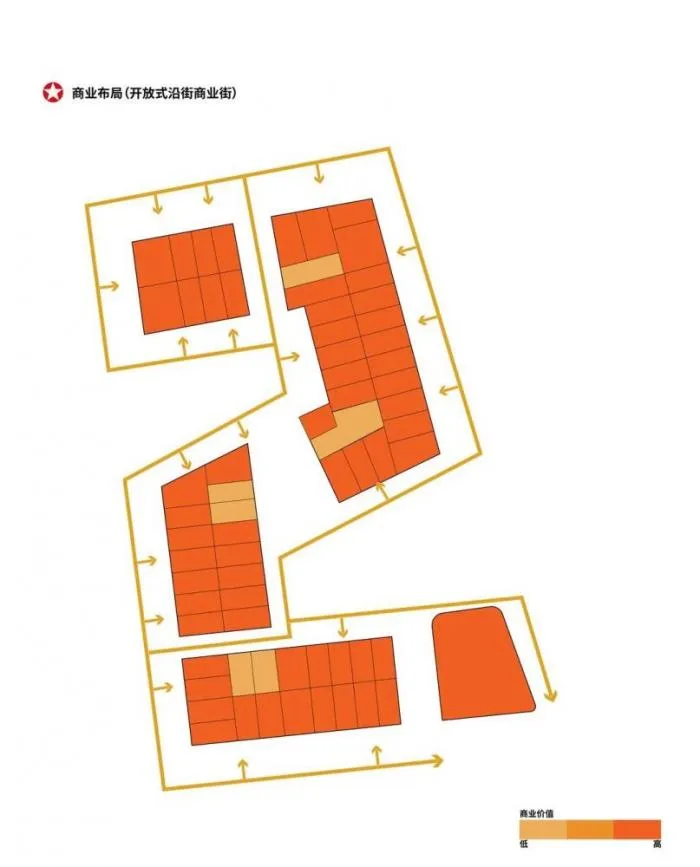 Analysis of the Anti S-shaped commercial layout
Although the site is small and has a 4-meter elevation difference, the designer turned this challenge into an advantage by creating a “double first floor” layout. This design increases commercial frontage and enhances connectivity within the commercial space.
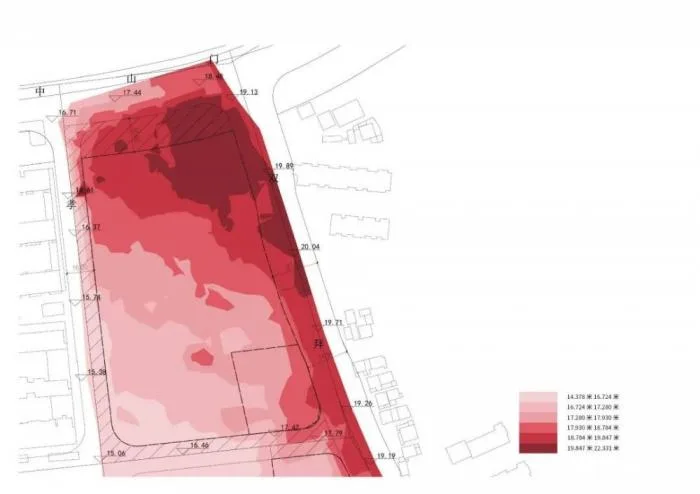 △ Analysis of site height difference
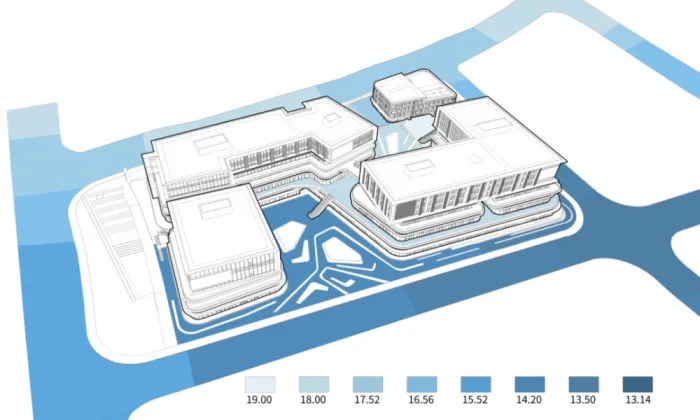 △ Double first floor urban interface
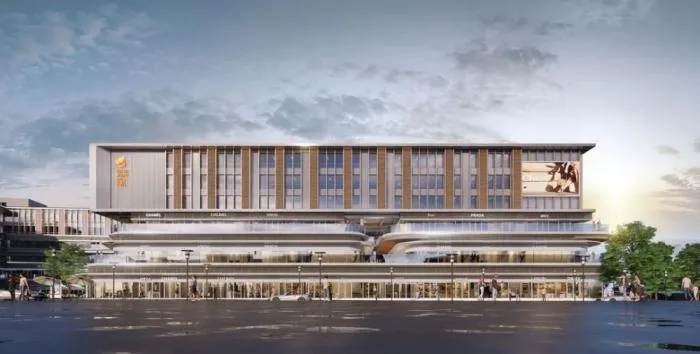
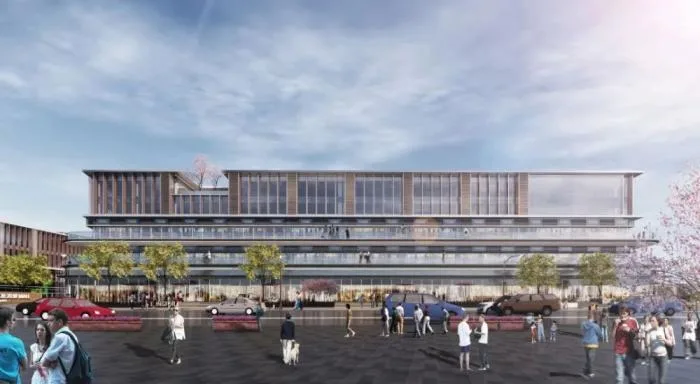 △ Double first floor urban interface
The elevation difference also naturally creates two outward-facing public squares at each end. These plazas form a continuous, personalized, and well-organized spatial theme. The open areas foster a vibrant “fireworks atmosphere” reflecting daily city life, compensating for the lack of public activity spaces nearby, boosting commercial vitality, and enhancing social value. The inner corridor commercial areas on the third and fourth floors mirror the lower-level layout, further increasing foot traffic and connection to the plazas.
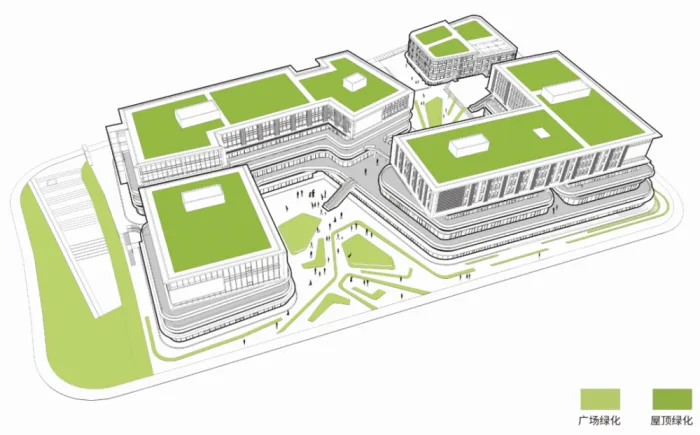 △ Open urban square
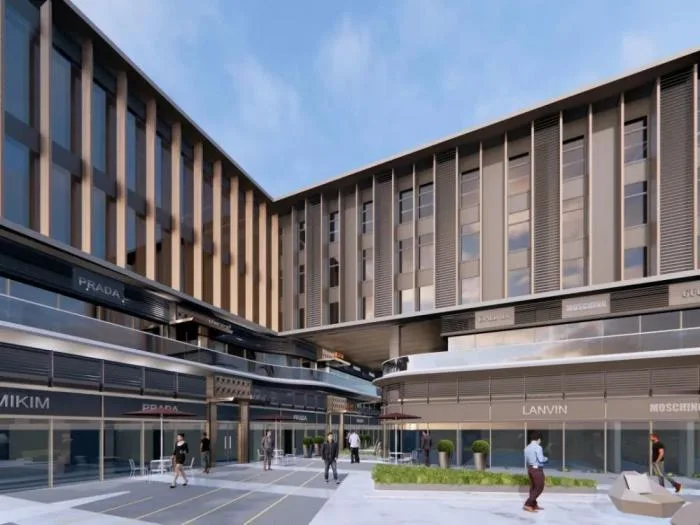 A dynamic urban square
The facade employs a segmented design responding differently to various urban interfaces at different heights. The lower level features curved shapes, combining fluidity and modern fashion to attract visitors. The upper levels have sharp, modern right-angled facades with hidden frame glass curtain walls and external vertical flip components, creating a rhythmic visual effect. Traditional architectural elements are integrated to honor local context. Additionally, advertising spaces and LED lighting with color-changing effects make the commercial complex a regional focal point.
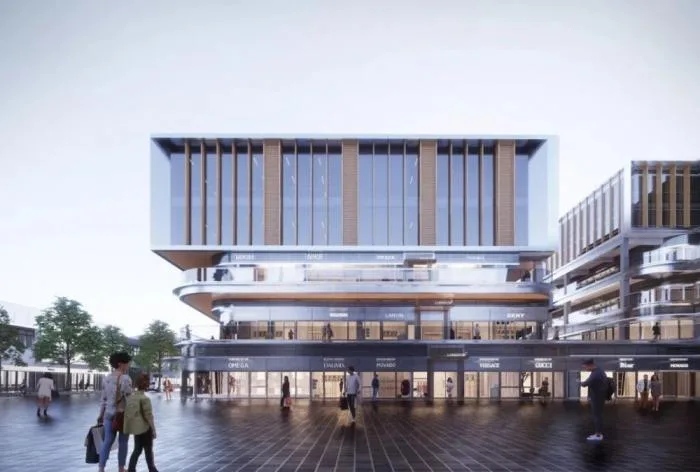 △ Segmented facade design
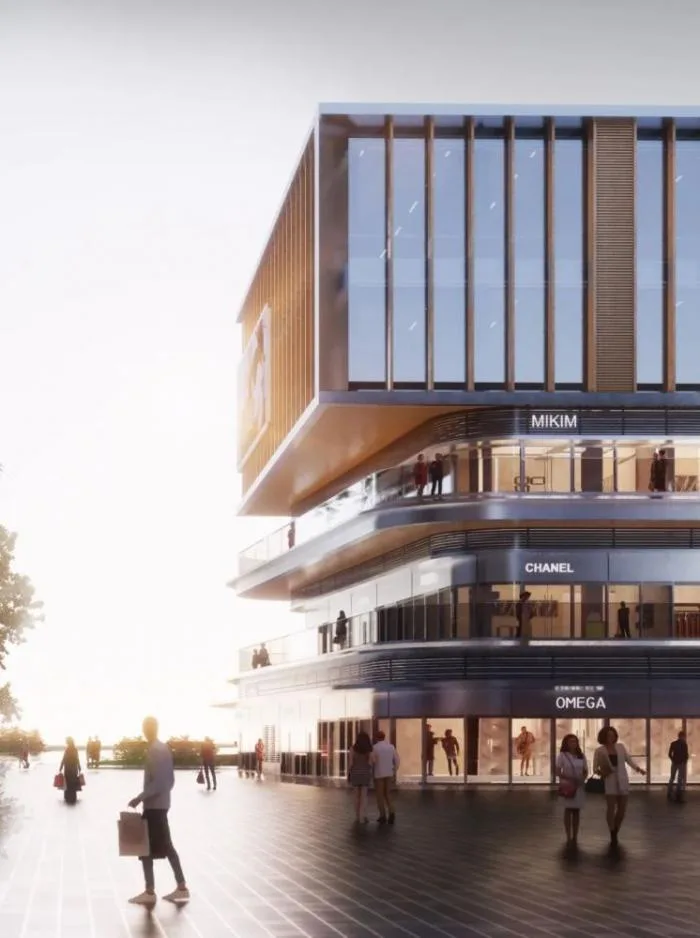 △ Facade materials and colors
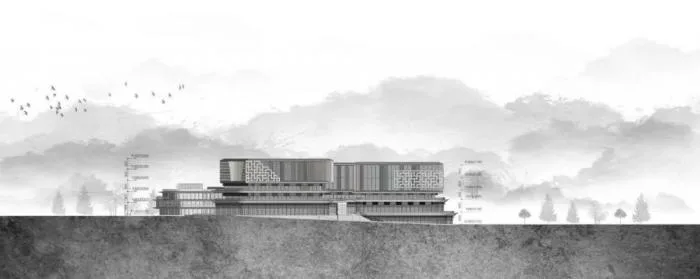 △ North elevation view
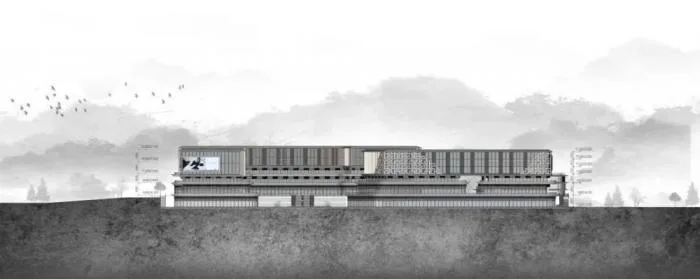 △ West elevation view
Beyond the three-stage design approach, considerable attention was given to concealing mechanical and electrical pipelines. Air conditioning units are installed within cavities above store signage; strong and weak electrical cables and water pipes are hidden in residual spaces. Gas pipes that must remain exposed are either placed atop canopies or integrated invisibly into the design. This meticulous approach enhances the overall aesthetic within limited space.
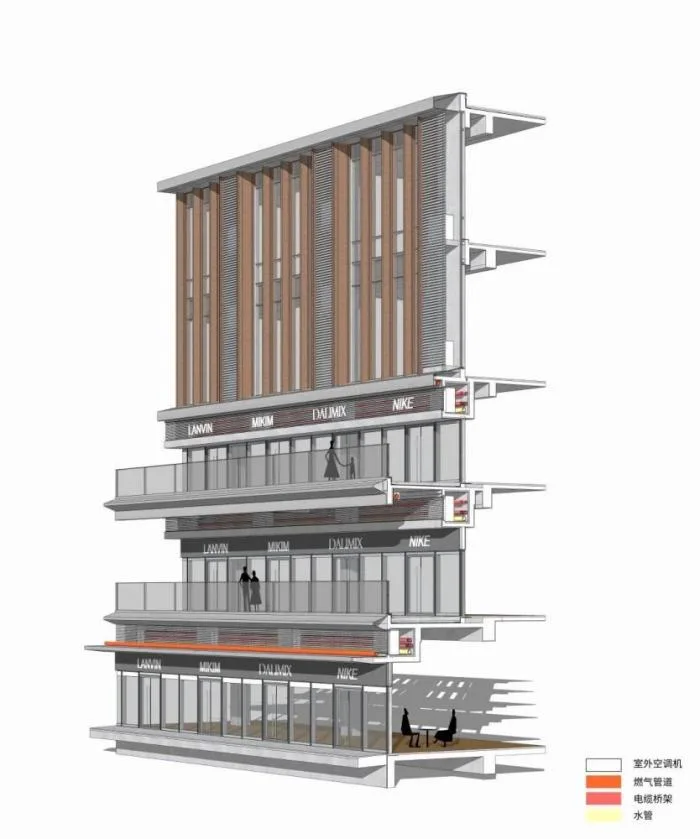 △ Facade shading schematic
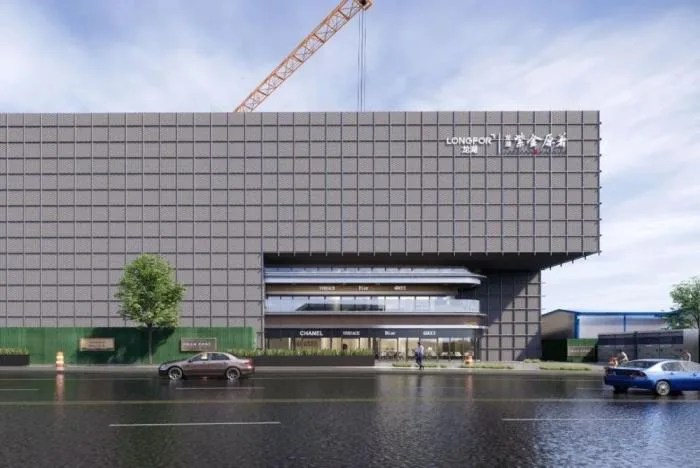 △ Commercial section cross-section
Golden Magnetic Field Principle 3: Optimizing spatial quality to enhance community living
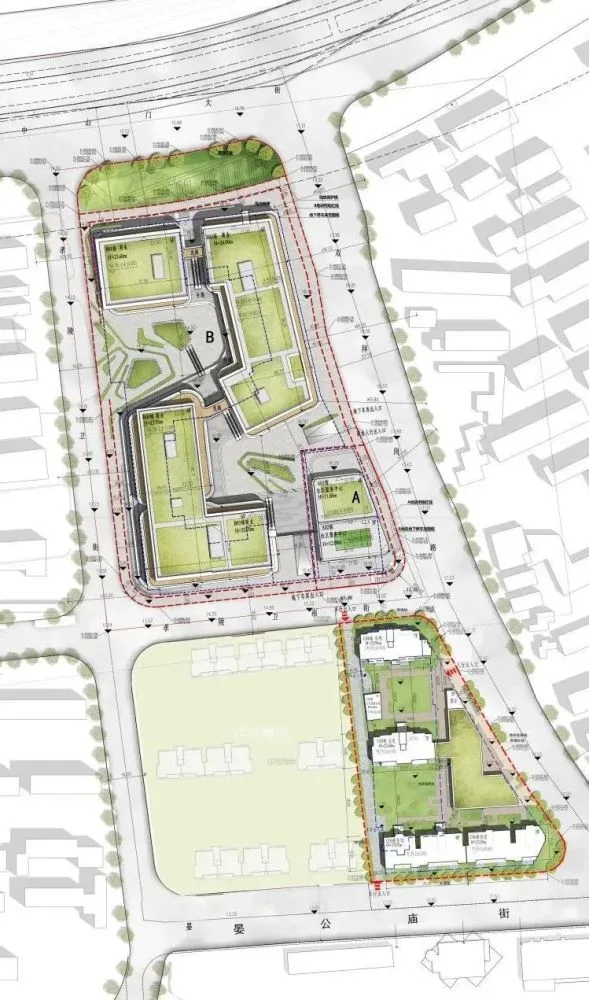 △ General layout plan
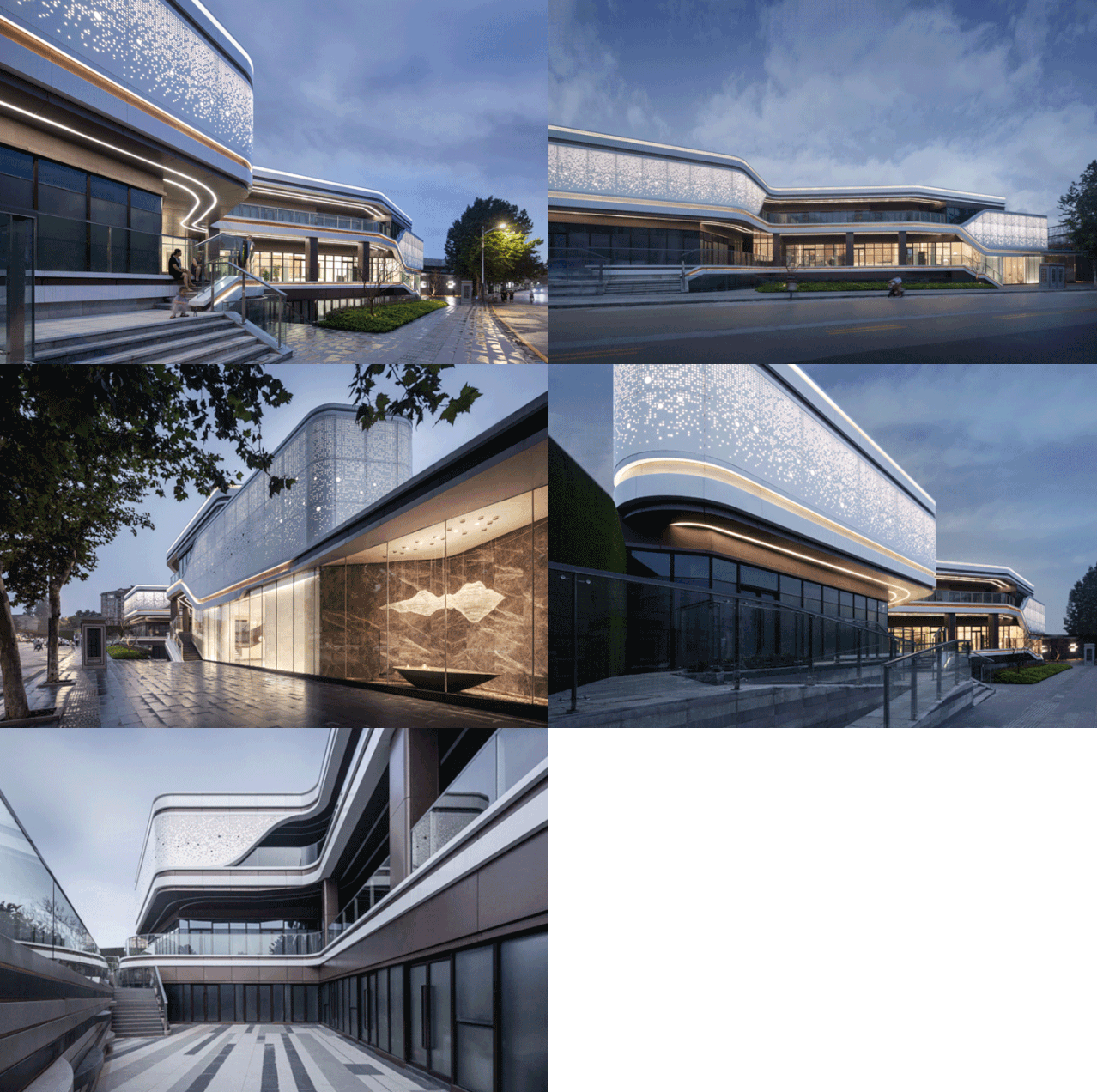
Plot C’s residential and commercial areas are designed to form a livable “Golden Two Kilometers Magnetic Field” community, blending full functionality with scenic beauty. Buildings are arranged in three north-south rows to create a double courtyard landscape, maximizing spacing for livability. A community service complex with an open layout is positioned along the sloping edge to meet residents’ daily needs, establishing a golden living circle within two kilometers.
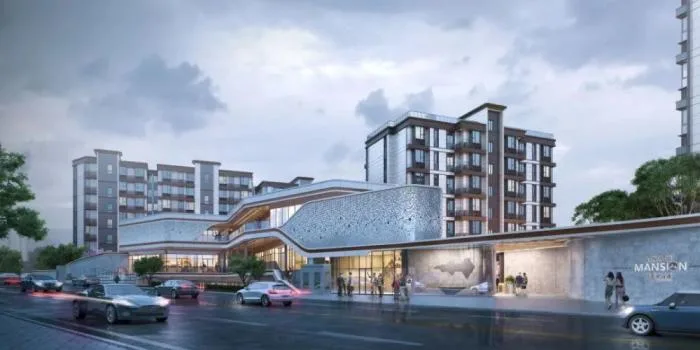
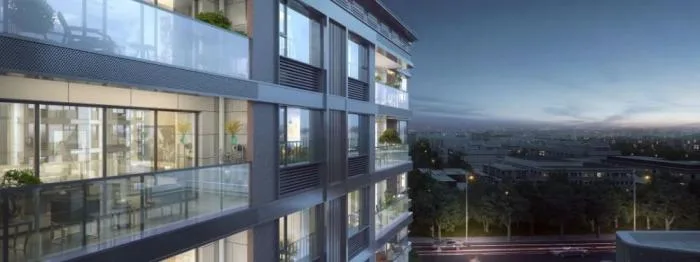 △ “Golden Two Kilometers Magnetic Field” community
The community service complex stretches along the street in a curved architectural form that flows with the road, integrating seamlessly with urban space. A small social plaza nestled within this curve provides residents with a welcoming buffer zone, reducing any sense of confinement. The 4-meter elevation difference from north to south is creatively used to offer multiple first-floor experience spaces, enhance public urban spaces and commercial fronts, and includes large outdoor steps that enliven the third-floor commercial area.
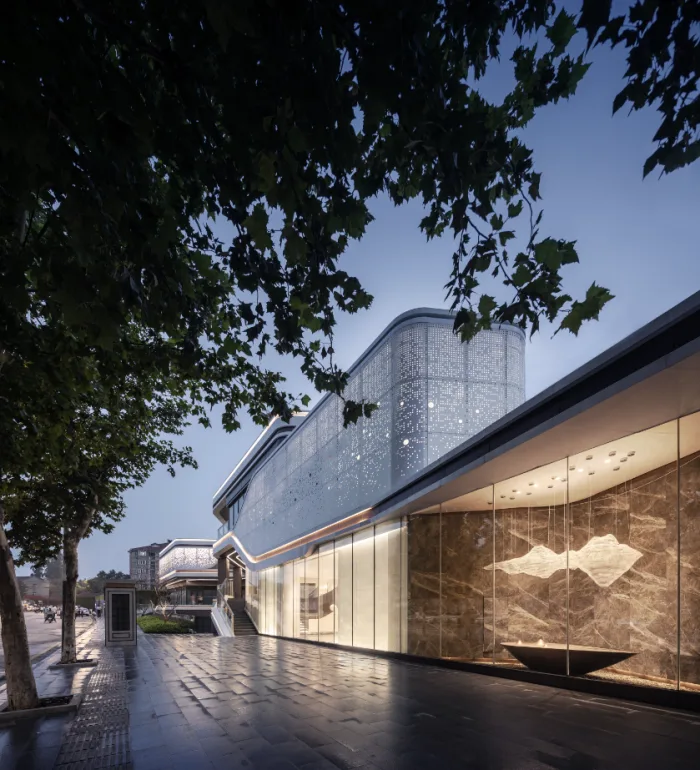
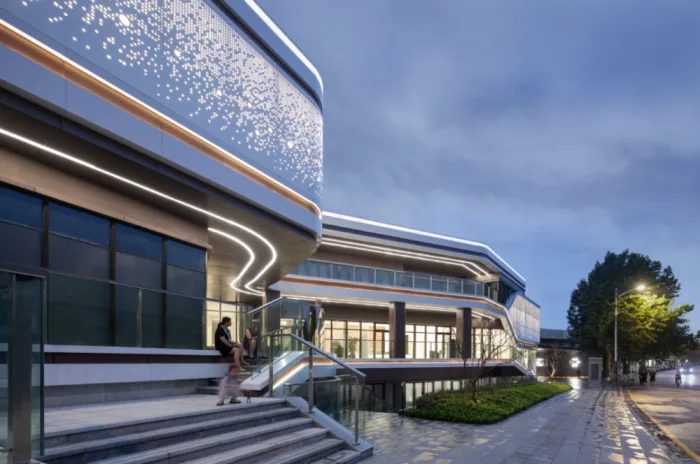 Community service complex along the street, photo by Ziran Architecture Photography
Entering from the north road, visitors follow the curved building lines into a first-floor entrance space, extending visual depth inward with no clear boundaries. Marble and glass flank both sides, while the roof features linear arrangements of hollow glass bricks and steel-framed brick structures. The interplay of three different enclosing surfaces creates an open yet mysterious atmosphere. The building’s curves extend indoors, with irregular walls and spiral staircases echoing its urban form, offering versatile possibilities for future commercial use.
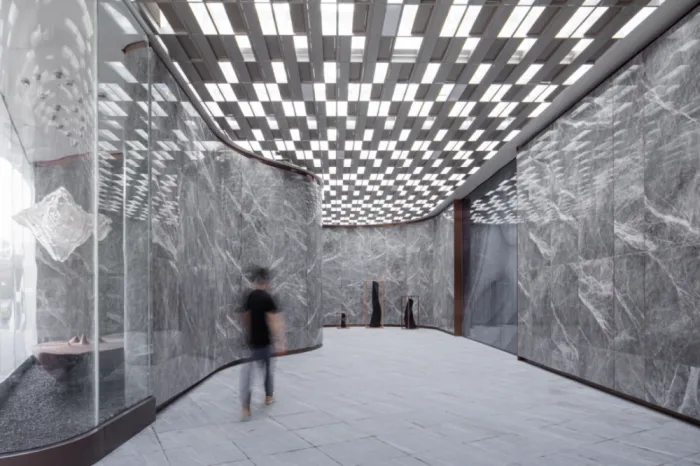
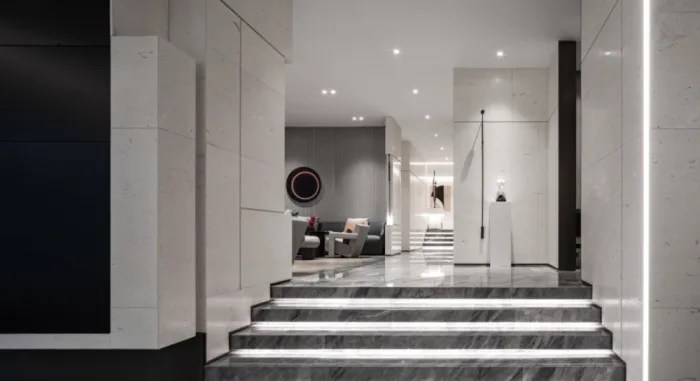
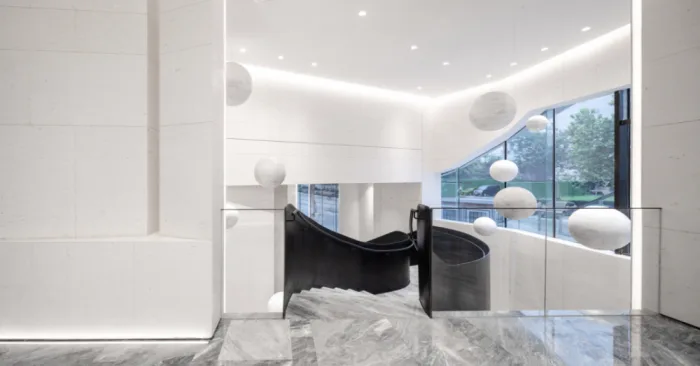 Indoor space of community service complex, photography by Ziran Architecture Photography
The community service complex’s facade features multiple curved lines that extend the building’s mass. Parametric design simulates the texture of iridescent perforated aluminum panels, enhancing exterior aesthetics while creating dynamic light and shadow effects inside. At night, dynamic lighting evokes the sensation of a vast starry sky.
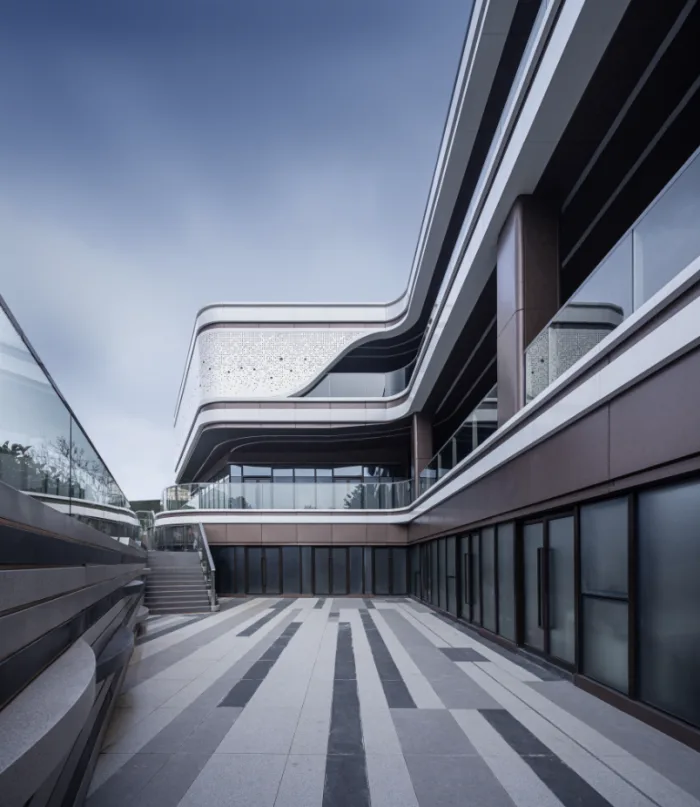 △ Streamlined facade design, photo by Ziran Architecture Photography
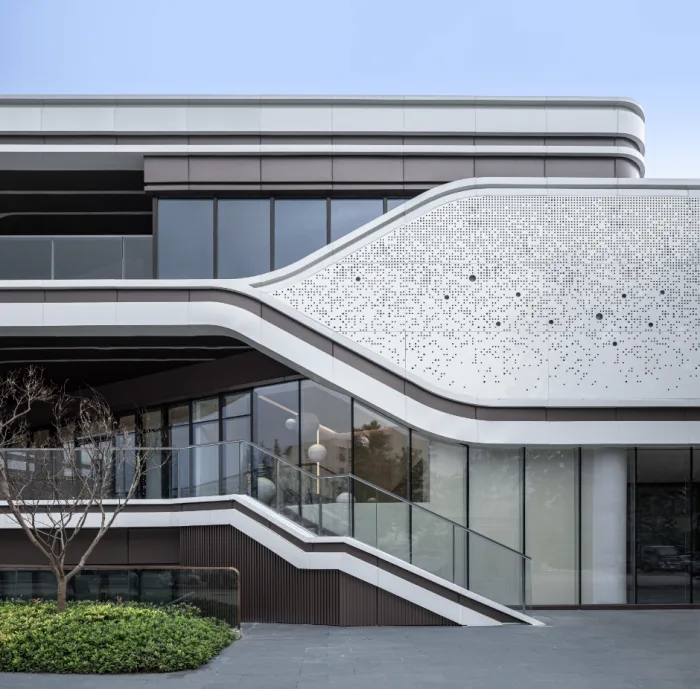
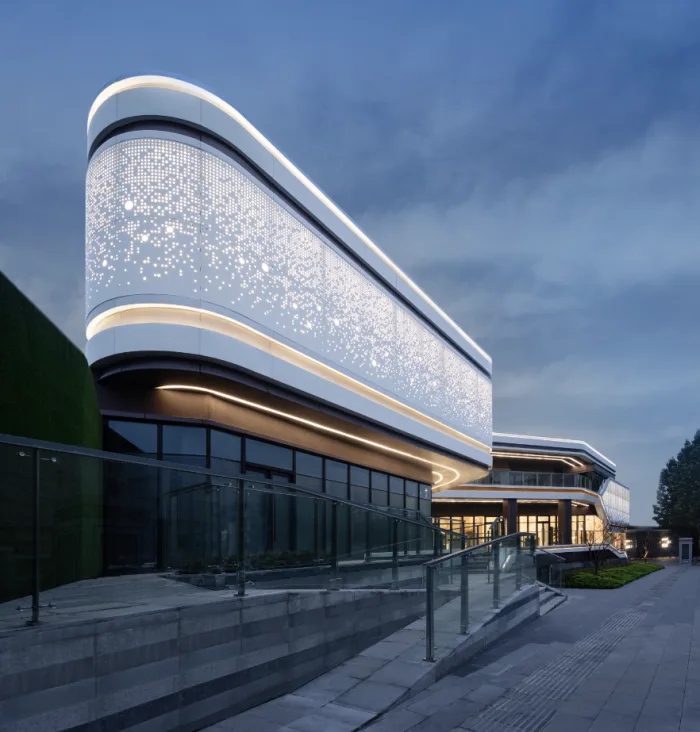 △ Colorful perforated aluminum panel effects, photo by Ziran Architecture Photography
In the residential area, building spacing reaches nearly 30 meters, maximizing views and landscape integration. The double courtyard acts as a vital “connector” between private residences and public spaces. Facades include co-built eaves, balconies, and windows with curved lines and warm coffee tones, reflecting the traditional Nanjing Yuhua Stone material and reinforcing local urban culture. Air conditioning units and condensate pipes are concealed behind louvers, preserving a clean and cohesive appearance.
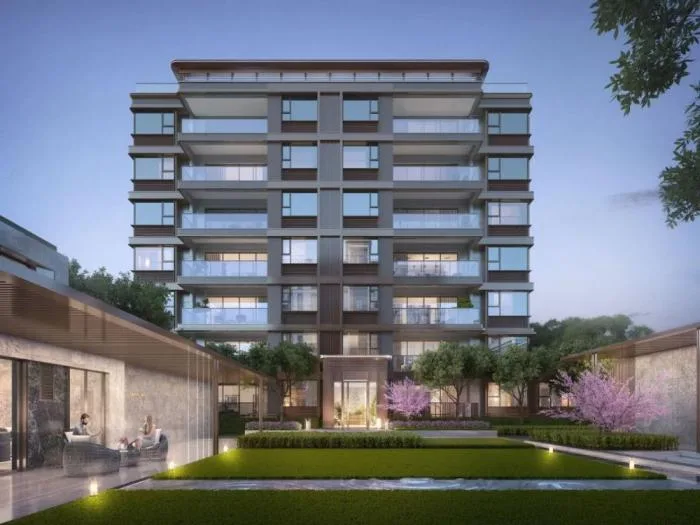
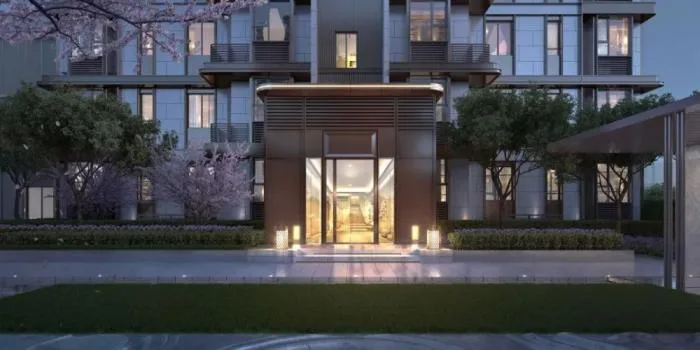 △ Home life and leisure scenes
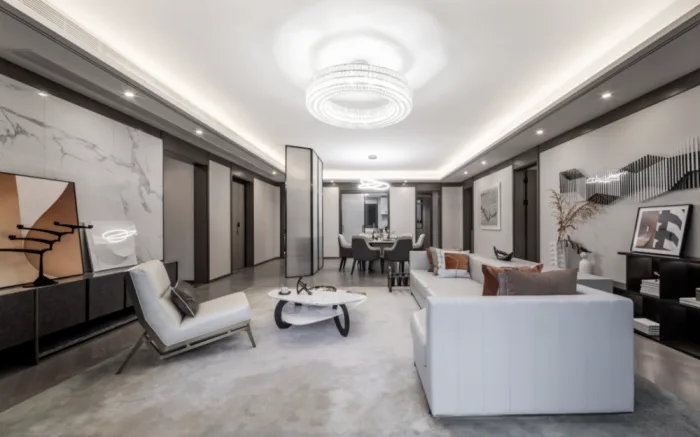 △ Residential interior
Currently, Nanjing Longfor is progressing with construction, and the commercial complex near the residential area is nearing completion. This high-quality, visually appealing “Golden Magnetic Field” community, blending residential, commercial, and service functions, has become the most valuable mixed-use development in Xuanwu District and a new benchmark for ideal living in Xiaolingwei.
The project advanced rapidly, achieving commercial success within a year—from land acquisition and bidding to sales office completion—thanks to Longfor and Sanyi’s extensive commercial real estate experience. Longfor’s community commerce strategy ensures daily shopping and consumption needs are met within 500 meters, covering traditional sectors like apparel, food, housing, and transportation, as well as emerging consumer trends. This attracts premium brands, enhancing the area’s overall quality of life. Meanwhile, Sanyi’s commercial design expertise maximizes commercial space for lifestyle brands, creating innovative urban interfaces and offering merchants personalized options. The project’s unique architectural style and spatial design have made it a regional landmark, fostering community identity.
Nanjing Longfor Community not only addresses residential needs but also elevates urban aesthetics. The building’s impact on its surroundings promises new opportunities for the area’s future development.
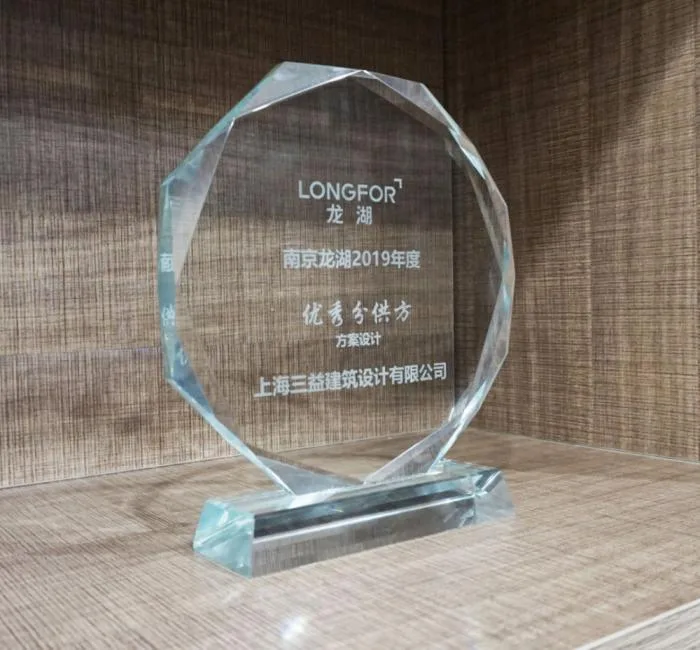
Project Name: Purple Gold Original by Nanjing Longfor
Project Type: Urban Complex
Project Location: Xiaolingwei Street, Xuanwu District, Nanjing City
Developer: Nanjing Longfor Group
Design Proposal: Shanghai Sanyi Architectural Design Co., Ltd
Construction Drawing Design: Benchmark Fangzhong Architectural Design Co., Ltd
Site Area: 25,636.53 square meters
Floor Area: 81,025.94 square meters
Floor Area Ratio: 2
Design Period: June 2019 – October 2019
Design Team:
Commercial Section: Lu Xiaogang, Yu Xiaoxiao, Zhang Weiwei, Xiang Wenwei, Hu Zheyu, Wang Shuo, Zhang Zhonghong, Bai Yang, Li Yangyang, Wang Ying, Sun Zhuying, Yin Meiyu (Intern), Kong Dehui (Intern)
Residential Section: Wang Kai, Zhang Jinghu, Liu Shichang, Zhuang Qianqian, Cui Peng, Lin Ye, Wu Duanyuan, Wu Youxin












Must log in before commenting!
Sign Up