
On April 25, 1974, Zeca Afonso’s song “Grândola Vila Morena” became the second “Song of the Code” during the telephone revolution that had started months earlier. This movement abruptly ended the dictatorship in Portugal. On that very day, construction at this site was also abandoned, leaving behind a modern ruin of an unnamed residential building. Forty-two years later, the project was revived and redefined, transforming this unique location into a new building called Atelier.
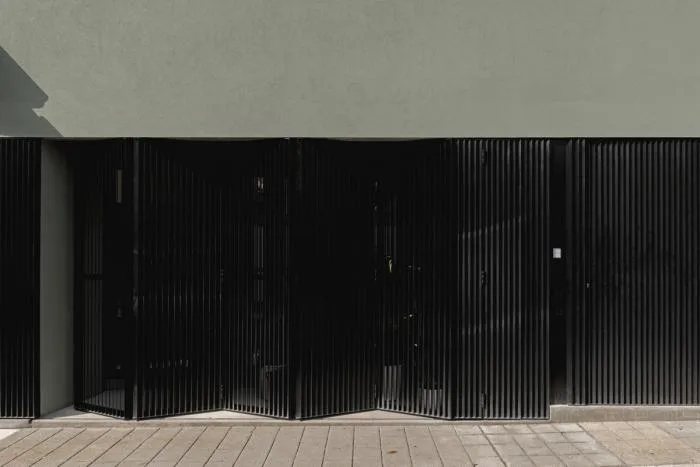
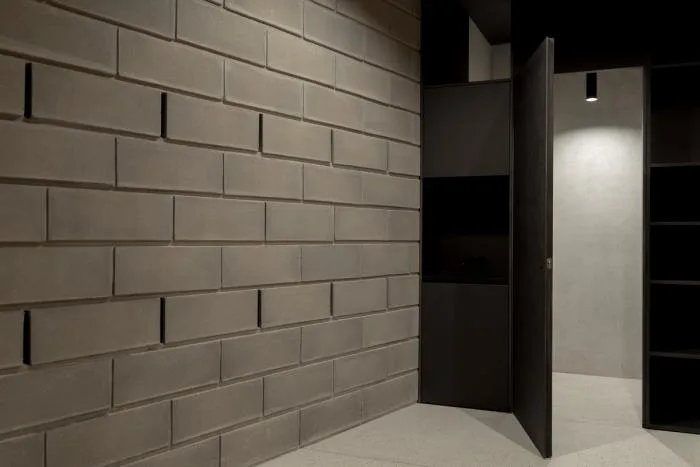
The site itself is quite distinctive and part of an irregular urban fabric. Though the area is unstable and industrialized, it continues to evolve through folds and fractures, offering a rich spatial experience. The central section of the plot is relatively narrow, resembling a human waist, while the northern and southern sections expand outward. The existing structure consists of reinforced concrete columns and beams; however, the original framework was overly dense and redundant.
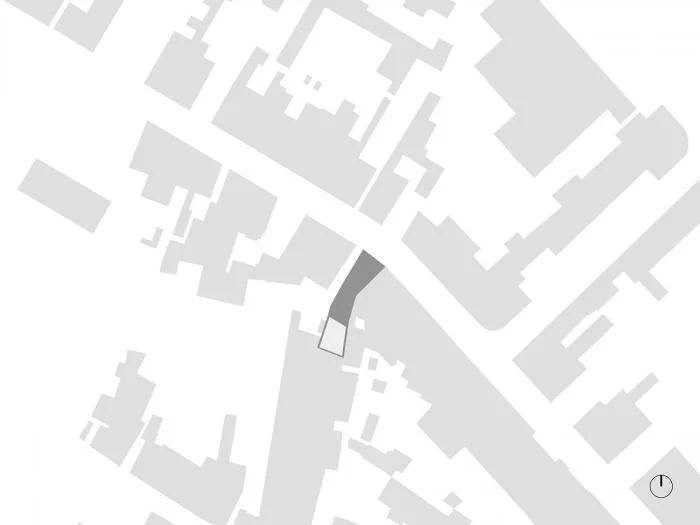
△ General layout plan
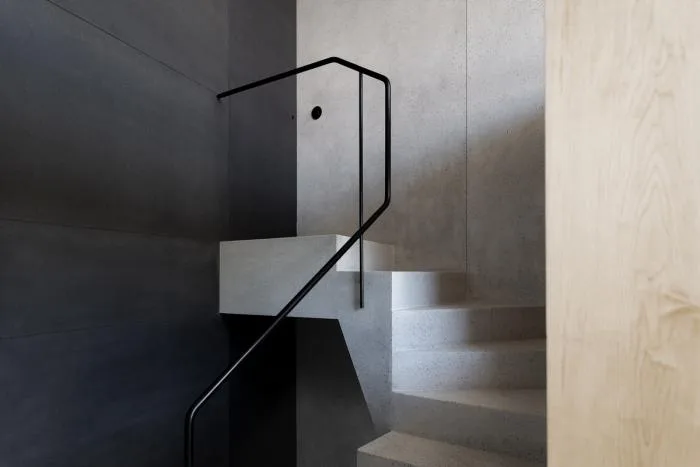
The design concept draws inspiration from the dialogue between the old and new structures. The staircase, positioned at the narrow waist of the plot, serves as a newly designed structural element that self-adjusts to stabilize the entire building. A second layer of wooden beams has been added to reduce the load on the original concrete framework. The irregular shape of the base influences the building’s spatial configuration: it extends two floors toward the front (north) and unfolds into three interior mezzanines facing the backyard (south).
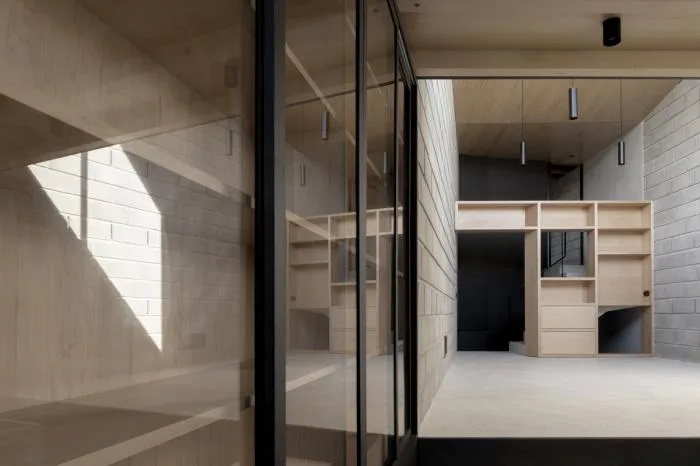
Despite the unconventional geometry, the interior spaces maintain a high degree of permeability. Most rooms serve multiple functions, each characterized by unique spatial and lighting qualities, accommodating diverse needs throughout the building.
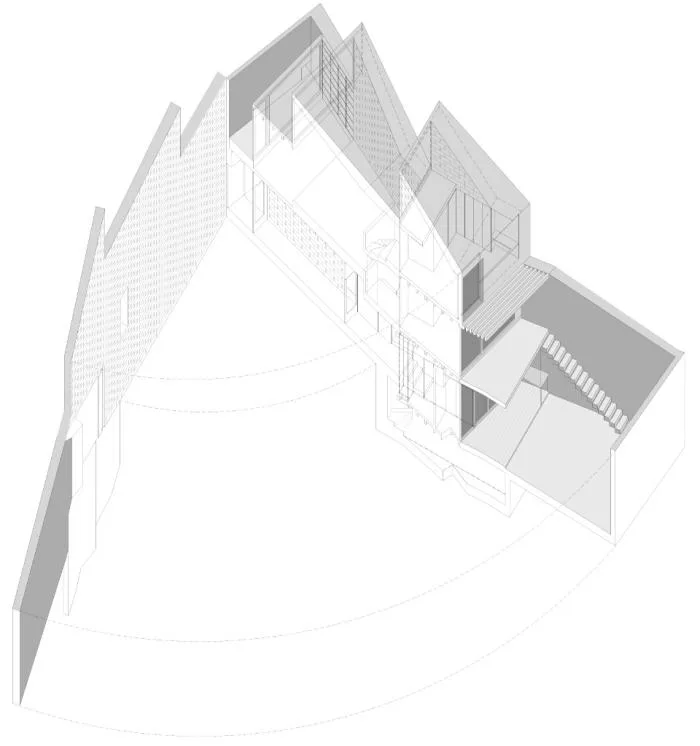
△ Axonometric diagram
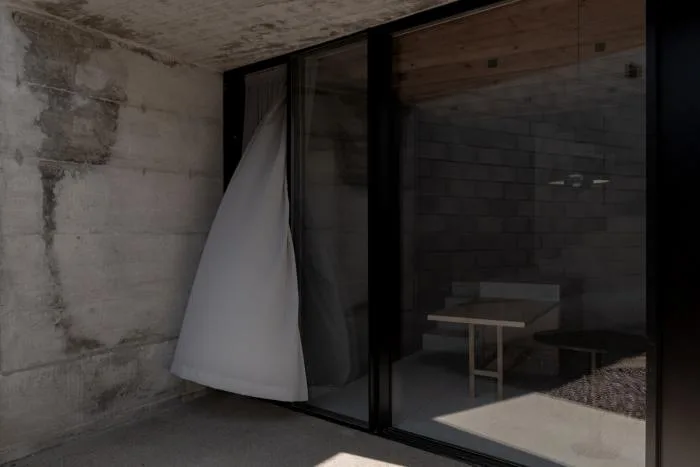
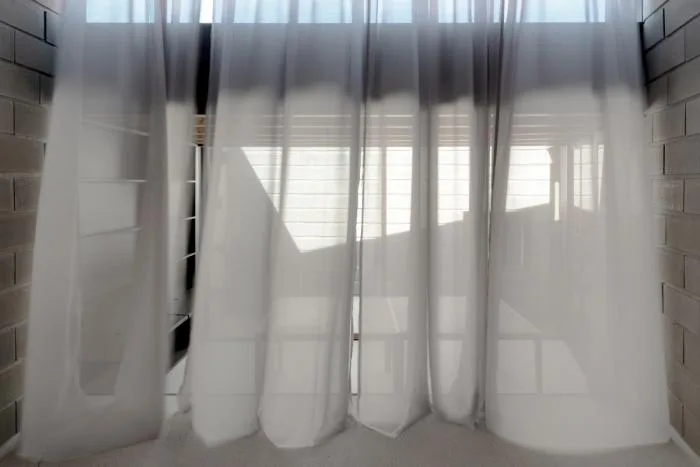
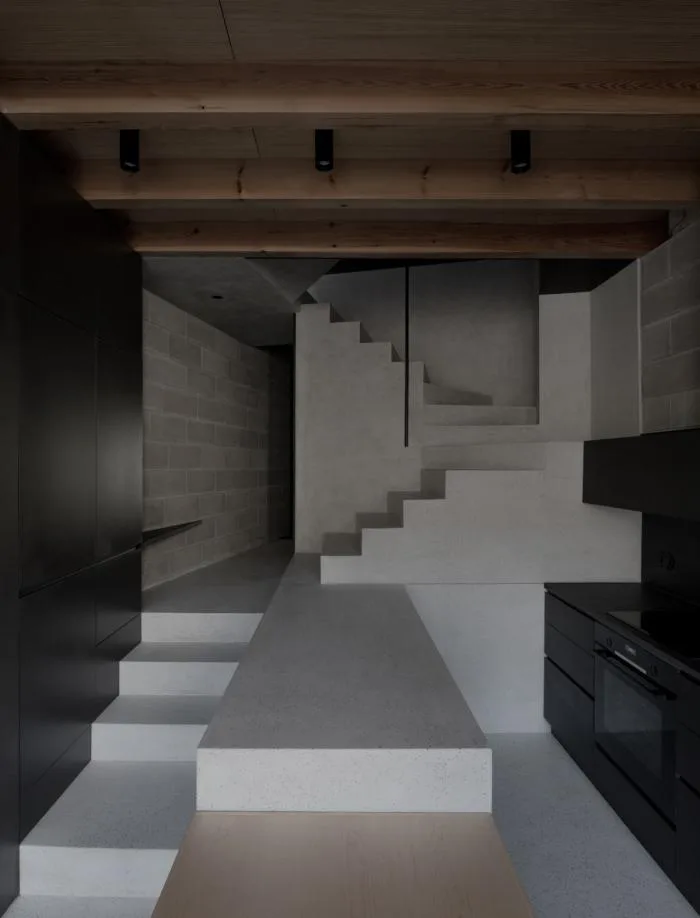
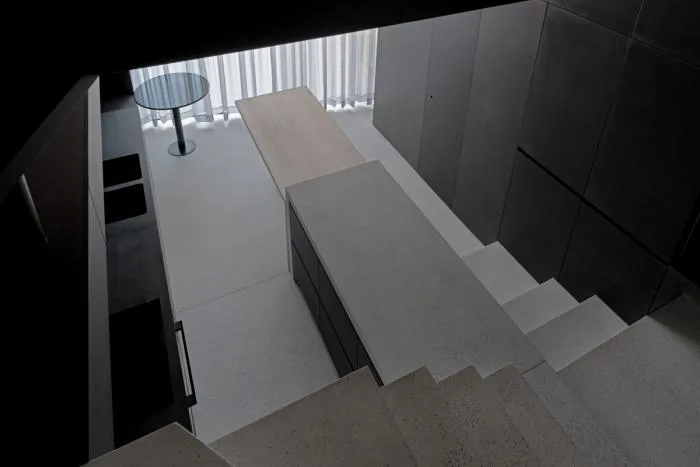
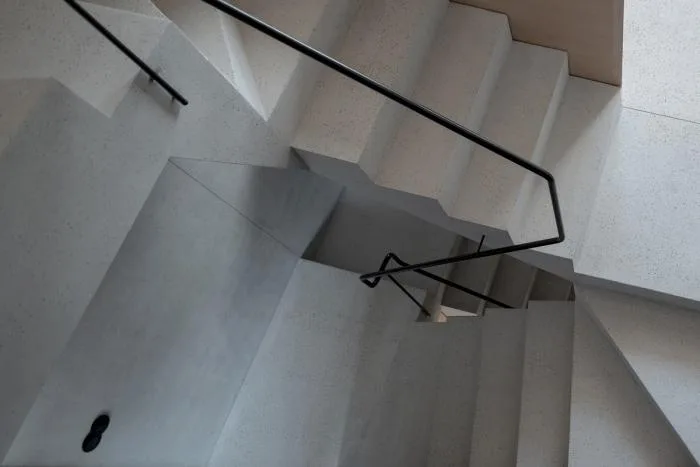
The building creates separation from the outside through two large louvers and wall sections on the east and west sides. On the north, it is separated from the public road by a three-column doorway that penetrates the facade, along with a terrace featuring a skylight. This design allows users full access to the backyard terrace on the south side, integrating internal and external spaces.
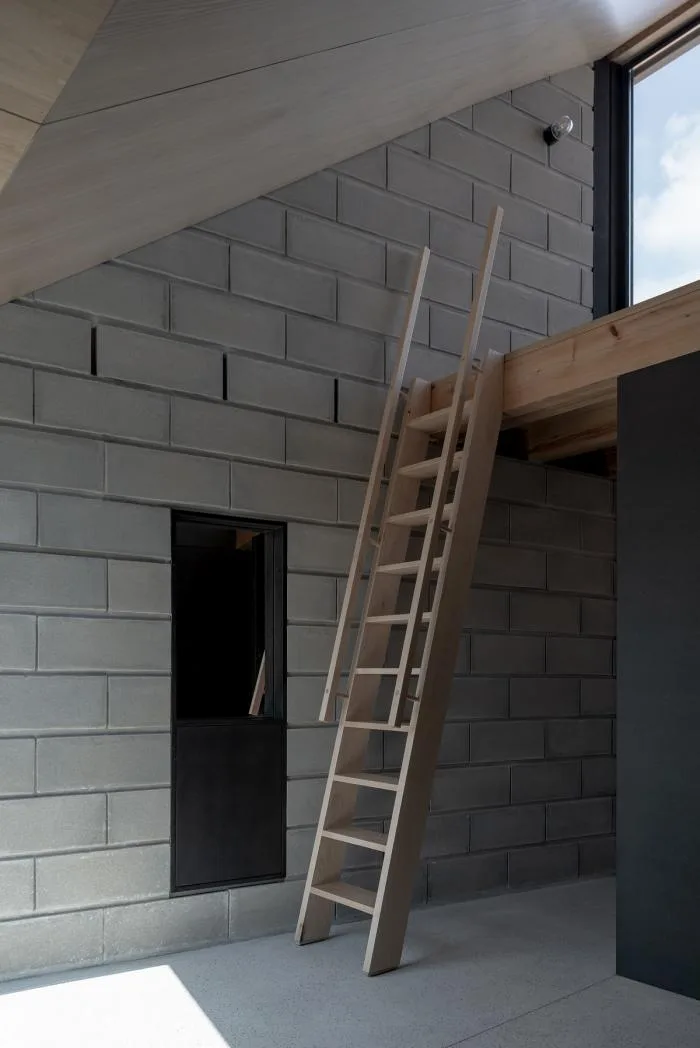
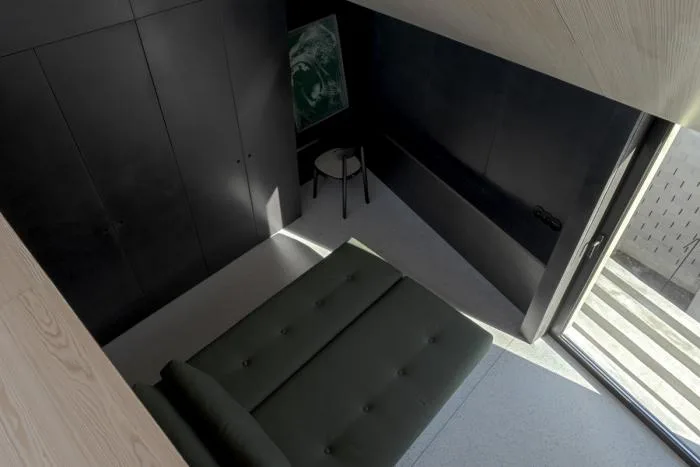
The interior layout is compact, with spaces that seem to flow between inside and outside, offering a sense of shelter while creating intimate and private rooms. Natural light occasionally reveals the architectural layers, casting dynamic shadows and penetrating deep into the interior, generating a “sweet disorder” within the spatial framework.
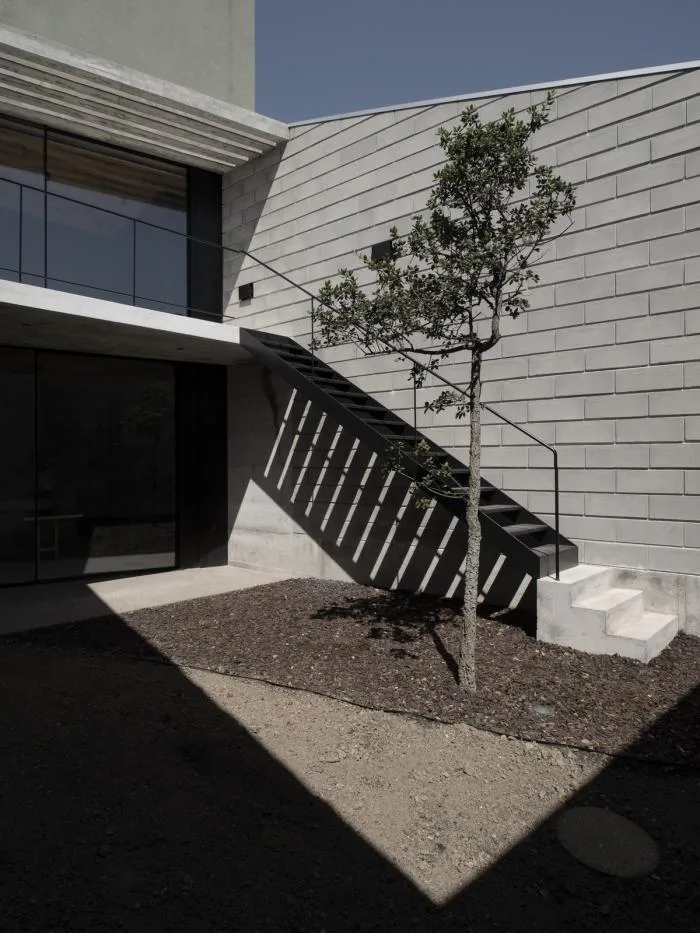
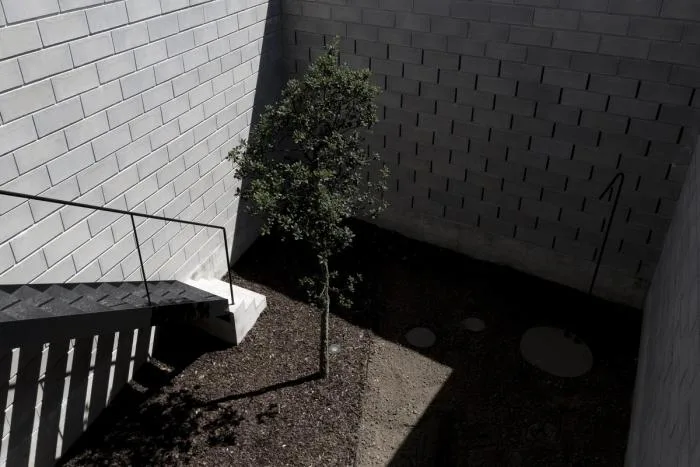
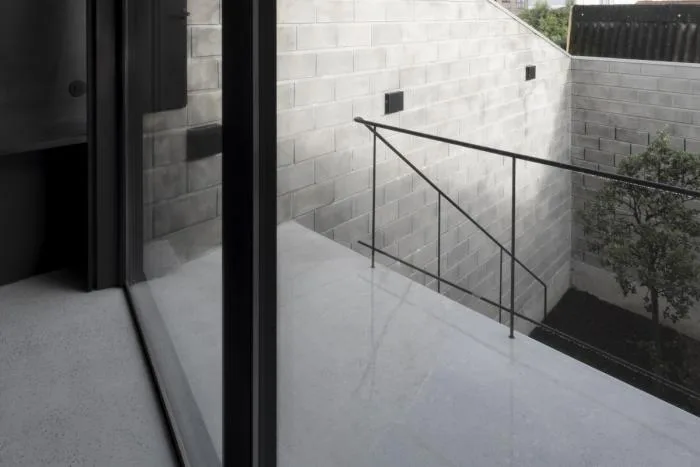
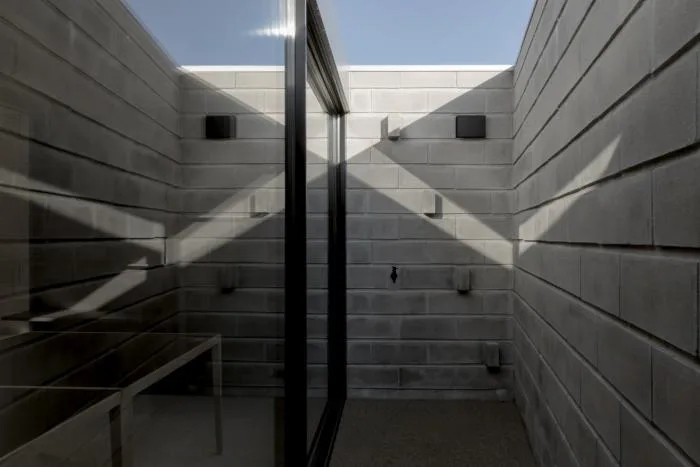
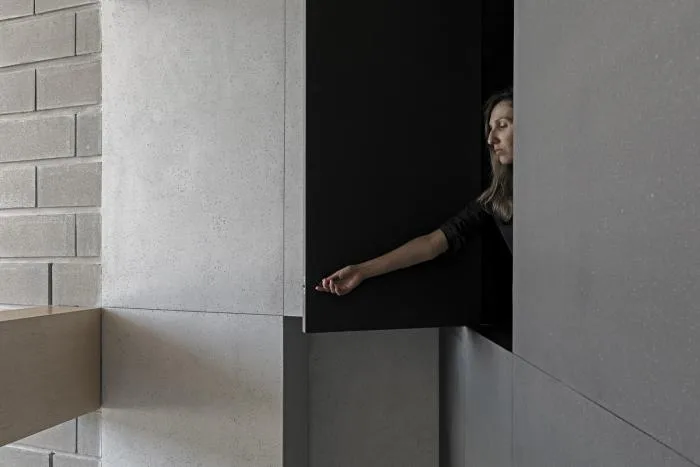
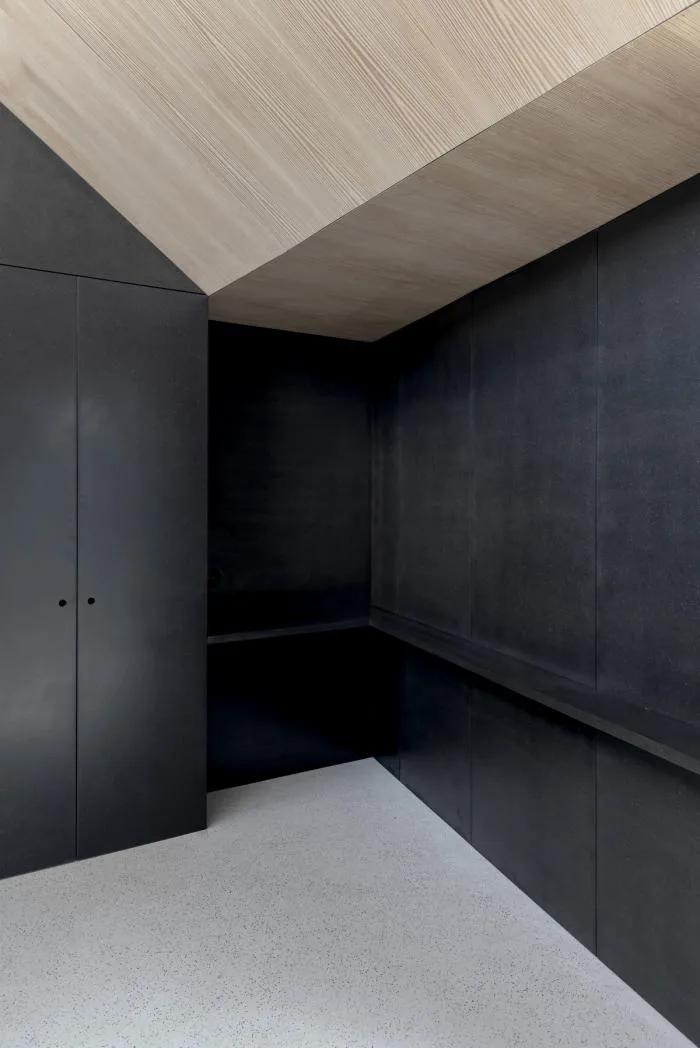
The building’s exterior surface has undergone minimal design modification, highlighting the contrast between rough textures and fine details. The raw materials include on-site poured concrete, concrete blocks, terrazzo, and wooden boards. The main goal was to create a living container that encloses itself discreetly, laying the groundwork for future multifunctional living laboratories.
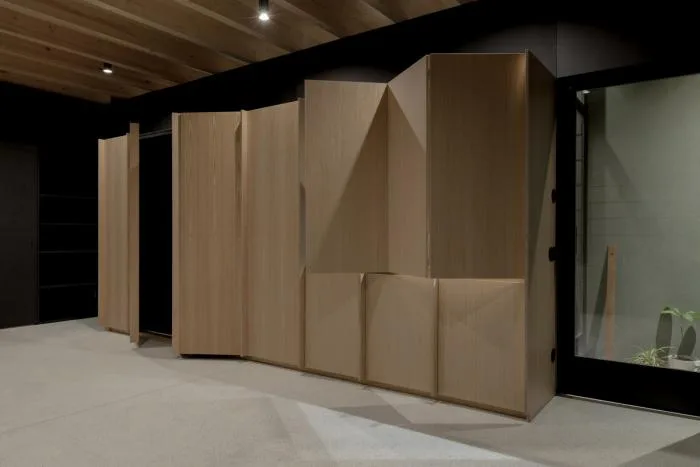
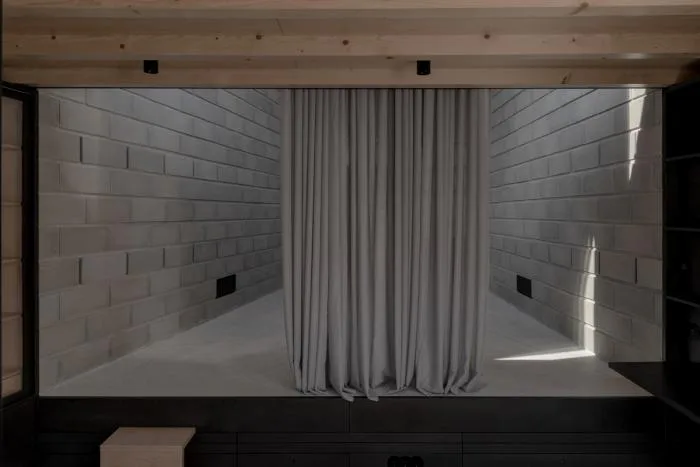
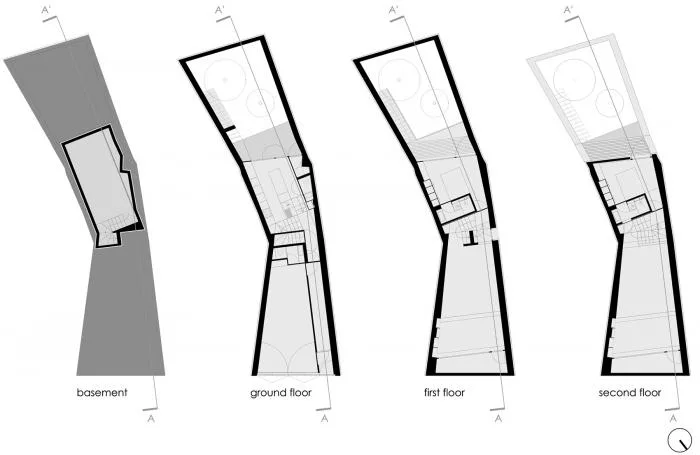
△ Plan view
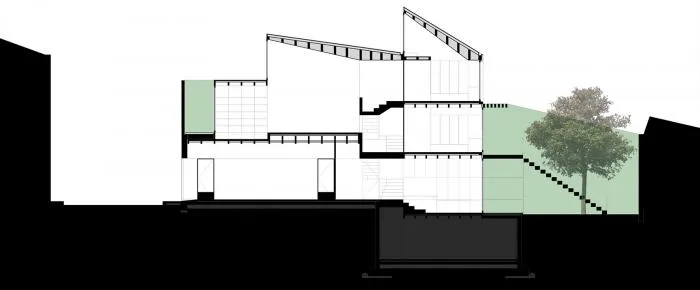
△ Section diagram
Project Information
Location: Porto, Portugal
Architect: NPS Arquitectos
Area: 170 m²
Year: 2020
Design Team: Rui Neto, Sérgio Silva
Engineering: Tisem Engenharia, Lda
Construction: ACA Construction Company, Ltd
Infrastructure: Brisco, Facilities and Services, Lda
Woodwork: José Reis e Filhos, Carpentry and Furniture
Metalwork: Metaldri, Metal Constructions, Ltd












Must log in before commenting!
Sign Up