
© Architecture Photography
Amidst the vast urban landscape of countless cities, our deepest desire is to break free from this environment. The ideal solution is to create a building that appears to be born from the sky itself—one that is invisible at its origin, yet stands as a complete, innovative, and exemplary architectural work.
© Architecture Photography
Thanks to its integrated rail, land, and air transportation network, Shanghai’s Hongqiao Business District has become a new landmark within the city. Situated at the core of the Yangtze River Delta urban agglomeration, it connects 26 major regional cities. Anchored by the Hongqiao transportation hub and National Exhibition Center, the district’s main business activities include headquarters offices and commercial enterprises, supported by hotels, retail, cultural, and entertainment sectors. This has established Hongqiao as a premier international business destination.
While proximity to Hongqiao Hub has driven growth in Phase I of Hongqiao CBD, it has also limited architectural form and expansion. Most buildings in the area feature flat textures and a uniform height limit, creating a gently flowing skyline.
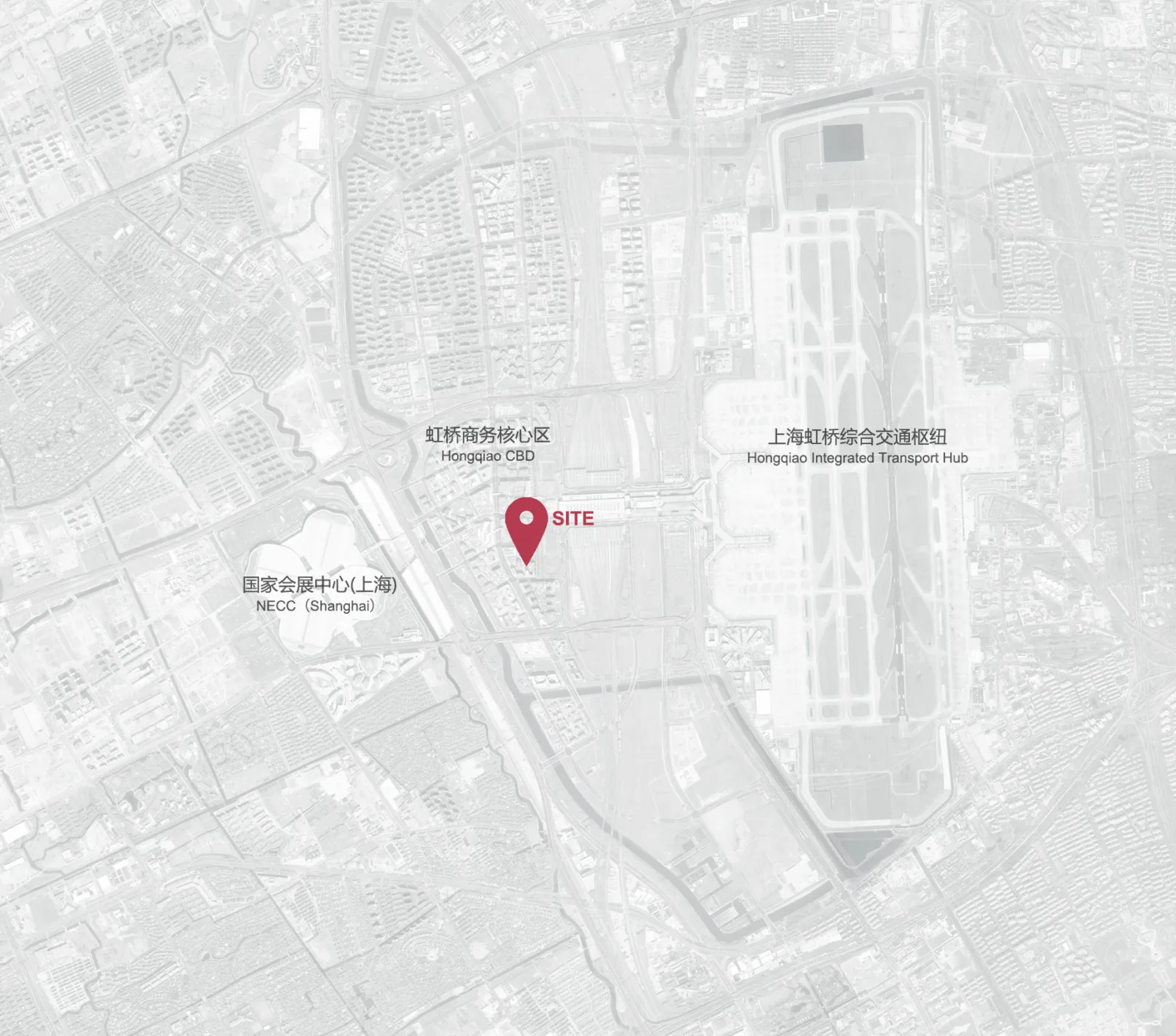
△ Urban Location Map
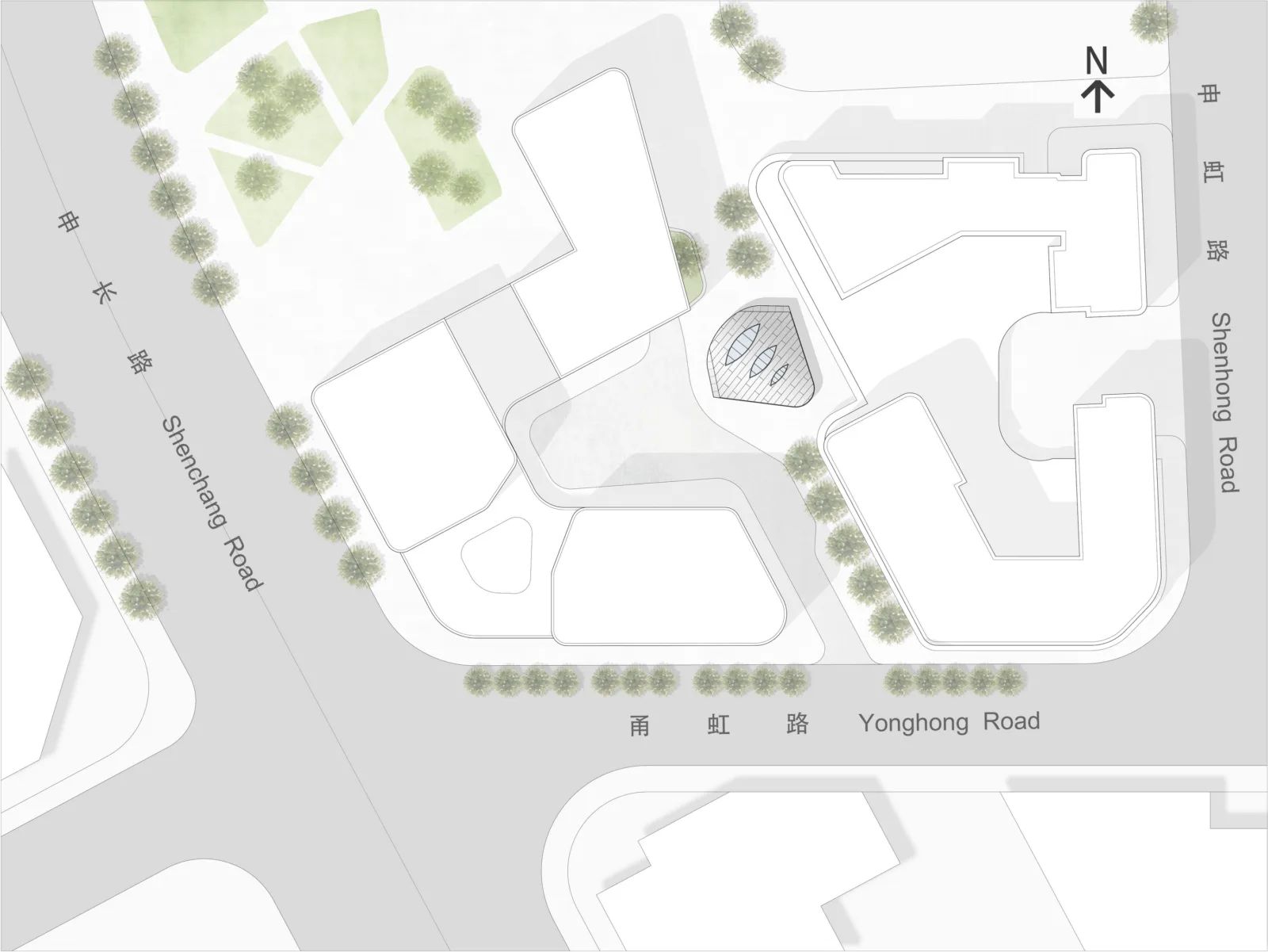
△ General Layout Plan
As Hongqiao’s first contemporary art museum, the Shanghai Jinchen Yifei Ming Art Museum seeks to break away from the conventional urban grid. It expresses artistic emotion and energy through an unconventional architectural form. By exploring geometric space design and materiality, the building offers a sculptural, dynamic experience that evokes visitors’ curiosity, anxiety, and surprise during their spatial journey.
This article examines the design concepts and technical solutions behind the museum, presenting architects with a fresh perspective on designing within traditional commercial spaces through an unconventional lens.
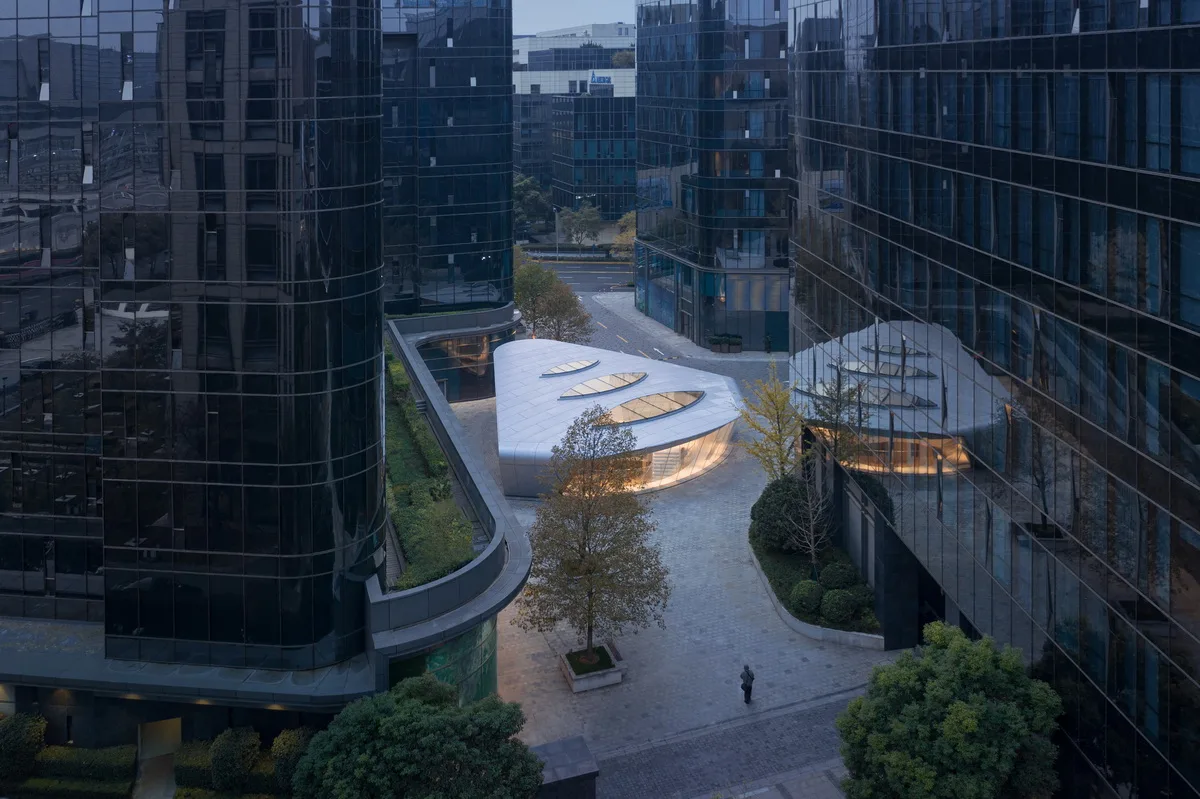
© Architecture Photography
01
Form: The ‘Body’ as Wings
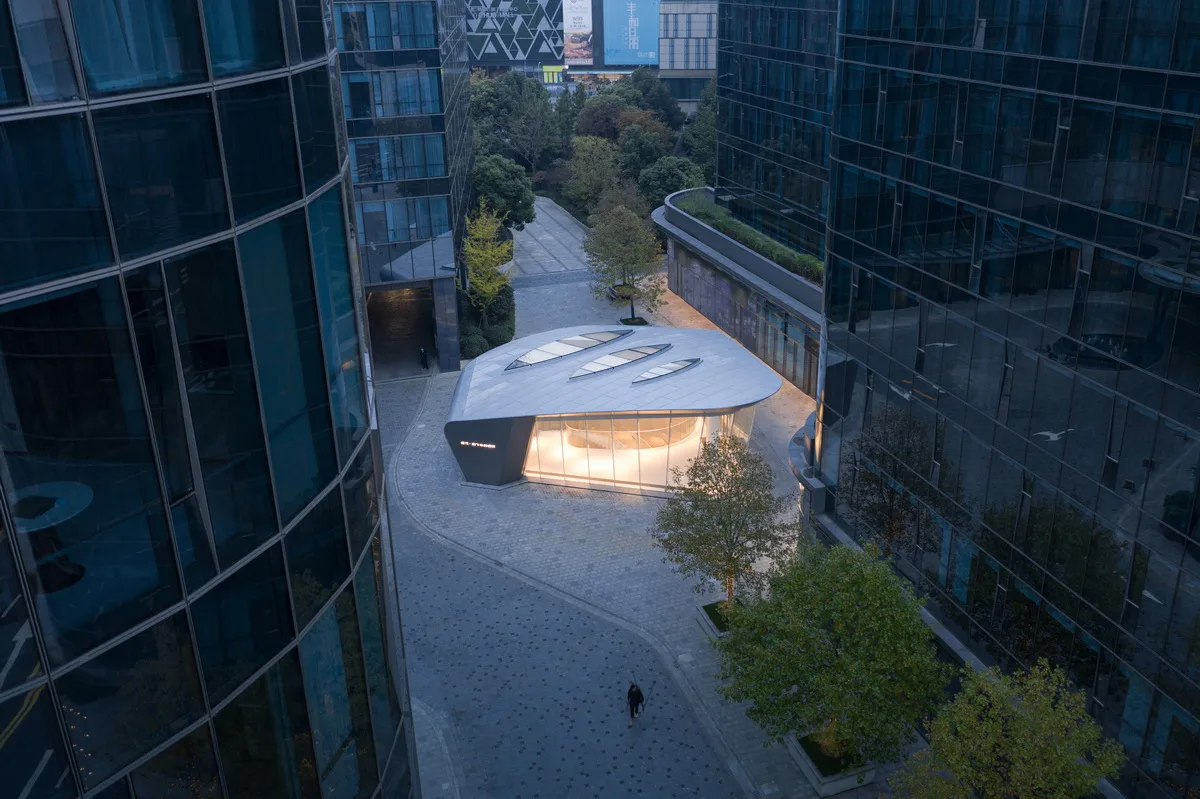
© Architecture Photography
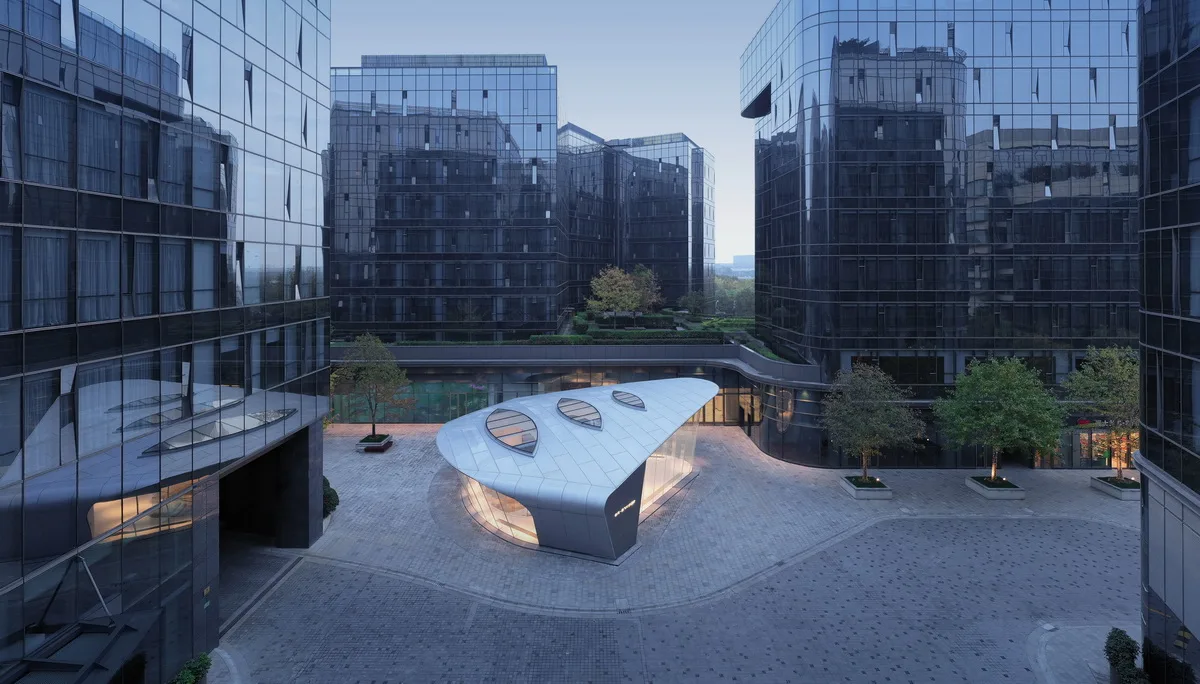
The spacious central square of the Jinchenghui Commercial Complex, combined with the nearby aviation venue, inspired the form of the Shanghai Jinchen Yifei Ming Art Museum.
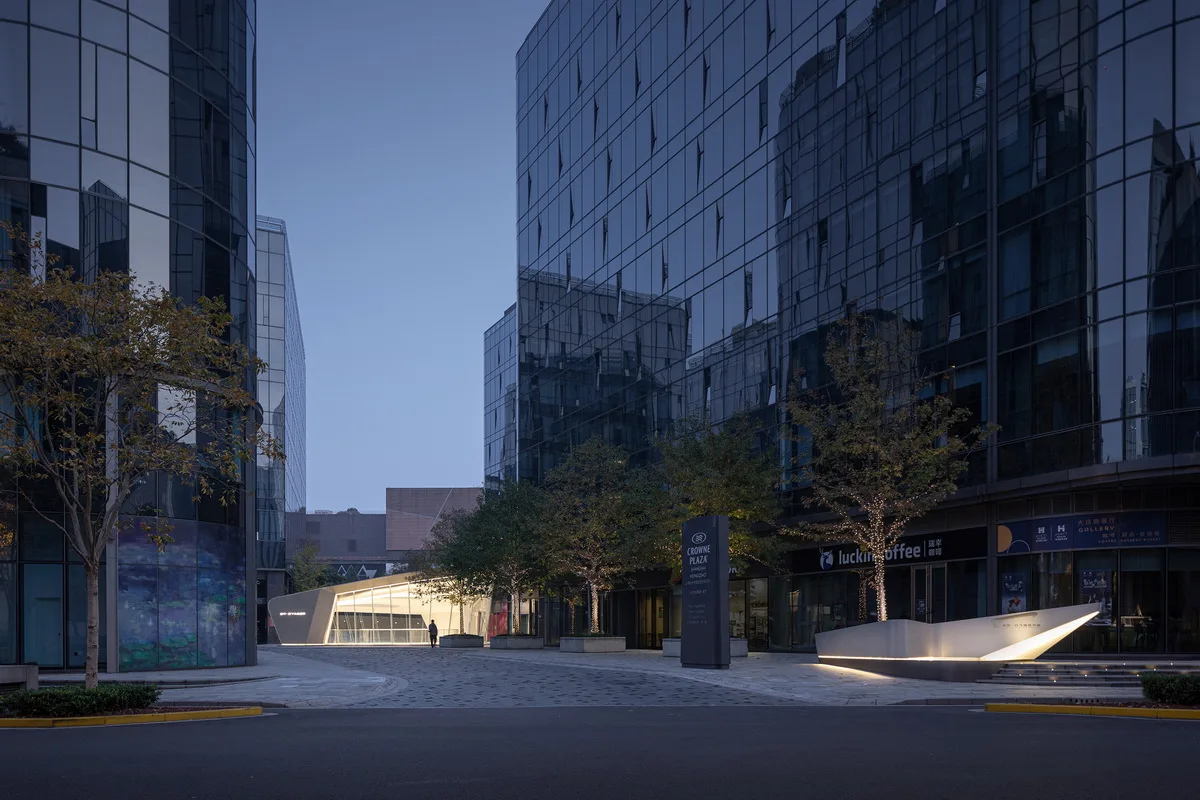
Situated within a square surrounded by five towers and podiums, the site originally featured a glass skylight providing light to the underground space. This skylight was opened up to create the main entrance and exit for the art center.
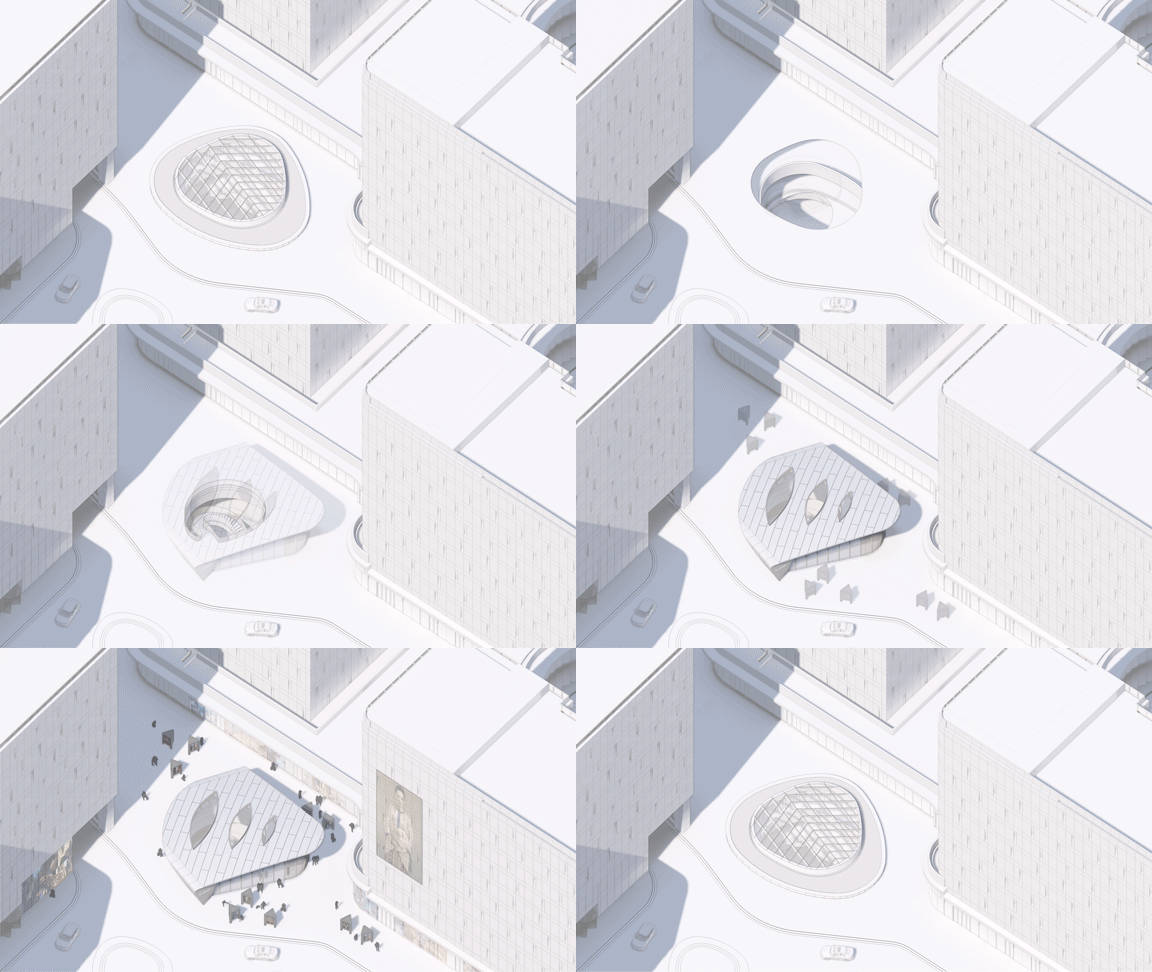
△ Transformation Diagram
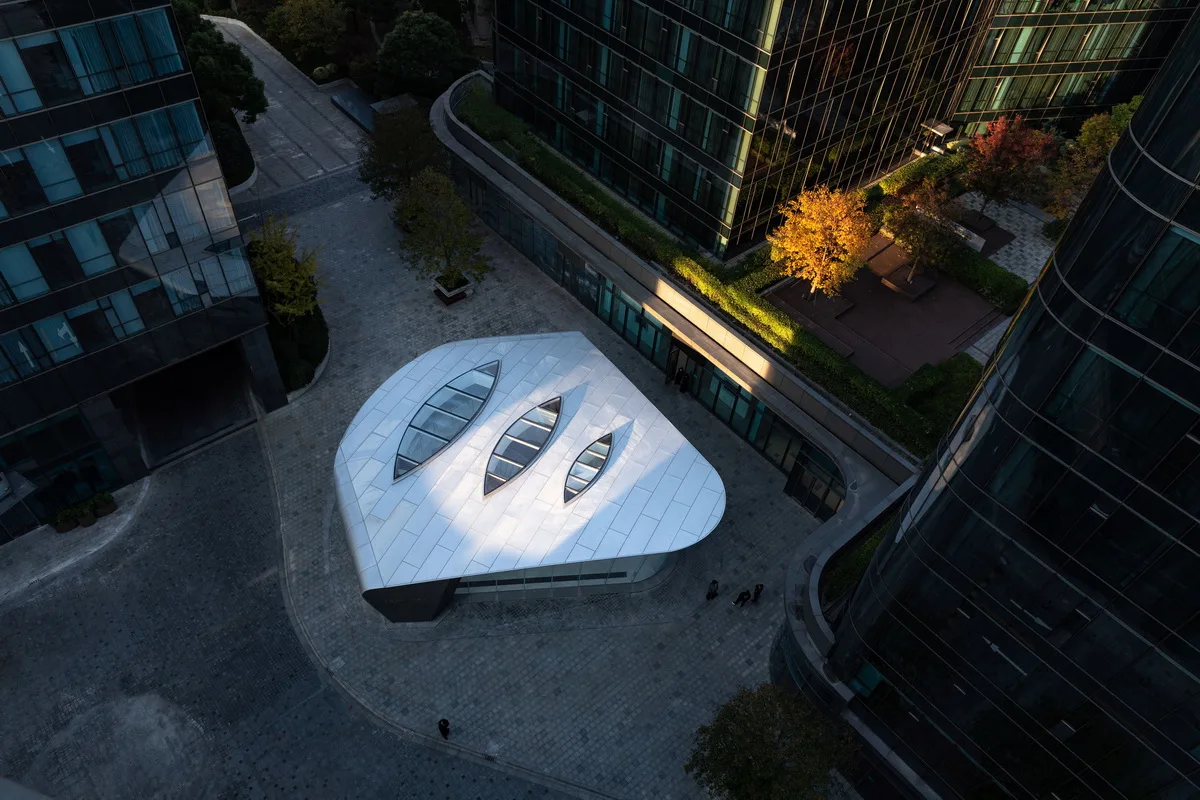
© Architecture Photography
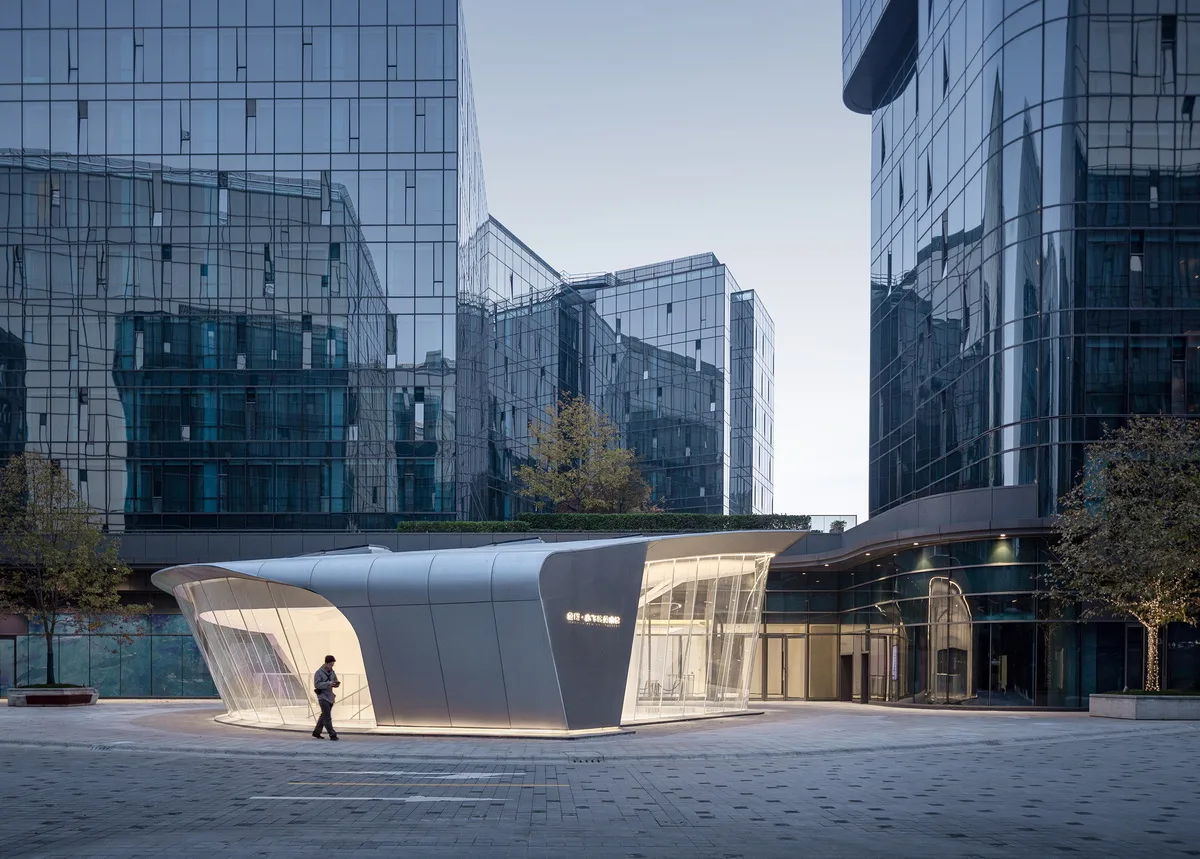
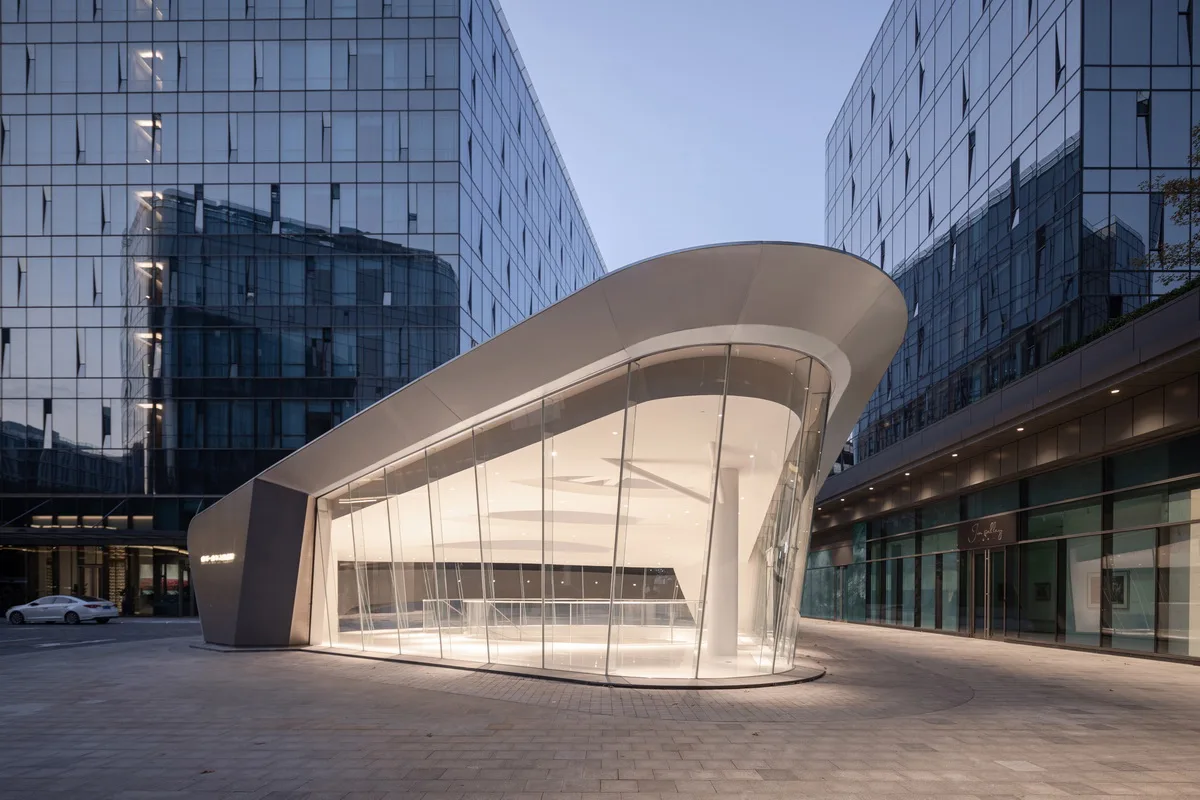
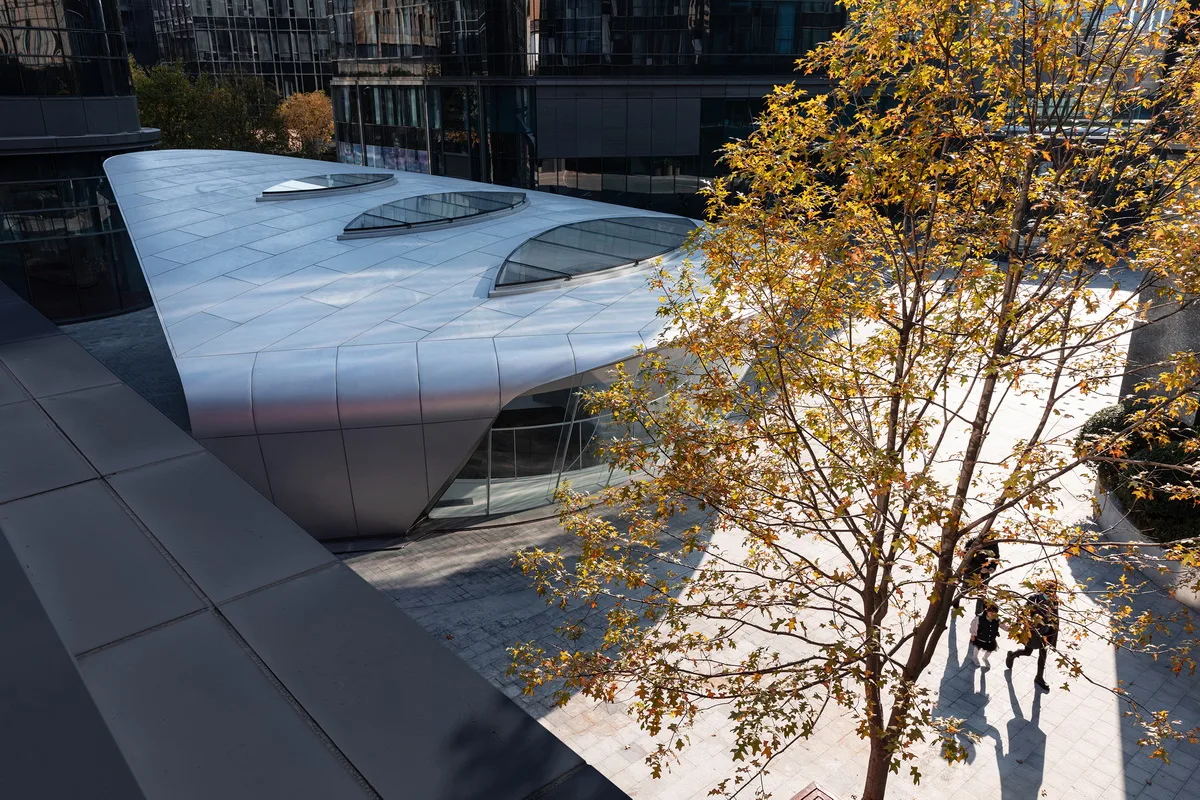
Upon entering the square, the building’s dynamic curves become fully visible. During design optimization, the initial multi-curved surfaces were refined into efficient single-curved forms. The metal wall rises from the ground boundary, with a sliding path that extends to the roof. The roof stretches outward before curving inward, its tip pointing toward the surrounding towers, enhancing a sense of motion and cohesion.
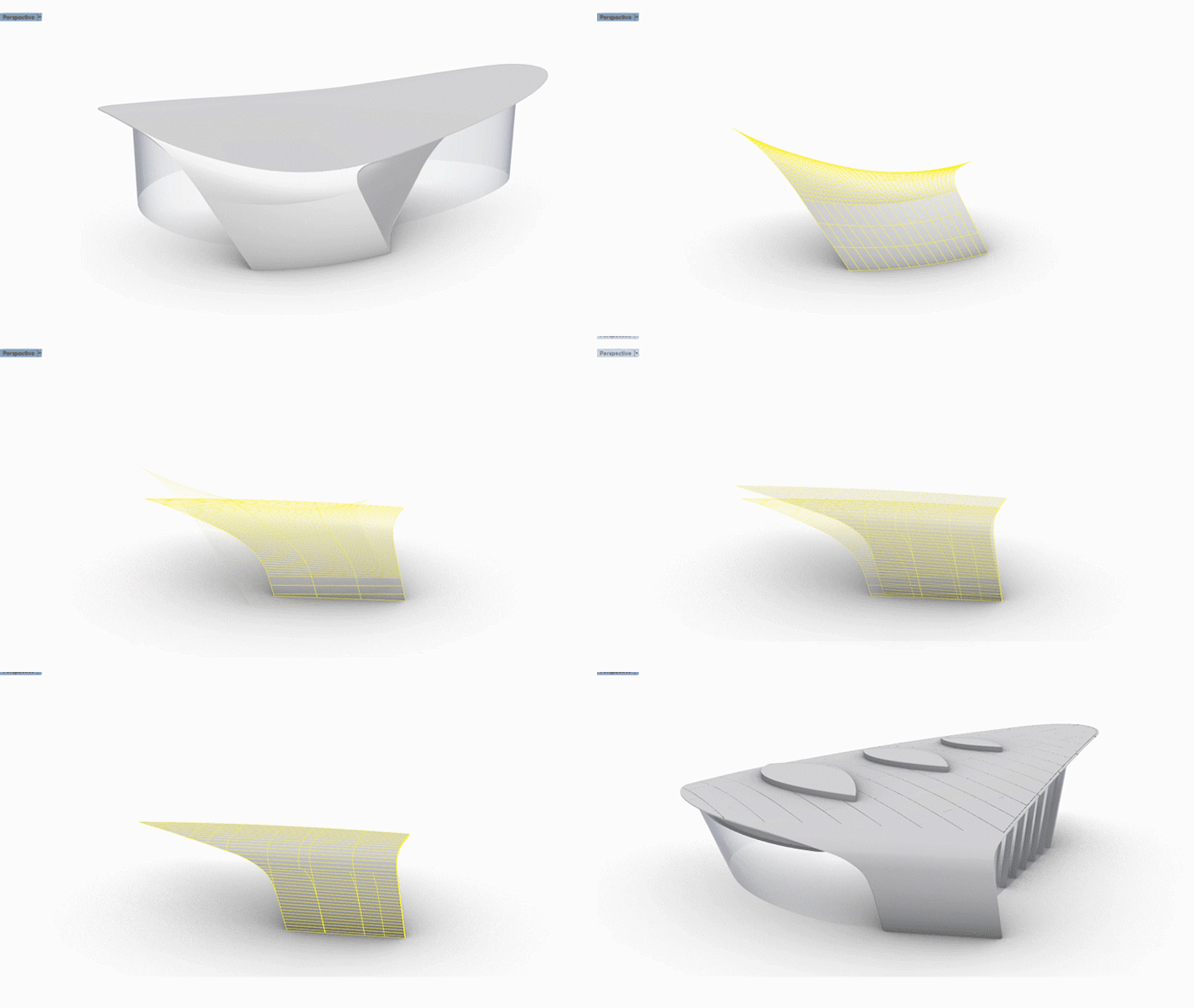
△ Surface Optimization Analysis
© Architecture Photography
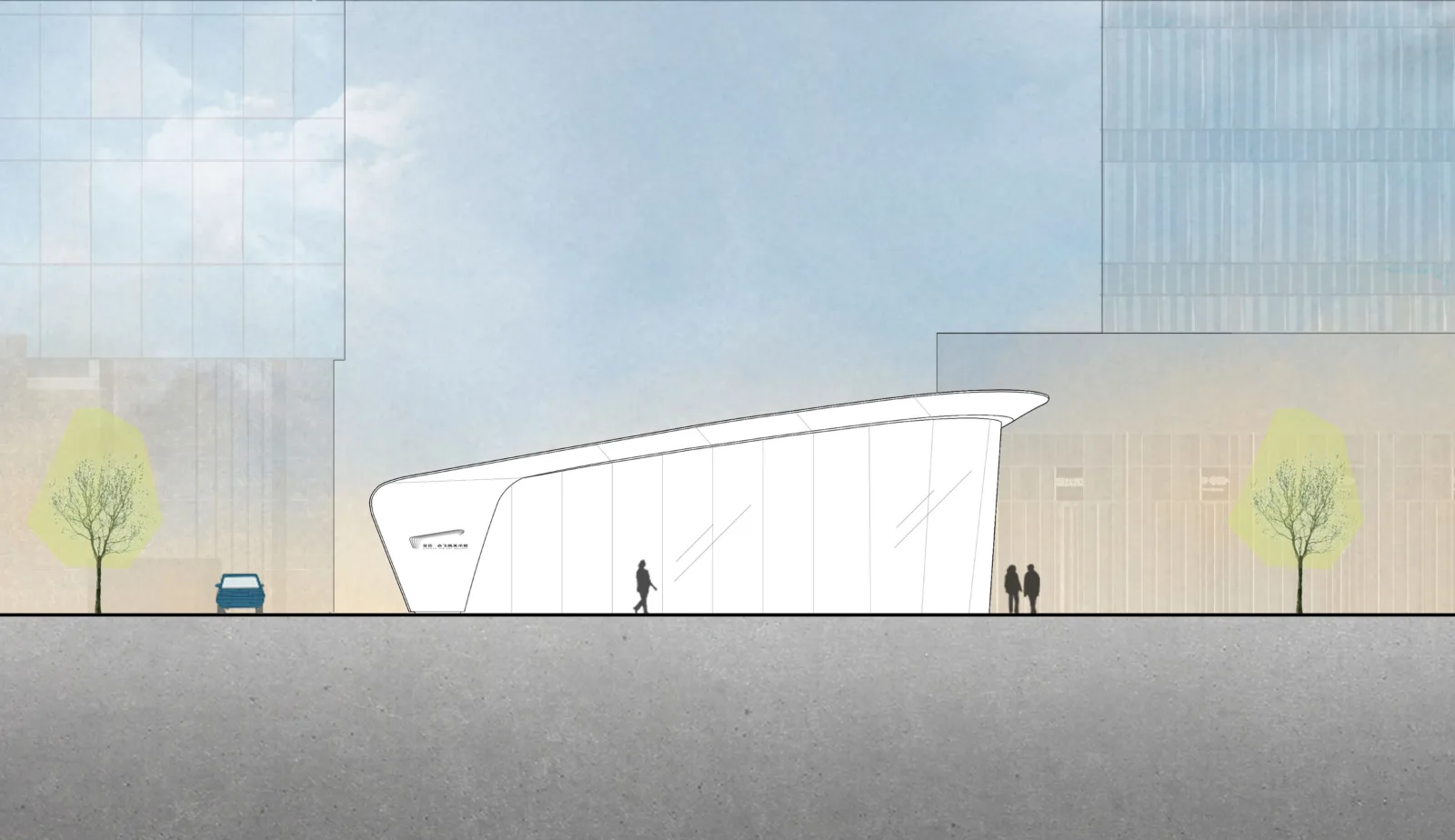
△ Elevation Drawing
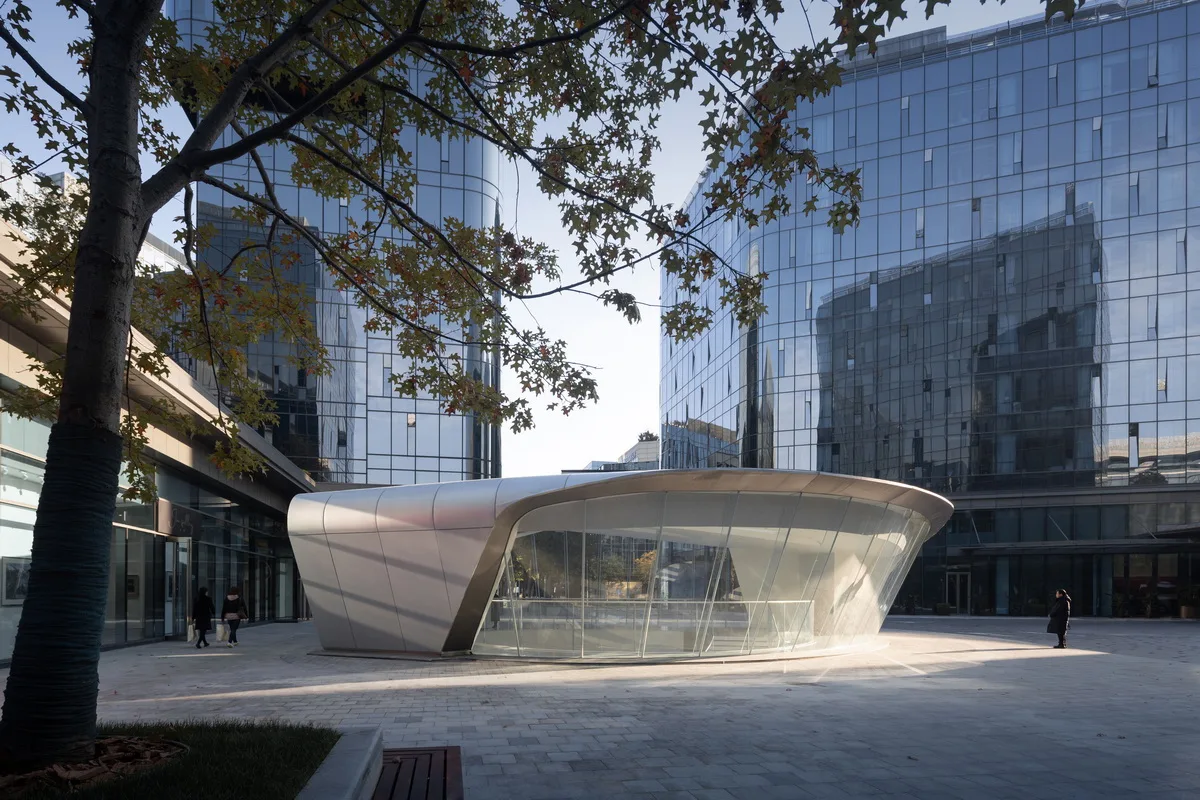
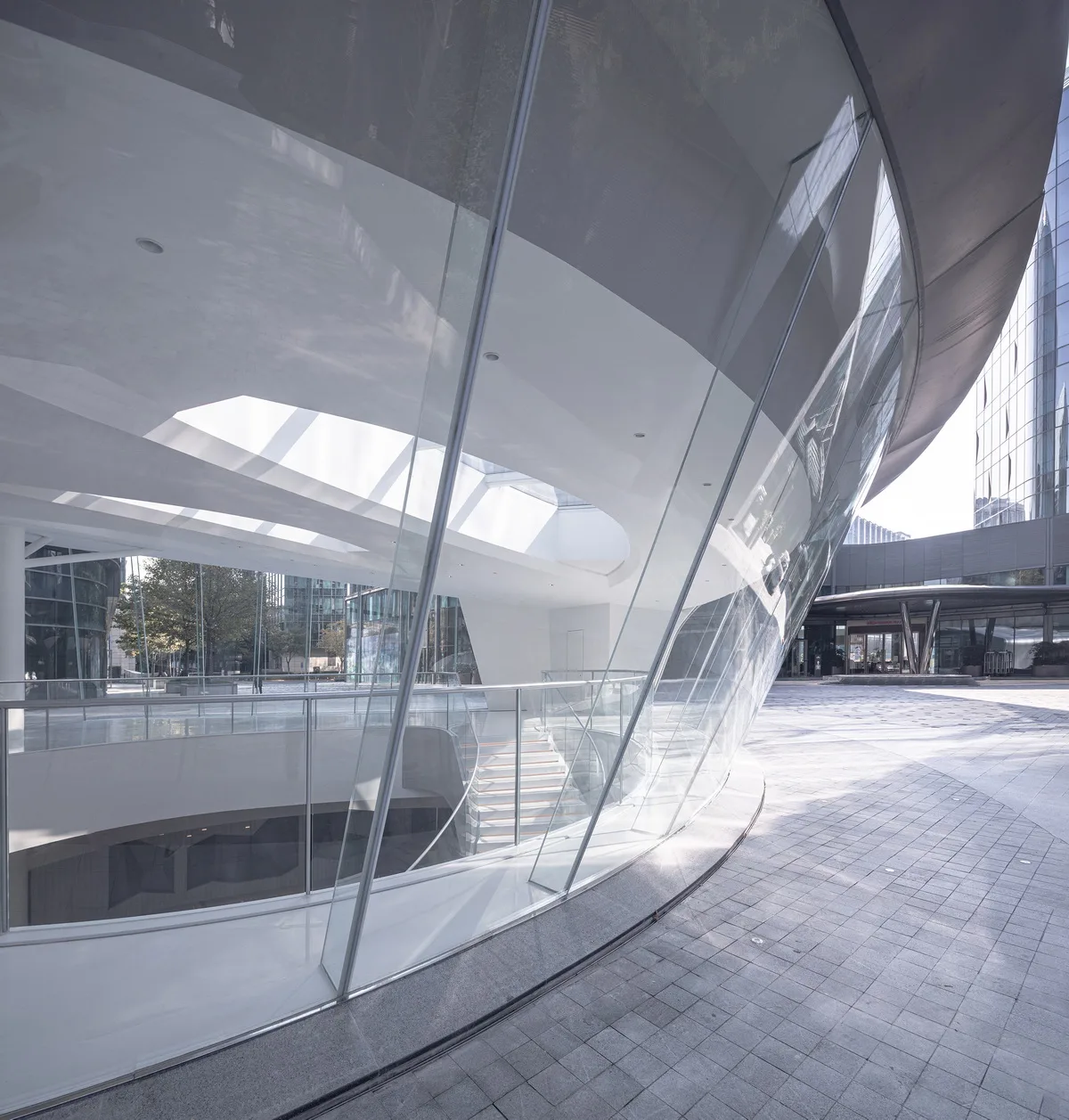
The exterior features expansive glass curtain walls that minimize structural exposure, emphasizing the steel structure’s floating effect. Against the urban backdrop, the building resembles a wing poised for takeoff.
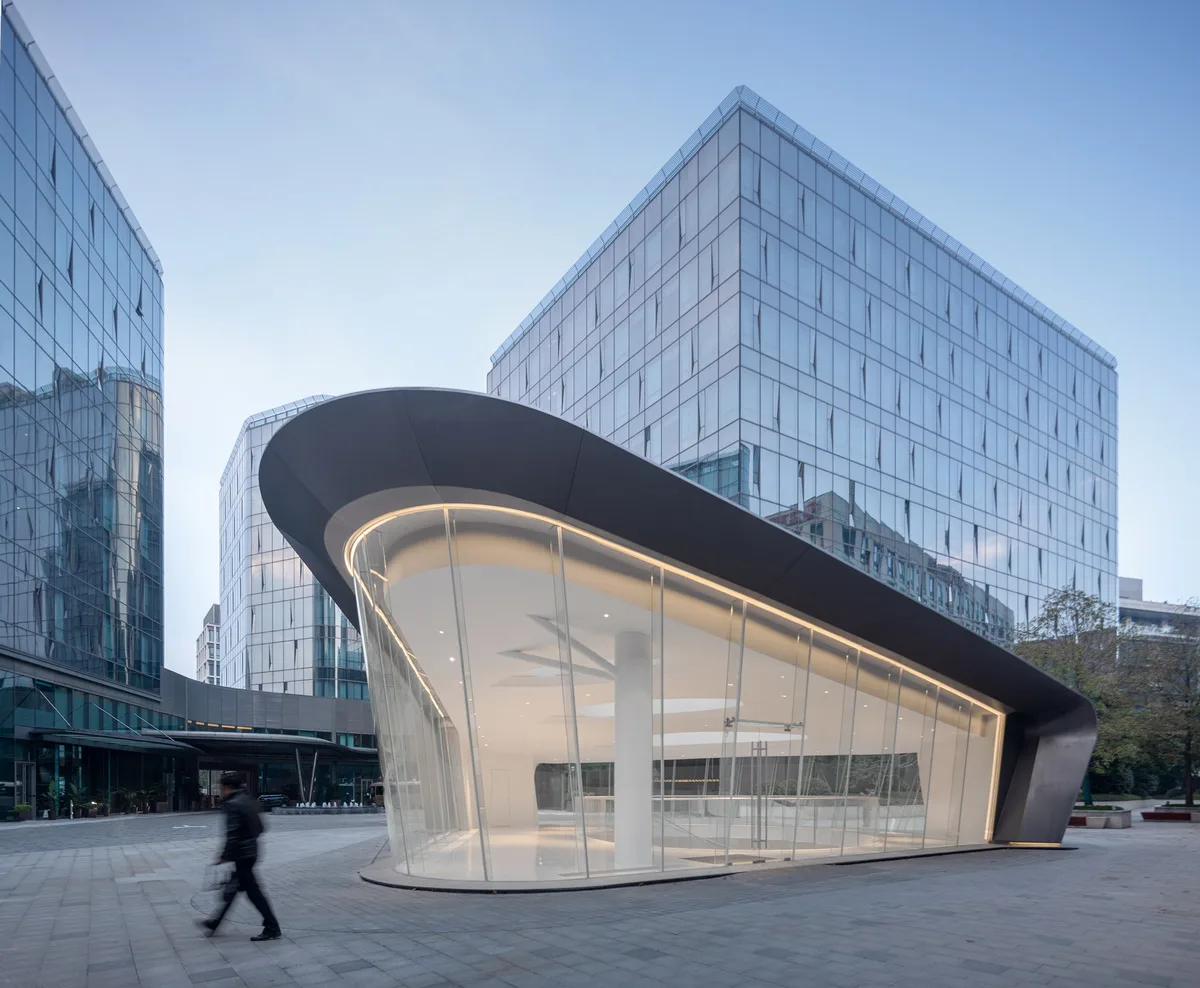
© Architecture Photography
02
Space: The ‘Room’ as a Cave
© Architecture Photography
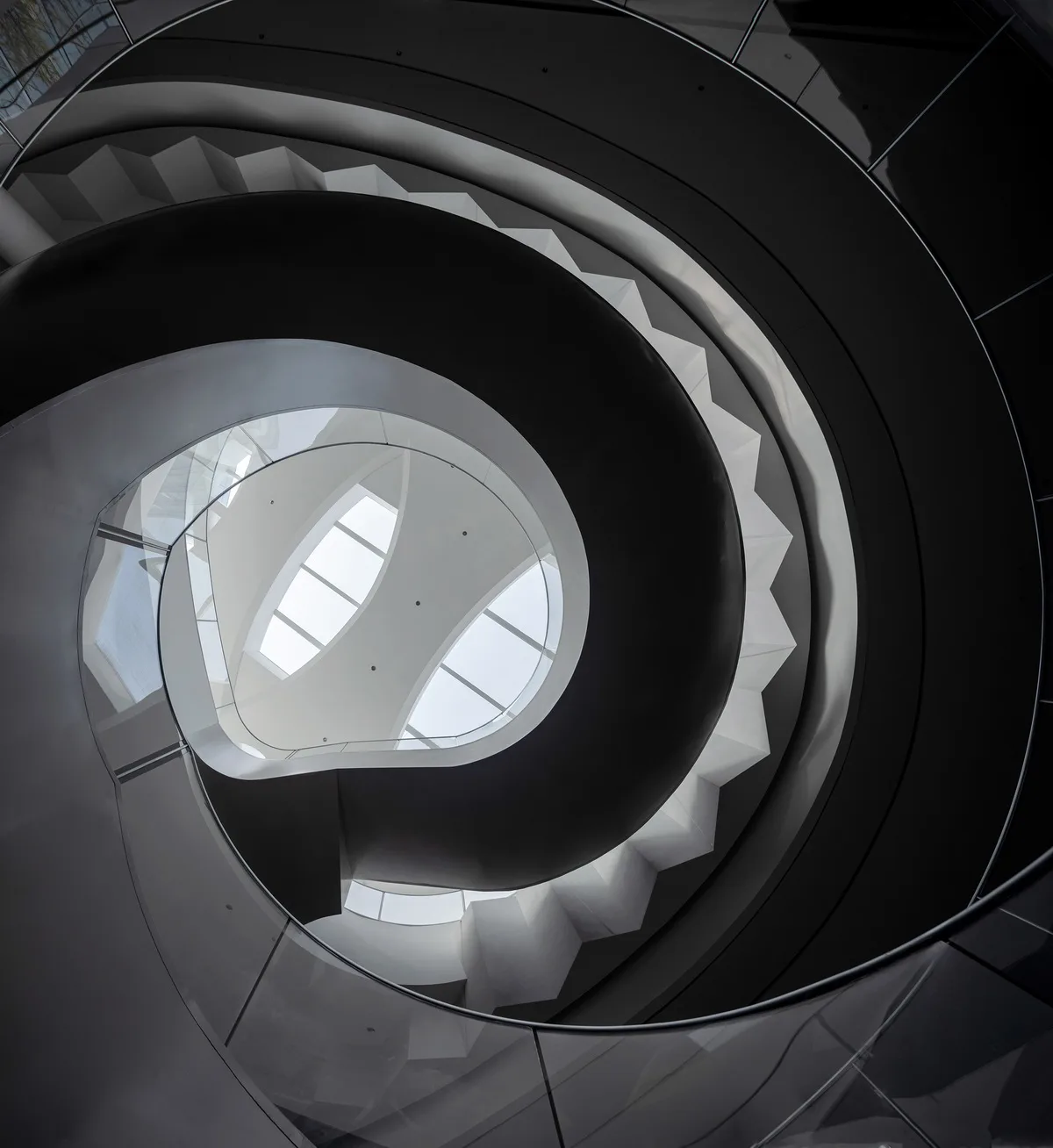
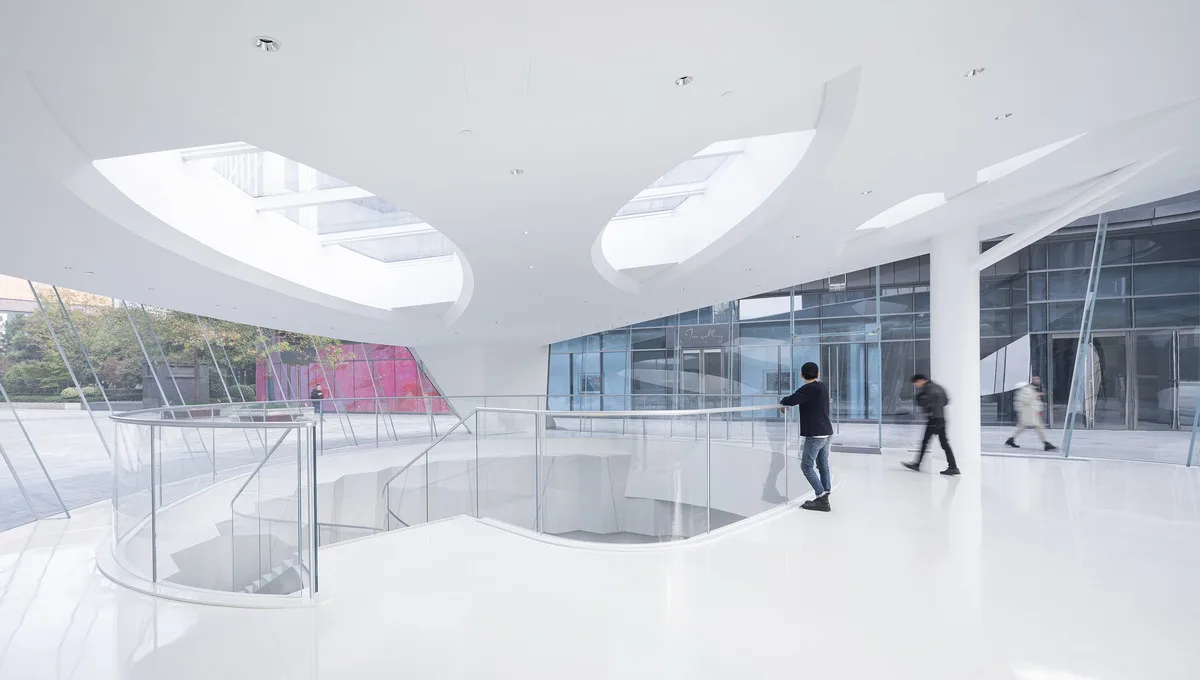
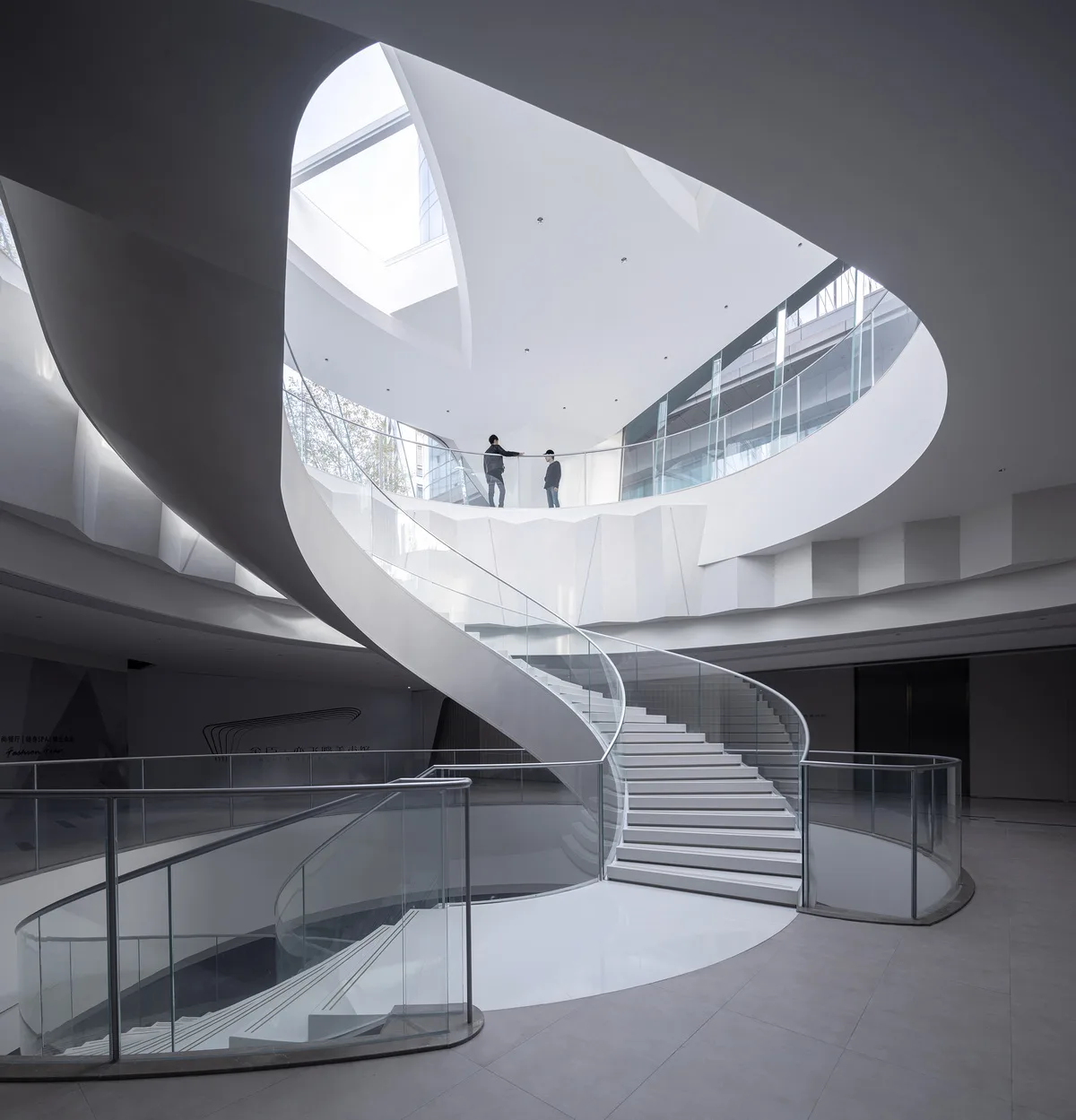
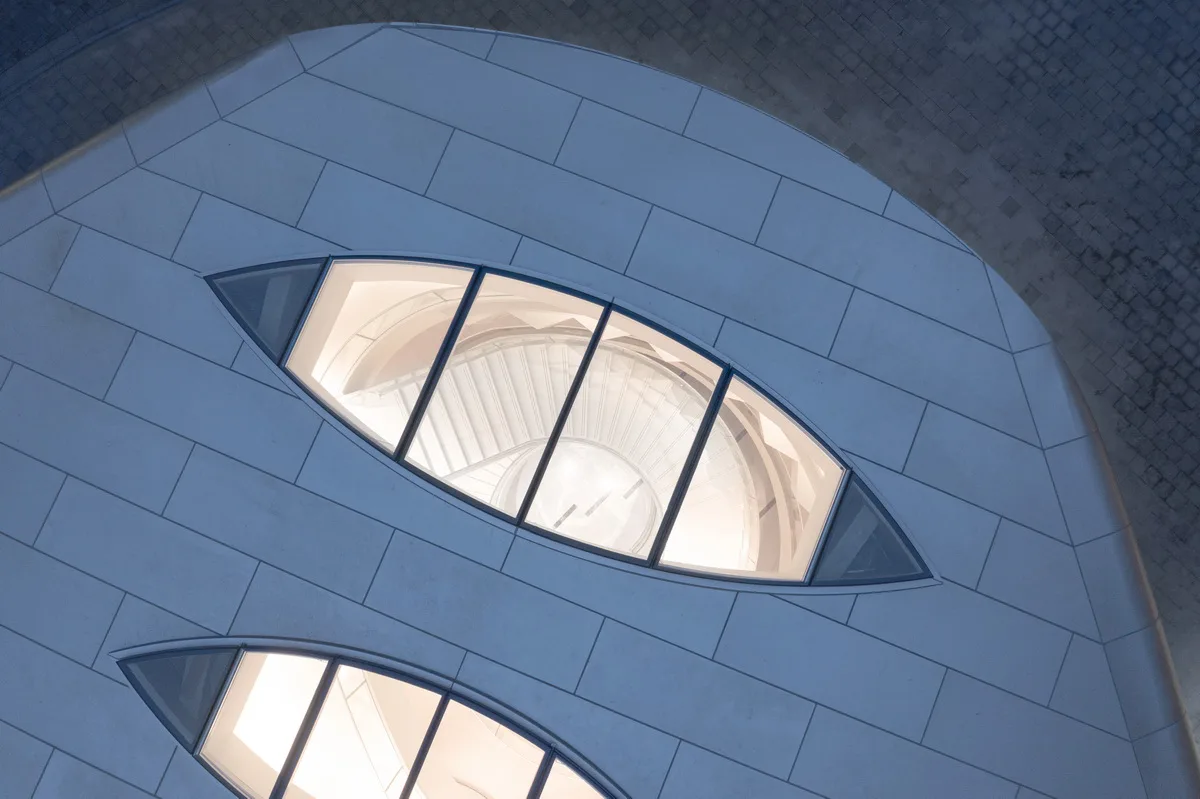
Inside the building, the skylight gradually brightens the interior as the metal roof slopes downward and the glass curtain wall folds inward. This design seamlessly brings the outdoor spatial experience inside, creating a dynamic spatial flow that guides visitors toward the spiral staircase and fosters an engaging journey through the space.
© Architecture Photography
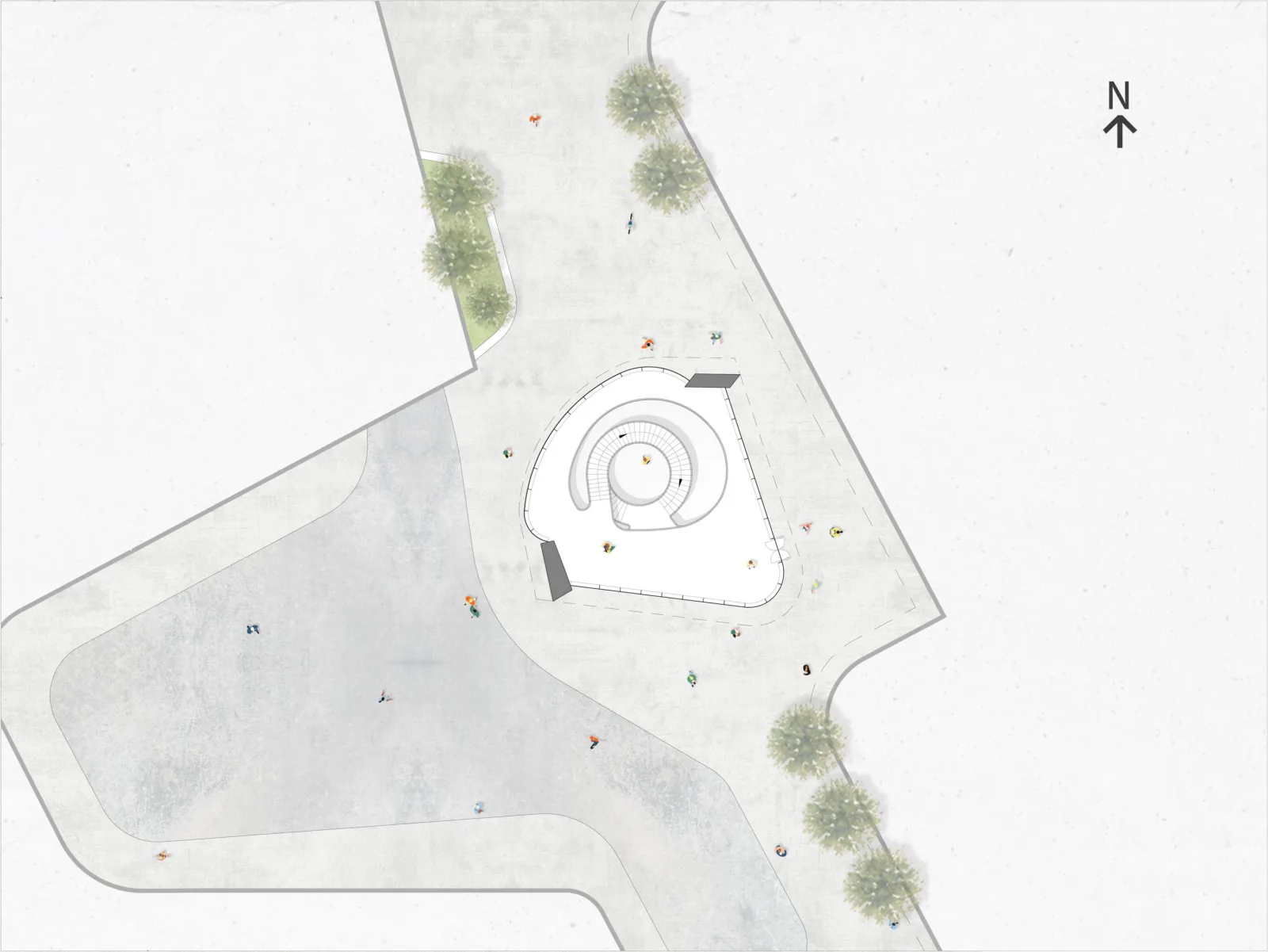
△ First Floor Plan
The flowing integration of roof and walls reflects a deep study of irregular surfaces and material construction. The tension between the symmetrical roof layout and the asymmetrical original building structure added complexity. Ultimately, the design team concealed structural columns within the metal roofing system, dissolving the spatial boundaries between walls, roof, and supports, transforming the building into a “transparent cave.”
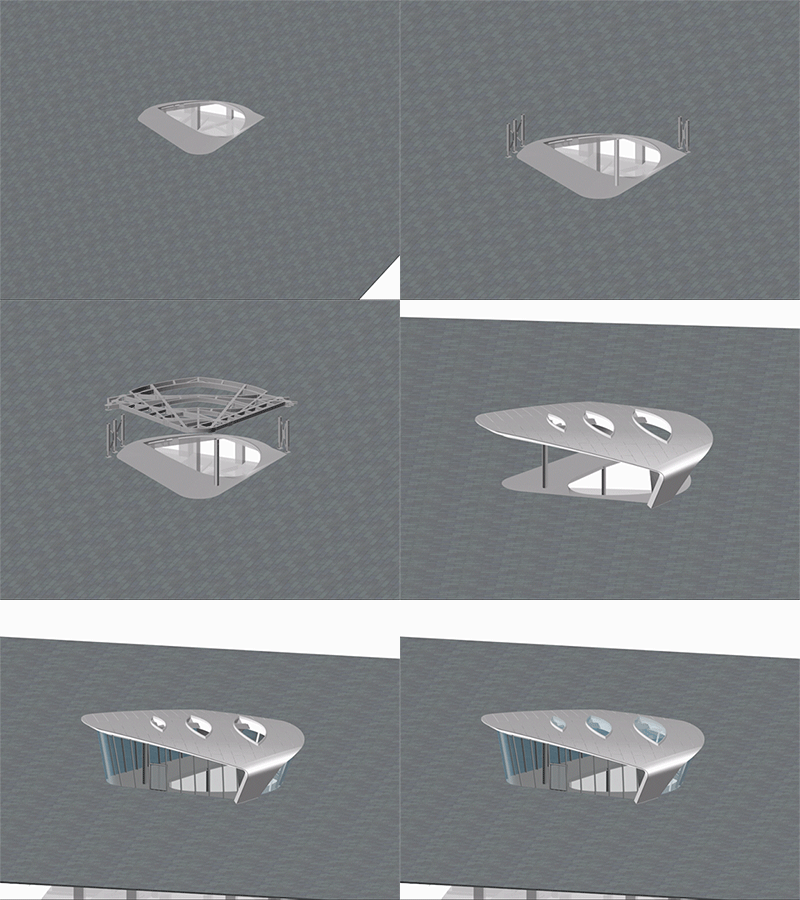
△ Structural Decomposition Diagram
© Architecture Photography
03
Streamline: ‘Line’ Symbolizing Flowing Water
© Architecture Photography
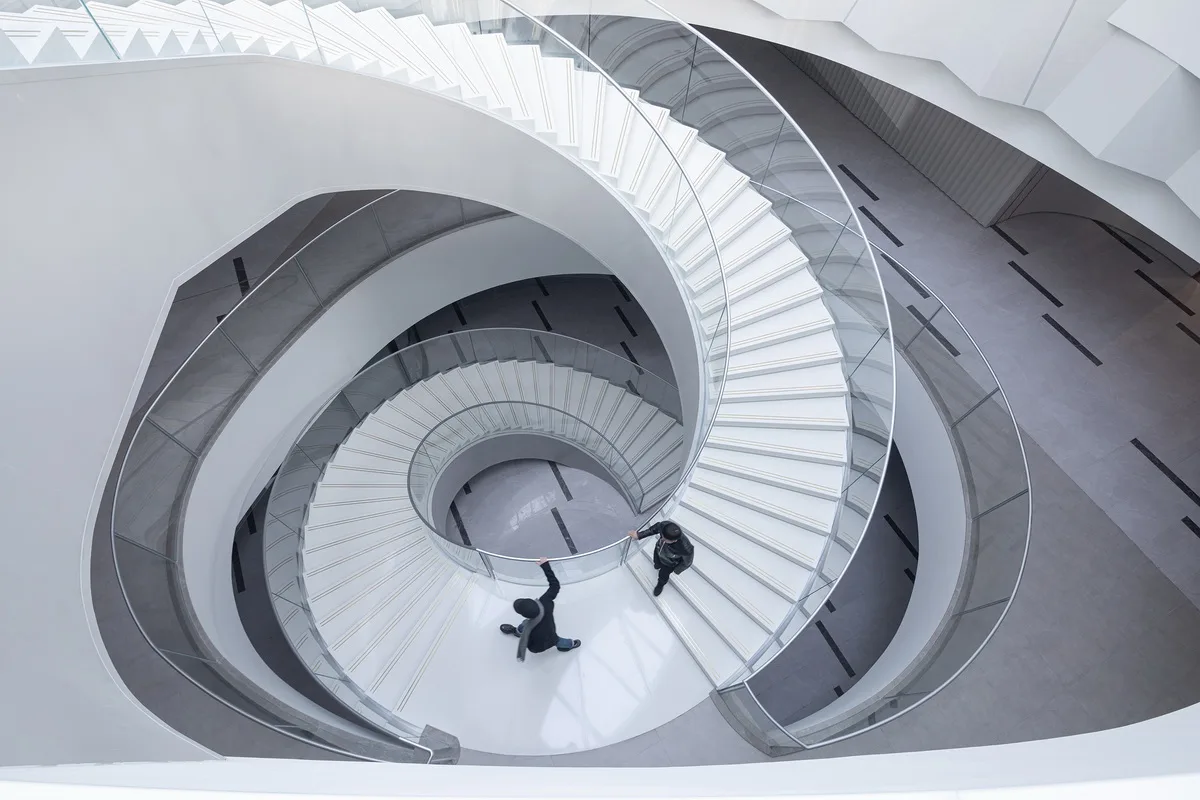
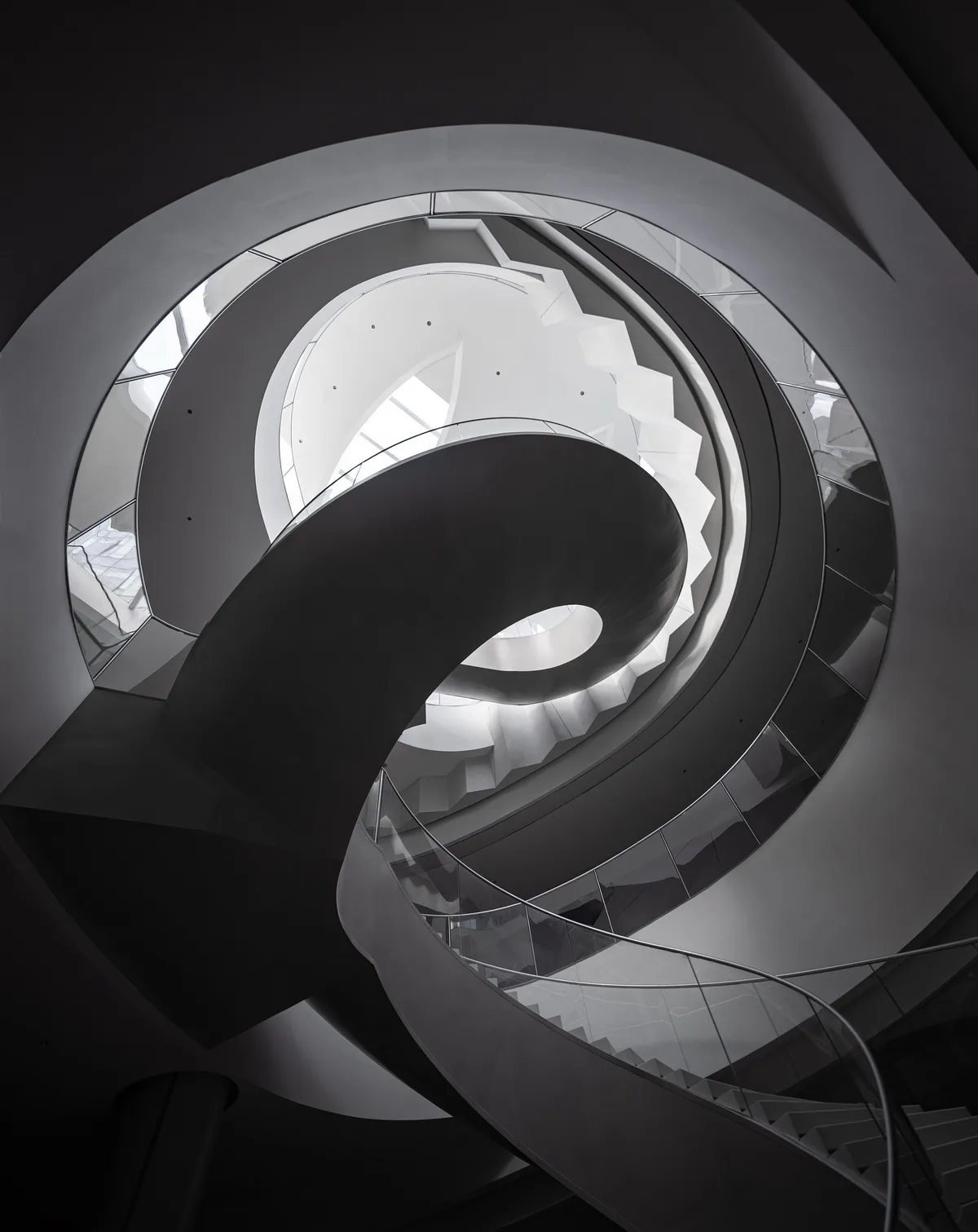
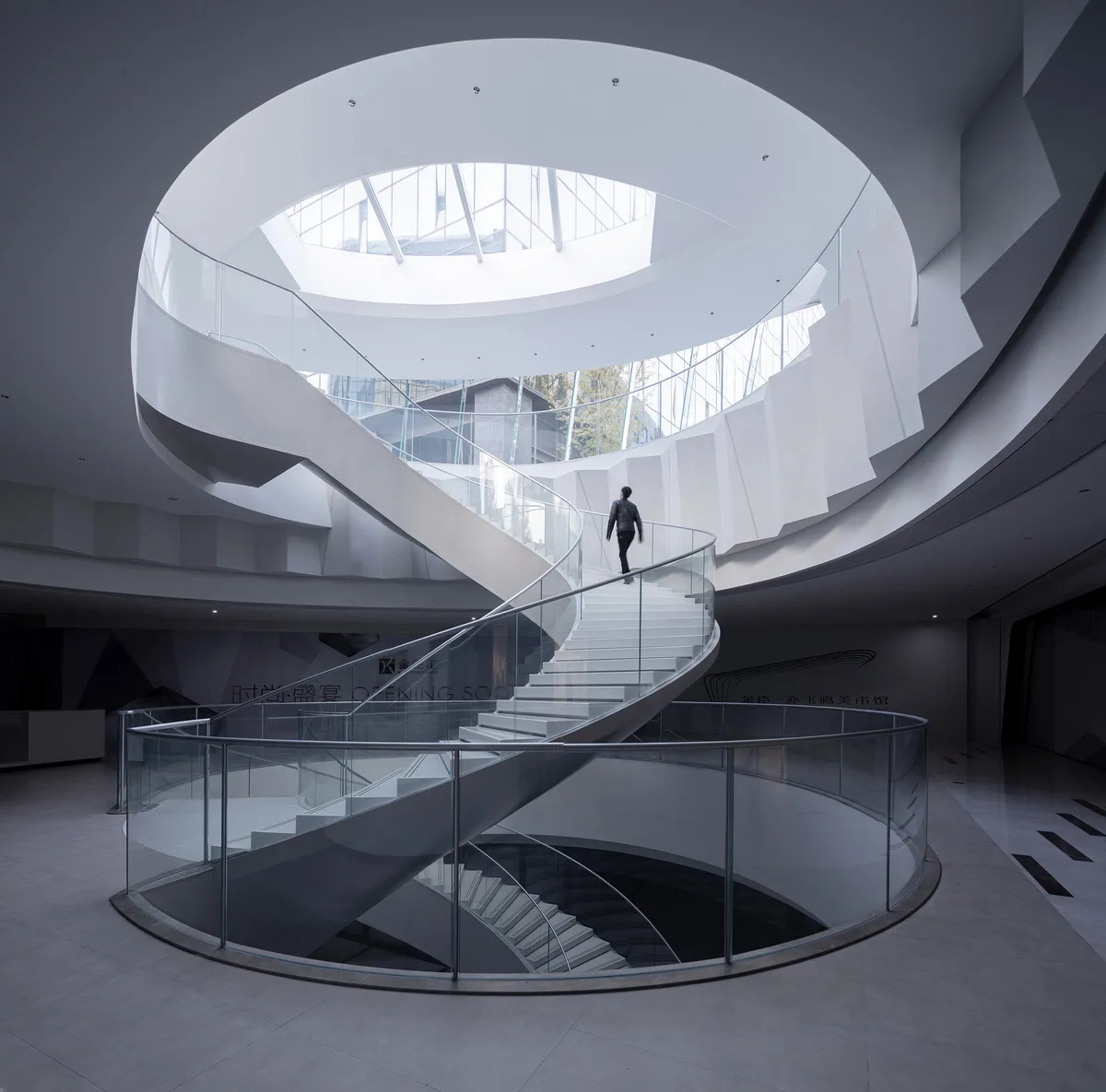
The 540-degree large spiral staircase, paired with ultra-thin handrails, fully expresses a sense of dynamic movement. This design minimizes wear on the concept’s spatial sequence, from “above ground” to “underground.” Descending the spiral staircase transforms the visitor’s visual experience into a physical journey, directing focus toward the art exhibition areas.
© Architecture Photography
The spiral staircase, a new addition to the site, was integrated lightly and smoothly. It features 650x550x25mm box-section rotating beams on the inner circle, with cantilever beams every five steps extending from the main steel beam. The cantilever ends connect via square steel pipes. Stress analysis using finite element methods and composite stress verification based on material mechanics ensured structural integrity.
Thanks to precise engineering, the spiral staircase was constructed seamlessly, allowing the building’s flow to feel as smooth as flowing water.
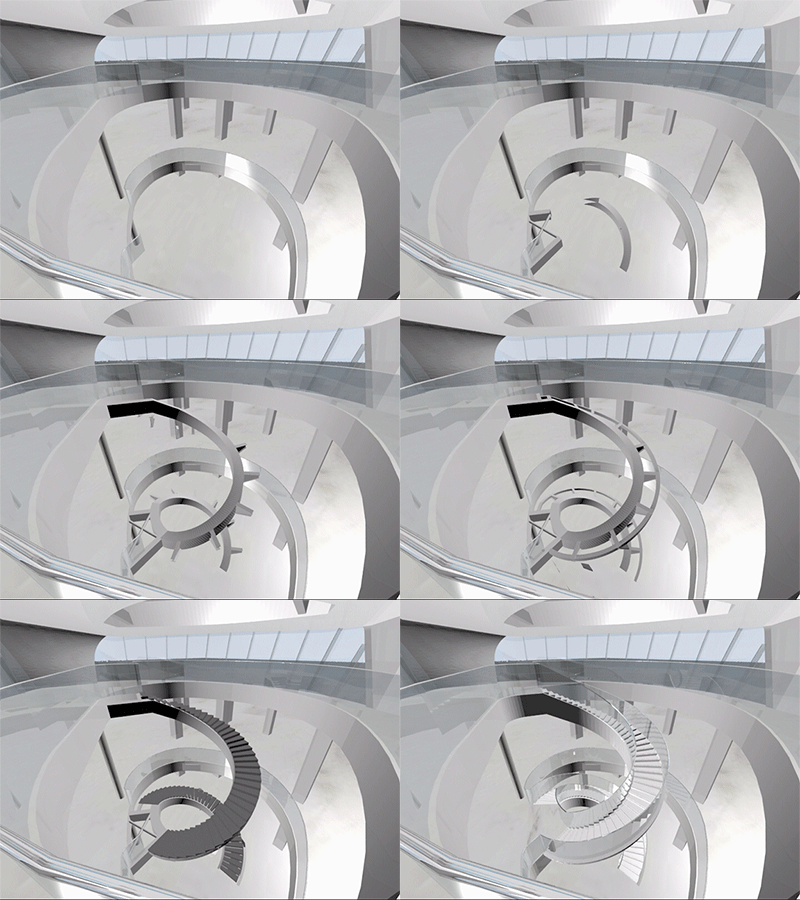
△ Spiral Staircase Structural Decomposition Diagram
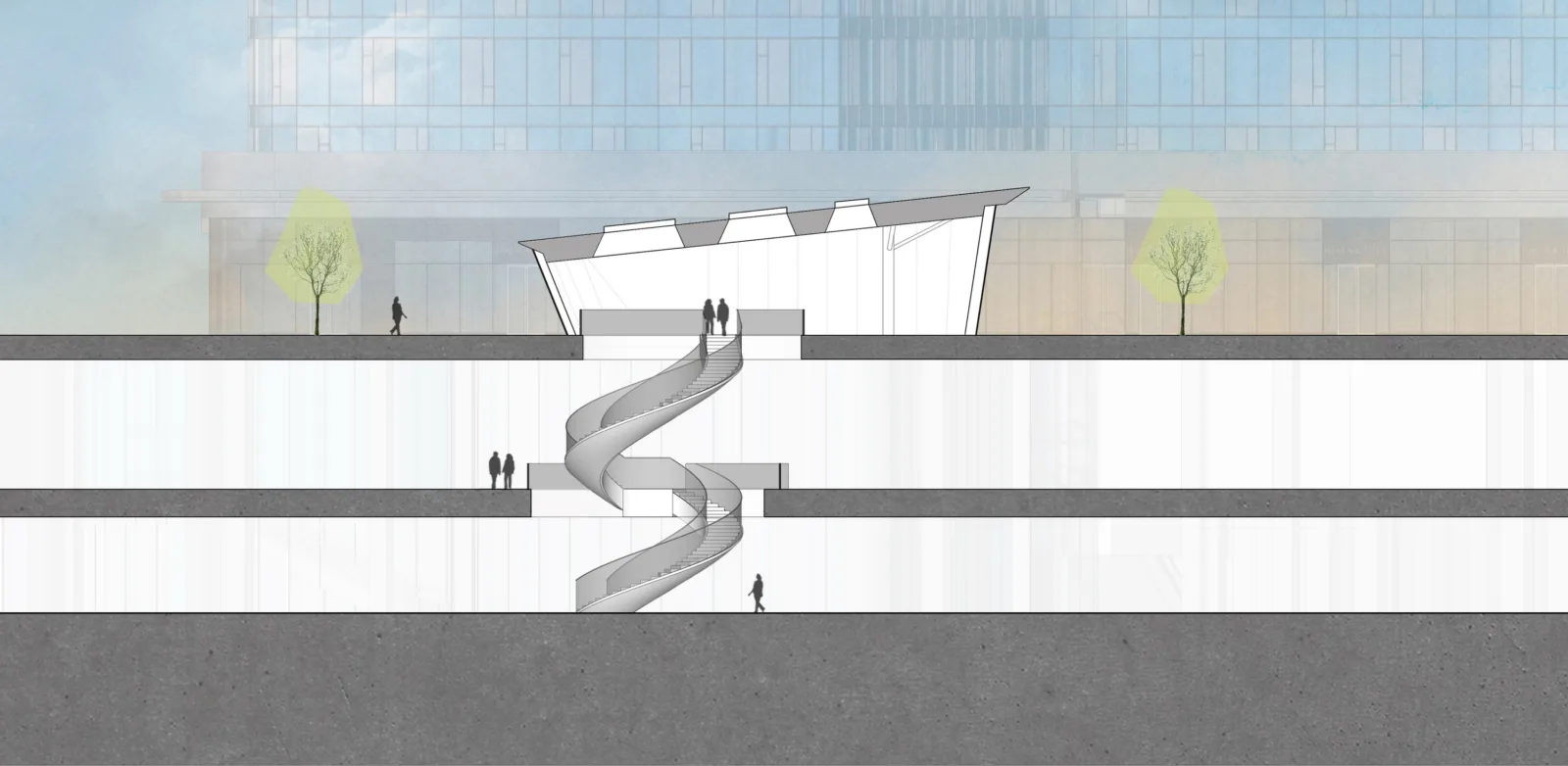
△ Section Diagram
With the guidance and support of the Minhang District Government, Hongqiao Business District Management Committee, and various societal sectors, the Shanghai Jinchen Yifei Ming Art Museum has taken shape. It not only hosts international contemporary art exhibitions but also offers public spaces for galleries, forums, art training, and exchanges.
Upon opening, the museum welcomed the “Rebirth – Shanghai Contemporary Art Exhibition,” featuring six renowned Shanghai contemporary artists: Chen Yiming, Sun Liang, Yu Qiping, Mou Huan, Shi Yong, and Xue Song. Each artist presented emotional narratives and reflections on the unique challenges of 2020, inspiring visitors to contemplate humanity’s future in the post-pandemic era. This exhibition embodies a profound reflection and symbolizes a process of cultural “rebirth,” aligning with the museum’s vision.
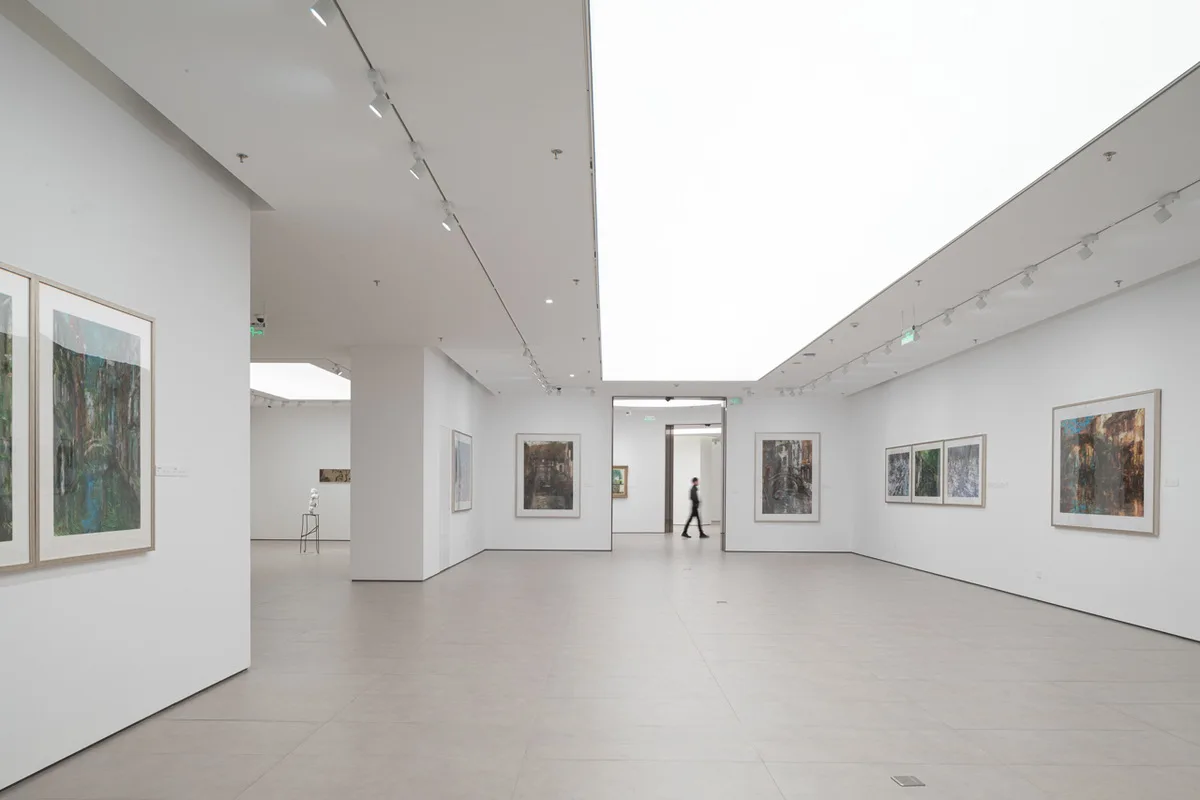
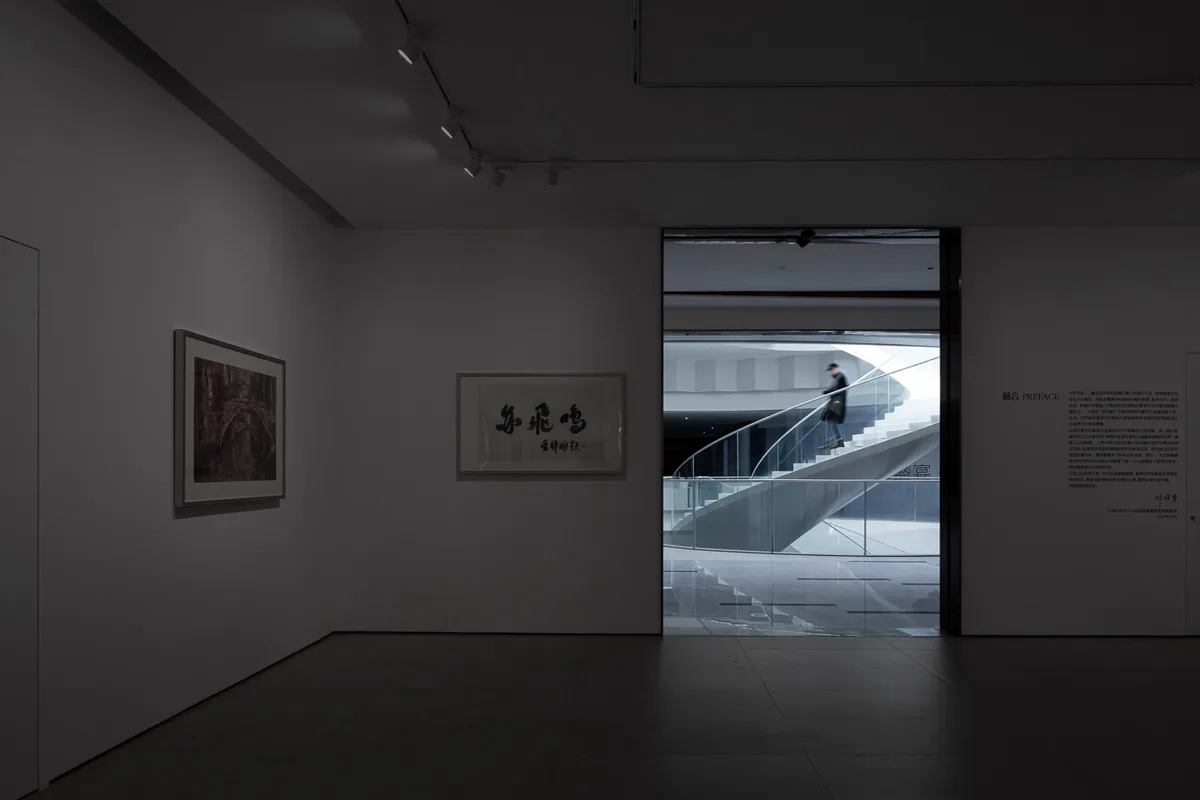
© Architecture Photography
Within the large-scale urban commercial landscape, the Shanghai Jinchen Yifei Ming Art Museum represents a form of “rebirth.” Though modest in scale, it boldly challenges the orderly city grid and redefines artistic space within traditional commercial architecture. From concept through construction, the museum embodies an unconventional design philosophy and tells a compelling architectural story.
© Architecture Photography
Project Information
Project Name: Shanghai Jinchen Yifei Ming Art Museum
Project Type: Urban Renewal
Location: No. 88 Yonghong Road, Minhang District, Shanghai
Building Area: 2,871 square meters
Design Period: January 2020 – July 2020
Construction Period: July 2020 – November 2020
Developer: Shanghai Jinchen Culture Media Co., Ltd
Design & Construction Drawing: Shanghai Sanyi Architectural Design Co., Ltd
Lead Architects: Jia Zhengyang, Cao Dawei
Project Leader: Yang Hui
Design Team: Gao Bohao, Yu Jiayu, Wang Jun, Feng Ruoqian, You Dengyang, Wang Ying, Lv Jiajun, Meng Minghui
Architectural Design: Yang Hui, Lu Linlin
Structural Design: Chen Zhuo
Mechanical & Electrical Design: Mao Yaqian, Wu Ling, Feng Xinzhou
Landscape Design: Wang Can, Zheng Zhicheng, Zhang Haoran, Yang Hao, Xie Yigong, Guo Yuqi
BIM Design: Wei Yinjun, Yu Zhijing, Jiang Zhaokang
Technical Support: Wang Xiaohong, Hu Wenxiao, Jiang Hong, Chen Ying, Ju Yongjian
Cooperative Partners
Exhibition Hall Interior Design: HWCD
Curtain Wall Design: Shanghai Shouzheng Decoration Curtain Wall Decoration Engineering Co., Ltd
Lighting Consultant: HDA Handu Lighting
Construction Unit: Shanghai Kangye Building Decoration Engineering Co., Ltd
Architectural Photography: Ziran Architectural Photography












Must log in before commenting!
Sign Up