
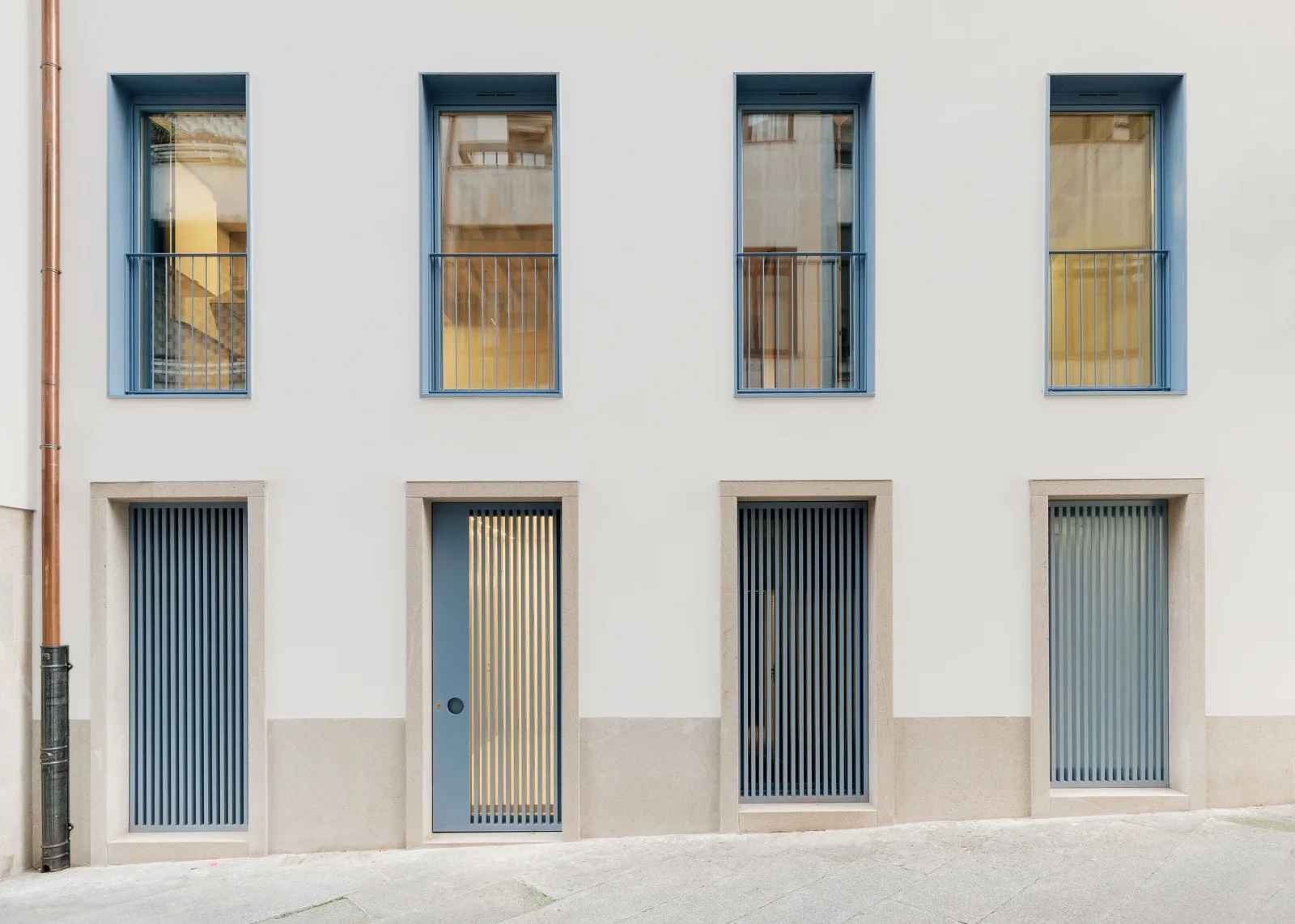
To support the revitalization of deteriorated historic centers in several towns across the Galicia Autonomous Region, the local public management agency launched a restoration project for this abandoned building located in the heart of Galicia’s historic district. The project is divided into two phases: first, acquiring property rights; second, renovating the building to convert it into rental housing accessible to the public.
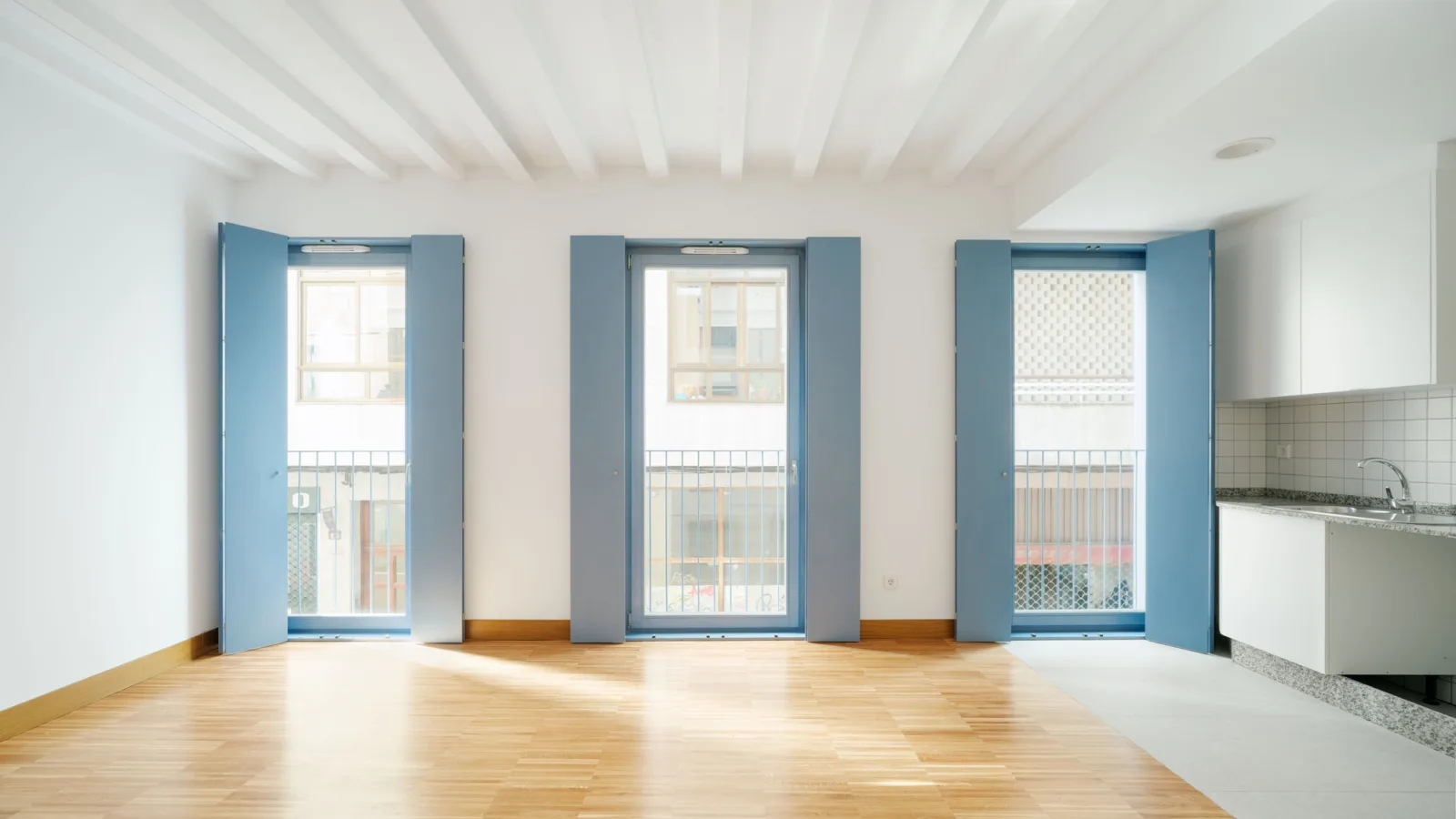
This restoration project is situated in the oldest and most rundown section of Ourense’s Historic Center.
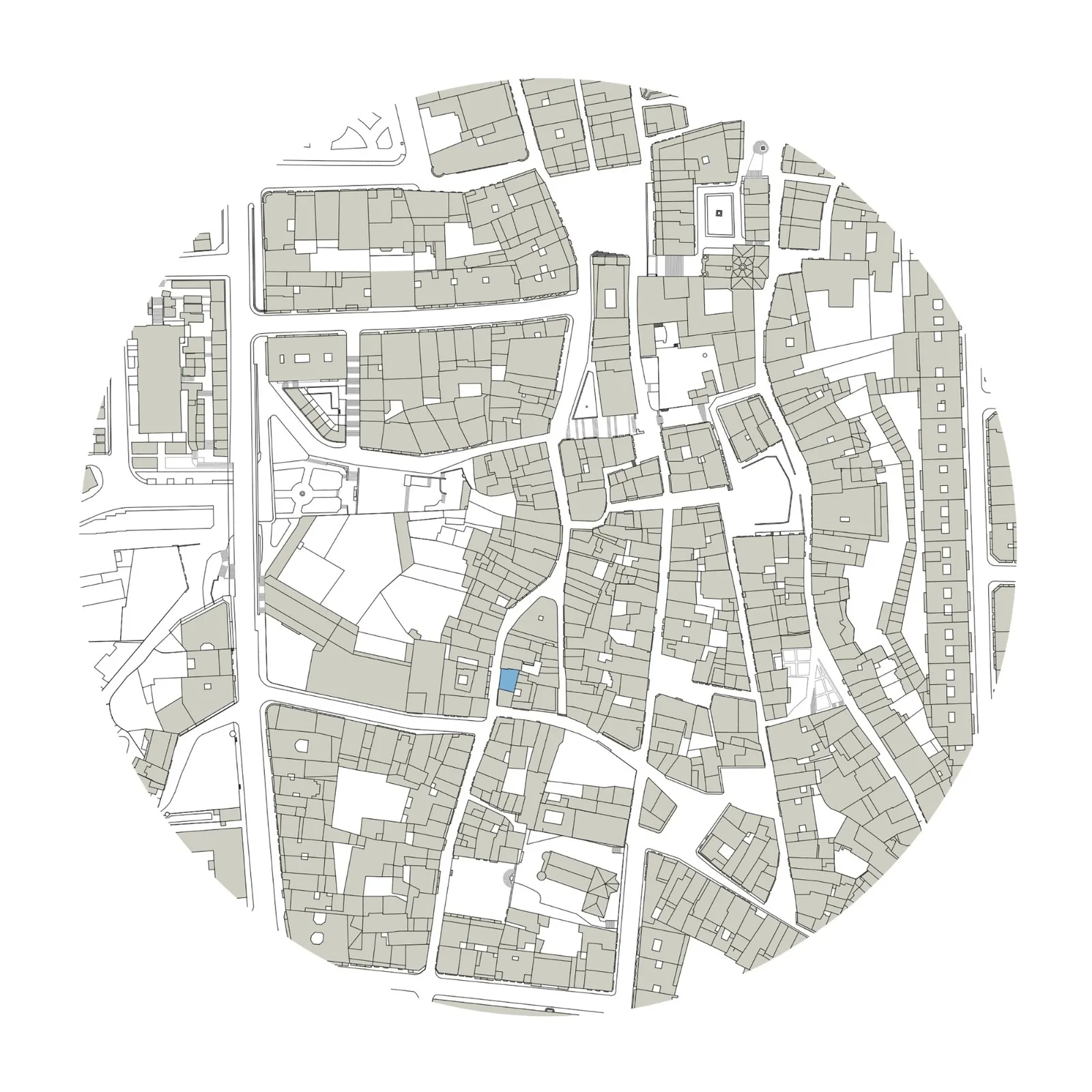
At the outset, we conducted a thorough assessment of the existing structures requiring repair. This included an analysis of the surrounding environment, building typology, and construction systems. We then evaluated the building’s preservation status and documented damage issues, ultimately proposing the most suitable restoration plan.
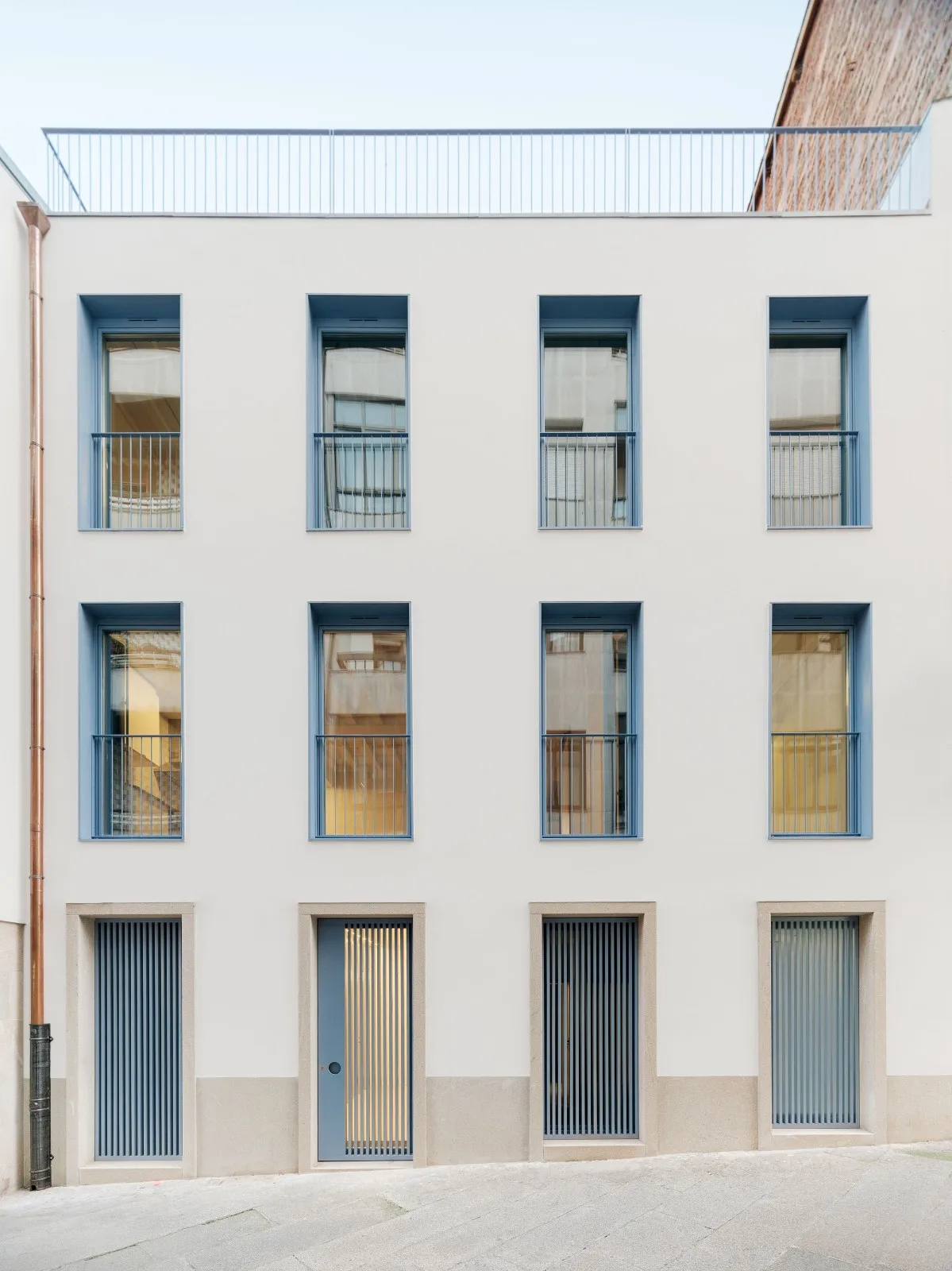
The building sits along Rúa do Vilar street in Ourense, with one side facing the street. Prior to renovation, it consisted of three floors: the ground floor housed commercial spaces, while the upper two floors contained one residential unit each.
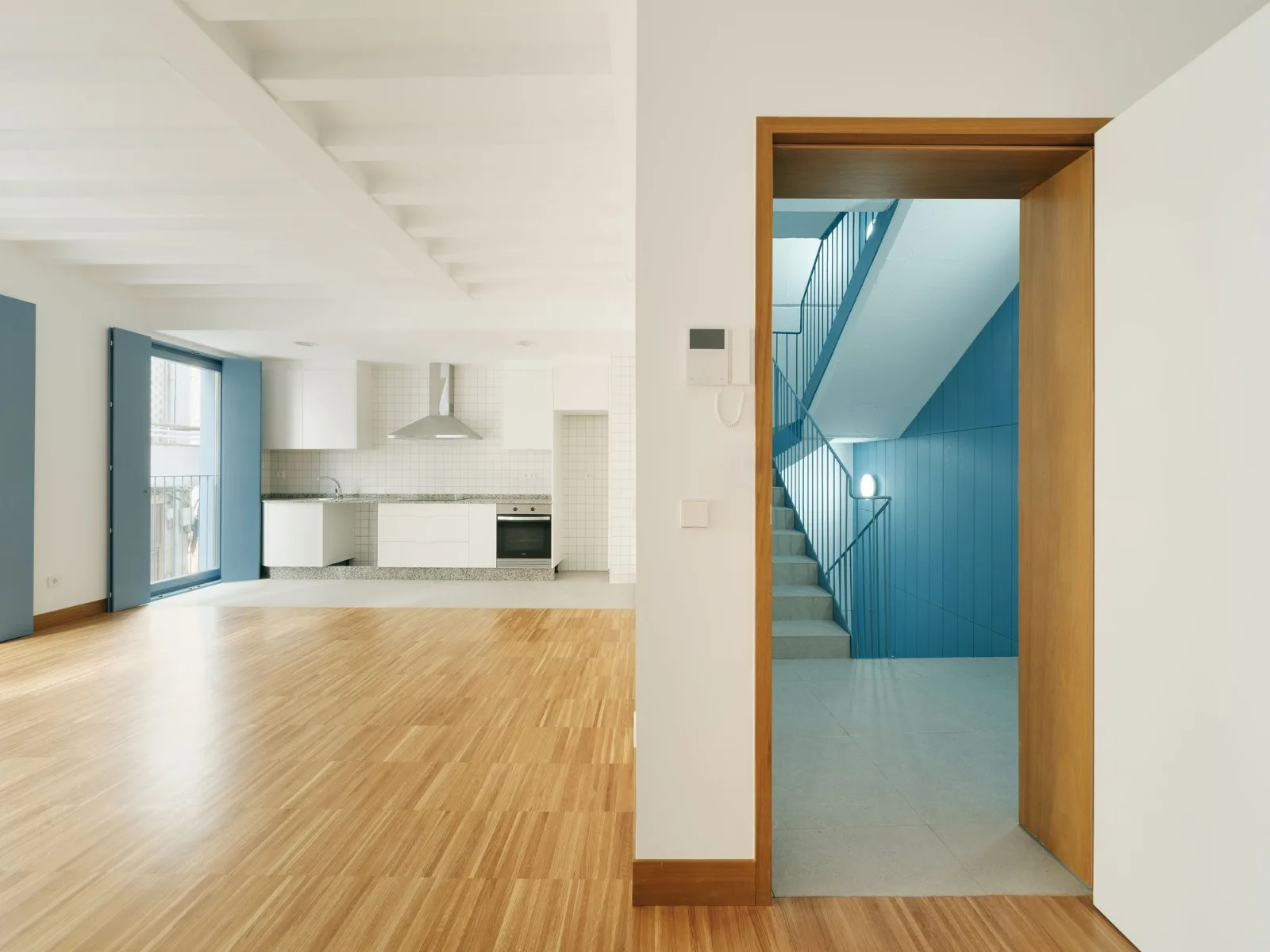
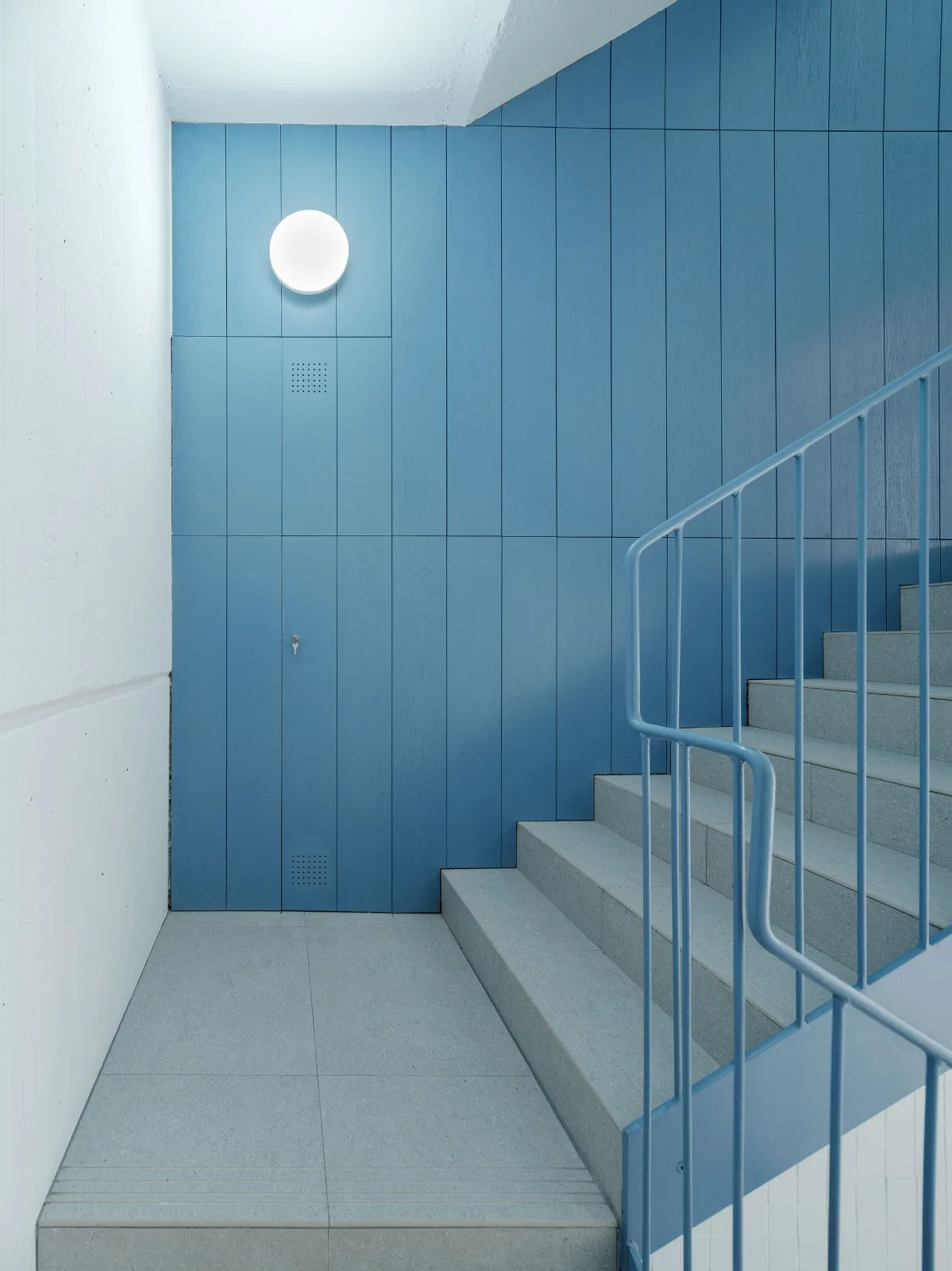
After preliminary studies on potential room layouts, we decided to design two apartments within the existing three-story structure and add an additional top floor. According to local urban planning regulations, the original facade must remain untouched, so the new top floor is set back three meters from the original facade.
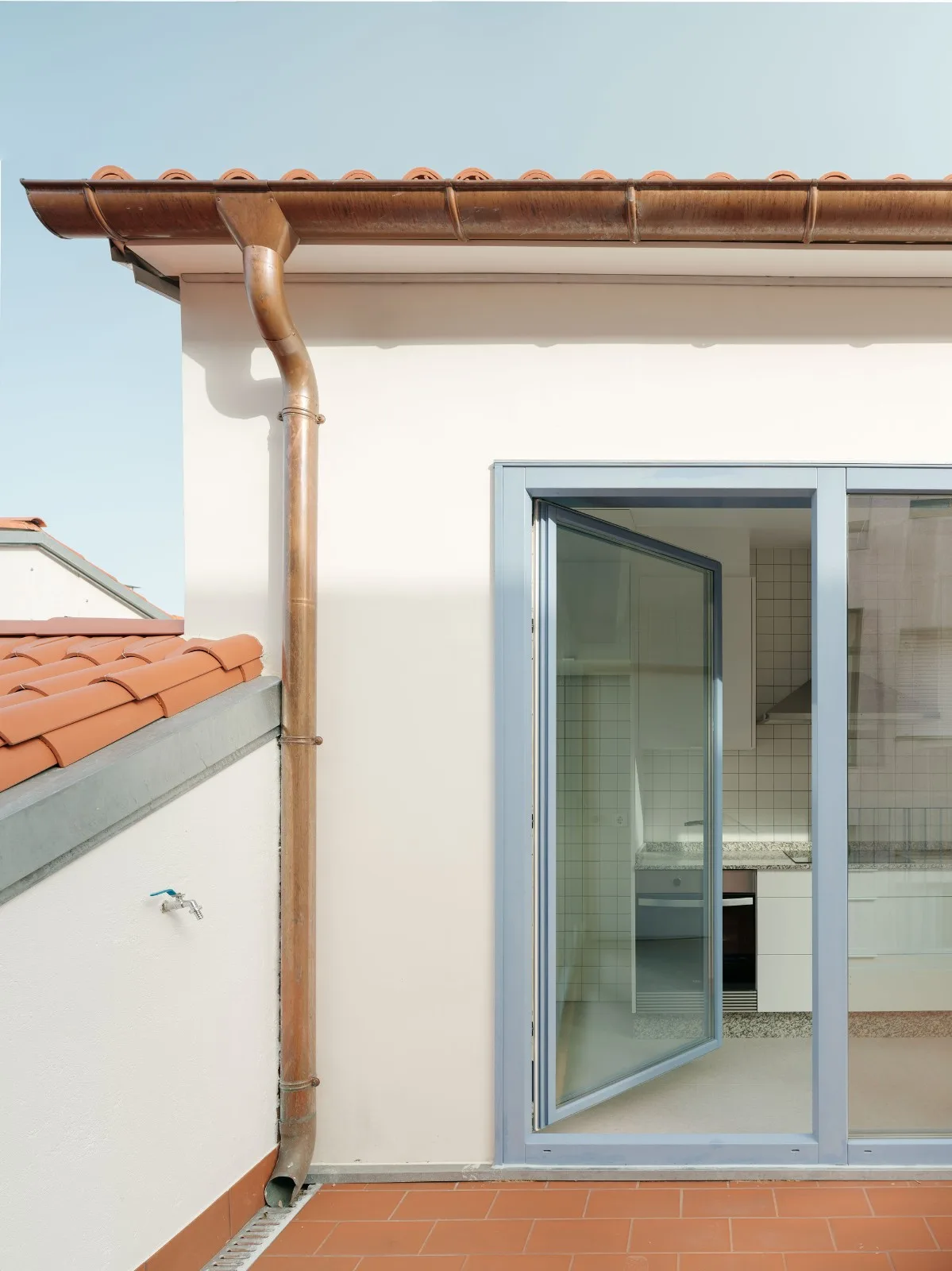
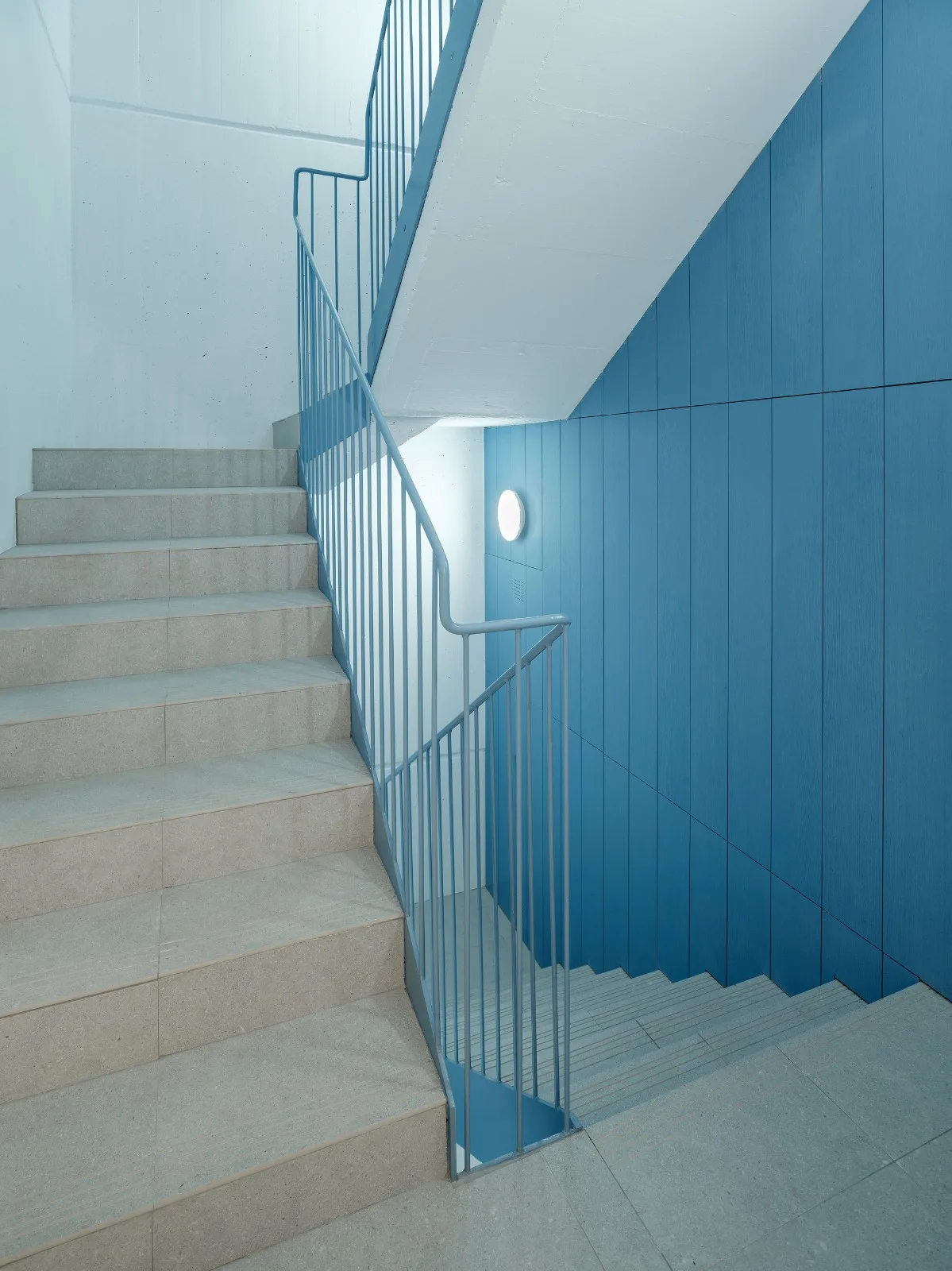
For the technical approach, we incorporated adjustable heating and cooling systems to enable precise control over the building’s energy consumption. Our strategy primarily focuses on renovating the building fabric, supplemented by efficient active energy systems.
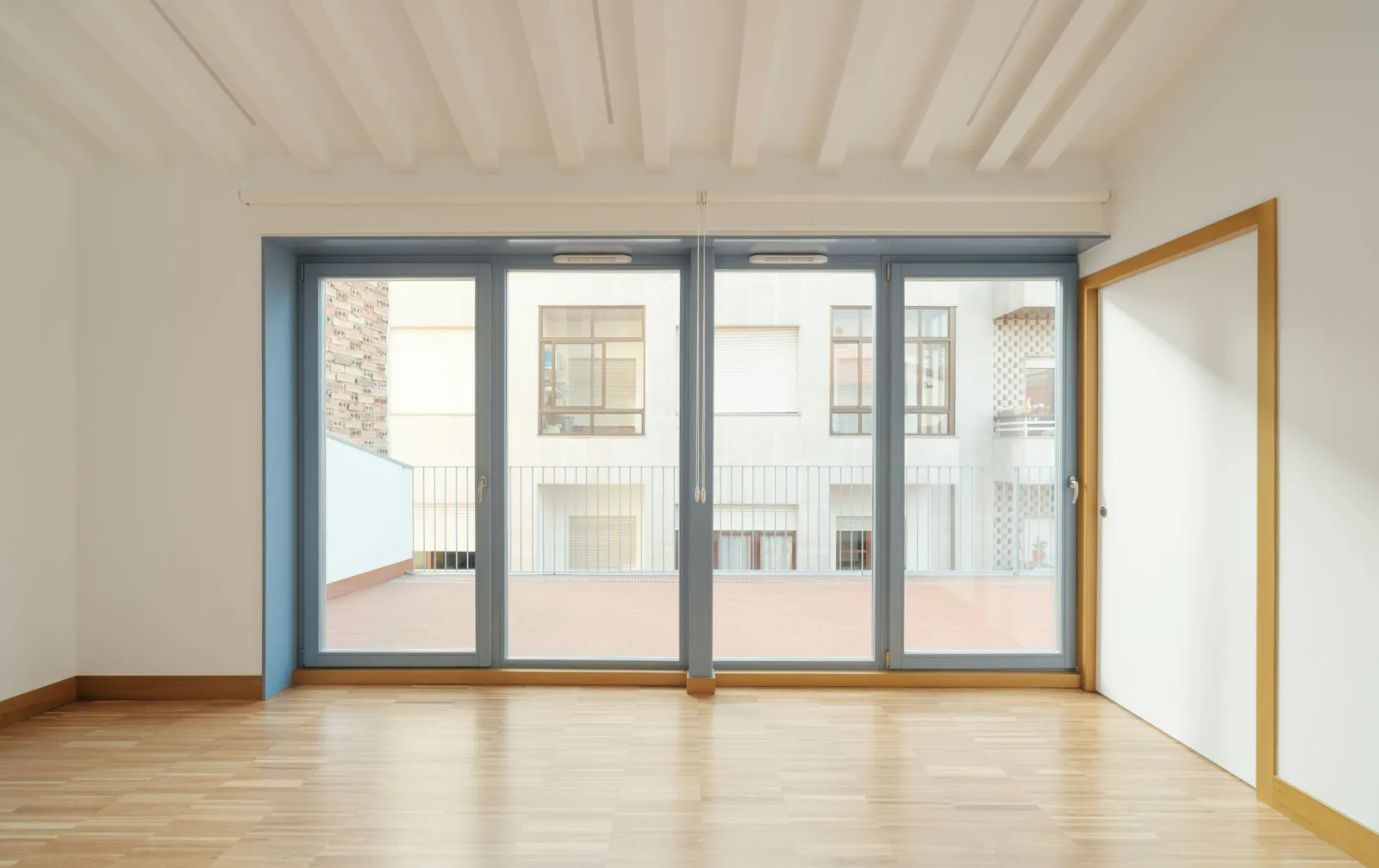
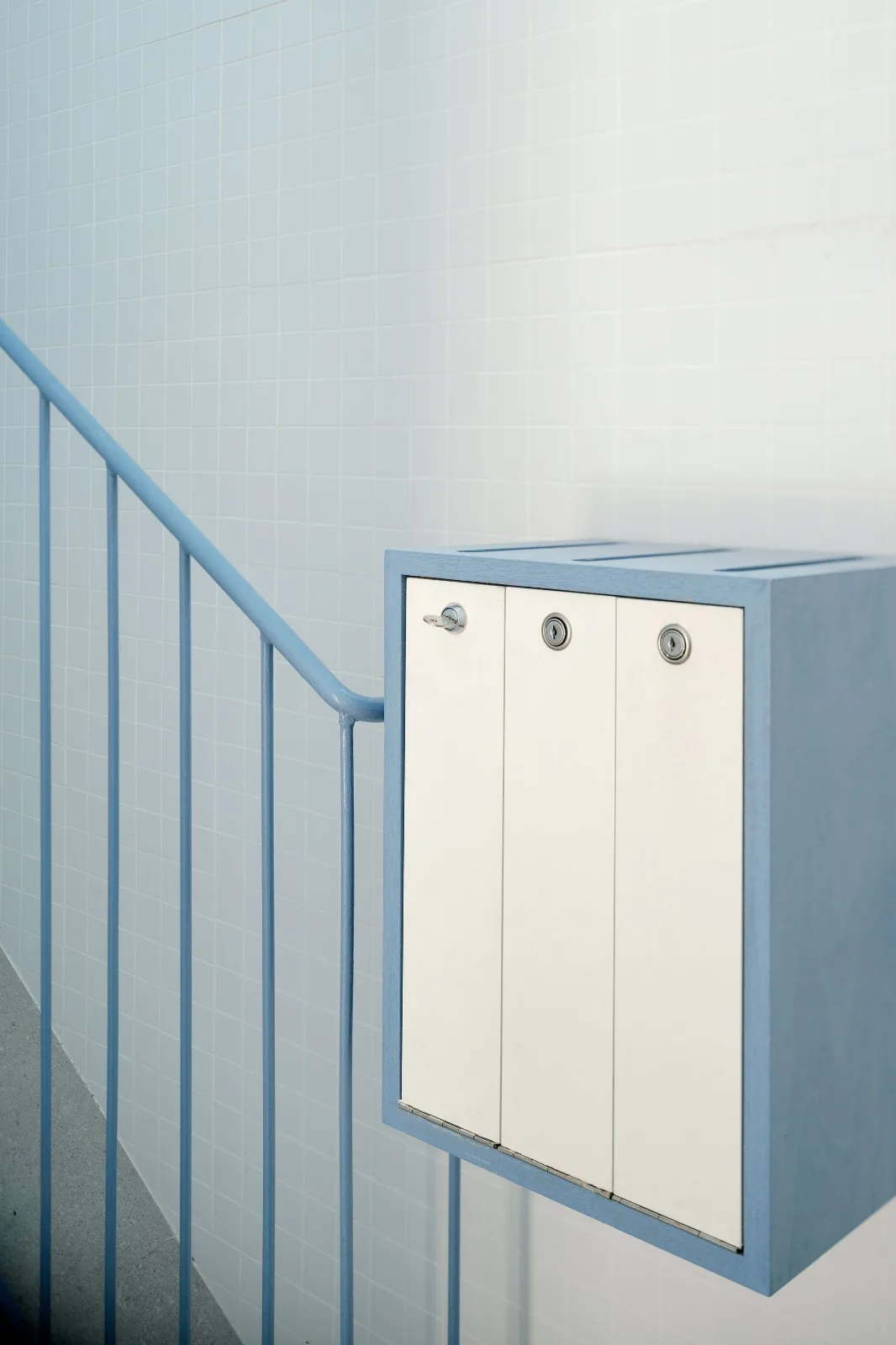
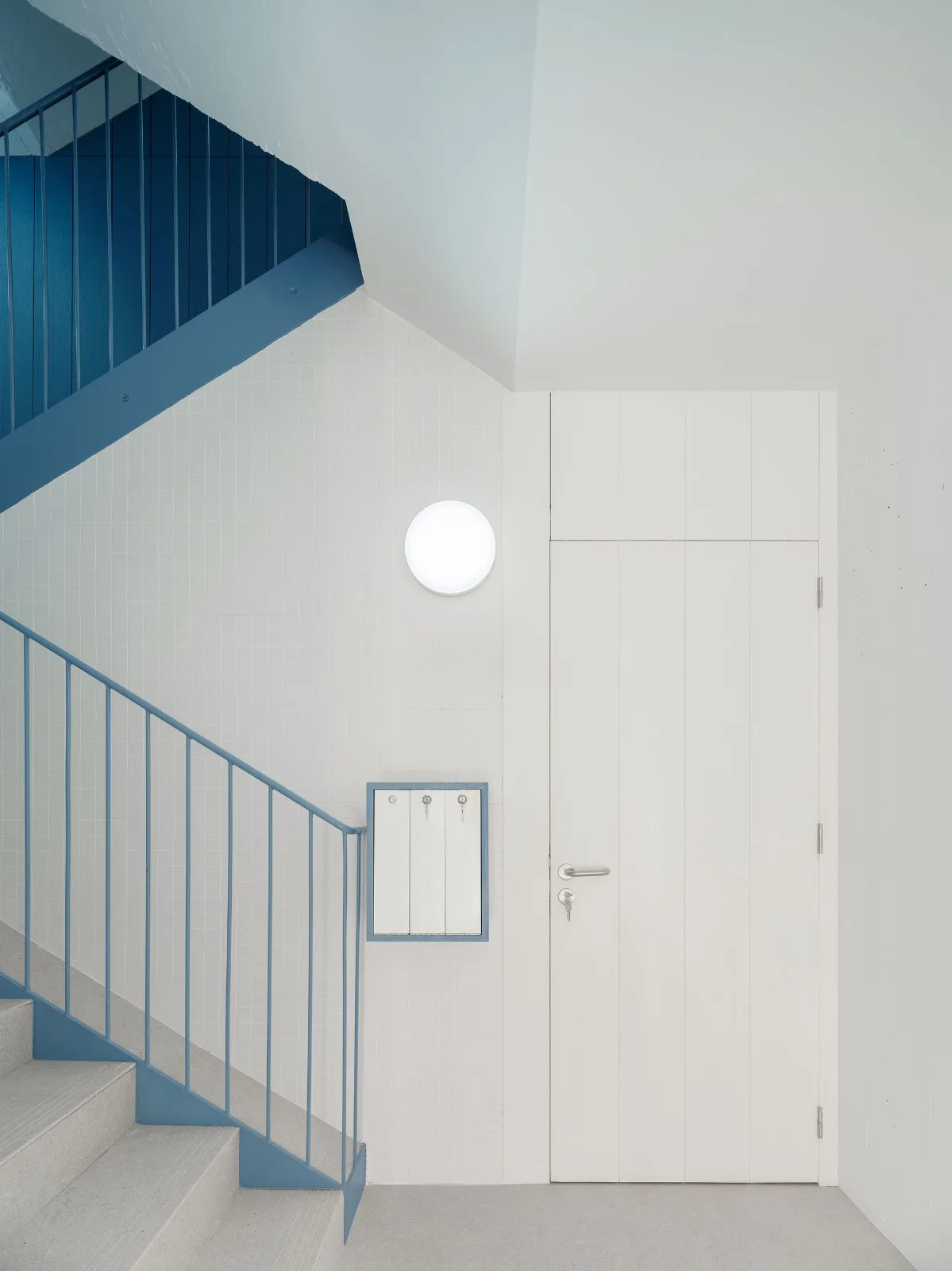
The ground floor houses corridors, public service areas, and support facilities for the two apartments, including storage, laundry, and drying rooms. The second floor contains a one-bedroom apartment, while the third and fourth floors each offer three-bedroom apartments.
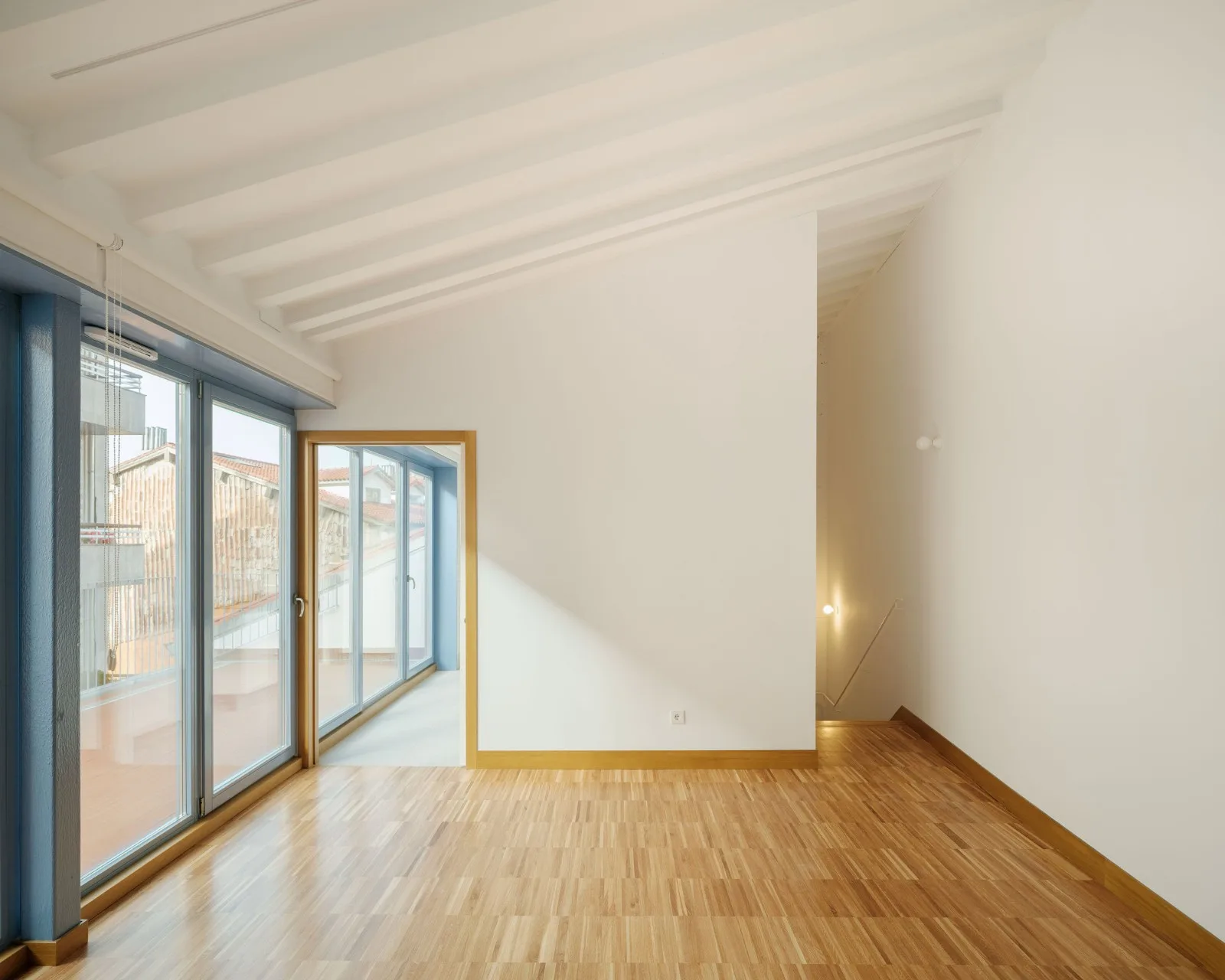
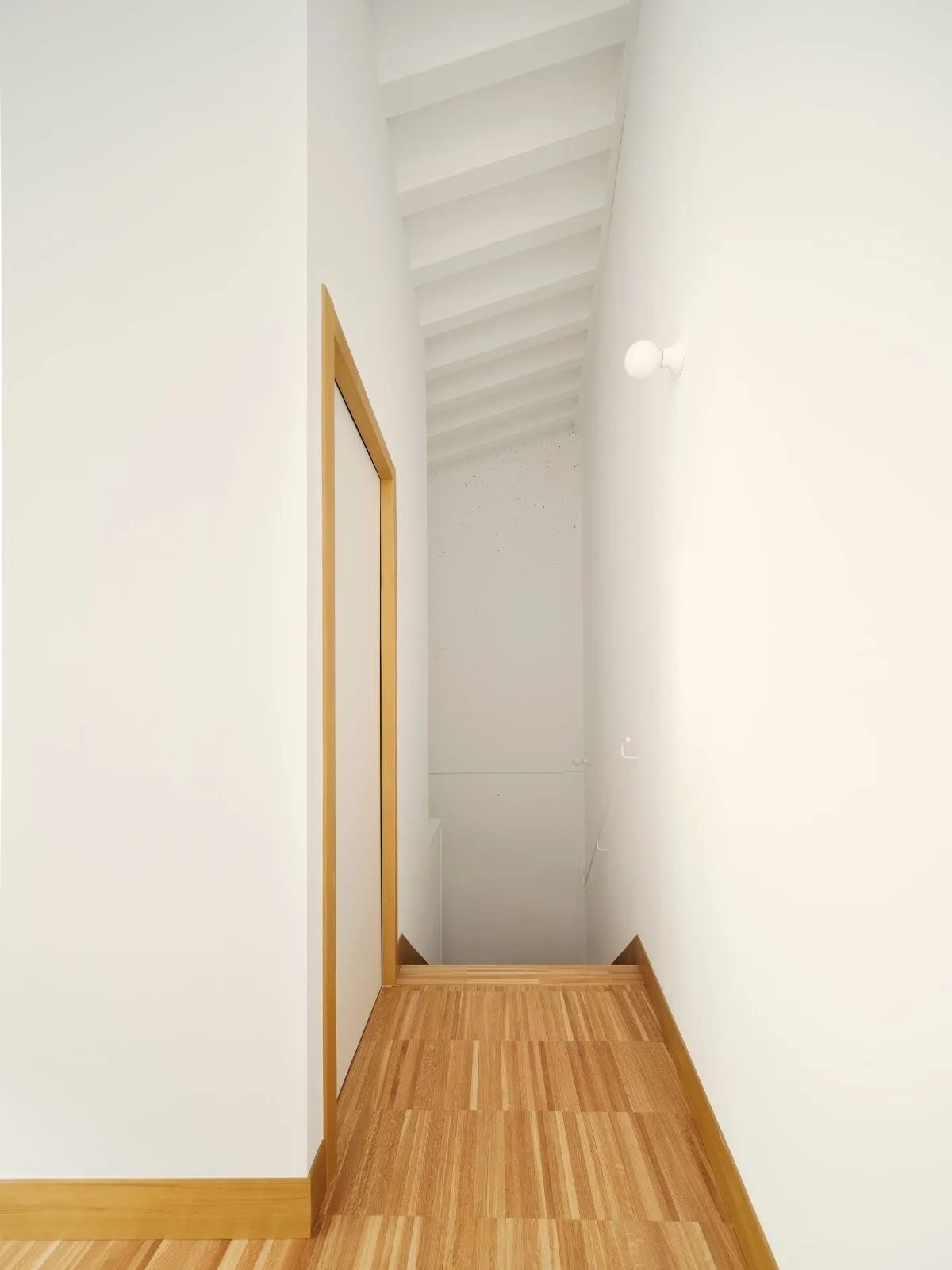
A key aspect of the construction plan is the use of traditional local materials. Pine wood is used for the main structure and lightweight framing, while chestnut wood is chosen for flooring. The building also features excellent thermal performance and airtightness, utilizing low-energy air heat devices, geothermal heating, and controlled mechanical ventilation systems.
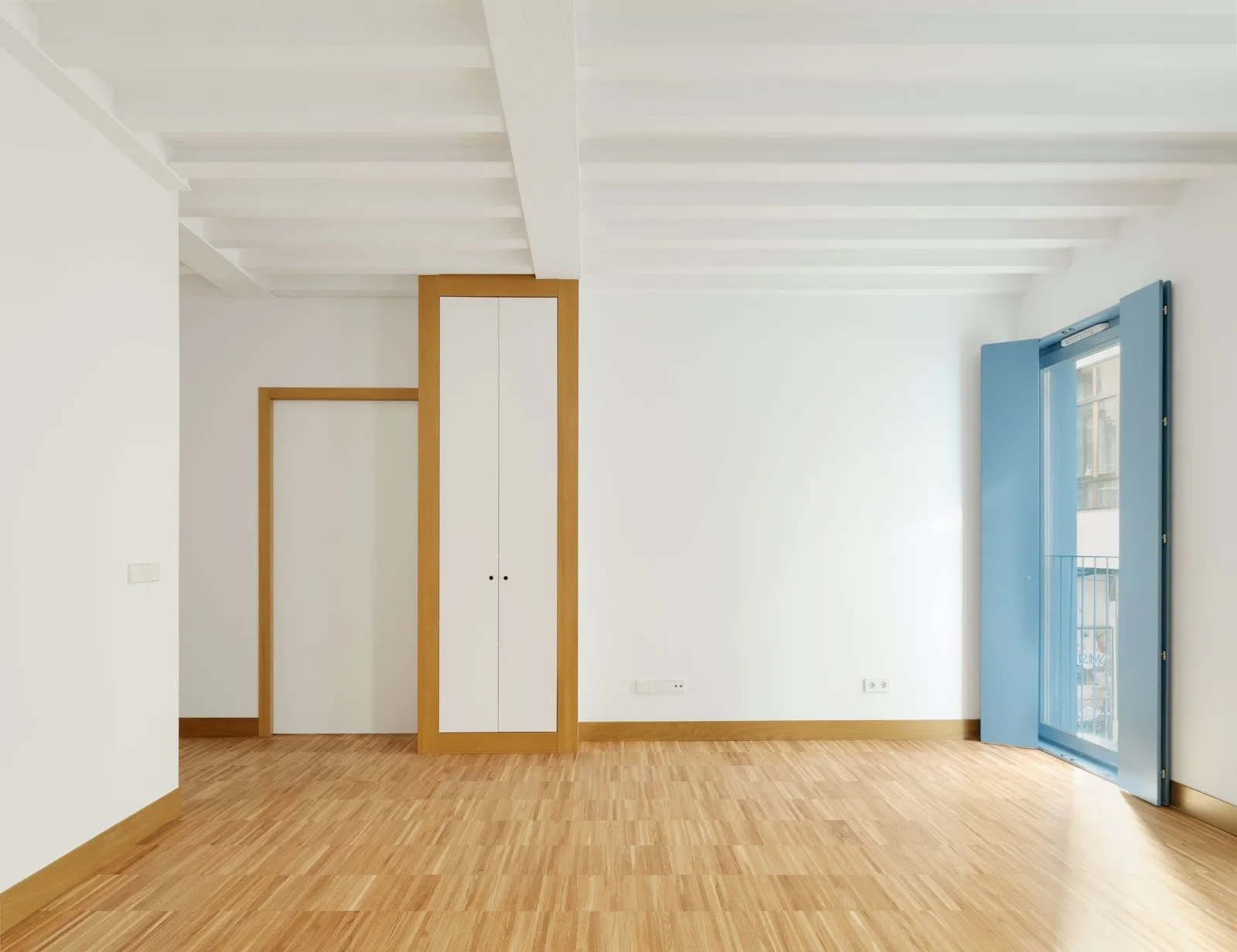
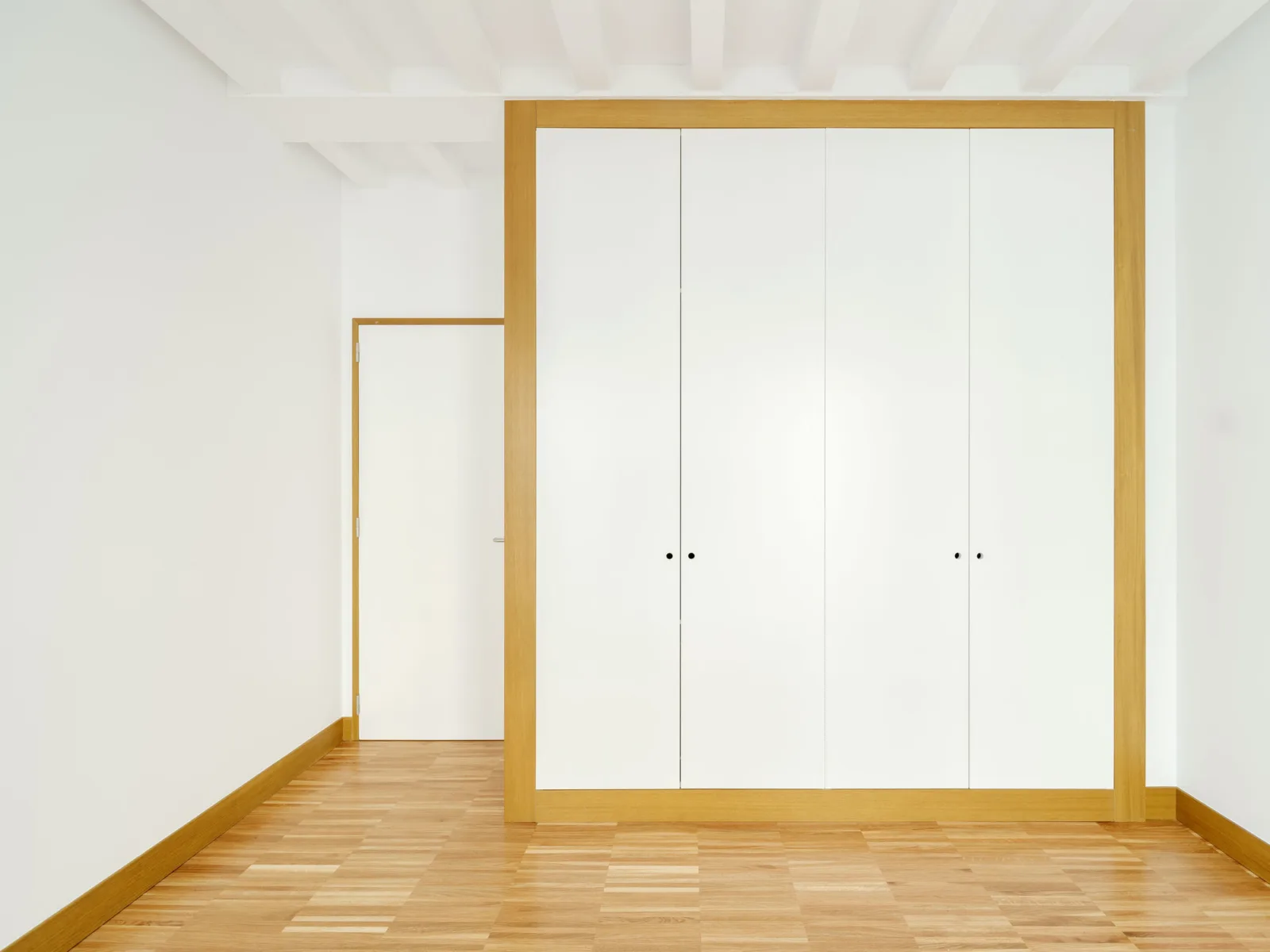
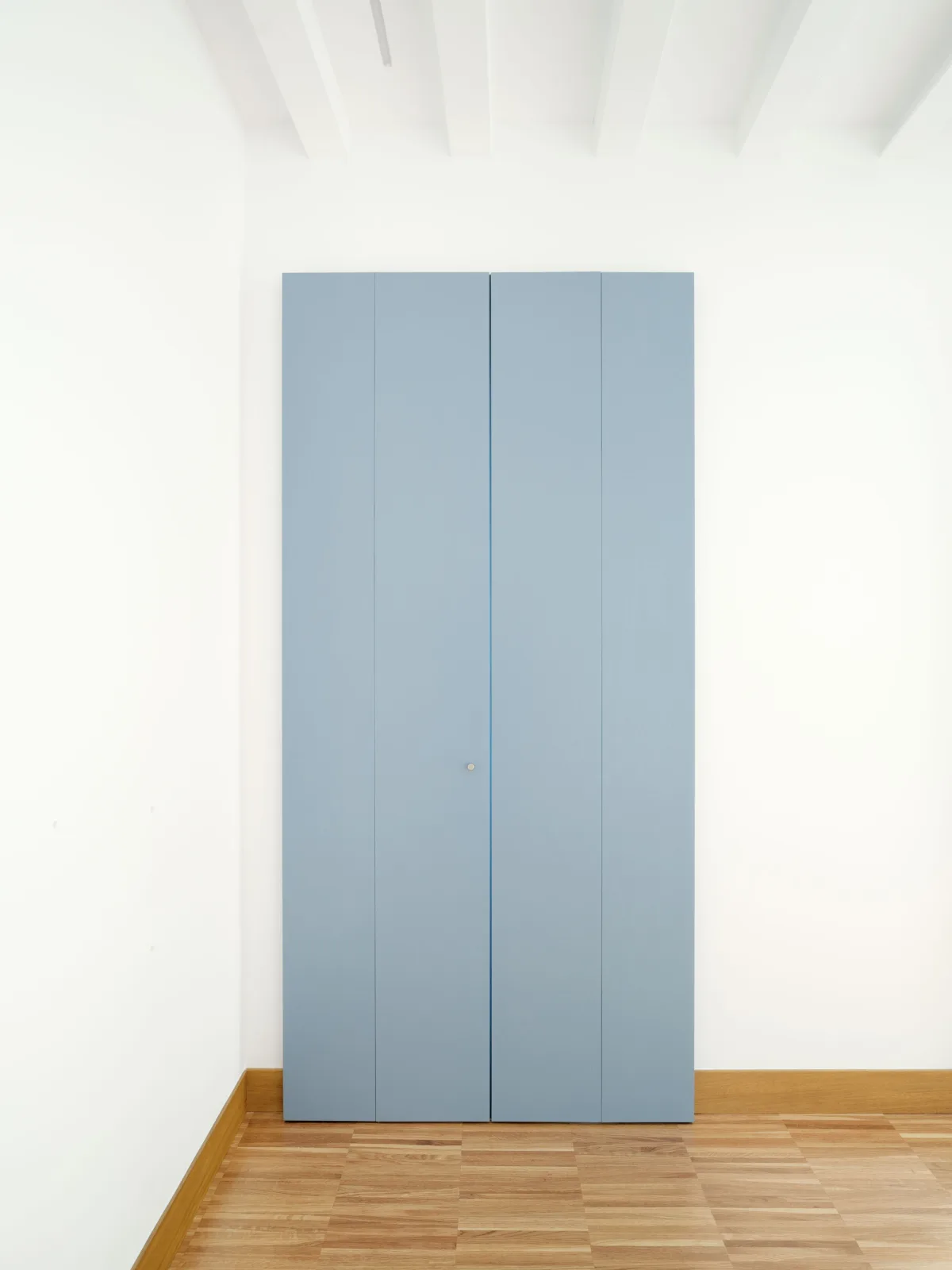
Since this is public rental housing, from the start we prioritized minimizing energy consumption related to equipment, as these costs will be borne by future tenants. Our goal is to create a low-energy building with reasonable ongoing costs, a minimal energy demand, and performance that far exceeds regulatory standards.
Project Drawings
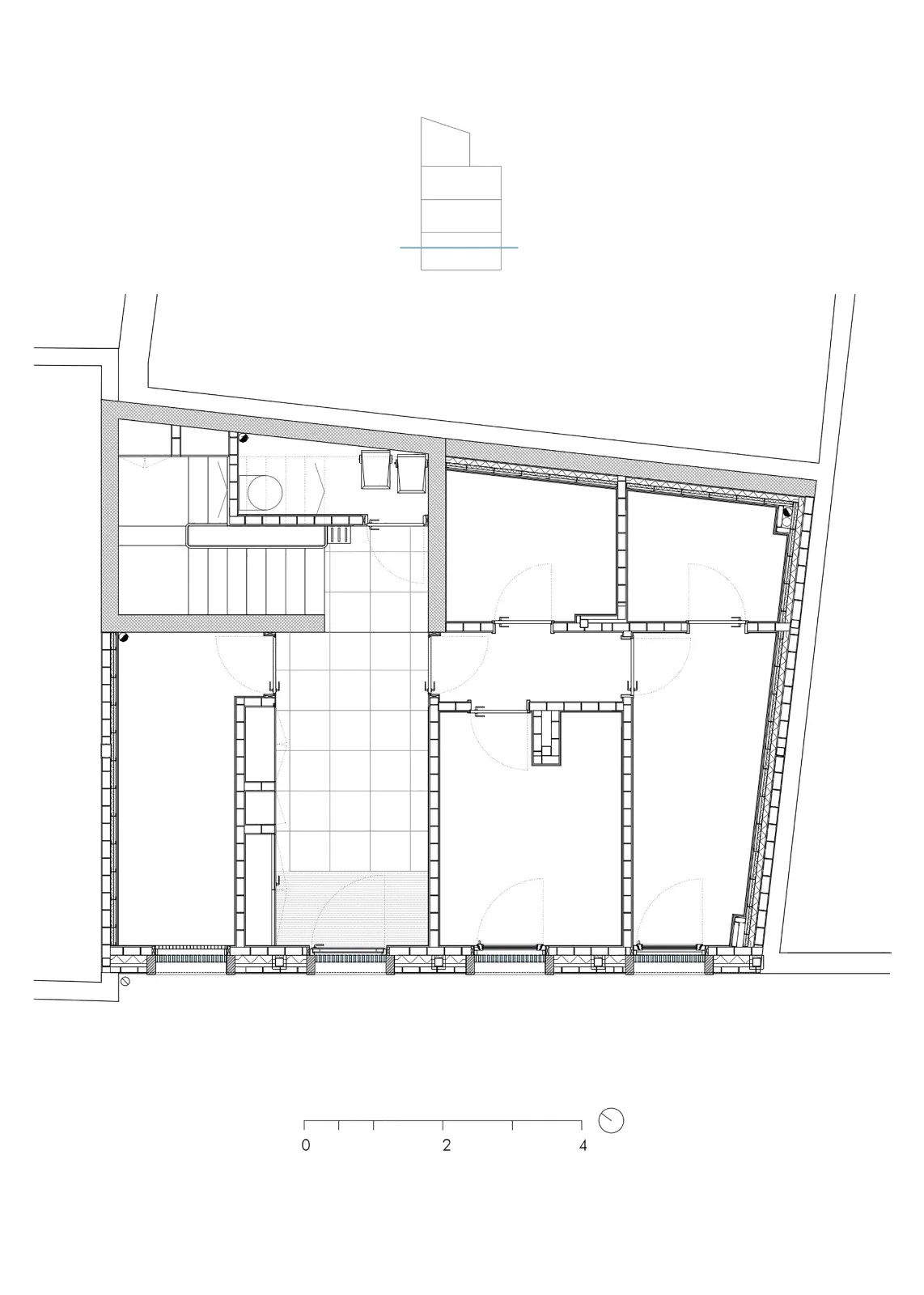
△ First Floor Plan
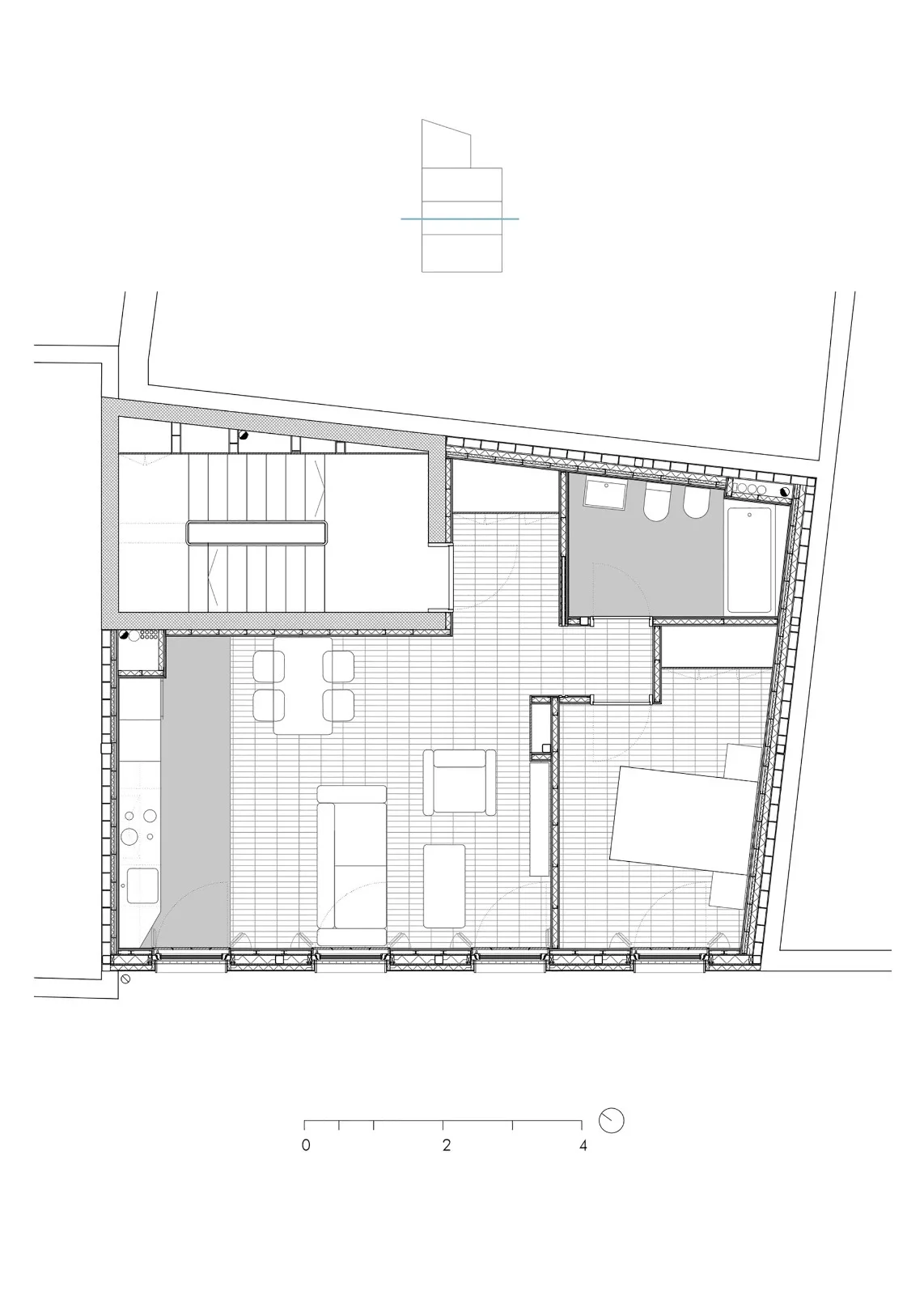
△ Second Floor Plan
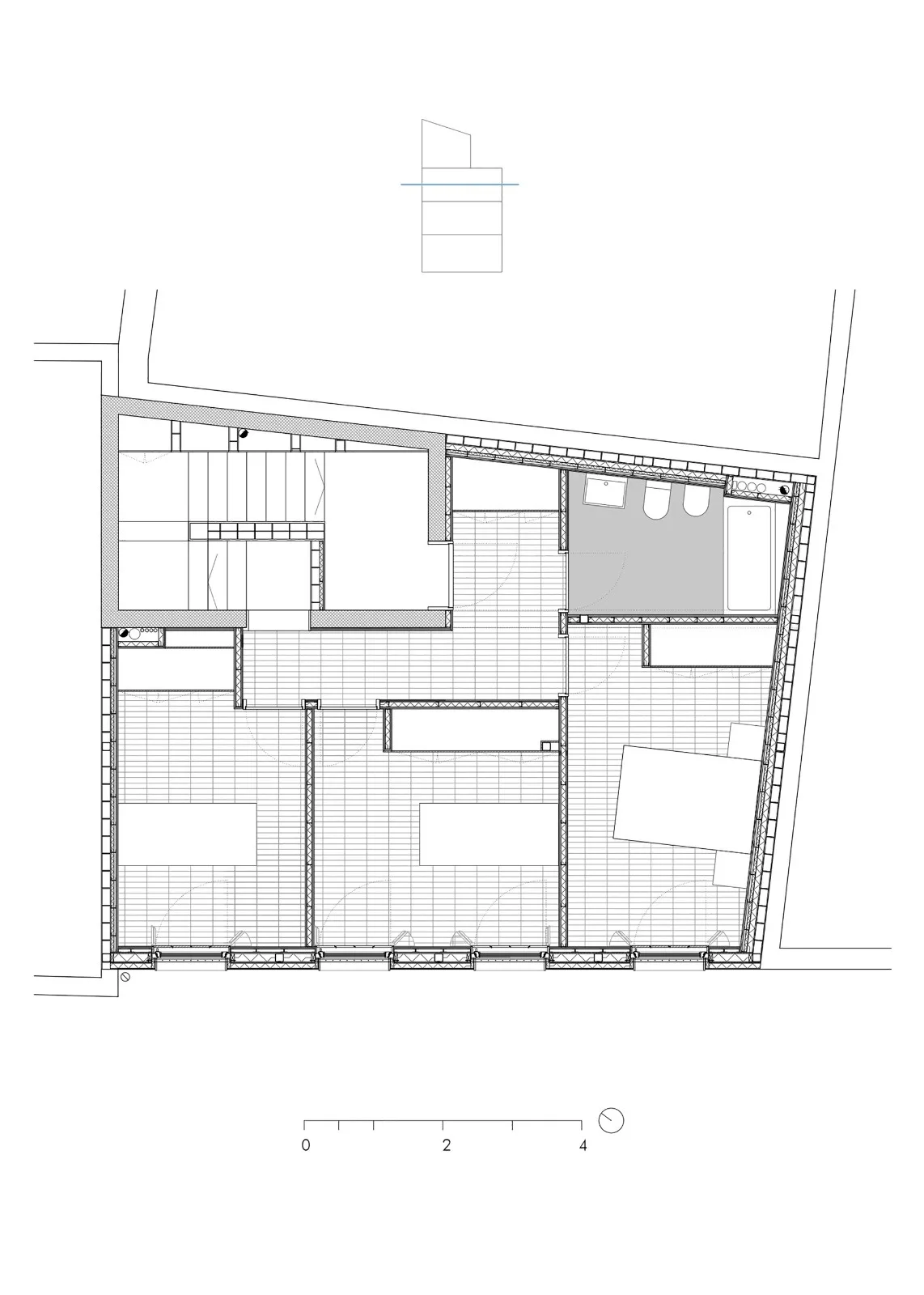
△ Third Floor Plan
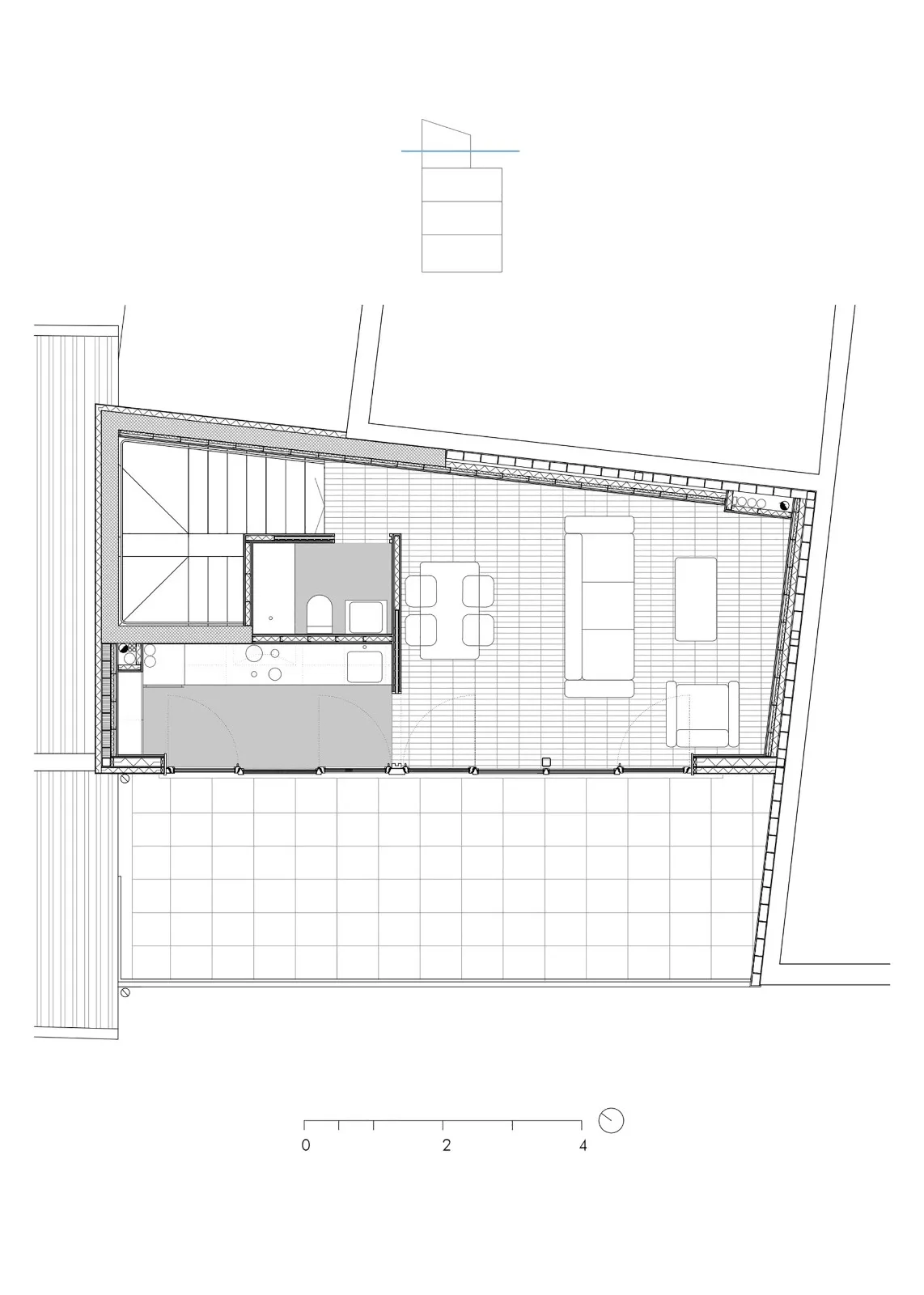
△ Top Floor (Additional Floor) Plan
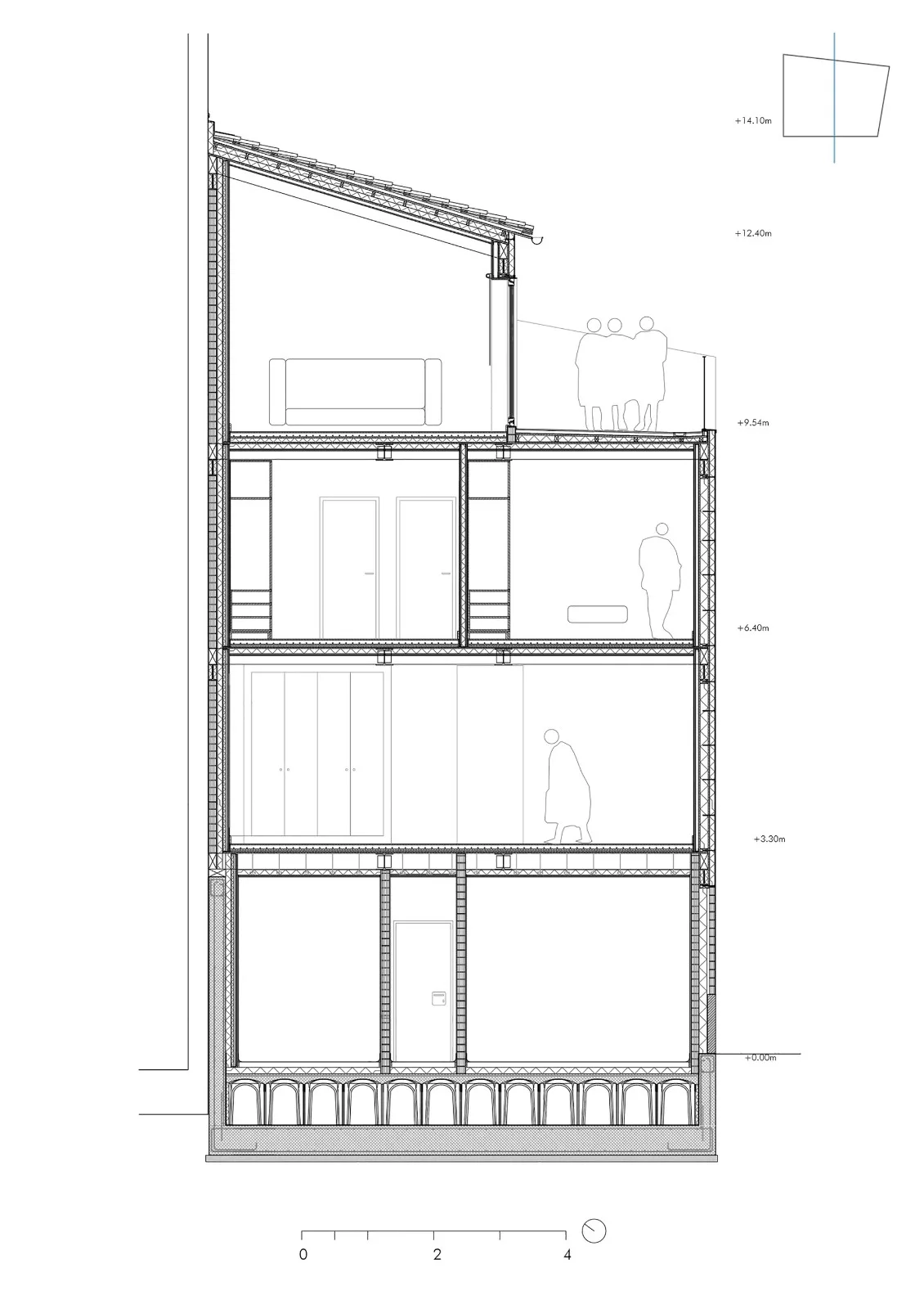
△ Architectural Section Diagram
Project Information
Architect: Müller Feijoo
Area: 285m²
Project Year: 2020
Photographer: Luis Díaz Díaz
Manufacturers: Knauf, LIVOS, ROCKWOOL, Sika
Lead Architects: Estefanía Vázquez Müller, Roi Feijoo
Client: Galician Institute of Housing and Land (Xunta of Galicia)
Collaborators: Xoán Carlos Malvárez, Roi Fdez. de la Gala
City: Ourense
Country: Spain












Must log in before commenting!
Sign Up