
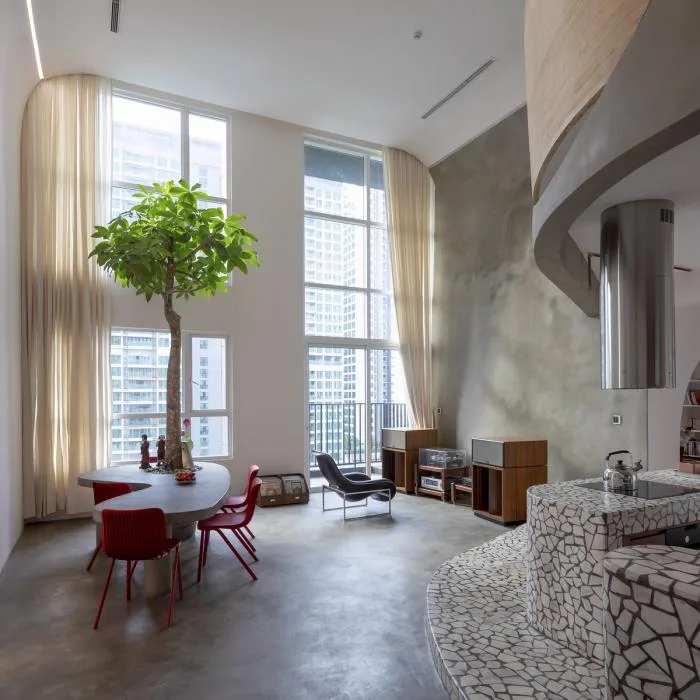
The MAI Apartment is a bold exploration of modernist architecture aesthetics infused into contemporary apartment interior design. The owner has a deep appreciation for modernist architecture, especially the intriguing challenge of integrating elements traditionally associated with Western culture into Vietnam’s tropical environment using local materials. This project raises the question: how do these concepts clash or harmonize within the uniform template of today’s apartment layouts?
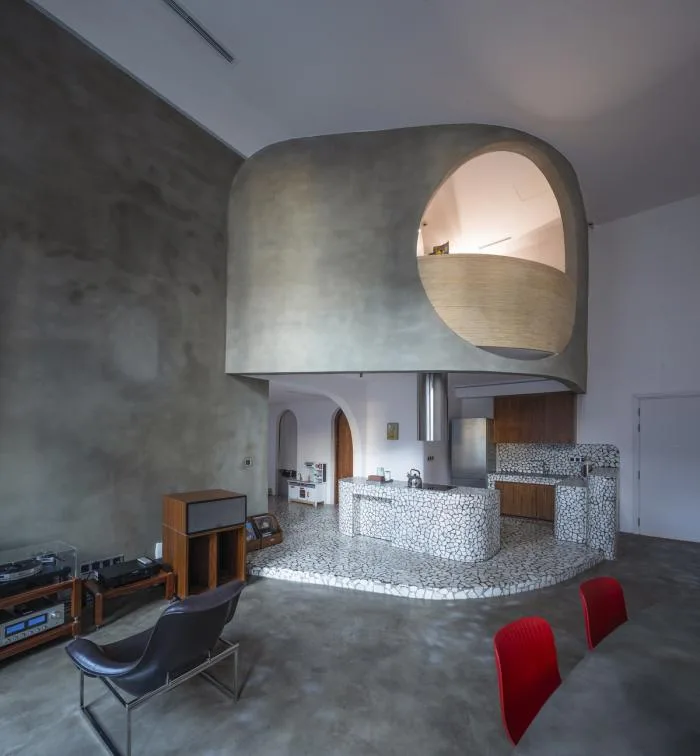
The design of MAI Apartment pays homage to the geometric aesthetics championed by architect Louis Kahn and features terrazzo surfaces reminiscent of Saigon in the 1950s and 60s. Modernist architecture upends traditional functional structures and rejects unnecessary decorative elements. Yet, how can these iconic features be reinterpreted in a standard four-bedroom apartment? While this may remain an ongoing experiment—attempting to replicate but never fully capturing the essence—Louis Kahn’s words guide the design: “I think this is a discovery of the desire for indoor space… Residential buildings are buildings that are extremely sensitive to internal needs. In this sense of satisfaction, there is a certain willingness to exist… but for this house, the willingness to exist is not constrained by geometric shapes.”
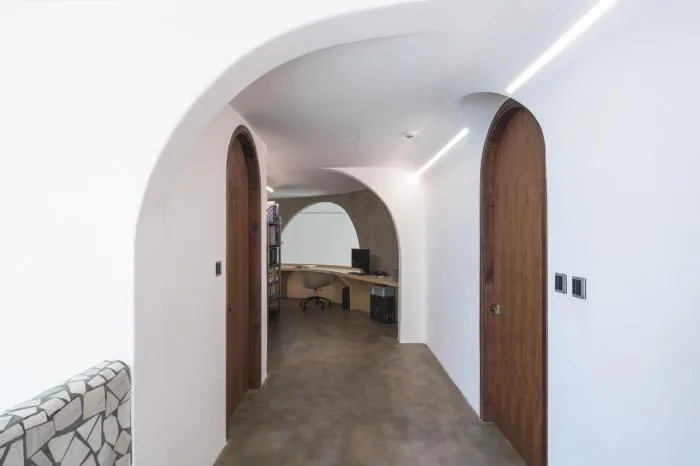
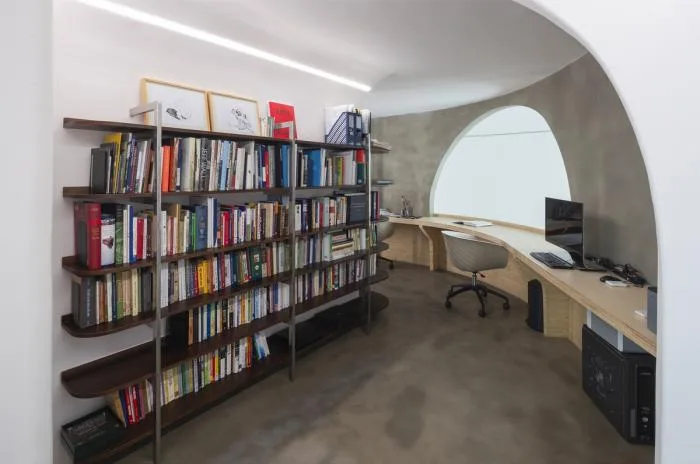
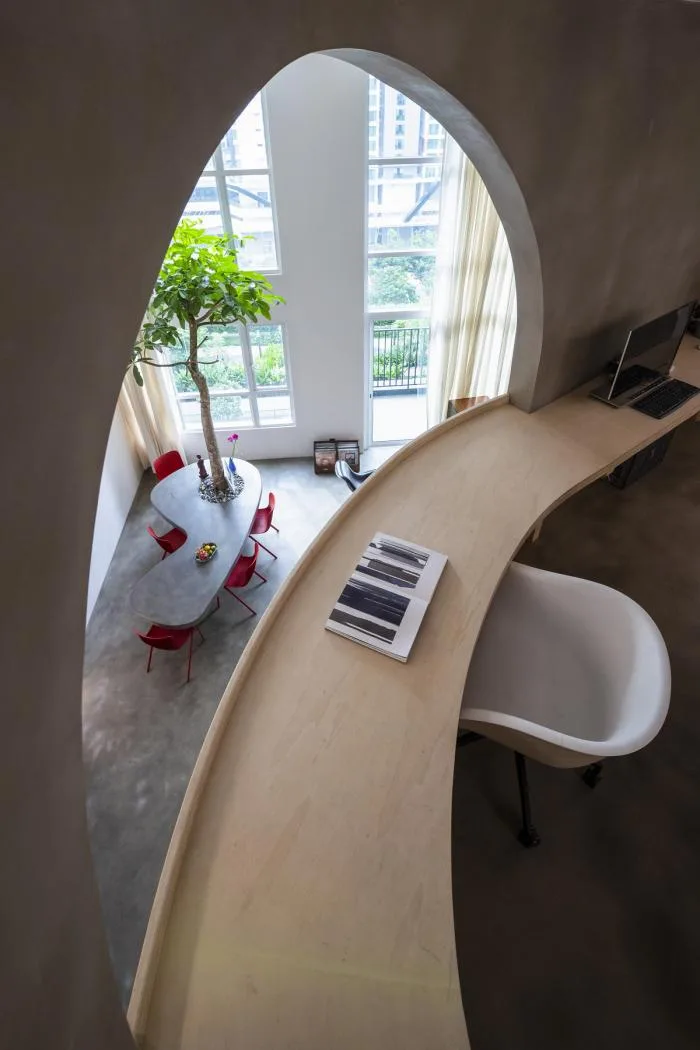
Since altering the apartment’s fundamental structure was impossible due to the repetitive nature of contemporary apartment buildings, the MAI Apartment redefines internal living spaces through geometric shapes within its existing framework. The design minimizes decorative details and instead highlights geometric motifs such as large circular cutouts, angular corners, curved arches that separate rooms, and lighting lines flush with the walls. These elements collectively form a continuous geometric narrative throughout the apartment, creating a dynamic tension as they interact within the modernist principles of points, lines, and planes.
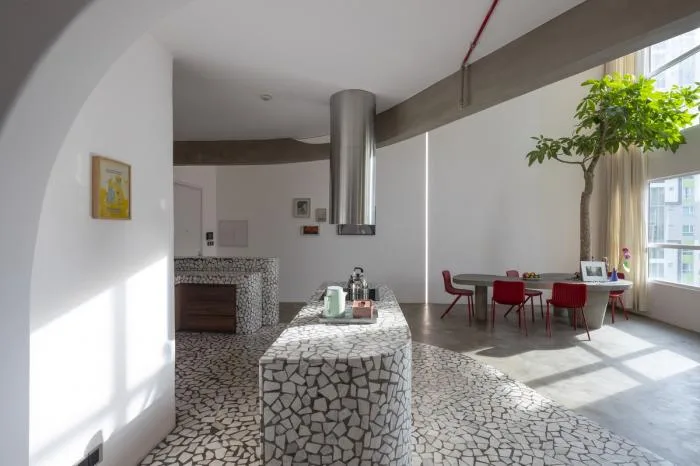
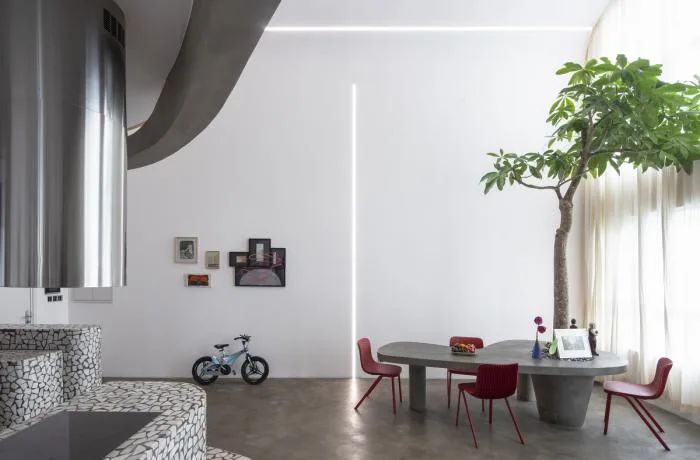
Modernist architecture was introduced to southern Vietnam (formerly the Republic of Vietnam) in the mid-20th century, marking the emergence of a new aesthetic movement intended to replace the French neoclassical style prevalent during the colonial era. Materials favored by modernists in the United States—such as exposed stone, terrazzo, and cement—became popular in Saigon. The MAI Apartment embraces terrazzo as its primary material, which provides a sleek and cool finish throughout the space. The terrazzo floor extends seamlessly from the kitchen to the staircase, distinguished by large white marble fragments arranged in abstract patterns rather than the typical gravel or pebble aggregates common in the 1950s and 60s.
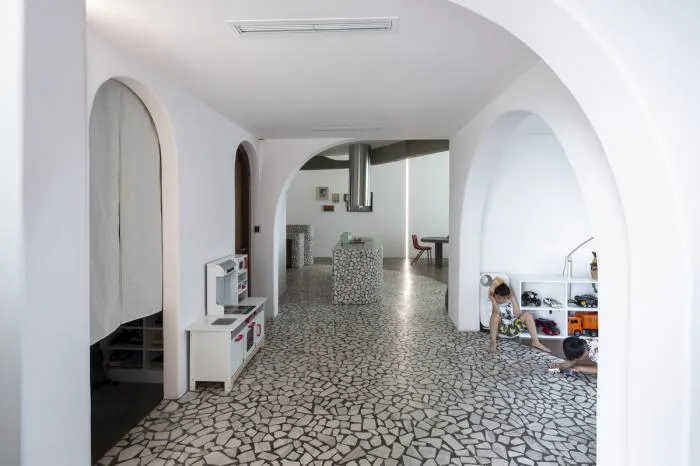
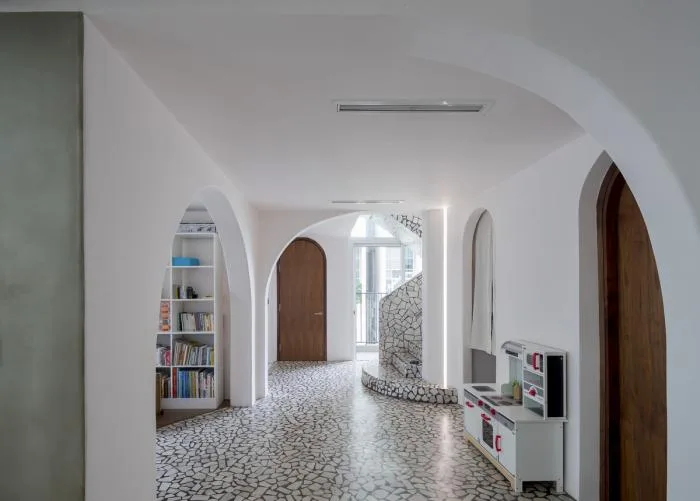
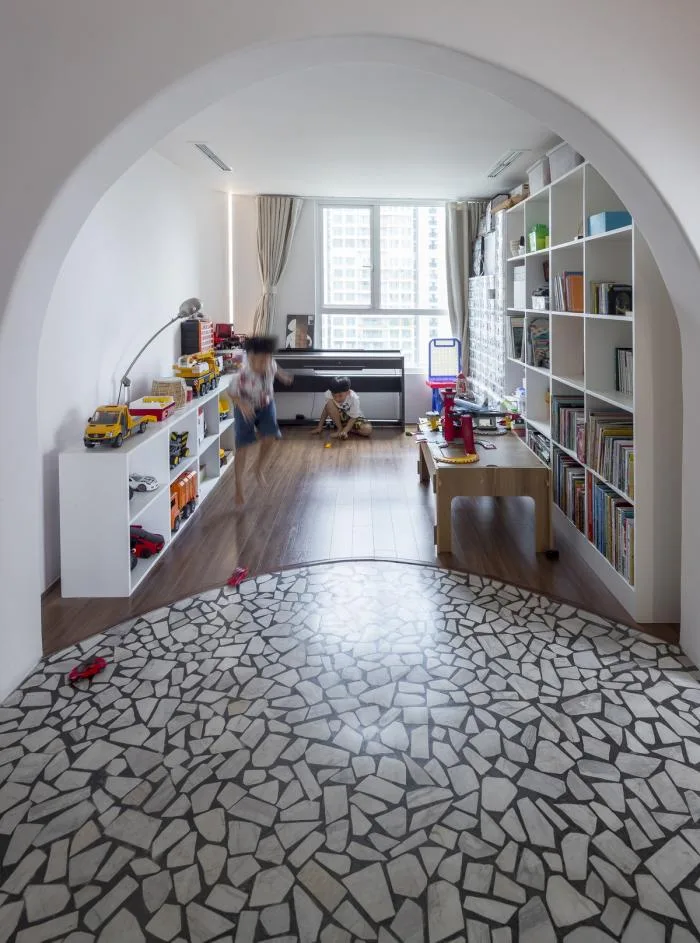
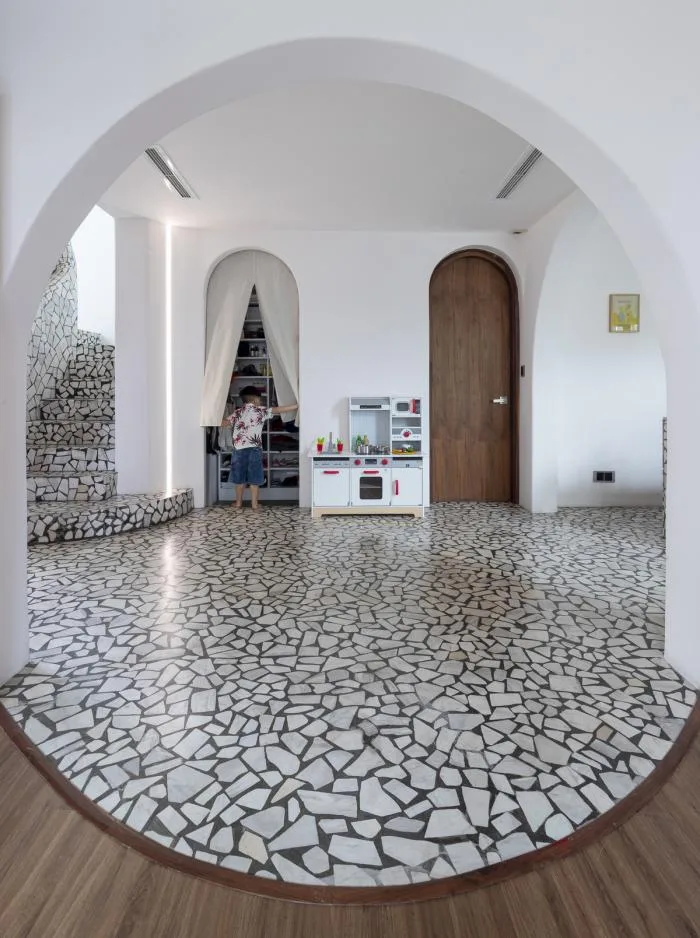
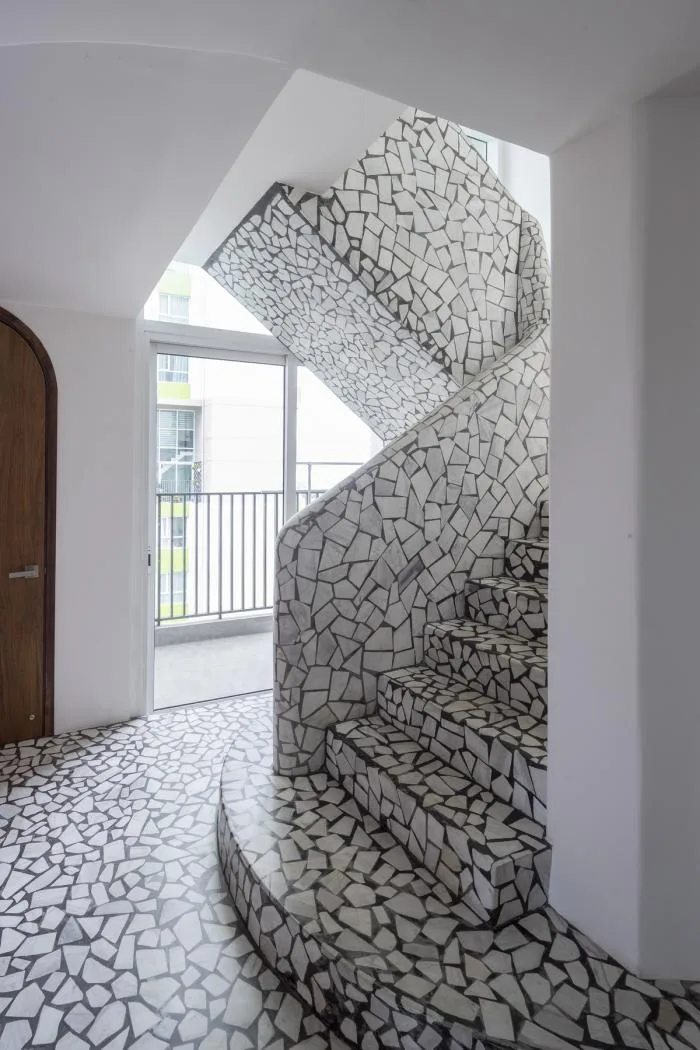
In Vietnamese, “M à i” means polishing or grinding. The interior decoration of this project took nearly three years, during which the owners, architects, and construction team continuously refined every detail. Physically, “M à i” symbolizes how the true beauty of the material emerges only after grinding and polishing, akin to applying a glossy finish. This process reflects the meticulous craftsmanship involved, where stones are carefully cut and arranged by hand—contrasting with the industrialization typical of modernism. Most importantly, “M à i” embodies a subtle nostalgia for the modernist architecture that once defined Saigon half a century ago, quietly preserved within contemporary design.
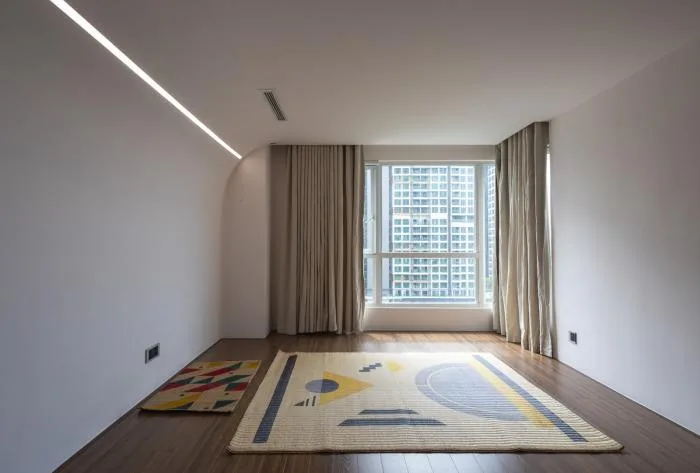
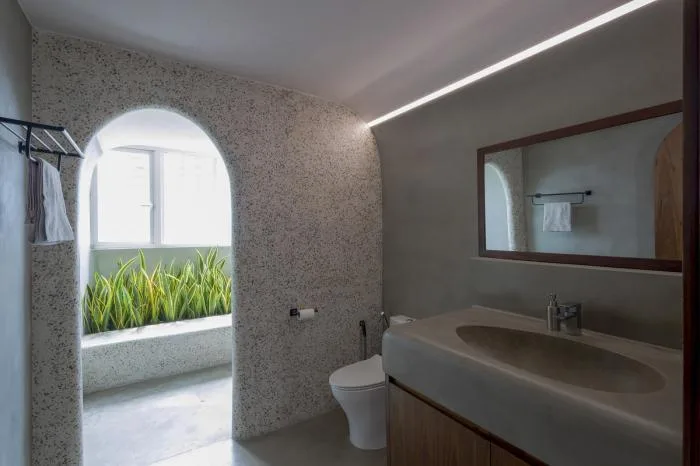
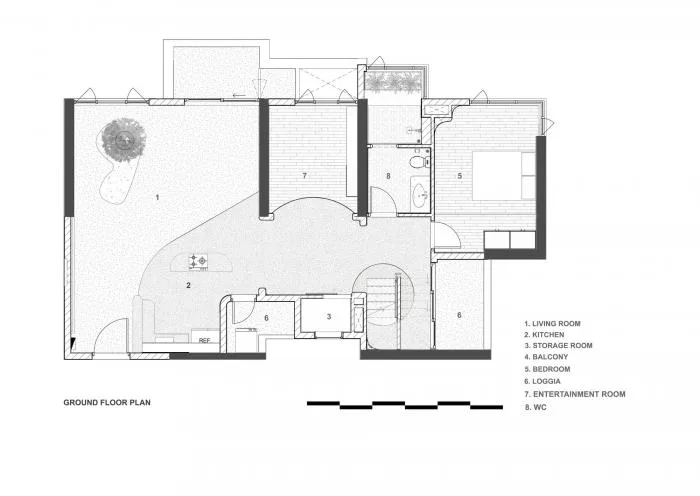
△ First floor plan
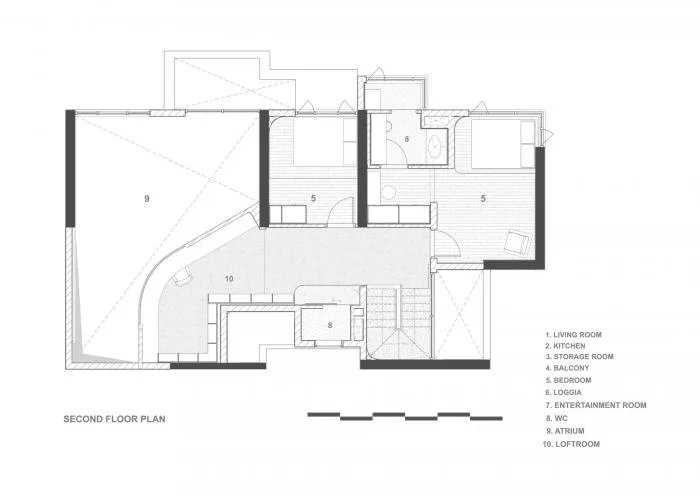
△ Second floor plan
Project Information
Project Type: Apartment Interior Design
Location: Ho Chi Minh City, Vietnam
Architect: Whale Design Lab
Area: 200 m²
Year: 2019
Photographer: Trieu Chien
Suppliers: Adobe, AutoDesk, KANSAI PAINT, Morser, Ori Lighting, Revit, Segis Vietnam, Song Nam, Thanh An, Toko
Lead Architect: Le Nguyen Nguyen Hanh
Design Team: Whale Design Lab
Clients: Arlette Quynh Anh Tran, Nguyen Tang Minh












Must log in before commenting!
Sign Up