
Design Rationale
The project is situated along the main channel of the Pingshan River in northeast Shenzhen. On the north bank lie Pingshan Senior High School and the traditional Hakka walled residence known as “Toyota World Residence,” while the south bank hosts residential and commercial office buildings. Currently, no pedestrian bridges connect the two banks within a one-kilometer walking radius, forcing parents to take long detours via the Jinlong Avenue or Pinglian Road bridges. This situation leads to traffic congestion during rush hours and disrupts urban life.
Following the “Road to Pingshan” public consultation, the Pingshan District government decided to construct a pedestrian bridge over the river between two expressways. This bridge aims to facilitate north-south traffic for school staff, students, and residents, reduce peak-hour congestion, and provide a leisure and scenic spot for the community.
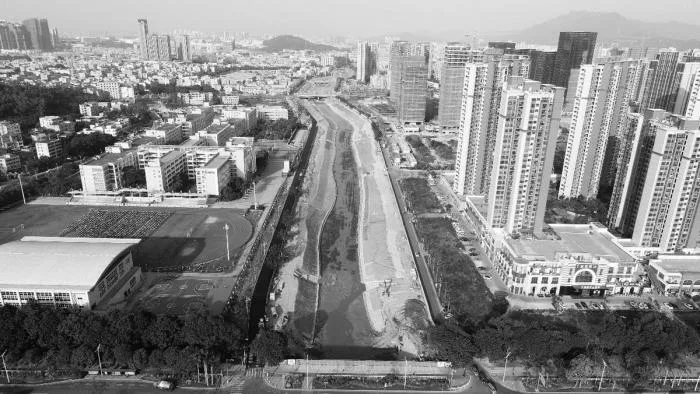
△ Original photos of the site
About the Bridge
Bridges are unique structures that not only serve the fundamental purposes of connectivity and safe passage but also embody spatial qualities, act as landmarks, and carry cultural symbolism. The primary challenge of this design is to create a new visual and transit experience tailored to the specific context of Pingshan.
Design Concept: Form, Space, and Structure
When invited to design, the client had no fixed idea about the pedestrian bridge’s exact location. They requested that the bridge entrances should neither face directly toward the school’s main gate nor the Zhenhuan Road intersection, but also not be positioned too far away.
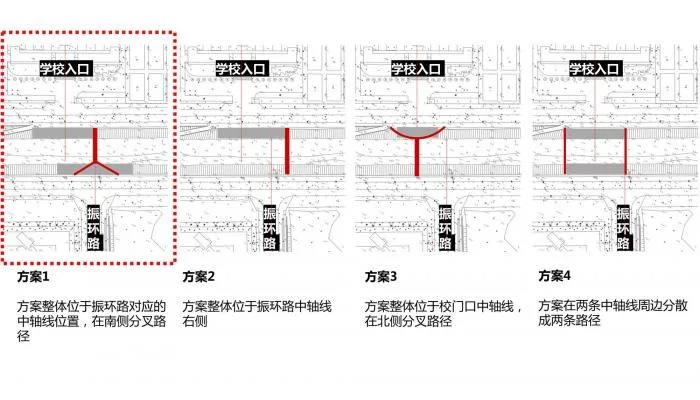
Proposed spatial locations for the pedestrian bridge
Alternative spatial location proposals for the pedestrian bridge
Considering the relationship between the school’s main entrance and the surrounding ring road, four possible locations and conceptual designs were developed. The design direction embraced a contemporary interpretation of traditional Hakka culture, symbolizing cultural heritage. Simultaneously, a minimalist modern style was employed to clearly express the bridge’s unity as an architectural space, form, and structure, reflecting Shenzhen’s identity as an innovative city.
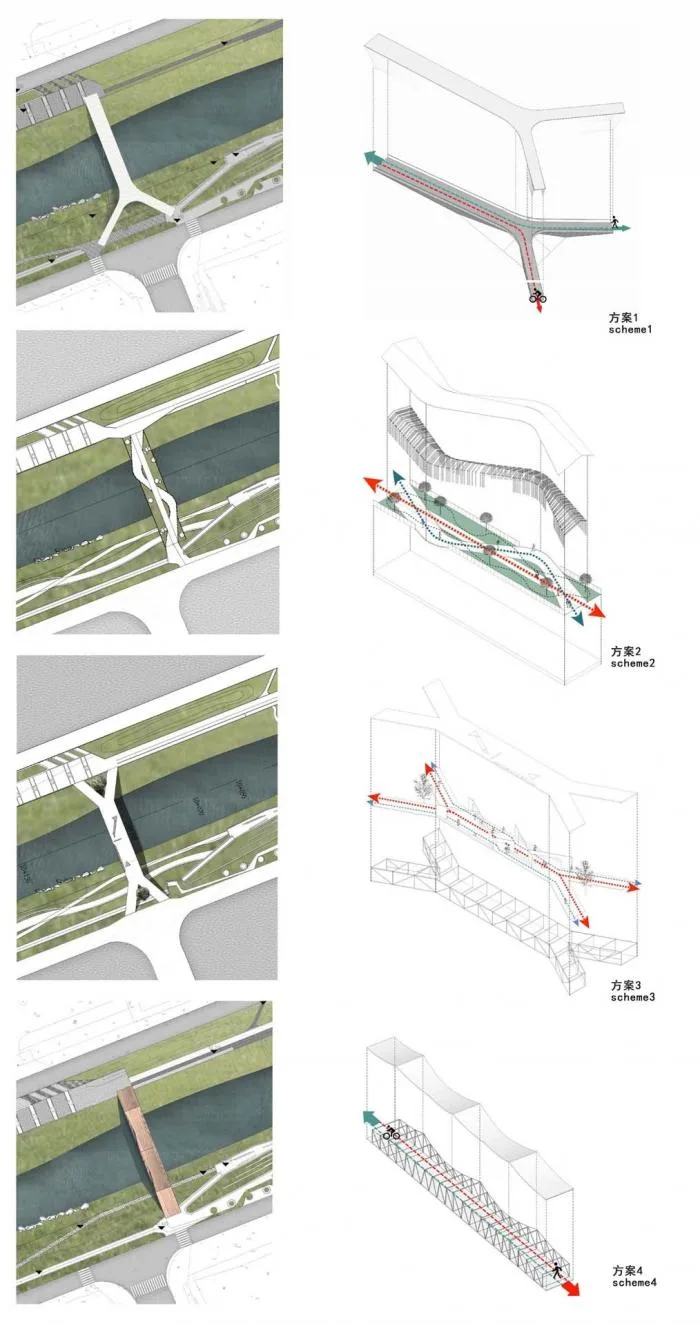
Four conceptual design proposals
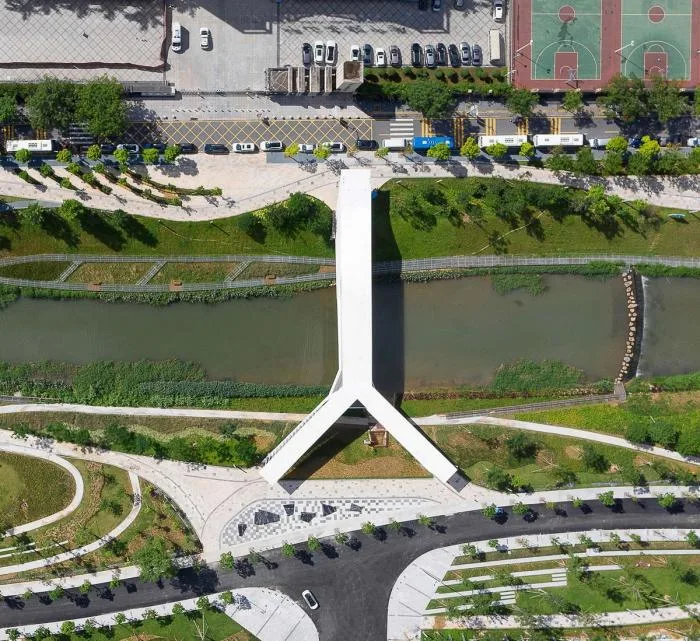
Following a public online vote, a Y-shaped layout was selected. This design is symmetrical and responds effectively to the urban environment and traffic demands on both sides of the river.
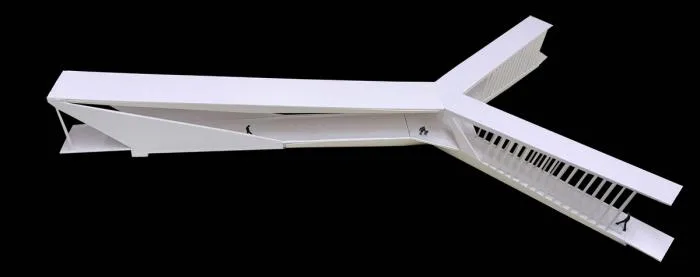
△ Final spatial scheme model
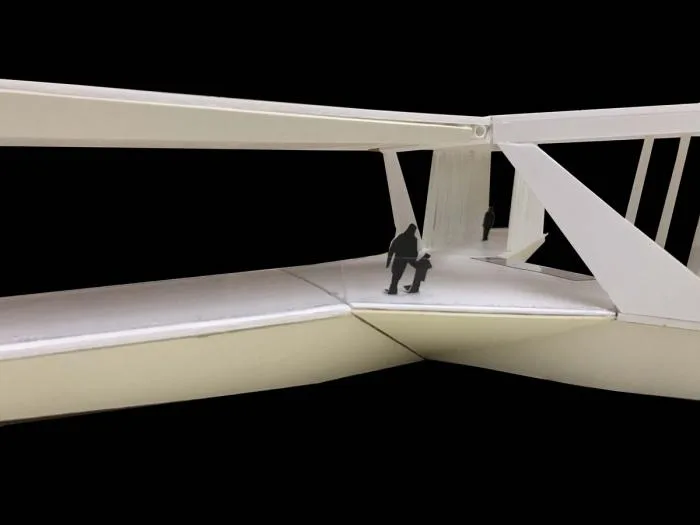
△ Close-up of the spatial scheme model
The bridge spans 70 meters across the Pingshan River. Its overall design prioritizes scale and visual harmony with the surrounding environment, making it a visual focal point from various city viewpoints. Several regulatory requirements guided the design: the bridge deck must be elevated above the once-in-a-century flood level, avoid existing sewage interception wells, accommodate barrier-free access with roughly a one-meter elevation difference between north and south landscape trails, and ensure sufficient clearance beneath for a waterfront secondary trail.
Additionally, due to Shenzhen’s hot and rainy climate, the bridge functions as a wind and rain shelter, presenting specific design challenges.
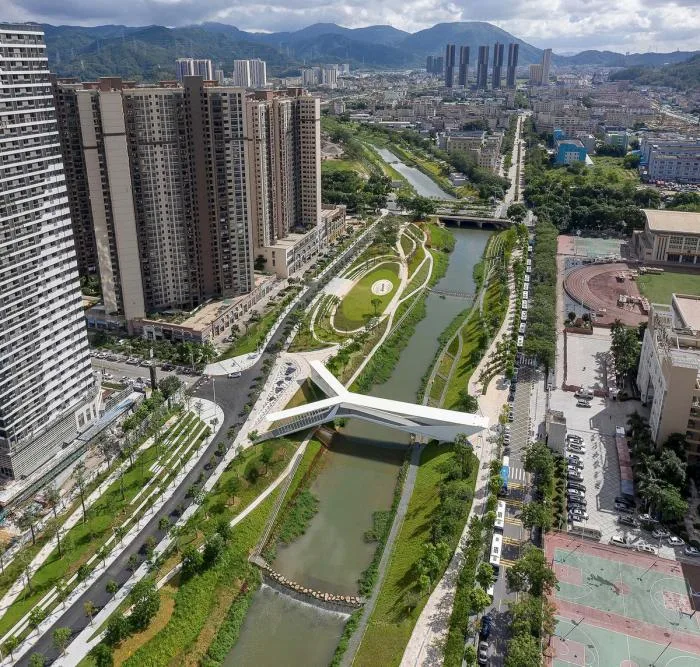
Pedestrian bridge and surrounding environment © Zhang Chao
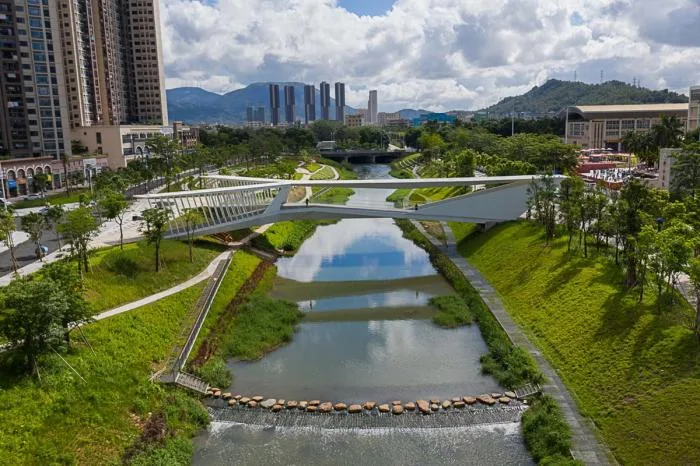
Pedestrian bridge and waterfront boardwalk
Within these constraints, aesthetic design remains paramount. The bridge’s underside is designed with gentle arches and folds to accommodate terrain elevation differences and structural cross-section variations. Meanwhile, the bridge deck features a horizontal top line, balancing the visual weight and structural stresses caused by the lower folds. This approach creates a concise, straightforward form that conveys tension calmly.
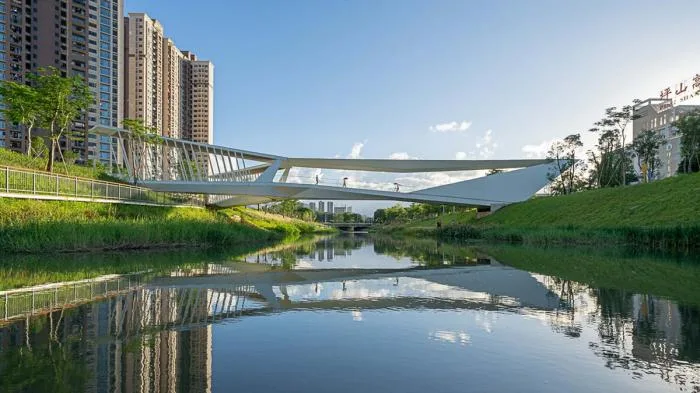
△ Level and turning point
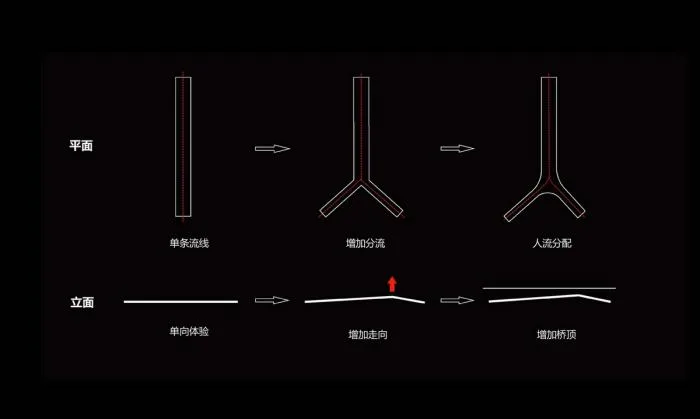
△ Plan and elevation diagrams
To balance form and function, the architects aimed for a structural system that uses the most direct force transmission paths with minimal components and cost, showcasing a strong unity between architectural form and structure.
Initially, the design referenced the Shanghai Rihui Port Bridge’s three-pronged tension chord structure, where cables support the deck and a suspended steel plate resists horizontal forces through inclined columns and cables.
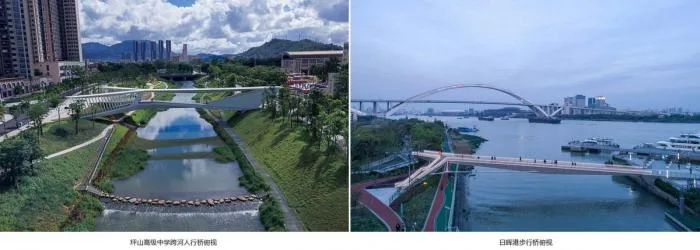
Pingshan Pedestrian Bridge and Rihui Port Pedestrian Bridge comparison
During early structural coordination, concerns arose about the roof’s limited wind resistance and Shenzhen’s frequent summer typhoons. To improve stability, additional columns or wind-resistant cables were considered. However, adding connectors between the top and bottom would visually transform the bridge into a truss, conflicting with the trident beam string’s force logic. The structural engineer also wished to avoid replicating the Rihui Port Bridge’s design, proposing a three-directional cable-stayed structure instead.
However, the architect found the cable-stayed design’s middle section too bulky and visually repetitive. They questioned whether the space and form could reflect a clear primary and secondary structural hierarchy. The bridge top needed to remain horizontal and lightweight, with open sightlines to the adjacent ring road.
After discussions, key structural design points were agreed upon: avoiding truss systems and the trident chord beam, and exploring excavation of the roof and deck for architectural and structural integration. The final design retained the cable-stayed form on the long side, while the structural engineer developed a hybrid system combining cable-stayed elements with a three-pronged box girder.
The architect then reimagined the pedestrian bridge’s spatial composition, incorporating plate-type diagonal braces between the main diagonal braces and four triangular areas at the Y-shaped fork intersection. This created a solid surface that balanced the dense column frame of the branches, emphasizing the interplay between real and virtual elements. The number, spacing, and angle of slender columns on the forked deck were optimized based on structural analysis and visual impact—columns are spaced 1 meter apart and angled at 75° relative to the bridge top.
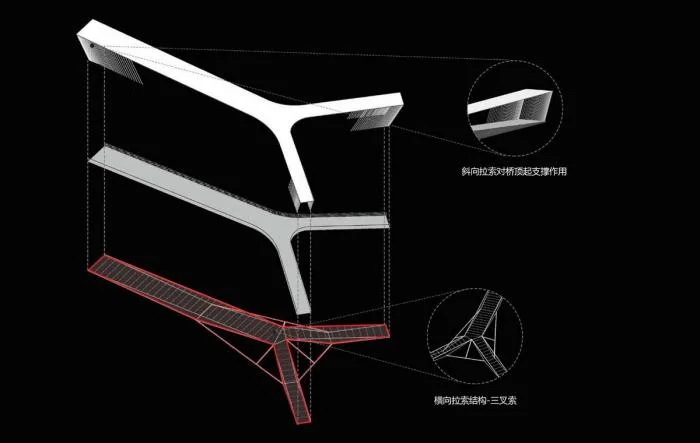
Conceptual and structural design of pedestrian bridge space
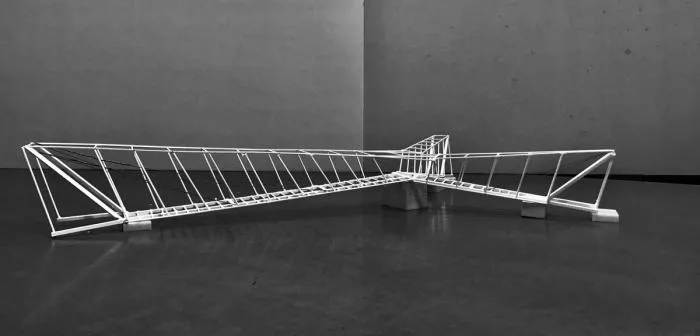
Early spatial and structural scheme models
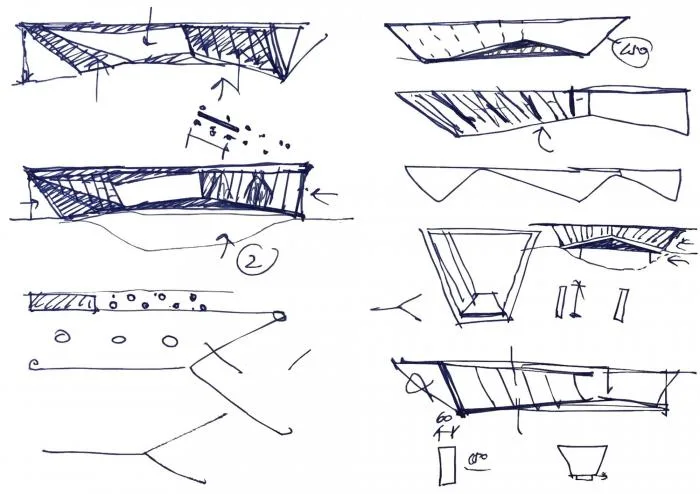
△ Communication sketch of spatial and structural details
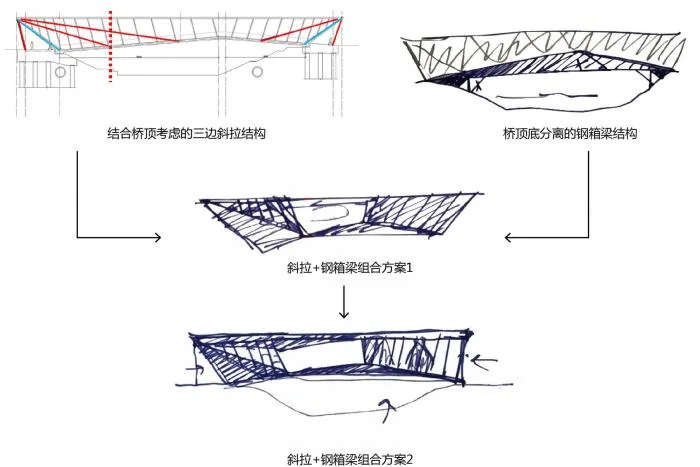
The deduction process of the structural scheme △
This system combines bending forces (beam action) and axial forces (cable-stayed) in the bridge deck, while the bridge top handles longitudinal (box girder) and transverse (frame) force transmission. Although the system’s load paths and visual perception are not purely linear, the internal logic is explicit and clear. This experience, featuring deconstructive qualities, results from the structure’s adaptation to spatial and stylistic demands, creating a diversified transmission path. The complexity serves function and aesthetics, not complexity’s sake, balancing multiple demands throughout the design process.
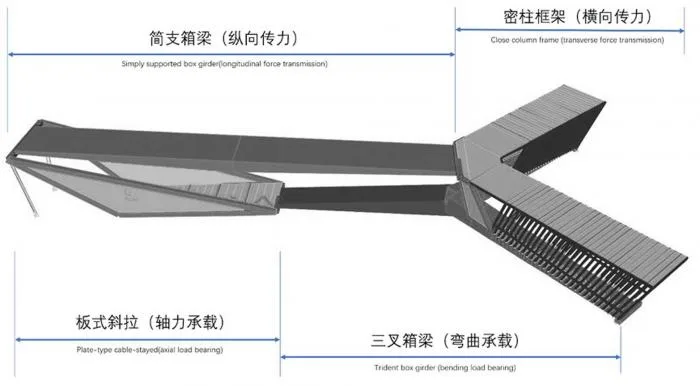
△ Structural system analysis diagram
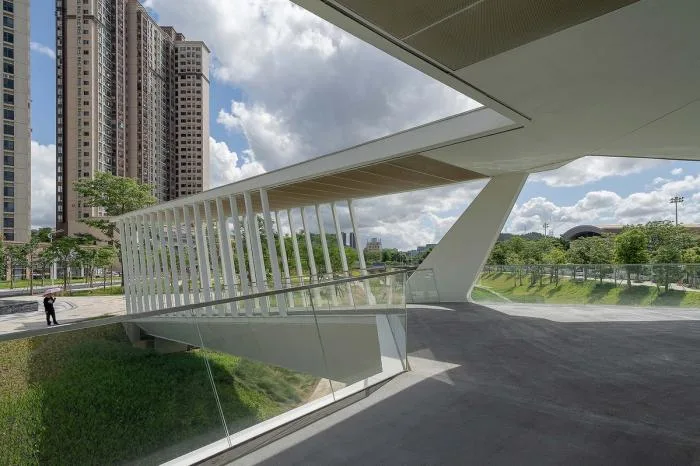
Transition of different force modes
Node Design
Node details bring refinement to the overall spatial and structural coordination. The edges of the variable cross-section box girder at the bridge’s top and deck are trimmed with steel plates, visually reducing the massiveness and lending the structure a lighter appearance. These plates, with their folded surfaces, create dynamic light and shadow effects under sunlight, enhancing the bridge’s three-dimensional presence.
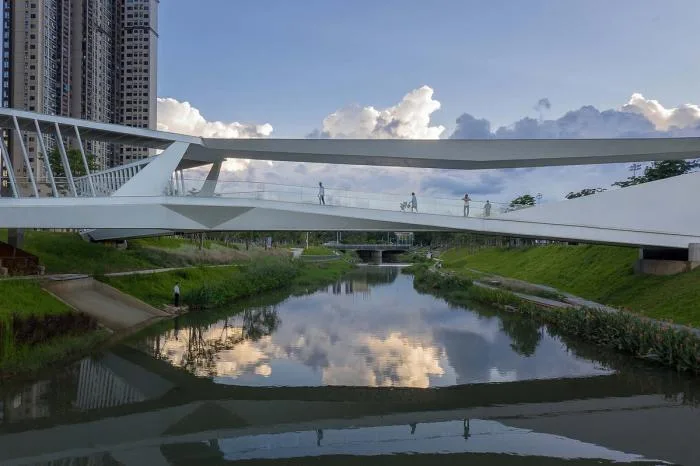
△ Folded steel plate detail
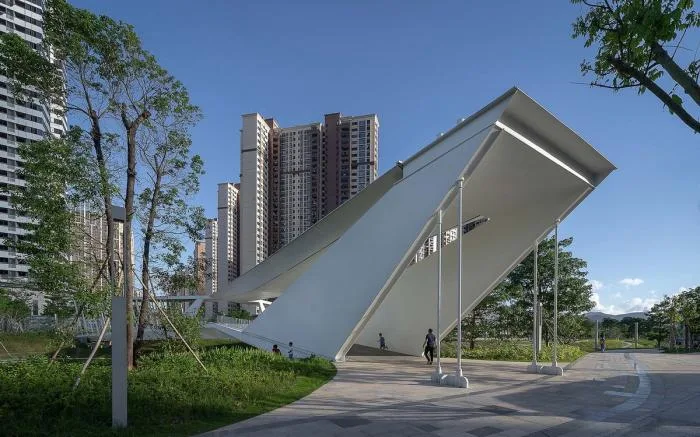
△ Entrance to the main bridge deck
To maintain a clean and unobtrusive facade, the railings are made from nearly invisible ultra-clear glass. The glass panels are fixed into U-shaped grooves integrated within the bridge deck box girder. On the forked bridge deck, the joints of the glass railings align in direction and size with the diagonal columns, enhancing visual harmony.
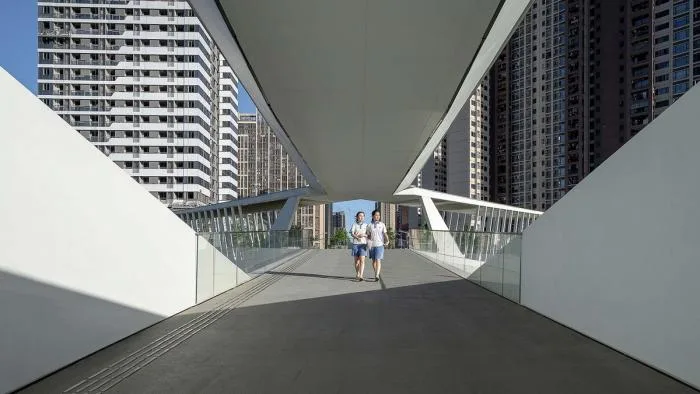
△ Open sightlines along the central axis toward the ring road
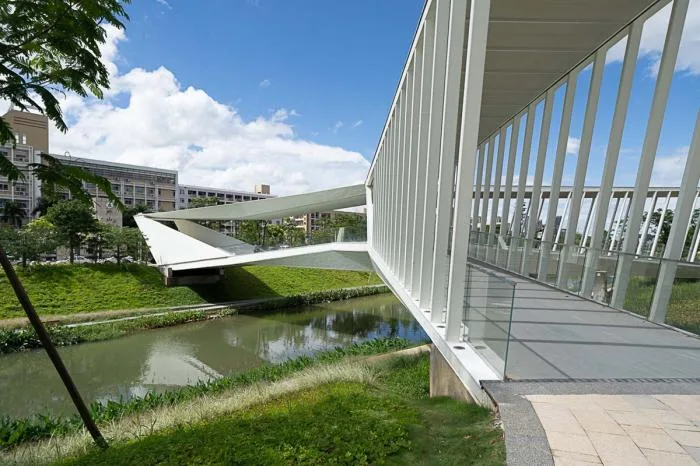
△ Glass railings and supporting columns
To efficiently manage rainwater drainage during heavy storms, angle steel edges form rainwater collection channels at the junctions between bridge deck and railings. Additionally, the natural slope and gaps between glass panels facilitate water runoff.
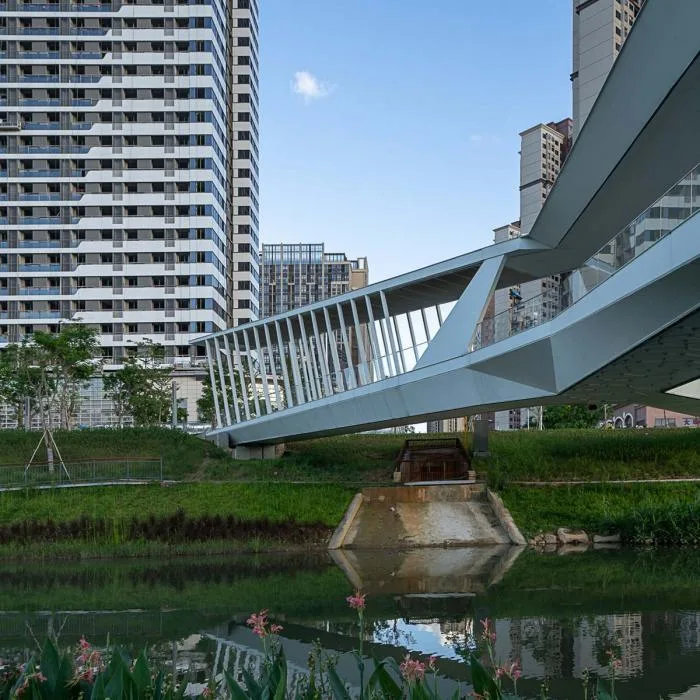
△ Branch of the pedestrian bridge
The lighting design integrates fixtures and conduits discreetly within the structure, supporting both festive and daily lighting modes. Combining point and linear light sources, the illumination highlights the bridge’s structural elements and reflects beautifully on the water surface, creating an additional visual attraction.
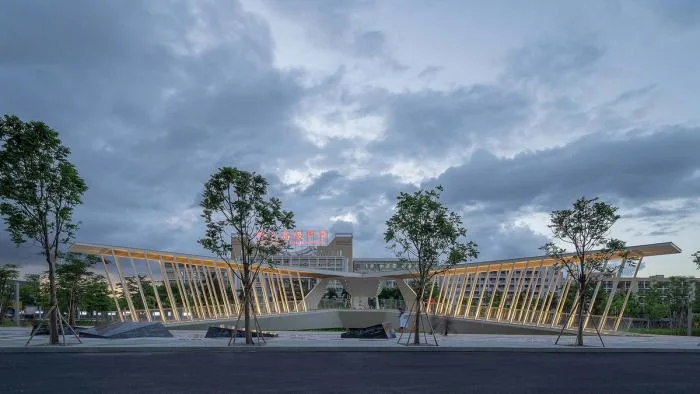
View toward the pedestrian bridge from the ring road
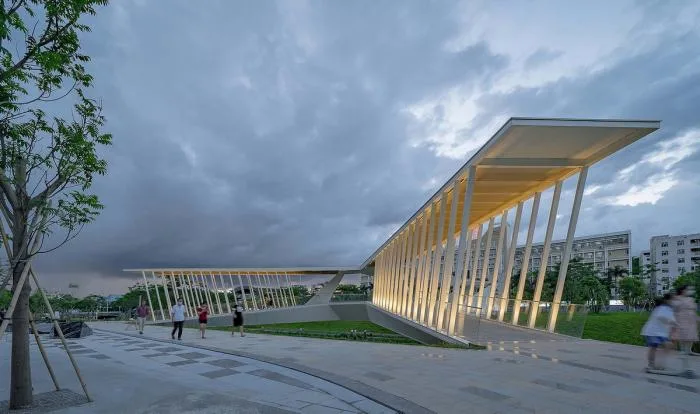
△ Forked bridge deck entrance
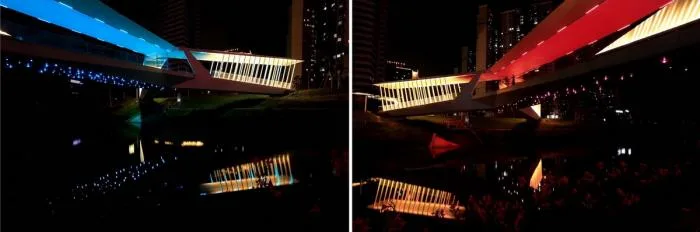
△ Night view © Chen Yongyu
Review
The bridge’s façade and form present a harmonious blend of real and virtual elements—simple, balanced, and layered—offering a rich visual experience. The relationship between architecture and structure becomes intriguingly ambiguous and paradoxical, with structural elements based on “visual logic” gaining spatial significance.
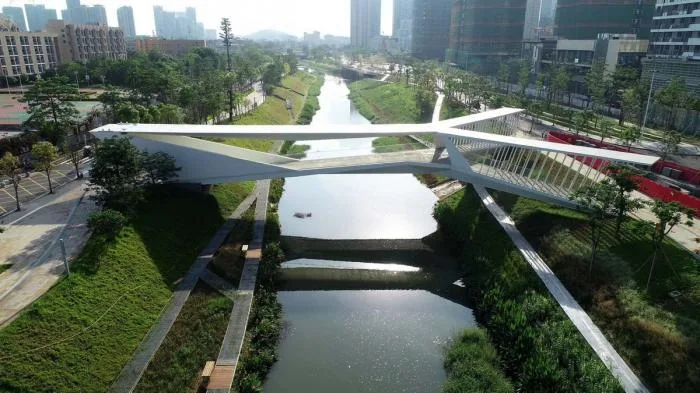
Aerial view from the west side of the pedestrian bridge © Chen Yongyu
Design Drawings
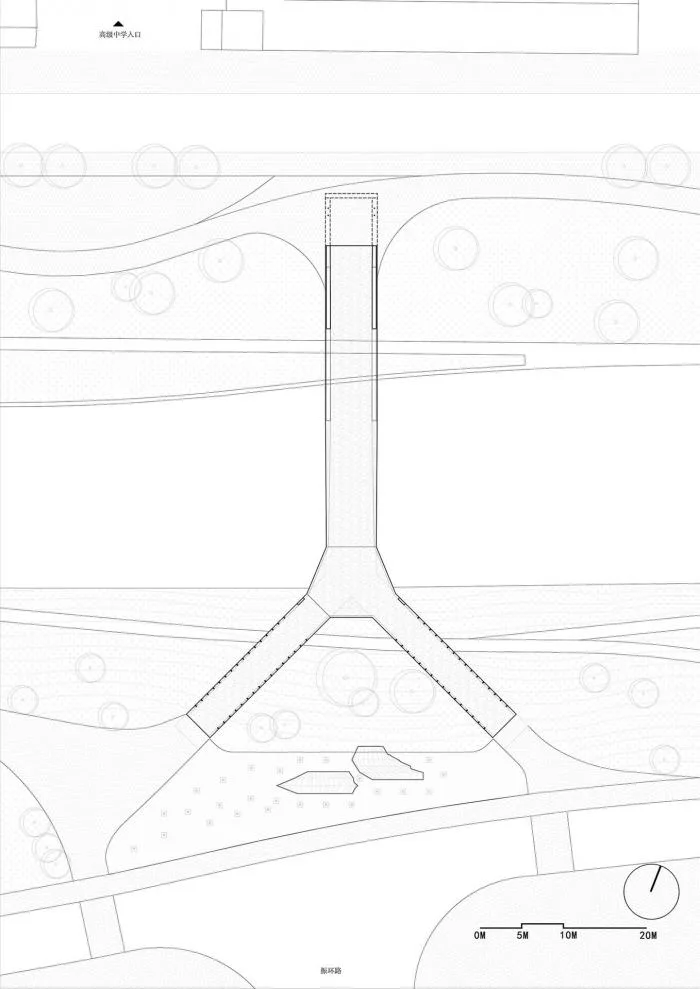
△ Plan 1
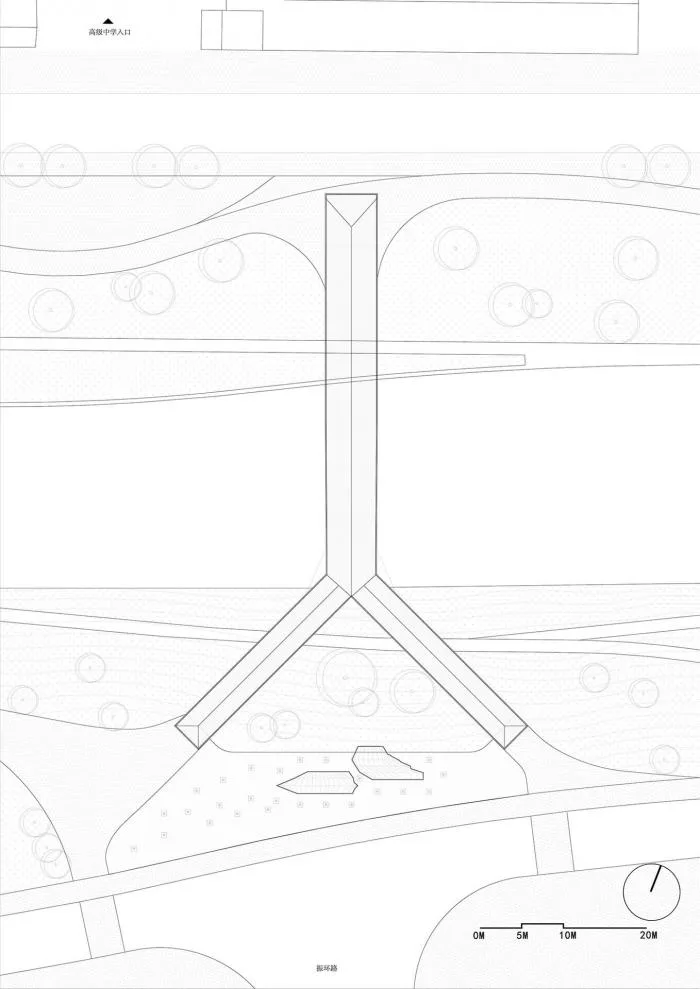
△ Plan 2
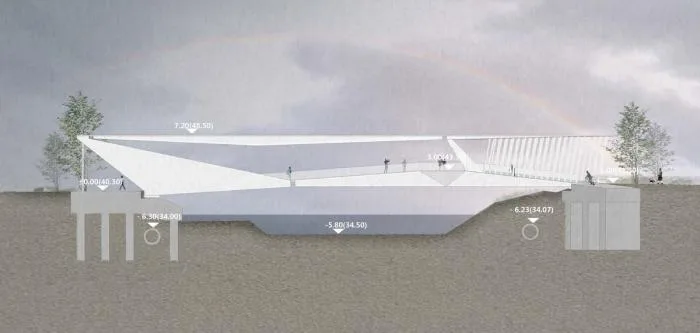
△ Elevation drawing
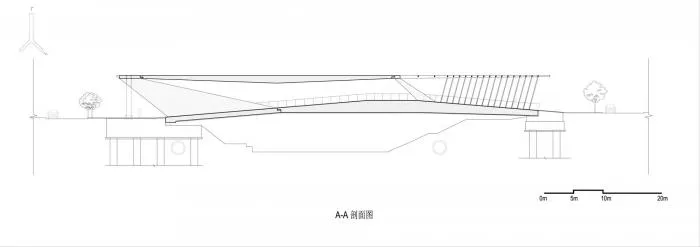
△ Section A-A turning diagram
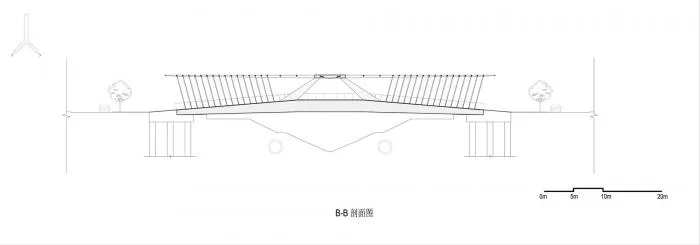
△ Section B-B turning diagram
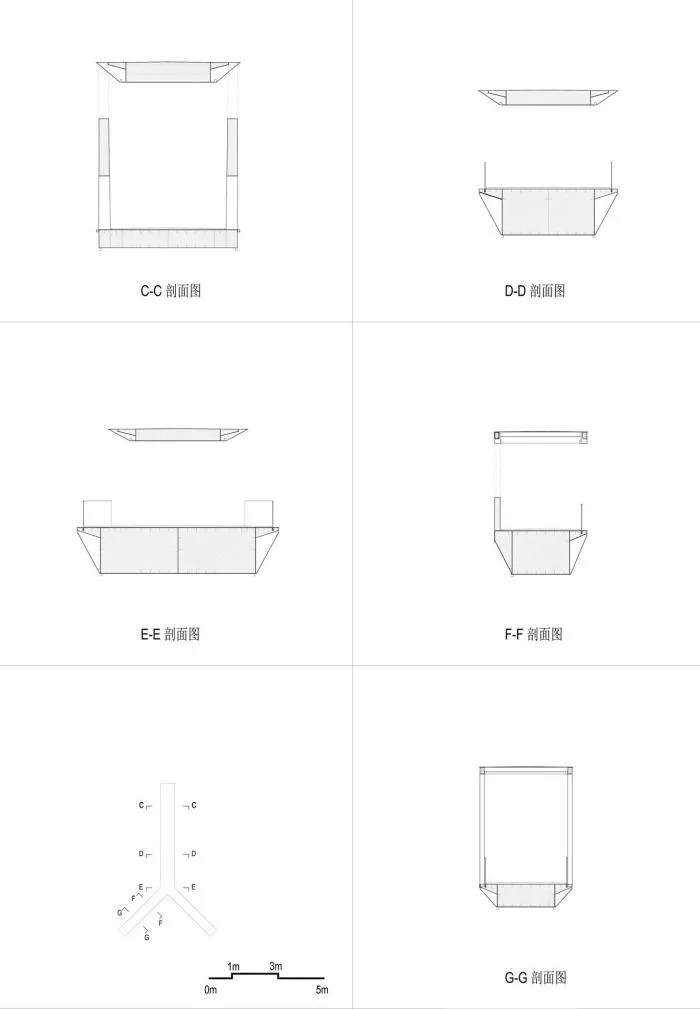
△ Short section diagram
Project Information
Project Type: Pedestrian Bridge
Location: Shenzhen, China
Designer: Nansha Original Architectural Design Studio
Area: 420 m²
Year: 2019
Photographers: Zhang Chao, Yongyu Chen
Design Team: Liu Heng, Wu Yijuan, Huang Jiebin, Zhang Shihan
Structural Consultant: Hezuo Structural Architecture Research Institute / Zhang Zhun
Structural Construction Drawings: China Municipal Engineering Northwest Design and Research Institute Co., Ltd
Lighting: Shenzhen Light Program
Landscape Design: Sipu (Shenzhen) Design Co., Ltd
Construction: China Construction Second Engineering Bureau
Owner: China Construction Water Environmental Protection Co., Ltd












Must log in before commenting!
Sign Up