
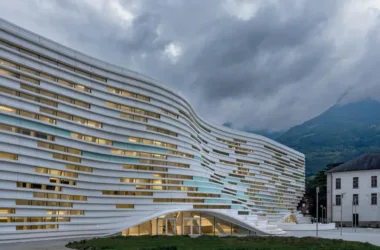
△ Construction site of the new campus of Valleda Osta University
Valleda Osta, located in Italy, is widely recognized for its world-class ski resorts such as Cervinia, Cumayel, and Pila. These destinations attract skiing, mountaineering, and skating enthusiasts from around the globe. The region is mountainous, featuring breathtaking natural landscapes and a rich cultural heritage deeply rooted in local traditions.
With a focus on environmental and human sustainability, the design of Valleda Osta University’s new campus takes inspiration from the layered form of icebergs. It harmoniously integrates with the natural ecological surroundings and contrasts with the snow-capped mountains, respecting the local environment and climate while emphasizing regional cultural identity.
Innovations in the campus structure and urban connectivity aim to minimize environmental and urban impact. The project aspires to deliver Italy’s first zero-energy buildings, setting a benchmark for modern urban development in the city of Osta.

△ Iceberg design concept inspiration
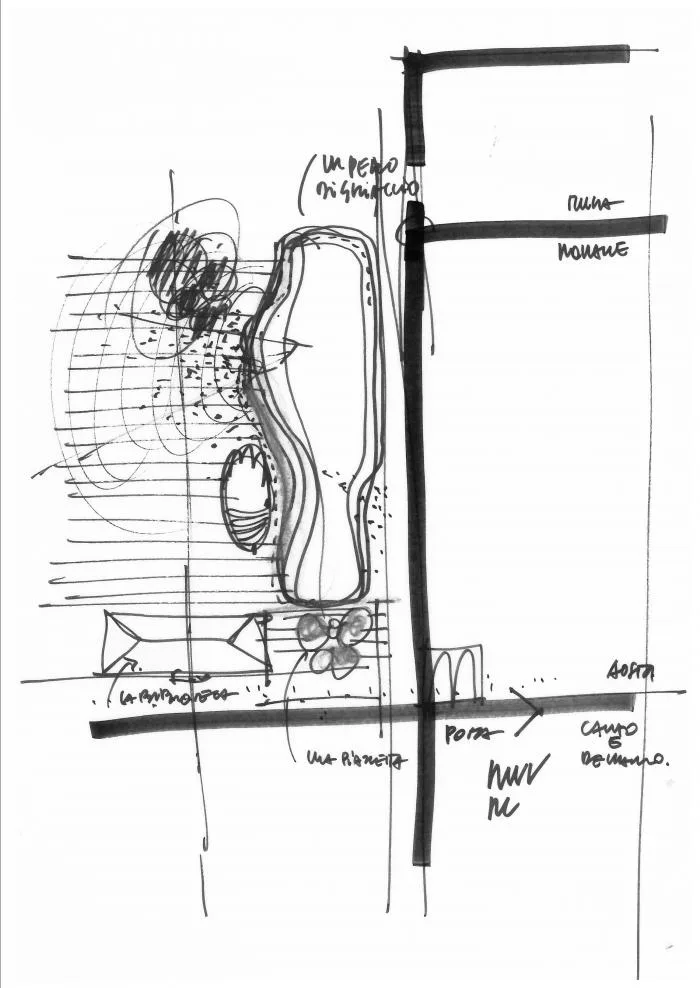
Concept sketch
Sustainability is central to the campus design, employing both active and passive strategies to enhance energy efficiency. By integrating advanced energy-saving technologies, the project successfully reduces energy consumption by at least 38% compared to similar facilities.
Socially, the campus extends beyond traditional academic functions by actively fulfilling social responsibilities. It fosters integration between the university and its surroundings, promoting a harmonious relationship between campus and city. This approach enhances urban structure, revitalizes the historic center, and supports sustainable development within Osta’s society and urban environment.
The design draws inspiration from plant biology, mimicking the independent yet interconnected nature of plant organisms. The campus strengthens cultural ambiance, expands green spaces, and integrates into a comprehensive urban green network. At the same time, it emphasizes functional autonomy for each building within this interconnected system.
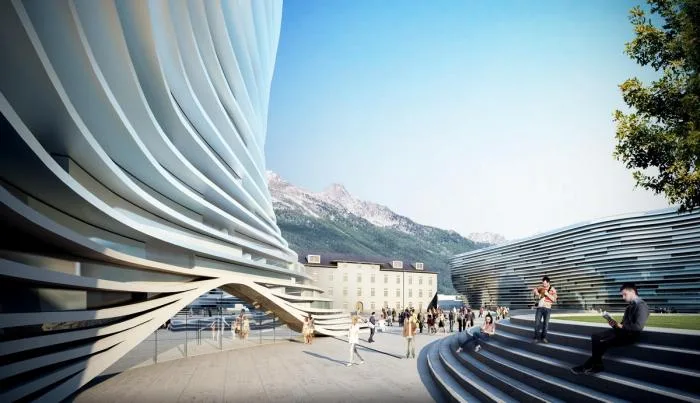
△ Square rendering
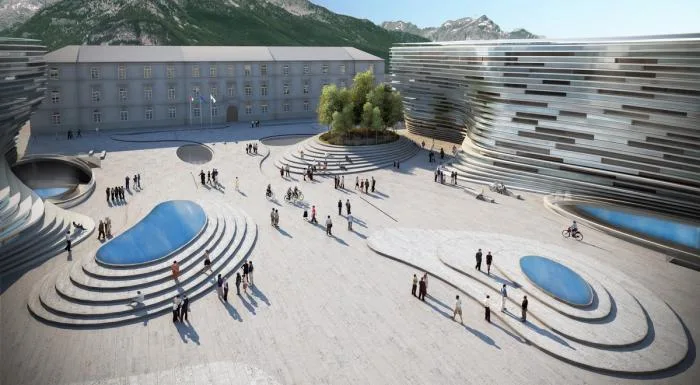
View overlooking the campus square
Smart Campus
Situated in the heart of Osta, the regional capital, the new Valleda Osta University campus occupies a former military camp site. It is bordered by Monte Pasubio to the north, Monte Solarolo to the east, Republic Square to the south, and Monte Vodice to the west. The project envisions an open urban campus through comprehensive planning that preserves and renovates historically significant buildings while introducing representative new structures.
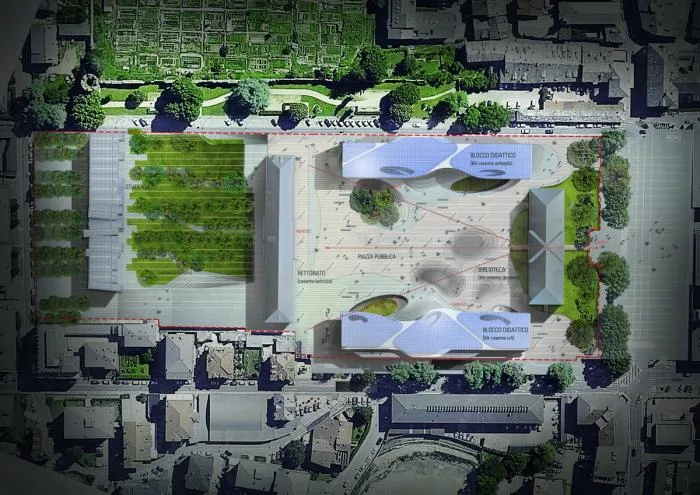
△ General layout plan
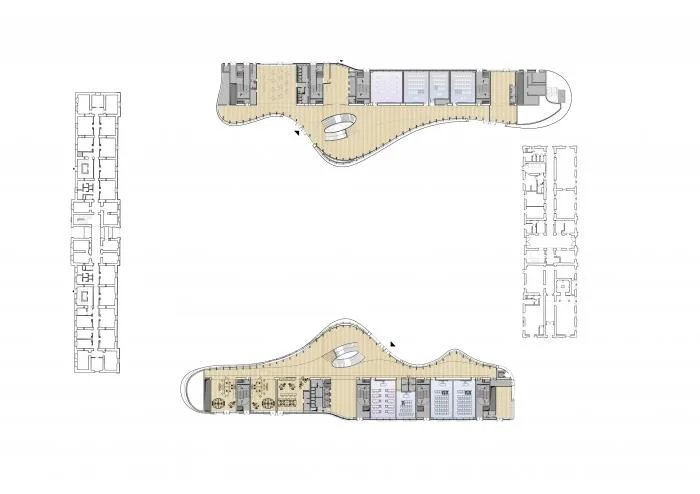
△ First floor plan
The iceberg concept breaks away from the rigidity of the original military architecture, honoring historical buildings and contributing to the city’s collective memory.
The design also reflects the organic interrelations found in plant life, creating campus buildings that are interconnected yet maintain individual autonomy while blending with the environment and urban context. Respecting the original site layout, the planning has been fundamentally reorganized with an organic approach.
This design fosters two-way communication and interaction, opening numerous public spaces to the city in a flexible and effective manner. It enhances both academic activities and urban public functions, generating significant social value.
Privacy levels of campus activities are carefully categorized and gradually opened to the city. The campus square serves as a buffer zone for social and academic events, blurring boundaries between inside and outside and encouraging interaction between campus and urban life. Public facilities such as sports venues and conference centers are accessible for community use, maximizing facility utilization, contributing back to society, boosting urban vitality, and supporting a high-quality urban lifestyle.
Equipped with advanced intelligent systems, the campus is designed for future expansion, simplifying student services and facility management, while prioritizing a people-centered campus experience.
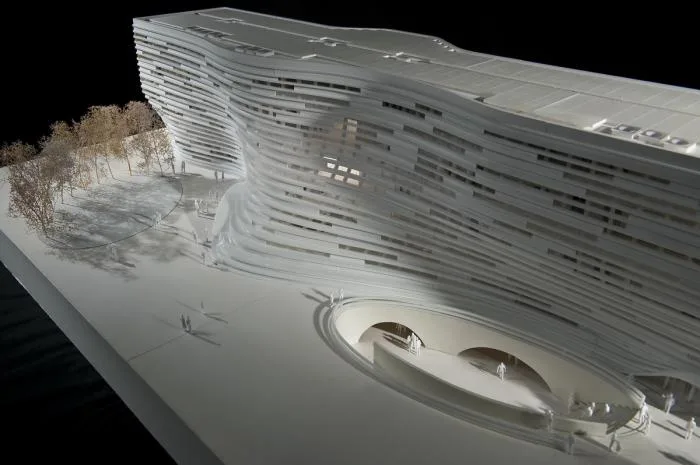
△ Model
Sustainable Campus Development
The campus planning is grounded in sustainability, addressing both environmental and social impacts. The open campus concept positions the university as a core urban structure, expanding its social functions, sharing resources, and fostering close connections between the school and the city.
By building educational communities that prioritize energy efficiency, resource protection, and environmental quality, the project promotes sustainable development across education, environment, and urban realms.
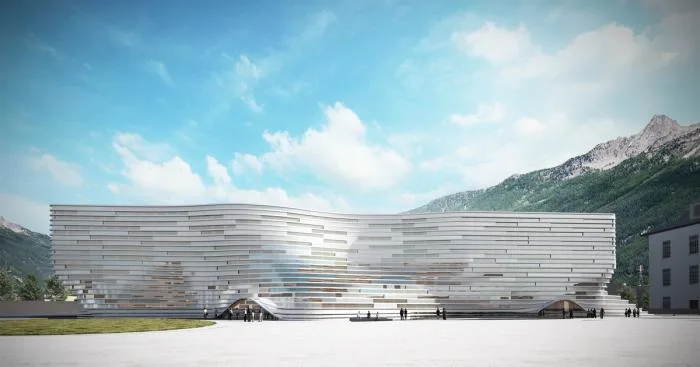
△ Teaching building facade
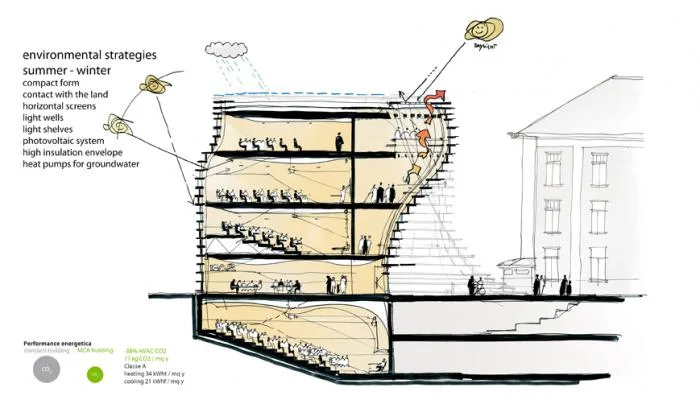
Environmental Energy Strategy Analysis
A thorough study of the local climate informs the design, including solar paths, shading, and prevailing winds, to prevent the new buildings from negatively affecting sunlight access for neighboring structures. The building forms are crafted to meet climatic and environmental needs while maintaining aesthetic appeal.
The facade combines glass and opaque panels to provide natural lighting and active shading, ensuring indoor comfort and giving the buildings distinctive external features.
Special attention is given to optimizing energy use efficiency with tailored solutions. Renewable energy technologies such as groundwater heat pumps, condensing boilers, photovoltaic panels, and solar thermal systems are integrated for mixed-use energy generation. This approach reduces building energy consumption, enhances cost-effectiveness, ensures optimal performance, and achieves high environmental quality standards.
Compared to traditional natural gas heating, the use of renewable energy significantly lowers emissions of pollutants and greenhouse gases.
Rainwater is collected and stored in underground tanks for cleaning and irrigation purposes. An efficient irrigation system minimizes water waste. During construction, measures are implemented to reduce dust dispersion on-site.
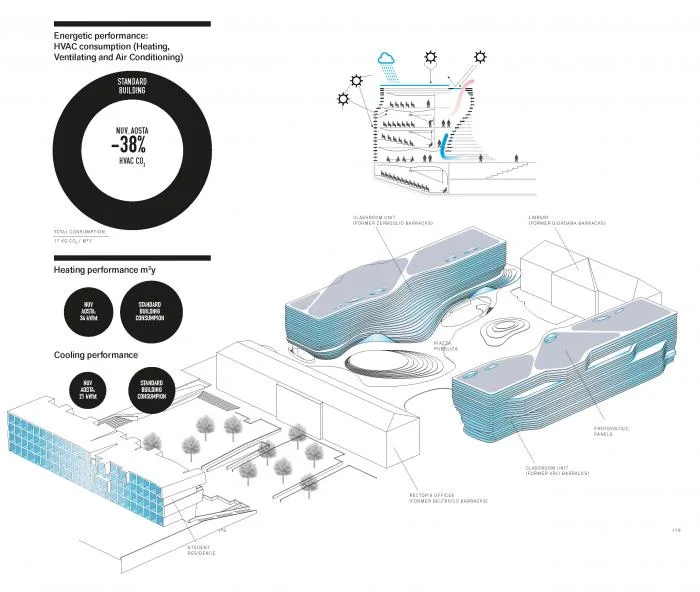
Climate analysis and energy performance
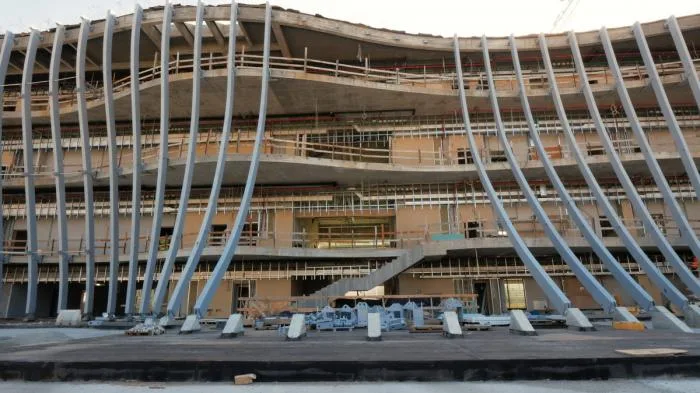
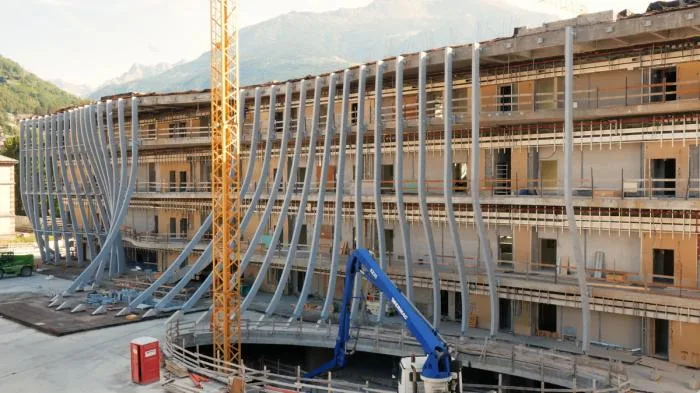
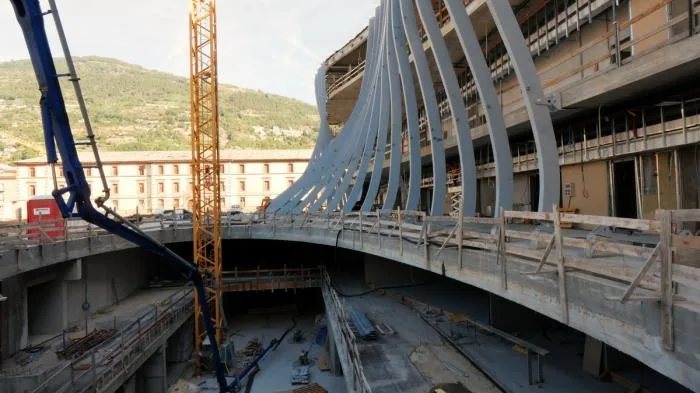
△ Construction site
The new campus of Valleda Osta University is currently under active construction.
From initial concept through implementation, the project employs numerous energy-saving strategies and embraces an open design philosophy that integrates seamlessly with the city. It speaks for the environment through architectural expression and balances history with modernity, centering regional climate and cultural values within a sustainable development framework.
As one of Italy’s first zero-energy building projects, it is poised to become a new cultural landmark within the city of Osta.
Project Information
Location: Osta, Italy
Type: Commissioned Design
Timeline: 2011 – ongoing construction
Project Owner: NUV – Nuova Università ValleValdostana
Architectural Design and Project Management: MC A Architectural Firm and Pession Studio Associate
MC A Team: Mario Cucinella, Giulio Desiderio, Michele Olivieri, Julissa Gutarra, Nada Balestri, David Hirsh, Rigoberto Arambula, Fabrizio Bonatti, Luca Stramigioli, Davide Stolfi, Giulia Pentella, Alberto Bruno, Yuri Costantini
Structural Engineering: Sintecna
Construction Services Engineering: Golder Associates – Metec & Saggese – Energy Services
Acoustic Engineering: Onleco
Fire Protection Design: GAE Engineering
Visual Effects: Engram Studio
Art Direction: MC A, Giulio Desiderio, Davide Stolfi












Must log in before commenting!
Sign Up