
Project Background
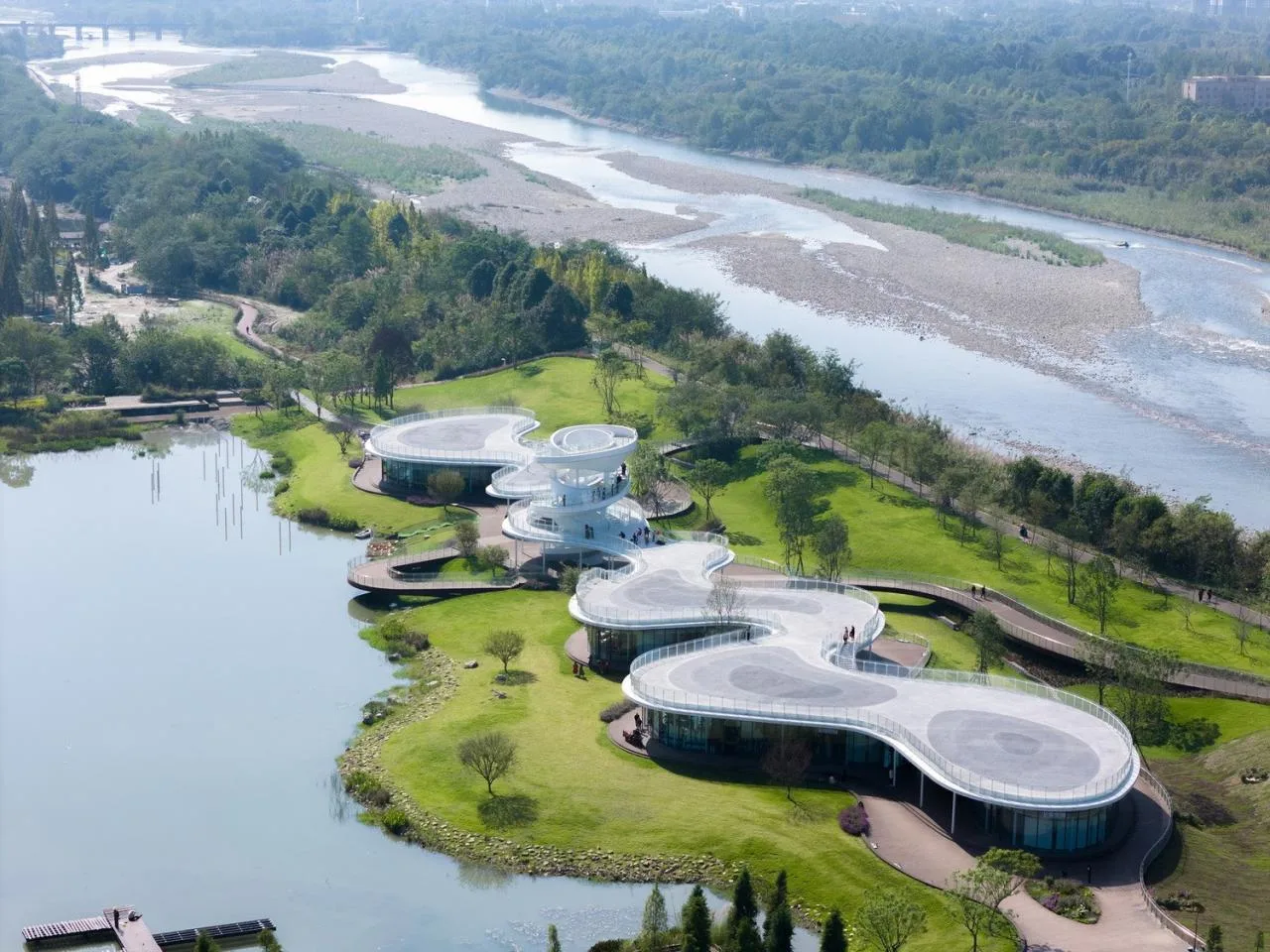
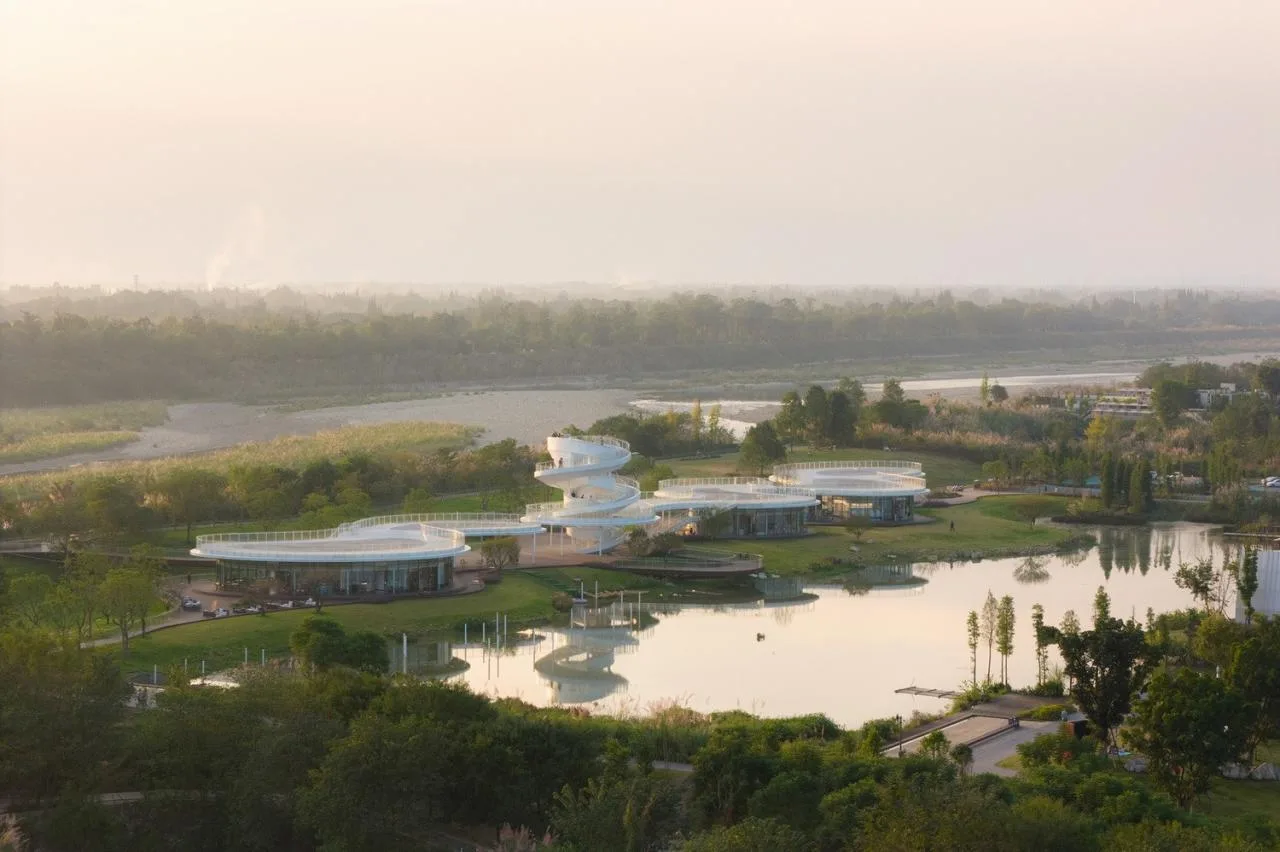
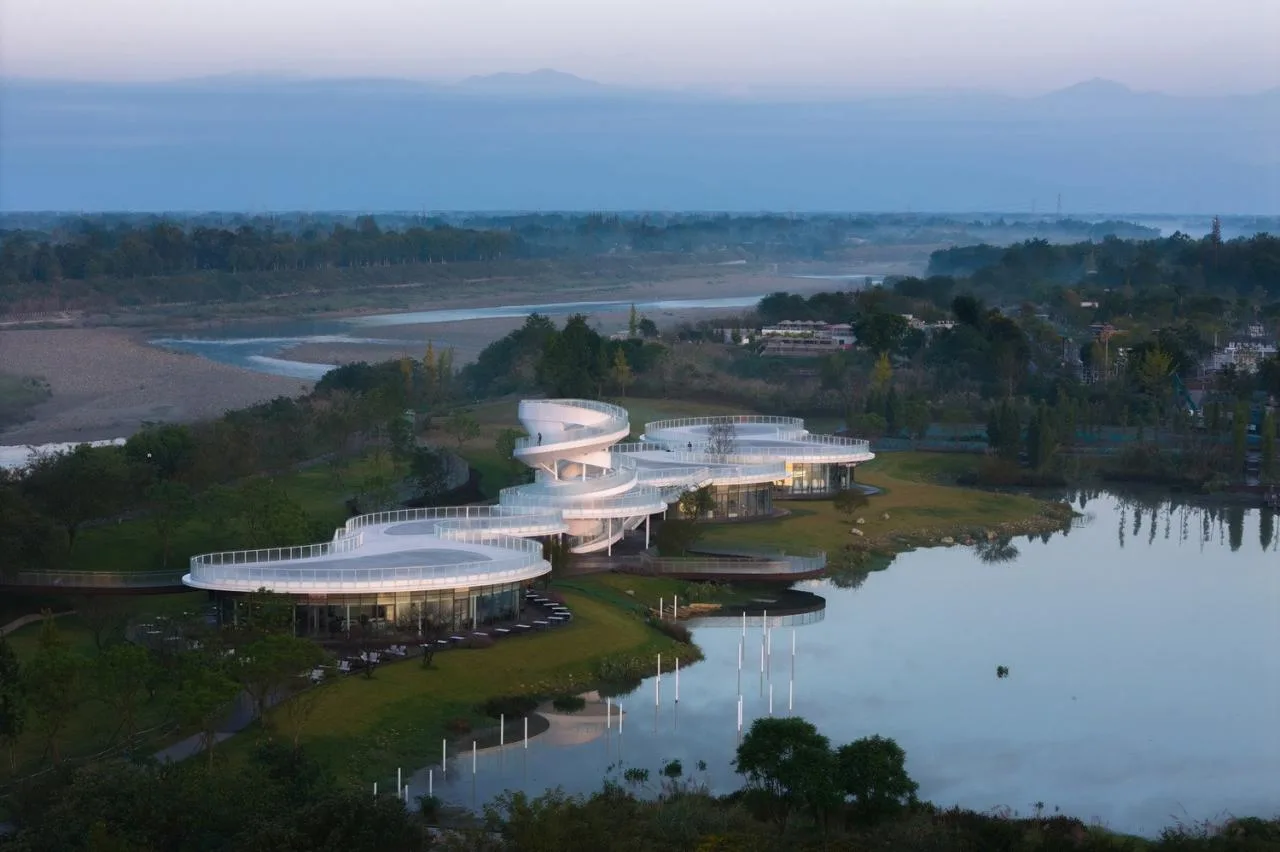
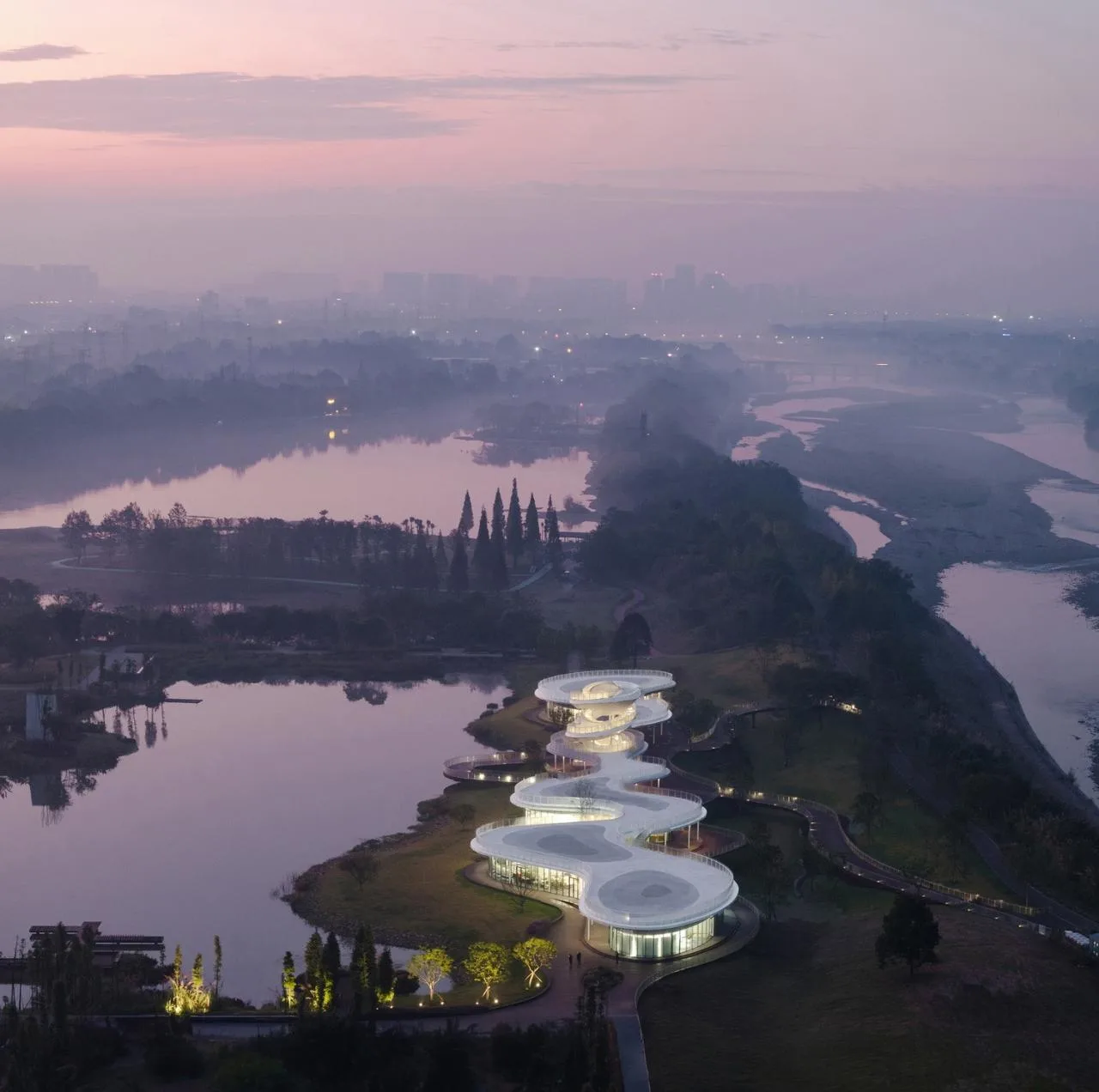
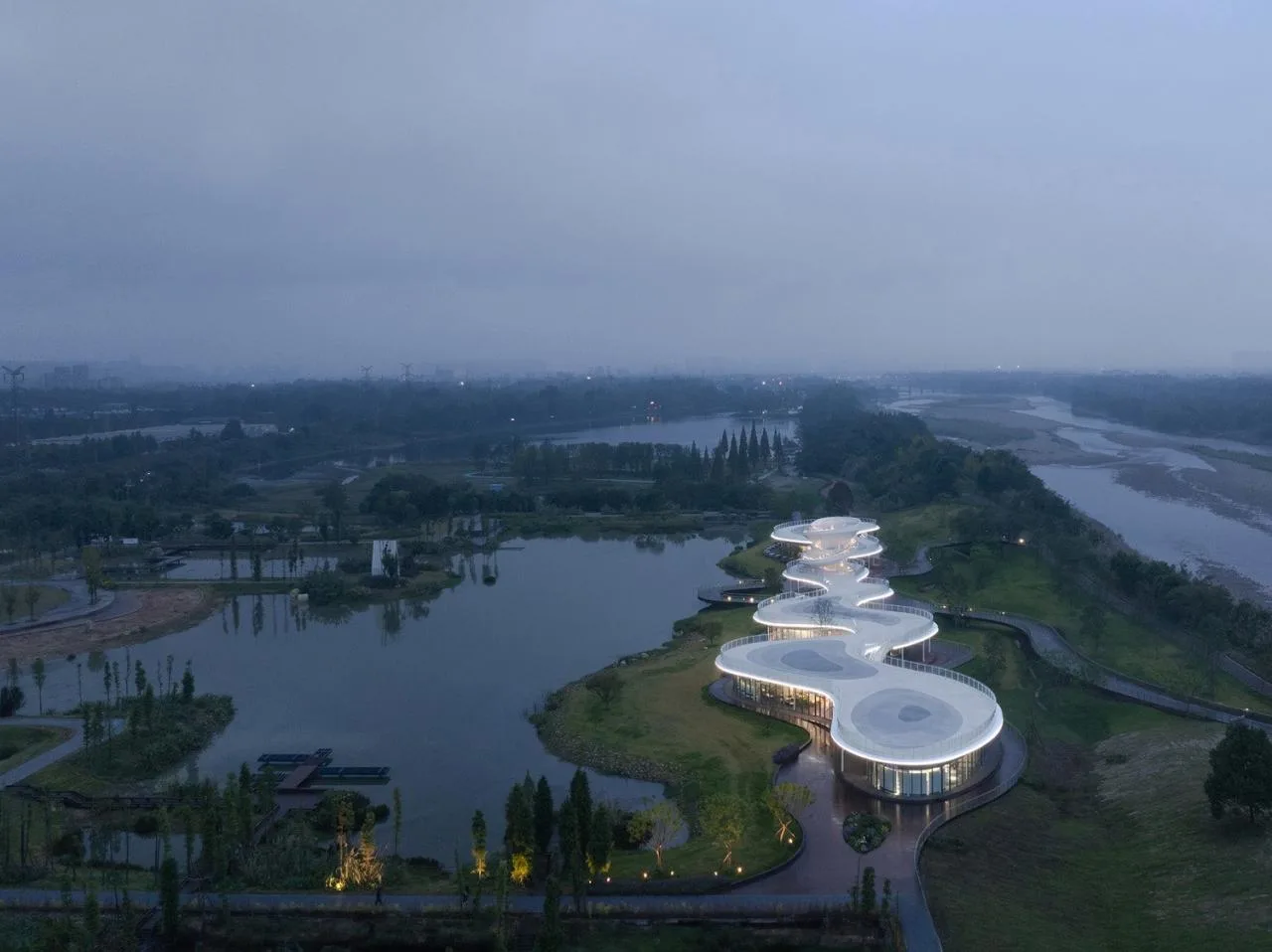
The “Fudao” – Lujiatan Wetland Park Commercial Service Center, designed and constructed by MUDA Architecture, is located in Wenjiang District, Chengdu. Wenjiang, the birthplace of the ancient Shu Yufu Kingdom and formerly known as “Liucheng,” boasts a rich historical heritage. Its prime location and abundant natural resources have long made it a place where culture and nature intertwine.
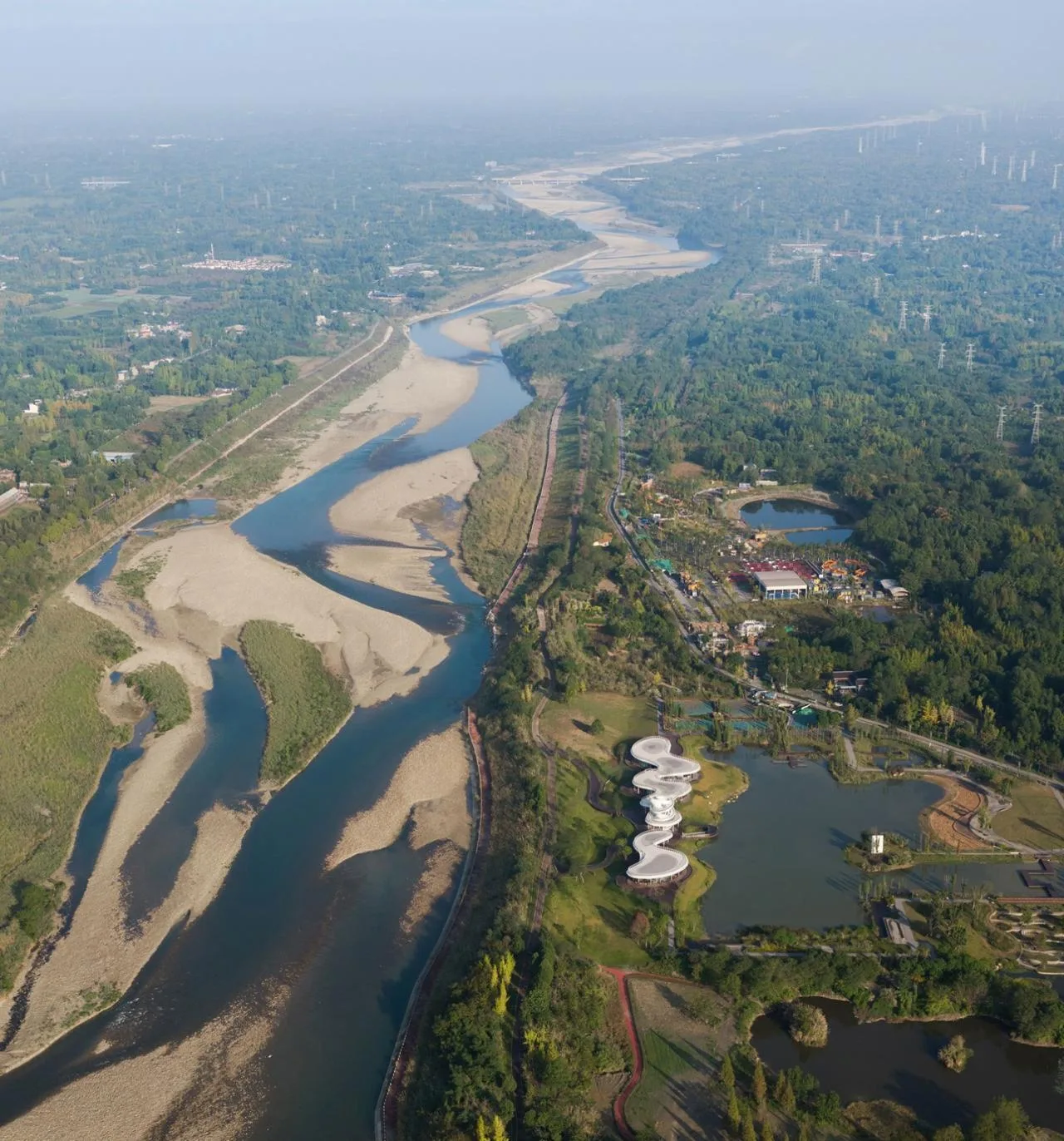
Lujiatan Wetland Park is characterized by two natural water systems, the Jinma River and the Minjiang River, with winding greenways that create a stunning ecological backdrop. In recent years, wetland parks have become popular retreats for Chengdu residents seeking relaxation, thanks to their unique natural beauty and convenient transportation access.
This project aims to seamlessly blend the wetland park’s natural assets with the historical and cultural identity of Wenjiang. By crafting a multifunctional space that combines commercial, ecological, and leisure elements, it breathes new public vitality into the city, offering visitors a sensory experience that harmonizes nature and modernity.
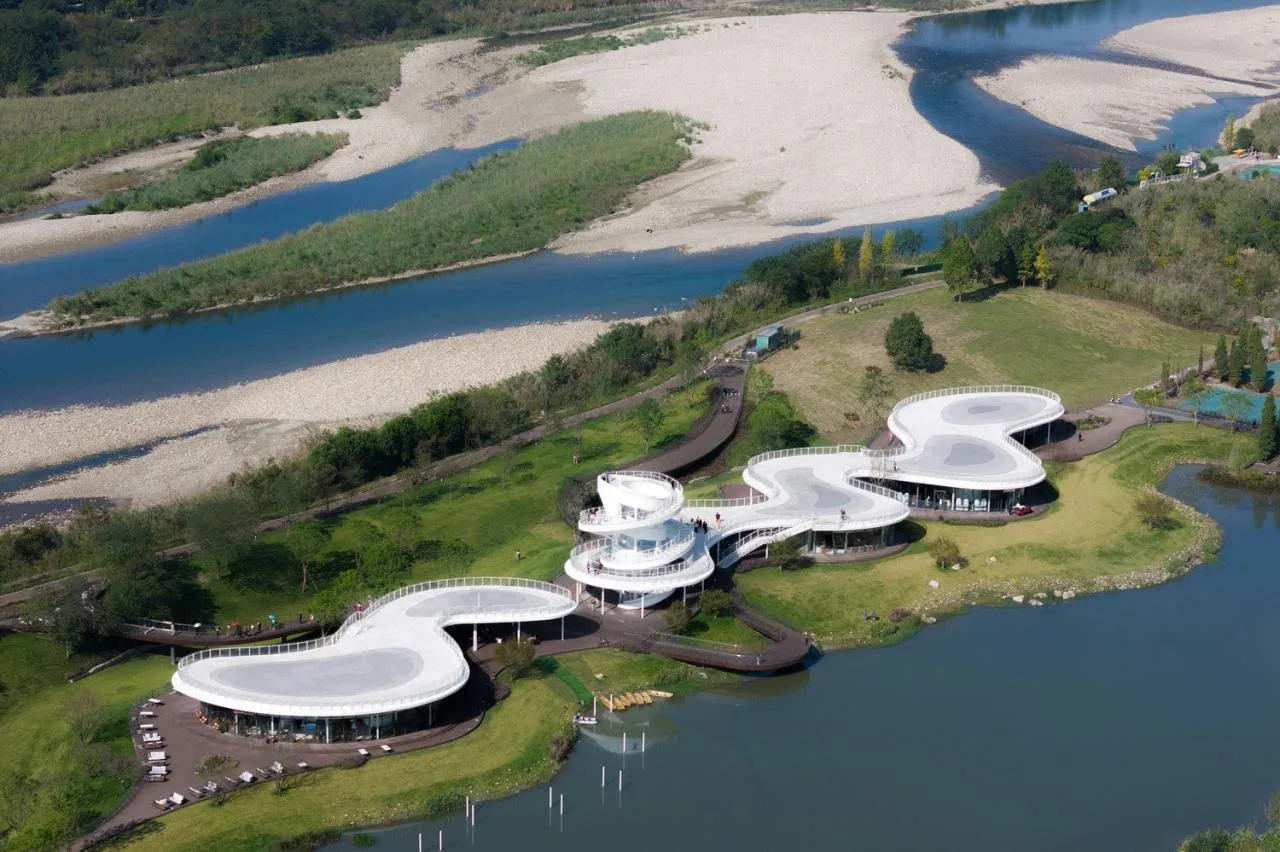
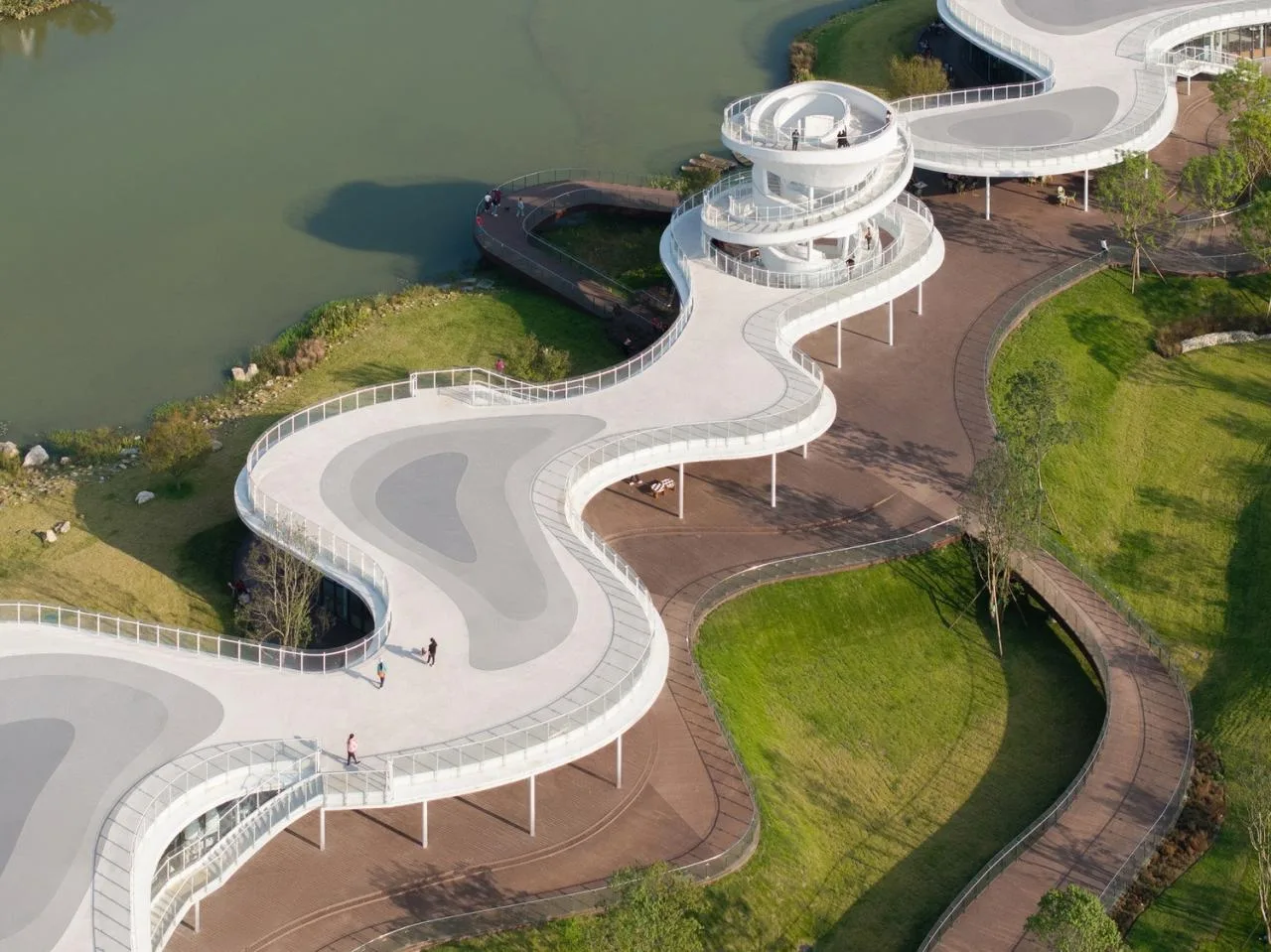
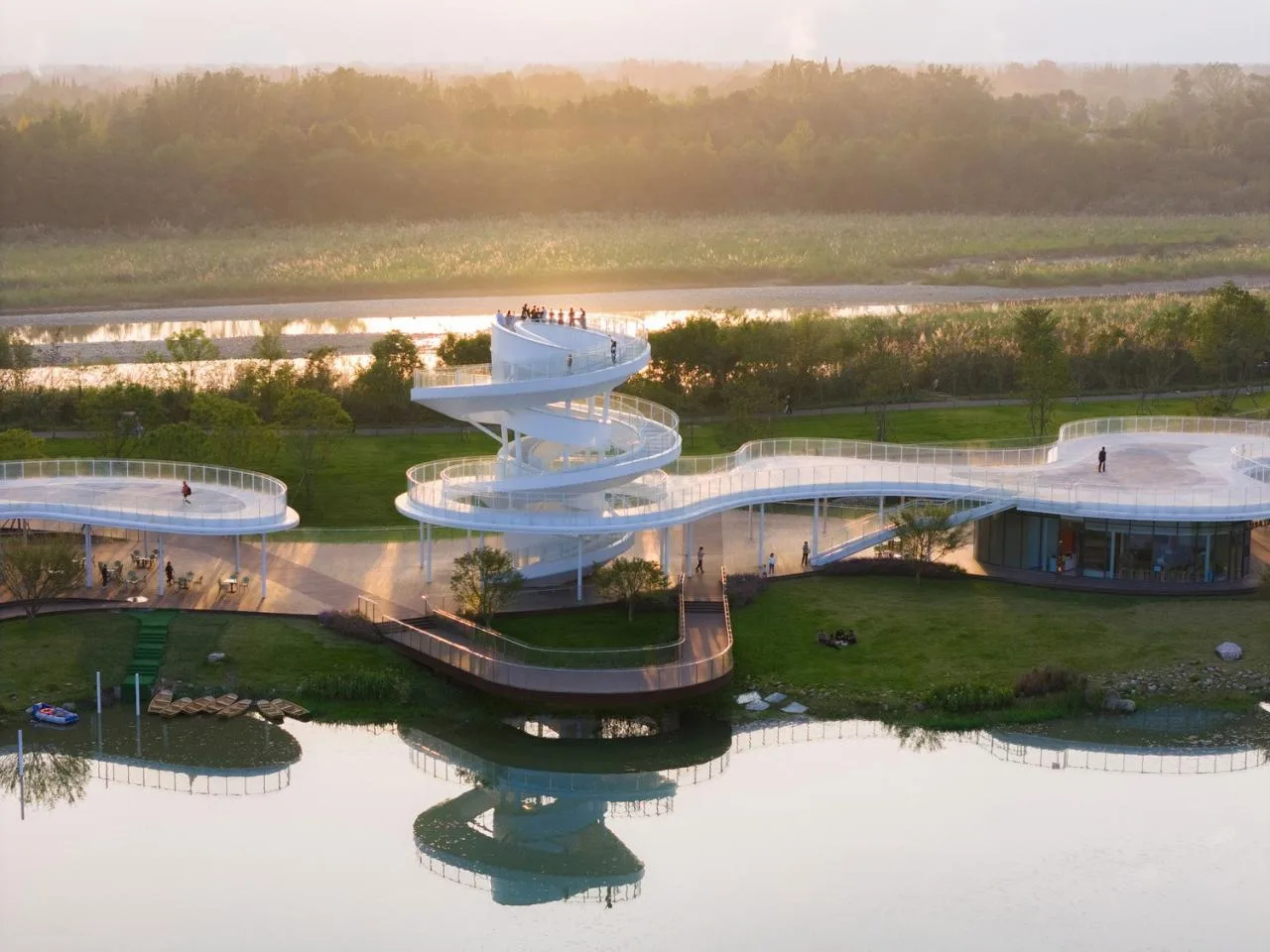
Translation of River Beach Texture
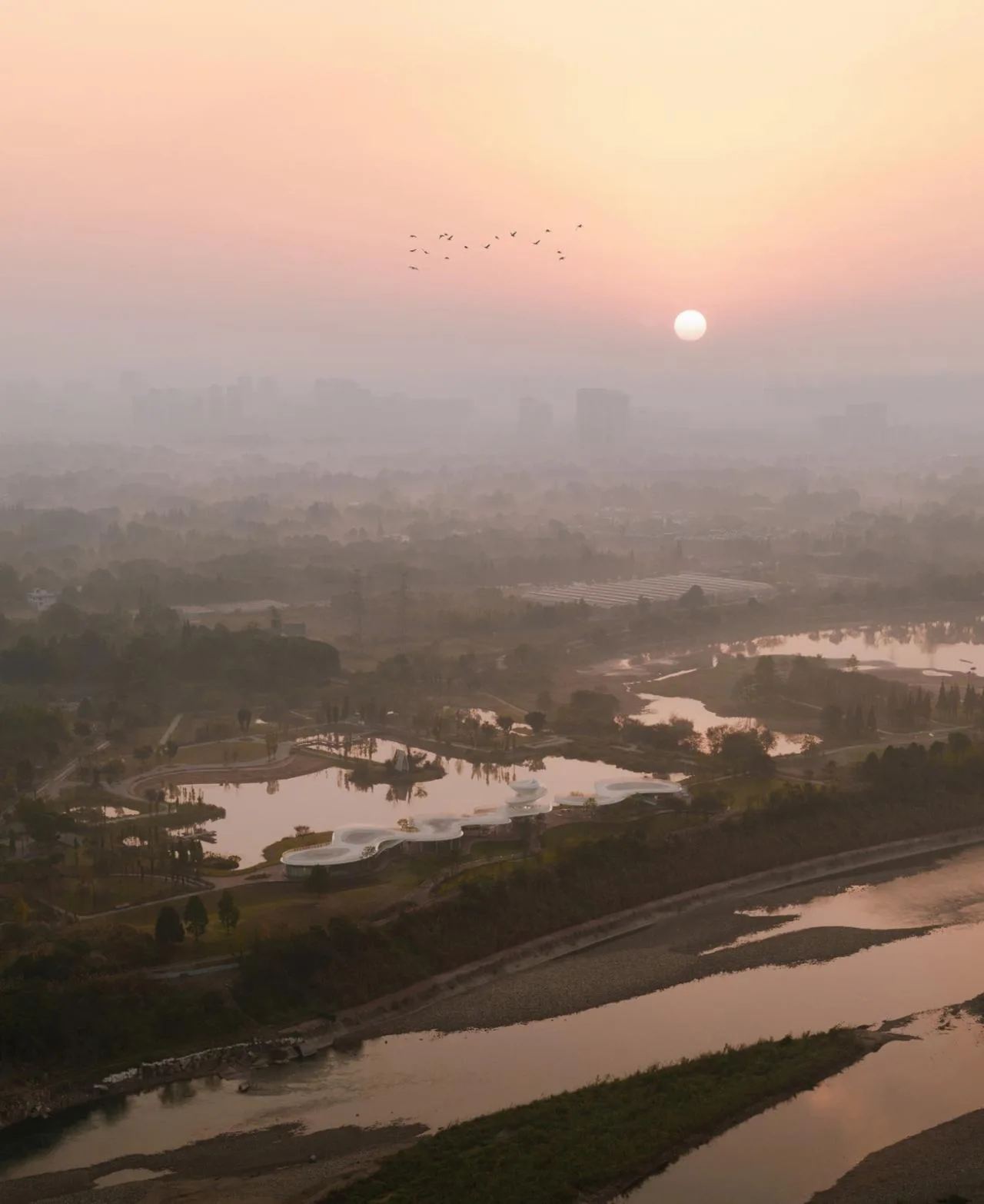
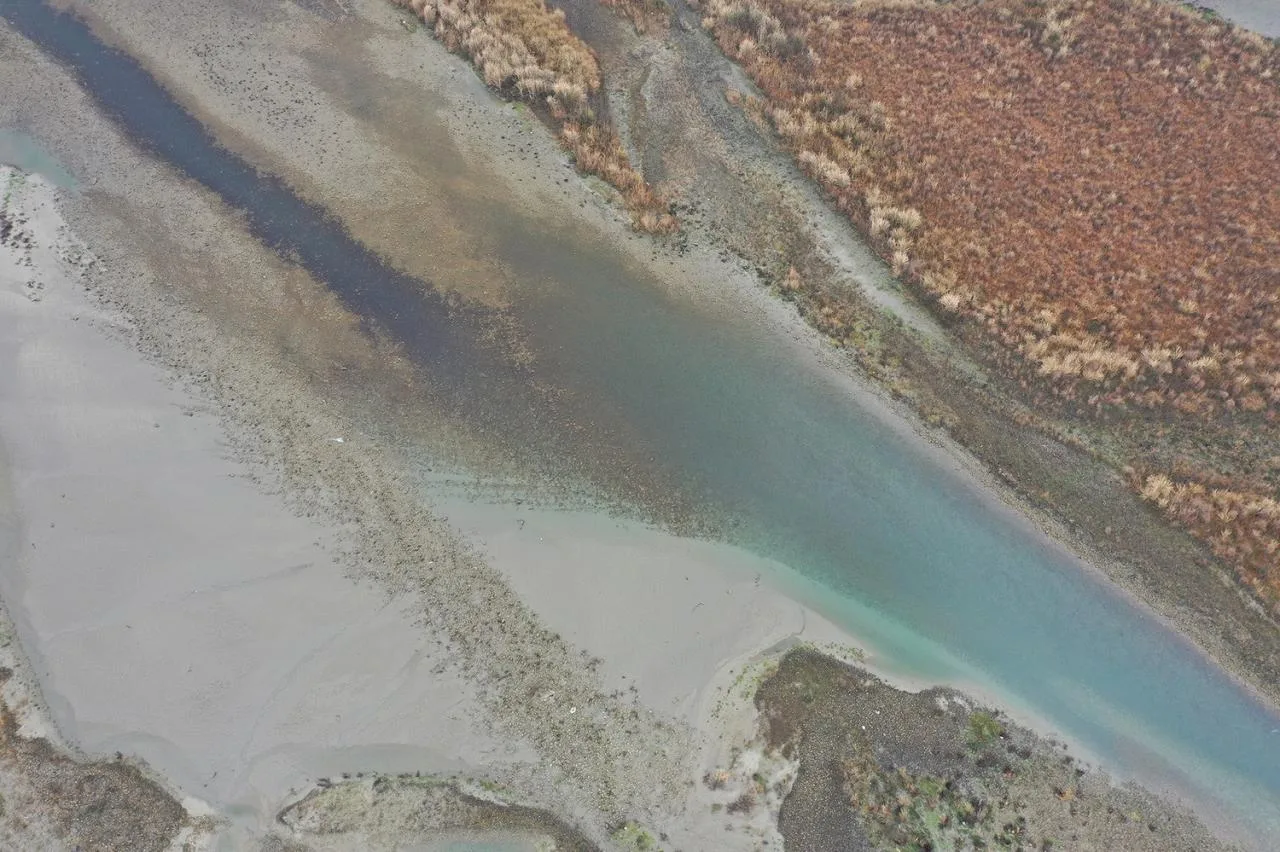
Rivers have long been the cradle of human civilization, their forms capturing the passage of time and natural transformation. The Jinma River, a key flood discharge channel of the Dujiangyan Irrigation Project and an important tributary of the Minjiang River, symbolizes the enduring connection between humans and nature.
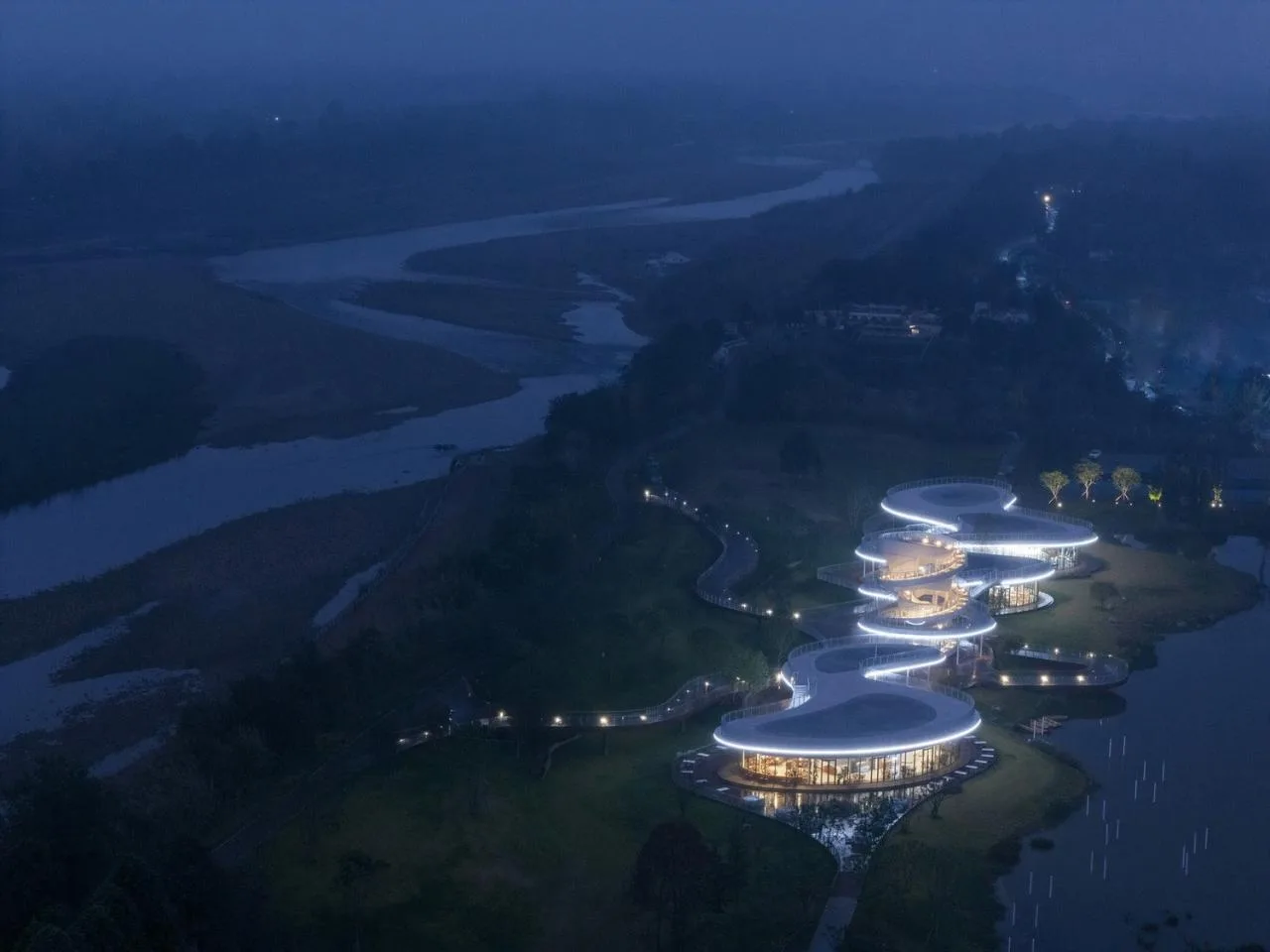
Drawing inspiration from the Jinma River’s texture, MUDA Architecture abstracts its flowing curves and rhythmic lines, integrating them into the building’s form. This approach marries modern design language with the ecological character of the site while showcasing Wenjiang’s unique cultural heritage.
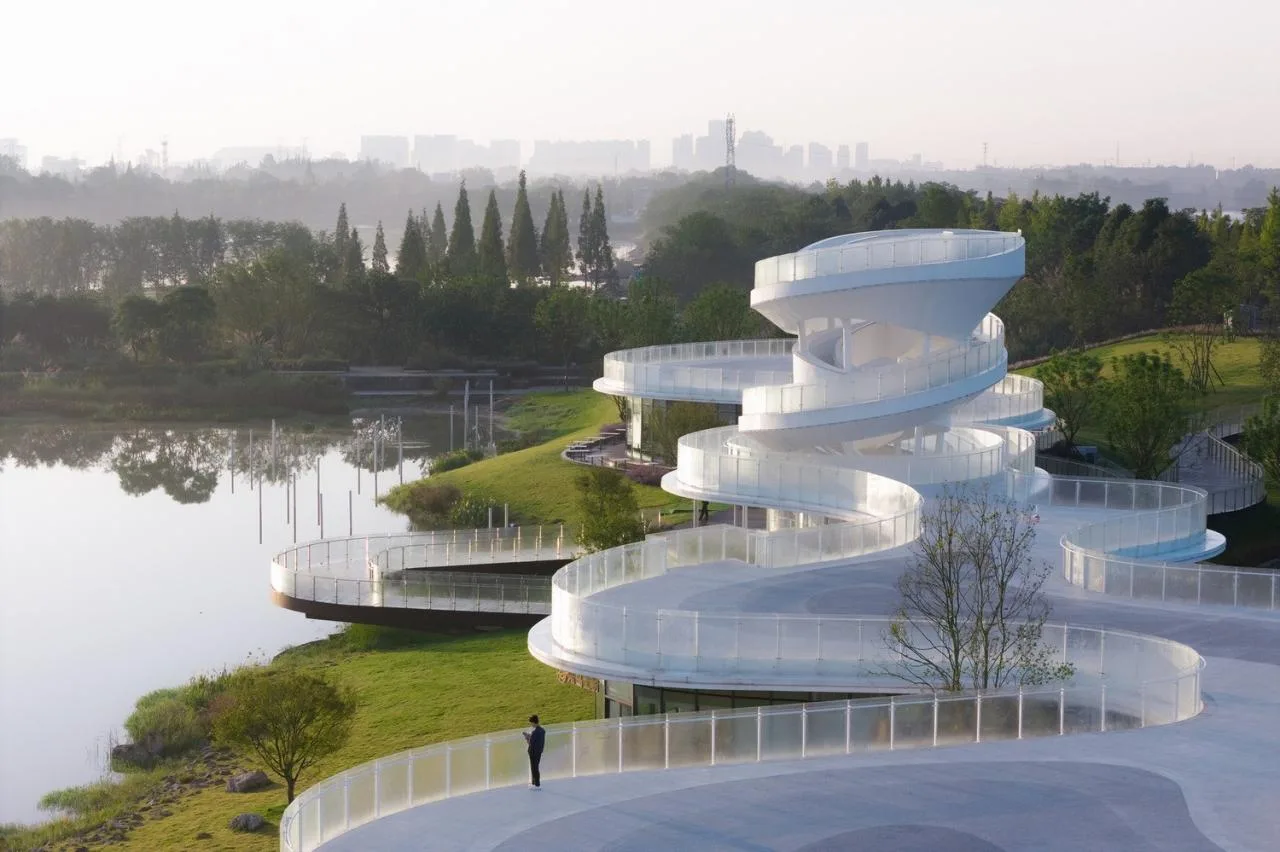
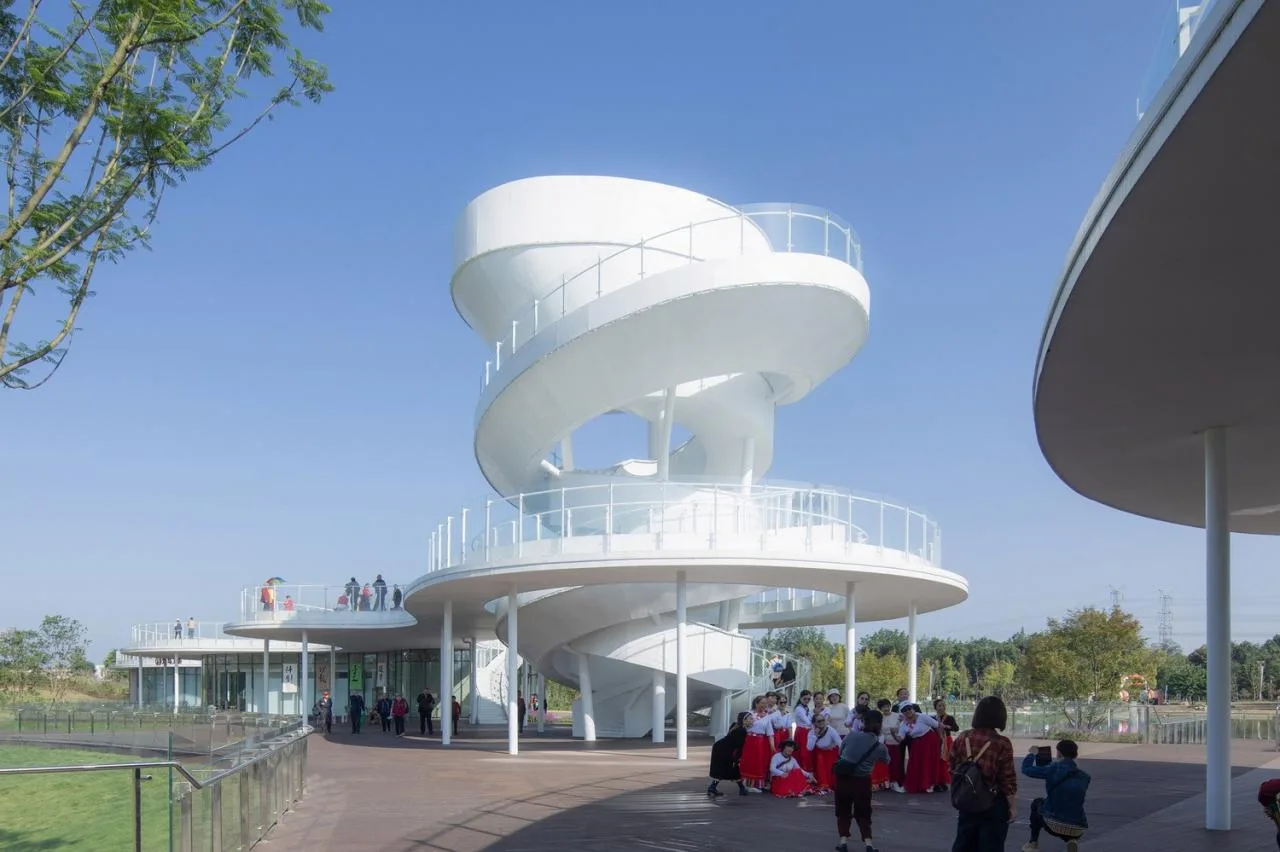
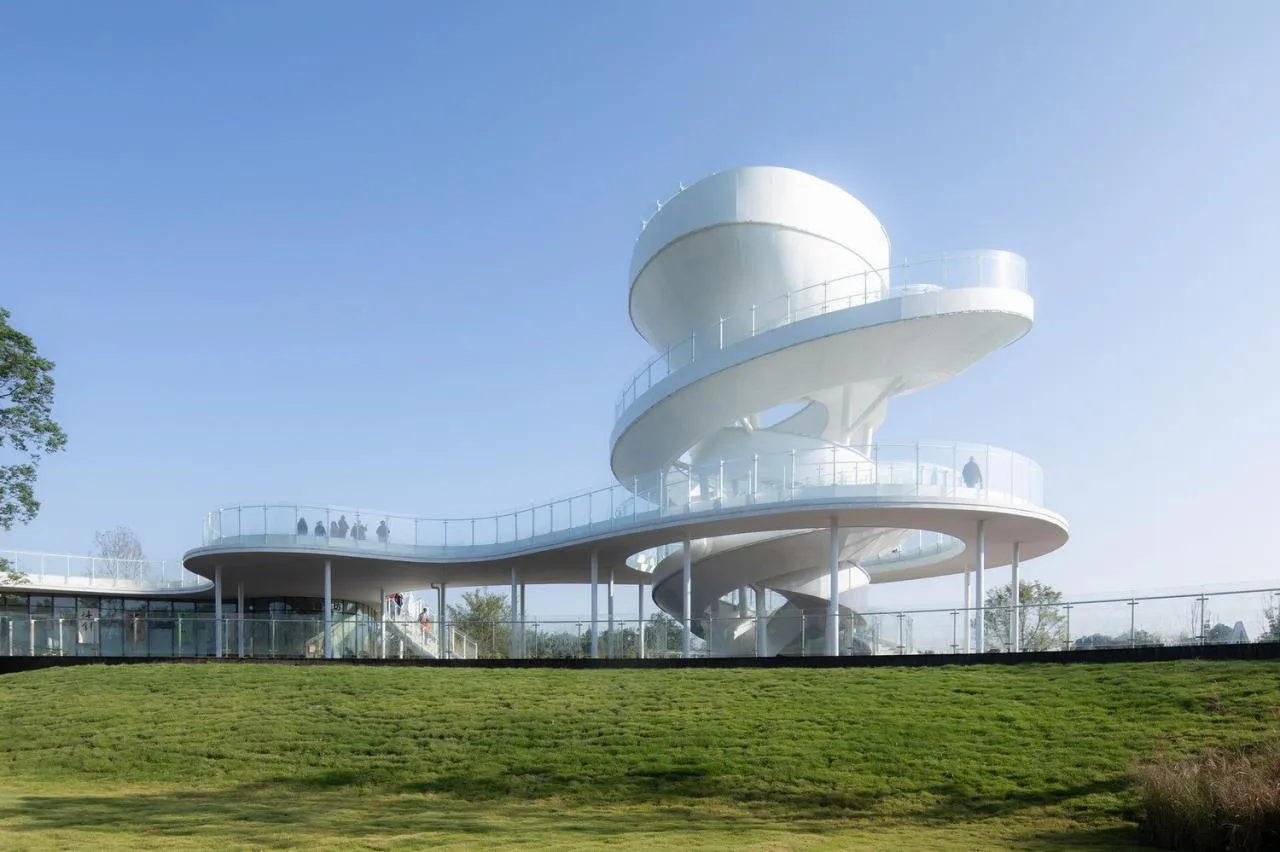
Blending Modernity and Regionalism
The project fosters a dialogue between nature and contemporary design, steering clear of simplistic symbolism or mere replication of traditional architecture. By abstracting natural elements, it delivers a modern interpretation of the site’s historical significance.
The design emphasizes lightness and ecological harmony, integrating the building organically with the surrounding wetland landscape. The result is a contemporary architectural landmark that resonates with the region.
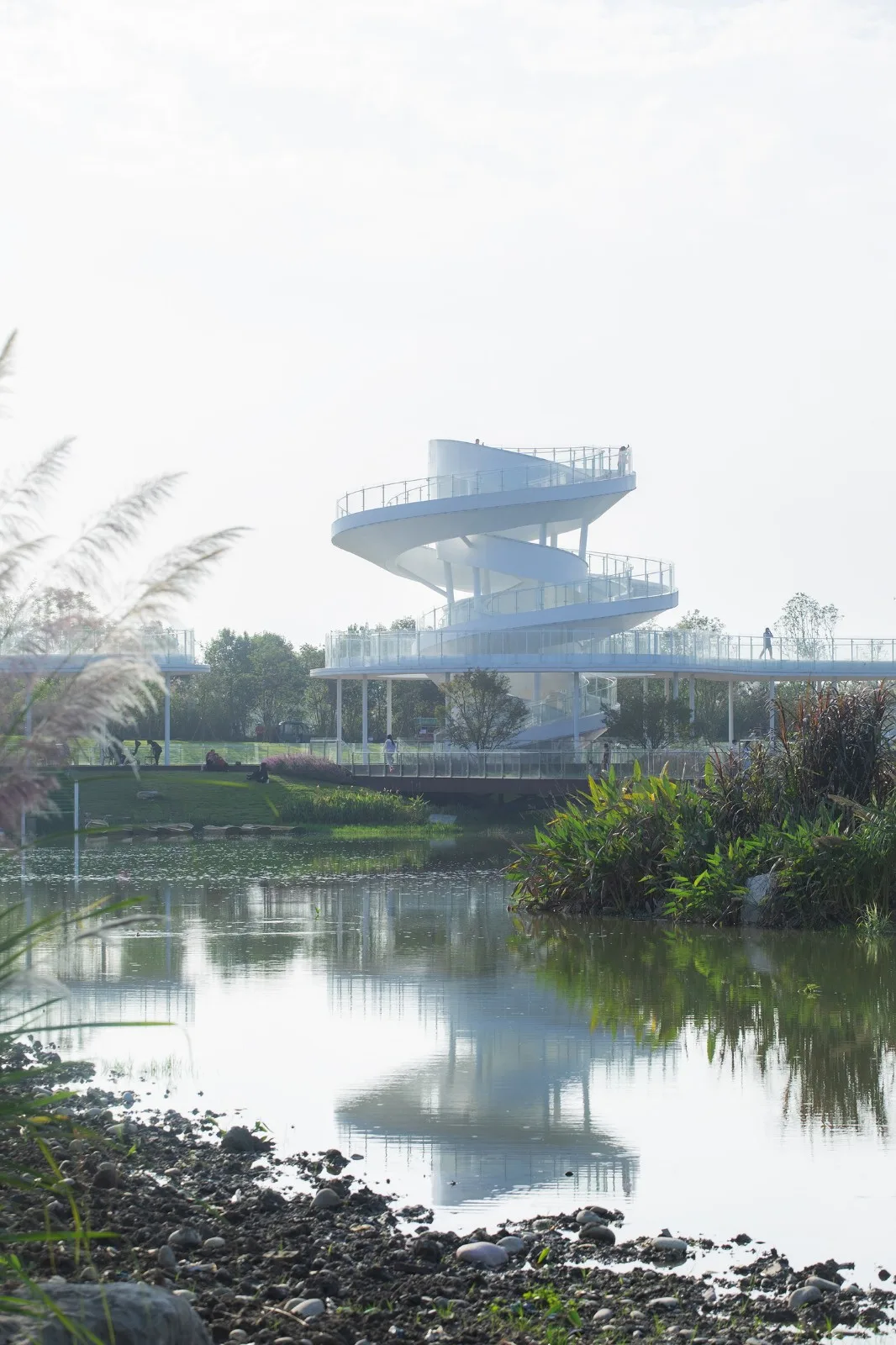
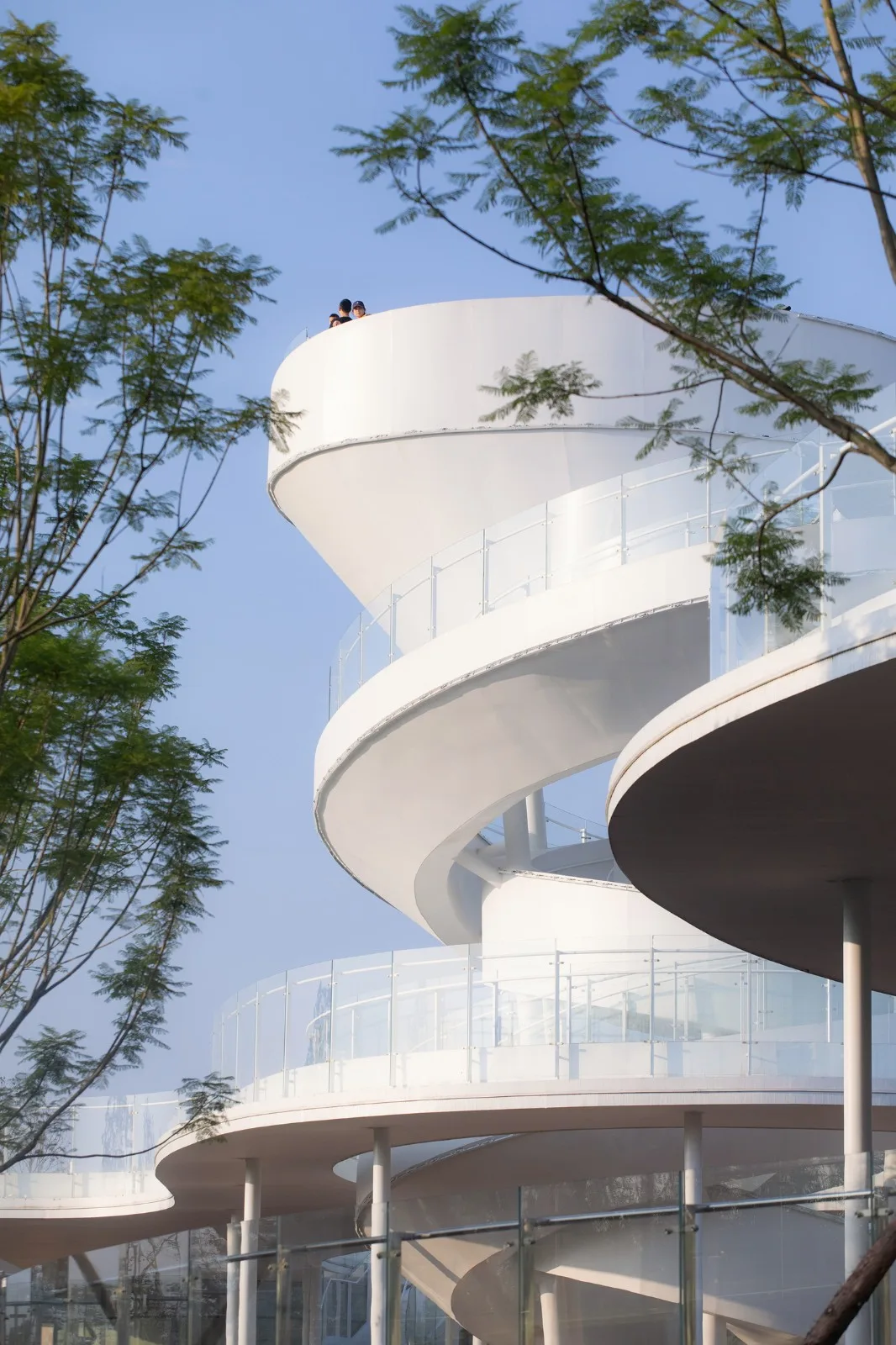
Symbiosis Between Architecture and Nature
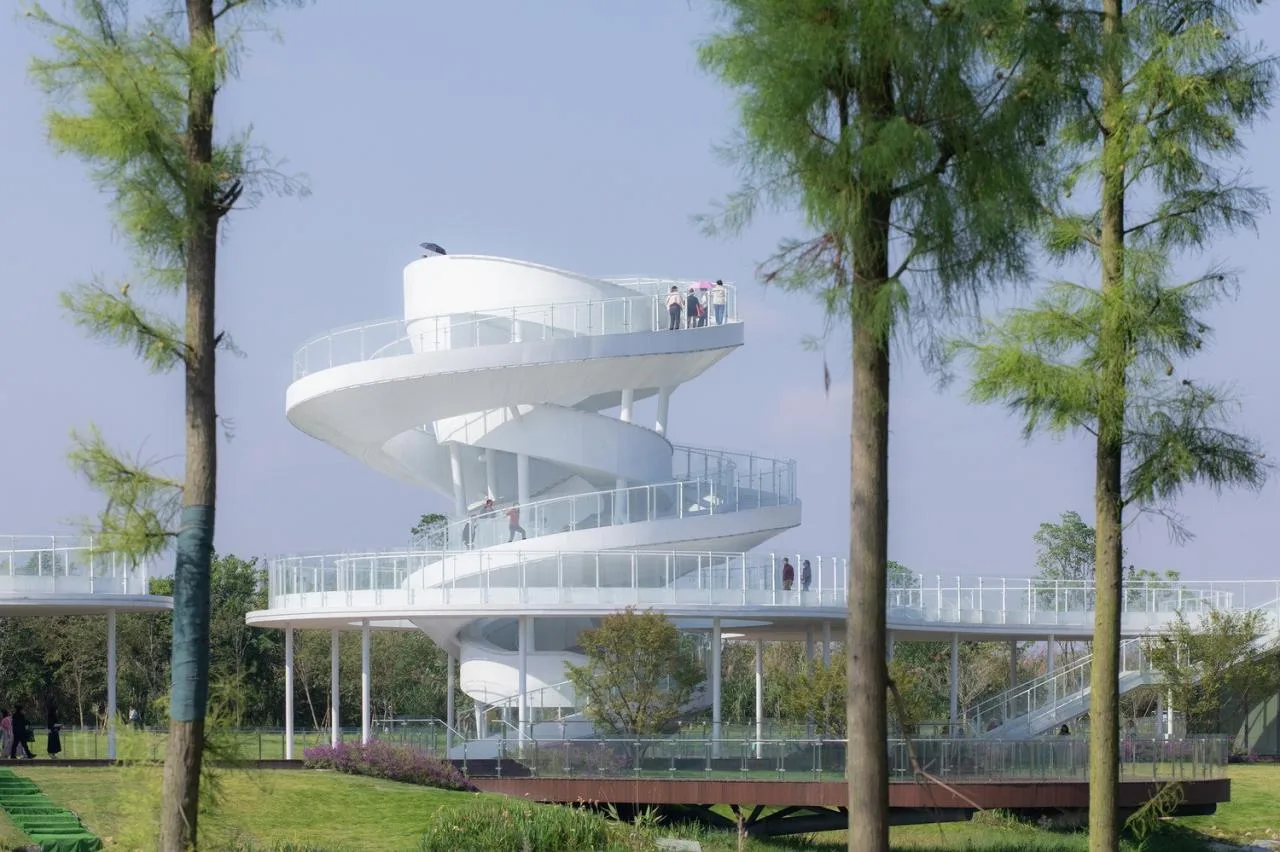
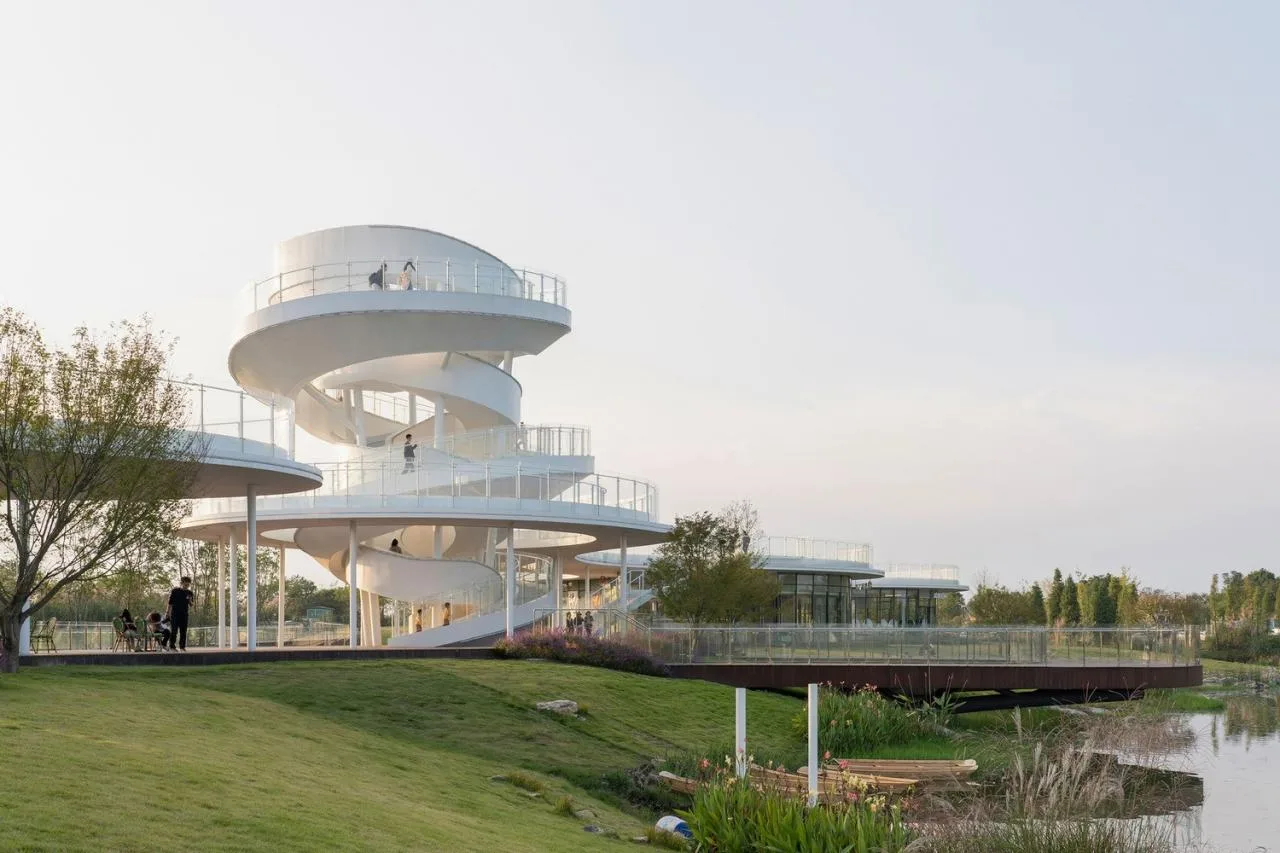
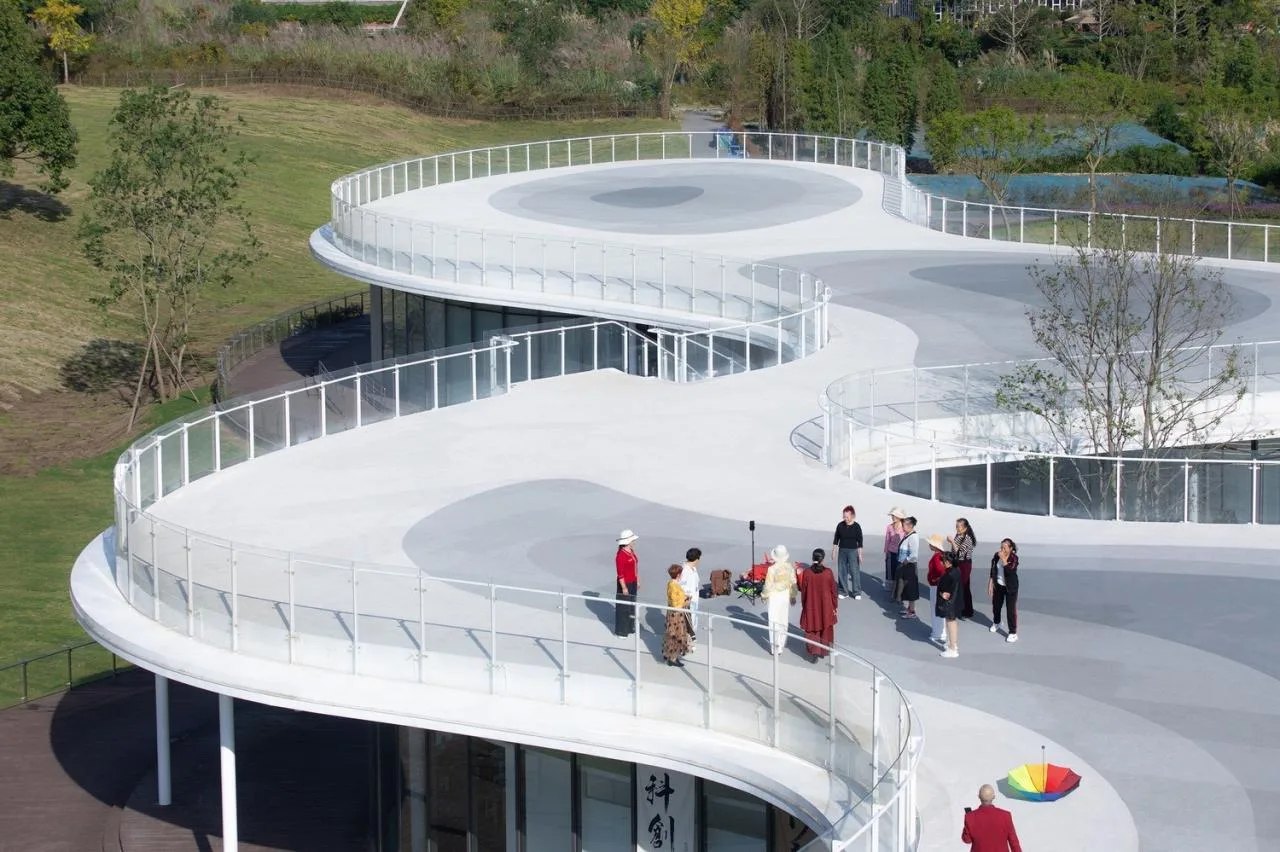
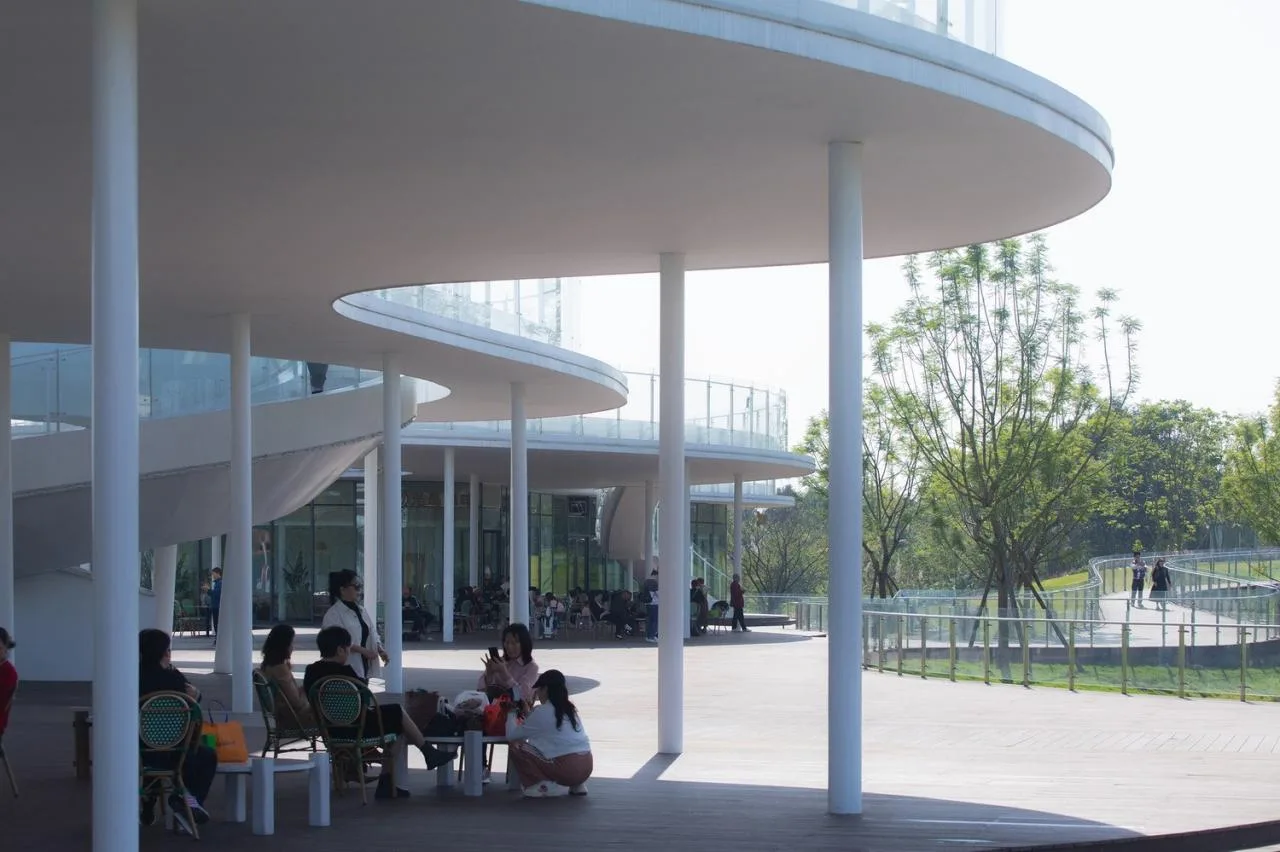
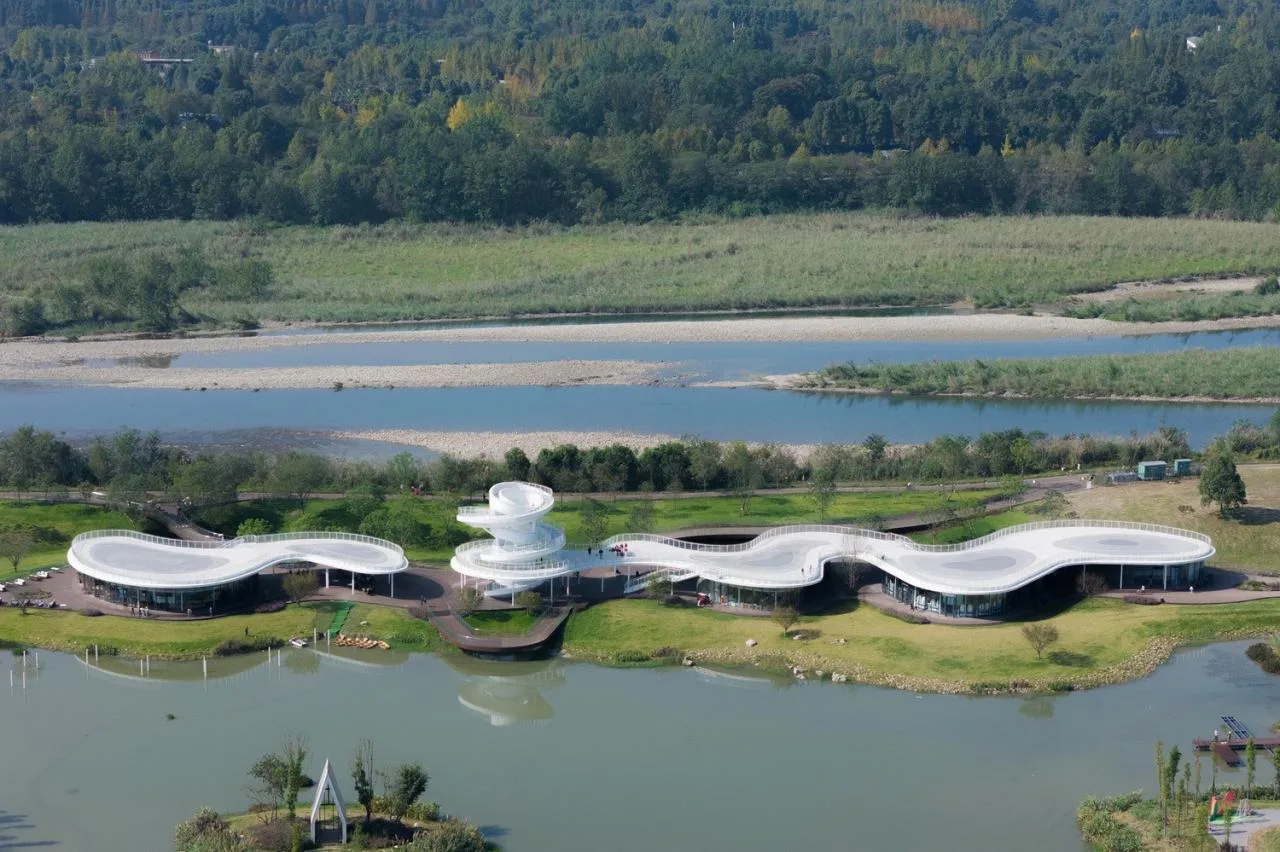
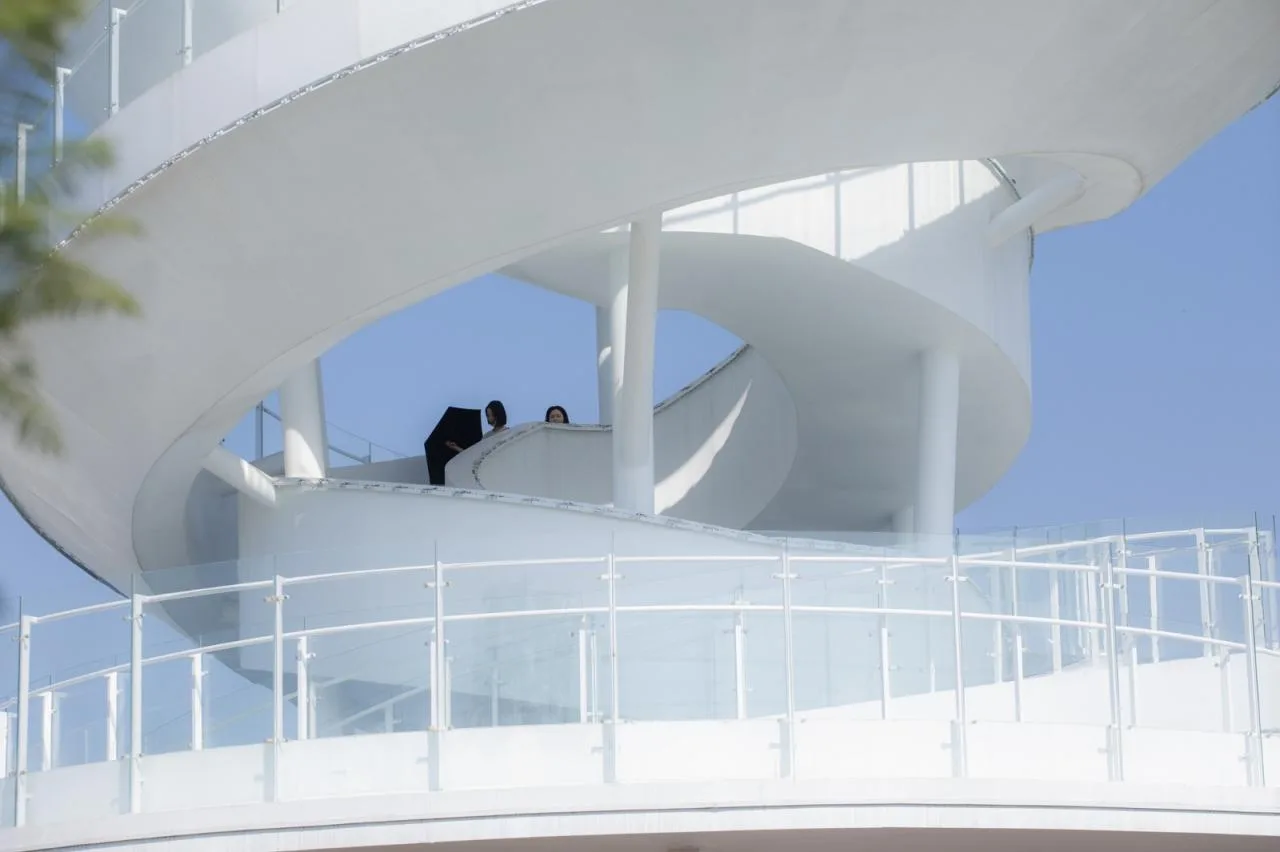
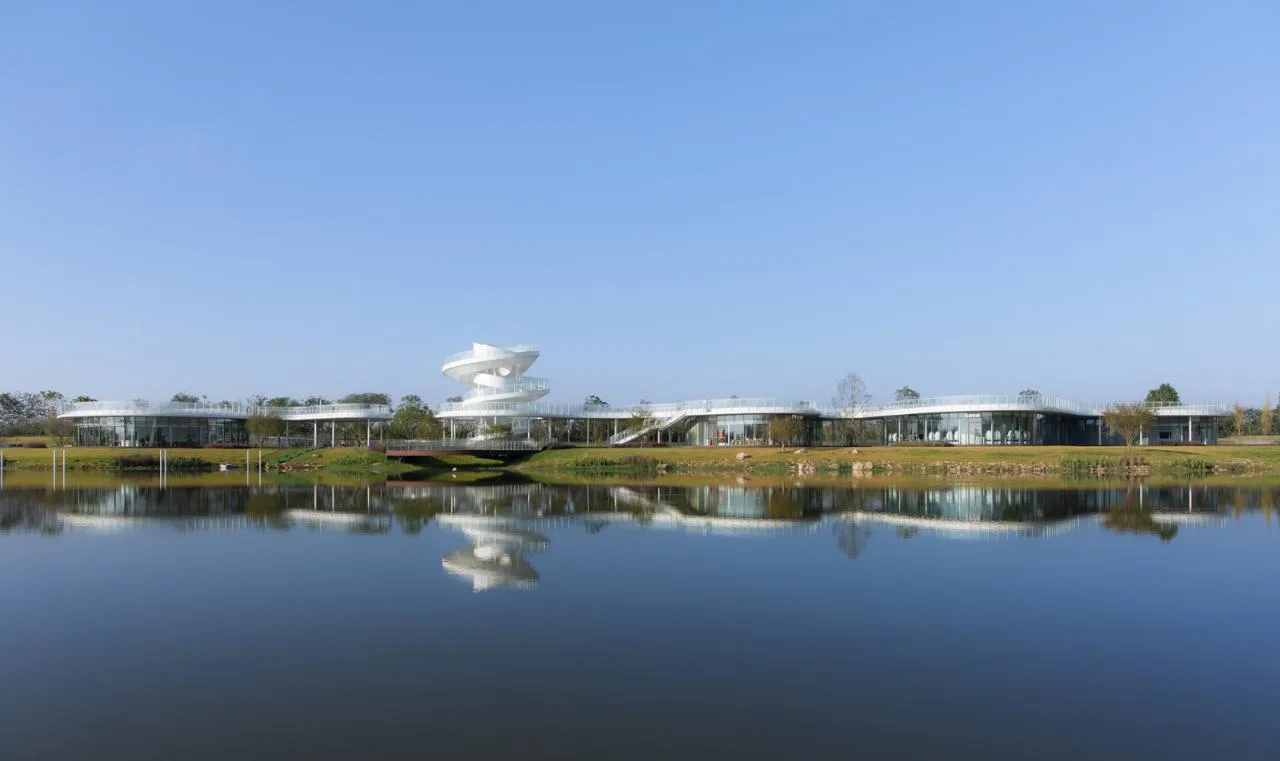
Inspired by the pavilion concept in traditional Chinese gardens, the design modernizes the relationship between the roof and columns to create a light, transparent architectural silhouette. The flowing curves stem from an abstract interpretation of the riverbank’s texture.
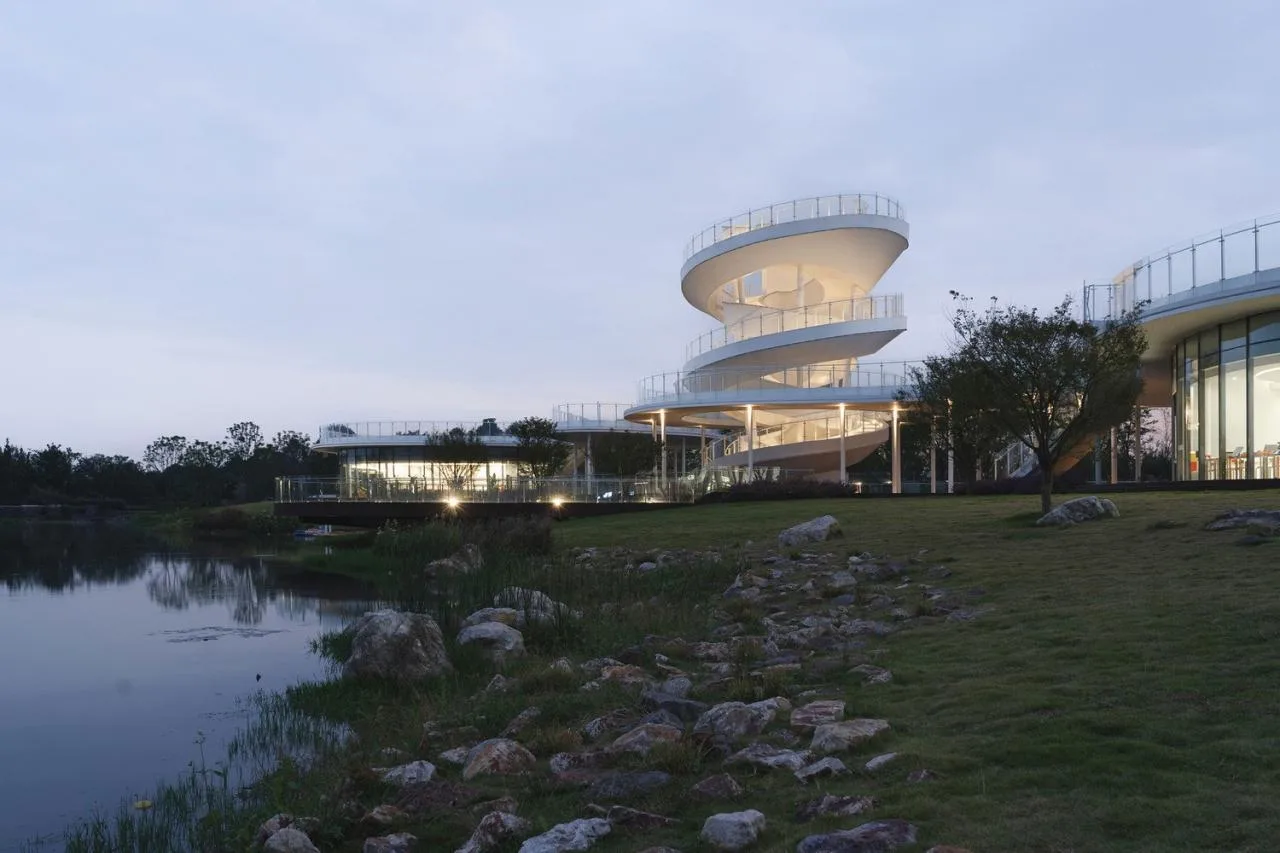
The horizontal roof is clad with white metal steel plates, while the façade features transparent glass, giving the impression that the building is “floating on the water,” seamlessly integrating with the wetland environment.
Innovative Deconstruction of Park Experience
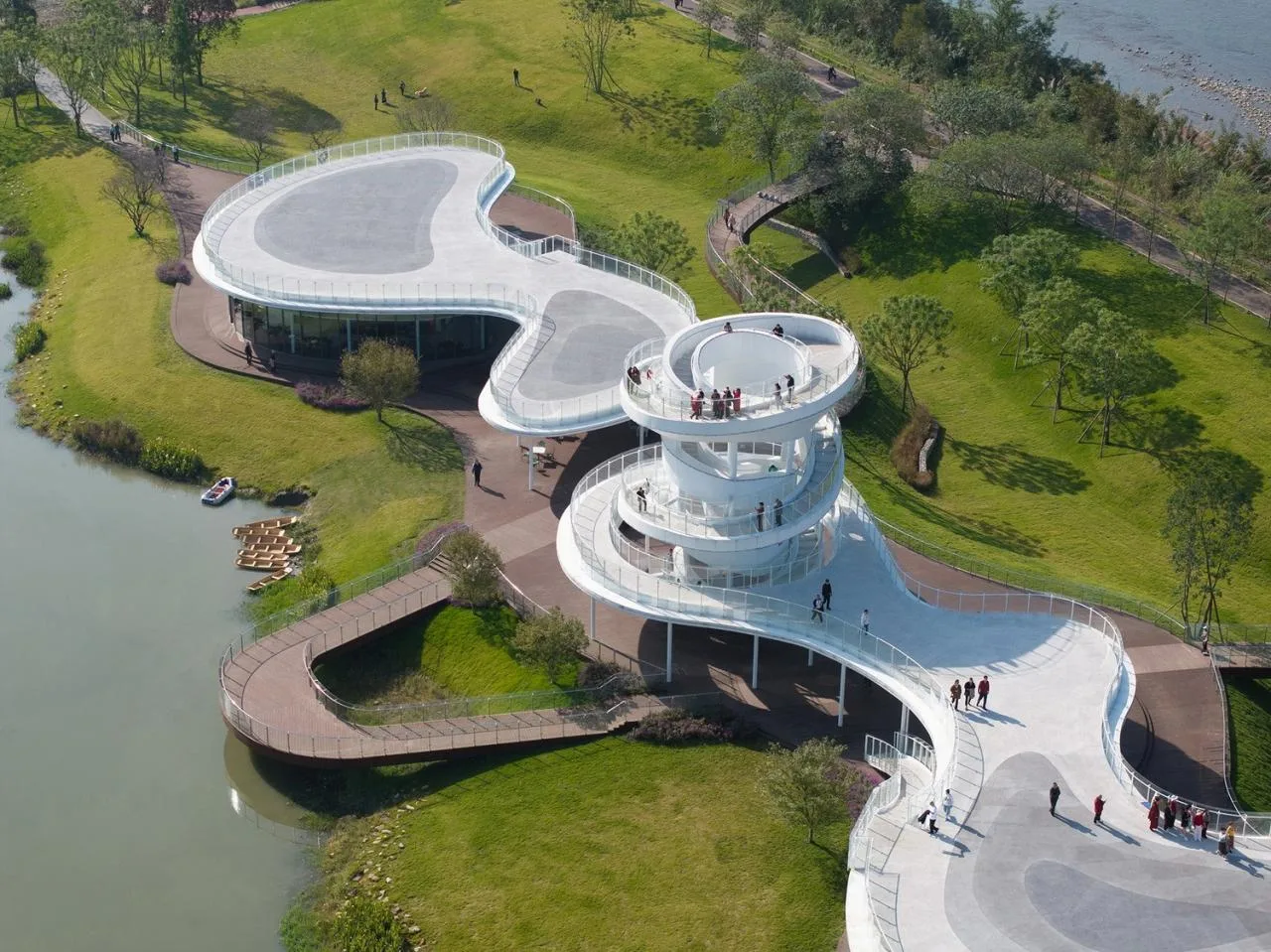
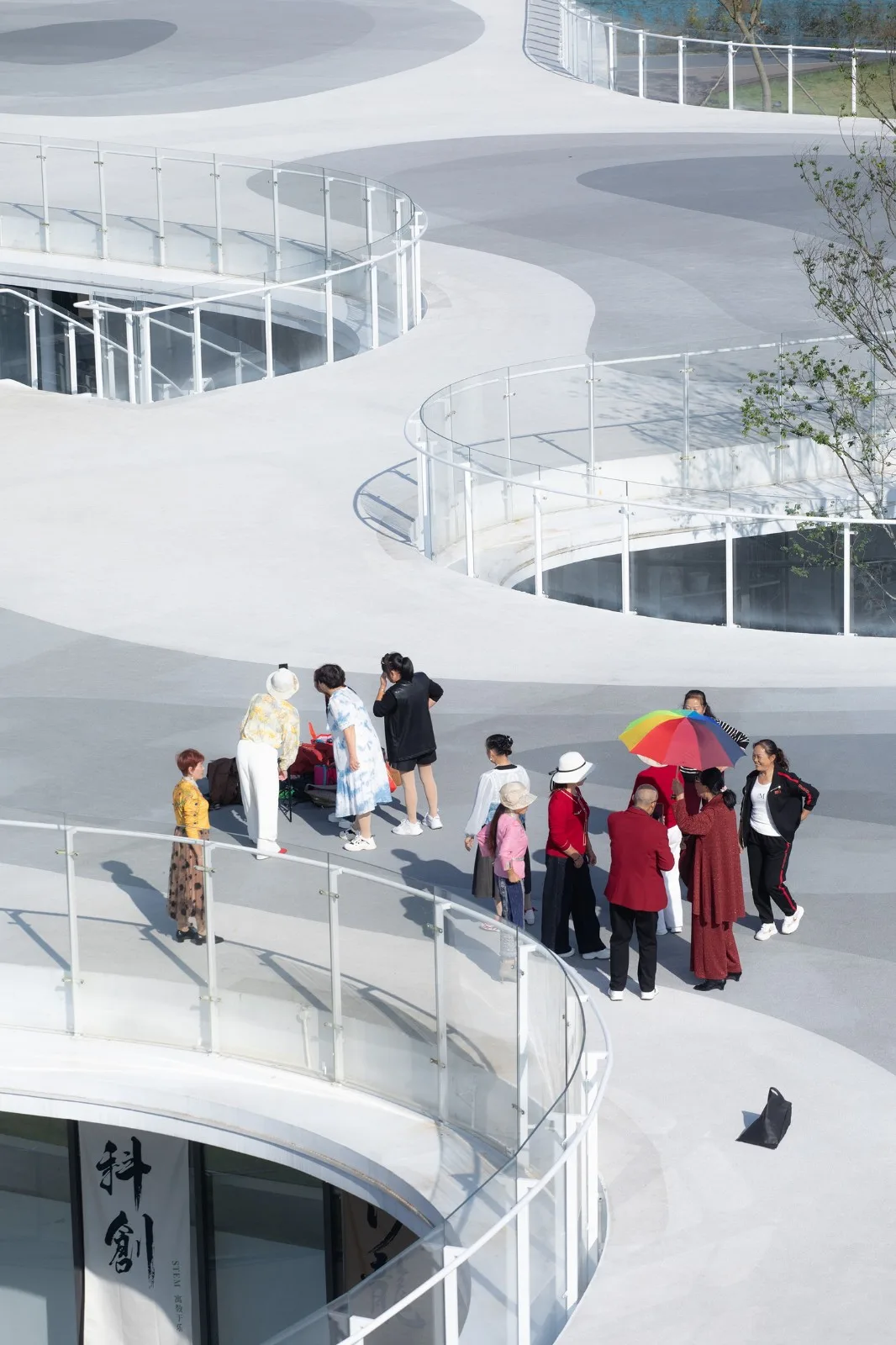
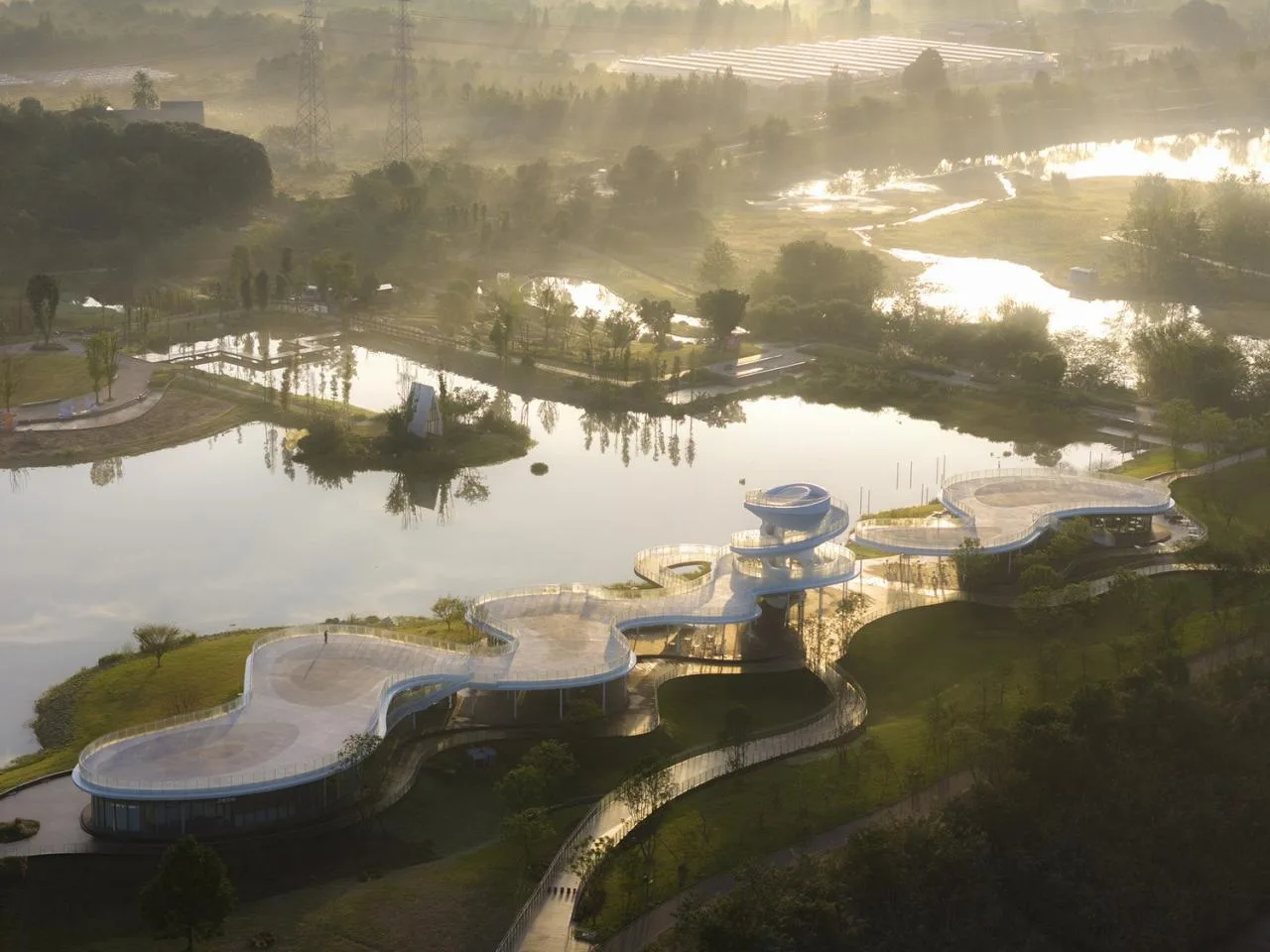
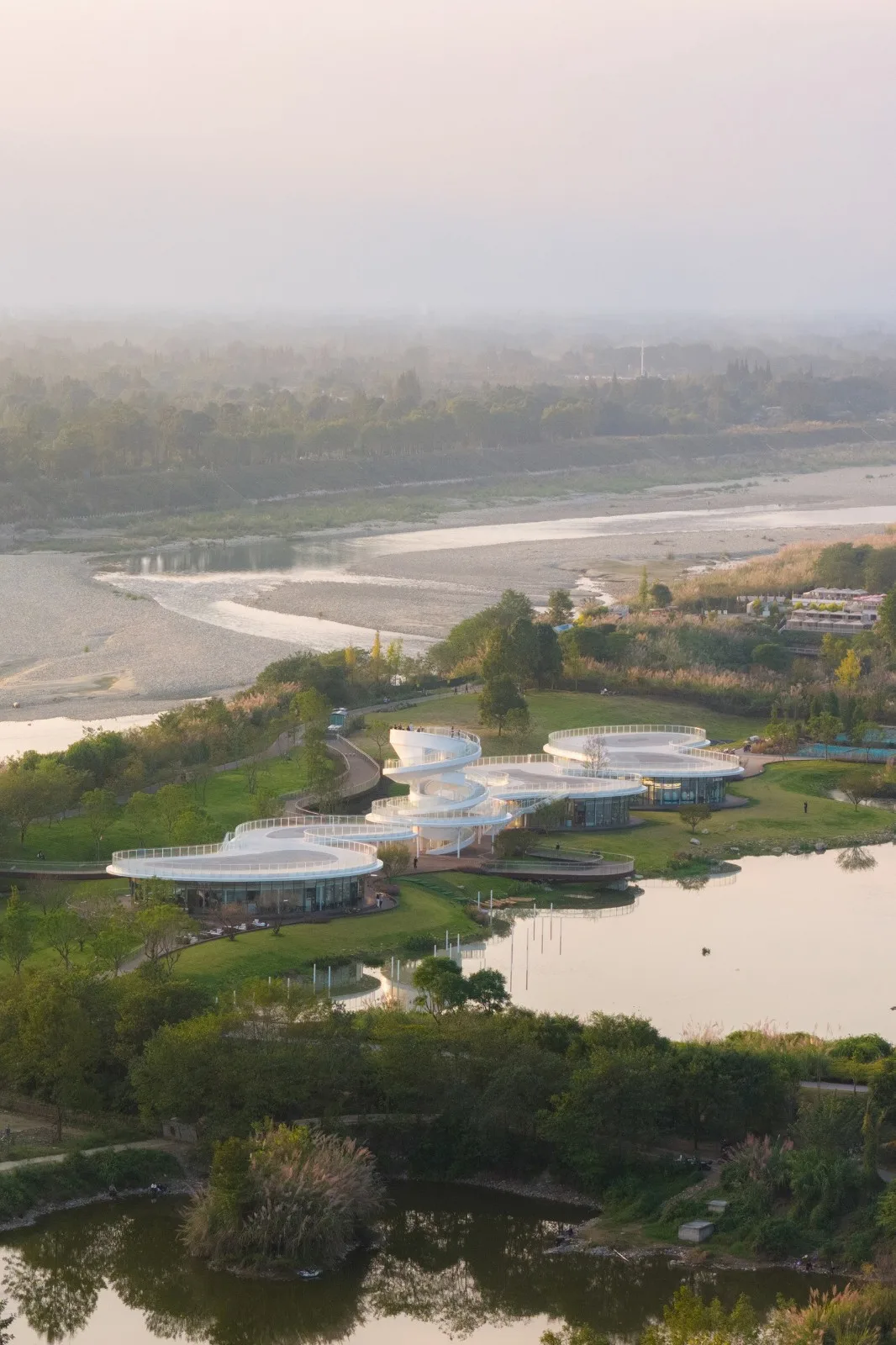
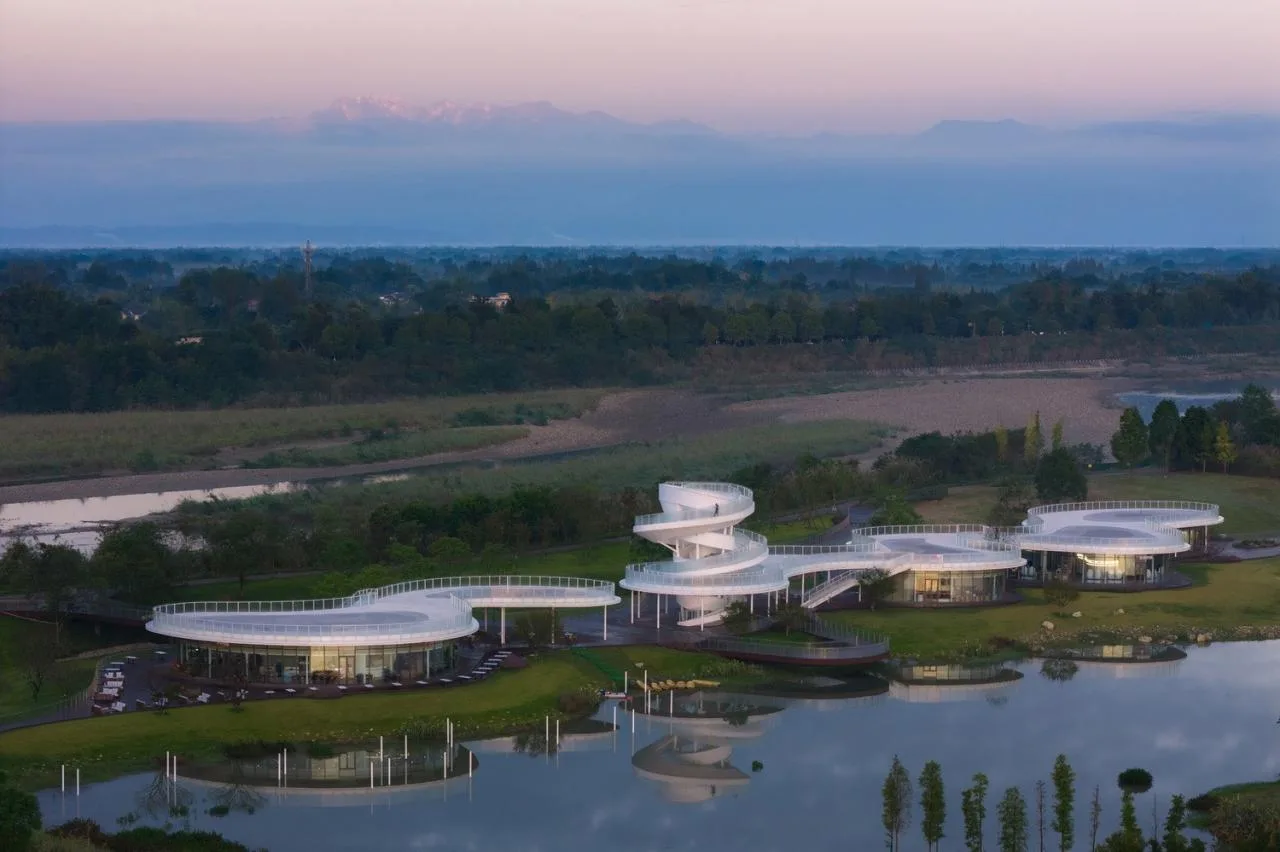
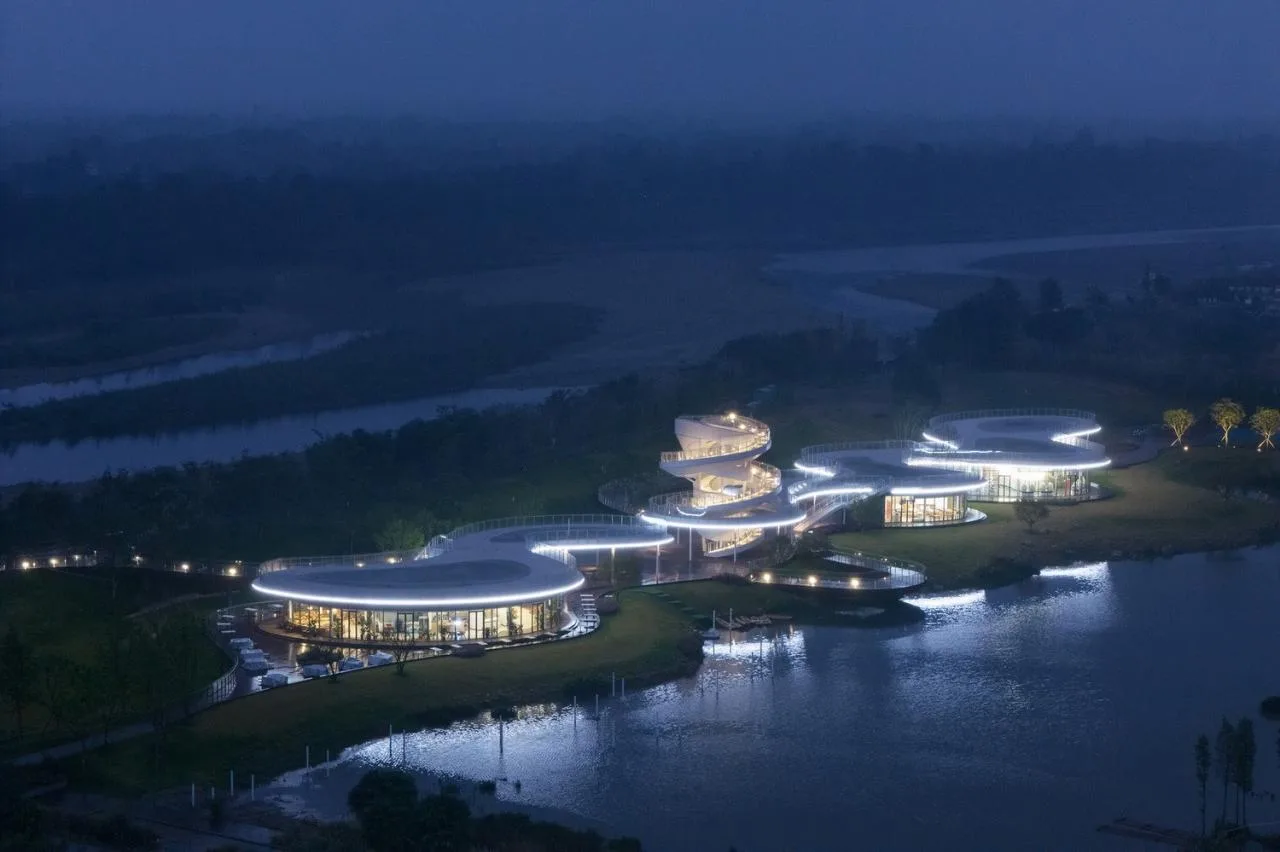
Breaking away from the traditional “roadside shops” layout, the design adopts a block decomposition and functional reorganization approach. This breaks rigid spatial boundaries, connecting different functional blocks through streamlined design.
Visitors can freely explore the interconnected spaces, enjoying the playful, exploratory atmosphere of a “park-like” environment. The smooth pathways not only improve accessibility but also enhance visitors’ engagement and participation.
A Richly Layered Public Space
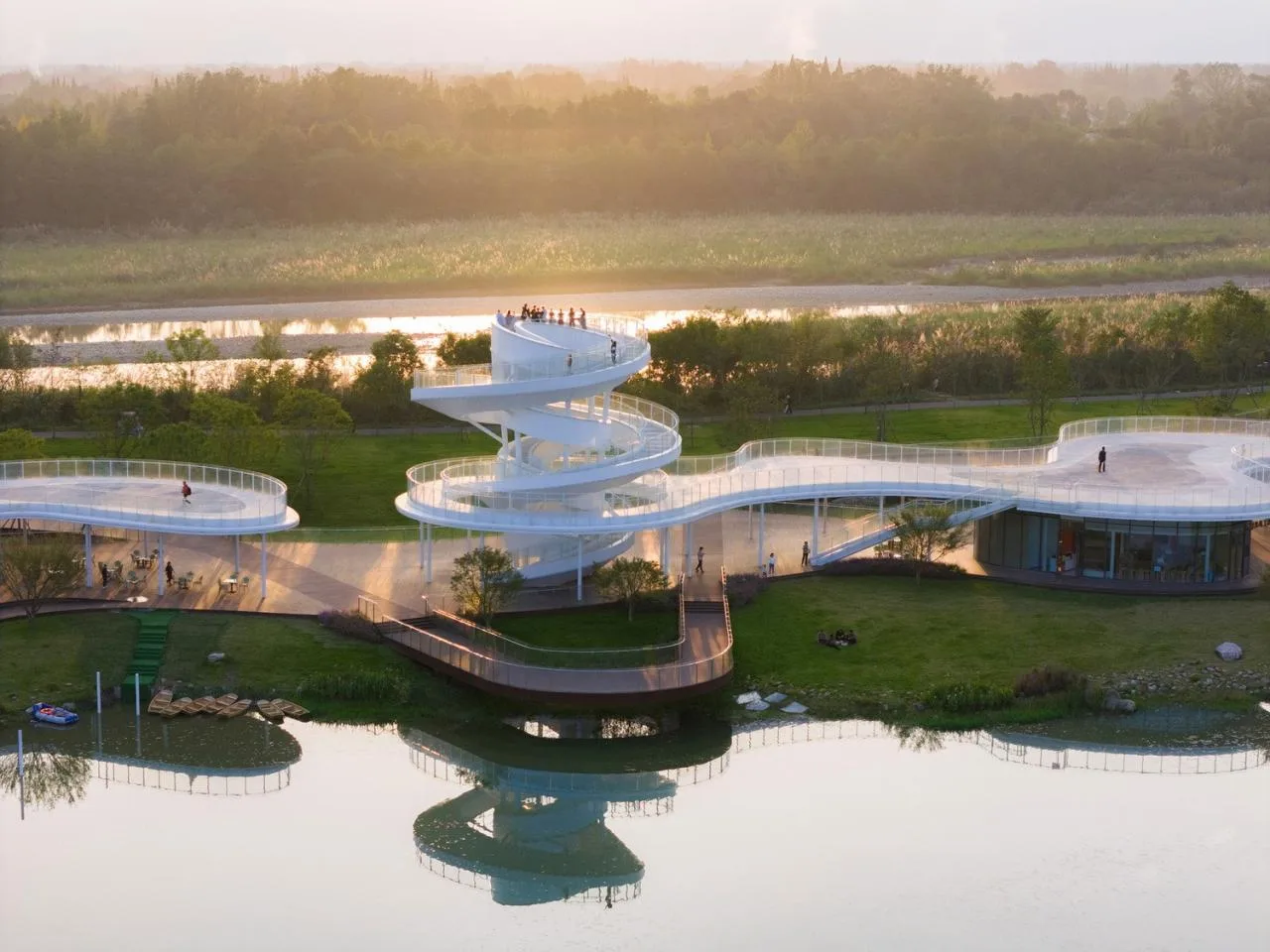
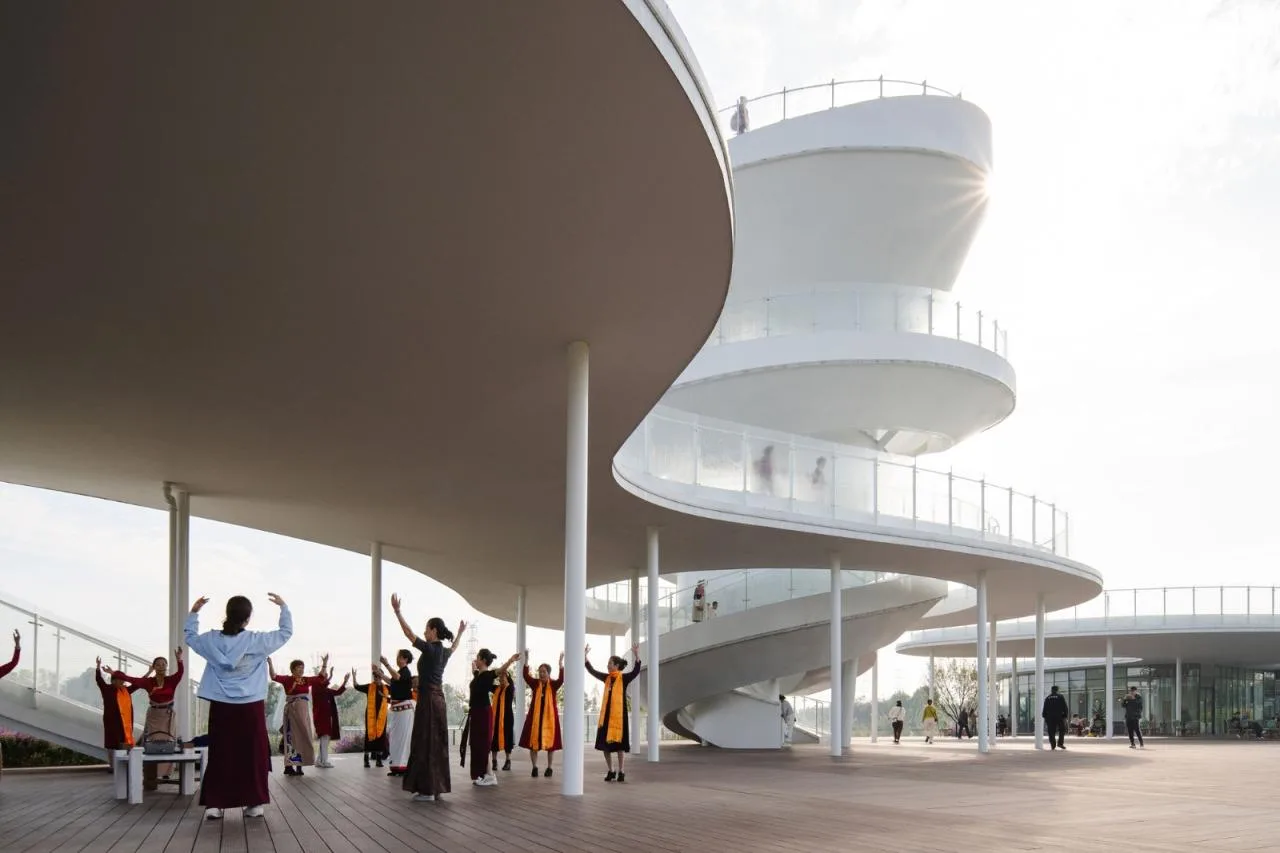
The project maximizes spatial potential by featuring an accessible rooftop for public activities, seamlessly connecting it with the ground-level area. One side of the wooden deck curves toward the water, forming a cantilevered platform that invites visitors to engage closely with nature. The opposite side connects to the Jinma River Greenway, linking the site with the broader wetland park.
The ground platform is paved with corrosion-resistant wood, enhancing the natural feel of the materials and blending visually and tactilely with the surrounding environment.
Innovative Observation Tower and Landscape Views
The design positions two parallel pathways in front of and behind the building to optimize circulation and enhance spatial rhythm through the sequential arrangement of functional zones. The commercial areas along the streamlined layout are unified by the building’s horizontally connected roof.
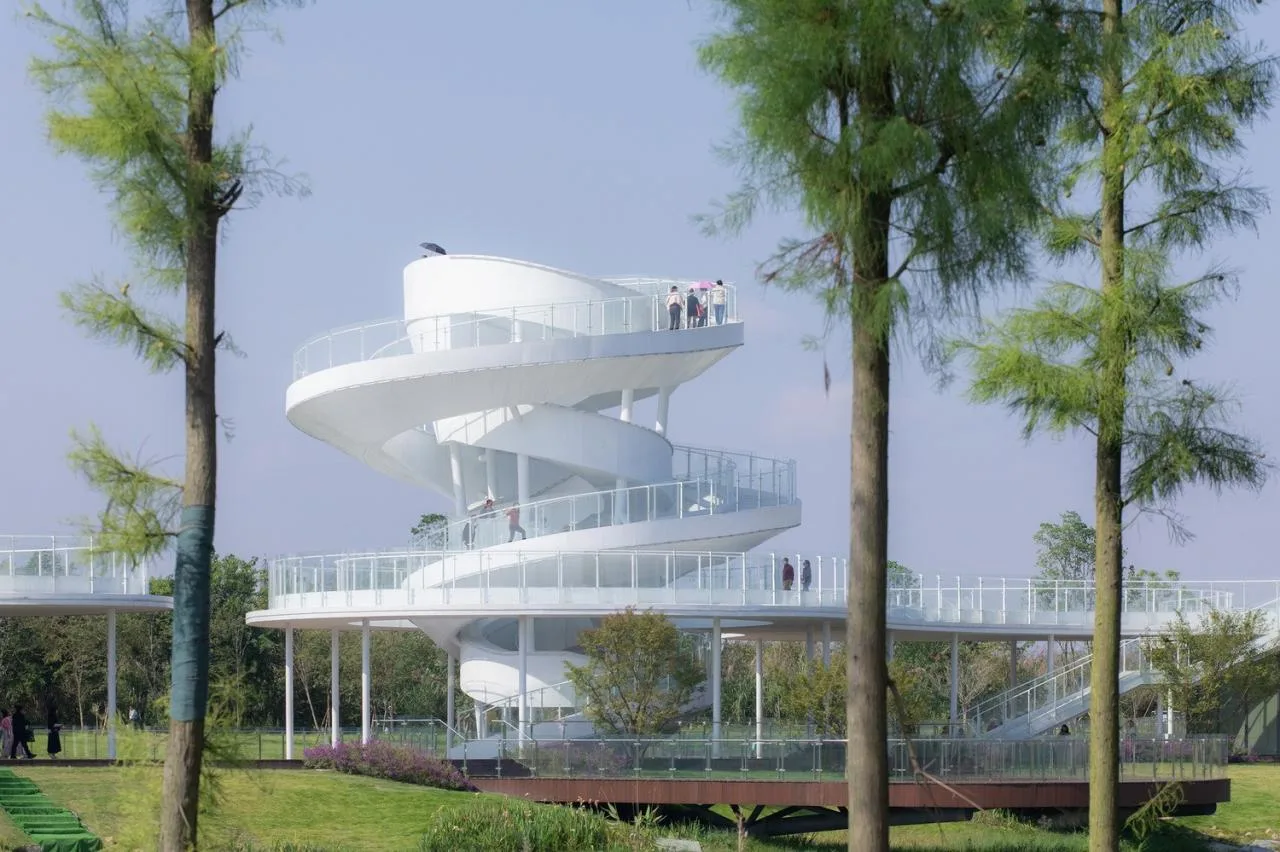
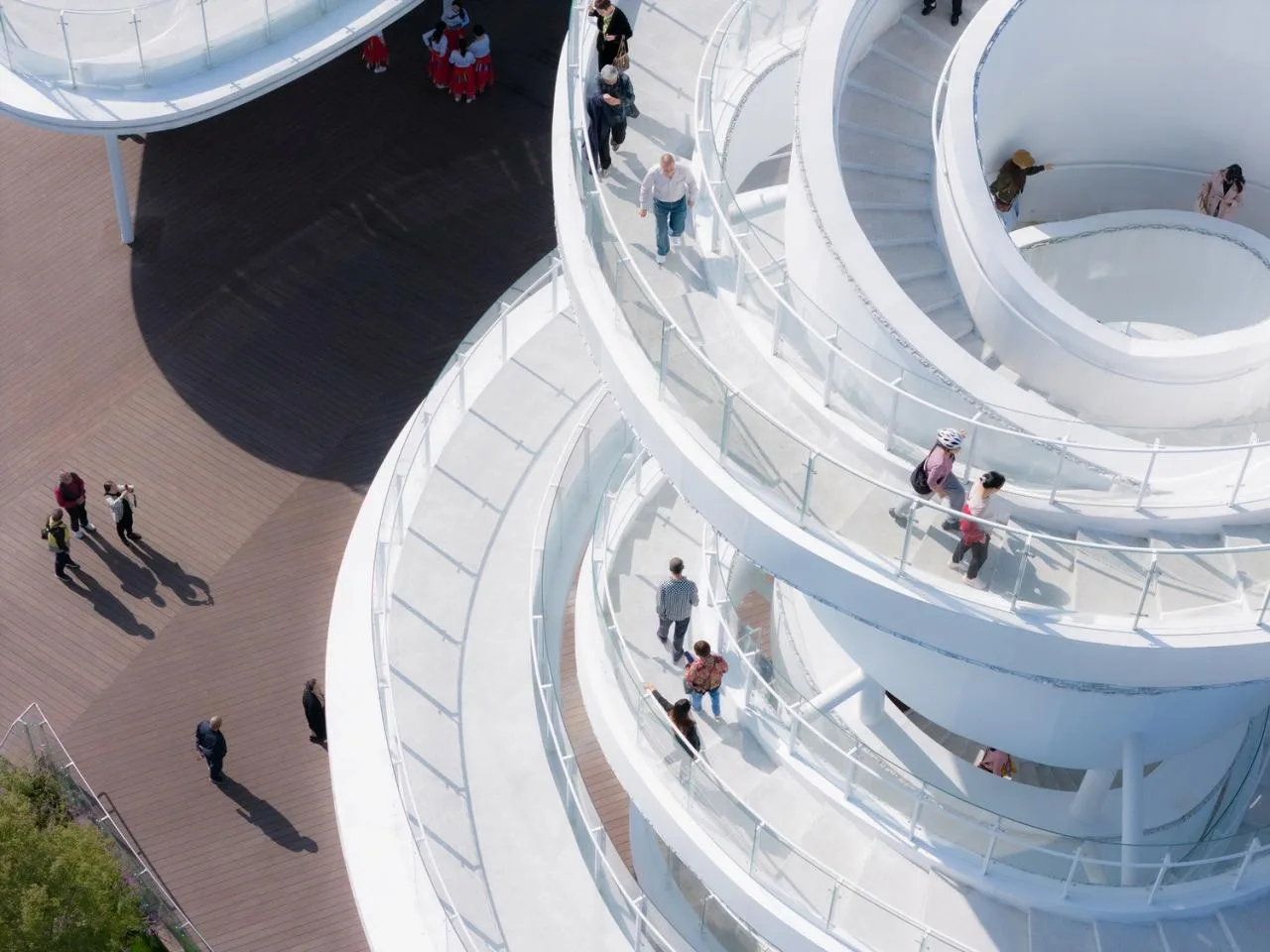
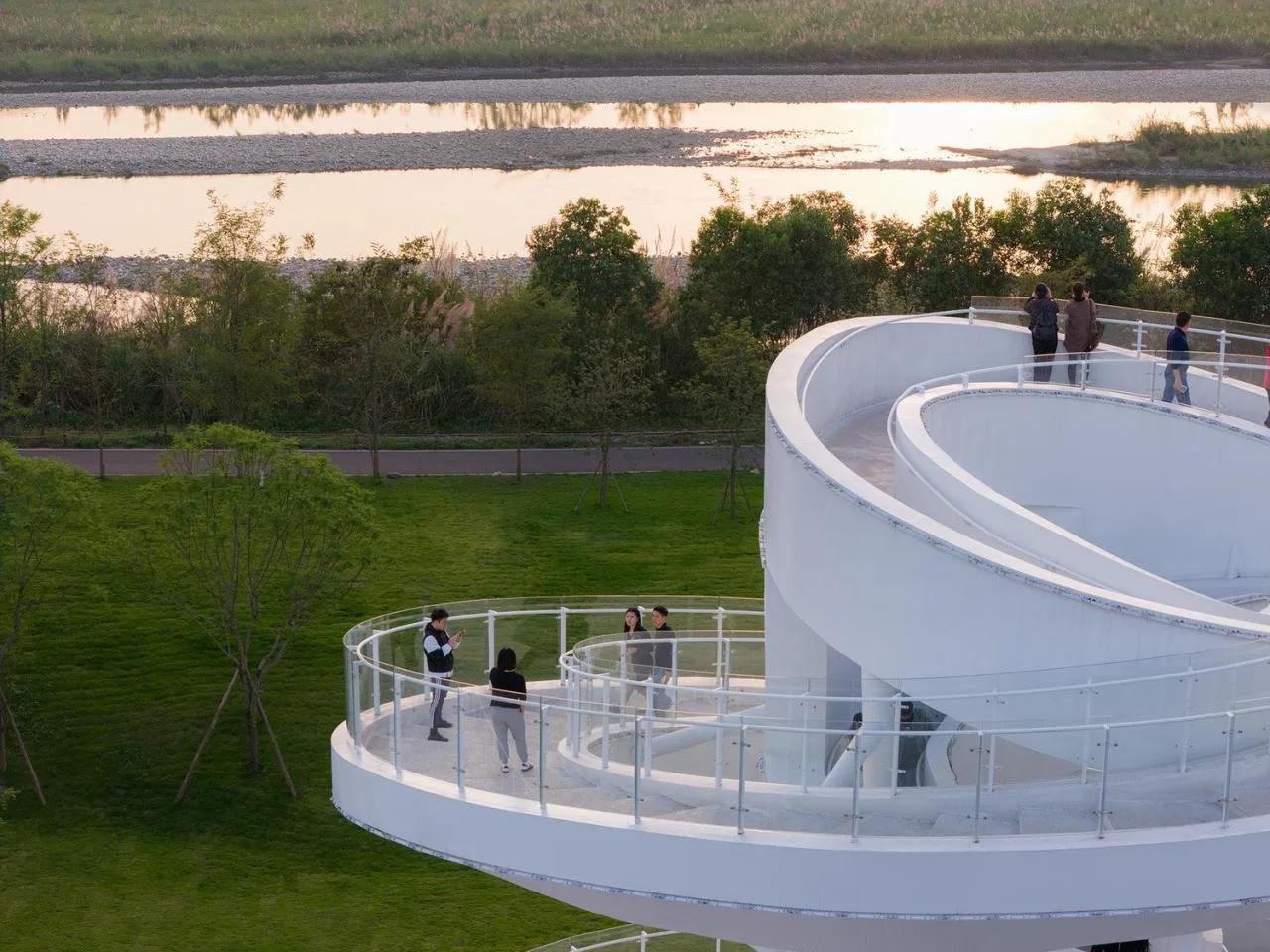
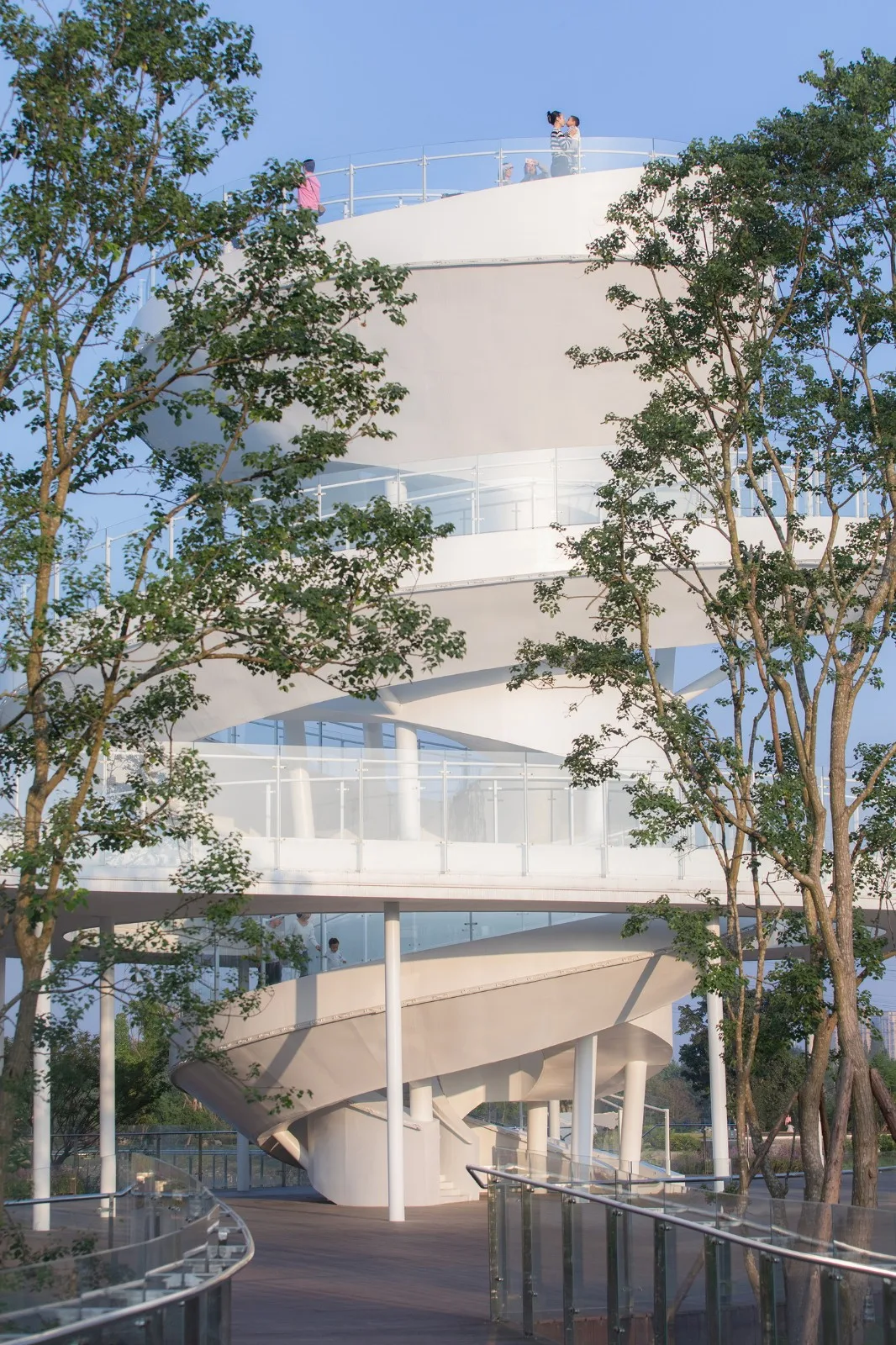
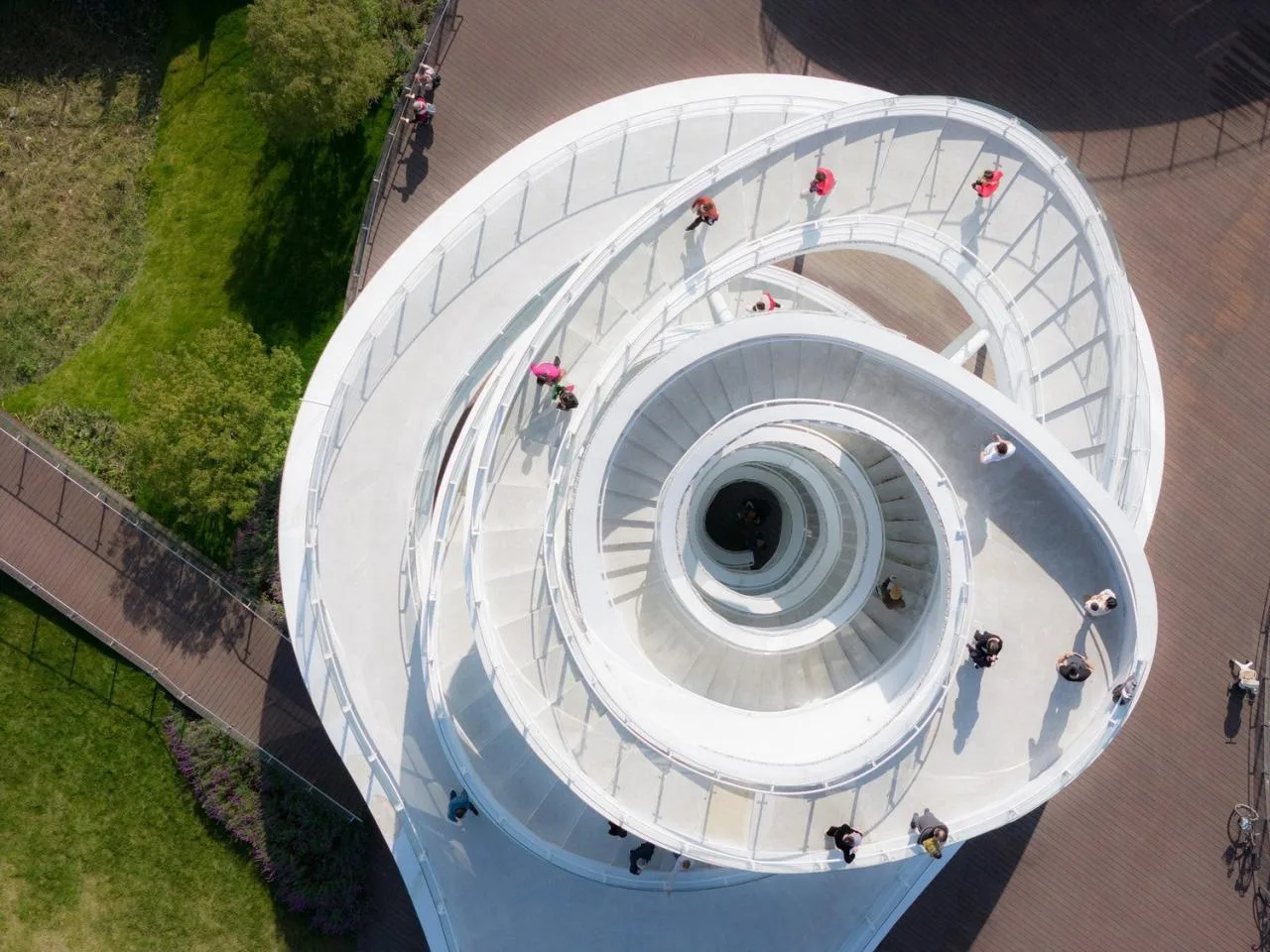
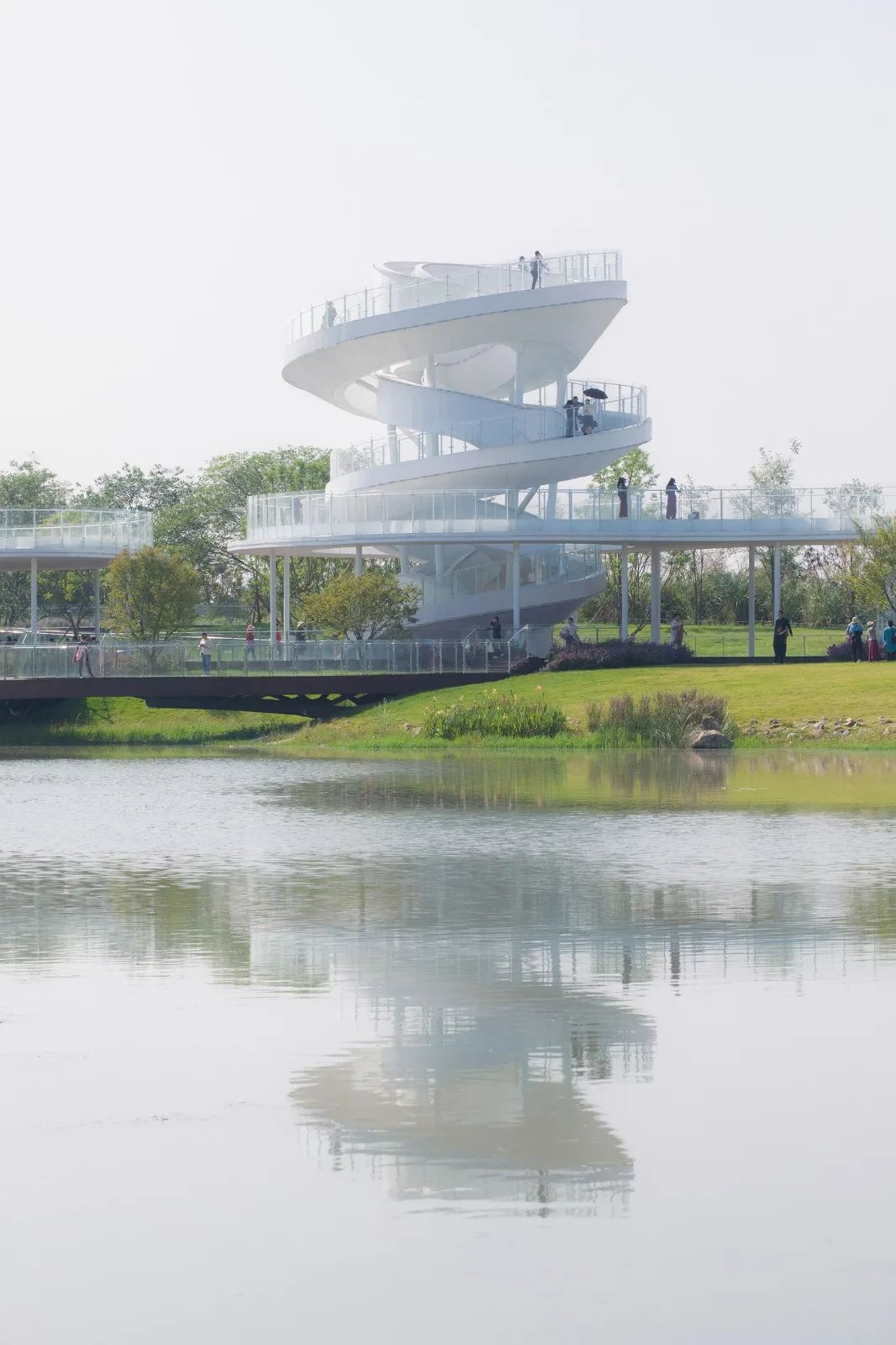
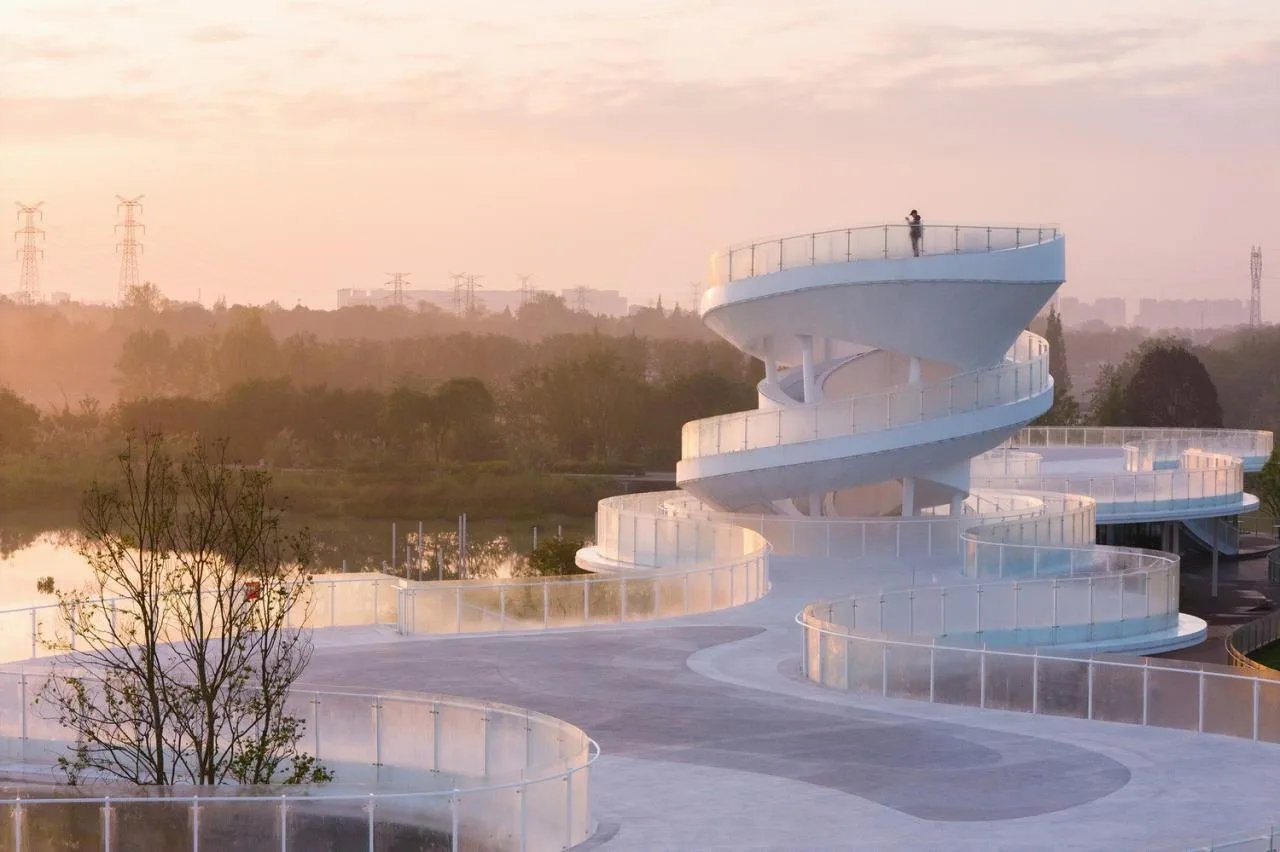
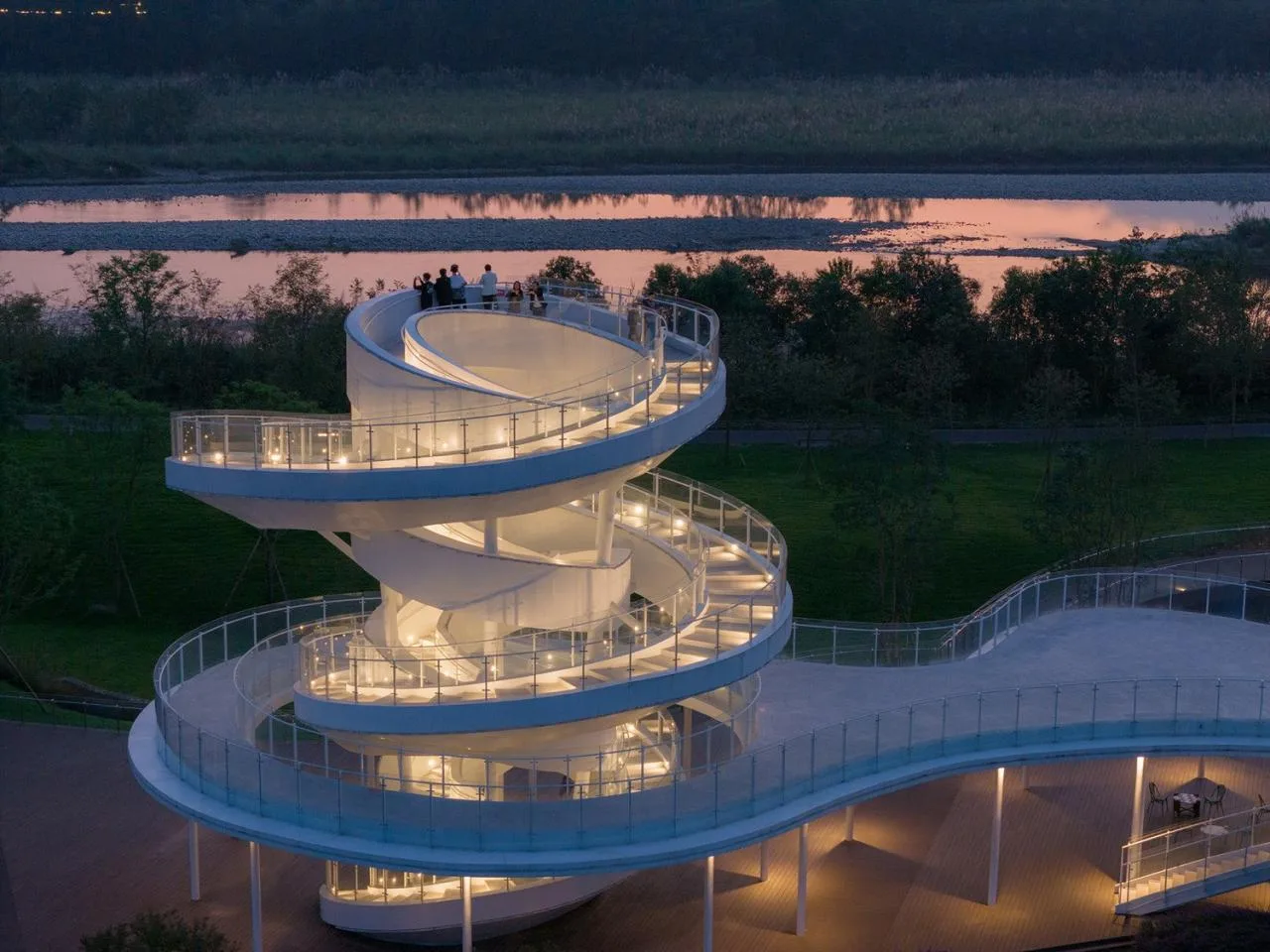
At the golden ratio point along this sequence stands a double-helix observation tower, serving as a striking visual focal point for the entire complex.
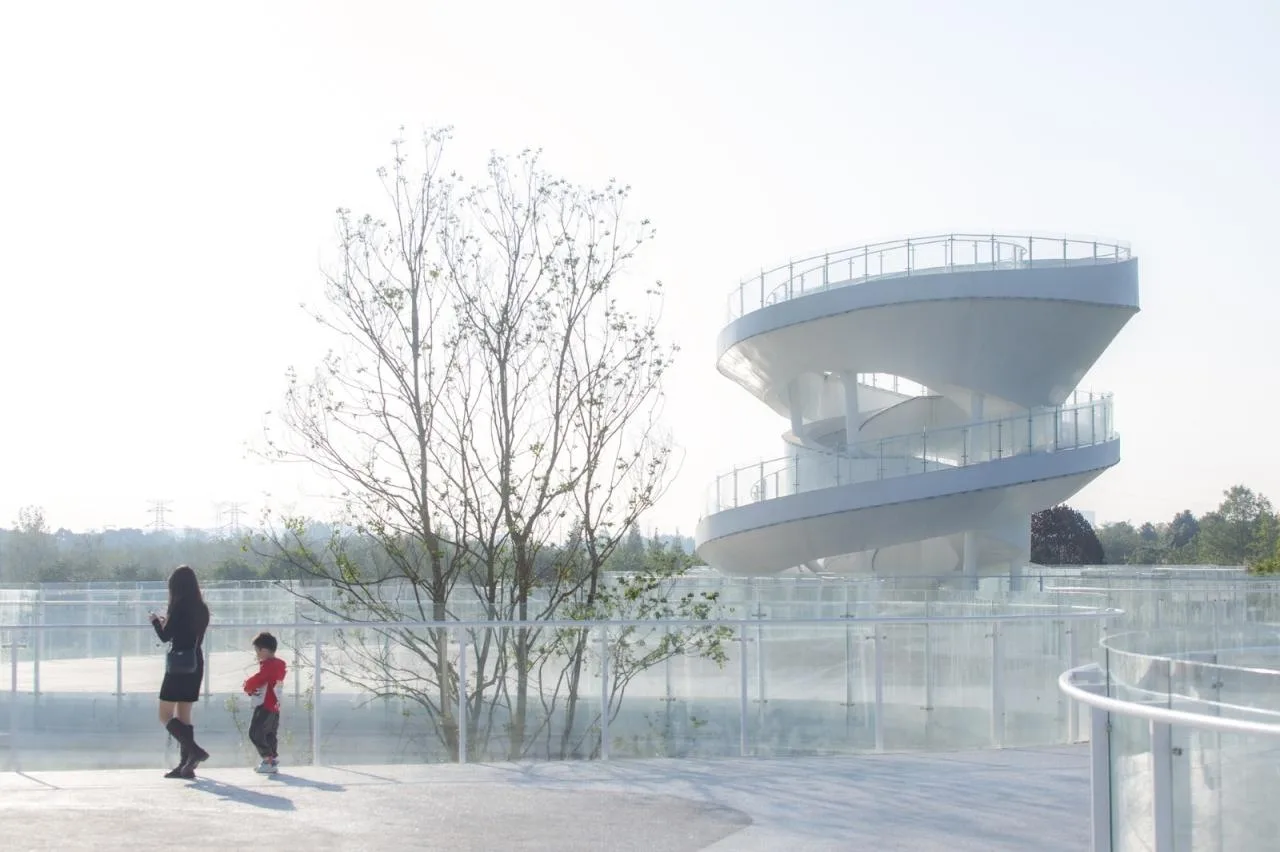
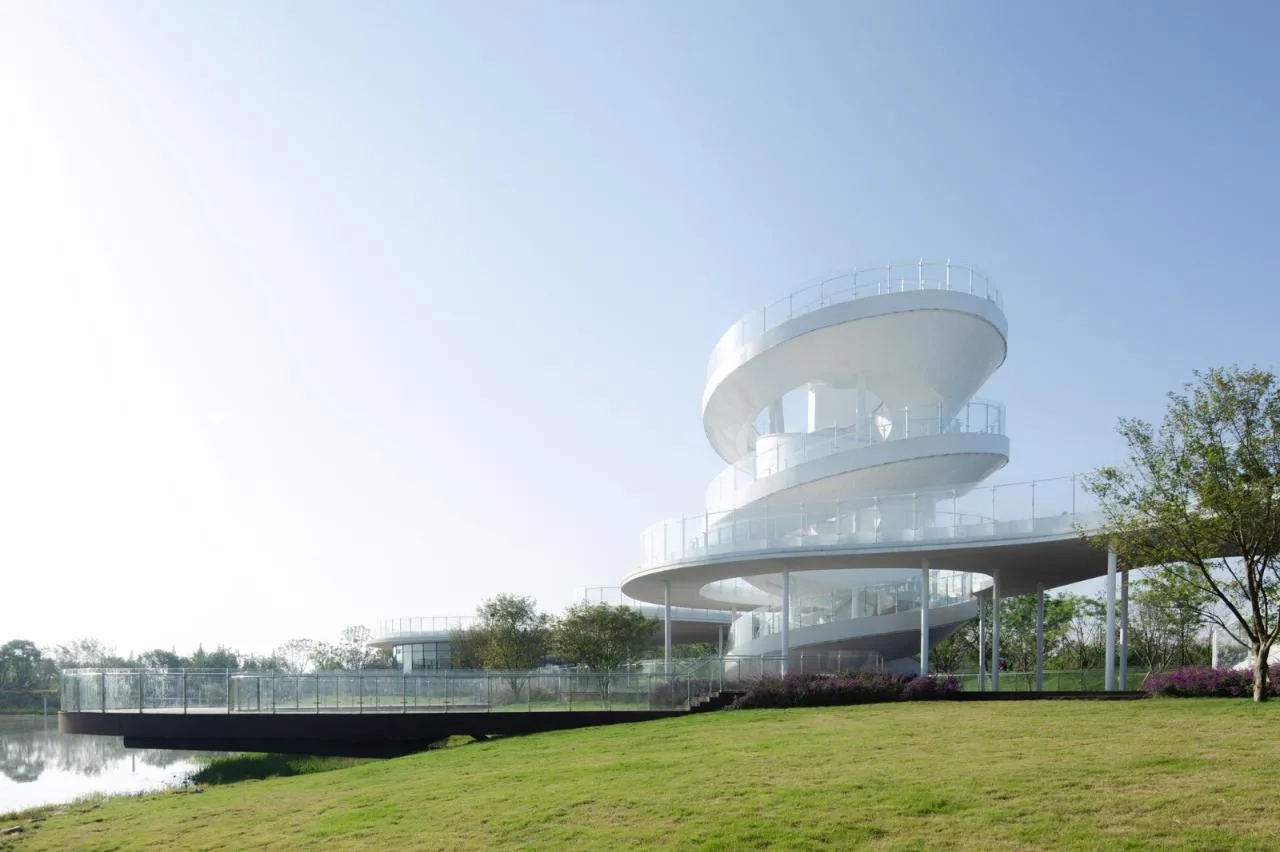
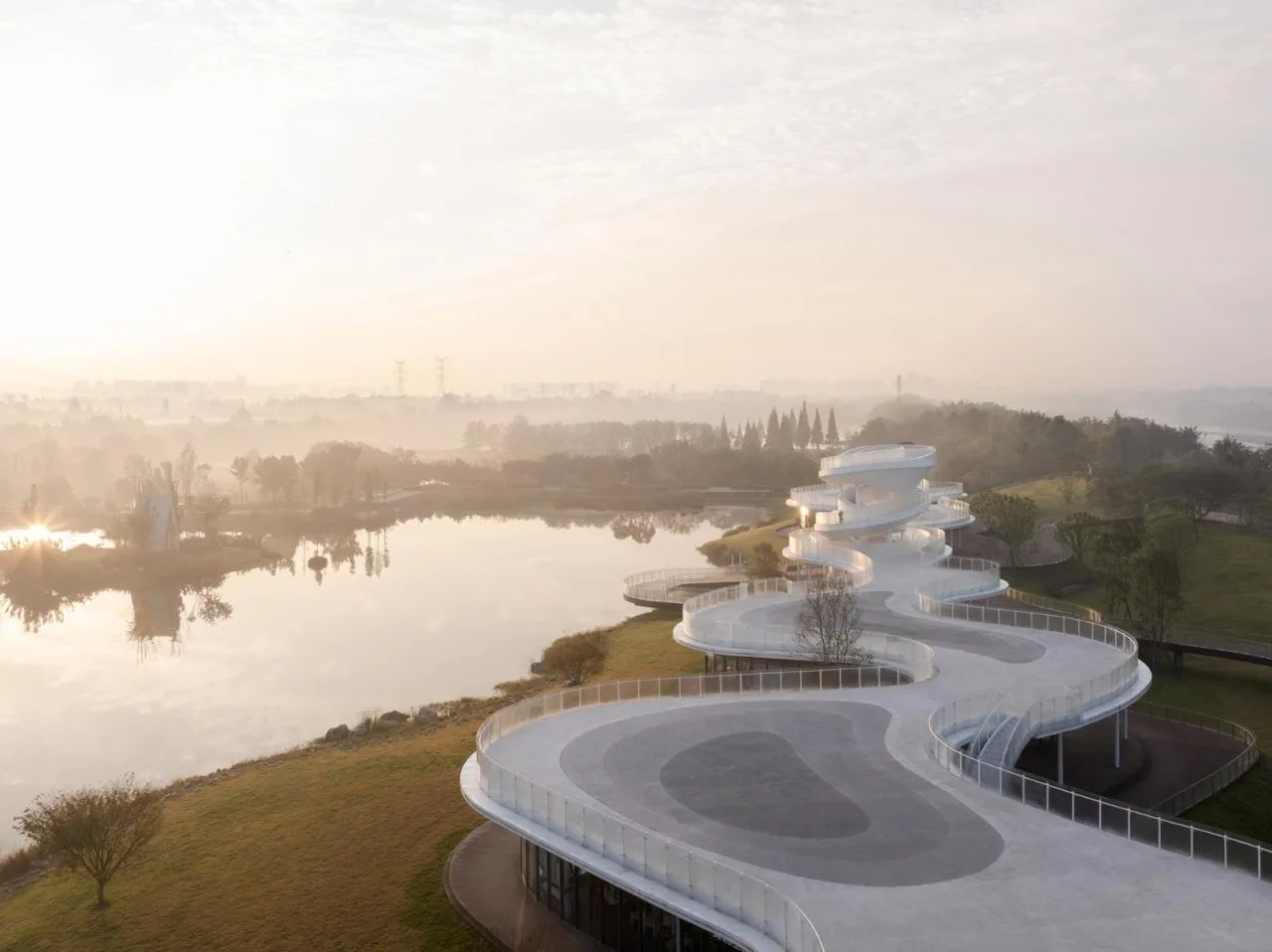
The observation tower features a gently spiraling double helix staircase at its core. As visitors ascend, they enjoy changing views of the wetland landscape. The tower’s summit offers a 360° panoramic vista, including breathtaking views of Longmen Mountain and snow-capped peaks, delivering a unique immersive natural experience.
Sustainable Design and Local Practices
Respecting the original environment is central to the project, with all design strategies focused on preserving the site’s ecological sensitivity. Site selection carefully avoids vegetation and water systems vulnerable to disturbance.
During construction, steel structure assembly techniques minimize the need for heavy machinery on site, reducing environmental impact.
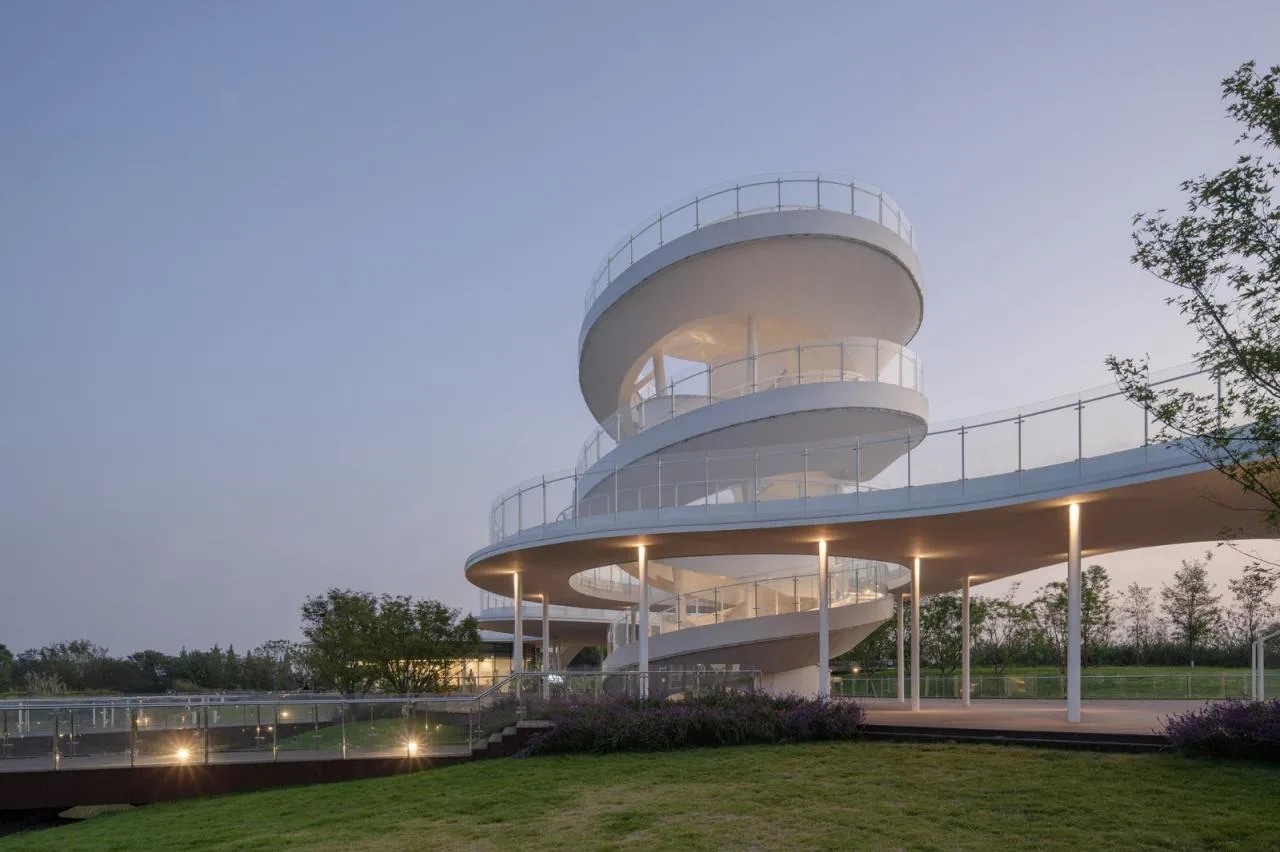
The design achieves a harmonious balance of form and function. Its lightweight structure and transparent glass façades ensure ample natural light and seamlessly integrate the wetland’s natural landscape into the interior spaces.
Materials such as corrosion-resistant wood and white metal steel plates highlight the synergy between architecture and nature.
Summary and Vision
The “Fudao” – Lujiatan Wetland Park Commercial Service Center is a testament to MUDA Architecture’s commitment to ecological design and the harmonious coexistence of humans and nature. By fusing local cultural elements with modern architectural design, the project creates a public space that is both ecologically significant and functionally valuable. It offers Chengdu residents a fresh lifestyle option and serves as a model for integrating nature with urban development in the Wenjiang area.
Looking ahead, MUDA Architecture will continue to prioritize ecological principles, exploring new ways to merge architecture with nature, interpret cultural heritage through design, and promote sustainable vitality in urban spaces.
Project Drawings
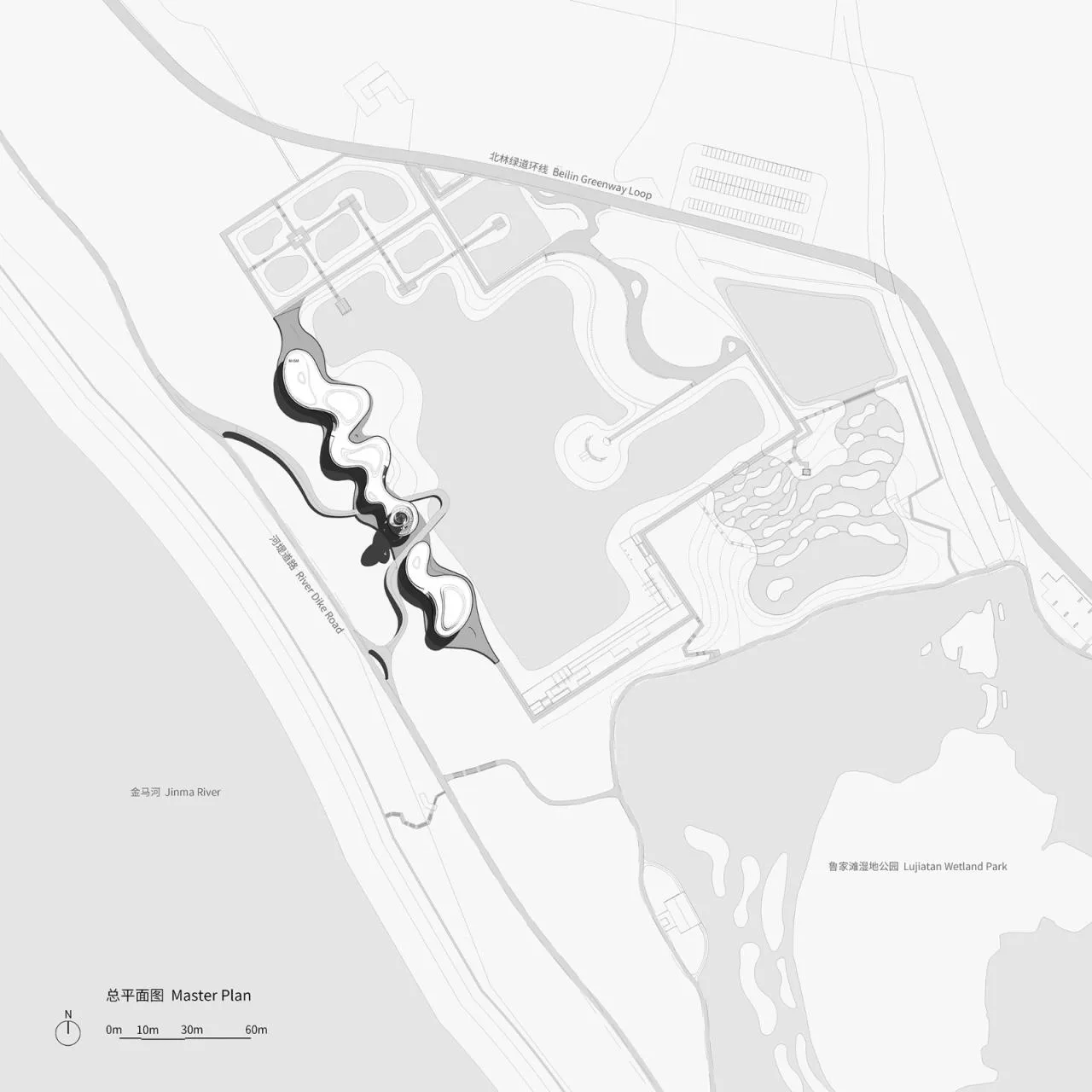
△ General Layout Plan
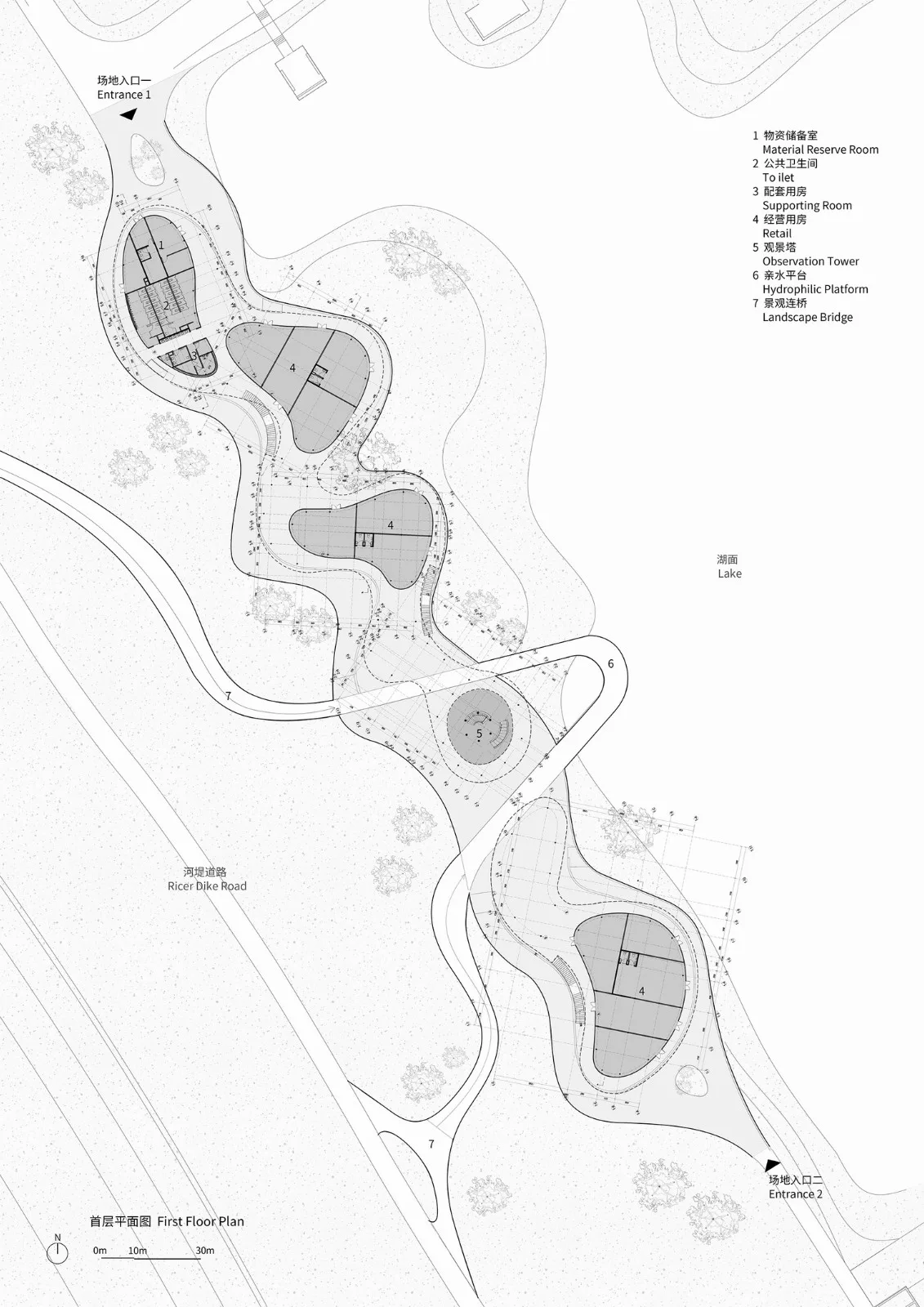
△ Plan View
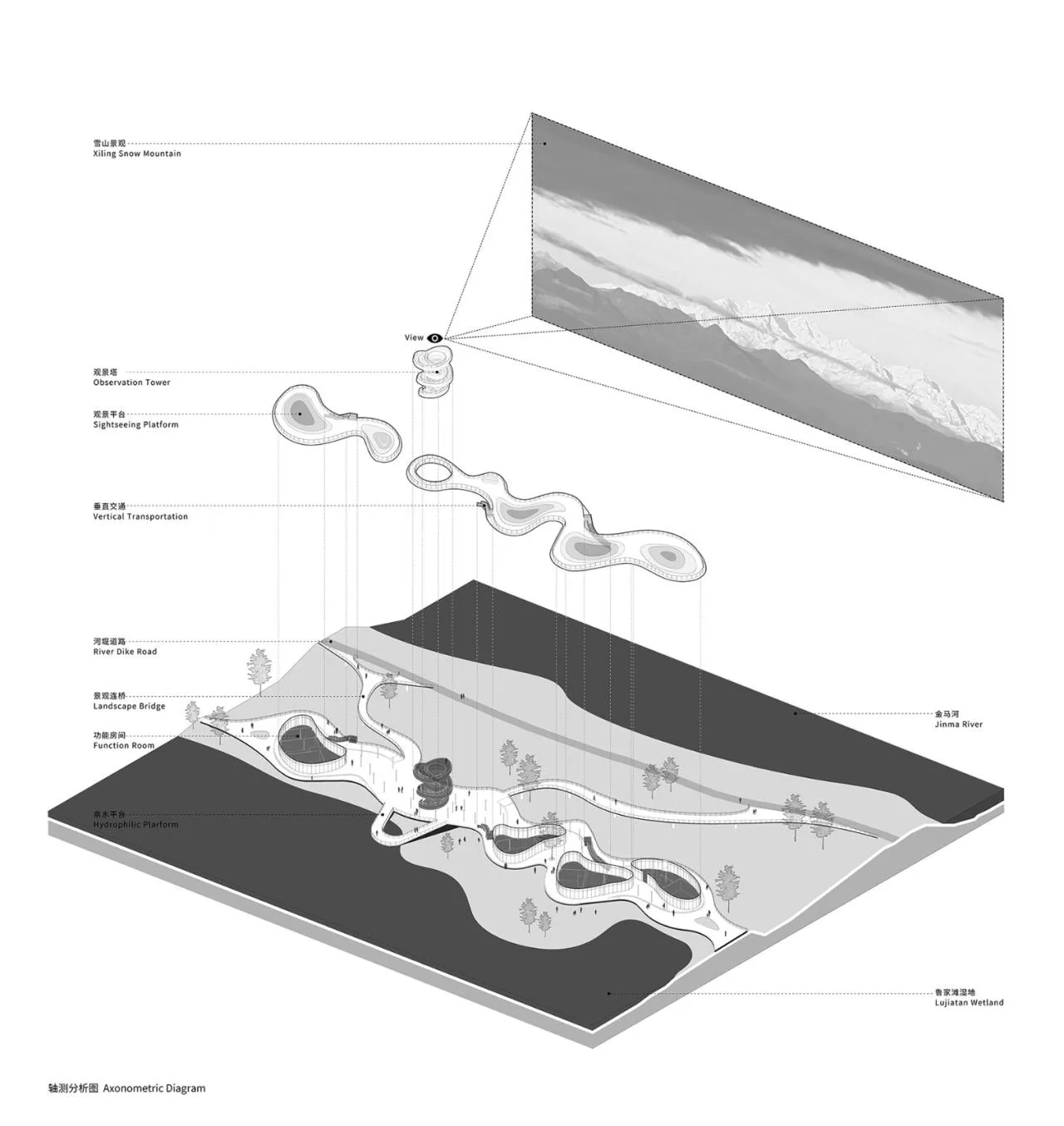
△ Axis Side Analysis Diagram
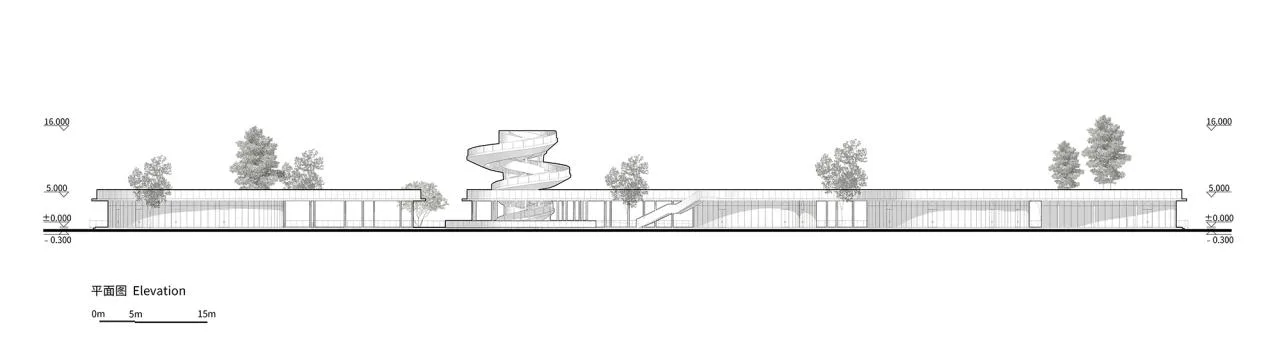
△ Elevation Drawing
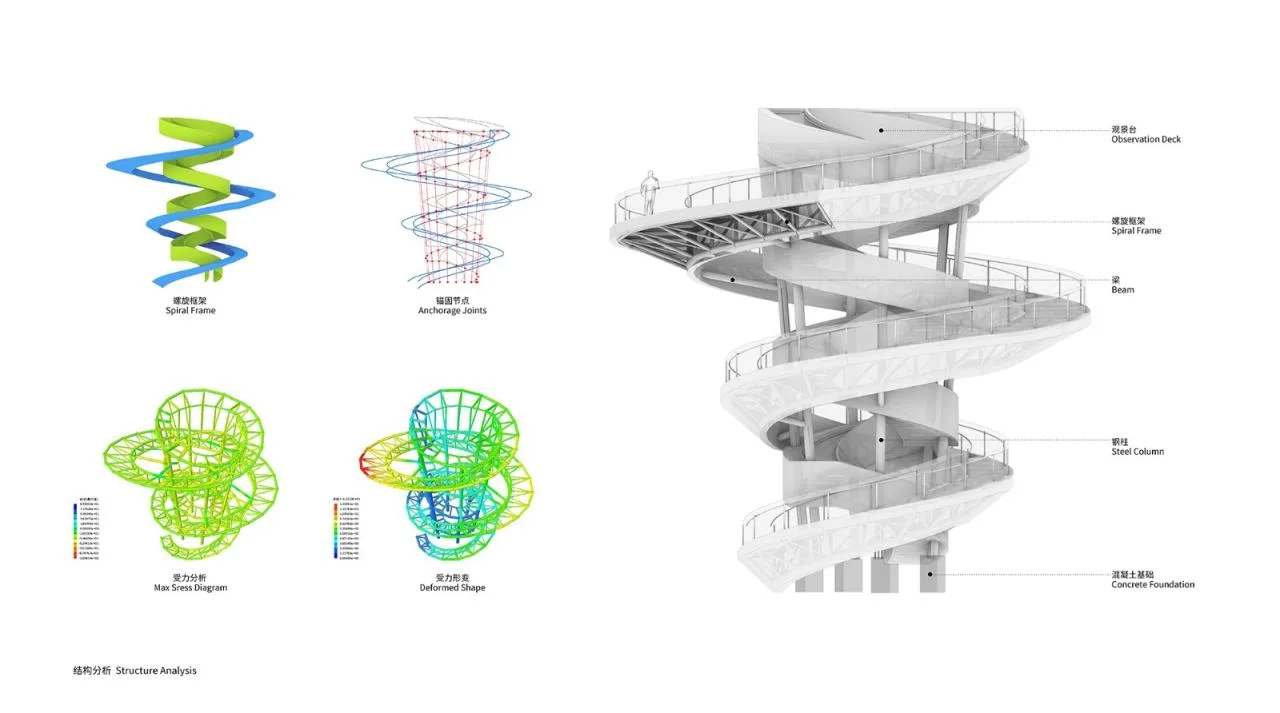
△ Structural Analysis Diagram
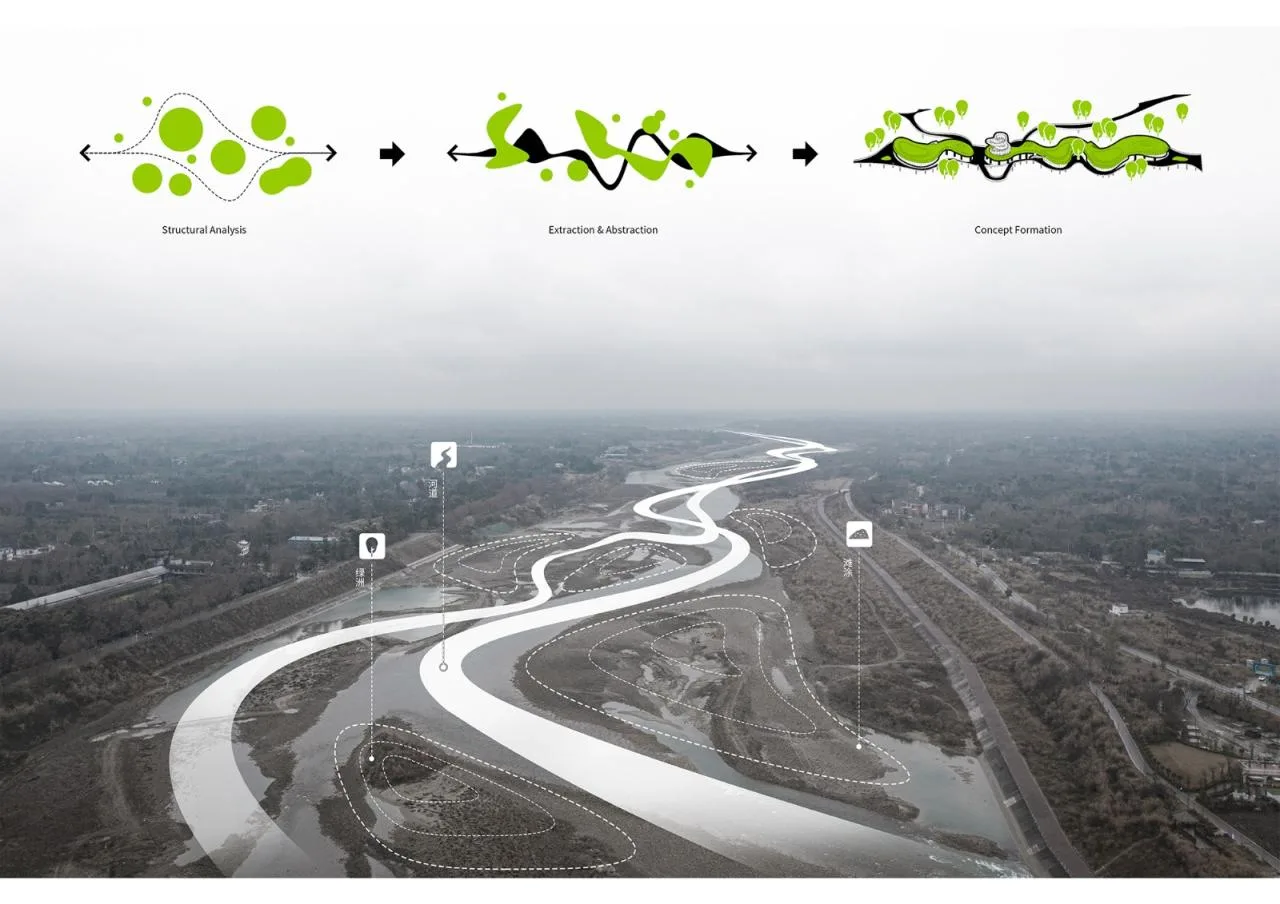
△ Analysis Chart
Project Information
Architect: MUDA Architecture
Area: 3,022 m²
Completion Year: 2024
Photographers: Existence of Architecture, Dong Architecture Image
Lead Architect: Lu Yun
Design Team: Li Aidong, He Fan, Li Hao, Fu Yao, Rong Dian
Construction Drawing Unit: Chengdu Yuzhan Architectural Design Co., Ltd
Architectural Construction Drawing Team: Yu Fan, Jia Zihang, Zhang Yuanyuan
Structural Design Consultant: Yuki Law
Developer: Chengdu Longke Urban and Rural Development Group
Location: Chengdu, China














Must log in before commenting!
Sign Up