
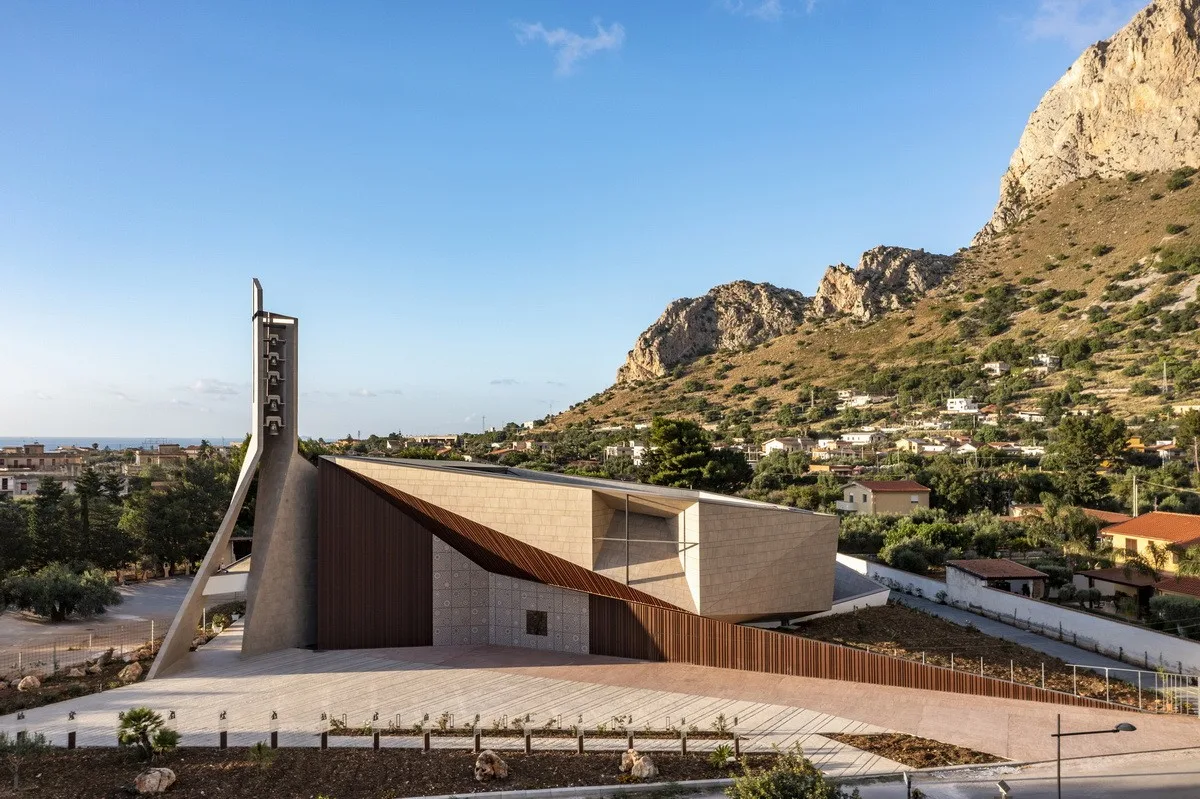
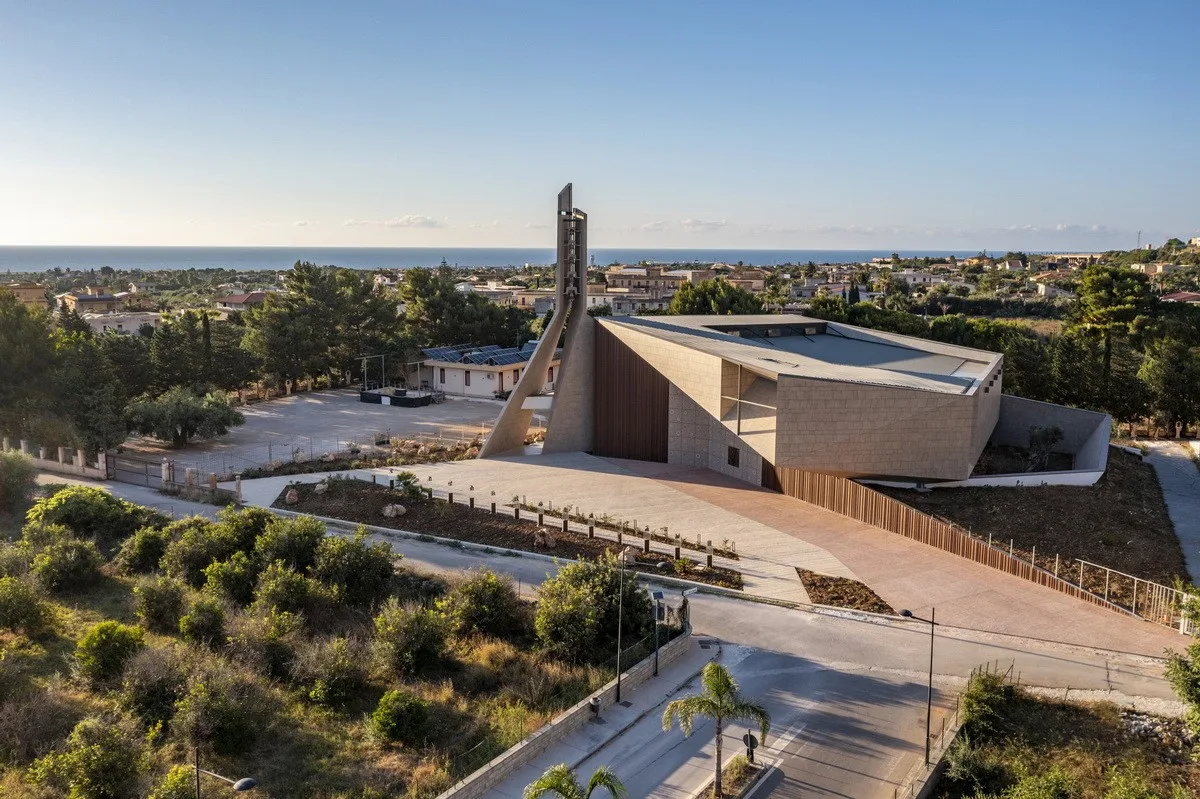
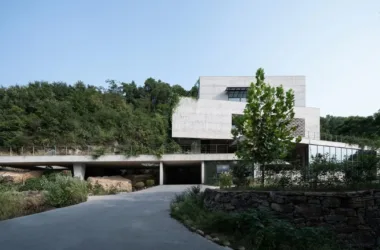
The Redemptoris Mater parish complex stands as a new landmark that harmoniously integrates with its surroundings and engages with the local community. The design thoughtfully responds to the residents’ requests, transforming their needs into expressive architectural forms.
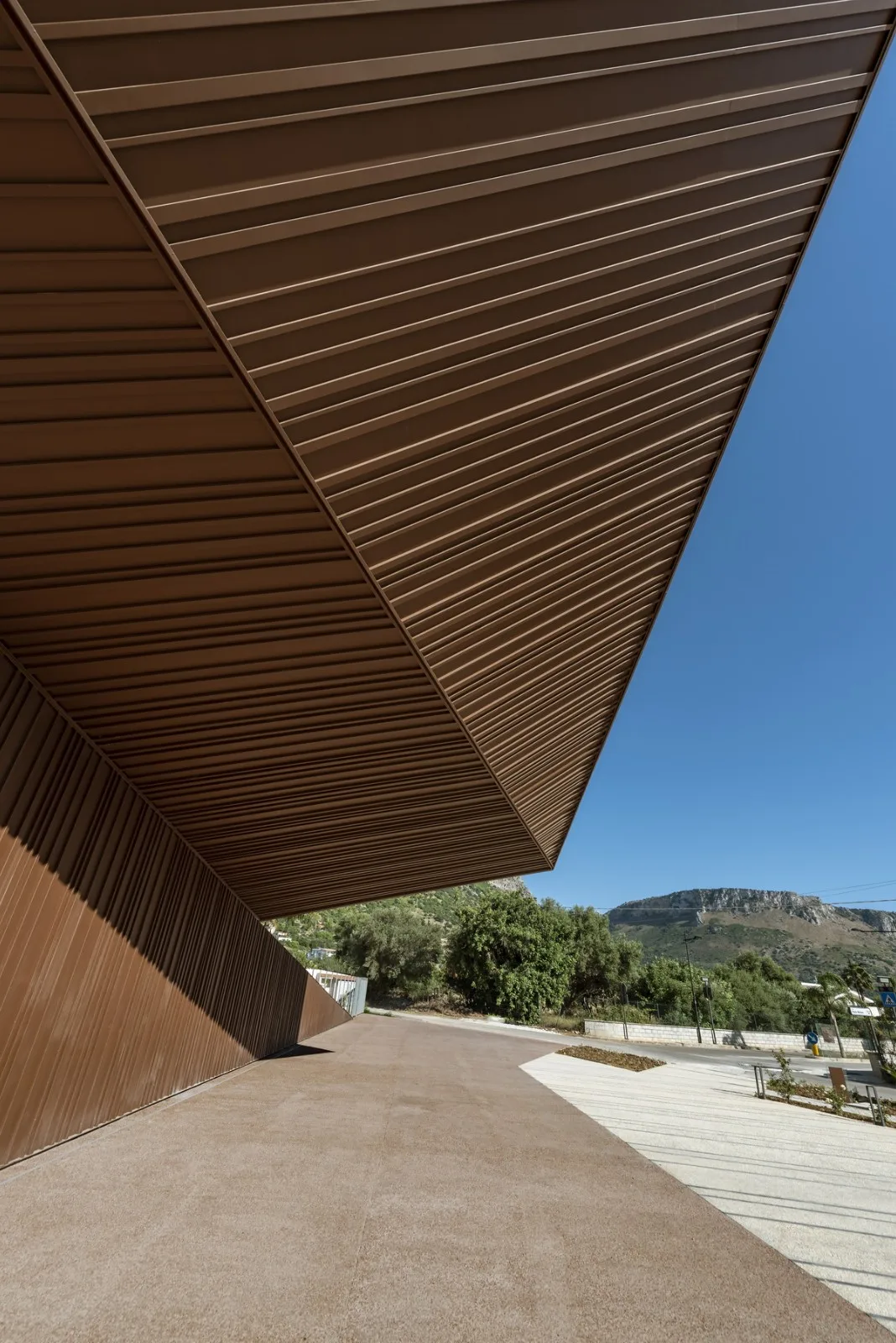
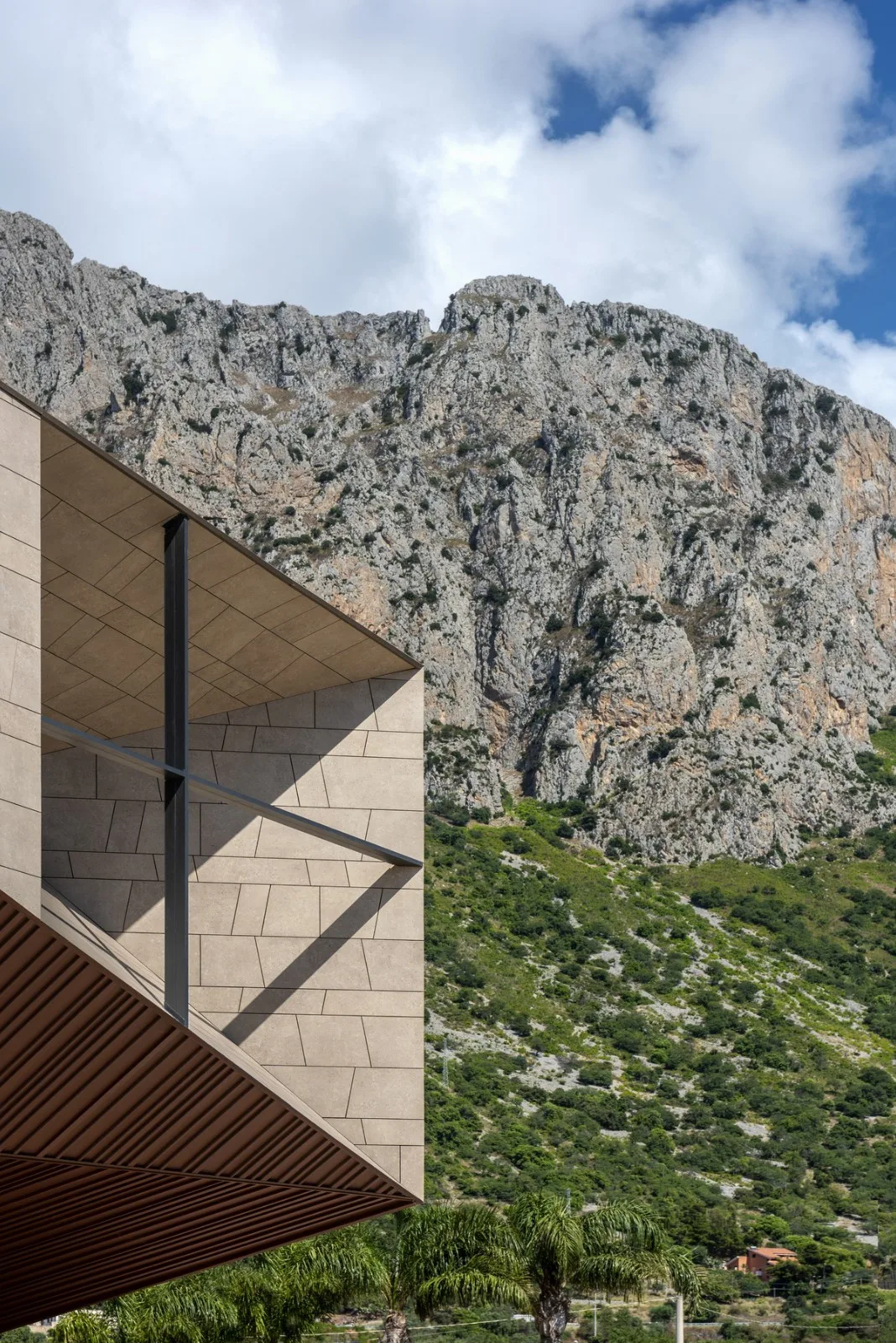
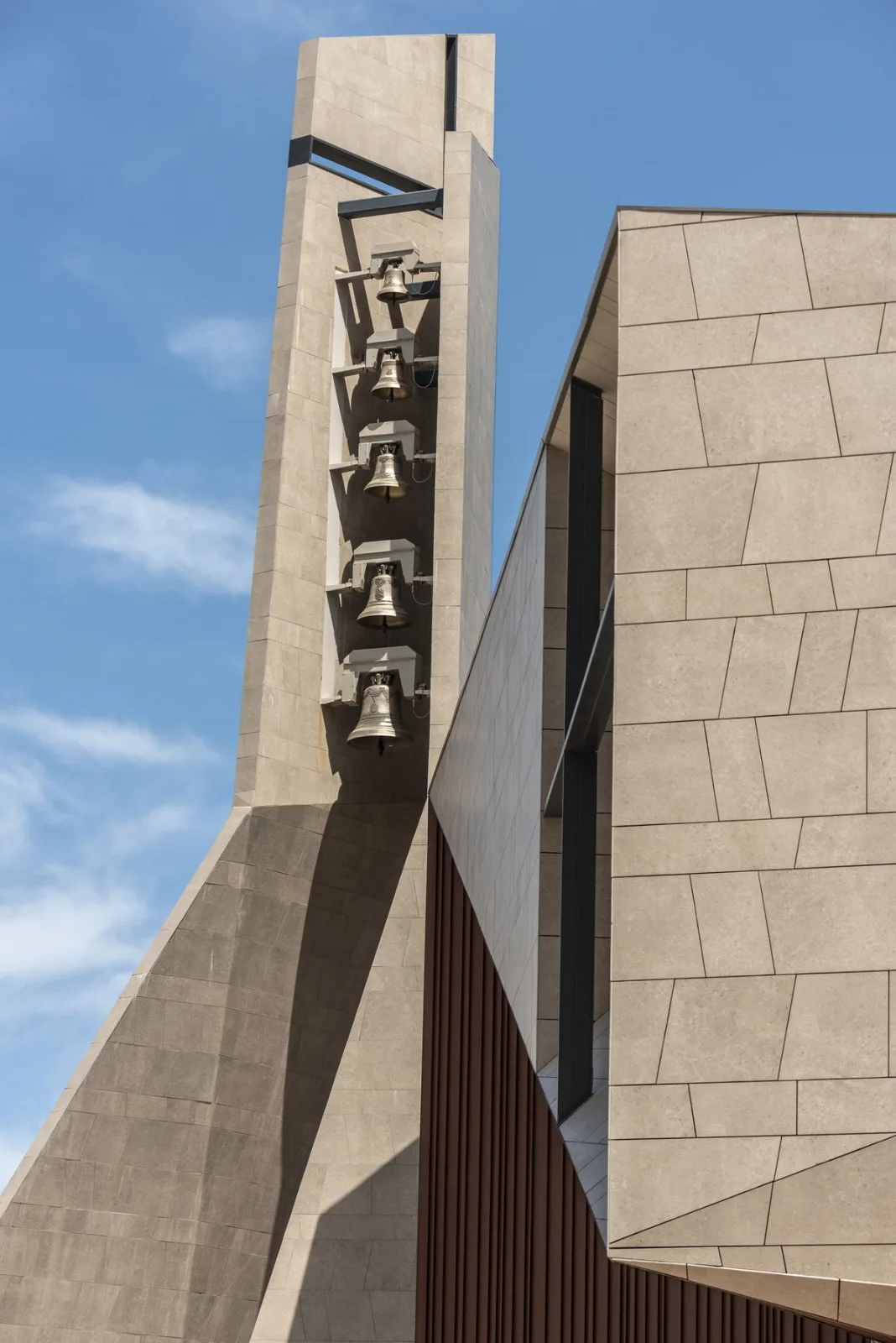
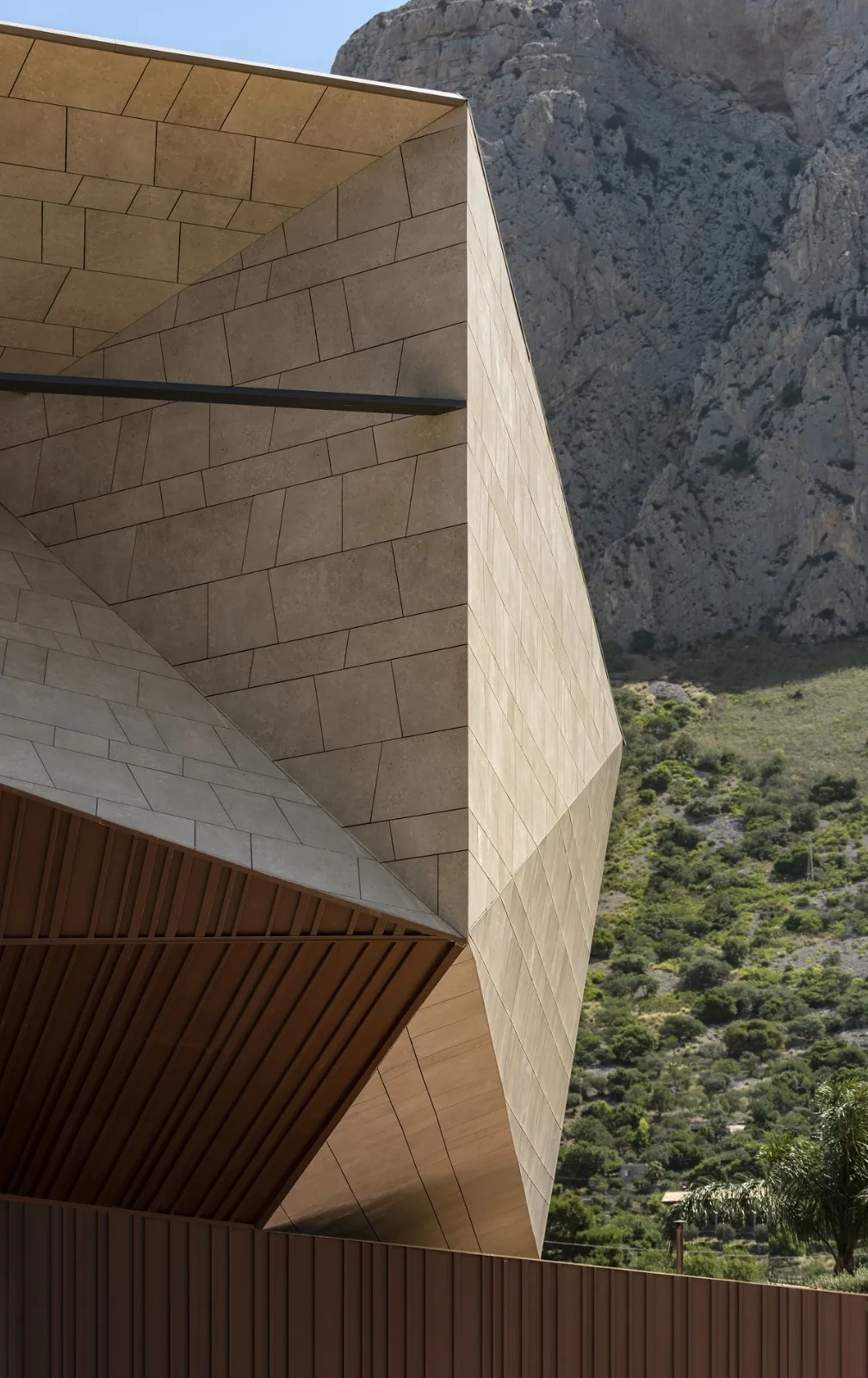
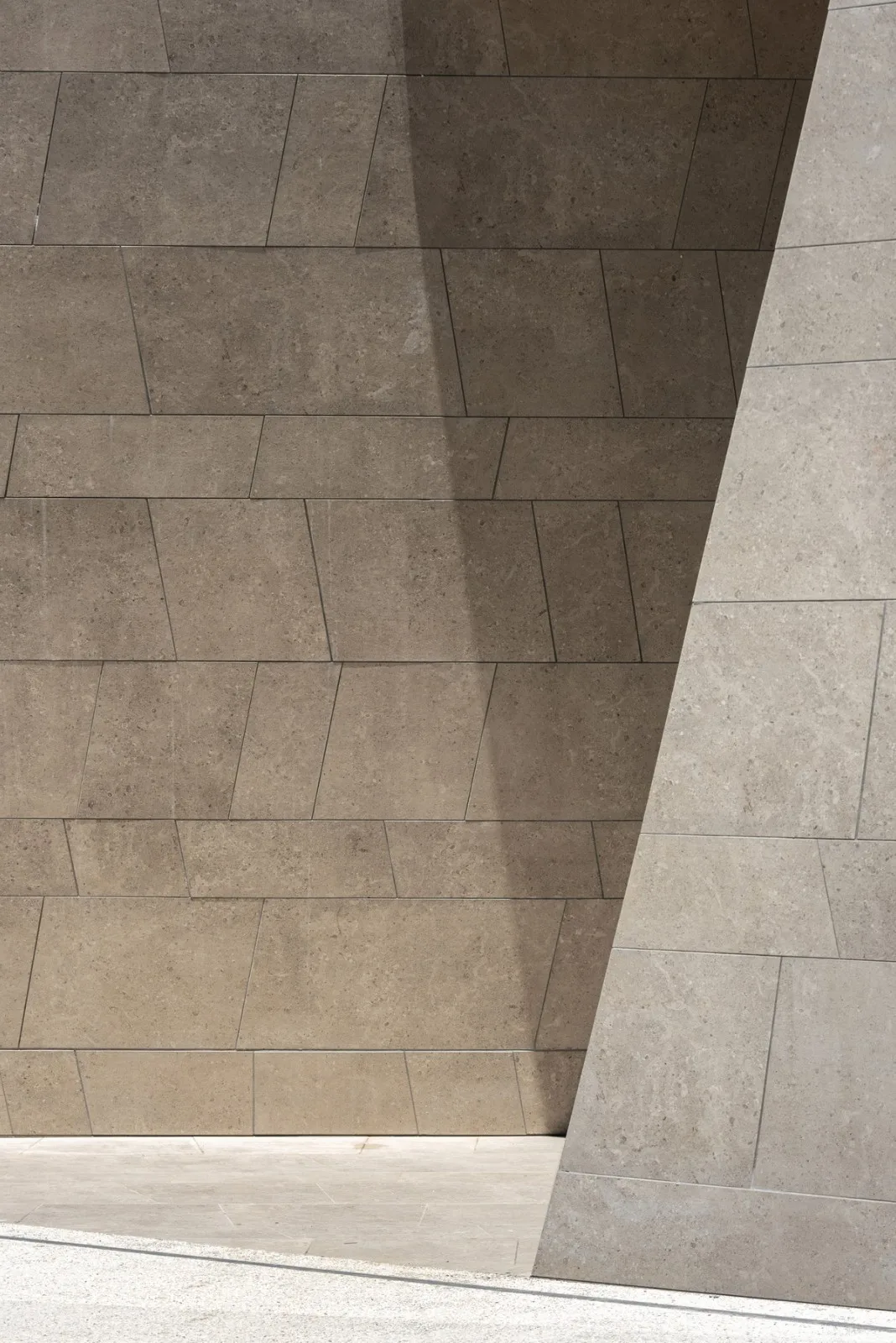
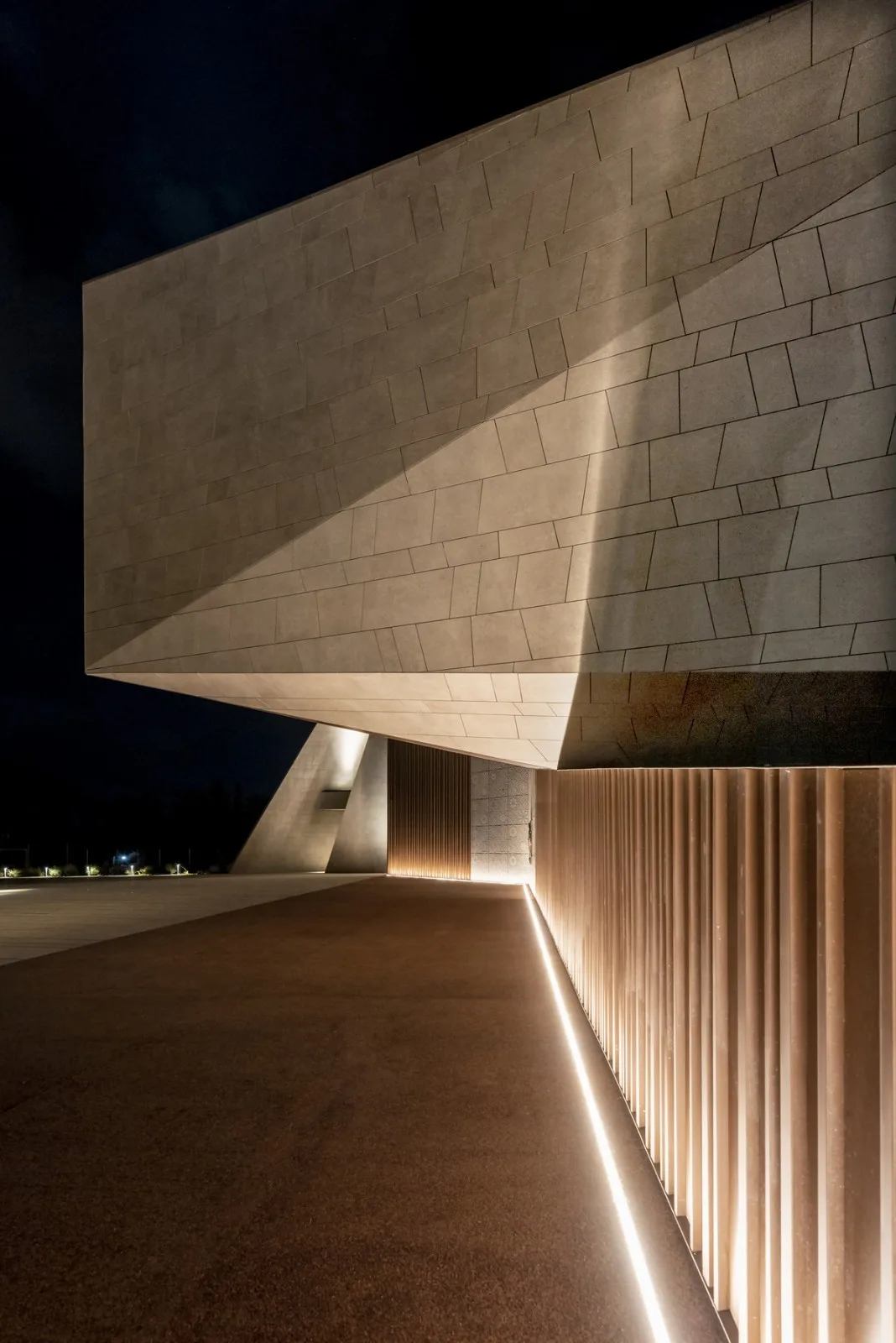
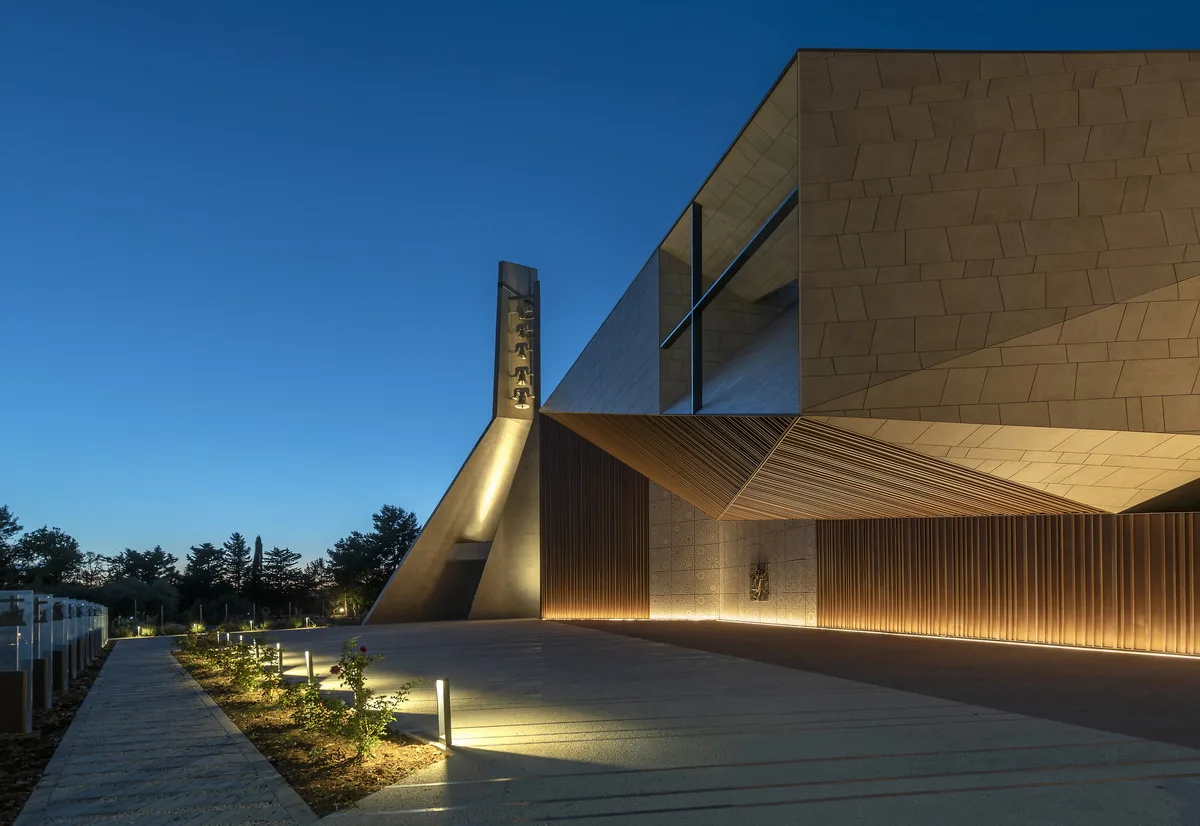
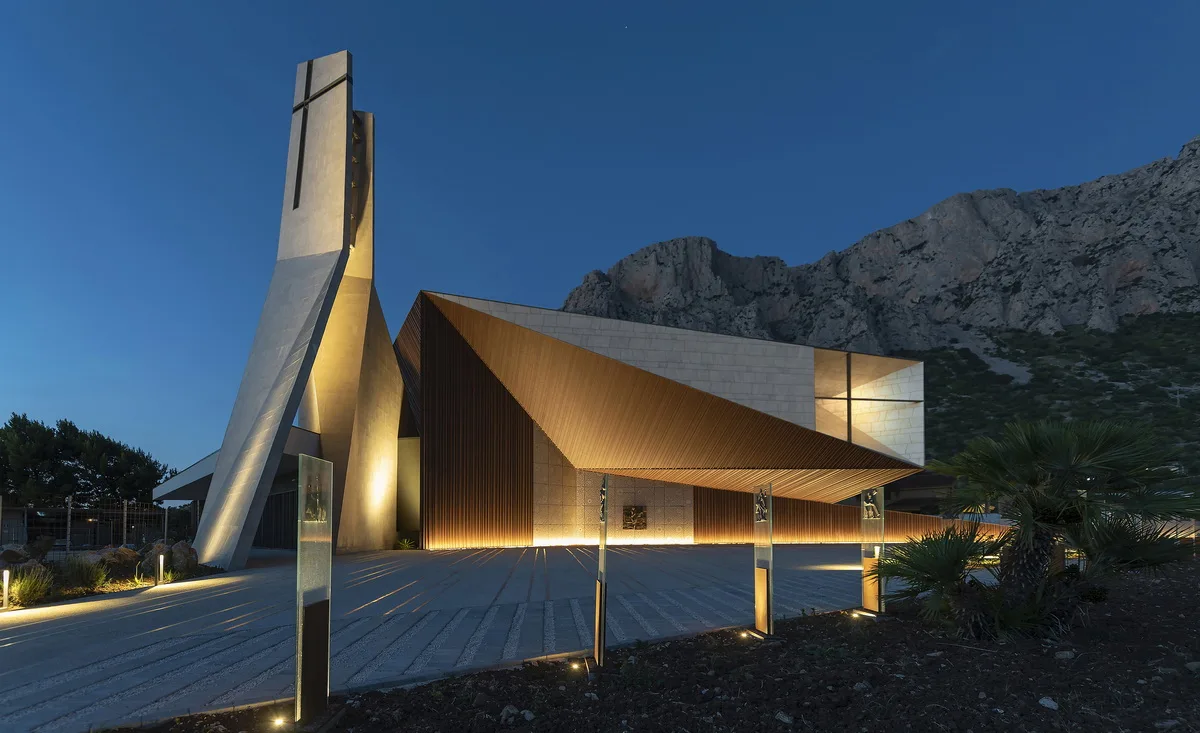
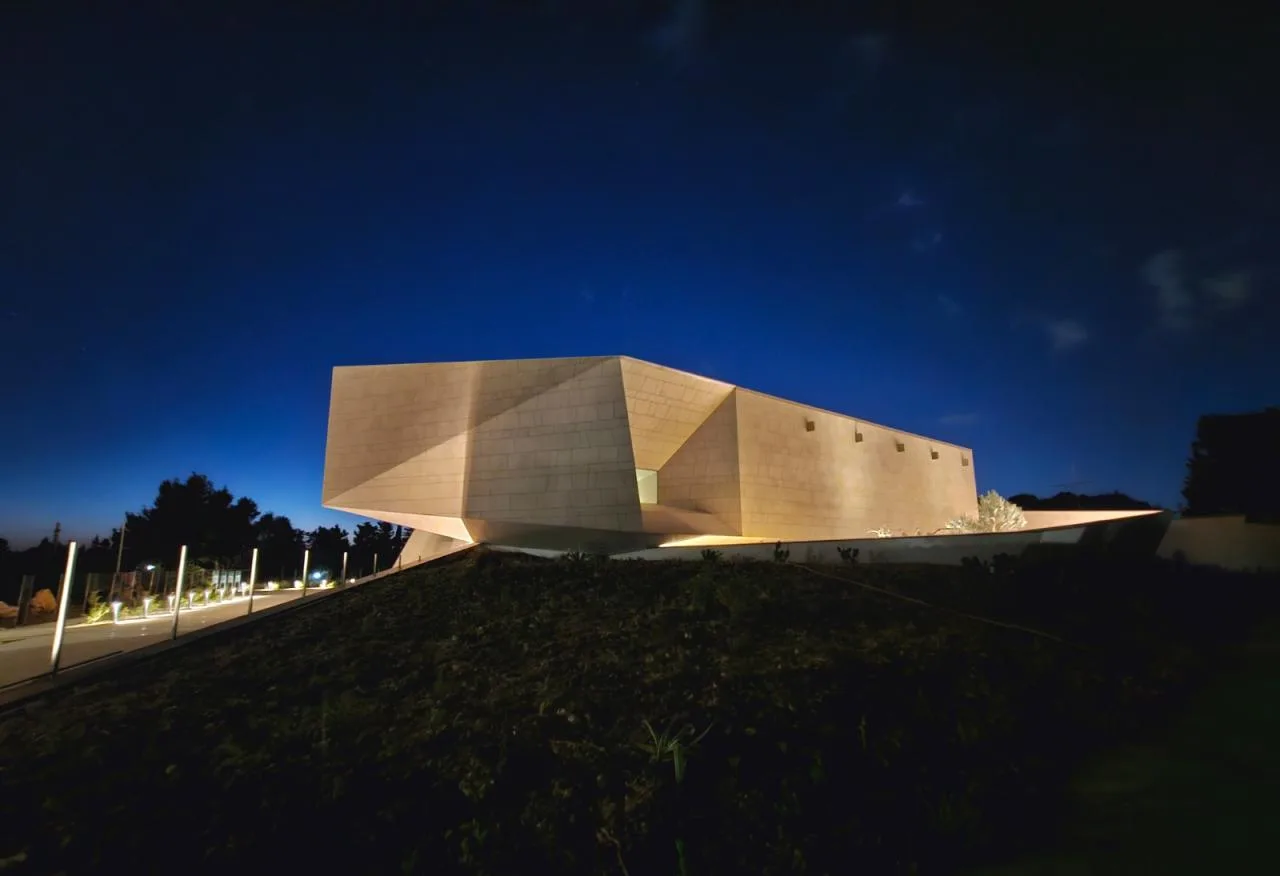
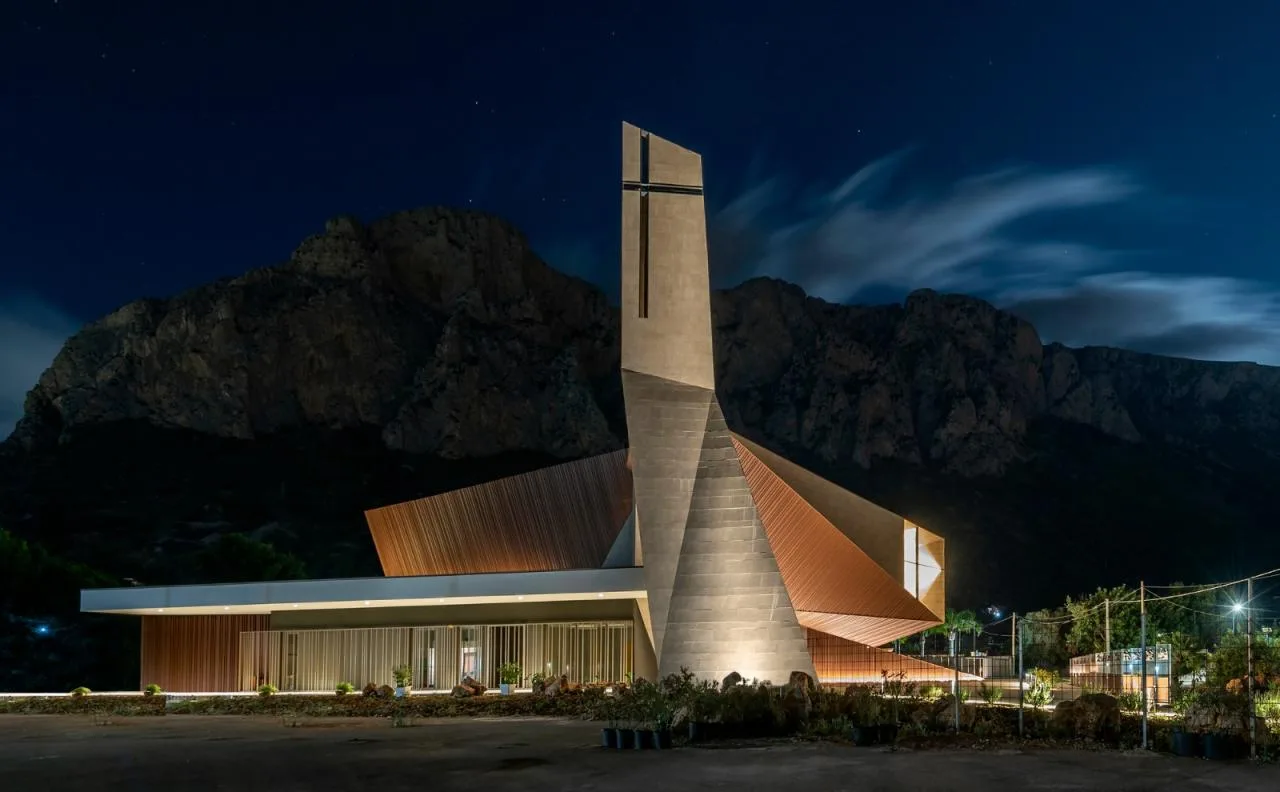
The church itself is defined by a massive stone structure clad in ceramic materials, flanked by solitary bell towers that rise organically from the ground. These towers blend seamlessly with the sky, evoking the imagery of ancient coastal watchtowers.
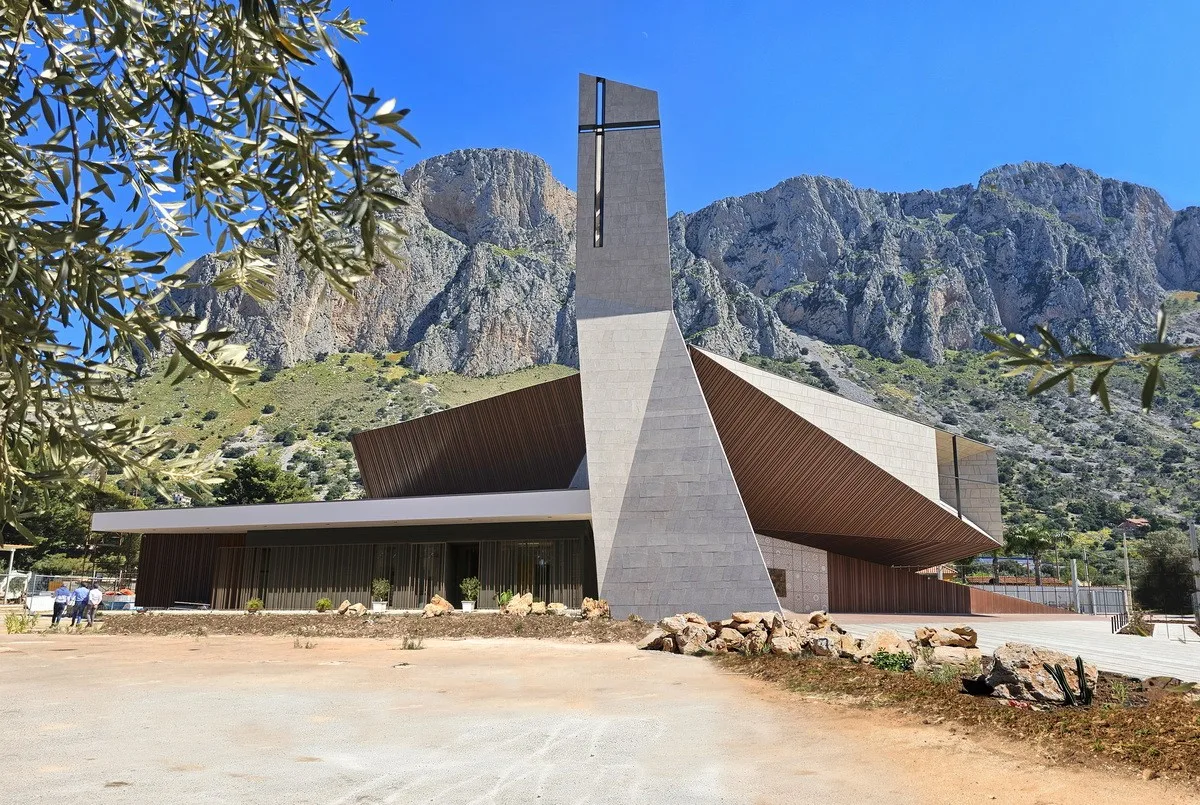
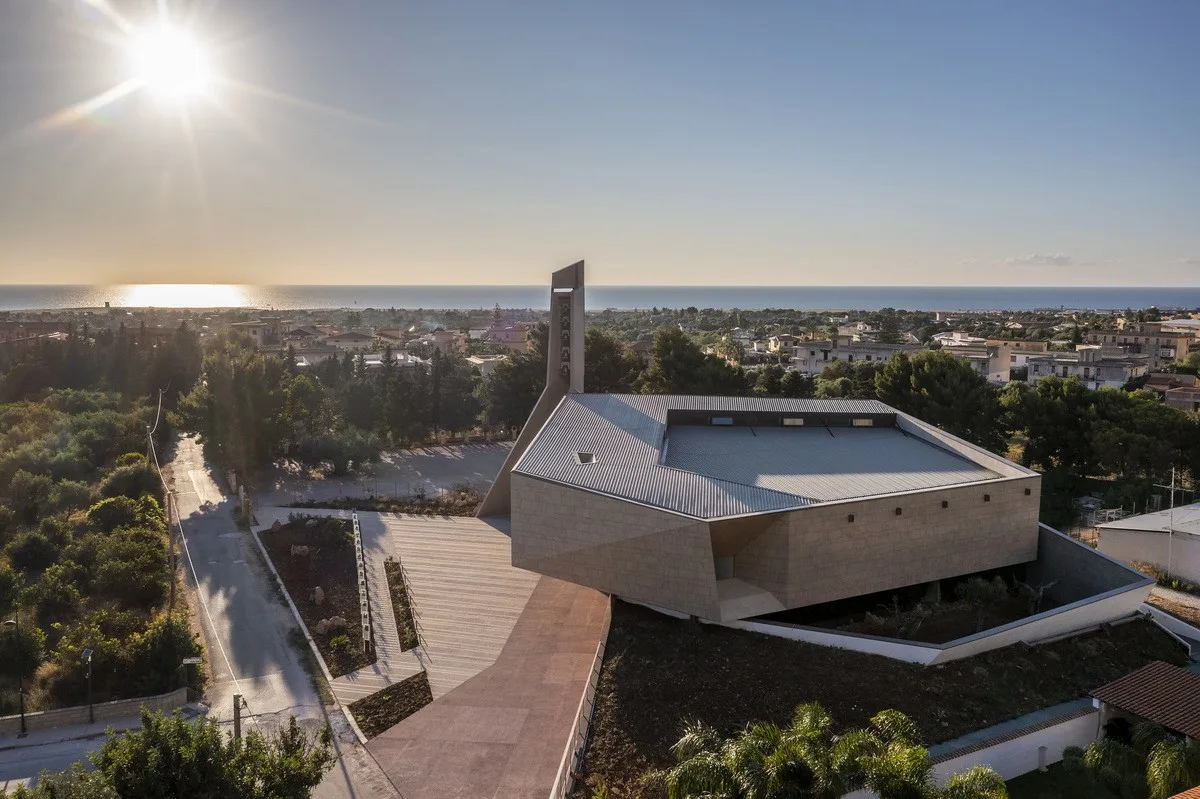
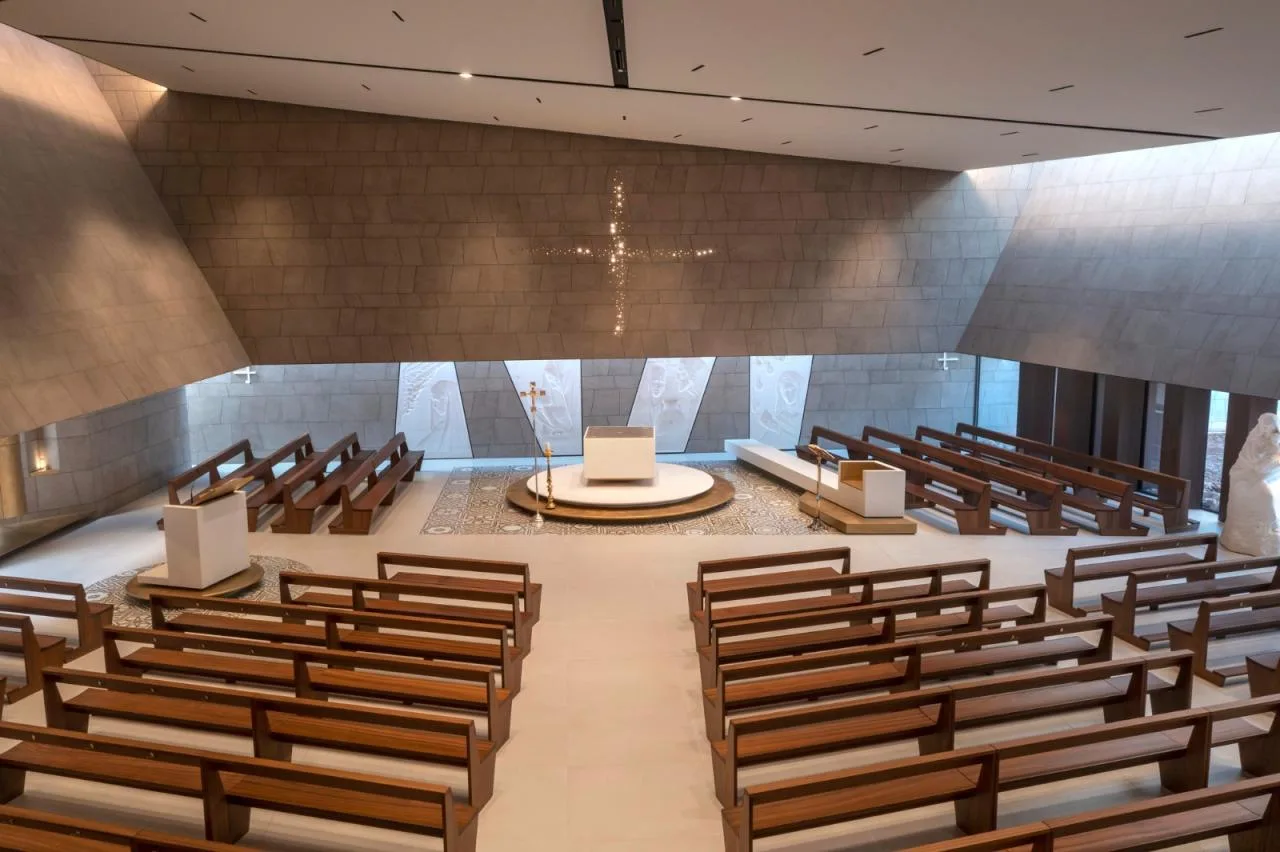
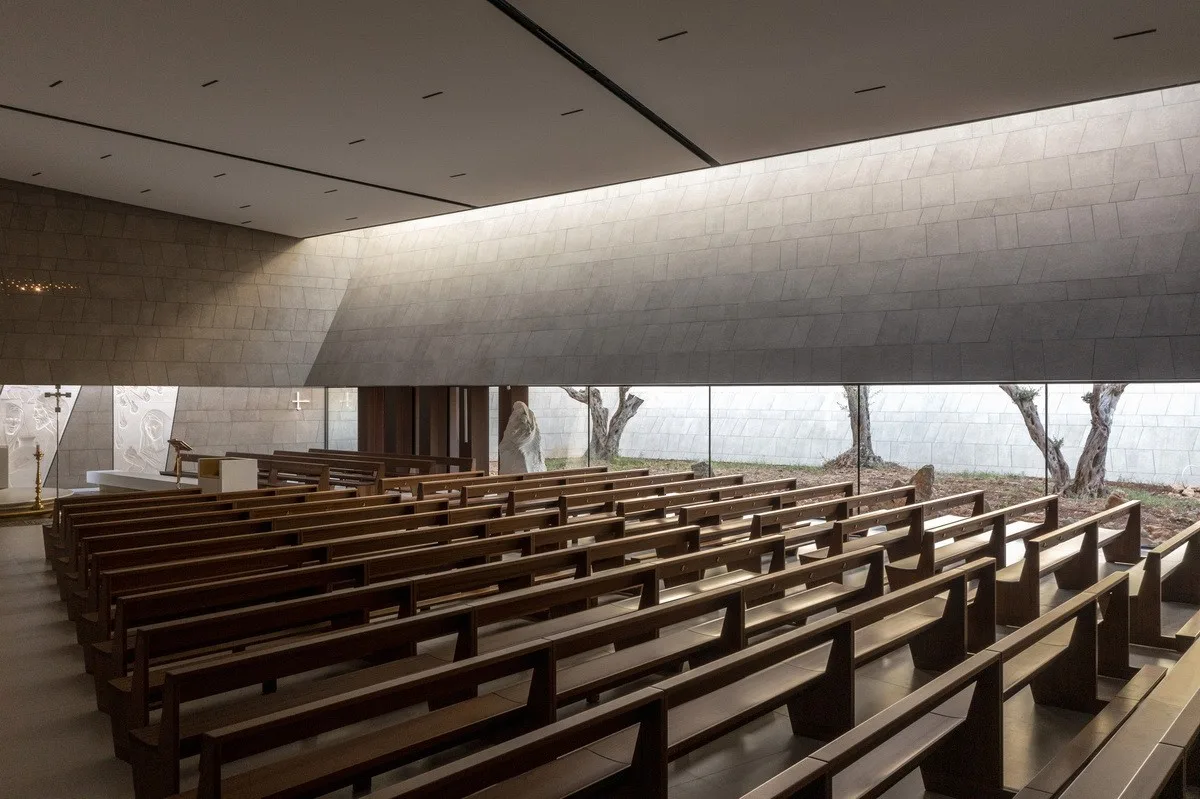
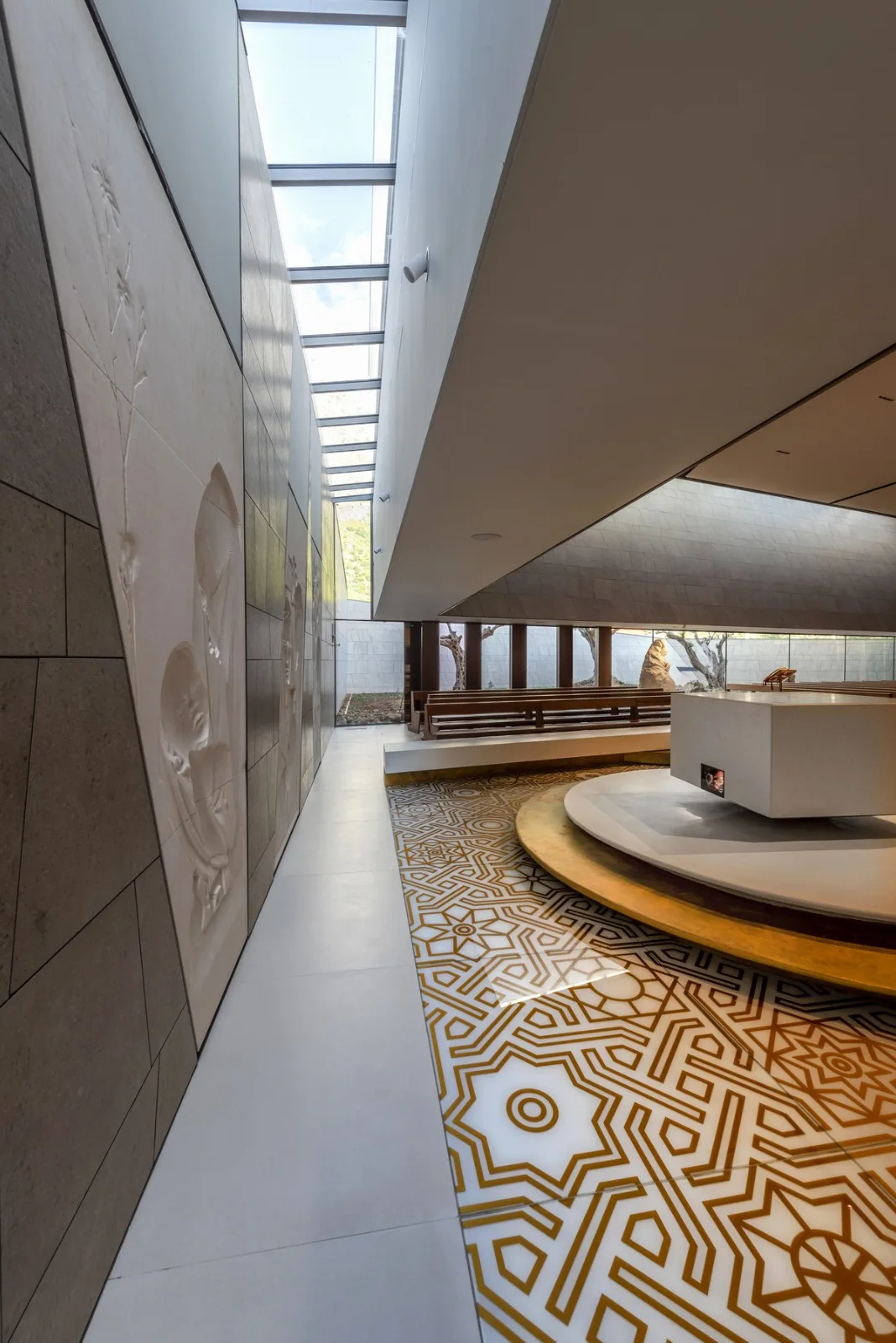
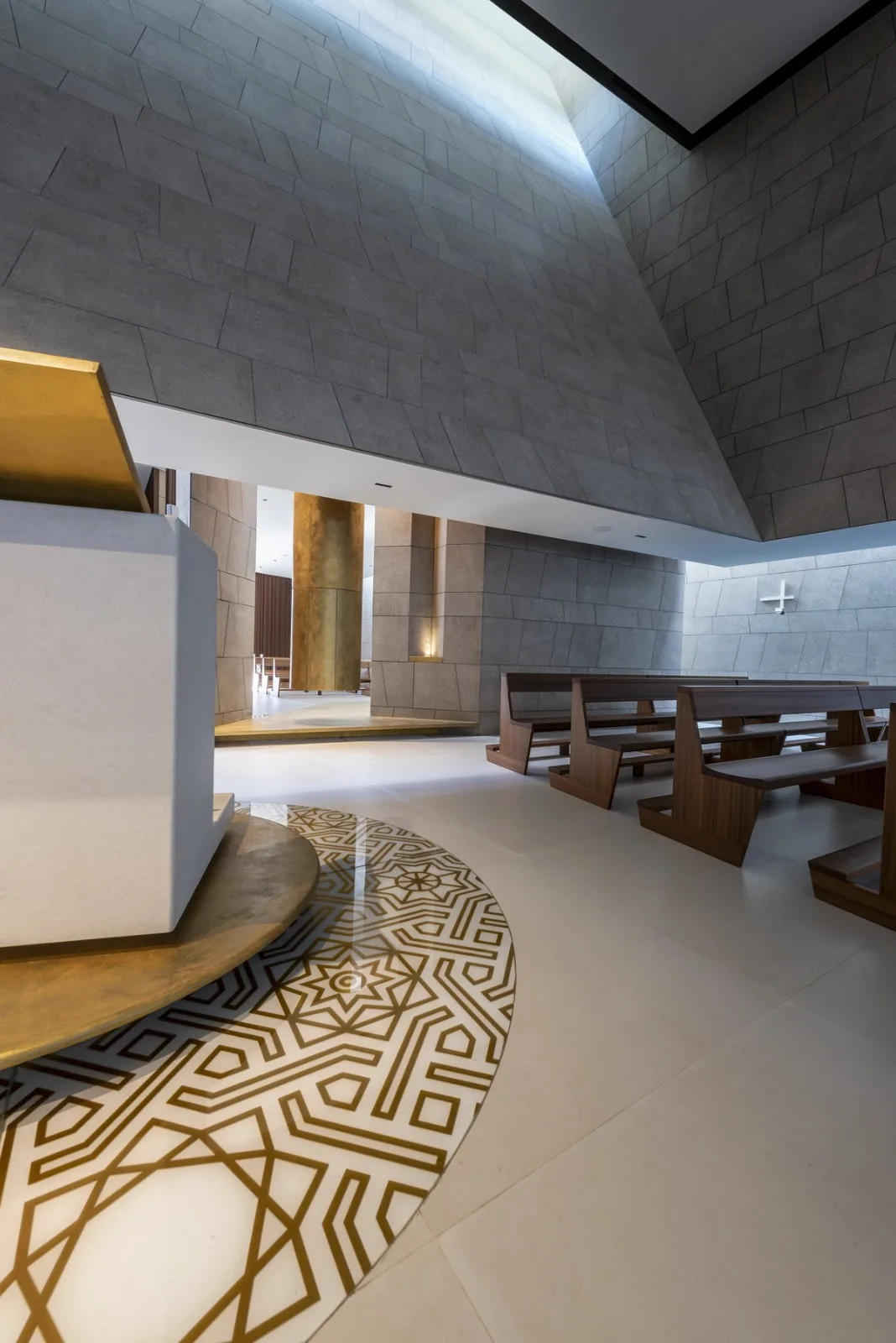
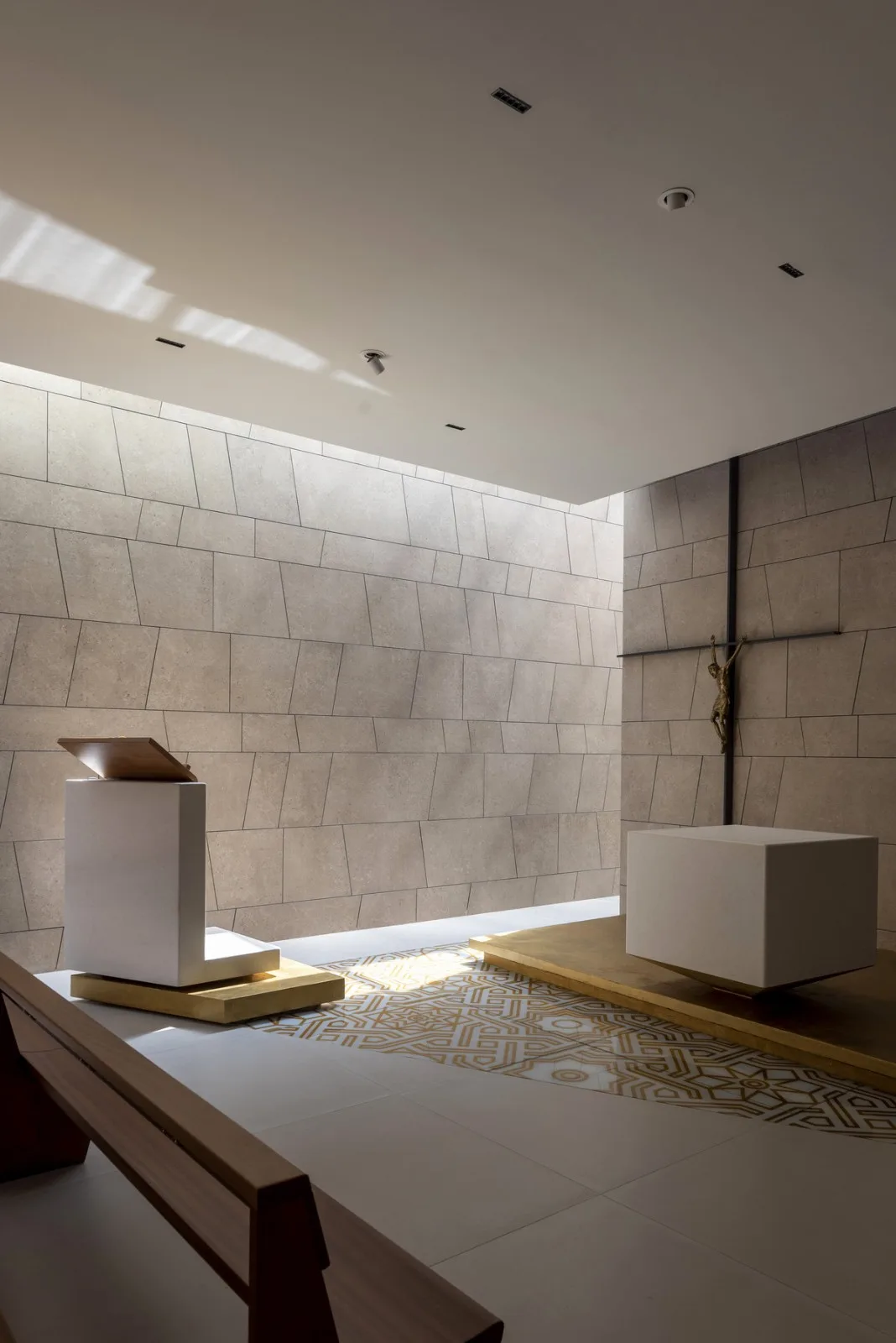
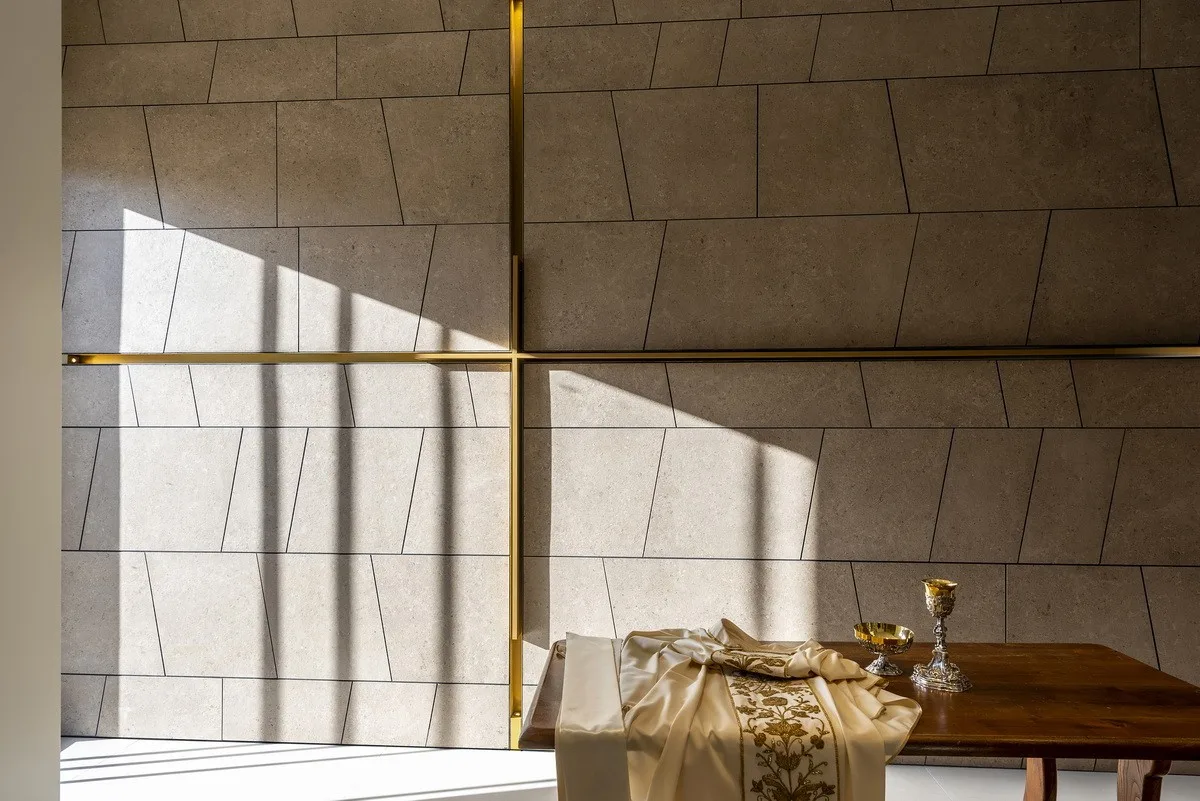
The architectural design makes full use of natural light to enhance the building’s form and color. Certain rooms, appearing partially underground, incorporate openings that allow zenith light to penetrate the interiors. The church nave benefits from a staggered roof structure that fills the space with layers of zenith light.
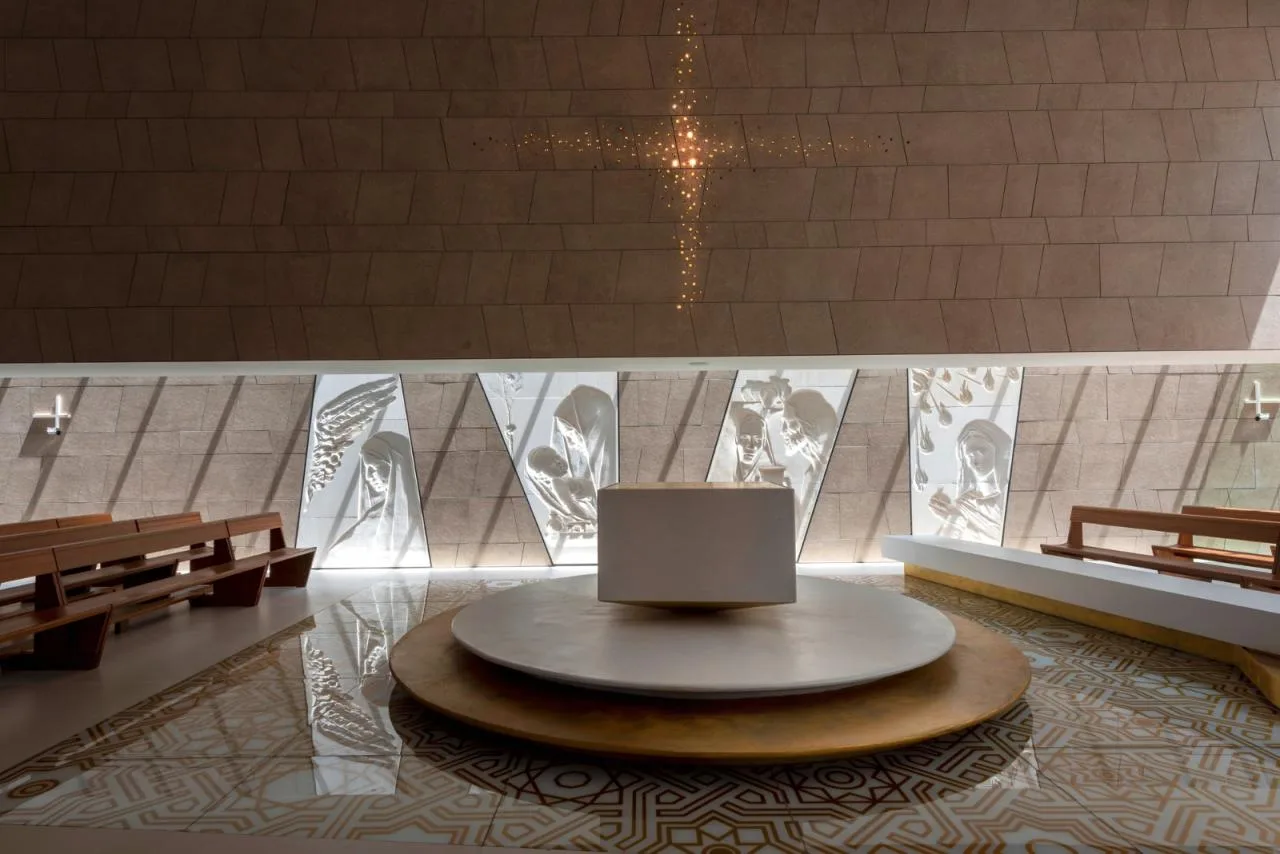
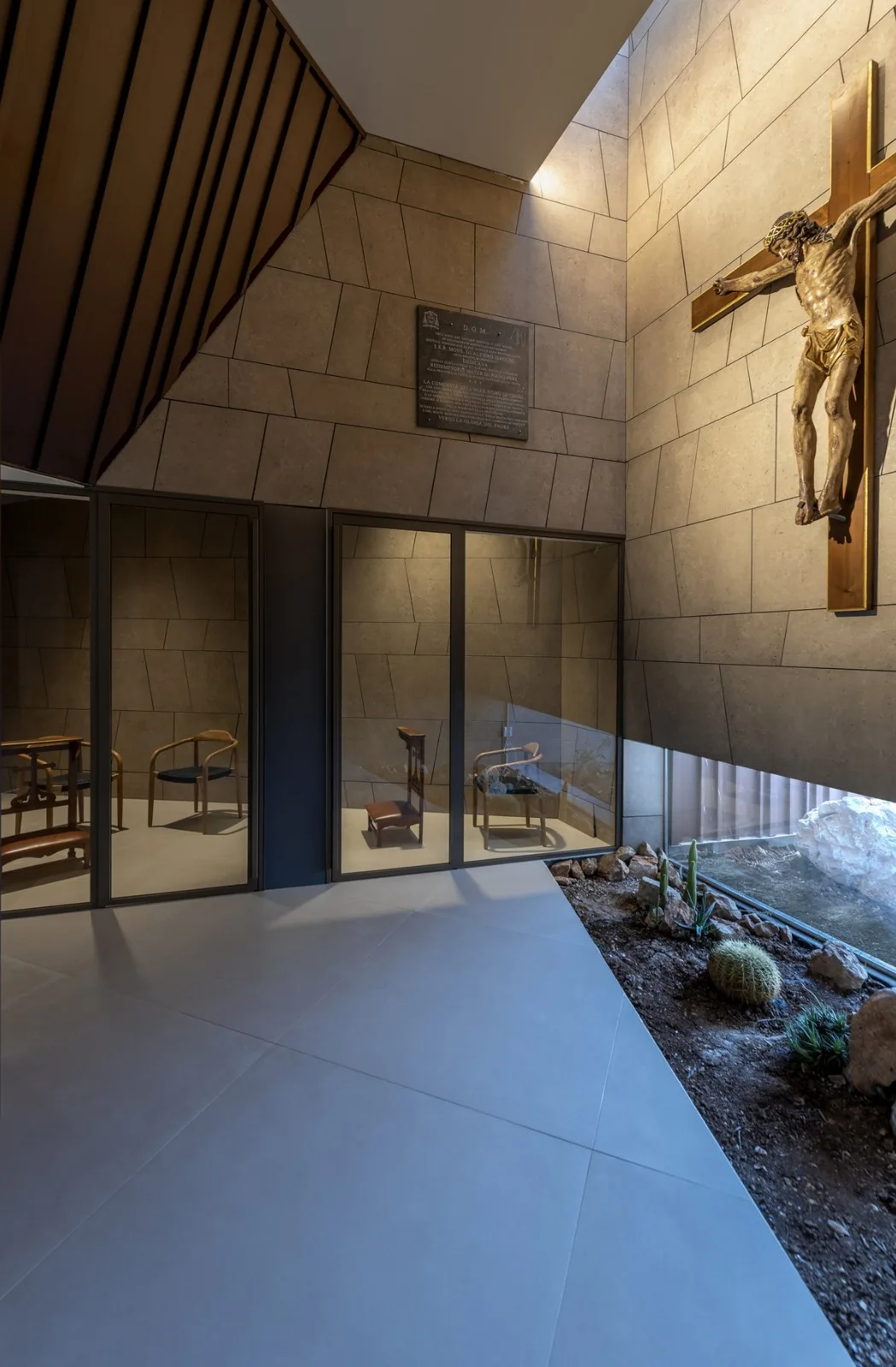
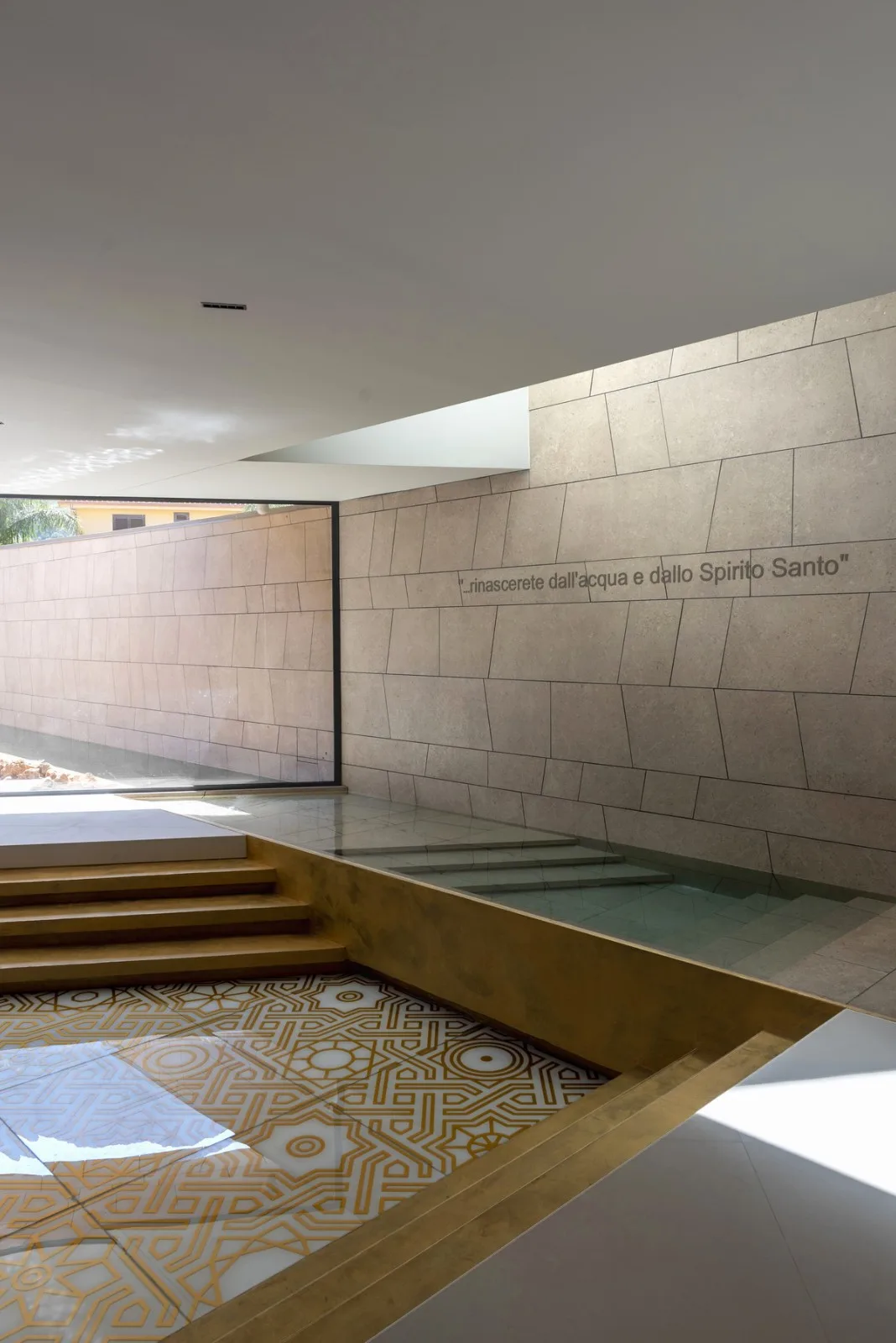
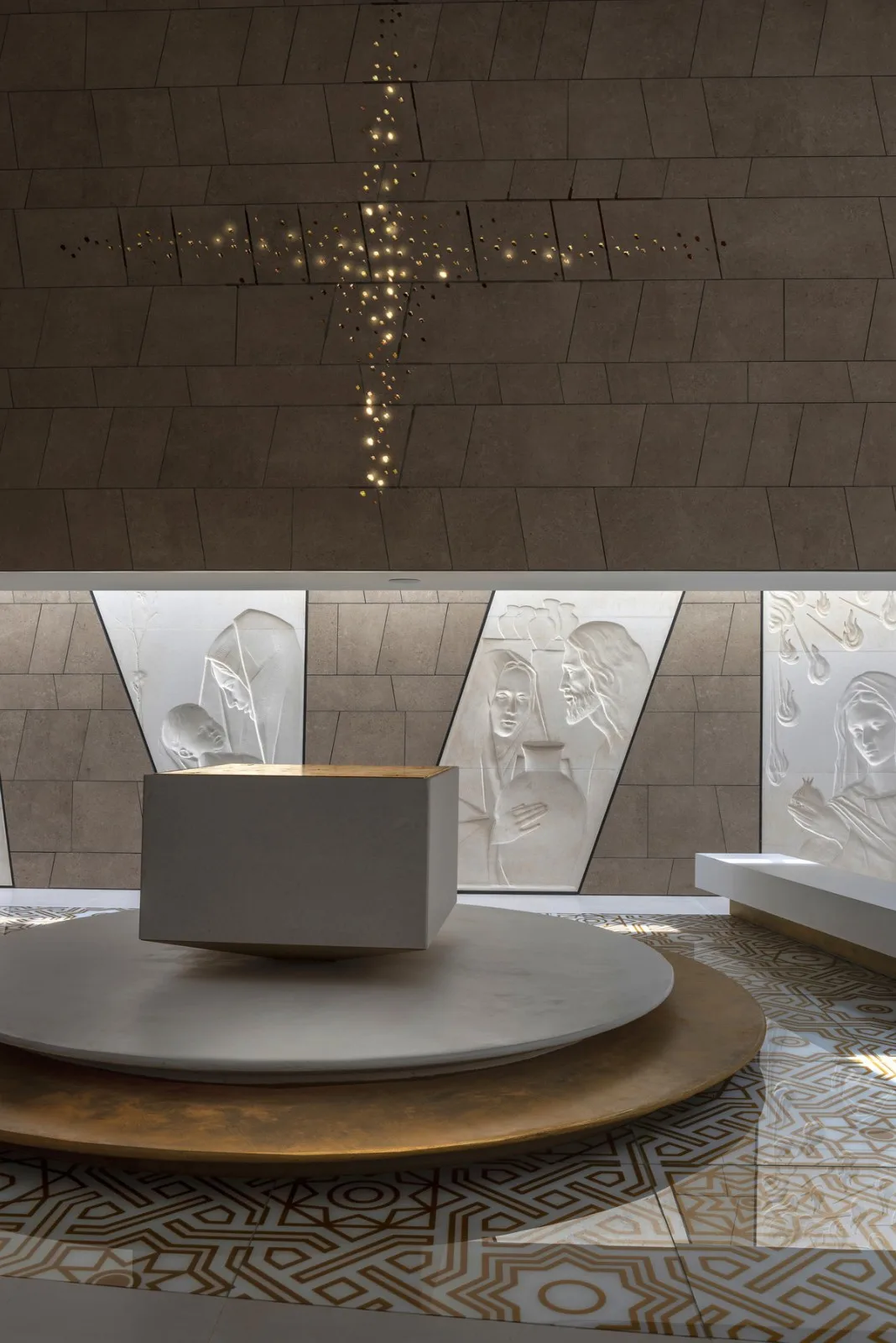
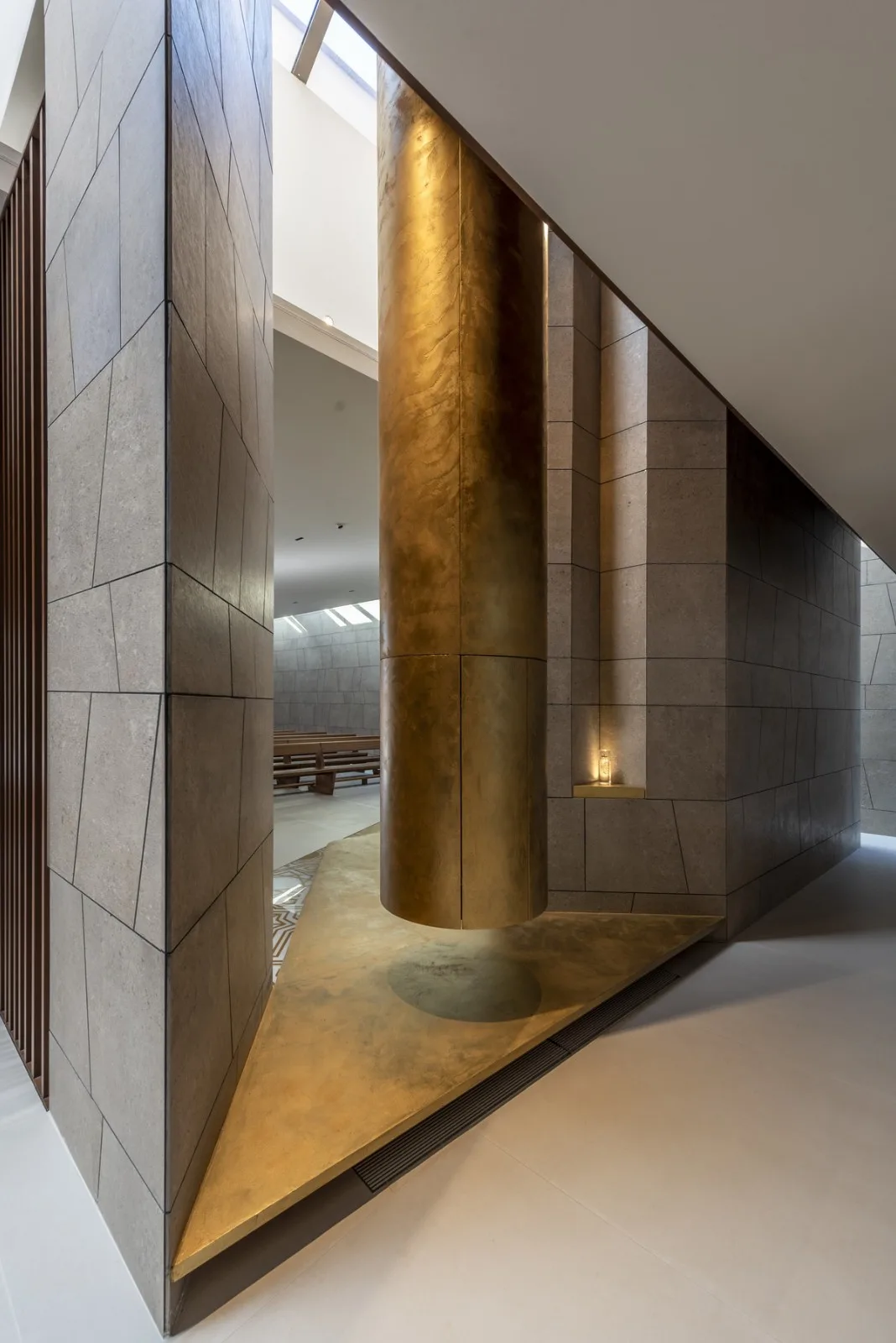
In specific areas, such as the crosses and baptismal pools, pointed apertures protrude from the stone masonry like bold punctuation marks, intensifying the infusion of natural light.
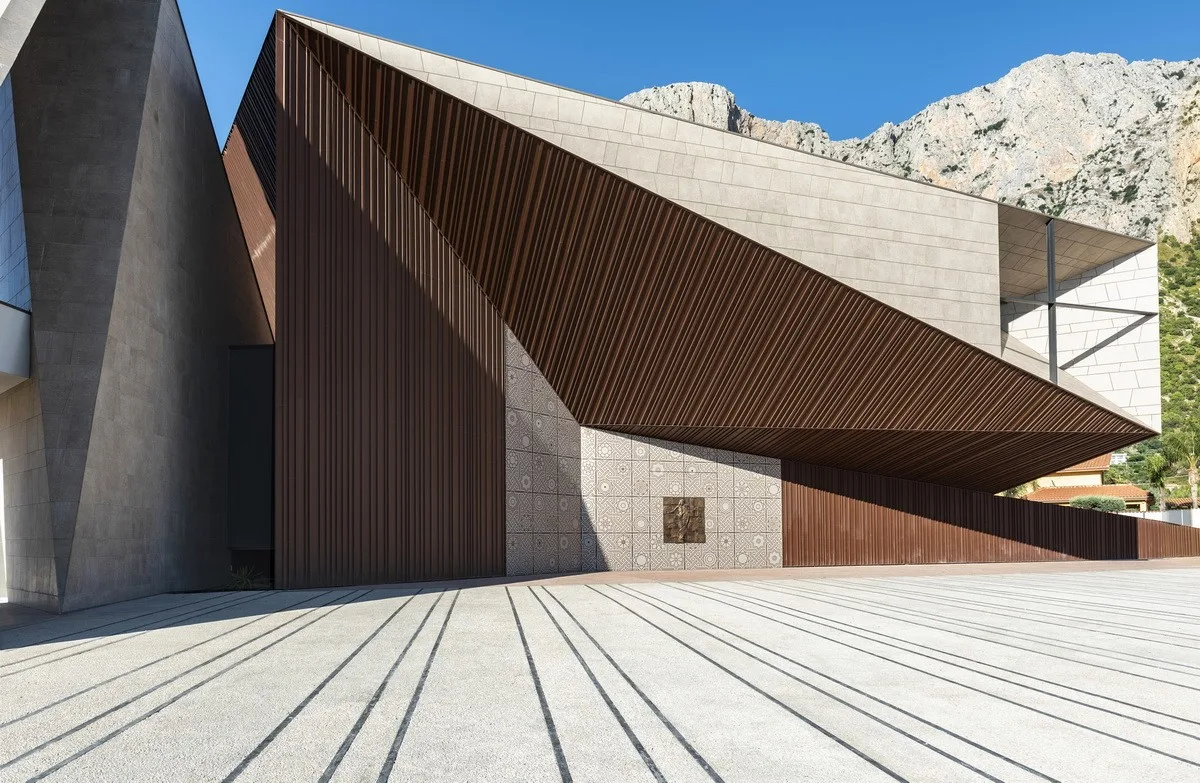
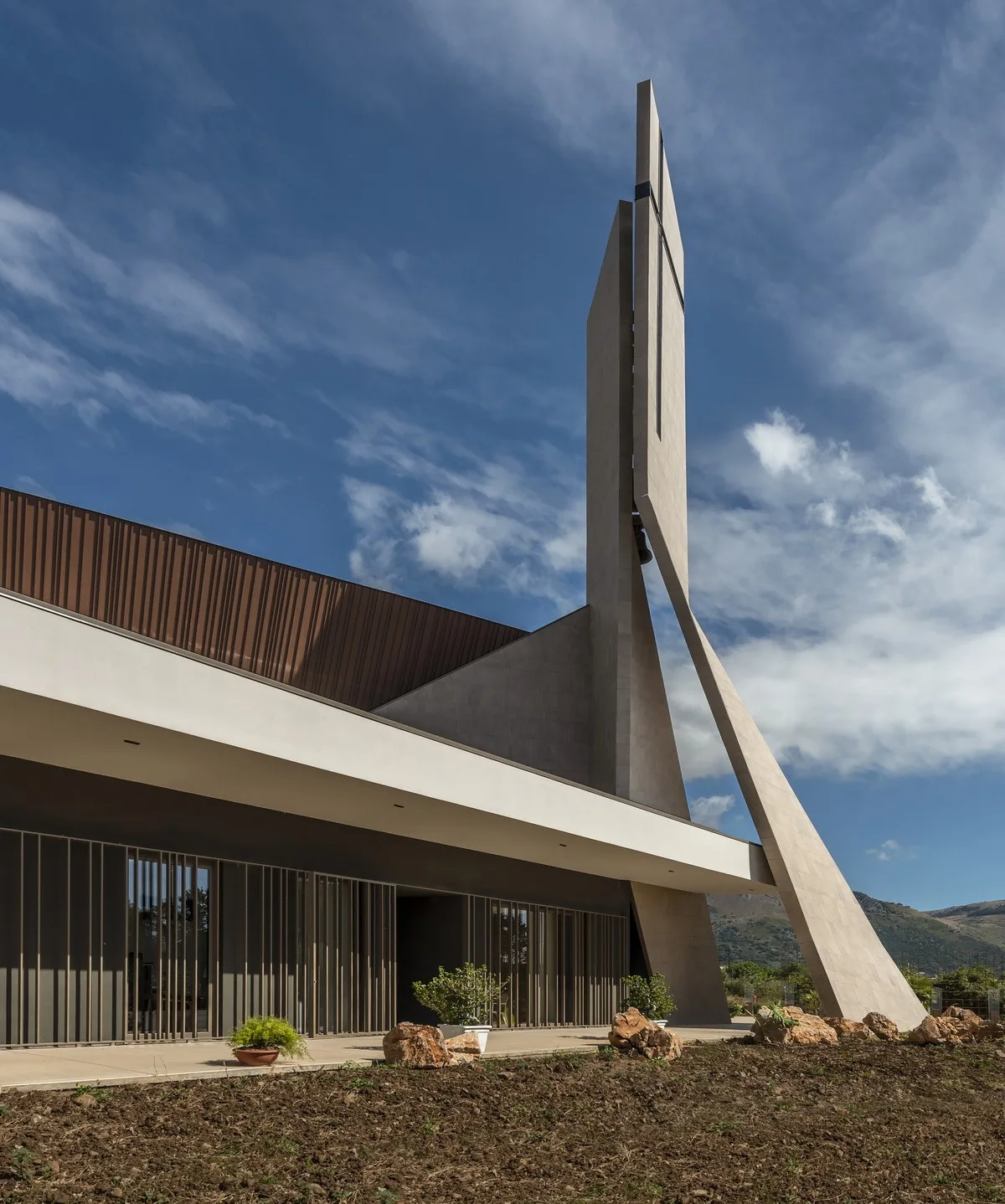
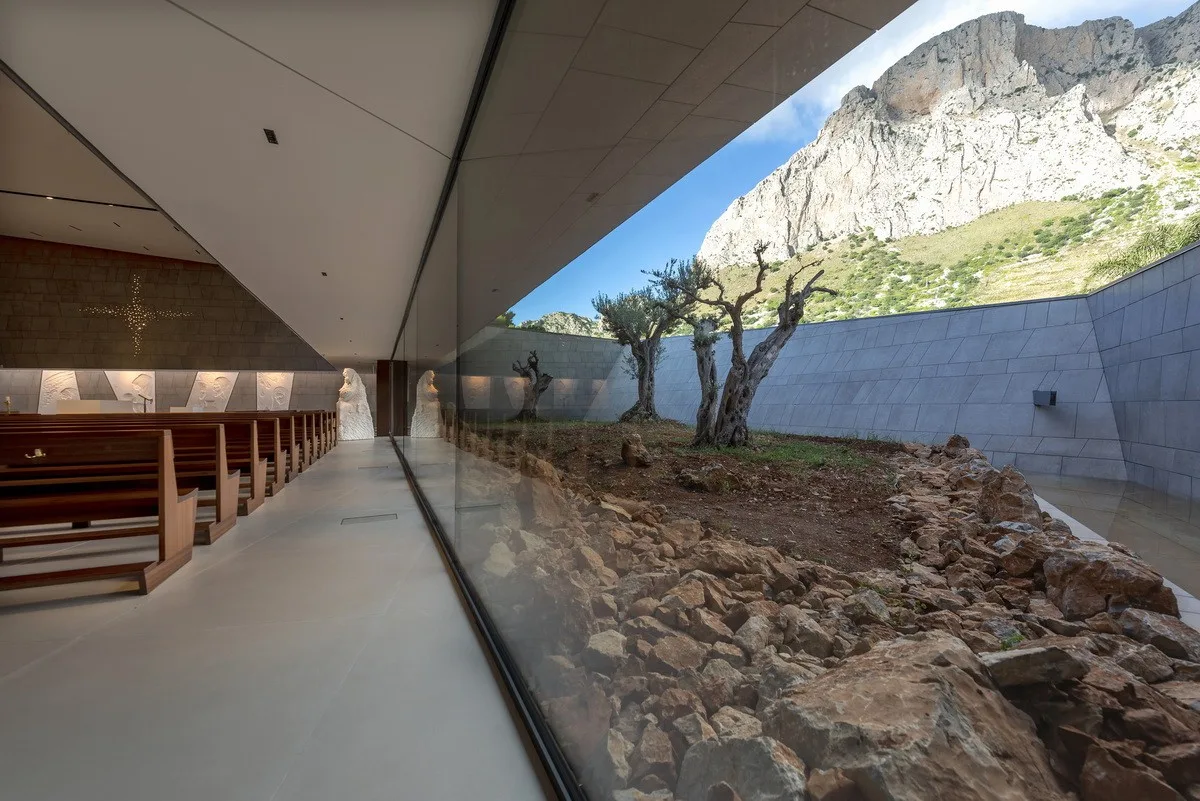
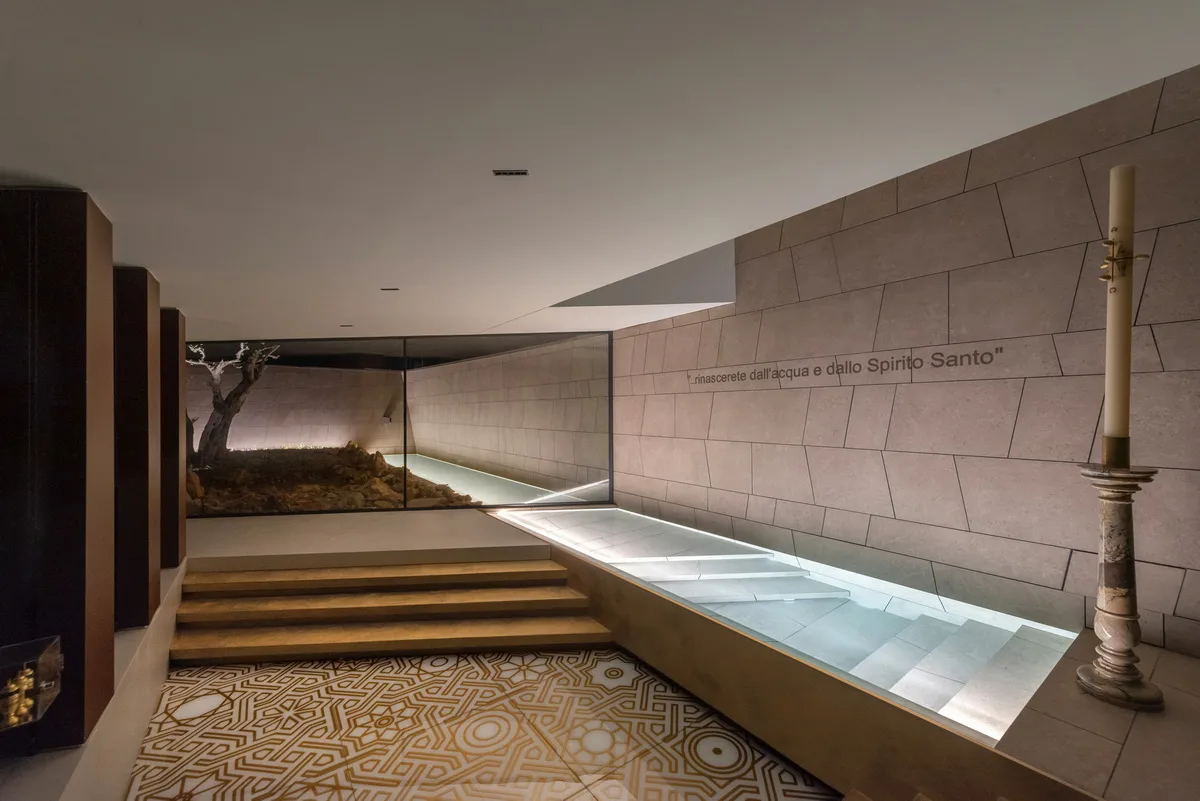
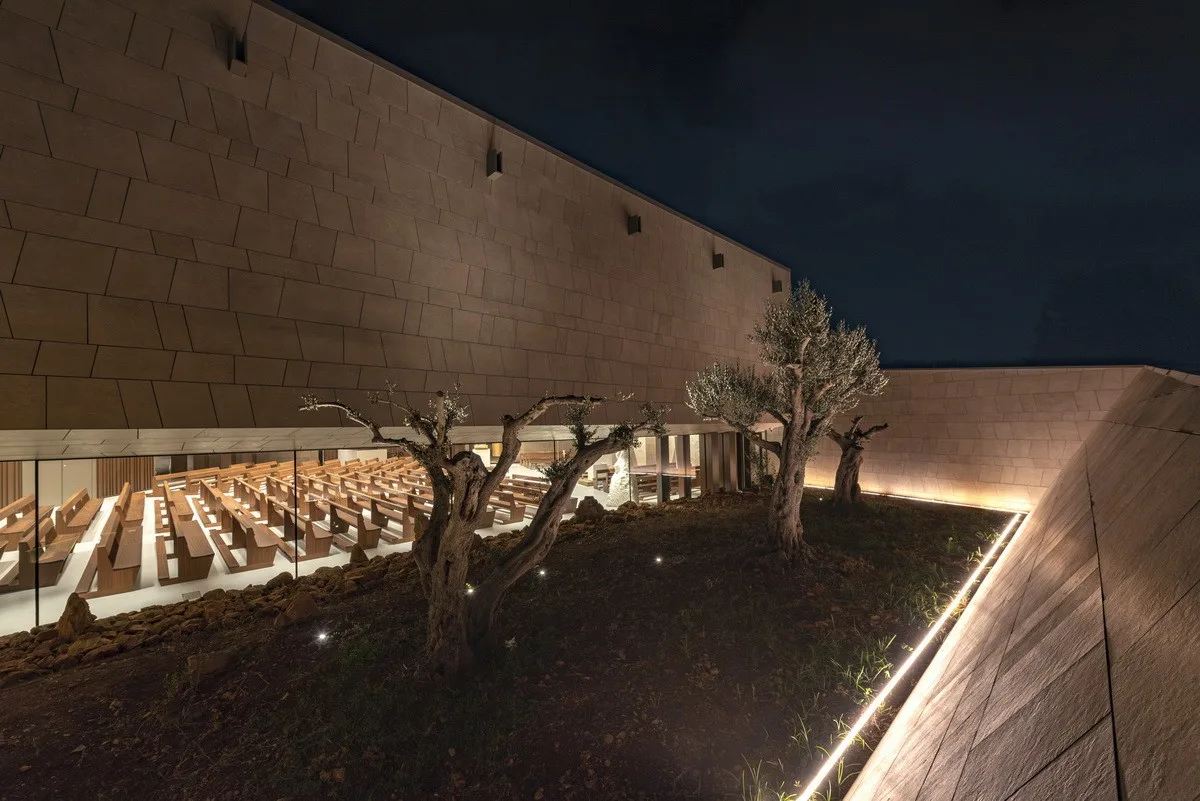
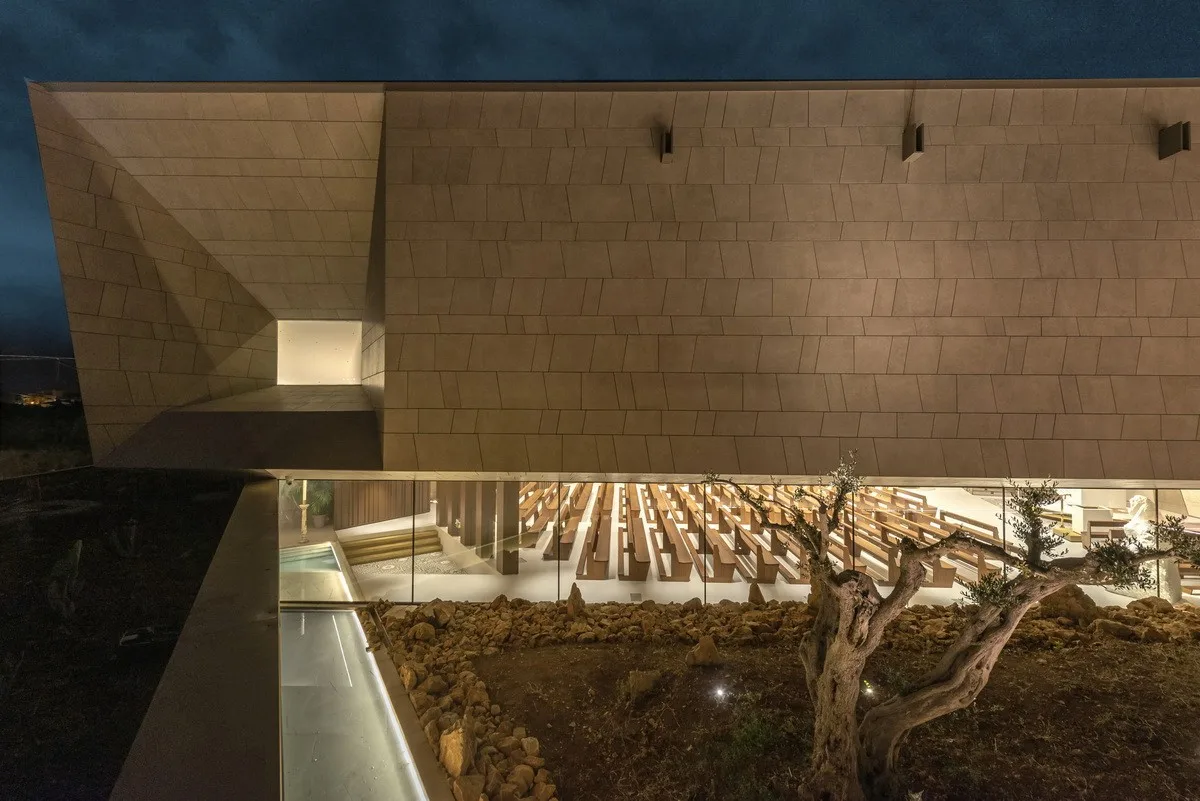
The interior gathering space opens solely on the west side, featuring a large window that overlooks the ‘Olive Garden’. This evocative element blurs the boundary between inside and outside: the garden’s stones appear to extend into the church, while the glass windows seem embedded directly into the rocks.
A surrounding wall frames the garden, guiding visitors’ gaze toward the sky and Mount Lunga, providing a natural backdrop for worship and baptismal ceremonies. A water feature runs from the garden to the baptismal pool, adding symbolic significance.
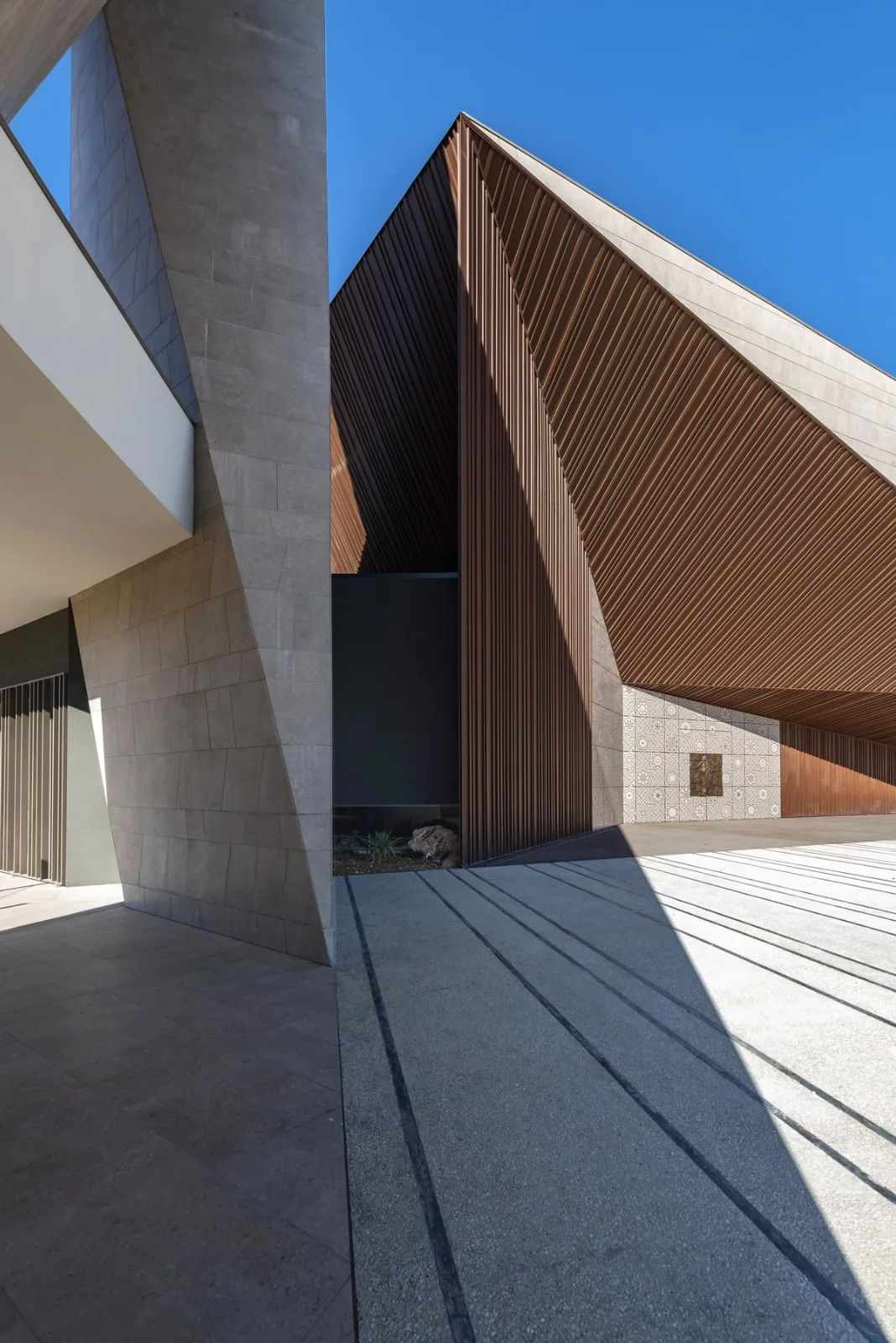
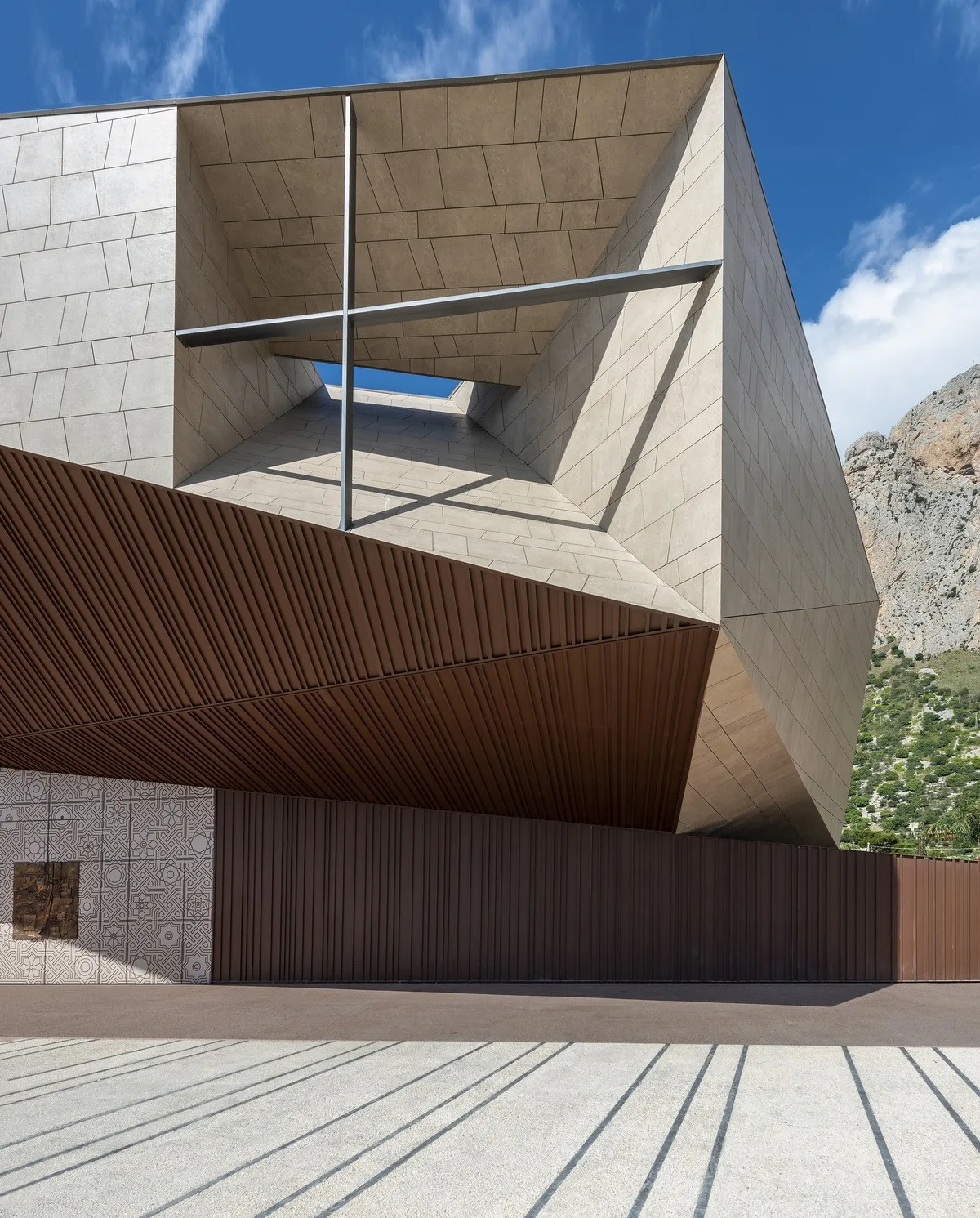
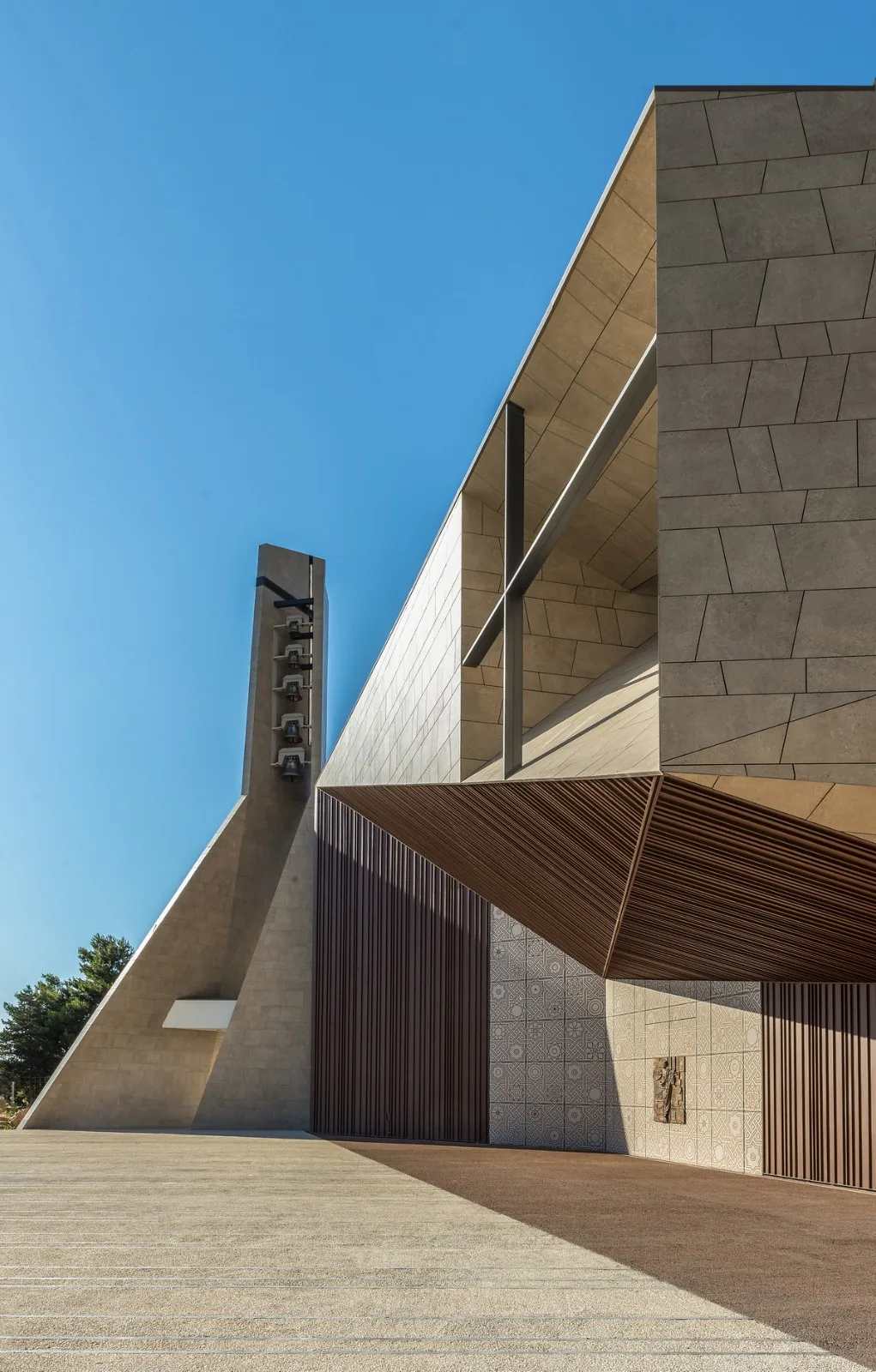
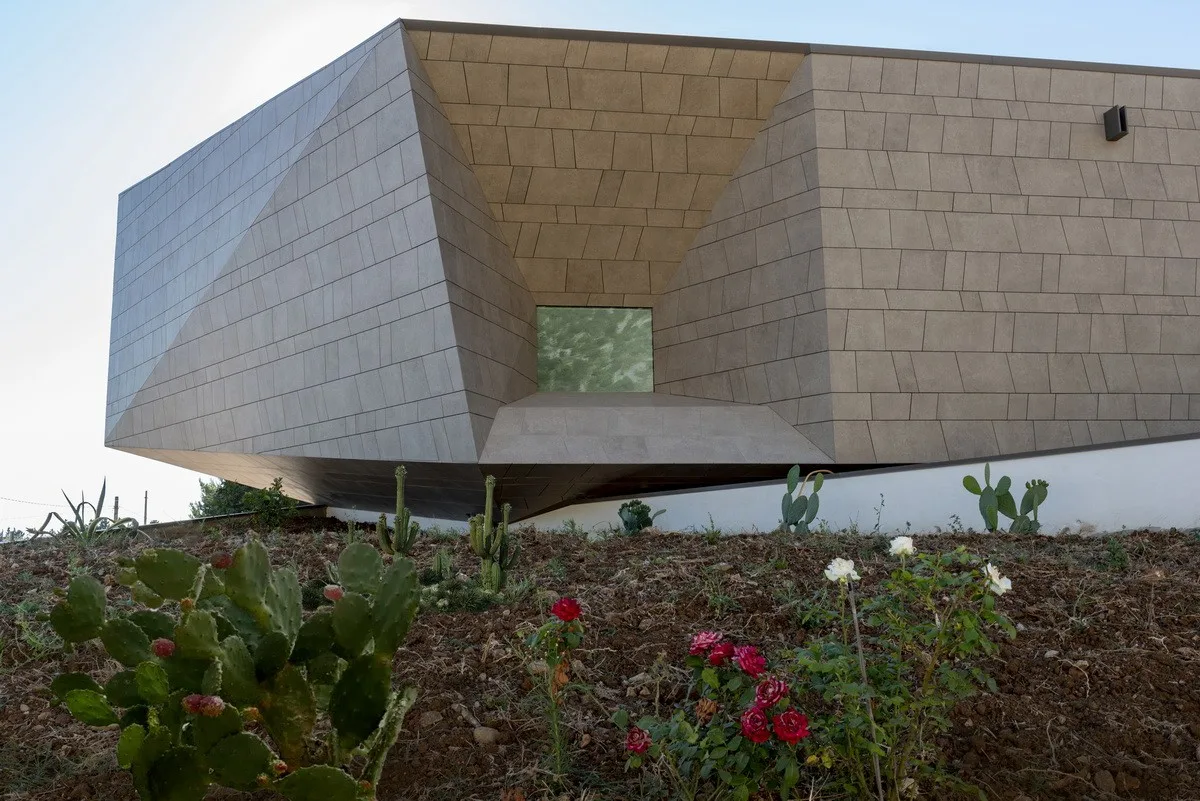
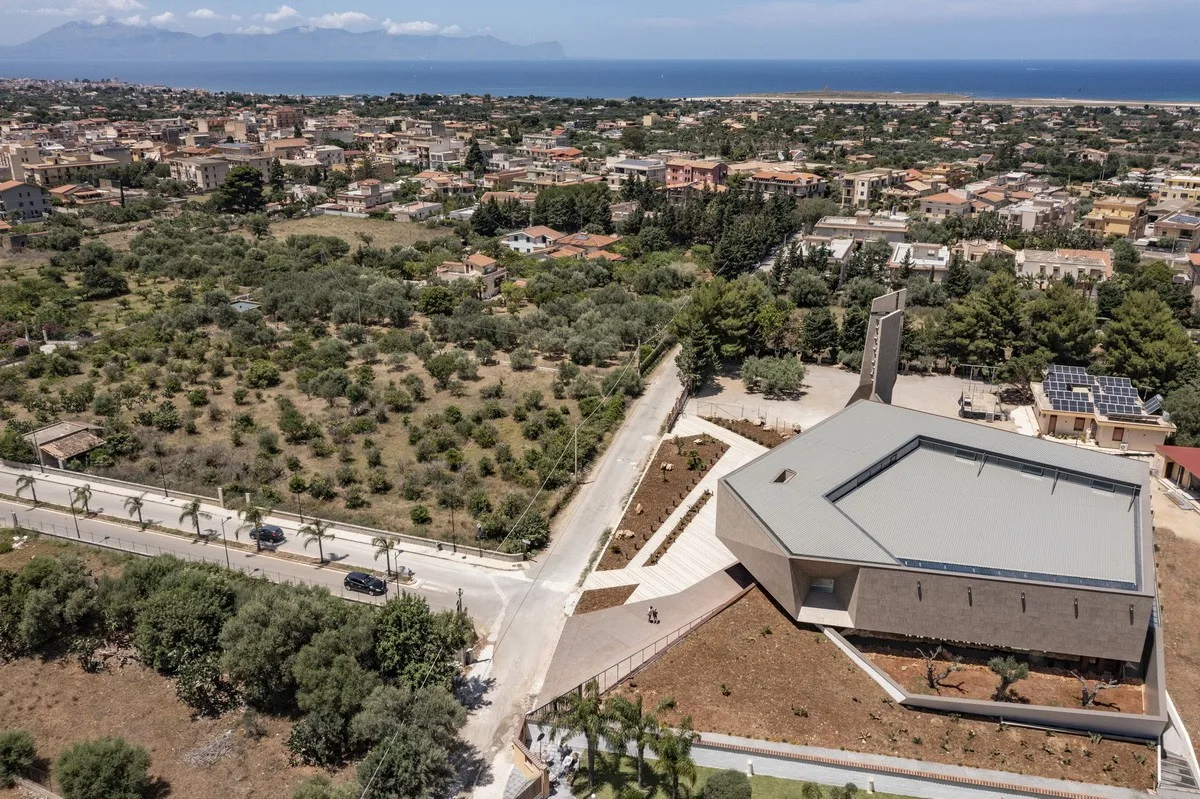
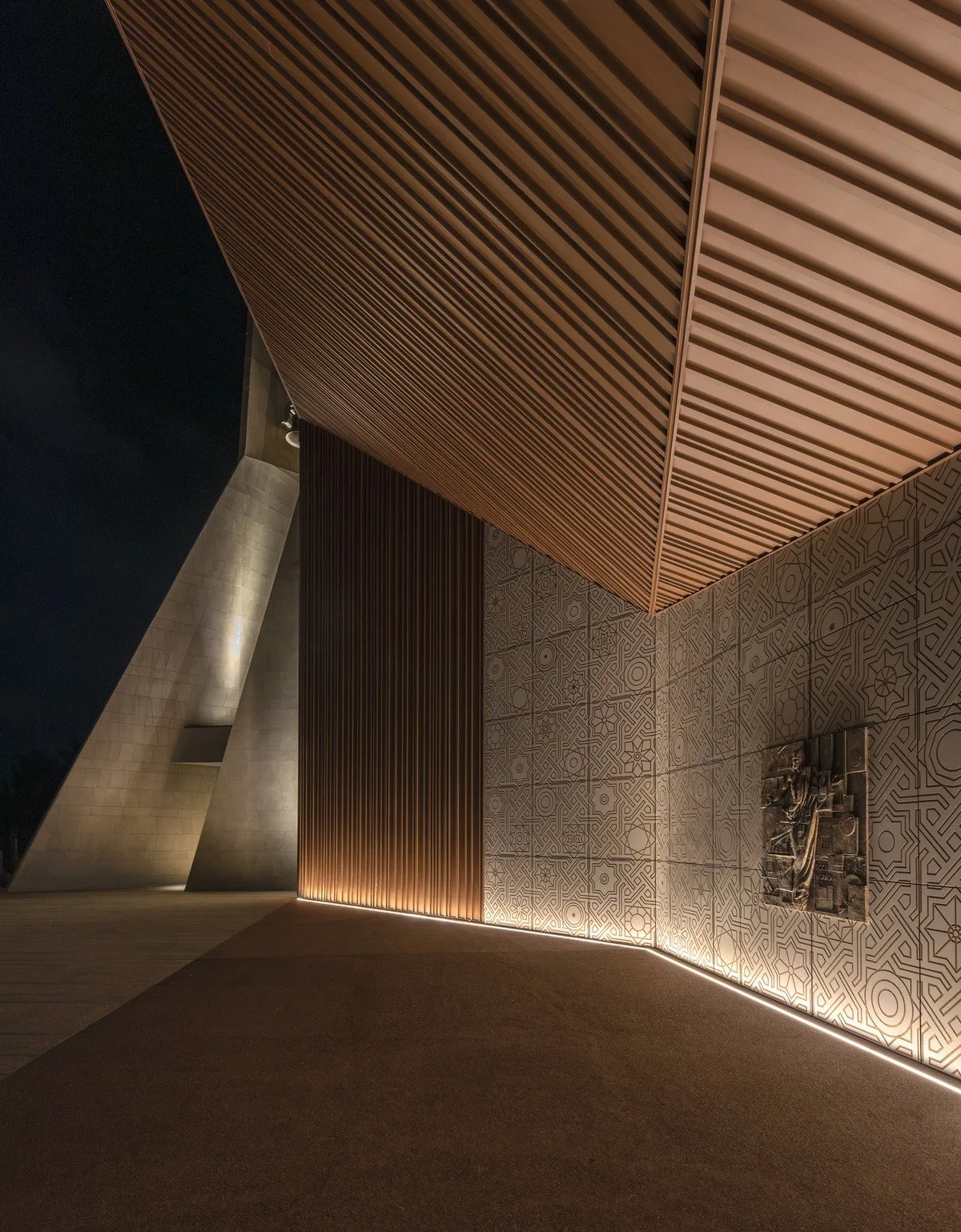
The main entrance faces the church playground, overlooking the Pianopli district. The nearby intersection (Via Crucible) has been redesigned to face the church and is paved with a sidewalk that immerses visitors in expansive green space.
Behind the church lies a private area housing a chapel, daycare center, parish priest’s office, parish hall, and catechism classroom, all overlooking a green play area for children.
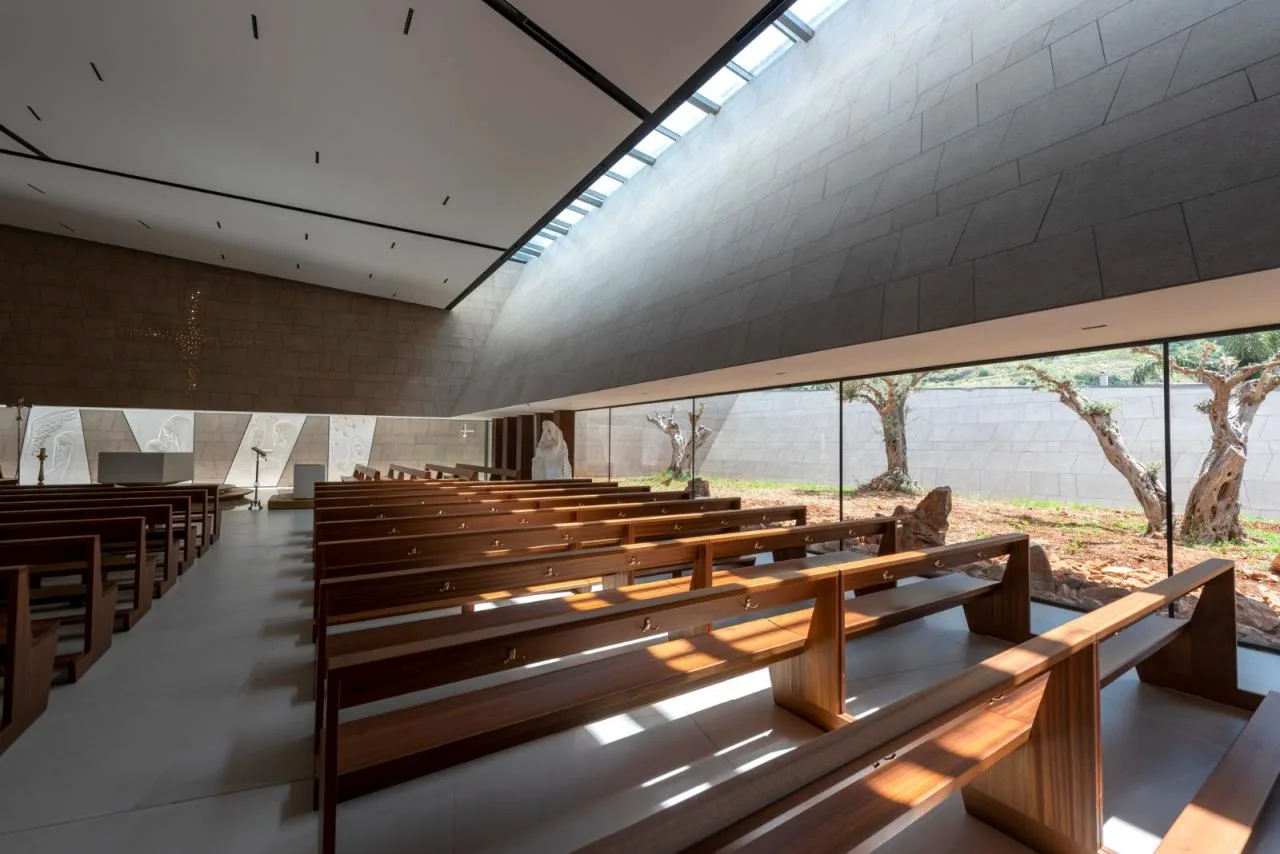
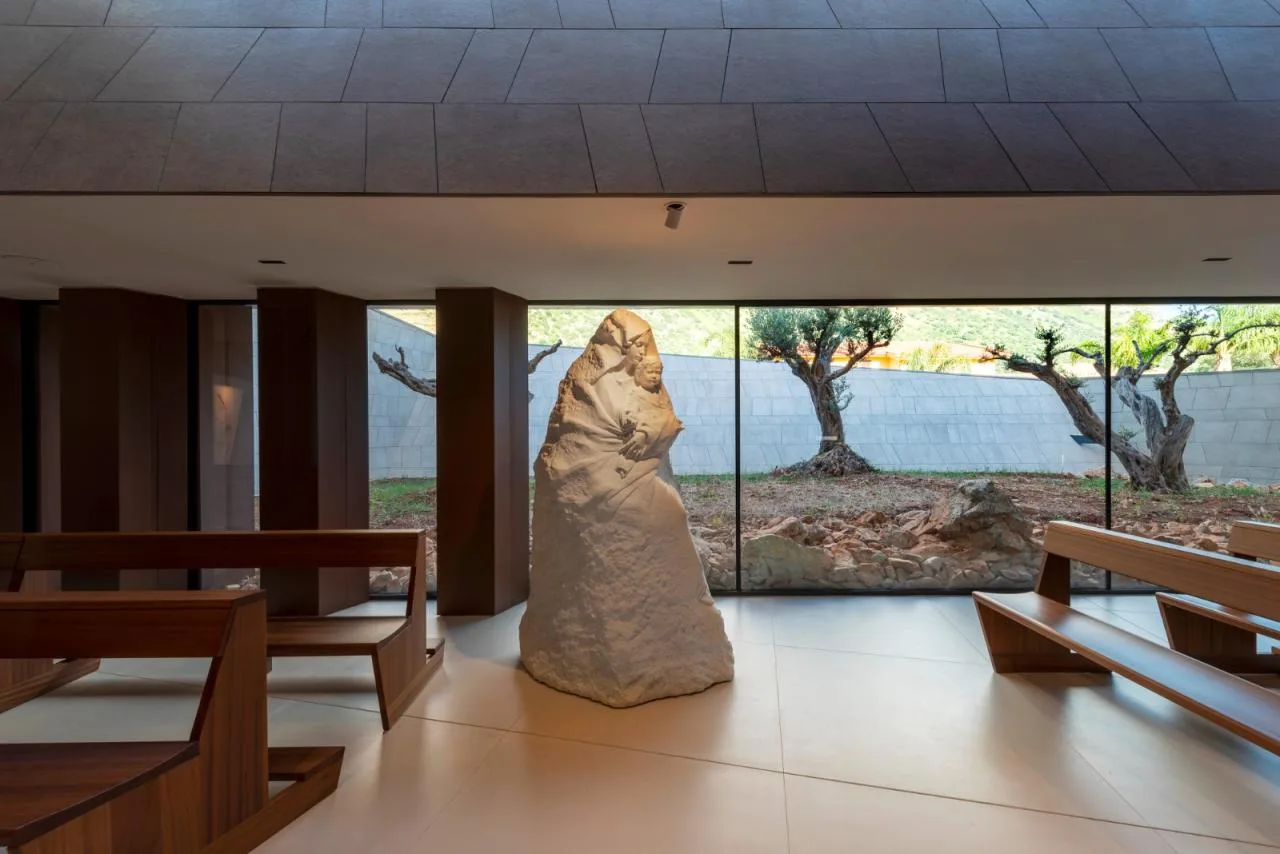
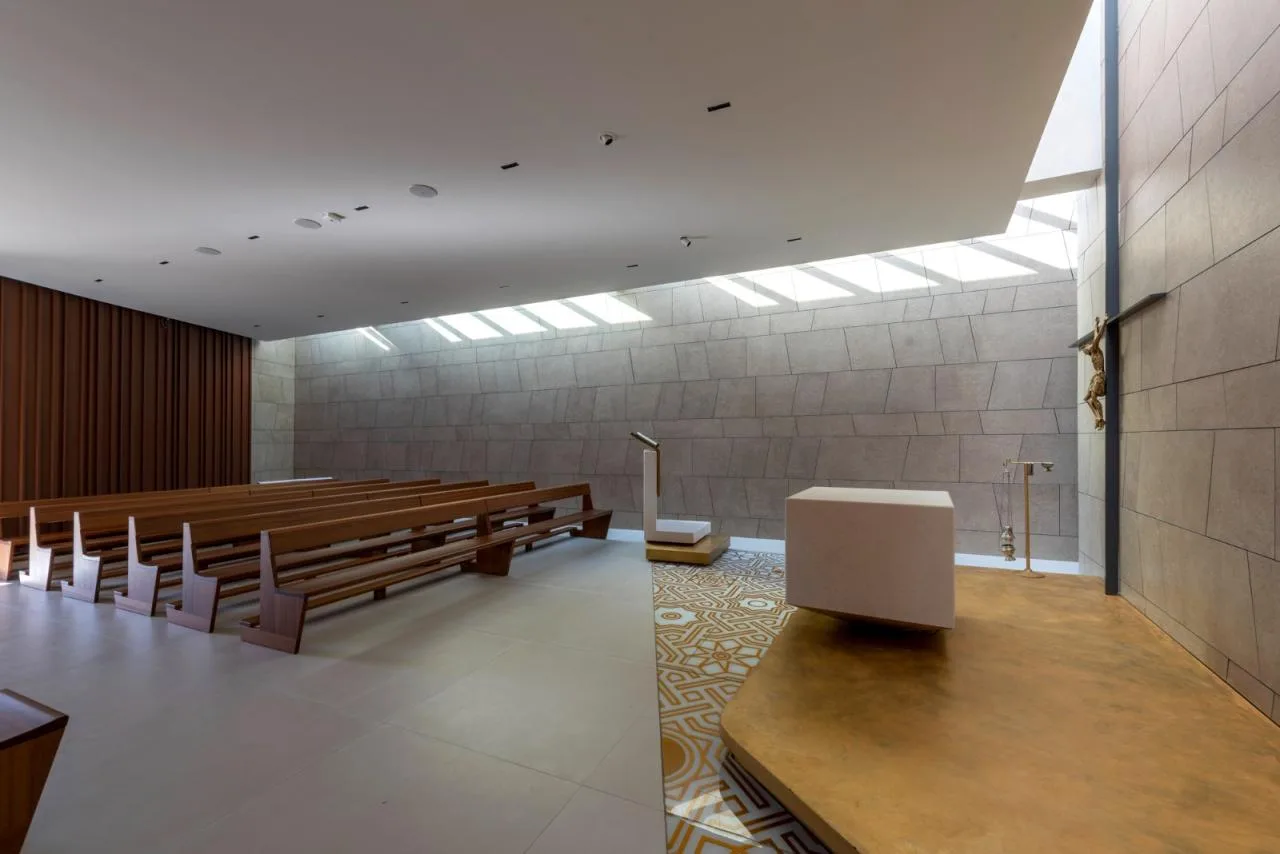
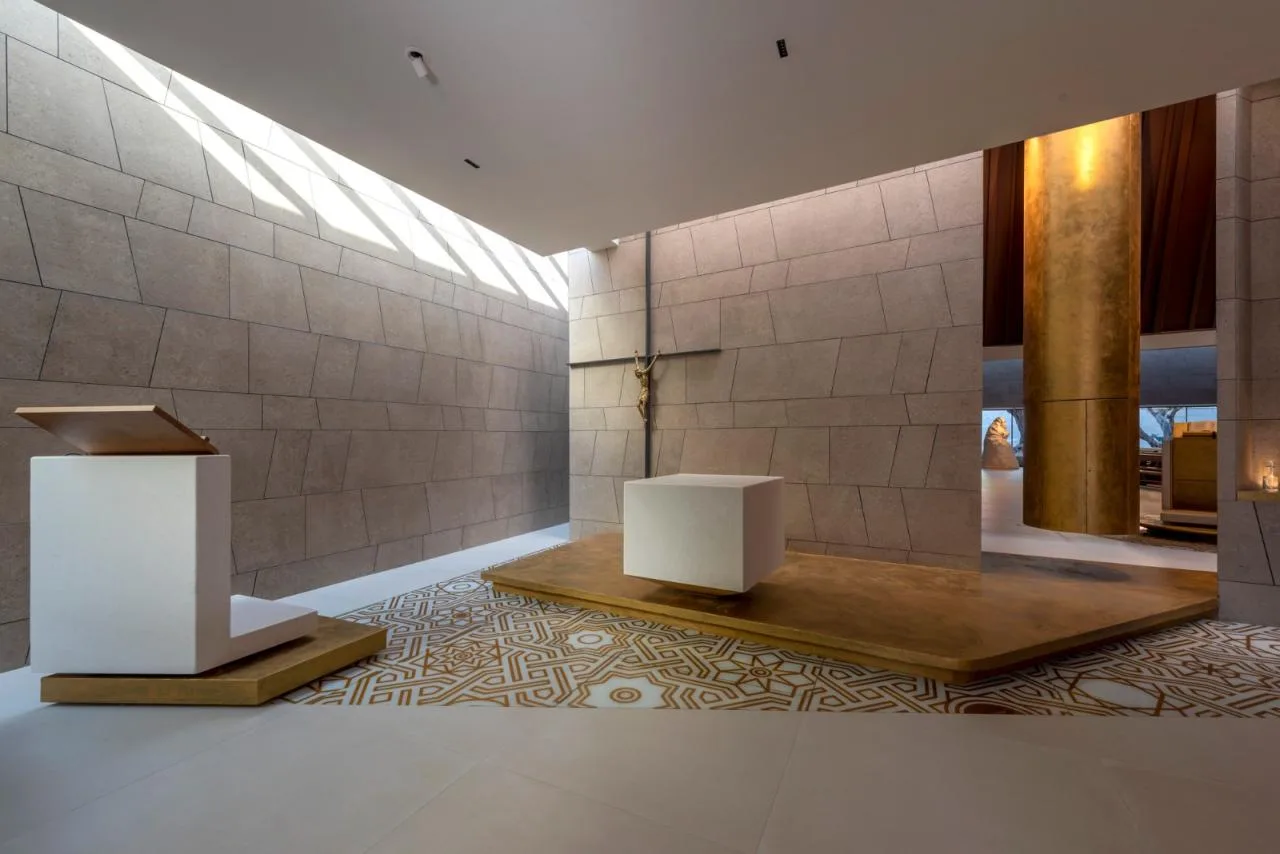
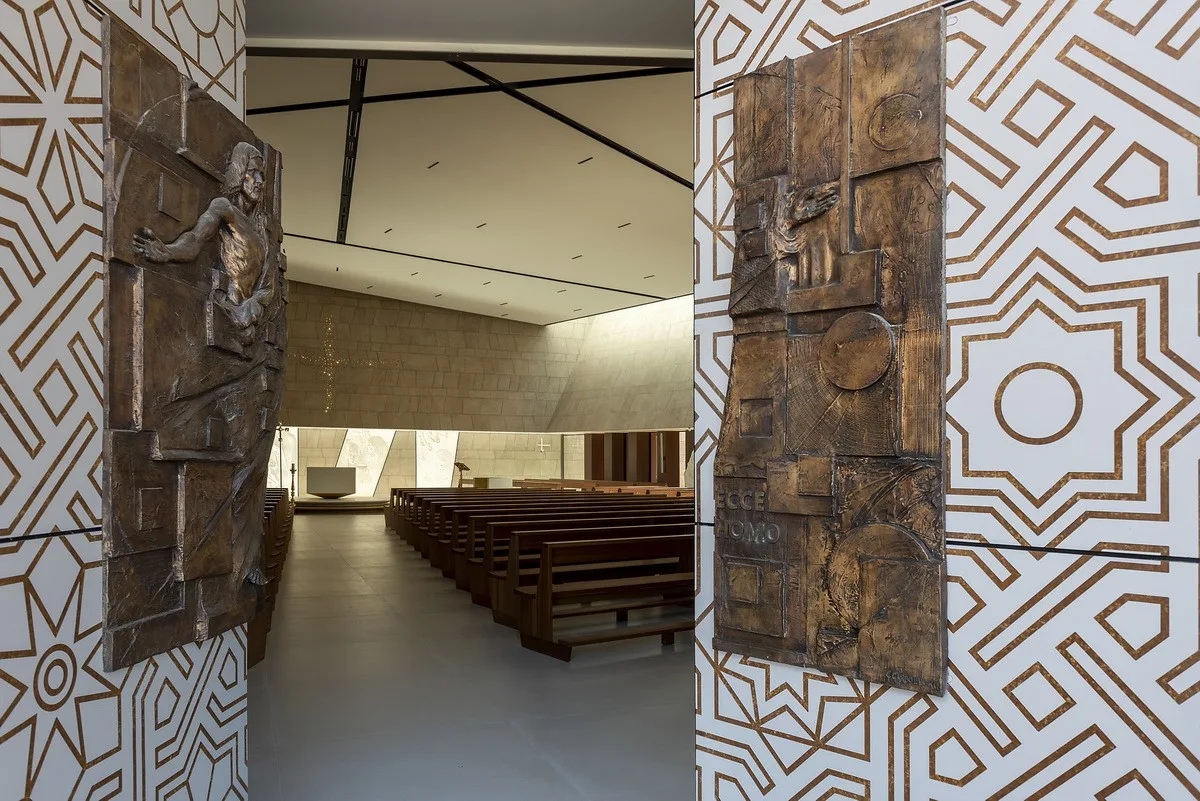
Inside, the church embraces visitors with an asymmetrical hall centered around a communal plane. The roof envelops the space, creating a direct visual connection between the earth and the indirect light streaming from above, complemented by walls that seem to float above the ground.
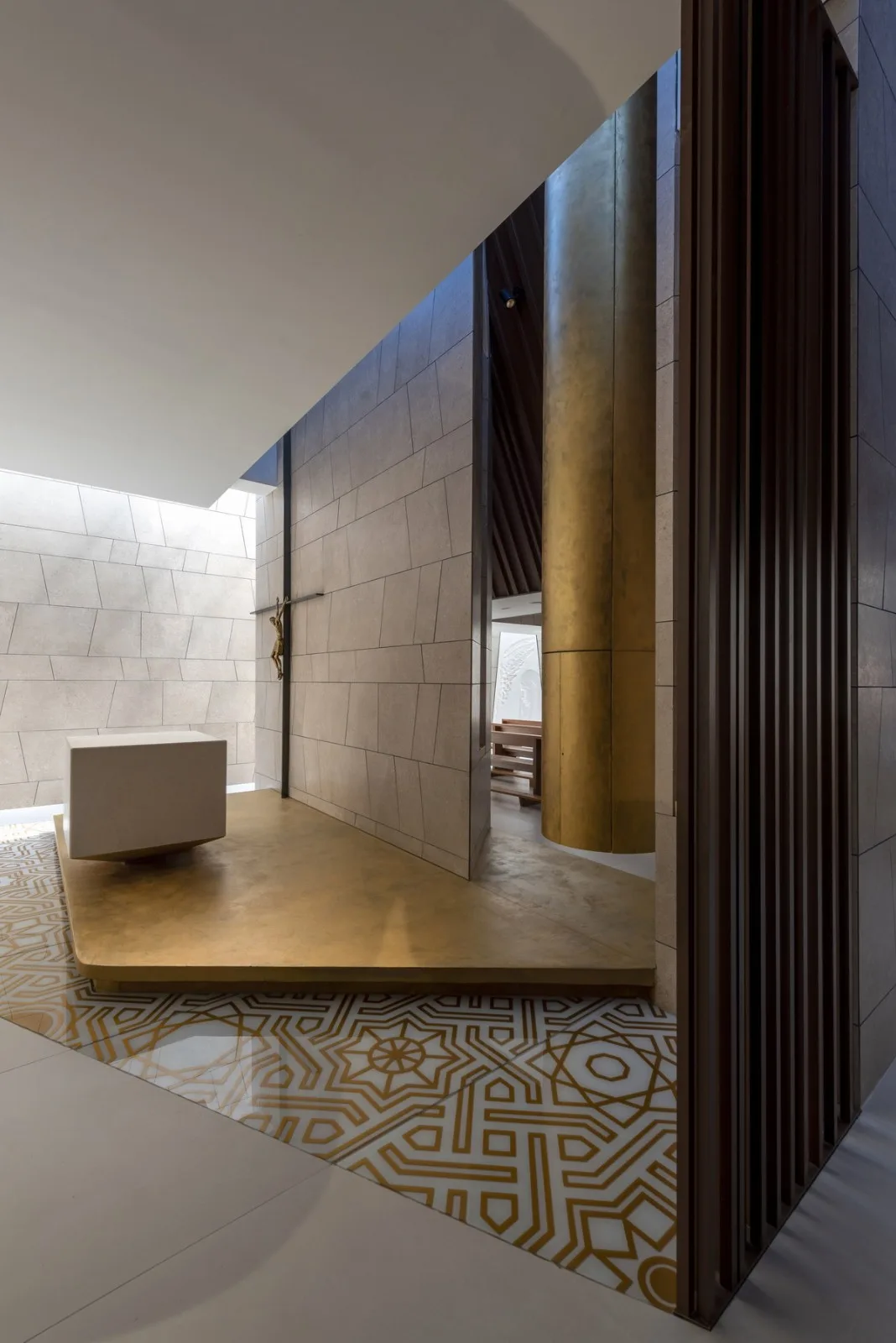
The congregation occupies the heart of the ceremony, situated within the assembly hall to foster a closer communal experience. The altar is slightly elevated and accentuated by sculptural work from Gabriele Garbolino Rù, with a glowing cross hanging overhead that draws focus to the sacred space.
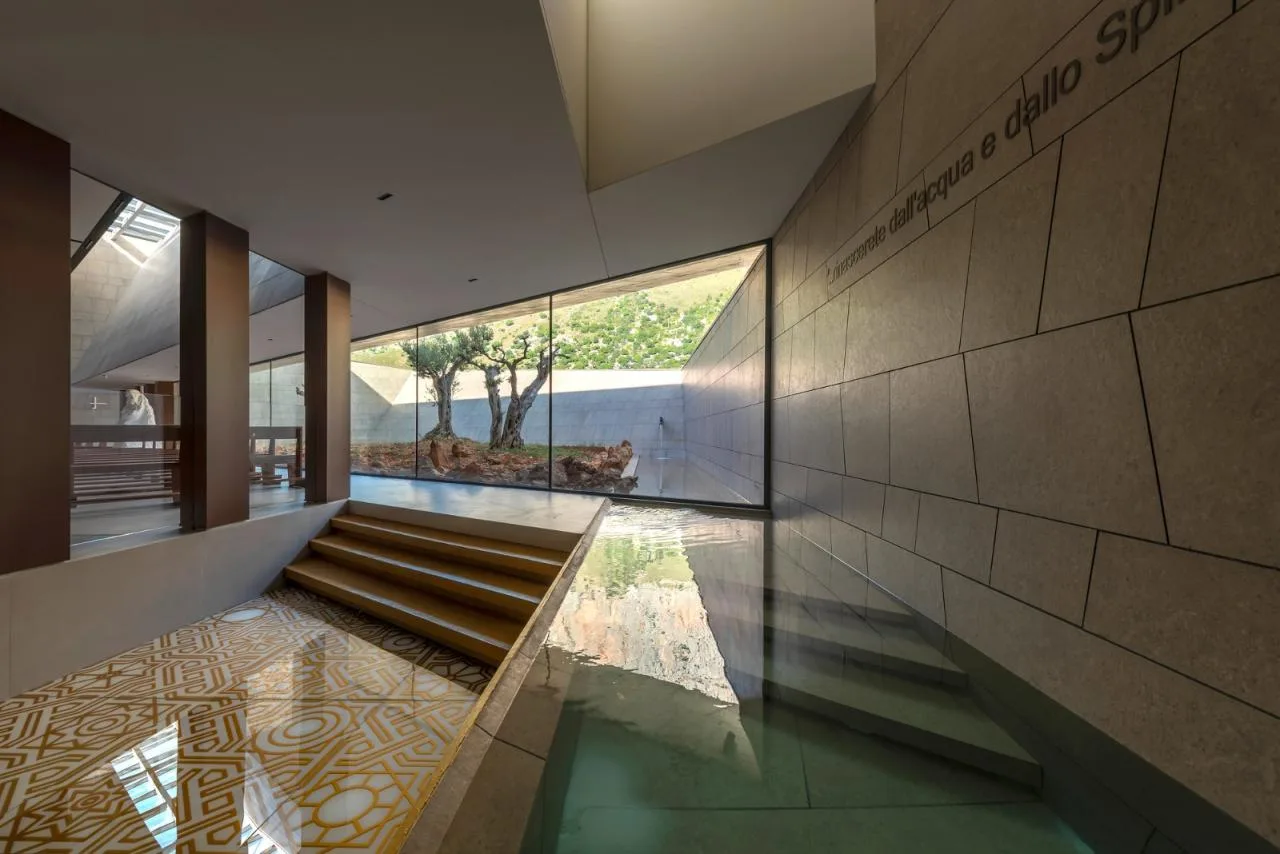
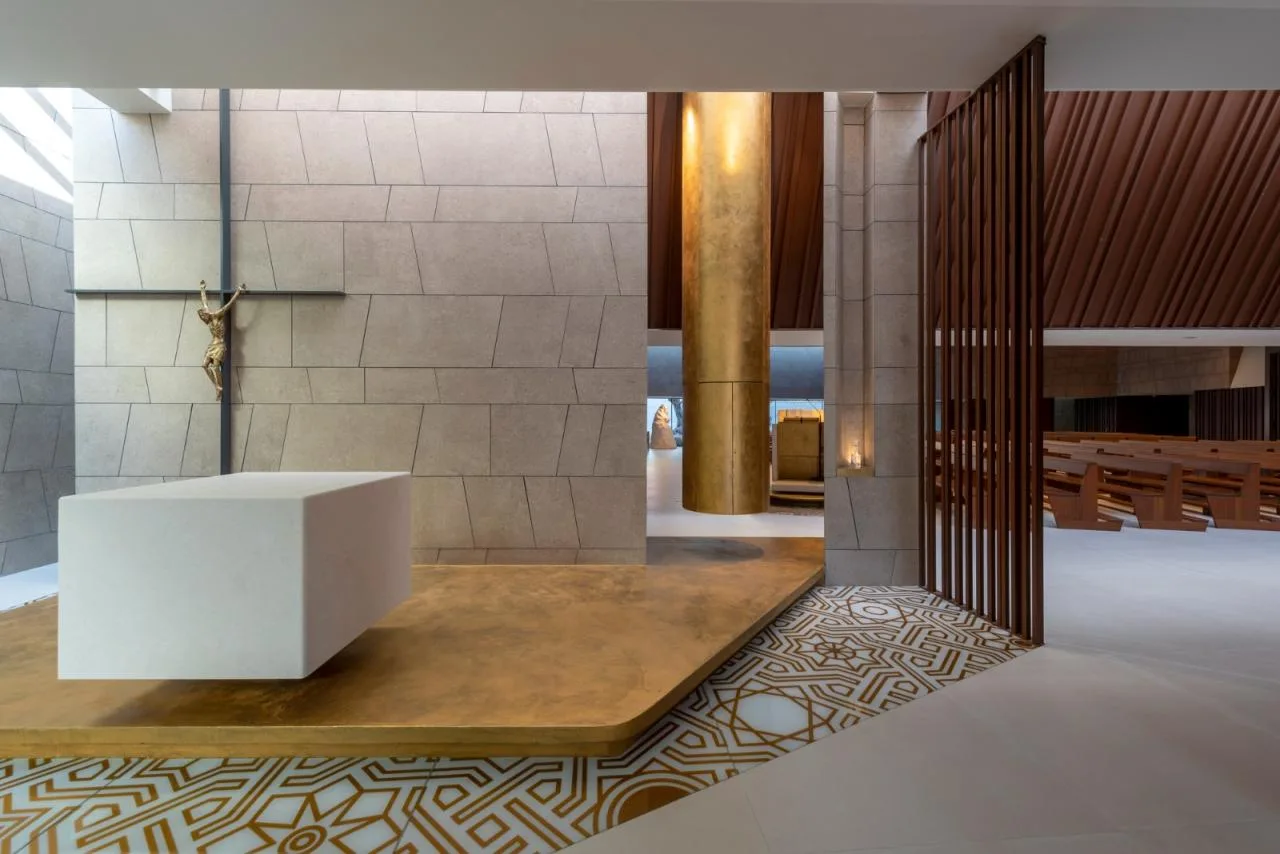
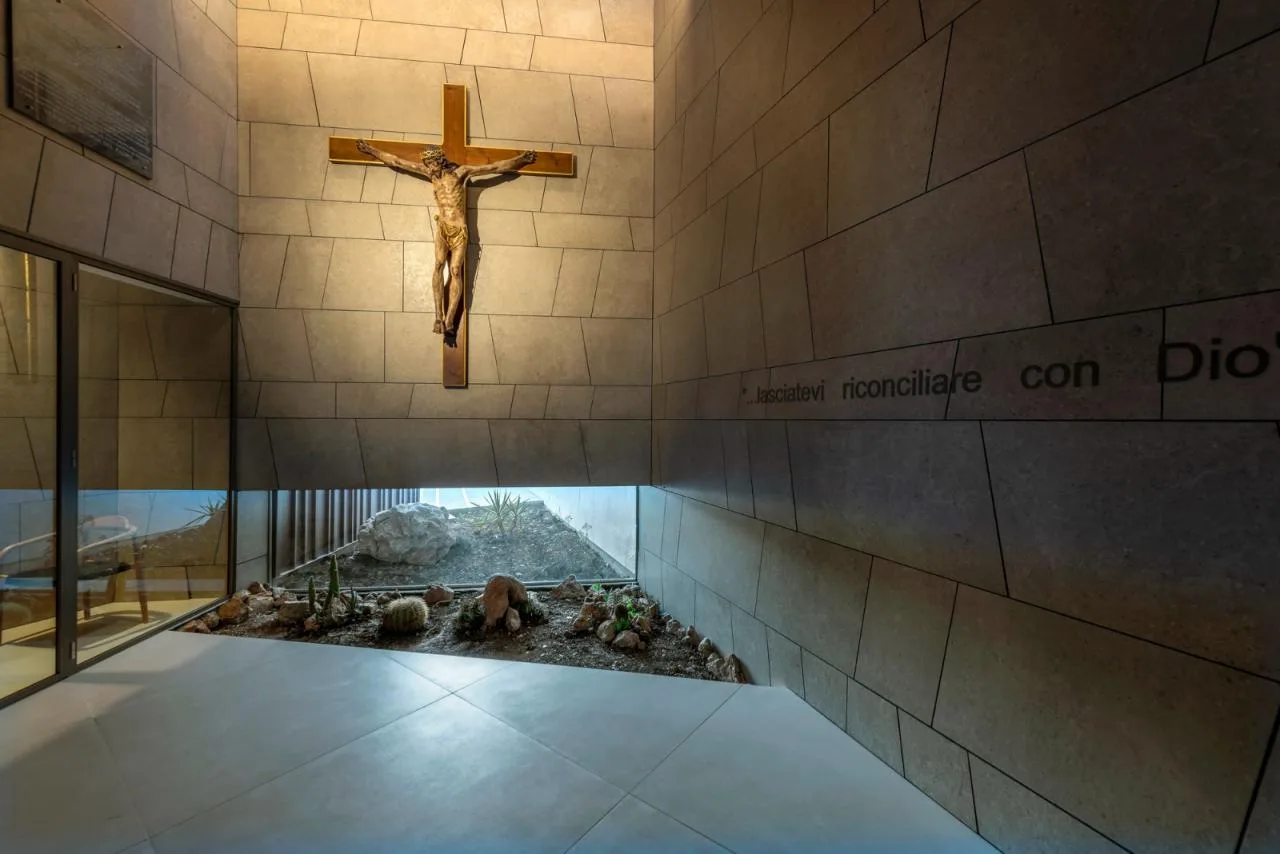
The baptismal pool is discreetly positioned with direct views of the private courtyard outside. Opposite this area are spaces for the choir, communion, and the prison, forming a dynamic activity center. Thanks to a double-opening design, this area connects seamlessly with both the main hall and the small chapel, especially during weekdays.
Project Drawings
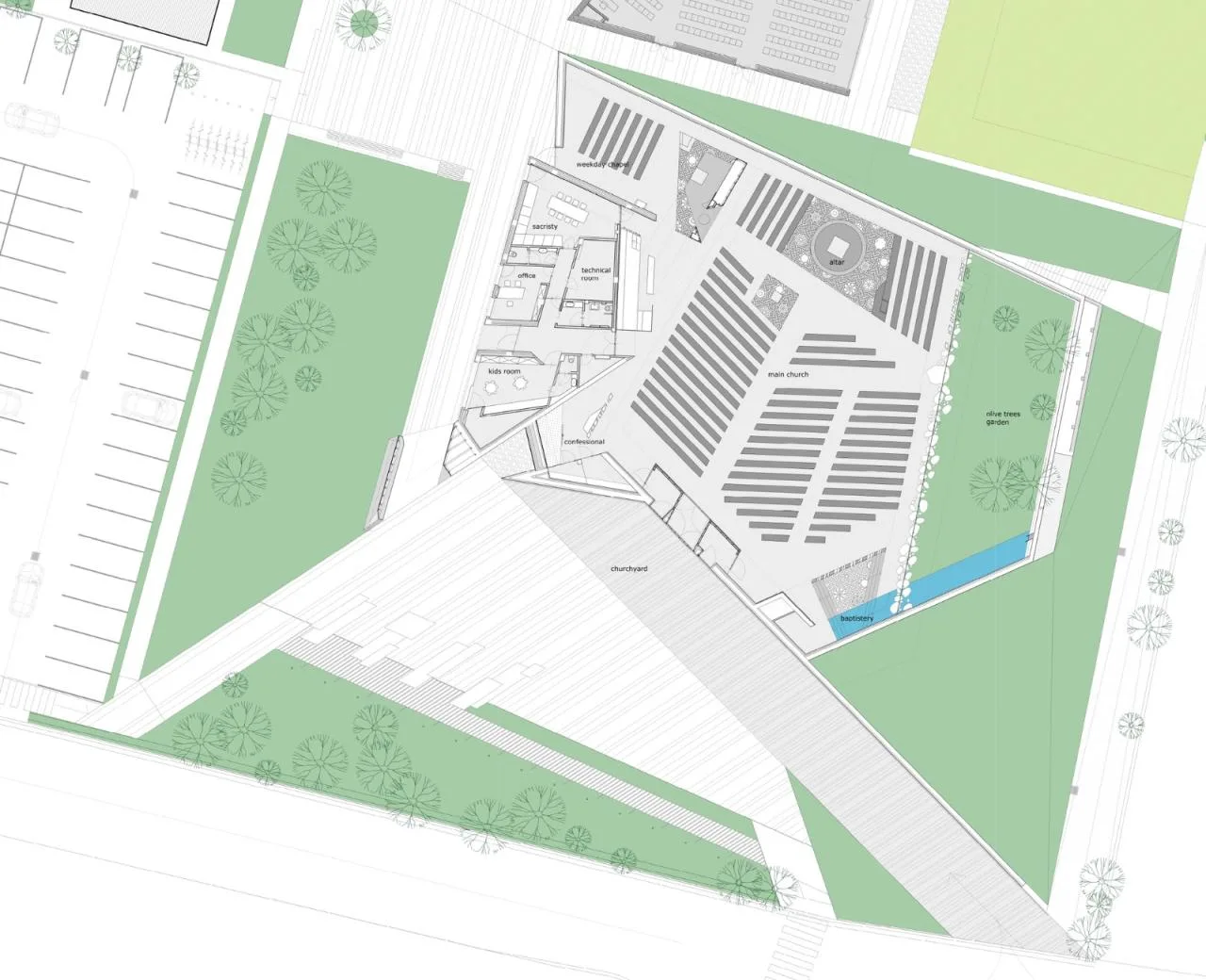
△ General layout plan
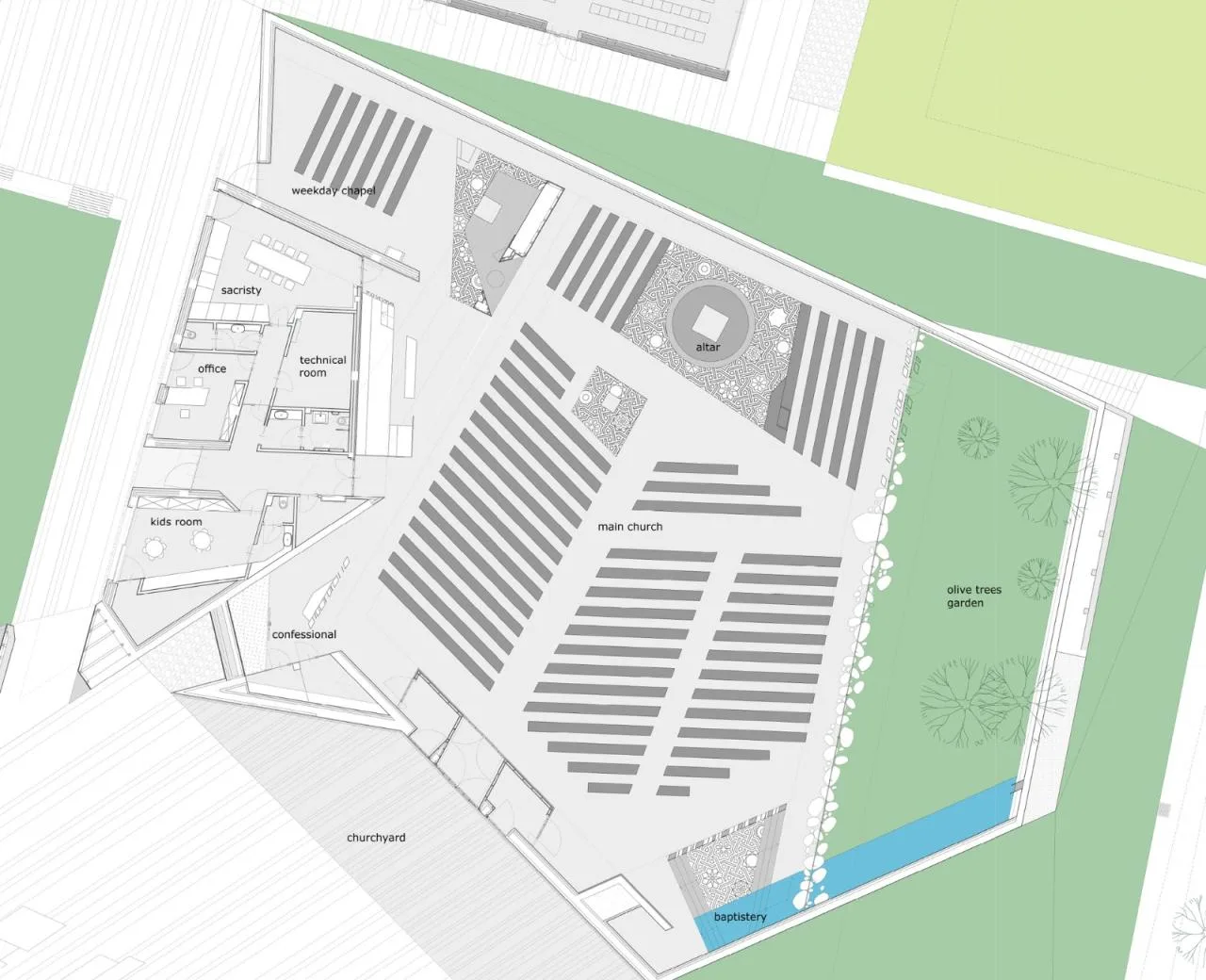
△ First floor plan
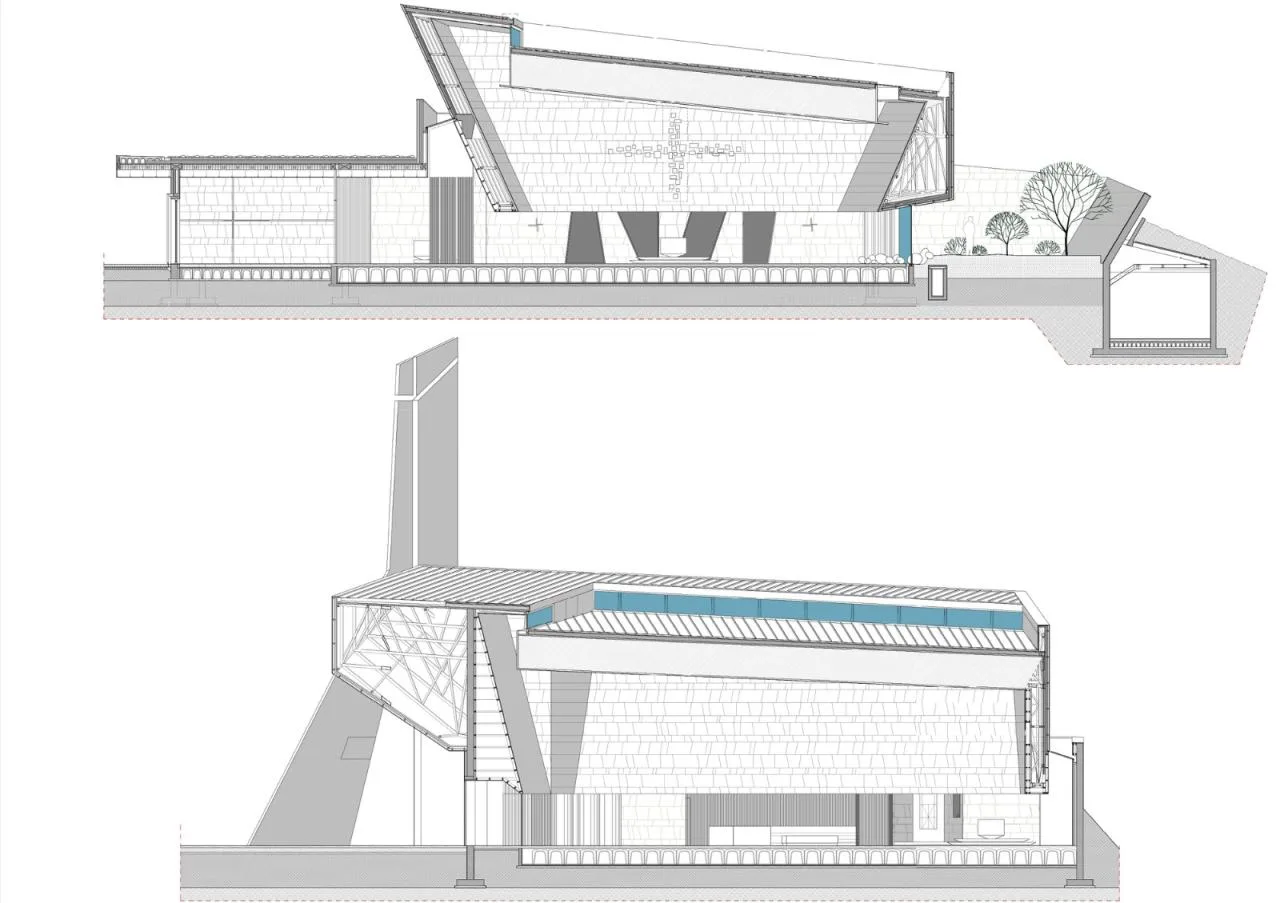
△ Section diagram
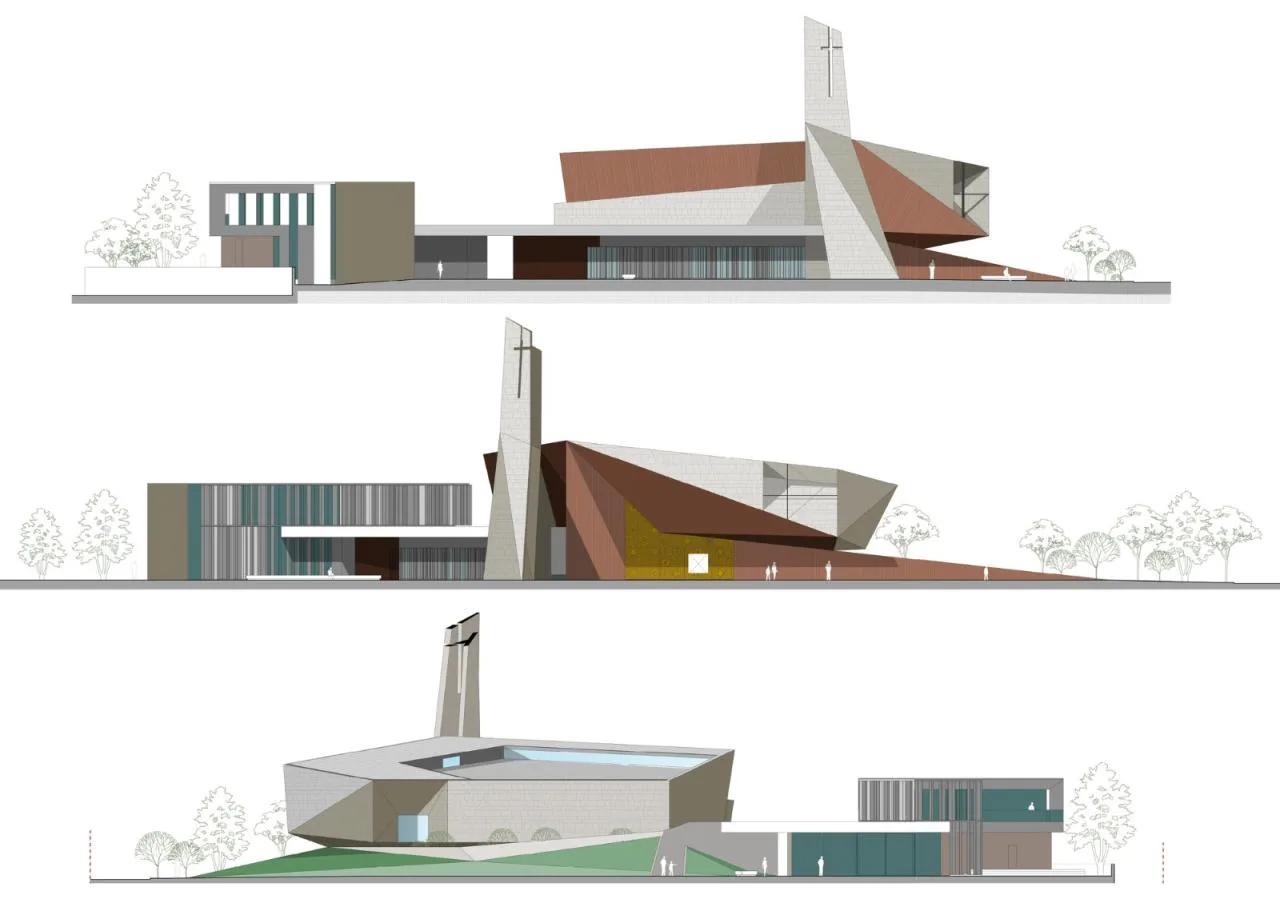
△ Elevation drawing
Project Information
Architect: Studio Kuadra
Area: 1267 m²
Project Year: 2023
Photographer: Moreno Maggi
Suppliers: Agrusa Glass Design, Ferrantelli Falegnameria, Idea Marmi, Italiarreda, MARAZZI, Mangiapane Graphic Studio, Metalmeccanica Renda Srl, PM Group, iGuzzini
Lead Architects: Studio Kuadra, Andrea Grottaroli, Manuel Giuliano
Construction Team: Manuel Giuliano, Andrea Grottaroli
Structural Engineer: Marcello Concas
Contractor 1: Lo Grasso Lorenzo
Contractor 2: C.A.E.C. Consorzio Artigiano Edile Costruttori Cooperativa Society
Art/Sculpture: Gabriele Garbolino Rù
Lighting Design: Studio Kuadra + Light Team
Location: Cinisi, Italy













Must log in before commenting!
Sign Up