
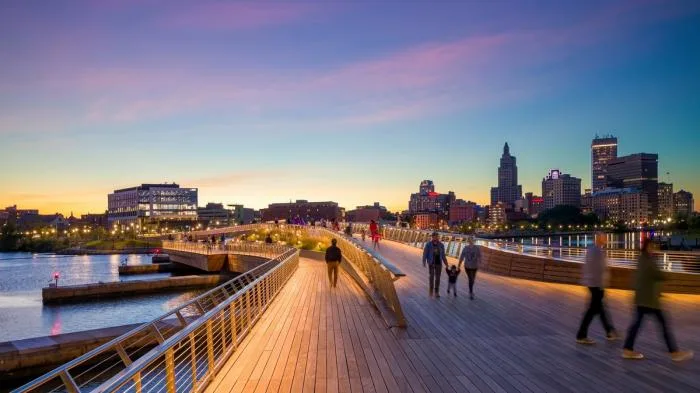
In the mid-20th century, the urban fabric of Providence was abruptly divided by the construction of the I-195 interstate highway, severing the connection between the city center and the riverfront.
In 1995, the Providence Foundation and the City of Providence initiated the relocation of Interstate 195 to restore connectivity and revitalize neglected areas. After years of collaborative planning involving public institutions, foundations, homeowners, residents, and non-profit organizations, the region has been reconnected, giving rise to a vibrant cityscape that was absent just a decade ago.
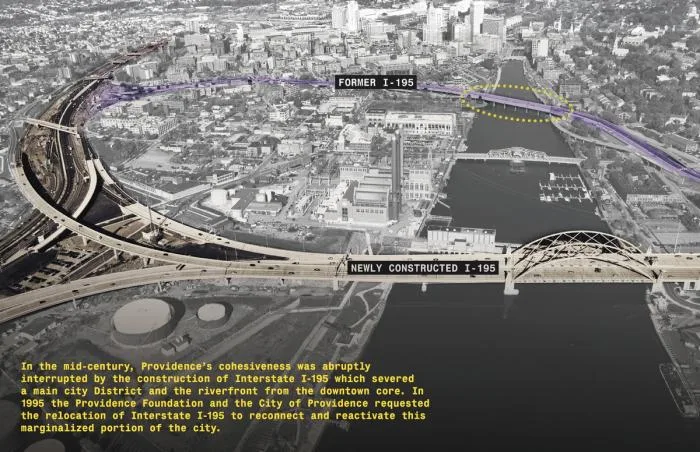
Aerial view showcasing the history of the I-195 interstate highway.
Since the opening of the Providence River Pedestrian Bridge in August 2019, the area has experienced a surge in activity, highlighting the powerful impact of thoughtful urban planning and design on social and economic vitality. This bridge serves as a vital link, directly connecting new waterfront parks while fostering opportunities for economic development and community engagement.
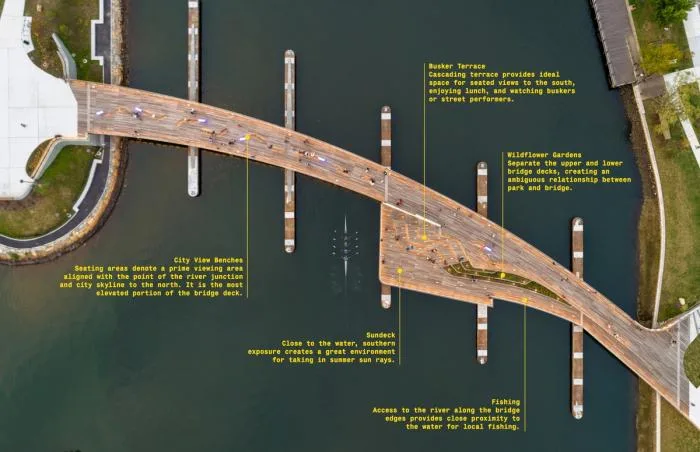
Providence River Pedestrian Overpass Project
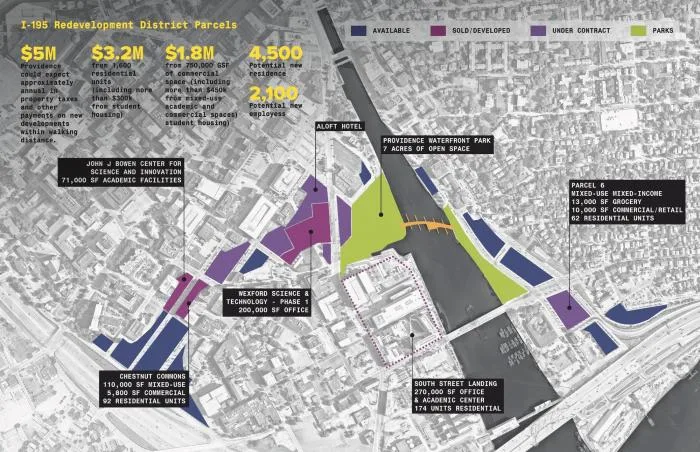
△ Economic Benefit Analysis
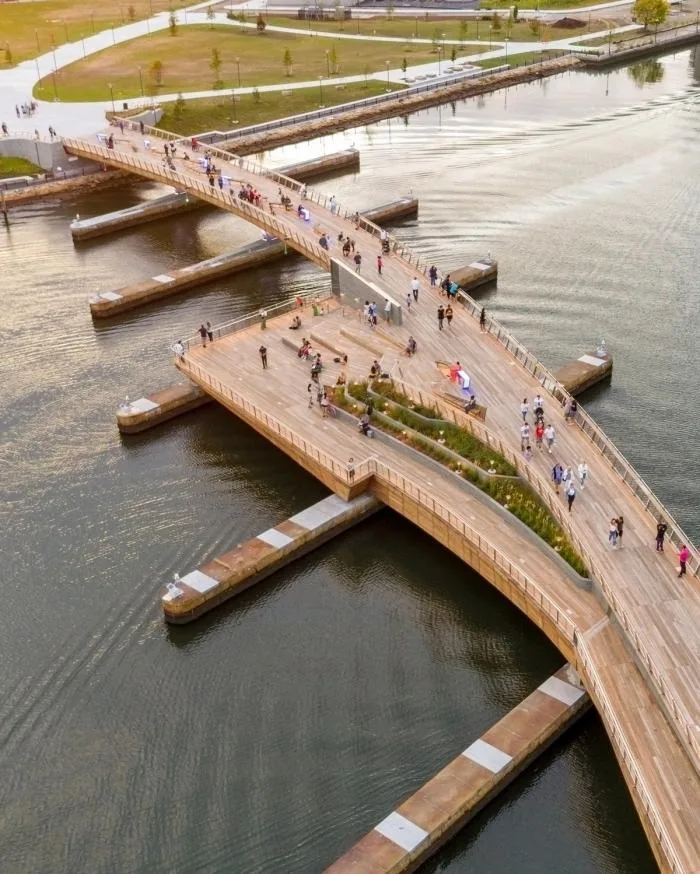
As a cornerstone of the waterfront park development, the Providence River Pedestrian Bridge integrates east-west park spaces into a cohesive public environment that balances urban and natural elements. Its orientation considers urban mobility, visual connections to the coast, and the bridge’s aesthetic role as an architectural landmark. Acting like urban tendrils, the pedestrian and bicycle overpasses collect and disperse visitors from multiple directions, with the eastern section of the bridge serving as an axis radiating toward James Street, Transit Street, and the north-south riverside avenue. On the west side lies a 4.5-acre park designed to strengthen the link between the city and the landscape, promote waterfront walking, and support the growth of emerging jewelry and innovation districts.
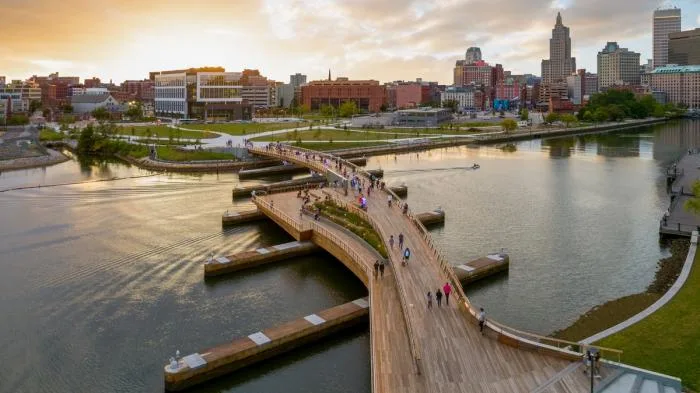
The design of the pedestrian overpass thoughtfully responds to contrasts between the overall urban plan, entry points, surrounding cityscape, natural views, and Providence’s rich history alongside its innovative future. From the tall sailing ships of the 17th and 18th centuries to the jewelry factories of the late 19th and early 20th centuries, timber architecture has been a defining characteristic of Providence’s identity. Revered for its timeless warmth and character, wood—enhanced through modern technology—evokes historical maritime imagery while serving as an innovative, multifunctional contemporary material.
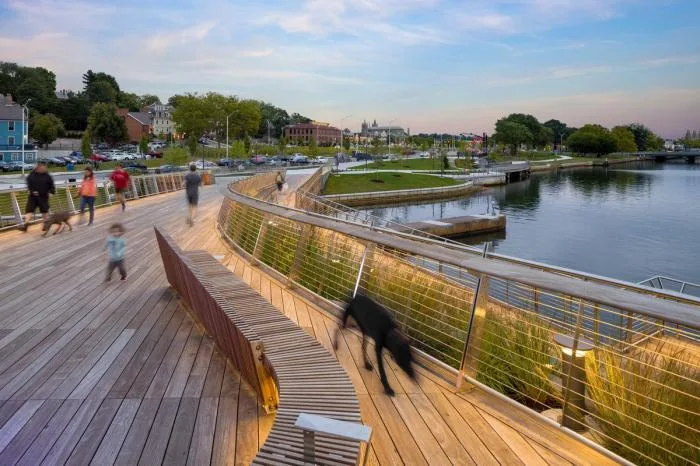
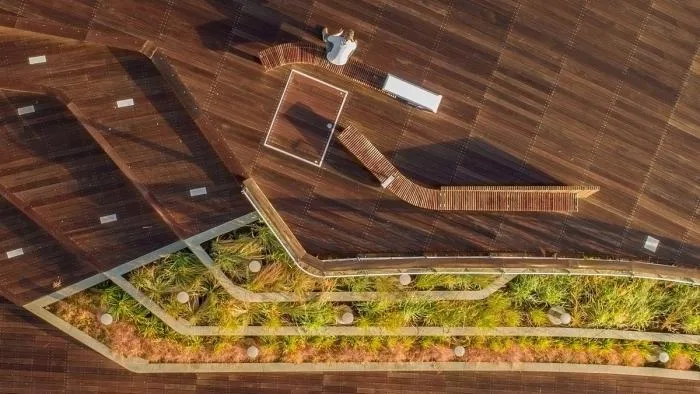

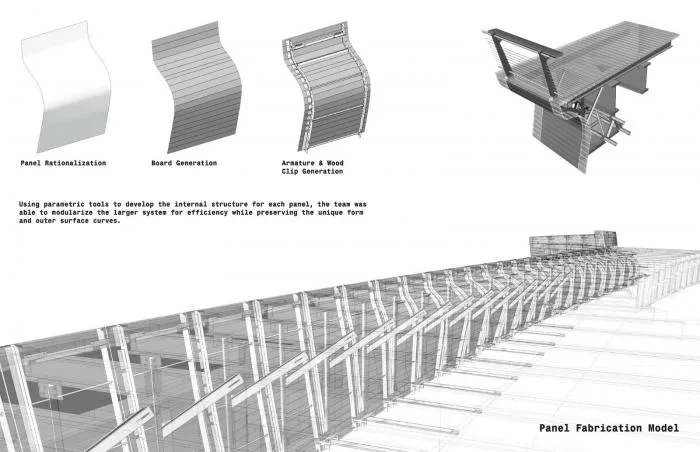
Wood Structure and Materials Analysis
The Providence River Pedestrian Bridge combines traditional granite and wood to express a harmonious blend of solidity and fluidity. An open ground-level platform serves as the main entrance, creating a seamless transition between the east and west sides. By creatively repurposing obsolete public infrastructure, this project stands out as an innovative model in bridge design.
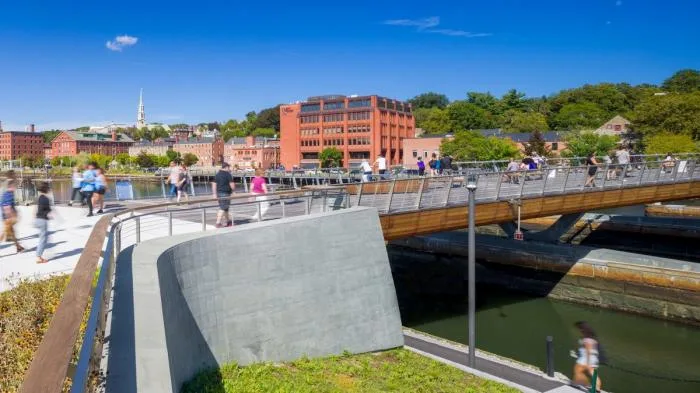
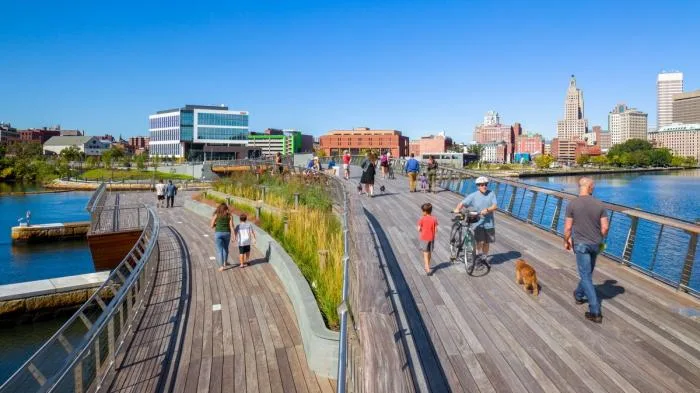
The pedestrian bridge enhances connectivity among residential neighborhoods, commercial districts, tourism hubs, and cultural sites. It also activates environmental nodes, celebrating Providence’s historical heritage as well as the Seekonk River, Taunton River, and Narragansett Bay, offering enriching experiences to both locals and visitors.
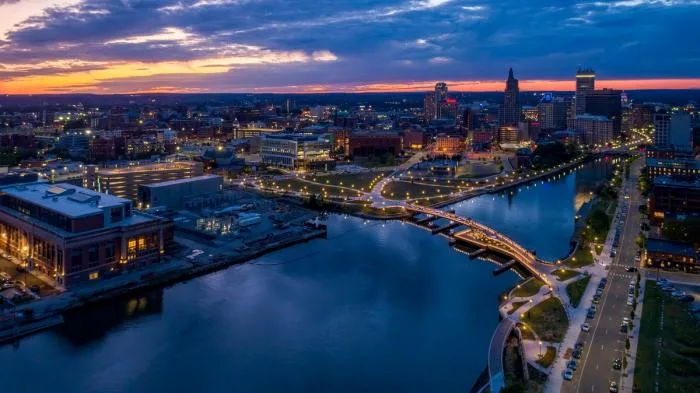
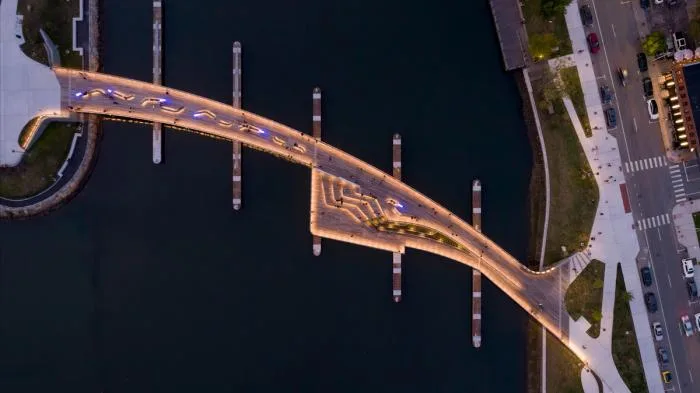
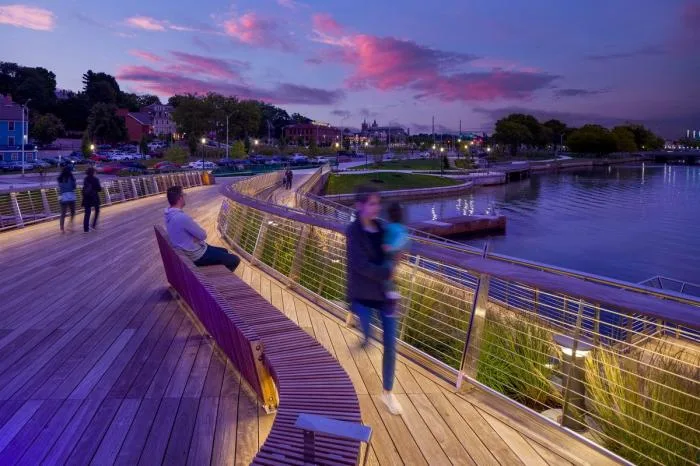
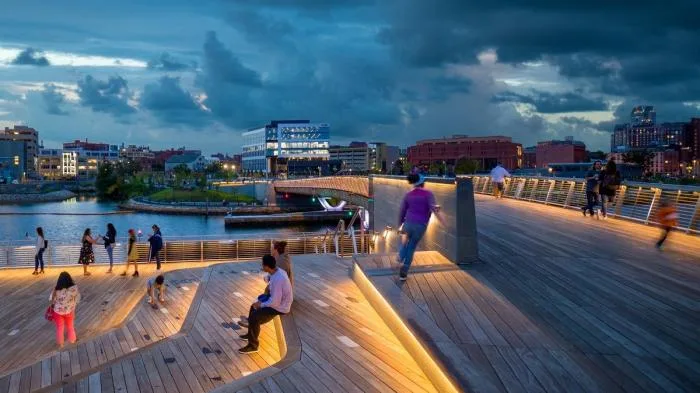
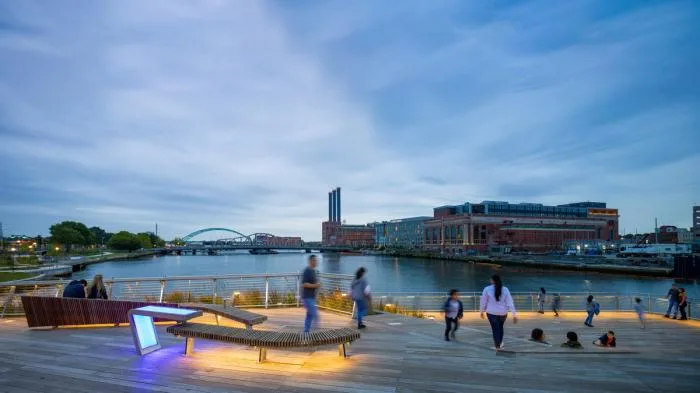
Providence has flourished in arts, culture, and tourism, and with the development of waterfront parks, the city is set to become a global cultural destination. The bridge’s design thoughtfully supports numerous events and festivals that celebrate the city’s past, present, and future, including Sound Session, PrideFest, PRONK!, and WaterFire. Spanning the water in various forms, the bridge connects downtown, the jewelry innovation district, West Waterfront Park, and East Waterfront Park, seamlessly reconnecting the urban landscape.
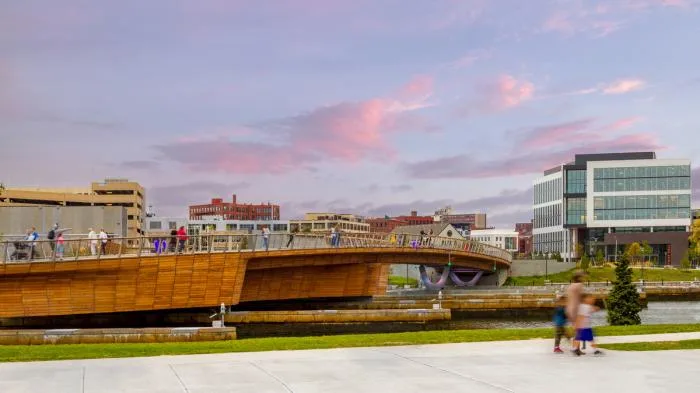
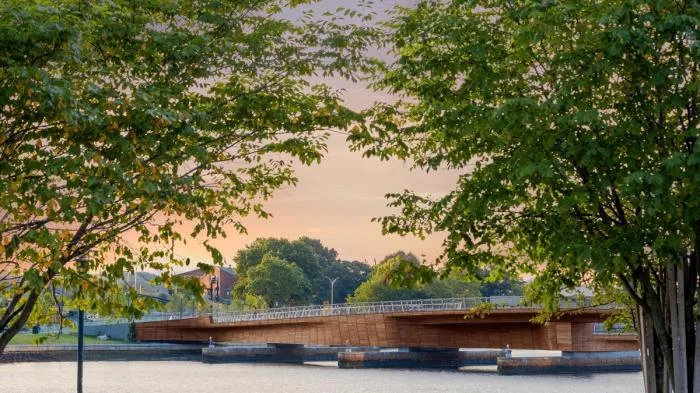
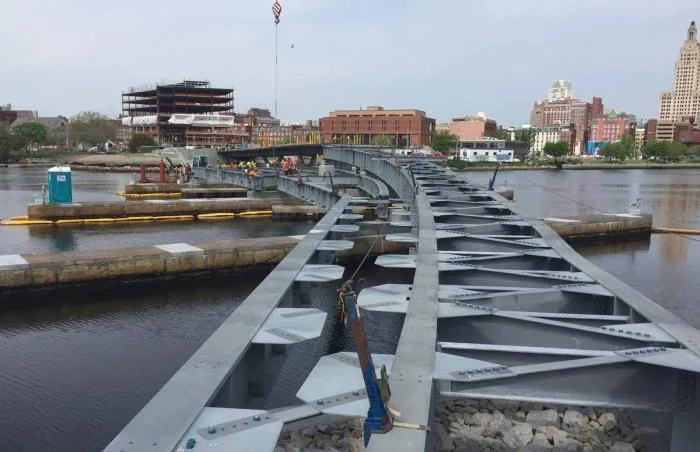
△ Steel Structure Construction
Design Drawings
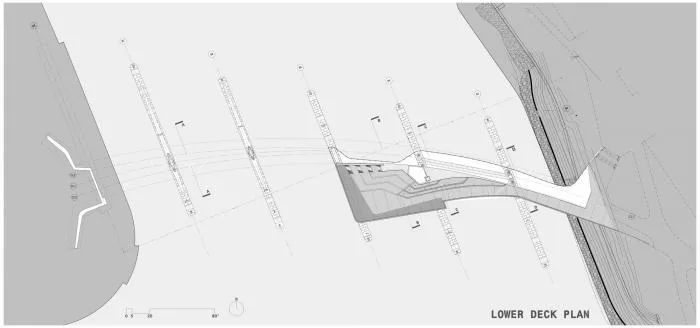
△ Bottom Deck Plan
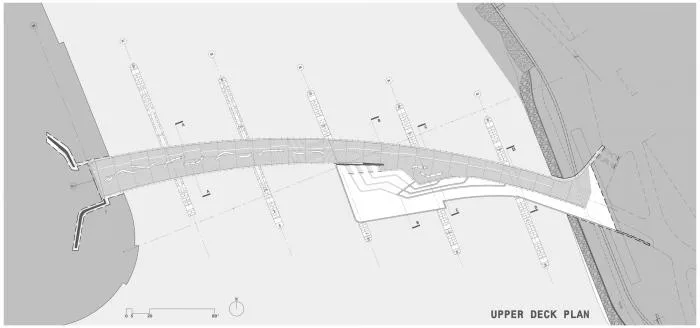
△ Upper Deck Plan
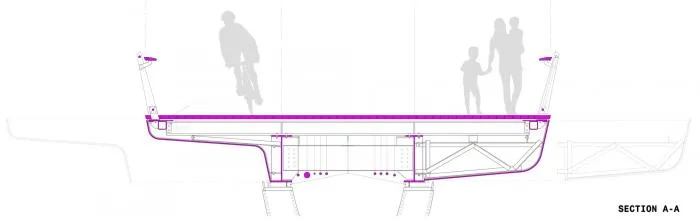
△ Section Diagram
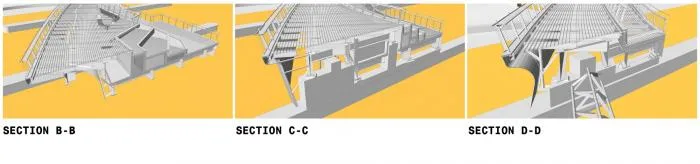
△ Section Diagram
Project Information
Project Type: Pedestrian Bridge
Location: Providence, USA
Architectural Firms: Buro Happold, inFORM studio
Area: 15,170 ft²
Year: 2020
Photographer: Steve Kroodsma
Design Team: Michael Guthrie, Cory Lavigne, Ken Van Tine, Azubike Ononye, Pandush Gaqi, Tom Provost, Anna Haezebrouck
Structural Engineering: Buro Happold Engineering
Electrical Engineering: CJL Engineering
Landscape Architecture: BETA Group
General Contractor: Daniel O’Connell’s Sons
Partner: SITU Fabrication (Wana Fascia)












Must log in before commenting!
Sign Up