
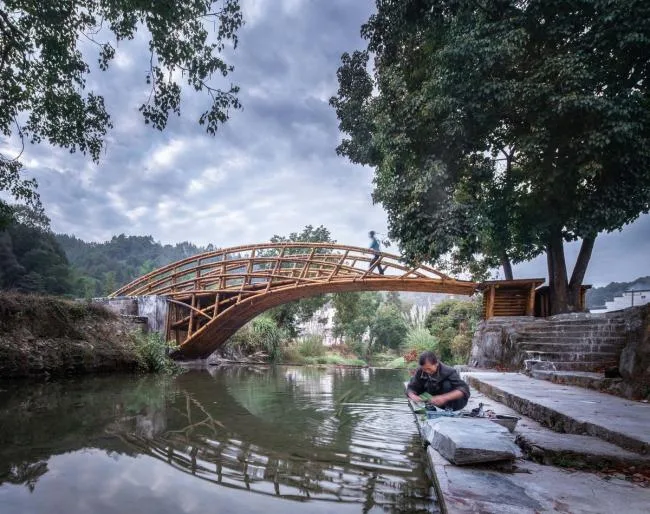
In traditional China, bridges carry deep emotional and symbolic meanings. Constructing a bridge in rural areas often represents an act of merit or a form of commemoration. Additionally, the concept of a “bridge” evokes poetic imagery, serving as the gateway and starting point in classical landscape paintings. Beyond their physical presence, bridges are artistic elements integrated into paintings and social projects that benefit the community.
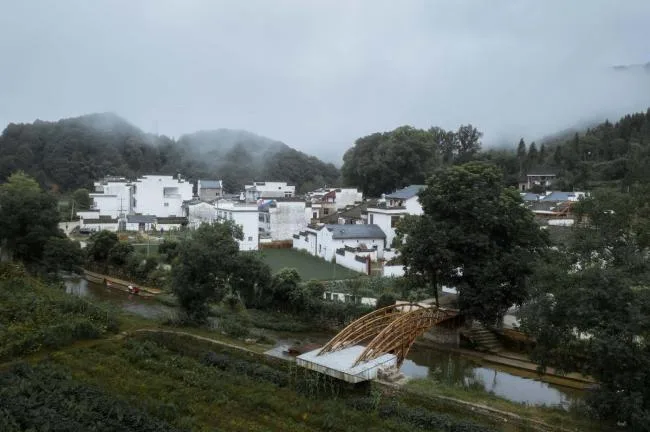
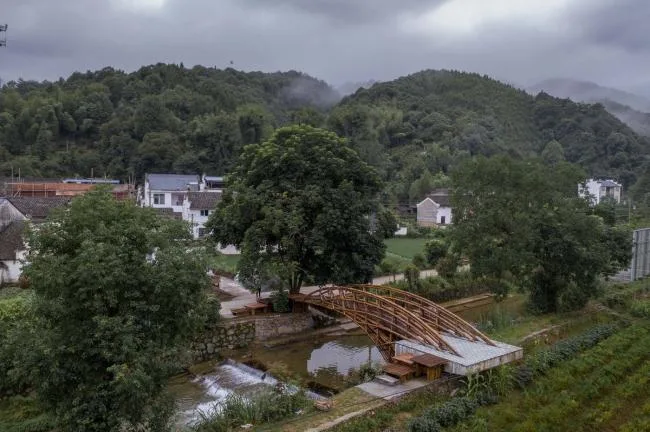
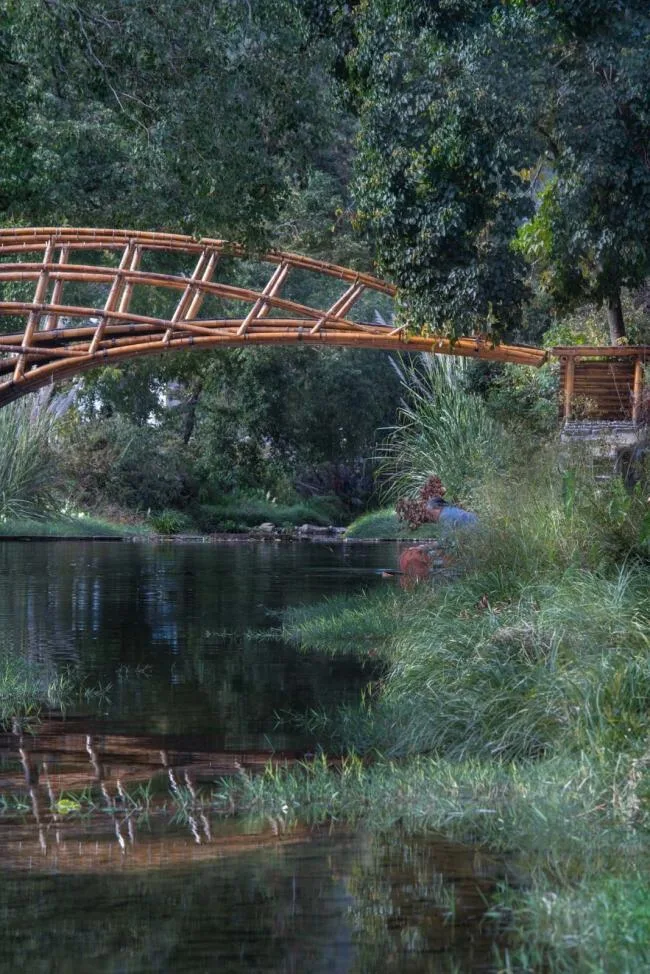
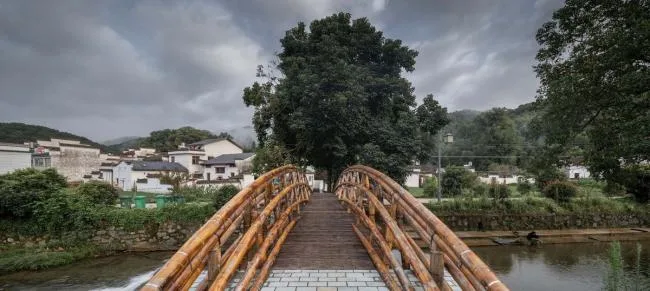
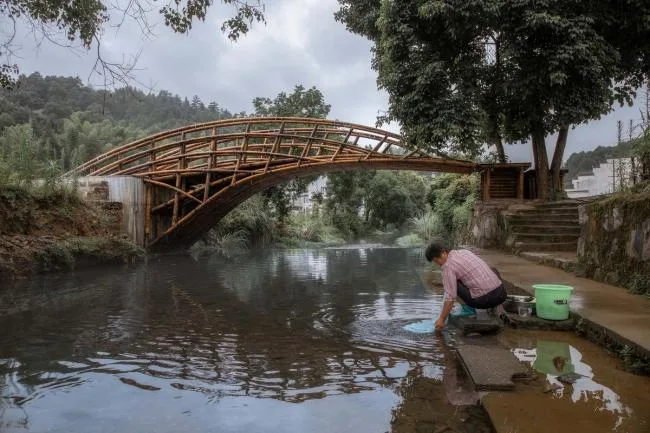
This project is situated in Taoyuan Village, Qimen County, Anhui Province. A 10-meter-wide waterway cuts through the village, separating it from the farmland. To ease access for villagers tending to their fields, a pedestrian bridge was necessary. The waterway marks the boundary between living and working spaces, while the bridge serves as the entrance to the countryside and mountains. Bamboo grows densely on the nearby mountain, making it an ideal, locally sourced material for construction that reflects the harmony between nature and human use.
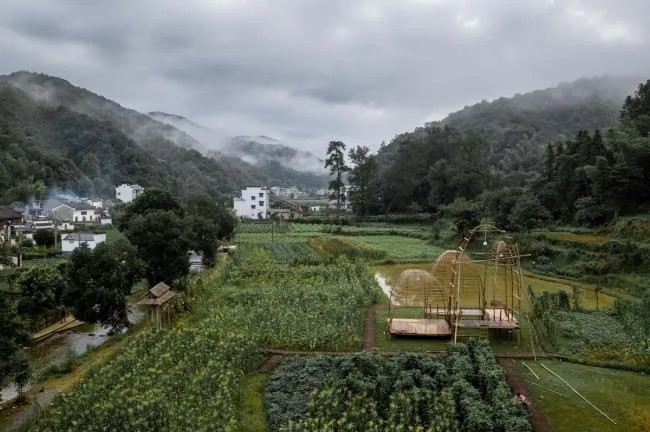
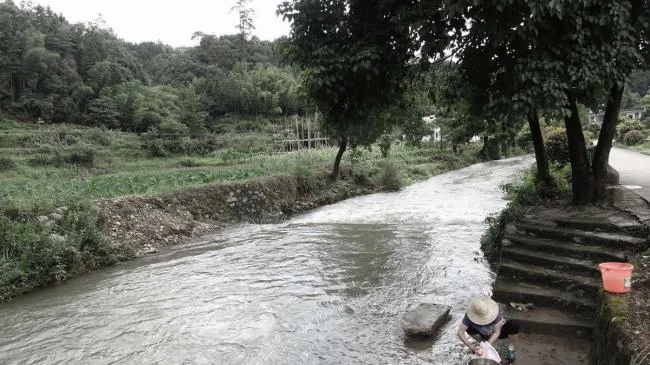
Once the material choice was confirmed, the question became: what artistic expression should the bridge embody?
Vertical structures convey a direct sense of gravity, while curved forms poetically express it. Unlike wood or stone, bamboo naturally possesses flexible toughness. Through controlled fire-roasting techniques, bamboo’s curvature becomes more malleable, allowing precise shaping. Over time, roasted and bent bamboo gradually regains elastic energy, acting as a natural prestressed element.
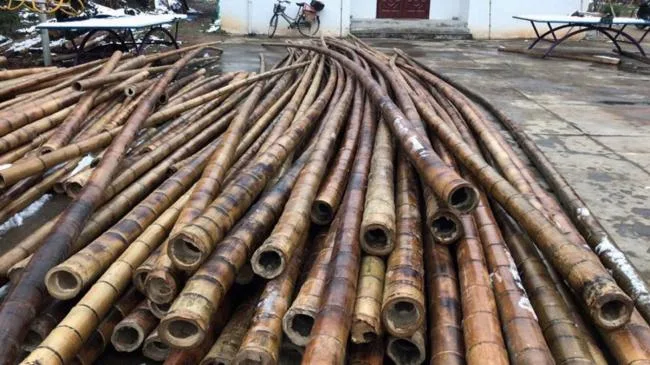
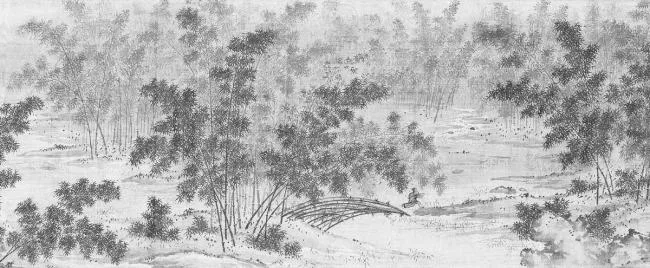
▲ Conceptual artistic vision
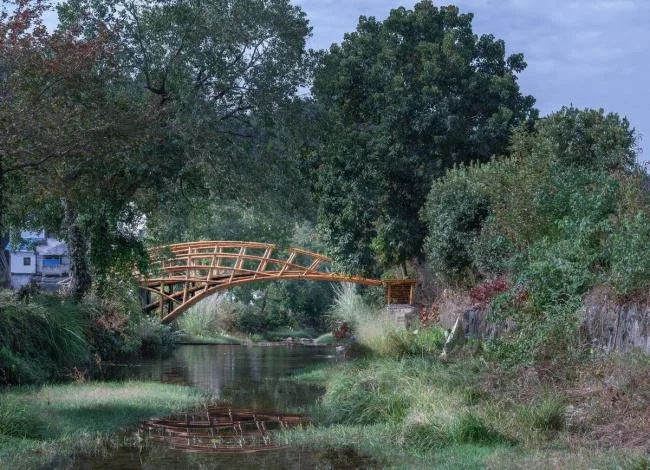
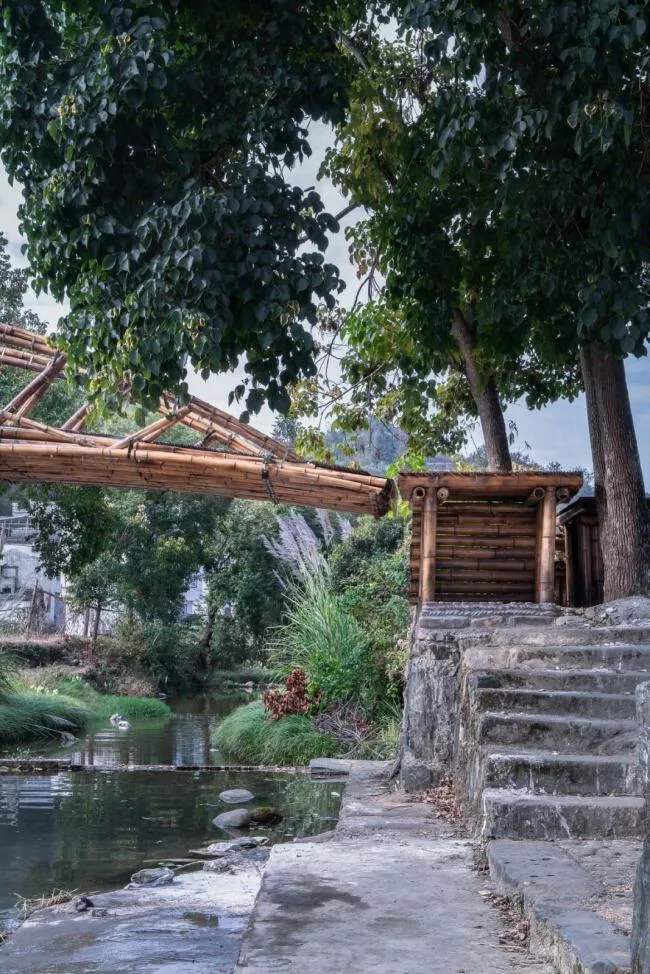
How could a 10-meter span bridge be realized? Simply supported beam bridges and arch bridges are typical options. However, on the riverbank side, two trees stand where foundations would normally be placed. To preserve their roots, a cantilever beam design was selected.
In 1866, German structural engineer Kurmann illustrated the principal stress trajectories in a cantilever beam under uniform load. This complex stress can be simplified into a trajectory line where structural elements experience either tension or compression. Aligning structural bars along these two-force lines maximizes efficiency. This principle later guided engineers in designing lattice structures, such as the steel truss cantilever Fosbury Bay Bridge built in 1890.
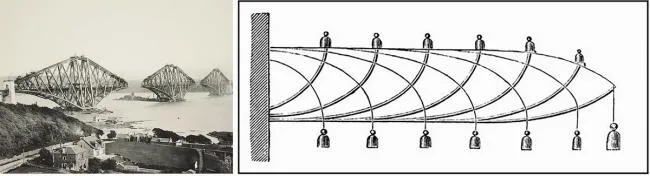
▲ Fosbury Bay Bridge (left) and Kurmann’s cantilever beam principal stress trajectory (right)
Comparing Kurmann’s original diagram reveals that real principal stress lines are curved. Industrial materials like steel and concrete often cannot economically accommodate curves and instead use straight, triangular truss elements. Bamboo’s natural flexibility allows it to follow these curved stress lines more closely, offering a structural advantage over industrial materials.
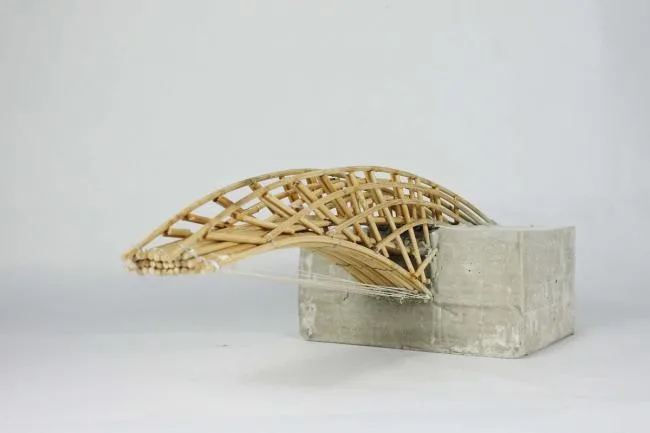
▲ Structural model
Modeling and structural analysis of the bamboo bridge show that bending moments are evenly distributed along each bamboo pole, while axial force gradually increases, matching the material’s properties and expected stress distribution.
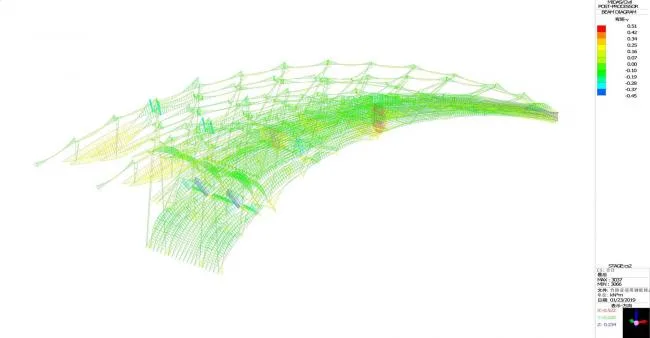
▲ Internal bending moment under constant load
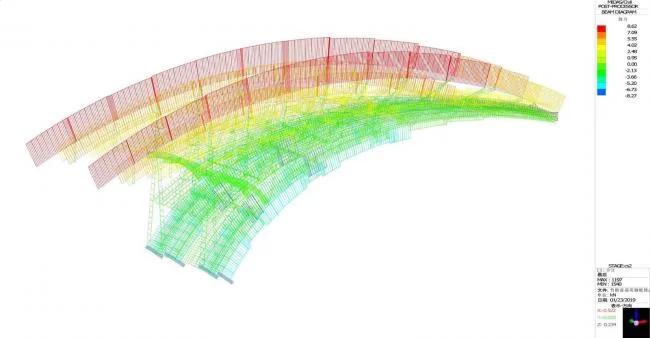
▲ Internal axial force under constant load
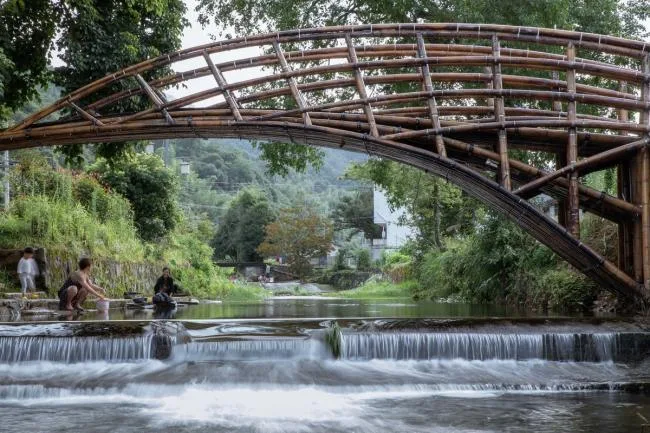
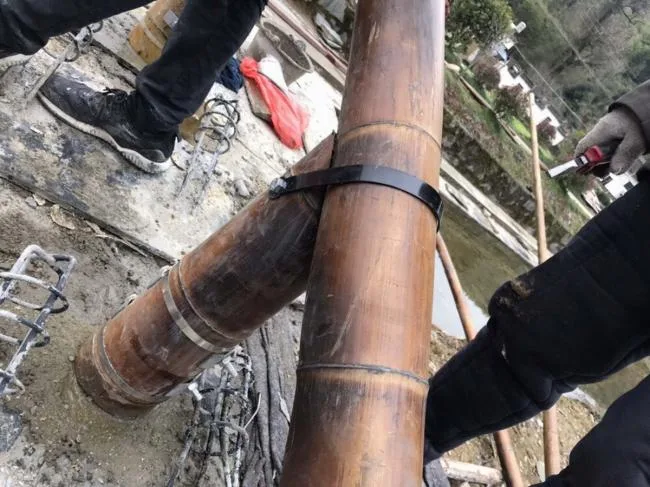
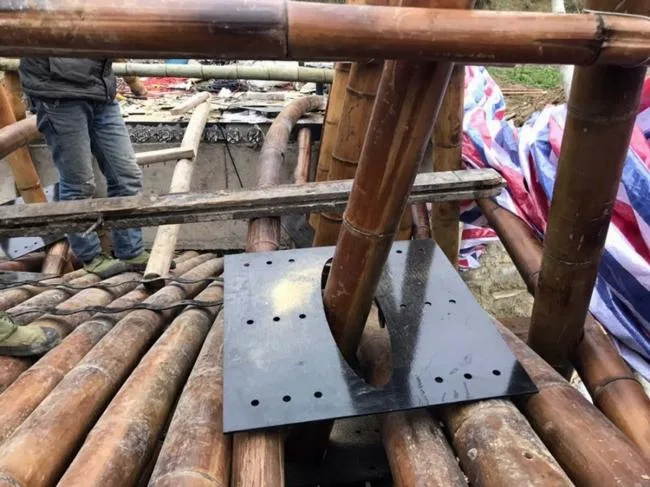
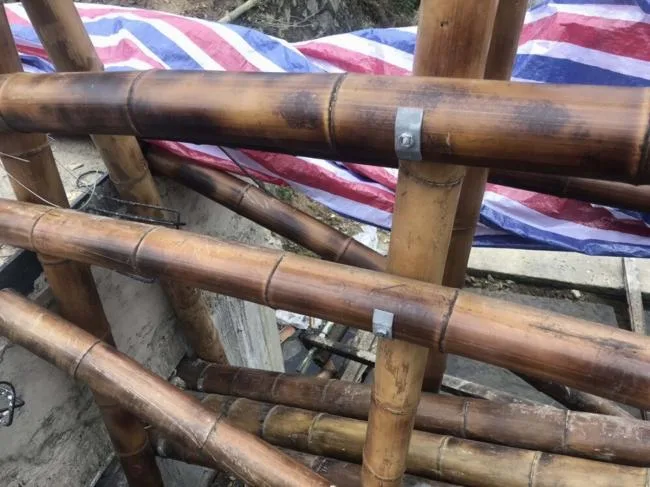
The bridge’s handrails are integrated into the main structure, providing height for stability, while the deck remains flat and comfortable for walking. Curved bamboo sections function as tension rods, and straight sections act as compression rods, mitigating bamboo’s weakness in bending. The critical challenge was reinforcing the bamboo joints. This was achieved by strengthening nodes with steel plates, concrete grouting inside bamboo tubes, and stainless steel hoops—effectively preventing strength loss from cracking over time.
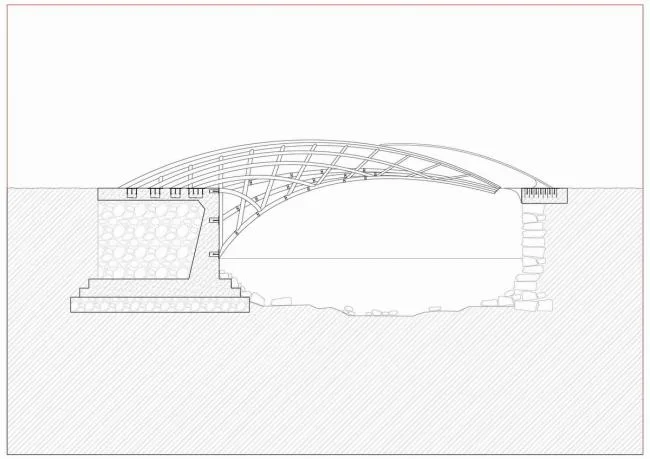
▲ Cross-sectional view
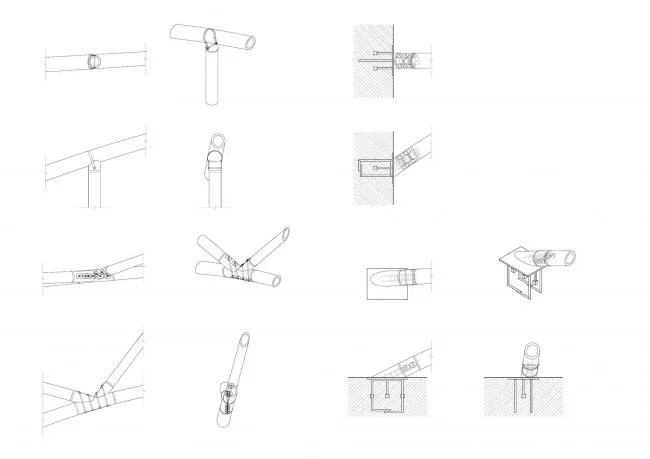
▲ Joint detail diagram
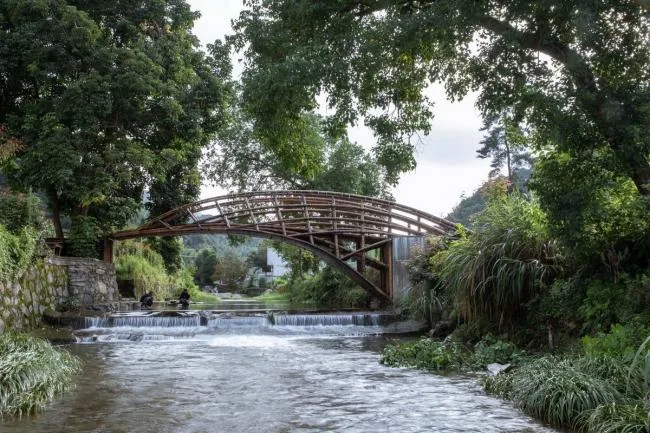
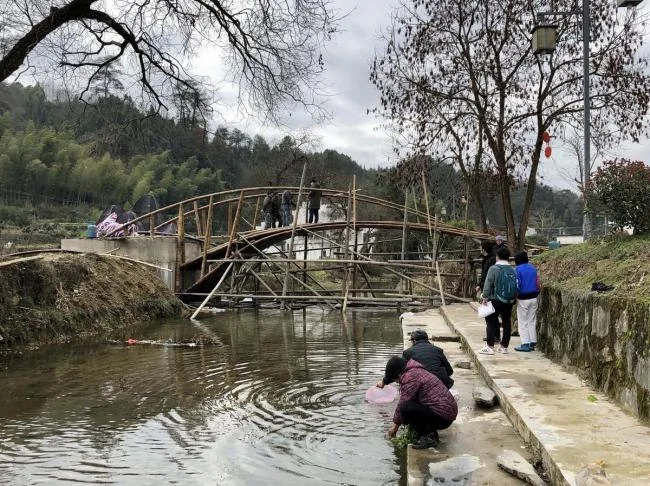
Ultimately, the bamboo cantilever bridge extends solely through the strength of bamboo, reaching out from one bank across the water to the other side. The bridge’s end is detached from the far bank, resembling a “broken bridge,” which enhances the sense of wonder and highlights the dramatic tension inherent in its cantilever design.
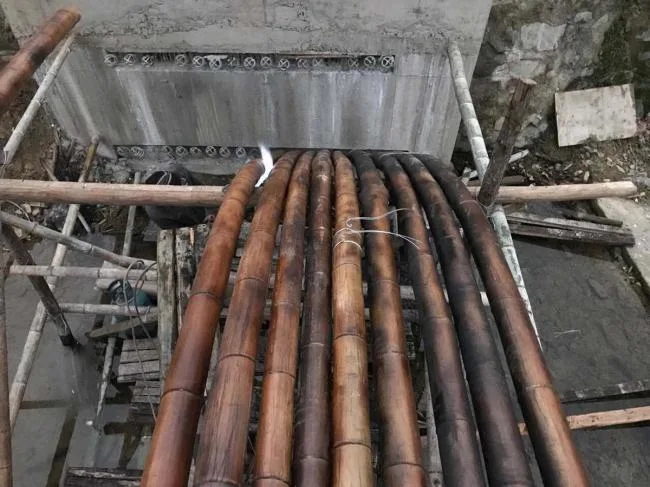
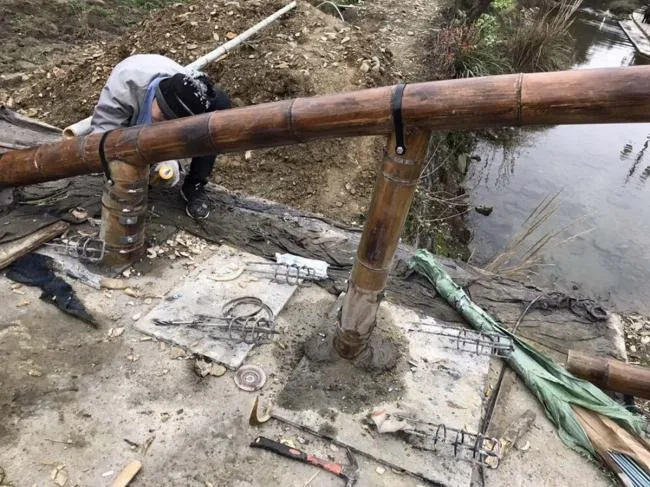
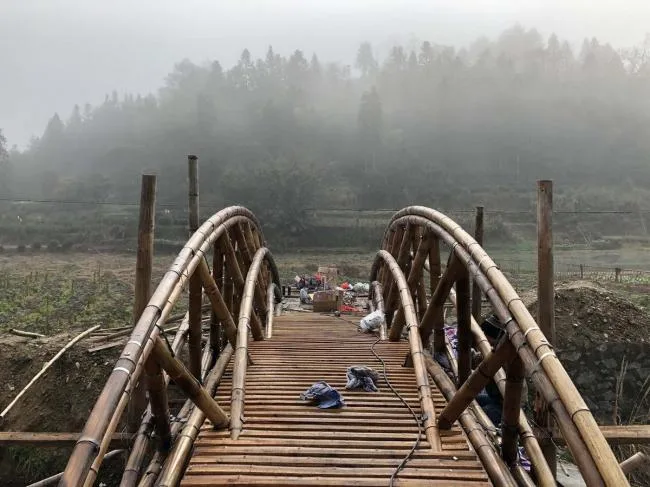
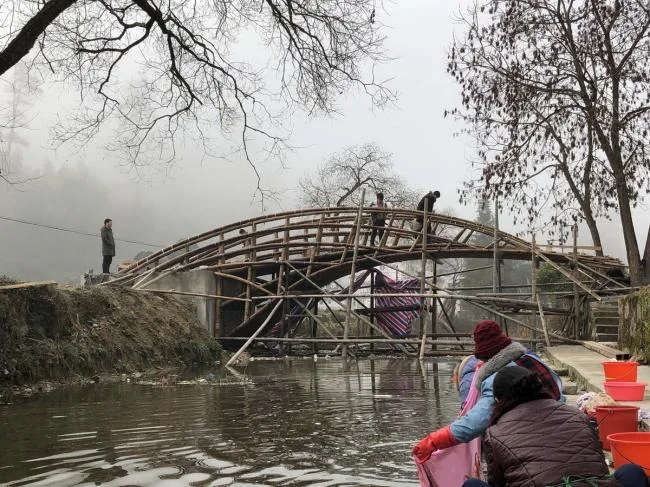
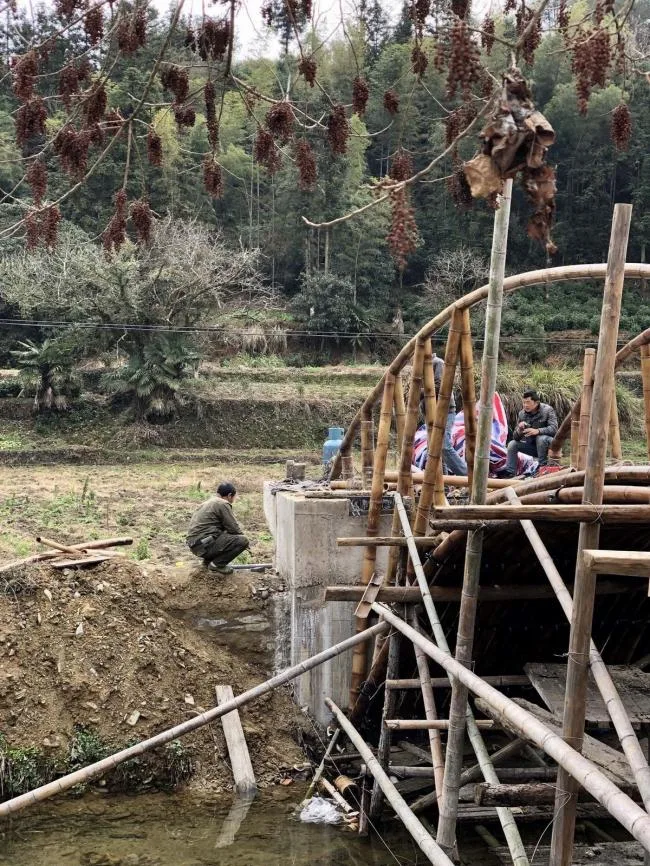
Construction Process:
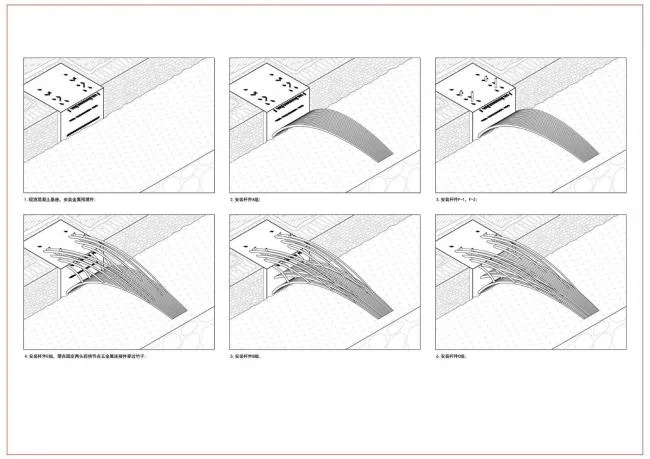
▲ Construction process
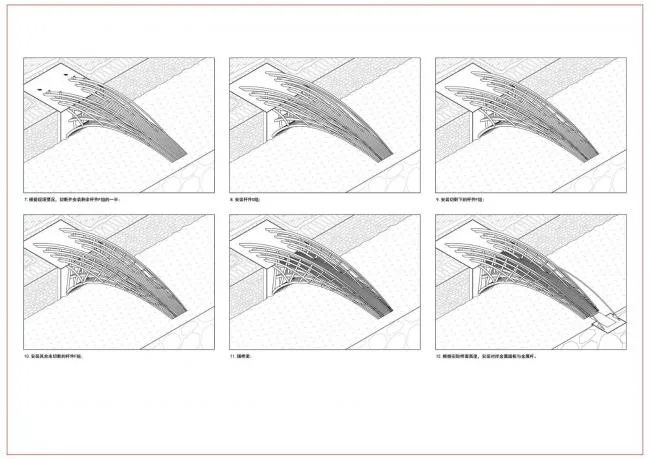
▲ Construction process
Project Drawings
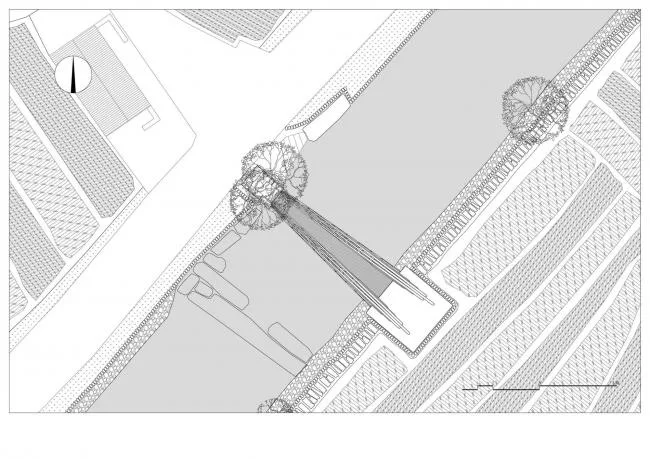
▲ General layout plan
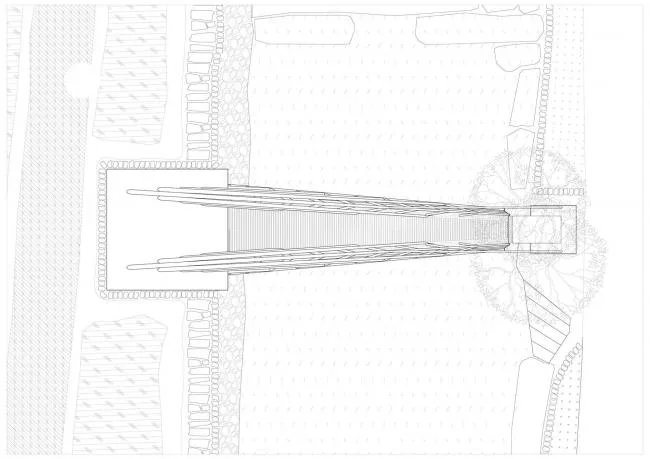
▲ Plan view
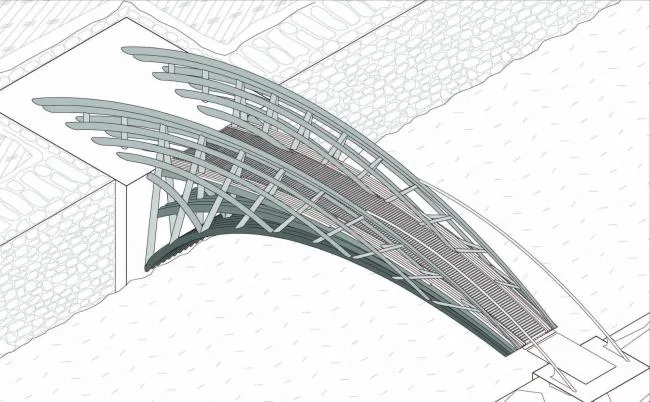
▲ Axonometric diagram
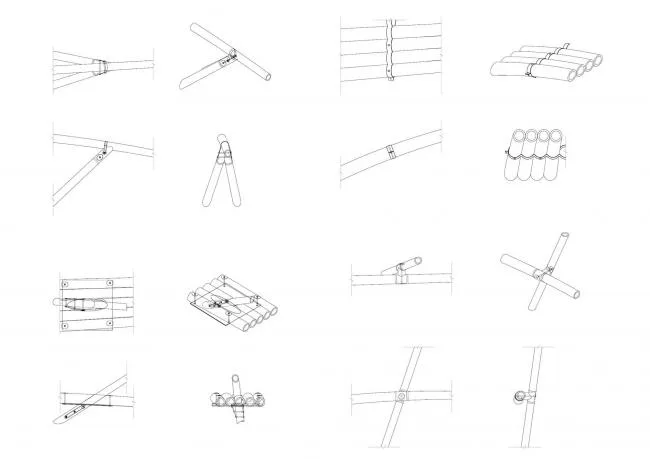
▲ Node diagram
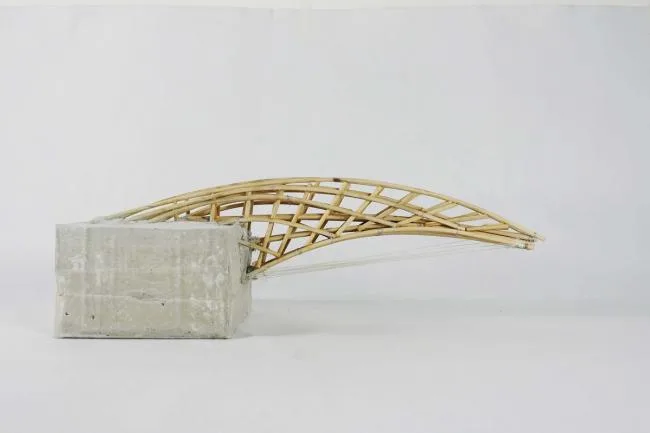
▲ Model
Project Information
Project Type: Pedestrian Bridge
Location: Mount Huangshan, China
Architectural Design: Come to Architectural Design Studio
Area: 20.0 m²
Year Completed: 2019
Photography: Zhao Yilong, Tang Xuguo
Lead Architect: Marco Yuan
Design Team: Gong Chengying, Chen Yun, Hu Xiaoyue
Bamboo Structure Construction: Shanghai Jingdao Yuanzhu Architectural Design Engineering Co., Ltd
Structural Consultant: Chang Jiang
Owner: Qimen Wannong Tourism Investment Development Co., Ltd












Must log in before commenting!
Sign Up