
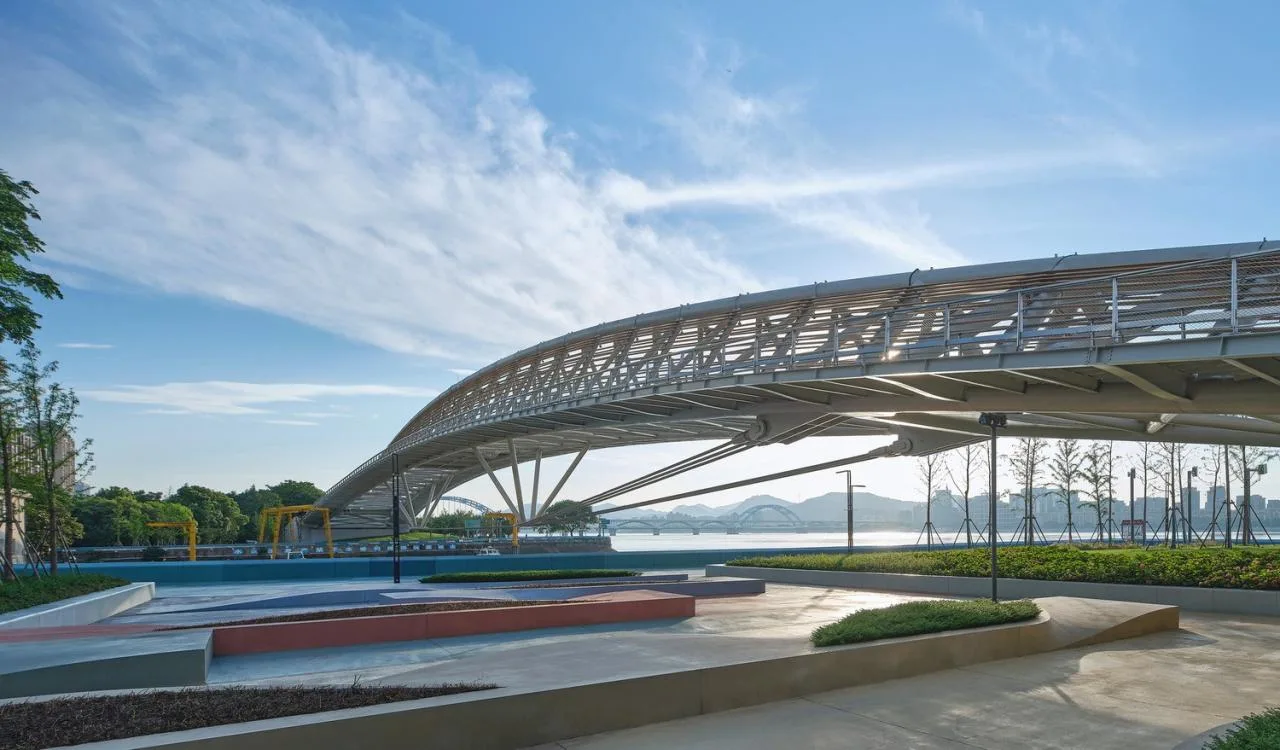
The Silk Bridge is situated on the south bank of the Qiantang River in Binjiang District, Hangzhou, positioned at the northeast corner of the intersection between Wentao Road and Shuihua Lane. This bridge is a key element of a 12-kilometer waterfront public space renovation and upgrade project led by Tongji University Architectural Design and Research Institute (Group) Co., Ltd. Original Design Studio in Binjiang District, Hangzhou.
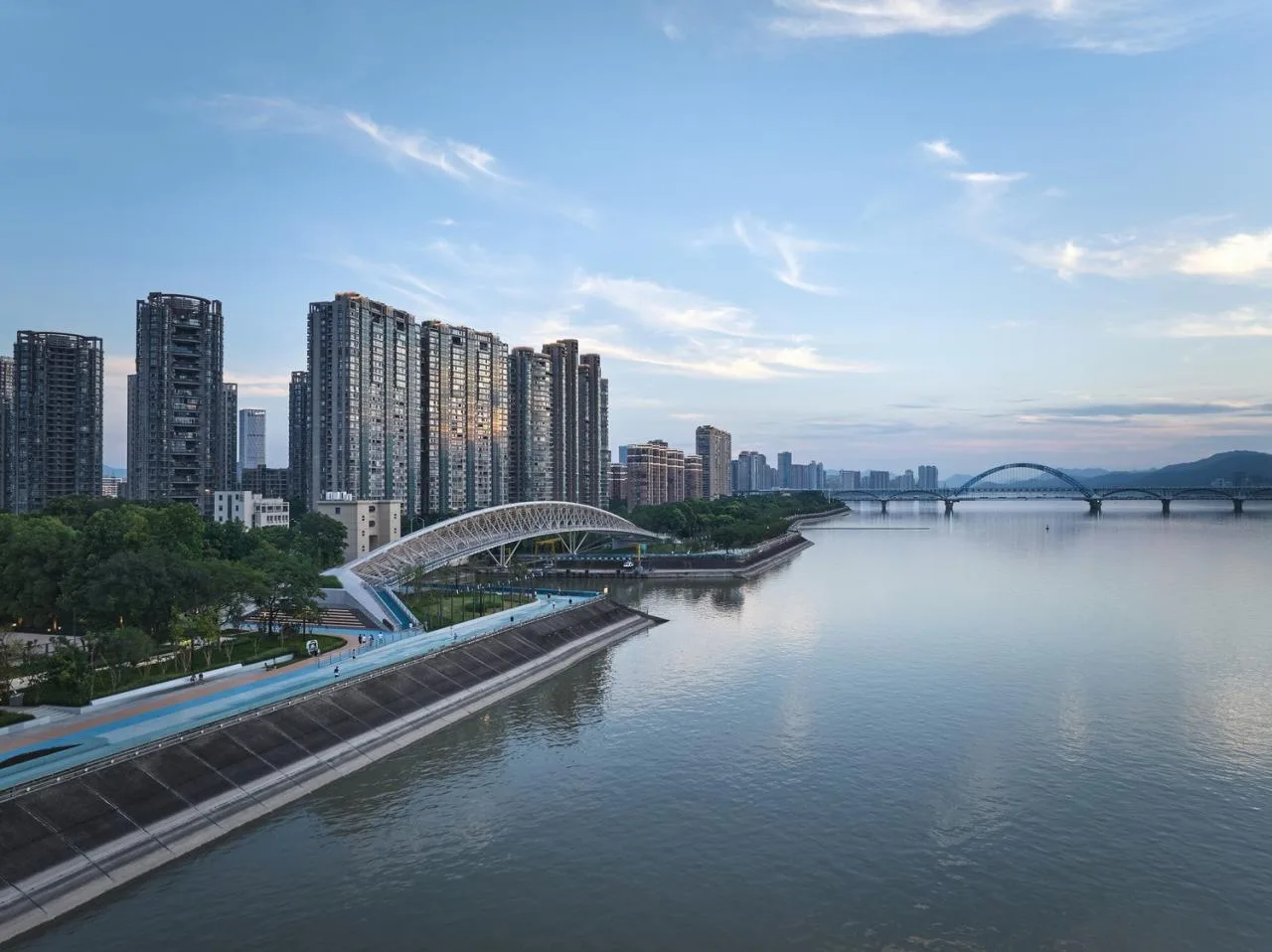
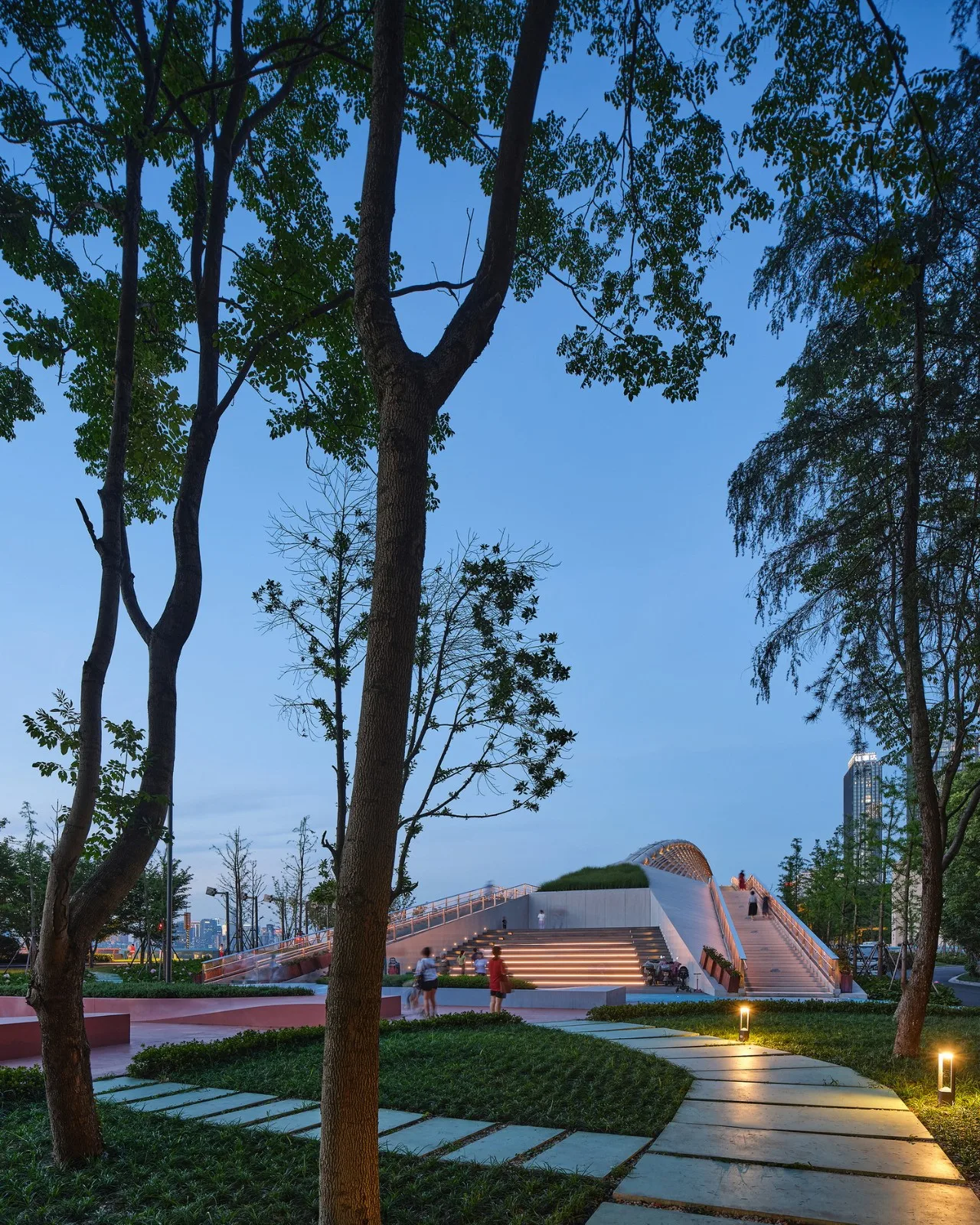
Previously, the Xiaoshan Irrigation and Drainage Station caused pedestrians, cyclists, and motor vehicles to mix in a narrow passage on the south side of the gate, creating a bottleneck that disrupted connection to the riverside trail. The Silk Bridge design successfully “cuts corners and straightens” the sports blue road, upgrading a route that once detoured around the ship lock into a direct channel offering prime river views. This opens up the largest urban bottleneck along the 12-kilometer public space of Hangzhou Binjiang, providing not only convenient transportation but also a platform for walking, sightseeing, and enjoying distant views, thus enhancing the variety and quality of the riverside scenery.
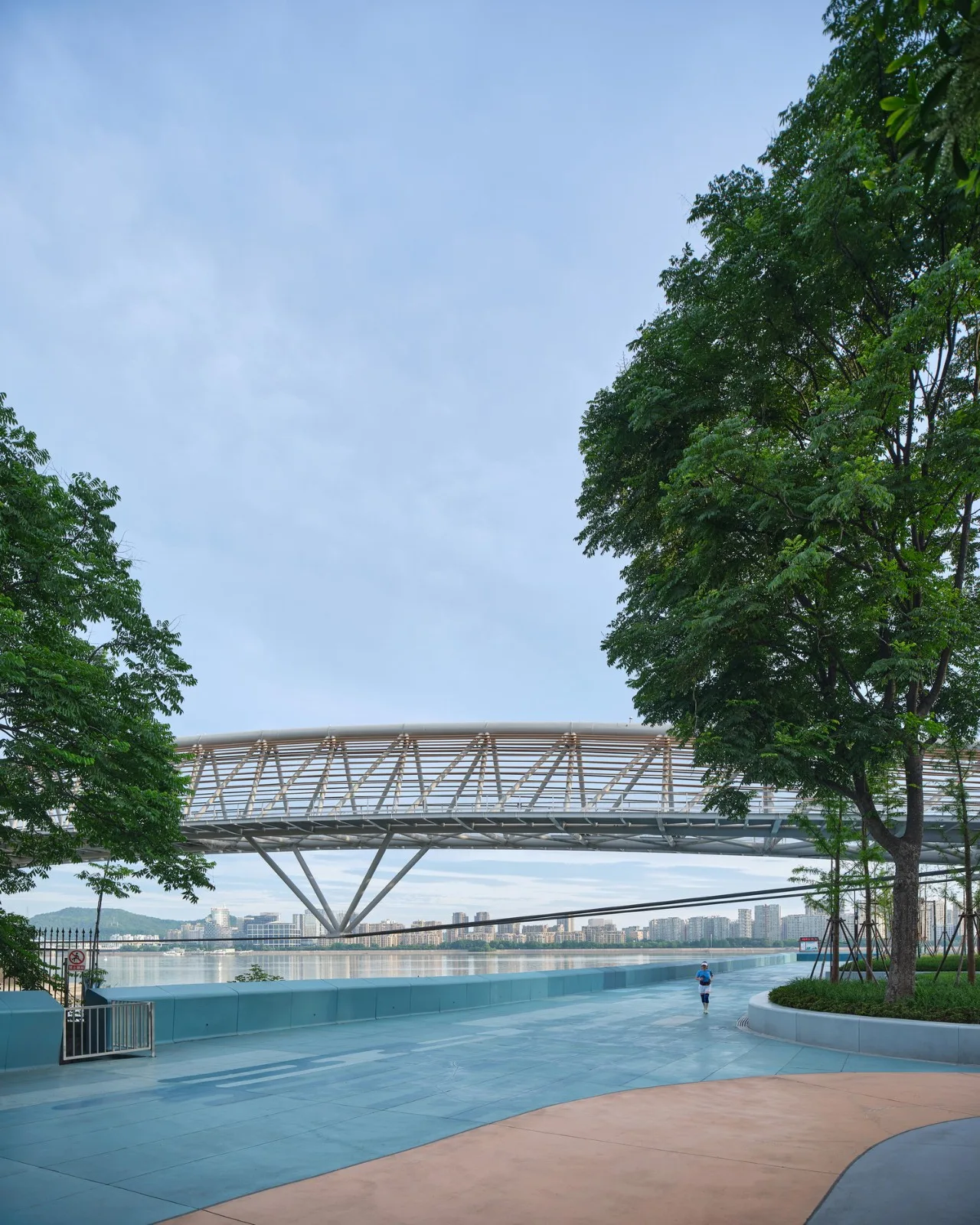
The bridge’s multifunctional infrastructure is located along the continuous south bank of the Qiantang River. Due to river embankment protection regulations, opportunities to extend outward are rare. Seizing this chance to overcome the bottleneck, the Silk Bridge incorporates multiple functions and experiences. At both ends, expanded stepped plazas enhance the bridge’s public character and act as gathering spaces for community activities.
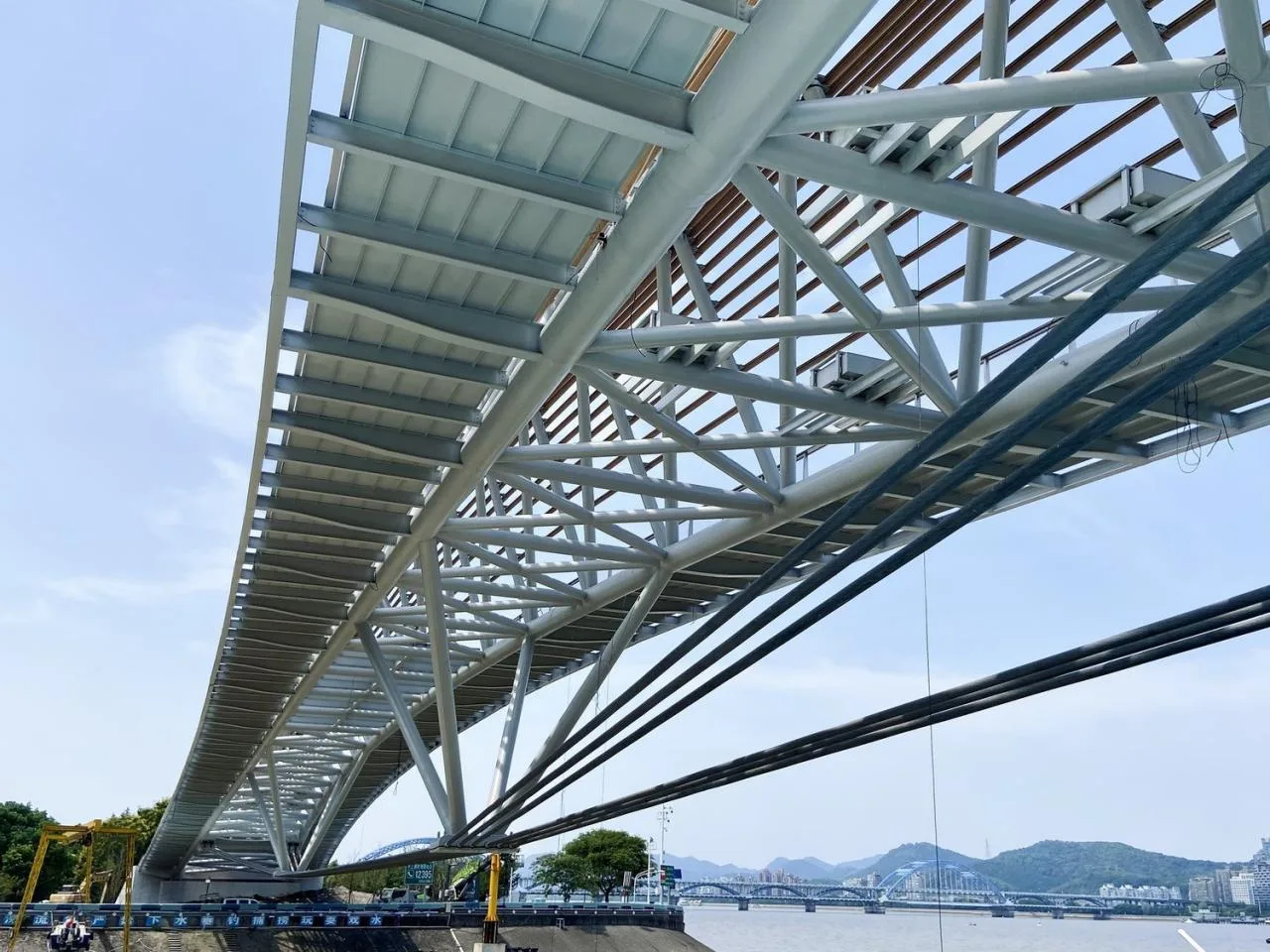
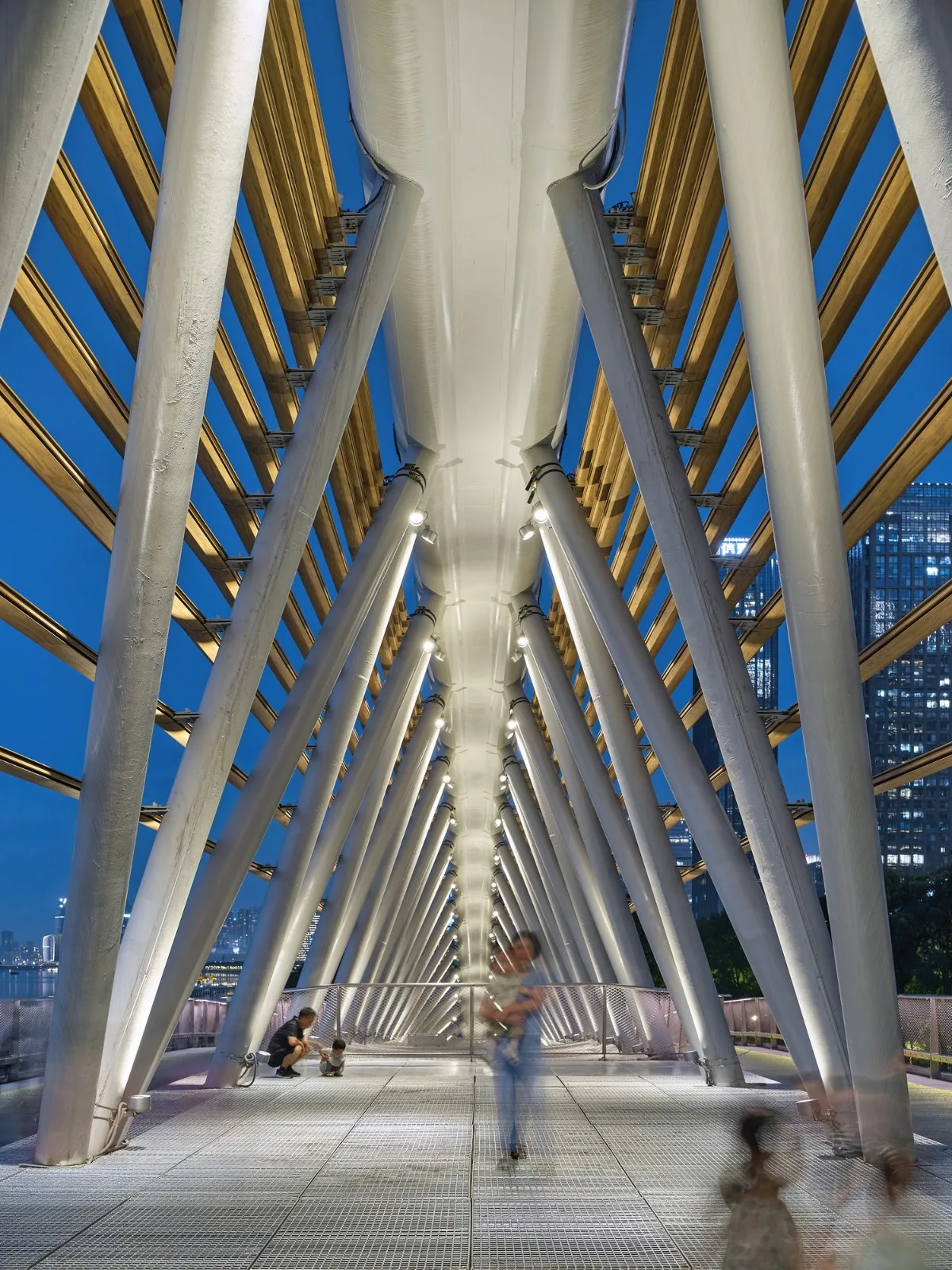
The bridge features two pedestrian paths separated on either side, facing each other: the side adjacent to the irrigation station reflects historical context, while the side overlooking the Qiantang River embraces a forward-looking perspective. These paths intersect mid-bridge. A wooden grid flooring laid on the structure defines the space, creating an interactive area via the bridge’s movable structure. Visitors can immerse themselves within the truss framework and gaze through the gridded floor to the flowing river and passing boats below.
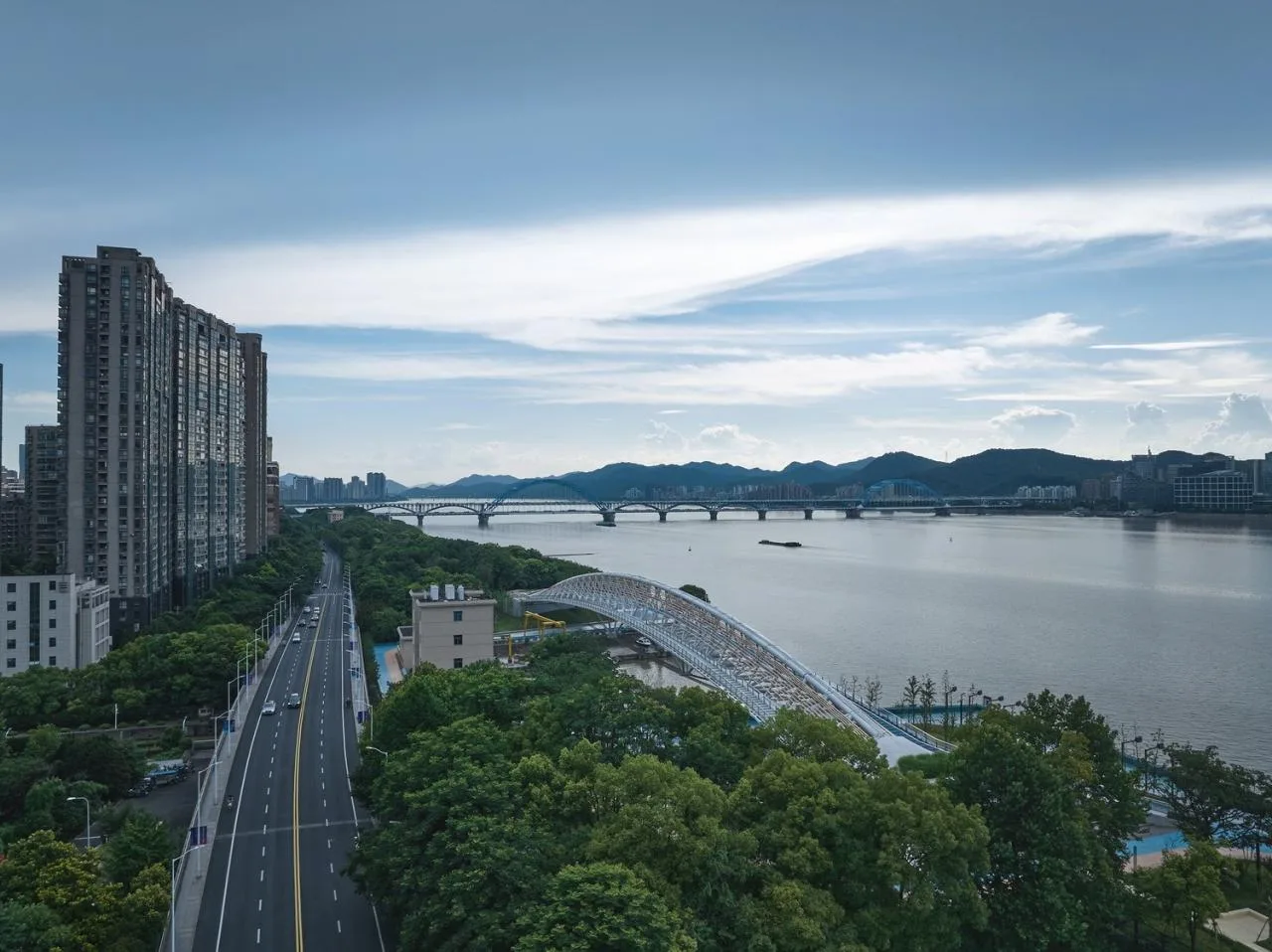
The project’s innovative construction is the result of close collaboration between architects and structural engineers. The truss’s height, width, and member dimensions vary incrementally according to the forces applied. At the bridge’s starting end, the truss measures 3.5 meters in height and 12 meters in width, gradually rising to 8 meters in height and narrowing to 6 meters in width, forming a graceful curve. After several design iterations, the final structure uses a “three tube truss plus tensioned cable” system, which enhances stiffness while minimizing horizontal thrust on the river embankment and controlling the pier foundation size on both banks. The single-span bridge stretches 180 meters, just 10 meters shorter than the main span of the Fuxing Bridge. The rigging features 140mm diameter high vanadium sealed cables, marking the largest diameter and longest cable application in China.
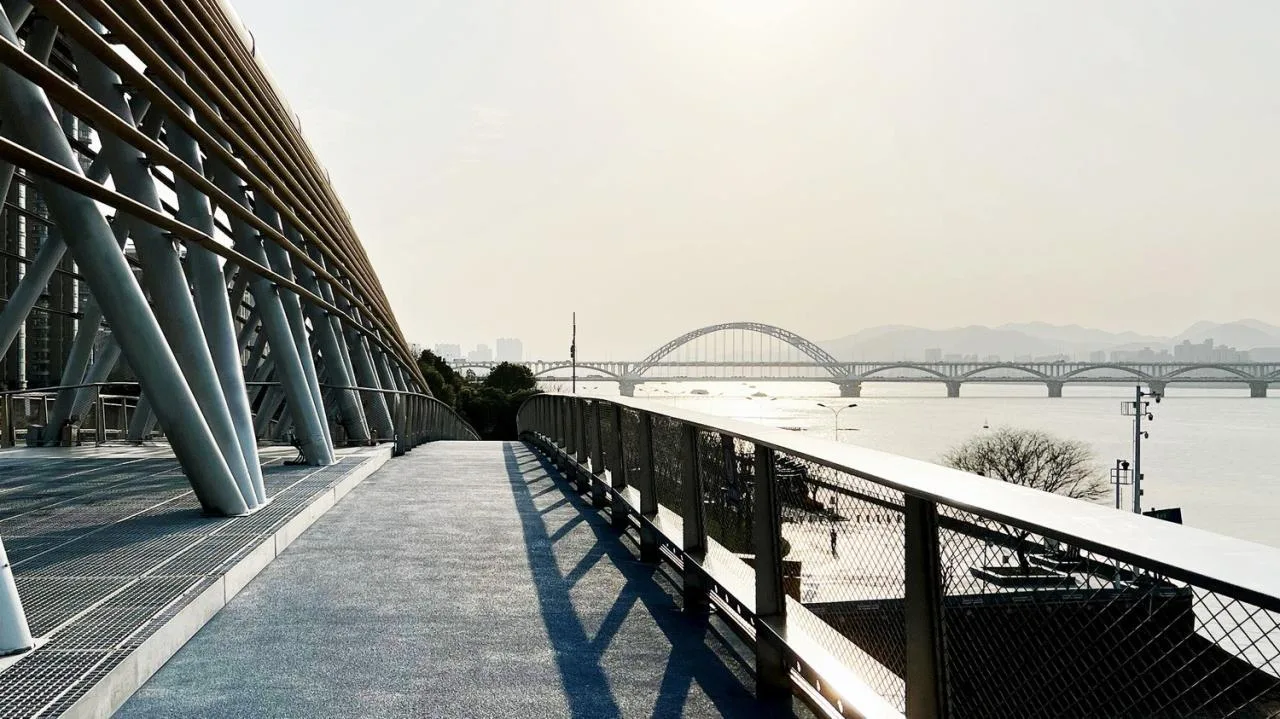
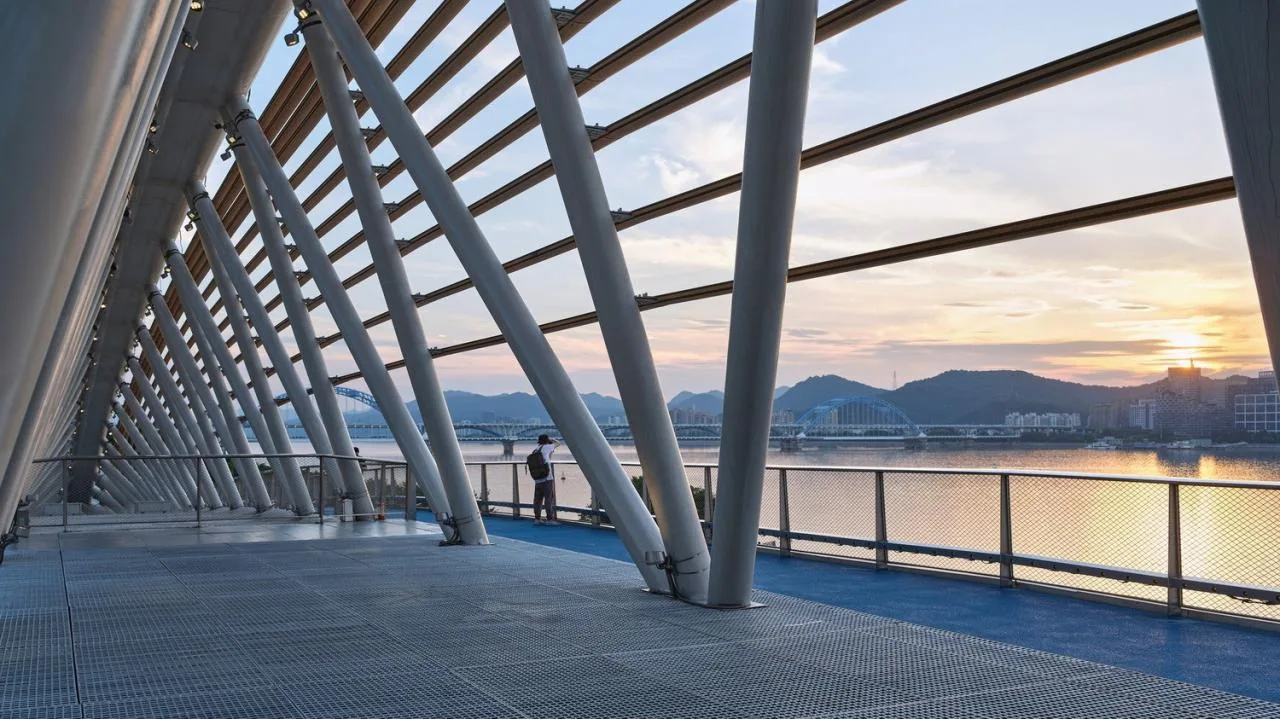
Spanning the Qiantang River waterway, the bridge’s construction required maintaining uninterrupted waterway traffic despite complex conditions. The bridge was built in three sections: the central section utilized temporary underwater supports to slide into position, while the two side sections were assembled directly on the riverbanks using an external non-bonded prestressed method. This construction technique earned recognition as one of eight outstanding provincial-level construction methods and remains the only one of its kind in Binjiang District.
Project Drawings
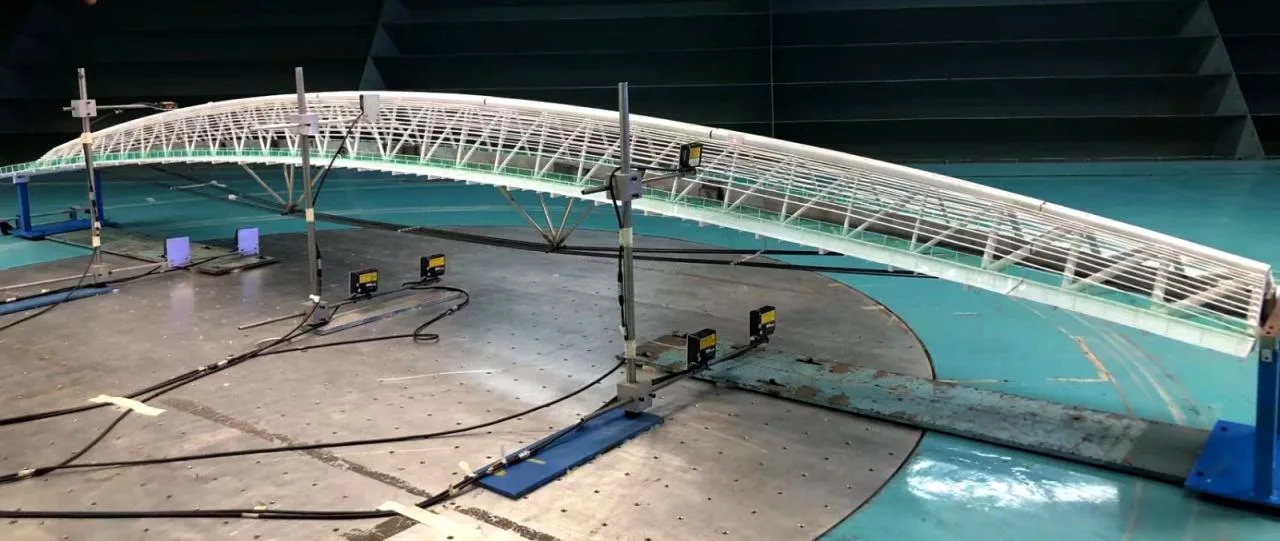
△ Model Diagram
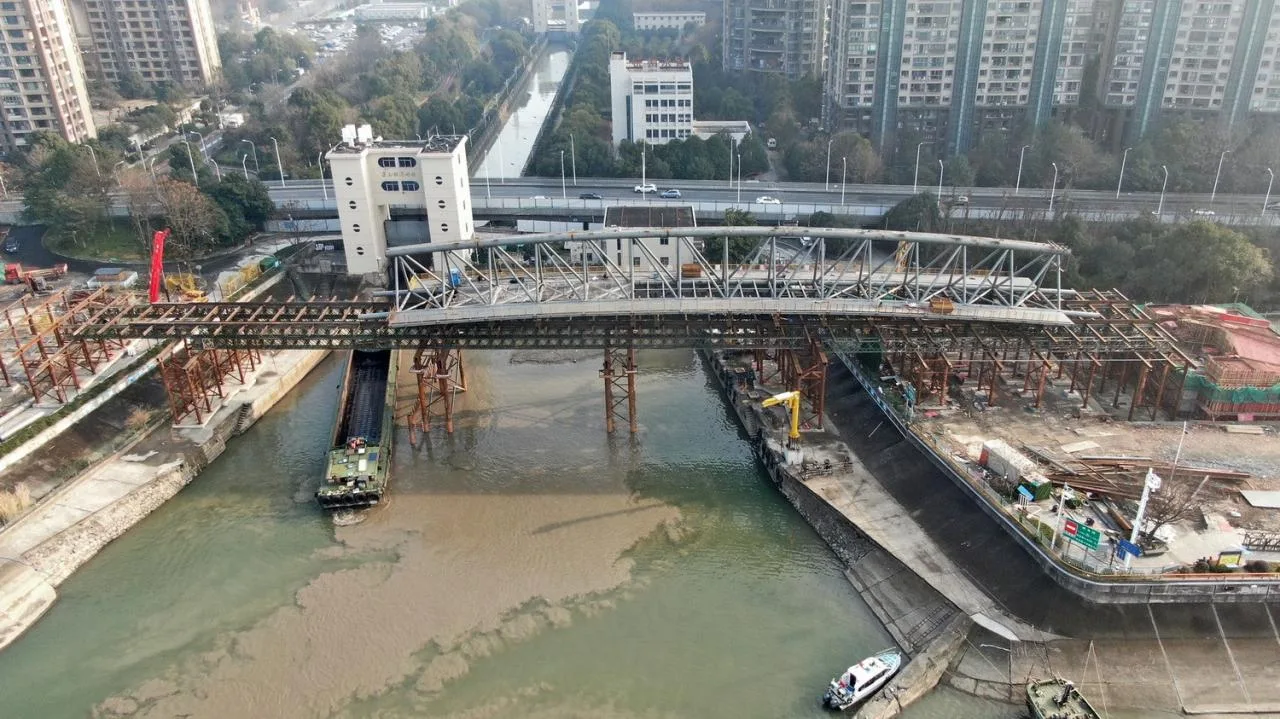
△ Construction Process Diagram
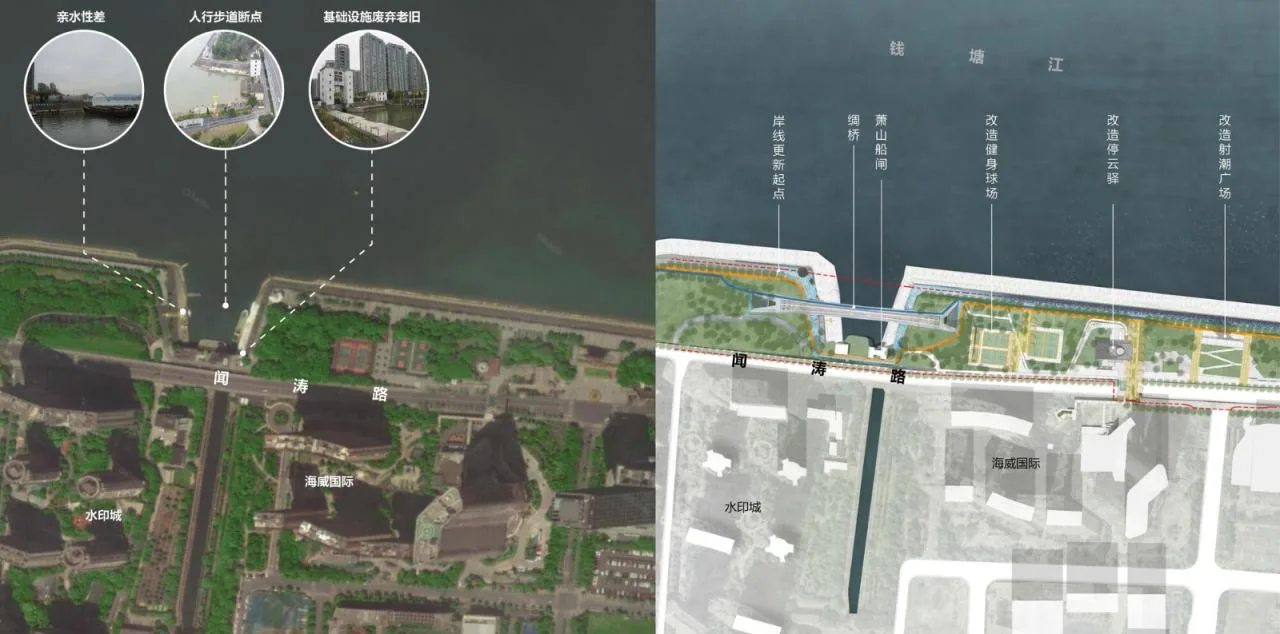
△ Location Diagram
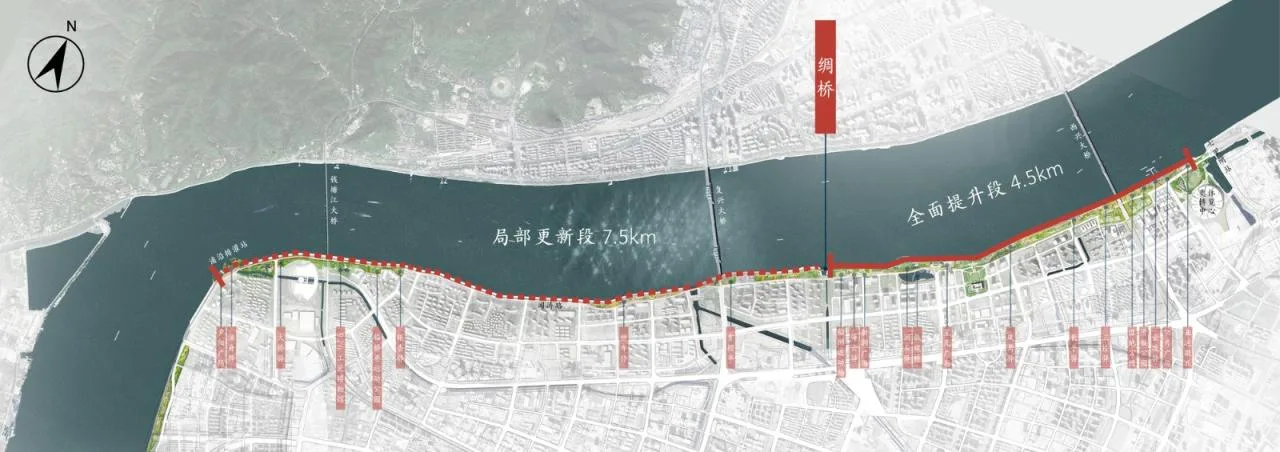
△ Analysis Chart
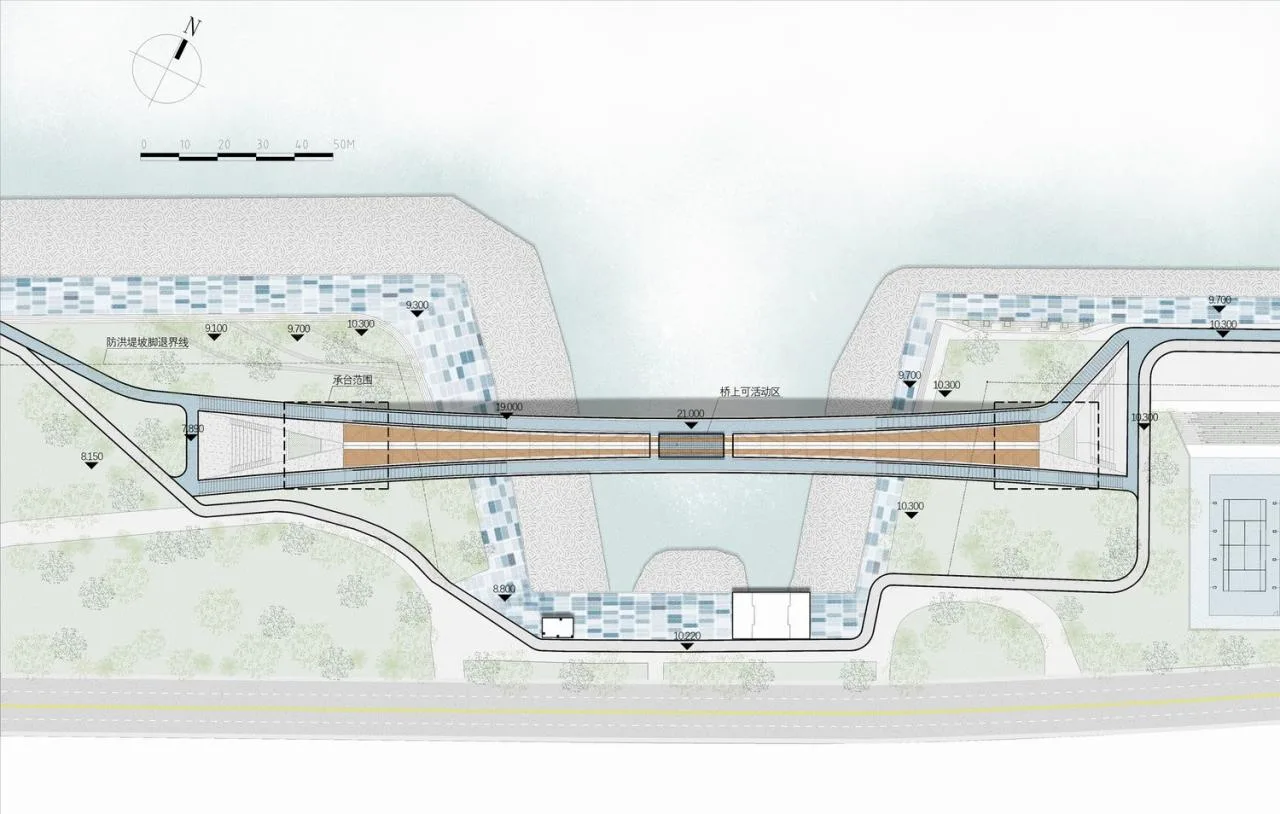
△ Plan View
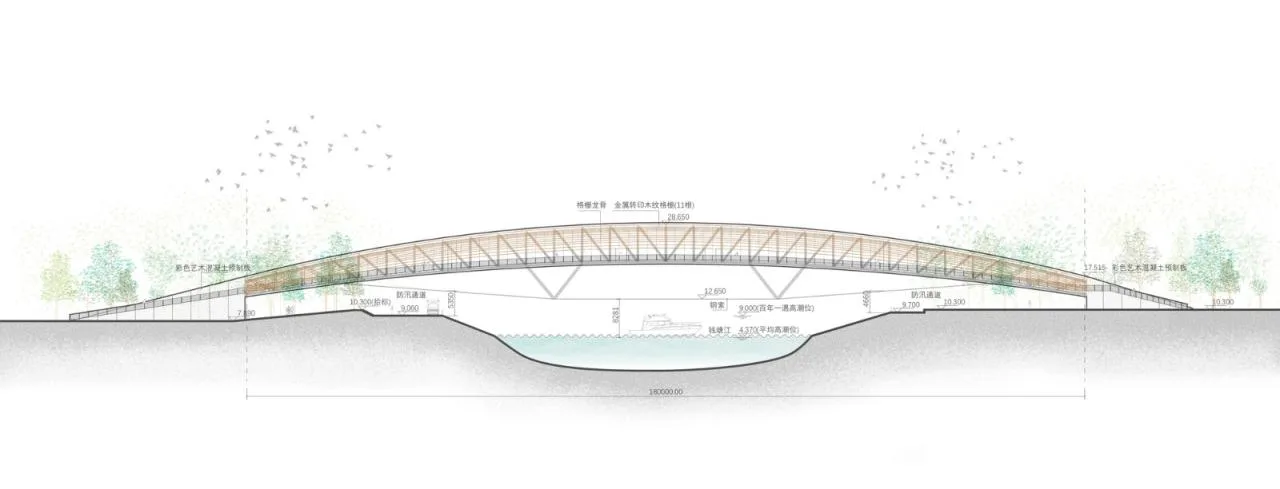
△ Section Diagram
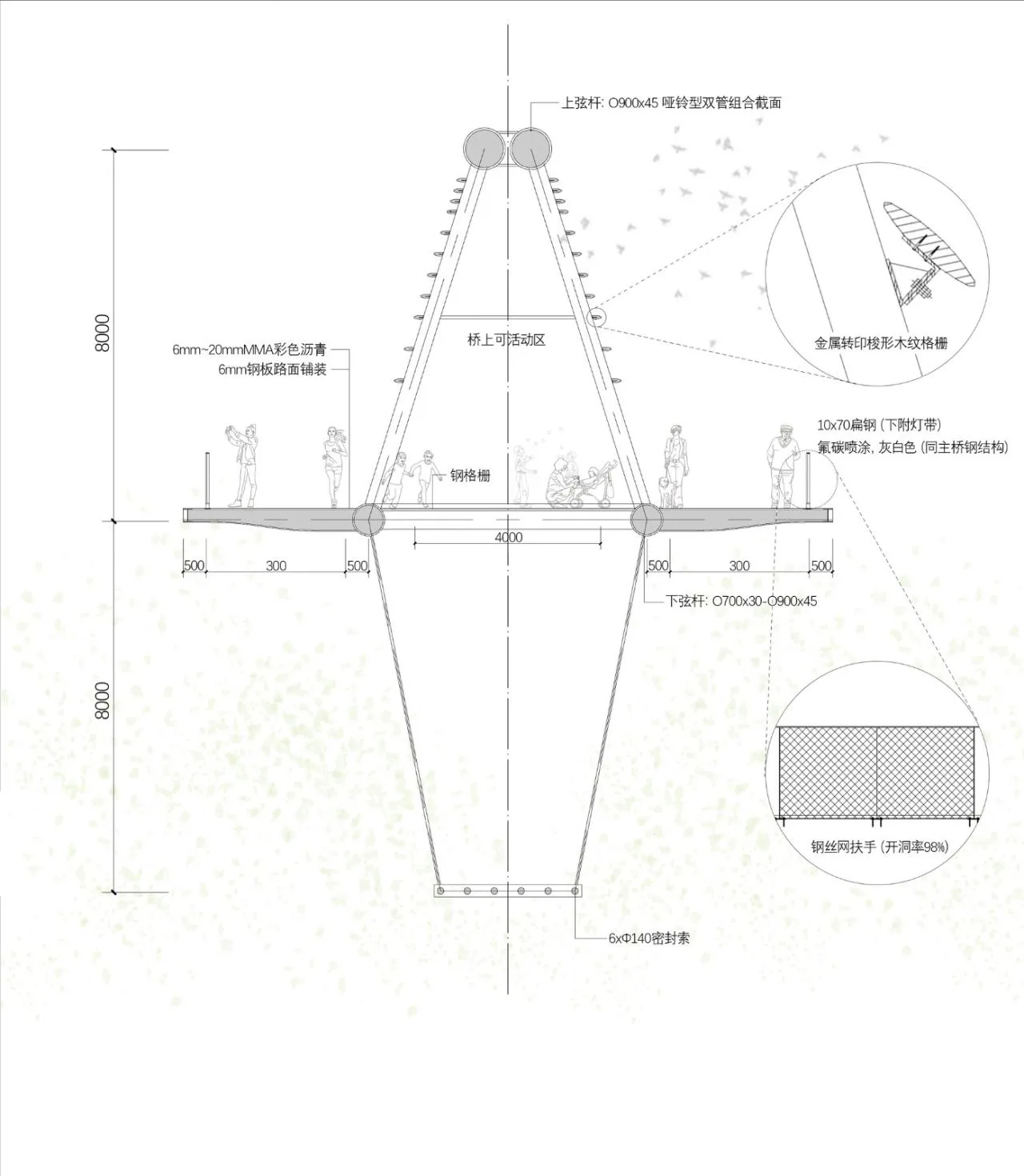
△ Detailed Drawing
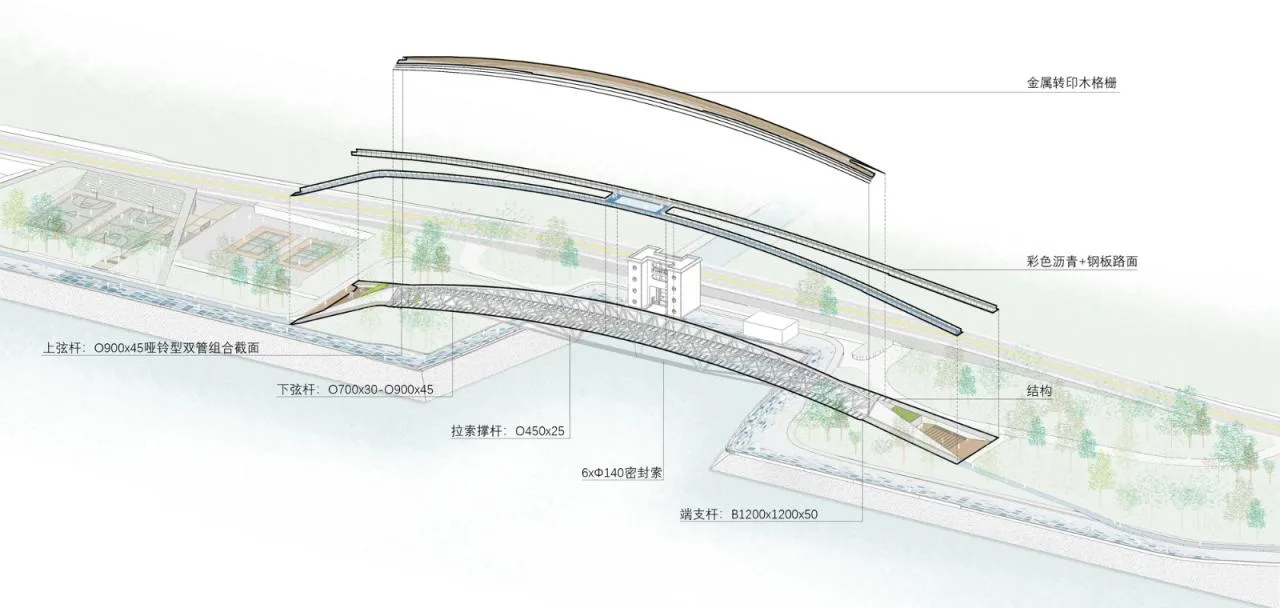
△ Exploded Diagram
Project Information
Architect: Tongji Original Design Studio
Project Year: 2023
Photographer: Zhang Yong, Tongji Original Design Studio
Lead Architects: Zhang Ming, Zhang Zi, Chen Bo
Overall and Architectural Design Team: Sun Jialong, Liu Yongxin, Zhang Xiaoya, Yao Guanjie, Mou Xiaotong, Zhao Shuang, Long Ying, Ma Hanxiao (Intern)
Structural Design Team: Wu Honglei, Zheng Chaoyi, Lin Chen, Wang Kang
Excavation Design Team: Jiang Wenhui, Zhang Zhun, Liu Jiaxing, Song Dongsheng
Equipment Design Team: Liu Jian, Jia Min, Zhang Sien, Wang Haidong, Yang Haolin, Chen Hanqiu
Landscape Design Team: Li Xiubing, Luo Jian, Zhong Yong, Lan Yuan, Su Jinghua
Lighting Design Team: Yang Xiu, Bian Chen, Cai Rong, Ge Wenjing
Technical and Economic Team: Pang Xiaolin, Zhou Lingjun, Zang Junlong, Chen Xinyun, Tong Zhou, Ge Yuwei, Zhang Chunxia, Cao Yexin
Green Building Team: Ren Guohui, Xue Fanghui, Zheng Xiaowei, Meng Fanlin
Collaboration and Coordination Team: Zhejiang Institute of Technology Architectural Design and Research Co., Ltd. (Qin Anhua, Huang Jiayao, Zhou Kang, Ma Kai)
Construction Unit: Hangzhou Xiaohong Construction Environment Group Co., Ltd
Supervision Unit: Hangzhou Tianheng Investment Construction Management Co., Ltd
Logo Design Team: Yike Design
Construction Unit: Hangzhou Binjiang Environmental Development Co., Ltd
Location: Hangzhou















Must log in before commenting!
Sign Up