
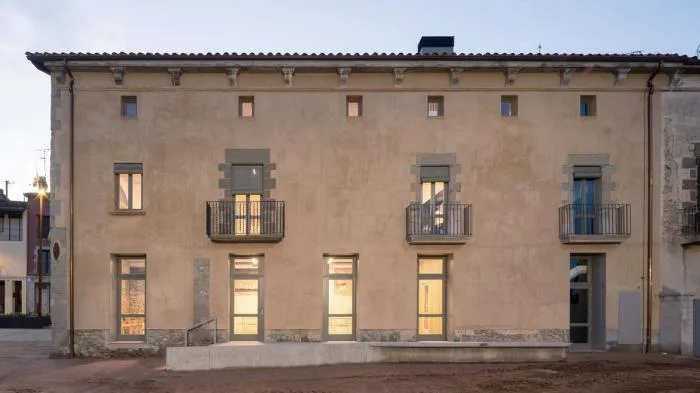
A once water-damaged and abandoned village within the city has sparked the development of a new collective, multifunctional project. Introducing new indoor spaces allows light and air to flow through, transforming the rigid rammed earth walls and dark interiors into open, inviting areas.
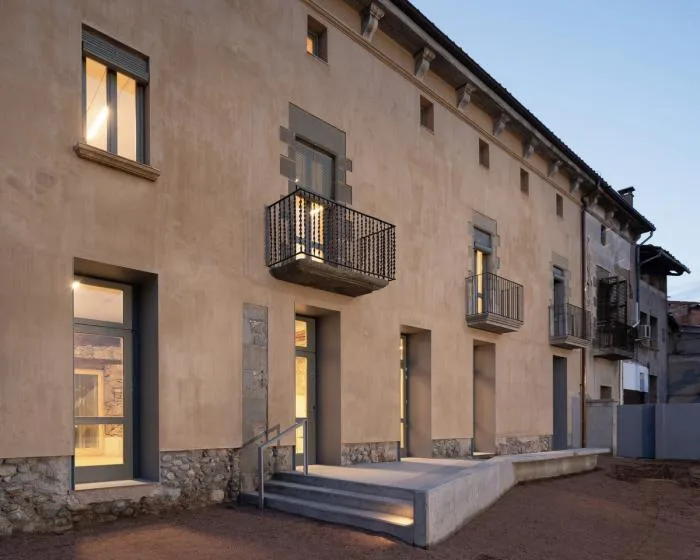
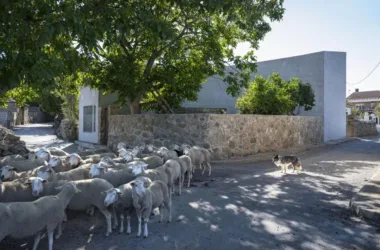
El Mallol, originating from the Baroque period, has stood as an iconic building in the municipality of Sant Hipòlit de Voltregà—north of Barcelona with about 3,000 residents—since the 18th century, due to its strategic location on the road leading to the town center. By the late 20th century, years of neglect had put the structure in serious danger. It was then purchased by a real estate company planning to demolish it and build a six-unit residential complex mimicking the original facade. Fortunately, due to the economic crisis and the determination of the city council and local experts, the building was preserved and added to the BCIL Local Cultural Assets Catalog.
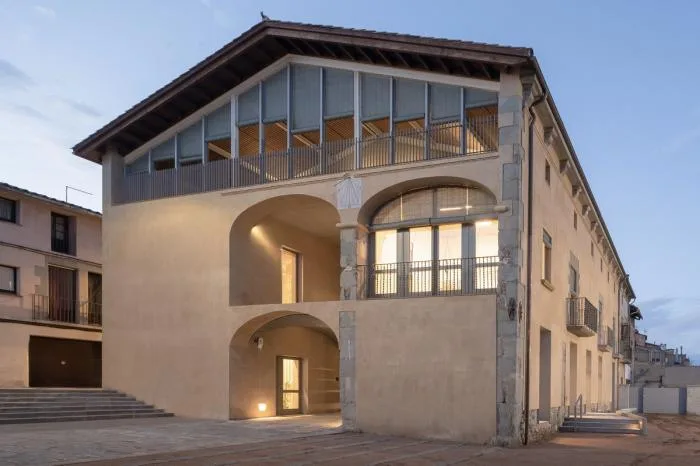
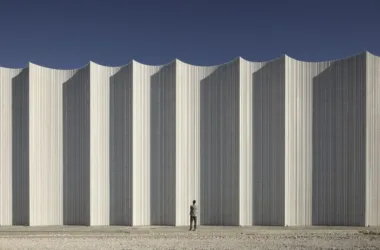
The project’s key decisions stem from an initial historical study and a pathological report. Due to limited resources and a constrained functional program, the guiding principle was to simplify the building’s surface and remove severely damaged, non-essential parts. By leaving some water-damaged wall panels unrepaired, the design allows natural air and light to enter the interior spaces. Additionally, removing the volume attached to the main facade restores the building’s original symmetrical form with gable walls, significantly enhancing the surrounding public space.
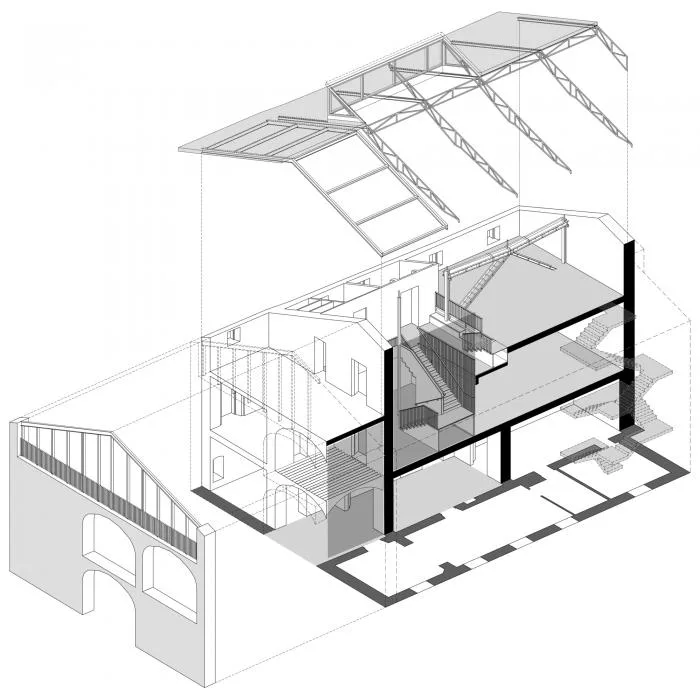
△ Axonometric diagram
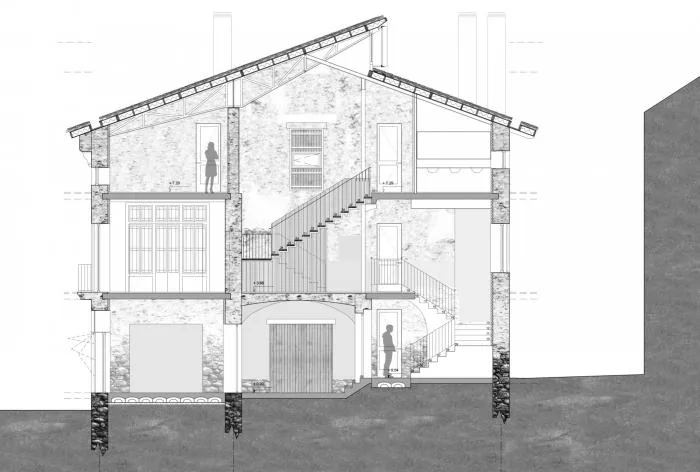
△ Horizontal section
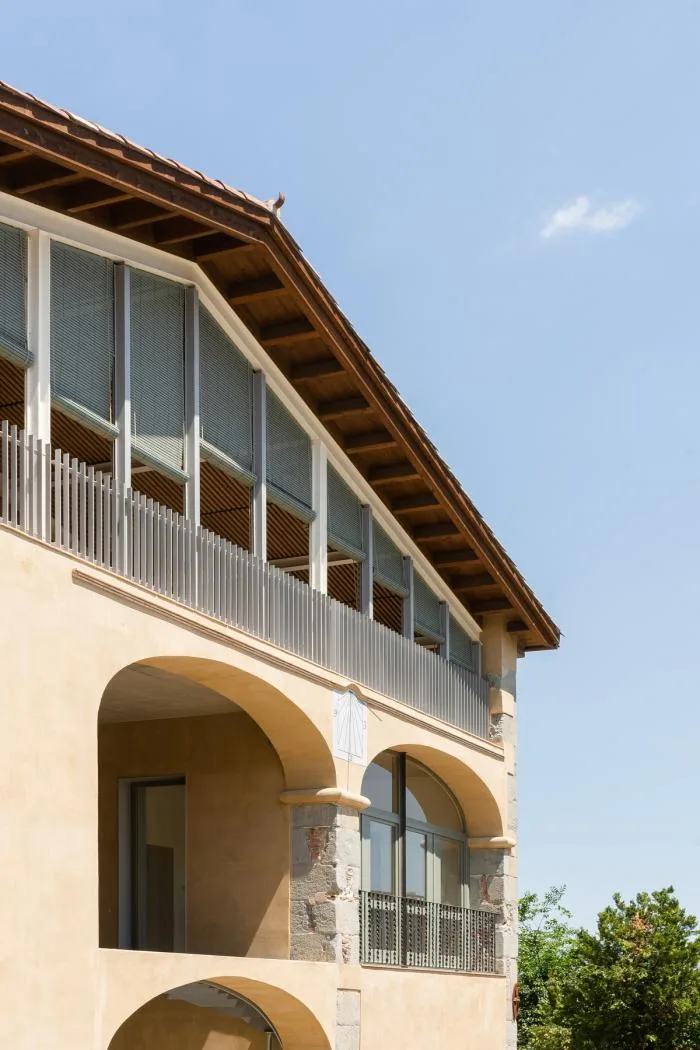
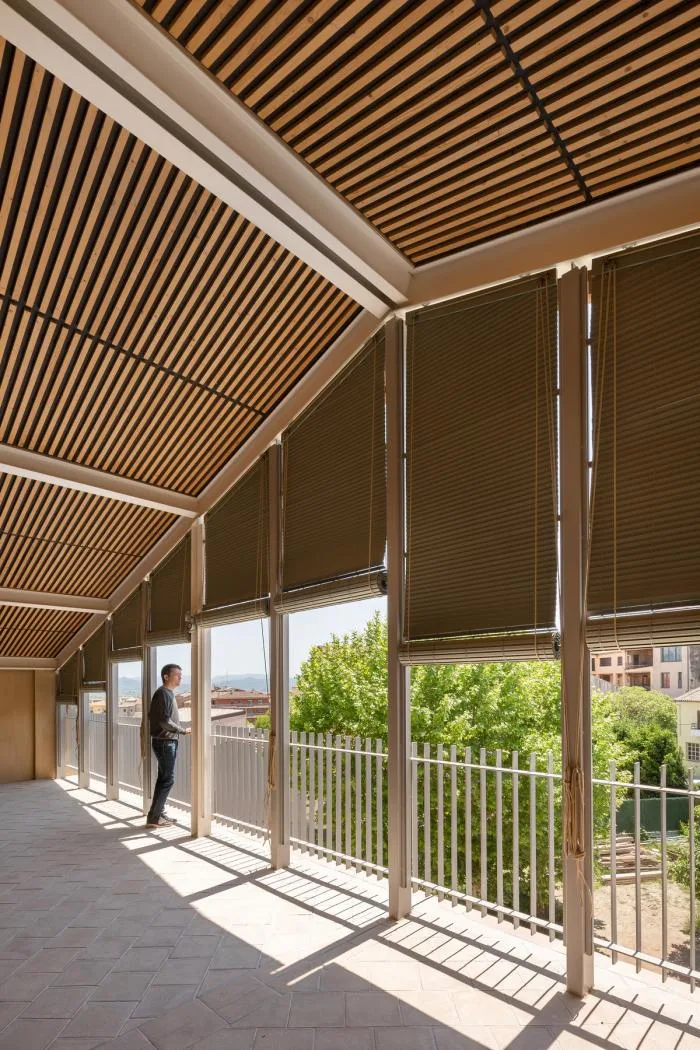
The ground floor plan reveals a unique architectural typology that merges traditional isolated farmhouses with urban Baroque style. A gallery was added to the southern side of the original building, and a new wing was connected on the southwestern side, altering the original rectangular geometry.
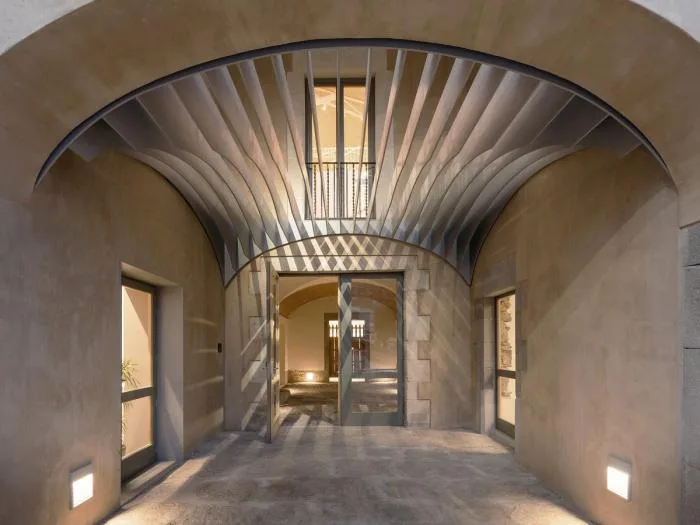
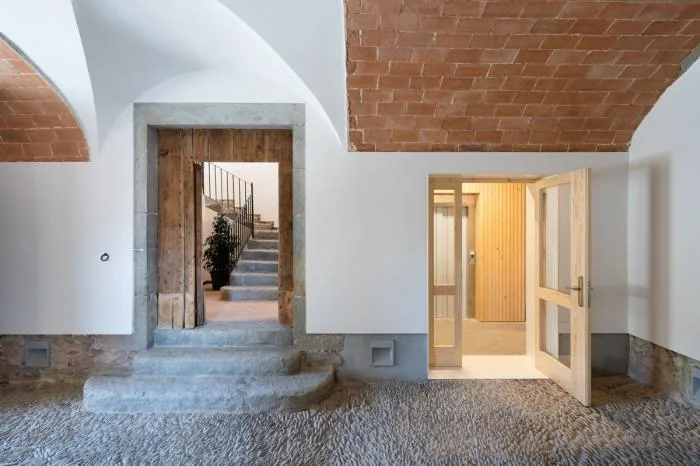
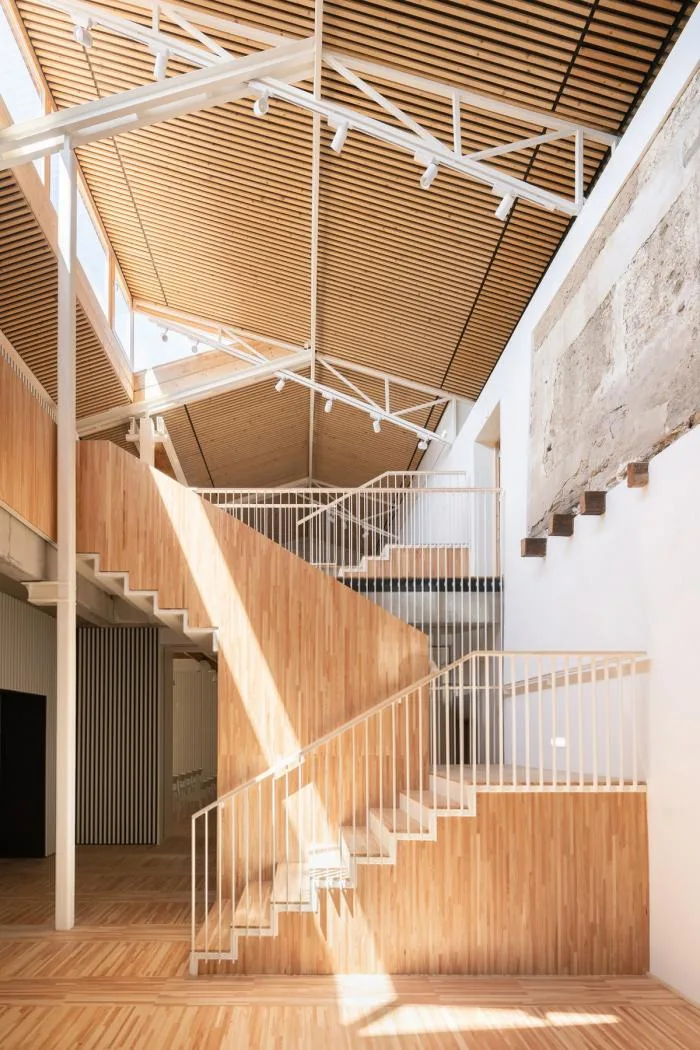
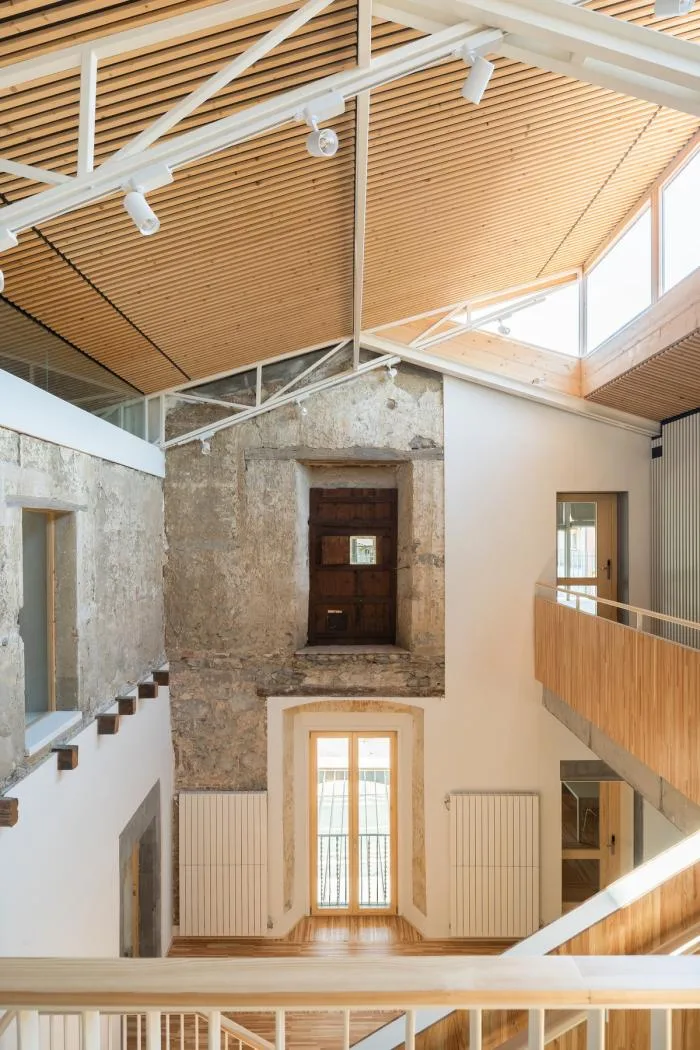
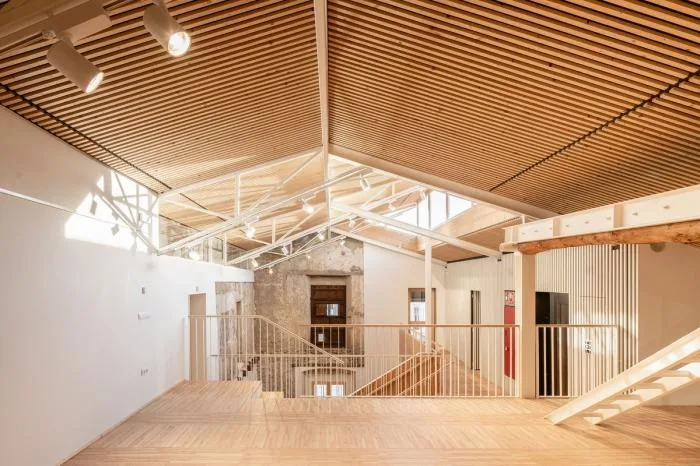
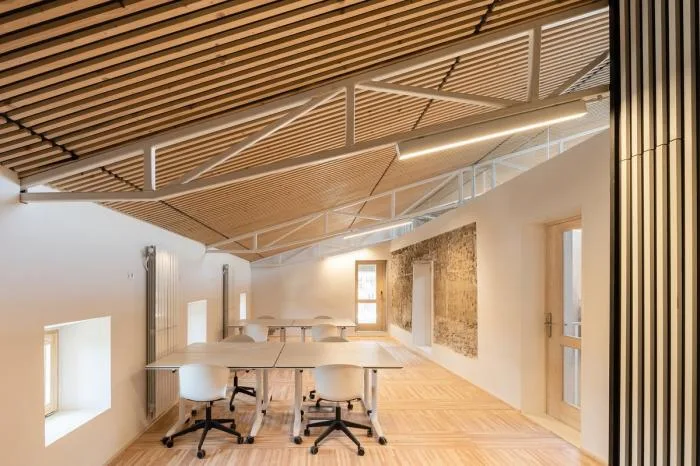
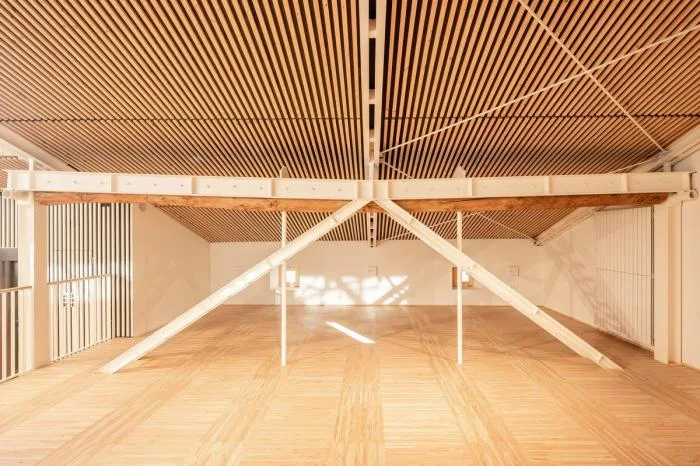
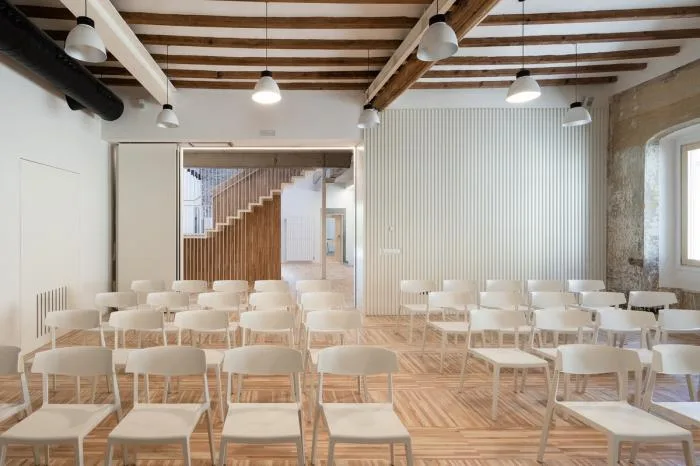
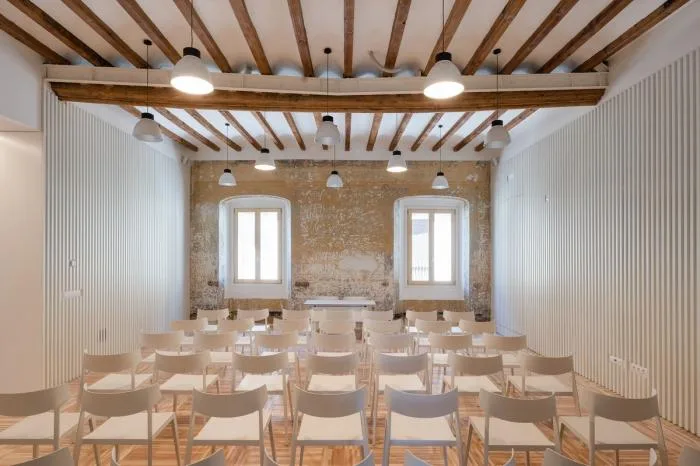
This project preserves the original structural logic, deliberately avoiding the use of new steel frameworks. Instead, it reinforces the existing structural elements: the rammed earth walls, most of which remain in good condition; the ceramic arches on the ground floor, which vary and have been internally strengthened; and the wooden beam floor on the first level of the original building, which defines the tallest shaped room.
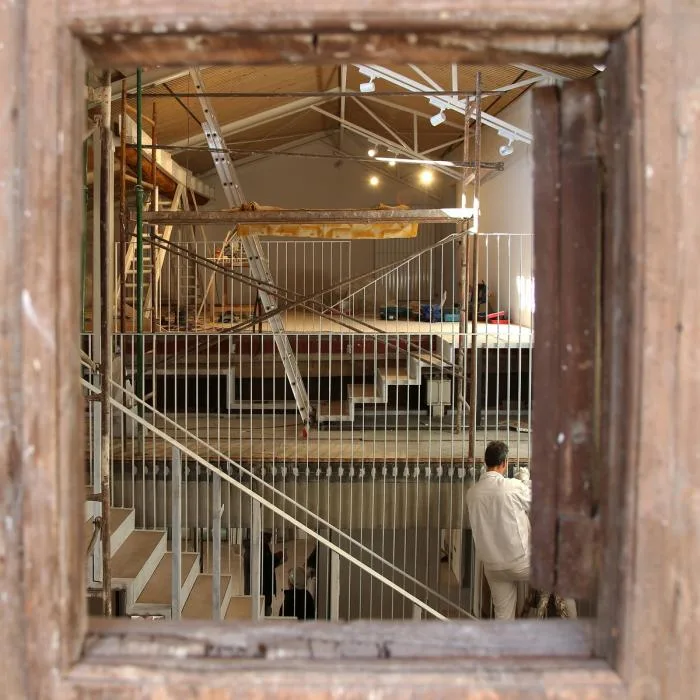
△ Transformation process
Design Drawings
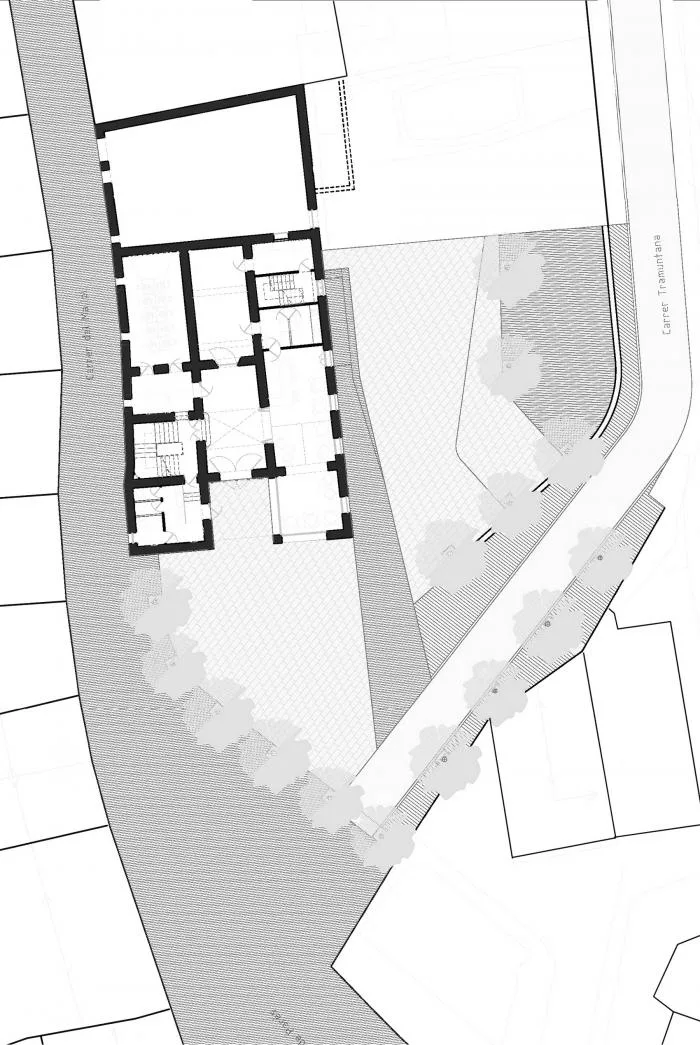
△ General layout plan
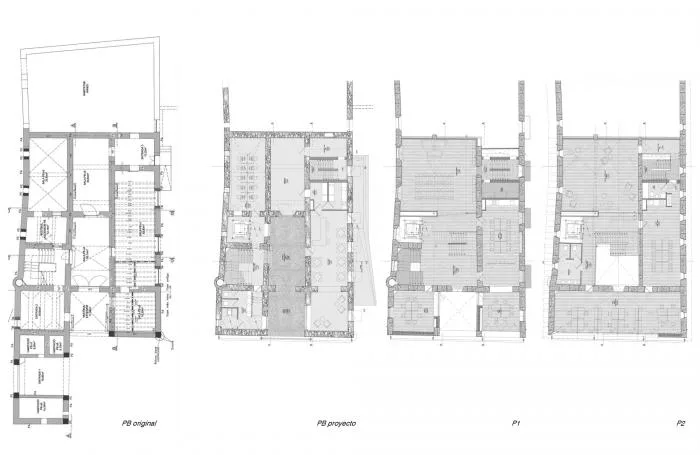
△ Plan view
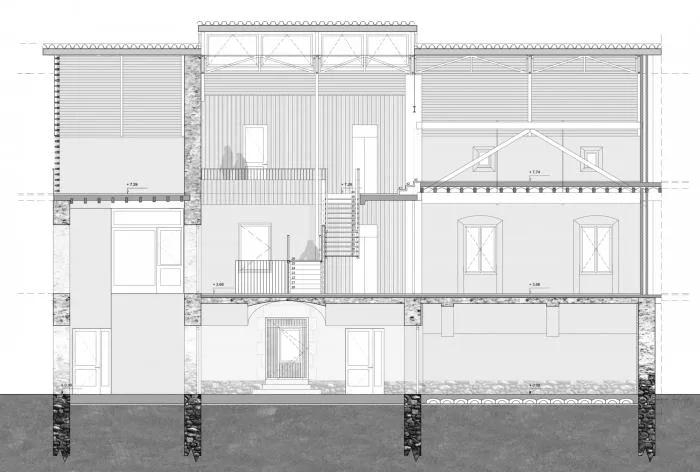
△ Longitudinal section
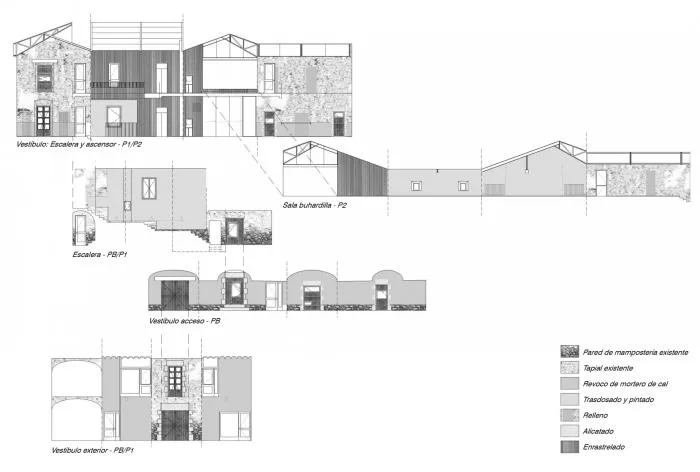
△ Interior analysis
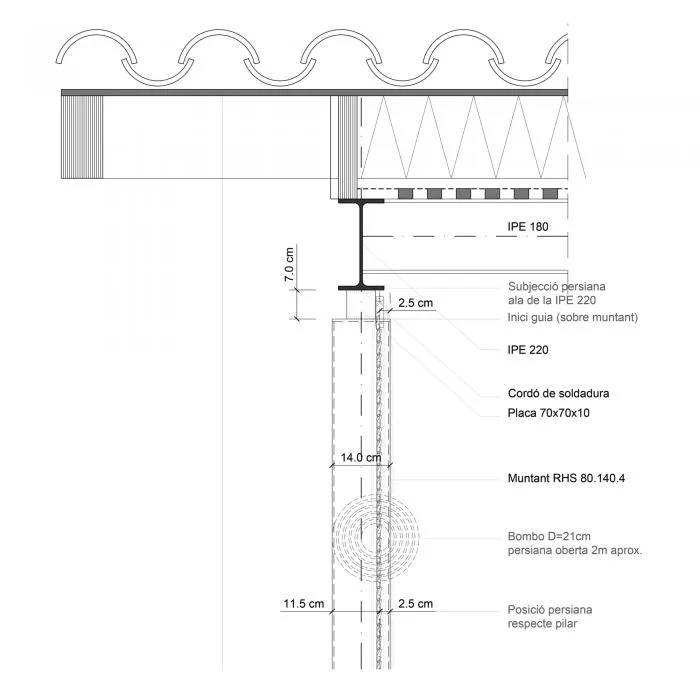
△ South facade details
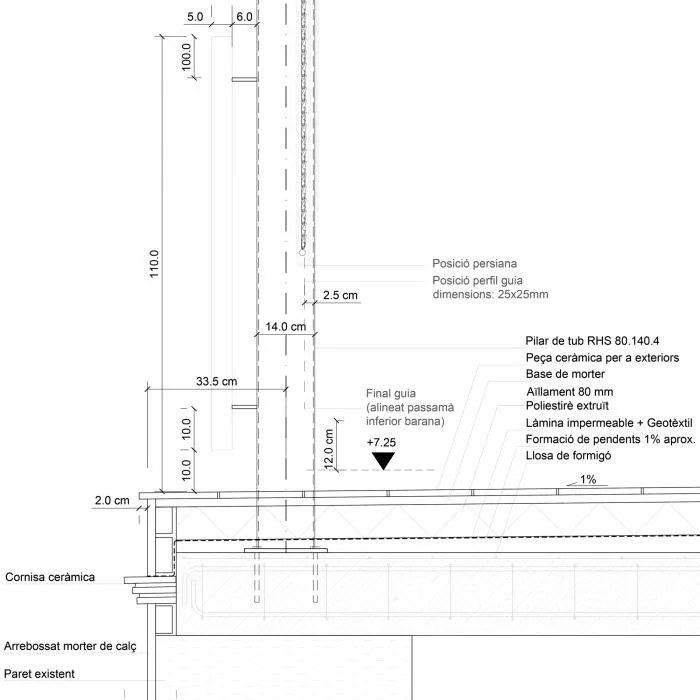
△ South facade details
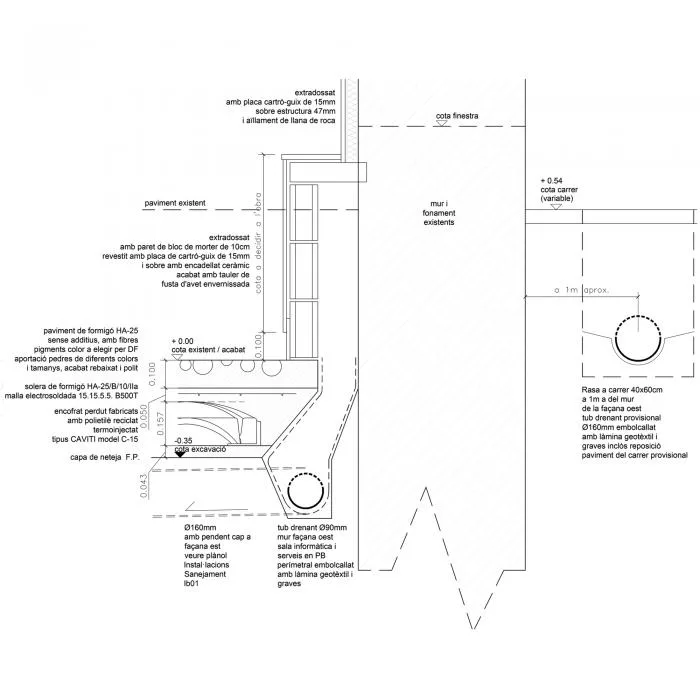
△ West facade details
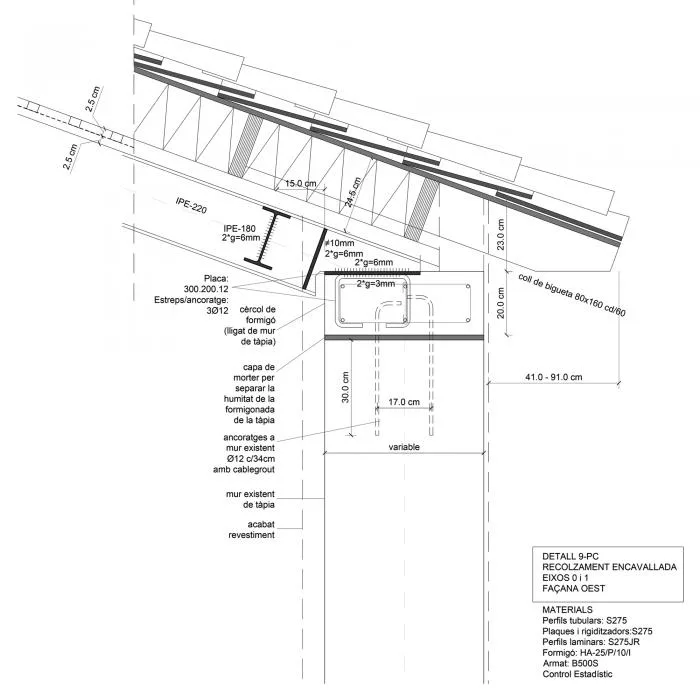
△ West facade details
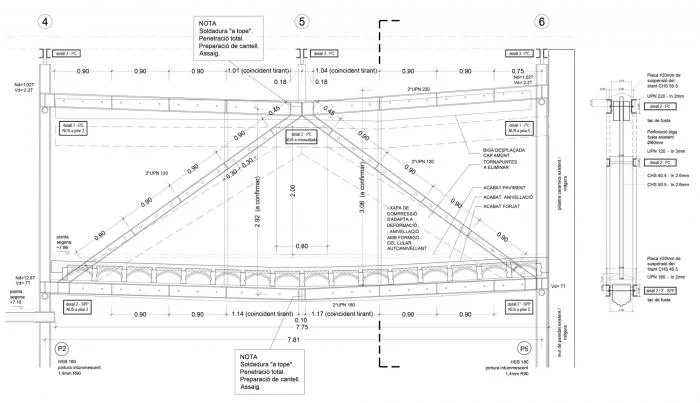
△ Node details
Project Information
Project Type: Community Center, Adaptive Reuse
Location: Sant Hipòlit de Voltregà, Spain
Architect: Carles Crosas, SOG Design
Year: 2019
Photographer: Joan Guillaume
Suppliers: ASVALL, BETEC PROPAMSA, Cemento Broke, Guardian Glass, Knauf, LATERLITE, Persiana Barcelona, Reiter, Tallfusta
Lead Architects: Carles Crosas, Gemma Domingo
Design Team: Oriol Ribas, Lorena Hernández, Marta Medina, Laia Vilaubí, Hernan Lleida
Client: City Hall of Sant Hipòlit de Voltregà
Structural Engineer: Josep Baquer
Engineering Firm: Clusell & Roca Ingenieros, SL
Structural Calculations: Miquel Autet












Must log in before commenting!
Sign Up