
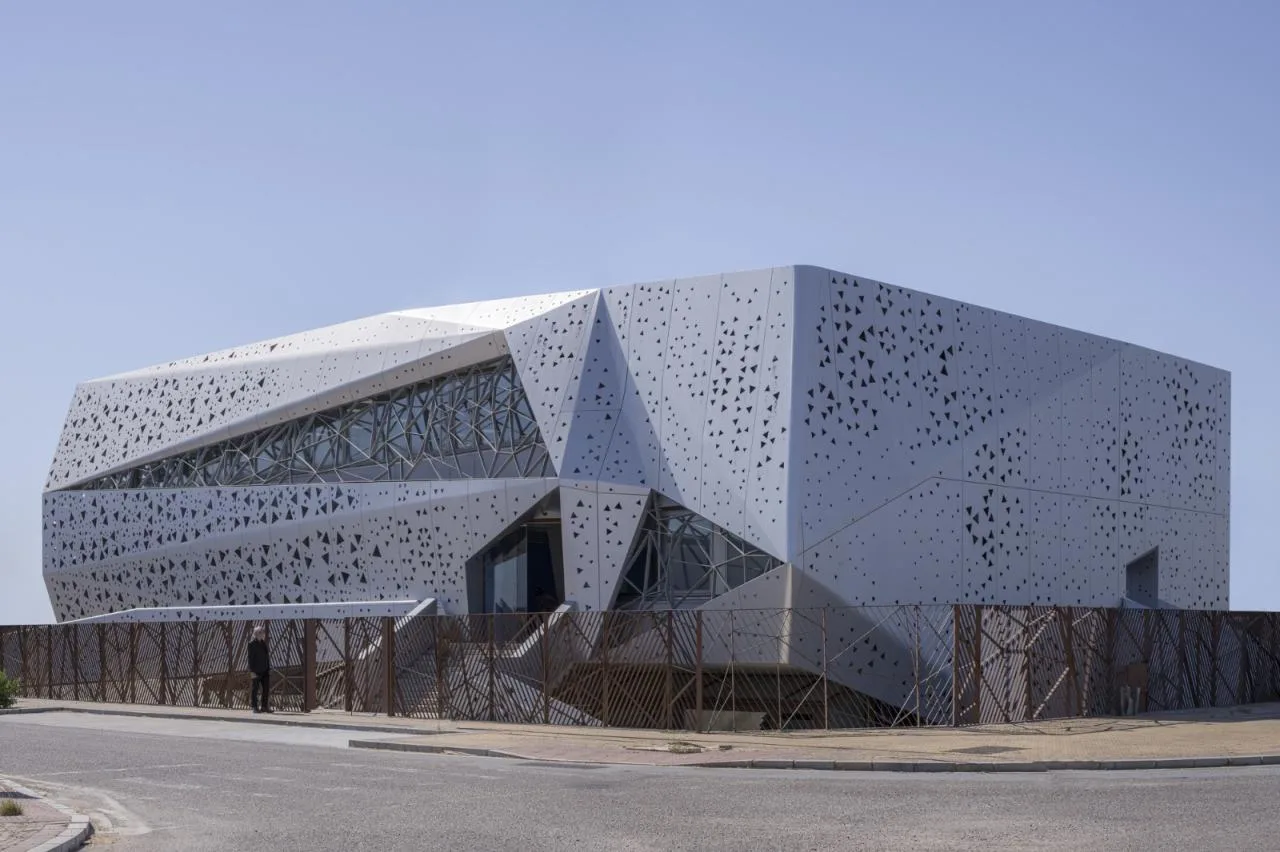
Post-Industrial Aesthetics: This building houses highly advanced functional facilities including microbiology and chemical analysis laboratories. It demands exceptional operational efficiency, embodies a cutting-edge image, and evokes a strong emotional connection with visitors. The design clearly reflects post-industrial aesthetic principles.
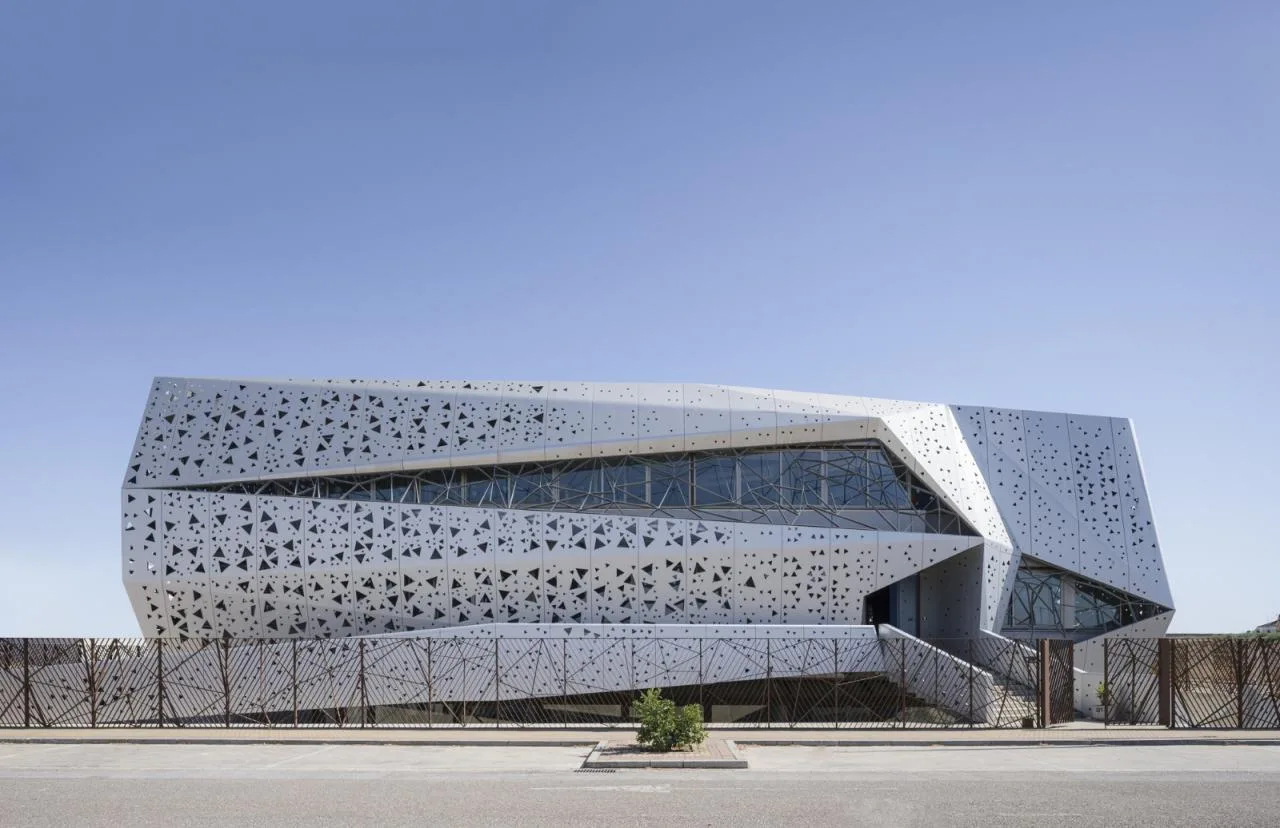
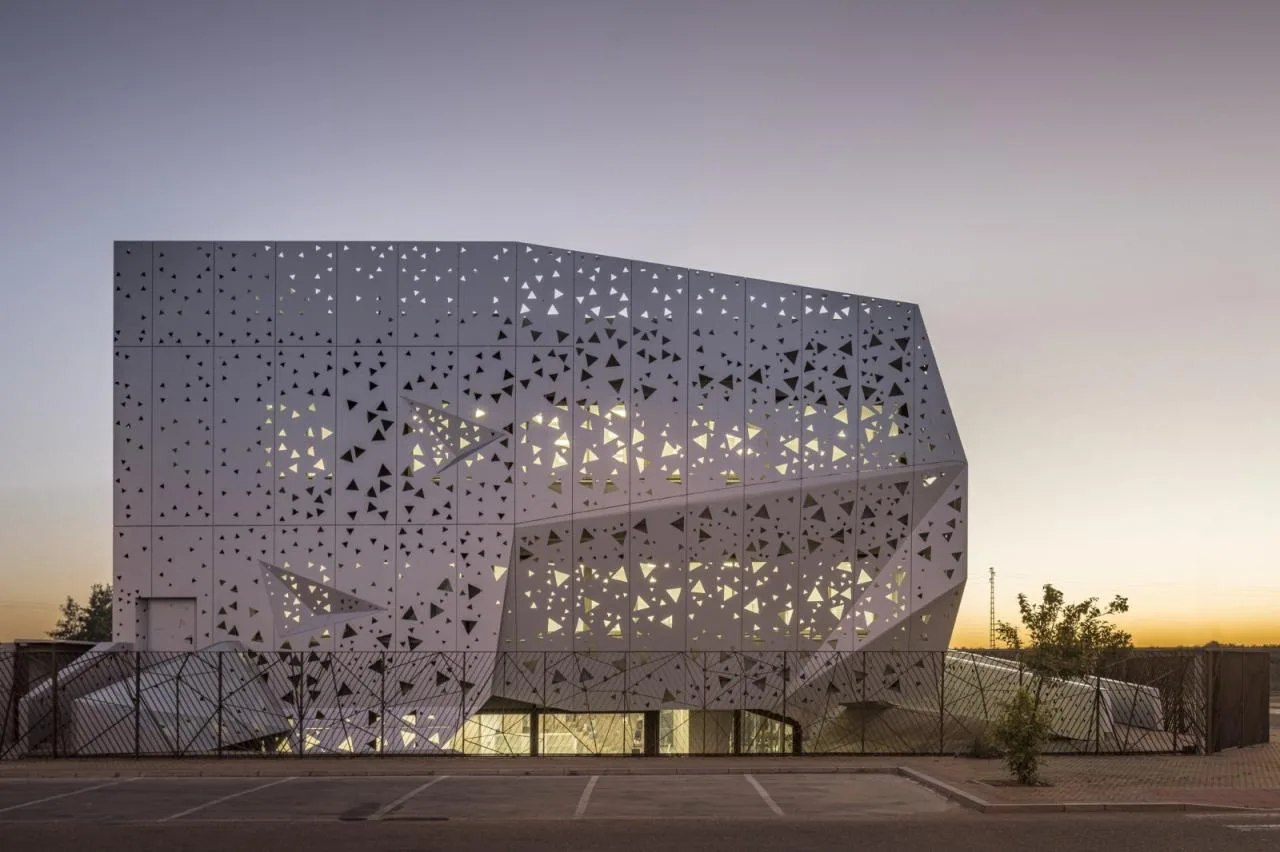
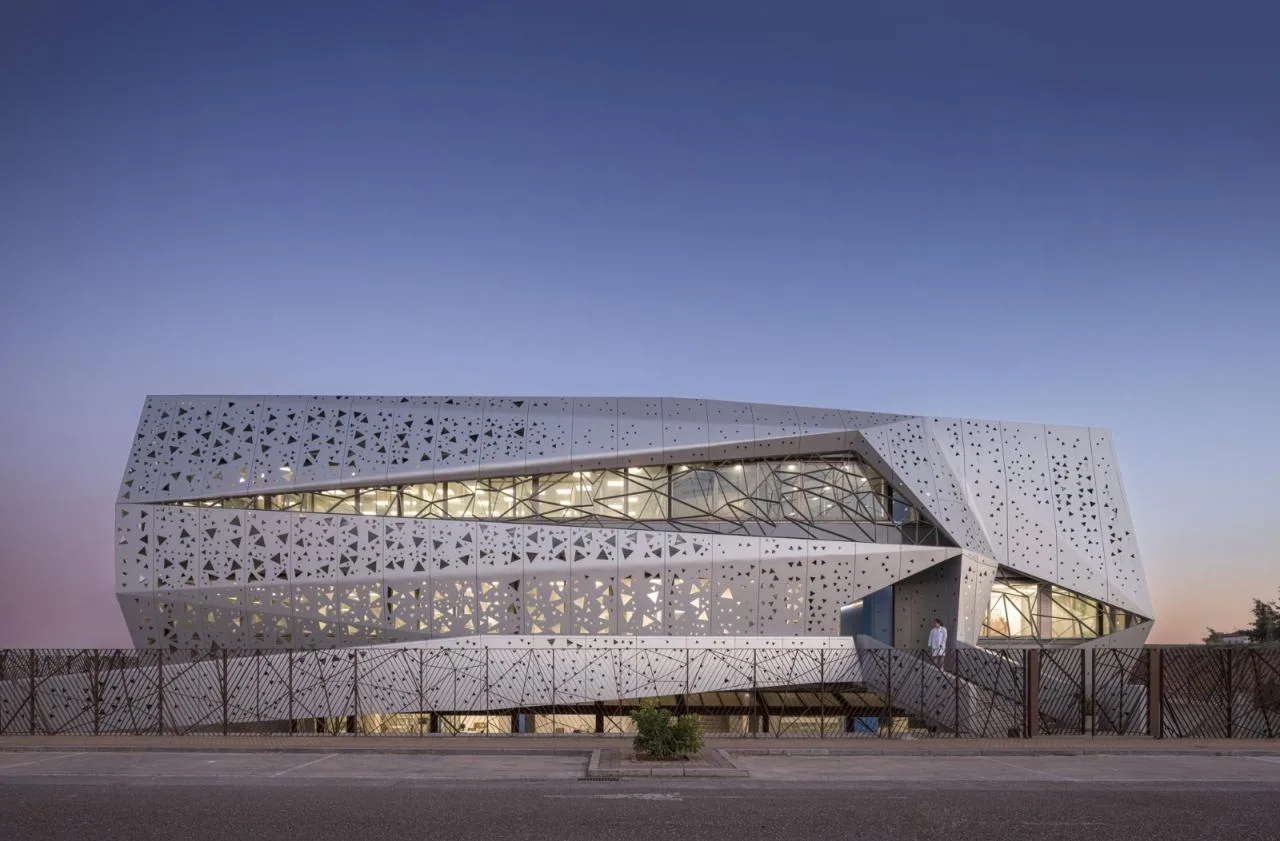
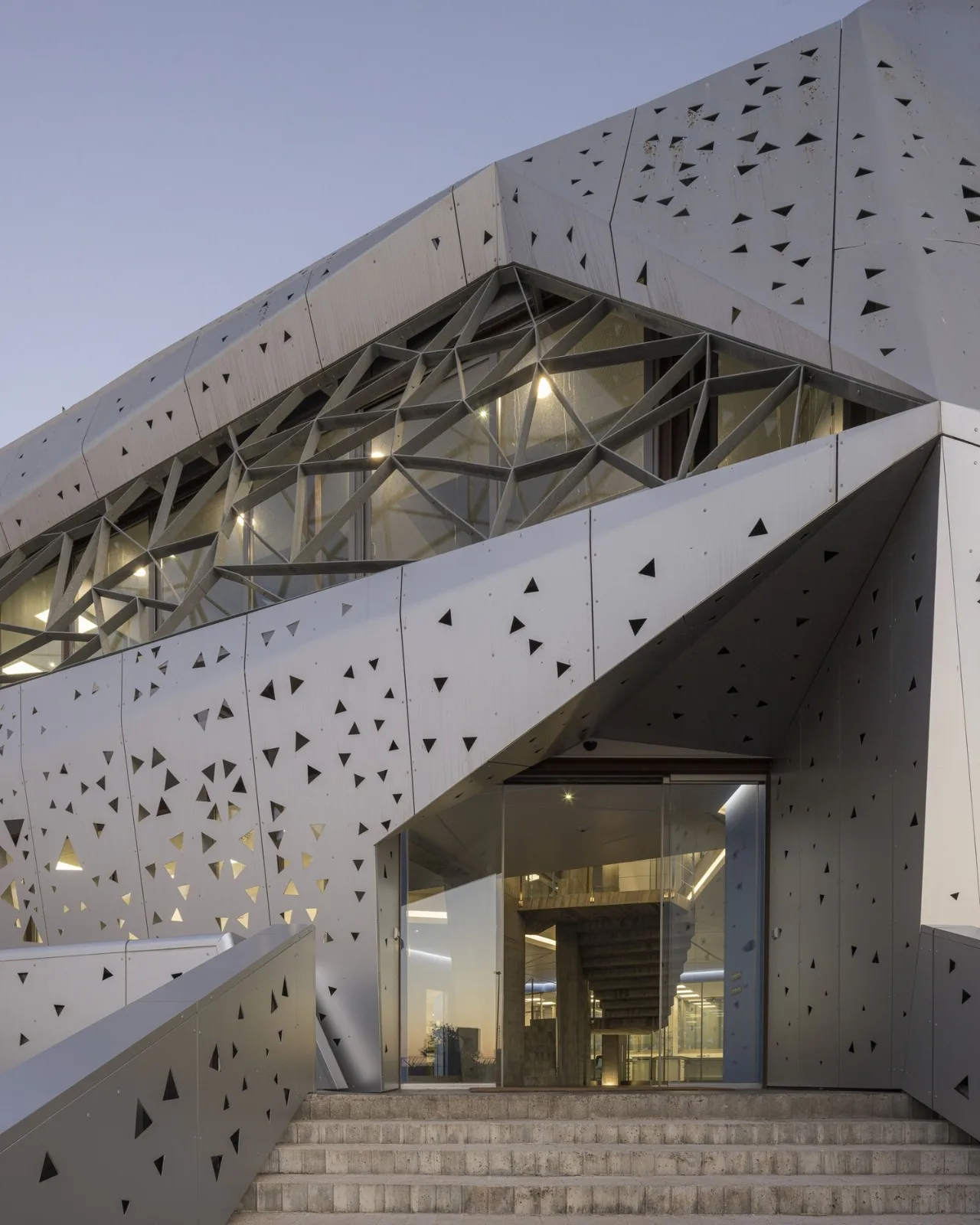
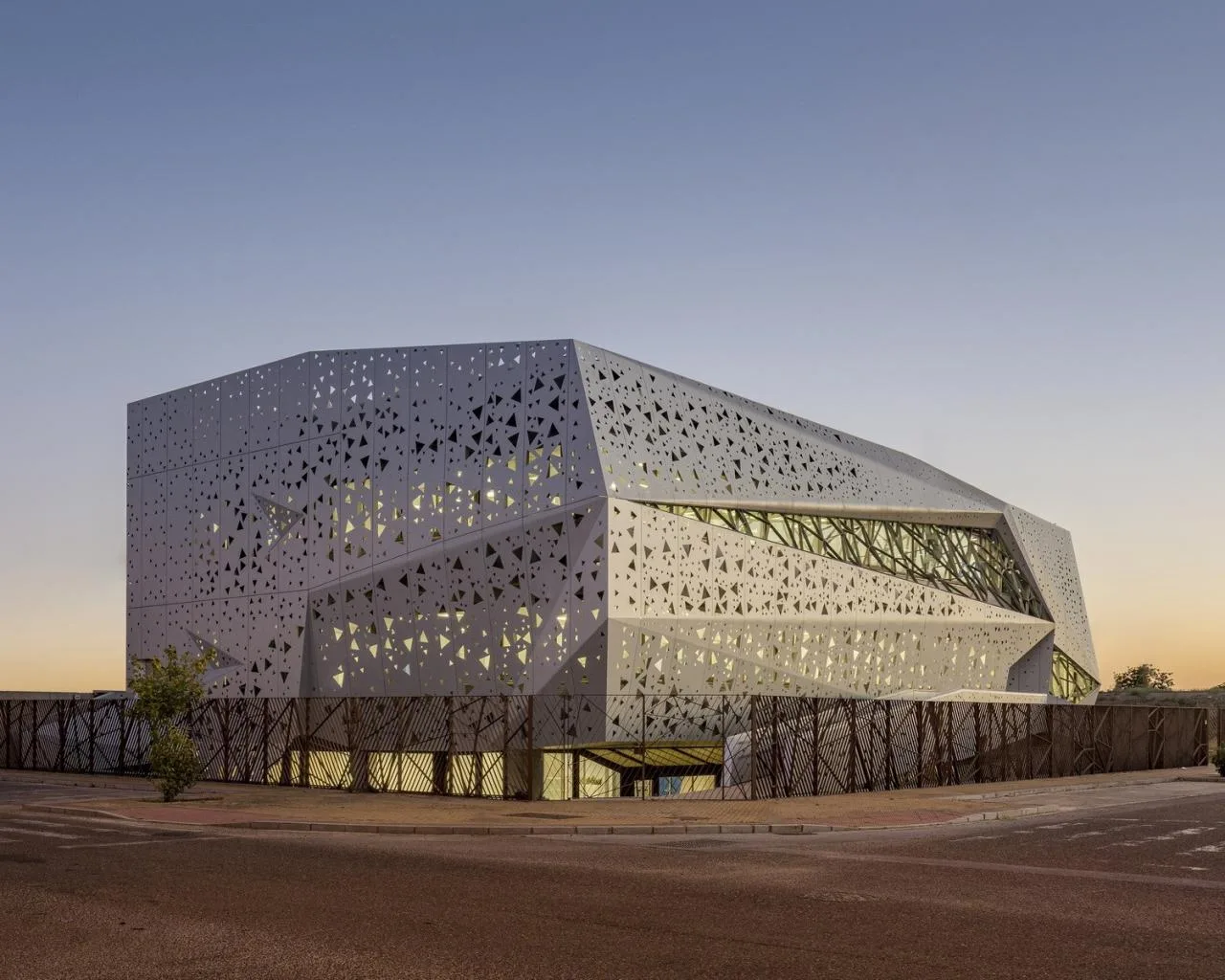
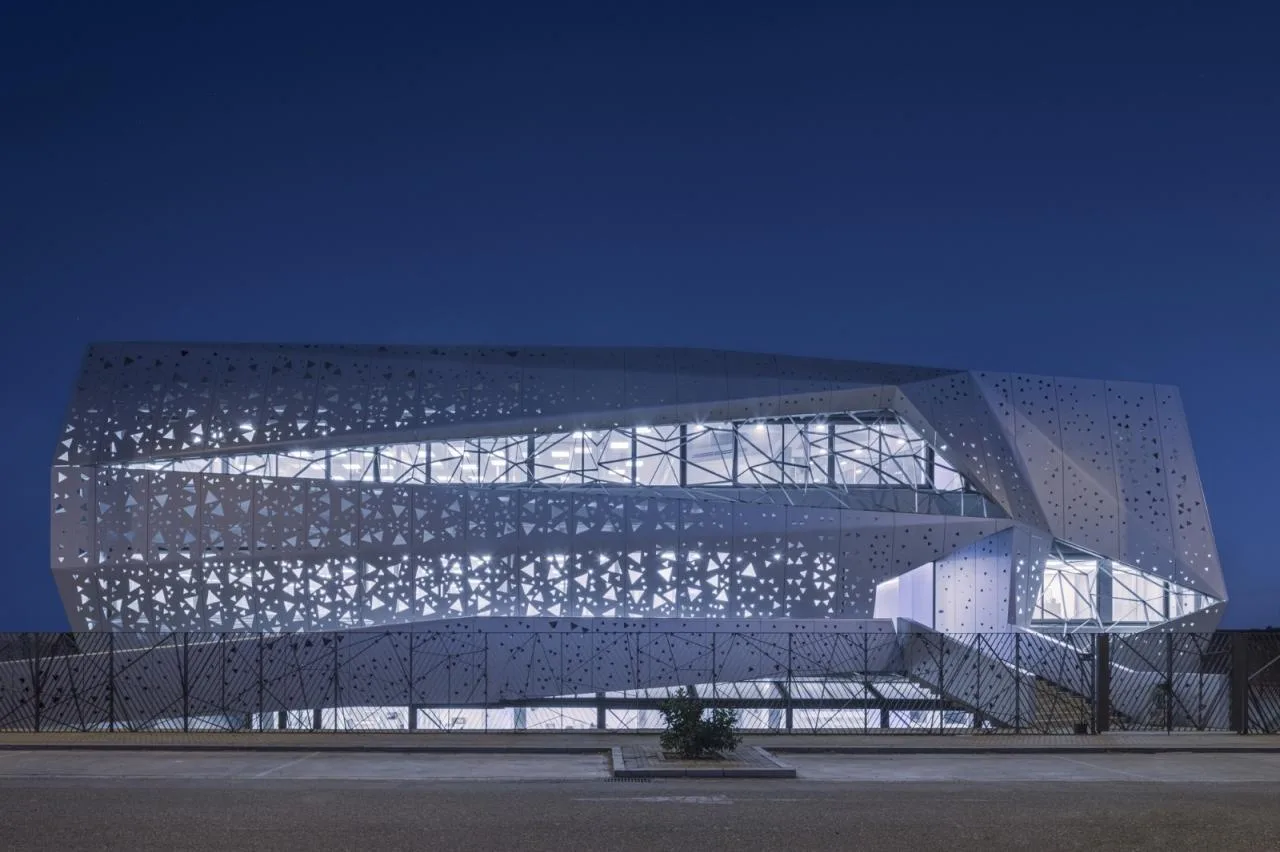
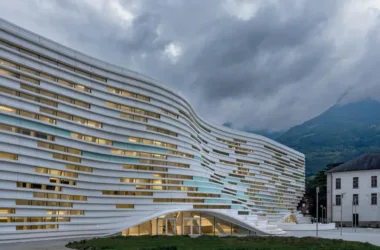
Urban Revitalization: The building revitalizes its powerful industrial surroundings through perforated exterior walls that filter the environment and create an internal landscape unique to the site. Its ultra-modern facade draws inspiration from high-speed train technology combined with the triangular geometric structures seen in Seville’s embassy dome and the transitional spaces of the Alcázar Palace. This fusion creates a dialogue between technology and tradition, bridging past, present, and future.
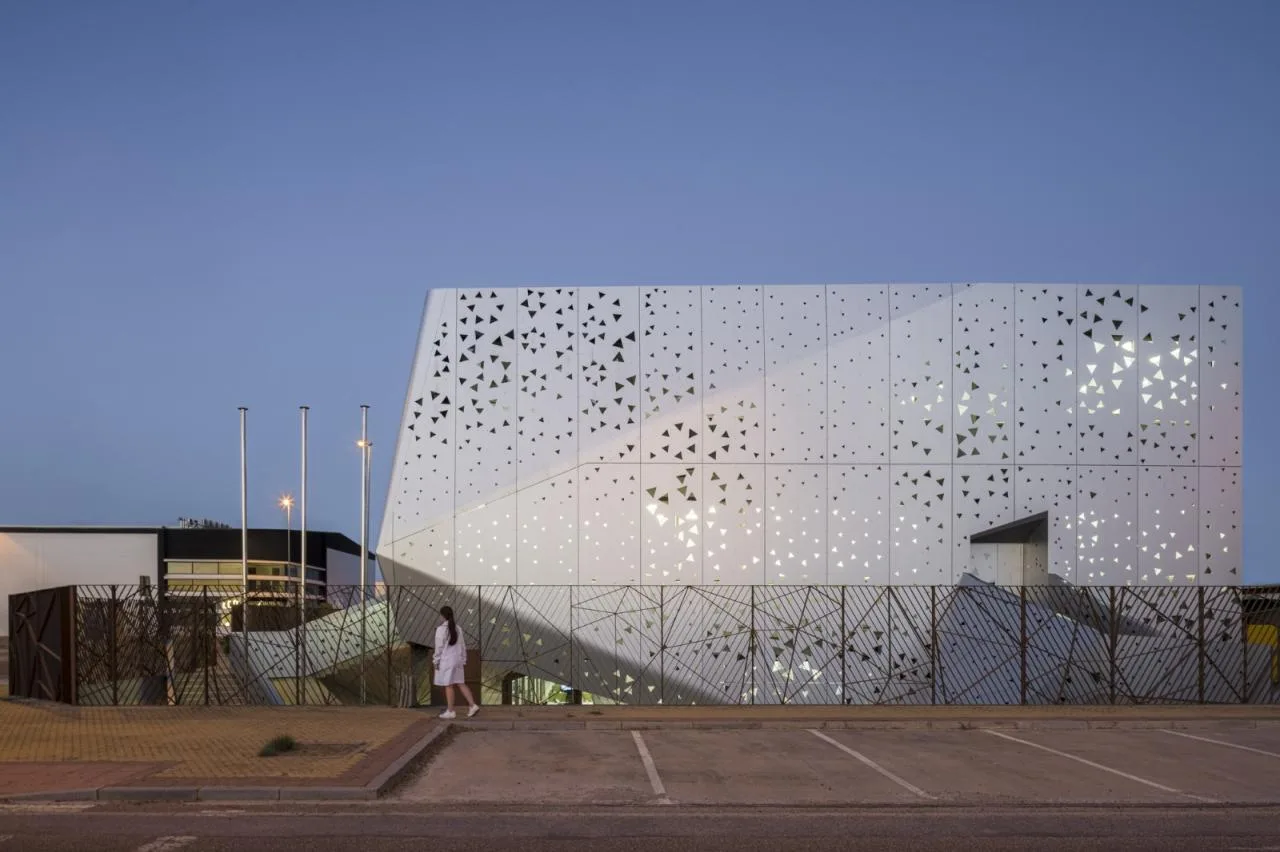
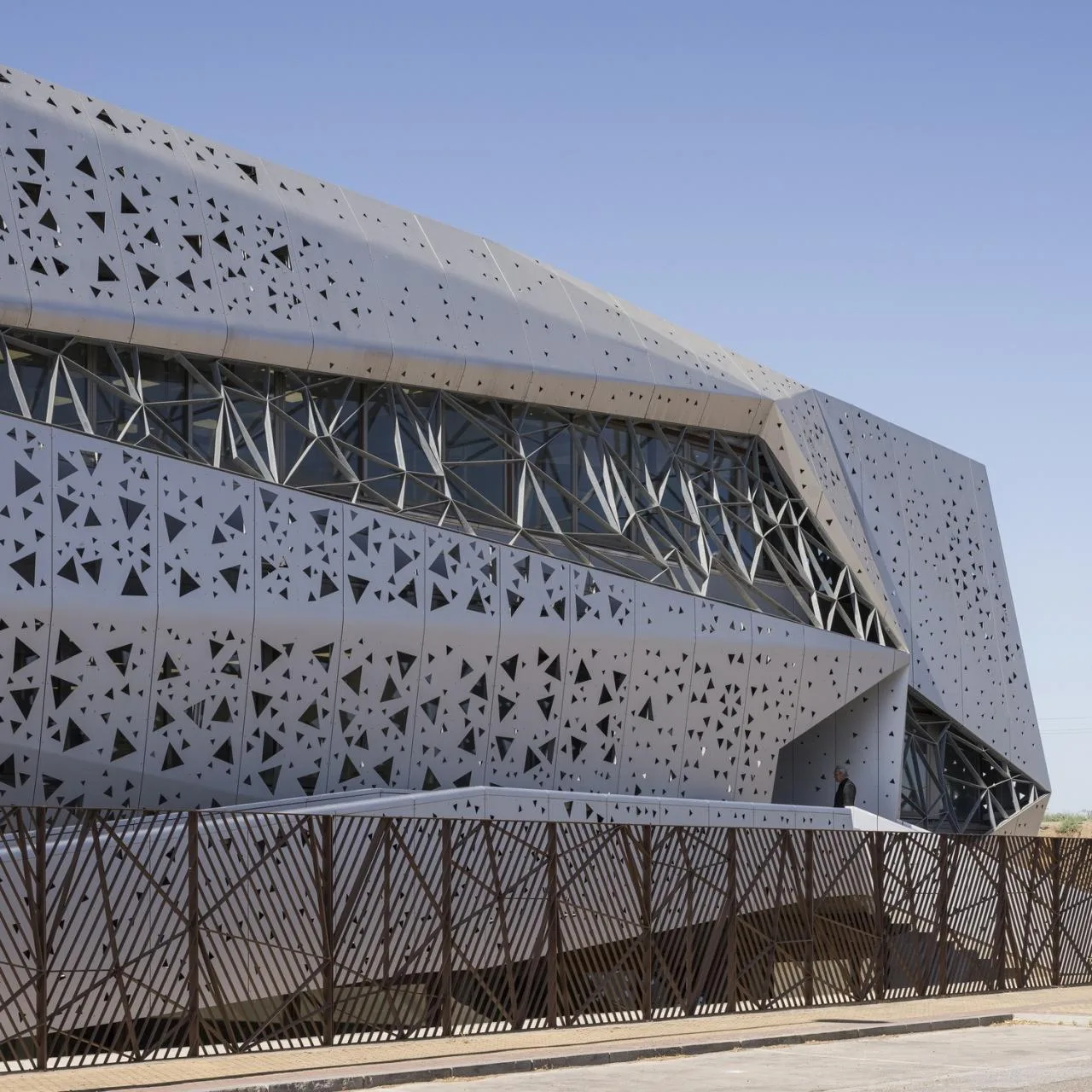
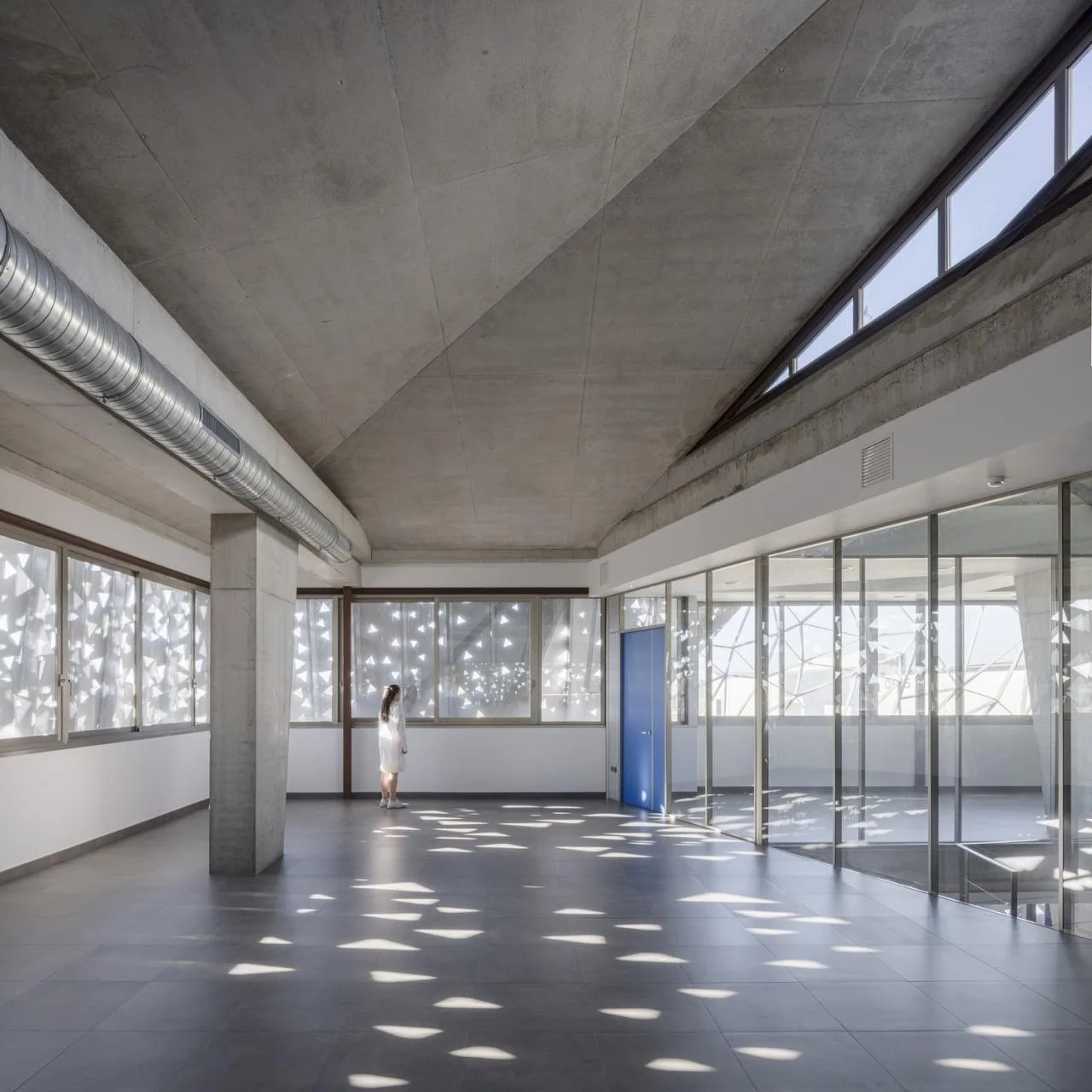
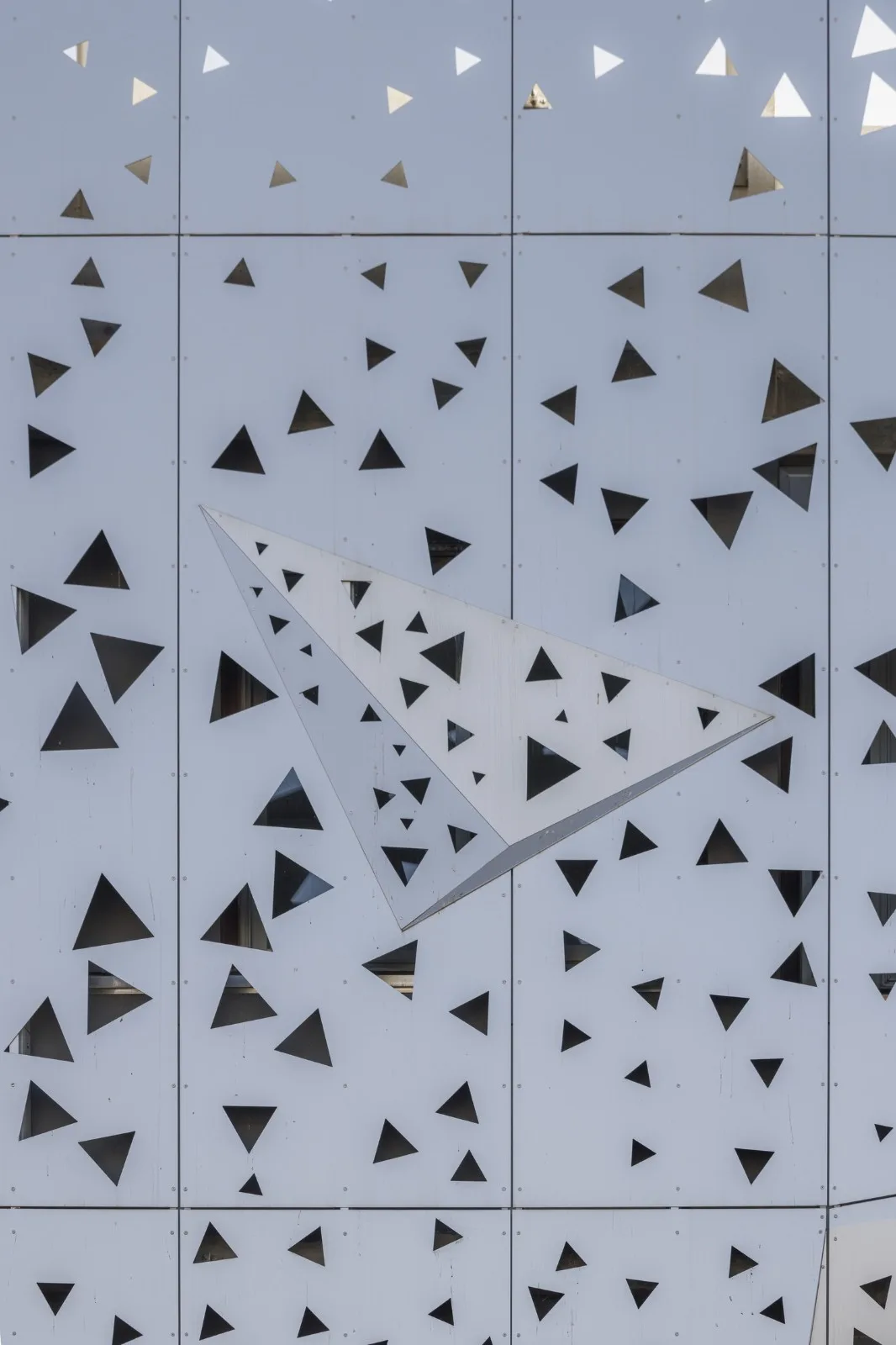
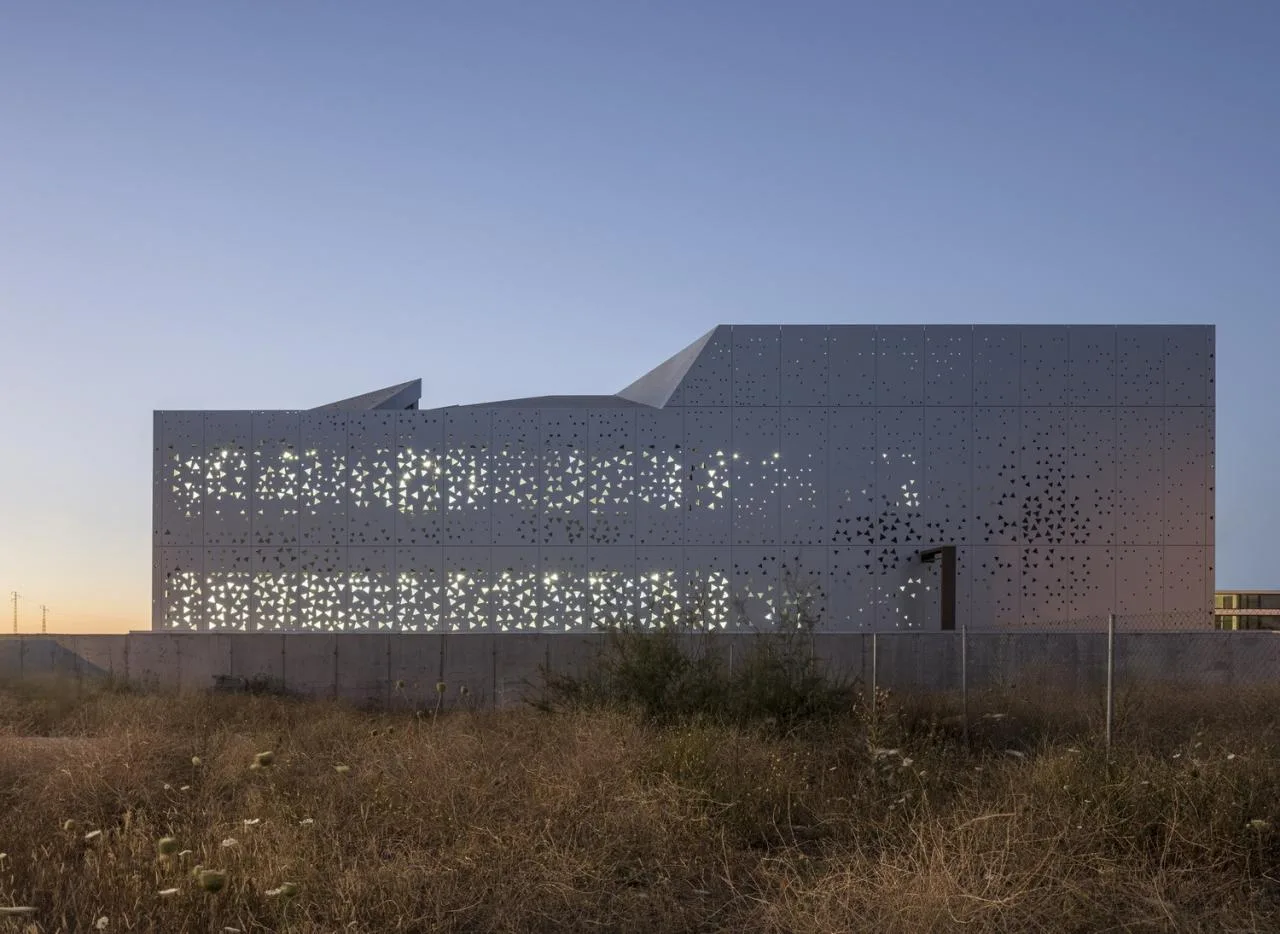
Bioclimatic Active Skin: The building features a double-layered exterior wall system, composed of an inner glass enclosure and an outer super-perforated aluminum facade. This design, generated through a parametric calculation system, creates a chimney effect between the layers that varies with orientation. The north-facing side has large perforations; the west side is mostly opaque with small openings; the east side allows morning sunlight through variable perforations; and the south side, where most facilities are located, is nearly enclosed. The perforations have varying geometric shapes that filter and diffuse light, ensuring privacy while the internal glass skin wraps the laboratories with functional geometry.
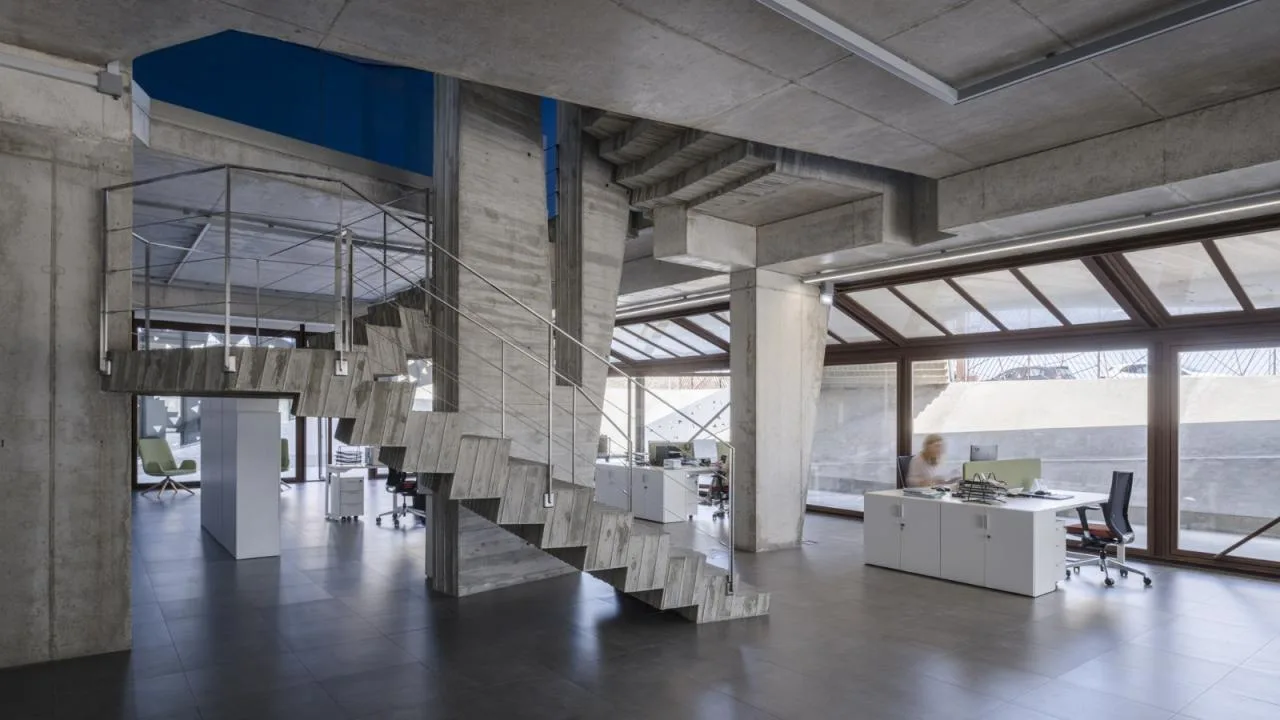
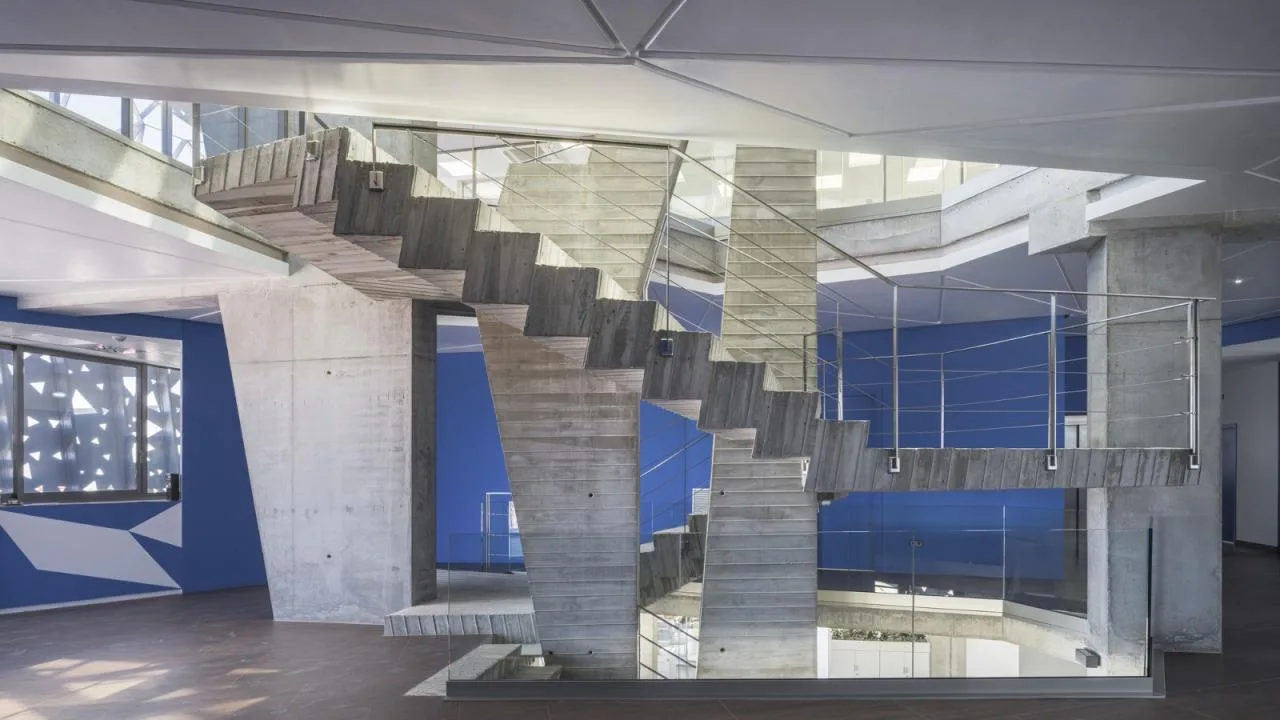
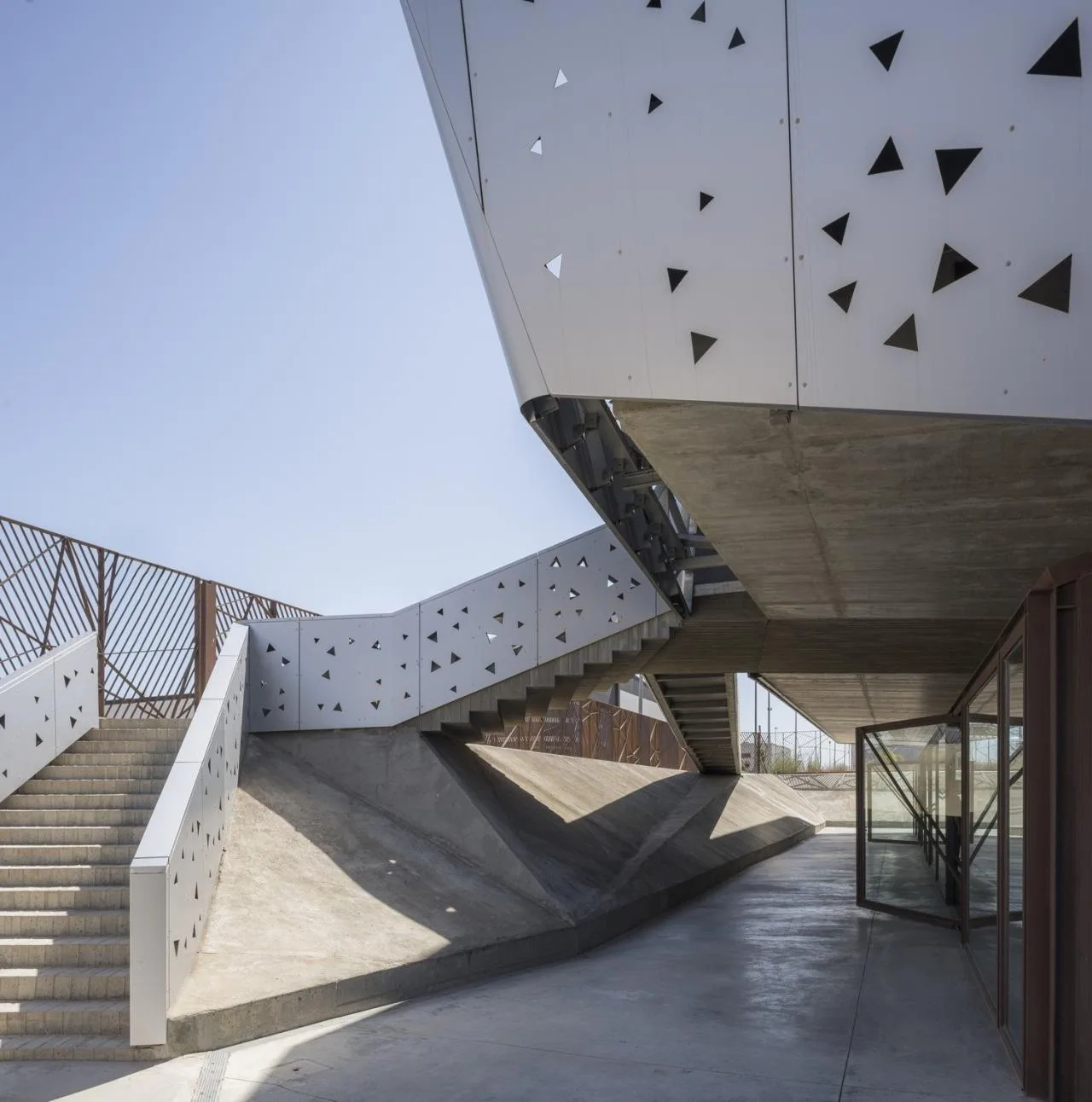
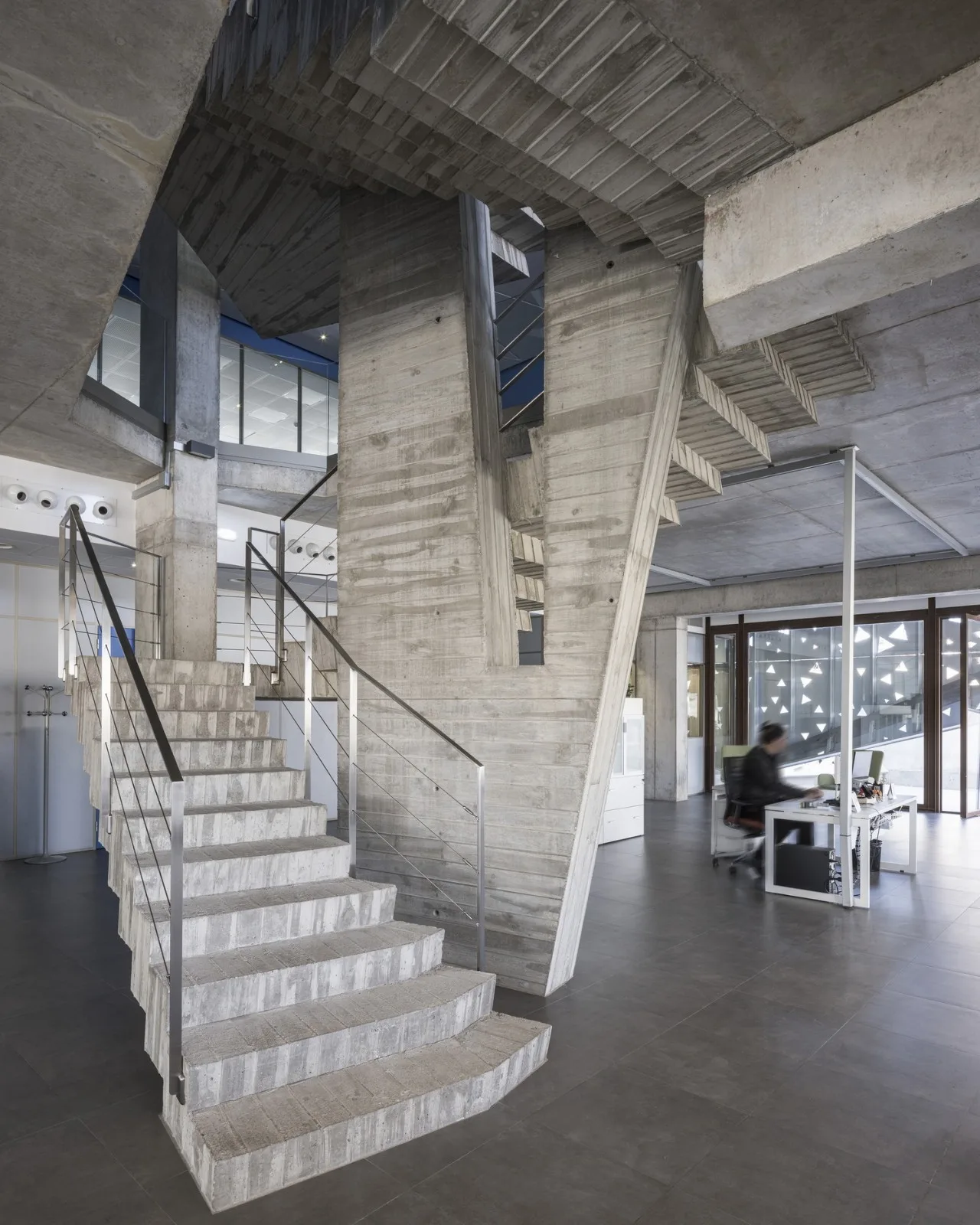
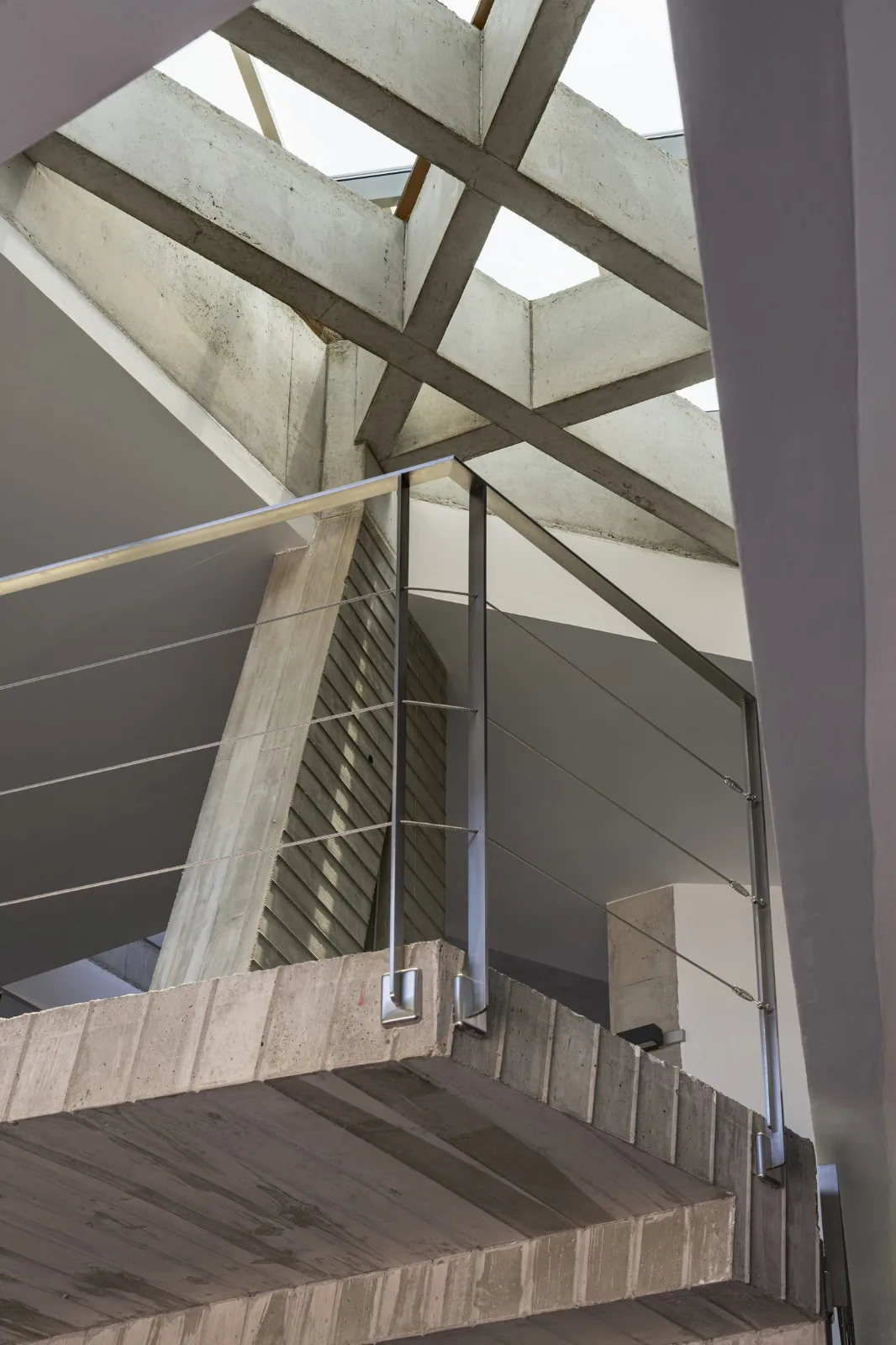
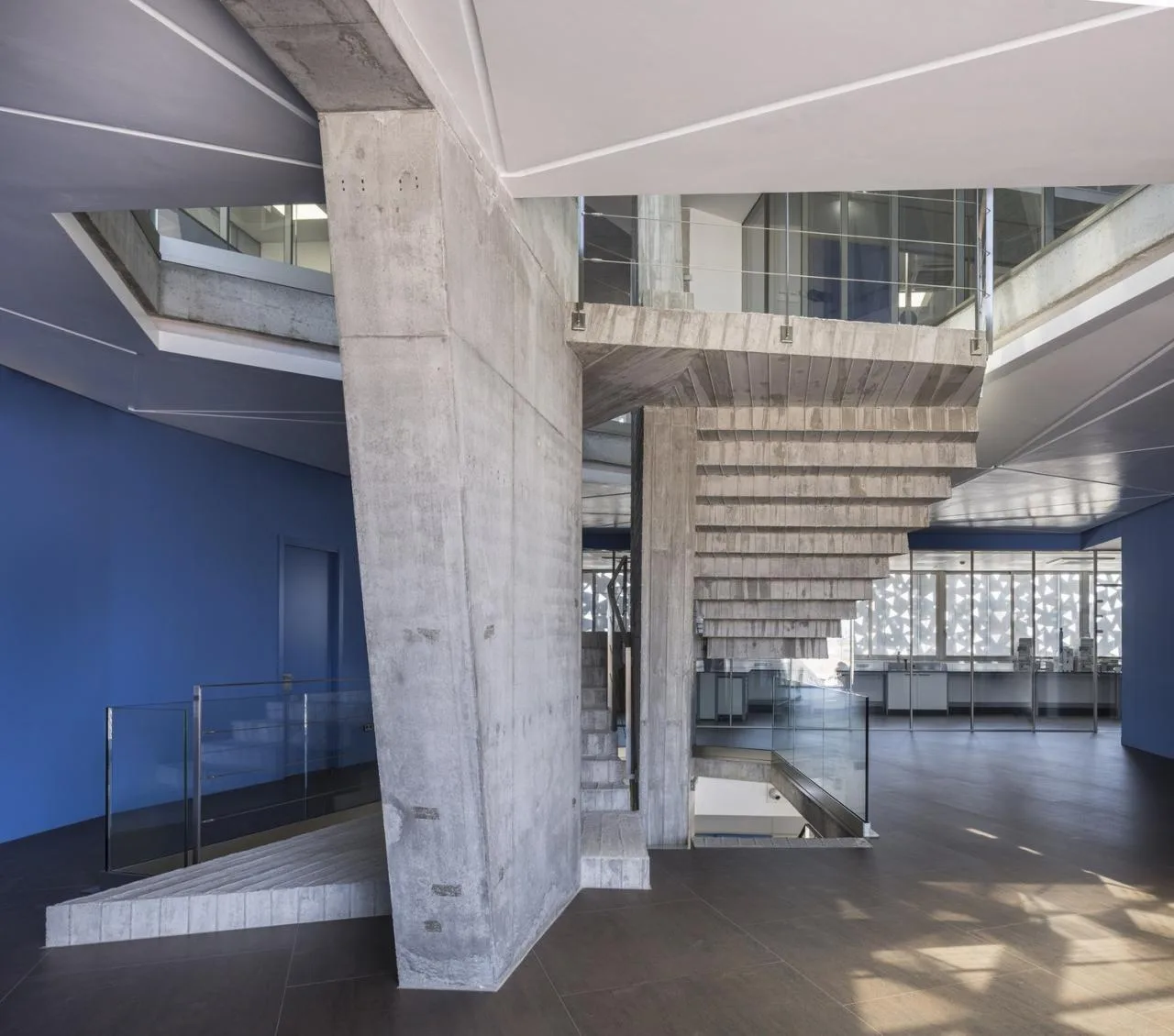
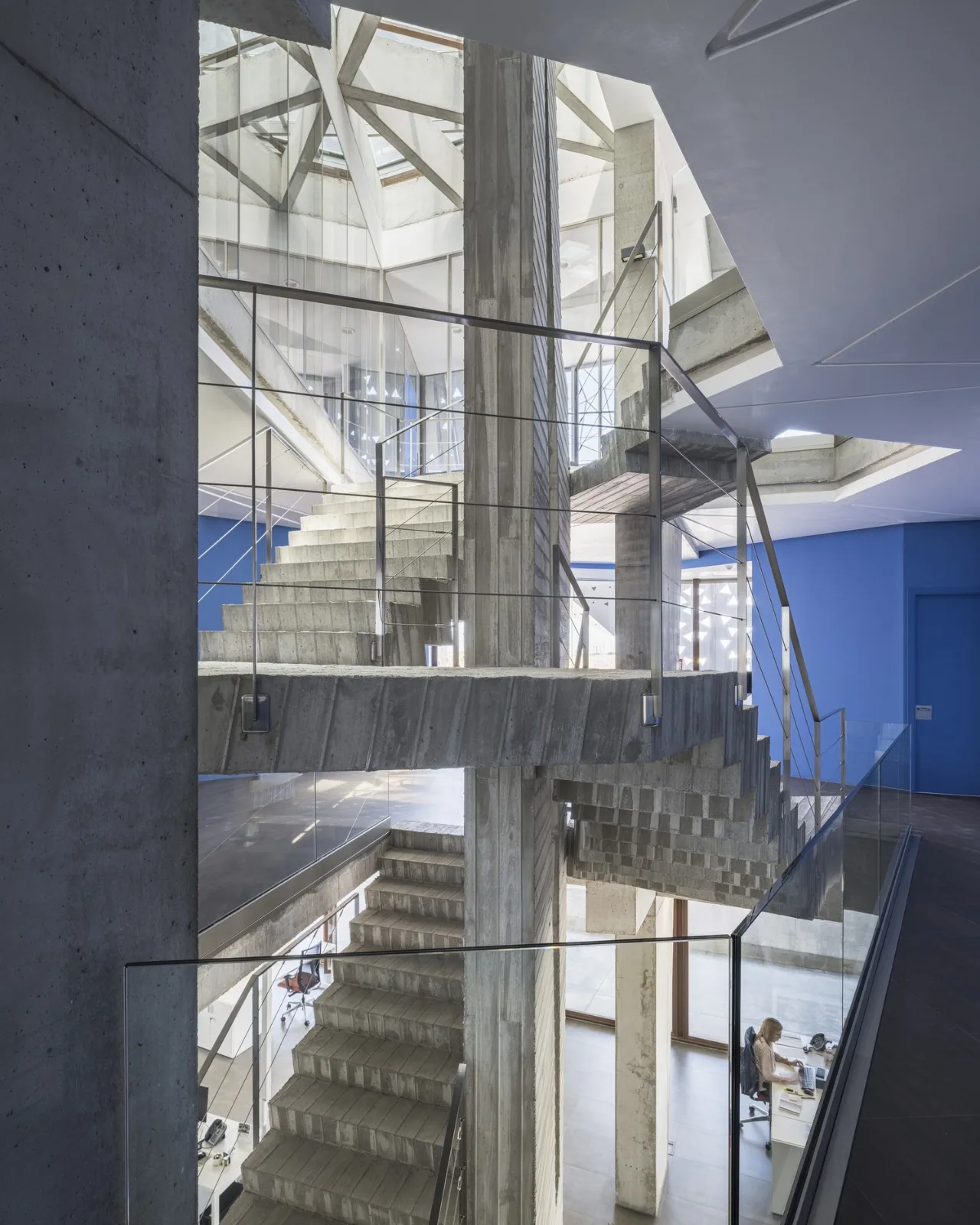
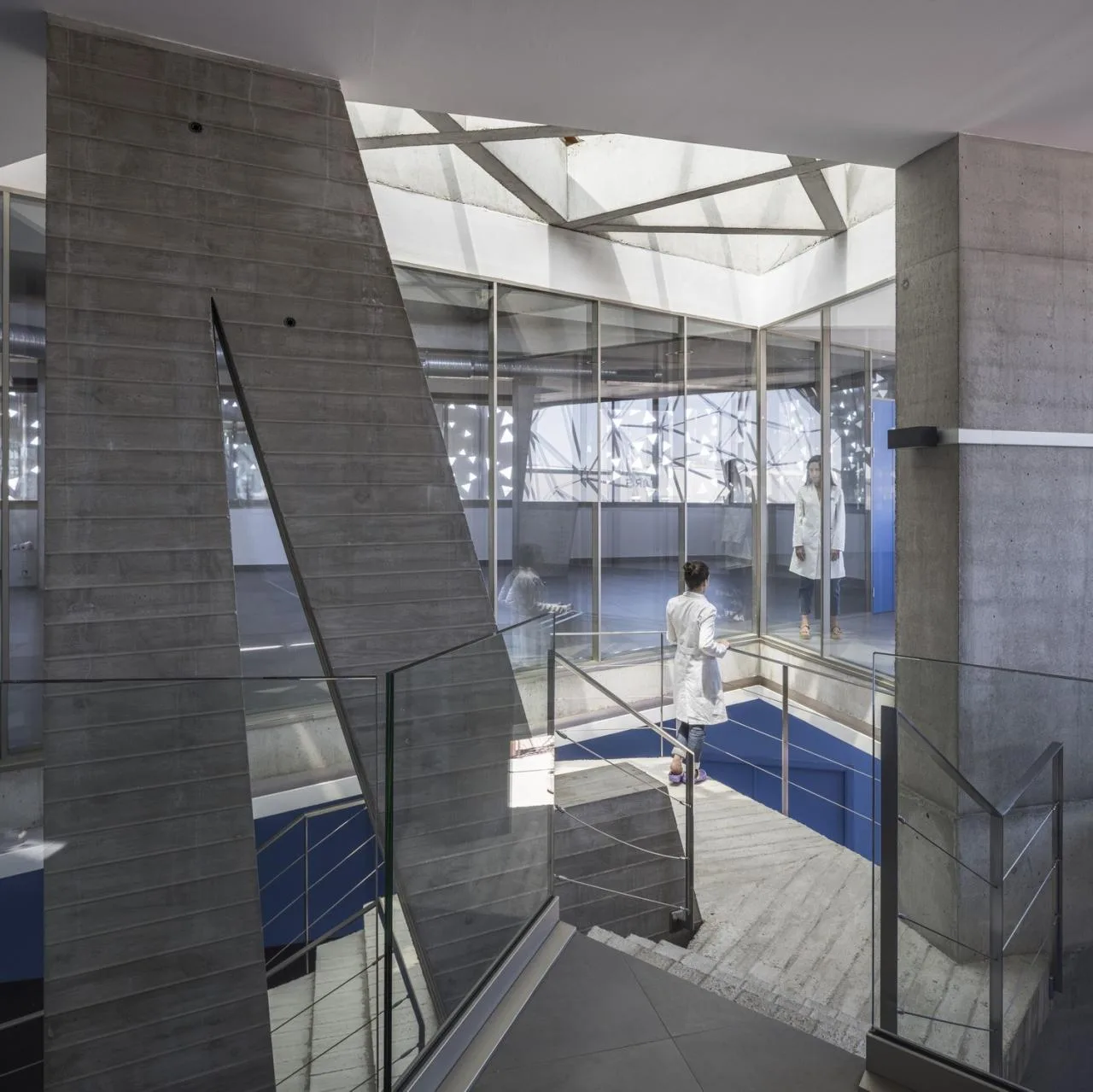
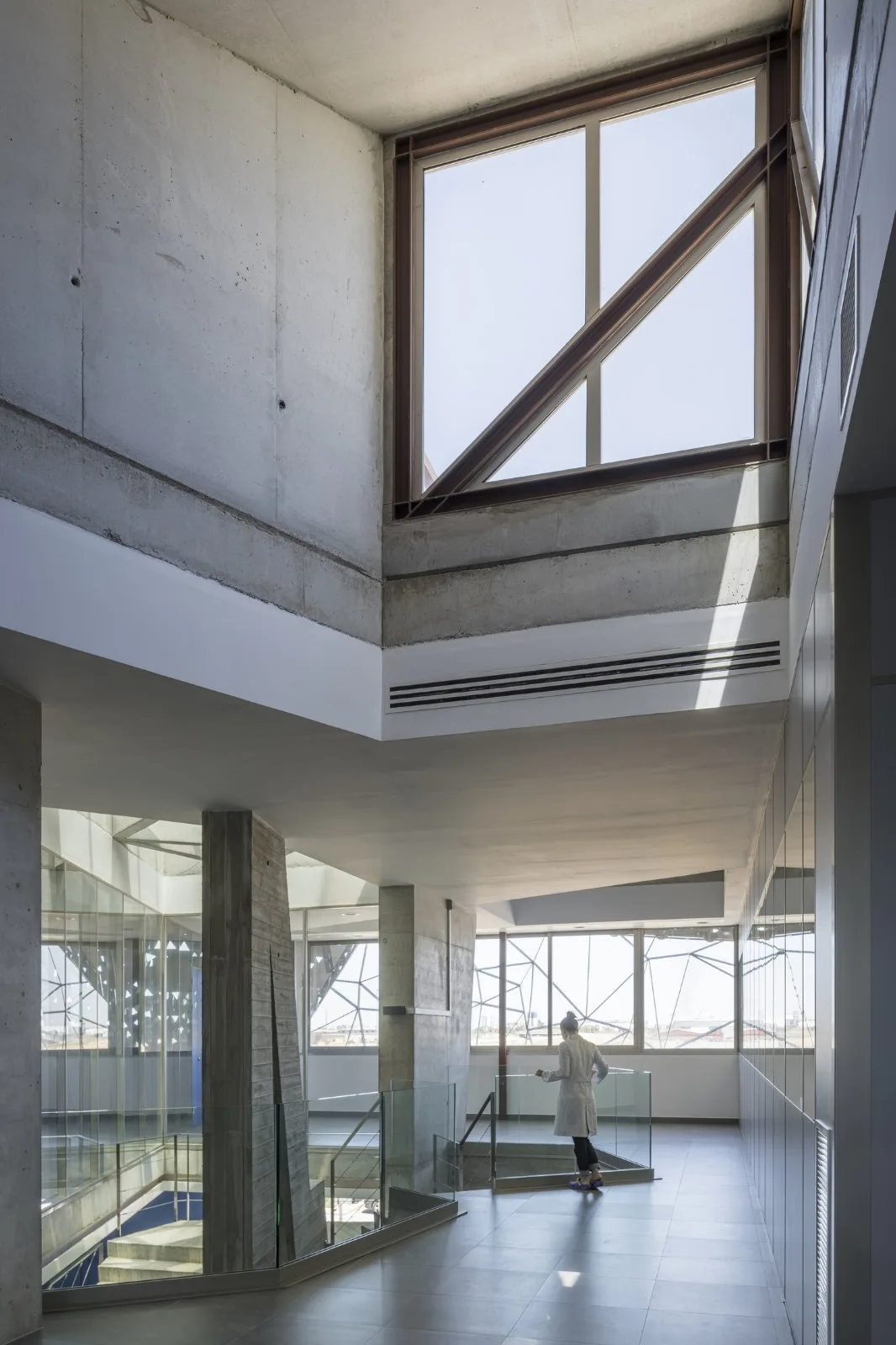
Functional Layering: The building’s interior is composed of overlapping layers that create a highly complex spatial experience through the extension and superimposition of various volumes and spaces. This complexity centers around a large sculptural staircase at the core, which organizes the entire building and allows natural light to filter down through a skylight.
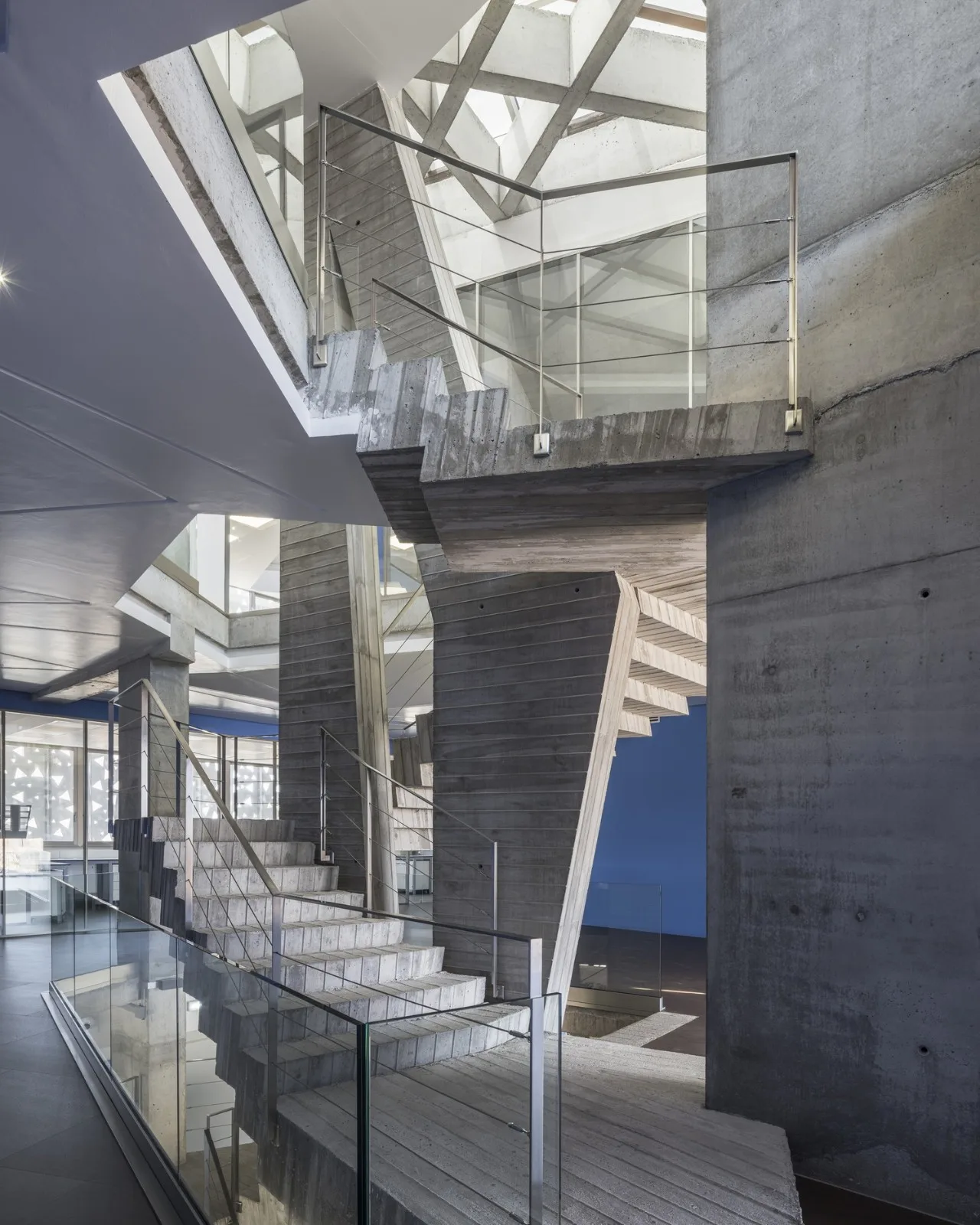
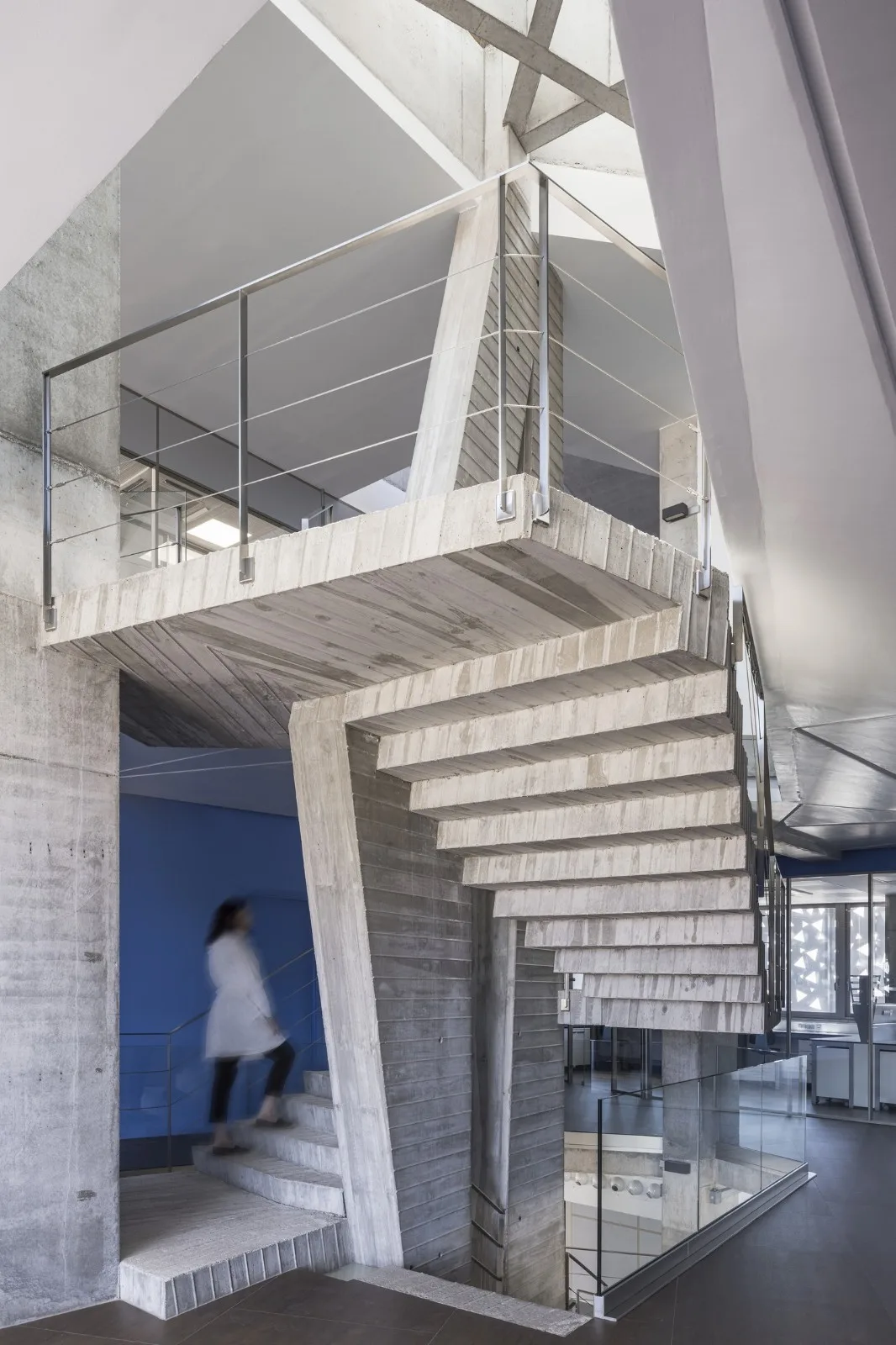
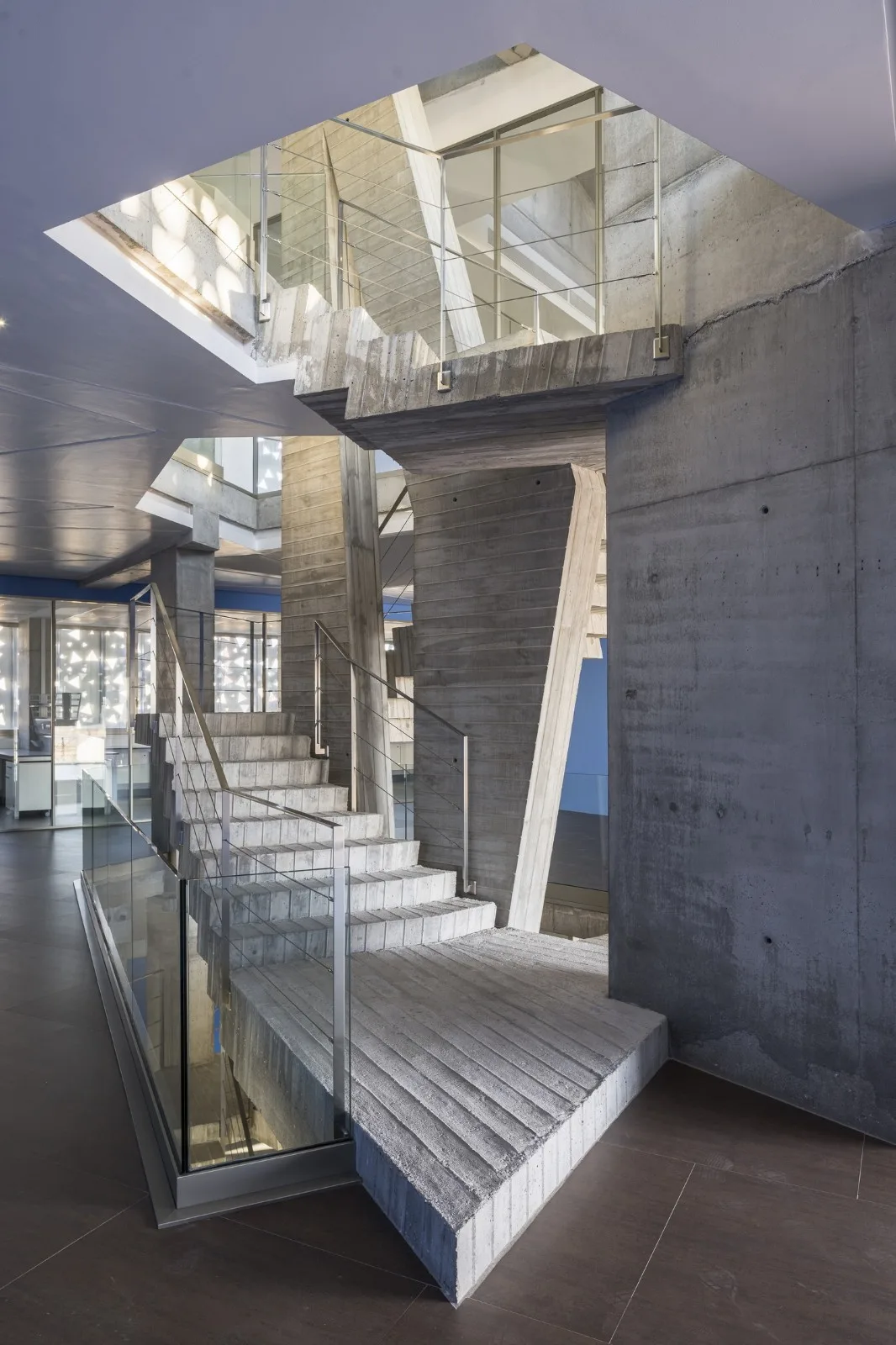
Exceptional Transparency: Sunlight enters through the skylight and transparent glass surfaces, creating beautifully layered light and shadow effects inside. This results in reflective, mysterious spaces that provide optimal conditions for both living and working.
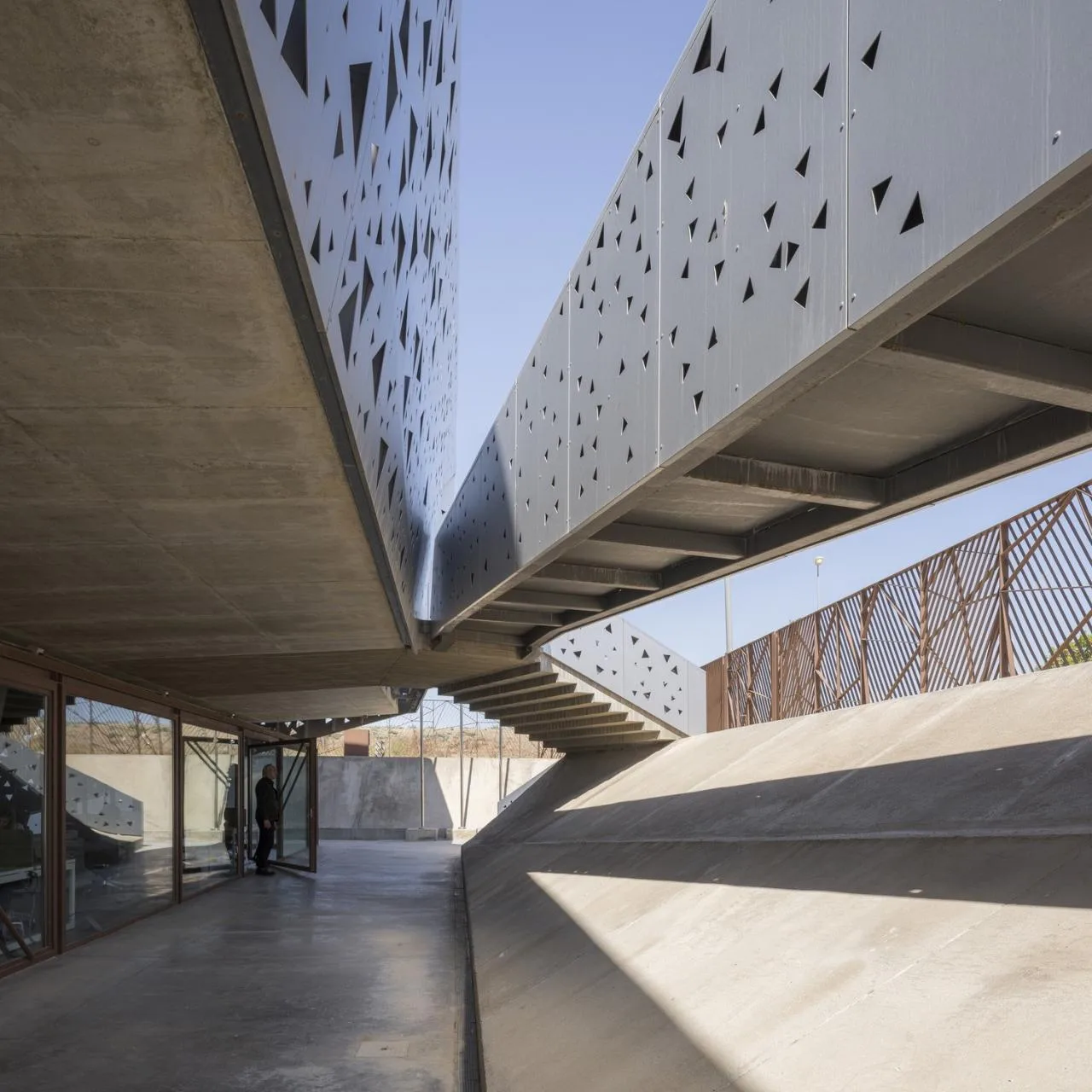
Accessible and Inviting Environment: The courtyard features a ramp bridge that raises the ground level above the street, ensuring barrier-free access. The building appears weightless, seemingly suspended with a large cantilever that floats above, allowing the sky and landscape to flow beneath—a design concept often found in traditional Arab architecture.
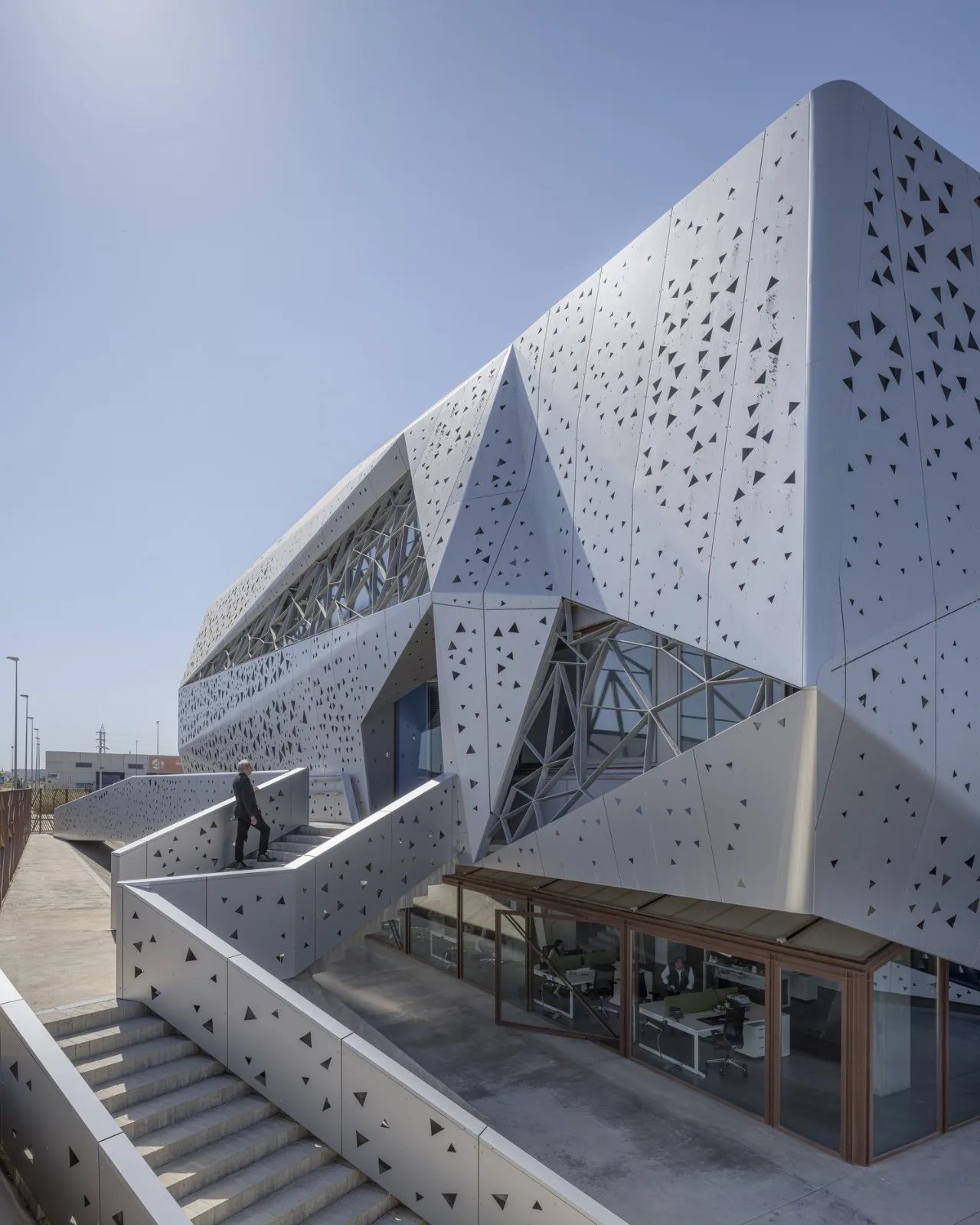
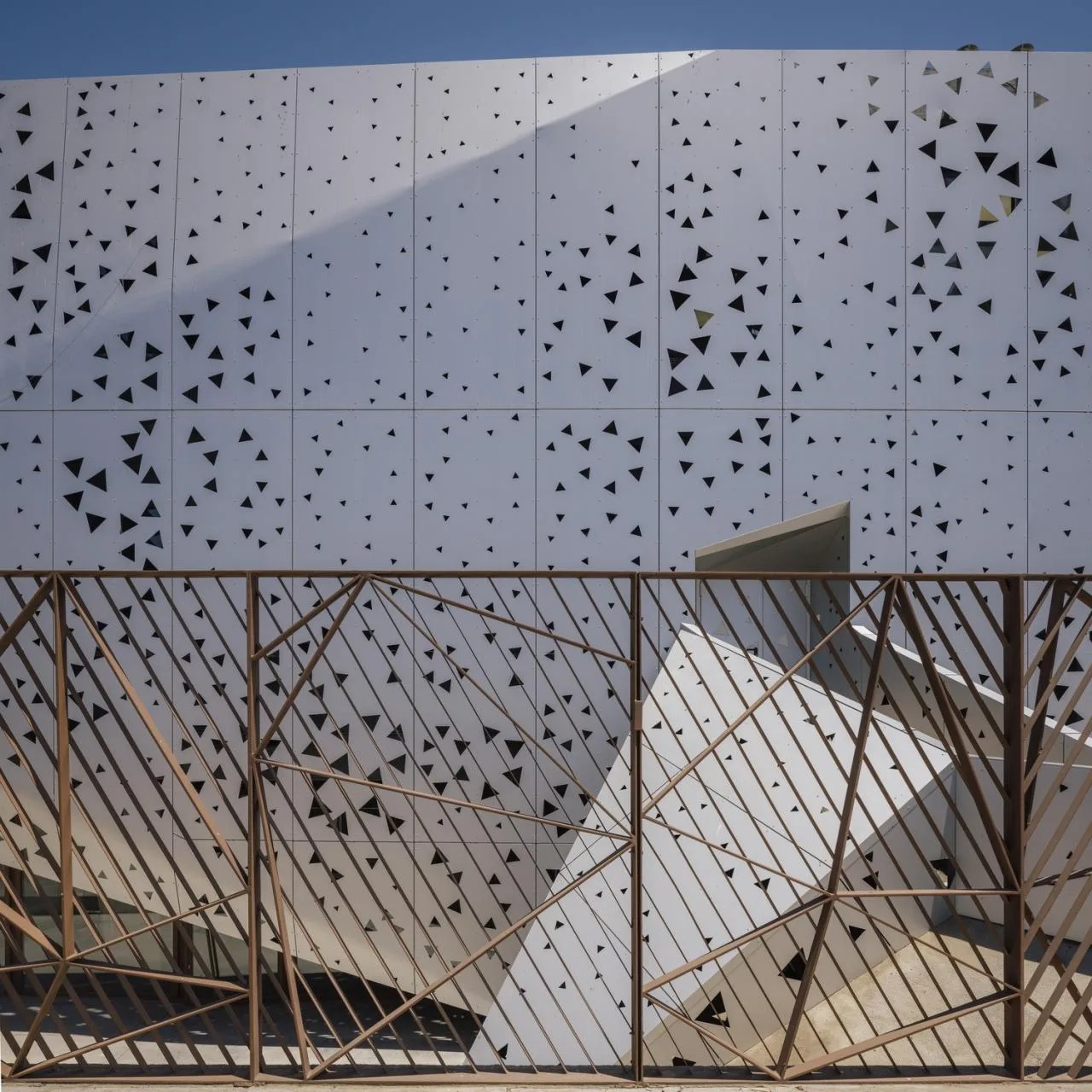
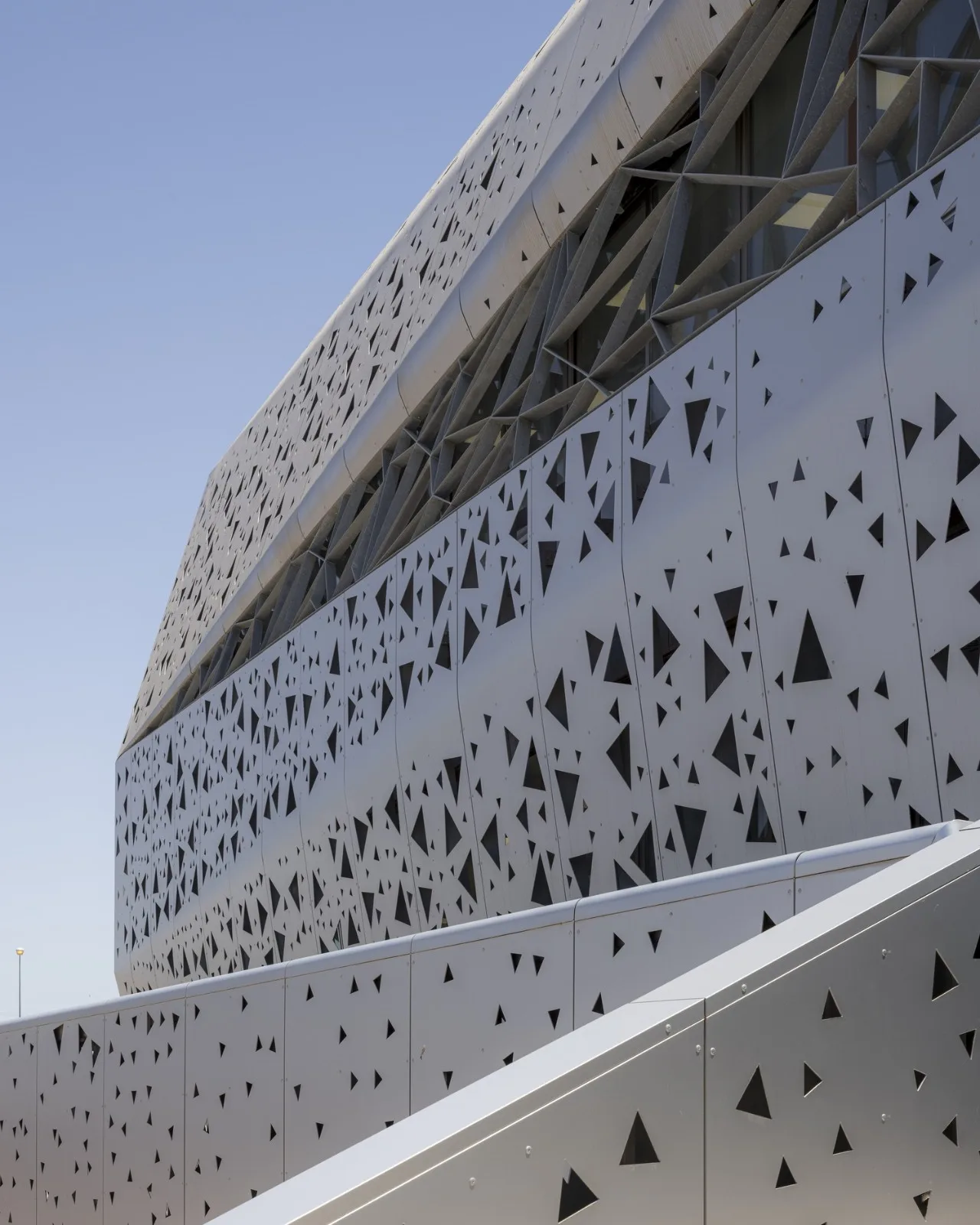
Structural Framework: This complex building employs reinforced concrete and steel to create large spans and spacious interiors essential for laboratory functions. The lower facade reveals a grid-like structure where composite materials, double-sided aluminum, and perforated elements seamlessly merge, ensuring clean, refined joints. The use of recyclable materials such as concrete, steel, glass, and aluminum reinforces the architectural concept, embodying spatial symbiosis that evokes a sense of anticipation and peaceful magic for occupants.
Project Drawings
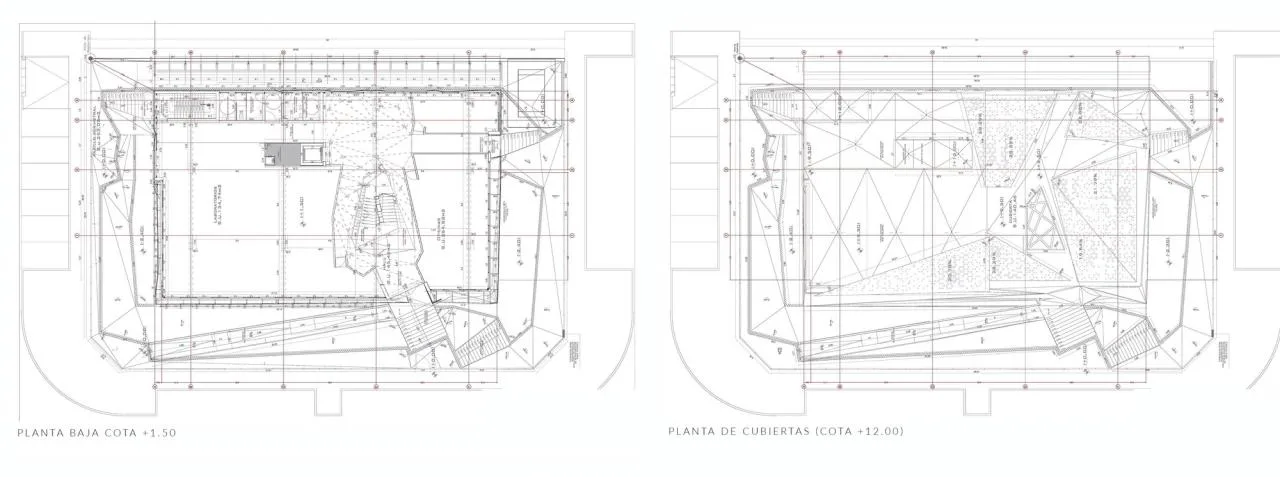
△ Plan View
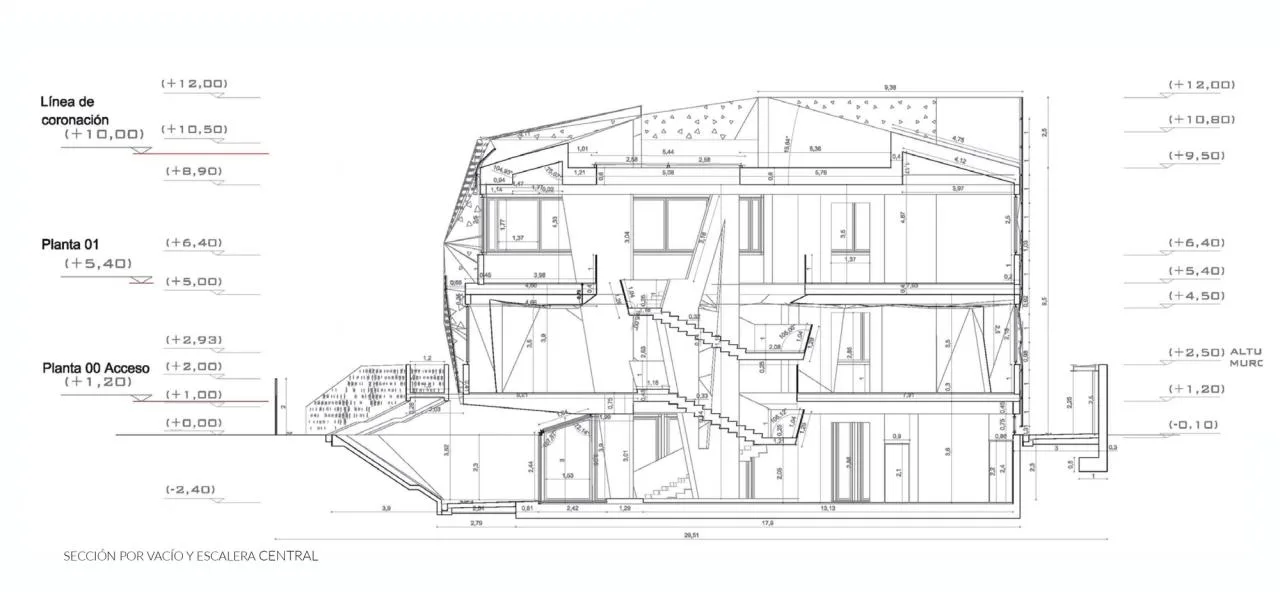
△ Section Diagram
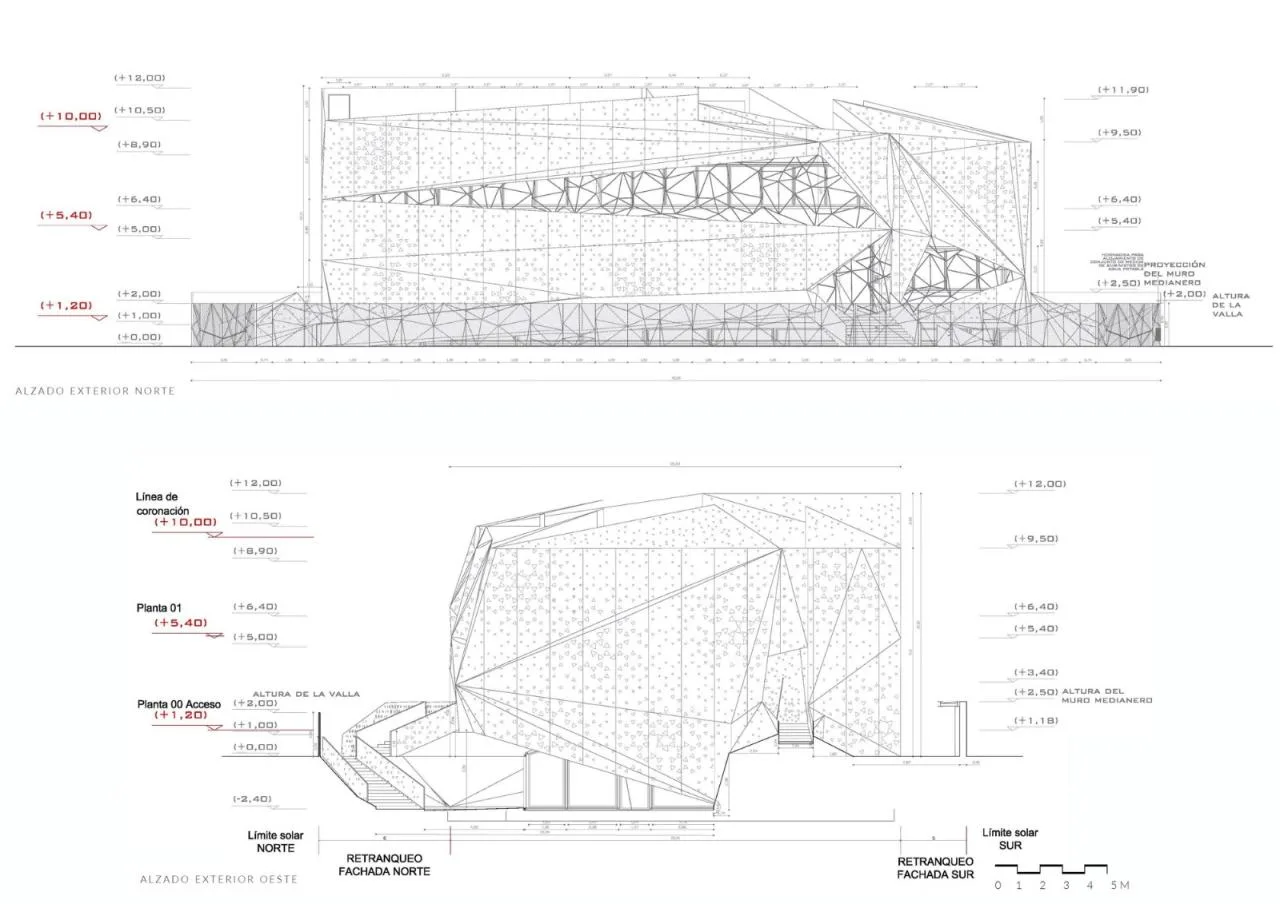
△ Elevation Drawing
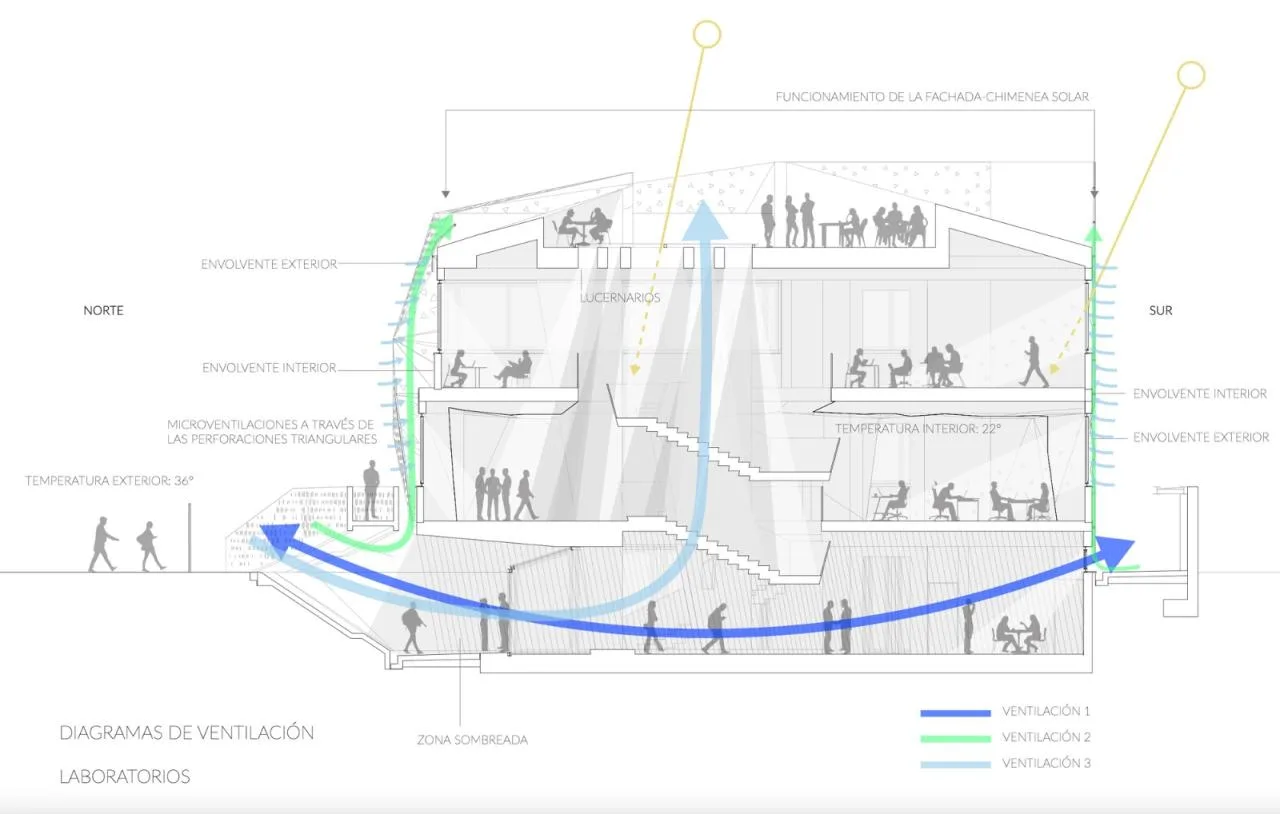
△ Analysis Chart
Project Information
Architect: PENELAS SYSTEMS
Photographer: Imagen Subliminal (Miguel de Guzmán + Rocío Romero)
Principal Architect: José Luis Esteban Penelas, Director and Founder
Collaborators: Yolanda Hernández Lorente, María Esteban Casañas, Antonio Guijarro, Marina Rodríguez Sotoca, Kevin Román Cruz, Yakaterina Savina
Technical Architect: Antonio Atienza Ramírez
Owner: Grupo Biomaster
MEP: BDEV Baroja, Estévez, del Valle, Architects
Construction Companies: ETOSA, ELVAL COLOUR, DARDO
Location: Alcalá de Guadaíra, Spain













Must log in before commenting!
Sign Up