
History of Creation
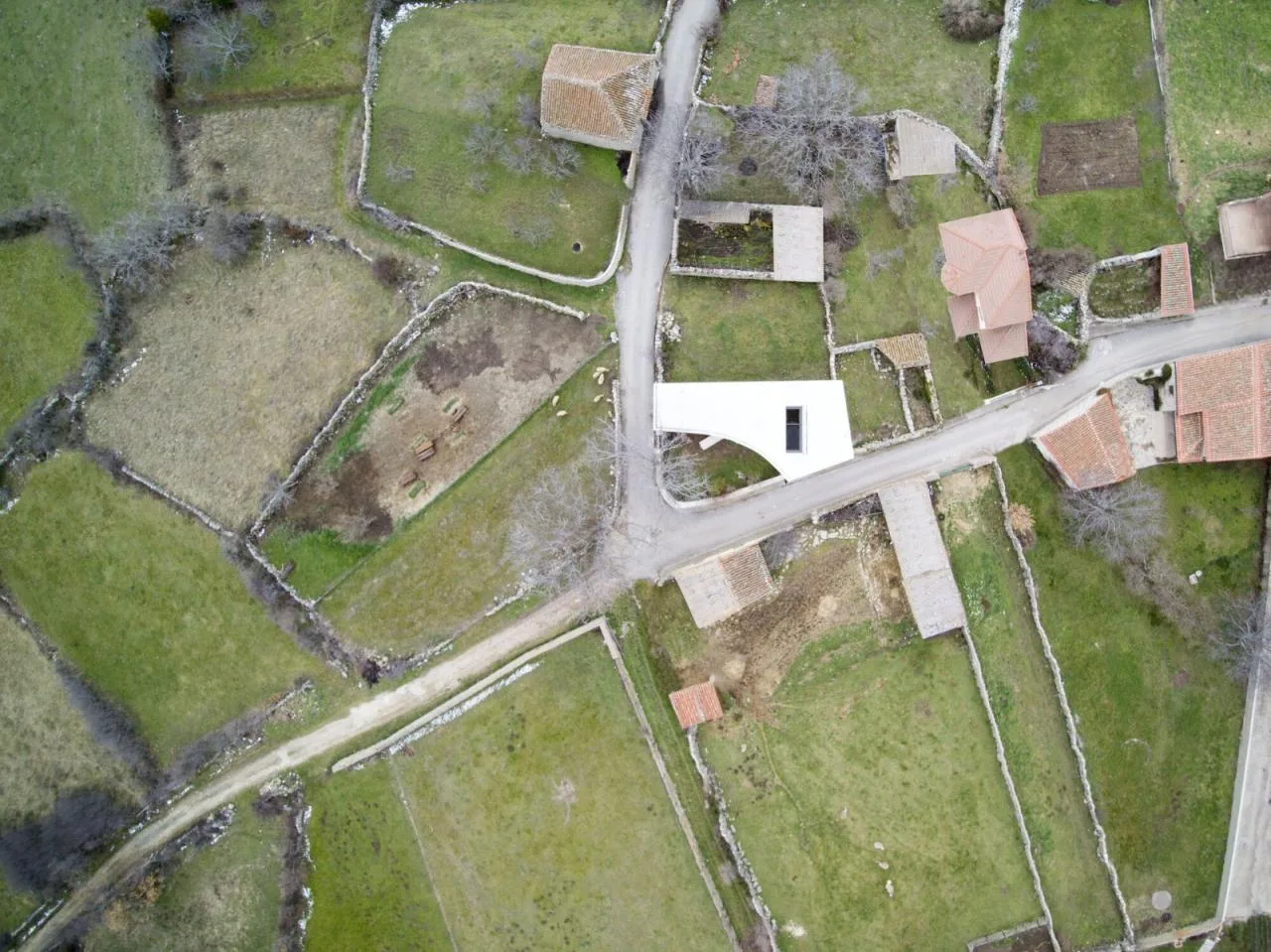
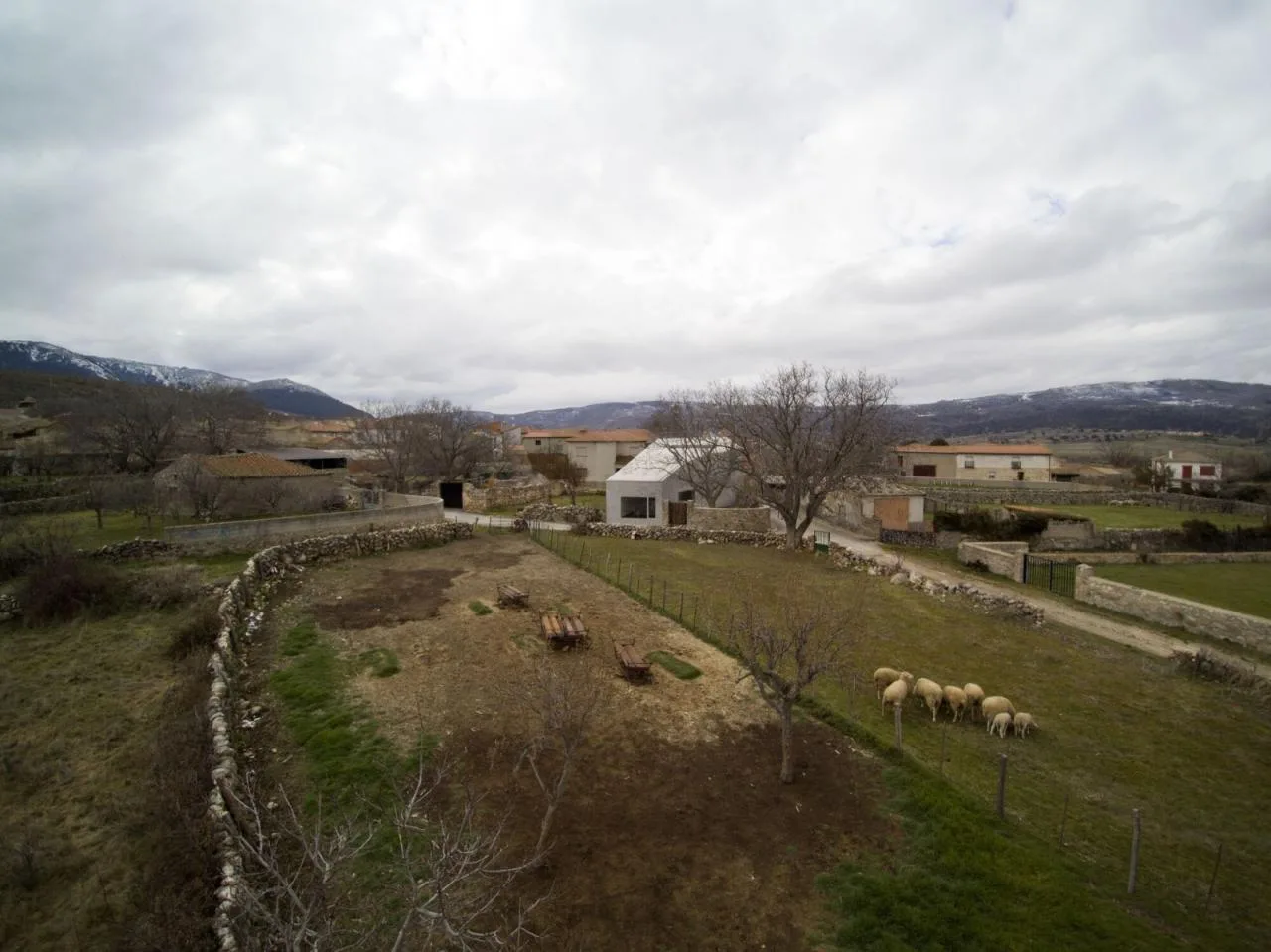
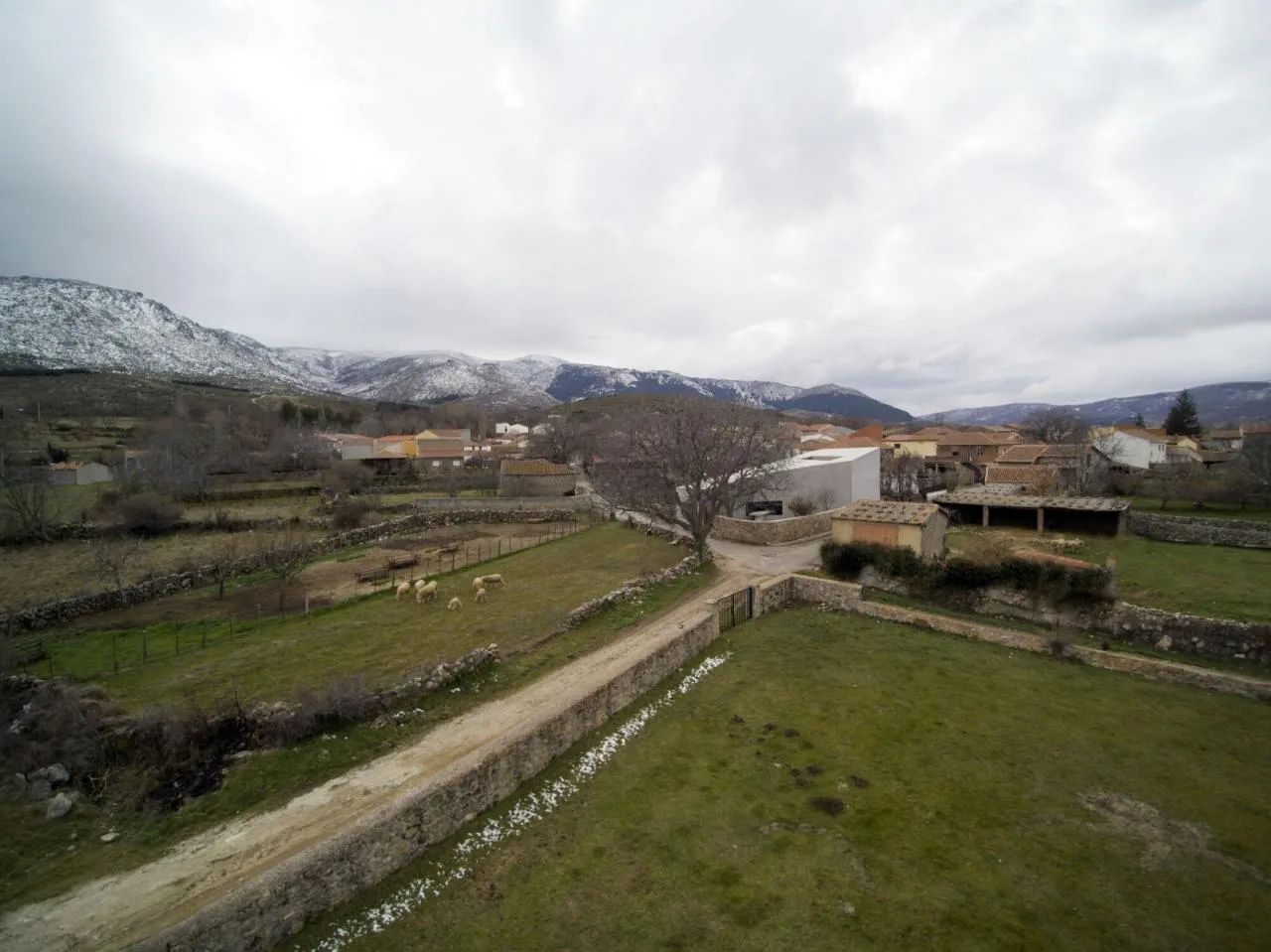
The Nogal home transforms an ancient rural orchard in the village of Ávila into a modern architectural masterpiece. This single-family residence resembles a massive rock—still and unmoving, yet filled with life. Situated under the canopy of lush walnut trees, the orchard is both the heart and soul of the project.
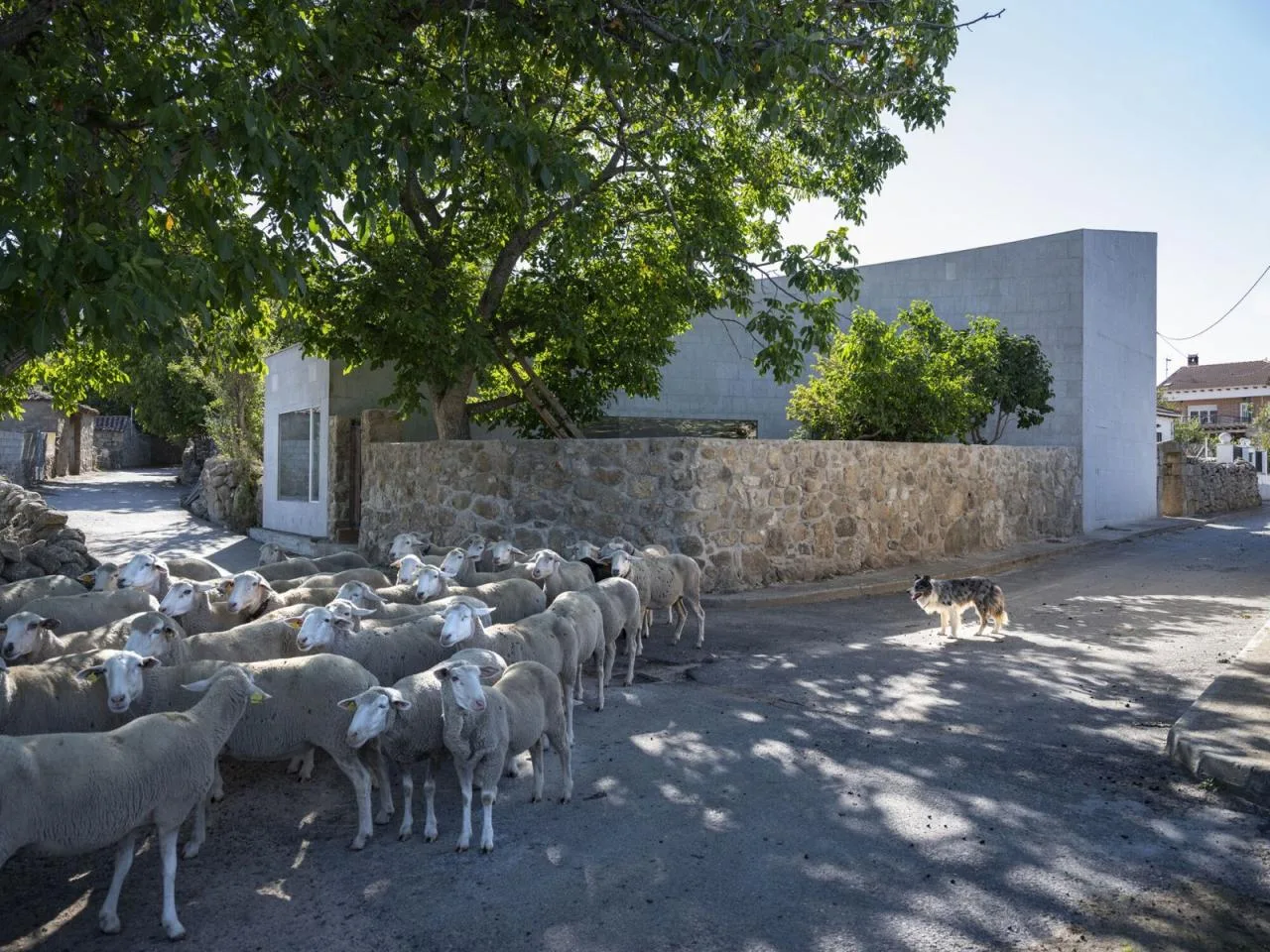
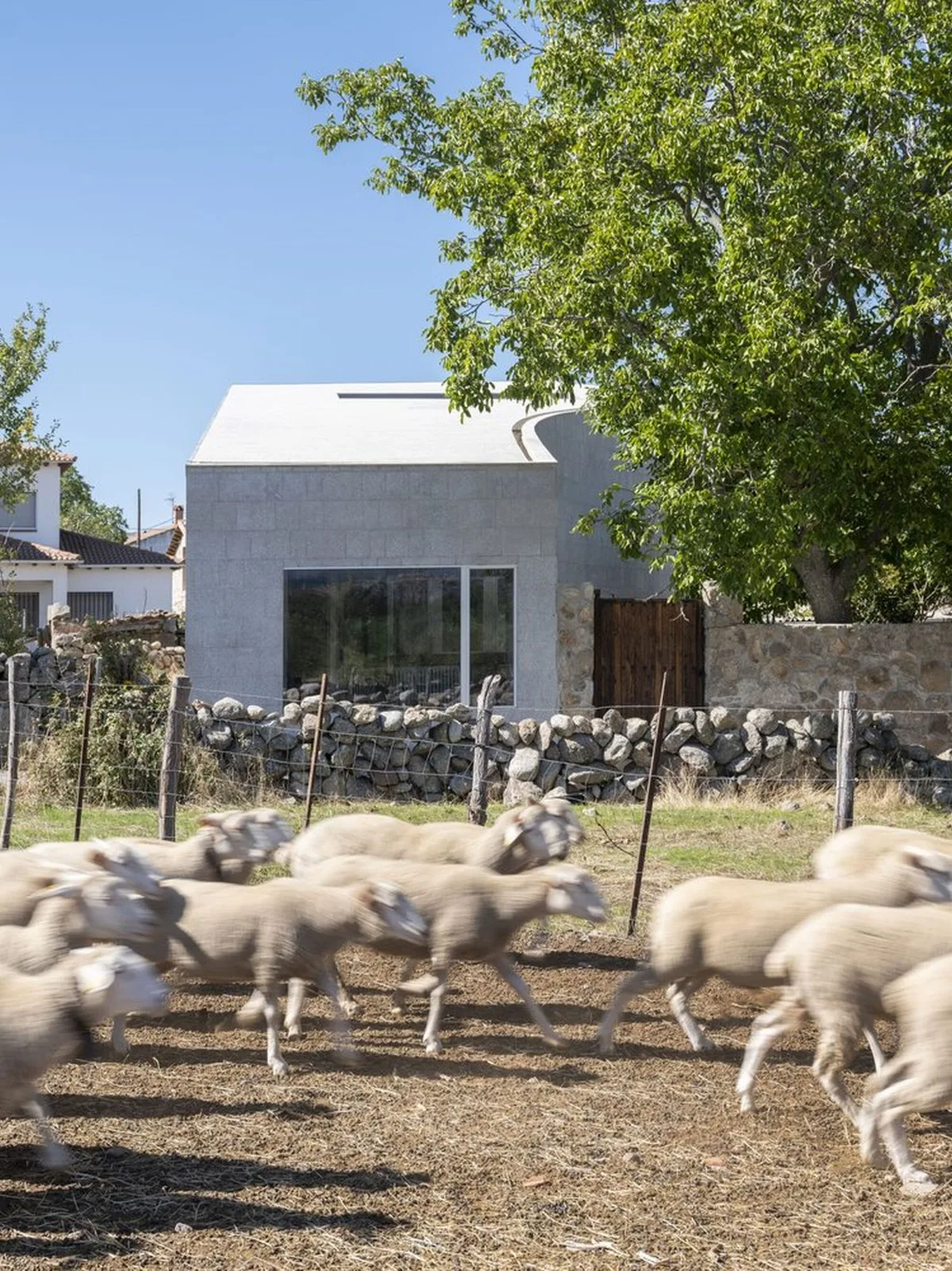
Inspired by the Persian heritage, the walnut tree symbolizes deep roots, dense yet slender shadows, and a majestic presence supported by sturdy wood. Considered a king of nature, the walnut tree’s fruit and distinctive silhouette make it an extraordinary species. However, these trees are fragile—they cannot endure severe frost, extreme heat, or drought, and require balanced conditions to thrive, making such walnut trees uniquely rare.
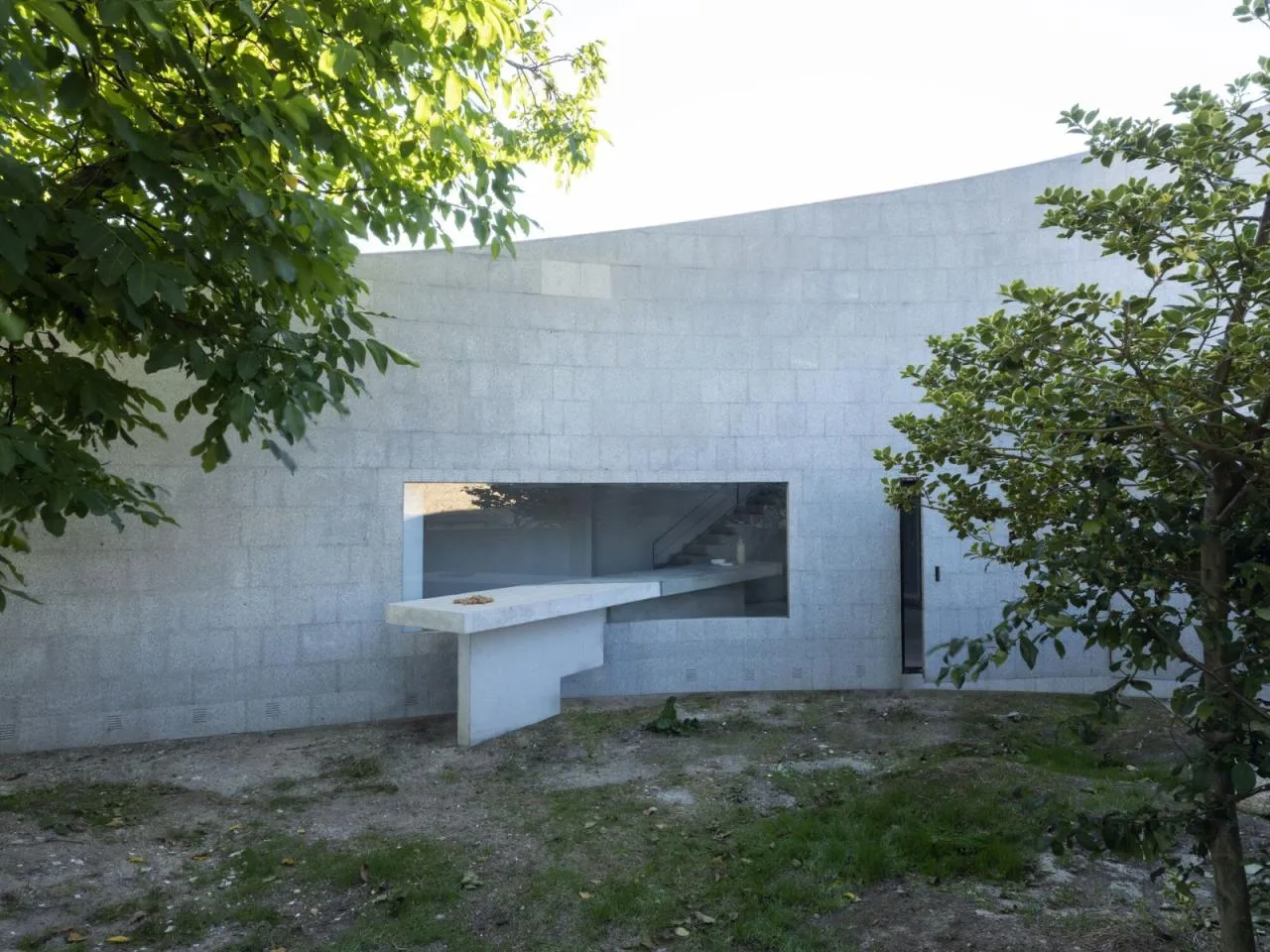
To forge a close bond with nature and honor this century-old walnut tree, the home was designed to resemble a stone formation, echoing the granite rocks scattered across the landscape. While every architectural detail is visible, the true essence of the project lies where nature, technology, sustainability, art, and architecture seamlessly converge.
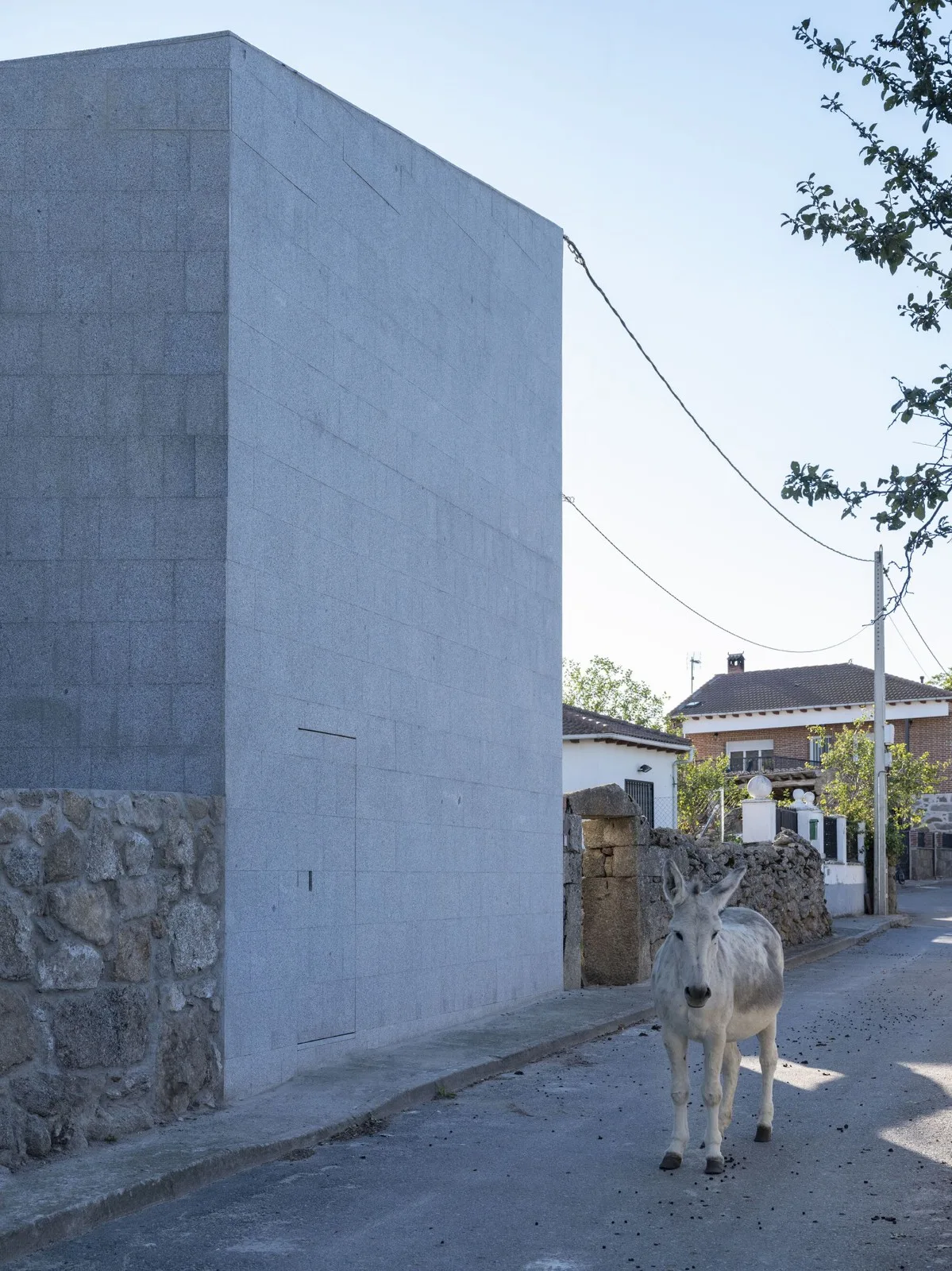
Yet, this is not the only natural marvel of Ávila province. From the early train journey to the town, one notices a striking contrast between the flat, barren plains and the life-sized granite rocks that stand like sculptures.
The design’s essence stems from its location: an ancient orchard fully integrated into nature and surrounded by granite walls, with walnut trees ever-present. Respecting these natural elements, the home blends into its environment, appearing as a massive granite rock from the Ávila Mountains that curves around the walnut trees in homage. This results in a curved, solid stone volume, its interior carved from the same stone to accommodate family living spaces.
The house, harmoniously connected to the landscape, appears as just another stone—typical of the Ávila mountain scenery. As such, the facade features a large granite wall, emphasizing durability over permeability. This choice extends even to the maintenance doors, all clad in granite. The roof continues this motif, covered with the same stone to maintain a solid, continuous volume.
The roof is specifically designed for local conditions, sloping in only one direction, with solid carved facets on both its exterior and interior surfaces, forming a striking large sloping roof.
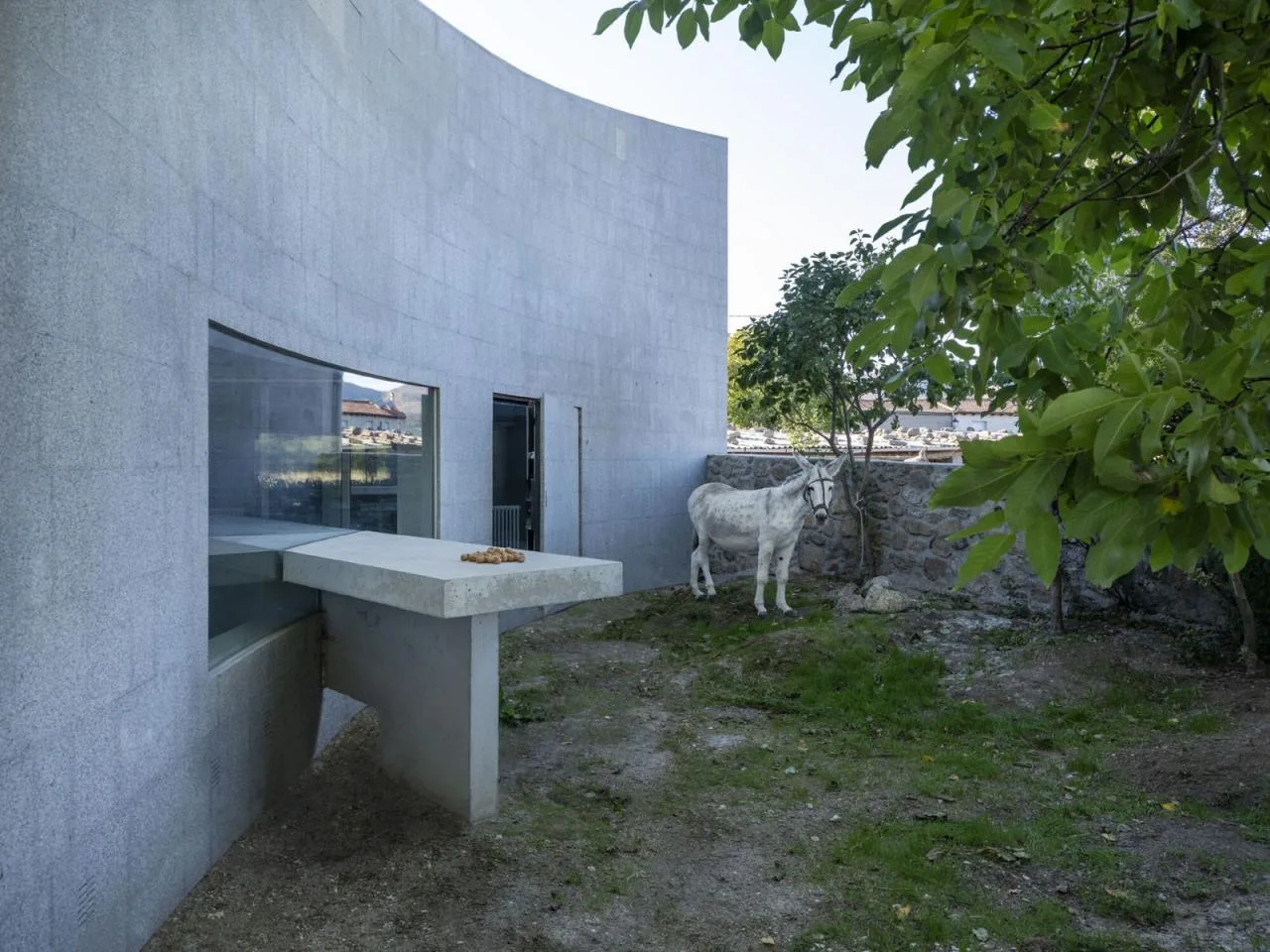
The house features three large openings that invite nature inside, bathing the home in natural light. The first reveals a garden with a walnut tree, framed by a custom-made, large curved glass panel—one piece, manually bent specifically for the house. The second opening provides views of the front landscape and the migration of local livestock. The third is a collection of windows offering panoramic views of the sky and stars, connecting the bedroom directly with the cosmos to allow falling asleep beneath the stars. The remaining facade is solid and opaque, intentionally disconnecting from urban surroundings to foster an intimate relationship with nature.
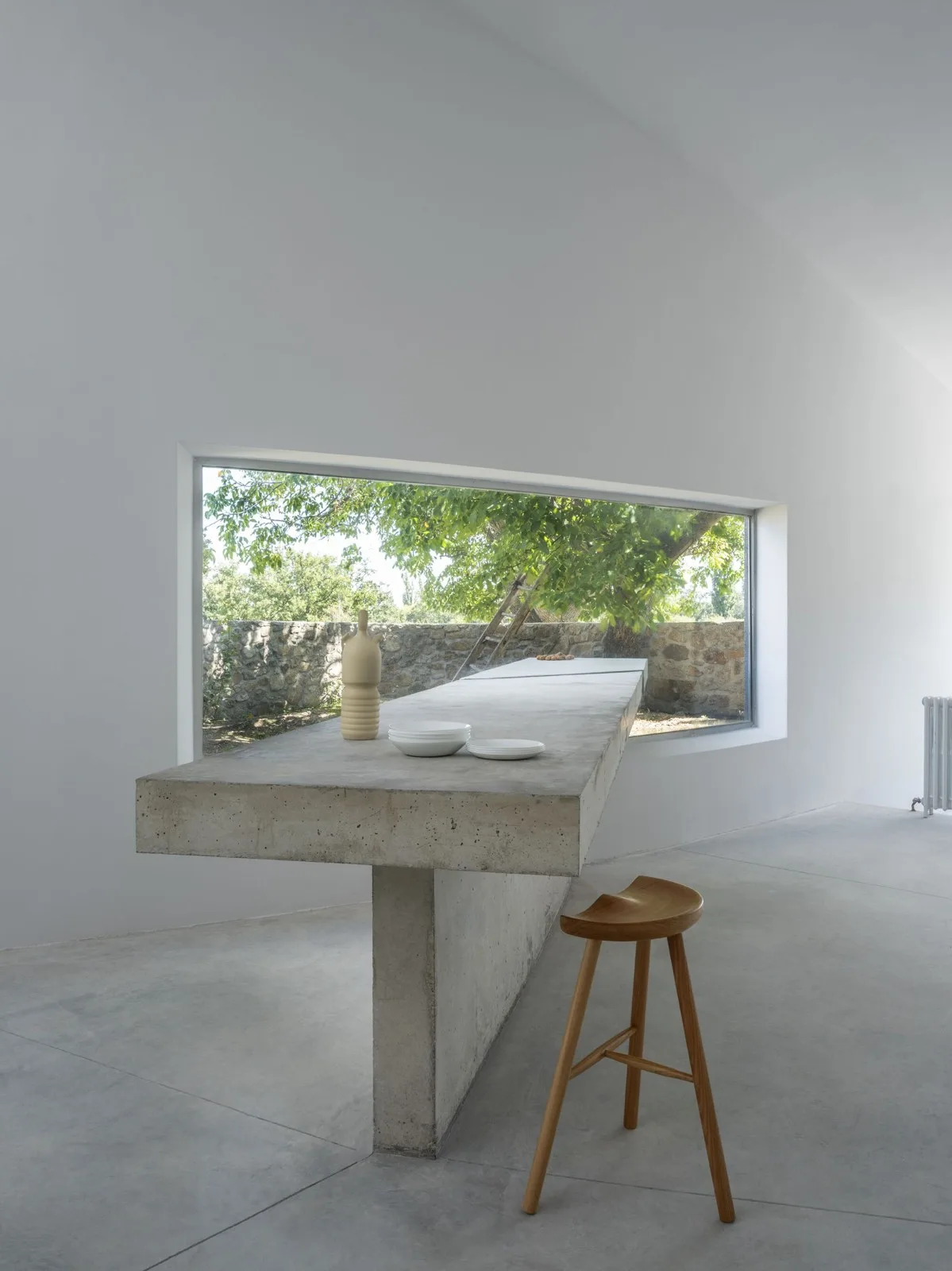
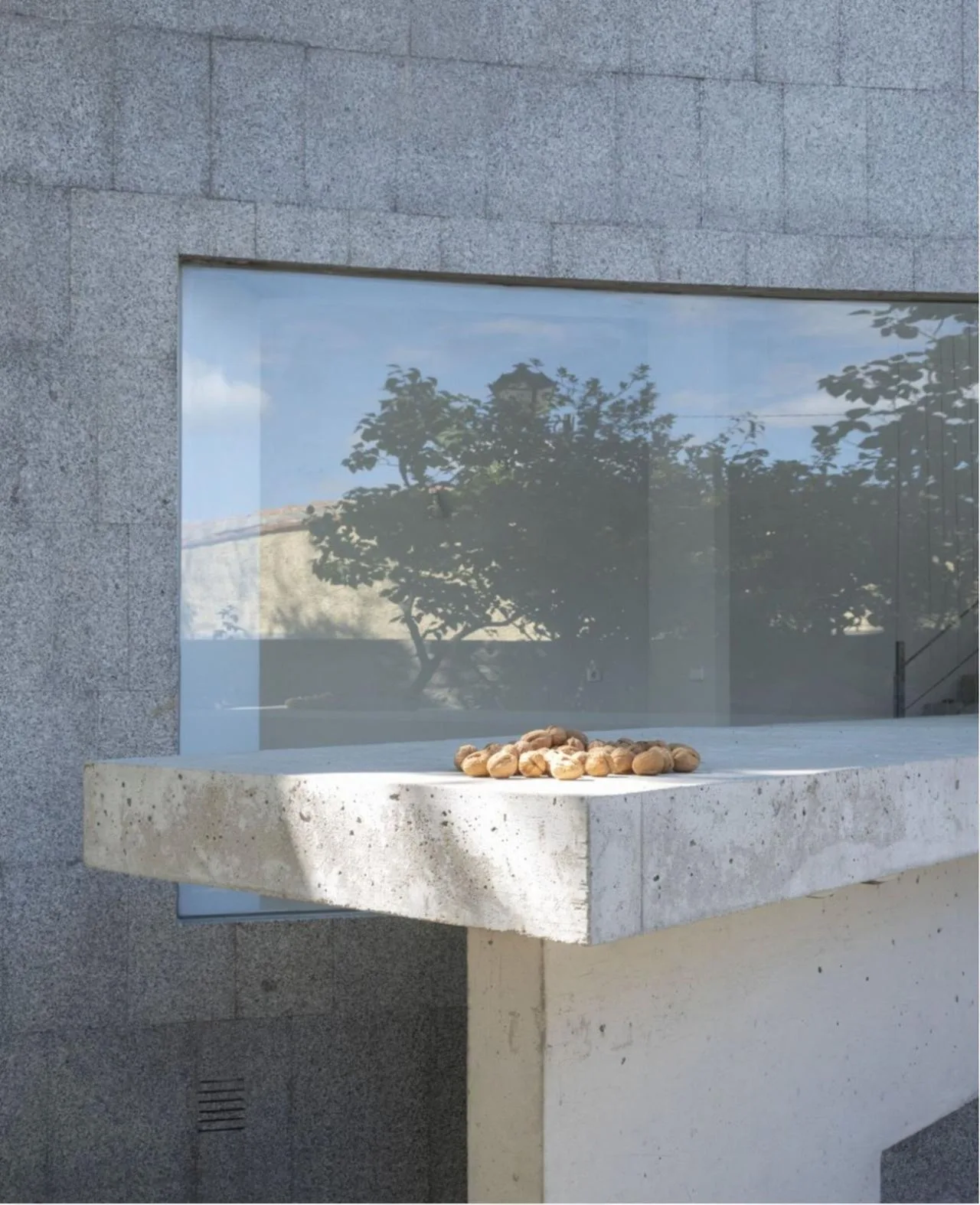
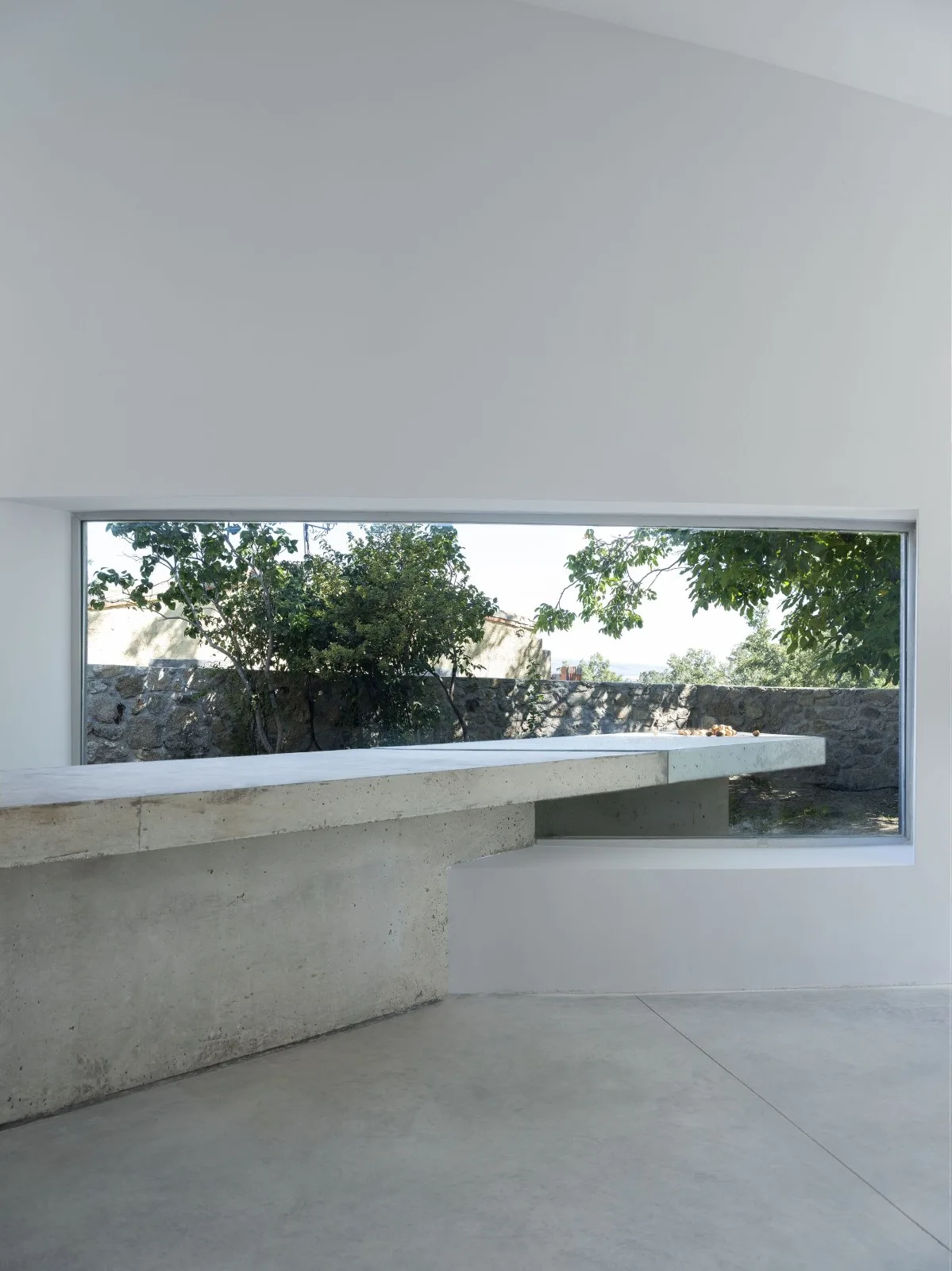
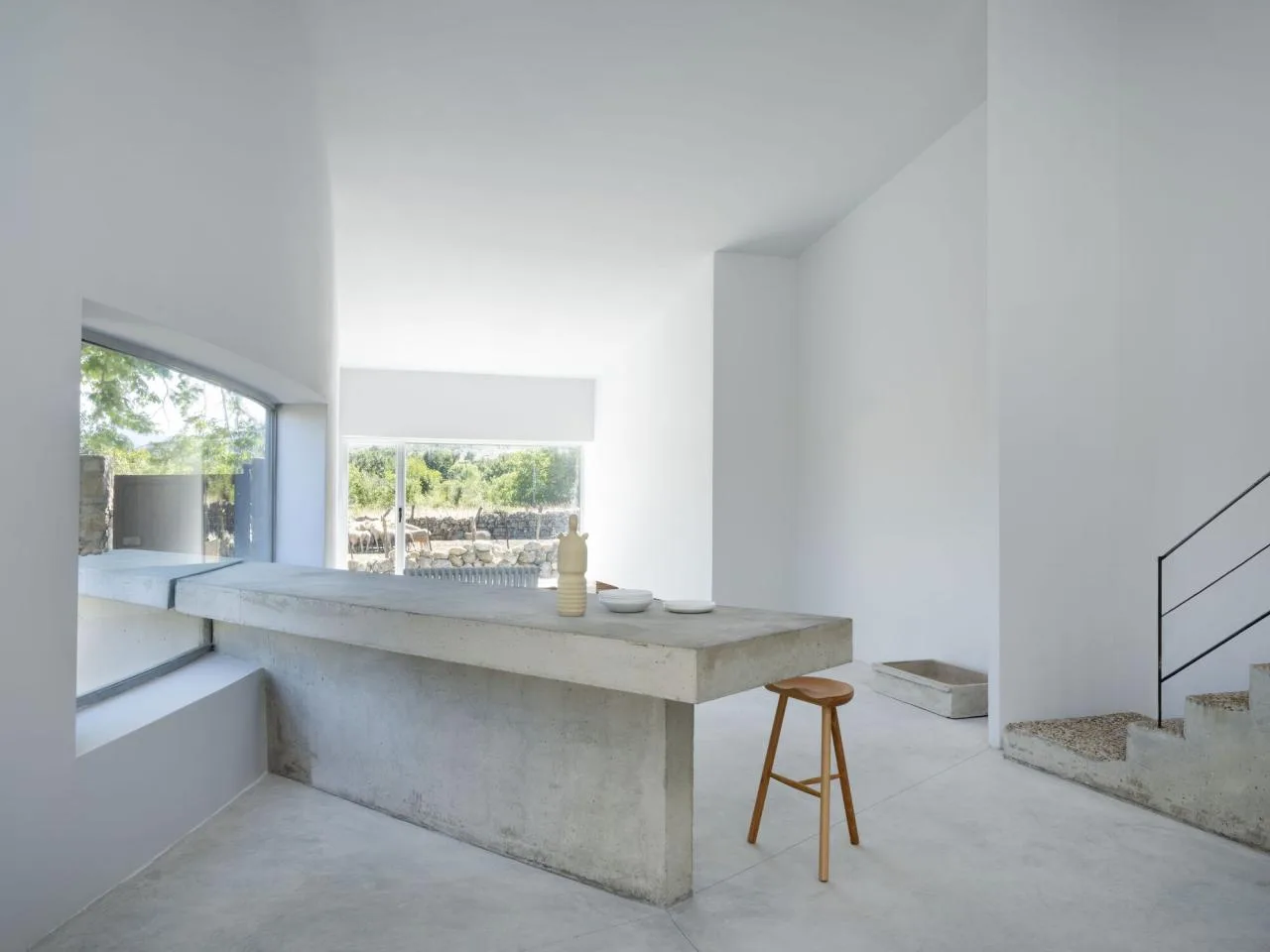
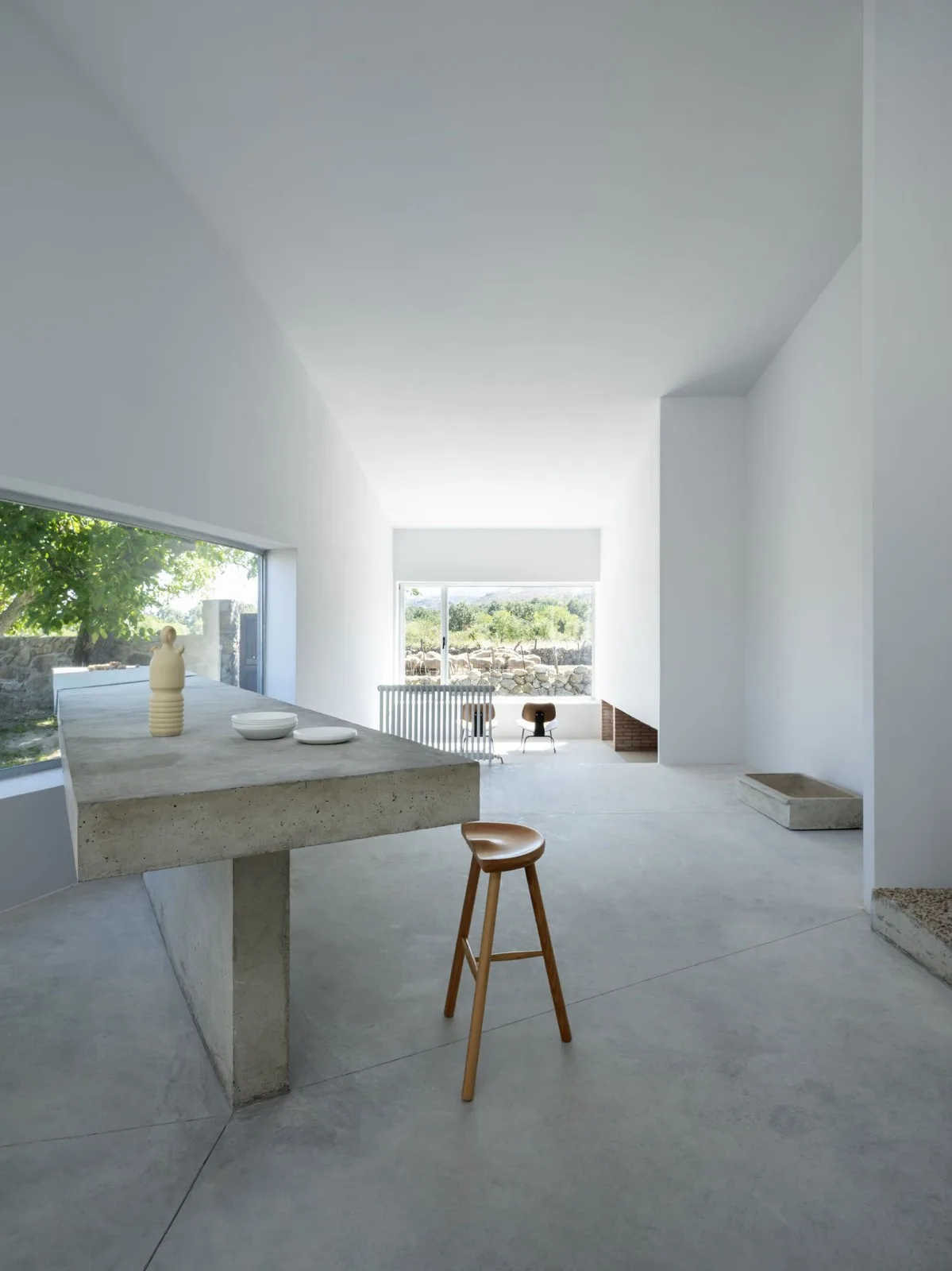
Returning to the core of the project, the expansive curved glass enveloping the walnut tree introduces a groundbreaking architectural element: a large stone table spanning across the glass. This feature extends from the dining area into the garden beneath the walnut trees, creating a seamless link between indoor and outdoor living. It embodies the design’s spirit—supporting activities inside and outside while fostering a lifestyle deeply connected to nature.
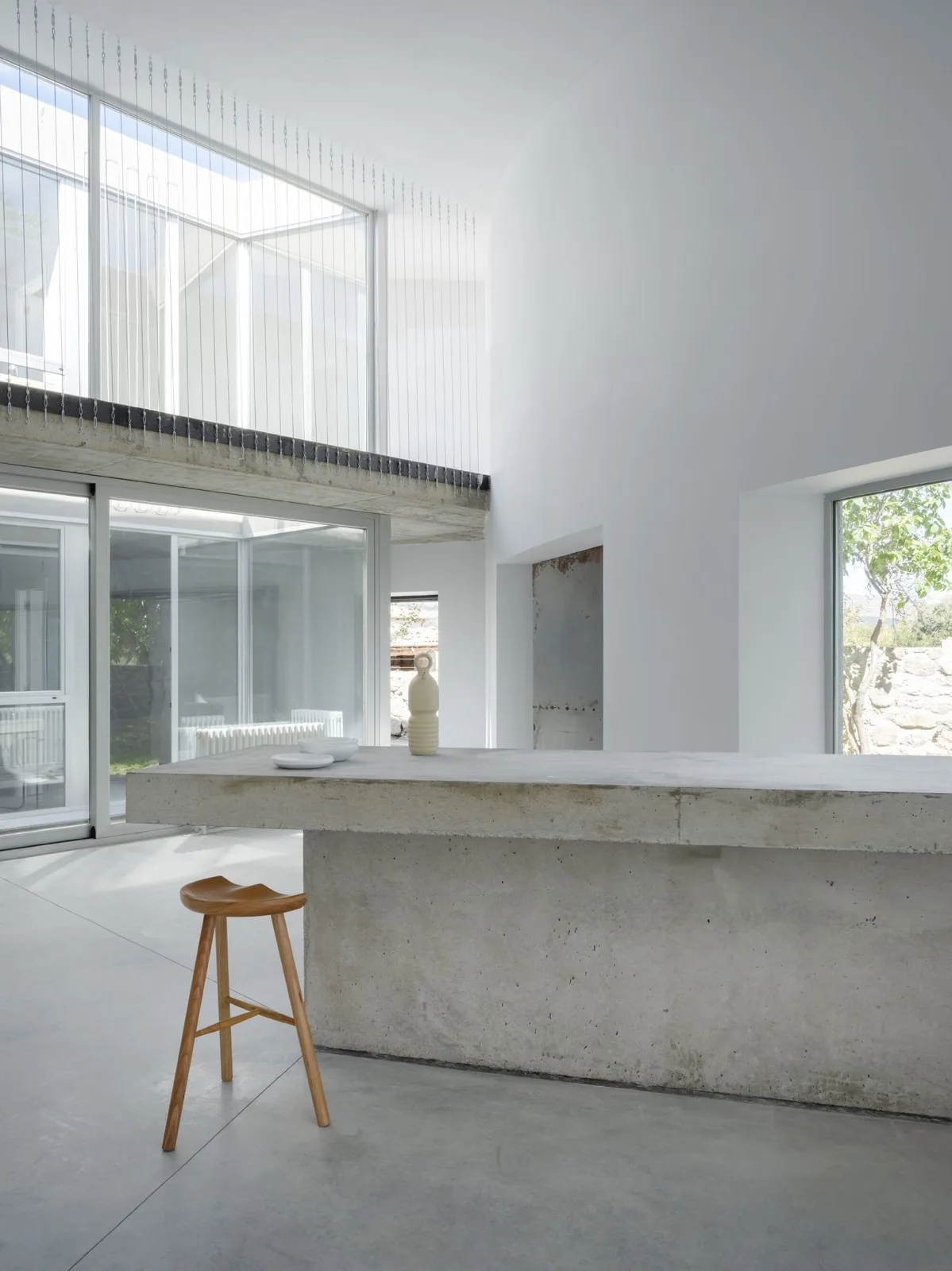
Upon entering, one encounters the third major opening: an internal courtyard embraced by natural elements. This courtyard is fully openable, with movable glass panels that connect seamlessly to the adjacent rooms. The house’s layout divides around this courtyard into a public space on the left and private quarters on the right.
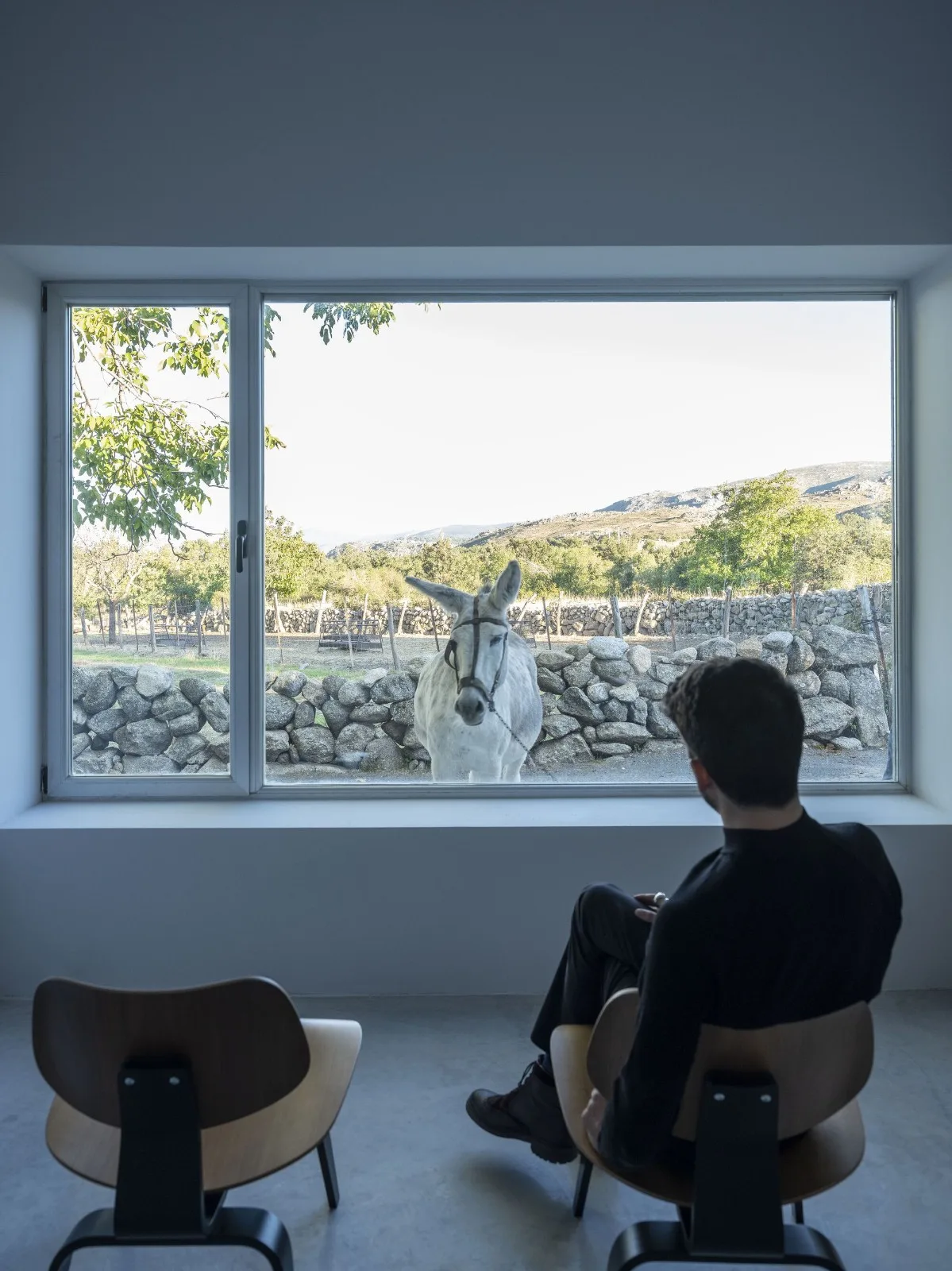
The public area features a spacious double-height room with a sloping roof housing the dining room, kitchen, living room, and air conditioning, centered around a large table. Just 34 centimeters below lies a cozy winter living room with a fireplace, flanked by two designer armchairs. This intimate space offers views of the landscape through the second opening’s glass, complemented by the comforting crackle of the fire. The lower ceiling here creates a warm and inviting atmosphere.
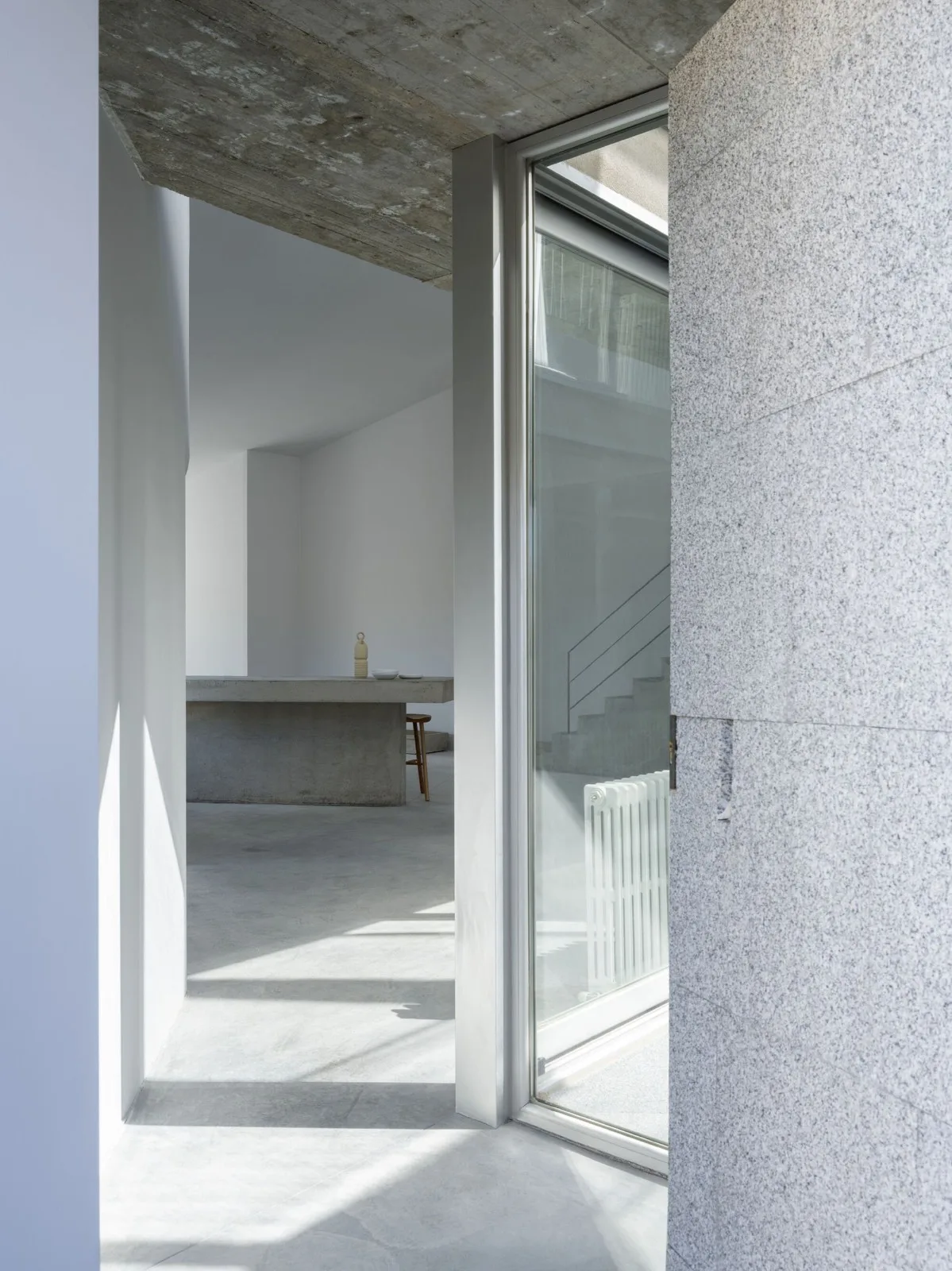
On the upper floors, the bedrooms are specially designed for stargazing at night, offering a unique experience of living under the shelter of walnut trees. This connection to nature defines the essence of life in the Nogal home.
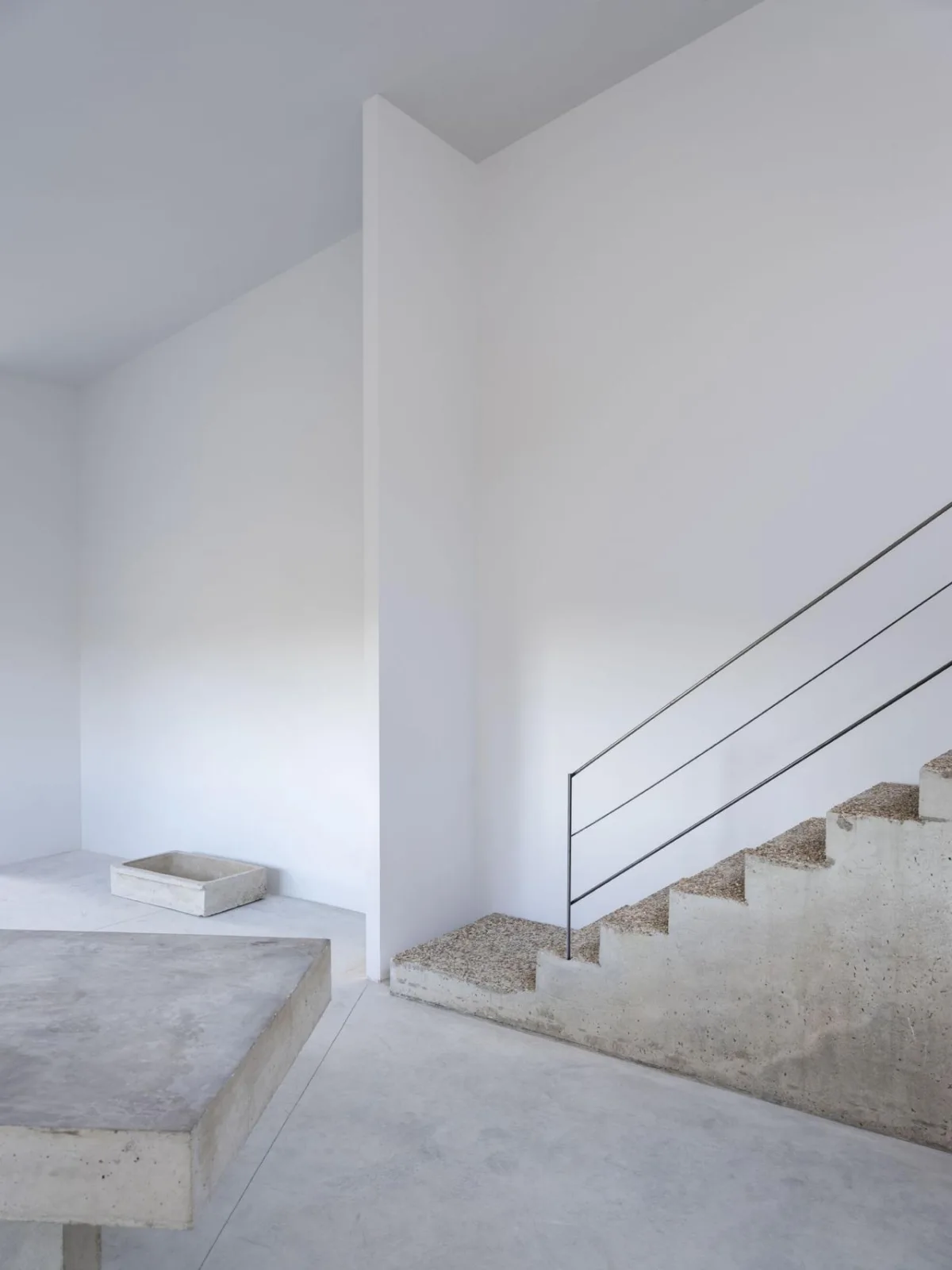
The project’s exquisite detail lies primarily in its stonework. Constructed with concrete and 21st-century stone techniques, the staircase is crafted from compacted river pebbles sourced locally from Abulense, creating a sculptural centerpiece. This stone is extensively applied to facades, roofs, bathroom and kitchen floors, doors, and even tables.
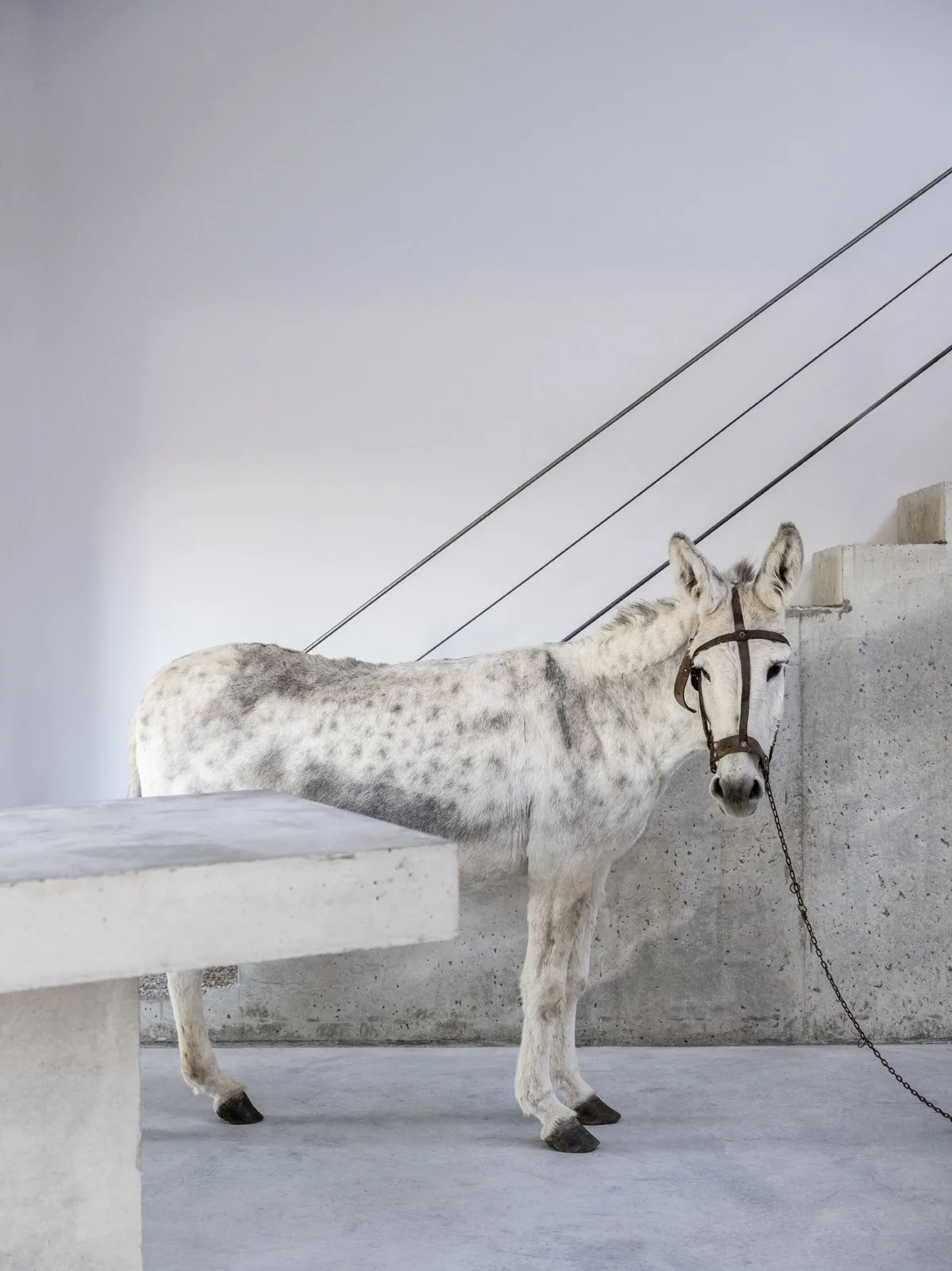
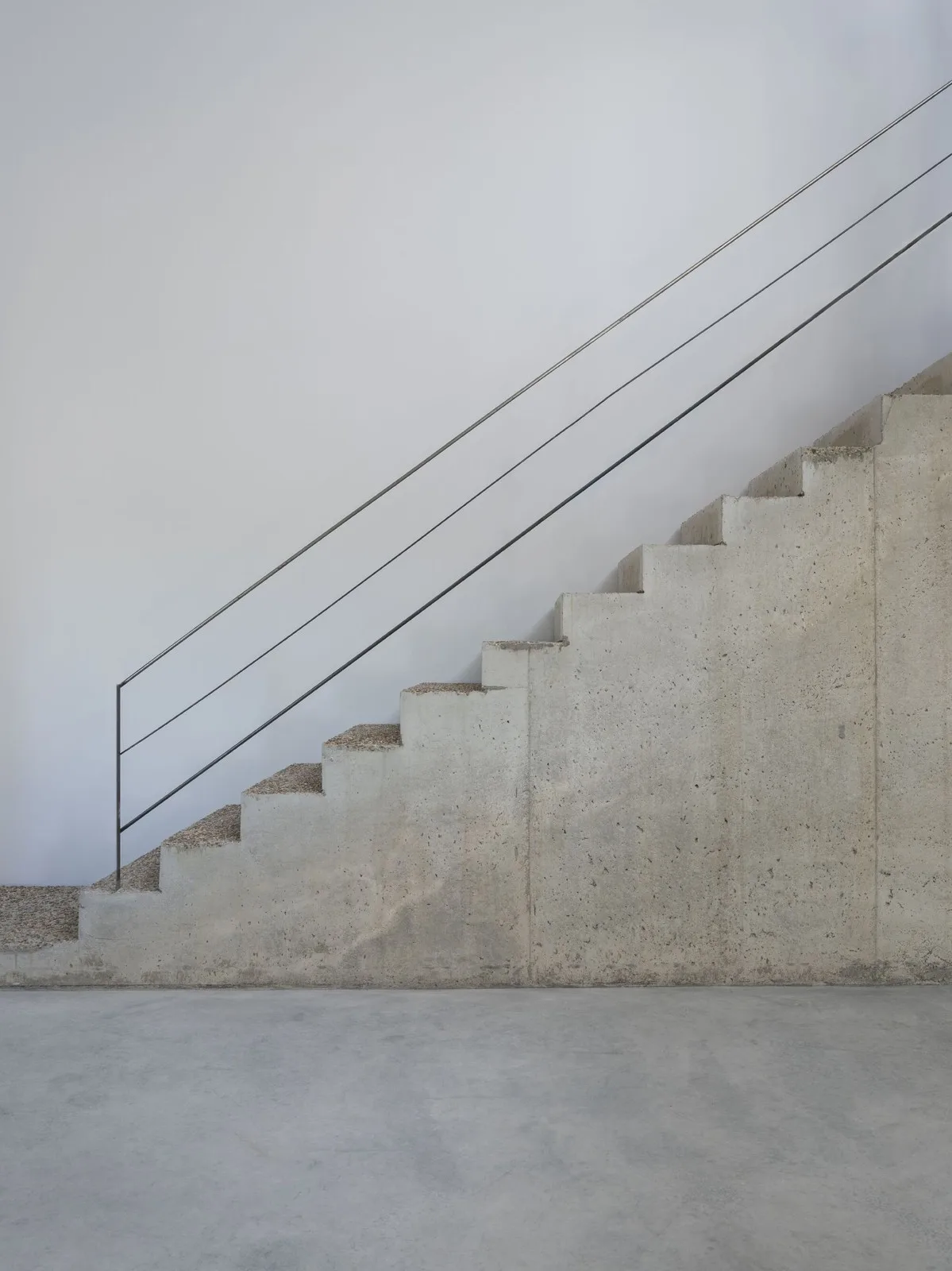
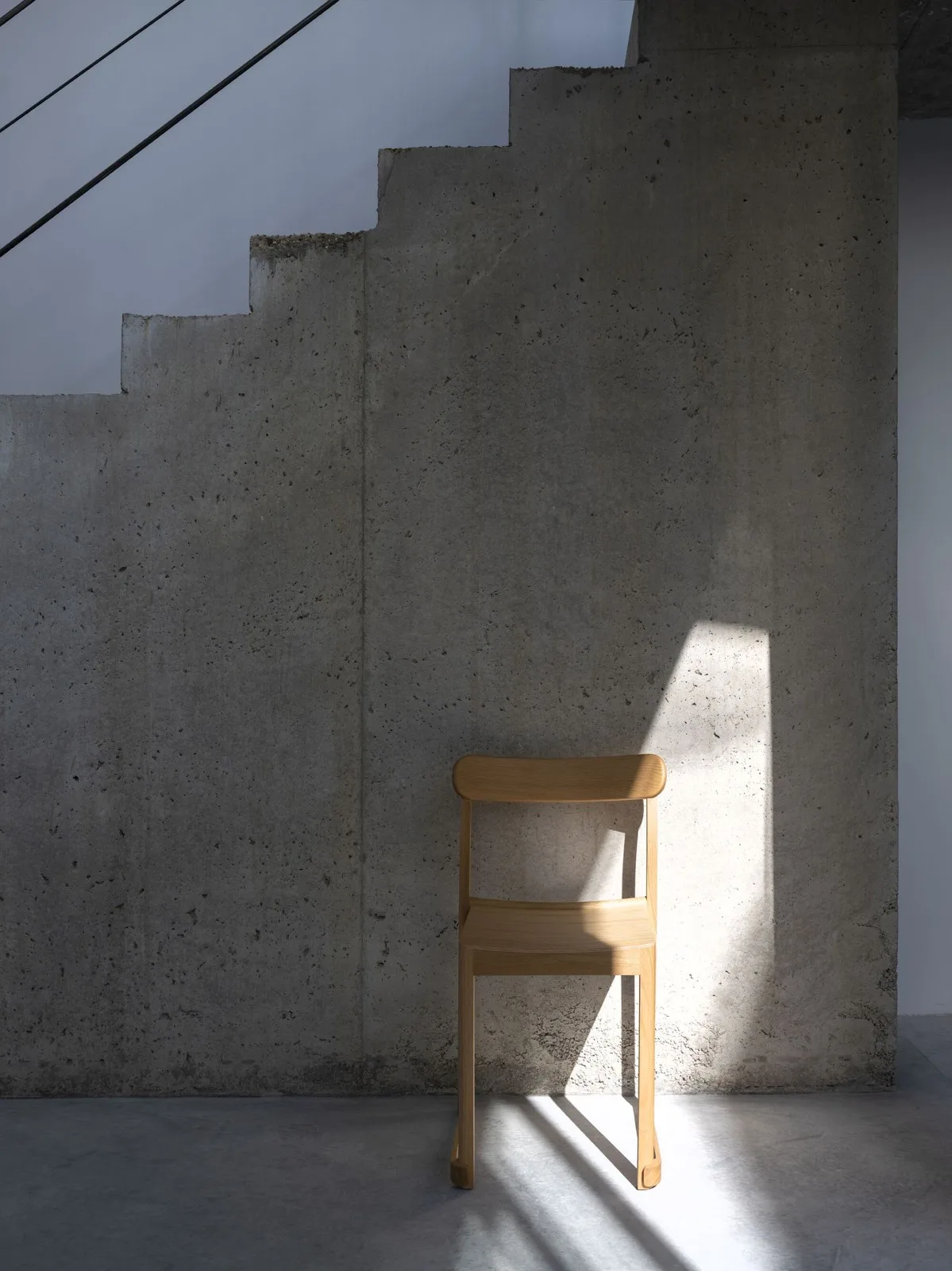
The remaining materials used are glass and metal, deliberately avoiding wood to emphasize the walnut trees’ uniqueness. The abundant glass fills the home with natural light, especially the custom curved glass panels intersected by large stone tables. Metal elements include stainless steel cable railings fixed between floor and ceiling, creating a grid-like pattern reminiscent of tree shadows. This design embodies the fluidity of 21st-century architecture, where buildings adapt to foster an intimate connection with nature.
Project Drawings
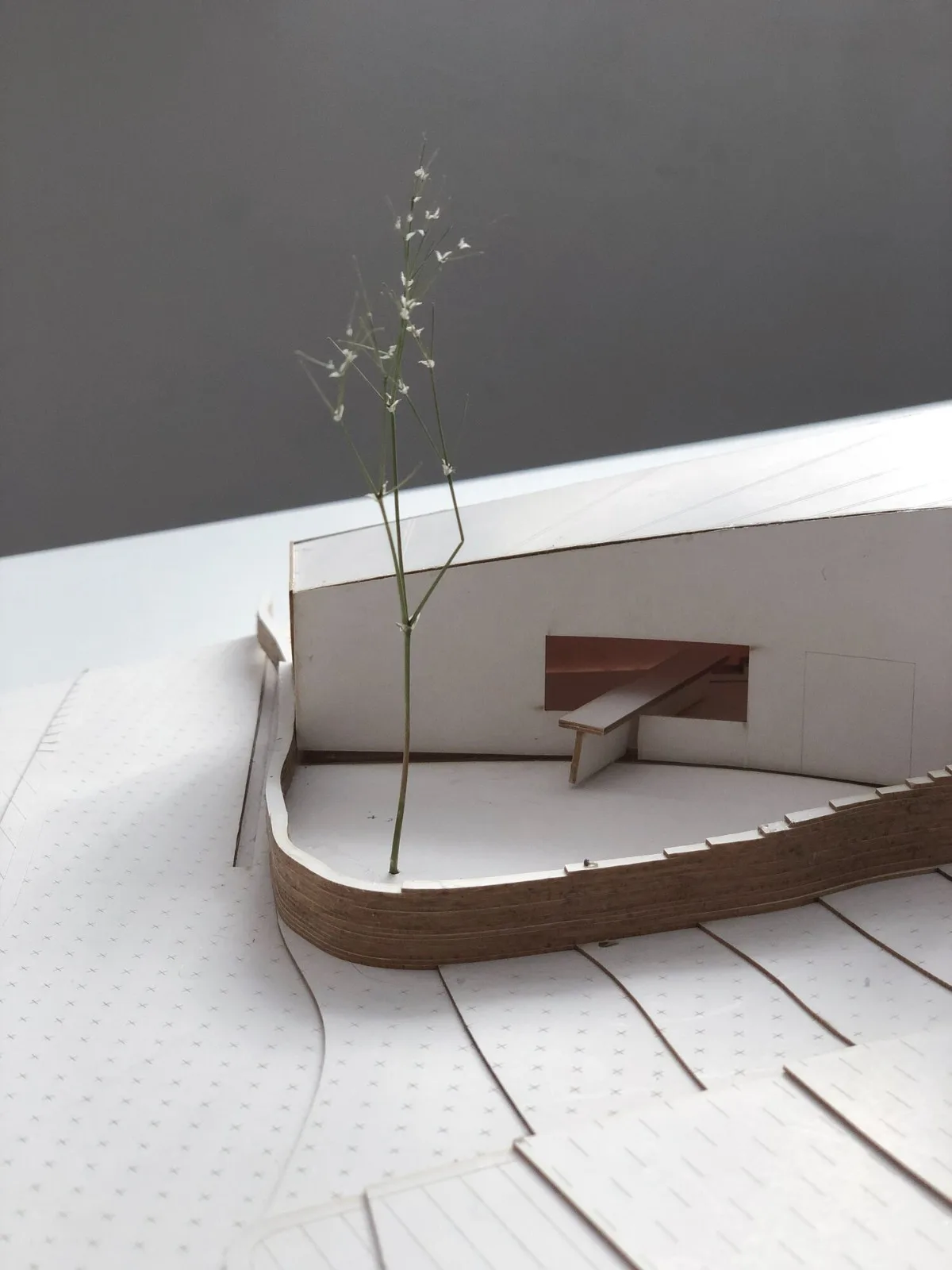
△ Model Diagram
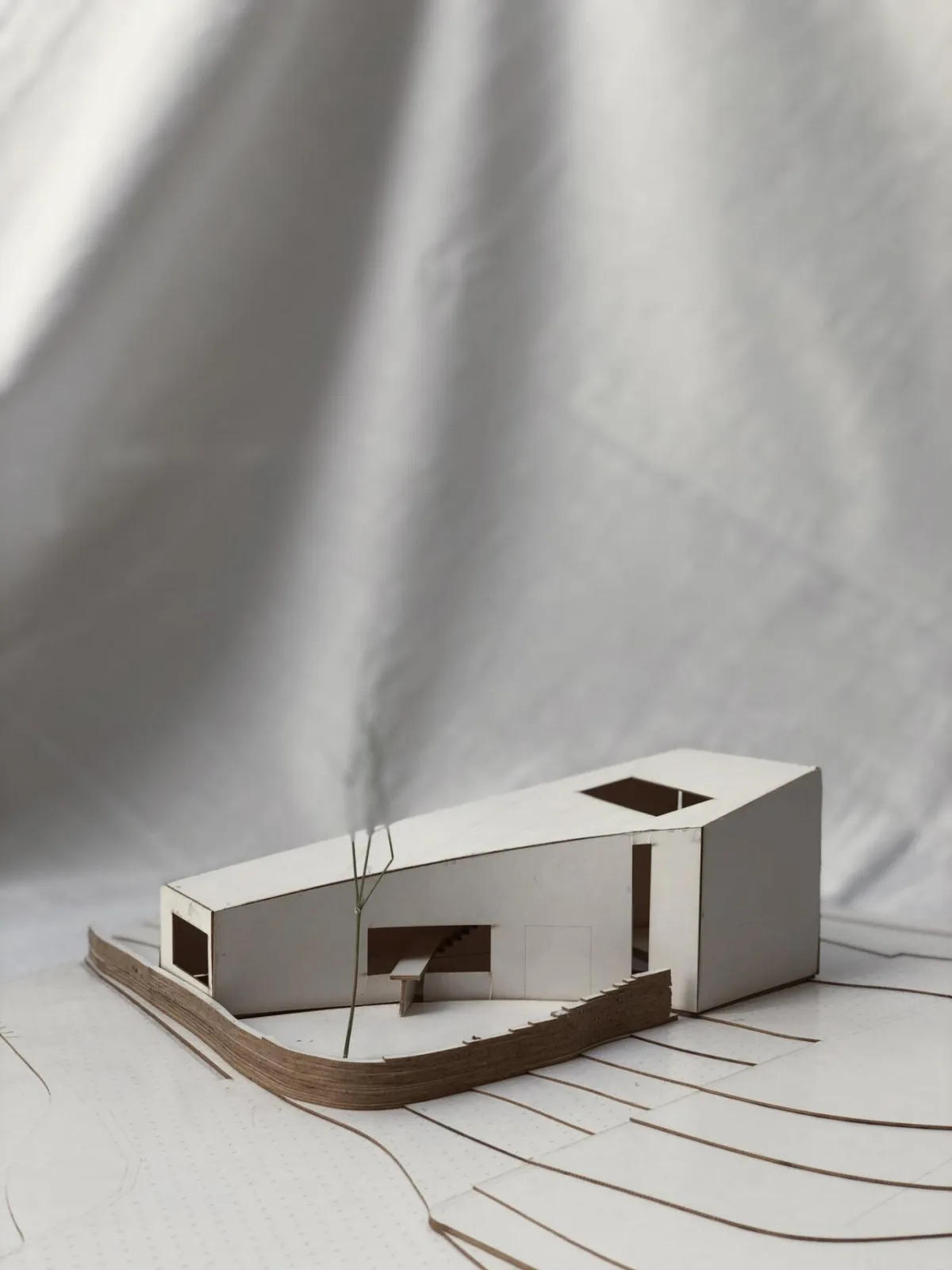
△ Model Diagram
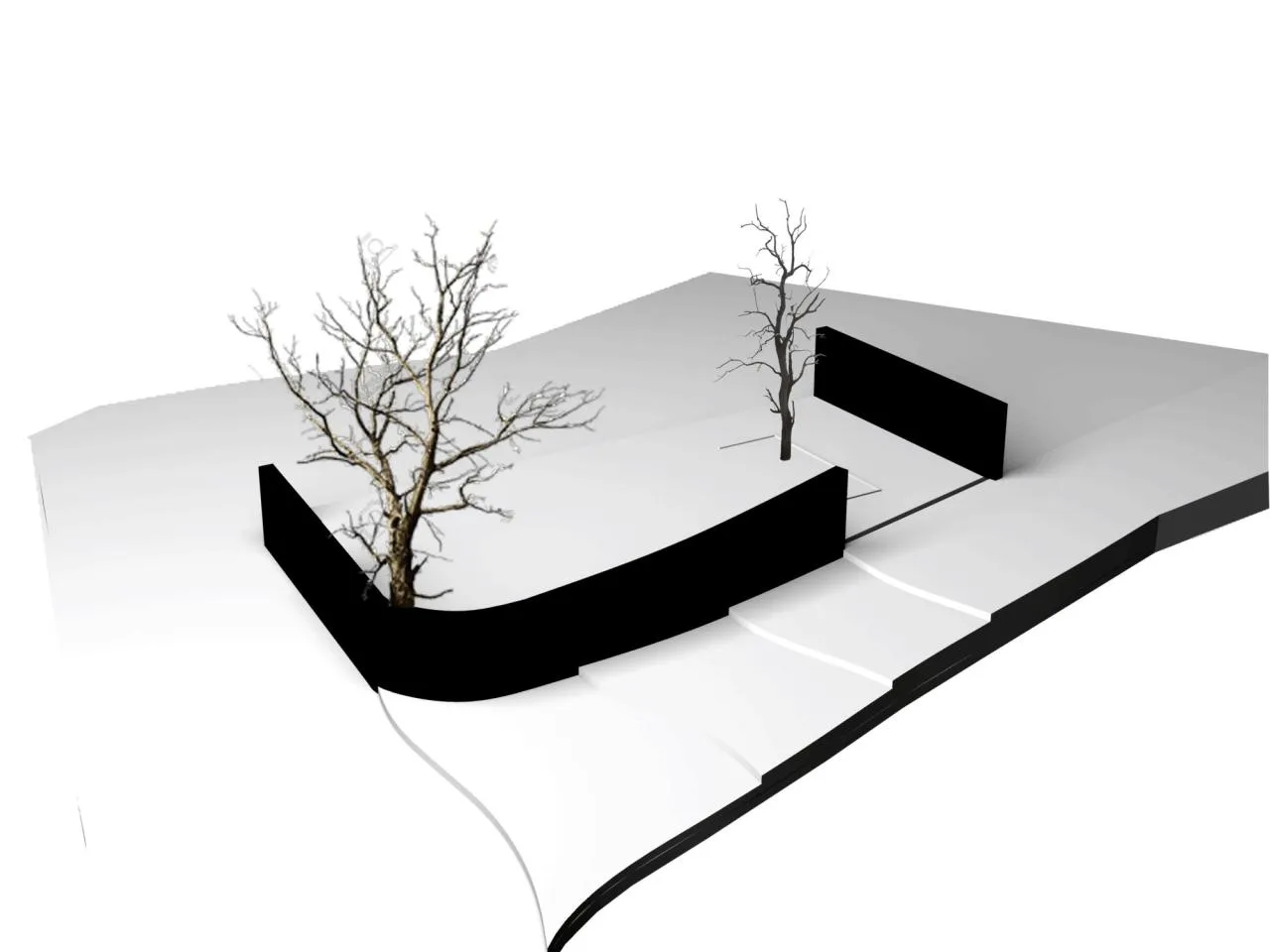
△ Generated Graph
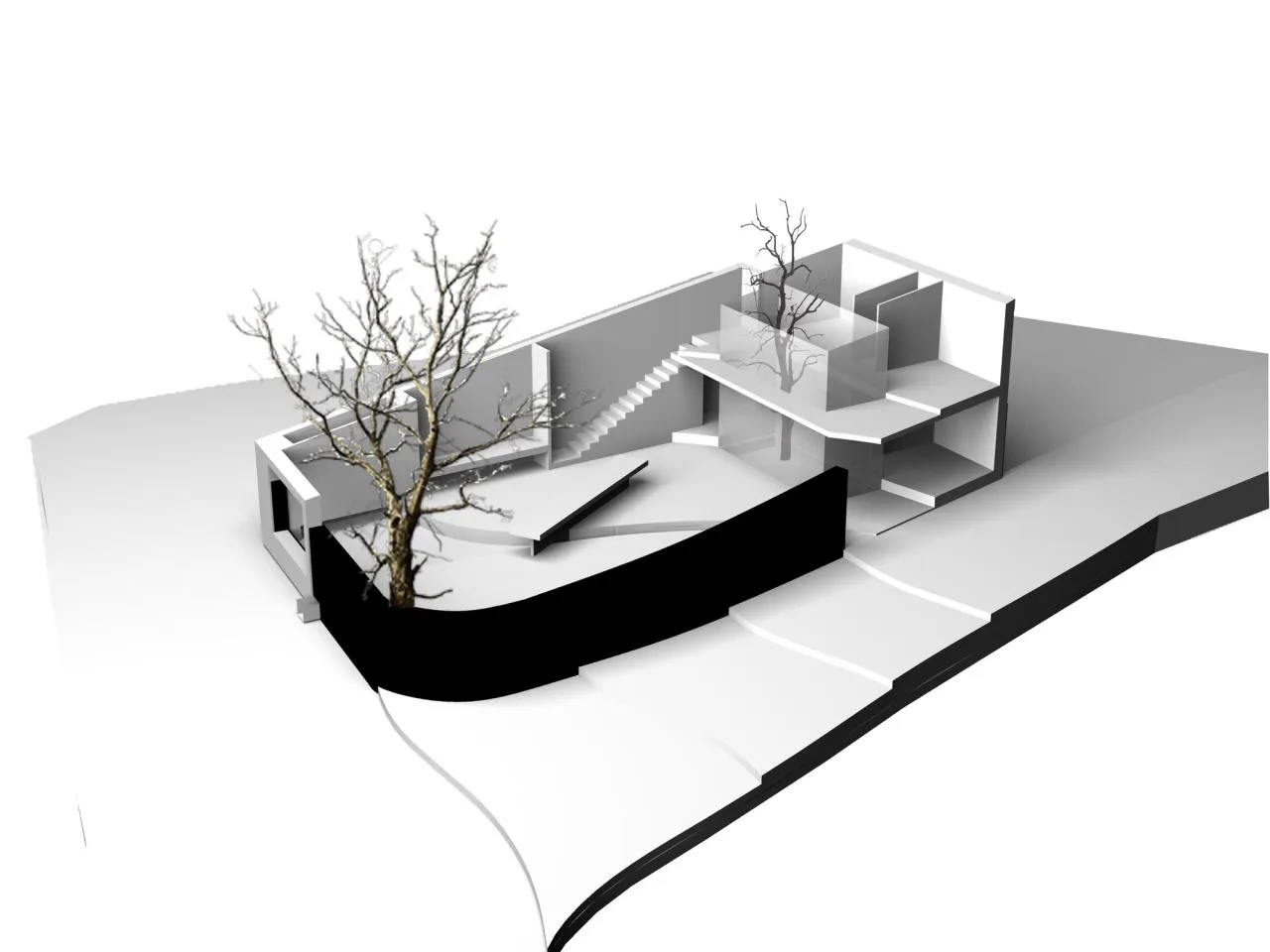
△ Generated Graph
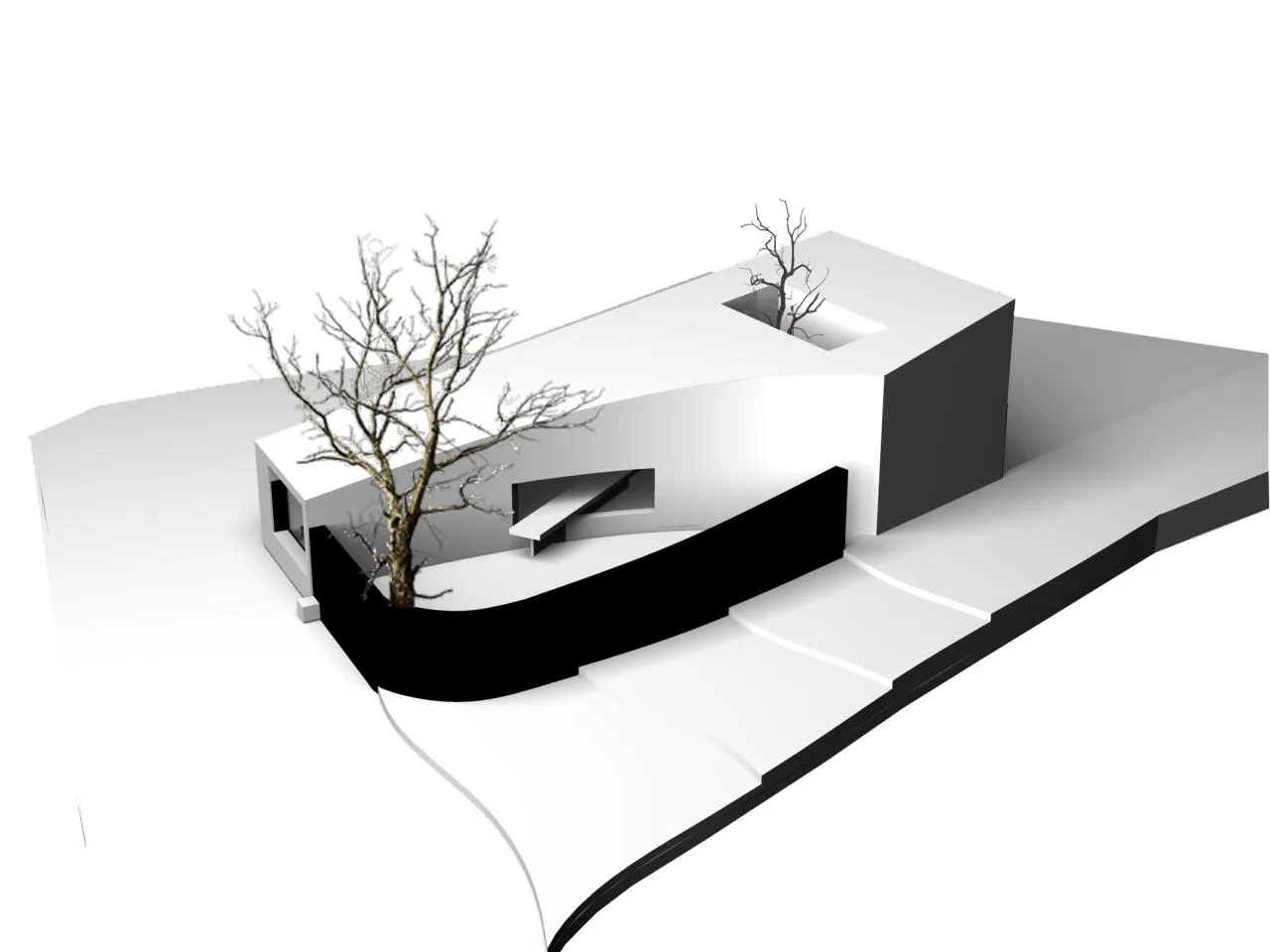
△ Generated Graph
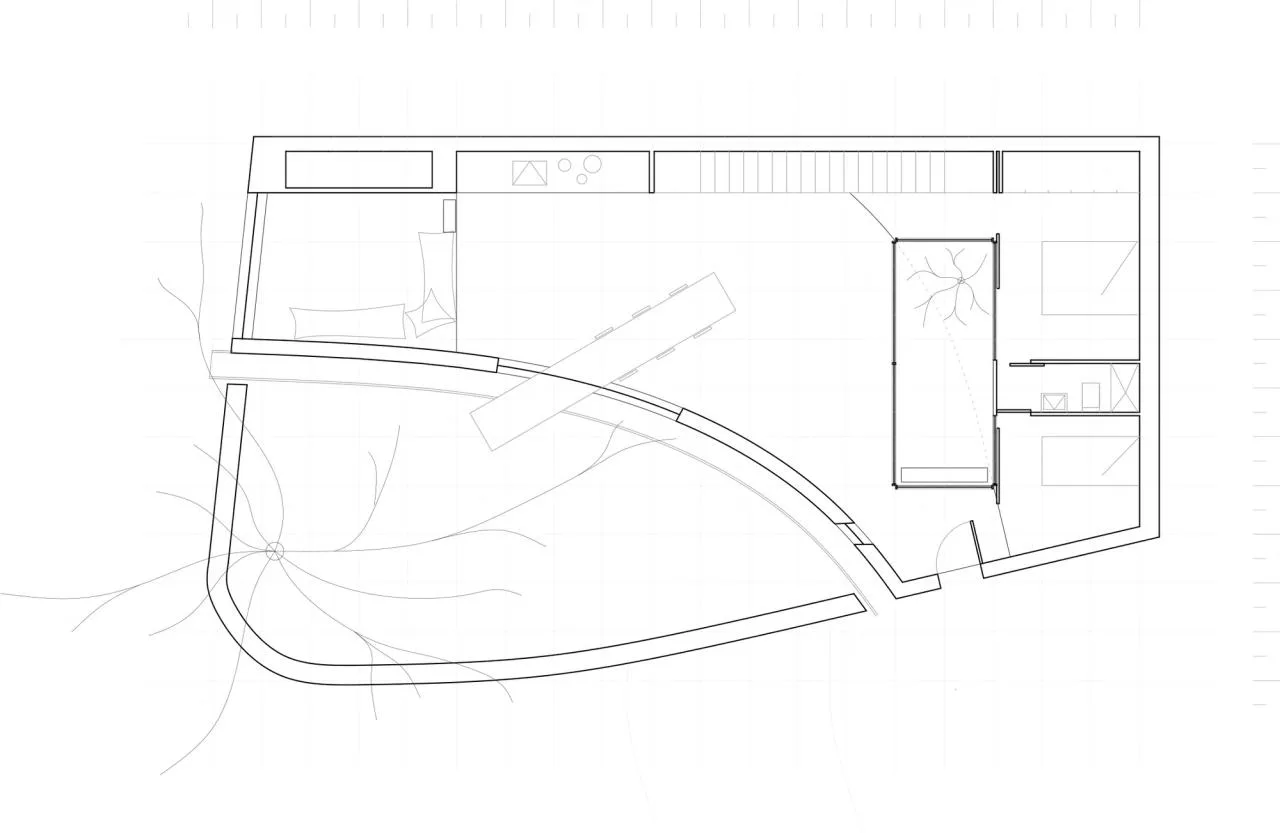
△ Plan View
Project Information
Architect: Raúl Almenara
Project Year: 2022
Photographer: Raúl Almenara
Manufacturers: Gandia Blasco, Rosales Alfageme, VitrA
Technical Architects: Antonio Jiménez, Cristina Caselles
Engineer: Elías Martínez (A6 Engineering)
Partners: Rafael Rosales, Irene Alfageme
Location: Ávila, Spain















Must log in before commenting!
Sign Up