
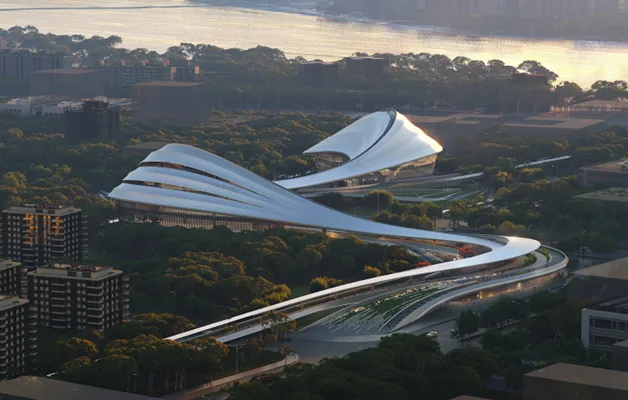
△ Aerial view of the building © Zaha Hadid Architects
Culture is the soul of a city. Xi’an, the ancient capital of thirteen dynasties, has made great efforts to preserve and “inherit” its urban culture throughout its development, allowing this profound cultural heritage to shine with renewed vitality and opportunity.
Located in the core area of Academician Valley in Jinghe New City, Xixian New Area — a national-level new district in Xi’an — the Jinghe New City International Cultural and Art Center is set to emerge as a new urban cultural landmark. This dynamic center will serve as a driving force for Xi’an’s development, blending regional cultural identity with contemporary art trends.
Zaha Hadid Architects drew inspiration from the image of a “surging river” to design this vibrant building. As the project’s structural consultant, Oyana has led the structural design through the conceptual and expansion phases. Recently, the project passed the special seismic review for over-limit high-rise buildings, completed its project plan and preliminary design, and has now entered the construction drawing stage.
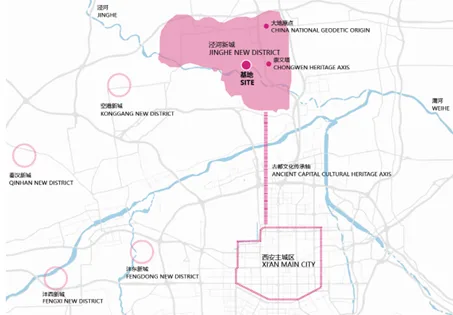
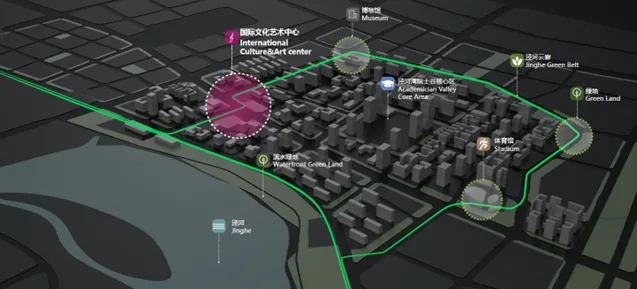
Project area overview © Zaha Hadid Architecture Affairs
The project spans 78.89 acres with a total construction area of approximately 56,000 square meters. Jinghe Avenue, the main regional road, divides the site into northern and southern plots, which are connected by the “High Line Cloud Corridor” and several pedestrian bridges. Upon completion, the center will offer a rich variety of cultural experiences including reading spaces, theaters, art exhibitions, and ecological landscapes.
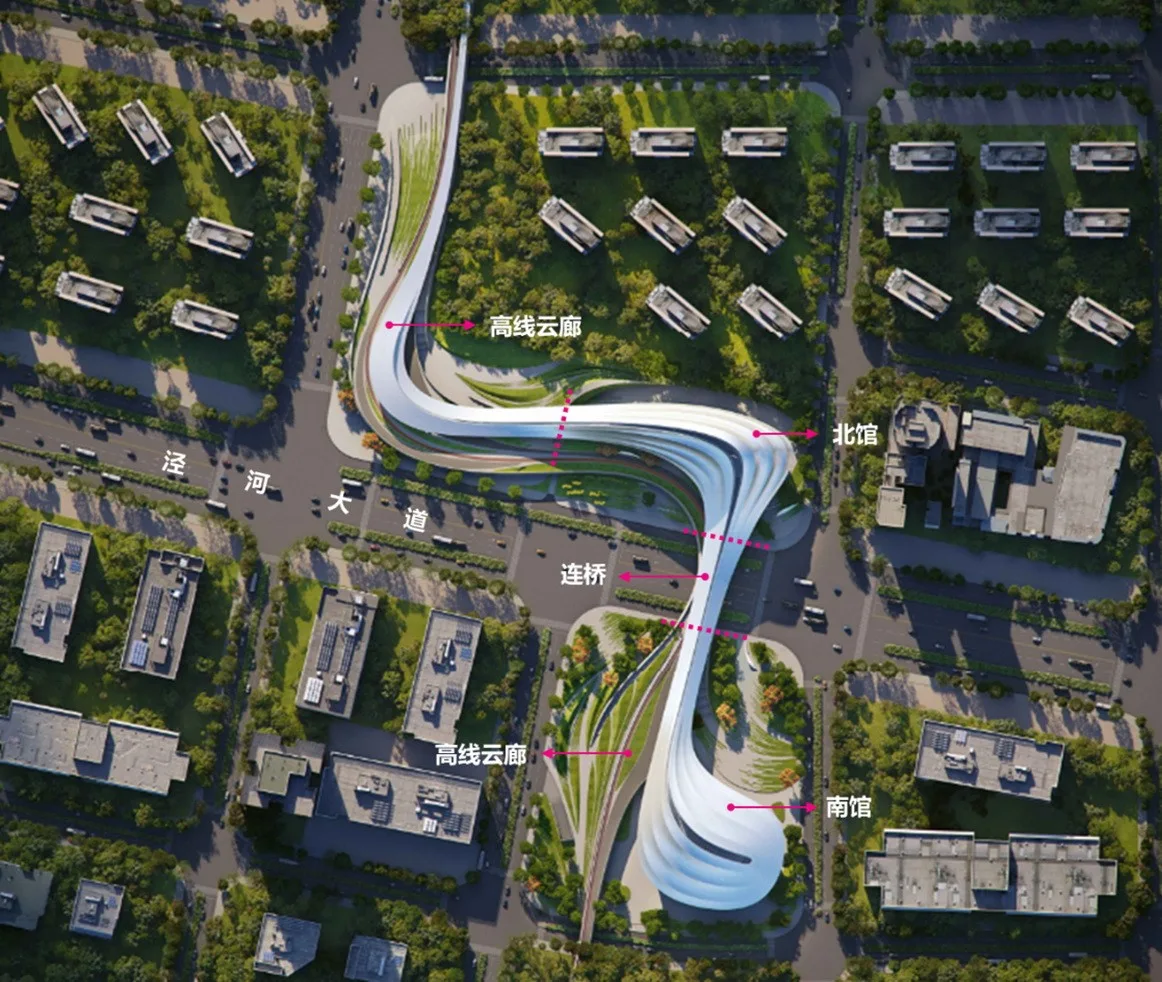
△ Overall project plan © Zaha Hadid Architects
Parametric Modeling: Capturing the Beauty of Curved Forms
The project’s signature feature is its streamlined roof, composed of intricate and varying spatial surfaces — a hallmark of Zaha Hadid Architects’ distinctive architectural language. Traditional 2D drawings and design methods fall short in accurately representing such complex geometries, making it challenging to coordinate spatial layouts across disciplines.
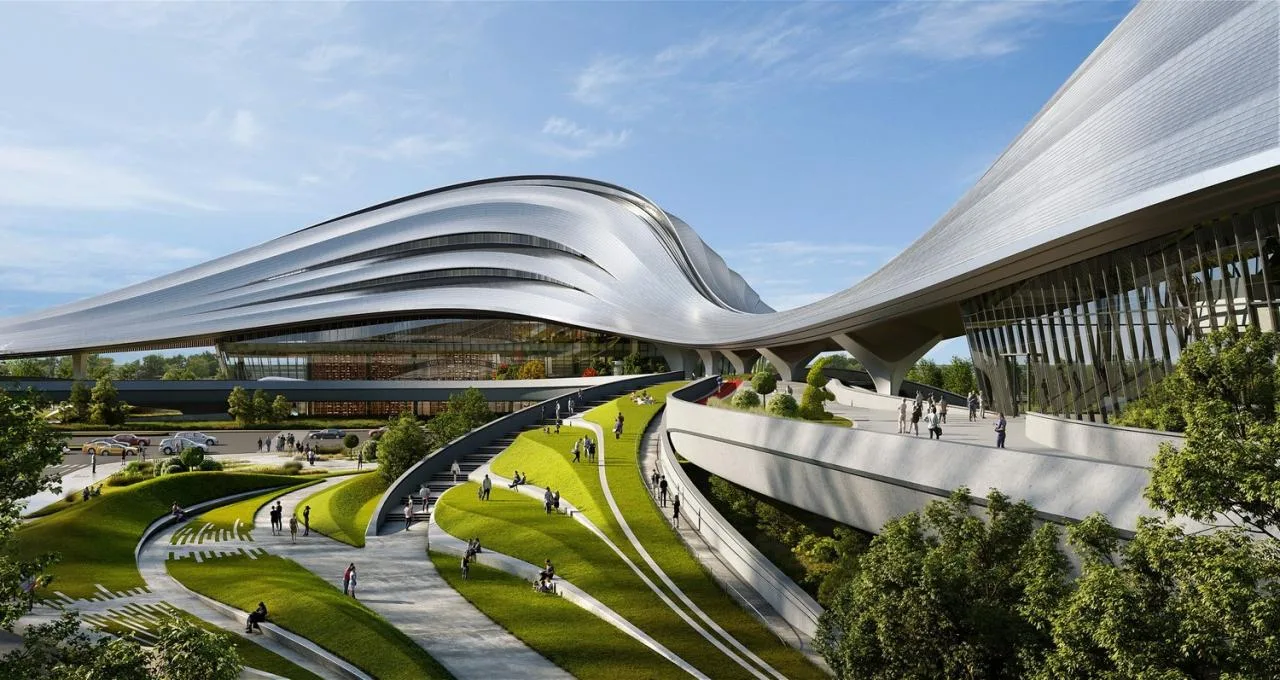
△ Architectural rendering © Zaha Hadid Architects
To overcome these challenges, advanced digital modeling was introduced early in the design process. This allowed for structural form finding and exploration of structural schemes for the complex roof system, ensuring the architectural vision was realized while maintaining constructability and interdisciplinary coordination.
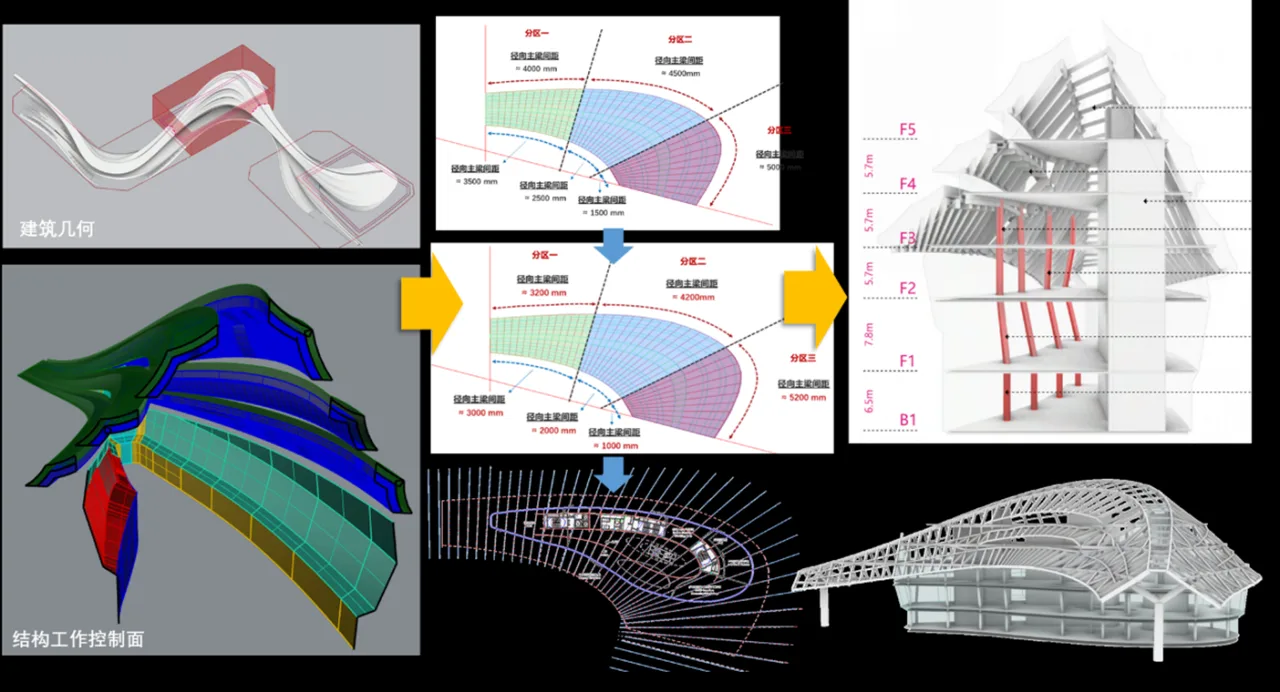
△ Roof structure form-finding and modeling process for the North Pavilion © Arup
The Arup structural design team utilized Rhino, Grasshopper, and Python for parametric modeling. Starting from the architect’s initial geometric concept, they integrated architectural modeling logic with structural stress principles to establish a range of geometric, material, and mechanical parameters. This resulted in flexible parametric structural models that could be adjusted dynamically.
This parametric platform interfaces swiftly with structural analysis software to generate analysis models and perform design calculations. By tweaking parameters, the engineers could explore various structural layouts that accommodate the building’s complex geometries, striving to perfectly express the architectural intent.
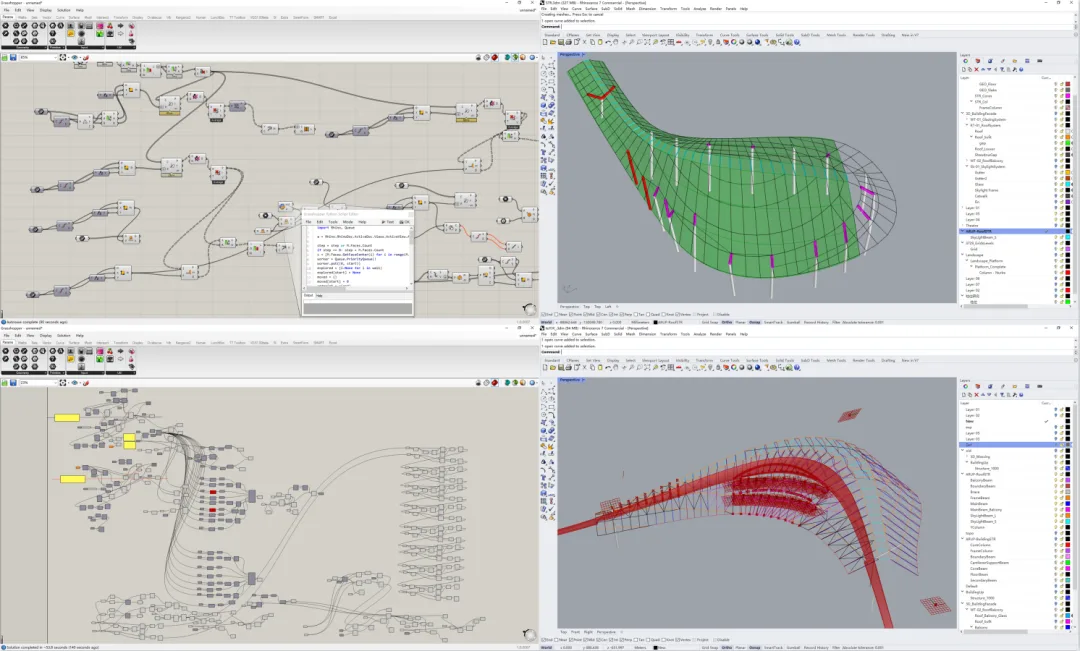
Parametric structural model of the roof © Arup
The “High Line Cloud Corridor,” a bridge structure connecting the north and south plots, stretches approximately 350 meters and forms part of the city’s planned circular pedestrian parkway. Supported by 14 piers, the bridge’s design is fluid and diverse, harmonizing with the site’s evolving architectural language.
The corridor’s centerline features a series of complex curves with varying radii, and the bridge deck itself is a continuously changing curved surface. These unconventional shapes present significant challenges for structural design and construction.
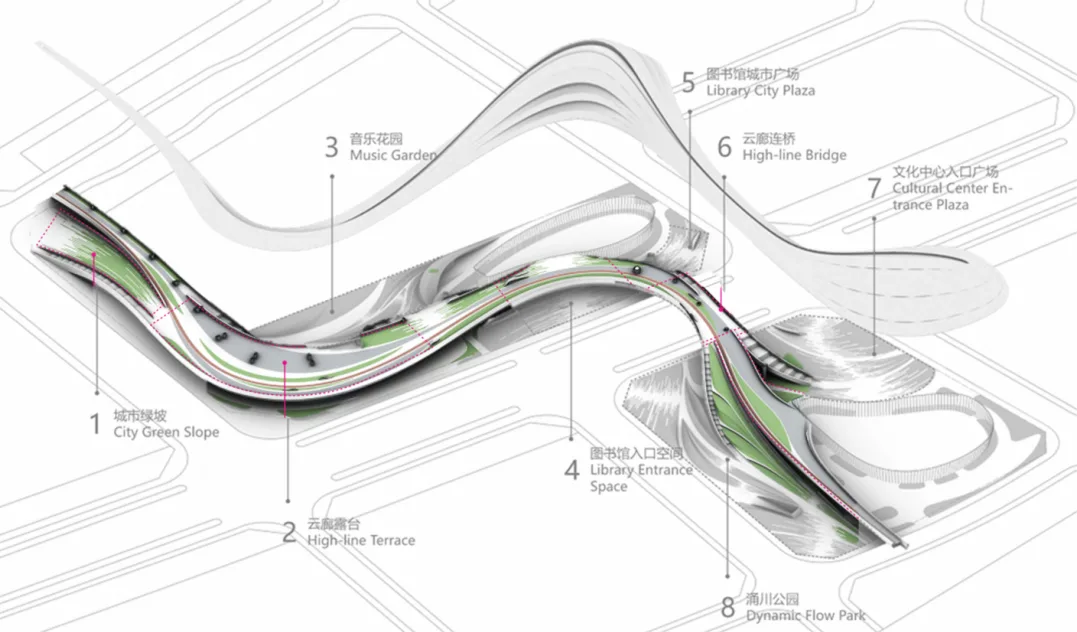
Schematic of the “High Line Cloud Corridor” © Zaha Hadid Architects
The design team employed parametric modeling to refine the bridge’s geometric components continuously, ensuring the bridge’s shape adjustments were feasible for construction.
The northern section of the corridor features the most complex curves with a tight turning radius, making traditional prestressed concrete unsuitable. Instead, a steel box girder bridge was chosen to realize the complex geometry while maintaining sufficient clearance below the bridge for safe construction.
Collaboration with the architects allowed control over the curvature of the remaining bridge sections, resulting in a smoother and more regular form. Using a prestressed concrete box girder structure for these sections improved the project’s economic efficiency without compromising constructability.
3D Spatial Coordination Integrating Multiple Disciplines
Parametric structural models enabled precise three-dimensional positioning of structural elements. These were integrated with architectural, curtain wall, and interior decoration models to verify spatial coordination and avoid conflicts during construction.
For instance, conventional 2D plans and sections struggle to clearly convey the spatial relationship between the irregular steel roof structure, roof curtain walls, and the indoor computer room roof intersection. Three-dimensional modeling allowed for detailed clash detection and enhanced design coordination.
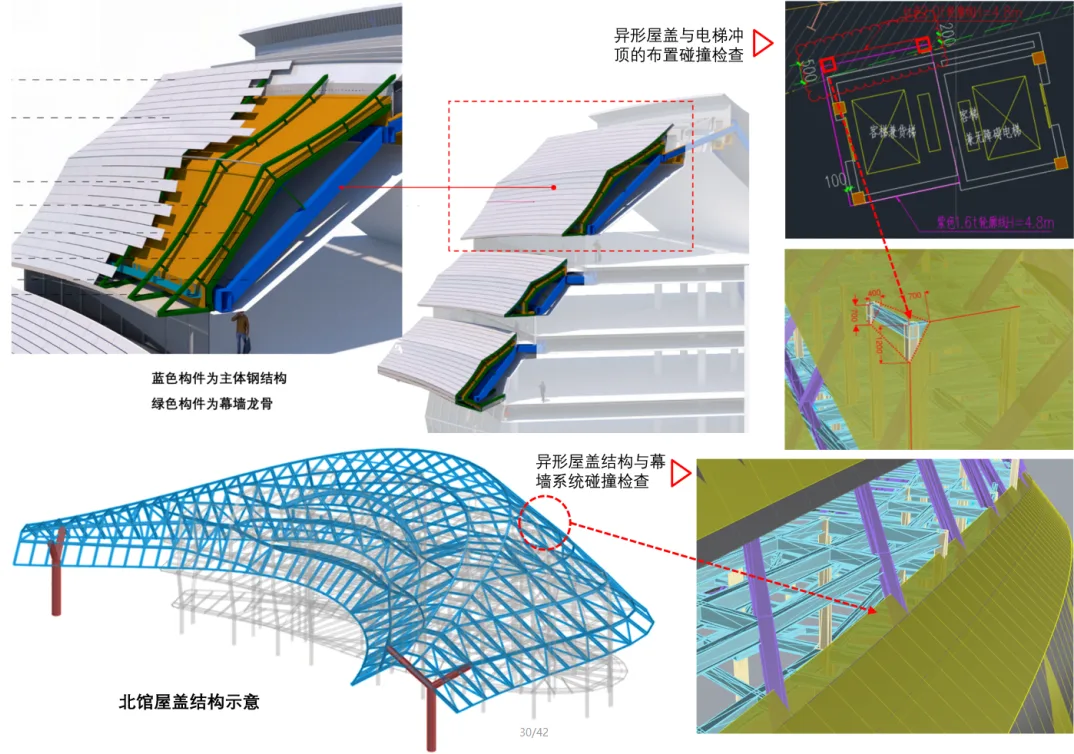
Collision detection between roof steel structure and curtain wall system © Zaha Hadid Architects/Arup
During the structural design of the “High Line Cloud Corridor,” a parametric bridge model was used to quickly adjust pier positions, quantities, main beam sizes, and curvature in response to architectural changes. This 3D model was assembled with other professional models — including curtain wall, MEP, and landscape — for coordinated clash detection and multidisciplinary collaboration.
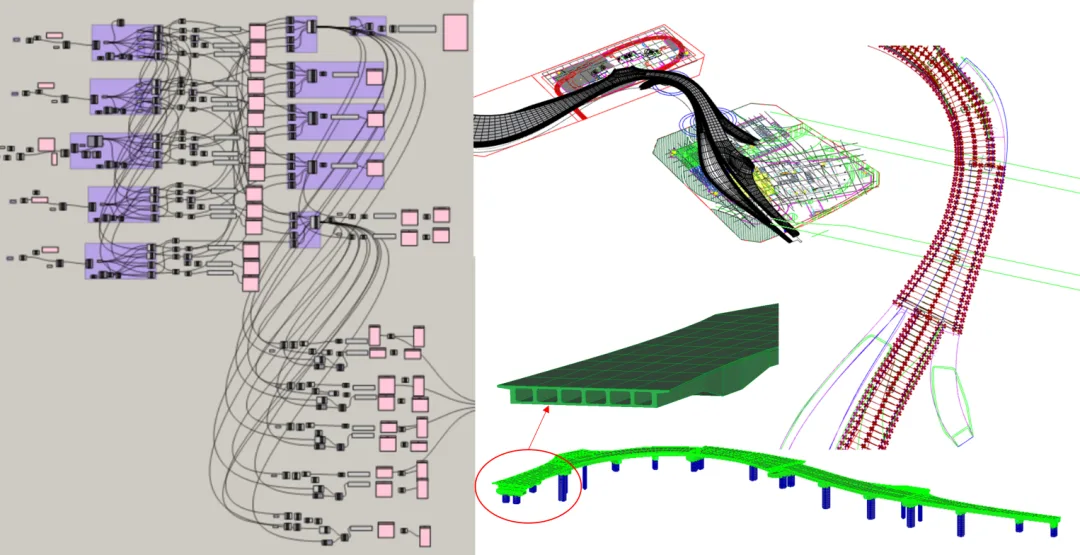
△ Parametric form-finding model of the “High Line Cloud Corridor” bridge structure © Arup
Ovabacus Platform: A Proprietary Digital Design Tool
During early design stages, engineers must rapidly compare and evaluate multiple structural strategies to identify the optimal solution. Efficient tools that support quick iterative modeling and analysis help complete multi-scheme research within limited timelines.
After years of independent development, Arup created the Ovabacus parametric design platform. This tool supports parameterized modeling and analysis model conversion and integrates with the PKPM-AID intelligent optimization system. It assists structural engineers in analyzing structural responses, determining load-bearing systems, sizing components, conducting economic comparisons, and ultimately achieving efficient and cost-effective designs.
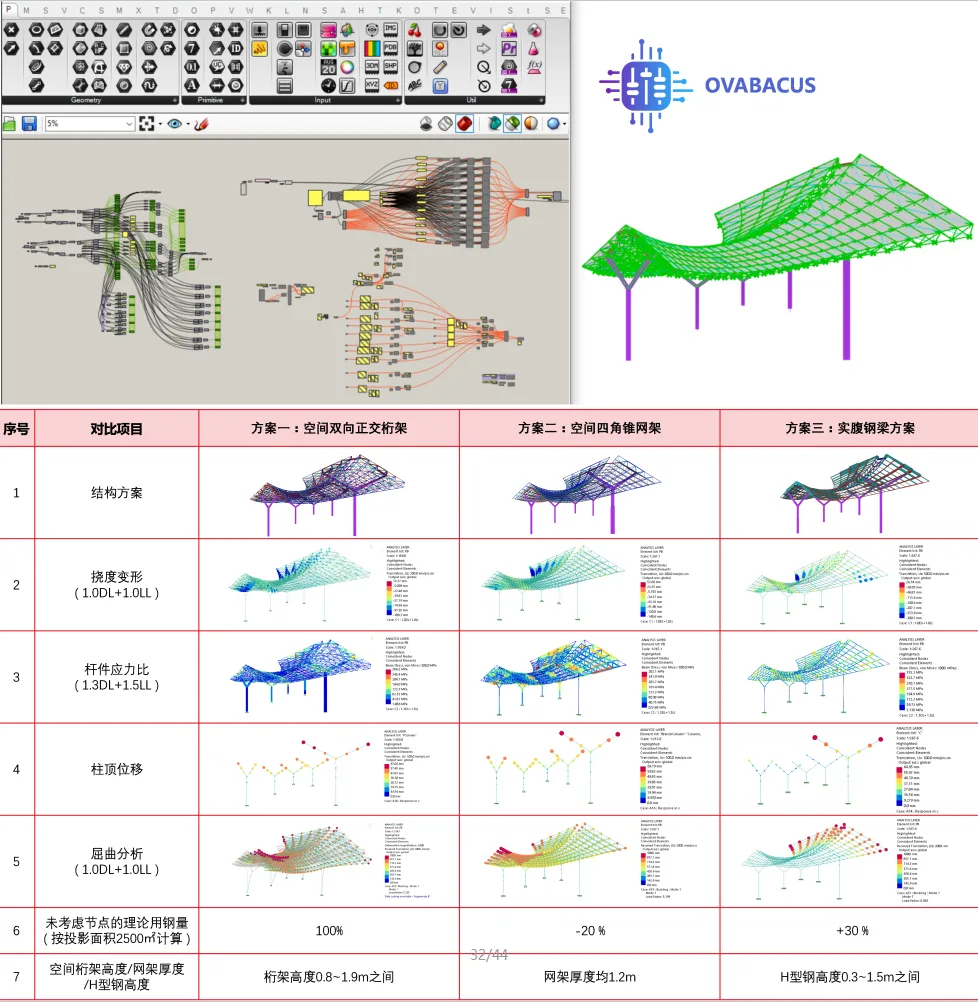
Parametric roof steel structure model with multiple scheme comparisons © Arup
For the Jinghe New City International Cultural and Art Center, the Ovabacus platform’s parametric modeling combined with PKPM-AID’s optimization algorithms automatically sized structural components based on stress and stiffness criteria, optimizing the roof steel structure economically.
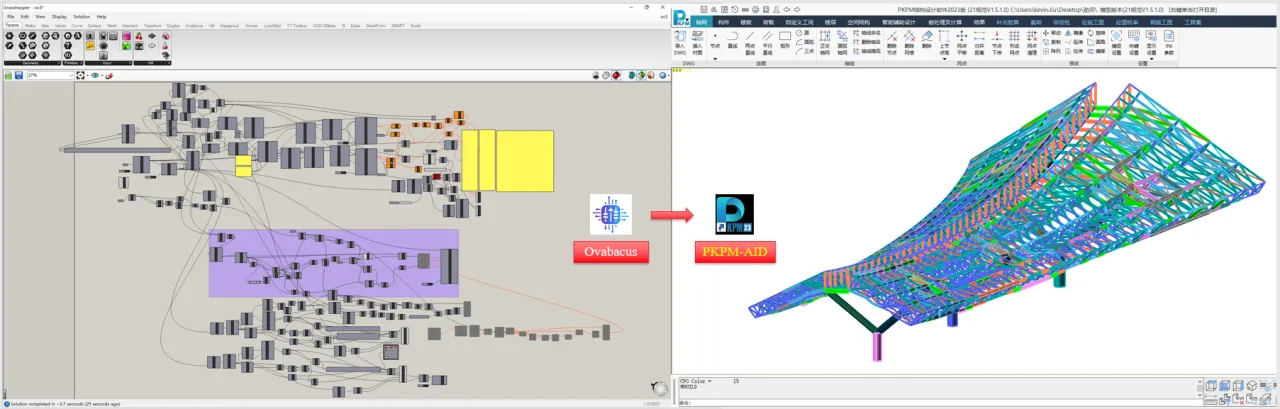
Parametric optimization process for roof steel structure © Arup
In complex roof areas, engineers also applied topology optimization algorithms to identify the most efficient force transmission paths. Based on material distribution patterns from this analysis, local structural layouts were refined and optimized.
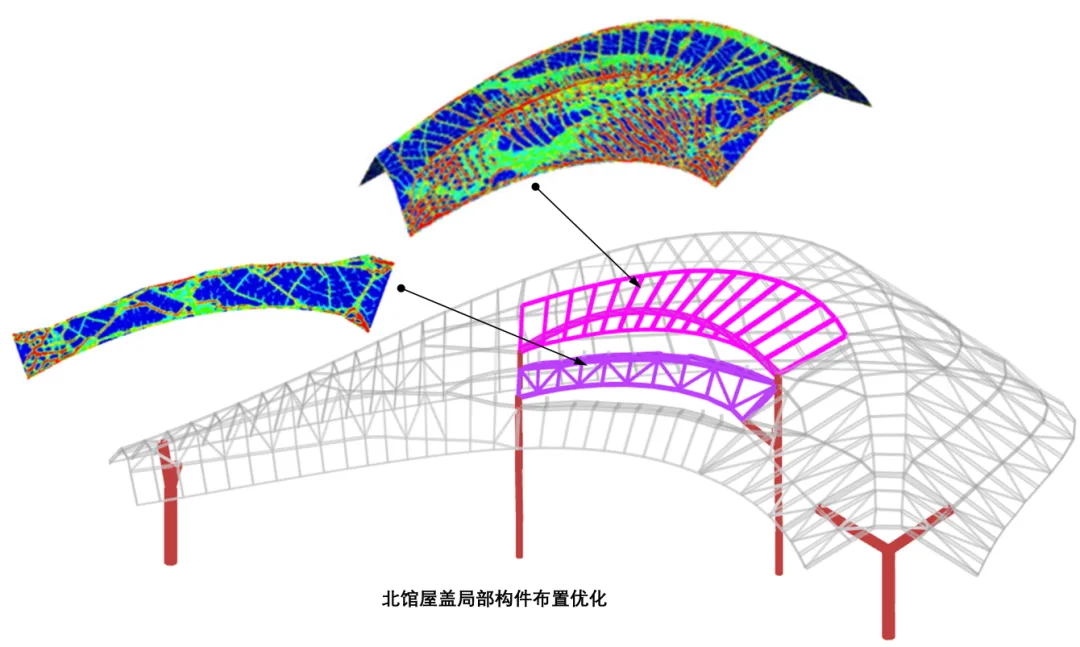
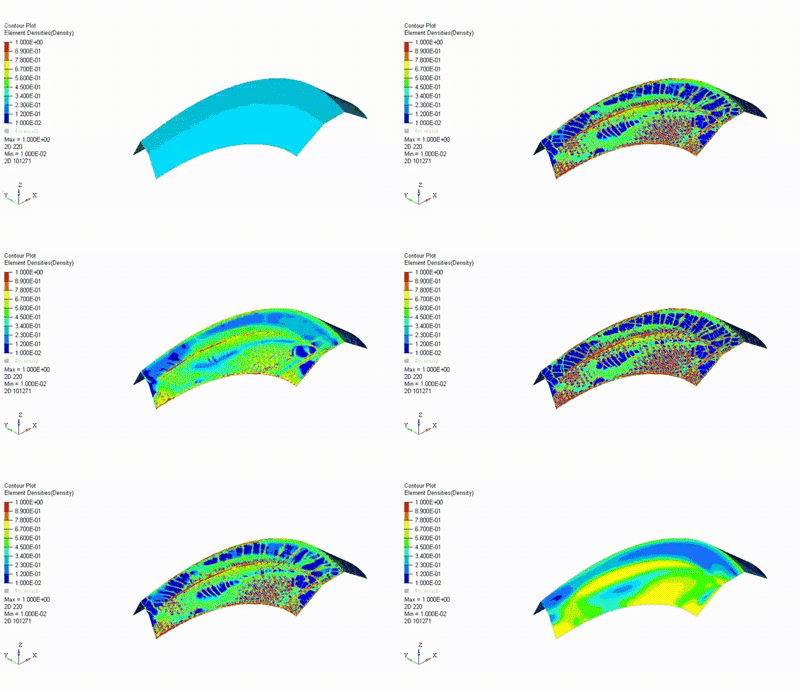
Topology optimization analysis of local roof structure © Arup
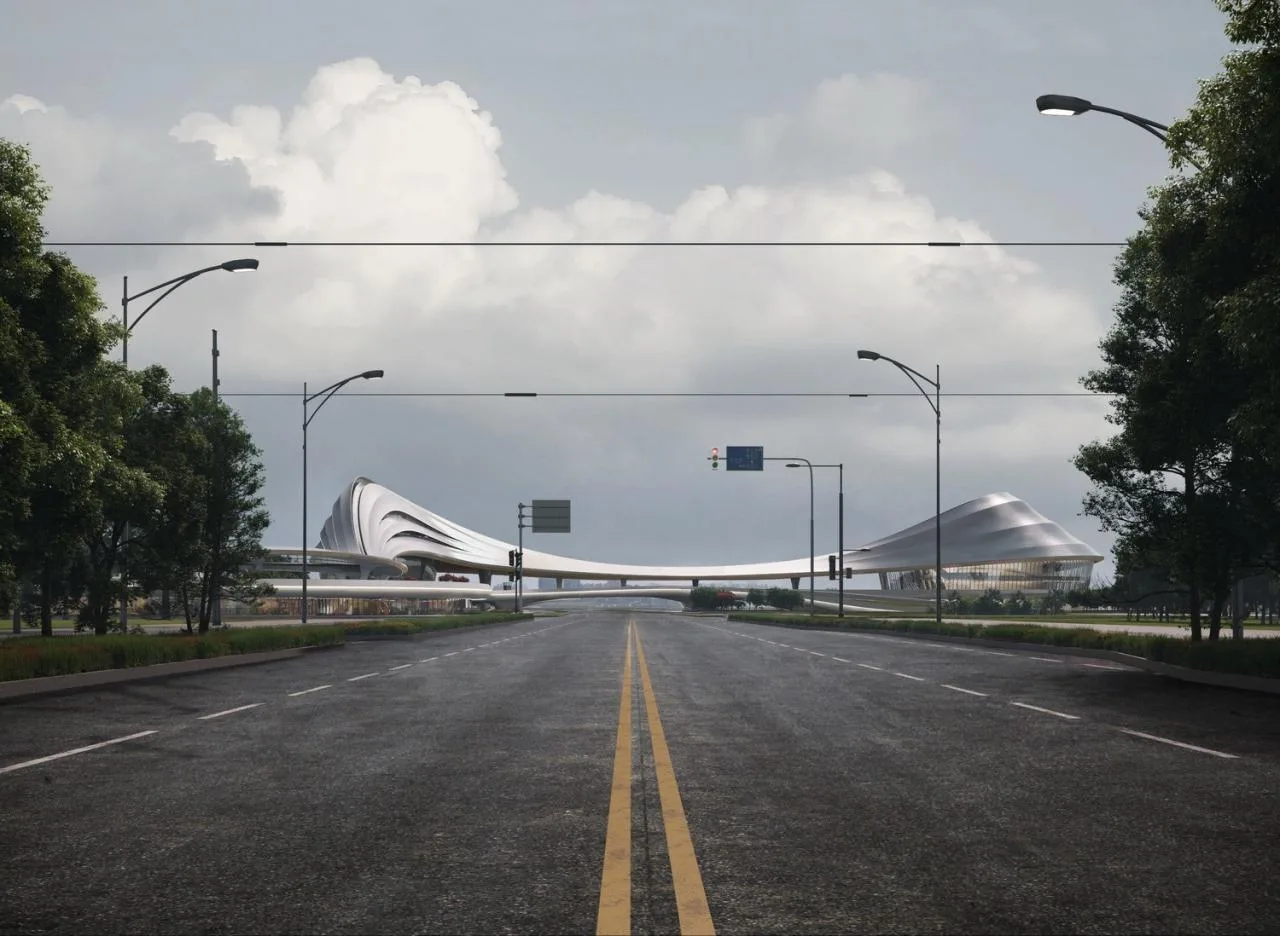
△ Architectural rendering © Zaha Hadid Architects














Must log in before commenting!
Sign Up