
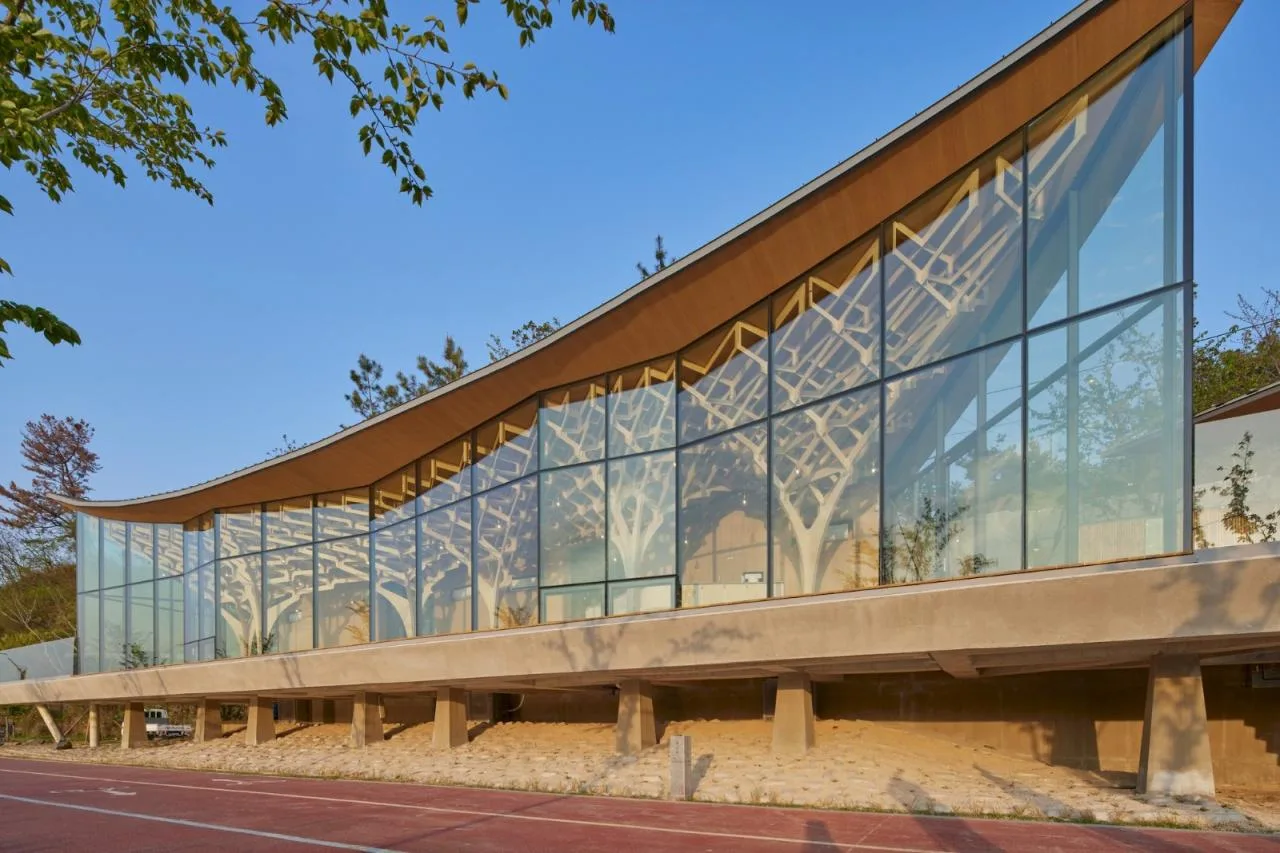
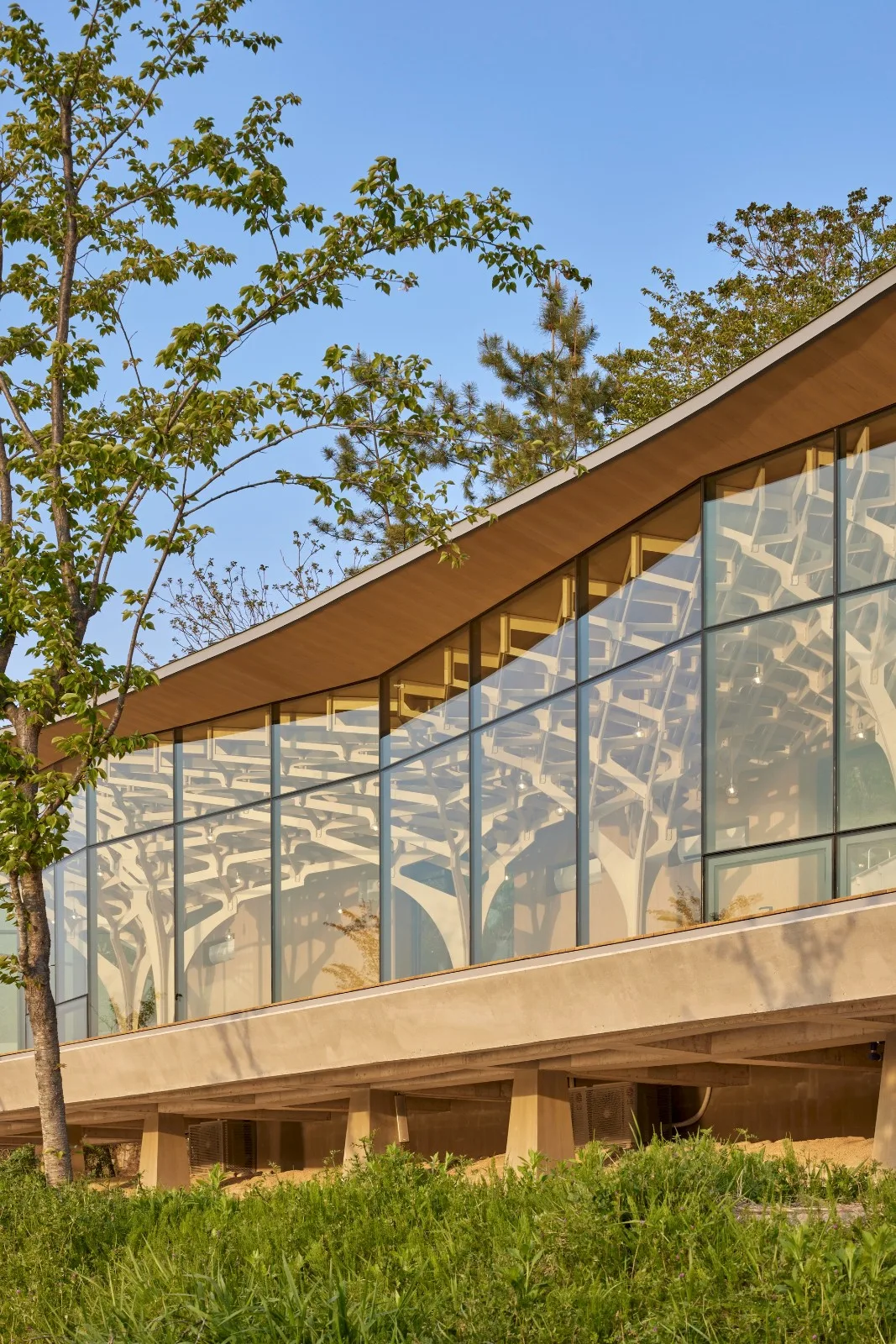
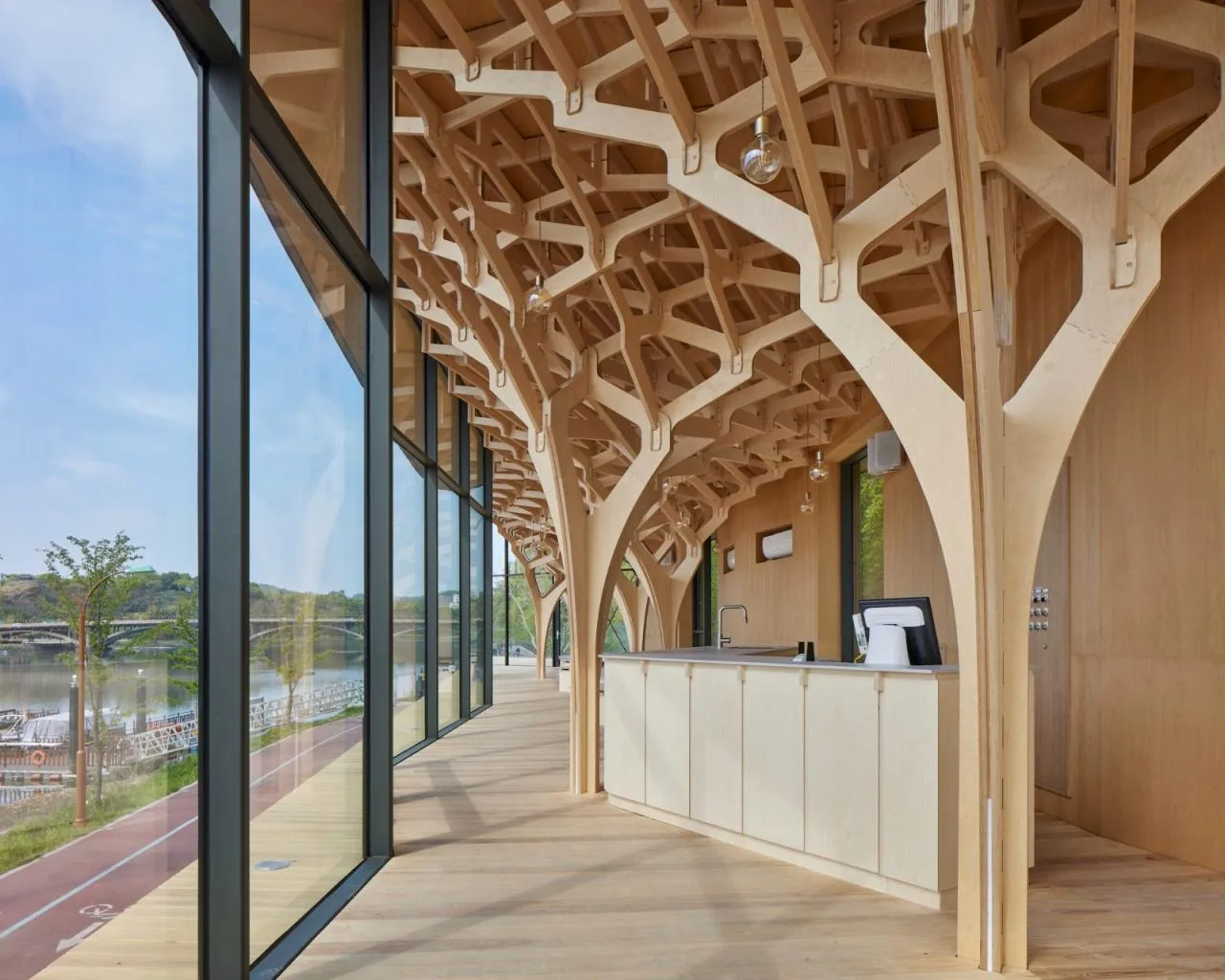
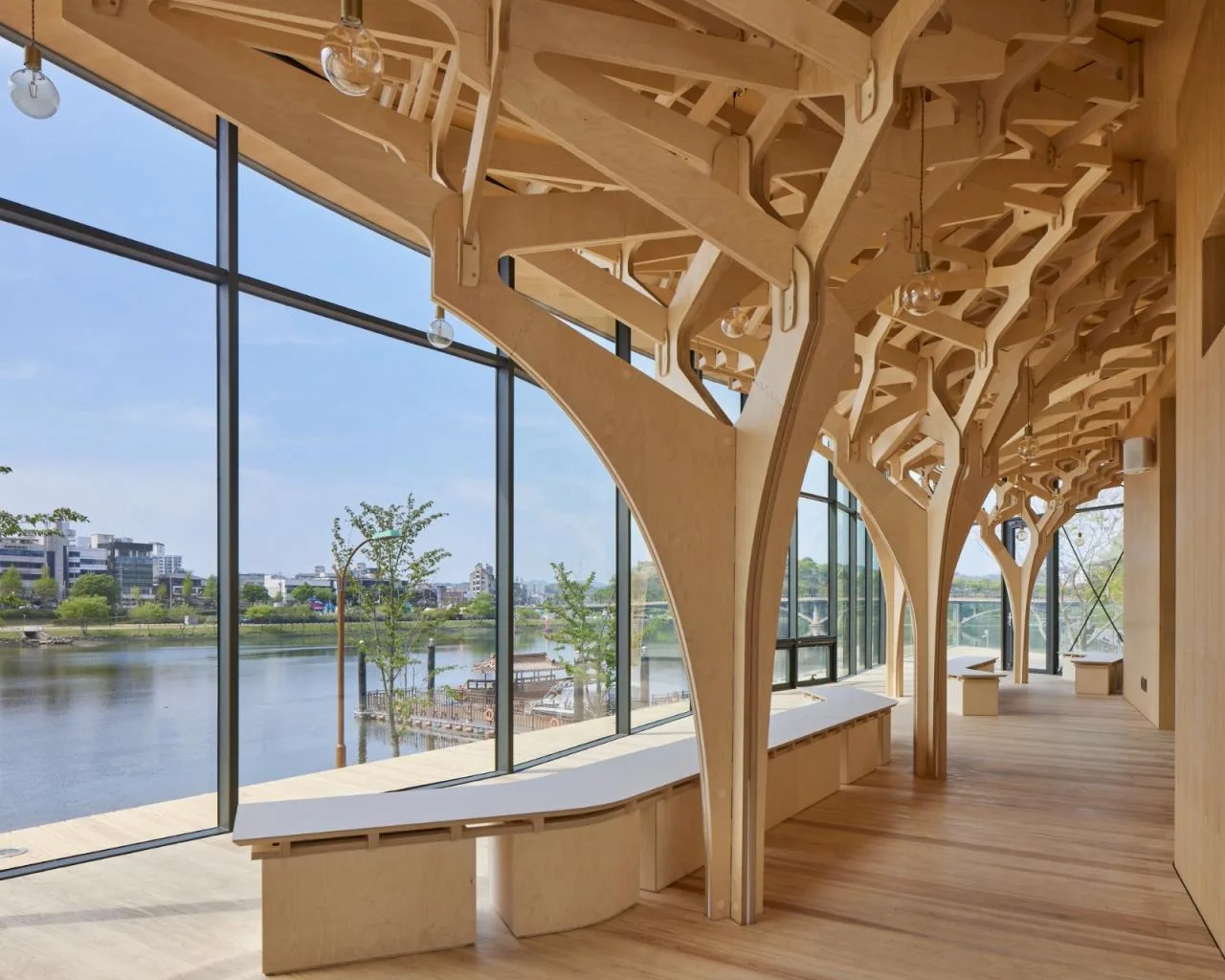
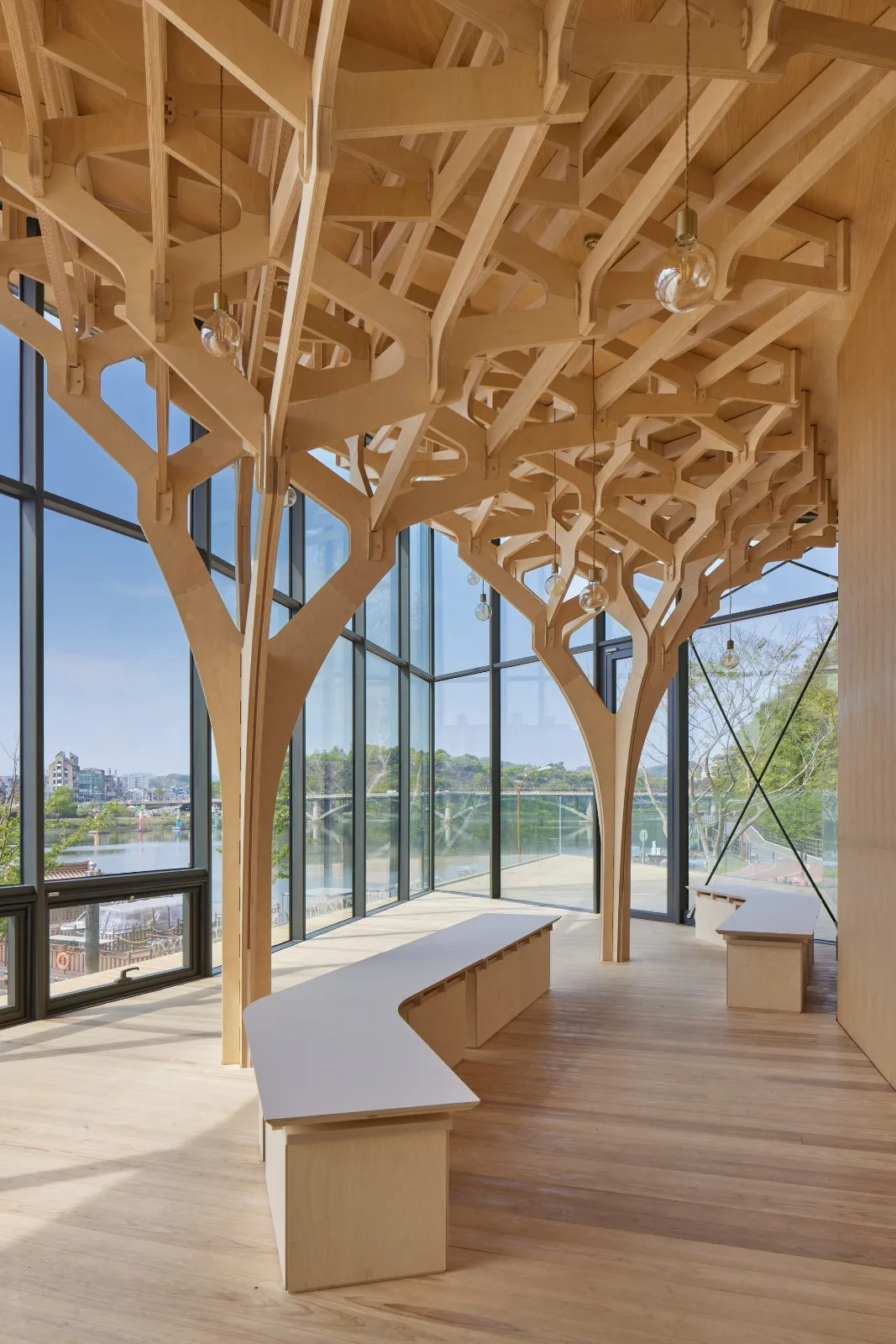
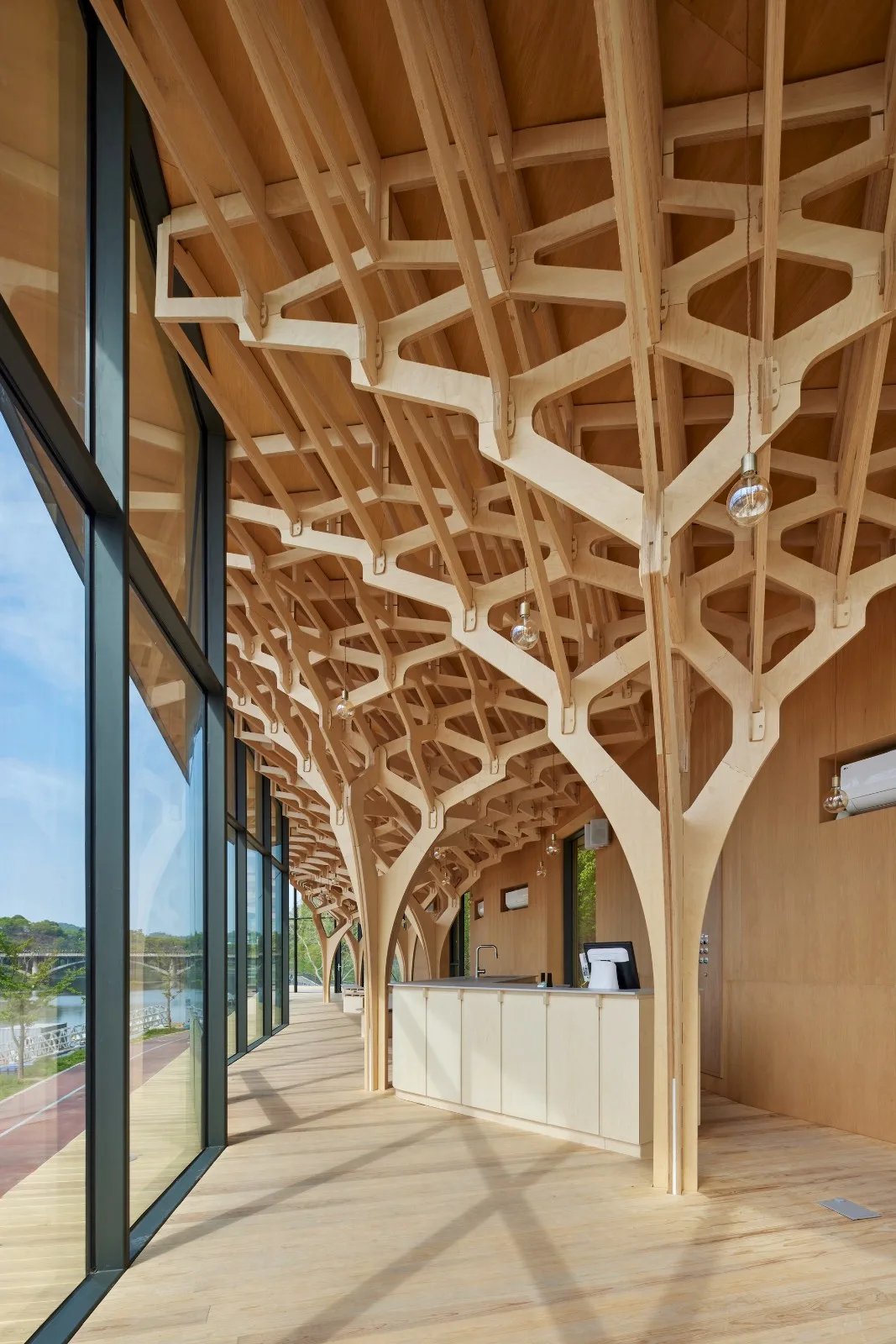
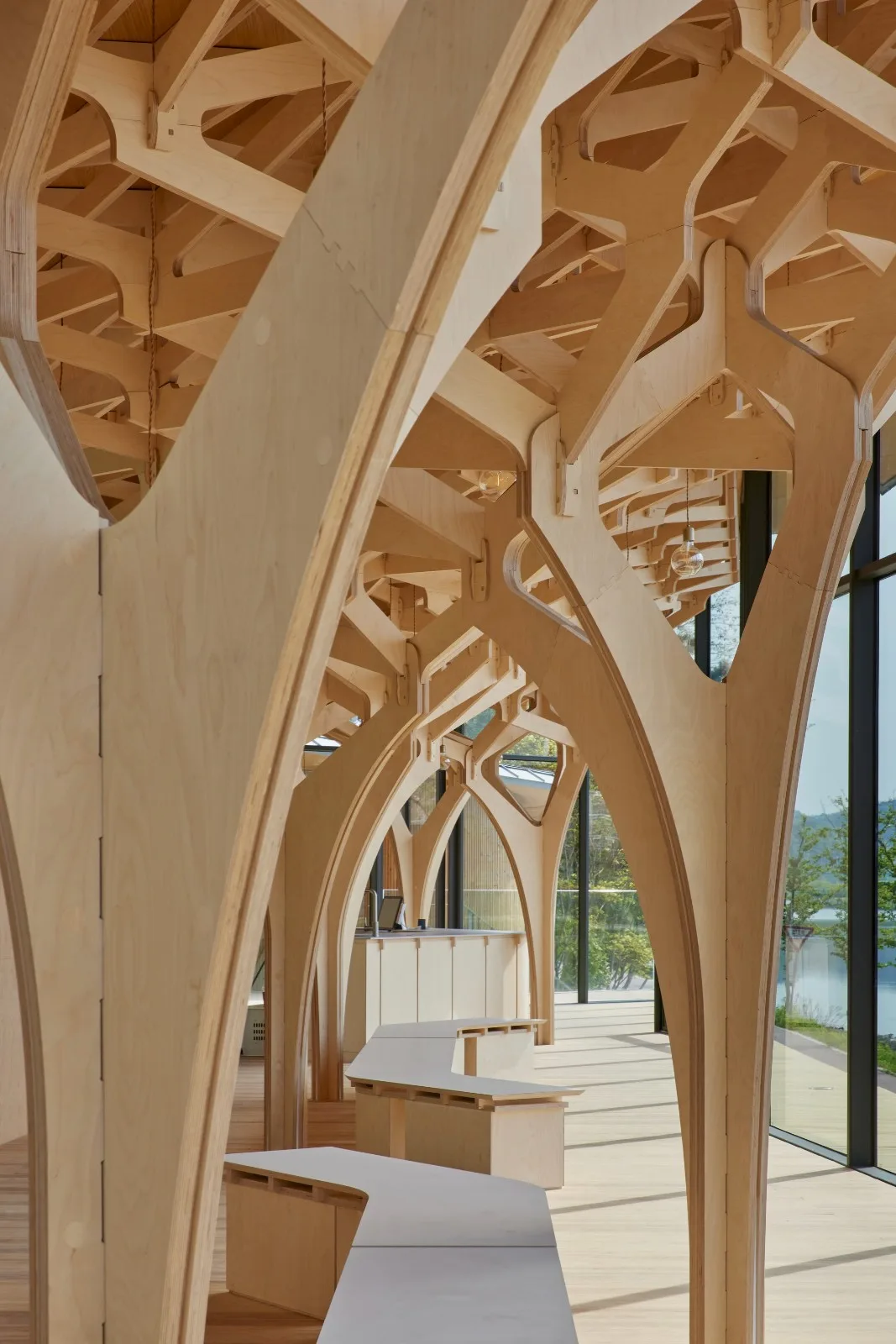
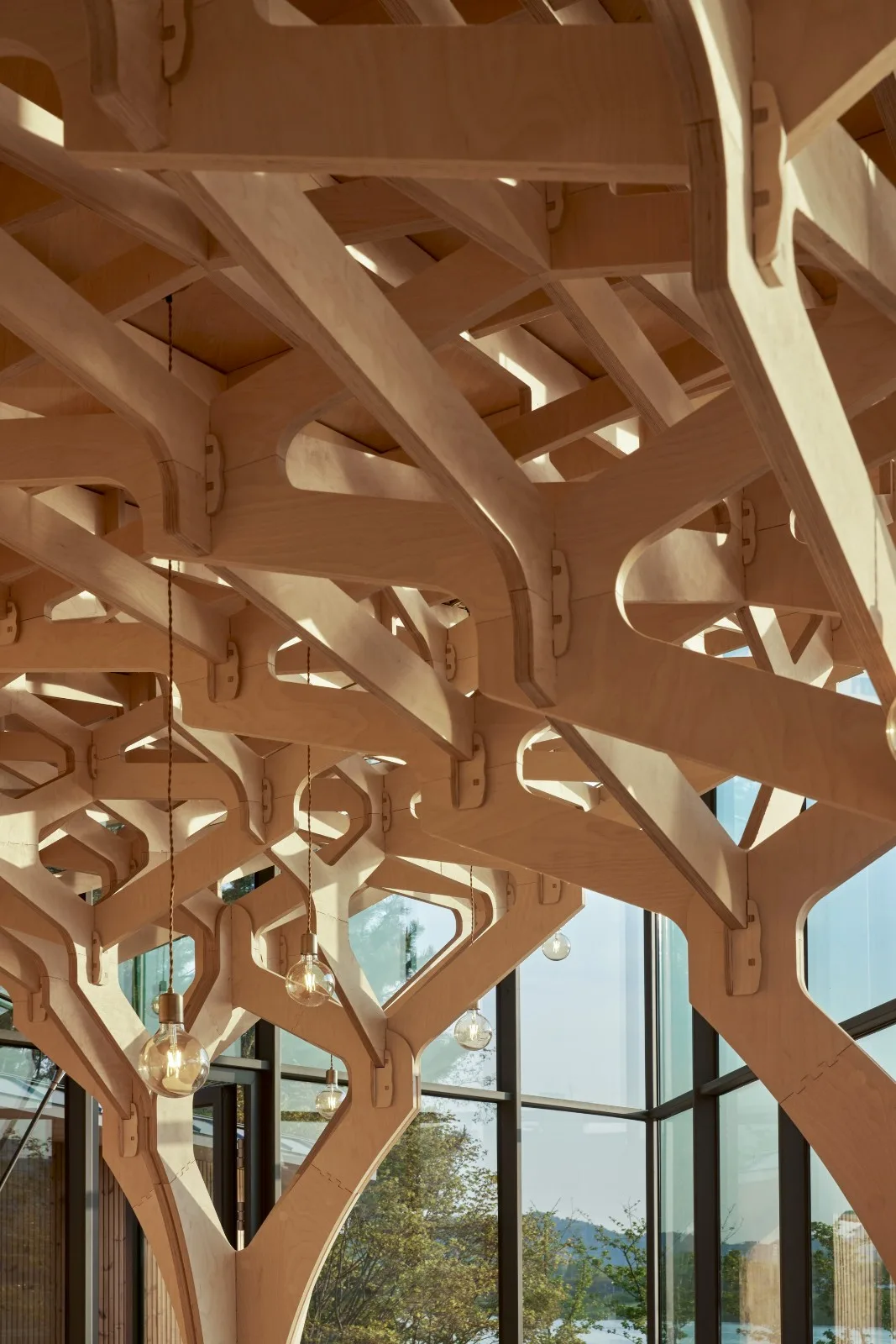
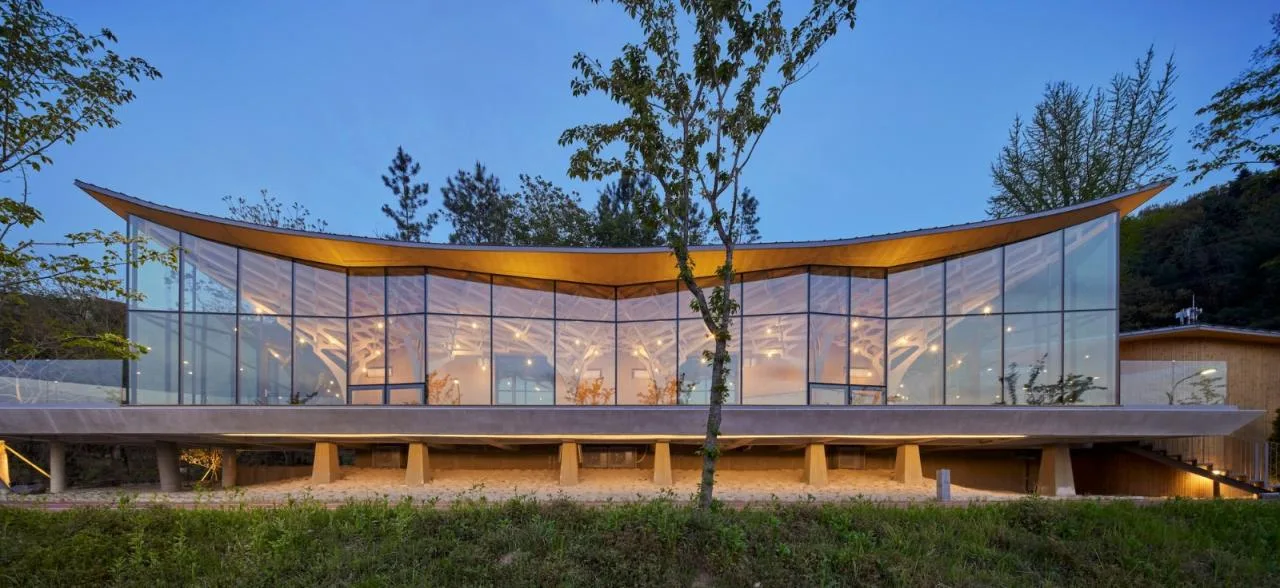
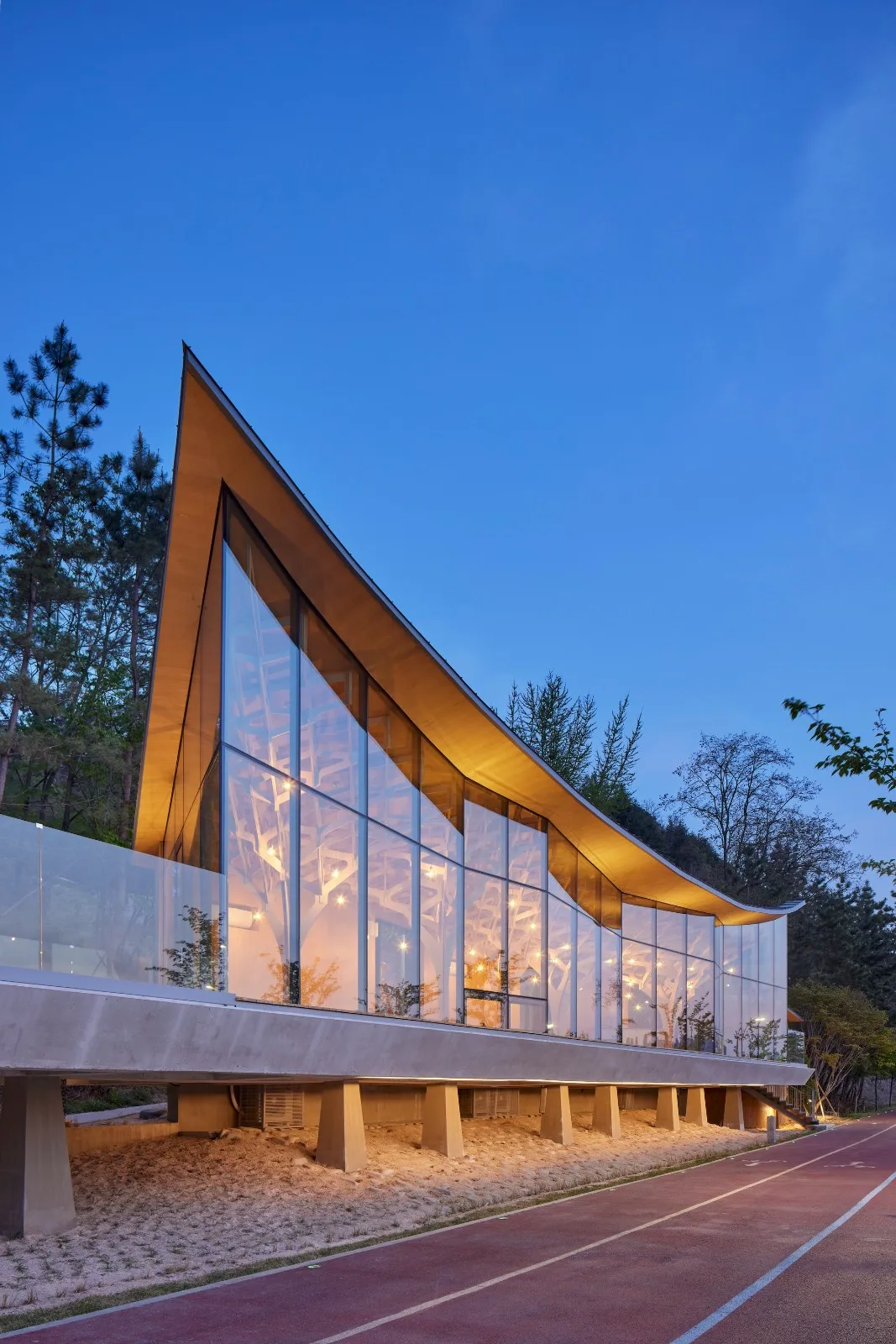
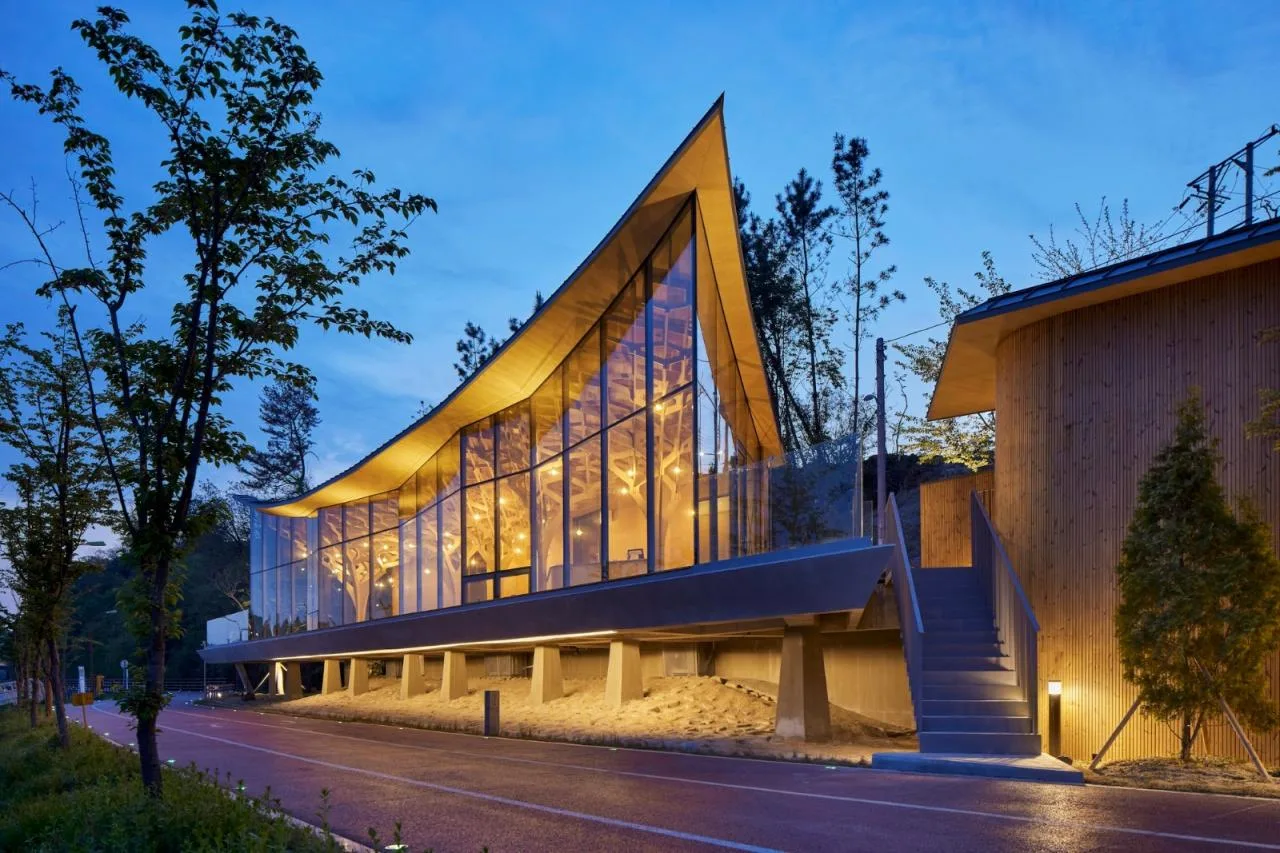
The Floating Light Pavilion aims to redefine East Asian wooden architecture, with a particular focus on the traditional -ru pavilion, one of the largest pavilion types in the region. The structure features six tree-like pillars that revive traditional assembly techniques and structural systems, such as wooden supports.
These pillars pay homage to the six columns on the façade of the Chokseok-ru, built in 1365 in Jinzhou, South Korea—the city where this project is located. Chokseok-ru stands as the most iconic historic building in the area.
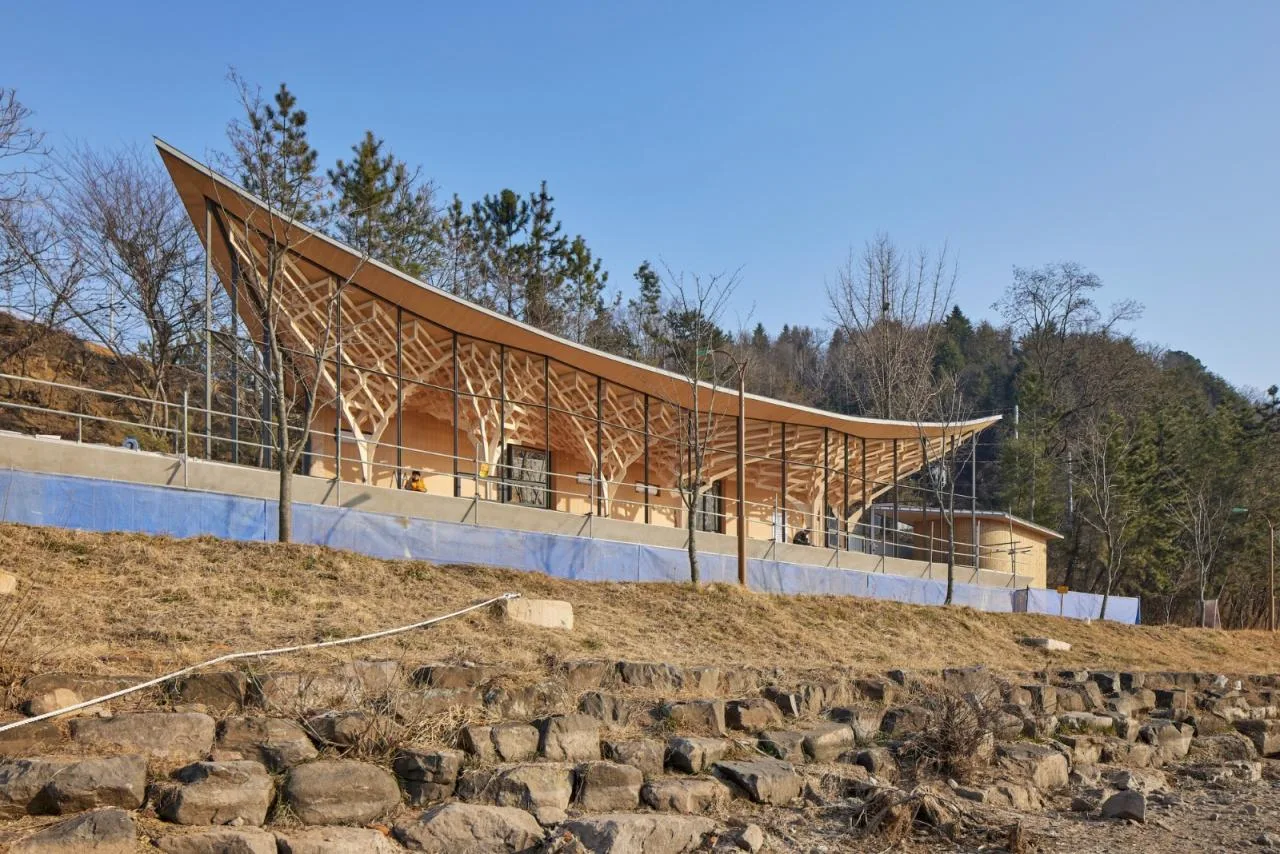
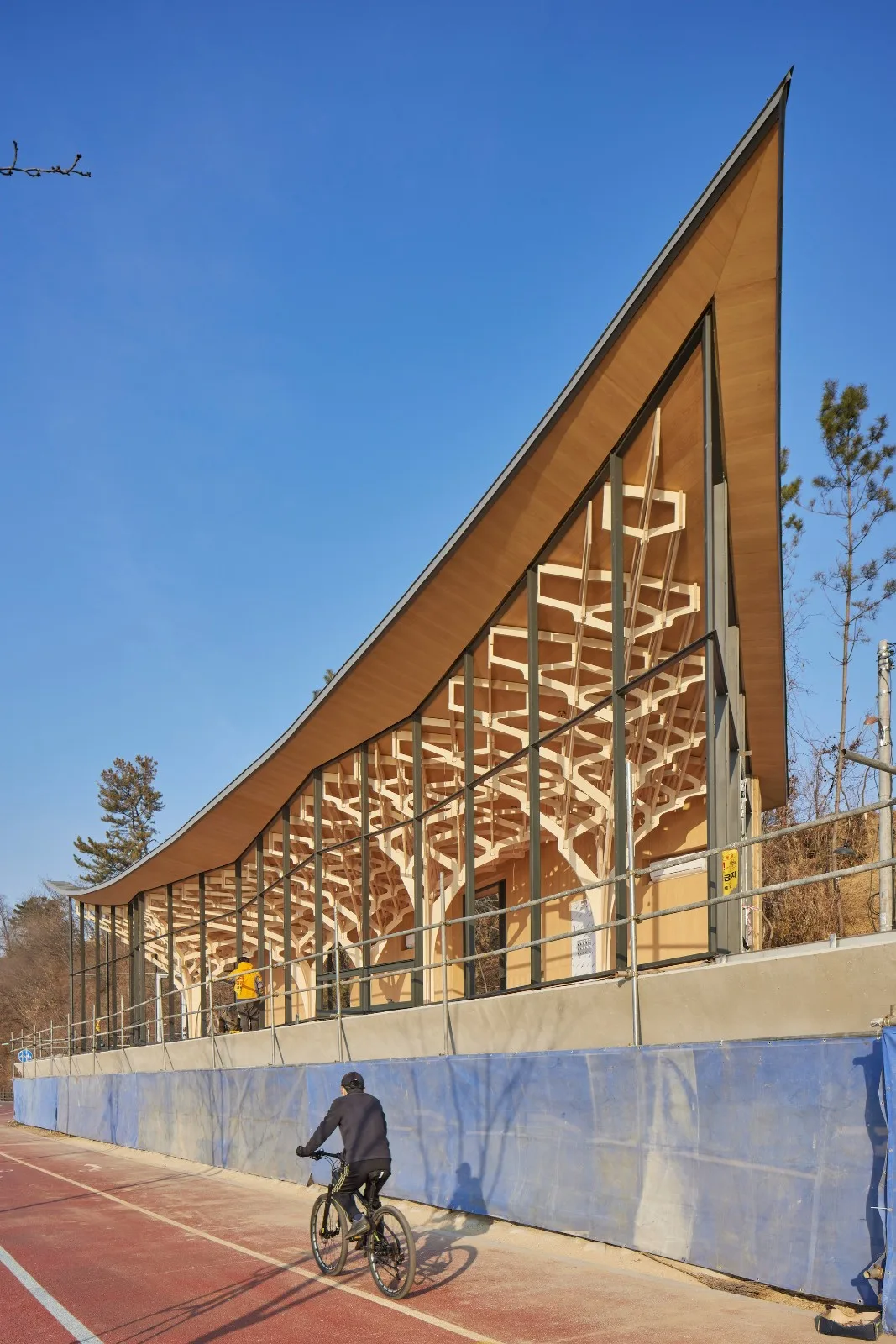
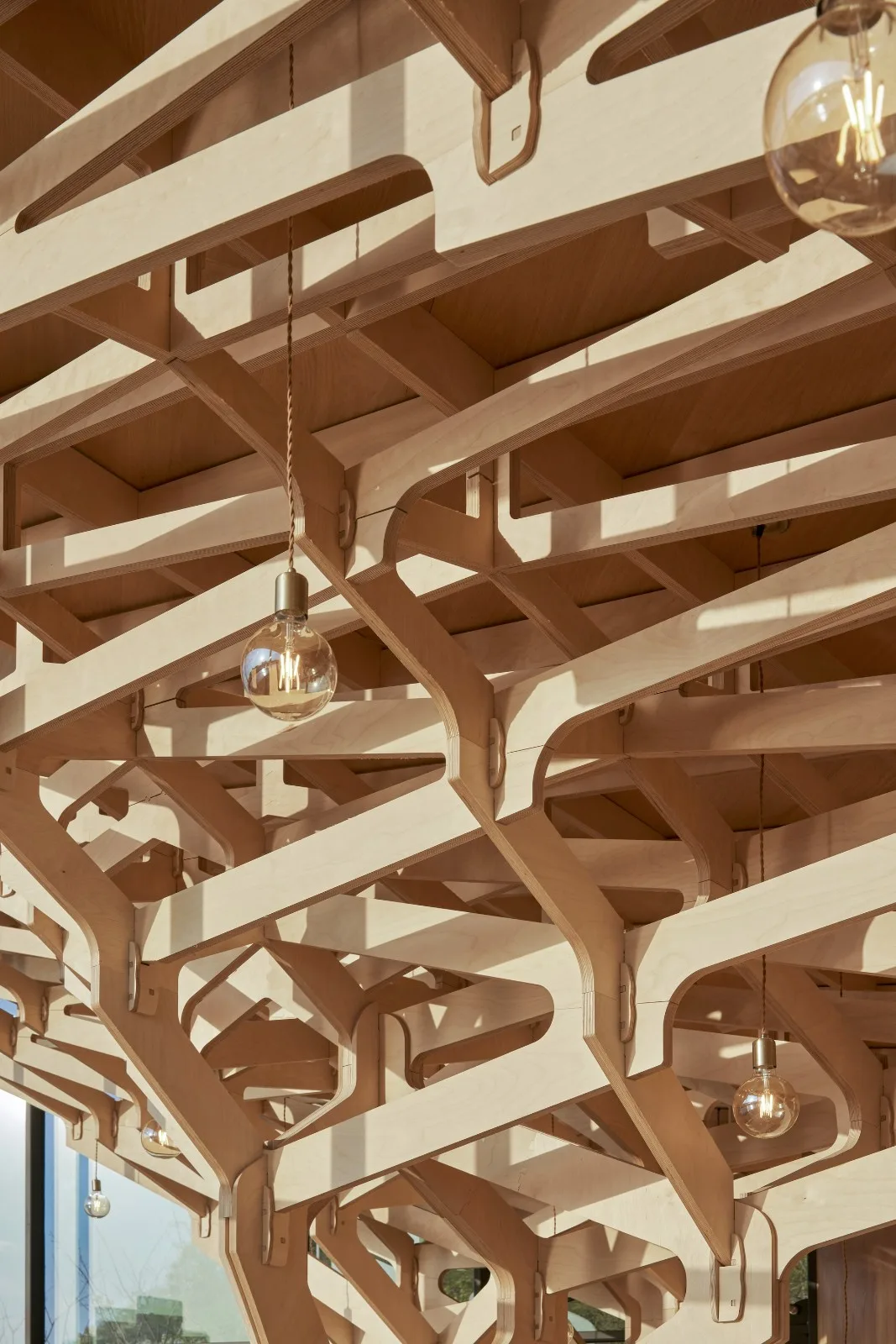
The design intentionally avoids the use of nails and adhesives to preserve original woodworking craftsmanship. However, to enhance construction efficiency, complex plywood components were CNC-cut and assembled into the tree-like structures using augmented reality technology. This approach showcases how contemporary technology can revive long-lost East Asian architectural handicrafts.
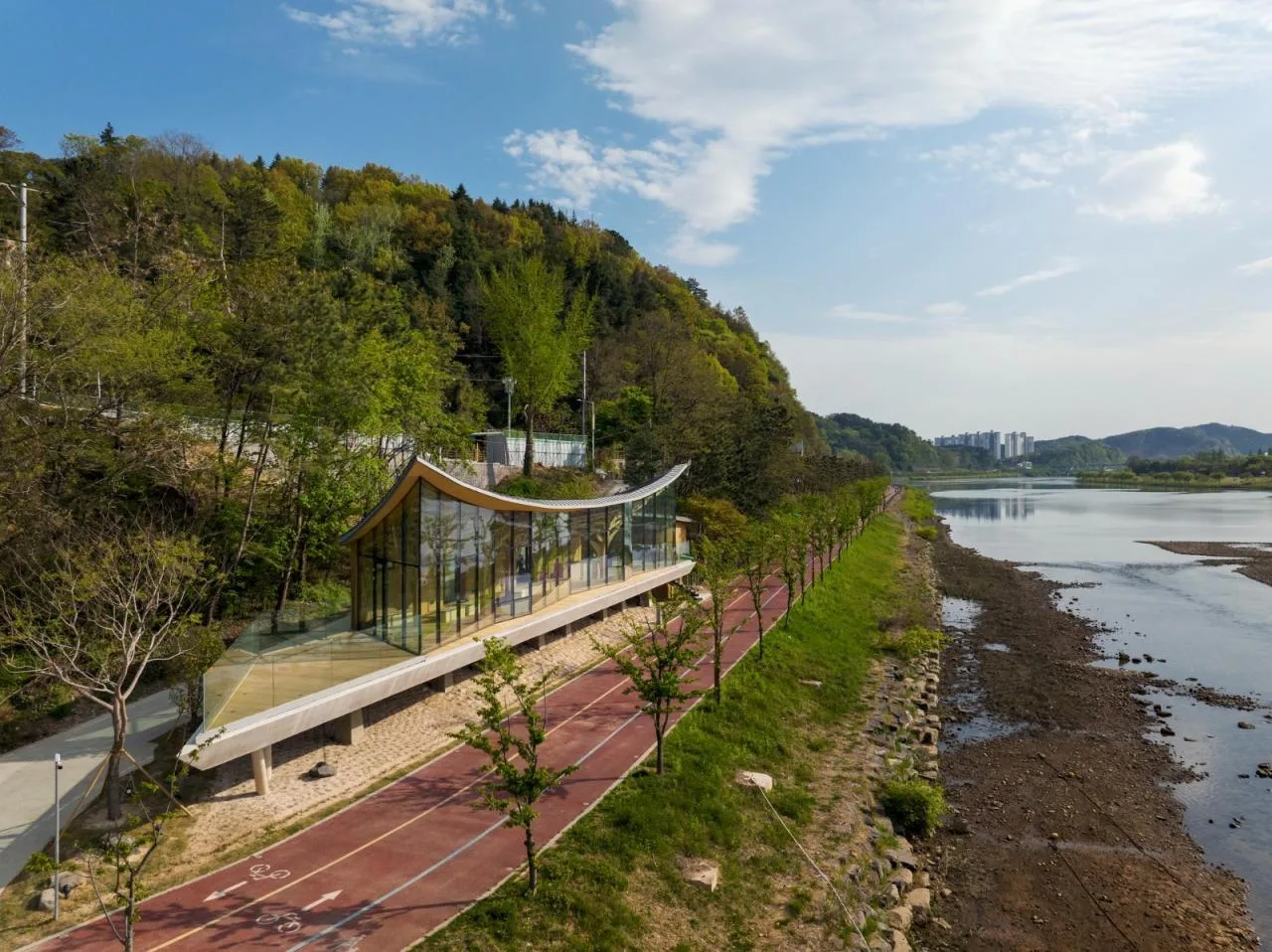
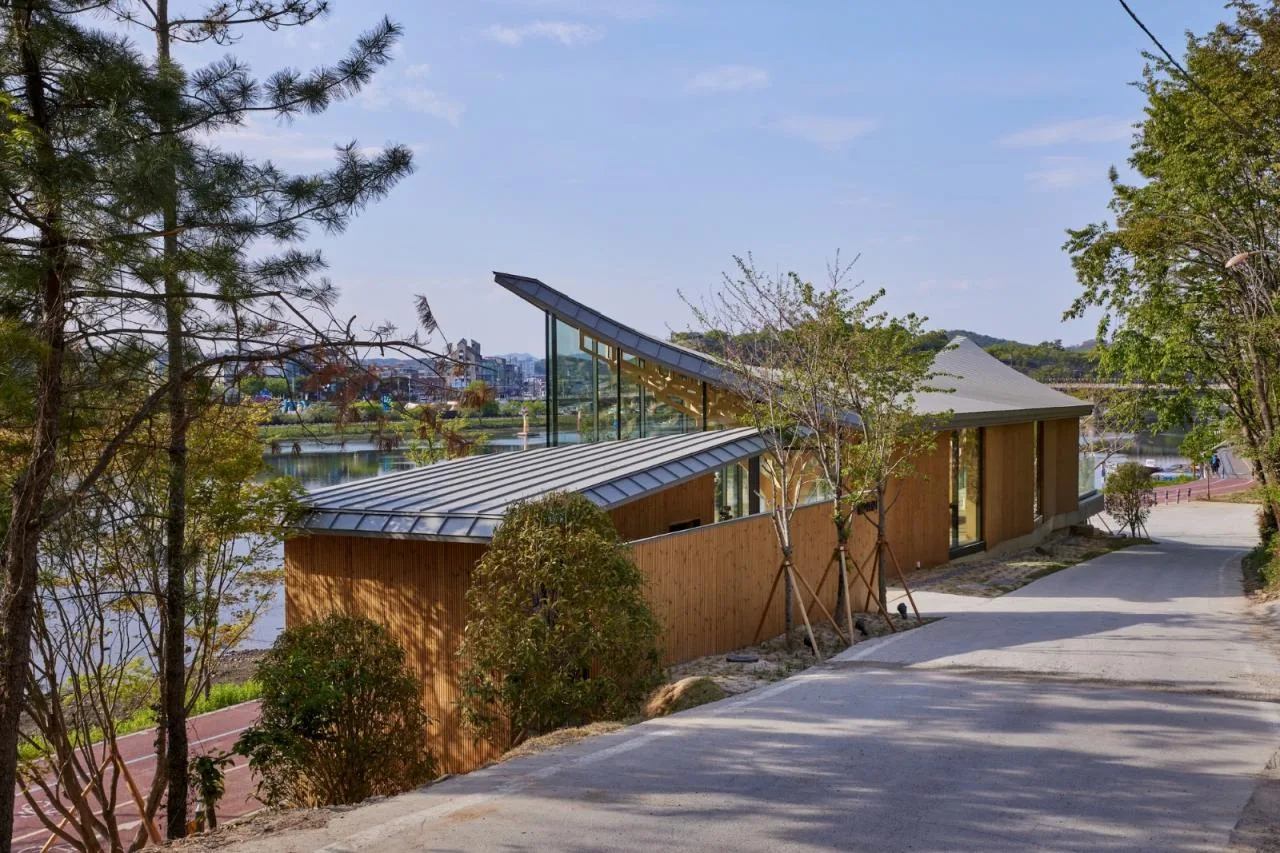
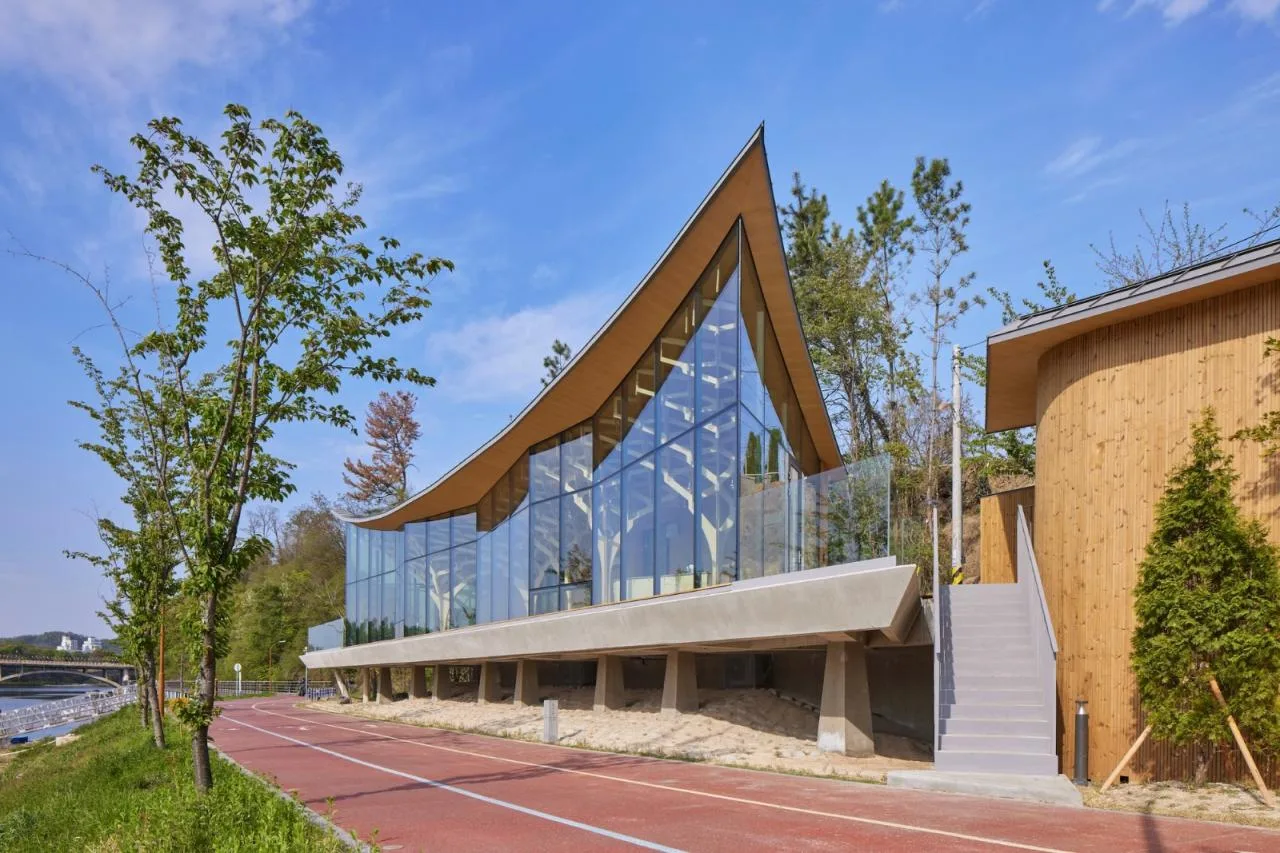
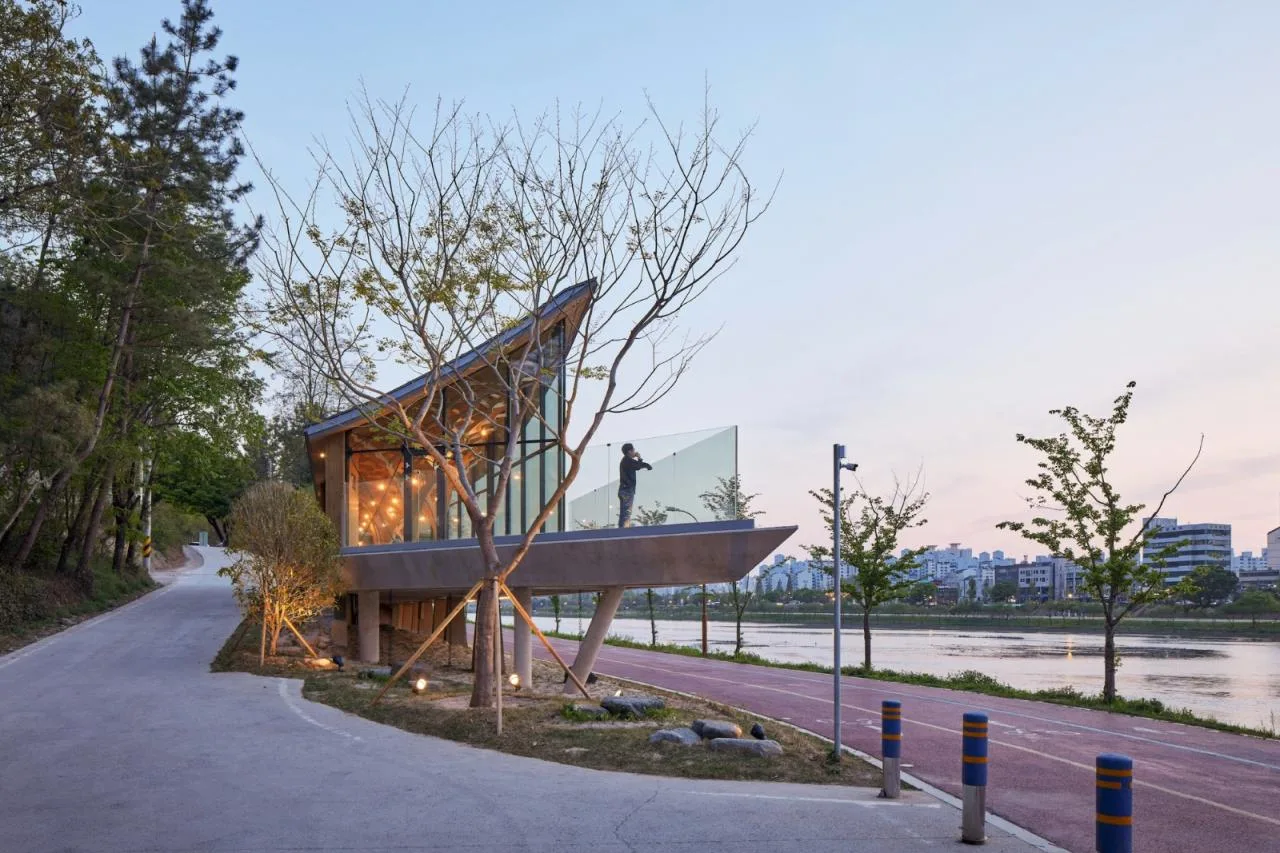
This project proposes a new interpretation of the -ru pavilion as a public civic platform for Jinzhou, one of South Korea’s historically significant southern cities. Traditionally, a -ru served as a landmark building with elevated floors for private or military observation. Here, the design reimagines the -ru for more inclusive public use.
Situated on the riverbank facing the Nanjiang River—a site with deep historical importance—the pavilion is envisioned as a riverside landmark welcoming visitors during the renowned local event, the “Flowing Light Festival.”
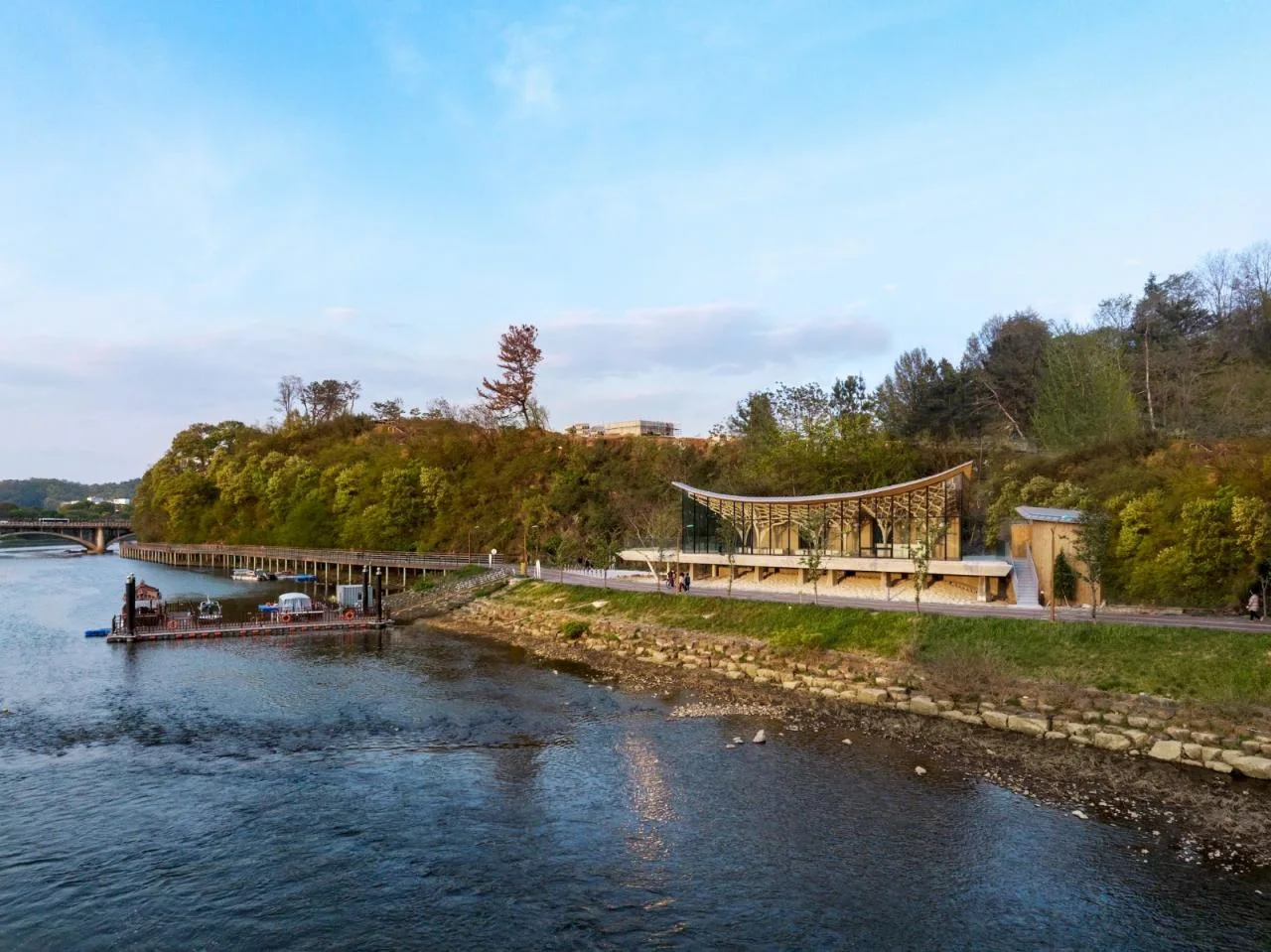
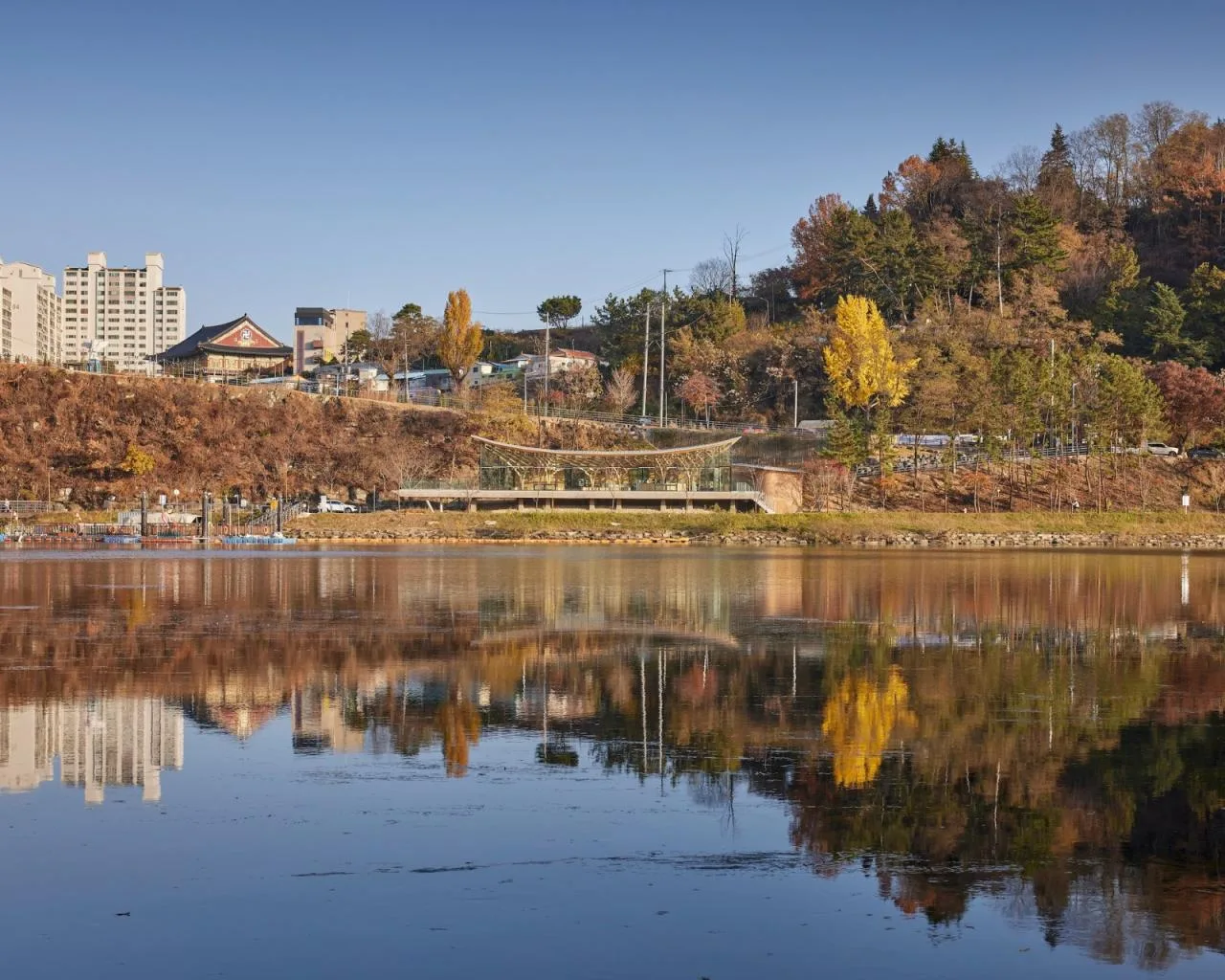
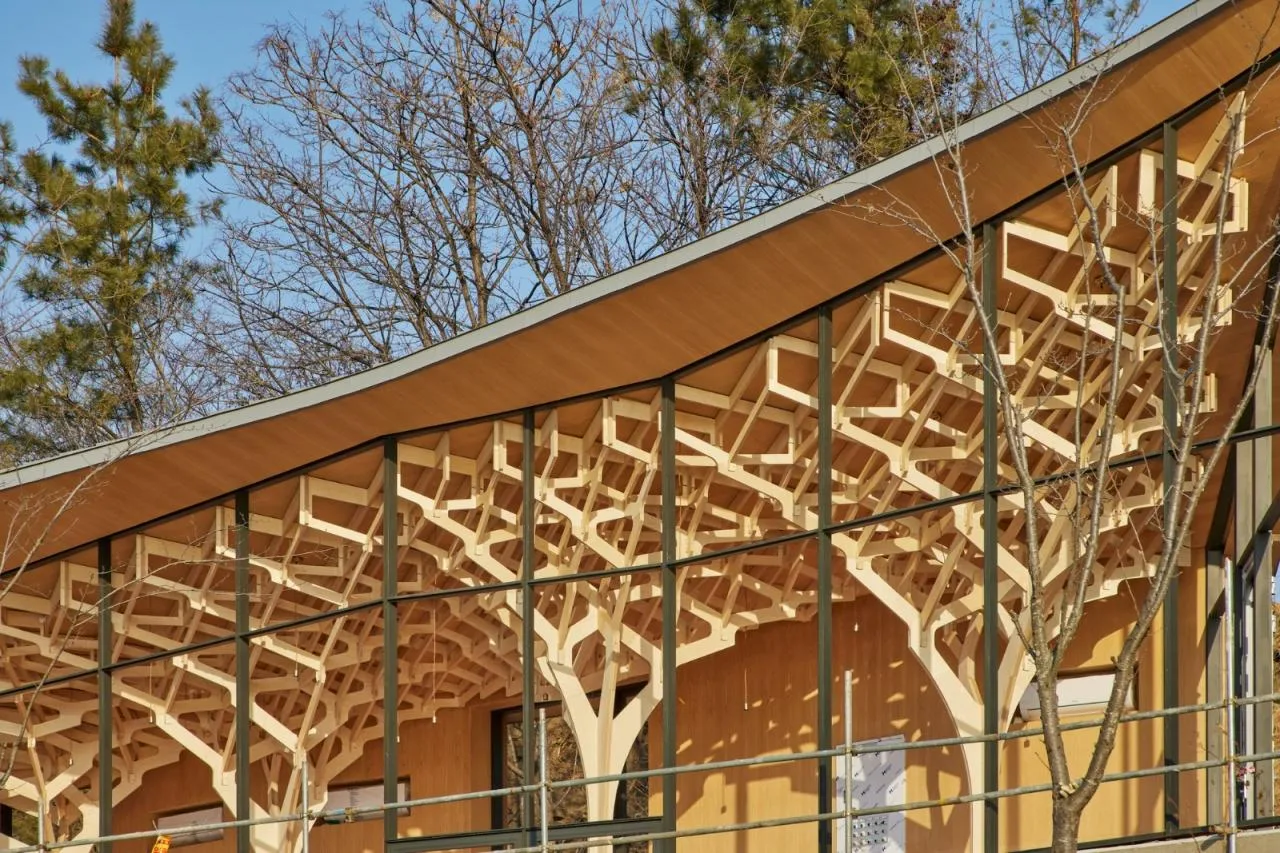
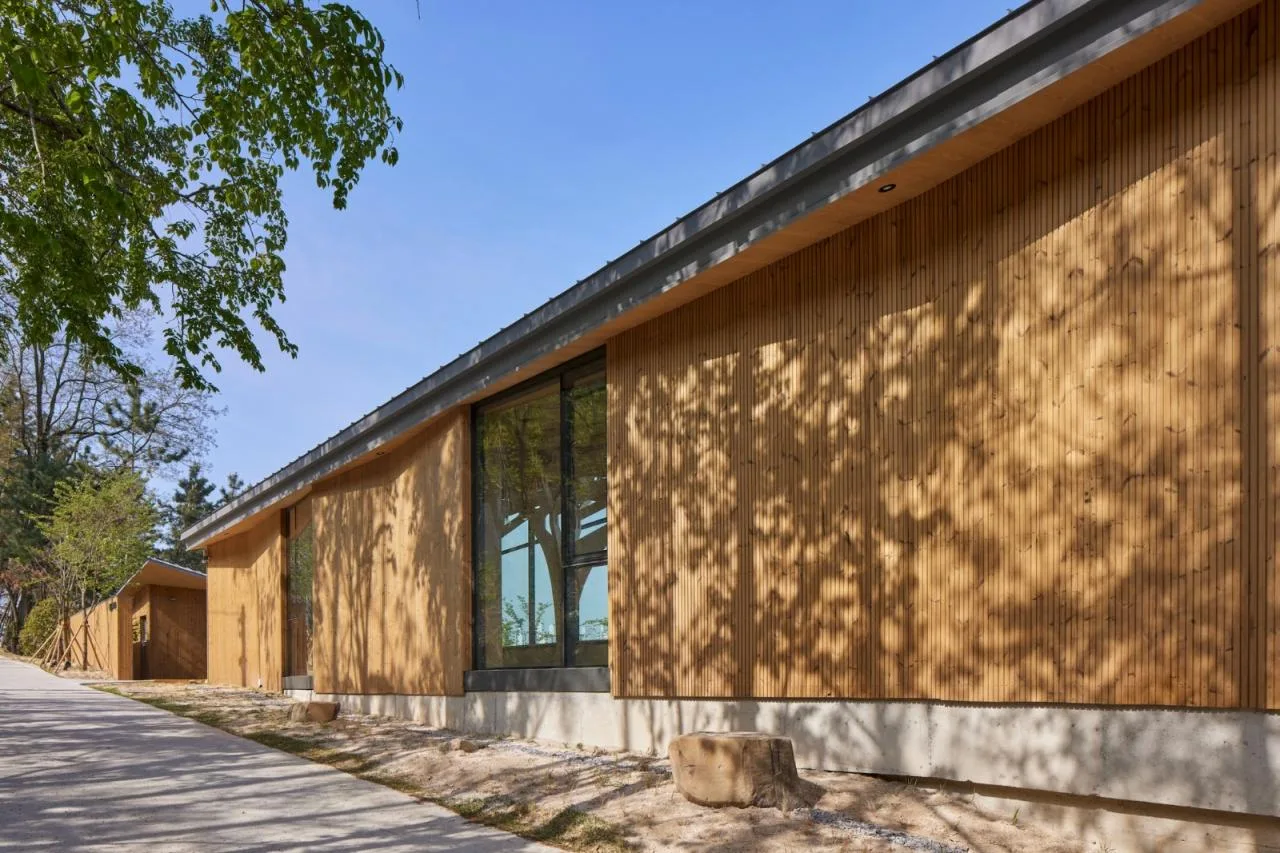
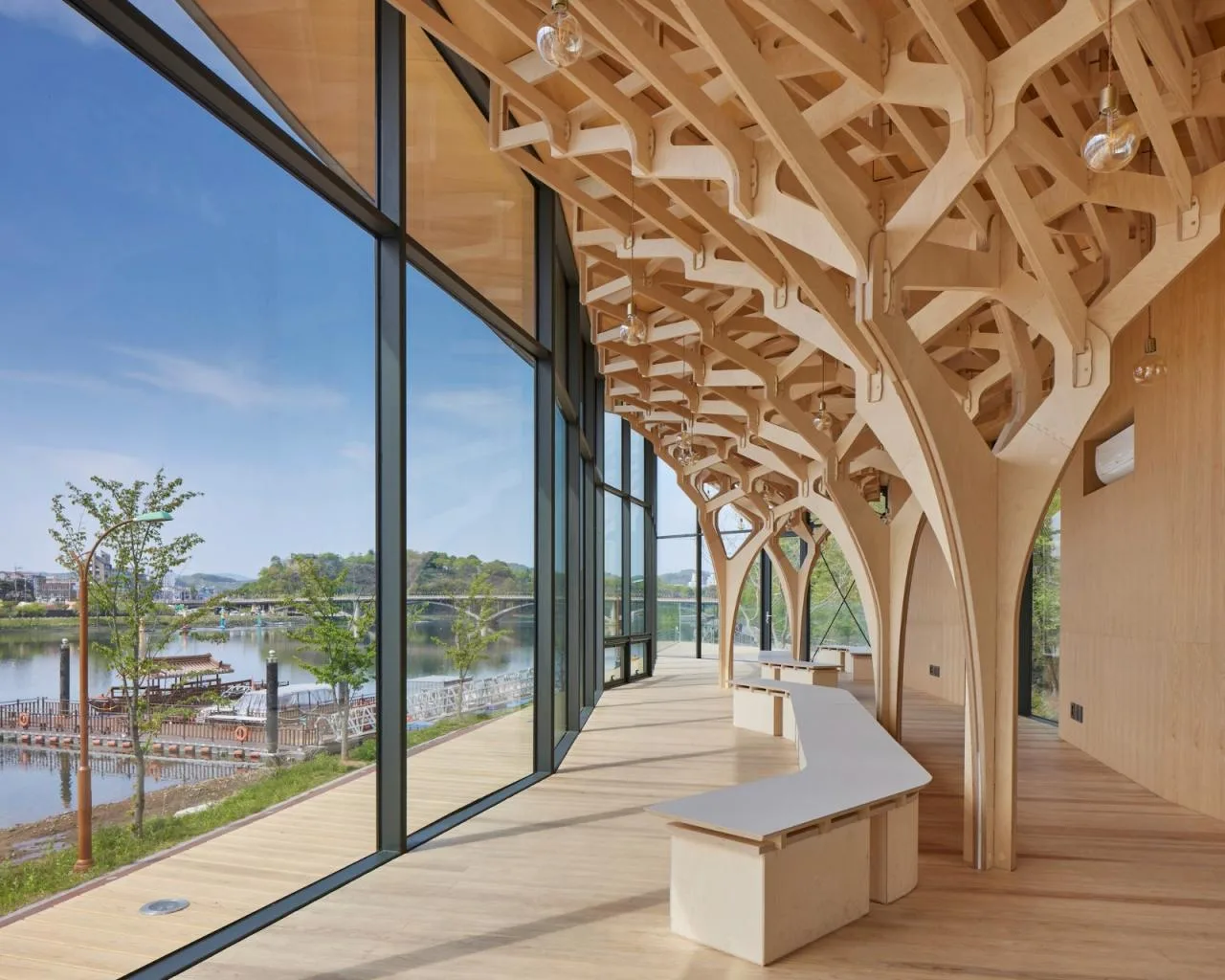
The pavilion also offers visitors an immersive experience of both natural and urban environments. Before urban development, the river area was blanketed in bamboo forests. Inspired by this lost landscape and collective memory, an indoor space resembling a forest path has been created between the tree-like pillars.
Additionally, three-sided glass walls blur the boundary between interior and exterior, reinforcing the concept of openness. The tree-inspired structure not only defines the pavilion’s unique indoor atmosphere but also serves as a symbolic exterior landmark.
Project Drawings
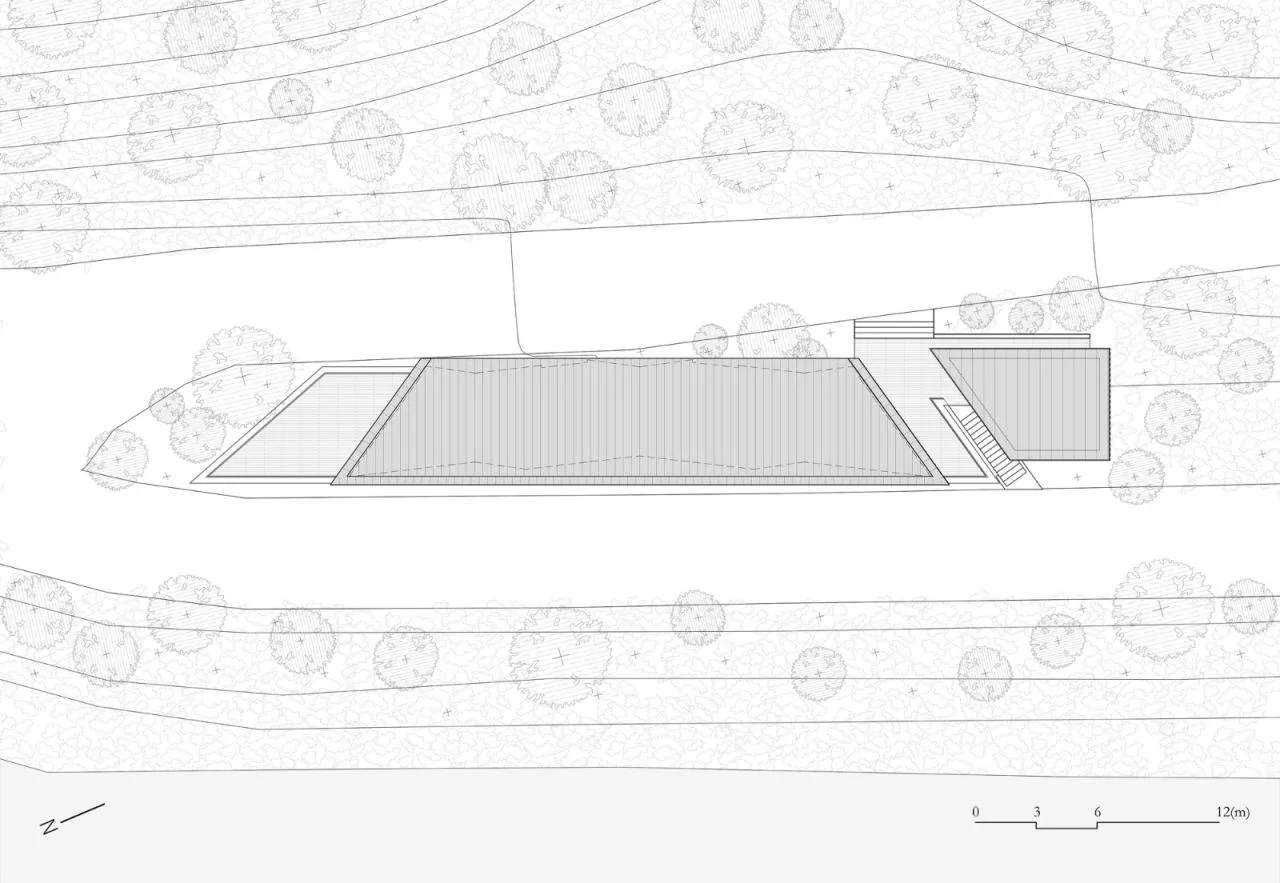
△ General Layout Plan
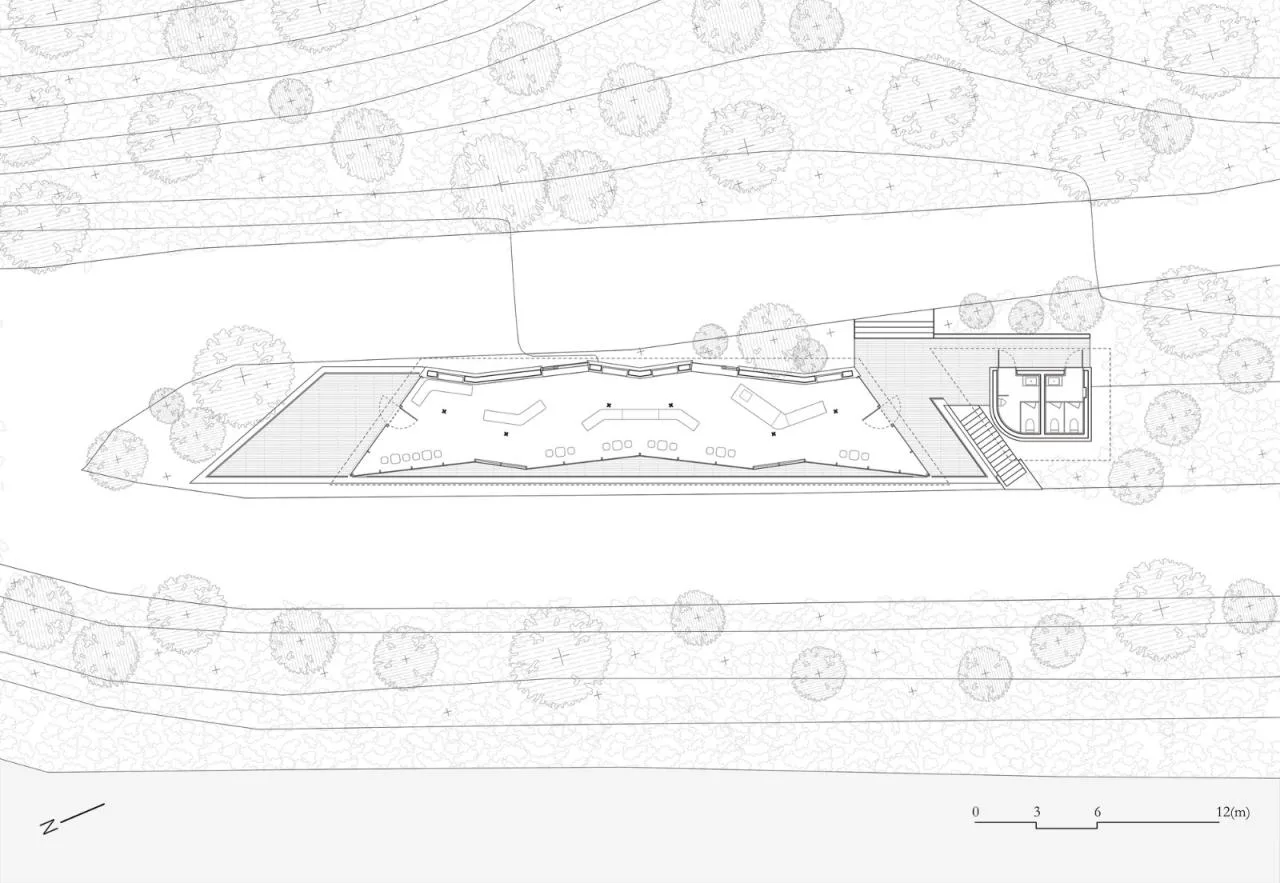
△ Plan View
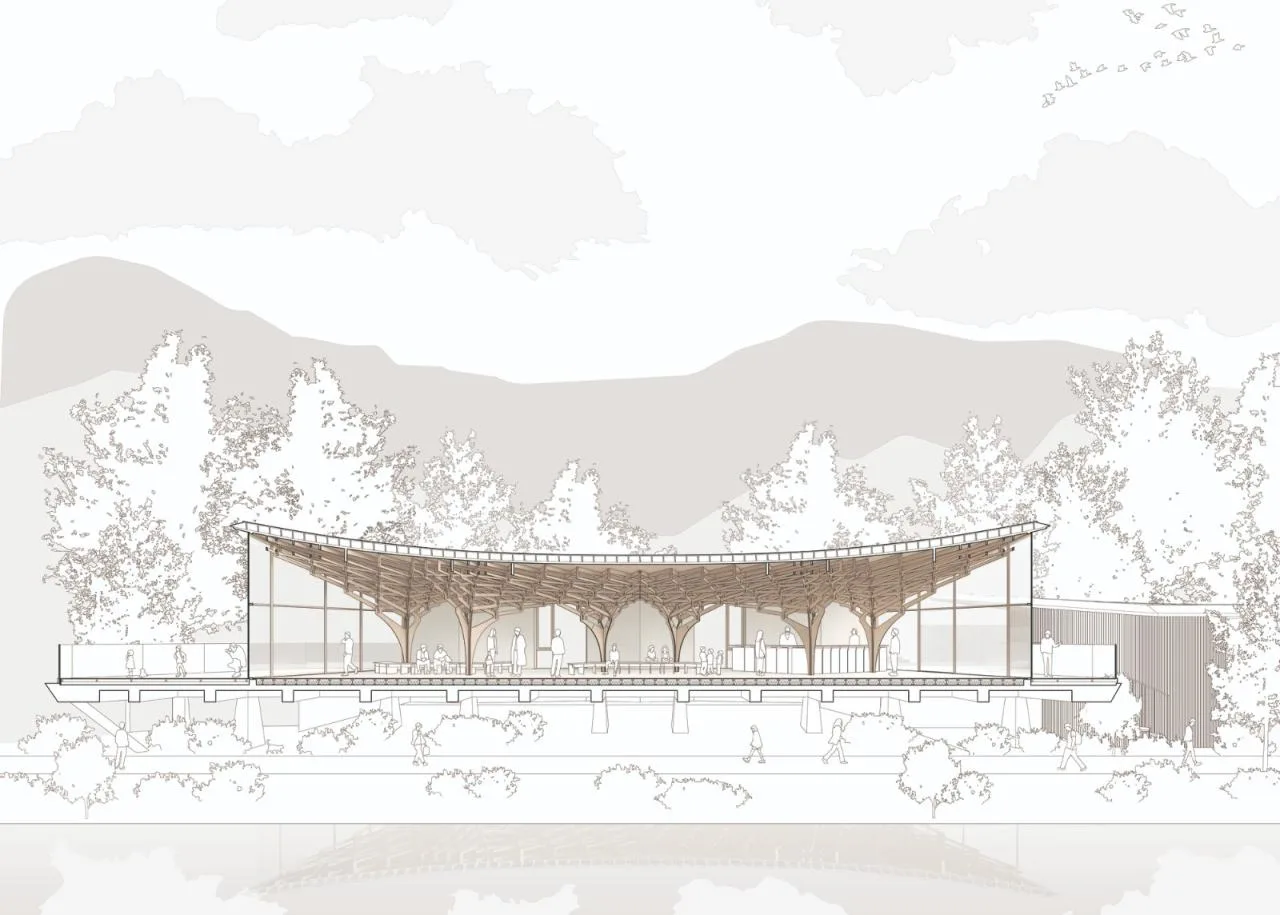
△ Section Diagram
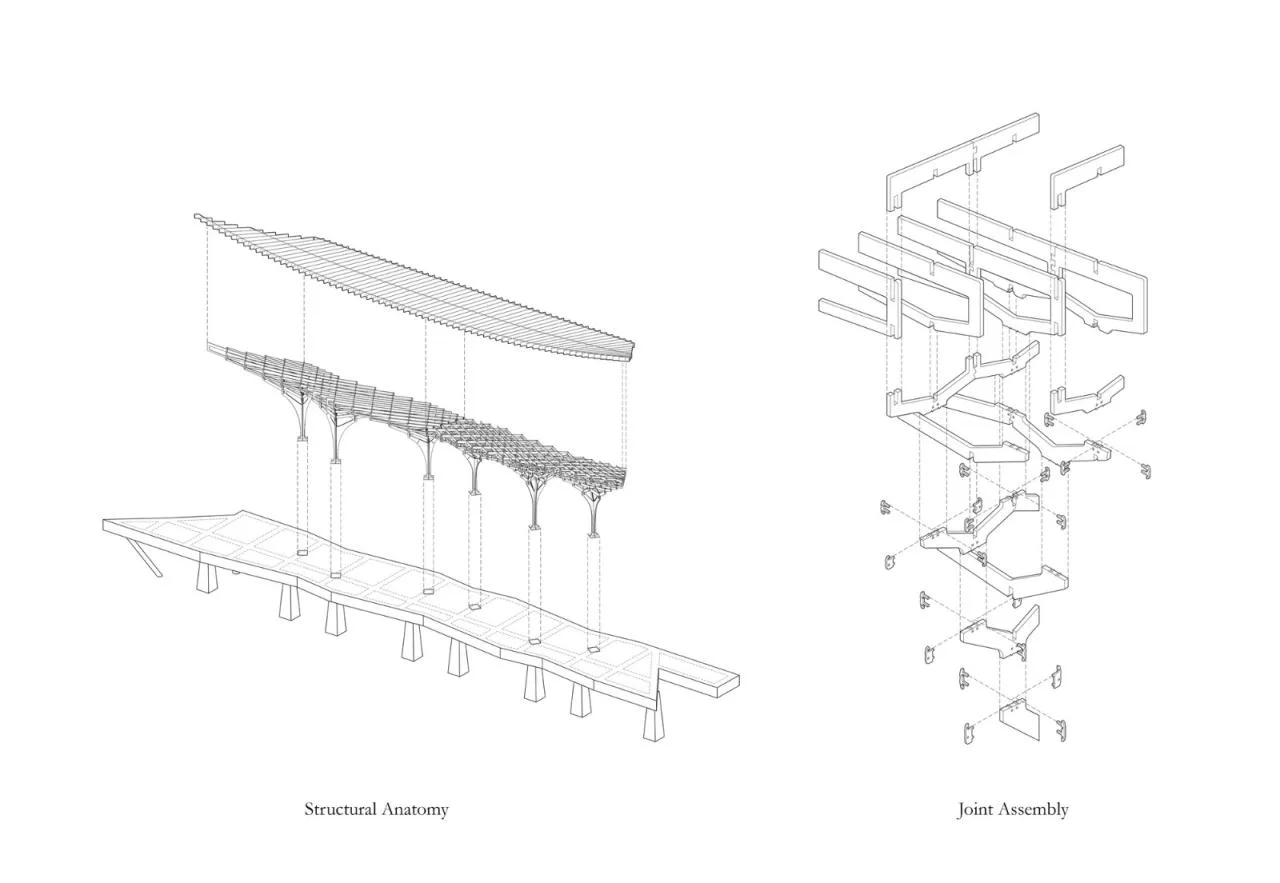
△ Structural Analysis Diagram
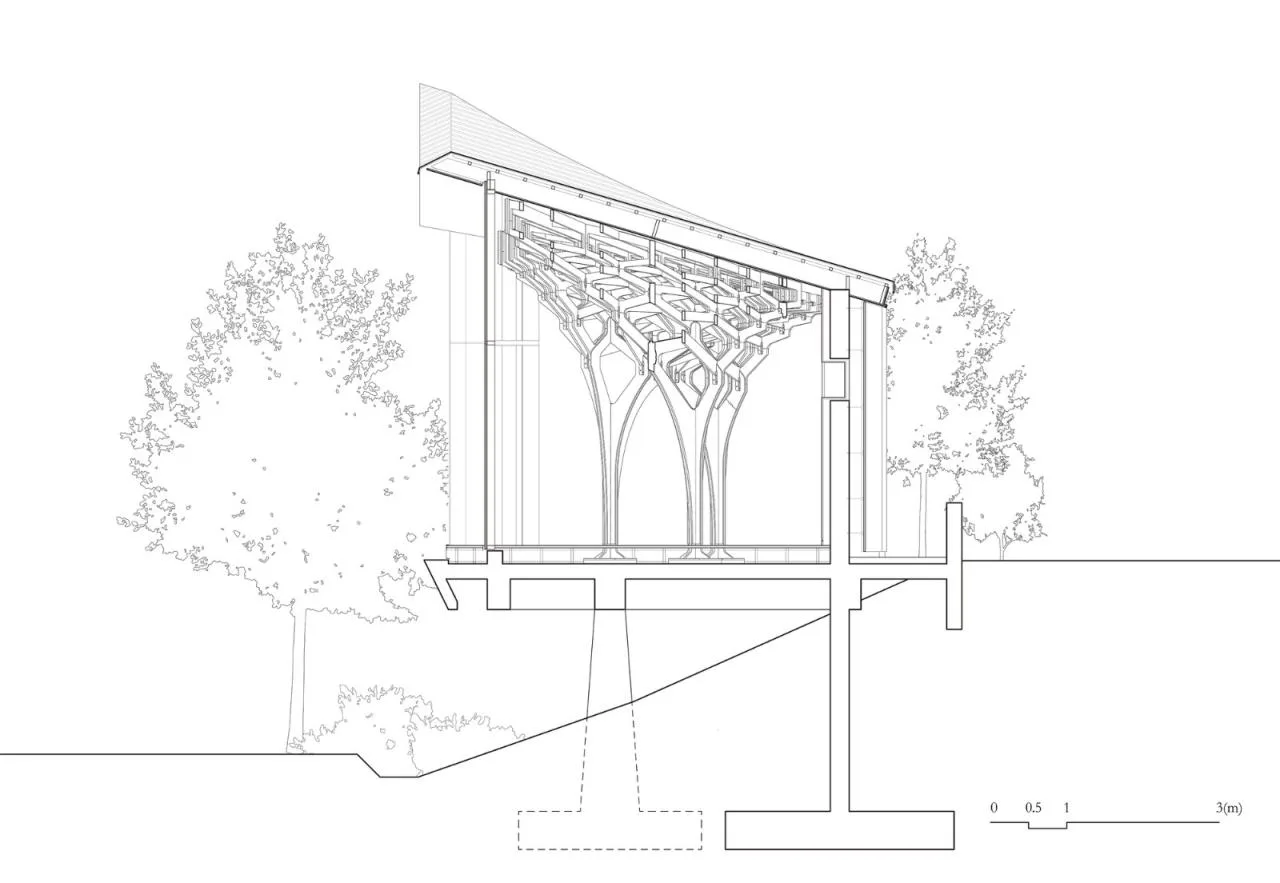
△ Sectional Perspective
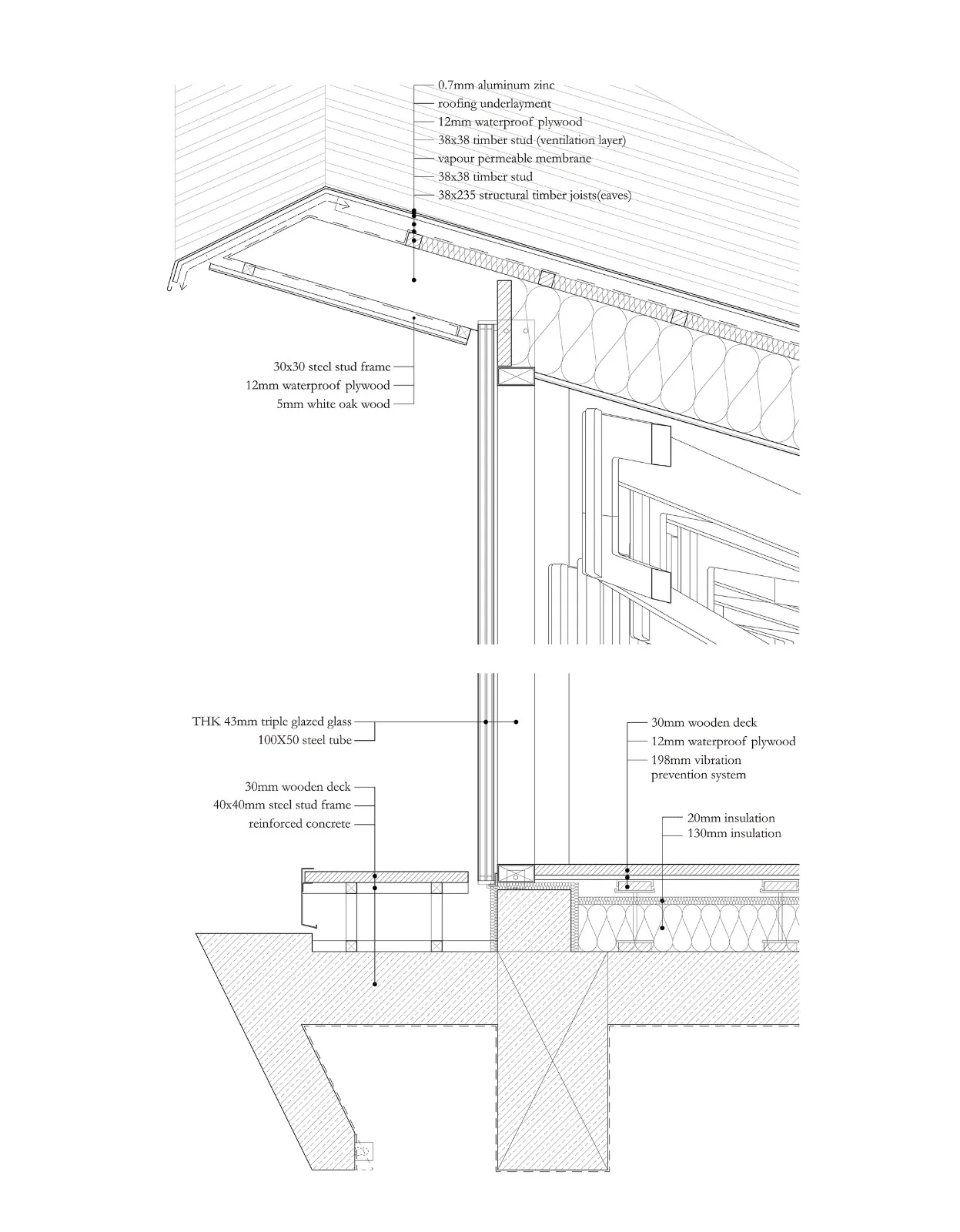
△ Detailed Drawing
Project Information
Architect: JK-AR
Area: 110 m²
Project Year: 2022
Photographer: Rohspace
Lead Architect: Jae K. Kim
Design Team: Yoon Jisun, Shin Jinho, Jung Nayoung, Jeong Changu
Mechanical and Electrical Engineer: Yousong Total Engineering Co., Ltd
Landscape Design: Dae Jo Construction Co
Construction Contractor: Dae Jo Construction Co
Structural Engineer: Yousong Total Engineering Co., Ltd
Location: South Korea













Must log in before commenting!
Sign Up