
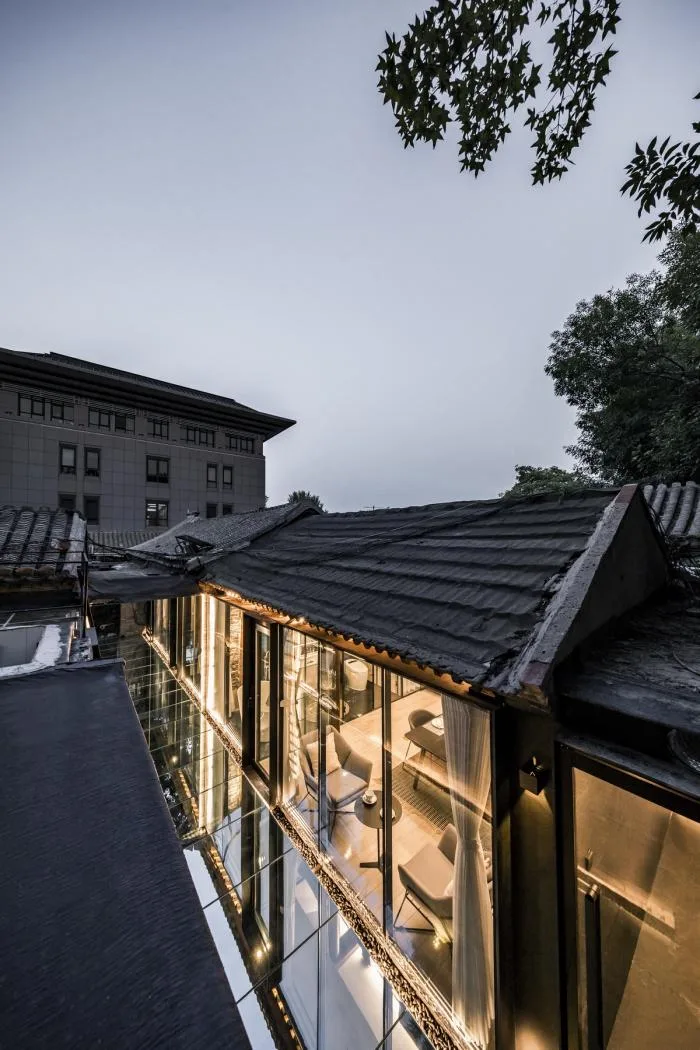
Hidden Memories
Beijing’s hutongs represent more than just a unique way of life; they hold cherished childhood memories for many. As modernization and urbanization progress, many residents have moved away from these neighborhoods, yet the vibrant life and warmth of the hutongs remain etched in their hearts.
Time has left its mark on both people and structures—old houses with decaying pillars and overgrown courtyards tell stories of the past. The traditional hutong lifestyle is gradually fading amid urban development, creating a passive disappearance. This shift disrupts the continuity of memories; what once felt like yesterday is now replaced by modern architecture, increasing the divide between people and their surroundings.
Our challenge in renovating this alley house was to revive this hidden heritage, reconnect history and memories, and blend updated architecture with the natural environment to foster a dialogue between past and present.
Renovation here is not merely about restoring or replicating old buildings but about layering new living patterns over historical foundations to create fresh contrasts and harmonies.
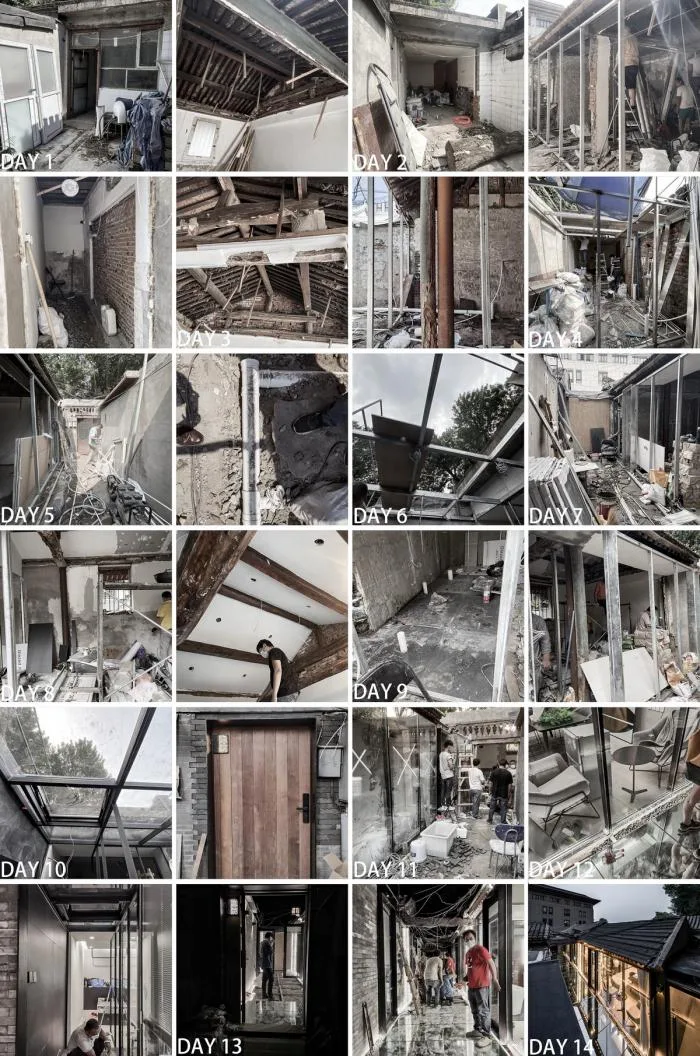
△ Construction Process
The entire renovation was completed in just 14 days, a testament to the dedicated efforts of many. Design extends beyond plans on paper—it requires hands-on construction, often presenting challenges greater than those of the initial concept.
Rebirth and Transformation
This small courtyard was once the childhood home of the owner and their grandparents. After years away, the house had fallen into disrepair, and the memories of youth seemed lost. Now, the owner wishes to return to the hutong lifestyle, but the current state of the house no longer supports modern living. The renovation aims to create a comfortable, modern living space for the female homeowner while rekindling the traces of hutong life that had faded away.
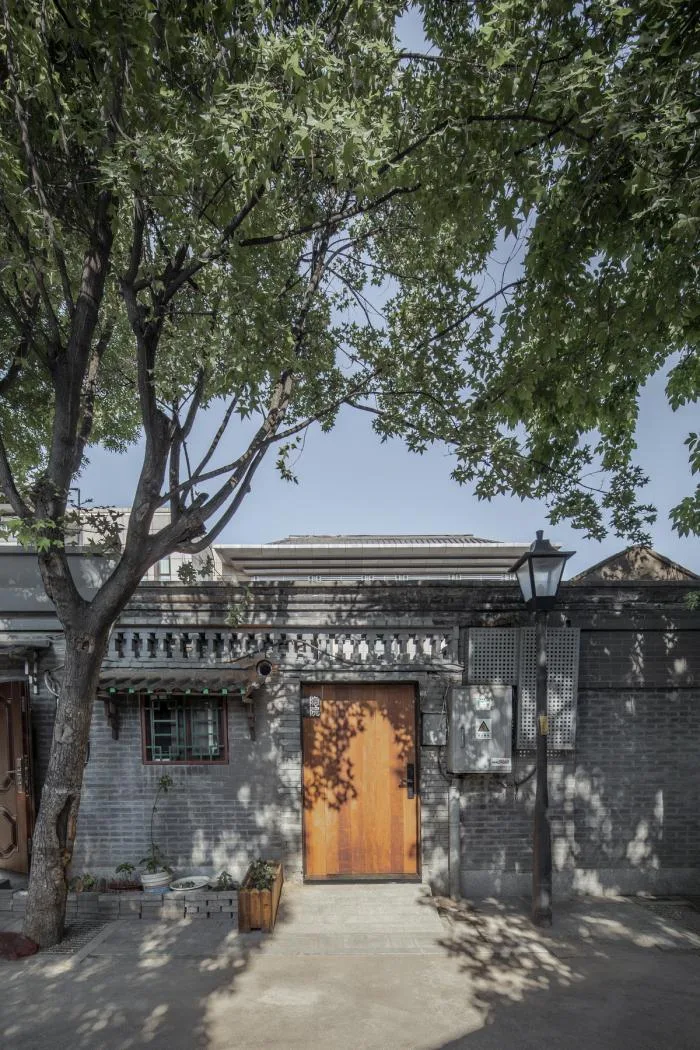
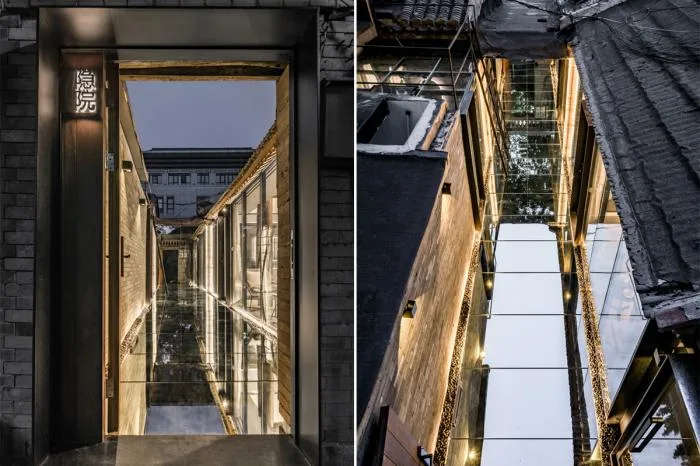
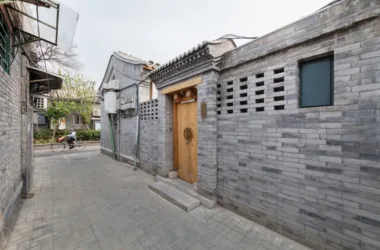
△ Entrance and Mirror Courtyard
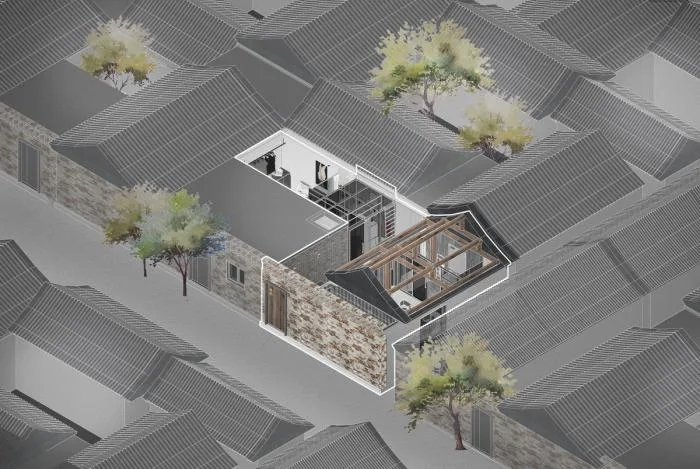
△ Axonometric Diagram
Mirror and Kaleidoscope
Mirrored glass covers the courtyard’s ground and walls, reflecting the surrounding alleys, trees, and sky. This unique reflectivity transforms the space, blurring the lines between reality and illusion. Visitors find themselves immersed in the scenery—both inside the mirror and within the environment—creating a layered, dreamlike spatial experience.
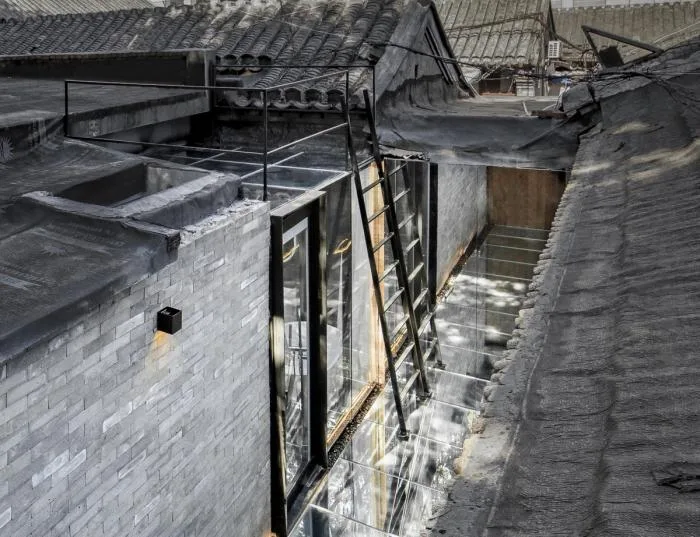
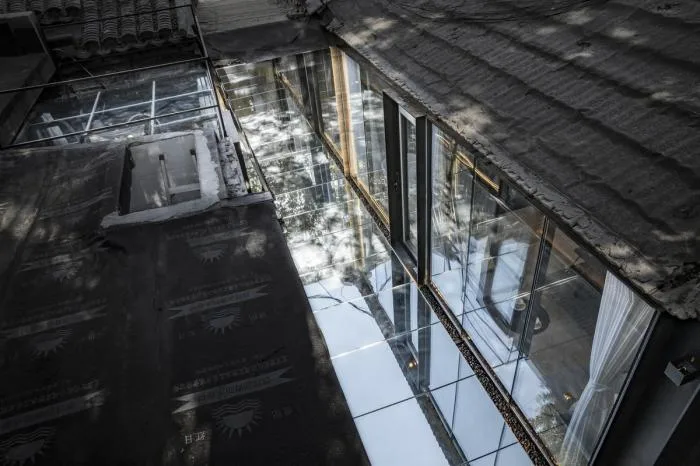
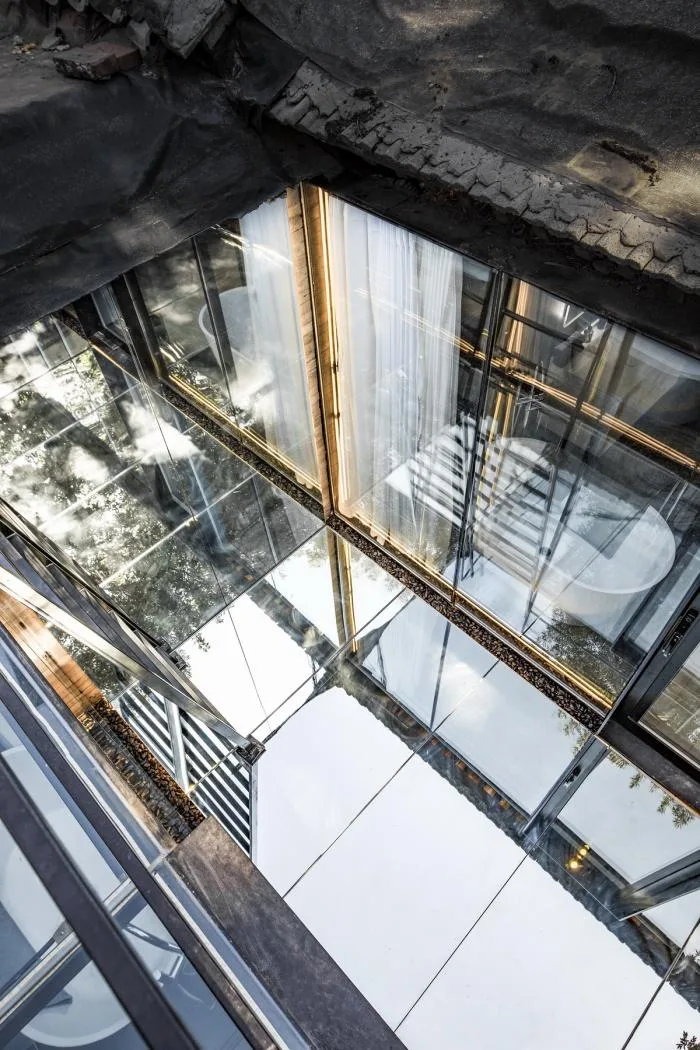
Mirror reflections in the courtyard create an ever-changing natural environment, forming kaleidoscopic effects. The term “kaleidoscope” derives from Greek words meaning beauty (KALOS), shape (EIDOS), and viewing (SCOPE), capturing its essence perfectly.
The shifting reflections and surrounding landscape give the mirrored courtyard a dynamic beauty—each moment unique and fleeting, much like time itself. This tangible reflection of intangible moments fosters a visual connection between visitor and environment, architecture and nature, blurring spatial boundaries and reducing the sense of separation between people and space.
Reflection
Though the courtyard spans only about 12 square meters and has a narrow layout, the glass mirrors on the ground and walls visually expand the space. Upon entering, the owner is enveloped by the mirrored perspectives, enhancing transparency and offering a dual landscape experience.
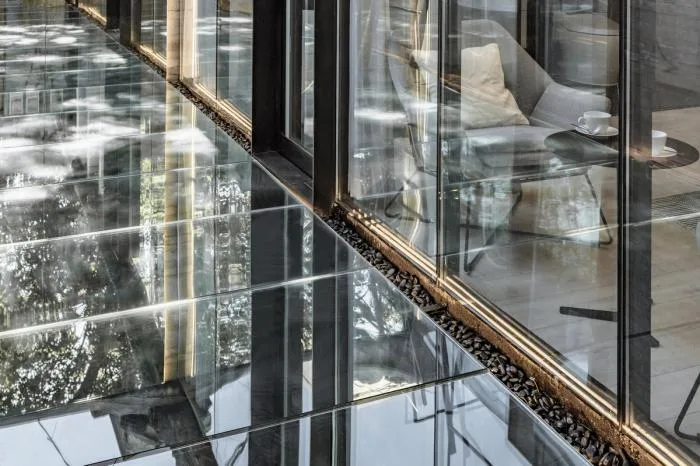
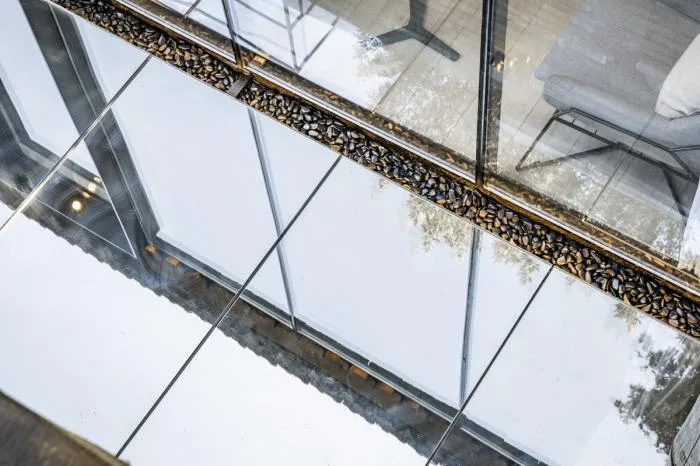
△ Reflection Details
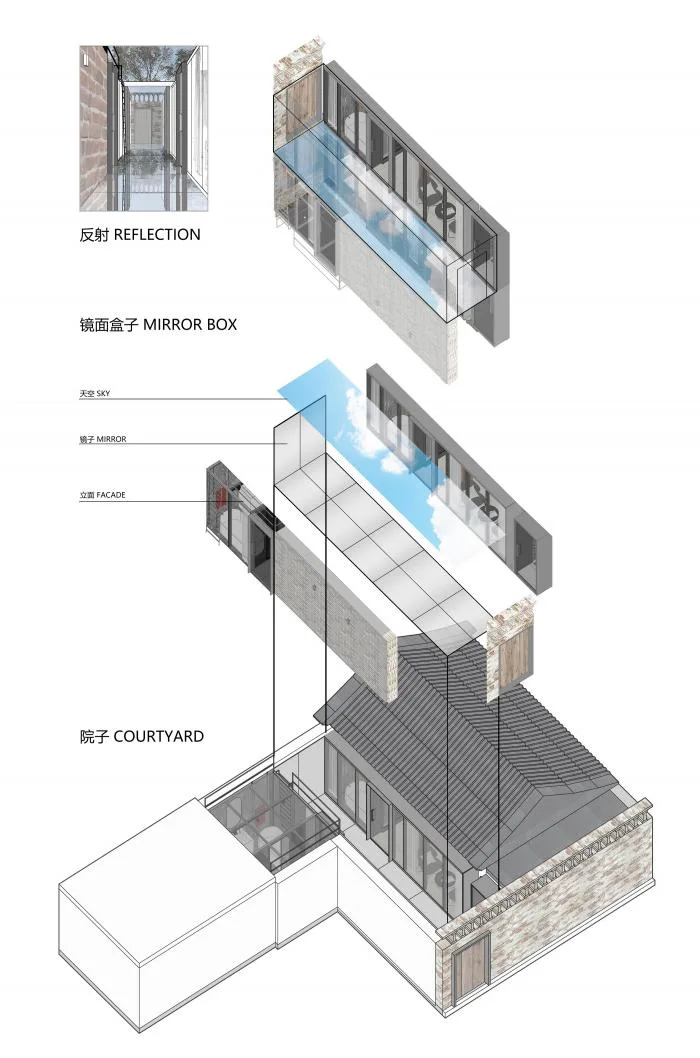
△ Mirror Refraction Analysis
Hidden Courtyard
The mirror design creates a captivating relationship between the building and its environment. The mirrored floor reflects the natural surroundings—trees and sky—making the structure appear to dissolve into its setting. From inside, the owners can observe the subtle changes in nature as the floor becomes a living canvas, reflecting wind, grass, and shifting weather.
Simultaneously, the mirrors blur the boundary between interior and exterior, reality and illusion. The dynamic scenes on the mirror infuse life into the once-static courtyard, evoking an intangible poetry that transcends physical form. Visitors’ gazes wander toward distant landscapes, while the reflected scenery feels intimately close.
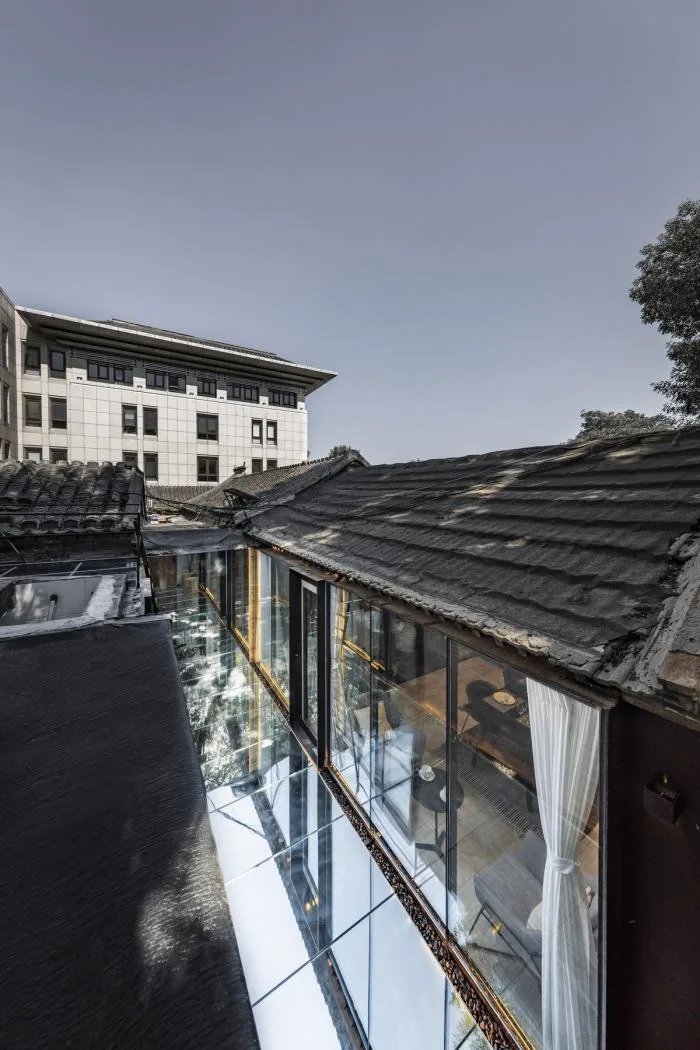
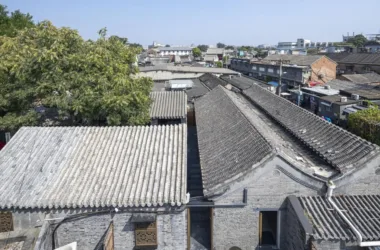
△ Bird’s-Eye View of the Courtyard
Transparent Space
The renovation of this hutong residence blends modern living with traditional architecture. The aging wooden structure was reinforced, and the exterior was transformed with a glass curtain wall. This transparent facade brightens the interior and allows views through the courtyard, creating a seamless connection between the inside and outside spaces.
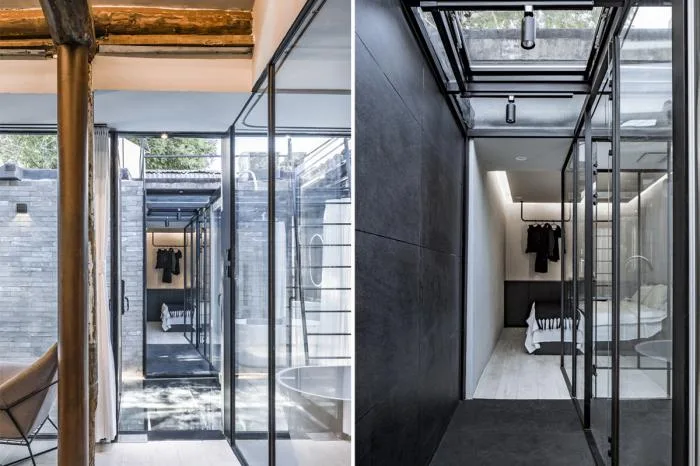
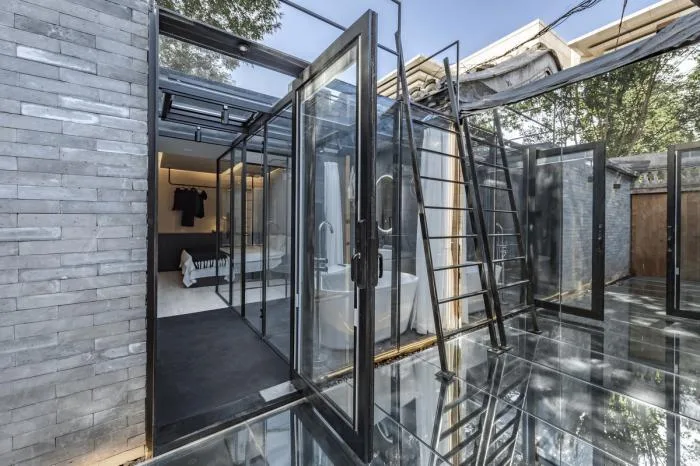
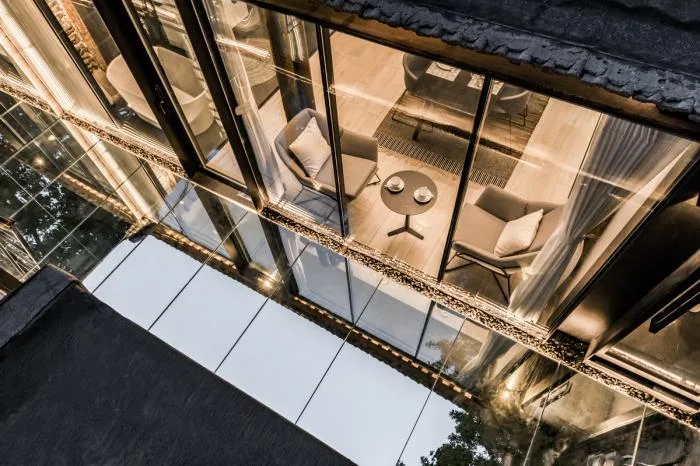
△ Clear visibility through both sides of the courtyard
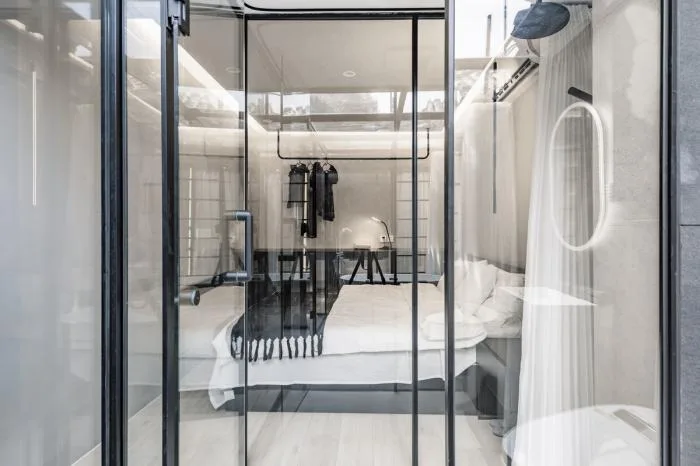
Master Bedroom and Transparent Bathroom
A separate bathroom adjacent to the master bedroom meets the homeowner’s personal needs. The transparent glass walls allow natural light to flow through the bathroom into the bedroom, enhancing the ambiance and inviting views of the courtyard inside, enriching the overall spatial experience.
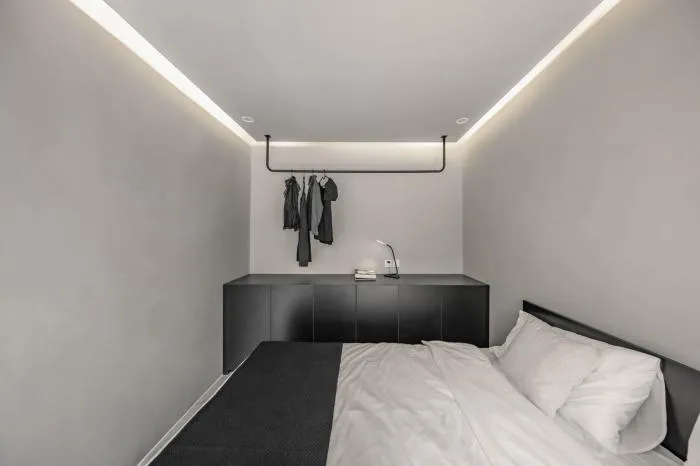
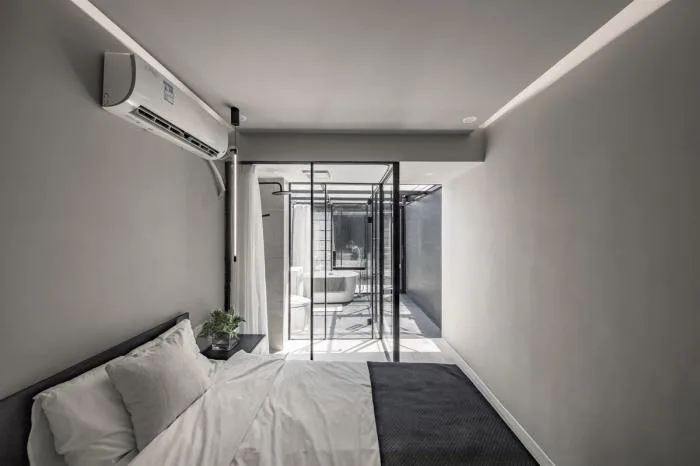
△ Bedroom
The bedroom features a minimalist design with a black and white palette, creating a calm and simple atmosphere. This contrasts with the transparent and dynamic spaces outside, offering a more serene retreat indoors.
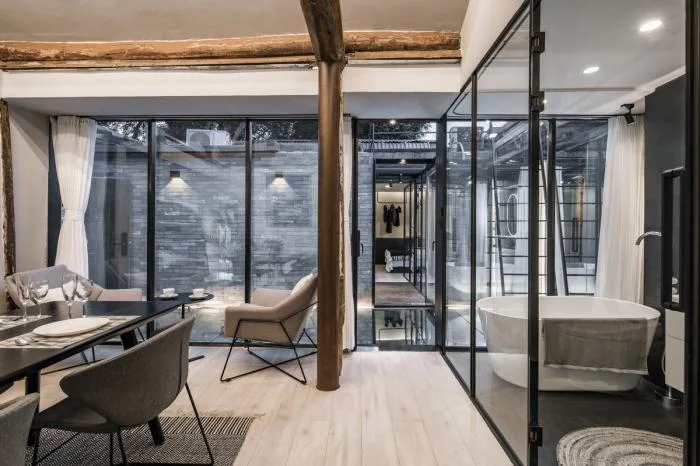
△ Living Room and Guest Bathroom
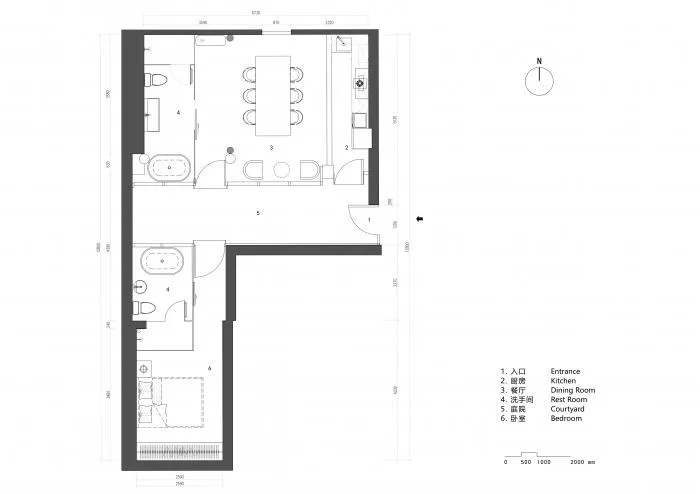
△ Floor Plan
Project Information
Project Name: Baotao Hutong Yin Institute
Design Company: Beijing Daguan Architectural Design
Team: Shen Jianghai, Liu Yu, Zeng Yijun, Li Shaoyi, Yu Xiaoyu, Gao Yuzhe
Design Consultant: Liu Tianmeng
Project Type: Renovation, Architecture, Interior Design
Building Area: 57.5 square meters
Design Period: June 2020
Construction Period: June 15, 2020 – June 29, 2020
Photographer: Jin Weiqi
Partner: Hunan TV
Author: Liu Yu












Must log in before commenting!
Sign Up