
There are alleys in the city and wine in the courtyard.
— How many hutongs are there in Beijing?
— There are 3,600 well-known hutongs, while countless unnamed ones compete for attention.
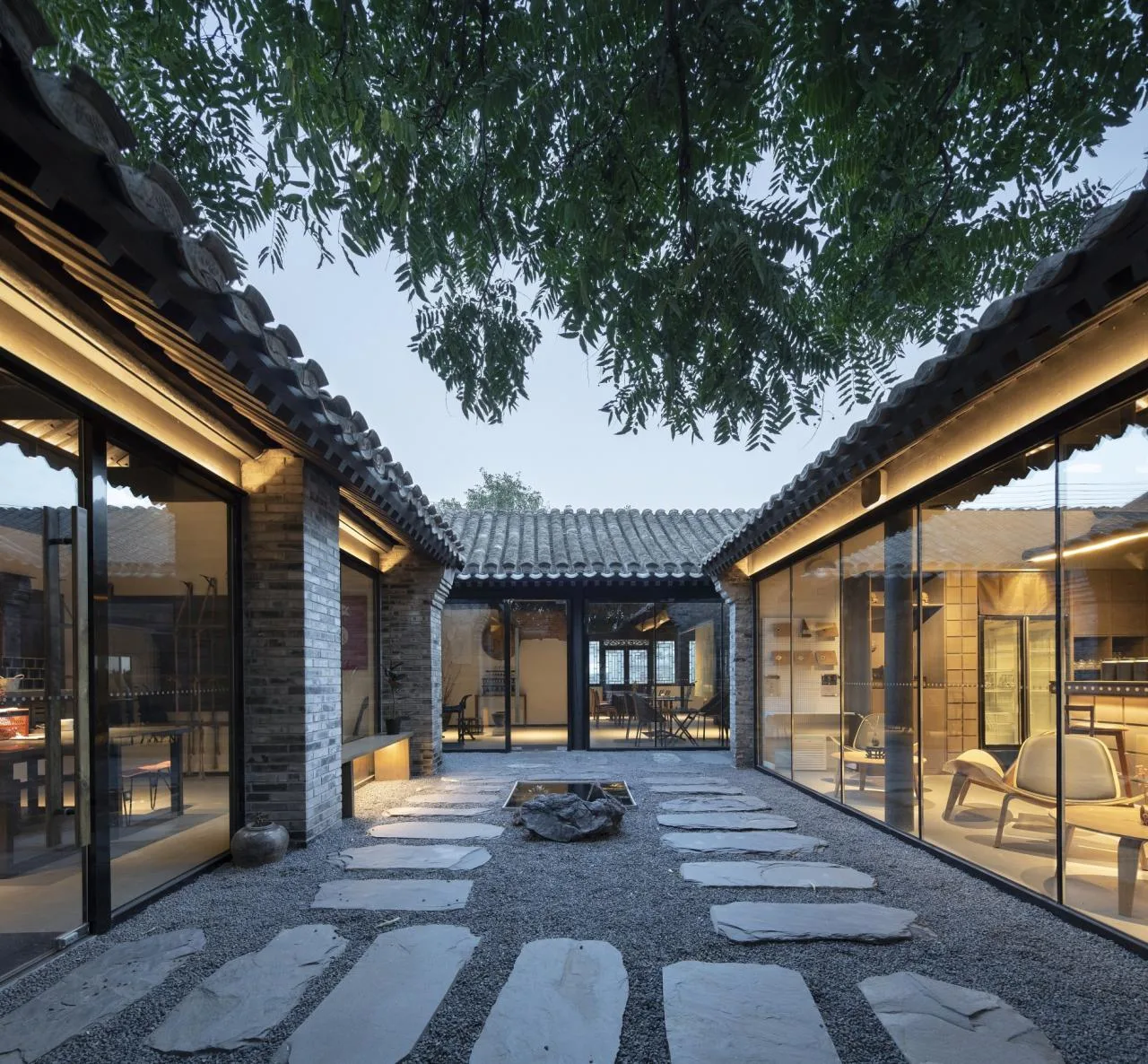
Project Overview © UK STUDIO
This project is located on Wudao Street Hutong, in the southwest of the Dashilan area, extending from the southern end of Nanxinhua Street up to the intersection of Tieshuxie Street, Cherry Xie Street, Tangzi Street, and Hanjia Hutong in the north. Historically, this street was known as Wudao Temple during the Ming Dynasty, established in the 35th year of the Wanli reign. Wang Xiangqian, the Ming Dynasty’s Minister of War, described this place as the “land where dragon veins and traffic converge” between Zhengyang and Xuanwu gates, designating it as a temple town. Representing the property owner, our goal was to design a small tavern nestled in a tranquil old Beijing alley.
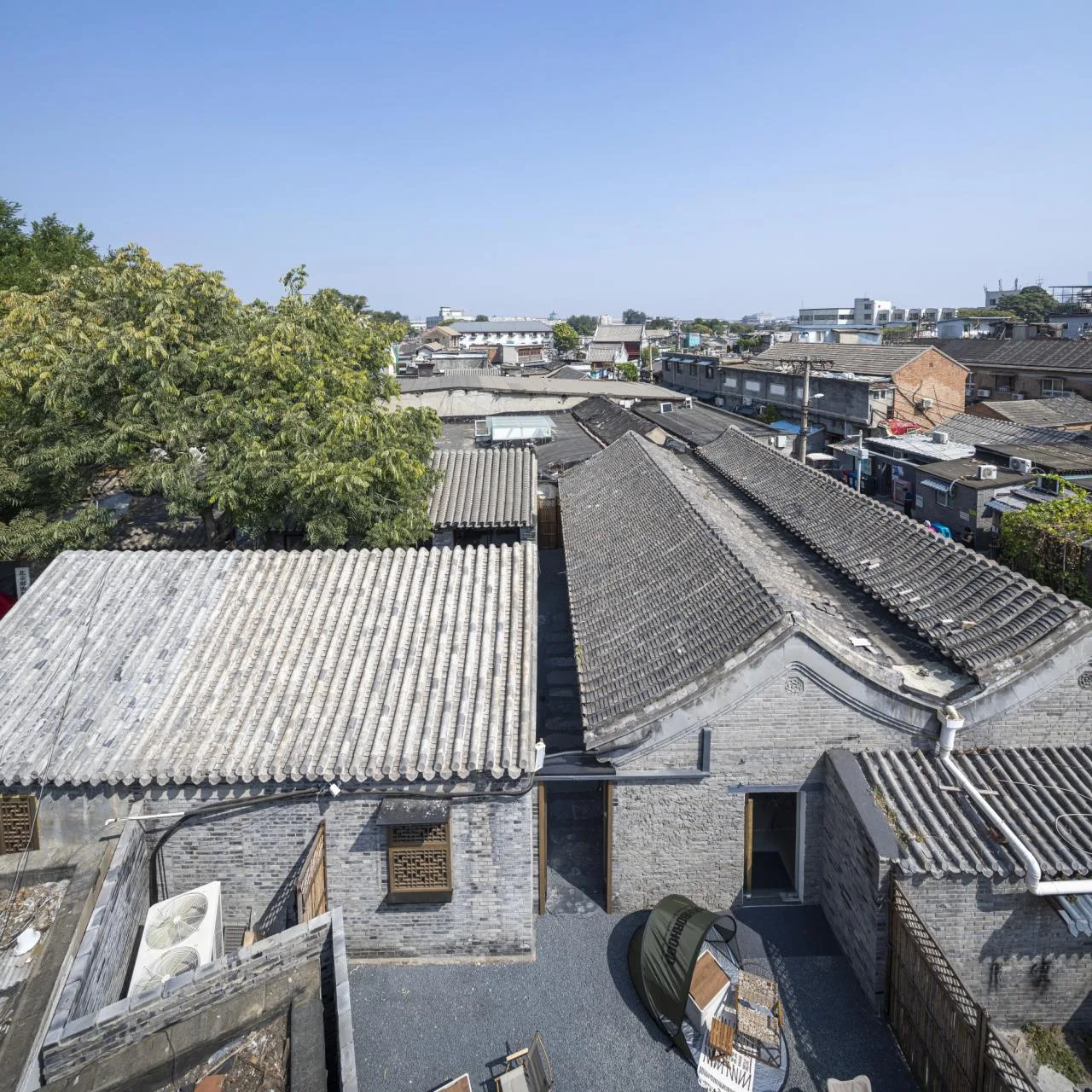
△ Panoramic view © UK STUDIO
The original site is a courtyard facing South Xinhua Street, surrounded by long-time local residents. Passing through the narrow entrance, the spatial layout reflects a simplified version of a traditional Beijing courtyard. We approached the design by deconstructing the courtyard: while the original space was fully enclosed, we aimed to preserve a sense of density and order by making the courtyard as transparent and luminous as possible.
Our focus was on the experience of entering the inner courtyard—once the door closes, visitors step into a private world where the view is carefully curated within their field of vision. This guiding principle balances openness with privacy throughout the design process.
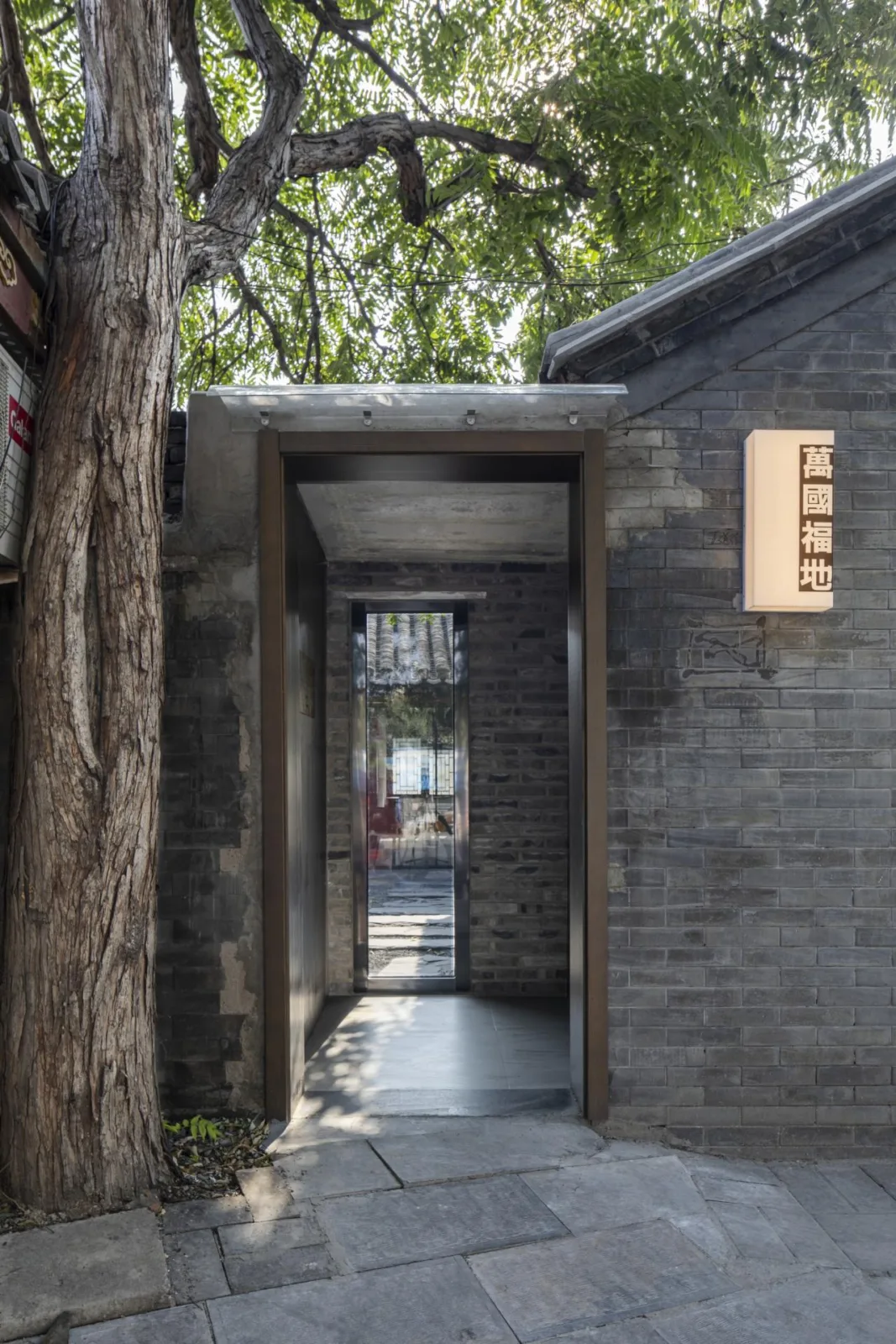
△ Bar entrance © UK STUDIO
The entrance features an L-shaped design leading into the courtyard. To avoid the monotony of solid walls, we integrated a floor-to-ceiling glass wall within the visitor’s line of sight. This not only enhances natural lighting but also allows interior views to appear and fade as people move, creating a dynamic, unfolding sequence of spaces.
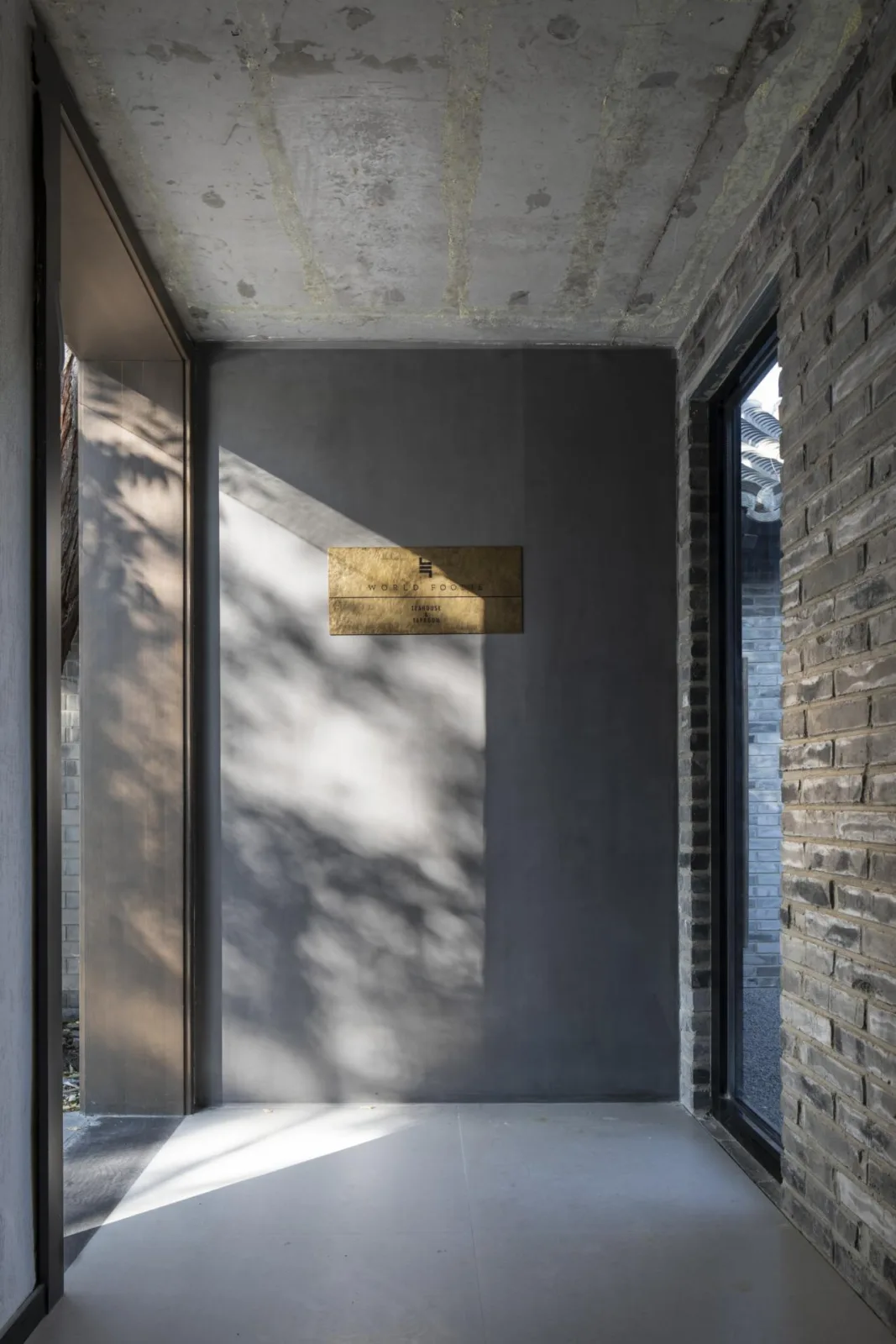
△ Gray transitional space at the bar entrance © UK STUDIO
This transitional space plays a crucial role in the architectural composition, blending old and new elements. It enriches the contrast between reality and illusion by preserving the textures and materials of the original ceiling. The resulting “gray space” shapes a smooth transition between indoor and outdoor areas, achieved through thoughtful material deconstruction, layering, and reorganization.
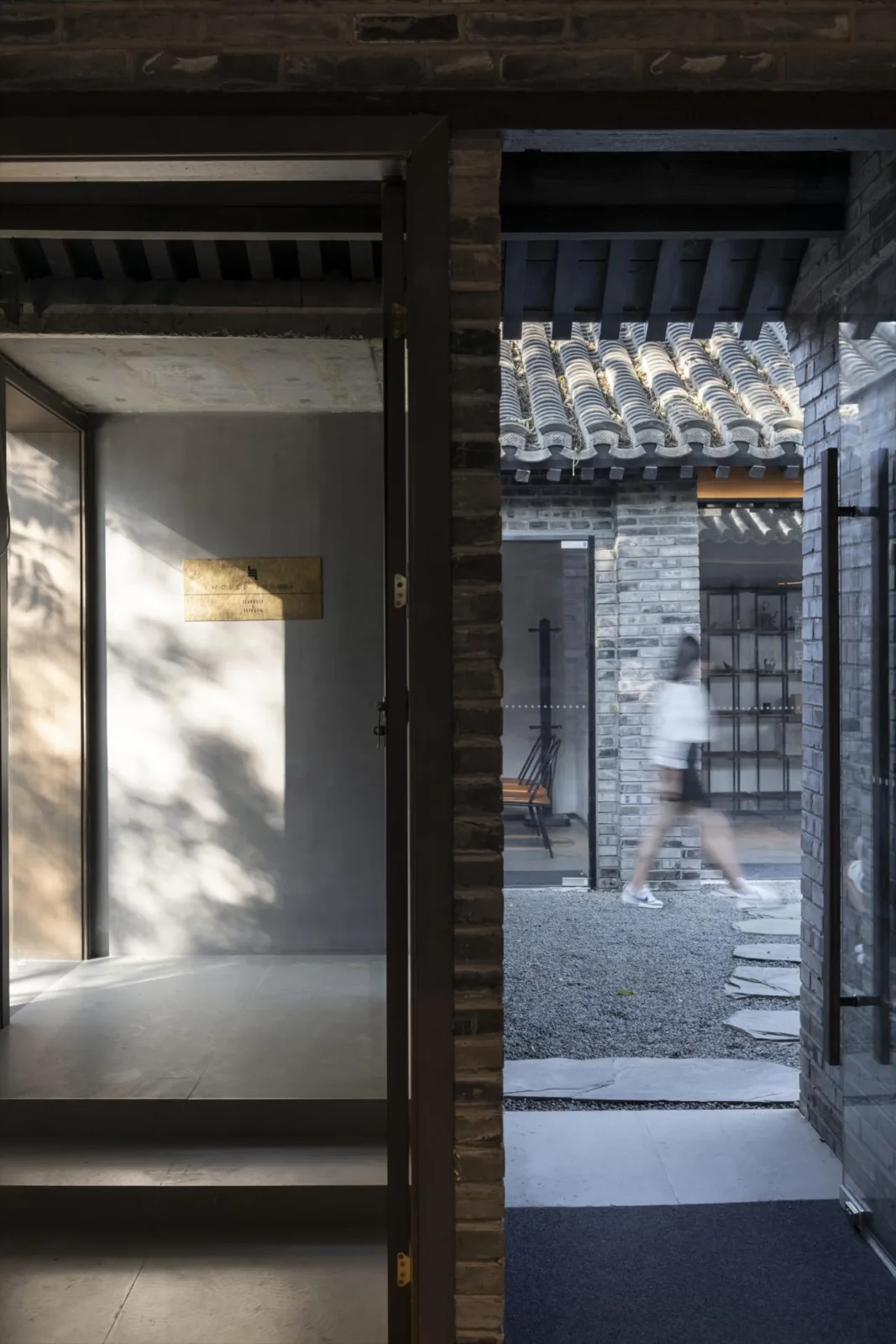
The passage leading to the inner courtyard © UK STUDIO
Ascending the stairs brings you into the heart of the courtyard, the defining feature of traditional courtyard architecture. The design respects the existing structure while responding to historical context through materials and forms. By adapting proportions and embracing the rough, aged textures, the space balances heritage with contemporary needs.
This approach allows the courtyard to evolve with the city, supporting diverse uses and seamlessly integrating old Beijing courtyards into modern urban life.
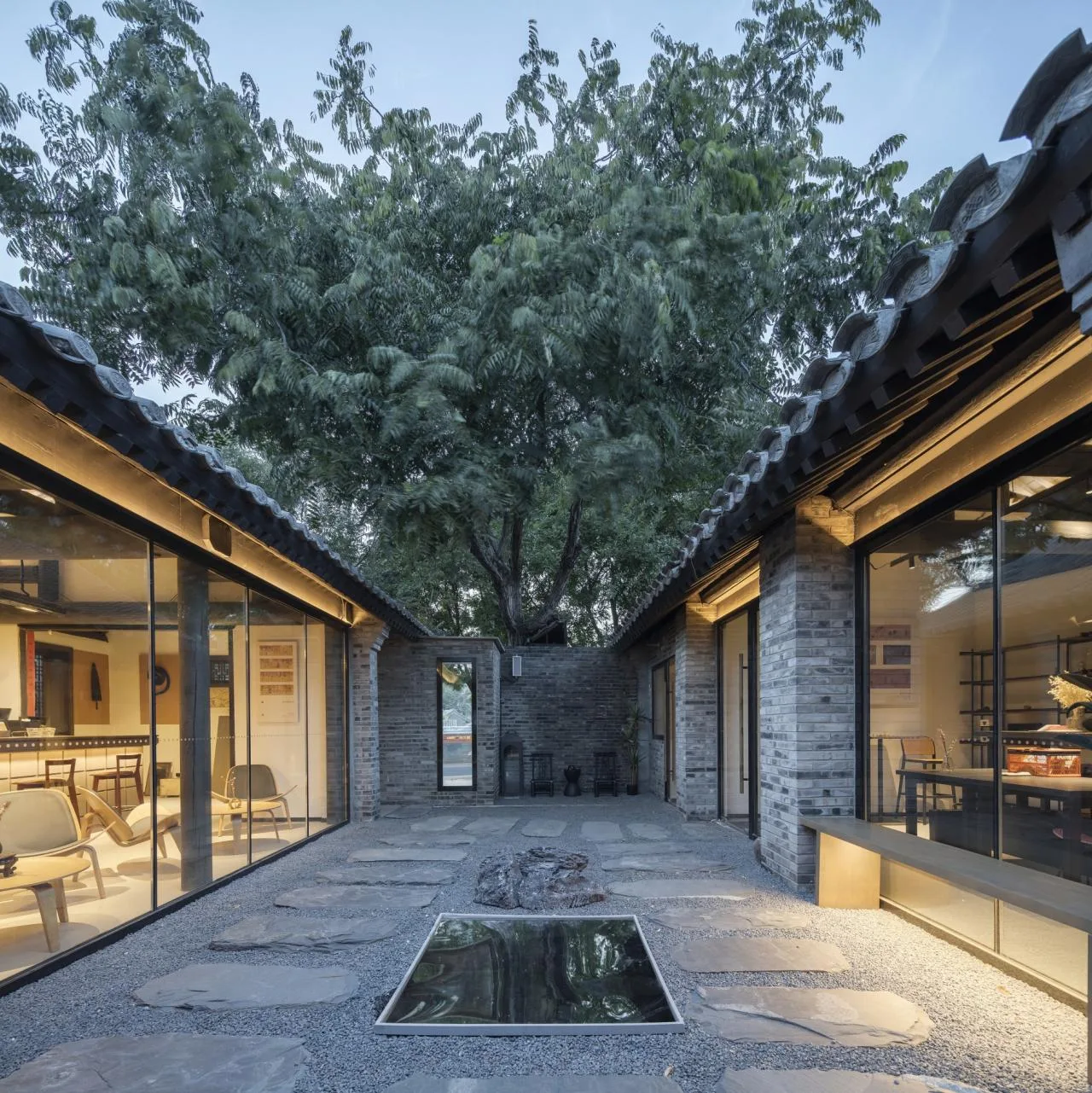
View from inside looking toward the entrance © UK STUDIO
Indoor spaces, architecture, and nature are harmoniously integrated, forming a permeable spatial structure. We carefully restored and reinforced original elements such as walls, doors, windows, roof trusses, and floors.
Throughout the design and construction, modern industrial materials and techniques inconsistent with regional and historical characteristics were avoided. Instead, transparent floor-to-ceiling glass walls were embedded within the load-bearing brick and concrete columns to maintain constant visual and physical connections between indoor and outdoor spaces.
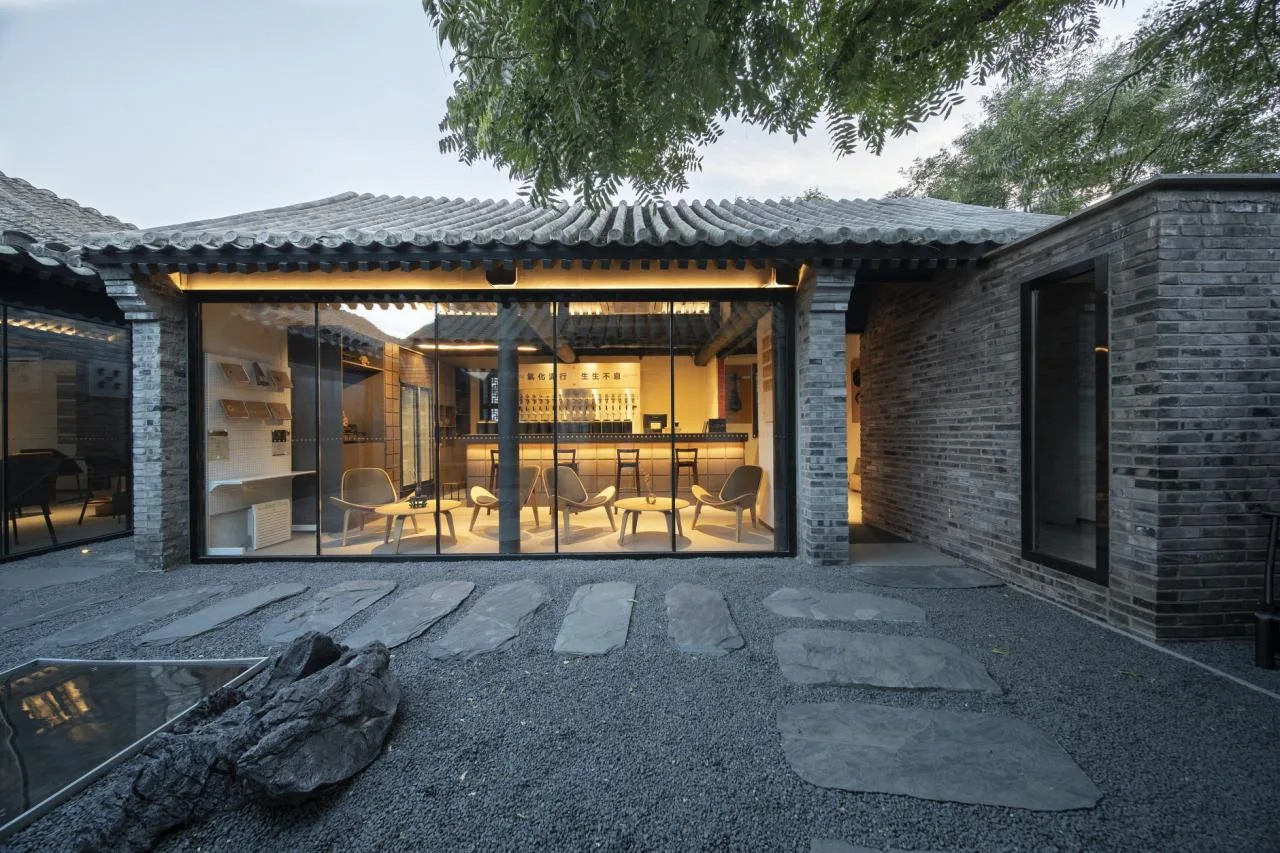
View from the atrium toward the indoor space © UK STUDIO
By crafting interactive, fluid relationships between inside and outside, the design enriches visitors’ sensory experience, weaving a narrative throughout the space. The integrated sand and gravel floor allows for rapid rainwater drainage, keeping the interior dry.
The inclusion of mirror pools and mountain stones draws inspiration from classic courtyard landscapes—nestled among mountains, water, houses, and trees—offering an atmosphere of peaceful contemplation.
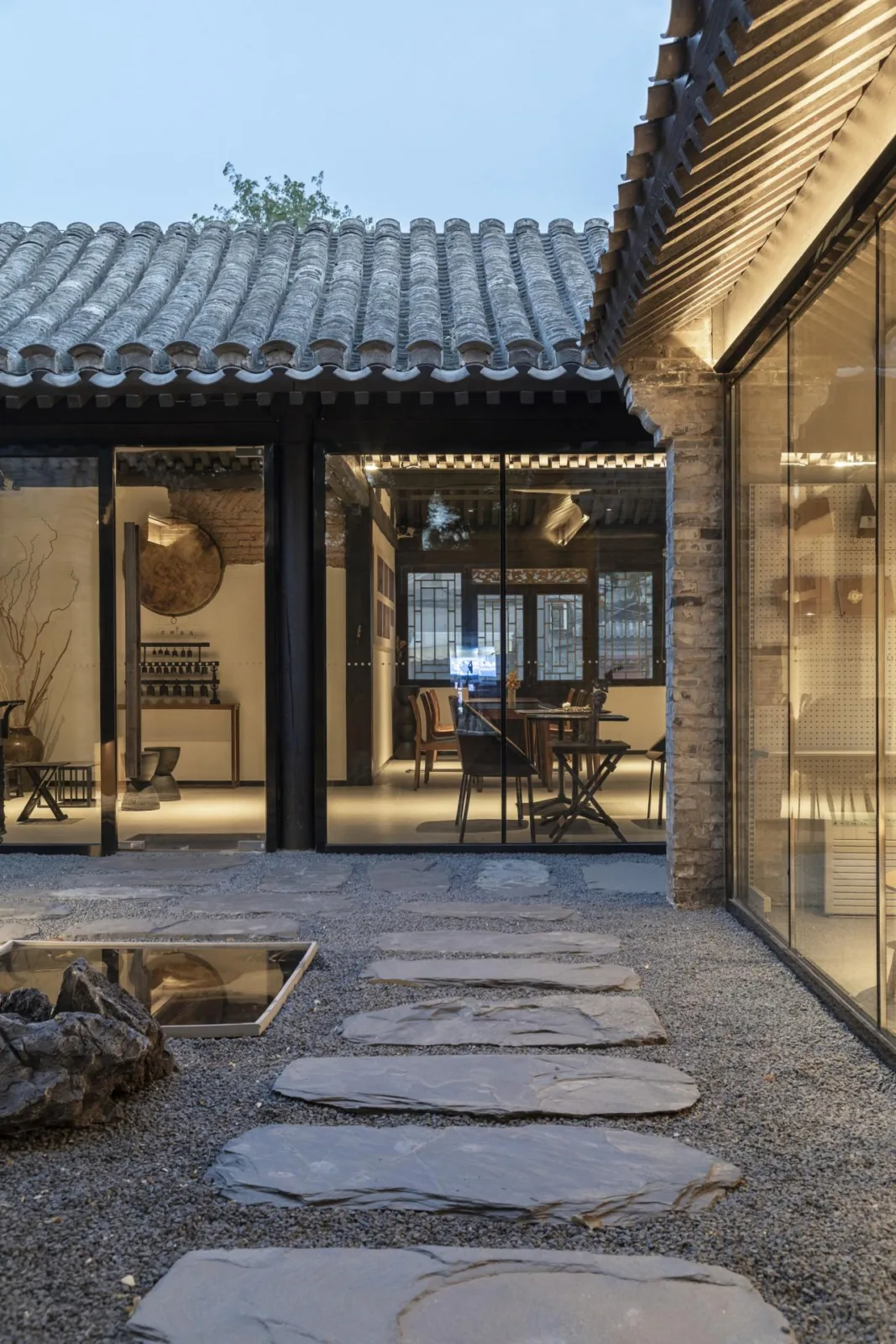
△ Indoor details © UK STUDIO
Inside, walls and floors are harmonized through a consistent color palette. The roof features original wooden beams retained from before the renovation. Through careful material selection, we aim to create a dialogue between the new interventions and the historical fabric of the building.
This interplay between the tangible past and contemporary design embodies the building’s spatial essence.
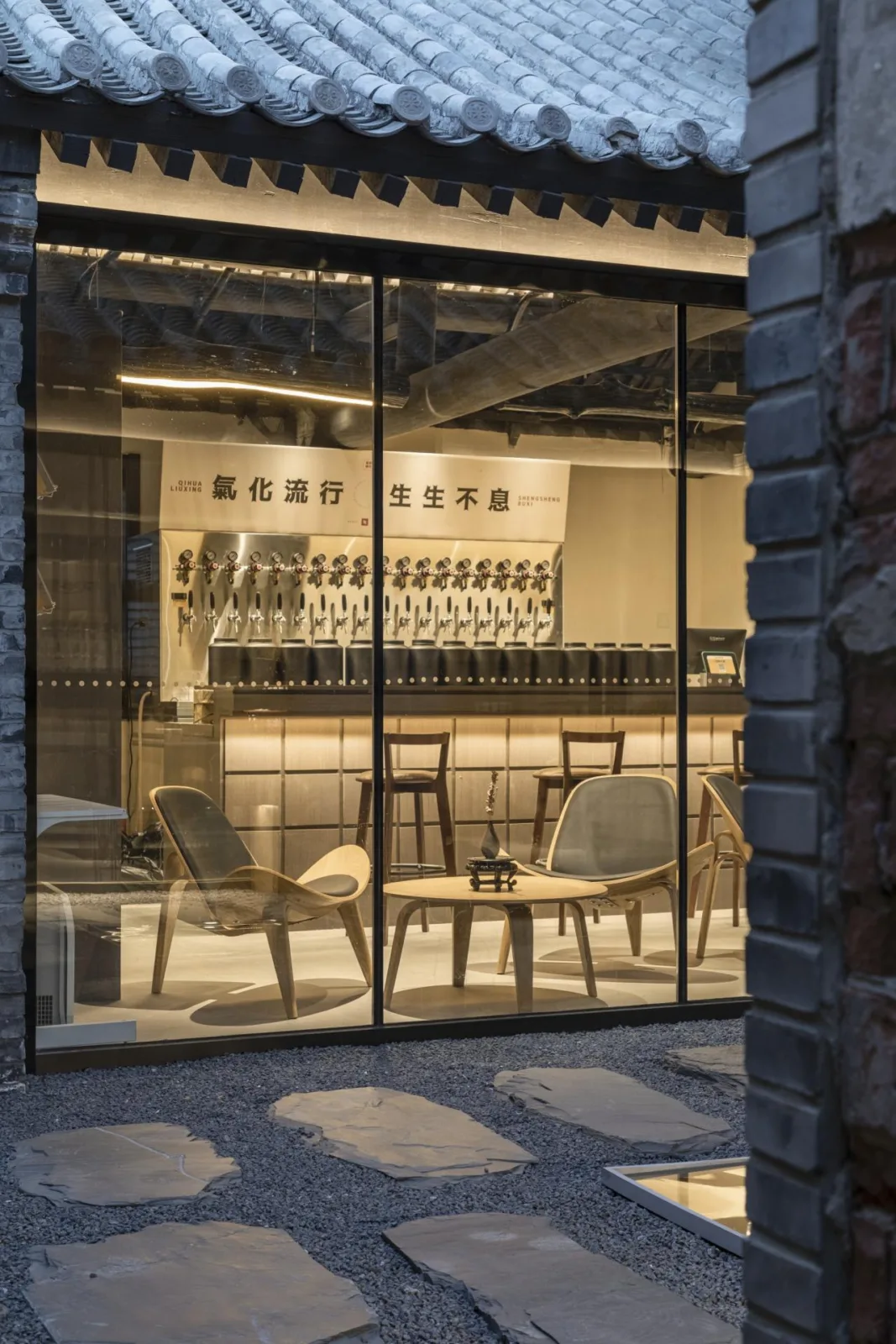
△ Indoor details © UK STUDIO
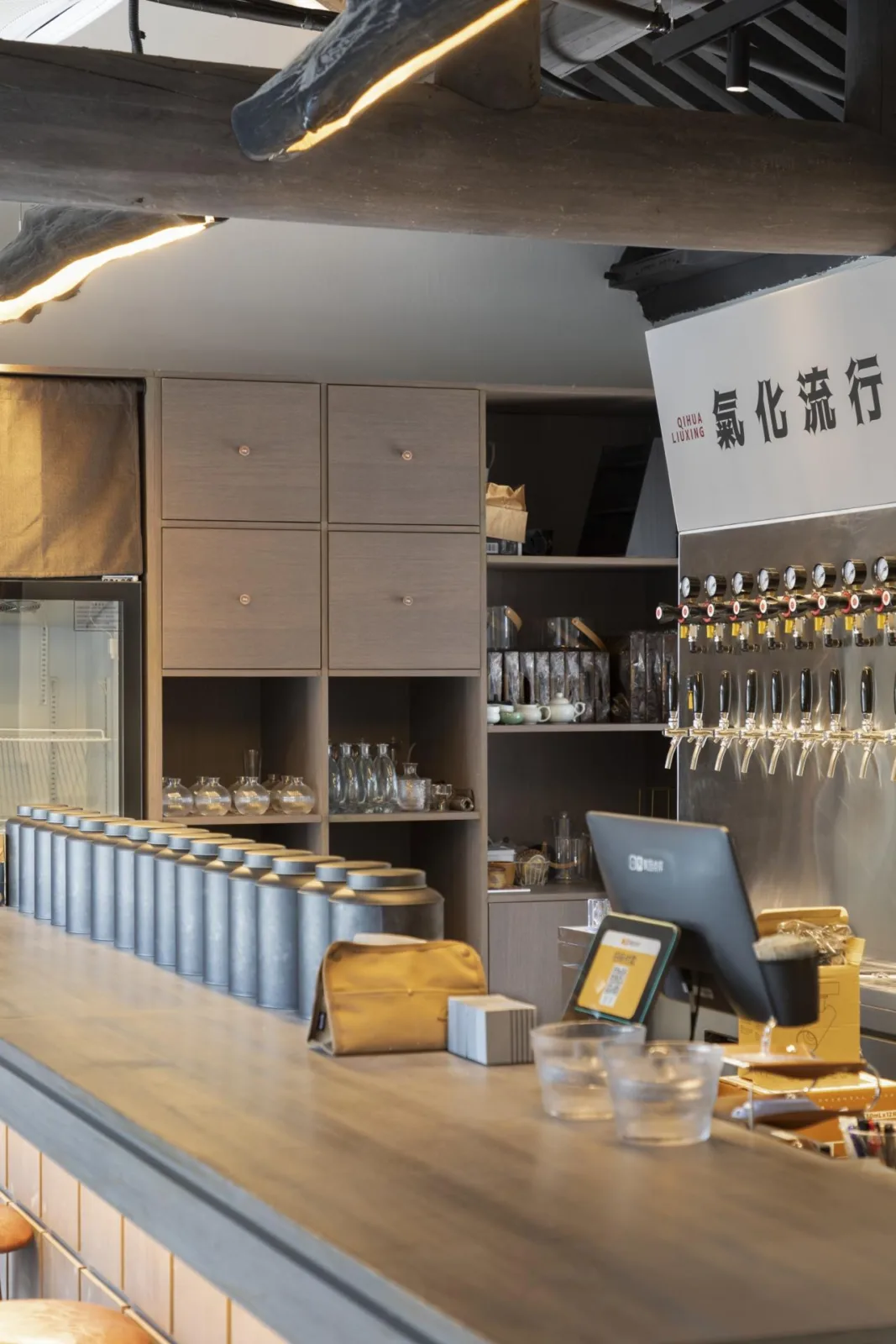
△ Bar details © UK STUDIO
The Seven Star Bucket Cabinet concept inspired the design of the bar counter. Known for its ease of access—lifting hands to take, lowering heads to retrieve, and a half-step to view the entire cabinet—this traditional Chinese medicine cabinet served as a model.
Since the bar counter serves multiple functions, including reception and storage, incorporating this concept conveys the venue’s unique character and establishes a strong brand identity.
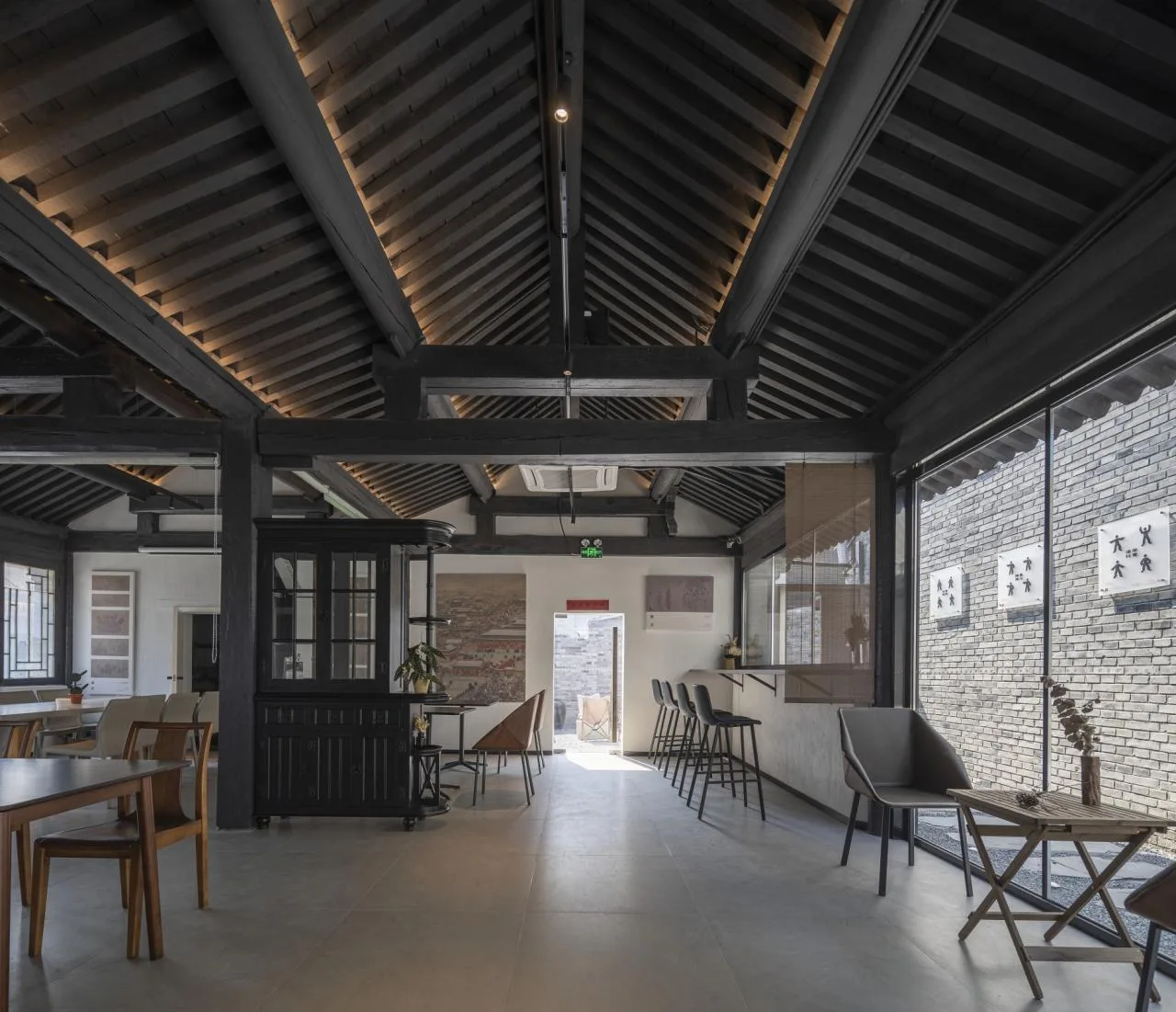
Relationship between roof and supporting columns © UK STUDIO
We removed unnecessary partition walls in the main hall, relying solely on wooden structures for support, creating an open space that gracefully unfolds along the central axis.
Space functions as a vessel, and everything it contains influences the visitor’s experience. We aimed to preserve the rustic “dullness” of the original setting, allowing guests to feel the building’s history through the mottled textures of its original walls.
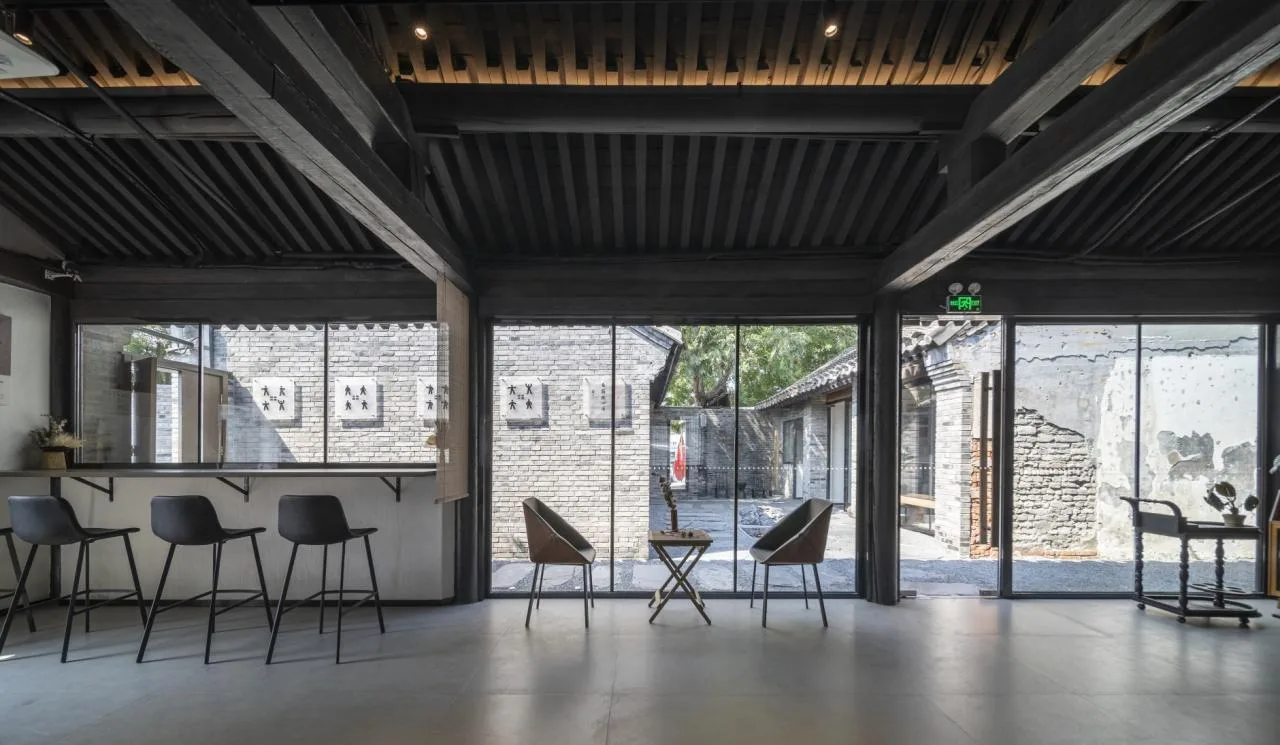
A peaceful space that soothes the soul © UK STUDIO
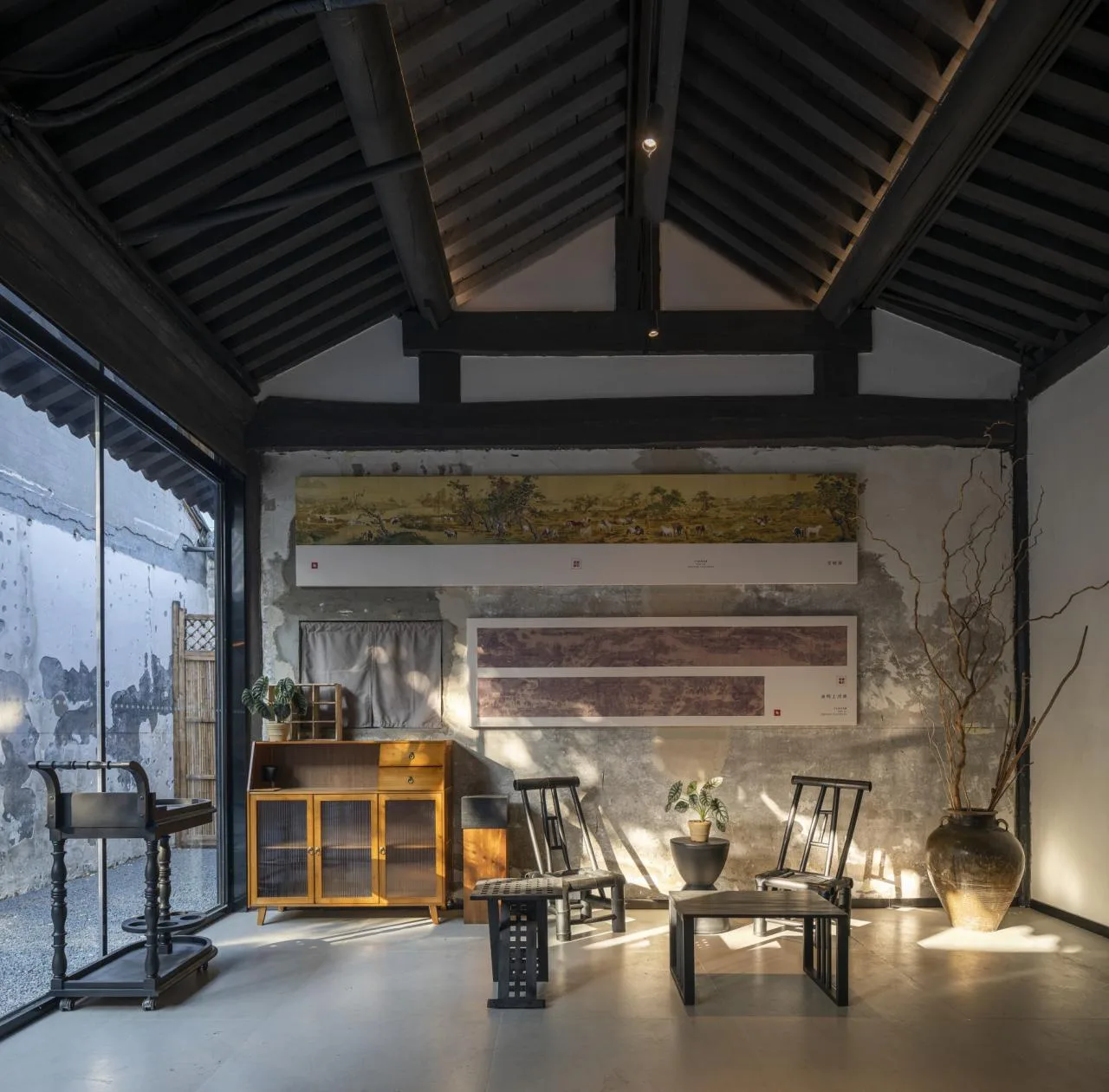
Display corner © UK STUDIO
The furnishings blend seamlessly into the space, as if they have always belonged here—each piece indispensable. Notably, all furniture was collected by the owners themselves. This ongoing dialogue between the external environment and internal design breathes emotional depth into the space.
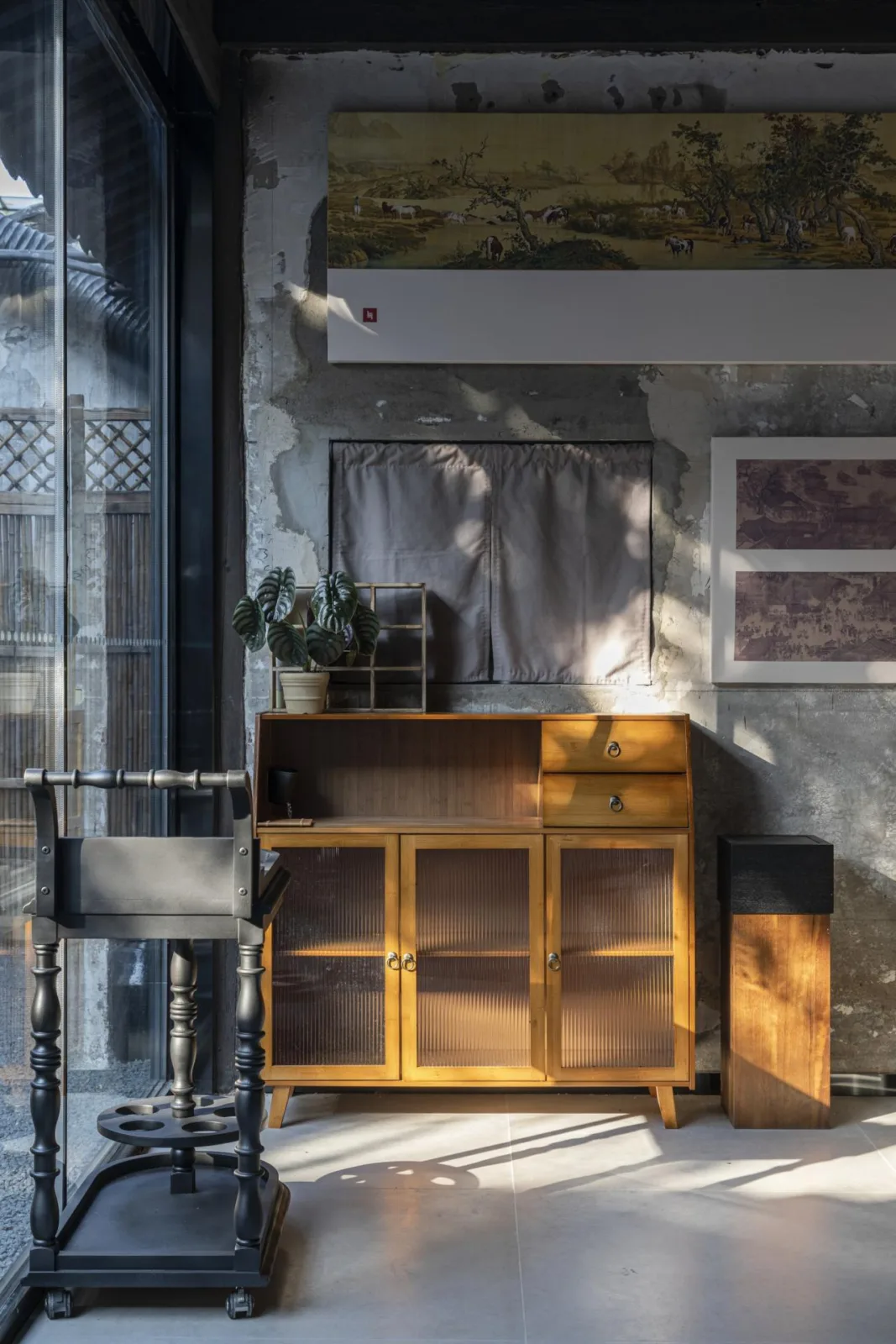
Furniture detail © UK STUDIO
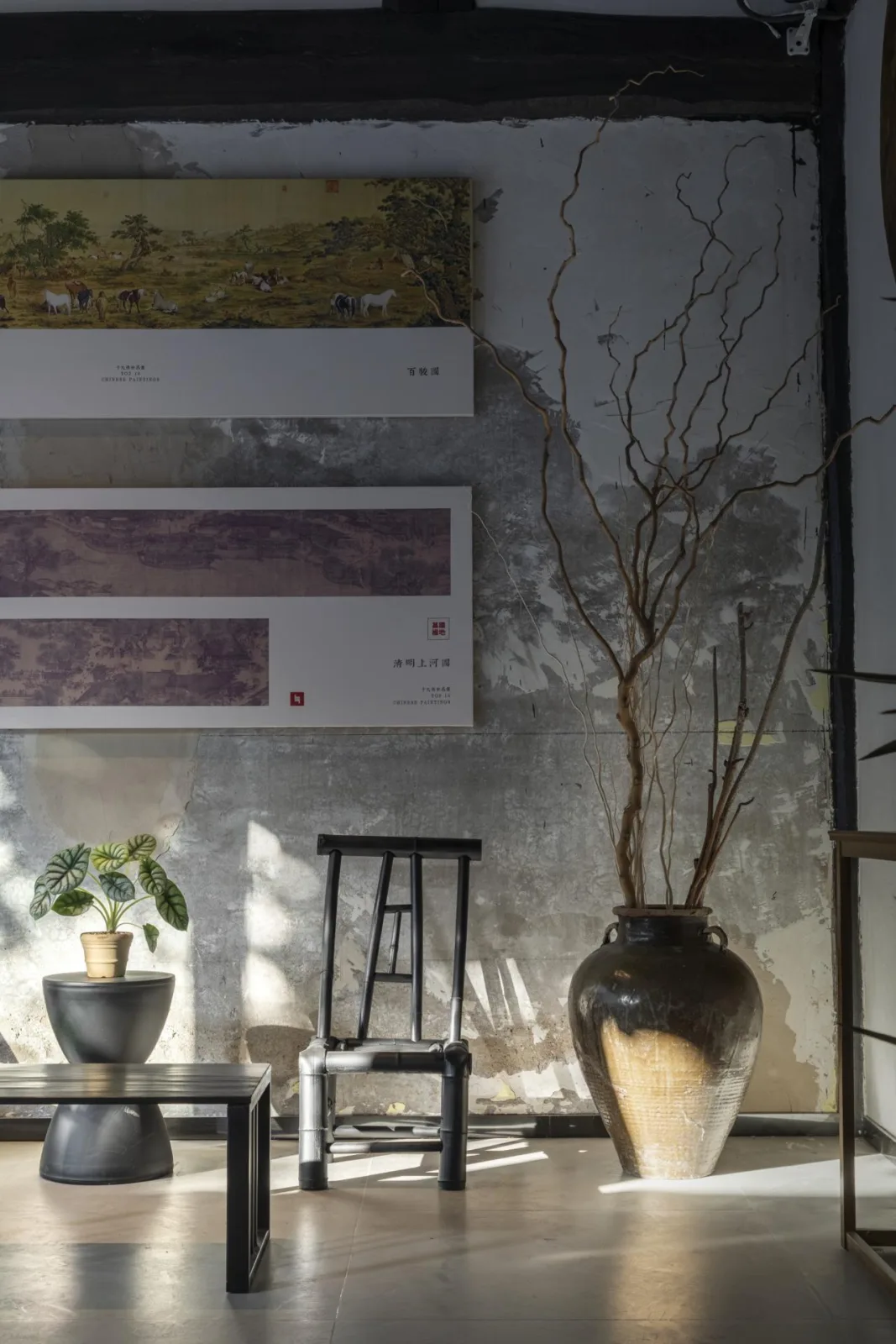
Furniture detail © UK STUDIO
The enclosed courtyard, largely hidden within the city, offers a balanced extension of indoor public activities before leading to the exit. Inside and outside are interconnected, forming a unified whole. The house is the courtyard, and the courtyard is the house.
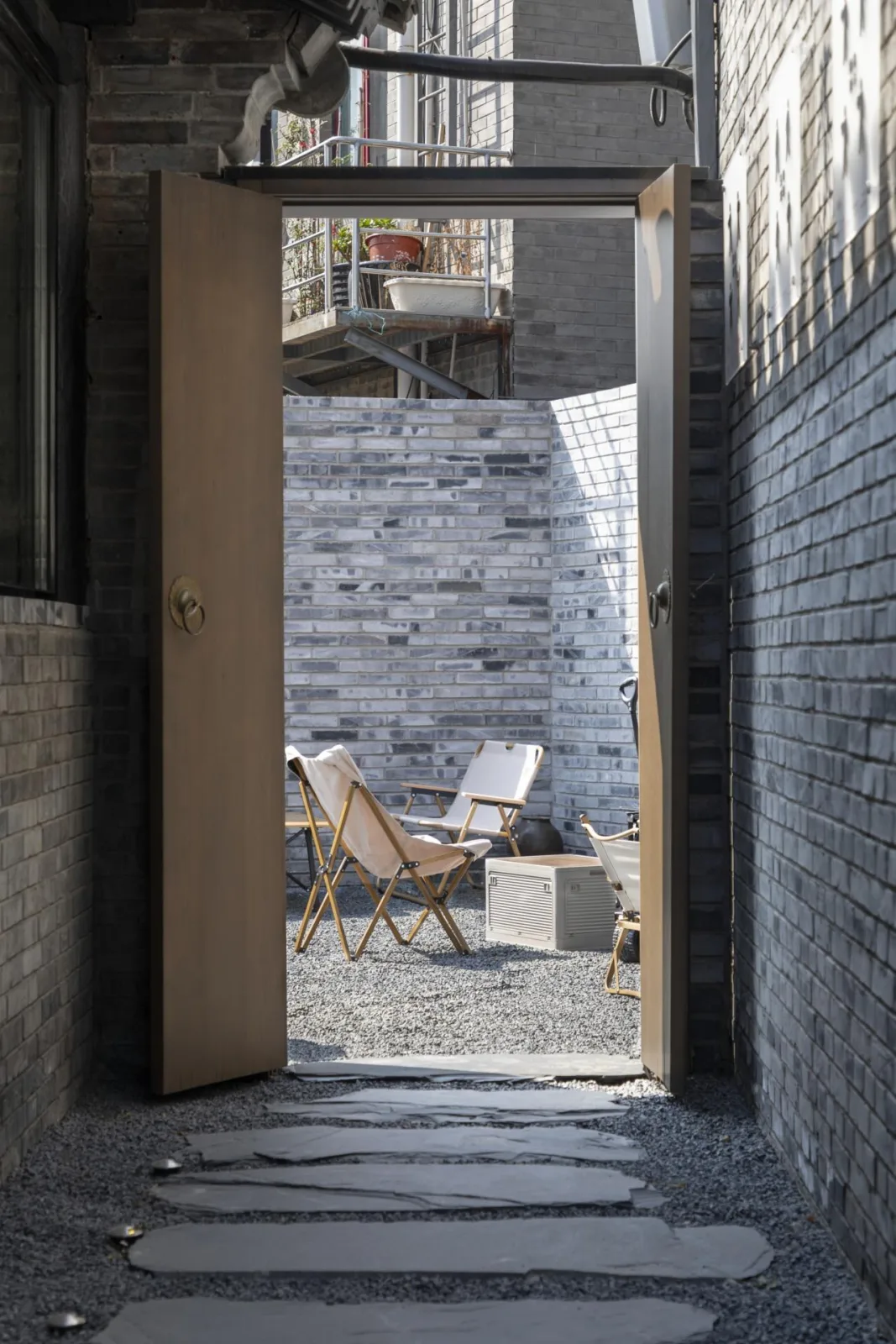
View of the courtyard from indoors © UK STUDIO
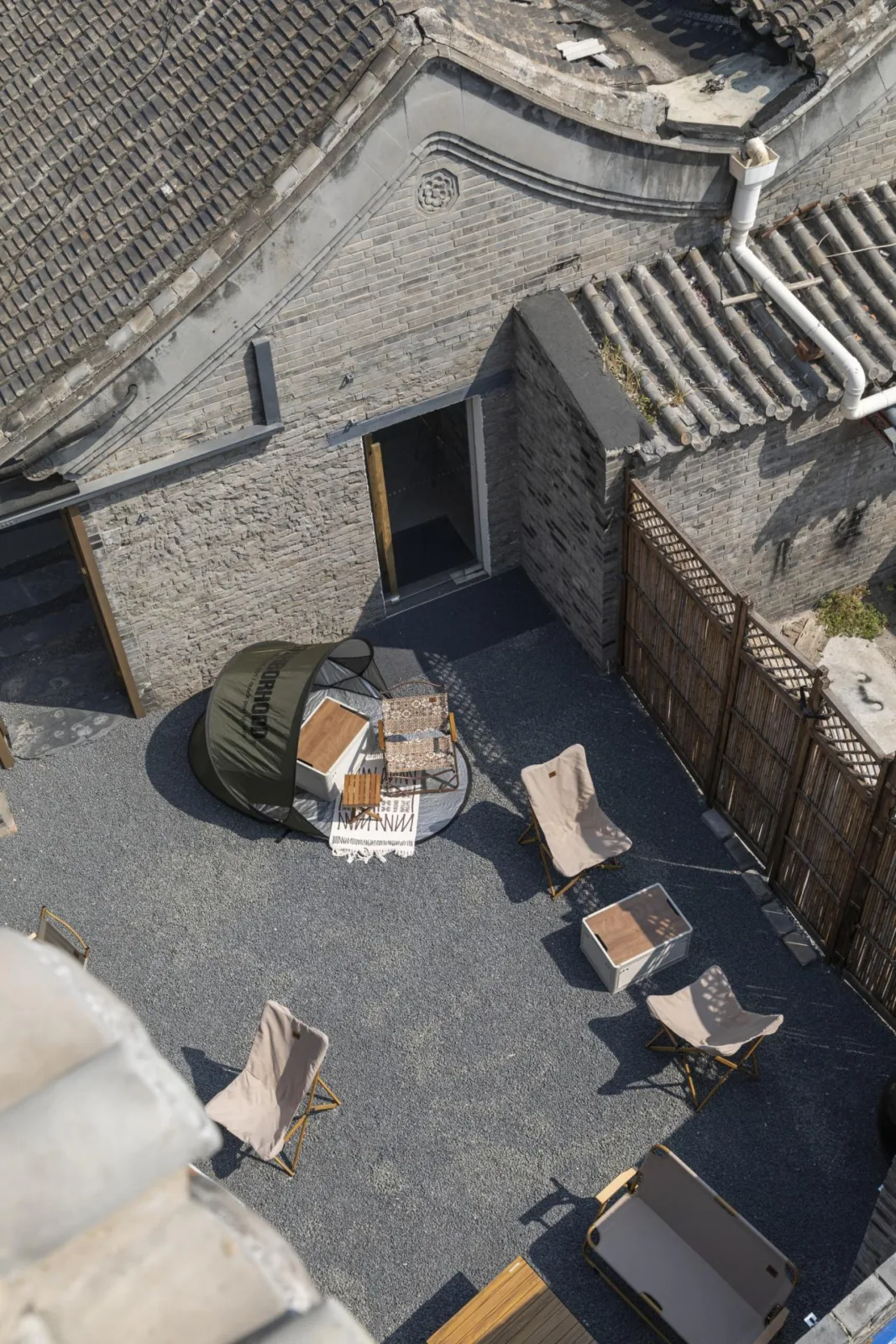
△ Aerial view © UK STUDIO
From renovation to new construction, our vision for the city is rooted in subjective consciousness that connects with reality. In this project, we elevate the design context by preserving the textures of the original site.
Looking ahead, we continue to explore how to better utilize the renovated spaces and remaining courtyard areas.
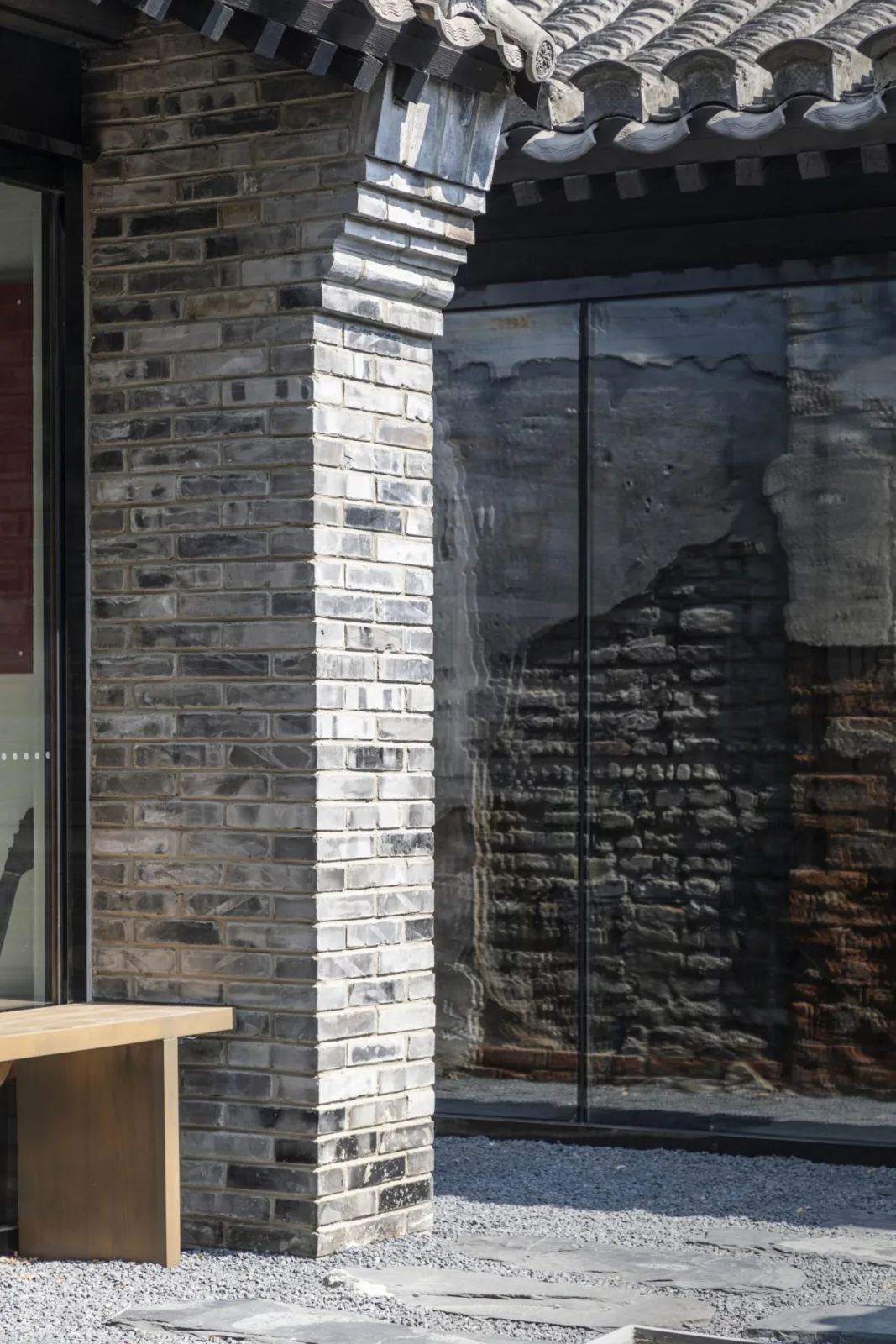
△ Wall details © UK STUDIO
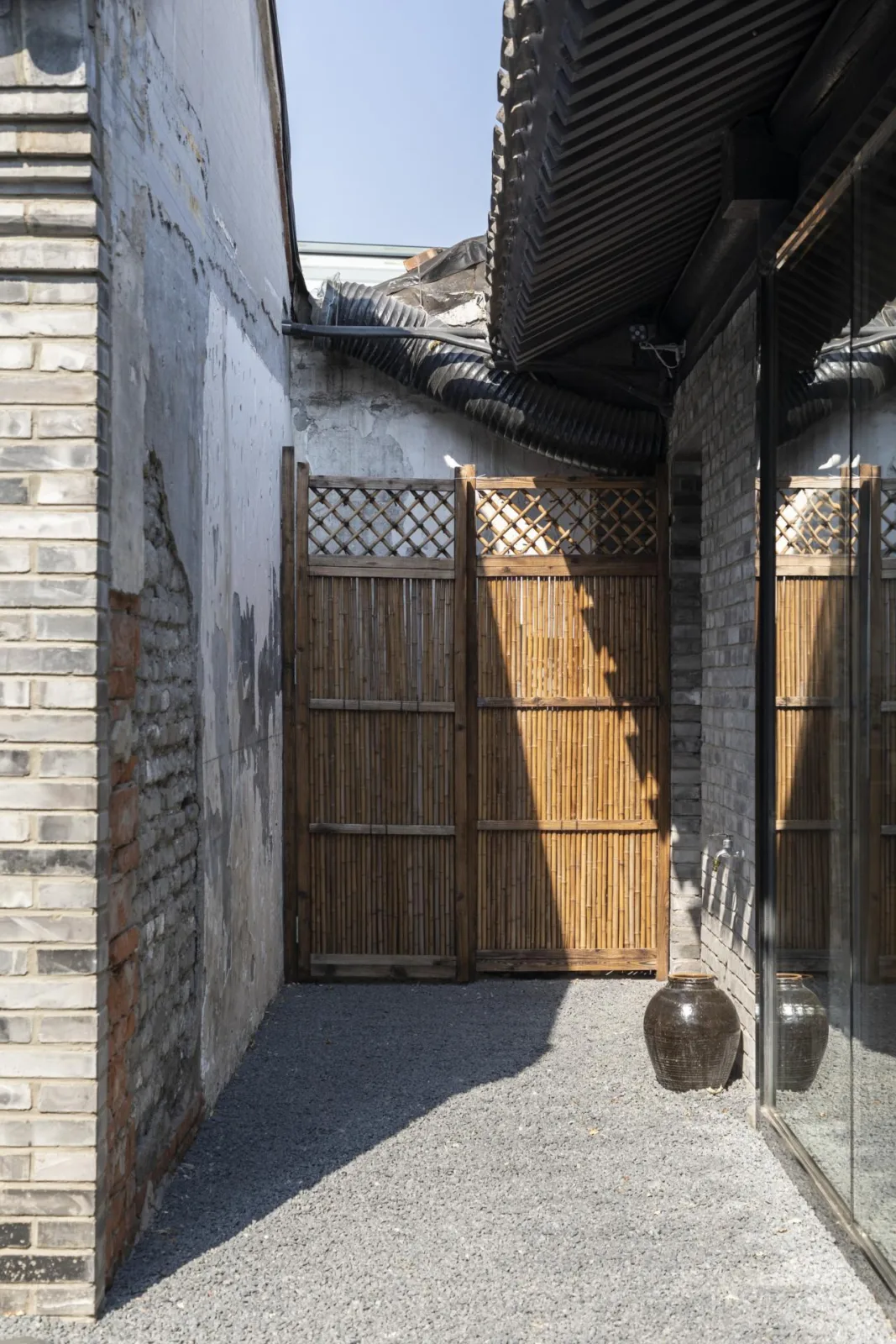
A scene in a corner of the wall © UK STUDIO
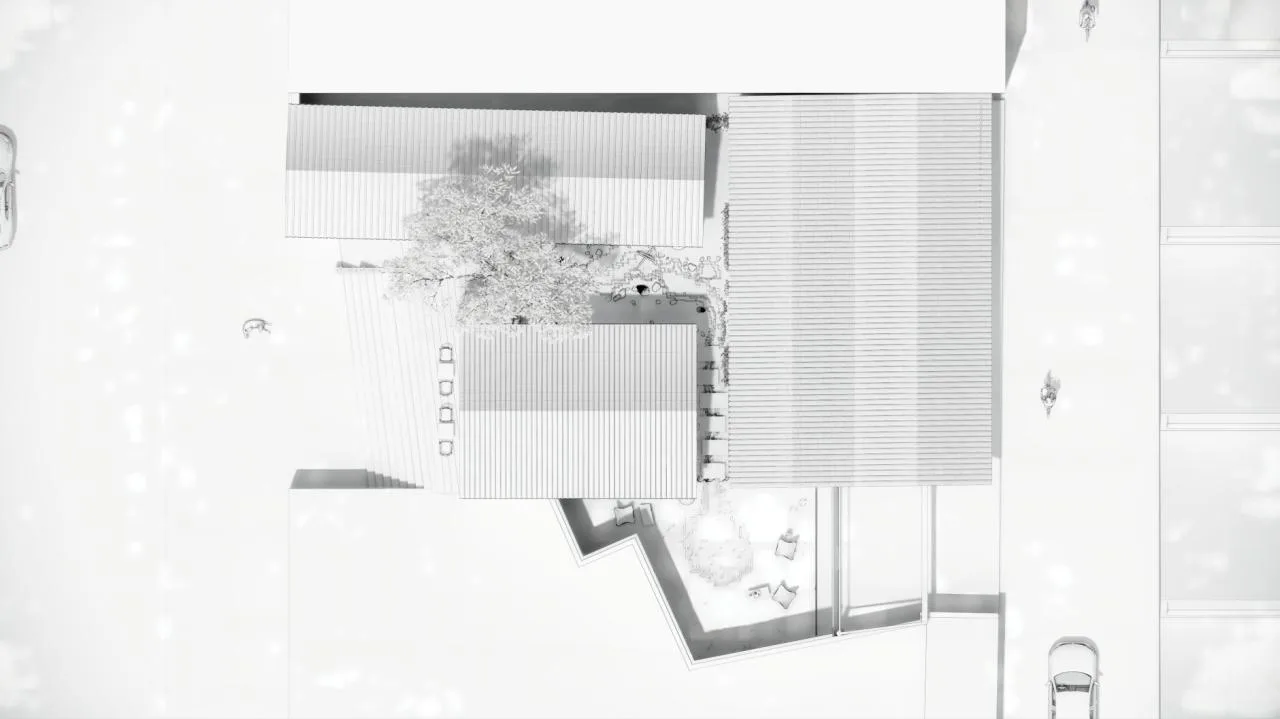
Top view © UK STUDIO
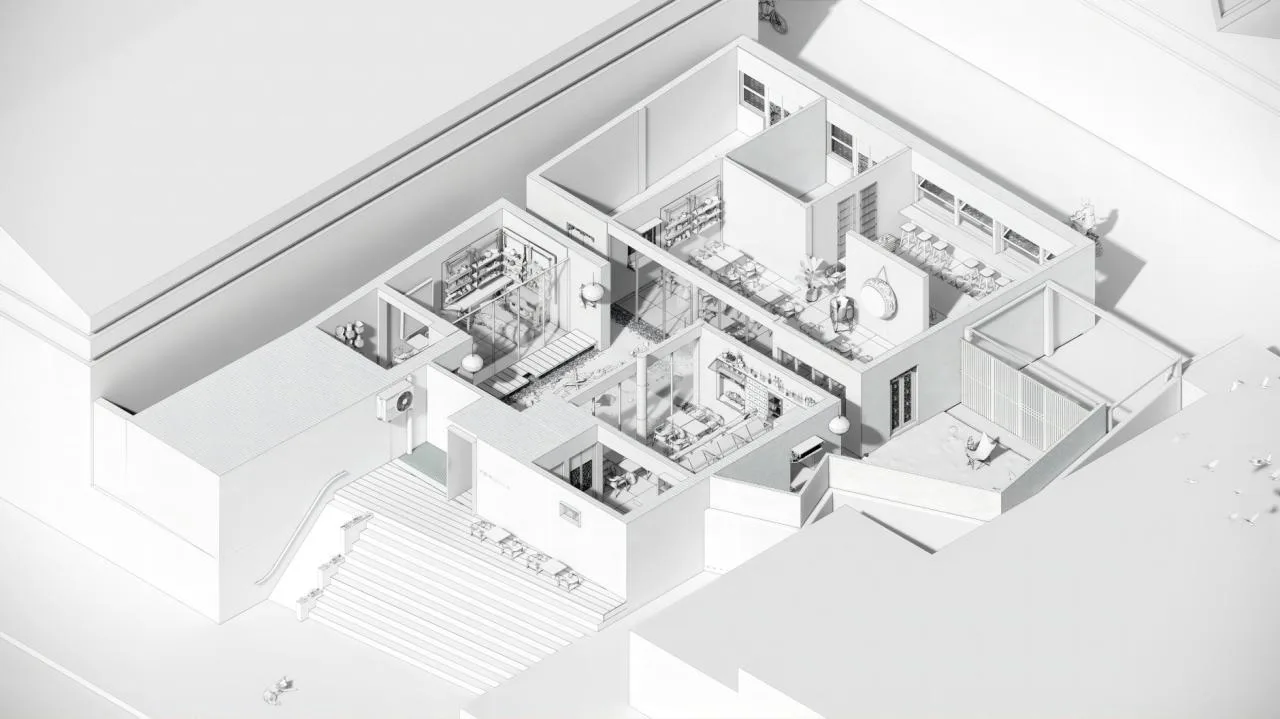
△ Axonometric diagram © UK STUDIO
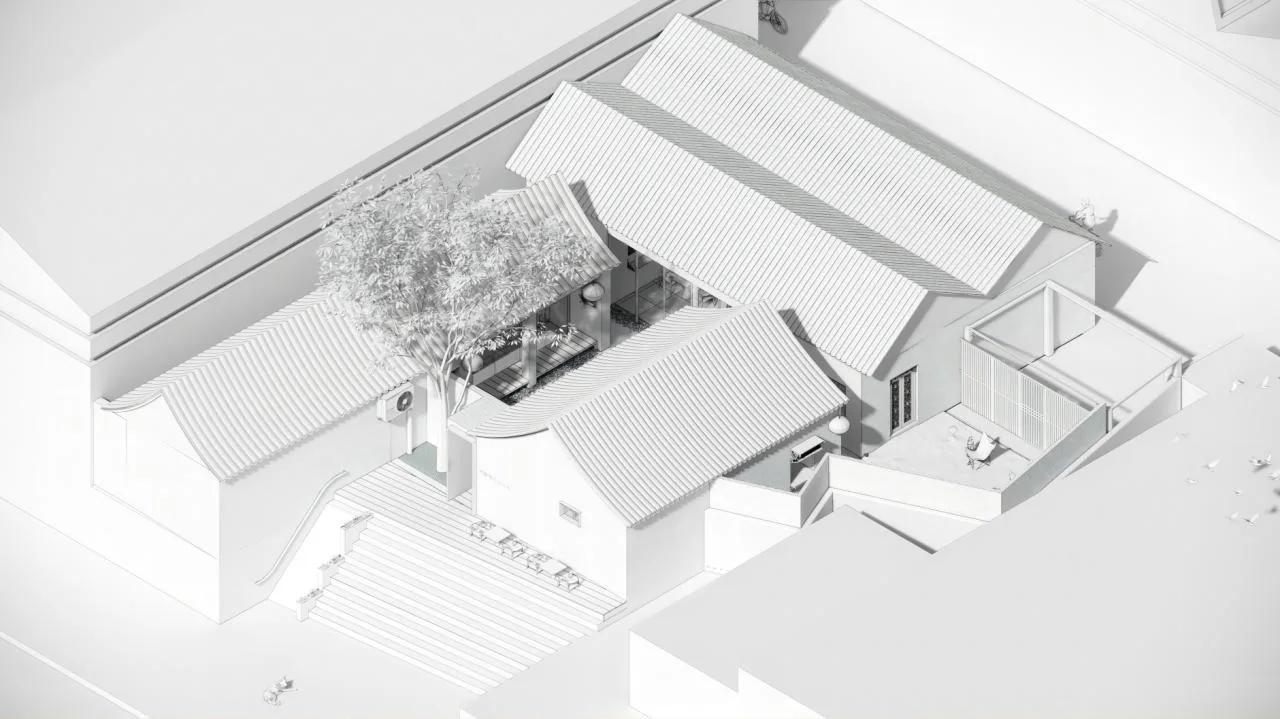
△ Axis measurement and indoor space analysis © UK STUDIO
Project Information
Project Name: Wanguo Fudi Craft Wine Bar
Design Company: DAGA Architects Daguan Architectural Design
Client: Beijing Xingqi and Catering Management Co., Ltd
Design Team: Shen Jianghai, Li Jing, Tu Ye
Project Type: Interior Design
Building Area: 300 m²
Design Period: June 2022 – August 2022
Construction Period: August 2022 – December 2022
Project Photography: UK STUDIO © UK STUDIO
Author: Teng Tianyi














Must log in before commenting!
Sign Up