
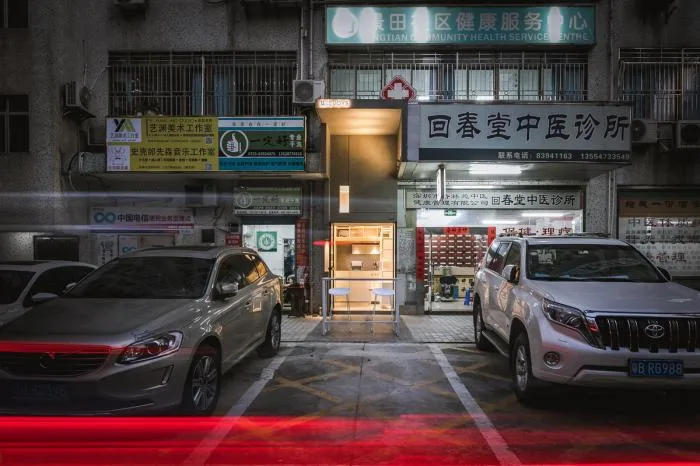
△ Jiyu © Li Jinhui

△ Jiyu © One ride building
Architecture is about transforming a site into a place with a distinct personality and meaning. Design is the act of creating such a place. In other words, a place is a space with clear characteristics, where people can experience an environment rich with significance.
——Norbert Schultz, The Spirit of Place – Towards Phenomenology in Architecture
01
Paradigm: Small Scale in Large Cities
The 9-square-meter Jiyu project represents a refined new spatial paradigm within the urban context. Despite its small size, it is rich in depth, nurturing ideals, ideas, life, culture, and neighborhood connections. In the rapid urban development process, 9 square meters is a rare spatial scale. It is unrelated to grand blueprints, speed, or scale, but instead forms a small, light spatial narrative—often overlooked yet indispensable.
Architects have discovered a meaningful perspective for intervention in spatial reality and social significance. This 9-square-meter space encourages closer human interaction and fosters a stronger sense of presence.
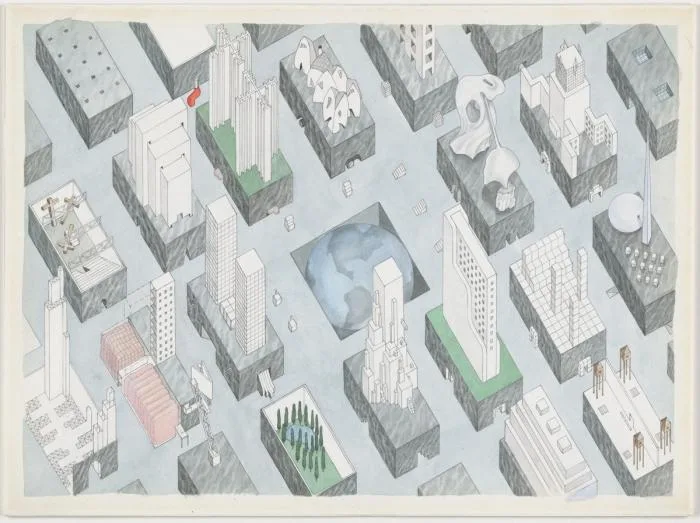
△ “Crazy New York” by Rem Koolhaas (source network)
The manifesto “Crazy New York,” written about Manhattan, points out that a manifesto’s fatal flaw is the lack of evidence, while Manhattan faces the opposite problem—it has overwhelming evidence but no manifesto.
Jiyu, as a space embodying ideals and care, has emerged amid rapid urban development, offering interpretations and supplements to the city’s declining community atmosphere.
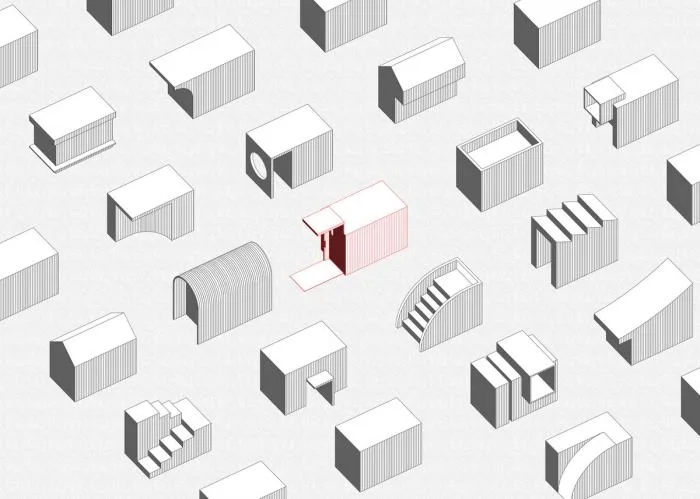
△ “Finding the City of Fun” © One ride building
In “City of Fun,” we explore the city’s streets and alleys, seeking the significance of street scale and neighborhood safety supervision as described by Jacobs. These spaces differ from the typical urban framework surrounded by street blocks and shadowed by layers of buildings. They possess their own personality and vibrancy, whether public spaces or accessible rooftop landscapes. Jiyu Island belongs to this category.
02
Public Space: A Type of Non-Essential Space
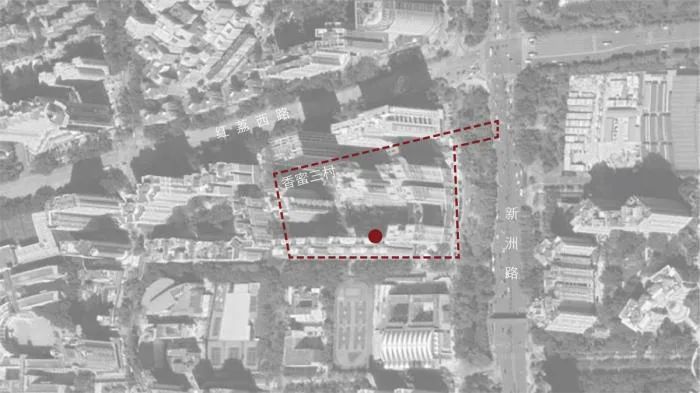
△ Location Map © One ride building
Jiyu is located in Xiangmi San Village, constructed in the 1990s. Over the past two decades, outdated community infrastructure has accelerated vitality loss. The increasing demand for street parking continues to consume the community’s limited public space.
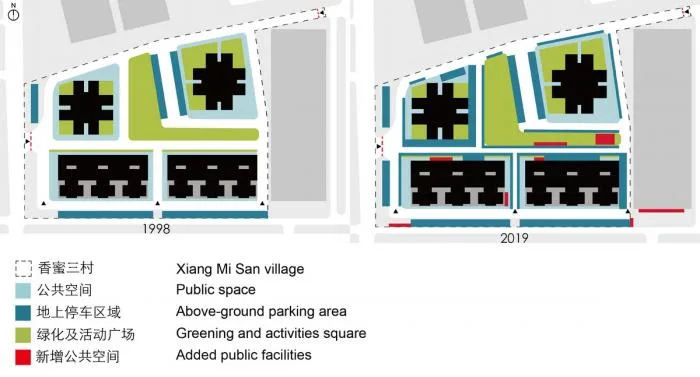
△ Public Space Analysis © One ride building
High-rise construction has altered the nature of public green spaces, a common phenomenon of “occupation.” Therefore, one shared goal with the owners was to restore a communal node that fulfills its functional role, creating value within the gaps.
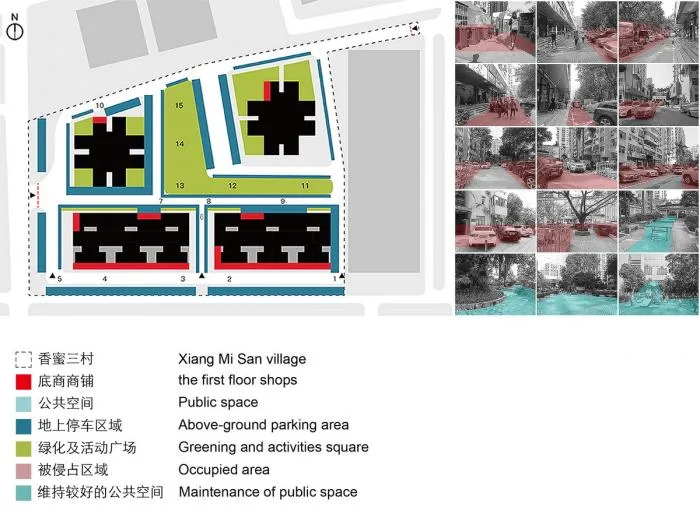
△ Public Space Analysis © One ride building
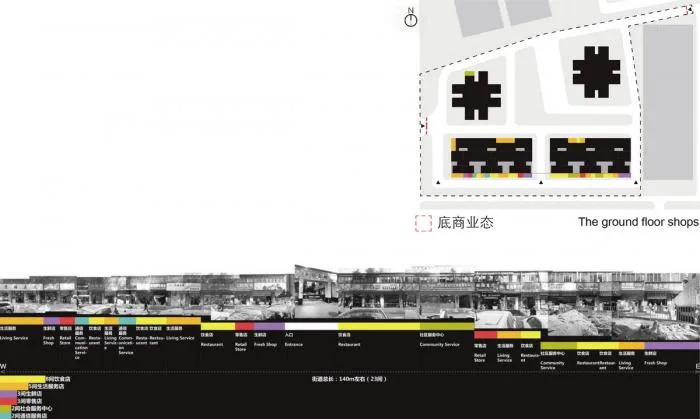
Community Business Composition Research © One ride building
03
Strategy: Integrating Architecture Into Its Place
Jiyu’s predecessor was a community air conditioning repair shop. During the site survey, we found numerous air conditioning parts and oil stains scattered near the entrance. People tended to avoid this area, preferring to visit nearby dry cleaners or pharmacies.
Residents had few places to linger; the sense of place was fragmented, fading, and vague. Connections between neighbors existed but lacked genuine warmth.
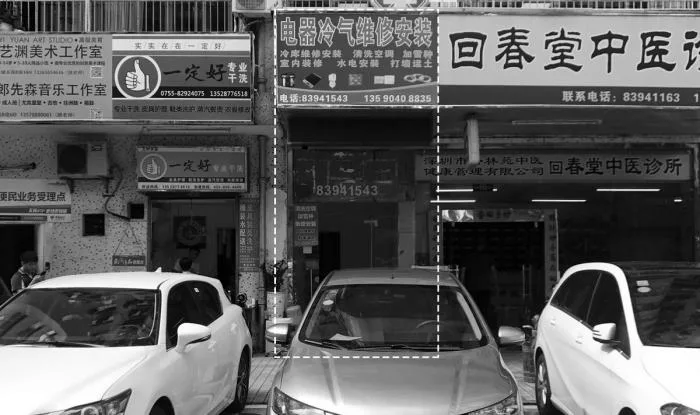
Before renovation © One ride building
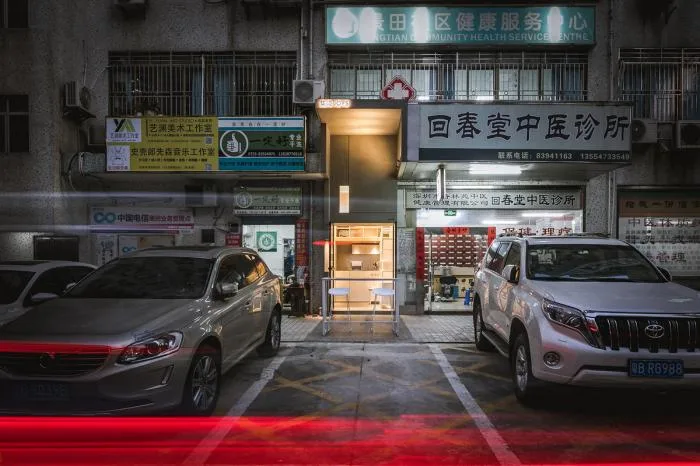
△ After renovation © Li Jinhui
The toughest design challenges weren’t the project itself but the puzzled responses from neighbors during construction. These concerns were resolved one by one, reflecting the meaning of “yu” in Jiyu—it became a beloved island for everyone.
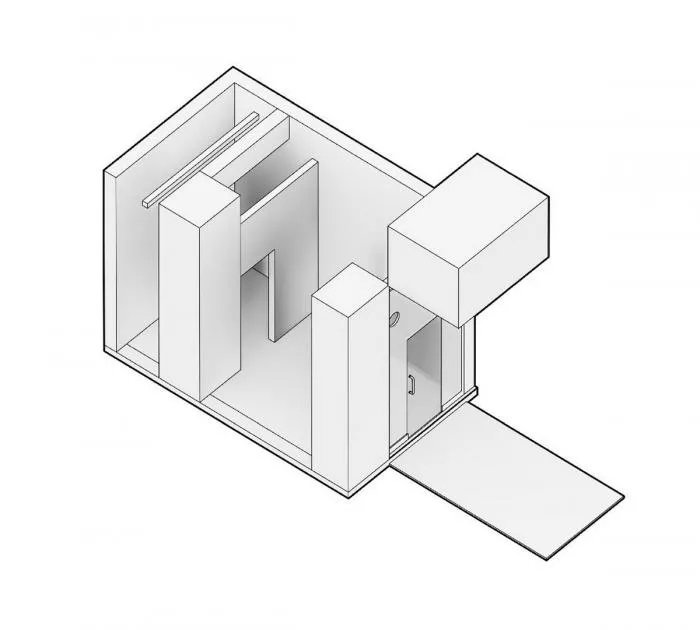
△ Original state of space © One ride building
Confronted with a narrow site less than three meters wide, the main challenge was to balance visibility from afar with a comfortable interior experience.
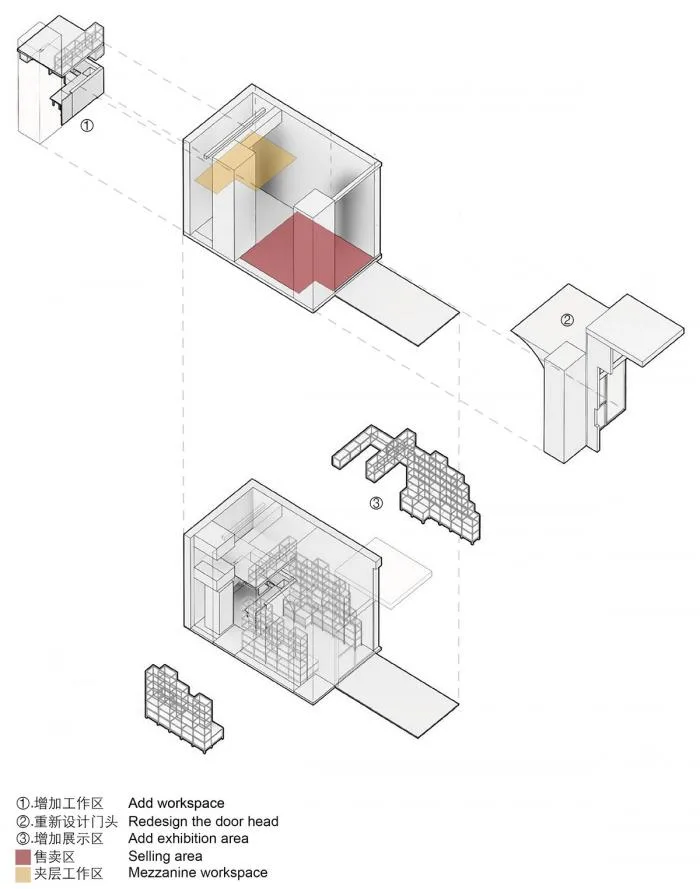
△ Functional axis exploded view © One ride building
The key aspect of the construction strategy was the facade storefront design. Customized internal shelving and compartments improved space efficiency.
04
Facade: Transition and Dissolution
The facade’s composition resembles a building installation embedded within this spatial unit. The outer extension features eaves, symbolizing the feeling of returning home from the city, while the interior boasts a curved ceiling that softens and relaxes the space.
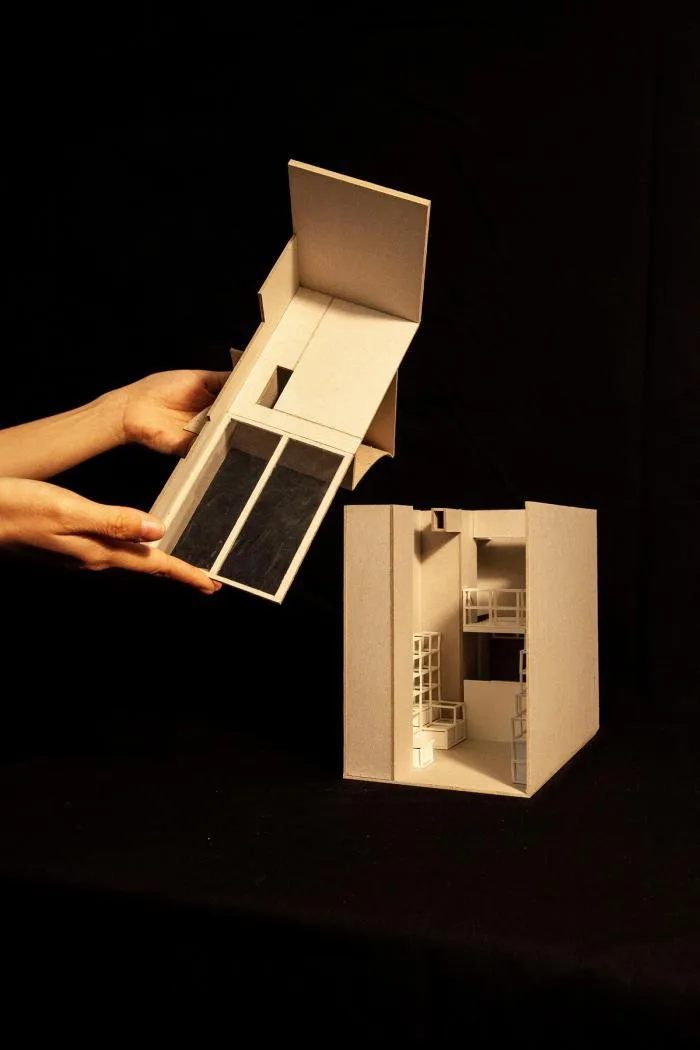
△ Model © One ride building
From a distance, the first impression is the subtle eaves and its calm texture. The space opens to the community in a welcoming manner, evoking a living-room style spatial memory. Removing the previously bulky, dark lightbox made the front area light and spacious, enhancing psychological transition.
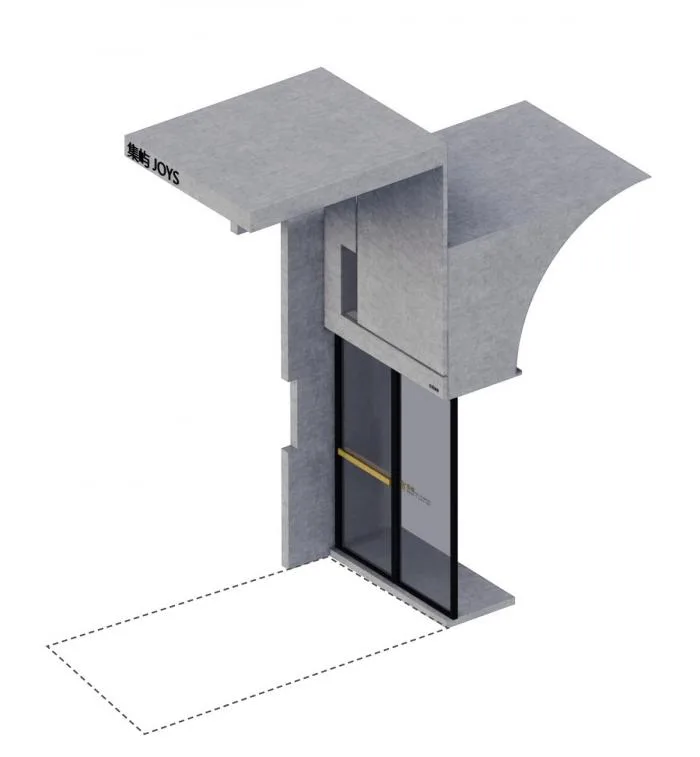
△ Facade design in building installation style © One ride building
The curved ceiling extends from the entrance glass door’s apex to the highest interior point. This design not only alleviates the cramped feeling of the narrow, tall interior but also introduces a sense of mystery and ceremony.
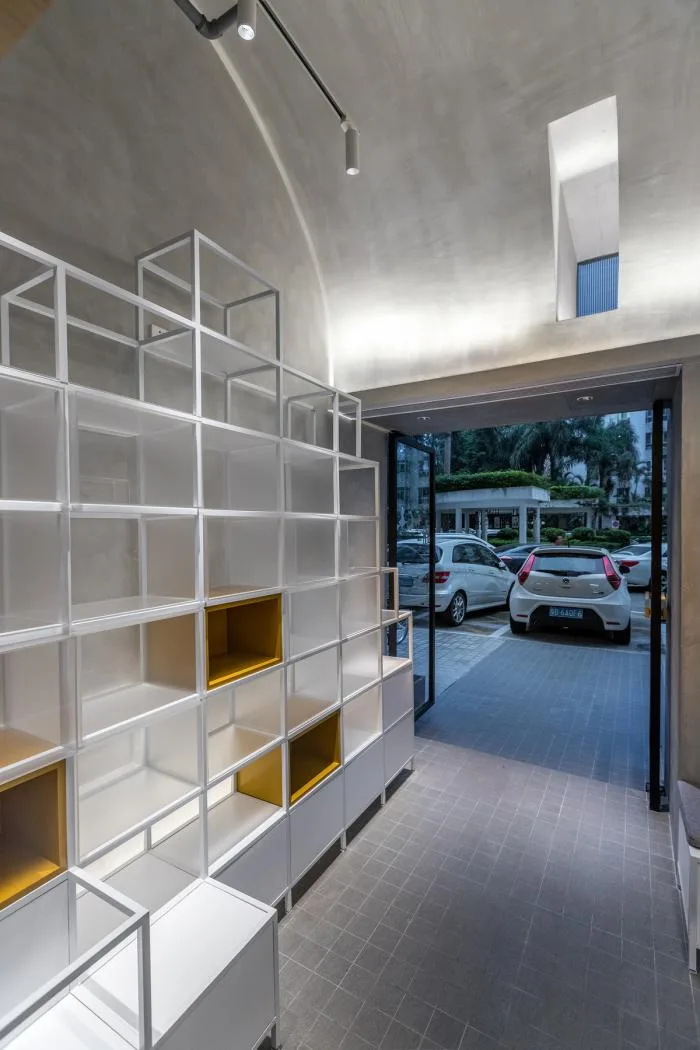
Arc-shaped ceiling for interior space © Li Jinhui
Even when the door is open, the atmosphere inside remains quiet and warm, creating a soft boundary between inside and outside.
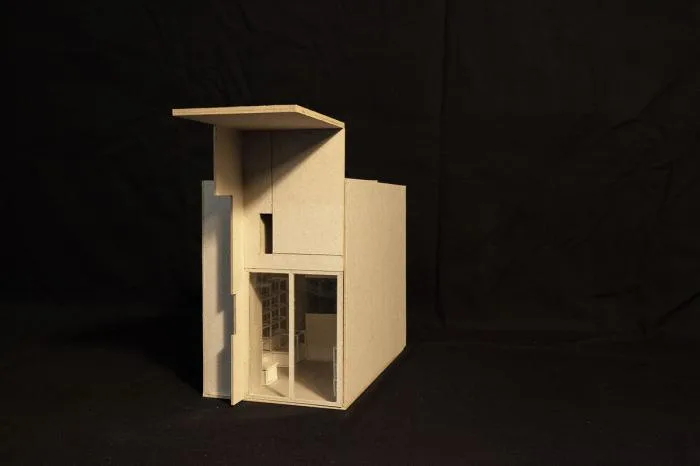
△ Model © One ride building
During construction, enthusiastic neighbors frequently contributed design ideas. Initially, we were hesitant about this interaction but soon realized its value. In such a symbiotic environment, open communication and participation are invaluable—like the wall design on the entrance’s right side, a spontaneous collaboration with neighbors.
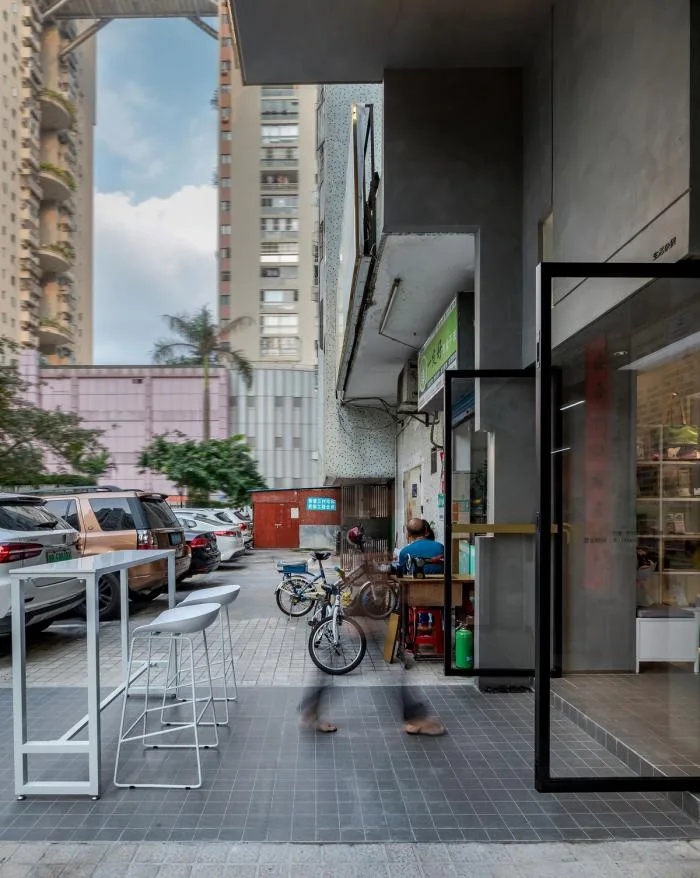
△ Wall designed collaboratively with neighbors © Li Jinhui
The eaves structure is simultaneously independent and grown from its context. The sewing machine and flower bed remain in their original locations, preserving the interplay between old and new elements.
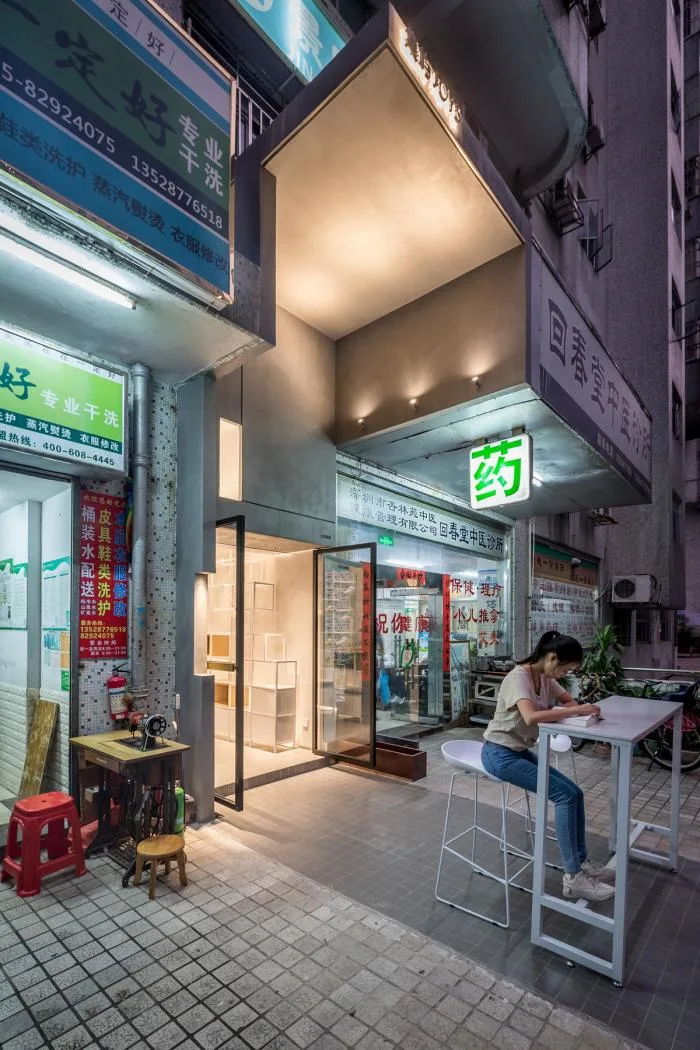
△ Jiyu Entrance © Li Jinhui
Since opening, we have revisited several times. The owner consistently maintains order in production and warmly welcomes guests. The entrance seating is a popular spot among visitors.
05
Profile: How Light Enters
Careful study of the profile was critical for Jiyu’s success. We sought not only to optimize functional placement within a small space but also to improve natural lighting.
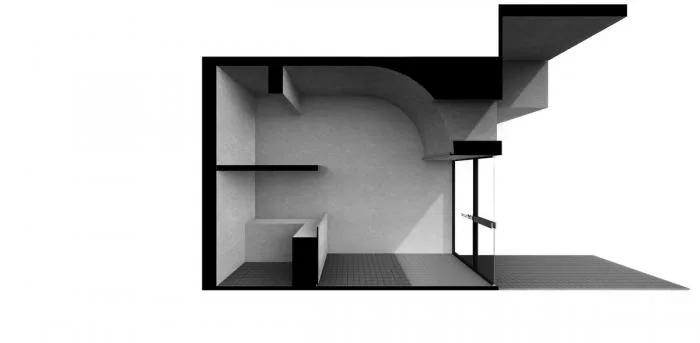
△ Profile study © One ride building
Raising the entrance height maximizes sunlight entry, significantly enhancing the limited interior lighting. The lightbox acts as a “convex” feature, while Jiyu’s entrance is “concave,” serving both lighting and symbolic purposes. We aimed for a distinctive look with softer light.
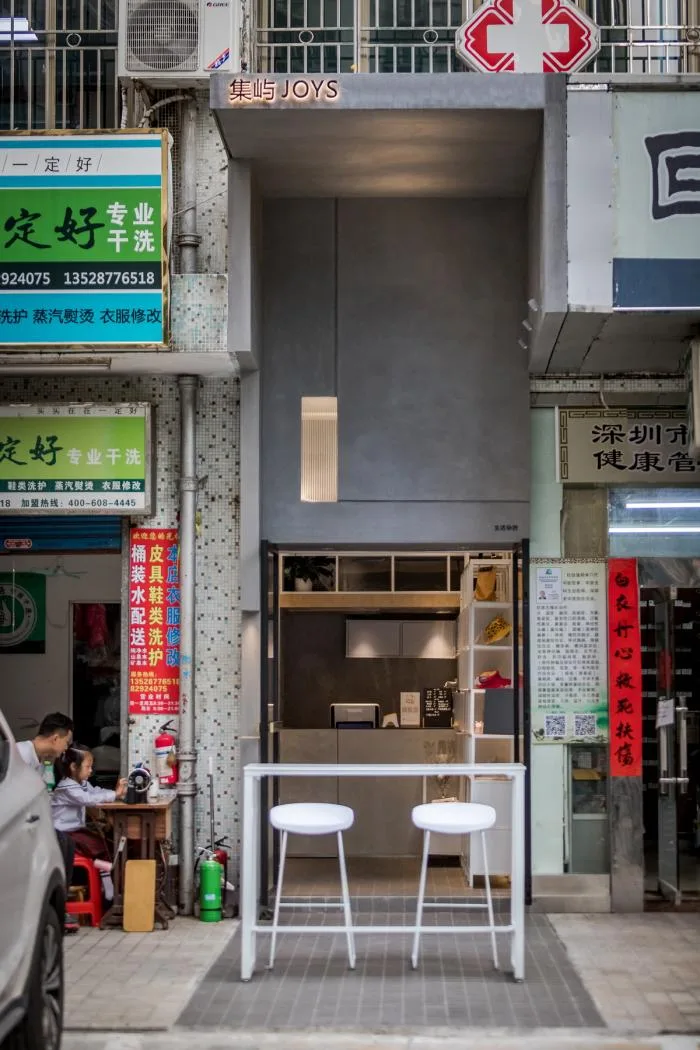
△ Jiyu Entrance © Li Jinhui
Vertical strip skylights on the front facade provide subtle daylight, maintaining indoor tranquility. At night, their light resembles an eye watching over the city.
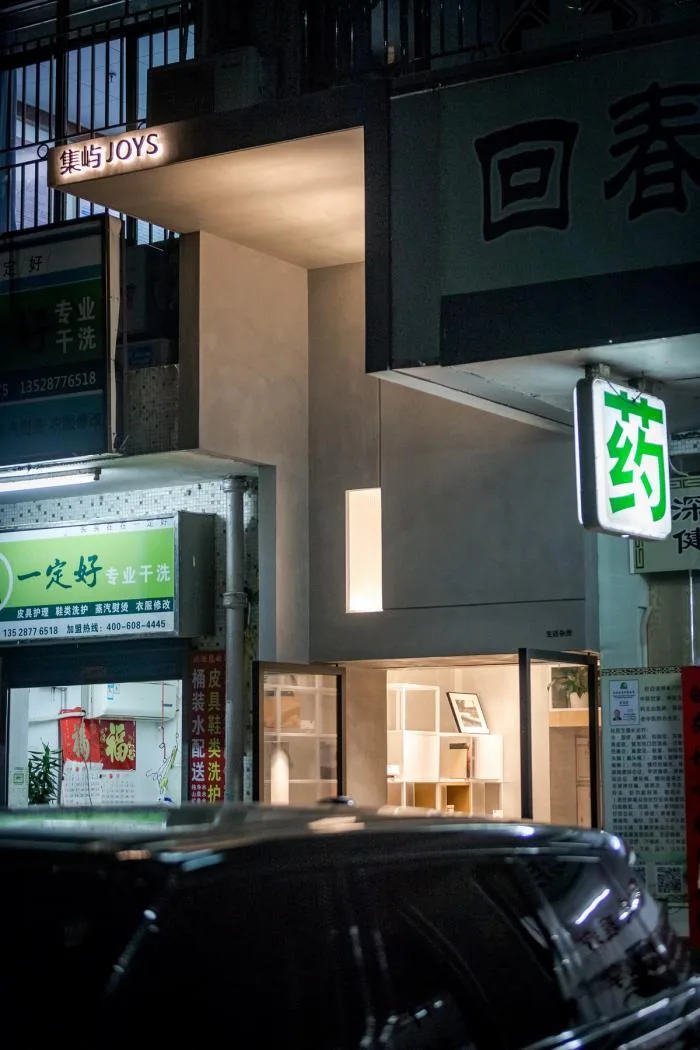
Jiyu at Night © Li Jinhui
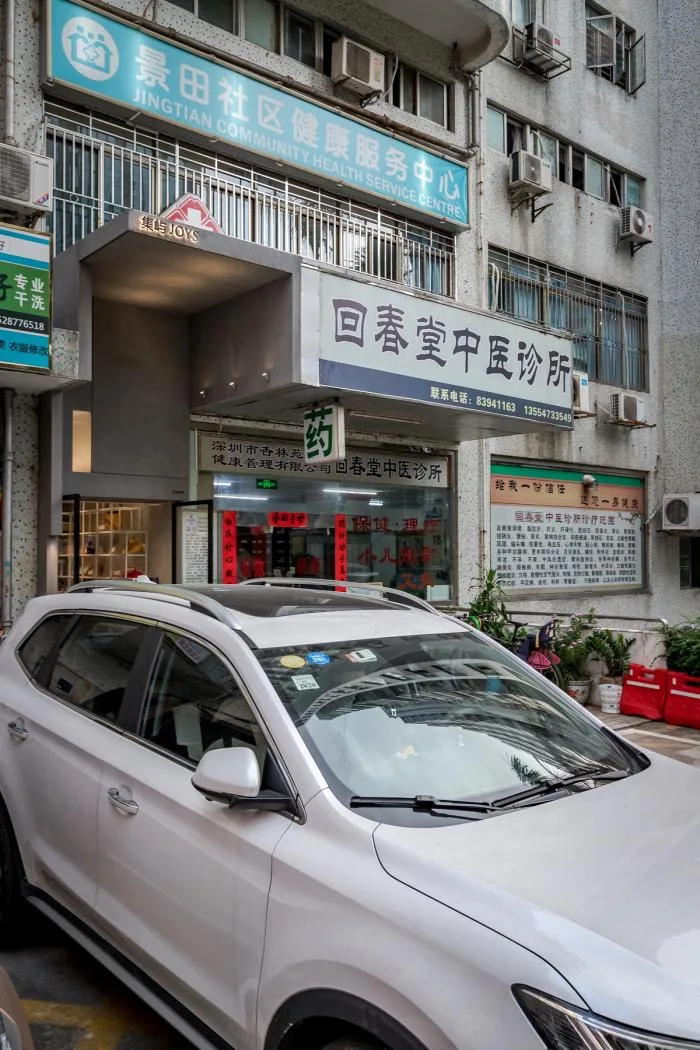
△ Neighborhood Relations © Li Jinhui
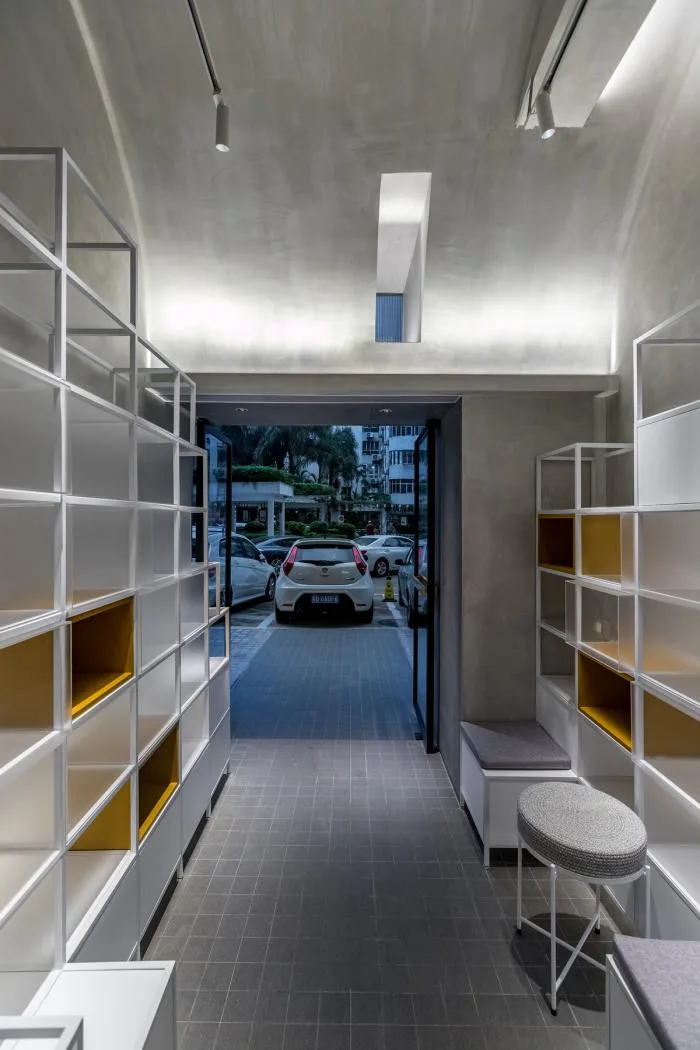
△ Looking inward towards the entrance © Li Jinhui
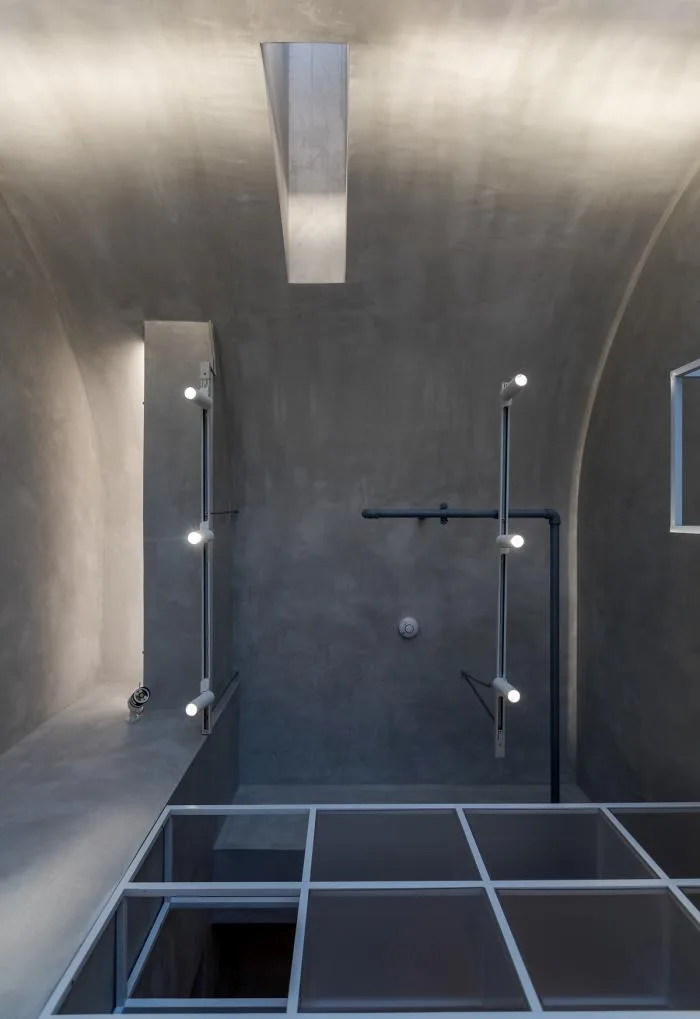
△ Roof © Li Jinhui
06
Sense of Identity: An Invisible Presence
The larger a logo, the stronger its functional recognition. But what happens when the logo diminishes to near invisibility? Do we stop perceiving the space? Guided by this idea, we aimed to create a sense of identity through atmosphere rather than exaggerated forms, echoing Norbert Schultz’s idea of places having unique personalities and meaning.
Jiyu’s mission is to pursue this subtle yet profound direction.
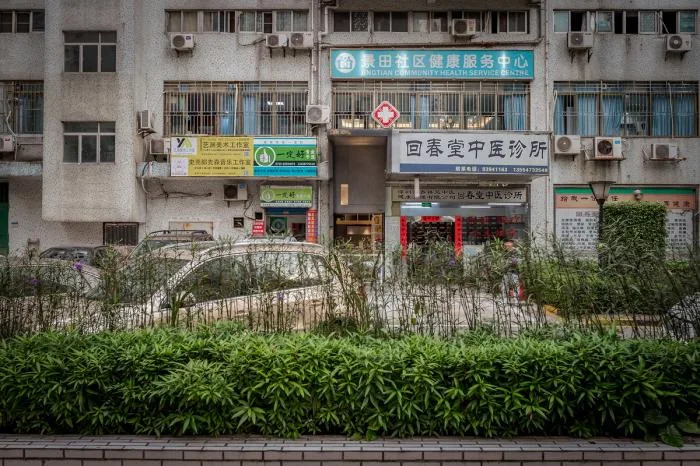
△ Jiyu and its Environment © Li Jinhui
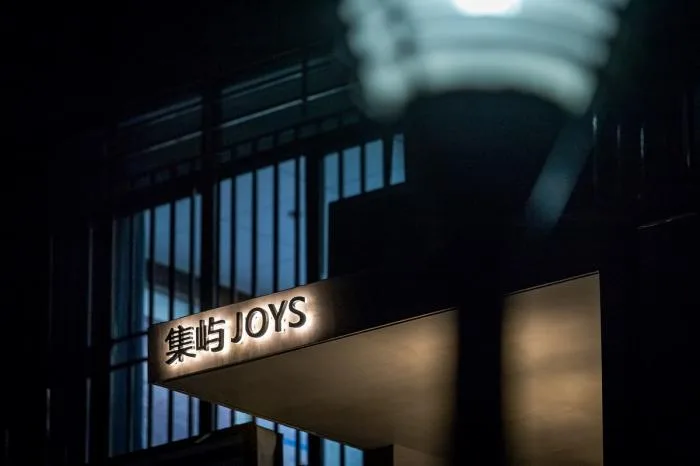
△ Local © Li Jinhui
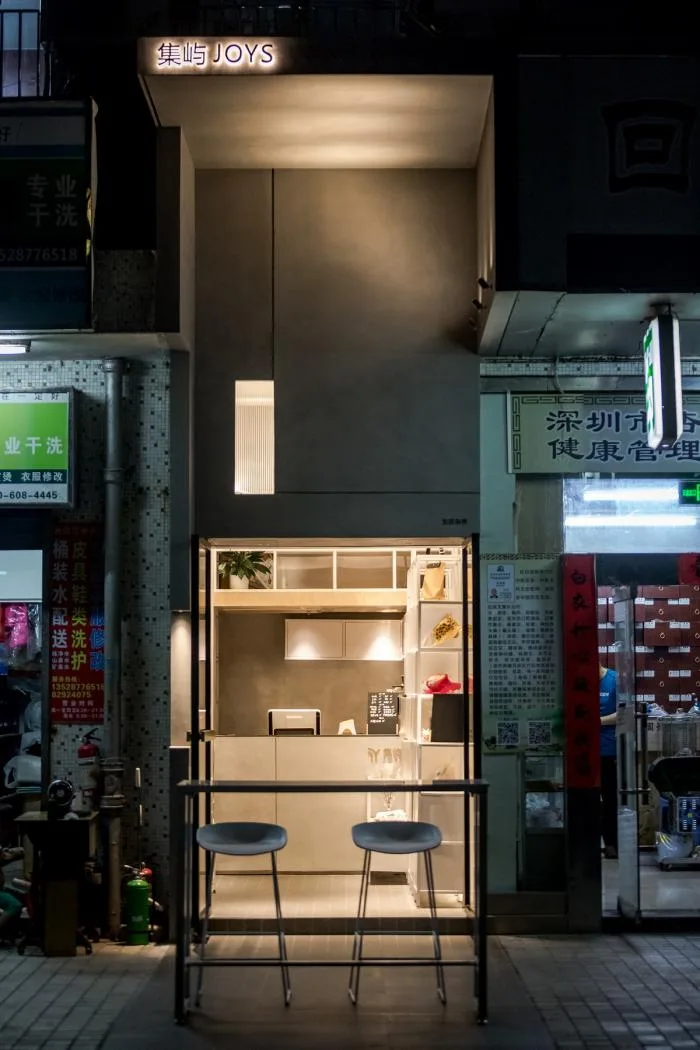
△ Jiyu Night Scene © Li Jinhui
Jiyu is a spiritual island, indifferent to noise or neglect. It is both open and closed, functioning simultaneously as a marketplace and a place for contemplation.
This state of harmonious integration depends on the strong collaboration between owner and designer.
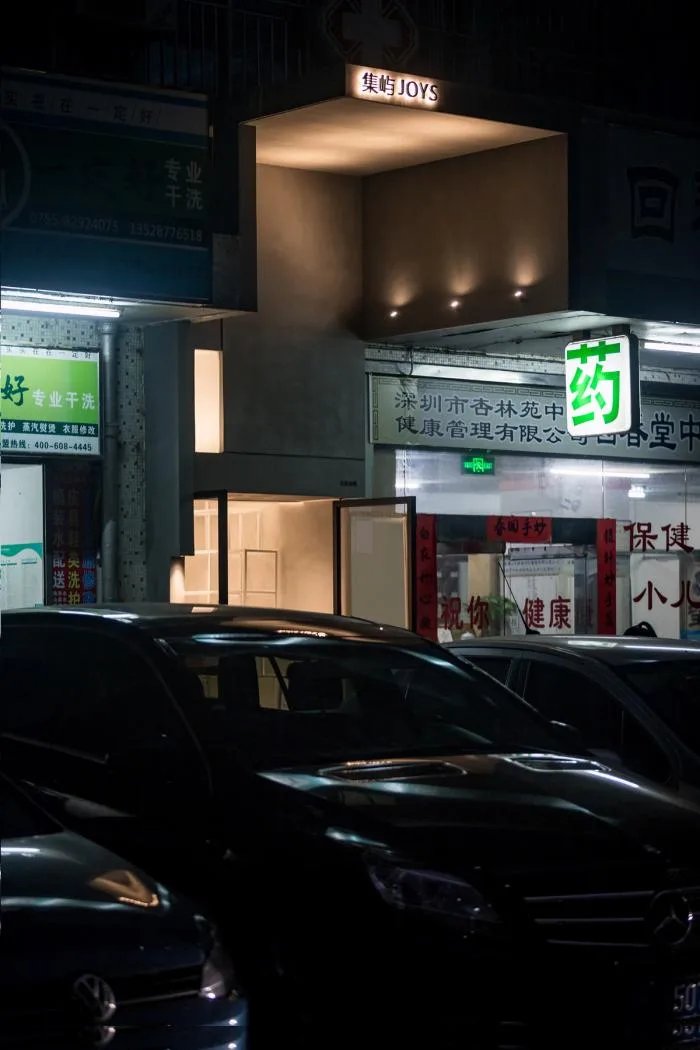
△ Jiyu Night Scene © Li Jinhui
Its ambiguous appearance—“not knowing what it is”—sparks deep curiosity, while the space’s atmosphere silently takes root here without loudly proclaiming its presence. Everyone understands.
07
Product: Experiencing a Closed-Loop Viewing Journey
Creating a precise experience with balanced white space inside a space less than 2.6 meters wide is challenging. We controlled the shapes and sizes of display racks through grid design, ensuring each item has its own distinct presentation.
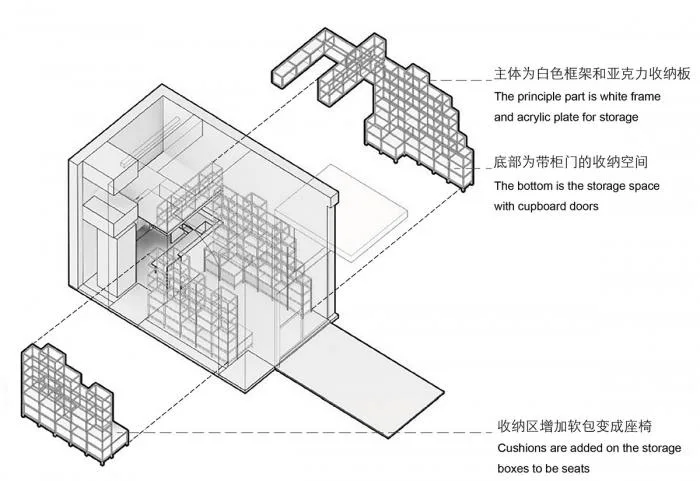
△ Cabinet prop design © One ride building
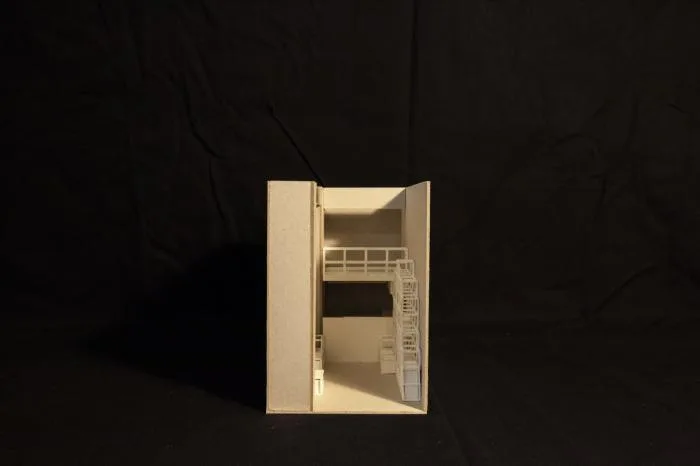
△ Model © One ride building
Multiple cabinet designs were developed, some prioritizing space use, others experimenting with materials. The final design focused on two key elements: leaving the upper half open to emphasize the curved roof’s dissolving effect, and ensuring cabinet flexibility.
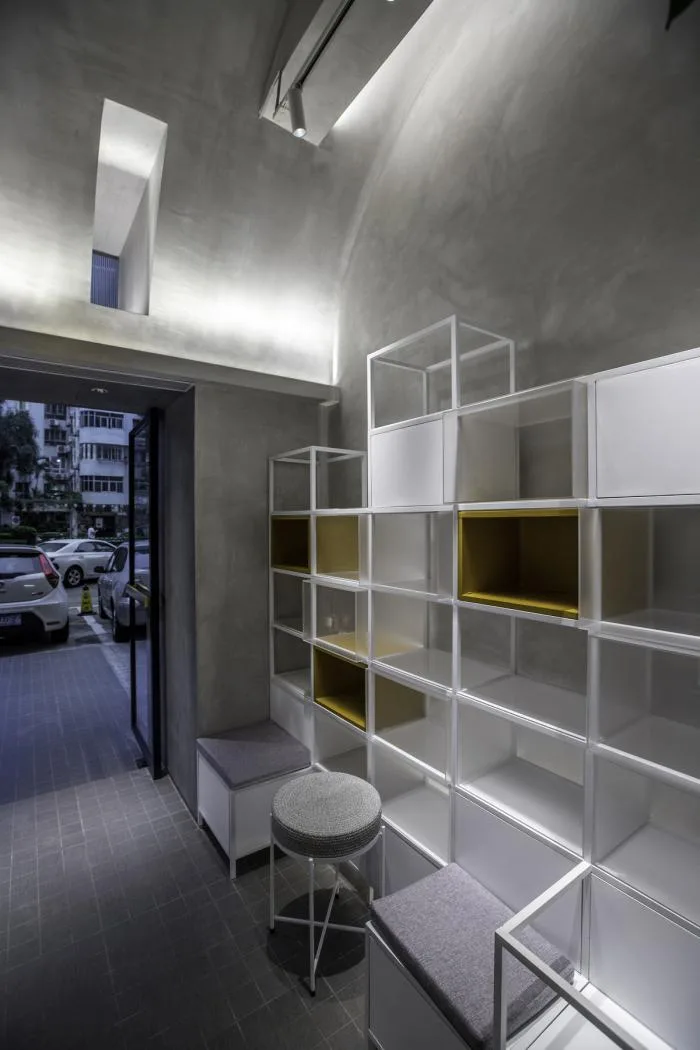
Customized cabinet and door header © Li Jinhui
This project pushed the limits with sophisticated coffee and baking functions and a private rest area. Challenges once deemed difficult were overcome one by one.
Within a 100,000 yuan budget, the architect implemented cost-saving measures and construction scheduling, ensuring structural safety and material durability.
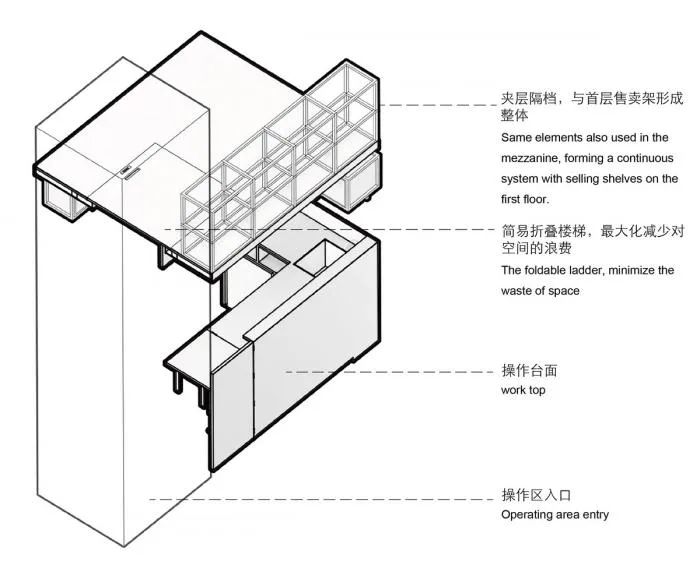
△ Mezzanine and coffee area © One ride building
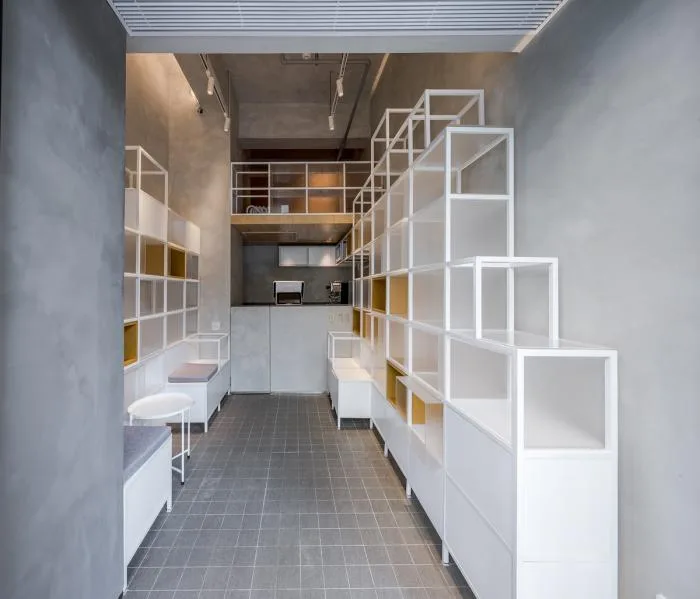
△ View inside from entrance © Li Jinhui
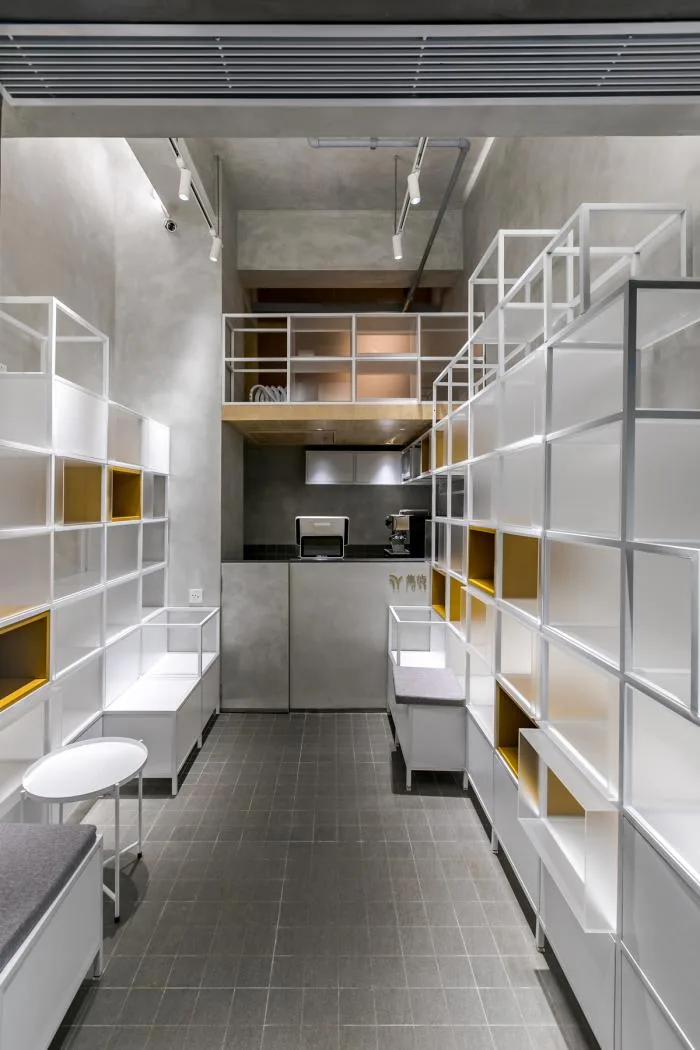
△ Interior space © Li Jinhui
For community residents, Jiyu represents an ideal of beauty. In a city plagued by homogenized spaces, Jiyu is not a genetic mutation but a continuation of cherished memories shared by owners and architects.
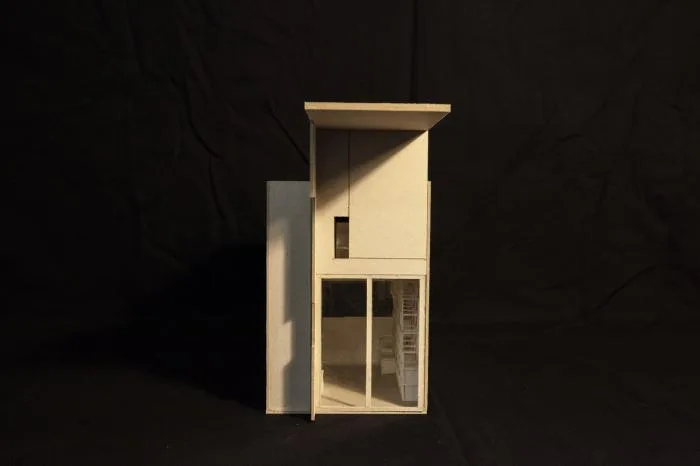
△ Model © One ride building
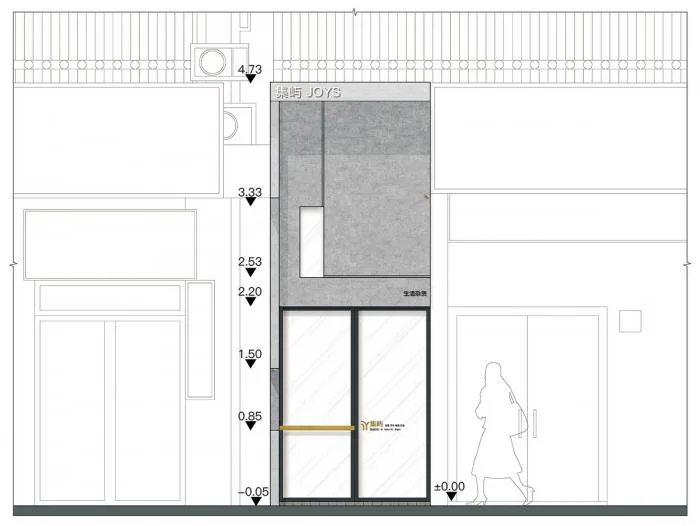
△ Elevation drawing © One ride building
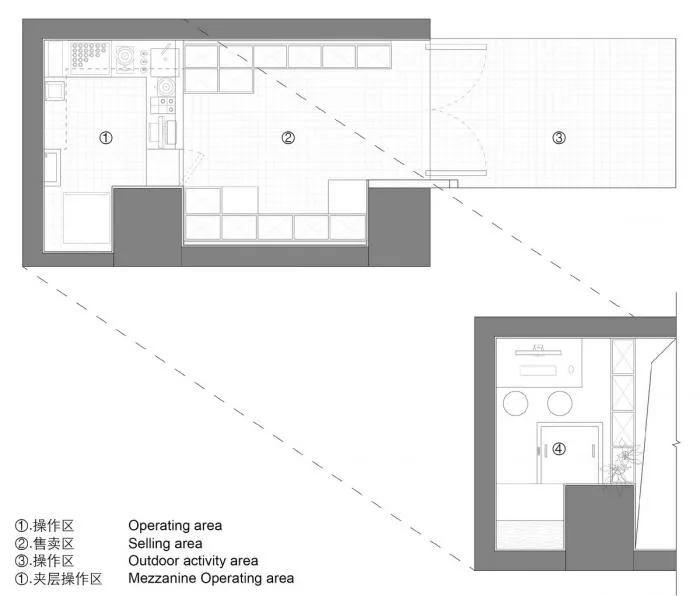
△ Plan view © One ride building
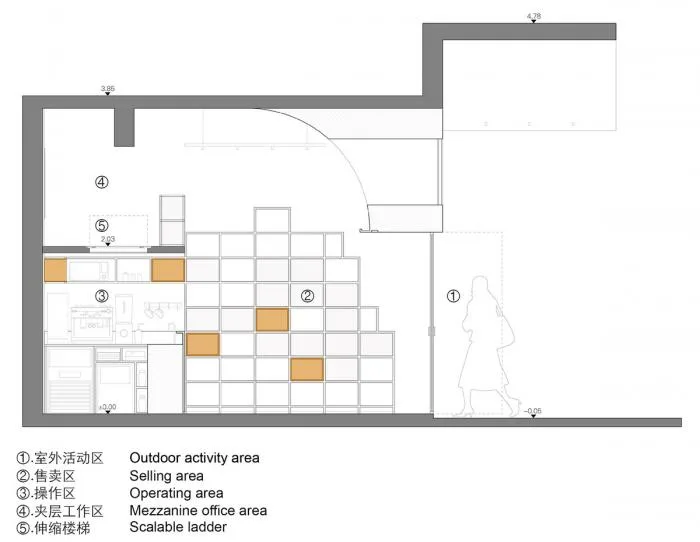
△ Section diagram © One ride building
Project Information
Project Name: Jiyu | JOYS
Location: Xiangju Pavilion, Xiangmi San Village, Hongli West Road, Futian District, Shenzhen
Design Team: Yicheng Architecture (__AI_ST_URL_0)__
Lead Architects: Zhang Bo, Wang Jingjing
Team Members: An Bingxiang, Shi Qiuyang, Guo Xiaohong
Construction Drawings: Li Nanfang
Construction: Quality and Quality Workshop
Materials: Cement textured coating, Fangtong, wood veneer, frosted acrylic, artistic glass
Lighting: Spectral
Scale: 9 square meters
Design Period: July 2019 – August 2019
Construction Period: August 2019 – September 2019
Photography: Li Jinhui












Must log in before commenting!
Sign Up