
The design of the Louna Camping Service Center began in November 2016 and was essentially completed and operational by October 2017. Situated in Louna Village, within the eastern mountainous region of Xingyi City, Guizhou Province, the site forms a closed basin surrounded by mountains. To the west, it is bordered by mountains, while roads and ponds lie to the east. Originally, two adjacent courtyard houses occupied the site, but after demolition, their foundations and some stone walls remained.
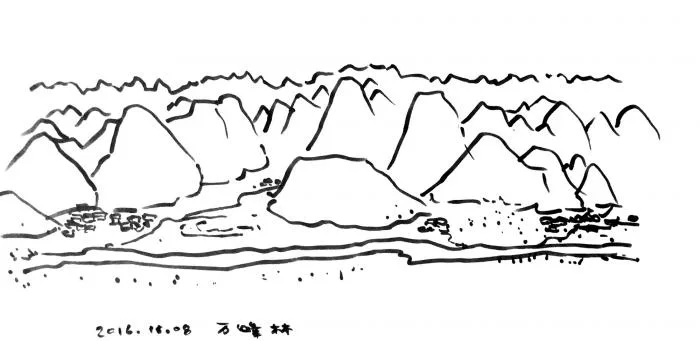
△ Scene Impression Sketch
As a support facility for the commune camping base, the center accommodates functions such as changing rooms, rest areas, dining, coffee service, meeting rooms, and offices. The design embraces a contemporary vision, aiming to evoke both familiarity and novelty rather than confining itself to traditional forms. It responds on three levels: spatial memory, geographic context, and local construction techniques, exploring a modernity enriched with metaphors that naturally emerge from the land.
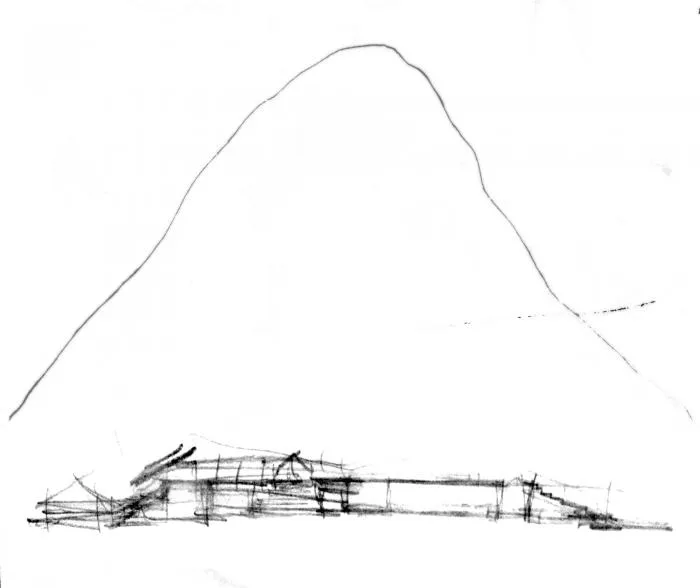
Concept sketch illustrating the space between landscape and architecture
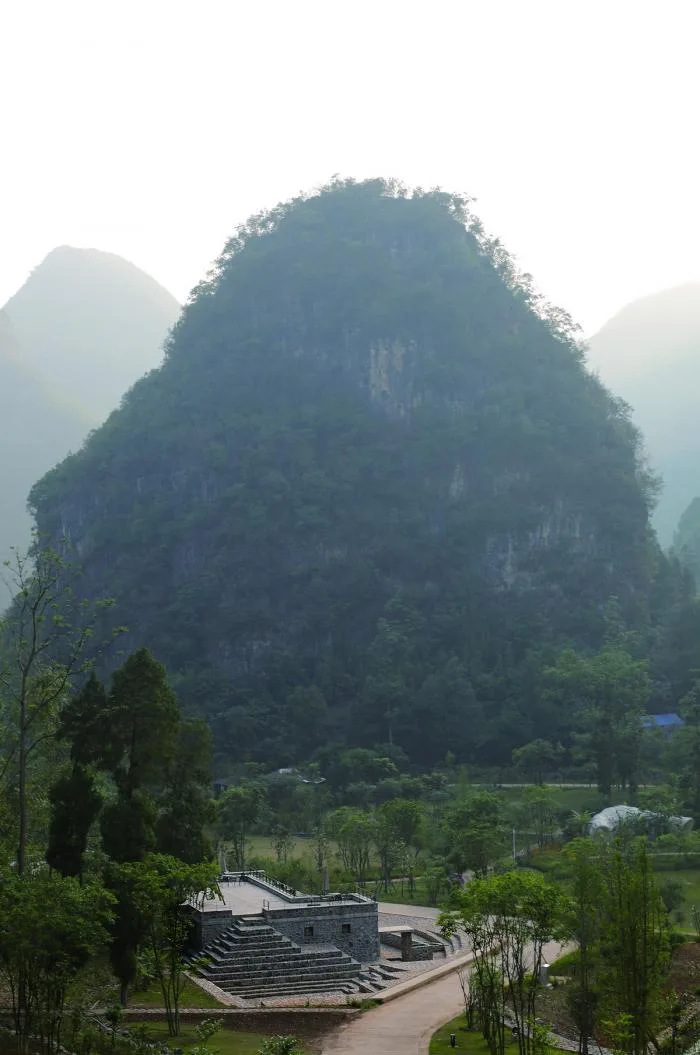
Southwest side bird’s-eye view © Zhang Guangyuan
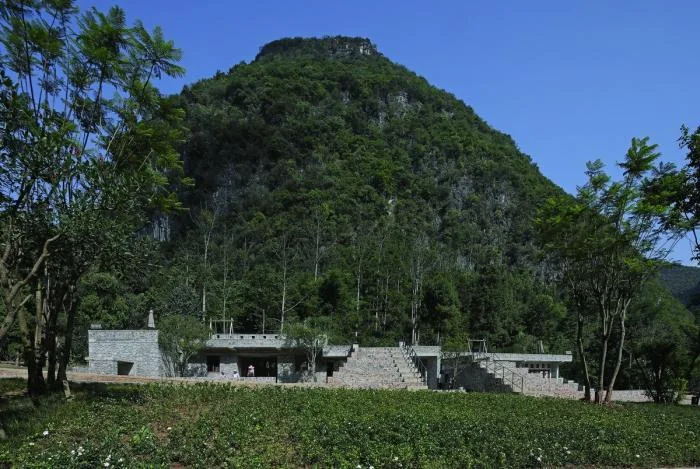
△ East side view © Zhang Guangyuan
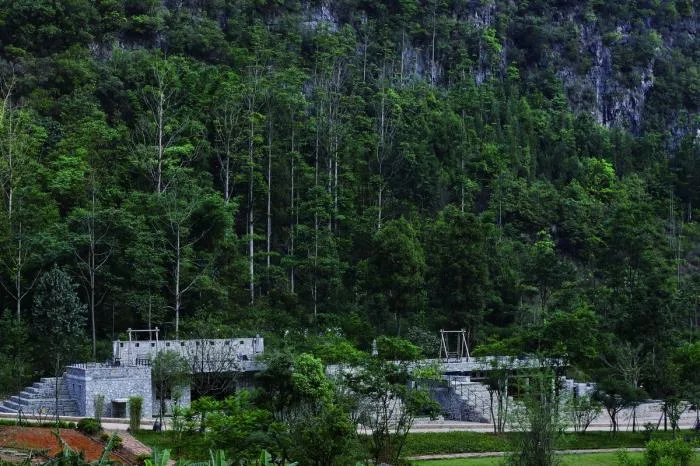
△ Southeast side bird’s-eye view © Zhang Guangyuan
The new structure is conceived as a continuation of the old house. The original foundation, overall dimensions, and remaining stone walls are preserved. Features such as fire ponds, courtyards, and “stockade gates” are incorporated to maintain the spatial scale and character of the past within the site. Streams connect to springs, and old wells are retained, collecting natural water resources for landscaping and daily use.
The undulating layers of stone steps symbolize the large-scale karst landforms and geological environment of Louna. The entire building resembles a giant stone creeping at the foot of the unique karst “Mantou Mountain,” blending seamlessly with the distinctive Louna landscape. From the ridge, visitors see not only a section of earth ascending toward the mountains and forests but also a platform inviting free exploration and offering a warm, welcoming shelter.
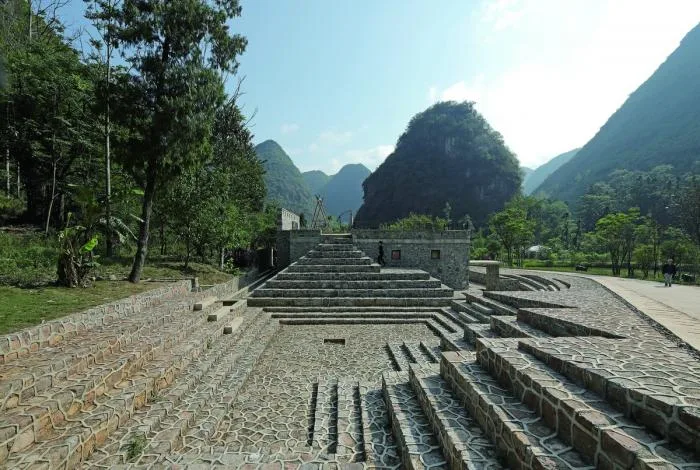
△ South side view © Zhang Guangyuan
The arrangement of modern public functions respects the layout of the original old houses, enclosed within courtyard forms. Additionally, the space between the two homesteads is designed as a third inner courtyard, opening on one side to the shaded natural mountains and forests. As visitors move from the open area into the quiet courtyard and shaded green corridor behind the house, a growing sense of privacy within the public environment is cultivated.
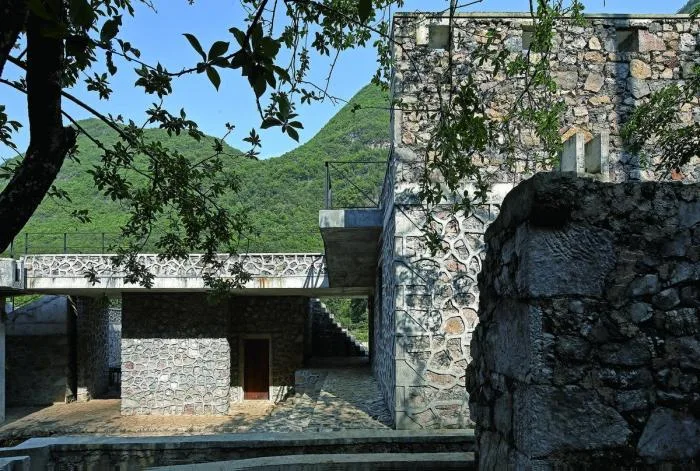
△ Inner courtyard personnel view © Zhang Guangyuan
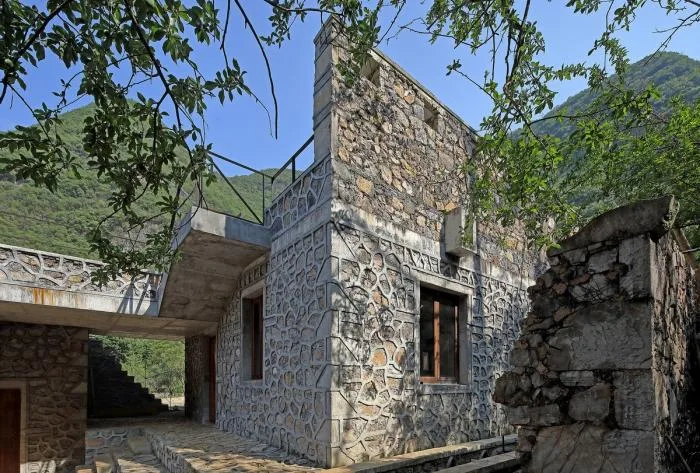
View from the central courtyard towards the main southern courtyard house, juxtaposing old and new walls © Zhang Guangyuan
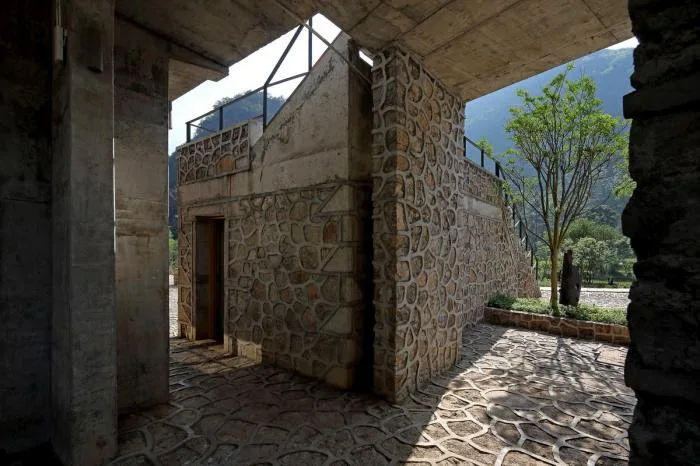
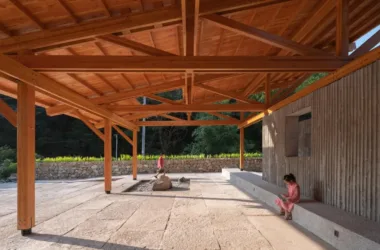
The central eave corridor provides shade and harmoniously blends with the surrounding powerful nature through the building’s mass and thickness © Zhang Guangyuan
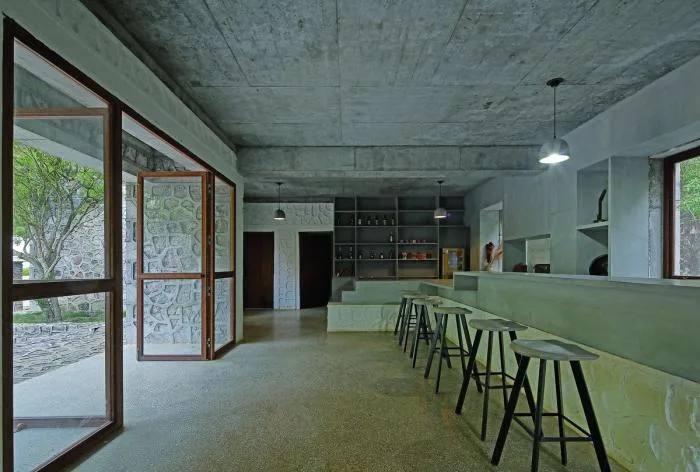
△ Coffee shop staff view © Zhang Guangyuan
The roofs of individual rooms are connected by platforms and stairs, linking ground-level activities such as the fire pit, plaza, courtyard, and water pool to the rooftop. This design allows for panoramic views of the entire Dachong group landscape.
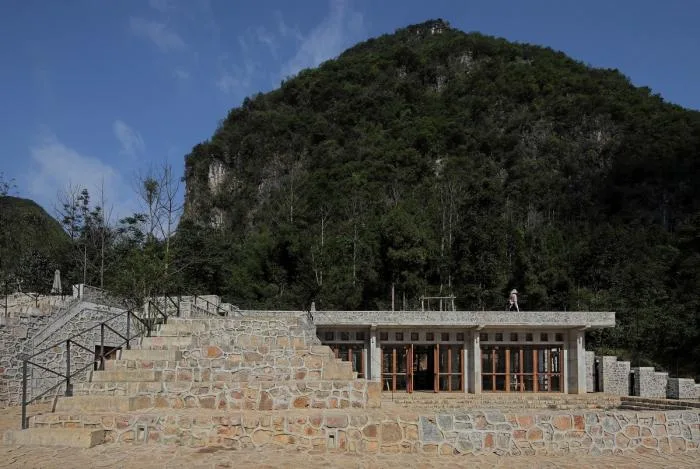
View of the North Campus from East Road © Zhang Guangyuan
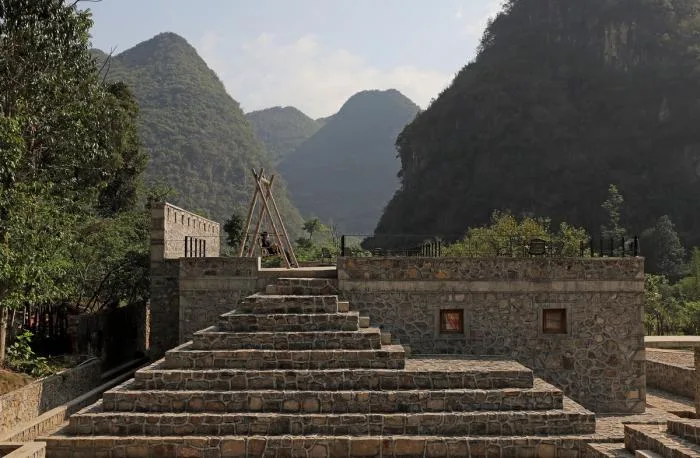
△ View towards the roof platform from the south side of the site; activities transition from ground level to the roof © Zhang Guangyuan
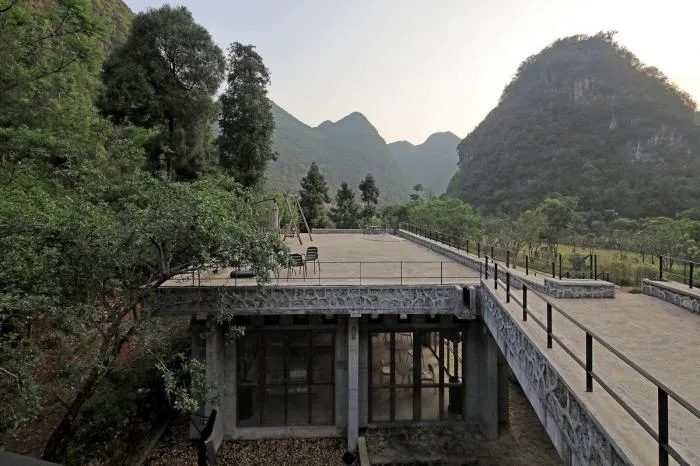
Looking north from the roof of the southern courtyard © Zhang Guangyuan
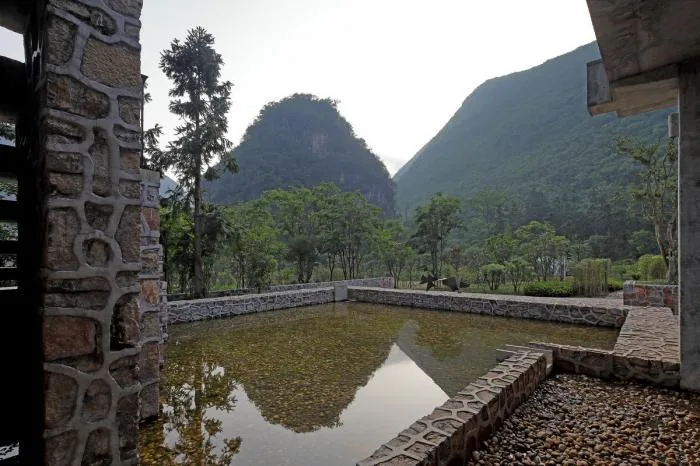
The pond on the north side of the site is fed by mountain springs and rainfall, functioning as part of the flood discharge system © Zhang Guangyuan
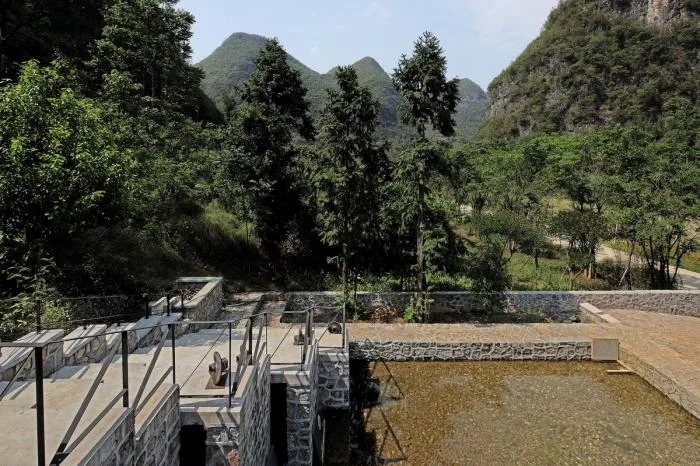
Looking north from the building’s roof towards the pond; mountain rainwater flows into the pond via a canal © Zhang Guangyuan
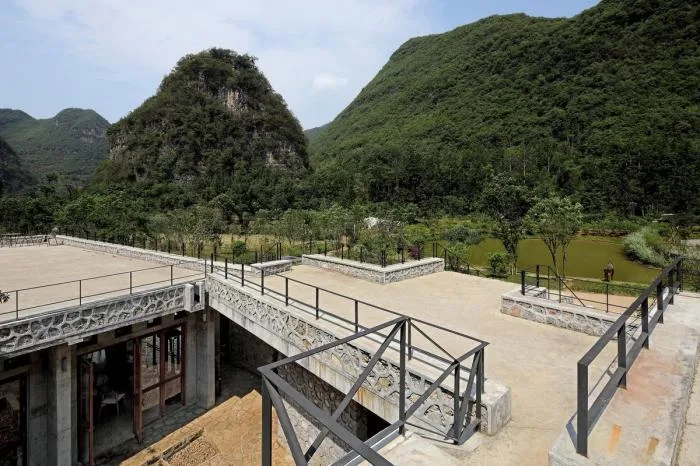
From the rooftop platform, visitors can enjoy panoramic views of the surrounding mountains and waters © Zhang Guangyuan
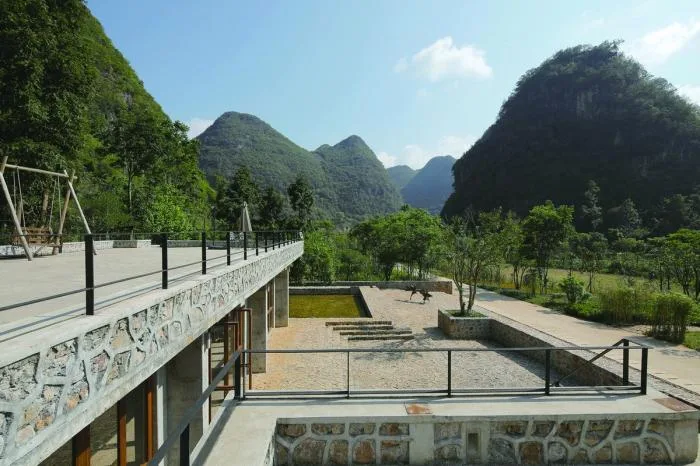
Looking north from the rooftop platform © Zhang Guangyuan
The locals combine concrete with various regional materials, especially stone, to create corners, doorways, eaves, terraces, and stairs, shaping distinctive local living spaces. Thanks to concrete’s span and plasticity, it significantly enriches the variety of residential spatial types.
These traditional practices are integrated into the structural design and refined craftsmanship to unlock their potential in shaping modern spaces.
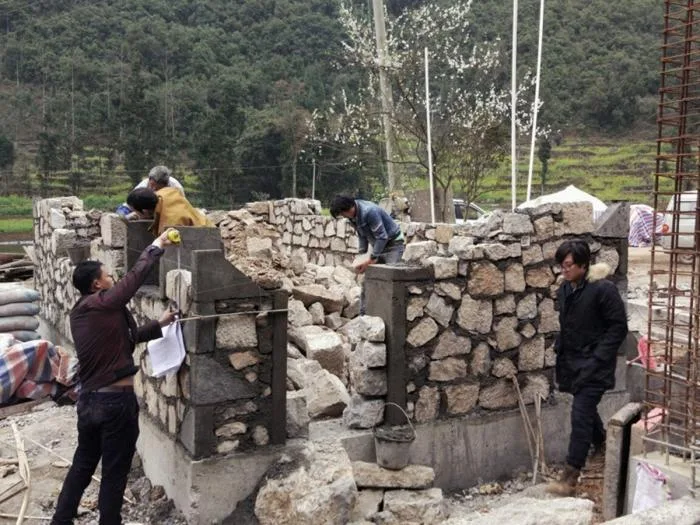
△ Construction photos showing reinforced concrete block structure and refined building form © Lu Shaobo
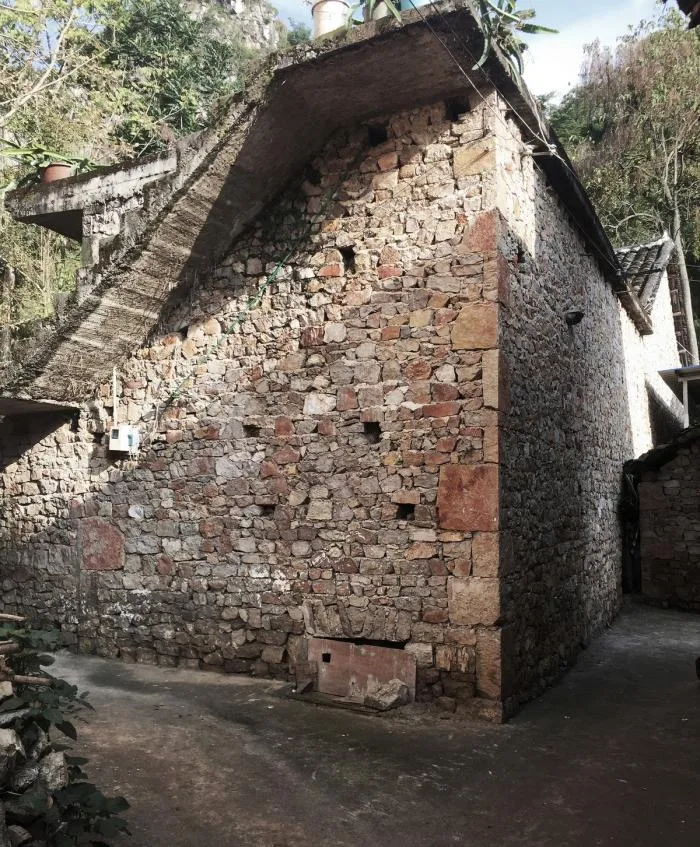
The residential buildings seamlessly combine concrete and stone walls, creating a harmonious atmosphere © Li Xinggang
The concrete cross columns used in the restaurant are an evolution of the local stone cross columns. Their larger span offers greater indoor flexibility and frees the building’s facade, making it resemble a floating pavilion over water.
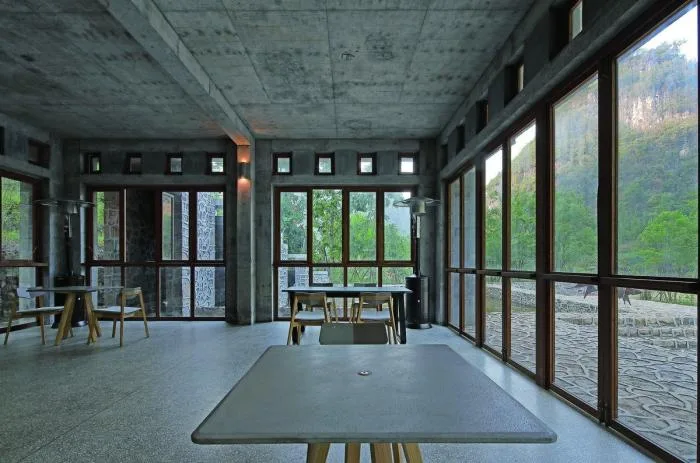
△ Restaurant interior view © Zhang Guangyuan
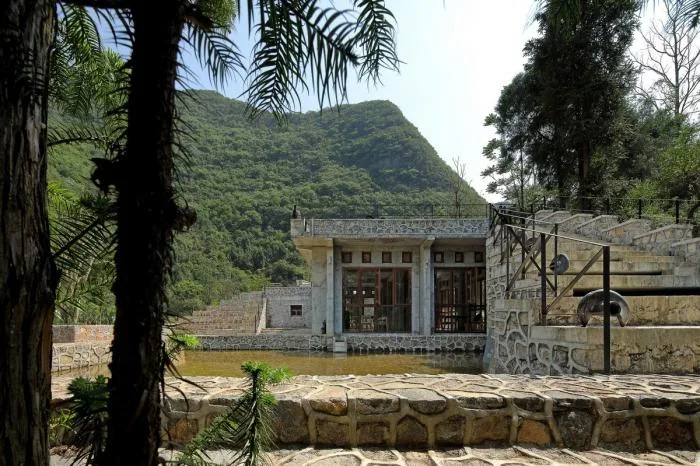
View towards the restaurant from the north side of the site; the building’s interior and exterior are transparent, resembling pavilions floating on water © Zhang Guangyuan
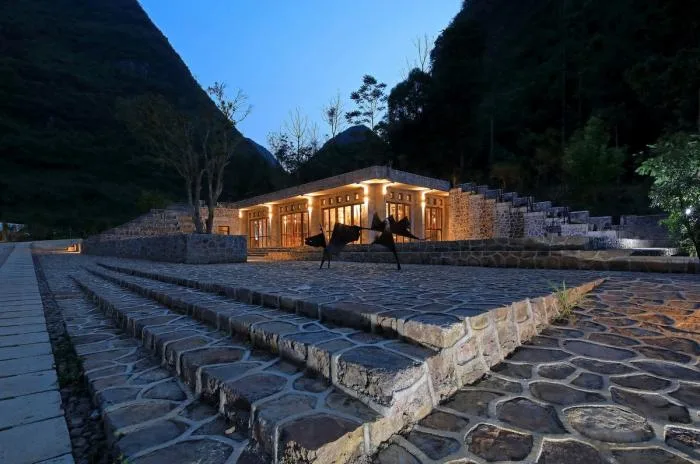
Looking towards the north courtyard from the northeast corner of the site © Zhang Guangyuan
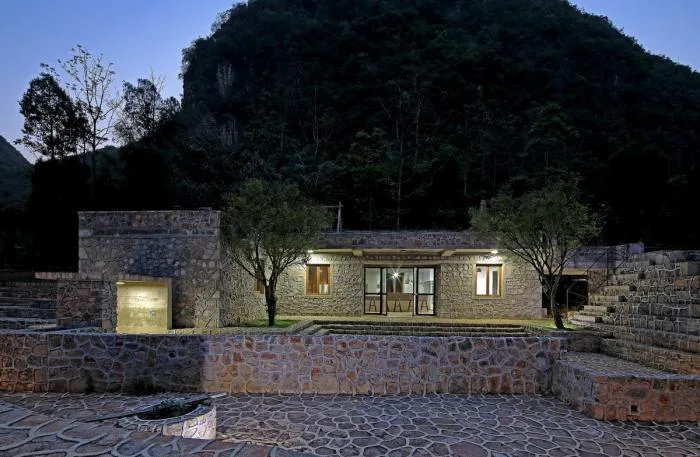
View from East Road towards the south courtyard © Zhang Guangyuan
Design Drawings
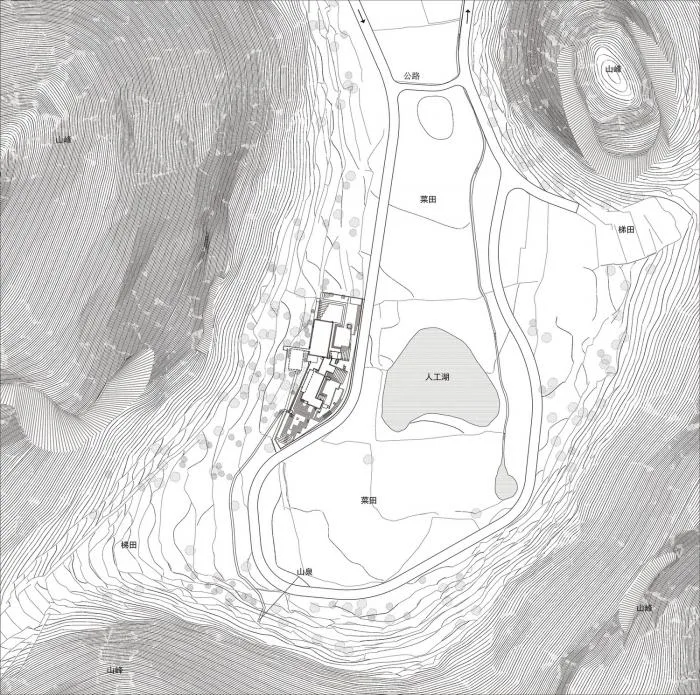
△ General layout plan
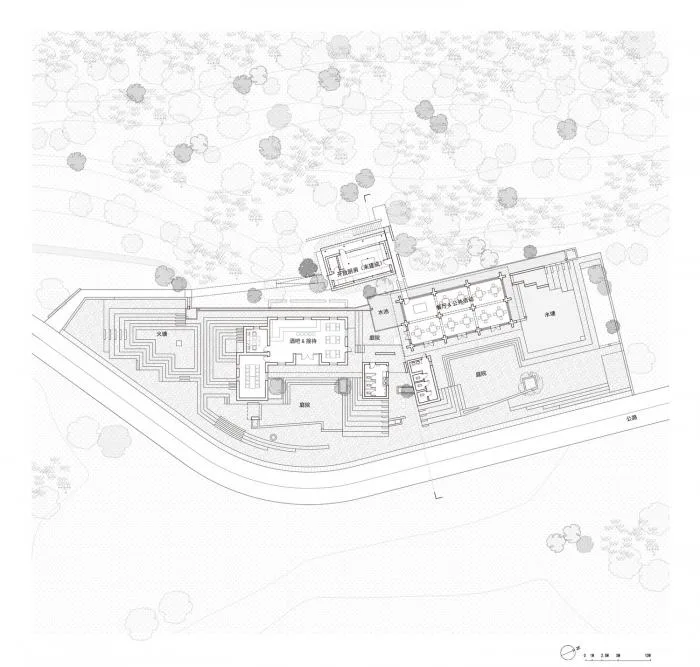
△ Floor plan
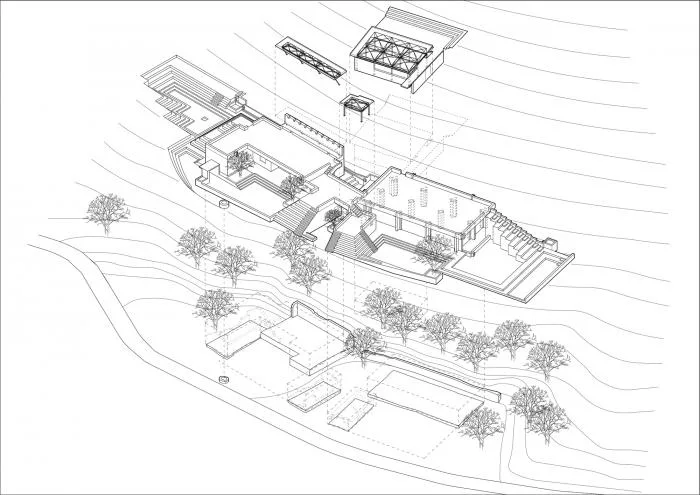
△ Axonometric diagram
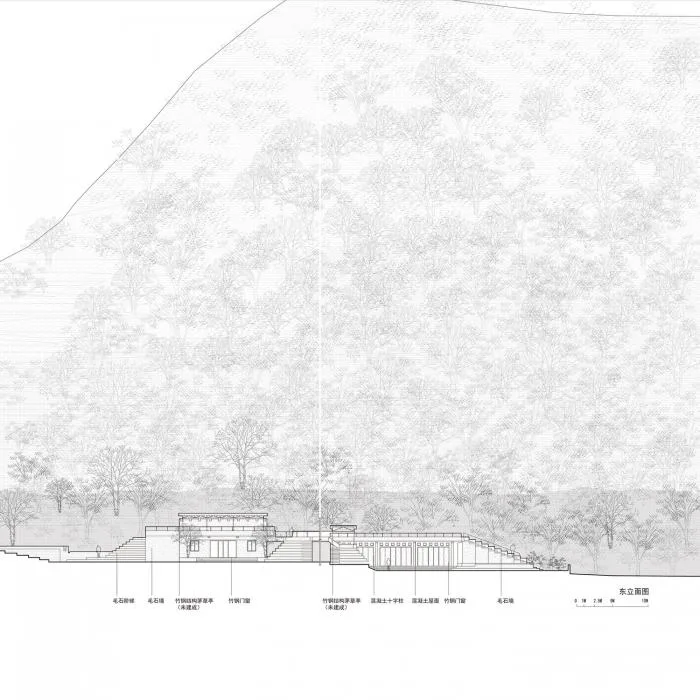
△ East elevation view
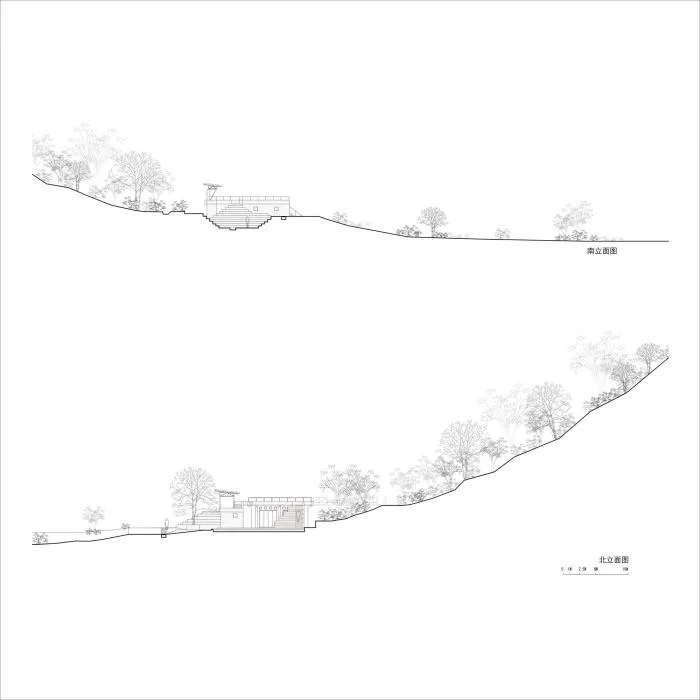
△ North and South elevation views
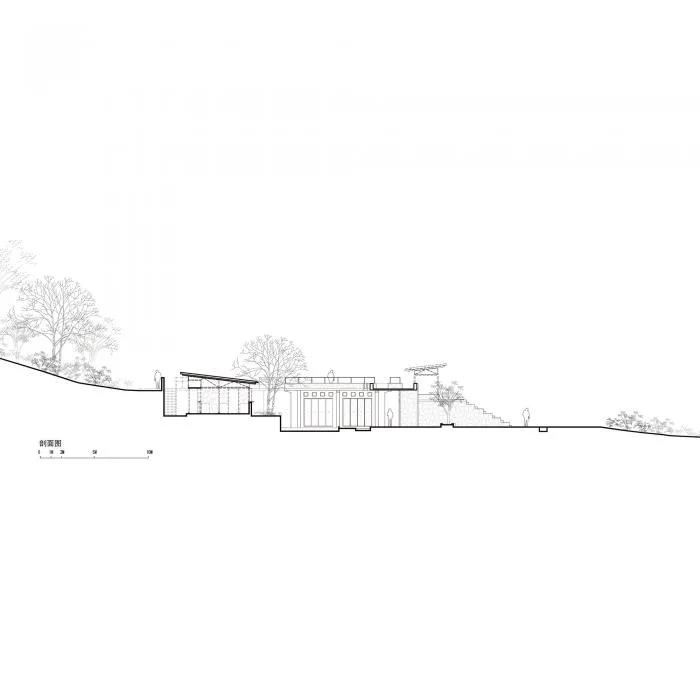
△ Courtyard section diagram
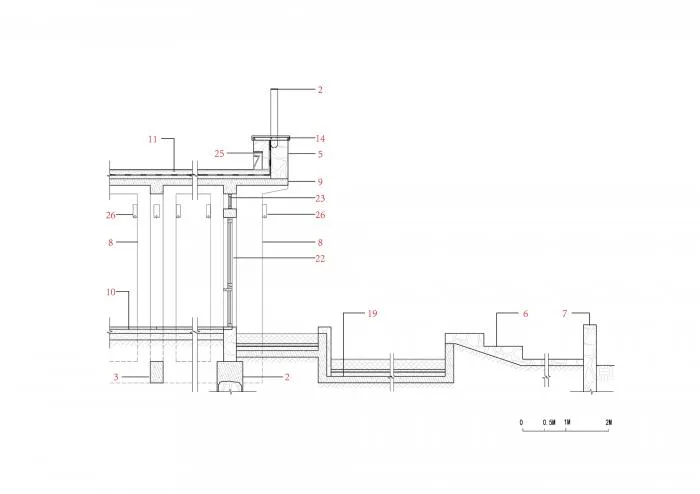
△ Lou Na detailed drawing
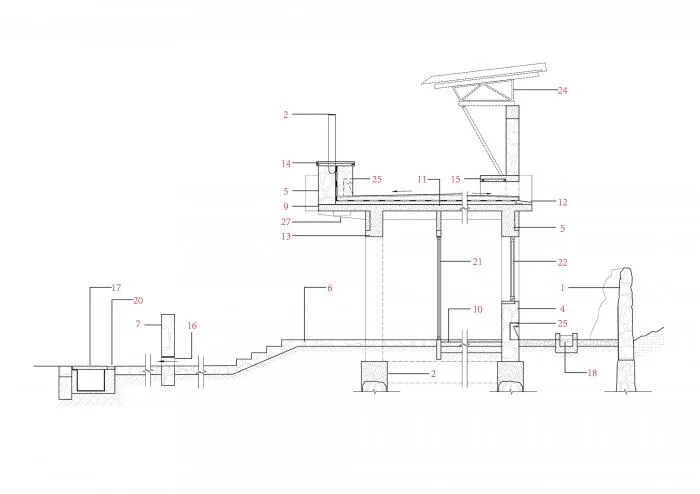
△ Lou Na detailed drawing
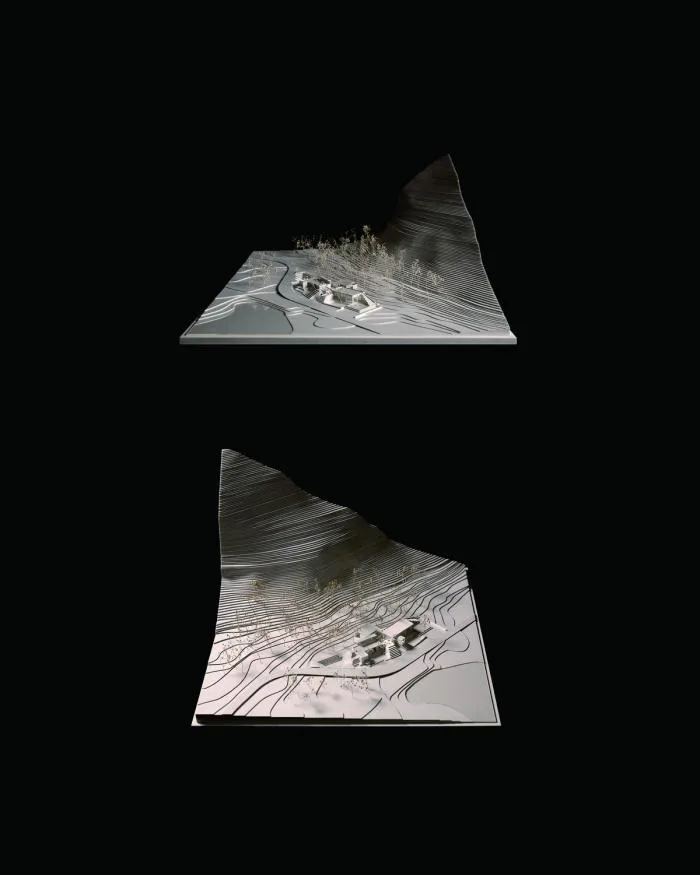
△ Model
Project Information
Project Type: Community Center
Project Location: Xingyi, China
Architect: Li Xinggang Architecture Studio
Area: 306 m²
Project Year: 2017
Photographers: Zhang Guangyuan, Lu Shaobo, Li Xinggang
Manufacturers: Bentu, Hongya Zhuyuan Technology Co., Ltd, Zhongke Jujiang Construction Technology Co., Ltd
Lead Architect: Li Xinggang
Design Team: Li Xinggang, Tan Zeyang, Lu Shaobo, Hou Xinjue
Client: Guizhou Louna Architects Commune
Structural Designer: Zhao Guanghai
Construction Contractor: China Railway First Group Co., Ltd












Must log in before commenting!
Sign Up