
The combined impact of the trade war and the COVID-19 pandemic has accelerated the evolution of China’s high-tech enterprises and R&D platforms towards more advanced and innovative directions. Emerging technologies, particularly cell therapy, have become key drivers in the growth of the innovative biomedical industry in recent years.
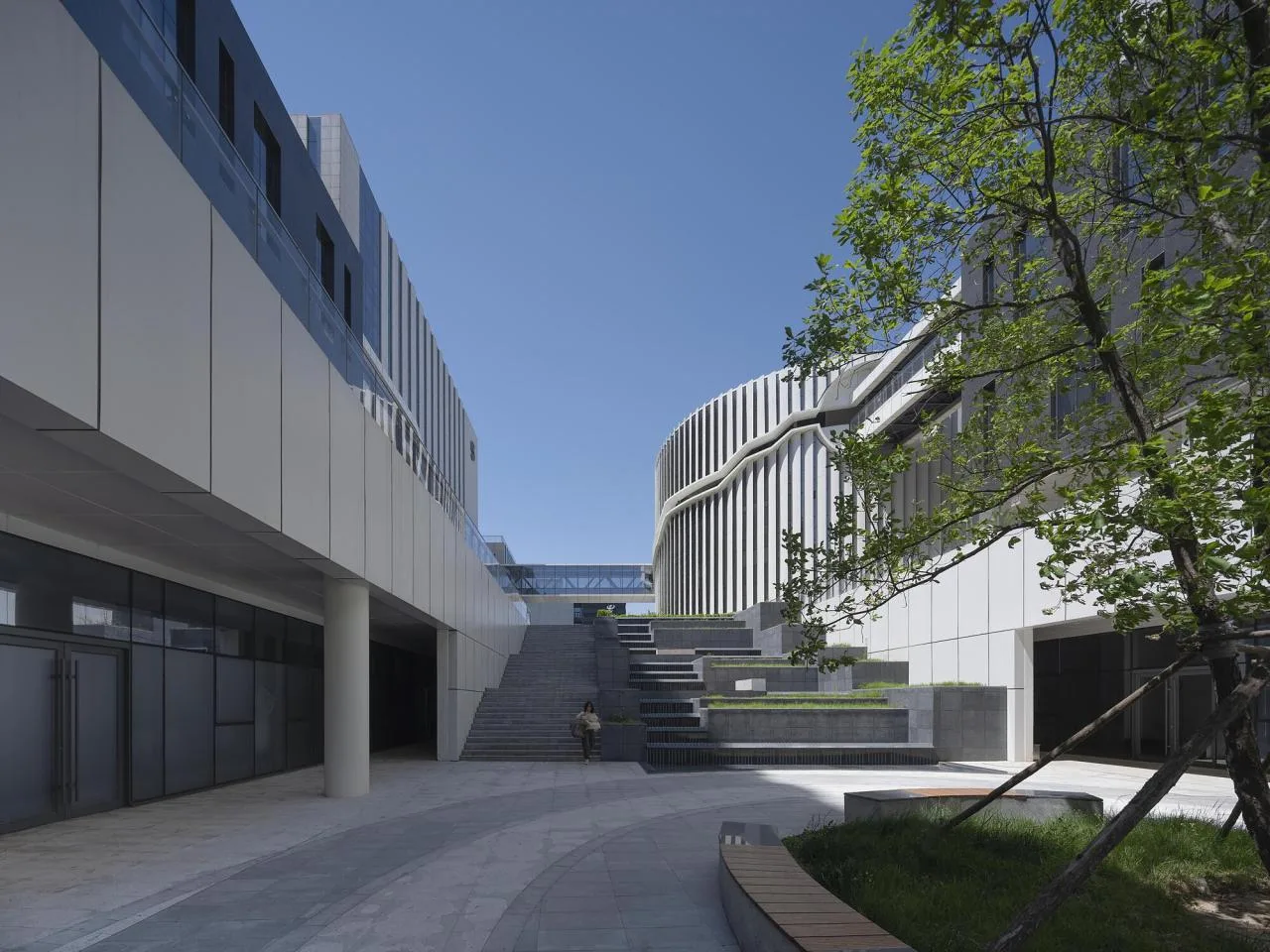
The Beijing Yizhuang Cell Therapy Research and Development Pilot Base stands as China’s largest professional facility dedicated to the cell therapy sector. It is also the first specialized hub in Beijing focused on the precise development of the cell therapy industry. The site incorporates one comprehensive service center and seven standardized production workshops, all thoughtfully arranged based on the location and environmental conditions. The design seeks to foster a symbiotic and dynamic environment within the park by exploring the formation of individual connections.
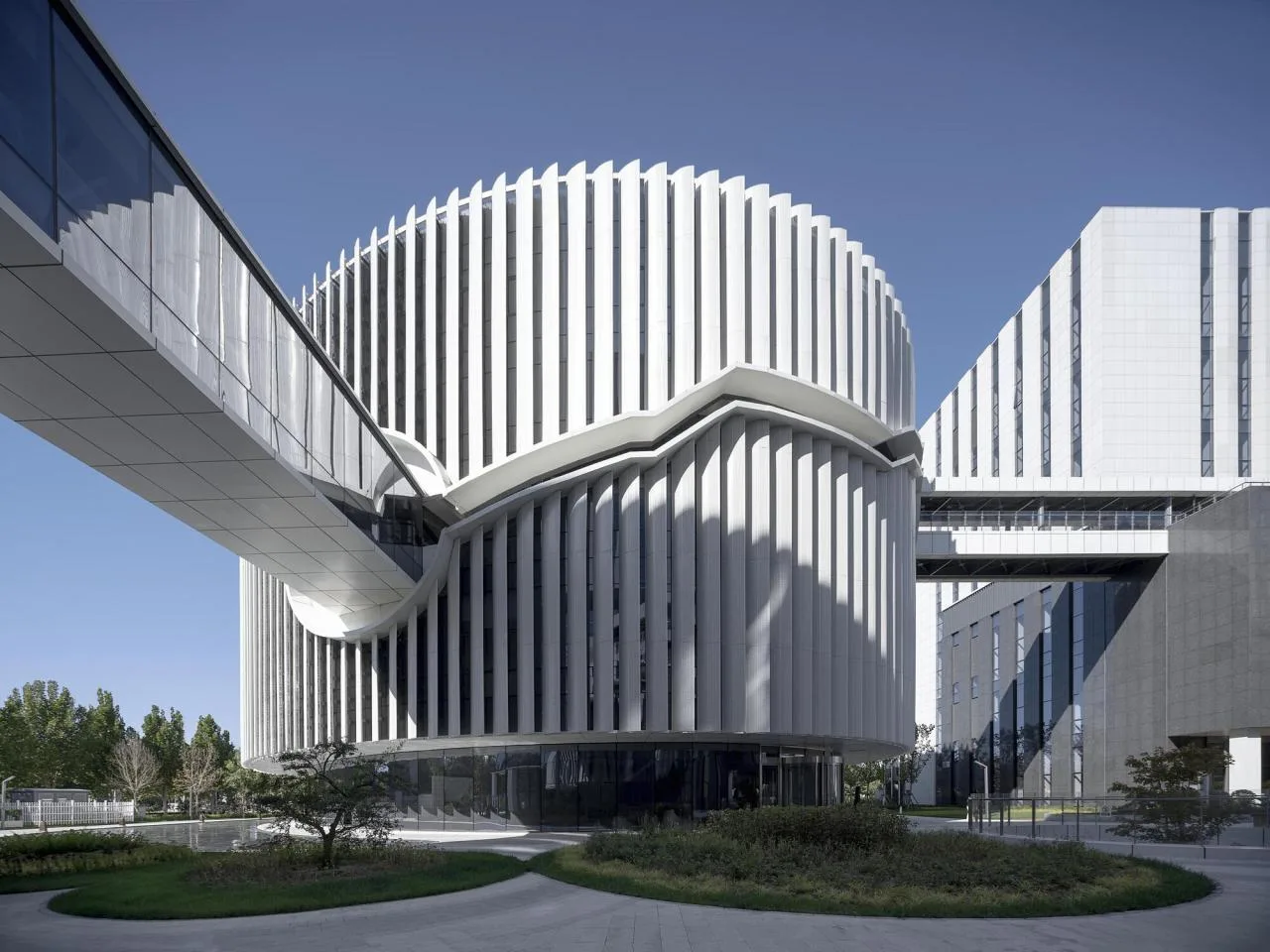
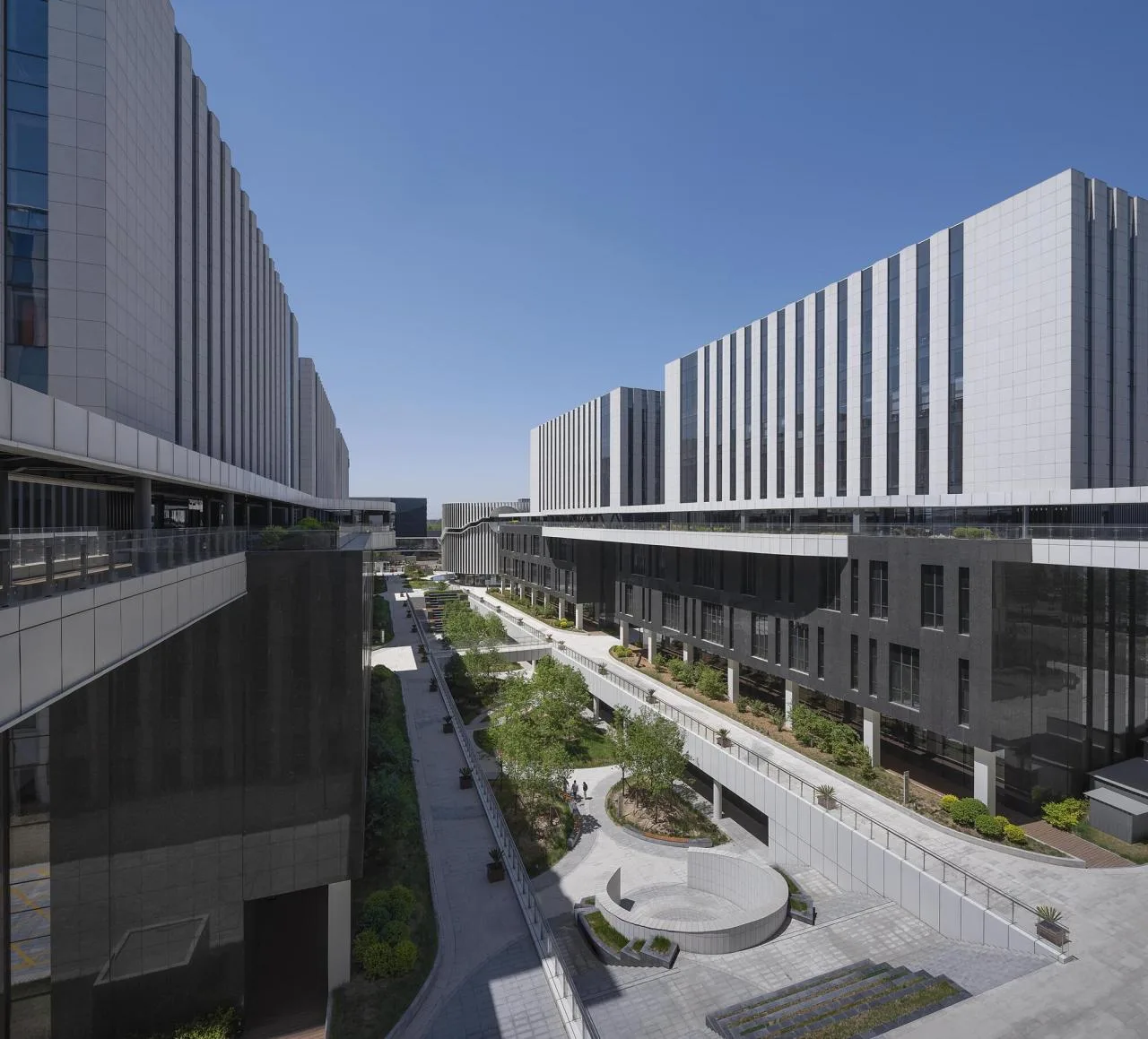
Cell therapy is a medical process involving external intervention on somatic cells to stimulate vitality and rejuvenation. Considering the developmental traits and industrial characteristics of this cutting-edge scientific field, the design integrates a three-dimensional public space system within the standardized production workshops on a compact site. This approach aims to activate the highly rational and orderly layout, infusing the area with a sense of vitality.
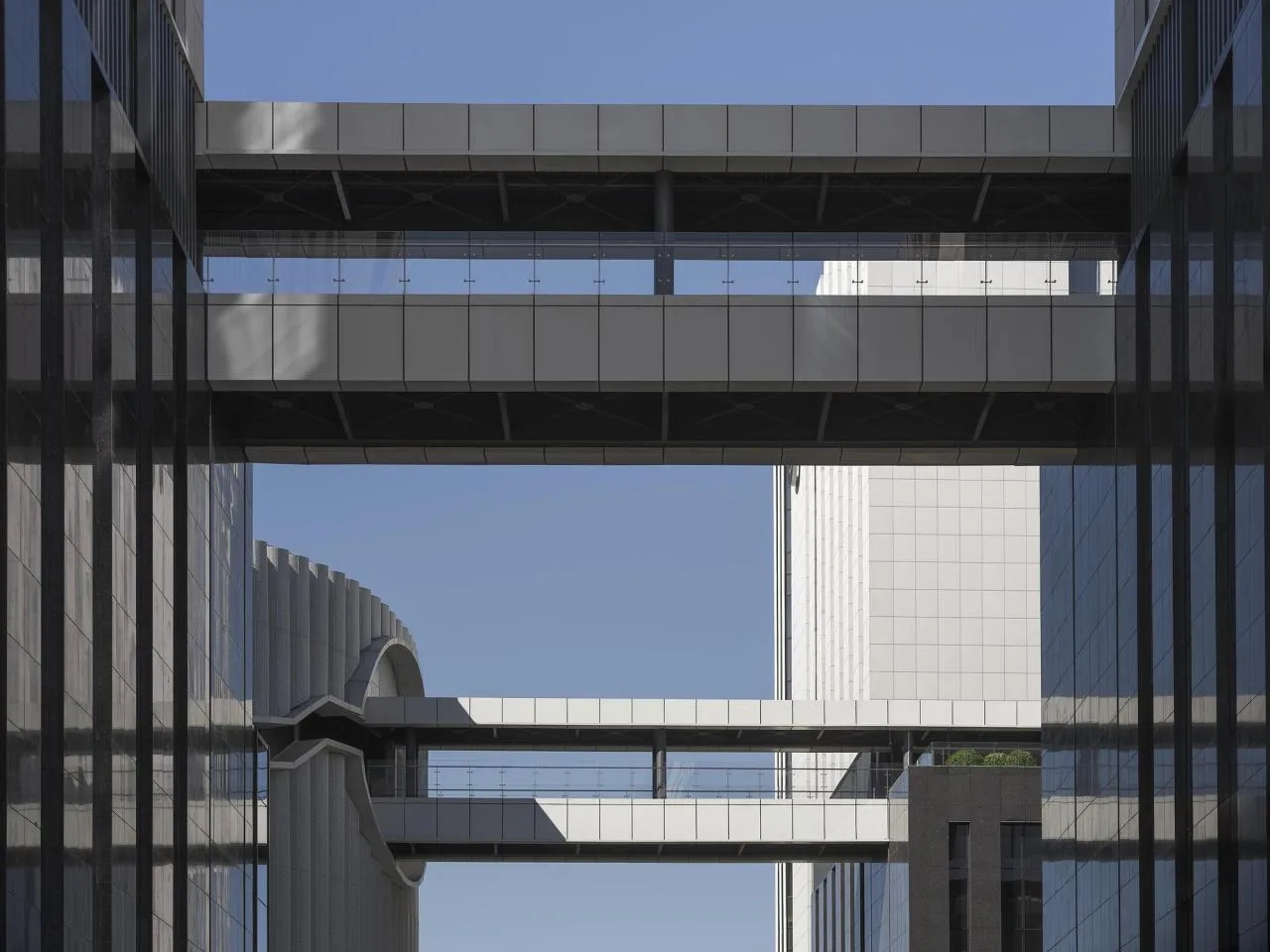
The design connects public spaces of various scales and functions by constructing a symbiotic spatial system composed of elevated vitality corridors.
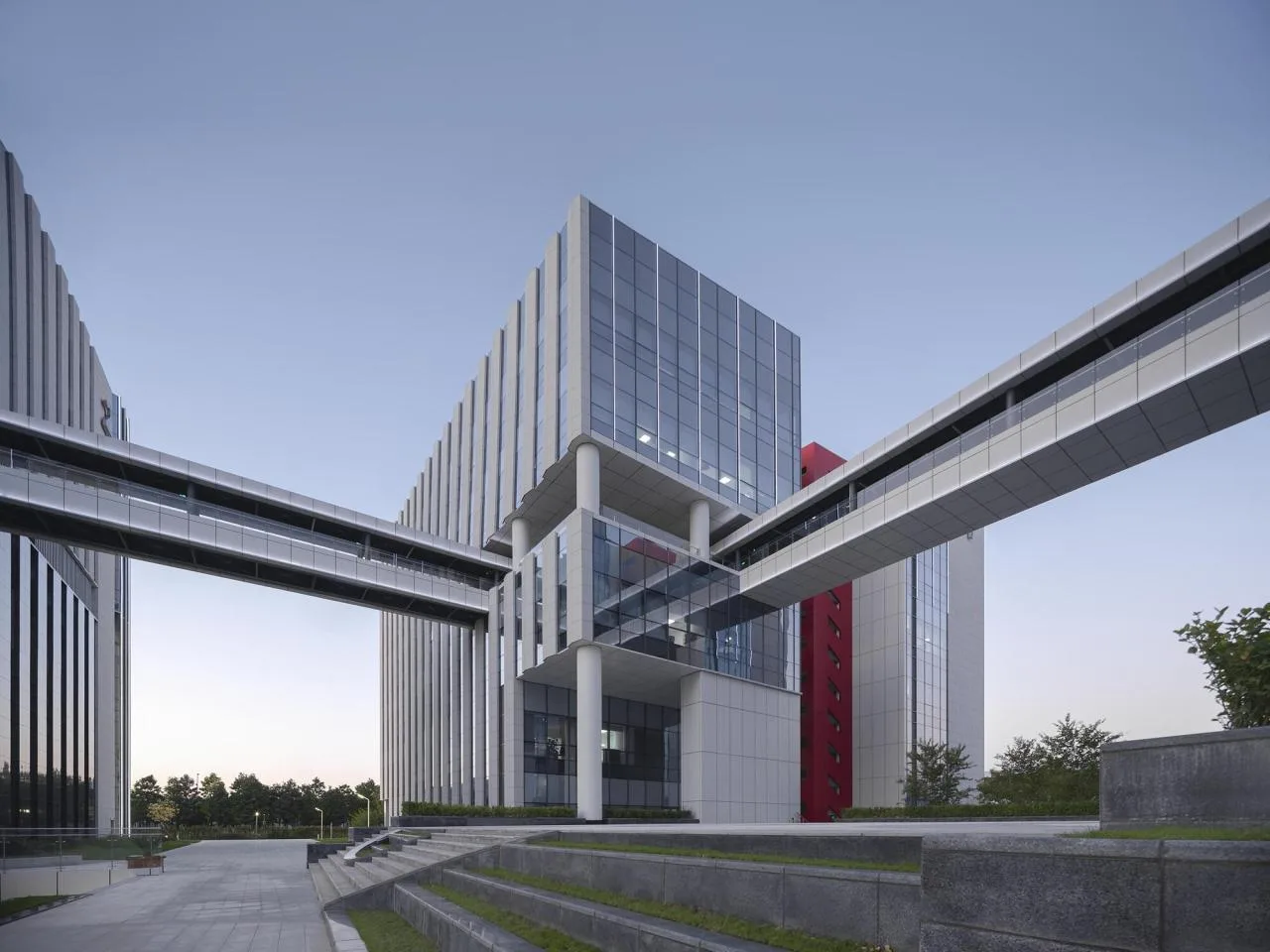
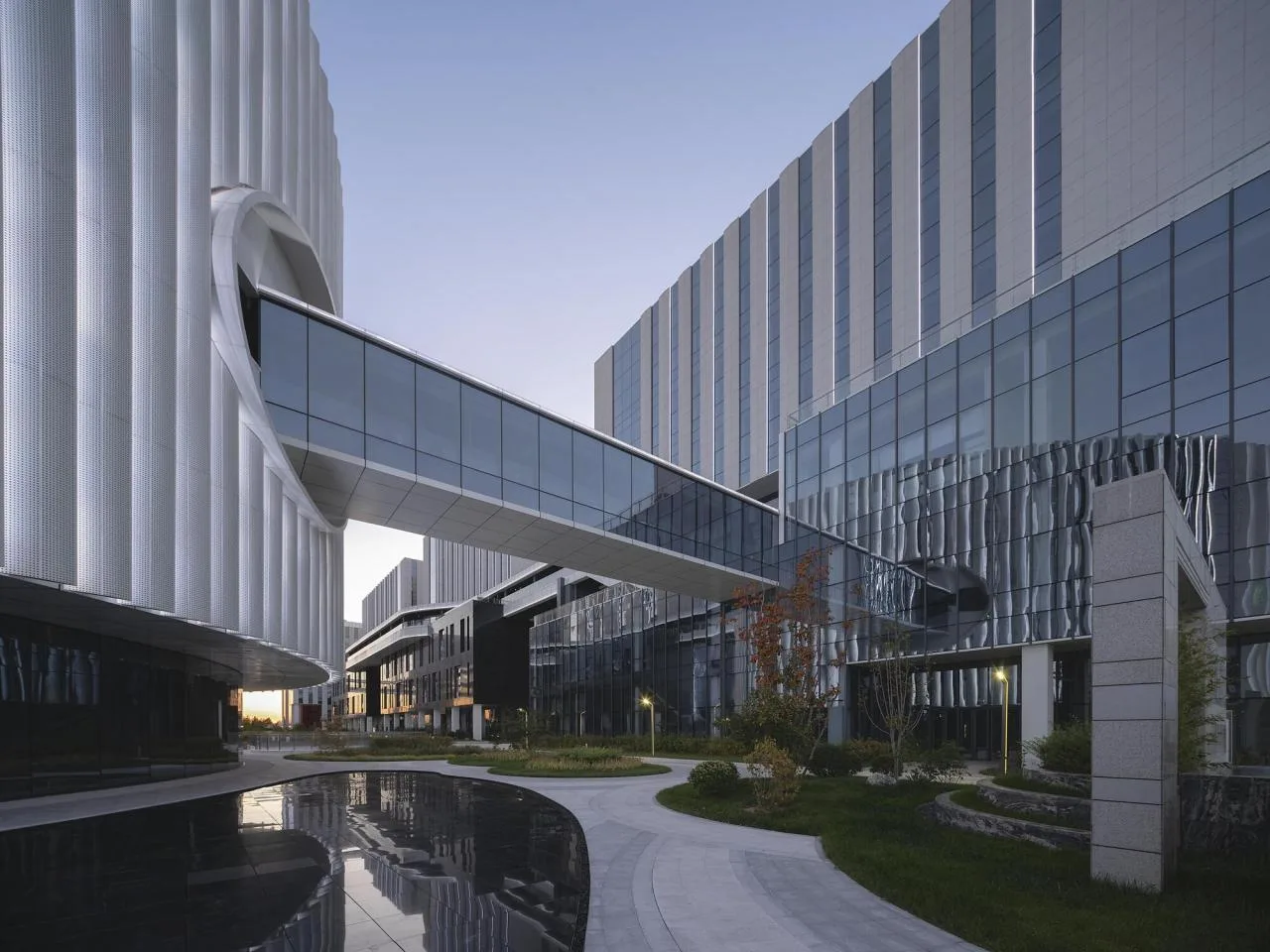
The central feature is a “Vitality Corridor” encircling the site, linking individual buildings and multiple public function areas. This circular aerial corridor includes a pathway starting from the shared space in the park’s exhibition center and connecting seven standardized production workshops above ground.
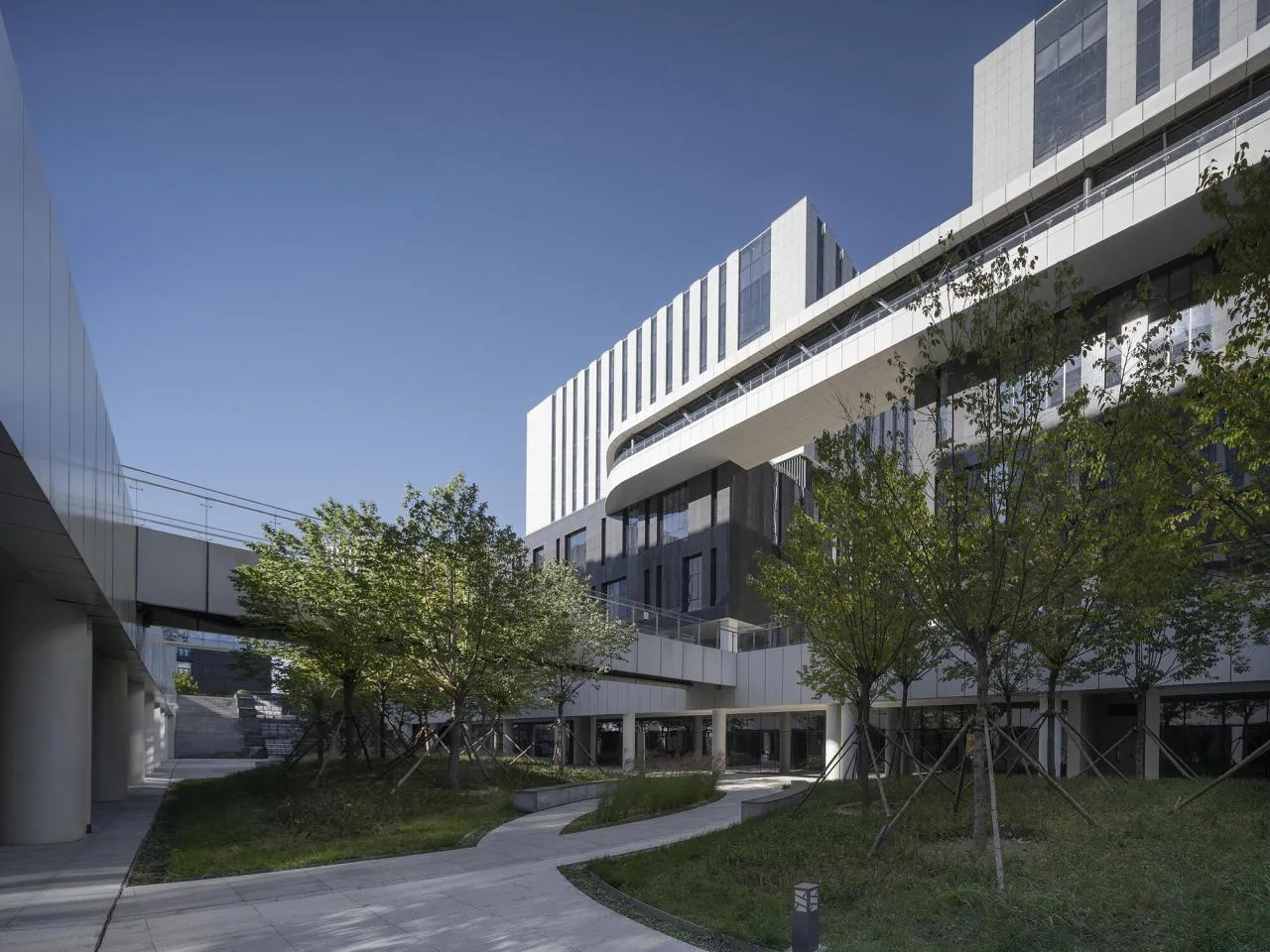
Adjacent to this corridor are leisure and social spaces such as cafes, tea rooms, and activity rooms. The corridor forms a horizontal aerial loop which vertically extends to sunken courtyards, ground-level plazas, and rooftop terraces through public access points. This multi-level, flowing aerial corridor creates a dynamic, rhythmic space for movement and interaction throughout the park.
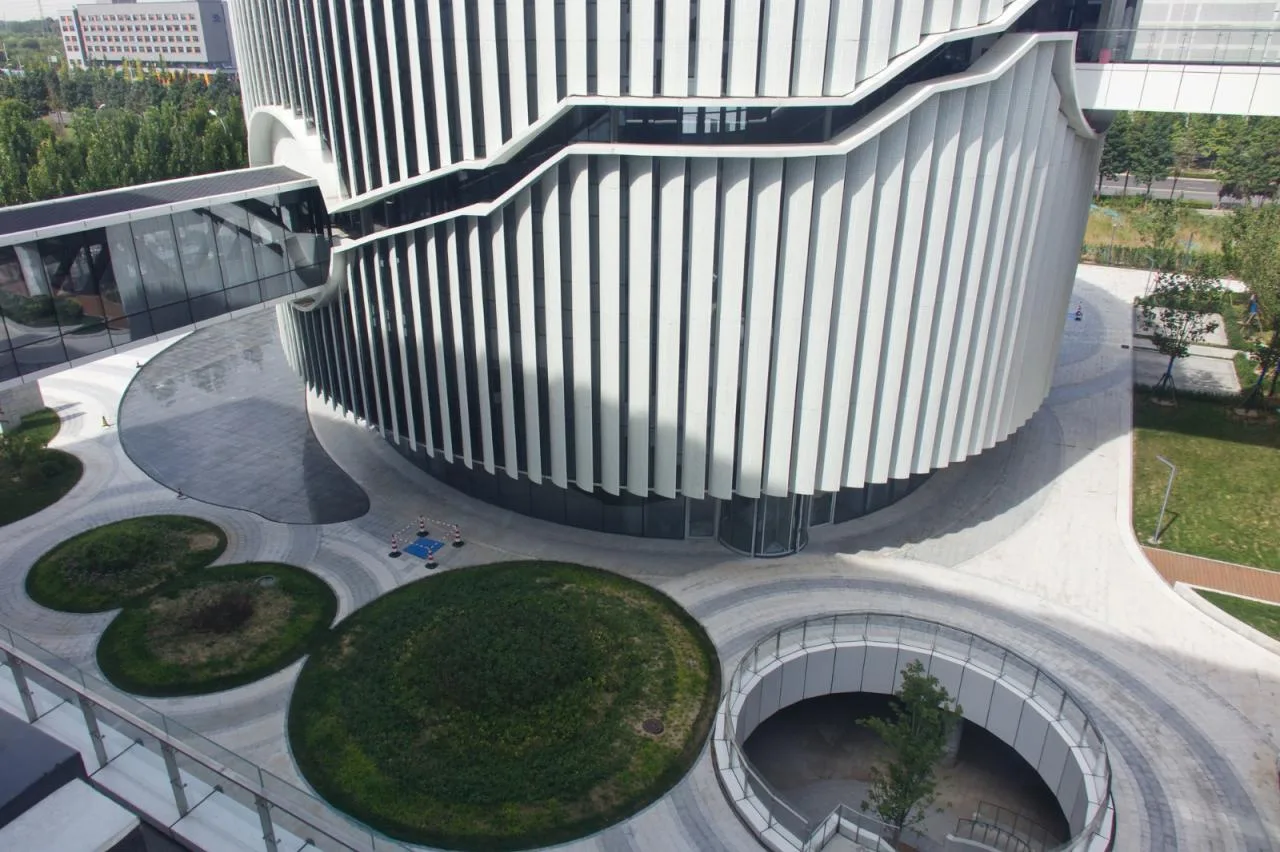
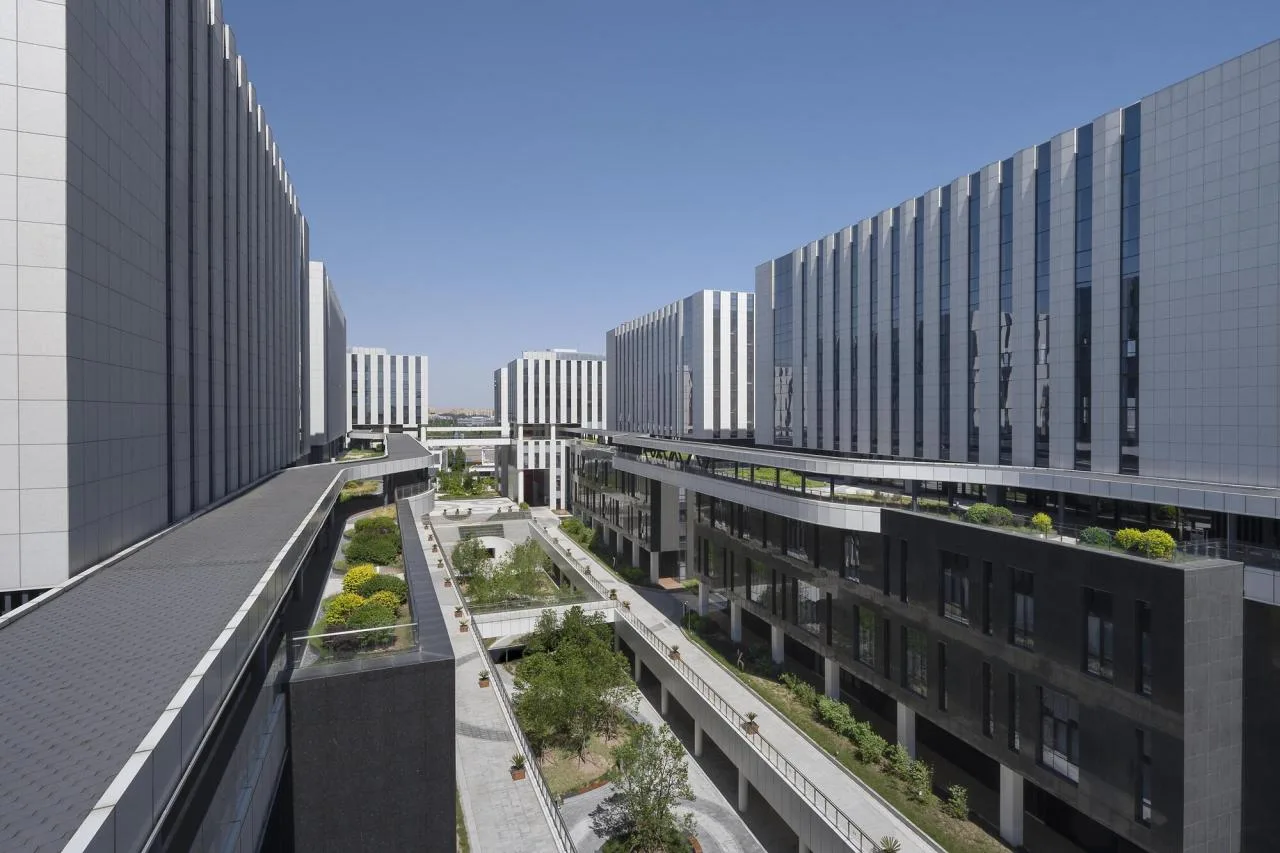
The aerial vitality corridor is designed with a spatial rhythm encompassing initiation, support, turning, and closure. This symbiotic spatial system offers informal and unstructured spaces where employees can gather to socialize, exercise, or hold impromptu events.
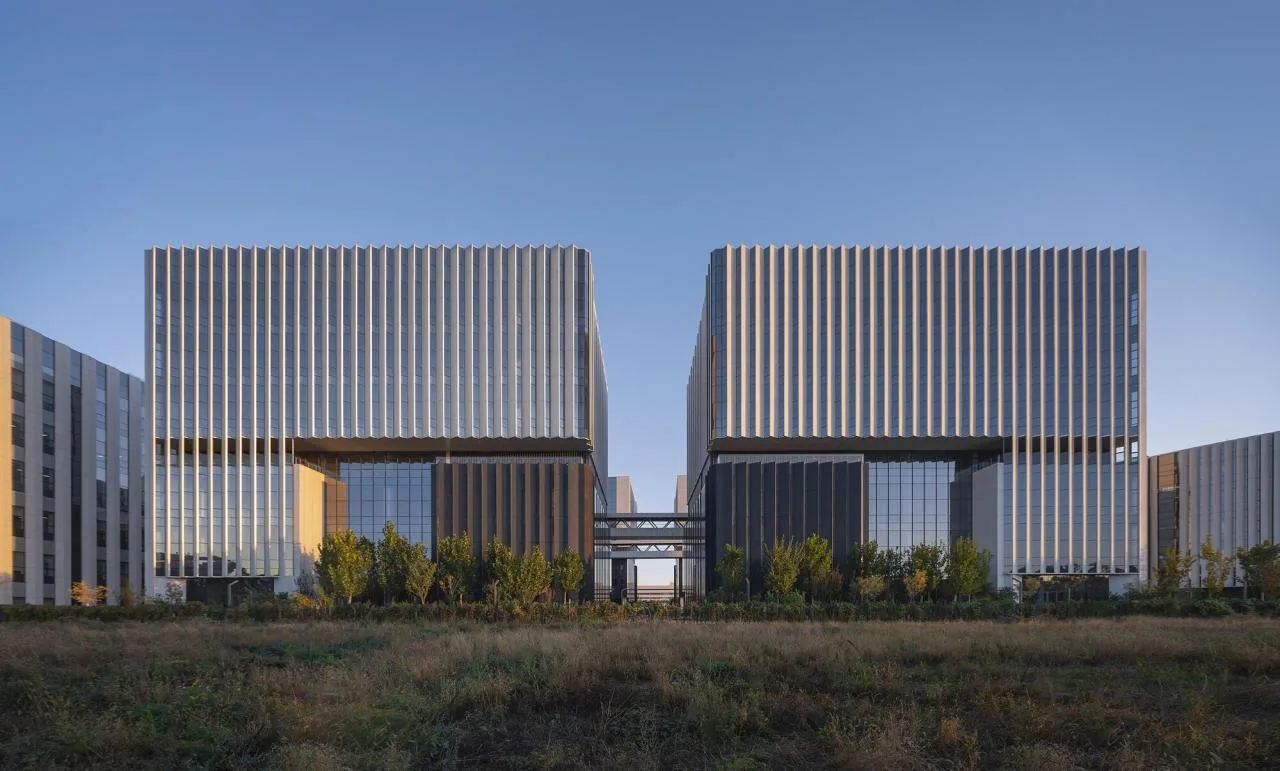
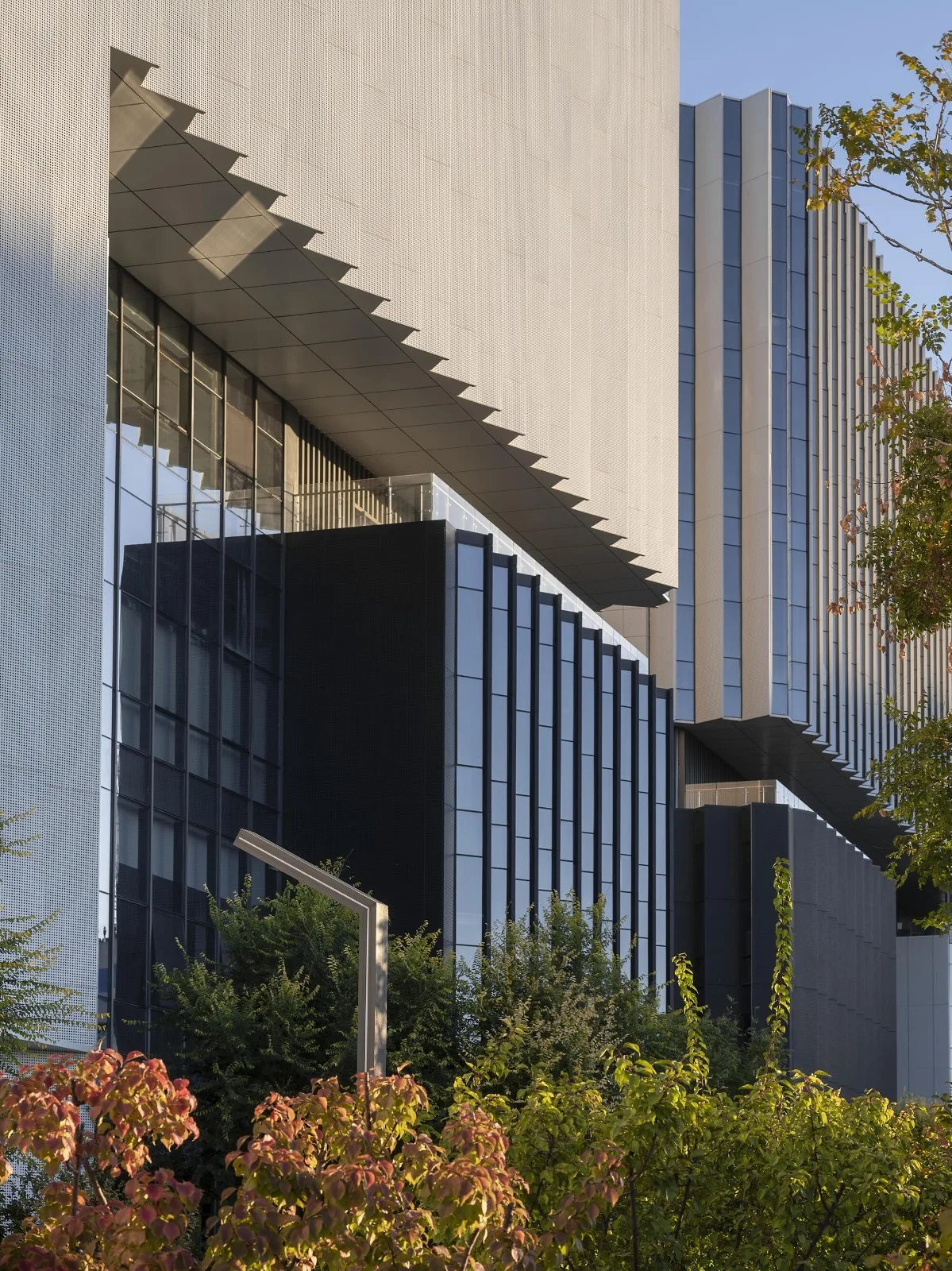
The buildings are interconnected both vertically and horizontally, forming a three-dimensional mega-structure within the park. Vertically, two independent standardized production units are stacked, each with its own dedicated circulation and traffic flow.
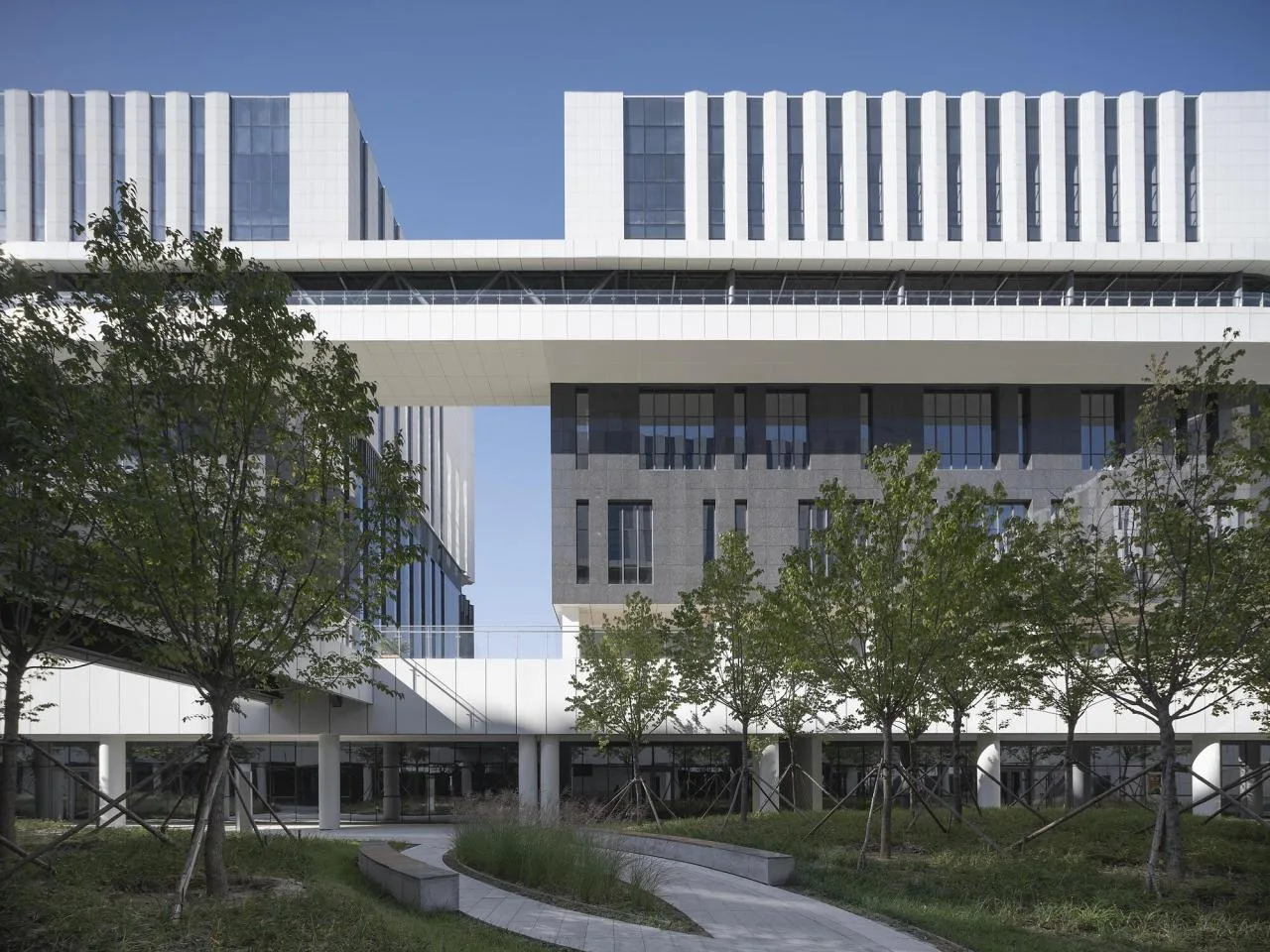
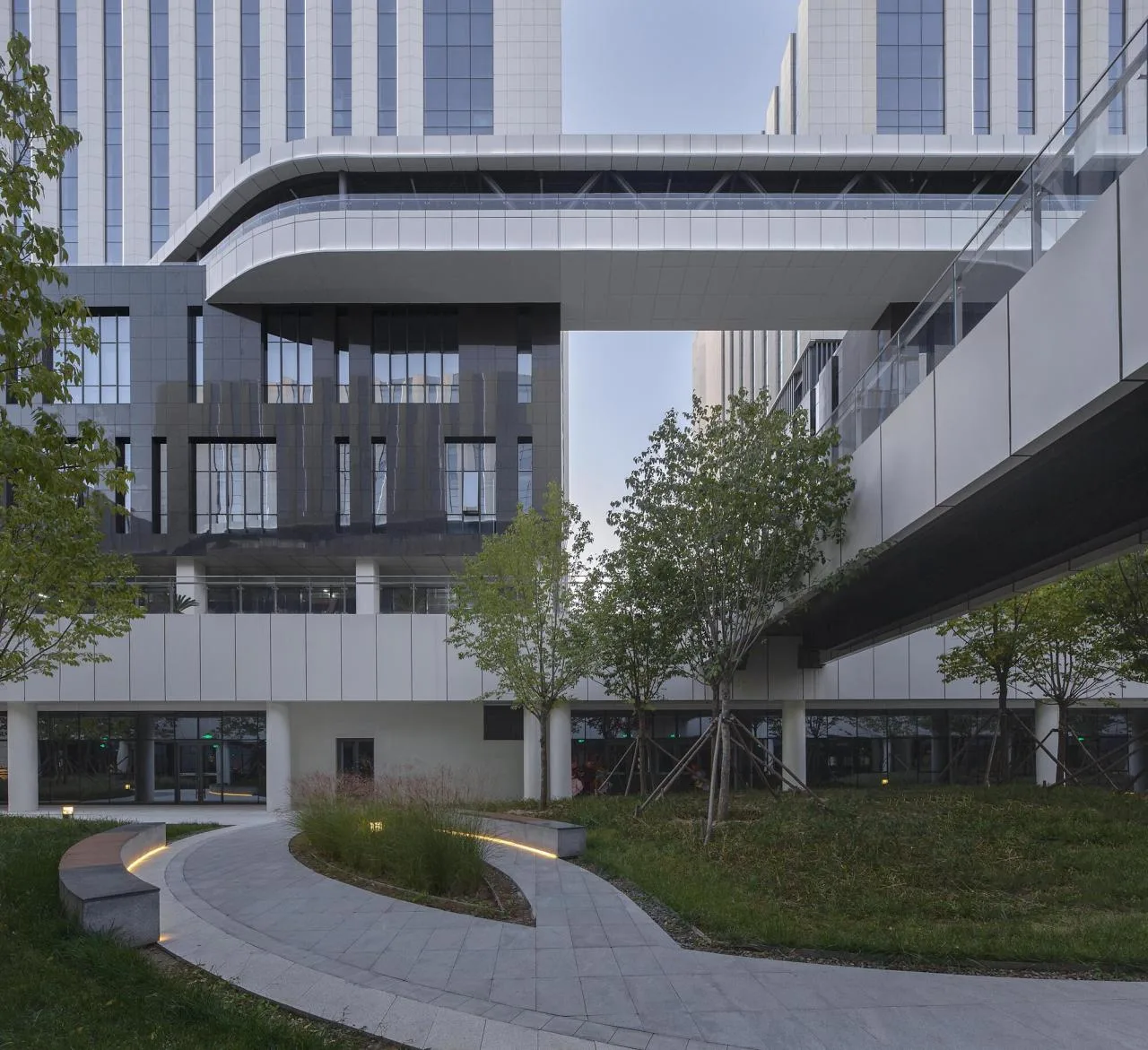
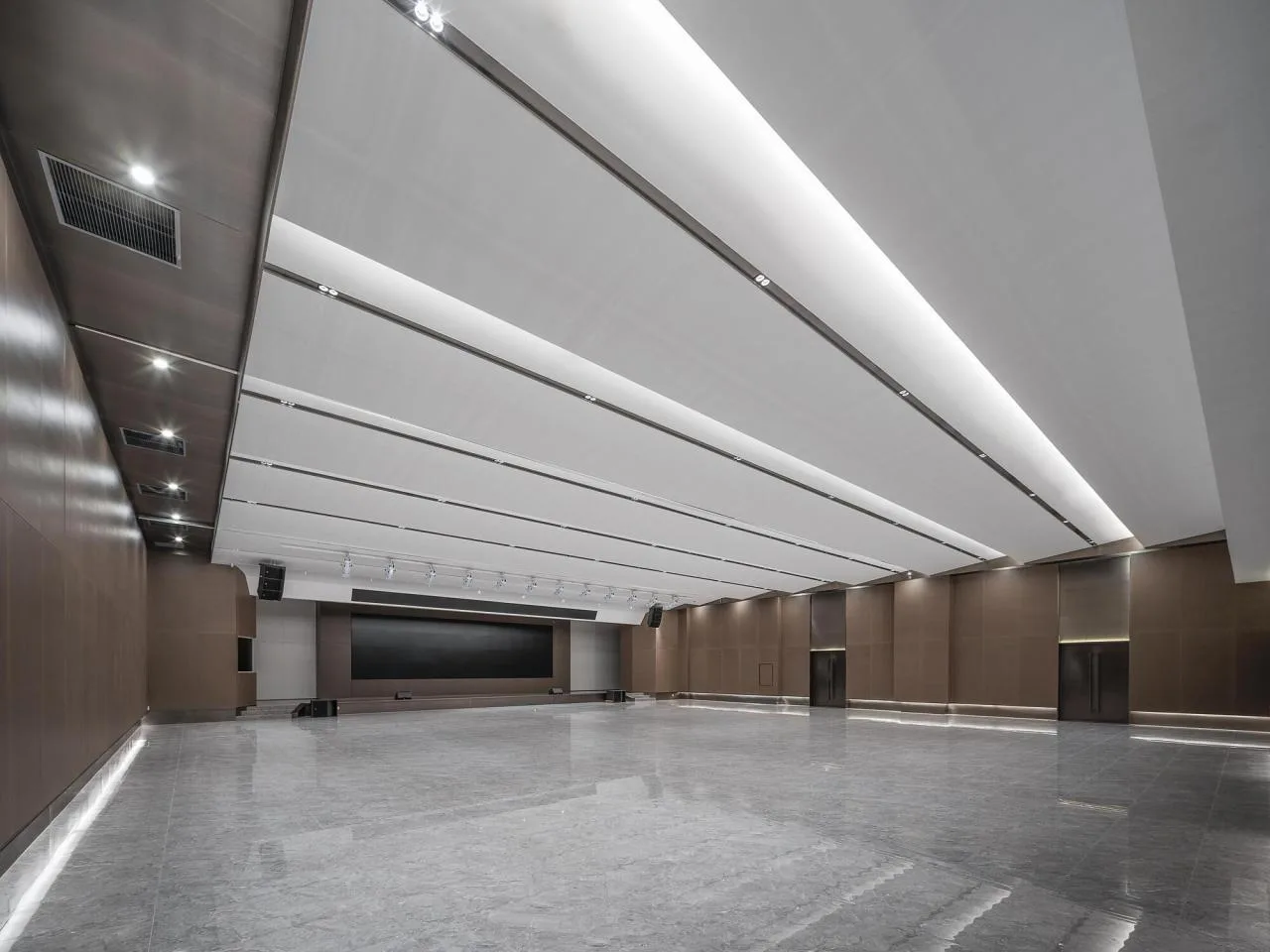
Horizontally, a public platform is created on the fourth floor where the stacked units meet. This platform hosts non-production functions such as offices, conference rooms, and exhibition spaces. The external platform also supports the vitality corridor, linking all buildings together.
The “hand-in-hand” design seamlessly connects indoor and outdoor public spaces in a three-dimensional manner, ensuring each building integrates as part of the overall spatial system, forming a cohesive mega-structure. The facade design reflects the functional characteristics of each building, with varied facade treatments and unique features for different enterprise units.
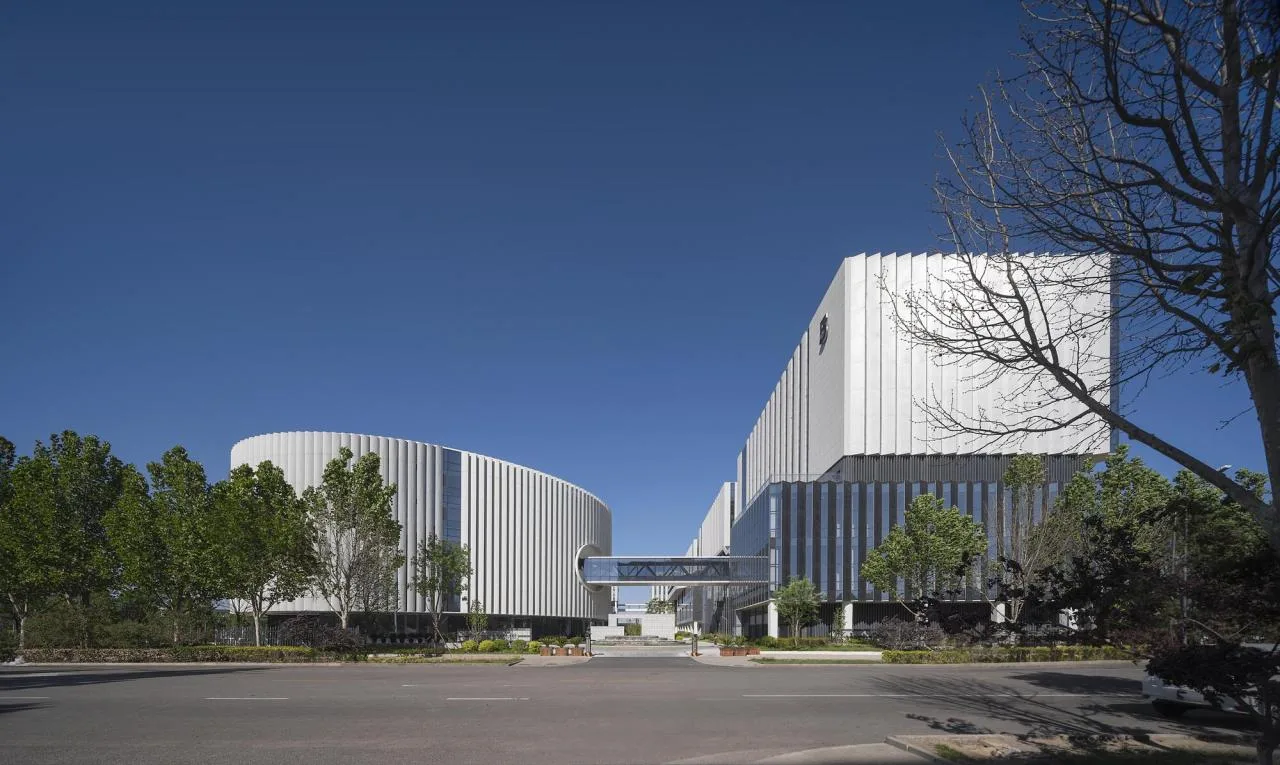
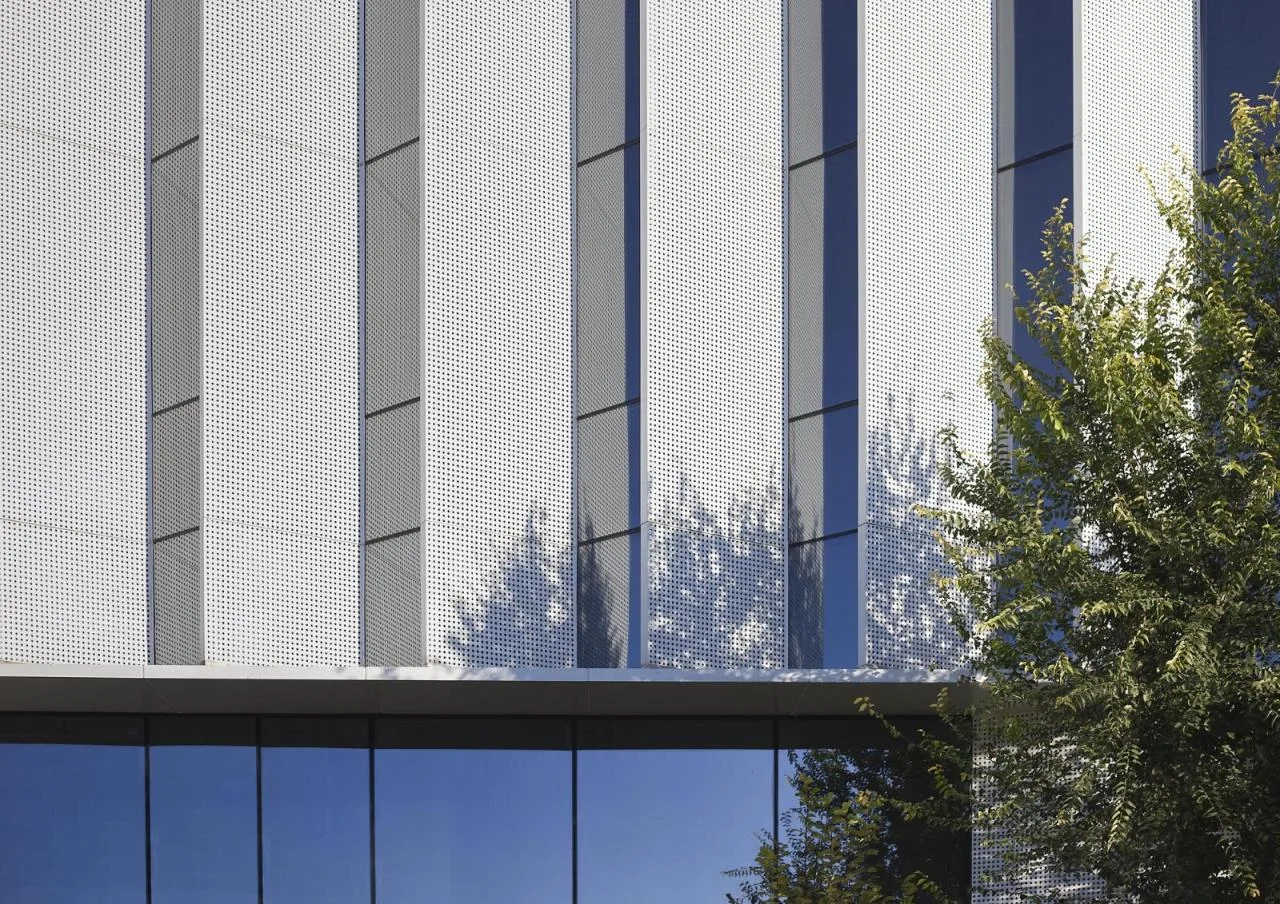
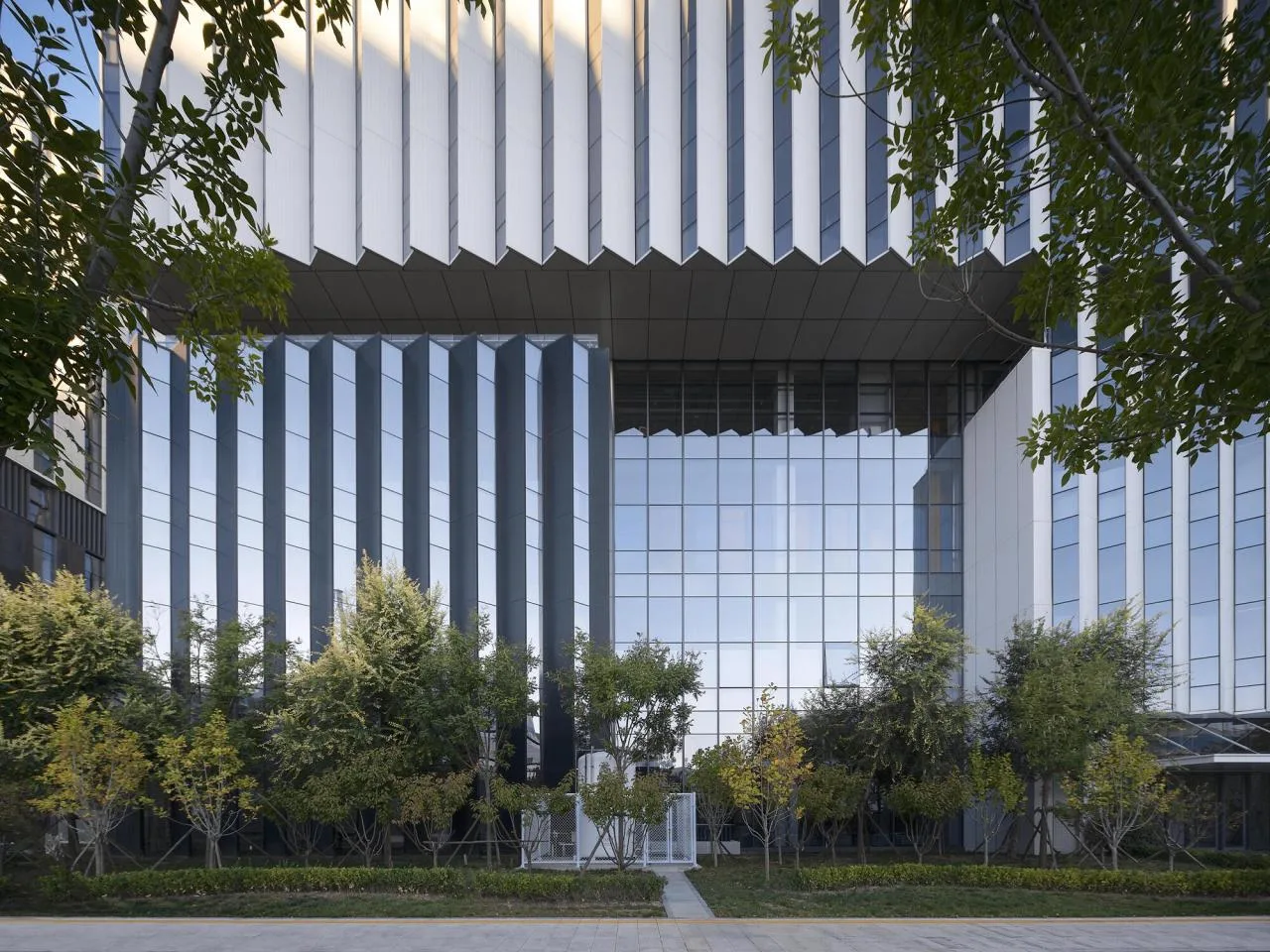
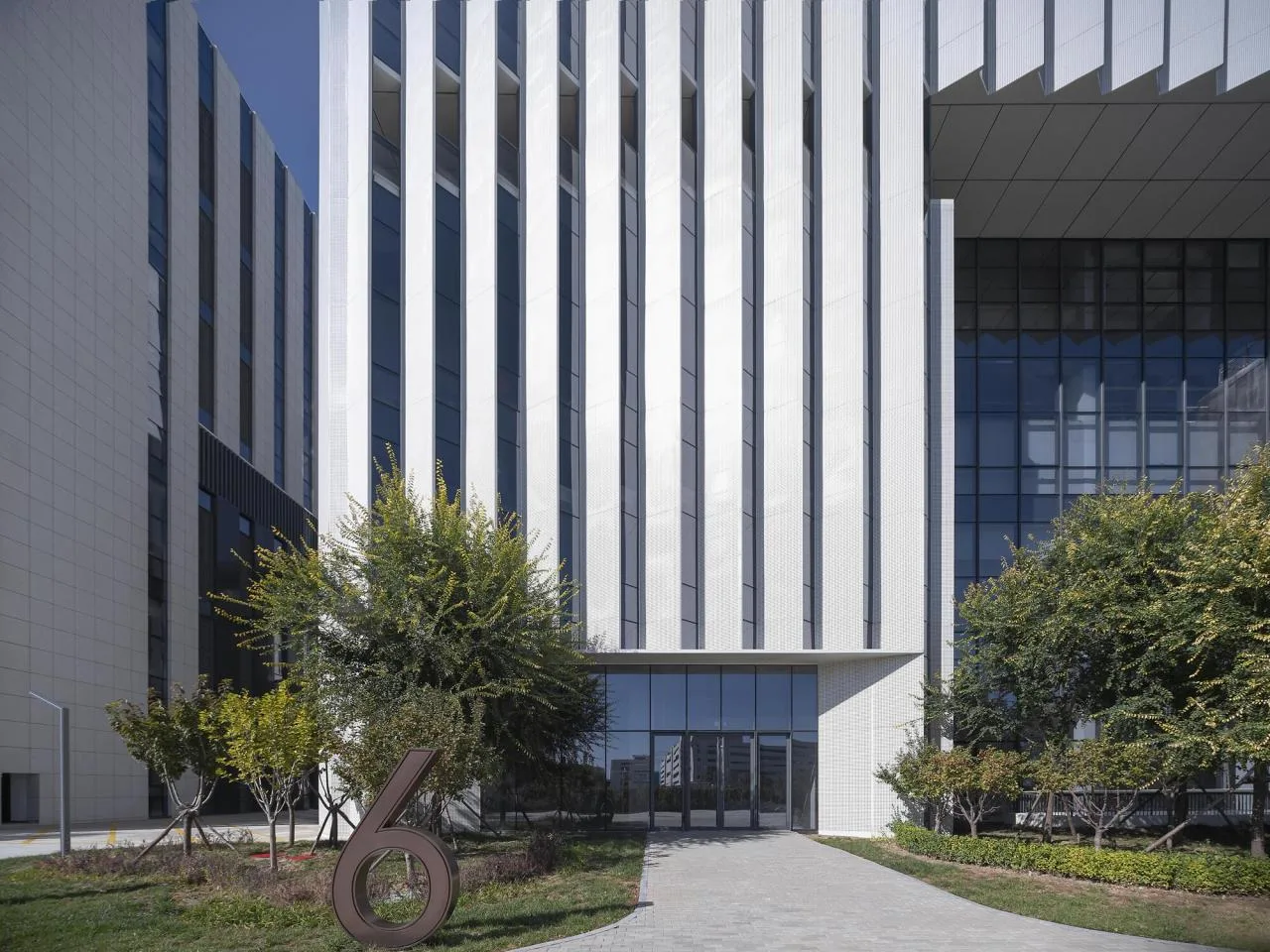
The park’s exterior facade facing the main street employs a vertical folded plate motif, transitioning from the comprehensive service center to the standardized production workshops. Punched metal panels arranged from curves to straight lines emphasize the unified rhythm and integrity of the street-facing facade.
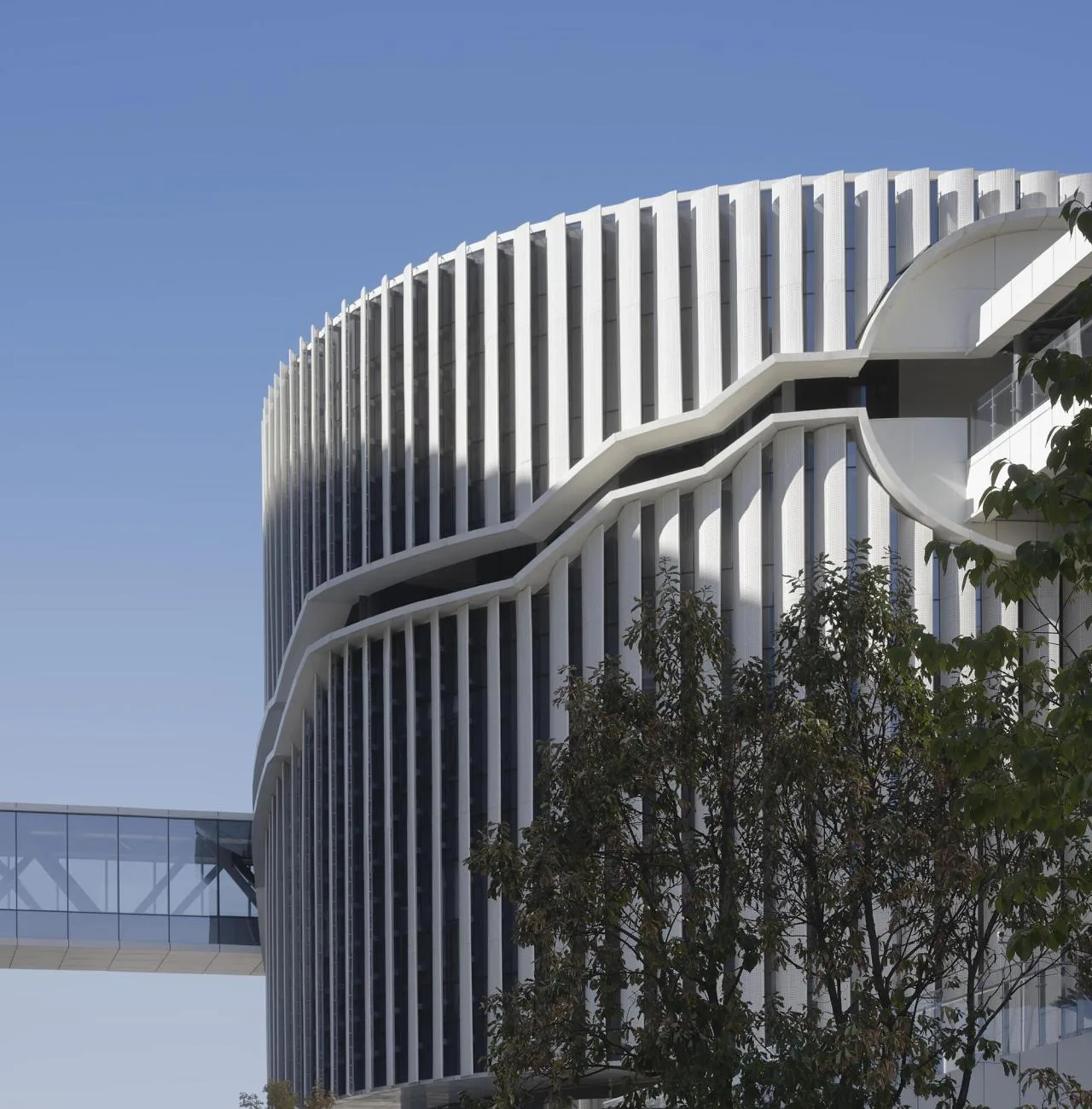
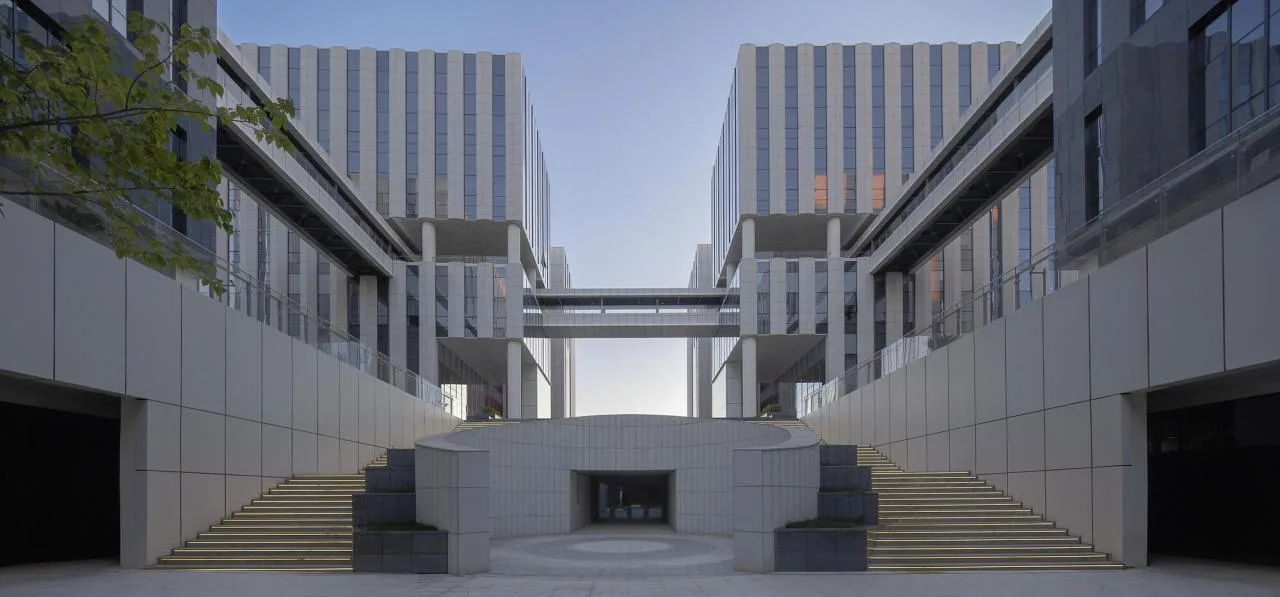
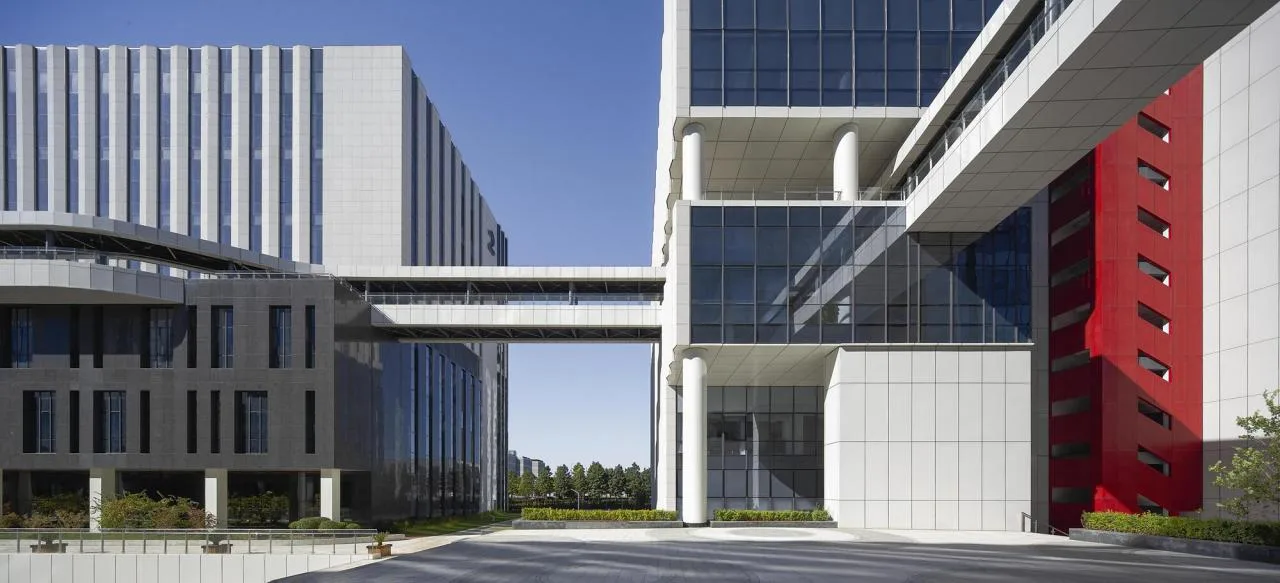
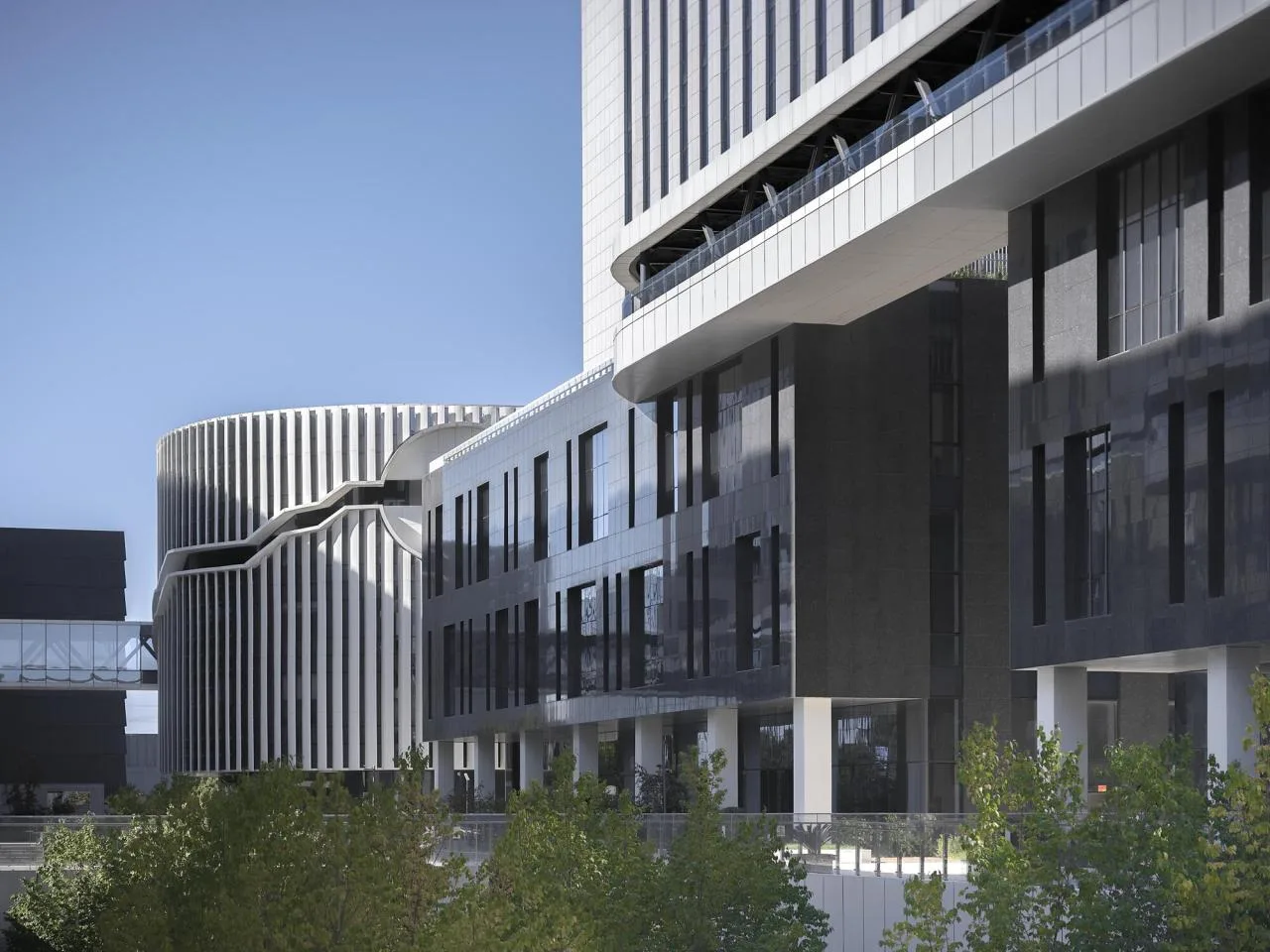
Inside the park, the standardized production workshops feature facades primarily composed of stone and glass curtain walls, fostering a welcoming and pleasant interior environment. The building exteriors are predominantly white, clean, and minimalist—reflecting the image and character of the biopharmaceutical park.
The stacked buildings use a color scheme of white on top and black on the bottom, emphasizing the distinctiveness of each enterprise unit and providing a sense of exclusivity. The harmonious combination of varied materials, colors, and textures throughout the park enhances the technological character of the cell therapy R&D base while highlighting its industrial identity.
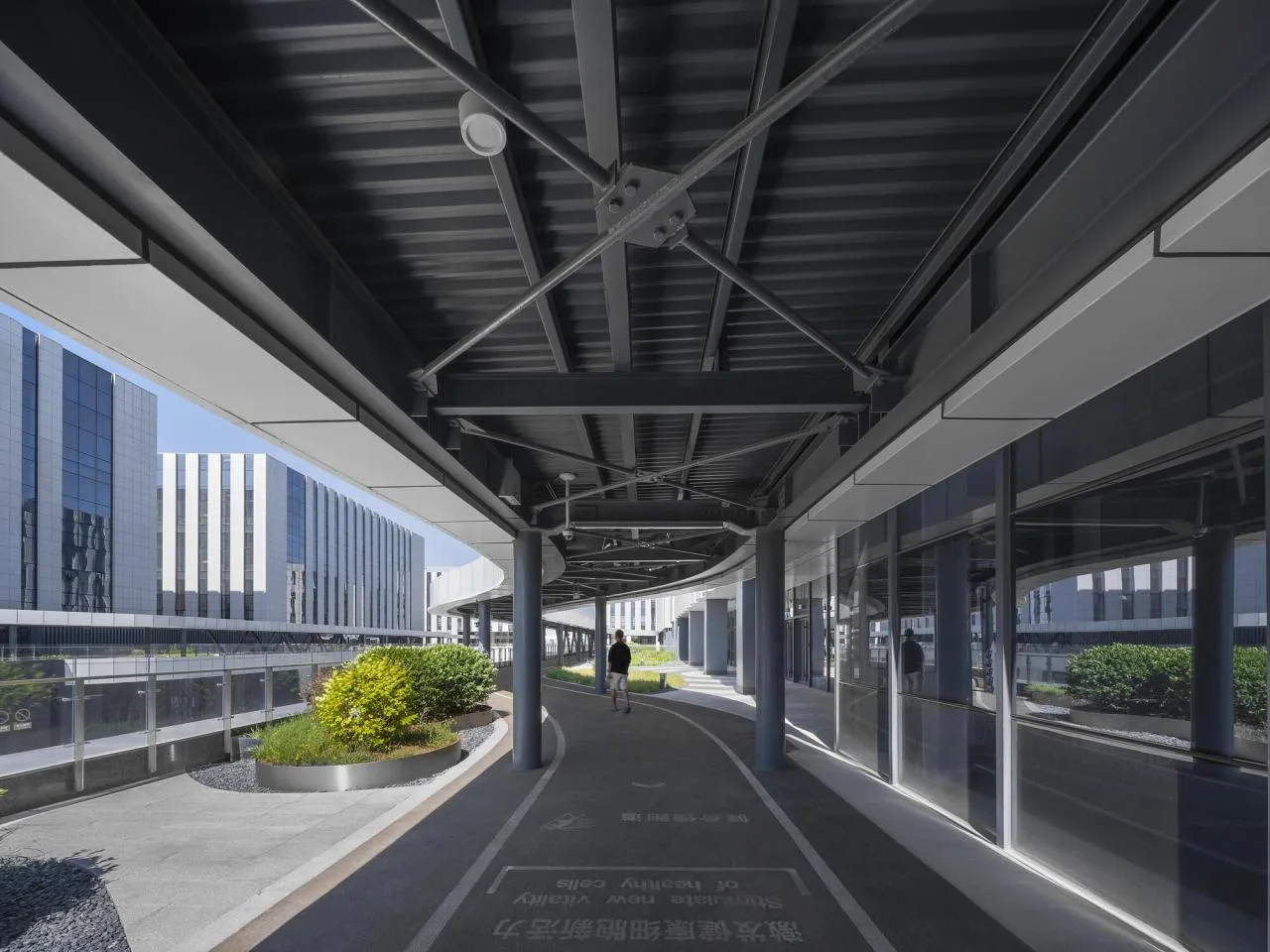
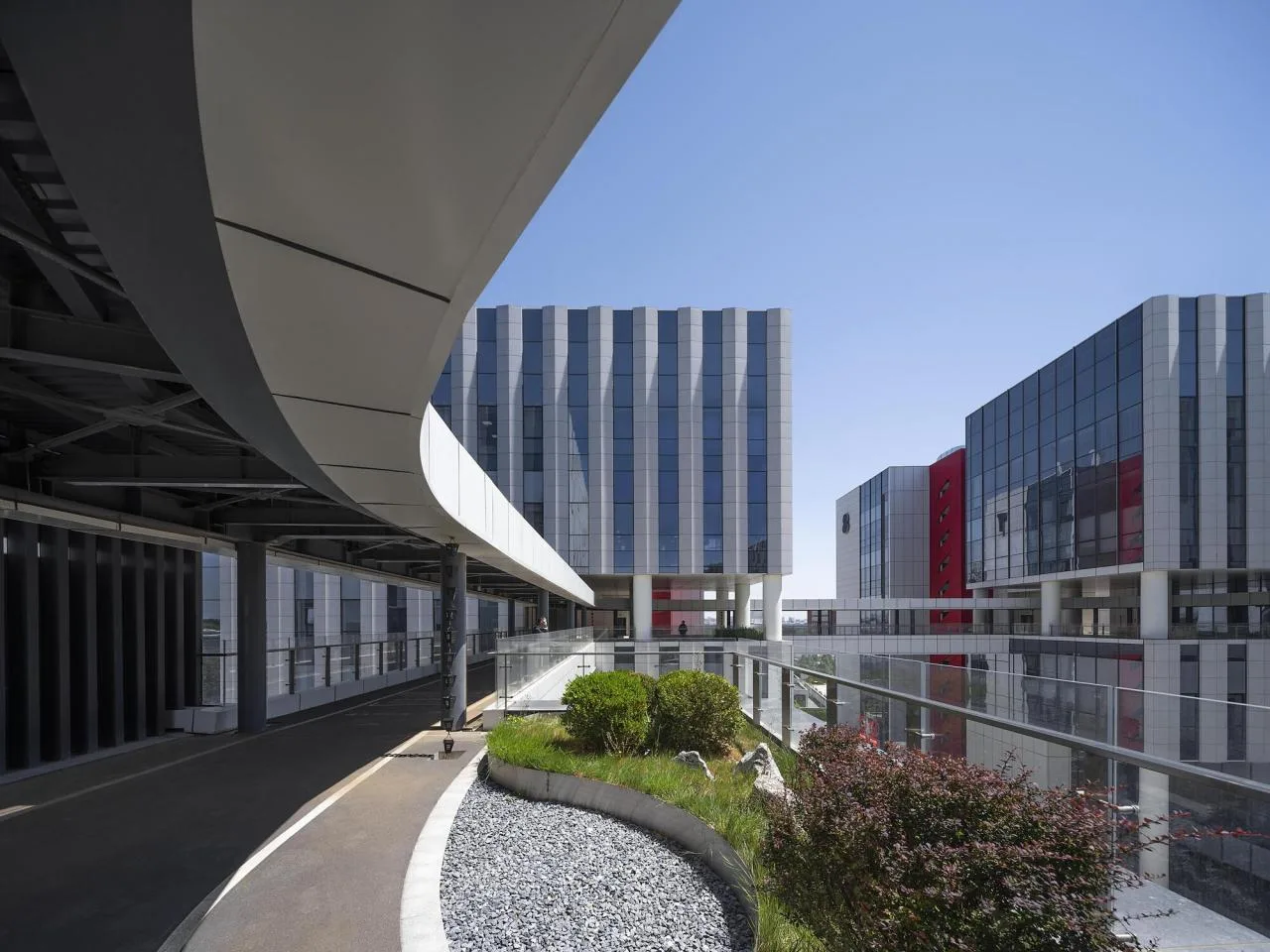
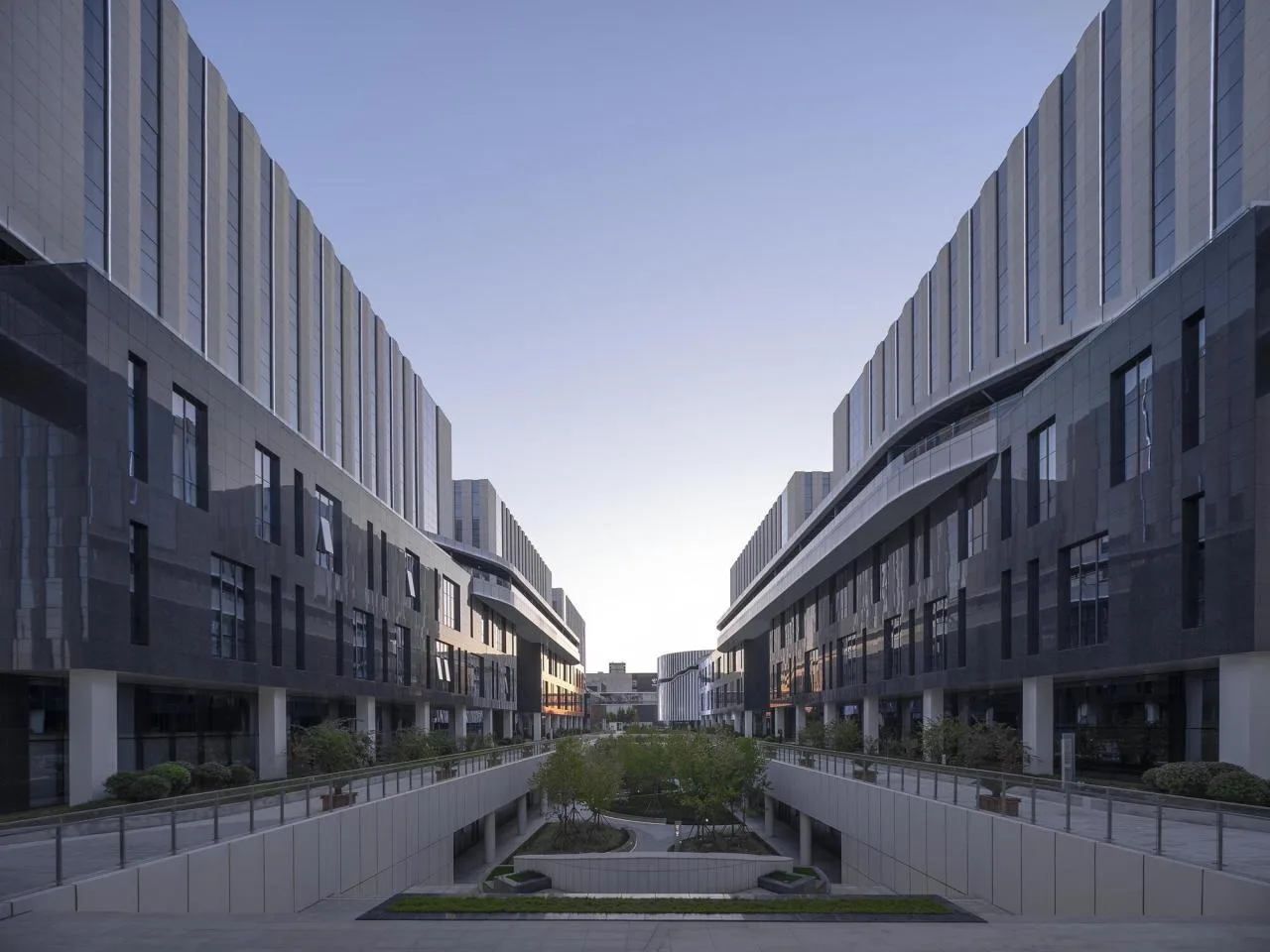
The landscape design draws inspiration from cellular morphology, projecting this motif vertically onto sunken courtyards, ground-level plazas, vitality corridors, rooftop platforms, and urban green belts.
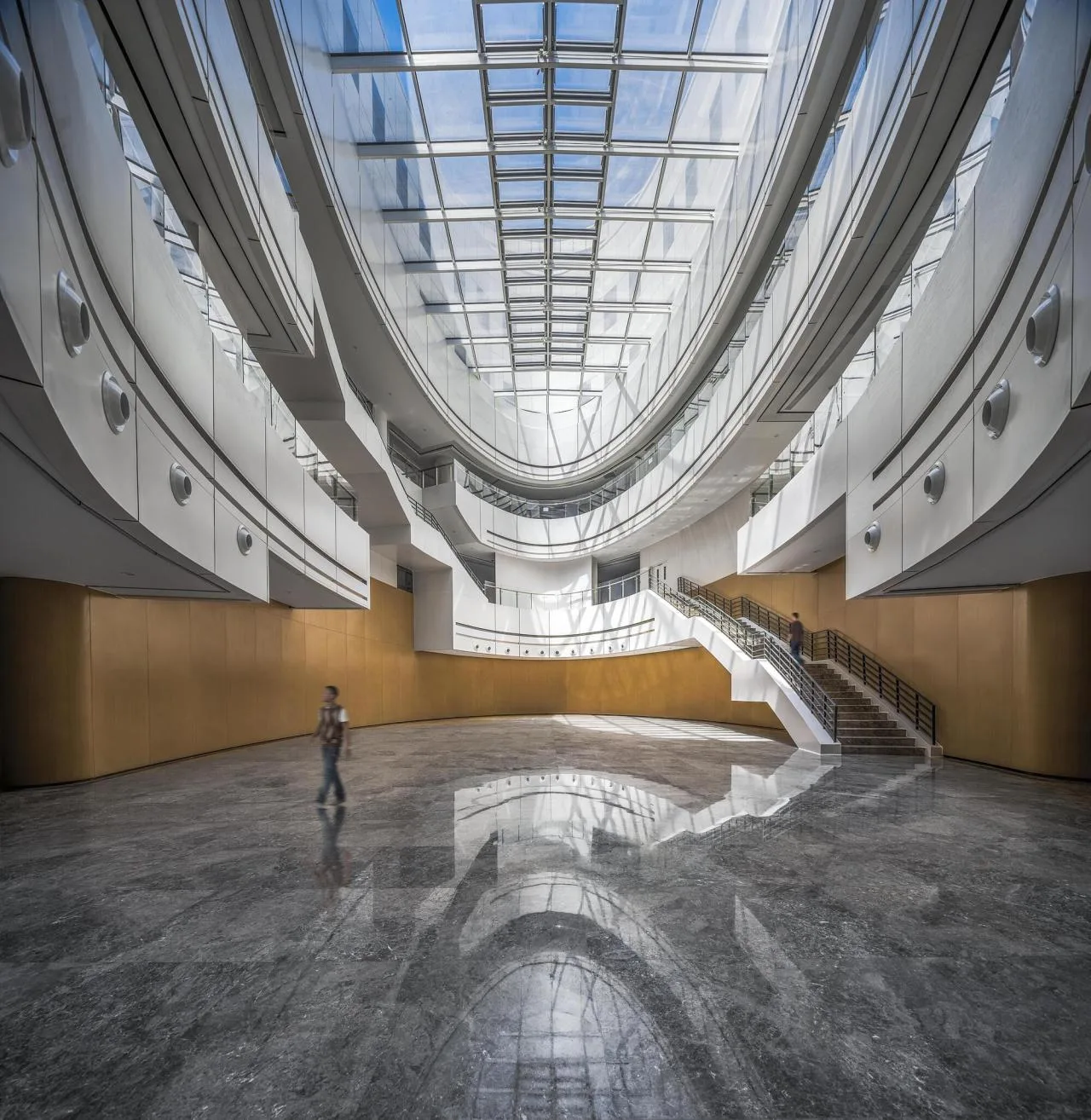
Using the elliptical comprehensive service center as the focal point, the design radiates throughout the park, extending the concept of cells across the entire landscape—from underground spaces to ground level and up into the air. This integrates the idea of cell clusters into the park’s physical form, creating a comprehensive, three-dimensional, and open green landscape system.
Through the use of greenery, smaller landscape elements, and human activities, the park fosters an ecological, boundary-free, unobstructed, and interactive environment for the cell therapy industry within a highly compact site.
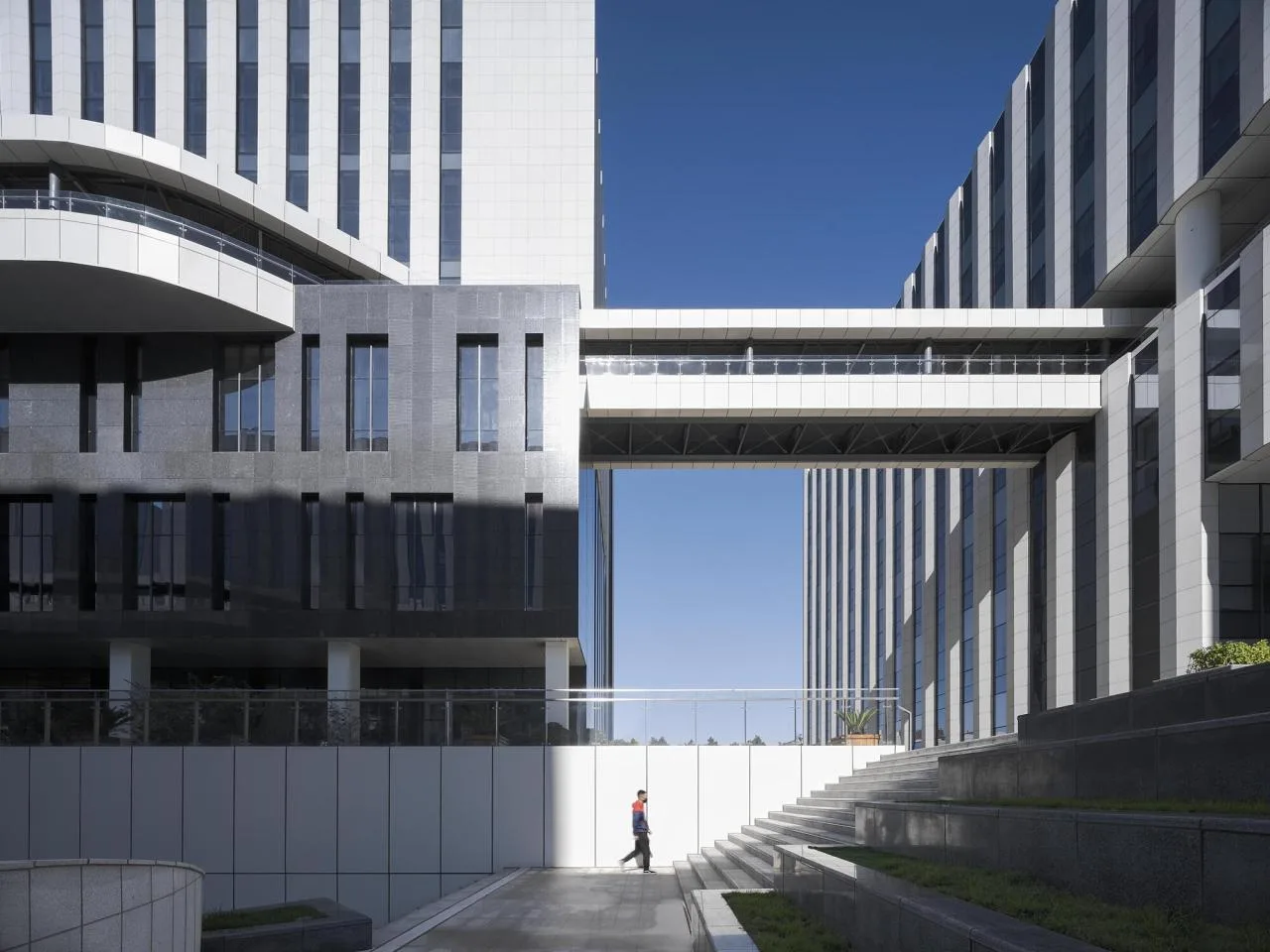
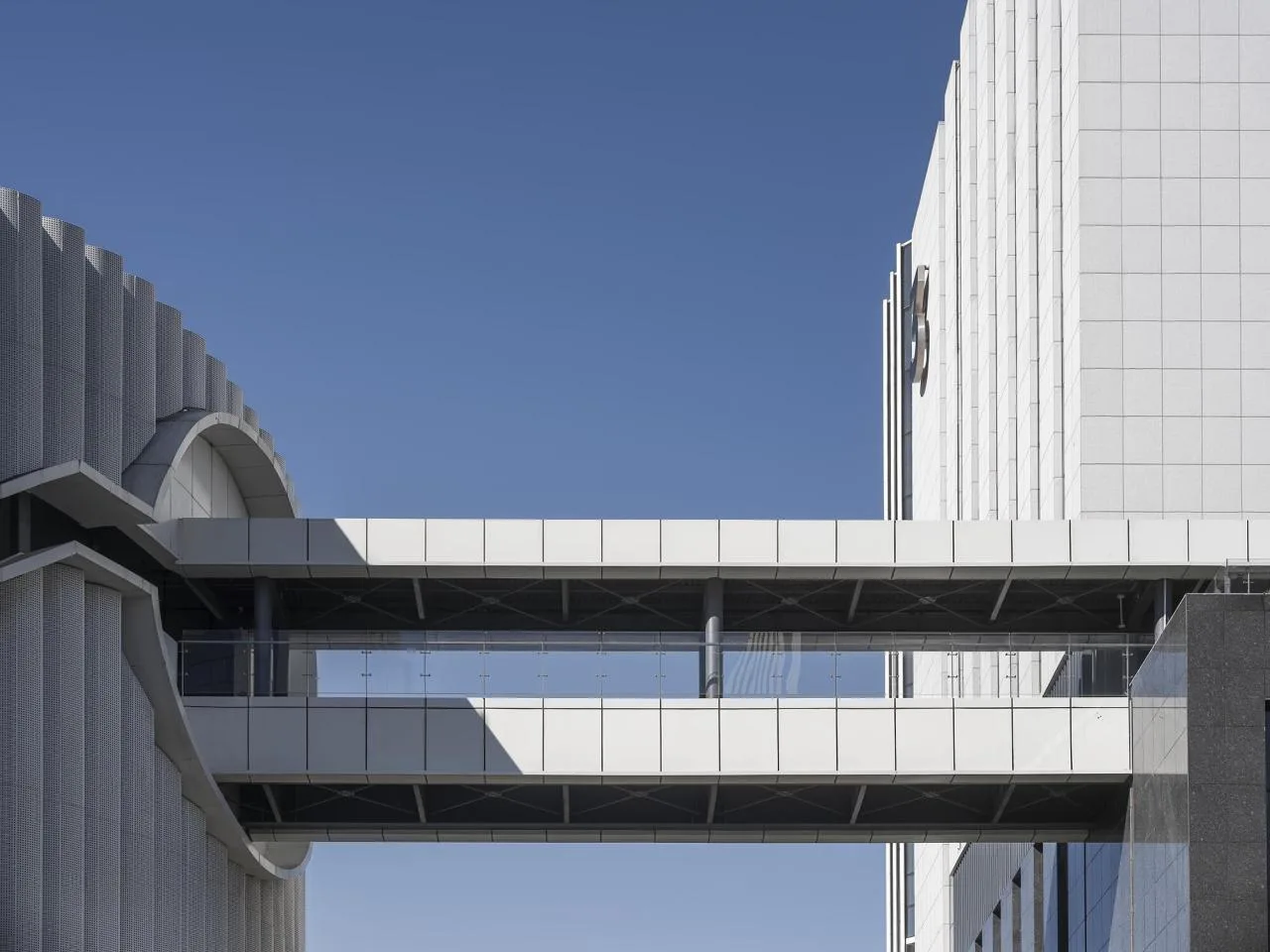
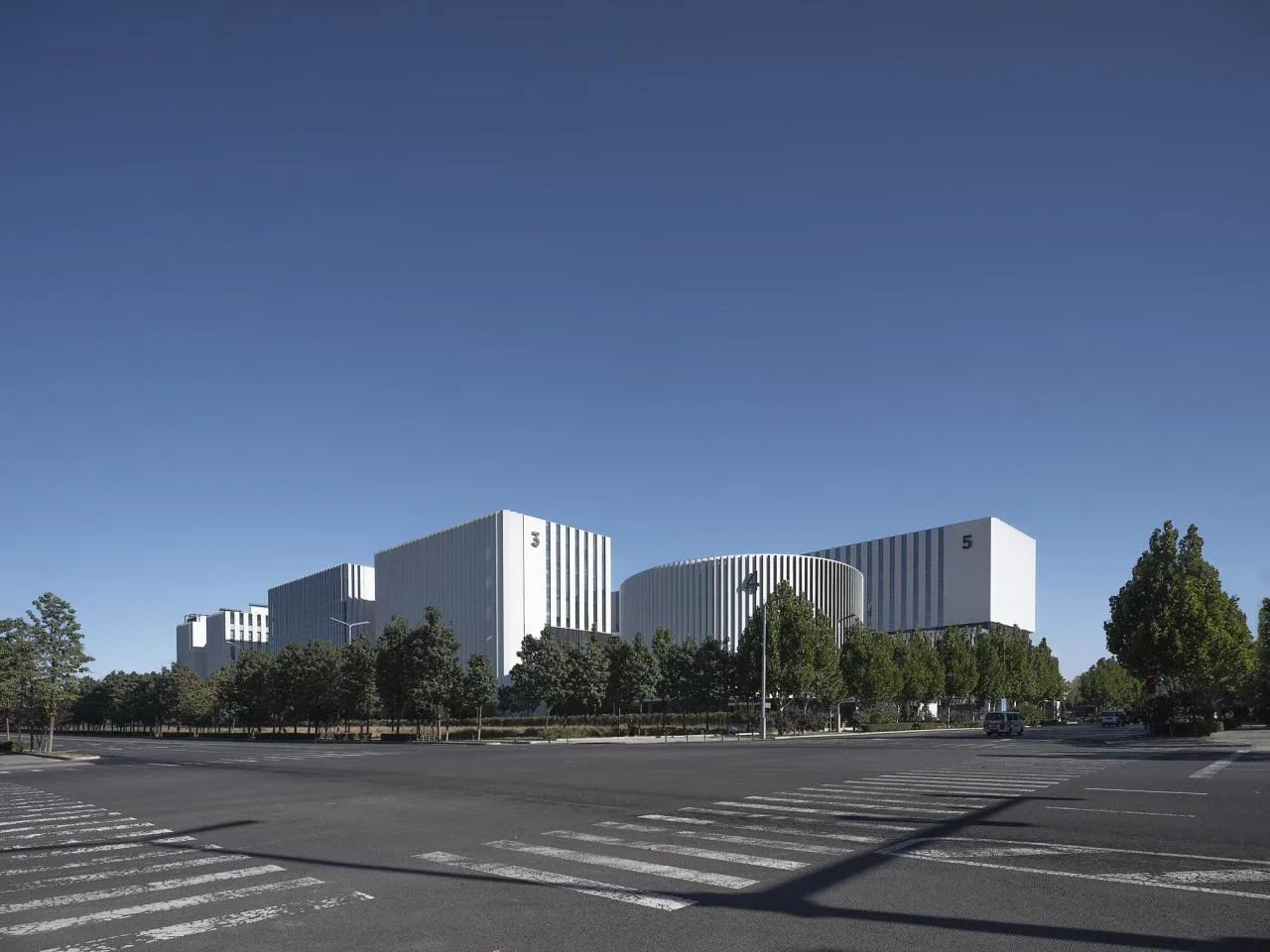
“Symbiosis” is a shared goal for innovation parks, balancing internal operational needs with integration into the surrounding urban context. The orderly and natural spatial layout, combined with efficient and multifaceted scientific research activities, weaves together a spatial system that inspires innovation and vitality.
This project aims to establish a major hub for the cell therapy industry that combines research, pilot testing, and production. It serves as a gathering point for public service resources, a home for professional talent, and a catalyst for regional resource integration, supporting the growth of Beijing’s cell therapy innovation cluster.
The park fosters an innovative and vibrant industrial community by expressing spatial relationships and physical forms that embody concepts such as “continuous movement without interruption,” “unity without uniformity,” and “small-scale connectivity without boundaries.”
Project Drawings
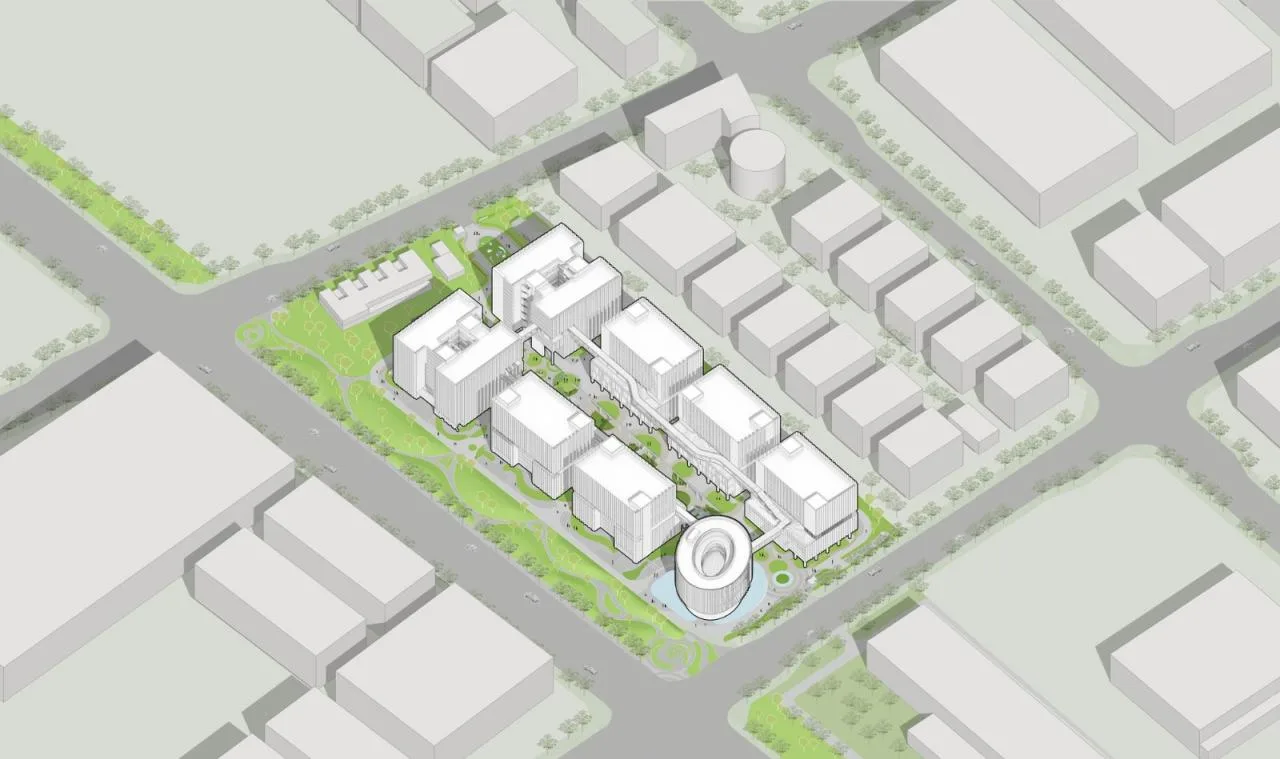
▲ Axonometric Diagram
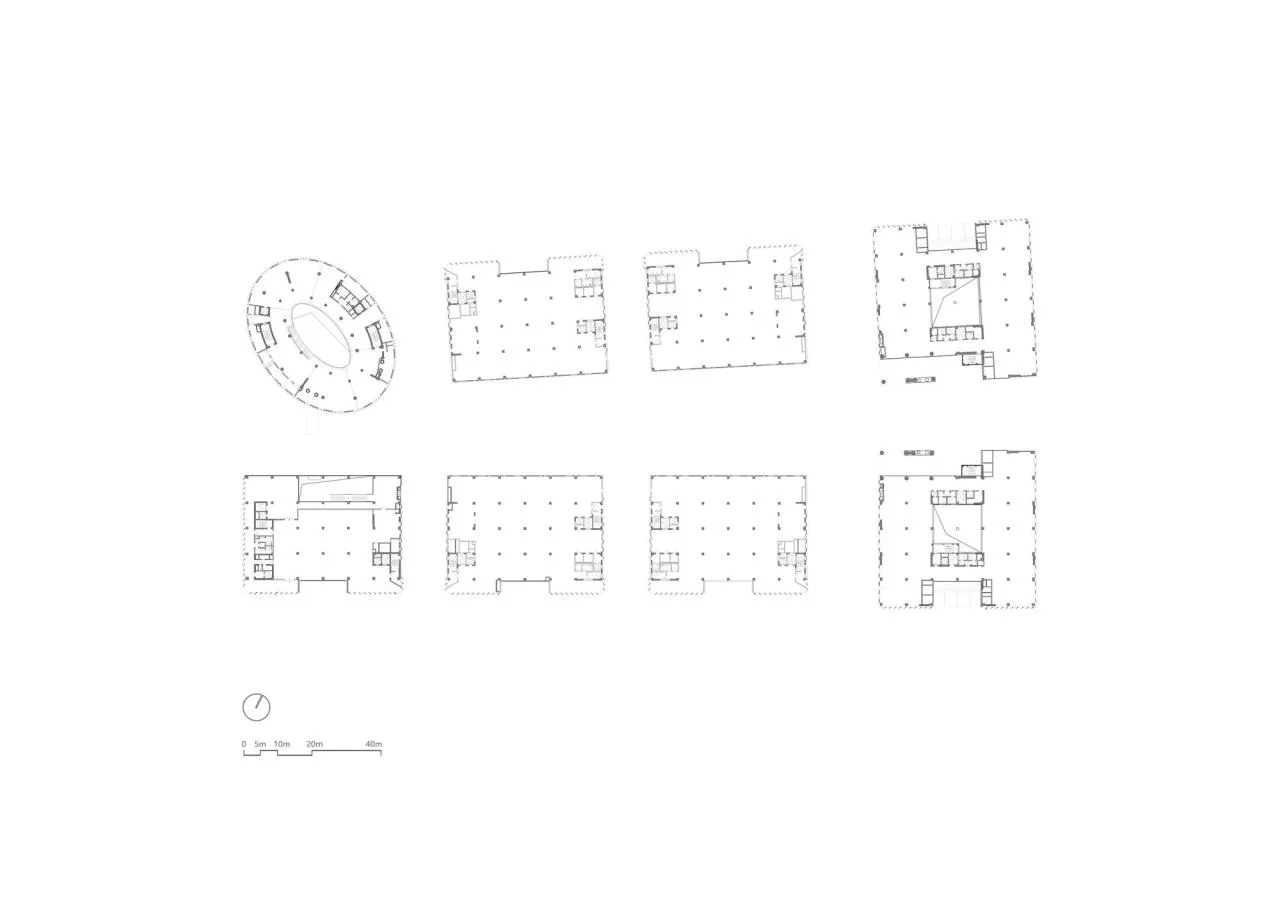
▲ First Floor Plan
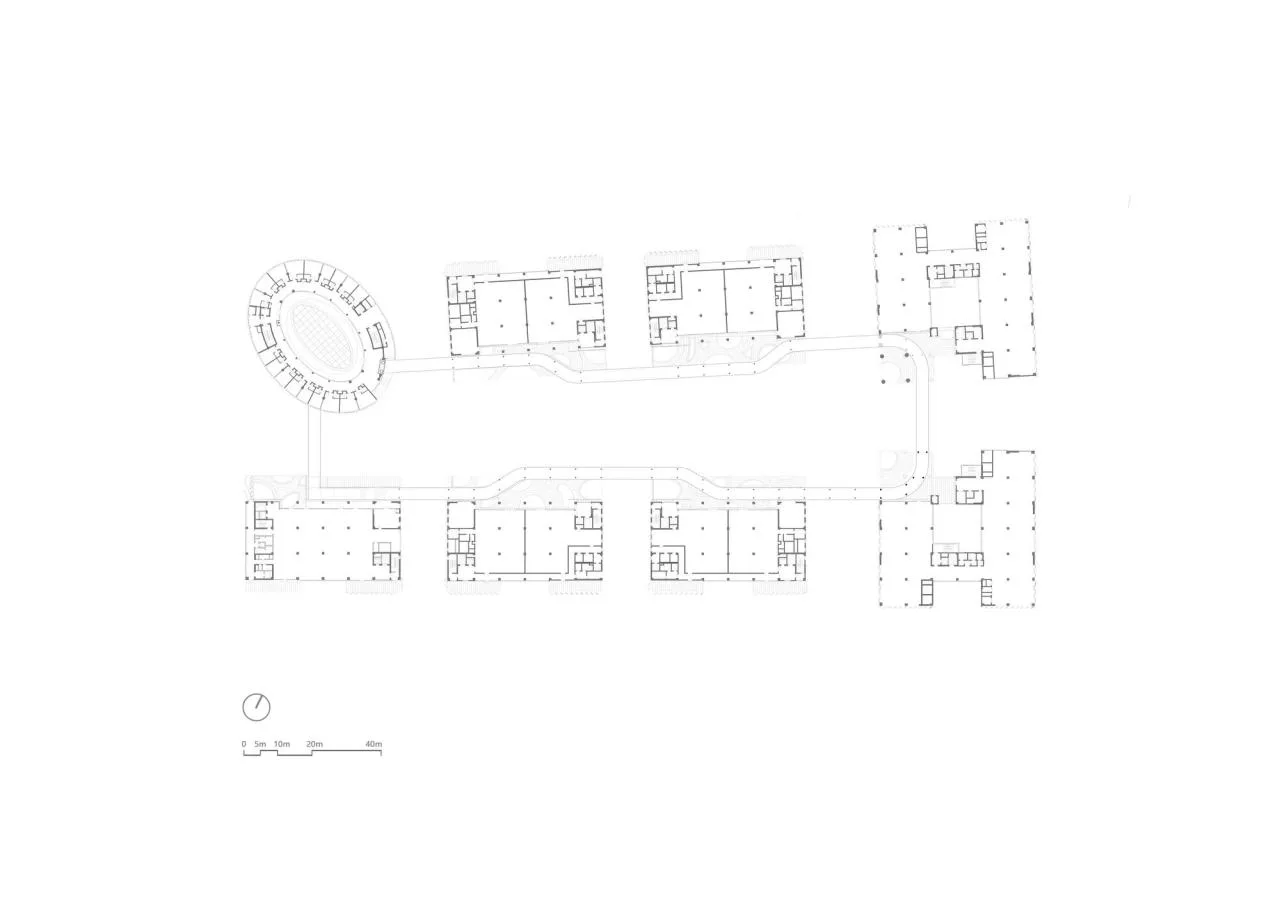
▲ Second Floor Plan
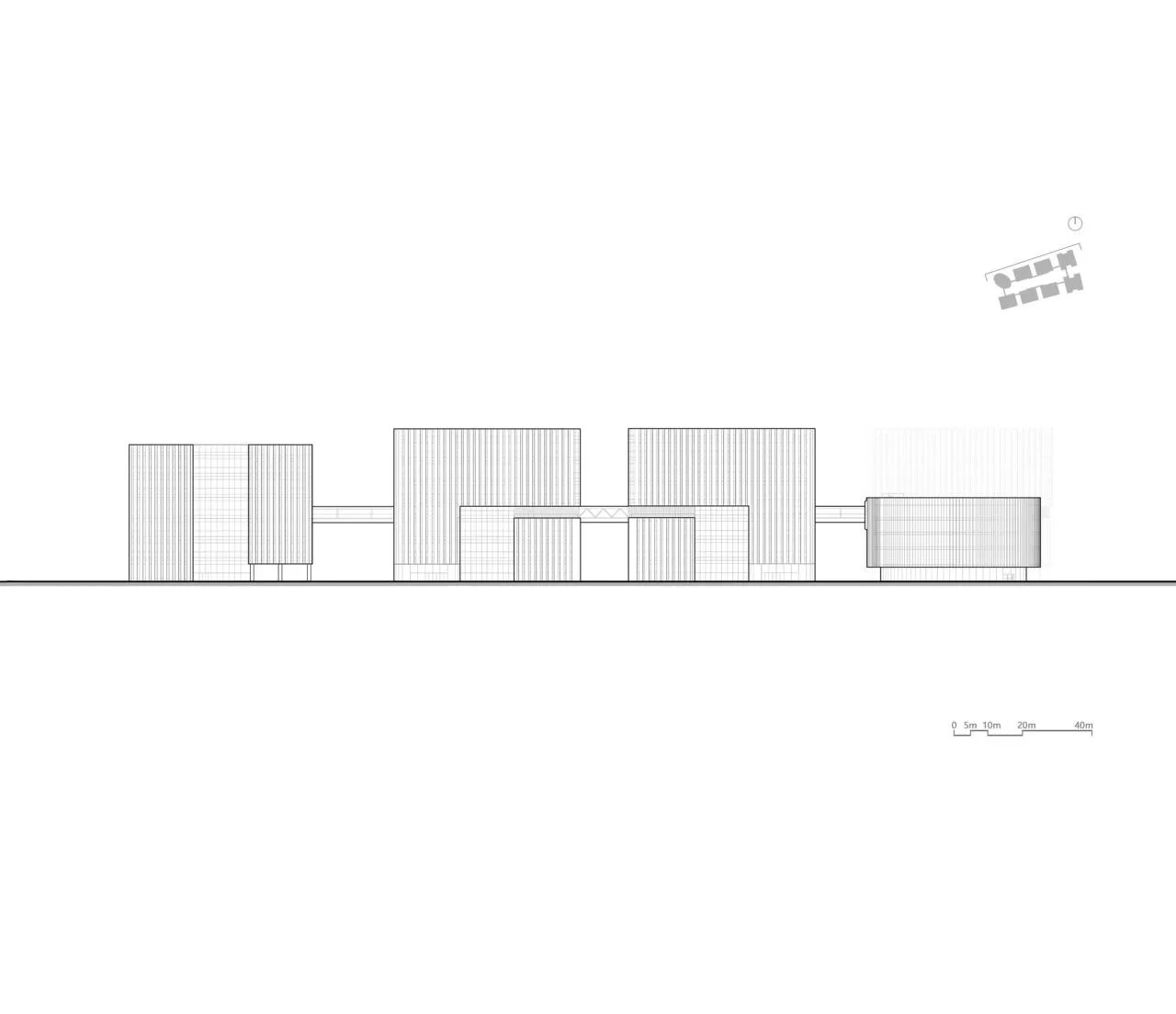
▲ Elevation View
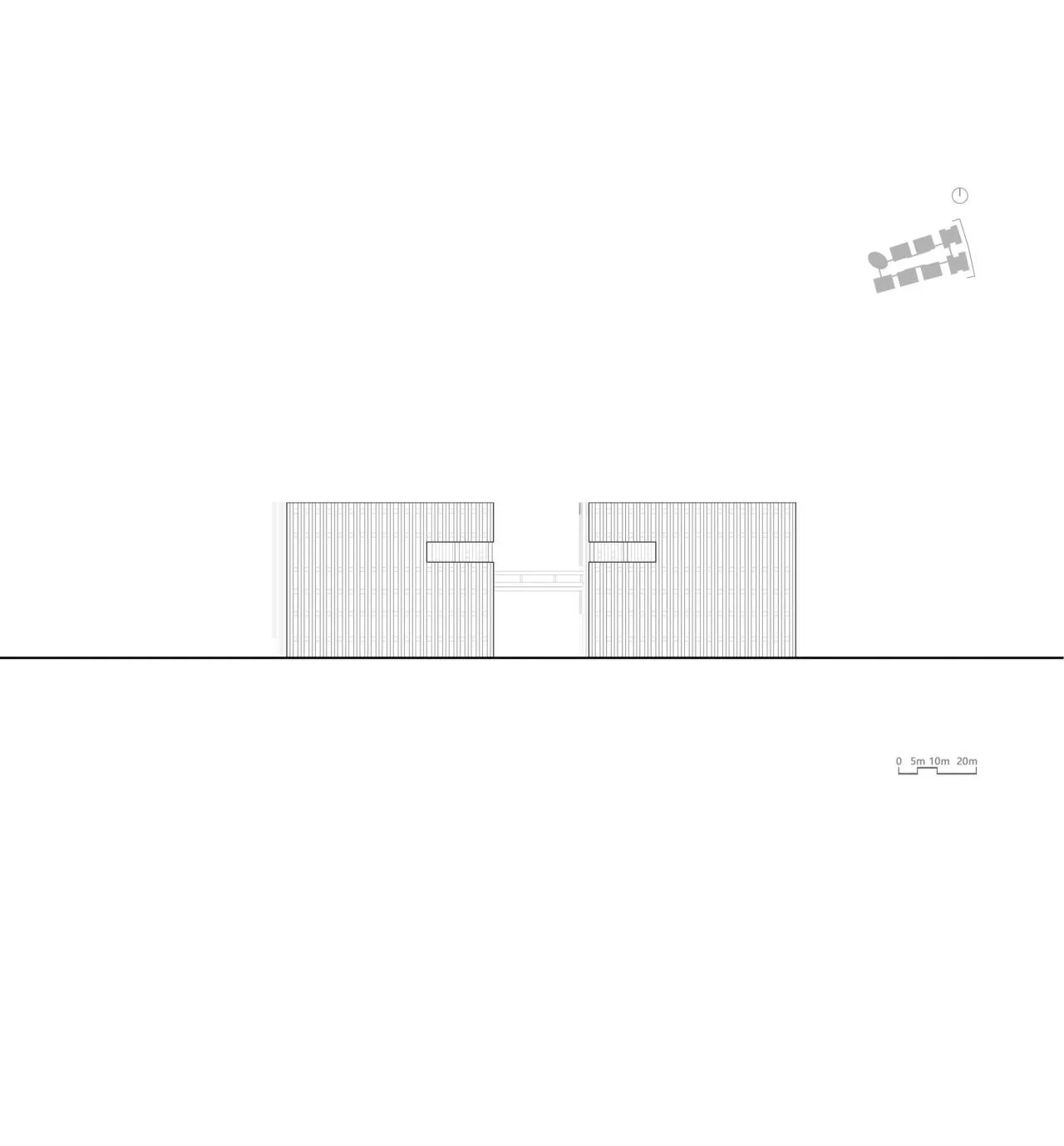
▲ Elevation View
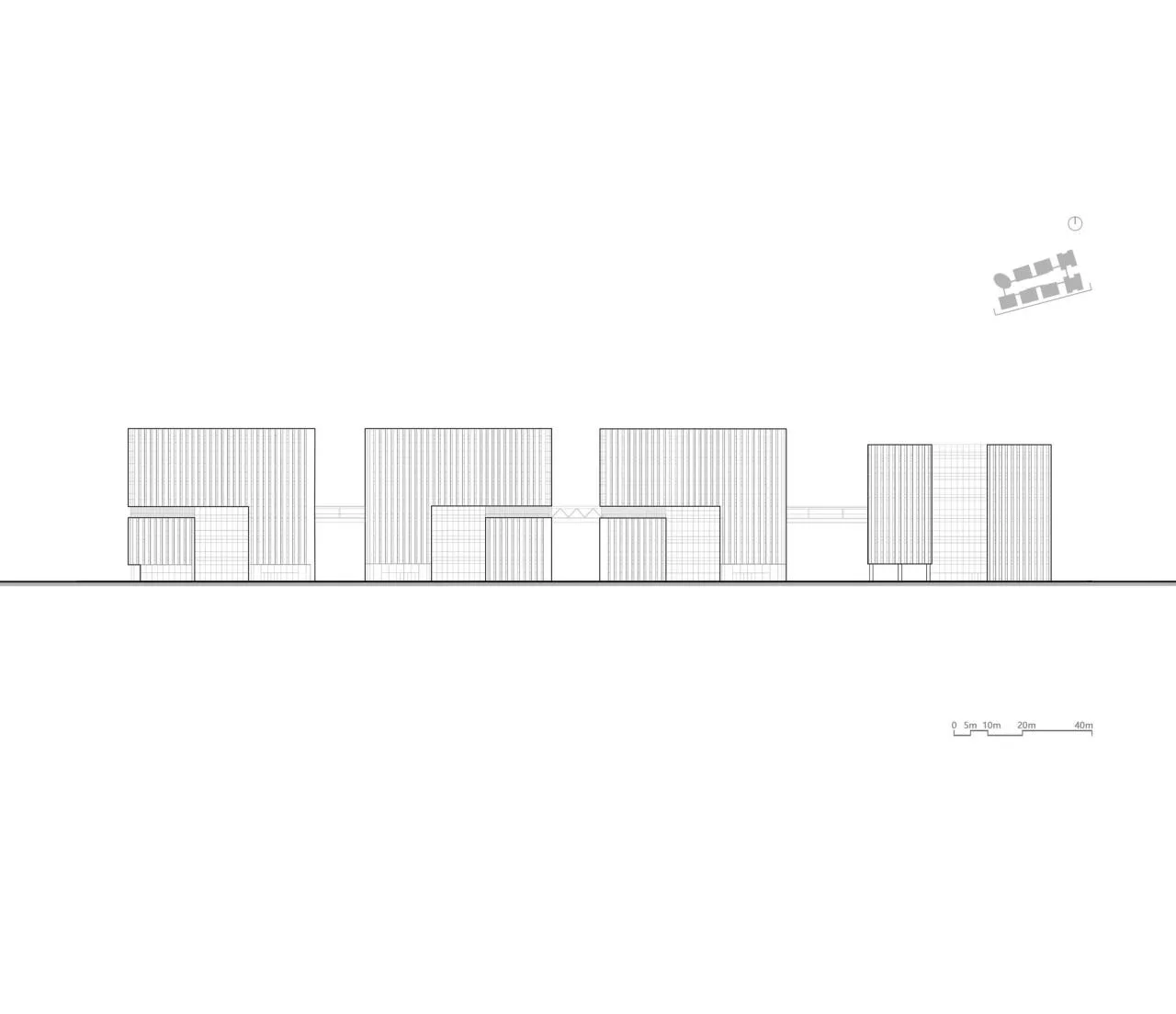
▲ Elevation View
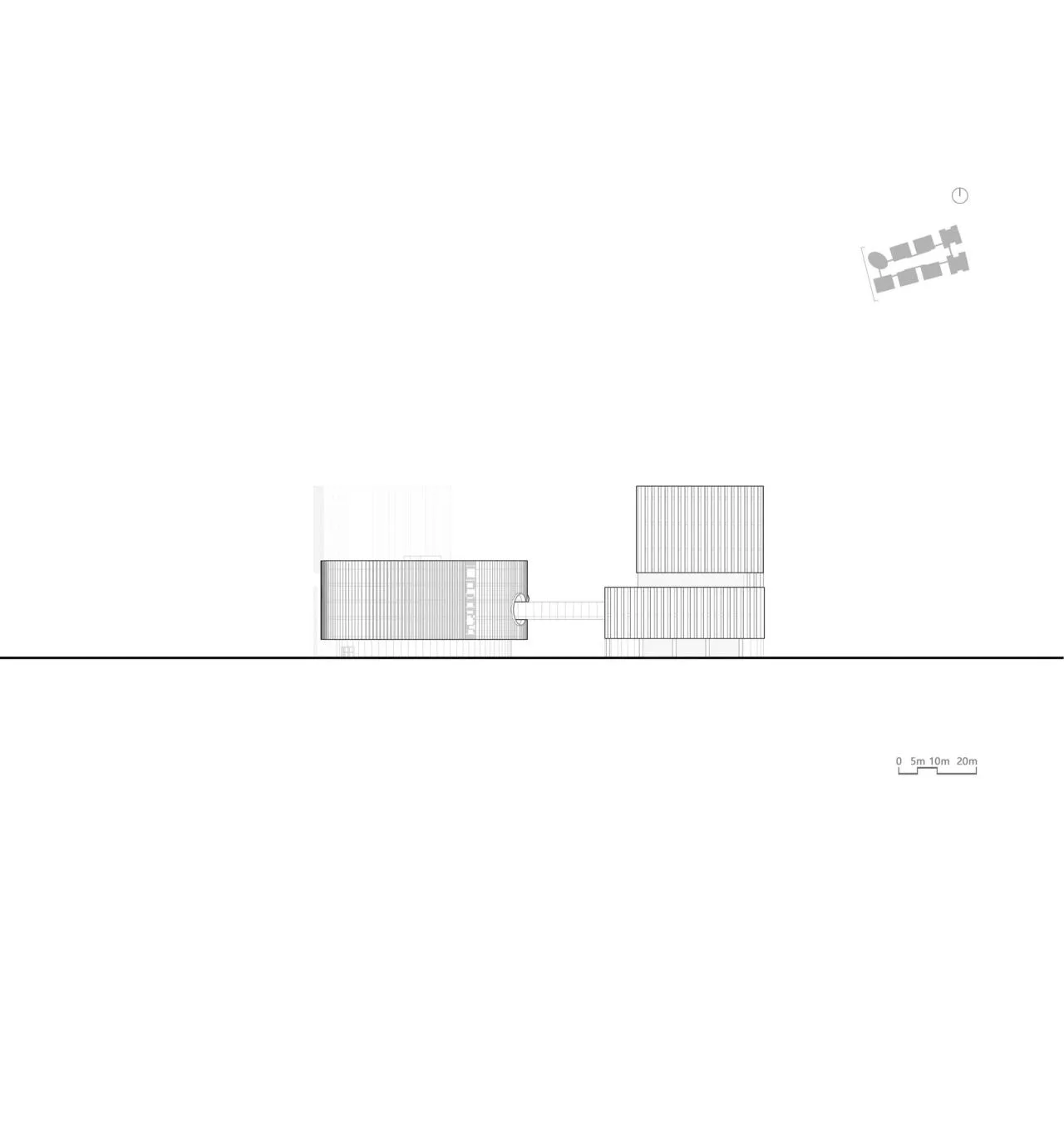
▲ Elevation View
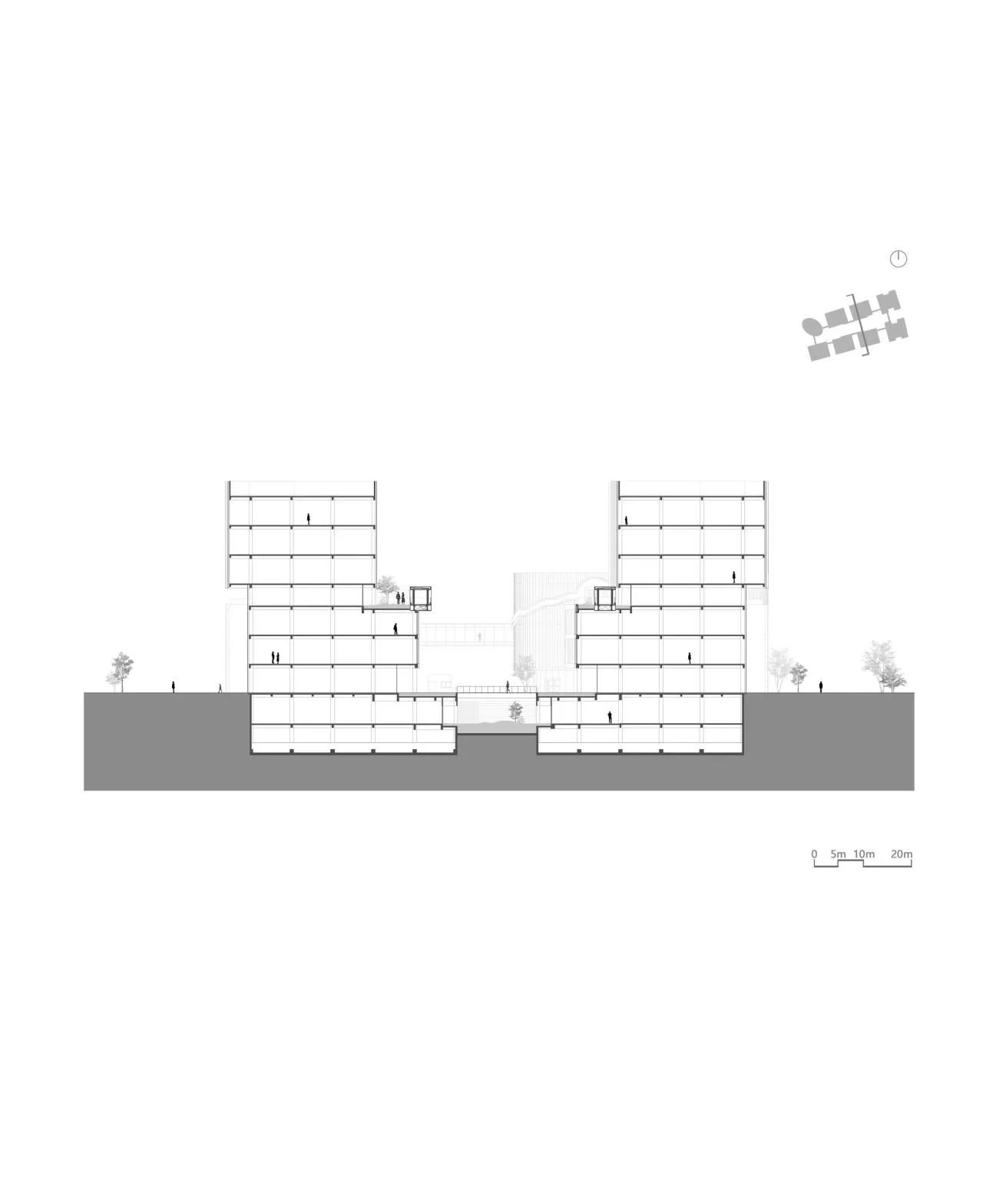
▲ Sectional View
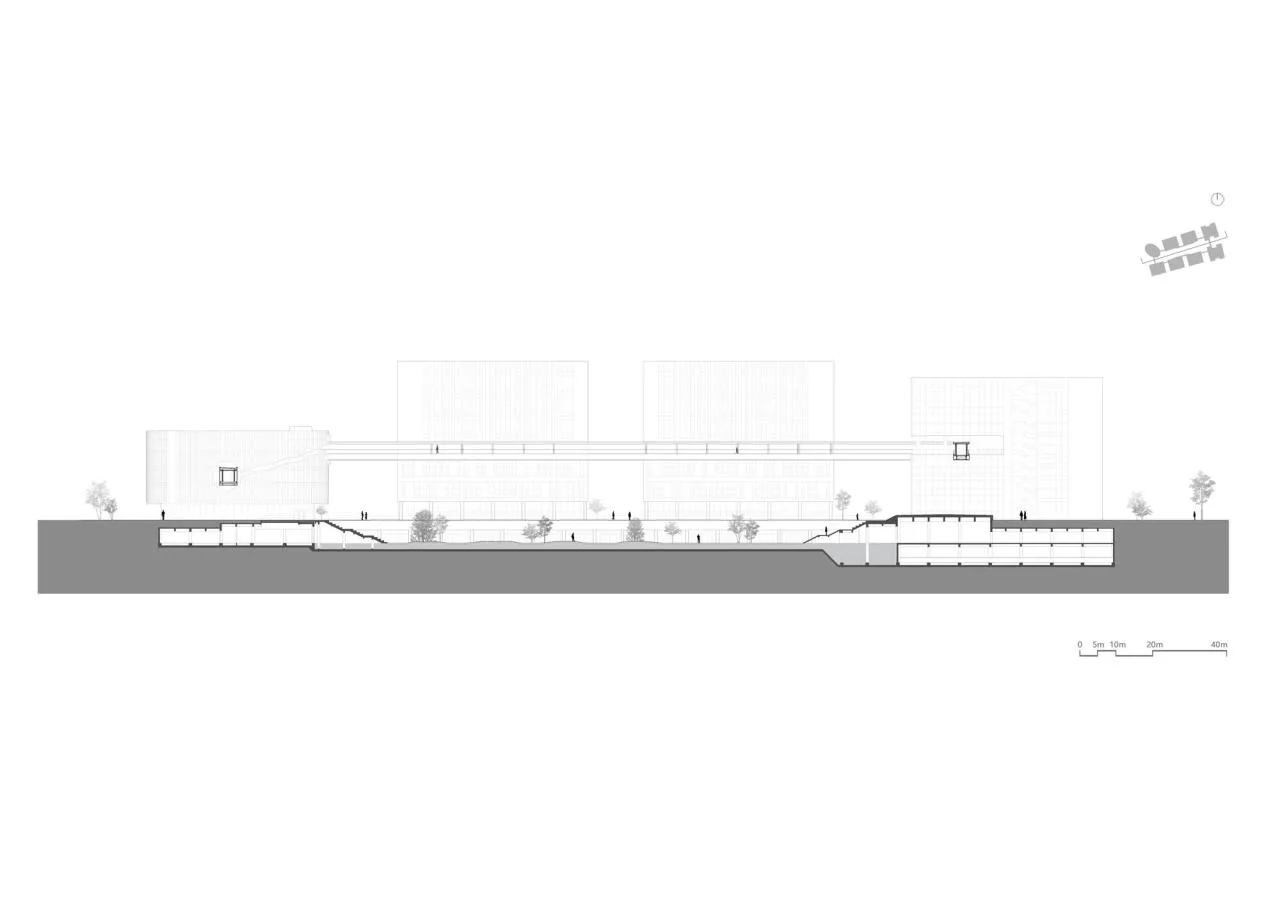
▲ Sectional View
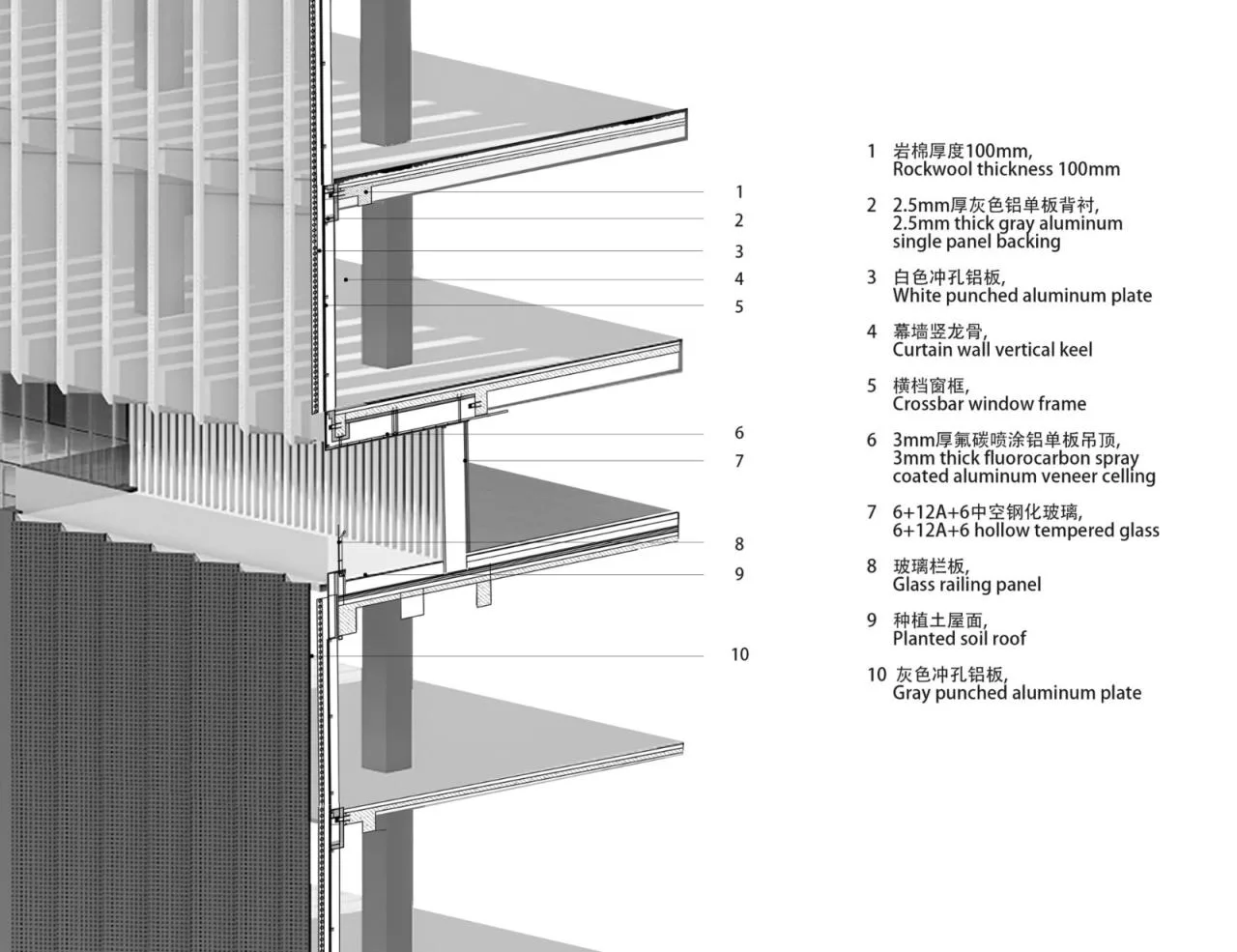
▲ Detailed Structural Drawing
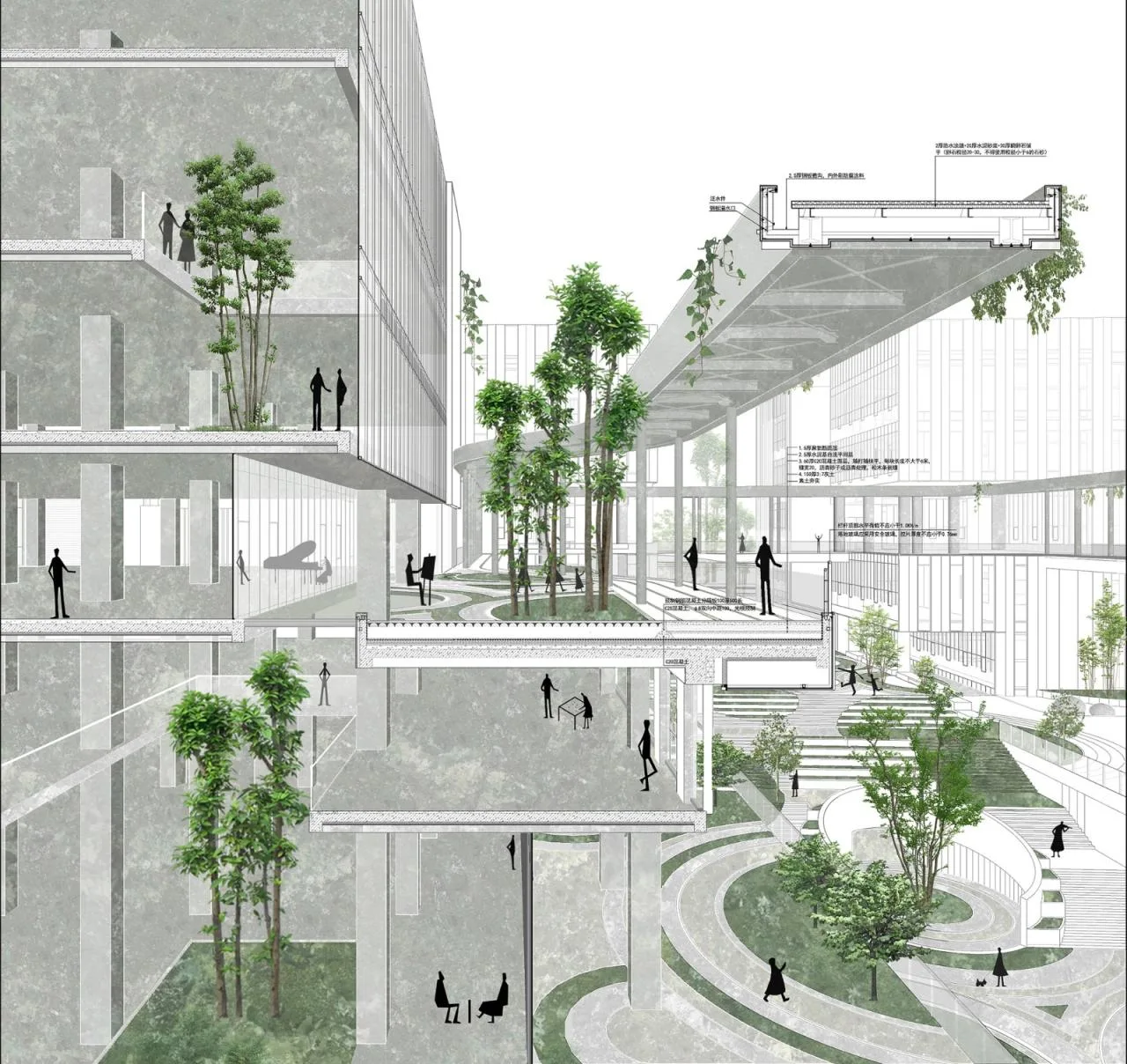
▲ Sectional Perspective
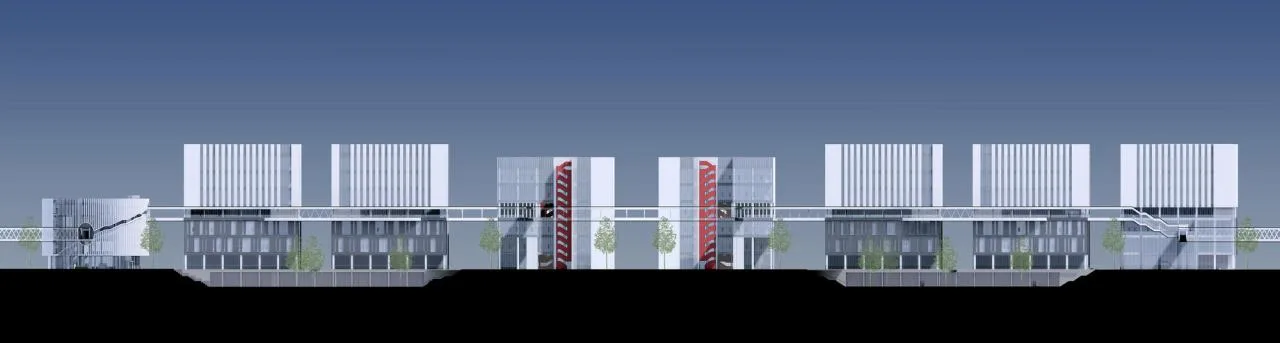
▲ Sectional View
Project Information
Architect: Beijing Industrial Design and Research Institute
Area: 133,000 m²
Project Year: 2023
Photographer: Chen He
Principal Architect: Hou Huanyu
Architectural Design Team: Tian Lei, Yang Meiqing, Li Shufang, Zhao Zhenyi, Yang Libo, Wang Wenda, Luo Jie, Ren Ailing, Zhou Yangna, Ding Rulin, Wang Weili, Jiang Hao
Lead Architects: Hou Huanyu, Chen Jiadong
Structural Design Team: Zhu Jingshi, Cao Suhuan, Zhao Zhengang, Wang Lihua, Wu Liang, Sun Hongyang, Zhang Wei, Li Yanan
Mechanical and Electrical Design Team: Shi Yan, Hui Bin, Wu Dan, Wang Chaoran, Ge Geng, Zhang Lili, Su Junjie, Liu Yiwei, Liu Zhongtao
Overall Design: Xu Jiawei
Location: Beijing















Must log in before commenting!
Sign Up