
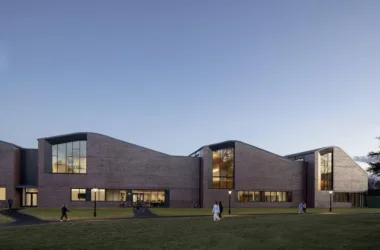
Liuba is situated south of the Qinling Mountains, characterized by distinct seasons and a pleasant climate. Serving as the gateway to the Liuba Mountain Scenic Area, the Service Center is nestled in a mountain valley within Liuba County. Its primary functions include reception and consultation services, public restrooms, cultural and creative product sales, and a book bar. Besides catering to visitors of the scenic area, it also provides a welcoming resting place for local villagers, emphasizing its strong openness.
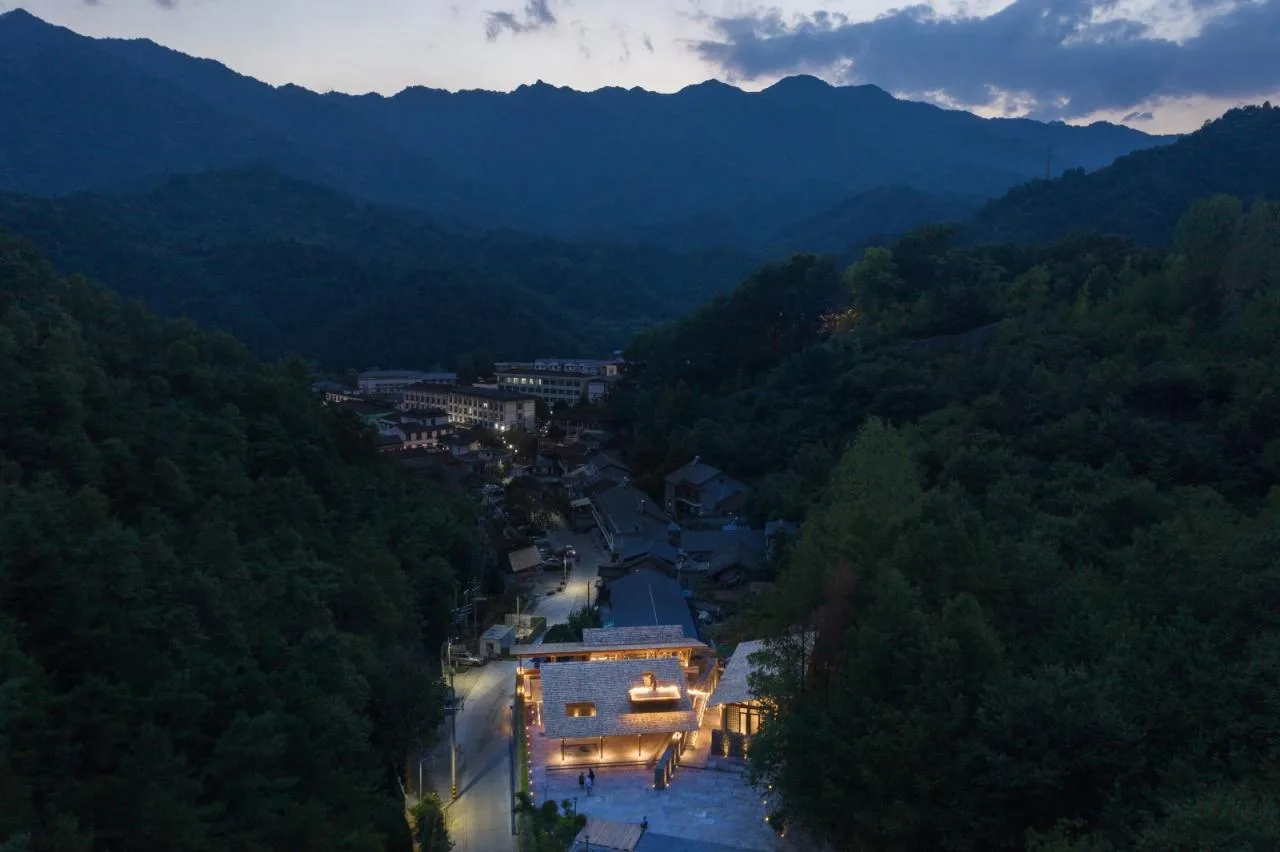
Multi-functional service center illuminated at night © Zhao Yilong
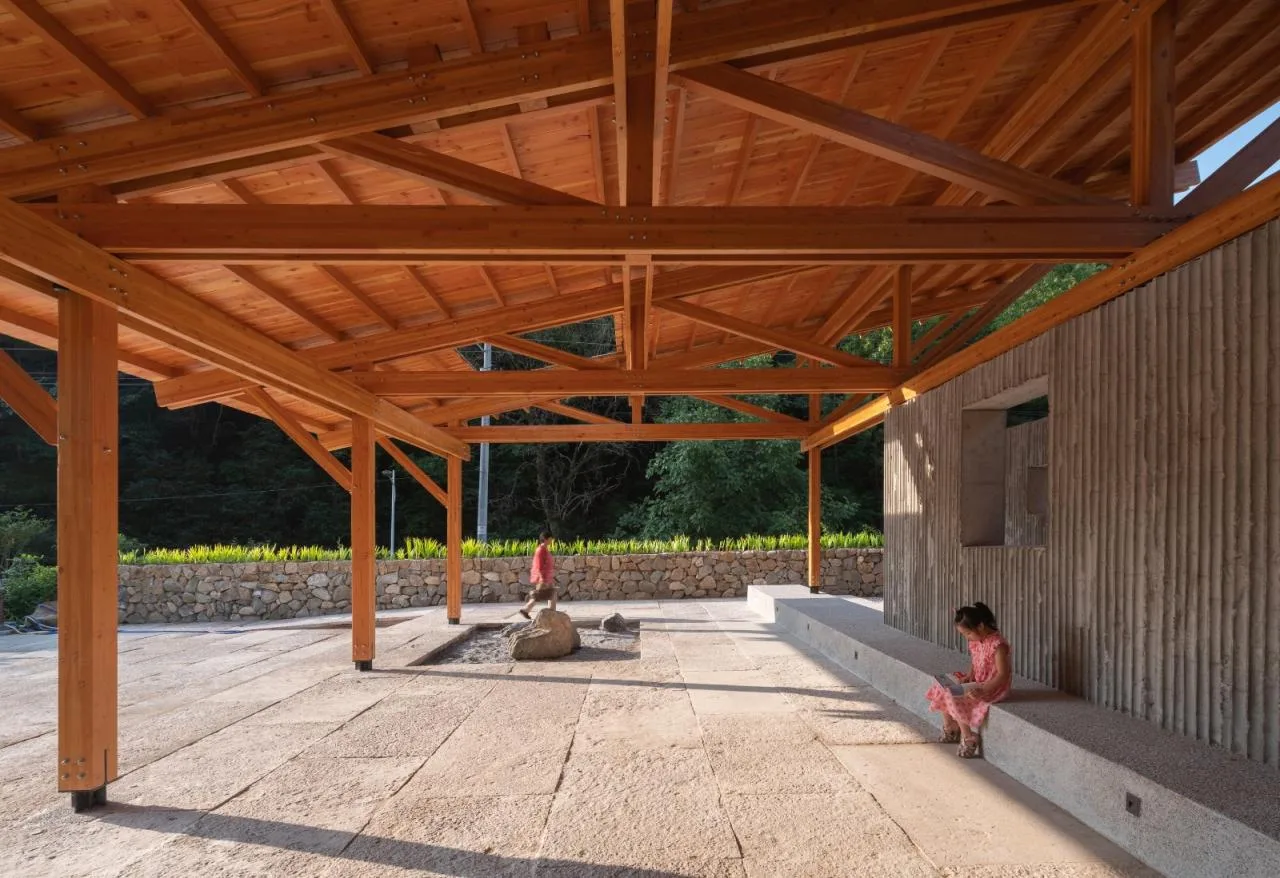
△ Public semi-outdoor open space © Zhao Yilong
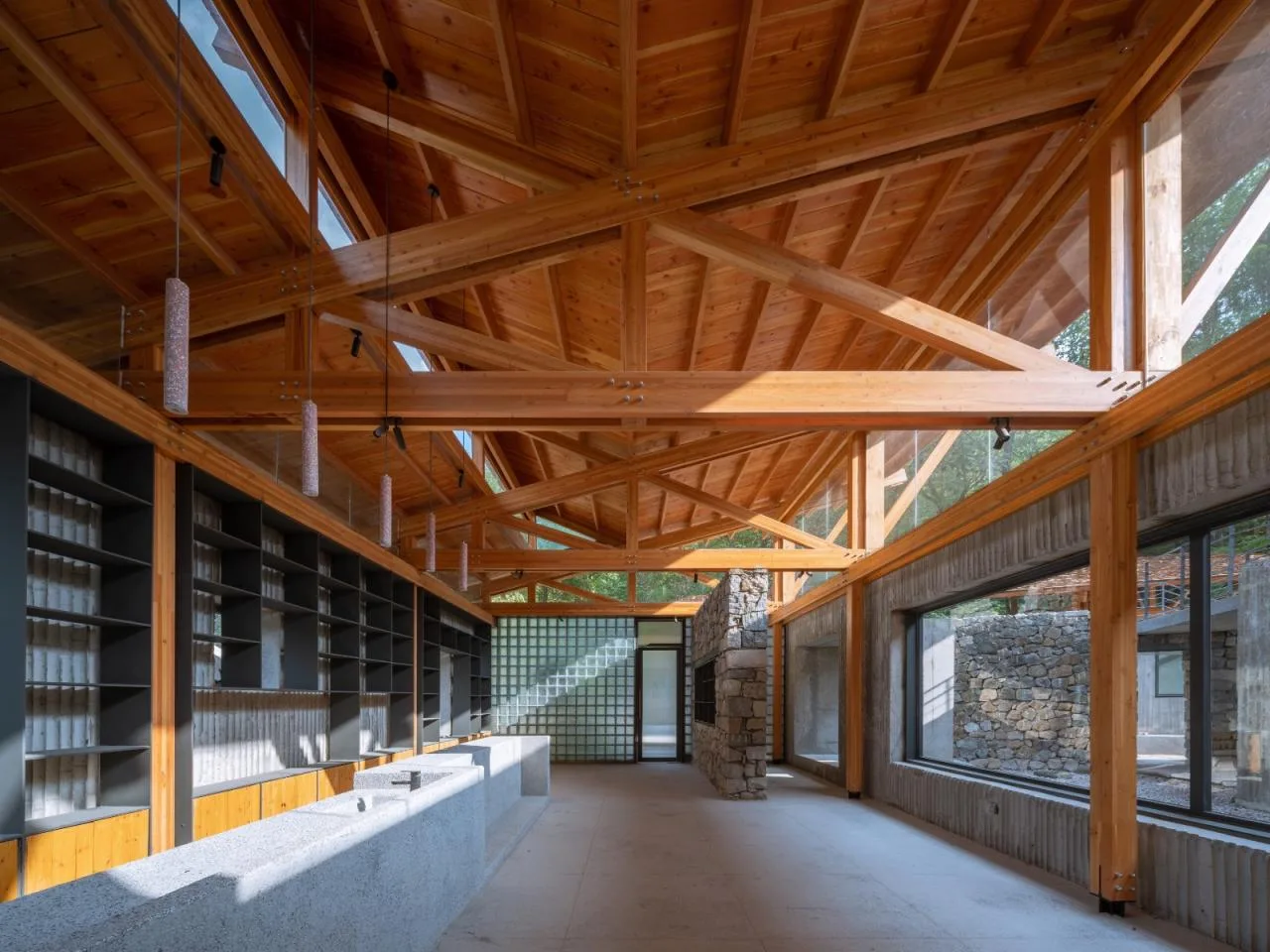
Interior view of the reception and public area © Zhao Yilong
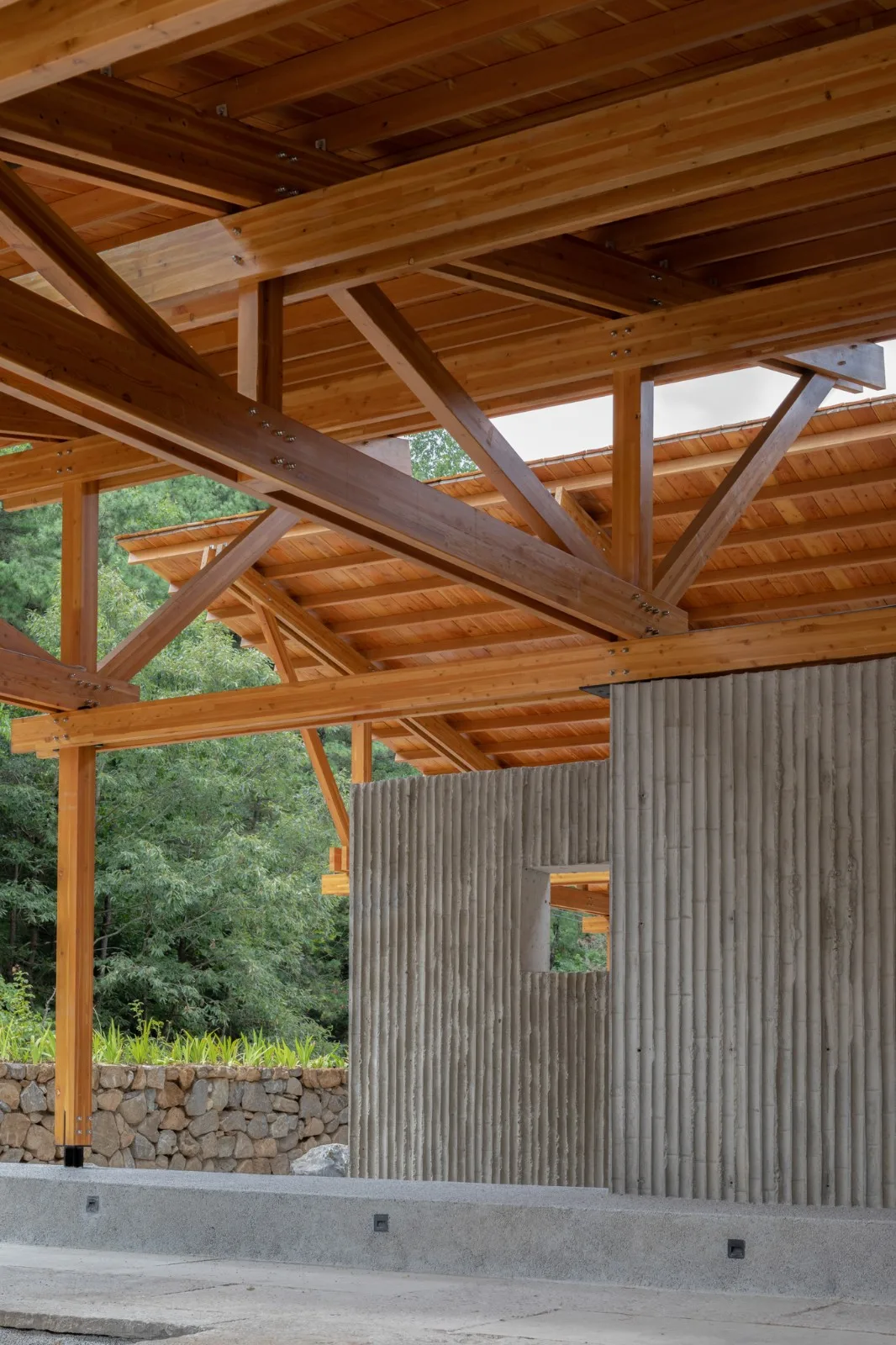
△ Public space open beneath the roof © Wu Ang
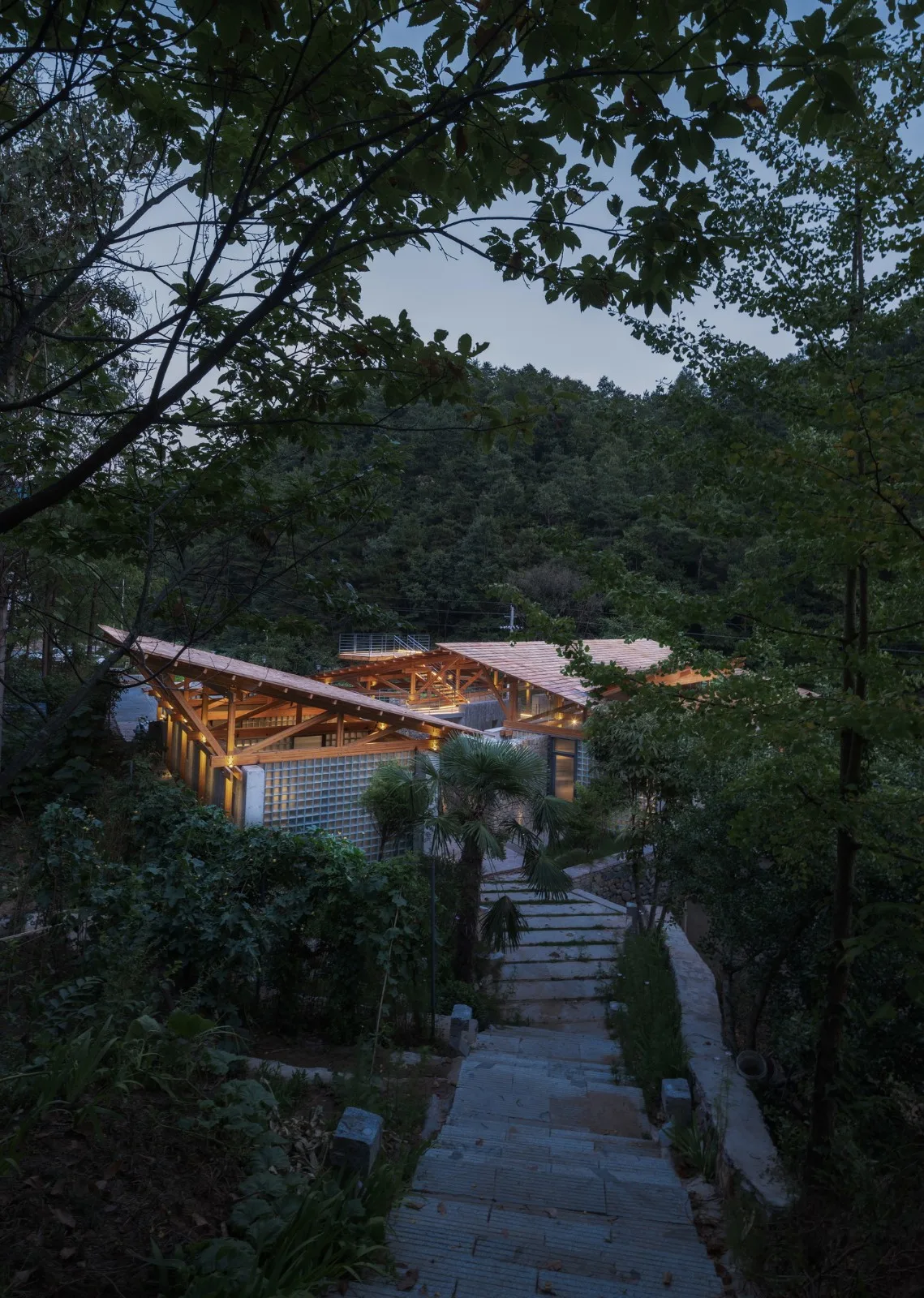
View of the service center from the downhill road © Zhao Yilong
Site Memory
My first visit to the site was on a cloudy April day, with distant mountains wrapped in mist. Two horizontal red brick buildings sit at different elevations, angled at 60 degrees. The mountains flank the venue closely, creating an enveloping atmosphere. From the open space along the mountain valley, only the distant peak above the roof is visible, contributing to a pure, uncluttered scene.
From this experience, I distilled two essential elements: the building’s positioning axis and the mountain viewing approach. The new structure preserves the original architectural texture and axis, aiming to evoke the site’s memory. A volume aligned along the mountain axis houses the bathrooms, separated by a distinctive wall that divides function and space. The uphill path runs alongside this wall through the building, facilitating visitor access.
On the stone wall’s left side lies the reception and semi-outdoor public space, arranged along a different axis. The building contains multiple circulation paths: one leads directly up the mountain bypassing the internal road on the left, while others guide visitors through the interior with varied routes ascending the mountain. The purest mountain view is framed by a sloping roof that directs sightlines toward the distant peaks. Atop the roof, a viewing platform invites visitors to climb high and survey the surrounding mountains.
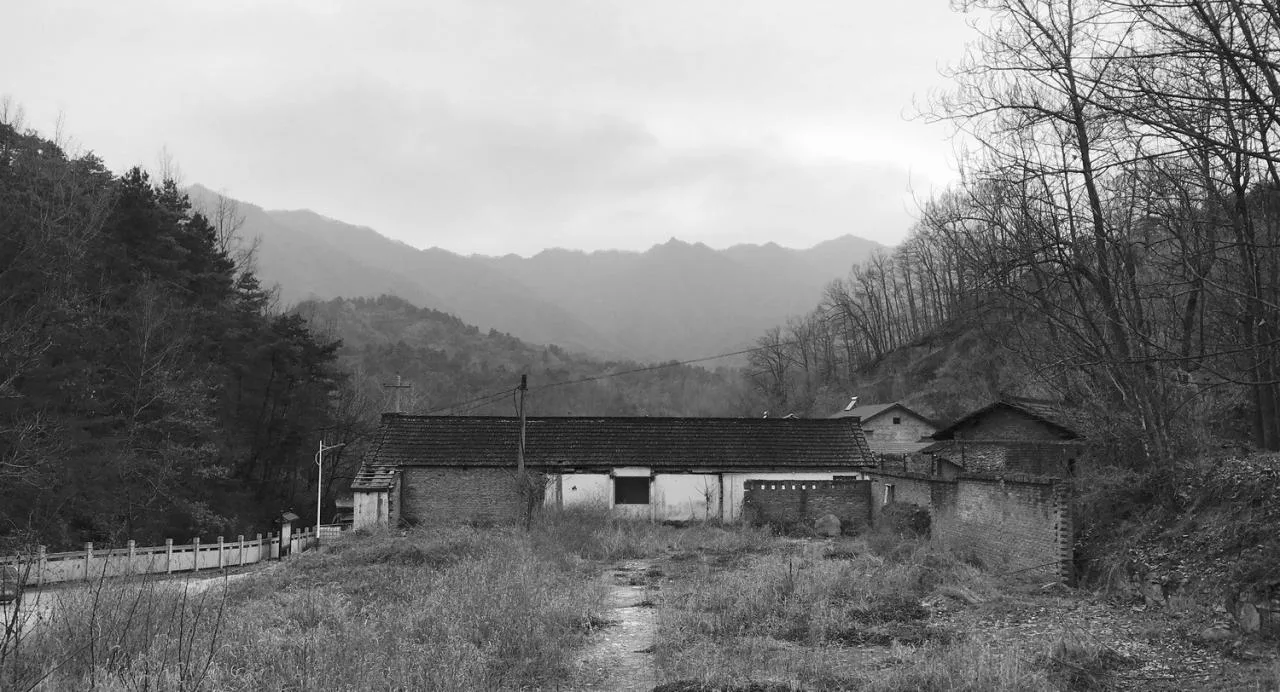
The original state of the site © Jianlin Architecture
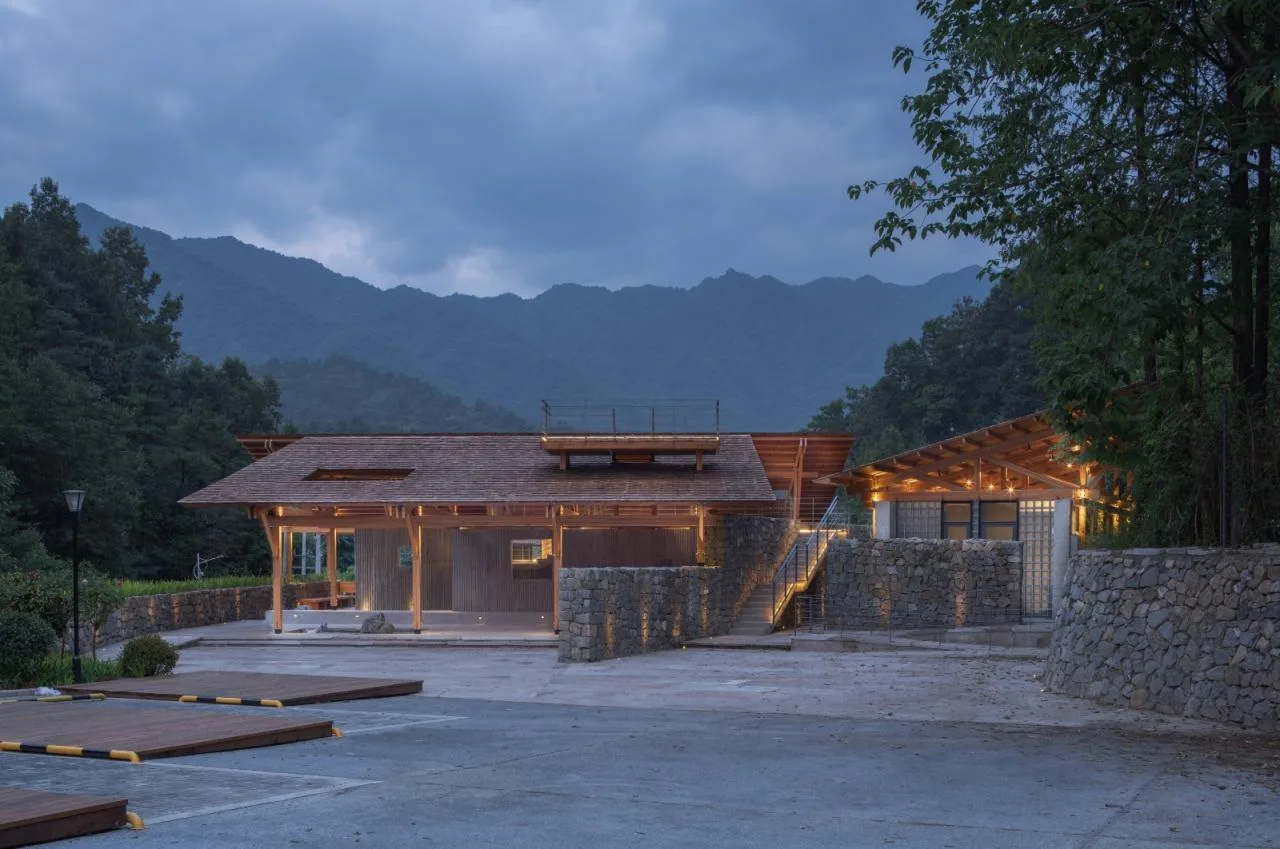
△ Restoring the relationship between buildings and the environment on-site © Zhao Yilong
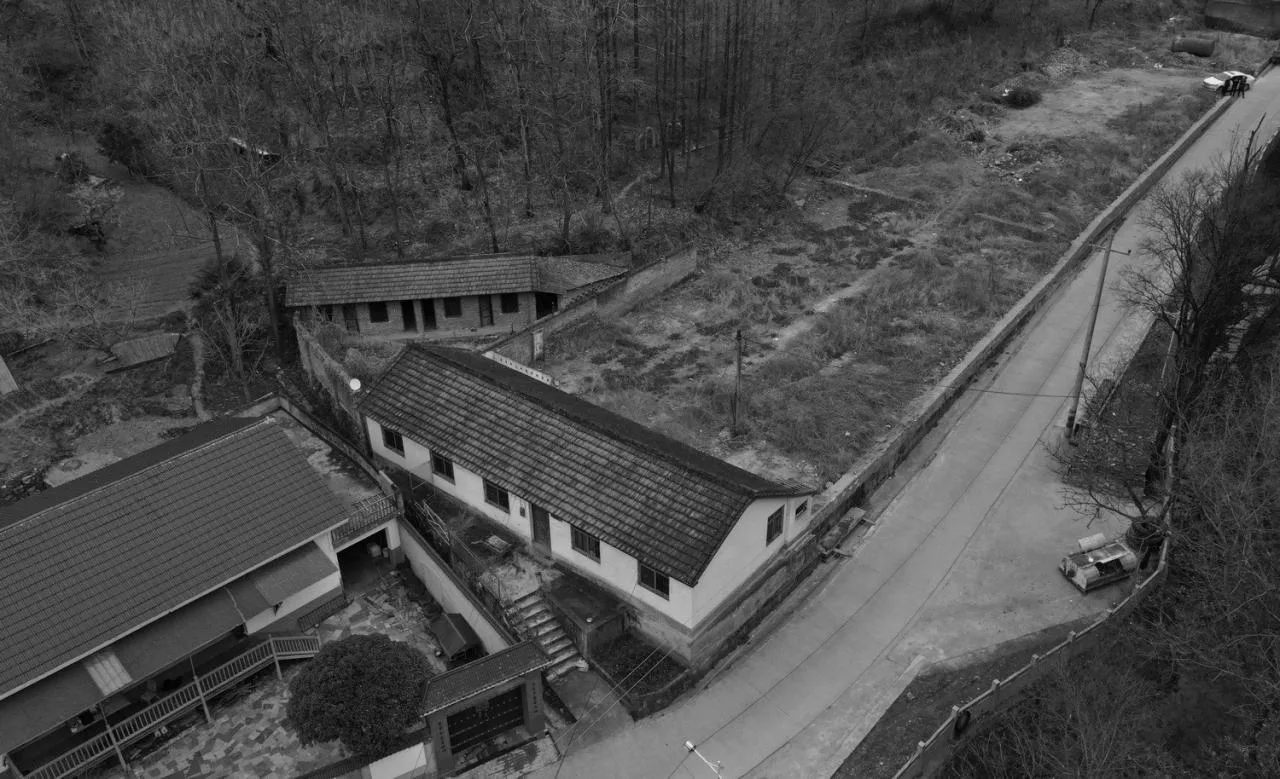
△ Aerial view of the original site © Jianlin Architecture
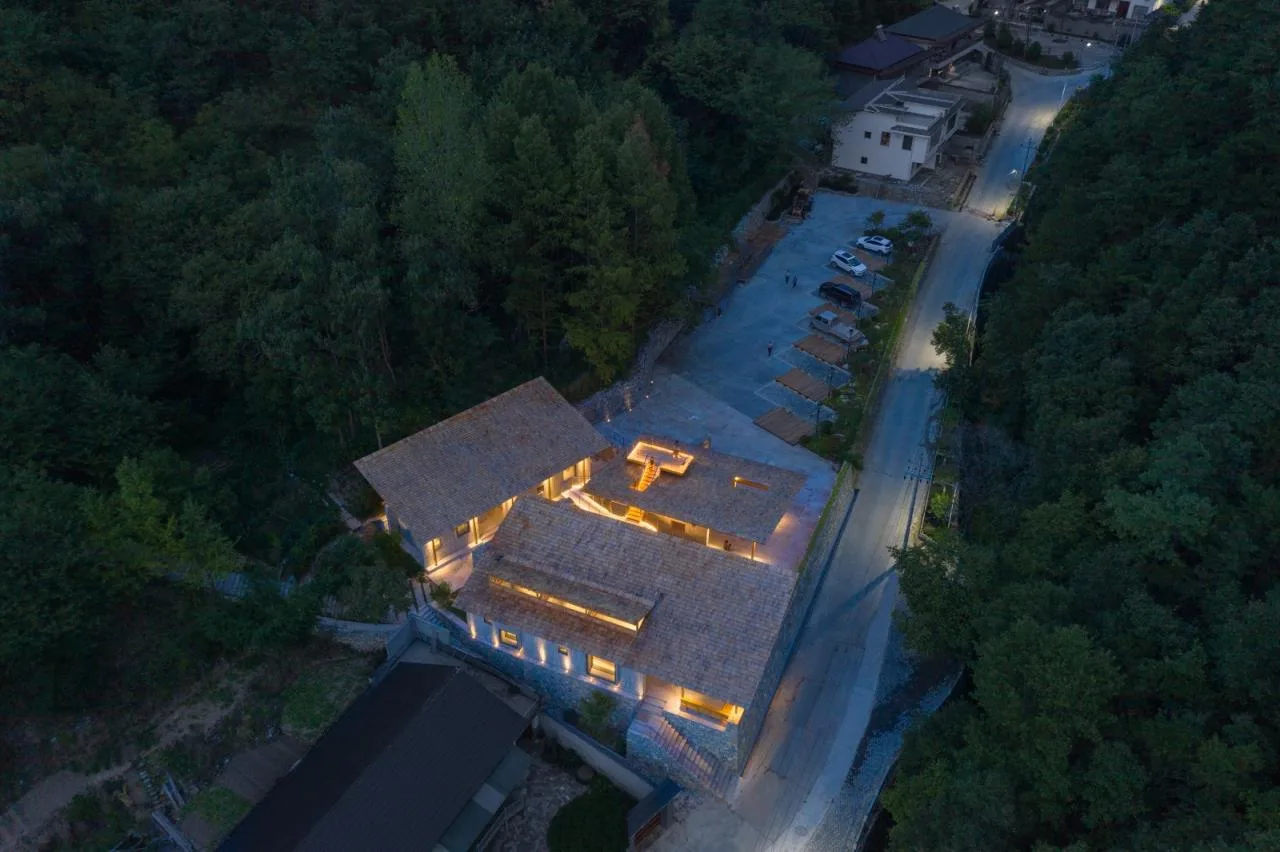
△ Aerial view after completion © Zhao Yilong
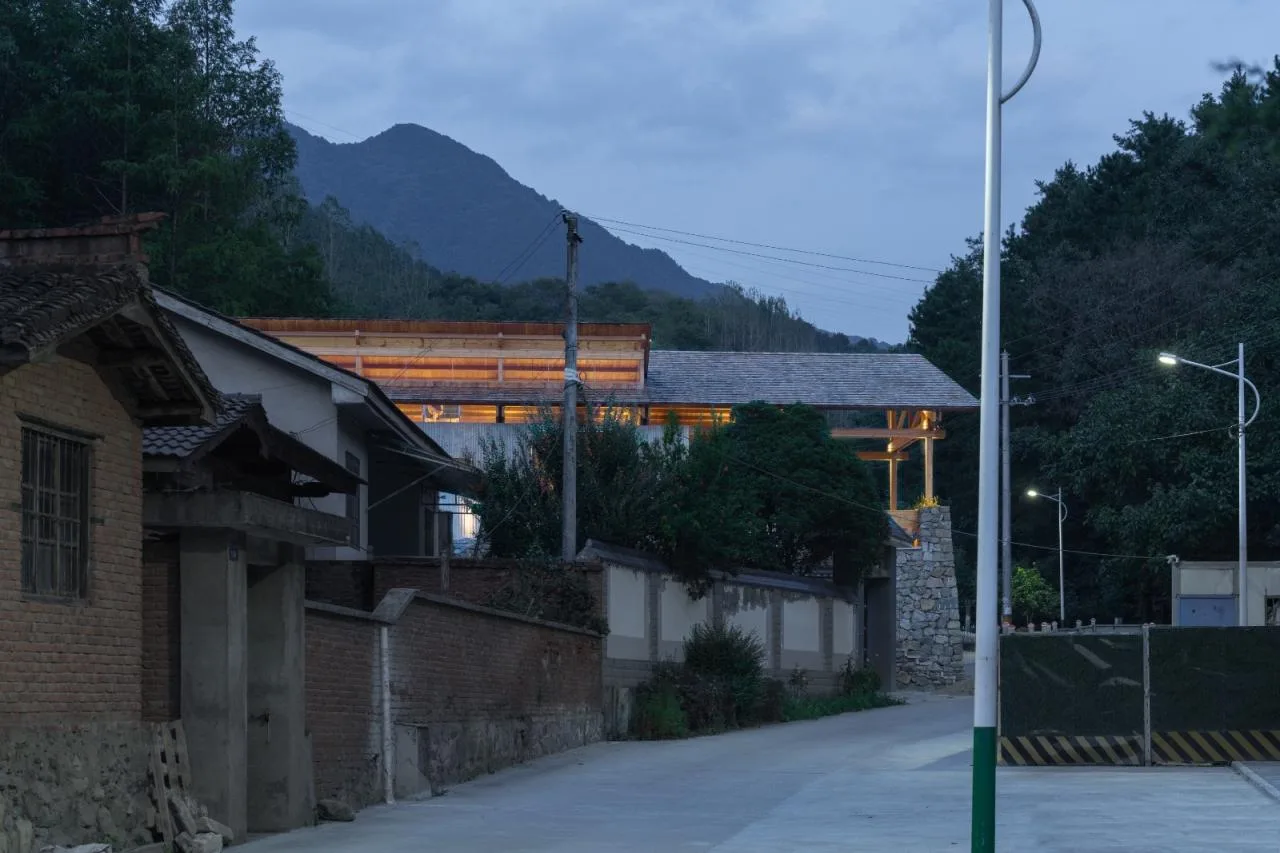
△ View of the service center from surrounding streets and alleys © Zhao Yilong
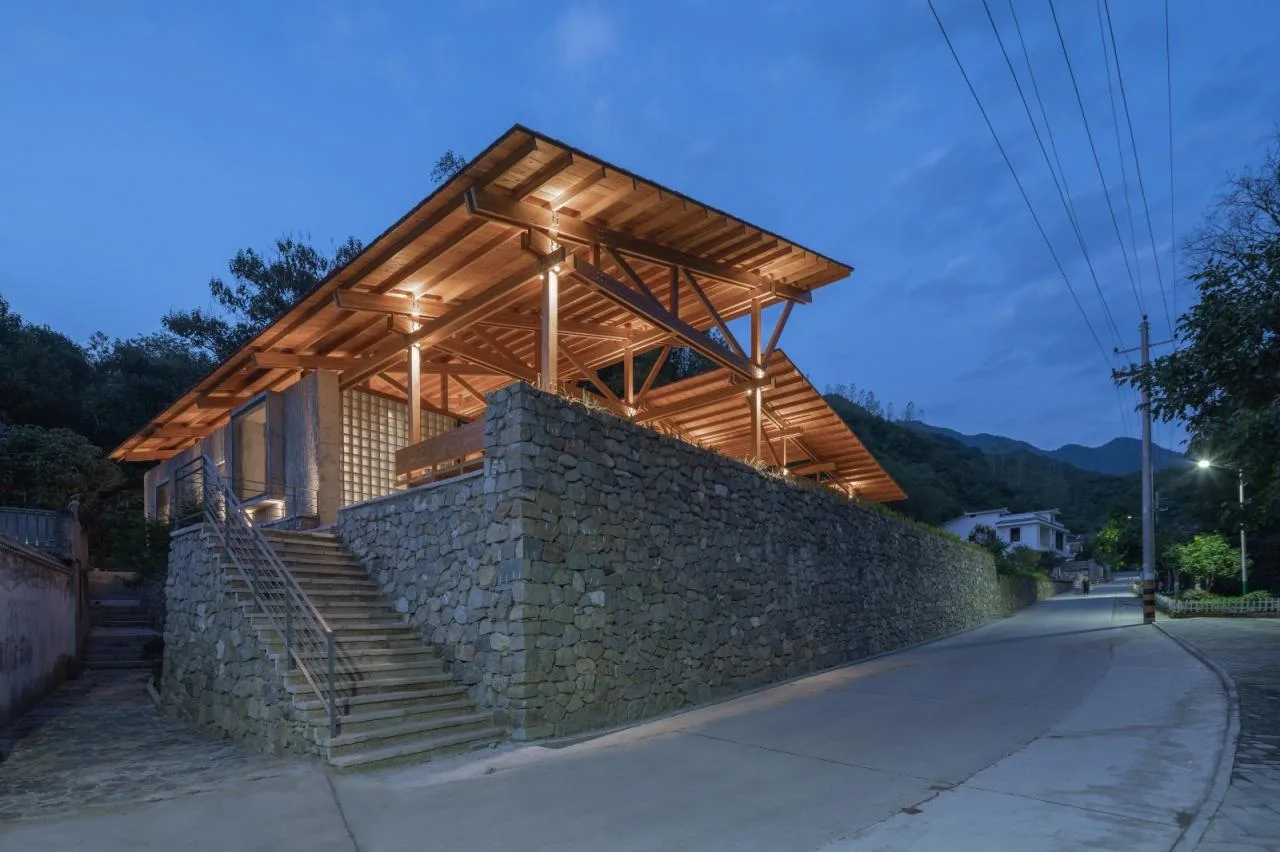
Multiple entrances and paths intersect through the building © Zhao Yilong
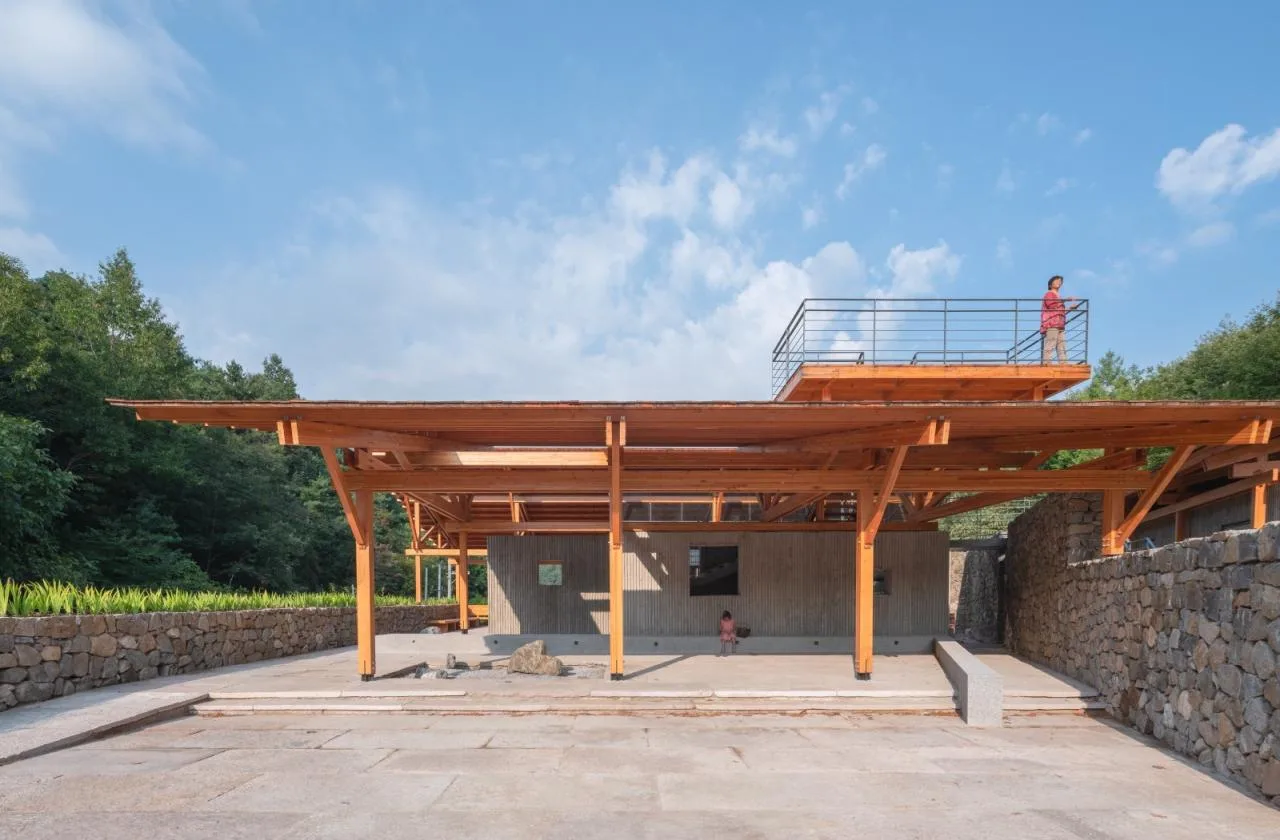
The rooftop terrace provides expansive panoramic views from a high vantage point © Zhao Yilong
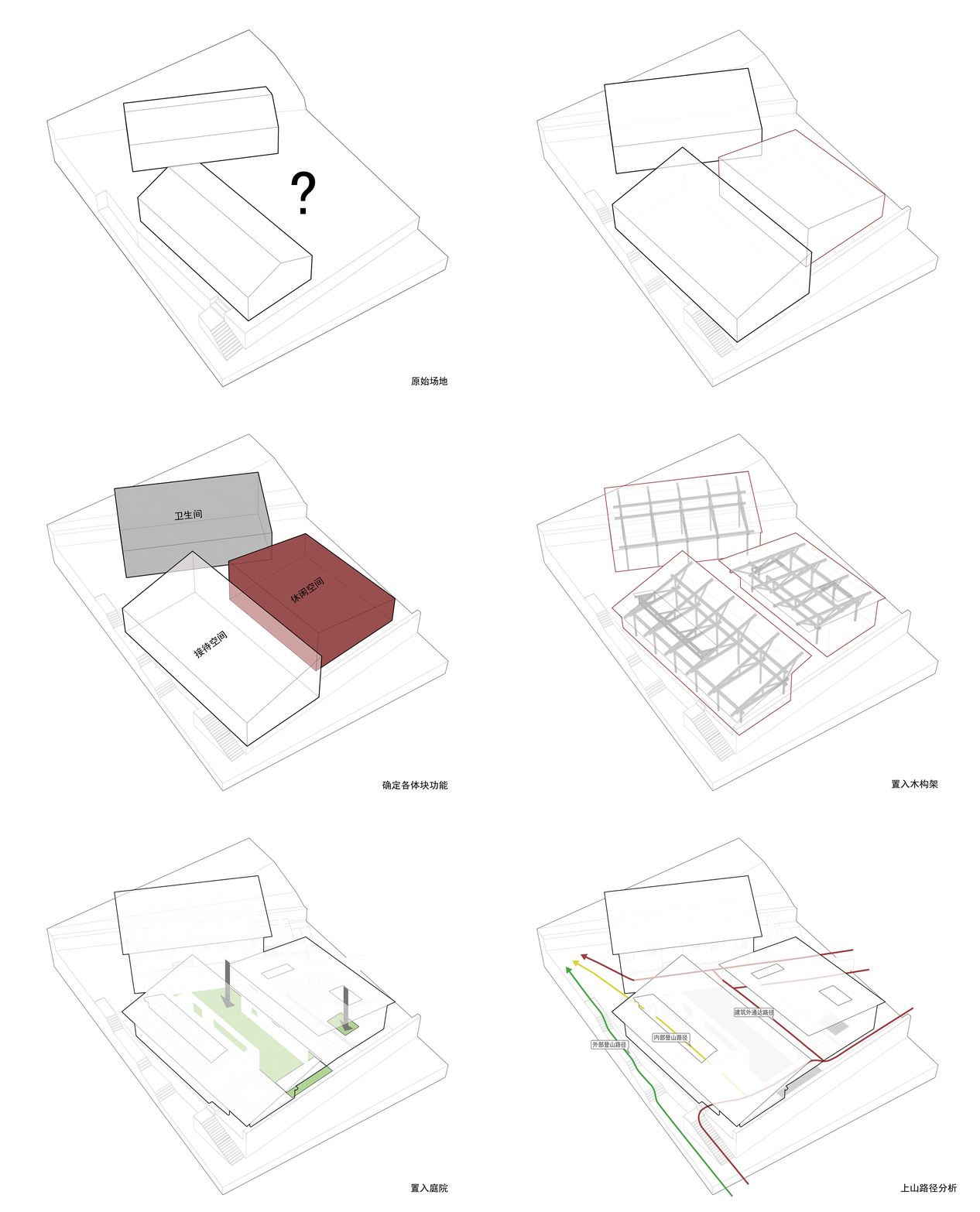
△ Design process schematic © Jianlin Architecture
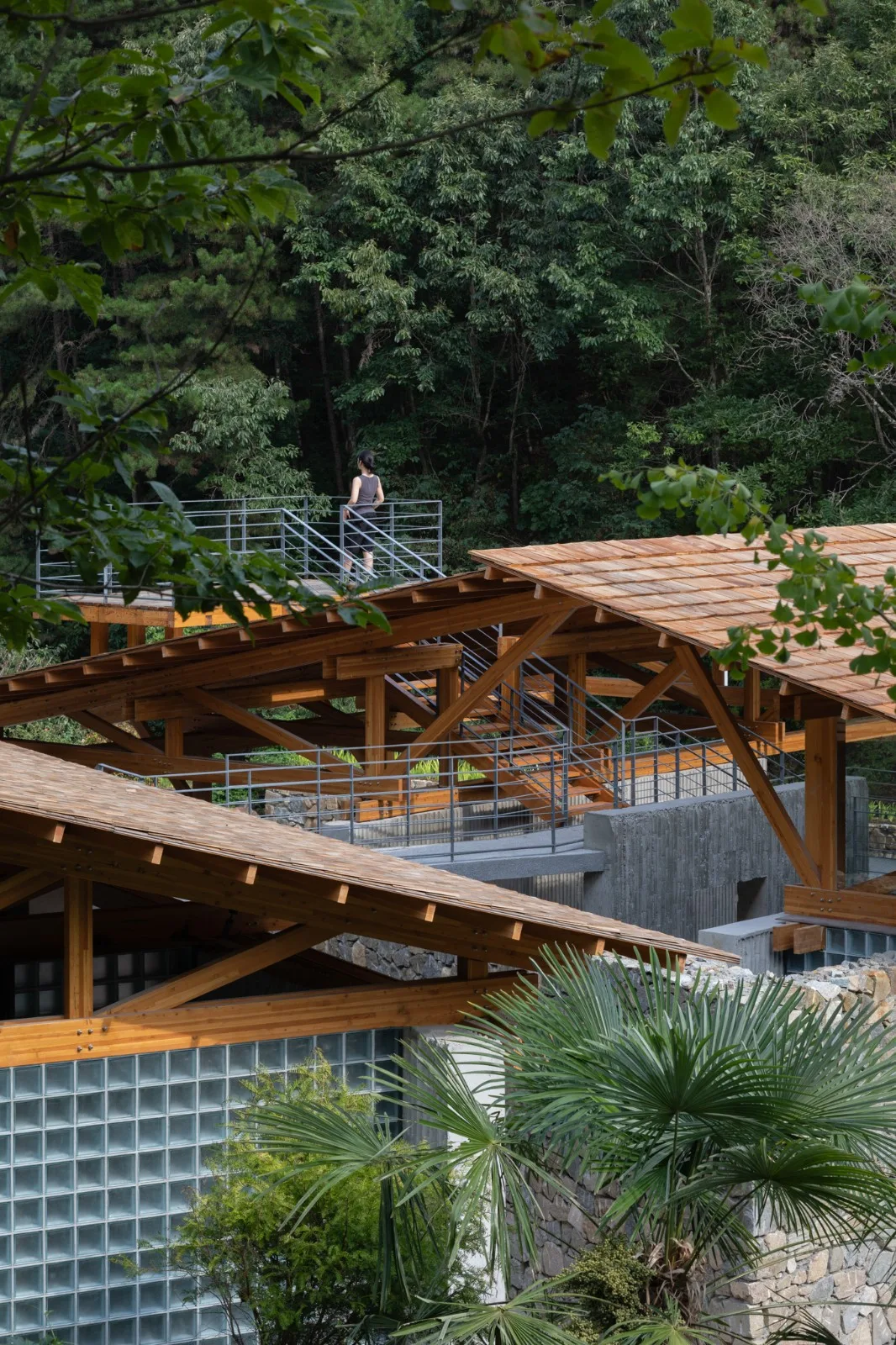
Experiencing mountain climbing between staggered roofs © Wu Ang
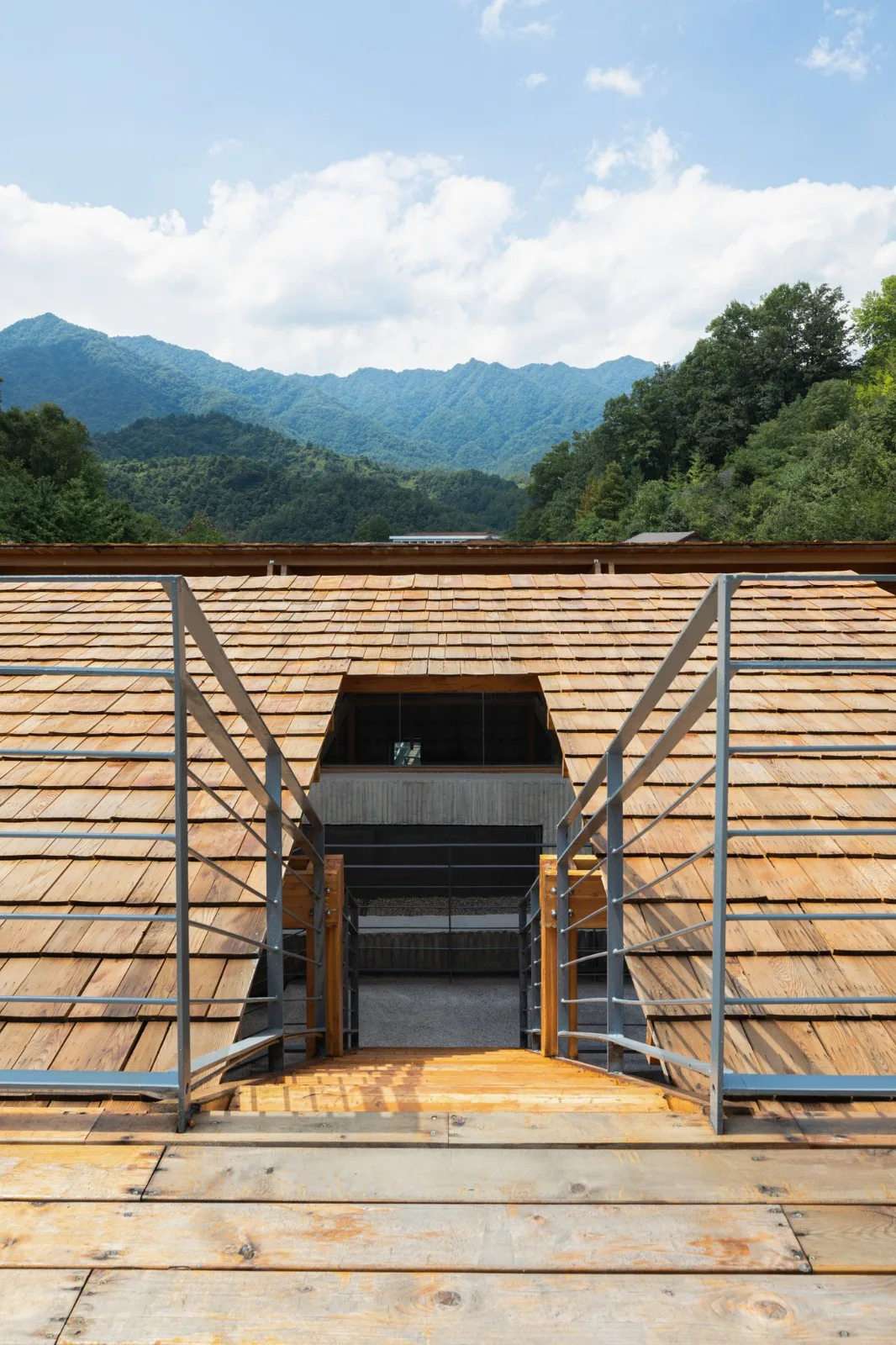
Climbing onto the roof, gazing at the distant mountains © Wu Ang
Three Roofs, One Truss, and Several Walls
The architectural design clearly breaks down the house’s basic elements: roof, structure, walls, and floor. The space is organized under three large roofs, which accommodate the reception area, open public space, and public bathroom. These three functions operate both independently and interdependently, forming an organic composition.
The large roofs are constructed using prefabricated glued laminated wood trusses. These trusses vary in scale but share a consistent design logic and form, repeated and evolved throughout the building. Mirroring traditional Chinese wooden architecture, the roof trusses form a continuous array. A standard roof truss was designed and studied, then arranged in an array to create three fundamental wooden roof truss spatial systems, adapting to spatial scale changes.
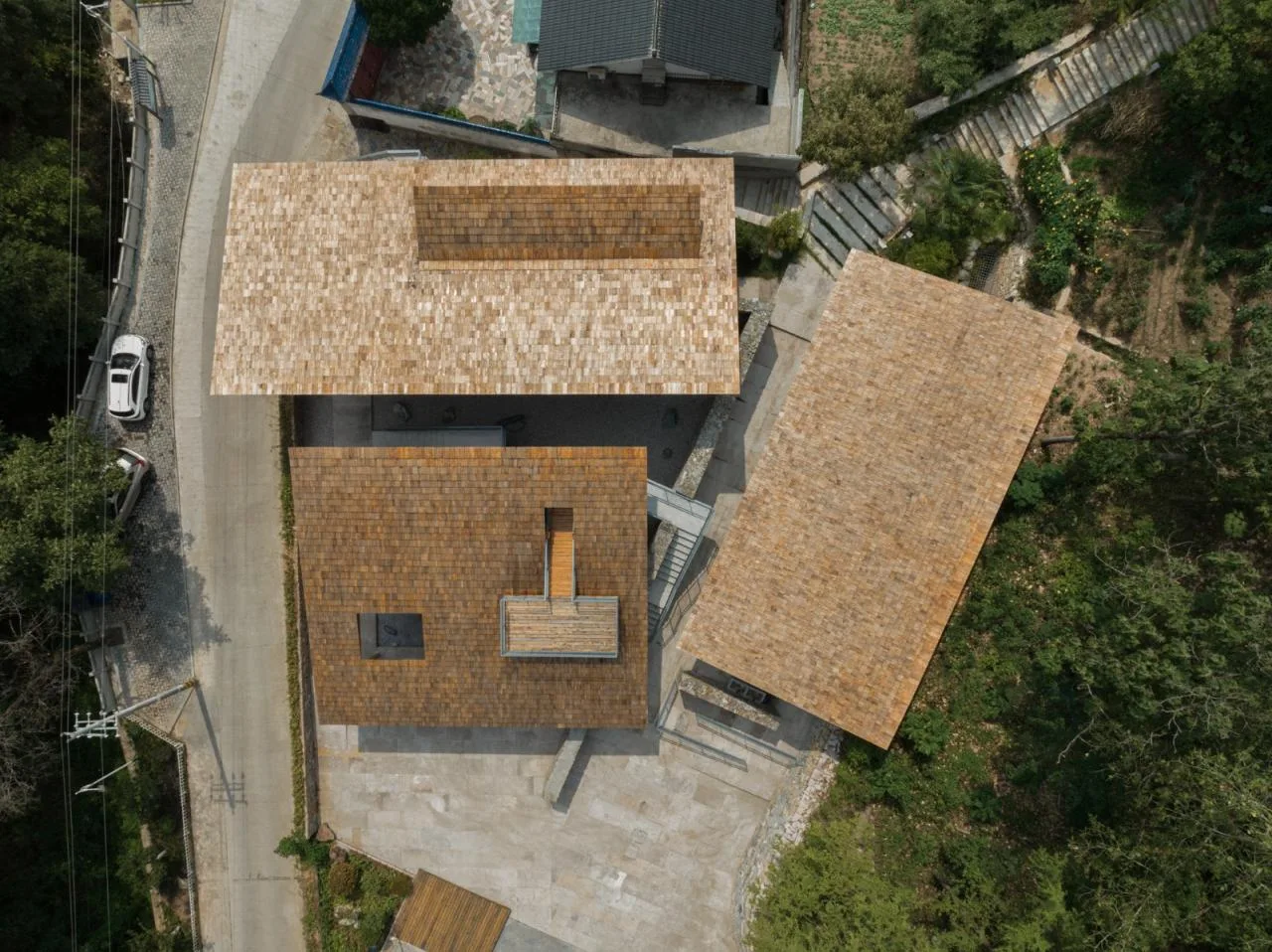
Three single-pitched roofs of varying sizes © Wu Ang
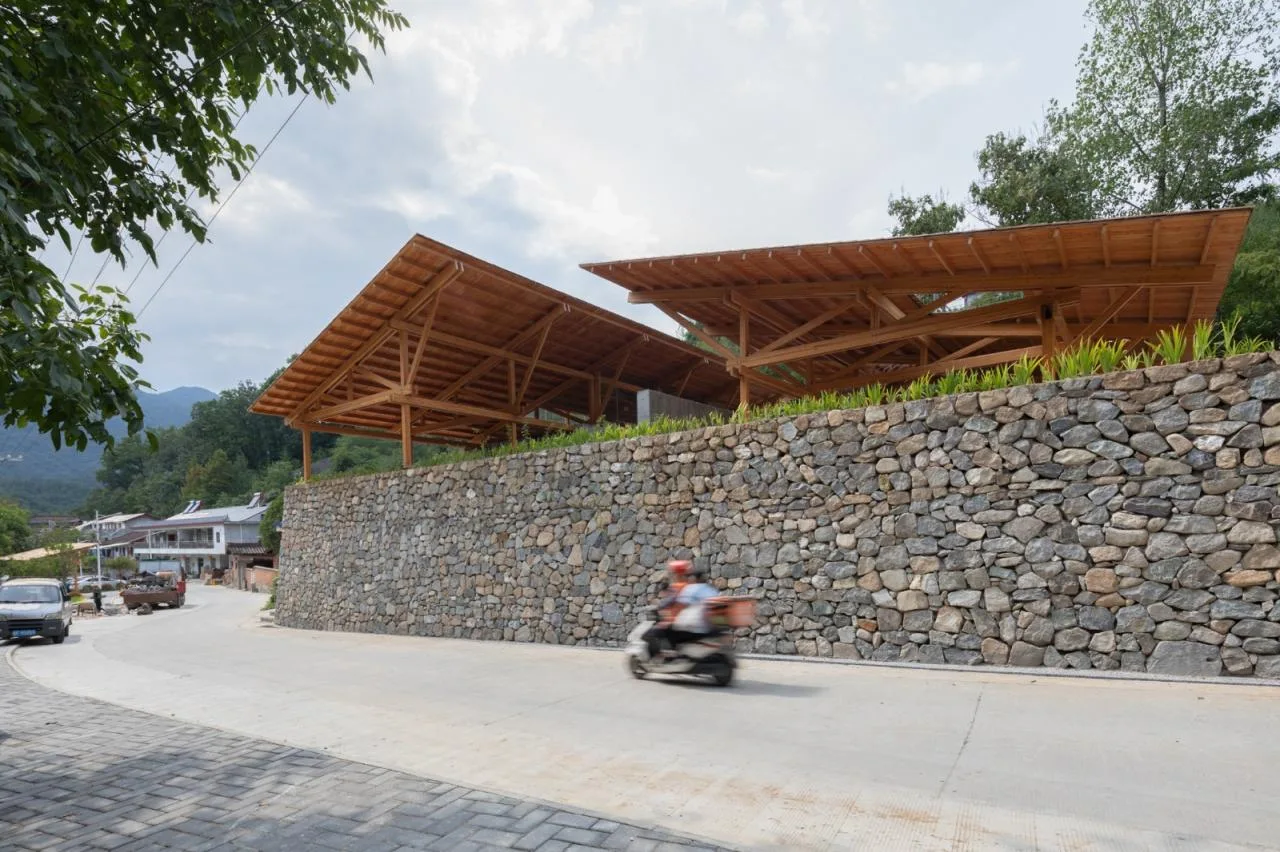
A large roofed building sitting atop a rubble stone wall © Wu Ang
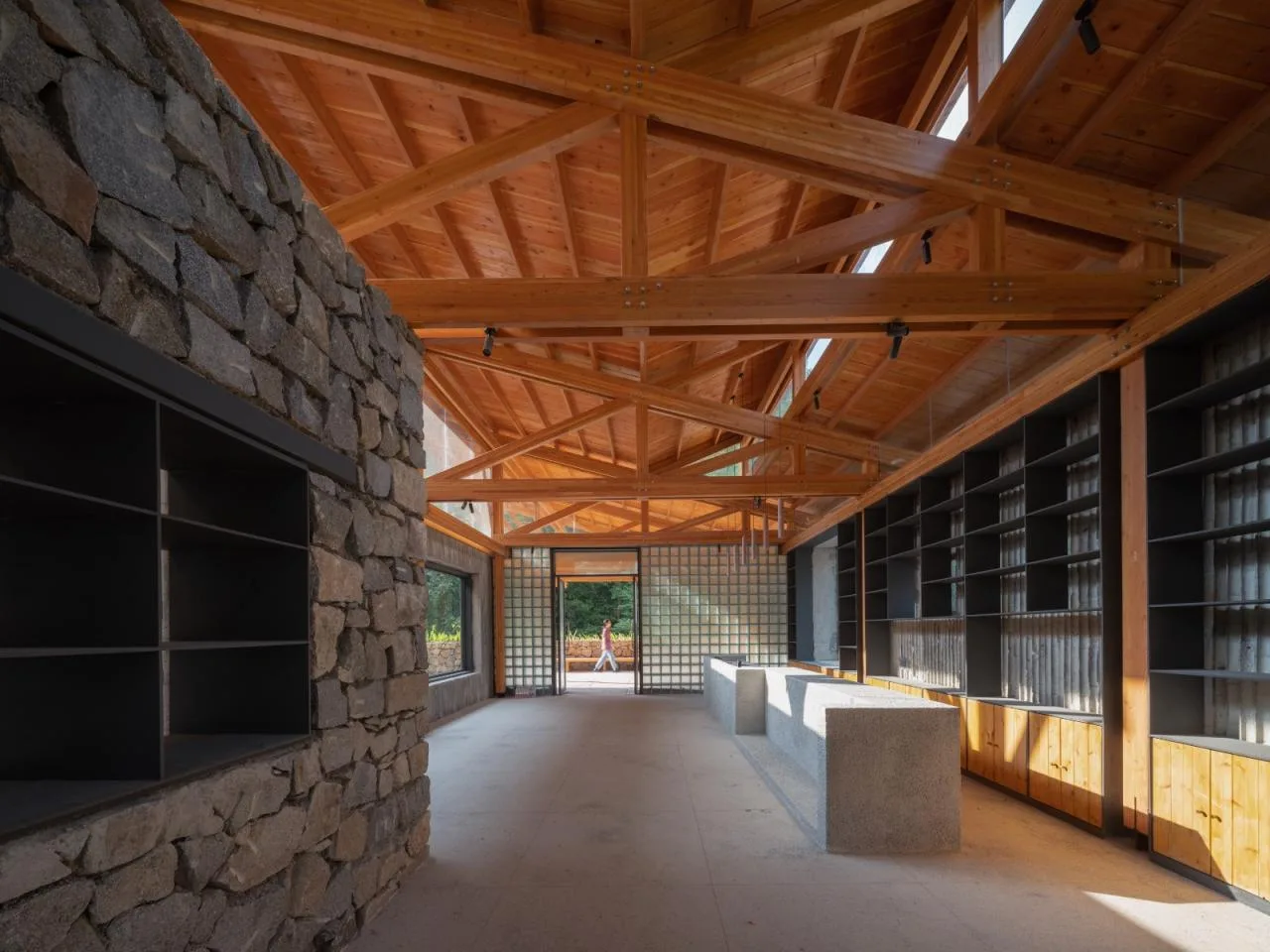
Reception area located beneath a rooftop © Zhao Yilong
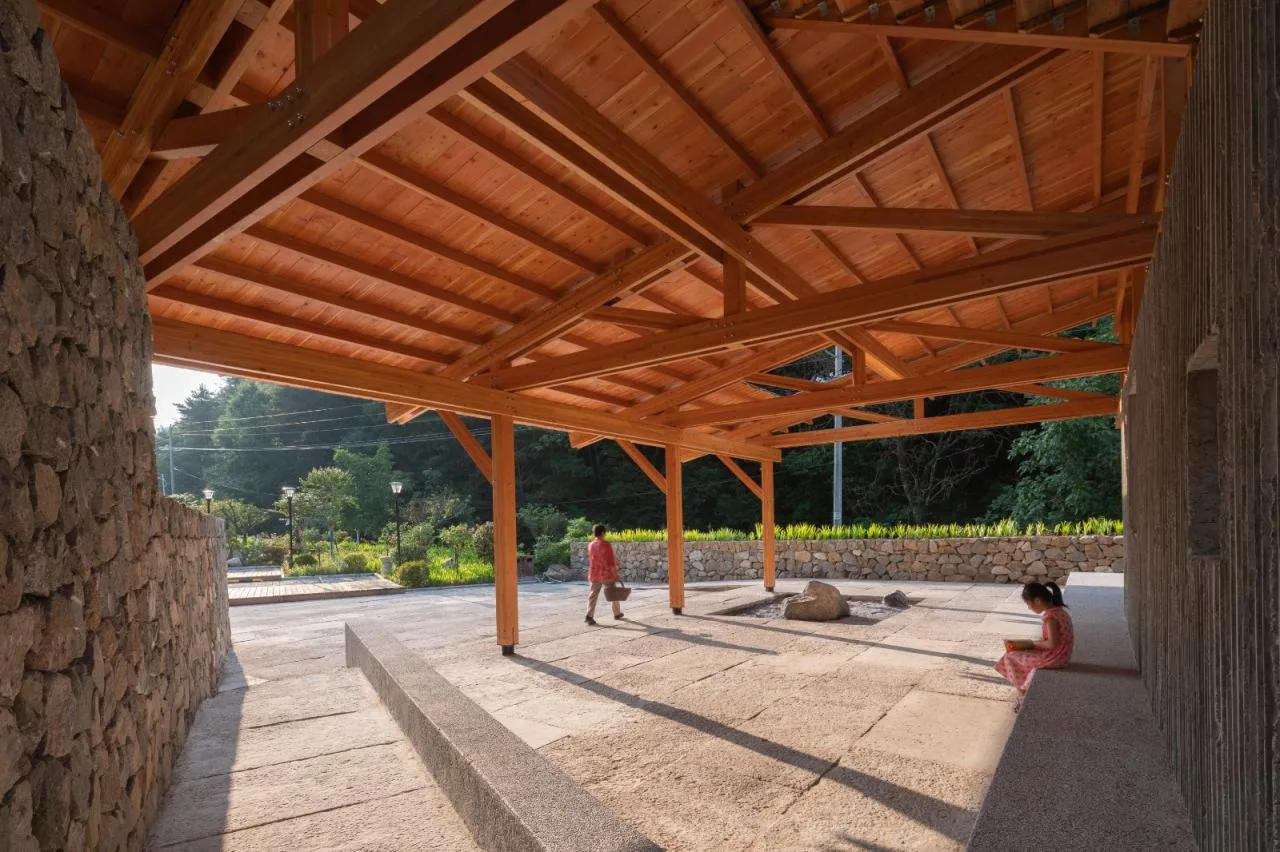
Open public space with two roofs © Zhao Yilong
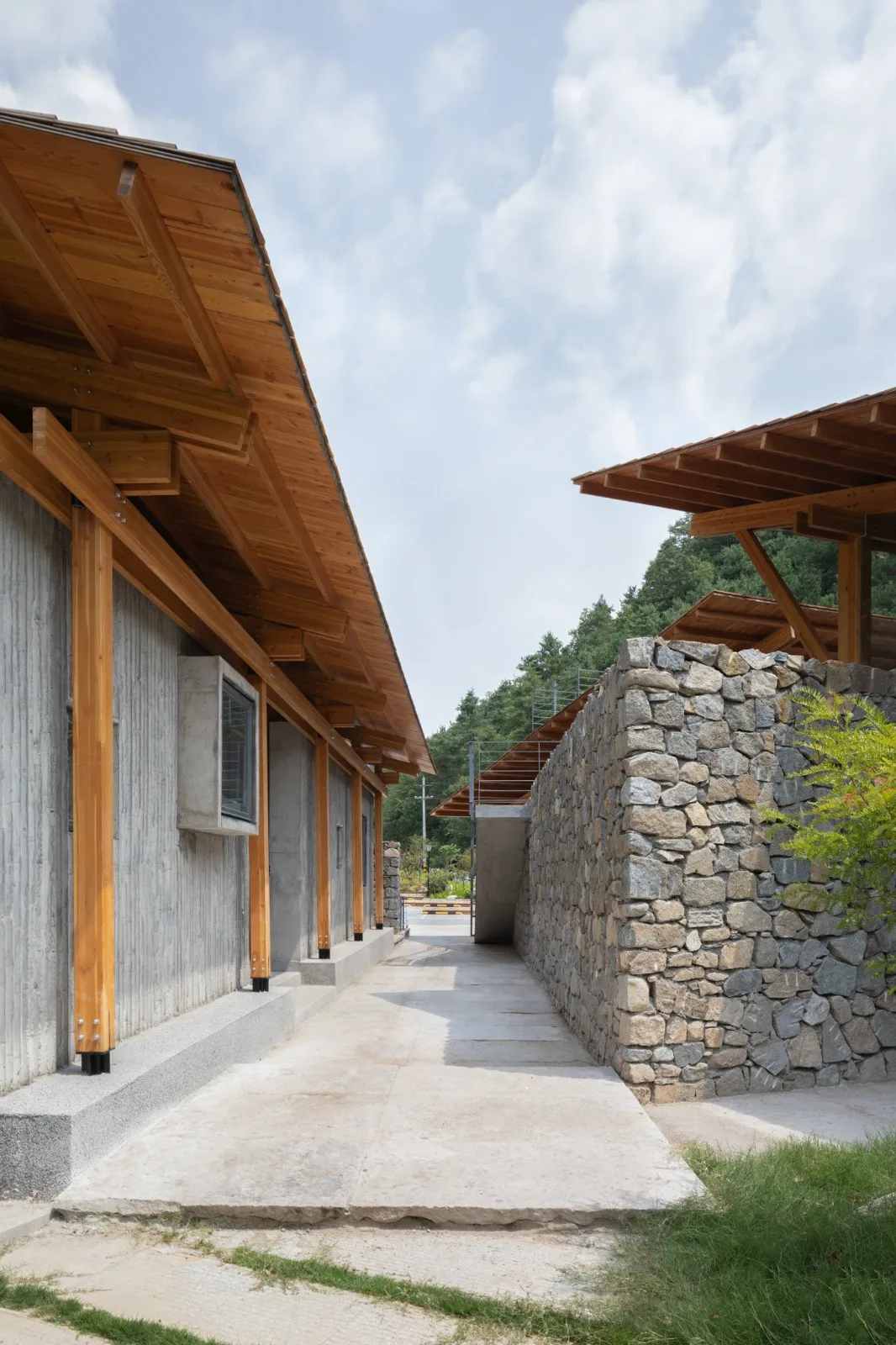
Public restroom beneath three roofs © Wu Ang
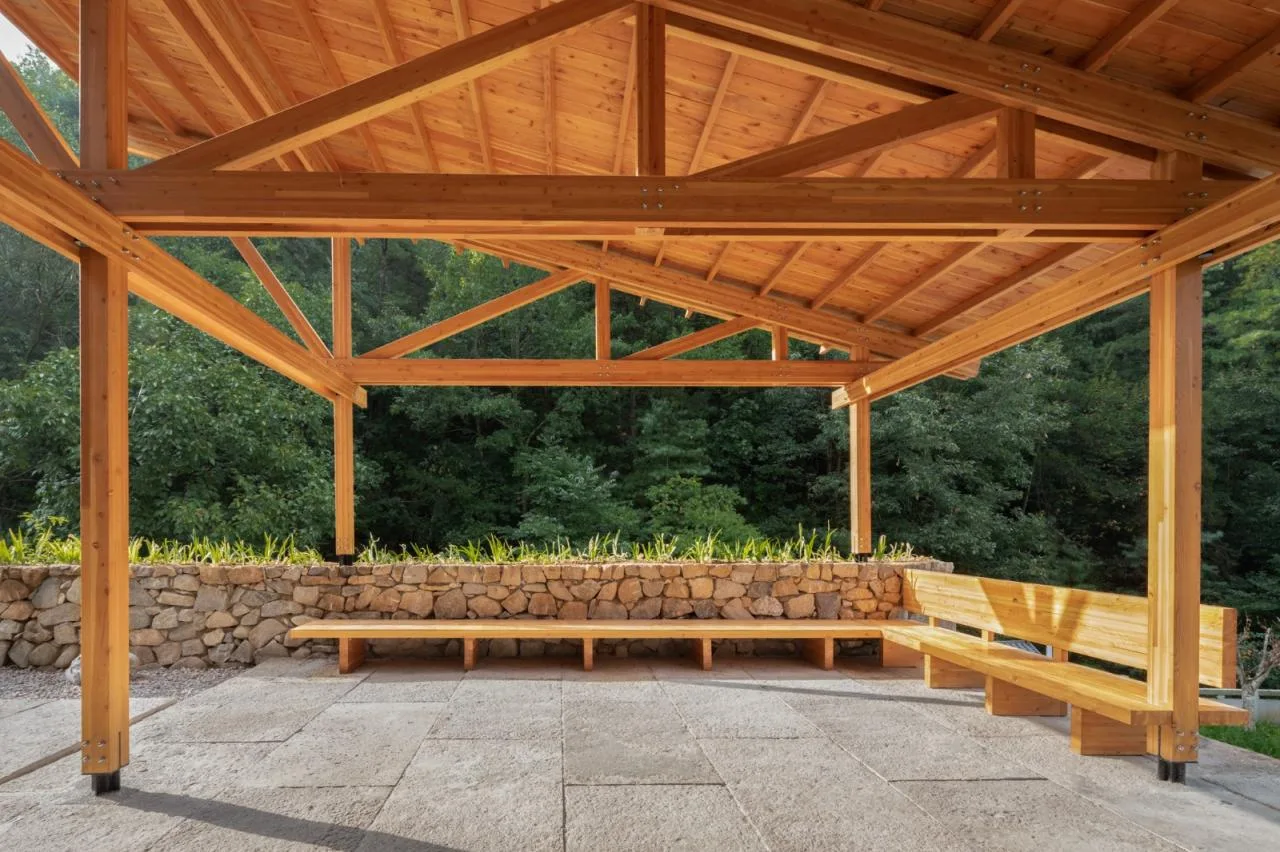
Clear wooden roof truss system © Wu Ang
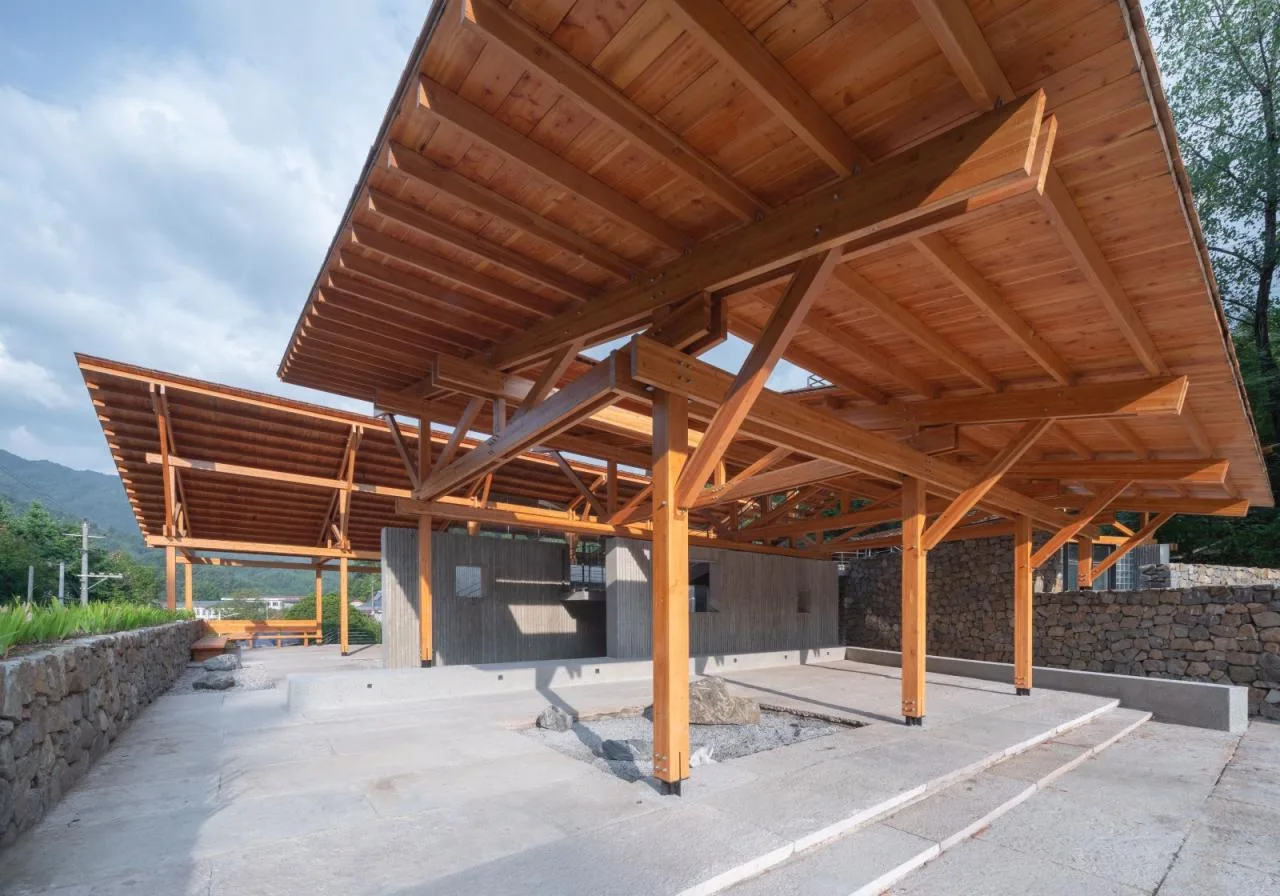
Repeated arrays of similar wooden roof trusses form the spatial structure © Zhao Yilong
I have always aimed for the building to express clear construction logic, encompassing foundation, walls, wooden structure, stairs, and roof. The foundation was restored as a fundamental site element, clarifying the relationship between walls and wooden structures. Stairs align with the site’s layout and walls. Three types of wall materials unfold along the roof’s direction: bamboo formwork concrete walls run horizontally along the roof’s long side; the short side is filled with semi-transparent glass brick walls recessed into the concrete. All square windows are embedded in the bamboo concrete walls, with small square windows featuring inward-opening fans, large square windows protruding outward, and fixed glass on the flat outer side. Doors open on the glass brick walls, constructed from semi-transparent rainbow glass. A diagonal masonry wall between the three roofs turns and weaves into the reception space interior, creating an intriguing interplay.
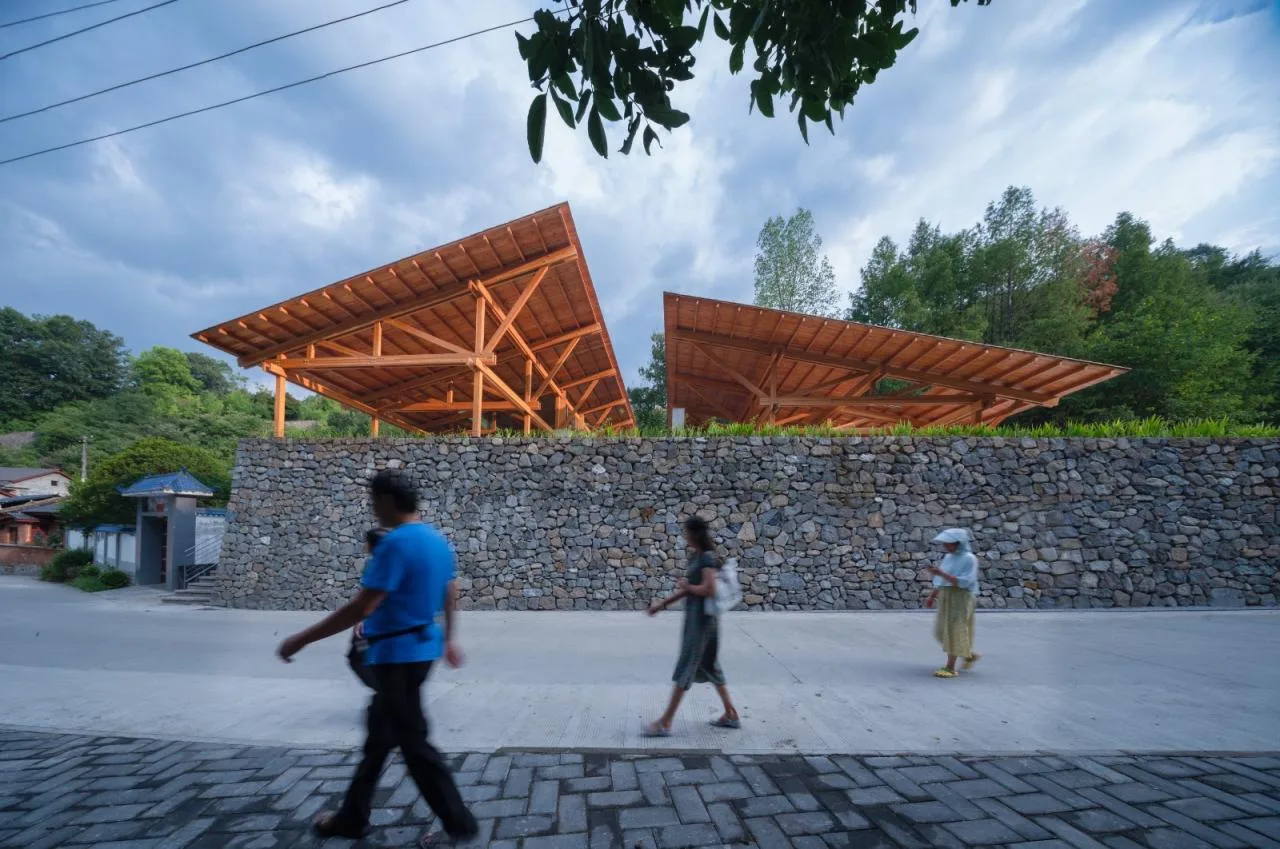
Warm-toned wooden structure atop a rough stone platform © Zhao Yilong
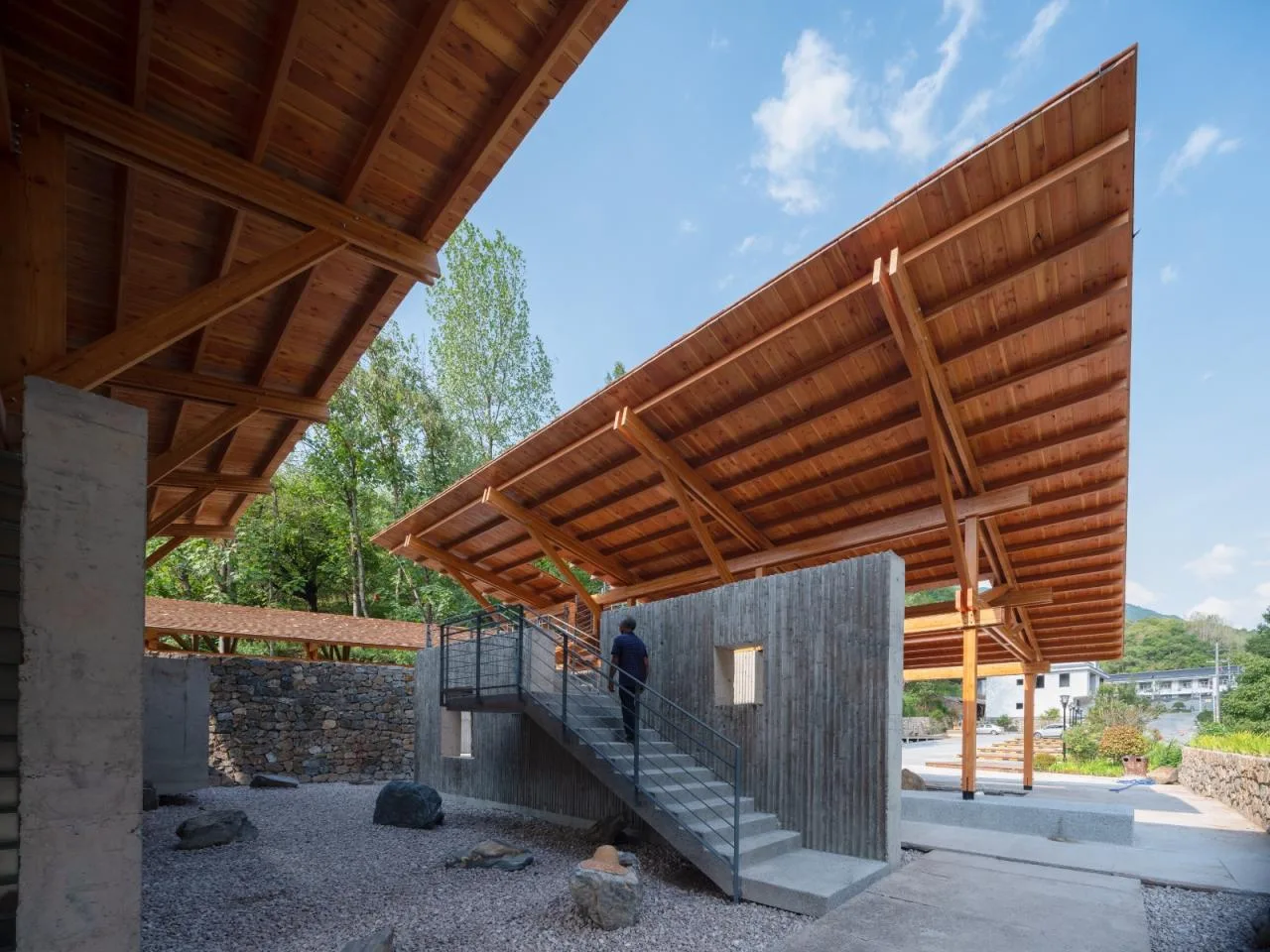
The interweaving of wooden structures, walls, and stairs © Zhao Yilong
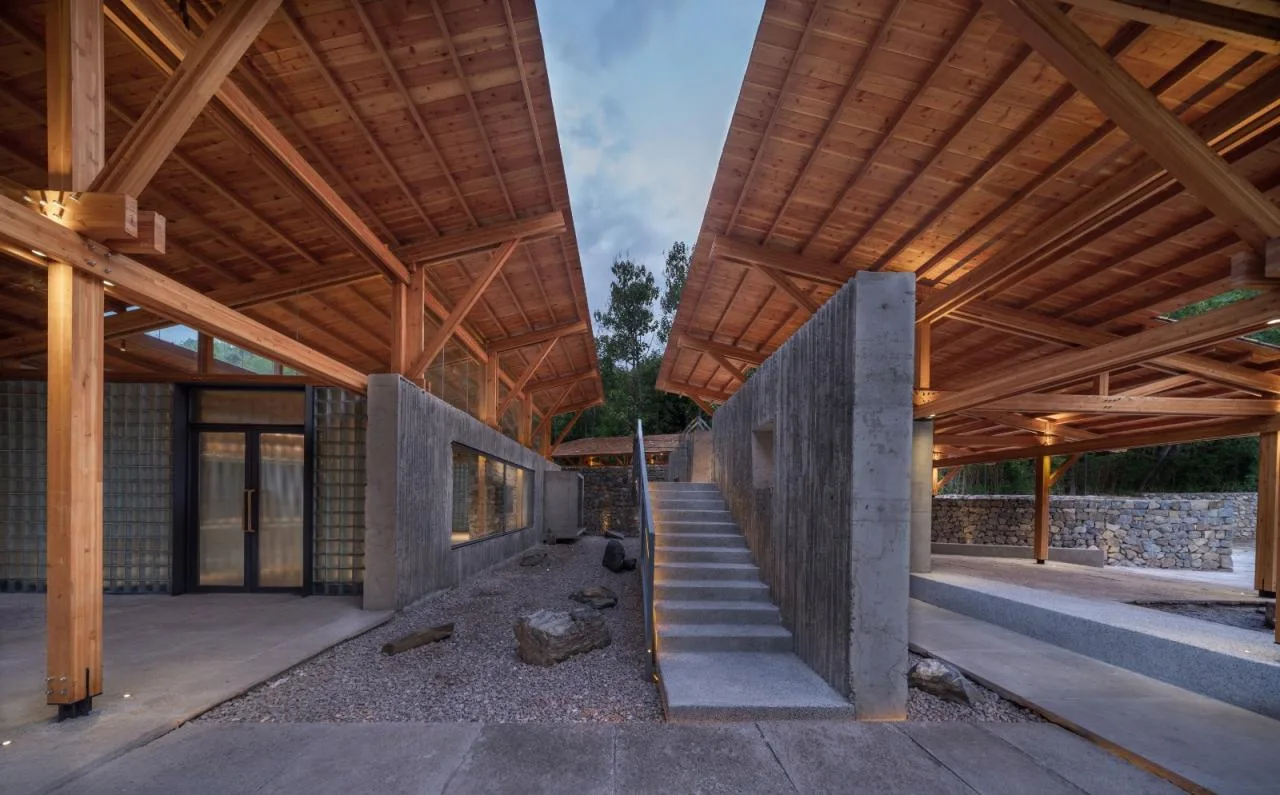
The staircase ascends along the wall between two roofs, reinforcing spatial guidance along the axis © Zhao Yilong
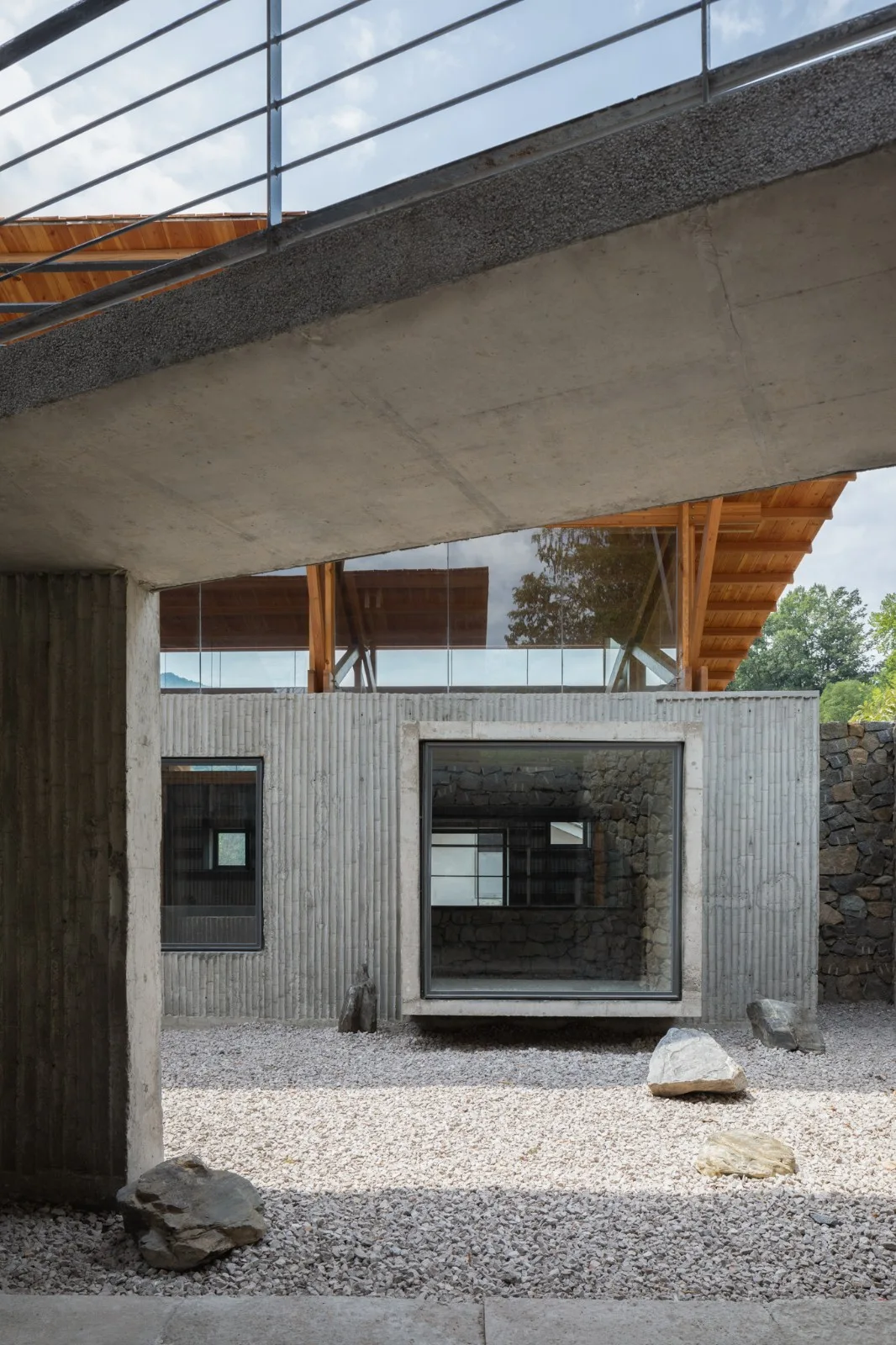
Square protruding window on bamboo formwork concrete, offering a clear line of sight through the building © Wu Ang
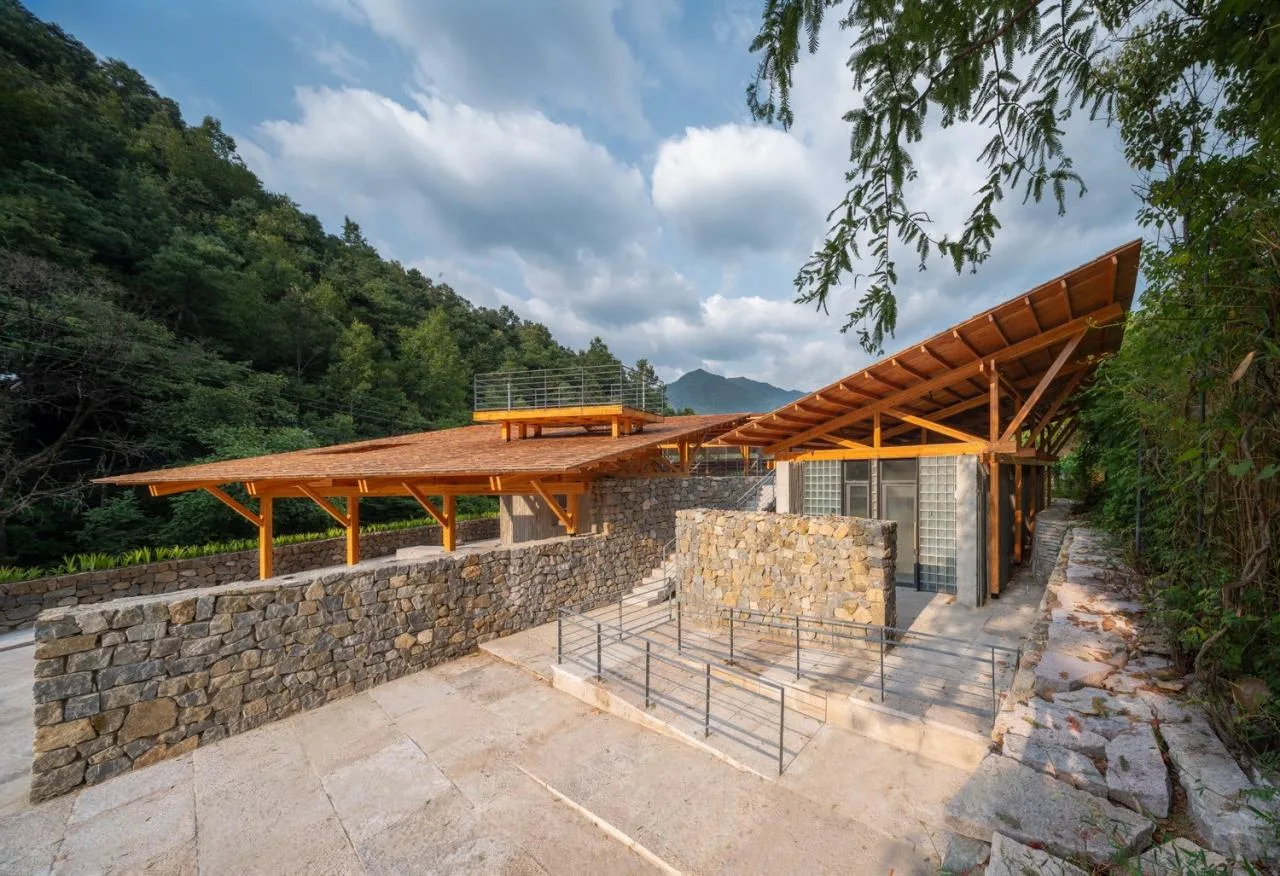
△ Diagonal rubble walls separate the service center from the public toilets © Zhao Yilong
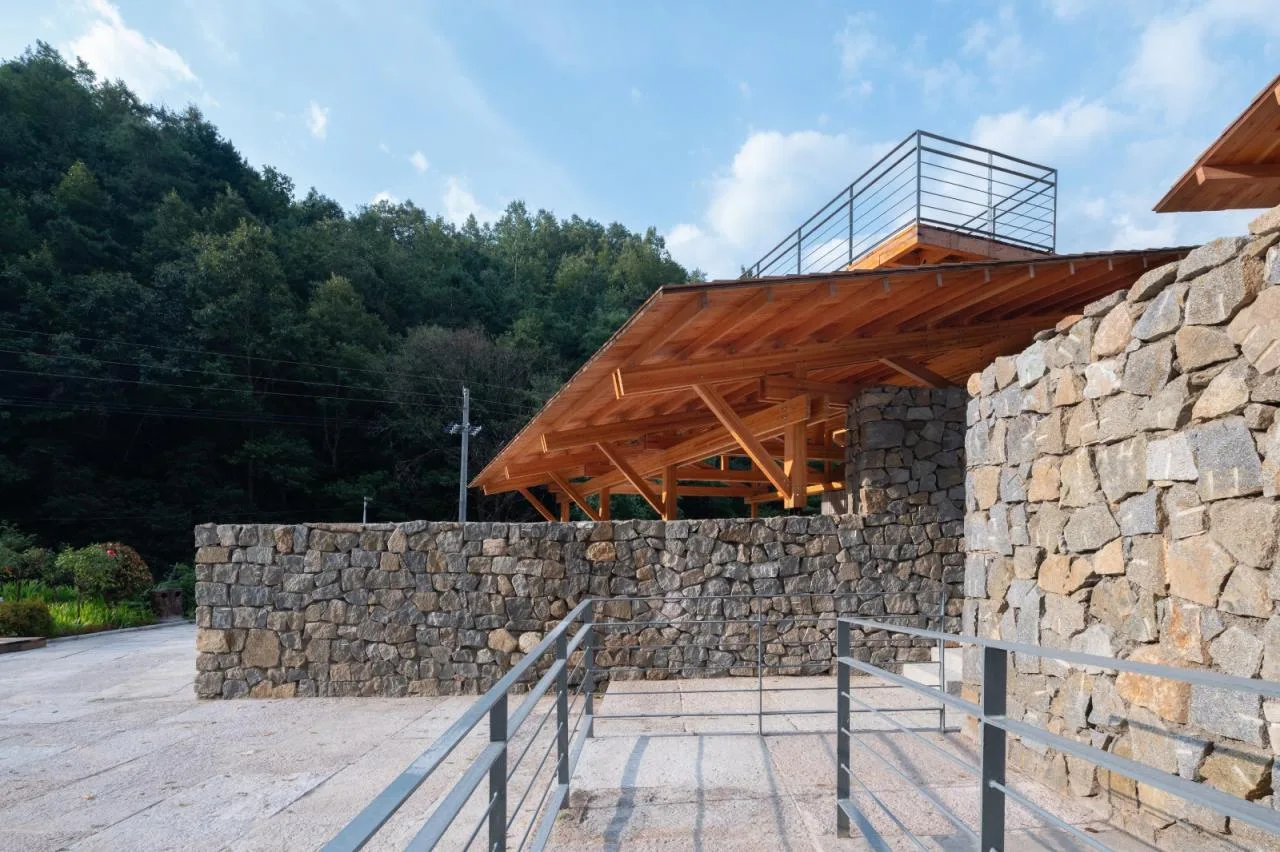
Wooden roof structure mounted on rubble walls © Zhao Yilong
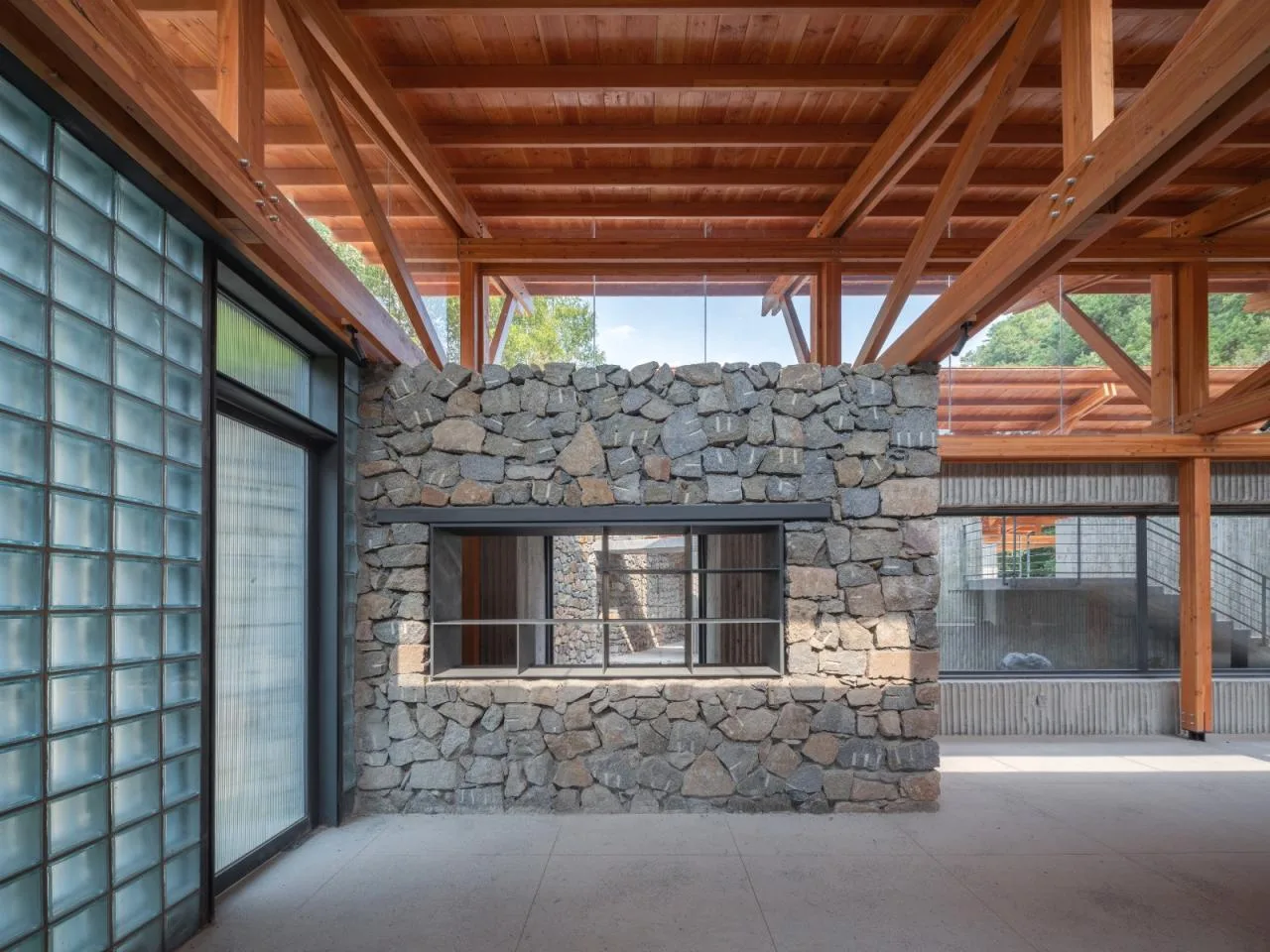
△ Transition of rubble wall interspersed into reception interior © Zhao Yilong
There are three distinct relationships between the wooden column grid system and the walls, both inside and out. In the reception area, wooden columns sit fully inside the wall line, separated by 400mm, clearly distinct from the wall axis. In the public restroom, wooden columns are exposed on the wall’s outer side. Meanwhile, in the open public space, the wooden structure aligns with the wall axis and interlocks with it. This coexistence enriches spatial relationships and explores fundamental architectural elements — the logic between structure and walls.
These organizational methods echo traditional residential construction systems, where system relationships are clear. This building offers a comprehensive exploration of these connections.
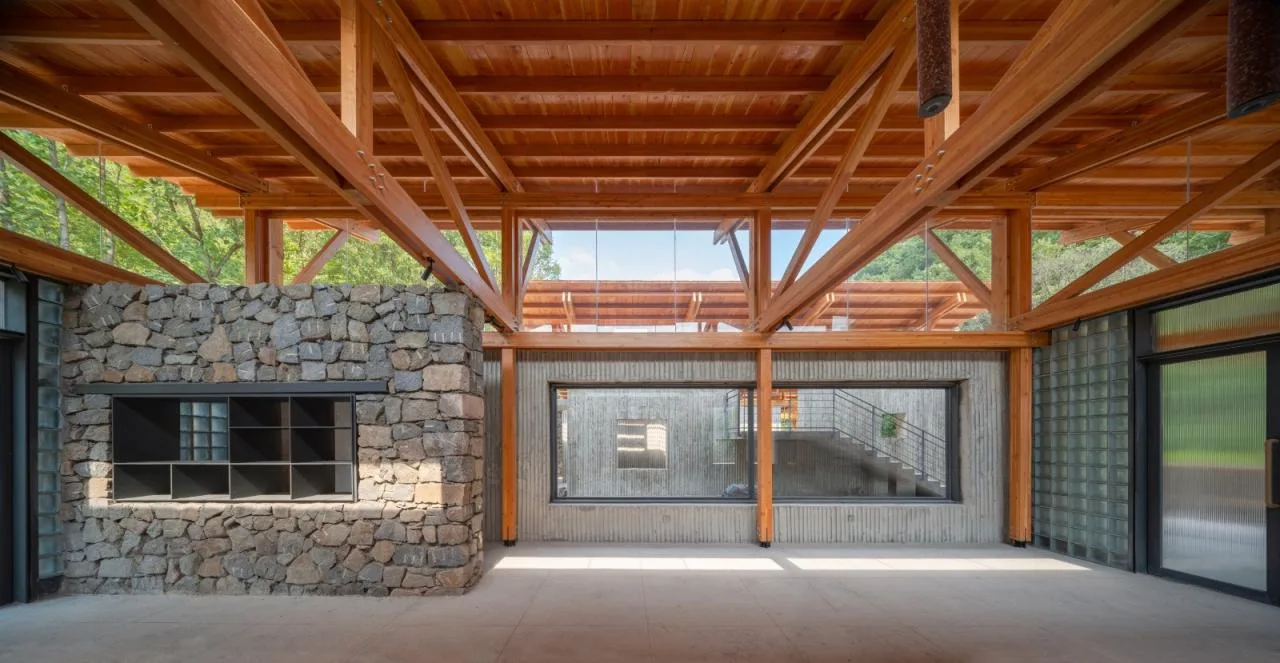
Wooden columns positioned on the inner side of the wall in the reception area © Zhao Yilong
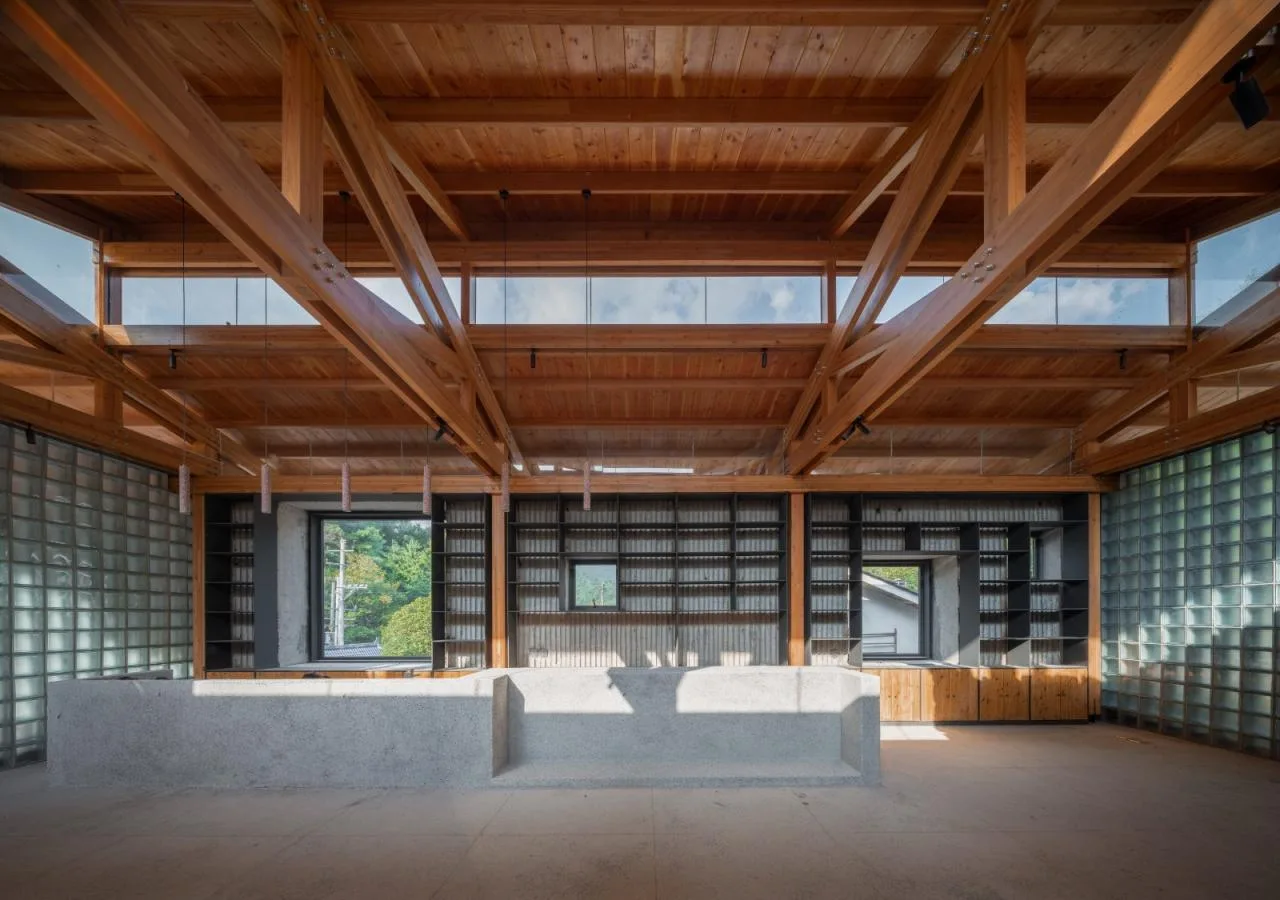
Establishing clear boundaries between wood and wall © Zhao Yilong
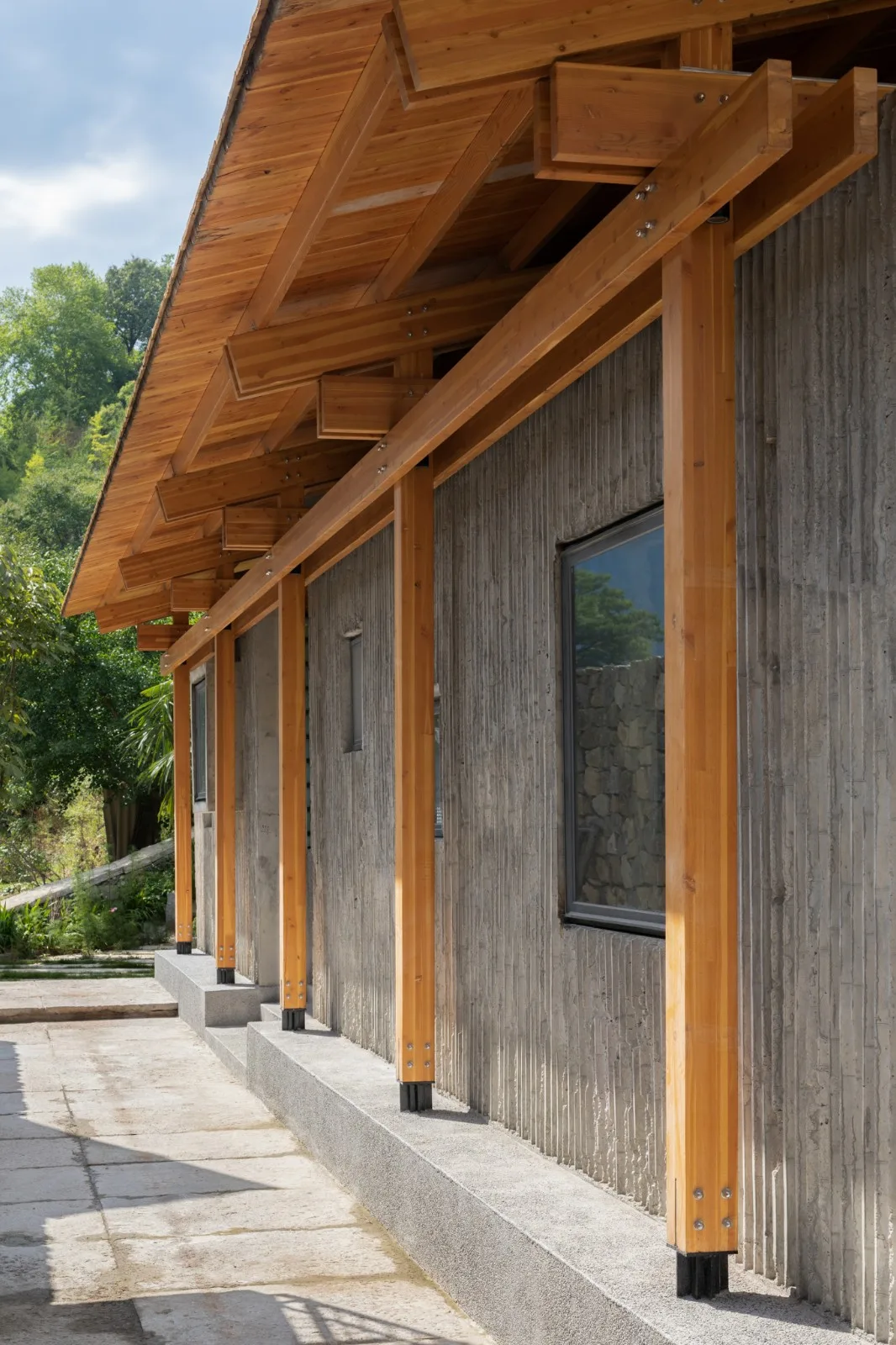
Structure separated from wall, with wooden elements exposed externally © Wu Ang
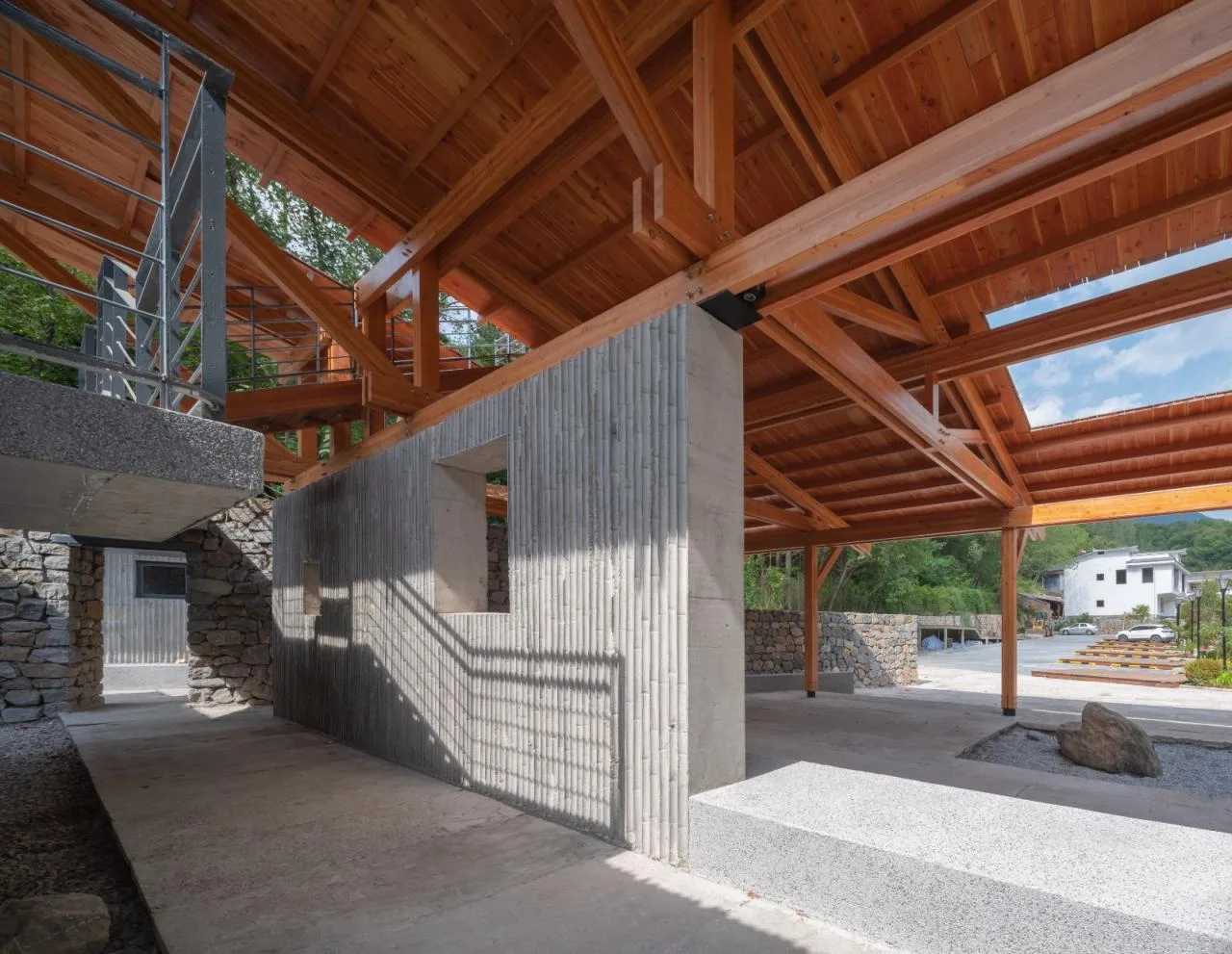
Structure and wall aligned on the same axis and interlocked © Zhao Yilong
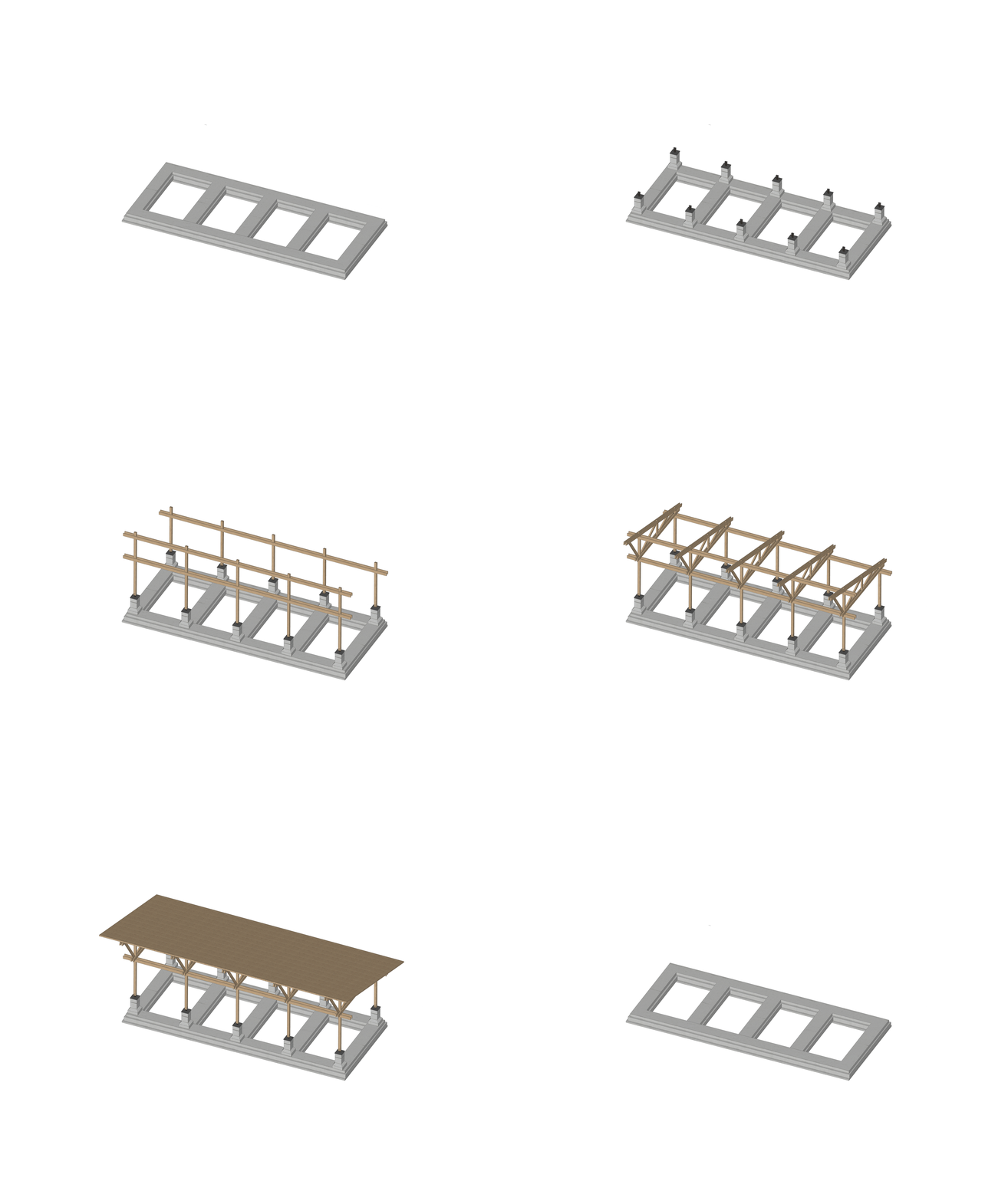
△ Wood structure assembly process demonstration
Wandering Freely and Temporarily
Upon first entering the completed building, I felt an inexplicable excitement as I wandered through various paths and spaces, including forks where I was unsure which direction to take. This walking experience was captivating, perhaps triggered by distant memories of exploring Suzhou gardens many years ago.
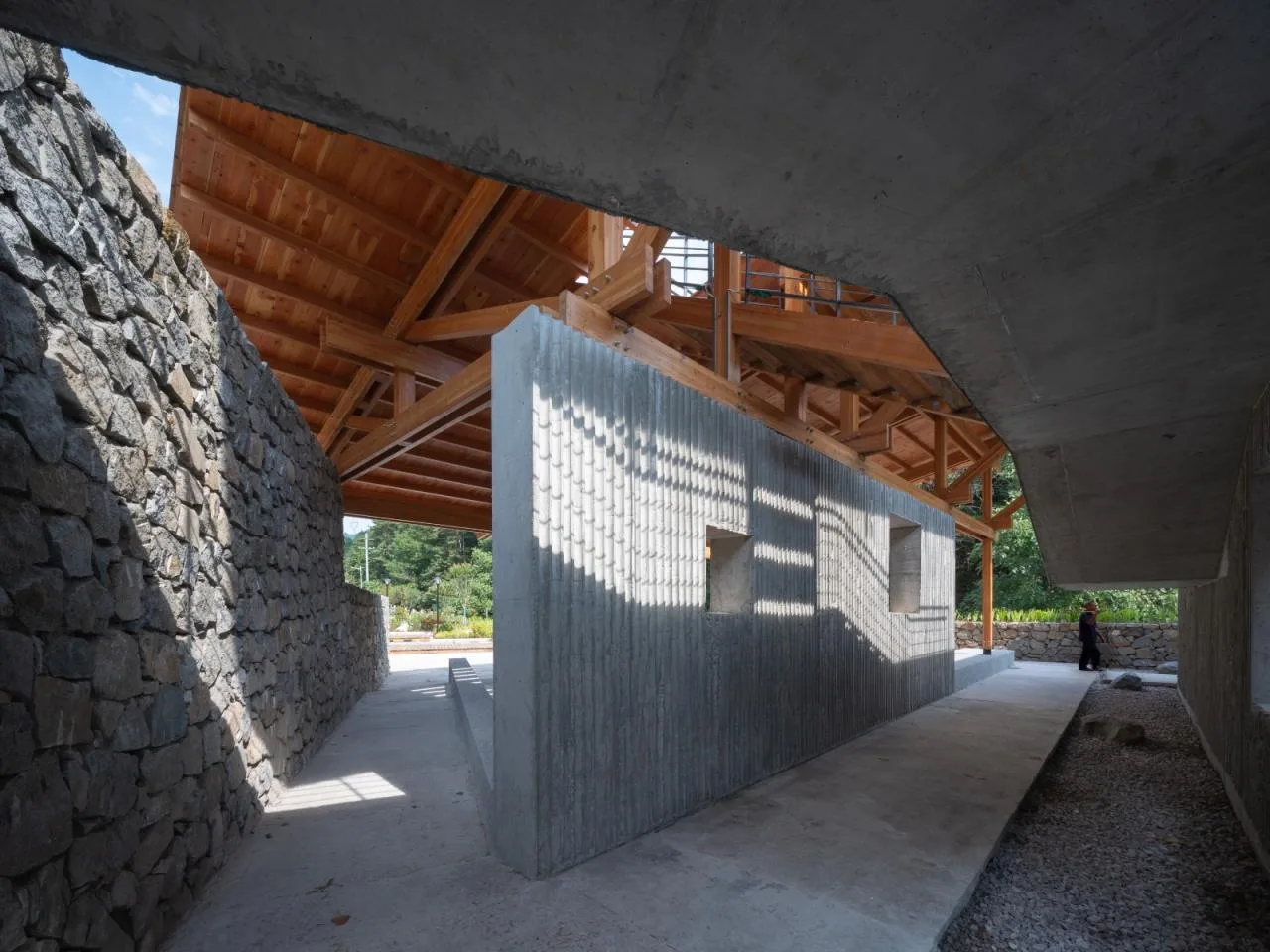
△ Intersection space offering multiple path choices © Zhao Yilong
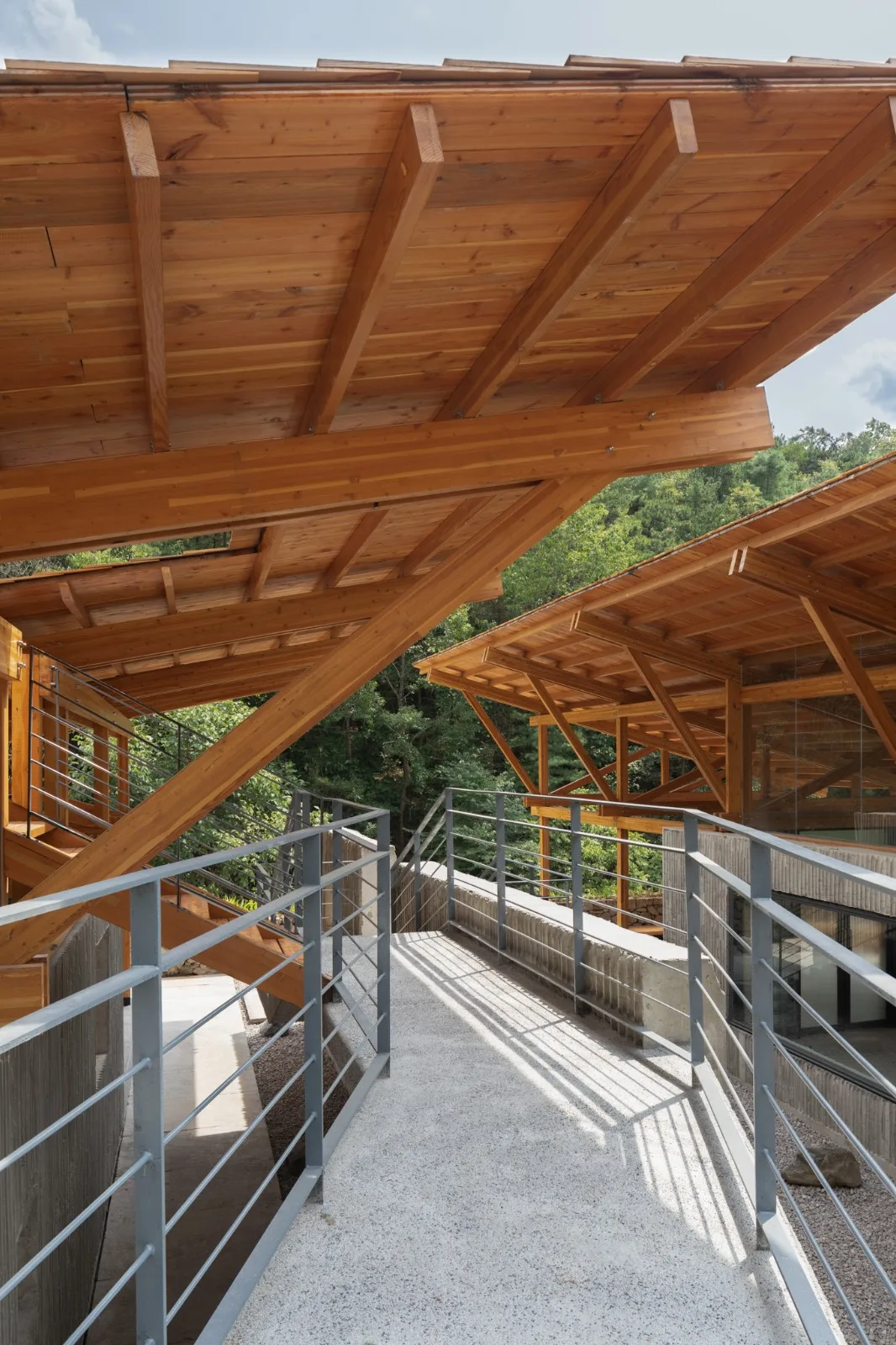
△ Hands can touch the building’s roof structure directly © Wu Ang
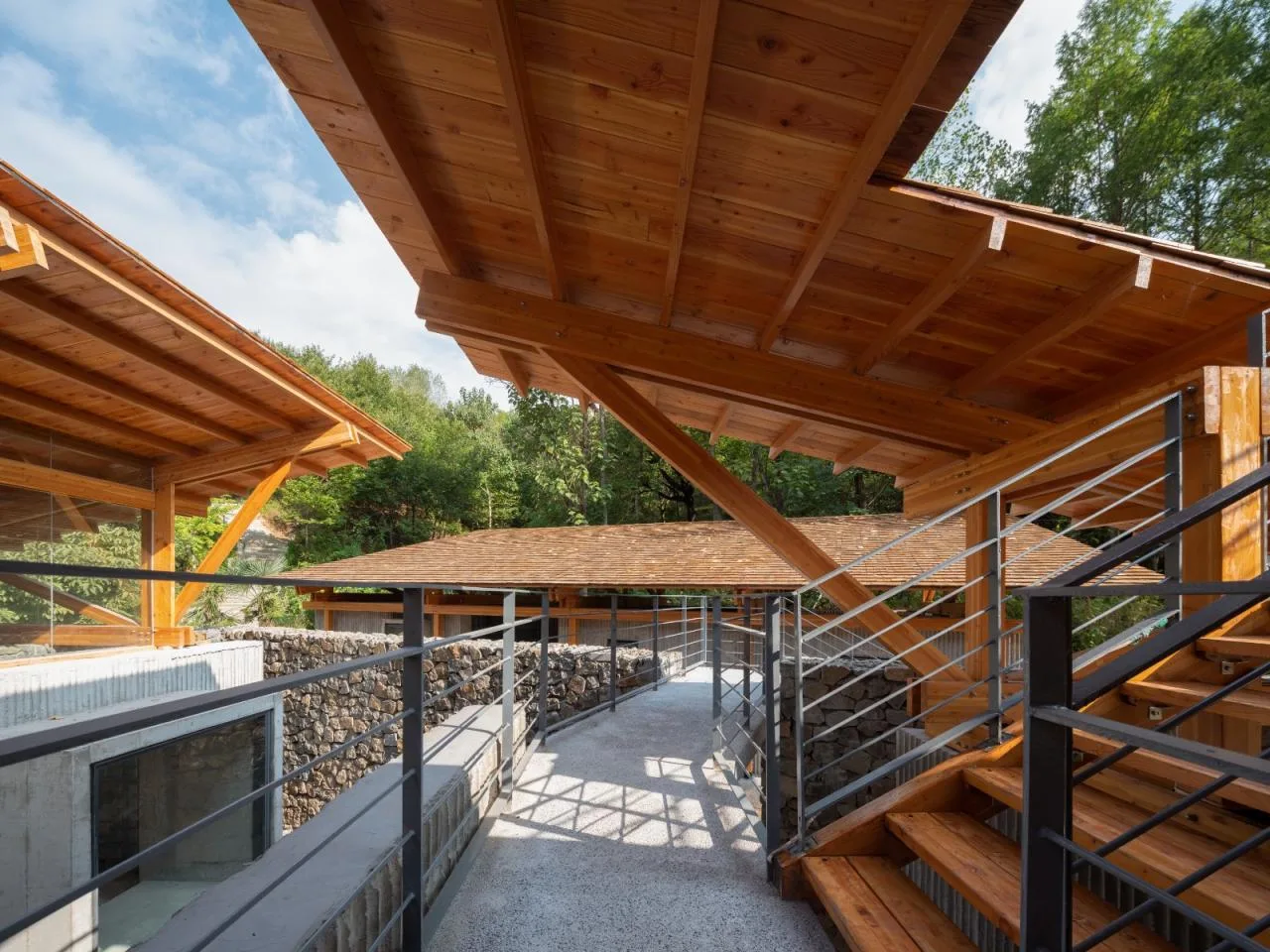
Experience a winding corridor with ups and downs © Zhao Yilong
The building’s multiple pathways create a unique walking experience. Due to the site’s elevation changes, spaces are set at different heights, naturally forming ramps and stairs. To optimize views of the distant mountains, a path leads to the roof platform. This route weaves along the wall between the three roofs, featuring up-and-down corridors, an open roof opening, and access to the overhead platform. Though the paths are intentionally limited and guided, multiple options are available simultaneously. Walking through the space, one might lose track of time.
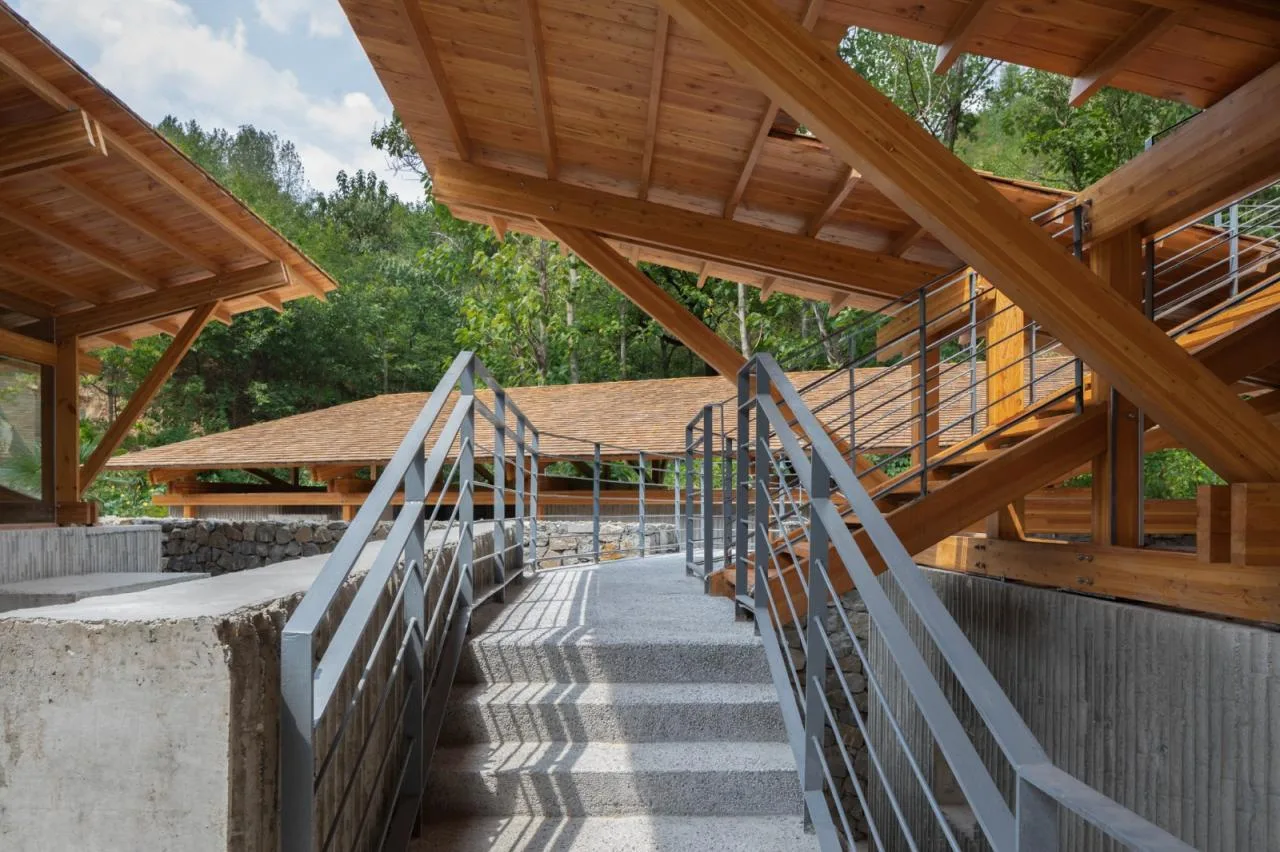
△ Climb the corridor ladder along the exterior wall to reach the roof © Wu Ang
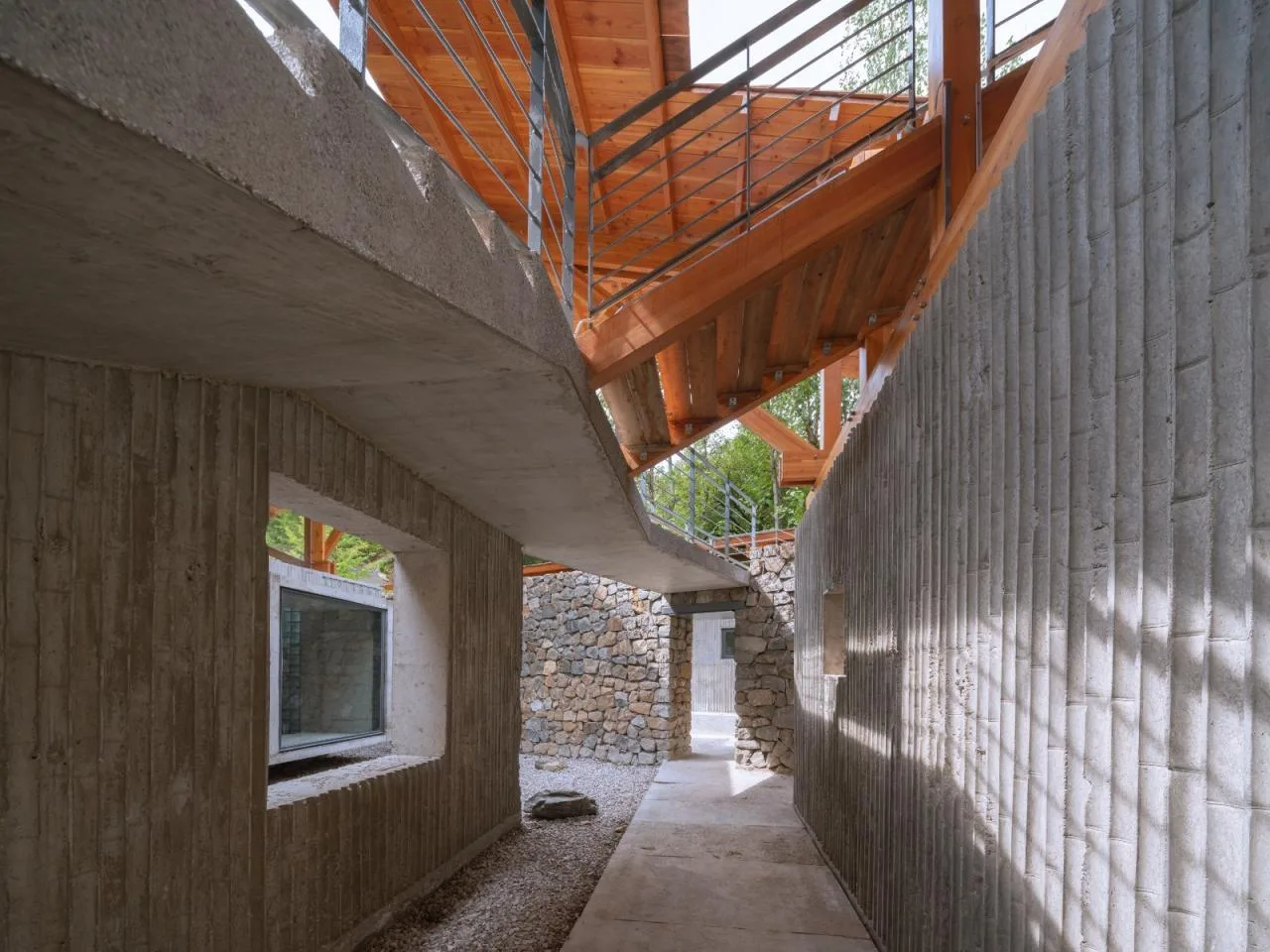
The straight path beneath the winding corridor © Zhao Yilong
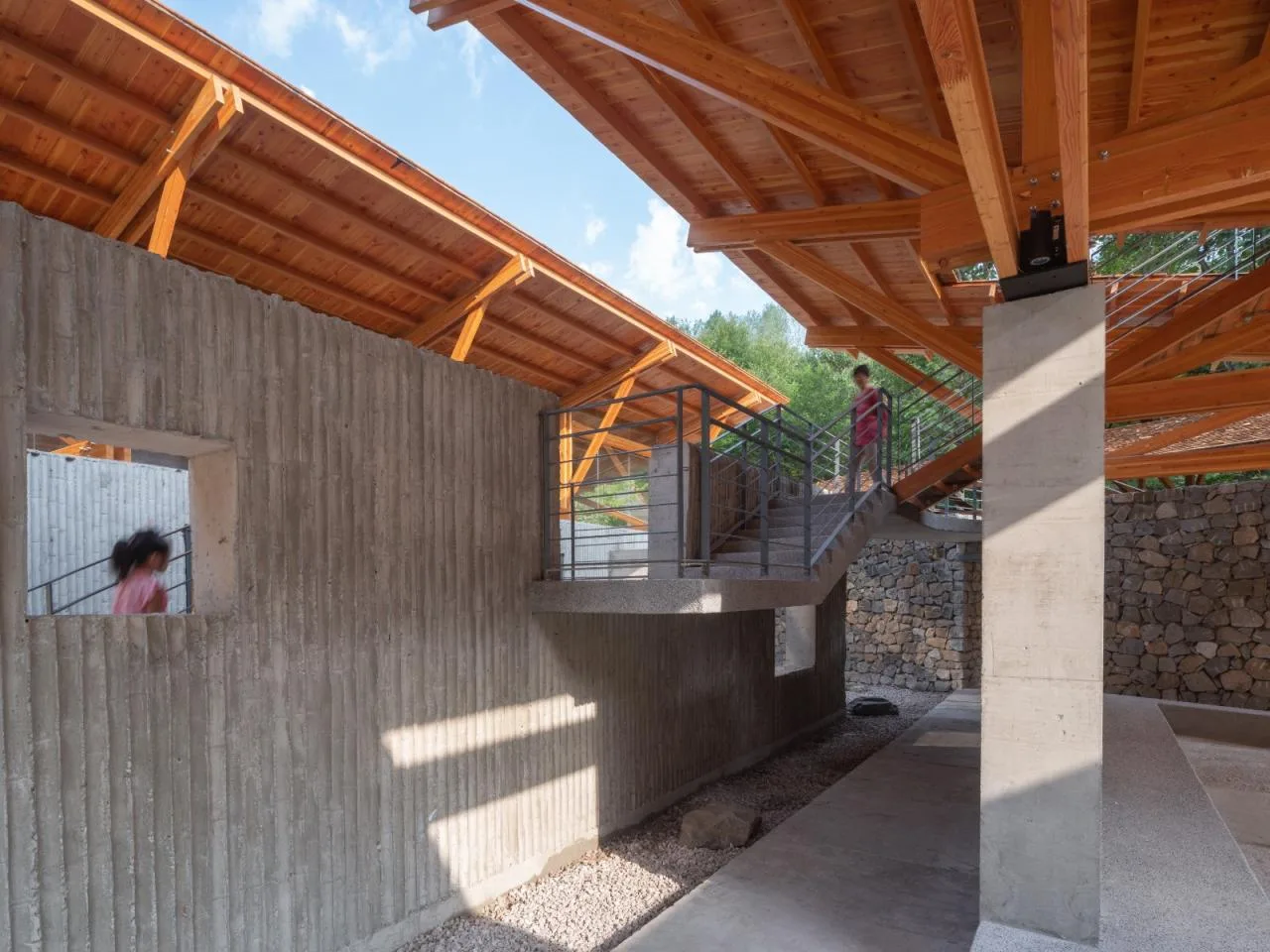
△ Corridors, staircases, and walls arranged in a △-shaped garden facilitate a smooth stroll © Zhao Yilong
Whether this wandering with multiple path choices, spatial elevation changes, and the interplay of useful and seemingly useless elements is a temporal phenomenon remains uncertain.
Playfulness
As one’s body and vision shift with the spatial turns and guidance, continuous surprises unfold. Walls and roofs interweave within the space, forming non-orthogonal arrangements that create visual shifts. Looking through openings between walls reveals different scenes. In certain spatial angles, windows overlap diagonally, stacking layers and enriching the visual hierarchy. Discovering these unique views evokes a sense of delight and playfulness.
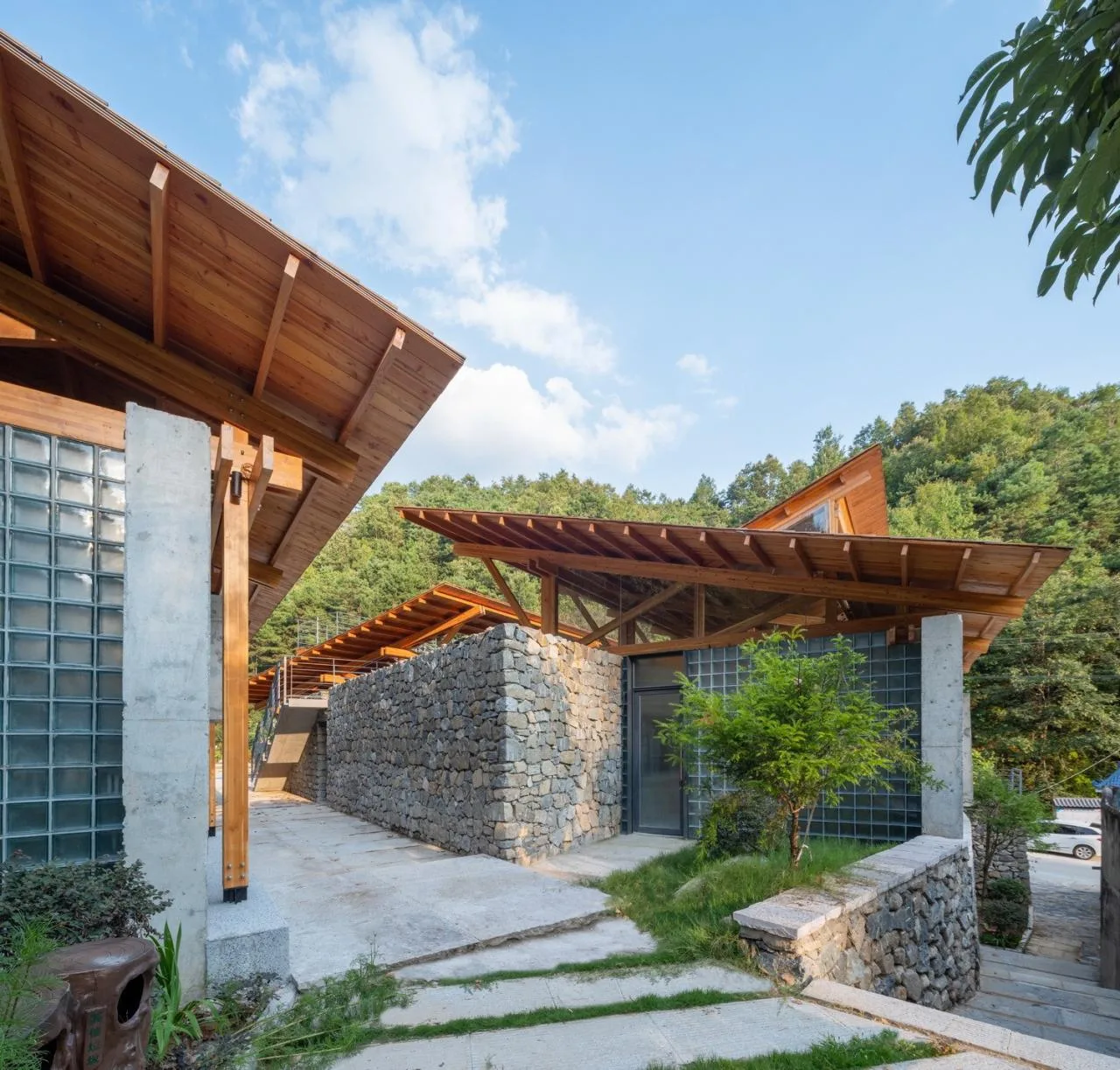
Three wooden roofs interwoven together © Zhao Yilong
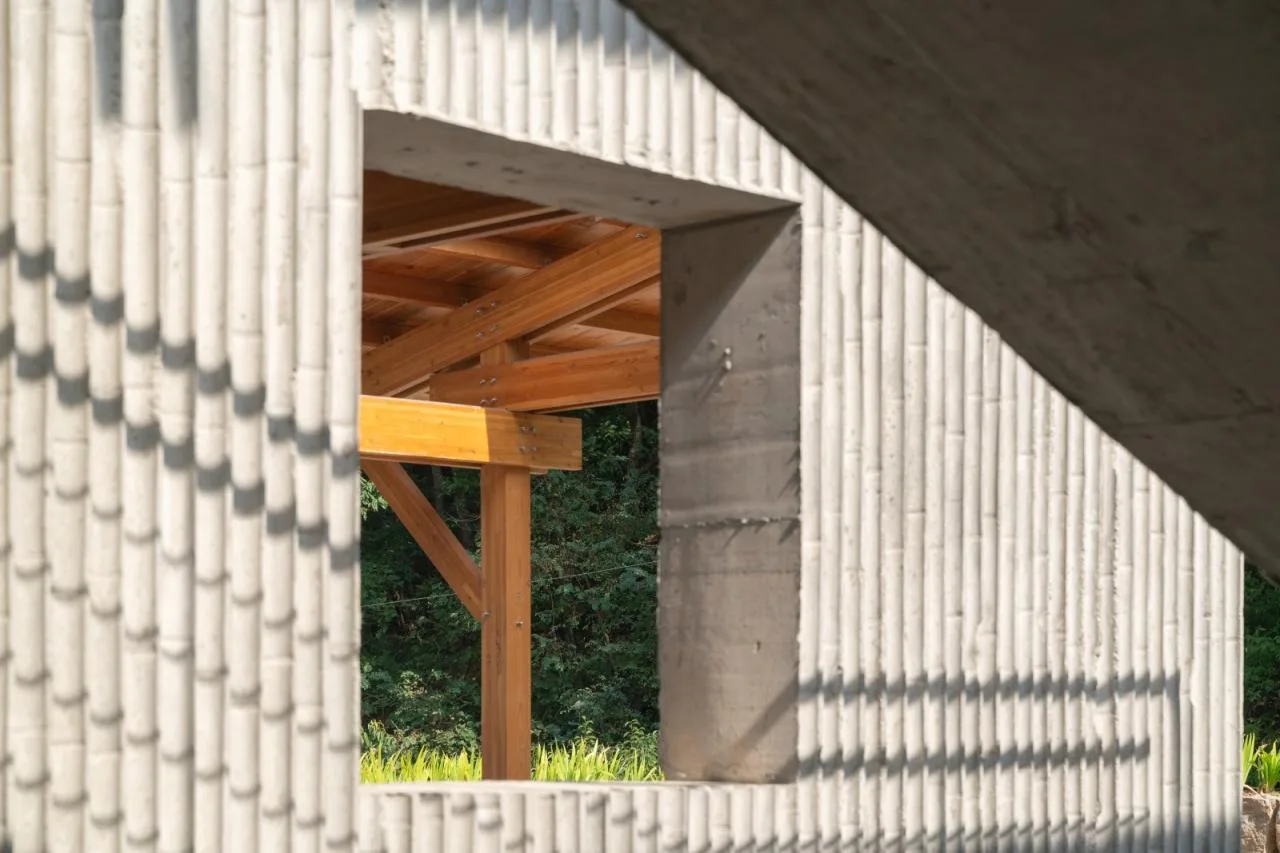
△ View of wooden structure through a wall window © Zhao Yilong
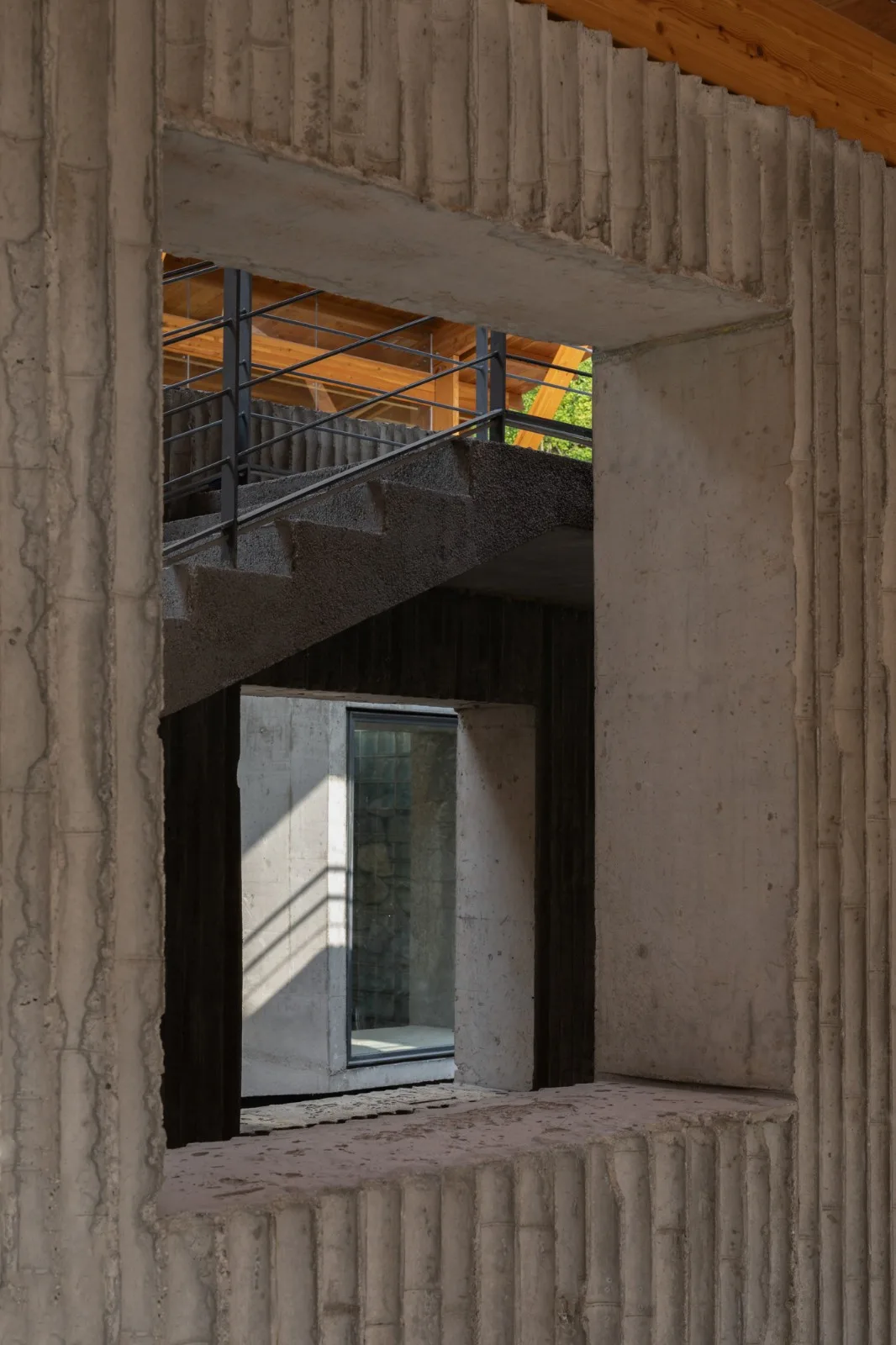
Spatial hierarchy revealed through varied window openings © Wu Ang
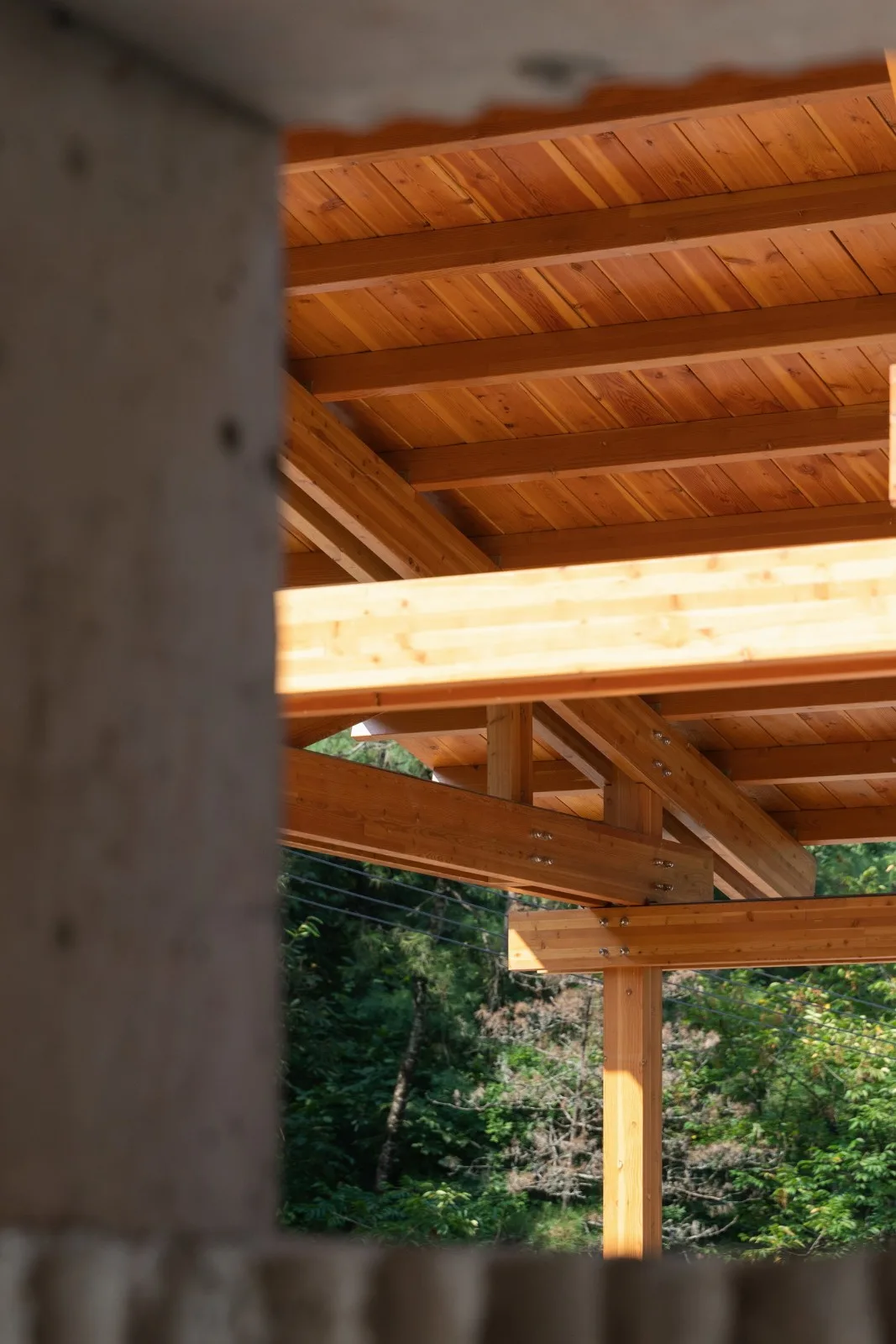
△ Observing the overlapping wooden structure from the cave entrance © Zhao Yilong
The Blend of Grays: Delicate and Rough
The material palette predominantly features warm wood tones alongside gray cement and stone. Warm hues are concentrated in the upper building sections, while grays appear below. The main structural materials include small-sized Douglas fir laminated wood, Douglas fir boards, and red cedar shingles, forming a warm-toned roof system. Gray elements comprise bamboo formwork cast-in-place concrete walls, washed stone steps, old slate outdoor flooring, and terrazzo indoor floors.
The glass brick walls introduce a cool gray tone that balances warmth and coolness. Iron railings, windows, and bookshelves also fall within the gray spectrum, collectively contributing to the building’s texture and atmosphere.
This building aims to create a contrast between rough and delicate, warmth and ash, and an interplay of lightness and heaviness, establishing the fundamental material experience.
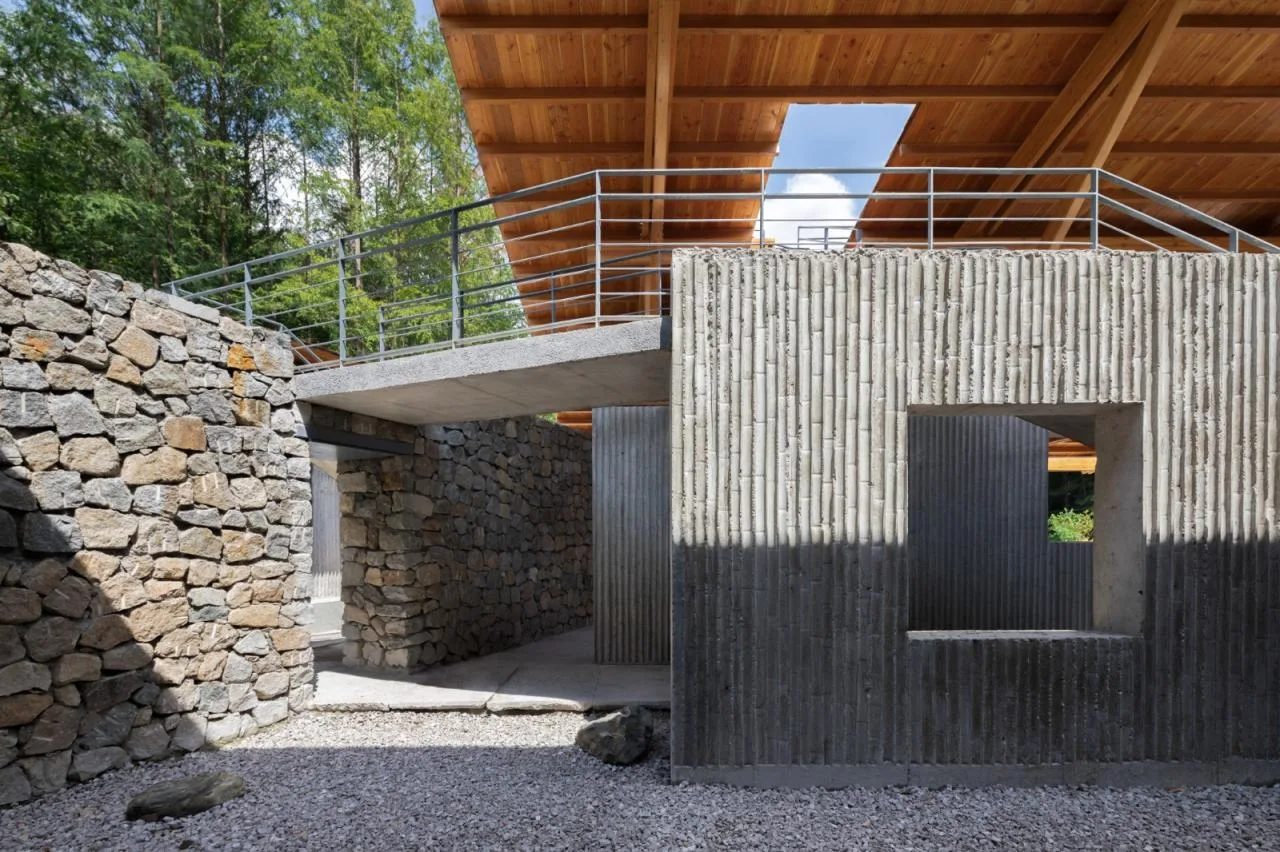
Integration of bamboo formwork concrete walls, rubble walls, and wooden roofs © Wu Ang
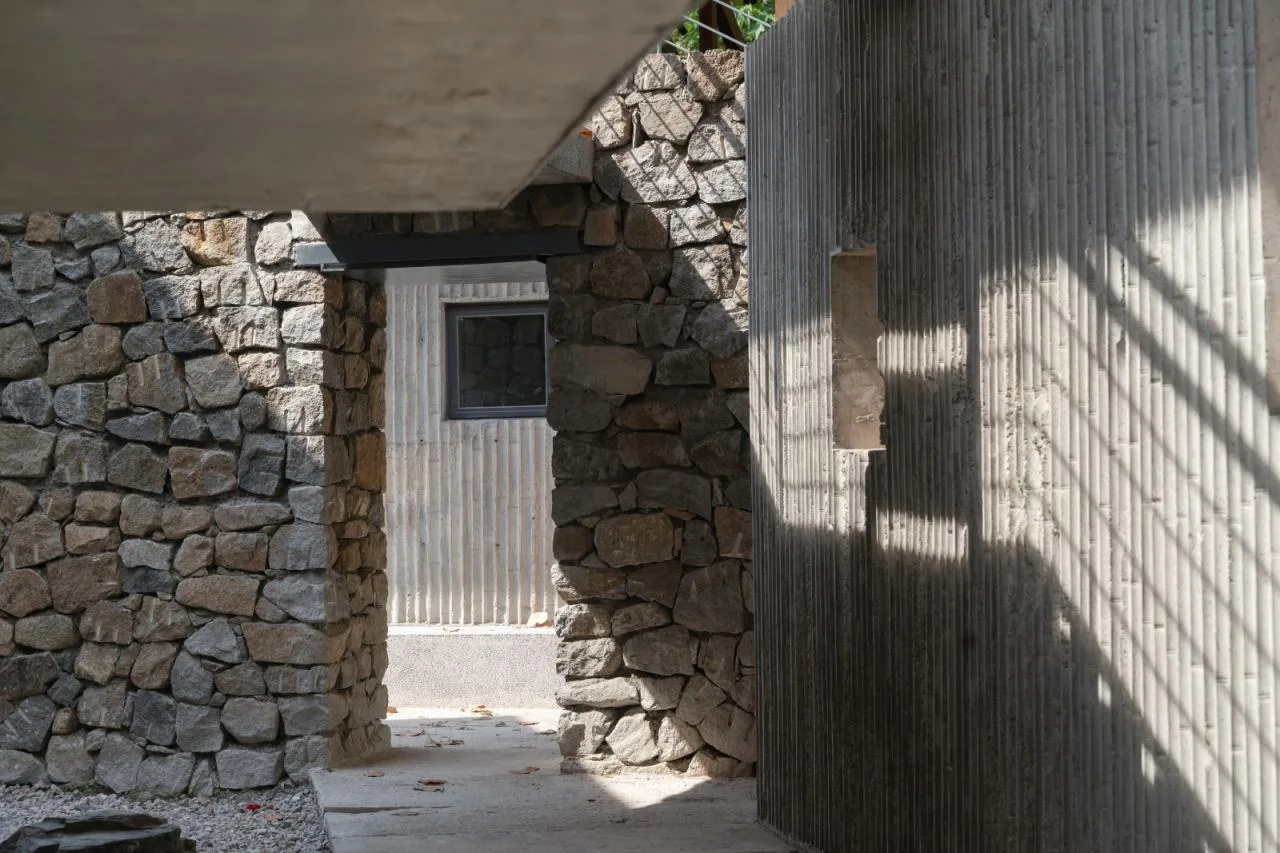
Various gray tones with distinct textures under shifting light and shadow © Zhao Yilong
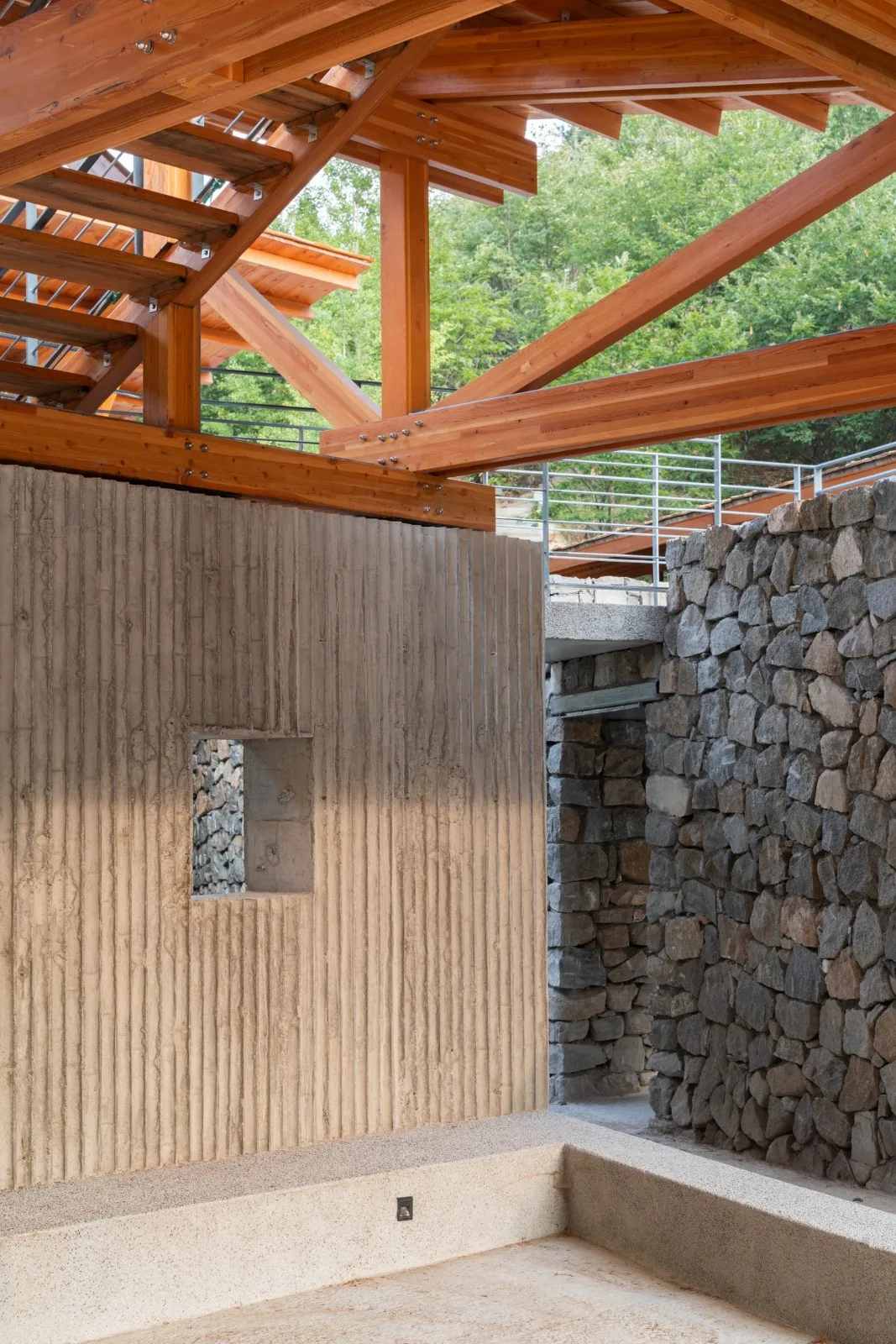
Warm wood tones create a cozy ambiance on the walls © Zhao Yilong
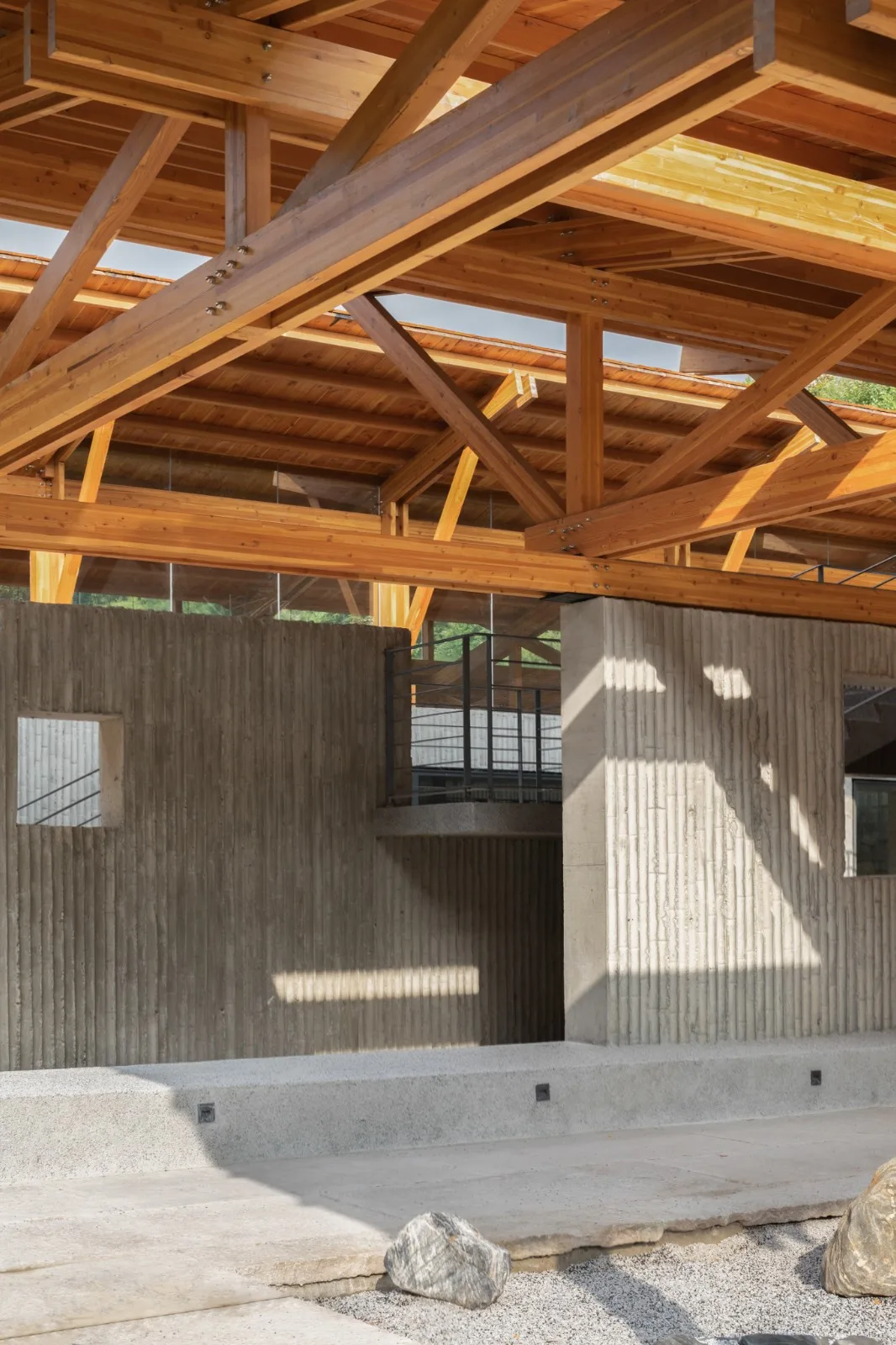
Building materials present a warm upper section and gray lower section © Wu Ang
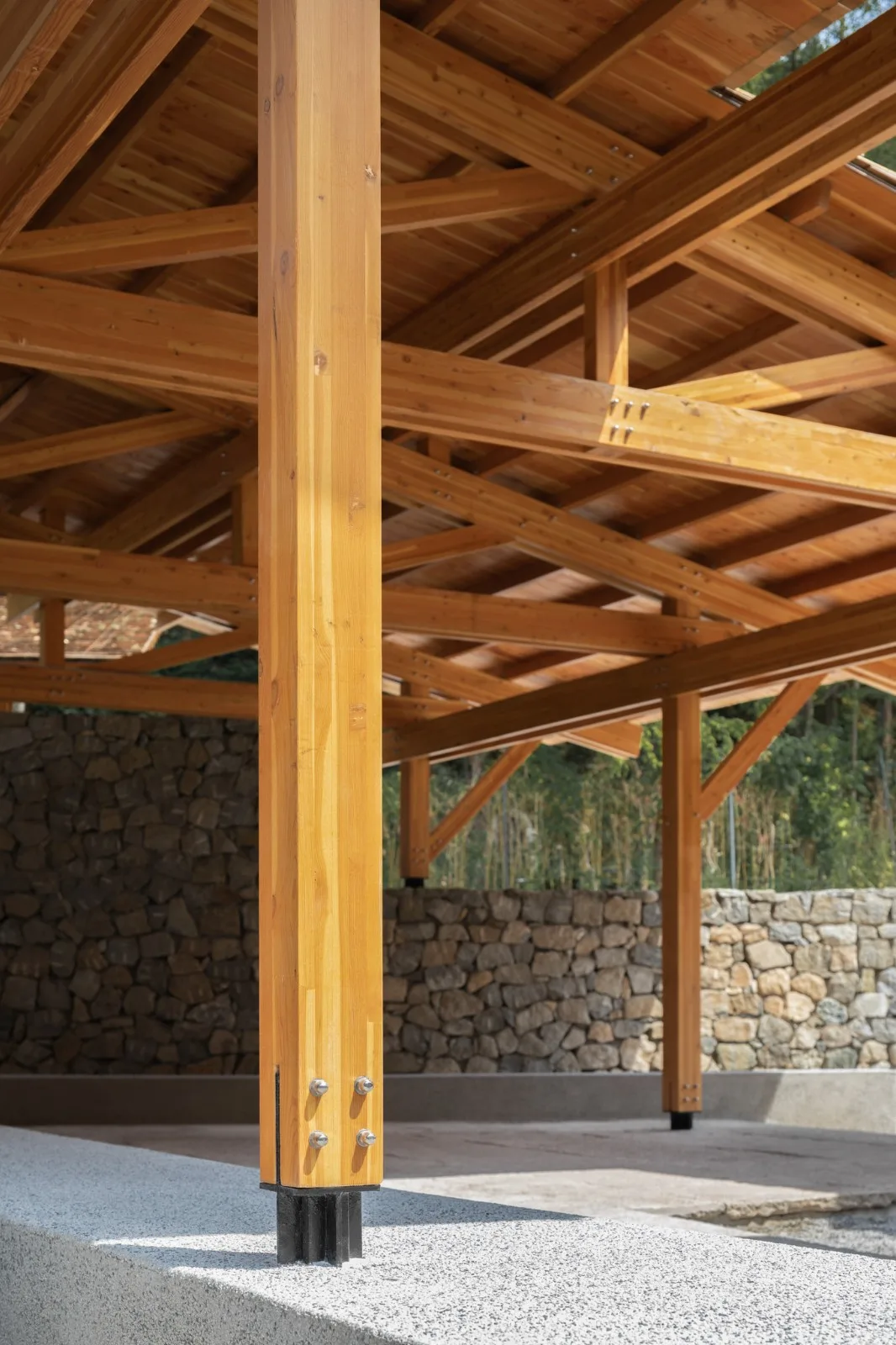
Custom metal parts connect wooden column bases with the foundation © Wu Ang
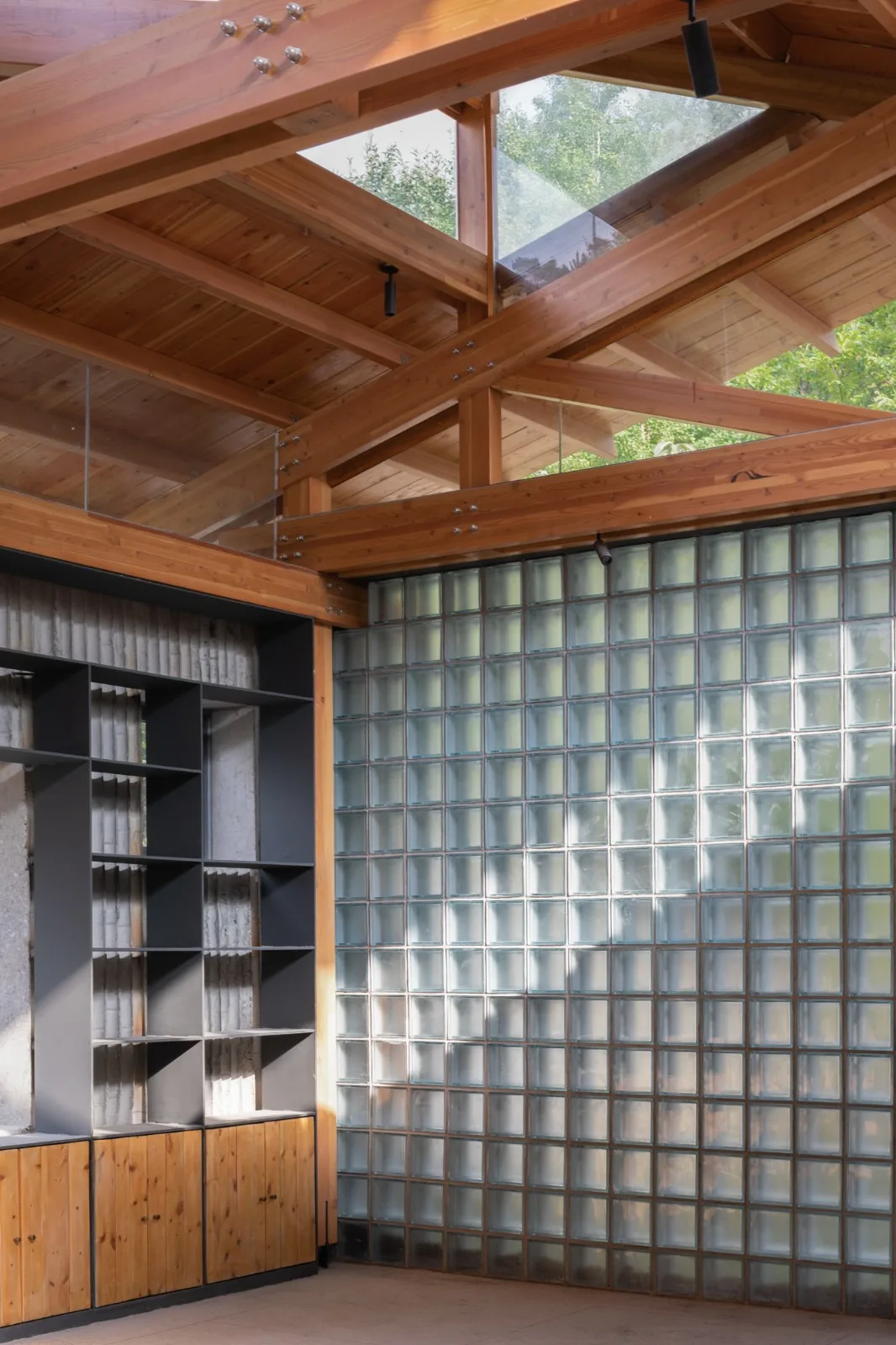
△ Cold gray glass bricks blend with warm wooden structures under light and shadow, creating a harmonious contrast © Wu Ang
The architectural experience emerges through a comprehensive blend of space, light and shadow, materials, and sensory experience. The interplay of materials involves not only color and light but also texture and touch.
During construction, when bamboo formwork concrete was first stripped, I felt some disappointment—its quality fell short of expectations. Yet, I refrained from rushing repairs and observed the process. As the wooden structure rose and glass bricks were installed, I appreciated the raw texture of the bamboo formwork—its roughness contributed positively. After completing the rubble masonry wall, the bamboo formwork concrete’s texture gained depth, especially when light and shadow played across the surface, casting vivid water-like patterns.
Refinement and roughness coexist: too much refinement can feel uncomfortable, while excessive roughness lacks detail. Balancing this nuance is essential and influenced significantly by the architect’s personal sensibility. Every on-site decision shapes the building’s overall character.
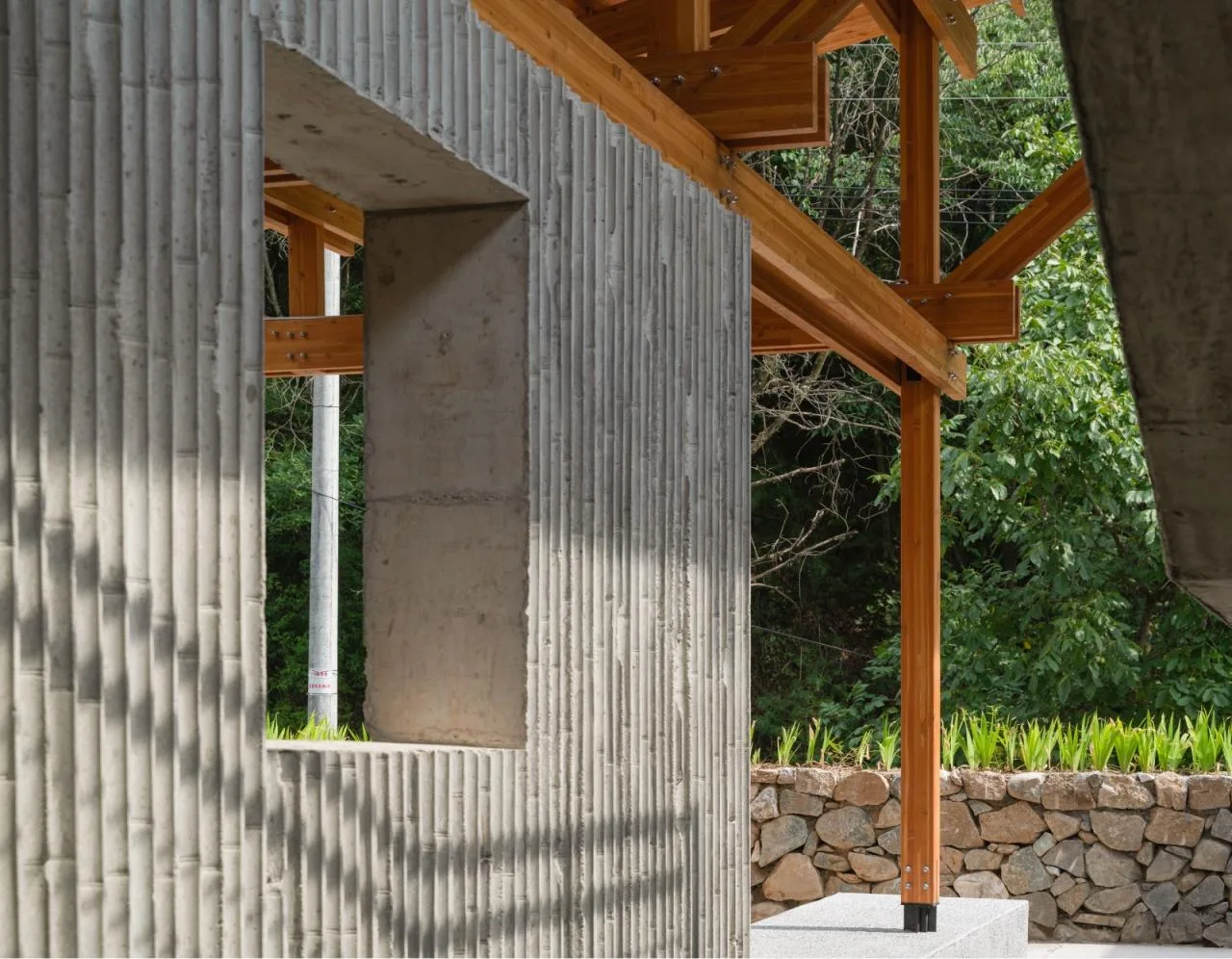
Vertical texture of rough, uneven bamboo formwork concrete © Zhao Yilong
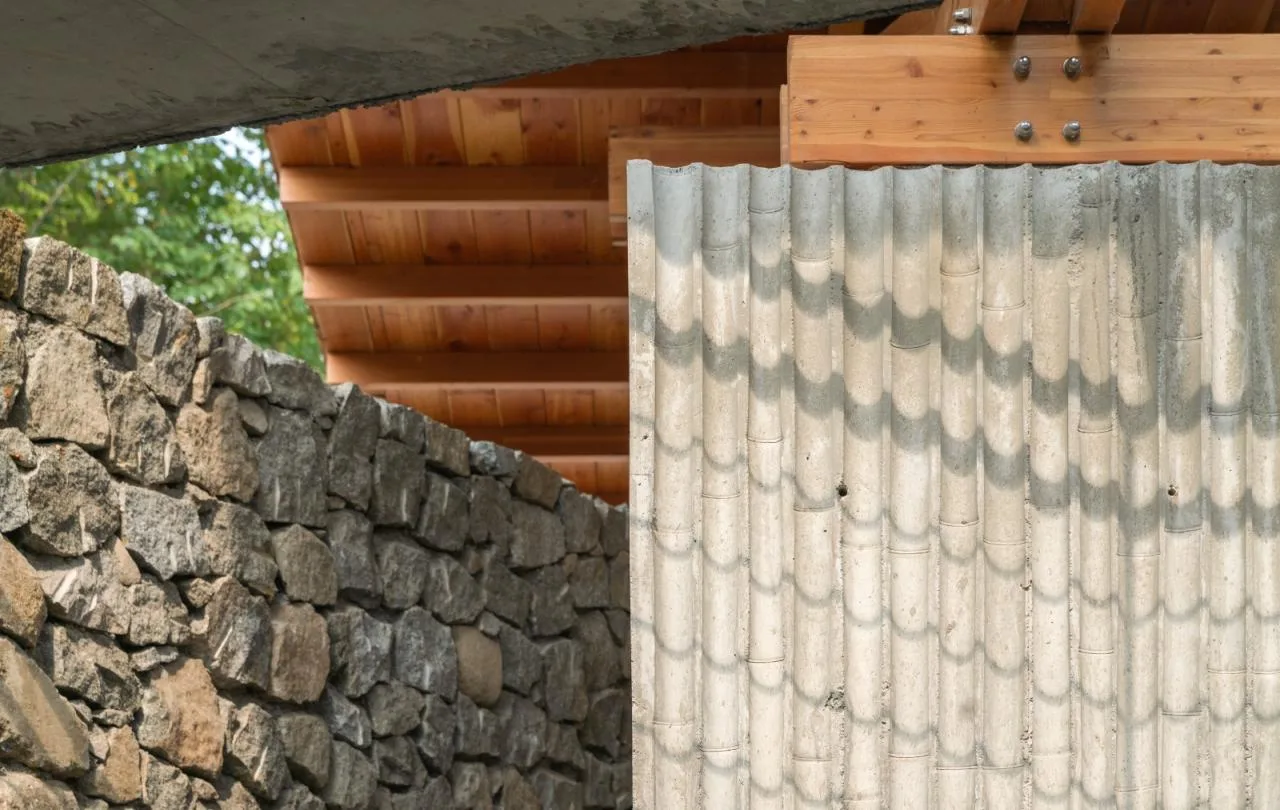
Integration of three materials with varying roughness © Zhao Yilong
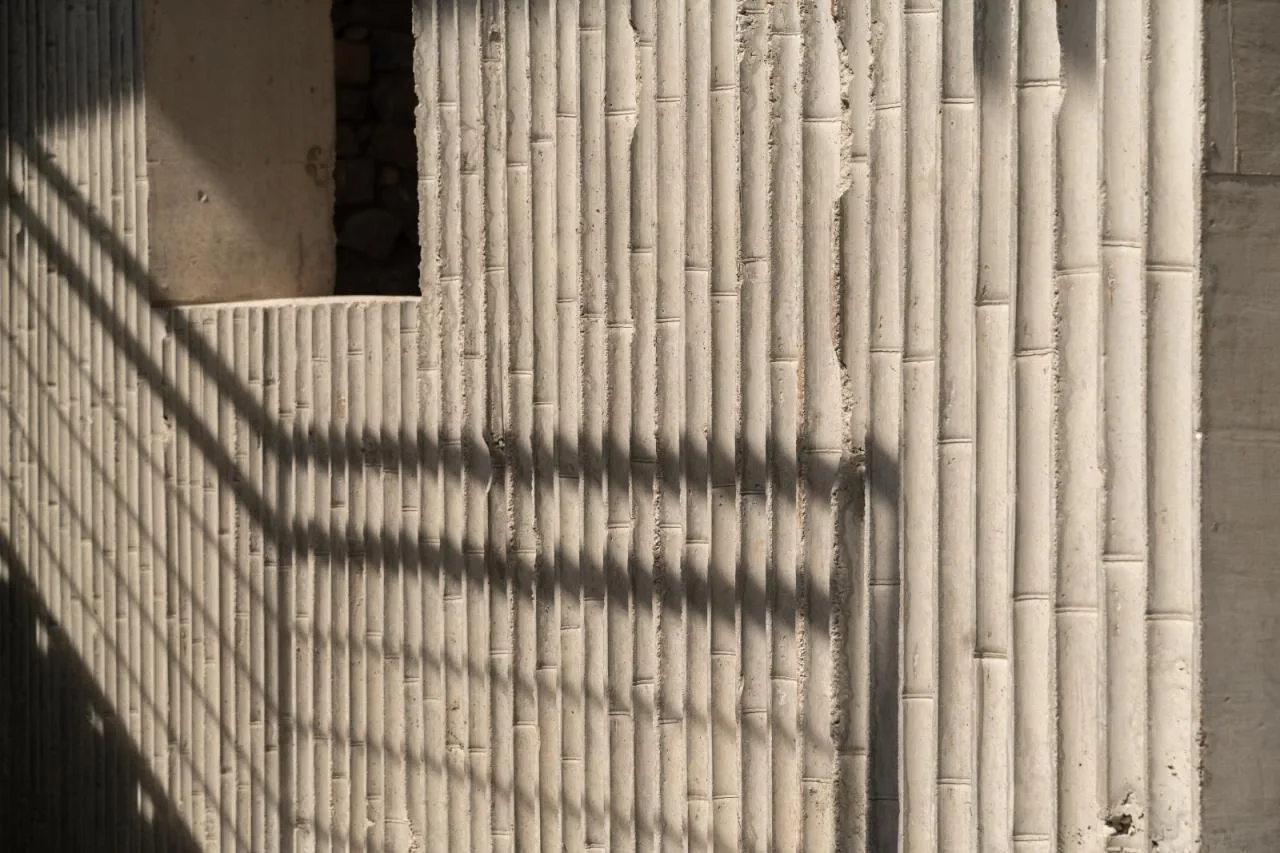
The railing’s shadow cast on bamboo formwork concrete resembles water patterns © Zhao Yilong
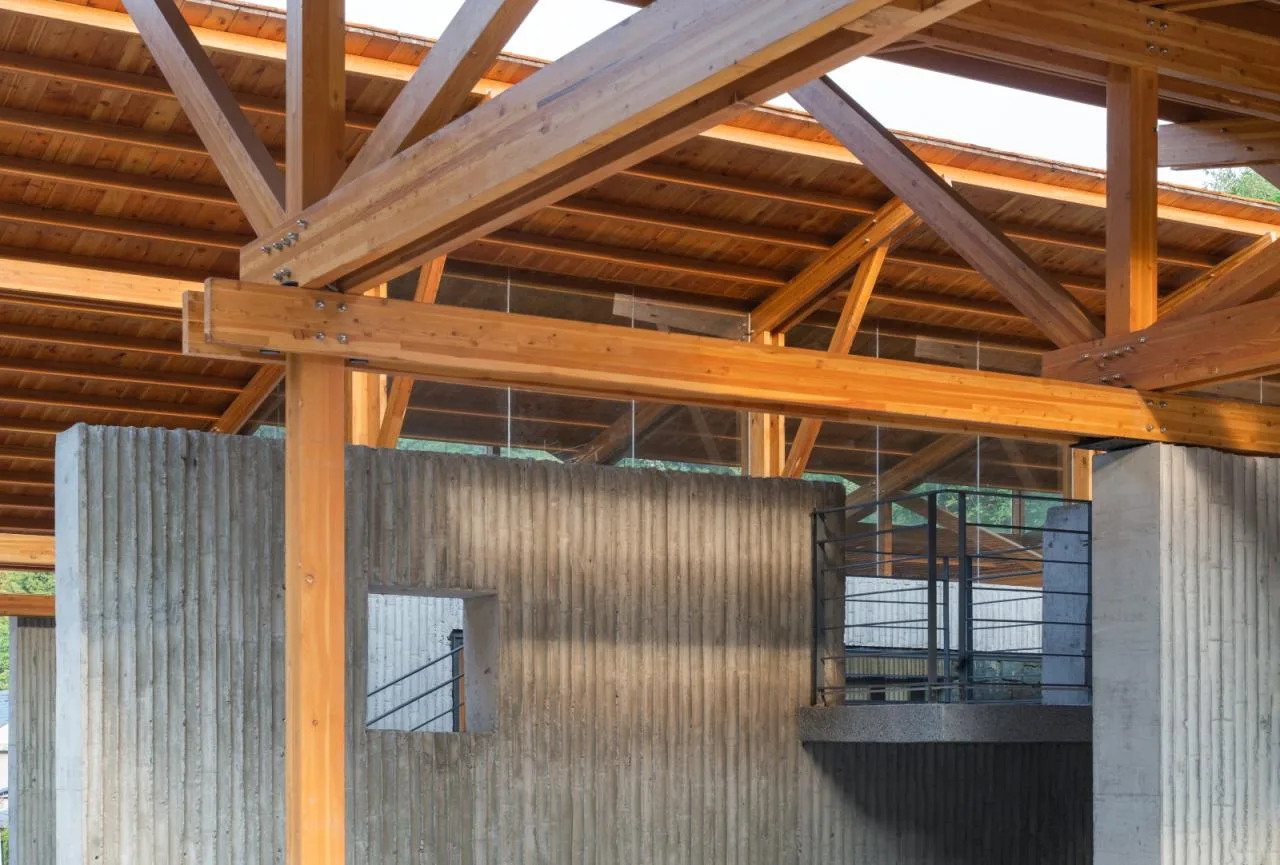
Clear organization of wooden structures and bamboo formwork concrete walls © Zhao Yilong
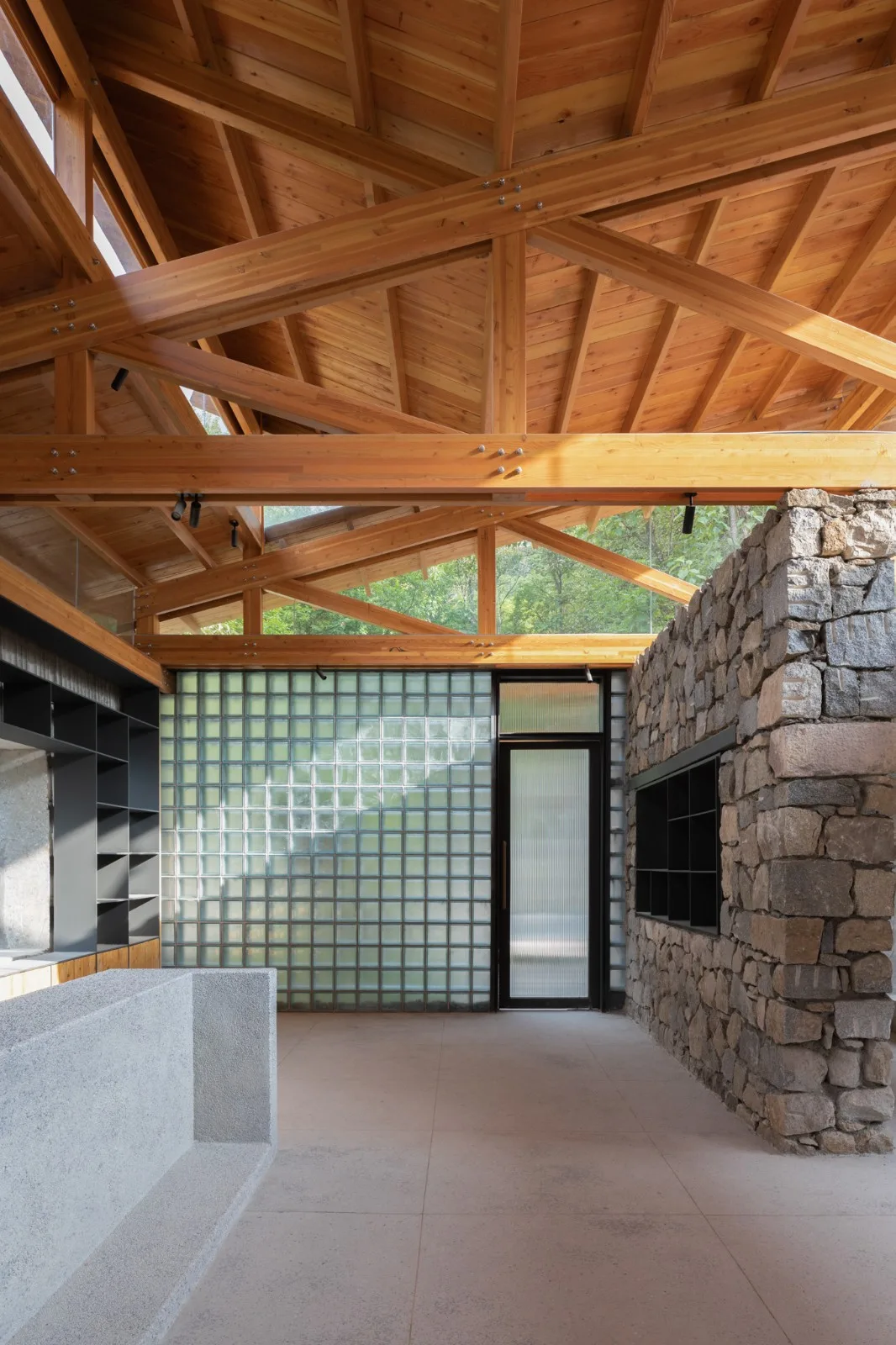
△ Reception space showcasing richer material hierarchy © Wu Ang
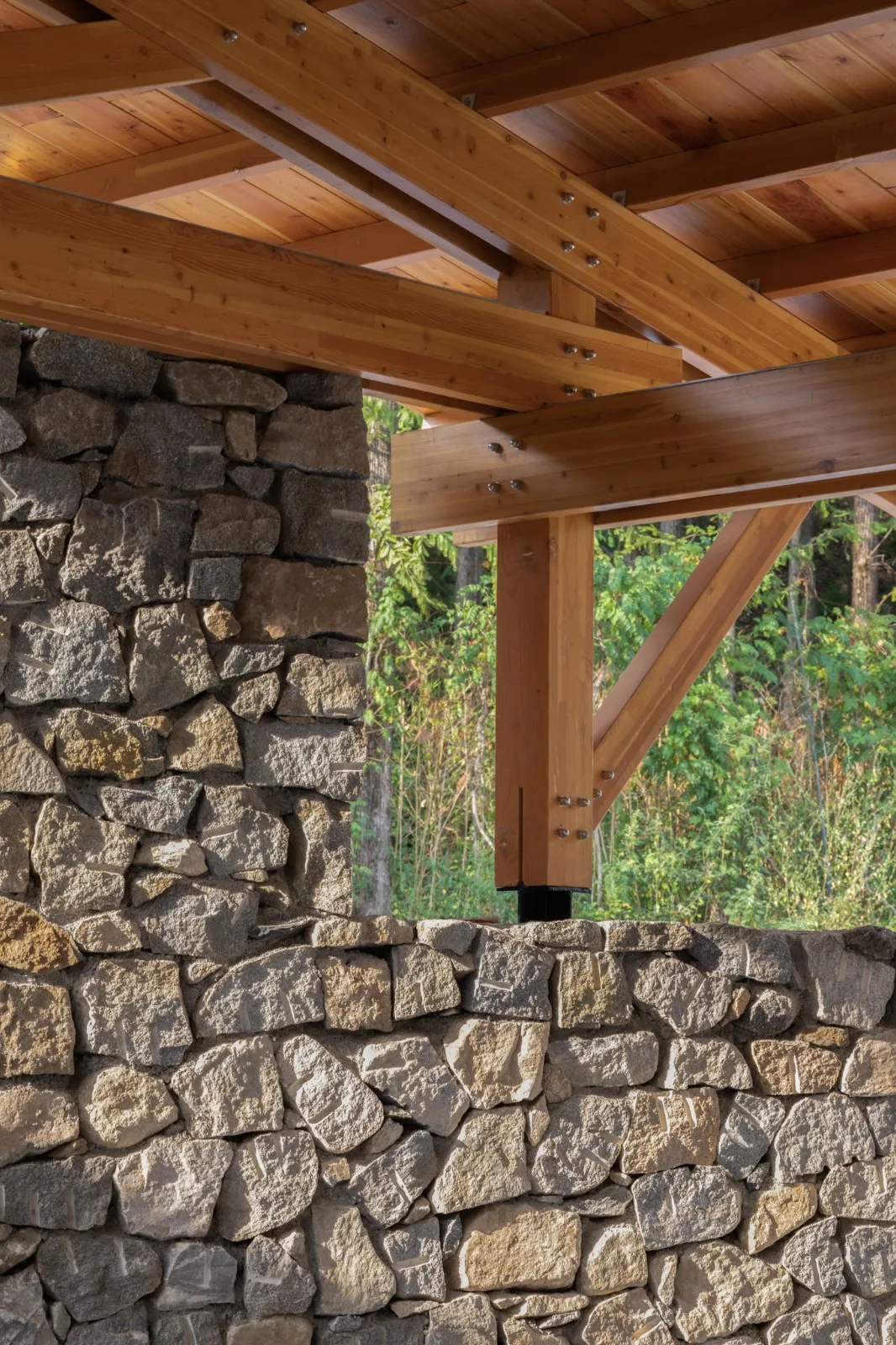
Contrast between rough stone walls and delicate wooden structures © Wu Ang
Feeling and Logic
While the plan’s creative process was swift, construction often involves material and detail considerations, leading to differences between concept and execution. Design language is grounded in rigorous logic, clear thinking, and precise technique, yet it must also embrace ambiguity and variation.
We aim for the buildings we design to be appreciated by users, but without overly explicit connotations. In this project, clear design logic coexists with emotional spatial perception. For instance, we deliberated extensively on corridor railing treatments, testing various forms in the model. Ultimately, we chose lightweight gray iron railings to minimize their presence and harmonize with the overall gray palette.
Throughout creation, thought oscillates between logic and feeling, even during construction. Final decisions result from this ongoing interplay.
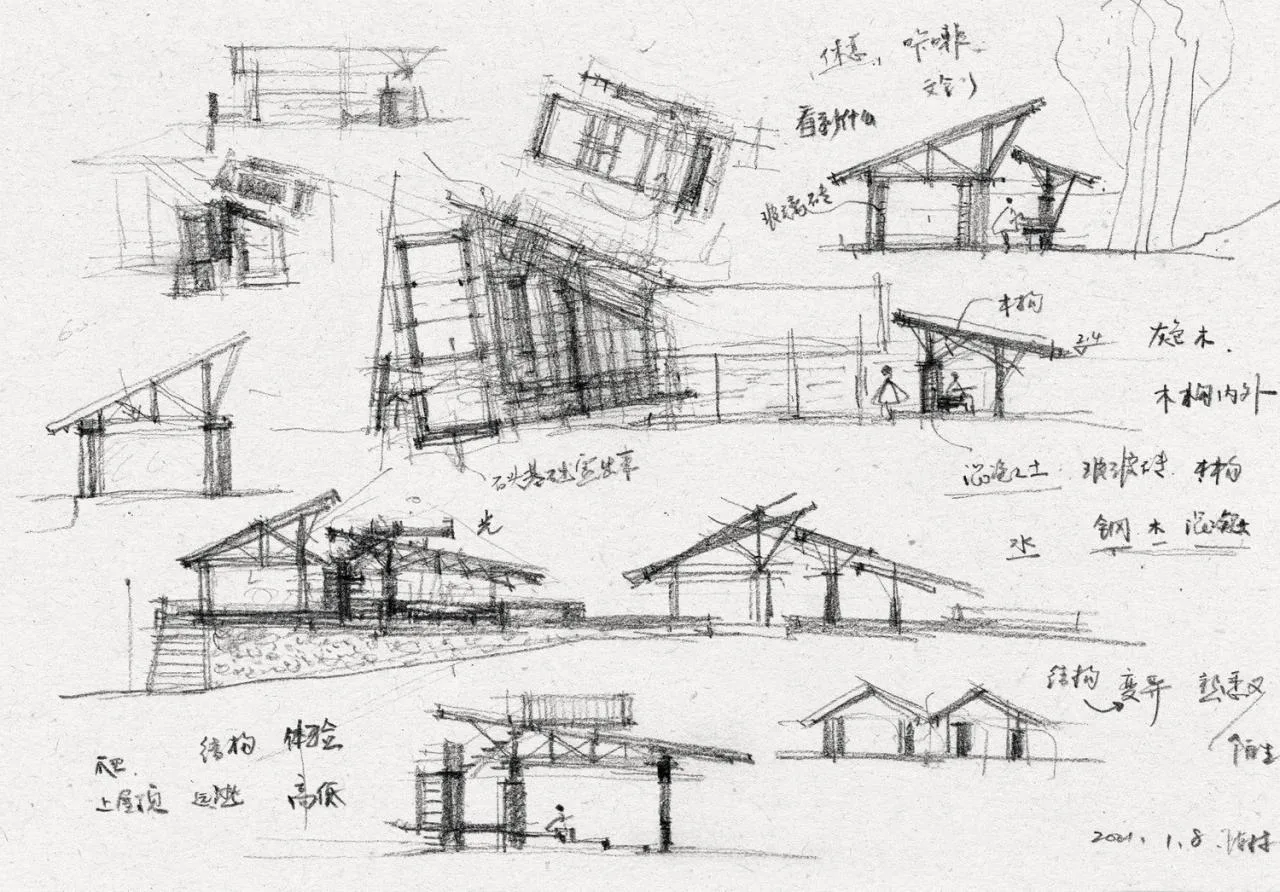
△ Hand-drawn sketch by Chen Lin © Jianlin Architecture
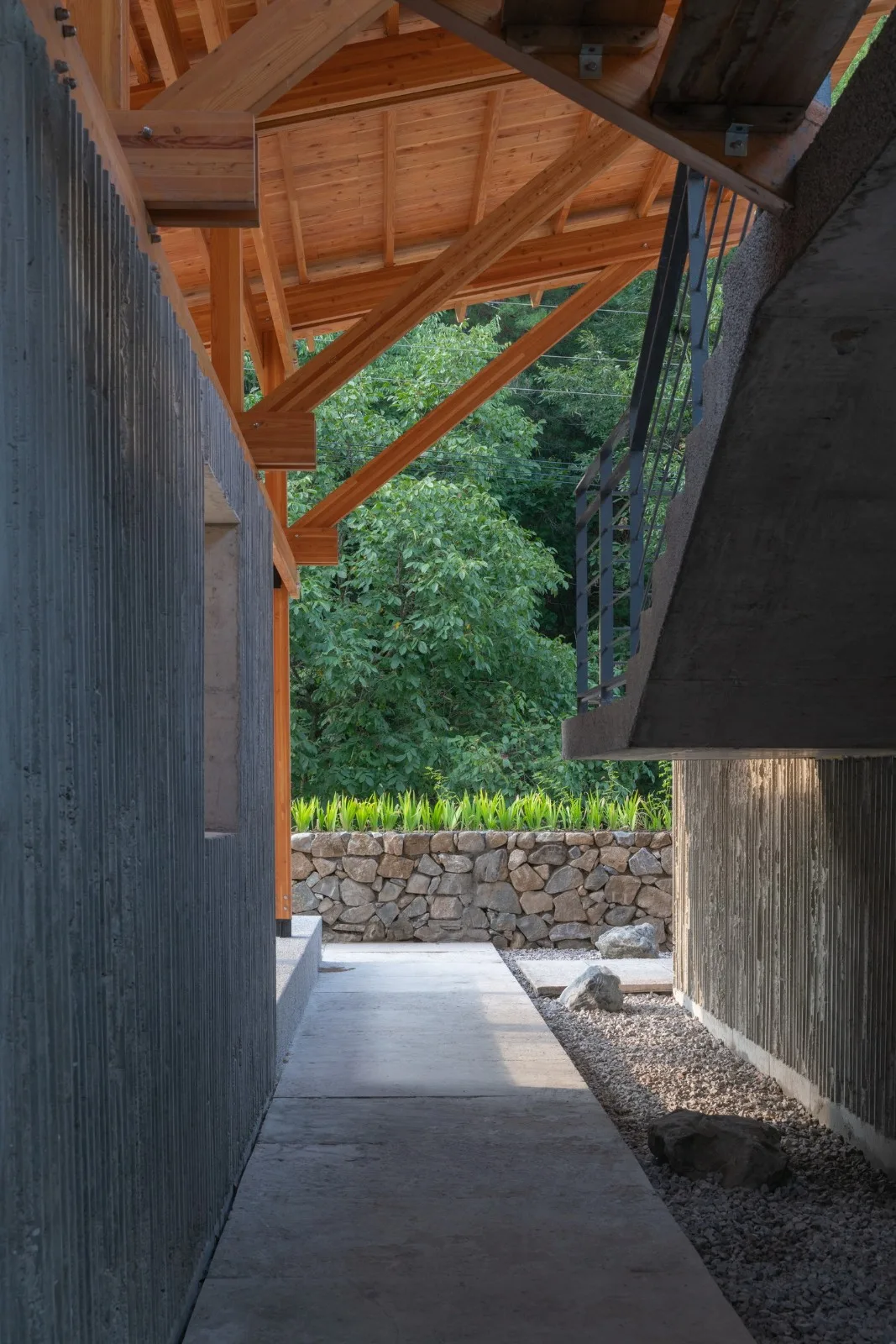
△ Peaceful light and shadow space environment © Zhao Yilong
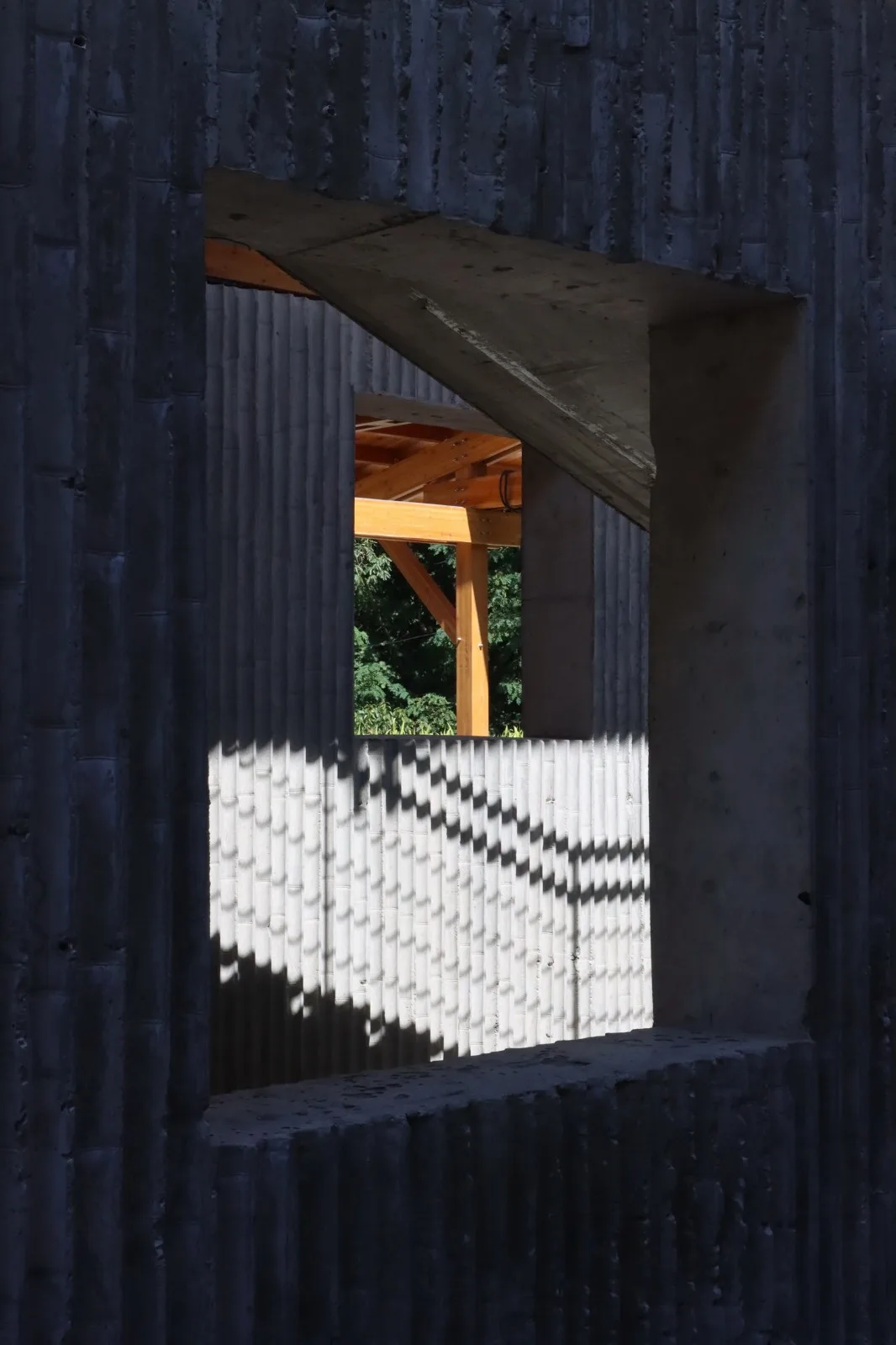
At 3 pm, the shadow patterns of the railing and wooden joints are projected through the entrance © Jianlin Architecture
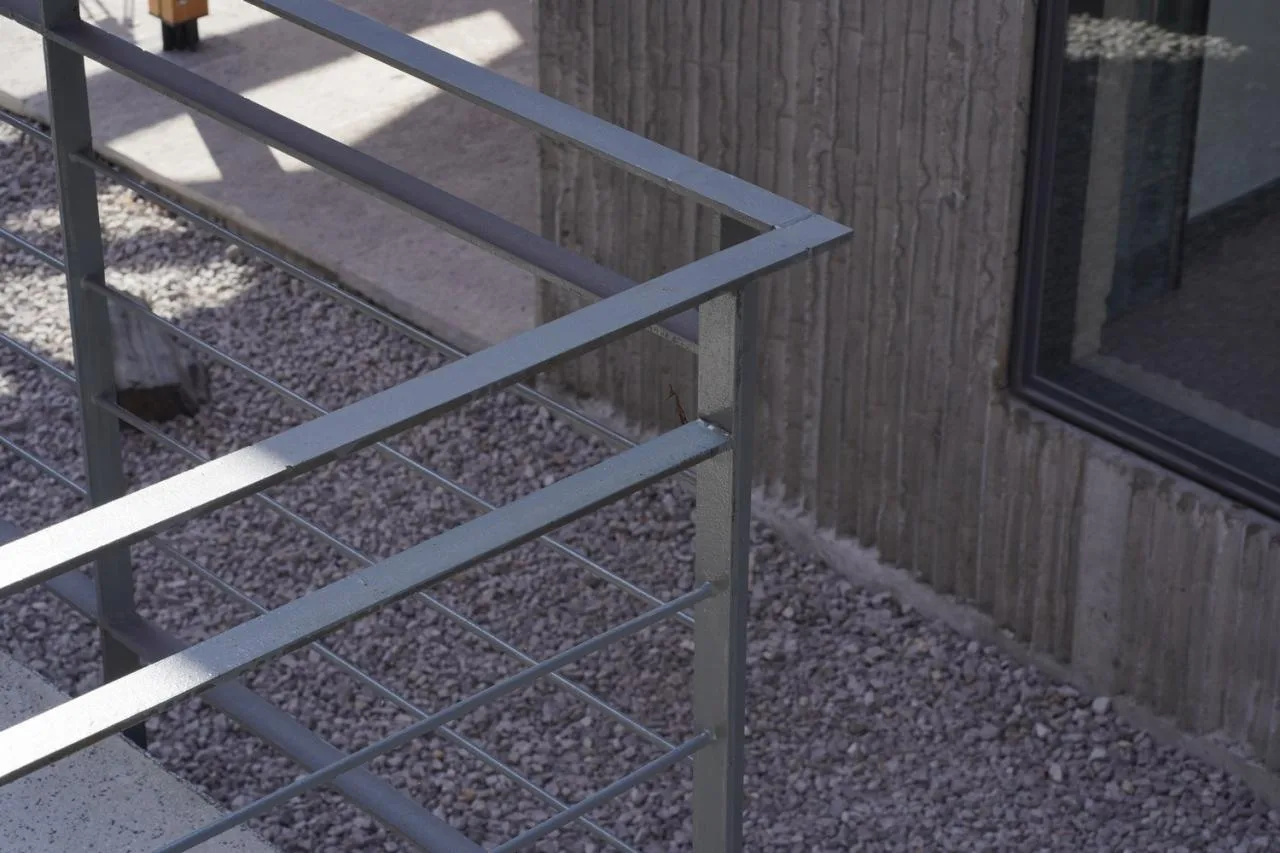
Details of stair railings © Jianlin Architecture
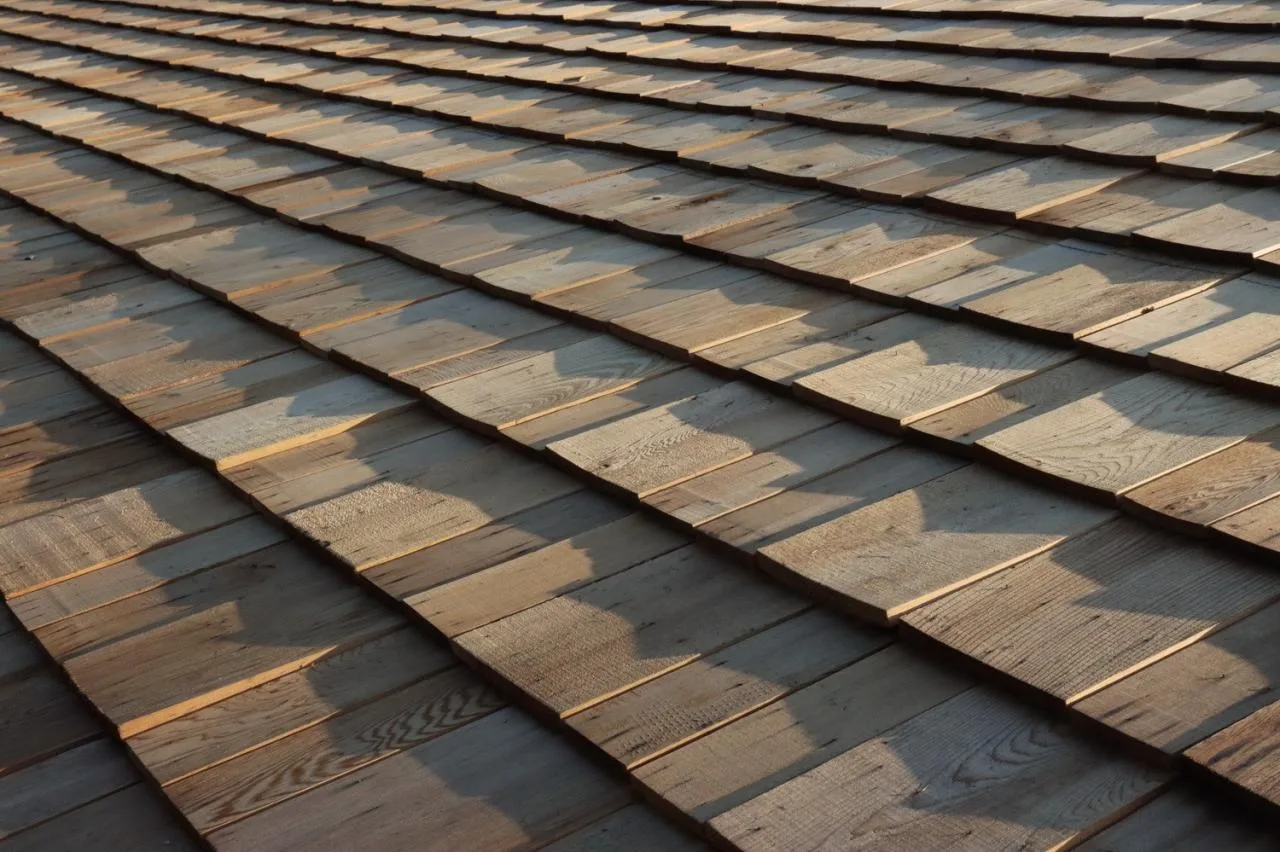
Under the setting sun, the wooden tile roof casts fish scale-like shadows © Jianlin Architecture
Public Use
Public accessibility is a key focus in our work, and public openness was fully considered in this building’s design. The enclosed indoor area is minimal, with most spaces open and inviting people to sit and chat freely anywhere. Public restrooms operate 24/7, and the spaces remain easily accessible. Evenings see many local residents gathering here to socialize.
We view the building’s construction not as an endpoint but as the beginning of an active, public life, where frequent use fully expresses its communal nature.
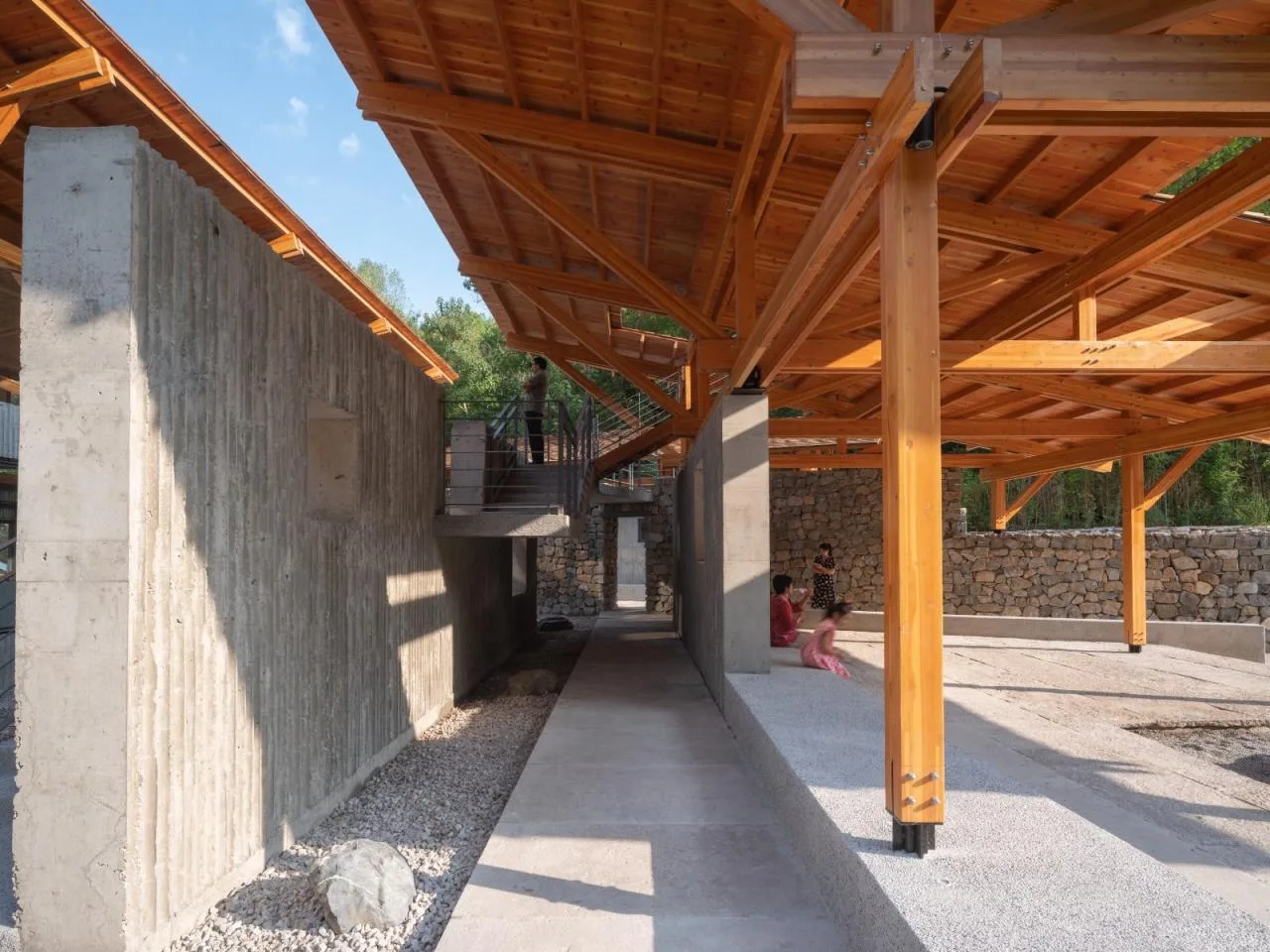
△ Public space where visitors can rest anywhere © Zhao Yilong
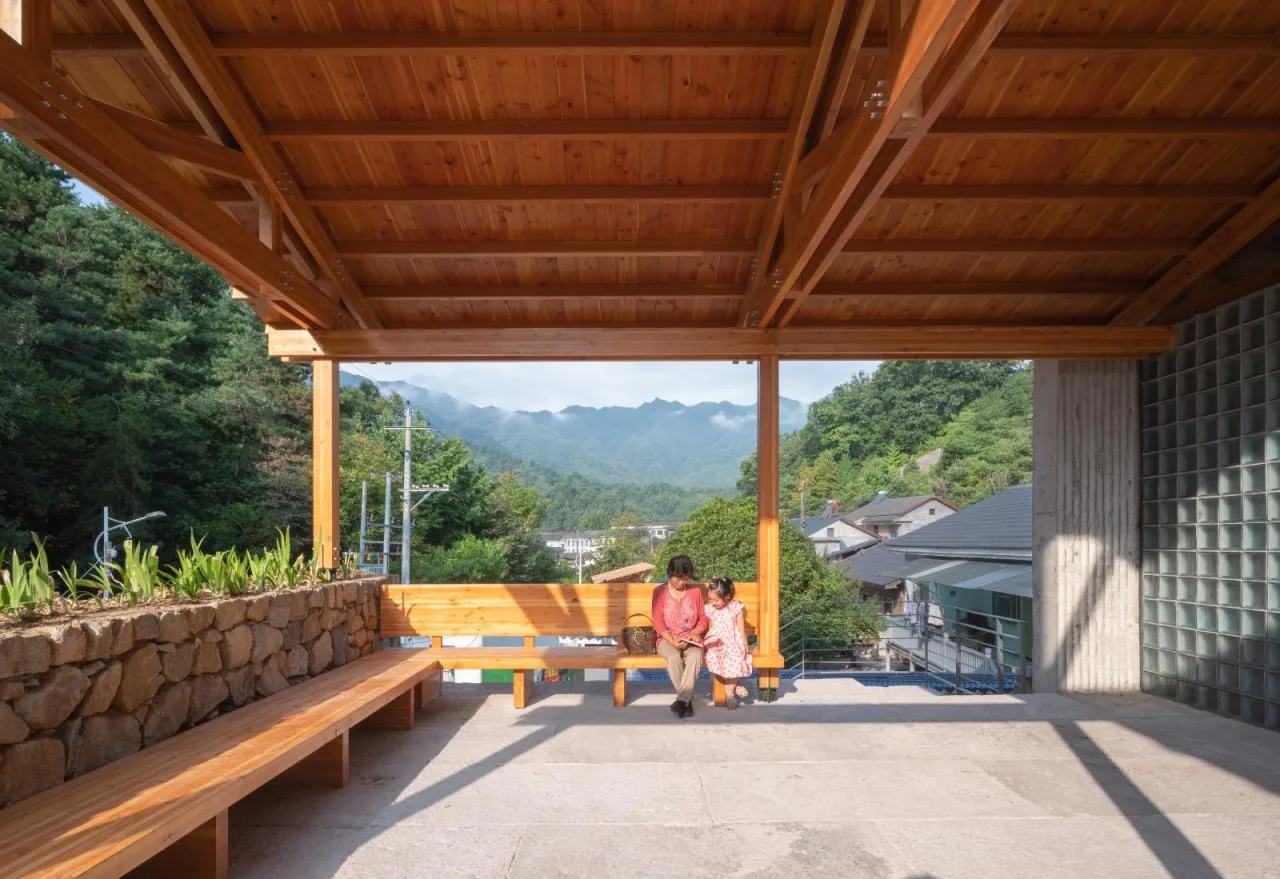
△ Pavilion and corridor for resting at the entrance © Zhao Yilong
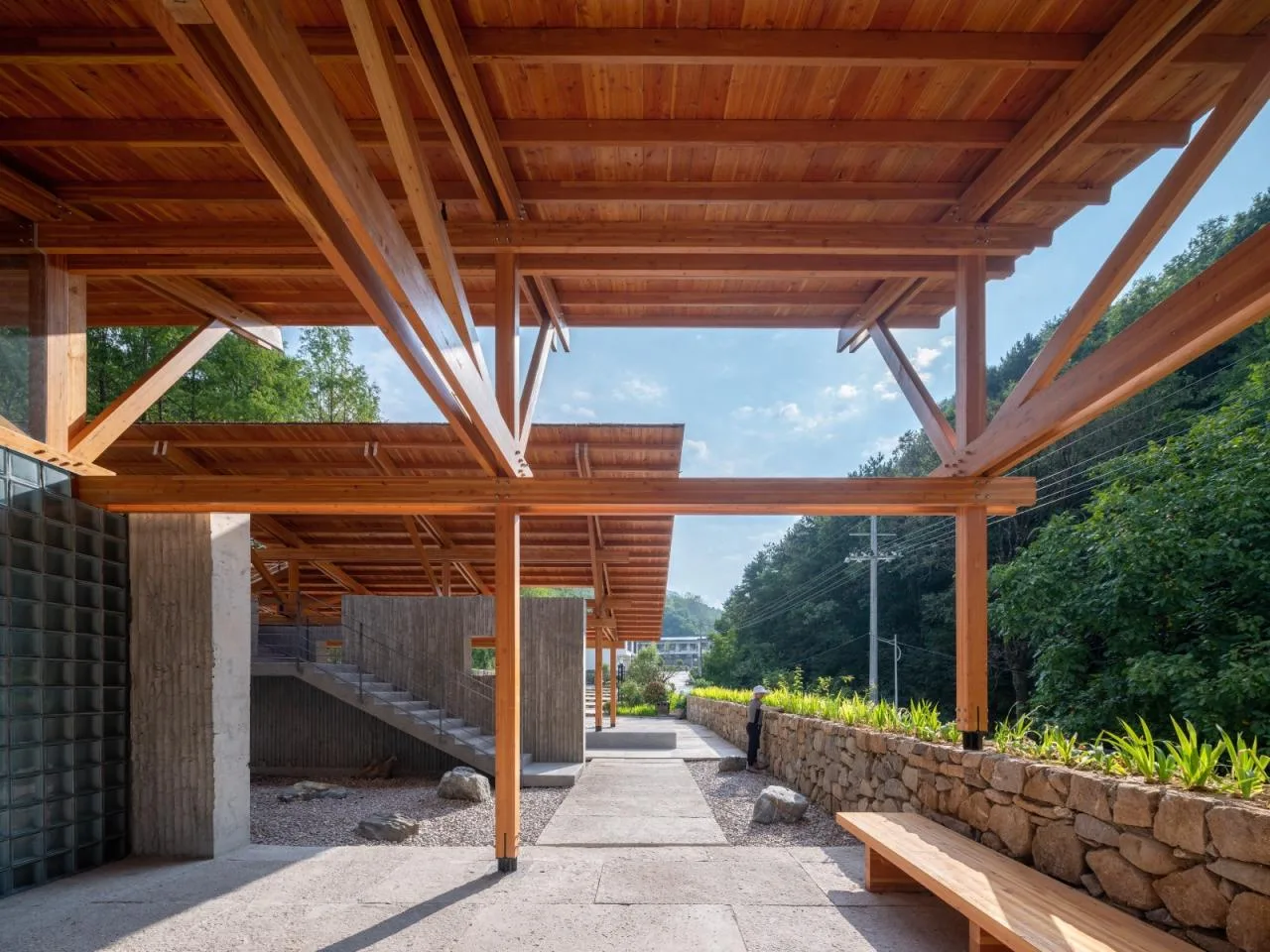
Space within the service center invites free lingering © Zhao Yilong
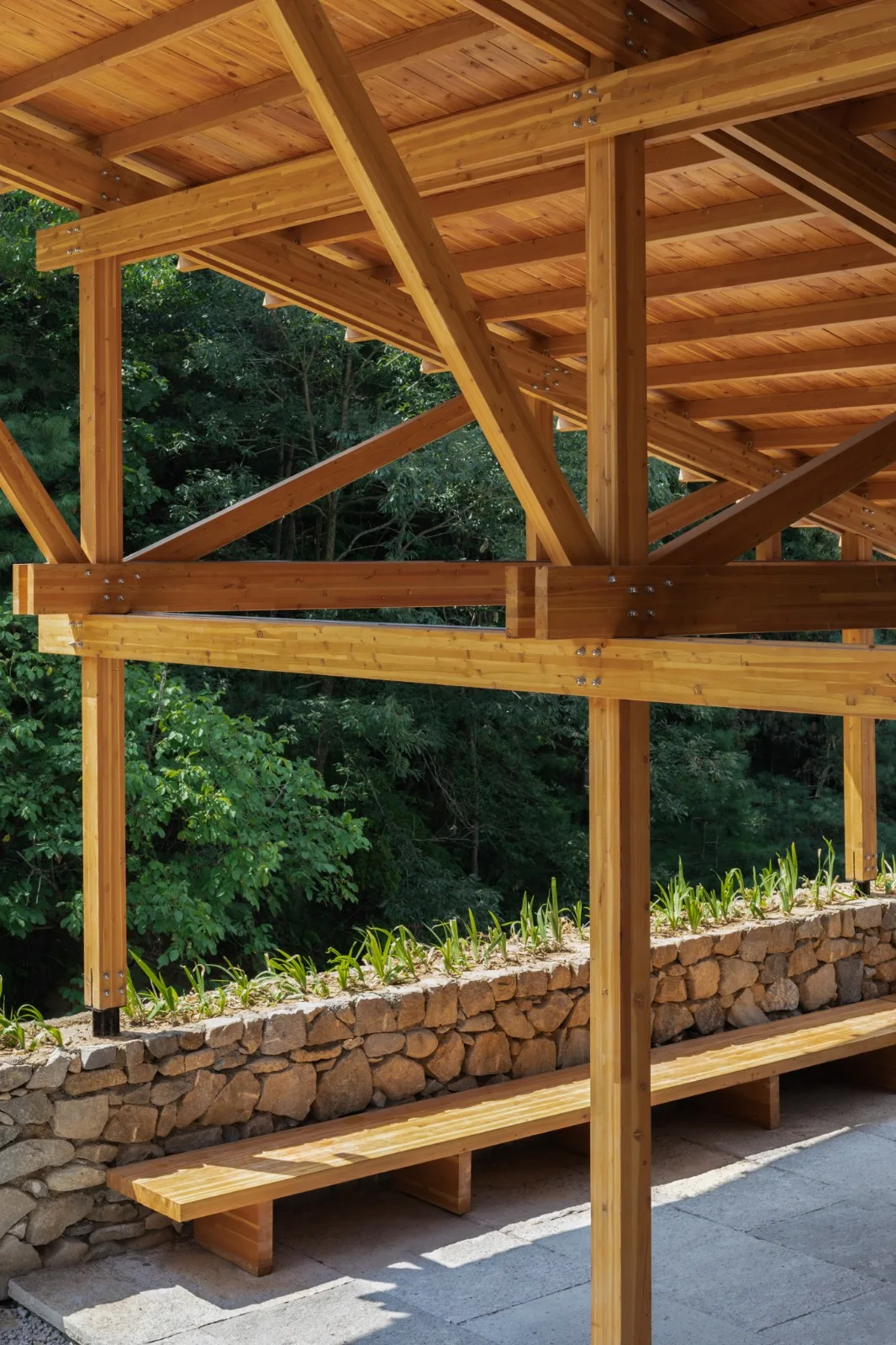
△ Public recreational seating under wooden roofs © Wu Ang
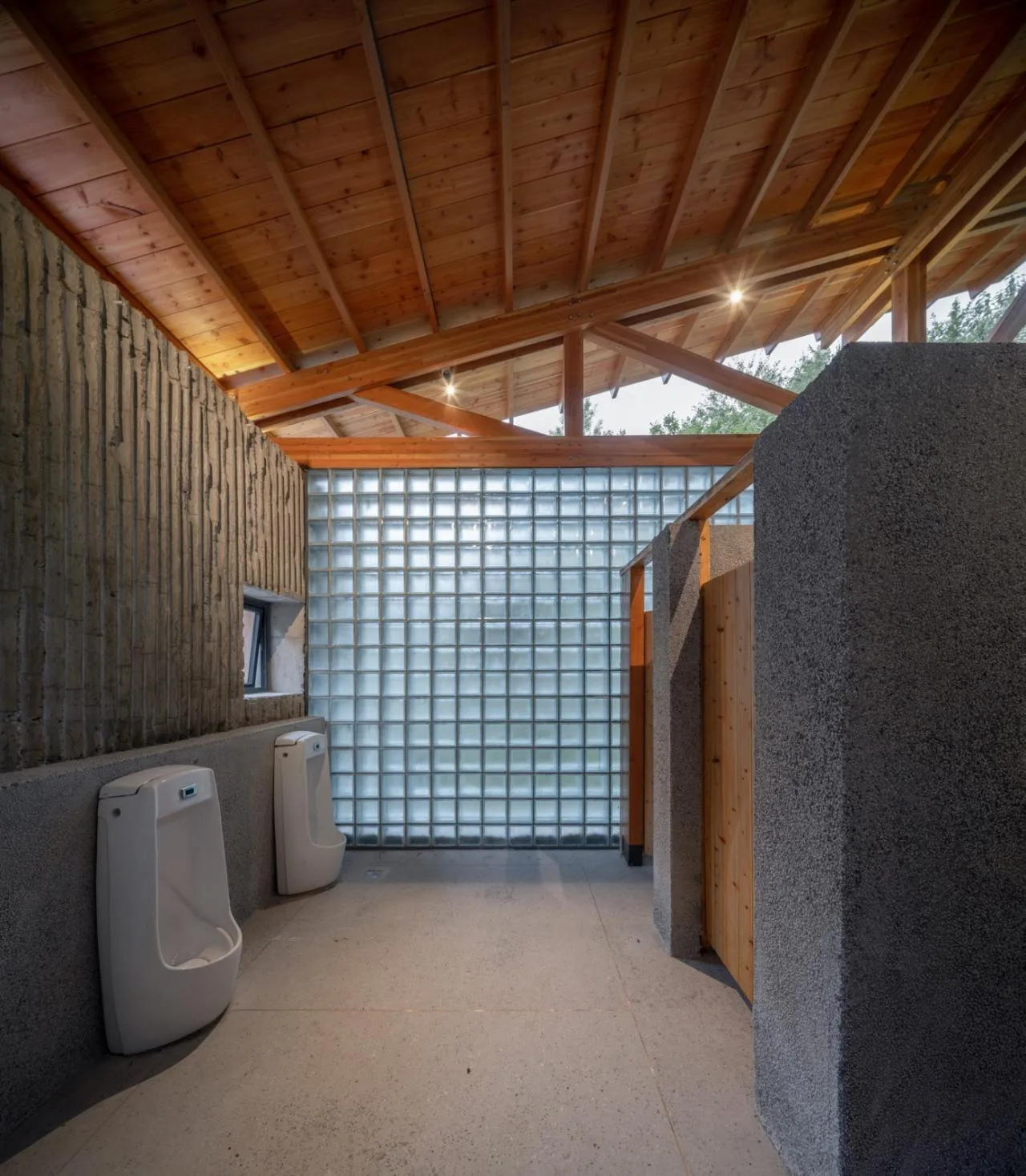
△ Interior scene of public restrooms © Zhao Yilong
Authentic Construction
Genuine construction evokes emotion, a pursuit consistently embraced by our firm. This building successfully embodies that ideal. From the outset, I aimed to present all spaces, structures, materials, and construction details in the most authentic and transparent way. I avoided decorative finishes, wanting visitors to imagine the construction process upon entering.
Stones were carefully laid from bottom to top; bamboo formwork concrete was cast in place; wooden structures were fabricated and assembled on-site; old stone slabs and glass bricks were installed piece by piece. This approach clearly communicates the entire construction process. Achieving such clear and authentic construction expression is, to me, the project’s greatest accomplishment.
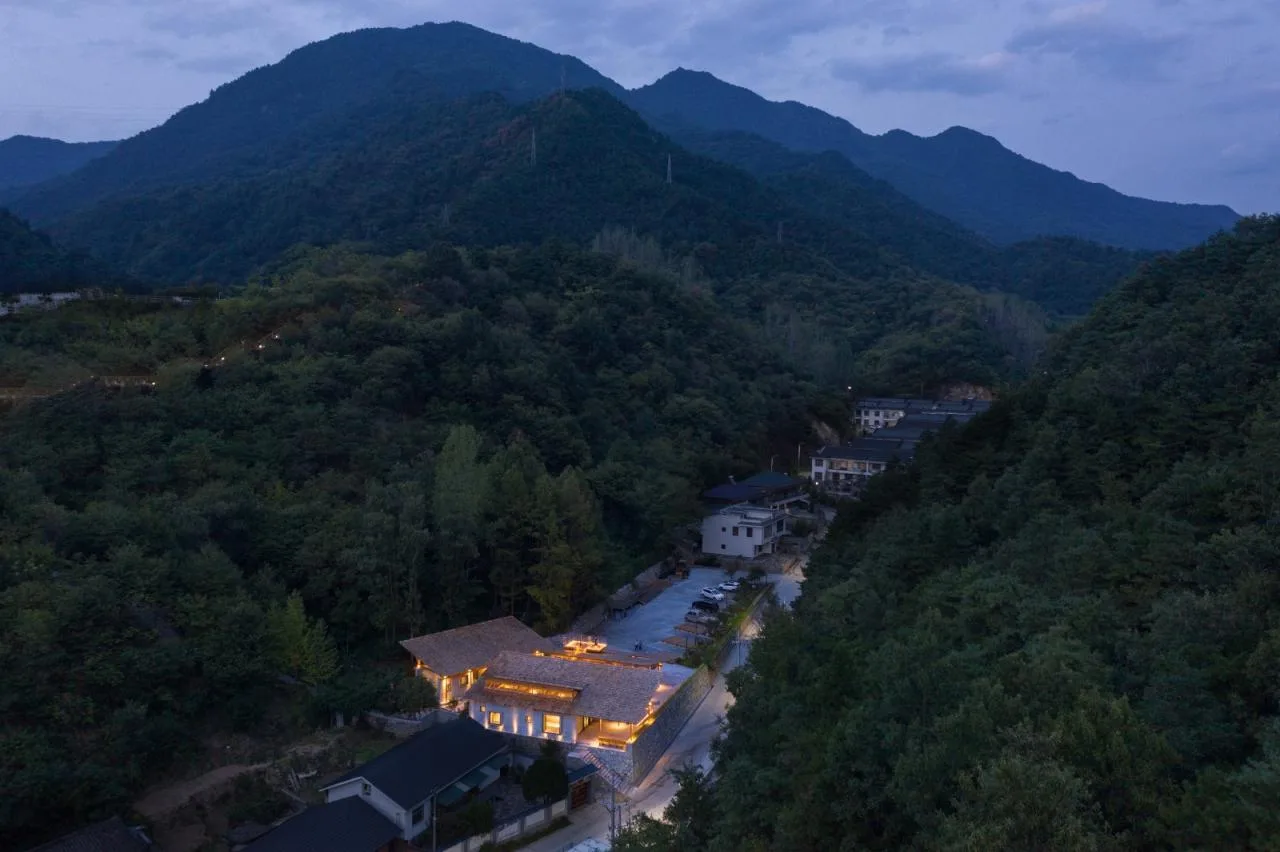
Bird’s-eye view toward the Qinling Mountains © Zhao Yilong
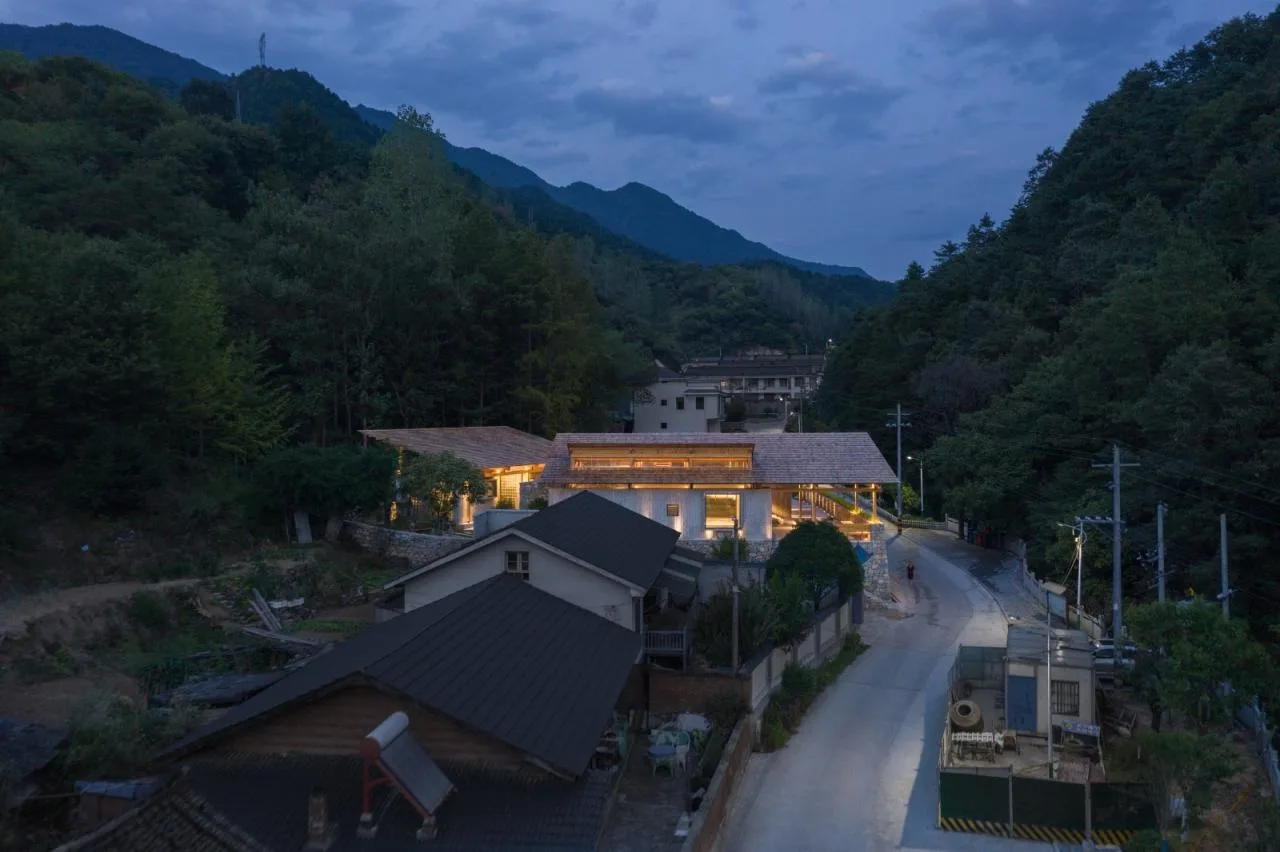
Multi-functional service center illuminated at night © Zhao Yilong
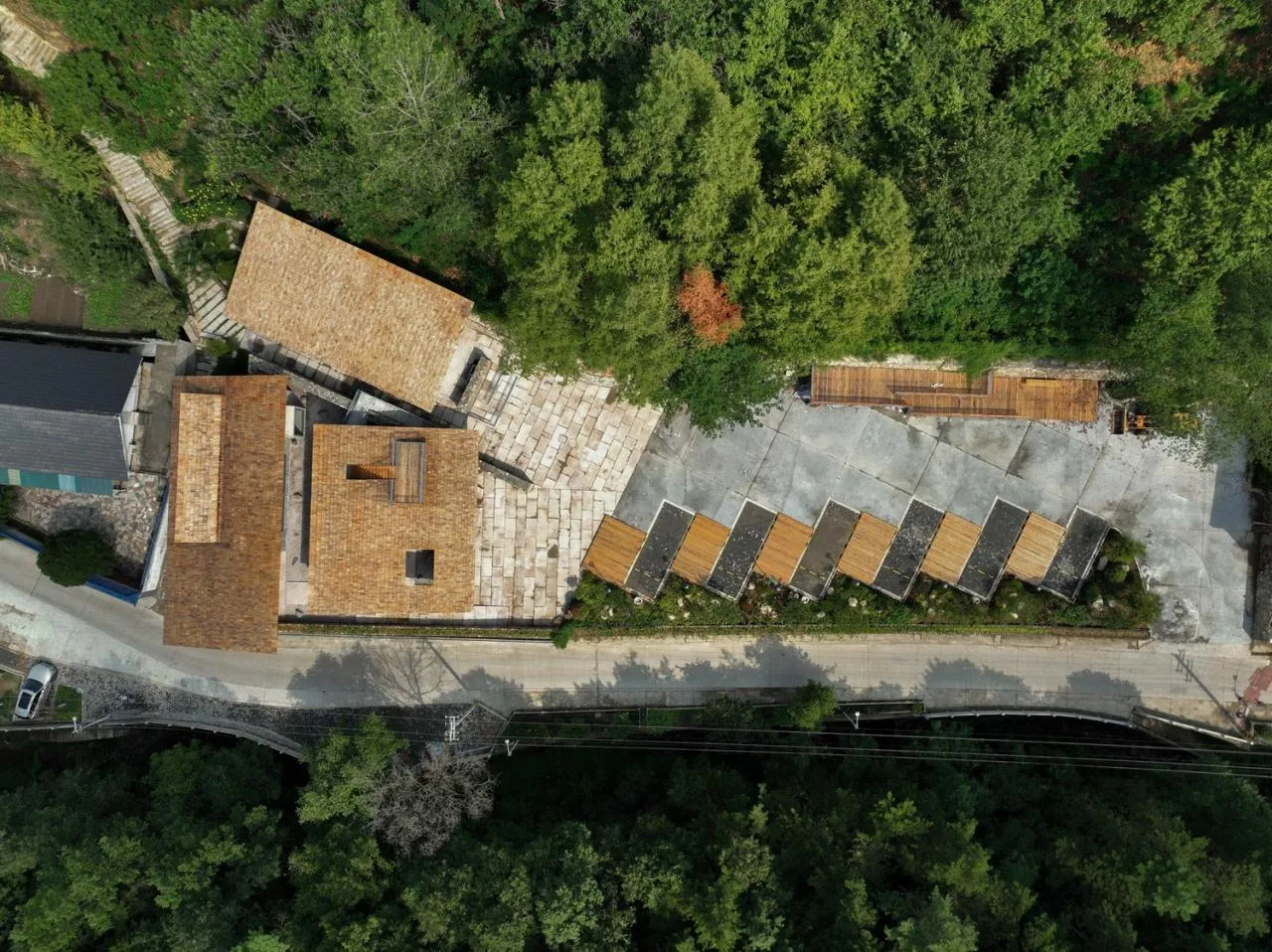
Overlooking the multifunctional service center and RV campsite © Wu Ang
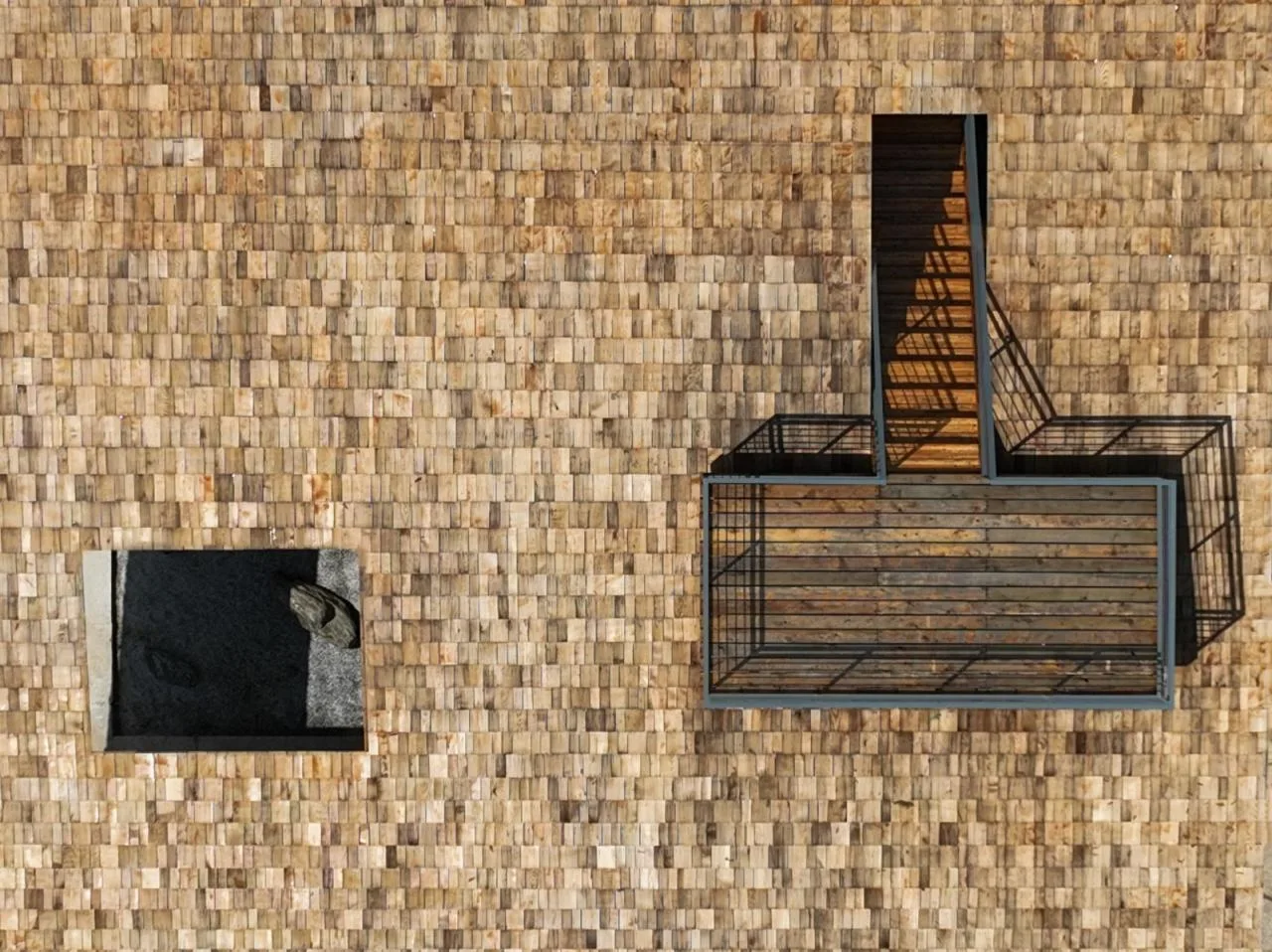
Texture changes and light and shadow effects on wooden roof houses © Wu Ang
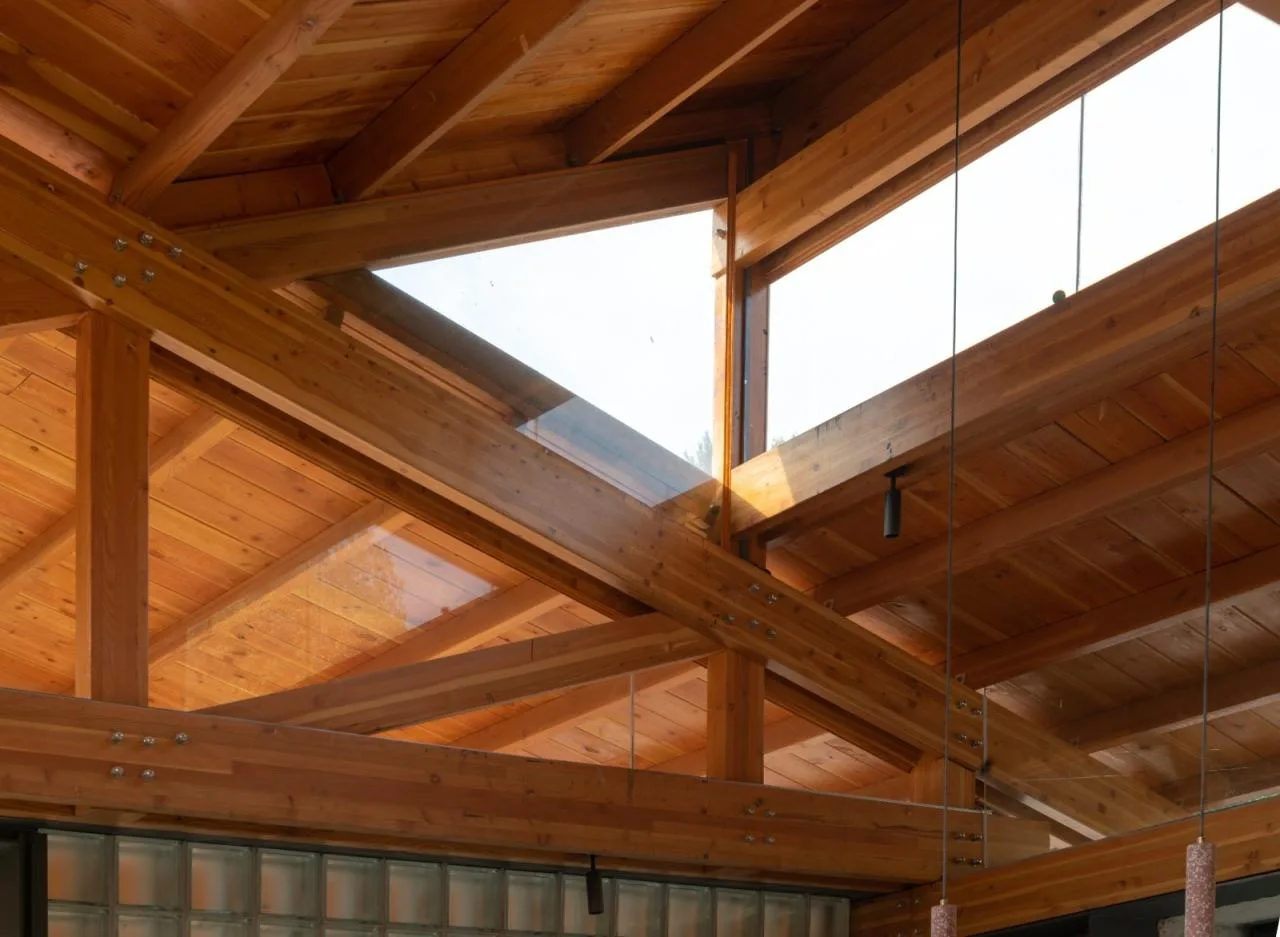
△ Glass-enclosed joints at high windows of wooden roof structure © Zhao Yilong
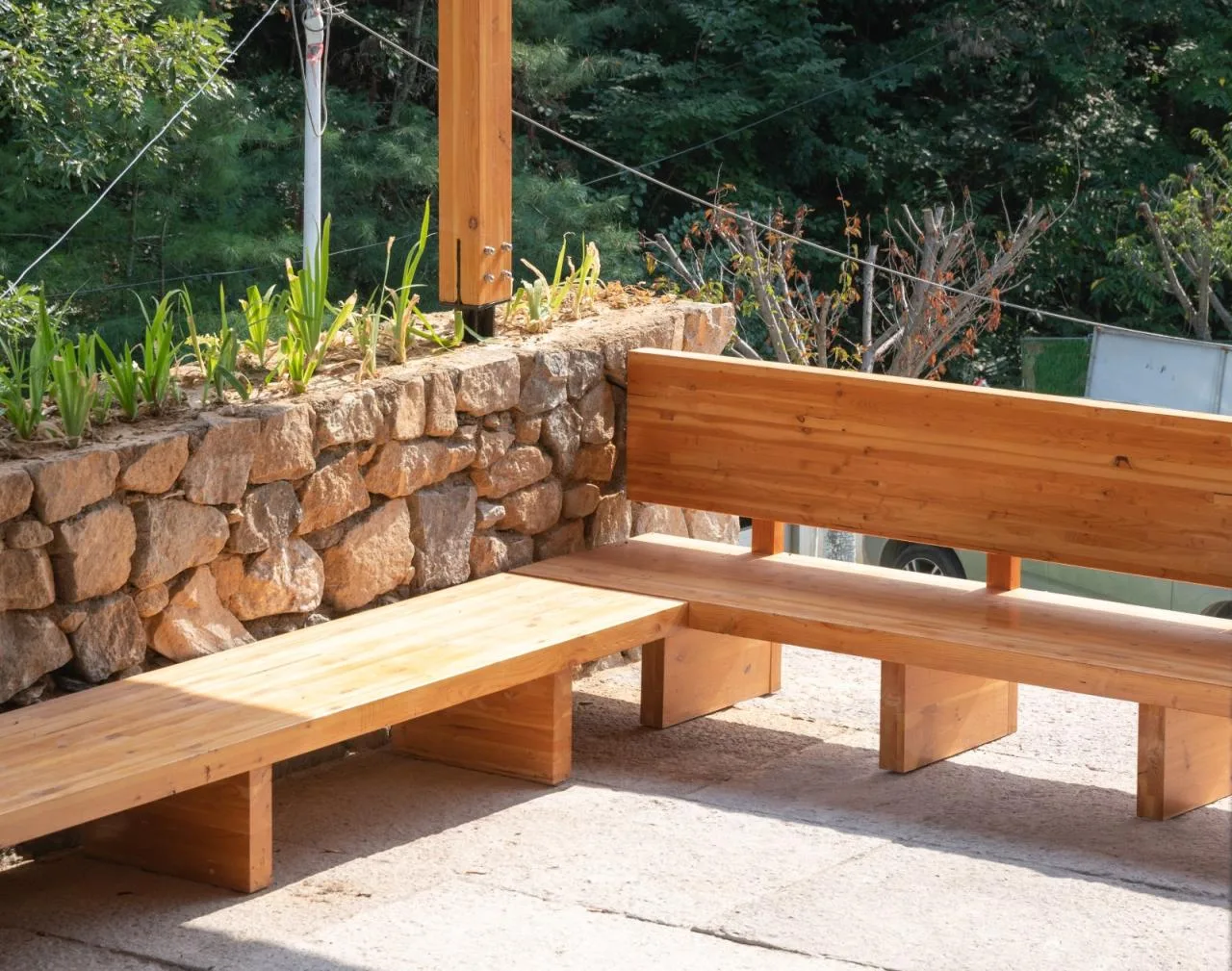
△ Solid wood stool © Zhao Yilong
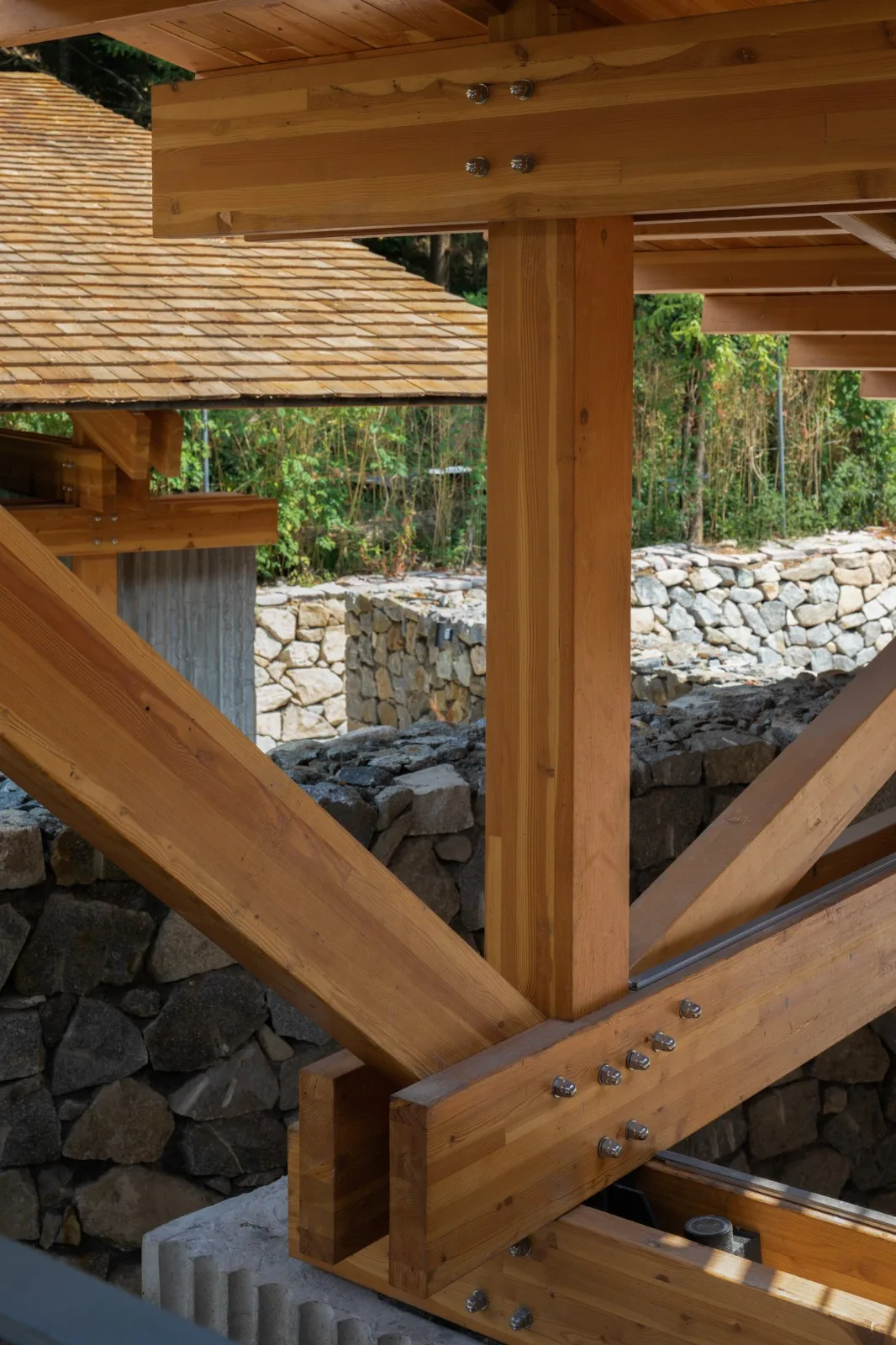
△ Wooden structure connection details © Wu Ang
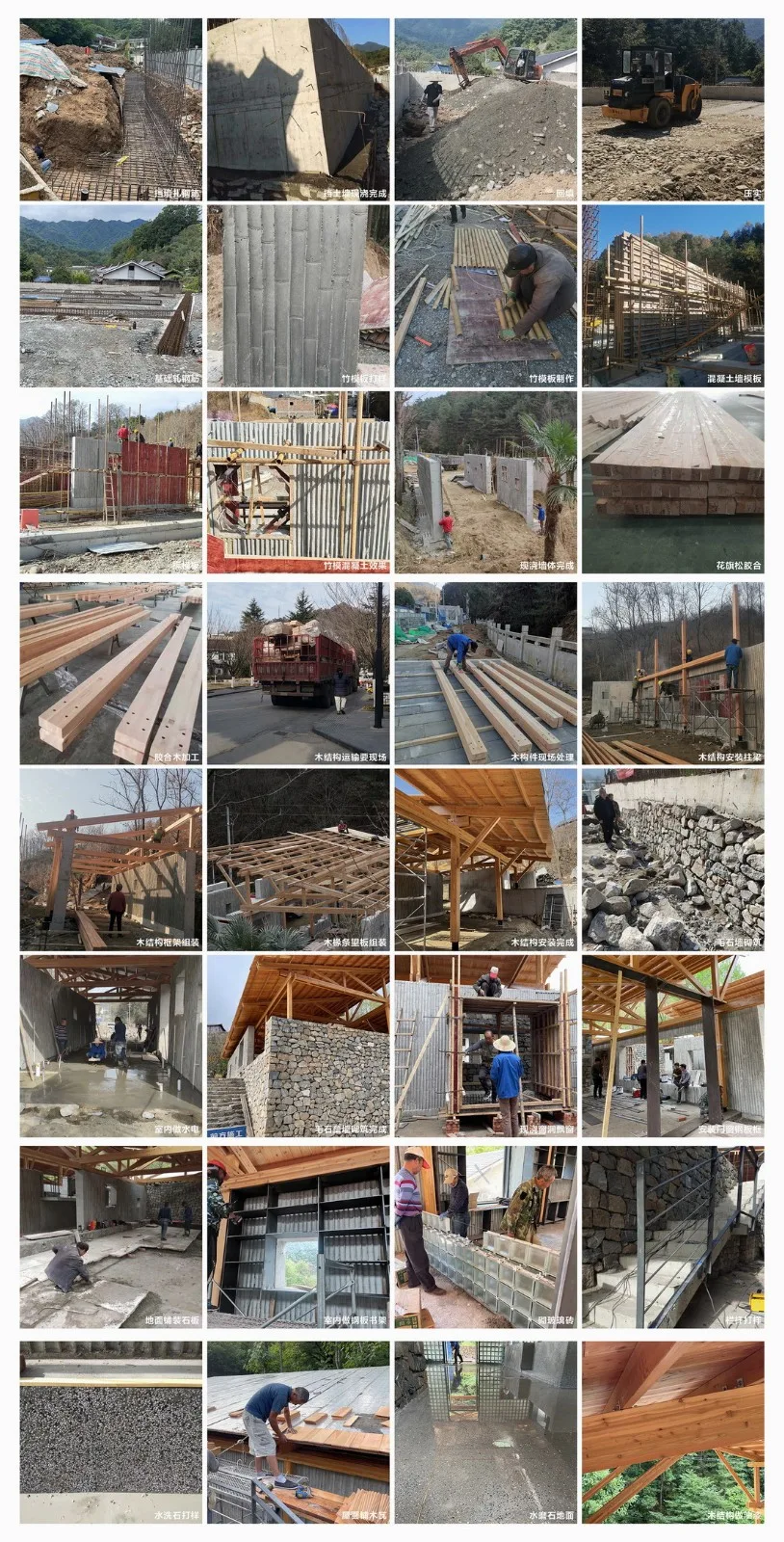
△ Communication records during construction © Jianlin Architecture
Project Drawings
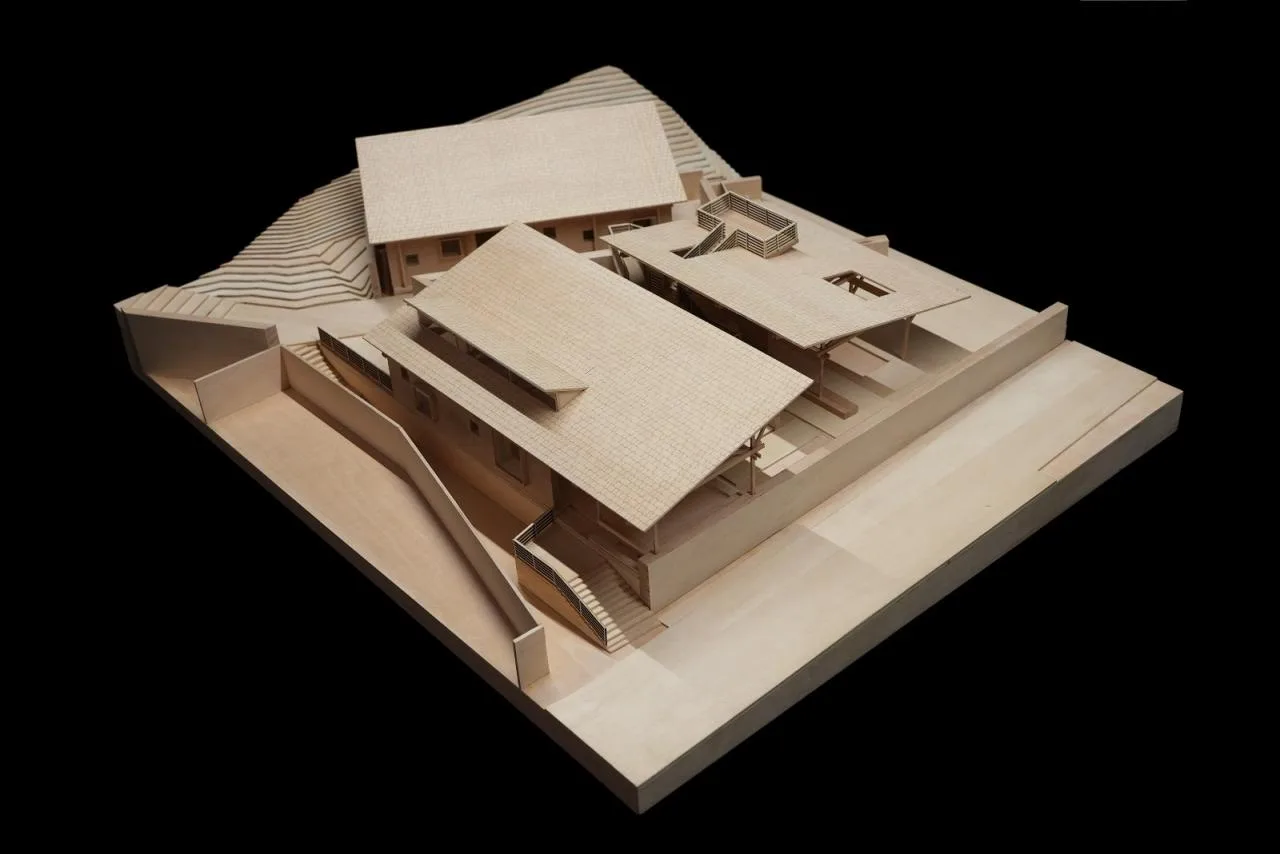
△ Model 1 © Jianlin Architecture
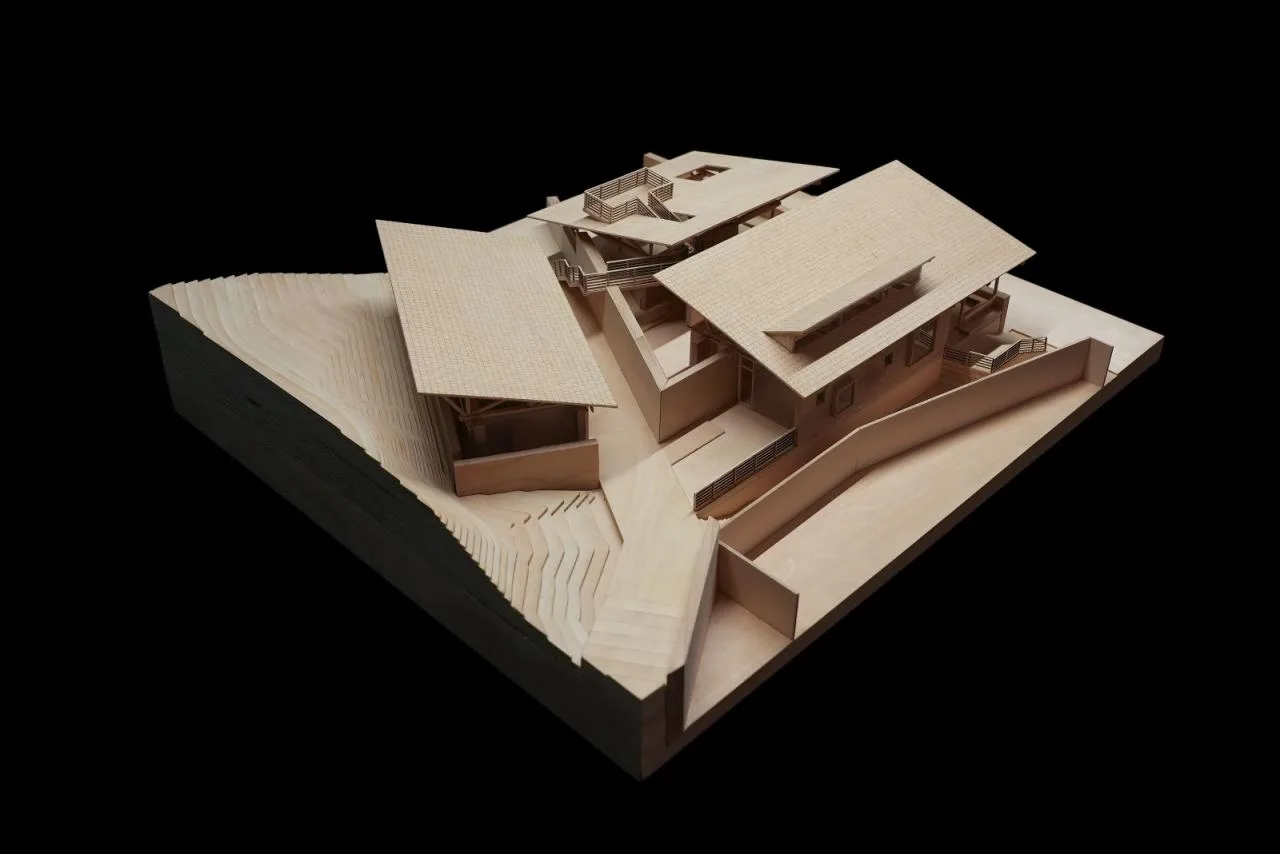
△ Model 2 © Jianlin Architecture
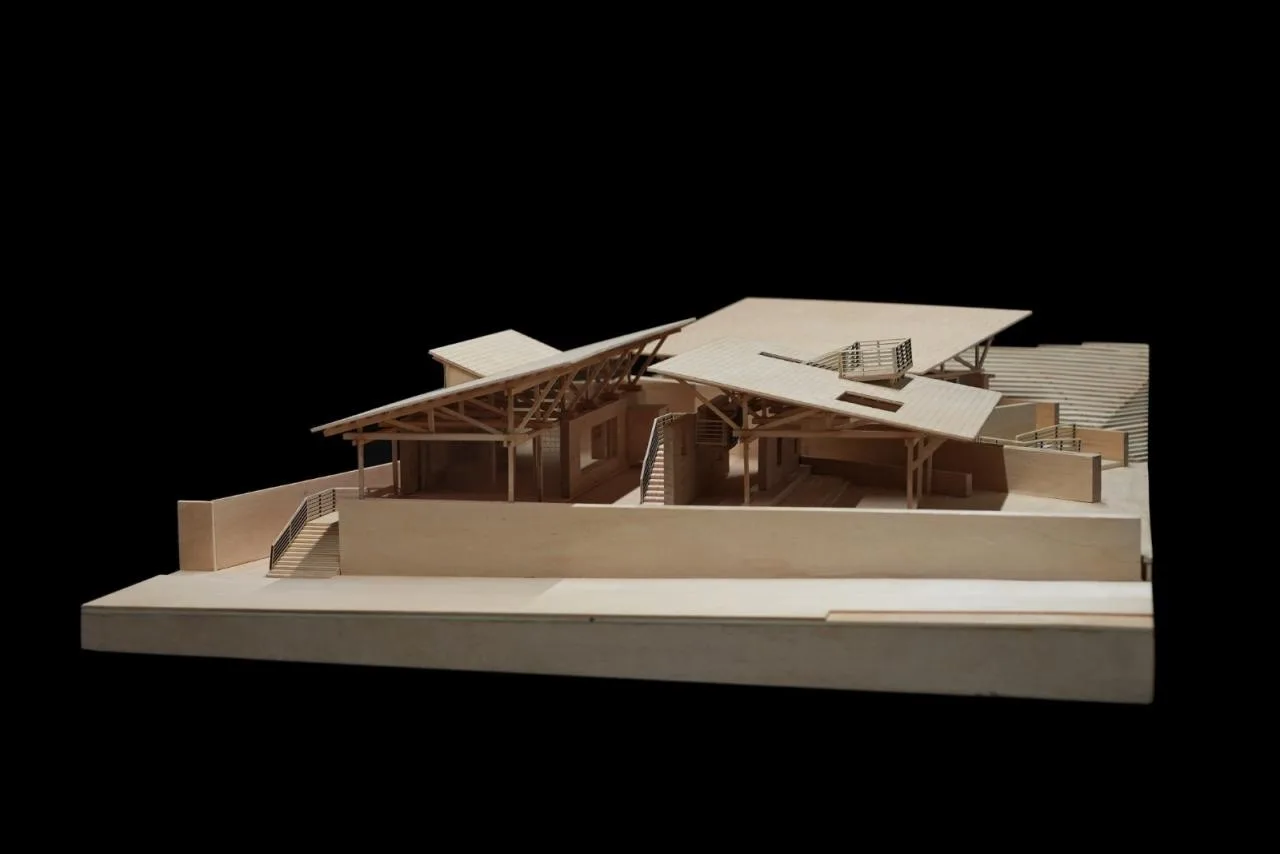
△ Model 3 © Jianlin Architecture
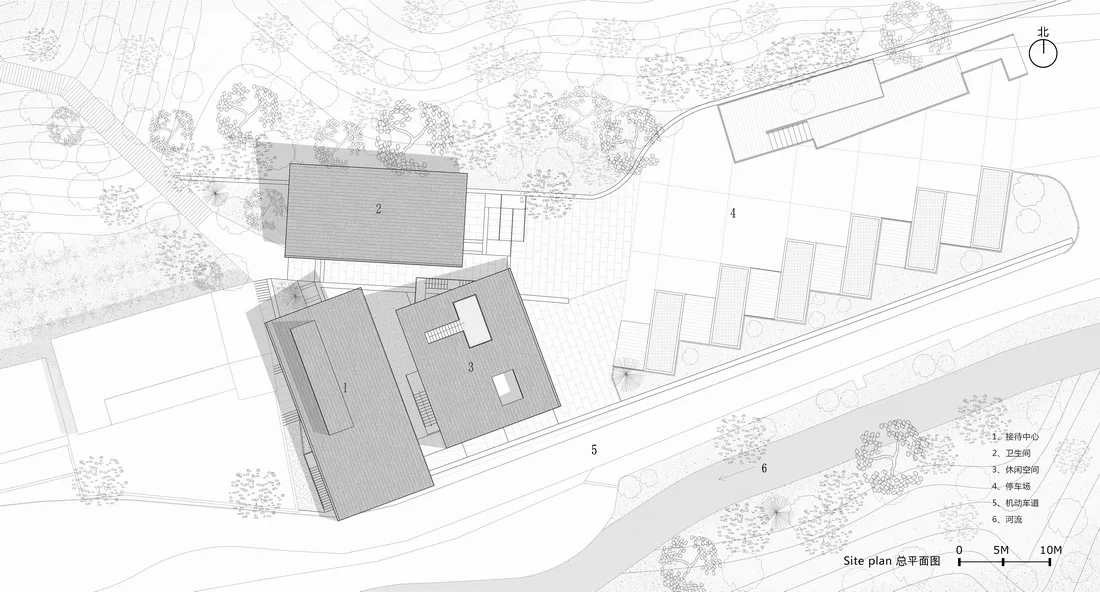
△ General layout plan © Jianlin Architecture
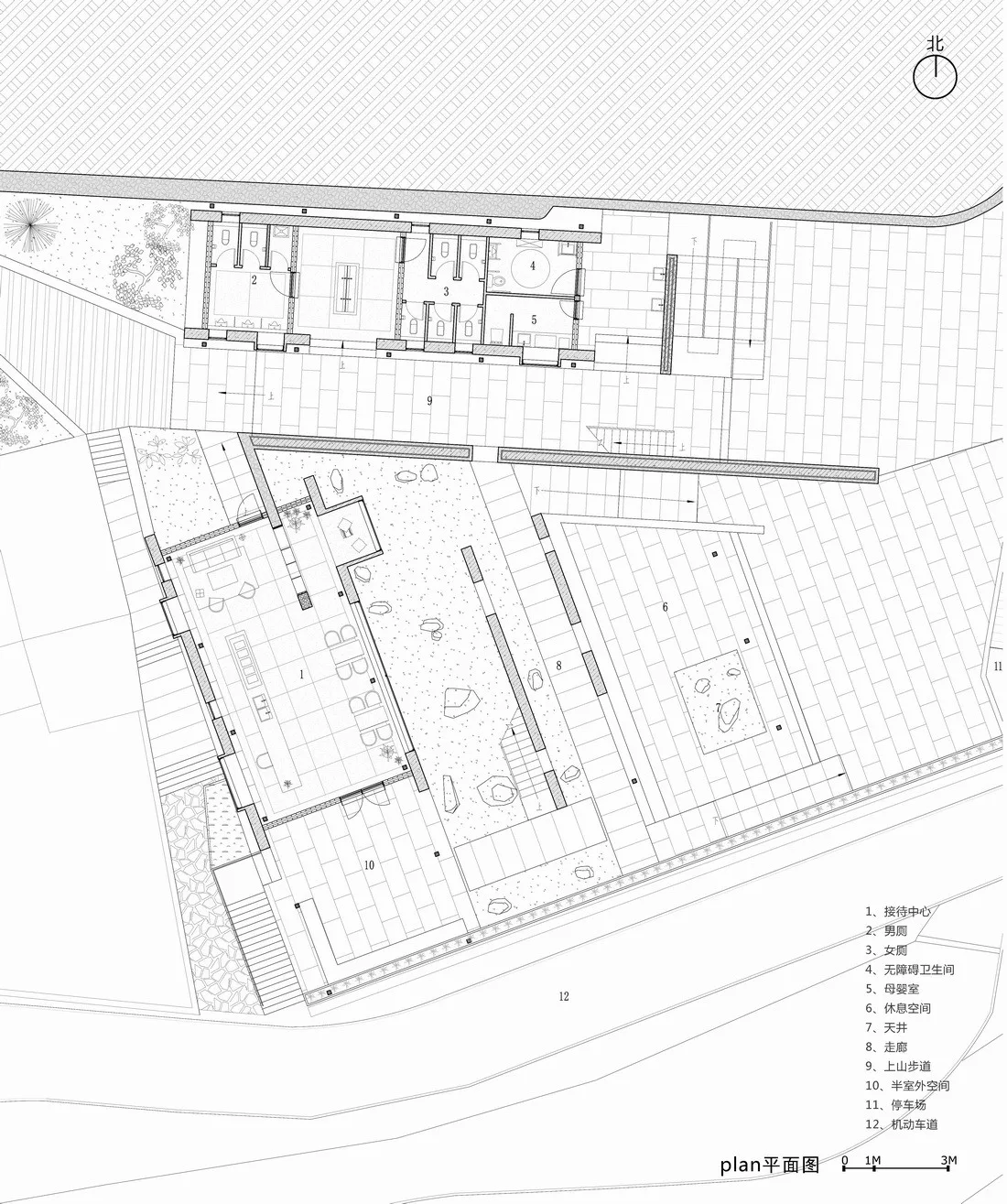
△ First floor plan © Jianlin Architecture
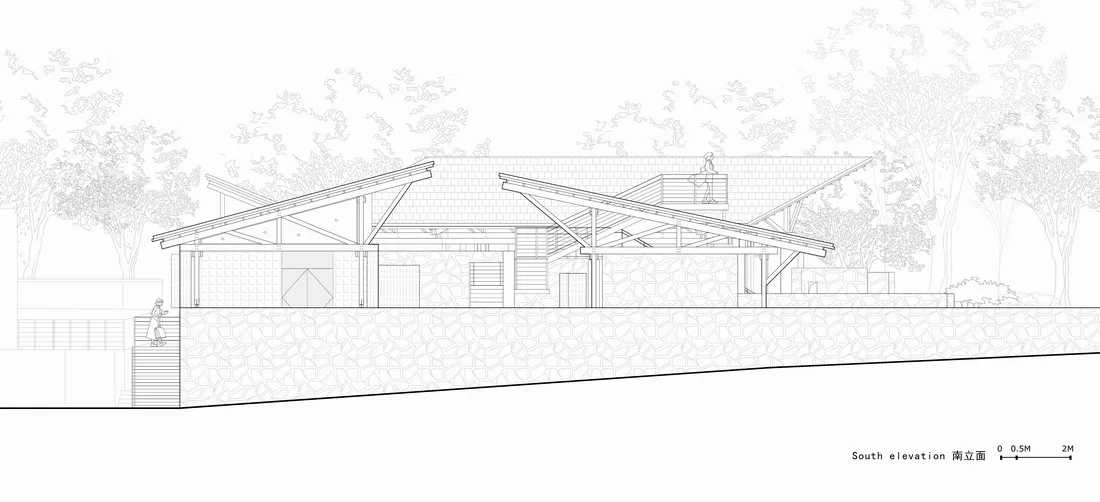
△ South facade © Jianlin Architecture
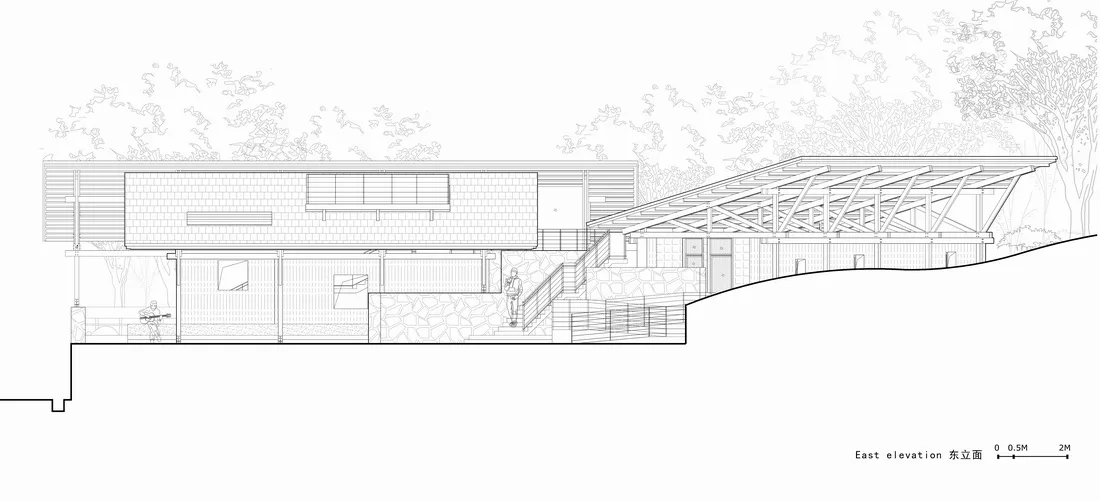
△ East facade © Jianlin Architecture
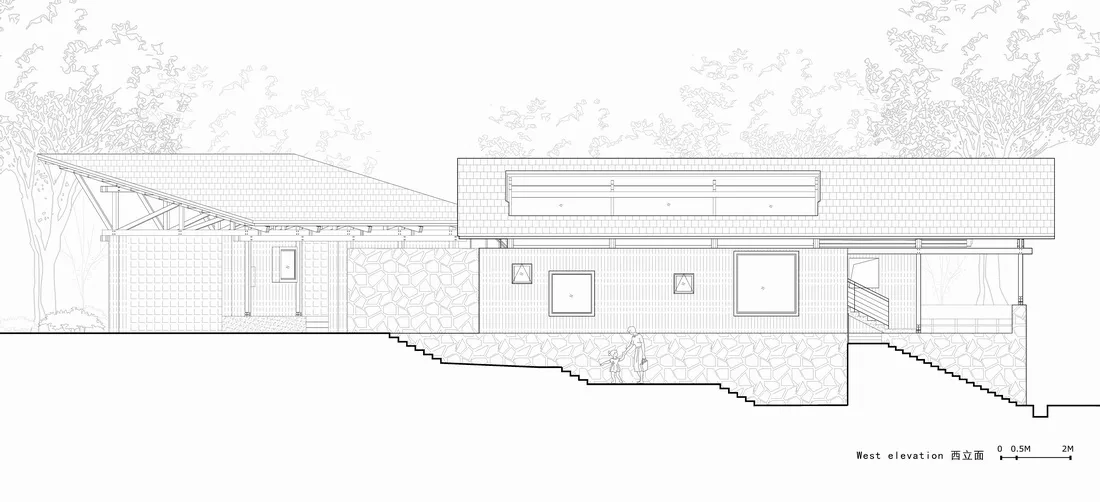
△ West facade © Jianlin Architecture
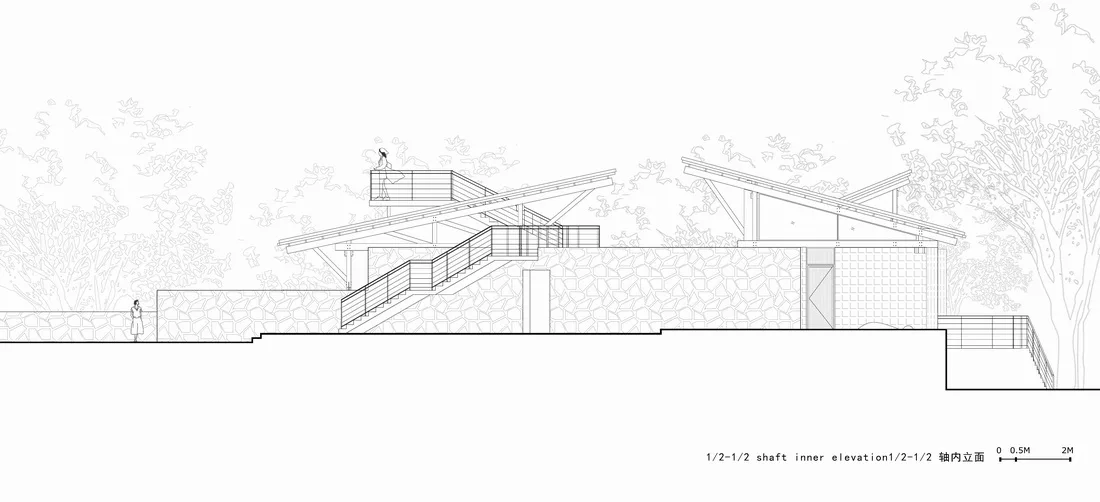
△ Axis inner facade © Jianlin Architecture
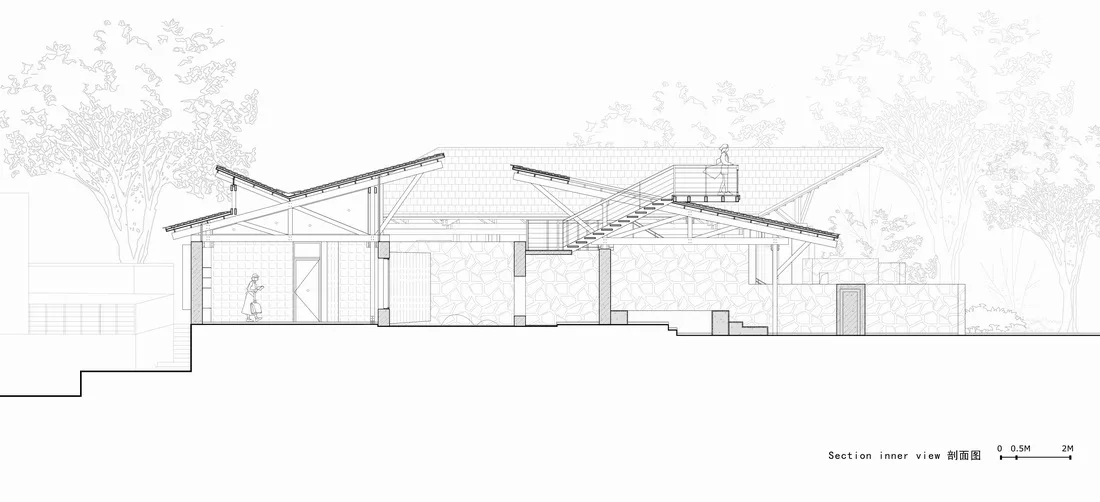
△ Section diagram © Jianlin Architecture
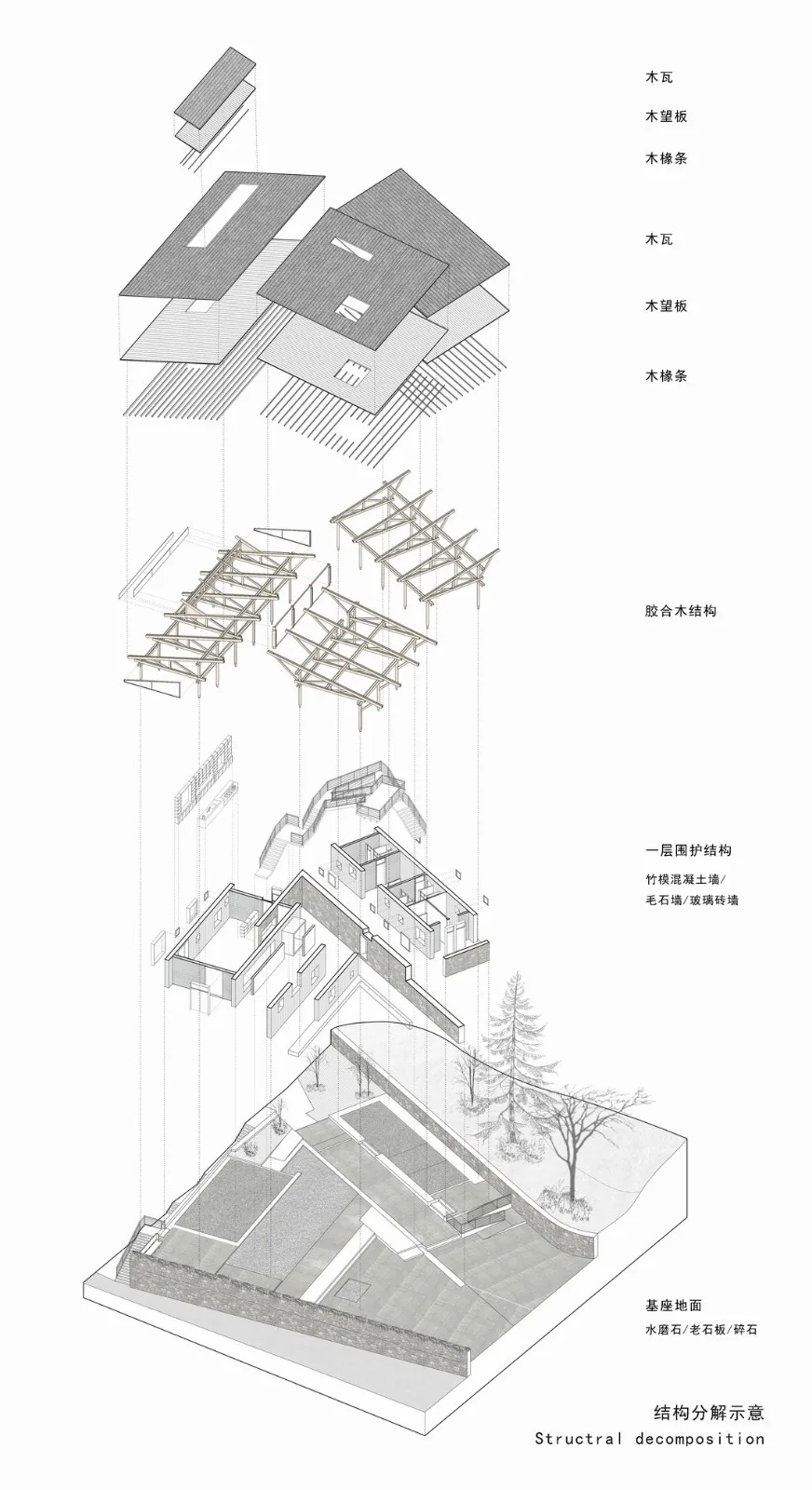
Schematic diagram of △ structural decomposition © Jianlin Architecture
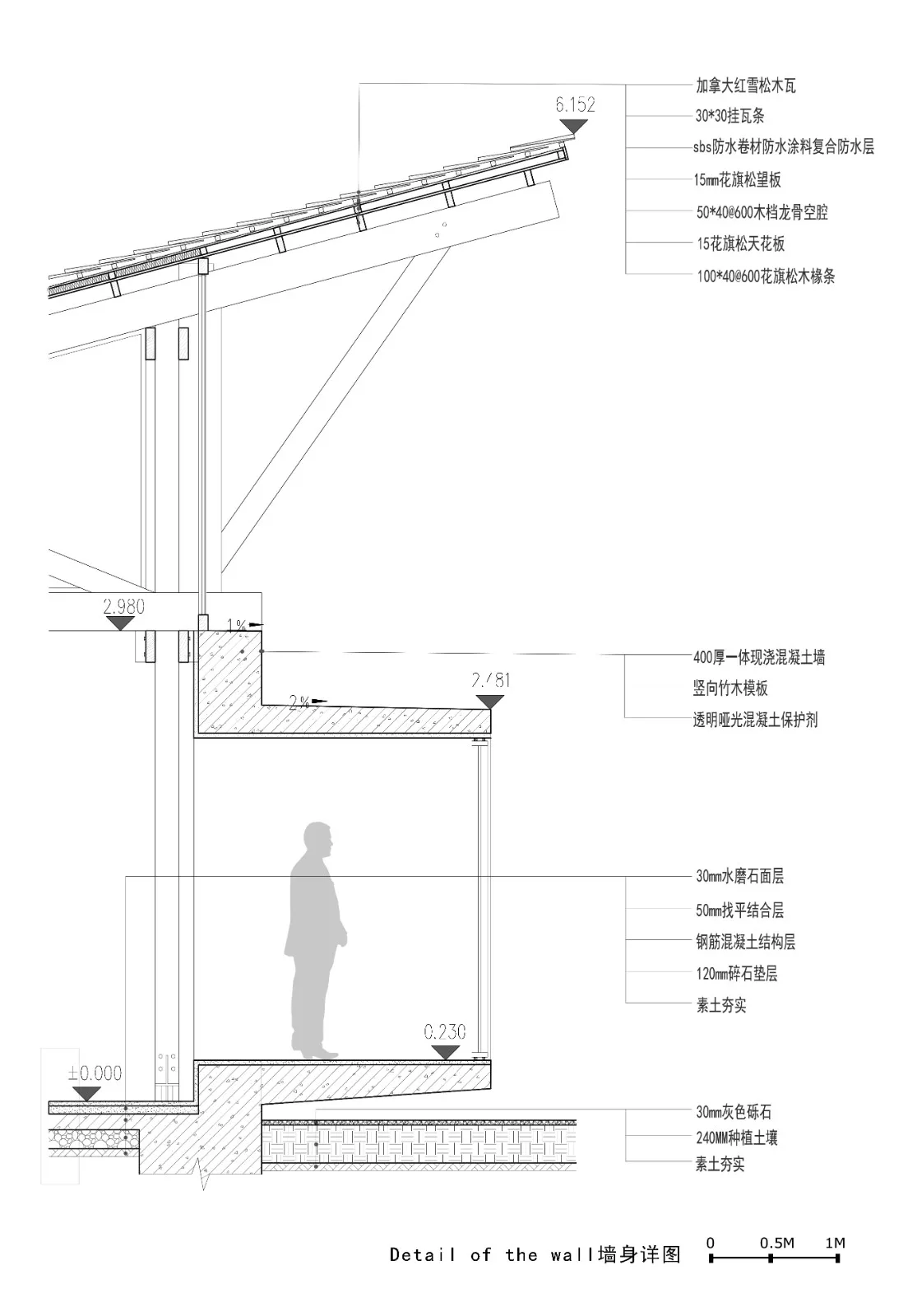
△ Wall body detailed drawing © Jianlin Architecture
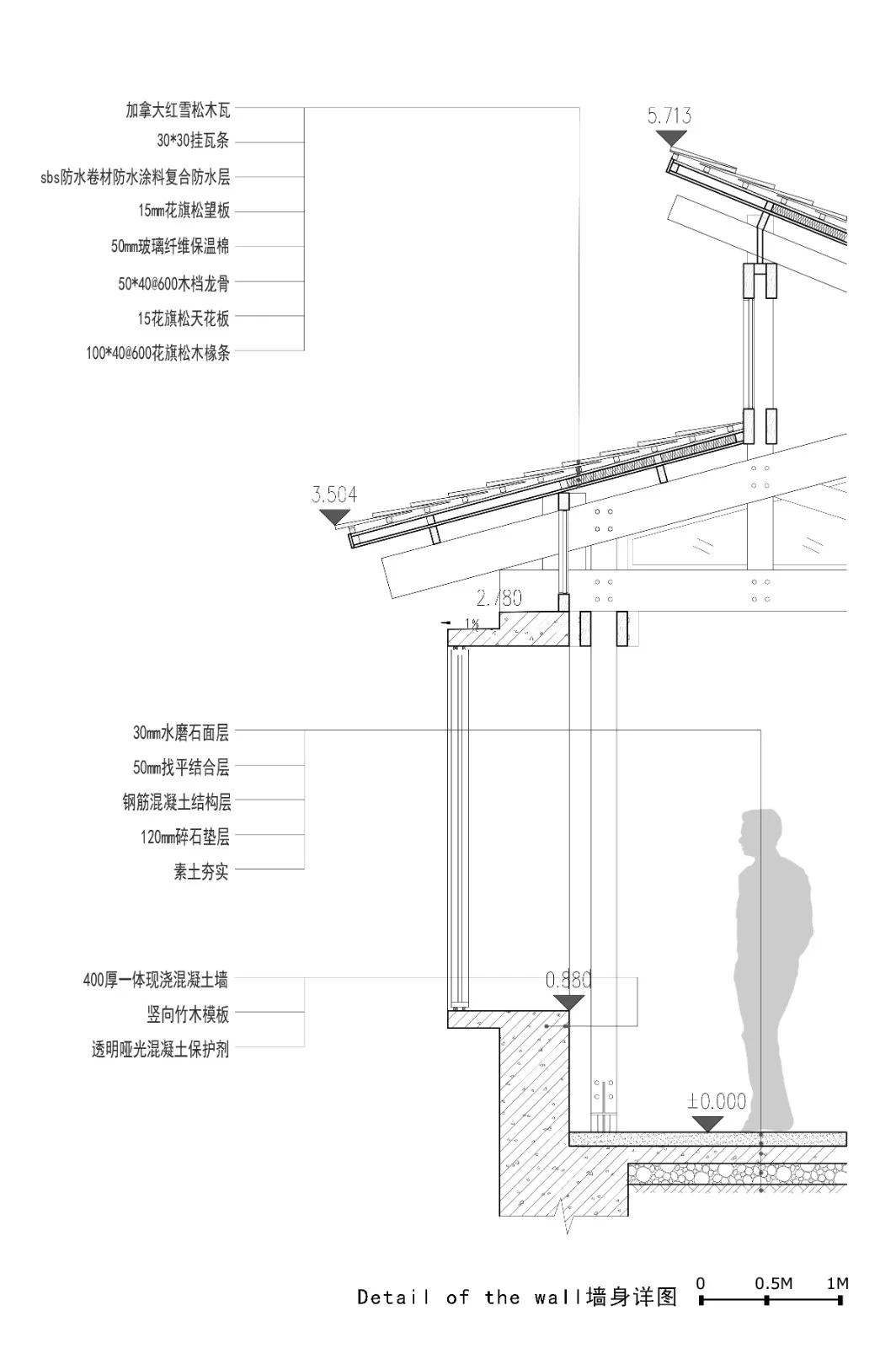
△ Wall body detailed drawing © Jianlin Architecture
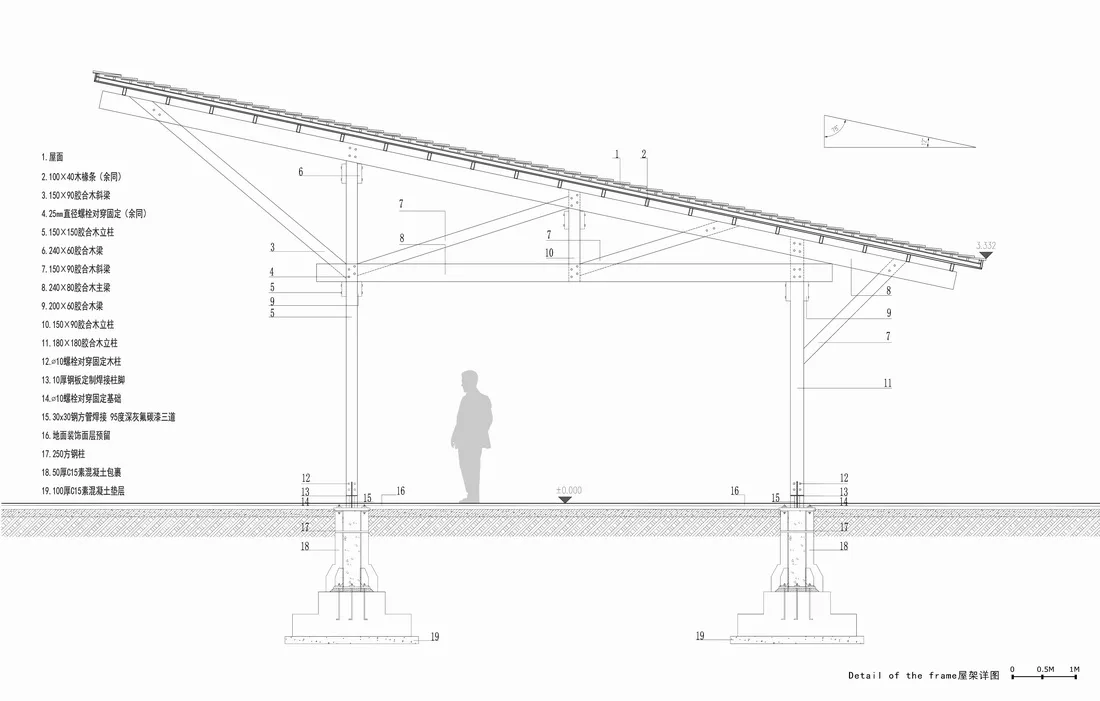
△ Detailed drawing of roof truss © Jianlin Architecture
Project Information
Project Name: Liuba Wayaogou Multi-functional Service Center
Location: Wayaogou, Liuba County, Hanzhong City, Shaanxi Province
Owner: Housing and Urban Rural Development Management Bureau of Liuba County
Construction Manager: Yang Meng
Architectural Design Firm: Jianlin Architectural Design Firm
Lead Architects: Chen Lin, Liu Dongying
Planning and Landscape Design: Lin Ye (Shanghai Yixiou Landscape Architecture Design Co., Ltd.)
Interior Designer: Wang Jiaxin
Structural Consultant: Lu Yang (Luan Cong Structural Design Firm)
Project Type: Public Service Reception and Supporting Facilities
Structural System: Wooden Structure
Design Period: March 2021 – June 2021
Construction Period: July 2021 – July 2022
Building Area: 380 square meters
Materials: Douglas fir laminated wood, bamboo formwork concrete, rubble stone blocks, red cedar wood tiles, glass bricks, old stone slabs, steel plates, washed stone, terrazzo
Architectural Photography: Zhao Yilong, Wu Ang
Video Production: Jian Lin Architecture – Ding Shiying















Must log in before commenting!
Sign Up