
Studio Zhu Pei drew inspiration from traditional Chinese architecture to design the Zibo OCT Art Centre in Shandong Province, featuring a spacious concrete roof and stone walls.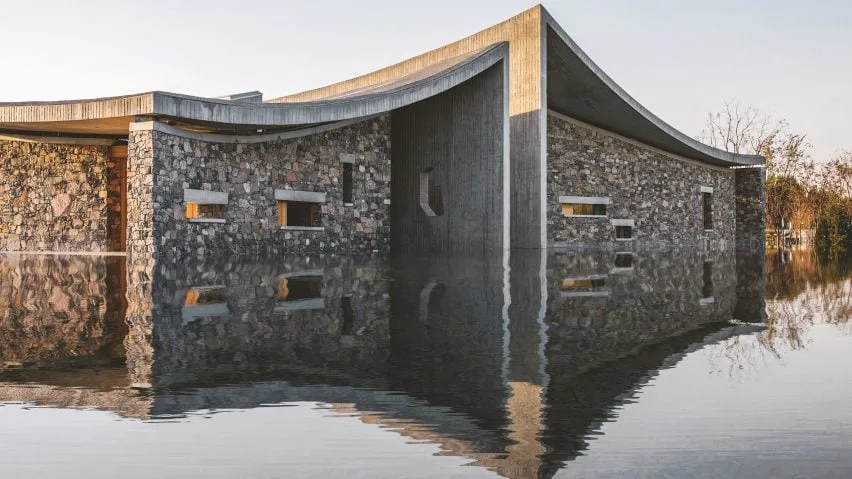
Situated in a semi-rural area on the outskirts of Zibo City, the center draws from local materials and architectural traditions, especially the “quadrangle courtyard” style—a traditional courtyard residence. Beijing Zhubai Studio adopted this layout to organize a series of exhibition and event spaces into four stone and concrete buildings that surround a central garden filled with trees, seating, and a shaded terrace.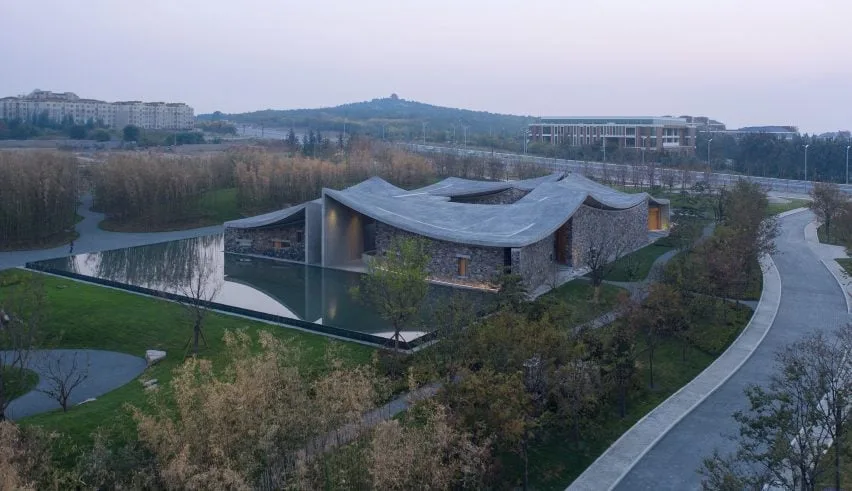
Between these buildings, narrow alley-like spaces bordered by tall brick walls are partially hidden beneath the oversized concrete roof eaves. This design creates a “porous” feel, establishing a dynamic interplay of spatial contrasts. The studio explained, “This porous circular building with a huge overhanging roof connects deeply with local culture and responds to a specific atmosphere.”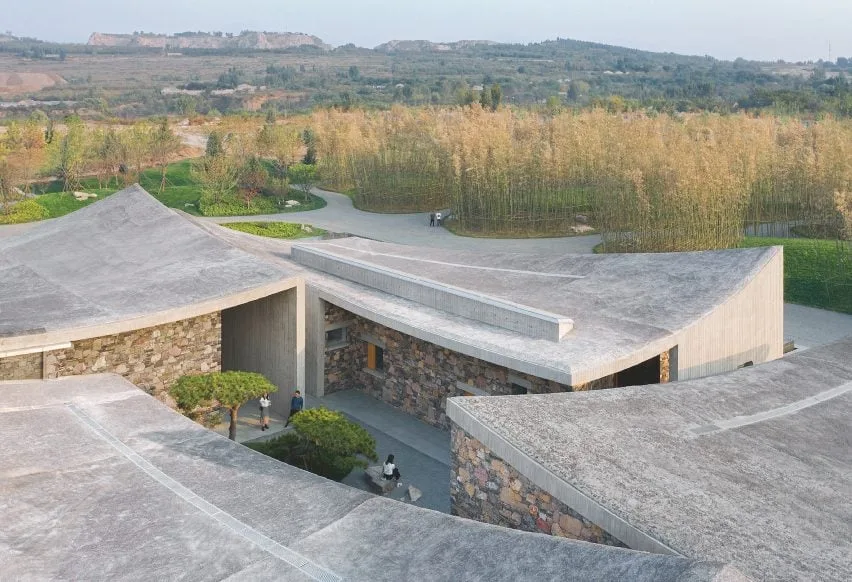
The studio further described the building as a “sponge-like structure” capable of accommodating many people and creating ample shaded areas for shelter. The stone walls were constructed using traditional local methods and reflect the unique characteristics of Shandong Province, incorporating stones of varying sizes, textures, and colors.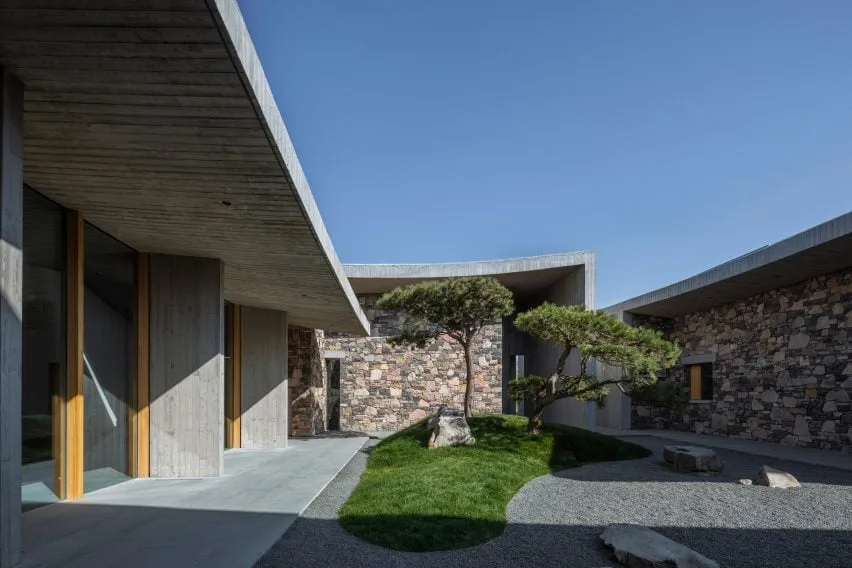
An irregular opening cuts through the thick stone walls, framed by concrete lintels and window sills, emphasizing the connection between the courtyard and the surrounding landscape, which includes a shallow pool around the central corner. The undulating roofs extend downward to form part of the wall. These roofs are made of clear-textured, plain concrete poured on site, serving as a “structural expression” of the project.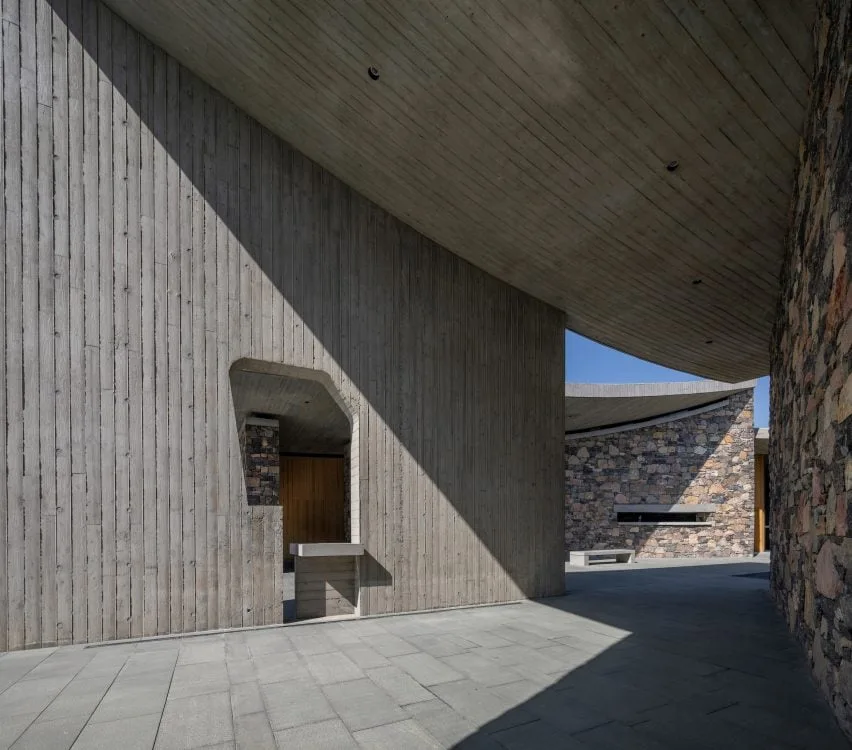
Zhu Pei Studio noted, “Although the spaces appear rectangular and simple, the uniformity is intensified by the variations in the roof.” They added, “Some areas feel tight, while others are spacious, reflecting the building’s sense of movement and strength.” Inside, the raised roof above the walls creates a narrow light gap, while the lower edge of the roof extends outward, forming a broad ceiling.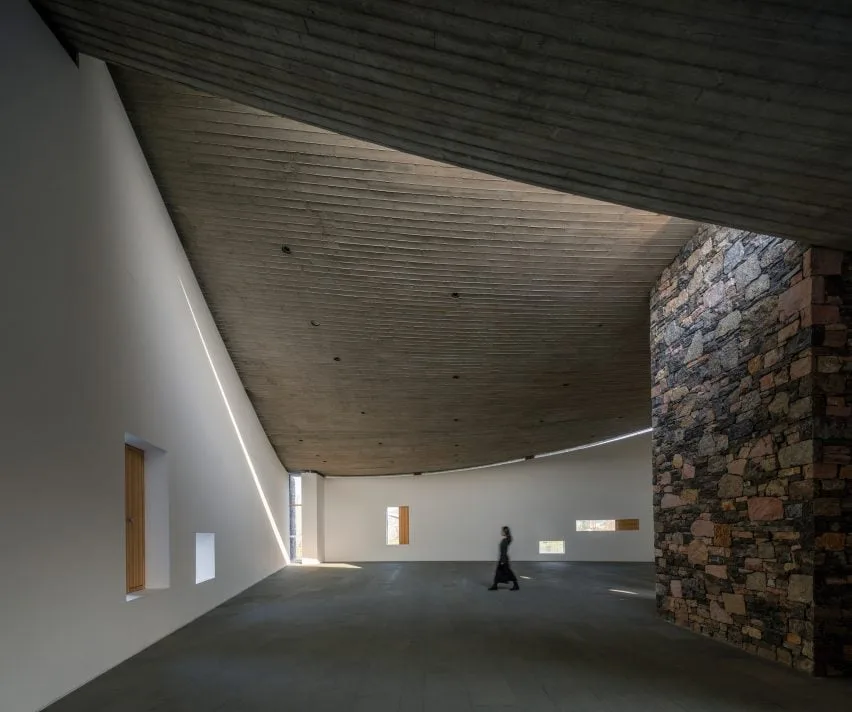
The interior design varies from white gallery-style walls to exposed brick, stone, and concrete in activity spaces, contrasting with light-colored wooden window and door frames. Founded in 2005 by architect Zhu Pei, Zhu Pei Studio’s previous projects include a performing arts center in Dali City featuring an undulating tile roof, and a contemporary art museum housed in a former factory in Beijing.












Must log in before commenting!
Sign Up