
Education extends beyond exam preparation and further studies. Those who are grounded in their roots, respect history, value continuity, and foster independent development possess the capacity for true creativity.
Nature’s revelation is clear: sunshine filters through forests, rain and mist flow over rivers and streams, fish and birds roam freely, and all living things thrive.
The natural campus environment draws inspiration from this harmony. Buildings are subordinate elements within nature’s grand design, which must never be overlooked. Nature holds far greater significance than structures in the living world. This philosophy permeates the entire campus, shaping a space that embodies the spirit of the Chuanxi Forest—respecting nature while encouraging independent creation.
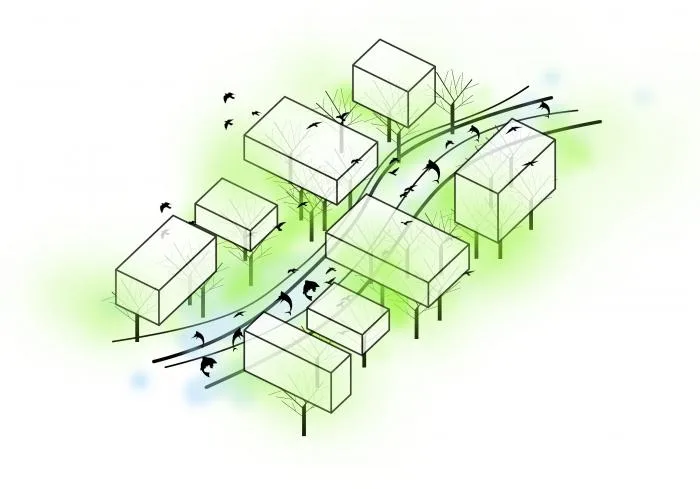
Sunshine filters through the forest, rainy mist envelops the river streams, fish and birds roam freely, and all life flourishes.
View from above the landscape
Within the Sichuan River
Bathed in light beams
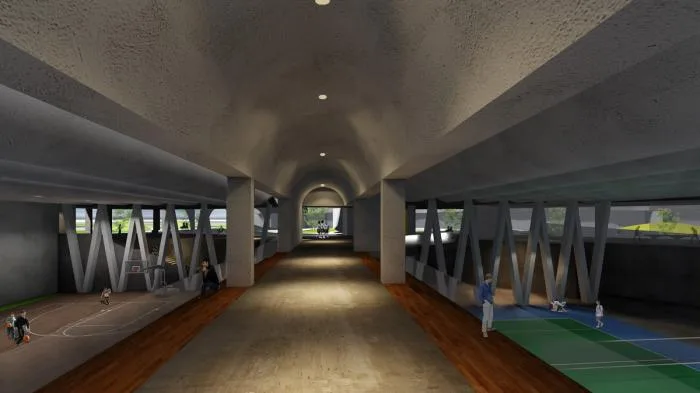
Beyond the winding path
Project Background
This design project is for Class 36 Junior High School, situated in the comprehensive residential area of the Xiong’an New Area in Beijing. The site lies adjacent to Baiyangdian to the south, harmonizing with nature and adapting to its surroundings. Leveraging the water system and green corridors, the plan establishes an ecological urban space with “Xiulin Green Valley Dianwan” as its core framework. The site borders urban roads to the east and north, separated by green belts to the south and west. Nearby, the northwest and southwest zones are earmarked for high-rise development.
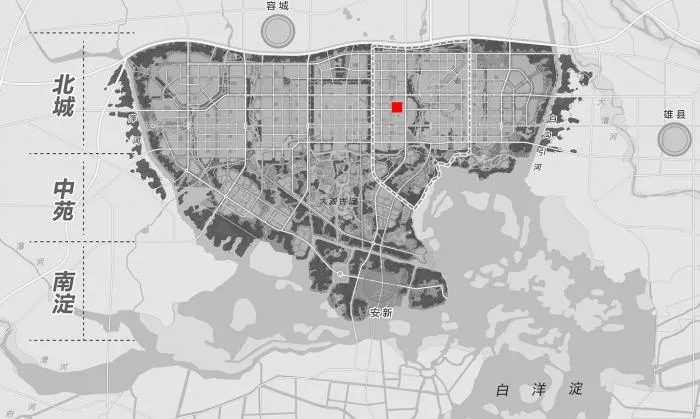
△ Location schematic of the base site
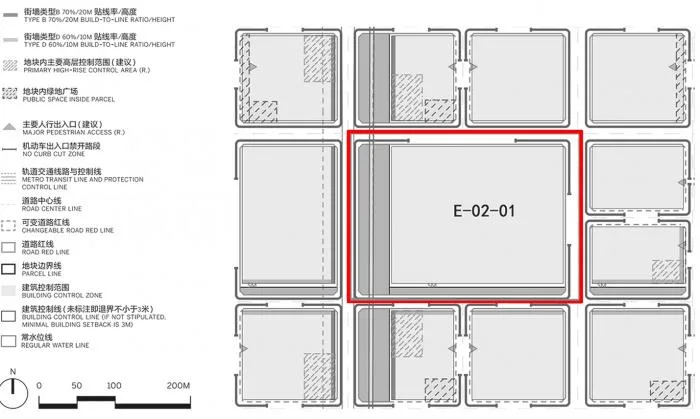
△ Land construction control diagram
Natural Inspiration
The campus environment forms the foundational framework of society within a child’s consciousness. Nature, with its untapped potential and freedom, inspires independent thinking and nurtures creativity, guiding children toward becoming innovative individuals.
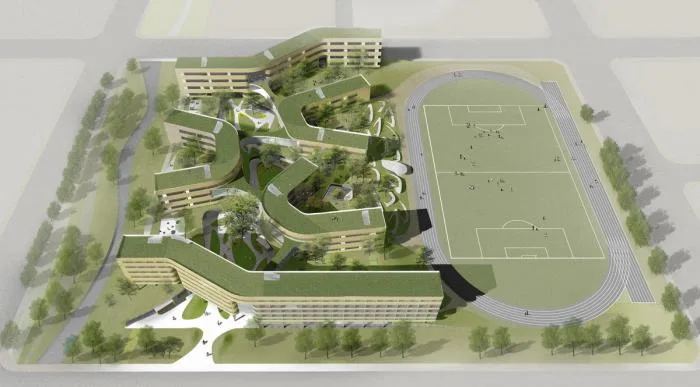
△ Overall site plan
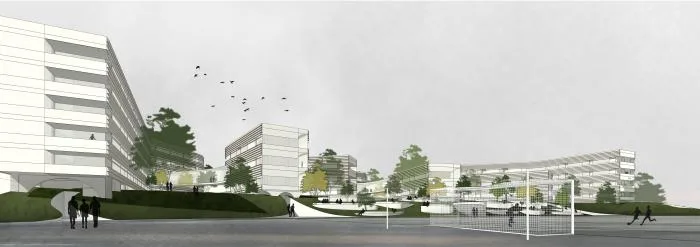 △ Track and field area
Natural Campus Space
The design creates an atmosphere reminiscent of forests, rivers, and streams within the campus.
Functional Zoning: The outdoor track and field facilities are situated on the east side, while the main building lies to the west, taking advantage of the urban landscape and shielding from traffic noise along the eastern roads. The north and south sides serve as the primary entrances and exits.
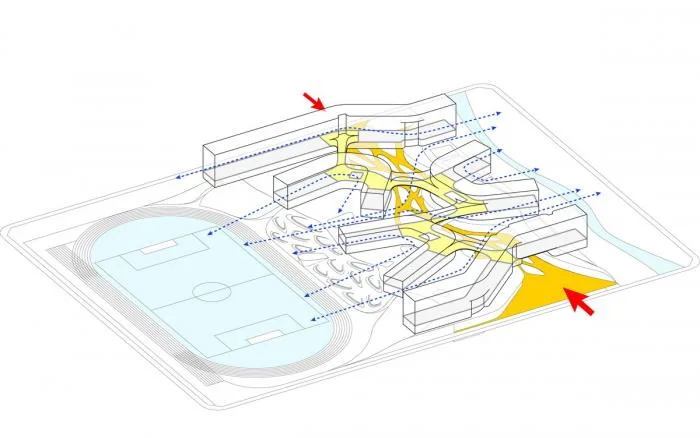
△ Spatial organization plan
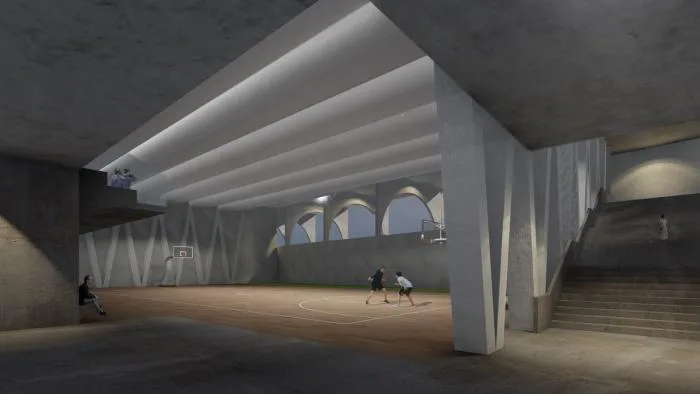
Building Function Distribution: The middle school campus buildings are divided into six key zones: sports hall, art hall, general classrooms, experimental teaching and research, dormitories, underground parking, and kitchen facilities.
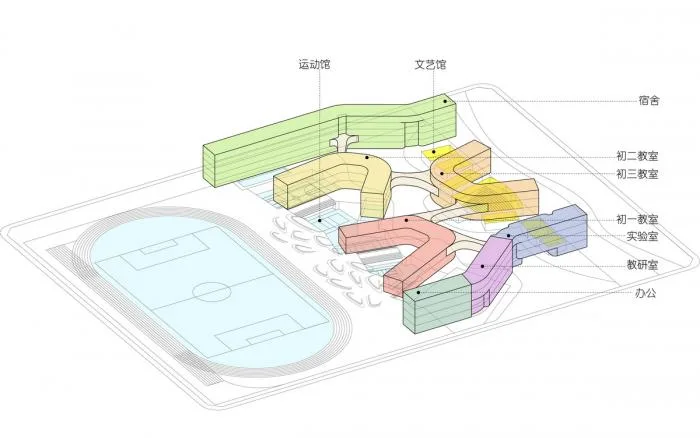
△ Functional distribution map
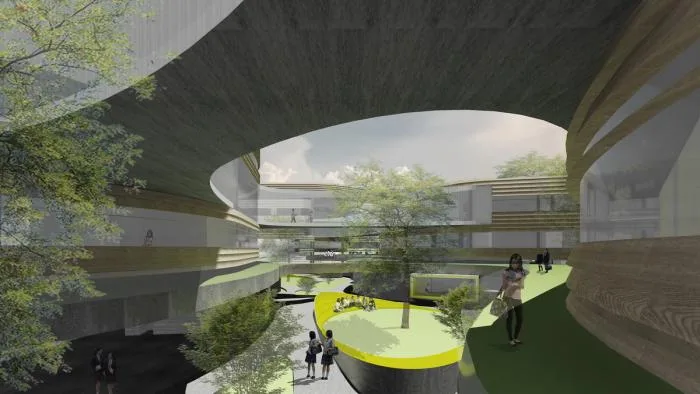
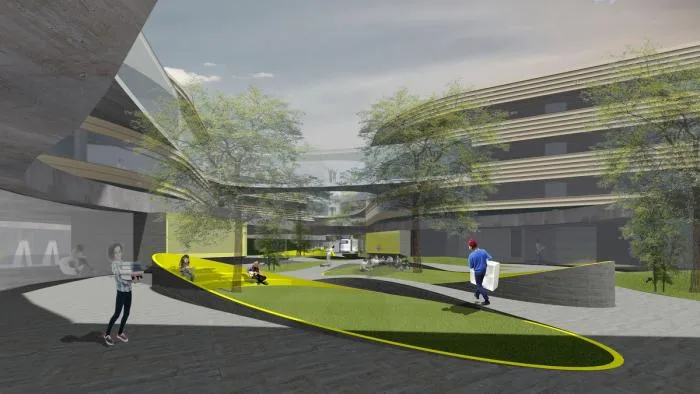
Campus Layout: The sports hall and art hall are arranged sequentially, separated by a stream-like central axis symbolizing daily life. The sports hall connects seamlessly with the outdoor track and field area. This fluid, open space fosters a vibrant, creative campus life centered on student interaction and learning.
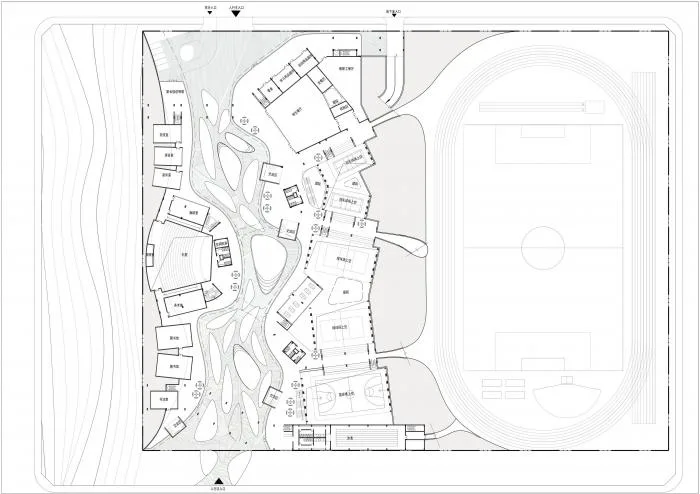
△ First floor plan
The undulating landscape forms the roof of both the sports hall and art gallery, providing lively activity spaces atop. Furthermore, the classroom areas, dormitories, and experimental teaching zones incorporate small, sunlit spaces designed for privacy and quiet, weaving an independent yet interconnected flow within the forested landscape. This approach creates a dynamic, multi-dimensional campus environment reminiscent of a mountain forest.
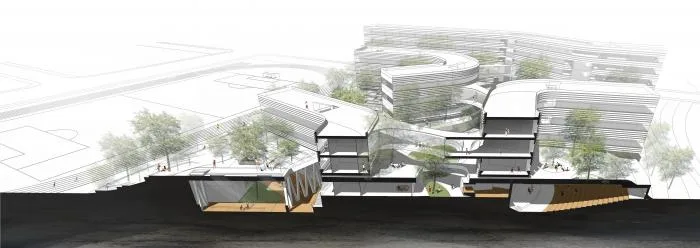
△ Spatial atmosphere illustration
Drawings
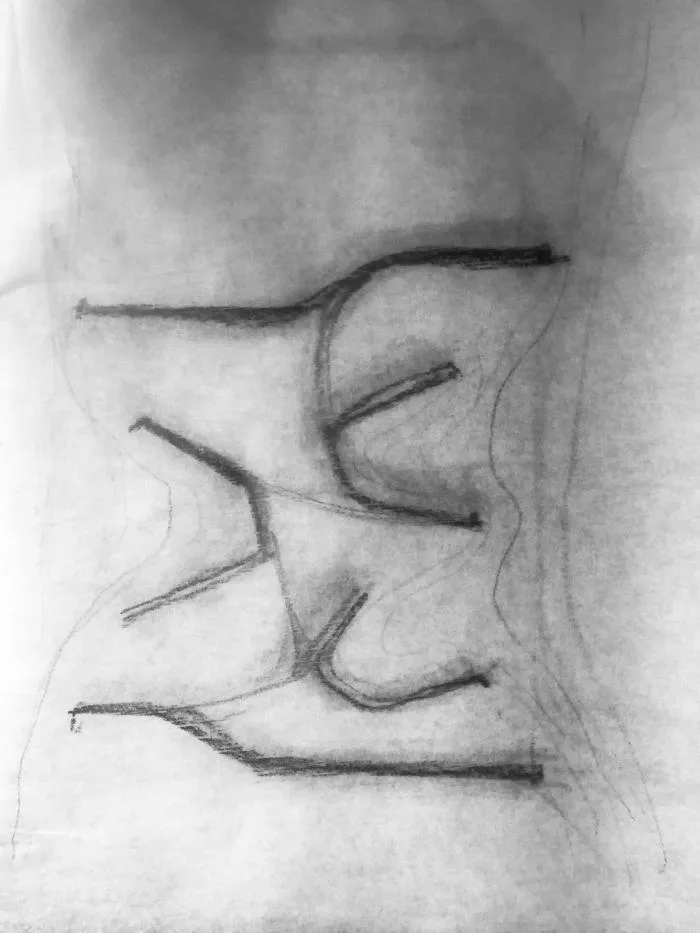
Concept sketch
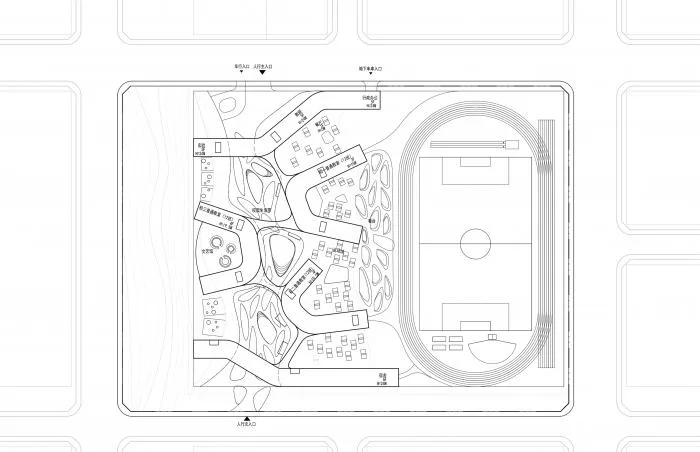
△ General layout plan
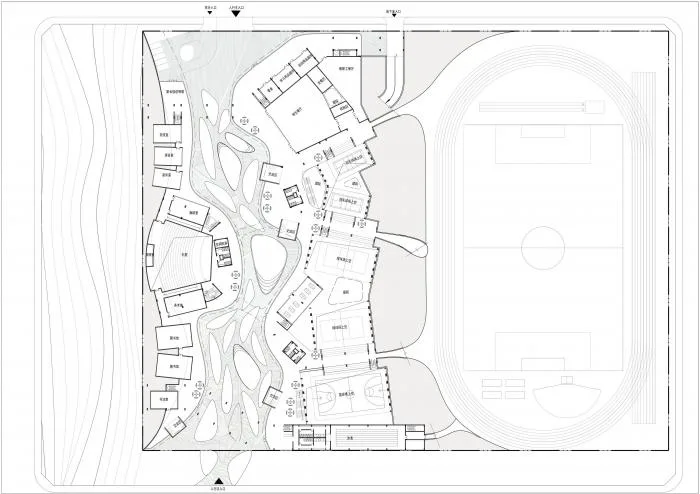
△ First floor plan
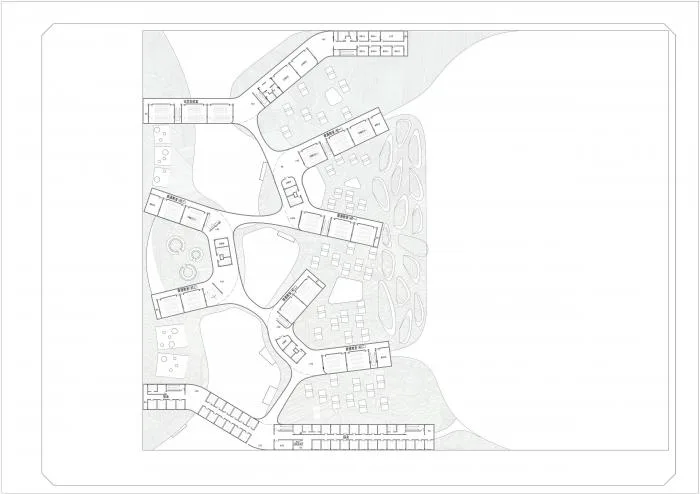
△ Third floor plan
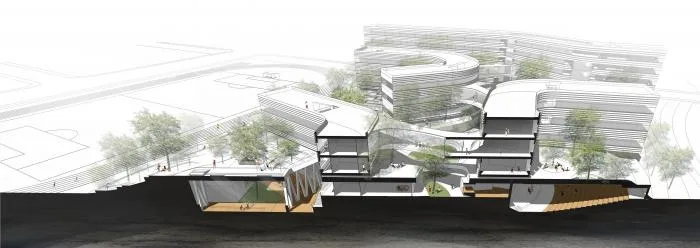
△ Vertical section diagram
Project Information
Design Team: MV Architecture Studio
Architects: Wu Longxin, Zhuang Xuguan
Location: Xiong’an New Area, Beijing
Building Area: 30,603 square meters
Design Period: March 2020 – April 2020
Design Phase: Proposal
Contact Email: __AI_S_SC0__












Must log in before commenting!
Sign Up