
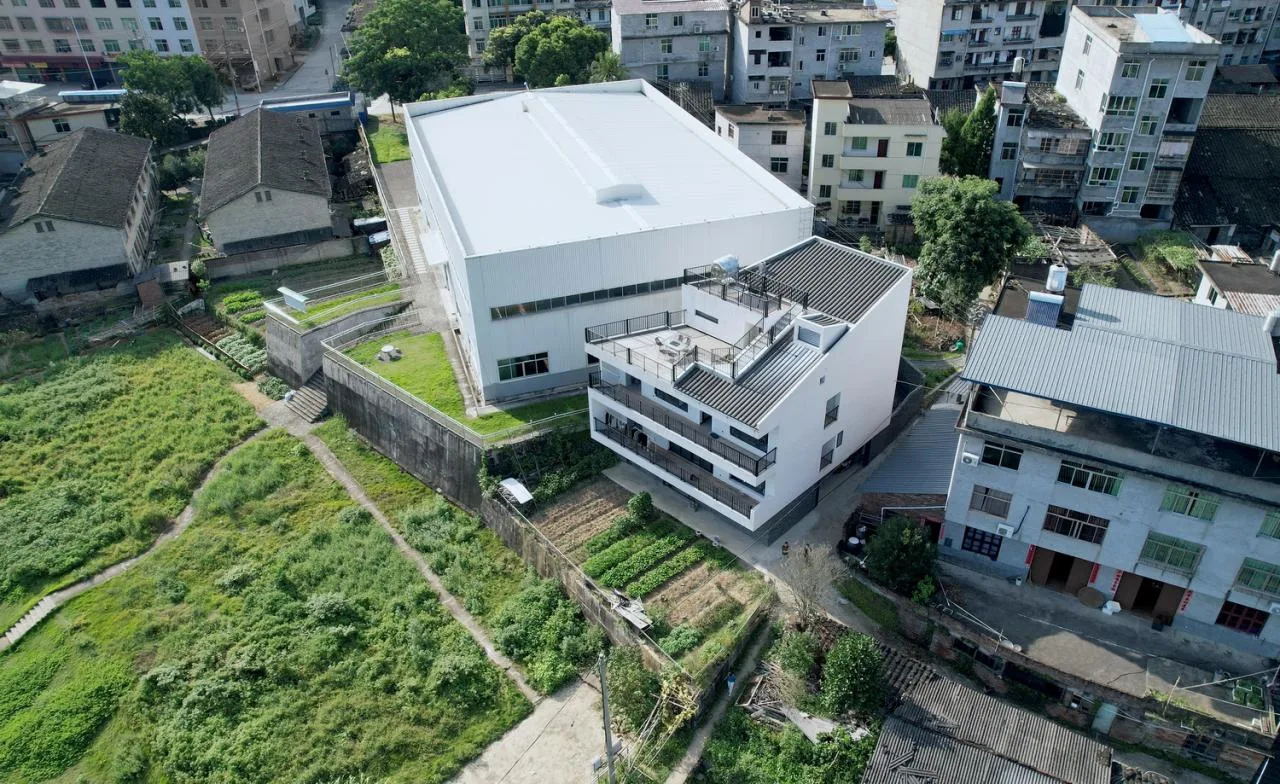
Project Overview © MV Architecture Studio
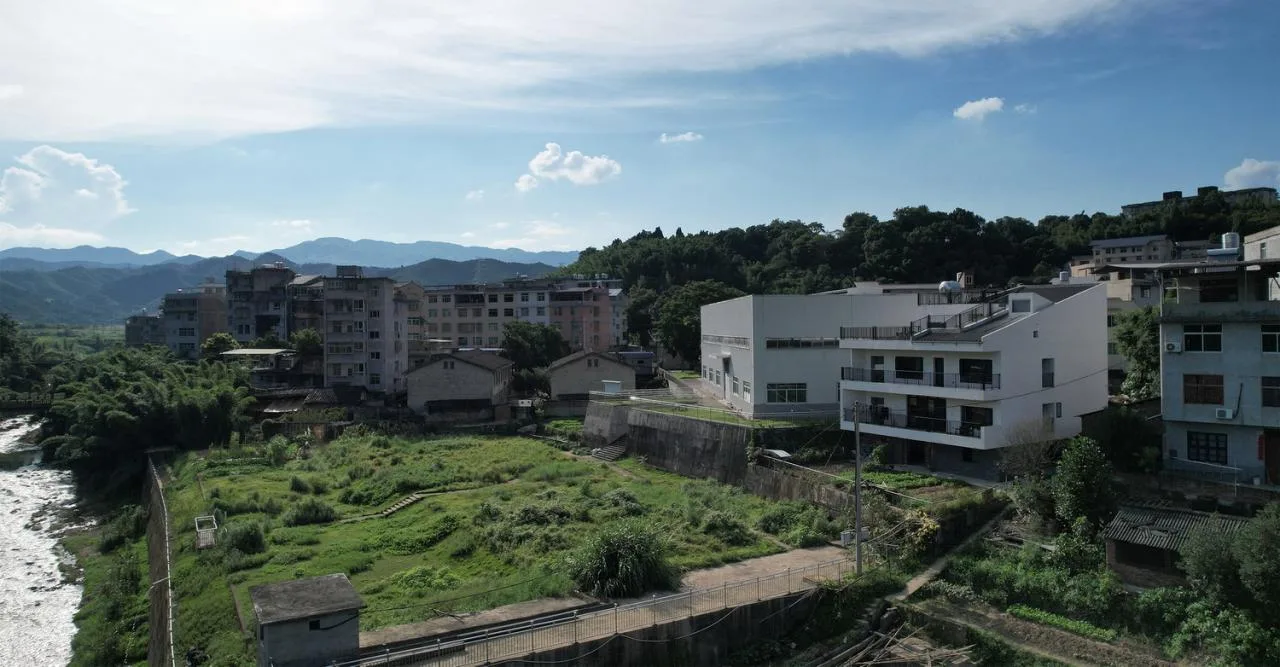
The relationship between architecture, green spaces, and streams © MV Architecture Studio
01 Environment
Experience the village from a comprehensive perspective.
Daheng Village is located in Yanping District, Nanping City, Fujian Province. The Jianxi River runs east of the village, downstream from the Chongyang River in Mount Wuyi. During the plum rain season, water levels rise sharply due to flooding. The site at No. 21 Binhe Lane is situated at the heart of Daheng Village, offering broad southern views: gentle distant hills, a large vegetable garden and bamboo forest in mid-range, and nearby lawns and green spaces. To the west lies a sports arena, to the east a narrow alley less than 4 meters wide, and the Daheng Village Road borders the north.
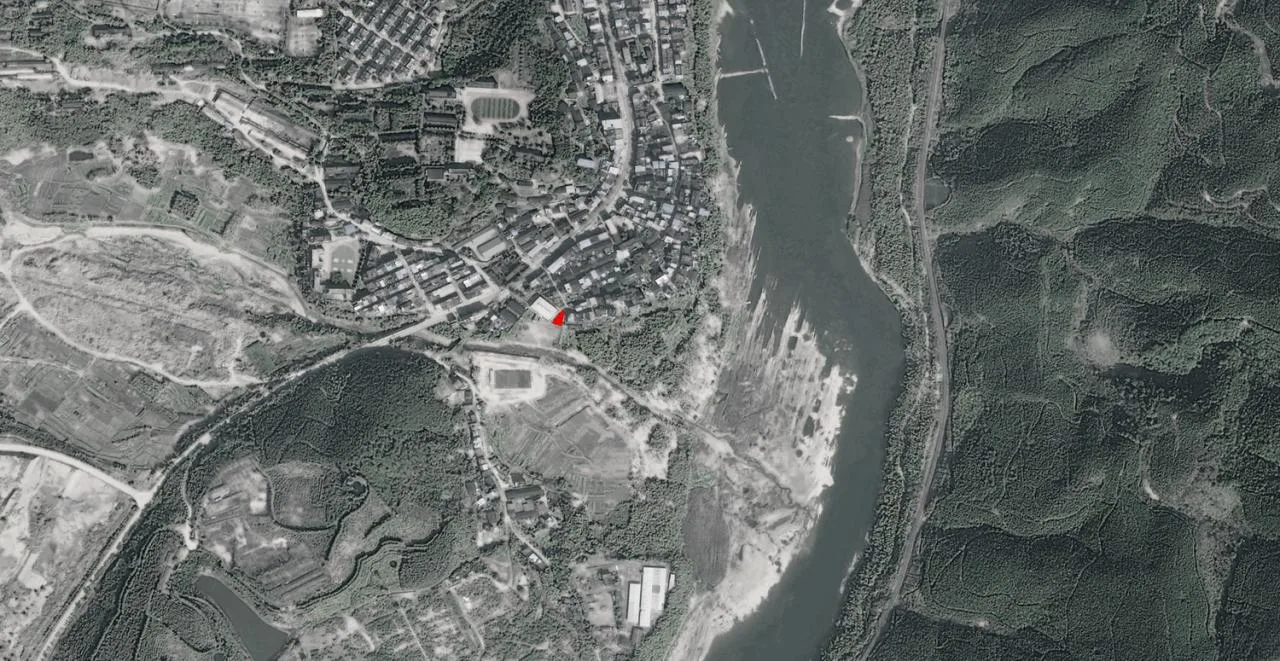
△ Site location © MV Architecture Studio
The original house, constructed with green brick walls and wooden beams, had fallen into disrepair and was classified as hazardous. The southern part of the site includes a small vegetable plot. The west side features a height difference of about 2.5 meters between the floor level and the outdoor sports hall floor, while the north road slopes down approximately 1.5 meters to the southern vegetable plot. A tree is located at the northeast corner.
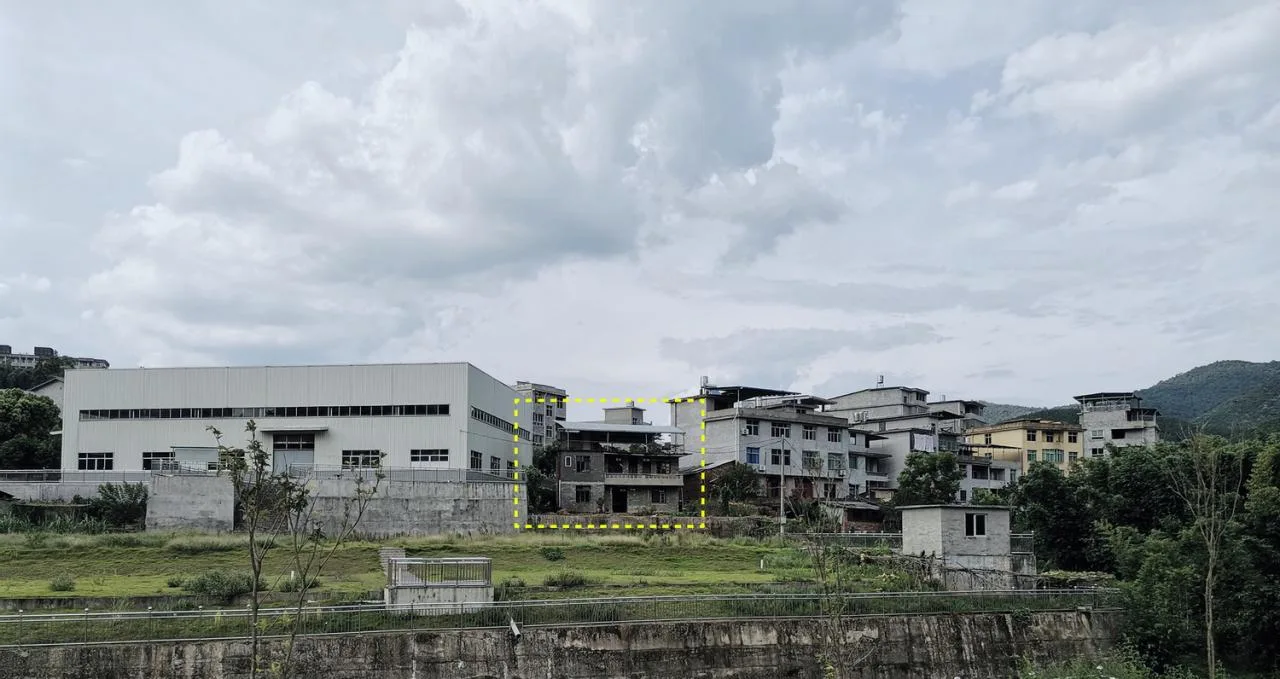
View of the old house before demolition from across the river © MV Architecture Studio
The homeowner’s parents farm locally, growing fruits and vegetables, raising poultry, and maintaining self-sufficiency. They also sell produce at the town market. The three siblings work in the city, making this house a family gathering place.
Most village houses are built with brick and concrete or frame structures, finished with simple cement plaster or ceramic tiles. Some older homes feature green brick walls, wooden floor slabs, and small green tiles, while wooden structures are rare. Although reinforced concrete houses are common recently, rural buildings often lack thoughtful functional layouts, natural lighting, ventilation, thermal and sound insulation, and climate responsiveness.
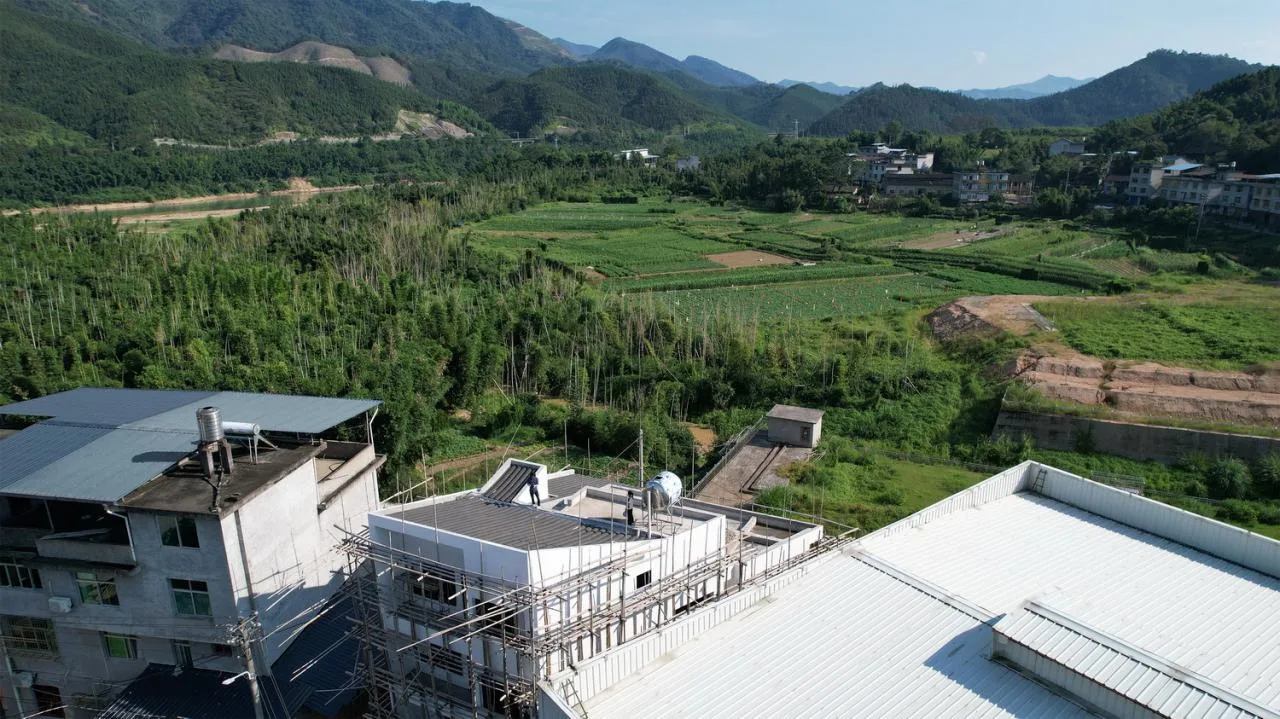
The vegetable fields approaching harvest season © MV Architecture Studio
02 Concept
Exploring the house’s presentation from surface to depth.
The design focuses on preserving the homeowner’s living habits while enhancing the quality of the renovated space. Key considerations include lighting, ventilation, waterproofing, drainage, thermal insulation, and noise control, addressed from overall layout to detailed execution. To minimize costs, most materials and labor are sourced locally from towns and villages.
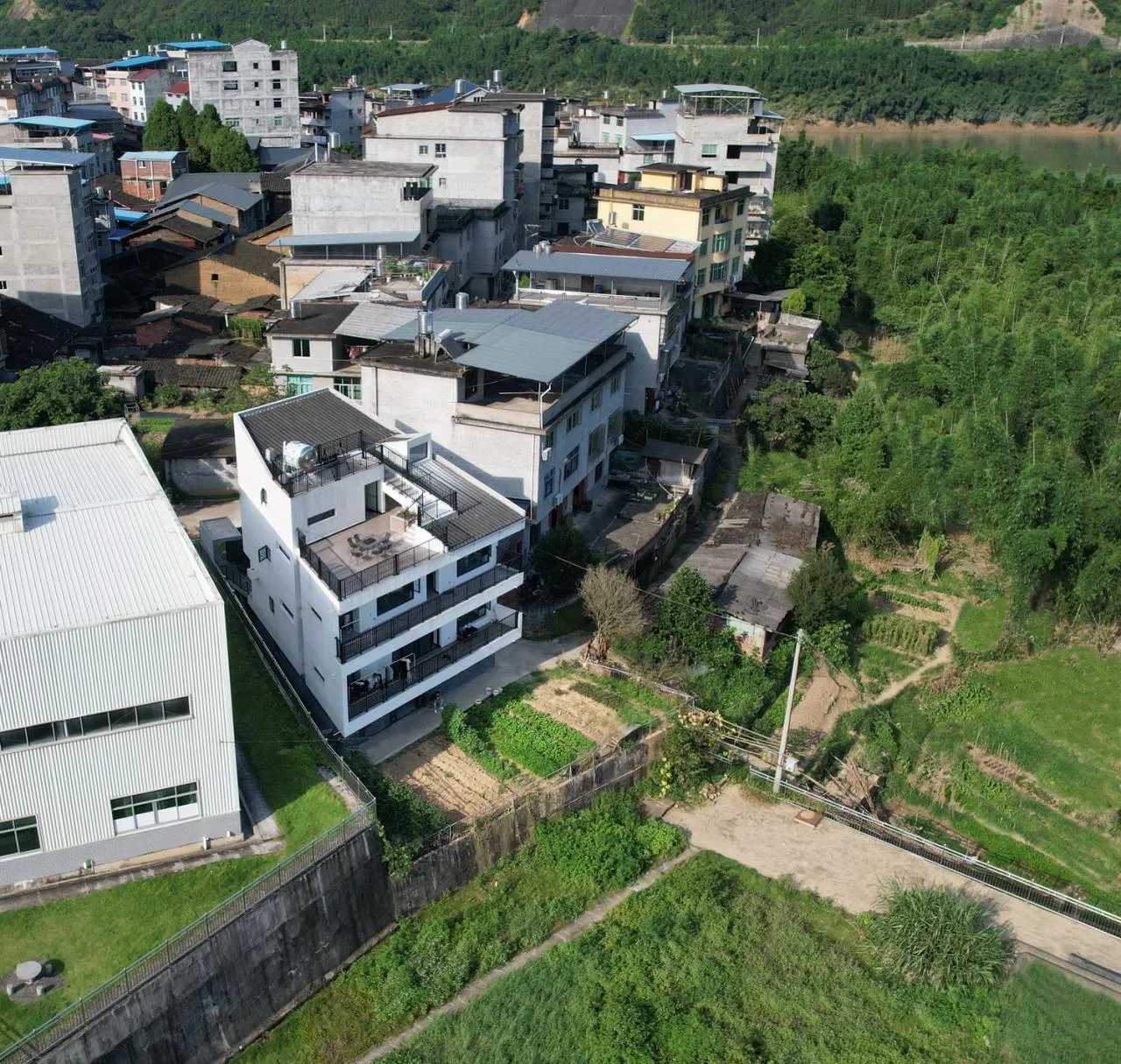
Bird’s-eye view of the southwest corner © MV Architecture Studio
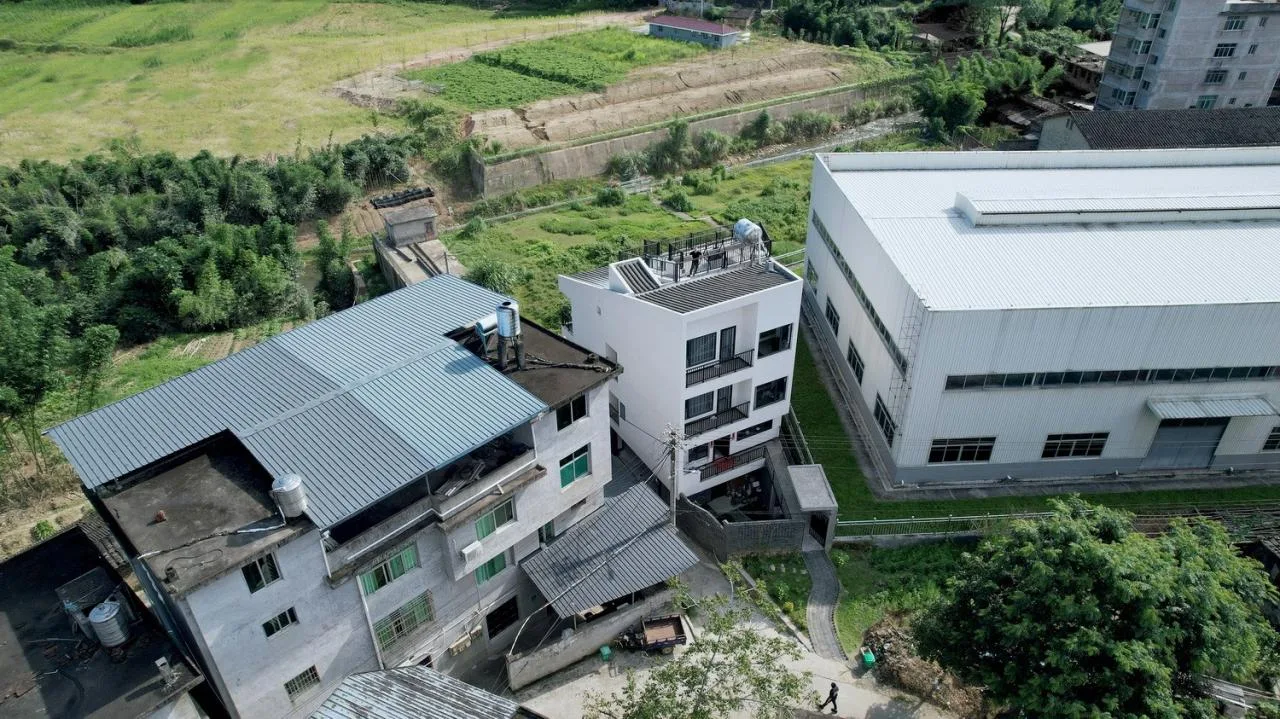
△ Aerial view from the northeast corner © MV Architecture Studio
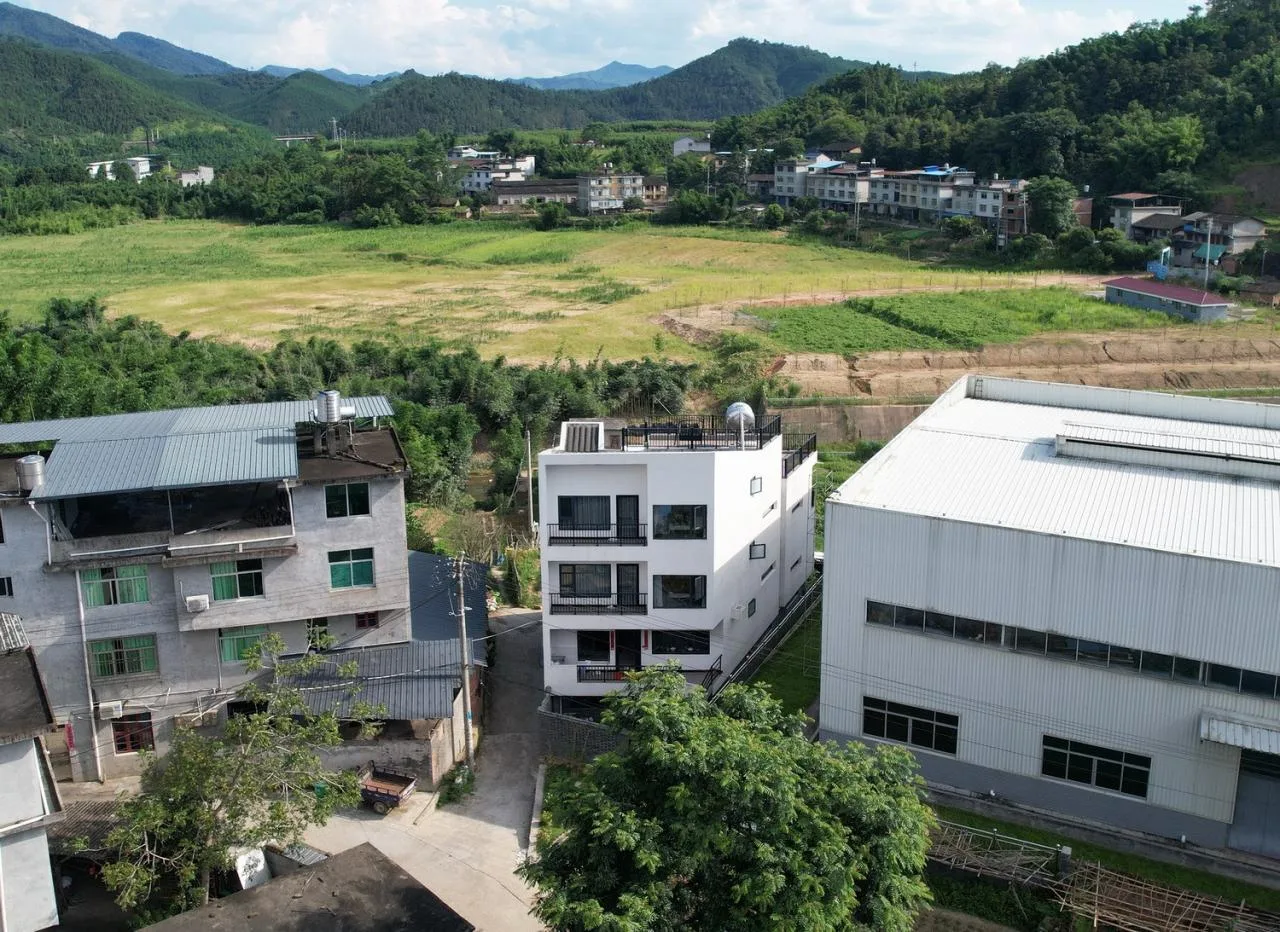
△ Northern perspective © MV Architecture Studio
03 Design
From broad layout to refined construction.
To address the site’s height differences and take advantage of the open southern views, the house features a seamless single-sloped roof complemented by a terrace, creating a dialogue with the surrounding hills and fields. The structure consists of a simple volume elevated above the ground: the upper level serves as the living quarters, while the lower elevated level provides parking and storage for agricultural equipment. This design also protects against floodwaters during the rainy season. A vegetable garden is preserved to the south, with a courtyard and entrance on the north side.
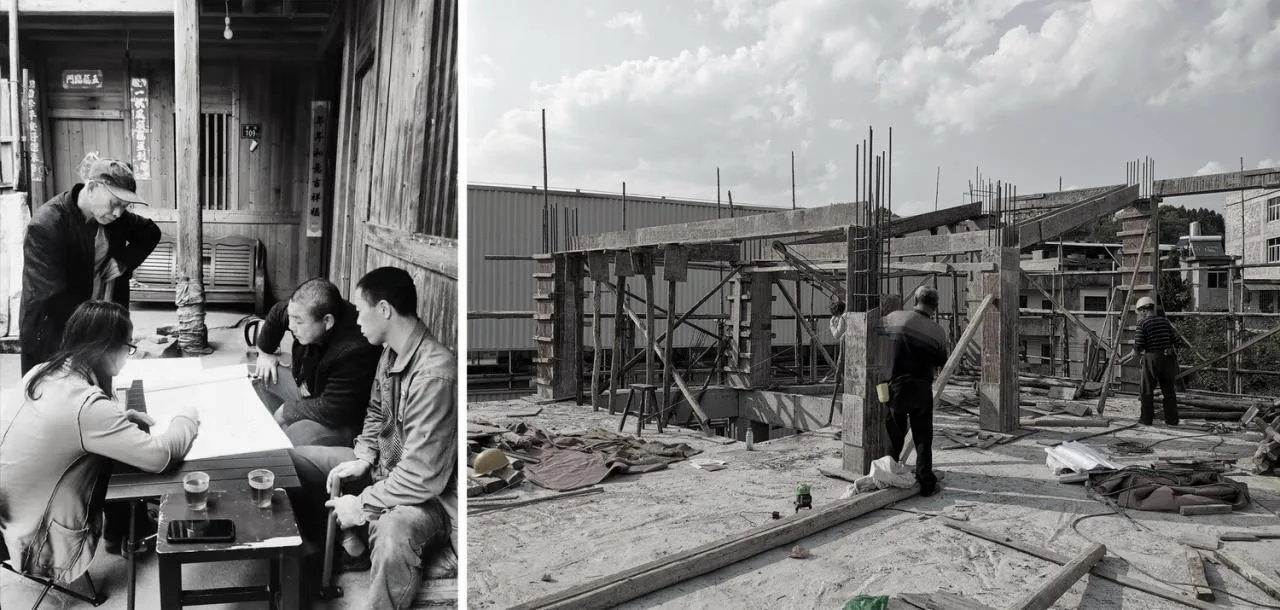
△ Construction Process 1 © MV Architecture Studio
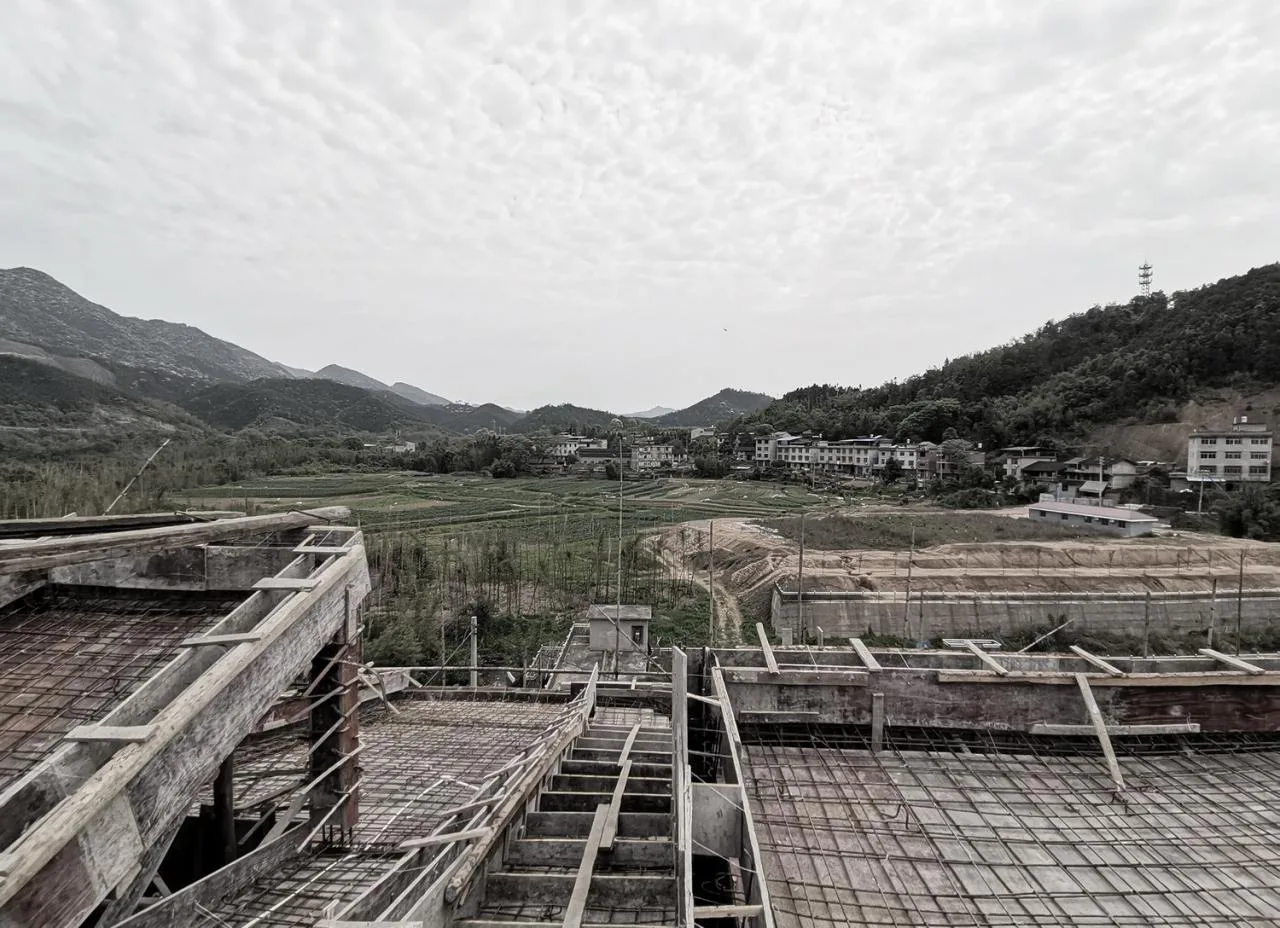
△ Construction Process 2 © MV Architecture Studio
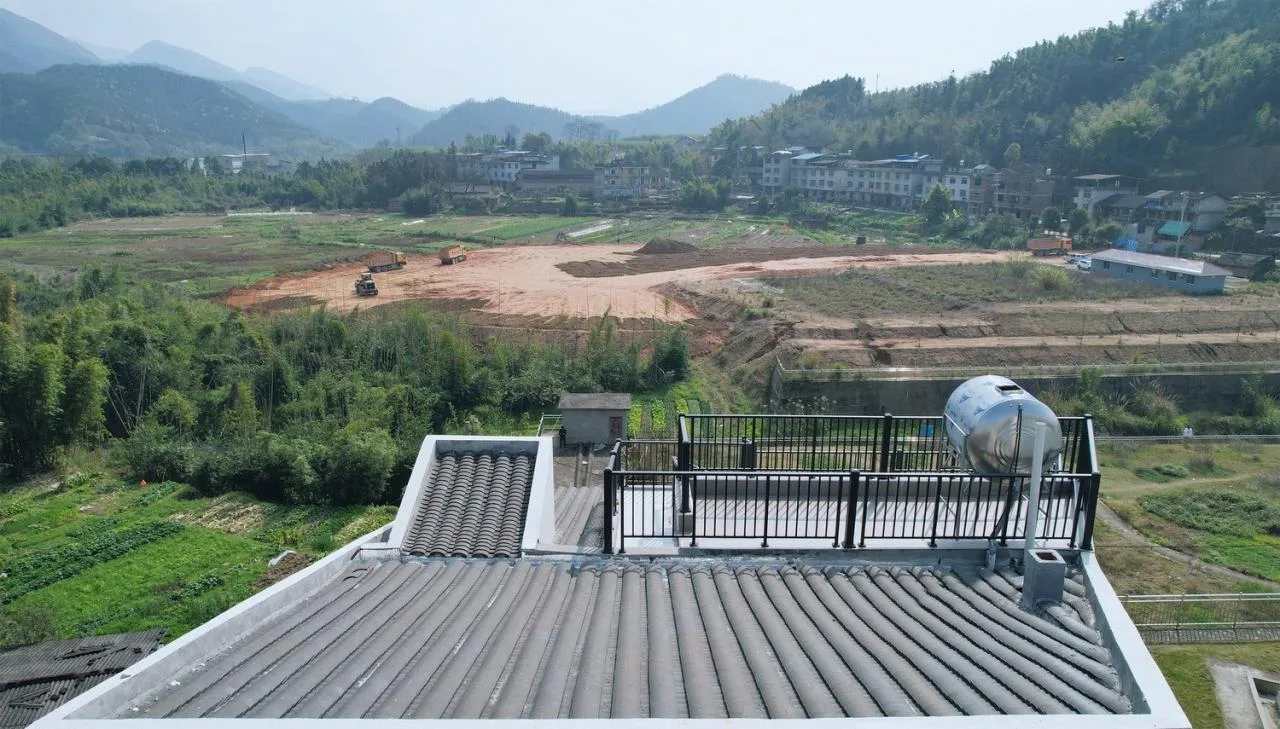
△ Construction Process 3 © MV Architecture Studio
Managing the height difference on the northern side was a key design challenge. Since the homeowner’s father has limited mobility, a ramp was incorporated to connect the first floor, the elevated level, and the northern village road within the courtyard, ensuring ease of daily movement.
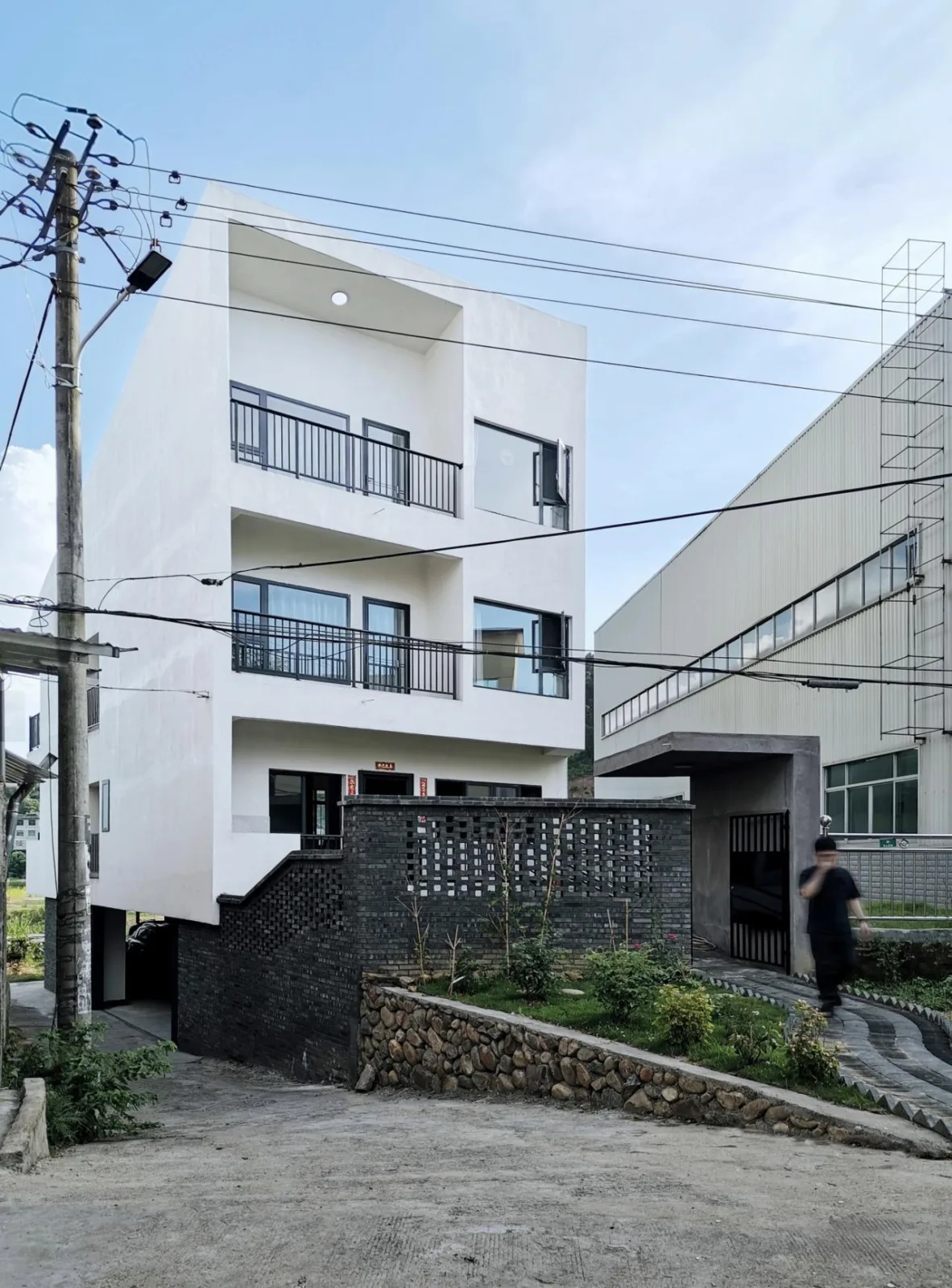
View of the building before entering the house © MV Architecture Studio
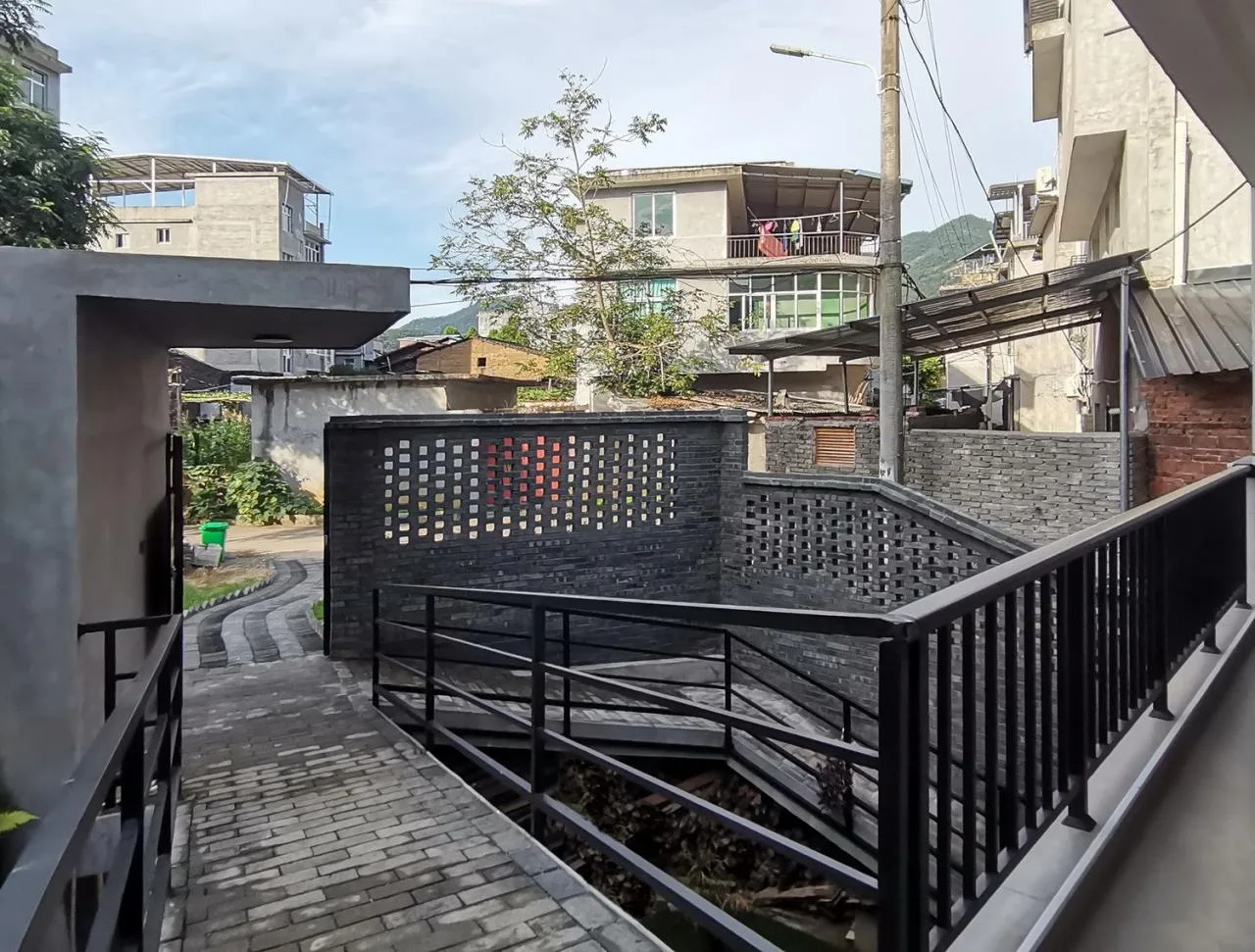
△ Entrance courtyard © MV Architecture Studio
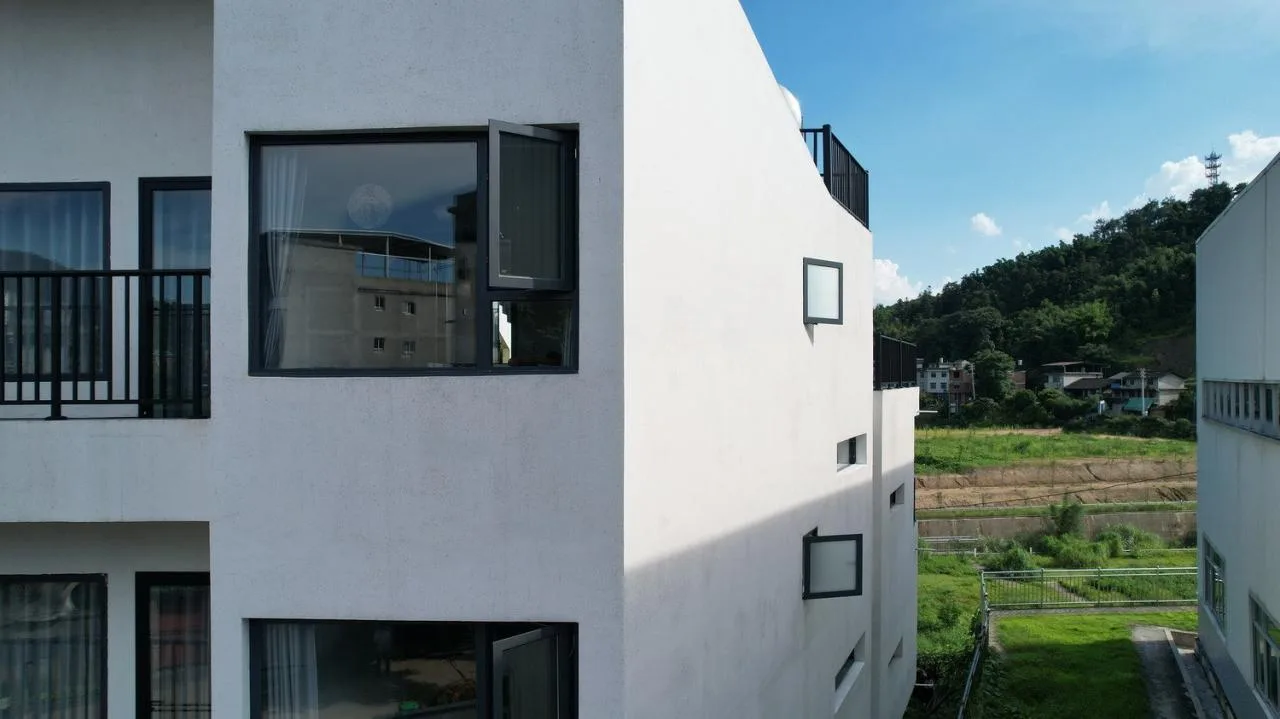
View between the house and the sports arena © MV Architecture Studio
The first floor accommodates the daily living spaces: kitchen, dining room, living room, and bedrooms for the homeowner’s parents. The second and third floors house rooms for the three siblings and their children. Large windows and balconies on the north and south sides, along with slender windows on the east and west, harmonize the interior with the surrounding environment.
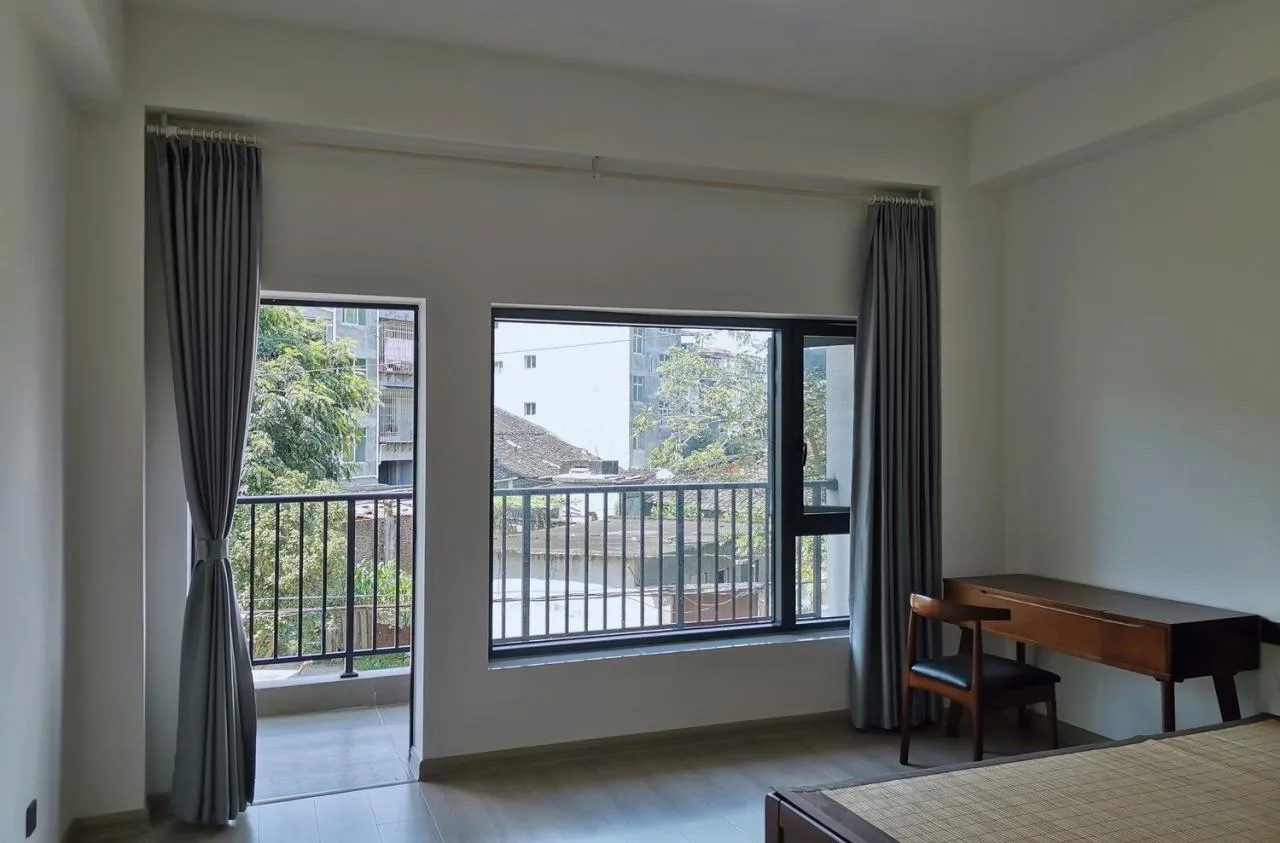
△ North bedroom © MV Architecture Studio
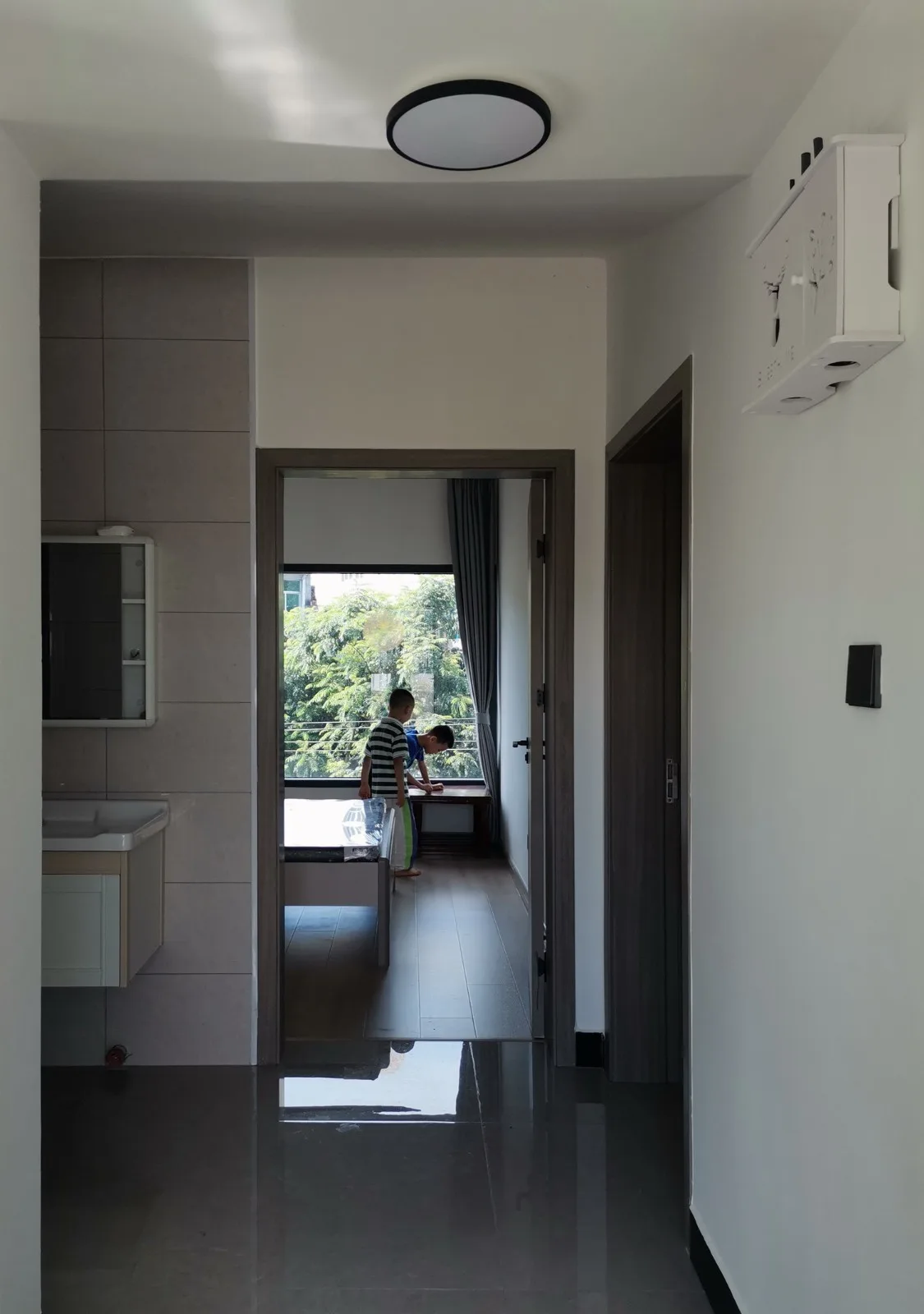
View of the bedroom from the hallway © MV Architecture Studio
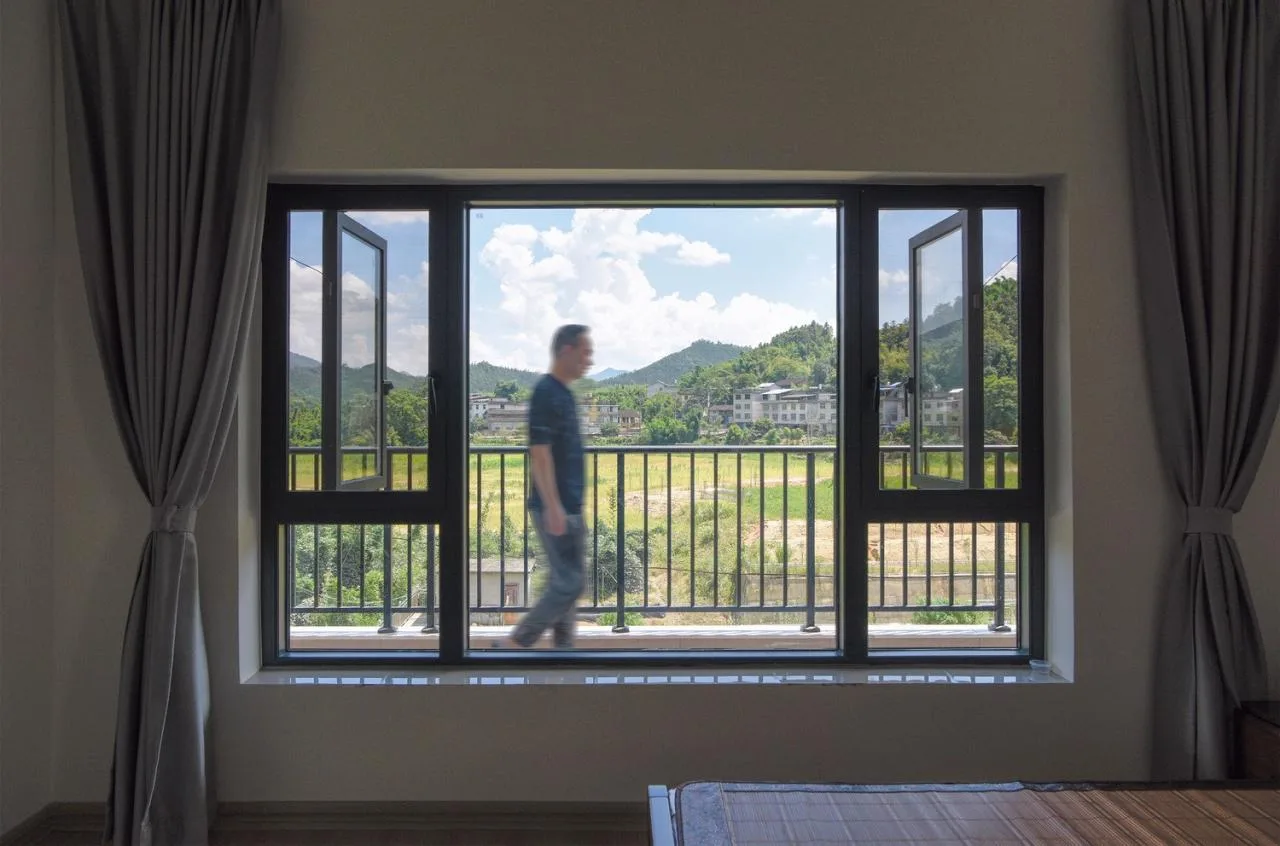
△ South bedroom © Z . MINE
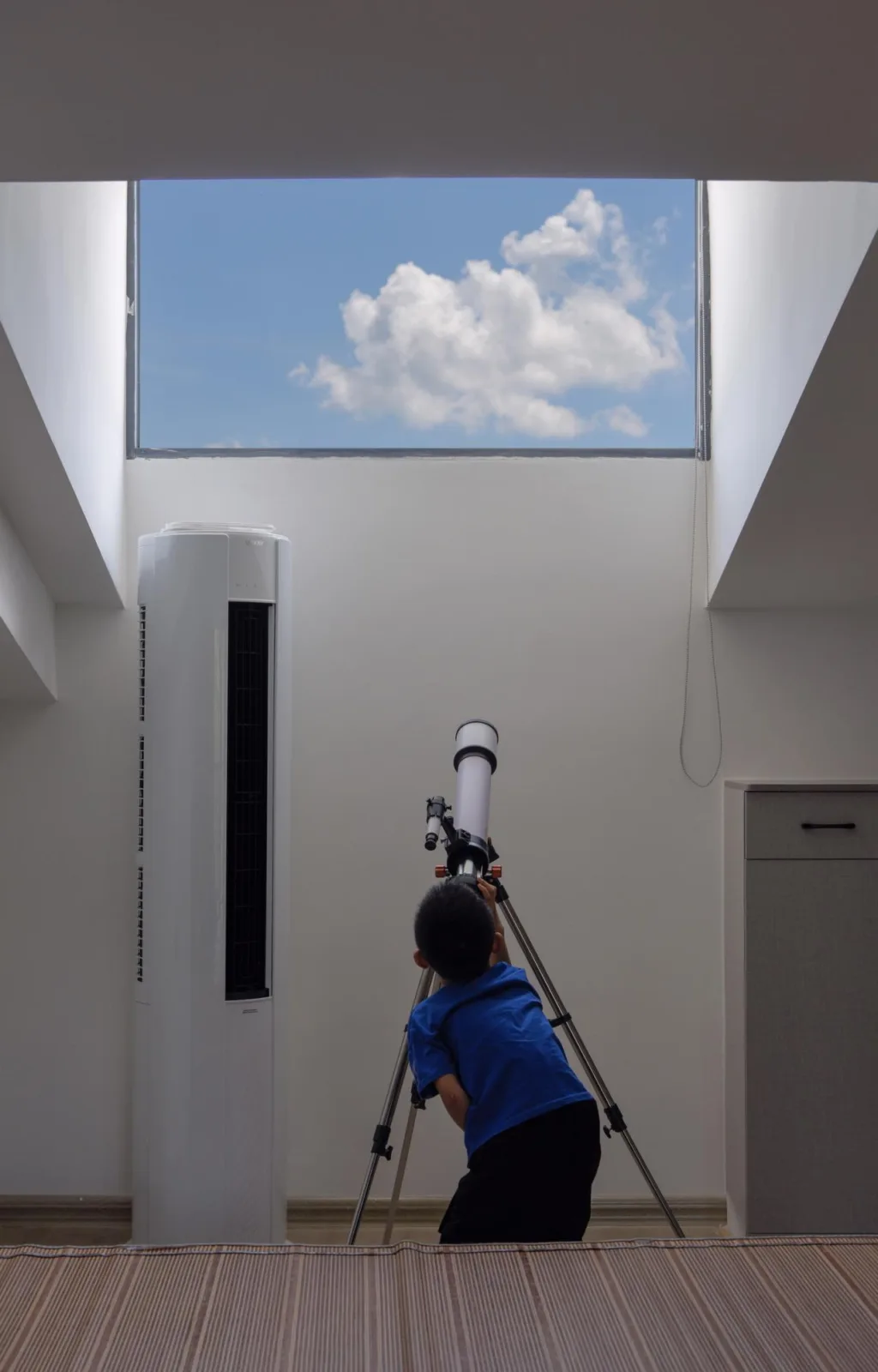
△ High windows on sloping roofs © Z.MINE
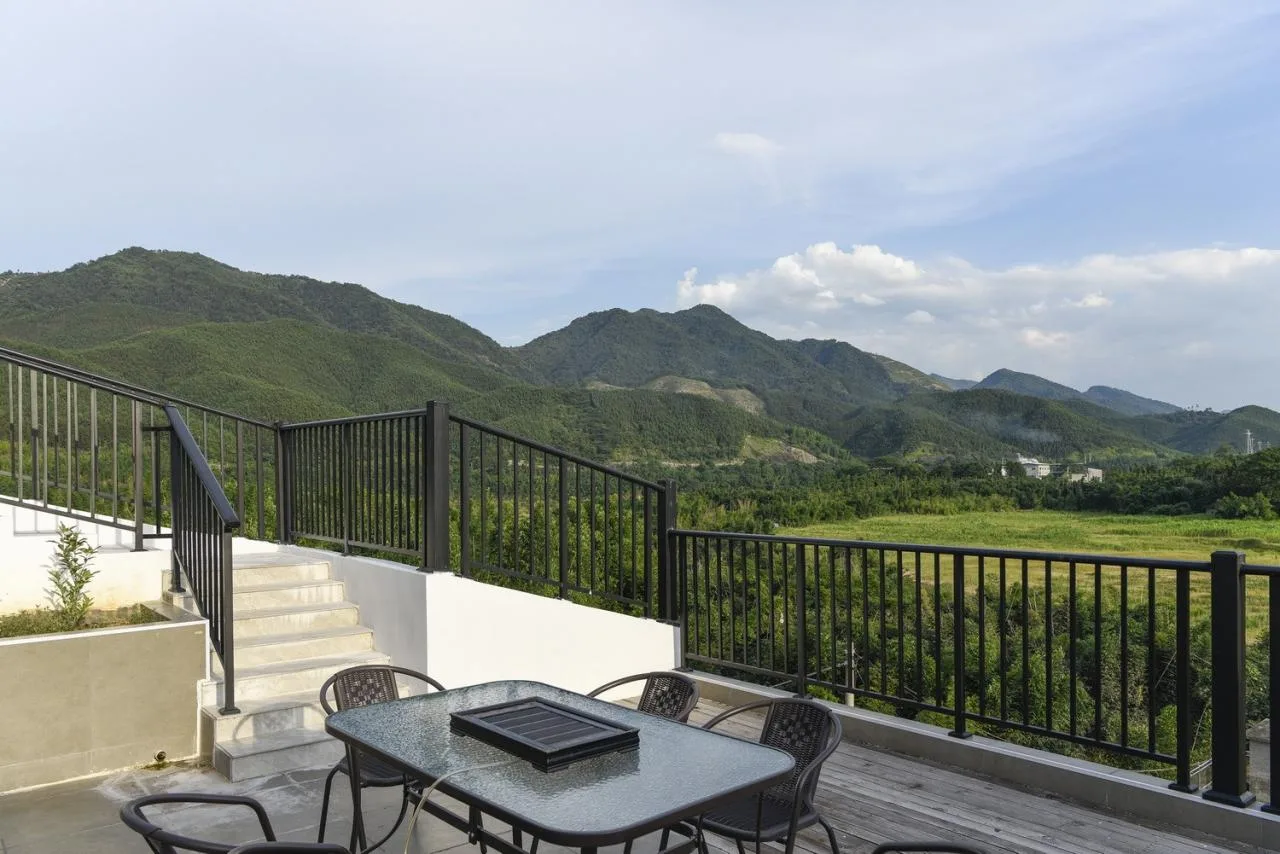
△ Mountain view from the large terrace © Z.MINE
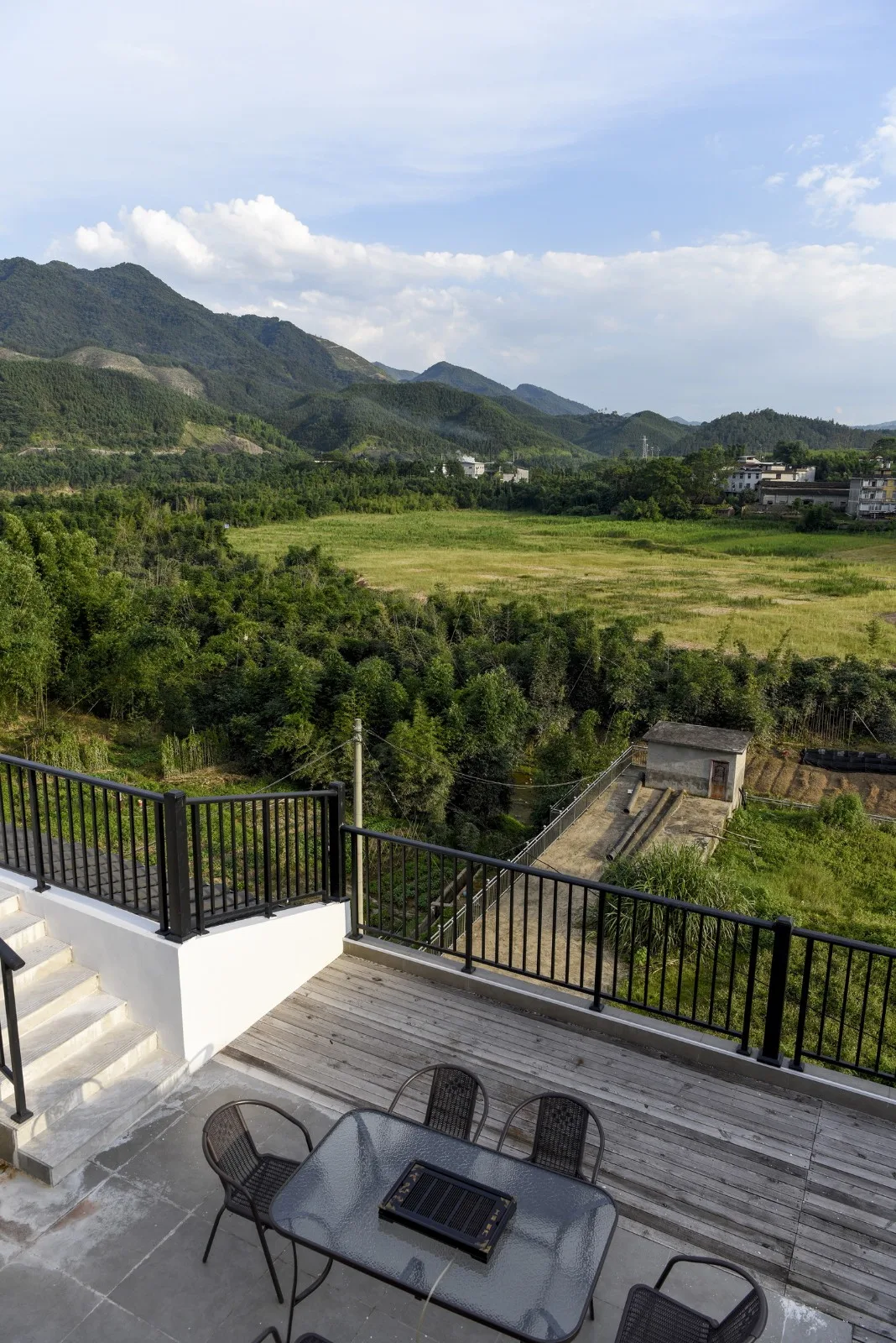
View from the small terrace © Z.MINE
04 Materials
Continuity and innovation.
The main structure is a reinforced concrete frame. The elevated level is built with green bricks, maintaining the character of the original house. Above this, the exterior is finished with textured coating. The roof is covered with small green tiles, designed for comprehensive waterproofing, drainage, and thermal insulation. The southern balcony and terrace feature anti-corrosion wooden flooring, creating a cozy space for winter sunbathing.
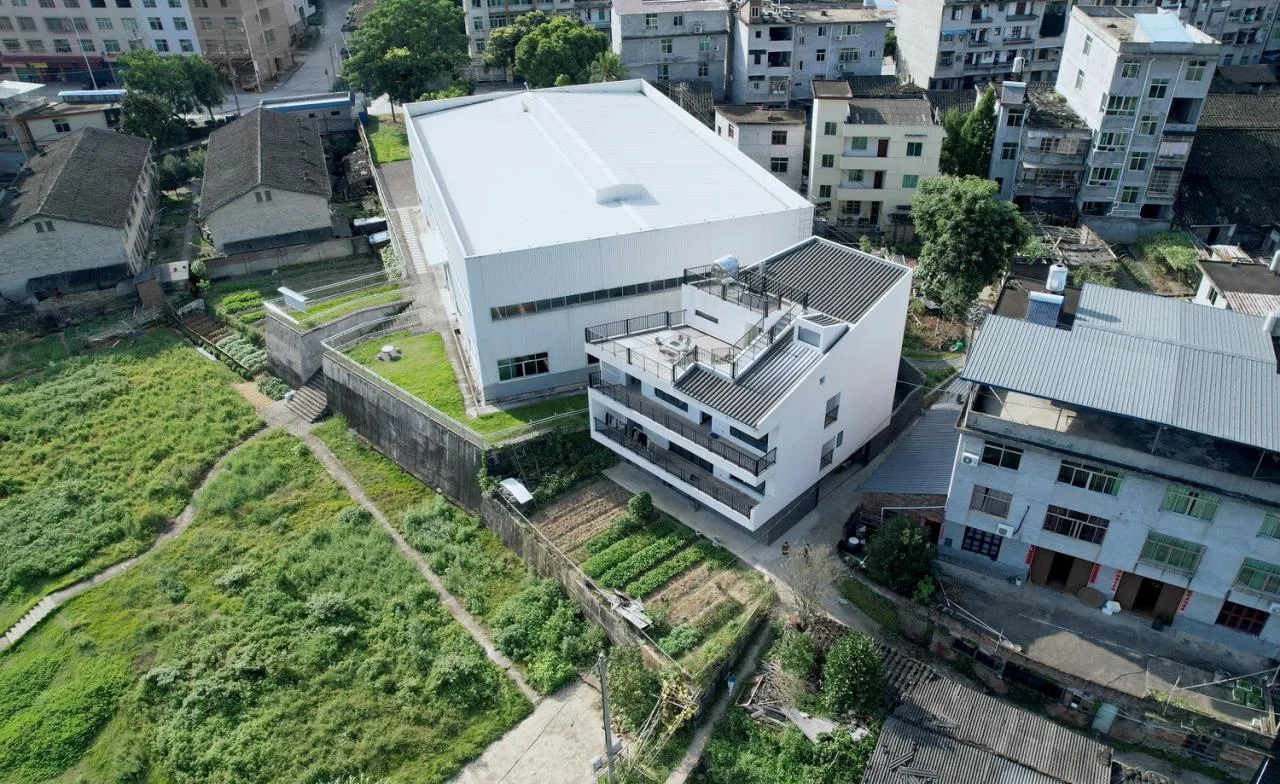
△ Bird’s-eye view of the southeast corner © MV Architecture Studio
05 Reflection
Unresolved details.
Unfortunately, the small trees on the northern side of the original site were cut down during demolition. Originally, transparent mesh guardrails, warm yellow textured coatings, and matching window frames were planned but had to be omitted due to rising material costs. Ultimately, a house becomes wonderful because of the lives within it. We look forward to enriching the courtyard with flowers, trees, and a thriving vegetable garden.
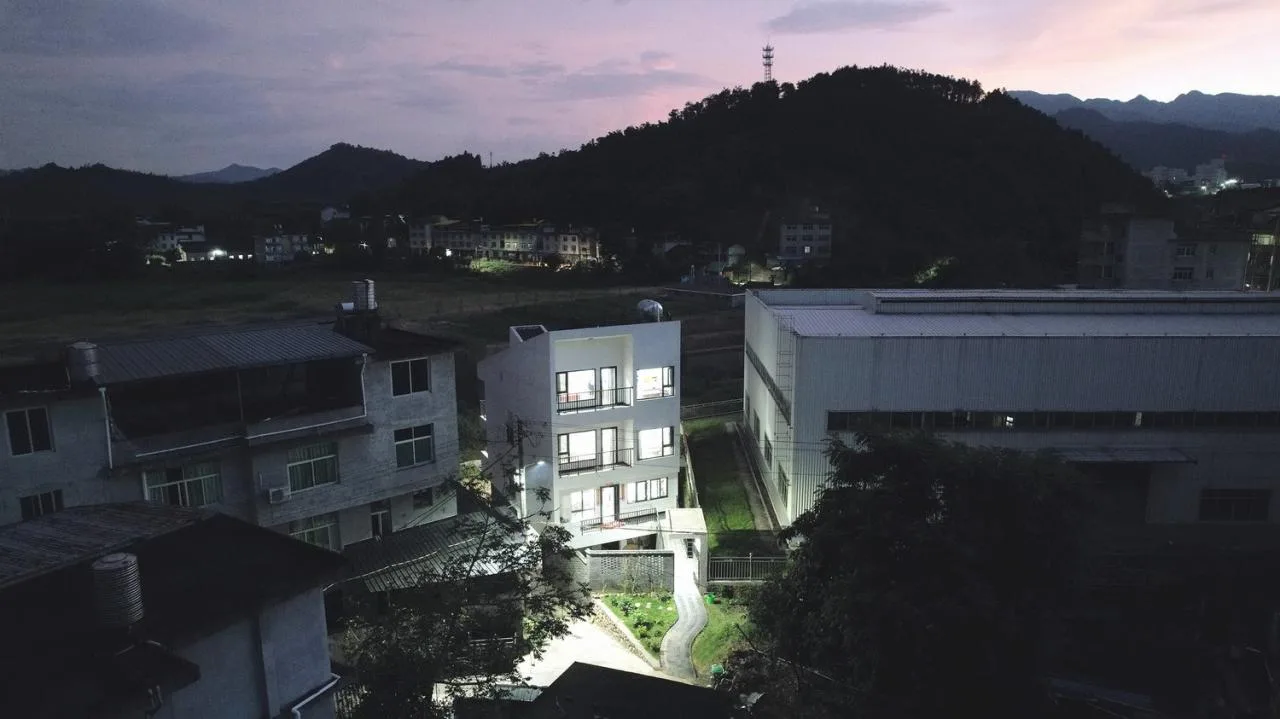
Nightfall © MV Architecture Studio
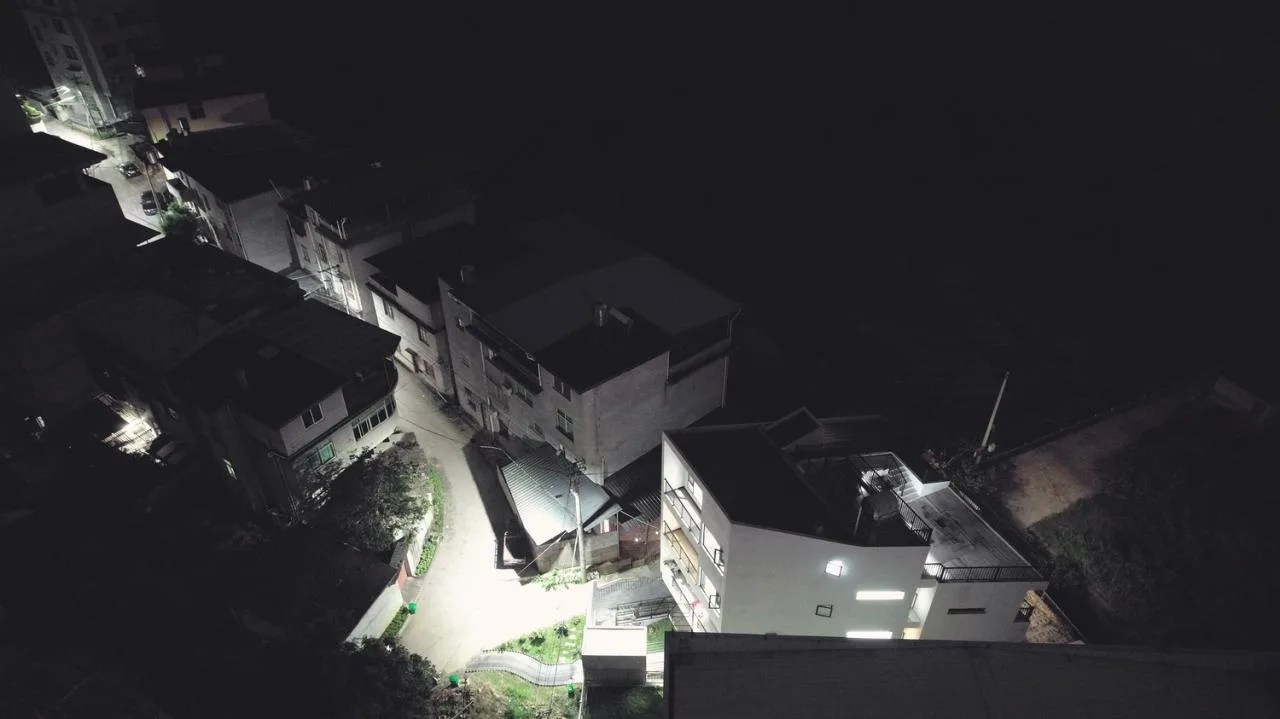
△ Night view © MV Architecture Studio
Project Drawings
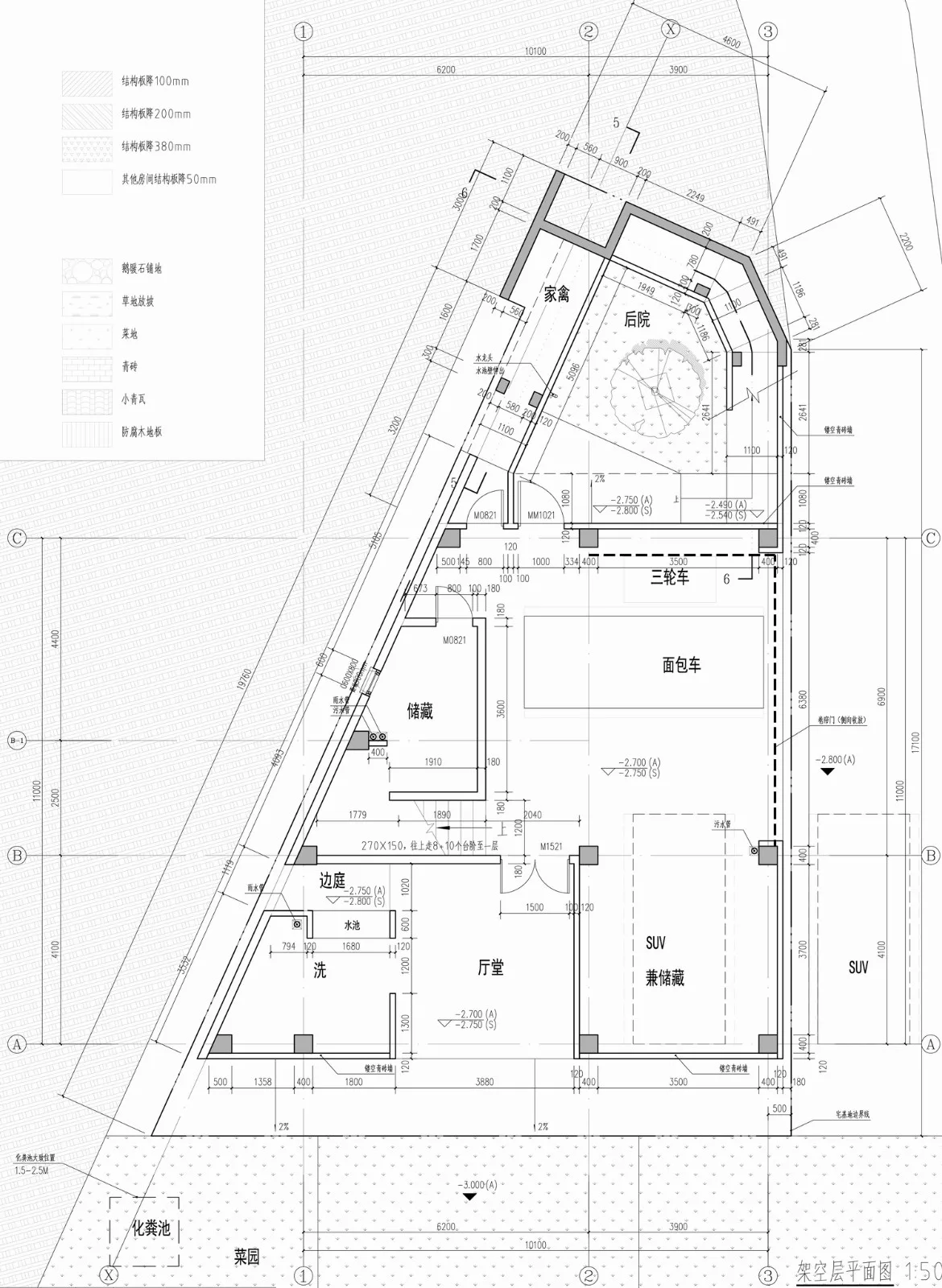
△ Roof floor plan
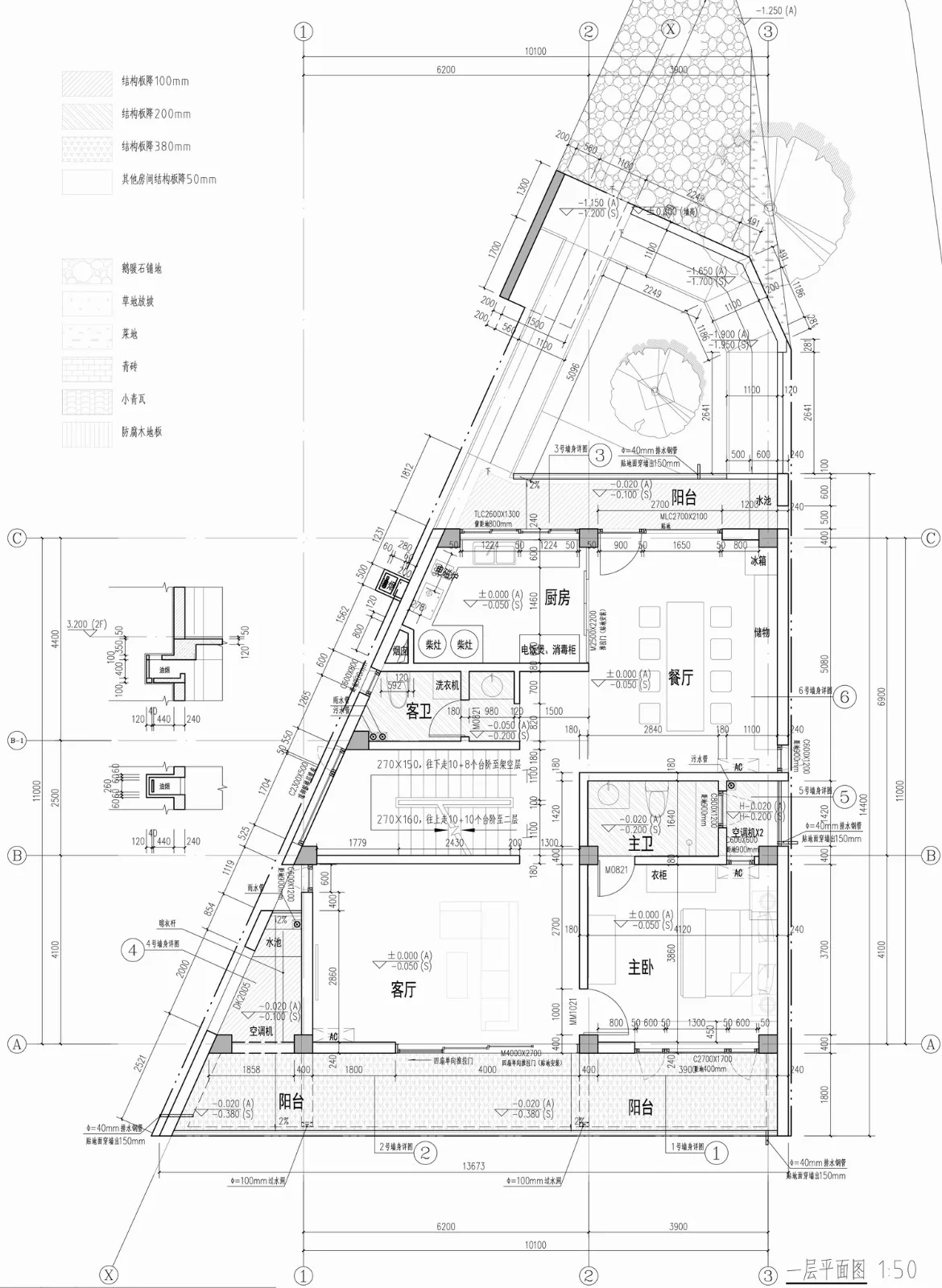
△ First floor plan
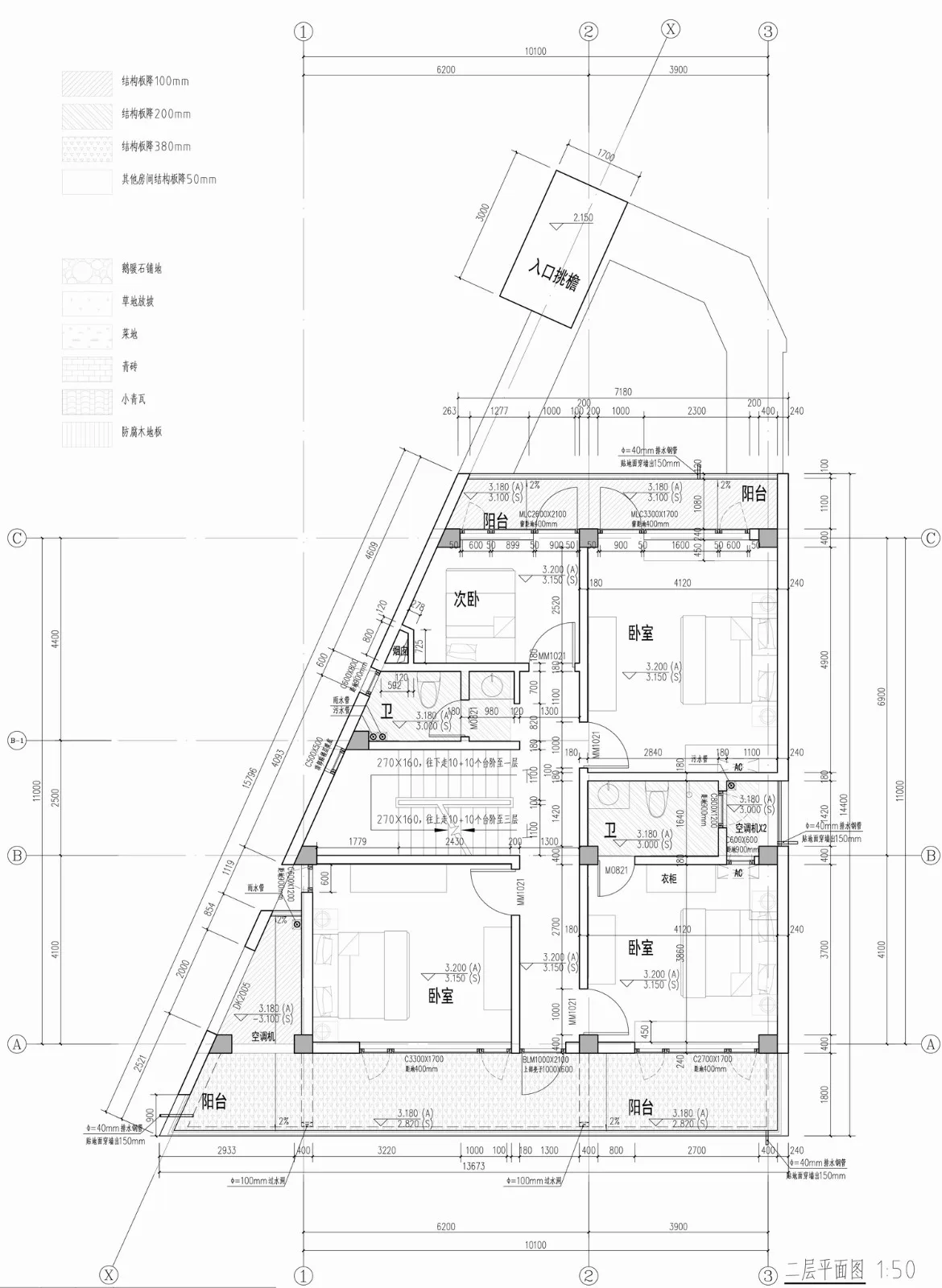
△ Second floor plan
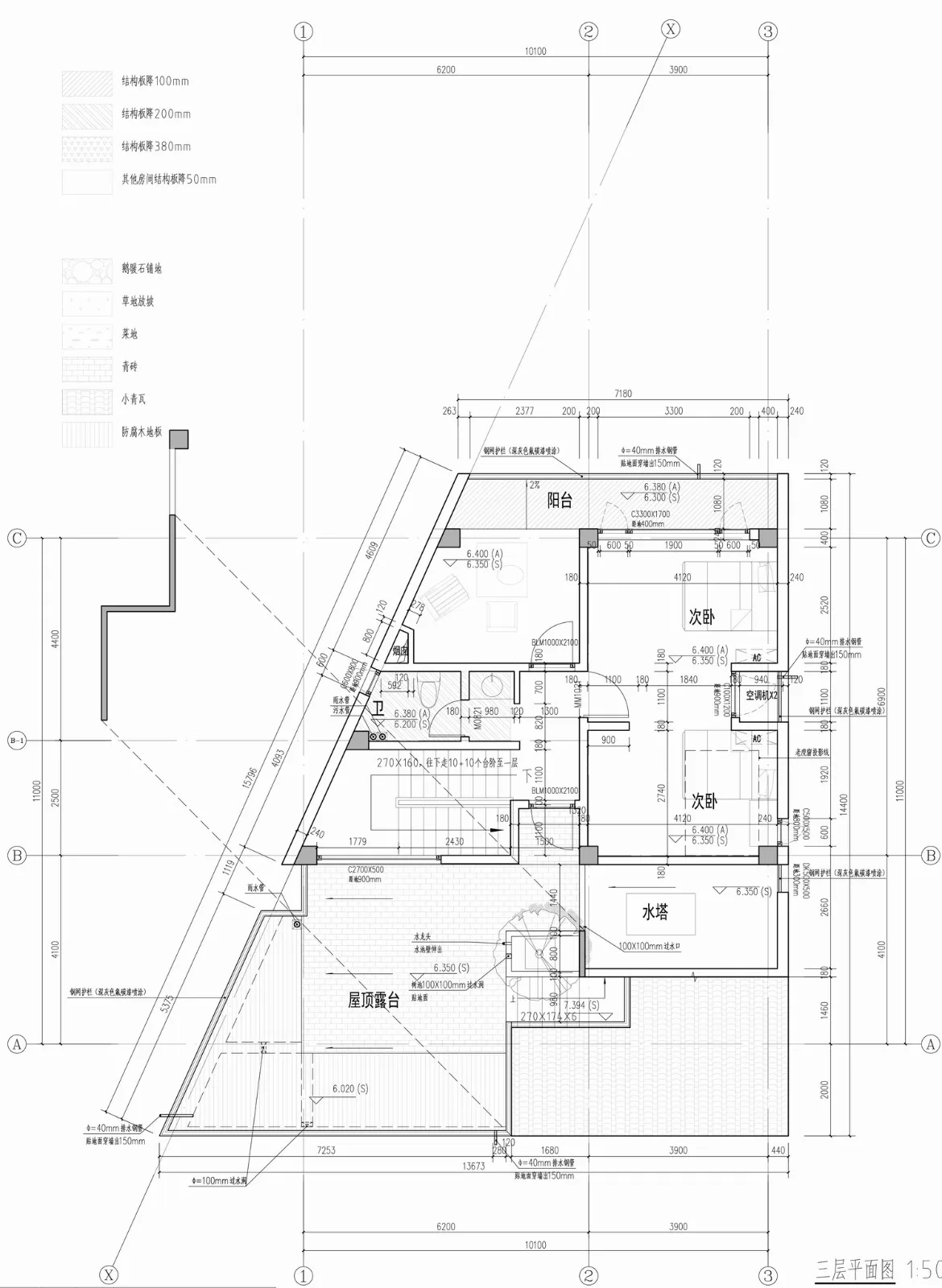
△ Third floor plan
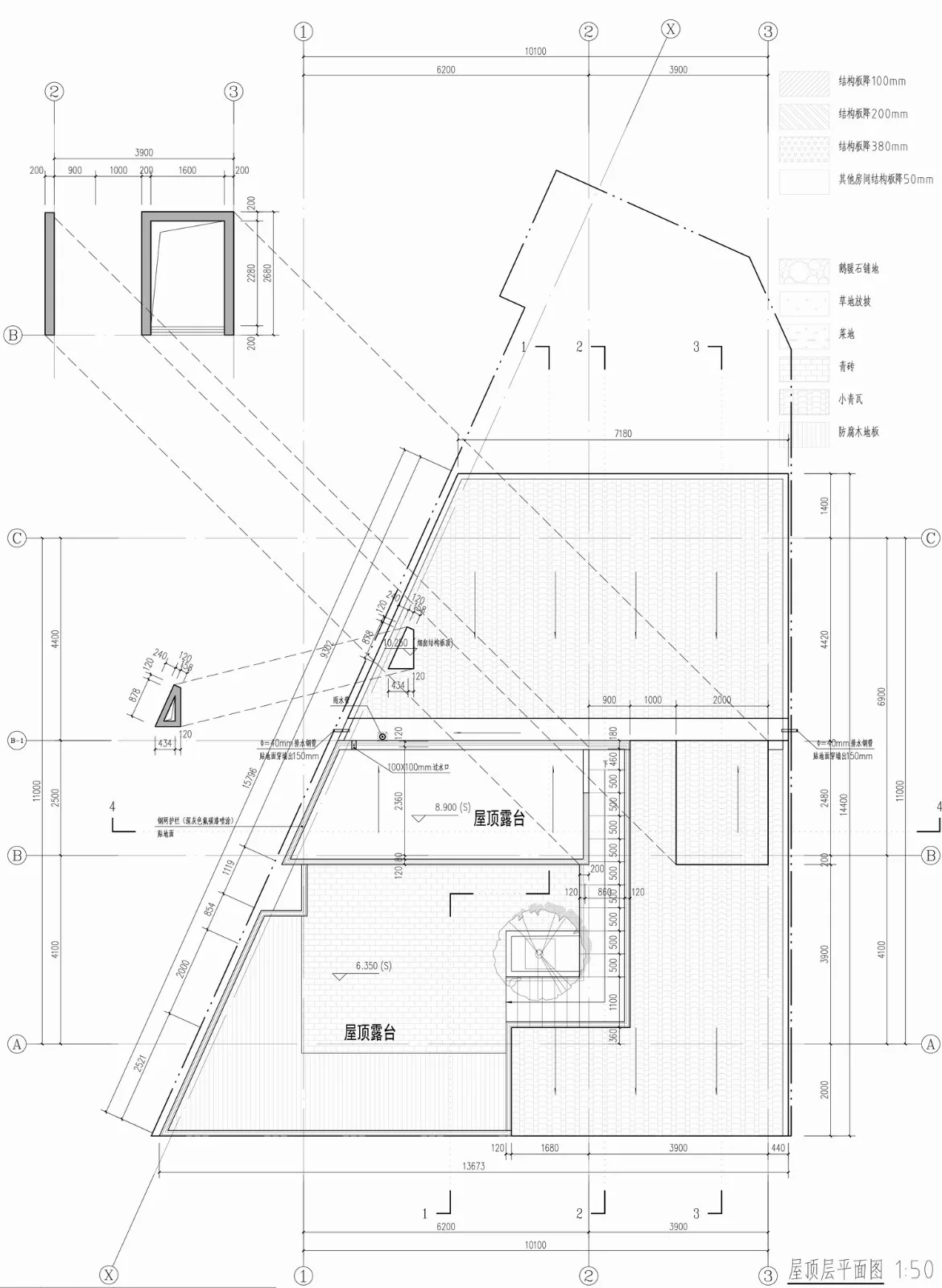
△ Roof plan
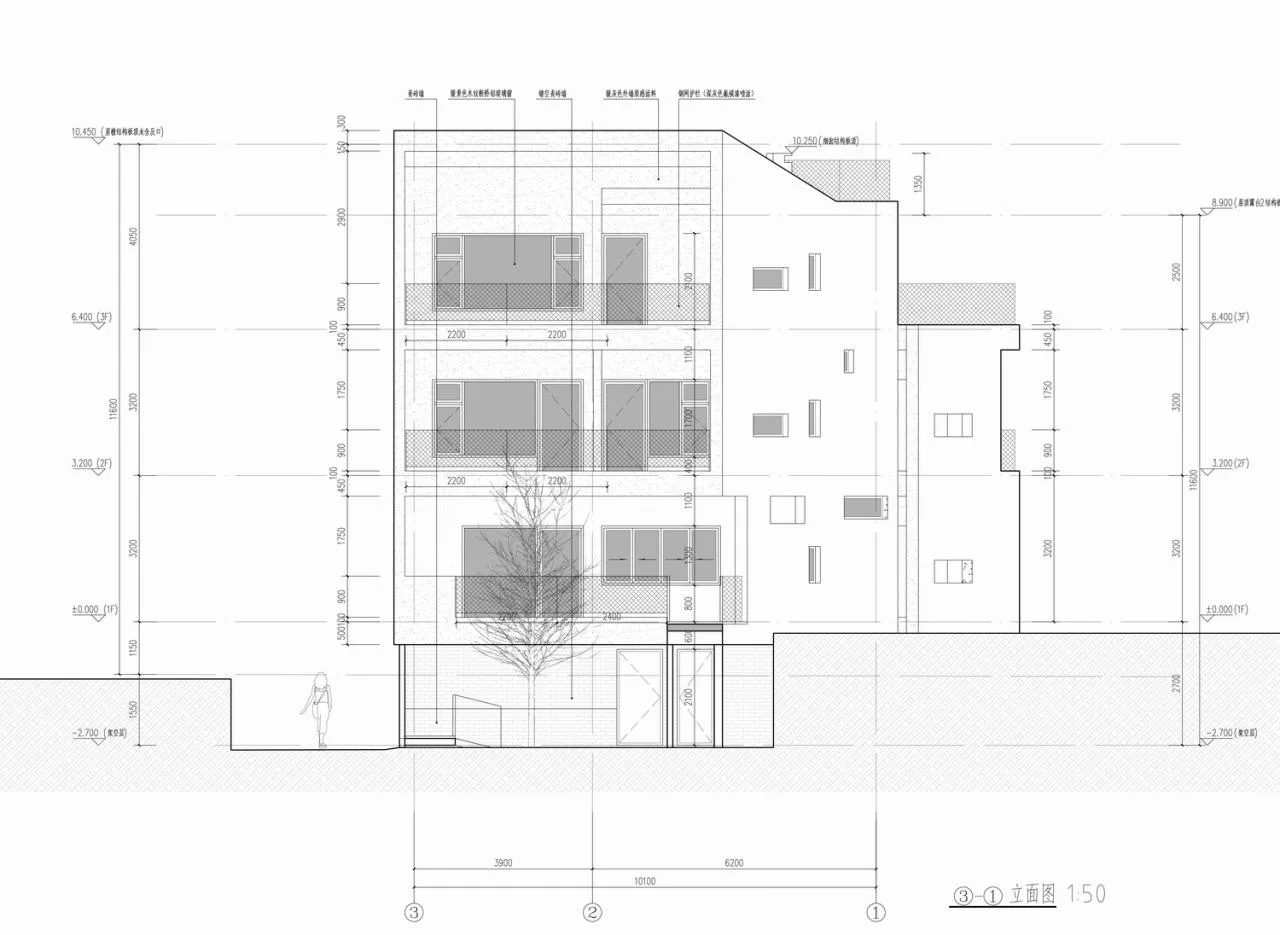
△ Elevation drawing
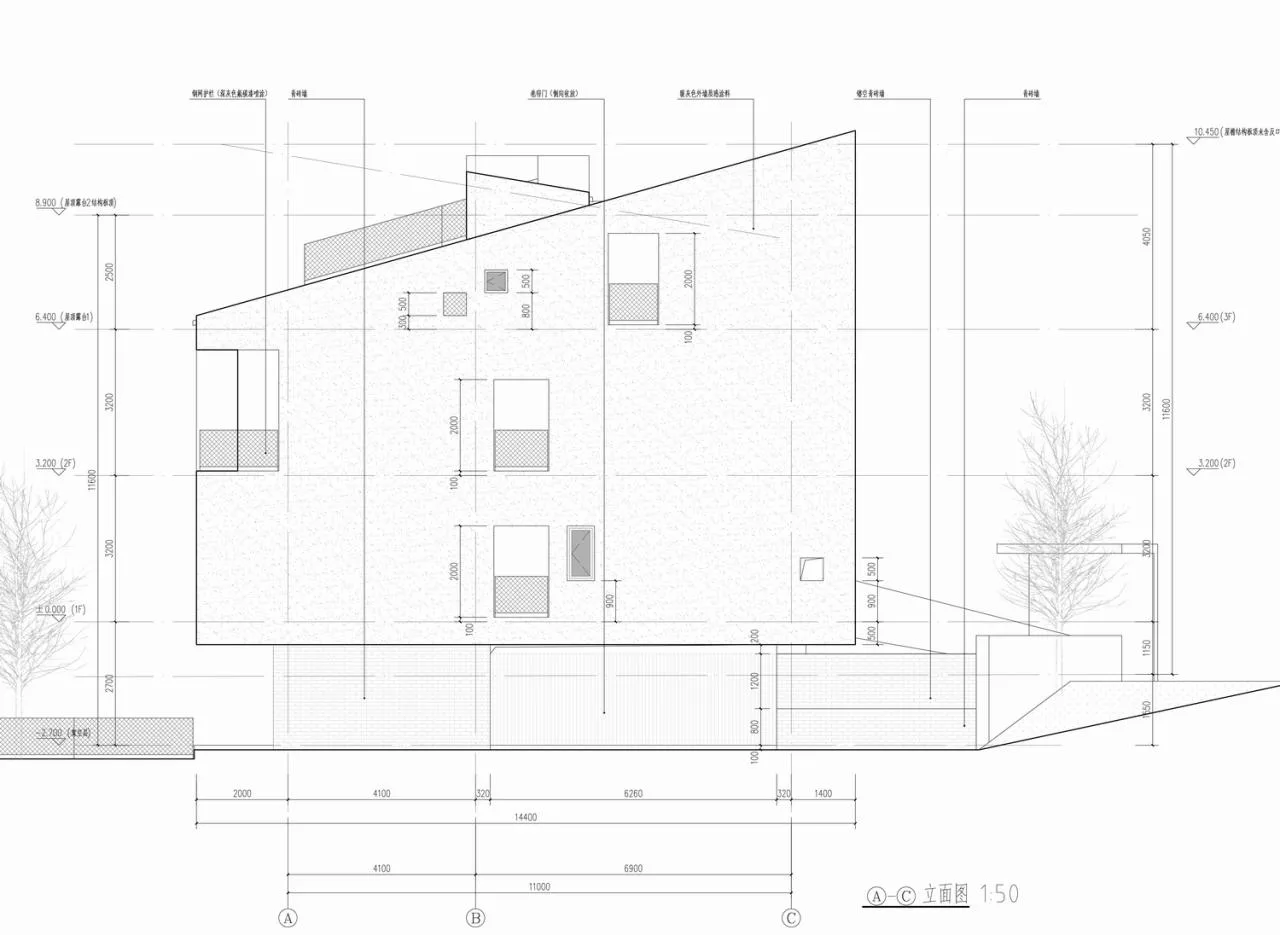
△ Elevation drawing
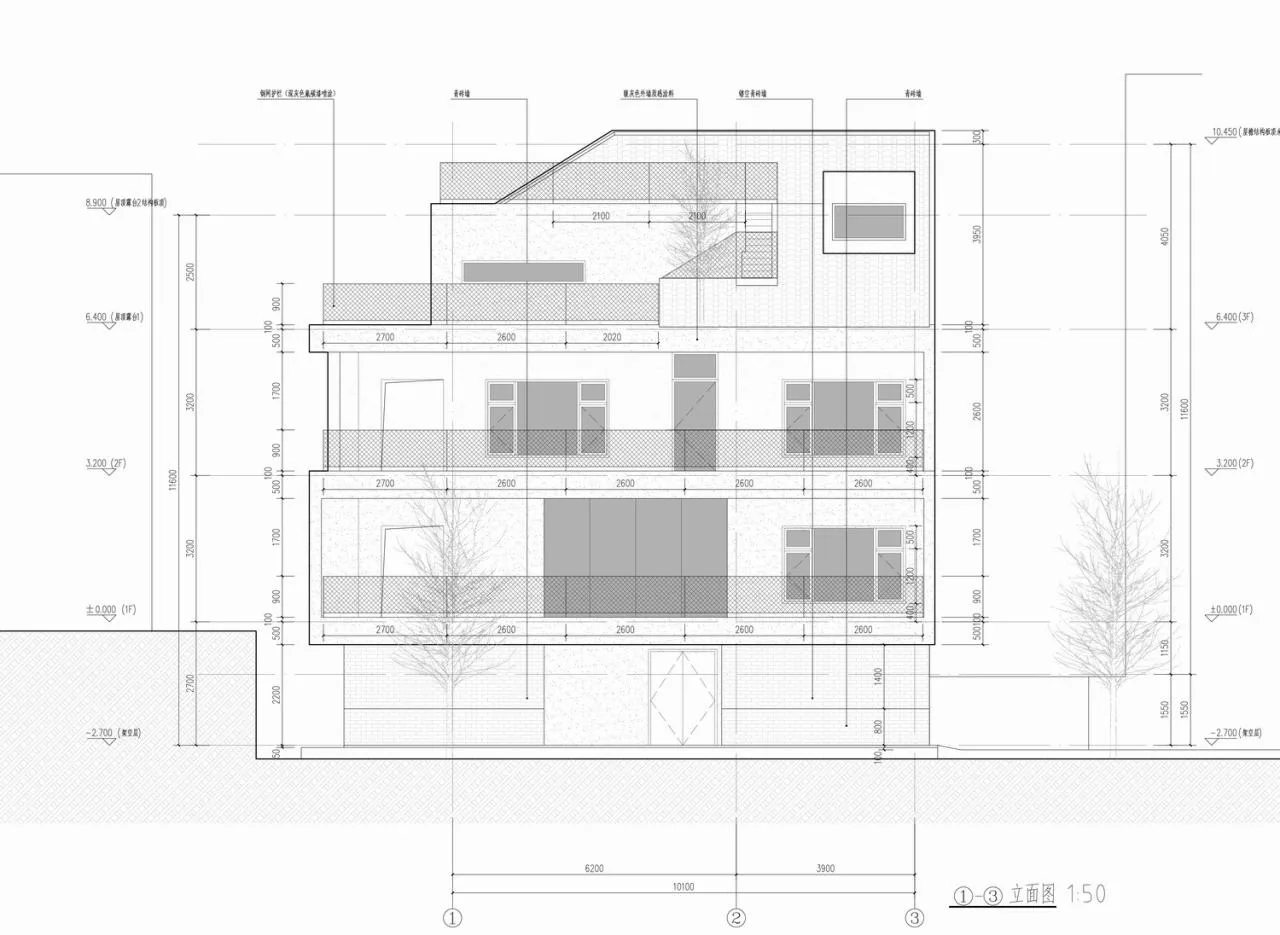
△ Elevation drawing
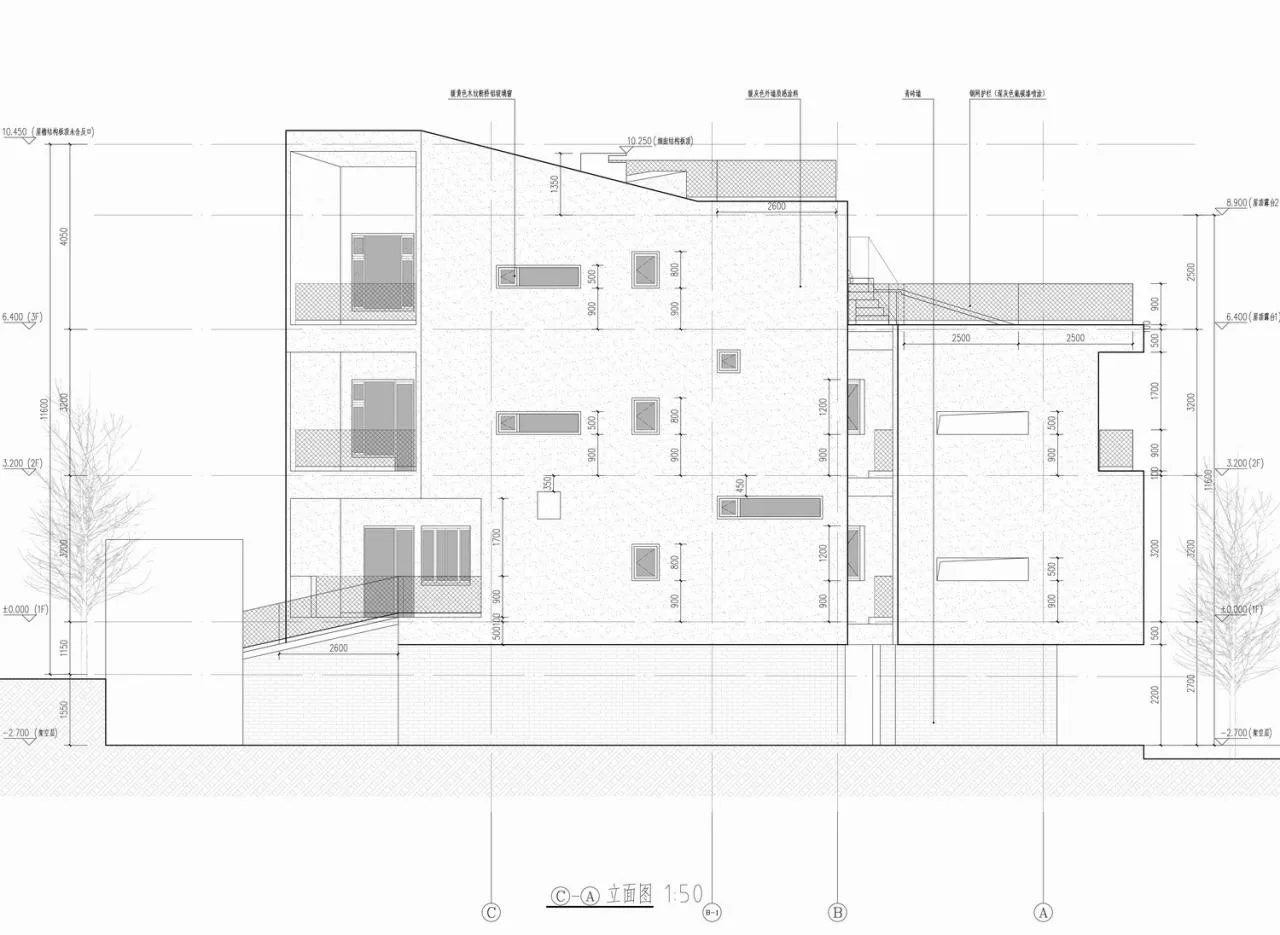
△ Elevation drawing
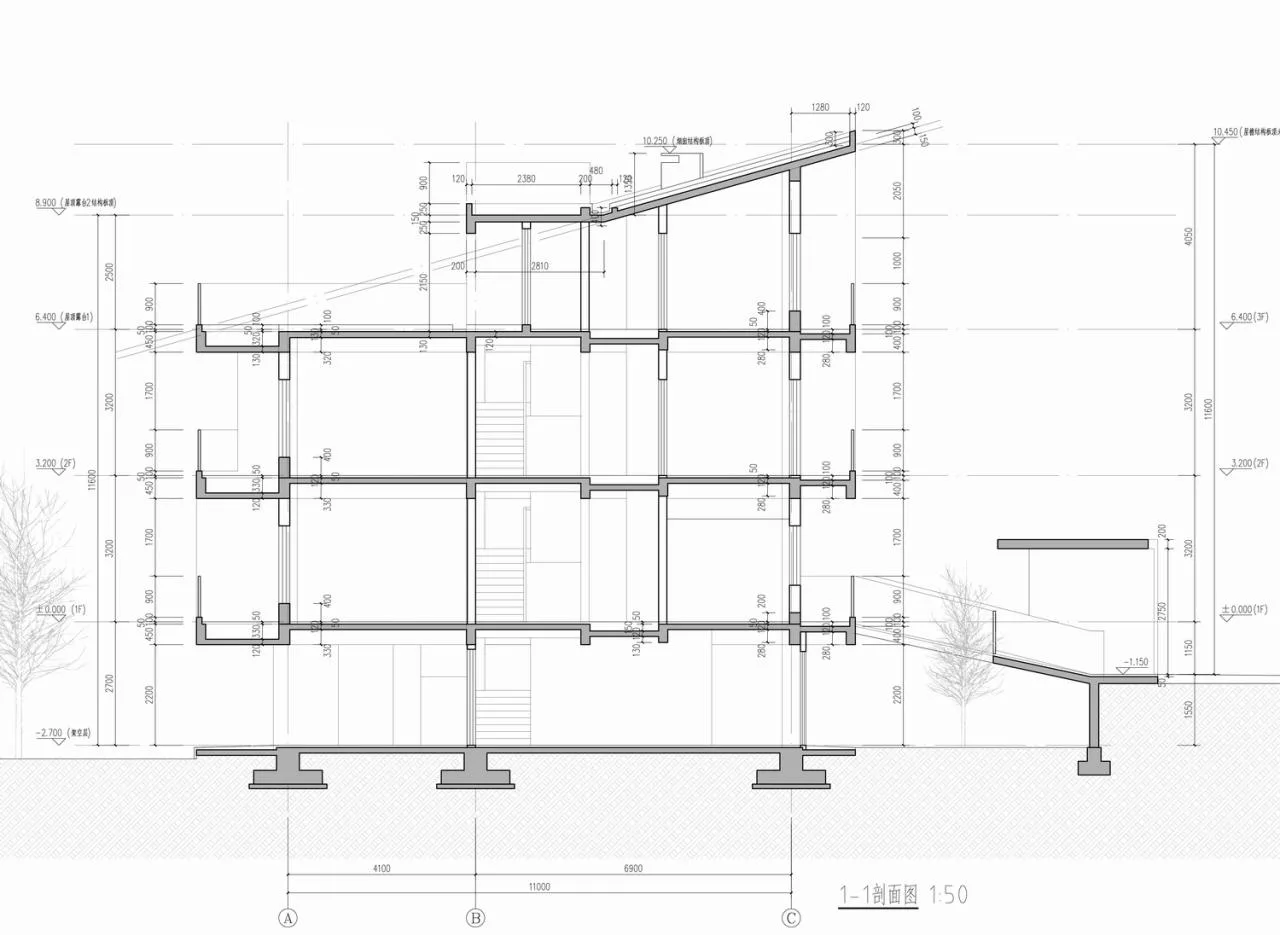
△ Section diagram
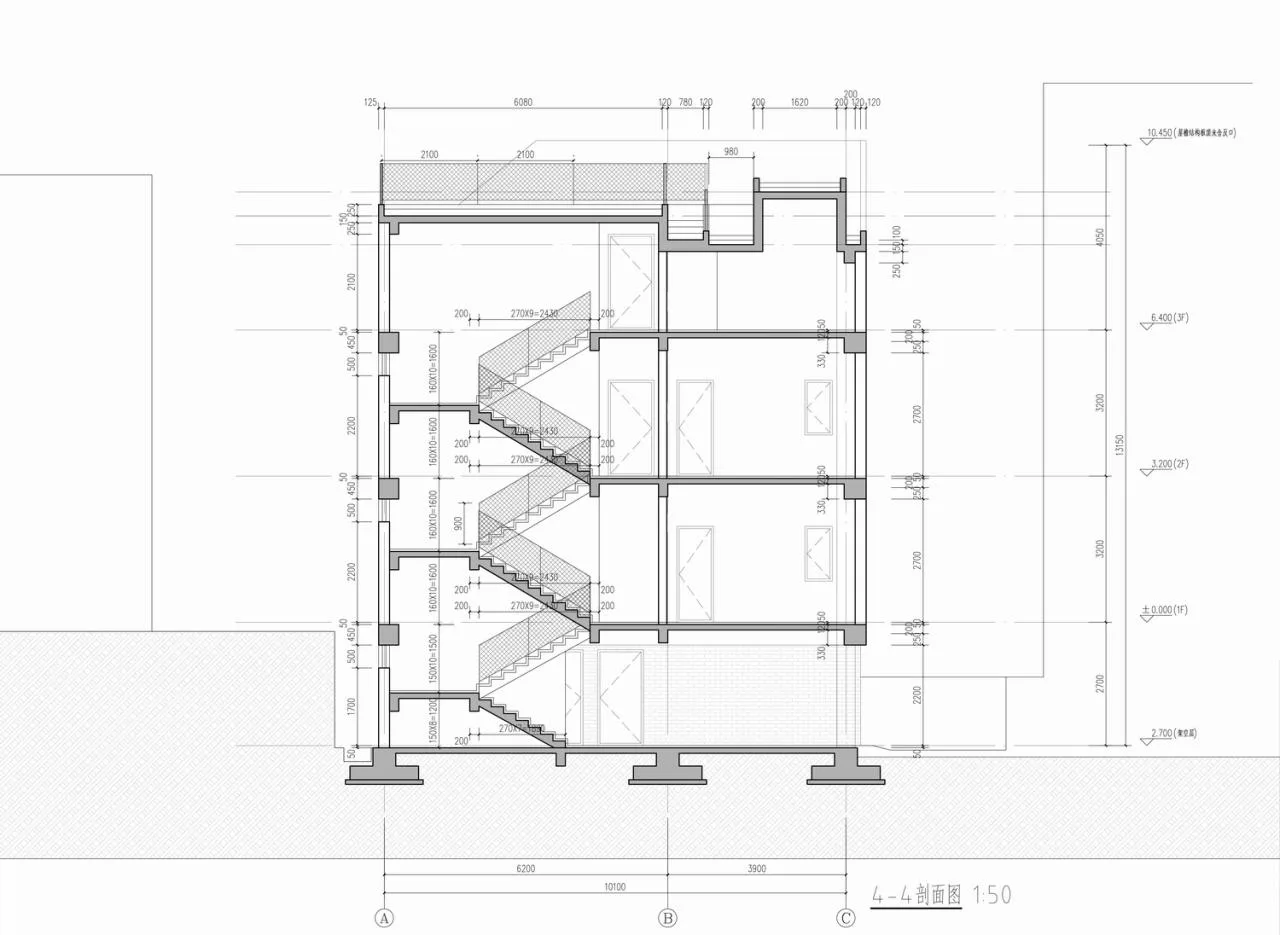
△ Section diagram
Project Information
Project Name: 21 Binhe Lane
Project Type: Private Residence
Architectural Design: MV Architecture Studio
Location: Daheng Town, Yanping District, Nanping City, Fujian Province, China
Building Area: 450 square meters
Design Period: July 2020 to September 2020
Completion Date: February 2022
Lead Architect: Wu Longxin
Design Team: Wu Longxin, Chen Zhensheng, Chang Jian, Zhuang Xuguan
Photography: Z.MINE, MV Architecture Studio
Client: Private
Materials: Blue bricks, textured paint, small blue tiles














Must log in before commenting!
Sign Up