
A well-designed botanical garden offers a comprehensive glimpse into local flora, serving as a vibrant scenic destination throughout the seasons and acting as a distinctive symbol of the city.
Project Background
Located within the Langshan Scenic Area, the Nantong Botanical Garden’s greenhouse stands as the garden’s centerpiece. It functions as a key landscape feature and tourist attraction, showcasing regional and unique plant species, promoting interactive tourism, and providing educational opportunities about plant science.
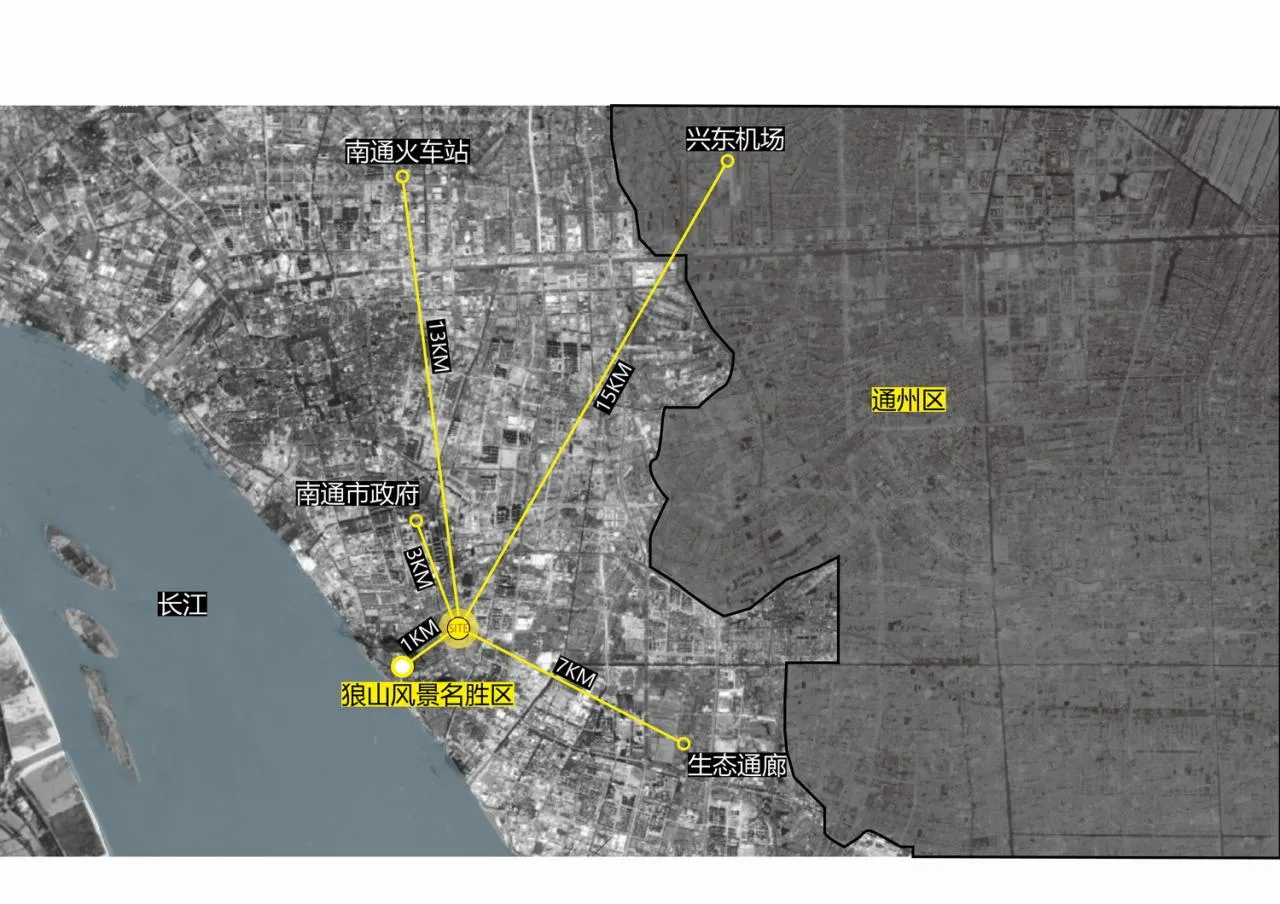
△ Location analysis
The tradition of greenhouse construction abroad dates back centuries, with the earliest surviving cast iron and glass greenhouse being the Paris Botanical Garden, built in 1626. In contrast, China’s greenhouse industry developed more recently. Since the 21st century, numerous large-scale exhibition greenhouses, such as the South China Botanical Garden’s greenhouse, have emerged alongside regional botanical gardens. Recently, themed greenhouses have gained popularity as favored spaces for “micro vacations” and hybrid commercial and office uses.
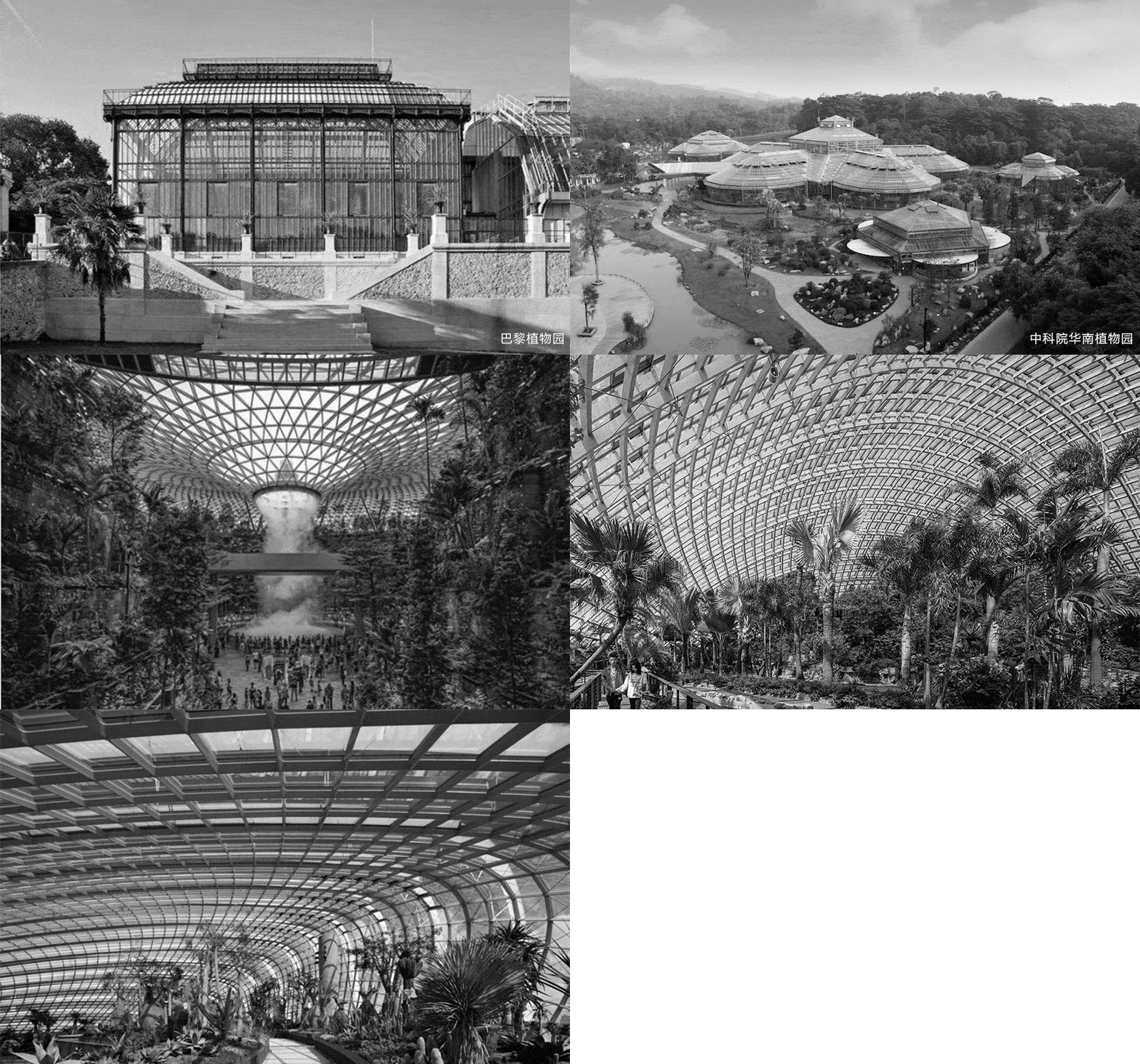
History of Exhibition Greenhouse Development
Project Challenges
As the most striking structure within the botanical garden, the greenhouse needed to embody symbolic meaning while meeting the technical demands of science exhibitions and providing optimal conditions for plant growth, including height, temperature, and humidity. The design team aimed to create a unique visitor experience that satisfies aesthetic expectations while ensuring structural and spatial functionality. Their goal was to reflect Nantong’s distinctive urban character and envision an ecological future inspired by the theme of “river-sea connection, a thousand sails competing.”
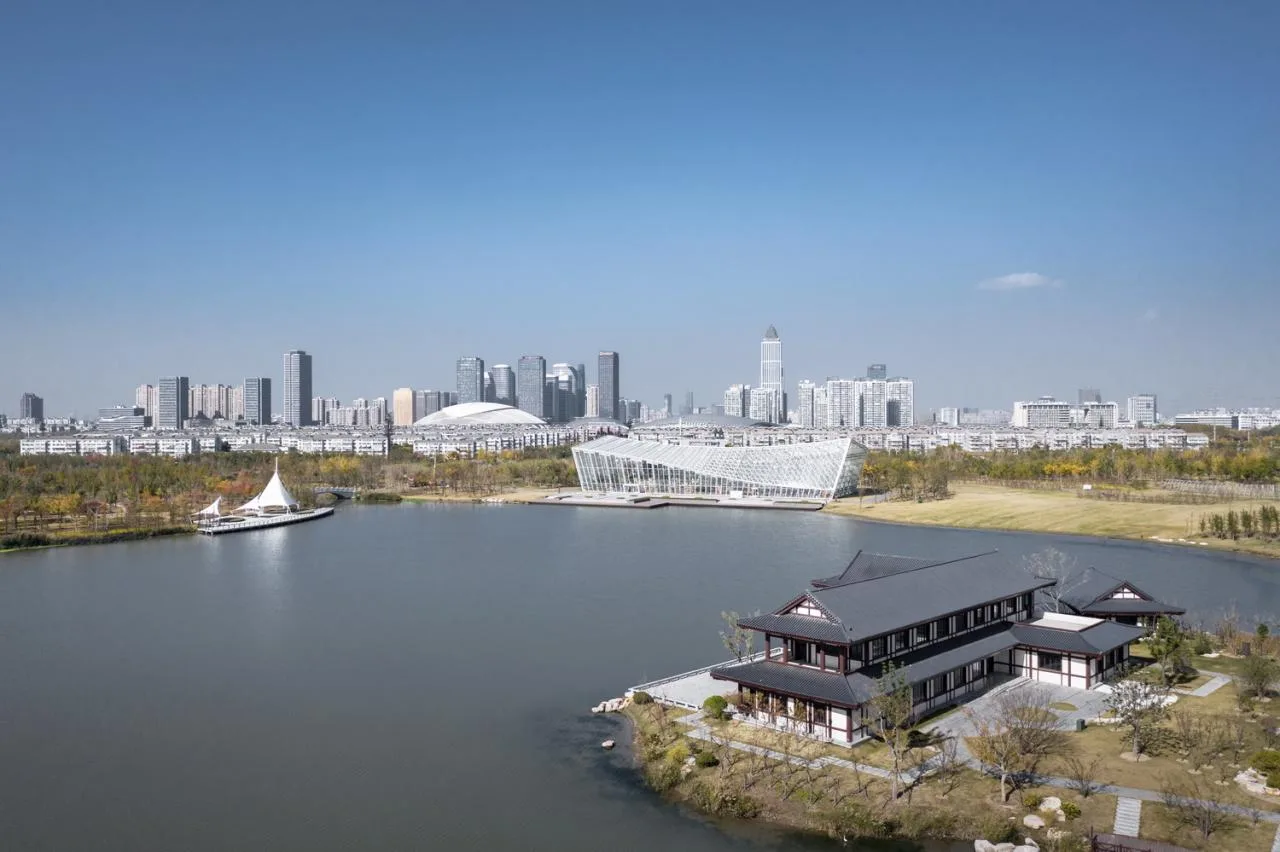
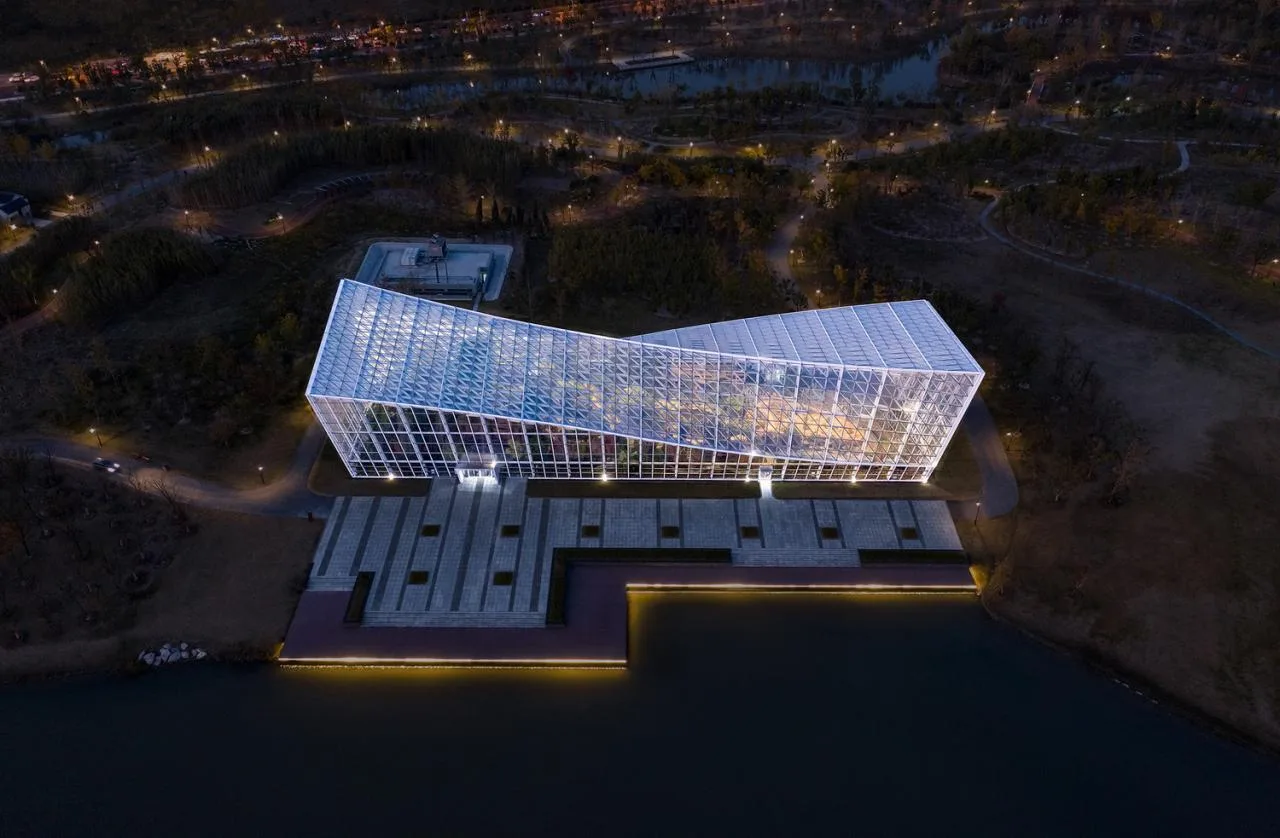
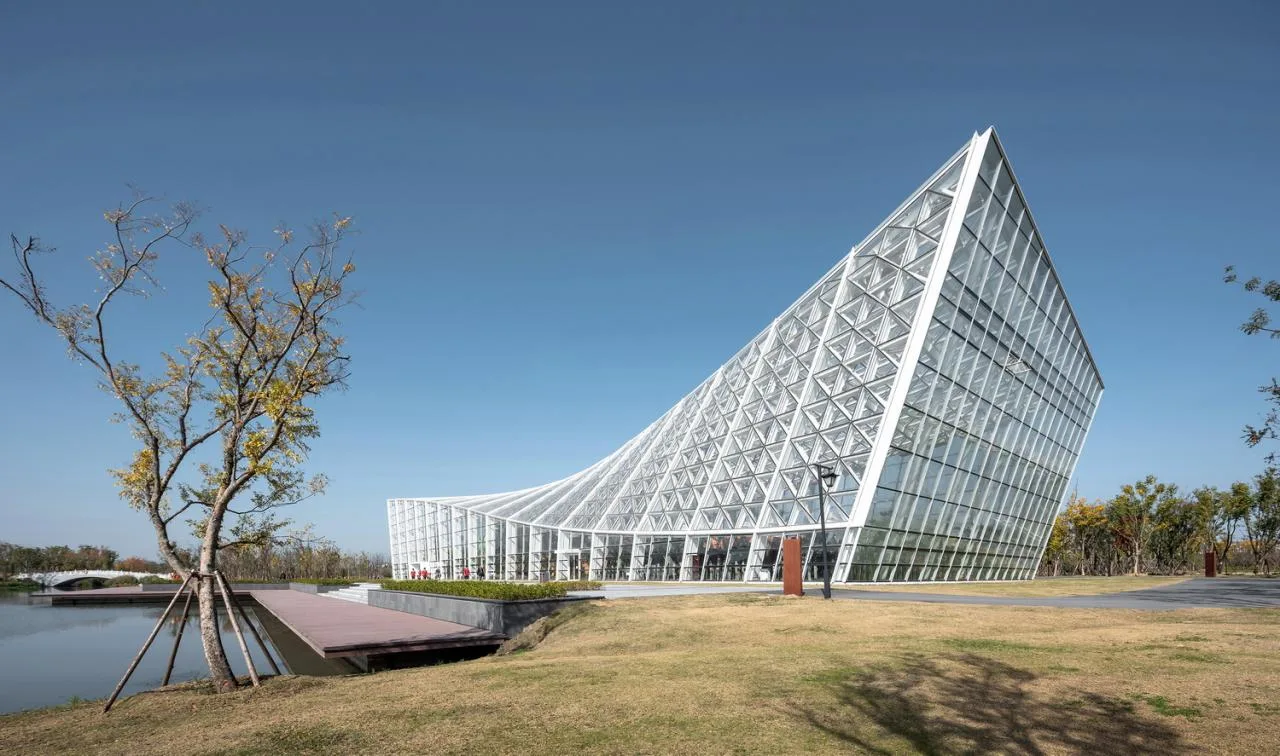
△ Aerial view
Design Concept
The Langshan Scenic Area sits along the Yangtze River. During the Tang Dynasty, the renowned monk Jianzhen sought refuge here during his third voyage east to Japan. Inspired by this history, Jianhe Architecture designed the greenhouse to resemble a “light boat”—low in the center with elevated ends, forming a graceful arc reminiscent of a flat boat. The skin of the structure, resembling a fishing net, weaves the framework together, evoking imagery of a fisherman’s bamboo hat and an open fishing net. From afar, the structure seems to dissolve into the landscape, with only the fish-scale-like skin shimmering in the water’s reflection.
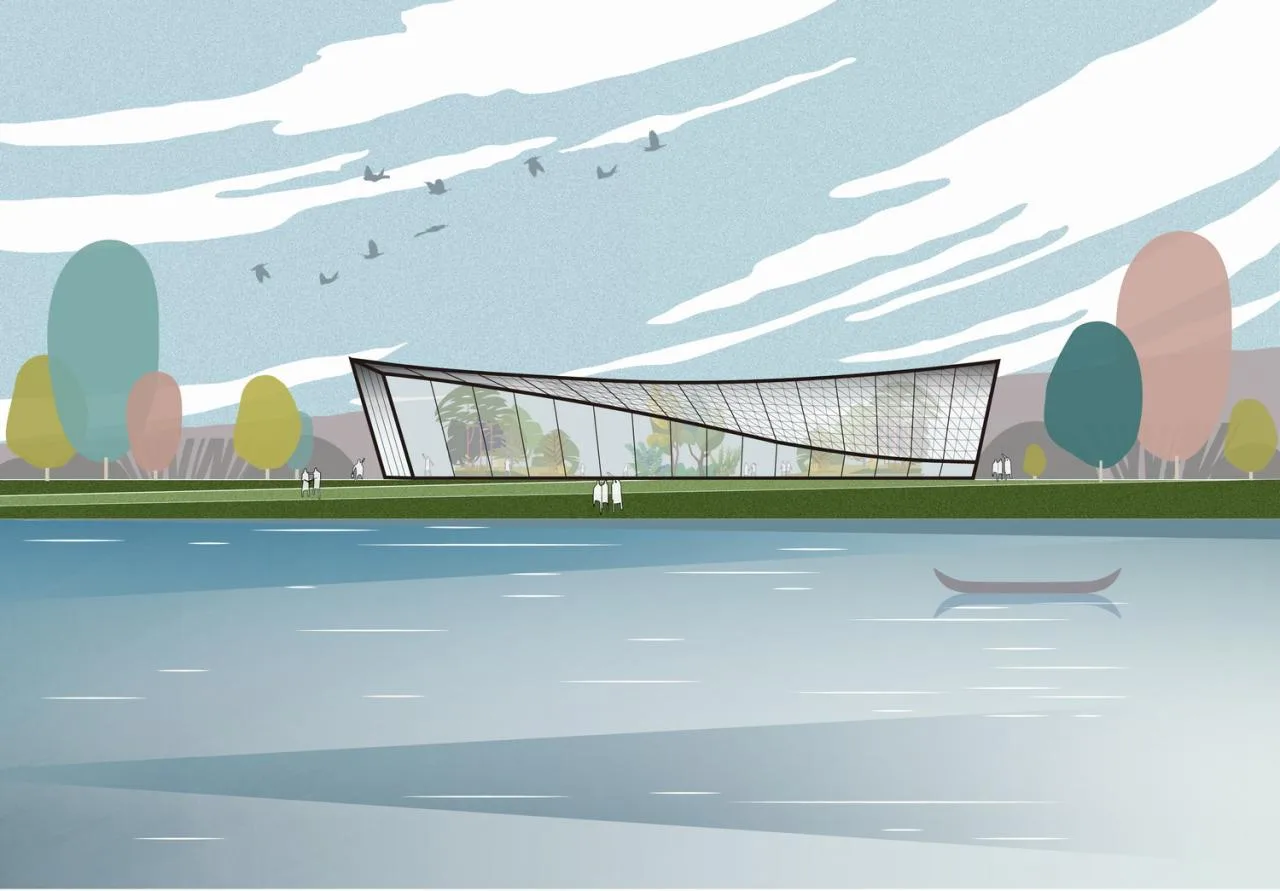
△ Design diagram
Site and Design
The greenhouse is situated in the northeastern corner of the botanical garden, bordered by an artificial lake and welcome square to the south. The surrounding landscape is open and low-lying, emphasizing a harmonious dialogue with the lake. The building aligns parallel to the water’s surface and maintains symmetry with the lake’s center. Visitors first encounter the Waterfront Square, where buses frequently drop off tourists for check-in. The greenhouse’s energy center is discreetly embedded in a semi-underground landscape area north of the greenhouse.
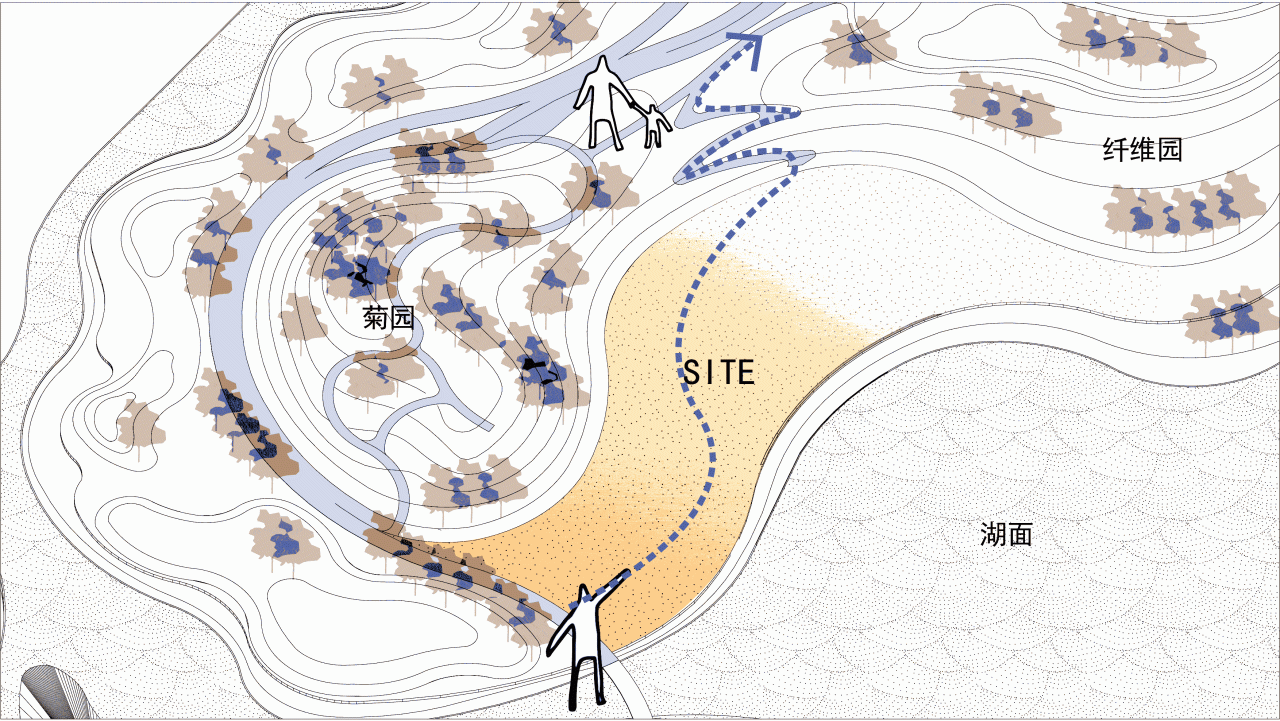
△ Generation analysis chart
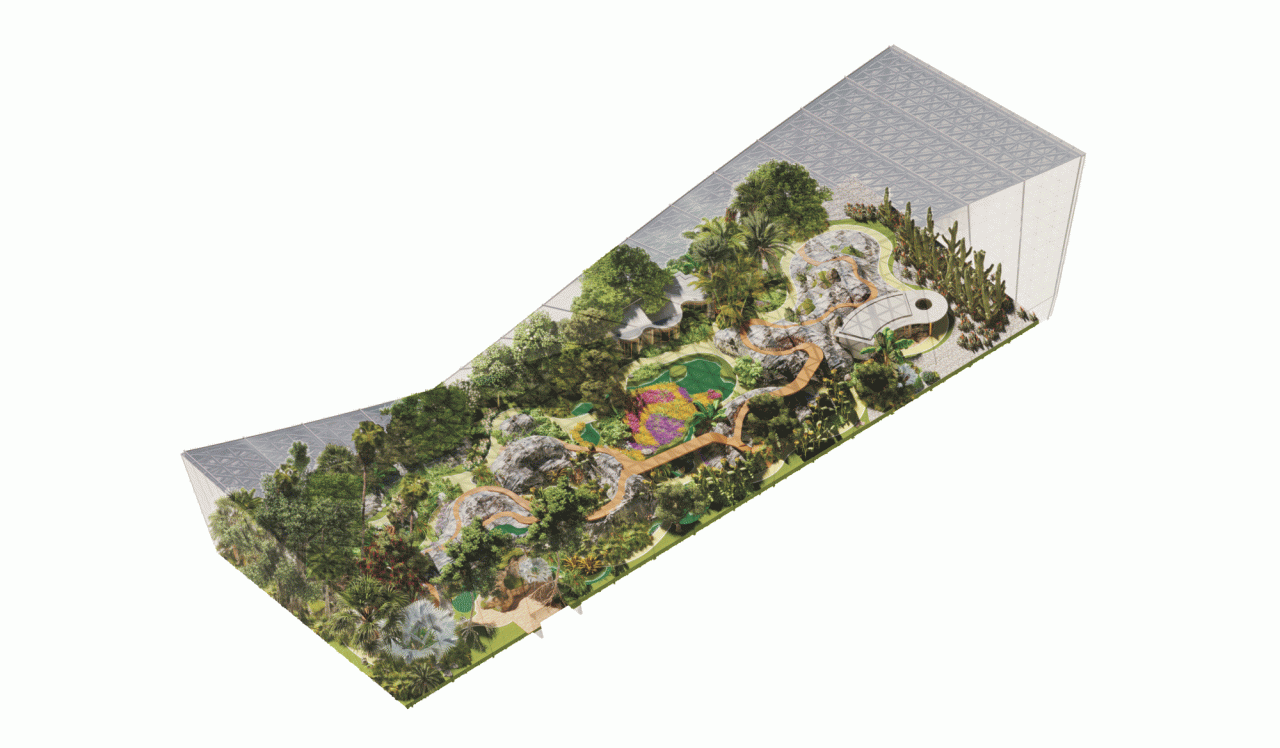
Covering just 3,200 square meters, the greenhouse is modest in scale. Unlike conventional greenhouses that focus on a single climate zone, this facility accommodates diverse environments: tropical rainforests, flower displays, as well as sand and succulent plant areas. Further subdivision would limit space and complicate humidity control across zones.
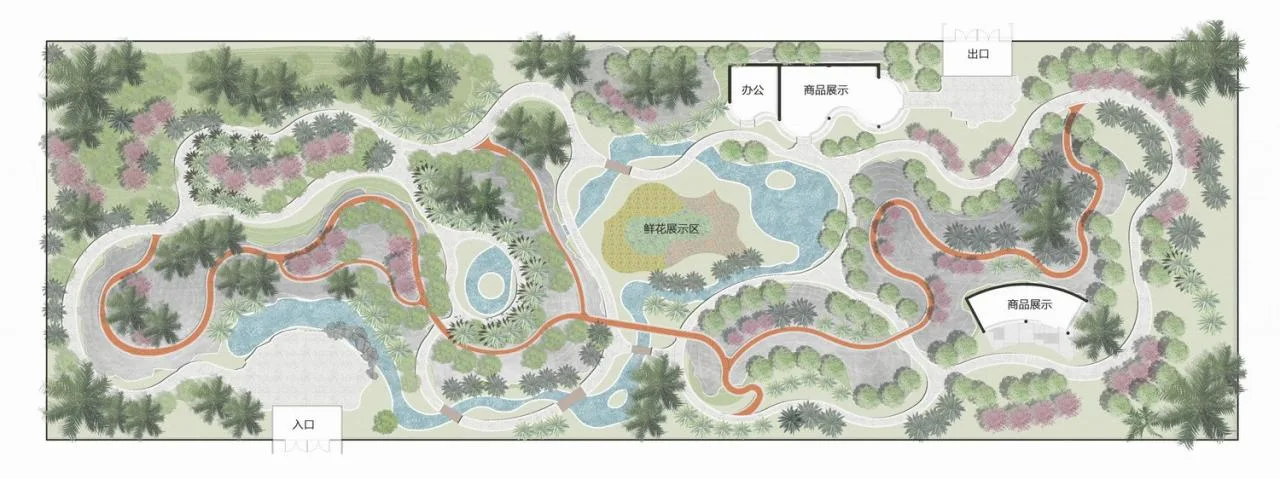
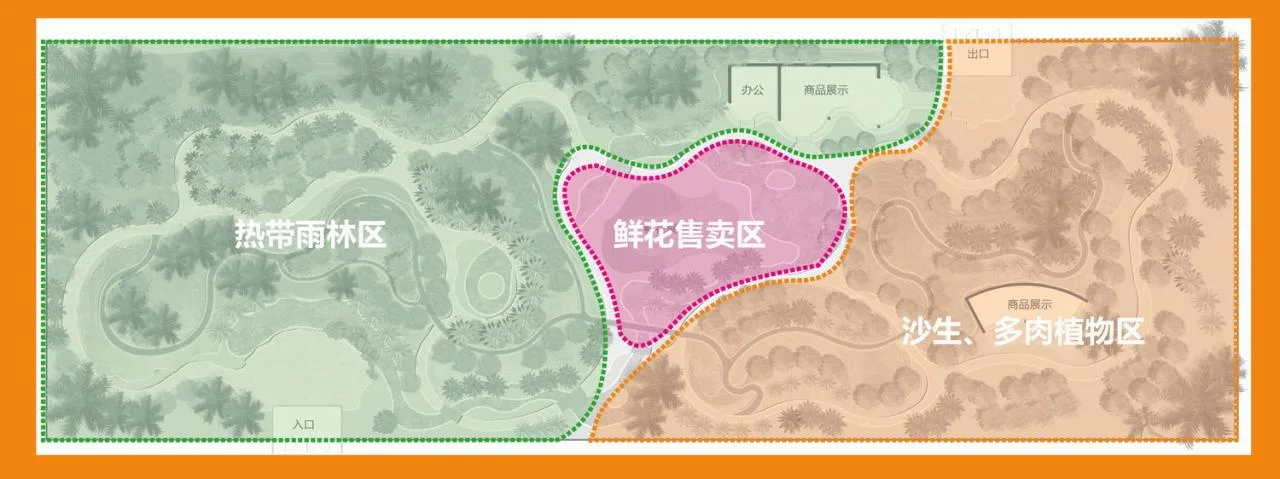
△ Floor plan zoning
To address these challenges, the design team implemented a “saddle”-shaped roof. The rainforest and desert sections, which require vastly different climates, occupy the higher ends, while the lower central area serves as a transitional seasonal flower zone. This roof design helps reduce the mixing of air with different humidity levels, acting as a subtle barrier.
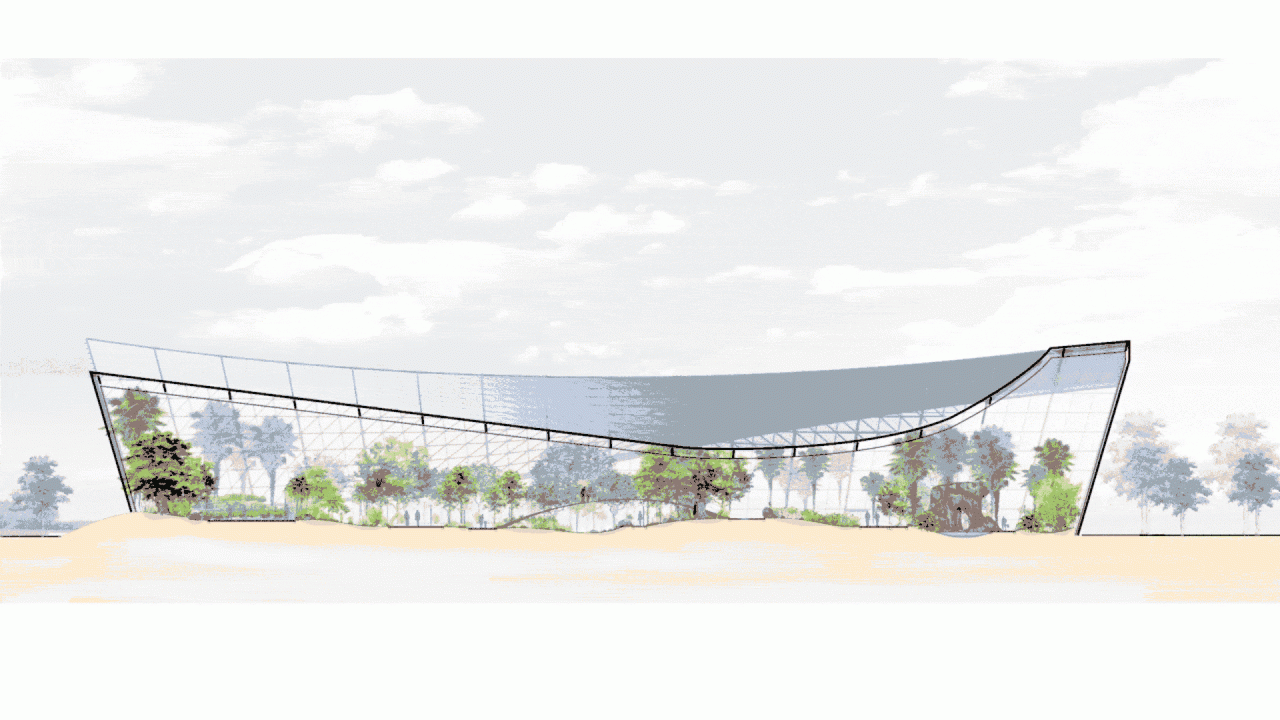
△ Climate zoning map
The roof’s lowest point stands 3 meters high, the ridge’s centerline reaches 16 meters, and the highest point peaks at 20 meters. This height range accommodates most plants’ growth requirements without causing warm air buildup or excessive energy waste.
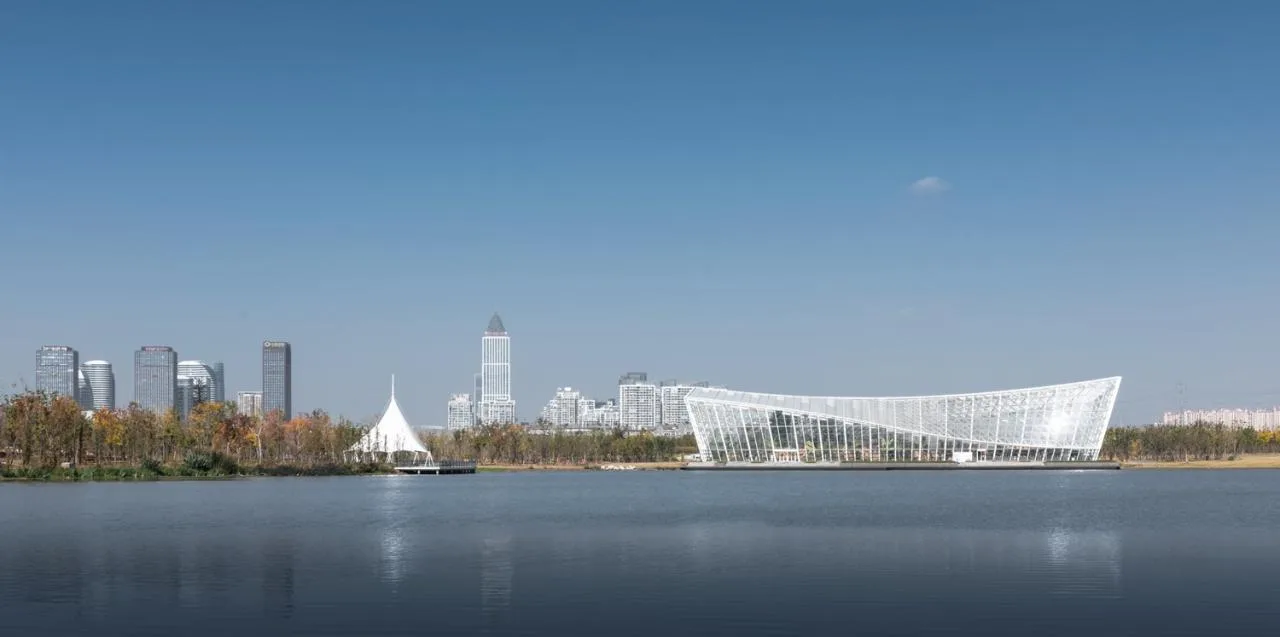
△ Realistic rendering
The ridge line forms a smooth arc extending diagonally across the structure. Inside, the architects employed the theme of “spiral lines” to craft a dynamic spatial experience. The roof twists along the ridge, gradually flowing into the facade, breaking spatial dimensions and symbolizing life’s evolution from simplicity to complexity.

△ Spiral architectural cross-section showing twisted lines
Flow and Space
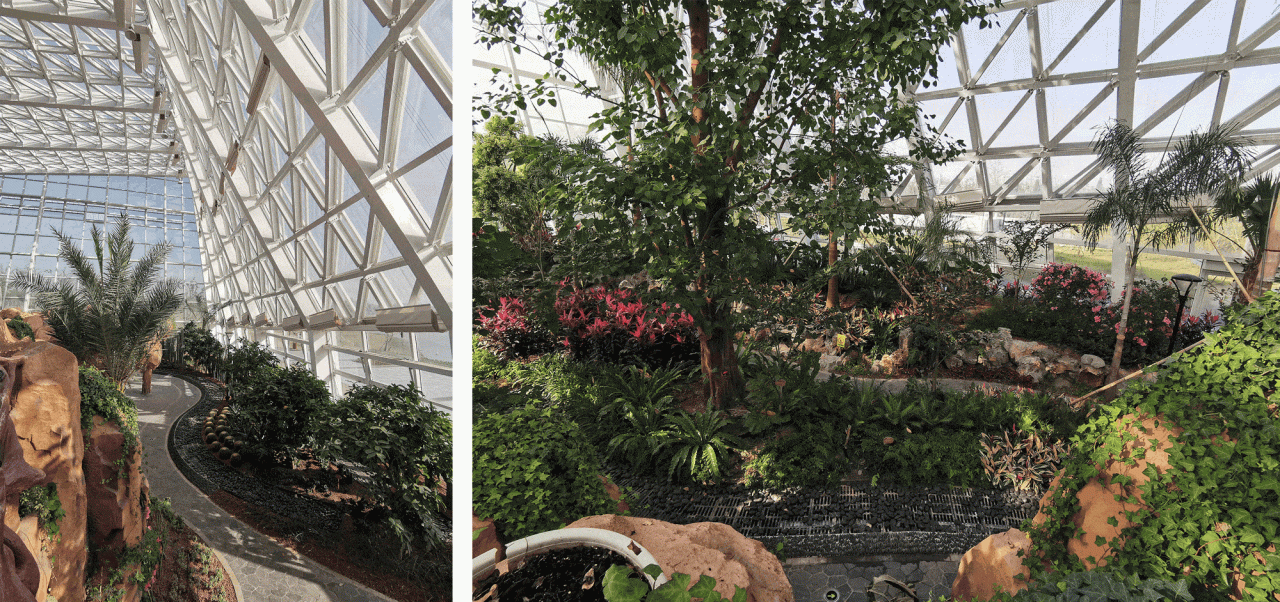
Inside, the circulation path uses landscaping techniques like “winding around peaks,” creating indoor terrain with artificial hills. The main ground-level garden path connects three-dimensionally with a secondary path on the second floor, fostering spatial tension and extending the visitor experience with a rich, multi-layered viewing journey.
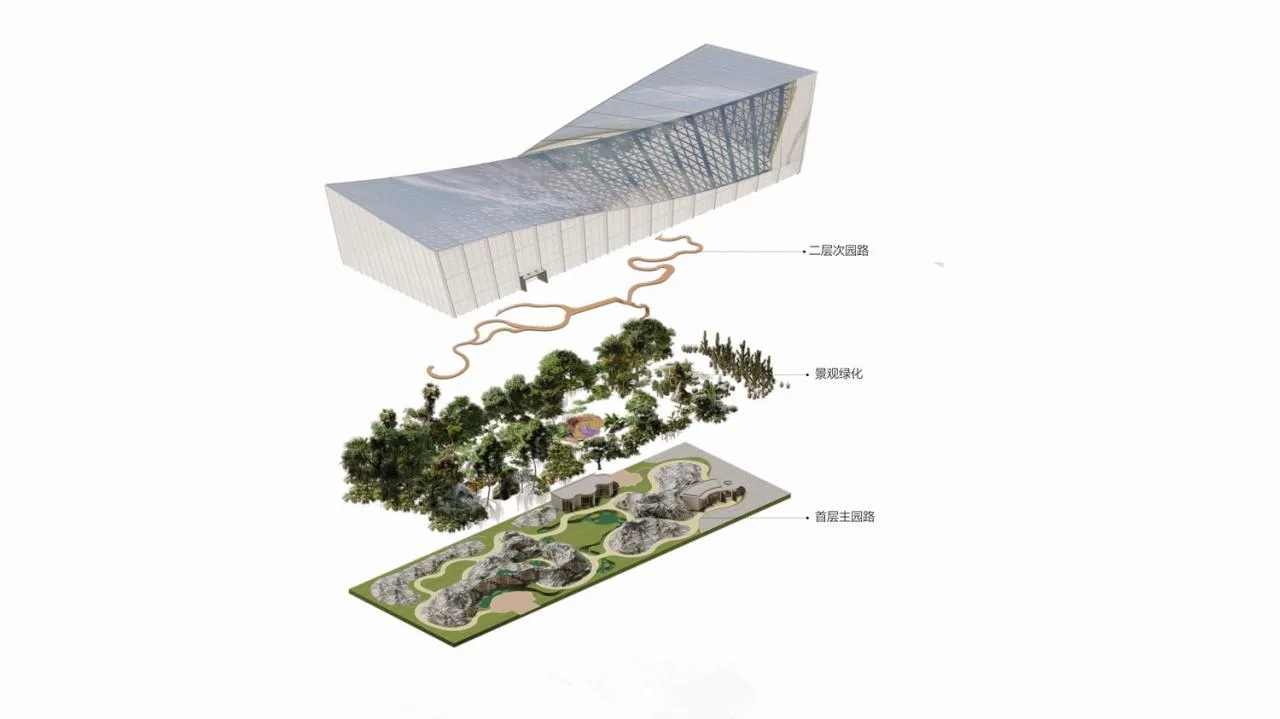
△ Landscape analysis diagram
The building’s structure is a portal frame system, with 17 frames spanning 30 meters north-south and spaced 6 meters east-west. This twisted frame creates a 3,200 square meter column-free space to maximize openness and sightlines. Curtain wall keels are integrated into the structural frame, forming a joint system that supports both self-weight and external loads.
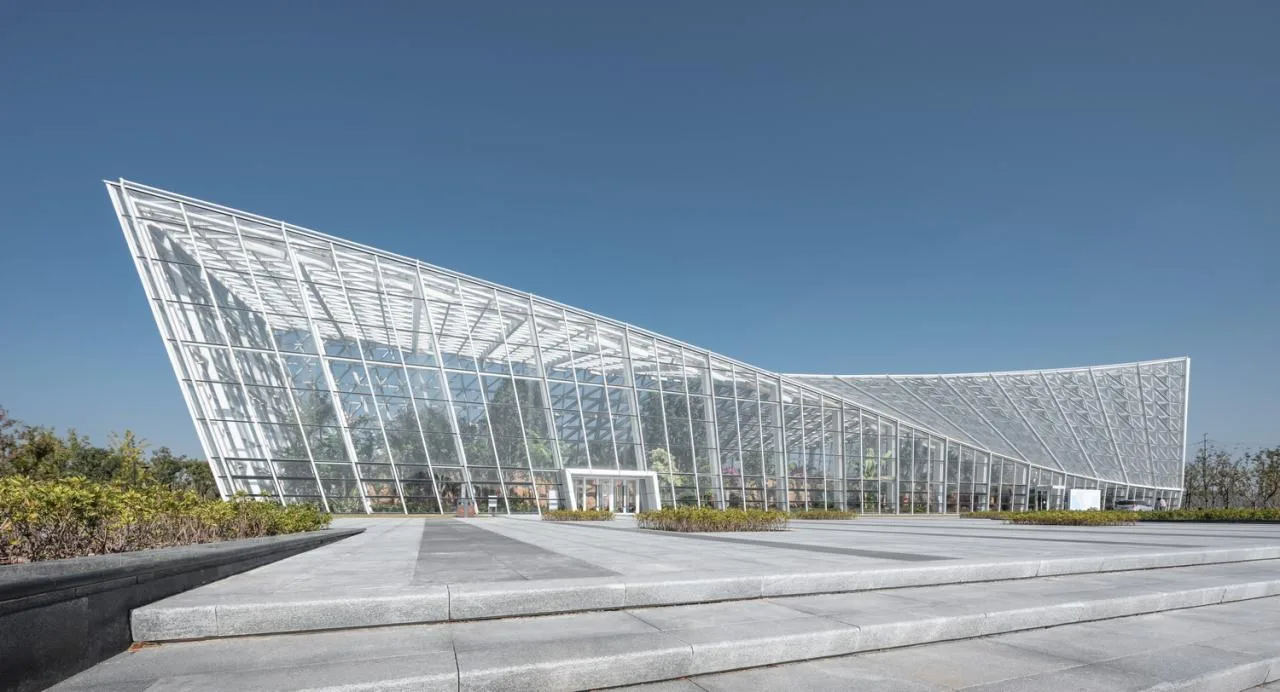
This design simplifies structural calculations and reduces the hierarchy between primary and secondary keels, resulting in a lighter structure with enhanced transparency both indoors and outdoors. The two sloping mountain wall surfaces defy gravity, while their open form enhances the visual sense of extension, contributing to an overall feeling of lightness.
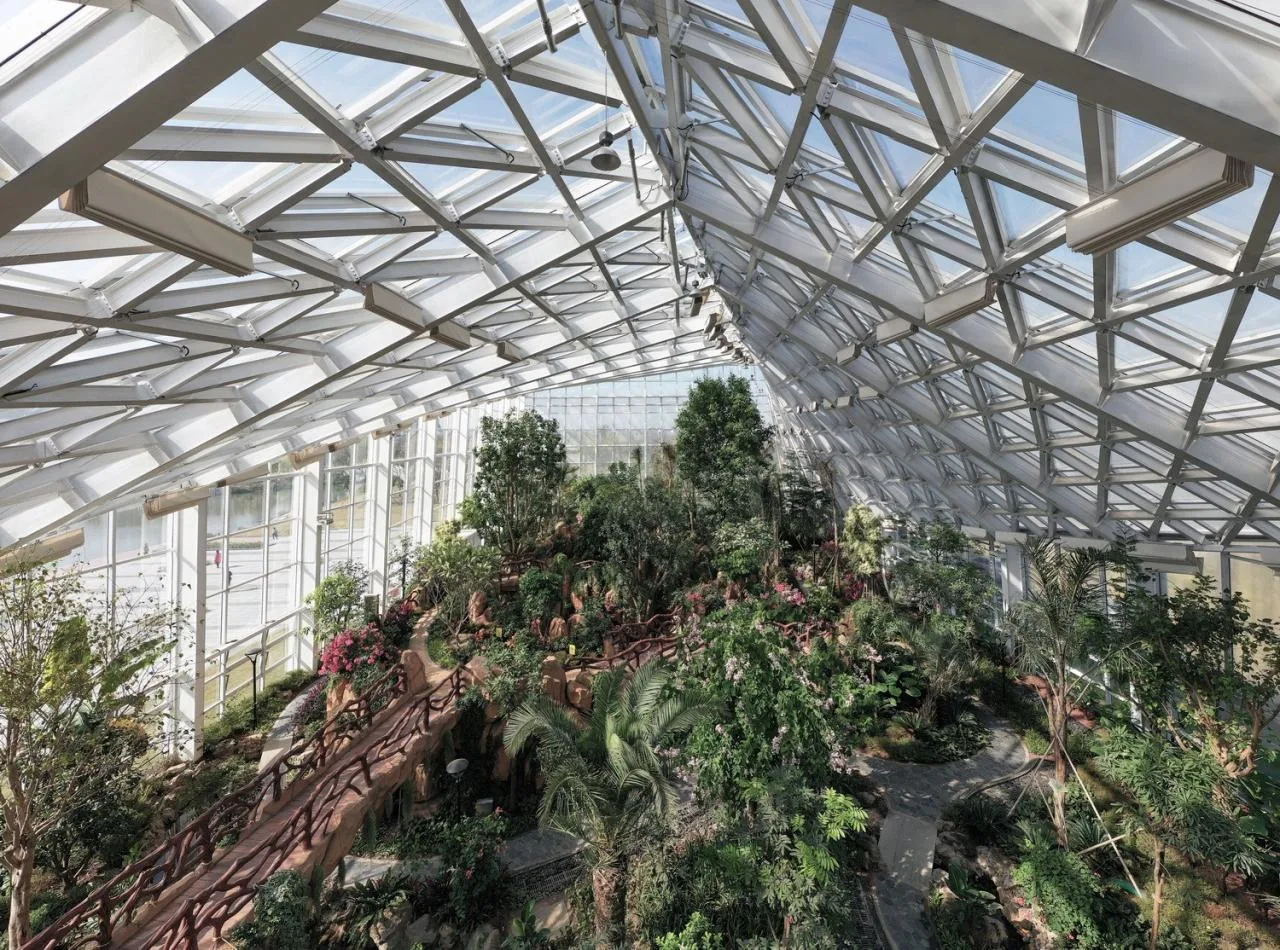
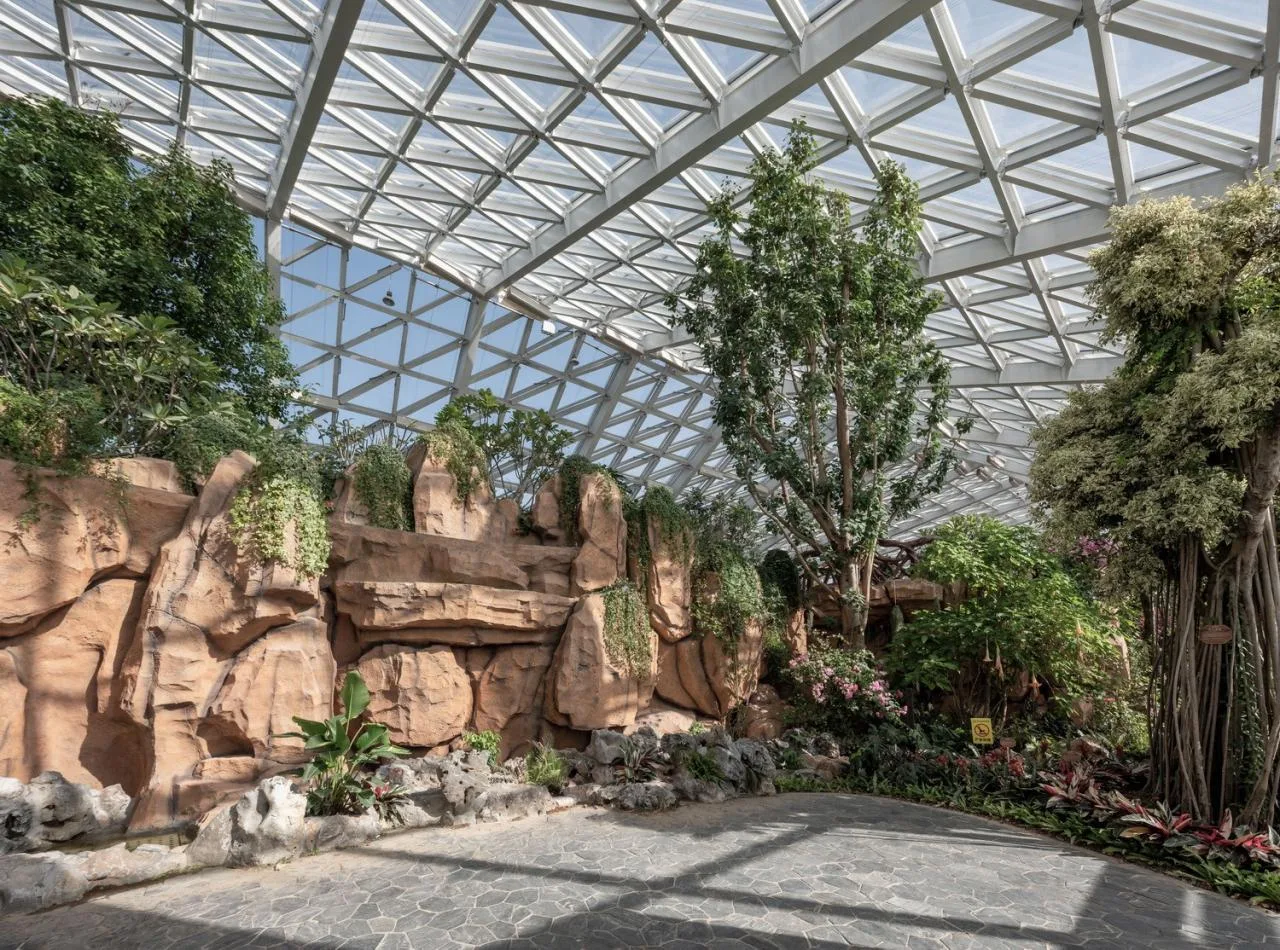
△ Indoor renderings
Optimizing Curtain Wall Design with Engineering Insight
The greenhouse uses ultra-clear double-layer laminated glass to maximize sunlight transmission. By analyzing the complex curvature of the twisting three-dimensional surface and considering glass safety and replacement, the design team opted for triangular flat glass panels to achieve the twisting effect.
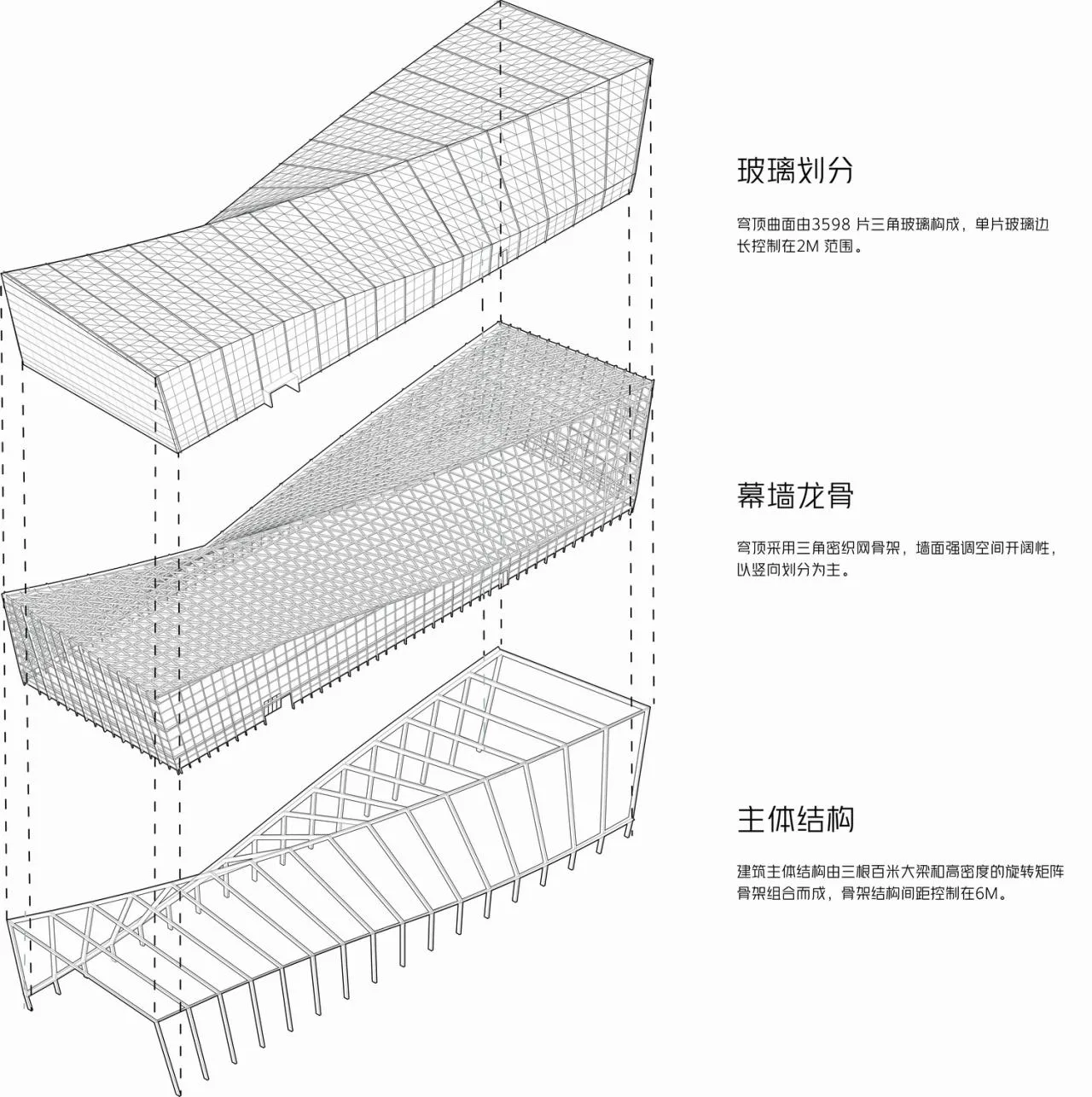
△ Curtain wall system diagram
The initial glass division plan aimed to create nearly equilateral triangles by using the longer edge as the normal and dividing the shorter edge evenly. This simplified glass cutting and produced attractive panel shapes. However, it resulted in uneven glass sizes and disrupted curtain wall line logic, producing some small, truncated panels.
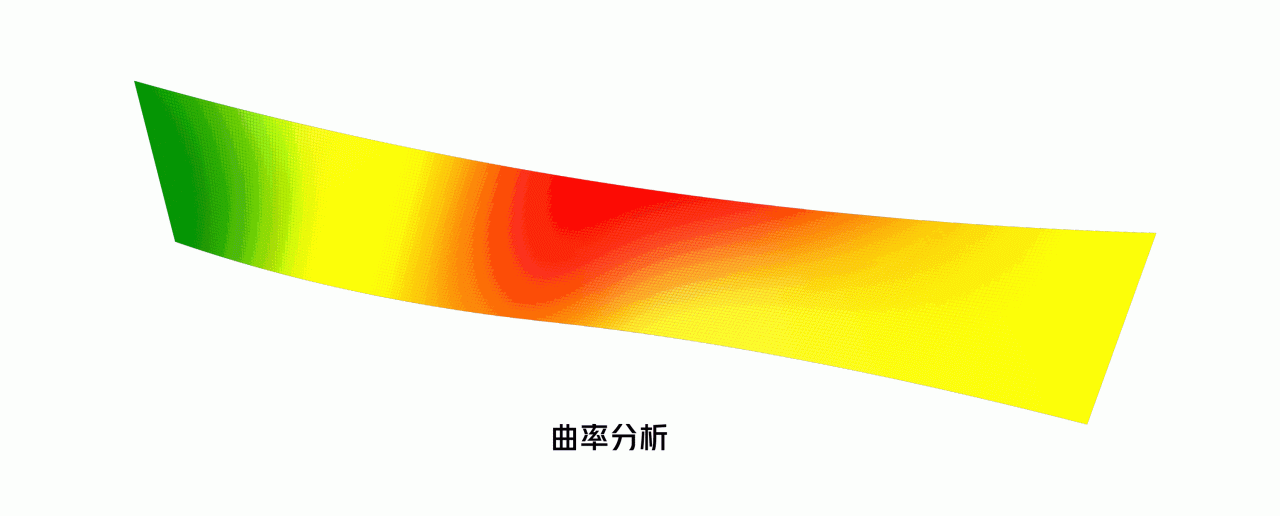
△ Glass division control
The design team revised the approach to align glass divisions with the facade’s vertical lines, using approximately 45-degree isosceles triangles. This preserved the original curtain wall lines and significantly reduced small glass pieces. Most panels remain under 2.5 square meters, complying with standard size requirements and simplifying construction through standardized control.
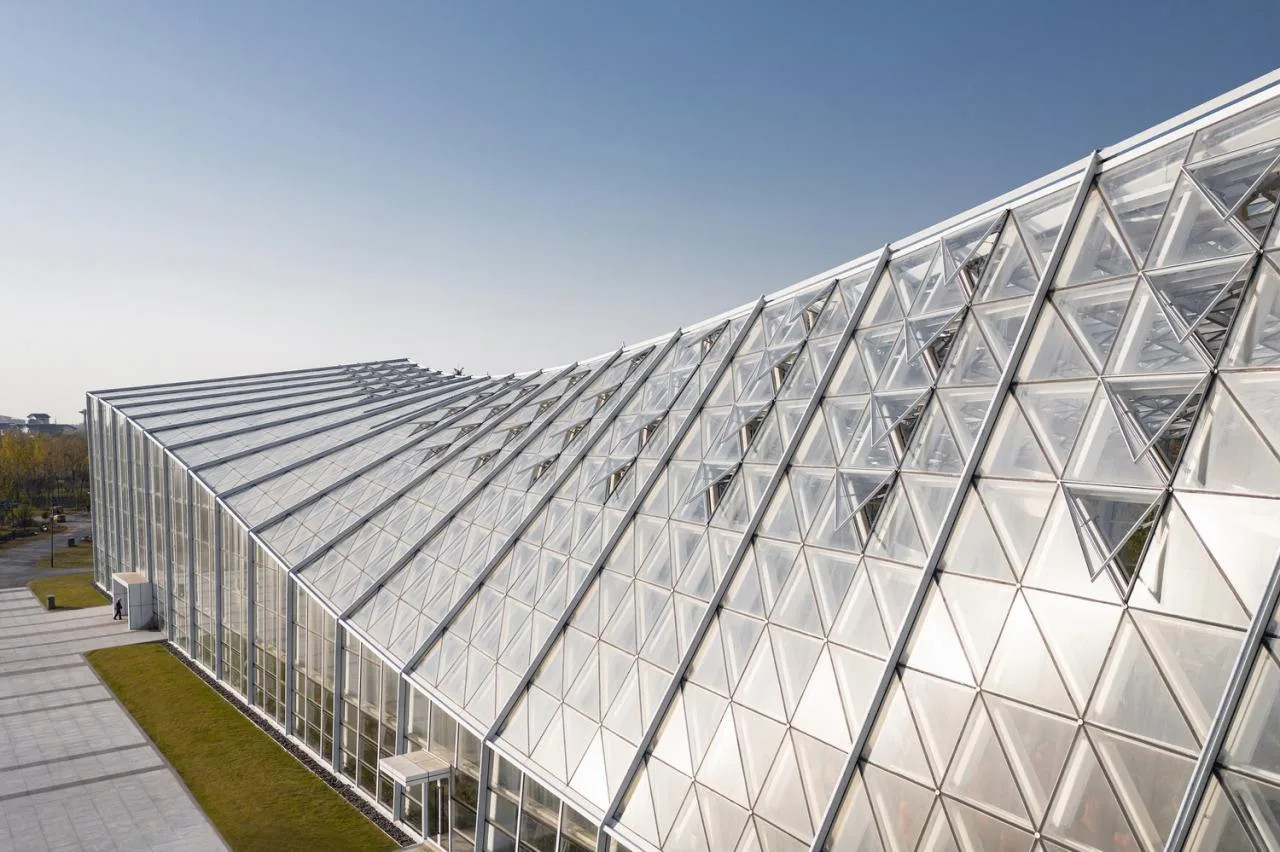
Window Smoke Exhaust Design for Various Scenarios
Greenhouse facade windows must ensure proper ventilation across different climate modes and meet fire safety standards regarding smoke exhaust area and opening angles. The designer identified that the primary challenge in summer is not lack of heat but overheating due to poor ventilation.
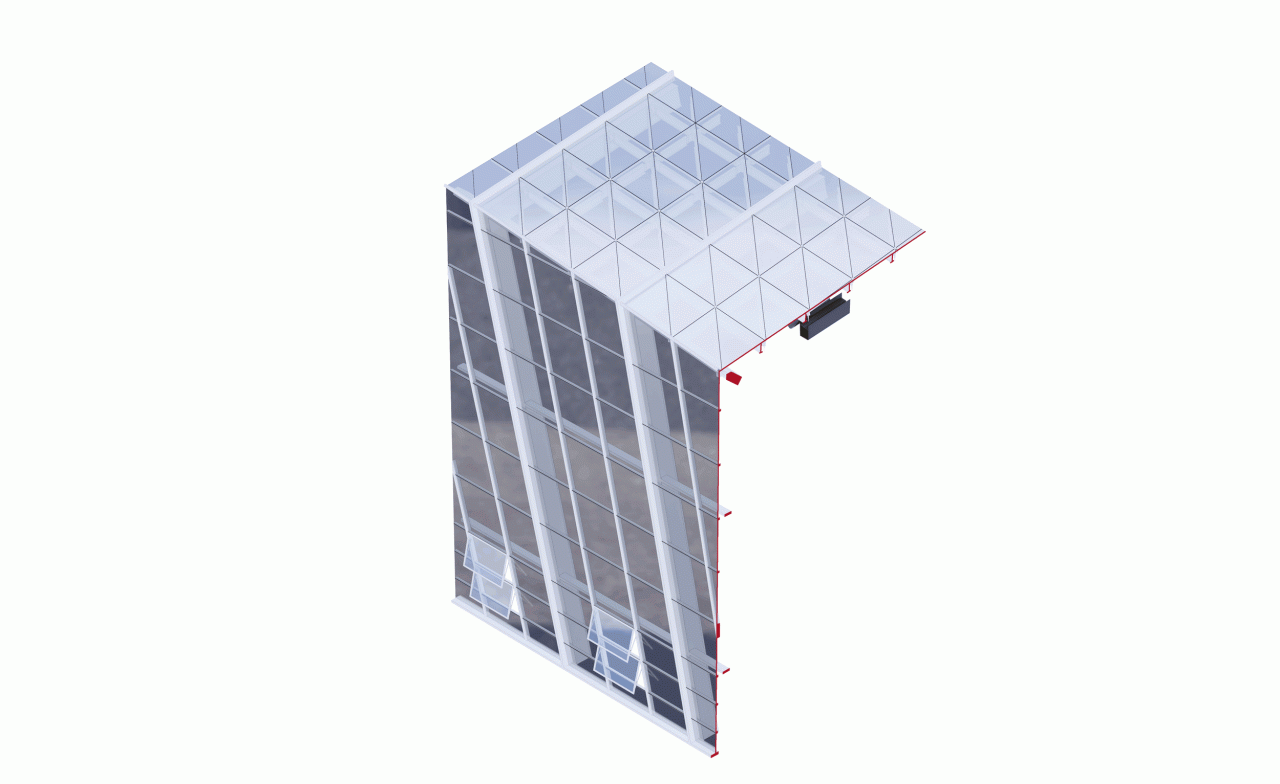
△ Curtain wall and window sash schematic
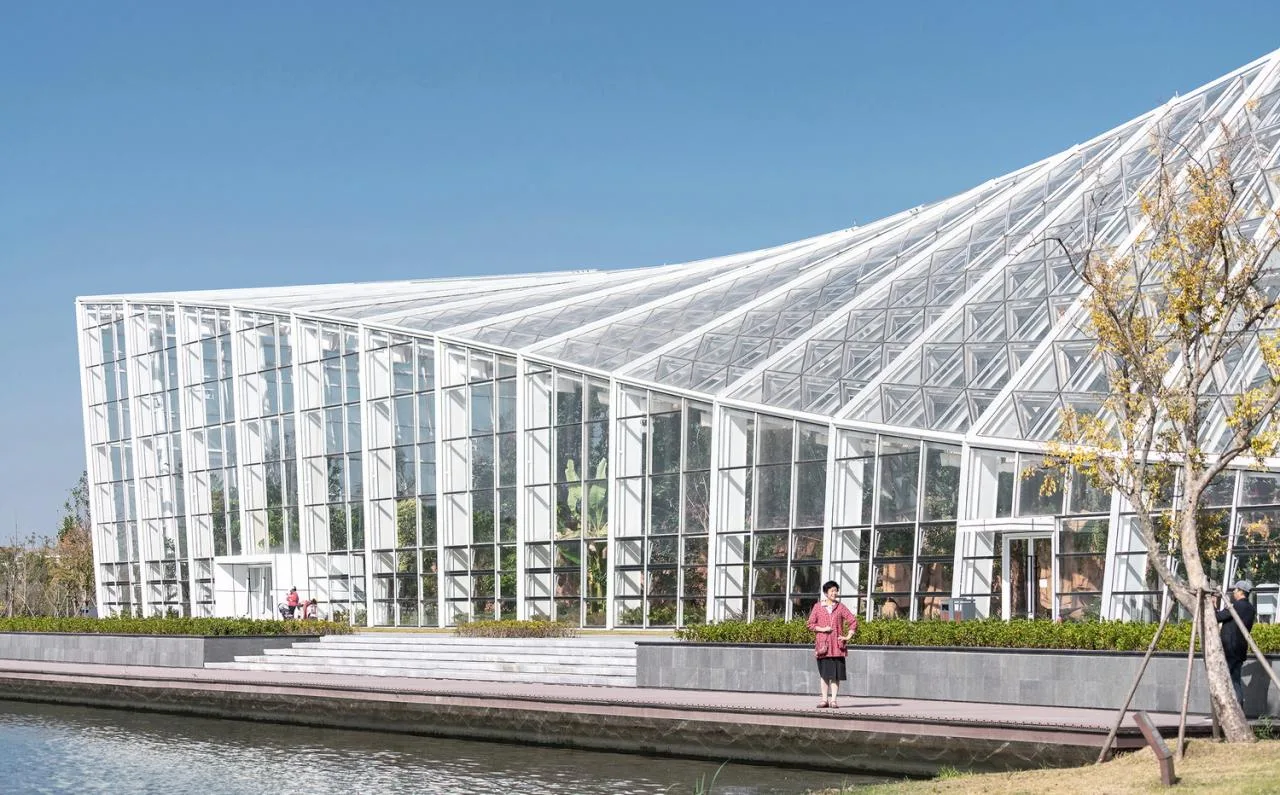
Different window opening mechanisms were implemented depending on location: low facade windows open as parallelograms using specialized hinge-hung units to allow fresh air intake. This air flow generates pressure differences, pushing hot air out through roof windows. Rectangular windows on the sloping mountain wall open downward in two rows, maximizing smoke exhaust and ventilation. Triangular glass panels at the roof top create a rhythmic pattern that balances function and aesthetics.
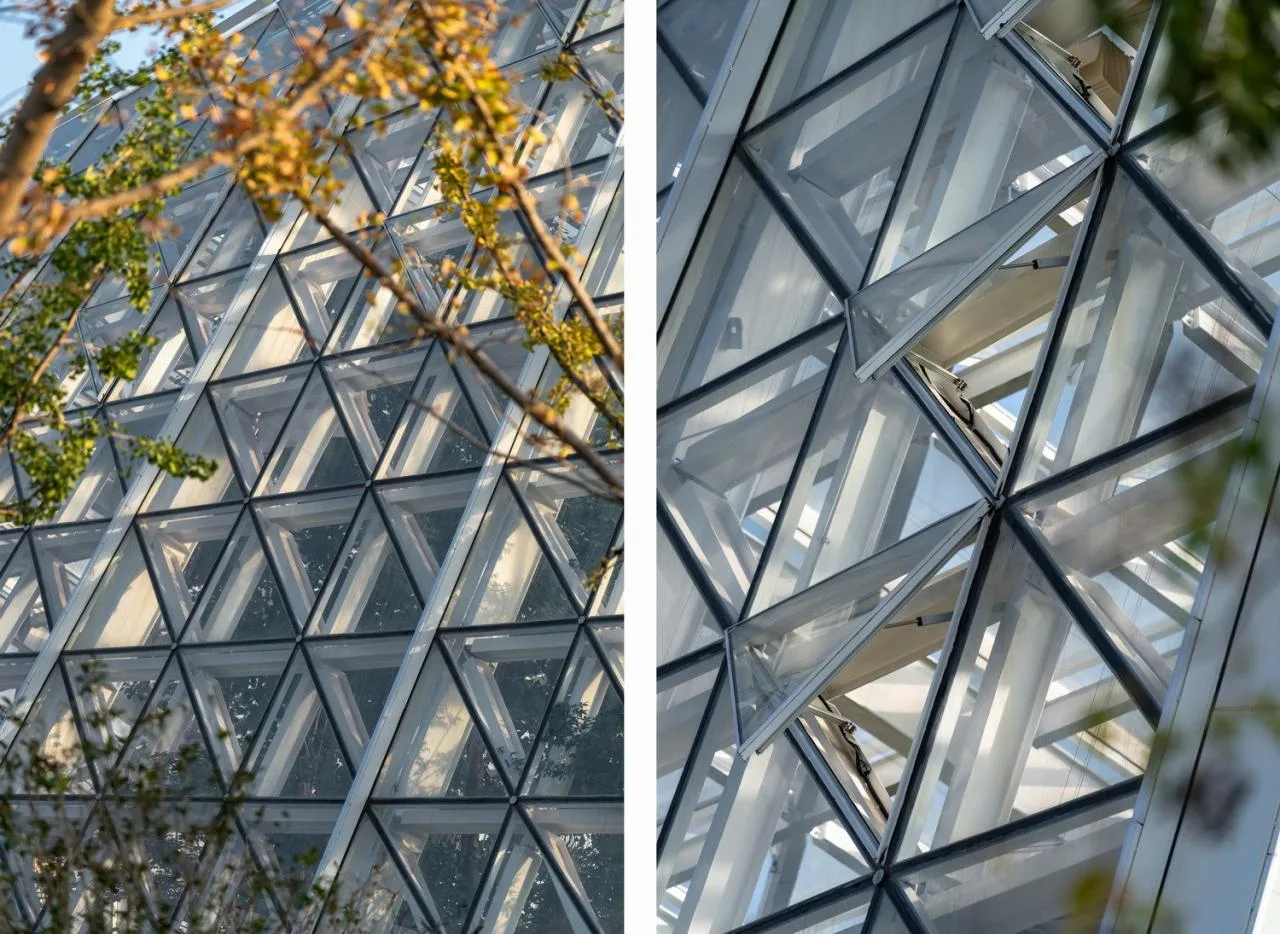
Fire Protection and Evacuation Considerations
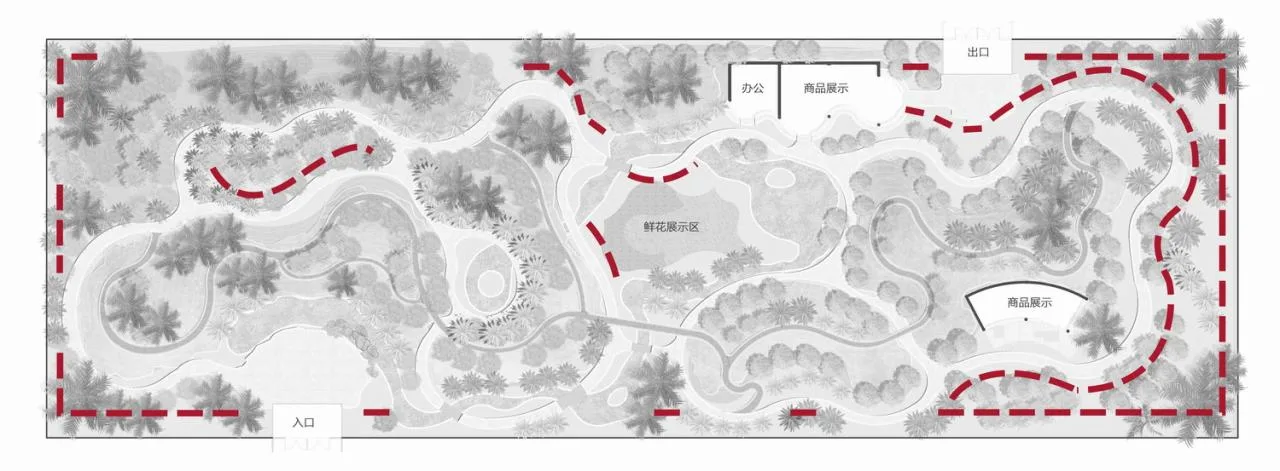
Although greenhouses are classified as industrial buildings in design codes, exhibition greenhouses follow public building standards for fire protection. To maintain an unobstructed indoor canopy, no sprinklers or fire alarms are installed; instead, fire hydrants and smoke exhaust windows are utilized. Coordination with local fire departments and adherence to fire zoning regulations confirm that the entire greenhouse constitutes a single fire zone.
△ Fire protection and evacuation plan
Craftsmanship in Hidden Details
The greenhouse’s core function is winter insulation. A boiler located in the adjacent computer room circulates hot water during winter, creating a “thermal insulation jacket” through radiators integrated along the facade. These heat sources are concealed within ducts behind the curtain wall, obscured by plants and difficult to detect.
In addition to winter heating, the greenhouse temperature is regulated in summer by a ground-air supply system, enhancing comfort.
Schematic diagram of pipe trench location
Besides ventilation, summer shading is vital. The electric sunshade is strategically positioned to avoid interference with the middle row of fans in each span, preventing damage from wind or rain.
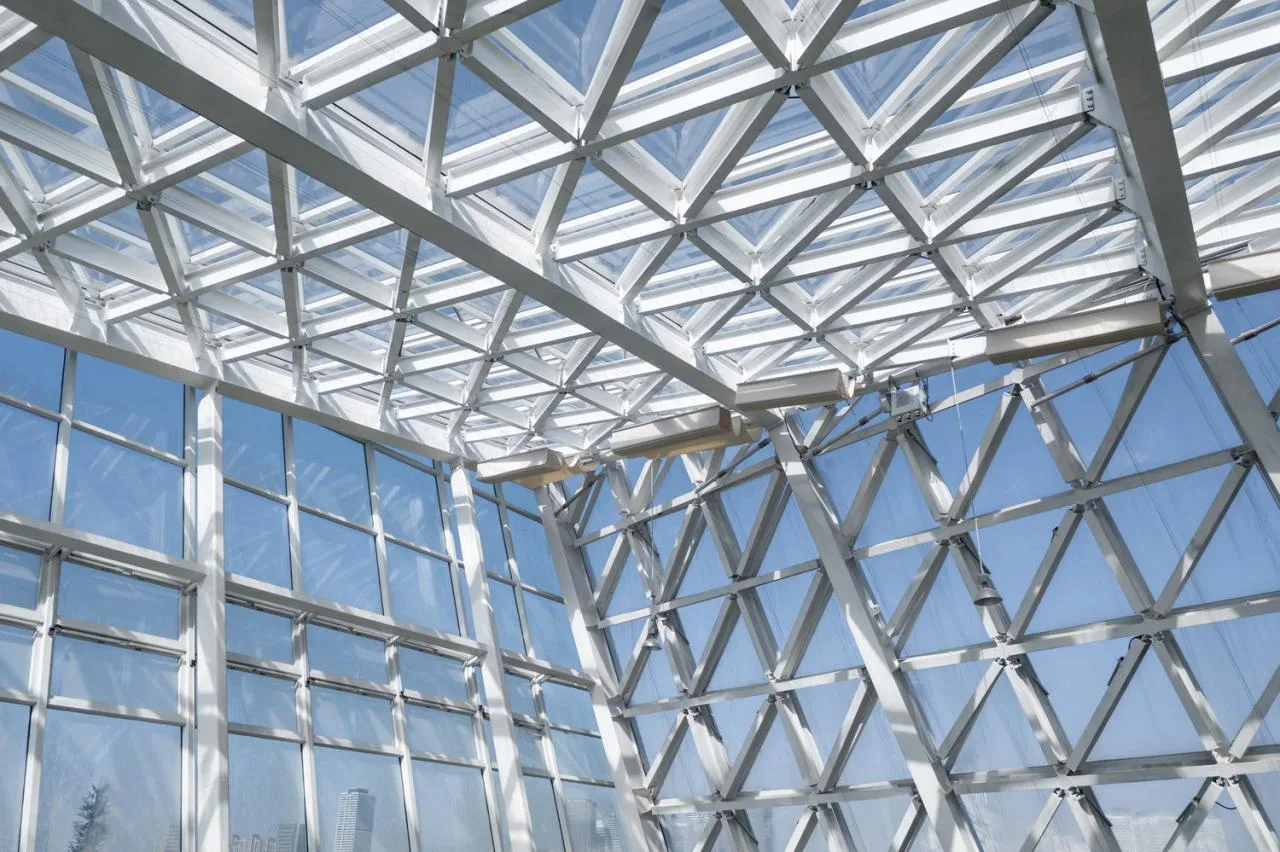
Detail Design for Overall Aesthetic
The greenhouse facade features a hidden glass curtain wall system with vertical and horizontal lines, while the twisted roof surface uses a concealed frame curtain wall. Regulations prohibit fully concealed frames, so silver buckle covers, just 100mm in diameter, were installed at six-panel intersections. This solution complies with regulations, visually simulates a fully concealed curtain wall, and reduces construction errors at panel intersections.
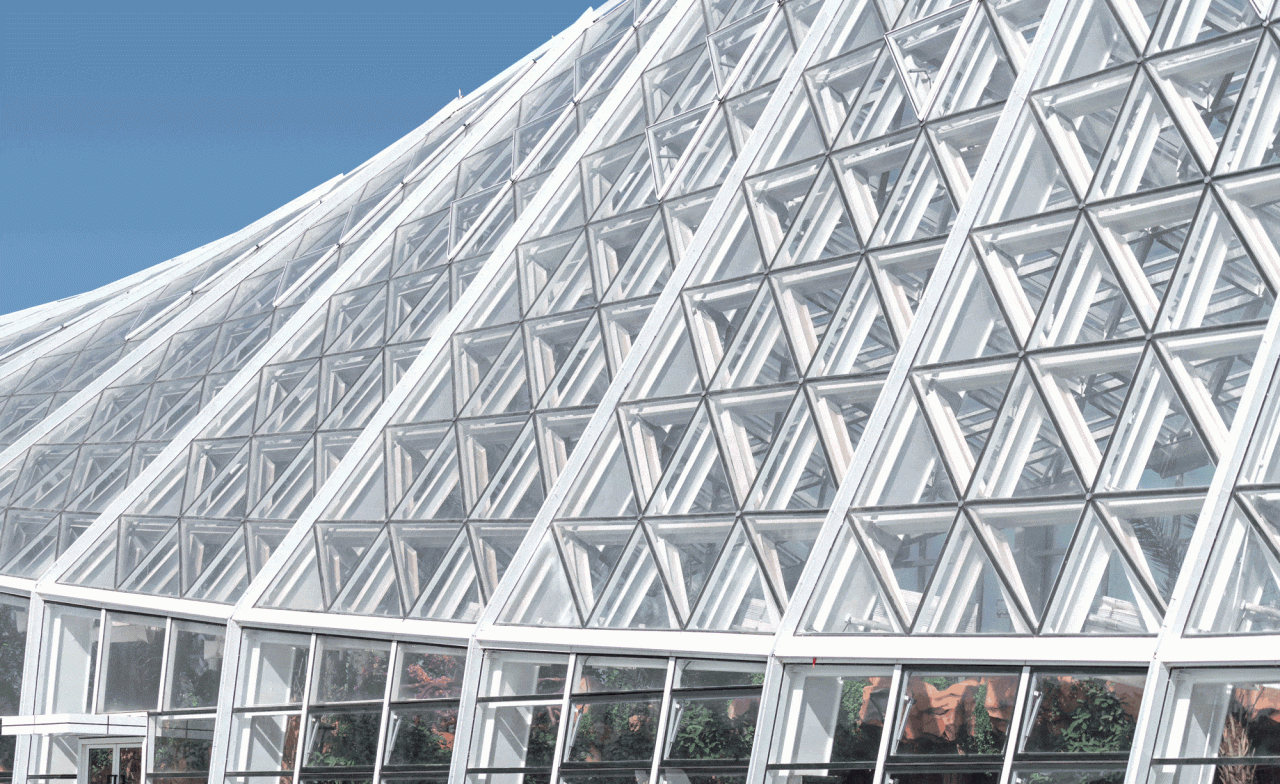
△ Simulated hidden frame curtain wall
The same philosophy applied to steel structure connections. Where six I-beams converge inside the triangular glass panels, construction accuracy and aesthetics are challenging. The design team introduced a small “turntable” at the junction, welding it to two beams and attaching four ear plates. The remaining beams are riveted sequentially to these plates. This method reduces construction errors, adds redundancy, and enhances the visual appeal of the joint.
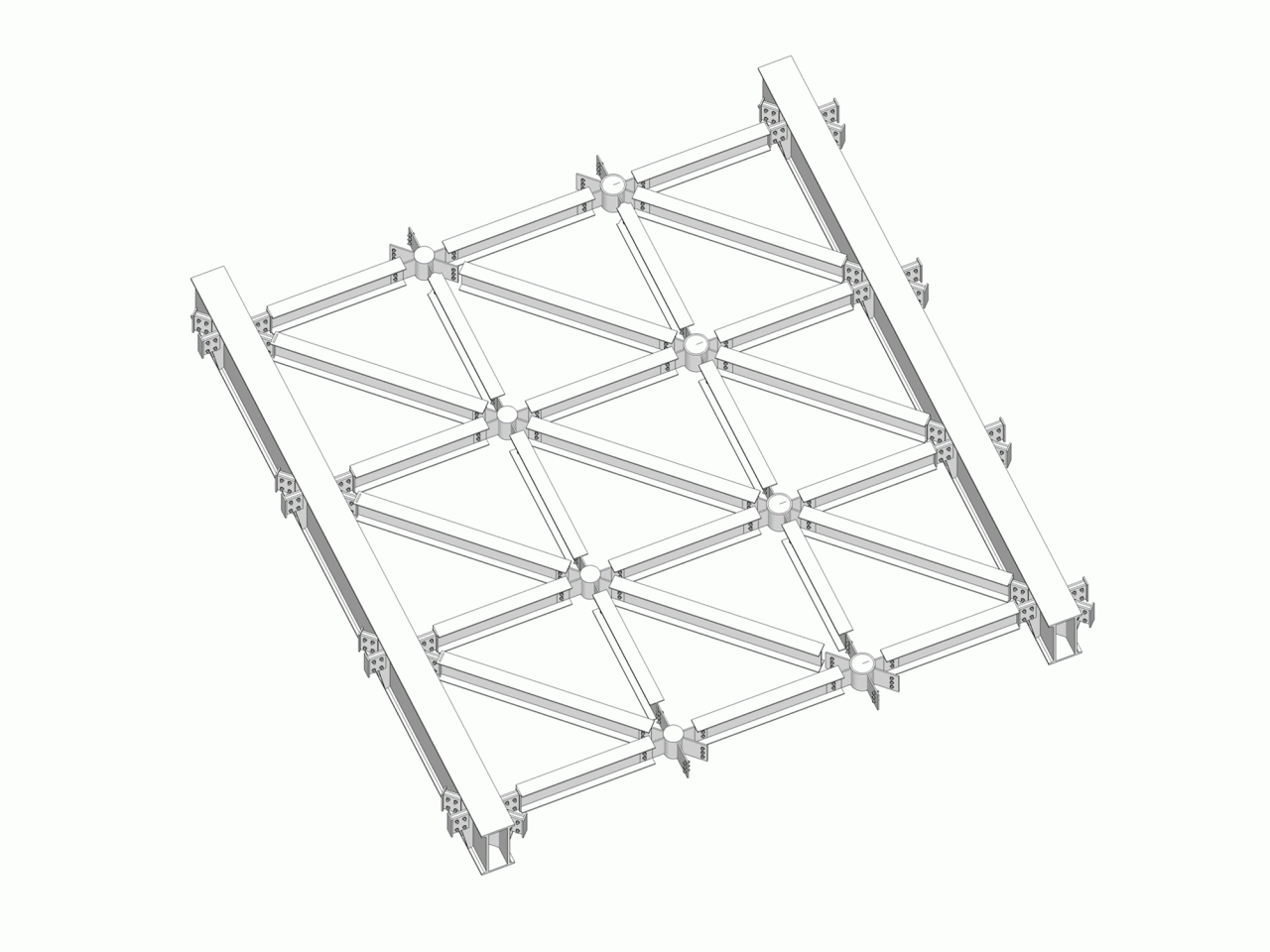
△ Turntable detail
Conclusion
Though modest in size at about 3,000 square meters, the Nantong Botanical Garden greenhouse represents a niche design category that has previously received little attention. Jianhe Architecture started from the ground up, conducting extensive case studies and refining details to create a highly polished result. It is hoped that this waterside greenhouse, like the plants it nurtures, will leave visitors with a fleeting yet profound sense of beauty and vitality.
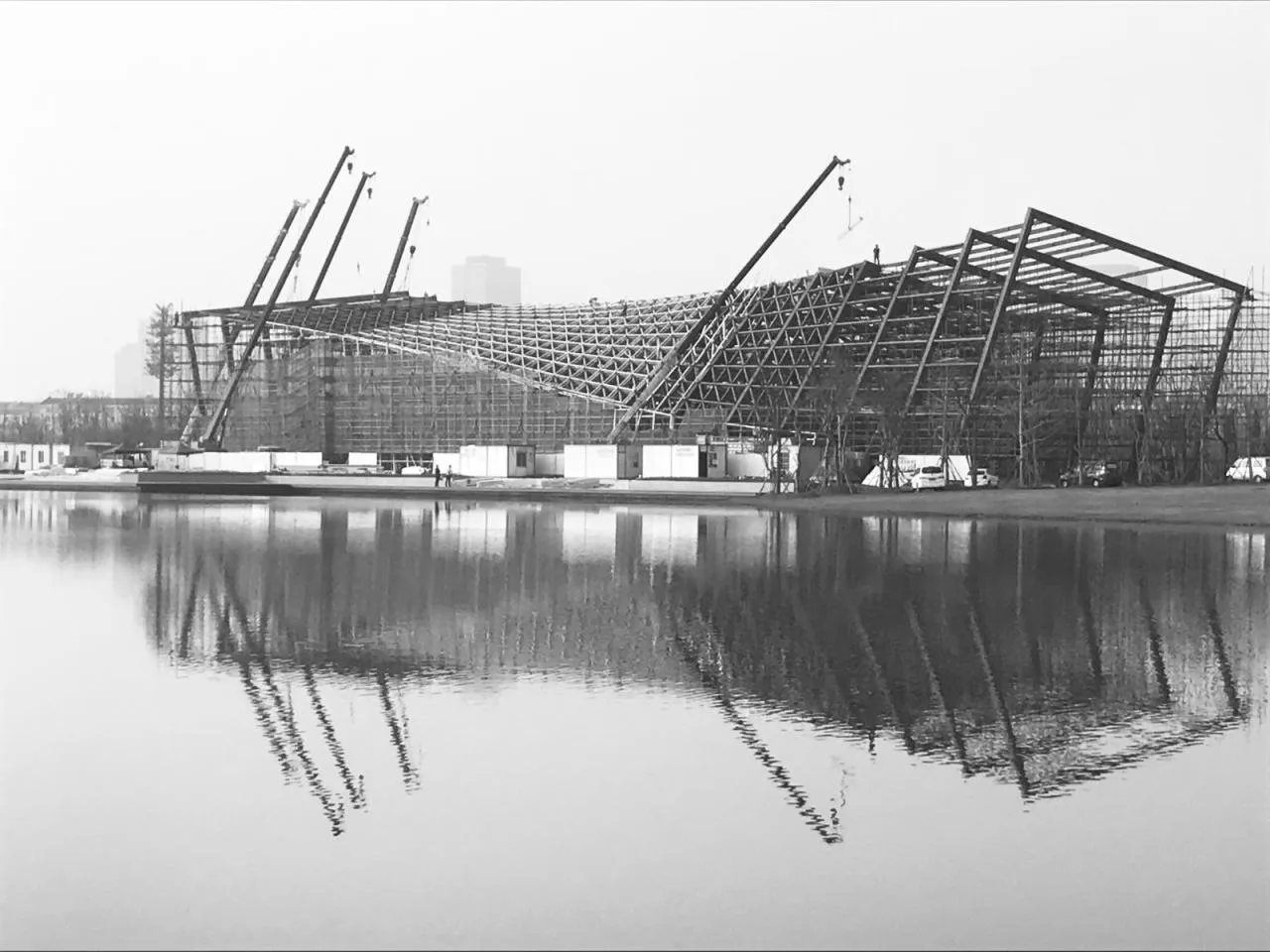
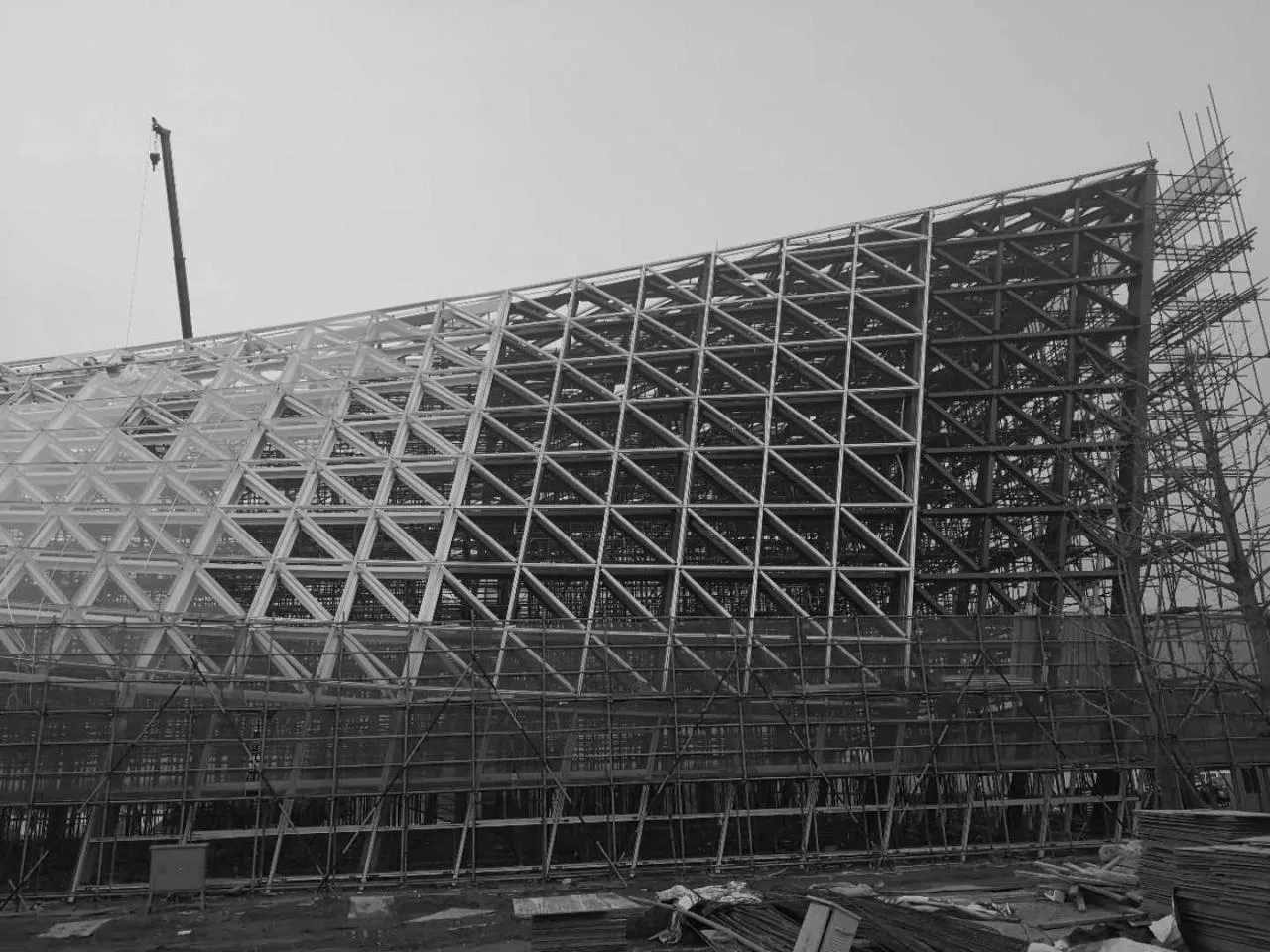
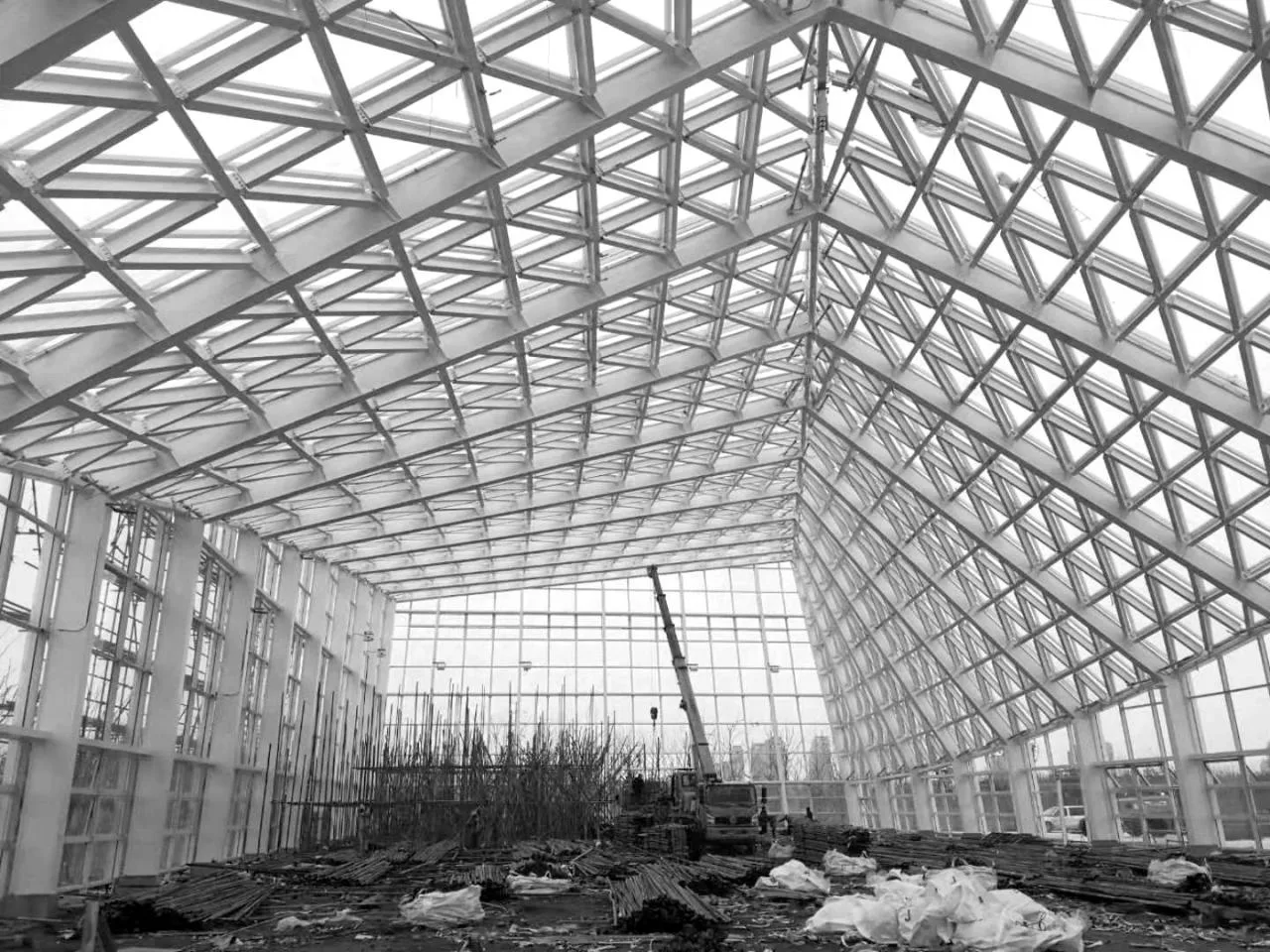
△ Construction drawings
Project Drawings
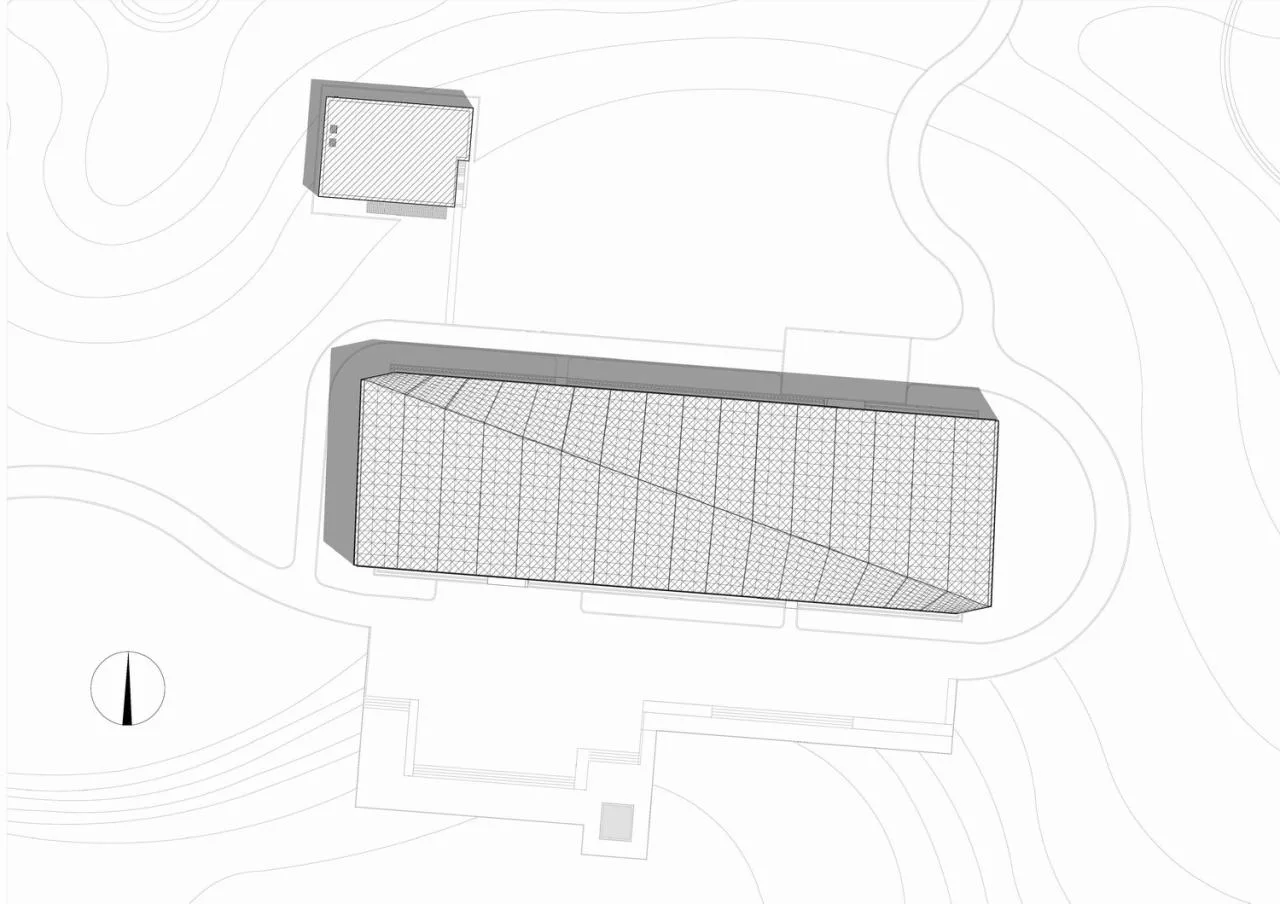
△ General layout plan
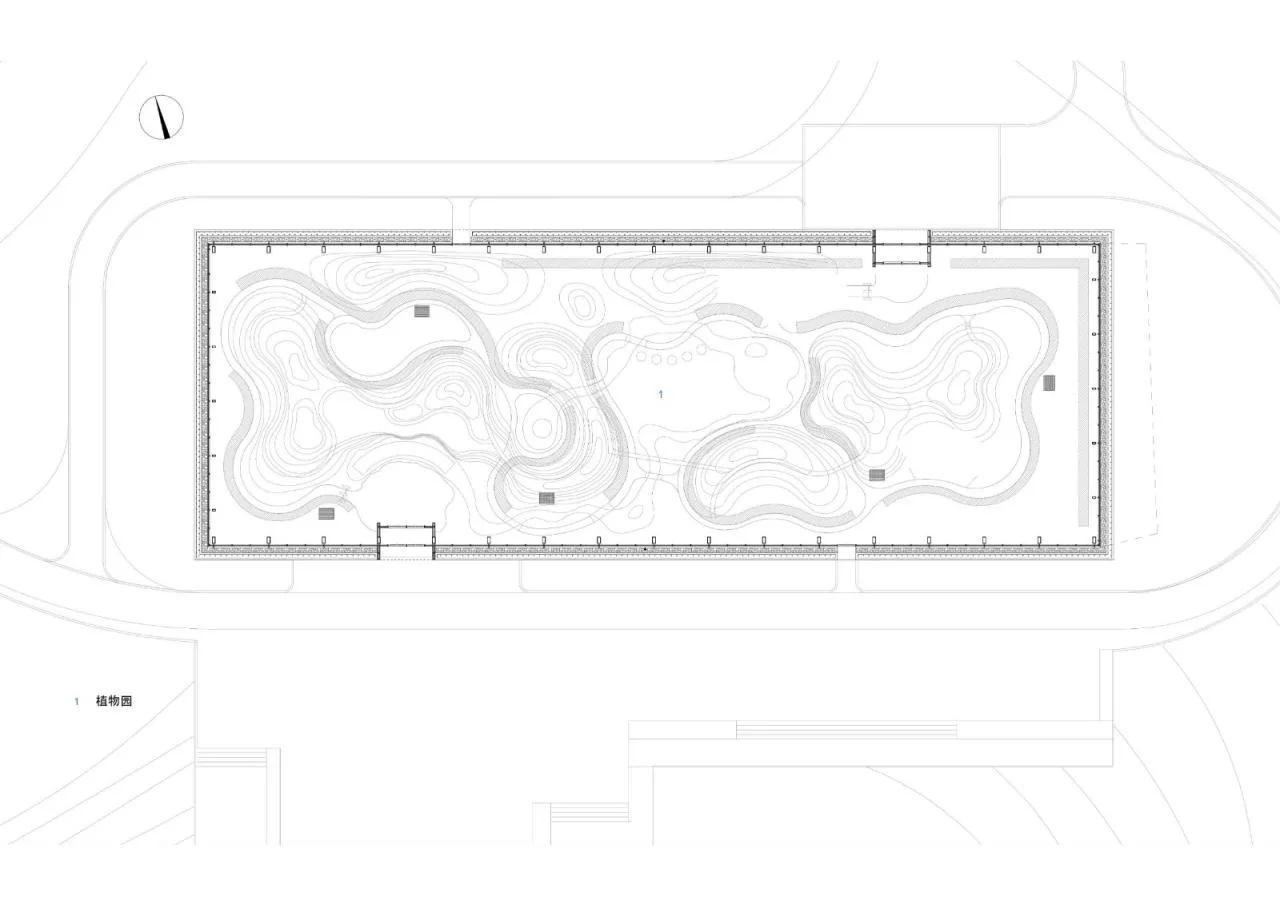
△ First floor plan
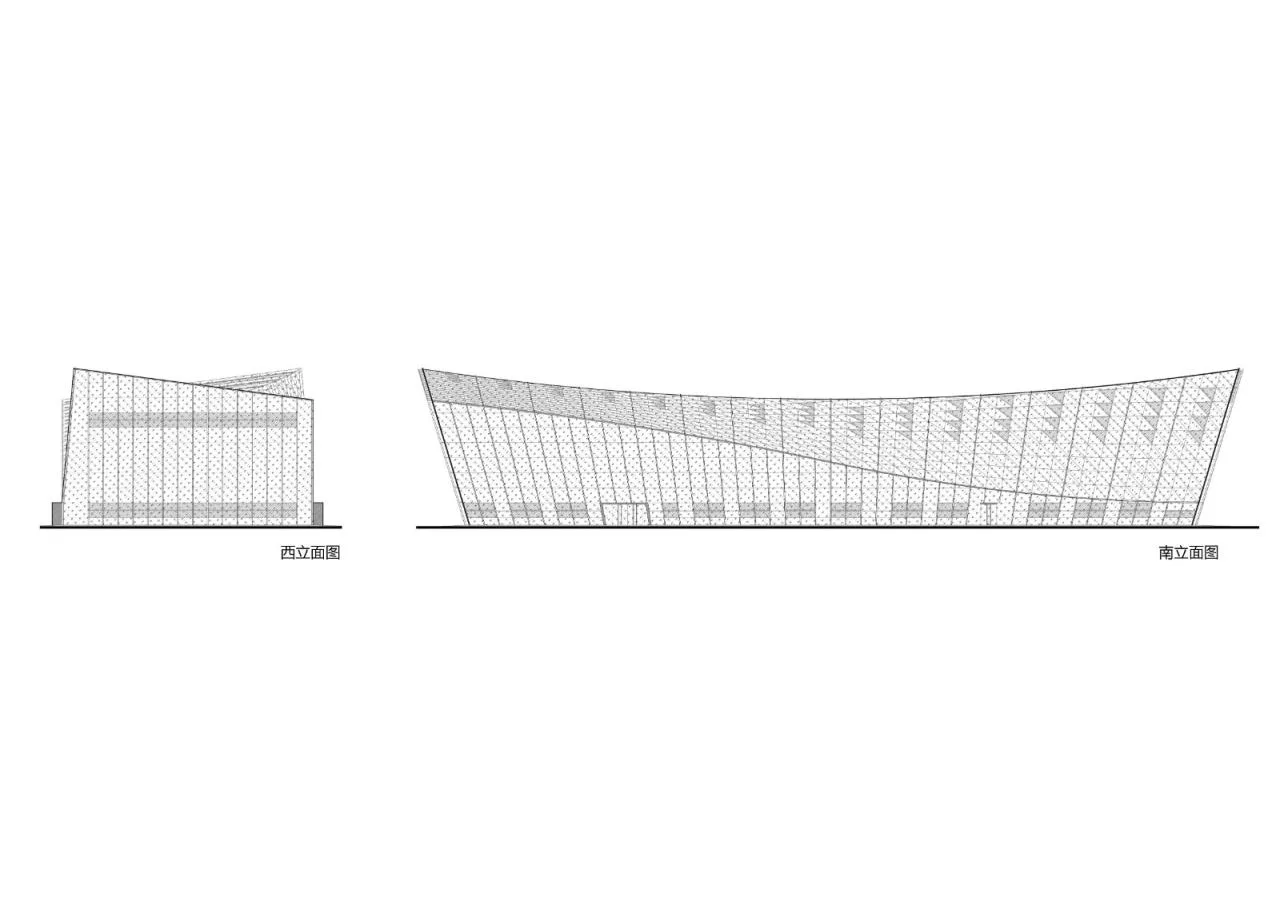
△ Elevation drawing
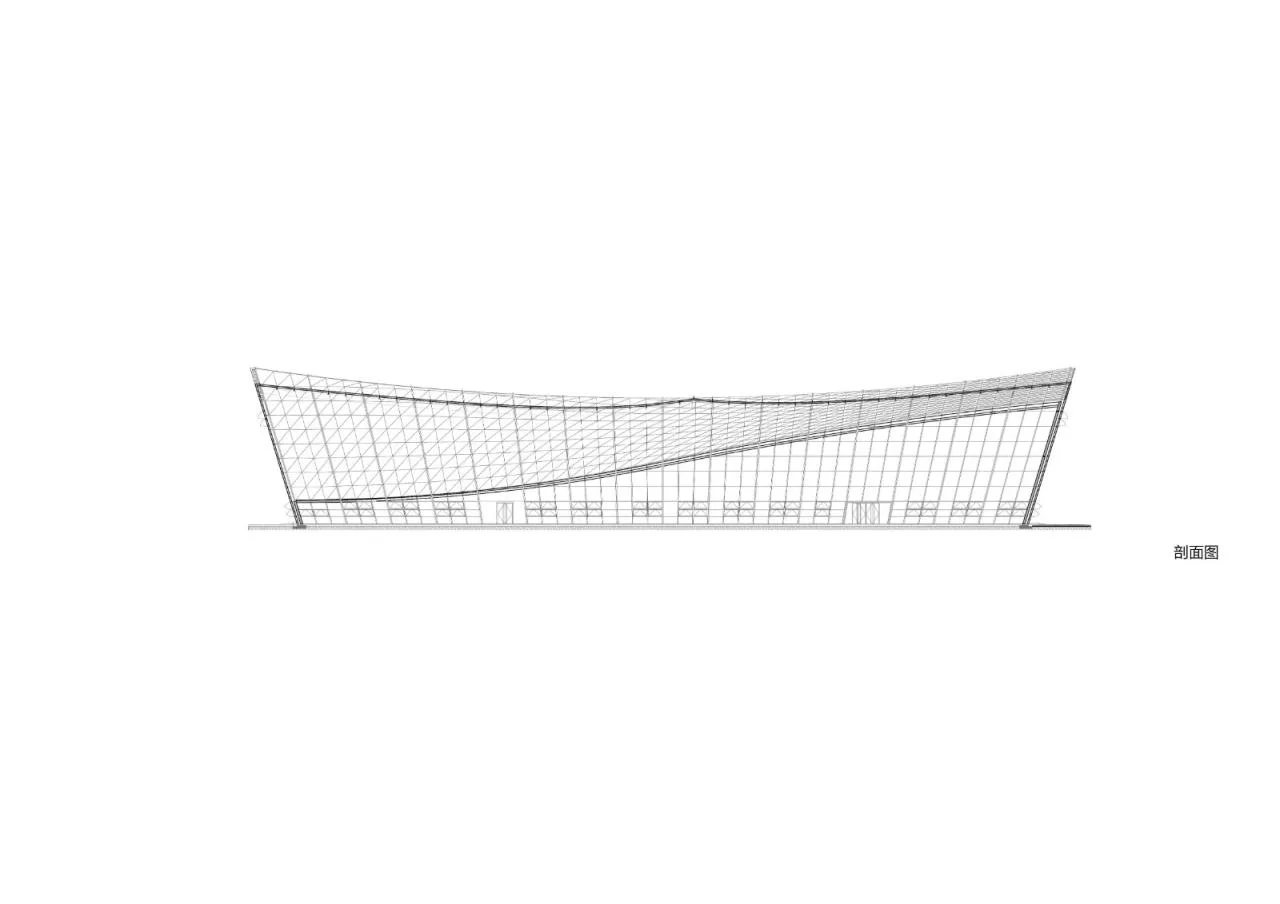
△ Section diagram
Project Information
Project Name: Nantong Botanical Garden Greenhouse
Owner: Nantong Urban Construction Group Co., Ltd
Design Company: GEN Jianhe Studio
Building Size: 3,700 square meters
Design Team: Zou Danni, Yan Xiaojian, Sun Ping, Liu Yujing
Construction Drawing Team: Gong Shaofei, Pan Chengshan, Shi Wei, Yuan Shenglin, Lin Zhiyi, Yang Xiaodong, Lei Dong, Ma Pan, Wang Jianjun, Xu Xin
Landscape Design: Changzhou Landscape Design Institute Co., Ltd
Curtain Wall Design: Shanghai Dinggu Curtain Wall Design Consulting Co., Ltd
Architectural Photography: Architectural Vision















Must log in before commenting!
Sign Up