
Project Background
The new Wuhan Library is situated in the heart of Wangjiadun Business District, Jianghan District, Wuhan City, at the crossroads of Changqing Road and Yunyun Road. Its location offers excellent transportation access and a clear strategic advantage. The site covers approximately 4.33 hectares, with a total construction area of about 136,400 square meters. This new library aims to become a cultural landmark, an urban living room, and a knowledge hub—a palace of knowledge and a spiritual home for the people of Wuhan.
▲ Wuhan Library New Building Animation
Design Philosophy
The library, as a cultural vessel of the city, must harmonize with its urban surroundings while fulfilling its role as a shared space for reading. It also serves as an expression of local cultural identity. The design approach begins with the challenge of continuing the city’s urban fabric while reflecting Wuhan’s unique character and heritage.
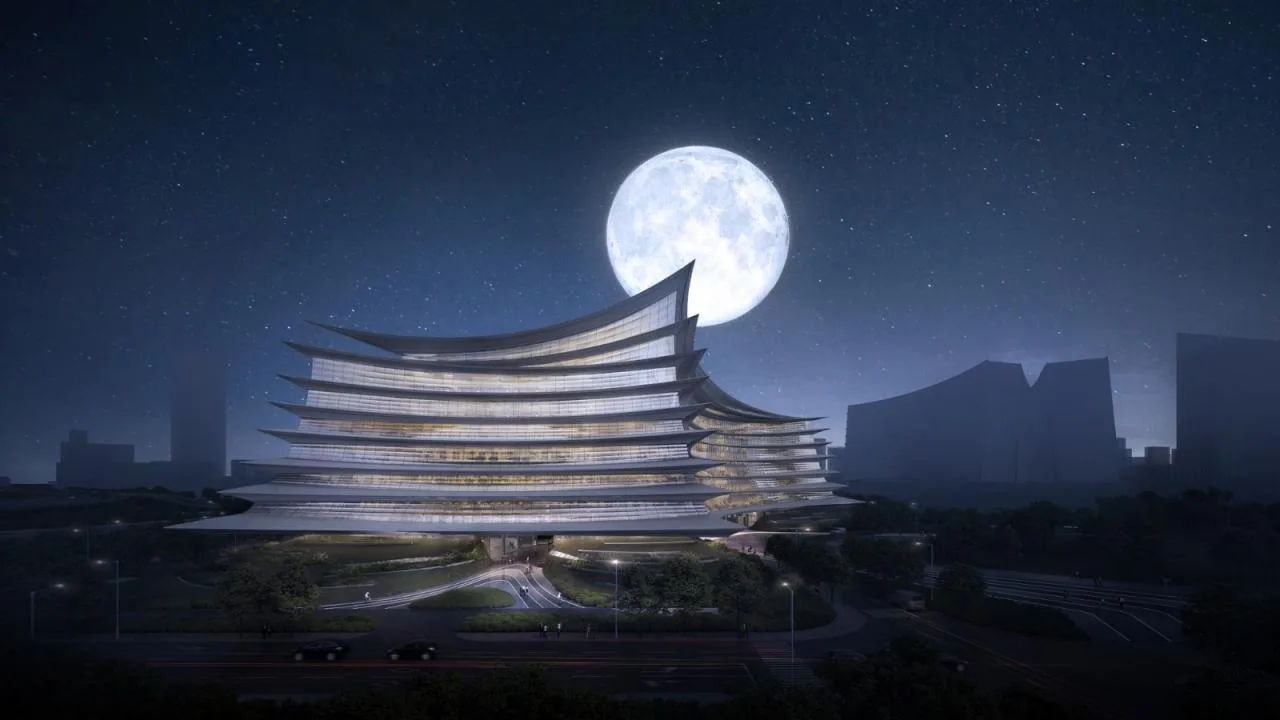
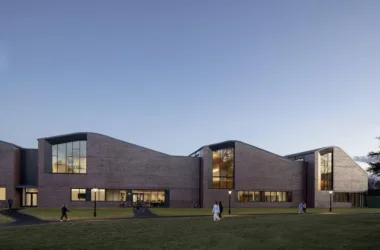
▲ Rendering of the new Wuhan Library
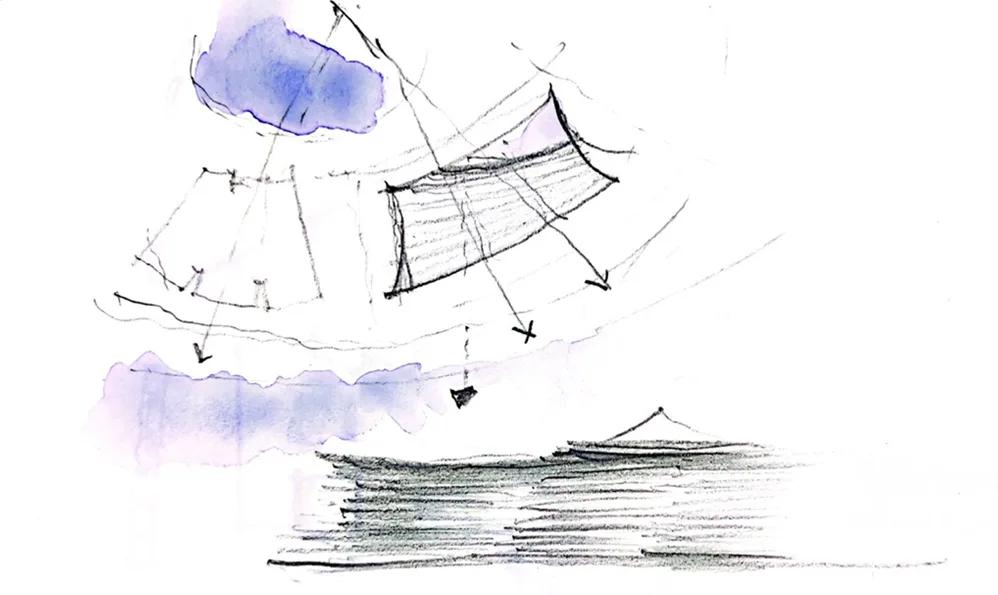
The design concept was inspired by the turning of book pages, echoing the form of the “flying eaves” characteristic of Jingchu architecture. This creates a symbolic link to Wuhan’s rich cultural heritage. The library is envisioned as an integral part of citizens’ daily lives, embodying local, inclusive, and enduring values through its design, offering a public space that combines contemporary, traditional, and regional elements.
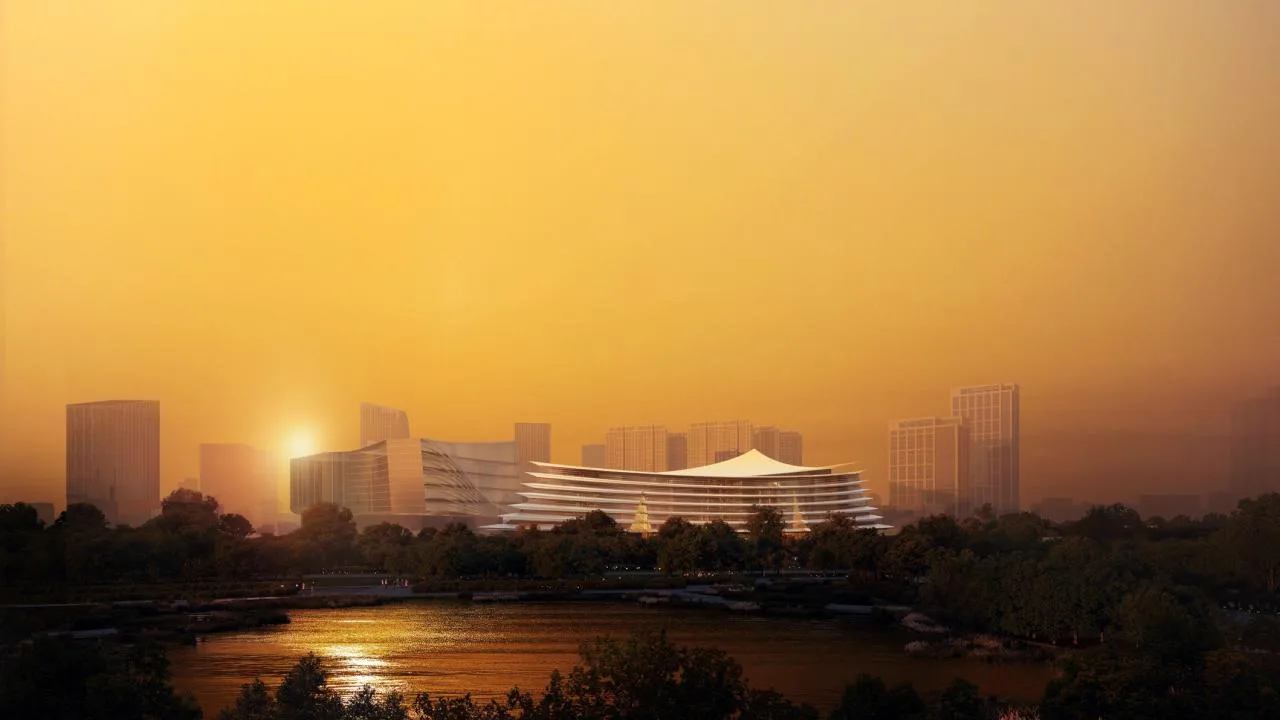
▲ Rendering of the new Wuhan Library
Stacking Books into a Pavilion: Chu Wind and River Rhythms
Wuhan is a city deeply connected to water, with a network of rivers, lakes, and ports. It is also a nationally recognized historical and cultural city, an important cradle of Chu culture. The iconic Yellow Crane Tower stands as a proud symbol of Wuhan, showcasing its charm and influence worldwide.
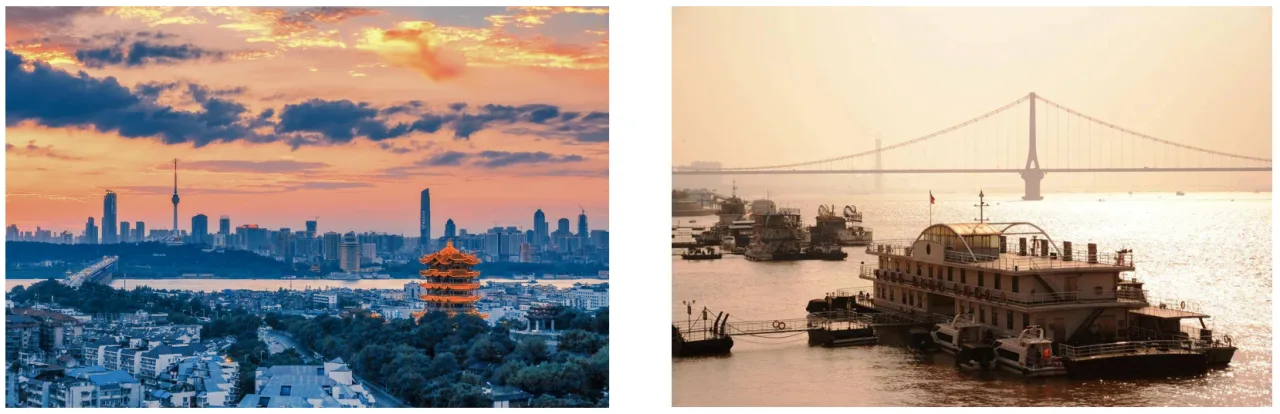
▲ Jingchu Culture ▲ Great Rivers and Lakes
The design distills the cultural themes of “river,” “city,” and “book,” blending the stacking of book pages with the architectural motif of the Yellow Crane Tower’s double eaves. This abstraction translates the upward curve of the eaves into a horizontal layering effect that evokes the flow of river waters.
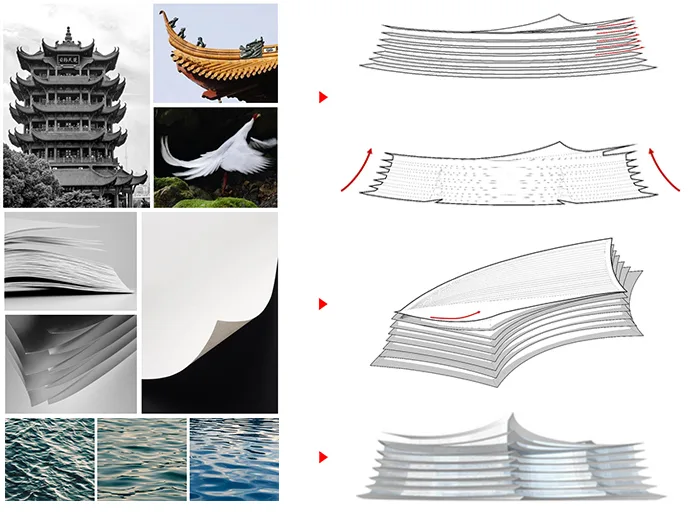
▲ Conceptual design intent diagram for Wuhan Library’s new building
The upturned eaves symbolize progress and aspiration. As a cultural beacon, the library reflects the belief that, past, present, and future, it serves as a vital public learning platform inspiring continuous growth and cultural elevation.
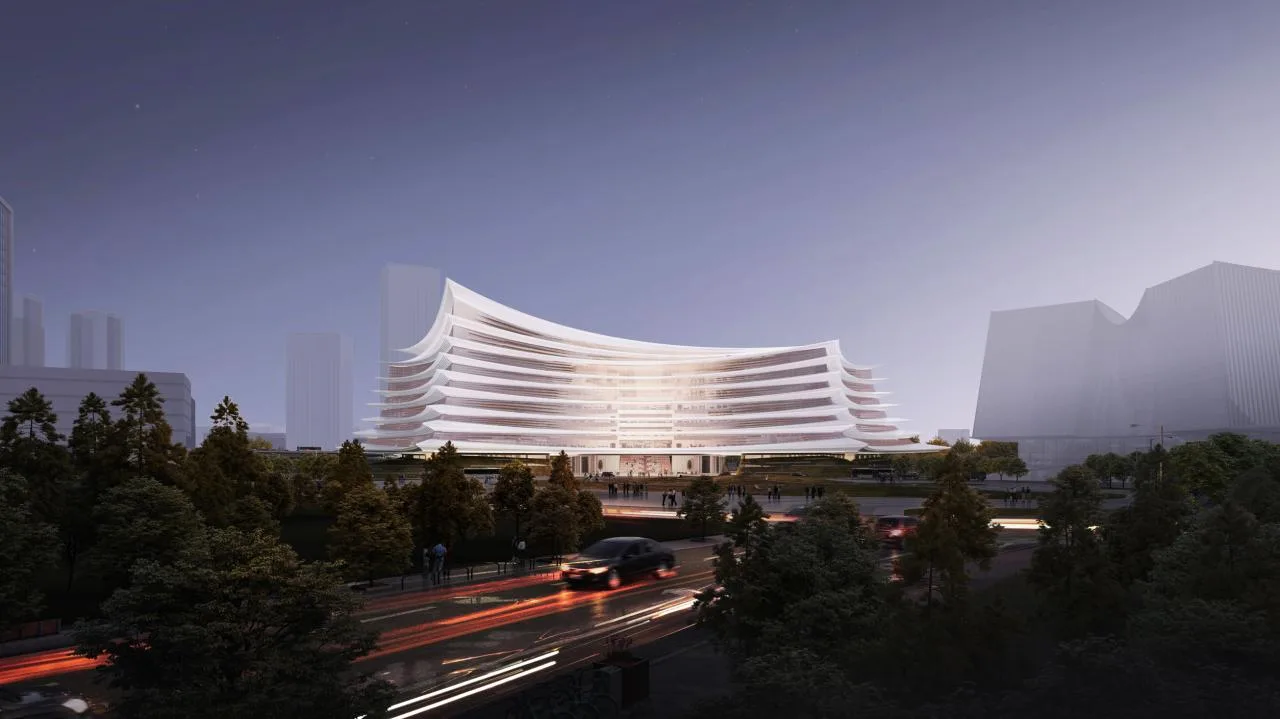
▲ Rendering of the new Wuhan Library
Openness, Inclusiveness, Integration, and Sharing
The future library transcends being a mere repository of books. It will serve as a dynamic space for reading, learning, socializing, and gathering. The building’s base opens in all directions, forming a lively “hill” that invites visitors from every angle. Within this space, a small theater, exhibition areas, a café, and child-friendly zones extend the library’s social functions.
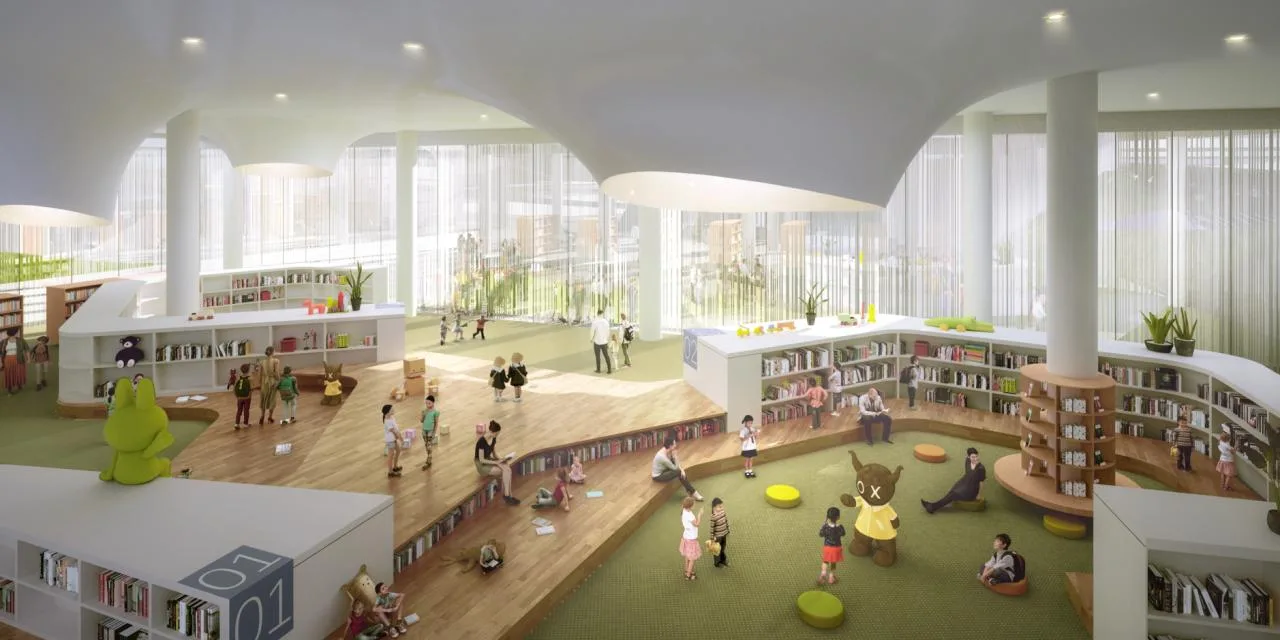
▲ Rendering of the reading space
The building’s transparent and flowing facade, combined with gently sloping gray spaces, reveal the lively activities inside, inviting the community to share in this welcoming and open reading environment.
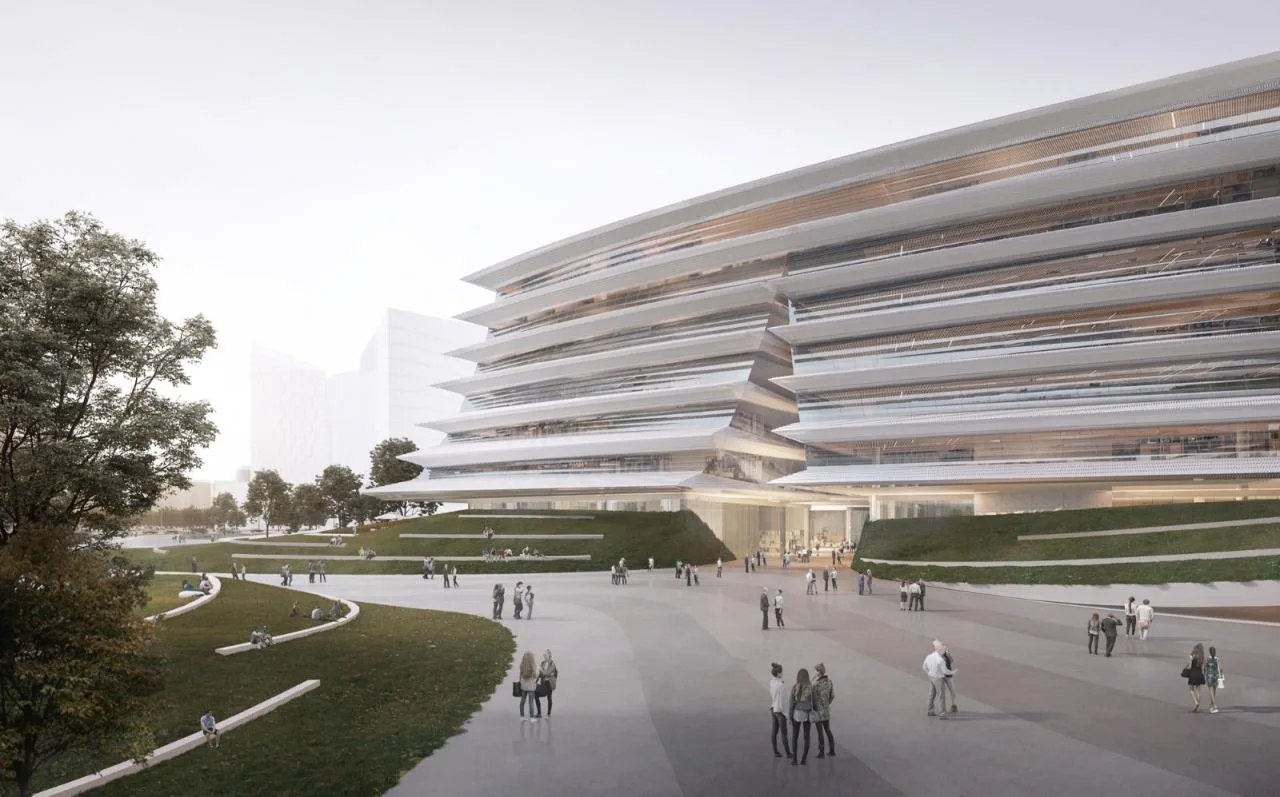
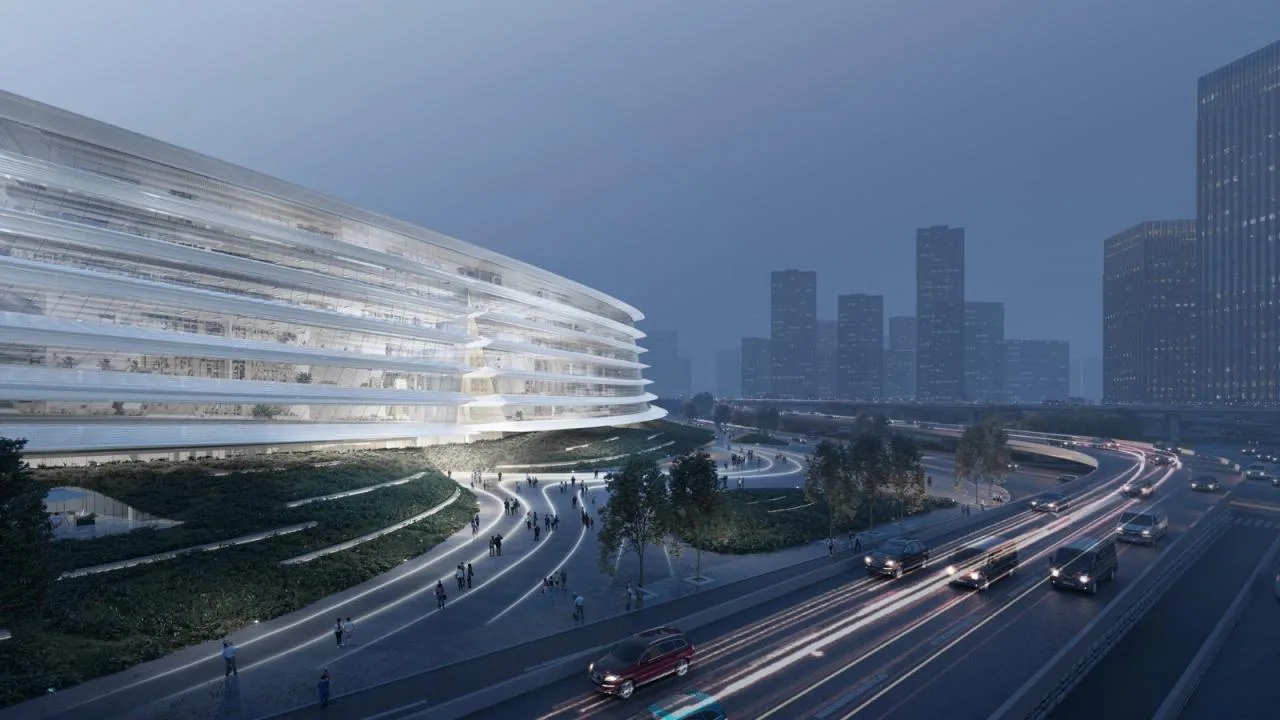
▲ Rendering of the new Wuhan Library facade
Site Strategy
Designed with a fan-shaped layout, the project faces Xianghe City Park to the north and the city square to the south, benefiting from abundant landscape and environmental resources. Due to site conditions, the elevated structure extends along the south-facing interface, which separates the base from the park and detracts from the project’s street presence. Therefore, the design respects the urban fabric by expanding the building mass in a fan shape, creating a curved and flowing form.
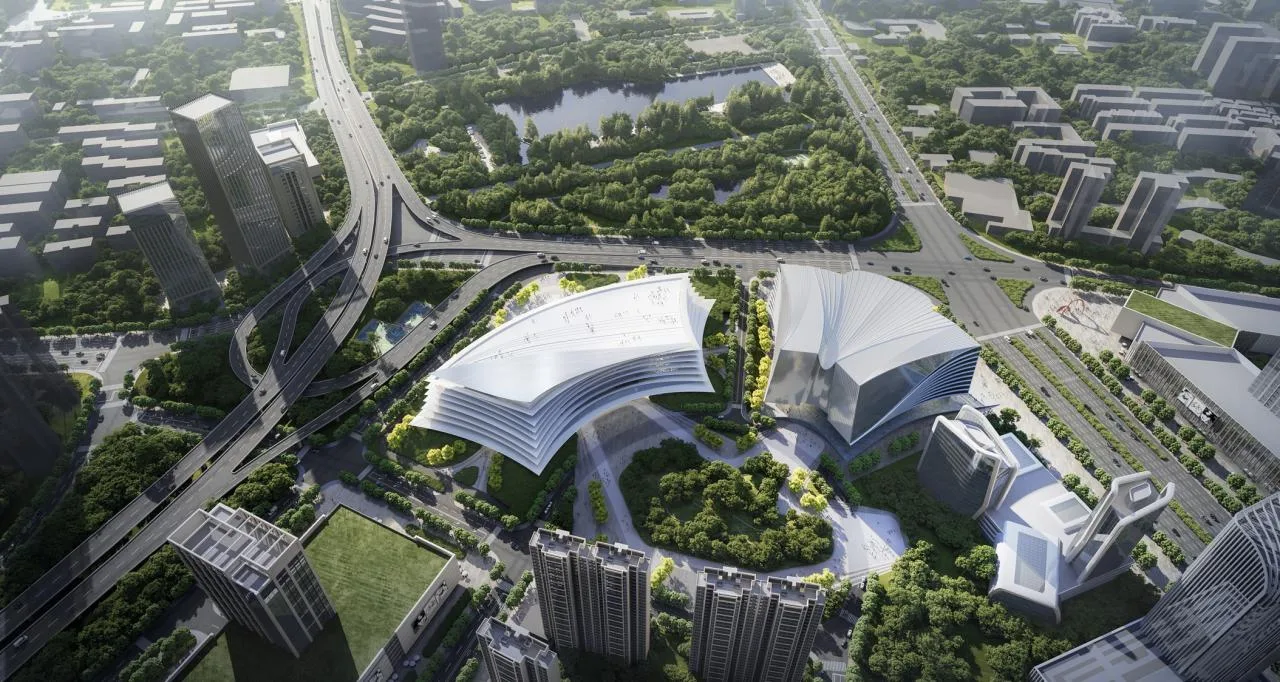
▲ Aerial view of the new Wuhan Library
The building layout aligns with the centripetal axis of the city square, dividing the volume into three smaller blocks that correspond with surrounding structures to maintain a human scale. The ground level opens up to form an inviting “hill,” encouraging visitors to enter from all directions. An underground passage links the site to Houxianghe Park, creating a continuous green public space.
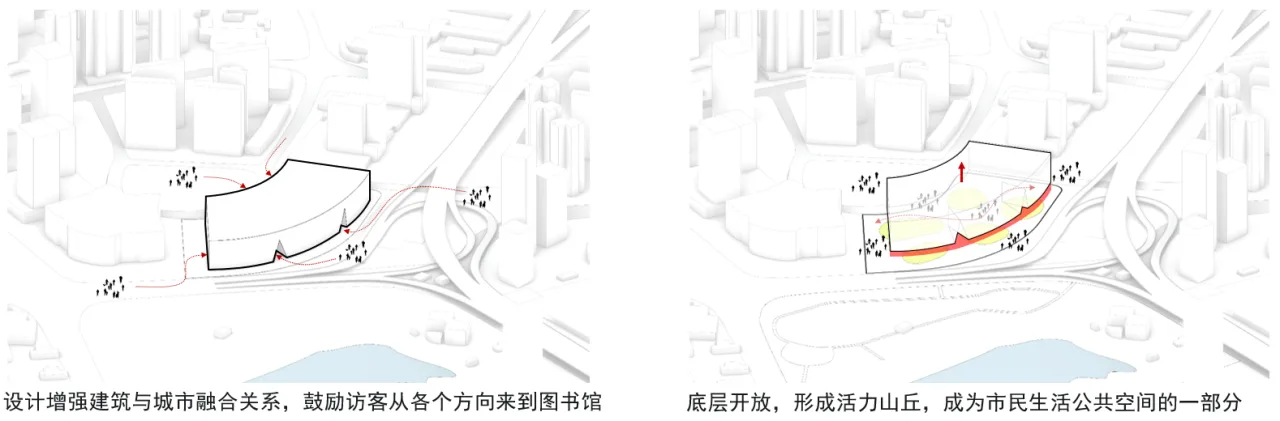
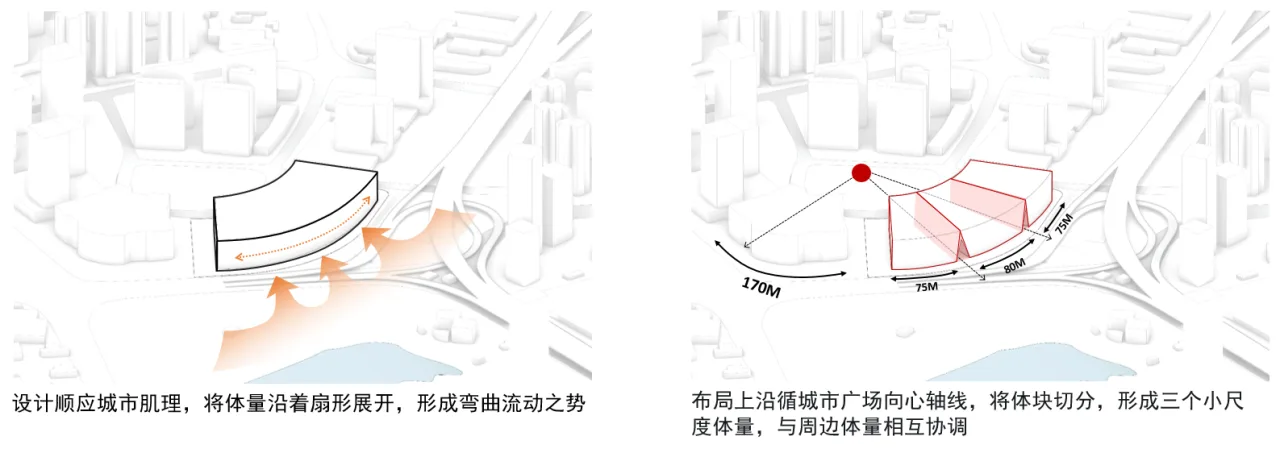
▲ Urban block analysis diagrams
Spatial Organization
The new Wuhan Library is designed as a public reading plaza open to both the park and the city. Reading spaces are stacked vertically and connected by three large courtyards. Public areas on each floor blend reading, social interaction, and display spaces, creating an interconnected spatial network that encourages encounters and knowledge exchange.
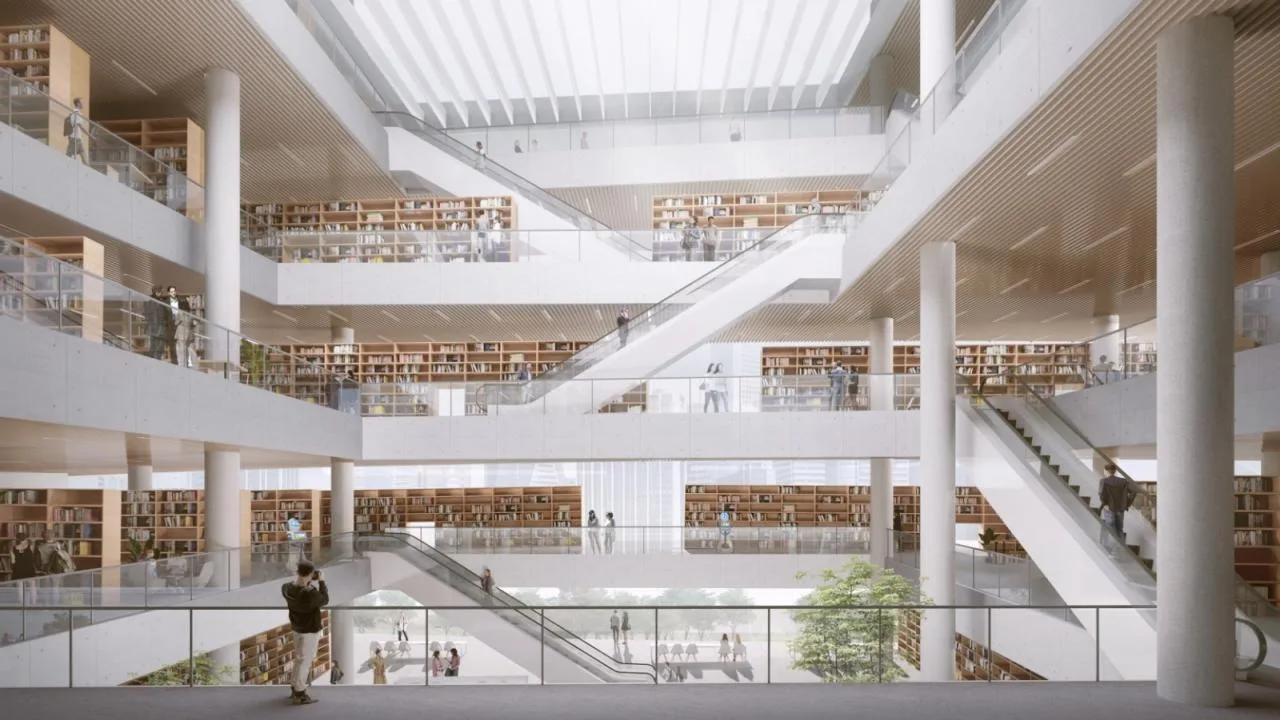
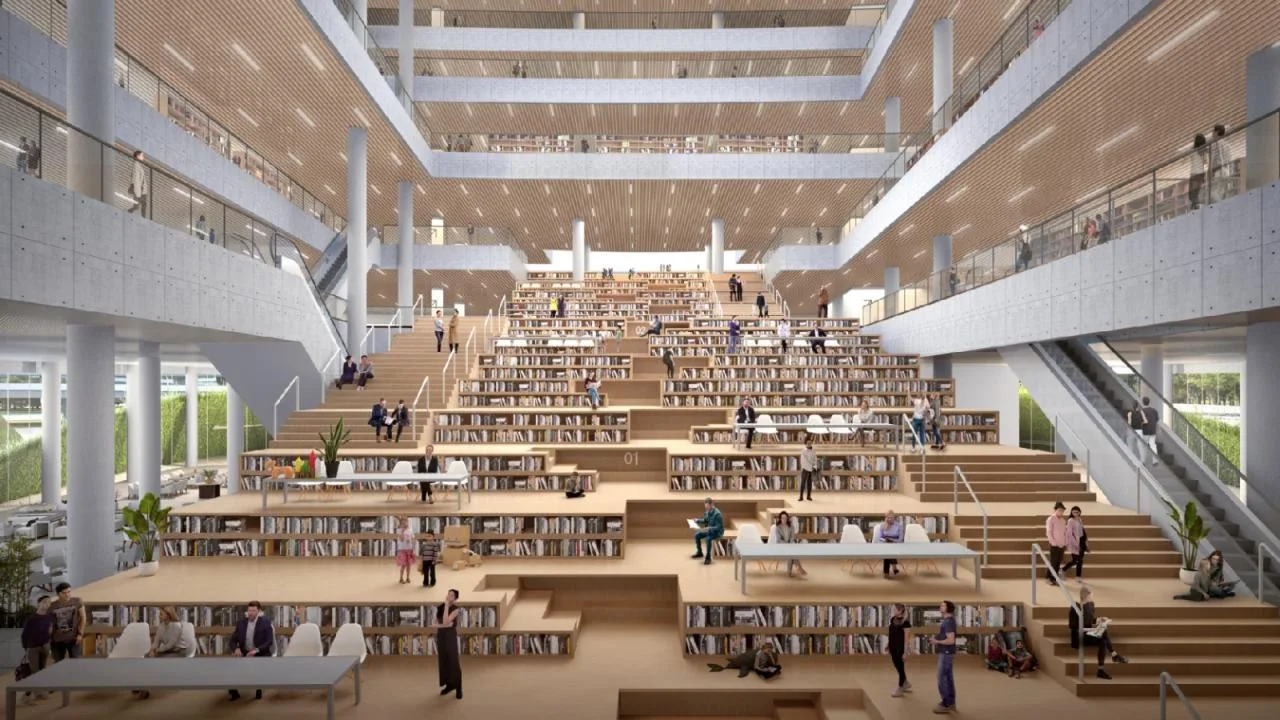
▲ Indoor atrium renderings
This interconnected spatial network provides increased opportunities for social interaction and knowledge sharing among visitors.
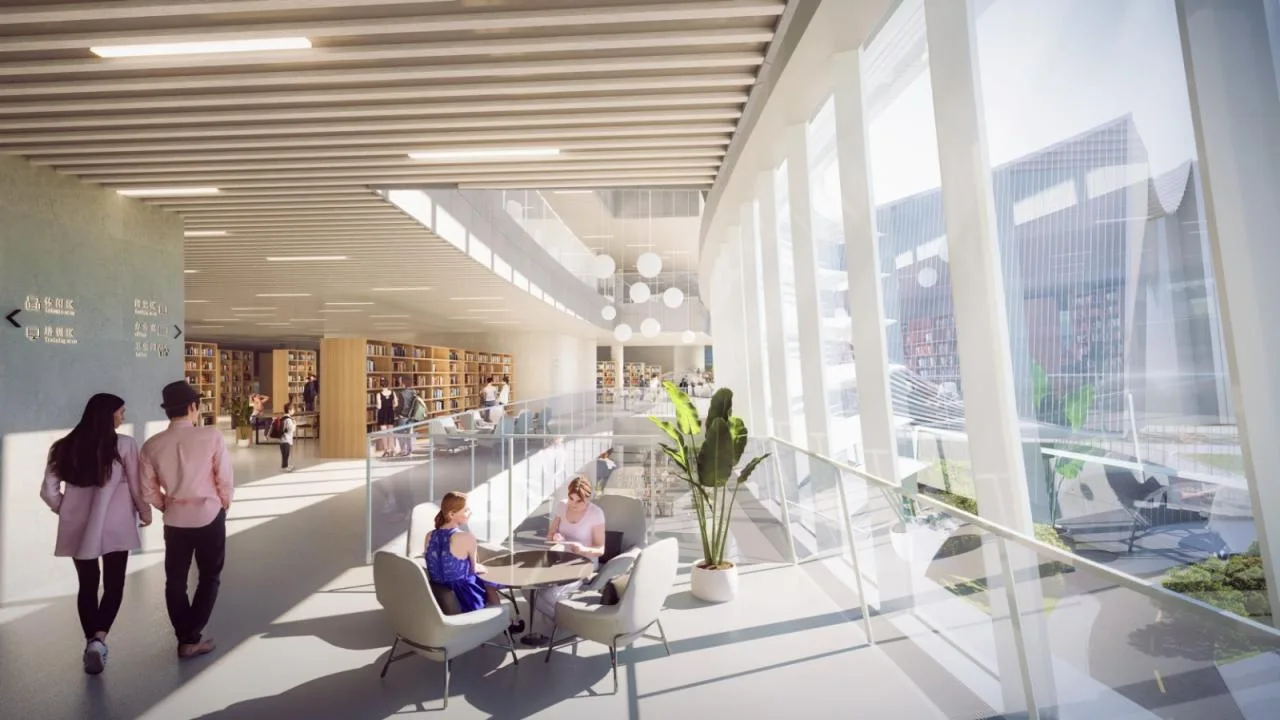
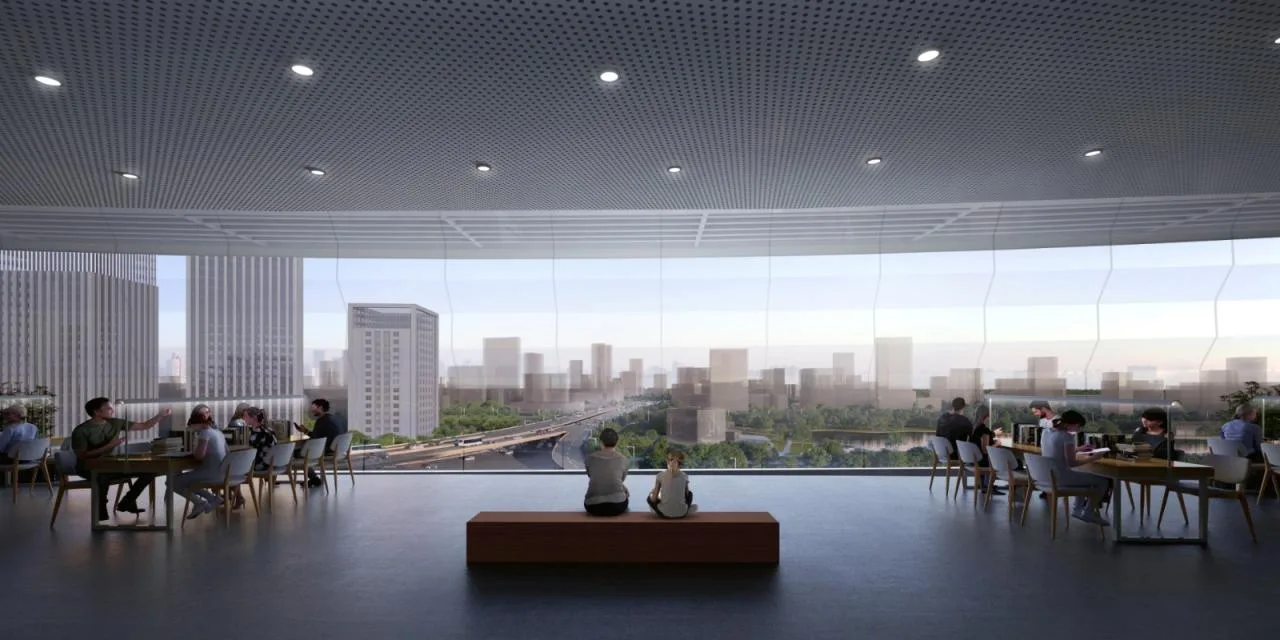
▲ Reading space renderings
All reading areas feature fully open floor plans with spacious, column-free interiors, maximizing flexibility and encouraging creativity. The streamlined design helps visitors quickly orient themselves. Spaces can be zoned according to functional needs, lighting, and landscape views.
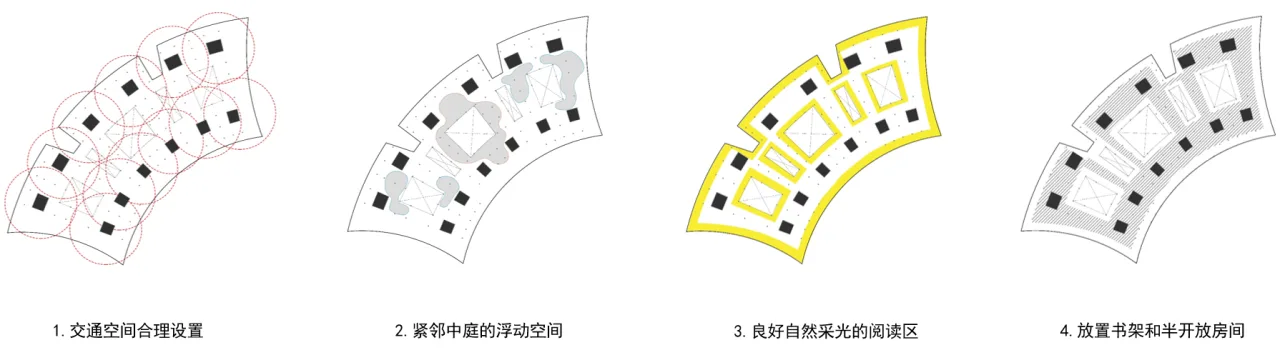
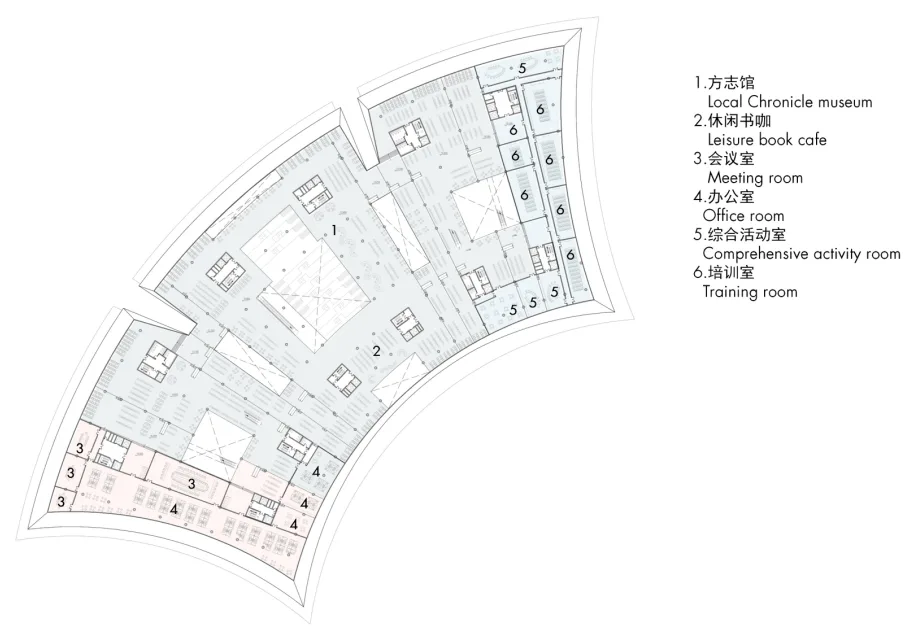
▲ Functional zoning analysis diagrams
The library adopts an integrated “collection and borrowing” model with a layout emphasizing fully open shelves and wide circulation paths. Core service areas are evenly distributed to maintain efficient access. A flexible space is created between the core and the atrium. Reading areas are placed along the exterior walls and atrium to benefit from natural daylight. Bookshelves and enclosed rooms between reading zones enhance convenience and privacy for users.
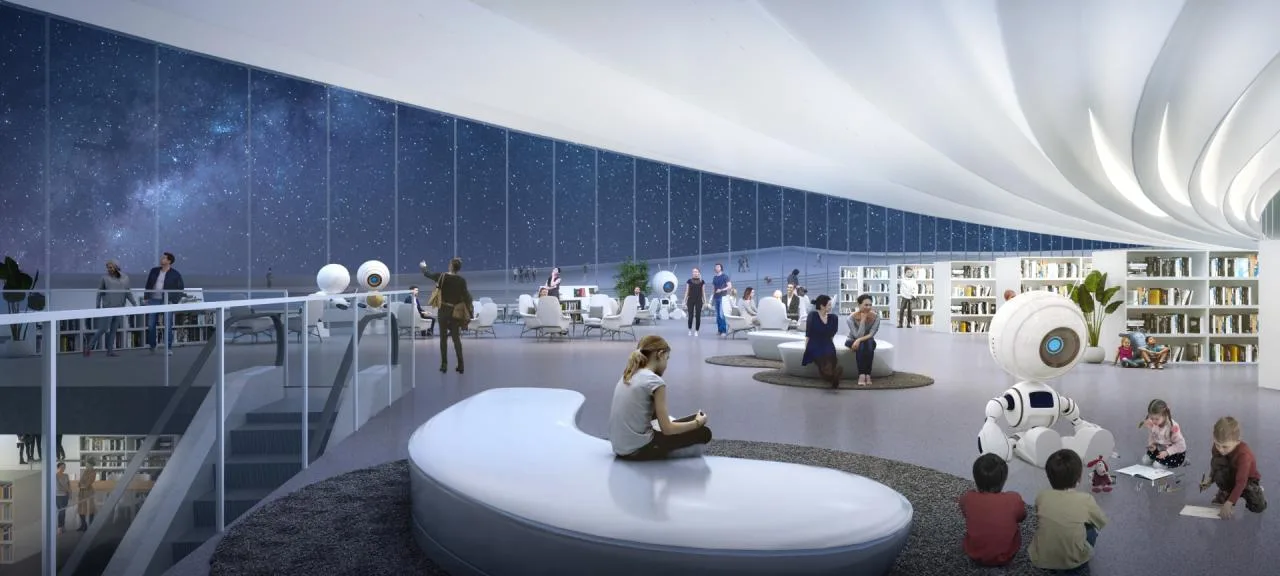
▲ Starry sky-themed reading space rendering
The top floor features a starry sky-themed reading room and a city living room. Its flowing roof creates a futuristic and mysterious indoor atmosphere. Floor-to-ceiling transparent glass connects the interior to outdoor terraces, seamlessly blending indoor and outdoor areas.
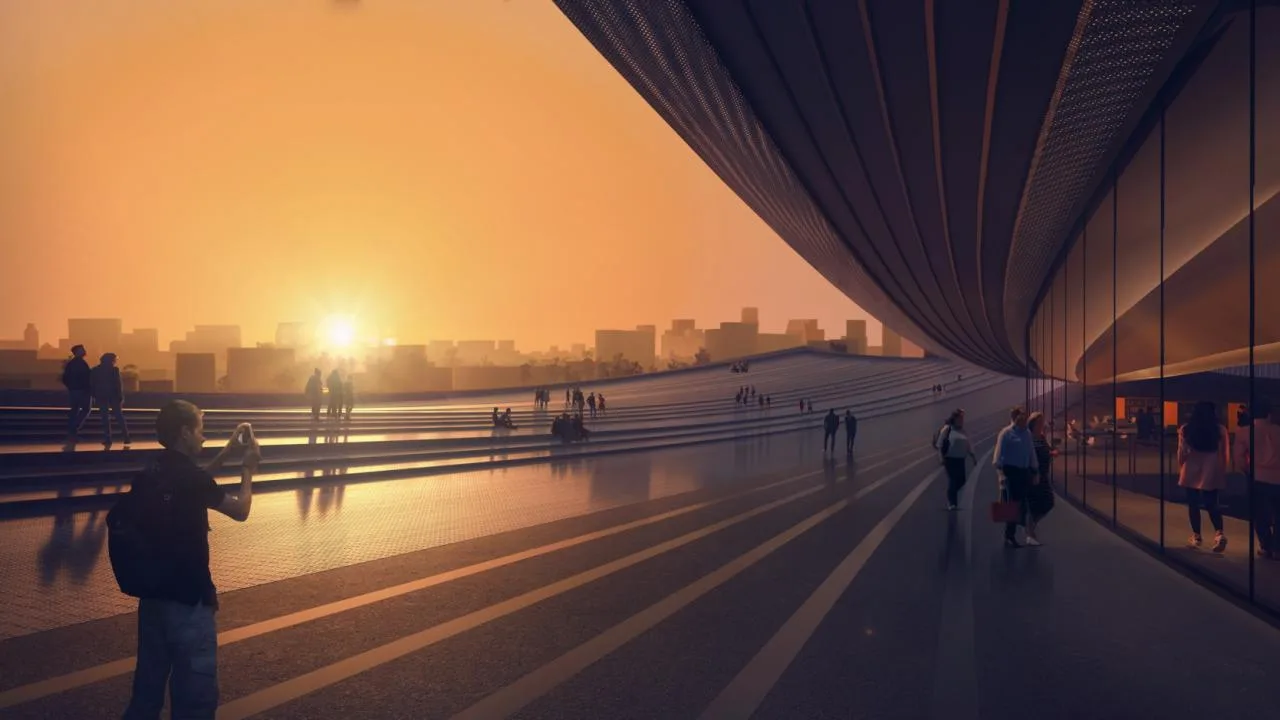
▲ Roof and rooftop rendering
The rooftop offers a space for stargazing and socializing, where visitors can relax, chat, and enjoy the vibrant yet tranquil cityscape.
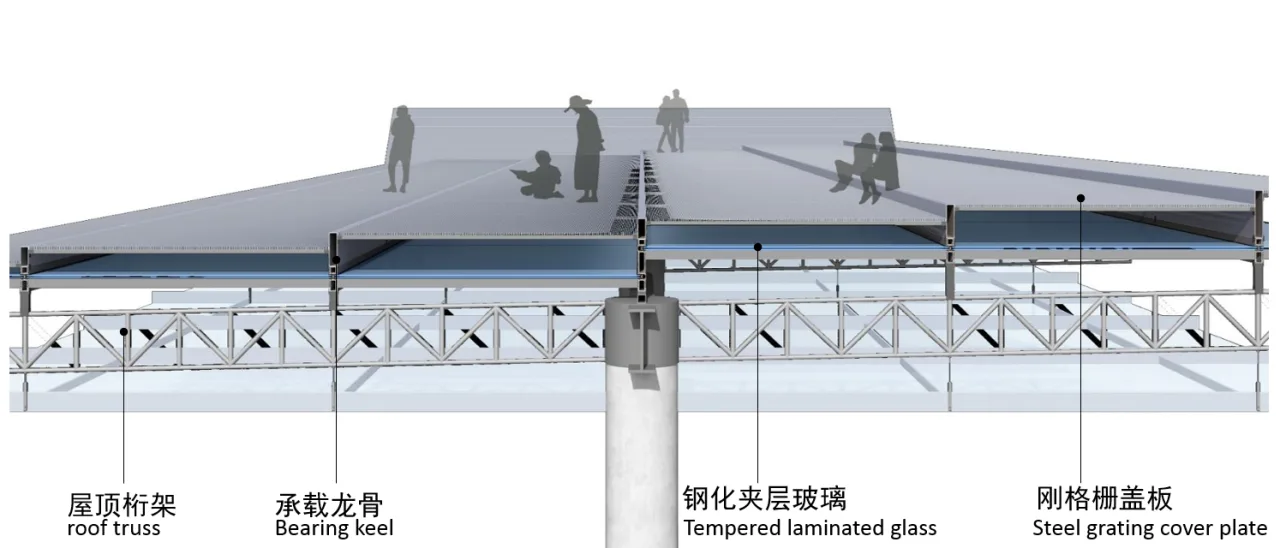
▲ Double-layered roof node analysis diagram
The freeform roof creates varied height differences, forming natural reading and resting areas. It uses a double-layer roof system: the upper layer consists of steel grating, while the lower layer is tempered laminated glass. This combination balances accessibility with natural light transmission.
Sustainable Design
The design respects the site’s natural texture, maintaining its permeability. By integrating sunken green spaces, rain gardens, and other landscape elements, and incorporating sponge city concepts with rainwater harvesting, reclaimed water reuse, and wastewater treatment, the project creates an efficient, ecological, and recyclable water system.
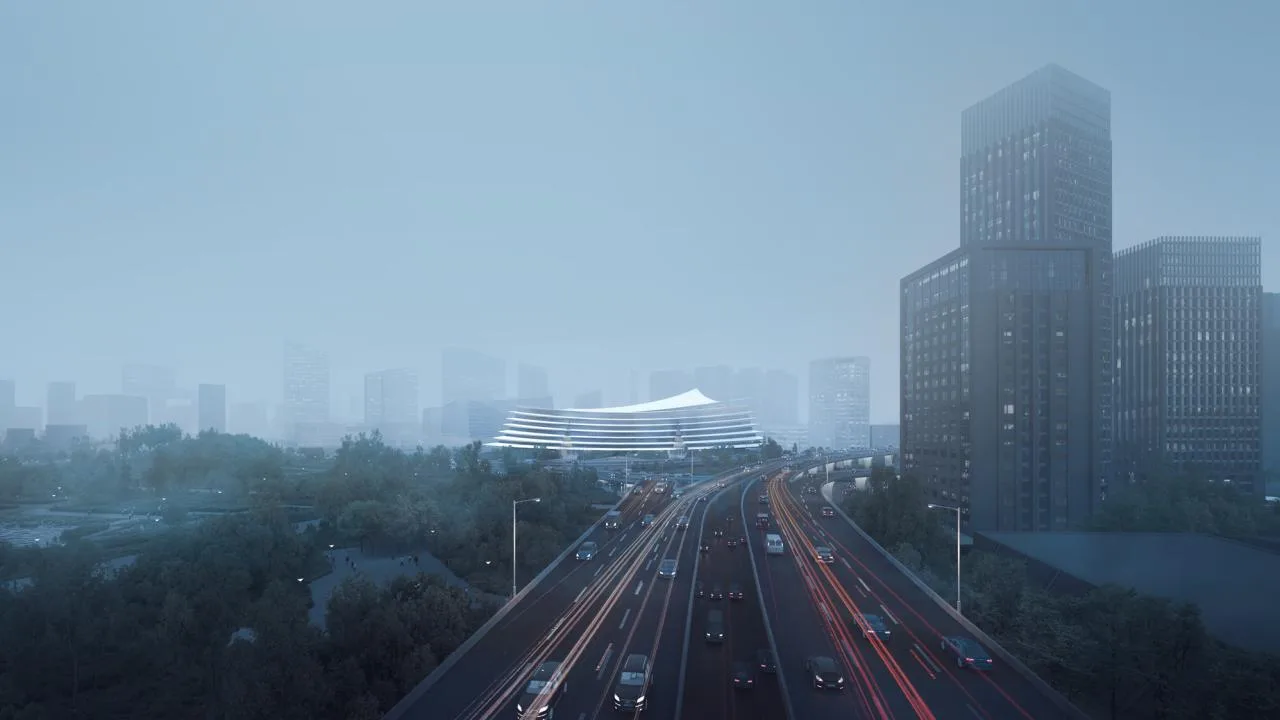
▲ Rendering of the new Wuhan Library
Outdoor greenery and permeable paving collect rainwater, purify pollutants, and promote a balanced, healthy ecosystem. Sustainable features enhance biodiversity and ecosystem value through activities, while landscaping and public squares enrich leisure and entertainment opportunities.
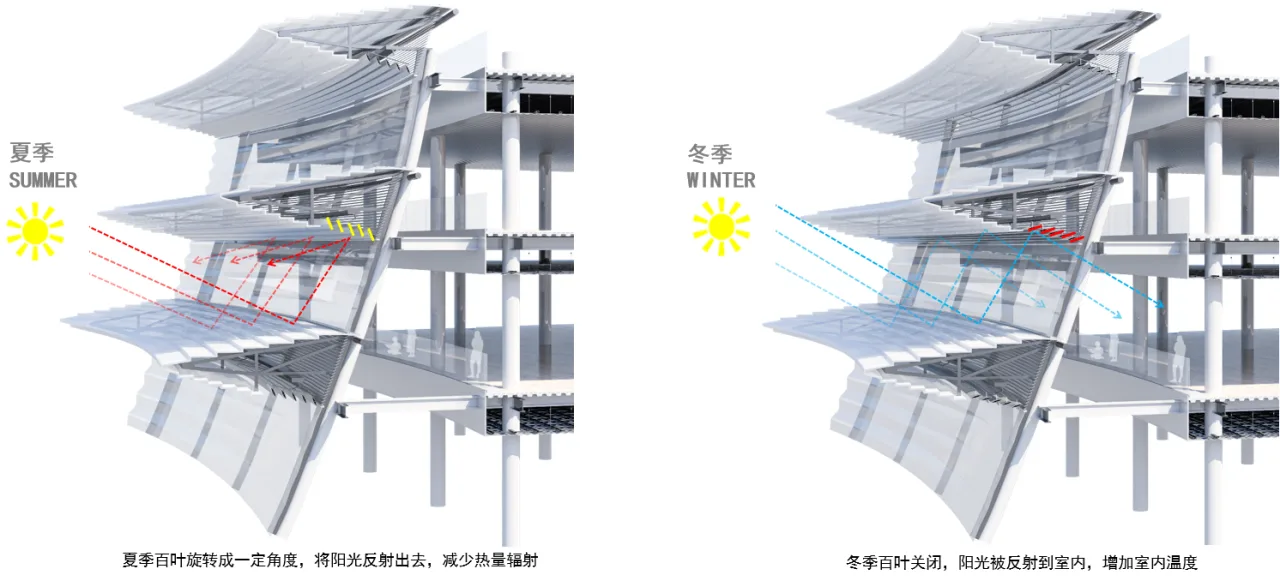
▲ Analysis diagram of operable louver nodes
Movable louvers are installed beneath the eaves, allowing indoor temperatures to be adjusted according to the outdoor environment for a comfortable reading atmosphere. In summer, electric louvers tilt to reflect sunlight and reduce heat gain; in winter, they close to direct sunlight indoors, increasing warmth. This dynamic shading system reduces energy consumption. Multiple atriums and side courtyards, along with hidden ventilation openings in the eaves and skylights, enhance natural ventilation and further reduce energy use.
Conclusion
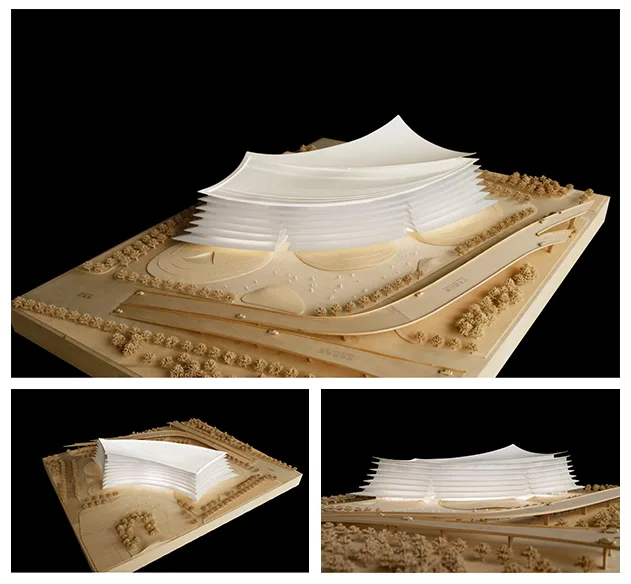
Given the complexity and scale of the site, the design prioritizes integration of the library with the city rather than creating a purely conceptual new building. As a vessel of urban culture, the library must be woven into the urban fabric. Through a concise and powerful design language grounded in history and oriented toward the future, the new Wuhan Library is poised to become a cultural landmark.
Project Information
Project Name: Wuhan Library New Building
Project Type: Conceptual Proposal
Location: Wuhan, Hubei
Building Area: 136,400 square meters
Design Firms: Beijing United Weisiping Architectural Design Firm Co., Ltd. & China Construction Third Engineering Group Co., Ltd.
Lead Architects: Wu Gang, He Dongming
Weisiping Design Team: Tan Shanlong, Li Zheng
China Construction Third Engineering Bureau Team: Tong Hubo, Yan Zhou, Qi Qige, Chen Yuxia, Li Sihuan, Deng Ding, Rao Shixia, Li Ke, Gao Hui, Zhang Jiaqian
Owners: Wuhan Municipal Bureau of Culture and Tourism, Wuhan Natural Resources and Planning Bureau, Wuhan Library, Wuhan Urban Construction Group
Architectural Technology Consultants: Chen Zhimin, Liu Fengyun, Li Xiang
Structural Design Consultants: Xiao Kaixi, Xiao Baichao, Deng Jian, Yang Dong
Mechanical and Electrical Design Consultants: Jin Weiqun, Li Yanzhu, Xu Hongwei, Yang Tianmiao
Cost Consulting Consultant: Zhang Chaoyang
On-site Research and Planning: Zhou Tong, Wang Zelun, Fan Shengwu, Mao Yu
Architectural Visualization: Chengdu Phantom














Must log in before commenting!
Sign Up