
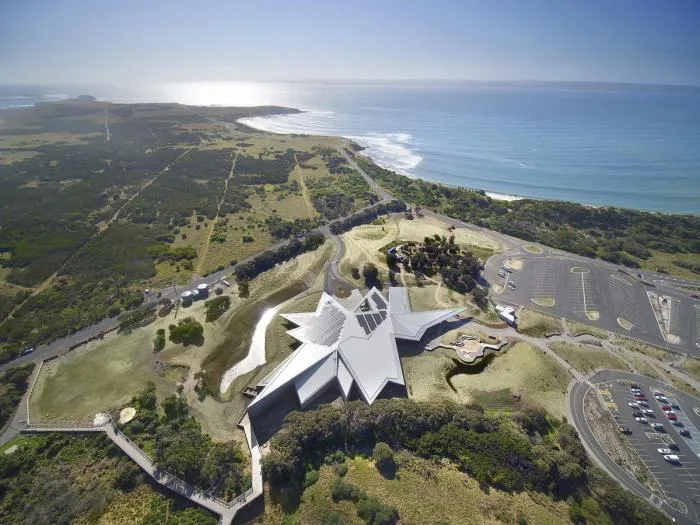
For over a century, visitors have gathered at Phillip Island at dusk to witness the enchanting parade of little penguins returning to shore. This unique opportunity to observe penguins in a spectacular yet sensitive natural setting has made Phillip Island one of the world’s premier locations for wildlife experiences. The “Penguin Homecoming” event has since become Australia’s top-ranked wildlife attraction, drawing around 4,000 visitors every evening.
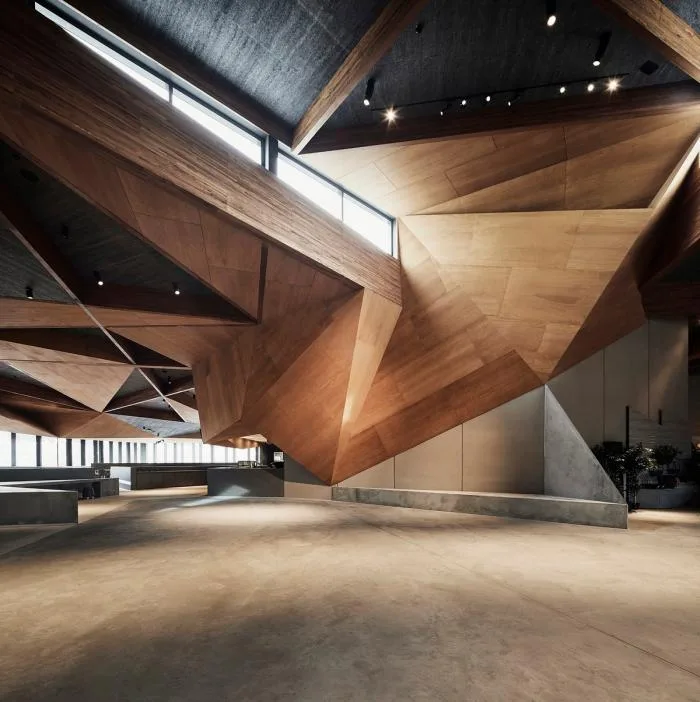
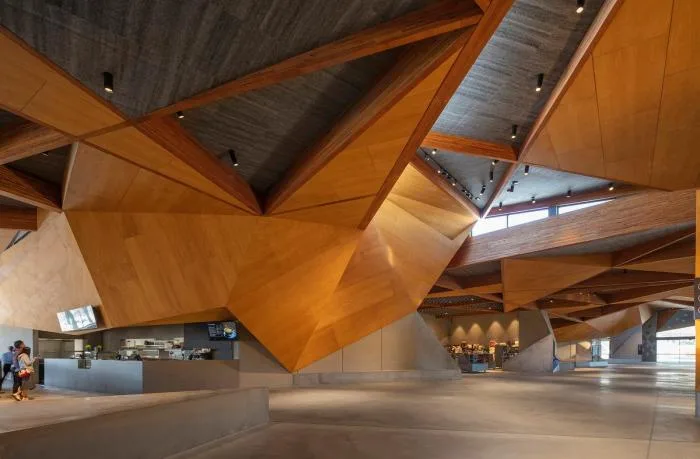
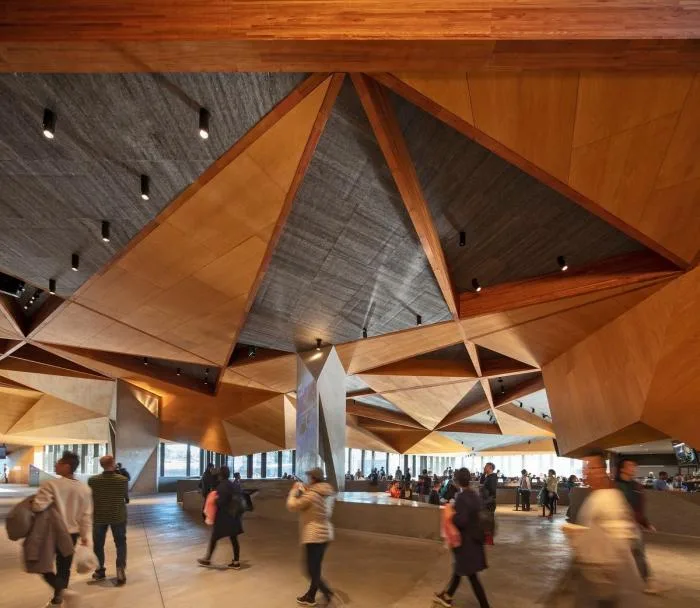
In the 1980s, the Somerland residential area had 177 homes, and studies indicated that the penguin population would vanish from the “Penguin Homecoming” site by 1997. In response, the state government initiated a groundbreaking environmental protection effort by purchasing the entire real estate to secure the future of the little penguins. Today, Phillip Island Nature Park stands as a leading authority in penguin conservation and habitat development. The new “Penguin Homecoming” visitor center embodies this vision through its design, educational exhibits, and functional spaces dedicated to conservation.
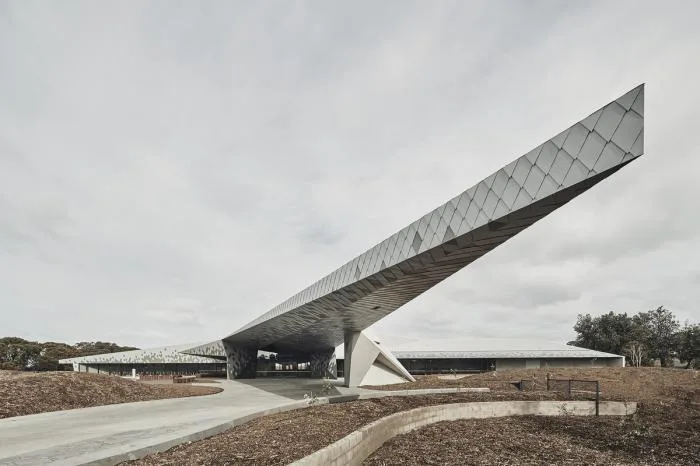
Situated at the crossroads of three distinct landscapes—sand dunes, headlands, and wetlands—the Penguin Center acts as a connector, engaging with each environment in a unique and experimental manner. The building’s exterior is clad in a uniform zinc veneer that abstracts these landscapes while providing cohesion. This material choice enhances the architectural concept by reflecting the complementary forces of the three natural settings.
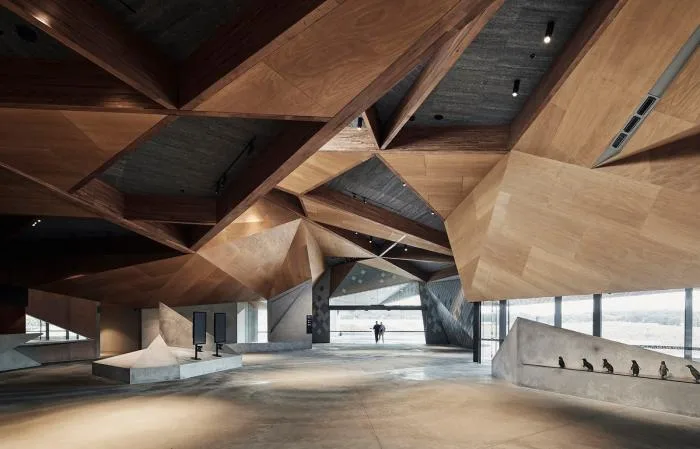
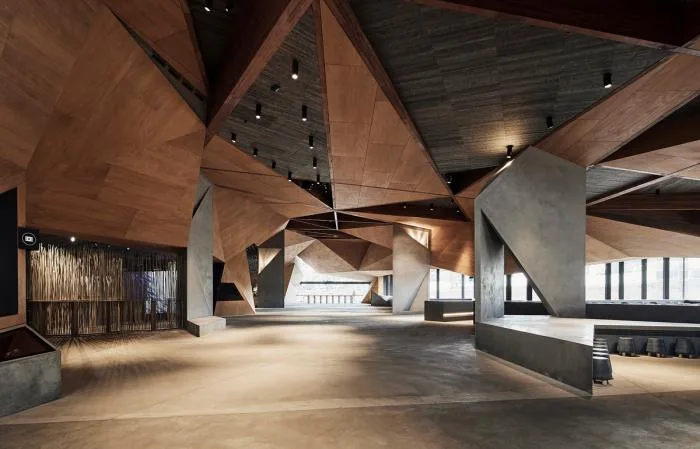
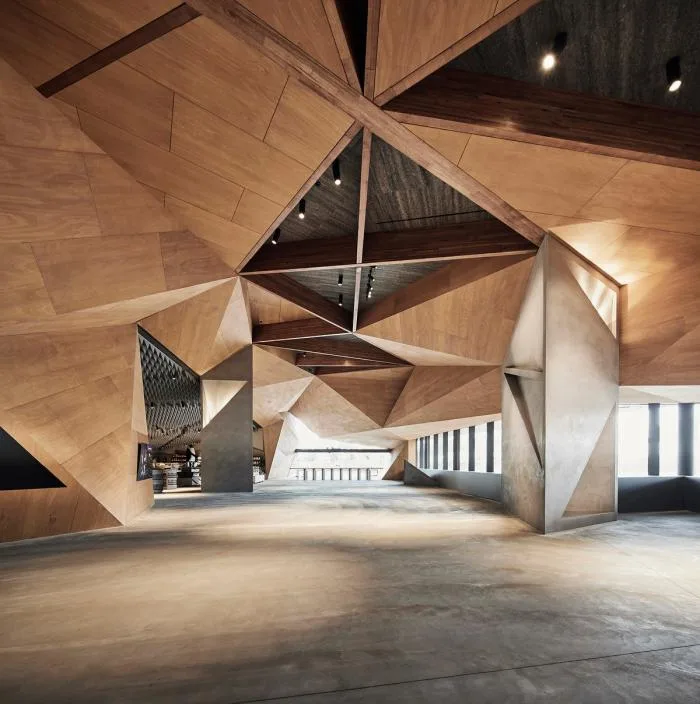
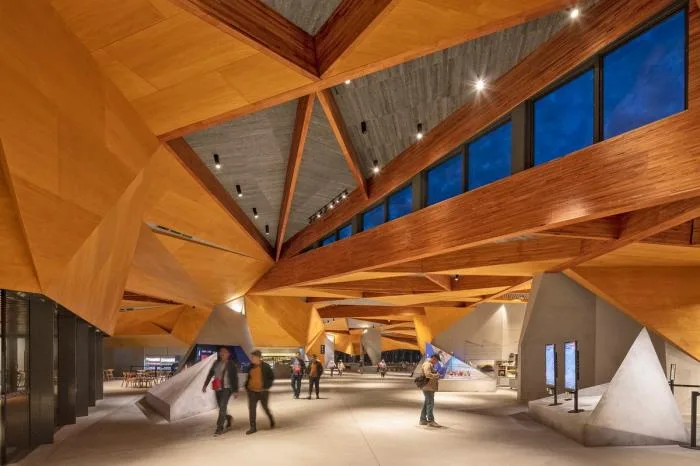
The architecture organizes its interior spaces to showcase these landscapes, inspiring visitors to learn about and appreciate their ecological significance. Beyond the popular Twilight Penguin experience, the center leverages the peninsula’s ecological diversity to create additional visitor activities that generate income to support ongoing research and conservation efforts. The site selection not only explores the formal boundaries between landscapes but also adds seven hectares of new penguin habitat, prioritizing the penguin population’s wellbeing.
Throughout the visitor journey, the design treats the penguin population as the primary client, guiding people through the site in ways that minimize environmental impact and avoid disturbing the penguins’ natural behaviors.
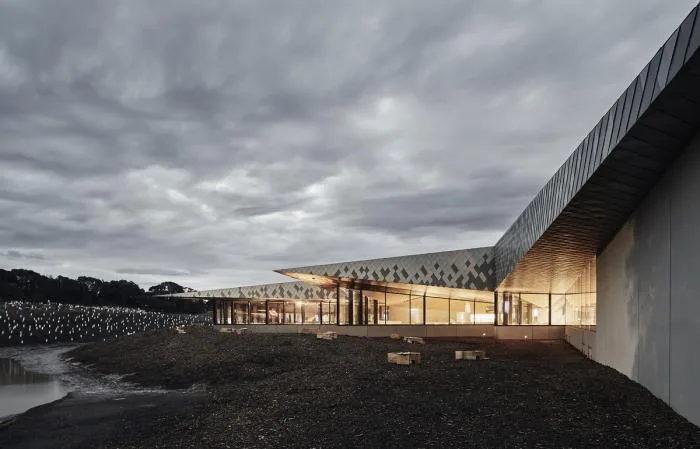
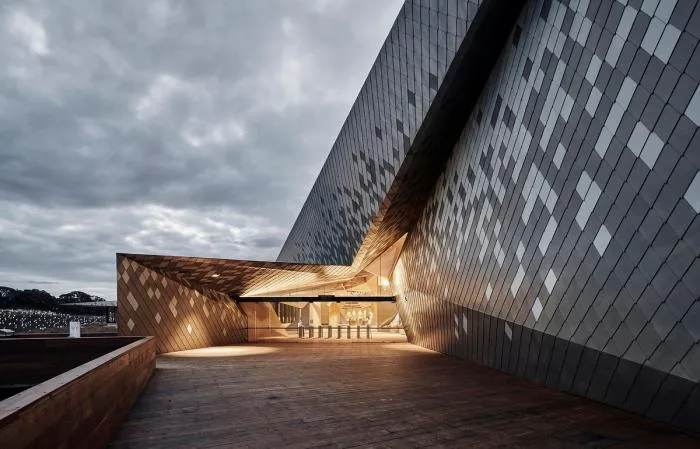
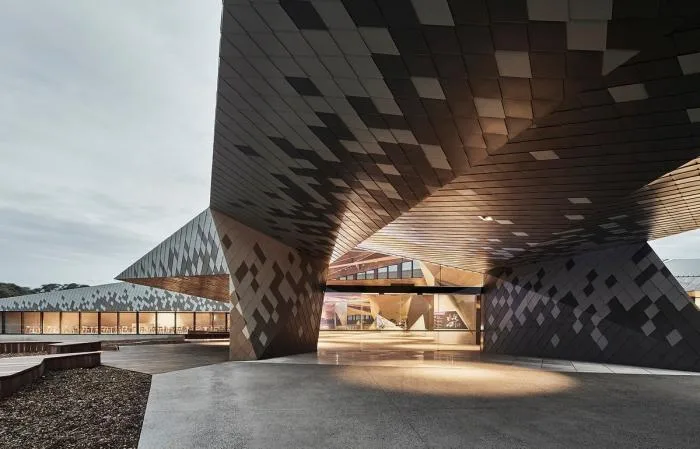
The journey from the city to Penguin World is defined by an 80-meter-long ridge within the building that orchestrates the intersection of the three landscapes. The programmatic elements are strategically arranged along adjacent roads, responding to the suitability of each function and landscape.
Between this long ridge and the functional zones lies a layered transitional space—a “third space”—composed of seating, interpretive elements, and thresholds. This area addresses the logistical challenges posed by heavy visitor traffic while preserving intimate encounters with the little penguins in their natural habitat.
The new “Penguin Homecoming” visitor center enhances the visitor experience by creating a multifaceted engagement with the peninsula. Thanks to the consolidation of penguin populations and expanded funding for broader wildlife conservation, the site has transformed from residential land into a significant wildlife reserve. This transformation has also unlocked new opportunities to develop ecological and environmental tourism.
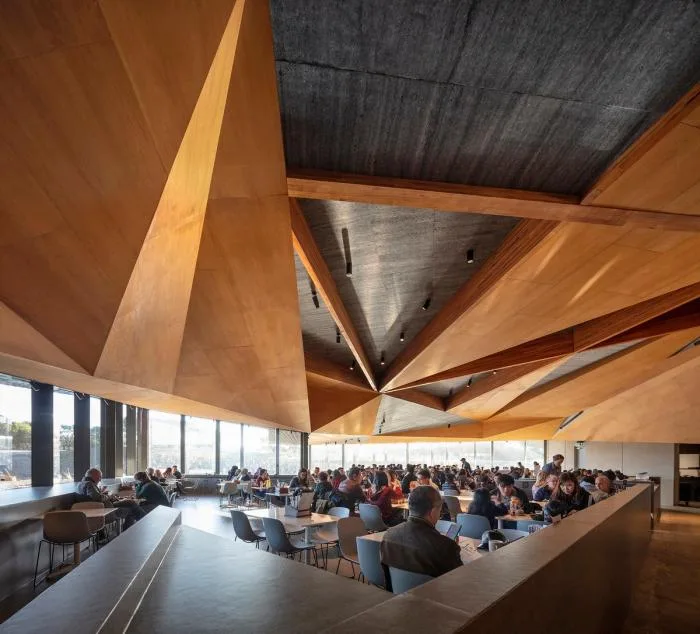
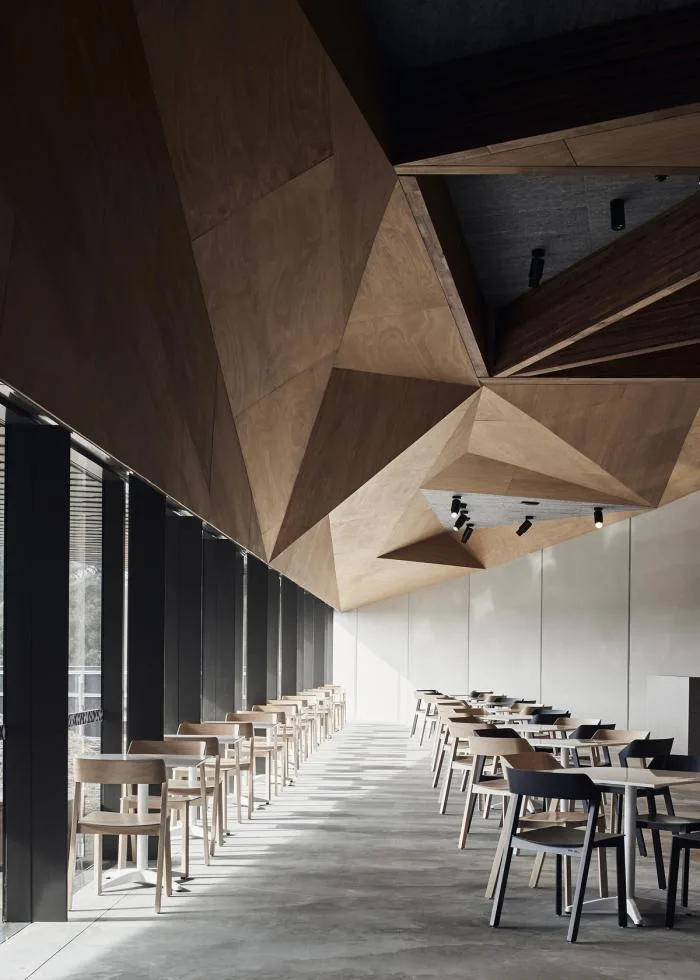
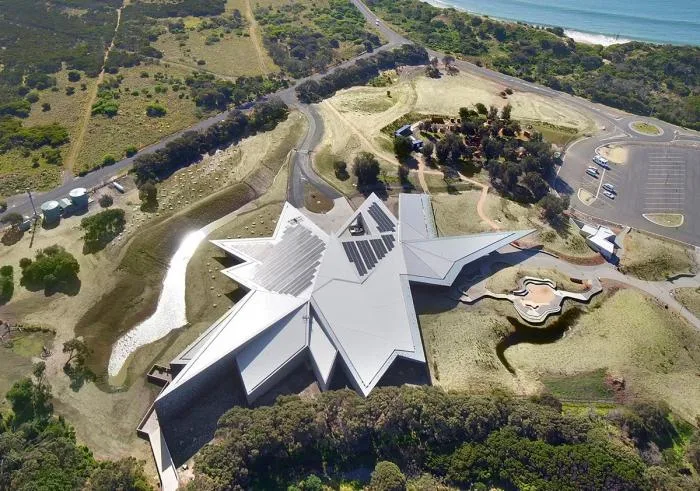
Design Drawings
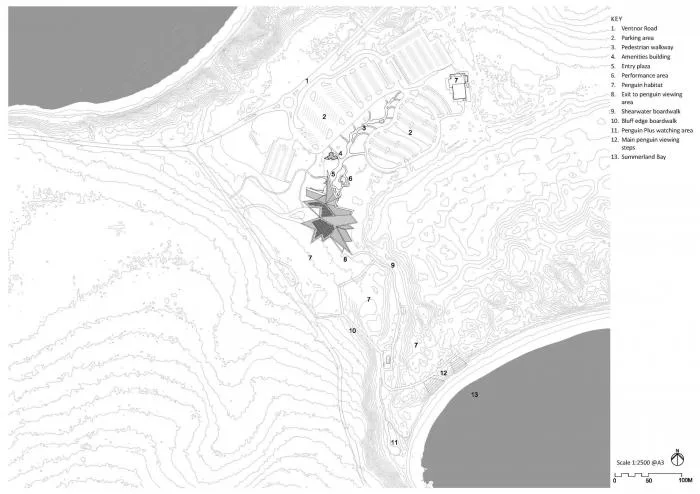
△ General Layout Plan
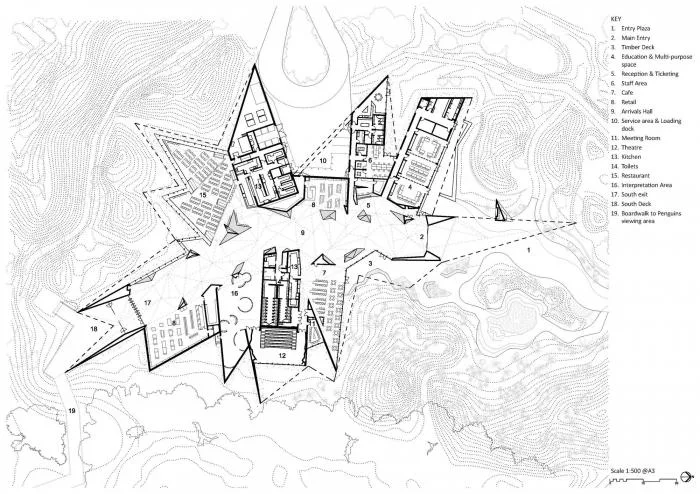
△ Floor Plan
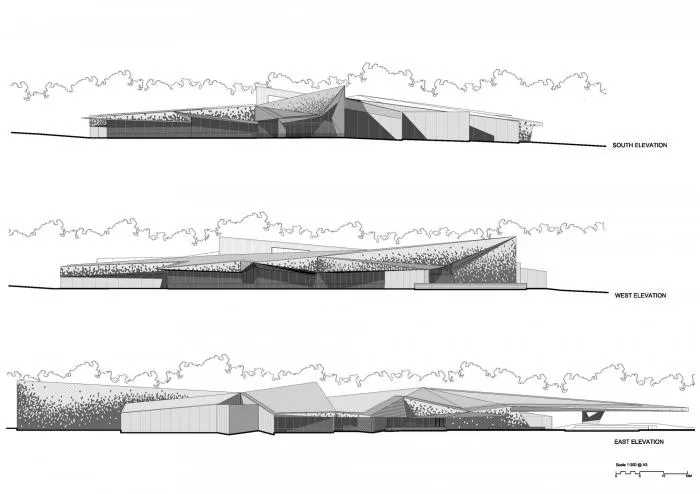
△ Elevation Drawing
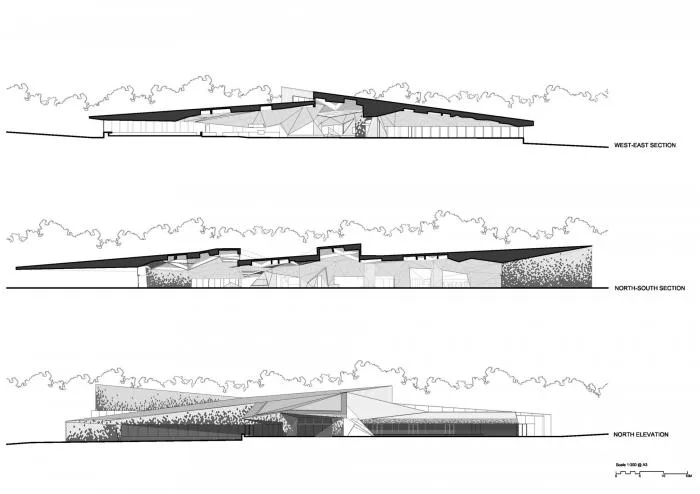
△ Section Diagram
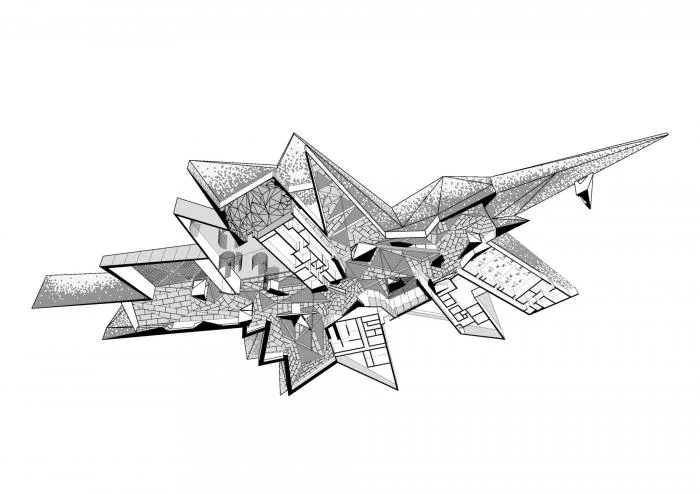
△ Axonometric Diagram
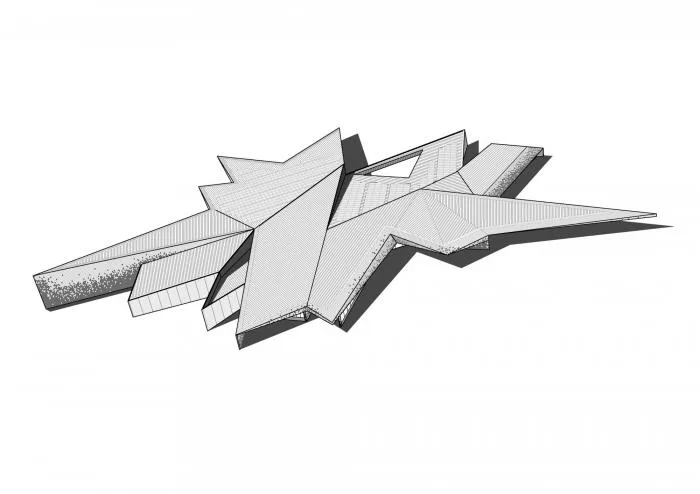
△ Axonometric Diagram
Project Information
Location: Australia
Architect: TERROIR
Area: 4,950 m²
Year: 2019
Photographers: John Gollings, Peter Bennetts
Suppliers: AG Brown Sawmill Pty, Autex, AutoDesk, CASA Systems & Materials, Colorbond, Cutek, Dulux Powder and Industrial Coatings, EQUIPE CERAMICS, Fantech, Forbo, Louvreclad, Matilda Veneers, McNeel, Parchem
Design Team: Scott Balmforth, Gerard Reinmuth, David McPeak, Paul Sayers, Tom Rubenach, Chris Rogers, Jordan Mathers, Joshua Lynch, Christine Mosbech, Ben Feher, Jack Andrews, Ben Black, Charlotte Meheut, Cassandra Kiss
Client: Phillip Island Nature Parks
Engineers: Stantec, AS James
Landscape Design: Tract Consultants
Consultants: AECOM, Tract Consultants, Thylacine, Steve Watson & Partners, UFD, GTA Associates, Doug & Wolf












Must log in before commenting!
Sign Up