
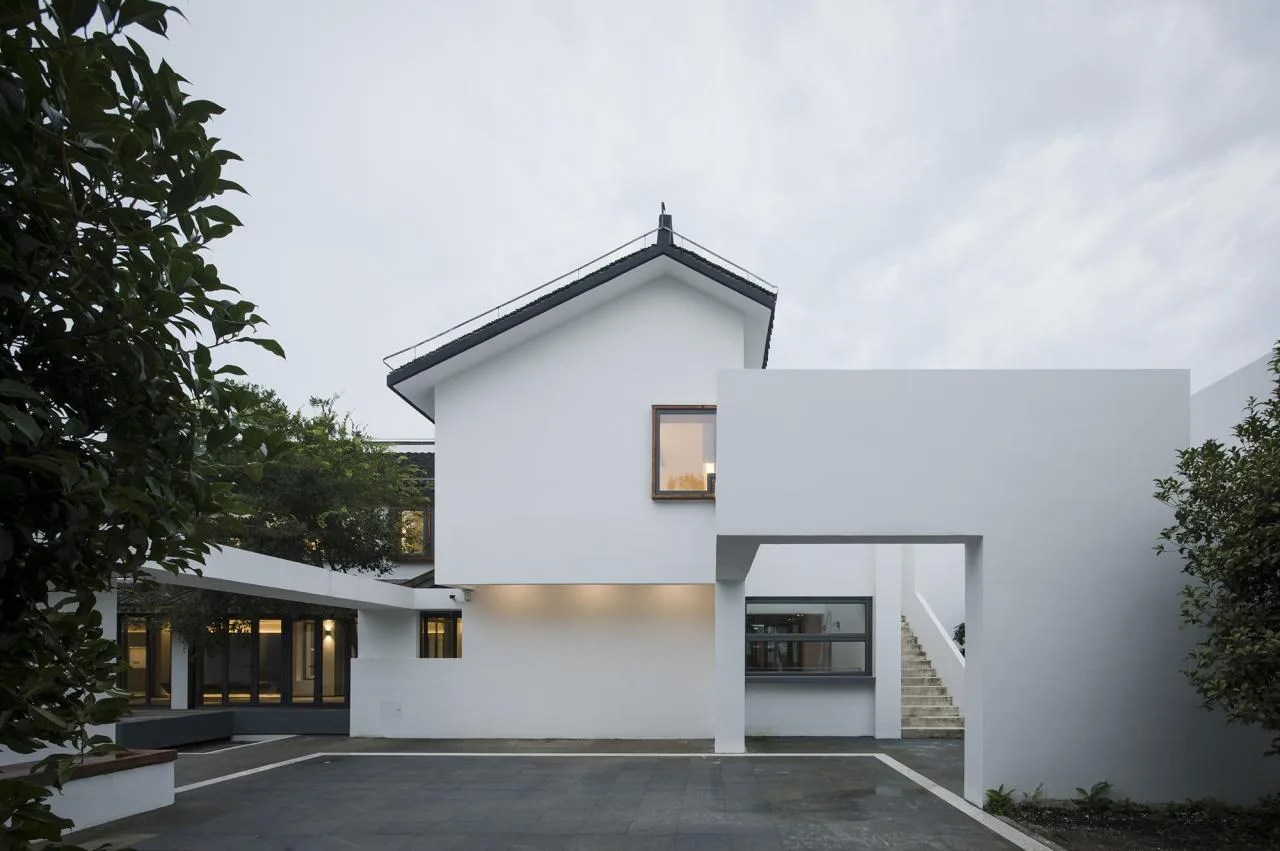
This project is located in Jijiadun Village, Jinxi, Kunshan. Originally serving as the village committee office building, it was later transformed into a public activity space for the villagers, accommodating dining, exhibition, and reception functions. The first floor hosts display and reception areas, while the second floor functions as a restaurant.
Due to recent functional adjustments, the venue is now undergoing renovation and updates. The architect was tasked with preserving as much of the existing structure as possible, minimizing demolition while maximizing the reuse of materials and walls, all while satisfying new functional and aesthetic requirements.
Upon site inspection, the architect was deeply impressed by the original building’s multiple interior and exterior spaces, the seamless integration of indoor and outdoor areas, and the harmonious relationship between architecture and nature. Therefore, the renovation focuses on preserving the original architectural form, implementing minimal and localized updates to the facade, and emphasizing the existing landscaped atrium spaces that blend inside and outside.
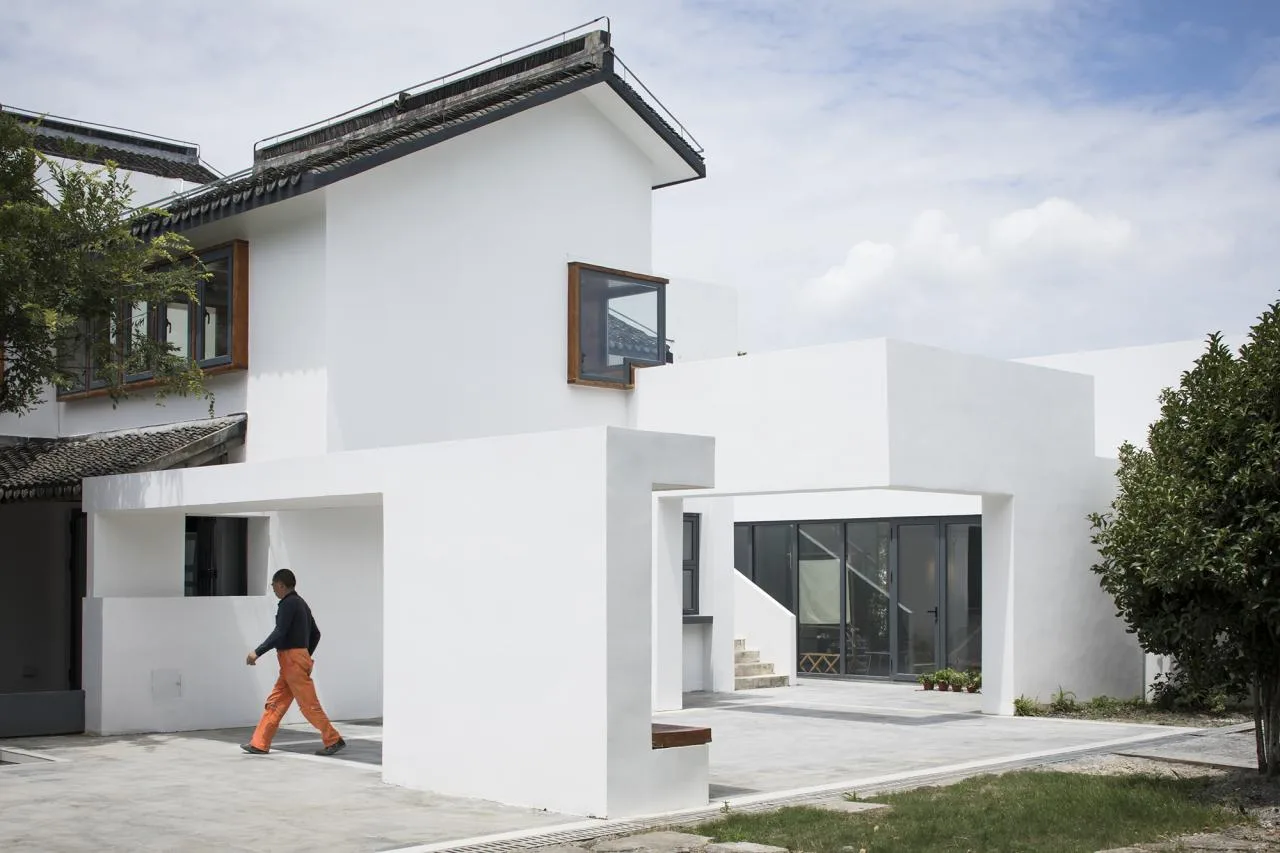
After analyzing the relationship between form and function, the architect reconfigured the space to accommodate diverse meeting and usage needs. The entrance, layout, walls, and courtyard—originally stretching and intertwining—were redefined to remove clear boundaries between inside and outside, allowing access from multiple directions and reducing the emphasis on a single main entrance.
However, the courtyard entrance lacked clear signage due to its complex layout and small size. To adapt the space for conference use, the architect removed several winding courtyard walls and openings on the south side, closed off some corridors, and widened the pathways leading to the main building. Additionally, the corridor bridge over the original water tank was expanded to highlight the main entrance’s distinctiveness.
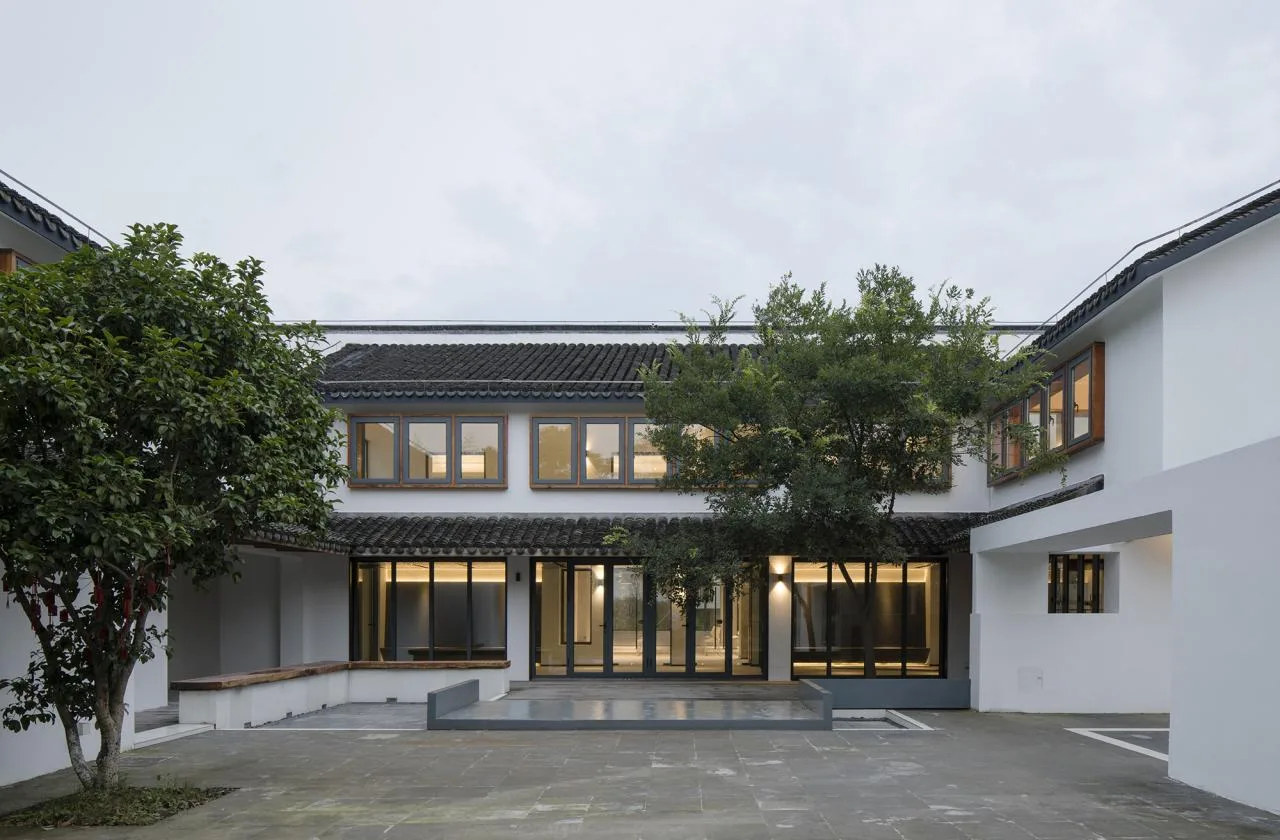
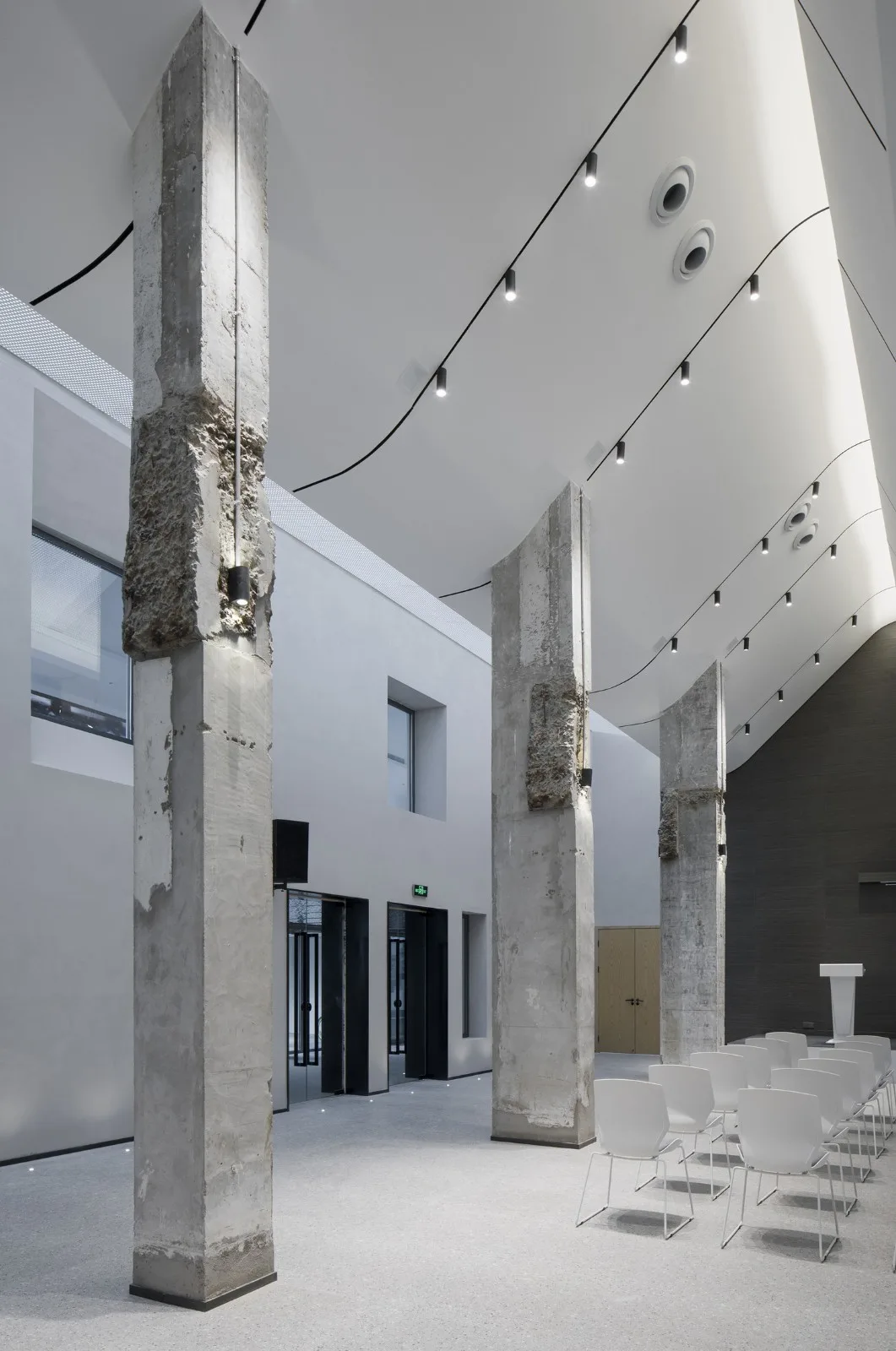
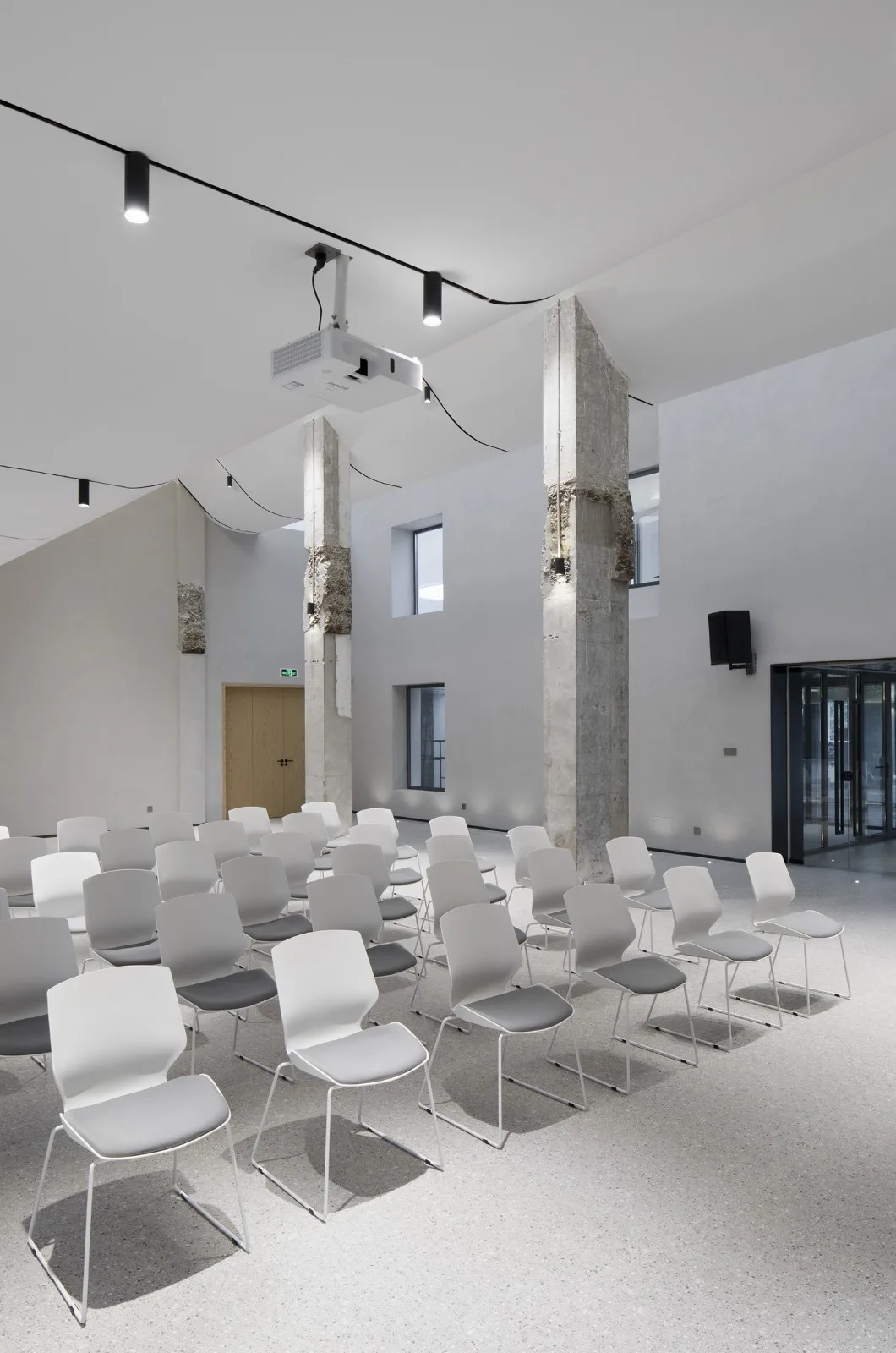
Next, the interior space was reorganized. While preserving the original restaurant on the second floor, meeting rooms of various sizes were rearranged to fulfill different requirements. The design also integrates tea, coffee, rest, and office areas with the courtyard space. The northern semi-outdoor corridor was enclosed to create a large conference and multifunctional activity space.
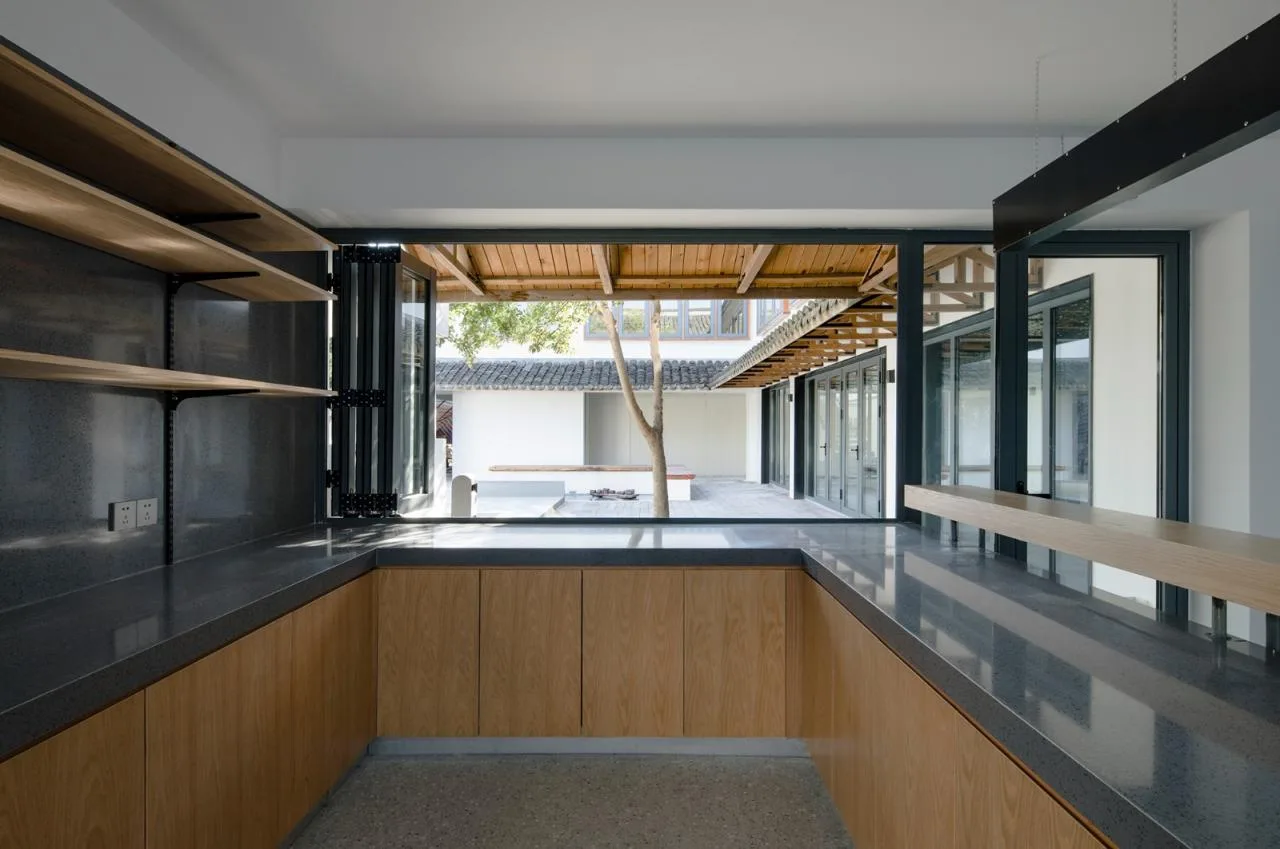
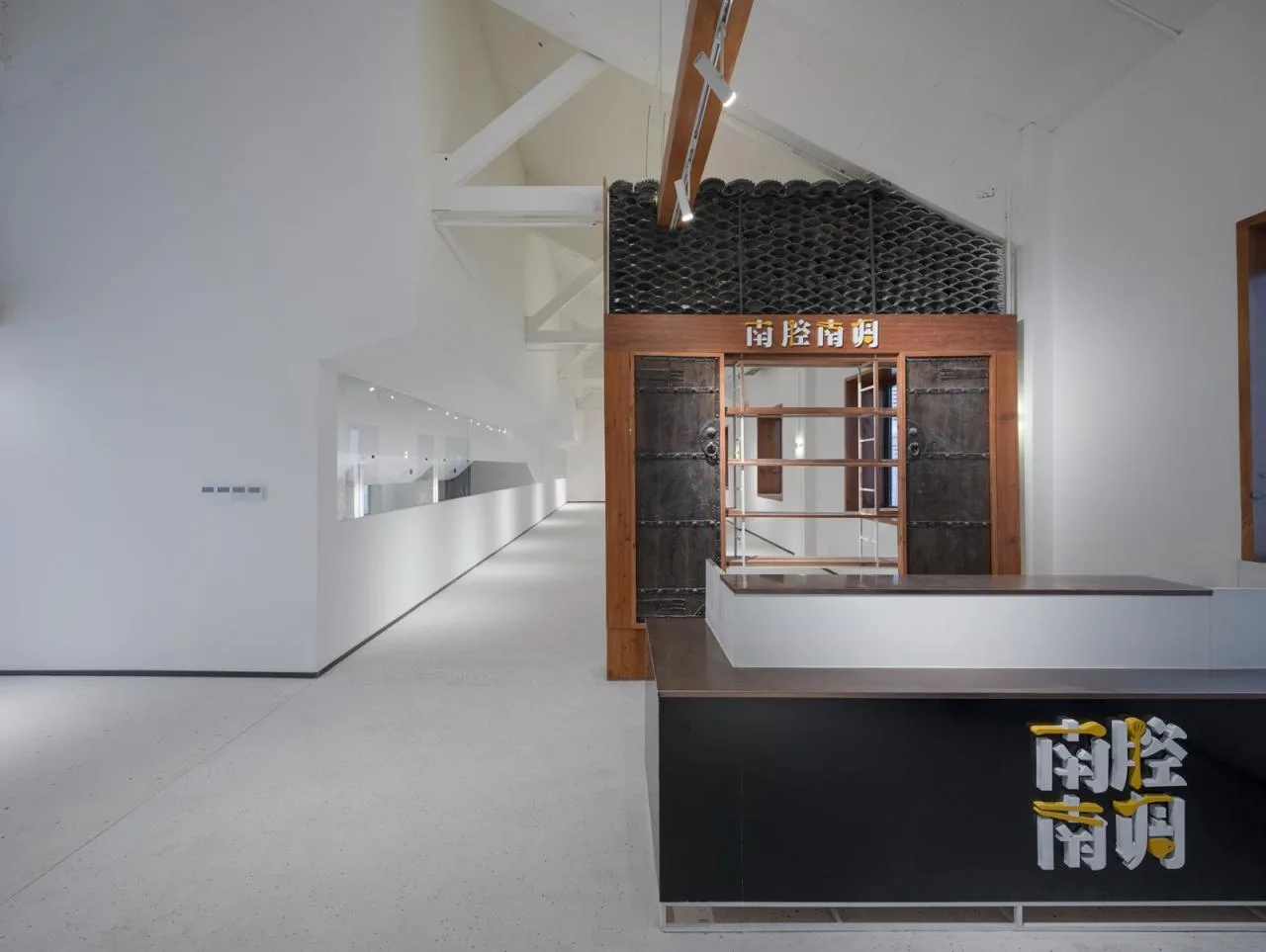
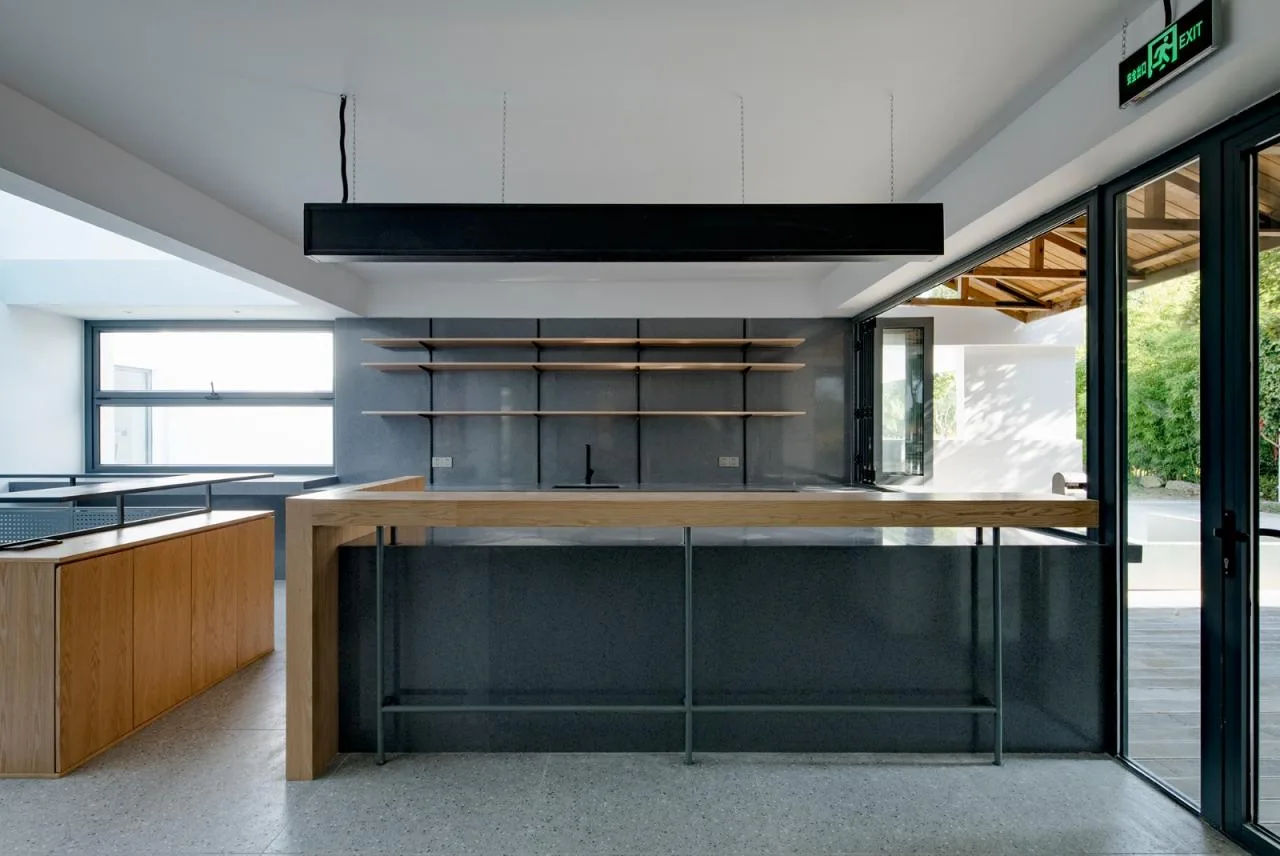
Various Meeting Formats
As a rural meeting facility, the architect aimed to challenge conventional meeting setups by creating a more relaxed, casual, and comfortable atmosphere. This was achieved through diverse spatial arrangements and usage patterns, encouraging a fresh approach to gatherings.
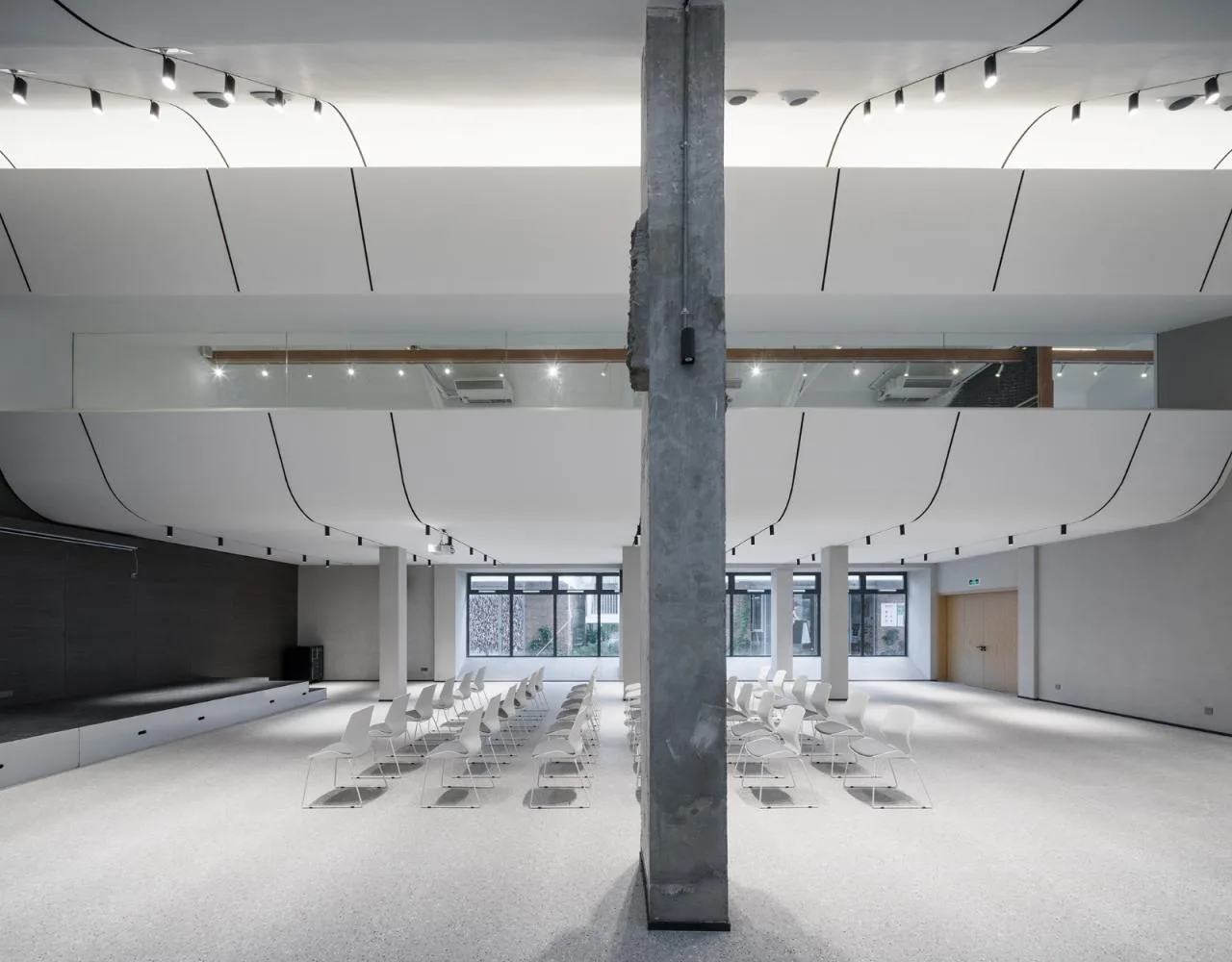
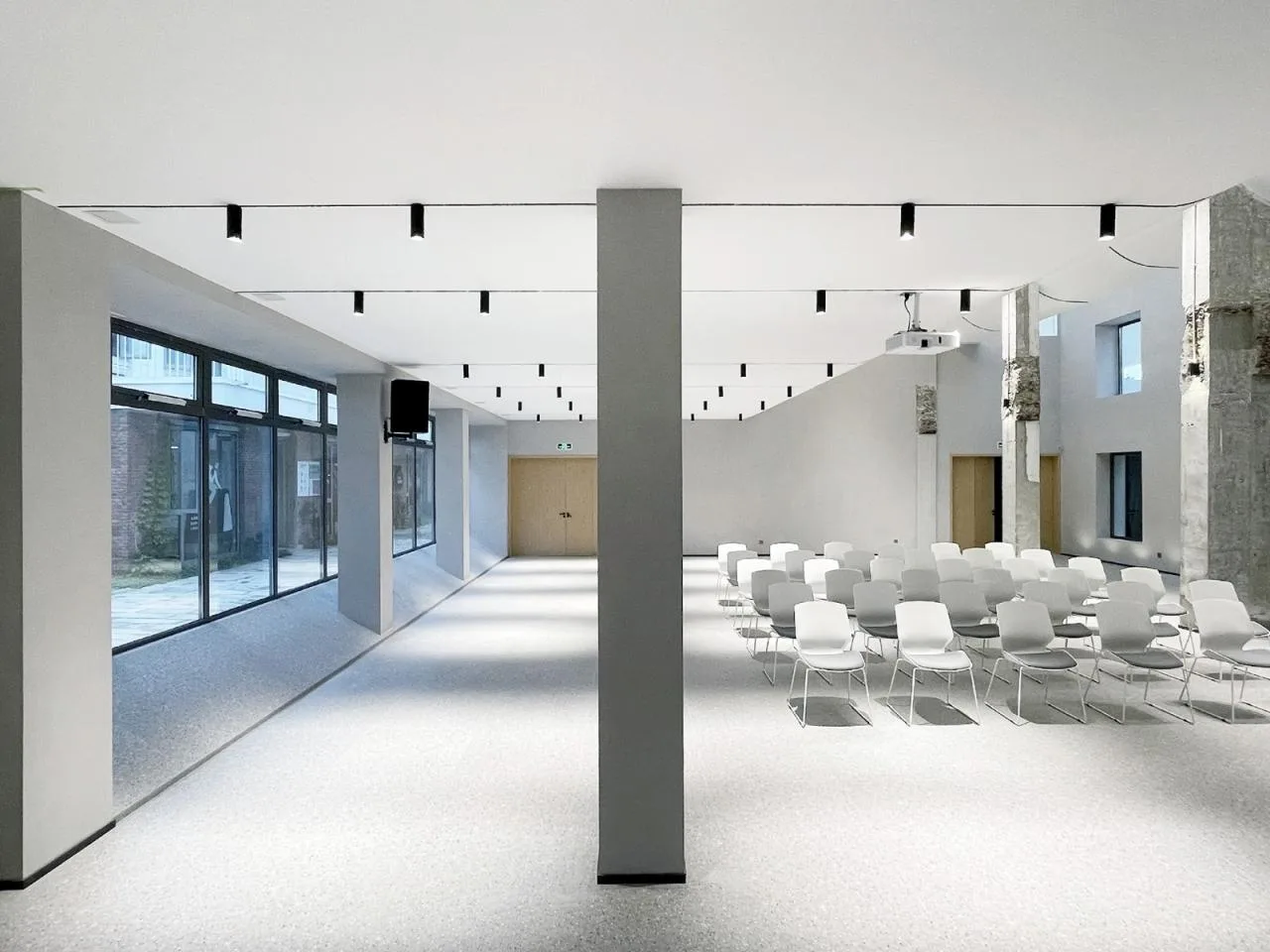
Flow Reorganization
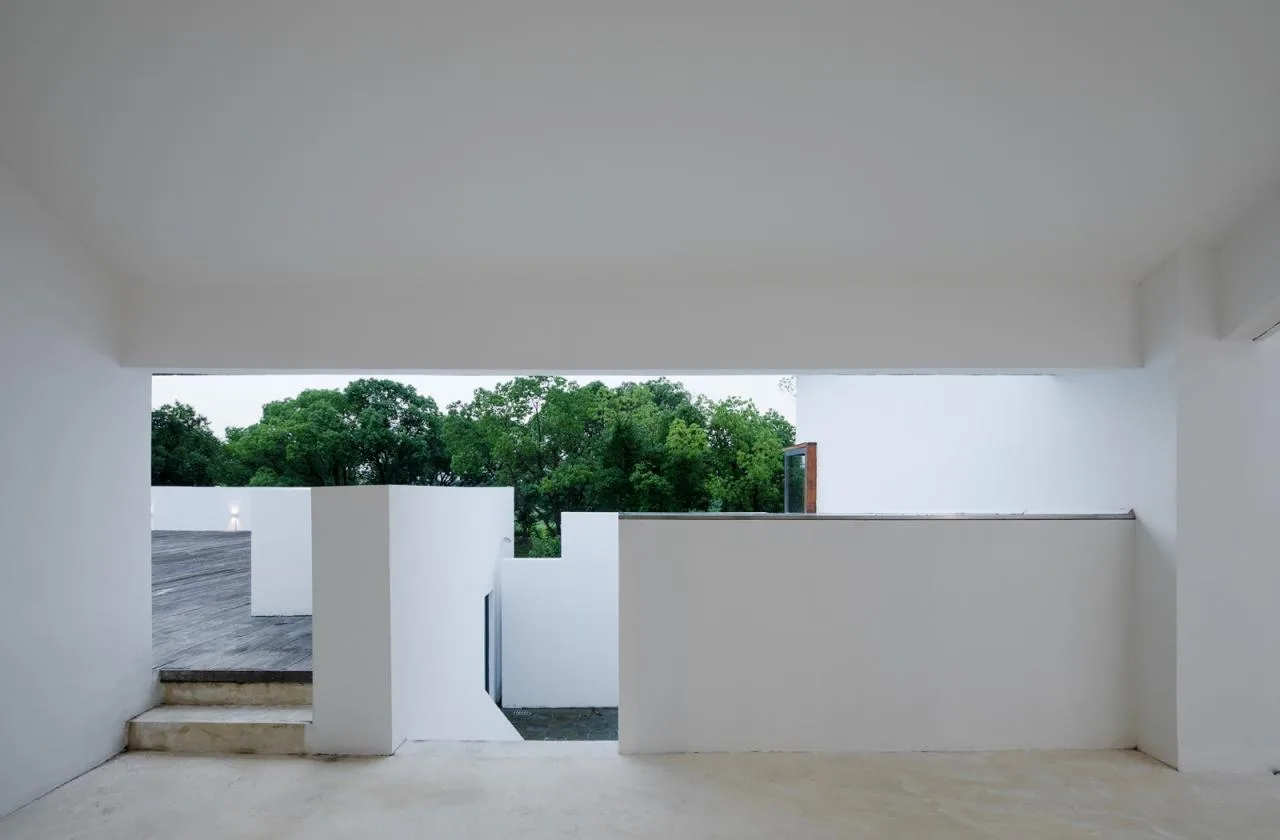
The original building featured an indoor-outdoor loop connecting two roof terraces on the second floor and an aerial corridor, linking a series of outdoor courtyards with an indoor platform upstairs. This design created a maze-like roaming experience.
However, with the conversion of the first-floor exhibition hall into a multifunctional conference space, this loop was interrupted. The aerial corridor and vertical stairs previously located in the exhibition area were removed, making the second-floor outdoor terrace connection inconvenient.
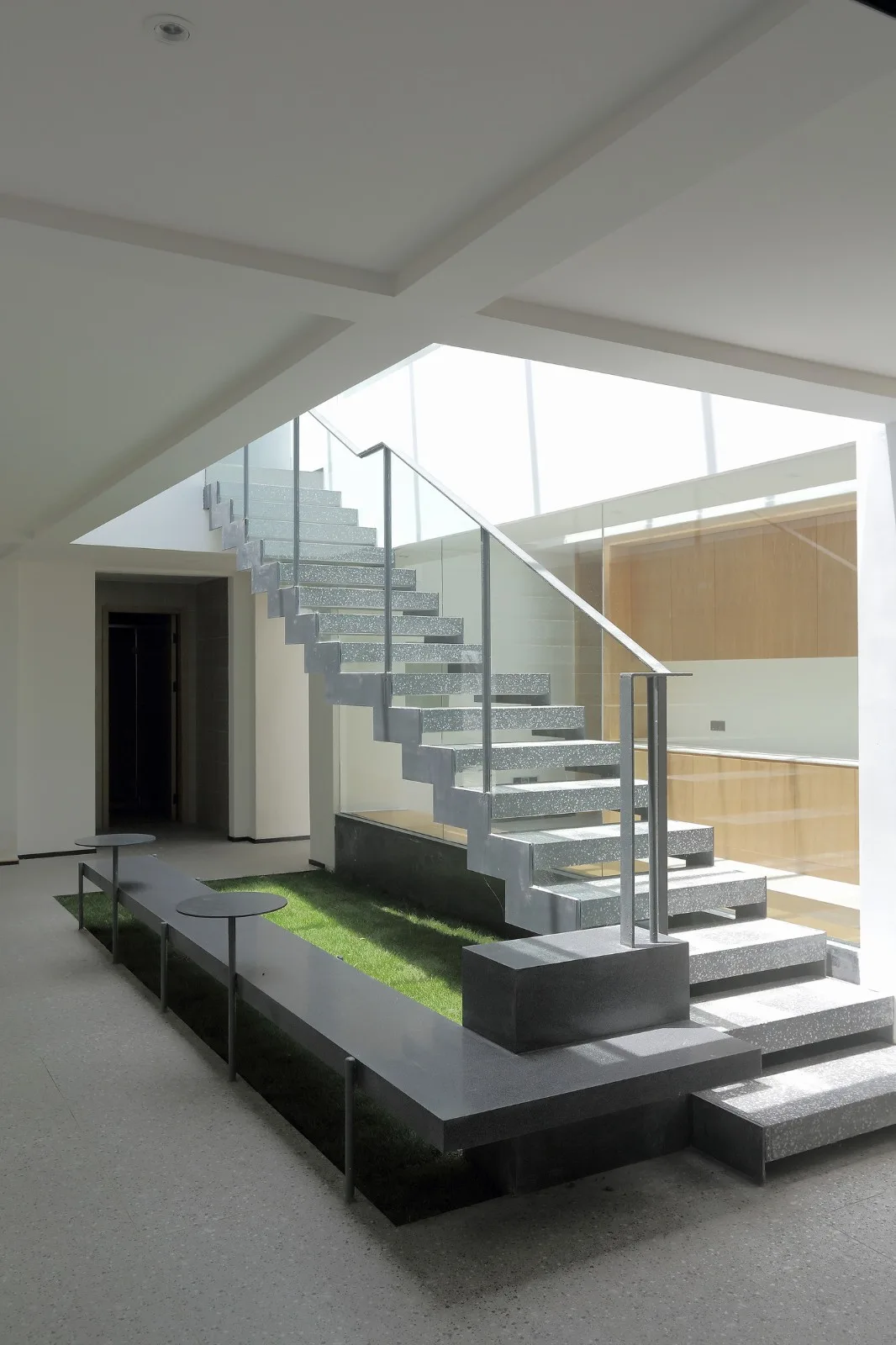
To improve circulation, the architect introduced a vertical staircase within the atrium, integrated thoughtfully with the landscape, while maintaining other existing vertical flow paths. Previously, access to the second floor was only possible via a window and ladder from the outdoor terrace.
From the main entrance’s front hall, visitors can now access three directions: forward to the multifunctional conference room, left via the landscaped atrium to office and conference spaces on the second floor, and right to the coffee shop and restaurant area upstairs. This arrangement preserves the original wandering spatial experience while enhancing functionality.
Revitalizing Grey Spaces
The original building’s multiple internal and external walkways and courtyards were analyzed and redefined as grey spaces with varied appearances and functions. This approach maximizes preservation of the original structure while facilitating seamless transitions and integration between spaces.
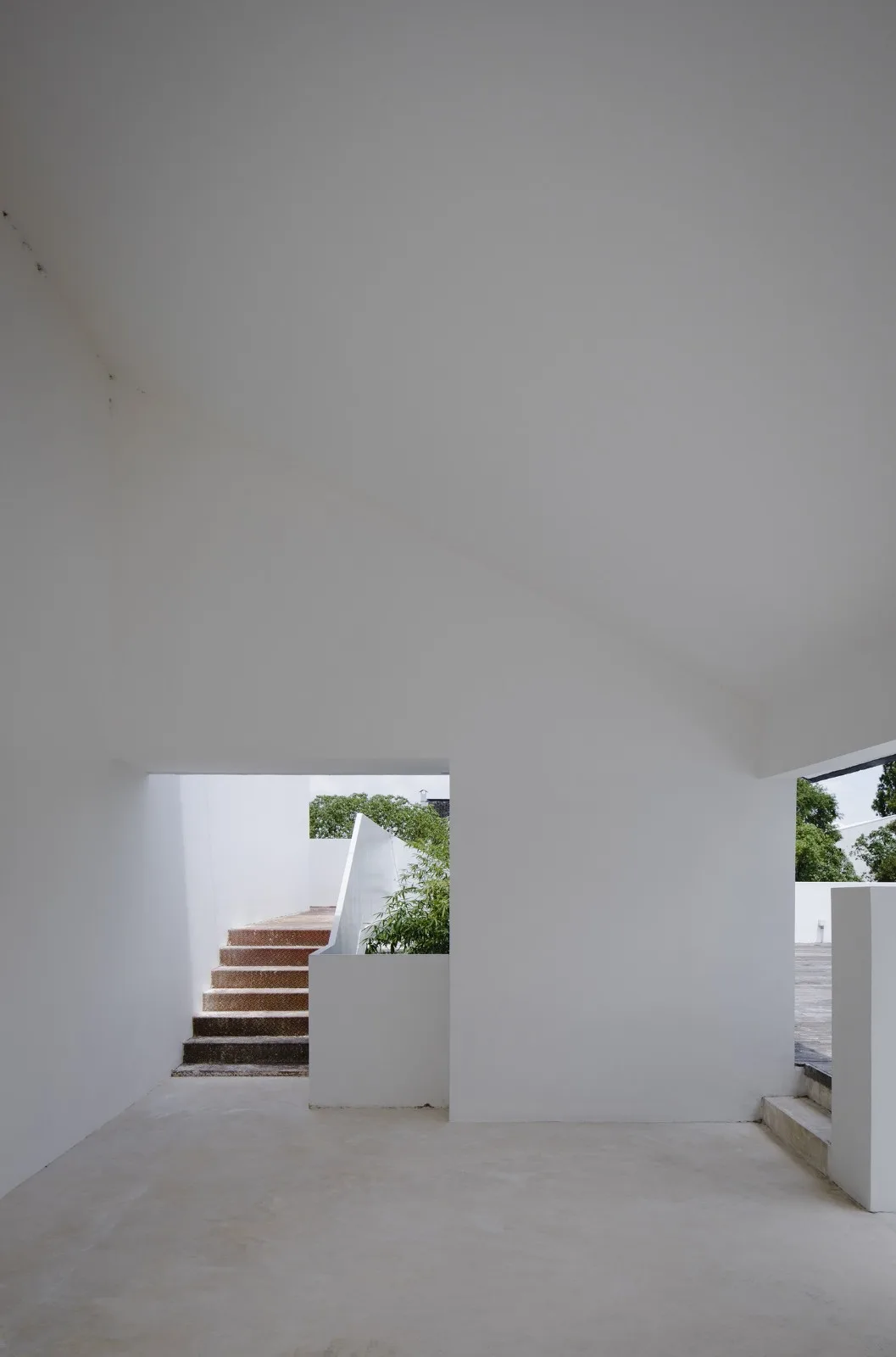
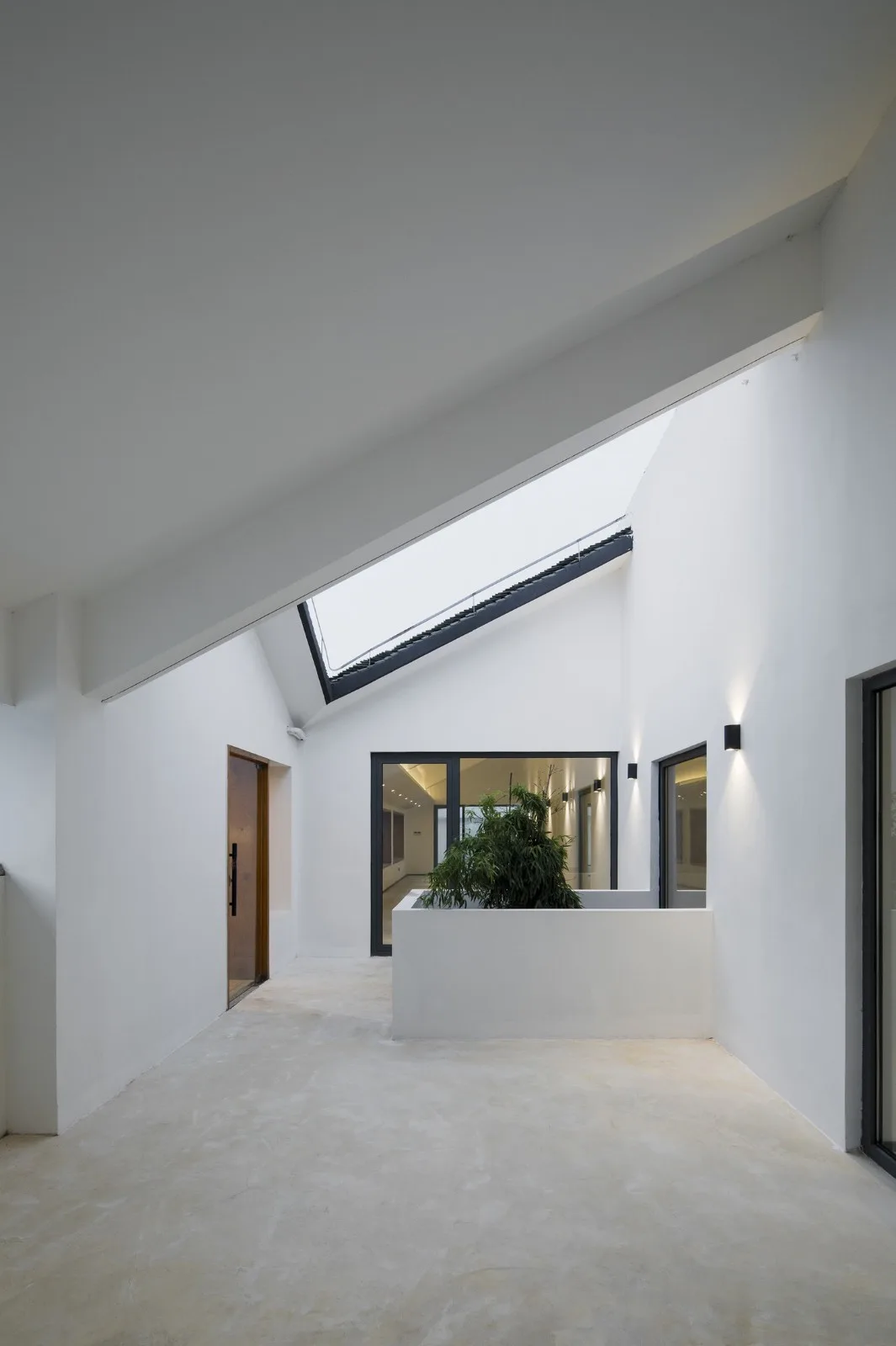
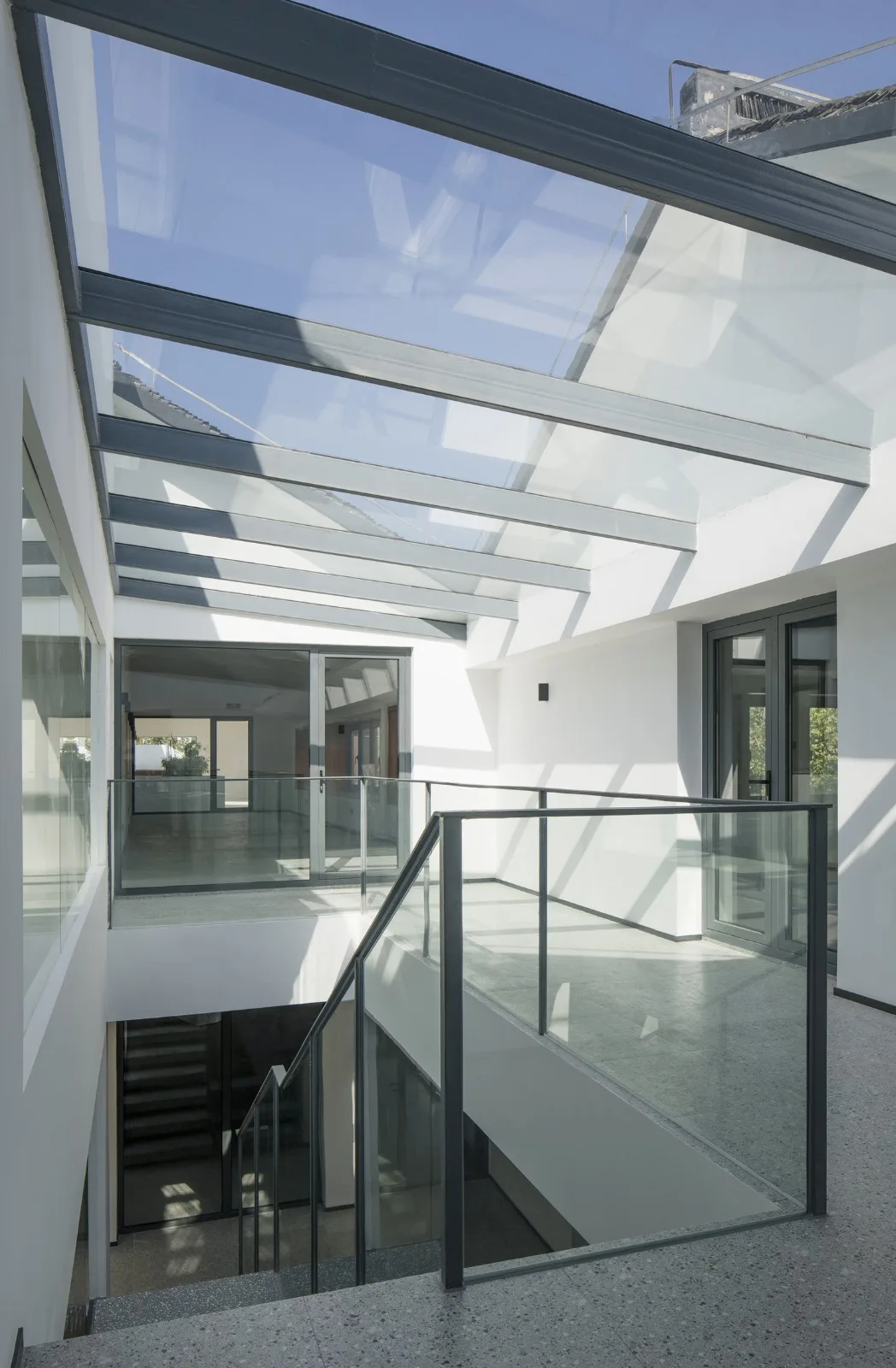
Blending indoor and outdoor spaces with nature, the architect preserved the original breathing spaces and natural plantings interwoven throughout the building. Through carefully designed framing and spatial interaction, these elements are both distinct and harmoniously integrated.
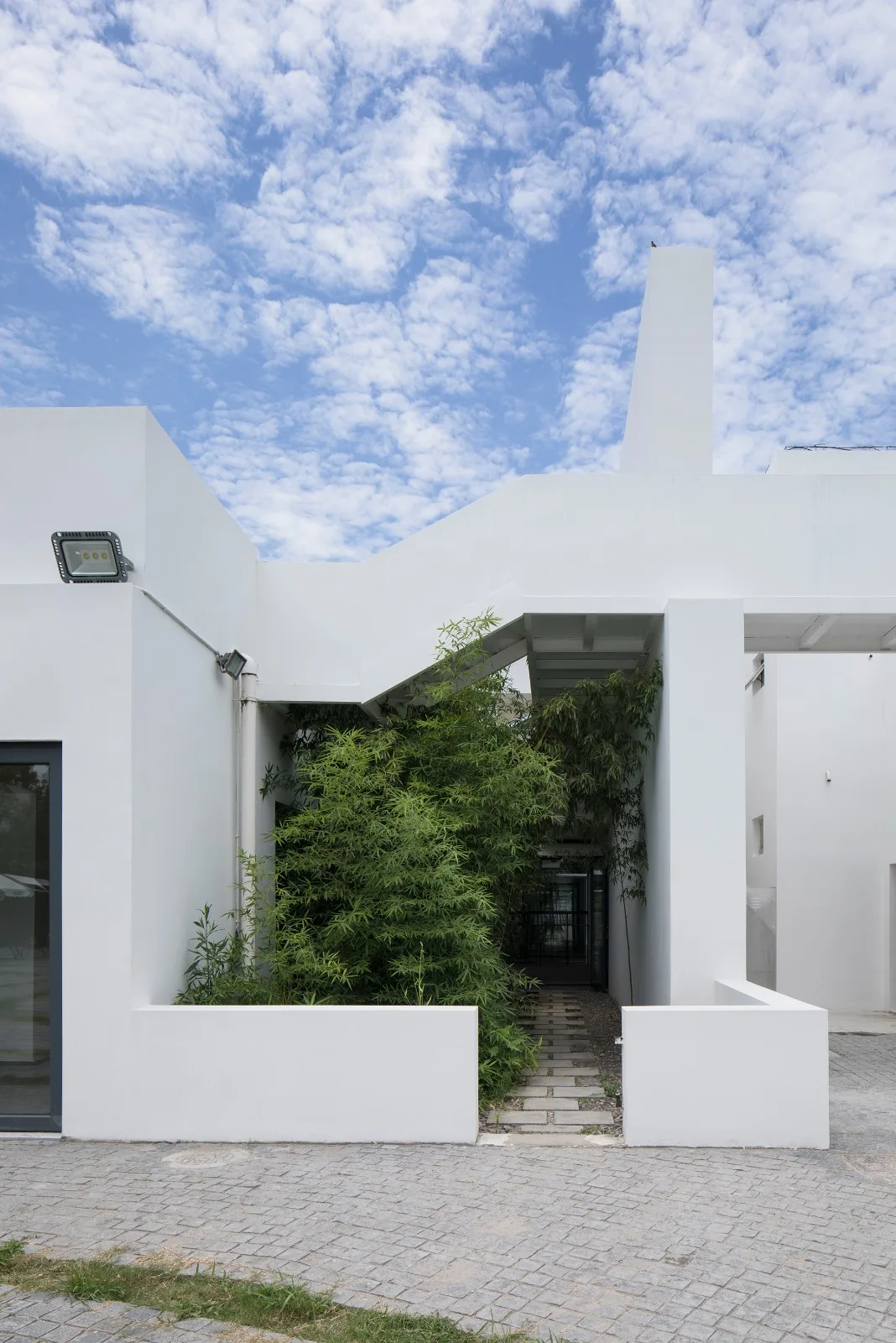
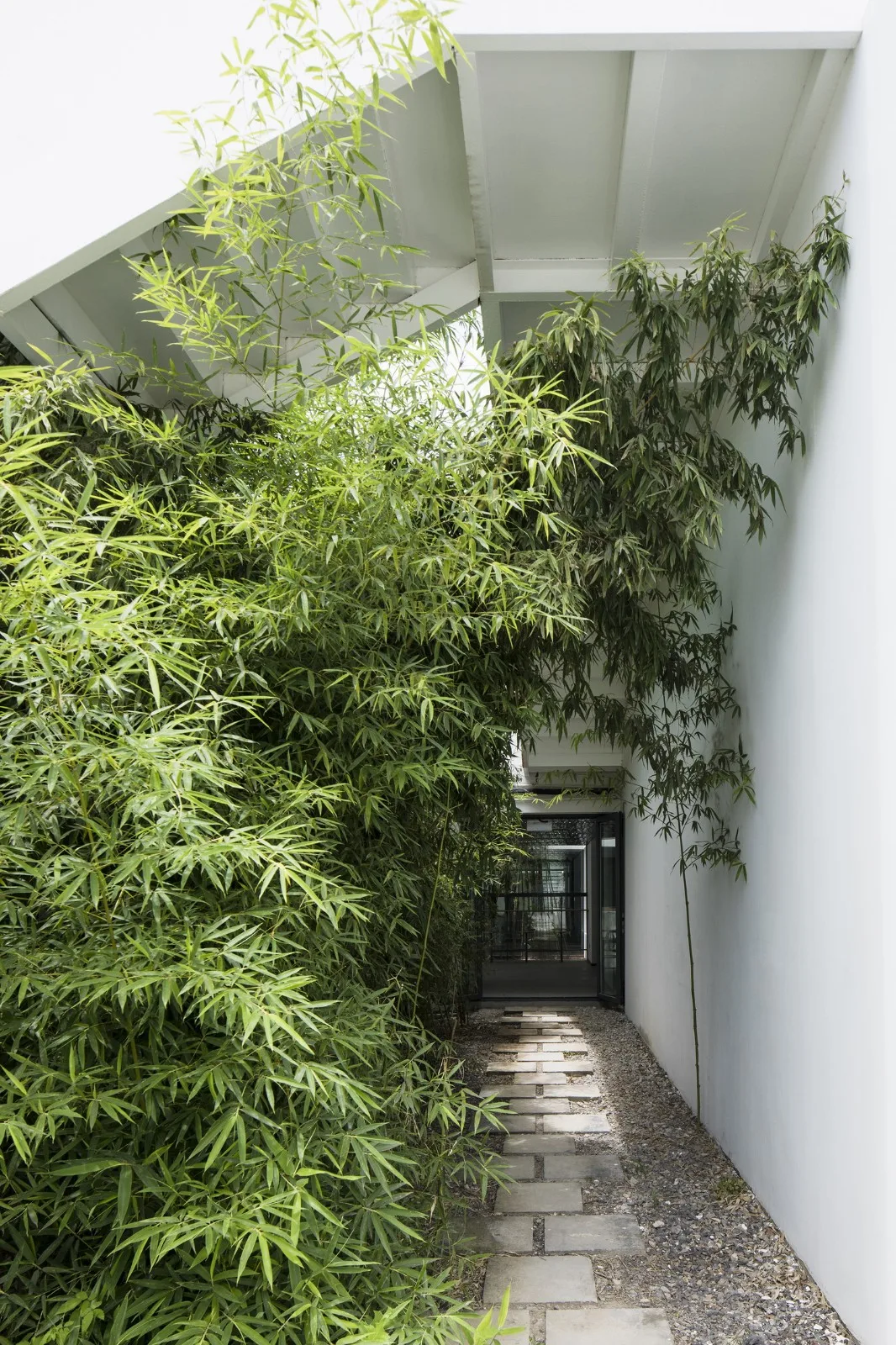
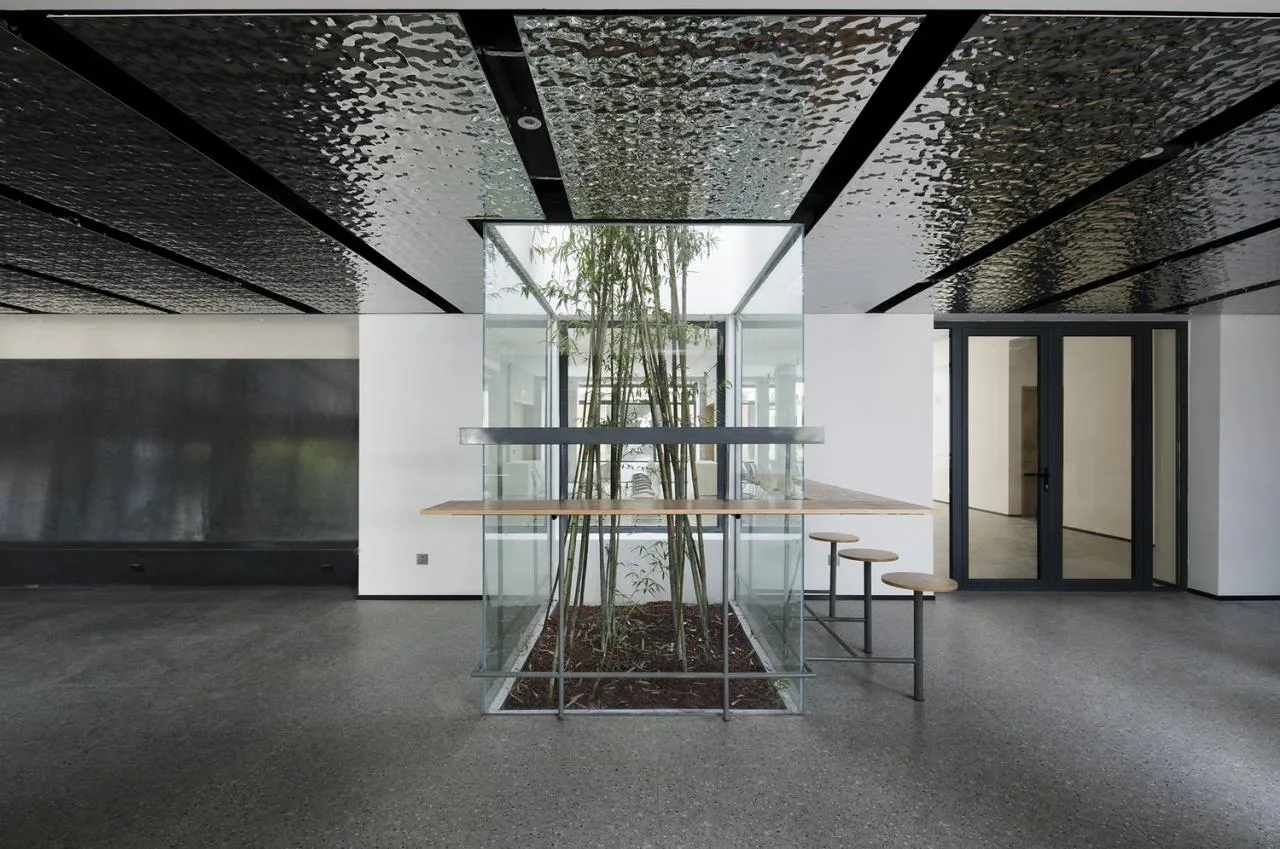
After function redistribution, the architect aimed to avoid isolating spaces visually. They created stronger connections between the multifunctional conference room and the atrium. During the site inspection, they discovered an unusually thick central wall—about 60 centimeters. This inspired the architect to design vertical and horizontal openings as framing devices, fostering a dynamic “seeing and being seen” visual relationship between spaces, enhancing fluidity and connectivity.
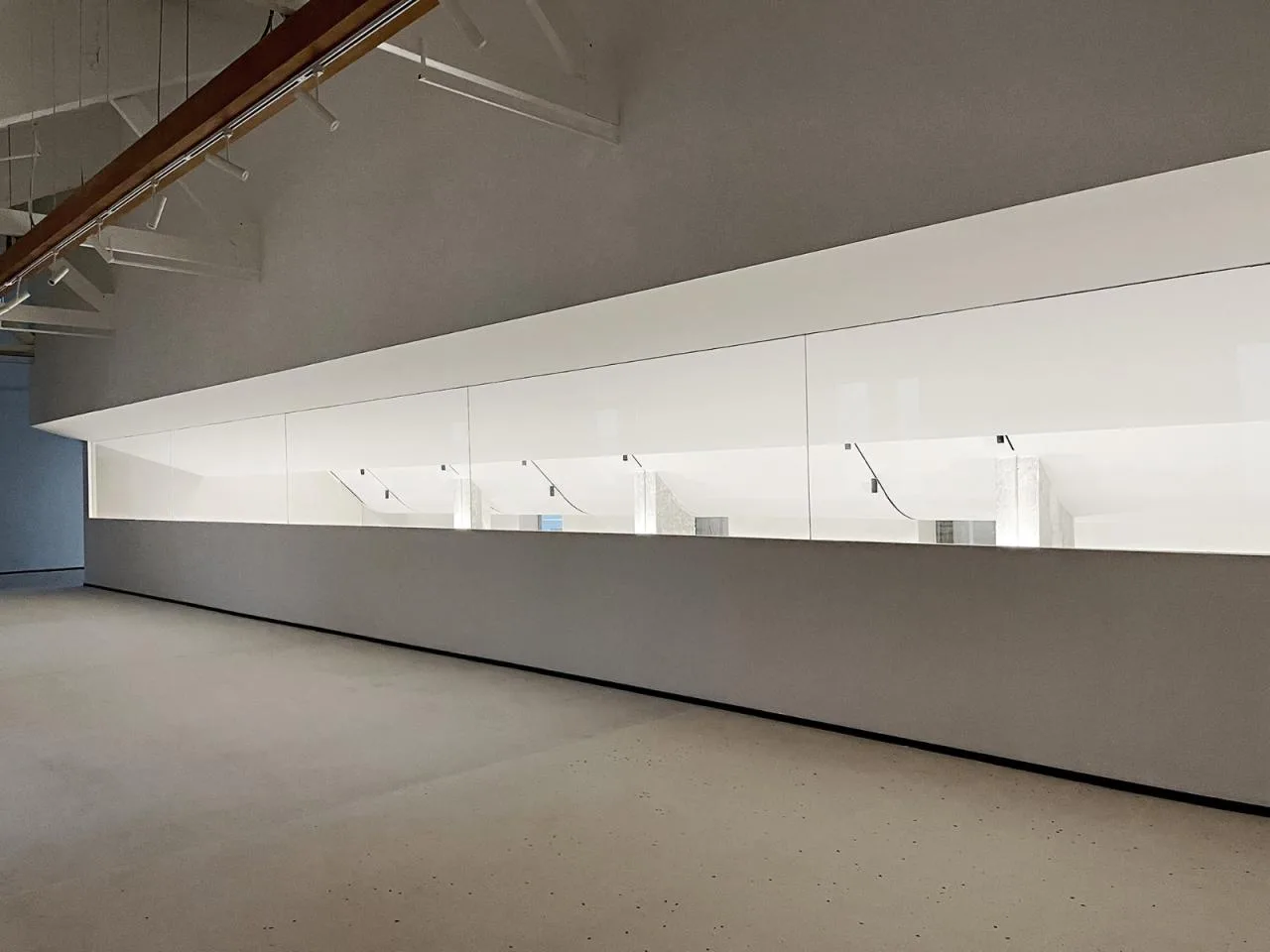
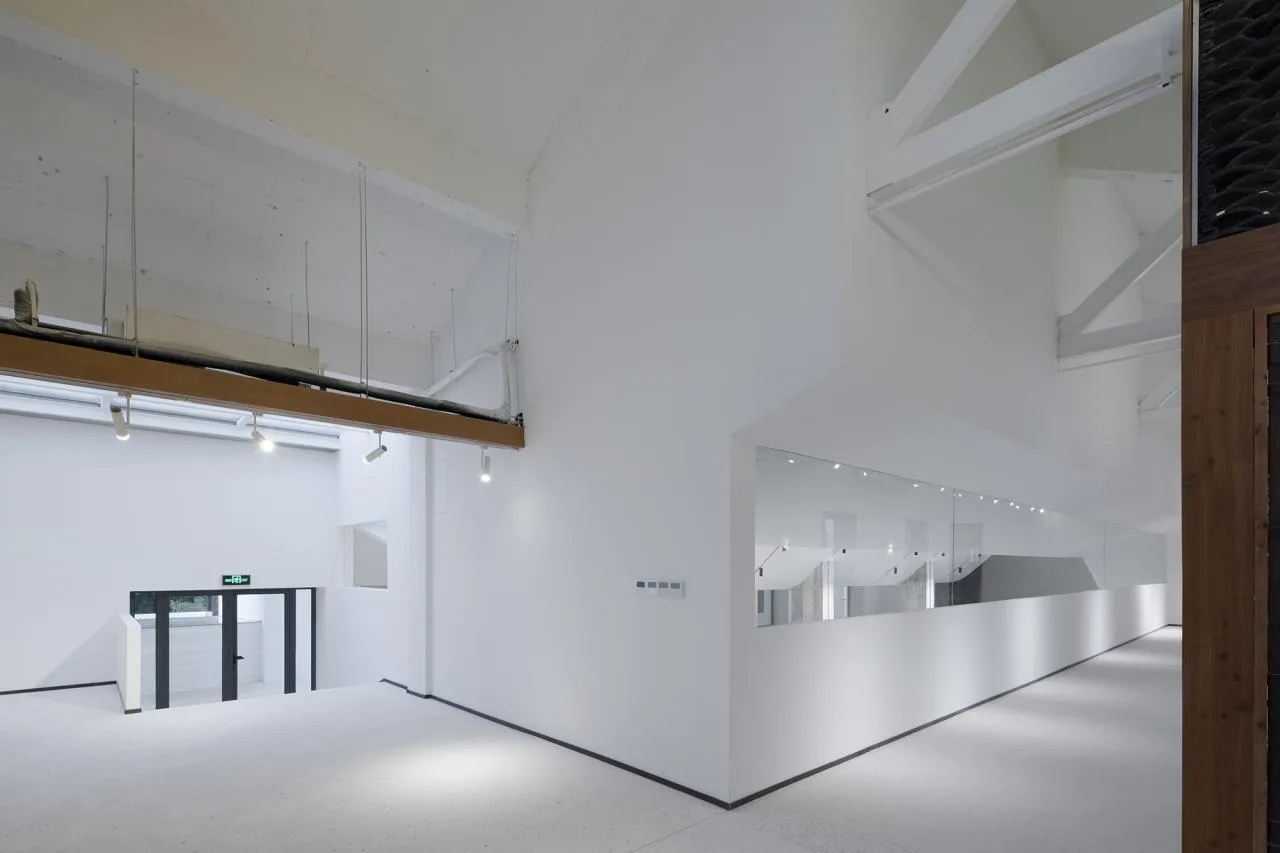
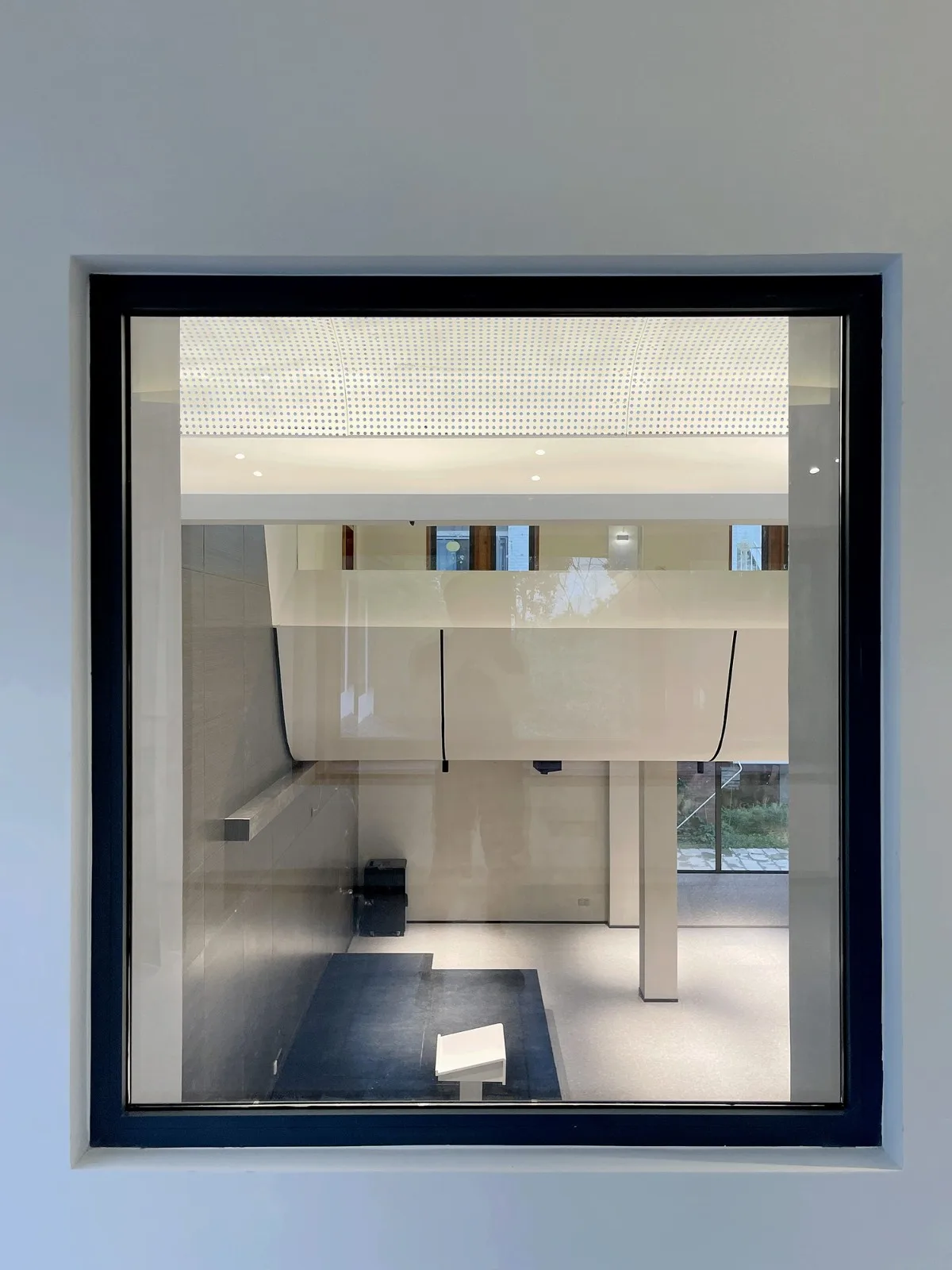
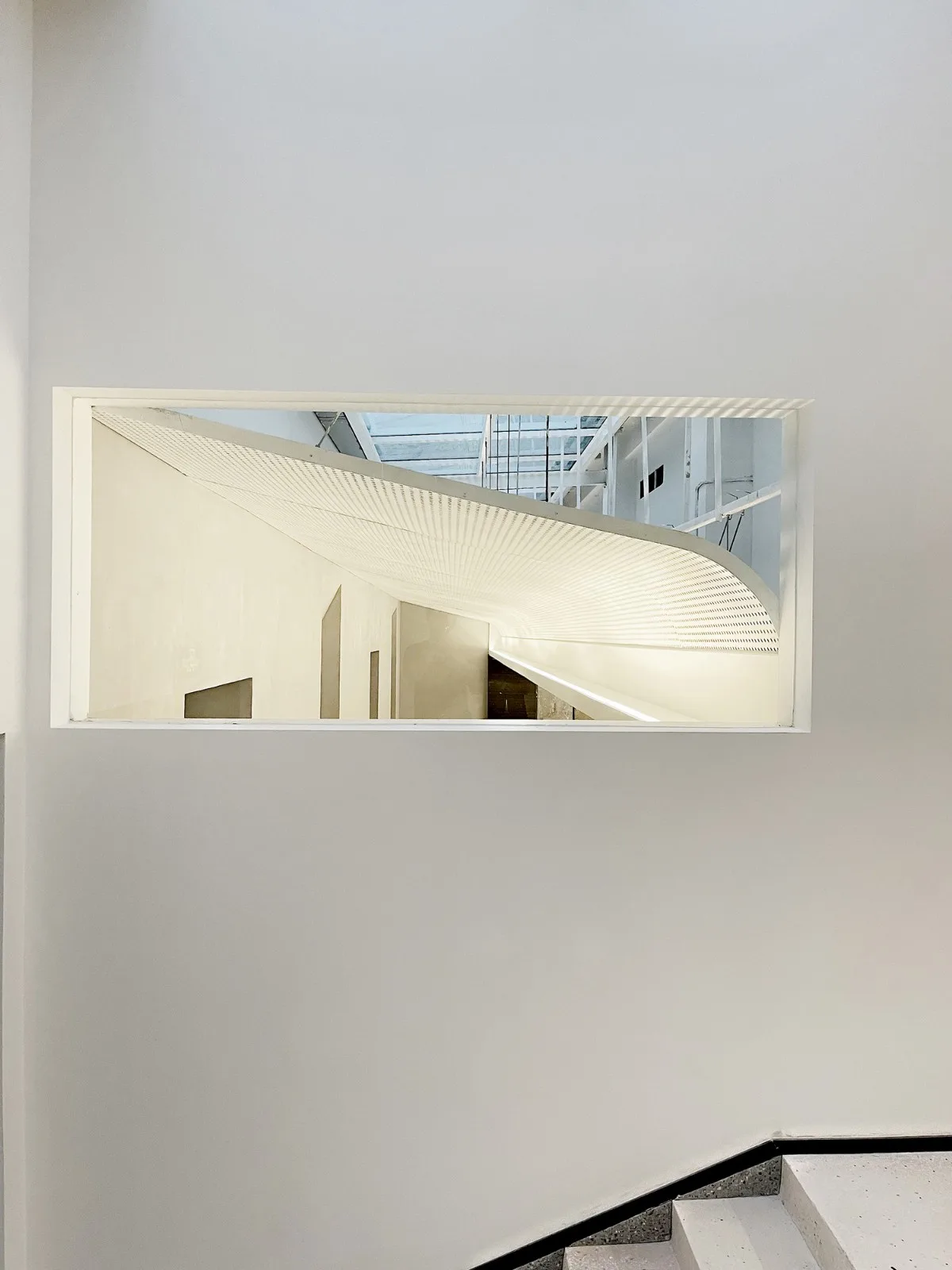
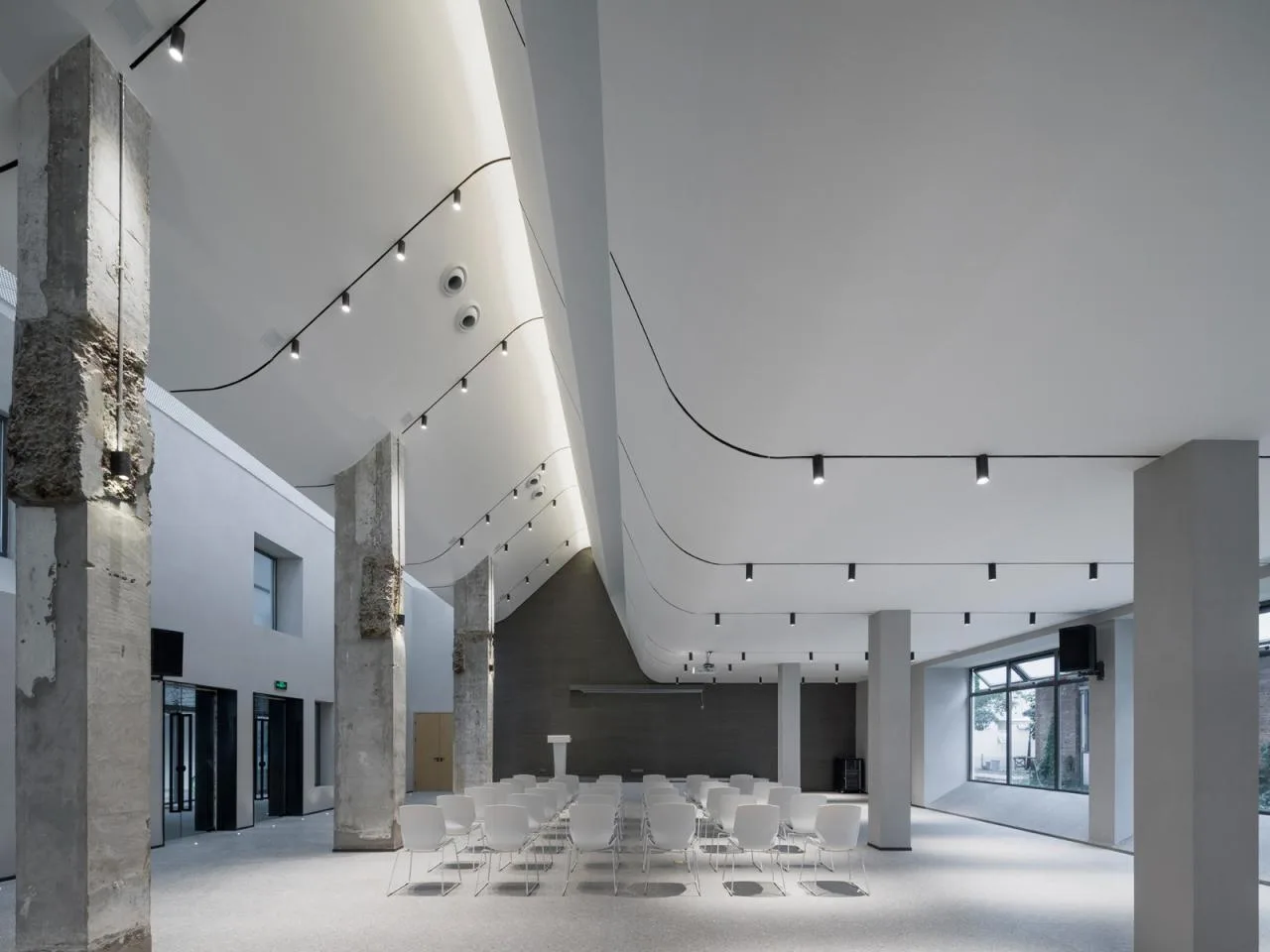
The space originally featured a skylight atrium, which the architect preserved. Through design interventions, they introduced varied spatial lighting effects and expressions to enhance the atmosphere.
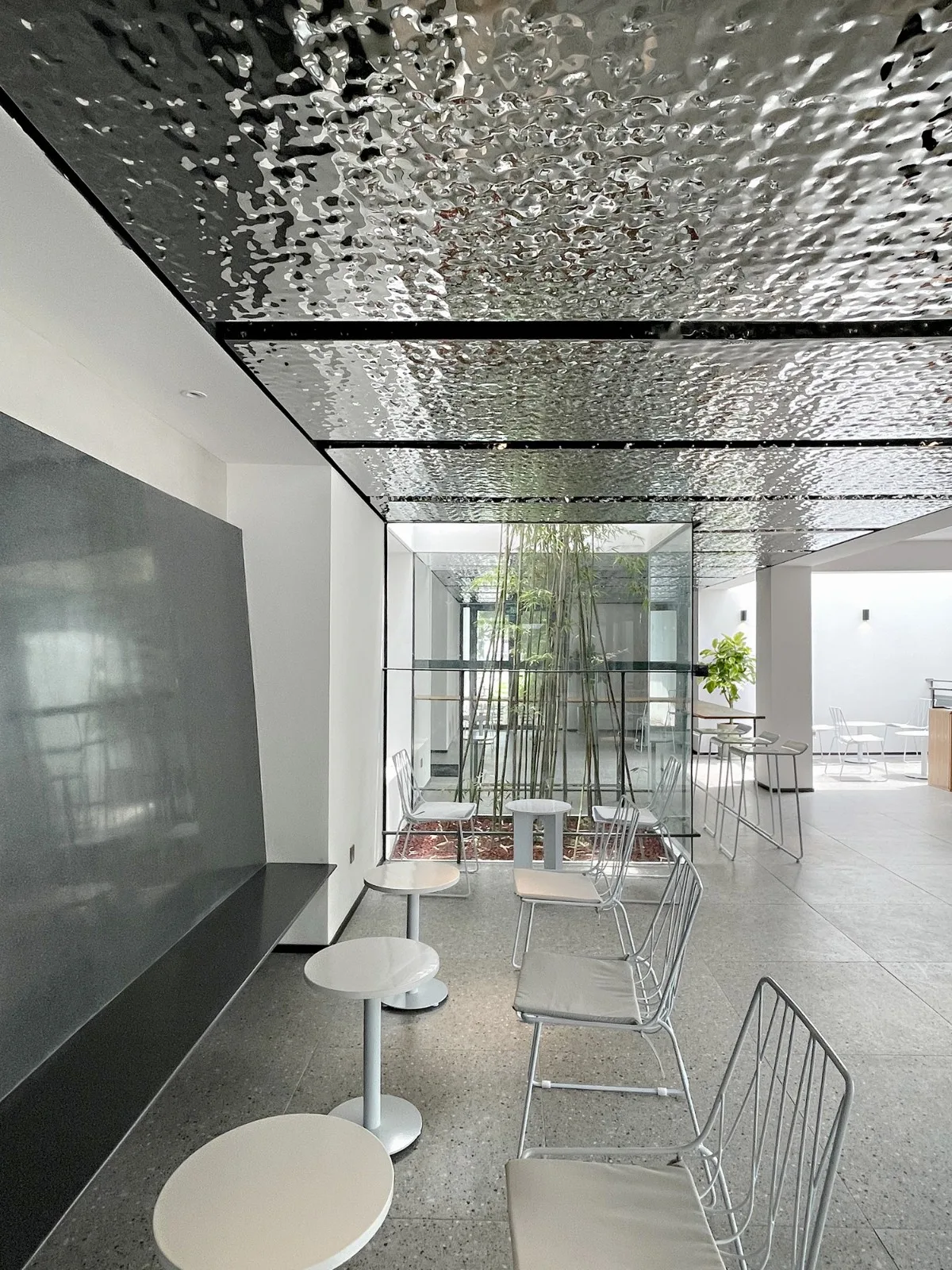
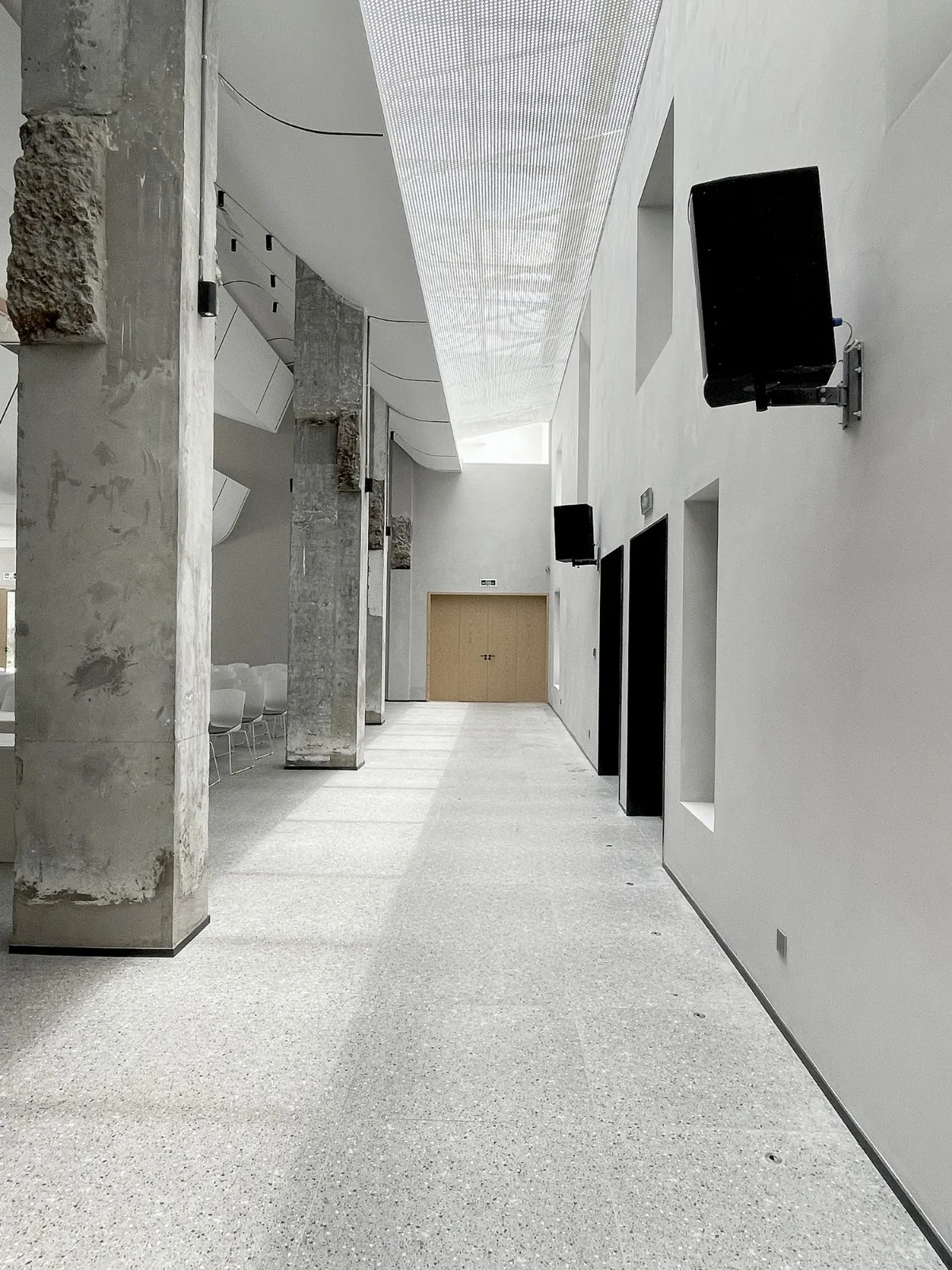
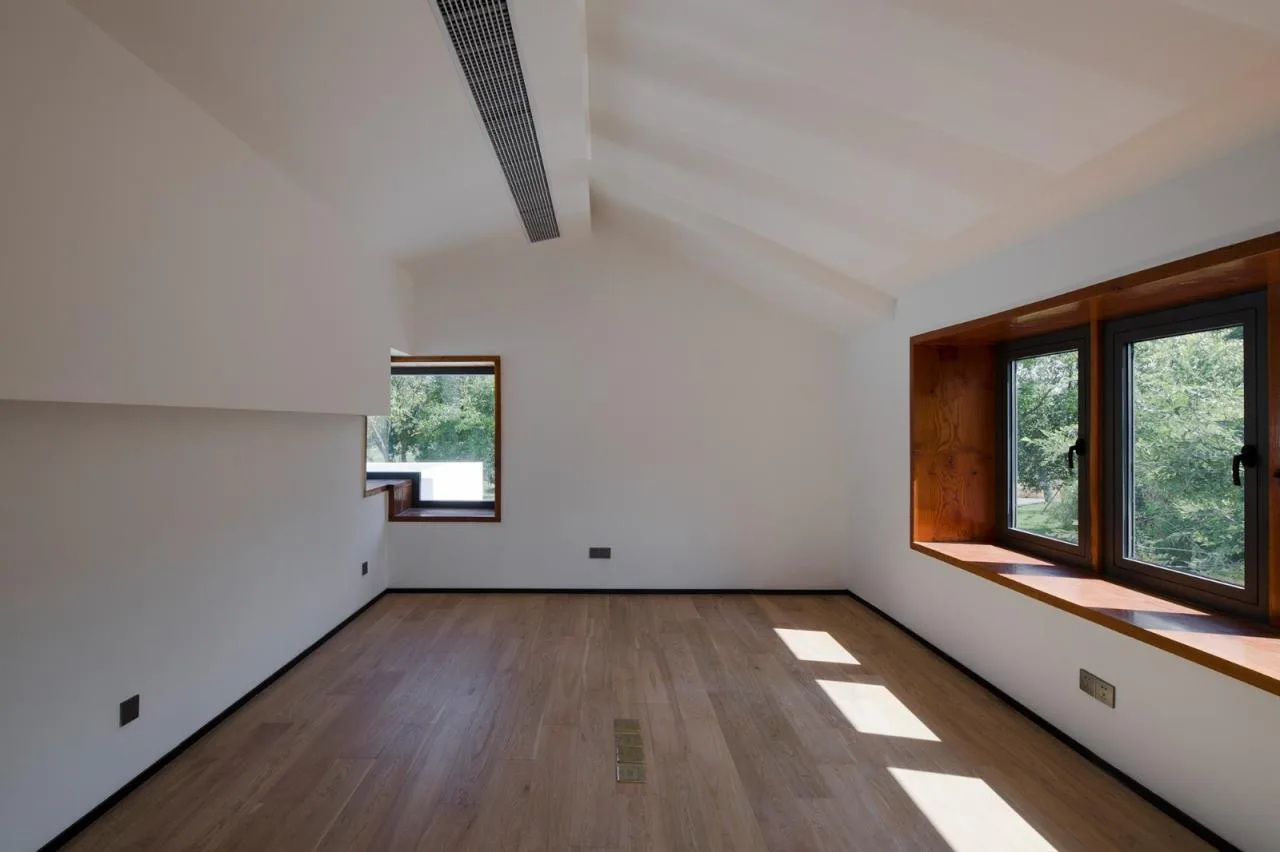
The rough concrete columns and aged wooden elements, originally planned for removal or repair, were partially preserved when construction revealed historical traces worth showcasing. The juxtaposition of coarse concrete columns with delicate ceilings, alongside the dialogue between old wooden cabinets and new walls, creates an unexpected interplay of perception, beauty, and complexity—highlighting the contrast between old and new, rough and refined.
Project Drawings
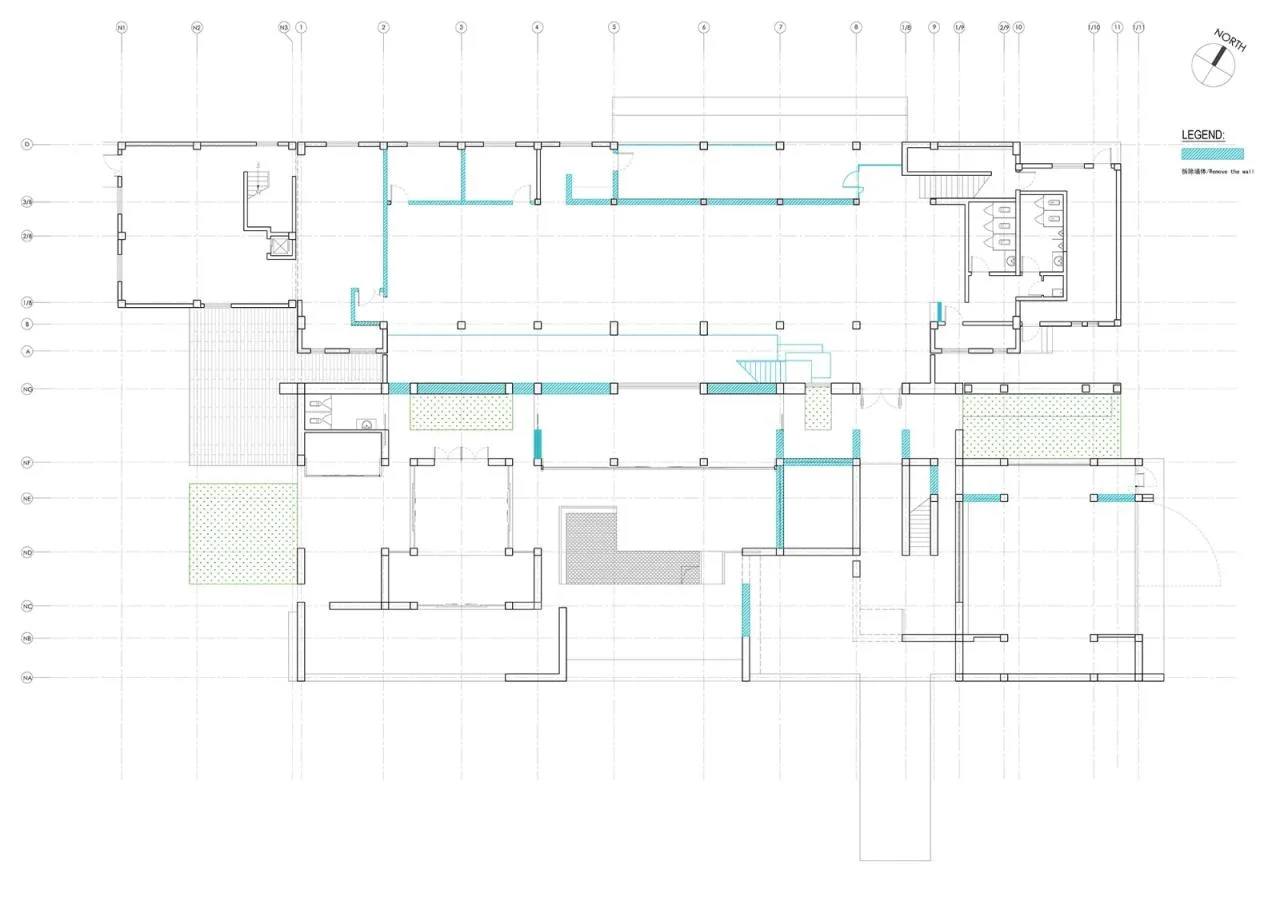
△ Original First Floor Plan
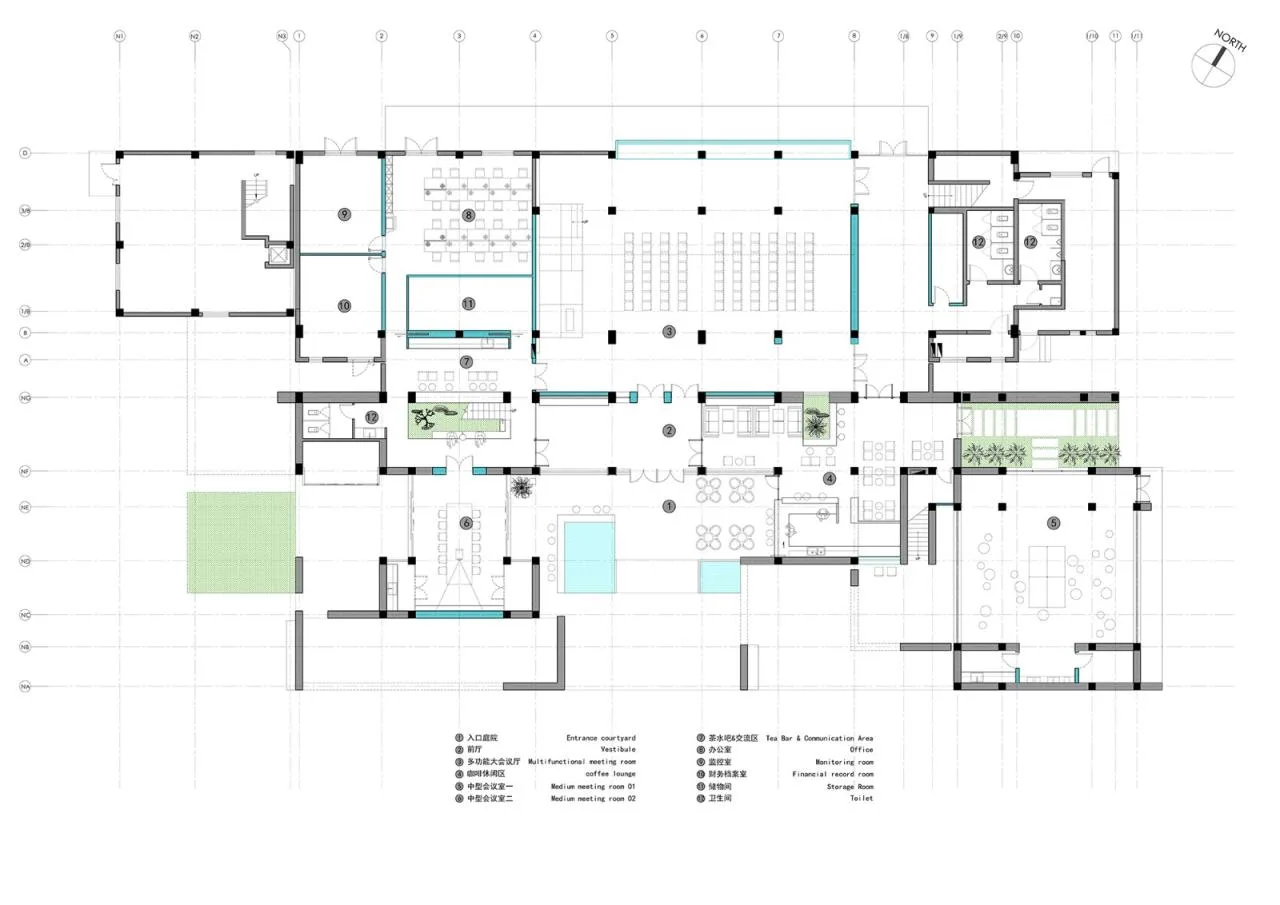
△ First Floor Plan After Renovation
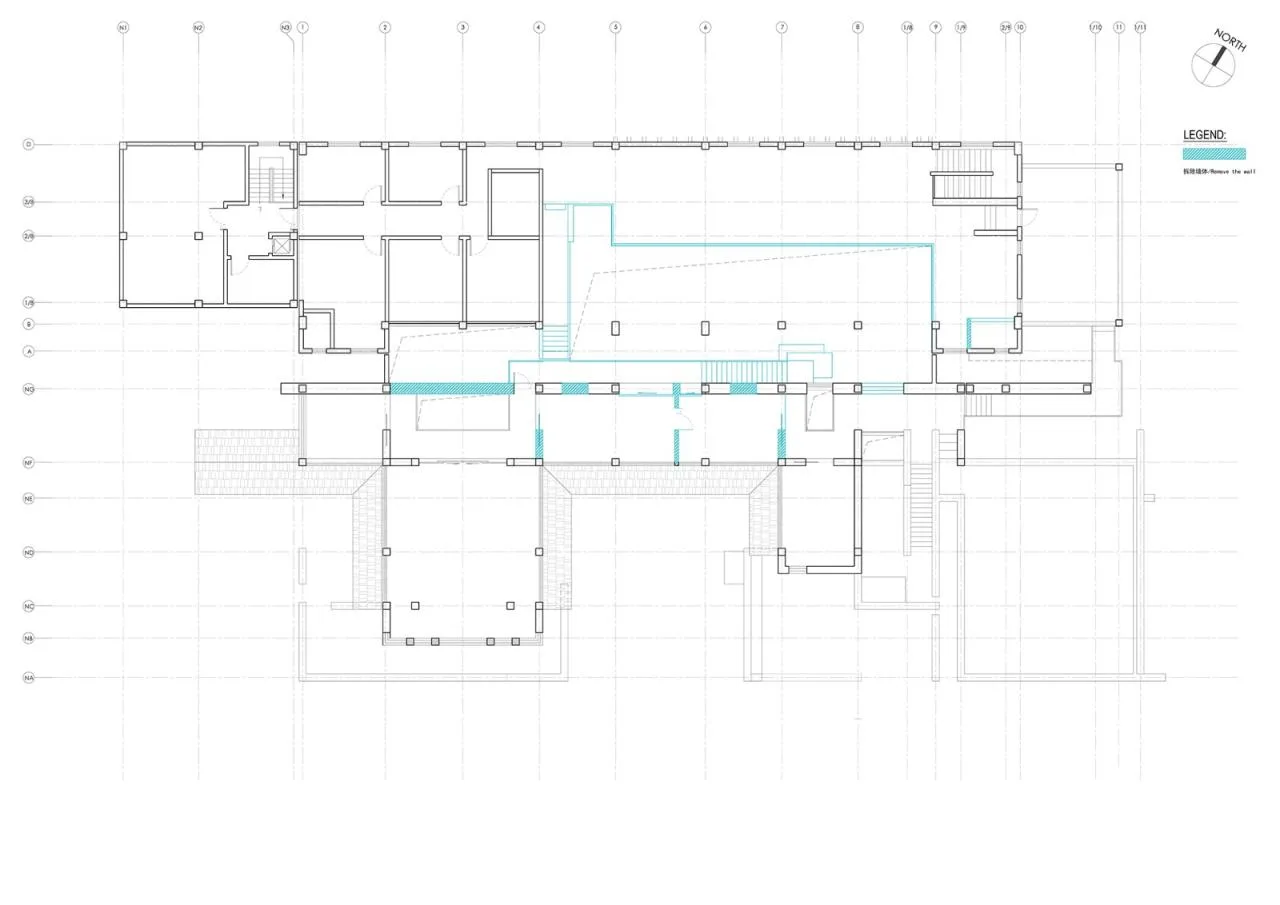
△ Original Second Floor Plan
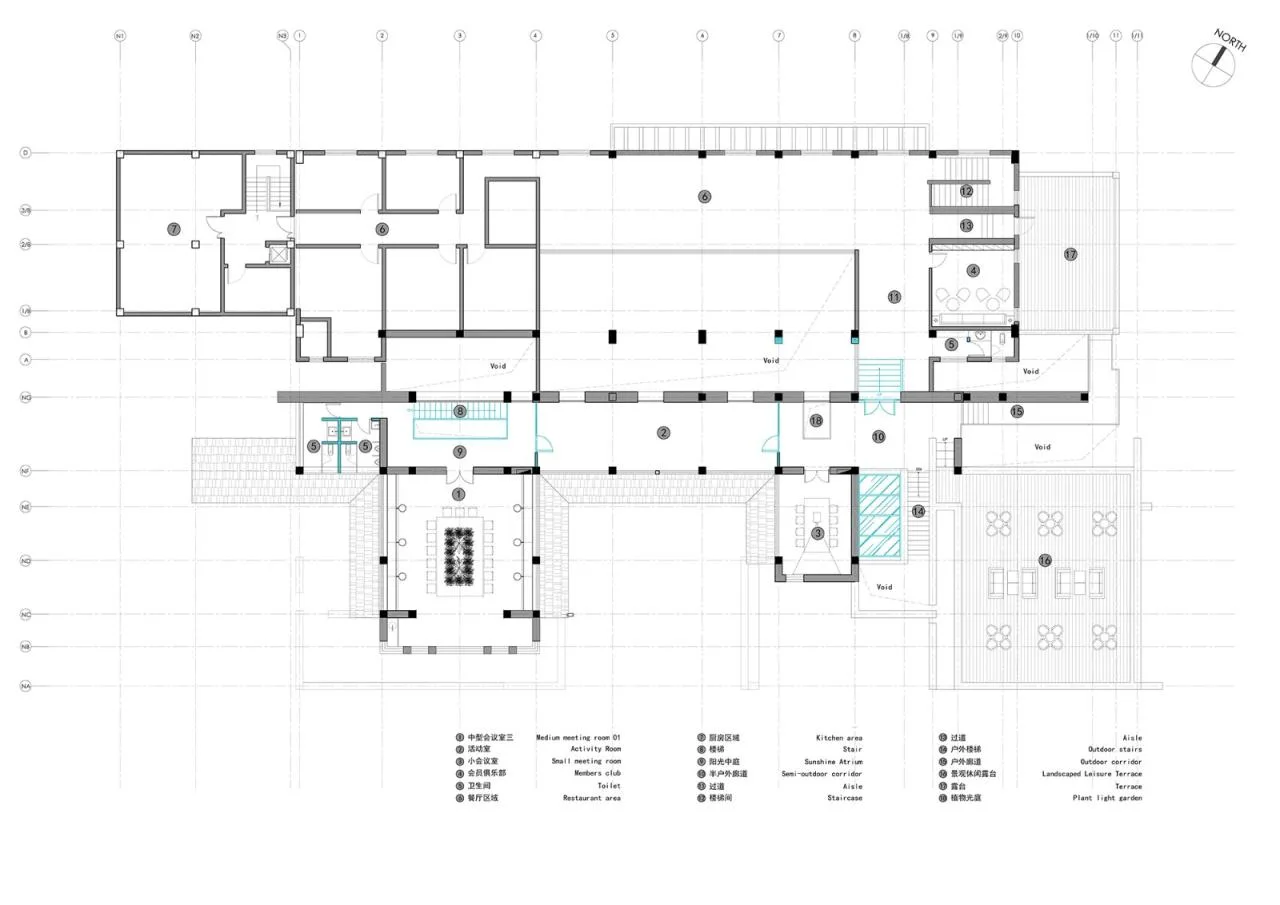
△ Second Floor Plan After Renovation
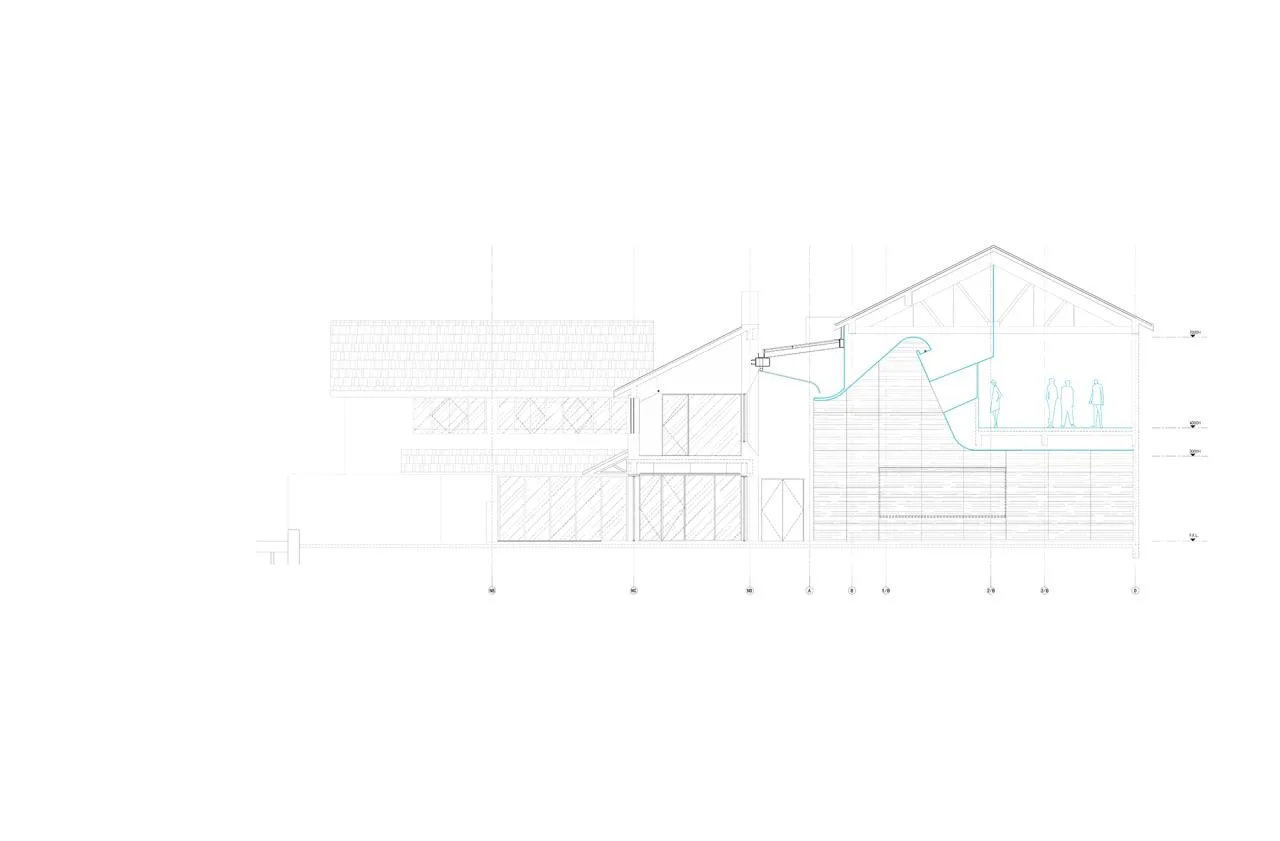
△ Sectional View
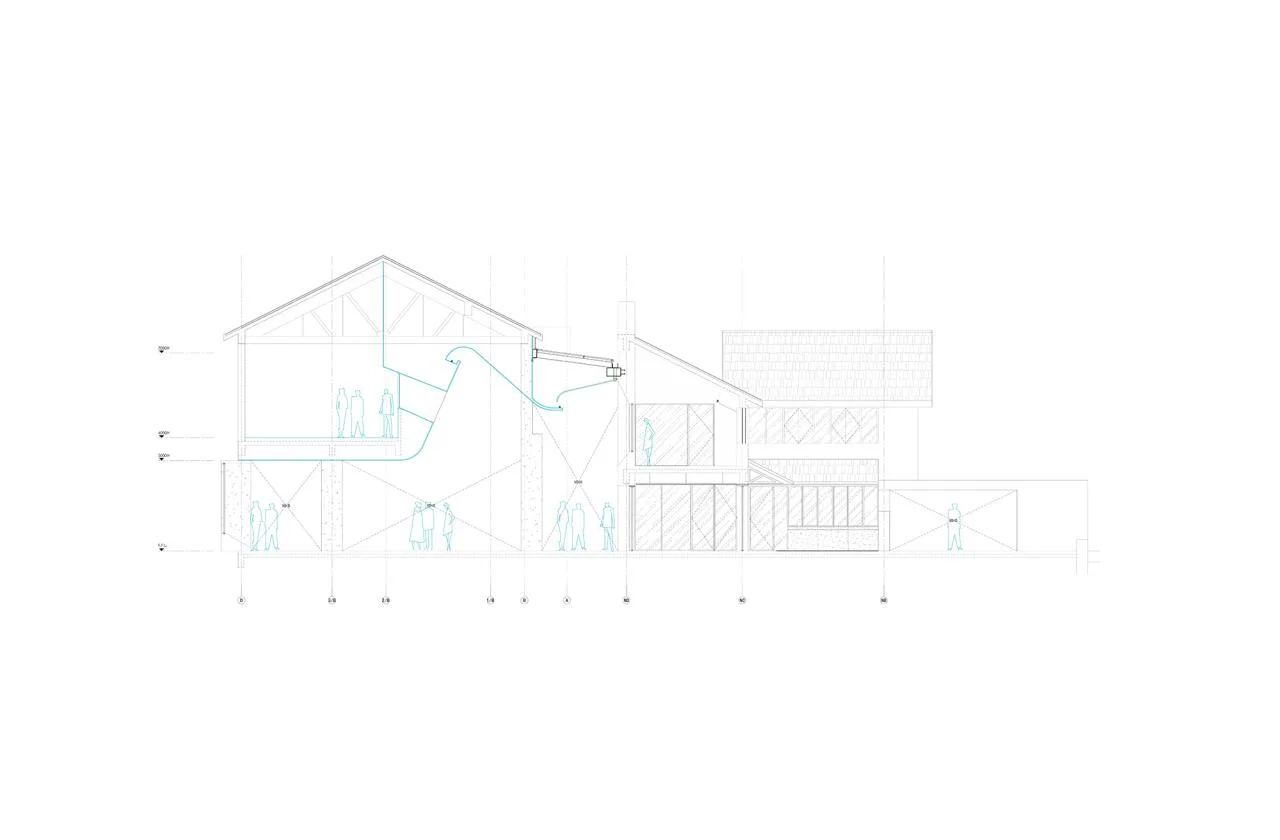
△ Sectional View
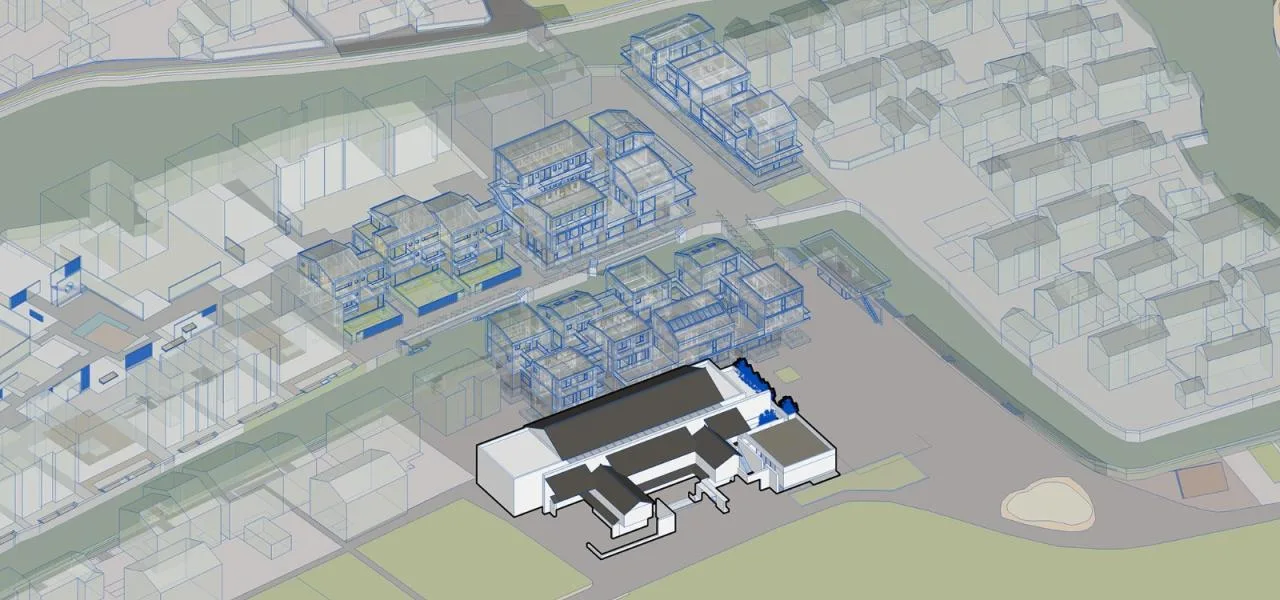
△ Aerial View from Axis Side
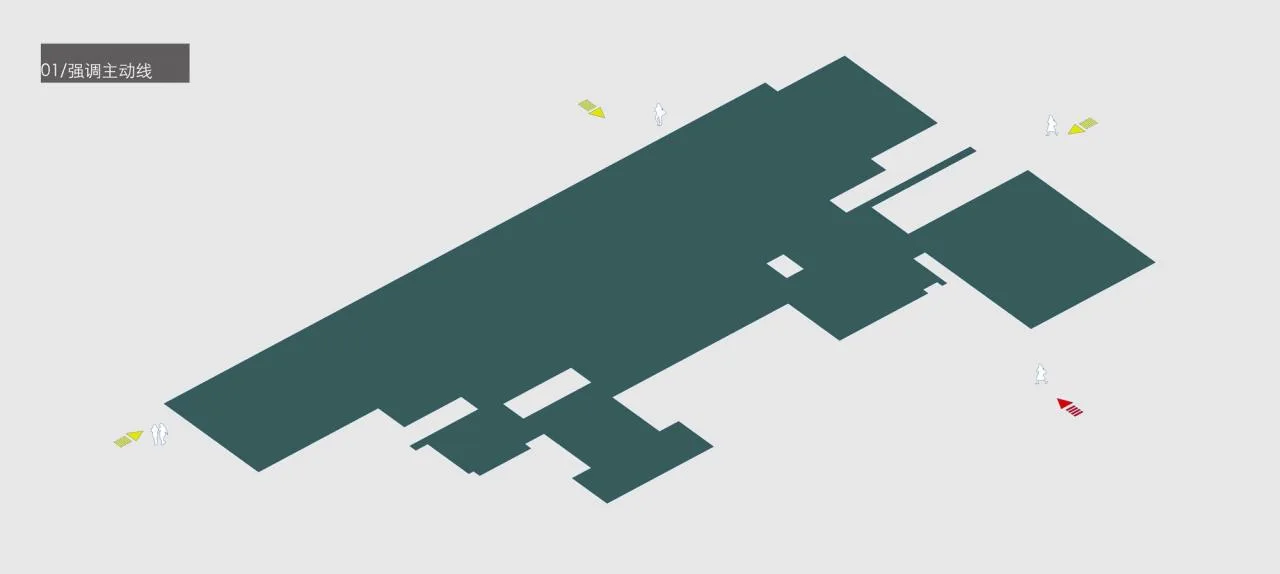
△ Flow Line Analysis Diagram
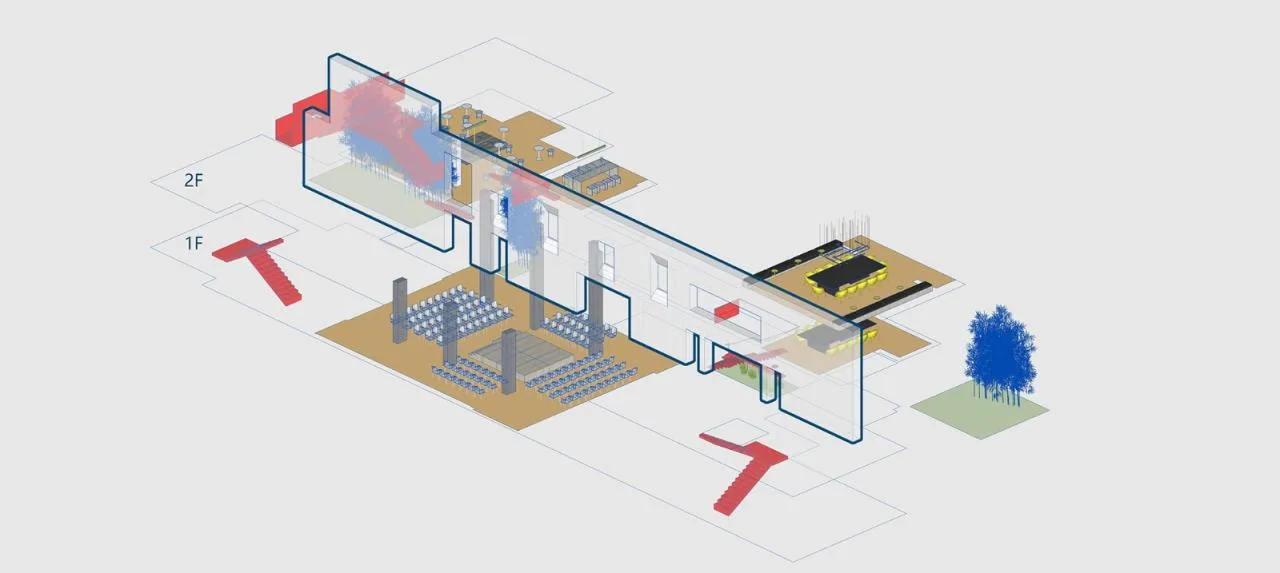
△ Functional Distribution Axonometric Diagram
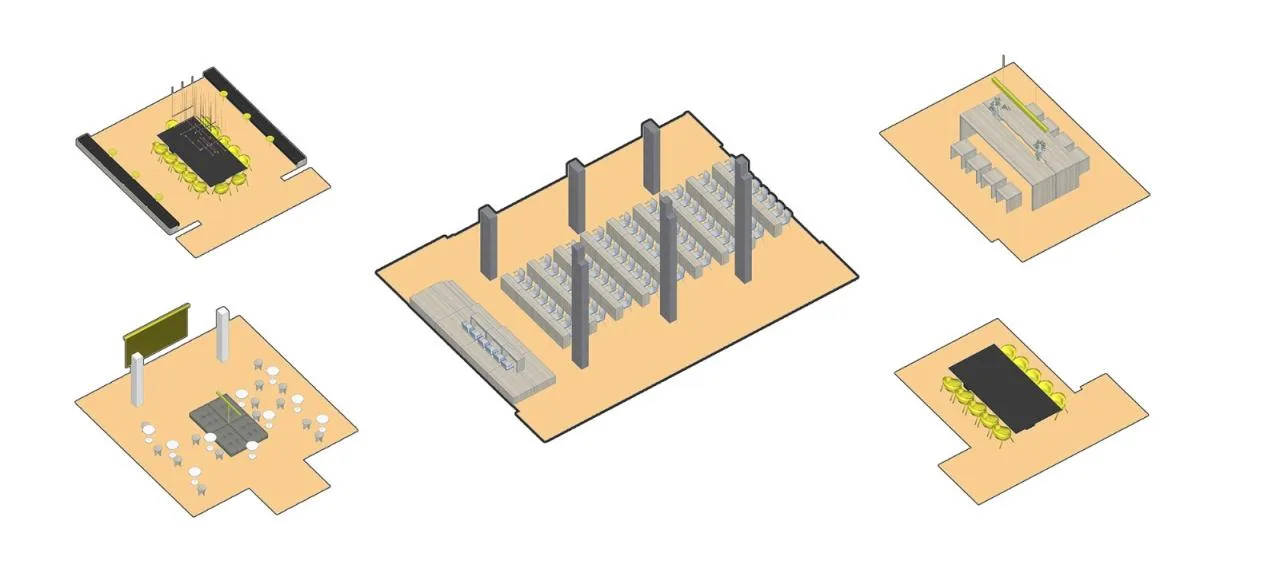
△ Conference Mode Axis Analysis Diagram
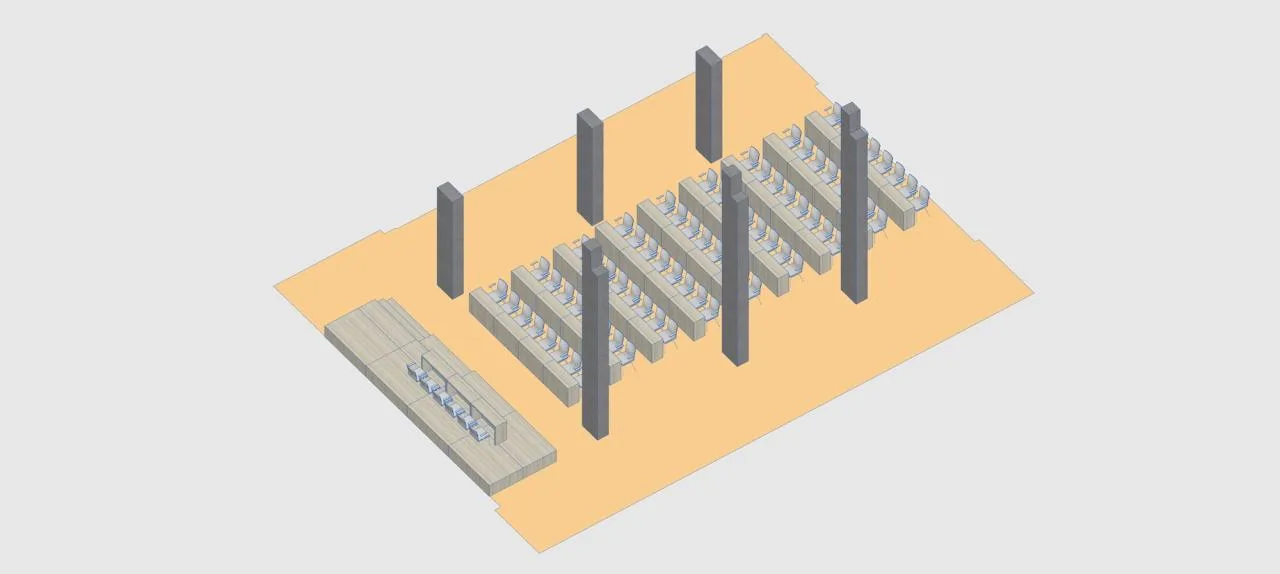
△ Multifunctional Room Demonstration Diagram
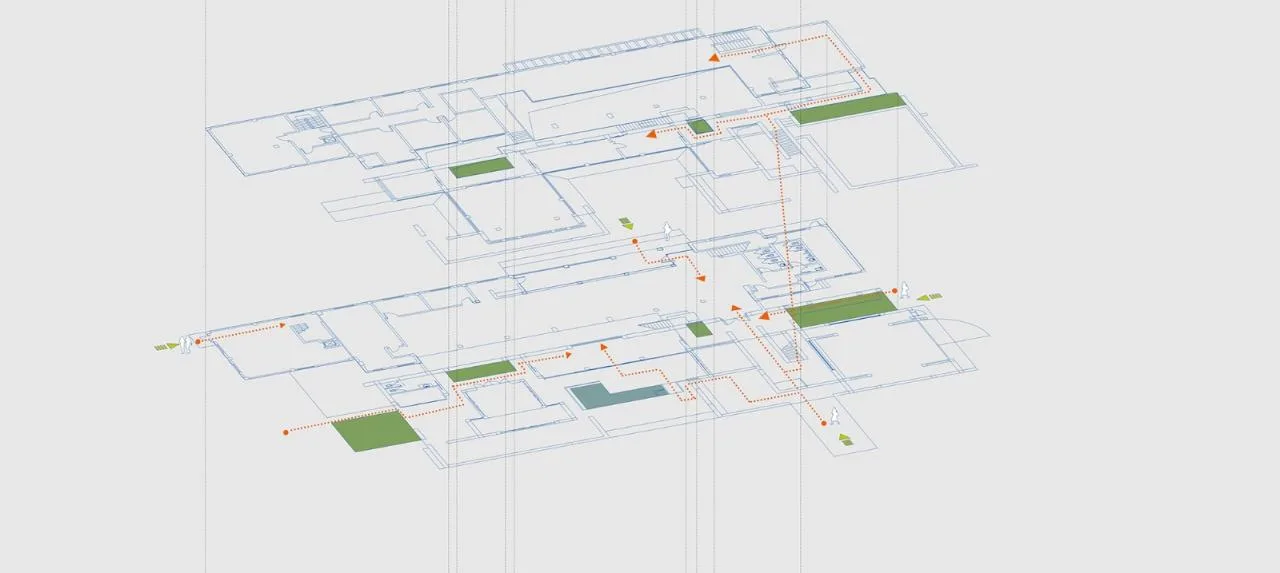
△ Original Flow Line Analysis Diagram
Project Information
Architectural Design: y.ad studio
Area: 2,188 m²
Project Year: 2021
Photographers: Peter Dixie, Yang Yan
Design Commission: Kunshan Xiangban Jiadun Cultural Development Co., Ltd.
Location: Suzhou, China















Must log in before commenting!
Sign Up