
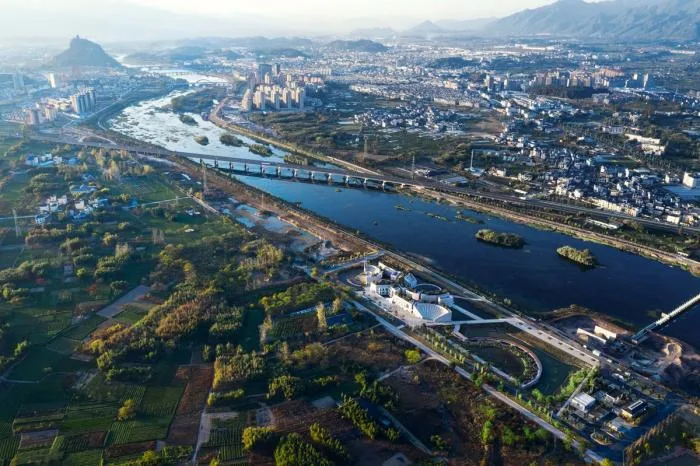
The Songyin River is the primary water source in the Songgu Basin, with a long-standing history of water management. Its water conservancy projects have effectively mitigated droughts and floods, supporting agricultural irrigation, water transport, fisheries, grain production, and daily water needs for local residents.
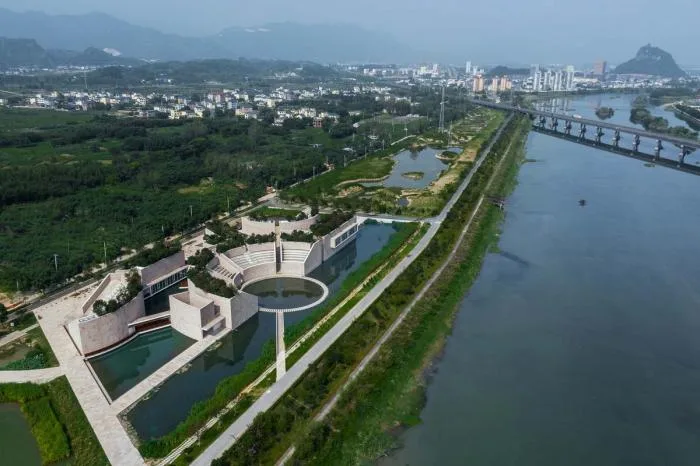
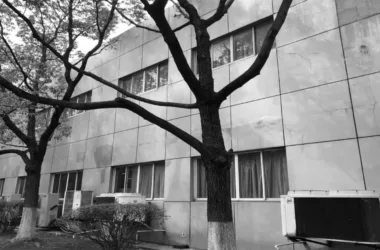
The Water Resources Museum is situated on the southwest side of Baisha Lake embankment and power station in Hengshan District, just outside Songyang County. Originally serving as the Songyang County River Embankment and Reservoir Safety Monitoring Center, it housed a monitoring hall, water resources department offices, a canteen, archives, and flood control material storage. In 2016, aligned with the establishment of the Songyin Creek Scenic Area, the site was expanded into a hydrological park along the Songyin Creek Greenway, becoming a key cultural and recreational hub.
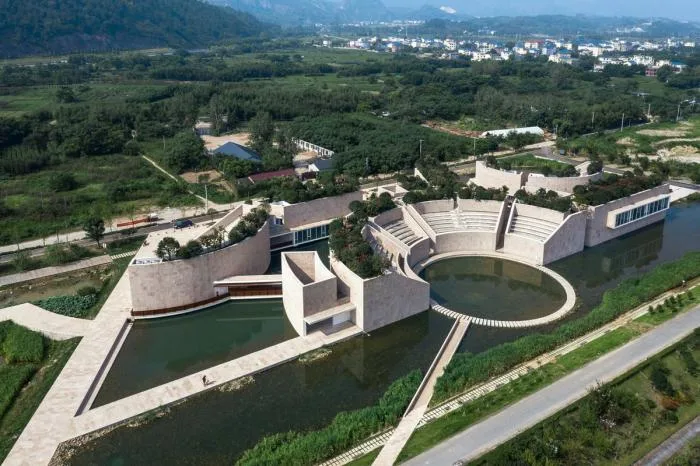
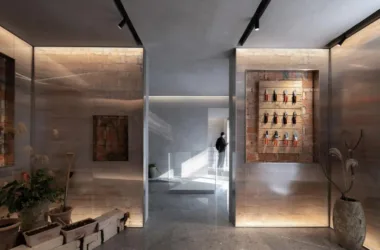
The museum’s functions have been reconfigured from the original setup. Previously internal features such as monitoring, archives, and the cafeteria are now accessible to the public. The archives have been transformed into a hydrological history exhibition, while the monitoring center offers educational visits and tours. The canteen serves as a public leisure dining and youth activity space.
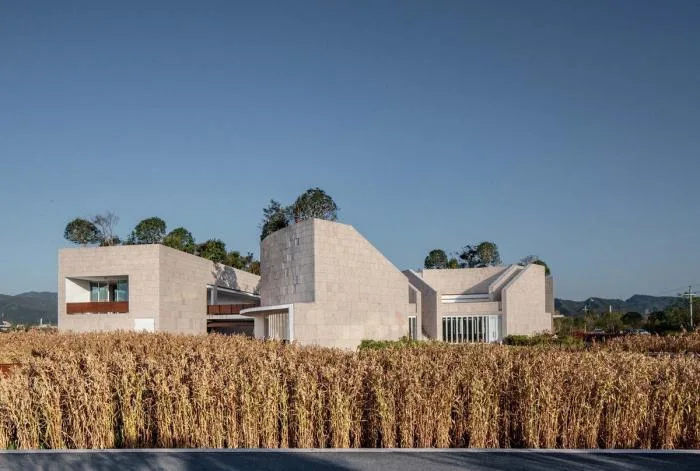
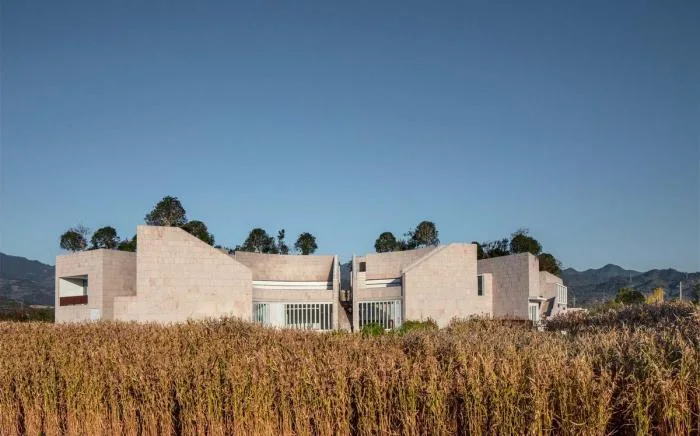
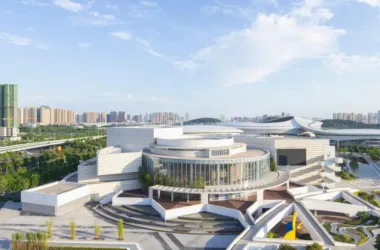
The building’s design expresses its functional diversity through distinct architectural volumes. Public areas are housed in a curved structure reminiscent of water conservancy facilities, facing the main landscape, while office and service spaces occupy a long building along the west entrance and south logistics square.
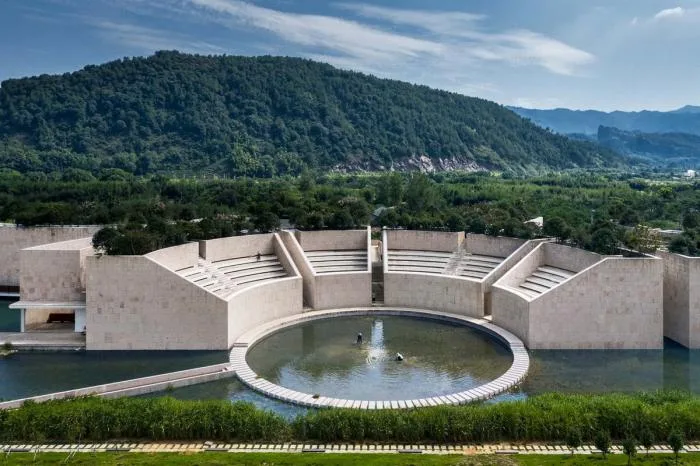
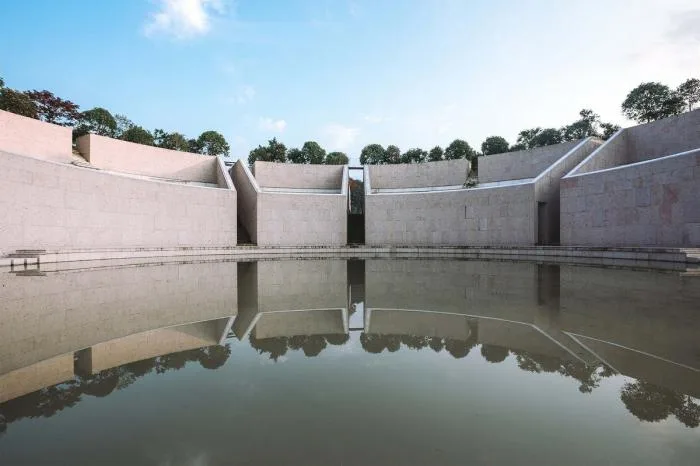
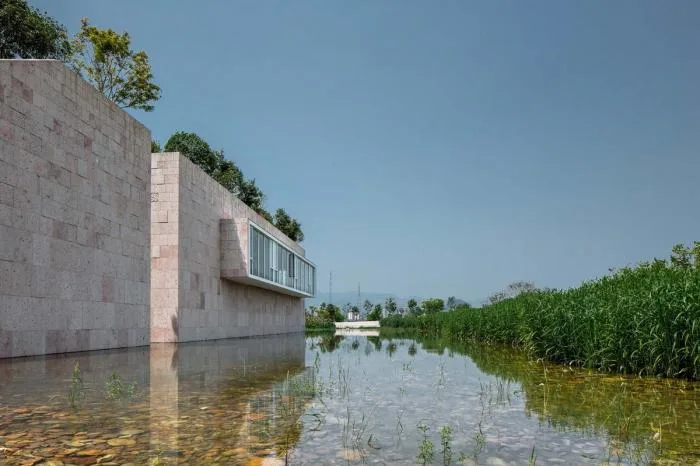
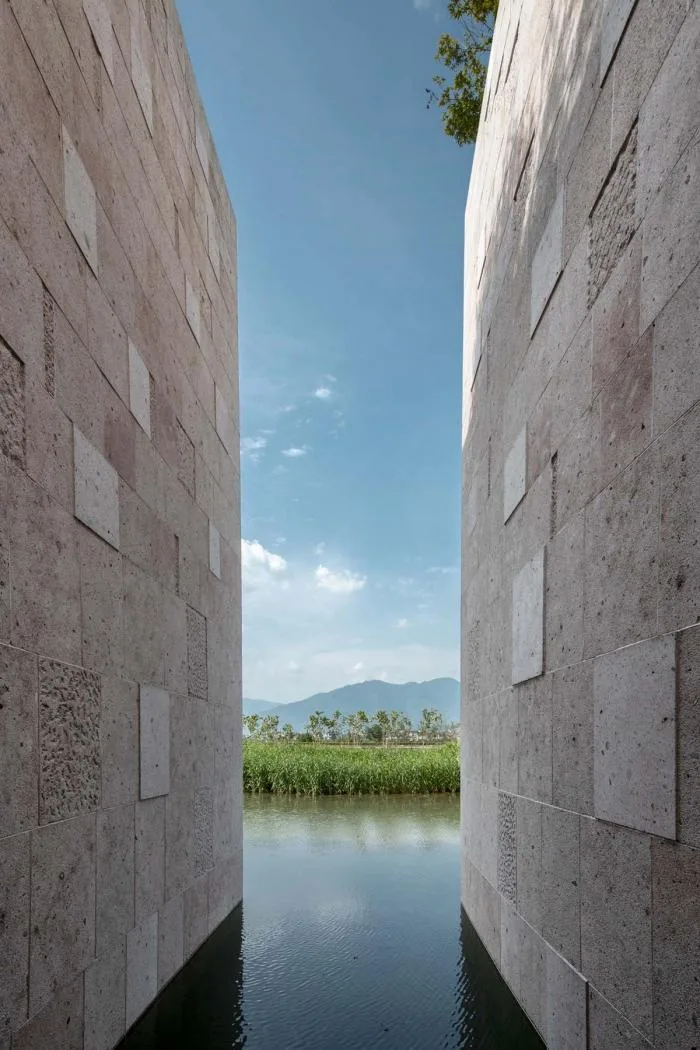
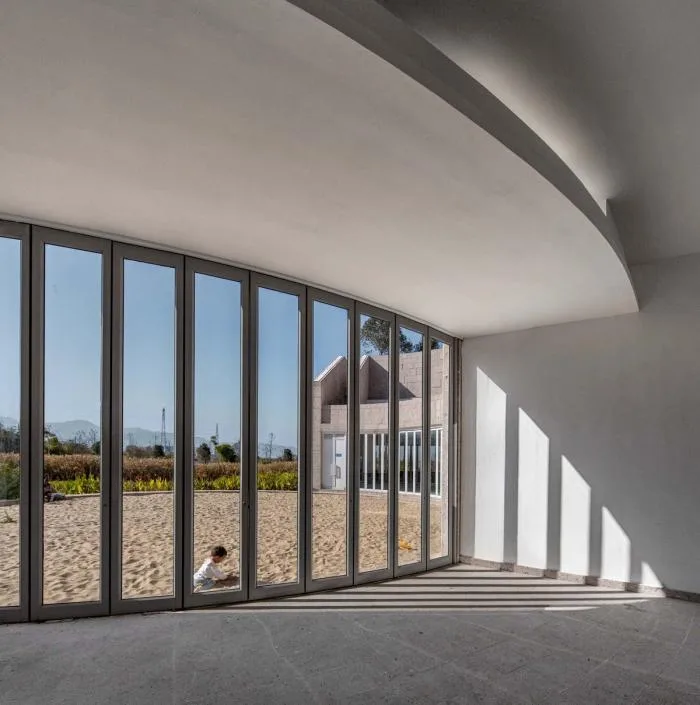
The public curved volumes emphasize a strong sense of form, resembling water conservancy structures. This facade treatment transforms the building into a circular theater, enhancing outdoor activity spaces and providing rooftop garden access via walking paths that overlook the surrounding landscape. Internally, the architecture defines distinct spatial sequences, enclosures, and natural lighting, blending indoor functional areas with outdoor activity zones to create an integrated environment.
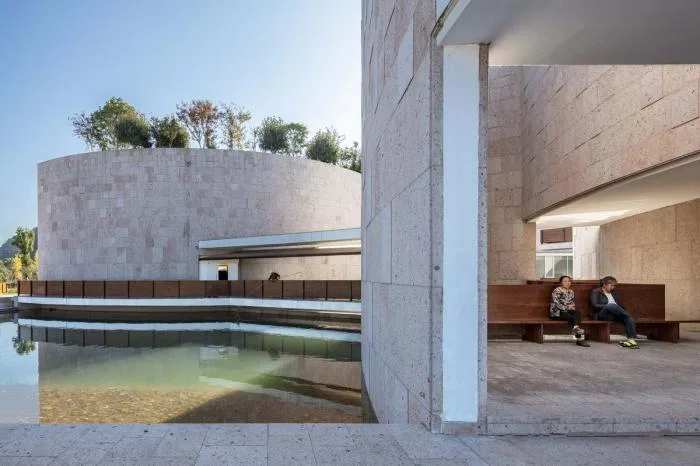
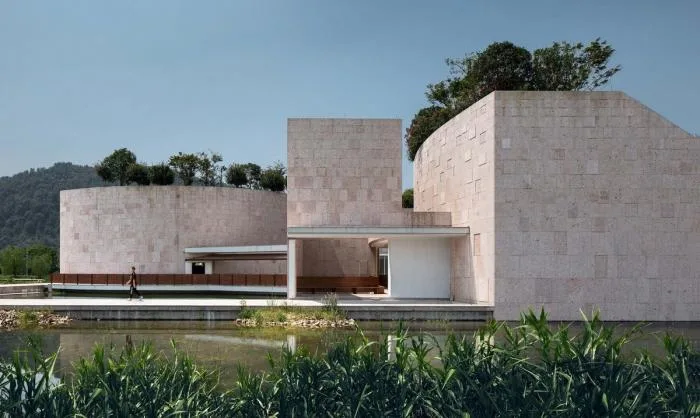
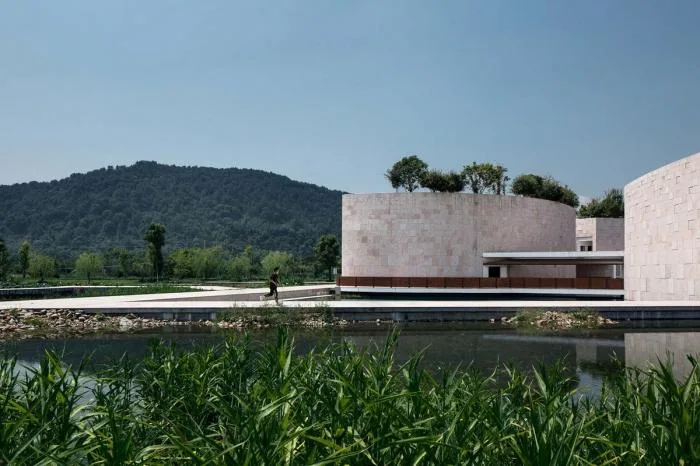
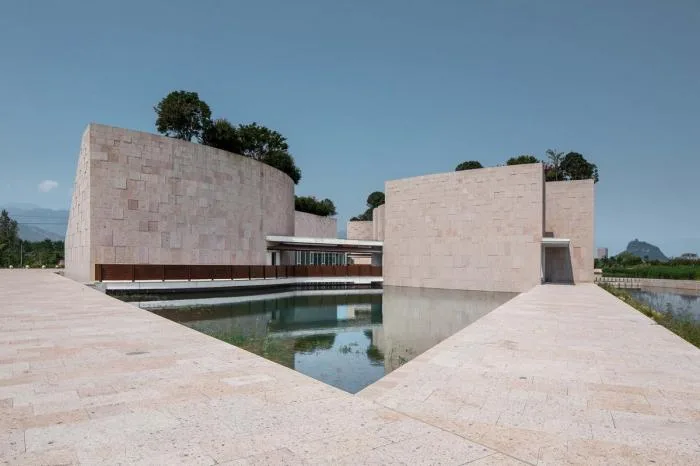
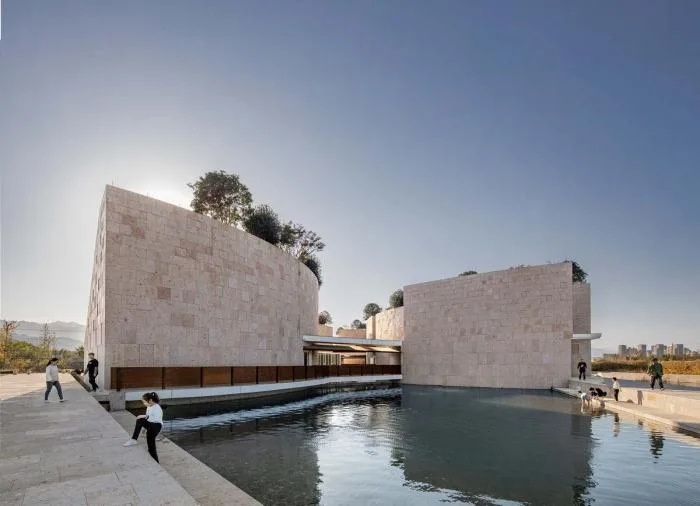
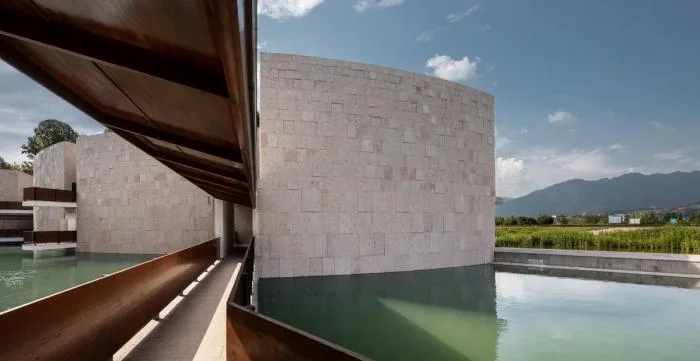
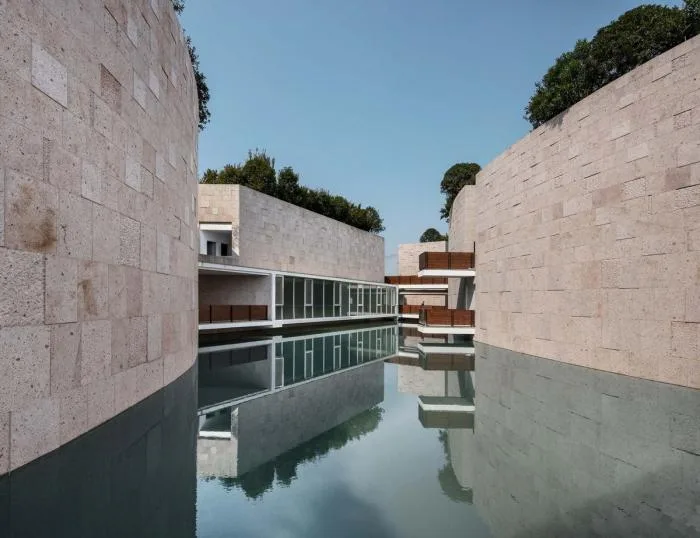
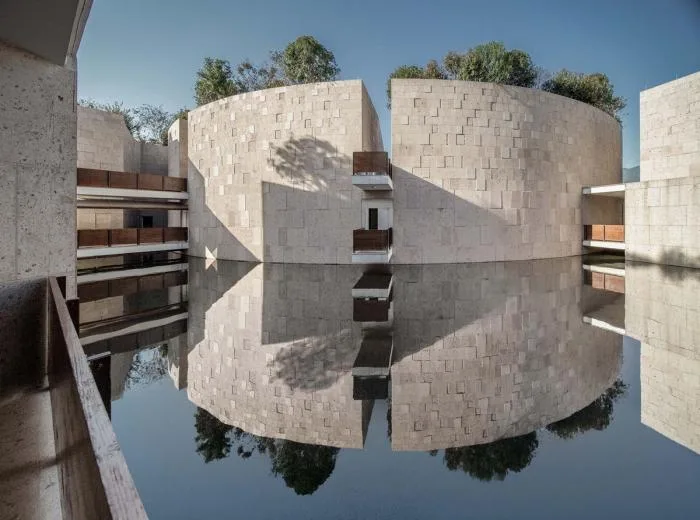
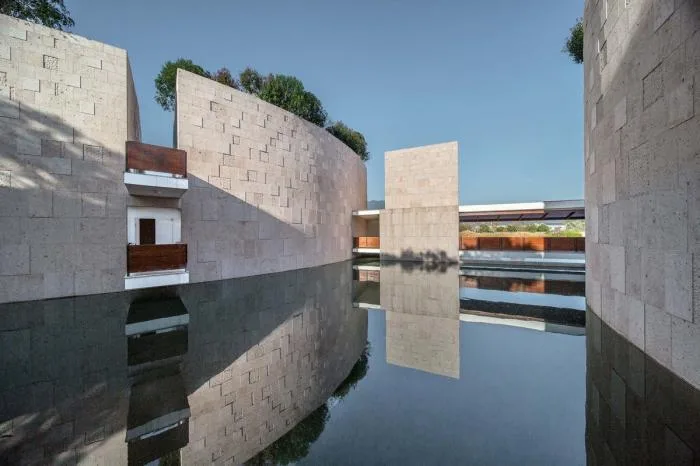
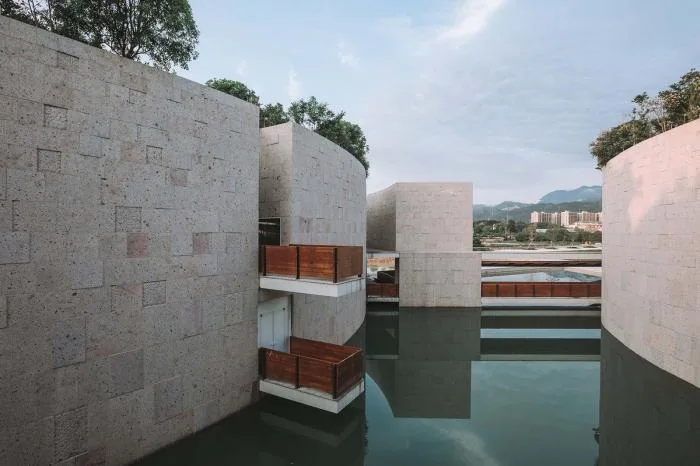
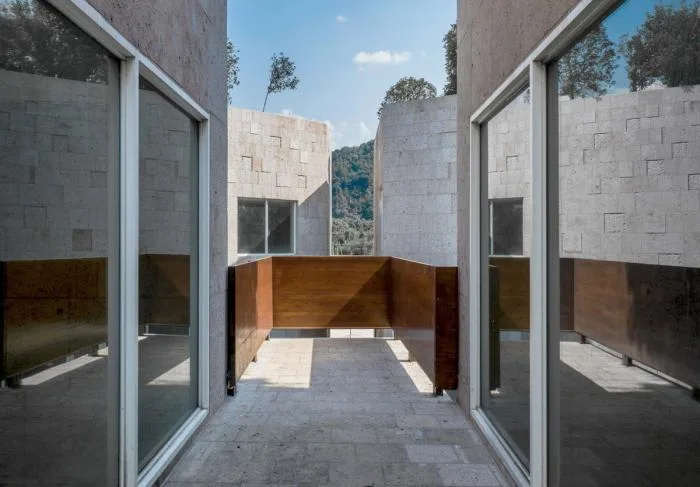
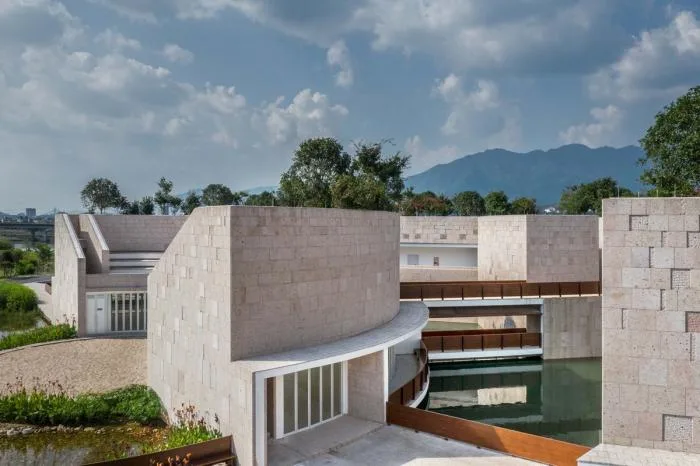
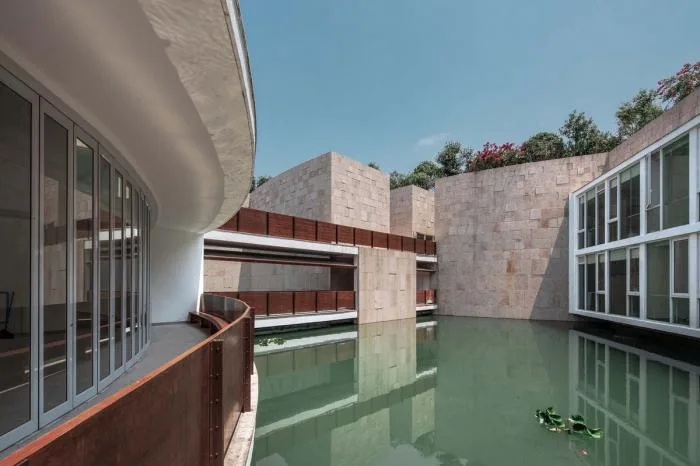
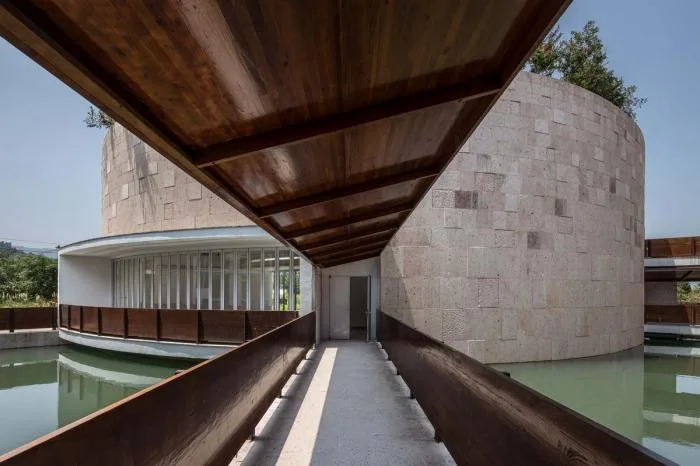
The surrounding landscape extends the water environment of the hydrological park, intersecting with the museum’s various functional volumes to create a series of water courtyards. Linear and curved pathways cross over water surfaces, incorporating micro dams and bridges with terrain variations to recreate the spatial experience of Songyang’s water conservancy elements.
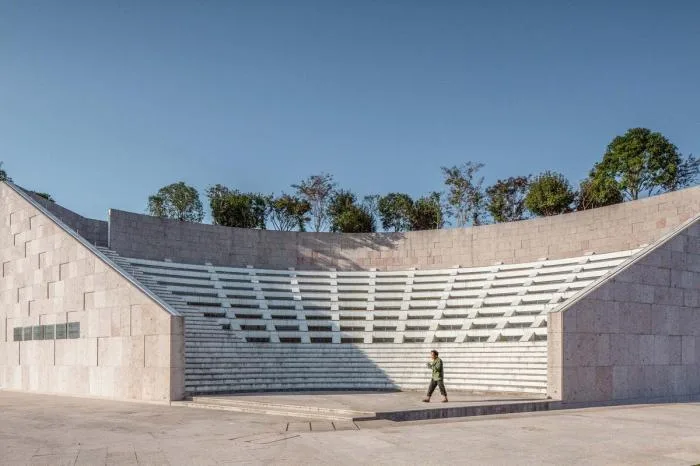
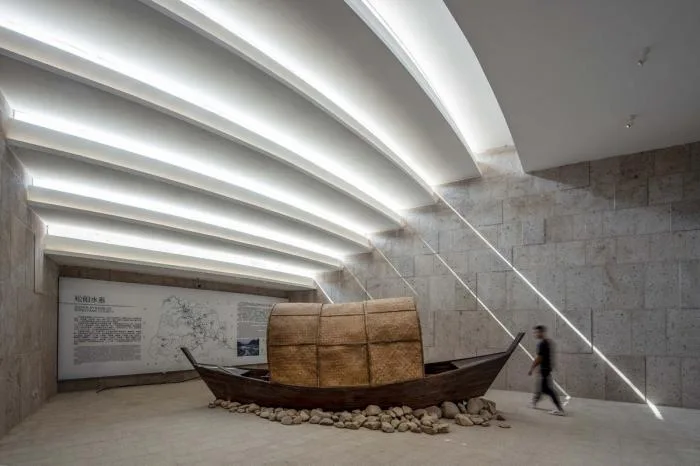
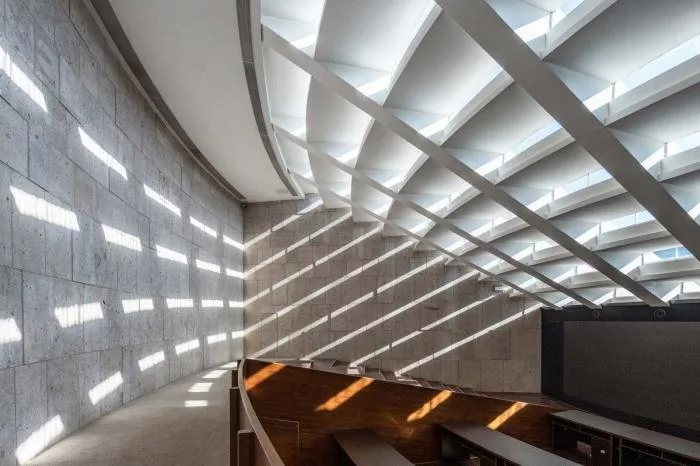
The Water Conservancy Museum and Hydrological Park, built around Baisha Lake’s hydropower facilities, celebrate Songyang’s water conservancy culture and lifestyle. Their functional layout and diverse spatial design have established them as a vital connection point between the county and rural areas, promoting urban-rural integration.
Design Drawings
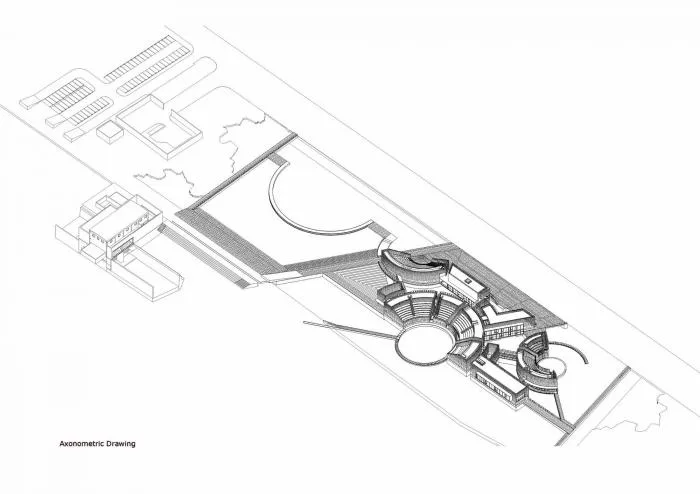
△ Overall axonometric diagram
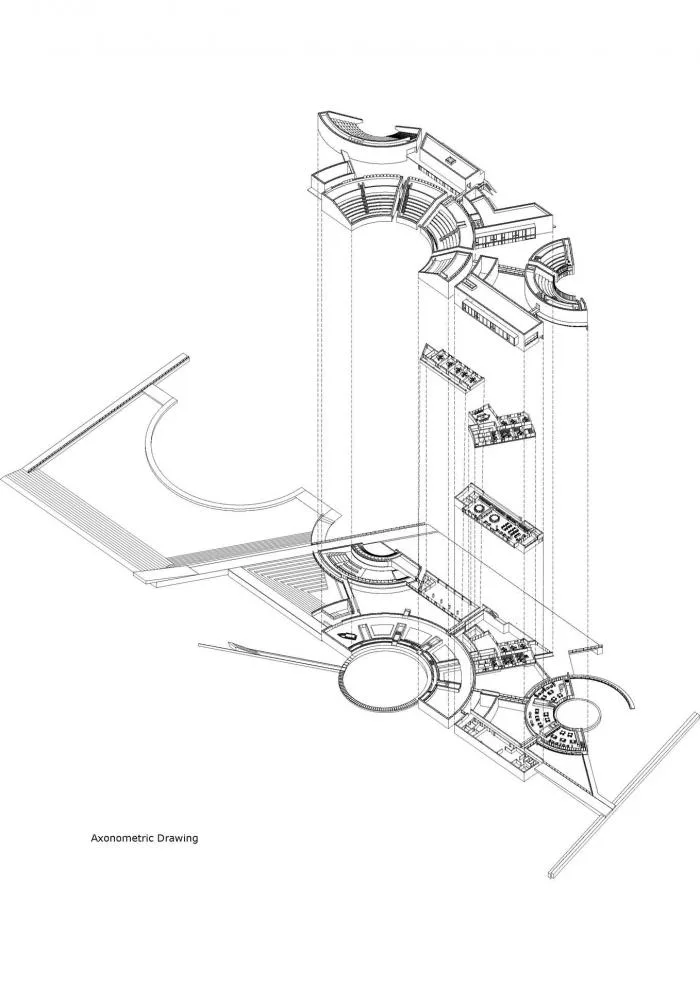
△ Exploded axonometric diagram
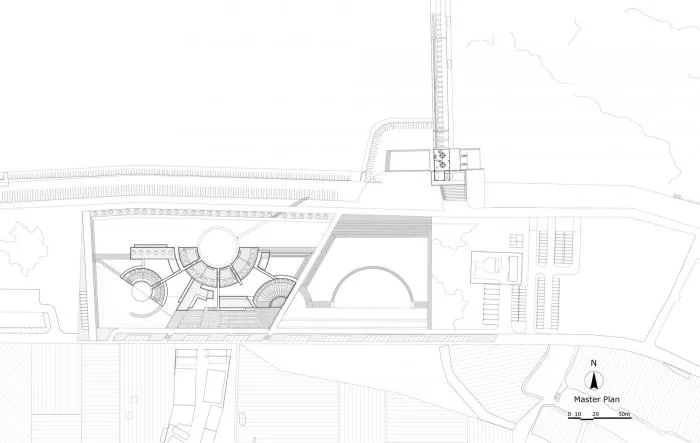
△ General site layout plan
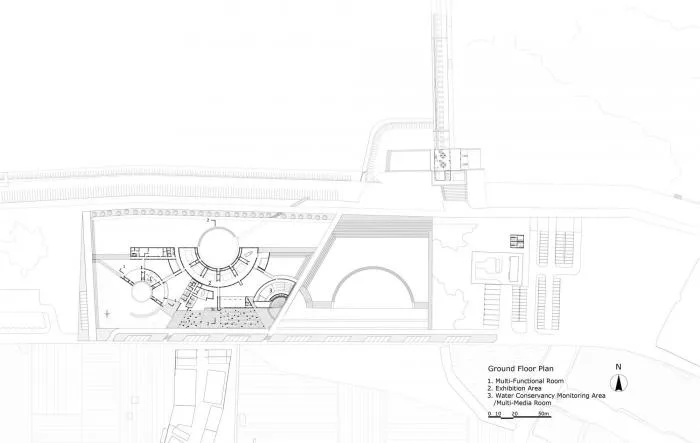
△ First floor plan
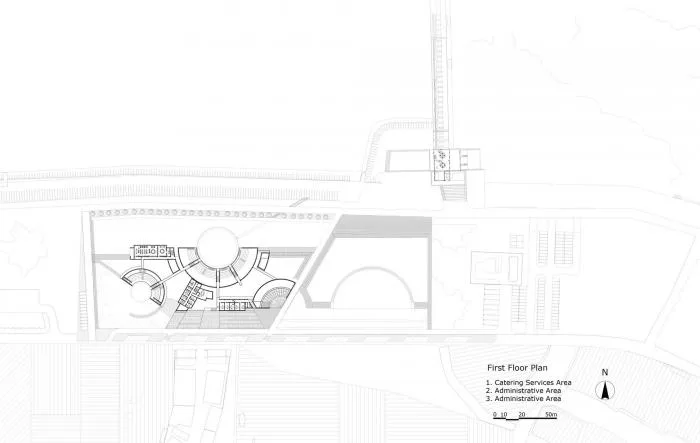
△ Second floor plan
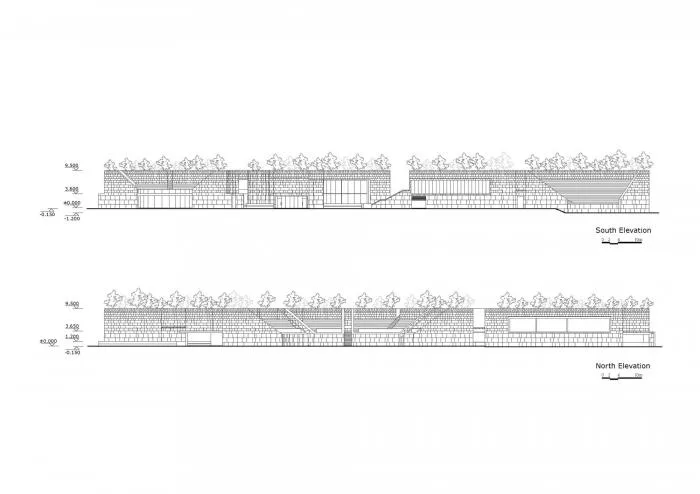
△ South and North elevation views
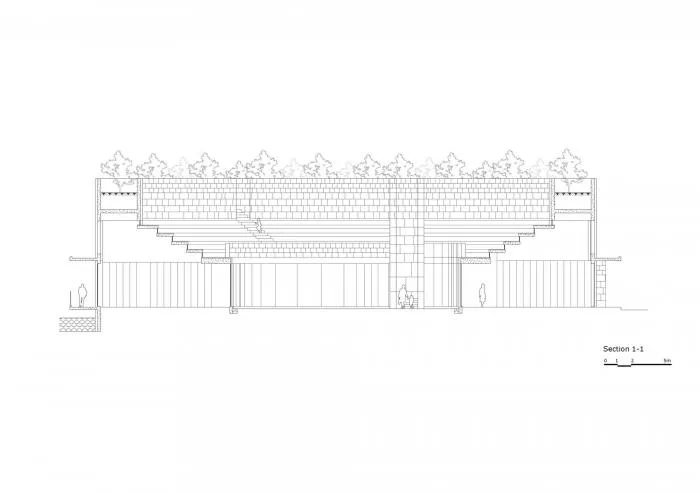
△ Section 1-1
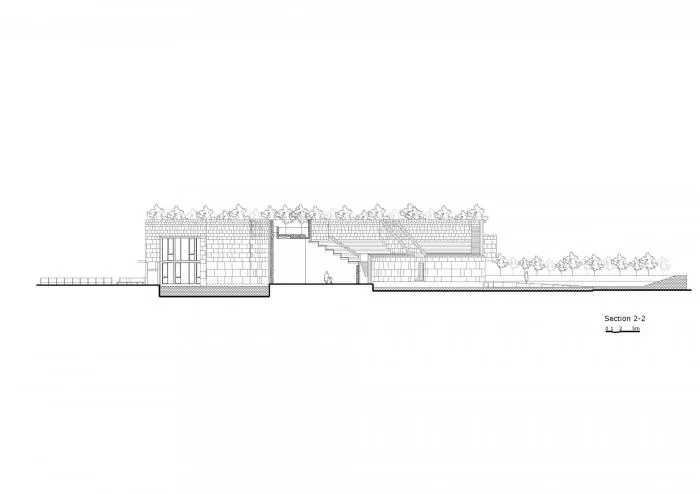
△ Section 2-2
Project Information
Project type: Museum
Location: Lishui City, China
Architect: DnA
Area: 6,746 m²
Year: 2019
Photographer: Wang Ziling
Lead Architect: Xu Tiantian
Lighting Design: Zhang Xin Studio, School of Architecture, Tsinghua University
Owner: Songyang County River Embankment and Reservoir Management Office












Must log in before commenting!
Sign Up