
Restoration, preservation, and inner growth—these themes encapsulate the essence of the Zhangyan Cultural Museum. I particularly appreciate the concept of ‘growth,’ as it embraces the past, present, and future, extending beyond the mere idea of ‘life.’
The stone arch bridge, Chenghuang Temple, and traditional grey tile with white walls create a classical exterior environment rich with artistic meaning. Understanding and reconstructing existence through conventional techniques—where objects align with ideas—seems essential. However, it is equally important to explore a different perspective: returning to the innate structure and the intrinsic relationship between humans and the universe. Through sensory experience, intuition, and impressions gathered from the outside world, we integrate various emotional responses to this land, establishing objects from the subject and allowing the subject to be carried by the object.
Elements like glass, leftover bricks, and white concrete sloping roofs embody the idea of ‘relationship.’ These are not fixed but rather multiple, combined, compared, and juxtaposed to form a cohesive whole. Over two and a half years, a seemingly endless garden has been created within a limited space, filled with flowing lines and carefully tuned psychological expectations. Water transcends being just water, walls are more than mere walls, and their arrangement alongside trees, birds, and fragrance creates a powerful sequence. I have always believed that space is more than a physical area; it is a convergence point for the five senses, requiring lasting contrast and tension to evoke a rich, multi-dimensional experience.
The significance of the Zhangyan Cultural Center is founded on the concept of ‘time.’ The interplay between history, present, and future does not simply consider ruins and rebirth, but rather overlaps and reconstructs, exploring the possibility of a non-linear narrative on the timeline. When the new turns old, and the old dissolves into time only to reappear anew, what stance do old and new take at this moment? And what kind of everyday life do they embrace?
Two ancient trees still stand tall, witnessing the passage of years as daylight shifts across the sky.
2020.02. Ju Bin, Shenzhen
△ Interview with the Chief Designer
Zhangyan Village, located in Zhonggu Town on Shanghai’s western outskirts, is the birthplace of ancient Shanghai culture and a key representative of Fuquan Mountain culture. This millennia-old village, shaped by waterways since the Tang and Song dynasties, once thrived with prosperity. Renowned scholars such as Zhang Qian, Su Shi, Ren Renfa, and Mi Fu have referenced Zhangyan in their poetry and writings.
Following historical changes, Zhangyan Village has suffered severe decline and is no longer as vibrant as before. It still features buildings from the Qing Dynasty and the Republic of China, alongside Western-style houses constructed after the founding of the People’s Republic of China. Under the new urbanization policy, Zhangyan Village is currently undergoing renovation and revitalization.
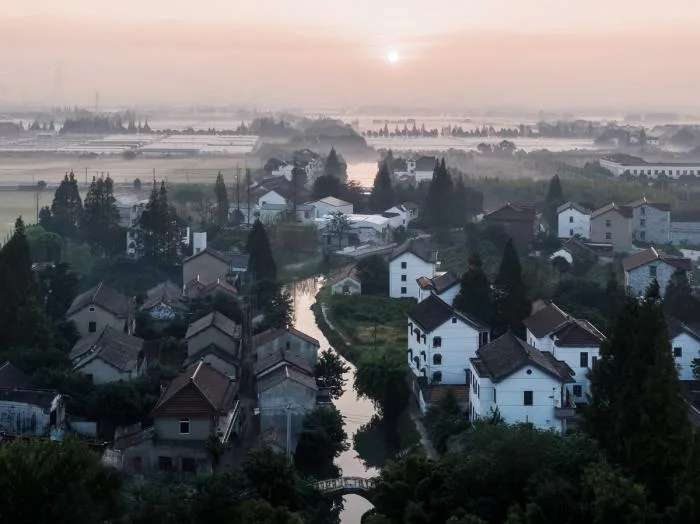
△ Aerial view
Our approach for transforming and revitalizing Zhangyan Village—and other similar villages across China—is guided by survival, growth, and rebirth. This strategy avoids demolition and rebuilding or mere restoration of old structures. Instead, it follows the historical trajectory, integrates contemporary development concepts and functional needs, and reorganizes layouts, functions, and relationships between the old and new.
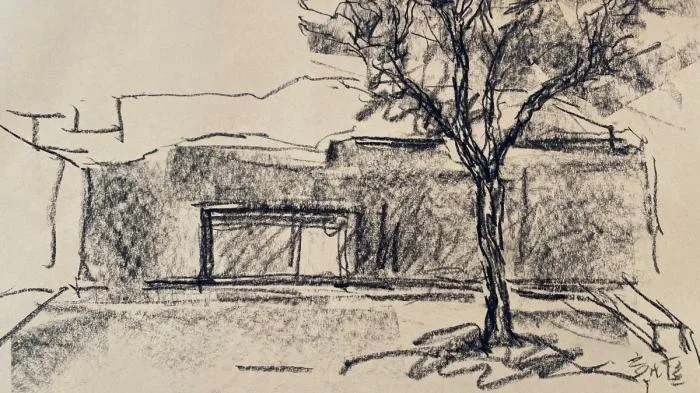
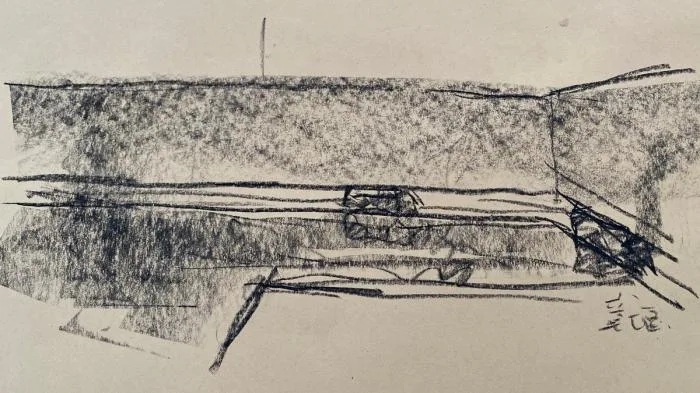
△ Zhangyan Cultural Museum, hand-drawn by Ju Bin
Survival
The old buildings represent the historical and cultural heritage of Zhangyan Village. We reinforce and repair these structures to ensure their continued preservation in good condition.
Growth
We carefully remove dilapidated and unusable sections of old buildings and add new constructions related to the original structures, enabling the coexistence of old and new.
New Addition
New architecture reflects the current era and functions. To fulfill contemporary needs, we also ‘regenerate’ some buildings on vacant land.
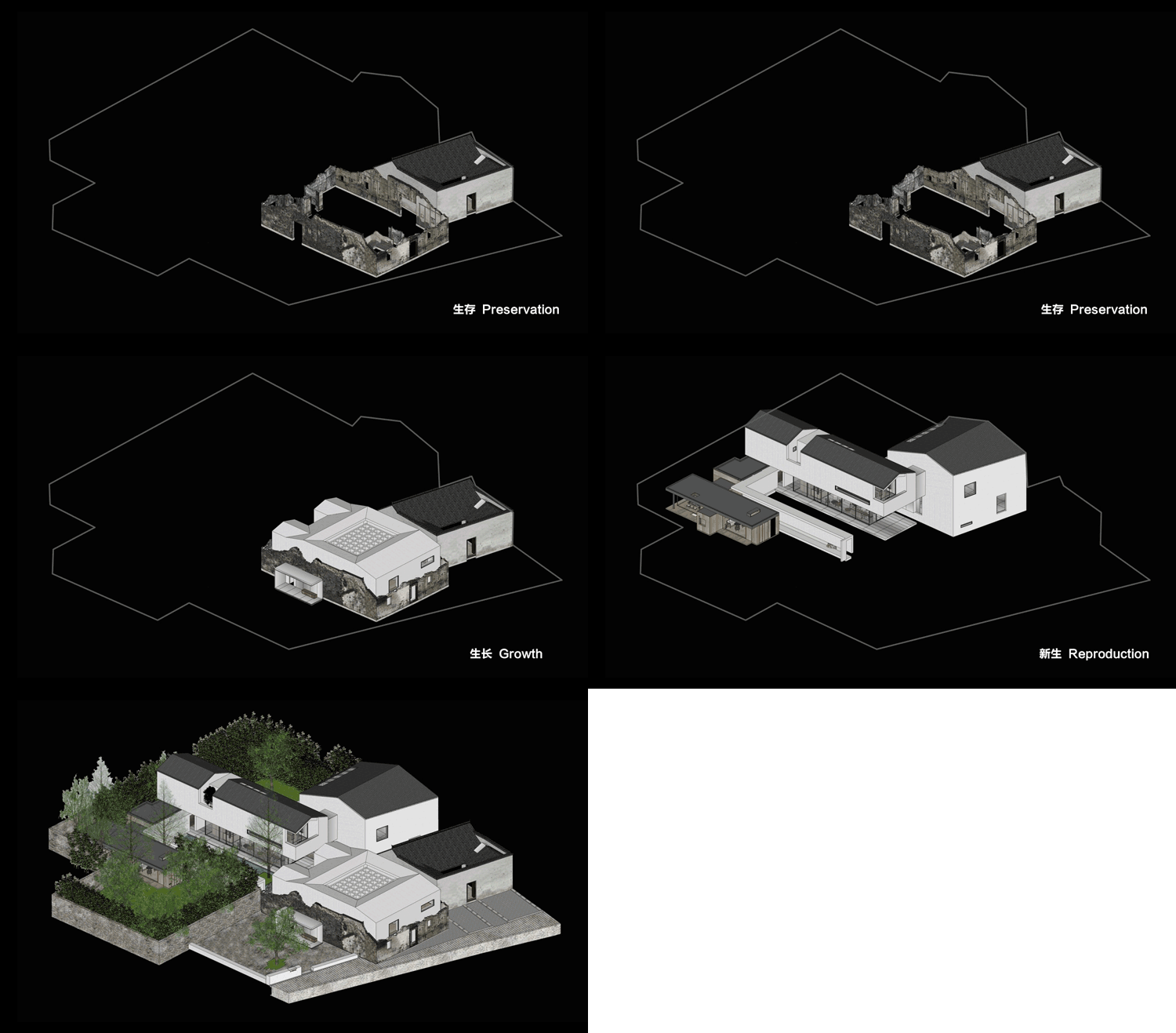
△ Survival, Growth, Rebirth
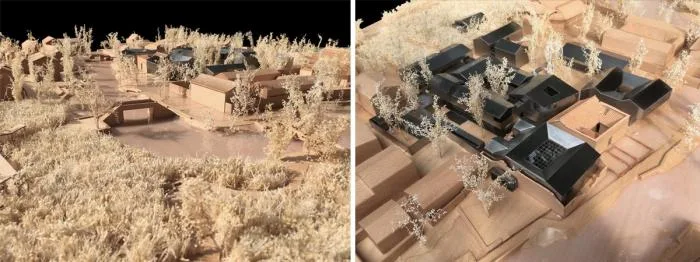
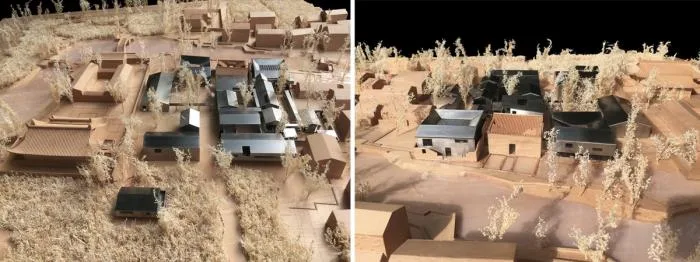
△ Model
The cultural center site is highly representative. It includes the original village history museum—a Qing Dynasty old house—the Zhang family residence, which is a severely dilapidated late Qing Dynasty house, and some vacant land. Nearby are 1980s two- or three-story Western-style houses and the Chenghuang Temple, a religious building.
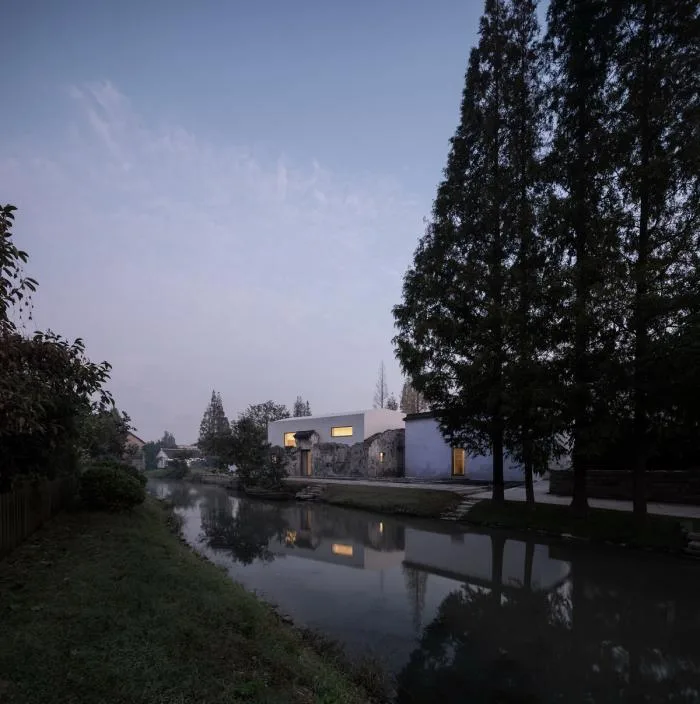
View facing the southeast side of the site
Based on site conditions, the cultural center design features three distinct exhibition spaces and a water courtyard.
The Zhang family house, although severely damaged, retains an intact and well-preserved exterior wall. We reinforced and protected this wall, building a new exhibition hall within its enclosure.
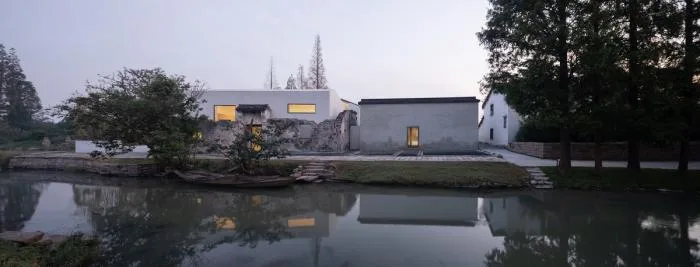
△ South side of the site
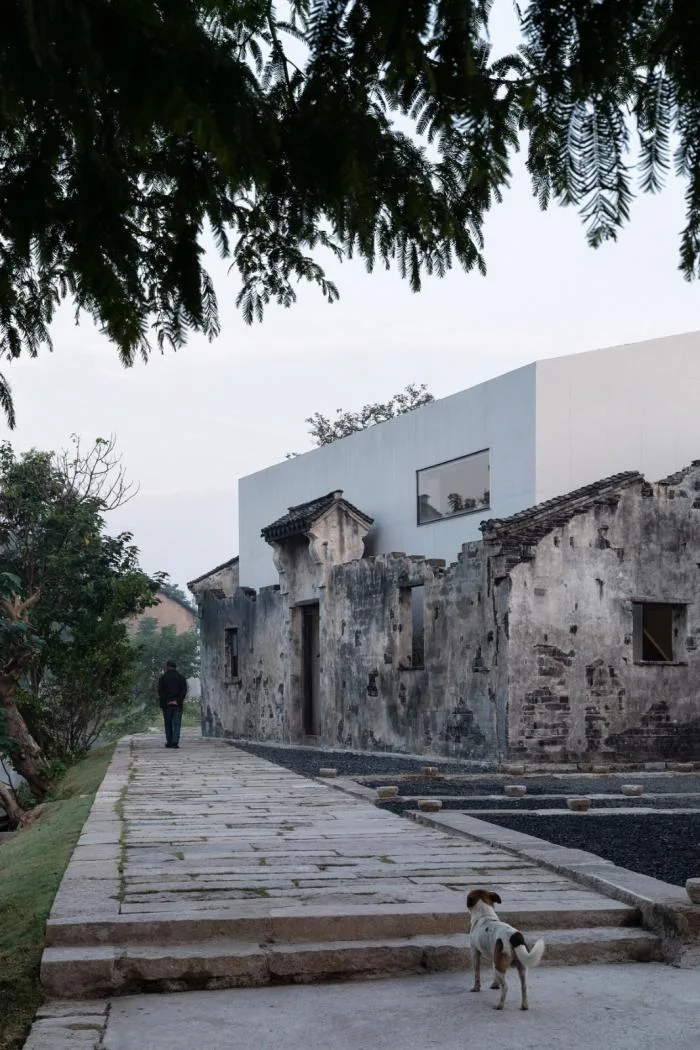
△ Southeast side of the venue
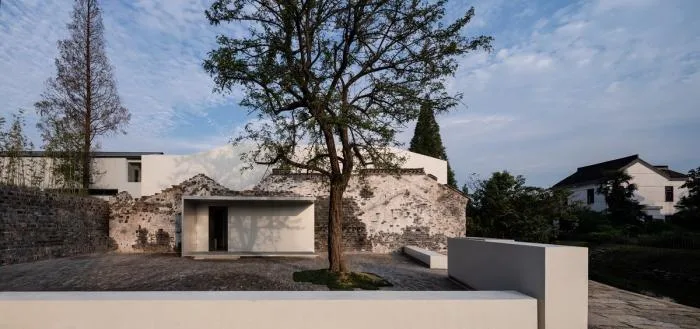
△ West entrance square
Exhibition Hall 1 draws inspiration from the architectural style of the Zhang family mansion’s “Four Waters Returning to the Hall.” It is set at least 30 centimeters away from the old wall as a mark of respect and tribute to history. Windows inside Exhibition Hall 1 connect visually with the exterior walls of the Zhang family residence.
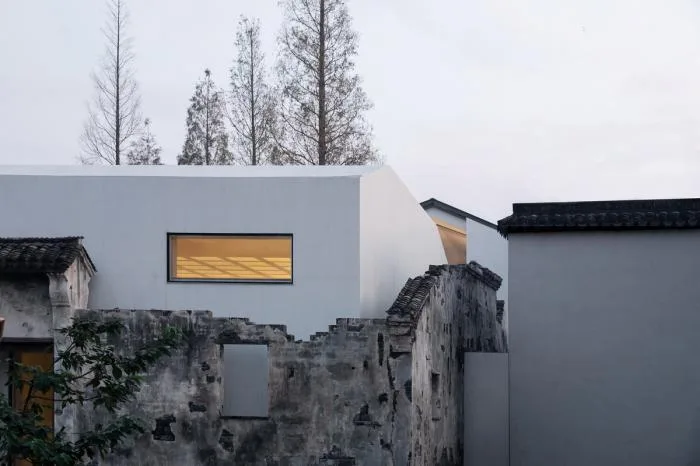
Inside part of the exhibition hall
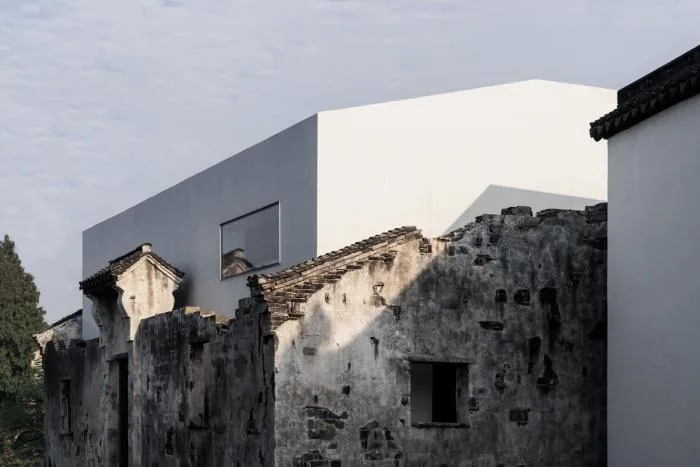
Another view inside the exhibition hall
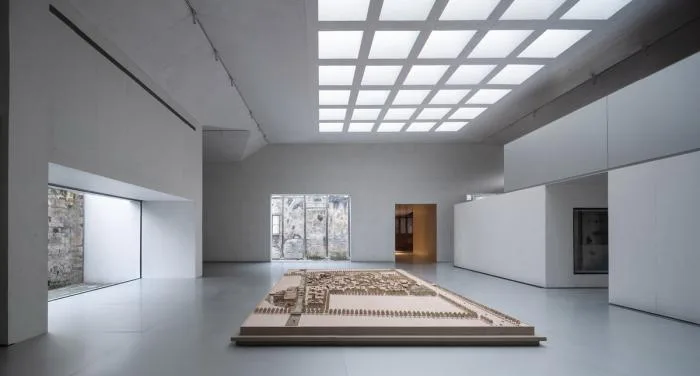
View from west to east inside the exhibition hall
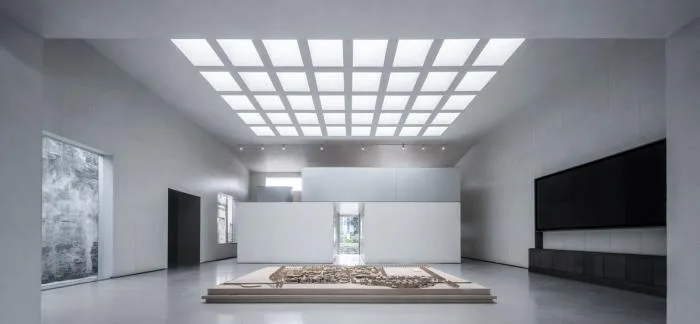
Exhibition Hall 1: view from north to south
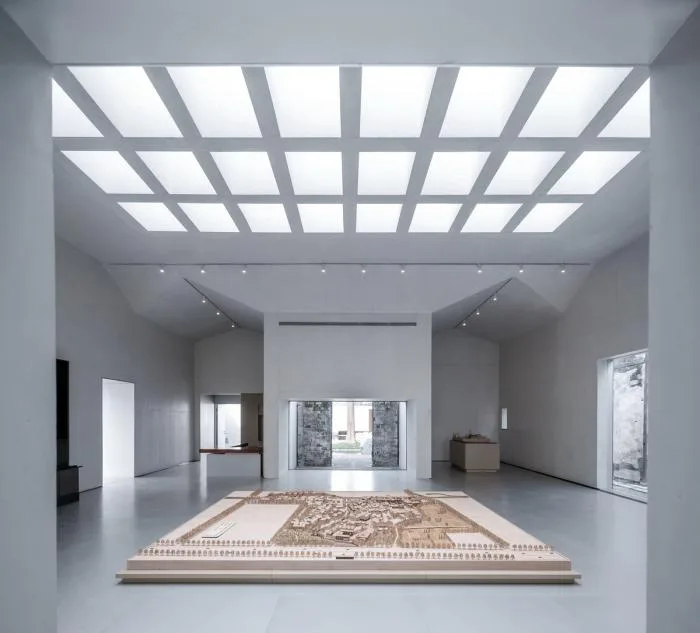
Exhibition Hall 1: view from south to north
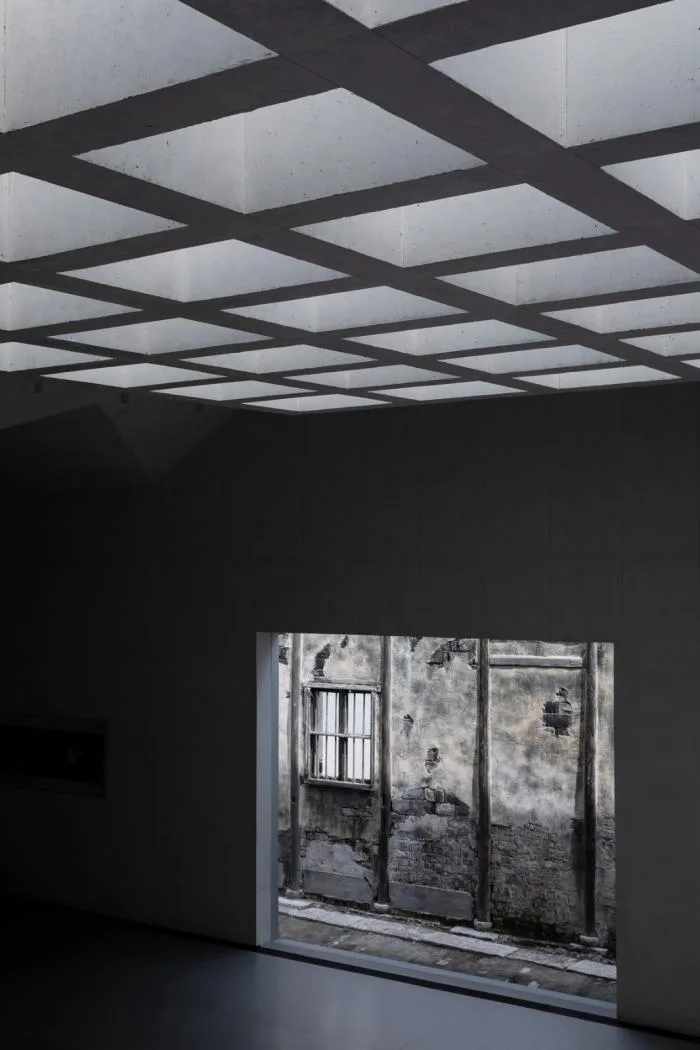
△ Partial interior of Exhibition Hall 1
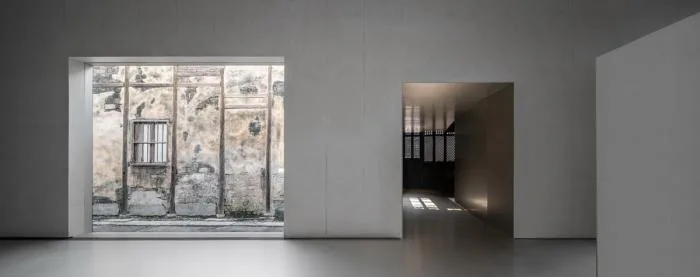
△ Partial interior of Exhibition Hall 1
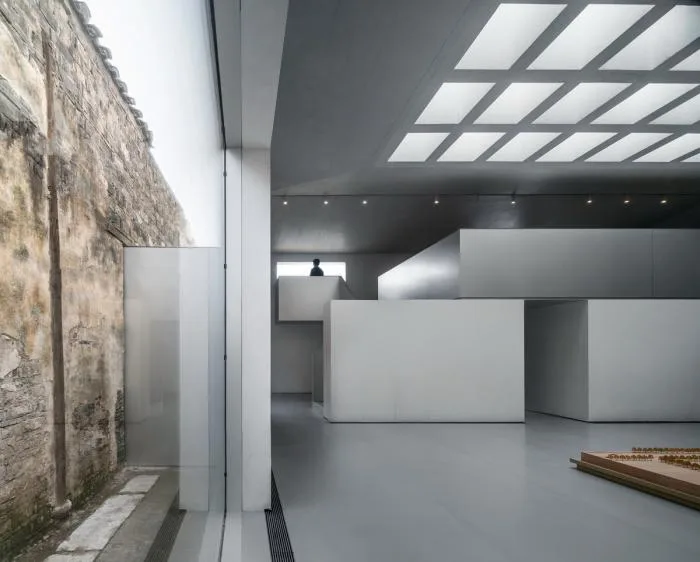
Exhibition Hall 1 and the Old Wall
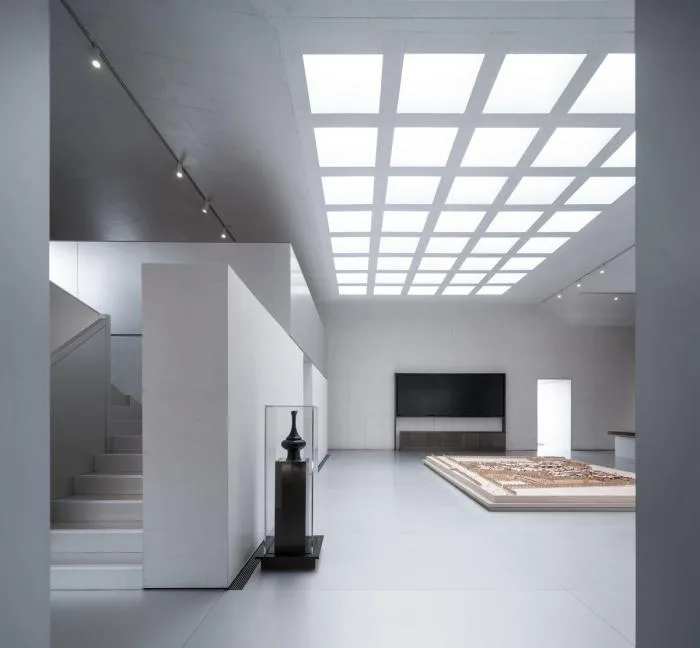
Part of the exhibition hall
The village history museum has been well preserved. We reinforced and repaired the internal wooden load-bearing structures, converting it into Exhibition Hall 2. Due to severe moisture damage on the ground, we installed new moisture-proofing and replaced the flooring with anodized aluminum plates matching Exhibition Hall 1. This continuity brightens the space and enhances its sense of openness. The old walls, roof, and inner courtyard remain preserved.
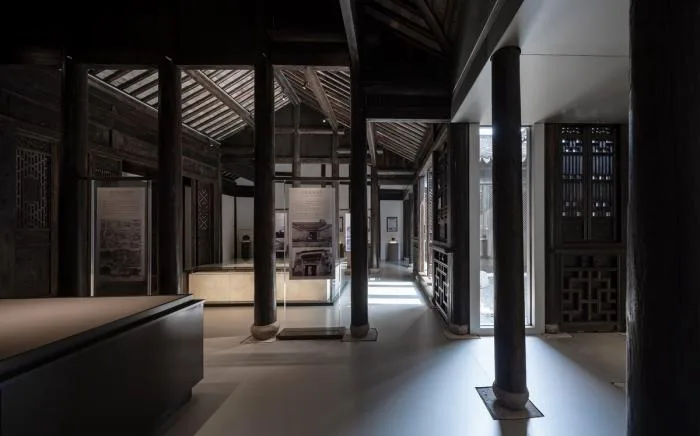
View from the west side of Exhibition Hall 2 towards the east
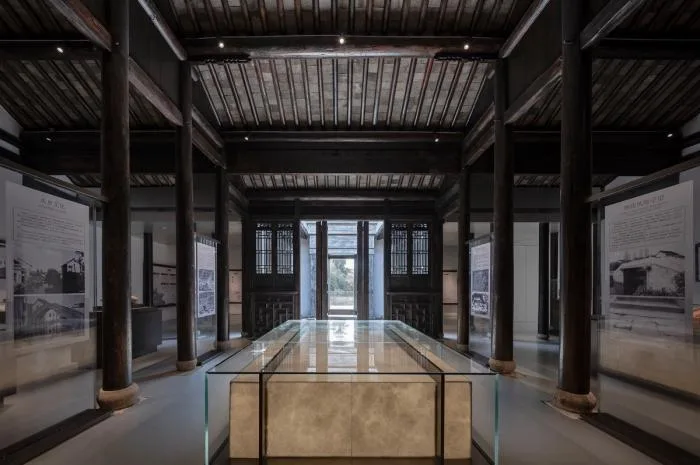
View from north to south of Exhibition Hall 2
Research during restoration revealed that the vacant land north of the village history museum was originally its second courtyard. The existing foundation remains intact, and we constructed Exhibition Hall 3 on this original foundation. Walls, floors, and ceilings of Exhibition Hall 3 are clad in anodized aluminum, creating a uniform metallic environment. This material evokes a ‘futuristic’ atmosphere, interacting dynamically with the ‘contemporary’ character of Exhibition Hall 1 and the ‘traditional’ nature of Exhibition Hall 2.
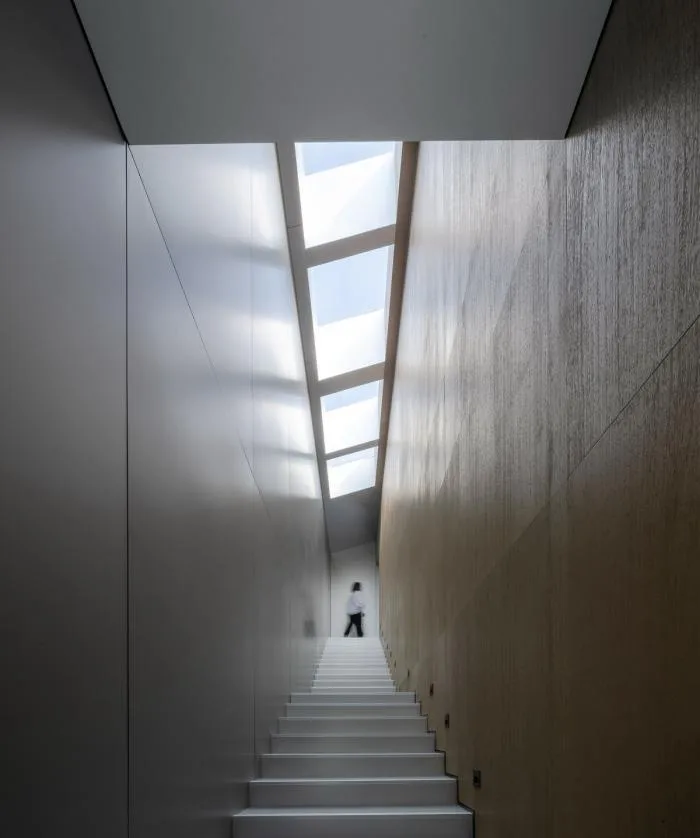
△ Partial interior of Exhibition Hall 3
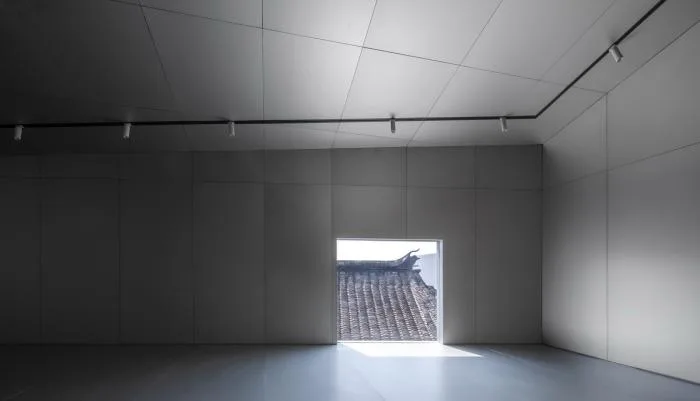
△ Second floor exhibition hall
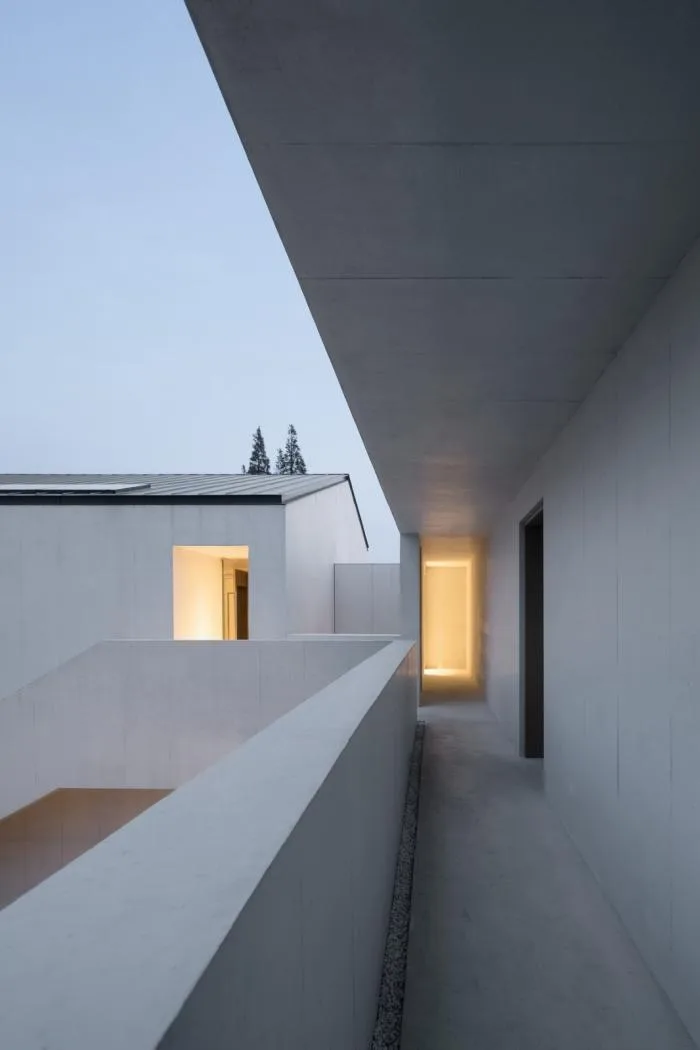
△ Second floor walkway
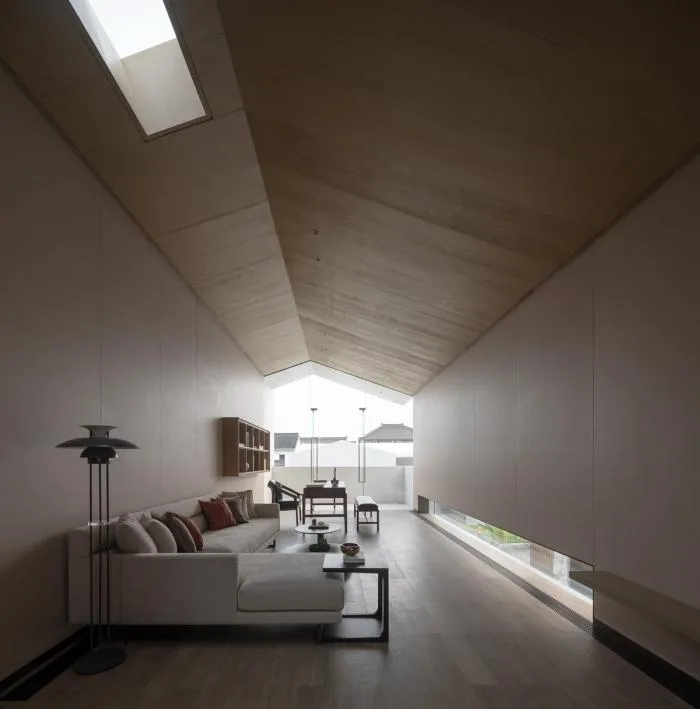
△ Lounge area
Exhibition Hall 3 occupies the vacant land on the north side of the site. Preserving existing large trees and bamboo groves, the design incorporates a rest area and water courtyard for visitors to relax and engage in conversation. The new structures are built with plain white concrete, harmonizing with the reinforced gray paper exterior walls of surrounding local buildings.
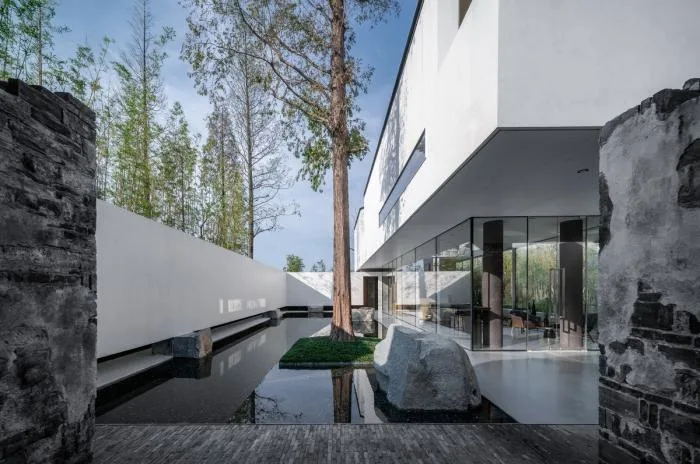
△ Water Institute
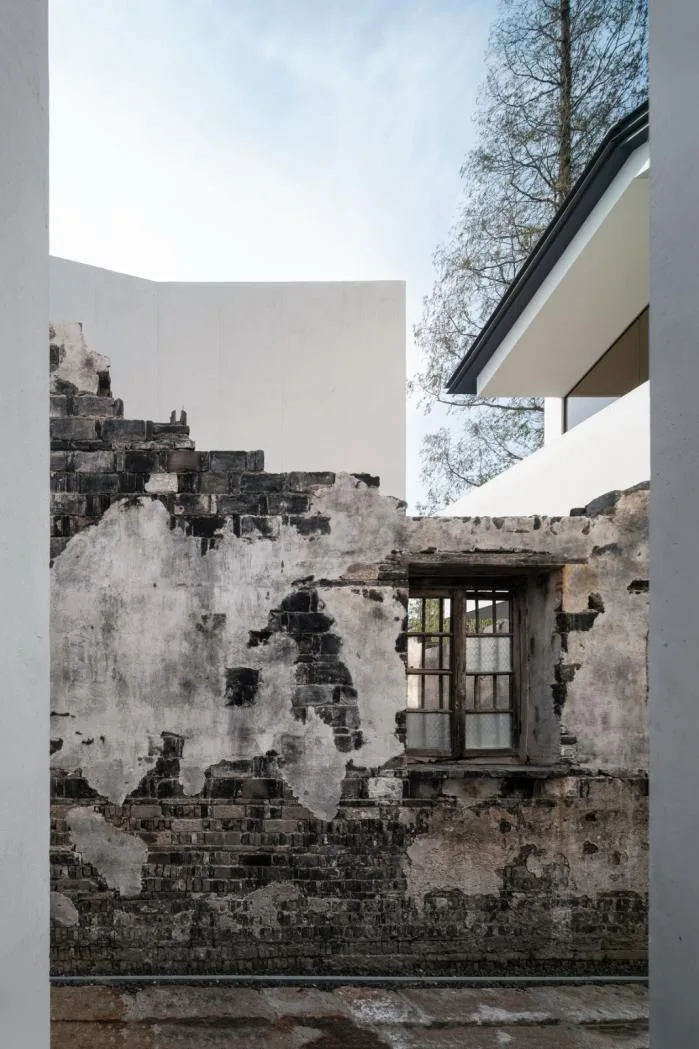
Sections of the old wall
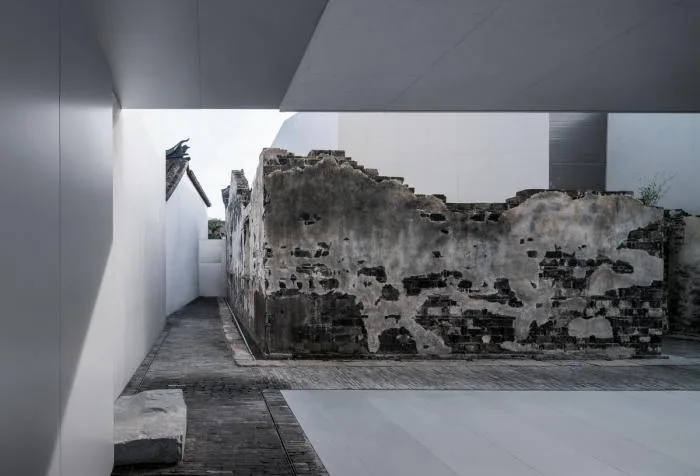
Sections of the old wall
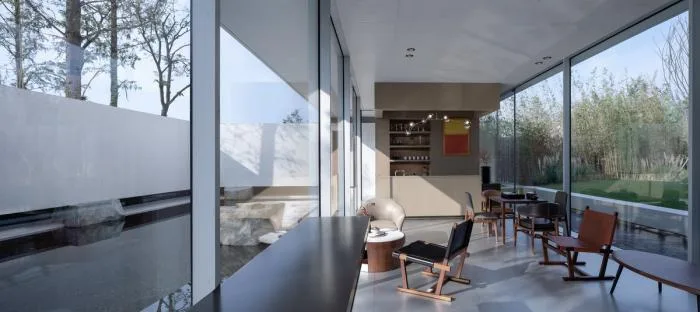
△ Coffee area
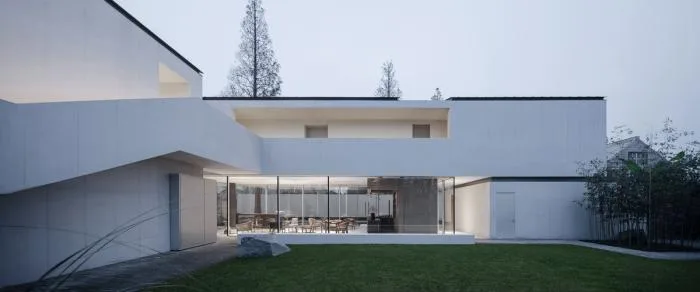
△ Grassland
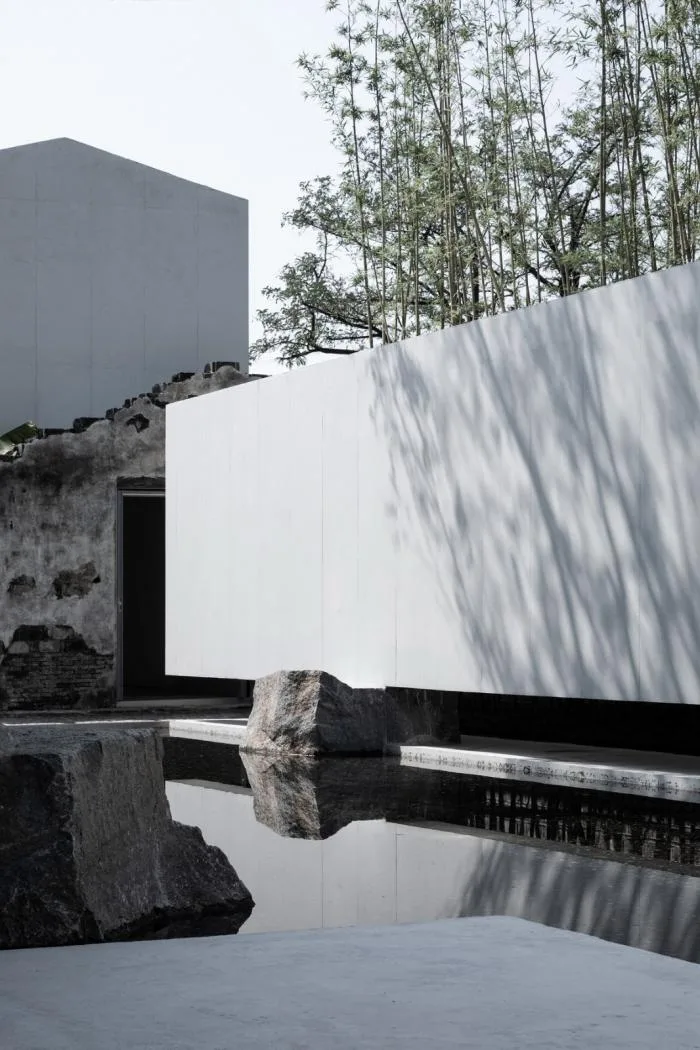
△ Local Water Institute
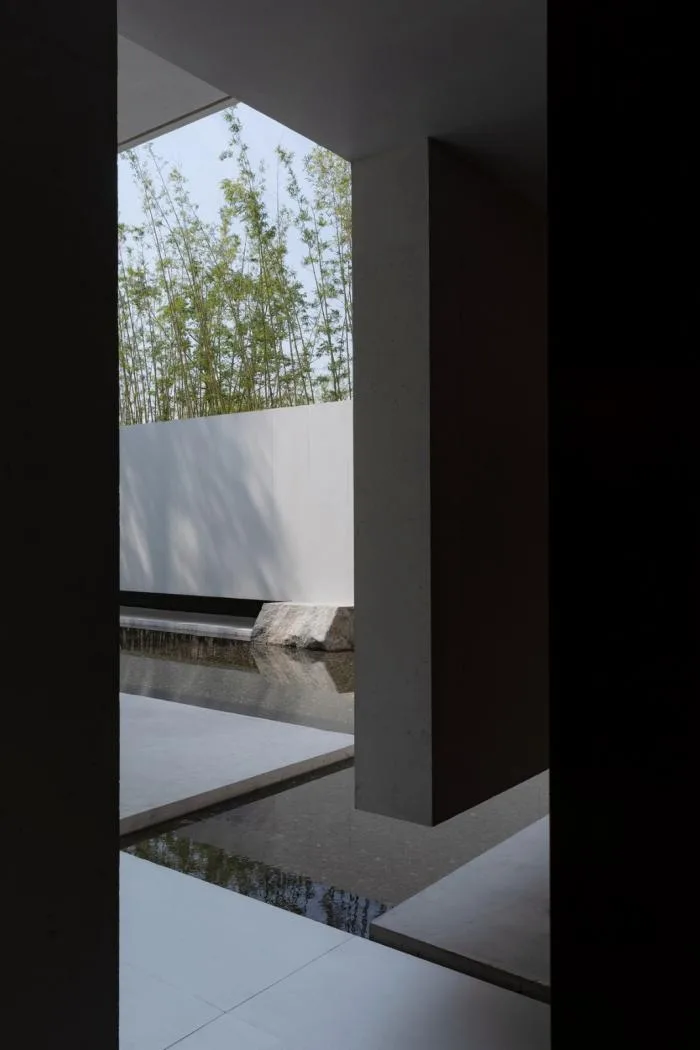
△ Local Water Institute
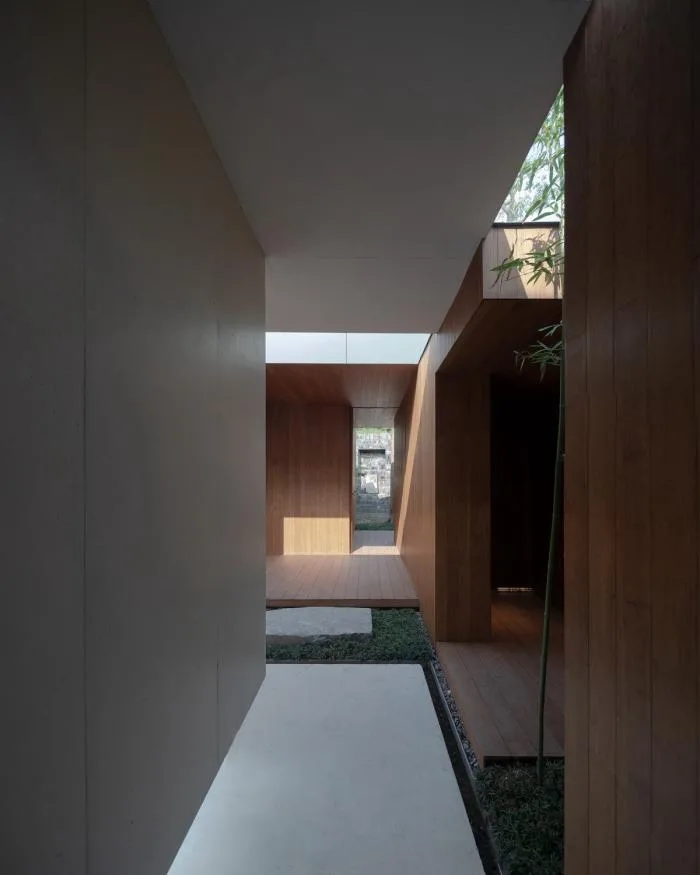
View towards the study and tea room from the water courtyard corridor
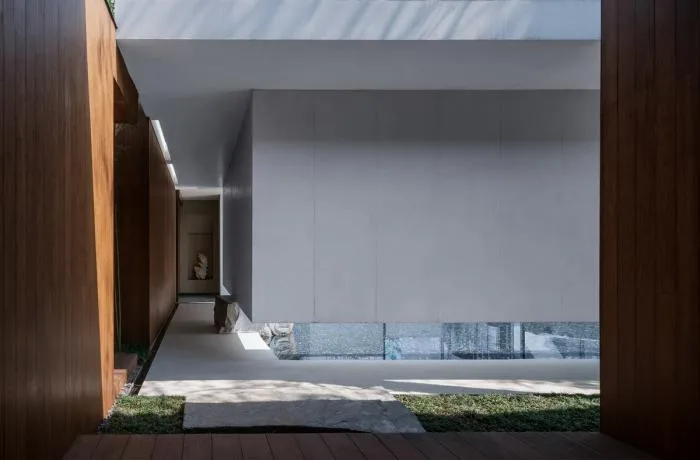
View from the study toward the water courtyard
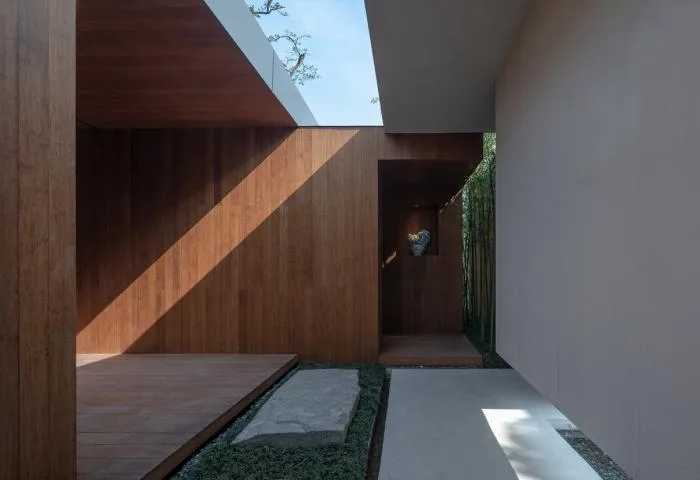
View towards the study and tea room from the water courtyard corridor
Design Drawings
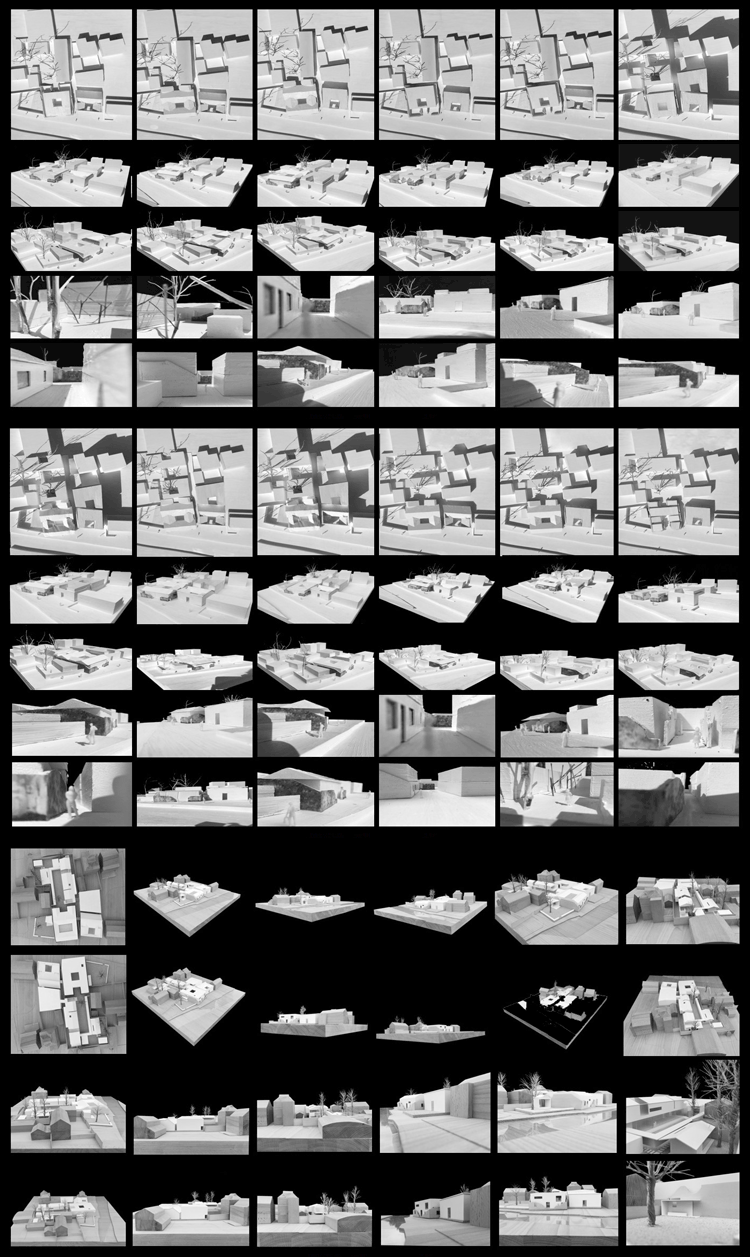
△ Spatial breadth analysis
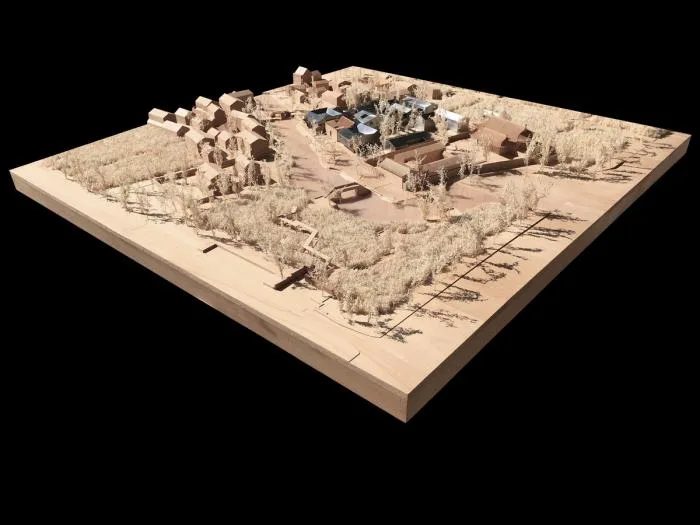
△ Detailed bird’s-eye view
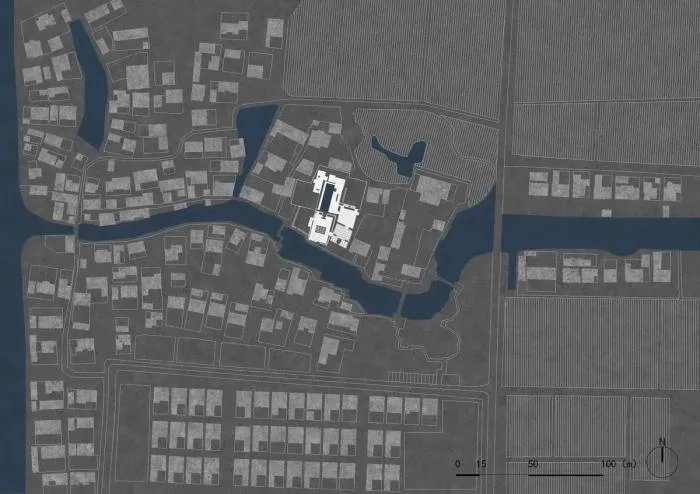
△ Overall site layout plan
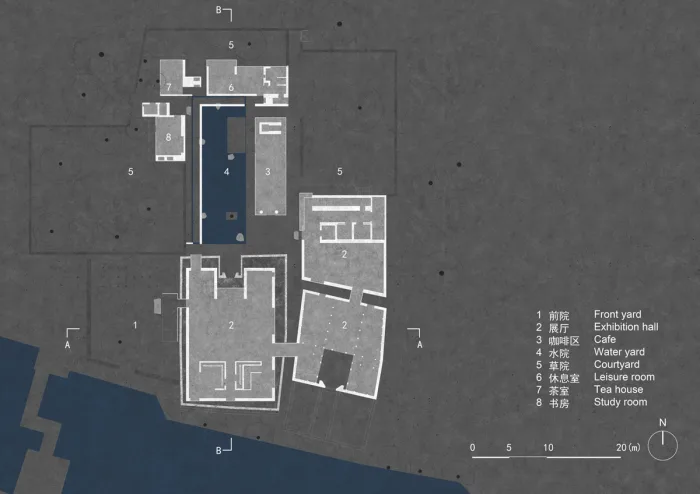
△ First floor plan
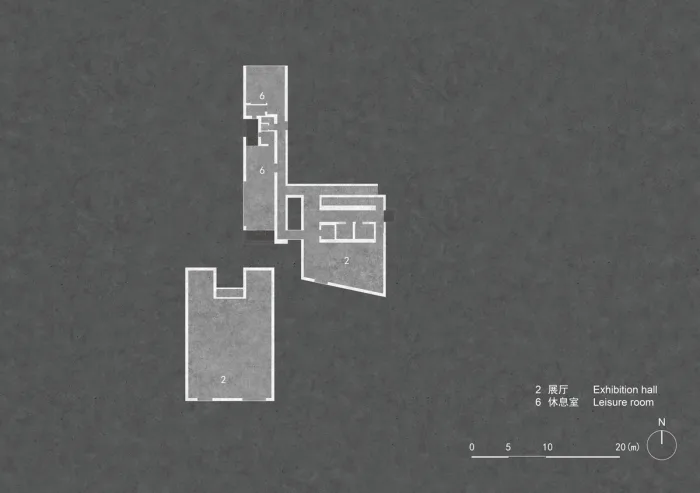
△ Second floor plan
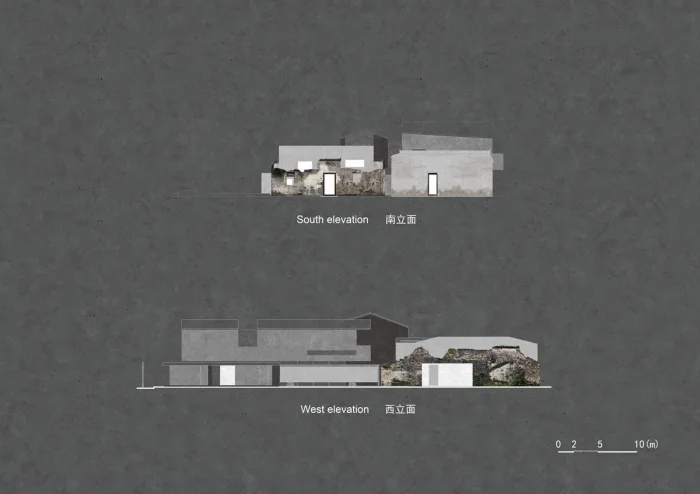
△ Elevation drawing
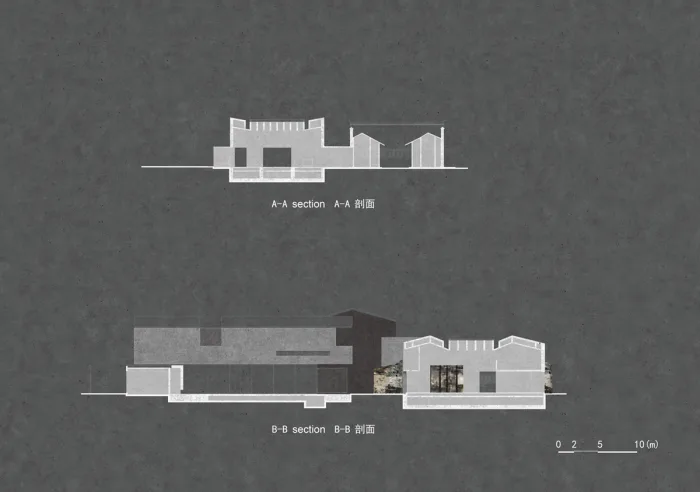
△ Section diagram
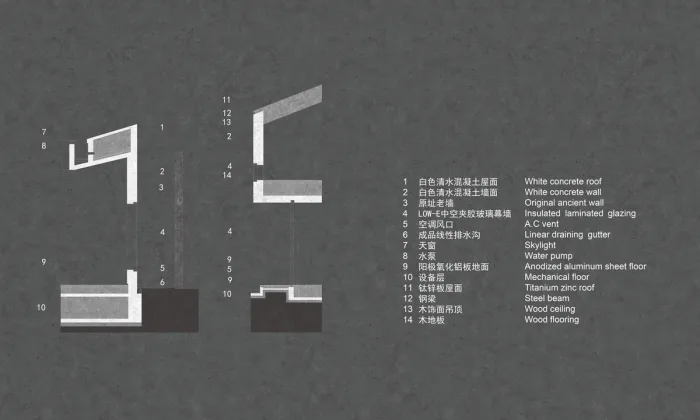
△ Wall structure detail
Project Information
Project Name: Zhangyan Cultural Center
Project Type: Cultural Exhibition Space
Location: Shanghai, China
Design Period: August 2017 – May 2018
Construction Period: June 2018 – May 2019
Project Size: 1,064 square meters
Architecture/Interior/Landscape Design: Horizontal Line Design
Chief Creative Design Director: Ju Bin
Lead Architects: Zhou Zhimin, He Bin
Architectural Design Team: Zhang Jia, Deng Shuyu, Song Wenyu, Hu Yao, Huang Ping, Xu Weiwei
Resident Architect: Zhang Jia
Interior Design Team: Wei Jinjing, Sheng Lingxiang, Luo Fanyu, Yang Yixi, Cen Yuhua, Nie Hongming, Hu Kai, Wu Hongzhan, Ye Sufei
Local Design Institute: Shanghai Jianghuancheng Architectural Design Co., Ltd.
Design Institute Team: Jiang Chun, Cheng Zhichun, Shi Yi, Li Jing, Ren Weiwei, Wu Yong, Zhang Xi, Du Gang, Zhu Min, Zhang Hang, Wang Zhen, Wu Li, Peng Jian, Chen Dong, Wang Wei, Xu Jian
Secondary Electromechanical Team: Shenzhen Huapu Decoration Design Engineering Co., Ltd.
Lighting Consultant: Shenzhen Junshitan Industrial Co., Ltd., Weibizuno (Shanghai) Trading Service Co., Ltd.
Exhibition Organizer: Shanghai Fengyuzhu Cultural Technology Co., Ltd.
Owner: China Construction (Shanghai) New Urbanization Investment and Development Co., Ltd.
Construction Contractor: China Construction Eighth Engineering Division Co., Ltd.
Curtain Wall Consultant and Construction: Shanghai Xubo Building Decoration Engineering Co., Ltd.
Old Building Restoration Consultant: Shanghai Jiao Tong University Planning and Architectural Design Co., Ltd.
Old Building Restoration Contractor: Zhongxiao Construction Group Co., Ltd.
Landscape Construction Contractor: Shanghai Hongsheng Construction Landscape Engineering Co., Ltd.
Photography: Su Shengliang / Shiran Architecture Photography
Video Production: Zhang Duo / Titanium Culture Timing Picture
Preface: Ju Bin












Must log in before commenting!
Sign Up