
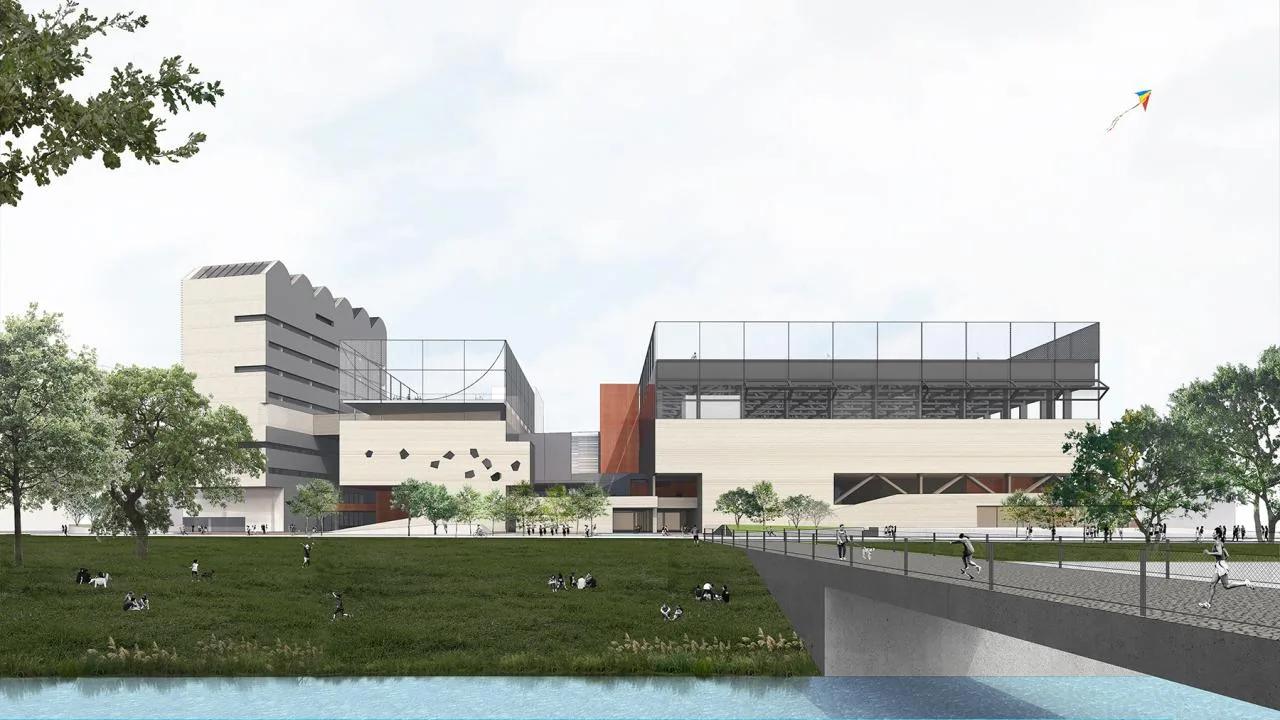
1. Core Concepts
The Pingdi community in Shenzhen, deeply rooted in Hakka traditional culture, boasts a rich history in manufacturing. It is gradually evolving from a purely “industrial block” into a “mixed industrial and residential area.” This transition reflects not only a change in function but also a transformation in spatial form. As the landscape levels out, the area will inevitably face growing demands for urban public spaces to serve an increasingly diverse population and complex economy.
The dramatic transformation of the city block housing the project echoes Shenzhen’s urban development over the past four decades. Typically, the narrative begins with the installation of essential municipal infrastructure, accompanied by a public building symbolizing the developer’s ambitions emerging from vacant land. This approach provides the necessary physical conditions and services for the fledgling city, while also fostering confidence among relocated residents.
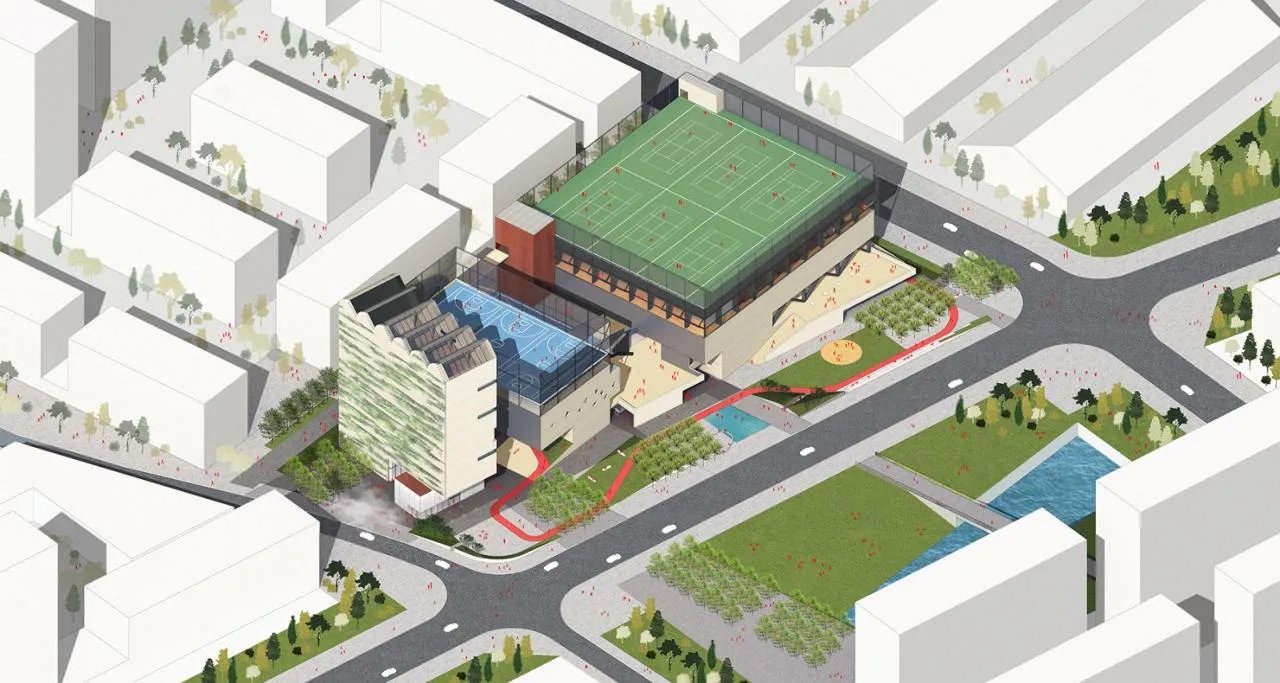
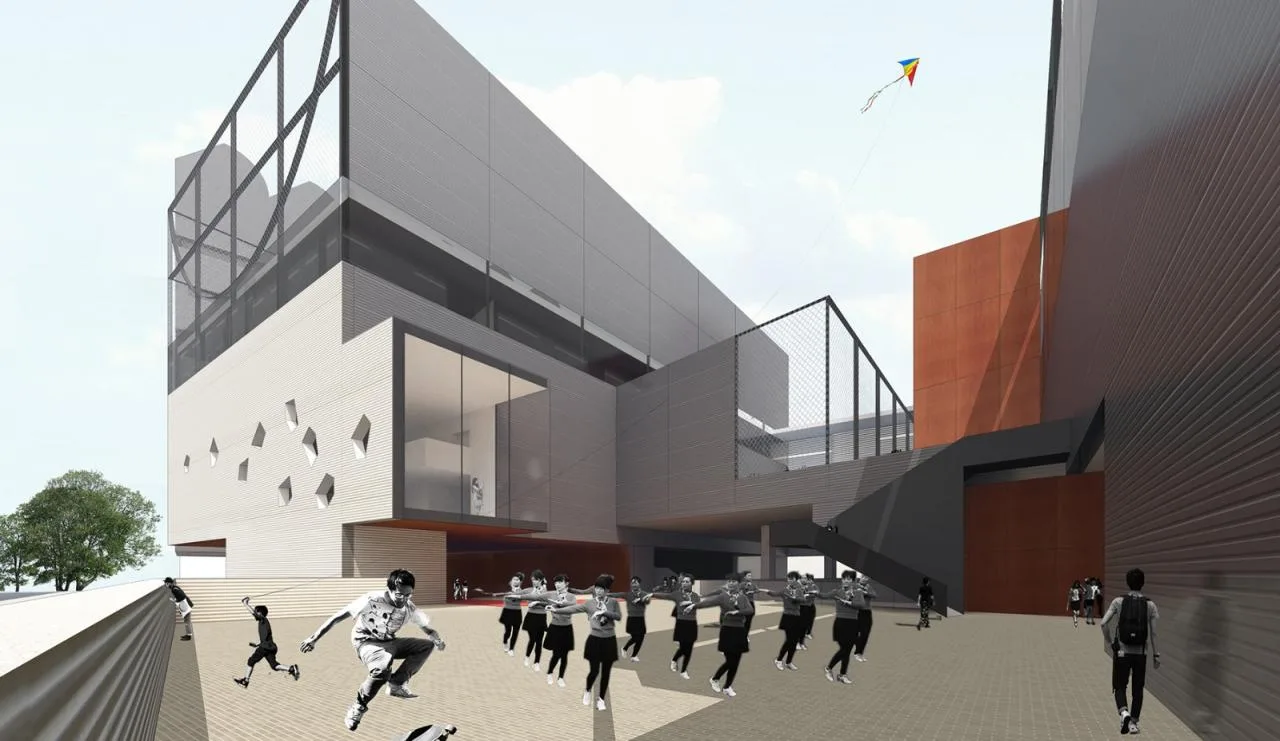
Beyond serving as functional containers or iconic monuments, what other roles can public buildings play? Can they serve as models shaping the urban fabric of an emerging community? Can they foster vibrant street life before the city fully takes shape? As the area’s first major public facility, the Pingdi Street Comprehensive Cultural and Sports Center boldly explores these questions.
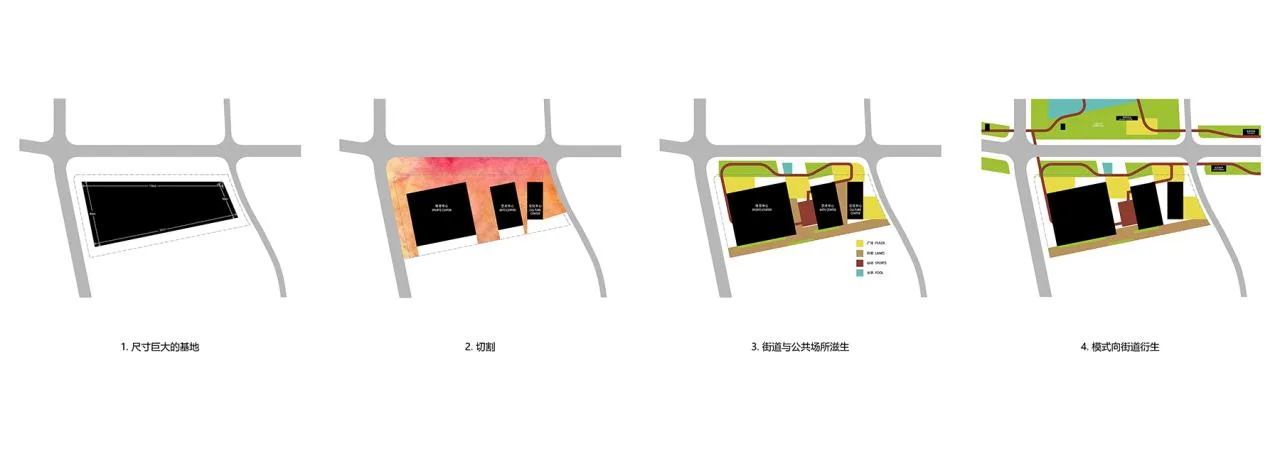
Concept Generation Analysis
2. Urban Design
Significant urban public spaces establish an ‘order’ — encompassing both physical elements, such as gathering places and access routes, and spiritual aspects, including the form, content, and sense of identity and ceremony they evoke. All buildings and landscapes contribute to this order; even the interiors of public buildings should extend it.
Within communities, ‘street space’ embodies this physical order. Streets serve as places where residents gather, sparking daily interactions that build communal identity, memories, and emotional ties to the neighborhood and city. Currently, the urban area around the project site has streets but lacks true street spaces: wide motor vehicle roads and green belts isolate pedestrians and fragment the community.
This new city urgently requires a “street life system,” and the cultural and sports center presents a valuable opportunity. Its diverse functions and substantial scale allow it to serve as a starting point for a city space model unique to Shenzhen, nurturing public life and community origins.
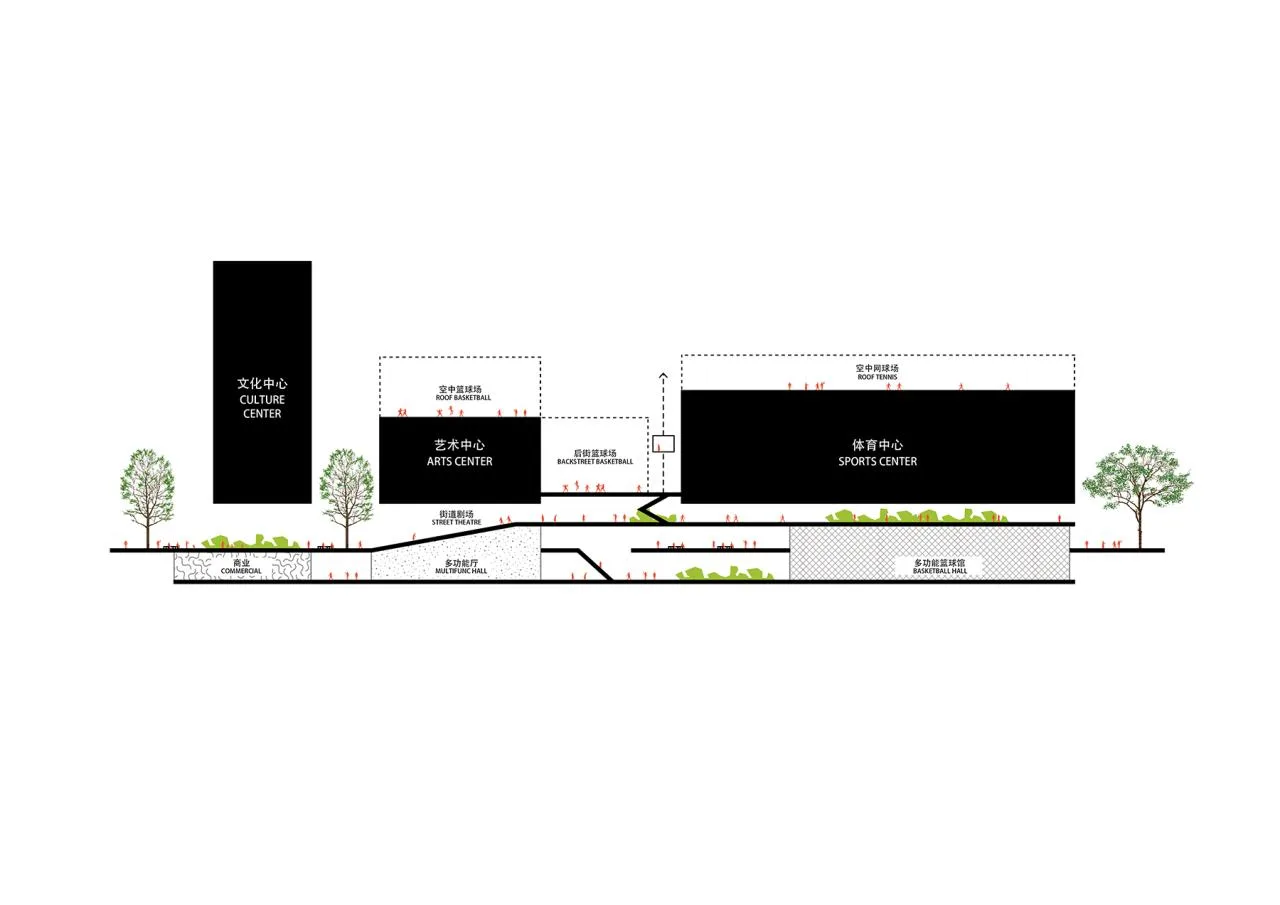
△ Overall architectural strategy: energy block
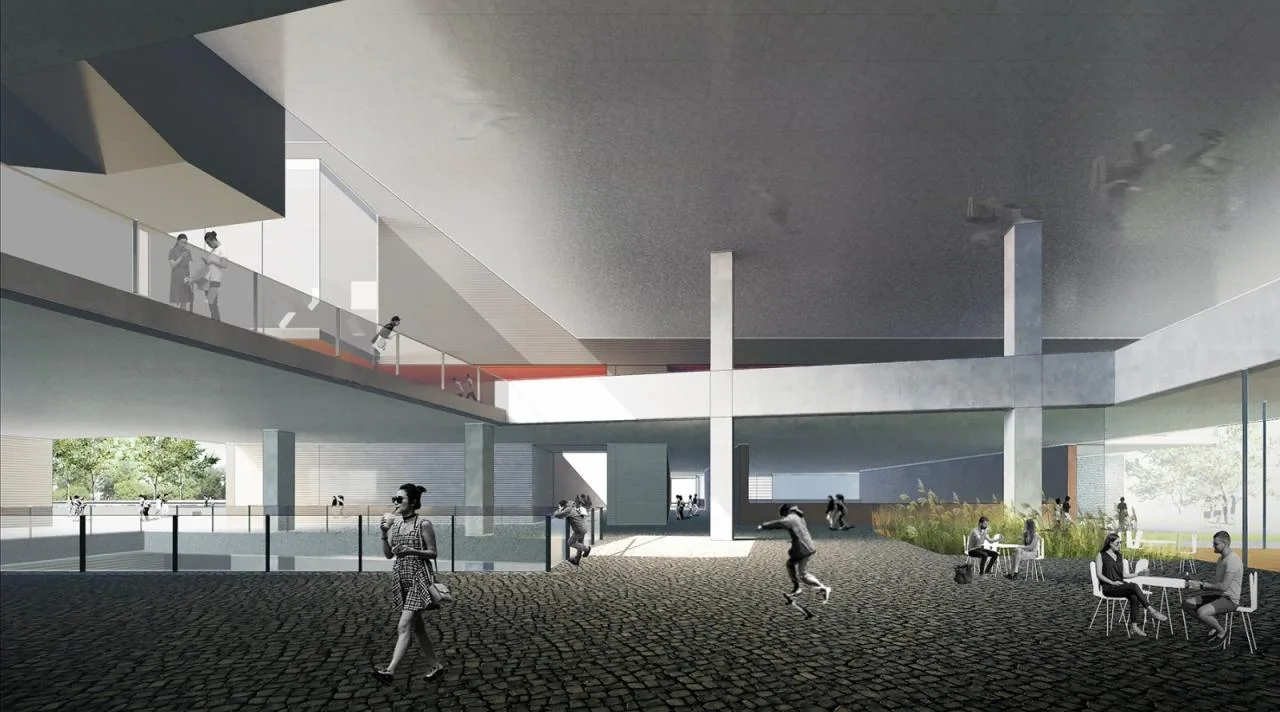
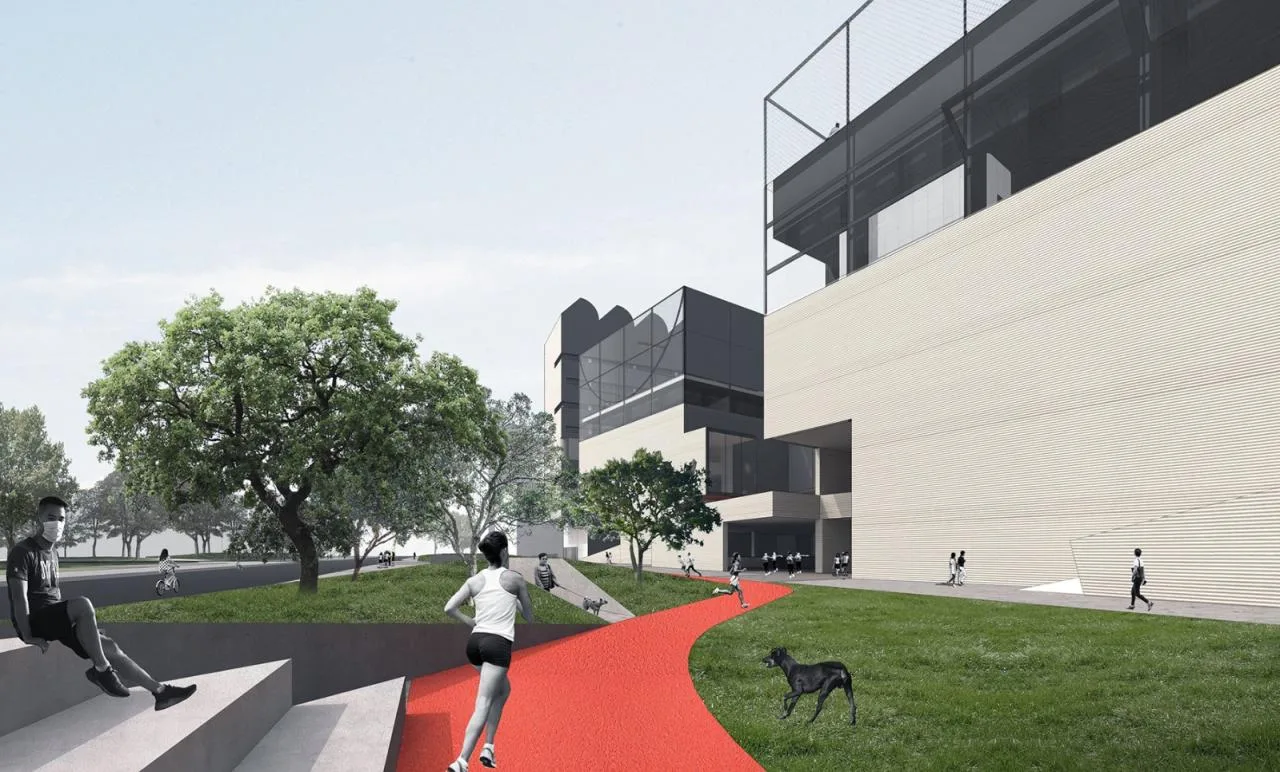
On a compact site, the project divides into three volumes, each corresponding to a functional cluster: “Sports Center,” “Art Center,” and “Cultural Center.” These structures enclose streets, squares, and parks of varying scales on a flat terrain. Vertically, the main functions are suspended above ground, returning street space to the city.
This “energy block,” spanning from the lower ground to the second floor, houses multiple sports training venues, performance spaces, community activity rooms, and commercial shops accessible to residents. It creates a dynamic, richly scaled urban space that invites exploration.
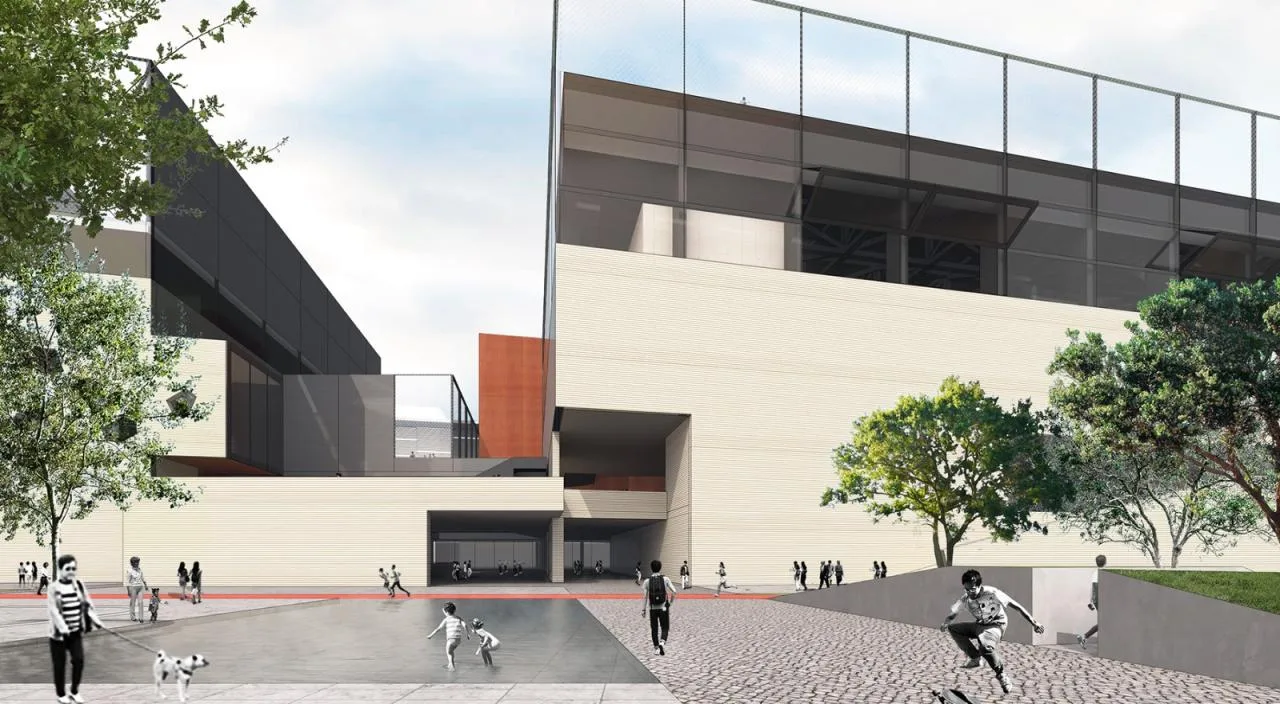
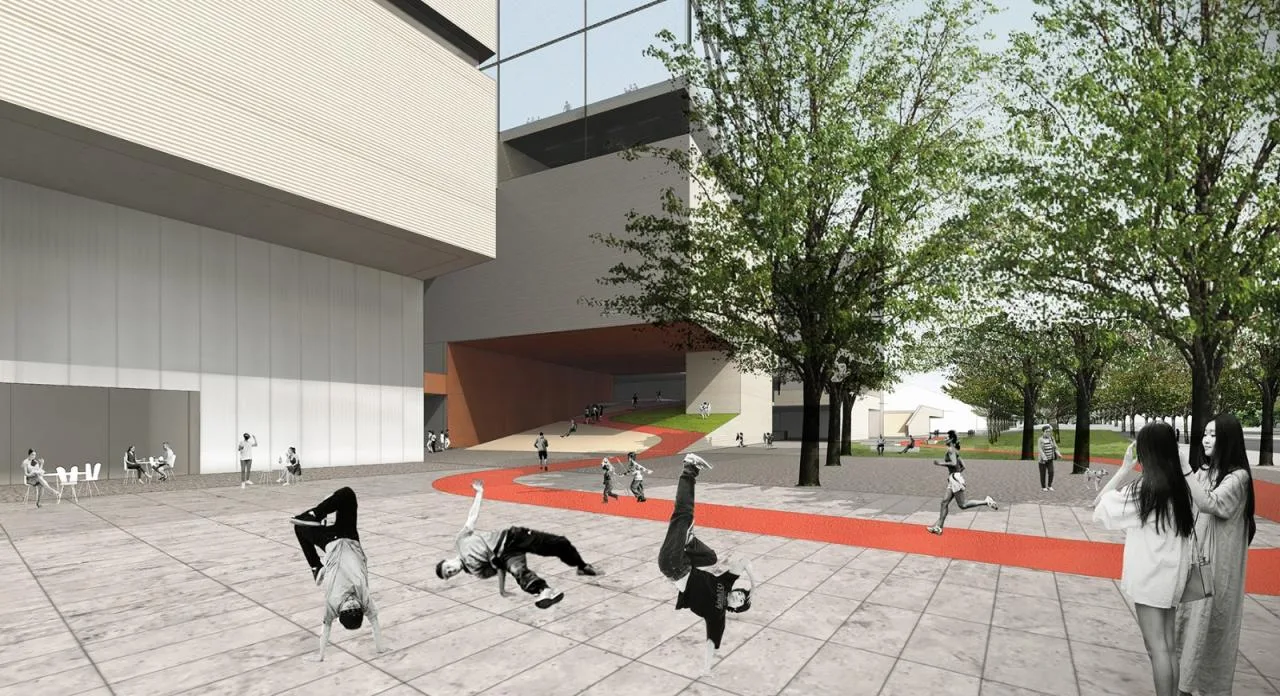
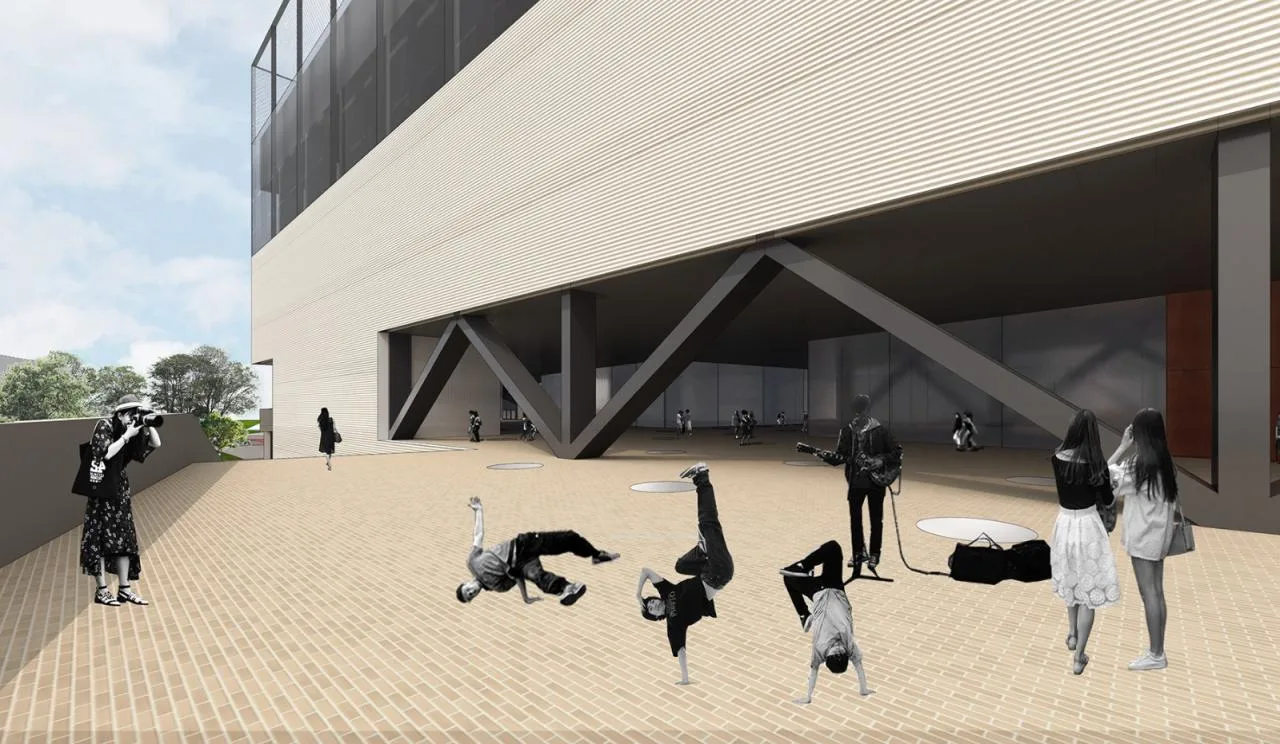
The high-density architectural complex and three-dimensional urban blocks form an engaging “urban environment” composed of squares, water features, tree clusters, theaters, and sports facilities. Inspired by traditional southern Chinese urban spaces, narrow alleys between building volumes provide shade from intense sunlight and channel cool breezes.
The staggered floor plan offers all-weather activity areas sheltered from wind and rain, enabling the building to serve the public even when closed. By blurring the boundary between urban open space and architecture, this “prototype block” suits Shenzhen’s climate and sparks imagination.
3. Architectural Design
Architectural Language
The facade materials reference two traditional visual elements from the project area: clay facade hanging panels and louvers, blending seamlessly with the rammed earth walls of traditional Hakka houses. The interplay between aluminum panels and steel components recalls the industrial aesthetic of manufacturing buildings.
Rational and concise architectural structures enclose the rich and diverse urban open spaces, reminiscent of lively traditional Lingnan urban environments woven from simple houses and courtyards. Various urban public scenes of different scales and distinct static qualities are scattered among the building volumes. North-south streets capture Shenzhen’s summer southeast winds, creating “cool alleys” at varying scales that improve the site’s microclimate.
While the complex functions and different operational modes make the cultural and sports center a multifaceted building, its form and spatial organization remain simple. The design avoids creating “anomalies,” aiming instead to integrate smoothly into citizens’ daily lives. The center aspires to be a “necessary urban element” with “necessary design.”
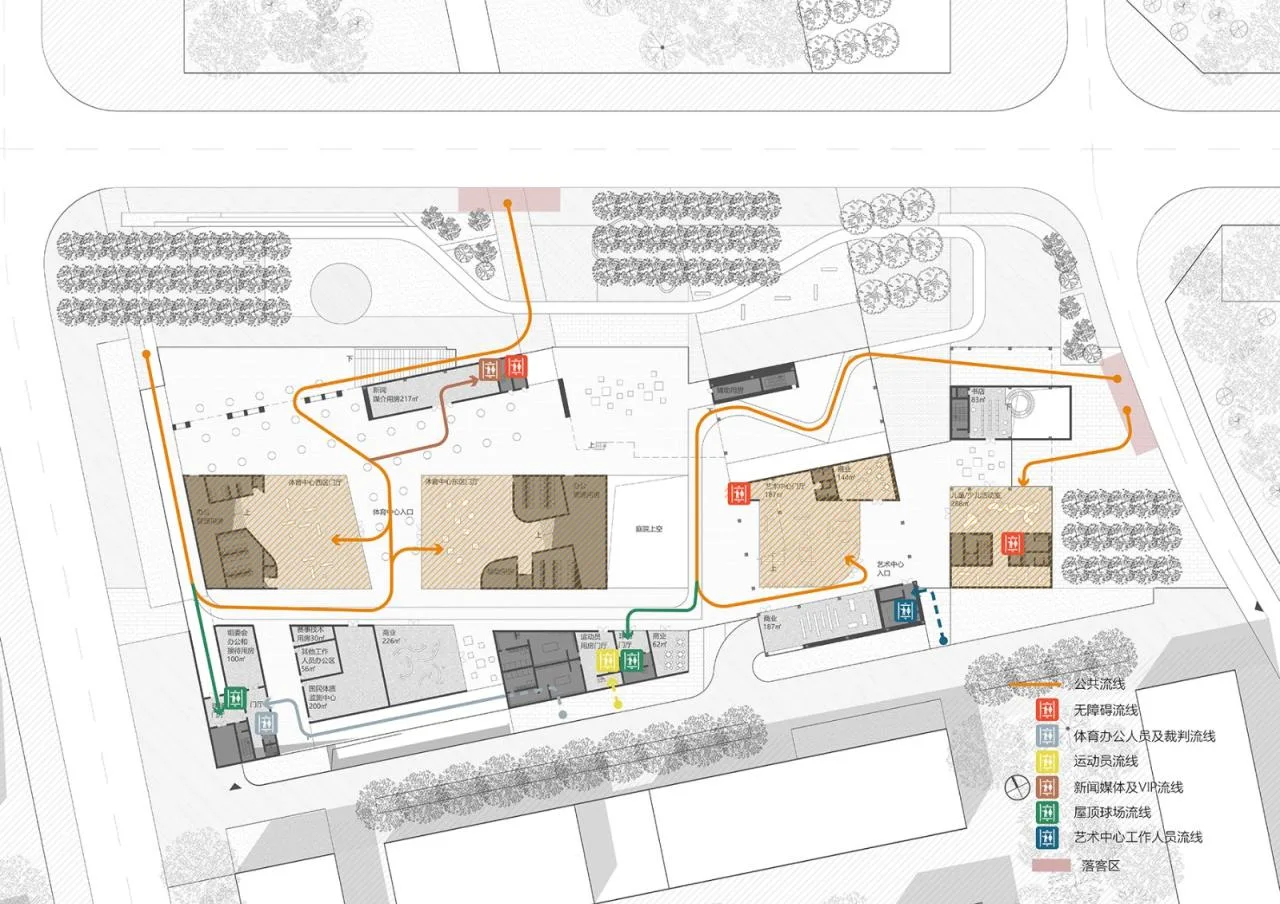
△ Streamline analysis
Building Unit 1: Sports Center
The Sanda competition hall requires a large volume, which conflicts with limited land availability. Therefore, rather than expanding horizontally, the venue’s functions are vertically stacked to meet usage needs while preserving valuable city streets.
The design favors a simple, restrained structure, avoiding the exaggerated forms typical of contemporary sports facilities. This approach allows the sports arena to harmonize with other buildings in the complex. Inspired by Alejandro de la Sota’s Maravillas Sports Center, the design emphasizes a simple yet refined structure to tackle complex requirements like large-span spaces, functional rooms, and accessible roofs.
The competition hall is a bright, multi-purpose sports venue. A heavy-duty lifting window above the audience seats can fully open to bring in fresh air. As cooler air descends, it carries rising hot air out, maintaining comfort naturally. This low-energy facility requires no artificial lighting or air conditioning for regular use.
The underground level accommodates large training venues and commercial facilities. Sunken courtyards introduce natural light and fresh air, improving humidity and temperature. Some public spaces are designed to adapt, such as converting basketball courts into activity areas in the future.
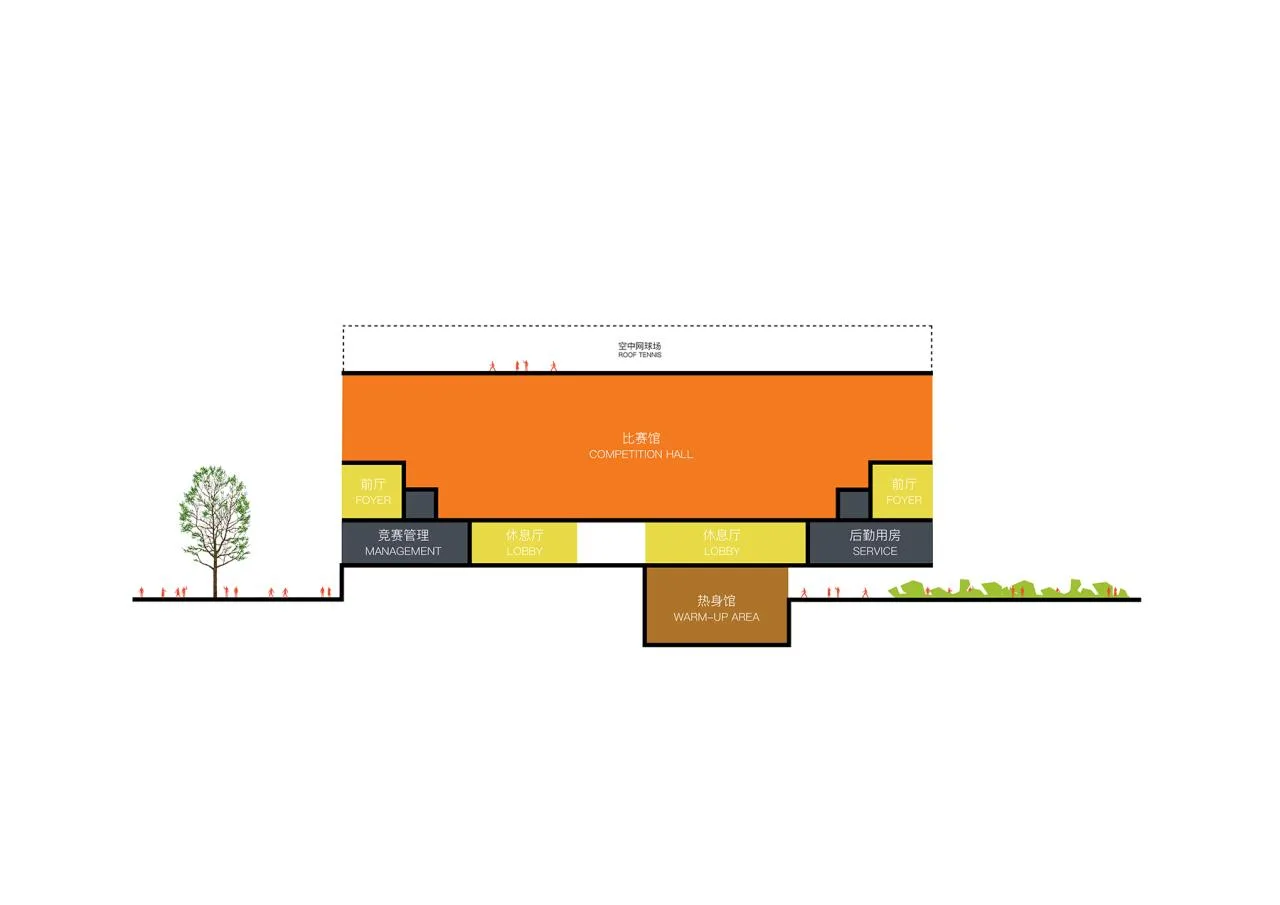
Functional analysis of the Sports Center © Similar to Architecture
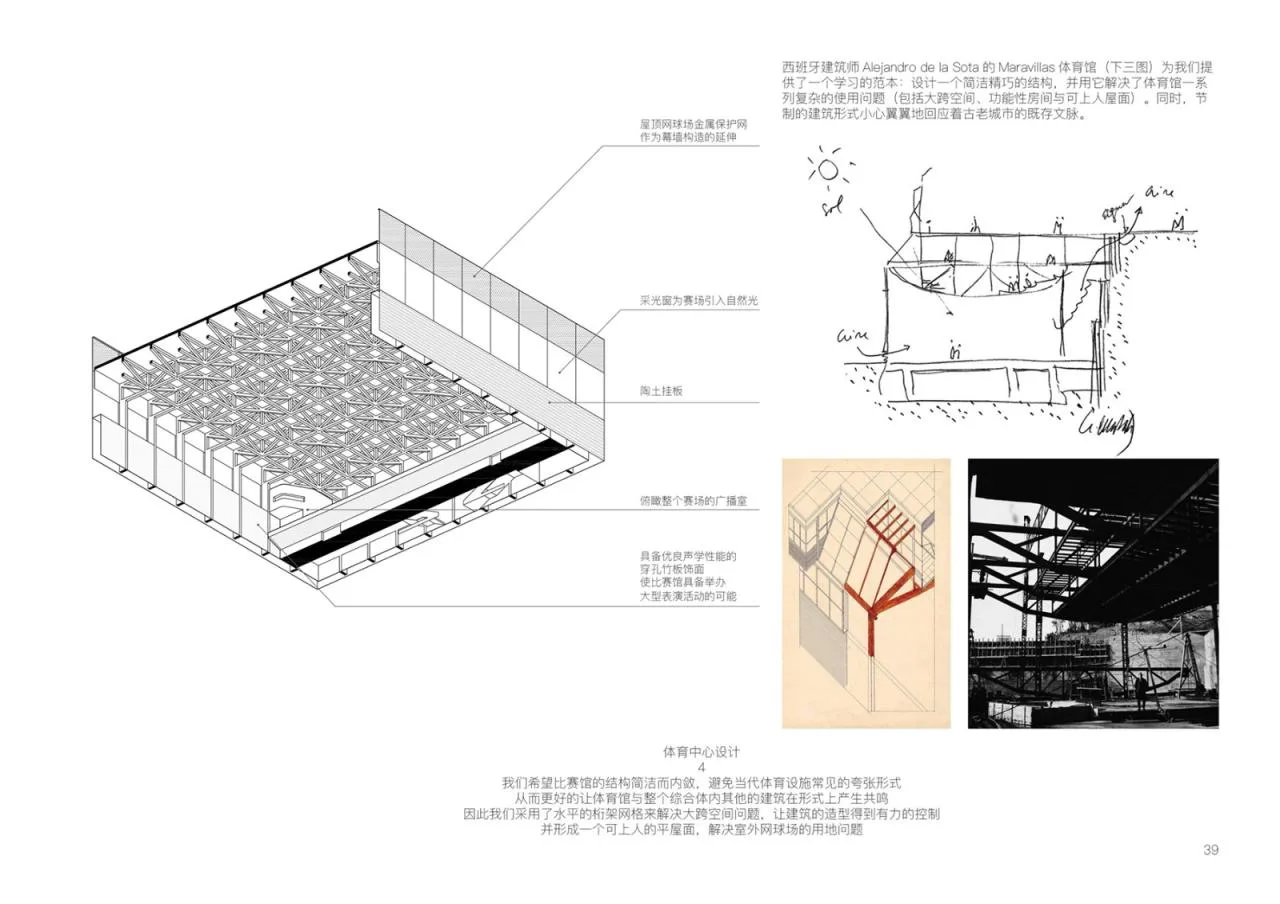
△ Sports Center Structure Strategy © Similar to Architecture
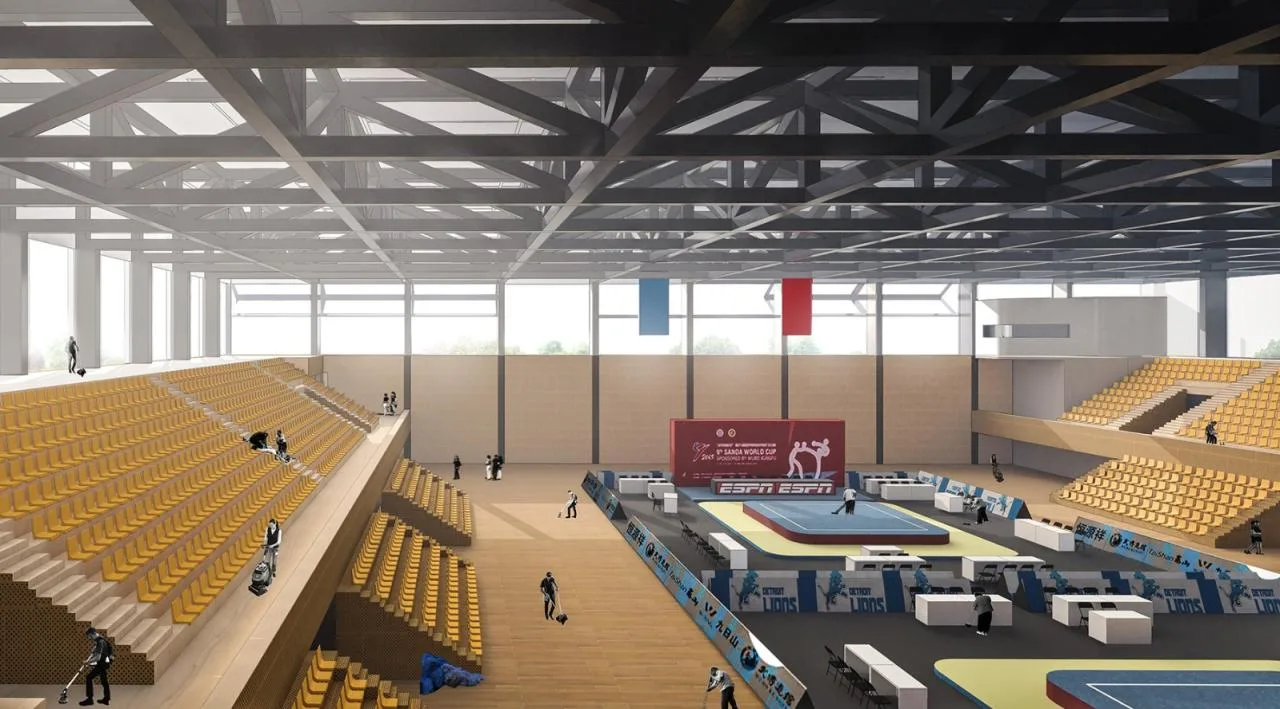
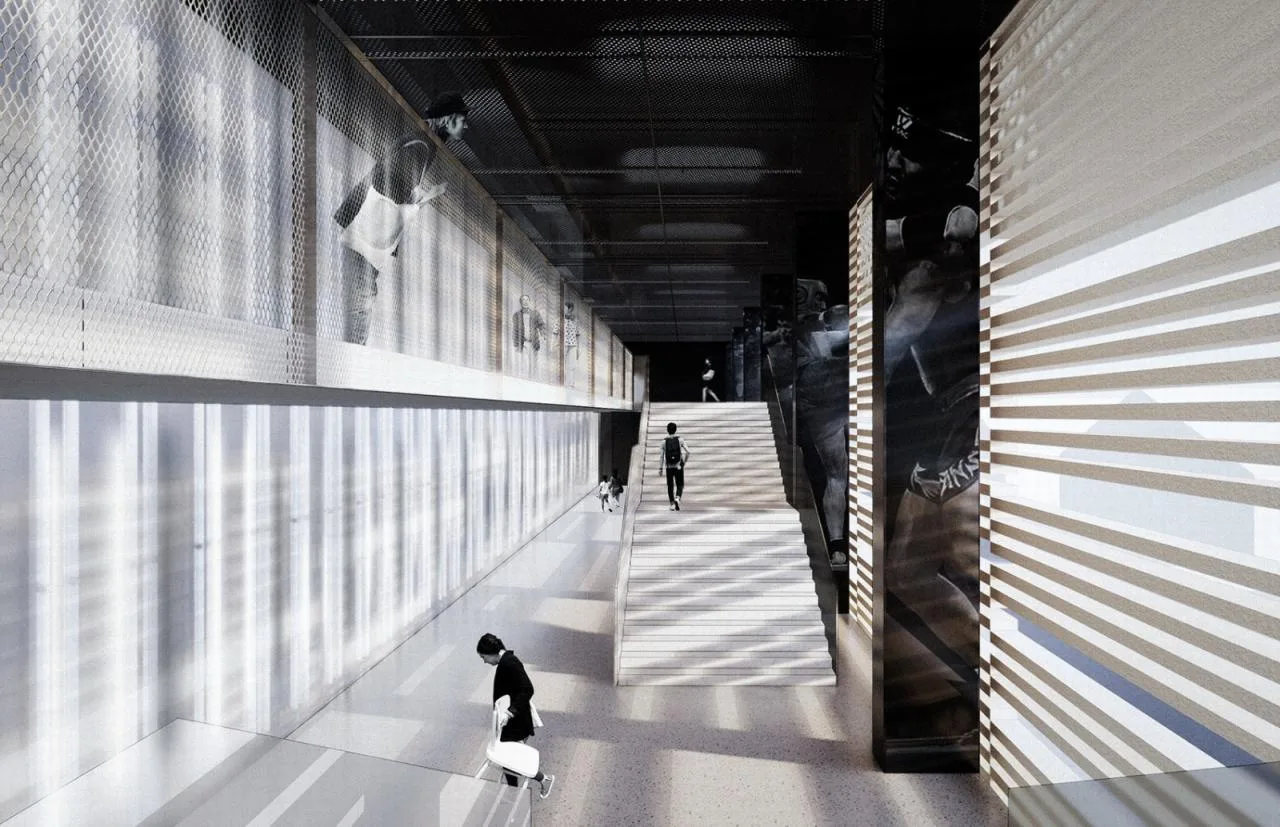
Building Unit 2: Art Center
The Art Center, centered around a 500-seat theater, sits between the Sports Center and Cultural Center. It can function independently or integrate with the other units. The theater is designed as an enigmatic “magic box,” offering acoustic and visual conditions optimized for professional performances.
It features a foldable grandstand system that can transform the space into a multifunctional black box theater when needed. The front hall overlooks the neighborhood, accommodating small pre-show activities. The upper level connects to the Cultural Center, creating a public workshop where citizens and artists collaborate on creation, research, and exhibitions.
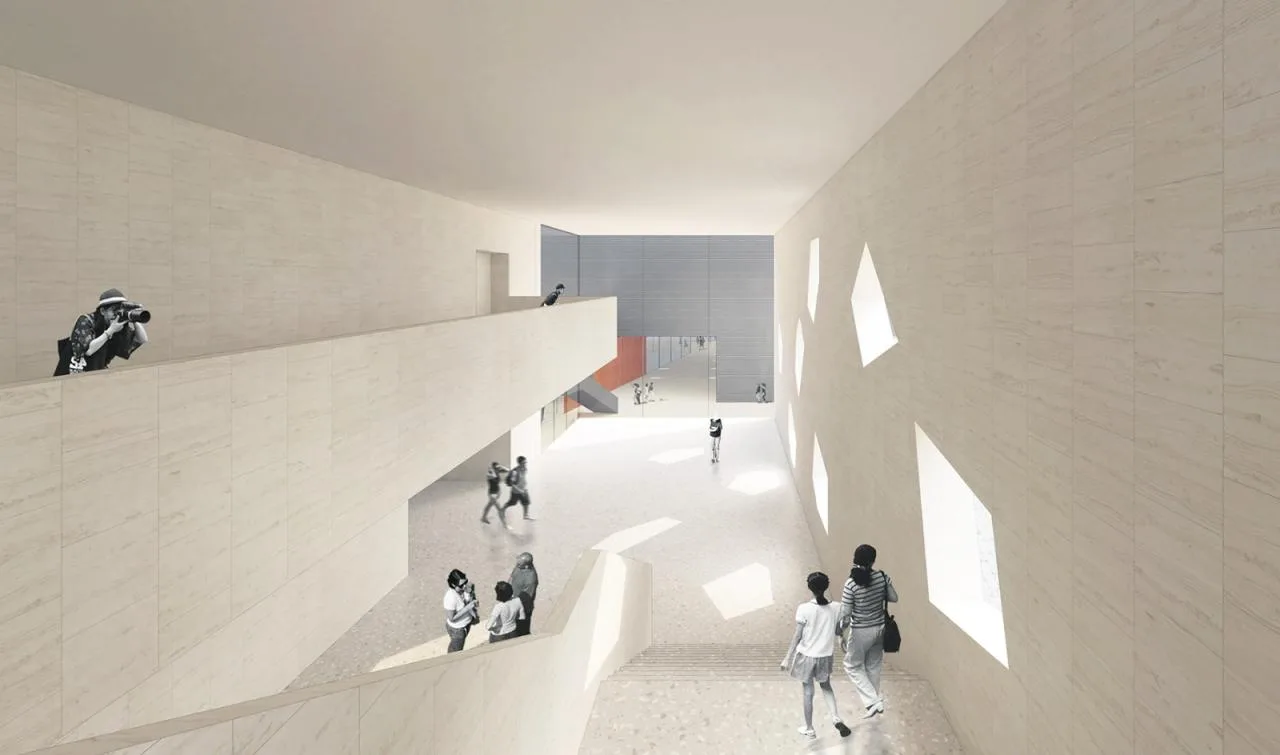
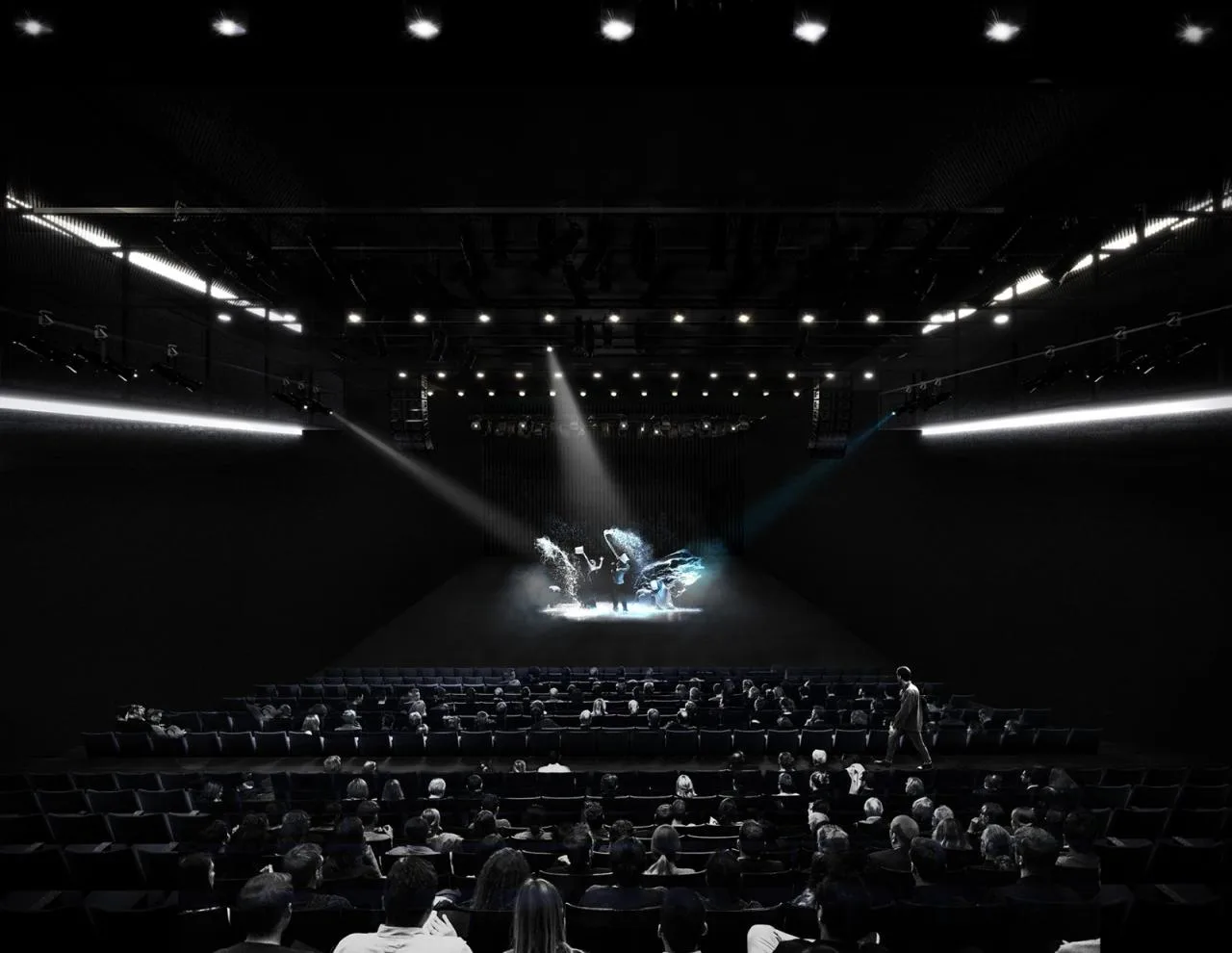
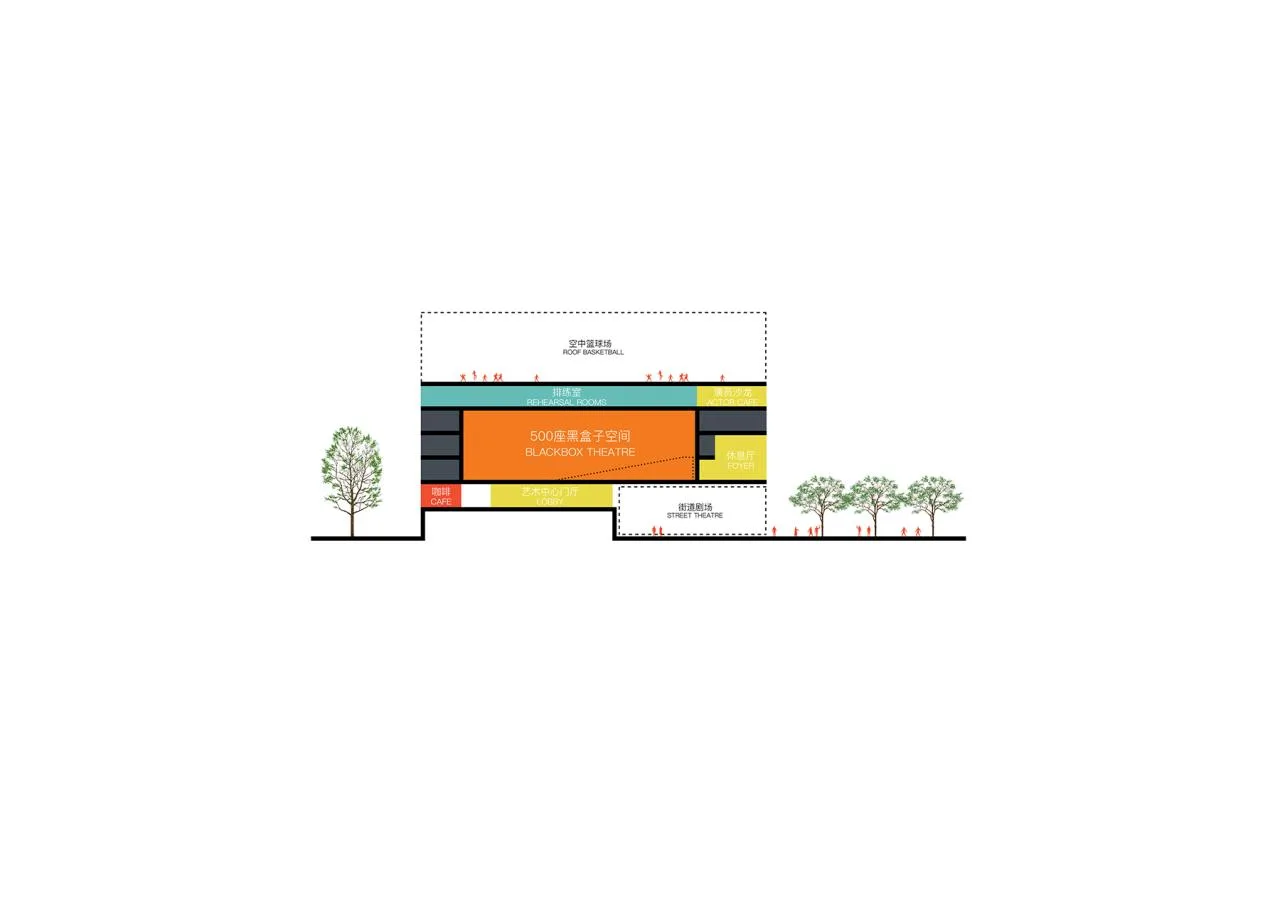
Analysis of the Art Center Function © Similar to Architecture
Building Unit 3: Cultural Center
The Cultural Center, at 55 meters tall, is the tallest building on site, vertically stacking two main functions: a library and a cultural center. Its streamlined form achieves high visibility in the bustling city.
Located at the eastern edge of the site, the Cultural Center creates two city squares along the street, becoming prominent public activity hubs. The east facade features a double-layer curtain wall with clay shading, providing ample natural light for reading and learning. The west facade consists of size-controlled strip windows, effectively minimizing sunlight exposure.
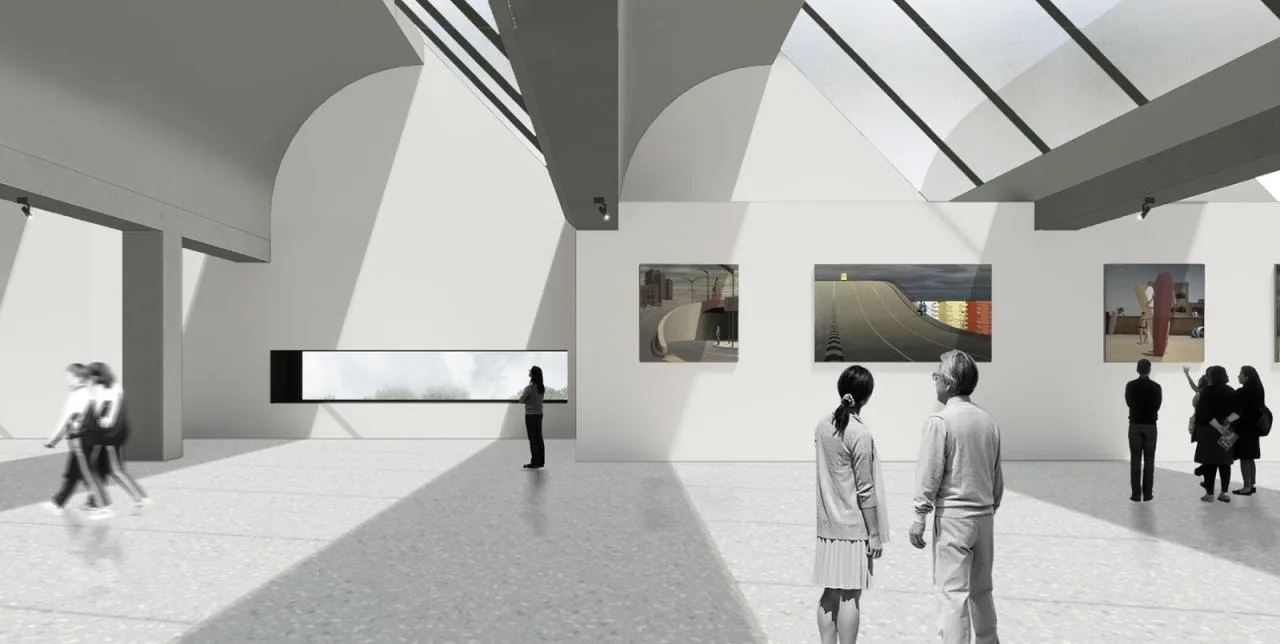
The rooftop “Cloud Gallery” serves as a skylight art space, destined to become a landmark cultural salon for the neighborhood.
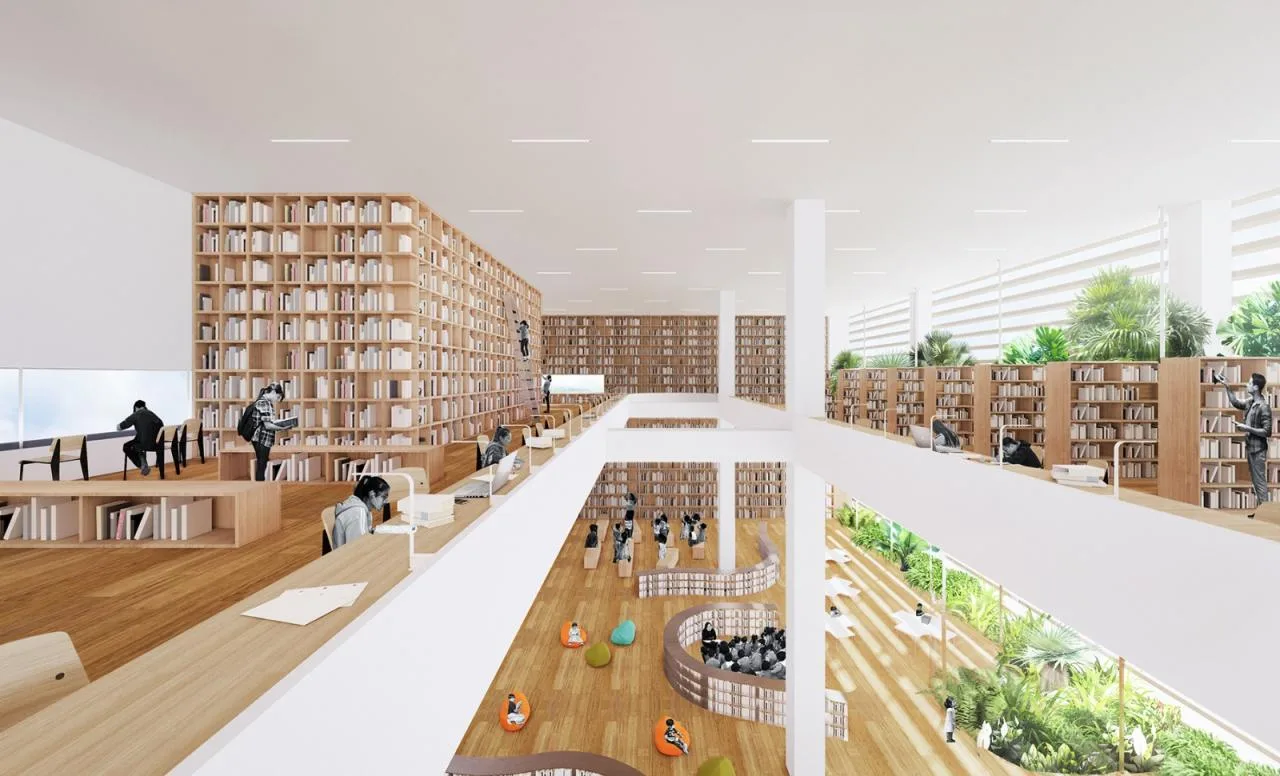
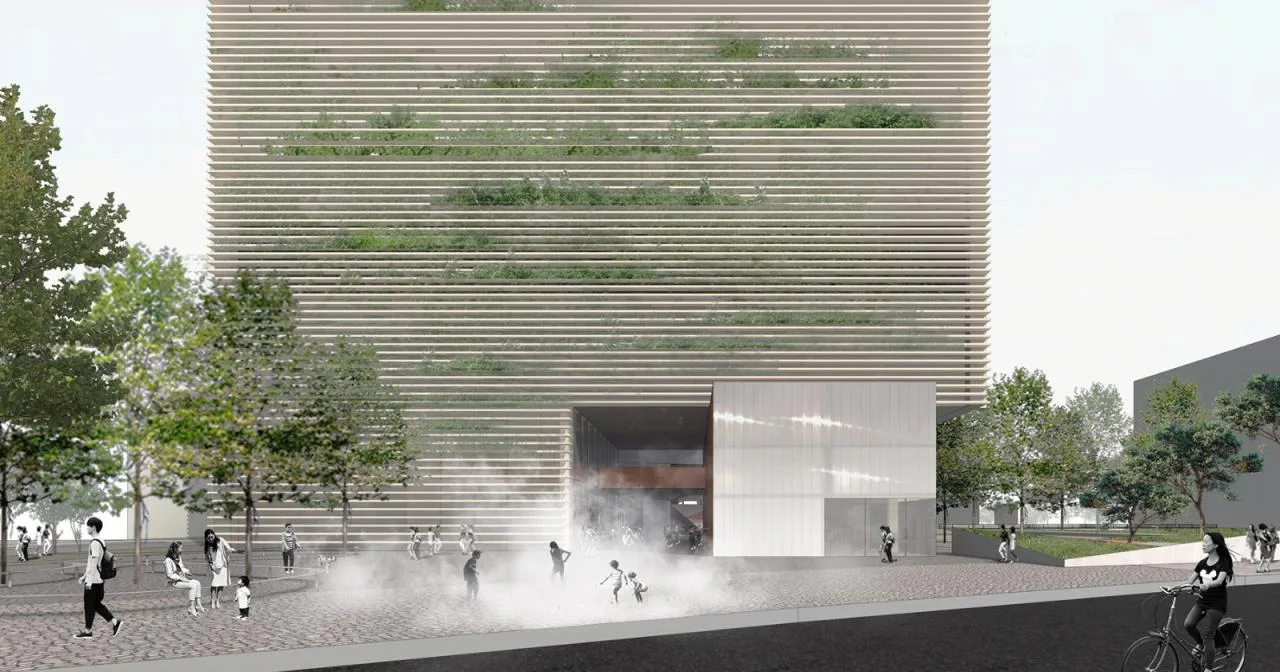
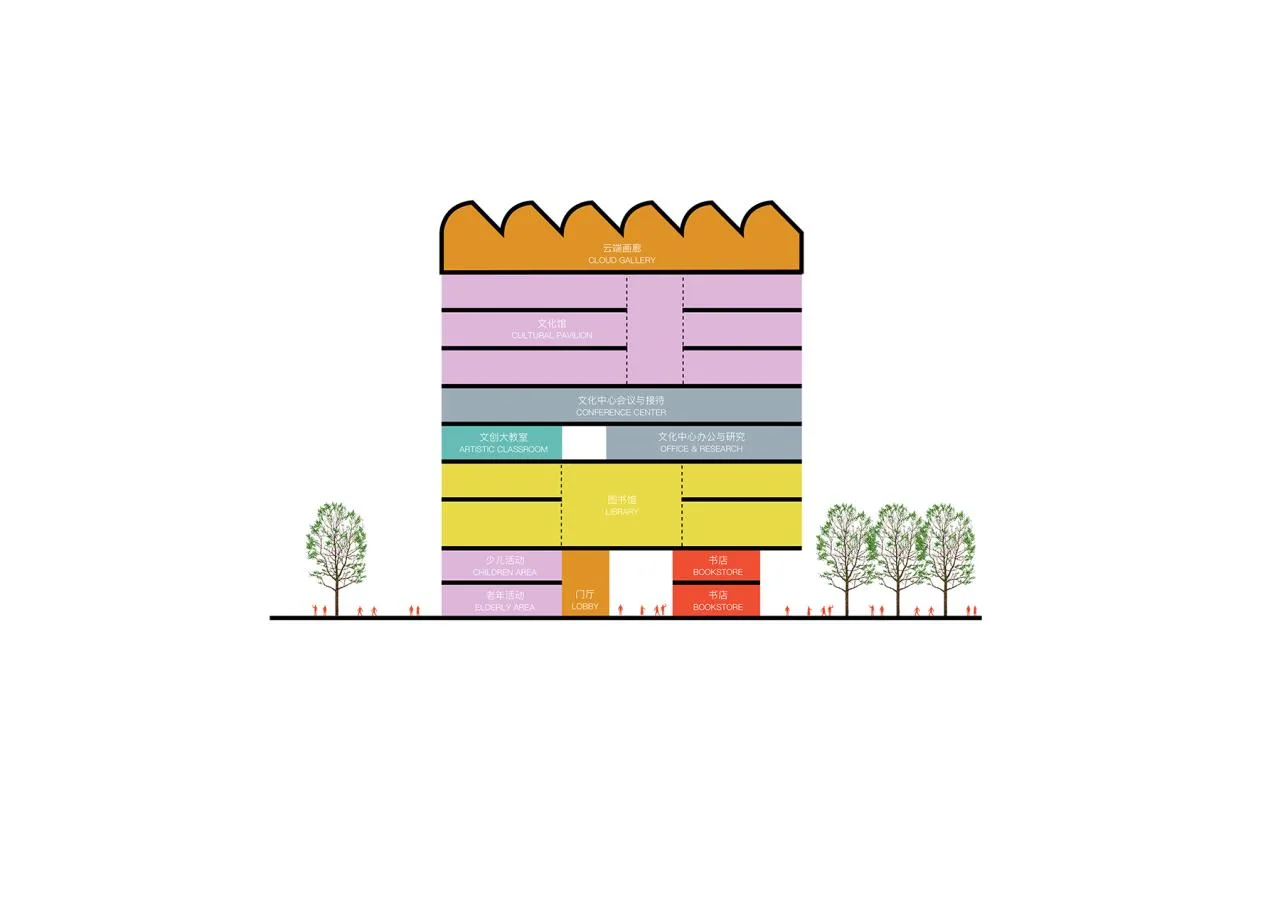
Analysis of the Cultural Center Function © Similar to Architecture
Postscript
Reflecting after three years of the pandemic on this urban public space proposal conceived at the pandemic’s onset, I have gained unique insights. As an exploration of urban spatial form, it seemed to mirror debates about whether urban public spaces remain essential during such crises.
Our cities have grown accustomed to various indoor public places, climate-controlled to provide endless entertainment, often ignoring natural climate conditions. However, during major health crises, these enclosed spaces become potential hotspots, leading to their abandonment and scrutiny.
Perhaps only in such moments can the value of open, borderless urban spaces be truly reconsidered and appreciated.
Project Drawings
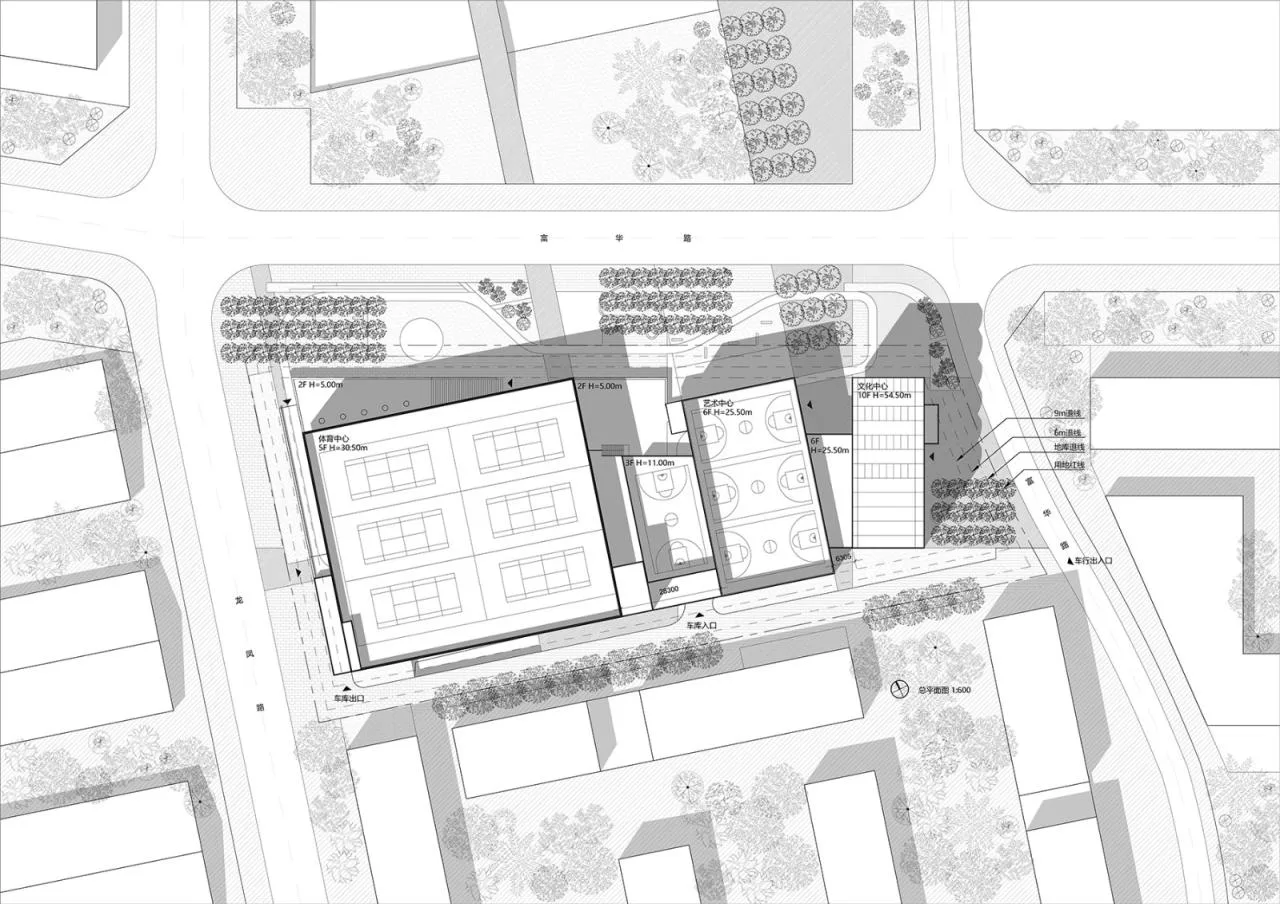
△ General Layout Plan
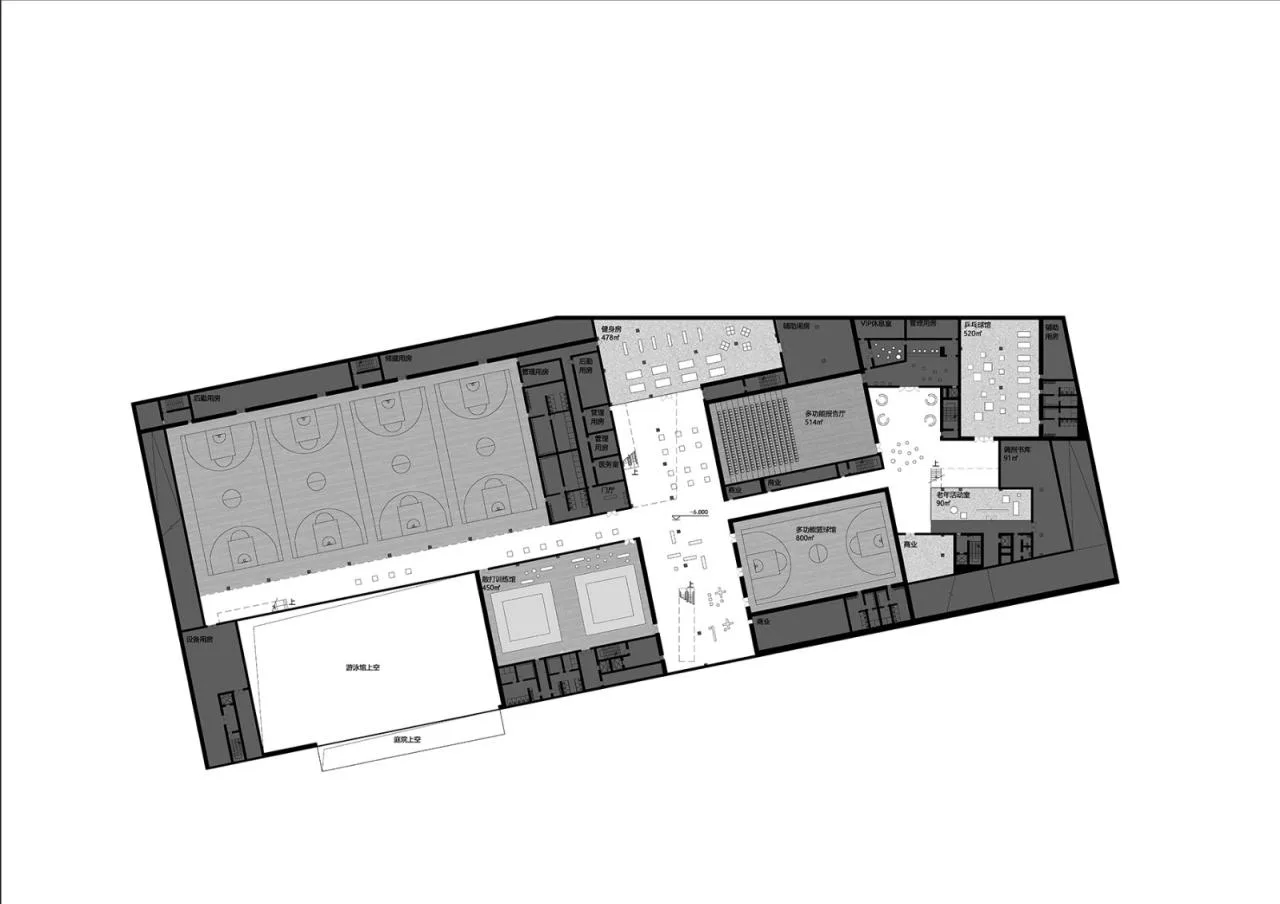
△ Underground Floor Plan
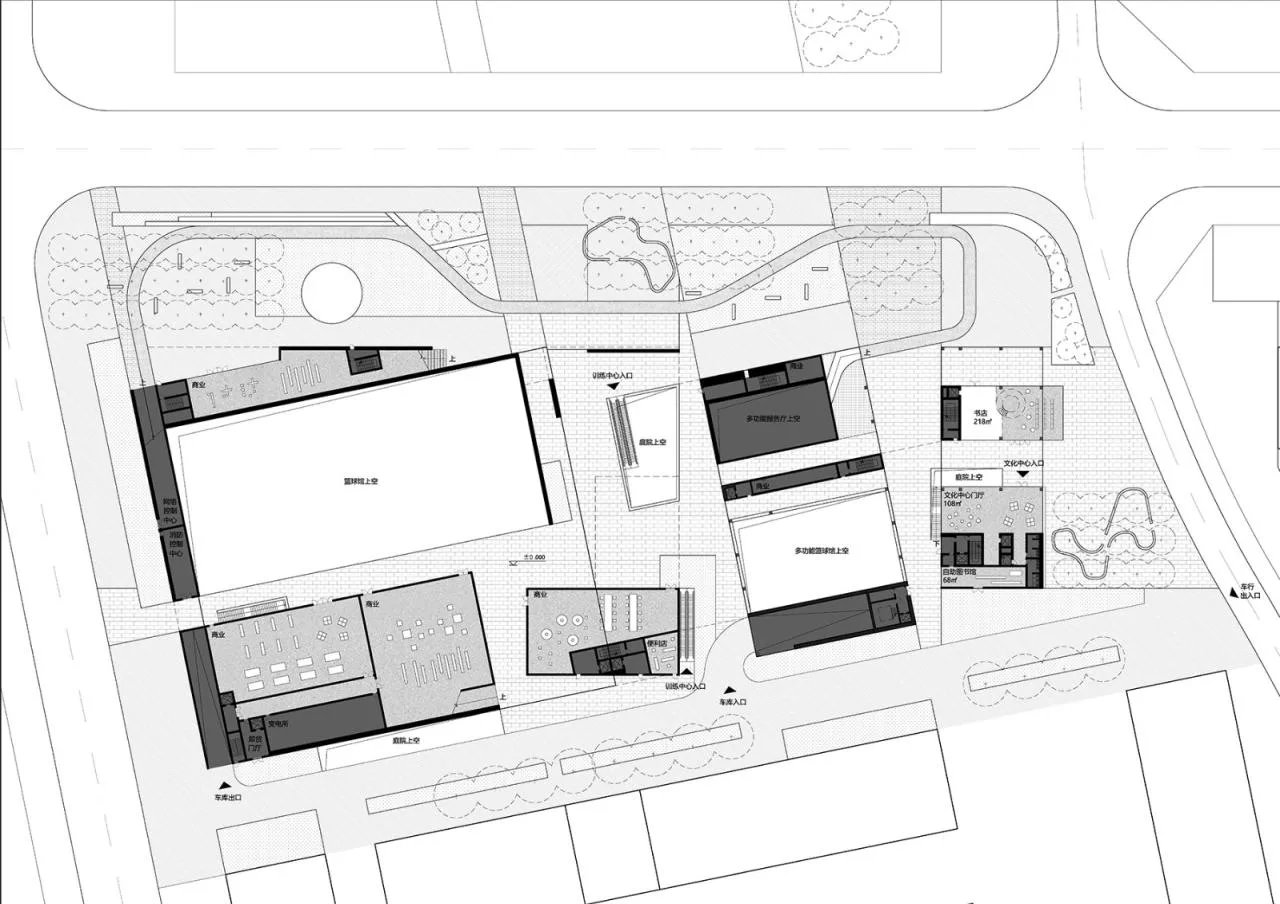
△ First Floor Plan
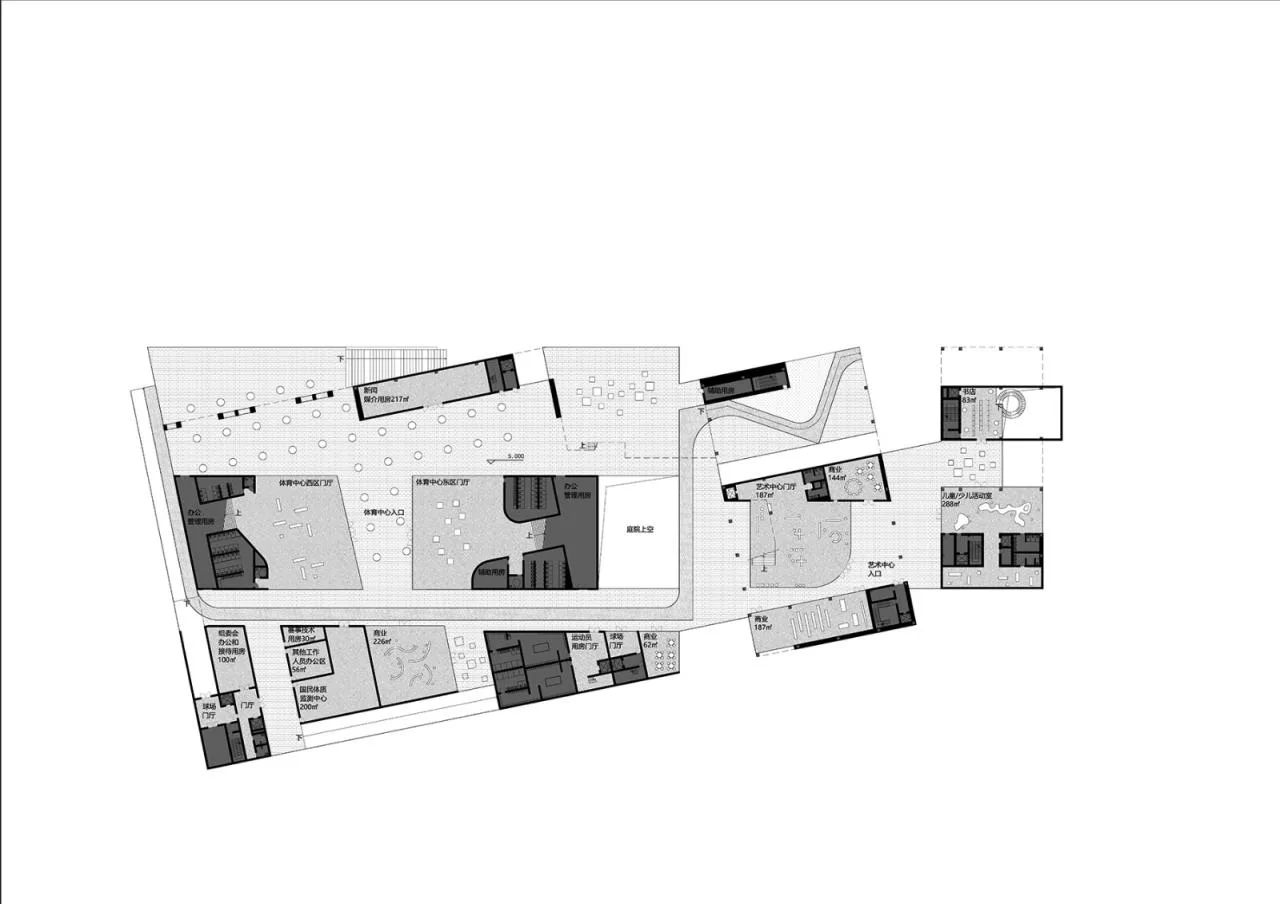
△ Second Floor Plan
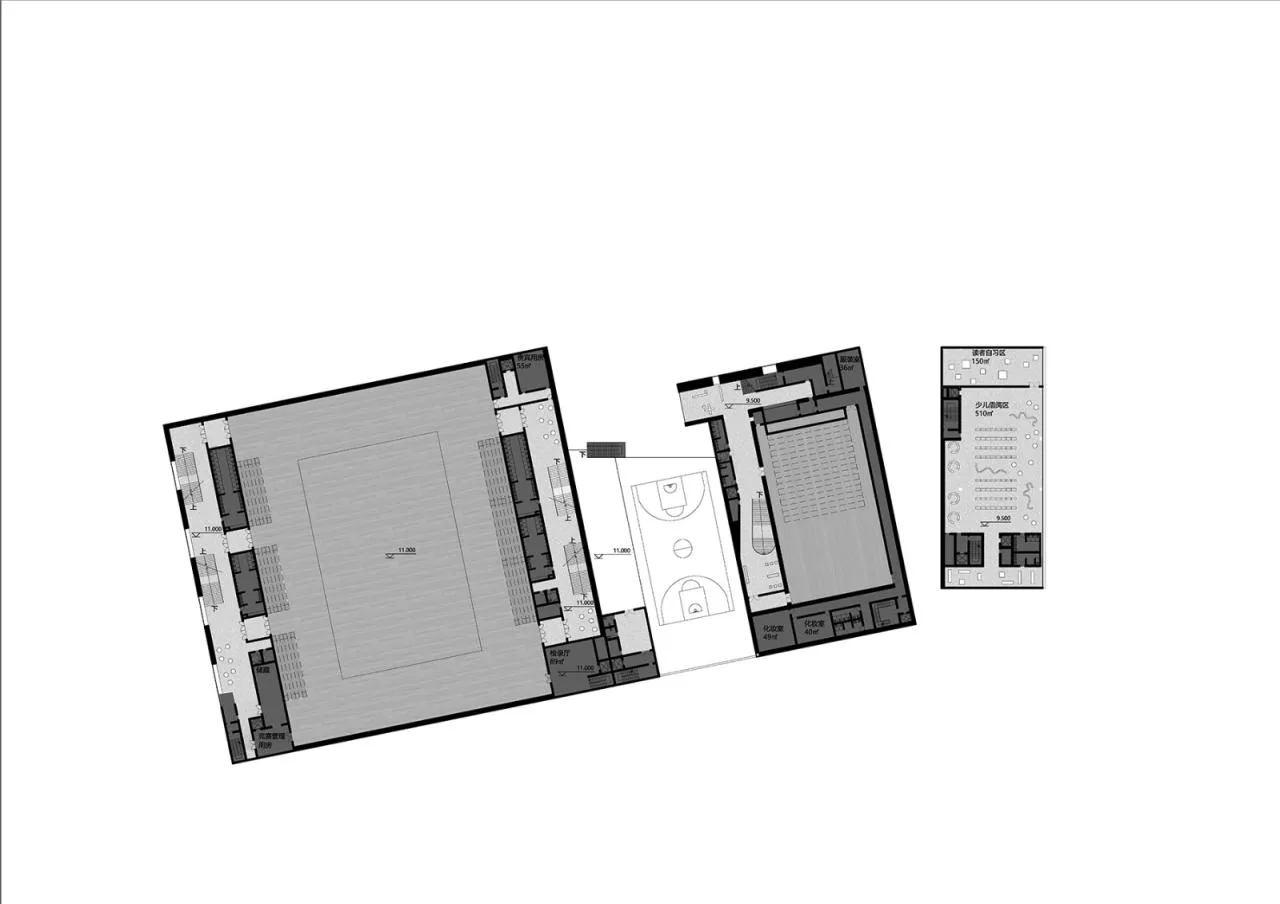
△ Third Floor Plan
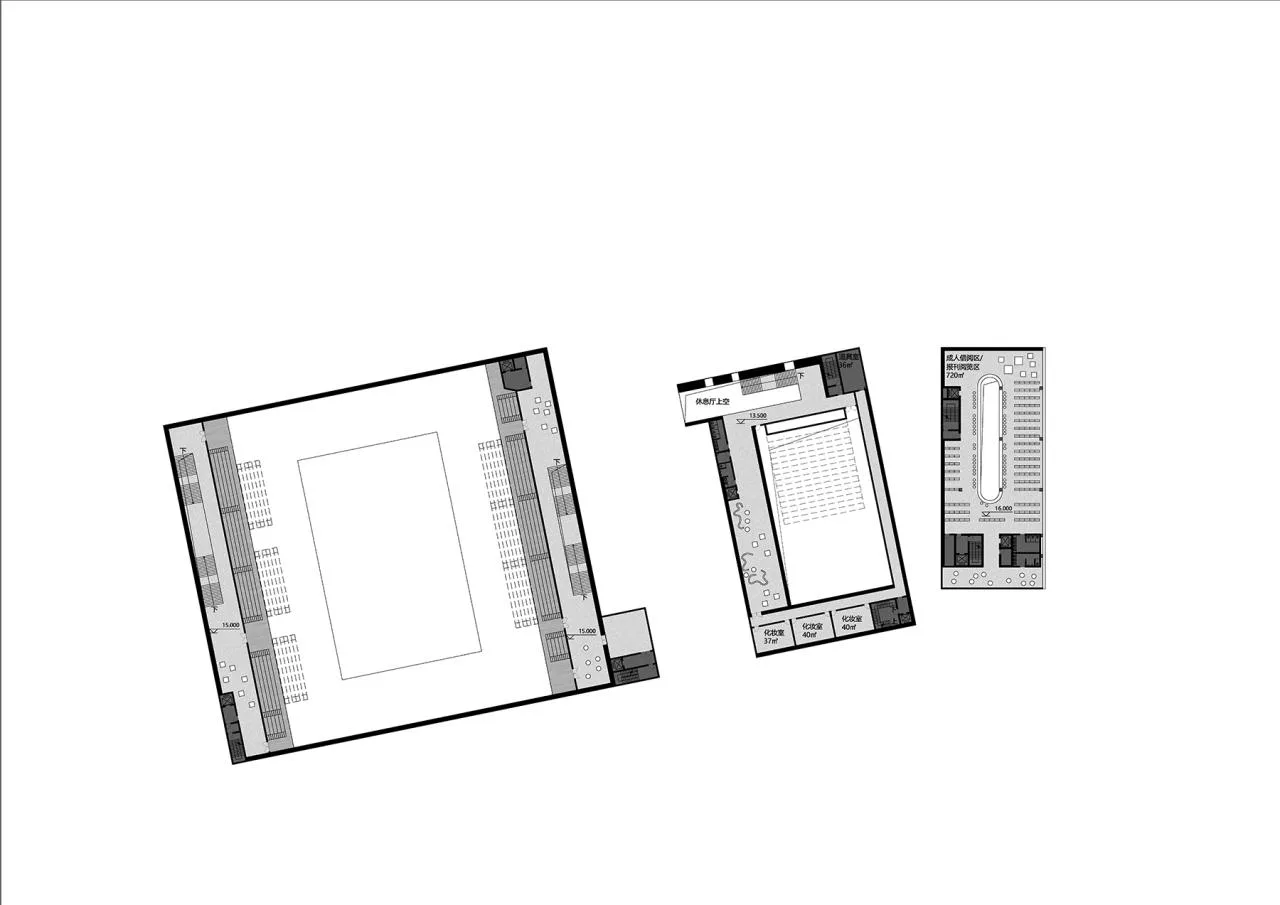
△ Fourth Floor Plan
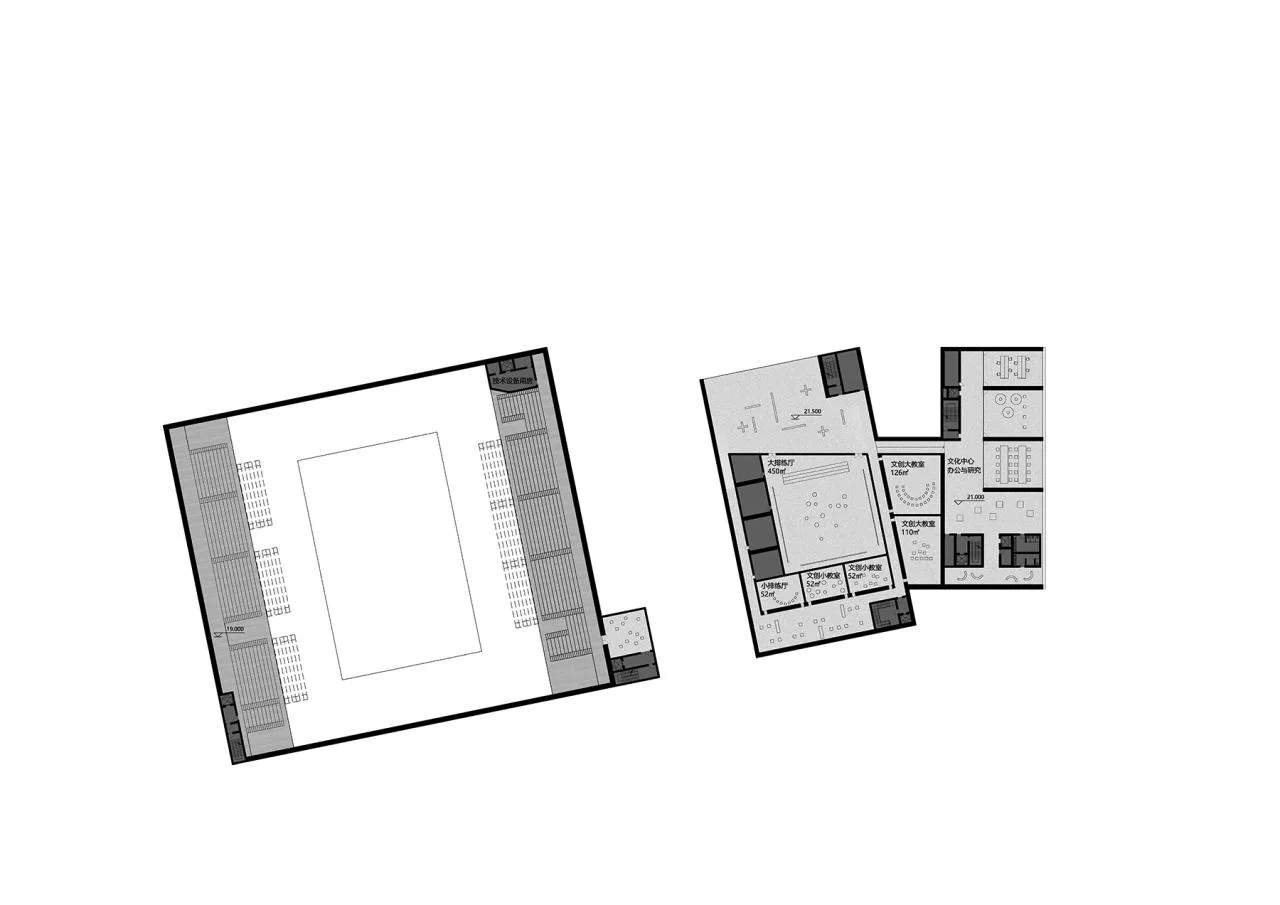
△ Fifth Floor Plan
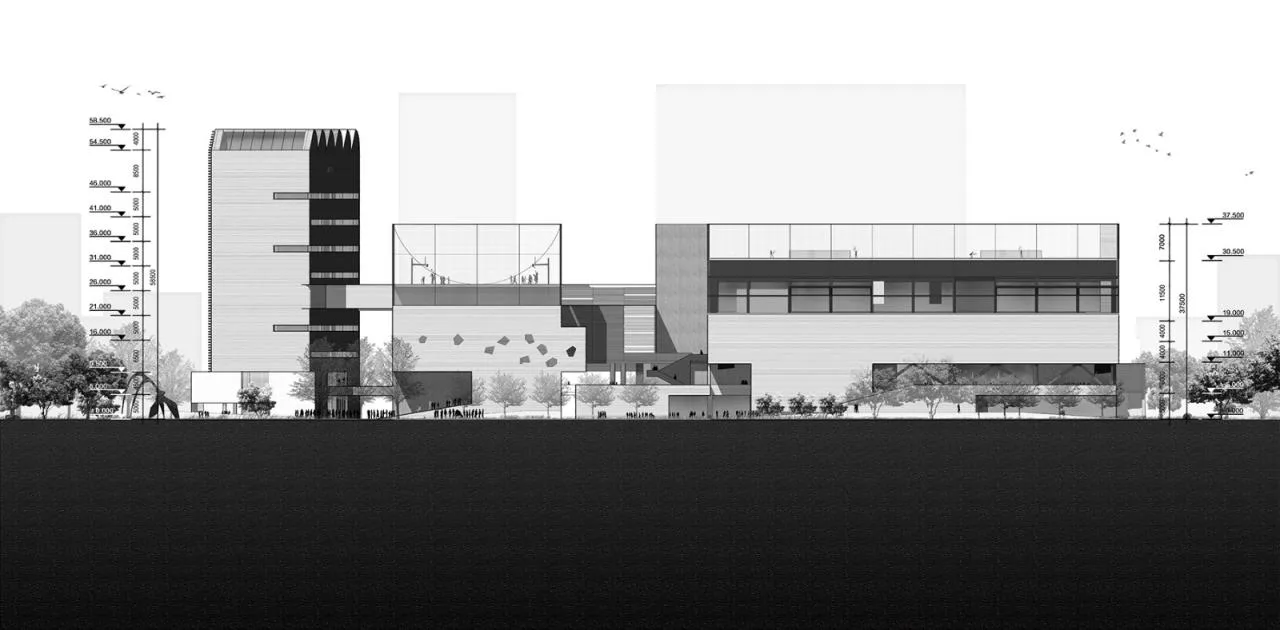
△ North Elevation View
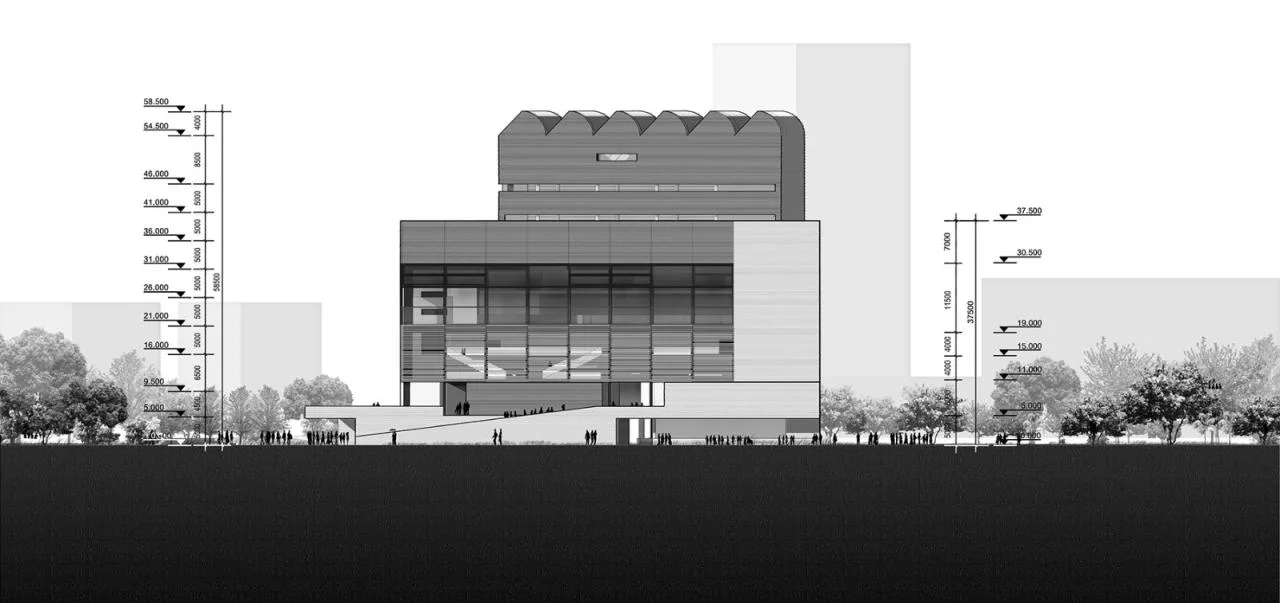
△ West Elevation View
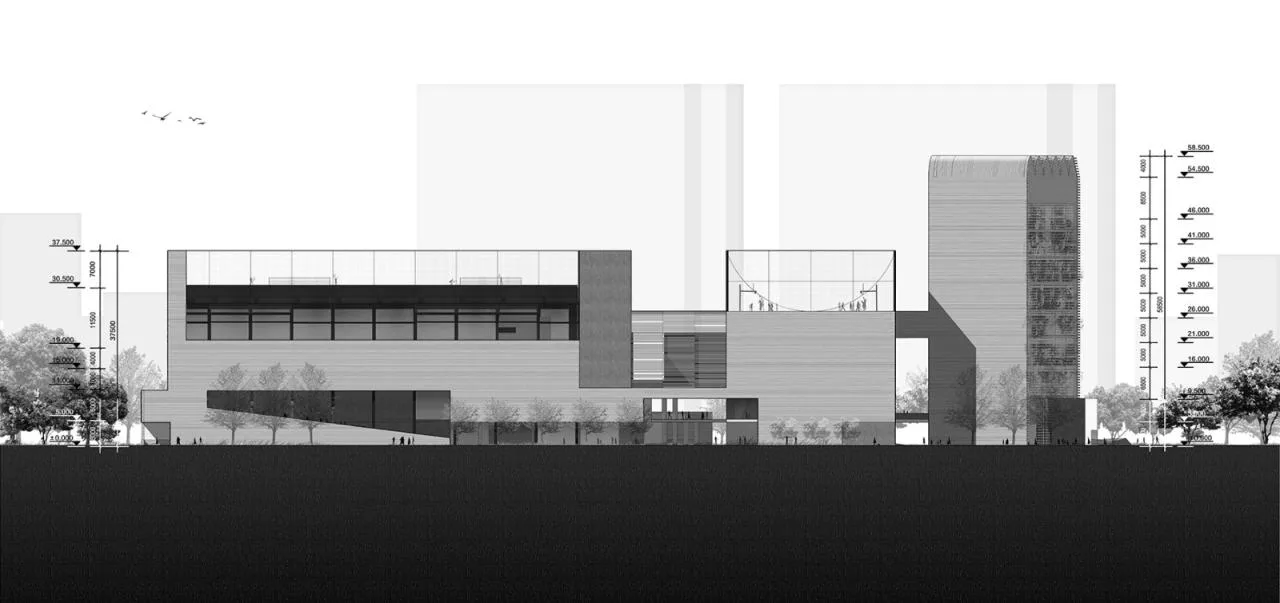
△ South Elevation View
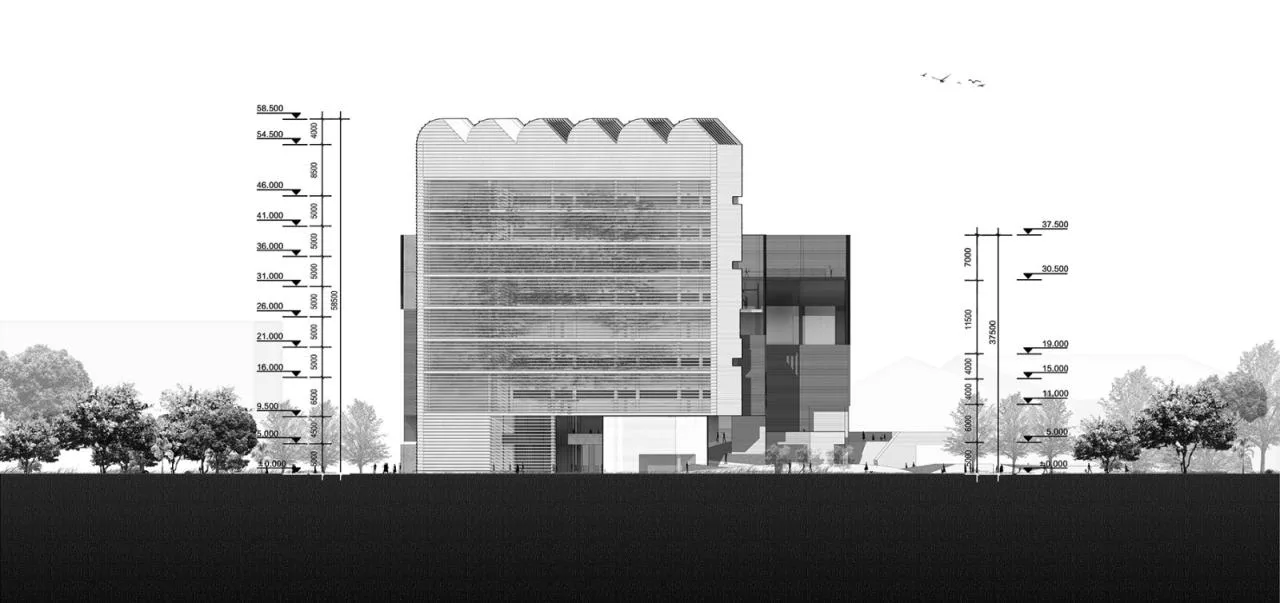
△ East Elevation View
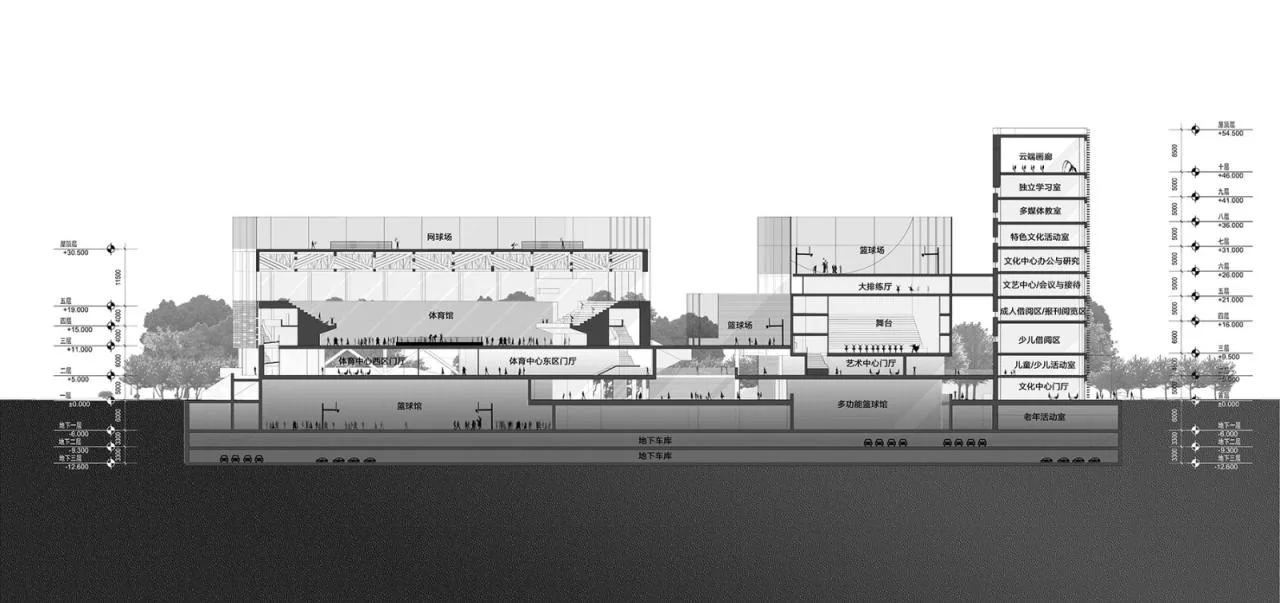
△ Long Section Diagram
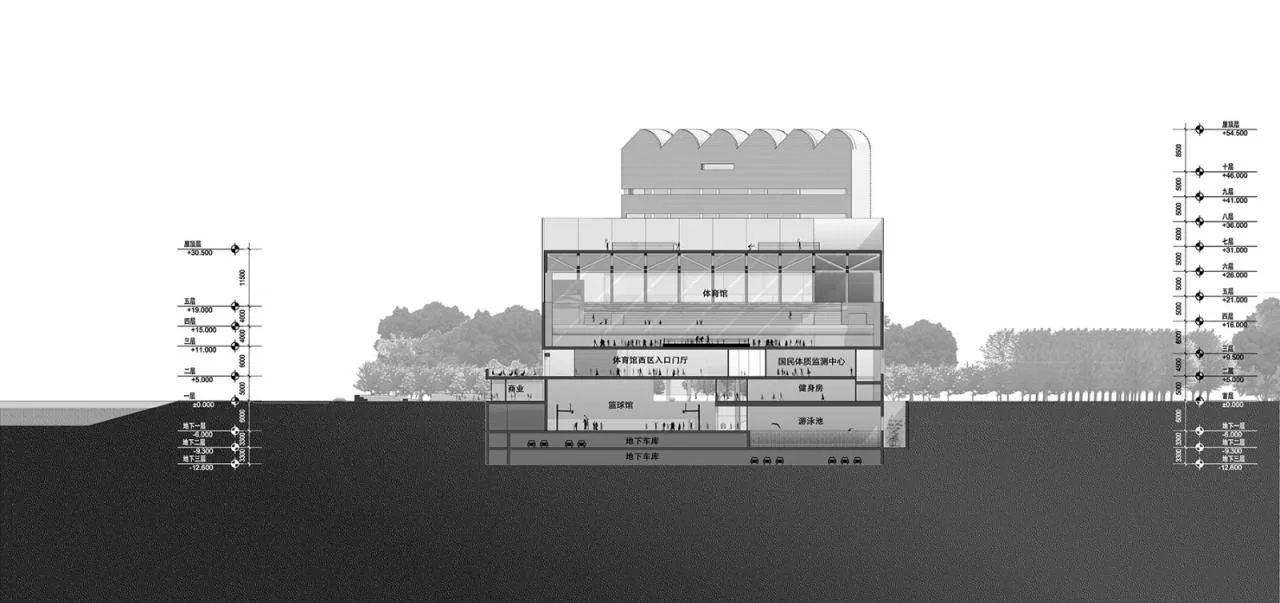
△ Section of Sports Center
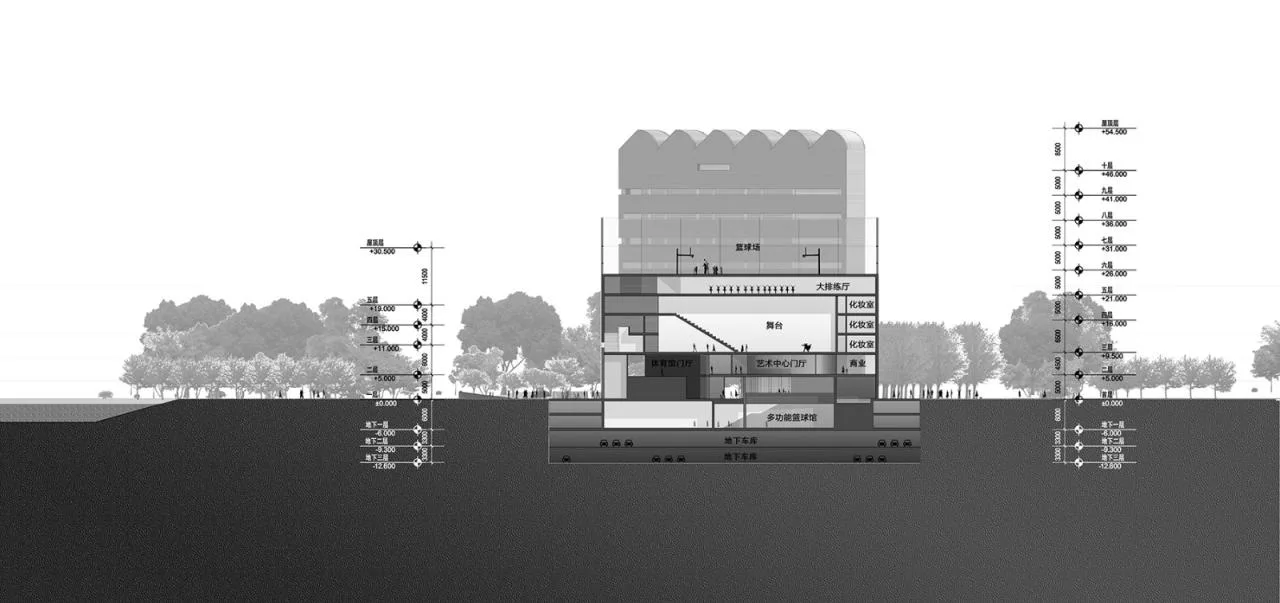
△ Section of Art Center
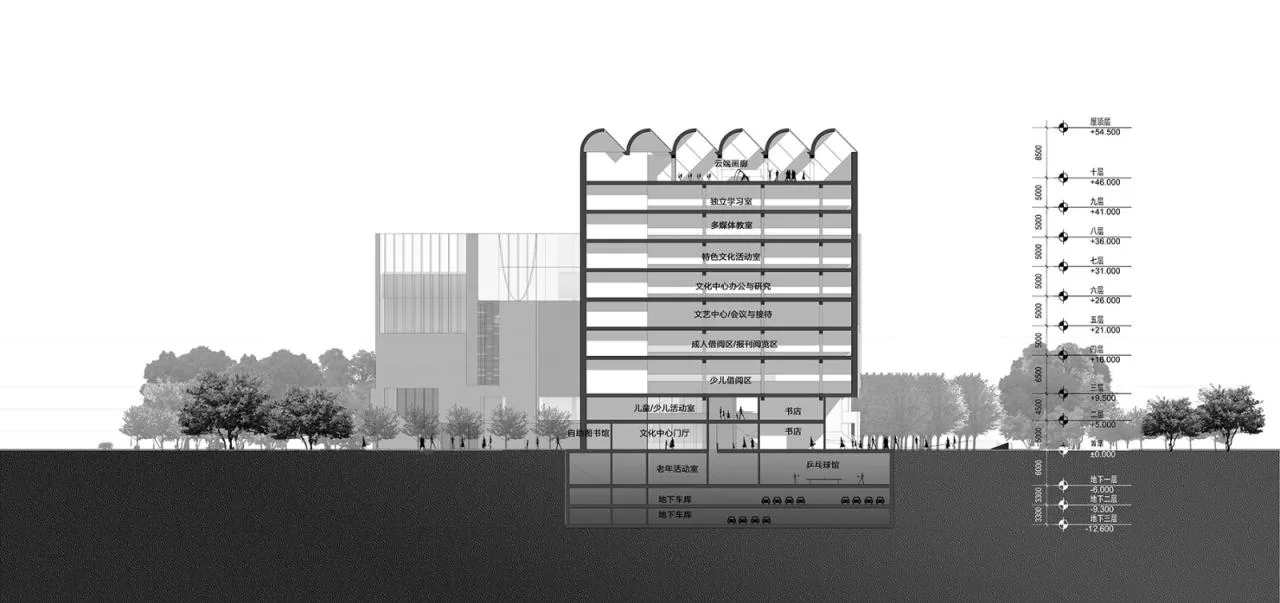
△ Cultural Center Profile
Project Information
Location: Longgang District, Shenzhen
Year: 2021
Status: Shortlisted as a final bidding candidate
Type: Comprehensive Cultural and Sports Facilities
Functions: Sanda Sports Center, Citizen Sports Center, Theater, Cultural Center, Library, Commercial Spaces
Total Construction Area: 71,140 square meters
Floor Area Ratio: 4.1
Building Height: 58.5 meters (Cultural Center)
Design Team: Similar to Architecture + Guangzhou Urban Planning Survey and Design Institute (GZPI)
Project Leads: Luo Ren, Zhao Yao
Design Team Members: Wang Yingli, Wang Nan
















Must log in before commenting!
Sign Up