
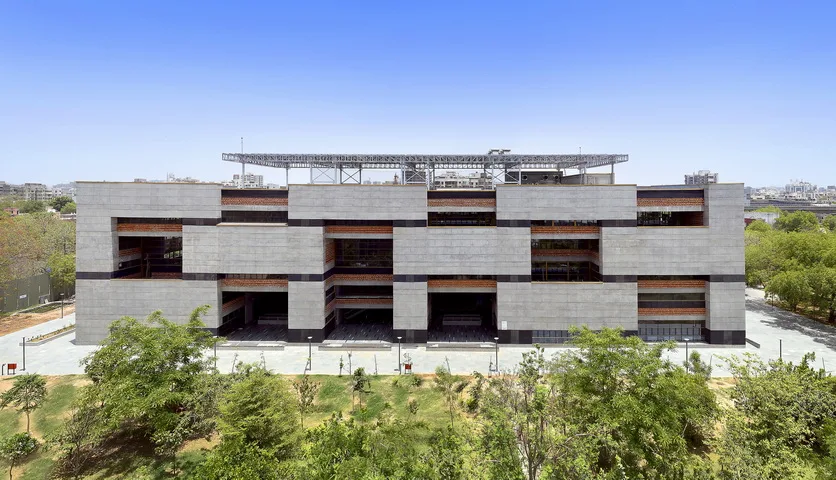
The Ahmedabad University Center in India embraces an organic design concept, commissioned by the university’s board of directors. The goal was to create a vibrant hub bridging formal teaching spaces. This architectural centerpiece functions not only as an incubator for academic life but also as an interactive environment where new ideas flourish beyond traditional classrooms.
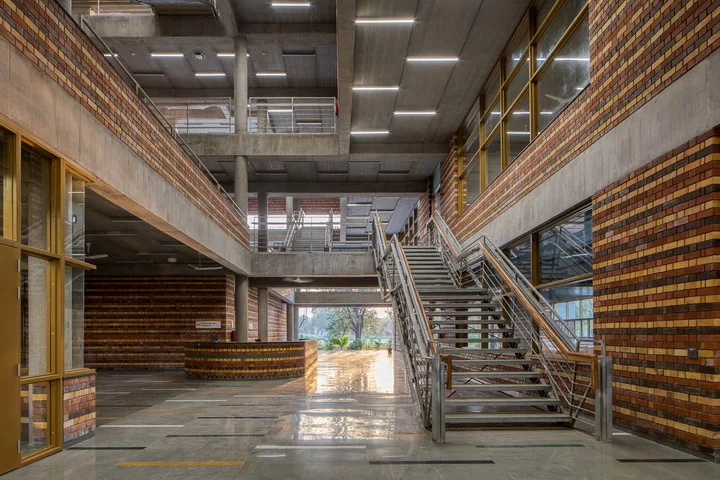
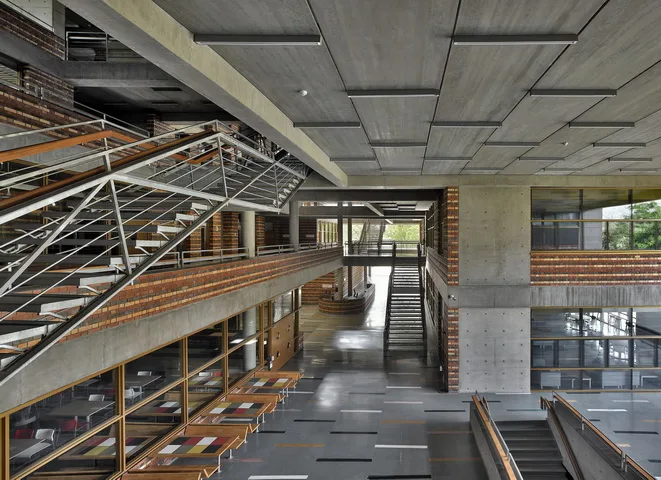
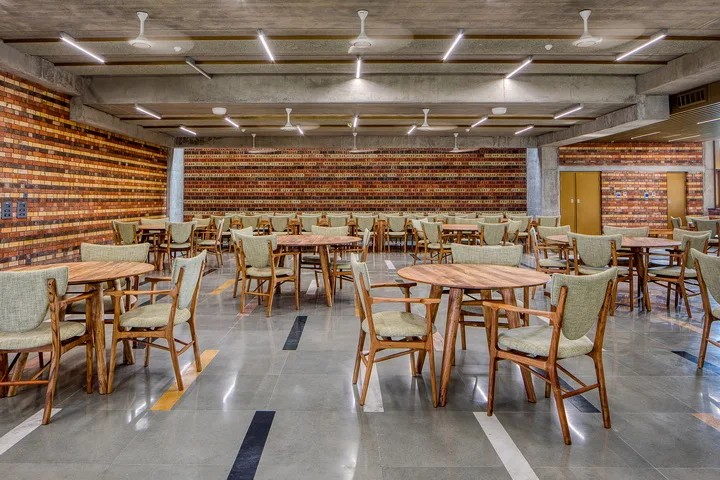
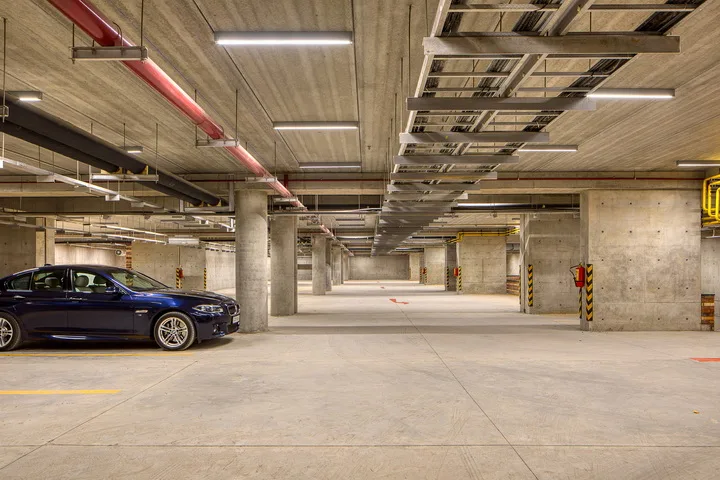
Located at the vehicle entrance with an underground parking facility, the building acts as a gateway between the city and the campus pedestrian area. Reflecting Ahmedabad’s rich street food culture, the design extends the lively street environment into the building itself, forming a food court that connects directly to the ground-floor food street.
The design draws inspiration from the Galata Köprüsü Bridge in Istanbul, Turkey, which features a row of restaurants underneath and offers stunning views of the Golden Horn Bay. Similarly, the campus incorporates three terraces leading to a park, which serve as venues for musical performances and provide shaded areas for students to relax beneath the trees.
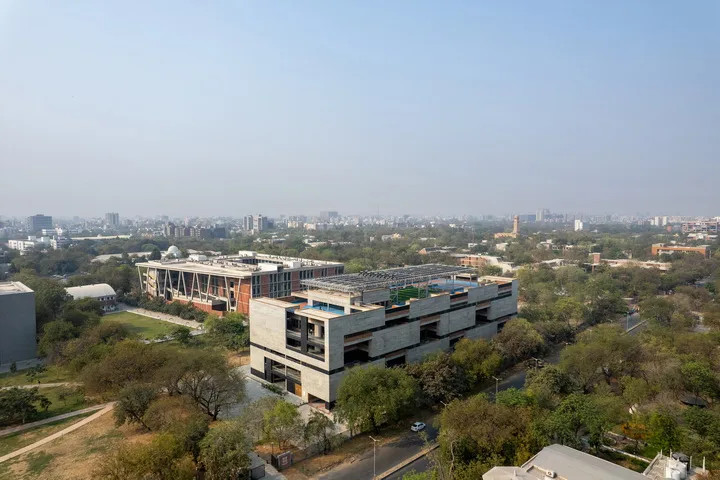
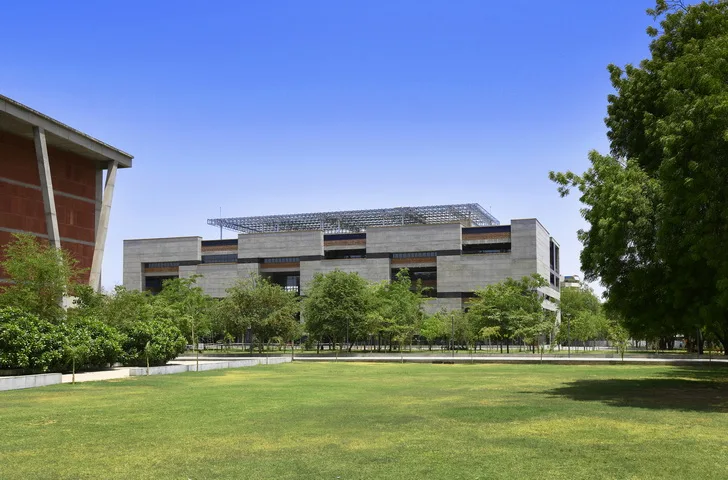
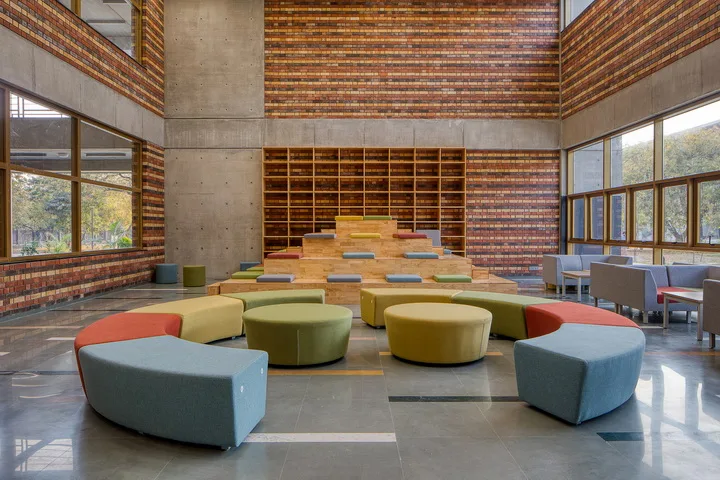
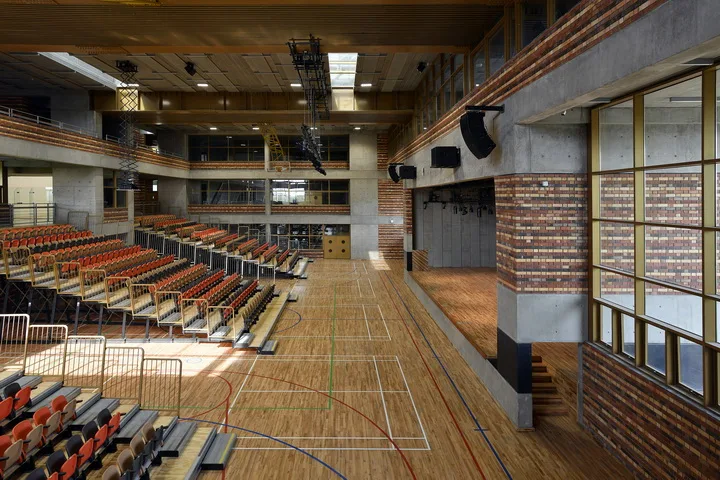
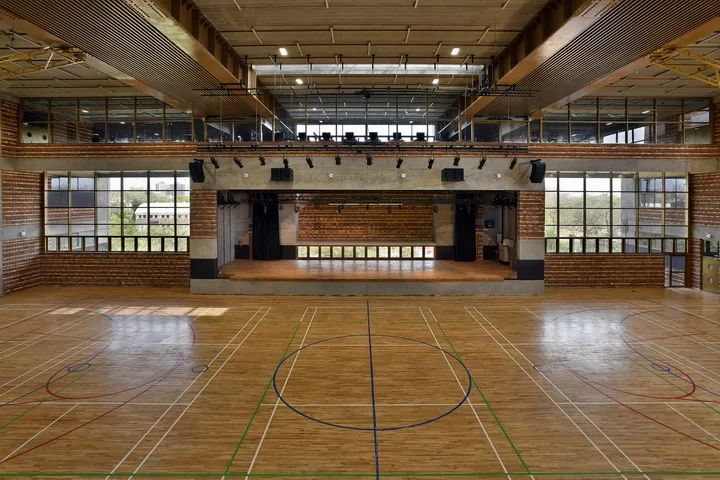
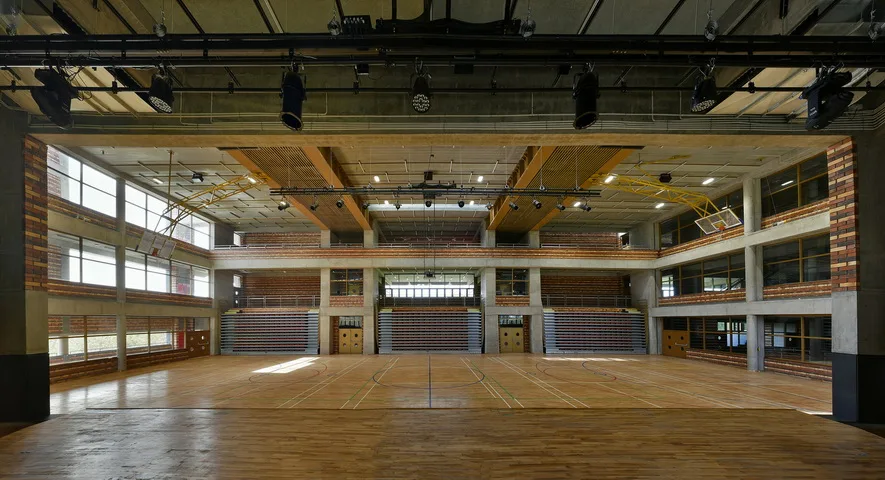
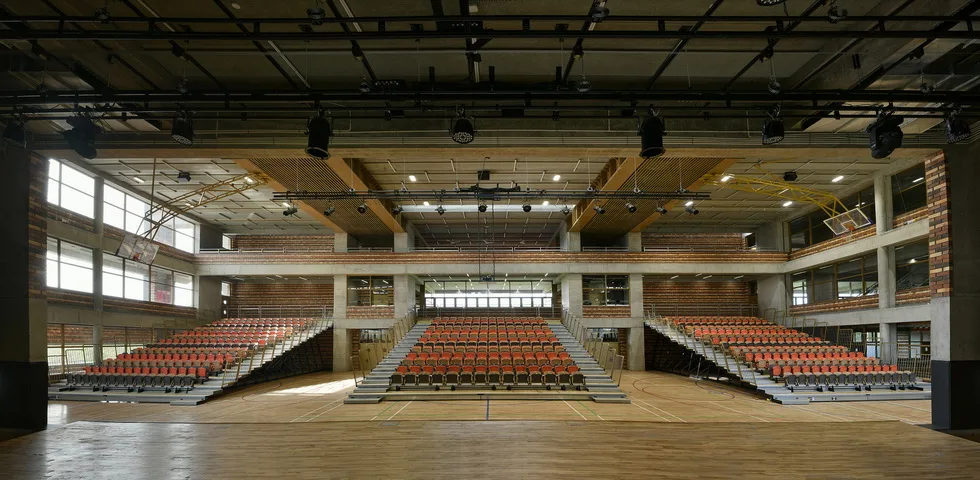
The second floor extends the covered street concept and houses multifunctional rooms as well as club and activity spaces that can be accessed directly from the ground floor. On the third floor, a large multifunctional hall with a fixed stage accommodates events such as movies, theater, dance performances, conferences, and concerts. Retractable sliding stands allow the seating to be stacked vertically against the walls, transforming the space into a large indoor area suitable for sports like basketball, table tennis, volleyball, and badminton.
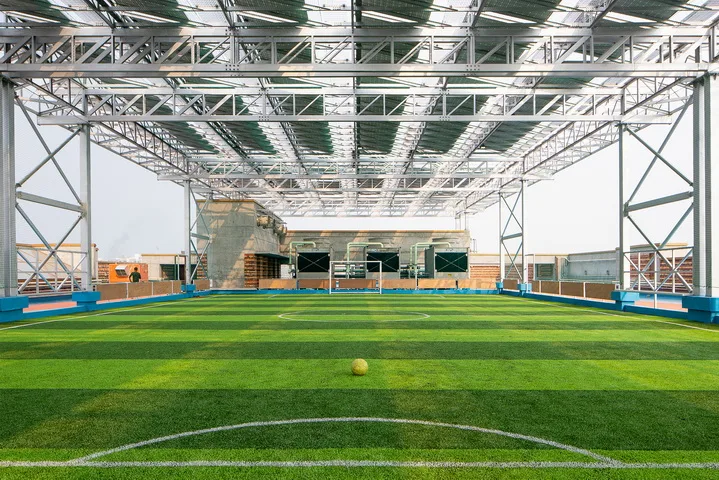
The school offices occupy the east wing of the third floor, offering faculty and staff views over the central courtyard and outdoor scenery from the balcony. The fourth floor’s east wing is predominantly dedicated to the faculty club and café, featuring a shaded terrace that overlooks Central Park and captures both sunrise and sunset views. The fifth floor provides quiet reading areas and career development rooms. On the rooftop, a running track surrounds a 6×6 five-a-side football field.
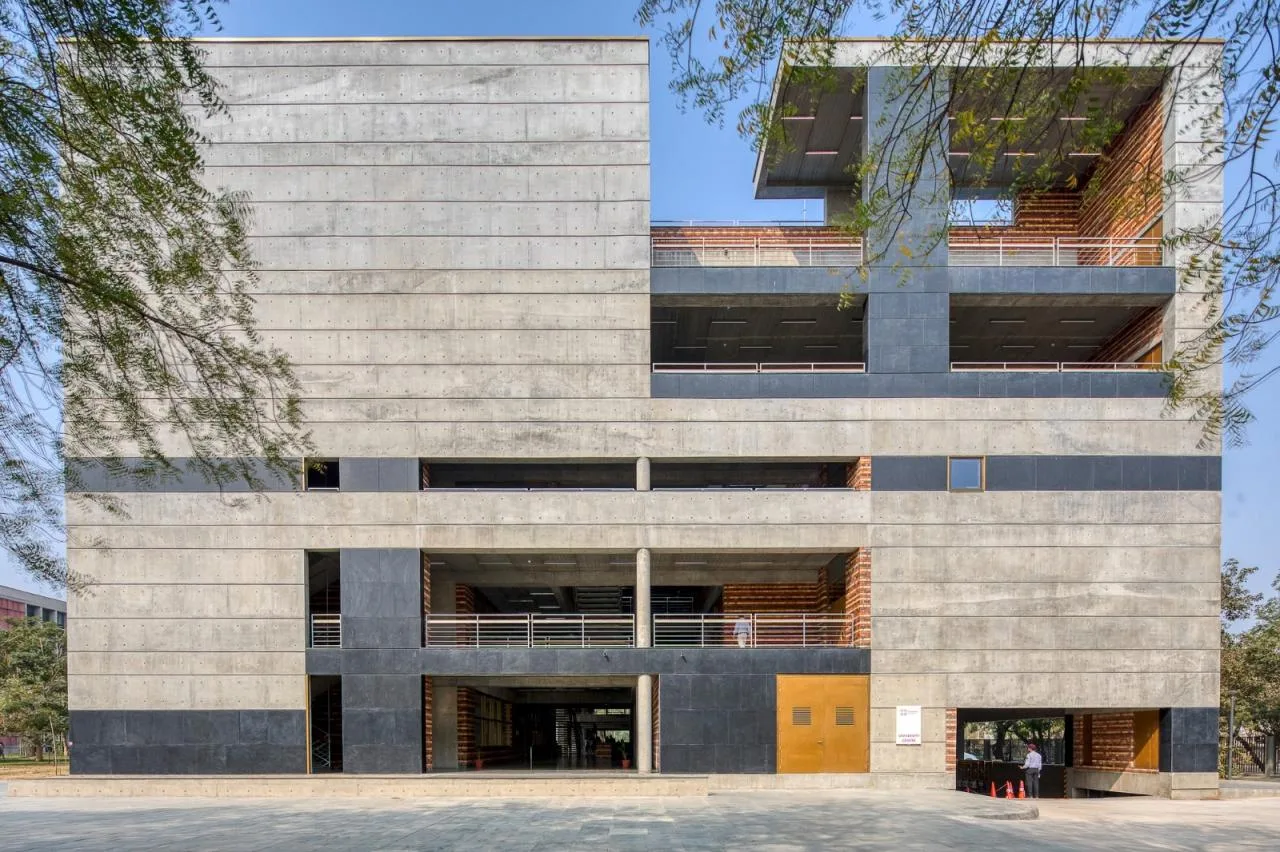
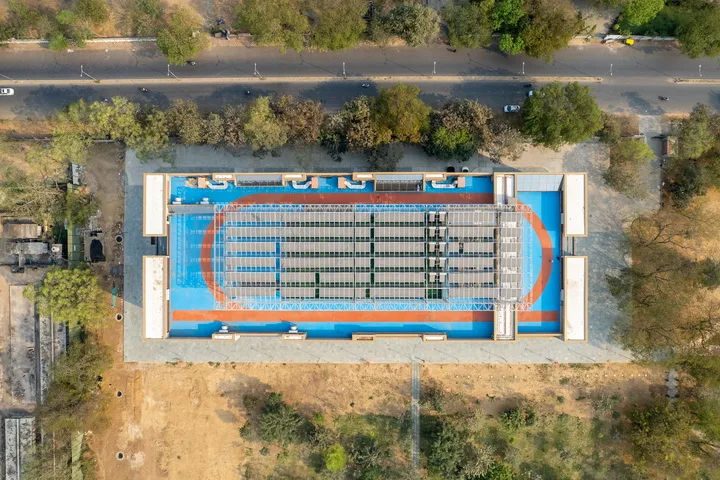
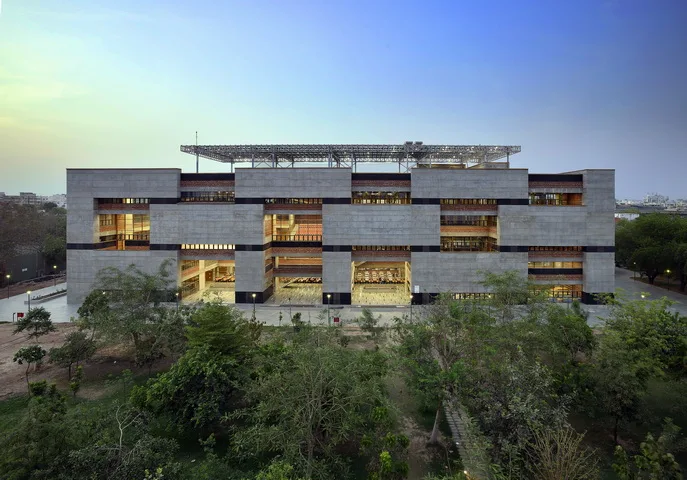
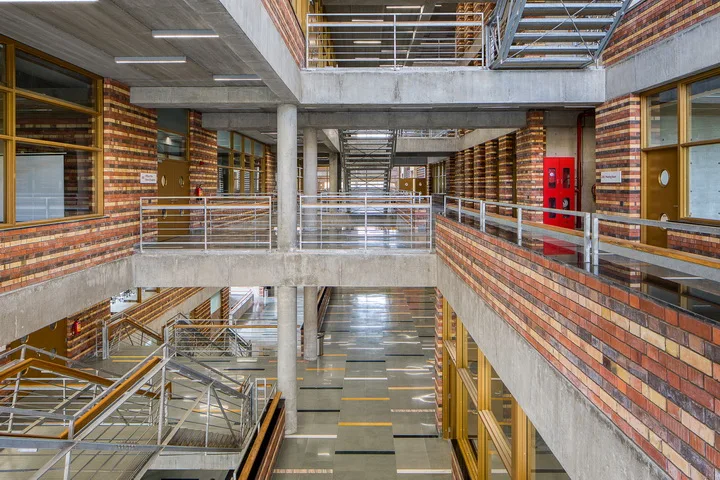
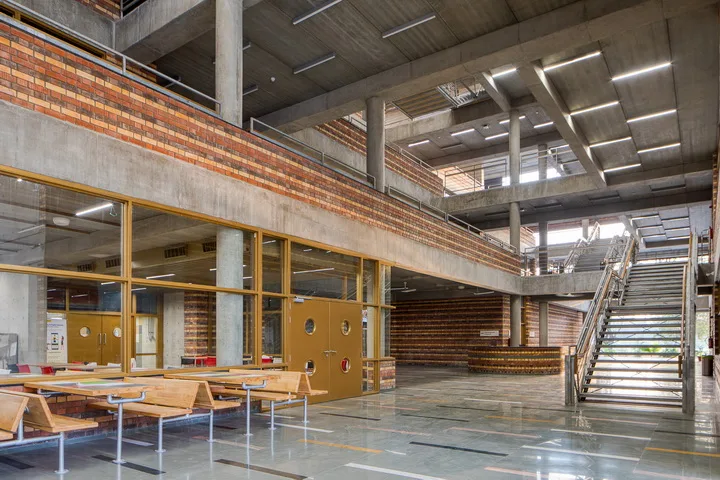
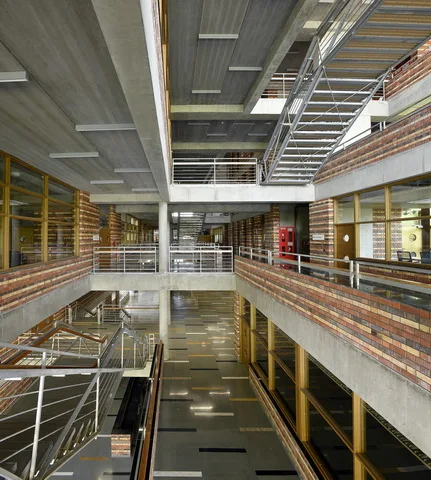
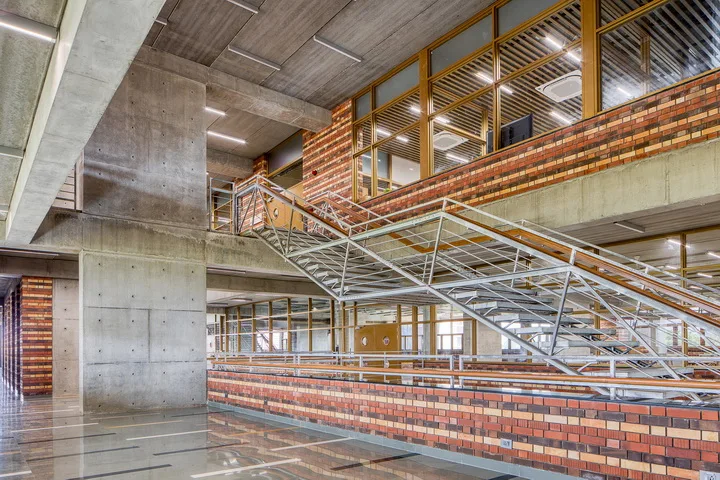
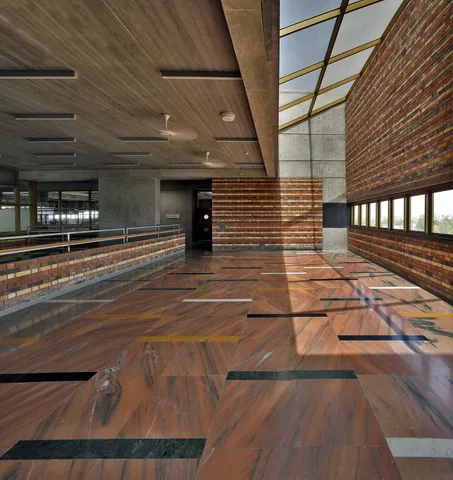
Covering a substantial footprint of 96 by 36 meters, the Ahmedabad University Center faced the challenge of incorporating natural light and ventilation deep into its core. The architects employed 3D modeling and visualization tools to optimize indoor lighting by staggering floor levels. This design allows natural light to penetrate from the top and reflect off the south-facing balconies, enabling sunlight to travel diagonally through the building.
This staggered floor layout also enhances the building’s perceived size and fosters visual connections between students across different levels. On special occasions such as International Labour Day (May 1st) and Indian Independence Day (August 15th), the rising sun casts direct light from the top of the east facade down to the base.
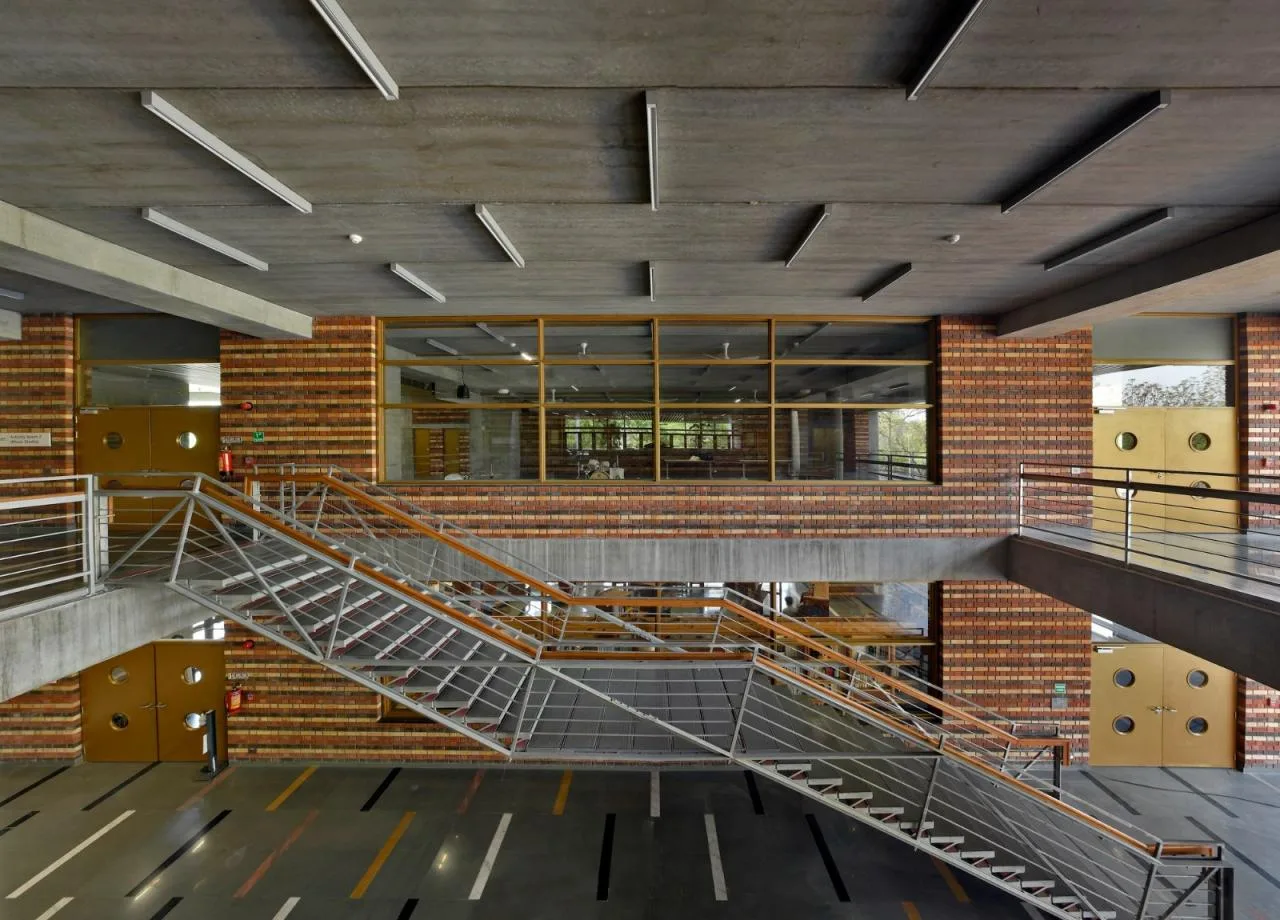
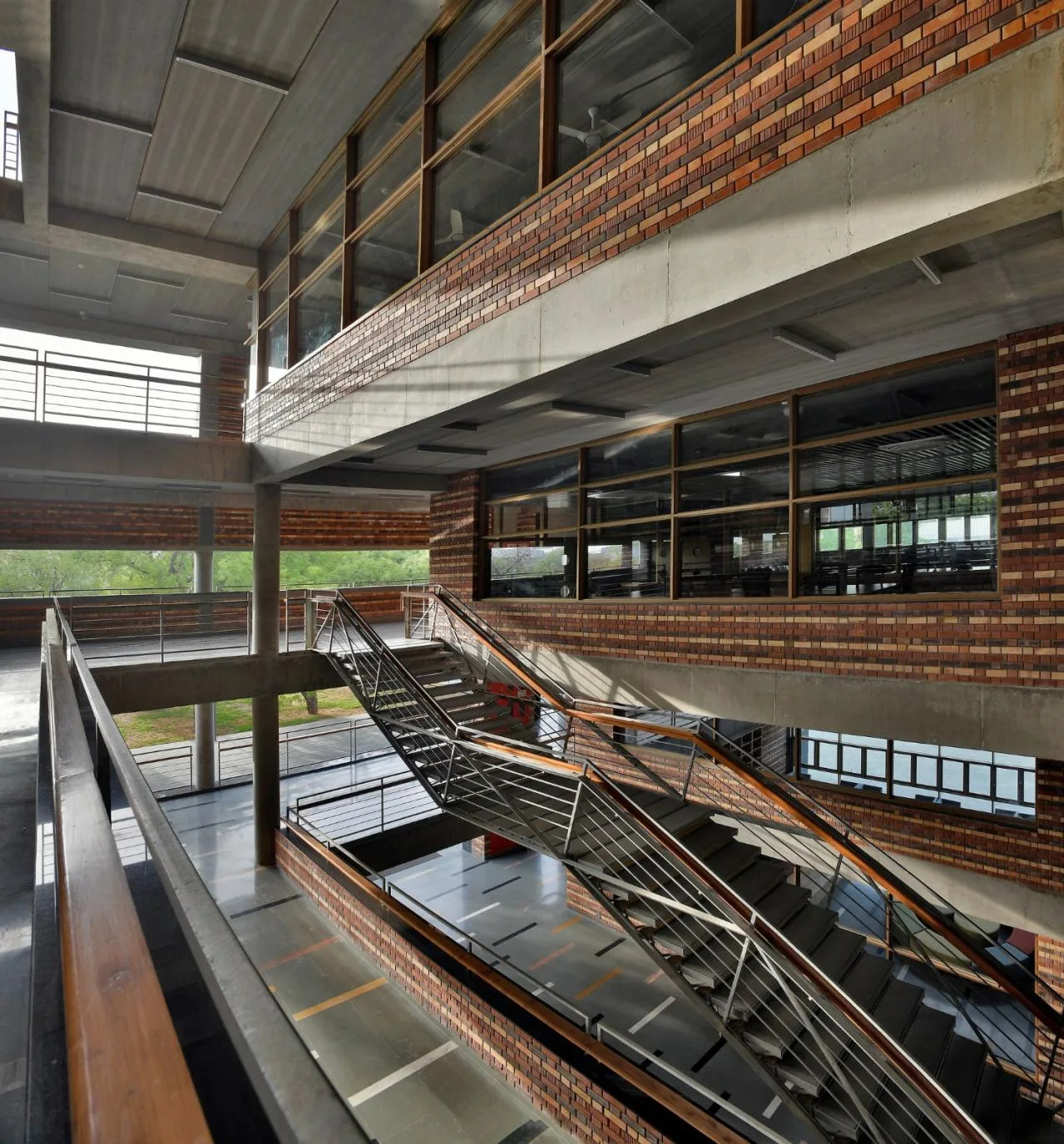
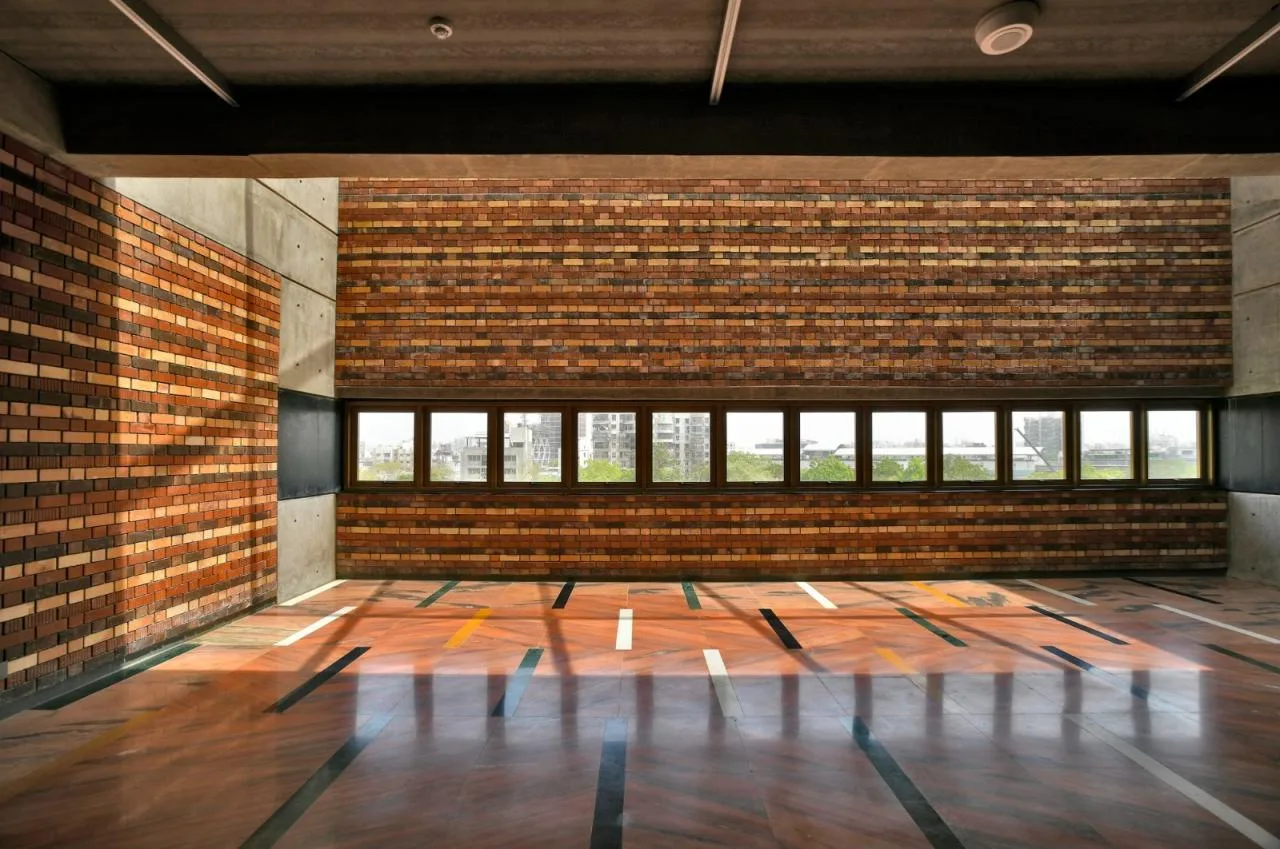
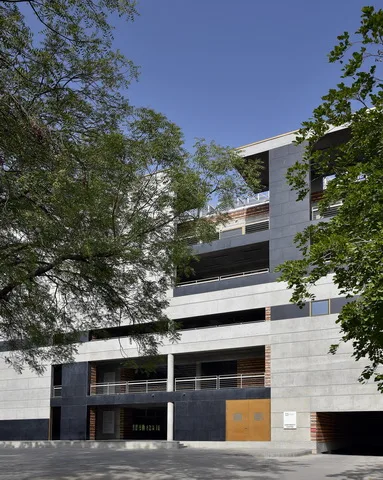
This project marks Ahmedabad’s first large-scale building to utilize precast concrete technology extensively. Instead of traditional prefabricated hollow slabs reinforced with steel, thin strands measuring 12.7 millimeters in diameter were used. The building’s walls and beams are constructed from cast-in-place concrete, while the floor slabs are fully prefabricated.
The electromechanical water systems are designed with a strong focus on efficient water reuse. In addition to collecting greywater, the building also gathers sewage from other campus buildings. This recycled water supports irrigation, toilet flushing, and cooling tower replenishment. Located on the underground second floor, the sewage treatment facilities maintain the irrigation needs of the entire Central Park forest.
On the rooftop, the five-a-side football field is sheltered by a solar-powered canopy equipped with 450 solar panels capable of generating 140 kilowatts of energy. This power supplies fans, lighting, and electrical outlets during daylight hours.
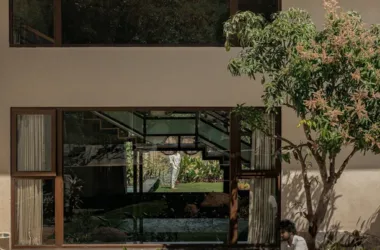
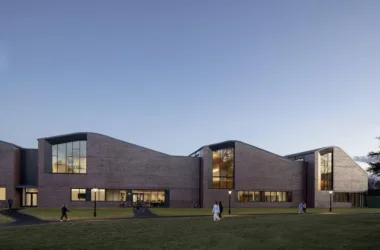
The exterior facade features concave windows that open into deeper corridors. This design reduces glare and minimizes the need for blinds and curtains, enhancing occupant comfort. As a result of these sustainable features, the building has achieved LEED Platinum certification.
Project Drawings
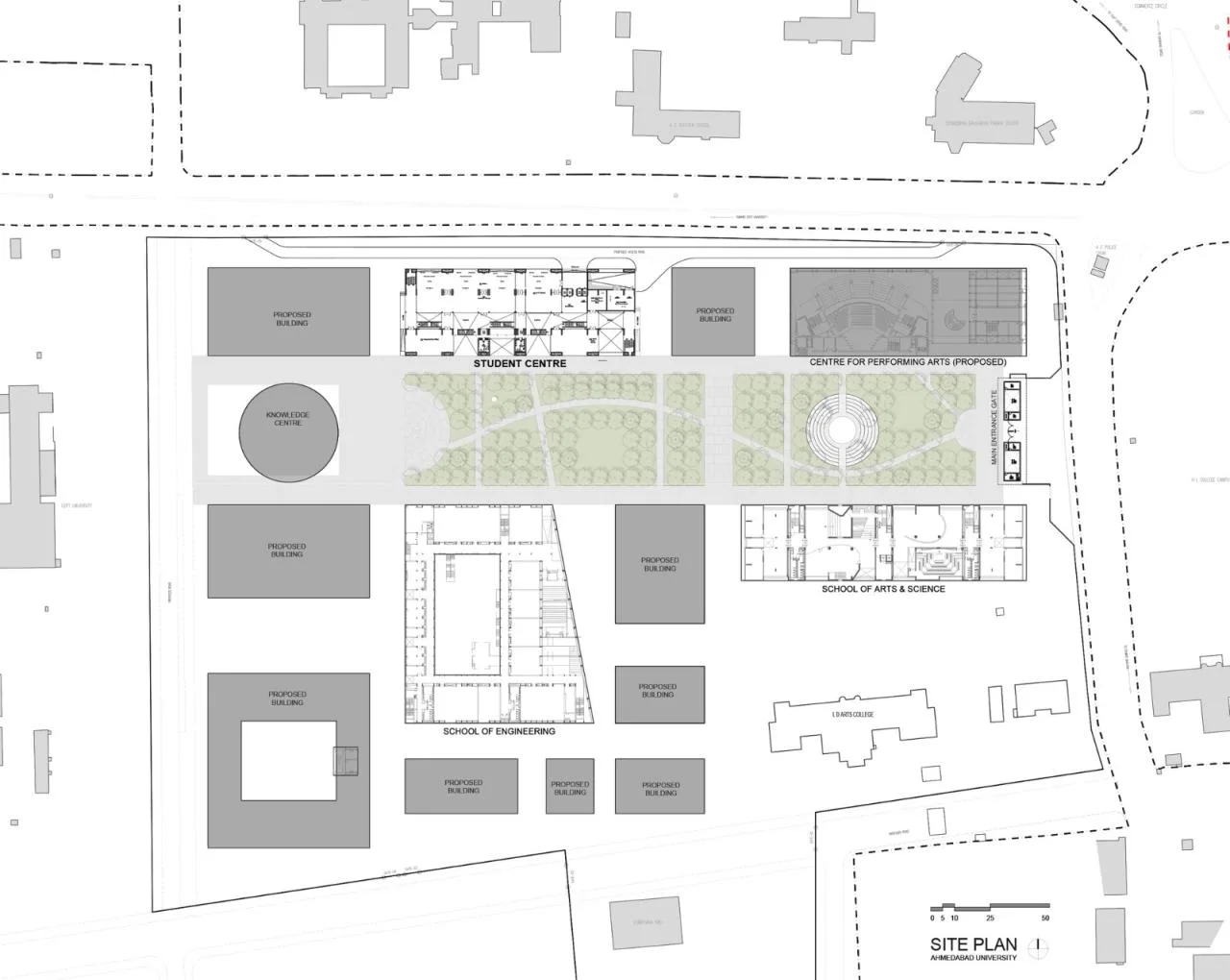
△ General Layout Plan
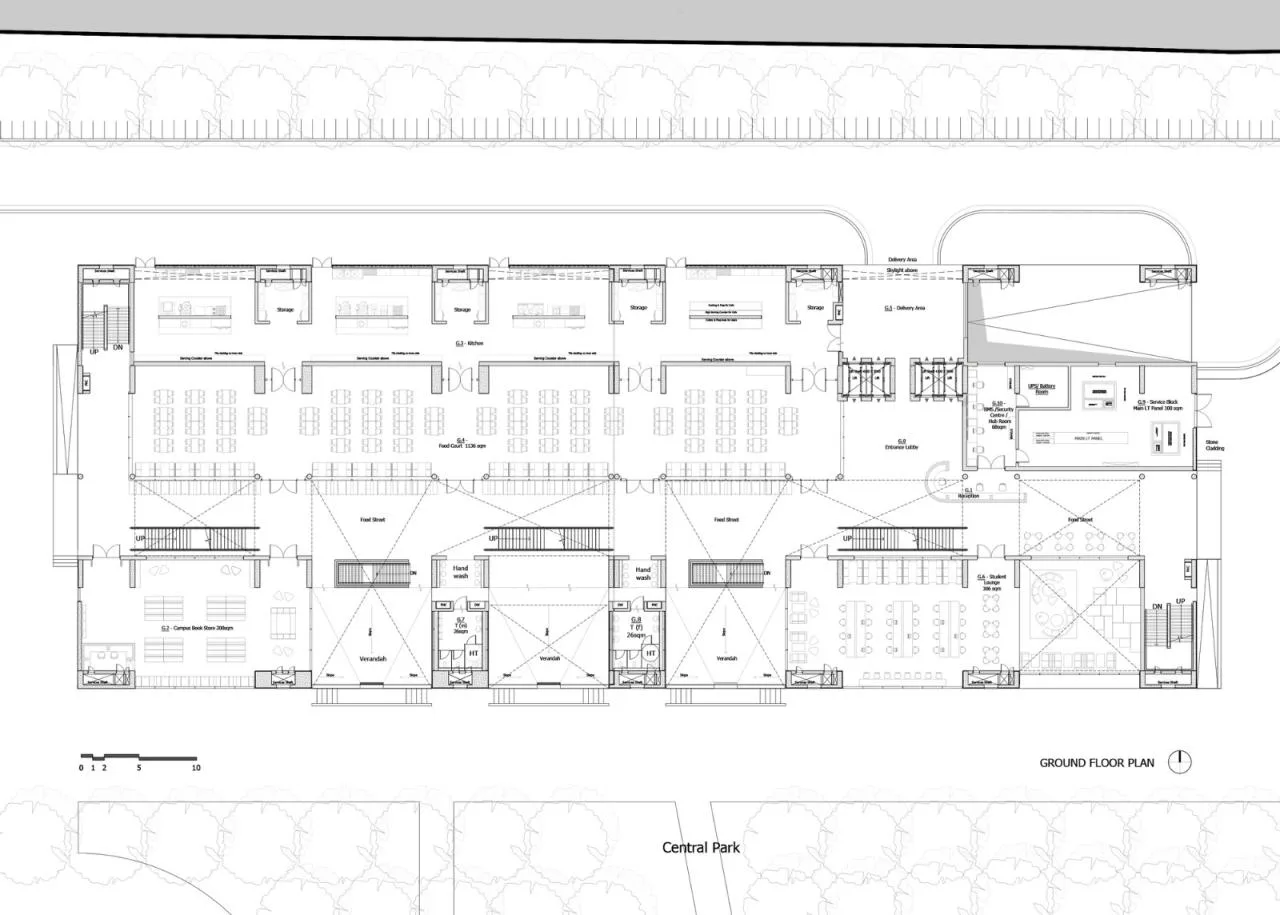
△ First Floor Plan
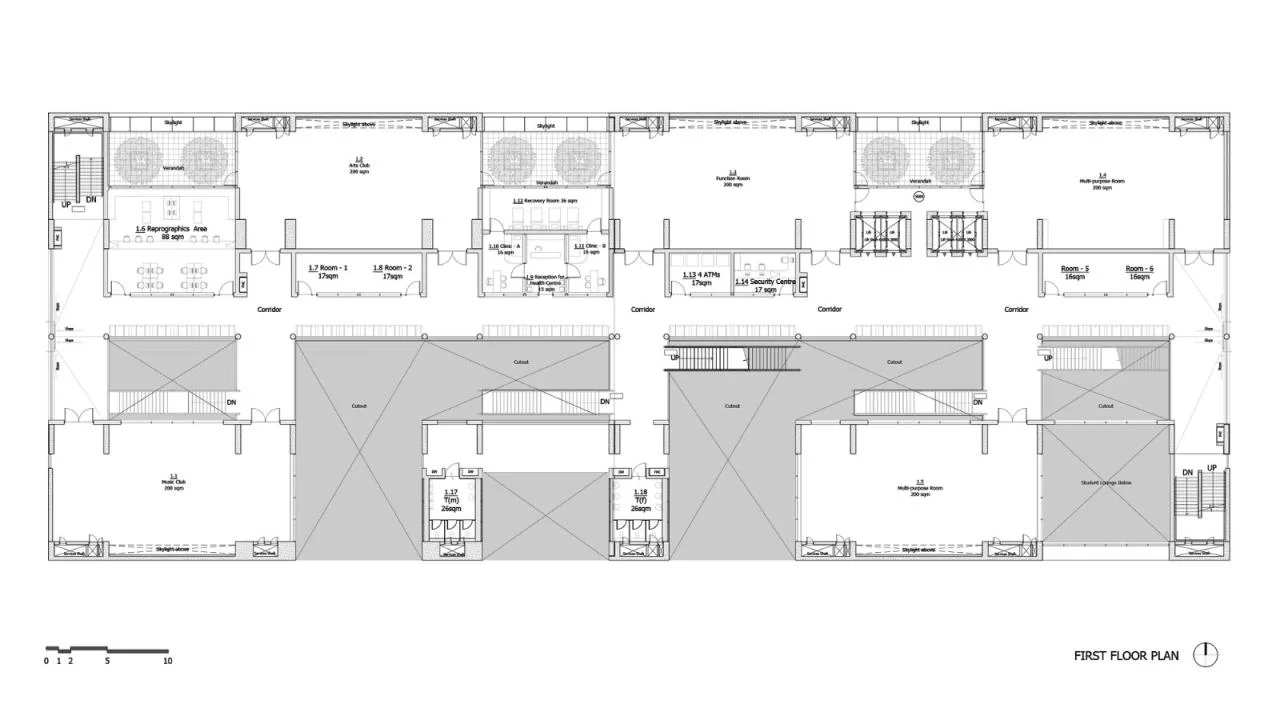
△ Second Floor Plan
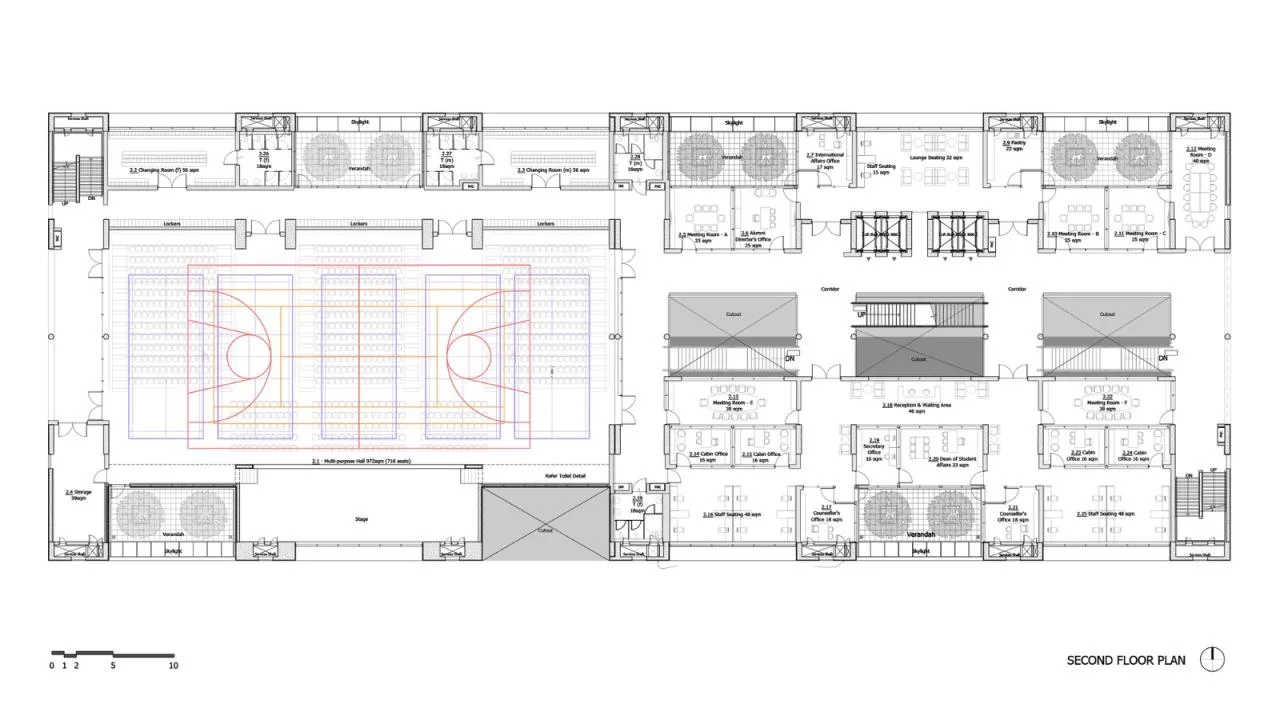
△ Third Floor Plan
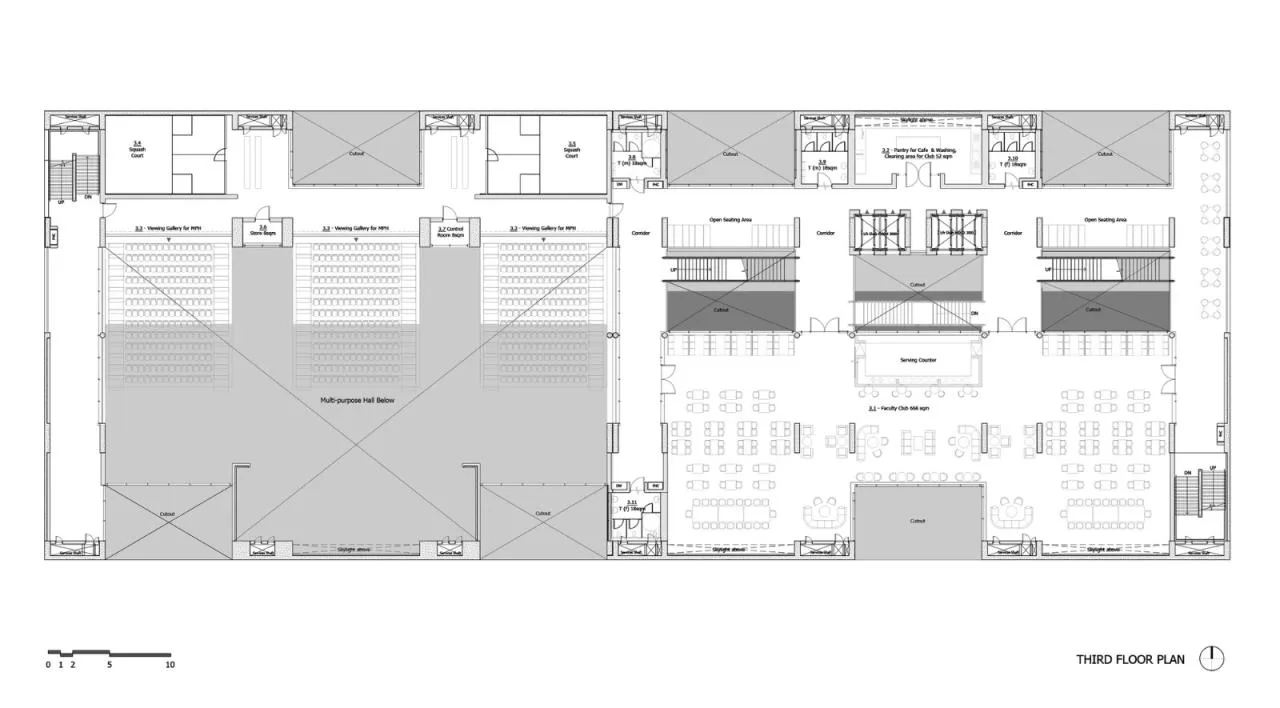
△ Fourth Floor Plan
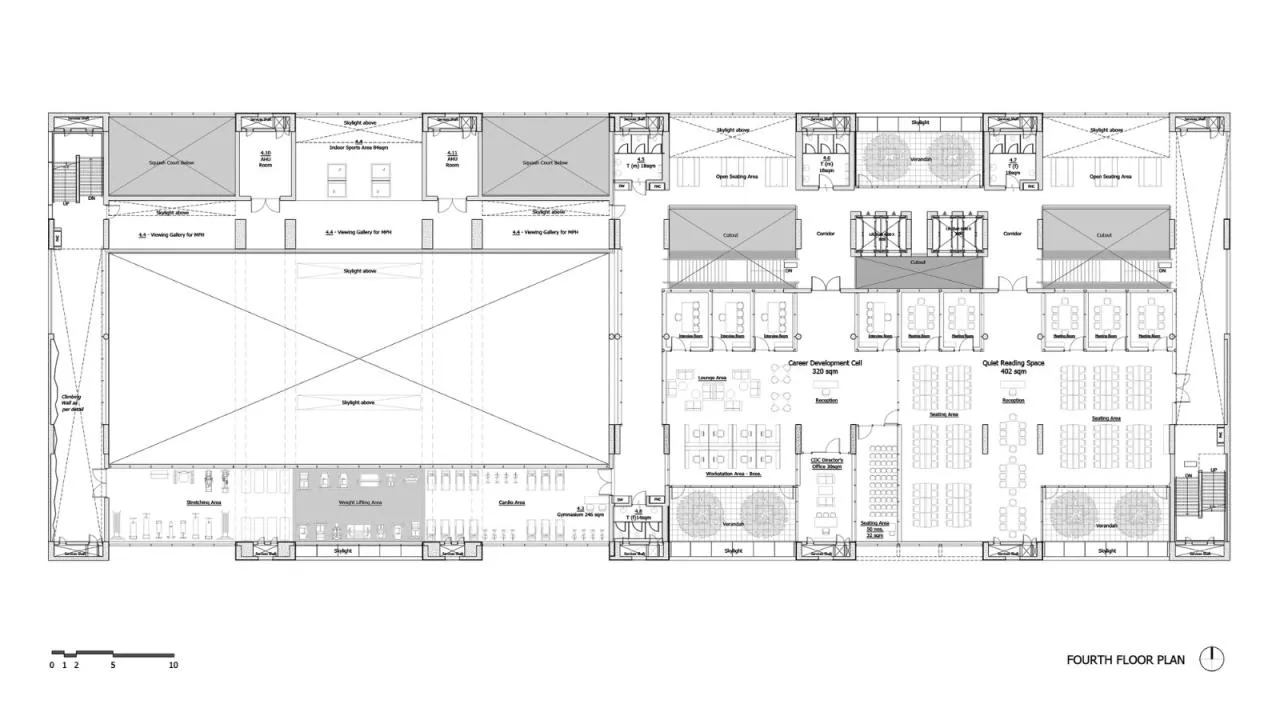
△ Fifth Floor Plan
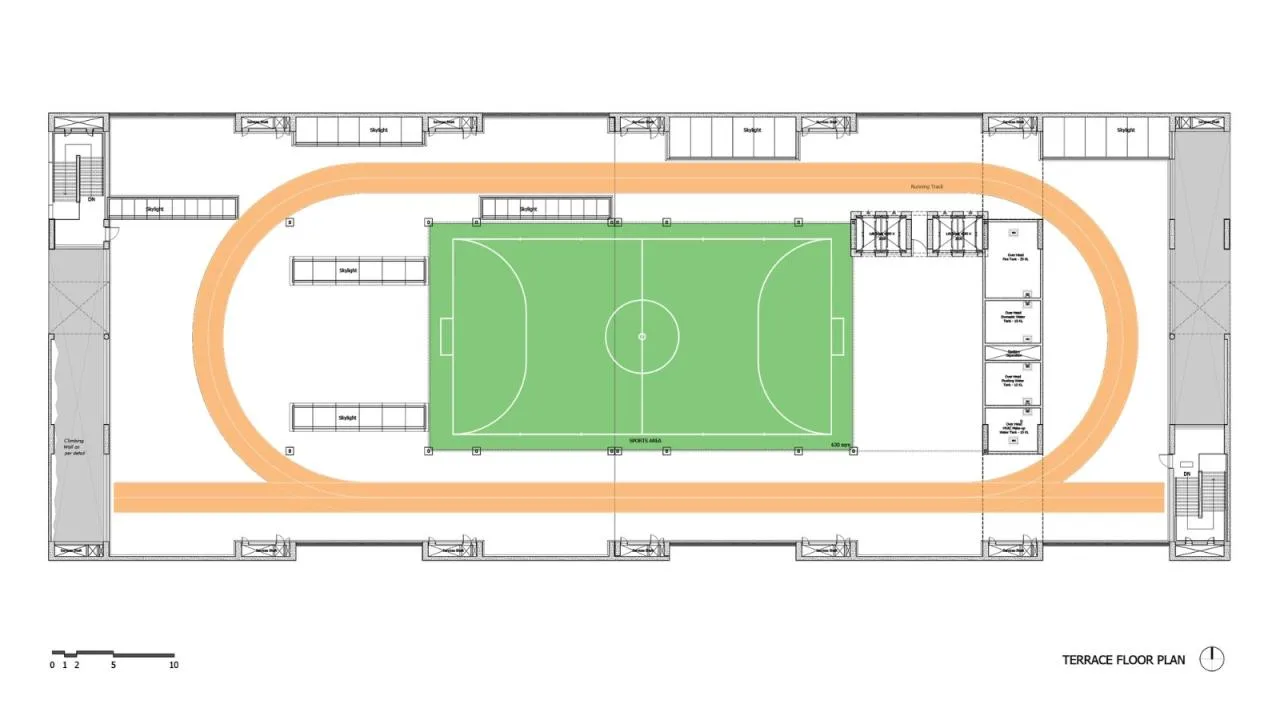
△ Roof Plan
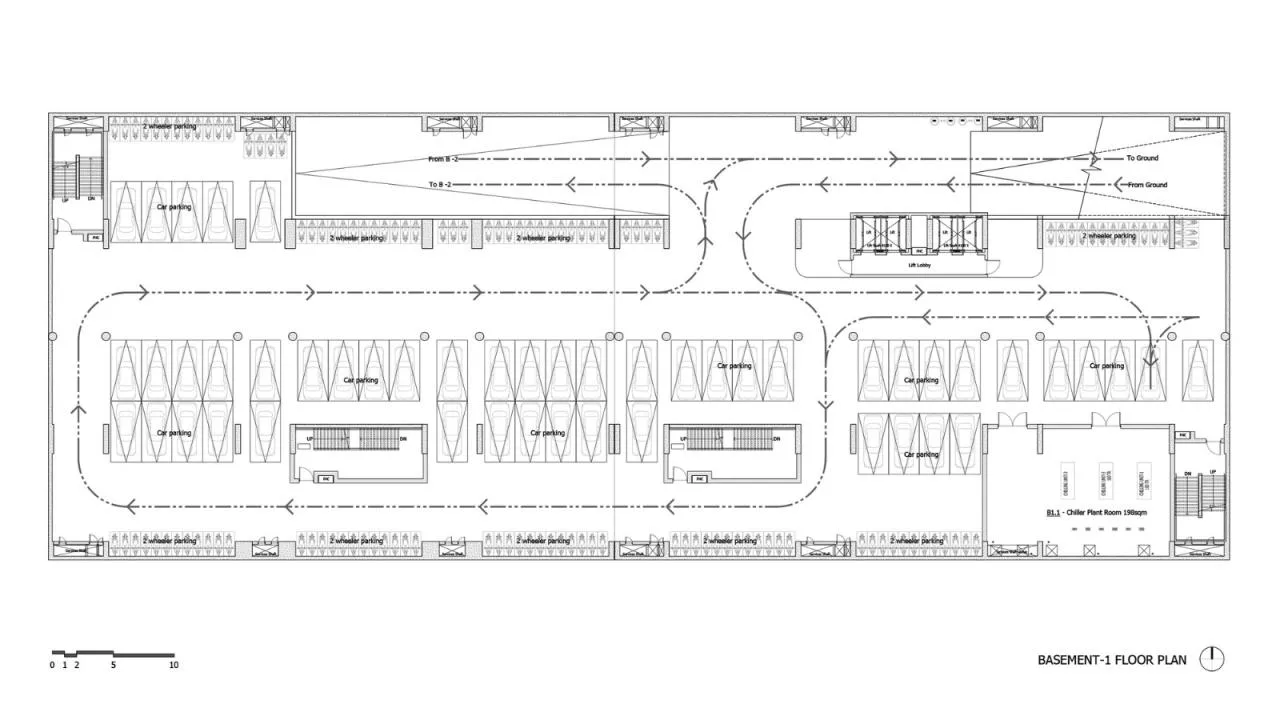
△ Underground Floor Plan
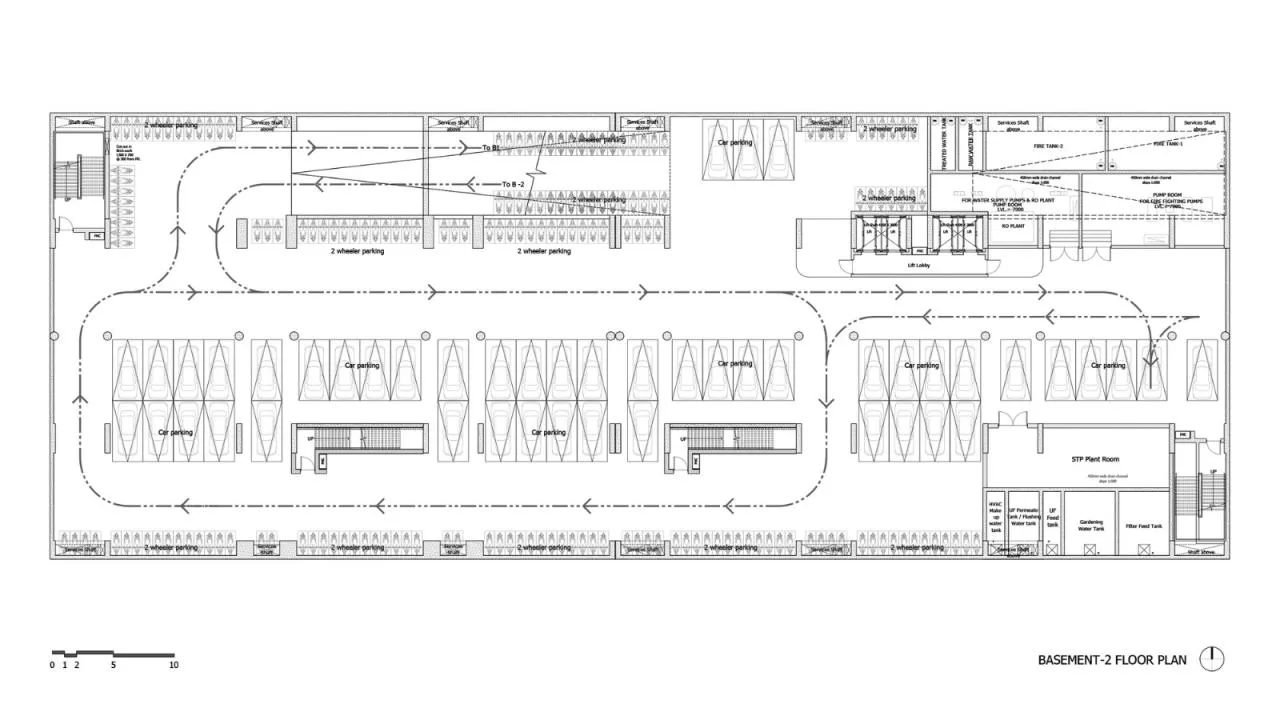
△ Underground Second Floor Plan
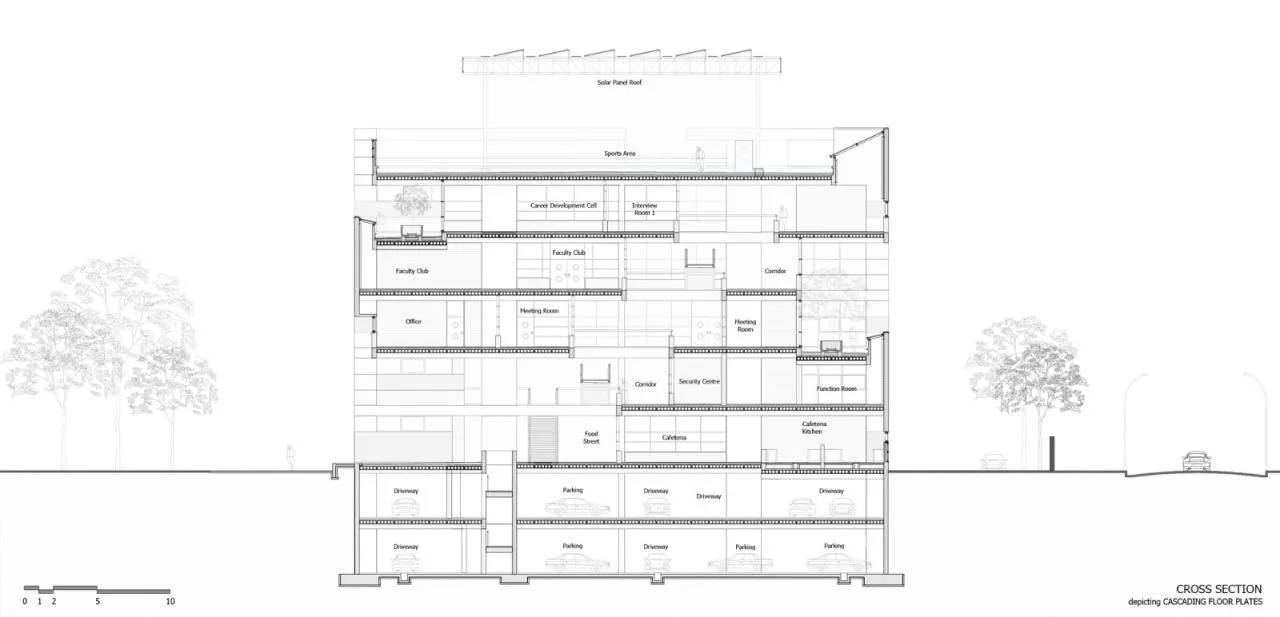
△ Section Diagram
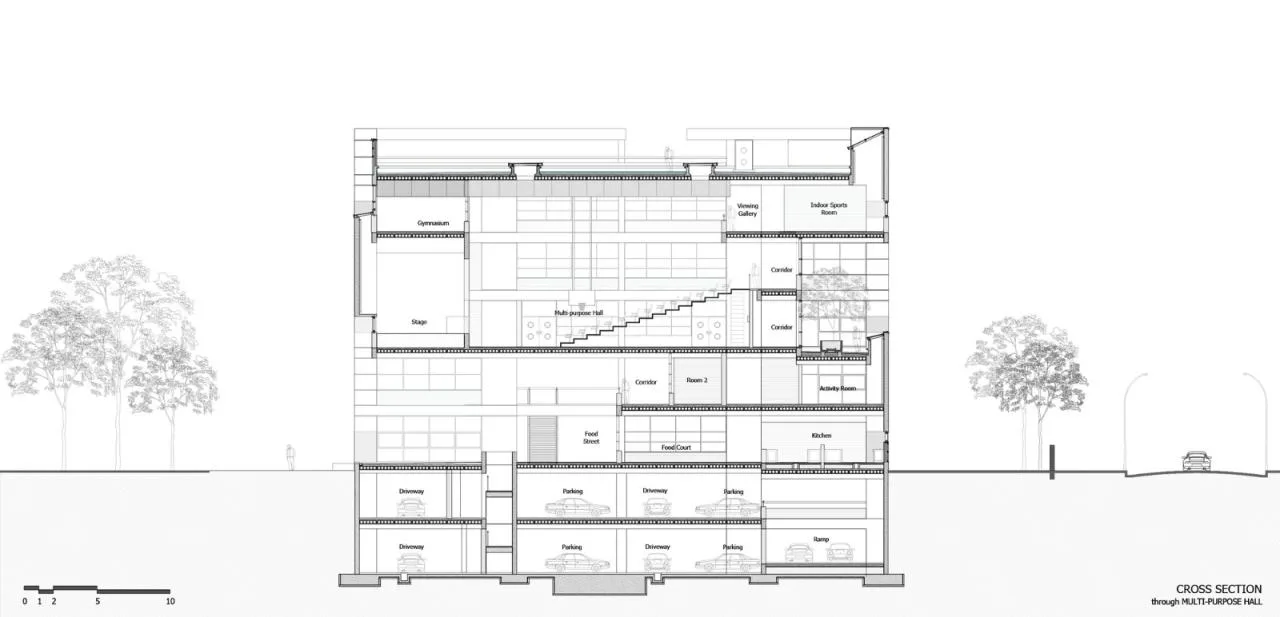
△ Section Diagram
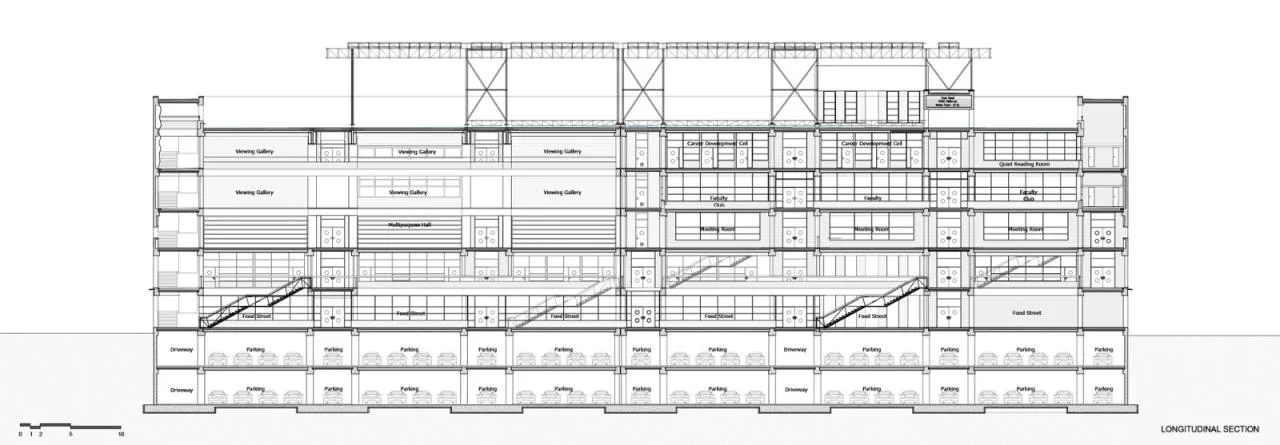
△ Section Diagram
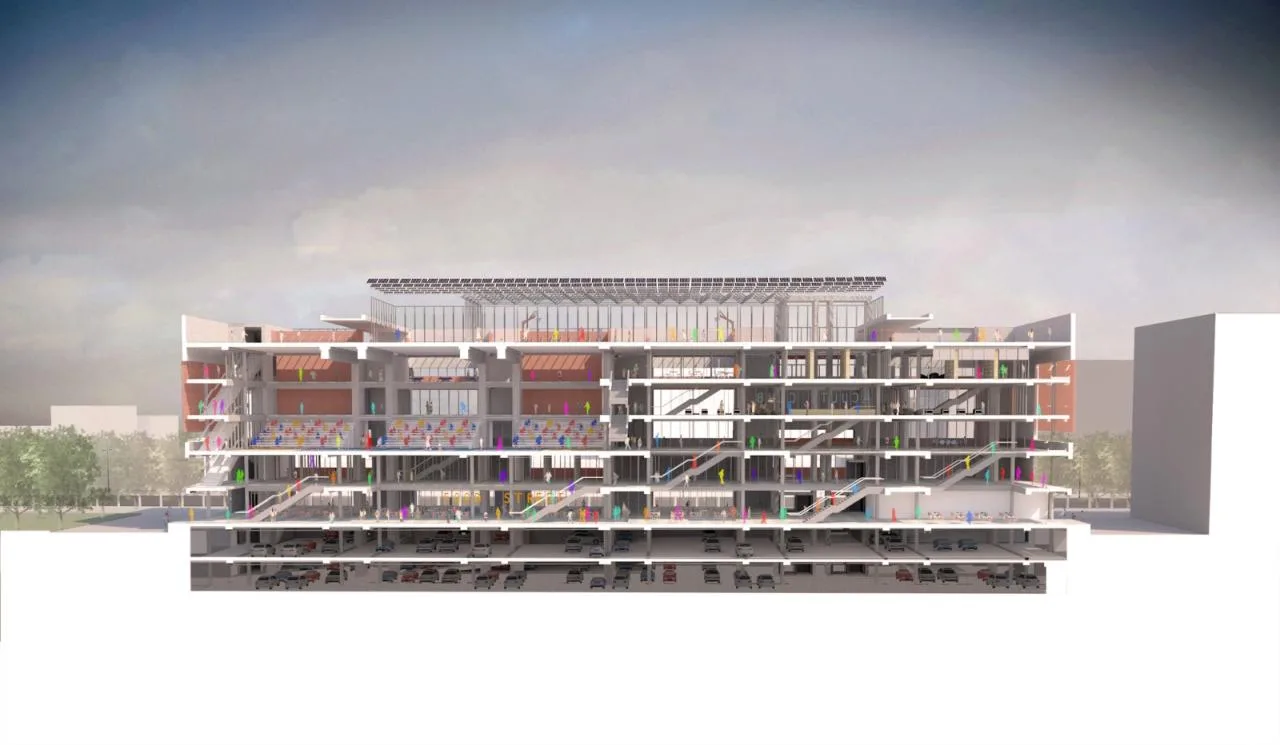
△ Sectional Perspective
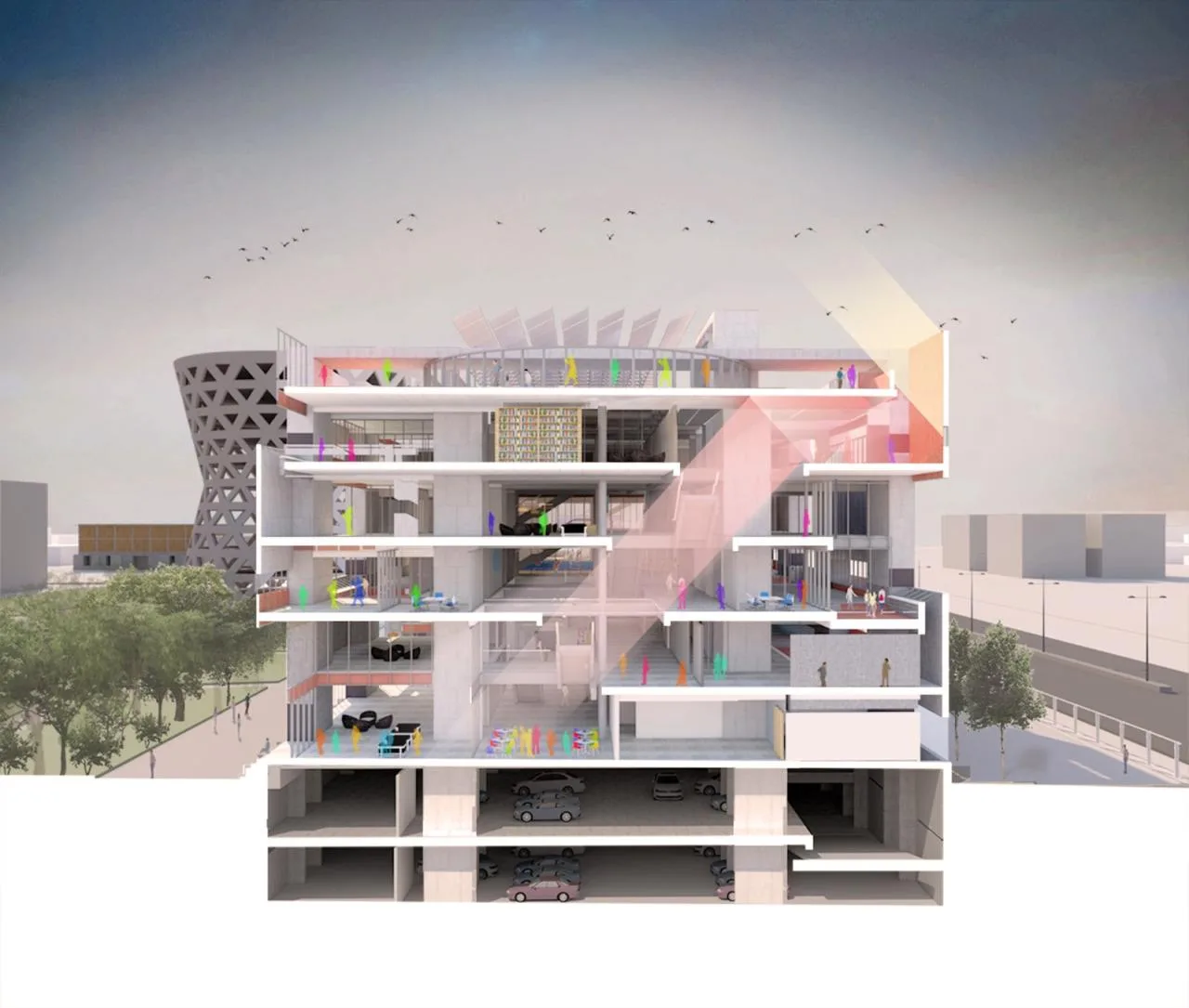
△ Sectional Perspective
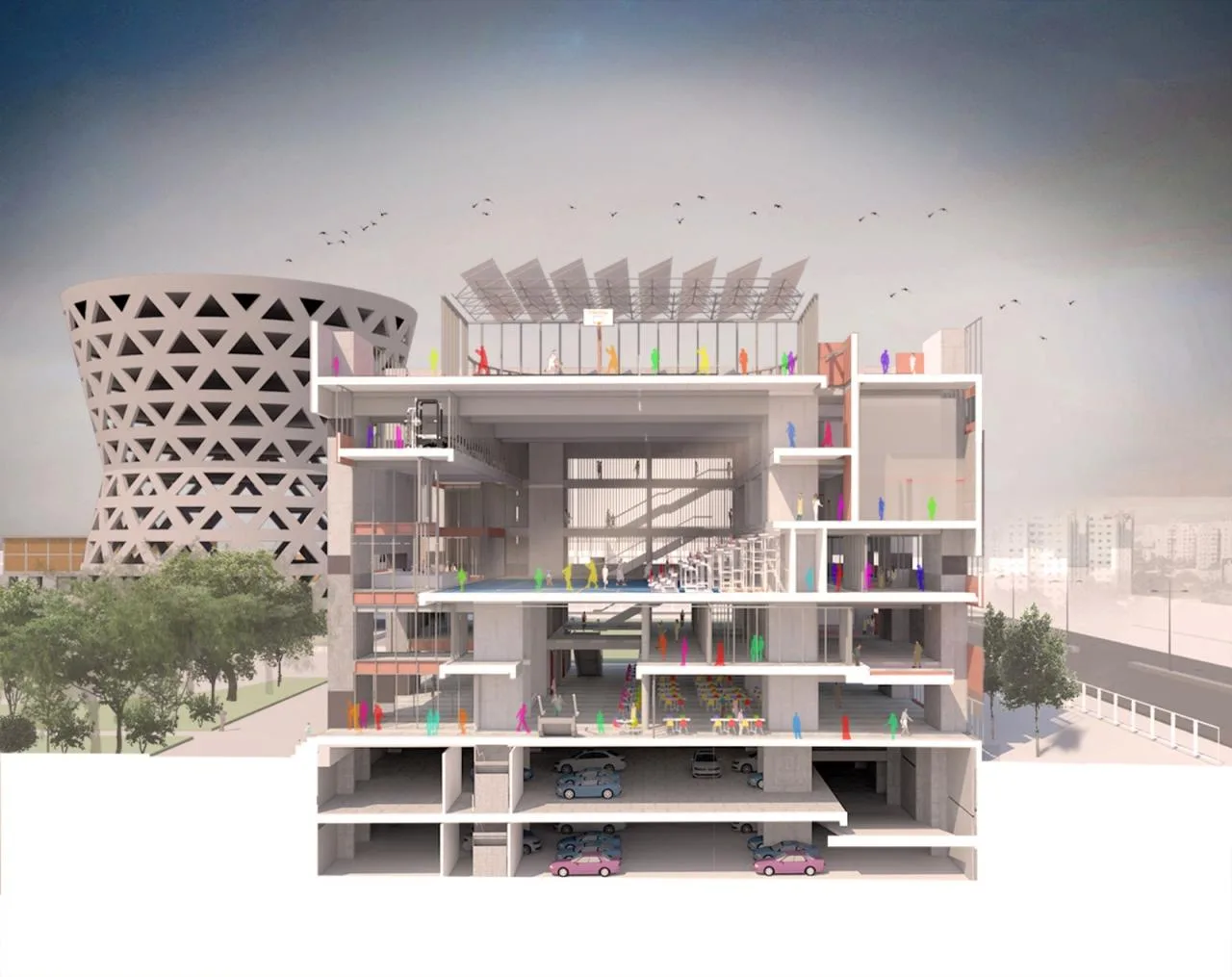
△ Sectional Perspective
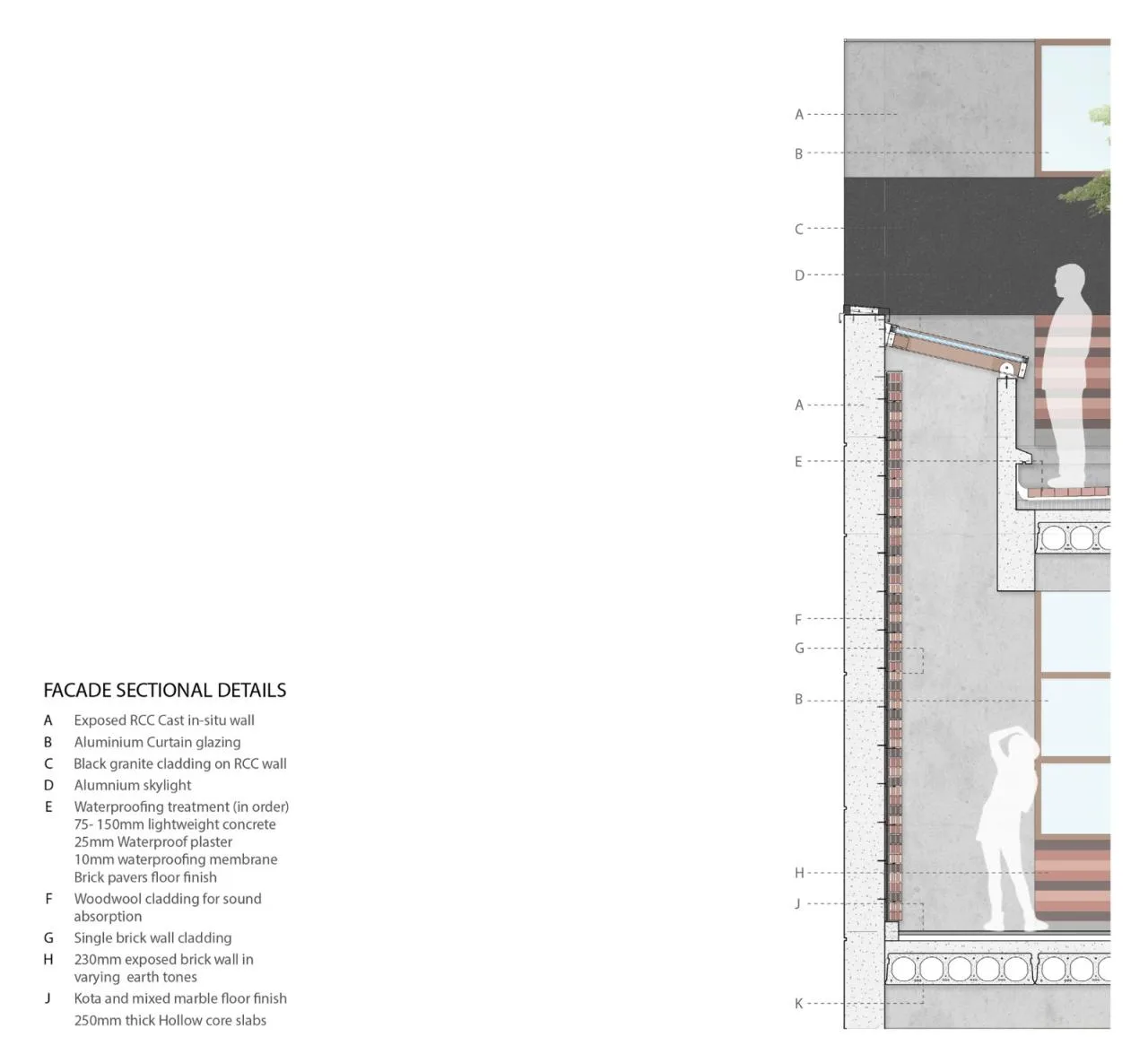
△ Detailed Structural Drawing
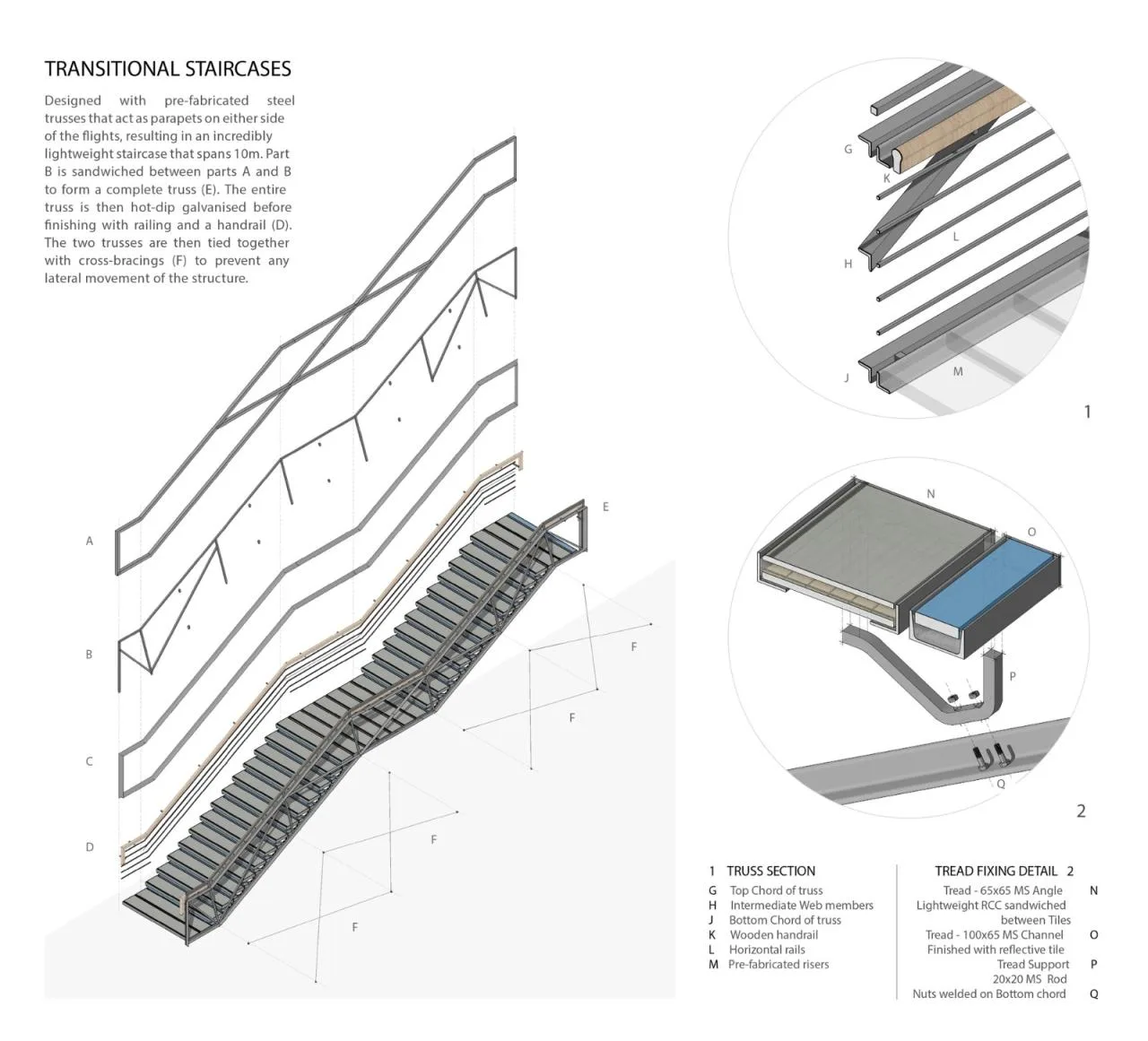
△ Detailed Structural Drawing
Project Information
Architect: Stephane Paumier Architects
Area: 20,880 m²
Project Year: 2022
Photographers: Amit Pasricha, Umang Shah
Manufacturers: Schüco, Acodor, JJ Bricks, LEGERO Lights, Urbanaac
Architects: Vrushali Patil, Mayank Jain, Vrinda Jain, Shipra Dawar
General Contractor: PSP Projects Ltd
Project Management: JLL
Structural Consultant: Melior Structural Solutions
MEP Consultant: Engineering Services Consultants (ESCON)
Location: Ahmedabad, India












Must log in before commenting!
Sign Up