
Project Overview
Design Background
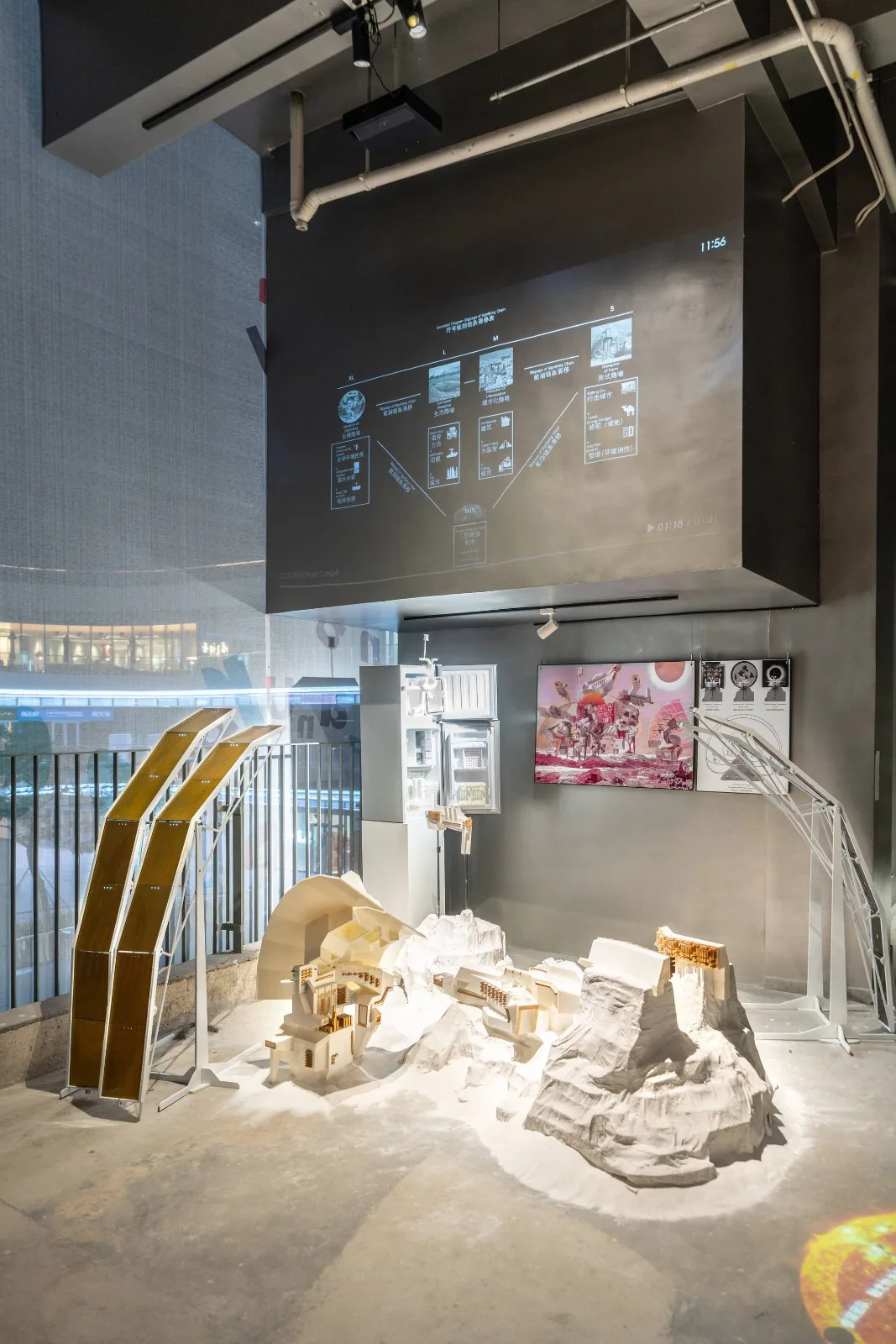
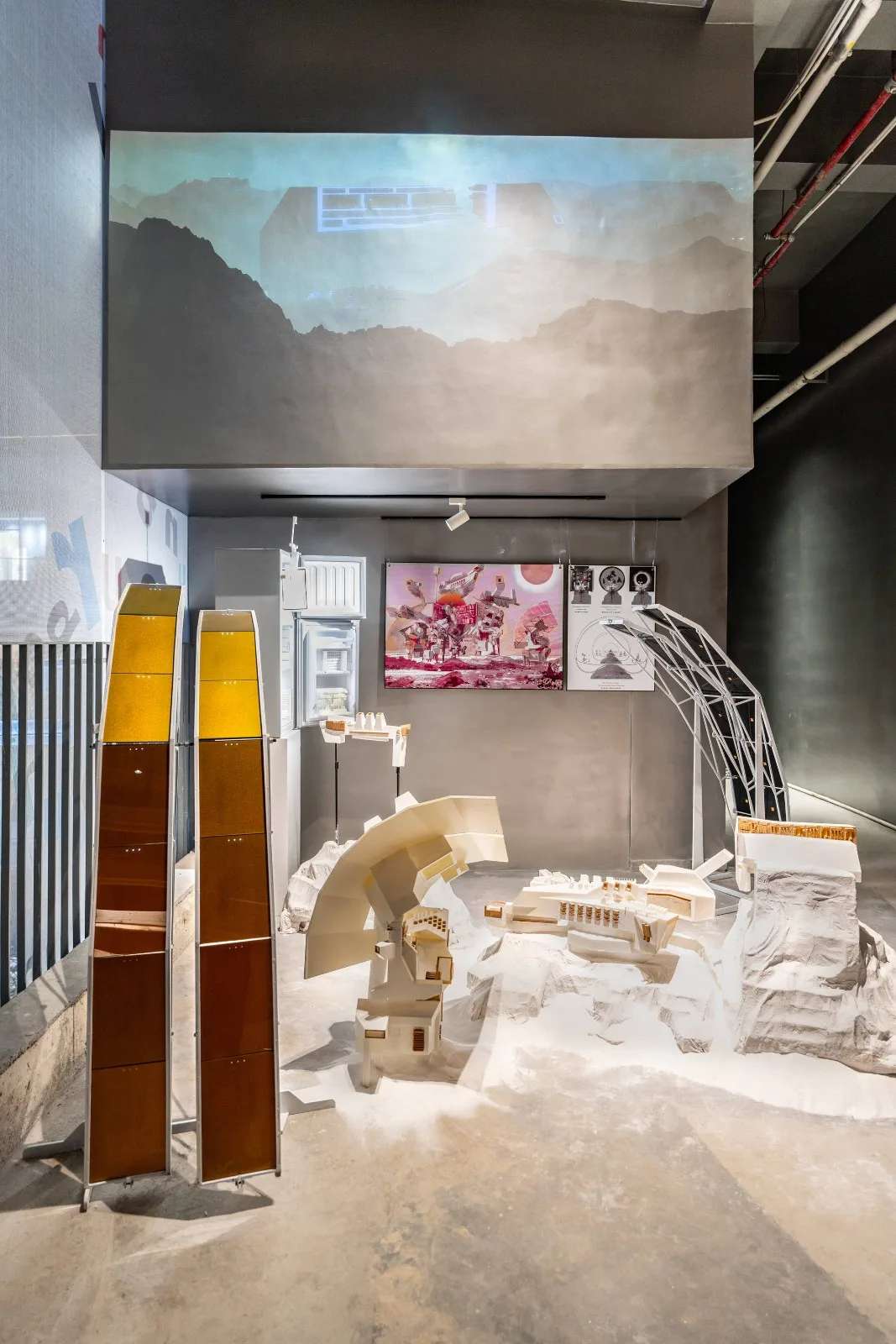
The 9th Shenzhen-Hong Kong Urban Architecture Twin Cities Biennial Exhibition took place from December 2022 to March 2023 at Yuehai City · Golden Beer Factory in Luohu District. The installation titled “The Age of the Sun: Rongguang City” is located on the balcony of the second floor of Building E within the exhibition area. The concurrent exhibition theme was “Urban Cosmologies,” focusing on ecology and carbon neutrality.
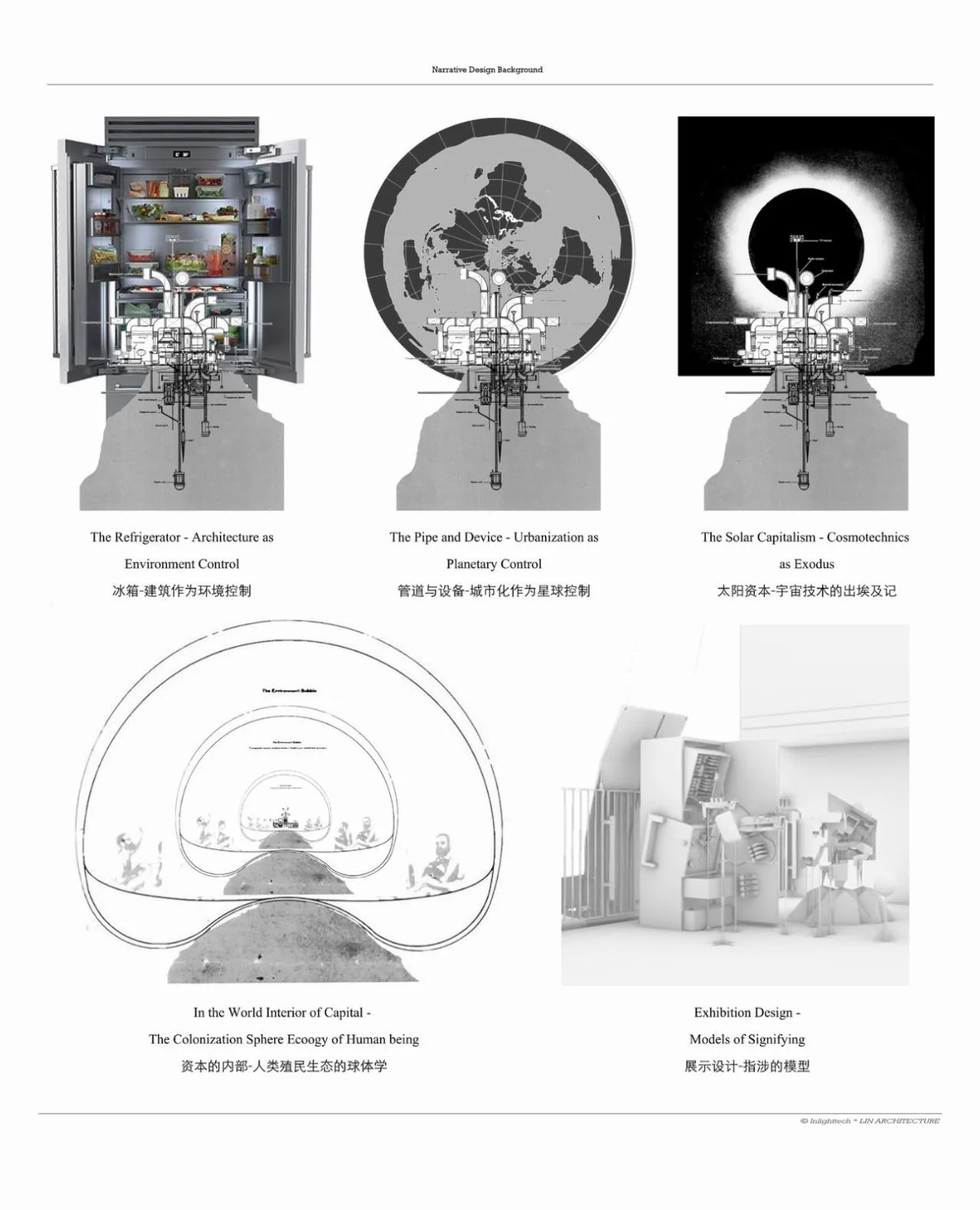
Narrative Design Background
The installation explores the concept of “Exodus,” envisioning humanity’s future migration to a better Earth due to climate regulation failure, and ultimately to a “better solar system” prompted by the Sun’s expanding helium flashes. The narrative weaves together two layers: Earth’s environment and the broader solar system.
Using Barnum air conditioning’s “environmental regulation” as a metaphor, human development is depicted as an “environmental bubble,” while Earth exists outside this bubble. This creates a paradox of a “leaky refrigerator,” where humans cannot control the climate inside or outside Earth. Both Earth and the Sun become colonies for capital and human expansion, with environmental regulation serving as a tool of colonization.
Once humanity leaves Earth, the Sun in the sky becomes nearly the sole energy source, turning the solar system into a contested space. The work poses a Koolhaas-style question: after the Sun’s core collapses and expands, is there still a “better sun” beyond the “solar age”?
The exhibition presents a speculative spatial narrative of global environmental regulation’s “internal” and “external” aspects. The design incorporates specially processed colored photovoltaic panels that not only maintain high photovoltaic conversion efficiency but also offer a richer palette of colors, creating a unique, layered spatial experience.
Technical Background
Solar Cyborg and Battery Innovation: Under the themes of “green cities” and “carbon neutrality,” the exhibit’s solar panels employ a novel high-transmittance nanostructured color pigment coating. This technology transforms the traditional black solar cell facade into colorful, polarized, and color-changing photovoltaic modules without compromising energy conversion efficiency. The panels become unique building materials with metaphorical significance, implying the transformation of all surfaces into solar cells.
The polarized and transparent coatings metaphorically suggest that everything could become a solar cell. This innovation raises spatial cognition challenges linked to nanoscale structural color aberrations and the resulting diverse landscape effects produced by wavelength reflection shifts.
To highlight the heterochromatic effect caused by variations in light angle, designers created photovoltaic panel displays capable of tilting to a height equivalent to a person, enclosing the exhibit within a photovoltaic “environmental bubble.”
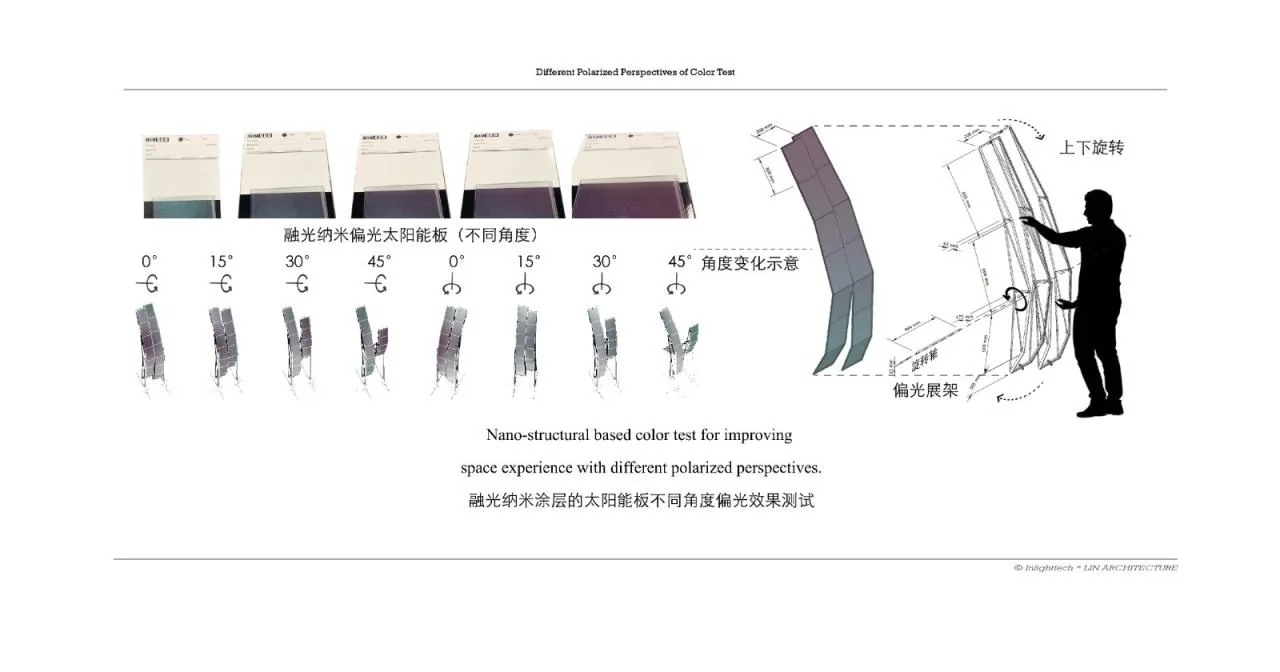
Polarization Effect Test
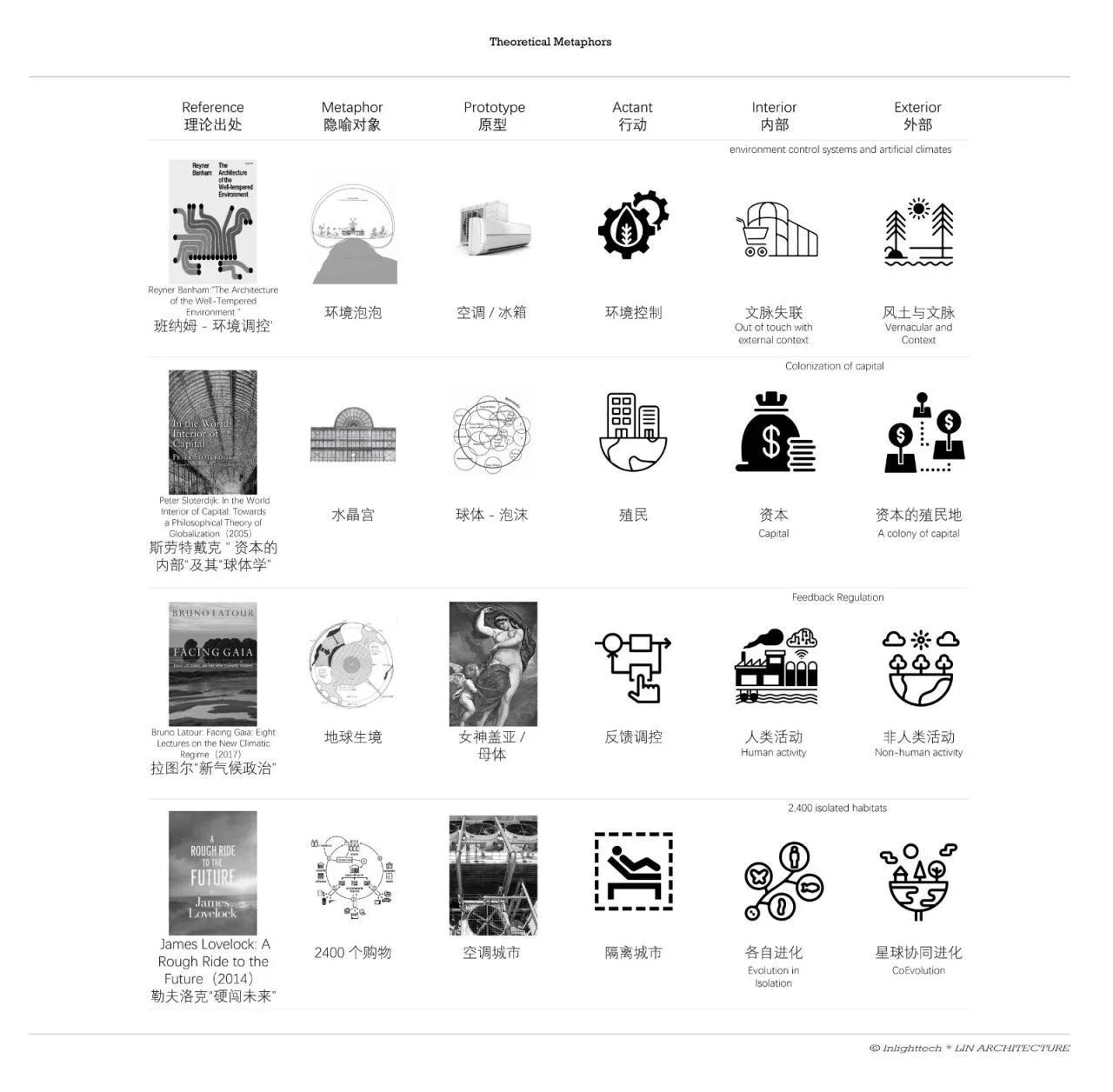
Theoretical Metaphor and Cultural Context
The project’s philosophical prototype, the “Ultimate Sun,” draws inspiration from K. Zuse, a pioneer in computing who theorized the universe as deterministic computation by a single-cell automaton. M. Pasquinelli critiques this “computer universe” of light, information, and energy through “pancomputationalism” and “panpsychism,” framing narratives of surplus, capitalization, crisis, and transformation. The Sun emerges as the ultimate energy source and capital, shaped by environmental regulation, energy calculation, consumption, sacrifice, accumulation, and information capital surplus.
Bataye likens the “solar” to the consuming hunger of predators, which hunt, perish, decompose, and re-enter ecological cycles—symbolizing the end and dissolution of expansion. Ultimately, the Sun’s core will collapse and dissipate.
Architectural Prototype: Space Environment Regulation
According to Barnum’s theory, human-regulated environments, such as air-conditioned spaces, are formless bubbles wrapped in furniture. Architecturally, this disconnects the facade and environment from the local climate. On a planetary scale, regulatory agreements like the Kyoto Protocol clash with human desires to use air conditioning and carbon-based energy. This is akin to installing an air conditioner inside a refrigerator, attempting “second-order” heat dissipation, leading to water leakage and freezing.
From a global ecological viewpoint, humans exist as a constant-temperature microbial community within Earth’s “refrigerator,” greedily exploiting Earth’s resources as capital. The Sun and its energy, as ultimate resources, parallel coal, ocean, and oil resources, inevitably subject to competition.
Philosopher P. Sloterdijk compares the London World’s Fair Crystal Palace (1851) to a greenhouse and colonial base, serving as a prototype for environmental regulation and resource extraction.
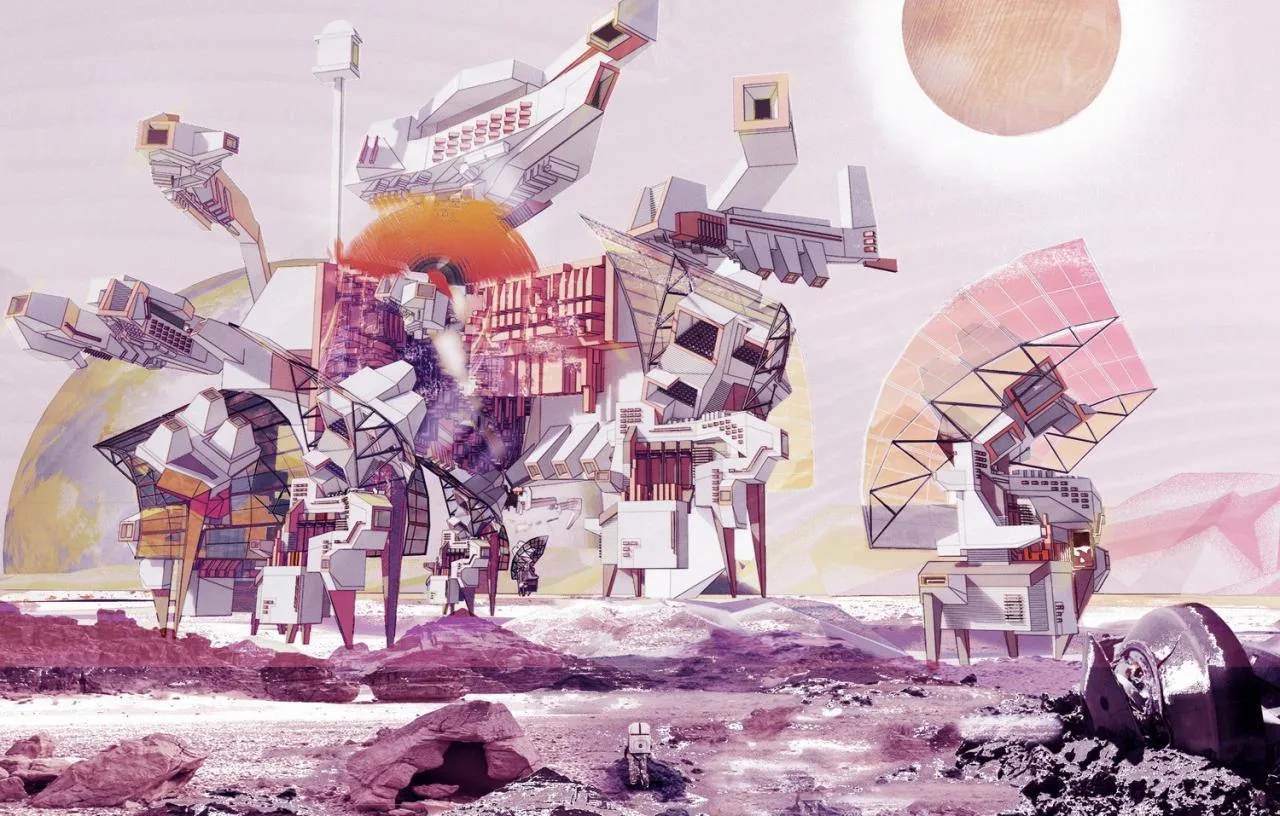
△ Rendering of Outer Planet Scenes
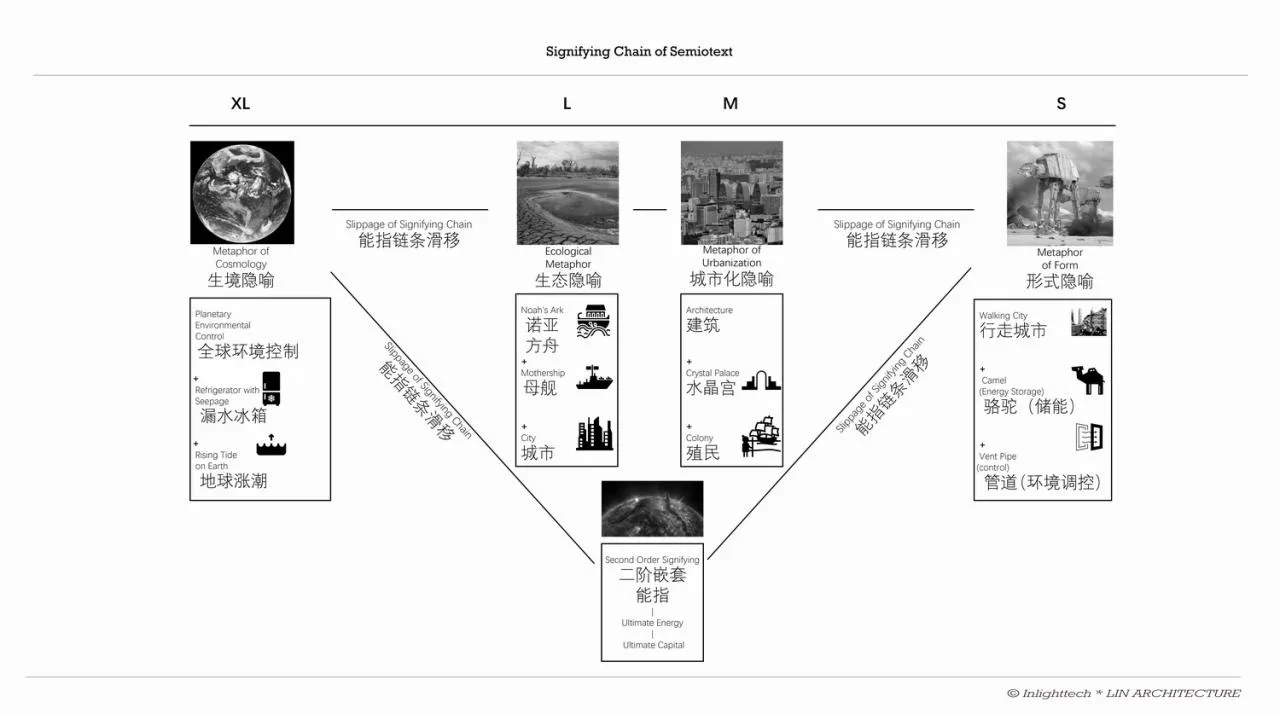
△ The Slippage of the Signifier Chain of Metaphorical Objects
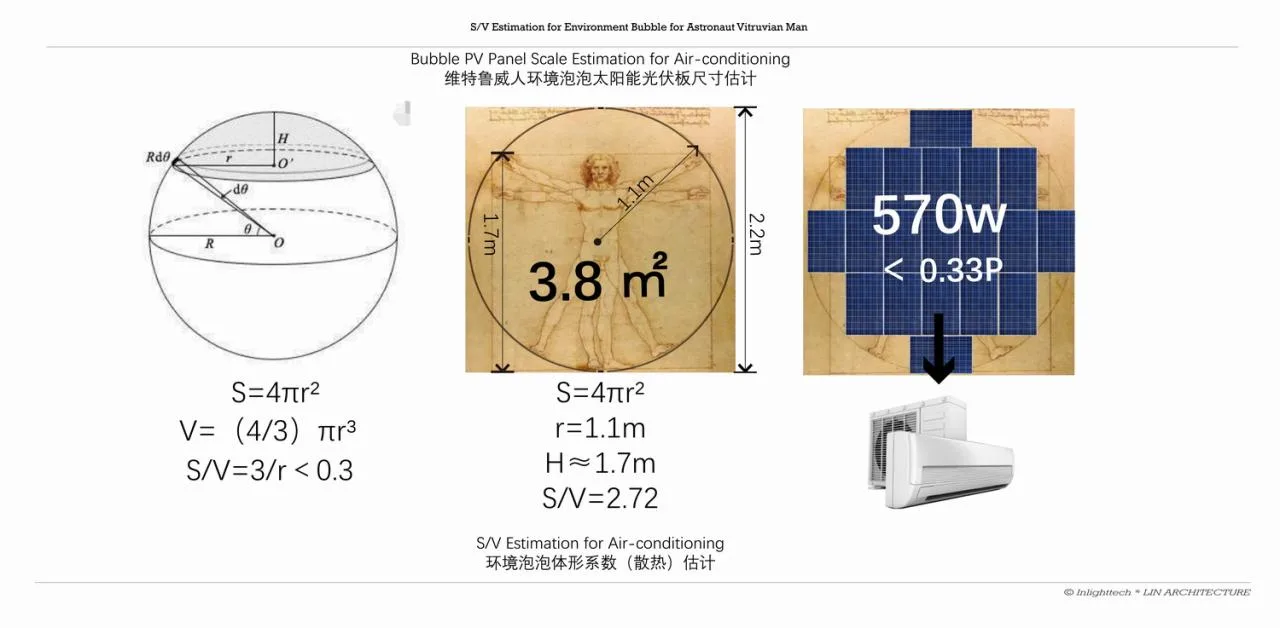
Estimated Shape Coefficient for Vitruvian Environmental Bubbles
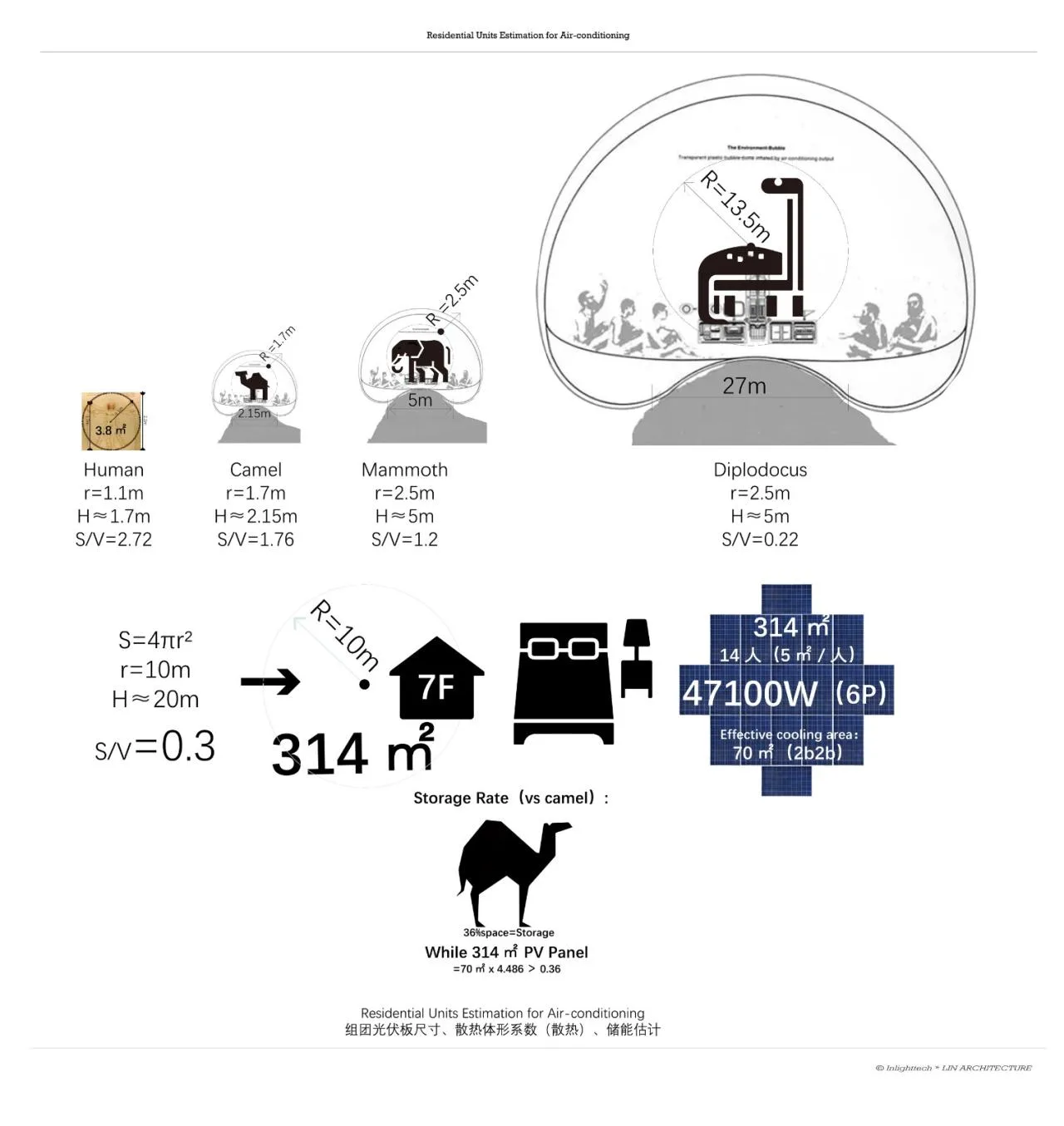
△ Cluster Photovoltaic Size
Creative Process
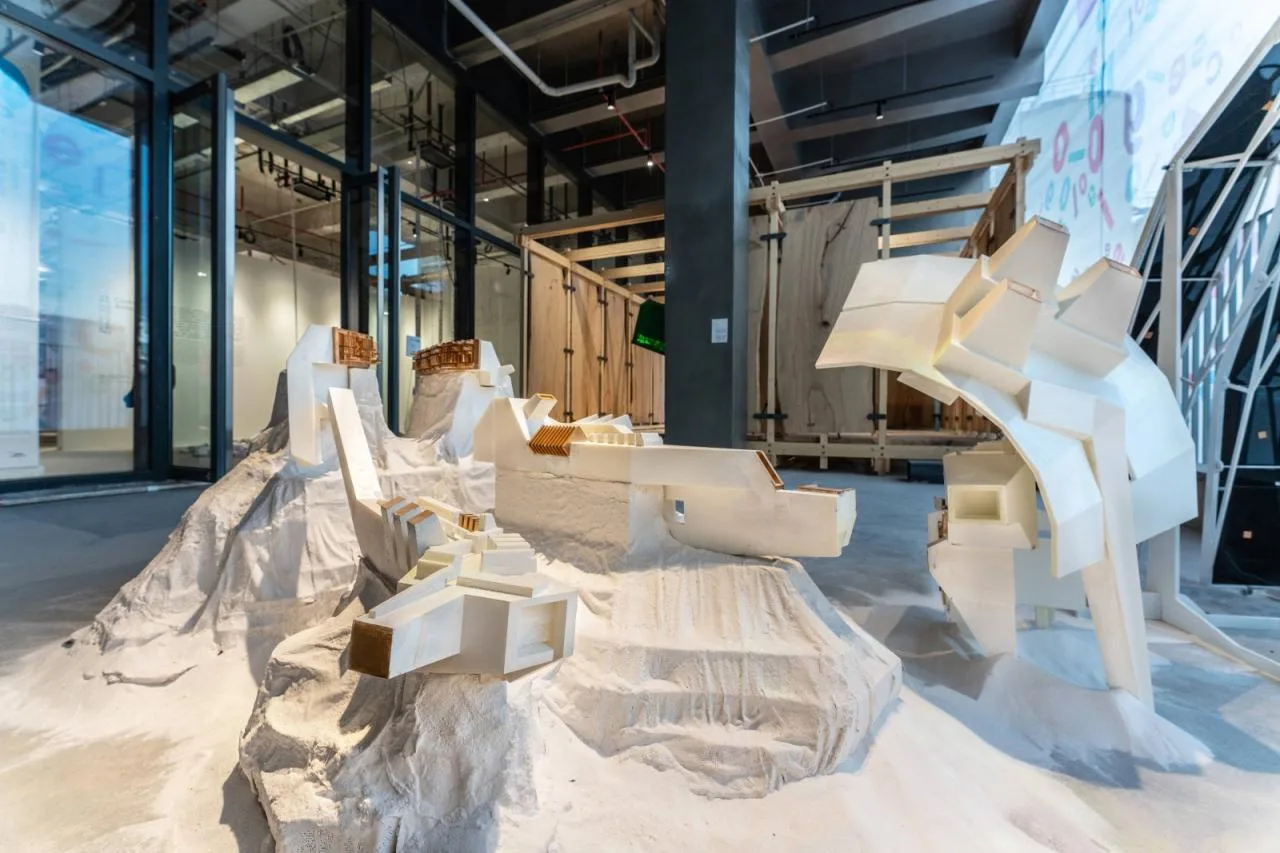
The metaphorical narrative “The Age of the Sun” adopts a pipe-shaped form symbolizing human development that breaks boundaries and carries urban textures through continuous escape. It emerges from a horizontally permeable refrigerator and progresses through four prologues: “Air Conditioning in the Refrigerator,” “Valley of Colonies,” “Ship of War,” and “City of Sunlight.” These chapters sequentially unfold metaphors including refrigerator environmental control, cone-shaped industrial pollution, water seepage and global warming, pipeline building blocks, Earth as an environmental bubble, crystal palace dome signifying interstellar colonization, mothership war, deck city, the Sun as ultimate energy source, and walking city camel energy storage.
Speculatively, this narrative opens the “internal” and “external” dimensions of global environmental regulation, expressed through a spatial storyline.
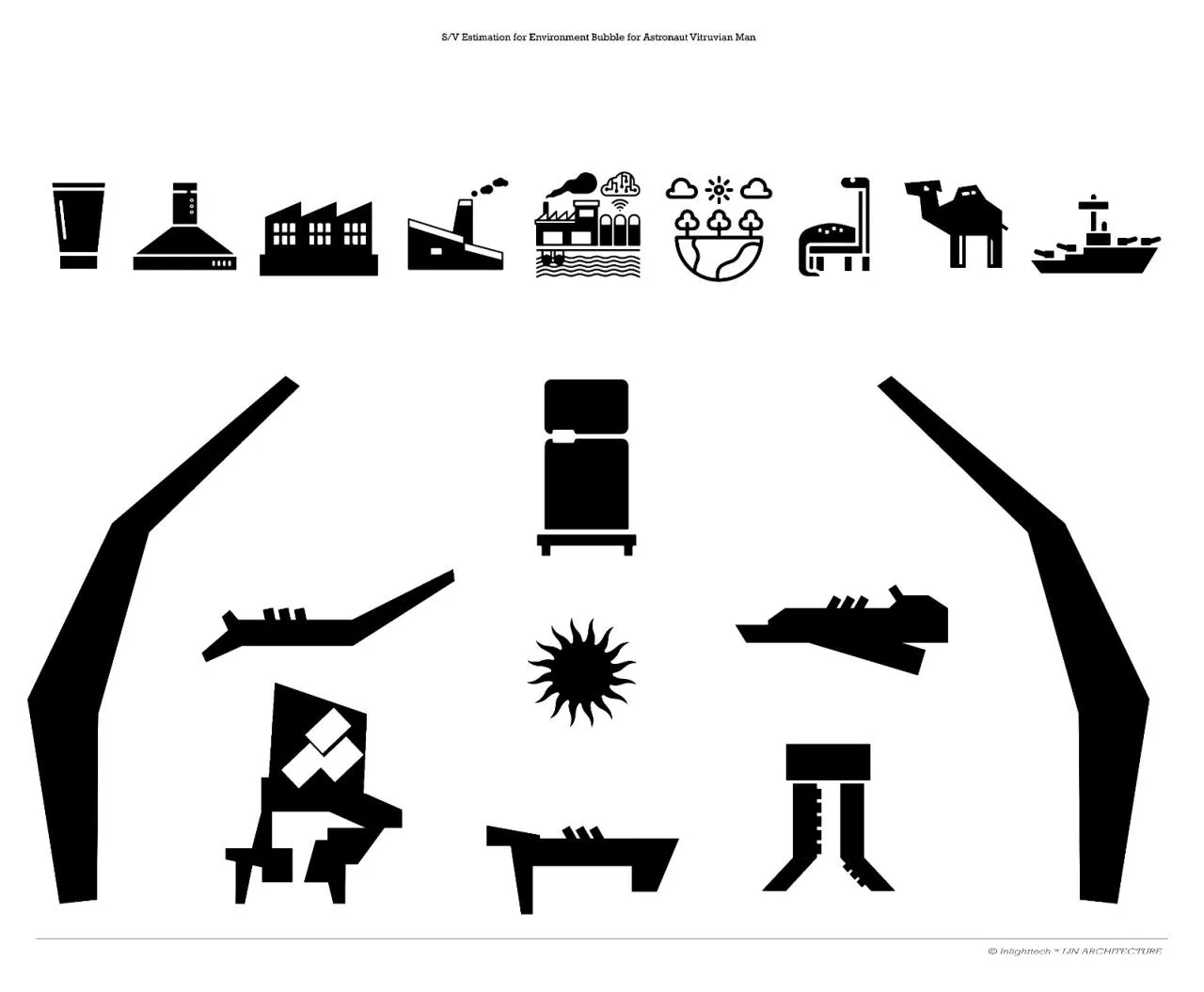
△ Metaphorical Elements
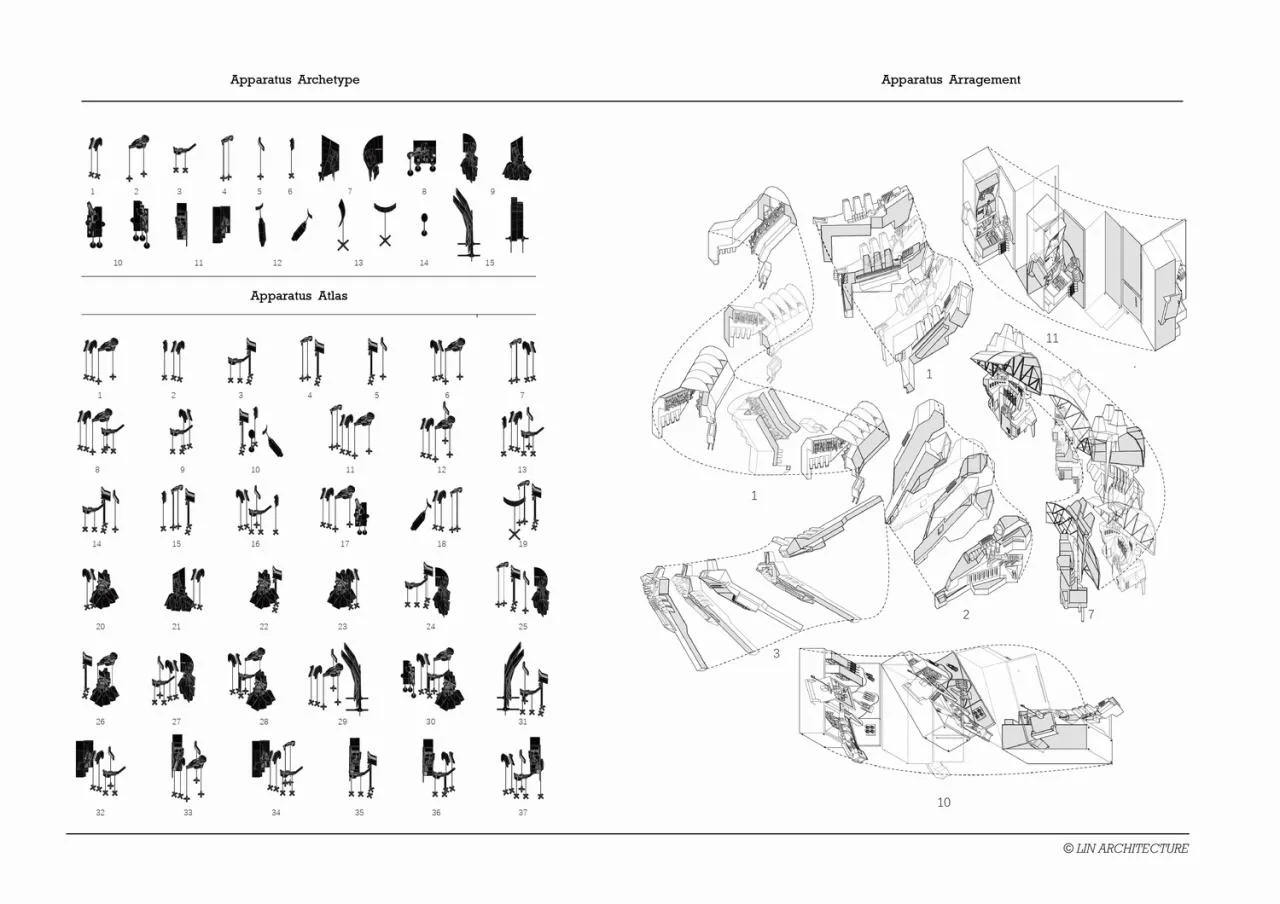
△ Device Type
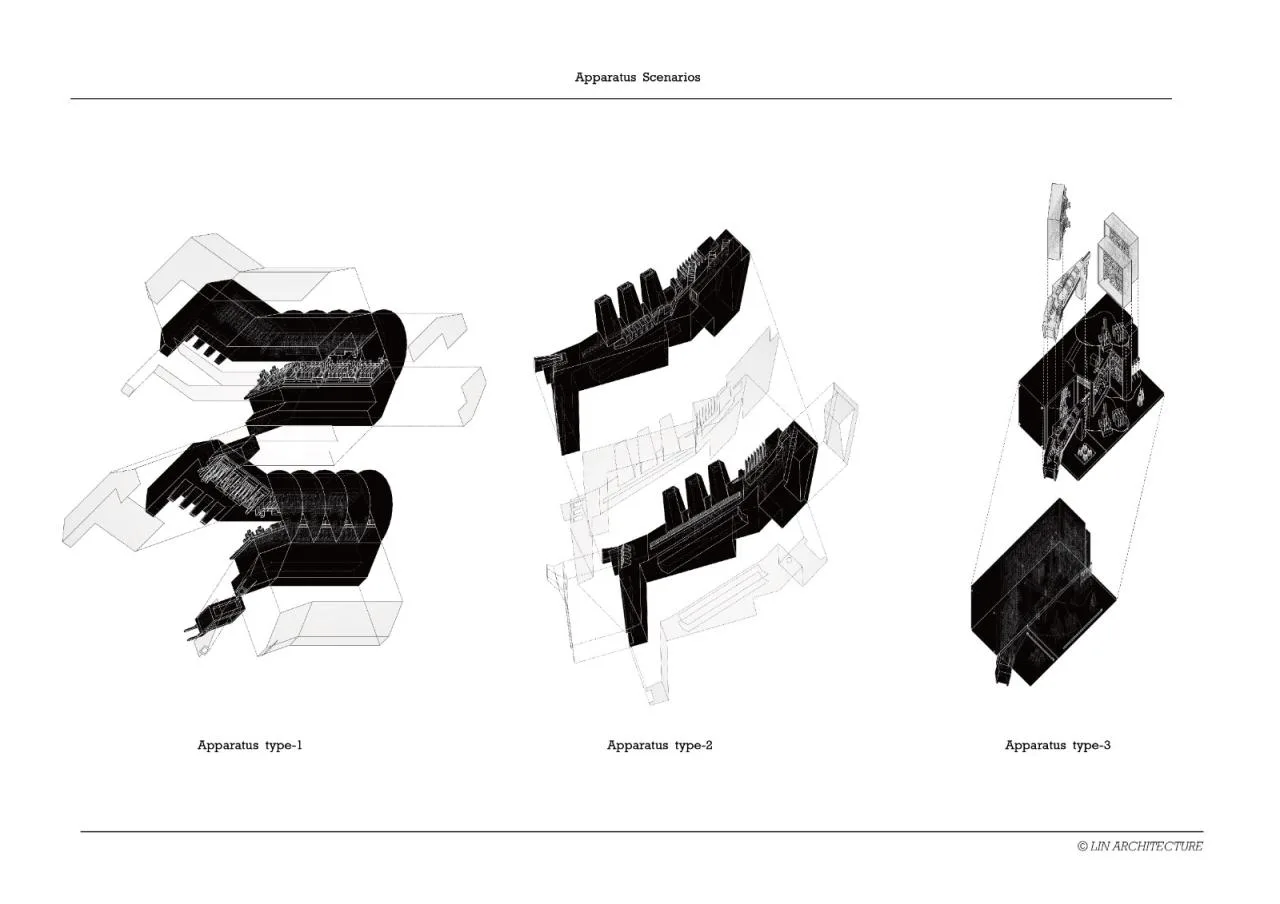
△ Device Scenario
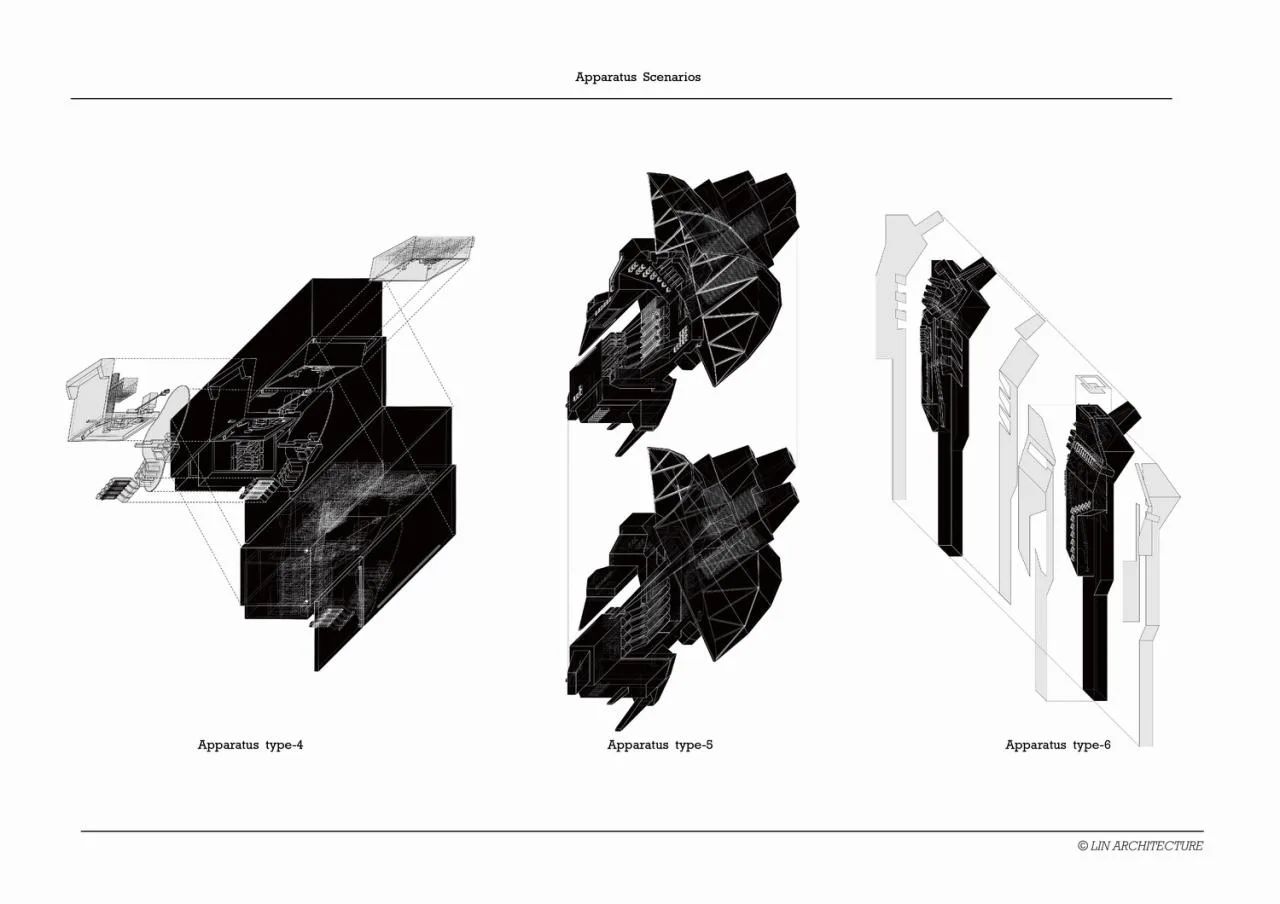
△ Device Scenario
△ Ventilation Duct Elements (Close-up)
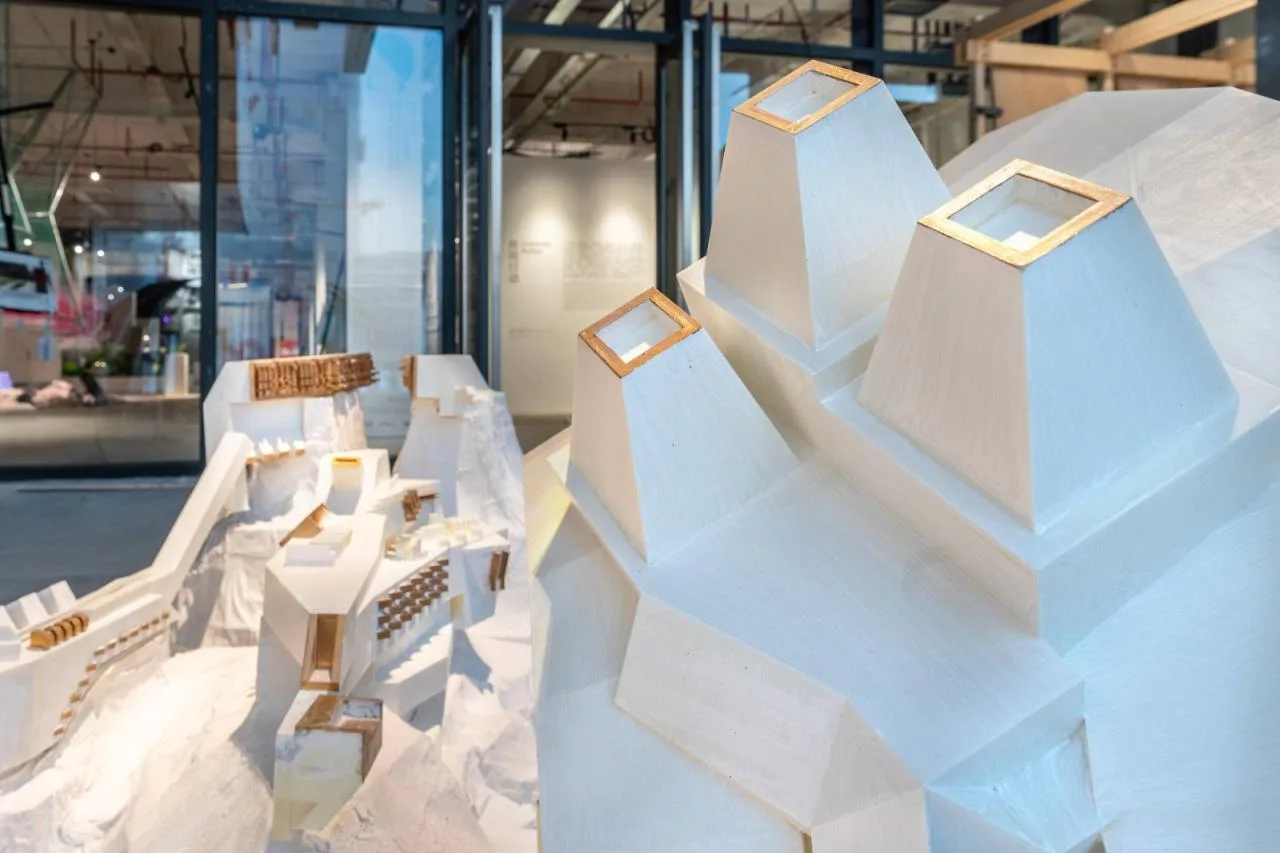
△ Ventilation Ducts and Photovoltaic Panel Elements (Close-up)
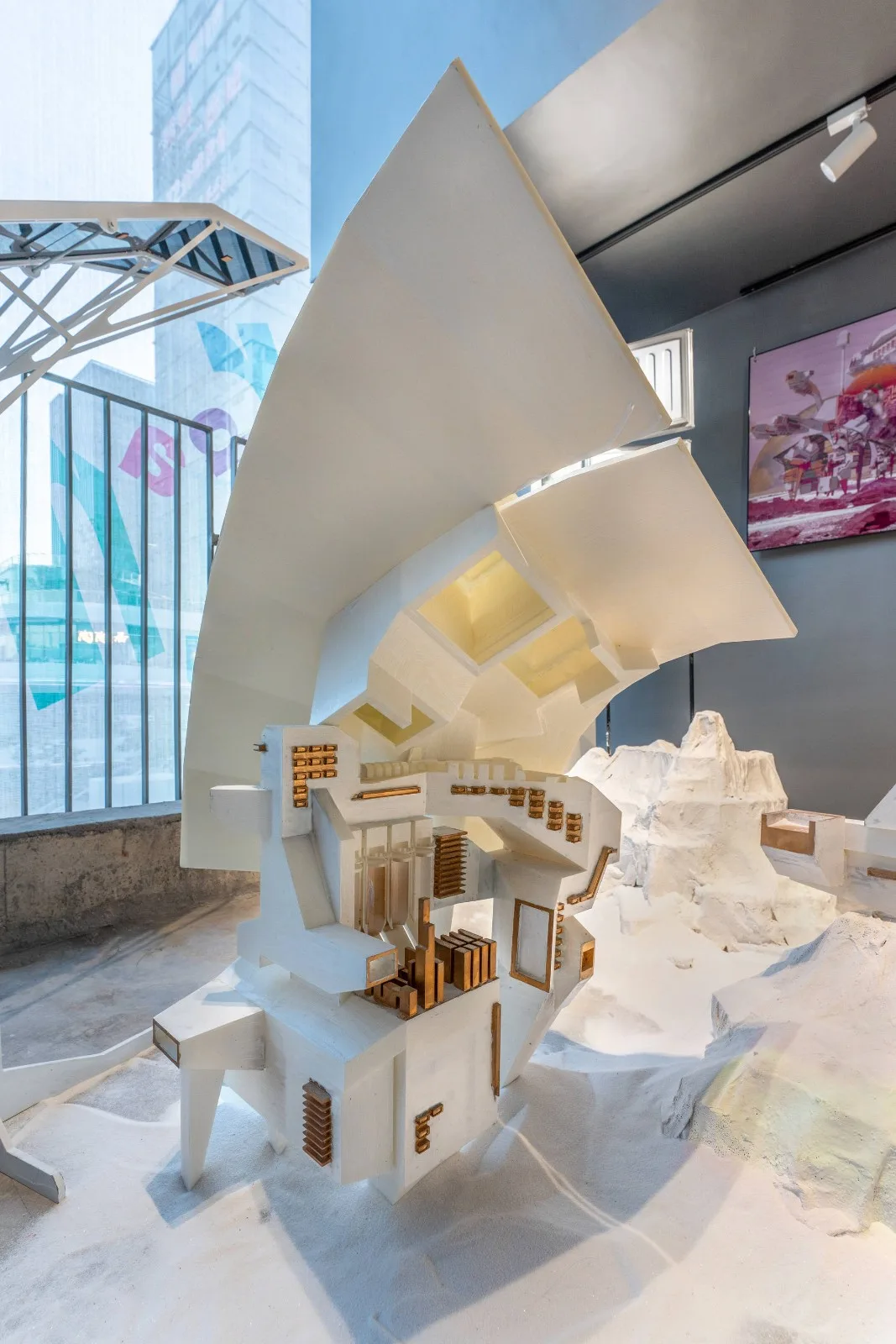
Camels and Walking City Elements
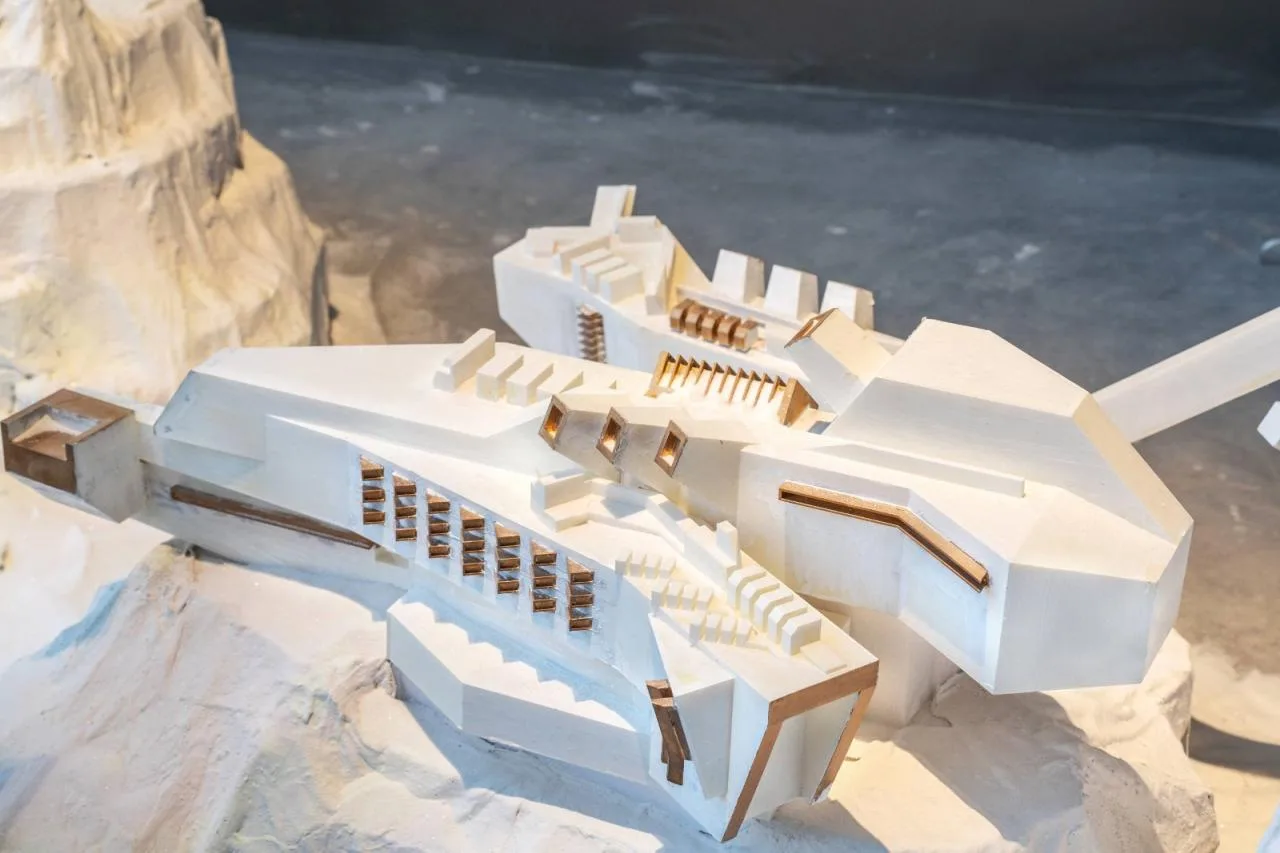
△ Warships and Architectural Elements
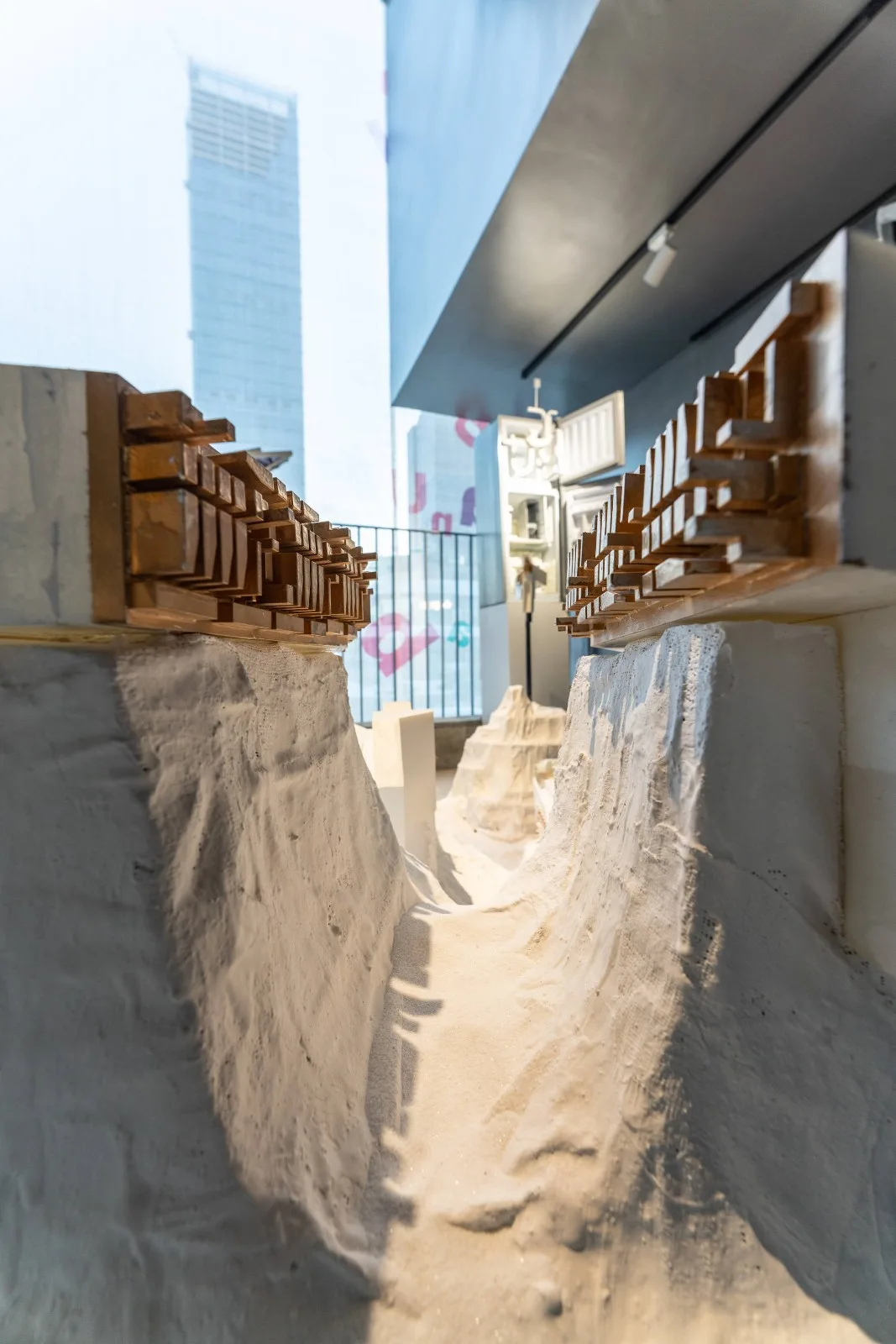
Intertextuality with Surrounding Buildings (Refrigerator as Building)
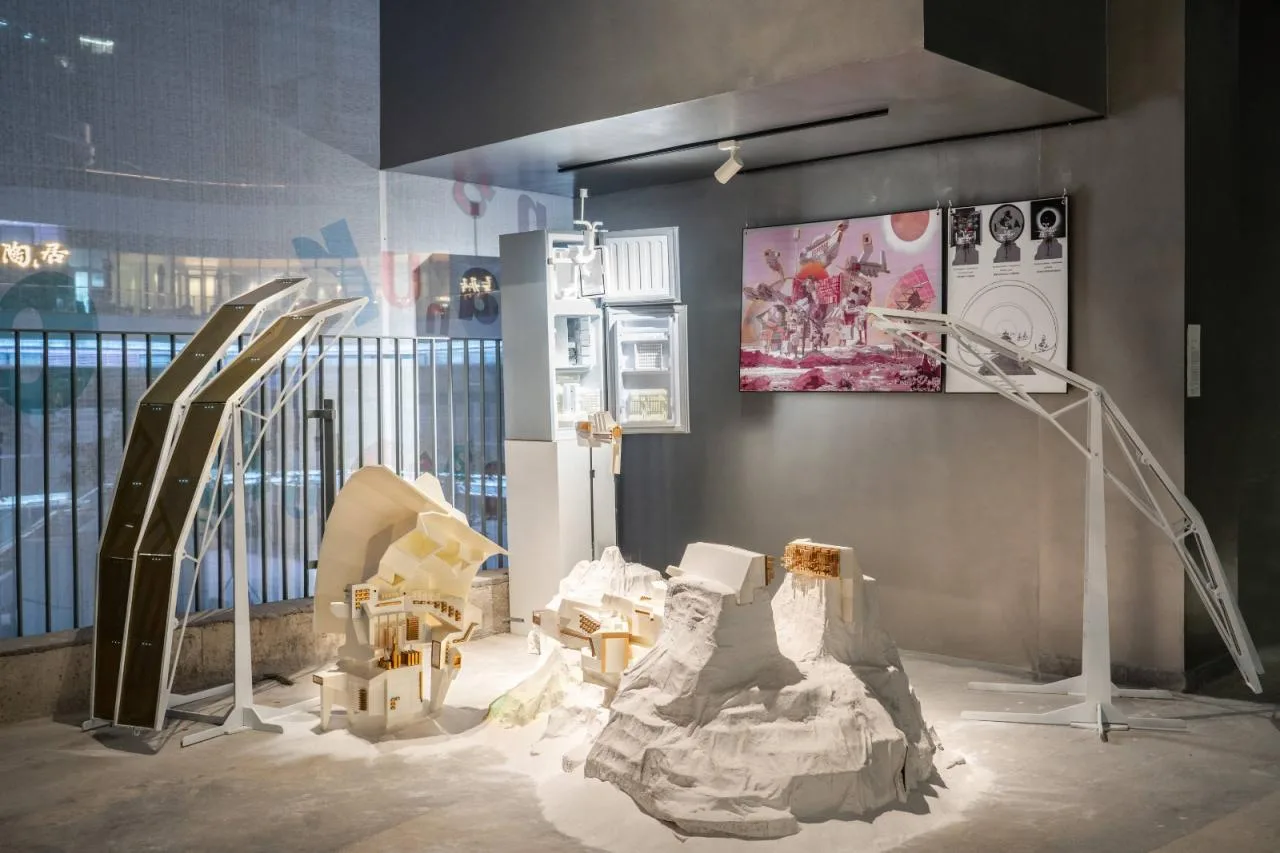
Final Installation Effect
The exhibition features solar installations and models that convert light and electricity into energy, engaging visitors through color and light interactions. This interplay of energy influences the “human environment” ecology and vitality within the exhibition, proposing a new solar punk and environmental aesthetic.
The models are crafted using resin, photovoltaic panels, and nano color-changing powder coatings. Their interaction is driven by color variations between self-generated light signals and components, observable from different angles. These models also function as charging stations and power sources for urban lighting.
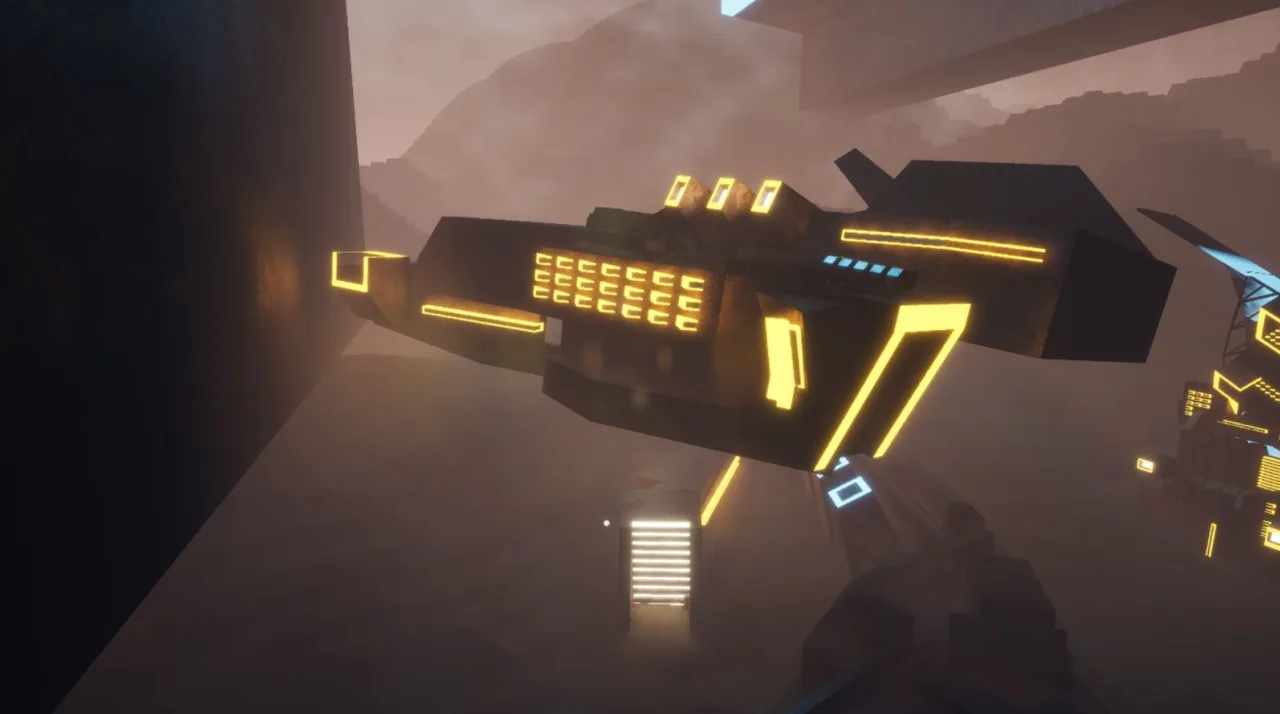
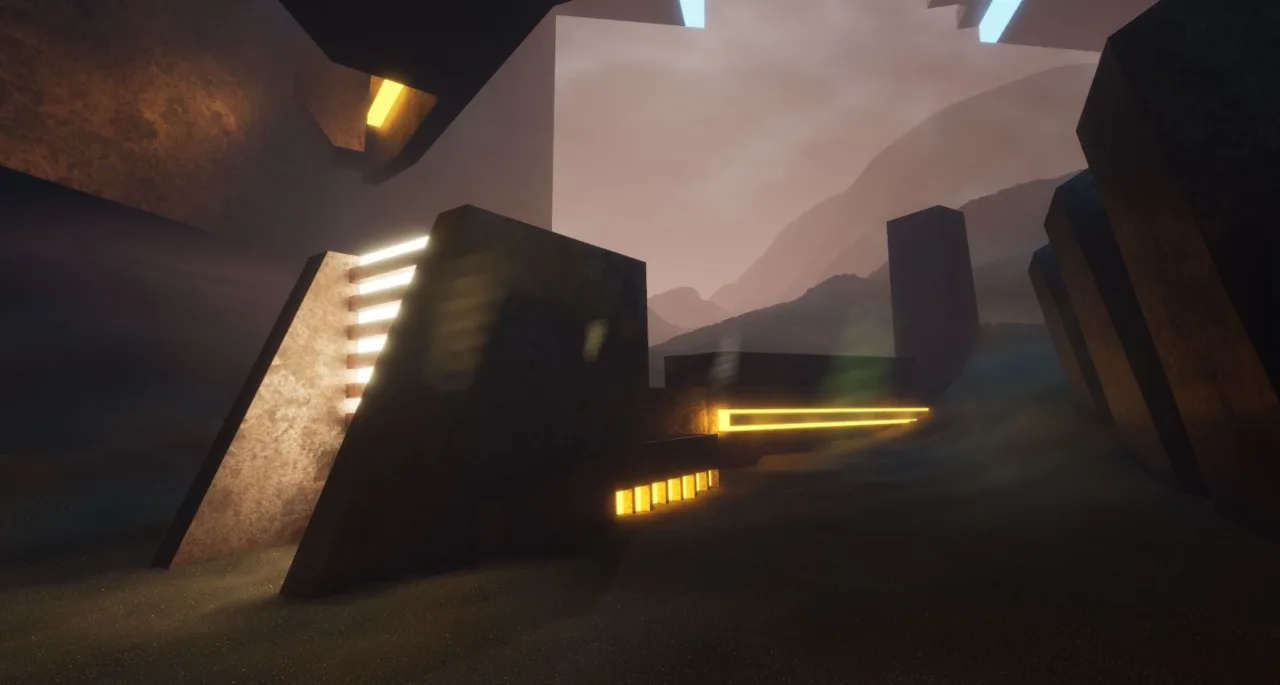
UE4 Scene Animation for Interstellar Exploration
UE4 Scene Animation for Interstellar Exploration (Live Broadcast)
Project Information
Project Name: Sunlight Era – Rongguang City
Location: Jinbeifang, Yuehai City, No. 9 Dongchang Road, Luohu District, Shenzhen, China
Design Company: Architectural Design Studio, Rongguang Nanotechnology, Language & Zhang Xiaomeng (Shenzhen University & AA DRL Joint Team)
Design Leads: Language, Zhang Xiaomeng, Lin Lifeng (Finn LAM)
Design Team: Chai Zongrui, Zhang Yizhuo, Lu Zheyuan, Li Di, Xie Haitian, Wan Zijun, Liu Yingxuan, Ye Rulin, Fei Yang
Design and Material Support: Rongguang Nanotechnology
Processing and Construction Guidance: Guangzhou Quansheng Design Decoration Engineering Co., Ltd
Technical Consultants: Xia Heng, Li Shuangyu, Li Chujun, Ji Chengang
Materials: Resin printing, solar photovoltaic panels, nanostructured transparent and polarizing coatings, steel, foam, quartz sand
Construction and Design Participation: Chai Zongrui, Zhang Yizhuo, Lu Zheyuan, Li Di, Xie Haitian, Wan Zijun, Liu Yingxuan, Ye Rulin, Fei Yang
Design Research and Drafting: Language, Lin Lifeng, Zhang Xiaomeng, Chai Zongrui
Owners and Venue Providers: Shenzhen Hong Kong Urban Architecture Biennale, Shenzhen Yuehai Tianhe City Shopping Center Co., Ltd
2022 UABB Chief Curators: Lu Antong, Wang Zigeng, Chen Bokang
Text Provided By: Language
Photography Copyright: Zhuo Hongduo DUO Architectural Images














Must log in before commenting!
Sign Up